http://www.irrawadd y.org/bur/ Articles2008/ October/07. html
ေက်ာ္စြာမိုး | ေအာက္တိုဘာ ၂၈၊ ၂၀၀၈
ယခု ျပႆနာက ျမန္မာႏိုင္ငံကို ဖိႏွိပ္အုပ္ခ်ဳပ္ေနသည့္ စစ္အစိုးရႏွင့္ အတိုက္အခံ အင္အားစုမ်ားအၾကား ေရွ႕မတိုး ေနာက္မဆုတ္သာ ျဖစ္ေနရသည့္ လိပ္ခဲတည္းလည္း အေျခအေနမွ်သာ မဟုတ္ေတာ့ပါ။
ေဒၚေအာင္ဆန္းစုၾကည္ စတင္တည္ေထာင္ခဲ့သည့္ ျမန္မာႏိုင္ငံ၏ အဓိကအတိုက္အခံ ပါတီႀကီးအတြင္း၌လည္း အတြင္း ႀကိတ္ ျပႆနာမ်ား၊ ႏိုင္ငံေရး မေက်လည္မႈမ်ားႏွင့္ ႀကံဳေတြ႕ေနၿပီျဖစ္သည္။
အဓိကအတိုက္အခံ ပါတီႀကီးျဖစ္ေသာ အမ်ဳိးသားဒီမိုကေရစီအဖြဲ႔ခ်ဳပ္ (အန္အယ္လ္ဒီ) မွ လူငယ္အဖြဲ႔၀င္ ၁၀၉ ဦးတို႔ မၾကာေသးမီက ႏုတ္ထြက္စာ တင္ၾကသည္မွာ ပါတီစတင္တည္ေထာင္ခဲ့သည့္ ၁၉၈၈ ခုႏွစ္မွစ၍ ျပန္ၾကည့္လွ်င္ အေရး ပါသည့္ အျဖစ္အပ်က္ဟု ဆိုႏိုင္ပါသည္။
ဤျဖစ္ရပ္ေၾကာင့္ ပါတီတြင္း ဒီမိုကေရစီ က်င့္သံုးေနပံုကို ေမးခြန္းထုတ္ဖြယ္ ျဖစ္လာေစၿပီး အသက္အရြယ္ႀကီးျမင့္ေနၾကၿပီ ျဖစ္သည့္ ပါတီ၏ ေခါင္းေဆာင္သူမ်ားအတြက္ ပို၍ သိကၡာက်စရာ၊ အားေလ်ာ့စရာ ျဖစ္လာေစသည္။
လူငယ္အဖြဲ႔၀င္မ်ားက ပါတီ၏ ဆံုးျဖတ္ခ်က္ခ်ရာ လုပ္ငန္းစဥ္မ်ားတြင္ သူတို႔အေနႏွင့္ ပါ၀င္ေဆာင္ရြက္ခြင့္ မရွိေၾကာင္း မေက်လည္ ေျပာဆိုသံမ်ားထြက္လာၿပီးေနာက္ ယခုကဲ့သို႔ အစုအၿပံဳလိုက္ ႏုတ္ထြက္စာတင္ၾကျခင္း ျဖစ္သည္။
အန္အယ္လ္ဒီ ပါတီ ဥကၠ႒ ဦးေအာင္ေရႊက ပါတီေခါင္းေဆာင္မႈအတြက္ လူငယ္အႀကံေပး ၆ ဦးႏွင့္ လူငယ္လႈပ္ရွားမႈမ်ားကို ဦးေဆာင္ရန္ ေခါင္း ေဆာင္ ၁၀ ဦး တာ၀န္ေပး ခန္႔အပ္စာ ထြက္လာၿပီးေနာက္ ဤသို႔ ႏုတ္ထြက္မႈမ်ား ျဖစ္ေပၚလာရသည္။ လူငယ္မ်ားကမူ ပါတီေခါင္းေဆာင္ပိုင္းက သူတို႔ တင္ျပအဆိုျပဳသူမ်ားကိုလည္း လက္မခံ၊ အႀကံျပဳခ်က္မ်ားကိုလည္း နားမေထာင္ခဲ့ၾက ဟု ေျပာဆိုခဲ့သည္။
ျမန္မာႏိုင္ငံ၏ ဒီမိုကေရစီ လႈပ္ရွားမႈကို ဦးေဆာင္ေနသည့္ ပါတီႀကီးအတြင္း အဖြဲ႔၀င္မ်ားအေပၚ ဒီမိုကေရစီက်င့္သံုးပံုႏွင့္ ပတ္သက္၍ ဤသို႔ျဖစ္ပ်က္ရသည္က ဆန္းျပားအံ့ၾသဖြယ္ ျဖစ္သကဲ့သို႔ ရွက္ဖြယ္လည္း ျဖစ္သည္။
“က်ေနာ္တို႔ အဖြဲ႔အစည္းက ဒီမိုကေရစီ အဖြဲ႔အစည္းပါ။ သည္ေတာ့ က်ေနာ္တို႔တေတြ ဒီမိုကေရစီအေျခခံကို ေလးစားလိုက္ နာဖို႔ လိုတယ္။ အကယ္၍ က်ေနာ္တို႔က ဒီမိုကေရစီ စည္းမ်ဥ္းေတြကို မေလးစားဘူး ဆိုရင္ ျမန္မာႏိုင္ငံ ဒီမိုကေရစီ ျပဳျပင္ေျပာင္းလဲေရး လုပ္ရတဲ့ လုပ္ငန္းစဥ္ေတြမွာ အေတာ္ခက္လိမ့္မယ္” ဟု အန္အယ္လ္ဒီ ပါတီ၏ လူငယ္ဌာနမ်ားတြင္ လြန္ခဲ့သည့္ ႏွစ္ ၂၀ အတြင္း သစၥာရွိရွိလုပ္ကိုင္ခဲ့သူ ကိုခင္ထြန္းက ေျပာသည္။ ယခုေတာ့ သူလည္း ႏုတ္ထြက္ခဲ့သူမ်ားတြင္ တဦးအပါအ၀င္ ျဖစ္ေနၿပီ။
ကိုခင္ထြန္းသည္ ၁၉၈၈ ခုႏွစ္ ပါတီ တည္ေထာင္ခဲ့ခ်ိန္မွစ၍ စြဲစြဲၿမဲၿမဲ ပါ၀င္ေဆာင္ရြက္ခဲ့ေသာေၾကာင့္ ေထာင္က်ခဲ့ရသူ ျဖစ္သည္။ ေထာင္ထဲတြင္ သူ ႏွစ္အတန္ၾကာ ေနခဲ့ရပါသည္။ ကိုခင္ထြန္းကဲ့သို႔ပင္ ႏုတ္ထြက္ၾကသူ ၁၀၉ ဦးထဲတြင္ ယခင္ႏိုင္ငံေရး အက်ဥ္းသားေဟာင္း အေတာ္မ်ားမ်ားလည္း ပါ၀င္ေနၾကသည္။
အန္အယ္လ္ဒီ ပါတီေခါင္းေဆာင္မ်ား အေနႏွင့္ ပါတီကိစၥ ဆံုးျဖတ္ခ်က္မ်ား ခ်မွတ္ရာတြင္ လူငယ္တို႔၏ အခန္းက႑ကို အသိ အမွတ္ျပဳသင့္သည္။ မူ၀ါဒမ်ား ဆံုးျဖတ္ခ်မွတ္မည္ဆိုလ်င္လည္း သူတို႔၏ အျမင္မ်ားကို ေလးေလးစားစား ထည့္သြင္း စဥ္းစား သင့္ပါသည္။
“လူငယ္ေတြဆိုတာ အနာဂတ္ပါ။ က်ေနာ္တို႔ေခါင္းေဆာင္ေတြကို က်ေနာ္တိုက္တြန္းခ်င္တာက လူငယ္အဖြဲ႔၀င္ေတြရဲ႕ အျမင္ေတြကို နားေထာင္ေပးဖို႔ပါပဲ” ဟု ကိုခင္ထြန္းက ေျပာသည္။
အမွန္တကယ္တြင္ အန္အယ္လ္ဒီ ပါတီက အလားတူျပႆနာမ်ဳိး ႀကံဳေတြ႔လာခဲ့ရသည္မွာ ၂၀၀၀ ျပည့္ႏွစ္ အေစာပိုင္း ကာလမ်ား ကတည္းက ျဖစ္သည္။ အထူးသျဖင့္ ေဒၚေအာင္ဆန္းစုၾကည္ ထိန္းသိမ္းခ်ဳပ္ေႏွာင္ခံထားရသည့္ အခ်ိန္မ်ဳိးတြင္ ႀကံဳေတြ႔ရေလ့ရွိသည္။ ေဒၚေအာင္ဆန္းစုၾကည္သည္ ပါတီသက္တမ္း ၁၉ ႏွစ္တာကာလ အတြင္း ၁၃ ႏွစ္ေက်ာ္ အခ်ဳပ္ အေႏွာင္တြင္း ေနထိုင္ခဲ့ရသျဖင့္ ပါတီအေရးကို ကိုယ္ထိလက္ေရာက္ ေဆာင္ရြက္ႏိုင္ခြင့္ မရွိျဖစ္ေနရသည္။
လက္ရွိ အန္အယ္လ္ဒီ ပါတီေခါင္းေဆာင္ပိုင္းက သူတို႔ကိုယ္သူတို႔ ပါတီကို မပ်က္စီးရေလေအာင္ ထိန္းသိမ္း ေစာင့္ေရွာက္ ေပးသူမ်ားဟု ခံယူထားၾကေသာ္လည္း ဒီမိုကေရစီအေရးအတြက္ ေရွ႕ဆက္ခ်ီတက္ႏိုင္ရန္ အေတြးအျမင္ႏွင့္ မဟာဗ်ဴဟာ မ်ား ခ်မွတ္ ႀကံဆျခင္းကိုမူ ထိုးထြင္းမလုပ္လိုၾကေပ။
လက္ရွိ ပါတီေခါင္းေဆာင္ပိုင္းအေနႏွင့္ ယေန႔ ဒီမိုကေရစီ အေရးေတာ္ပံုကို ဦးေဆာင္ဦးရြက္ျပဳႏိုင္စြမ္း ရွိ - မရွိႏွင့္ ပတ္သက္၍ အႀကိမ္ႀကိမ္ ေမးခြန္းထုတ္ခံခဲ့ရဖူးသလို စိန္ေခၚမႈမ်ားလည္း အႀကိမ္ႀကိမ္ႀကံဳေတြ႔ခဲ့ရဖူးသည္။ လူထု အစိတ္ အပိုင္းတခ်ဳိ႕၊ ဒီမိုကေရစီအေရး ထဲထဲ၀င္၀င္ လႈပ္ရွားေနၾကသူမ်ား၊ ႏိုင္ငံေရးသမားမ်ားကလည္း အန္အယ္လ္ဒီႏွင့္ ပတ္သက္၍ စိတ္ပ်က္ေနခဲ့ၾကသည္။
သူတို႔အျမင္တြင္ အမ်ဳိးသား ဒီမိုကေရစီအဖြဲ႔ခ်ဳပ္သည္ အလိုအေလွ်ာက္ပဲ့ထိန္းျဖင့္ ေရလႊာေၾကာတြင္ ဦးတည္ရာမဲ့ ေမ်ာ ေနသည္ဟု ျမင္ၾကသည္။ သည္အတိုင္းသြားေနပါက တခ်ိန္ ပါတီတခုလံုး၏တန္ဖိုးႏွင့္ အေရးပါမႈကိုပါ စြန္႔လႊတ္လိုက္ရ ေတာ့မည့္ အႏၱရာယ္ရွိေနသည္ဟု ျမင္ၾကသည္။
လြန္ခဲ့သည့္ႏွစ္ကလည္း ေဒၚေအာင္ဆန္းစုၾကည္ ကိုယ္ႏိႈက္က ပါတီဦးေဆာင္မႈႏွင့္ ပတ္သက္၍ ေျပာဆိုခဲ့ဖူးသည္။ ေဒၚစုက ပါတီ ထိပ္ပိုင္းေခါင္းေဆာင္မ်ားႏွင့္ ေတြ႔ဆံုခြင့္ရသည့္အခ်ိန္တြင္ သူ႔ကို ေစာင့္မေနဘဲ ပါတီ၏ ဦးေဆာင္မႈျဖင့္ ျပတ္ျပတ္ သားသား ေရွ႕ဆက္သြားရန္ေျပာဆိုခဲ့ဖူးသည္။ ပါတီအေနျဖင့္ တခါတရံတြန္းထိုးလႈပ္ရွားရန္လိုသလို တခါတရံ စည္း႐ံုးသိမ္း သြင္းရန္လည္း လိုသည္ဟု ေျပာခဲ့သည္။ တခါတရံ သူက ဦးေဆာင္မည္ျဖစ္ေသာ္လည္း၊ တခါတရံ သူကိုယ္တိုင္က အျခား သူမ်ား ဦးေဆာင္မႈကို လိုက္ရလိမ့္မည္ဟု ေဒၚစုက ေျပာခဲ့သည္။
လက္ေတြ႔တြင္ ဤျပႆနာက မ်ဳိးဆက္ခ်င္း ကြာဟမႈေၾကာင့္ ပို၍ႀကီးသြားပံု ရသည္။ ပါတီဥကၠ႒ျဖစ္သူ ဦးေအာင္ေရႊႏွင့္ ဦးလြင္တို႔က အသက္ ၈၀ ေႏွာင္းပိုင္း၊ ၉၀ ထဲ ၀င္ေနၾကၿပီ။ တခ်ဳိ႕ေသာ လႈပ္ရွားသူမ်ားကလည္း စစ္တပ္ တပ္မႉးမ်ားအျဖစ္ တာ၀န္ထမ္းဖူးခဲ့ၾကသည့္ သူတို႔၏ ေနာက္ခံသမိုင္းေၾကာင္း၊ ဗိုလ္ခ်ဳပ္ေန၀င္းဦးေဆာင္သည့္ အာဏာရွင္ စနစ္တြင္ ထိပ္တန္းတာ၀န္မ်ား ယူခဲ့ဖူးၾကသည့္ အေနအထားတို႔ေၾကာင့္ ယံုၾကည္မႈမရႏိုင္သည့္ အေနအထား ျဖစ္ေနၾကရသည္။
ႁခြင္းခ်က္တခုကမူ အန္အယ္လ္ဒီ ပါတီ၏ ဒုတိယ ဥကၠ႒ ဦးတင္ဦးကို လူအမ်ားက ႏွစ္လို ေထာက္ခံေနၾကျခင္း ျဖစ္သည္။ ဦးတင္ဦးသည္ ဦးေန၀င္းအစိုးရ လက္ထက္တြင္ ကာကြယ္ေရး ဦးစီးခ်ဳပ္အျဖစ္ တာ၀န္ထမ္းခဲ့ဖူးေသာ္လည္း လူအမ်ားက ေလးစားၾကည္ညိဳၾကသည္။ သို႔ရာတြင္ အသက္ ၈၀ ထဲသို႔ ၀င္လာၿပီျဖစ္ေသာ ဦးတင္ဦးလည္း အိမ္အက်ယ္ခ်ဳပ္ က်ခံေနရ သည္။ ယခုအခါ ေဒၚေအာင္ဆန္းစုၾကည္ ကိုယ္ႏိႈက္သည္ပင္ အသက္ ၆၃ ႏွစ္ ရွိလာခဲ့ၿပီ ျဖစ္သည္။
ႏုတ္ထြက္စာတင္ခဲ့ၾကသည့္ လူငယ္မ်ားမွာ ပါတီအနာဂတ္အတြက္ အမွန္တကယ္ အေရးပါသူမ်ား ျဖစ္ၾကသည္။ ယခုလို အစုလိုက္အၿပံဳလိုက္ ႏုတ္ထြက္ျခင္းကို လ်စ္လ်ဴရႈမေနသင့္သလို၊ ေလွ်ာ့တြက္၍ မျဖစ္ႏိုင္ပါ။
ယခုအခ်ိန္သည္ အန္အယ္လ္ဒီ ပါတီ ေခါင္းေဆာင္မႈအတြက္ ေသေရးရွင္ေရး အခ်ိန္ျဖစ္ေနေပၿပီ။ အတိုက္အခံပါတီ၏ အိမ္ကိုယ္ႏိႈက္က ၿပိဳလုတည္းတည္း အေျခအေနတြင္ စစ္အစိုးရ၏ အာဏာရွင္လုပ္ရပ္မ်ားကိုသာ ထိုင္ေ၀ဖန္ေန၍ အက်ဳိးမရွိႏိုင္ပါ။
အမ်ဳိးသားဒီမိုကေရစီအဖြဲ႔ခ်ဳပ္အတြင္း ညီညြတ္ေရးရရွိရန္ အေရးႀကီးသကဲ့သို႔ ဒီမိုကေရစီ လႈပ္ရွားမႈႀကီး အတြင္း၌လည္း ညီညြတ္ေရးက အေရးႀကီးလွသည္။ သို႔မွသာ ႏိုင္ငံ အနာဂတ္လွပႏိုင္မည္ ျဖစ္သည္။
ယခုအခ်ိန္သည္ ဒီမိုကေရစီ အင္အားစုမ်ားအဖို႔ ရွင္းလင္း၊ ျပတ္သားသည့္ မူ၀ါဒ ရည္မွန္းခ်က္မ်ားေအာက္တြင္ စုစည္း ညီညြတ္ရေတာ့မည့္ အခ်ိန္ျဖစ္ပါသည္။ ဤအေျခအေနမ်ဳိးတြင္ အန္အယ္လ္ဒီ ပါတီက မိမိပါတီအတြင္း ကြဲျပားေနမႈ၊ မယံု သကၤာ သံသယလႊမ္းမိုးေနမႈမ်ားကို အလ်င္အျမန္ျပင္ဆင္ၿပီး ဦးေဆာင္သက္ေသျပရေတာ့မည့္ အခ်ိန္ျဖစ္ပါသည္။
ေက်ာ္စြာမိုးေရးသားသည့္ A House Divided ကို ဆီေလ်ာ္ေအာင္ ျပန္ဆိုေဖာ္ျပပါသည္။
Wednesday, October 29, 2008
ညီညြတ္မႈ ၿပိဳကြဲေလေသာအခါ-IRRAWADDY


A House Divided -IRRAWADDY
http://www.irrawadd y.org/opinion_ story.php? art_id=14467
By KYAW ZWA MOE
Now the issue isn’t just about Burma’s oppressive military regime. Or, the stand off between the junta and the opposition. It’s now about the internal politics of the country’s most popular opposition party founded by Aung San Suu Kyi.
The resignation of 109 youth members of the main opposition National League for Democracy is one of the most significant events since the formation of the party in 1988.
It throws into question the democratic workings of the party itself and further weakens the image of the party’s aging leadership.
The resignation came after younger members’ publicly voiced complaints that they aren’t allowed to participate in decision-making. The move followed a statement by NLD chairman Aung Shwe naming six new youth advisers and ten others to lead youth activities without accepting nominations or suggestions from youth members.
It’s awkward and embarrassing to see the leading pro-democracy group facing problems of democratic principles within its own membership.
“Our organization is a democratic one,” said Khin Htun, who has loyally worked for the NLD youth wing during the past two decades but was among those who resigned. “We must respect the basis of democracy. If we don’t respect the rules of democracy, it will be very difficult to work out the process of democratic reform in Burma.”
Khin Htun has spent years in jail as a result of his dedication to the NLD since its formation in 1988. Like him, many of the 109 members who resigned are former political prisoners.
NLD leaders should allow youth members to play a role in decision-making and genuinely consider their views when deciding on policy issues.
“Youth is our future,” said Khin Htun. “I want to urge our leaders to include the viewpoint of the youth members.”
In fact, the NLD has faced this issue since the early 2000s, especially during times when Suu Kyi has been detained—she has been under house arrest for 13 of the past 19 years.
The current top NLD leaders generally regard themselves as caretakers of the party rather than innovative visionaries crafting a philosophy and strategy that will move the entire pro-democracy movement forward.
The current NLD leadership has been repeatedly challenged and questioned regarding its capability to lead the pro-democracy movement. Segments of the general public and groups within the core circle of activists and politicians have been disappointed that the NLD seems to be floating along aimlessly on automatic pilot and is in danger of becoming irrelevant.
Last year, Suu Kyi herself talked about party leadership. When she was allowed to meet with her party’s senior members, she counseled them to move forward without her. She said the party sometimes needs “to push and pull.” Sometimes she would lead and sometimes she would follow others’ leadership in the party, she said.
In fact, this issue seems to be exacerbated by a generation gap. Party chairman Aung Shwe and U Lwin are respectively in their early 90s and late 80s. Some activists don’t fully trust them because of their backgrounds as former army commanders who held high-ranking positions under Ne Win’s authoritarian government.
A popular exception is Tin Oo, the NLD’s vice-chairman who is currently under house arrest. In his early 80s, he’s gained great respect from the public even though he served as commander-in- chief under New Win’s government.
The youth members who resigned represent a critical core of the party—indeed its very future. A mass resignation is a significant signal that shouldn’t be ignored or discounted.
This is a critical moment for the NLD leadership. It makes little sense to criticize the authoritarian military regime when the opposition party’s own house is in danger of collapse.
Unity within the NLD and unity within the entire pro-democracy movement is critical to the country’s future.
It’s time for the country’s pro-democracy groups to unite under simple, clear policy goals. The NLD can show the way by quickly repairing the distrust and division within its own party.
Tuesday, October 28, 2008
ညီညြတ္ႀကစို ့နဲ ့ လြတ္လပ္မႈအဓိပါၸယ္ FINAL-Re: [8888peoplepower] Fwd: IBMO's response for Moetheezun
88G EXILES က ကိုမိုးသီးဇြန္ ကိုထြန္းေအာင္ေဂ်ာ္ ကို ကိုကိုေလးတို ့ ဂ်ပန္ကိုလာတုံးက က်ြန္ေတာ္ တို ့
ဂ်ပန္ က ေဂ်ေအစီ နဲ ့အစည္းအေဝးလုပ္တုံးက သာသနာ့ေမာလိ ဆရာေတာ္ႀကီးမ်ားနဲ ့ အတူလက္တဲြျပီး
ႀသဝါဒခံျပီးလုပ္ေနပါတယ္လို ့ေျပာသြားပါတယ္။ အခုဘယ္လိုလုပ္ျပီး ကိုေအာင္မိုးဝင္းနာမယ္သုံးျပီး
ဆရာေတာ္ဦးဥတၱရကိုေစာ္ကားတဲ့စာကို ၈၈ ဘေလာက္မွာတင္ထားရတာလဲဆိုတာကိုနားမလည္နိုင္ပါ
ဘူး ပုဂိၢဳလ္တဦးနဲ ့တဦးအႀကား အဖဲြ ့အစည္းတခုနဲ ့တခုအႀကား ေခါင္းေအးေအးထားျပီး မွားရင္လည္း
မွားသြားေႀကာင္းအက်ိဳးအေႀကာင္းရွင္းျပျပီးေတာင္းပန္လိုက္ပါ တဖက္ကလည္းလက္ခံျပီးခြင့္လွြတ္ေပး
ေစခ်င္ပါတယ္။ က်ြန္ေတာ္တို ့အားလုံး ဦးတည္ခ်က္တခုထဲ တလမ္းထဲသြားေနႀကတဲ့လူေတြ အားလုံဲး
ညီညြတ္မွျဖစ္မွာပါ။ က်ြန္ေတာ္တို ့ဒီမိုကေရစီအင္အားစုေတြမွာ အလိုအပ္ဆံုး အရာဟာ ညီညြတ္
ေရးပါ။ အနဖ ေခါင္းေဆာင္ေတြ ညီညြတ္ႀကသေလာက္ က်ြန္ေတာ္တို ့ဒီမိုကေရစီ ေခါင္းေဆာင္ေတြ
သူတလူငါတမင္းျဖစ္ေနသမ်ွေတာ့ ဒီမိုကေရစီ ရဖို ့ဆိုတာအလွမ္းေဝးေနဦးမွာပါဘဲ၊ က်ြန္ေတာ္တို ့
ဒီမိုကေရစီေရးအင္အားစုေတြမွာတခုတည္းေသာအင္အားက က်ြန္ေတာ္တို ့ရဲ့ ညီညြတ္မႈပါ။
နအဖ မွာ ေငြရိွတယ္၊ စစ္တပ္ရိွတယ္၊ ငါတို ့ကဲြရင္ငါတို ့ခံရမယ္ဆိုတဲ့ ညီညြတ္မႈရိွပါတယ္။
က်ြန္ေတာ္တို ့မွာရိွတာကအမွန္တရားဘက္ကရပ္တည္ေနတယ္ဆိုတဲ့အင္အားပါ။
ဒီလိုတခုတည္းရိွတဲ့အင္အားကိုမွညီညီညြတ္ညြတ္မတည္ေဆာက္နိုင္ႀကဘူးဆိုရင္ ျမန္မာျပည္ကိုလြတ္
လပ္ေရးယူေပးခဲ့တဲ့ က်ြန္ေတာ္တို ့ရဲ့မိဘဘိုဘြားေတြ ေခတ္အဆက္ဆက္ဒီမိုကေရစီေရးအတြက္
အသက္ေပးသြားတဲ့ရဲေဘာ္ရဲဘက္ေတြ ေထာင္ထဲေရာက္ေနတဲ့ရဲေဘာ္ရဲဘက္ေတြ နဲ ့ျပည္တြင္းက
နအဖ စစ္ဖနပ္ေအာက္မွာအတိဒုကၡ ေရာက္ေနတဲ့ တိုင္းရင္းသားျပည္သူေတြ အေပၚမွာ က်ြန္ေတာ္တို ့
ျပည္ပေရာက္ဒီမိုကေရစီအင္အားစုေတြ အေနနဲ ့တာဝန္မေက်ဘူးလို ့ဆိုရမွာပါဘဲ။
လြတ္လပ္မႈ တဲ့ လူတိုင္းႀကိဳက္ပါတယ္ လူတိုင္းလြတ္လပ္ခ်င္ပါတယ္ လြတ္လြတ္လပ္လပ္ေျပာခ်င္တယ္
ဆိုခ်င္တယ္ ေဝဖန္ခ်င္တယ္ အစရိွသျဖင့္ေပါ့။ က်ြန္ေတာ္တို ့ျပည္ပေရာက္ဒီမိုကေရစီေရးလႈပ္ရွားသူေတြ
ဟာမ်ားေသာအားျဖင့္ ဒီမိုကေရစီစနစ္ခိုင္မာေနတဲ့အေနာက္နိုင္ငံေတြမွာအေျခစိုက္ေနႀကတာမ်ားမယ္လို ့
ထင္ပါတယ္(ထိုင္းနဲ ့ စကၤာပူကလဲြရင္ေပါ့) ။အဲ့ဒီနိုင္ငံေတြမွာအေျခစုိက္ေနႀကလို ့လြတ္လပ္မႈရဲ့အရသာကို
အထိုက္အေလ်ွာက္သိရိွခံစားေနႀကရျပီးျပီလို ့ထင္ပါတယ္ က်ြန္ေတာ္တို ့ကိုယ္ကိုယ္
ဘယ္ေလာက္လြတ္လပ္မႈရဲ့အဓိပၸါယ္ကိုဘယ္ေလာက္ထိနားလည္လက္ခံထားသလဲဆို
တာကိုစံတခ်ိဳ ့နဲ ့ ေလ့လာႀကည့္ႀကေစခ်င္ပါတယ္။
လြတ္လပ္မႈဆိုတာ စိတ္ထင္တိုင္းလုပ္လို ့ရတာကို မဆိုလိုဘူး၊ သင့္ မသင့္၊ မွန္
မမွန္ စဥ္းစားဆုံးျဖတ္ျပီး ပုဂိၢဳလ္စဲြ၊ အတၱစဲြ၊ အုပ္စုစဲြ မပါဘဲ အသင့္ေတာ္ဆုံး၊
အေကာင္းဆုံး၊ အမွန္ဆုံး၊ လုပ္တာဟာ လြတ္လပ္မႈ၊ ဒါေႀကာင့္ လြတ္လပ္မႈဆိုတာ
သေဘာထားႀကီးမႈနဲ ့ အမွန္ကို သိမႈဆိုတဲ့ ဥာဏ္ပညာေပၚမွာ အေျခခံျပီးမွ ျဖစ္ေပၚ
လာတာပါ။
(ဒီအေႀကာင္းကို ျမန္မာလိုပိုျပီးေလ့လာခ်င္တယ္ဆိုရင္ ဆရာေတာ္ဦးေဇာတိကေရးတဲ့-ေတြးမိတိုင္း ေပ်ာ္တယ္ဆိုတဲ့စာအုပ္ကို
ဖတ္ႀကည့္ဖို ့တိုက္တြန္းခ်င္ပါတယ္။)
ဒီမိုကေရစီေရးလုပ္ေဖာ္ကိုင္ဘက္မ်ားလြတ္လပ္မႈကိုခံစားတတ္သလို လြတ္လပ္မႈရဲ့
အဓိပါၸယ္ကိုလည္းေကာင္းမြန္မြန္အဓိပါၸယ္ေဖာ္နိုင္ႀကပါေစလို ့ ေကာင္းေကာင္းမြန္
မြန္အသုံးခ်နိုင္ႀကပါေစလို ့ဆုေတာင္းလိုက္ပါတယ္။
ဘုန္းလိႈင္
FWUBC-JAPAN
အႏိုင္မခံ -From: "AUNG ZAW BO"
အႏိုင္မခံ
ငါ႔အား ဖံုးလႊမ္းထားေသာ လကြယ္သန္းေခါင္
ဤေမွာင္တိုက္တြင္းမွေန၍ အႏိုင္မခံ အရံႈးမေပးတတ္ေသာ
ငါ၏ စိတ္ကို ဖန္ဆင္းေပးသည့္
နတ္သိၾကားတို႔အား ငါေက်းဇူး ဆိုပါ၏။
ေလာကဓံတရား တို႔၏ ရက္စက္ၾကမ္းၾကဳတ္ေသာ
လက္ဆုပ္တြင္းသို႔ က်ေရာက္ေနရေသာ္လည္း
ငါကားမတုန္လႈပ္၊ မငိုေႂကြး
ကံတရား၏ ရိုက္ပုတ္ျခင္း ဒဏ္ခ်က္ တို႔ေၾကာင့္
ငါ႔ဦးေခါင္းသည္ ေသြးသံတို႔ျဖင့္ ရဲရဲနီေန၏
ၫြတ္ကားမၫြတ္။
ဤေဒါသ ေလာဘတို႔ ႀကီးစိုးရာဌာန၏ အျခားမဲ့၌ကား
ေသျခင္းတရားသည္ ေၾကာက္ဖြယ္ရာ ငံ့လင့္လ်က္ရွိ၏။
သို႔ေသာ္လည္း ငါ့အား မတုန္လႈပ္သည္ကိုသာ ေတြ႕ရအံ့။
ေနာင္ကိုလည္း ဘယ္ေတာ့မွ မေၾကာက္သည္ကိုသာ ေတြ႕ရအံ့။
သုဂတိသို႔သြားရာ တံခါးဝသည္ မည္မွ်ပင္ က်ဥ္းေျမာင္းသည္ ျဖစ္ေစ
ယမမင္း၏ ေခြးေရပုရပိုဒ္၌ ငါ႔အျပစ္တို႔ကို
မည္မွ်ပင္မ်ားစြာ မွတ္သားထားသည္ျဖစ္ေစ
ငါကားဂရုမျပဳ
ငါသာလွ်င္ ငါ႔ကံ၏ အရွင္သခင္ျဖစ္၍
ငါသာလွ်င္ ငါ႔စိတ္၏ အႀကီးအကဲ ျဖစ္ေလသည္။
ဗိုလ္ခ်ဳပ္ေအာင္ဆန္း ႏွင့္ အိုးေဝ ညိဳျမ (တြဲဖက္ေရးသည္)
( ၁၉၃၆ခုႏွစ္ အိုးေဝမဂၢဇင္း အတြဲ (၆) အမွတ္ (၁) ေခါင္းႀကီးပိုင္း)
မူရင္းကဗ်ာမွာ ေအာက္ပါအတိုင္း ျဖစ္ပါတယ္။
Invictus
Out of the Night that covers me, black as the pit from pole to pole
I thank what ever Gods may be for My unconquerable soul
In the fell clutch of circumatance I have not winced nor cried aloud
Under the bludgeoning of chance.
My head is bloody, but unbowed.
Beyond the place of wrath and tears, Loom but the horror of the shade.
And yet the meance of the years finds and shall find me unafraid.
It matters not how strait the gate, how charged with punishments in the scroll.
I am the master of my fate.
I am the captain of my soul.
W.E. Henley
ေတာ္လွန္ေရးတရပ္အတြက္ အသင့္ျပင္ထားၾကစို႔ ... From: "Tom Brown"
ေတာ္လွန္ေရးတရပ္အတြက္ အသင့္ျပင္ထားၾကစို႔ ...
မႏွင္းစု
ျမန္မာနိုင္ငံရဲ႕ အေရးဟာ ထင္ထားတာထက္ အမ်ားႀကီး ခက္ခဲနက္နဲတယ္လို႔
ေျပာရမွာပါ။ ေဆြးေႏြးၾက သံုး သပ္ၾက အျမင္အမ်ိဳးမ်ိဳး
႐ႈေထာင့္အမ်ိဳးမ်ိဳးက တင္ျပေနၾကတာေတြလည္း ရွိခဲ့ ရိွေန ေနာင္လည္း
ရွိေနၾကရဦး မွာပါ။
အဖိႏိွပ္ခံ ျပည္သူေတြကေတာ့ အာဏာရွင္စံနစ္ခ်ဳပ္ၿငိမ္းေရးတိုက္ပြဲမွာ
မေအာင္ျမင္ေသးပါဘူး။ ဘယ္ေတာ့ ေအာင္ျမင္မလဲဆိုတာလည္း ဘယ္သူမွ
နီးနီးစပ္စပ္ေတာ့ မေျပာႏုိင္ေသးပါဘူး။ အာဏာရွင္စံနစ္ ဆိုတာက လည္း
အျမစ္ျပတ္ဖို႔ သမိုင္းနဲ႔ခ်ီၿပီး ၾကာတတ္တာ မဟုတ္ပါလား။
ျပည္သူမွာေတာ့ ပိုၿပီးနင္းျပားဘ၀ကို ေရာက္လာခဲ့တဲ့အျပင္ ဘာဥပေဒမွမရွိတဲ့
စနစ္ဆိုးရဲ႕ေအာက္မွာ လူစဥ္မ မီေအာင္ အဖက္ဖက္က နိမ့္ပါးလာခဲ႔တယ္။ မဆလ
တပါတီေခတ္က ေန၀င္းနဲ႔ အခု နအဖ သန္းေ႐ႊဟာ ကိုယ္ ရည္ကိုယ္ေသြး
အင္မတန္ညံ့ဖ်င္းၿပီး စိတ္ဓာတ္မူမမွန္တဲ႔အျပင္ ျပည္သူေတြအေပၚမွာ
ေစတနာမရွိဘူး။ ႏိုင္ငံ တခုထဲမွာ စစ္တပ္ဆိုတဲ့ ႏုိင္ငံတစ္ခုတည္ေဆာက္ၿပီး
လက္နက္နဲ႔ လူထုကို ဖိႏွိပ္ဖို႔ အကြက္က်က် စီစဥ္ထား တယ္။ စစ္တပ္ထဲမွာ
သူ႔ၾသဇာခံမယ့္သူကို ရာထူး အာဏာ၊ ေငြ၊ အခြင္႔အေရး အမ်ဳိးမ်ဳိးေပး
သိမ္းသြင္းထား တယ္။
ဒီေန႔ ျပည္သူေတြ ေမွ်ာ္လင့္ေနတဲ့ လြတ္လပ္ၿပီး တရားမွ်တမႈရွိတဲ့
စနစ္ကိုရဖို႔ ေ႐ႊျပည္ေတာ္ ေမွ်ာ္တိုင္းေ၀း နက္ျဖန္ သို႔မဟုတ္ ဘယ္ေသာအခါ၊
ကမၻာဦးက ေနနဲ႔လကို ေမွ်ာ္ရသလို Mission Impossible လိုမ်ား ျဖစ္ေန မလား
ေတာင္ေတြးမိပါရဲ႕။
၁၉၈၈ ဒီမိုကေရစီတိုက္ပြဲနဲ႔ မႏွစ္က ၂၀၀ရ သံဃာနဲ႔ လူထုဆႏၵျပ
ေတာင္းဆုိမႈျပဳၾကတဲ့ၾကားမွာ အႏွစ္၂၀ ေလာက္ ၾကာခဲ႔ပါတယ္။ လံုေလာက္တဲ့
အခ်ိန္တခုအတြင္းမွာ ကြၽန္မတို႔ သာမန္ျပည္သူေတြ ဘာေတြေတြးလို႔ ဘာေတြ
လုပ္ကိုင္ေနခဲ့ ၾကပါသလဲ။ ေန႔စဥ္ လူမႈဘ၀ေတြၾကားမွာ ရွင္သန္ေအာင္လုပ္ရင္း
အခ်ိန္ေတြသာ ကုန္ လာခဲ့ၾကတယ္။ ခ်မ္းသာတဲ့သူေတြနဲ႔ ကုန္သည္ေတြကလည္း သူတို႔
စီးးပြားေရး အင္ပါယာခ်ဲ႕ဖို႔နဲ႔ ကားစီး တိုက္ ေဆာက္ဖို႔ ဗိုလ္ခ်ဳပ္ေတြနဲ႔
အေပးအယူ လုပ္ၾကတယ္။ သာမန္ လက္လုပ္လက္စားနဲ႔ အေျခခံ လူတန္းစားက ေတာ့
ဆင္းရဲဒုကၡေတြၾကားမွာ ပညာအေျခခံမရွိလို႔ အေတြးအေခၚ မရွိၾကရတဲ့အထဲမွာ နအဖက
စနစ္တက် အ ေမွာင္ခ်ထားေတာ့ ဘာမွမသိၾကဘူး။ လူဦးေရအမ်ားစုက ဗုဒၶဘာသာပီပီ
မရွိမဲ့ ရွိမဲ့ေလး လႉဒါန္းၿပီး ၁၂ ရာသီပြဲ ေတာ္ေလးေတြနဲ႔
႐ိုးရာစဥ္လာမပ်က္ ဘ၀ေနထိုင္မႈ ပံုစံေလးေတြနဲ႔ ေနၾကရရင္ပဲ ေက်နပ္ေနၾကတာပါ။
တခါတခါ စဥ္းစားၾကည့္မိတယ္။ ျမန္မာျပည္သူေတြဟာ ကိုယ့္ကိုယ္ကိုယ္ Military
Rule စစ္အာဏာရွင္ ေအာက္မွာ ေနၾကရတာကို သာမန္လူမဆိုထားနဲ႔ ပညာတတ္
လူလတ္တန္းစား အလႊာေတြေတာင္ သတိထား မိၾကပံု မေပၚပါဘူး။ တကယ္ေတာ့
ဒါဟာမျဖစ္သင့္ပါ။
ဒါေပမယ့္ ဒီအႏွစ္ ၂၀ေလာက္ အခ်ိန္အတြင္းမွာ psychology warfare
စိတ္ဓာတ္စစ္ဆင္ေရးက အေတြ႔အ ၾကံဳနဲ႔ ကြၽမ္းက်င္မႈေတြရွိထားတဲ့
ဗိုလ္သန္းေ႐ႊကေတာ့ ဒီအတိုင္းမေနပါဘူး။ စစ္တပ္ကို လက္ကိုင္တုတ္လို
ေစလိုရာေစႏိုင္ဖို႔ စနစ္တက် တုိးခ်ဲ႕ဖြဲ႔စည္းၿပီး စိတ္ဓာတ္ေတြကိုလည္း
သူ႔သစၥာခံတပ္ျဖစ္ေအာင္ ပံုစံသြင္းထား တာမို႔ တပ္မေတာ္သားေတြ
ဒီမိုကေရစီဘက္ကို ကူးေျပာင္းဖို႔ဆိုတာလည္း လက္ေတြ႔မွာေတာ႔ မျဖစ္ႏိုင္ေသး
ပါ။ အစိုးရယႏၱရားရဲ႕ ေမာင္းႏွင္အားျဖစ္တဲ့ ၀န္ထမ္းေတြကိုလည္း
ကိုင္တြယ္ရလြယ္ေအာင္ ေ၀းလံတဲ့ေဒသ ေနျပည္ေတာ္မွာ ျပင္ပကမၻာနဲ႔
အဆက္ျဖတ္ထားလိုက္ပါၿပီ။ ေတာ္႐ံုတန္႐ံုနဲ႔ေတာ့ ၀န္ထမ္းေလာကကို ထိုး
ေဖာက္ဖို႔ မလြယ္ကူပါ။
အဲဒီေတာ့ ကြၽန္မတို႔ ျပည္သူေတြ အရင္လိုပဲ အမႈမဲ့အမွတ္မဲ့
ေနာင္ႏွစ္ေပါင္းမ်ားစြာ ၾကာတဲ့အထိ ေနၾကဦးမ လား။တေန႔တျခား ပိုပိုၿပီး
စား၀တ္ေနေရး ၾကပ္တည္းမႈနဲ႔ လူခ်င္းမတူ သူခ်င္းမမွ် လူသားဂုဏ္သိကၡာရယ္လို႔
မ ရွိေတာ့ဘဲ အေျခခံအက်ဆံုး အသက္ရွင္ခြင္႔ေတာင္ မေရရာတဲ့ ဘ၀ေတြနဲ႔ ဘယ္အထိ
လူလူခ်င္း ကြၽန္ျပဳအုပ္ ခ်ဳပ္တာ ခံၾကရဦးမလဲ။ အေျဖကေတာ့ ေ၀းေနဆဲပါ။
အဲဒီေတာ့ ကြၽန္မတို႔ ျပည္သူေတြ ဒီအတိုင္းေတာ့ မေနၾကပါနဲ႔ေတာ့။ ကိုယ့္ကို
ဂုတ္ေသြးစုတ္ေနတဲ့ မိစၦာေတြကို အၿပီးတိုင္ မဖယ္ရွားနိုင္ေသးခင္မွာေတာ့
ရႏိုင္သေလာက္ အင္အားေတြ နည္းေတြနဲ႔ အေျခေနေပးရင္ ေပးသ လုိ လႈပ္ရွားၾကပါ။
ျပည္သူေတြ မေအးခ်မ္းသလို သူတို႔ဘ၀ေတြလည္း အျမဲပူေလာင္ေနေစေအာင္ တိုက္ပြဲ
ပံုသ႑ာန္မ်ိဳးစံုနဲ႔ လႈပ္ရွားၾကပါစို႔္။ စားသာစားေနရေပမယ့္
လည္ေခ်ာင္းထဲမွာ အ႐ိုးစူးေနေအာင္လုပ္တဲ႔ ပံုစံမ်ိဳး ေပါ႔။ ျပည္ပက
ဒီမုိကေရစီလႈပ္ရွားသူမ်ားကလည္း ျပည္တြင္းနဲ႔ အဆက္မျပတ္ေစဘဲ အထဲက
အေျခအေနမွန္ ေတြကို ကမၻာကသိေအာင္ လုပ္ၾကရမယ္။ ငိုတတ္တဲ့ ကေလးမွ
ႏို႔စို႔ရတာပါ။ ကိုယ့္အခြင့္အေရးကို ကိုယ္တိုင္ တိုက္ယူမွရမွာ ျဖစ္ပါတယ္။
ဒီေန႔ေခတ္မွာ ကိုယ့္ျပည္သူကို ေခ်ာင္ပိတ္႐ိုက္လို႔ရေအာင္ ကမၻာႀကီးက
မက်ဥ္းေျမာင္းေတာ႔ဘူးဆိုတာေတာ႔ ရူးခ်င္ေယာင္ေဆာင္ေနတဲ႔ ဗိုလ္သန္းေ႐ႊ
မသိလုိ႔လား။ လြတ္လပ္မႈကုိ ျမတ္ႏိုးတဲ့ ကမၻာ့ျပည္သူေတြရဲ႕ အားေပး
ေထာက္ခံမႈေတြ စဥ္ဆက္မျပတ္ရေအာင္ ျပည္တြင္းျပည္ပ နည္းမ်ိဳးစံုနဲ႔ မေနမနား
ႀကိဳးပမ္းေနၾကဖို႔လည္း အ ေရးႀကီးပါတယ္။ သာမန္ျပည္သူေတြကလည္း ခုလို
သတင္းေခတ္ထဲမွာ ေနာက္မက်ေအာင္ ႏုိးႏိုးၾကားၾကားနဲ႔ ေနၾကဖို႔လိုပါတယ္။
ရႏုိင္သေလာက္ သတင္းစုတာမ်ိဳး သတင္းဖလွယ္တာမ်ိဳးေတြလည္း
လုပ္ၾကဖို႔လိုပါတယ္။
အာဏာရွင္စနစ္ကို တိုက္ဖ်က္တဲ့ေနရာမွာ ေစ့စပ္ေရးနည္း၊ သံတမန္နည္းေတြကို
အႂကြင္းမဲ့အားထားလို႔ မရ ေပမယ့္ ေရဆံုးေရဖ်ားအထိေတာ့ လိုက္ရဦးမွာ
ျဖစ္ပါတယ္။ တၿပိဳင္နက္တည္းမွာလည္း အခ်ိန္တခုမွာ ေတာ္ လွန္ေရးတရပ္ကို
ဆင္ႏႊဲဖို႔ ျပည္သူအားလံုး ျပင္ဆင္ၾကရမယ္လို႔ ယံုၾကည္မိပါေၾကာင္း။
ျမန္မာျပည္သူတို႔ရဲ႕ လြတ္လပ္ေရးတိုက္ပြဲ ေအာင္ရမည္။
မႏွင္းစု
"ႏိုင္ငံေရးဆိုသည္မွာ ကၽြႏု္ပ္တို ့ေန ့စဥ္ႏွင့္အမွ် လူ ့ေလာကတြင္ ေတြ
့ႀကံဳေနၾကရေသာ ကိစၥပင္ျဖစ္ေပသည္။ တနည္းအားျဖင့္ဆိုေသာ္
ႏိုင္ငံေရးဆိုသည္မွာ လူ ့ကိစၥဟု ဆိုရေပမည္။ ကၽြႏ္ုပ္တို ့စားမႈ၊ ေသာက္မႈ၊
ေနမႈ၊ ထိုင္မႈ၊ သြားမႈ၊ လာမႈ အစုစုသည္ ႏိုင္ငံေရးပင္ျဖစ္၏။ ကၽြႏု္ပ္တို
့သည္ ႏိုင္ငံေရးကို မဆင္ျခင္ မေတြးေတာမိေစကာမူ ႏိုင္ငံေရးသည္ ကၽြႏ္ုပ္တို
့ႏွင့္အၿမဲတေစ ဆက္သြယ္ေန၏" (ဗိုလ္ခ်ဳပ္ေအာင္ဆန္း)
"မတရားမႈတခုမွာ သင္ဟာ ၾကားေနတယ္ဆုိရင္...
သင္ဟာ ဖိႏွိပ္သူဘက္က လုိက္ဖုိ႔ ေရြးခ်ယ္လုိက္တာနဲ႔ အတူတူဘဲ"
"If you are neutral in a situation of injustice,
you have chosen to side with the oppressor."
"ပရိုမီးသယတ္နတ္ဘုရား၀င္စားသူမ်ား"
[Ye Yint Thet Zwe]
ရက္စက္ေသာဘုရင္ (ငါ့ရဲ့)
ျဖဴဖတ္ျဖဴေရာ္ျဖစ္ေနေသာေျခေထာက္အစံုက
ေသြးမ်ားကိုသင္နမ္းရႈံ ့ဘို ့အတြက္
အခ်ိန္သည္သင့္ကိုဆြဲခ်ေခၚလာေပလိမ့္မည္
(ရွယ္လီ)
ေျမနတ္သမီးရဲ ့သား
ေမတၱာနတ္သမီးလင္သား
ပရီုမီးသယတ္နတ္ဘုရား
လူသားမ်ားအေပၚေမတၱာထား
ဂ်ဴပီတာနတ္မင္းႀကီးတားျမစ္တဲ့ၾကားက
(ေလာကလူဘံုအတြက္)
မီးကိုယူေဆာင္လာခဲ့ ၊
နတ္မင္းႀကီးရဲ ့ေဒါသတရား
ပရိုမီးသယတ္နတ္ဘုရားအား
ေကာ့ေကးဆပ္ေတာင္မွာ
ေႏွာင္တည္းထားခဲ့ ၊
ပရိုမီးသယတ္ရဲ ့အသဲႏွလံုး
ေန ့အခါမွာ
လင္းယုန္ငွက္မ်ားက ေဖာက္ယူစားသံုး
ေၾကာက္ခမန္းအင္အား ေမတၱာတရားက
ညအခါမွာ
အသဲႏွလံုးအသစ္ျဖစ္ေပၚရစ္တယ္ ၊
တေန၀င္တေနထြက္
အႏွစ္သုံးေထာင္ၾကာေညာင္းရက္ရွည္ထဲမွာ
အလြန္အမင္း ေအးျခင္းပူျခင္း
ဒုကၡတြင္းထဲခံစား
နတ္မိစၦာမ်ားကလည္းႏွိပ္စက္
ပရိုမီးသယတ္ရဲ ့ယံုၾကည္ခ်က္
ကမာႀၻကီးအတြက္မေျပာင္းလဲလ်က္
ေမတၱာတရားသာ
ဒုကၡအဖံုဖံုကိုေဆးေၾကာသန္ ့စင္ျပစ္မယ္လို ့ယံုထားခဲ့ ၊
ဒီလိုပါပဲ
ဒီမိုကေရစီကိုယံုၾကည္ထား
ငါတိုရဲ ့သူရဲေကာင္းမ်ားလည္း
ပရိုမီးသယတ္နတ္ဘုရား
ပူးကပ္၀င္စားလာသလား ၊
ခိုင္မာစိတ္အင္အားနဲ ့
ေလာကလူ ့ဘံုအတြက္
ဒီမိုကေရစီအတြက္
--------အတြက္
--------အတြက္
အာဏာရွင္ေတြကိုတိုက္ဖ်က္ေနတဲ့
ဗမာျပည္ရဲ ့
ပရိုမီးသယတ္နတ္ဘုရားမ်ားအား
ဦးထိပ္ပန္ဆင္ ဂါရ၀ဆင္လ်က္
ရင္၀ယ္ဆုေတာင္း ေအာင္ေစေၾကာင္း ။
ဒီမိုကေရစီသူရဲေကာင္းအပါင္းအားရွယ္လီ၏ပရုိမီးသယတ္
လြတ္ေျမာက္ျခင္းကဗ်ာျပဇာတ္အားခံစားေရးဖြဲ ့ဂုဏ္
ျပဳအပ္ပါသည္။။
-
Posted By Ye Yint Thet Zwe to Ye Yint Thet Zwe at 10/26/2008 10:24:00 AM
Myanmar top leader meets Chinese PLA vice chief-of-staff
http://english.people.com.cn/90001/90776/90883/6522313.html
October 27, 2008
Chairman of the Myanmar State Peace and Development Council Senior-General Than Shwe met with visiting Vice Chief-of-Staff of the Chinese People's Liberation Army (PLA) General Zhang Li in the new capital of Nay Pyi Taw Monday.
Than Shwe is also Commander-in-Chief of the Myanmar Defense Services.
Zhang, who leads a military delegation, arrived Yangon Monday morning on a goodwill visit to Myanmar at the invitation of General Thura Shwe Mann, SPDC member and Chief of General Staff ofthe Army, the Navy and the Air Force.
On Monday afternoon, Zhang had discussions with Shwe Mann on furthering the friendly cooperation between the armed forces of the two countries.
Attending the meeting and talks were also Chinese Ambassador Guan Mu and Military Attache Senior-Colonel Fan Lianfeng.
In the evening, General Shwe Mann held a reception at the Defense Ministry in honor of the Chinese PLA delegation.
Source:Xinhua
A man has been arrested in Myanmar after making a phone call threatening to blow up government offices

File photo shows Myanmar police officers on patrol in Yangon.
A man has been arrested in Myanmar after making a phone call threatening to blow up government offices, state media said Tuesday, as security remained high after a string of blasts in Yangon.
(AFP/File/Saeed Khan)
Tin Myint, 41, was held on Friday, the New Light of Myanmar newspaper reported, three hours after he allegedly threatened to blow up the offices of a pro-junta organisation and a local police station in downtown Yangon.
The paper did not mention his motive for the threats.
Tin Myint's arrest came after a suspected bombmaker accidentally blew himself up on October 19 at his home in Yangon in the latest in a spate of blasts in the military-ruled nation.
Myanmar saw four bomb blasts last month, one of which killed two people and wounded 10 at a video cafe northeast of Yangon. Authorities later arrested an ethnic Karen rebel fighter in connection with the bombing.
The ruling junta has in the past blamed explosions on armed exile groups or ethnic rebels who have been battling the military rulers for decades, but the regime has also started pointing the finger at democracy activists.
State-run media in September accused two members of detained democracy leader Aung San Suu Kyi's National League for Democracy (NLD) of bombing pro-government offices in July.
The NLD won a landslide victory in 1990 elections, but the junta never allowed it to take office and Aung San Suu Kyi has been under house arrest almost constantly since.
Japan PM Aso to delay poll, focus on economy: report

Japan's Prime Minister Taro Aso delivers a speech in Tokyo's Akihabara district October 26, 2008.
(Toru Hanai/Reuters)
By Isabel Reynolds Isabel Reynolds – Tue Oct 28, 3:47 am ET Reuters – Japan's Prime Minister Taro Aso delivers a speech in Tokyo's Akihabara district October 26, 2008. (Toru … TOKYO (Reuters) – Prime Minister Taro Aso has decided to put off calling an election so he can deal with the global financial crisis and take steps to address Japan's own economic woes, Kyodo news agency reported on Tuesday.
A decision to delay an election for parliament's lower house could prompt the opposition, which controls the upper chamber, to drag out debate on key bills, including a bank rescue plan, even as Japan faces financial turmoil that on Tuesday saw Tokyo's Nikkei share average veer wildly from a 26-year intra-day low to close more than 6 percent higher.
"We cannot create a political vacuum at this time," the agency quoted Aso as telling members of the ruling coalition. "I will put economic and financial measures first."
The Kyodo report, which quoted sources close to the premier, was the second in two days to say Aso would put off elections.
On Monday, Aso denied a report in the Nikkei business daily that he had told an aide there would be no election for a while.
The Japanese leader has repeatedly said, however, that he wants to prioritize policy-making, given deepening unease over the economy. Asked at a parliamentary panel what he wanted to achieve while in office, Aso replied: "Short-term, what I need to do most is to revive the economy."
Kyodo said late on Monday that Aso would formally state his intentions about an election on Thursday, when the government is expected to unveil an emergency economic package.
But a deputy government spokesman said he did not expect Aso to announce a delay to the poll.
"Can we expect the prime minister to come out and say he's putting the election off? I don't think so," Jun Matsumoto told reporters.
No election need be held until next year, but when Aso came to office in September he was widely expected to call an early poll to try to gain a mandate to break a stalemate caused by the divided parliament.
Aso's two predecessors quit within a year, worn out from battling the opposition and undercut by sagging public support.
The main opposition Democratic Party, previously eager to clear the legislative decks so Aso could call an early election, had shown willingness to act swiftly on key bills, but on Monday it signaled it was considering changing gears.
DELICATE TASK
Pending legislation includes a law to extend Japan's naval mission in support of U.S.-led military operations in Afghanistan, and a bank bailout scheme to allow the government to inject funds into banks, mainly regional institutions.
The Democrats would risk voters' ire if they appeared to be putting political maneuvering ahead of the public good at a time when the economy is slipping into recession and being hit by a surge in the yen's value that is battering exporters' profits, analysts said.
"It's a delicate situation to be in. If it's to do with the current economic crisis, they'd better not appear obstructionist," said Koichi Nakano, a political science professor at Tokyo's Sophia University. "They might be able to do it on the refueling bill."
Aso also has a tough challenge given the limits to what one country can do on its own to cope with the global crisis.
"It's beyond the power of the Japanese government to do anything meaningful except exert leadership in international coordination, but I don't think Aso or any other Japanese leader has that ability," Nakano said.
Voters tend to support the view that an immediate election is not desirable, a poll published in the Asahi newspaper showed.
About 57 percent of respondents to the poll carried out last weekend said there was no need to rush to hold an election, compared with 33 percent who wanted one soon.
On Monday, Japan's biggest bank, Mitsubishi UFJ Financial Group, said it would raise up to $10.6 billion to replenish a depleted capital base, while the government moved to beef up a bailout package for the country's ailing banks, which are big investors in domestic equities.
(Additional reporting by Linda Sieg; Editing by Michael Watson)
The 2010 Election Challenges -IRRAWADDY
http://www.irrawaddy.org/opinion_story.php?art_id=13292
CONTRIBUTOR
The 2010 Election Challenges
--------------------------------------------------------------------------------
By MIN ZIN Saturday, July 12, 2008
--------------------------------------------------------------------------------
Burma's conflict is moving into a new phase of intractability. In other words, the conflict will become institutionalized in 2010.
The military has unilaterally set the rules of the new game with the ratification of its constitution and is preparing to hold elections in 2010 as part of its seven-step “roadmap.” But the new constitution will not bring about much-needed state-building, a process in which all parties rally together and make their voices heard.
Instead of entering into the state-building process, Burma ranked 12th out of 177 states in order of their vulnerability to violent internal conflict and societal deterioration in the 2008 “failed state” index, presented by Foreign Policy magazine and the Fund for Peace. In the 2007 index Burma was designated 14th in failed state rankings. The country is crumbling.
"I can't really see anything happening that will be positive for the country's better future at this stage," said David Steinberg, a Burma expert from Georgetown University in Washington, DC.
The incompatible goals of the military elites and the opposition, including ethnic minorities, will not be transformed by the new constitution and the 2010 election.
The opposition will continue to fight for the goal of national reconciliation but is likely to find itself ineffective within the new institutional procedures that favor the military's exclusive domination. As result, the opposition will have to pursue alternative course of actions—such as public mobilization and international advocacy.
On the other hand, since the military continues to impose its one-sided goal of exclusive domination with the new constitution and elections it cannot expect to minimize the cost of conflict. The most visible costs of this approach will be the continuation of international isolation and further damage to the country's economy.
"We do not accept the junta's unilateral solution," said Aung Din, a former political prisoner and executive director of the US Campaign for Burma. "Until and unless there is a negotiated political settlement, made by the military, the National League for Democracy led by Daw Aung San Suu Kyi, and ethnic representatives together, the US-led western sanctions against the junta will not be lifted."
Sein Htay, a Burmese economist in exile, goes further, saying: "No matter whether there are western economic sanctions or not, the regime's policy failure and mismanagement will damage the prospect of development and public welfare. The country's economy will continue to worsen after 2010."
The threat of renewed public uprisings will still be present, since the military's intentions do not facilitate a reconciliation of interests. More repression will result, increasing existing grievances and public hostility towards the military.
"As the generals will use the same method of coercion against the people even after 2010, the existing public anger that reached an unprecedented high level during the crackdown against monk-led protests last year and the regime's negligence of cyclone relief in May will then be compounded," said Win Min, a researcher in civil-military relations in Burma. "Antagonistic civil-military relations will continue."
Apart from being unable to transform incompatible goals and relations, the new, post-2010 regime will not change any salience of the issues that the country has been facing and which have earned it pariah status.
According to the military's new constitution, a military chief will independently administer military affairs, including recruitment and expansion of troops, promotions, troop deployment, budget, military-owned businesses, purchase and manufacture of weapons, etc.
Consequently, the issues of child soldiers, forced relocations, forced labor, landmines, internal displaced person, the flow of refugees to neighboring countries, rape and other rights violations—all of which are associated with the military's unchecked interests and behavior— will continue unresolved, especially in ethnic areas such as the eastern areas of Burma.
Since the elected parliament’s legislative power will be restricted and because it will not be able to oversee the military, no civilian mechanisms will be available to redress the military’s excesses. Military personnel accused of crimes will be tried by a court-martial appointed by the head of the armed forces, the Tatmadaw—effectively allowing the military to continue its violations with impunity.
The 2010 elections could, however, contribute to leadership changes, at least on a nominal level during the initial stage. Two power centers will be created—military and government. Aside from the 25 percent of parliamentary seats reserved for the military and its power to appoint the three most important cabinet ministers (Defense, Home and Border Area Affairs) in the Cabinet, the generals are determined to fill the remaining government portfolios and parliamentary seats with members of its own civilian thuggish movement, the Union Solidarity and Development Association (USDA).
The election is sure to be marked by vote rigging, intimidation and bullying attacks orchestrated by the USDA and its affiliates against opposing candidates. Given the record of USDA violence against Suu Kyi's entourage in 2003 and opposition activists in subsequent years, the world will witness an election model of goon-squad democracy—comparable to the travesty of recent elections in Zimbabwe.
The new post-election power arrangement will nonetheless create conflict between two power centers over the command structure and personal interests. Even now, various reports confirm that there is serious animosity and tension between military personnel and USDA members regarding the latter's interference with the military's administrative mandate and other issues of self-interest.
Given the military's lack of experience of sharing power, it will be harder for the generals to accept being outshone by the USDA.
"Many officers in the military hate the USDA and believe it will go down when Than Shwe goes," said a source close to the military establishment.
The government's operation with two centers of power—no matter who pull the strings—could lead to either a serious internal split or miserable inefficiency of the ruling body.
Some advocates expect it will take an evolutionary shift toward liberalization. They believe the military's constitution, although flawed, can give reform options to a new generation of military officers. They suggest "using the generals’ flawed model of democracy as a starting point from which to pursue a more acceptable long-term solution."
However, the nature of the power rivalry within a post-2010 regime will not necessarily lead to a new opening and democratization in the long run. Even if it does so, the question is: how long is the long run? It may be too long to have any strategic relevancy for the opposition movement, within the country as well as abroad.
In fact, political transition is not likely to take place within the framework of a military-imposed constitution. Even amendments made to the constitution in the hope of gradual reform will not be possible within military-dominated parliamentary debate and a new power arrangement. It could happen only if the status-quo is challenged by public pressure and a negotiated settlement is reached with the military. Otherwise, the post-2010 prospect remains bleak.
The UN-led international community, therefore, must double its efforts to push for an inclusive political resolution in Burma before 2010, mediating for meaningful political dialogue among all key stake holders by using coercive diplomacy, rather than pleading to the regime to conduct elections that are just "credible and inclusive".
The international community must be fully aware that the result of the election will be in accordance with the military's constitution. Otherwise, it will make the same major mistake committed by EU leaders at their July 19 summit in Brussels when they called on the military junta "to ensure that the elections announced for 2010 will be prepared and conducted in a way that contributes to a credible and fully participative transition to democracy." Without considering contextual and consequential dangers, the EU leaders just pushed for the 2010 election and perhaps felt they were serving the cause of Burmese democracy. Moral misery and strategic blunder!
UN envoy Ibrahim Gambari, who is planning to return to Burma soon, should be especially cautioned not to lend legitimacy to the regime's constitution and elections in 2010. The UN, which once supported the junta's seven-step “roadmap” as a potential for an inclusive transition, must now say clearly that the map is no longer relevant since it has failed to incorporate key stakeholders.
In brief, the UN-led international community should not give up its attempt to enforce an inclusive political resolution in Burma before 2010.
Copyright © 2008 Irrawaddy Publishing Group | www.irrawaddy.org
Burma’s Wasted Intellectual Potential -IRRAWADDY
http://www.irrawaddy.org/opinion_story.php?art_id=14515
CONTRIBUTOR
Burma’s Wasted Intellectual Potential
--------------------------------------------------------------------------------
By SAI SOE WIN LATT Tuesday, October 28, 2008
--------------------------------------------------------------------------------
As Burma’s economy continues to shrink year by year, the domestic labor market cannot keep pace with the country’s growing population or its expanding number of university graduates. As a result, thousands of graduates leave the country every year for the sake of their future.
The loss of an educated labor force to foreign countries is not a problem unique to Burma. The “brain drain” phenomenon is common one in most underdeveloped countries.
After a recent conversation with several old high school friends who are now working in Singapore, however, I realized that Burma’s youthful university graduates are finding it especially difficult to find a place to use their skills. Both the regime that rules at home and the exile groups that operate abroad have failed to fully appreciate their value.
Many of my friends living both inside Burma and overseas seem to have lost their childhood dreams because of the country’s failing education system. I recall that many of them were among the top 40-45 students out 4-500 students for each grade—very promising young people who had the potential to succeed in high-status professions such as medicine or engineering.
But over past ten years since we all graduated from high school, their aspirations have been beset by a host of problems. The frequent closure of universities in the late nineties was one obstacle; the government’s decision to move campuses to remote, out-of-the-way locations was another. The emergence of information technology drew some of them away from their earlier aspirations of becoming doctors or engineers. Some got Bachelor’s degrees and either married and settled down in Burma or moved overseas to join the migrant workforce.
There are some who went abroad soon after graduating from high school to study in foreign universities. But even these people ended up studying subjects that would enable them to make a living as typical immigrants, instead of pursuing their original dreams.
In Singapore, many Burmese immigrants are university graduates and skilled laborers. They are engineers, computer technicians and managerial staff—the sort of people that commercial and industrial economies are after. But all seven of the people I spoke to complained about exploitation by Singaporean employers who refused to give them the official minimum wage and forced them to work overtime for little or no extra pay. They also said that they were experiencing financial and social distress and even occasional racism in the workplace.
Working in such diverse fields as computer science, engineering, hotel management and accounting, these people could have made an important contribution to the Burmese economy if the opportunities had been there for them. They would have been leaders, decision-makers, bureaucrats, high-end professionals, technicians and university faculty, rather than immigrants in countries that exploit their skills and labor for cheaper wages.
But the Burmese regime is not alone in undervaluing the skills of these young people; pro-democracy groups have also failed to give them the opportunities they need to help them improve both their own and their country’s prospects.
Burma’s pro-democracy groups seem to be reluctant to recruit younger people. Instead of making scholarships available to them—and creating a future talent pool for their organizations—most democracy groups have shown little interest in cultivating the skills of the young. Some groups have had scholarship programs, but they fell far short of the hopes of young people who were prepared to make a commitment to the democracy movement. When opportunities for further study opened up in the late 1990s and early 2000s, they were quickly claimed by older members of the leading organizations.
These groups have failed not only to create new opportunities for study, they have also done little or nothing to make use of the skills of hundreds of students from opposition backgrounds or from border areas who have received an education in Asian or Western countries (not to mention those who came out of Burma directly).
Meanwhile, the Burmese government is recruiting technicians and administrators to support its military bureaucracy by sending them off to colleges and universities in Russia, Singapore and some other countries. But the exile groups are failing to offer any opportunities to those who have taken the initiative in seeking a university education either on very limited scholarship money or by financing themselves.
There have been instances of university graduates being recruited as “assistants” by some exiled organizations. Usually, however, they end up working as general office staff, while their upgraded skills and knowledge go unused. “Assisting” the aging leaders of such organizations seems to be the highest available positions for well-educated young people.
Countries like Canada, the US and other developed nations, on the other hand, are quick to take advantage of the skills of educated people to maintain their superior position in the global order. For example, the Canadian immigration system, which is based on a point system, attracts thousands of educated and skilled people each year by offering permanent residency and citizenship.
Some Burmese graduates in these countries have already been recruited as policy advisors, researchers and junior officers by host governments and government-funded institutions. Some have entered the private sector as technicians as well.
These countries can’t be faulted for recruiting talented young Burmese; they are simply making use of the human resources that are available to them. If Burma wants to retain its best and brightest, both the government and opposition groups need to do more to recognize the need for new minds with fresh ideas.
Sai Soe Win Latt is a Ph.D. student of geography at Simon Fraser University in Burnaby, Canada.
Copyright © 2008 Irrawaddy Publishing Group | www.irrawaddy.org
A Win-Win Situation for China
http://www.antiwar.com/matuszak/?articleid=13682
China currently stands alone in its ability to weather virtually any storm the banking crisis in the U.S. whips up. With almost $2 trillion in foreign currency reserves, China can afford to be unconcerned about an economic decline in the West that spreads throughout the world, hurting dependent and emerging economies from Pakistan to Panama.
China is not completely insulated from the economic crisis – a slowdown in orders from abroad and a credit crunch at home will hurt the Chinese economy like it hasn't been hurt before – but the difference is preparation. China is prepared, socially and economically, for a slowdown. The U.S. is not.
The calls are beginning for China to step forward as a responsible stakeholder and shore up the currencies and liquidity of the Asian economies and help ease the pressure on European banks as well. China, in turn, assures the world that it is "seriously" considering its options and the proposals of near-desperate bankers hoping that China's 20-year economic rise will help defuse the West's 20-year economic decline.
China is now in a position of power that it may have been enjoying for years, but it is now becoming even more apparent. The talk of China taking over the world has always been a "what if" scenario accompanied by calls for social and political reform and sidelong glances at the U.S., still considered by many to be the preeminent power in the world. The next few years will see more and more nations gathering under the umbrella of Chinese solvency and leaving the Coalition of the Willing(ly Misled) behind.
For now, China is taking care of its own through land reform that should give peasants in China the freedom to "lease their land use rights to other individuals or companies, such as big farm contractors, or to exchange them" and send hordes of country folk flocking toward the cities with their loot looking for fortune. This is the latest in a development, started after Deng Xiao Ping took over in 1979, that will bring the peasants of China into the social fold and eventually urbanize the nation.
China hopes to protect its domestic and international interests through increasing the sophistication of its military. In the final frontier, the U.S. is "apoplectic" over the success of a Chinese space program that has now "changed the game" with the recent Shenzhou manned space mission and the addition of a surveillance satellite that passed within 30 mi. of the International Space Station. According to the Richard Fisher in the Asia Times:
"By the middle of the next decade the PLA [People's Liberation Army] will have a robust surveillance satellite network that will allow a many-times daily target tasking on a global level. It will also have the ability to perform 'information operations' by being able to give a range of clients updates on global U.S. military activities multiple times a day."
China might be getting those rushes of adrenaline one gets when victory is nigh and your opponent lies struggling in your dust trail. America's irresponsible, immoral leadership in the White House, on Wall Street, and by extension throughout the world has finally come home to roost with this economic crisis. Now, with the giant of the 20th century down and in trouble, all of the nations in the world that have suffered under America's benevolent hegemony are looking for somewhere to hide.
This is exactly what the Chinese leadership has hoped and prayed for and most likely expected: the return of China to the center of the world.
Supposed allies of the U.S. are looking to China for help in these days of crisis, with Thailand's deputy prime minister, Olarn Chaipravat, who is attending the Asia-Europe Meeting, stating in the Sydney Morning Herald:
''The message of this initiative is for China to consider whether or not China would open up its banking system and allow the strongest currency in the world, which is the Chinese yuan, relative to anybody, to be the rightful and anointed convertible currency of the world."
Pakistan's President Ali Asif Zardari just finished a visit to China in which he declared that he would be ready to "visit every three months" and that Pakistan's economic and security crises are best solved through cooperation with China, not with the U.S.
The whole Asia-Europe Meeting is a sign of times to come. Nobody trusts U.S. leadership anymore, and despite China's list of thuggish buddies (Burma, Sudan, Iran, North Korea, etc.), protest-strangling Great Firewall, and tendency to sell counterfeit and/or tainted goods, world leaders are choosing China. What an incredible statement about the influence and reputation of the U.S.
The bailouts engineered by the central banks of Europe and the U.S. represent the desperation of thieves caught in the act together, not sympathy and goodwill between two staunch allies. The collapse of Wall Street is the last act in the tragedy of America's fall from leadership in the world.
So What?
What we will see is the decisive triumph of the merchants in the low-level battle over what to do with China. Many of the campaigns to halt human rights abuses in China will migrate to the fringe of U.S. policy, if they haven't already, and the tone will ease.
The U.S. will not be able to confront nations with the arrogance of a world leader and the righteous indignation of a moral compass. For many of us, this is a development that has been a long time coming, but for most of America, it will be something very new.
What Americans lack more than anything is a concept of history. It is absolutely natural and normal and desirable for a nation to go through hardship and struggle and eventual transformation. The era of the American Imperium, dependent on historical ignorance and determined action, is over.
What is needed now is a domestic revival and a more nuanced and intelligent approach to international relations. This means talking with people before we bomb them. This means an emphasis on cooperation, not obedience.
China's sound economy and pragmatic, if despotic, leadership make whatever happens in the coming American election into an opportunity to gain political capital or financial assets. It's a win-win either way.
POLITICS: Thai Tensions Form Apt Backdrop for ASEAN Meet
http://ki-media.blogspot.com/2008/10/politics-thai-tensions-form-apt.html
Analysis by Marwaan Macan-Markar
BANGKOK, Oct 28 (IPS) - The decision by Thai government to shift the venue of a regional summit from Bangkok to the northern city of Chiang Mai points to an administration unsure of its place in the country’s capital.
Prime Minster Somchai Wongsawat announced the move during a weekend visit to the country’s second largest city, which nestles in the hilly region close to the Burmese border. The Association of South-east Asian Nations (ASEAN) leaders’ meeting will run there from Dec. 15-18.
‘’The main reason for the change was the government’s worry that the continuing protests led by the People’s Alliance for Democracy (PAD) could cause trouble for the event,’’ the ‘Bangkok Post’ reported on Monday, quoting an unnamed foreign ministry source.
It is a decision that is winning little praise from some former diplomats, given what a change of venue implies. ‘’This is the government’s admission of its weaknesses and that it is not in control,’’ Kasit Piromya, a former Thai ambassador to the United States, told IPS. ‘’It is the government that runs the country, yet we see that they are not in charge.’’
It also reflects the government’s refusal to ‘’solve the problem by having a dialogue with the PAD,’’ he added. ‘’The government has not shown any sign that it wants to speak with the PAD and defuse the situation to hold the ASEAN summit in Bangkok.’’
The PAD, which champions a conservative, right-wing and an extreme nationalist agenda, has crippled the ruling six-party coalition from functioning through its street protests that have continued since May. It currently occupies the prime minister’s office and hundreds of its protesters laid siege to parliament in early October.
However, political tension does not plague Thailand alone. Malaysia, to its south, is gripped with its own turmoil. The government that has ruled for decades, led by the United Malays National Organisation (UMNO), is in a spin due to an internal tussle for power and pressure from the opposition led by the charismatic Anwar Ibrahim.
The power of the ruling Barisan Nasional (National Alliance) coalition was shattered during general elections in March, emboldening the opposition and the country’s minorities to mount challenges after the watershed poll. The opposition won five states and 82 seats in the 222-seat parliament, while the Barisan retained 140 seats.
Since the poll, Anwar, who leads the National Justice Party, has held regular political rallies in Kuala Lumpur and elsewhere, attracting thousands of people at times. He has already threatened to form a new government by attracting defectors from the Barisan’s parliamentarians.
What is happening in Thailand and Malaysia reflects a ‘’shift in how people perceive democracy in this region,’’ says Roshan Jason, executive director of the ASEAN Inter-parliamentary Myanmar (Burma) Caucus. ‘’The public is demanding greater engagement in the process of government and decision making.’’
‘’The old order of letting South-east Asian governments rule without any accountability to the people is unravelling,’’ he added during a telephone interview from Kuala Lumpur. ‘’Unfortunately, ASEAN still trails behind other regions in this area,’’ Jason said.
Yet not all of ASEAN’s founding nations -- Indonesia, Malaysia, the Philippines, Singapore and Thailand -- are eager to create a political culture that keeps an elected government in check through opposition pressure and campaigns by anti-government activists. The affluent city-state of Singapore is still determined to remain a nominal democracy.
Recently, Chee Soon Juan, leader of the opposition Singapore Democratic Party, was slapped with another crippling fine in the latest of legal cases brought against him by Prime Minister Lee Hsien Loong and his father, Lee Kuan Yew. The cases affirmed the authoritarian climate that still prevails in the region’s most economically developed nation.
Indonesia and the Philippines, by contrast, have made strides towards becoming more democratic and have moved beyond the stage where Thailand and Malaysia find themselves. ASEAN’s other members include Brunei, an absolute monarchy, Burma, under the grip of a military dictatorship, Cambodia, which has a young, flawed democracy, and Laos and Vietnam, both of which are ruled by communist parties.
Bringing this patchwork of struggling democracies, semi-democracies and non-democracies into a cohesive regional entity is the challenge that looms before the 14th ASEAN summit. After all, the period under Thailand’s stewardship was to mark a major transition for this bloc, which was created in 1967 as a bulwark against the spread of communism during the height of the Cold War.
The focus of this year’s summit is the endorsement of the ASEAN Charter, which aims to transform this 10-member body into a rules-based entity. A key pillar in this makeover is a plan to establish a new regional human rights mechanism. ASEAN has also set its sights on creating a unified, integrated economic community by 2015.
‘’We now look forward to an early entry into force of the ASEAN Charter before the ASEAN leaders meet in Bangkok for their summit,’’ Surin Pitsuwan, ASEAN secretary-general and former Thai foreign minister, said in a statement last week before the change of venue was announced.
In fact, one regional diplomat, who spoke on condition of anonymity, said that the political tension in Thailand leading up to the summit in Chiang Mai serves as ‘’a reality check for the ASEAN governments about the new political attitudes in our region. The Charter will be meaningless if this trend is ignored there.’’
Posted by Socheata | Permalink |
Robert Amsterdam acts for Chee Soon Juan(SINGAPORE)
http://sgblogs.com/entry/robert-amsterdam-acts-chee-soon-juan/245471
Singapore Democrats
Canadian lawyer Mr Robert Amsterdam is acting for Dr Chee Soon Juan on the international stage and assisting him in the on-going trials. As many of Dr Chee's prosecutions involve international customary law, Mr Amsterdam's experience in this area of the law is especially helpful. He is also the legal counsel for the SDP.
Mr Amsterdam runs his law firm Amsterdam & Peroff which has offices Toronto and London. His practice engages in a rare combination of cases between corporate law and human rights. The matters that he takes on range from Sovereign Wealth Funds to human rights in the business world.
Singapore Democrats
Canadian lawyer Mr Robert Amsterdam is acting for Dr Chee Soon Juan on the international stage and assisting him in the on-going trials. As many of Dr Chee's prosecutions involve international customary law, Mr Amsterdam's experience in this area of the law is especially helpful. He is also the legal counsel for the SDP.
Mr Amsterdam runs his law firm Amsterdam & Peroff which has offices Toronto and London. His practice engages in a rare combination of cases between corporate law and human rights. The matters that he takes on range from Sovereign Wealth Funds to human rights in the business world.
Law journal Canadian Lawyer describes Mr Amsterdam as "one of the few lawyers in the world good at taking on the state when the state starts acting like a criminal."
Perhaps his most significant client is billionaire oil tycoon Mr Mikhail Khodorkovsky. Mr Khodokorvsky, CEO of Russian oil giant Yukos, was arrested in 2003 and has been imprisoned in a Siberian jail. Yukos has since been broken up and sold to Putin-friendly businesses.
Mr Khodorkovsky had resisted then president Vladimir Putin's autocratic-style of politics and had contributed financially to Russian political parties and media companies. Mr Khodorkovsky was convicted of fraud and tax evasion, and sentenced to eight years in prison by a judiciary whose independence has been questioned.
Mr Amsterdam is Mr Khodorkovsky's legal counsel and has been battling to get his client free. The lawyer writes his blog robertamsterdam.com to campaign for the Russian prisoner. Watch Amsterdam in action here and here.
He recently agreed to represent Dr Chee and is presently establishing an international team to campaign against the charges brought against the SDP secretary-general and other pro-democracy activists in Singapore.
The two met during the International Bar Association conference in Singapore in 2007. Mr Amsterdam visited Dr Chee as he stationed himself outside the Istana to protest against the Singapore Government's investments in Burma.
17:22 Permalink | Comments (0) | Trackbacks (0) | Email this | Tags: singapore, robert amsterdam, dr chee
US enforces law barring Myanmar gems
http://afp.google.com/article/ALeqM5h42cl7UFsCsidxGTWxvSmoyfzZVQ
WASHINGTON (AFP) — The United States said it began enforcing Monday a law seeking to tighten an import ban on gems from military-ruled Myanmar in a bid to deprive the junta of precious revenue.
The Tom Lantos Block Burmese JADE Act was approved unanimously by Congress and signed into law by President George W. Bush in July but the US Customs and Border Protection provided a grace period for the jewelry industry to adapt to the new rules.
The period expired on Sunday and the authorities on Monday began enforcing the law that aims to keep Myanmar's rubies and jade from entering US markets via third-party countries, officials said.
"After the grace period expired on Oct 26, 2008, CBP (Customs and Border Protection) will begin enforced compliance," the agency's spokesman, Jaime Castillo, told AFP.
Despite a longstanding ban on all Myanmar imports, gems from the impoverished country have entered the United States via third nations such as Thailand, China, Taiwan, Malaysia and Singapore, rights groups say.
The new law closes a loophole that allowed into the United States gems cut or polished in third countries, officials said.
The gems trade is one of the most lucrative sources of profit for the military rulers, accused of blatant human rights abuses and stifling democratic opposition.
New York-based Human Rights Watch called on US consumers to refuse buying from jewelers unless they ensured their gems were not from Myanmar, previously known as Burma.
"For years many American jewelry retailers have bought Burmese rubies and jade that help finance the military junta's brutality," said Arvind Ganesan, the group's director of the business and human rights program.
"Now it is illegal to support that trade."
In addition to the import ban, the US Treasury Department has put in place targeted sanctions on a number of Myanmar companies involved in the gem business.

Sunday, October 26, 2008
Dalai Lama throws up his hands on reaching accord with China
http://religionblog.dallasnews.com/archives/2008/10/dalai-lama-athrows-up-his-hand.html
11:13 AM Sat, Oct 25, 2008 | Permalink
Bruce Tomaso E-mail News tips
In what the Associated Press calls "an unusually blunt statement," the Dalai Lama says he's given up trying to convince the Chinese government to allow greater autonomy for Tibet.
The spiritual leader of Tibetan Buddhists said it's now up to the Tibetan people to decide their fate.
"The issue of Tibet is not the issue of the Dalai Lama alone," he said. "It is the issue of 6 million Tibetans. I have asked the Tibetan government-in-exile, as a true democracy in exile, to decide in consultation with the Tibetan people the future course of action."
The entry "Dalai Lama throws up his hands on reaching accord with China" is tagged: Associated Press , autonomy , Buddhist , China , Dalai Lama , exile , given up , people , spiritual leader , Tibet , Tibetan
Categories: Celebrities, Eastern faiths, News from afar, Politics
--------------------------------------------------------------------------------
EU urged to support Burma
http://www.bangkokpost.com/261008_News/26Oct2008_news02.php
ACHARA ASHAYAGACHAT
BEIJING : Prime Minister Somchai Wongsawat called on Europe to support Burma in economic, social and human resources development, claiming that is a better way of improving democracy in the country than economic sanctions.
Mr Somchai said members of the Asean-Europe Meeting (Asem) should look to the future and use the meeting in a constructive manner to benefit the Burmese people.
"I feel that political progress needs to occur in tandem with economic, social and human resources development. Support for development in these areas will contribute to democratic development," Mr Somchai said.
He added that he did not believe in economic sanctions against Burma.
"They rarely work," he said.
The prime minister said he understood that the European Union could not drop its sanctions because of domestic political reasons. "I welcome the increased emphasis of the EU on extending help to the people of Myanmar in the areas of humanitarian assistance, public health, agriculture and human resources development, especially after Cyclone Nargis."
Nargis, according to Mr Somchai, was a blessing in disguise.
It provided a rare opportunity for the international community to demonstrate its sincerity in providing assistance to Burma.
Asem leaders released a statement after their meeting yesterday, praising the role the UN secretary-general played in the relief operations to help Burma after it was hit by Nargis.
They also acknowledged the progress achieved in relief work by the Tripartite Core Group (TCG), comprising Burma, the UN and Asean.
They said the UN and Asean should continue to play a constructive role in coordinating the ongoing relief and recovery efforts in southern Burma.
The Asem leaders encouraged Burma to engage all stakeholders in the political process to achieve national reconciliation and economic and social development.
They called for the lifting of restrictions placed on political parties and the early release of those in detention.
Meanwhile, Thailand reassured the Asem summit yesterday that Asean, under its chair, was taking lessons from the European Community to be more people-centred.
During a working lunch yesterday the Thai leader said he would push for the integration of the Asean community by 2015, making it a more rule-based and effective organisation.
As chairman of Asean since July, Thailand aims to help establish the bodies specified in the Asean Charter, particularly the Asean Human Rights Body, by the end of next year. Thailand, Mr Somchai said, was looking forward to making Asean more people-centred.
Asian favourite
http://www.bangkokpost.com/topstories/topstories.php?id=131643
By Deutsche Presse-Agentur, dpa
--------------------------------------------------------------------------------
Republican John McCain, 72, a decorated war hero, was shot down on a bombing mission in 1967 over North Vietnam, captured and tortured in the notorious "Hanoi Hilton," where he was kept as a prisoner of war until 1973.
Democrat Barack Obama, 47, spent part of his peripatetic youth in Indonesia, where he attended a public Muslim school in Jakarta between 1969 and 1971.
Different Asian experiences indeed.
"Scholars tend to see Obama's Asian experience as more relevant to today's problems," said Surat Horachaikul, an expert on international relations at Chulalongkorn University.
"At least, under Obama the war on (terrorism) will be revoked and other methods will be used to deal with terrorism. Islam needs to open up and they don't see Republicanism ideas as able to solve these problems," added Surat, citing his fellow scholars in Muslim Indonesia and Malaysia.
Of course, the next president of the US will be judged in Asia by the performance of outgoing President George W Bush.
While Bush's domestic legacy may be a bitter one, battered by the sub-prime mortgage crisis, financial meltdown and looming recession, in Asia, his administration's performance has left good impressions in some places.
For instance, both Bush and wife Laura were staunch supporters of the pro-democracy struggle led by Aung San Suu Kyi in military-run Burma.
That policy is unlikely to change no matter who becomes US president.
"Burma is a rare bipartisan issue in US politics," said Aung Din, executive director of the US Campaign for Burma.
"Both Republican and Democrat agree on strong US policy on Burma, which include imposing strong economic sanctions against the junta; increasing strong diplomatic pressure on China, India and ASEAN to work together with the US on Burma; and pushing the UN Security Council to take effective action on Burma," he added, noting that both McCain and Obama were the major sponsors of the past three Senate resolutions against the junta.
Nor are dramatic changes expected in Sino-US ties.
China, although still riled by the recent arms sale to Taiwan, is relatively satisfied with their US relations, and convinced that neither candidate will alter those relations much.
"Although the two candidates might be a little bit different - Obama might take a protectionist policy on trade; McCain is really tough on security issues - we see that both of them claimed they would like to maintain the sound development of Sino-US relations," said Shi Yinhong, an international relations expert at Peoples University in Beijing.
Given the serious US economic woes, the next president is likely to be keen to keep on Beijing's good side, and downplay such issues as human rights, he said.
"Any US president can hardly expect a more and more confident China to accept ... criticism from the US," said Shi.
More interesting will be the next president's approach to India, where Bush can claim considerable achievements.
US-India relations saw an unprecedented transformation during the Bush administration, removing years of Cold War bitterness and leaving ties between the world's largest democracies at an all-time high.
Both the Bush administration and the Singh government count the recently signed bilateral civilian nuclear agreement as a significant foreign policy achievement during their tenures.
While McCain is expected to broadly continue the Bush administration's policies and foster a special and close relationship with India, Obama's ascent is viewed more circumspectly, particularly because of his views on economic issues, including his criticism of outsourcing of jobs to India as well as his earlier attempt to block the civilian nuclear deal.
"An Obama administration could have more emphasis on non-proliferation objectives, which could make the bilateral nuclear deal run into rough weather," said one Indian foreign ministry official who asked to remain anonymous.
"But we are certain that he or anyone else will not be hostile to India. This is because the US-India relationship now has a dynamic of its own," he added.
And then there is the economy, one Bush legacy which most nations would seem to want to leave behind.
Much of the world has blamed Bush and his deregulation policies for bringing the world to the brink of the worst financial crisis since 1929, and the financial crisis has delivered new support for Obama at home.
But although Asian markets have suffered, Asian governments are more worried about free trade and what a Democratic president like Obama could mean for globalisation.
"McCain is for an open economy, has no problems with outsourcing and free trade," said retired Maj Gen Deepankar Bannerjee, director of Institute of Peace and Conflict Studies, a New Delhi-based strategic think tank.
"Barack Obama on the other hand has said he would prevent outsourcing jobs and protect the US economy through restrictive practices that may not be helpful for India's economy," he added, while noting that even so, Obama is certainly the more popular candidate among the Indian masses.
"Obama would largely be positive for the world and India," said Cherian Samuel of the Institute of Defence Studies and Analyses, another Delhi-based strategic think tank.
Itoham plans huge recall of meat, pizza

What's next?: Packages of some of the sausages Itoham Foods Inc. intends to recall are shown on Saturday. KYODO
http://search.japantimes.co.jp/mail/nn20081026a1.html
Sunday, Oct. 26, 2008
Kyodo News
Itoham Foods Inc. will voluntarily recall 2.67 million packages of sausages, pizzas and other products that might be tainted by toxic cyanogen compounds detected last month in well water it uses, the company said Saturday.
The recall affects 13 products: nine types of sausages, including Arabiki Gourmet Vienna Sausage, and four kinds of pizzas. It will also include expired products.
The major meat producer is testing two categories of sausages to see if they contain remains of the toxic compounds. The results will come out on Thursday.
"We deeply apologize for causing trouble to consumers and business partners," said Itoham Foods Executive Director Shinichi Yamada at a press conference Saturday night.
Itoham said it believes the products in question will not affect the human body if eaten and that it hasn't received any reports about related health problems so far.
The company found the toxic substances in water from two of the three wells at its factory in Kashiwa, Chiba Prefecture.
The major ham and sausage maker said that it detected 0.02 to 0.03 mg per liter of cyanide ion and cyanogen chloride in the water, which exceeds the government's residue standard of 0.01 mg per liter.
Itoham first detected the toxic substances on Sept. 18, during its regular quarterly water examination. After the chemicals surfaced a week later in another well during retesting, it stopped using water from both wells, it said.
As for the why the company failed to immediately disclose the September finding, Yamada said company officials failed to report it to the head office until Wednesday.
"It was inappropriate and we are gravely repentant," said Yamada.
The water is used to produce the food and wash the manufacturing machines, the company said.
Although the company did not detect the substances in any of the wells during tests on Oct. 14, it is still refraining from using the two wells in question, it added.
Kashiwa City announced Saturday that the concentrations of the toxic cyanogens were found below the government standard during an inspection Friday. Tatsuya Kakita, who has written several books on food safety, criticized Itoham for not disclosing its findings immediately after the toxic substances were detected in September.
"It placed priority on protecting the company," he said.
The lesson learned from the "gyoza" incident involving frozen dumplings from China, Kakita said, was that companies need to inform the public about problems as soon as possible to protect consumers.
"Even if the amount detected was low, it may affect human health when consumed on a daily basis," he said. "It's too late after health concerns surface."
Japan's economic minister warns against election
http://www.radioaustralia.net.au/news/stories/200810/s2401534.htm
Updated October 26, 2008 17:45:10
Related Stories:
Indonesia's Chris John retains featherweight title
Japan, South Korea markets fall
Japan proposes $258b economic stimulus
Australia works to cover Japan's fuel to NKorea
Japan's economics minister has told the Prime Minister Taro Aso not to call a snap election soon because of the global financial crisis.
Speculation has been simmering that Mr Aso will call a November 30 general election in a bid to gain a mandate to break a political stalemate caused by the opposition's control of parliament's upper house.
But a sharp slide in Tokyo share prices and a surge in the yen's strength that is battering profits at exporters as Japan's economy slips into recession are making the decision a tough one.
The Economics Minister Kaoru Yosano says they can not call an election because of anxiety in the financial and security markets.
Myanmar state bank sets ultimatum for deposit reclaim from closed private bank
http://news.xinhuanet.com/english/2008-10/26/content_10253368.htm
www.chinaview.cn 2008-10-26 11:01:15 Print
YANGON, Oct. 26 (Xinhua) -- The state-run Myanmar Economic Bank(MEB) has set March 31, 2009 as a deadline date for the public to claim for the refund of deposits in the former Myanmar Universal Bank (MUB), one of the three major private banks closed by the government more than three years ago, the local weekly Voice reported Sunday.
The unclaimed deposits will be confiscated as the state fund after the deadline date, an announcement of the MEB warned.
The MEB has taken over the administration of the MUB since Oct.1 this year, the statement said.
The MUB was sealed by the government in August 2005 and its owner, U Tin Sein, was charged under the country's Narcotic Drugs and Psychotropic Substances Law and the Control of Money Laundering law.
The MUB started operation in January 1995.
Meanwhile, two other private banks -- Myanmar Mayflower Bank (MMB) and Asia Wealth Bank (AWB) were also closed earlier in March 2005 for allegedly linking with narcotics and money laundering and the banks' administration was then handed over to the MEB under the Finance and Revenue Ministry.
The MMB and the AWB, established in 1994 and 1995 respectively, was first investigated by an eight-member government-formed investigation body in December 2003. Despite 15 months' probe into the matters, no firm evidence was found to prove the offense, according to earlier reports.
In June 2002, Myanmar promulgated a law to control money laundering, and financial institutions such as banks were set to report to the Central Control Board (CCB) their clients' fiscal activities and report any cashes exceeding 100 million kyats (100,000 U.S. dollars) and any other suspicious account activities.
Meanwhile, the state-run Myanmar Economic Bank has rejected to offer bank services to deposits suspected as money laundering.
Private banks were nationalized in Myanmar in 1963 during the previous government but after the country started to adopt the market-oriented economic system in late 1988, private banks were allowed to operate again since 1992, and since then there had been20 such banks across Myanmar with a total of 350 branches.
With the take-over of the three banks by the government and the merger of three other cooperative banks to become a public-listed bank in recent years, there remained 15 of such banks in operation so far.
Editor: Sun Yunlong
Security relaxed at Suu Kyi's home
http://news.theage.com.au/world/security-relaxed-at-suu-kyis-home-20081026-58zh.html
October 26, 2008 - 6:44PM
Authorities in military-run Burma removed barbed wire barriers and reduced security around the Rangoon home of detained democracy leader Aung San Suu Kyi, an official from her party said.
Witnesses near the lakeside compound where the Nobel peace prize winner has been locked away for most of the past 19 years said that barricades and checkpoints preventing people from going near her house had been removed.
"We noticed this morning that the security was reduced around her house," said Nyan Win, a spokesman for the National League for Democracy (NLD) party.
"Barbed wire was removed and every vehicle can pass the road in front of her house... (but) it's still early to comment on this situation."
The gate to her compound remained closed, witnesses said.
Aung San Suu Kyi has been under detention for 13 of the past 19 years, and is only allowed sporadic visits from her doctor and lawyer.
Asian and European leaders meeting in China on Saturday urged Burma's junta to release detained opposition members, while American officials also put out a fresh plea for an end to Aung San Suu Kyi's house arrest last week.
Aung San Suu Kyi, 63, is currently appealing her detention, but the ruling generals have not yet indicated whether they will consider the case. Nyan Win said he had heard no news about her release.
The level of security in the leafy Yangon neighbourhood where Aung San Suu Kyi lives fluctuates depending on the political climate, with more barricades being erected on sensitive occasions such as the democracy leader's birthday.
Burma has been ruled by the military since 1962. The NLD won a landslide victory in 1990 elections, but the junta never allowed it to take office.
© 2008 AFP
Long battle for Suu Kyi
http://www.asianewsnet.net/news.php?id=2246&sec=3&t=
Editorial Desk
The Nation (Thailand)
Publication Date: 24-10-2008
On 24 October, 2008, Burmese opposition leader Aung San Suu Kyi will have been incarcerated for 13 years. The more the appeals for her release--from the United Nations, Asean and numerous world leaders--the more the Rangoon junta leaders harden their resolve not to let her free.
Why? They have learned that in the real world, nobody really cares about others. They do so for a period of time, but not all the time. It has been extremely unfortunate for the people of Burma and Suu Kyi since 1988. Whenever the international community came together, something happened that diverted attention away from Burma.
When Cyclone Nargis hit Burma in early May, the world's sympathy immediately and readily poured into Burma to help the people. Suddenly, the atrocities of the armed soldiers against protesting monks and the ordinary people were pushed to the back burner. Of course, the junta leaders have benefited from the influx of financial aid as never before seen. They have not changed a thing and seriously they do not need to. Obviously, international humanitarian organisations have used the Burmese crisis for their own benefit.
The Western world and international organisations automatically dropped their hardline criteria because they wanted to help the cyclone-affected Burmese people. Earlier Burma's recalcitrance to allow foreign relief and rescue teams caused additional deaths. Now, nobody is talking about political reforms and ongoing political suppression. International organisations are happy because they have earned a name for themselves by helping the poor Burmese. They said more aid should be channelled to the junta leaders and their organisations because they will learn how to deal with foreign assistance. Never mind if they have benefited from all the assistance. After all, the Burmese people will get direct help. The problem is, the junta has not given anything away that could facilitate national reconciliation and dialogue.
Apparently, the junta leaders are very confident that their sevenpoint road map will serve as the main instrument to eventually establish their legitimacy. Come 2010, it will be a fait accompli. The ongoing global financial crisis will take the focus away from Burma. UN Secretary-General Ban Kimoon believes that he can influence junta leader General Than Shwe to free Suu Kyi because he has made a good impression on the general. He is scheduled to visit Rangoon on December 19 after the AseanUN summit in Bangkok. Ban should not risk his reputation and that of the UN by such an endeavour. The UN's special envoy on Burma, Ismail Gambari, needs to improve his performance. He has yet to facilitate or bridge the gap between the junta and the opposition.
From the regional point of view, it is a win-win strategy for Burma. Just look at Thailand, which is in the political doldrums. As long as the Asean chair is in perpetual chaos, it cannot raise the Burma issue because it would be a case of the pot calling the kettle black. Indeed, it was fortunate that Singapore was the Asean chair last year during the Saffron Revolution because the island republic could issue a strong statement condemning the junta's heavy use of arms against protesters.
At this juncture, it seems that Western countries as well as Asean are sharing similar assessments--that the Burmese regime is very strong and its grip on power and the people is absolute. Nothing can be done about it. The best way is to work with the junta and take part in its political schemes. Conventional wisdom believes this is the best way because the regime might crack. Refusing to take part in the political process would immediately cut off future bargaining chips that the opposition or democracyloving people have.
It is heartrending to look into the future of Burma, knowing full well the political hypocrisy and vanity surrounding this issue. One can only hope that Suu Kyi will remain strong and robust and in good spirit. This is going to be a long battle.
Myanmar Leader Pledges To Hold General Election In 2010
http://www.bernama.com/bernama/v3/news_lite.php?id=367209
YANGON, Oct 25 (Bernama) -- Myanmar leader Lieutenant-General Thiha Thura Tin Aung Myint Oo has pledged that the country will spare no efforts to hold the general election in 2010, said Xinhua news agency quoting a report in Saturday's official newspaper New Light of Myanmar.
Tin Aung Myint Oo, First Secretary of the State Peace and Development Council, made the pledge at a ceremony marking the 63rd anniversary of the United Nations Day in Nay Pyi Taw Friday evening.
Touching on Myanmar's recent political development, he said the country has achieved some significant progress in recent months as positive outcome of the implementation of a seven-step roadmap to democracy.
It is paving way for the fifth step of the seven-step roadmap which is for a multi-party general election to take place in 2010 after the already-concluded national convention in September last year and the national referendum on draft of a new constitution in May 2008.
Dealing with relations with the UN, he said cooperation with the world body is the cornerstone of Myanmar's foreign policy, adding that the country has consistently cooperated with it in various fields, citing the visits of several senior UN officials including that of UN Secretary-General Ban Ki-moon in May 2008.
He also underlined the relief and rehabilitation efforts made in full cooperation with ASEAN-led coordination mechanism, the Tripartite Core Group (TCG), which has brought together the government of Myanmar, the UN and the Association of Southeast Asian Nations (ASEAN).
Appreciating the role the TCG in effectively coordinating the relief and recovery efforts between Myanmar and the international community, he expressed belief that the mechanism will be able to lay down longer-term recovery plan too.
With regard to globalisation issue of facing diverse problems and daunting challenges in this era, he said no nation can act alone, maintaining that the UN should and could do more for the benefit of mankind through collective strength.
-- BERNAMA
"K" Line suspends shipping to Rangoon-MIZZIMA
http://www.mizzima.com/news/regional/1192-qkq-line-suspends-shipping-to-rangoon.html
by Mungpi
Friday, 24 October 2008 17:49
Chiang Mai - "K" Line Singapore Pte Ltd, the regional ship operator for Japanese shipping company Kawasaki Kisen Kaisha Ltd, has temporarily suspended the shipment of container cargo to Burma and plans to terminate business entirely in the coming month.
A customer care executive at "K" Line Singapore said that shipment to the port of Rangoon was first suspended about two months ago.
The executive, however, did not provide any details regarding the reason for the suspension.
"K" Line Singapore serves as one of the world's largest ship operators, calling on ports in Malaysia, Indonesia, Vietnam, Western Australia, South Asia and Cambodia – in addition to Burma.
A source in the export and import business in Burma told Mizzima that cargo ships that arrive to the port of Rangoon have lately returned empty, as traders in Burma are unable to export goods that would otherwise be carried back by the ships.
"The Japanese 'K' Line container ships plan to terminate all business in Burma. They plan to withdraw by November 2 at the latest," an agent who helps traders to apply for import and export permits in Rangoon told Mizzima.
An official in the general administrative department of "K" Line Singapore, while confirming that the company had earlier maintained business links with Burma – such as the transport of cargo containers, refused to comment on the suspension of trade with Rangoon port.
"I am afraid I cannot tell you anything at the moment, it is sensitive," said Pal, an official in the operations department of the company.
While the reason for the suspension remains a unknown, an economist in Rangoon speculated it could be at least partly a result of the current global financial crisis. The economist also predicted that the impact will grow.
Since 1988, "K" Line Singapore had shipped containers, car carriers, bulk and tankers to Rangoon port as a regional service department for Kawasaki Kisen Kaisha, as well as conducting business development, trade management and general operations in Burma on behalf of the parent company.
Japan may revise real GDP growth target to zero
http://www.asianewsnet.net/news.php?id=2263&sec=2&t=
Business Desk
The Yomiuri Shimbun
Publication Date: 25-10-2008
The Bank of Japan is discussing revising the expected growth rate of real gross domestic product in fiscal 2008 downward from 1.2 per cent, predicted in July, to zero per cent, The Yomiuri Shimbun learned Friday.
The revision is being posited due to negative impacts on the country's economy as a result of the rapid appreciation of the yen and falling stock prices. For fiscal 2009, it is highly likely the central bank will predict a flat real GDP growth rate.
The bank's growth rate prediction for the real GDP will be released next Friday in a report on mid- and long-term forecasts for the country's economy. The prediction is made by the eight members of the central bank's Policy Board, including the governor and deputy governors.
Officials of the bank have been increasingly worried that the US and European economies are slowing dow
Japan's Aso rules out snap elections for now

http://news.yahoo.com/s/afp/20081024/wl_asia_afp/japanpoliticsaso_081024190915
Fri Oct 24, 3:09 pm ET AFP/POOL – Japan's Prime Minister Taro Aso, seen here in Beijing, on Friday ruled out calling a snap election … BEIGING (AFP) – Japan's Prime Minister Taro Aso on Friday ruled out calling a snap election for now despite mounting speculation, saying voters want him to concentrate on handling the financial crisis.
"I've been repeating the same thing," Aso told reporters on the sidelines of a meeting of Asian and European leaders in Beijing.
"Now is the time of an unprecedented financial crisis," he said.
"(And) Corporate managers are becoming aware that the crisis in finance is expanding to the whole economy."
The former foreign minister took over as premier on September 24 from Yasuo Fukuda who resigned amid sagging popularity.
But Aso's initial poll ratings disappointed strategists in his conservative Liberal Democratic Party (LDP) who hoped he could call an election quickly to contain a rising opposition, which controls one house of parliament.
Japanese media reports have said the LDP lawmakers are now divided between those who presses for an early election date and those who prefers a vote sometime next year. A senior LDP lawmaker recently said Aso is likely to declare when to call a snap election at the end of this month.
Aso last week told ministers to work out a second set of pump-priming measures by the end of the month as the economy teeters on recession, after the parliament enacted an 1.81-trillion-yen (19-billion-dollar) supplementary budget.
South African apparel & fashion researcher contributes to Burma\’s clothing industry woes
http://www.nationalprwire.com/pr/apparel-textiles/south-african-apparel-fashion-researcher-contributes-to-burmas-clothing-industry-woes/118360.html
Renato Palmi a Director of the research house The ReDress Consultancy-South Africa did a research study in 2007 relating to one of South Africa\’s biggest retailers importing clothing from Burma (Myanmar). Due to the study and the subsequent media coverage, the retailer (Mr Price) cancelled their orders with Burma resulting in substantial loss in export revenue for the Myanmar clothing industry sector.
Burma\’s vital garment industry could suffer factory closures and layoffs because orders are sharply down due to the continuing global financial crisis, an industry executive has said.
\”Since the financial crisis, orders for new consignments have reduced, and we will see serious impact by the middle of December,\” Myint Soe, the chairman of the Myanmar Garment Manufacturers Association, told reporters Monday.
The success of the country\’s apparel industry is largely tied to global demand, so the fall in orders could lead to workers being dismissed and the closure of some production facilities, Myint Soe said.Burma\’s textile industry experienced a downturn after the United States imposed economic sanctions in 2003, but rebounded two years later when the European Union imposed limits on imports from China, Myint Soe said.
Those restrictions led to increased European textiles orders for Southeast Asian nations, including Burma, he said.
About 30 percent of Burma\’s garment exports go to Japan, another 30 percent to the EU and the rest to Latin America, Turkey, South Africa, Mexico and Argentina, Myint Soe said. He said the industry suffered a setback early this year when South Africa\’s biggest clothing retailer cancelled orders, citing a military crackdown on massive anti-government protests in September last year.
That ban led to the closure of about 35 factories in Burma, he said. About 100 garment factories remain, employing between 80,000 to 100,000 workers, compared to more than 270 factories before 2003, he said. According to official statistics, Burma earns US $282 million from garment exports in the 2007-2008 fiscal year.
To read the report and response from the South African retailer go to www.redressconsultancy.com
Keywords:: Burma clothing industry, south african apparel researcher, fashion
Burma unripe for democracy at present: rights expert-MIZZIMA
http://www.mizzima.com/news/world/1193-burma-unripe-for-democracy-at-present-rights-expert-.html
by Mizzima News
Saturday, 25 October 2008 12:18
Building on a report he issued earlier in the month, the United Nations' Human Rights Envoy for Burma yesterday appealed to the international community to take a common stand and engage Burma on its long road to democracy.
Tomás Ojea Quintana, appointed to his position only this May, cautioned delegates in the United Nations General Assembly's third committee that the realization of democracy in Burma would take considerable time, but it was imperative that the international community come to the assistance of the country to ensure that progressive benchmarks along the path are achieved.
"Restoration of full democracy cannot happen overnight; it will take generations," Quintana said, adding that it was insufficient for the United Nations to simply issue resolutions on the situation in the Southeast Asian country, instead insisting that resources must also be made available so that the goals of resolutions may be met.
"Nothing can be achieved in isolation and condemnation, while there are possibilities for engagement, encouragement and cooperation," noted Quintana, referring to a common theme of his report following his inaugural visit to the country in August.
In order for the proposed 2010 general election in Burma to be a success, Quintana has repeatedly put forth four elements which must be implemented: the revision of domestic laws that limit fundamental rights, the progressive release of political prisoners, military reform, and alterations to ensure an independent judiciary.
The Special Envoy stressed that as the process unfolds, the promotion of human rights must not be subjected to double standards or politicization.
Yet, while Quintana pled for an international community with one voice on Burma, the exchange between delegates following the Envoy's delivery again highlighted stark divisions within the international community.
Burma's representative, Ambassador Thaung Tun, was overall appreciative of the Rights Envoy's speech, though reserving criticism for what he termed regurgitation of baseless exile claims against the government and excessive criticism of the junta's response to Cyclone Nargis in May.
Representatives from Japan and Thailand also spoke appreciatively of Quintana's assessment, preferring to focus on opportunities ahead for cooperation and successes to date.
However, the European, North American and New Zealand delegates offered by in large dubious assessments of the chances of healing Burma's wounds if the international community were to heed the Special Envoy's proposed prescription.
Additionally, twice, in reference to responses from the representatives of the United States and United Kingdom, the Chair was forced to intervene to request that delegates refer to the country as Myanmar, as that is the name for the country officially recognized by the United Nations.
Summing up his analysis of the situation, the Rights Envoy told reporters afterward, "To get a civil Government will take time. They are not prepared for that. They are prepared for war."


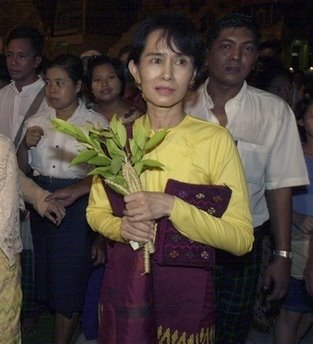


 Posts
Posts


