June 4, 2014 9:44am 1028 35 1 1294 (Updated 5:37 p.m.) A United Nations-backed international arbitral tribunal has ordered China to respond to the Philippines' claim that Beijing illegally occupied certain areas in the South China Sea. The Hague-based Permanent Court of Arbitration issued its second Procedural Order after the second meeting of the Arbitral Tribunal's members last May 14 and 15. However, in an statement later Wednesday, China reiterated its refusal to take part in the arbitration proceedings and rejected the ruling. ‘Open and friendly resolution mechanism’ In a memorial submitted to the tribunal on March 30, 2014, the Philippines argued that China illegally occupied at least eight South China Sea shoals, reefs and similar features belonging to the Philippines. It also said China's claims that it owns the disputed territory did not conform with the United Nations Convention on the Law of the Sea (UNCLOS). Beijing has continuously ignored the arbitration process, even saying in its May 21, 2014 note verbale that it will not participate in the proceedings. Earlier Wednesday, the Philippines asked China to reconsider its rejection of the legal challenge to its territorial claims and join the arbitration case. "We wish to reiterate that arbitration is a peaceful, open and friendly resolution mechanism that offers a durable solution to the disputes in the South China Sea," Foreign Affairs Spokesman Charles Jose told a press briefing. "We continue to urge China to reconsider its decision not to participate in the arbitration proceedings." At a press conference, presidential spokesperson Edwin Lacierda said they leave it to China whether or not it will comply with the order. "This is a process that all parties are abiding by. So, whether China responds or not... we leave it with them," he said. And while the country is waiting for the decision of the tribunal, the Palace official assured the public that authorities are securing the country's territories. "I think that’s where we have made measures both by the BFAR (Bureau of Fisheries and Aquatic Resources) and also by our coast watch to strengthen and to ensure our maritime resources," he said. Until December 15, 2014 The arbitral tribunal in its Procedural Order No. 2 has given China until December 15, 2014 to submit a counter memorial to the Philippine complaint that seeks to denigrate Beijing's massive claim, which Manila calls illegal and excessive. Chairing the five-member Arbitral Tribunal is Judge Thomas Mensah of Ghana. The other members include: - Judge Jean-Pierre Cot of France - Judge Stanislaw Pawlak of Poland - Professor Alfred Soons of the Netherlands - Judge Rüdiger Wolfrum of Germany Last May 21, the Permanent Court of Arbitration received a note verbale from China where Beijing reiterated it "does not accept the arbitration initiated by the Philippines.” China added the note verbale “shall not be regarded as China’s acceptance of, or participation in the proceedings.” On the other hand, the tribunal said it allowed both sides a chance to comment on scheduling, with the Philippines submitting its comments last May 29. The arbitration procedure started on Jan. 22, 2013, when the Philippines served China a notification and statement of claim. China rejected the Philippines' notification. Foreign Affairs Secretary Albert del Rosario said the memorial submitted March 30, 2014 to the Permanent Court of Arbitration “contains the Philippine analysis of the applicable law and the relevant evidence, and demonstrates that the tribunal has jurisdiction over all the claims made by the Philippines.” Representing the Philippines are: - Solicitor General Francis Jardeleza - counsels Paul Reichler and Lawrence Martin, Foley Hoag LLP, Washington DC - Professor Bernard Oxman, University of Miami School of Law, Miami - Professor Philippe Sands, London - Professor Alan Boyle, Essex Court Chambers, London Meanwhile, China has not appointed an agent as it does not accept the arbitration process. Tensions in Ayungin Shoal included Earlier, Solicitor General Francis Jardeleza said the incidents in Ayungin Shoal were included in the Philippine case. “The Philippines amended its statement of claim including Ayungin as part of the arbitration,” he said. Tensions over Ayungin Shoal (also called Ren’ai Reef by China but internationally known as Second Thomas Shoal) intensified on March 9 when Chinese coast guard ships blocked two Philippine civilian vessels which were sailing toward the disputed rocky outcrop. Also in March, Military officials reported an incident of harassment as they launched another attempt to transport supplies and fresh Filipino troops to a grounded Philippine Navy ship manned by more than a dozen Marines and sailors, which has become a symbol of Philippine sovereignty in the offshore territory. Pressure from China Under the arbitration procedure, the filing of a counter-memorial should be made by China. Upon submission, the tribunal will decide on the next steps and advise the parties involved in the case on its next course of action. Since the Philippines filed the case in January 2013, Beijing has attempted to pressure Manila into withdrawing from the legal process. China has also put diplomatic pressure on other claimant states not to support the Philippines. China maintains "historical and indisputable claim" nearly over the entire sea and its features, even as it overlaps with the territorial jurisdiction of its neighbors like the Philippines. West Philippine Sea Manila adopted the name West Philippine Sea for parts of the waters that are within its territorial boundaries. Vietnam, Malaysia, Brunei, and Taiwan are also claimants to the South China Sea – a major trading route where undersea oil and gas deposits have been discovered. An expert said Manila’s filing of the memorial would step up pressure on China in defending its nine-dash line claim – a tongue-shaped encirclement that covers a huge swath of the South China Sea. “It will add moral pressure on China to make its claims to ‘historic rights’ and ‘indisputable sovereignty’ clearer in terms of international law,” Professor Carl Thayer of the Australian Defense Force Academy told GMA News Online. The arbitral process could take up to a year or longer and during this period, China is expected to further reinforce its claims, said Thayer. On the other hand, the United States, European Union and many Asian governments have supported the Philippines' decision to seek a solution to the dispute through peaceful means "in accordance with international law" instead of military aggression. A decision in favor of the Philippines would strengthen the rule of international law, Thayer said. “Using international law may be the ‘weapon of the weak’ but the valiant attempt by the Philippines to employ legal means to create a stable regional order will be viewed positively by most regional states, including those in the Association of South East Asian Nations,” Thayer said. UNCLOS has no provisions for enforcement, but a favorable ruling will be seen as a moral victory for the Philippines. — Joel Locsin, Michaela del Callar and Kimberly Jane Tan, with a report from Reuters/LBG/KG/BM, GMA News
Thursday, June 5, 2014


Monday, May 11, 2009
Update: Dr Tin Myo Win was reportedly charged with 5/J and Daw Aung San Suu Kyi would be linked
BDD
Informed source said Dr Tin Myo Win is believed to be taken to the judge for two weeks detention by the regime. The SPDC intended to frame him up that connection with the American swimmer who entered Daw Aung San Suu Kyi's resident last week. Dr Tin is believed to be charged with 5/J emergency provision act for more investigation, said sources.
According to the informed source, Dr Tin informed authorities about American man who had approached him last year, but that could not confirmed that this time American Swimmer had approached him or not.
"The intension is clear; the SPDC needed more jail term for Daw Aung Suu Kyi. She could be charged by the regime for American swimmer, whether she was not a person who did invite or not. The SPDC goal is not to free her before 2010 election." said informed source.
Thursday, May 7, 2009
Regime Ignores Own Laws to Hold Suu Kyi: Rights Groups
http://www.irrawaddy.org/article.php?art_id=15595
--------------------------------------------------------------------------------
By SAW YAN NAING Wednesday, May 6, 2009
--------------------------------------------------------------------------------
Burma’s ruling regime is breaking its own laws and ignoring world opinion by continuing to detain opposition leader Aung San Suu Kyi, say members of her party and human rights groups.
On Friday, Hla Myo Myint, one of the lawyers representing Suu Kyi, traveled to the junta’s capital of Naypyidaw to receive a letter rejecting an appeal for her release, according to sources from her party, the National League for Democracy (NLD).
Kyi Win, the main lawyer working on the case, said he was unhappy with the response from the Burmese regime, which he said was against the law and lacking in fairness.
Kyi Win submitted two appeals against Suu Kyi’s detention twice last year, arguing that under Burmese law, she could not be held without charges for more than five years.
Suu Kyi has spent about 13 of the past 19 years under house arrest. Her latest period of detention began in May 2003, after she and her supporters came under attack by junta-backed thugs while traveling upcountry.
Speaking with The Irrawaddy on Wednesday, Debbie Stothard, coordinator of Altsean, a regional human rights group monitoring abuse in Burma, said the regime’s refusal to release Suu Kyi sent the message that it is completely indifferent to the rule of law.
“It’s pretty clear that the [regime] doesn’t even respect its own laws, let alone international law,” said Stothard.
She also said that the Burmese military regime would not move forward with democratic reforms unless it comes under concerted pressure from the international community, including China.
Stothard said the international community needs to be much more united and give the regime some reason to fear the consequences of failing to respond to demands for the release of all political prisoners, including Suu Kyi.
The United Nations should also put full diplomatic pressure on the rest of the international community to form a united front against the Burmese government, she added.
Bo Kyi, the joint secretary of the Thailand-based Assistance Association for Political Prisoners—Burma (AAPP), responded to the regime’s rejection of Suu Kyi’s appeal by saying that in Burma, the law serves only to further the interests of those in power.
“The law of the Burmese government is like rubber. They can bend it as they please, but we can’t use it against them because there is no rule of law in Burma. Suu Kyi’s detention and release are entirely in their hands,” he said.
The AAPP recently launched a petition for the release of all political prisoners in Burma and has so far collected more than 300,000 signatures, according to Bo Kyi.
Copyright © 2008 Irrawaddy Publishing Group | www.irrawaddy.org
Tuesday, March 31, 2009
Singapore to launch tougher public order law
http://in.reuters.com/article/lifestyleMolt/idINTRE52N25920090324
Tue Mar 24, 2009 4:03pm IST
By Nopporn Wong-Anan
SINGAPORE (Reuters) - Singapore, which already has tough restrictions on freedom of assembly, plans to tighten them further ahead of a major Asia-Pacific summit in the city-state.
The Public Order Bill, introduced in parliament on Monday before the Asia-Pacific Economic Cooperation (APEC) summit in November, was needed to "squarely address gaps in the current framework to enhance the ability of the police to ensure security during major events," the Ministry of Home Affairs said.
Under the proposed law, police could prevent activists from leaving home if they knew they were going to a political rally. It would also allow police to order a person to leave an area if they determine he is about to break the law.
All outdoor activities that are cause-related will need a police permit, no matter how many people are involved. That is a change from the current law requiring a permit for gatherings of five or more people.
Opposition politicians and activists were quick to criticize the proposed law. "Even in communist China, peaceful protests are tolerated," said Chee Siok Chin of the opposition Singapore Democratic Party.
The bill allows police to stop people from filming law enforcement if it could put officers in danger. The bill cited live media coverage of Indian police trying to rescue hostages in the Mumbai attacks last November as posing risks to the officers.
Police could stop small peaceful protests against unpopular visiting government leaders, such as from Myanmar, if the law was introduced, activists said.
Last week, three Singaporeans tried to present a bouquet of orchids to visiting Myanmar Prime Minister Thein Sein for him to give to detained Myanmar opposition leader Aung Sann Suu Kyi.
Thein Sein was having an orchid named after him at the Botanical Gardens, a Singapore tradition for visiting heads of government.
The law is certain to pass, since the ruling People's Action Party (PAP) has an overwhelming majority in parliament.
It also passed an amended law on Monday to ease a decade-long ban on political party documentary-like films, but introduced restrictions on dramatized political videos.
"These two sets of amendments should be viewed as part of the longstanding periodic adjustments the PAP has made to limit politics to tightly controlled electoral contests conducted in the absence of a meaningful civil society," said Garry Rodan of Murdoch University in Western Australia.
Others said the two laws were pre-emptive measures for the government to prevent a repeat at the APEC meeting of confrontation between police and protesters that took place during the World Bank/IMF meeting in 2006, and also to deal with potential social unrest during Singapore's worst-ever recession.
"As long as the government feels a threat, it needs greater measures to deal with greater problems," said Terence Chong at the Institute of Southeast Asian Studies in Singapore.
(Editing by Neil Chatterjee and Bill Tarrant)
© Thomson Reuters 2009. All rights reserved. Users may download and print extracts of content from this website for their own personal and non-commercial use only. Republication or redistribution of Thomson Reuters content, including by framing or similar means, is expressly prohibited without the prior written consent of Thomson Reuters. Thomson Reuters and its logo are registered trademarks or trademarks of the Thomson Reuters group of companies around the world.
Thomson Reuters journalists are subject to an Editorial Handbook which requires fair presentation and disclosure of relevant interests.
Monday, March 30, 2009
Suu Kyi detention breaks Myanmar law - UN body
http://www.reuters.com/article/latestCrisis/idUSN23295737
Myanmar law
* U.N. Secretary-General Ban urged to visit country
WASHINGTON, March 23 (Reuters) - A United Nations body has ruled the detention of Myanmar democracy activist Aung San Suu Kyi is illegal under the domestic laws of her own country, the former Burma, her lawyer said on Monday.
It was the first time the U.N. Working Group on Arbitrary Detention found that the confinement of Suu Kyi, who has spent more than 13 of the last 19 years under house arrest, illegal under Myanmar law, said her lead attorney, Jared Genser.
"The Working Group requests the government to immediately release, without any condition, Ms. Aung San Suu Kyi from her continued placement under house arrest," said the ruling, issued in November but made public only this week.
The latest decision was the fifth time since 1992 that Suu Kyi's detention was declared arbitrary and illegal under the Universal Declaration of Human Rights, said Genser, president of Freedom Now, an advocacy group for political prisoners.
Genser said it was unlikely the military junta that has ruled Myanmar since 1962 and has refused to recognize a 1990 landslide election victory of the Suu Kyi's opposition National League for Democracy would release her.
"At the same time, there has been increasing pressure being placed not only on the junta from the international community but also on the U.N. to deliver," he told Reuters.
"I would call on U.N. Secretary-General (Ban Ki-moon) to go to Burma and directly engage with the junta."
It is not clear whether Ban has plans to visit the Southeast Asian country.
Last week, Tomas Ojea Quintana, U.N. special rapporteur on human rights in Myanmar, called on the junta to release more than 2,100 political prisoners. (Reporting by Paul Eckert; Editing by John O'Callaghan)
Wednesday, March 25, 2009
The Right to Privacy and the Value of Legal Reform as a Left Strategy
http://republic-of-teesside.blogspot.com/2009/03/right-to-privacy-and-value-of-legal.html
Friday, March 20, 2009
Traditionally in the UK, a key feature of the common law protection of civil liberties was the absence of a right to privacy. Indeed even today such writers as Noam Chomsky regard the comparative weakness of liable laws in the USA as an example of domestic freedoms and protection of democracy.
However, the right to respect for private and family life has been a part of the European Convention of Fundamental Freedoms and Human Rights since the 1950s, and since the passing of the Human Rights Act 1998 in this country incorporating it has become enshrined in our law.
What should be immediately striking to any layperson who reads Article 8, where that right is contained, is that it is subject to a long list of qualifications and restrictions. Interferences with the exercise of the right by a public authority are permitted under Article 8(2) provided they are in accordance with law and necessary in a democratic society in the interests of ‘national security’, ‘public safety’ or the economic well-being of the country, for the prevention of ‘disorder’ or crime, for the protection of ‘health or morals’, or for the protection of the rights and freedoms of others.
The first four of these justifications are obviously going to ring alarm bells when viewed through a pair of left-wing spectacles. In 1978 the European Court of Human rights held that the mere existence of legislation in Germany allowing telephone tapping by state authorities involved ‘a menace of surveillance that strikes at freedom of communication’ and therefore constituted an interference with the right to privacy contained in Article 8, however as it contained safeguards they held that it was both lawful and proportionate.
In Malone v UK in 1984, the Court held that as UK domestic law on telephone tapping was obscure and open to differing interpretations it did not satisfy Article 8(2). In sharp response to this the Thatcher Government passed the Interception of Communications Act 1985 in order to place the practice on a statutory footing.
Article 8 is therefore toothless in terms of protecting, for example, trade unionists, anti-war or other demonstrators, and anyone else MI5 might consider undesirable from being spied upon by the state. It was appalling, though not remotely surprising, when earlier this month it was revealed that major construction companies had paid for information on their employees as part of a rampant blacklisting culture.
What, however, of the justification on the grounds of ‘protecting public morals’? This appears to serve two functions:
Firstly, the requirement of capitalism to control workers by dividing them along social grounds. This has always been done on many grounds, notably nationality, religion, sex, age, sexual orientation and even minor drug users have been painted as ‘the undeserving poor’. This is essential to create cheaper pools of labour, and to ‘play-off’ one set of workers against another in order to drive down wages and conditions. It is important, therefore, that not only employers are able to discriminate within the law, but also that other Establishment players such as the media should be free to push such agendas.
Even in Naomi Campbell’s famously successful action against the Daily Mirror for printing the details and photographs of her attendance at Narcotics Anonymous, it was still nevertheless held that there was a public interest in publishing the fact that she was a drug addict.
Let’s consider for a moment Daily Mail editor Paul Dacre’s incredulous reaction to Max Mosley’s successful lawsuit last year. In a speech to the Society of Editors’ Annual Conference denounced Mr Justice Eady for coming to an ‘arrogant and amoral’ judgment, which ‘inorexably and insidiously’ imposed a privacy law on British newspapers. Also, Tom Crone, the legal manager of News International, who was of the opinion that ‘these judgments risk outlawing the traditional role of the media in exposing the moral shortcomings of those who wield power’.
Compare however the Daily Mail articles covering the Moseley affair, which included screaming headlines such as ‘What Price Morality? Judge Champions Max Moseley’s right to hold S&M Orgies’ and ‘A Man without Shame: How Can Sex Scandal F1 Boss Max Moseley paint himself as the Injured Party?’ ,with the generally more sympathetic tone towards privacy rights in an article covering the leaking of BNP members’ personal details.
Second is control, through out and out blackmail having already defined a framework of morality and having established a so-called public interest as above. This is not simply a fictional conspiracy, even though this is precisely a tactic employed by the protagonists in A Very British Coup. We have seen very real attempts to bring down controversial (i.e. left-wing) politicians through the exposure of their private lives, including notably Tommy Sheridan, George Galloway and John Prescott.
What is also notable about Article 8 is its ambiguity, which in turn leaves it with flexibility. The state, for example, was happy to prosecute a group of consenting homosexual adults in the Brown case for engaging in sado-masochistic acts, and in its eagerness to resist the removal of the DNA records of hundreds and thousands of innocent people from police records, and in the reclassification of cannabis. Within the language of Article 8, it can do so legally. Yet at the same time Article 8 has been invoked to prevent any intrusion into family life to deal with domestic violence and child abuse, with public authorities insistent on an individualistic prognosis.
What this shows is that we should never seek to depend on laws written by and for capitalists. But is that to say there is no value in attempting to reform the law and bringing legal challenges in the courts? Certainly not, and in fact where necessary left groups and unions should devote resources to doing precisely this. We should simply do so having acknowledged that laws can be interpreted in many ways and that the power to do this lies with judges, who are political appointments and thus represent the domestic power base (capital). Rather than legal action we should rely instead on political movements. This has been the historic method of achieving successful reform by the labour movement. As explained in Raymond Challinor’s brilliant biography of W.P. Roberts (the miners’ attorney):
“How was this accomplished? Not on the basis, at least directly, of the strength of the workers’ case. Rather it was on the strength of the workers themselves...”
Posted by Joe at 12:06 PM
Friday, March 20, 2009
Failures of International Law and The Security Council’s Tyranny
http://911truth-sherbrooke.org/2009/03/13/failures-of-international-law-and-the-security-council%E2%80%99s-tyranny/
In relation to recent global events; wars, invasions of lands, conflicts between states, political scandals, recognitions of new states, there is one phrase that everybody likes to use, that phrase is called international law.
INTERNATIONAL LAW
International law is the term commonly used for referring to the system of implicit and explicit agreements that connect together nation-states in commitment to recognized values and standards, differing from other legal systems in that it concerns nations rather than private citizens.
International law can be referred to tree different legal disciplines, these include: public international law, private international law and supranational law.
The most interesting is the public international law or “Law of Nations”, since it involves the United Nations (International Court of Justice and Security Council), International Criminal Law, Geneva Conventions, Vienna Conventions, World Health Organization, International Labour Organization, International Monetary Fund, among others.
Public international law concerns the structure and conduct of states and intergovernmental organizations. In its most general sense, international public law consists of rules and principles of general application dealing with the conduct of states and of intergovernmental organizations and with their relations among themselves, as well as with some of their relations with persons, whether natural or juridical. Public international law establishes the framework and the criteria for identifying states as the principal actors in the international legal system.
In relation to the devastating international political scene, some main bodies of the public international law came to question, these include: the United Nations (International Court of Justice and Security Council) and the International Criminal Law.
Going back to the evolution and practice of these human organizations, it is pertinent to remind ourselves of the manual guide for the conduct of modern day international law.
THE UNITED NATIONS
The United Nations (UN) is an international organization whose stated aims are to facilitate cooperation in international law, international security, economic development, social progress, human rights, and achieving world peace. The organization is divided into administrative bodies, primarily: the General Assembly, The Security Council, The Economic and Social Council, The Secretariat, The International Court of Justice. There are currently 192 member states, including nearly every recognized independent state in the world.
The United Nations Charter is the treaty that forms and establishes the international organization called the United Nations. As a Charter, it is a constituent treaty, and all members are bound by its articles. The Charter consists of a preamble and a series of articles grouped into chapters.
A preamble to the UN Charter:
WE THE PEOPLES OF THE UNITED NATIONS DETERMINED
· to save succeeding generations from the scourge of war, which twice in our lifetime has brought untold sorrow to mankind, and
· to reaffirm faith in fundamental human rights, in the dignity and worth of the human person, in the equal rights of men and women and of nations, large and small, and
· to establish conditions under which justice and respect for the obligations arising from treaties and other sources of international law can be maintained, and
· to promote social progress and better standards of life in larger freedom,
AND FOR THESE ENDS
· to practice tolerance and live together in peace with one another as good neighbours, and
· to unite our strength to maintain international peace and security, and
· to ensure, by the acceptance of principles and the institution of methods, that armed force shall not be used, save in the common interest, and
· to employ international machinery for the promotion of the economic and social advancement of all peoples.
Charter I of the United Nations Charter lays out the purposes and principles of the United Nations organization.
Article 1:
The Purposes of the United Nations are:
To maintain international peace and security, and to that end: to take effective collective measures for the prevention and removal of threats to the peace, and for the suppression of acts of aggression or other breaches of the peace, and to bring about by peaceful means, and in conformity with the principles of justice and international law, adjustment or settlement of international disputes or situations which might lead to a breach of the peace;
To develop friendly relations among nations based on respect for the principle of equal rights and self-determination of peoples, and to take other appropriate measures to strengthen universal peace;
To achieve international co-operation in solving international problems of an economic, social, cultural, or humanitarian character, and in promoting and encouraging respect for human rights and for fundamental freedoms for all without distinction as to race, sex, language, or religion; and
To be a centre for harmonizing the actions of nations in the attainment of these common ends.
Article 2, clauses 3-4 essentially prohibit war (except in self-defence) by stating:
3. All Members shall settle their international disputes by peaceful means in such a manner that international peace and security, and justice, is not endangered.
4. All Members shall refrain in their international relations from the threat or use of force against the territorial integrity or political independence of any state, or in any other manner inconsistent with the Purposes of the United Nations.
Article 2, clause 7 of this chapter reemphasizes the fact that only the UN Security Council has the power to force any country to do anything by stating:
7. Nothing contained in the present Charter shall authorize the United Nations to intervene in matters which are essentially within the domestic jurisdiction of any state or shall require the Members to submit such matters to settlement under the present Charter; but this principle shall not prejudice the application of enforcement measures under Chapter VII. (Only the Security Council can institute Chapter VII enforcement measures.)
Chapter VII of the United Nations Charter sets out the UN Security Council’s powers to maintain peace. It allows the Council to determine the existence of any threat to the peace, breach of the peace, or act of aggression, and to take military and non-military action to restore international peace and security.
The UN Charter’s prohibition of member states of the UN attacking other UN member states is central to the purpose for which the UN was founded in the wake of the destruction of World War II: to prevent war.
According to Charter VII, article 51 of the United Nations Charter, countries can engage into military action only in self-defence, including collective self-defence:
51. Nothing in the present Charter shall impair the inherent right of individual or collective self-defence if an armed attack occurs against a Member of the United Nations, until the Security Council has taken measures necessary to maintain international peace and security. Measures taken by Members in the exercise of this right of self-defence shall be immediately reported to the Security Council and shall not in any way affect the authority and responsibility of the Security Council under the present Charter to take at any time such action as it deems necessary in order to maintain or restore international peace and security.
The Security Council was consequently granted broad powers through Chapter VII as a reaction to the failure of the League of Nations in the years between World War I and II.
THE INTERNATIONAL COURT OF JUSTICE – WORLD COURT
The International Court of Justice (ICJ) was established by the UN Charter, Charter XIV, and is the primary judicial organ of the United Nations. The ICJ is established to settle disputes between nations. Chapter XIV of the United Nations Charter authorizes the UN Security Council to enforce the ICJ rulings, but such enforcement is subject to the veto power of the five permanent members of the Council.
Charter XIV, Article 93, clause 1:
1. All Members of the United Nations are “ipso facto” parties to the Statute of the International Court of Justice.
Article 94, clause 1 and 2 establishes the duty of all UN members to comply with decisions of the Court involving them. If parties do not comply, the issue may be taken before the Security Council for enforcement action:
1. Each Member of the United Nations undertakes to comply with the decision of the International Court of Justice in any case to which it is a party.
2. If any party to a case fails to perform the obligations incumbent upon it under a judgment rendered by the Court, the other party may have recourse to the Security Council, which may, if it deems necessary, make recommendations or decide upon measures to be taken to give effect to the judgment.
Only states may be parties in contentious cases, on the other side individuals, corporations, parts of a federal state, NGOs, the UN organs and self-determination groups are excluded from direct participation in cases. The United States withdrew from compulsory jurisdiction in 1986, and so accepts the court’s jurisdiction only on a case to case basis.
Since the International Court of Justice deals only with states, there is an autonomous branch of law called International Criminal Law (ICL).
THE INTERNATIONAL CRIMINAL LAW
The International Criminal Law (ICL) deals with international crimes, the courts and tribunals are set up to arbitrate cases in which persons have incurred international criminal responsibility. It represents a significant departure from classical international law which was mainly considered law created by states for the benefit of states, but tended to ignore the individual as a subject of the law.
However, the precise parameters of this body of law are often unclear, perhaps due to the rapid and complex developments of our global society. In its widest context, the source of international criminal law might be derived from the general principles of international law recognized by civilized nations; and therefore, found in the customary law accepted by states, the general criminal law recognized by nations, and the treaties which govern particular conduct.
Today, the most important institution of the International Criminal Law is the International Criminal Court (ICC) as well as several “ad hoc” tribunals, such as: the International Criminal Tribunal for the former Yugoslavia (ICTY), and the International Criminal Tribunal for Rwanda (ICTR).
THE INTERNATIONAL CRIMINAL COURT
The International Criminal Court (ICC) is an independent, permanent court that tries persons accused of the most serious crimes of international concern, namely genocide, crimes against humanity, war crimes, and the crime of aggression, although it cannot currently exercise jurisdiction over the crime of aggression. Unlike the International Court of Justice, the ICC is legally and functionally independent from the United Nations. However, the Rome Statute grants certain powers to the United Nations Security Council.
Court came into being on 1 July, 2002 when the Rome Statute of the International Criminal Court entered into force, and it can only prosecute crimes committed on or after that date. The ICC only tries those accused of the gravest crimes. The ICC is joined by 108 countries; however, a number of states, including China, India, Israel, Iraq, Libya, Qatar, Yemen, and the United States are critical of the Court and have not joined. The Court is projected as a court of last resort, investigating and prosecuting only where national courts have failed.
During the negotiations that led to the Rome Statute, a large number of states argued that the Court should be allowed to exercise universal jurisdiction. However, this proposal was defeated due in large part to opposition from the United States. A compromise was reached, allowing the Court to exercise jurisdiction only under the following limited circumstances:
where the person accused of committing a crime is a national of a state party (or where the person’s state has accepted the jurisdiction of the Court);
where the alleged crime was committed on the territory of a state party (or where the state on whose territory the crime was committed has accepted the jurisdiction of the Court); or
where a situation is referred to the Court by the UN Security Council.
FAILURES OF INTERNATIONAL LAW AND ITS LEGAL SYSTEM
The United Nations
Multilateral diplomacy, as practiced at the United Nations provides the forum for exchange of experiences, conducting negotiations, exchange of thoughts in a culturally-diversified arena. Unfortunately, however, the United Nations has not lived up to the expectations of its founding fathers.
It appears that the United Nations is doing all kind of things, but not the most important ones, like: uniting people, maintaining international peace and security, developing friendly relations between nations, among others.
Since the formation of the UN in 1945, almost every Charter of the UN has been breached. There have been approximately 182 wars around the world since 1945, including most recent South Ossetia War. Currently, in contemporary days there are 32 ongoing wars which are being fought, these include: Sri Lanka Civil War, Second Chechen War, War in Afghanistan, War in Darfur, Iraq War, War in Somalia, age-old Arab-Israel/Israel-Palestine (including al-Aqsa Intifada) conflict, among others.
In addition, the UN became a war combatant itself. There have been two major wars authorized by the Security Council; the 1950 Korean War, and the 1991 Gulf War. States that breach resolutions have different fates. The Korean War was the first war in which the UN participated. Iraq was swiftly attacked after failing to comply with a Security Council resolution by withdrawing from Kuwait.
However, the US, the United Kingdom, Russia, Indonesia, Morocco, Turkey, among others have been in breach of several resolutions, sometimes for decades, without having had any action taken against them.
The United States as a member state, permanent member of Security Council and founder of the UN was involved in over 100 international military conflicts since 1945, some of which were: Vietnam War, Korean War, Gulf War, and ongoing wars: Iraq War (Second Persian Gulf War), War in Somalia, War on Terrorism (Operation Enduring Freedom); Afghanistan, Philippines, Trans Sahara, among others. If we look through world history for the last fifty years, we can see that no country has been involved in as many military conflicts as the United States has.
Similarly, under the United Nations Charter, Charter I, ratified by the US and therefore binding on it, all the UN member states, including the US are prohibited from using force against fellow member states, except to defend against an imminent attack or pursuant to explicit Security Council authorization.
However, some member states of the UN were attacked by other UN members, these include: Iraq (the US invasion of Iraq), Afghanistan (the US invasion of Afghanistan), Former Yugoslavia (the US led NATO bombing of Yugoslavia), Georgia (South Ossetia War and Russian interference), Panama (the US invasion of Panama), Kuwait (Invasion of Kuwait by Iraq), Somalia (invasion of Somalia by Ethiopia), among others.
The UN and its Charters were established “to save succeeding generations from the scourge of war”; however, since its formation, around 38 million people lost their lives in various wars around the globe. Unfortunately, the final number of the war victims will never be known. The UN failed to maintain peace.
The UN Charters was also breached by some member states with their recognition of Kosovo, as well as with recognition of South Ossetia and Abkhazia. There is no such thing called “special case” or “precedent” in the international law. International law, Charters of the UN and sovereignty and territorial integrity of a member state has to be respected by all member states equally and without any exemptions.
The Security Council and Power of Veto
The United Nations Security Council power of veto is frequently cited as a major problem with the UN. Key arguments include that the five permanent members (the US, the UK, Russia, China and France) no longer represent the most stable and responsible member states in the United Nations and that their veto power slows down and even prevents important decisions being made on matters of international peace and security.
For example, the Security Council passed no resolutions on most major Cold War conflicts, including the Soviet invasion of Czechoslovakia and Afghanistan, and the Vietnam War, among others. Resolutions addressing more current problems, failed also, such as the conflict between Israel and the Palestinians, the US invasion of Iraq and Afghanistan, South Ossetia War. There has been a constant cause of friction between the General Assembly and the Security Council, as almost all of the wars was not endorsed by the UN.
Nonetheless, the current Security Council power of veto is irrelevant. With the General Assembly’s adoption of the Uniting for Peace resolution 337A in 1950, it was made clear by the UN Member states that:
Resolves that if the Security Council, because of lack of unanimity of the permanent members, fails to exercise its primary responsibility for the maintenance of international peace and security in any case where there appears to be a threat to the peace, breach of the peace, or act of aggression, the General Assembly shall consider the matter immediately with a view to making appropriate recommendations to Members for collective measures, including in the case of a breach of the peace or act of aggression the use of armed force when necessary, to maintain or restore international peace and security.
In fact, on the other hand, this resolution looks irrelevant, since it was not used to maintain international peace and security when Security Council failed.
The United Nations was set to be a democratic organization, to represent all nations equally, however, today, after 63 years of existence, the UN has not changed, and continues to represents the interests of the governments of the nations who form it and not the individuals within those nations.
Knowing that the five permanent members of the Security Council, who are all nuclear powers, have created an exclusive nuclear club whose powers are unchecked, the General Assembly (which has true international representation) with all its members can easily withdraw from the UN.
It is very straightforward, why should members of the General Assembly or better to say members of the UN pay annual fees of millions of Dollars to the UN when they have no rights, they are not even protected from any military aggression by another member state, as was seen in the past. It was, also, reported that the US, a permanent member of the Security Council seriously thinking to withdraw from the UN. In addition to withdrawal, there were some proposals to expel the United Nations Headquarters from the US territory and the City of New York.
The International Court of Justice
If we look at the International Court of Justice (ICJ), there is not much to say. The Court decides in accordance with international treaties and conventions in force, international custom, and the general principles of law and, as subsidiary means, judicial decisions and the teachings of the most highly qualified publicists.
Generally, the Court has been most successful resolving border delineation and the use of oceans and waterways. While the Court has, in some instances, resolved claims by one State espoused on behalf of its nationals, the Court has generally refrained from hearing contentious cases that are political in nature, due in part to its lack of enforcement mechanism and its lack of compulsory jurisdiction. The Court has generally found it did not have jurisdiction to hear cases involving the use of force.
In relation to the UN Charter XIV, Article 94 of the UN Charter, there are some obvious problems; if the judgment is against one of the five permanent members of the Security Council or its allies, any resolution on enforcement would then be vetoed. This occurred, for example, after the Nicaragua case (Case Concerning Military and Paramilitary Activities in and against Nicaragua (Nicaragua vs. the US)), when Nicaragua brought the issue of the US’s non-compliance with the Court’s decision before the Security Council. Furthermore, if the Security Council refuses to enforce a judgment against any other state, there is no method of forcing the state to comply.
In practice, the Court’s powers have been limited by the unwillingness of the losing party to abide by the Court’s ruling, and by the Security Council’s unwillingness to impose consequences. Simply, the ICJ does not enjoy a full separation of force, with permanent members of the Security Council being able to veto enforcement of even cases to which they consented in advance to be bound.
The International Criminal Court
Relating to the International Criminal Court (ICC), as of 2002, the Office of the Prosecutor had received around 2800 so called “communications” about alleged crimes in at least 139 countries. After initial review, however, the vast majority of these communications were dismissed as obviously outside the jurisdiction of the Court. As of August 2008, the International Criminal Court has launched investigations into just four situations: Northern Uganda, the Democratic Republic of the Congo, the Central African Republic and Darfur (Sudan). Several other situations have been subject to intensive analysis, including Afghanistan, Chad, Colombia, Cote d’Ivoire, Georgia and Kenya.
The Office of the Prosecutor had received around 240 communications in connection with the US led invasion of Iraq in 2003, which alleged that various war crimes had been committed; none of these allegations had survived.
The UK, Australia, and Poland (countries that invaded Iraq with the US) are all state parties to the Rome Statute which established the International Criminal Court (ICC) and therefore their nationals are liable to prosecution by the court for the violation of any relevant international criminal laws. Because the United States is not a state party, the US nationals cannot be prosecuted by the court (except for crimes that take place in the territory of a state that has accepted the court’s jurisdiction, or situations that are referred to the court by the United Nations Security Council, where the US has a power of veto).
In July 2002, the United States threatened to use its Security Council veto to block renewal of the mandates of several United Nations peacekeeping operations, unless the Security Council agreed to permanently exempt US nationals from the Court’s jurisdiction.
A resolution to exempt citizens of the United States from jurisdiction of the ICC was renewed in 2003 by the Security Council Resolution 1487. However, the Security Council refused to renew the exemption again in 2004, after pictures emerged of US troops torturing and abusing Iraqi prisoners in Abu Ghraib. Shortly, the US withdrew its demand.
As part of the US campaign to exclude its citizens and military personnel from extradition to the ICC, the President Bush administration has been approaching countries around the world seeking to conclude Bilateral Immunity Agreements, or “Article 98” agreements. So far hundred countries have ratified this agreement. Countries that have ratified the Rome Statute and signed Article 98 breached their obligations under international law.
In 2008, the US President George W. Bush signed into law an amendment to the American Service-members Protection Act (ASPA), to eliminate restrictions on Foreign Military Financing (FMF) to nations unwilling to enter into Bilateral Immunity Agreements (BIAs) shielding the US nationals from the jurisdiction of the ICC. This Act authorizes use of military force to free US nationals from the custody of the ICC.
Some of the communications received by the Prosecutor alleged that crimes had been committed on the territory of states parties to the Court, or by nationals of states parties: in such cases, the Court may automatically exercise jurisdiction. Other communications concerned conduct outside the jurisdiction of states parties: in these cases, the Court can only act if it has received a referral by the United Nations Security Council or a declaration by the relevant state allowing the Court to exercise jurisdiction.
We have not seen the Security Council referring to the court regarding genocide, crimes against humanity, and war crimes, except in situations such as Darfur, and non-state country Cote d’Ivoire.
However, the Security Council established two ad hoc tribunals: The International Criminal Tribunal for the former Yugoslavia (ICTY) and the International Criminal Tribunal for Rwanda (ICTR).
The ICTY has been established by the Security Council, acting under Chapter VII of the Charter of the United Nations, but, it is not clear how a tribunal could be considered a measure to maintain or restore international peace and security. Also, the ICTY budget is not entirely financed by the UN, but also by private entities; some 14% is being privately funded and the remainder is being provided by the UN. This private co-financing might prove a problem concerning the Tribunal’s independence and fairness.
The International Criminal Tribunal for Rwanda (ICTR) is an international court established by the United Nations Security Council in order to judge those people responsible for the Rwandan genocide and other serious violations of the international law performed in the territory of Rwanda, or by Rwandan citizens in nearby states. So far, this tribunal is proven to be the most efficient.
On the other side, we have not seen ad hoc International Tribunals for Iraq, Afghanistan, Vietnam, Chechnya, among others. This is because of the permanent five power of veto, or maybe, there are no funds available for new ones, since these two costs too much.
In this story we have seen just a fraction of the devastating situation in international law, and if this trend continues there will be no mechanism to prevent and discipline any crimes committed by anyone.
Maybe, the hope is in the General Assembly, but only if;
the General Assembly, as apparent last resort for international law, acts and establishes serious mechanism which will carry out grave verdicts against countries and individuals who had breached Charters of the UN and international law.
If necessary, these shall include actions to be taken against countries such as: the United States, the United Kingdom, Russia, China, France, among others. As well as, against individuals/Heads of States, such as: the US President George W. Bush, former US President William Bill Clinton, Russia’s President Dmitry Medvedev, former Prime Minister of the UK Tony Blair, President of Eritrea Isaias Afewerki, former Prime Minister of Australia John Howard, among many others.
Ivan Simic
http://www.daily.pk/world/americas/9651-failures-of-international-law-and-the-security-councils-tyranny.html
Tuesday, March 17, 2009
Failures of International Law and The Security Council’s Tyranny
http://www.daily.pk/world/americas/9651-failures-of-international-law-and-the-security-councils-tyranny.html
Written by www.daily.pk
Wednesday, 11 March 2009 01:57
In relation to recent global events; wars, invasions of lands, conflicts between states, political scandals, recognitions of new states, there is one phrase that everybody likes to use, that phrase is called international law.
INTERNATIONAL LAW
International law is the term commonly used for referring to the system of implicit and explicit agreements that connect together nation-states in commitment to recognized values and standards, differing from other legal systems in that it concerns nations rather than private citizens.
International law can be referred to tree different legal disciplines, these include: public international law, private international law and supranational law.
The most interesting is the public international law or “Law of Nations”, since it involves the United Nations (International Court of Justice and Security Council), International Criminal Law, Geneva Conventions, Vienna Conventions, World Health Organization, International Labour Organization, International Monetary Fund, among others.
Public international law concerns the structure and conduct of states and intergovernmental organizations. In its most general sense, international public law consists of rules and principles of general application dealing with the conduct of states and of intergovernmental organizations and with their relations among themselves, as well as with some of their relations with persons, whether natural or juridical. Public international law establishes the framework and the criteria for identifying states as the principal actors in the international legal system.
In relation to the devastating international political scene, some main bodies of the public international law came to question, these include: the United Nations (International Court of Justice and Security Council) and the International Criminal Law.
Going back to the evolution and practice of these human organizations, it is pertinent to remind ourselves of the manual guide for the conduct of modern day international law.
THE UNITED NATIONS
The United Nations (UN) is an international organization whose stated aims are to facilitate cooperation in international law, international security, economic development, social progress, human rights, and achieving world peace. The organization is divided into administrative bodies, primarily: the General Assembly, The Security Council, The Economic and Social Council, The Secretariat, The International Court of Justice. There are currently 192 member states, including nearly every recognized independent state in the world.
The United Nations Charter is the treaty that forms and establishes the international organization called the United Nations. As a Charter, it is a constituent treaty, and all members are bound by its articles. The Charter consists of a preamble and a series of articles grouped into chapters.
A preamble to the UN Charter:
WE THE PEOPLES OF THE UNITED NATIONS DETERMINED
· to save succeeding generations from the scourge of war, which twice in our lifetime has brought untold sorrow to mankind, and
· to reaffirm faith in fundamental human rights, in the dignity and worth of the human person, in the equal rights of men and women and of nations, large and small, and
· to establish conditions under which justice and respect for the obligations arising from treaties and other sources of international law can be maintained, and
· to promote social progress and better standards of life in larger freedom,
AND FOR THESE ENDS
· to practice tolerance and live together in peace with one another as good neighbours, and
· to unite our strength to maintain international peace and security, and
· to ensure, by the acceptance of principles and the institution of methods, that armed force shall not be used, save in the common interest, and
· to employ international machinery for the promotion of the economic and social advancement of all peoples.
Charter I of the United Nations Charter lays out the purposes and principles of the United Nations organization.
Article 1:
The Purposes of the United Nations are:
To maintain international peace and security, and to that end: to take effective collective measures for the prevention and removal of threats to the peace, and for the suppression of acts of aggression or other breaches of the peace, and to bring about by peaceful means, and in conformity with the principles of justice and international law, adjustment or settlement of international disputes or situations which might lead to a breach of the peace;
To develop friendly relations among nations based on respect for the principle of equal rights and self-determination of peoples, and to take other appropriate measures to strengthen universal peace;
To achieve international co-operation in solving international problems of an economic, social, cultural, or humanitarian character, and in promoting and encouraging respect for human rights and for fundamental freedoms for all without distinction as to race, sex, language, or religion; and
To be a centre for harmonizing the actions of nations in the attainment of these common ends.
Article 2, clauses 3-4 essentially prohibit war (except in self-defence) by stating:
3. All Members shall settle their international disputes by peaceful means in such a manner that international peace and security, and justice, is not endangered.
4. All Members shall refrain in their international relations from the threat or use of force against the territorial integrity or political independence of any state, or in any other manner inconsistent with the Purposes of the United Nations.
Article 2, clause 7 of this chapter reemphasizes the fact that only the UN Security Council has the power to force any country to do anything by stating:
7. Nothing contained in the present Charter shall authorize the United Nations to intervene in matters which are essentially within the domestic jurisdiction of any state or shall require the Members to submit such matters to settlement under the present Charter; but this principle shall not prejudice the application of enforcement measures under Chapter VII. (Only the Security Council can institute Chapter VII enforcement measures.)
Chapter VII of the United Nations Charter sets out the UN Security Council's powers to maintain peace. It allows the Council to determine the existence of any threat to the peace, breach of the peace, or act of aggression, and to take military and non-military action to restore international peace and security.
The UN Charter's prohibition of member states of the UN attacking other UN member states is central to the purpose for which the UN was founded in the wake of the destruction of World War II: to prevent war.
According to Charter VII, article 51 of the United Nations Charter, countries can engage into military action only in self-defence, including collective self-defence:
51. Nothing in the present Charter shall impair the inherent right of individual or collective self-defence if an armed attack occurs against a Member of the United Nations, until the Security Council has taken measures necessary to maintain international peace and security. Measures taken by Members in the exercise of this right of self-defence shall be immediately reported to the Security Council and shall not in any way affect the authority and responsibility of the Security Council under the present Charter to take at any time such action as it deems necessary in order to maintain or restore international peace and security.
The Security Council was consequently granted broad powers through Chapter VII as a reaction to the failure of the League of Nations in the years between World War I and II.
THE INTERNATIONAL COURT OF JUSTICE – WORLD COURT
The International Court of Justice (ICJ) was established by the UN Charter, Charter XIV, and is the primary judicial organ of the United Nations. The ICJ is established to settle disputes between nations. Chapter XIV of the United Nations Charter authorizes the UN Security Council to enforce the ICJ rulings, but such enforcement is subject to the veto power of the five permanent members of the Council.
Charter XIV, Article 93, clause 1:
1. All Members of the United Nations are “ipso facto” parties to the Statute of the International Court of Justice.
Article 94, clause 1 and 2 establishes the duty of all UN members to comply with decisions of the Court involving them. If parties do not comply, the issue may be taken before the Security Council for enforcement action:
1. Each Member of the United Nations undertakes to comply with the decision of the International Court of Justice in any case to which it is a party.
2. If any party to a case fails to perform the obligations incumbent upon it under a judgment rendered by the Court, the other party may have recourse to the Security Council, which may, if it deems necessary, make recommendations or decide upon measures to be taken to give effect to the judgment.
Only states may be parties in contentious cases, on the other side individuals, corporations, parts of a federal state, NGOs, the UN organs and self-determination groups are excluded from direct participation in cases. The United States withdrew from compulsory jurisdiction in 1986, and so accepts the court's jurisdiction only on a case to case basis.
Since the International Court of Justice deals only with states, there is an autonomous branch of law called International Criminal Law (ICL).
THE INTERNATIONAL CRIMINAL LAW
The International Criminal Law (ICL) deals with international crimes, the courts and tribunals are set up to arbitrate cases in which persons have incurred international criminal responsibility. It represents a significant departure from classical international law which was mainly considered law created by states for the benefit of states, but tended to ignore the individual as a subject of the law.
However, the precise parameters of this body of law are often unclear, perhaps due to the rapid and complex developments of our global society. In its widest context, the source of international criminal law might be derived from the general principles of international law recognized by civilized nations; and therefore, found in the customary law accepted by states, the general criminal law recognized by nations, and the treaties which govern particular conduct.
Today, the most important institution of the International Criminal Law is the International Criminal Court (ICC) as well as several “ad hoc” tribunals, such as: the International Criminal Tribunal for the former Yugoslavia (ICTY), and the International Criminal Tribunal for Rwanda (ICTR).
THE INTERNATIONAL CRIMINAL COURT
The International Criminal Court (ICC) is an independent, permanent court that tries persons accused of the most serious crimes of international concern, namely genocide, crimes against humanity, war crimes, and the crime of aggression, although it cannot currently exercise jurisdiction over the crime of aggression. Unlike the International Court of Justice, the ICC is legally and functionally independent from the United Nations. However, the Rome Statute grants certain powers to the United Nations Security Council.
Court came into being on 1 July, 2002 when the Rome Statute of the International Criminal Court entered into force, and it can only prosecute crimes committed on or after that date. The ICC only tries those accused of the gravest crimes. The ICC is joined by 108 countries; however, a number of states, including China, India, Israel, Iraq, Libya, Qatar, Yemen, and the United States are critical of the Court and have not joined. The Court is projected as a court of last resort, investigating and prosecuting only where national courts have failed.
During the negotiations that led to the Rome Statute, a large number of states argued that the Court should be allowed to exercise universal jurisdiction. However, this proposal was defeated due in large part to opposition from the United States. A compromise was reached, allowing the Court to exercise jurisdiction only under the following limited circumstances:
where the person accused of committing a crime is a national of a state party (or where the person's state has accepted the jurisdiction of the Court);
where the alleged crime was committed on the territory of a state party (or where the state on whose territory the crime was committed has accepted the jurisdiction of the Court); or
where a situation is referred to the Court by the UN Security Council.
FAILURES OF INTERNATIONAL LAW AND ITS LEGAL SYSTEM
The United Nations
Multilateral diplomacy, as practiced at the United Nations provides the forum for exchange of experiences, conducting negotiations, exchange of thoughts in a culturally-diversified arena. Unfortunately, however, the United Nations has not lived up to the expectations of its founding fathers.
It appears that the United Nations is doing all kind of things, but not the most important ones, like: uniting people, maintaining international peace and security, developing friendly relations between nations, among others.
Since the formation of the UN in 1945, almost every Charter of the UN has been breached. There have been approximately 182 wars around the world since 1945, including most recent South Ossetia War. Currently, in contemporary days there are 32 ongoing wars which are being fought, these include: Sri Lanka Civil War, Second Chechen War, War in Afghanistan, War in Darfur, Iraq War, War in Somalia, age-old Arab-Israel/Israel-Palestine (including al-Aqsa Intifada) conflict, among others.
In addition, the UN became a war combatant itself. There have been two major wars authorized by the Security Council; the 1950 Korean War, and the 1991 Gulf War. States that breach resolutions have different fates. The Korean War was the first war in which the UN participated. Iraq was swiftly attacked after failing to comply with a Security Council resolution by withdrawing from Kuwait.
However, the US, the United Kingdom, Russia, Indonesia, Morocco, Turkey, among others have been in breach of several resolutions, sometimes for decades, without having had any action taken against them.
The United States as a member state, permanent member of Security Council and founder of the UN was involved in over 100 international military conflicts since 1945, some of which were: Vietnam War, Korean War, Gulf War, and ongoing wars: Iraq War (Second Persian Gulf War), War in Somalia, War on Terrorism (Operation Enduring Freedom); Afghanistan, Philippines, Trans Sahara, among others. If we look through world history for the last fifty years, we can see that no country has been involved in as many military conflicts as the United States has.
Similarly, under the United Nations Charter, Charter I, ratified by the US and therefore binding on it, all the UN member states, including the US are prohibited from using force against fellow member states, except to defend against an imminent attack or pursuant to explicit Security Council authorization.
However, some member states of the UN were attacked by other UN members, these include: Iraq (the US invasion of Iraq), Afghanistan (the US invasion of Afghanistan), Former Yugoslavia (the US led NATO bombing of Yugoslavia), Georgia (South Ossetia War and Russian interference), Panama (the US invasion of Panama), Kuwait (Invasion of Kuwait by Iraq), Somalia (invasion of Somalia by Ethiopia), among others.
The UN and its Charters were established “to save succeeding generations from the scourge of war”; however, since its formation, around 38 million people lost their lives in various wars around the globe. Unfortunately, the final number of the war victims will never be known. The UN failed to maintain peace.
The UN Charters was also breached by some member states with their recognition of Kosovo, as well as with recognition of South Ossetia and Abkhazia. There is no such thing called “special case” or “precedent” in the international law. International law, Charters of the UN and sovereignty and territorial integrity of a member state has to be respected by all member states equally and without any exemptions.
The Security Council and Power of Veto
The United Nations Security Council power of veto is frequently cited as a major problem with the UN. Key arguments include that the five permanent members (the US, the UK, Russia, China and France) no longer represent the most stable and responsible member states in the United Nations and that their veto power slows down and even prevents important decisions being made on matters of international peace and security.
For example, the Security Council passed no resolutions on most major Cold War conflicts, including the Soviet invasion of Czechoslovakia and Afghanistan, and the Vietnam War, among others. Resolutions addressing more current problems, failed also, such as the conflict between Israel and the Palestinians, the US invasion of Iraq and Afghanistan, South Ossetia War. There has been a constant cause of friction between the General Assembly and the Security Council, as almost all of the wars was not endorsed by the UN.
Nonetheless, the current Security Council power of veto is irrelevant. With the General Assembly's adoption of the Uniting for Peace resolution 337A in 1950, it was made clear by the UN Member states that:
Resolves that if the Security Council, because of lack of unanimity of the permanent members, fails to exercise its primary responsibility for the maintenance of international peace and security in any case where there appears to be a threat to the peace, breach of the peace, or act of aggression, the General Assembly shall consider the matter immediately with a view to making appropriate recommendations to Members for collective measures, including in the case of a breach of the peace or act of aggression the use of armed force when necessary, to maintain or restore international peace and security.
In fact, on the other hand, this resolution looks irrelevant, since it was not used to maintain international peace and security when Security Council failed.
The United Nations was set to be a democratic organization, to represent all nations equally, however, today, after 63 years of existence, the UN has not changed, and continues to represents the interests of the governments of the nations who form it and not the individuals within those nations.
Knowing that the five permanent members of the Security Council, who are all nuclear powers, have created an exclusive nuclear club whose powers are unchecked, the General Assembly (which has true international representation) with all its members can easily withdraw from the UN.
It is very straightforward, why should members of the General Assembly or better to say members of the UN pay annual fees of millions of Dollars to the UN when they have no rights, they are not even protected from any military aggression by another member state, as was seen in the past. It was, also, reported that the US, a permanent member of the Security Council seriously thinking to withdraw from the UN. In addition to withdrawal, there were some proposals to expel the United Nations Headquarters from the US territory and the City of New York.
The International Court of Justice
If we look at the International Court of Justice (ICJ), there is not much to say. The Court decides in accordance with international treaties and conventions in force, international custom, and the general principles of law and, as subsidiary means, judicial decisions and the teachings of the most highly qualified publicists.
Generally, the Court has been most successful resolving border delineation and the use of oceans and waterways. While the Court has, in some instances, resolved claims by one State espoused on behalf of its nationals, the Court has generally refrained from hearing contentious cases that are political in nature, due in part to its lack of enforcement mechanism and its lack of compulsory jurisdiction. The Court has generally found it did not have jurisdiction to hear cases involving the use of force.
In relation to the UN Charter XIV, Article 94 of the UN Charter, there are some obvious problems; if the judgment is against one of the five permanent members of the Security Council or its allies, any resolution on enforcement would then be vetoed. This occurred, for example, after the Nicaragua case (Case Concerning Military and Paramilitary Activities in and against Nicaragua (Nicaragua vs. the US)), when Nicaragua brought the issue of the US's non-compliance with the Court's decision before the Security Council. Furthermore, if the Security Council refuses to enforce a judgment against any other state, there is no method of forcing the state to comply.
In practice, the Court's powers have been limited by the unwillingness of the losing party to abide by the Court's ruling, and by the Security Council's unwillingness to impose consequences. Simply, the ICJ does not enjoy a full separation of force, with permanent members of the Security Council being able to veto enforcement of even cases to which they consented in advance to be bound.
The International Criminal Court
Relating to the International Criminal Court (ICC), as of 2002, the Office of the Prosecutor had received around 2800 so called “communications” about alleged crimes in at least 139 countries. After initial review, however, the vast majority of these communications were dismissed as obviously outside the jurisdiction of the Court. As of August 2008, the International Criminal Court has launched investigations into just four situations: Northern Uganda, the Democratic Republic of the Congo, the Central African Republic and Darfur (Sudan). Several other situations have been subject to intensive analysis, including Afghanistan, Chad, Colombia, Cote d'Ivoire, Georgia and Kenya.
The Office of the Prosecutor had received around 240 communications in connection with the US led invasion of Iraq in 2003, which alleged that various war crimes had been committed; none of these allegations had survived.
The UK, Australia, and Poland (countries that invaded Iraq with the US) are all state parties to the Rome Statute which established the International Criminal Court (ICC) and therefore their nationals are liable to prosecution by the court for the violation of any relevant international criminal laws. Because the United States is not a state party, the US nationals cannot be prosecuted by the court (except for crimes that take place in the territory of a state that has accepted the court's jurisdiction, or situations that are referred to the court by the United Nations Security Council, where the US has a power of veto).
In July 2002, the United States threatened to use its Security Council veto to block renewal of the mandates of several United Nations peacekeeping operations, unless the Security Council agreed to permanently exempt US nationals from the Court's jurisdiction.
A resolution to exempt citizens of the United States from jurisdiction of the ICC was renewed in 2003 by the Security Council Resolution 1487. However, the Security Council refused to renew the exemption again in 2004, after pictures emerged of US troops torturing and abusing Iraqi prisoners in Abu Ghraib. Shortly, the US withdrew its demand.
As part of the US campaign to exclude its citizens and military personnel from extradition to the ICC, the President Bush administration has been approaching countries around the world seeking to conclude Bilateral Immunity Agreements, or “Article 98” agreements. So far hundred countries have ratified this agreement. Countries that have ratified the Rome Statute and signed Article 98 breached their obligations under international law.
In 2008, the US President George W. Bush signed into law an amendment to the American Service-members Protection Act (ASPA), to eliminate restrictions on Foreign Military Financing (FMF) to nations unwilling to enter into Bilateral Immunity Agreements (BIAs) shielding the US nationals from the jurisdiction of the ICC. This Act authorizes use of military force to free US nationals from the custody of the ICC.
Some of the communications received by the Prosecutor alleged that crimes had been committed on the territory of states parties to the Court, or by nationals of states parties: in such cases, the Court may automatically exercise jurisdiction. Other communications concerned conduct outside the jurisdiction of states parties: in these cases, the Court can only act if it has received a referral by the United Nations Security Council or a declaration by the relevant state allowing the Court to exercise jurisdiction.
We have not seen the Security Council referring to the court regarding genocide, crimes against humanity, and war crimes, except in situations such as Darfur, and non-state country Cote d’Ivoire.
However, the Security Council established two ad hoc tribunals: The International Criminal Tribunal for the former Yugoslavia (ICTY) and the International Criminal Tribunal for Rwanda (ICTR).
The ICTY has been established by the Security Council, acting under Chapter VII of the Charter of the United Nations, but, it is not clear how a tribunal could be considered a measure to maintain or restore international peace and security. Also, the ICTY budget is not entirely financed by the UN, but also by private entities; some 14% is being privately funded and the remainder is being provided by the UN. This private co-financing might prove a problem concerning the Tribunal's independence and fairness.
The International Criminal Tribunal for Rwanda (ICTR) is an international court established by the United Nations Security Council in order to judge those people responsible for the Rwandan genocide and other serious violations of the international law performed in the territory of Rwanda, or by Rwandan citizens in nearby states. So far, this tribunal is proven to be the most efficient.
On the other side, we have not seen ad hoc International Tribunals for Iraq, Afghanistan, Vietnam, Chechnya, among others. This is because of the permanent five power of veto, or maybe, there are no funds available for new ones, since these two costs too much.
In this story we have seen just a fraction of the devastating situation in international law, and if this trend continues there will be no mechanism to prevent and discipline any crimes committed by anyone.
Maybe, the hope is in the General Assembly, but only if;
the General Assembly, as apparent last resort for international law, acts and establishes serious mechanism which will carry out grave verdicts against countries and individuals who had breached Charters of the UN and international law.
If necessary, these shall include actions to be taken against countries such as: the United States, the United Kingdom, Russia, China, France, among others. As well as, against individuals/Heads of States, such as: the US President George W. Bush, former US President William Bill Clinton, Russia’s President Dmitry Medvedev, former Prime Minister of the UK Tony Blair, President of Eritrea Isaias Afewerki, former Prime Minister of Australia John Howard, among many others. Ivan Simic
Tuesday, February 24, 2009
BURMA: Non-application of law
http://www.scoop.co.nz/stories/WO0902/S00362.htm
Saturday, 21 February 2009, 3:04 pm
Press Release: ALRC
A written statement submitted by the Asian Legal Resource Centre (ALRC), a non-
governmental organisation with general consultative status
BURMA: Non-application of law and the cases arising from September 2007 in Myanmar
1. For a number of years that the Asian Legal Resource Centre (ALRC) has worked closely and consistently on the situation of human rights in Myanmar it has stressed the need for international organisations and others concerned with the situation there to concentrate their attention on the features of and defects in the criminal justice system as a means to better understand the mechanisms both for persistent authoritarian control of the state there and to deny redress for abuses of fundamental rights.
2. Since the massive September 2007 monk-led demonstrations, the ALRC has documented numerous cases brought against persons accused of involvement in the protests that together again underline the telling need for this approach to the situation of human rights in Myanmar. Just a few of the violations of provisions of Myanmar domestic law, to say nothing of international law, and comments upon their ramifications for the judicial system in Myanmar as a whole, follow:
a. Coerced signing of confessions and “pledges” that had no basis in law
Persons in civilian clothes waylaid Khin Sanda Win, 23, on 29 September 2007 outside the Pansodan Department Store in Kyauktada Township, Yangon, tied her hands behind her back and took her to the town hall where she was put together with ten men who were unknown to her and then they were each photographed with various weapons, including knives, slingshots and pellets. Then they were allegedly forced to sign confessions that the weapons had been found in their bags. Khin Sanda Win was sent to the special interrogation centre at Kyaikkasan and she was kept there without charge, warrant or otherwise until October 7, when she was transferred to the central prison and held there, again without charge, warrant or any other legal order until October 25, when she was sent to the Hlaing Township Peace and Development Council office where in the presence of the council chairman and her parents she was told to sign a pledge that she would not take part in any anti-state activities, after whic h she was released. Accor
b. Illegal arrest and arbitrary detention in violation of section 59 of the Criminal Procedure Code (CrPC) of Myanmar, which requires a detainee to be taken to a police station and section 61, which requires a detainee to be brought before a magistrate within 24 hours
U Ohn Than, 60, on 23 August 2007 went by himself to the front of the then-Embassy of the United States of America in Kyauktada, Yangon and held a placard with a series of points written on each side. On one, he called among other things for the UN Secretary General to intervene and support the people’s will for the restoring of parliament in Myanmar. On the other, he called on soldiers to uphold the armed forces’ dignity and defy the orders of their superiors in order to bring an end to dictatorship. Like other protestors, Ohn Than was not arrested according to any law. After being bundled away in a vehicle by men in plain clothes who did not identify themselves to him, he was taken to the Kyaikkasan special military interrogation camp rather than a police station where he was kept incognito for 160 days until the end of January 2008 when his case was finally brought into a court (by brought by Inspector Soe Naing, Kyauktada Township Police, Serial No. La/147569). Like others, he was not tried
c. Closed trials in violation of section 2(e) of the Judiciary Law 2000 and section 352 of the CrPC, and denial of the right to appeal against maltreatment of court
Ko Htun Htun Oo, Ko Maung Maung Latt and Ko Aung Kyaw Moe, and Ma Htar Htar Thet, had four cases pending before Judge Daw Aye Myaing of the Hlaing Township Court, Yangon, at a special courtroom within the Insein Central Prison, under an order from the Supreme Court on 3 October 2008 when their family members were not allowed to enter the courtroom nor leave food for them. Thereafter, at the hearing on October 6, Ko Htun Htun Oo, speaking on behalf of the four defendants, informed the court that as the family members had been denied the right to attend the hearings and as the defendants “no longer had faith in the judicial process” they had decided that they would no longer cooperate with the court. They would refuse to be examined, give testimony, or cross-examine witnesses through their counsel. They also would withdraw the power of attorney from the two lawyers at the next hearing. After he made this statement, the judge instructed that the same be put to the court thr ough the lawyers. When th
d. Denial of the right to a lawyer and the right to make a proper defence under section 340 of the CrPC and section 2(f) of the Judiciary Law 2000 as well as denial of the right to present witnesses
Police arrested 34-year-old Ko Thiha on the night of 7 September 2007 south of Mandalay, near the town of Wundwin, over some allegedly inflammatory publications. They brought him to the Mandalay District Court (although by law it should have been initiated in the local township court) and charged him with sedition and upsetting public tranquility under sections 124A/505(b) of the Penal Code (charges brought by Police Captain Win Myint, Special Branch). The trial was held at a special court inside the Mandalay Prison. Thiha did not have a lawyer to represent him, even though he was facing a life sentence. He was not able to call any witnesses or defend himself in court. Meanwhile, the witnesses that the police called were not the ones present when Thiha was actually arrested. The police did not present any evidence to strongly support the charge of sedition and instead called another judge who briefly testified that Thiha had made a confession before him, which was presented as evide nce. However, Thiha claim
e. Evidence-less cases or cases consisting of inadmissible evidence under the Evidence Act
Ma Honey Oo, 21, was accused of having had contact with overseas radio stations to give out information at the time of the protests, and having been involved in making a student union. She was taken into custody on 9 October 2007 but was not brought before the Yangon Eastern District Court until 20 December 2007. The police accused Honey Oo of having been involved in a student union, having talked to foreign media by telephone and of having participated in protests at the Yuzana Plaza and on the road from Mingalar Market to Natmauk on 25-6 September 2007. However, when pressed in court they could not produce any evidence to support any of their claims and on the contrary showed ignorance and confusion about the laws under which she had been brought. The investigating detective, Sub-Inspector Soe Moe Aung (Serial No. La/134172, Tamwe Township Police) said that the information they had that Honey Oo was part of the group accused of having contact with overseas media was from a reliabl e source, but he could no
3. There are large numbers of cases and further violations of domestic law since the September 2007 events that the ALRC has documented in detail and could use to further illustrate the point that the Government of Myanmar is disinterested or unable to apply its own domestic law, let alone the standards to which the United Nations subscribes, in handling criminal cases of this sort. However, the bigger point that needs to be made here is that it is not merely these cases and the accused persons that are of concern. Rather, as a consequence of this sort of deliberate misuse and degrading of the institutions of criminal justice, there is a flow-on effect into the system as a whole. The perverting of due process in the courts, the encouragement of police and other state officials to ignore even the most basic procedures in arrest and detention, and the denial of the most fundamental rights to accused persons persist across all institutions thereby making the notion of justice for anyon e in Myanmar in any case
4. In keeping with this analysis, the Asian Legal Resource Centre has urged and again urges the concerned Special Procedures of the Council, in particular to the Special Rapporteur on the situation on human rights in Myanmar but also the mandates concerning arbitrary and illegal detention, independence of judges and lawyers, human rights defenders, and the question of torture to take up and pursue cases arising from extraordinary events, including the September 2007 protests and May 2008 cyclone, in the broader frame of systemic failure of criminal justice that impinges directly upon the lives of everyone in Myanmar, not merely those who have been targeted because of their supposed attempts to arouse dissent to the current government or others in cases of special interest. It is in the profound consequences for the lives of everyone in the country that these cases have their special importance and deserve, indeed demand, our attention.
About ALRC: The Asian Legal Resource Centre is an independent regional non-governmental organisation holding general consultative status with the Economic and Social Council of the United Nations. It is the sister organisation of the Asian Human Rights Commission. The Hong Kong-based group seeks to strengthen and encourage positive action on legal and human rights issues at local and national levels throughout Asia.
ENDS
Friday, February 20, 2009
Junta Declares War on Lawyers
http://www.irrawaddy.org/article.php?art_id=15145
--------------------------------------------------------------------------------
By MARWAAN MACAN-MARKAR / IPS WRITER Thursday, February 19, 2009
--------------------------------------------------------------------------------
MAE SOT — To be a lawyer in military-ruled Burma is to court danger, invite arrest and risk being jailed in the country’s notorious prisons.
It is the price to be paid for what, in most countries, would be standard practice for the legal profession: defending a person facing a trial for an alleged crime that he or she has been charged with.
But the ongoing targeting of lawyers reveals that life marches to a different tune in the South-east Asian country that has been under the oppressive grip of a military dictatorship for the past 47 years.
More so if the legal battles involve the countries pro-democracy activists who dare to stand up, speak out and be counted among the eternally harassed opposition. More so if the ones facing charges in what are largely political trials have links to the National League for Democracy (NLD), the largest opposition party.
Saw Kyaw Kyaw Min is among the fortunate, though. The soft-spoken, slightly-built lawyer gave the authorities the slip in Rangoon, the former capital, and fled to Mae Sot in December to relate disturbing accounts of the new pressure on his profession.
"It is difficult for pro-democracy activists to get a fair trial in Burma," said the 29-year-old during a late-night interview in the Thai town near the Burmese border that has become home to many political activists who have fled oppression back home. "I did not have rights to talk with the political prisoners in private to prepare for their cases."
"There were times when a request to meet my clients was denied," added Saw Kyaw Kyaw Min, whose legal practice has largely been dedicated to helping political activist from the NLD arrested for protesting against the junta. "There were always men from military intelligence and the special branch monitoring the discussions I was having with my clients."
What prompted his flight to Thailand was when a judge hearing a case where Saw Kyaw Kyaw Min was appearing charged him and his colleague for coming to the defence of three clients during a trial in October last year. "Our clients protested in court by turning their backs and saying that they didn’t trust the trial process," he revealed.
Not so lucky was his colleague, Nyi Nyi Htwe. The latter was arrested at a teashop on Oct. 29 and is currently serving a six months jail term. The same sentence was handed down to Saw Kyaw Kyaw Min in absentia.
Since then, three other lawyers appearing for pro-democracy activists have been jailed. In early February, the authorities issued arrest warrants for six lawyers who have been defending political activists.
And if not that, the junta has pursued an alternative route to bar opposition figures from securing legal aid during their political trials. The outcome of a case that ended in mid-February is typical: the lawyers chosen to assist two elected parliamentarians were barred from attending court proceedings until their clients were sentenced to 15 years in jail.
"There is no rule of law in Burma," says Bo Kyi, a former political prisoner who heads the Assistant Association for Political Prisoners in Burma, a human rights group based in this town. "There is no separation of powers, no independence of the judiciary."
"It is getting more difficult for lawyers to defend political activists," he revealed. "The lawyers who appear for the activists are very brave. They don’t get much money and they know that their practice will suffer."
And the need for such lawyers with courage could not have been greater, he explained, in the wake of the on-going crackdown of all dissenting voices and the harsh jail terms handed down to leading, respected political activists.
In November last year, the courts handed down verdicts for 215 political activists who were linked to the pro-democracy street protests, led by thousands of Buddhists monks, held in September 2007.
A 21-year-old student was given a 104-year-sentence, a Buddhist monk who led the protests was given a 68-year-jail term, and leading female dissident was imprisoned for 65 years.
The junta’s aggressive use of the courts to target all political dissidents became clear in late 2003, following a 106-year-sentence handed down to a leading member of the Shan ethnic community, says Aung Htoo, general secretary of the Burma Lawyers’ Council. "Since that time the regime started using the judiciary as a tool of oppression."
"This is the worst period for the non-independence of the judiciary," he added. "We are seeing outrageous rulings. The situation was bad before, but not this bad."
And the judgments delivered after the political trials do not emerge from the court proceedings either. "The Home Ministry instructs the judges and the prosecutors about the verdict they want," says U Myo, a former state prosecutor who fled Burma for Thailand.
"They have to follow the orders."
Saw Kyaw Kyaw Min witnessed such travesty since he graduated in 2005 with a law degree from Burma’s Dagon University and began his practice.
"Once the trial starts, the judge, the prosecuting lawyers, the prosecuting officers, and the prosecution’s witnesses follow the (junta’s) instructions," the lawyer noted in a statement released soon after he arrived in Mae Sot.
Abuse is rampant during the trial, too, he added. "Questions asked in court by the defence lawyers are deemed inadmissible by the judge, and so are not officially recorded in the court transcript."
Sunday, January 25, 2009
China says teens freed from Myanmar kidnap
http://www.canada.com/topics/news/world/story.html?id=1207553
Reuters
Published: Thursday, January 22, 2009
BEIJING - Chinese police said 18 nationals kidnapped in Myanmar have been freed after families paid ransoms to captors who forced the mostly teenage victims to gamble themselves into deep debt, official media reported.
The Xinhua News Agency reported late on Thursday that at least 19 people from Yuncheng, a small coal city in north Shanxi province, were lured to southwest China's Yunnan province in search of work. They were then taken to neighbouring Myanmar and forced to gamble.
China's long border with Myanmar is porous, and there are many casinos on the Myanmar side that cater to visiting Chinese.
"The kidnappers forced them to call home asking for ransom money," the report said, citing Yuncheng police.
One of the captives, 16-year-old Wang Jian, told police they "were all starving, thirsty and frequently beaten". And Wang "was even forced to eat excrement and threatened with being thrown into a cage with a bear".
In most of the cases, families or police paid ransoms from 20,000 yuan ($6,800) to 100,000 yuan ($14,600), the report said. One of the 19 people confirmed kidnapped was still being held.
Zhou Xin, a police officer in Yuncheng, said there had been a spate of abductions of young people there since August last year, but he said there were unlikely to be many more than the 19 already reported.
China is one of the few nations that stands by the military junta running Myanmar, also called by its former name Burma. But Chinese officials have also been worried by the gambling, drug-running and crime that spills over from hilly and isolated northern Myanmar.
The report did not explain why locals of Yuncheng were targeted by kidnappers. But the Shanxi province's abundant coal has brought wealth to families there.
Police arrested two men from Shanxi on suspicion of involvement in the case, Xinhua reported. Other suspects are being pursued.
"Most of the suspects were friends or schoolmates of the victims," Xinhua said.
© Reuters 2009


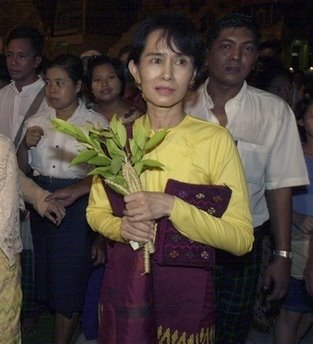


 Posts
Posts


