By Associated Press June 17 at 11:33 AM WASHINGTON — The United States says Myanmar should reform its constitution to allow its citizens a free choice over who should be its next president, but Myanmar’s government said Tuesday that’s none of Washington’s business. A Myanmar parliamentary committee last week voted against changing a constitutional clause that bars opposition leader and Nobel laureate Aung San Suu Kyi from becoming president. National elections are due in 2015. State Department spokeswoman Jen Psaki said that enabling the Myanmar people to freely choose who they want to lead them in the next phase of its democratic transition will help to ensure stability. “We believe constitutional reform should pave the way for the Burmese to freely choose their president in a free and fair 2015 election,” Psaki said in a written response to a question posed at a news briefing Monday. Reform should also address ethnic minority rights and decrease the role of active-duty military in political structures, she said. In response, Myanmar presidential spokesman Ye Htut said Tuesday it’s the responsibility of Myanmar’s parliament and people to decide how the constitution should be amended. “It is not the concern of the United States. It is inappropriate for us to tell how the U.S. should amend their constitution and likewise the U.S should not dictate how it should be amended,” he told The Associated Press by email. That testy response reflects signs of fraying in U.S.-Myanmar relationship. Over the past two years, the Obama administration has been a staunch supporter of President Thein Sein’s quasi-civilian government as he steers the Southeast Asian nation from decades of oppressive military rule. The U.S. has restored full diplomatic relations and rolled back sanctions, helping Myanmar to shake off its pariah status. But the U.S. has also been critical of the government’s response to bouts of anti-Muslim violence in the predominantly Buddhist nation. Last week the State Department voiced serious concerns about proposals to criminalize interfaith marriage. The current constitution gives the military an effective veto over constitutional amendments, and includes a clause that bars anyone whose spouse or children are loyal to foreign countries from becoming president or vice president. Suu Kyi’s late husband and her two sons are British citizens. If the parliamentary committee’s recommendation is endorsed by the full parliament, it is likely to have a significant impact on the 2015 election. Suu Kyi’s National League for Democracy party is expected to mount a strong challenge, with a good possibility of winning, but without Suu Kyi as a prospective president, its backers may flag in their support. Suu Kyi is widely respected in Washington because of her long and peaceful struggle against military rule. She spent years under house arrest before her release in 2010 and election to parliament in 2012. ____ Aye Aye Win reported from Yangon, Myanmar. Copyright 2014 The Associated Press. All rights reserved. This material may not be published, broadcast, rewritten or redistributed.
Wednesday, June 18, 2014


Thursday, June 5, 2014
Putin looks east to bolster ties with North Korea
FILE - In this May 9, 2014 file photo, Russian President Vladimir Putin heads to speak at a navy parade marking Victory Day in Sevastopol, Crimea. Angry with the West’s response over Ukraine, Russia is moving rapidly to bolster ties with North Korea in a diplomatic nose-thumbing that could complicate the U.S.-led effort to squeeze Pyongyang into giving up its nuclear weapons program. Russia’s proactive strategy in Asia- which also involves cozying up to China and had been dubbed “Putin’s Pivot” - began years ago as Moscow’s answer to Washington’s much touted rebalancing of its military forces in the Pacific. (Ivan Sekretarev, File/Associated Press) By Associated Press June 4 at 10:32 AM TOKYO — Angry with the West’s response over Ukraine and eager to diversify its options, Russia is moving rapidly to bolster ties with North Korea in a diplomatic nose-thumbing that could complicate the U.S.-led effort to squeeze Pyongyang into giving up its nuclear weapons program. Russia’s proactive strategy in Asia, which also involves cozying up to China and has been dubbed “Putin’s Pivot,” began years ago as Moscow’s answer to Washington’s much-touted alliance-building and rebalancing of its military forces in the Pacific. But it has gained a new sense of urgency since the unrest in Ukraine — and Pyongyang is already getting a big windfall with high-level political exchanges and promises from Russia of trade and development projects. Moscow’s overtures to North Korea reflect both a defensive distancing from the EU and Washington because of their sanctions over Ukraine and a broader, long-term effort by Russia to strengthen its hand in Asia by building political alliances, expanding energy exports and developing Russian regions in Siberia and the Far East. For North Korea, the timing couldn’t be better. Since the demise of the Soviet Union and the largesse it banked on as a member of the communist bloc, the North has been struggling to keep its economy afloat and has depended heavily on trade and assistance from ally China. Sanctions over its nuclear and missile programs have further isolated the country, and Pyongyang has long feared it could become too beholden to Beijing. Better ties with Russia could provide a much needed economic boost, a counterbalance against Chinese influence and a potentially useful wedge against the West in international forums — and particularly in the U.S.-led effort to isolate Pyongyang over its development of nuclear weapons. “By strengthening its relationship with North Korea, Russia is trying to enhance its bargaining position vis-à-vis the United States and Japan,” said Narushige Michishita, a North Korea and Asia security expert at Japan’s National Graduate Institute for Policy Studies. Michishita added that showing Washington he will not be cowed by the sanctions was “one of the most important factors” why Putin is wooing Pyongyang now. Moscow remains wary of having a nuclear-armed North Korea on its border. But over the past few months it has courted the North with various economic projects, political exchanges and a vote in the Duma, the top Russian legislative body, to write off nearly $10 billion in debt held over from the Soviet era. It has pledged to reinvest $1 billion that Pyongyang still owes into a trans-Siberian railway through North Korea to South Korea — a project that is still in the very early stages. That, together with a pipeline, would allow Russia to export gas and electricity to South Korea. Michishita noted that the same day the United Nations’ General Assembly passed a resolution condemning Russia’s annexation of Crimea, Russia and North Korea were busy signing an economic trade cooperation pact. The warming began around July last year, but it has accelerated as Moscow’s antagonism with the West has grown. Moscow sent a relatively low-ranking representative to the 60th anniversary of the end of fighting in the Korean War that month. But since then, it has hosted North Korea’s head of state at the opening of the Olympic Games in Sochi and, in March, sent its minister in charge of Far East development to Pyongyang. A three-day visit in April by Deputy Prime Minister Yuri Trutnev, who is also the presidential envoy for Russia’s far eastern federal district, marked the “culmination of a new phase in Russian-North Korean relations taking shape — a sort of renaissance if you will,” Alexander Vorontsov, a North Korea expert at the Russia Academy of Sciences, wrote recently on the influential 38 North blog. “It is still an open question whether the current crisis in Ukraine will result in any more substantial shifts in Russian policy toward North Korea, particularly in dealing with the nuclear and missile issues,” Vorontsov said in his blog post. “With the West increasing pressure on Russia as a result of differences over Ukraine, the very fact that Moscow and Pyongyang are subject to U.S. sanctions will objectively draw them together, as well as with China.” Since 2003, a series of multilateral talks have been one of the primary means of pressuring North Korea to denuclearize and to coordinate policy between the six main countries involved — China, Russia, the United States, Japan and North and South Korea. Though still seen as one of the best tools the international community has to pressure Pyongyang on the nuclear issue, the talks were fraught from the start because of the North’s unwillingness to back down and the lack of a unified stance among the five other nations. With North Korea showing no signs of giving up its nuclear option, some analysts believe a widening rift between Russia and the U.S. could weaken future six-party talks. “North Korea’s motivations and actions are driven by the leadership’s perceptions, world view, and ideology,” said Seoul-based analyst Daniel Pinkston, of the International Crisis Group. “That remains the same. As long as the leadership is wedded to son’gun (Military First) ideology, they will not denuclearize before the rest of the world does. And that’s exactly what their government and media say repeatedly.” Michishita, the Japanese security expert, said the Moscow-Pyongyang thaw could just muddy the waters. “North Korea will not denuclearize anyway,” he said. “A better relationship with Russia might be a positive factor for North Korea in coming back to the six-party talks. But North Korea will certainly try to use it to enhance its position vis-à-vis not only the United States and Japan, but also China.” ___ Talmadge is the AP’s Pyongyang bureau chief. Follow him on Twitter at twitter.com/EricTalmadge. Copyright 2014 The Associated Press. All rights reserved. This material may not be published, broadcast, rewritten or redistributed.
Monday, May 26, 2014
Japan, Russia could reach compromise over territorial row: Putin
Russian President Vladimir Putin said Saturday Japan and Russia could reach a compromise over a territorial dispute involving Russian-administered islands off Japan's northernmost main island of Hokkaido if they follow the spirit of "hikiwake," a judo term for a draw. Putin said he was surprised that Japan has imposed sanctions, together with the United States and the European Union, on Russia over its annexation of Crimea, southern Ukraine, indicating his dissatisfaction with Japan's move. While Japan has suspended the negotiations process over a territorial dispute involving the islands, Russia stands ready to resume the talks, Putin said during a meeting in St. Petersburg with representatives of news agencies from major economies, including Japan's Kyodo News. While Putin has shown a willingness to visit Japan as early as fall at the invitation of Japan's Prime Minister Shinzo Abe, the plan may be affected by strains over Crimea. The disputed islands -- Etorofu, Kunashiri, Shikotan and the Habomai islet group -- were seized by the Soviet Union following Japan's surrender in World War II on Aug. 15, 1945, and the territorial row has prevented the two countries from signing a peace treaty. Putin said the sovereignty of Shikotan and the Habomai islet group is on the agenda of the bilateral talks as the 1956 Japan-Soviet Joint Declaration does not address the issue. The disputed islands are known as the Northern Territories in Japan and the Southern Kurils in Russia. ==Kyodo Copyright 2014 Kyodo News International. All rights reserved. This material may not be published, broadcast, rewritten, or redistributed.
Sunday, May 25, 2014
Russia-China Natural Gas Pipeline to Create New Global Price Benchmark
Russia’s landmark deal to supply China with natural gas via pipeline over 30 years will have profound impacts globally and create a new price benchmark that may pressure other producers, as consumers choose from a variety of supply sources, according to analysts. OAO Gazprom on Wednesday clinched a contract with China National Petroleum Corp. (CNPC) to sell an estimated $400 billion worth of gas over 30 years beginning in 2018 (see Daily GPI, May 21). By the end of this decade, Russia could be supplying almost 10% of China’s gas supplies. The deal to supply 38 billion cubic meters (bcm) a year via pipeline is priced at around US$10.00/Mcf, versus a current price of $14.00-15.00 for Asia Pacific imports, close to what most European utilities have agreed to pay over the past two years under discounted long-term contracts. “We, Russia and Gazprom, have discovered the Asian gas market for ourselves,” said Gazprom CEO Alexey Miller on Thursday at a forum. The transaction “will influence the whole gas market,” pressuring LNG projects in North America, Australia and Africa. Several analysts agreed that the partnership is a landmark for the global gas market. The compact “sets a new benchmark for what China is willing to pay for natural gas over longer-term contracts,” said Fitch Ratings. Asia liquefied natural gas (LNG) spot prices today are about $13.70/MMBtu, versus U.S. prices of about $4.50 (Henry Hub). “The deal changes the level playing field,” Societe Generale analyst Thierry Bros wrote. “China has now secured some new gas at a competitive price,” which means LNG shipped after the pipeline is completed “would need to be competitive.” China “now has a powerful stick with which to beat down LNG prices…They can tell their LNG suppliers ‘either you bring your price below Russian piped costs, or we will install a second line from Russia and cut you out.’” Russia “has thrown down the gauntlet to LNG producers courting Chinese buyers,” said London-based Timera Energy Director David Stokes. “Russian pipeline exports, which look to be competitively priced versus LNG, are set to have a material impact in eroding Chinese LNG demand. There is likely to be an important knock-on impact on the global LNG supply and demand balance, given the central role China plays in growth projections.” Expanding Gazprom’s Reach For Gazprom, the deal also gives it a brand-new market that’s roughly the size of Europe, said Wood Mackenzie Ltd.’s Stephen O’Rourke. Russia now supplies about one-third of Europe’s gas supplies, but more important, about 80% of Gazprom’s revenues are from Europe. “With European gas demand growth uncertain and the Ukraine crisis leading to calls for Europe to reduce its reliance on Russian gas, Gazprom now needs a ‘new Europe’ — enter China,” said O’Rourke. Gazprom could increase export volumes to China without affecting its ability to deliver to existing European customers, by developing untapped reserves in eastern Russia, said Fitch Managing Director Alex Griffiths, who heads natural resources and commodities. “Some have portrayed the deal as Russia turning away from Europe, in light of the ongoing situation in Ukraine. While it certainly begins to give Gazprom options in where to export, the company’s challenge historically has been to find ways to monetize its 23 trillion cubic meters of reserves at acceptable prices — and the best scenario for the company is an increase in production. “The deal is therefore positive for Gazprom’s medium- to long-term prospects, especially if it opens the door for a further deal to sell gas from its developed western fields to China in due course…” The price Russia fetched may be comparable to that of Gazprom contracts with Western Europe customers, but it’s “far above the prices at which gas can be sold in Russia,” said Griffiths. “A key difference is that gas to be sent to China will come from largely undeveloped fields, implying a significant upfront investment, which President Putin announced as US$55 billion. The 38 bcm announced is equal to about a quarter of Gazprom’s annual deliveries to Europe.” Russia also has announced it may abolish the mineral extraction tax for gas fields that deliver gas to China, potentially adding even more to Gazprom’s bottom line, he said. Russia likely is looking well beyond China for customers. Rumors are circulating that a transaction similar to the one with China is being negotiated with India. Russia is building new facilities and expanding other LNG export plants on its Pacific coast, near Sakhalin Island, where ExxonMobil Corp. and others are partnering. ExxonMobil struck an alliance with Russia’s OAO Rosneft in 2011 (see Daily GPI, Aug. 31, 2011). The pipeline to China would position Gazprom with leading Asia Pacific gas buyers, putting it at an advantage geographically over exports from North America and elsewhere. China Gas Demand Expected to Quadruple by 2035 However, the Asia Pacific region will need a lot of gas to keep up with demand. The International Energy Agency has predicted that China’s gas demand will quadruple by 2035. Russia exports will be a “drop in the bucket” as far as Asia Pacific’s thirst for gas, said Ziff Energy’s Ed Kallio, who directs gas consulting. “It doesn’t even come close. This doesn’t even scratch the surface.” And China hasn’t placed all of its bets on Russia, with large investments in gas schemes around the world, including British Columbia (BC), where a dozen-plus LNG export terminals are on the table. It’s also a big investor in Australia export projects. As well, China is planning to build at least 15 gas import terminals, which would make it the biggest gas importer after Japan. BC Premier Christy Clark said she didn’t think the Russia agreement would satisfy China’s thirst, nor its need to diversify supply. “I don’t think there’s a country in the world that today wants to depend on Russia as their sole supplier of natural gas,” said Clark. “Providing the assurance that we are not going to play politics with energy — I think that’s worth a lot to our potential partners out there, I think, especially China…We’ve certainly seen the way that Russia likes to do business these days, and we certainly know that the Chinese want a dependability of supply. We can supply that.” Calgary-based Talisman Energy Inc. CEO Hal Kvisle isn’t overly concerned about the deal pressuring Canada LNG. The former chief of TransCanada Corp. discussed the tie-up during a conference call during Talisman’s annual investor day. The quantity of gas directed to China isn’t enough “to swamp the market…It certainly doesn’t shut the door on LNG exports from Canada.” Woodside Petroleum Ltd. CEO Peter Coleman, whose company is Australia’s biggest gas exporter by volume, agreed that China would need a lot of gas from a lot of sources. Australia export facilities, including those backed by Chevron Corp., Anadarko Petroleum Corp. and ConocoPhillips, have faced huge cost overruns and labor shortages, but the backers haven’t signaled a slowdown. “China’s growth is coming off such a small base at the moment…It’s got a lot of headroom in it,” Coleman said. Wood Mackenzie’s Gavin Thompson, who heads Asia gas research, said the “comparisons with the development of Gazprom’s export business into Europe are clear, with almost identical population sizes between Northeast China and Western Europe. Gazprom’s exports to Western Europe first reached 38 bcm by the mid-1980s and have since increased to over 150 bcm into the whole of Europe. “We anticipate overall gas demand from China over the next two decades will grow more rapidly than that witnessed in Europe from the mid-1980s.” He said eight provinces in Northeast China would receive the East Siberian gas; the area has a population of around 360 million, roughly equal to that in Western Europe. The region also experiences “extremely cold winters and suffers from a shortage of indigenous supply options.” By 2025, Wood Mackenzie estimates that total gas demand from the eight provinces alone will reach 125 bcm; the Power of Siberia gas pipeline system would meet “over a quarter of regional gas demand by this time.” Without that eastern Russian supply, the region was facing increased reliance on imported LNG, Thompson said. Qatar, the world’s largest LNG producer, already is negotiating with CNPC and state-owned PetroChina Co. to supply 7 million metric tons/year (mmty); China now has long-term contracts for around 5 mmty. Major gas fields offshore Mozambique and Tanzania also hold promise. Too Much Gas? With gas reserves increasingly growing worldwide as unconventional drilling techniques improve, will there be enough buyers? “There will be more gas than needed, so those who get to the market first and cheapest will win,” said Sasol Petroleum International’s Ebbie Haan, managing director. There’s also the political strength that China and Russia gain through the gas alliance. “From the perspective of international relations,” said Thompson, “this deal also signals a deepening of energy ties between Russia and China. They now cooperate across a range of different commodities and have established a broad base for further increases in trade in oil, gas, LNG, coal and electricity.” The crisis in Ukraine, which has strained Russia relations with Europe and the United States gave “new urgency to the Russian desire to branch out to new markets,” said Credit Suisse analysts. “The implied price comes out at just under $10.00/MMBtu, but more importantly, provides China with something of a lever to cap ‘expensive’ LNG.”
OPINION: Asians cannot count on "magic bullets" from U.S. for their problems
By Hiroki Sugita TOKYO, May 1, Kyodo Every time the U.S. president visits Asia, there are agreements, such as the "Global Alliance" or the "Strategic Partnership," which are well received in Asian countries but very modest in terms of concrete actions and effectiveness. In his late April visit to Asia, President Barack Obama was gracious enough to tell the people in the countries he visited exactly what they wanted to hear. Of course, Asians are happy right now, but we cannot ignore deeper doubts about whether he will follow through on what he said. In Tokyo, the first stop of President Obama's Asian trip, he said that the Senkaku Islands fall under the Japan-U.S. security treaty, in a show of U.S. commitment to defending the Japanese-administered islands against any attempt by China to seize them. Prime Minister Shinzo Abe of Japan praised Obama's statement, which no previous U.S. president has voiced, as "epoch-making." Japanese security experts say that the statement is the best way to deter China from starting any military operations against the islands in the East China Sea. Then, in Seoul, Obama rebuked Japan and pleased South Korea. At a press conference with President Park Geun Hye he described "comfort women" as a "terrible and egregious" violation of human rights and for the first time urged Mr. Abe to address the issue with the South Korean government. Many of the comfort women who were forced to work at Japanese military brothels during World War II were from the Korean Peninsula. President Park followed Obama by saying delightedly, "I really look forward to efforts made by the Japanese side." In Manila, Obama announced a defense pact that would give American forces greater access to Philippine military bases and facilities, including airfields and seaports. The main purpose of the pact is to fend off China's military expansion in the South China Sea. Asians except Chinese welcome all of Obama's words and policies. Many Japanese even support the "comfort women" statement. Although Obama's comfort women comment clearly puts Abe in an awkward position, it may act as a catalyst to end the bickering between Japan and South Korea over this issue. According to U.S. National Security Adviser Susan Rice, the remark was in line with the purpose of Obama's trip, namely to cement ties with Japan and South Korea and to encourage improved dialogue between these nations. However, the question is: to what extent can Obama oversee the implementation of these words and agreements? Asians were joyful when Obama announced the U.S. pivot to Asia three years ago after its long and enduring Middle East military ventures. But, we soon found in dismay the policy (later called "rebalancing") more rhetorical than real, as it lacked follow-up measures. Since the pivot announcement, Obama has cancelled two trips to Asia to deal with domestic political affairs, and last year he gave silent approval to China's Air Defense Identification Zone, over protests from Japan. One of the pillars of the pivot is the Trans-Pacific Partnership, or TPP, which was intended to create an Asia-Pacific free trade zone. During this trip to Asia, Obama made it clear that the United States would not make meaningful concessions to Japan and other TPP countries on trade negotiations for fear of angering some U.S. industries. Again, it is clear that Obama places domestic politics above Asia rebalancing. Even the Senkaku statement is not so assuring. At the Tokyo press conference, Obama avoided answering a question about the use of U.S. military force if China were to make a military incursion into the Senkakus. He explained that what he had said about the U.S. commitment to the islands was nothing new; it just repeated the U.S.'s historical interpretation of the U.S.-Japan security treaty. This response gave the impression that he would be very hesitant to use any kind of force. Given Obama's weak reaction to his declared redline regarding the use of chemical weapons in Syria and his ineffective response to the crisis in Ukraine, some Japanese naturally wonder whether the Senkaku statement is another Obama redline that would be easily ignored. Considering China's substantial economic and military strength, it is highly unlikely that the United States would get involved in a confrontation with China over a group of small and inhabited islands. Because of strict budget cuts, the U.S. military cannot meaningfully strengthen its presence. Yoko Iwama, a professor at the National Institute for Policy Studies in Tokyo, noted, "The Ukraine crisis shows the U.S. still has to put a great deal of efforts into Europe to counter Russia. It is too much to ask the U.S. to show strong presence both in Asia and Europe." Although security ties with the United States are the foundation for stability in the region, Asian countries would be wise not to expect much from the United States in the events of conflicts. It is equally important that Asian countries strengthen their own individual defense capabilities and build better relations with China. Obama has a unique capability to please host countries, as we saw in his April trip to Asia. In November, he will go to Beijing to attend the annual Asia-Pacific leaders' meeting. He most likely will reiterate strategic relationships with China for global and regional agendas, which the Japanese and Filipinos will not be happy to hear. In Tokyo he called on Japan to have talks to de-escalate the tension over the Senkakus saying, "I've said directly to the prime minister that it would be a profound mistake to continue to see escalation around this issue rather than dialogue and confidence building measures between Japan and China." If the issue is not resolved by November, then Obama in China may blame Abe for not doing enough. Asians should not be happy or disappointed each time the U.S. president makes a statement on the region. We can't expect magic bullets from the United States for Asian problems because they do not have quick solutions. Therefore, we Asians must find our own solutions to the Senkakus, comfort women, China, and any other issues we face. (Hiroki Sugita is managing feature writer of Kyodo News.) ==Kyodo
Saturday, May 24, 2014
Do the European Parliamentary Elections Matter?
Citation by Easybib Save this citation Do the European Parliamentary Elections Matter? Interviewee: Judy Dempsey, Nonresident Senior Associate, Carnegie Europe Author: Jeanne Park, Deputy Director May 22, 2014 Millions of voters from twenty-eight member states will take part in the European Parliament elections this week, a process that, for the first time, will partly influence who becomes the next EU chief. Judy Dempsey, an expert on European politics at Carnegie, says that it's been roughly two decades since the EU had a formidable Commission president that could hold sway with the various member states. She says this seems unlikely to change: "At the end of the day, it will be the leaders of the big European countries that will do the backroom deals." Meanwhile, Dempsey says that significant victories for far right or far left parties, which many are anticipating, could install a parliament with "a shrilled anti-American tone, more scepticism regarding the Transatlantic Trade and Investment Partnership (TTIP), and a more restrictive policy with regard to immigrant and human rights." Election posters of Socialist candidate for European Commission president Martin Schulz (R) of the Social Democratic Party (SPD) and German chancellor and head of the Christian Democratic Union Angela Merkel, in Hamburg, Germany. (Photo: Fabian Bimmer/Courtesy Reuters)Why do these European Parliament elections matter? For the first time since the Lisbon Treaty came into force in 2009, the European Parliament will play a part in choosing the president of the European Commission. Who are the front-runners to replace outgoing president José Manuel Barroso? The two main front-runners are Jean-Claude Juncker, the former prime minister of Luxembourg, who is supported by the conservative grouping of the European People's Party, and Martin Schulz, a German politician and the current president of the European Parliament, supported by the European Parliament's Socialist grouping. A caveat: Even if either candidate's party manages to get the most votes, there will be a lot of horse-trading between the member states as to who will become Commission president. Much depends on the composition of the next European Parliament. It may be a hung parliament, or it may be a parliament consisting of very different alliances. At the end of the day, it will be the leaders of the big European countries that will do the backroom deals. How important is this job if so much power continues to reside with national leaders? The leaders of the EU countries have immense power, particularly German chancellor Angela Merkel. That being said, so much depends on the personality and confidence of the president of the Commission. It has been a long time since the EU had a president that could hold sway over the member states. The last was Jacques Delors (EC president 1985–1994). Since then, the Commission presidents have been generally weak and often beholden to the member states. There is a consensus that the outgoing president, José Manuel Barroso, has been very disappointing. But then it was Germany and France who supported his candidacy; neither Berlin nor Paris wanted a very strong Commission president who could challenge their own national interests. By the way, don't forget you can have very strong commissioners. The trade and competition commissioners have immense executive powers. Those two have been crucial in giving Europe a big influence when it comes to defending trade and competition policies. And they have worked hard in trying to negotiate TTIP. The general mood regarding the elections, across the twenty-eight member countries, seems to be one of apathy. What's behind this? "The recent economic crisis has fed into this sense of disillusionment with Europe and boosted eurosceptic parties across the continent." The turnout continues to decline. This time around, the recent economic crisis has fed into this sense of disillusionment with Europe and boosted eurosceptic parties across the continent. The two most prominent are Britain's UK Independence Party (UKIP) and France's Front National. But it must be said too that the mainstream parties standing for the European Parliament have not done the kind of grassroots campaigning necessary to defend Europe. In contrast, the nationalist/populist and fringe parties are exploiting this weakness with their own high-profile campaigning. They are well organized and highly motivated, and they are able to sell a very clear message. Does this apathy reveal a larger disconnect between Europeans and EU institutions? There is a huge disconnect, even though European Parliament deputies keep vowing to bridge this gap even through basic electioneering. This has not happened. Many observers are anticipating big gains for anti-EU parties in the upcoming European Parliament elections. How would victories for fringe parties (on the left and right) impact EU policymaking? "If the fringe parties do well, it could lead to paralysis in the European Parliament." If the fringe parties do well, it could lead to paralysis in the European Parliament. It could also lead to shifting alliances. If—and it's a big if—these fringe parties, left or right, could establish a united front in the parliament, then we could expect a shrilled anti-American tone, more scepticism over agreeing to TTIP, and a more restrictive policy with regard to immigrant and human rights. It is said that the European Parliament still lacks legitimacy in the eyes of many voters. What further steps can be taken to bridge the oft-referenced "democratic deficit"? Indeed, the European Parliament still lacks legitimacy. Voters across Europe cannot vote for Juncker or Schulz. Pan-European candidates do not exist. Voters can only vote for their own national list; or if they are living and registered in another EU country, they have to choose whether they will vote for the candidates in that country or their own country. Clearly, the gap between European citizens would narrow if there were genuine, pan-European political parties, and if the European Commission president was directly elected. In light of the crisis in Ukraine, there is a renewed interest in a common defense and security policy. How can the incoming European Parliament boost European foreign policy in the coming months and years? The Ukraine crisis has in fact exposed deep divisions in the EU over security and foreign policy. A real discussion about Europe's security and foreign policy has yet to begin. The outgoing European Parliament did some excellent analyses on the weaknesses of European foreign policy. But it relies on the member states to make that essential difference when it comes to giving the EU a serious foreign, security, and defense dimension. NATO in fact has been setting the agenda on security issues. Even then, the western European members of NATO cannot agree about deploying troops on a permanent basis to the eastern European members of NATO. Why have so many fringe parties and politicians aligned with Russian president Vladimir Putin? For many of these fringe parties, they find Putin's conservatism, his opposition to the so-called decadent West, and his anti-Americanism and anti-NATO stance appealing.
Japan may set 2-stage approval by Cabinet over collective self-defense
Japan may set a two-stage approval process for the Cabinet before lifting the self-imposed ban on exercising the right to collective self-defense, ruling party sources said Thursday, as the outlook remains uncertain for the ruling bloc to reach an early agreement over the controversial issue. The New Komeito party has proposed to the Liberal Democratic Party of Prime Minister Shinzo Abe that the Cabinet first approve a roadmap of legal challenges that need to be tackled, and then what steps Japan will take, including reinterpreting the Constitution to allow the exercise of the right to collective self-defense, the sources added. The two-stage process would enable the government to make necessary preparations to draft legislation after the first stage, while New Komeito can buy time and put off what could be the most contentious issue of deciding whether Japan should defend allies under armed attack in collective self-defense. The plan has been floated as a compromise for the ruling parties to avoid a rift and some LDP lawmakers have expressed their support, although the government has yet to give the nod, according to the sources. Tokyo is seeking early approval in time for the planned revision to Japan-U.S. defense cooperation guidelines by the end of the year, and hopes to revise relevant laws from an extraordinary Diet session in the fall. In the first round of approval, the Cabinet would recognize a set of domestic legal challenges in three major areas -- how to handle "gray zone" incidents that are not considered full-fledged military attacks on Japan, U.N. peacekeeping and collective security operations, and whether to exercise the right to collective self-defense, the sources said. The LDP and the junior coalition partner New Komeito started their debate earlier this week on reworking Japan's legal framework amid security threats from an assertive China and North Korea's nuclear and missile development programs. The parties have already decided to focus on "gray zone" incidents first, rather than tackling the controversial issue of collective self-defense from the start. Some New Komeito lawmakers have suggested the ruling bloc should not wait until they can agree on all of the three areas to start drafting legislation, but the LDP has insisted that the three should be a package. Prime Minister Abe is seeking to secure the support of the ruling parties for lifting the self-imposed ban by a Cabinet decision, but New Komeito remains cautious about reinterpreting the war-renouncing Article 9 of the Constitution that has never been amended since 1947. Japan has maintained it has the right to collective self-defense but cannot exercise it due to the constraints of Article 9. In a report submitted to Abe last week, a panel of security experts argued that collective self-defense falls under "the minimum" level of defense allowed under the supreme law and called for changing the current interpretation. ==Kyodo Copyright 2014 Kyodo News International. All rights reserved. This material may not be published, broadcast, rewritten, or redistributed. http://www.globalpost.com/dispatch/news/kyodo-news-international/140522/japan-may-set-2-stage-approval-cabinet-over-collective
Putin’s Singapore Dream Costs Crimea Banks and Burgers
“Putin brought us back home without firing a shot,” Pivnenko said. “He’s like family now.” http://www.businessweek.com/news/2014-05-22/putin-s-singapore-dream-costs-crimeans-their-banks-and-burgers Bloomberg News Putin’s Singapore Dream Costs Crimea Banks and Burgers By Evgenia Pismennaya May 22, 2014 -------------------------------------------------------------------------------- Men stand at the entrance of a closed McDonald's restaurant in Sevastopol on April 5, 2014. Photographer: Vasiliy Batanov/AFP via Getty Images President Vladimir Putin is trying to transform Crimea into the Singapore of the Black Sea. That effort so far has cost Russia’s newest republic its entire banking system and all three of its McDonald’s. After Putin annexed Crimea in March, the government in Kiev banned all lenders operating under Ukrainian law from the region. Now almost every bank on the peninsula, from billionaire Igor Kolomoisky’s Privatbank, Ukraine’s largest, to Italy’s UniCredit SpA (UCG) has been shuttered. Unlike UniCredit, which is refunding deposits, Privatbank simply pocketed the cash, leaving its clients to seek compensation from Russia. “Thank God they decided to return my money,” said Alla Anisomova, a retiree in her 60s who gets by on less than $300 a month. Anisomova is among the thousands of people who have flocked to the former Privatbank branch on Lenin Street in Kerch, a city on the eastern edge of Crimea, to apply for redress from Russia’s Deposit Insurance Agency. The agency, which now controls the building, has pledged to return deposits of as much as 700,000 rubles ($20,000). Related: Ukraine Forces Suffer Worst Losses of Crisis Amid UnrestDeath Threats Haunt Eastern Ukraine as Gunmen Target Vote For Anisomova and Crimea’s other 600,000 or so pensioners, the headaches of navigating the new bureaucracy have an upside. Putin has increased their monthly stipends 50 percent and by July will raise them to double what Ukraine paid. Those payments are made through local post offices, in cash. Albania, Barbados The pension increases, deposit compensations and pay raises for 140,000 public workers are part of the $48 billion Russia may spend by the end of the decade to transform Crimea into a commercial hub similar to Singapore, according to Oleg Savelyev, head of the new Crimea Affairs Ministry. That’s about 10 times the annual output of the region of 2 million people. “I blew the dust off the book, ‘Singapore: From Third World to First’ by Lee Kuan Yew to have another read when I became minister,” Savelyev said in an interview in his office in the Economy Ministry in Moscow, where he was deputy minister before his promotion. “We will pursue Singapore’s model in Crimea, we’ll ensure a comfortable business environment there.” Lee, who ruled Singapore from 1959 to 1990, turned the former impoverished British colony into one of the wealthiest countries in the world. The World Bank ranks Singapore No. 1 on its annual ease of doing business survey. Russia is 92nd, just behind Albania and Barbados. New Russia “Regulatory principles in Crimea will be much better, simpler than in the rest of Russia,” said Savelyev, 48, who was added to the European Union’s sanctions list last month. “The region will not have the stifling bureaucratic system that Russia is notorious for. Our task is not to replicate the Russian model, but to create a much better one.” It’s not just banks that Russia has in mind for Crimea, there’s also gambling, tourism and wine. The peninsula will be designated a special economic zone, unique among the 84 regions of the world’s largest country. The casinos will probably be located in Yalta, acting Prime Minister Sergey Aksyonov said. “Casinos won’t be scattered around Crimea,” Aksyonov said in an interview in Simferopol, the regional capital. “The zone will be confined to an area of 50 to 100 hectares.” Yalta, a resort city where Leo Tolstoy and Anton Chekhov did some of their writing and czars Alexander III and Nicholas II built palaces, became the main holiday destination for Soviet workers under communism. Now the real estate along Yalta’s picturesque embankment is the most expensive in Crimea. Roosevelt, Churchill The main attraction is the Livadia Palace, where wax statues of Soviet dictator Josef Stalin, U.S. President Franklin D. Roosevelt and U.K. Prime Minister Winston Churchill commemorate their meeting in 1945 to discuss the reorganization of Europe after the defeat of Nazi Germany in World War II. “Crimea’s economic potential is incredible,” Aksyonov said. “We’ll only need Russian aid during the transitional period. We’ll return the funds with interest.” Vladimir Gubanov, who runs a division of Massandra, the winemaker founded by Nicholas II before Russia’s last czar and his family were murdered by the Bolsheviks, said he couldn’t agree more. Orders for Massandra’s wines from Russian retailers have doubled and even tripled since annexation, Gubanov said. “Taxes in Russia are lower than in Ukraine and the number of potential investors is many times higher,” Gubanov said. Lawmakers in Moscow are working on a draft bill that will offer tax and other incentives to stimulate exports, according to Savelyev, the minister for Crimea. Businesses there will operate under English commercial law rather than Russian legislation to attract foreign investment, he said. ‘Boldest Dreams’ “We will try to put our boldest dreams into practice,” Savelyev said. Those dreams sound promising, but they aren’t helping business owners now, said Natlia Kochurina, who owns a 10-room hotel in Kerch, where ancient Greeks established a colony about 2,600 years ago. Tourism is one of the mainstays of the economy of Crimea, which National Geographic magazine named one of the world’s top travel destinations last year, calling it “a diamond suspended from the south coast of Ukraine.” Colonized by ancient Romans as well as Greeks, Crimea was part of the Ottoman Empire until Catherine the Great’s lover Grigory Potemkin engineered Russia’s peaceful acquisition of the peninsula in 1783, writing “Russia needs its paradise.” Soviet leader Nikita Krushchev gave Crimea to Ukraine in 1954, a move Putin called a mistake that needed to be rectified. Presidential Election The peninsula attracted 6 million visitors last year, about 70 percent of whom were Ukrainian and 25 percent Russian. Kochurina said those numbers have plummeted since annexation as the government in Kiev urges people to boycott the region and skirmishes continue between federal forces and seperatist rebels in eastern Ukraine. Elections to replace Kremlin-backed President Viktor Yanukovych, who fled to Russia amid bloody protests in February, are slated to be held May 25 in Ukraine. Add to that the fact that all transactions are cash only because credit and debit cards no longer work and Kochurina said she’s starting to wonder how long she can stay in business. “Our future looks very vague,” Kochurina said. Another economic pillar, shipping, is also foundering, according to Leonid Orlov, deputy head of Krym, one of Crimea’s five main ports. The wharves are empty and the loading cranes are idle, Orlov said in an interview in Kerch, which is separated from Russia’s southern Krasnodar region by the Kerch Strait. ‘Political Blockade’ “An economic and political blockade is in place,” said Valery Belyakov, the deputy head of the Temryuk port on the Russian side of the watery divide. “Crimea’s main ports are in a state of legal limbo.” The local government plans to close two ports, in Fedosia and Yevpatoria, as part of a massive overhaul of the peninsula’s infrastructure, Crimea’s Deputy Prime Minister Rustam Temirgaliev said on his Facebook page. Authorities plan to construct a new terminal at Crimea’s only international airport, in Simferopol, and build ring roads around Simferopol and Sevastopol, home to Russia’s Black Sea Fleet. They also plan to connect Sevastopol and Kerch, on opposite sides of the peninsula, by rail. The most ambitious project is the 5-kilometer bridge that Russia plans to erect across the Kerch Strait, a project that may cost as much as $5.8 billion, according to the Regional Development Ministry in Moscow. Build, Putin! The government plans to start accepting bids for the bridge, which will have a four-lane highway and two railway tracks, later this year, according to Sergei Kelbakh, chairman of Russian Highways, the state-run company overseeing the project. Companies from China, Turkey and South Korea have already expressed interest, Kelbakh said in an interview, declining to be more specific. Currently there are just two ways to reach Crimea directly from Russia, either on a two-hour flight from Moscow or a 30-minute ferry ride across the strait. “Build the bridge, Putin!” a passenger on the Nikolai Aksenenko ferry wrote in the ship’s comment log, identifying himself as Ustinov from Moscow and Sochi. “The ferry’s slow!” Aksyonov, the acting premier, acknowledged that any hope Putin has of replicating the commercial success of Singapore hinges on his ability to root out corruption. The practice is deeply entrenched in both Russia and Ukraine, which are ranked by Transparency International as the most corrupt major economy and the most corrupt country in Europe, respectively. ‘Like Family’ “I summoned the ministers and warned them against taking bribes,” Aksyonov said. “Those caught taking or giving bribes will be sent to work in Magadan,” Aksyonov said, referring to the region of northeast Russia that became a forced-labor hub during the Stalin era. Aksyonov said Crimeans are prepared for the “temporary economic difficulties ” that come with reuniting with Russia after six decades apart. That position was seconded by Yury Pivnenko, a retired fireman who supplements his pension by driving a taxi in Alushta, about 50 kilometers south of Simferopol. “Putin brought us back home without firing a shot,” Pivnenko said. “He’s like family now.” To contact the reporter on this story: Evgenia Pismennaya in Moscow at epismennaya@bloomberg.net To contact the editors responsible for this story: Hellmuth Tromm at htromm@bloomberg.net Brad Cook
Thai Military Consolidates Coup
Deposed prime minister Yingluck Shinawatra appeared before Thailand's governing junta council on Friday, one day after the military announced it had taken power in a coup. She is among the 155 political figures summoned by the National Peace and Order Maintaining Council who have been prohibited from leaving the country without permission (Bangkok Post). Army chief General Prayuth Chan-ocha addressed the civil service, calling on their help in implementing reforms before "return[ing] power to the people." Meanwhile, a nationwide curfew was in force as protestors were dispersed, though some dissent was seen in Bangkok, and television stations have had their programming replaced by the military's (Reuters). The United States declared the takeover a coup, which could prompt curtailed aid and military relations (WSJ). Analysis "In the nation's capital, troops and police officers appear to be exercising restraint. Let us hope this continues, for there is a long history of rights violations under martial law in Thailand. In some 30 of Thailand's 76 provinces, martial law was already in place before Tuesday, in some cases for years. Extrajudicial executions, deaths in custody, enforced disappearances and torture have been documented under military jurisdiction. There has been almost no accountability for these violations," writes Sam Zarifi in the New York Times. "Whatever appointed government is put into place by the military likely will launch reforms that, in theory, could help cleanse Thailand's political system of graft and vote buying but that, in reality, will be designed to try to ensure the Shinawatras and their political base are disempowered once and for all. This will not be an easy task; in fact, it is probably impossible. The supporters of Puea Thai include both the majority of Thais and a small, hardened minority of activists who will be willing to fight the Thai military in Bangkok or in upcountry towns," writes CFR's Joshua Kurlantzick. "If the coup results in the military's unilateral appointment of a new prime minister who is unacceptable to the Thaksin side a further escalation is bound to occur. Yet such bleak predictions belie the potential for progressive change that lies at the heart of all crises. Rather than seeing Thailand's troubles as a decline one might equally interpret them as a negotiation of a new social contract ahead of a sea change in the structure of the Thai state," writes Serhat Ünaldi in the Diplomat.
Friday, May 23, 2014
News summary-2014-05-22
News World Bank Project Puts $100m Toward Education in Burma BruDirect.com - 11 hours World Bank Project Puts $100m Toward Education in Burma Kyaw Hsu Mon Rangoon — A US$100 million World Bank-backed project will improve the ... Military alternative Philippine Daily Inquirer - 20 hours We view the turn of events in Thailand with great concern. Thais are longtime allies and friends of the Philippines, and the declaration of ... Who Was Brigadier Zakariya Maimalari? Sahara Reporters - 19 hours By Haruna Y. Poloma Last week, Nigerians awoke to the horrifying news of an army mutiny at Maimalari Barracks in Maiduguri, Borno State, ... China: The Long-Term Prospects Are Good Strategy Page - 3 hours May 22, 2014: In the northwest (Xinjiang) Uighur terrorists are increasingly aggressive in attacking the growing Chinese presence among them. Russia Sees China Gas Contract as a Blow Against West VOA News - 16 hours China and Russia, who have been haggling for a decade over the price of Siberian gas, have suddenly reached an agreement. Facing Western ...
Monday, August 12, 2013
News & Articles on Burma-10 August, 2013
--------------------------------------- Suu Kyi urges people to support amendment of Constitution Myanmar's Underground Communist Party Claims Key Role in '88 Uprising Human Rights Rapporteur to visit Chin State for the first time Featured Speaker calls for deliberations on tax rate change 2 Kachin Men on Trial after Torture by Military Interrogators NEC opens 2 offices in Myanmar China in Myanmar Myanmar has yet to build genuine democratic nation - Suu Kyi MPP refutes MHA assertion on Indo-Myanmar border fencing Myanmar takes measures to end recruitment of child soldiers Prisoners allege abuse in Myanmar Veteran BBC reporter Christopher Gunness returns to Myanmar Myawaddy border trade reopened Thai police use water cannon on Rohingya asylum seekers -------------------------------------- Suu Kyi urges people to support amendment of Constitution Mizzima: 09 Aug 2013 05:30 Written by Nan Lwin Hnin Pwint, Kay Zin Oo NLD chairman Aung San Suu Kyi speaking at the silver jubilee ceremony of Myanmars 8888 pro-democracy uprising on August 8, 2013. Photo: Hong Sar / Mizzima NLD chairman Aung San Suu Kyi speaking at the silver jubilee ceremony of Myanmars 8888 pro-democracy uprising on August 8, 2013. Photo: Hong Sar / Mizzima Aung San Suu Kyi, Chairperson of the National League for Democracy (NLD), speaking at the silver jubilee ceremony of Myanmars 8888 pro-democracy uprising on August 8 said that people should not shy away from amending the Constitution. The NLD contested in the April 2012 by-election partly because they intend to push for amendment of the Constitution. The Constitution is composed by men. If we dare not amend it, does it not imply that living people fear something lifeless? The lifeblood of a Constitution is the citizens acceptance and trust, said Aung San Suu Kyi in her speech. She also made remarks on the rule of law and peace. She pointed out that there are delays in bringing about changes in the Constitution. If one asks whether the country has rule of law; we have to reply, No. If one asks whether peace is really established in the country; we have to say, No again. If one asks whether the Constitution has already been amended, we have to say that the amendment process has not even started yet, said Suu Kyi. She urged the people be fearless in their endeavors for the future of the country and to follow the path of non-violence in working towards a political goal. If we achieve our goals through violent means, it indicates that we are incompetent. Some people use violent ways in order to achieve their goals quickly. Achieving a goal quickly is not the same as achieving a goal through the right way. Resorting to violence to achieve a goal will inflict wounds that will take a long time to heal, Suu Kyi warned. NLD patrons Win Tin and Tin Oo, members of ethnic armed groups, USDP Vice Chairman Htay Oo and USDP Joint Secretary Thein Zaw attended the ceremony. It is the first official 8888 ceremony that was approved to be held inside the country since 1988. http://www.mizzima.com/news-91481/prisoner-watch/9816-su-kyi-urges-people-to-support-amendment-of-constitution ------------------------------ Myanmar's Underground Communist Party Claims Key Role in '88 Uprising RFA, 2013-08-08 Hla Kyaw Zaw adorns a T-shirt with the image of Argentine revolutionary Ernesto 'Che' Guevara, while resting at home in Kunming in China's Yunnan province, Aug. 8, 2013. Photo courtesy of Hla Kyaw Zaw. The banned Communist Party of Burma (CPB) claims it played a key role in the 1988 student-led, pro-democracy uprising in Myanmar, saying its ironic use of "multiparty democracy" as a slogan for ousting the country's dictatorship drew popular support from the people and laid the foundation for the country's ongoing reforms. "I don't see the 1988 uprising as a failure," a key CPB leader, Hla Kyaw Zaw, told RFA's Myanmar Service from Kunming, the capital of China's southwestern Yunnan province, where she lives in exile. "Even though we did not succeed in our mission to oust the military dictatorship at that time, it helped sow the seeds of a formidable political opposition," she said in an interview in conjunction with the 25th anniversary of the August 8, 1988 bloody revolt on Thursday. Her father Brigadier General Kyaw Zaw had founded Myanmar's military but joined the CPB in 1976 and moved to China, where he died last year. He and current opposition leader Aung San Suu Kyi's independence hero father Aung San were members of the legendary "Thirty Comrades" who trained in Japan in the struggle for independence from Britain. Aung San founded the CPB in 1939 but severed ties with it in 1946 following a rift. Support Hla Kyaw Zaw, a Party central committee member, said the CPB had set the pace for the 1988 uprising by launching a campaign to replace the dictatorship under General Ne Win with multiparty democracy. The campaign drew support from the people, who were fed up with the leader's nationalization and other programs that made Myanmar one of the world's most impoverished nations, she said. "In 1985, our party congress decided to use the multiparty democracy theme to unite all classes of people. We even sent letters to retired politicians to join the 'liberation struggle' and set up cells for the purpose," she said. Some analysts say the party used democracy as a front knowing full well the people would reject communist ideology, as it seldom encourages multiparty democracy. Hla Kyaw Zaw insisted that by introducing a campaign for multiparty democracy the CPB had "planted in the mindset" of the people the ideals of freedom, which she said helped fuel the victory of Aung San Suu Kyi's National League for Democracy in 1990 polls which the ruling military junta did not recognize. Hla Kyaw Zaw said that on the military front, the CPB had launched attacks from two major bases in Shan state along China's border and crushed Myanmar government forces there at the same time students were leading the uprising which began in the then capital Yangon in 1988. "The government was in a dilemma as it faced mass demonstrations in Yangon and an assault in Shan state," she said although eventually the military retook power in September 1988 and went on a brutal crackdown across the country and regained control of the situation. No government officials have ever been held accountable for the violence, which left an estimated 3,000 people dead. Reforms Asked to comment about ongoing reforms by President Thein Sein, who took over in 2011 after landmark elections and five decades of military rule, Hla Kyaw Zaw said the key to making reforms permanent is ending the armed ethnic conflicts in the country. "If such conflicts cease, the military cannot flex its muscle, and its role in the administration of the country will be minimal," she said, calling also for the 2008 constitution to be amended to end the military's powerful role. Reported by Khin Maung Soe for RFA's Myanmar Service. Translated by Khin Maung Soe and Khet Mar. Written in English by Parameswaran Ponnudurai. http://www.rfa.org/english/news/myanmar/communist-08082013195849.html ----------------------------- Human Rights Rapporteur to visit Chin State for the first time Featured Friday, 09 August 2013 06:12 http://www.chinlandguardian.com/ Written by Editor 9 August 2013: The United Nations Special Rapporteur on the human rights situation in Burma, Tom᳠Quintana, will be making his first ever visit to Chin State next week. Quintana's Chin State stop is part of an 11-day itinerary including visits to Rakhine State, Kachin State, Shan State, Meikhtila in Mandalay Region, Naypyitaw and Rangoon. The trip to Chin State shows the priority that the Special Rapporteur has given to the situation of religious and ethnic minorities. Quintana said that in addition to Rakhine State and Meikhtila, "Visiting Chin State, Kachin State and Shan State will give me an opportunity to assess the human rights situation of other religious and ethnic minorities in Myanmar [Burma], and provide me with an insight into how peace negotiations are progressing." Specifically on the peace process, Quintana said: "He will be encouraging the inclusion of clauses on the promotion and protection of human rights in future political agreements with ethnic armed groups. The Chin National Front and Union-level Peace Working Committee agreement signed 9 December 2012 calls for the creation of an independent Chin Human Rights Committee, although the mandate of the body has yet to be finalized. Quintana has highlighted the human rights impacts of growth in Burma's industrial and extractive sectors, and political prisoners including people arrested for involvement in land disputes and protests against large-scale development projects as nation-wide issues which he will raise with the government. During his visit, the Special Rapporteur is scheduled to meet with government officials, members of Parliament and the judiciary, the National Human Rights Commission, and civil society in Naypyitaw and Rangoon. On 21 August, at the end of his mission, Mr. Quintana will present preliminary observations at a press conference at Rangoon International Airport at 18:15. His full report on the visit will be presented to the General Assembly on 24 October 2013. http://www.chinlandguardian.com/index.php/national-news/item/1853-human-rights-rapporteur-to-visit-chin-state-for-the-first-time ----------------------------- Mizzima News Speaker calls for deliberations on tax rate change 09 Aug 2013 05:17 Written by Thiha Ko Ko Category: Politics Pyidaungsu Hluttaw (Union Parliament) Speaker Thura Shwe Man urged the Parliament to table the tax rate change bill for deliberations. He called for passing a revised tax bill instead of issuing mere notifications on tax rate change by the Ministry concerned. Speaker Thura Shwe Man stressed on the rights and duties of lawmakers guaranteed by the Constitution and the need to amend and repeal archaic laws that are not beneficial to the people or the country. Since these laws are out-of-date people find it difficult to abide by them. Union Minister Win Shein of Finance Ministry said that it would be more appropriate to levy taxes according to recommendations given by the peoples representatives. The move will also encourage people to pay their taxes to the government willingly whereby the country would receive more taxes. The Ministry would, therefore, submit a bill for amending existing laws, so that it can evolve into a realistic taxation system. This bill would have provisions to confer upon tax authorities, the authority to amend existing taxation laws. They will also be authorized to revise the rate of taxes levied by various Ministries, the Minister added. http://www.mizzima.com/news-91481/prisoner-watch/9815-speaker-calls-for-deliberations-on-tax-rate-change ----------------------------- 2 Kachin Men on Trial after Torture by Military Interrogators By NYEIN NYEIN / THE IRRAWADDY| Friday, August 9, 2013 | Kachins protest in Myitkyina in July 2012 for the release of farmer Lahtaw Brang Shawng, who was freed last month as part of a presidential amnesty. (Photo: KDNG) Two ethnic Kachin men who were accused of having illegal connections to armed rebels and attacking a government office were tortured and sexually abused by the military before undergoing trial in northern Burma, their lawyer said. The two men, who were staying at a camp for internally displaced persons (IDPs) after fighting broke out in 2011 between the armed wing of the Kachin Independence Organization (KIO) and the Burmese government army, were arrested in June last year and initially charged with violating the Unlawful Association Act for alleged connections to Kachin rebels. Six months later, Brang Yong and Lahpai Gum were also blamed for an earlier bombing at a township government office in the city. No casualties were reported from the bombing, which took place in December 2011, but officials said the attack caused damages worth about 4 million kyat (US $4,000) to the building and a nearby van. The charges against my clients are baseless, their attorney Boung Mai told The Irrawaddy on Friday. He said the two men were IDPs, like tens of thousands of others in the state, and had fled from their village, Gan Daung Yan. Lahpai Gums case was heard in court last week, the attorney said. Hes just an ordinary farmer, not a member of the KIO, he said. The mens trial for allegedly violating the Unlawful Association Act began in June last year, and another trial for the bombing charges began in December, according to Mah Kha, another lawyer defending them. Brang Yong and Lahpai Gum were arrested from the Shweset IDP camp near the Kachin State capital of Myitkyina in June last year and were interrogated for 10 days by Military Affairs Security at military camps. During this time they faced severe abuse, according to Boung Mai, the attorney, who says red-hot knives were placed on their bodies. The scars from their burns are still on their bodies, said Boung Mai, adding that minor scars on their legs had faded. He said the two men were sexually abused by male officers during the interrogation. They were tortured in many brutal ways. It was inhumane. Since then, the men have been detained in prison and have only been allowed to meet with their families during trial, the attorney added. During the trial, the township police presented evidence against the men based on records provided by Military Affairs Security. The accused will appear in court again on Monday, he said. Last month, a Kachin farmer, Lahtaw Brang Shawng, was released under presidential order after being sentenced to two years in prison under the Unlawful Association Act. The farmer was also arrested in June last year while staying at an IDP camp, and he was sentenced to two years in prison after being accused of having links to the KIO. He was one of 26 Kachin detainees released as part of the presidential pardon last month, which came after peace talks between the government and Kachin rebels. A total of seven people, including Brang Yong and Lahpai Gum, are still being detained on charges related to the conflict in Kachin State. http://www.irrawaddy.org/archives/41699 ------------------------------ NEC opens 2 offices in Myanmar Business Aug. 10, 2013 - 05:52AM JST ( 0 ) TOKYO NEC Corp has opened two offices in Yangon and Naypyidaw, Myanmar. Bringing its expertise in information and communications technology (ICT) as well as social infrastructure, NEC said it sees great potential in Myanmar, which has undergone rapid economic growth in recent years. NECs more than 35 years of experience with Myanmars communications infrastructure, including telephone switchboards, wireless equipment, satellite ground stations and broadcasting systems, has set a strong foundation to continue its support of the countrys technological progress. There is tremendous growth potential in Myanmar and this is an opportune moment for NEC to contribute to the countrys IT needs. NEC will focus on providing key international communication networks, such as submarine cable systems, ICT infrastructure for industrial parks, disaster prevention systems, security systems, e-government systems and mass-market IT solutions, said Takayuki Morita, senior vice president, NEC Corporation. Following the establishment of a Yangon office in February 2013, NEC has been aiming for opportunities to contribute further to local development. http://www.japantoday.com/category/business/view/nec-opens-2-offices-in-myanmar --------------------------------- Opinion China in Myanmar The Statesman 10 Aug 2013 The natural gas pipeline that connects China to Bay of Bengal through Myanmar has been operationalised very recently. This is a historic development, and fulfills a cherished Chinese ambition to connect the People's Republic to the Indian Ocean as part of its two-ocean strategy... There are lessons in these developments for India as well ~ SANJAY PULIPAKA and KRISHNAN SRINIVASAN Media reports of the twenty-fifth anniversary of the democratic uprising in Myanmar have obscured a more important development. The natural gas pipeline that connects China to Bay of Bengal through Myanmar has been operationalized very recently. This is a historic development, and fulfills a cherished Chinese ambition to connect the Peoples Republic to the Indian Ocean as part of its two-ocean strategy. The Indian Ocean is critical for China, because 80 per cent of its oil imports traverse the Malacca Straits. Therefore, China is establishing a network of relationships with Indian Ocean littoral states while developing secure and diverse energy routes. The new pipeline cannot completely eliminate the Malacca Straits as a significant transit zone, but it is a part of Chinas overall strategy to reduce excessive dependence on this route. The pipeline starts at Kyaukpyu in Myanmar and terminates in Kunming in China and its completion in just three years indicates the policy consistency and determination of Beijing to ensure that its economic momentum continues to receive necessary energy resources. China is also building an oil pipeline alongside the existing gas pipeline which will begin operations next year. These two pipelines will not only carry energy resources from the gas fields in the Bay of Bengal but also transport oil from the Middle East which can be off-loaded at Kyaukpyu and conveyed to Kunming. With a capacity to deliver 22 million tons of oil and 12 billion cubic meters of natural gas each year, these pipelines are being described by China as its fourth largest strategic energy asset. The completion of this pipeline assumes even greater significance, given the fact that the Myitsone Dam, which was being constructed by Chinese companies in northern Myanmar, had to be suspended in 2011. Numerous concerns were advanced against the construction of the pipeline, including environmental damage, absence of proportionate benefits to local communities and the criticism that natural gas from Myanmars offshore fields was being supplied to China while the country itself was experiencing blackouts. In spite of such anxieties, the project went ahead unimpeded, clearly demonstrating Chinas continuing strong influence in Myanmar. China has been making efforts in Myanmar to improve its image through corporate social responsibility activities. For instance, Chinese media have been making the case that the pipeline companies have spent some $ 20 million for social sector development in Myanmar and made provisions for schools and health clinics. After local protests against the Chinese-backed Letpadaung copper mine project, the profit-sharing agreement was renegotiated by which the Myanmar government received a larger share of the profits and greater allocations to CSR activities were made. With this re-negotiation, it is not surprising that there are demands to re-negotiate all the Chinese projects that were signed during the previous military rule. For the Myanmar government, such re-negotiation may appear attractive not only from the perspective of equity and the necessity to achieve environmental standards, but also because it results in providing greater resources at its disposal. Given the current political transition, the availability of such additional resources would enable Naypiydaw to expand expenditure on welfare schemes without reducing the budget for institutions associated with the military. The domestic compulsions of allocating adequate resources to various political constituencies will inspire some circles within Myanmars political system to press for re-negotiation of contracts with greater vigour, and such demands for re-negotiation could lead to souring the relations between Myanmar and China. With its huge investments in Myanmar, China is being compelled to take account of the ethnic conflicts in that country. Rarely do such Chinese interventions receive general approbation, and the responses to Chinas efforts to promote ethnic reconciliation have been mixed. For instance, China played a significant role in prevailing on the Myanmar government and the Kachin Independence Organisation to begin negotiations on a ceasefire agreement and the talks did result in a successful ceasefire agreement recently. However, the negotiations were delayed because China reportedly was uncomfortable with the presence of other international observers such as from the USA and UK. In the final discussions, the only international presence other than that of China itself was that of the United Nations, which did not go down well with some of the stakeholders involved. Given the Myanmarese inclination for re-negotiation of contracts and the tentative ethnic peace process, China has evinced some hesitation in making major new investments in Myanmar: it is reported that Chinas investments in Myanmar during 2012-13 declined to $407 million compared to $4.35 billion during the previous fiscal years. The Chinese experience in Myanmar underlines a lesson for new investors from other parts of the world, namely that the capacity to influence the current Myanmarese 鬩te does not necessarily translate into sustainable business opportunity in the long-run. There are lessons in these developments for India as well. Firstly, one of the reasons for the emergence of China as a dominant player in Myanmar is because Indias connectivity network with Myanmar is lamentably poor. As a businessman in Mandalay complained, If I place an order with Chinese business houses, the goods will be delivered in one or two days, but if I place an order with India, it may take months. Secondly, steps to ensure easy movement of goods across the India-Myanmar border must be initiated and the north-eastern state governments must be closely associated with such measures. Thirdly, it must be remembered that large numbers of Indians were expelled from Myanmar in the 1960s, allegedly for unethical business practices. Whatever the merits of such reasoning, the residual presence of such negative perceptions must be recognized and addressed through creative public diplomacy campaigns. The writers are Fellow at ICRIER / Wadhwani chair and India's former Foreign Secretary respectively http://www.thestatesman.net/news/9640-china-in-myanmar.html ------------------------------ Myanmar has yet to build genuine democratic nation - Suu Kyi Published on Friday, 09 August 2013 16:00 The task of building a genuine democratic nation has not yet finished, said Myanmars opposition leader Aung San Suu Kyi in a message to a ceremony commemorating the 25th anniversary of the pro-democracy movement in Mandalay. "The 1988 democracy movement emerged 25 years ago, and since then the struggle of those who really love democracy and human rights has not ceased. It is not wrong to say that the loyalty to that movement is the key factor in seeing signs of reform in Myanmar," Suu Kyi said in her message. Suu Kyi, leader of the National League for Democracy and Lower House MP, said the 1988 student uprising spread over the entire nation and Mandalay was among the places where the citizens actively participated in the nationwide movement. She urged the remaining democracy activists to continue to exert their efforts to promote democracy. In her speech delivered at Yangons commemorative ceremony, Suu Kyi said that Myanmar had failed to successfully implement rule of law, an internal peace process and constitutional amendments since the government embarked on a series of reforms in 2011. The lifeline of a constitution required the public trust and confidence, without which the constitution would become lifeless, the opposition leader added. "Here I urge all of you to be brave and united and to do what you should do for the good of the nation. Unity does not mean acting under an authoritative order but working under coordination and negotiation. We have to negotiate differences to seek common ground. Our ultimate goal is to live in peace," said Suu Kyi. She also called for reconciliation efforts between the people and the military. The people on their part should serve the interests of the nation taking lessons from the 1988 uprising and holding no grudge. Suu Kyi said the cause of democracy emerged due to the public strength of the people citizens should always be grateful for their efforts. http://elevenmyanmar.com/politics/3012-myanmar-has-yet-to-build-genuine-democratic-nation-suu-kyi -------------------------- Imphal Free Press MPP refutes MHA assertion on Indo-Myanmar border fencing IMPHAL, August 9: The Manipur Peoples Party (MPP) has strongly negated the statement of Ministry of Home Affairs (MHA) that without the settlement of the International Boundary along with Boundary Pillars on Indo-Myanmar border, it is not possible to arrive at a definitive conclusion that a particular village or land is going to be lost. Addressing newsmen in this regard, Sovakiran, president MPP stated that nine villages under Chandel district have already merged with Myanmar terrirtory on account of the ongoing border fencing work along the Indo-Myanmar Border adding that a church situated in Govajang was also found inside the neighbouring country, Myanmar. He further demanded immediate halt of the undergoing border fencing works and to pull out pillars which have already erected while informing that the issue would be taken up in the Parliament. MPP spokesperson H Nabashyam said the claim of MHA that no portions of State land have been lost to Myanmar was totally false and malicious. He continued that the border fencing works should be done in accordance with the Indo-Burma Survey of India 1969-72 where 1116 pillars was erected along the border stating that since the pillars have been vanished now, similar erecting works of pillar should be done in the same place. Regarding the matter, a memorandum would be served to the CM of the State and Prime Minister of India in protest against the border fencing works and if the government continues with its works of border fencing, series of intense agitation would be launched in collaboration with CSOs of the State, he cautioned. 10-Aug-2013 at 01:04 AM http://www.ifp.co.in/nws-16199-mpp-refutes-mha-assertion-on-indomyanmar-border-fencing/ -------------------------------------- Myanmar takes measures to end recruitment of child soldiers Aug 09,2013 YANGON, Aug. 9 (Xinhua) -- Myanmar released 68 more child soldiers from the armed forces recently, signifying that it is moving further to end recruitment of under-age children in the armed forces. The 68 children, recruited previously and sent to different military command areas, were handed back to their parents on Wednesday. All other under-age child soldiers from the army are expected to be discharged within 18 months, the military authorities said. Assistance is being provided to the freed children by the military to pursue education and get job with healthcare extended to them. It was the fourth time the Myanmar military discharged child soldiers on Wednesday. The first release took place in September 2012 when 42 under-age children were handed back. A group of 24 was released in February 2013, with another 42 discharged in July 2013. Myanmar and the United Nations started engagement in a dialogue on issues related to child soldiers five years ago, agreeing to the appointment of a high level officials from the Ministry of Social Welfare to engage with the UN Country Team and especially the UN Children's Fund on all issues related to children and armed conflict, as well as the setting up of a monitoring mechanism to find out the real situation in the country regarding child soldiers with a task force established. Myanmar has made efforts and worked for ensuring not to recruit minors for military service, promising continuous supervision over the personnel concerned to ensure that they do not accept minors. The country launched the Committee for Prevention against Recruiting Minors into Army in January 2005. In June 2012, Myanmar and the United Nations signed a landmark agreement in Nay Phi Taw for the release of children from the country's armed forces. The new plan of action set out concrete and time-bound activities to ensure the separation of children from the Myanmar armed forces and to prevent further recruitment and use of children under age. In November 2012, Myanmar government and the United Nations Children's Fund signed a basic cooperation agreement for a 5-year national-level project for the development of children in the country. The agreement covers young children survival and development, accessibility of water, environmental cleanliness and personal hygiene, access to basic education and gender equality, HIV/AIDS and children, protection of children and education, supervision and assessment of social policy. http://www.shanghaidaily.com/article/article_xinhua.aspx?id=158914 ------------------------------- Special Reports Prisoners allege abuse in Myanmar Published: Aug. 9, 2013 at 10:22 AM NAYPYITAW, Myanmar, Aug. 9 (UPI) -- A lawyer for two men in the northern Myanmar state of Kachin said his clients were sexually abused by the military before they were brought to trial. Brang Yong and Lahpai Gum, two Kachin men accused of supporting armed rebels and attacking national interests, appeared before a regional court last week. Their attorney, Boung Mai, told Thai newspaper The Irrawaddy there was no validity to the charges. "The charges against my clients are baseless," he said Friday. "They were tortured in many brutal ways. It was inhumane." The attorney says his clients were internally displaced persons feeling unrest in the northern state. Both men were accused of violating laws on association with unlawful groups. Kachin has been the scene of intermittent conflict between rebel and government forces. Myanmar marked Thursday as the 25th anniversary of pro-democracy protests squashed violently by the military regime. Myanmar in 2010 held democratic elections, earning praise from the international community. Violence in Kachin, as well as communal conflict in western Rakhine state, have brought renewed criticism from some members of the human rights community. The Irrawaddy reports the government has released dozens of prisoners caught up in the fighting in Kachin this year. Read more: http://www.upi.com/Top_News/Special/2013/08/09/Prisoners-allege-abuse-in-Myanmar/UPI-49731376058124/#ixzz2bWYB3wMq -------------------------------------- Veteran BBC reporter Christopher Gunness returns to Myanmar Published on Friday, 09 August 2013 15:52 The celebrated BBC correspondent Christopher Gunness has returned to Myanmar on Tuesday for the first time in over two decades to attend the 25th anniversary of the 1988 pro-democracy struggle. During 1988 uprising his reports helped bring the 1988 mass protests against military rule and their subsequent brutal crackdown by the army to world attention. He came to Myanmar via Thailand and Bangladesh, interviewing students and members of the public. He was subsequently blacklisted from returning to the country and after the military crack-down he stayed in Bangladesh to keep in touch with sources from Myanmar. His trip will take ten days and he has arranged to meet with people he encountered and interviewed back in 1988. His reporting provides an important outside witness account of this landmark event in Myanmars history. Christopher Gunness graduated from Oxford University and became a trainee at the BBC in 1982. He is part Indian and worked as a correspondence for the BBC's Eastern Service. He has since worked as a correspondent between 1986 and 1989 throughout Asia. In 1990 Christopher was posted to the United Nations in New York as the BBC correspondent. Gunness reported on the Iraq crisis and became a spokesman for the UN during the war in Yugoslavia. He worked for 23 years as a reporter and producer for the BBC. Christopher has continued to present daily current affairs programmes for the BBC World Service, and several of his documentaries for BBC Radio 4 and the World Service have won awards. http://elevenmyanmar.com/politics/3011-veteran-bbc-reporter-christopher-gunness-returns-to-myanmar -------------------------------------- Mizzima News Myawaddy border trade reopened 09 Aug 2013 12:50 Written by Min Thuya Category: Trade The Myawaddy border trade route has reopened after 10 days disruption due to landslides and heavy rainfall, on August 7. From yesterday, trucks from Myawaddy have resumed transportation of goods. Trucks from Yangon have also arrived Myawaddy, an official from Myawaddy border trade point told Mizzima on August 8. U Zaw Win, Treasurer of the Myawaddy Goods Transport Association said that passenger cars and trucks from Myawaddy Township have begun regular transportation. Food and basic supplies for flood victims in Karen state are also being delivered. The cross-border trade will return to its usual state within a few days. Now transportation has reached its normal condition. At the moment, we still have leftover imported goods and we will order more Thai goods after we run out of them, Nay lin Myit, a Thai goods trader from Myawaddy, told Mizzima. Due to heavy rainfall, all transportation routes from Myawaddy border trade area were closed since August 28. Importation of major goods from Thailand such as food stuffs and electrical goods were suspended. Likewise, banks in Myawaddy Township were also forced to close down. http://www.mizzima.com/business/trade/9817-myawaddy-border-trade-reopened ----------------------------------- Thai police use water cannon on Rohingya asylum seekers 09 Aug 2013 12:26 Written by AFP Thai police used water cannon to prevent scores of Muslim Rohingya boat people from Myanmar breaking out of a detention centre to celebrate the end of Ramadan, officials said Thursday. Some 261 Rohingya asylum seekers broke the locks on two rooms and then tried to storm the centre's secure front door in southern Phang Nga province, where many have been held for months, police told AFP. "Officials blocked them at the ground floor and are negotiating with them... but they still want to come out and refuse to go back to the rooms," according to provincial police chief Chalit Kaewyarat. He said police fired water cannon through the gated front door to prevent the refugees, who are all men, leaving and "to calm them down". "We will wait until they are calm before moving them (temporarily) to police stations," he added. A local official requesting anonymity confirmed the incident, adding the Rohingya men want to come out "for prayers for Hari Raya" -- as the festival of Eid, marking the end of the Muslim holy month, is known locally. Police said they would allow five of the detainees out at a time "but all of them still want to leave" prompting the angry stand-off. Many of the asylum-seekers have been locked up in the overcrowded and reportedly insanitary centre for several months, prompting rights groups to call for their release. Thousands of Muslim Rohingya boat people -- including women and children -- have fled the former junta-ruled country since Buddhist-Muslim clashes a year ago in the state of Rakhine in western Myanmar. Those who arrived in Thailand have been "helped on" by the kingdom's navy towards Malaysia -- their destination of choice -- or detained as illegal immigrants. Thailand initially said the asylum-seekers would be allowed to stay for six months while the government worked with the UN refugee agency UNHCR to try to find other countries willing to accept them. But overseas help has not been forthcoming so far, leaving the refugees in limbo, and separated from their families. A UNHCR spokeswoman Vivian Tan said the centres were not designed to hold "so many people for so long". "While the motives for this incident are still unclear, it reflects the growing frustration among the Rohingya being held in detention," she said. Tan urged Thai authorities to "urgently" transfer them to shelters that will allow families to be reunited and provide "greater freedom of movement". http://www.mizzima.com/news/rohingya-issues/9811-thai-police-use-water-cannon-on-rohingya-asylum-seekers
Friday, August 9, 2013
News & Articles on Burma-08 August, 2013
Ruling Party Joins Burma Crackdown Event Burmas President urged to make an apology for 1988 killings Suu Kyi urges progress as thousands mark Myanmar uprising Inter-faith leaders attempt to ease sectarian tensions in Myanmar U.S. extends ban on gems imports from Myanmar Myanmar draws mixed reviews on anniversary As Myanmar Opens Up, A Look Back On A 1988 Uprising Thousands mark Myanmar's 8888 anniversary Myanmar marks 25 years of '88 uprising Suu Kyi urges progress as thousands mark Myanmar uprising Activists celebrate anniversary of uprising in Myanmar Ooredoo appoints legal counsel for Myanmar telecom project -------------------------------------- Ruling Party Joins Burma Crackdown Event VOA - August 08, 2013 Burma's ruling party has for the first time joined public commemorations of the 1988 pro-democracy uprising that the military crushed. Ruling party vice-chairman and former general Htay Oo joined pro-democracy activist Aung San Suu Kyi and a crowd of more than 5,000 at an event in the Myanmar Convention Center in Rangoon Thursday. Min Ko Naing, a prominent student leader in 1988, spoke at the commemoration. "For a time period, those who hold power could portray or write the history as what they want. But the truth would be revealed at last. It shows that how courageous people those joined today commemorate this special day, the student leader said. It is a huge shift from previous years, when the military government banned any public mentions of the bloody 1988 crackdown, in which more than 3,000 people died. Since a nominally civilian government took power in 2011, Burma has released hundreds of political prisoners, reduced government censorship, and allowed democracy icon Aung San Suu Kyi to successfully run for parliament. Earlier, activists laid wreaths at Rangoon's Sule Pagoda, the site of the initial crackdown. Dozens of protesters also marched peacefully through Rangoon. Mark Farmaner of the Burma Campaign UK says despite recent reforms, Burma's government has never held accountable those responsible for the deaths. "The government, the military, and President Thein Sein himself are not acknowledging that what happened was wrong, and they're not revealing what their own role was. There is no process of justice, accountability, truth or reconciliation at all," he said. However, Farmaner said that increased openness is reflected in the government's willingness to allow what he calls unprecedented commemorations of the 1988 protests. "It's one of the paradoxes that you've got in Burma at the moment. Basically, you've got the same people in charge, and you've got many of the same issues - people arrested for peacefully protesting, the Burmese army still attacking ethnic minorities," he explained. "Yet at the same time they're allowing more freedom of expression, there's a bit more political space in the country. People can talk more openly about the problems, but at the same time those problems are not being fully addressed." Earlier this week, Human Rights Watch called on President Thein Sein to commit to an independent investigation and prosecution of those responsible for the deaths. The New York-based group called the issue an "unaddressed open wound that challenges the government's rhetoric of reform." It said addressing the abuses is "absolutely necessary for Burmese society to move forward." This report was produced in collaboration with the VOA Burmese service http://www.voanews.com/content/burma-marks-25-years-since-88-uprising/1725732.html ----------------------------------- Burmas President urged to make an apology for 1988 killings By Zin Linn Aug 08, 2013 11:50PM UTC On this 8 August, 2013, democracy-longing Burmese people around the country have been launching the 25th Anniversary of the 1988 Peoples Democracy Revolution. In the past, no remembrances will be allowed to mark the 8888 anniversary in Burma, and heavy police security will be seen in big cities especially in Rangoon (Yangon) around Shwedagon Pagoda to fend off any protests. This time of Silver Jubilee, students and people from all walks of life mark the historic peoples revolution by saluting the fallen heroes around the country especially in the big cities such as Rangoon and Mandalay. Members of Myanmar's prominent 88 generation students group hold wreaths during a march to mark the 25th anniversary of Myanmar's pro-democracy uprising in Yangon, Myanmar, Thursday, Aug. 8, 2013. The uprising against the 26-year socialist military dictatorship which spread nationwide on Aug. 8, 1988 was referred to as 8888 uprising. (AP Photo/Khin Maung Win) Burmas major umbrella students organization has released a statement in commemoration of the Silver Jubilee of the 1988, 8 August Peoples Revolution calling an apology from the ruling government for the bloodshed crackdown on a 1988 pro-democracy civil disobedience. Concurrently, two ministers of President Thein Seins government unusually attended an event on Wednesday to mark the 25th anniversary of the blood-spattered uprising. The uprising was cracked down on 8- 8-88 by the then-ruling military junta in which Thein Sein and several senior military officers in existing quasi-civilian government were guilty commanders in the previous regime blamed for various brutalities and human right violations. In September 1987, Burmas then dictator General Ne Win made mismanagement with downgrading general economy by abruptly revoking certain value of the currency notes. As a superstitious man, he wanted only 45 and 90 kyat denomination notes in circulation. He made such foolish decision, because they were divisible by nine, which he considered a lucky number for his destiny. However, cancelling existing currency notes which people keep as their savings were done away with overnight. Protests in relation to the swelling economic catastrophe were started by students of Burma, particularly in Rangoon. On 13 March 1988, students protesting in front of the Rangoon Institute of Technology ran into the security police plus military personnel and some students including Phone Maw, a fourth year engineering student, were shot dead. The students death provoked more and more mass protests, which draw ordinary citizens and Burmas much revered monks together with the avant-garde students. Myanmar activists hold a protesting poster in front of the Myanmar Embassy in Bangkok, Thailand, on Wednesday, Aug 8, 2012. -- PHOTO: AP On 8 August 1988 well-known as 8-8-88 Democracy Movement hundreds of thousands of people took part in protests across the country, calling for democracy. During this time, dissenting newspapers were freely brought out, banners of fighting-peacock were flying everywhere, coordinated demonstrations were held and many democratic speakers appeared in public meetings. On 26 August, Aung San Suu Kyi, the daughter of independence icon Aung San who had come back to Burma to look after her ailing mother, made a speech at Shwedagon Pagoda where roughly half million supporters appeared and subsequently she became the public figure of the 1988 democracy movement. Eventually, General Ne Win resigned as ruling socialist-party boss on 23 July. However, he made a last warning that when the army shoots, it shoots in a straight line. On 18 September, the military seized power supporting General Ne Wins words. Soldiers gunned down protesters using automatic rifle. They sprayed bullets into crowds of dissidents. Hundreds of activists were taken away in army-trucks and most of them were never seen again. According to observers, analysts and Human rights watchers declared that more than 3,000 innocent citizens were killed. After 18 September coup d鴡t made by the then military Chief General Saw Maung, Aung San Suu Kyi led founding the NLD, but she was put under house arrest in July 1989. Despite her detention, the NLD party won staggering 82% of the seats in Parliament in the 1990 parliamentary election, but, the military junta refused to convene the parliament and also refused to recognize the results, and have since ruled the country as the State Peace and Development Council. Since her initial arrest, she has been allowed only a few brief years of freedom. Since that time on, thousands of political prisoners have been came under arbitrary arrests and thrown into jail under unfair laws and trials in the absence of their lawyers. The military governments penal code allows imposing excessive sentences against political activists. For instance, article 5 (j) of the penal code allows authorities to impose 7 to 20 year prison terms on anyone who joined in peaceful protest or showing different opinion against the regime. Another article 505 provides an indefinite prison term for criticizing the authorities policies or behaviors. According to international legal standard, all political prisoners have committed no crime at all. So, for the current President Thein Sein government, releasing of political prisoners should be the first and foremost of the political reform urgently requires today. Subsequently, the above mentioned undemocratic laws must be done away with as a necessity for change. According to critics and watchdogs, the 7 November 2010 election, won by the military-backed political proxies, was flawed by widespread complaints of vote rigging and the exclusion of the party led by Aung San Suu Kyi, who was released from house arrest shortly after the polls. If Thein Sein government has decided to stick to the political reform course, it must pledge to amend the undemocratic 2008 Constitution with respect to the self-determination of the ethnic people. Moreover, the government has to acknowledge the burning desires of the people participated in 1988 democracy movement. Although the successive military-backed rulers try to eliminate the history of 1988 peoples democracy movement, their attempts are in vain. In the same way, they also do their utmost to do away with the peoples demands in the 1988 movement. But, it is also with little hope as yet. Therefore, President Thein Sein should honor the historic 8888-uprising as a cornerstone of the countrys democracy foundation. Moreover, he needs to take accountability for the bloodshed crackdown on the 1988 pro-democracy insurrection as the students call an apology from the government. http://asiancorrespondent.com/111694/burmas-president-urged-to-make-an-apology-for-1988-killings/ ------------------------------------ Suu Kyi urges progress as thousands mark Myanmar uprising AFP Updated August 9, 2013, 10:15 am YANGON (AFP) - Myanmar's Aung San Suu Kyi urged further progress on democratic reforms in a speech to thousands Thursday marking the anniversary of a huge popular uprising in 1988, the largest ever such commemoration. Some 5,000 people crammed into a convention centre and thousands more watched large television screens outside to witness a landmark ceremony recalling the mass student protests 25 years ago that were brutally crushed by the then-junta. The event, attended by members of the opposition and ruling parties, diplomats and Buddhist monks, comes amid sweeping changes in Myanmar since the end of outright military dictatorship two years ago. "Time doesn't wait for us. We have to move forward," opposition leader Suu Kyi told the crowd, listing the tasks still to be completed in the fast-changing nation, including country-wide peace, constitutional reform and rule of law. "On this 8888 (as the anniversary is known) revolution silver jubilee day, I would like to urge everyone to continue working bravely and in unity for what we have to do for the future of our country," she said, adding that it was a "good sign" that so many people had gathered together to mark the event. On August 8, 1988 widespread student-led demonstrations against Myanmar's military rulers were brutally suppressed in an army assault in Yangon. But they marked the start of a huge popular uprising against the junta. Hundreds of thousands took to the streets across the country calling for democracy, in protests that came to a brutal end the following month with an army crackdown that killed more than 3,000. Suu Kyi, who had been living in London but returned to Yangon in 1988 to nurse her sick mother, was quick to take a leading role in the pro-democracy movement, delivering speeches to the masses at Yangon's Shwedagon Pagoda. The Nobel laureate, who spent much of the following two decades under house arrest until she was freed just after controversial elections in 2010, is now an MP as part of sweeping reforms under a new quasi-civilian regime that came to power in 2011. Other changes that have seen the country lauded by the international community have included freeing hundreds of political prisoners -- many of whom were jailed for their roles in the 1988 rallies -- and ceasefires with major ethnic rebel groups. Ko Ko Gyi, a key figure in the 1988 protests and a leader of the 88 Generation activist group, said campaigns to push Myanmar further on the path to democracy should maintain "the spirit" of the student rallies. "We cannot erase history. The situation of the country today is a result of the 1988 people's movement. Although we have not reached the situation we want, we are at the beginning of the road," he told AFP. Earlier, hundreds of people watched some 50 campaigners march through downtown Yangon in an unauthorised procession that irked local law enforcers. Marchers refused to halt when the head of police in the area asked them to stop. Police allowed them to continue, standing aside but taking pictures of those involved. "I don't think we need to get permission... we do not want to protest, we just want to express our respect. We are just walking," said Tun Tun Oo, a 49-year-old businessman who was a student protester in 1988. Activists also laid wreaths at Sule Pagoda in the centre of Yangon, which was at the heart of the August 8 crackdown. Win Min, a former student protester, said the scene in the area 25 years ago was "the worst and most unforgettable of my life". "We want to show our sorrow for the dead today and to show them we are moving forward to the goal of democracy... we promised them we would continue," he told AFP. http://nz.news.yahoo.com/a/-/world/18419005/suu-kyi-urges-progress-as-thousands-mark-myanmar-rising/ ----------------------------------- Inter-faith leaders attempt to ease sectarian tensions in Myanmar By May Wong POSTED: 08 Aug 2013 11:39 PM YANGON: To help tackle anti-religious and anti-ethnic conflicts in Myanmar, inter-faith leaders have come together for a social cause - to help mothers learn how to care for their young. The Religions for Peace Myanmar organisation believes this is also a good way to showcase unity among various faiths. Myanmar has seen pockets of communal violence recently, and various non-governmental organisations are looking at ways to ease sectarian tensions. Religions for Peace Myanmar feels it is not about preaching the different beliefs. Instead, it is to lead by example to show the citizens that different religious leaders are collaborating for the benefit of the people. Aye Lwin, chief convener at The Islamic Centre of Myanmar, said: "The religious leaders, intellectuals, we've been holding seminars, workshops, prayer meetings. We are getting along very well. We need to trickle down to the grassroots level because there were some people who are trying to have this hate campaign. So we need to clarify all these things and prove practically that these allegations are not true." Rev Kyoichi Sugino, deputy secretary-general at Religions for Peace Myanmar, said: Unless we take concrete action now to create cultural collaboration, dialogue and working together among different ethnic and religious groups, the conflict may occur more frequently and exacerbate." For 36-year-old home-maker San San Win, it was the first time attending an event which offers tips on why vaccinations and regular health checkups are important for her child. More significantly, it was held in a room with people from different religions. She said: "I thank them for bringing the message of peace here. We have different religions with different beliefs. But now, I'm happy all religions have come together to experience harmony." Religions for Peace Myanmar hopes to teach parents how to better care for their children and encourage residents to mingle with one another freely regardless of their faiths. It is hoped the people will go back to their village and forge closer friendships and understand that they can all live together in harmony no matter what religion they belong to. The participants also agreed that religious leaders must continue to spread the message of the importance of understanding and tolerance among their followers. Father George Shwe Htun, pro-creator at Yangon Catholic Archdiocese, said: "Religious leaders, their voices are very loud. They can give the message easily to the people. Especially for me, being a priest, in giving the homily and during the mass, we can give this message to them so that they may accept. Resolving religious conflicts is part and parcel of Myanmar's political growth and development and it is something the international community is watching closely. Myint Swe, president and Buddhist representative at Ratana Metta Organisation, said: "Now, outside Myanmar, they misunderstand Buddhists. It's not good for the coming year if we are (chairing) ASEAN and doing the meetings and conference." Religions for Peace Myanmar also wants to engage youths in violence-stricken southwestern Rakhine state next month. http://www.channelnewsasia.com/news/asiapacific/inter-faith-leaders/769770.html -------------------------------- U.S. extends ban on gems imports from Myanmar August 9, 2013 The Associated Press WASHINGTON (AP)--The Obama administration on Wednesday extended a ban on imports of rubies and jade from Myanmar, reflecting worries about the powerful militarys continuing involvement in the murky industry based in conflict-wracked border regions. Washington remains concerned about human rights abuses against ethnic minorities and the role of the army in Myanmar despite democratic reforms that have seen a shift from decades of authoritarian rule. The reforms have led to a dramatic improvement in U.S. relations with the Southeast Asian nation, also known as Burma, and the overall trend remains a positive one for the government of President Thein Sein. President Barack Obama issued Wednesdays executive order to extend the gems ban because wide-ranging sanctions legislation lapsed when it was up for renewal in late July. The original sponsor, senior Republican Sen. Mitch McConnell, announced in May he would not seek to extend the 2003 legislation because of Myanmars democratic progress. McConnell was for years one of the harshest critics in Congress of Myanmars military rulers and a fervent supporter of opposition leader Aung San Suu Kyi. The Burmese Freedom and Democracy Act he sponsored had imposed a broad ban on all imports from Myanmar. Obama waived its provisions in November other than on gems. Deputy National Security Adviser Ben Rhodes said in a statement Wednesday that it is part of the administrations efforts to promote responsible trade and investment in support of Burmas reform process. Engaging Myanmar has been a rare area of agreement between Obama and McConnell, largely because of Suu Kyis support for building relations with Thein Seins reformist government. The Republican senator is also supportive of the administrations intent to gradually build ties between the U.S. and Myanmar militaries. But other U.S. lawmakers have pushed back against that, and had cautioned that allowing the 2003 sanctions legislation to lapse could allow conflict gems into America. Rhodes said the administration was maintaining the ban due to continuing concerns, including with respect to labor and human rights. Kachin activists last month wrote to Obama and congressional leaders complaining that Myanmars central government retains control of ruby and jade mining concessions in Kachin and northern Shan State. Some 10,000 Kachin people have been displaced by fighting in the gem-rich area of Hpakant as Myanmar troops sought to secure control of gem mining interests, the activists said. Despite the U.S. sanctions backed by the threat of stiff fines and even jail terms for violators--gems remain an important source of revenue for the impoverished nation. Myanmar is one of the worlds biggest producers of jade and by some estimates, source of up to 90 percent of its rubies. http://the-japan-news.com/news/article/0000443896 -------------------------------- Special Reports Myanmar draws mixed reviews on anniversary Published: Aug. 8, 2013 at 12:16 PM LONDON, Aug. 8 (UPI) -- The 25th anniversary of large-scale pro-democracy protests in Myanmar gives the government a chance to look to an open future, the British government said. Thursday marks the 25th anniversary of the so-called Generation '88 pro-democracy movement in Myanmar. Hundreds of people were killed when the military regime responded with force to the protests. Hugo Swire, British foreign minister for Asian affairs, said the anniversary is an opportunity to memorialize those who fought for democracy in Myanmar, known then as Burma. "It is also a chance to look forward to the future," he said. Some protest leaders visited recently with British officials. Swire said their freedom to do so is a testament to political reforms in Myanmar, which started with general elections in 2010. The United Nations and members of the human rights community have expressed concern about Myanmar's reform agenda given ongoing violence and political abuses. The Observatory for the Protection of Human Rights Defenders said Thursday it was frustrated by the arrest of three pro-democracy leaders in Myanmar. It said Ko Htin Kyaw, leader of the Movement for Democracy Current Force, and his supporters face three years in prison for insulting the state during a July protest. The rights group described the measure as evidence of "judicial harassment." Read more: http://www.upi.com/Top_News/Special/2013/08/08/Myanmar-draws-mixed-reviews-on-anniversary/UPI-18741375978611/#ixzz2bQmI9qg7 -------------------------------------- As Myanmar Opens Up, A Look Back On A 1988 Uprising by Radio Diaries August 08, 2013 4:48 PM Until two years ago, Myanmar, also known as Burma, was ruled by the longest-running military dictatorship in the world. In 2010, the military began to loosen its grip on the country, increasing civil freedoms and offering some political and economic opportunity for citizens. But some are wondering whether the country can truly transition to democracy if it fails to reconcile with its brutal past. This week marks the 25th anniversary of a violent chapter in the country's history: the nationwide democracy uprising of Aug. 8, 1988, and the harsh military crackdown that ended it. Despite being rich in resources, the country went into a long period of economic stagnation following a 1962 military takeover. "The government remained in power through fear. It reached the point where people were unwilling to even mention the name of the dictator," Ne Win, says Burt Levin, the American ambassador in Rangoon at the time. "In the summer of 1988, the population finally said, 'Enough is enough.' " Students began to voice their resentment over the economy and the government's wide restrictions on personal freedom. More From Radio Diaries Read more, including biographies of the individuals heard in the story, . "We students had no hopes for any jobs after school," says Htay Kywe, an early student leader. "We were totally lost." A disagreement in a tea shop between university students and people linked to the government eventually grew into a student-led movement calling for democracy in the summer of 1988. Demonstrators march on a street in downtown Rangoon in August 1988. Students, civil servants, monks and others joined the protests that summer. 8/8/88 Weeks of organizing crested with a nationwide general strike known as "8/8/88," a date chosen for its numerological power. Thousands of people marched on the streets of Rangoon, the capital at the time, and in cities and towns around the country. "It was like you were watching waves at the beach," says student activist Khin Ohmar. Demonstrators sang the national anthem and chanted slogans like, "End the military dictatorship! Daw Aye, Daw Aye! (Our cause, our cause!) To set up democracy: Daw Aye, Daw Aye!" In Rangoon, the marchers converged at City Hall, where a festive mood prevailed into the evening. "This is the first time people talk freely, they talk how they feel and how they suffer," remembers Moethee Zun, another student leader. Shortly before midnight on Aug. 8, troops opened fire on demonstrators there and elsewhere in Rangoon. Despite this, demonstrations continued to grow and spread throughout August. "People were scared, but at the same time, the momentum continued to increase," says Khin Ohmar. "The Buddhist monks, the housewives union they were all joining in the street." A Leader Emerges As the protests grew from a student-led movement into a nationwide uprising, people started to search for leadership. In late summer, Aung San Suu Kyi, future Nobel Laureate, stepped onto the scene. Suu Kyi, the daughter of Burmese independence leader Aung San, was in the country by coincidence. She had lived abroad most of her life and had returned to Burma only in March to take care of her ill mother. Student activists convinced her to join the movement and, on Aug. 26, she made her first major speech at Rangoon's Shwedagon Pagoda. "At first I had some doubts about Aung San Suu Kyi," says Myo Myint, a former soldier and 1988 activist who went to Shwedagon to hear her speech. Related NPR Stories Myanmar opposition leader Aung San Suu Kyi has been under fire for working with the government on a number of issues. Here, she meets in March with protesters who oppose a copper mine backed by Chinese investors. She supports the mining project. Indonesian President Susilo Bambang Yudhoyono (right) walks with Myanmar's then-prime minister, Gen. Thein Sein, at the Presidential Palace in Jakarta on March 16, 2009. Both men are former military officers, leading their Southeast Asian nations along a sometimes rocky path to democracy. A Myanmarese girl carries away a tin roof in Meiktila, Myanmar. Violence between Buddhists and Muslims in March destroyed large areas of the town and left thousands of Muslims homeless. But he, like many in the crowd of half-million that day, was convinced by the time Suu Kyi was finished talking. The democracy movement finally had its leader. Long-ruling dictator Ne Win had stepped down in late July, but most Burmese understood that he remained the master behind his replacements in the regime. As the protests continued through the summer, the rulers promised multiparty elections, but this failed to satisfy the demonstrators. By September, much of the government administration had collapsed as civil servants, police units and even some soldiers joined the protests. Activists organized citizens to take up a number of basic government tasks. Student leaders and a handful of older politicians began to build what they hoped would be the foundation of a transitional government. The Military Cracks Down The nationwide movement came to a screeching halt on Sept. 18, when the government announced a new military ruler, imposed martial law and banned all public demonstrations. The following day the military began a coordinated crackdown across the country. "We could see from the embassy, students cowering behind trees without any weapons, and they were being shot," says Levin, the former ambassador. "It was bone chilling." When the shooting finally ended, approximately 3,000 people had been killed in the uprising. Another 3,000 Burmese were put in prison, and some 10,000 activists had fled the country. Looking To Elections In 2015 In 1990, the military government finally held the elections first promised in 1988. And, to everyone's surprise, they were considered free and fair. Aung San Suu Kyi's National League for Democracy won 80 percent of the parliamentary seats. The government ignored the results and rounded up a number of opposition politicians, including Suu Kyi. She spent years under house arrest. She was released in 2010, and, last year, was elected to parliament along with a handful of other members of her National League for Democracy. She's planning to run for president in the nationwide elections planned for 2015. Many students who first became activists in 1988 spent much of the last 25 years in jail or in exile. Today they're continuing their democracy and human rights work. Many of them are meeting in Rangoon this week to mark the 25th anniversary of 8/8/88. Produced by Bruce Wallace, Sarah Kate Kramer and Joe Richman of . Edited by Deborah George and Ben Shapiro. http://www.npr.org/2013/08/08/209919791/as-myanmar-opens-up-a-look-back-on-a-1988-uprising?ft=1&f=1001 ----------------------------- Thousands mark Myanmar's 8888 anniversary Date August 8, 2013 - 10:30PM Thousands of demonstrators massed in Yangon to mark the anniversary of a bloody crackdown on Myanmar rallies 25 years ago, in a historic commemoration urging further democratic reform. About five thousand people crammed into a convention centre on Thursday and thousands more watched large television screens outside to witness a landmark ceremony recalling the huge 1988 student protests that were brutally crushed by the then-junta. The event, attended by members of the opposition and ruling parties, diplomats and Buddhist monks, comes amid sweeping changes in Myanmar since the end of outright military dictatorship two years ago. Win Kyu, left, and his wife Khin Htay Win hold a portrait of their 16-year-old daughter Win Maw Oo, who was killed during the 1988 protests. The photo behind them of their badly injured daughter came to symbolise the brutality of the crackdown. Win Kyu, left, and his wife Khin Htay Win hold a portrait of their 16-year-old daughter Win Maw Oo, who was killed during the 1988 protests. The photo behind them of their badly injured daughter came to symbolise the brutality of the crackdown. Photo: AP It was aimed at further propelling democratic reforms. Advertisement Activists expressed jubilation at the scale of the event, but urged even more people to join in. "8888 (as the anniversary is known) is the biggest milestone in our history. It's unforgettable," Aye Myint, who joined in the protests in 1988, told AFP. "Many more people should join the event. It's just a few if you compare with the people who participated in the democracy uprising 25 years ago." A vicious military assault on student-led demonstrations against Myanmar's military rulers on August 8, 1988 sparked a huge popular uprising against the junta. Hundreds of thousands took to the streets across the country calling for democracy, in protests that came to a brutal end the following month with an army crackdown that killed more than 3000. Myanmar has undergone sweeping political changes since a quasi-civilian regime replaced junta rule in 2011. Reforms have included the freeing of hundreds of political prisoners many of whom were jailed for their roles in the 1988 rallies and the welcoming of democracy champion Aung San Suu Kyi and her party into parliament. The Nobel laureate, who took part in Thursday's commemorations, rose to prominence during the protests. She had been living in London but returned to Yangon in 1988 to nurse her sick mother, and was quick to take a leading role in the pro-democracy movement, delivering speeches to the masses at Yangon's Shwedagon Pagoda. Ko Ko Gyi, a key figure in the 1988 protests and a leader of the 88 Generation activist group, said campaigns to push Myanmar further on the path to democracy should maintain "the spirit" of the student rallies. "We cannot erase history. The situation of the country today is a result of the 1988 people's movement. Although we have not reached the situation we want, we are at the beginning of the road," he told AFP. Earlier, hundreds of people watched some 50 campaigners march through downtown Yangon in an unauthorised procession that irked local law enforcers. Marchers refused to halt when the head of police in the area asked them to stop. Police allowed them to continue, standing aside but taking pictures of those involved. "I don't think we need to get permission . . . we do not want to protest, we just want to express our respect. We are just walking," said Tun Tun Oo, a 49-year-old businessman who was a student protester in 1988. Activists also laid wreaths at Sule Pagoda in the centre of Yangon, which was at the heart of the August 8 crackdown. Win Min, a former student protester, said the scene in the area 25 years ago was "the worst and most unforgettable of my life". "We want to show our sorrow for the dead today and to show them we are moving forward to the goal of democracy . . . we promised them we would continue," he told AFP. AFP Read more: http://www.watoday.com.au/world/thousands-mark-myanmars-8888-anniversary-20130808-2rky4.html#ixzz2bQlS6CMl -------------------------------- The Hindu Published: August 8, 2013 15:59 IST | Updated: August 8, 2013 16:29 IST Myanmar marks 25 years of '88 uprising Twenty-five years later, you can still see the fear in the eyes of the two young men both doctors carrying a schoolgirl, her blouse drenched in blood, through streets where soldiers were brutally crushing pro-democracy protests. The photograph, thrust to prominence when it ran on the cover of Newsweek, came to symbolise the defeat of a 1988 uprising in the nation then called Burma. The revolts end cemented the power of the military, sent thousands of activists to prison and helped bring a future Nobel Peace Prize laureate, Aung San Suu Kyi, to prominence. Only now, a generation after the events of the day known as 8.8.88, is Win Zaw beginning to talk about it all. The door is only open a little bit, says Win, now 48, taking long pauses as he tries to find the right words. I want to talk, for the sake of history, and all those who died. In my heart, I feel like this is the right time. But still I feel insecure. It is a story from so many nations that have struggled with the aftermaths of their own horrors. When is the right time to push long-hidden conversations into the open, to deal with the past, to cope? Argentina faced this in the years after the Dirty War of the 1970s, when the nation tried to move past decades of military oppression. It happened in Cambodia, where the savagery of Pol Pots regime trained an entire nation to remain silent. It has happened repeatedly in modern China, where the 1989 Tiananmen crackdown remains a largely forbidden topic, and where even the half-century-old historical realities of the Great Leap Forward Mao Zedongs disastrous policies that led to widespread famine and the deaths of tens of millions in the late 1950s and early 1960s have come into the open only recently. We avoided even making reference to it, said Dali Yang, a political scientist at the University of Chicago who was born and raised in China. Theres still a constant tug of war, between the censors and the people who want to tell the truth ... Subtly, gradually, though, this is beginning to change. When change does come, though, where does it come from? How do fear and silence eventually get out of the way so that a country can openly discuss its own history? The power of time Some of it is simply the power of time. Powerful politicians die. Historys traumatic events are eclipsed by more recent traumas. Small steps toward truth cascade into more. Eventually, details begin to emerge. The truth about famine, for example, had long been known in rough outlines outside China but was known inside the country by only the political elite and a handful of scholars. In recent years, even the government has begun to acknowledge that Maos policies were partly to blame. Generations of pessimists Myanmar, like China, is a nation where dictatorial rule has become less harsh, though it remains far from truly democratic. And Myanmars history has bred generations of pessimists. After Gen. Ne Win seized control in a 1962 coup, it went from being one of Asias wealthiest nations to one of the worlds poorest. Resentment over Ne Wins corrupt and inefficient policies began to grow in 1987 and simmered until Aug. 8, 1988, when a nation-wide strike led to widespread protests and quick military repression. A civilian President, named amid the bloodshed, lasted less than a month before being ousted in a September 18 coup. No government officials have ever been held accountable for the violence, which left an estimated 3,000 people dead. It was during protests that followed the September coup when Win Zaw, then a doctor at Yangons main hospital, heard that demonstrators had been shot by soldiers and needed medical help. Working with an older colleague, Saw Lwin, he repeatedly travelled by ambulance into the protest zone, carrying the injured to the hospital. On the third trip, as they rounded the corner on to Merchant Road, one of the citys main streets, they saw dozens of dead and injured demonstrators. Blood was everywhere. The two doctors spotted a young girl, badly injured. Many of the fiercest protesters were students, and the girl was wearing the uniform of a high school student a dark wrap-around longyi and white blouse. The shirt was almost completely red with blood. I listened carefully and found that her heart was still beating, Win said. She whispered, Brother, help me. Urging her not to give up, the two doctors ran with 16-year-old Win Maw Oo to the ambulance. That is where Steve Lehman, a 24-year-old American photographer, captured them, their fear and exhaustion obvious, their doctors coats flapping. The girl would never see the photograph. She died the same evening. Weeks later, when the photo appeared on Newsweeks cover, Win Zaw feared there would be trouble. In 1992, he was detained by the military, blindfolded, taken to an interrogation centre and held for five days. While he was not tortured, he was deeply shaken by the arrest. He was also black-listed by the government, and could not get a passport for nearly 20 years. He ended up running a private clinic. Things went far worse for Saw Lwin. His father, a top executive for the state broadcaster, was forced to retire. Saw, feeling responsible for what happened to his father, grew depressed. In 1996, he killed himself. I lost a comrade, a friend, Win Zaw said. Twenty-five years after the crackdown, much remains unspoken in Myanmar. Thousands disappeared into the countrys prisons during military rule, some for many years and often for doing nothing more than distributing leaflets. The torturers of the interrogation centres remain free, as do the jailers and the men who gave them orders. If the government recognises past atrocities and commits to accountability, the anniversary of 8.8.88 could be a pivotal moment in addressing decades of repressive rule, Brad Adams, Asia director for Human Rights Watch, said in a statement. It could even be the start of a new era if the military and Government move from denial to admission and from impunity to justice. But if activists are calling for investigations or even a South African-style Truth and Reconciliation Commission, the powerful generals and the Government are eager to put history behind them, to welcome the end of sanctions and watch the economy blossom. Tourists now flock to Myanmar. Trade deals are being signed. And Win Zaw is writing a book. While he is nervous about going public, he says what happened during those protests needs to be remembered: 8.8.88 should not be forgotten. We have to keep the spirit alive. http://www.thehindu.com/news/international/south-asia/25-years-after-unrest-much-remains-unspoken-in-myanmar/article5003385.ece ----------------------------------- Suu Kyi urges progress as thousands mark Myanmar uprising AFP Updated August 9, 2013, 10:15 am YANGON (AFP) - Myanmar's Aung San Suu Kyi urged further progress on democratic reforms in a speech to thousands Thursday marking the anniversary of a huge popular uprising in 1988, the largest ever such commemoration. Some 5,000 people crammed into a convention centre and thousands more watched large television screens outside to witness a landmark ceremony recalling the mass student protests 25 years ago that were brutally crushed by the then-junta. The event, attended by members of the opposition and ruling parties, diplomats and Buddhist monks, comes amid sweeping changes in Myanmar since the end of outright military dictatorship two years ago. "Time doesn't wait for us. We have to move forward," opposition leader Suu Kyi told the crowd, listing the tasks still to be completed in the fast-changing nation, including country-wide peace, constitutional reform and rule of law. "On this 8888 (as the anniversary is known) revolution silver jubilee day, I would like to urge everyone to continue working bravely and in unity for what we have to do for the future of our country," she said, adding that it was a "good sign" that so many people had gathered together to mark the event. On August 8, 1988 widespread student-led demonstrations against Myanmar's military rulers were brutally suppressed in an army assault in Yangon. But they marked the start of a huge popular uprising against the junta. Hundreds of thousands took to the streets across the country calling for democracy, in protests that came to a brutal end the following month with an army crackdown that killed more than 3,000. Suu Kyi, who had been living in London but returned to Yangon in 1988 to nurse her sick mother, was quick to take a leading role in the pro-democracy movement, delivering speeches to the masses at Yangon's Shwedagon Pagoda. The Nobel laureate, who spent much of the following two decades under house arrest until she was freed just after controversial elections in 2010, is now an MP as part of sweeping reforms under a new quasi-civilian regime that came to power in 2011. Other changes that have seen the country lauded by the international community have included freeing hundreds of political prisoners -- many of whom were jailed for their roles in the 1988 rallies -- and ceasefires with major ethnic rebel groups. Ko Ko Gyi, a key figure in the 1988 protests and a leader of the 88 Generation activist group, said campaigns to push Myanmar further on the path to democracy should maintain "the spirit" of the student rallies. "We cannot erase history. The situation of the country today is a result of the 1988 people's movement. Although we have not reached the situation we want, we are at the beginning of the road," he told AFP. Earlier, hundreds of people watched some 50 campaigners march through downtown Yangon in an unauthorised procession that irked local law enforcers. Marchers refused to halt when the head of police in the area asked them to stop. Police allowed them to continue, standing aside but taking pictures of those involved. "I don't think we need to get permission... we do not want to protest, we just want to express our respect. We are just walking," said Tun Tun Oo, a 49-year-old businessman who was a student protester in 1988. Activists also laid wreaths at Sule Pagoda in the centre of Yangon, which was at the heart of the August 8 crackdown. Win Min, a former student protester, said the scene in the area 25 years ago was "the worst and most unforgettable of my life". "We want to show our sorrow for the dead today and to show them we are moving forward to the goal of democracy... we promised them we would continue," he told AFP. http://nz.news.yahoo.com/a/-/world/18419005/thousands-mark-anniversary-of-myanmar-junta-crackdown/ --------------------------------- Activists celebrate anniversary of uprising in Myanmar Published: Aug. 8, 2013 at 5:45 PM YANGON, Myanmar, Aug. 8 (UPI) -- Activists took to the streets of Yangon, Myanmar, Thursday to mark the 25th anniversary of the 1988 pro-democracy uprising squashed by the military. The protesters, some of whom were involved in the 1988 demonstrations, marched throughout the city to remember the uprising, during which more than 3,000 people were killed, Voice of American reported. Demonstrators refused to stop along the route when police asked them if they had complied with a law requiring state approval for protests. Meanwhile, British Foreign Office Minister Hugo Swire released a statement marking the anniversary. "This anniversary is a chance to remember all those who have struggled for greater democracy in Burma, in particular the many who lost their lives in 1988 or spent years in prison because of their beliefs," Swire said. "The British government will continue to work together with the Burmese [Myanmar] government, opposition forces including Aung San Suu Kyi and the National League for Democracy, and all of Burma's ethnic groups to support the desires of the people of Burma for peace, and greater economic and political reform." Read more: http://www.upi.com/Top_News/World-News/2013/08/08/Activists-celebrate-anniversary-of-uprising-in-Myanmar/UPI-41821375998358/#ixzz2bQjxPiA5 -------------------------------- Ooredoo appoints legal counsel for Myanmar telecom project 8 August 2013 | By Yun Kriegler Ooredoo, one of the two winning bidders for Myanmars hotly contested foreign telecommunications licences, has appointed Norton Rose Fulbright and Australian boutique firm Webb Henderson to assist its multi-billion dollar project in the country. At the end of June, Ooredoo, formerly known as Qarter Telecom, won the first two licences for foreign companies to provide telecommunications services in Myanmar. Norwegian telecom company Telenor is the other foreign licensee, which was advised by Allen & Overy in the bidding process (17 July 2013). Ooredoos legal advice for the bid was largely done by the companys in-house team, headed by Asia general counsel Scott Weenink, who is based in Singapore. Weenink will also oversees the legal affairs arising from the project developments. The company has appointed Norton Rose Fulbright as the lead international counsel to support its greenfields deployment of a multi-billion dollar mobile telecoms network in Myanmar. The firms team is being jointly led by IT/IP partner Gigi Cheah in Singapore and corporate partner Martyn Taylor in Sydney. It is understood that Norton Rose Fulbright also played a support role in Ooredoos application process. The selection process was fiercely contested, attracting some 91 expressions of interest. Myanmar has huge economic potential and the rollout of advanced mobile services will have a dramatic socio-economic impact, said Taylor. Ooredoo has also instructed Sydney-based regulatory boutique Webb Henderson to provide legal and regulatory advice on strategic regulatory, corporate and commercial matters as it prepares to launch its new telecoms business in Myanmar next year. Webb Hendersons Sydney partners Malcolm Webb, Ara Margossian and Angus Henderson are leading the advice to Ooredoo in Myanmar. The firm has been advising the Ooredoo group in Qatar and elsewhere in the Middle East for a number of years. Ooredoo is a leading communications company operating across the Middle East, North Africa and South East Asia. Ooredoo is listed on the Qatar Exchange, the Abu Dhabi Securities Exchange and the London Stock Exchange. It has a market capitalisation of over US$10 billion and reported 2012 revenues of US$9.3 billion. Ooredoo has approximately 91 million customers across its footprint. http://www.thelawyer.com/news/regions/asia-pacific-news/ooredoo-appoints-legal-counsel-for-myanmar-telecom-project/3008335.article __._,_.___


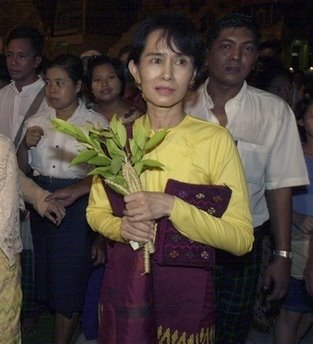


 Posts
Posts


