News & Articles on Burma
Saturday, 03 September, 2011
-----------------------------
Burma government puts up posters to disparage KIA leader
Kachin IDPs reach over 40,000 due to civil war in Northern Burma
Buddhist Karen army no more, Myanmar media says
Amnesty urges Europe to back Myanmar crimes inquiry
Regime adopts alternative approach to Wa, Mongla
----------------------------------------
Burma government puts up posters to disparage KIA leader
Created on Saturday, 03 September 2011 07:01/ Published on Saturday, 03
The military-controlled Burma government put up posters aimed to disparage a Kachin Independence Army (KIA) leader this morning in Manmaw (Bhamo) town, in Kachin State, local eyewitnesses said.
The hand-written poster said, “Brig-Gen Gun Maw has been assassinated”, said residents of Manmaw.
However, KIA officials said that is a false statement. Brig-Gen Gun Maw, the Vice Chief of Staff of the KIA, is alive at the Laiza Headquarters, in eastern Kachin State.
A KIA official in Laiza told the Kachin News Group, “The government’s posters aimed to disparage the KIA, which was not surprising.”
Hand-written posters with 9 facts denouncing the KIA were put up around Manmaw, the second largest town in Kachin State, on August 20. Those posters alleged the KIA was responsible for destroying the peace in Kachin State.
All posters were put up in the name of “a resident of Manmaw district”.
The previous 17-year ceasefire ended in Kachin State when the Burma Army started an offensive against the KIA at Sang Gang, in N’Mawk Township, in eastern Manmaw district, on June 9. http://kachinnews.com/news/2042-burma-government-puts-up-posters-to-disparage-kia-leader.html
------------------------------------
Kachin IDPs reach over 40,000 due to civil war in Northern Burma
The number of Kachin Internally Displaced Persons (IDPs) has reached over 40,000 due to renewed civil war in Kachin State, northern Burma since June, between the Burmese government and the Kachin Independence Army (KIA), which demands self-determination, according to IDP assistance organizations.
Most IDPs are being sheltered in temporary camps in the territories of the KIA near the China border and the rest have fled to major towns in government-controlled areas in Kachin State.
14,470 IDPs have arrived in Bhamo, the second largest town in Kachin State, as of August 10 according to the figures reported by Cathnews India in an interview with Bishop Raymond Sumlut, of Bhamo Township.
In Bhamo, most IDPs are received by Kachin churches, said local church sources.
According to figures provided by IDPs assistance groups up to August 22, 5,276 IDPs have been sheltered in churches in the two main towns in the government-controlled areas of Waingmaw and Myitkyina.
Moreover, there are hundreds of IDPs in Mogaung township, Mohnyin township, Hopin township and Sumprabum township but an exact number is not available, according to KIA officials in the Laiza headquarters.
The Relief Action Network for IDPs and Refugees (RANIR), based in Laiza, said 21,201 IDPs are in shelters in its territories, near the China border.
Currently, Kachin IDPs are helped by churches and local non-governmental organizations like the Metta Development Foundation and the Shalom Foundation. No United Nations’ refugee agency or INGO is supporting Kachin IDPs. http://www.kachinnews.com/news/2040-kachin-idps-reach-over-40000-due-to-civil-war-in-northern-burma.html
---------------------------------------
Buddhist Karen army no more, Myanmar media says
Sep 3, 2011, 4:02 GMT
Yangon - An offshoot of the six-decades old Karen insurgency has been dissolved and turned into a border guard force under government control, Myanmar's state-run media claimed Saturday.
The Democratic Karen Buddhist Army (DKBA) was dissolved on August 18 and transformed into a border guard force with 12 battalions under the command of the military, The New Light of Myanmar reported, citing the Karen State Democracy and Development Party.
'There is no DKBA any more,' said the party, which was set up to contest the November 7 general election.
Under the 2008 constitution, all ethnic minority groups were required to dissolve their armies and become border guard forces prior to last year's polls to join the political process.
At least six rebel groups, including elements of the DKBA, refused to do so.
One DKBA battalion led by Commander Saw Lerbwe attacked Myawaddy town, across the border from the Thai town of Mae Sot, on the day of the election and seized it for two days before retreating.
According to sources on the border, Saw Lerbwe's battalion continues to fight the Myanmar military.
'The majority of the DKBA have become border guard forces but Saw Lerbwe's battalion is still active,' Karen National Union (KNU) spokesman David Thakabaw said by phone.
'And many of the border force troops are defecting to his battalion,' he said.
The KNU has been fighting for the autonomy of the Karen State in eastern Myanmar since 1948. The DKBA broke away from the predominantly Christian Karen National Army in the late 1980s.
http://www.monstersandcritics.com/news/asiapacific/news/article_1660696.php/Buddhist-Karen-army-no-more-Myanmar-media-says
---------------------------------------
Amnesty urges Europe to back Myanmar crimes inquiry
Published on Sep 3, 2011
BANGKOK (AFP) - Europe's 'wait and see' approach to army-dominated Myanmar is 'irresponsible', Amnesty International has said, urging the European Union (EU) to back an inquiry into crimes against humanity in the country.
The Myanmar government 'has continued to violate human rights on a massive scale', four years after the brutal suppression of a monk-led protest, known as the Saffron Revolution, said Amnesty's Myanmar researcher Benjamin Zawacki.
He said reports from ethnic minority areas suggest 50,000 people may be internally displaced by conflict, while abuses have continued under a new regime, which came to power after controversial November elections.
In an article on Friday for the online exile news magazine Irrawaddy, Amnesty urged the EU and its member states to lend their support to the establishment of a UN commission of inquiry into crimes against humanity. http://www.straitstimes.com/BreakingNews/SEAsia/Story/STIStory_709073.html
---------------------------
Regime adopts alternative approach to Wa, Mongla
Thursday, 01 September 2011 11:29 S.H.A.N.
Naypyitaw recently sent two letters to specified areas under the United Wa State Army (UWSA) and the National Democratic Alliance Army (NDAA) inviting them for peace talks, according to sources on the Sino-Burma border.
The letters were reportedly forwarded to Mongla and Panghsang on 29 August and 30 August respectively. “The letter that reached Hsaleu told officials there to contact Mongyang authorities for peace talks and for any problems they would like to address,” said a high official in Mongla, the NDAA’s main base opposite China’s Daluo. “I believe the letter to (the Wa’s) Mongpawk is essentially saying the same thing.”
The local source in Panghsang, confirming the arrival of the letter, however was unable to describe the content. “My friend (in the Wa leadership) just told me the letter was a big disappointment,” he recounted. “And that it would only serve to widen the gap between the two sides.”
Both sources say it is highly unlikely Panghsang and Mongla would be giving up Mongpawk and Hsaleu, not only because the two areas have been under their control for so long, but also because giving them up would mean geographical separation between the two allies which would only make it easier for Naypyitaw to destroy them one after the other.
Radio Free Asia reported earlier that Khun Tun Lu, Naypyitaw-appointed Chairman of the newly formed Wa Self Administered Division’s Leading Body, based in Hopang, had contacted the UWSA by phone on 20 August. (Hopang, Pangwai, Mongmai aka Mongmau, Napharn, Panghsang and Markmang aka Metman have been collectively designated as Wa Self Administered Division by the regime’s 2008 constitution. Only Hopang and Markmang are under the Burma Army control.)
“He told Wa authorities that he had been appointed as head of the Wa region,” the source close to the leadership told SHAN. “But he would like to visit them just as a friend and as a brother.”
According to RFA, Panghsang had not bothered to reply because there was no official letter to back up Khun Tun Lu’s request.
As to the latest letters that have reached their hands, there would be no replies either, according to the Mongla official. “The regime is trying to divide us,” he said. “But we know our people in Hsaleu will do nothing until we ask them to.”
Since the November elections, the semi-civilain government in Naypyitaw has opened three new fronts in Kachin, Shan and Karen states against the Kachin Independence Army (KIA), State State Army (SSA) “North” and Democratic Karen Buddhist Army (DKBA), all groups that had concluded ceasefire pacts with the Burma Army. Earlier, it was fighting mostly against the Karen National Union, Karenni National Progressive Party and the Shan State Army (SSA) “South”. http://shanland.org/index.php?option=com_content&view=article&id=3998:regime-adopts-alternative-approach-to-wa-mongla&catid=85:politics&Itemid=266
__._,_.___
Sunday, September 4, 2011
News & Articles on Burma-Saturday, 03 September, 2011-UZL


Saturday, September 3, 2011
News & Articles on Burma -Friday, 02 September, 2011-UZL
News & Articles on Burma
Friday, 02 September, 2011
-----------------------------
China speeding up the dam in Burma
What Is the EU Waiting For In Burma?
US band to visit Burma
The U.N. Should Document Burma's Abuses
Ethnic Leaders Say Suu Kyi Should Be on 'Peace Committee'
Pyongyang Dining Comes to Rangoon
'Save The Irrawaddy' Campaign Gains Momentum
Bullies Across Borders?
-----------------------------
Amid armed conflict in Kachin state, China speeding up the dam in Burma
By Zin Linn Sep 02, 2011 8:17PM UTC
Today state-owned New Light of Myanmar newspaper accused KIO/KIA of forcibly recruiting villagers in Dawphonyan Sub-Township into their armed forces.
It said that KIO/KIA forced local people to join them, and otherwise they are not allowed to live in the villages. The ethnic armed group proclaims that one man from each household in lower Tarsai Village, upper Tarsai Village, Teinmakyaing Village and Mongma Village in Dawphonyan Sub-Township must join KIO/KIA.
Such act of KIO/KIA shows that they prove a total disregard for the wishes of the local people wishing for peace and undermined the stability of Kachin State, and security and socio-economy of the rural people, the government media said.
However, Salang Kaba Lar Nan, Joint General Secretary-2 of the KIO, dismissed the government newspaper’s accusation as baseless since those villages are under the government’s administration. Moreover, members of the KIO/KIA join up the group at their will, he said.
Meanwhile, China is speeding up the construction of the Irrawaddy dam although the armed conflict still going on in Kachin State, quoting an urgent August-31-dated statement released by the Kachin Development Networking Group (KDNG), the Kachin News Group said.
The Myitsone dam is being constructed by workers of the state-owned China Power Investment Corporation (CPI) and the Burma-Asia World Company, plus 700 additional construction workers from the Chinese state-owned Sino-hydro Corporation, Ms. Ah Nan, spokesperson for the KDNG said.
In October 2009, the Thailand-based Kachin Development Networking Group (KDNG) published a report – “Resisting the flood” – highlighting the implementation of the Myitsone dam project on the Irrawaddy River. The report demanded to stop the project sponsored by the China Power Investment Corporation (CPI), the main investor and contractor.
The dam project creates unwelcome impacts like social, environmental, livelihood, cultural and security problems for tens of thousands of people around the dam location and downstream of the dam. The report states that more than 15,000 people in 60 villages around the dam sites are being forcibly relocated without proper resettlement plans being drawn up by the Burmese military regime. They lost their means of livelihood such as farming, fishing and collection of non-timber forest products.
Besides, over 150,000 people in Kachin’s capital Myitkyina, 27 miles downstream of the dam, will have to live under the constant threat of floods from the dam if there is an earthquake. The dam is less than 100 kilometers from a major fault line in an earthquake-prone area, warned the KDNG report.
More Chinese construction machinery and materials are being transported to the Myitsone Dam site by 12-wheel trucks on the Myitkyina-Kambaiti Road, referring local eyewitnesses of border town Kambaiti, KNG reported.
After a new military conflict started between the Burmese Army and the KIA in June, in Kachin State, the KIA post along the Myitkyina-Kambaiti route banned trucks loaded with construction materials and equipment, according to truck drivers on that road. The KIA also damaged the key bridges on the road using mines. Part of the Stilwell Road (also called Ledo) was reconstructed in 2006, at a cost of 97 million Yuan (US$15.2) by Chinese companies from Yunnan province.
The Kachin Independence Organization (KIO), the political wing of the KIA, sent an open letter to Chinese President, Hu Jintao, in March, urging a halt to the Irrawaddy Myitson Dam construction because it will lead civil war in the country.
According to the KDNG statement, the Chinese communist government has refused the KIO request.
With the help of the KDNG, Kachin ethnic people around the world have protested by sending an appeal letter with many signatures via the Chinese Embassies in five cities such as Bangkok, London, New Delhi, Singapore and Wellington addressed to Premier Wen Jiabao. They made a fervent appeal in March 2010 to stop the Myitsone Hydropower project in Kachin State.
The 500 foot dam has been under construction at the confluence (Myitsone) of the Mali Hka River and N’Mai Hka River, 27 miles north of the Kachin capital, Myitkyina, beginning in December, 2009, and it will cost 3.6 billion dollars.
Most of the 6000 MW of electricity produced will be sold to China.
In a statement issued on 11 August, Burma’s Nobel laureate Aung San Suu Kyi said the dam endangers the flow of the Irrawaddy River, which she described as “the most significant geographical feature of the country.”
“We believe that, taking into account the interests of both countries, both governments would hope to avoid consequences which might jeopardize lives and homes,” Suu Kyi emphasized. “To safeguard the Irrawaddy is to save from harm our economy and our environment, as well as to protect our cultural heritage,” she added. http://asiancorrespondent.com/64052/amid-armed-conflict-in-kachin-state-china-speeding-up-the-dam-in-burma/
-------------------------------------
CONTRIBUTOR
What Is the EU Waiting For In Burma?
By BENJAMIN ZAWACKI Friday, September 2, 2011
It is time the EU work to establish a UN-led Commission of Inquiry into crimes against humanity and other crimes under international law in Burma.
Four years ago this month, the people of Burma rose up in what became known as the “Saffron Revolution,” named after the Buddhist monks who eventually led the demonstrations. While the world initially condemned the security forces’ violent crackdown that followed, several months later the Burmese authorities managed to deflect international criticism by announcing it would hold national elections and form a civilian government.
The international community, including the European Union (EU), has been distracted ever since, despite an abundance of information that Burma’s government has continued to violate human rights on a massive scale. “Wait and see”—what the government will do before the elections, how the elections will be conducted, whether the new government will make any changes—has been the prevailing and irresponsible approach.
Meanwhile, the human rights situation in Burma has gone from bad to worse, with no justice for the victims. By the time the election announcement was made, the number of political prisoners in Burma had nearly doubled from its pre-Saffron Revolution number to over 2,100—where it remains today. Several months afterwards, the government denied, obstructed and/or confiscated international aid in the wake of Cyclone Nargis, turning the humanitarian disaster into a human rights crisis. And a year later, authorities arrested, tried, and unlawfully extended the house arrest of opposition leader Daw Aung San Suu Kyi.
Among the situations calling out loudest for justice and accountability is Burma’s ethnic minority regions. Ten months before the November 2010 elections, Amnesty International released a report on the repression of ethnic minority political activists in Burma, which showed that optimism in relation to the polls was being contradicted in the ethnic minority areas.
It followed a mid-2008 publication, Crimes against humanity in eastern Burma, whose relevance has only increased since then. The report focused on the Burmese army’s human rights violations against ethnic minority Karen civilians on a widespread and systematic basis, which amounted to crimes against humanity. Violations included extrajudicial executions, torture, arbitrary detention, forced labor, confiscation of land and food and forced displacement of the civilian population on a large scale, starting in late 2005.
While this was the first time Amnesty had characterized such violations as crimes against humanity, the report’s findings were consistent with our research on the country for two decades. The testimonies, collected in several countries since 1987, documented the very same crimes against civilians. They were told to us not only by the Karen, but by many other ethnic minorities as well, including the Rohingya, the Karenni, the Shan and the Mon.
Likewise, accounts since mid-2008, especially since the day of Burma’s national elections last November, when hostilities were accelerated or renewed between the Burmese army and armed groups fighting on behalf of several ethnic minorities, recall our report’s findings: serious human rights violations—some of which may amount to crimes against humanity and/or war crimes—against ethnic minority Karen, Kachin, and Shan civilians.
These include recent accounts of the army using prison convicts as porters in the fighting in Kayin (Karen) State, forcing them to act as human shields and mine-sweepers and of rape and other sexual violence, primarily in Shan State. Reliable reports indicate that the number of displaced persons there has reached 30,000, while in or near Kachin State 20,000 internally displaced persons were reported at the end of July.
We have waited for years, even decades, and seen quite enough: these violations call for accountability. However, Article 445 of Burma’s 2008 Constitution—which codifies immunity from prosecution for officials for past violations—indicates that without international action, this is most unlikely.
In October 2011, the UN special rapporteur will be presenting a report to the UN General Assembly, which will likely adopt a resolution on Burma. The EU will again lead in the drafting of this resolution.
In each of his reports or statements to the UN Human Rights Council and the General Assembly, the special rapporteur has called for greater accountability for grave international crimes in Burma or expressly recommended that the UN establish a Commission of Inquiry into such crimes.
While the question remains as to whether such a Commission would have access to Burma, a similar 1997 Commission by the International Labour Organization compensated for its denial of access partly through expert testimony, which Amnesty among others provided. Two years later, Burma passed a law prohibiting forced labor. Accountability must begin somewhere.
Moreover, accountability need not exclude increased humanitarian assistance and efforts to engage the new government.
Amnesty International welcomes the fact that 12 of the 16 nations that have publicly stated their support for a Commission of Inquiry in Burma are EU members, but regrets that neither the EU as a bloc nor several of its influential members—including Germany, Italy, Spain and Sweden—have not done so.
After more than three years of “wait and see,” it is time the EU and its member states translate their concern about Burma’s human rights situation into public support for the establishment of a UN-led Commission of Inquiry into crimes against humanity and other crimes under international law in Burma.
Benjamin Zawacki is Amnesty International’s Burma researcher and a member of the US Council on Foreign Relations. http://www.irrawaddy.org/opinion_story.php?art_id=22006&page=2
-------------------------------
THE NATION
Music to calm the savage diplomatic beast? US band to visit Burma
Published on September 2, 2011
Rangoon - A US band is to make a rare appearance in Burma this month in the latest sign of a possible diplomatic thaw between the military-dominated country and the West, officials said Friday.
Earth String is to be in Burma September 21-25, a US embassy official said without providing details.
The band's visit, sponsored by the embassy, was seen as the latest sign of slight improvements in Burma's relations with Western democracies after its November general election, the first in 20 years.
"I think all relations usually start with the cultural sector," one Asian diplomat in Rangoon said. "This is a positive sign for American-Myanmar [Burmese] relations."
"I hope it is a positive sign for American-Myanmar relations because we haven't seen these kinds of musical bands here for sometime," said Nay Zin Latt, a political adviser to the new government.//DPA
.
------------------------------------
THE WALL STREET JOURNAL
The U.N. Should Document Burma's Abuses
It's time to set up a commission of inquiry. Asean cannot stand by.
Today European foreign ministers are meeting in Brussels to discuss, among other issues, a resolution on Burma to be tabled at the United Nations General Assembly. Later this month, members of parliament from Southeast Asia will gather for the Asean Inter-Parliamentary Association meeting in Phnom Penh, Cambodia. Both are opportunities to build momentum for a United Nations-led commission of inquiry into possible crimes against humanity and war crimes in Burma.
To date, 16 countries, including the United States, Canada, the United Kingdom, Australia and the Czech Republic, have called for a commission. Yet Burma's Asean neighbors have remained silent. Perhaps some consider such a move gratuitous and meddlesome. But if Asean is to assert itself as a leading organization on the global stage, its members need to send a clear message that crimes against humanity affect the entire region and will not be tolerated.
An inquiry would not be a political tool for assigning criminal liability; rather, it would be a mechanism to document atrocities committed in Burma over the years and help prevent future atrocities by encouraging policy reforms in Burma's judicial system. It would also provide victims of Burma's protracted civil war an opportunity to seek justice for their grievances, and so contribute to building a lasting peace.
Human rights monitors have documented abuses in Burma for more than two decades, and the U.N. General Assembly has passed 20 resolutions describing possible crimes. In March 2010, Tomás Ojea Quintana, the U.N.'s Special Rapporteur on the Situation of Human Rights in Myanmar, recommended establishing a commission of inquiry. Leaving Burma after a five-day mission last week, Mr. Quintana reiterated his position.
An international investigation is urgently needed because the Burmese government has failed to respond to appeals from its people. In 2007, deep-seated discontent spurred tens of thousands of Buddhist monks to take to the streets to demand change. Instead of engaging the monks in constructive discussions, the military junta opened fire on the religious leaders. Today more than 2,000 prisoners of conscience remain in prison.
The Burmese government is trying to head off pressure for a commission of inquiry by raising hopes it will now pursue reforms. In 2008 it held a referendum on a new constitution to restore civilian rule. However, this constitution is severely flawed, since it protects those who committed abuses in the past.
The Association of Southeast Asian Nations has nevertheless hailed the new government as a step forward, calling on the European Union and the United States to lift sanctions. However, Asean states did not consider the ramifications the elections would have on Burma's armed conflict. In the aftermath of the elections a number of ceasefire agreements between the government and non-state armed groups broke down.
In June 2011 renewed hostilities between government forces and the Kachin Independence Army led to widespread abuses against civilians in Kachin State provoking over 20,000 people to flee their homes. Thousands of refugees spilled across the borders to Thailand and China. Asean was slow to respond and has yet to develop a mechanism to protect refugees and ensure civilians protection from human rights abuses.
In contested areas of Shan State, where government troops continue to battle ethnic Shan armed groups, there have been credible reports of systematic rape. In a statement released on July 22, Eva Kusuma Sundari, a member of the Indonesian Parliament and President of the Asean Inter-Parliamentary Myanmar Caucus declared "We [AIPMC] call on the Myanmar Army to immediately end rights abuses, particularly the systematic use of rape as a weapon to suppress ethnic women and to urgently engage in peace talks with ethnic armed groups."
Burmese President Thein Sein recently made overtures to the political opposition, meeting with Aung San Suu Kyi and offering peace talks with some of the armed groups. Genuine multiparty dialogue is welcome, but progress toward political reconciliation is not a substitute for seeking truth and justice. An independent U.N.-led investigation that examines reports of human rights violations committed by both the government and non-state actors would complement talks.
President Thein Sein also recently announced that Burma is ready and committed to take a stronger leadership role in the region. On Aug. 21, he declared in Parliament that his government intends to assume the Asean chairmanship in 2014. The government should demonstrate its readiness to chair the regional body in action as well as words. Cooperating with a potential international investigation would be a step in the right direction.
All those who care about the rights and dignity of the citizens of Burma should support the call for a commission of inquiry. Without accountability, allegations of grave human rights violations will continue to poison the development of Burma and Asean.
Mr. Tanada is a member of the Philippines Congress and the vice president of the Asean Inter-Parliamentary Myanmar Caucus. http://online.wsj.com/article/SB10001424053111904583204576544222636274718.html
-----------------------------------------
Ethnic Leaders Say Suu Kyi Should Be on 'Peace Committee'
By SAW YAN NAING Friday, September 2, 2011
Leaders of a number of Burma's ethnic armed groups welcomed the approval of a “Peace Committee” by the country's Upper House of Parliament on Wednesday, but said they want opposition leader Aung San Suu Kyi to be a member of the committee.
The mission of the Peace Committee will be to mediate between the Burmese goevernment and the ethnic armed groups, some of which are engaged in armed conflict with the Burmese military.
Arakanese MP Aye Maung, who is the chairman of the Rakhine National Development Party, proposed that Suu Kyi become a member of the Peace Committe, but it is unclear whether his proposal will be adopted.
Naw Zipporah Sein, the general-secretary of the Karen National Union (KNU), an ethnic armed group that has been fighting the government for more than six decades in an effort to achieve autonomy for the Karen people, said, “If the government honestly forms a Peace Committee to hold talks with us, it would be a good sign. But we have to wait and see the condition and rule of the committee. We also prefer to hold talks in a neutral country, not inside Burma.”
Suu Kyi’s participation would be helpful, as she is sincerely working for democracy for the country, Zipporah Sein added.
In an open letter sent by Suu Kyi to President Thein Sein and the ethnic groups last month, Suu Kyi said that she is ready to become involved and use her influence to help end the conflicts and build peace in the nation.
Maj Sai Lao Hseng, the spokesperson for the Shan State Army-South, also welcomed the formation of a Peace Committee to mediate with ethnic groups. He said the committee should include Suu Kyi because the ethnic conflicts are a national issue and Suu Kyi is widely respected by the people of Burma.
A veteran politician, Chan Tun, also welcomed a Peace Committee, which he said should include a number of prominent and widely respected politicians.
Aye Thar Aung, another prominent Arakanese politician who is based in Rangoon, said that the government must declare a nationwide ceasefire first, and then talk to the ethnic armed groups.
“The talks should be held directly by the authorized government officials, not the chief ministers of states because they don’t have the authority for making decisions.”
“We can only say there is a possibility of peace if the government committee reaches a bilateral agreement with the ethnic delegation,” he added.
On August 18, state-run newspaper The New Light of Myanmar reported that the government had offered an “olive branch” to the ethnic armed groups, encouraging them to contact their respective state or division governments as a first step toward meeting with a union government delegation.
After the offer, the United Nationalities Federal Council (UNFC), an alliance of ethnic armed groups, rejected the idea of one-on-one talks and called for talks between the government and the alliance of ethnic armed groups. In late August, the UNFC also formed a peace talks group in preparation for future negotiations with the Burmese government.
La Nan, the secretary of the Kachin Independence Organization (KIO), the political wing of the Kachin Independence Army (KIA), doesn’t expect much from the government’s Peace Committee. He said that there will be no possibility of peace with ethnic armed groups if the committee holds talks based on the 2008 constitution.
There are a dozen ethnic armed groups that have been fighting for autonomy since Burma gained independence from Britain in 1948. Tensions have boiled over into bloody clashes in recent months, most notably between the Burmese army and the KIA, the KNU and the Democratic Karen Buddhist Army.
The Peace Committee has been officially named the “Committee for Eternal Stability and Peace in the Union of Burma,” according to Aye Maung. http://www.irrawaddy.org/article.php?art_id=22008
--------------------------------
Pyongyang Dining Comes to Rangoon
By WAI MOE Friday, September 2, 2011
North Korean technicians have been coming to Burma since 1993 to help the county's military junta improve its weapons systems. During that time, the North Koreans, invariably men, rented houses from military cronies in the most prestigious areas of Rangoon.
The Burmese regime had previously suspended its relationship with Pyongyang following the assassination in Rangoon of South Korean delegates by North Korean agents in 1983.
However, relations began warming when both countries found themselves increasingly isolated in the region. In April 2007, the two pariah states re-establish diplomatic ties, and the North Koreans reopened their embassy in Rangoon.
Now Pyongyang has taken another footstep into Burma— the opening in July of the first North Korean restaurant in the former capital.
Named “Pyongyang Koryo Restaurant,” the diner is located on Sayar San Road in Bahan Township, and has already established a regular clientele of customers, including North Korean diplomats and South Korean businessmen.
The Pyongyang Koryo serves Korean dishes for lunch and dinner, and hosts traditional Korean entertainment in the evenings. Options include soups, hot pots and curries with prices generally from 10,000 to 35,000 kyat (US $13 to $47) per dish.
“In my opinion, this could be a place where Koreans hold informal business talks on North Korean related matters,” a diplomatic source in Rangoon said. “You know how paranoid the North Koreans are—maybe they are too cautious to invite guests to the embassy.”
When The Irrawaddy called the restaurant, the receptionist answered “Koryo,” but was unable to converse in Burmese or English.
Hein Latt, a well-known Burmese author who wrote the biography, “Kim Jong Il: North Korea’s Dear Leader,” said that in recent days he had met North Korean ambassador Kim Sok Chol at a party in Rangoon, and the ambassador invited him to dine at the North Korean restaurant.
“The new North Korean restaurant has been opened with the backing of the North Korean embassy,” he said. “Without the embassy’s support, this kind of restaurant would not exist.
“I expect they [North Korean diplomats] use it as a venue to gather intelligence,” he said.
Ex-Maj Aung Lynn Htut, a former counter intelligence officer, said that in the day to day work of an intelligence officer, “a friendly restaurant is a good cover.”
“Previously, [former premier] Gen Khin Nyunt refused the North Koreans permission to open a restaurant because of international concerns,” he said, adding that nowadays there are more North Koreans in Burma since allegations surfaced over North Korea and Burma’s ties to nuclear missiles and underground military technology.
According to Southeast Asia-based journalist Bertil Lintner, the first North Korean restaurant in the region opened in 2002 in the popular Cambodian tourist destination of Siem Reap.
It was so successful that Pyongyang decided to open a second restaurant in Phnom Penh in 2003, he said, adding that the North Korean government then financed in 2006 the opening of a large restaurant in Bangkok’s Pattanakarn suburb near the North Korean embassy.
“It [the Pyongyang Koryo] sounds like all the other North Korean restaurants in the region,” Lintner said. “I guess it's to make money for the North Korean embassy in Rangoon.” http://www.irrawaddy.org/article.php?art_id=22007
-------------------------------
'Save The Irrawaddy' Campaign Gains Momentum
By THE IRRAWADDY Friday, September 2, 2011
A petition signed by nearly 1,600 influential Burmese persons, including politicians, journalists, writers, artists and film directors, has been sent to President Thein Sein on Thursday with a campaign message titled “From Those who Wish the Irrawaddy to Flow Forever.”
The signatories included: Win Tin, a prominent member of the opposition National League for Democracy; veteran journalists Sein Win and Maung Wun Tha; Kyaw Thu, the founder of the Free Funeral Services Society; writer Than Myint Aung; social activist Aung Thin; the acclaimed writer Zaw Zaw Aung; and film director Cho Tu Zal.
The campaign was organized by Myat Thu, a prominent member of the 88 Generation Students group.
Speaking to The Irrawaddy on Thursday, Myat Thu said, “Along with the petition we sent a letter that outlined our anxieties.”
The Irrawaddy River is considered the main artery of Burma and million sof people depend on it for their livelihoods. It has its source in Kachin State in northern Burma at the confluence of the N’mai and Mali rivers, and flows 2,170 km (1,348 mi) through many of the country's main cities, including Myitkyina, Bhamo, Mandalay, Sagaing, Bagan, Magwe and Pyay, before emptying in the fertile Irrawaddy delta.
But today the river is faced with an unprecedented threat in the form of ongoing dam projects in Kachin State.
Burma's previous ruling military regime and China’s state-owned Chinese Power Investment Corporation (CPI) agreed to built a megadam at Myitsone, the confluence that acts as the source of the Irrawaddy. If completed, the hydropower dam project will be the 15th largest hydroelectric power station in the world, and will cost an estimated US $3.6 billion.
The length of the dam is to be about 499 ft (152 m), and its height about 499 ft, equivalent to a 50-story building. The surface area of the reservoir is to be 295.8 sq mi (766 sq km), larger than the city state of Singapore.
Environmentalists, activists and politicians have given voice to growing concerns about the fate of this mighty river, but the government is reluctant to take action to stop construction.
Meanwhile, political parties and independent candidates have called on the Supreme Court to take action to save the Irrawaddy River.
“We send an open letter today,” said Win Cho, an independent candidate. “We are calling for an official response into the issue of the Irrawaddy River and the Myitsone dam project.”
Win Cho said other signatories included: Bauk Ja from the National Democratic Force; Soe Kyi from Thanlyin Township; Aung Myo Oo from Kyeemyindaing Township; and Min Aung from Botahtaung Township, all in Kachin State. http://www.irrawaddy.org/article.php?art_id=22010
---------------------------------------
CONTRIBUTOR
Bullies Across Borders?
By DAVID I. STEINBERG Thursday, September 1, 2011
The new, still fragile reform activities of the recently installed government in Burma have excited an outburst of vituperation from across international frontiers. As internal positive change is something external analysts have long sought, why is this so?
Military regimes inherently bully—orders are given and are expected to be obeyed. Orthodoxy is required and diverse views are eschewed. Line up and obey. So bullies inside Burma are a distressful but expected outcome of the nature of that military- dominated government. The deeply flawed elections were, in a sense, the outcome of such bullying.
But outside Burma? Developments within the country by the new government, with its probes toward positive change, have prompted an outburst of advocacy of heightened sanctions and renewed pressures for a UN Commission of Inquiry into human rights abuses at the very time when there is at least the possibility of reforms within the new “disciplined-flourishing democracy”. Even the possibility of positive change, still very much in process, has prompted a bullying type of orthodoxy from outside Burma by members of organizations devoted to liberty, democracy and human rights. This is quite disturbing.
Throughout the long rule of the military since 1988, voices in opposition abroad have often countered nuanced consideration of the problems of Burma with cries, reminiscent of President George W Bush, that if you are not with us you are against us. The new tone, with its more frenetic stridency, seems borne out of the fear that the internal changes at least advocated by the head of state may indeed have some positive results, thus perhaps prolonging the life of the new administration and making it more acceptable to the Western world, and threatening the sanctions regimen that had been serially imposed on Burma and its rulers. In effect, this new approach to internal change may postpone or prevent the “Arab Spring” from reaching Burma.
These attacks have become personalized against some individuals who have studied that country and who have advocated the well-being of the diverse Burmese peoples. Democracy requires diversity of views and intelligent debate over alternatives, none of which may have simple answers. Policies based on dichotomies rarely are successful. The goals of those new bullies on the policy block are indeed admirable—human rights and improved freedoms and lives—and ones that can be widely shared and with which most of us would identify. Yet their tactics undercut the very goals they seek to reach.
It is a sad, bordering tragic, condition that those of us physically, but not emotionally, removed from the Burma scene do not seem to be able to negotiate with amicable, respectful, and dignified personal relations the necessary and desirable policy differences among us that are reflective of the democracy we would like to see in that country. Dissent is essential, but so is amity.
For years, some observers of the Burmese scene have said that some of the incessantly articulated goals of the military government—national unity, sovereignty, better health, education, agriculture, etc.—are ones that could conceptually prompt widespread approval, but the means by which those goals have been approached, the tactics used to attempt to enforce them on the people, subvert the very aims toward which they purportedly work. In other words, one cannot get there from here on that route.
But what about this new stridency? Can one get to democracy, however defined in some non-adjectivally modified form, in this manner? It would seem highly unlikely. One does not question the motivation of those organizations advocating liberalization and change in Burma, nor the intent of their members, but one must question some ill-advised temperamental actions because—as across the frontier—you cannot get there from here.
David I. Steinberg is Distinguished Professor of Asian Studies, School of Foreign Service, Georgetown University. His latest volume is“Burma/Myanmar: What Everyone Needs to Know” (Oxford). http://www.irrawaddy.org/opinion_story.php?art_id=21999
__._,_.___
Reply to sender | Reply to group | Reply via web post | Start a New Topic
Messages in this topic (402)
Tuesday, August 9, 2011
News & Articles on Burma-Monday, 08 August, 2011
News & Articles on Burma
Monday, 08 August, 2011
----------------------------------------
Suu Kyi Calls for Unity on Anniversary of 88 Uprising
Myanmar's Suu Kyi to make 'political' trip
Aung San Suu Kyi’s first political tour: A test for Burmese government?
Myanmar opposition leader defies military on uprising anniversary
More Progress Needed to Lift US Sanctions: Lawmaker
Myanmar marks 1988 uprising anniversary
US puts a new man in Myanmar
Refugees in Northern Thailand Need Aid to Rebuild Homes
Burmese Baited into Thai Fishing Slavery
------------------------------------------------
Suu Kyi Calls for Unity on Anniversary of 88 Uprising
By BA KAUNG Monday, August 8, 2011
Hundreds of Burmese people led by pro-democracy icon Aung San Suu Kyi gathered at a monastery in Rangoon on Monday to commemorate the anniversary of the failed popular 88 uprising which demanded democratic change.
During the ceremony, Suu Kyi called for unity within opposition groups in the country dominated by the new nominally civilian government under the military-backed Union Solidarity and Development Party.
Popularly known as the 88 uprising as it took place on Aug. 8, 1988, the nationwide student-led protests challenged the ruling Socialist government to bring about economic and political reforms.
From August to September 1988, the country saw three leadership changes but the army staged a coup in the final week of September and responded to peaceful demonstrations by slaughtering at least 3,000 people.
Slide Show (View)
During Monday's anniversary ceremony at a Buddhist monastery in Kyeemyindaing Township in Rangoon, Suu Kyi, who made her first political appearance during the 88 uprising, said that unity and concerted efforts within opposition groups would be crucial in reaching the common goal of democratic reforms in the country.
One of the participants, Cho Cho Kyaw Nyein, a leader of the opposition Democratic Party (Myanmar), agreed: “Without democracy in our country, we will work on together under the leadership of Aung San Suu Kyi.”
Despite meeting with a Burmese government minister last week, Suu Kyi said she is still against the 2008 military-drafted Constitution. However, she also confirmed that she is planning to make her first political tour since her release from house arrest last year to the town of Pegu a few kilometers outside Rangoon on Aug. 14, and received a positive response when she informed the authorities.
Hundreds of democracy activists, including officials from political parties which took part in last year's general elections, joined Suu Kyi for one minute's silence in honor of protesters killed in the 88 uprising. Plainclothes security officers and anti-riot police trucks were seen near the monastery, but participants said that no disturbance was made to the occasion.
“I would like you all to think about what has happened and not forget,” Suu Kyi wrote in a guestbook, according to a report by international news agency AFP.
While it has been more than two decades since this major uprising took place, prominent student leaders of the movement together with over 2,000 political prisoners remain incarcerated throughout Burma.
And the political deadlock remains between the democratic opposition and Burmese military which last year handed power to a nominally civilian government led by former junta generals through a flawed election.
A middle-aged English teacher from Upper Burma, who was a student dentist during the 88 uprising, said that the lack of strong leadership during the protests damaged the success of the movement.
“The 88 gave us opportunities to uproot the dictatorship and establish democracy, but we could not grab those opportunities in time because of some weaknesses in leadership,” he said. “Now the military dictators are leading the [political] game and still in a position to control the opposition.”
May Zin, a resident of Rangoon born in the year 1988, said that although she did not witness the uprising first hand, it is still a significant event for her generation which has not been consigned to the history books for Burma.
“I would have participated in it if I was there at that time,” she said.
Marking the anniversary of the uprising, Burmese exiled groups called for the new government in Naypyidaw to release all political prisoners in a joint statement today. They also demanded an end to military attacks against ethnic minority and opposition groups as well as political dialogue with all stakeholders.
Opposition groups also called for a review of the 2008 military-drafted Constitution, which caused Suu Kyi's National League for Democracy party to boycott last November's parliamentary elections in protest. http://www.irrawaddy.org/article.php?art_id=21854
------------------------------------------
Myanmar's Suu Kyi to make 'political' trip
Posted: 08 August 2011 0238 hrs
YANGON: Myanmar's democracy icon Aung San Suu Kyi is to make her first overtly political trip outside her home city since she was freed from house arrest, her spokesman said on Sunday, defying authorities' warnings.
Suu Kyi will visit the Bago region, about 80 kilometres north of Yangon, on August 14 to attend a library opening and meet members of a youth forum, Nyan Win of her National League for Democracy (NLD) party told AFP.
He described the visit as "political" but only a day-trip out of Yangon.
"She will leave at 6:00am and return in the evening," he said. "After this trip she will try to make another trip," outside Yangon, he added.
In June Myanmar's regime told Suu Kyi, who was released from seven years of house arrest in November, to halt all political activities and warned that a political tour could spark chaos and riots.
In a subsequent tentative test of her freedom, Suu Kyi visited an ancient temple city in central Myanmar with her son for a few days in July, but the trip was describe as private, with politics not officially on the agenda.
She drew large crowds and was trailed by plain clothes police, but they allowed her to travel unhindered as she avoided making public speeches.
The democracy champion was freed shortly after elections that were won overwhelmingly by the military's political proxies, amid claims of cheating and the exclusion of Suu Kyi from the process.
The 66-year-old has spent much of the last two decades in detention, and some observers believe the government would be quick to restrict her freedom again if she is perceived to threaten their rule.
Security is also a major concern because her convoy was attacked in 2003 during a political trip, in an ambush apparently organised by a regime frightened by her popularity.
Late last month she held her first talks with a member of the new government, labour minister Aung Kyi, in contacts that have raised hopes for an ongoing dialogue between the two sides.
Her party, which won a landslide election victory two decades ago that was never recognised by the junta, was disbanded by the military regime last year because it boycotted the latest vote, saying the rules were unfair.
- AFP/de http://www.channelnewsasia.com/stories/afp_asiapacific/view/1145660/1/.html
------------------------------------------
Aung San Suu Kyi’s first political tour: A test for Burmese government?
By Zin Linn Aug 08, 2011 2:09AM UTC
0 Comments and 4 Reactions
Burma’s democracy icon and Nobel laureate, Aung San Suu Ky,i plans to make her first visible political tour outside Rangoon. This trip will be the first political excursion since she was unchained from house arrest, National League for Democracy (NLD)’s spokesperson Nyan Win told the media on Sunday.
Suu Kyi is going to visit the Pegu division which is 50 miles (80 kilometres) away from north of Rangoon on 14 August. She has a plan to attend the opening ceremony of a library at resident of U Myat Hla (MP 1990).She will also attend a youth forum, Nyan Win told AFP.
He explained the Lady’s Pegu-trip has a political intention and it will be just a one-day round-trip, outbound of Rangoon.
“She will leave at 6:00 a.m. in the morning and will come back in the evening,” Nyan Win said.
“After this political outing she will try to make another trip outside Rangoon”, he added.
In June, Burma’s regime told Aung San Suu Kyi, who was released from house arrest in November, not to join all political activities as there were concerns that her political expedition could ignite turmoil and demonstrations.
To test her freedom, Suu Kyi visited Pagan, an ancient temple city of Burma, together with her younger son for a few days in July. However, the Pagan-trip was expressed as private ahead of the journey, stayingy away from politics on the schedule. Anyhow, she had faced large crowds along with plain clothed police. Nevertheless, the security personnel allowed her to travel without interference since she kept from making public speeches.
The democracy defender was released soon after the last November elections that were overpoweringly won by the military-backed parties amid claims of vote-rigging and the exclusion of Aung San Suu Kyi from the procedure.
Recently, Suu Kyi’s National League for Democracy has been calling for meaningful dialogue with the President Thein Sein Government, as it is the party’s longtime policy towards national reconciliation.
“As the NLD mainly works for national reconciliation, we expect to start a dialogue with the new government,” said NLD spokesman Nyan Win.
Suu Kyi made an appeal on 28 July for political talk and an urgent ceasefire between major ethnic rebel groups – Kachin Independence Organization, Karen National Union, New Mon State Party, Shan State Army – and government troops.
In her open letter dispatched to the country’s military-backed new President Thein Sein, Suu Kyi offered to act as a mediator between the government and the ethnic rebels, and said the constant fighting has been damaging the national reconciliation which is so important for the nation that composed mainly of ethnic population.
The open letter pointed out that the prevailing ethnic aggression can be sprawling into the neighboring counties. It said that currently there are armed conflicts between Burma Army and the ethnic armed groups especially in Kachin, Shan, Karen and Mon states.
The 66-year-old democracy icon has spent most of the last twenty years in custody, and several Burma observers suppose the government would limit her freedom again if she became a threat to the new namesake civilian government.
The NLD, led by Suu Kyi, has long been a key opponent of the existing authorities who have run the country since a 1962 coup. Her latest comments are likely to infuriate the new nominally civilian government, despite signs of softening of ties.
In last December, Burmese junta’s two mouthpiece newspapers criticized dissident politicians who believe genuine national reconciliation and support Aung San Suu Kyi. Burma’s military rulers dismissed the actions of democracy icon Aung San Suu Kyi, who tries to revive the spirit of Panglong Agreement providing self-reliance to ethnic nationalities, as a “cheap political stunt”.
Aung San Suu Kyi has met with Burma’s Labor and Social Welfare Minister Aung Kyi of the new government on 25 July, the first such meeting since her release from house arrest.
The meeting raises hopes for a standard dialogue between her and the military-dominated government. But, there is skepticism whether the talks will go ahead to authentic political reforms. http://asiancorrespondent.com/61890/aung-san-suu-kyis-first-political-tour-a-test-for-burmese-government/
------------------------------------------------
Myanmar opposition leader defies military on uprising anniversary
Aug 8, 2011, 7:26 GMT
Yangon - Myanmar's opposition leader Aung San Suu Kyi rejected the military-promulgated constitution Monday, after attending a ceremony marking the country's 1988 uprising.
'We still do not accept the 2008 constitution,' said Suu Kyi, who gave robes and food to over 100 Buddhist monks at Sadu monastery in Yangon, to commemorate the anniversary of the democracy uprising that began on August 8, 1988, which is remembered in Myanmar as 'the 8888 uprising.'
The 2008 charter cemented the military's control over any elected government by reserving a quarter of all seats in parliament to military-appointees, sufficient to veto any legislation.
Yangon's 1988 mass protests led to the resignation of former military strongman Ne Win and put an end to his disastrous 'Burmese Way to Socialism.'
But the uprising did not lead to the end of military rule. The army cracked down on the pro-democracy movement on September 9, 1988, in a bloodbath that left an estimated 3,000 dead.
All Western and multilateral aid to Myanmar, also called Burma, was severed after the crackdown, forcing the military to hold an election in 1990 that was won by Suu Kyi's National League for Democracy (NLD) in a landslide victory.
'We cannot forget the result of the 1990 election,' Suu Kyi said. 'The people's aspirations can never be eliminated,' she told reporters after attending the 8888 anniversary ceremony.
Suu Kyi, the daughter of Myanmar independence leader Aung San, has spent 15 of the past 21 years under house arrest.
She was released from a seven-year house detention term on November 13, days after the November 7 election that brought to power a pro-military government.
Neither Suu Kyi nor her NLD party contested the election, which most Western democracies labelled a sham.
Suu Kyi has threatened to start making political tours of the countryside, an initiative that has spooked the new government.
'Daw (Madam) Aung San Suu Kyi will go to Bago division, 80 kilometres north-east of Yangon on August 14 for a one-day political trip,' opposition spokesman Nyan Win said.
She will attend the opening of two libraries in Bago and meet with 'political network' groups from 30 townships, he said.
Myanmar's state-run media has warned that there might be a repeat of the incident of May 2003, in which Suu Kyi and her followers were attacked in central Myanmar by pro-military thugs while on a politcal tour of the countryside, leaving 19 dead and Suu Kyi slightly injured.
Suu Kyi is seen as the chief threat to the military establishment that has ruled Myanmar since 1962.
http://www.monstersandcritics.com/news/asiapacific/news/article_1655586.php/Myanmar-opposition-leader-defies-military-on-uprising-anniversary
----------------------------------------------
More Progress Needed to Lift US Sanctions: Lawmaker
By LALIT K JHA Monday, August 8, 2011
WASHINGTON — Even after the formation of a new government following last year's general election, further reform in Burma is needed before the US can lift sanctions on the country, a key US lawmaker has said.
“Sadly, Mr. Speaker, the regime in Burma has not made the necessary progress to justify lifting the restriction,” Californian Congresswoman Laura Richardson said in her speech on the floor of the US House of Representatives on Friday.
Speaking in favor of House Resolution No 66, which if passed would extend US sanctions on Burma for another year, Richardson argued that in light of continuing human rights abuses in the country, lifting economic sanctions at this time would send the wrong signal to the Burmese regime, the international community, and, most importantly, to dissidents working to bring real democratic change to their country.
Introduced by Congressman Joseph Crowley, the resolution is co-sponsored by as many as 11 lawmakers. Similar legislation is also being considered in the Senate. “I support this resolution because it is consistent with our humanitarian and democratic values against forced labor,” said Richardson.
“As Americans, we must not only sustain these values in our country, but we must act globally and deter other countries from tolerating or employing practices that have no place in a civilized society, such as forcing innocent men, women, and children to work under harsh and slave-like labor conditions,” she argued.
“For this reason, it is critical that we renew the import restrictions contained in the Burmese Freedom and Democracy Act of 2003,” she said.
Reviewing the reasons for the sanctions, Richardson noted that in 1990, the National League for Democracy (NLD), led by Nobel Peace Prize laureate Aung San Suu Kyi, won the overwhelming number of parliamentary seats (82 percent) in a multiparty election held by the Burmese junta.
However, she said, the military regime refused to honor the election results, and imprisoned both democracy activists and elected members of parliament, including Suu Kyi.
No further elections took place for the next 20 years, until the regime held a vote last year on Nov 7 as part of its “road map to democracy,” said Richardson.
The NLD “refused to participate over concerns that the electoral process was fraudulent, concerns that were confirmed by the United Nations and most Western countries, which noted widespread fraud, voter intimidation and cheating throughout the country,” she said.
Since then, the congresswoman argued, the Burmese regime has continued its campaign of suppression and persecution against political opponents, dissidents and other minority populations.
“This shameful conduct has resulted in the internal displacement of more than 600,000 people and forced more than 130,000 persons to live in refugee camps along the Thai-Burma border. Additionally, during this time the [Burmese] regime has been protecting drug traffickers and forcing residents into slave labor,” she said.
The Office of the United Nations High Commissioner for Refugees recently listed Burma as the fifth largest source country of refugees in 2010, with 415,700 refugees. http://www.irrawaddy.org/article.php?art_id=21851
--------------------------------------------
SA Time: Monday, August 08, 2011 6:06:30 PM
Myanmar marks 1988 uprising anniversary
REUTERS
Myanmar pro-democracy leader Aung San Suu Kyi signs in a guestbook while attending a religious ceremony to mark the 23th anniversary of the "8888" event at a monastery in Yangon.
Yangon, Myanmar - Nobel laureate Aung San Suu Kyi has joined other activists marking the anniversary of the anti-military uprising that inspired their still uncompleted crusade to bring democracy to Myanmar.
Suu Kyi, her colleagues and 350 followers gathered Monday at a monastery in western Yangon to recall how about 1 million people rose up on August 8, 1988 to protest an entrenched military-backed regime that had wiped out the savings of many by a sudden demonetisation of the currency.
An estimated 3 000 people were killed before the demonstrations were crushed the next month.
Suu Kyi, the daughter of Myanmar independence hero Gen Aung San, rose to prominence during the uprising. Myanmar this year installed an elected civilian government but remains under military domination. - Sapa-AP http://www.iol.co.za/news/world/myanmar-marks-1988-uprising-anniversary-1.1113927
---------------------------------------
ASIA TIMES ONLINE: Aug 9, 2011
US puts a new man in Myanmar
By Brian McCartan
CHIANG MAI - The appointment last week of the United States' first special envoy to Myanmar, Derek Mitchell, promises to refocus US policy towards the isolated country after previous engagement overtures failed to gain diplomatic traction. The US has maintained punitive economic sanctions against the military regime for over two decades.
President Barack Obama chose Mitchell to fill the position in April, around 18 months after the State Department announced its new Myanmar policy and almost three years after the position was mandated by the 2008 JADE Act. The new position, which is charged with developing a cohesive international approach to US policy and liaising directly with the Myanmar government, carries ambassadorial rank.
A well-respected Asia hand, Mitchell was formerly the Defense
Department's deputy assistant secretary of defense for Asian and Pacific security and prior to that a policy wonk with different Washington-based think-tanks. He first visited Myanmar in 1995 while with the National Democratic Institute for International Affairs, where he met with both senior government officials and opposition leader Aung San Suu Kyi.
United States policy on Myanmar took a turn in September 2009 after a policy review was concluded by the State Department. The review concluded that a heavy reliance on sanctions and isolation had been counter-productive. Instead of changing the military junta's attitude, the assessment concluded, Washington's public support for Suu Kyi and focus on the regime's human-rights record only fueled the ruling generals' paranoia of a US invasion and further isolated the country.
Under the new policy, Washington opted for a more flexible policy approach that integrated both sanctions and engagement. The new approach was in line with Obama's stated dual-track approach of "principled engagement" to deal with what Washington considers unsavory nations.
In Myanmar's case, benchmarks for the removal of sanctions and normalization of diplomatic and commercial ties have centered on the release of over 2,000 political prisoners, reconciliation with the democratic opposition and ethnic minorities, increased respect for human-rights norms and adherence to United Nations nonproliferation agreements.
The policy has motivated several high-level visits by US statesmen and diplomats but so far has made little if any progress. US deputy assistant secretary of state Joseph Yun met in May with Suu Kyi and senior government officials including foreign minister Wanna Maung Lwin.
This was followed by a visit from prominent senator John McCain at the beginning of June. McCain was able to meet in Naypyidaw with first vice president Tin Aung Myint Oo and speaker of the upper house of parliament Shwe Mann. Both officials are former generals and key junta leaders. In Yangon, McCain met with opposition leaders Suu Kyi and U Tin Oo.
Secretary of State Hillary Clinton reiterated the policy during the Association of Southeast Asian Nations (ASEAN) Regional Forum (ARF) meet held last month in Bali, Indonesia. There, she called for the release of some 2,200 political prisoners, dialogue with the opposition and ethnic minority leaders, and compliance with UN Security Council resolutions, a reference to a suspected nuclear program Myanmar is developing with North Korean assistance.
Clinton also put ASEAN on notice that Washington was not in favor of granting Myanmar the chairmanship of the regional grouping in 2014 unless significant reforms were carried out. Mitchell echoed these concerns during his senate confirmation hearings last week.
Many analysts perceive the US's public concerns about human rights and democracy as cover for a harder security agenda. While human rights and democracy garner popular support domestically and in the international arena, Washington's concerns lie more with a desire to blunt China's influence and impair Naypyidaw's potentially regionally destabilizing relations with North Korea.
Beijing has made huge investments in Myanmar's natural resources to power its burgeoning economy. Additionally, Myanmar's geographic position provides China with a trade route for its landlocked Yunnan province as well as a strategic route for oil and gas imports that avoids the easily blocked Malacca Straits. To this end, China is helping to construct a deep-sea port on Myanmar's western coast and building dual gas and oil pipelines to connect the port with its southwestern city of Kunming.
In recent years, the US has bid to improve relations with various Southeast Asian nations to counterbalance China's rising influence in a region some felt Washington overlooked in its singular pursuit of its global "war on terror". Recent efforts have seen the US improve bilateral ties with Cambodia and Laos, both countries widely viewed as falling into China's regional sphere of influence.
Another major US strategic concern is Myanmar's growing ties with North Korea, especially in regards to missile and nuclear technology. Mitchell said in his hearing that it is "absolutely critical" for Myanmar to abide by UN nonproliferation sanctions banning trade in military hardware with Pyongyang. Last year, American naval units shadowed a North Korean freighter suspected to be carrying weapons en route to Myanmar. The ship was eventually forced to turn around.
New policy momentum
Myanmar watchers believe that Mitchell's confirmation will provide full-time US commitment to Myanmar issues and a momentum behind policy that has been lacking since September 2009. Until now, Myanmar policy has been spearheaded by assistant secretary of state for East Asian and Pacific affairs, Kurt Campbell, who has made strong efforts towards Myanmar but must also deal with the entire region.
Mitchell's position will be decidedly difficult. Initially, he will likely be charged with assessing recent developments in Myanmar, including last year's general elections, this year's formation of a nominally civilian government, the release of Suu Kyi from house arrest, continued detention of political prisoners, human-rights abuses and ongoing military offensives against minority groups.
Mitchell will have to contend with the already substantial support Myanmar receives from China and India at a time the US's economic clout is in doubt. Both China and India covet Myanmar's resources and value its geostrategic position and are engaged in a competition for influence to gain advantage in a struggle more about their own mutual insecurities than Myanmar as a security risk.
In a 2007 article in Foreign Affairs co-written by Asia expert Michael Green, Mitchell expressed the necessity of developing an approach to Myanmar in conjunction with ASEAN, Japan and non-Asian actors such as the European Union in order to produce a multilateral approach that cannot be ignored by China and India. The article argued such an approach would put China and India in a position of choosing to join and perhaps lead rather than be seen as obstructionist in an issue of importance to their regional neighbors.
In line with this thinking, Mitchell said during his senate confirmation hearing that he would seek to coordinate with international partners including ASEAN, China, India and Europe to develop a more coherent approach to Myanmar. He noted that previous efforts were undermined by a lack of effective coordination among key members of the international community.
As Mitchell pursues Washington's engagement policy he will simultaneously have to work on encouraging democratic reform and respect for human rights inside Myanmar's new nominally civilian government. He stated during his confirmation hearing that he will attempt to carry this out through seeking "direct and candid dialogue" with Myanmar's government and responding "flexibly" to evolving conditions.
One stated element of US policy is that Myanmar's rulers must provide proof of progress in reforming its political system and respect for human rights in order for increased engagement. This leaves the ball largely in Naypyidaw's court. So far, the US has voiced almost consistent disappointment in Naypyidaw since the policy shift, including in the November 2010 elections which the US referred to as "fatally flawed".
Myanmar's new government has sent mixed signals since the elections and the formation of the new government at the end of March. President Thein Sein's inaugural address contained promises of reform but it is doubtful much can be carried out while divisions exist between powerful ex-military hardliners such as Shwe Mann and Tin Aung Myint Oo who are dissatisfied with the division of power and more moderate elements in the government.
That said, a July 25 meeting between Suu Kyi and labor and social welfare minister Aung Kyi was described as "productive" and "constructive" and raised hopes for more substantive dialogue between the government and the opposition movement. However, at the same meeting, Suu Kyi was requested to register her party, the National League for Democracy (NLD), a move she and party stalwarts have resisted because they reject the 2008 constitution and its election rules.
Meanwhile, the army has stepped up military campaigns against ethnic minority groups situated in border areas with Thailand and China. Security experts believe the recent breakdown in ceasefire agreements with various ethnic groups has moved the country dangerously close to widespread civil war. Human-rights groups have accused the army of new abuses during its military operations.
During his confirmation hearing before the Senate Foreign Relations Committee in June, Mitchell signaled a willingness to improve ties with Naypyidaw but was also critical of Myanmar's claims of transition to civilian rule, saying "a political system that exhibits anything close to recognizable standards of representative democracy remains to be seen."
With Mitchell in charge, the US may wish to enter a new phase in its engagement overtures towards Myanmar. But its new seasoned envoy will need deep stores of patience and flexibility in dealing with a regime that marches to the beat of its own drummer and demonstrated a concerted effort to resist international pressure for change.
Brian McCartan is a freelance journalist. He may be reached at brianpm@comcast.net. http://www.atimes.com/atimes/Southeast_Asia/MH09Ae01.html
---------------------------------------
Refugees in Northern Thailand Need Aid to Rebuild Homes
By SAW YAN NAING Monday, August 8, 2011
Flooding in northern Thailand has made several hundred Burmese refugees homeless and students unable to attend school as fears of further landslides at makeshift camps increase, claim Karen refugees.
More than 1,000 refugees in Mae Ra Mu Luang refugee camp have lost their homes and are currently seeking shelter in monasteries, churches and several school buildings, according to the Karen Refugee Committee (KRC).
Kyaw Pway, a staffer at the KRC office at Mae Sariang in northern Thailand, said, “The emergency need is for plastic sheets. They need plastic sheets to make their temporary shelters.”
He said that six pick-up trucks traveled to the refugee camp to deliver 100 plastic sheets and some clothes to the affected refugees. The supplies were provided by the Thailand Burma Border Consortium (TBBC) aid agency.
Some of the 2,970 rice sacks that have been destroyed by flooding at refugee camps in northern Thailand. (Photo: KRC)
The flood and landslide damaged 445 houses in Mae Ra Ma Luang and Mae La Oo refugee camps in Mae Hong Son Province, destroyed three food stores with 2,970 bags of rice, damaged wooden bridges, blocked roads and flooded schools and libraries.
All lessons in the refugee camps have been stopped and no one is not sure when the schools will reopen, said Kyaw Pway.
Per Vogel, a program coordinator for worldwide relief agency Malteser International in Thailand, told The Irrawaddy on Monday that his local health workers in the refugee camps help flooding victims by providing medicine and medical care. There has been no outbreak of major disease among flooding victims in the camps so far, said Vogel.
Malteser International is a non-governmental organization which also operates relief and health programs at refugee camps in Thailand.
Mae La Oon and Mae Ra Ma Luang house more than 3,3000 refugees who were forced from their homes in Karen State, eastern Burma, due to Burmese Army attacks. Many have stayed at the camps for over two decades, according to KRC figures. http://www.irrawaddy.org/article.php?art_id=21852
------------------------------------------
Burmese Baited into Thai Fishing Slavery
By SIMON ROUGHNEEN Monday, August 8, 2011
SAMUT SAKHON, Thailand — “The broker took 36,000 baht (US $1,200) from us,” says Ma Than Nwe, a Tavoyan Burmese migrant worker in Thailand. “It was money that should have been paid to my husband,” she laments.
Her spouse *Kyaw spent six months at sea on a Thai-run fishing vessel and the salary, which might seem a pittance to some, is a small fortune for people who earned the equivalent of $1-2 per day in Burma. Or it would be, if it was paid at all. The promised 6,000 baht ($200) per month was paid to a broker, a Burmese woman who cannot be named at this time for legal reasons. She kept the all money as payment for what Ma Than Nwe—with understandable anger—sarcastically describes as the broker's “services” in helping her husband “find work” on the boat.
The broker and alleged trafficker and extortionist has since fled back to Burma. “We were afraid to do anything, as the police and the brokers work together to get money from us,” Ma Than Nwe says. “But we think she has angered some other people as well,” she adds, speculating on the broker's apparent flight from Thailand.
The broker told the couple that Kyaw would only have to work two months on the fishing vessel to clear the broker's fee. Anything else after that, if he chose to stay on board for longer, would be his. However, he was kept on the boat against his will for six months and emerged without being paid a single baht.
“The boat did not come to shore during all that time,” says Ma Than Nwe. “When he got back, he told me how small boats would come to meet them at sea and take the catch to land, so they did not get to come ashore themselves.”
Such tales of deceit, naivete and brutality are legion in Thailand's fishing industry and in the coastal province of Samut Sakhon—perhaps better known by its old name Mahachai—a forty-minute drive west of the Thai capital, Bangkok. Thailand's fishing sector and this particular location have both long been a draw for immigrants from neighboring countries seeking work away from their own sluggish economies.
The United Nations special rapporteur on trafficking in persons, Joy Ngozi Ezeilo, begins an official visit to Thailand today to examine the impact of anti-trafficking measures in the country. She will stay until Aug 19 and visit Bangkok, Chiang Mai, Mae Sot, Samut Sakhon and Songkhla, where she will likely hear stories such as that of Ma Than Nwe and her husband.
“During my mission, I wish to reach out to a wide range of stakeholders and trafficked persons themselves, so that their voices are heard and can be considered in the national laws, policies and measures related to trafficking in persons,” she said.
Ezeilo will have to convince Thai authorities to do more to enforce anti-trafficking laws, as—according to a recent US State Department assessment of global human trafficking—Thailand has “made mixed progress in its anti-trafficking law enforcement efforts.”
According to the US report, the Thai government “reported 18 convictions in trafficking-related cases in 2010—an increase from eight known convictions during the previous year; as of May 2011, only five of the 18 convictions reported by the government could be confirmed to be for trafficking offenses.”
However, as the report later outlines, the fishing industry and its locales remain at the margins of even this relatively small conviction rate. According to the report, “investigations of alleged human trafficking on Thai fishing boats, as well as inspections of these boats, were practically nonexistent, according to surveyed fisherman, NGOs, and government officials.”
Ma Than Nwe herself was trafficked, forced to work at shrimp factory in Samut Sakhon for a 200 baht ($6.70) day rate. Like her husband, she never saw any of this money, as it was given directly by the employer to a second broker she met in Hatyai, in southern Thailand. She agreed to travel to the fishing hub near Bangkok after being promised 500-600 baht ($16.80-20) per day making and selling Burmese food by the broker she met in Hatyai, where she had first headed for after crossing the Thailand-Burma frontier at Ranong in March 2010.
The irony is that she worked in the fishery sector in Burma, where times were tough, prompting her to make the initial risky crossing to Thailand without official papers. “We sold shrimp at Tavoy,” she recalls, “but we could not make a living doing so. The cost of running the business was more than the sales price.”
Life in Samut Sakhon was much tougher than she was led to believe. “We were put in a place with no water or electricity,” she says of her accommodation. “We had to work off the 3,000 baht ($100) fee the broker in Hatyai demanded for setting us up here.”
Her family's debts were accumulating at this stage. The Hatyai broker was the second one she had to pay off, after the first one who brought the group from the Ranong border crossing to Hatyai. Her husband then took the job on the fishing boat to try bring in what they thought would be more money.
Ma Than Nwe's ordeal was not just emotional. Discussing how she lived while Kyaw was away at sea, she reveals another mark, this one physical. “I had an operation,” she says, pointing to her abdomen but refusing to say what the procedure entailed.
“I had no money to pay for the hospital costs,” she says. “So this became extra fees to the broker.”
Perhaps it was fear of incurring more debt, but while her husband was away, she took what might have been a fatal post-operative step. “I took a knife and cut out the stitches myself,” she says, grimacing as she re-enacted her self-administered procedure using hand gestures.
Now working—and finally getting paid—as a cleaner at a factory, Ma Than Nwe takes painkillers every day. Seven months later, she is not sure if she has caused long-term damage to herself. “I don't speak Thai, I can just nod my head when they talk to me. And I don't have money, so I cannot go to the doctor.”
Related article: “Still on the run – trafficked Burmese recount murder at sea”
http://www.irrawaddy.org/article.php?art_id=21850
Tuesday, June 14, 2011
News & Articles on Burma-Monday 13 June, 2011
News & Articles on Burma
Monday 13 June, 2011
---------------------------------------------
Aung San Suu Kyi: People 'hungry' for justice
Thein Sein government ignites a fresh civil war in Burma
Burma missile shipment turned back
U.S. Navy turned back North Korean ship bound for Myanmar: report
US intercepts North Korean ship
Embattled alliance vows to keep up the fight
Kachin army signals official end to truce
Shan army loses another base
Burmese selling gold, stockpiling kyat
----------------------------------------------------
Aung San Suu Kyi: People 'hungry' for justice
By Associated Press
June 13, 2011
By JOHN HEILPRIN, Associated Press
GENEVA – Myanmar pro-democracy leader Aung San Suu Kyi said Monday her nation yearns for justice and progress, and the international community must help lift its workers' grim conditions.
"Burma must not be allowed to fail and the world must not be allowed to fail Burma," the 65-year-old Nobel laureate told a U.N. labor conference by videolink, using the Southeast Asian country's former name.
The pro-democracy icon, freed last November after spending much of the past 20 years under house arrest, said her nation once seemed the most likely success story in southeast Asia but "has fallen behind almost all the other nations in the region."
Suu Kyi won the 1991 Nobel Peace prize for her nonviolent struggle for democracy. She led her National League for Democracy to victory in 1990 elections, but the military junta that led the government refused to recognize the results.
The former junta changed the nation's name to Myanmar, but many democracy supporters and Suu Kyi still call it Burma.
After elections in November that were swept by a party close to the ruling junta, military leaders turned over control to a nominally civilian government in March.
In recent months Suu Kyi has been turning to videolinks and other means to get her message out, fearing — as she has for years — that if she were to leave the country she might not get back in.
Suu Kyi, seeking to revive her party, said its members and other groups and people struggling for political change created a "people's network" six months ago to focus on social and humanitarian projects that spread democracy and human rights.
"The growth, rapid beyond our expectations, of this network is evidence of the indivisibility of social, economic and political concerns, and of the hunger of our people for a society secured by acceptable norms of social justice joined to political and economic progress," she said.
Suu Kyi also addressed the International Labor Organization's involvement in Myanmar.
In February, the military government extended an agreement allowing the ILO to investigate complaints from inside the country of forced labor.
A 2007 agreement with the country's labor ministry allows the ILO maintain an office in Myanmar enabling victims of forced labor to seek redress. The government says it is trying to eliminate the practice.
At the time of the original agreement, Myanmar faced international sanctions because the ILO — the U.N.'s labor agency — had accused Myanmar since 1998 of using forced labor to aid the military and build roads and other projects. In a November 2009 report, it said it was "deeply concerned" that the country continues to imprison people who have complained of forced labor.
"We look to the ILO to expand its activities in Burma to help usher in an era of broad-based social justice in our country," Suu Kyi said. "We are particularly concerned that our workers should be enabled to form trade unions, concerned with the highest international standards as soon as possible. Labor rights are integral to the triumphant development of a nation." http://news.yahoo.com/s/ap/20110613/ap_on_re_eu/myanmar_suu_kyi
-----------------------------------------------------
Thein Sein government ignites a fresh civil war in Burma
By Zin Linn - Jun 13, 2011 11:51PM UTC
Warfare has continued for two straight days between the Burmese Army and the Kachin Independence Army (KIA) at Sang Gang position. The post is in N’mawk (Momauk) Township, in Manmaw (Bhamo) District of Kachin State, northern Burma, Kachin News Group [KNG] said.
On June 11 Yesterday, the battle took place at 3 p.m. through mid-night. Today June 12, the battle started at 7 a.m. in the morning, said KIA officers at the frontline. Although both sides have casualties, the exact numbers cannot be known.
Local sources said that over and above 500 Burmese troops from more than three battalions have been deploying right through Sang Gang area. Burmese battalions in Manmaw District are also marching into the battle zone so as to reinforce their armed forces.
The Manmaw-based Infantry Battalion No. 237, N’mawk-based Light Infantry Battalion No. 437 and Dawhpumyang-based Infantry Battalion No. 142 are taking position among the Burmese troops in the combating area, according to the KIA source.
Fighting on 9 June ended resulting both sides made an agreement of captives exchange. However, the Burmese troops allegedly break a promise on an agreement to withdraw its troops from Kachin territory in Manmaw District. As an alternative, Burmese side insisted that KIA troops located on a nearby mound close to their base have to move away.
As Kachin troops refused to withdraw, heavy artillery fire hit the KIA on Saturday afternoon. Due to heavy artillery bombardment, the KIO decided to close its last liaison office in the state capital, Myitkyinya. According to Kachin officials, the shutting down of its final liaison office indicates the official end to diplomatic contact channel with the Thein Sein government. The liaison officials were called back because of security concerns, KIA said. KIO’s liaison personnel arrived back at their headquarters in Laiza Saturday midnight.
It’s a sign of beginning of an all-out war between KIA and the Burmese government armed forces. In hope of setting up political dialogue, the KIO signed a ceasefire agreement with the central government on February 24, 1994 and supported the military-favored 2008 constitution.
No political dialogue happened in the 16-year ceasefire time and the KIO was intimidated to remove weapons by transforming into the Burmese Army-controlled Border Guard Force (BGF). The KIO’s closure of its liaison office in Myitkyinya indicates that over 16-year old truce has been cancelled to start a new civil war again.
According to some analysts, this incident of breaking a truce by the Burmese government is a total stupidity. Although Thein Sein government has guaranteed democracy, it even does not want to allow equal political rights toward the ethnic people.
More evidences were found also in the Shan State. Yesterday, Burma Army attacked the Shan State Progress Party/Shan State Army (SSPP/SSA) with its MA-10 mortars forcing the SSA to move back from its postion, quoting local sources, Shan Herald Agency News (SHAN) said.
The Burma Army reportedly fired dozens of shells on the Kawng Sao Merng base, located one mile east of its former HQ Hsengkaew, Hsipaw township, with its MA-`10 mortars and other types of heavy weapons from around 5:00 to 9:00, said a source from Hsengkaew militia group, formerly SSA base security force.
In the attack, the Burma Army Military Operations Command (1) used three battalions from Kyaukme based to crack down the SSA’s hundred-fighter unit.
It was hard to resist such heavy weapons as the strengths were also lopsided, said Colonel Sai Htoo, Assistant Secretary General-2, Shan State Progress Party, the political arm of the embattled Shan State Army North. SSA also did not want local villagers to be the victims of counter attacks if it did not leave the area first.
According to the SSA, its strategy on war is never to stick to a static defensive. It is instead to be on a mobile defensive as the strengths between the two sides are unbalanced. So far the number of death tolls and injuries of the two sides is still unknown. But one villager identified as Sai Htun, 30, from Hsengkaew village, was killed by the Burma Army.
To date, the Burma Army side is still reportedly deploying more troops to SSAs new HQ Wanhai, according to local eye witnesses from Kehsi Township, Shan Herald Agency News (SHAN) said. Fighting between the two sides have been three months long since 13 March and had killed dozens of civilians including at least 300 casualties on the Burma Army side in the conflict zones. Most of the civilians were reportedly killed and injured by the Burma Army’s heavy shells, claimed the SSA.
Without addressing and honoring the political aspiration of ethnic people, the new Burmese government seems to be unwilling to end political and civil conflict throughout ethnic regions. So, it is clear that Thein Sein government is not heading toward democracy; instead it is attempting to protect a military-centered sham civilian administration. http://asiancorrespondent.com/57333/thein-sein-government-ignites-a-fresh-civil-war-in-burma/
-----------------------------------------------
BANGKOK POST
Burma missile shipment turned back
Published: 13/06/2011 at 07:45 PM
Online news:
The US Navy intercepted a North Korean ship suspected of carrying missiles or other weapons to Burma and made it turn back, a senior US official said Monday.
The comments by Gary Samore, special assistant to President Barack Obama on weapons of mass destruction, confirmed reports of the incident, which happened last month, in The New York Times and South Korean media.
The New York Times said the ship was intercepted south of the Chinese city of Shanghai by a US destroyer on May 26.
In an interview with Yonhap news agency, Samore identified the cargo ship as the M/V Light and said it may have been bound for Burma with military-related contraband, such as small arms or missile-related items.
"We talked directly to the North Koreans. We talked directly to all the Southeast Asian countries including Burma, urging them to inspect the ship if it called into their port," he was quoted as saying.
"The US Navy also contacted the North Korean ship as it was sailing, to ask them where they were going and what cargo they were carrying."
North Korea is subject to international and United Nations sanctions designed to curb its missile and nuclear programmes.
UN Resolution 1874, adopted in June 2009, one month after the North's second nuclear test, toughened a weapons embargo and authorised member states to intercept such shipments.
Another North Korean ship, the Kang Nam I, was forced to reverse course in 2009 after being suspected of trying to deliver military-related supplies to Burma. http://www.bangkokpost.com/breakingnews/242028/burma-missile-shipment-turned-back
--------------------------------------------
U.S. Navy turned back North Korean ship bound for Myanmar: report
LOU KESTEN
Washington— The Associated Press
Published Monday, Jun. 13, 2011 6:40AM EDT
The U.S. Navy forced a North Korean ship on its way to Myanmar to return home after a standoff two weeks ago, The New York Times reported Sunday.
The Times said the U.S. suspected the North Korean cargo vessel, the M/V Light, was carrying missile technology to Myanmar. The Navy destroyer McCampbell was sent to track its movement.
On May 26, the Times reported, the McCampbell caught up with the ship and asked to board it. The North Koreans refused, and since the U.S. did not want to force its way aboard, it could not confirm whether its suspicions were true.
Nonetheless, a few days after the Navy approached it, the North Korean vessel stopped well short of Myanmar and returned to its home port.
A White House official contacted Sunday by The Associated Press confirmed the substance of the Times story. The official, who was not authorized to discuss the incident, spoke on condition of anonymity.
Joseph Yun, the United States’ deputy assistant secretary of state for East Asian and Pacific Affairs, visited Myanmar last month and expressed concerns about its military relationship with North Korea.
A UN Security Council resolution bans all North Korean arms exports, authorizes member states to inspect North Korean sea, air and land cargo, and requires them to seize and destroy any goods transported in violation of the sanctions.
Arms experts say Myanmar, which faces an arms embargo from many Western countries, gets weaponry from Pyongyang. Some analysts have suggested North Korea shares missile and nuclear technology with Myanmar, though the evidence is thin.
A recent UN report, obtained last month by The Associated Press, said North Korea remains “actively engaged” in exporting ballistic missiles, components and technology to numerous customers in the Middle East and South Asia in violation of UN sanctions.
The report said prohibited ballistic missile-related items are suspected of being transferred between North Korea and Iran on regularly scheduled flights of Air Koryo and Iran Air, with trans-shipment through a third country that diplomats identified as China. China denies such activity.
http://www.theglobeandmail.com/news/world/asia-pacific/us-navy-turned-back-north-korean-ship-bound-for-myanmar-report/article2058074/
------------------------------------------
US intercepts North Korean ship
Last updated 23:36 13/06/2011
103 children found with lead poisoning China floods leave 34 dead Seven children dead in bus crash Pakistan killing caught on video triggers anger (graphic content) Deadly elephant rampage in India 24 killed, 100,000 evacuated in China floods Student executed over hit-and-run, stabbing Cabbage art sells for thousands Malaysian 'obedient wives' urged to act like prostitutes Indian 'yoga guru' starts fast to the death
The US navy intercepted a North Korean ship suspected of carrying an illegal shipment of missile parts to Myanmar two weeks ago, the New York Times reported, citing senior American officials.
The North Korean cargo ship was forced to return home after a standoff at sea and several days of diplomatic pressure from Washington and Asian nations, the newspaper reported.
Officials for the US navy and the State Department were not immediately available for comment late on Sunday.
UN sanctions imposed on North Korea after it conducted nuclear tests in 2006 and 2009 include a ban on trade in nuclear and missile technology with North Korea. A UN resolution adopted last year authorised UN member states to inspect North Korean sea, air and land cargo.
According to the Times, the destroyer USS McCampbell caught up with the cargo ship MV Light south of Shanghai on May 26 after American officials began tracking the vessel, which was believed to have been involved in previous illegal shipments.
The destroyer asked to board the vessel under authority given by Belize, but the North Koreans refused, the Times said.
An American official told the newspaper the ship was North Korean but flagged in Belize. Authorities in Belize gave the United States permission to inspect the ship, the newspaper said, citing American officials. (Reuters)
http://www.stuff.co.nz/world/asia/5139296/US-intercepts-North-Korean-ship
--------------------------------------------------
Embattled alliance vows to keep up the fight
Monday, 13 June 2011 11:48 S.H.A.N.
The 3-day 6th Congress of Ethnic Nationalities Council (ENC) held on the Thai-Burmese border, 9-11 June, ended with a resolution to struggle on in cooperation with other alliances especially the United Nationalities Federal Council (UNFC) formed in February with the aim to set up a “Federal Union Army”
The new chairman Padoh Saw Kwe Htoo Win, a new face to many, said, “The UNFC is still in its early stages. We cannot afford to dissolve the ENC at least at this critical period.”
Saw Kwe Htoo Win (photo: Maxmilian Wechsler)
The review by Dr Suikhar, who was later elected as Secretary General, and adopted by the meeting credited the state-based grouping for outstanding achievements in foreign affairs, the ongoing federal and state constitution drafting process and the founding of the UNFC following its year long shuttle diplomacy.
Asked by SHAN whether some of the leaders who are concurrent members of the UNFC and ENC are “having one’s foot on two gunwales,” a Burmese expression which corresponds to “running with the hare and hunting with the hounds,” Hkun Okker, President of the PaO National Liberation Organization (PNLO), associate member of UNFC, gave an emphatic No.
“We should understand that these gunwales are not of different boats but of the same boat. One rows on the left and the other rows on the right and the boat moves forward.”
Despite success in foreign campaign and lobbying activities that have helped the international community to understand the key role the non-Burman ethnic nationalities are playing, there are new challenges, added Suikha. “These days few of the foreign dignitaries are talking about 2008 constitution (which is considered undemocratic) and the 2010 elections (considered sham),” he reported. “Nowadays, even the United States have become more and more national interest centric than principle centric.”
Dr Suikhar (photo: msu-media.webs.com)
The alliance's reputation was somewhat tainted last year by “misunderstandings” brought about by the leak of its secret message to Senator Jim Webb, who visited Burma August 2009, and its decision not to boycott the ethnic parties that were set up to contest the November elections.
The ENC was the outgrowth of the 1994 UN resolution to support a tripartite (Military, Democratic forces and Ethnic forces) dialogue, the 1997 Metharawhta seminar (later named the First Congress) that adopted a genuine federal and democratic union. It emerged as the Ethnic Nationalities Solidarity and Cooperation Committee (ENSCC) in 2001 and became the ENC three years later.
Its vision is a federal democracy and not just democracy, according to Dr Khin Maung, an Arakanese representative. Its mission is to serve as the voice of the ethnic nationalities, based on the 4 values: unity in diversity, internal self determination (meaning non-secession), equality and democracy. Its priorities are said to be to promote intra-inter ethnic understanding, capacity building for the ethnic peoples and to seek a peaceful solution for Burma’s problems. http://www.shanland.org/index.php?option=com_content&view=article&id=3764:embattled-alliance-vows-to-keep-up-the-fight&catid=85:politics&Itemid=266
----------------------------------------------
Kachin army signals official end to truce
By AYE NAI
Published: 13 June 2011
Burmese troops pounded Kachin Independence Army bases over the weekend with heavy artillery, forcing the ethnic insurgent group to close its last liaison office in the state capital, Myitkyinya.
The fighting deals a blow to any hopes of salvaging a 15-year truce between the two sides that begun to unravel following the KIA’s refusal last year to become a Border Guard Force.
Although fighting on 9 June ended after both sides agreed to a hostage swap, the Burmese army reportedly reneged on a pledge to withdraw its troops from Kachin territory in Bhamo district and instead demanded that KIA troops positioned on a nearby hill close to their base pull out.
That resulted in a burst of heavy artillery fire against the KIA on Saturday afternoon. Kachin officials told DVB yesterday that the closure of its final liaison office signalled the official end to diplomatic communication with the government. Liaison officials arrived back at their headquarters in Laiza around midnight on Saturday.
La Nan, a central committee member of the KIA’s political wing, the Kachin Independence Organisation (KIO), told DVB that it had fought back, and that further retaliation was not out of the question but would depend on the intensity of the Burmese assault.
“They are firing artillery at us from about five or six miles away and shells are landing around our base, so we also had to use heavy weapons in response,” he said. “We learnt that they have suffered heavy casualties but we can’t give any details.”
It marks the latest in a string of clashes over the past week in Kachin state that have prompted observers to speculate that outright war in the border regions may be imminent. The Burmese army also appears to be intensifying its presence close to other insurgent groups, such as the Shan State Army (SSA), that have shunned the Border Guard Force proposals.
The Kachin fighting is likely to concern China, with the Bhamo base only around 20 miles from its border with Burma. China has warned Burma that border stability must be made a priority, with trade along the frontier increasing.
http://www.dvb.no/news/kachin-army-signals-official-end-to-truce/16092
-------------------------------------------
Shan army loses another base
Monday, 13 June 2011 16:23 Khio Fah
The Shan State Progress Party/Shan State Army (SSPP/SSA) yesterday was attacked by the Burma Army with its MA-10 mortars forcing the SSA to retreat from its base, according to local sources.
The Burma Army reportedly fired dozens of shells on the Kawng Sao Merng base, located one mile east of its former HQ Hsengkaew, Hsipaw township, with its MA-`10 mortars and other types of heavy weapons from around 5:00 to 9:00, said a source from Hsengkaew militia group, formerly SSA base security force.
In the attack, the Burma Army used three battalions from Kyaukme based Military Operations Command (MOC) #1, some 300 strong against the SSA wiht a hundred men.
“It was hard to withstand such heavy weapons as the strengths were also unbalanced and on the other hand we were afraid local villagers would be the victims of our counter attacks if we did not leave the area first. We therefore decided to retreat,” said Colonel Sai Htoo, Assistant Secretary General #2, Shan State Progress Party, the political arm of the embattled Shan State Army “North”.
According to the SSA, its strategy on war is never to stick to a static defensive. It is instead to be on a mobile defensive as the strengths between the two sides are unbalanced.
So far the number of death tolls and injuries of the two sides is still unknown, he said. But one of the villagers, identified as Sai Htun, 30, from Hsengkaew village, was killed by the Burma Army.
To date, the Burma Army side is still reportedly deploying more troops to SSA’s new HQ Wanhai, according to local eye witnesses from Kehsi township.
Since March, the Burma Army has been using around 20 battalions of strength attacking on the Shan State and has occupied 4 of the SSA’s core bases plus the last one. The Burma Army was alleged for using chemical weapons in its attack against the SSA, on 3 June in Tangyan township, leaving three of the SSA personnel feeling dizzy and yet to feel better to date, according to the SSA.
The weapons used by the Burma Army produced an abnormal amount of black smoke, while the explosion was quieter than normal mortar shells, said the SSA.
Fighting between the two sides have been three months long since 13 March and had killed dozens of civilians including at least 300 casualties on the Burma Army side in the conflict zones. Most of the civilians were reportedly killed and injured by the Burma Army’s heavy shells, claimed the SSA.
Some hundreds of people are still seeking shelter in the jungle in fear of possible new attacks. http://www.shanland.org/index.php?option=com_content&view=article&id=3767:shan-army-loses-another-base-&catid=86:war&Itemid=284
---------------------------------------------
Burmese selling gold, stockpiling kyat
By THUREIN SOE
Published: 13 June 2011
Gold traders in Burma are reportedly selling off their stocks for local Burmese currency the kyat, which has decreased in circulation following a recent spike in its value.
In recent months the US dollar has significantly weakened against the kyat, with the exchange rate now at around 750 to the dollar, down from 860 a couple of months ago. This has triggered alarm among the millions of labourers and exporters who are paid in dollars but who convert their earnings into kyat.
“Now they [gold traders] are selling all the gold they previously kept in stock as the Burmese currency is becoming strong,” said a businessman in Rangoon, speaking to DVB on condition of anonymity. He added that shops were also running low on gold, which is traditionally stockpiled by Burmese as a more financially stable alternative to the kyat.
From early in the morning on Friday last week to late in the evening the same day, the price of gold in Burma dropped by one percent, mirroring a similar fall in international prices. But given the dependence on gold, which is horded due to widespread distrust of Burma’s banks and to keep up with high inflation rates, the drop in price becomes more palpable.
A large source of the problem has been the woeful economic mismanagement of the Burmese regime, whose habit of printing money to fund spending has caused rampant increases in consumer prices.
The dip in circulation of the kyat is also, according to economist Khin Maung Nyo, a result of the government pocketing the produce from the mass sale of state-owned property last year, part of a privatisation drive that pre-empted the November elections.
Traders have also begun to stockpile Thai Baht, which as the dollar weakens can achieve better exchange rates with the kyat.
Although dollar-dependent exporters and labours have been the hardest hit, there are fears that a ripple-effect could see farmers suffer as demand for increasingly expensive agricultural exports falls. The phenomenon has also reportedly sparked a hike in basic foodstuffs and transportation charges.
http://www.dvb.no/news/burmese-selling-gold-stockpiling-kyat/16087


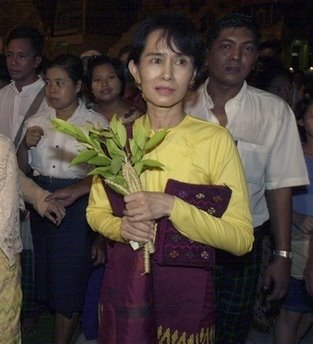


 Posts
Posts


