http://www.nhpr.org/node/24797
By Abby Goldstein on Monday, May 11, 2009.
Let’s take a stroll through a Burmese Internet café. Rows of tech-savvy young people chat away online, send Facebook messages, and surf the Internet.
But they aren’t free to read and write anything they like. Internet café owners are required to take regular screen shots and turn them over to Burma’s military-run government. Anyone who dares to browse, and much less blog on one of Burma’s “illegal” websites could face decades of jail time. In 2007 the Burmese government shut down the Internet altogether.
But Burma is not alone in its Internet crackdown. More than 20 Chinese bloggers are now in prison, and Iran is considering legislation that would make blogging about corruption or prostitution a crime punishable by death.
The Committee to Protect Journalists recently released its list of the ten worst countries in which to blog. Nations in Asia and the Middle East are at the top of the list. Joel Simon is the executive director of the Committee to Protect Journalists, and joins us on the line from New York.
The Committee to Protect Journalists: 10 Worst Countries to be a Blogger
(Photo by Marc oh! via Flickr/Creative Commons)
Tuesday, May 12, 2009
Worst Countries to Blog


Monday, March 30, 2009
In Russia, criminal ties to government fuel impunity
http://cpj.org/blog/2009/03/in-russia-criminal-ties-to-government-fuel-impunit.php
By Sergei Sokolov/Deputy Editor, Novaya Gazeta
In Russia, even official statistics present a depressing picture: Contract-style murders of journalists, more often than not, remain unsolved. Even the rare investigations that result in trials do not answer the main question: Who ordered the killing?
Such was the case of Larisa Yudina, editor-in-chief of the newspaper Sovetskaya Kalmykiya Segondnya who was killed in 1998; such, too, was the case of Igor Domnikov, the slain Novaya Gazeta editor.
One can draw several conclusions from this. The main one criminals can draw themselves: Killing journalists is allowed, no one will be punished for it, and no one will seriously investigate the crime. Journalists in Russia can be beaten, they can be threatened, and none of the law enforcement structures will look into their appeals or follow up on their reports. All this creates an atmosphere of impunity, which nourishes only one thing--the continued growth of crimes against journalists.
Why are we in this predicament? How is it that journalists who investigate corruption and wrongdoing by government officials are being killed or beaten? Why is it so dangerous for those who study the criminal underworld, which is fully controlled by Russian law enforcement agencies and secret services? It is so because "servants of the law" represent the main criminal powers in our society and country. And they won't ever capture themselves.
The investigation of any crime or corruption charge can expose the entire pyramid of the criminal underworld--of which officials of various levels and law enforcement agents from various structures constitute an integral part. Journalists are the main enemies of the criminal state in Russia. And this criminal state not only does not want to guarantee journalists their right to press freedom. And it does not want to guarantee them their right to life.
Editor's note: Four Novaya Gazeta journalists have been murdered since 2000.
Monday, March 16, 2009
SEAPA Alert: Burmese censors go digital, journalists alarmed
SEAPA Alert: Burmese censors go digital, journalists alarmed
10 March 2009
Source: Mizzima News
The media in Burma are alarmed at the plan of the junta's Press
Scrutiny and Registration Board--better known as the Censors'
Board--to censor the digital copies of articles to be published in
Burmese journals and magazines.
Burmese journalists said they see this new system as impractical as
the Internet speed in the country is too slow for downloading and
uploading of such a big amount of files.
Also, an editor who usually deals with the Censors' Board said this
new system which uses digital and electronic media to censor
articles will enable the censors to manipulate the contents of each
article as they can easily insert the text they themselves have
written.
The editors and publishers of literary journals, newspapers and
magazines currently submit hard copies of their forthcoming
articles to the Censors' Board. The board will soon require them to
submit soft copies stored in either CD or memory stick.
This new system will be introduced first to weekly journals and
will be later expanded to other print media, according to one of
the censors.
The board will read and evaluate the articles through a computer
system linked together with LAN.
In the first stage, printed copies of the censored articles and
layouts will be sent back to the print media concerned, followed by
their corresponding soft copies. After the publication has
incorporated the revisions made by the censors, the edited soft
copies will be sent back for final approval.
A staff from this department said that a trial run is being
conducted.
Another Censors' Board official said that the current system of
requiring print media outlets to submit two thirds of the total
pages one week before the publication date, with the rest to be
submitted 2-3 days prior to publication, will remain unchanged.
Aside from revising and deleting certain pictures, illustrations
and texts of the publications, the Censors' Board also asks the
various government ministries and departments whether to delete or
not news and articles written about them.
------------------------------------------------
Mizzima News (http://clicks.aweber.com/y/ct/?l=92apN&m=1e4Oe8NI2jKXin&b=7ERePGMwSyBAuz0prYAk3A) is a news organization
headquartered in New Delhi, India, run by exiled Burmese
journalists. A SEAPA partner, it aims to promote awareness about
the situation in Burma and promote democracy and freedom of
expression in the country.
Tuesday, March 10, 2009
Burmese Writers Offered Asylum in Maldives
http://www.irrawaddy.org/article.php?art_id=15251
By MIN LWIN Friday, March 6, 2009
--------------------------------------------------------------------------------
The president of the Republic of Maldives, Mohamed Nasheed, has offered asylum for Burmese writers and opposition journalists from other countries, in an effort to promote freedom of expression.
A press release from the President’s Office of the Republic of Maldives issued on Thursday said the offer was made during a meeting with Frank La Rue, the UN Special Rapporteur on Opinion and Freedom of Expression.
President Nasheed said that he is promoting freedom of expression in the Maldives and wants to support freedom of expression in all countries.
The exiled-based Burmese Media Association (BMA) welcomed the move.
“It seems that as he is a writer. He has sympathy for the plight of the Burmese media,” said Zin Linn, a vice chairman of the BMA. “I believe he wants to encourage Burmese writers.”
Nasheed also called for the release of Burma’s opposition leader, Aung San Suu Kyi, and an estimated 2,000 other Burmese political prisoners.
Nasheed sent a letter to UN special Burma envoy Ibrahim Gambari last month in which he expressed concern for the political situation in Burma.
“As a former political prisoner myself, it is especially distressing to see so many political prisoners languishing in Burma’s jails without hope of freedom,” Nasheed said in the letter.
Nasheed was named an Amnesty International Prisoner of Conscience in 1991, when he was being held in prison for writing articles calling for political change in his country.
He left the Maldives in 2003 and co-founded the Maldivian Democratic Party (MDP). In exile, he stayed in Sri Lanka and Britain. He returned to the Maldives in 2005 and was elected president in 2008.
Thursday, February 26, 2009
Changing patterns in Burma's media
http://english.dvb.no/news.php?id=2252
Htet Aung Kyaw
Feb 25, 2009 (DVB)–With one of the most strictly-controlled media environments in the world, Burmese journalists who oppose the military government are forced to work in secret, with the prospect of lengthy imprisonment an everyday threat.
Exiled news organizations in countries such as Thailand and India work covertly with networks of journalists inside Burma, receiving and publishing articles and commentary on political developments inside the country.
The last few years have also seen a rise in internet bloggers, and subsequently a fierce crackdown by the regime. In 2008, two bloggers were jailed for 20 years each for publishing critical material of General Than Shwe.
DVB spoke to a number of journalists and media experts, both Burmese and foreign, to discuss the current media environment within Burma, and to highlight the differences for media inside and outside the country.
Maung Maung Myint is chair of the Burmese Media Association, Kyaw Zwa Moe is deputy editor of The Irrawaddy, and Larry Jagan is a freelance journalist with a focus on Burma.
DVB began by asking what the current situation is like for media freedom in Burma.
Maung Maung Myint: "It's obvious that Burmese government's pressure on the media inside the country has been more intensified since after the 2007 September uprisings – there has been sentencing of journalists and media right activists to long prison terms throughout this time.
"The situation on the Burmese media freedom is not good and we think it will be the same until 2010. After that, if we are unlucky, things will even get worse."
Kyaw Zwa Moe: "In Burma, now we have more journalists than we had 20 years ago. Despite various difficulties, the censor laws and the pressure from the government, they are doing what they can with an increased capacity."
"And we see that they are trying their best to reach their message and information to the audience."
Larry Jagan: “Twenty years ago the Burmese media was completely government-controlled and no dissident or different opinions were allowed.
“Now we see, particularly in the print media, a proliferation of magazines and newspapers, none of which are necessarily anti-government but many of which have pushed the boundaries of journalism, particularly on issues like HIV/Aids, the environment, and the economy.”
DVB: What is the significance of the outside media? Are exiled journalists affected by bias, and do foreign journalists have adequate expertise?
Kyaw Zaw Moe: "It is important for the journalists to be independent. There is always a factor about self-censorship, such as not criticising the democratic movement even when there is something wrong with it because the journalist himself/herself has is from the movement.
“This depends on how much they believe, understand and how much ethics they follow in their journalist profession."
Maung Maung Myint: "I don't see that the Burmese youths who became journalists out of the 1988 uprising and the other movements are holding bias thoughts just because they came from that path.
“They have their brain, and their own ability to see and hear things and they have their common sense to differentiate what is right or wrong. If one values his or her own status of being a journalist, then he or she will also value the quality of the news which is measured by truthfulness.
“A journalist who respects this will stand on the same side with the truth."
Kyaw Zaw Moe: "Another issue we are having with the media outside is that, we always emphasise on being the first to publish a news without trying to verify whether the information in it real or not, because the competition among the organisations here is big."
DVB: How much confidence can we can have in the outside media (with non-independent journalists and organisations worried about funding) and the inside media (with issues of oppression and self-censorship)?
Kyaw Zwa Moe: "I am positive about this. Despite increasing pressure from the government, we are having more committed journalists who aim for a more successful, independent media society in Burma.
“To have a say what will happen in next five years, it depends a lot on how much we, the media both inside and outside Burma, have in our mind to learn, devote and follow the media ethics."
Maung Maung Myint: "As long as there are people inside Burma who are fighting for the media freedom with a great sacrifice, the future light of the Burmese media will never go dim.
“At the same time, the media people inside Burma need to have an active communication with the media people outside. In that way, we will have more understanding towards each other and a better channel of information flow which will profit the people of Burma to get more knowledge and information.
“This is an achievement we have already gained to some level, but I have to admit that, we, the media people, have to do more than this as our people are not living in freedom like people in other countries."
Larry Jagan: “What I would say is that my experience is that Burmese journalists inside the country are very courageous. They try to push the boundaries quietly in their own way. They know far more than they are ever able to get into print.
“In the last five years or so there has been some very good training of Burmese journalists but what they all tell me is that we are waiting for the day when democracy comes so that we can be real journalists because there’s no way we can be journalists under the military regime.”
Printer Friendly Version | Send to a Friend
SEAPA Alert: Burmese government refuses literary awards event
25 February 2009
Source: Mizzima News
Organizers of the "Tawphayalay Aung Zay Memorial" literary awards
were forced to change its venue on 24 February after Burmese
authorities refused their request to use a local hotel as venue of
the event.
The Township Peace and Development Council (TPDC) Kyauktada
Township in Rangoon did not give the organizers the permission to
use a hotel in the area as venue.
"The hotel asked us to show an official permit for the event. Only
the government's official Literary Organization is exempted from
this requirement," Daw Davies Thant Zin, daughter of the late
Tawphayalay, after whom the award was named, told Mizzima.
The event was instead held in the residence of Davies, with only 30
people in attendance, instead of the 100 who had been invited.
Davies said they staged the awards ceremony last year at Thamada
(President) Hotel last year without asking for a permit. At the
time, the government did not require literary events to ask for
permit for their respective events.
The literary circle said that the government's refusal to issue a
permit might be related to a book launching held in January this
year which was attended by U Win Tin, who had been released from
prison last year after spending 19 years in detention. He is also
one of the leaders of the "National League for Democracy" (NLD).
Burmese authorities have been known to arrest literary writers and
poets who write articles critical of the government. Magazines that
publish these also get censored, if not penalized.
The government arrested in January 2008 a poet, Saw Wai, over his
poem entitled "February 14". When the first letter of each line of
his poem were put together, it said: "Power Crazy Than Shwe". Tan
Shwe is a senior general in the junta.
Contents of publications are also routinely censored. In August
last year, the Censor Board approved only five poems out of 16
submitted by the literary journal, "Cherry Magazine". The censors'
decision was also so delayed that the magazine had to skip an
issue and lose advertising revenue.
The organizers of "Tawphayalay Memorial Literary Prize" this year
invited over 100 persons from the media and literary circles,
including U Win Tin. The award has been given annually since 2007.
Tawphalay is the great grandson of the last Burmese monarch, King
Thibaw and Queen Su Phaya Latt. He wrote some historical books,
including "The New Generation Loved by the People", "Ngamauk Ruby
in London" and "From Yadanbon to Ratnagiri". He died on 18 June
2006.
--------------------------------
Mizzima News ( http://clicks.aweber.com/y/ct/?l=92apN&m=1cjdoSm1sjKXin&b=WkqKFLn0aLRjoKl8cIUi2g ) is a news organization
headquartered in New Delhi, India, run by exiled Burmese
journalists. A SEAPA partner, it aims to promote awareness about
the situation in Burma and promote democracy and freedom of
expression in the country.
------------------------------------------------------------
Southeast Asian Press Alliance.
Bangkok Office: 3B, 3rd floor, Thakolsuk Place, No. 115 Terddumri Road, Dusit, Bangkok 10300. Tel. (662)2435579 Fax.(662)2448749
Tuesday, February 24, 2009
Burmese Media Gather in Chiang Mai
http://www.irrawaddy.org/article.php?art_id=15173
By WAI MOE Monday, February 23, 2009
--------------------------------------------------------------------------------
Burmese journalists have gathered in Chiang Mai, Thailand, to discuss issues at the Burma Media Conference’s 6th anniversary.
The conference, organized by the Burma Media Association (BMA), was held from February 21 to 23. About 150 Burmese journalists, writers, poets and bloggers from various countries attended the conference.
The three-day conference included recorded video messages from Burma by well-known writer Dagon Tayar and veteran journalists Win Tin and Ludu Sein Win.
“Accuracy is important for us,” Ludu Sein Win told the conference. “The Burmese media in exile must report truthfully. There is no substitution for the truth.
“In Burma, the media should be biased on behalf of the oppressed. In the Burmese conflict, there is only a choice between two—the people who bully and those who are bullied,” he said, adding: “Good journalism means being biased toward the truth.”
During the first day of the conference, Eint Khaing Oo, a young female journalist who is in prison in Burma, was presented in absence with the “Kenji Nagai Award," in memory of the Japanese video journalist who was killed by Burmese troops during a crackdown on demonstrators in Rangoon on September 27, 2007.
Shawn W Crispin, of the Committee to Protect Journalists, told the conference on Sunday that military-ruled Burma is one of the worst places in the world for journalists.
On the second day of the conference, Soe Myint, the editor-in-chief of exiled news agency Mizzima, spoke about his organization’s experiences of virus attacks over the last two years.
Later, the managing editor of The Irrawaddy, Kyaw Zwa Moe, spoke on the ethical dilemmas inherent in journalism.
Larry Jagan, a British journalist who specializes on Burma, said that the Burmese media in exile plays a significant role. He said he had learned from military families in Burma that the ruling generals regularly read the exiled media.
A Burmese blogger, Mr Thinker, shared the history and role of Burmese bloggers in recent years. “The military junta sees bloggers as enemies,” he said. “That’s why they arrested Nay Phone Latt.”
The conference was originally due to be held in late 2008, but had to be postponed until February because of the unstable political situation in Thailand.
Burma: “Kenji Nagai Award” or an Encouragement towards journalists under junta's oppression
http://www.asiantribune.com/?q=node/15729
Mon, 2009-02-23 02:35
By Zin Linn
Burma Media Association will have to launch its sixth annual conference (from 21 to 23 February 2009) in Chiang Mai. The association was formed in 2001by exile Burmese journalists and writers based in various countries. This year there will be a special event of delivering "Kenji Nagai Award" to an imprisoned female journalist in Burma.
The first award commemorating slain Japanese video journalist Kenji Nagai will be presented in the Burma Media Conference to a female reporter who reported about an area of the country that was devastated by Nargis cyclone last year. Last October, the media association made a proposal to set up the memorial award to Nagai's parents through APF News in Japan -- with which the Japanese journalist had a contract -- and the parents gave their consent to the idea.
Eint Khaing Oo, a 24 year old female journalist from Eco-vision journal, was arrested on 10 June 2008, while covering about a peaceful rally initiated by Nargis victims. Police accused her of taking photos of the victims with an intention of sending those pictures to foreign-media. She was charged under the Criminal Code section 505 (b) and 124 (a) of crime against public tranquility and sentenced to 2 years imprisonment. According to her lawyer Khin Maung Shein, she didn't commit any crime under this section. Eint Khaing is a reporter and she was doing her job. And the news was not based on untrustworthy data and she didn't send fictitious news to other news agencies. She is now in the notorious Insein Prison.
Burma was at the forefront of press freedom in Southeast Asia before 1962 military coup. The country enjoyed free press without censorship. As many as three dozen newspapers, including English and Chinese dailies, existed between 1948 and 1962 under civilian government. Even the prime minister’s office never closed for the journalists in those days. There were also freedom to set up relation with international press agencies.
The situation changed in 1962, when the military seized power. All newspapers were nationalized by the junta led by Gen. Ne Win. It established a Press Scrutiny Board (PSB) to enforce strict censorship on all forms of printed matter including advertisements and obituaries. Since then, military junta's censorship and self-censorship are commonplace in Burma and these have severely restricted political rights and civil liberties.
Press Scrutiny and Registration Division (PSRD) is a major oppressive tool of the incumbent military regime. Not surprisingly, Burma stands downgraded from a free state to a prison state. All news media in Burma are strictly censored and tightly controlled by the military -- all daily newspapers, radio and television stations are under supervision of the junta. Whatever some privately-owned journals and magazines are there, they are strictly under the PSRD scanner. No printed matter can bring out without PSRD permission.
The stratocracy took control of the censorship bureau after the purge of Prime Minister Khin Nyunt and his military intelligence office in October 2004. The Ministry of Information takes charge of censorship job and a new Press Scrutiny and Registration Division (PSRD) was established in April 2005. All publications were subjected to reregister with the PSRD. All periodicals have to follow providing detailed information about editorial-staff, ownership, and financial sponsorship.
Moreover, the junta also dominates the media industries through alternate publication companies owned by generals and their cronies. Photos, cassette tapes, movies and video footage also need the censor's stamp before reaching the people. At the same time, the military concentrates to stop the flow of uncensored radio news in Burmese version available from international broadcasting stations.
The radio, television and other media outlets are monopolized for propaganda warfare by the military regime and opposition views are never allowed. The regime even does not allow the religious discourse. The media is special tool for the military regime and no space for the opposition party. The political debates are not allowed even at the National Convention. That's why the National Convention lost its credibility and regarded as a sham.
The foreign periodicals with news reports on Burma have not been seen in the news-stands since September 2007. The owners of the Internet Cafes have been forced to sign an agreement to follow restrictions by the authorities and dare not allowing users to get out of the regime's filters. Moreover, the owners have to inform the details of their customers to the authorities. Currently, freedom of press situation in Burma is getting worse and worse. Media related people are feeling defenseless. Voices of peoples are constantly blocked.
Despite salvos of international condemnation over the lack of improvement on human rights abuses, especially freedom of expression and freedom of association, and talks with Aung San Suu Kyi, the junta envisaged to soften the pressure by allowing the United Nations special rapporteur for human rights, Tomas Ojea Quintana, to visit Yangon's notorious Insein prison on 16 February 2009.
U Win Tin, famous journalist of Burma who spent 19 years in junta’s jail, dismissed the special invitation of Mr. Quintana as he thinks it’s an agenda of the junta making a show-case to soften down the international pressure.
The International News Safety Institute (INSI) organized a regional conference on ‘Creating a Culture of Safety in the Media in Asia-Pacific’ (Dec. 15-16, 2008), which assembled participants from 11 countries. A member of Protection Committee for Burmese Journalists who wishes to remain anonymous said the junta had set up rules under a 2006 law on electronic media and 1996 law on film and computers that restricted how journalists could work.
Under the laws, journalists are not allowed to take pictures that might "pose a threat" to the regime, with wrongdoers facing up to 59 years in prison. Internet users are also under strict surveillance by the regime, which requires service providers to check every five minutes websites visited by users and to immediately report suspicious or dangerous activities.
In 2008, 12 journalists and bloggers were arrested in Burma, the Burmese Journalists Protection Committee says. Several popular websites, including yahoo.com and hotmail.com, have also been blocked as the junta further isolates its people from the outside world. Nay Phone Latt (age 28), who was arrested in January 2008, was sentenced to 20 years and 6 months in prison in November 2008 under video law and electronic acts. He was moved to Pa-an prison in Karen state of Burma in November 2008 from Insein prison in Rangoon.
Kyaw Ko Ko and Nyan Linn Aung from All Burmese Federation of Student Unions, were sentenced to 3-year imprisonment each by a Rangoon-township court on 9 February 2009 under the infamous ‘1996 Television and Video Law’.
However, on this 21 February 2009, Eint Khaing Oo becomes the first winner of "Kenji Nagai Award" which commemorating slain Japanese video journalist during Burma’s Saffron Revolution in September 2007. The Burma Media Association founded the award in honor of Mr. Nagai, who was shot dead while videotaping anti-junta demonstrations in Burma in 2007, to recognize those who have reported the truth about the junta-ruled country.
To give confidence and courage to the new blood of journalists in the military ruled country, Burma Media Association and Tokyo-based APF News Agency jointly founded the award in honor of the late "Kenji Nagai" who bravely made an effort to cover the Saffron Revolution of Burma in September 2007.
- Asian Tribune -
In Exile or At Home, Working in Burma's Media Isn't Easy
http://www.mindanaoexaminer.com/news.php?news_id=20090221073604
Saturday, February 21, 2009 08:36:04 PM
Despite the numerous challenges they grapple with, the Burmese media in exile still play a crucial role in urging the people to speak out against Burma's repressive military government and take the long and dangerous road to democracy, says Burmese journalist Htet Aung Kyaw.
Speaking at about the role of the media at a conference earlier this February in Barcelona, Spain, the journalist for the Norway-based Democratic Voice of Burma (DVB), a non-profit media organisation run by Burmese exiles and journalists, gave an overview about the media situation in the South-east Asian country ruled by the Gen. Than Shwe-led junta.
"Here in Barcelona, Spain, or elsewhere in Europe, the United States, Australia and Japan, media workers are safe and sound. But in Burma, while the world's most notorious military junta is still in power, it is very difficult and dangerous work," he said.
Apart from Japanese photojournalist Kenji Nagai, who was shot at the height of the September 2007 demonstrations, Htet said that citizen journalists in his country are still missing. Twelve journalists, including some undercover reporters for the DVB TV were detained in the aftermath of Cyclone Nargis and the constitutional referendum in 2008, he added.
Burma's government controls majority of the country's multi-media, including 75 percent ownership of private print media ranging from journals to magazines numbering to about 300.
Htet Aung Kyaw said that there are some media-in-exile organisations that offer satellite TV, short wave and radio services. These are the DVB, Radio Free Asia, Voice of America and the BBC's Burmese Service. The Internet also has the Thailand-based English-language 'The Irrawaddy' and India-based 'Mizzima', as well as the New Era and Network Media Group.
Ethnic-language Internet news service also abound, with the independent 'Mon News Agency', 'Kachin News Group', 'Kaladan Press', 'Kantarawaddy Times', 'Kaowao News', 'Khonumthung News', 'Narinjara News' and 'Shan Herald Agency for News' leading the pack. The number of anti-government blogs within and outside the country is also increasing.
Htet Aung Kaw noted that due to this tight control of content in his country's media, people have begun to "lose interest on the government-owned media" and instead, turn to Korean teledramas and movies. When they do buy newspapers, "they skip the front pages and go straight to the back pages to read the obituaries section".
"Journalists working for the 300 private journals and magazines have no chance to write about political, economic or social issues as these are censored by the Press Scrutiny Board (PSB)," he said. Thus, it's no surprise that many reading fare in Burma offer nothing but photos of sexy women, fashion, pop music, horoscopes and foreign sports news.
Htet also said that the media-in-exile have their share of problems. "Journalists in exile, especially donor-based media organisations, face a different form of censorship or self-censorship," he explained referring to an "unofficial warning" from Burmese pro-democracy groups to the media to avoid criticising the former. "'You can criticise the military regime as much as you want but leave us alone' has become a running joke in our circle. Many politicians in exile and inside the country have a limited understanding of the role of independent media," he said.
Continued Htet: "Some politicians have even told me that this is not the right time to criticise the movement, as all it will do is benefit the enemies of the pro-democracy movement."
Other excerpts from his speech:
"Some pro-democracy groups have sent letters of complaint to donors when we have criticised the weak points of the government-in-exile. This could make it very hard for media organisations that want to play an independent role in the coming 2010 elections, which most pro-democracy groups oppose. They are still holding on to the result of the 1990 election and are demanding this result be respected before new election can be held."
On censorship:
"The main job of publishers and chief editors is to try to strike a good deal with PSB officials, which means giving gifts of whisky, tobacco or money to encourage them to approve their stories on time."
"Moreover, every journal and magazine must add at least one story from the Information Ministry ・either propaganda about government activities or an attack on the opposition and the pro-democracy movement."
"Every journalist needs permission from the relevant ministers to interview any civil servant. Young and active journalists have often been detained on the accusation that they have not had proper permission from a minister."
On the international community's role:
"I would like to urge the European Commission and the western community to support the media-in-exile and look for opportunities to challenge the Burmese government-controlled media. Unless the generals' negative view of independent media is changed, it will be hard for foreign journalists to go to Burma." (http://www.theasiamediaforum.org/node/1014)
Wednesday, January 28, 2009
ျမန္မာျပည္တြင္း ပထမဆံုး ႏိုင္ငံေရးဂ်ာနယ္ ထြက္မည္ဟုဆို
Mizzima
ဖနိဒါ
တနလၤာေန႔၊ ဇန္နဝါရီလ 26 2009 18:59 - ျမန္မာစံေတာ္ခ်ိန္
ခ်င္းမုိင္(မဇိၩမ) ။ ။ ဆင္ဆာျဖတ္ေတာက္မႈဆိုးရြားလွသည့္ ျမန္မာျပည္တြင္
ႏိုင္ငံေရးအေၾကာင္းအရာမ်ား ေဖာ္ျပမည္ဆိုေသာ ဂ်ာနယ္တခုကို လာမည့္
ၾကာသာပေတးေန႔တြင္ ထုတ္ေ၀သြားမည္ဟု သိရသည္။
၂၀၁၀ ေရြးေကာက္ပြဲအမွီ ႏို္င္ငံေရးအျမင္၊ သံုးသပ္ခ်က္ႏွင့္ ေဆာင္းပါးမ်ား
အဓိက ေဖာ္ျပမည္ဆိုေသာ Northern Star ဥတၱရအလင္းဂ်ာနယ္ကို
စစ္မႈထမ္းေဟာင္းတဦးျဖစ္ျပီး အစိုးရအာေဘာ္ ျမန္မာ့အလင္းသတင္းစာ
ဒုတိယအယ္ဒီတာခ်ဳပ္ေဟာင္း ဦးသီဟေအာင္က အယ္ဒီတာခ်ဳပ္အျဖစ္
တာ၀န္ယူမွာျဖစ္သည္။
"ျမန္မာႏုိင္ငံ ဒီမုိကေရစီကုိ သြားေနတယ္ေလ။ ဒီမုိကေရစီ အသြင္
ကူးေျပာင္းေရးကာလမွာ သတင္းစာဆရာ၊ စာေရး ဆရာေတြ ေရးသားခဲ့တဲ့
အမွတ္ရစရာေလးေတြ၊ တုိင္းျပည္အတြက္ အက်ဳိးရွိမဲ့ဟာေတြ
ျပန္ရီဗ်ဴးလုပ္ျပီးေတာ့၊ ေနာက္ပုိင္း ပါတီေတြ ဖြဲ႔ေတာ့မယ္။
စည္းရံုးေရးေတြ လုပ္ေတာ့မယ္။ ေရြးေကာက္ပြဲ လုပ္ေတာ့မယ္။ အတိတ္ကုိ
နည္းနည္းျပန္တည္ျပီး လမ္းမွန္ေပါ့ေနာ္။ အန္ကယ္တုိ႔ ျမင္တဲ့ ပံုစံအတုိင္း
သြားသင့္တယ္ဆုိတဲ့ အယူအဆနဲ႔ ထုတ္ေ၀မွာပါ"ဟု ဦးသီဟေအာင္က ေျပာသည္။
"၈၈ကေန ၂၀၀၈ထိ ႏွစ္ေပါင္း ၂၀ထိ ျဖတ္သန္းခဲ့ရျပီေလ။ တိုင္းျပည္တြင္းမွာ
ျပည္သူေတြက သိတာလည္း ရွိတယ္၊ မသိတာေတြလည္း ရွိတယ္။ တခ်ဳိ႔က သိေပမယ့္
ေမ့သြားတာေတြရွိတယ္။ သမုိင္းထဲမွာ မွတ္တုိင္ေတြ ဆုိတာ ရွိတယ္ေလ။
အဲဒီအေရးၾကီးတဲ့ ကာလေတြကုိ ျပည္သူလူထုက ျပန္လည္ သိရွိ၊ မွတ္မိျပီးေတာ့
ခုျဖစ္ေနတဲ့ ေနာက္ဆံုး အေျခအေနေတြကုိ ေပါင္းစပ္ျပီးေတာ့
ေလ့လာသံုးသပ္ႏုိင္ေအာင္ တင္ျပမွာပါ"ဟု သူက ဆက္ေျပာသည္။
ပထမဆံုးထြက္ရွိမည့္ စာေစာင္တြင္ ဒီမုိကေရစီအသြင္ ကူးေျပာင္းေရးႏွင့္
စာနယ္ဇင္းသမားမ်ား၏ အခန္း႑၊ ေမာင္၀ံသ၊ ေမာင္စူးစမ္း၊ ေက်ာ္၀င္းတို႔၏
ေဆာင္းပါးမ်ား ပါ၀င္မည္ဟု သိရသည္။
"အဓိက ရည္ရြယ္ခ်က္ကေတာ့ အခုအမ်ားအားျဖင့္ အန္ကယ္တုိ႔မွာ အားနည္းေနတာက
ႏုိင္ငံေရးနဲ႔ ပတ္သက္ျပီးေတာ့ အေၾကာင္းအရာ အျပည့္အ၀ ေပးတဲ႔
ဂ်ာနယ္မရွိဘူး။ ကုိယ္ယံုၾကည့္ရာ ကုိယ္လုပ္ၾကတာေလ။ ၂၀၀၉- ၂၀၁၀က
ဒီအခ်ိန္မွာ ႏုိင္ငံေရးႏွင့္ ပတ္သက္တဲ့ အသိပညာ၊ အေတြ႔အၾကံဳေတြ၊ အယူအဆေတြ
ခ်ျပဖို႔ ဆုိတာ နည္းနည္းနဲ႔ ခ်ျပဖုိ႔ ဆုိတာ မလြယ္ဘူး။ ႏုိင္ငံေရးနဲ႔
ပတ္သက္တာ ေတာ္မ်ားမ်ားပါျပီးေတာ့ ျပည္သူလူထု စဥ္းစားလာႏုိင္ေအာင္ သမာသမတ္
က်က်နဲ႔ ခ်ျပမယ္။ တုိင္းျပည္ေကာင္းေစခ်င္လုိ႔ပါပဲ။ ဒီတခုပါပဲ"ဟု
ဦးသီဟေအာင္က ေျပာသည္။
သုိ႔ေသာ္ စာေပကင္ေပတုိင္ဟု နာမည္ဆုိးျဖင့္ေက်ာ္ၾကားေသာ စစ္အစိုးရ၏
ဆင္ဆာဘုတ္ေအာက္မွာ ေပးျဖတ္ခြင့္ မရွိသေလာက္ နည္းပါးလွေသာ
ေနအိမ္အက်ယ္ခ်ဳပ္က်ခံေနရသည့္ ေဒၚေအာင္ဆန္းစုၾကည့္ႏွင့္ သူမ၏ပါတီျဖစ္သည့္
အမ်ဳိးသားဒီမိုကေရစီအဖြဲ႔ခ်ဳပ္၀င္မ်ားႏွင့္ ေခါင္းေဆာင္အမ်ားအျပား
ေထာင္က်ခံေနရသည့္ ၈၈ မ်ဳိးဆက္ေက်ာင္းသားမ်ားအေၾကာင္းကိုမူ
အေၾကာင္းတစံုတရာ တုိက္ဆိုင္မွသာလွ်င္ ေရးသားေဖာ္ျပျဖစ္ပါလိမ့္မည္ဟု သူက
ေျပာသည္။
ဦးသီဟေအာင္သည္ ဗုိလ္မွဴးအျဖစ္ ၁၉၇၂ခုနွစ္မွ ၁၉၉၁ခုနွစ္ တပ္မေတာ္
တာ၀န္ထမ္းဆာင္ခဲ့သူျဖစ္သည္။ ထုိ႔ေနာက္ ျပန္ၾကားေရးဌာနသုိ႔ ေျပာင္းေရႊ႔ကာ
ျမန္မာ့အလင္းတြင္ ဒုတိယ အယ္ဒီတာခ်ဳပ္မွ ညြန္ၾကားေရးမွဴး၊ အေထြေထြ
မန္ေနဂ်ာ ရာထူး တာ၀န္မ်ားယူခဲ့ျပီး ၂၀၀၇ခုနွစ္တြင္ အျငိမ္းစားယူခဲ့သည္။
သတင္းစာဆရာဘ၀မွ ႏိုင္ငံေရးထဲ ၀င္ေရာက္လာခဲ့ျပီး ဆုိးရြားလွေသာ စစ္အစိုးရ၏
အက်ဥ္းေထာင္ထဲတြင္ ႏွစ္ ၂၀ ခန္႔ေနခဲ့သူ အမ်ဳိးသားဒီမိုကေရစီအဖြဲ႔ခ်ဳပ္
ေခါင္းေဆာင္တဦးျဖစ္သူက "ေကာင္းပါတယ္၊ ခုလုိ ထုတ္ေ၀မယ္ဆုိရင္ ဘာပဲ
ထုတ္ထုတ္၊ အမွန္တရားကုိ အေျခခံထားဖုိ႔ ေရးသားၾကဖုိ႔ သတင္းစာ က်င့္၀တ္
သိကၡာနဲ႔အညီ တည္းျဖတ္ဖို၊႔ ေဖာ္ျပဖုိ႔ပါပဲ။" က မဇၩိမသို႕ ေျပာသည္။
ျပန္ၾကားေရး ၀န္ၾကီးဌာနမွ ၂၀၀၈ခုႏွစ္ ေအာက္တုိဘာလတြင္း ဂ်ာနယ္
၆ေစာင္နွင့္ မဂၤဇင္း ၆ေစာင္တုိ႔အား ထုတ္ေ၀ခြင့္ ခ်ေပးခဲ့သည္။
ထုတ္ေ၀ခြင့္မွတ္ပံုတင္ထားသည့္ အပတ္စဥ္ ဂ်ာနယ္သည္ အနည္းဆံုး ၁၃၀
ထက္ရွိသည္။
ျပည္တြင္း အယ္ဒီတာတဦးကမူ ဆင္ဆာျဖတ္ေတာက္မႈ ပိုမိုဆိုးရြားလာေသာ
လက္ရွိအေျခအေနတြင္ ႏို္င္ငံေရးအေၾကာင္းဆုိလ်ွင္ ျပည္ပနုိင္ငံေရးသာ
ပိုမိုေရးခြင့္ရျပီး ျပည္တြင္းႏို္င္ငံေရးအတြက္မူ အကန္႔အသတ္မ်ားလြန္းလွ၍
သိပ္ေမ်ွာ္လင့္မထားဟု ဆိုသည္။
စာမ်က္ႏွာေပါင္း၂၀ ရွိ Northern Star ဂ်ာနယ္အား ယခုတပတ္ ၾကာသာပေတးေန႔တြင္
ေစာင္ေရ ၃ေထာင္ အနည္းဆံုး ျဖန္႔ခ်ီမည္ျဖစ္ျပီး တန္ဖုိးအားျဖင့္
တေစာင္လွ်င္ ၃၀၀က်ပ္ျဖင့္ စတင္ ေရာင္းခ်မည္ဟု သိရသည္။
Tuesday, January 13, 2009
Myanmar: Burma's blogger monk in running to win "Best Asian Blog"
http://www.opednews.com/populum/diarypage.php?did=11626
January 11, 2009 at 09:10:31 Permalink
Diary Entry by Ashin Mettacara
::::::::
New Delhi (Mizzima) - The Weblog of a veteran Burmese Buddhist monk, Ashin Mattacara, which contains writings on Burma, has been selected among the finalists for the 'Best Asian Bolg' Award for 2008.
The Weblog, (www.ashinmettacara.org), has garnered 870 votes in an online poll conducted since November of last year, currently ranking it second among votes received by finalists.
Ashin Mattacara, age 27, went to Sri Lanka to study Buddhist religious studies and created his Weblog in 2004, focusing on religious writings. But the Weblog took a decisive turn in September 2007, when Buddhist monks led mass demonstrations in Burma, with the site increasingly filled with political writings on Burma.
"The September event made me angry, sorry and disappointed, so I decided to write and publish political issues on my blog," Ashin Mettacara told Mizzima, adding that his blog also contains other information on Burma.
In the wake of the public protests in September 2007, several Internet savvy Burmese youth, both inside Burma and around the world, created websites and blogs and filled them with information on the protests and the subsequent crackdown by the military.
Ashin Mettaraca's blog was among the outstanding blogs that provided much needed information on the protests to Burmese as well as to the international community.
"I wanted to tell the whole world about the situation of Burma. That is the main reason for creating this blog," Ashin Mettacara said.
Like Ashin Mettacara, several young Burmese bloggers played an important role in bringing out information on the September 2007 protests as well as the humanitarian crisis in the aftermath of deadly Cyclone Nargis in early May 2008.
For this reason, Burma's military rulers have hunted down bloggers and others involved in the dissemination of information and sentenced them to long prison terms. Popular comedian and film director Zargarnar was last year arrested and sentenced to 59 years of imprisonment for providing information and giving interviews to media groups.
Similarly, a young blogger, Nay Phone Latt, who is also a youth member of detained Nobel Peace Laureate Aung San Suu Nyi's National League for Democracy party, was also arrested and sentenced to more than 20 years of imprisonment for posting writings of Burmese youth on his Weblog.
Ashin Mettacara, who has completed his B.A and M.A studies in Sri Lanka's Buddhist and Pali University, said he would face a similar threat from Burma's military rulers if he should return to his homeland.
However, he said it does not intimidate him from doing what he always does – posting political writings and information on Burma - on his blog. He believes that that his work is serving people around world, and he is confident of winning the award.
On his blog, he has chosen to post a popular line that states, "Burma, Myanmar: Yes, We can win this Award".
The world's largest blog competition, Weblog Awards has 48 categories for this year and nearly two million votes have already been cast.
With the polls set to close on January 13, readers can post their votes at http://2008.weblogawards.org/polls/best-asian-blog/.
Take action -- click here to contact your local newspaper or congress people:
Save Burma
Click here to see the most recent messages sent to congressional reps and local newspapers
Ashin Mettacara is a 27-year-old Buddhist monk from Burma who is blogging and contributing with the aim of spreading news to the whole world about the crisis in Burma.
He is not part of any political group, association or organization. He is helping all the groups who are working for freedom of belief and expression. His motto is,
"Working for equality is human values".
Do visit his weblog: http://www.ashinmettacara.org/
Contact Author
Contact Editor
View Other Articles by Author
Managing the message
http://www.thetelegram.com/index.cfm?sid=209195&sc=86
Last updated at 8:56 AM on 10/01/09
Managing the message
PAM FRAMPTON
The Telegram
There’s an old children’s parlour game called Gossip that demonstrates how information can be distorted when it is passed from person to person by word of mouth.
In the game, a sentence is whispered to the first child in a group and it gets passed on from child to child. The end version rarely matches the original sentence, as a result of words being dropped or the sentence being embellished along the way.
In politics, there’s a reverse kind of game being played, where the information provided can be distorted to begin with, especially if it has been carefully crafted so as to give the illusion of being the whole truth without actually being so.
But unlike the harmless kids’ version, this game is insidious and it can shape public perception.
Let’s call it “Message management.”
It works like this: a government decides its handling of a matter will cast it in an unflattering light, and so it only releases some of the pertinent information.
If the public or the media doesn’t know that the information made available has been filtered or truncated or censored in any way, then it’s pretty hard to call the government’s bluff.
The popularity of this game is disturbing.
Many kinds of muzzles
In a summer 2006 article (headlined “Muzzling the Media”) in the World Policy Journal, Joel Simon writes: “A new breed of sophisticated autocrats is threatening press freedoms around the world.”
Simon, the executive director of the Committee to Protect Journalists, writes that there are countries like Cuba and Burma where journalists are routinely jailed for reportage that is seen as being contrary to the message the government wishes to convey.
And then there are regimes that employ slightly subtler methods.
Simon uses the example of Vladimir Putin’s Russia, where the government has “succeeded in bringing Russia’s once feisty broadcast media under Kremlin control without putting journalists in jail or using violence.”
He describes how there was plenty of television coverage when Russian security forces stormed a school in Beslan in 2004, where Chechen separatists were holed up with hundreds of student hostages, but no coverage of the aftermath, which left more than 300 people dead.
“There were no survivors’ accounts, no stories of desperate people who lost loved ones, no independent experts’ analysis, and no public discussion whatsoever,” Simon quotes Russia analyst Masha Lipman as saying.
In that situation, an autocratic government decided what the story was and when it was time to end it, despite the public’s many lingering questions and concerns.
Reporters shut out
Closer to home, Stephen Harper’s government raised the ire of many people — and not just those working in the media — when, in 2006, he barred journalists from covering repatriation ceremonies for Canadian soldiers killed in Afghanistan.
While the PM told CBC News at the time that “it’s about what’s in the best interests of the families,” many members of the opposition, the public and the media suspected Harper’s decision had more to do with damage control and optics, as if somehow by banning coverage of the ceremonies, Canadians would be blissfully unaware that soldiers were losing their lives in Afghanistan.
In a 2007 article on Harper’s media policy published by the Centre for Constitutional Studies, University of Alberta law student Graham Darling writes: “Freedom of the press is granted constitutional protection, ensuring that journalists can report government activities to the Canadian public without interference. Mr. Harper has not placed any legal restrictions on what can be published, but he has limited what information is given to the press and has restricted the opportunities the press has to gather information. Without access to government officials and staff, the media is unable to ask important questions. And without access to military ceremonies or government events, the public is excluded from happenings that may be of great public interest.”
Of course, there are many ways to suppress the press or to control the official message track.
Simon writes: “(The new autocrats) intimidate the media with punitive tax prosecutions and defamation suits, or influence coverage through personal relationships with media owners or allocation of government advertising funds.”
Sorry, we can’t release that
Here in Newfoundland and Labrador, members of the provincial government are old hands at message management.
For example, the executive level of the Danny Williams administration has a penchant for micro-managing the data released to the media through other government departments in response to access to information requests.
And, just before Christmas, it amended its Management of Information Act to tighten up any pesky little loopholes through which useful information might slip through.
As The Telegram’s Rob Antle reported on Dec. 10, Bill 63 — which passed in the House late last year — broadens “the definition of cabinet records, and (gives) Executive Council the authority to manage those records as it wishes.”
That bill has the opposition worried, and for good reason. As provincial NDP Leader Lorraine Michael told The Telegram, such legislation could prevent important documents, including cabinet briefing notes — such as those tabled during the Cameron inquiry into the breast testing scandal — from ever seeing the light of day.
Any move by a government to withhold, censor or over-zealously filter information that reveals to the public how the province is being run should concern us all.
And any government that forgets it was elected to serve the people’s interests — and not solely its own partisan aims — at the very least runs the risk of developing a bad reputation.
Pam Frampton is The Telegram’s story editor. She can be reached by e-mail at pframpton@thetelegram.com. Read her columns online at www.thetelegram.com.
10/01/09
Comments:
This Conversation is Moderated. What is moderation?
What does moderation mean?
The Telegram is committed to encouraging intelligent discourse among our readers and to creating a forum where diverse views and opinions on a wide range of topics can be aired. The forum you are in now is a result of our continuing efforts to facilitate a dynamic online conversation among our readers.
This is a moderated conversation. Once a reader follows the steps to register and submit his or her comment it goes to a moderator for the website. Once it has been approved, your comment will be displayed on the website. A comment may be edited or deleted for reasons of content or language.
All readers wishing to join a conversation must first sign in and agree to the Terms of Usage, which explain the rules of acceptable content.
Monday, January 5, 2009
Myanmar terminates some publications for failure to register
http://news.xinhuanet.com/english/2009-01/03/content_10596921.htm
www.chinaview.cn 2009-01-03 13:59:35 Print
YANGON, Jan. 3 (Xinhua) -- The Myanmar Information Ministry hasterminated some 11 journals and 20 magazines, the local weekly Voice journal reported Saturday, quoting the Central Press Scrutiny and Registration Board.
The 11 journals, revoked from publication for failure to apply for renewal of registration, included Thet Thant Yaung, Viva Sports, Aung Nameik, Film News, International Crimes, Maha, Bulletin, Trend, Aung Su Youth, Music World and Company Directory.
According to statistics, there are over 250 private magazines and 200 journals being sold in the domestic markets.
Among the journals granted over the past few years, sports journals dominated in number, followed by news journals which carry domestic and international news, news related to arts, children, health and crime.
The number of journals covering domestic news has grown over the past decade in Myanmar, thanks to market demand and the emergence of more such journals also contributes to the development of journalism, readers said.
The Information Ministry took over the duties of the press scrutiny and registration from the Ministry of Home Affairs in February 2005, granting the publication and distribution of journals and magazines as long as they conforms to the prescribed policy.
Other official statistics show that there were a total of over 5,000 printing houses and 759 publishers in Myanmar. More than 9,700 titles of books on various topics were also published.
Editor: Yao
Thursday, December 25, 2008
Media in Cambodia is better than the neighboring countries
http://www.vuthasurf.com/2008/12/24/media-in-cambodia-is-better-than-the-neighboring-countries/
Posted by vutha on Wednesday, December 24th 2008 Digg it
DecI attended the first Congress of Press Council of Cambodia by focusing on “Matter Media” on December 22, at Pact Cambodia’s office. The representatives of Cambodian journalists from different local newspapers and associations were presenting about the matter of journalism happening in the country. Until now, the journalism sector is improving and better than the neighboring countries like Burma, Malaysia, Thailand and Vietnam.
Even though, media representatives revealed the challenges and threats by the government authority. In the past few years, journalists had been killed, threatened and jailed. The murderers still have not yet to be arrested by the authorities. However, the government dropped out the file of defamation and crime, but journalists are still faced with court system used as a tool to arrest the journalists, by alleging the publication of fault information.
Other thing is that, it is because that the Freedom of Information Law is not made yet. Therefore, the journalists have difficulties to access information from the public institutions, which are the obstacle for them to report the government issues.
Even though, some journalists use their duty to extort money from smugglers, logging trucks and so on. The factors affect the professional journalists. At the mean time, some journalists have lack of professional skills. By the way, there is discrimination among journalists working for popular and unpopular newspapers.
Eventually, most of local media, both state and private, are bias to the current government and not independent in reporting the true news to the Cambodian people. And other newspaper is serving the political parties rather than the people’s interests.
Friday, December 19, 2008
MYANMAR: Myanmar journalists face intimidation, pressure from junta
http://www.asiamedia.ucla.edu/article-southeastasia.asp?parentid=102313
The military junta arrested 12 journalists and bloggers in 2008, according to the Burmese Journalist Protection Committee
The Jakarta Post
Wednesday, December 17, 2008
By Nugroho and Lilian Budianto
Journalists working in military-ruled Myanmar continue to face intimidation, torture and arrests in reporting on the country's corrupt and brutal regime, despite international calls for more press freedom, a conference on media safety heard Tuesday.
A Myanmar journalist, who asked not to be identified, told the conference that contrary to government claims, journalists in the country were treated as "dangerous enemies".
"There is no freedom for Burmese journalists to write about political and social conflicts," he said while asking that pictures of him and his colleague not be taken, out of safety concerns.
The Regional Conference on Creating a Culture of Safety in the Media in Asia-Pacific was organized by the International News Safety Institute (INSI) from Dec. 15-16, and brought together participants from 11 countries.
Mon Mon Myat, of the Burmese Journalist Protection Committee, said the junta had set up rules under a 2006 law on electronic media and 1996 law on film and computers that restricted how journalists could work.
Under the laws, journalists are not allowed to take pictures that might "pose a threat" to the government, with offenders facing up to 59 years in prison. Internet users are also under strict surveillance by the government, which requires service providers to check every five minutes websites visited by users and to immediately report suspicious or dangerous activities.
In 2008, 12 journalists and bloggers were arrested in Myanmar, the protection committee says. Several popular websites, including yahoo.com and hotmail.com, have also been blocked as the junta further isolates its people from the outside world.
"Eighty percent of Internet sites are banned by the government," said Ronald Aung Naing of the Burmese Journalist Protection Committee.
He added the government also monitored people regularly at checkpoints for cameras or video cameras with "dangerous" content.
Eko Maryadi, of the Indonesian Alliance of Independent Journalists, told the forum that although media freedom in Indonesia had improved since the fall in 1998 of former president Soeharto's 32-year regime, journalists still faced intimidation, harassment and lawsuits in reporting on certain issues.
"We have also seen more business groups filing complaints against journalists, claiming the reports harmed their reputation or business. This was rare in the past," he said.
The latest such case is the complaint filed by the Bakrie Group against Tempo daily over its reports on the financial problems of the group's top subsidiary, PT Bumi Resources.
The alliance recorded 43 cases of violence against journalists in 2005, with 53 in 2006, 75 in 2007 and 52 cases as of September this year.
The conference closed with a declaration calling on all governments in the region to take responsibility for the safety of all journalists working in their countries and to lift impunity for groups that had endangered the lives of journalists.
Date Posted: 12/17/2008
Thursday, December 18, 2008
World Press tells junta to stop repression of media-MIZZIMA
http://www.mizzima.com/news/world/1458-world-press-tells-junta-to-stop-repression-of-media.html
by Solomon
Wednesday, 17 December 2008 20:23
The World Association of Newspapers (WAN) condemned the Burmese military junta for cracking down on freedom of expression, called for the release of all jailed journalists and urged its neighbouring countries to pressure the junta for change.
Larry Kilman, Director of Communications, Public Relations of WAN said, the Board of directors of WAN which represents more than 18,000 publications in five continents, met on December 15, 2008 in Beirut, Lebanon and urged the military junta in Burma to release all detained journalists and to end restriction on freedom of expression.
"The Board of directors from WAN, while issuing the resolution and condemning the lack of press freedom in Burma, urged the military junta to stop arrests and the crackdown on the press," Kilman said.
"There is no press freedom in Burma. It is one of the most repressive regimes and is an embarrassment to the entire region," added Kilman.
The Committee to Protect Journalists (CPJ) said on December 4 that Burma is the third worst country in terms of imprisoning journalists in the world after China and Cuba. Burma has at least 14 journalists behind bars.
"The Burmese regime, one of the most repressive in the world, recently stepped up its attack on freedom of expression," said WAN.
WAN also called on the Association of Southeast Asian Nations (ASEAN) "To abandon their discredited policy of non-interference and mount pressure on Burma's rulers to adopt international norms of free expression."
Despite condemnation and pressure from the international community the Burmese military junta arrested journalists and bloggers and sentenced them to long terms in prison. They were sent to prisons in remote areas where their family members would find it difficult to visit.
The blogger and well know comedian Zargarnar (Maung Thura) were sentenced up to 59 years in prison for disseminating information about the September 2007 protests and in the aftermath of Cyclone Nargis.
Blogger Nay Phone Latt was sentenced to 20 ½ years in jail for posting free writing that fired the feelings of Burmese youth in his blog site. Journalist Ein Khaing Oo from Ecovision weekly Journal was sentenced to two years in prison for covering a story about Cyclone Nargis victims.
"For press freedom in Burma the best solution is democracy and that is not there," said Larry Kilman.
A Rangoon based veteran editor of a privately owned monthly journal said the journal had fallen in quality because of extreme censorship by the junta authorities. It has been reducing its print order every month.
"We are more and more disappointed with the government's censor board. They are rejecting whatever they want without following exact rules," the editor who wished not to be named told Mizzima.
"It is Impossible to publish stories relating to political issues. The junta is also prohibiting news and write ups which are not political in nature," he added.
Now they have reduced the print order. While earlier they published over 10,000 copies monthly now it is well below that figure.
"We have to reduce the number of journals because the demand has fallen and the censor board destroys the quality of journals," he added.
Wednesday, December 10, 2008
Ineffective Law Enforcement, Bad Economy Fueling Cybercrime
http://www.pcworld.com/businesscenter/article/155178/ineffective_law_enforcement_bad_economy_fueling_cybercrime.html
Tuesday, December 09, 2008 7:58 AM PST
Cybercriminals operating worldwide are benefitting from ineffective law enforcement and a growing economic recession that could make jittery people more susceptible to cybercrime scams.
So concludes security firm McAfee in its new report, "Virtual Criminology Report--Cybercrime vs. Cyberlaw." published Tuesday. The report pulls together the opinions of about two dozen legal experts, academic researchers and security-response professionals working as far afield as Britain, continental Europe, the Baltic countries, Brazil, India, Japan, Australia, New Zealand and North America.
"There have been a few cases where cybercriminals have been promptly arrested, but they're usually responsible for the small attacks," says Paulo Lima, a Brazilian lawyer specializing in computer-related crime. "Those responsible for the large operations have never been arrested. The public sector has usually acted in a mitigating manner, attacking the symptom and not the illness -- there is an antiquated system and a completely unprepared law enforcement body."
Lima's sentiment is echoed in Britain, India and elsewhere by those involved in trying to combat a worldwide cybercrime spree that includes phishing, denial-of-service (DoS) extortion rackets, botnets, spam, cyber-espionage and national attacks of a political nature.
"Cybercrime has become a big problem in India this year," says Vijay Mukhi, president of the Foundation of Internet Security and Technology in India. "However, politicians and judges do not understand how to deal with it, and in fact few of them ever use the Internet. Police are reluctant to register cases because they prove too difficult to prosecute."
The view among some in the United Kingdom is only slightly more optimistic. Peter Sommer, a British professor and consultant whose main research field is the reliability of digital evidence, says there's some progress being made in how the U.K. courts address technology-related crimes, but the computer forensics piece of the puzzle is not yet complete. "The Council for Registered Forensics Practitioners scheme to accredit experts is still not yet working," he adds.
Anther problem is talent: In many places around the world, private industry is siphoning the cybercrime fighting talent from government, offering them more money to work in the private sector.
In addition, many worry that the growing economic recession and banking fiscal crisis is being exploited by cybercriminals to prey upon jittery consumers.
"We are seeing rounds of phishing e-mails which purport to be from banks responding to the crisis," says Philip Virgo, secretary general of London-based EURIM, a group whose membership includes high-tech vendors, businesses and British and European legislators focusing on IT policy issues. "We are also seeing a round of phony CV [resume] sites, whose main aim is to collect personal details."
Politics is also an issue. China, Russia and Moldova are often blamed as international sources for all kinds of cybercrime, and the McAfee report takes up the issue of whether there are places around the world where prosecution of cybercrime is thought to be especially lax.
"Criminal behavior is still receiving political cover," says Eugene Spafford, professor of computer sciences at Purdue University and executive director of the Center for Education and Research in Information Assurance and Security in the United States.
One example Spafford cites is the July cyberattack on Web sites protesting the Burmese military regime, in which the government in Myanmar was thought to have had a hand. "In the case of the Myanmar denial-of-service attacks, they took place with local Eastern European and Russian support," he says.
"Russia and China are especially reluctant to cooperate with foreign law enforcement bodies for reputation and intelligence reasons," Spafford adds.
Another contributor to the report, Dmitri Alperovitch, says he believes that Russian's President Vladimir Putin and political influence within the Federal Security Service (Russia's successor to the Soviet KGB) are hampering efforts to prosecute cybercrimes, such as those related to the Storm botnet. Alperovitch is director of intelligence analysis and hosted security at Secure Computing (recently acquired by McAfee).
McAfee says Russia is the predominant source of the most sophisticated, well-designed malware.
"The vast percentage of 'professional' malware we see today is, frankly, coming out of Russia," acknowledges Dave Marcus, director of security research and communication at McAfee Avert Labs. "We find it on Russian hosting sites and the read-me documents are in Russian."
National concerns about political uses of malware and denial-of-service attacks are growing, according to the McAfee report.
Estonia, which suffered massive and crippling DoS attacks in April 2007, this year established a "top-secret cybersecurity hub," which has been "operational as of August 2008 and backed by NATO and seven EU countries (Estonia, Germany, Italy, Latvia, Lithuania, Slovakia and Spain)," the McAfee report states.
Estonia also is said to have pledged 50,000 Euros to back the Council of Europe Convention on Cybercrime.
But while some countries end up as high-tech crime scapegoats, the report notes, in reality it's very difficult to precisely identify origination points.
"In fact, obfuscation seems to be the name of the game," says Alana Maurushat, acting director of the Cyberspace Law and Policy Centre of the University of New South Wales in Australia. "It is easy to make it appear as if malware or espionage activities are originating from a county other than the original source. There is considerable misdirection as to origin of attacks. Much traffic is misdirected as a decoy. The actual attack may originate in the same city as the target. This is often done with cases of country espionage and corporate espionage."
Those out on the Web front lines say they can only speak about what they witness daily.
"We're getting hacking attempts constantly," says Clay Hill, Web site manager at the libraries division at Mississippi State University, which allows authorized access to research. "And most of it is from China."
Cybercrime toll mounts for business
http://www.networkworld.com/news/2008/092208-cybercrime.html
Council of Europe, ISPs draft anti-cybercrime tactics
http://www.networkworld.com/news/2008/040108-council-of-europe-isps-draft.html
Diary of a Deliberately Spammed Housewife
http://www.networkworld.com/news/2008/070108-mcafee-spam-experiment.html
Sponsored Resource:Ten quick fixes for the worst security nightmares
Sponsored Resource:Learn more about ultra light notebooks from Asus and the best warranty in the industry.
Sponsored Resource:Thinking about a new Laptop? Lenovo has models to meet everyone's needs.
Sponsored Resource:Get the truth about remanufactured ink. Learn more from HP.
Online writers future targets
http://thenutgraph.com/article-1235.html
10 Dec 08 : 8.00AM
By Elizabeth Looi
elizabethlooi@thenutgraph.com
PETALING JAYA, 10 Dec 2008: Online journalists and bloggers may face greater scrutiny in the future compared to traditional media workers, warns human rights group Aliran.
Its joint coordinator Mustafa K Anuar said this future scenario was likely, as some bloggers here have already been hauled up or detained for their postings.
Mustafa, who is from Charter2000-Aliran, admitted that although there were bloggers who relied on unverified sources for stories, there were also those who were careful with their stories, analyses and comments.
"It is these online writers and bloggers that the powers-that-be are concerned about, especially if these writers are able to side-step the official censorship mechanisms and at the same time command a sizeable following," he told The Nut Graph in a telephone interview.
Mustafa was commenting on a report by New York-based Committee to Protect Journalists (CPJ) on imprisoned journalists.
The non-profit organisation found that more online journalists and bloggers were jailed compared to those in other media. Some 45% of media workers jailed worldwide in 2008, as of 1 Dec, were bloggers, web-based reporters, or online editors.
China had the highest number of journalists and bloggers who were jailed, followed by Cuba and Burma, the report stated. Malaysia was not included in the survey.
(image source: wikipedia.org)
Mustafa felt that the CPJ findings did not reflect the local situation. Although there have been a few cases of bloggers being targeted by the authorities, in general, online journalists here do not face as high a possibility of persecution as some of the countries mentioned in the CPJ report.
"Having said that, I believe that these (limited Malaysian) cases are meant to warn other bloggers and online writers who might have the penchant for news-breaking stories, incisive analyses and critical commentaries about the Malaysian socio-political situation," he said.
Among the prominent bloggers who were arrested this year were Malaysia Today editor Raja Petra Kamarudin and Syed Azidi Syed Aziz, who is known as Kickdefella.
Raja Petra was arrested under the Internal Security Act (ISA) on 12 Sept 2008 and sentenced to two years in the Kamunting Detention Centre. But he was released on 7 Nov. Syed Azidi, on the other hand, ran afoul of the Sedition Act when he suggested flying the Jalur Gemilang upside down on his blog. The blogger, whose case is still pending, is out on bail.
Writer Alliance for Media Independence (Wami) chairperson Wong Chin Huat told The Nut Graph that it would be better for Malaysia to produce its own national media freedom report.
He felt that the methodology used by most international media freedom reports may not be suitable or fair as a yardstick to measure media freedom in Malaysia.
But generally, Wong was pessimistic about the future of online media here.
"Until and unless we can change the paradigm of our thinking, our freedom will be limited.
"But based on my observations, we have more freedom now to talk about ethnic-related issues, for example, or to criticise a political leader, compared to 10 years ago," he noted.
Almost Half Of Journalists In Jail Are Online Reporters
http://www.rferl.org/content/Almost_Half_Of_Journalists_In_Jail_Are_Online_Reporters/1357762.html
Imprisoned Azerbaijani journalist Eynulla Fatullayev in a Baku court in October 2007
December 09, 2008
In its annual survey of journalists in prison, the Committee to Protect Journalists (CPJ) has found that almost half of all media workers in jail are bloggers, web reporters, or online editors.
The CPJ says the findings reflect the rising influence of online reporting and commentary.
The CPJ says it found 125 journalists behind bars as of December 1, a decrease of two from 2007. Fifty-six of those are online journalists.
"The future of journalism is online," says CPJ Executive Director Joel Simon, "and we are now in a battle with the enemies of press freedom who are using imprisonment to define the limits of public discourse."
China is the world's worst jailer of journalists, with 28 in prison, followed by Cuba (21), Burma (14), Eritrea (13), and Uzbekistan (6).
Other countries in RFE/RL's broadcast area that are imprisoning journalists are Azerbaijan (5), Iran (5), Russia (2), Armenia (1), Afghanistan (1), Iraq-in U.S. custody (1), and Iraq-in custody in the Kurdistan region (1).
You can read detailed accounts of each imprisoned journalist on the CPJ's website.
Monday, December 8, 2008
Bloggers More Likely To End Up In Jail Than Print Journalists
http://www.alleyinsider.com/2008/12/bloggers-more-likely-to-end-up-in-jail-than-print-journalists
Eric Krangel | December 4, 2008 4:13 PM
If you live in or travel to a country without press freedom, make no mistake: Big Brother reads blogs. Of 125 journalists in jail worldwide, 45% of them write for online media, says the Committee to Protect Journalists. That's more than any other type of media, with print in second place with 42% of the total.
China earns the dubious distinction of being the world's worst jailer of journalists, a position it's held for ten consecutive years. Other danger areas for journalists: Cuba, Burma, Eritrea, and Uzbekistan.
http://cpj.org/imprisoned/cpjs-2008-census-online-journalists-now-jailed-mor.php
CPJ's 2008 prison census: Online and in jail
Also: See capsule reports on journalists in jail as of December 1, 2008
New York, December 4, 2008--Reflecting the rising influence of online reporting and commentary, more Internet journalists are jailed worldwide today than journalists working in any other medium. In its annual census of imprisoned journalists, released today, the Committee to Protect Journalists found that 45 percent of all media workers jailed worldwide are bloggers, Web-based reporters, or online editors. Online journalists represent the largest professional category for the first time in CPJ's prison census.
Abdel Karim Suleiman, an Egyptian blogger, is one of 56 online journalists jailed worldwide. (Reuters)CPJ's survey found 125 journalists in all behind bars on December 1, a decrease of two from the 2007 tally. (Read detailed accounts of each imprisoned journalist.) China continued to be world's worst jailer of journalists, a dishonor it has held for 10 consecutive years. Cuba, Burma, Eritrea, and Uzbekistan round out the top five jailers from among the 29 nations that imprison journalists. Each of the top five nations has persistently placed among the world's worst in detaining journalists.
At least 56 online journalists are jailed worldwide, according to CPJ's census, a tally that surpasses the number of print journalists for the first time. The number of imprisoned online journalists has steadily increased since CPJ recorded the first jailed Internet writer in its 1997 census. Print reporters, editors, and photographers make up the next largest professional category, with 53 cases in 2008. Television and radio journalists and documentary filmmakers constitute the rest.
"Online journalism has changed the media landscape and the way we communicate with each other," said CPJ Executive Director Joel Simon. "But the power and influence of this new generation of online journalists has captured the attention of repressive governments around the world, and they have accelerated their counterattack."
In October, CPJ joined with Internet companies, investors, and human rights groups to combat government repression of online expression. After two years of negotiations, this diverse group announced the creation of the Global Network Initiative, which establishes guidelines enabling Internet and telecommunications companies to protect free expression and privacy online. Yahoo, Google, and Microsoft have joined the initiative.
Illustrating the evolving media landscape, the increase in online-related jailings has been accompanied by a rise in imprisonments of freelance journalists. Forty-five of the journalists on CPJ's census are freelancers; most of them work online. These freelancers are not employees of media companies and often do not have the legal resources or political connections that might help them gain their freedom. The number of imprisoned freelancers has risen more than 40 percent in the last two years, according to CPJ research.
"The image of the solitary blogger working at home in pajamas may be appealing, but when the knock comes on the door they are alone and vulnerable," said CPJ's Simon. "All of us must stand up for their rights--from Internet companies to journalists and press freedom groups. The future of journalism is online and we are now in a battle with the enemies of press freedom who are using imprisonment to define the limits of public discourse."
Antistate allegations such as subversion, divulging state secrets, and acting against national interests are the most common charge used to imprison journalists worldwide, CPJ found. About 59 percent of journalists in the census are jailed under these charges, many of them by the Chinese and Cuban governments.
About 13 percent of jailed journalists face no formal charge at all. The tactic is used by countries as diverse as Eritrea, Israel, Iran, the United States, and Uzbekistan, where journalists are being held in open-ended detentions without due process. At least 16 journalists worldwide are being held in secret locations. Among them is Gambian journalist "Chief" Ebrima Manneh, whose whereabouts, legal status, and health have been kept secret since his arrest in July 2006. From the U.S. Senate to the West African human rights court, international observers have called on authorities to free Manneh, who was jailed for trying to publish a critical report about Gambian President Yahya Jammeh.
Nowhere is the ascendance of Internet journalism more evident than in China, where 24 of 28 jailed journalists worked online. China's prison list includes Hu Jia, a prominent human rights activist and blogger, who is serving a prison term of three and a half years for online commentaries and media interviews in which he criticized the Communist Party. He was convicted of "incitement to subvert state power," a charge commonly used by authorities in China to jail critical writers. At least 22 journalists are jailed in China on this and other vague antistate charges.
Cuba, the world's second worst jailer, released two imprisoned journalists during the year after negotiations with Spain. Madrid, which resumed cooperative programs with Cuba in February, has sought the release of imprisoned writers and dissidents in talks with Havana. But Cuba continued to hold 21 writers and editors in prison as of December 1, all but one of them swept up in Fidel Castro's massive 2003 crackdown on the independent press. In November, CPJ honored Héctor Maseda Gutiérrez, who at 65 is the oldest of those jailed in Cuba, with an International Press Freedom Award.
Burma, the third worst jailer, is holding 14 journalists. Five were arrested while trying to spread news and images from areas devastated by Cyclone Nargis. The blogger and comedian Maung Thura, who uses the professional name Zarganar, was sentenced to a total of 59 years in prison during closed proceedings in November. Authorities accused Maung Thura of illegally disseminating video footage of relief efforts in hard-hit areas, communicating with exiled dissidents, and causing public alarm in comments to foreign media.
Eritrea, with 13 journalists in prison, is the fourth worst jailer. Eritrean authorities have refused to disclose the whereabouts, legal status, or health of any of the journalists they have imprisoned. Unconfirmed online reports have said that three of the jailed journalists may have died in custody, but the government has refused to even say whether the detainees are alive or dead.
Uzbekistan, with six journalists detained, is the fifth worst jailer. Those in custody include Dzhamshid Karimov, nephew of the country's president. A reporter for independent news Web sites, Karimov has been forcibly held in a psychiatric hospital since 2006.
Here are other trends and details that emerged in CPJ's analysis:
In about 11 percent of cases, governments have used a variety of charges unrelated to journalism to retaliate against critical writers, editors, and photojournalists. Such charges range from regulatory violations to drug possession. In the cases included in this census, CPJ has determined that the charges were most likely lodged in reprisal for the journalist's work.
Violations of censorship rules, the next most common charge, are applied in about 10 percent of cases. Criminal defamation charges are filed in about 7 percent of cases, while charges of ethnic or religious insult are lodged in another 4 percent. Two journalists are jailed for filing what authorities consider to be "false" news. (More than one type of charge may apply in individual cases.
Print and Internet journalists make up the bulk of the census. Television journalists compose the next largest professional category, accounting for 6 percent of cases. Radio journalists account for 4 percent, and documentary filmmakers 3 percent.
The 2008 tally reflects the second consecutive decline in the total number of jailed journalists. That said, the 2008 figure is roughly consistent with census results in each year since 2000. CPJ research shows that imprisonments rose significantly in 2001, after governments imposed sweeping national security laws in the wake of the 9/11 terrorist attacks on the United States. Imprisonments stood at 81 in 2000 but have since averaged 128 in CPJ's annual surveys.
The United States, which is holding photographer Ibrahim Jassam without charge in Iraq, has made CPJ's list of countries jailing journalists for the fifth consecutive year. During this period, U.S. military authorities have jailed dozens of journalists in Iraq--some for days, others for months at a time--without charge or due process. No charges have ever been substantiated in these cases.
CPJ does not apply a rigid definition of online journalism, but it carefully evaluates the work of bloggers and online writers to determine whether the content is journalistic in nature. In general, CPJ looks to see whether the content is reportorial or fact-based commentary. In a repressive society where the traditional media is restricted, CPJ takes an inclusive approach to work that is produced online.
The organization believes that journalists should not be imprisoned for doing their jobs. CPJ has sent letters expressing its serious concerns to each country that has imprisoned a journalist.


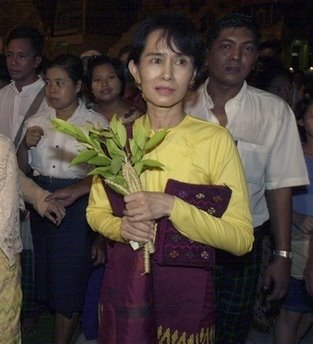


 Posts
Posts


