http://www.irrawaddy.org/article.php?art_id=19070
Obama Renews Sanctions on Burma
--------------------------------------------------------------------------------
By LALIT K. JHA / Washington Wednesday, July 28, 2010
US President Barack Obama signed into law a Congressional resolution renewing economic sanctions against the Burmese military junta one more year, the White House said on Tuesday.
The US House of Representatives and the Senate overwhelmingly passed the resolution to renew sanctions against the Burmese military junta almost three months ago.
The Senate passed the resolution by 99-1 votes. It was sponsored by a record 68 senators.
The “Burmese Freedom and Democracy Act of 2003," which imposed a ban on Burmese imports, was passed by the House by a voice vote.
Noting that renewed sanctions against the military regime is as important as ever, Sen. Mitch McConnell said the bipartisan support reflects the view of more than two-thirds of the Senate that the junta should be denied the legitimacy it pursues through this year’s sham elections.
“The ruling State Peace and Development Council (SPDC) is continuing its efforts to try to stand up a farcical, new Constitution by holding a bogus election,” he said.
Sen. MaxBaucus said: “I have often questioned whether unilateral trade sanctions are the best path. But several trading partners—including the European Union, Canada, and Australia—have joined us in imposing sanctions against Burma.”
“The State Department has found that these sanctions have made it more difficult and costly for the Burmese regime to profit from imprisoning its people,” he said.
Sen. Barbara Feinstein said that for the past two decades, Burma’s despotic military rulers have engaged in a campaign of persecution against Aung San Suu Kyi, tarnishing her image wherever they could, unjustly convicting her of violating an illegitimate house arrest last year and extending her unlawful detention.
“She has spent the better part of 20 years under house arrest. She has not seen her two sons who live in the United Kingdom for years. She was not permitted to visit her husband when he was dying of cancer in the United Kingdom,” she said.
“Yet Aung San Suu Kyi remains resolute in her dedication to the pursuit of peaceful national reconciliation, as do the members of her political party, the National League for Democracy,” Feinstein said.
“Now, more than ever, the people of Burman need to know that we stand by them and support their vision of a free and democratic Burma,” the senator said.
Democratic Rep. Joseph Crowley said: “It is long overdue that the world acknowledges the regime is guilty of many heinous crimes, and we must lead the effort to hold it accountable. As a first step, I hope the United States will go on the record in acknowledging that the Burmese regime has committed crimes against humanity.”
Thursday, July 29, 2010
Obama Renews Sanctions on Burma


Wednesday, July 28, 2010
How do you apply pressure on Burma?
http://news.bbc.co.uk/2/hi/asia-pacific/8194868.stm
How do you apply pressure on Burma?
By Paul Reynolds
World affairs correspondent, BBC News website
Burma's ruling junta appear impervious to international criticism
Britain is to propose a UN arms embargo on Burma, but is facing an uphill struggle as the world once again divides on how to deal with a dictatorial and repressive regime.
Some governments will press for more pressure on Burma through increased sanctions.
These are mostly the Western liberal democracies. They are highly sensitive to pressure from human rights campaigners - and there are few lobbies more effective than the Burmese one.
Nine Nobel Peace Prize winners, led by Archbishop Desmond Tutu and President Oscar Arias of Costa Rica, have added their voices to the powerful crescendo. They have repeated a call for an arms embargo that they made in last year.
Many Western countries have imposed a range of sanctions already, to little effect. Many of them will now support an arms embargo.
The US already bans all imports from Burma, including the highly-prized Burmese jade, and applies a range of other economic sanctions targeted at the junta's leadership.
The prospect of a formal worldwide arms embargo must be minimal
Washington is also currently concerned about North Korea possibly selling missile technology to Burma, and has taken action to freeze funds held by two North Korean companies.
The EU has a full arms embargo and bans the import of timber and precious stones as well.
Other governments see opportunities for trade.
The Burmese junta embarked a few years ago on a modernisation plan for its armed forces, and has bought the weapons to equip them, mainly from China but also from Russia and Ukraine.
British proposals
The conviction and sentence of Aung San Suu Kyi has prompted the British government to declare its next move.
The British Foreign Office minister Ivan Lewis said: "What we must do now, and Britain will lead on this, is ensure that the international community finally acts firmly. The measures that we will propose are that we move quickly to ensure further EU sanctions targeting the regime's economic interests.
No major action was taken after troops suppressed protests in 2007
"The prime minister will be writing to the secretary general of the United Nations today and the permanent members of the Security Council... urging further international sanctions.
"Specifically we now want to see an arms embargo against the regime. We want to see Burma's neighbours, the Asean countries, China, Japan, Thailand, apply maximum pressure."
This is easier said than done. Sometimes in situations like these, governments make statements of intent to show their determination and to head off pressure on themselves from the lobby groups.
But statements of outrage and intent cannot always be followed up with collective action.
In this case, the attitude of Russia and China might well be one of reluctance.
In January 2007, before the repressed uprising later that year, the US and UK sponsored a Security Council resolution urging Burma to open dialogue with the opposition. Nine countries voted in favour, three abstained and two voted against. The resolution failed because two of the negative votes were from Russia and China, both veto holders.
There is no shortage of countries willing to arm Burma's military
It is true that the council issued statements after the 2007 protests calling on the Burmese government to create conditions for a dialogue - but that was not a full resolution and did not commit the member states to anything.
An arms embargo would be a major signal and is much harder to achieve.
So there will be a lot of harsh criticism of Burma and calls for joint action, but the prospect of a formal worldwide arms embargo must be minimal.
The best that can hoped for, perhaps, is that the governments that have sold weapons to Burma will be forced to tread softly and perhaps put further Burmese requests on the back burner.
Glimmer
There is one glimmer of hope for campaigners. The sentence on Aung San Suu Kyi was reduced from three years hard labour in prison to an 18-month extension to her house arrest.
This was probably a tactical move by the regime to avoid an even greater international outcry. It also achieves their goal of preventing her from taking any role in elections next year under the new constitution they have forced through.
It shows perhaps that they are aware of the outside world - but only to an extent.
Paul.Reynolds-INTERNET@bbc.co.uk
Overview of Burma sanctions
http://news.bbc.co.uk/2/hi/asia-pacific/8195956.stm
Overview of Burma sanctions
Burma's decision to extend pro-democracy leader Aung San Suu Kyi's house arrest has triggered renewed calls for sanctions against its military rulers. The BBC looks at the existing sanctions and economic limitations in place.
EUROPEAN UNION
In 1996 the EU adopted a Common Position on Burma which included a ban on the sale or transfer of arms and weapons expertise to the country, visa restrictions on members of the military regime and their families and allies, and a freeze on officials' overseas assets.
It also suspended all bilateral aid other than humanitarian assistance.
The sanctions were extended after troops violently suppressed anti-government protests in 2007 to include a ban on imports of gems, timbers and metals. But critics say no monitoring mechanism was put in place to enforce the ban.
They were further tightened in August 2009 when pro-democracy opposition leader Aung San Suu Kyi's house arrest was extended.
UNITED STATES
The US imposed an arms embargo on Burma in 1993 and then widened its sanctions four years later to include all new investment.
However, existing investment - including Unocal's (now Chevron's) gas project - was exempted.
In 2003, the Burma Freedom and Democracy Act banned imports from the country, but teak and gems - two of Burma's major exports - that had been processed in a third country were allowed. The act also restricted financial transactions, froze the assets of some financial institutions and extended visa restrictions on officials.
The Tom Lantos Block Burmese Jade (Junta's Anti-Democratic Efforts) Act of 2008 imposed a specific ban on jadeite and rubies which were mined in Burma, and on jewellery containing either of these precious stones.
US President Barack Obama renewed existing sanctions against Burma in May 2009.
CANADA
Canada imposed sanctions on Burma in 2007 which banned exports, apart from humanitarian goods, and barred imports. The assets of Burmese citizens connected to the junta were frozen. Canada also outlawed the provision of financial services and technical data to Burma.
ASIA PACIFIC
Japan cut aid to Burma in October 2007 following the death of a Japanese journalist covering the mass protests led by monks in September.
Japanese aid resumed following Cyclone Nargis in May 2008.
South East Asian grouping Asean has opposed the use of sanctions against Burma.
Australia has maintained visa restrictions on senior Burmese military figures and a ban on defence exports since 1988.
New Zealand has a long-standing ban on visas for military leaders and their families.
Thursday, July 15, 2010
Foreign investment in Myanmar tumbles
Foreign investment in Myanmar tumbles
Foreign investment in Myanmar down last year as China's figure falls, sanctions continue
On Wednesday July 14, 2010, 6:06 am EDT
YANGON, Myanmar (AP) -- Foreign investment in Myanmar, one of the world's poorest and most authoritarian countries, dropped more than two thirds last fiscal year as Chinese investment tailed off and
economic sanctions on the military-ruled nation continued, according to government figures.
A statistical report from the country's Ministry of National Planning and Development that was seen Wednesday said foreign investment in the 12 months through March 2010 fell 68 percent to $315 million from $985 million the previous year.
The main reason for the drastic drop was because of China's unprecedented investment in Myanmar in 2008-2009. It spent $855.9 million in the mining sector, accounting for 87 percent of total foreign investment. China signed an agreement with resource-rich Myanmar for nickel-production in 2008.
Up-to-date information on Myanmar's economy is difficult to come by and the few official figures that become available are often regarded as unreliable. Though a substantial gas exporter, the revenues barely register in the government's accounts, suggesting the cash is diverted into projects favored by its ruling generals, according to Burma Economic Watch, a group based at Australia's Macquarie University that studies Myanmar's economy.
Myanmar, also known as Burma, saw seven new foreign investments during 12 months, four of which were in its oil and gas sector. These resource extraction investments -- three from Malaysia and one from the United Arab Emirates -- were worth $278.6 million and accounted for more than 88 percent of the total investment during the fiscal year.
Thailand spent $15.25 million in the hotel and tourism sector, China put $15 million into the mining sector and Hong Kong added $6 million to the manufacturing sector during 2009-2010, the government report said.
The United States and the European Union have imposed economic sanctions against Myanmar to pressure the military government to improve human rights and release detained pro-democracy leader Aung San Suu Kyi. Sanctions, including banning U.S. companies from investing in Myanmar and banning Myanmar exports to the United States, were first imposed in 1997.
Since Myanmar liberalized its investment code in 1988, it has attracted large investments in hydroelectric power, oil and gas and mining -- mainly from neighboring countries such as Thailand.
Meanwhile, Myanmar's exports rose 12 percent to $7.6 billion in year through March from $6.78 billion the previous year, according to the report. Imports dropped 8 percent to $4.18 billion from $4.54 billion.
The government report said that natural gas exports, which accounted for about 38 percent of all export revenue, increased 9 percent to $2.56 billion from $2.35 billion. Myanmar gas exports go to neighboring Thailand.
Myanmar is believed to have a large amount of unmeasured trade, mostly goods smuggled across its land borders, especially with eastern neighbor Thailand and northeastern neighbor China.
Wednesday, May 5, 2010
BURMA - Democracy and ethnic rights activists welcome economic sanctions on military regime
BURMA - Democracy and ethnic rights activists welcome economic sanctions on military regime
The Ten Alliances of Burma's democracy and ethnic rights movement expressed support for the European Union's renewal of its Common Position on Burma for another year, which also extended economic sanctions on the military regime. "With their planned sham elections, the regime is hoping that the EU and other countries will fall for the thinly veiled attempt to legitimize continued military rule.
By maintaining sanctions, the EU is sending a strong signal that the regime must change course for these elections to have any legitimacy whatsoever," said U Maung Maung, General Secretary of the National Council of the Union of Burma.
In reference to Burma's planned elections for later this year, the EU Council expressed "serious concerns" that new election laws "do not provide for free and fair elections," and called on the military regime to take further steps.
The EU statement adopted in Luxembourg on 26 April also called for the release of political prisoners, an end to human rights violations, and political dialogue between all stakeholders. These points reaffirm the key benchmarks long advocated by the Ten Alliances of Burma's movement for democracy and ethnic rights.
The alliances insist that the regime must meet these benchmarks to ensure truly democratic progress in Burma, and that without them elections will not be a step towards genuine democracy. They include:
1. The unconditional release of all political prisoners, including Daw Aung San Suu Kyi;
2. Cessation of hostilities against ethnic groups and pro-democracy forces; and,
3. Inclusive dialogue with key stakeholders from democracy groups and ethnic nationalities, including a review of the 2008 Constitution.
"Burma is becoming increasingly unstable under the military regime. Tensions in northeastern Burma are rising as the junta continues to press armed ethnic groups into joining their Border Guard Force.
The National League for Democracy and other opposition groups will also come under increased pressure from the junta after the political party registration deadline. The EU and international community must increase pressure on the junta to stop these hostilities immediately," said Mai Phone Kyaw, General Secretary of the National Democratic Front.
"In terms of the upcoming EU delegation to Burma, we ask EU Envoy Fassino to reiterate the EU's support of these minimum benchmarks, and focus his efforts on facilitating dialogue between all stakeholders before the elections," said U Moe Zaw Oo, Joint General Secretary of the National League for Democracy - Liberated Area (NLD-LA), in reference to the "exploratory mission" mentioned in the EU's statement yesterday.
The Ten Alliances also emphasized that any delegation to Burma should insist on meeting with representatives of opposition groups, including Daw Aung San Suu Kyi, the NLD, and ethnic leaders
Wednesday, April 28, 2010
EU sanctions on Burma extended
http://www.dvb.no/news/eu-sanctions-on-burma-extended/8756
EU sanctions on Burma extended
Comments (0)
Activists have long called for tougher EU sanctions on Burma (Reuters)
By FRANCIS WADE
Published: 27 April 2010
The European Union announced yesterday that it had extended its sanctions on Burma following the ruling junta’s refusal to meet demands for democratic reform.
The sanctions have been extended for one year, according to a statement released following a Foreign Affairs Council meeting in Luxembourg that has been hailed by pro-democracy groups.
“The Council deems it necessary to extend the restrictive measures provided for in the current EU Decision by another year. The Council underlines its readiness to revise, amend or reinforce the measures it has already adopted in light of developments on the ground,” it said, adding that it would “respond positively to genuine progress in Burma/Myanmar”.
The exact criteria for “genuine progress” has not been clarified, although EU ministers have repeatedly call for elections this year to be free and fair, and to be accompanied by the release of Burma’s 2,100-plus political prisoners.
Rights groups have however criticized apparently “soft” EU sanctions on Burma that have failed to stop French oil giant Total from operating Burma’s lucrative Yadana gas pipeline. EarthRights International (ERI) believe that Total, along with its partner in the project, US-based Chevron, have netted the junta around $US7.2 billion.
In May last year the French foreign minister Bernard Kouchner told parliament that ramping up sanctions on Burma risked hurting Total and in turn gas supplies to Burmese people.
Continued foreign investment in Burma, notably from China, has dampened the impact of sanctions, with the US and EU unable to rein in Burma’s regional neighbours whose ongoing trade has provided a crutch for the regime in the face of Western isolation.
Burma Campaign UK said yesterday however that relaxing sanctions would “give a green light to the generals to increase human rights abuses, help finance increased abuses, and give up potential leverage against the regime”.
“The problem with EU sanctions is that most are not effectively targeted, have not been used as part of coordinated diplomatic efforts, and those sanctions which could be effective are being broken, as there is no monitoring or implementation.”
It added that the EU statement made no mention of any attempts by EU ministers to correct this.
Tags: eu, sanctions, total
Author: FRANCIS WADE Category: Economics, News
Tuesday, December 22, 2009
US Message to Burma: 'Engagement' Must Bring Results
US Message to Burma: 'Engagement' Must Bring Results
--------------------------------------------------------------------------------
By WAI MOE Tuesday, December 22, 2009
--------------------------------------------------------------------------------
The Burmese junta could face tougher US financial sanctions if Washington's new policy of direct engagement with the regime fails to produce results.
That's the message contained in recent remarks by legislators in Washington and US diplomats in Asia. It was also highlighted in a report by an Associated Press correspondent, who said: “The Obama administration has already a powerful economic weapon if talks with Myanmar [Burma] fail to achieve democratic reform: pressuring banks to avoid doing business [with the Burmese regime.]”
The agency report said the US Congress had already approved powers enabling the Administration to act against banks doing business with Burma.
The Administration's new policy on Burma links sanctions with direct engagement. The Burmese regime has, in effect, been served notice that sanctions will continue as long as no progress is scored in the contacts now taking place between US and junta officials.
This “carrot and stick” policy is the subject of wide discussion among US diplomats in Southeast Asia. Some senior US diplomats in the region told The Irrawaddy recently that if the junta generals believe engagement with Washington is giving them legitimacy they are totally wrong.
One diplomat said if the engagement policy produces no results within one year, further US actions are possible.
Some critics of the new policy point out that a similar approach followed by the US toward North Korea for more than 15 years had failed to prevent Pyongyang’s nuclear program.
The US diplomat said, however: “The Burma issue is quite different from North Korea. All in Washington know the US cannot engage with the junta without result.”
The US announced the conclusion of its Burma policy review on September 28. On the following day, Kurt Campbell, US assistant secretary of state for East Asian affairs, met with a Burmese delegation led by U Thaung, a former Burmese ambassador to Washington who is currently the minister of national planning.
In early November, Campbell paid a landmark visit to Burma, where he met Burmese Prime Minister Gen Thein Sein and pro-democracy leader Aung San Suu Kyi, as well as opposition and ethnic leaders.
While directly engaging with the junta, the US continues to monitor business contacts closely. On Dec. 16, the US Treasury Department announced it was fining the Swiss banking giant Credit Suisse AG US $536 million for working with countries on the US sanctions list, including Burma. The fine is the biggest in the history of the department’s office of foreign assets control.
“The great majority of the transactions involved Iran, although there were also transactions that appear to have violated US sanctions on Sudan, Libya, Burma, Cuba, and the former Liberian regime of Charles Taylor,” the US Treasury Department announced.
In September, the US-based watchdog Earthrights International accused two Singapore-based banks, the Overseas Chinese Banking Corporation (OCBC) and DBS Group (previously known as the Development Bank of Singapore) as “offshore repositories” for the Burmese junta’s revenues from the Yadana gas project. The junta has earned at least $5 billion so far from the project.
Burma observers suspect that the Burmese generals and their cronies have lodged many millions of dollars in financial institutions in Singapore, Shanghai, Hong Kong and Dubai.
Copyright © 2008 Irrawaddy Publishing Group | www.irrawaddy.org
Saturday, October 10, 2009
Burma's Suu Kyi discusses US sanctions
Burma's Suu Kyi discusses US sanctions
October 9, 2009 - 6:54PM
Detained pro-democracy leader Aung San Suu Kyi has discussed sanctions against military-ruled Burma in a rare meeting with Western diplomats, the US embassy in Rangoon says.
The Nobel Laureate met with the heads of the US, UK and Australian embassies for one hour at a government guesthouse on Friday, following a letter she wrote to the junta chief, embassy spokesman Drake Weisert told AFP.
"The meeting follows Aung San Suu Kyi's request in a letter to Senior General Than Shwe to meet representatives of the US and other countries to discuss their respective policies on sanctions," he said.
"We can confirm that sanctions were discussed at the meeting. However, we do not want to pre-empt Aung San Suu Kyi's discussions with the authorities by discussing the details of the meeting," he added.
© 2009 AFP http://news. smh.com.au/ breaking- news-world/ burmas-suu- kyi-discusses- us-sanctions- 20091009- gqml.html
Aung San Suu Kyi on 'remarkable form,' says British envoy
Posted : Fri, 09 Oct 2009 08:53:10 GMT
By : dpa
Category :
News Alerts by Email ( click here )
News | Home
Print this article email this article Comment on this article
London - Myanmar's pro-democracy leader Aung San Suu Kyi was on "remarkable form" and "very engaged" during a meeting with Western diplomats, British ambassador Andrew Heyn said Friday. "She was in remarkable form for someone who has been through what she has been through. She was very, very engaged in the subject, very interested in going into the detail of what she wanted to talk about, and she seemed, as ever, very eloquent and very, very engaged," Heyn told the BBC in an interview.
The British ambassador represented the European Union (EU) at the meeting in which US acting Charge d'Affaires Thomas Vajda and Australian Deputy Head of Mission, Simon Christopher Starr, also took part.
Asked about the prospect of sanctions against the regime in Myanmar being lifted, Heyn said the British government believed that sanctions were sending a "strong political message to the Burmese authorities about our real determination to see genuine democratic reform."
The fact that the regime was making a point of complaining about sanctions were proof that they were having an effect, said the British envoy.
"But what we have also made clear is that we will respond to substantive progress towards democracy in respect of human rights but we have to see concrete progress on the ground," he said.
Copyright DPA
U.S. seeks dialogue with Myanmar but sanctions stay
U.S. seeks dialogue with Myanmar but sanctions stay
Mon Sep 28, 2009 10:37pm BST
WASHINGTON (Reuters) - The United States will embark on a new policy of engagement with Myanmar's military government while keeping sanctions in place, hoping to twin economic pressure with political dialogue to spur democratic reforms.
The new U.S. policy [ID:nN2892144] , formally unveiled on Monday, marks a new stage in Washington's relations with the isolated Southeast Asian country, which is preparing next year to hold its first election in two decades.
WHY WERE SANCTIONS IMPOSED?
The United States first imposed broad sanctions on Myanmar, formally known as Burma, in 1988 after the military junta cracked down on student-led protests.
Washington has gradually tightened sanctions on the generals who rule the country, in a largely unsuccessful attempt to force them into rapprochement with Nobel Peace laureate and opposition leader Aung San Suu Kyi, who has been in detention, or "protective custody" for 14 of the last 20 years.
President Barack Obama renewed the sanctions in May. The United States has banned all imports from Myanmar, restricted financial transactions, frozen the assets of certain financial institutions and extended visa restrictions on junta officials.
The European Union, Australia, New Zealand, Canada and Japan have all imposed various sanctions on Myanmar's government.
WHAT IS THE NEW U.S. POSITION?
Existing U.S. sanctions will remain in place pending evidence of concrete political progress in Myanmar.
"Lifting sanctions now would send the wrong signal," Assistant Secretary of State Kurt Campbell told reporters. He said Washington reserved the right to impose additional sanctions if the situation in Myanmar deteriorates.
But the two sides are now planning direct meetings. The first contacts are expected this week on the sidelines of the U.N. General Assembly in New York. Campbell will take part for the U.S. side in talks designed to forge a new way ahead.
"We know the process may be long and difficult," Campbell said. "It is important that the Burmese people gain greater exposure to broader ideas."
WHY NOW?
Myanmar is one of the most economically and politically isolated countries on the planet. In Washington concerns have been growing about suspected contacts between Myanmar's rulers and North Korea, which has defied international calls to abandon its nuclear program.
Secretary of State Hillary Clinton said in July that the United States was concerned about the possible transfer of nuclear technology from North Korea to Myanmar.
Myanmar calmed some jitters when it moved to enforce a U.N. Security Council resolution against Pyongyang after it tested a nuclear device in May. Washington is hoping broader U.S. engagement with Myanmar may forestall closer ties between the two Asian outcasts.
U.S. officials hope to promote engagement before Myanmar's planned elections next year, which the junta says will end almost five decades of military rule. Analysts say the elections could simply provide a new fig leaf for army control.
Campbell said Washington would reinforce the necessity of allowing opposition parties to participate fully. "We are skeptical that the elections will be either free or fair, but we will stress to the Burmese the conditions that we consider necessary for a credible electoral process," he said.
WHAT DO THE BURMESE SAY?
Myanmar officials have said publicly that they remain committed to moving toward democracy, although not in a form imposed by the outside world.
"The transition to democracy is proceeding," Myanmar Prime Minister Thein Sein told the 192-nation U.N. General Assembly on Monday. "Our focus is not on the narrow interest of individuals, organizations or parties but on the larger interest of the entire people of the nation."
Aung San Suu Kyi's political party said she supported the U.S. engagement, but only if opposition groups are involved in any dialogue.
Suu Kyi was sentenced to another 18 months under house arrest last month for allowing an American intruder to stay at her home for two nights.
Pro-democracy campaigners in the United States said Washington should implement further sanctions if Myanmar's government does not stop "mass atrocities" against civilians.
"We also hope that U.S. engagement with the regime should not be an open-ended process, but with a reasonable timeframe and clear benchmarks," Aung Din, the executive director of the U.S. Campaign for Burma, said in a statement.
(Editing by Chris Wilson)
Thursday, October 8, 2009
Exiled Myanmar activist backs sanctions
Exiled Myanmar activist backs sanctions
Economic restrictions target the regime, do not affect the people, Htun says
Detained leader Aung San Suu Kyi has called for the lifting of sanctions
"Some of the sanctions do hurt the people, " U.N. envoy to Myanmar Gambari says
U.S. Congressman Webb says "reciprocal gestures" needed by Myanmar
October 8, 2009 -- Updated 0313 GMT (1113 HKT)Next Article in U.S. »
NEW YORK (CNN) -- An activist exiled from Myanmar called for the government to release pro-democracy leader Aung San Suu Kyi and urged the U.S. to continue sanctions against it.
Protesters demand release of Aung San Suu Kyi in front of the United Nations in New York on Wednesday.
Thaung Htun, Myanmar's government-in-exile's unofficial representative to the United Nations, on Wednesday told CNN's Christiane Amanpour that "it is not the right time even to think about lifting sanctions." He wants the United States to continue to pressure Myanmar's military regime with economic sanctions as it pursues talks with the south Asian nation, also known as Burma.
Sanctions will continue, according to the Obama administration, but it noted that such a policy has not worked as a one-tiered strategy. Even as the United States has settled on moving toward diplomacy, detained leader Suu Kyi has called for lifting the sanctions.
Suu Kyi's detention has been a key component in the United States' political tangle with Myanmar.
Critics of the country's ruling junta have accused the regime of convicting Suu Kyi, 64, to keep her from participating in 2010 elections.
Sanctions coupled with diplomacy could be most effective in dealing with Myanmar, Htun said on the CNN interview program "Amanpour."
In advocating tougher sanctions, Htun said economic restrictions target the regime and do not affect the nation's people.
Don't Miss
Suu Kyi accepts U.S. shift on Myanmar
According to the CIA, more than 30 percent of Myanmar's population lives in poverty.
"The Burmese people are poor, and economy is getting worse because of the mismanagement of the regime," Htun said. "Actually, the regime is getting more money, you know, in the last 20 years. Now they are having $2.6 billion ... just from the sale of gas to Thailand, but they don't use that money for the people."
Others disagree on the effects of sanctions on the country's people.
"[Suu Kyi] does not want to hurt the people of Myanmar," Ibrahim Gambari, the U.N. envoy to Myanmar, told Amanpour. "Some of the sanctions do hurt the people."
Myanmar Prime Minister Gen. Thein Sein has called the sanctions "a form of violence" that do not "promote human rights and democracy."
Senator Jim Webb, the first congressman to visit Myanmar in a decade, said the U.S. State Department "has been clear that they're not going to move forward on issues like sanctions unless there are further reciprocal gestures.
"But we have seen the beginning of a removal of the paralysis," the Virginia Democrat said on "Amanpour" on Wednesday. "Aung San Suu Kyi has been able to meet twice now over the past week with government leaders."
But she is still detained and last week she lost the appeal of the 18-month sentence recently added to time she was already serving. She was sentenced in August for breaching the terms of her house arrest after an incident in May in which an uninvited American, John Yettaw, stayed at her home. Suu Kyi, a Nobel Peace Prize laureate, has been confined in her house for about 14 of the past 20 years.
Htun says it's too early to tell whether more talks with Myanmar will affect Suu Kyi's detention or how the regime treats political adversaries.
"If we look at the reality on the ground, there is no improvement," he said.
"There is more violence in the last seven months, more political prisoners, more arrests, and more military attacks in the ethnic minority areas. That's why we need to be very cautious and we need to put pressure on the regime until these benchmarks can be fulfilled by the regime."
Wednesday, September 23, 2009
အသံုးခံလိုက္လို႔ ေကာင္းသြားမယ္ဆိုရင္ က်ေနာ္လည္း အသံုးခံရဲတယ္”
Comments (0)
“အသံုးခံလိုက္လို႔ ေကာင္းသြားမယ္ဆိုရင္ က်ေနာ္လည္း အသံုးခံရဲတယ္”
Wednesday, 23 September 2009 16:55 ဧရာဝတီ
ေဒါက္တာဇာနည္သည္ ယခင္က ျမန္မာစစ္အစုိးရအား စီးပြားေရး အရ ဒဏ္ခတ္ ပိတ္ဆုိ႔ရန္ တက္ႂကြစြာ ဦးေဆာင္ လႈံ႔ေဆာ္ခ့ဲသည့္ ဒီမုိကေရစီအေရး လႈပ္ရွားသူတဦး ျဖစ္သည္။ ထို႔ေၾကာင့္ လက္ရွိ ျမန္မာျပည္ အေရးႏွင့္ ပတ္သက္၍ ေဒါက္တာ ဇာနည္ကို ဧရာဝတီမဂၢဇင္းက ေတြ႕ဆံုေမးျမန္းထားပါသည္။
ေဒါက္တာဇာနည္ (ဓာတ္ပံု - ေအာင္ေအာင္/ဧရာဝတီ)
အင္တာဗ်ဴး အျပည့္အစံုကို ဤေနရာတြင္ နားဆင္ပါ
ေမး။ ။ မၾကာေသးခင္က NLD ပါတီက ဦးဝင္းတင္ ဝါရွင္တန္ပို႔စ္မွာ ေဆာင္းပါးတပုဒ္ ေရးခဲ့တယ္။ အဲဒီထဲမွာ အေျခခံဥပေဒကိုျပင္ခိုင္းတယ္၊ ေဒၚေအာင္ဆန္းစုၾကည္အပါအဝင္ ႏုိင္ငံေရး အက်ဥ္းသားေတြကို လႊတ္ခိုင္းတယ္၊ NLD ပါတီကို လြတ္လပ္စြာလႈပ္ရွားခြင့္ေတာင္းဆိုထားတာ ေတြ႕ရတယ္။ အဲဒီေဆာင္းပါးနဲ႔ ပတ္သက္လို႔ ျပည္တြင္း ျပည္ပမွာ အျမင္အမ်ိဳးမ်ိဳး ရွိတာကို ေတြ႕ရတယ္။ ကိုဇာနည္က ဘယ္လုိျမင္လဲ။
ေျဖ။ ။ က်ေနာ္က ဦးဝင္းတင္ ေျပာတာကို ေထာက္ခံတယ္။ ဒါက ဦးဝင္းတင္ေျပာလို႔ ေထာက္ခံတာ မဟုတ္ဘူး၊ သူေျပာတာက အခ်က္အခ်ာက်တယ္။ ျမန္မာျပည္က ဒီမိုကေရစီလမ္းေၾကာင္း ေပၚမွာ ေလွ်ာက္ေတာ့မယ္ဆိုရင္ ဒီအေျခခံဥပေဒက ေခတ္ေနာက္ျပန္ဆြဲေနတာ ေတြ႕ရတယ္။ မဆလေခတ္ ၁၉၇၃၊ ၇၄ ေလာက္မွ ဆြဲခဲ့တဲ့ အေျခခံဥပေဒကို ၾကည့္မယ္ဆိုရင္ တပါတီတည္းေတာ့ဟုတ္တယ္၊ ဒါေပမယ့္ အဲဒီထဲမွာ တပ္မေတာ္ေနာက္ခံရွိမွ ႏိုင္ငံ့အႀကီးအကဲ ျဖစ္ရမယ္ဆိုတာမ်ိဳးမပါဘူး။ အခုဟာက လက္ရွိ ၂၀၀၈ မွာ လက္ခံလိုက္တဲ့ အေျခခံဥပေဒက်ေတာ့ တိုင္းသူျပည္သားေတြကို ျပည္တြင္း ကိုလုိနီ စနစ္ကို ေရာက္ေအာင္ တြန္းပို႔ေနတယ္။ ဘာလို႔လဲ ဆိုေတာ့ စစ္သားေတြကို အလႊာတလႊာမွာ ထားလုိက္ၿပီးေတာ့ က်န္တဲ့ တိုင္းရင္းသားနဲ႔ သာမန္ျပည္သူေတြက်ေတာ့ ဒုတိယတန္းစား အဆင့္မွာ ထားထားတယ္။ အဲဒါက ဘယ္လိုမွ လက္ခံလို႔မရဘူး။ တခုေတာ့ရွိတာေပါ့၊ ဒီဟာကို လက္ခံပါလို႔ ေျပာေနတဲ့သူေတြက အခြင့္အေရး တခုအေနနဲ႔ သံုးမယ့္သူေတြလို႔ ေျပာလို႔ရတယ္။
ေမး။ ။ ဒါဆို ၂၀၁၀ မွာ လုပ္မယ့္ ေရြးေကာက္ပြဲကို ေရြးစရာမရွိေတာ့ဘူးဆိုၿပီး အခြင့္အေရး တခုအေနနဲ႔ ကိုဇာနည္က မျမင္ဘူး ဆိုပါေတာ့။
ေျဖ။ ။ လြန္ခဲ့တဲ့ ၁ ႏွစ္ေက်ာ္ေက်ာ္ ေလာက္ကေတာ့ ျမင္ခဲ့တယ္ဗ်။ ဘာလို႔လဲ ဆိုေတာ့ ေရြးေကာက္ပြဲ ေပၚလာမယ္၊ ႏိုင္ငံေရးျဖစ္စဥ္တခု ေပၚလာမယ္ ဆိုရင္ တပ္မေတာ္သားေတြနဲ႔ ဒီဘက္က ေဒၚေအာင္ဆန္း စုၾကည္တို႔၊ ကိုမင္းကိုႏုိင္တို႔ အပါအဝင္၊ ျပည္သူေတြနဲ႔ လက္တြဲလုပ္ႏုိင္မယ့္ အေနအထားမ်ား ေရာက္မလား လို႔ စဥ္းစားခဲ့မိတယ္။ ဒါေပမယ့္ သံဃာေတာ္ေတြကို မတရား ေသနတ္နဲ႔ ပစ္တာ၊ ရိုက္တာ၊ ႏွက္တာ၊ ႏွိပ္စက္တာ၊ အတူတြဲလုပ္ရမယ့္ ကိုမင္းကိုႏိုင္တို႔လို လူေတြကို ေထာင္ထဲဆြဲထည့္လိုက္တာ … ေနာက္တခုက တိုင္းရင္းသားေတြကို ေသေသခ်ာခ်ာ ႏုိင္ငံေရးအရ မေဆြးေႏြးဘဲနဲ႔ လက္နက္အားကိုးနဲ႔ လုုပ္တာေတြ၊ ေနာက္ဆံုးကေတာ့ နာဂစ္တုန္းက လူေပါင္း ၁ သိန္းေက်ာ္ေသတာကိုေတာင္ လူေတြရဲ႕ ဒုကၡကို မစာနာဘဲ သူတို႔လုပ္ခ်င္တဲ့ အေျခခံဥပေဒအတည္ျပဳဖို႔ကုိ အတင္းလုပ္တာ … အဲဒီအခ်က္ေတြကို ၾကည့္လိုက္ေတာ့ ဒီအစိုးရဟာ သၾကားမင္းဆြဲေပးတဲ့ အေျခခံဥပေဒပဲ ျဖစ္ျဖစ္ ေအာက္ကလာတဲ့ အေျခခံဥပေဒပဲ ျဖစ္ျဖစ္ ဒီလုိလူေတြနဲ႔ အတူလက္တြဲၿပီး အလုပ္လုပ္လို႔ မရေတာ့ဘူးဆိုတာ လံုးဝ လက္ခံလုိက္တယ္။
အေရးႀကီးတာက အေျခခံဥပေဒကို အျမင္ ၂ မ်ိဳးနဲ႔ ျမင္လို႔ရတယ္။ အခြင့္အေရးအေနနဲ႔ ျမင္မယ္ဆိုရင္ လာမယ့္ ေရြးေကာက္ပြဲကို သံုးၿပီးေတာ့ သူတို႔ ဖိႏွိပ္တဲ့ လူတန္းစား ကြဲသြားမယ္ဆိုတဲ့ အျမင္ေပါ့၊ အဲဒီ အျမင္အတုိင္းသြားမယ္ဆိုရင္ေတာ့ လက္ခံလို႔ရတယ္။ ဒါေပမယ့္ ဒီအေျခခံဥပေဒႀကီး သက္ဆိုး ရွည္မယ္ ဆိုရင္ေတာ့ က်ေနာ္တုိ႔ ျပည္သူလူထုကို သတ္ေသခိုင္းတာနဲ႔ တူတူပဲ။ ႏိုင္ငံေရးအရ ေသခိုင္းတာေပါ့ေလ။
စဥ္းစားၾကည့္ ကိုလိုနီစနစ္ကို ဘယ္သူကမွ မဲဆႏၵနဲ႔ မေထာက္ခံႏုိင္ဘူးေလ၊ အဂၤလိပ္ကိုလိုနီပဲျဖစ္ျဖစ္ စစ္တပ္ရဲ႕ ကိုလိုနီပဲျဖစ္ျဖစ္ ဘယ္သူ႔ကိုမွမဲဆႏၵေပးၿပီး ေထာက္ခံခိုင္းဖို႔ မသင့္ဘူးလို႔ က်ေနာ္ျမင္တယ္။
ေမး။ ။ ဒါဆို တခ်ိဳ႕ ျပည္တြင္းမွာေကာ၊ ျပည္ပမွာေကာ ေရြးစရာလမ္း မရွိေတာ့တဲ့အတြက္ နအဖကို ႏွဴးႏွပ္ၿပီး ပူးသတ္မွရေတာ့မယ္၊ စစ္ဗိုလ္ခ်ဳပ္ေတြကိုေတာ့ တျဖည္းျဖည္းခ်င္း ပူးေပါင္းၿပီး ေျပာင္းလဲပစ္မွ ရေတာ့မယ္ဆိုတဲ့ အျမင္ေတြ အမ်ားႀကီးေတြ႕ရတယ္။ ျမန္မာ့အေရးမွာ ပါဝင္ပတ္သက္ေနတဲ့သူေတြ၊ ျမန္မာႏိုင္ငံကို ပိုက္ဆံေပးေနတဲ့ ဒိုနာ ႏုိင္ငံေတြ ျပည္တြင္းျပည္ပက ႏုိင္ငံေရးသမားေတြက အစေပါ့၊ ဒီလူေတြကို နအဖက ေဆးေဖာ္ေက်ာဖက္ေကာ လုပ္ရဲ႕လားဗ်။
ေျဖ။ ။ က်ေနာ္တို႔ သမိုင္းကိုေတာ့ ျပန္ၾကည့္ရမယ္။ မဆလ ေခတ္တုန္းက ျပင္ပက ပညာရွင္ေတြပဲ ျဖစ္ျဖစ္၊ ဒိုနာႏုိင္ငံေတြပဲျဖစ္ျဖစ္၊ ျပည္တြင္းက စီးပြားေရးပညာရွင္ေတြပဲျဖစ္ျဖစ္ ေဒါက္တာေမာင္ေမာင္တို႔၊ ေဒါက္တာ ညီညီတို႔၊ ေဒါက္တာခ်စ္ေဆြတို႔ေပါ့။ မဆလ ေခတ္မွာ ဗိုလ္ခ်ဳပ္ႀကီးေတြနဲ႔ ေပါင္းၿပီး တုိင္းျပည္ ထူေထာင္ဖို႔ လုပ္ၾကတယ္။ ဗိုလ္ခ်ဳပ္ႀကီးေတြ ဆိုတာလည္း ရွင္းရွင္းေျပာရရင္မွားတဲ့ စနစ္ႀကီးကို ထူေထာင္ၿပီး ဘဝပ်က္သြားတယ္၊ ဒီလူေတြလည္း သမိုင္းမွာ နာမည္ပ်က္သြားတယ္။ အဲဒါမ်ိဳးကို က်ေနာ္တို႔ ဆက္လုပ္မွာလား၊ ပူးသတ္ဖို႔ ဆိုတာကေတာ့ မျဖစ္ႏုိင္ဘူး။ က်ေနာ္ကိုယ္တုိင္လည္း စာအုပ္ဖတ္ၿပီး ေျပာေနတာ မဟုတ္ဘူး။ က်ေနာ္ကိုယ္တုိင္ ဒါမ်ိဳးလုပ္လာတာ။ က်ေနာ့္ကိုလည္း သိတဲ့အတိုင္း ဝိုင္းၿပီး ဆဲေနၾကတာပဲ။ က်ေနာ္တုိ႔လည္း ထိပ္ပုိင္းက ဗိုလ္ခ်ဳပ္ခင္ညြန္႔က အစ၊ ဗိုလ္ခ်ဳပ္ေမာင္ေအးတို႔ အဲဒီလို ဗိုလ္ခ်ဳပ္ေတြကို တိုင္းျပည္ကိုခ်စ္တဲ့ ပညာရွင္တေယာက္အေနနဲ႔ ကူညီဖို႔၊ စီးပြားေရး ျပဳျပင္ေျပာင္းလဲေရး လုပ္ဖို႔၊ ေနာက္ အင္တာနက္ ကိစၥမွာ ေလွ်ာ့ေပးဖုိ႔၊ ဒီမိုကေရစီ လမ္းသြားမယ္ဆိုရင္ မီဒီယာေတြ ေဝဖန္တာကို နားေထာင္ဖို႔ ဒါေတြကို ဝိုင္းတြန္းၾက၊ အႀကံဉာဏ္ ေပးၾကတယ္။ က်ေနာ္တို႔က တိုင္းရင္းသားေတြကို ေခ်မႈန္းပါလား၊ NLD ကို ဘယ္လိုႏွိပ္ကြပ္လုိက္ပါလား ဆိုတာ ေျပာတာမဟုတ္ဘူး။ တနည္းတဖံုနဲ႔ က်ေနာ္တို႔က ပိုေကာင္းလာတဲ့ အျမင္ေတြေပၚလာေအာင္ တြန္းၾကည့္တယ္၊ ဒါေပမယ့္ တြန္းလို႔မရဘူး။ က်ေနာ္ဆိုရင္ ဗိုလ္ခ်ဳပ္မႉးႀကီး သန္းေရႊနဲ႔ ဗိုလ္ခ်ဳပ္ေမာင္ေအးနဲ႔ မေတြ႕တာေတာင္ သူတို႔ထဲမွာ အေရးပါတဲ့ ပုဂၢိဳလ္ေတြနဲ႔ စကားေျပာဖူးတာ ရွိတယ္။
၂၀၀၄ မွာလည္း ေျပာဖူးတယ္၊ ဗိုလ္ခ်ဳပ္ခင္ညြန္႔ ျပဳတ္အၿပီးမွာလည္း ေျပာခဲ့တယ္။ က်ေနာ္တို႔က ပူးသတ္ခ်င္ တာမဟုတ္ဘူး၊ သူတို႔နဲ႔ ေပါင္းလုပ္ခ်င္တာ။ ေဒၚေအာင္ဆန္းစုၾကည္နဲ႔ သူတို႔ဆက္ဆံေရး အခက္အခဲ ရွိေနတာကို ၾကားထဲကေန ေပါင္းကူးတံတားျဖစ္ေအာင္ ပထမ ယံုၾကည္မႈတည္ေဆာက္တဲ့ အေနနဲ႔ လုပ္တယ္။ ေနာက္ၿပီးေတာ့ ေဒၚေအာင္ဆန္းစုၾကည္ဟာ တိုင္းျပည္ အတြက္ အေရးႀကီးပါတယ္၊ ေဒၚေအာင္ဆန္းစုၾကည္ဟာ တပ္မေတာ္နဲ႔ တုိင္းျပည္အေပၚမွာ စိတ္ထားမွန္ပါတယ္ ဆိုတာ ဝုိင္းေျပာတာ။ ဒါကို က်ေနာ္တို႔ မီဒီယာမွာေတာ့ မေျပာဘူး။ တေယာက္ခ်င္းေတြ႕ရင္ ေျပာတာပဲ၊ စည္းေဝးမွာဆို ေျပာတာပဲ။ ဒီေတာ့ တိုင္းျပည္အတြက္ ေစတနာ သန္႔သန္႔နဲ႔ လုပ္မယ္ဆိုရင္ သူတို႔ဘက္ကလည္း ေစတနာသန္႔မွ လုပ္လို႔ရမယ္။ ပူးသတ္တယ္ဆိုတာကေတာ့ သူတို႔ကညစ္ ကိုယ္ကညစ္ ဆိုရင္ သူတို႔မွာ ပါဝါ၊ အာဏာ၊ ေသနတ္ရွိတယ္။ အဲဒီလို လူေတြကို က်ေနာ္တို႔ ပူးသတ္လို႔ မရဘူး။ တကယ္တမ္းေျပာရရင္ ပူးမသတ္ သင့္ဘူး။ က်ေနာ္တုိ႔ ပူးေပါင္းၿပီး လုပ္သင့္တယ္။ ဒါကို ခုခ်ိန္ထိ ေျပာမွာပဲ။ လက္ရွိစနစ္ကို မေက်နပ္ဘူး၊ ဒါေပမယ့္ တပ္မေတာ္သားေတြကို မေစာ္ကားဘူး။ သူတို႔က ဒီစနစ္ရဲ႕ သားေကာင္ေတြပဲ။ ဒီစနစ္ကို သူတို႔ကုိယ္တိုင္ျပင္ရမွာ။ ဒီေတာ့ ေပါင္းလုပ္ရမွာ၊ ဒါေပမယ့္ ေပါင္းလို႔ကလည္း မျဖစ္ျပန္ဘူး။
ေမး။ ။ ေပါင္းလို႔ကလည္းမလြယ္ဘူး၊ ပူးသတ္လို႔လည္း မရဘူး။ ဒီစနစ္ရဲ႕ သားေကာင္ေတြက ေစတနာလည္း မသန႔္ဘူး။ ဒါဆို ျမန္မာျပည္ ေျပာင္းလဲမႈအတြက္ ေရြးစရာလမ္းကဘာလဲ။ ဒဏ္ခတ္ ပိတ္ဆို႔မႈလား ဘာျဖစ္မလဲ။
ေျဖ။ ။ ဒီလူေတြ ေစတနာ မမွန္ဘူးဆိုတာကုိေတာ့ က်ေနာ္လက္မခံဘူး။ သူတို႔ထဲမွာ ေစတနာ ရွိတဲ့သူေတြ ရွိတယ္၊ တိုင္းျပည္ကို ခ်စ္တဲ့သူေတြ ရွိတယ္။ ဒါေပမယ့္ ဒီလူေတြကလည္း သူတို႔ ဘဝ ေပ်ာက္သြားမယ္ ဆိုတာမ်ိဳးေပါ့၊ ဥပမာ - ဗိုလ္ႀကီး အုန္းေက်ာ္ျမင့္တို႔က စၿပီးေတာ့ အစဥ္အလာ ရွိခဲ့ေတာ့ ဒီစနစ္ကို ေျပာင္းဖို႔ ႀကံတဲ့သူေတြကို ဒီစနစ္ကေန အျမတ္ထြက္ေနတဲ့သူေတြက အျပတ္ရွင္းလိုက္တယ္။ ဗိုလ္ခ်ဳပ္ ခင္ညြန္႔လည္း ဒီတုိင္းျဖစ္တာပဲ။ ဗိုလ္ခ်ဳပ္ခင္ညြန္႔က ဒီမိုကရက္မဟုတ္ဘူး။ လူတိုင္းသိတယ္၊ ဒါေပမယ့္ သူလည္း ေျပာင္းဖို႔ ႀကိဳးစားခဲ့တဲ့လူတေယာက္။
လက္ရွိအေနအထားအရ ဆိုရင္ က်ေနာ့္အေနနဲ႔ အေကာင္းျမင္ဖို႔ ေတာ္ေတာ္ေလး ခက္တယ္။ ဒါကလည္း အတိုက္အခံက လုပ္တာကို သေဘာမက်လို႔၊ နအဖလုပ္တာက ဆိုးလို႔ ဒါကို စိတ္ခံစားမႈနဲ႔ ေျပာတာ မဟုတ္ဘူး။ အခ်က္အလက္နဲ႔ ခ်ျပထားတယ္။ ေသခ်ာၾကည့္ ဘယ္ေနရာမွ ေကာင္းတဲ့ အခ်က္က မရွိသေလာက္ ျဖစ္ေနတယ္။ က်ေနာ္တုိ႔ တုိင္းျပည္က ေဘာ့စနီးယားလို ျဖစ္မသြားတာ တခုက လြဲရင္ အဲဒီဘက္ကို ဦးတည္ေနတာ ေတြ႕ရတယ္။ က်ေနာ္ျမင္တာေပါ့ေလ။ ဒီေလာေလာဆယ္မွာေတာ့ အတိုက္အခံ အေနနဲ႔ကလည္း ေဘးၾကပ္နံၾကပ္ပဲ၊ တကယ္တန္း ေျပာရရင္ တပ္မေတာ္ေခါင္းေဆာင္ ေတြကလည္း ေဘးၾကပ္နံၾကပ္ပဲ။
ေျဖရွင္းဖို႔က အေျဖရွိတယ္။ ျမန္မာျပည္မွာ အားလံုးေပါင္းလုပ္ခ်င္တယ္ဆိုရင္ တကယ္အေရးႀကီးတာက တပ္မေတာ္ေခါင္းေဆာင္ေတြရယ္၊ ေဒၚေအာင္ဆန္းစုၾကည္ အပါအဝင္ ေထာင္က်ေနတဲ့ အတိုက္အခံ ေခါင္းေဆာင္ေတြရယ္၊ ျပည္ပက အတုိက္အခံေတြရယ္၊ တုိင္းရင္းသား ေခါင္းေဆာင္ေတြရယ္၊ ဒီအင္အားစု ေလးစုက အေရးႀကီးတယ္။ ဒီအင္အားစုေတြ ေပါင္းလုပ္ရင္ က်ေနာ္ထင္တယ္ ၆ လအတြင္းမွာ ေရွွ႕ဆက္ သြားဖို႔ အေျဖရွာလို႔ ရတယ္။ ဒါေပမယ့္ အေျဖရွာခ်င္တဲ့ ဆႏၵေတာ့ရွိရမယ္။ ဒါေပမယ့္ ျပႆနာက က်န္တဲ့သူ မဟုတ္ဘူး။ ထိပ္ပိုင္းမွာ ရွိတဲ့ ဗိုလ္ခ်ဳပ္ တေယာက္ ၂ ေယာက္ပဲ။ နံပါတ္ ၁ ျပႆနာက ဗိုလ္ခ်ဳပ္မႉးႀကီး သန္းေရႊ။
ဗိုလ္ခ်ဳပ္မႉးႀကီးသန္းေရႊကို ဆႏၵေျပာင္းဖို႔ပဲျဖစ္ျဖစ္၊ အၿငိမ္းစားယူဖို႔၊ ေဘးကိုဖယ္လိုက္ဖို႔ပဲျဖစ္ျဖစ္ မလုပ္ႏုိင္ရင္ ဒီႏုိင္ငံက ဆက္ၿပီး ျပႆနာတက္ေနမွာပဲ။ ဒါေပမယ့္ ဦးေနဝင္းေခတ္တုန္းကလည္း ဦးေနဝင္းေသသြားရင္ တိုင္းျပည္ေကာင္းလာမွာပါလို႔ ေျပာခဲ့ၾကတယ္။ ဦးေနဝင္းလည္း ေသသြားၿပီ တုိင္းျပည္ေကာင္းမလာခဲ့ဘူး။ ဒီေတာ့ ဗိုလ္ခ်ဳပ္မႉးႀကီးသန္းေရႊ မရွိရင္ တုိင္းျပည္ေကာင္းလာမွာပါ ဆိုတဲ့သီအိုရီမ်ိဳးကိုေတာ့ သတိ နည္းနည္း ထားဖို႔လိုလိမ့္မယ္။
ေမး။ ။ ကိုဇာနည္ ဧရာဝတီမွာ ေရးတဲ့ “အနီးကပ္ဆက္ဆံမႈ ဝါဒ” ဆိုတဲ့ ေဆာင္းပါးတပုဒ္ရွိတယ္။ လူႀကိဳက္ေတာ္ေတာ္ မ်ားတာလည္း ေတြ႕ရတယ္။ အဲဒီေဆာင္းပါးက မစၥတာဂ်င္မ္ဝက္ဘ္ ျမန္မာျပည္ သြားအၿပီးမွာ ေရးတာျဖစ္တယ္။ သူျမန္မာျပည္ သြားအၿပီးမွာ ဦးသန္႔ျမင့္ဦး အပါအဝင္ ျမန္မာတခ်ိဳ႕ဟာ New York Times လို Washington Post လို သတင္းစာႀကီးေတြမွာ အေမရိကန္ အစိုးရအေနနဲ႔ နအဖ အစိုးရနဲ႔ ေပါင္းသင့္တယ္ ဆိုတာမ်ိဳး ေရးၾကတယ္။ ခင္ဗ်ားက်ေတာ့ ေဆာင္းပါးထဲမွာ “အနီးကပ္ဆက္ဆံေရး ဝါဒသမားတခ်ိဳ႕ဆိုရင္ ရင္ေတြသိပ္ခုန္ၿပီး တရားေဟာဆရာတပိုင္း နိဗၼာန္ေဆာ္တပိုင္းကို ကူးေျပာင္းၿပီး ငါ့စကားႏြားရ ေရးၾက၊ ေျပာၾက၊ ေဟာၾကတယ္” ဆိုတာမ်ိဳး ေရးထားတယ္။ ဒါဆို ခင္ဗ်ားကေတာ့ အေမရိကန္ အစိုးရက ျမန္မာ နအဖ အစိုးရနဲ႔ ေပါင္းလုိ႔ အလုပ္ျဖစ္ သြားမယ္လို႔ မထင္ဘူး ဆိုတဲ့ သေဘာေပါ့။ ဟုတ္လား။
ေျဖ။ ။ က်ေနာ္ေျပာတာက အခ်ိန္ရွိမယ္၊ သူ႔ကာလရွိမယ္ဆိုေတာ့ စိတ္သိပ္လႈပ္ရွားၿပီး လိုအပ္တာ ထက္ ပိုတာမ်ိဳး မျဖစ္သင့္ဘူးလို႔ ဆိုလိုတာ။ ေစတနာ သန္႔သန္႔နဲ႔ ေကာင္းေစခ်င္လို႔ တိုင္းျပည္နဲ႔ ေပါင္းလုပ္ တာမ်ိဳးကို က်ေနာ္တို႔ လက္ခံလို႔ရတယ္။ ျမန္မာျပည္မွာ သြားလုပ္တာပဲျဖစ္ျဖစ္။ သြားလိုက္ျပန္လုိက္ လုပ္တာ ပဲျဖစ္ျဖစ္ေပါ့။ ဒါေပမယ့္ ဟိုဘက္က သံုးမယ့္ အေနအထားမွာ ကိုယ္က အသံုးခံမယ္ဆိုတာမ်ိဳးက်ေတာ့ ႏွစ္မ်ိဳး ေပါ့ဗ်ာ။
အသံုးခံလုိက္လို႔ ေကာင္းသြားမယ္ဆိုရင္ က်ေနာ္လည္း အသံုးခံရဲတယ္၊ သူမ်ားေတြ အသံုးခံတာကိုလည္း က်ေနာ္ ရႈတ္ခ်စရာအေၾကာင္း မရွိဘူး။ ဒါေပမယ့္ ကိုယ္လည္း အသံုးခံလိုက္ရတယ္၊ တုိင္းျပည္လည္း အက်ိဳး မရွိဘူး၊ စားသြားတာေတာ့ ဗိုလ္ခ်ဳပ္ေတြပဲ ဆိုရင္ အဲဒီလမ္းေၾကာင္းကိုေတာ့ က်ေနာ္လည္း လက္မခံဘူး။ အဲဒီအေနအထားမ်ိဳးမွာ က်ေနာ္ေရာက္ခဲ့ရင္လည္း က်ေနာ္ (U – Turn) ျပန္လုပ္မယ္။ က်ေနာ္ လုပ္လည္း လုပ္ခဲ့တာပဲ။
ဥပမာ - ကုလသမဂၢ လံုၿခံဳေရးေကာင္စီက အေရးပါတဲ့ ဆံုးျဖတ္ခ်က္မ်ိဳး ခ်ႏုိင္မလား၊ ခ်ႏုိင္ရင္ က်ေနာ္တို႔ လက္ခံတယ္။ မခ်ႏုိင္ဘဲနဲ႔ေတာ့ အလကား ေျပာမေနနဲ႔။
ေမး။ ။ ျမန္မာ နအဖ အစိုးရက အထီးက်န္တယ္ဆိုၿပီး ႏိုင္ငံတကာ သတင္းစာေတြက ေျပာၾကတယ္။ ပညာရွင္ေတြက အစေပါ့ သူ႔ကို အထီးက်န္တဲ့အတိုင္း ထားလို႔မရဘူး၊ ဆြဲေခၚရမယ္ ဆိုတာမ်ိဳးေျပာၾကတယ္။ သူ႔ကိုအဝန္းအဝိုင္းထဲ ဆြဲသြင္းလိုက္ရင္ ေပ်ာ့ေျပာင္းလာမယ္ ဆိုတာမ်ိဳးလည္း ေျပာၾကတယ္။ တကယ္ပဲ နအဖ အစိုးရက အထီးက်န္ေနပါသလား။
ေျဖ။ ။ အီရန္တို႔ ေျမာက္ကိုရီးယားတို႔နဲ႔ ျမန္မာျပည္ကို ယွဥ္ၾကည့္လုိက္ပါ။ ဒီအစိုးရေတြက အထီးက်န္ ေနတာမဟုတ္ဘူး။ တကမၻာလံုးကသြားေနတဲ့ ဂလိုဘယ္လိုက္ေဇးရွင္းထဲမွာ ေရာက္ေနတယ္။ ဆိုးရြားတဲ့ ဂလိုဘယ္လိုက္ေဇးရွင္း ျဖစ္စဥ္ထဲမွာေပါ့။ ေခတ္မီ လက္နက္ေတြ လုပ္ႏုိင္တယ္၊ ေဒၚလာေတြ ဘီလ်ံနဲ႔ခ်ီ ရေနတယ္ ဆိုတာ ဒီ ဂလိုဘယ္လိုက္ေဇးရွင္းထဲ ေရာက္ေနလို႔ပဲ။
ျမန္မာအစိုးရကို အာရွတိုက္တတိုက္လံုးက အစိုးရေတြက ဆက္ဆံေနတယ္၊ အဂၤလန္သံရံုး၊ အေမရိကန္ သံရံုးေတြ ျမန္မာျပည္မွာရွိတယ္။ အေနာက္အုပ္စု အကုန္လံုးက သံတမန္ေရးရာအရ ျမန္မာျပည္နဲ႔ ဆက္ဆံ တယ္။ ေနာက္ ေရနံကုမၸဏီေတြ၊ တကမၻာလံုးက ကုမၸဏီေတြေပါ့ .. ၁၅ ႏုိင္ငံ ရွိတယ္။ တရုတ္ အိႏၵိယနဲ႔ စင္ကာပူတင္ ေျပာေနတာ မဟုတ္ဘူး။ အဲဒီလို အစိုးရကို အထီးက်န္တယ္လို႔ ေျပာေနတာကေတာ့ က်ေနာ္တို႔ကို ယံုတမ္းစကား ေျပာေနသလိုပဲ။
ေမး။ ။ ဒီေတာ့ နအဖက အထီးမက်န္ဘူး ဆိုပါေတာ့။ ကိုဇာနည္ ေျပာသလိုဆို ဒီလို အထီးမက်န္တဲ့ အစိုးရကို သက္ဆိုး ရွည္ေအာင္လုပ္ေနတဲ့ထဲမွာ အရပ္သား ပညာတတ္ေတြလည္း ပါတယ္။ စစ္အစိုးရကို ဝို္င္းကူေနတဲ့ ႏိုင္ငံေတြလည္းပါတယ္။ ခုေနာက္ပိုင္းမွာ အလွဴရွင္ႏုိင္ငံေတြေတာင္ ပါတယ္လို႔ စြပ္စြဲမႈေတြ ရွိေနတယ္။ ဒါကို ကိုဇာနည္ ဘယ္လိုျမင္ပါသလဲ။
ေျဖ။ ။ အာဏာရွင္စနစ္မွာ အၿမဲတမ္းဒီလိုပါပဲ။ ေဘာင္းဘီဝတ္ေတြေကာ ပညာရွင္ေတြေကာ ပါတယ္။ ဒါခုမွမဟုတ္ဘူး။ ရုရွားမွာပဲၾကည့္ၾကည့္ က်ေနာ္တို႔ ႏုိင္ငံ .. ဦးေနဝင္းေခတ္တုန္းကလည္း ဒီလိုပဲ။ လက္ရွိျဖစ္လာမယ့္ စနစ္တခုကို ျဖစ္လာဖို႔ နအဖကို ကူညီေနတာ အရပ္သားေတြရွိမယ္၊ ပညာရွင္ေတြ၊ စီးပြားေရးသမားေတြ ရွိမယ္၊ တျခားႏိုင္ငံေတြလည္း ရွိမယ္၊ ကုလသမဂၢအရာရွိေတြရွိမယ္။ ဒါေပမယ့္ ဒီလူေတြက စနစ္ဆိုးႀကီး ေပၚလာပါ ေစေတာ့ဆိုၿပီး ကူတာေတာ့ မဟုတ္ဘူးဗ်။ ေရရွည္မွာ ေကာင္းသြားမယ္ ဆိုၿပီးကူၾကတာပဲ။ ဒါေပမယ့္ ဒါ အတိတ္ေမ့တဲ့ အျမင္မ်ိဳးလို႔ က်ေနာ္ေတာ့ထင္တယ္။
မဆလေခတ္မွာ ၂၅ ႏွစ္လံုးလံုး အရပ္သားေတြ ဝိုင္းကူၿပီးတုိင္းျပည္ ထူေထာင္ဖို႔ လုပ္ၾကတာပဲ။ ဒါေပမယ့္ အေျဖက ရွင္းေနတာပဲ လံုးဝ မေအာင္ျမင္ဘူး။ ေနာက္ပိုင္း နအဖ တက္လာၿပီး ေနာက္ထပ္ အႏွစ္ ၂၀ လံုးလံုး၊ စုစုေပါင္း ၄၅ ႏွစ္၊ အႏွစ္ ၅၀ ေလာက္ စစ္အစိုးရကို အရပ္သားေတြက ကူေပးေနတုန္းပဲ။ စြမ္းအားရွင္ ဆိုတာလည္း အရပ္သားပဲ။ ႀကံ့ဖြံ႔လည္း အရပ္သားပဲ။ ဦးေတဇတို႔လို ကုန္သည္ ႀကီးေတြ ကလည္း အရပ္သားေတြပဲ။ ပညာရွင္ေတြလည္း အရပ္သားေတြ အမ်ားႀကီး ရွိတယ္။ ဝင္ကူ ၾကတာပဲ။ အႏွစ္ ၅၀ ေလာက္ မေအာင္ျမင္ခဲ့တာဟာ ေနာက္ထပ္ အႏွစ္ ၅၀ လုပ္လည္း ေအာင္ျမင္မွာ မဟုတ္ဘူး။
ေမး။ ။ ကိုဇာနည္က အရင္က ပက္ (ပ္) စီ အခ်ိဳရည္ကို ျမန္မာျပည္က ထြက္သြားေအာင္ လုပ္ႏုိင္ခဲ့တယ္၊ အေမရိကန္အေျခစိုက္ ျမန္မာ့အေရးလႈပ္ရွားမႈမွာ ပါဝင္ခဲ့တယ္။ ေနာက္ေတာ့ ျမန္မာျပည္ ျပန္ဝင္သြားတယ္။ အဲဒီမွာ စစ္အစိုးရလူ၊ လက္နက္ခ်သူဆိုၿပီး အတုိက္အခံေတြေကာ၊ တျခား အျပင္က၊ အထဲက ဝိုင္းတုိက္ခိုက္ၾကတယ္။ ဒီကေန႔ ခင္ဗ်ားက စစ္အစိုးရ ဆန္႔က်င္တဲ့ ကိစၥကို ဆန္႔က်င္ ေနေသးလား။ ဆႏၵျပ သပိတ္ေမွာက္တဲ့အလုပ္ ဆက္လုပ္ဦးမွာလား။ ဒီေန႔ ခင္ဗ်ားရဲ႕ ရည္ရြယ္ခ်က္က ဘာလဲ။
ေျဖ။ ။ ပထမ ျပန္သြားတဲ့ကိစၥကို ေျပာခ်င္တယ္။ ျပန္တာက ဒူးေထာက္တာ မဟုတ္ဘူး။ ဒါ လံုးဝ ေျပာႏုိင္တယ္။ ေနာက္တခုက ဆႏၵျပ သပိတ္ေမွာက္တဲ့ အလုပ္ ဆက္မလုပ္ေတာ့ဘူး။ ဘာျဖစ္လို႔လဲ ဆိုေတာ့ ဒီအလုပ္က မေအာင္ျမင္ဘူးဆိုတာ အားလံုးလက္ခံတယ္။ လြန္ခဲ့တဲ့ ၅ ႏွစ္ေလာက္က မေအာင္ျမင္ ဘူး ဆိုၿပီး စြန္႔ခဲ့တဲ့ဗ်ဴဟာတခုကို ဆက္မလုပ္ေတာ့ဘူး။ ေနာက္တခုက ႏုိင္ငံေရးနဲ႔ ပတ္သက္လို႔ က်ေနာ္ လုပ္ေနတာက က်ေနာ့္ရည္ရြယ္ခ်က္က ျမန္မာ့အဝန္းအဝိုင္းထဲမွာ အေတြးအေခၚလြတ္လပ္တဲ့ ယဥ္ေက်းမႈ အစဥ္အလာတခု ျပန္ေပၚေပါက္လာေအာင္ လုပ္လာႏုိင္ဖို႔ပဲ။ က်ေနာ့္ရည္ရြယ္ခ်က္က ႏုိင္ငံေရး မဟုတ္ဘူး။ တိုးတက္တဲ့ လြတ္လပ္တဲ့ ယဥ္ေက်းမႈတခု တည္ေဆာက္ႏုိင္ဖို႔ပဲ။ က်ေနာ္တို႔ဆီမွာ အရင္က ရွိခဲ့ဖူးတယ္။ ေယာမင္းႀကီး ဦးဖိုးလႈိင္တို႔၊ ျမဝတီမင္းႀကီးဦးစ၊ လက္ဝဲသုႏၵရတို႔၊ အနႏၵသူရိယ အမတ္ႀကီးတို႔ ..၊ သူတို႔က တကယ့္ကိုလြတ္လပ္တဲ့ အေတြးအေခၚရွိခဲ့တာပဲ။ အရင္က ရွိခဲ့ဖူးတဲ့ အစဥ္အလာကို ျပန္ေပၚလာေအာင္ တြန္းခ်င္တယ္။
ေမး။ ။ ခင္ဗ်ားကို လူေတာ္ေတာ္မ်ားမ်ားက ဝုိင္းက်ဥ္ခဲ့ၾကတယ္၊ ဒီဘက္က အတိုက္အခံေတြ ကလည္း က်ဥ္ခဲ့ၾကတယ္၊ ဒါေပမယ့္ ျမန္မာျပည္မွာ တခုခုျဖစ္တဲ့အခ်ိန္မွာ ခင္ဗ်ားရဲ႕ ထင္ျမင္ခ်က္ ေတြကို ျပန္ေတာင္းရတာေတြရွိတယ္။ ဧရာဝတီက အစေပါ့။ အဲဒီေတာ့ လြန္ခဲ့တဲ့ ၄၊ ၅ ႏွစ္အတြင္း ခင္ဗ်ားကိုယ္ ခင္ဗ်ား ဘယ္လိုသံုးသပ္မိလဲ။ အထီးက်န္ခဲ့ရတာမ်ိဳးေတြ ရွိလား။
ေျဖ။ ။ က်ေနာ္ထင္တာေတာ့ အေတြးအေခၚလြတ္လပ္မႈက နစ္နာမႈေတြ အၿမဲတမ္းရွိတယ္။ ကိုယ္ေျပာ ေနတာကို လူတို္င္းက အၿမဲတမ္း ႀကိဳက္မွာ မဟုတ္ဘူး။ လူကေတာ့ ႀကိဳက္တဲ့အခါ လက္ခုပ္ တီးမွာပဲ၊ မႀကိဳက္တဲ့အခါ တံေတြးနဲ႔ေထြးမယ္၊ ေျပာင္းဖူးရုိးနဲ႔ပစ္မယ္။ ႏုိင္ငံေရးအရ လုပ္ေနတယ္ ဆိုရင္ေတာ့ အၿမဲတမ္း လူမ်ားႀကိဳက္တဲ့ ေနရာမွာ ေနရမွာေပါ့။ ေသနတ္ရွိတဲ့သူက အာဏာယူ၊ ေသနတ္မရွိတဲ့သူက လူမ်ားႀကိဳက္ေအာင္ ေနေပါ့။ က်ေနာ္က ႏုိင္ငံေရး လုပ္မွာလည္း မဟုတ္ဘူး၊ အာဏာယူမွာလည္း မဟုတ္ဘူး။ က်ေနာ္က အေတြးအေခၚ လြတ္လပ္မႈကို နံပါတ္ ၁ ေနရာက ထားၿပီး လုပ္ေနတာ။ က်ေနာ့္ တေယာက္တည္း အတၱနဲ႔ လုပ္ေနတာလဲ မဟုတ္ဘူး။ ယဥ္ေက်းမႈ အစဥ္အလာအရ ဒီမိုကေရစီ လမ္းေၾကာင္းမွာ အေတြးအေခၚ လြတ္လပ္မႈမပါဘဲ သြားလို႔မရဘူး။
ေဒၚေအာင္ဆန္းစုၾကည္ လုပ္သမွ် မွန္တယ္လုပ္လို႔မရသလို၊ ဗိုလ္ခ်ဳပ္မႉးႀကီးသန္းေရႊ လုပ္သမွ် မွန္တယ္ ဆိုၿပီး အမိန္႔မွန္သမွ် နာခံေနရင္လည္း ငါးပါးေမွာက္မွာပဲ။ တကယ္လို႔ ေဒၚေအာင္ဆန္းစုၾကည္ တက္လာရင္ လည္း ေဝဖန္မွာပဲ။ ေဝဖန္တယ္ဆိုတာ ပုဂၢိဳလ္ကို ေစာ္ကားတာမဟုတ္ဘူး။ အဲဒီသေဘာထားေလး ေပၚလာ ခဲ့ရင္ က်ေနာ္တို႔ ယဥ္ေက်းမႈ တိုးတက္တယ္လို႔ ေျပာလို႔ရမယ္။
ေမး။ ။ ေဒၚေအာင္ဆန္းစုၾကည္ကို ဝိုင္းရံၾက ဆိုတဲ့ စကားကို ခင္ဗ်ား မၾကာခဏ ေျပာဖူးတယ္ေနာ္။ ခင္ဗ်ားအဲဒီအယူအဆကို အခုေကာ လက္ခံလား။
ေျဖ။ ။ ဟုတ္တယ္။ လက္ခံတယ္။ လူေတြ နားမလည္တာက က်ေနာ္ ေဒၚေအာင္ဆန္းစုၾကည္ကို ေဝဖန္တယ္ဆိုတာက စီးပြားေရးပိတ္ဆို႔မႈနဲ႔ ပတ္သက္လို႔ သူ႔အယူအဆ မွားသြားတယ္ ဆိုတာမ်ိဳး ေျပာတာ။ သူ႔အယူအဆကို လက္မခံၾကနဲ႔လို႔ ေျပာတာမဟုတ္ဘူး။ ဒါကို ခြဲျခားသိဖို႔ လိုတယ္။ ေနာက္တခုက ဗိုလ္ခ်ဳပ္ ႀကီးေတြနဲ႔ စကားေျပာတုိင္းမွာ ေဒၚေအာင္ဆန္းစုၾကည္က တပ္မေတာ္နဲ႔ ပတ္သက္လာရင္ သေဘာထား မွန္တယ္၊ သူ႔ကို လက္တြဲေခၚပါ ဆိုတာကို အၿမဲ ေျပာခဲ့တယ္။ ဆိုလိုတာက ေဒၚေအာင္ဆန္းစုၾကည္ကို က်ေနာ္ ေစာ္ကားတာမဟုတ္ဘူး။ ေဝဖန္တာက သူ႔ရဲ႕ အယူအဆကို ေလးေလးနက္နက္ ထားၿပီးေတာ့ သေဘာမတူတာကို ေျပာတာ။ တကယ္တမ္းေျပာရရင္ ႏုိင္ငံေရးလုပ္တဲ့သူေတြက ေဝဖန္တဲ့သူေတြကို တန္ဖိုးထားသင့္တယ္။ အထူးသျဖင့္ ေစတနာနဲ႔ ေဝဖန္ရင္ ပိုတန္ဖိုးထားသင့္တယ္။
ေမး။ ။ ေနာက္ဆံုး ေမးခြန္းအေနနဲ႔ တပ္မေတာ္မွာ ဗိုလ္ခ်ဳပ္မႉးႀကီးသန္းေရႊနဲ႔ သူ႔ရဲ႕ အခန္းက႑ကို ဘယ္လိုျမင္ပါသလဲ။ တခ်ိဳ႕က ေခါင္ကိုၿဖိဳရမယ္လို႔ ျမင္ၾကတယ္၊ အတုိက္အခံေတြ ဆိုရင္လည္း အၾကမ္း မဖက္တဲ့နည္းနဲ႔ စစ္အစိုးရကို စိမ္ေခၚဖို႔ႀကိဳးစားၾကတယ္ အဲဒီႏွစ္ခုကို ဘယ္လို ျမင္လဲ။
ေျဖ။ ။ ႏိုင္ငံထူေထာင္ဖို႔ လုပ္တာက အၾကမ္းဖက္ရမယ္၊ အၾကမ္းမဖက္ရဘူးဆိုတာကေတာ့ ကိုယ္ ေရာက္ေနတဲ့ေနရာနဲ႔ပဲ ဆုိင္တယ္။ က်ေနာ့္အေနနဲ႔ေတာ့ အၾကမ္းဖက္ပါ၊ အၾကမ္မဖက္နဲ႔ ဆိုတာ ေျပာခြင့္ မရွိဘူး။ တကမၻာလံုးမွာဗ်ာ ႏိုင္ငံတခုထူေထာင္ဖို႔လုပ္တာ နည္းမ်ိဳးစံုနဲ႔ လုပ္ၾကတာပဲ။ ကိုယ့္နည္း ကိုယ့္ဟန္နဲ႔ လုပ္ၾကတာကို က်ေနာ္ ေျပာစရာမရွိဘူး။ က်ေနာ္ကိုယ္တုိင္ကေတာ့ လုပ္ခ်င္မွ လုပ္မွာေပါ့။ ဗိုလ္ခ်ဳပ္မႉးႀကီး သန္းေရႊကိစၥကေတာ့ တပ္မေတာ္သားေတြနဲ႔ပဲ ဆိုင္တယ္။ သူတို႔ ဘယ္သူ႔လက္ေအာက္မွာ ေနခ်င္တာလဲ။ ဘယ္လို ေခါင္းေဆာင္မ်ိဳးကို သူတို႔ လိုခ်င္တာလဲ။ ဗိုလ္ခ်ဳပ္မႉးႀကီးသန္းေရႊလို အရမ္းဆိုးရြားတဲ့ ေခါင္းေဆာင္ ကို လက္ခံမွာလား၊ တိုင္းျပည္ေပၚမွာ ေစတနာရွိတဲ့သူကို လက္ခံမလားဆိုတာ သူတို႔ အေပၚမွာ မူတည္တယ္။ က်ေနာ့္အျမင္အေနနဲ႔က ဗိုလ္ခ်ဳပ္မႉးႀကီးသန္းေရႊက တုိင္းျပည္အတြက္ ဘယ္လိုမွ တန္ဖိုးမရွိဘူးလို႔ ျမင္တယ္။
Friday, September 4, 2009
The Japan Times - Sanctions don't impoverish Burma
The Japan Times - Sanctions don't impoverish Burma
By DONALD M. SEEKINS
Motobu, Okinawa
In his Aug. 29 article, "U.S. should engage Burma," Brahma Chellaney makes some good points concerning U.S. sanctions against the military regime in Burma: that these sanctions have failed in their stated purpose to promote democracy and human rights; that they have increased China's already large influence inside the country; and that they reflect a double standard — why trade with China, but not with Burma?
But he is mistaken to assume that it is "U.S.-led sanctions" that have made Burma's people among the poorest in Asia. Responsibility for that rests squarely with Than Shwe and his fellow generals, who have squandered funds on new weapons purchased abroad and on the costly new capital city at Naypyidaw, rather than investing in health, education and other improvements in the people's standard of living. Their management of the economy has been grossly incompetent, including a complex and counterproductive system of multiple currency exchange rates and a complete lack of the rule of law in business as well as in other spheres of life.
By contrast, after it adopted liberalization policies in 1986, communist Vietnam did very well for itself despite a U.S. embargo that wasn't lifted until 1994. Washington should take modest first steps in opening up to the regime: perhaps appointing an ambassador to its embassy, still in Rangoon — there hasn't been one since the early 1990s — cutting back on often hypocritical rhetoric about human rights, and continuing to pursue dialogue with Burma's leaders.
Humanitarian aid should be dramatically increased. Washington should adopt a "wait and see" attitude concerning the general election next year. But it is premature to drop all economic sanctions as long as the junta persecutes ethnic minorities like the Karens and Shans and holds more than 2,000 political prisoners, including Aung San Suu Kyi.
The opinions expressed in this letter to the editor are the writer's own and do not necessarily reflect the policies of The Japan Times.
Saturday, August 29, 2009
Burmese Exile Government Urges Washington to Stay Firm on Sanctions
By Daniel Schearf
Bangkok
27 August 2009
A spokesman for the Burmese government in exile has urged Washington not to hastily ease sanctions against Burma's military government. The exile government and rights groups support U.S. engagement with Burma, but they also want pressure for change.
A spokesman for the National Coalition Government of the Union of Burma, Zin Linn, says U.S. sanctions should stay in place until opposition leader Aung San Suu Kyi is released and Burma's rulers agree to talks with the opposition.
"All the sanctions made by the U.S. and EU will hurt directly to the military junta, the generals, and only their cronies," he said. "Not hurt to the ordinary peoples, because all the economic business, all the big industries are in the hands of the generals and their relatives. No other, ordinary people have a chance, or they have no rights to participate in the economic sectors."
U.S. Sen. Jim Webb, D-Va.,speaks during a news conference in Hanoi, Vietnam, 19 Aug 2009
Senator Jim Webb
Zin Linn was responding to U.S. Senator Jim Webb's call for reducing sanctions and further engaging Burma's rulers.
In an opinion article published this week in the New York Times newspaper, Webb said the sanctions had only entrenched the Burmese generals and isolated the country.
Benjamin Zawacki, a Burma researcher for Amnesty International, says isolating a military government that is all too willing to isolate itself is counter-productive. He says regional engagement is the only way that changes are going to come.
"Further engagement and further pressure are not mutually exclusive policies or tactics," said Zawacki. "And, so it needs more of both of those things."
Zin Linn says he agrees the sanctions have not brought change. But he says Washington must continue to pressure Burma's rulers to release Aung San Suu Kyi and other key opposition figures if they want to see democracy in the country.
Webb says sanctions also allow China, which does not support the measures, to dramatically increase its economic and political influence with Burma, which he called a "dangerous strategic imbalance."
Senator Webb earlier this month became the most senior U.S. politician to visit Burma in a decade.
He met with Burma's reclusive military leader Than Shwe and opposition leader Aung San Suu Kyi. He also secured the release of American John Yettaw, who was sentenced to seven years hard labor for visiting Aung San Suu Kyi without official permission.
The military government extended her house arrest by 18 months for allowing the uninvited guest to stay two days.
The military has held Aung San Suu Kyi for 14 of the past 20 years, drawing condemnation by much of the international community, including the United States and the United Nations.
The National League for Democracy, which Aung San Suu Kyi leads, won Burma's last election, in 1990, but was never allowed to take office. Many of those elected were forced to flee the country and they have formed the government in exile.
http://www.voanews. com/english/ 2009-08-27- voa14.cfm
Tuesday, July 14, 2009
US, Britain and France Doubt Credible Election; China Calls for Lifting Sanctions
By LALIT K JHA Tuesday, July 14, 2009
WASHINGTON — Three permanent members of United Nations Security Council—the United States, Britain and France—expressed skepticism that the Burmese junta will hold free, fair and credible general elections in 2010, while urging the military rulers to match their words with deeds.
China, on the other hand, which has been a strong supporter of the totalitarian Burmese rulers both inside and outside the Security Council, urged Western countries including the US, Britain and France to lift their economic sanctions on Burma.
View of the UN Security Council in New York. (Photo: AFP)
“Now is the time for Burma to match its words with deeds,” said Rosemary A DiCarlo, the US alternate representative for special political affairs, following a Security Council briefing on Burma by UN Secretary-General Ban Ki-moon at the UN headquarters in New York.
DiCarlo expressed US disappointment that the Burmese authorities refused Ban’s request to meet with Aung San Suu Kyi.
“By turning down this simple, straightforward request, the Burmese government missed a critical opportunity to, in your words, ‘show its commitment to a new era of political openness,’” she said.
Calling on the Burmese regime to free Aung San Suu Kyi immediately and unconditionally, she said the junta is clearly not respecting the popular will by putting the leader of the country’s democratic opposition on trial for spurious charges of violating her house arrest, which itself was illegitimate. “We are deeply concerned about these proceedings,” she said.
British Deputy Permanent Representative Philip Parham said Ban’s visit was an opportunity for the junta to transform its relationship with the international community which stands ready to respond positively to real progress.
“The regime’s failure to take this opportunity has only served to isolate it further. We can only hope that we may yet see progress in the coming days; it is not too late. But if it does not come, and if we see an unjust outcome in Aung San Suu Kyi’s trial, the international community will need to follow the secretary-general’ s lead and respond robustly,” Parham said. “The onus is on the government to act.”
He said the generals heard the strong message the secretary-general delivered in Rangoon when he addressed ministers and the diplomatic and NGO communities.
“They can be in no doubt about his disappointment and the disappointment of the international community as a whole,” Parham said.
France called for stronger actions by the Security Council.
“The current impasse is no reason for the international community to do nothing. The council must respond firmly if she [Suu Kyi] is found guilty, but inaction must not be the price of its unity,” said Jean-Maurice Ripert of France.
Far from initiating a dialogue with political parties and ethnic groups, Ripert said the junta has unilaterally implemented a “road map” to democracy which had led to increased polarization.
In defense of the junta, Chinese Deputy Ambassador Liu Zhenmin said Ban’s failure to meet with Suu Kyi should not be the criterion to judge the success of the visit.
“Gen Than Shwe had not made arrangements for the secretary-general to meet with her, and the United Nations must respect that decision by a member state. During his visit, the secretary-general had held in-depth dialogues with top leaders and that would play an important role in encouraging the democratic process,” he said.
Liu said that Ban’s visit had been significant and its positive outcome deserved to be assessed fairly by the international community.
He said Burma’s problems could not be addressed in a Western manner, the junta should steadily reform and the international community should fairly assess the country’s challenges.
He called for lifting the international sanctions against Burma, a necessary step for economic development.
“Events occurring inside Myanmar [Burma] are internal affairs that should be handled by the government, as they posed no threat to international peace and security. China is against isolating and sanctioning Myanmar and its position in that regard remained unchanged,” Liu said.
Copyright © 2008 Irrawaddy Publishing Group | www.irrawaddy. org
http://www.irrawadd y.org/article. php?art_id= 16320
Saturday, June 20, 2009
In Myanmar, Two Hidden Worlds Amid privations, its regime prospers by trading with China and India
Saturday, June 20, 2009
By WALL SREET JOURNAL REPORTERS
This grandiose new city has four-lane highways that are largely empty, a gems museum with sapphires and a zoo with air-conditioned Arctic habitats for penguins. Government officials reside in high-security compounds that can’t be visited by foreigners.
A five-hour drive to the south, residents in Yangon get by with hours at a time of no electricity. Their once-grand city is filled with collapsing Victorian mansions and abandoned colonial administrative buildings. Roads are often impassable during monsoon rains, and most cars date to the 1980s or early 1990s. Some taxis are so worn out that they have holes in the floorboards that allow passengers to see the road rushing by underneath.
The divide between Myanmar’s shining new capital, home to much of its military elite, and its commercial capital underscores the failure of a decade of U.S. and European sanctions, efforts to break the country’s military regime by cutting it off from doing business with much of the Western world. Instead, the country’s leaders and top businessmen have survived and even thrived by replacing Western buyers with Asian ones. Trade with China has more than doubled over the past five years, and sales of natural gas and other resources to Thailand, India and other Asian powers are also growing quickly. In the process, the regime has only tightened its grip.
All that is leading dissidents, human rights advocates and congressional leaders to an increasingly widespread conclusion: It’s time for a new approach. Many believe it will require a far greater effort by Western governments to engage directly with the secretive regime. It will also require exerting more pressure on Asian trading partners, including China and Singapore, to pressure the junta to curb human rights abuses and make other changes. Many advocates are calling for more radical approaches, including offering to dismantle some of the sanctions —albeit with threats of more serious actions, such as arms embargoes or criminal tribunals like ones in Rwanda or Sudan, if the regime doesn’t reform.
Others go so far as to propose that the West should accept a diminished role for Aung San Suu Kyi, Myanmar’s leading opposition figure. The Nobel laureate is arguably the world’s most revered prisoner of conscience since Nelson Mandela, but she has drawn criticism for her inflexibility in dealing with the regime. It’s unclear when, or if, she’ll be able to lead the opposition again. The 64-year-old is on trial for letting an American well-wisher visit her home this May in violation of a longstanding house arrest, and faces up to five more years in jail.
In February, U.S. Secretary of State Hillary Clinton acknowledged that past strategies including sanctions weren’t working, and promised the U.S. would conduct a thorough review—still incomplete—of its policies towards Myanmar. Top officials in the Obama administration are also hoping to significantly increase humanitarian aid, according to people familiar with the matter, which many Myanmar experts hope will be a step towards rebuilding a civil society that could mature into a new opposition movement to supplement or replace Ms. Suu Kyi.
Once dismissed as a backwater, Myanmar has seen its profile rise dramatically in recent years because of its position between China and India, the world’s two biggest emerging superpowers. Both are jockeying for Myanmar’s natural gas, copper and other resources, and Myanmar offers China a potential alternate overland route for oil and gas, bypassing the crowded Strait of Malacca near Singapore that handles much of East Asia’s supply today.
Trade with China jumped to more than $2.6 billion in 2008 from about $630 million in 2001, according to Chinese government data. Analysts say the official numbers vastly understate the full extent of China’s investments in Myanmar. In downtown Yangon, its commercial capital, trucks laden with massive logs or other goods—sometimes with Chinese characters painted on the side of the vehicles—are a common sight.
Monywa, once a relatively minor village in central Myanmar, has emerged as a major trading center for beans and other legumes, commodities in heavy demand across Asia, especially India. Myanmar is now the world’s second biggest exporter of the crops after Canada, and Monywa has reaped the rewards. It has quadrupled in size to 400,000 people over the past two decades. The number of traders has grown to roughly 1,000 from 200 in the 1990s and multistory homes with Greek columns are commonplace, as are imported SUVs, which can cost $100,000 in Myanmar.
In places like Monywa, “it’s easy to make money,” says one local trader in his 20s.
Some analysts and U.S. congressional leaders fear Myanmar could become a nuclear threat. Russia has acknowledged signing an agreement with Myanmar in 2007 to help build a nuclear reactor and a center for nuclear research there, reportedly for medical research purposes, but Russian officials have said no concrete projects ever materialized. Others point to growing ties between Myanmar and North Korea.
Any new diplomatic initiative from the U.S. would require finding a way to deal with one of the world’s most reclusive regimes. Top officials—including the country’s senior-most general, a psychological warfare expert in his 70s named Than Shwe—are ensconced in Naypyitaw. Members of the inner circle rarely meet with Western ambassadors, who remain in Yangon.
Attempts to reach the regime for this article were unsuccessful. The generals typically make their views known through state-run newspapers. In recent weeks they have blasted foreign countries for interfering in Myanmar’s internal affairs and defended the imprisonment of Ms. Suu Kyi as necessary for public security.
The government usually prohibits foreign journalists from entering. Authorized guests, including aid workers, often must get permission to travel outside Yangon. Residents can be imprisoned if caught aiding international journalists.
In the 1800s, British soldiers conquered what used to be known as Burma. It became the world’s biggest rice exporter and a major source of timber. In the late 1940s, nationalists led by Ms. Suu Kyi’s father, Aung San, secured independence. Aung San was assassinated and in 1962 the military took over for good, implementing a series of disastrous socialist policies that sent the economy into a tailspin.
Anger boiled over in 1988 student protests, in which more than 3,000 were killed, and the government agreed to hold national elections. When Ms. Suu Kyi’s party won, the military ignored the result.
The U.S. banned new American investments in Myanmar in 1997, and in 2003 it outlawed imports of Myanmar goods and restricted American banks from doing business there. The Bush administration added additional targeted sanctions against members of the regime.
The practical effect of the sanctions, though, has been to push the regime deeper into the arms of China and other Asian powers, while leaving much of the rest of society to suffer the consequences. Per capita gross domestic product is about $1,200, only slightly higher than Rwanda, and far below Singapore’s $52,000 and $47,000 in the U.S.
In Yangon, U.S. trade restrictions ripped apart the garment industry earlier this decade, throwing as many as 80,000 young women out of work, according to economists. Trucks filled with soldiers are seen often, as are signs with pro-government messages such as one that exhorts residents to “Crush all internal and external destructive elements as the common enemy.”
In Yangon’s central business district there are offices or billboards for many of Asia’s biggest brand names, including Mitsubishi and Canon, but almost no sign of Western companies. Thai oil and gas producer PTT Exploration & Production PCL has Myanmar investments that provide about one-third of Thailand’s natural gas needs, worth $2 billion or more in recent years. Cnooc Ltd. is exploring for oil and a number of Chinese resources and engineering firms are involved in hydropower and mining ventures.
Much of the money flows directly to the regime and its allies. According to the U.S. government, the military owns a majority stake in virtually all enterprises responsible for extracting natural resources. The government is now sitting on more than $3 billion in foreign exchange reserves, compared to just $30 million in 1988. Wealthier residents, including businessmen linked by U.S. intelligence reports to the military, have access to art galleries, pricey French restaurants and shopping trips to Singapore.
Adding to the frustration is evidence that Ms. Suu Kyi’s opposition is in tatters. Leaders of Ms. Suu Kyi’s political party, the National League for Democracy, are in their 70s and 80s, and the junta has imprisoned most of the younger blood, exiles and human rights groups say, with more than 2,000 political prisoners now under lock and key. The government has also pressured monasteries to purge monks involved in 2007 street protests, and it routinely blocks blogs and Web sites, such as youtube, that it deems to be subversive.
“Almost no one is willing to join the (opposition) party for fear of being arrested,” said one resident. Party leaders meet regularly at their headquarters, a modest house surrounded by shops on a busy street in central Yangon; it’s widely assumed the building and its occupants are monitored by the government.
Another resident said she started attending meetings at NLD headquarters when Ms. Suu Kyi’s trial began, but stopped because she felt they were going nowhere. “They were old, they were like aunties and uncles,” said the young woman, who thought the meetings felt “like a reunion” for old dissidents. Without Ms. Suu Kyi, “there is no one,” she said.
Even some dissidents who support sanctions say additional tactics are needed, including more direct engagement with the regime. Others believe the sanctions would be more effective if fine-tuned to focus only on the junta members themselves, or backed up with more potent punishments, including arms embargoes or criminal tribunals.
More than 50 U.S. congressmen signed a letter in recent weeks calling for a U.N. Security Council inquiry into alleged crimes against humanity in Myanmar, similar to what occurred in Rwanda, Bosnia and Sudan. The United Nations’ former special rapporteur on human rights in Myanmar, Paulo Sergio Pinheiro, has issued similar calls in the past six weeks, as has a team of leading jurists in conjunction with Harvard Law School.
Those efforts may well be blocked at the U.N. by nations that have defended Myanmar in the past, notably China and Russia. But backers say the U.S. hasn’t been willing to press hard enough to get Asian nations to get tough on Myanmar.
Another option gaining popularity in Washington: significantly boosting humanitarian aid, partly to build stronger groups to counter the military.
One group is Myanmar Egress, a local think tank set up in 2006 by young intellectuals with the goal of trying to end the stalemate between the government and Ms. Suu Kyi’s backers. Egress has produced studies for the government outlining its vision for reform. In one, co-founder and former Yale student Nay Win Maung suggested that Ms. Suu Kyi propose to contest only 50% of the seats in an election planned by the regime in 2010. In return for effectively conceding the vote, the government would end her house arrest and release political prisoners.
Mr. Maung’s approach has angered some Myanmar exiles, who are suspicious of engaging with the state and distrust Mr. Maung, whose parents were in the military and taught at Myanmar’s version of West Point. His approach, though, has made him a useful mediator between foreign aid groups like Oxfam and the generals, local aid workers say. The U.K.’s Department for International Development, for example, is funding an Egress project to train Myanmar citizens in managing aid projects.
The junta could block or limit aid if it suspects it’s being used to undermine the regime, as it did temporarily last year after Cyclone Nargis, which killed 135,000 people or more. Currently, development aid to Myanmar totals less than $3 per person, compared with about $50 in Sudan.
Whatever happens, “if people want to punish the regime, they need to find ways to do it that don’t punish the people,” says Andrew Kirkwood, Myanmar country director for Save the Children, the aid organization.
Mr. Pinheiro, the former U.N. special rapporteur, who is pressing for an inquiry into human rights violations, says, with a new administration in Washington and interest rising in Myanmar, “I think there is a space here to have something new, something more flexible” that ultimately will bring some results.
Jeg's Comment on PHOTOS: What you are to view is what the military does not want the west to see as according to Than Shwe regime the dictatorship has made many improvements to the country... can you pick any improvements in your sights? if you do please share.
Thursday, June 11, 2009
Obama nominee indicates possible change on Myanmar
http://www.reflector.com/news/nation/obama-nominee-indicates-possible-change-on-myanmar-655486.html
The Associated Press
Wednesday, June 10, 2009
WASHINGTON — President Barack Obama's choice as top U.S. diplomat for East Asia said Wednesday the United States is interested in easing its long-standing policy of isolation against military-run Myanmar.
Kurt Campbell, however, told U.S. lawmakers at his Senate confirmation hearing that Myanmar's heavy-handed treatment of detained democracy leader Aung San Suu Kyi hinders any U.S. effort to change course and engage the ruling junta in Myanmar, also called Burma.
"As a general practice, we're prepared to reach out, not just in Burma but in other situations as well," Campbell said.
But, he said, the junta's trial this week of Suu Kyi on charges that could put her in prison for five years is "deeply, deeply concerning, and it makes it very difficult to move forward."
Expectations are that the 63-year-old Nobel laureate will be found guilty by a court known for handing out harsh sentences for political dissidents.
The outcome of Suu Kyi's trial, Campbell said, will be a major consideration as the Obama administration reviews U.S. policy on Myanmar.
The United States has traditionally relied heavily on tough sanctions meant to force the generals to respect human rights and release thousands of imprisoned political activists. Those sanctions are widely supported among both senior Democratic and Republican lawmakers.
Campbell emphasized that greater engagement with Myanmar would not mean the removal of sanctions.
But his comments indicate that the State Department is considering seriously a change in policy.
While Campbell has not yet been confirmed as assistant secretary of state for East Asia, he is close to Secretary of State Hillary Rodham Clinton, who he said views Myanmar as a priority. Campbell said he has had intense talks with Clinton about how best to bring change to Myanmar, which has been ruled by military juntas since 1962.
Clinton, on a trip through Asia in February, addressed the administration's dilemma with Myanmar. Neither tough U.S. sanctions nor engagement by neighbors, she said, have persuaded the junta to embrace democracy or release Suu Kyi. Clinton said the U.S. planned to work closely with the region on ideas on "how best to bring about positive change in Burma."
Campbell told lawmakers that previous U.S. policy on Myanmar clearly had "not borne fruit."
"In the past, there has been a determination that, 'Not much can be done; let's live with our sanctions,'" Campbell said. "I think there's a very high-level degree of interest in seeing what's possible going forward, and a deep sense of disappointment in the recent steps that the junta has taken toward Aung San Suu Kyi."
Jeremy Woodrum, co-founder of the U.S. Campaign for Burma, said regional talks similar to the six-nation North Korean nuclear disarmament negotiations could be used with Myanmar.
If the generals were to make substantial changes, Woodrum said, then pressure could be lifted. But he said sanctions have been important tools in confronting the junta.
Campbell's comments came in response to repeated questions from the Senate Foreign Relations Asia subcommittee's Democratic chairman, Sen. Jim Webb, who suggested that "affirmative engagement" would bring the most change toMyanmar.
It has been 19 years since Suu Kyi's party won a landslide victory at the ballot box but was prevented from taking office. She has been detained without trial for more than 13 of the past 19 years, including the last six.
Suu Kyi is charged with violating terms of her house arrest because an uninvited American man swam secretly to her closely guarded lakeside home last month and stayed two days.
The trial has drawn outrage internationally and from Suu Kyi's Myanmar supporters, who say the junta is using the bizarre case of the American swimmer as an excuse to keep Suu Kyi detained through next year's scheduled elections.
___
June 10, 2009 - 6:19 p.m. EDT
Copyright 2009, The Associated Press. All rights reserved. This material may not be published, broadcast, rewritten or redistributed.
Monday, May 18, 2009
EU considers tighter sanctions against Burma
http://www.mg.co.za/article/2009-05-18-eu-considers-tighter-sanctions-against-burma
AMELIE BOTTOLLIER-DEPOIS | BRUSSELS, BELGIUM - May 18 2009 14:14
European Union nations on Monday mulled tighter sanctions against Burma's government, but many saw China and India as the best hopes of applying pressure on the junta to free opposition icon Aung San Suu Kyi.
Czech Foreign Minister Jan Kohout, whose country holds the rotating EU presidency, spoke in favour of boosting EU sanctions against the regime as the Nobel peace laureate went on trial facing a further five years in detention.
"We are ready to go forward," the Czech minister said as he arrived for a meeting in Brussels with his EU counterparts.
"It's not the moment to lower the sanctions, it's the moment to increase them," echoed EU foreign policy chief Javier Solana.
However, other EU foreign ministers and EU officials were looking more for pressure from Burma's giant neighbours.
"I don't think additional sanctions will help because you have seen they have not helped," said EU External Relations Commissioner Benita Ferrero-Waldner.
"We have to reinforce dialogue with Burma's neighbours ... I think that is the way forward it should always be a subject of discussion with China, India and others," she added.
Finnish Foreign Minister Alexander Stubb said that political sanctions took decades to have an effect in apartheid South Africa and that sort of time lag meant a lot of suffering for the population.
Swedish Foreign Minister Carl Bildt said the matter could be addressed at a meeting in Hanoi next week with foreign ministers from the Association of South East Asian Nations (Asean).
Obama Extends Sanctions on Burma
http://www.irrawaddy.org/article.php?art_id=15654
--------------------------------------------------------------------------------
By LALIT K JHA Saturday, May 16, 2009
--------------------------------------------------------------------------------
US President Barack Obama extended economic and other sanctions on the Burmese military regime for one more year as the trial of pro-democracy leader Aung San Suu Kyi is set to begin on Monday.
Several US lawmakers had urged Obama to extend the sanctions this week, even as his administration was undertaking a policy on Burma.
The US president said that the authoritarian regime continued to be “engaging in large-scale repression of the democratic opposition.” The current sanctions, first imposed on Burma in 1997, were set to expire May 19.
In his message to Congress, Obama said the actions and policies of the junta are “hostile” to US interests and pose a continuing “unusual and extraordinary threat” to the national security and foreign policy of the United States.
The extension of sanctions against the junta was welcomed by leading activist groups.
The move bars new US investment in Burma and was first put into place by President Clinton in 1997. In 2003 and 2007, the US Congress increased the sanctions by adding and then strengthening a ban on exports from Burma to the US. While there is no ban on tourism or exports to Burma, the sanctions are believed to have denied the military regime tens of billions of dollars per year.
“Now that President Obama has continued a wise policy from the United States, it is time for him to seize the moment and take action internationally,” said Jeremy Woodrum, director of the US Campaign for Burma.
“We hope he will immediately pursue a global arms embargo at the UN Security Council, as well as an investigation into crimes against humanity and war crimes committed by Burma's military regime,” he said.
Copyright © 2008 Irrawaddy Publishing Group | www.irrawaddy.org
Wednesday, May 13, 2009
How I took on the Burmese junta and won -by Ben Bland
http://blogs.telegraph.co.uk/asia_file/blog/2009/05/11/how_i_took_on_the_burmese_junta_and_won
Posted By: The Asia File at May 11, 2009 at 13:41:04 [General]
Posted in: Business
The repressive Burmese junta may have to put plans for an extensive new airport in their secretive capital Naypyidaw on hold after one of Australia's largest engineering companies pulled out of the project in rather hasty fashion because I exposed their involvement in the questionable development.
Rather bizarrely, the company in question, Downer EDI, claimed that it was unaware that its wholly-owned Singapore-based consultancy arm CPG had been contracted to design the airport until I informed them of the fact last week (see the full story here).
CPG was working alongside some pretty shady characters on this project and it really doesn't reflect well on a sizable publicly-listed company such as Downer, which is a constituent of Australia's benchmark ASX 200 share index.
Downer has also been a big donor to Australia's ruling Labor party, which has spoken out strongly against the Burmese junta and last year increased the scope of sanctions against the regime and its cronies.
But the company has moved to rectify the situation pretty quickly, saying it will pull out of the airport contract as soon as it can regardless of the possible financial penalties involved.
Most companies opt for damage limitation when caught out but not many executives would put their hands up so quickly and perform such a rapid U-turn. It's either a sign of how transparent and contrite they are or how seriously they believe they have erred.
I doubt the generals or their henchmen at Asia World, the Burmese conglomerate charged with building the airport, will be too pleased to have lost their major design partner. Particularly as they have worked with CPG, which used to be the Singapore public works department before it was privatised, in the past on other projects such as the redevelopment of Yangon (Rangoon) airport.
No international company with an ounce of decency should be involved in Burmese projects such as this that only benefit the generals at the expense of their people.
But I don't believe that extensive sanctions are the best way to curb the excesses of the vile military government in Burma and to promote democracy. The only hope for the country lies in greater engagement with the outside world, not more isolation.
Thursday, May 7, 2009
Two prominent Myanmar opposition leaders sent a joint appeal Tuesday to US Secretary of State Hillary Clinton, urging her to keep sanctions
http://democracyforburma.wordpress.com/2009/05/06/the-opposition-figures-%E2%80%94-ashin-aww-bar-sa-of-the-all-burma-monks%E2%80%99-alliance-and-tun-myint-aung-of-the-88-generation-students-%E2%80%94-said-they-signed-the-letter-in-a-hiding-place-as-t/
The opposition figures — Ashin Aww Bar Sa of the All Burma Monks’ Alliance and Tun Myint Aung of the 88 Generation Students — said they signed the letter in a hiding place as they fear they will be arrested imminently.
2009 May 6
tags: 88 students, Burma, Junta, monks, world focus on Burmaby peacerunningMyanmar opposition appeals to Clinton
May 6, 2009
Agence France Presse: Two prominent Myanmar opposition leaders sent a joint appeal Tuesday to US Secretary of State Hillary Clinton, urging her to keep sanctions on the military regime and engage regional powers.
The opposition figures — Ashin Aww Bar Sa of the All Burma Monks’ Alliance and Tun Myint Aung of the 88 Generation Students — said they signed the letter in a hiding place as they fear they will be arrested imminently.
In the letter, the two asked the United States to maintain sanctions until the junta releases political prisoners and enters “meaningful” dialogue with the opposition.
The junta has “been complaining that the US and Western nations that have imposed sanctions are making the people poor, our country underdeveloped and our economy destroyed,” they wrote in the letter.
“Let us be clear — it is the military junta and its disastrous economic policies, terror, corruption, illegal rule and mismanagement that have turned one of the richest countries in Asia into one of the least developed in the world,” they wrote.
US President Barack Obama’s administration is conducting a review of policy on Myanmar, also known as Burma, whose junta has kept democracy icon Aung San Suu Kyi under house arrest for nearly two decades.
A senior State Department official recently told Congress that the administration was not considering lifting sanctions. A prominent US senator, Jim Webb, has supported an eventual end to sanctions, saying the current approach was not working.
In the letter, the Myanmar opposition leaders supported US efforts to hold direct dialogue with the junta but said Washington needed to reach the country’s top leader, Senior General Than Shwe.
They also called on the United States to engage other nations in a solution on Myanmar including China — the junta’s main backer — and nations in the Association of Southeast Asian Nations (ASEAN).
The All Burma Monks’ Alliance and 88 Generation Students were both involved in protests in 2007 that started as rallies over the rising cost of living but escalated into the regime’s biggest threat in nearly 20 years.
At least 31 people were killed when security forces cracked down on the protesters, according to the United Nations.


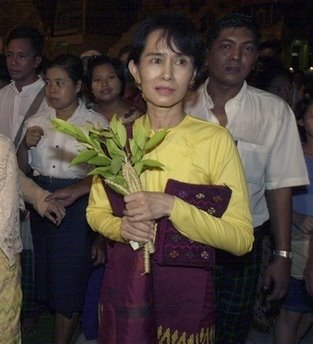


 Posts
Posts


