PrintSource: Human Rights Watch (HRW)
Date: 23 Jul 2008
Human Rights Watch remains deeply concerned about the dire plight of Burmese severely affected by Cyclone Nargis, which struck Burma’s Irrawaddy Delta on May 2-3, 2008. The United Nations estimates that the cyclone left at least 140,000 persons dead or missing and that approximately 2.4 million more were severely affected, many of whom are still in need of urgent and sustained humanitarian assistance.
Human Rights Watch recognizes the strong and committed role played by international relief agencies and organizations in responding to the crisis and the difficulties of operating in an environment where there is little infrastructure and many government barriers. We support the continued efforts by international and Burmese organizations and individuals to respond to the disaster.
The Burmese authorities’ reaction to the cyclone shocked the world. Instead of allowing humanitarian assistance to be delivered urgently to survivors, as did countries affected by the 2004 Indian Ocean tsunami, the Burmese military government prevented international humanitarian agencies from entering the delta during the crucial first weeks after the cyclone. An untold number of people died and suffered needlessly as the junta treated the cyclone as a national security problem instead of a natural disaster, demonstrating the shocking disregard that Burma’s ruling generals hold for the welfare of their own people.
While the government has improved its cooperation with aid agencies, the authorities continue to obstruct humanitarian relief efforts in various ways. More than two months after the cyclone, just 1.3 million out of the 2.4 million Burmese severely affected have received any form of international humanitarian assistance. While restrictions on international relief workers visiting affected areas have been eased, official permission to travel to the delta still takes many days and does not allow the full access required to reach all at risk.
From Relief to Reconstruction
Even when the immediate needs for food, temporary shelter, clean water, and medical assistance have been met, major efforts will be necessary to help people rebuild their lives and livelihoods. The cyclone swept away entire villages and hundreds of thousands of survivors have lost their homes. The United Nations estimates that between 77 to 85 percent of houses in Bogale and Lapputa townships were completely destroyed. Public infrastructure, including roads, bridges, schools, hospitals, and other essential services, have largely disappeared in many areas. The rice cultivation paddies of the Irrawaddy Delta have been inundated with salt water and require a massive rehabilitation effort. Livestock populations, including the water buffaloes used for rice cultivation, have been decimated. Rehabilitating the Irrawaddy Delta region will require a massive reconstruction effort, including the financial support of the international community.
The Tripartite Core Group (TCG)—comprising the Association of Southeast Asian Nations (ASEAN), the United Nations and the Burmese ruling State Peace and Development Council (SPDC)—has completed its needs assessment of the affected areas and presented its formal findings at a meeting in Singapore on July 21. The total cost of relief and reconstruction was estimated at US$1 billion. On July 10 a Revised Flash Appeal for humanitarian assistance was raised from an initial US$201 million to US$481 million for relief operations lasting until April 2009. For the 13 UN agencies and 23 international humanitarian organizations involved in operations in the cyclone-affected areas, adequate funding is urgent and crucial to alleviate suffering and prepare the way for reconstruction.
Human Rights Watch has long supported humanitarian aid to Burma so long as it is provided in an accountable, transparent and principled manner. Unfortunately, the Burmese authorities have long refused to allow aid to be provided in this way.
As the donor and humanitarian community move towards considering support for major reconstruction efforts in the cyclone-affected regions of Burma, Human Rights Watch believes it is of utmost importance that clear principles be established for the provision of aid. Aid provided without respect for clear principles—as detailed below—and without careful monitoring, will invariably be misused and fail to meet the needs of cyclone victims.
The greatest obstacle faced by the international community in addressing the large-scale reconstruction needs of the Irrawaddy Delta is Burma’s abusive military leadership. The Burmese government has a long record of severe human rights violations against its own people, which have repeatedly been raised at the UN Security Council, the Human Rights Council (and its predecessor the Commission on Human Rights), and other international bodies. Many abuses previously reported will directly impact on the reconstruction effort, such as the widespread use of forced labor, documented by the International Labor Organization (ILO) and other independent international organizations.
In order to ensure that future reconstruction meets the needs of the affected population and does not contribute to further human rights abuses, donors should adopt the following basic principles when planning, funding and implementing reconstruction projects in Burma:
- Insist that the continuing humanitarian needs of the affected population are immediately addressed. Soon after the cyclone, the Burmese government claimed that the “emergency phase” of the crisis had been completed and that the focus should shift to long-term reconstruction. This view reflected not only the military leadership’s disregard for the welfare of the affected population, but its own political and financial interest in being the recipient of multi-million dollar donor-funded infrastructure development projects. As more than one million of those affected by the cyclone have still not been reached by international humanitarian agencies, the donor community should insist that the immediate humanitarian needs of the population be addressed before embarking on large-scale reconstruction efforts.
- Insist on unimpeded humanitarian access for local and international humanitarian organizations to the affected population and to determine reconstruction needs. Despite promises made nearly two months ago by the military junta to UN Secretary-General Ban Ki-moon, the government continues to place significant obstacles in the path of international humanitarian agencies and local volunteer organizations in meeting the needs of the affected population. Two months after the cyclone, international humanitarian efforts remain severely impeded and far less effective than after other large-scale disasters, such as the response to the 2004 Indian Ocean tsunami and the May 2008 earthquake in Sichuan, China. While the government has granted 1,670 visas to aid workers from UN agencies, private nongovernmental organizations and ASEAN officials, many humanitarian relief professionals lose crucial time waiting for official permission to travel and are still prohibited from spending extended time in the delta. The authorities have also arbitrarily detained and harassed some local volunteers, such as the prominent comedian Zargana. The limited reach of international aid is almost entirely due to obstacles created by the government. The donor community should continue to insist on unimpeded access for humanitarian workers to the affected population, and make further assistance contingent on greater access and a removal of obstacles. The Burmese government has requested billions of dollars in reconstruction assistance but has provided almost no documentation to support its request. In order to accurately assess the reconstruction needs, countries considering pledges should insist on full and unimpeded access to affected areas to do their own independent assessments of reconstruction needs. The Post-Nargis Joint Assessment (PONJA) conducted by ASEAN, Burmese officials, and UN officials, is an important step towards an accurate assessment of the reconstruction needs, but further assessment efforts will be required.
- Ensure that all internationally funded reconstruction activities be conducted by independent humanitarian and development organizations, rather than by providing funding directly to the Burmese government, and that local participation be monitored by the donor. Many donors have long refused to provide aid directly to the government because of grave concerns over widespread human rights violations, corruption, and a lack of accountability and transparency in spending of donor funds. In recent years The Global Fund to Fight AIDS, Tuberculosis and Malaria, and Medecins Sans Frontieres (France) terminated their programs because of excessive government interference in aid activities. In light of these concerns, reconstruction funding should not go directly to the government, but should be conducted by qualified independent organizations that can be adequately monitored by the donor. Donors should insist that implementing organizations be freely allowed to recruit and hire local staff, and respond promptly should the authorities seek to intimidate or otherwise improperly interfere with local staff. Donors should take sufficient measures, including the creation of independent structures within Burma, to monitor aid to ensure that it is not diverted to the authorities.
- Monitor reconstruction efforts to deter previously documented human rights abuses, such as forced labor, forced relocation and land seizure. The Burmese government has a long history of human rights abuses carried out in pursuit of self-defined “development” projects. Villagers in Burma have had their land forcibly confiscated and have been conscripted for forced labor in road construction and development of biofuel and hardwood plantations. In the aftermath of the cyclone, the government has forcibly relocated thousands of displaced persons, at times placing them beyond the reach of humanitarian assistance. Donors should carefully design and monitor reconstruction projects to deter the government from using such abusive practices, particularly in the rehabilitation of infrastructure and the rice paddies, where the danger of forced labor practices are greatest. The donor community should ensure that international monitoring organizations like the ILO have sufficient capacity to monitor reconstruction projects.
- Consult with affected communities, ethnic minorities, religious communities, and a broad range of civil society groups when considering, designing, and implementing reconstruction projects. The Burmese government has a long history of disregarding the voices of civil society and the needs of the population in all facets of governance, and with development projects in particular. It considers independent views as a threat to its monolithic rule. Donors should set a strong and principled example in determining reconstruction needs by consulting a wide spectrum of individuals and groups, including local communities, ethnic minorities, religious communities, and a broad range of civil society actors, to ensure that reconstruction projects meet the needs of the affected populations. Such consultation requirements are now mainstreamed into projects of the World Bank and many other donors. While the government may object and try to limit contacts and communication between implementing agencies and local residents, donors should insist on the need for broad-based consultation.
- Do not award contracts for reconstruction projects to any Burmese company or individual under international sanctions, or with companies owned or controlled by the Burmese military. Donor states have placed a number of individuals and companies under international sanctions because of their direct role in supporting government repression and human rights abuses. The military junta has already put many of these individuals and companies in charge of major reconstruction projects in the Irrawaddy Delta. The donor community should not support any reconstruction efforts conducted by individuals or companies under international sanctions, and should not engage companies owned or controlled by the Burmese military in reconstruction projects.
- Provide humanitarian and reconstruction aid on the basis of need, and guard against government discrimination on the basis of ethnicity, religion, perceived political affiliation, or other basis. The Burmese government has a long record of discrimination against and marginalization of ethnic and religious minorities, independent religious authorities, and independent civil society groups, and of politicizing humanitarian and development assistance. Consider supporting small-scale, community-based reconstruction efforts in health, education, water and sanitation, agriculture, and other essential sectors that directly benefit the poorest and most affected, and not just “prestige” infrastructure projects that may not bring the same benefits to those most in need. Donors should ensure that the humanitarian and reconstruction needs of all affected communities are met on a nondiscriminatory basis.
- Before committing to reconstruction projects, require that the Burmese government, which has an estimated US$3.5 billion in foreign reserves and receives an estimated US$150 million in monthly gas exports revenues, formally commit to making a significant contribution to reconstruction efforts. While much of the Burmese population lives in dire poverty with meager access to education and health care, the country’s leadership has accumulated huge wealth through government economic enterprises. The United Nations Development Program (UNDP) calculates that one-third of the population lives below the poverty line, with much higher rates of absolute poverty in regional areas. And while the government is demanding huge reconstruction sums from foreign donors, its own accumulated wealth is given little consideration. The government’s foreign reserves and gas revenues are not allocated to address the basic needs of the population, causing Burma to be ranked 132 out of 177 in the latest UNDP Human Development Index. The government spends a paltry 1.1 percent of Gross Domestic Product on health and education, and Burma’s health care system is the second worst in the world after Sierra Leone. An estimated 75 percent of hospitals and clinics in cyclone affected areas were destroyed or damaged and urgently need to be replaced. At the same time, the SPDC spends enormous sums on an oversized military and wasteful projects, such as the construction of the new capital in Naypyidaw. Were the donor community to fully fund the reconstruction effort without addressing the government’s horrendous misallocation of resources, it risks being complicit in the government’s continuing disregard for the health, education, and other basic needs of the population.
- Use reconstruction projects to promote respect for human rights in Burma. Some donors have been reluctant to discuss human rights abuses or the lack of progress in political negotiations while meeting Burmese government officials or in donor coordination meetings, fearing that this would complicate discussions on relief and reconstruction. While this may have been sensible in the immediate aftermath of the cyclone, it is now critical to address the connection between the government’s dismal human rights record and its disregard for the Burmese people’s welfare following the cyclone. Cyclone Nargis was a natural disaster that became a man-made disaster. While donors rightly are focusing on a massive humanitarian and reconstruction effort in Burma, they must simultaneously engage with the Burmese government on its atrocious human rights record. These two aims not only are not mutually exclusive, but can and should be pursued in tandem if the aid effort is to reach its intended targets and goals.
Establish an Independent Monitoring Body
Finally, because of the complex and exceptional challenges faced by the donor community in funding, implementing, and monitoring humanitarian and reconstruction projects in Burma, donors should establish an “Independent Monitoring Body.” This body should be co-managed by the donor community and the United Nations to ensure the integrity of the reconstruction and humanitarian effort, and to provide transparency and accountability in the effort. Such a body would be tasked with implementing the basic principles of assistance set out above.
While the above list of basic principles is long, it reflects the enormous challenges to providing effective assistance in a country ruled for decades by a highly repressive and corrupt regime. In addressing the enormous humanitarian and reconstruction needs of the people affected by Cyclone Nargis, it is essential that the donor community ensure that international efforts contribute to greater respect for basic human rights and do not have the unintended consequence of contributing to the further consolidation of illegitimate military rule at the expense of the Burmese people.
We look forward to discussing these matters further at your convenience. Thank you for your consideration.
Yours sincerely,
Brad Adams
Executive Director
Asia division
© Copyright, Human Rights Watch 350 Fifth Avenue, 34th Floor New York, NY 10118-3299 USA
With the exception of public UN sources, reproduction or redistribution of the above text, in whole, part or in any form, requires the prior consent of the original source. The opinions expressed in the documents carried by this site are those of the authors and are not necessarily shared by UN OCHA or ReliefWeb.
Print E-mail Save
Friday, July 25, 2008
Letter to donors on reconstruction after Cyclone Nargis


Thursday, July 24, 2008
US lawmakers consider Olympic rights message to China,米国の立法者は中国にオリンピック権利メッセージを考慮する

AFP Photo: Chinese paramilitary soldiers march past the main Olympic Stadium, also known as the Bird's Nest,.
WASHINGTON (AFP) - A resolution was introduced in the US House of Representatives asking China to end human rights abuses and its support for tainted governments in Sudan and Myanmar in line with "Olympic traditions of freedom and openness".
ワシントン州(AFP) -決断は"と一直線にスーダンおよびミャンマーの感染した政府のための人権侵害そしてサポートを終えるように中国に頼んでいる米国の衆議院で導入された; 自由およびopenness"のオリンピック伝統;。
The resolution, proposed Wednesday by the Democratic head of the House of Representatives foreign affairs committee, Howard Berman, is to be discussed and possibly voted on Thursday before it is sent to the House floor.
外交委員会衆議院の民主党の頭部によって水曜日、ハワードBerman提案される、決断は家の床に送られる前に木曜日に論議され、多分投票されるべきである。
It called on Beijing "to immediately end abuses of the human rights of its citizens, to cease repression of Tibetan and Uighur citizens, and to end its support for the governments of Sudan and Burma (Myanmar)."
それは北京の"を頼んだ; すぐにチベット人およびウィグル人の市民の抑圧を終えるため終え、スーダンおよびビルマ(ミャンマー)の政府のためのサポートを終える市民の人権の乱用を。"
This, it added, was "to ensure that the Beijing 2008 Olympic Games take place in an atmosphere that honors the Olympic traditions of freedom and openness."
これのそれは"加えたり、だった; 北京が自由およびopenness."のオリンピック伝統に名誉を与える大気で2008のオリンピック大会起こることを確認するため;
The 12-point resolution also called on President George W. Bush, who is to attend the games opening ceremony, to make a "strong public statement" in Beijing on China's human rights situation and meet with families of jailed "prisoners of conscience."
12ポイント決断はまたゲームの開会式に出席する大統領を"を作るために頼んだジョージW.ブッシュ; 強い公共のstatement" China'の北京; 拘留された"の系列とのsの人権の状態そして大会; conscience."の囚人;
Bush was also asked to seek to visit the troubled Tibet and Xinjiang regions while in China to attend the games.
ブッシュはまた間、中国でゲームに出席するためにチベットおよび新彊の悩まされていた地域を訪問するように努めるために頼まれる。
The resolution also sought direct talks between Beijing and the Dalai Lama, Tibet's spiritual leader.
決断はまた北京とダライ・ラマのチベットの精神的指導者間の直接話を追求した。
Hopes that Beijing would polish up its human rights record in the run up to the games have been "short-lived," Berman said during a House hearing Wednesday entitled "China on the Eve of the Olympics."
北京がゲームまで操業の人権記録を磨くという希望はずっと"である; の"短命; Bermanは家のヒアリングの水曜日によって資格を与えられた"の間に言った; Olympics."の晩に中国;
Reporters Without Borders announced in its annual report on China that in 2007 the government "did everything possible to prevent the liberal press, Internet users and dissidents from expressing themselves."
Reporters without Bordersは2007で政府の"中国の年報で発表した; 寛大な出版物、インターネットユーザおよび反対者がthemselves."を表現することを防ぐこと可能なすべてをした;
A recent poll by the Foreign Correspondents' Club of China found that 67 percent of foreign journalists felt China was not keeping its promise to allow freedom of reporting, Berman said.
外国Correspondents'による最近の投票; 中国のクラブは外国のジャーナリストのフェルト中国の67%報告の自由を許可する約束を守っていなかったことがBerman言った分った。
He also cited China's deadly crackdown on protests in Tibet in March and the arrest in December of Hu Jia, a leading fighter for human rights, health care and the environment.
彼はまたHu Jiaの人権、ヘルスケアおよび環境のための一流の戦闘機の12月の3月そして阻止のチベットの抗議の中国の致命的な取締りを引用した。
Beijing's support for Robert Mugabe's hardline regime in Zimbabwe was also raised, especially its veto of a UN Security Council resolution that would have imposed an arms embargo on Zimbabwe and travel and financial restrictions on the leader and other senior officials.
Beijing' ジンバブエのRobert Mugabeの強硬な政体のためのsサポートはまた、リーダーおよび他の高官にジンバブエに武器禁輸をおよび旅行および財政の制限課そう国連国連安保理決議の特に拒否権上がった。
Ileana Ros-Lehtinen, the ranking Republican member in the House foreign affairs panel, said Beijing had ahead of the Olympics "intensified its brutal crackdown on political dissidents and activists.
Ileana RosLehtinenは、上院の外交のランキングの共和党のメンバーパネルをはめたり、北京がオリンピックの"に先んじて持っていたことを言った; 政治的な反体制者および運動家の残酷な取締りを激化させた。
"One would wish that the motto of this year's Olympics, 'one world, one dream,' could ring true," she said. "Unfortunately, when it comes to the pursuit of democratic values and human rights, we remain a world divided with a dream unfulfilled."
" 1つはその今年のオリンピック、'のモットーを望む; 1つの世界、1の夢、' "は真実味があることができる; 彼女は言った。 " 残念ながら、民主的な価値および人権の追求に関しては、私達は夢unfulfilled."と分けられる世界に残る;
Ros-Lehtinen also claimed Beijing had initiated "broad and sweeping measures to silence internal criticism," allegedly detaining hundreds of practitioners of the Falun Gong spiritual sect and members of other organized movements.
RosLehtinenはまた北京を始めた"を要求した; 内部批評、"を沈黙させる広く、広範な手段; 伝えられるところでは何百もの法輪功精神的なSECTおよび他の整頓されていた動きのメンバーの従業者を引き留める。
"The number of reported raids and summary executions continues to rise, and the regime has even taken violent measures to discourage North Korean refugees from seeking asylum in China," she said.
" 報告された侵略および即決の処刑の数は上がり続け政体は中国の"の追求の保護所から北朝鮮の避難者を落胆させる激しい手段を取った; 彼女は言った。
UN mediator's Myanmar trip must yield progress: global group,国連仲介人のミャンマー旅行は進歩をもたらさなければならない: グローバルグループ
UNITED NATIONS - A GROUP of countries trying to foster democratic rule in Myanmar said on Wednesday that UN mediator Ibrahim Gambari's upcoming visit to the military-ruled country must yield 'tangible progress,' the world body said.
国際連合-軍支配された国への国連仲介人のイブラヒムGambariの次の訪問が'をもたらさなければならないとミャンマーの民主的な規則を促進することを試みる国のグループは水曜日に言った; 有形進歩、' 国連は言った。
UN chief Mr Ban Ki Moon convened the meeting of the so-called Group of Friends of the Secretary General on Myanmar to discuss Gambari's upcoming trip, according to a UN statement.
Ban Ki-moon国連主な氏は国連声明に従ってGambariの次の旅行を、論議するためにミャンマーの事務総長の友人のいわゆるグループの会合を集めた。
'The Group noted their expectations that Mr Gambari's next visit would need to yield tangible progress on the issues of concern to the international community,' it added.
' グループはGambari国際地域社会にとって関心のある問題の有形進歩をもたらすことを氏の次の訪問は必要とする予想'に注意した; それは加えた。
The group specifically said progress was expected 'with regard to the resumption of dialogue between (detained opposition leader) Aung San Suu Kyi and the government, the credibility of the electoral process, and the regularization of engagement with the good offices of the Secretary General.'
グループのとりわけ言われた進歩は期待された'だった; (引き留められた反対派勢力の指導者) Aung San Suu Kyiおよび政府、選挙過程の信頼性、および事務総長。'のよいオフィスとの約束の調整間のダイアログの再開に関して;
The meeting of the group, which was set up last December, brought together Australia, Britain, China, France, India, Indonesia, Japan, Norway, Russia, Singapore, South Korea, Thailand, the United States, Vietnam, the European Community and the European Union.
この前の12月セットアップされたグループの会合はオーストラリア、英本国、中国、フランス、インド、インドネシア、日本、ノルウェー、ロシア、シンガポール、南朝鮮、タイ、米国、ベトナム、欧州共同体および欧州連合をひとつにまとめた。
Mr Gambari is planning a return visit to Myanmar in mid-August at the invitation of the military regime.
Gambari氏は軍の政体の招待で8月中旬のミャンマーに帰りの訪問を計画している。
He previously traveled to Myanmar in March to mediate reconciliation talks between the military regime rulers and Ms Aung San Suu Kyi. -- AFP
彼は軍の政体の定規と氏Aung San Suu Kyiの間で仲介の和解の話に3月のミャンマーに前に旅した。 -- AFP
Victory! Congress Bans Gem Imports from Burma

Dear PHONE,
We are pleased to write to you with major news: last night the U.S. Congress passed new, enhanced sanctions legislation banning the import of gems from Burma. We want to thank the thousands of you who telephoned, emailed, and met with your members of the House of Representatives and Senate. We also want to acknowledge the hard work carried out by the members of the House and the Senate -- as well as their staff members -- who led this effort.
What Does the Legislation Do?
- This new law closes a gaping loophole in the Burmese Freedom and Democracy Act that had previously allowed Burmese gems to be sold in the United States, even though most all other imports are banned. The Burmese regime's sale of rubies and jade brings them upwards of $300 million per year -- much of that from unsuspecting American consumers. Now, that will come to an end!
- The law also creates the position of a U.S. "Special Coordinator" for Burma, whose job will be to reach out to other countries to build support for Burma's human rights activists and ultimately seek a peaceful transition to democracy in the country.
Why The Legislation Is Important and Next Steps
- Similar to how "conflict diamonds" help prop up a civil war in Africa, the sale of Burmese rubies and jade funnelled hundreds of millions of dollars to Burma's military dictatorship, financing their reign of terror.
We still have much more work to do -- the Burmese Freedom and Democracy Act must be renewed and gems weren't the only source of funds for the military regime -- but for one day we want to pause and celebrate an important step forward.
THANK YOU.
Aung Din, Jeremy Woodrum, Jennifer Quigley, Thelma Young, Jacqui Pilch
US Congress approves legislation to bar Myanmar gems, Agence France Presse
US Congress passes new Myanmar gemstone sanctions bill, Associated Press
Support 1991 Nobel Peace Prize recipient Aung San Suu Kyi and the struggle for freedom and democracy in Burma.
Become a member of the United States Campaign for Burma today.
Wednesday, July 23, 2008
Japan Presses Burma on Democratization, Shooting of Journalist
Text of report in English by Japan's largest news agency Kyodo
Singapore, 22 July: Japanese Foreign Minister Masahiko Komura met Myanmar Foreign Minister Nyan Win bilaterally on Tuesday [22 July] to press for thorough investigations into the September shooting of a Japanese journalist in Yangon and urge the junta to move forward with democratization.
The talks in Singapore came on the heels of a joint communique by ASEAN foreign ministers on Monday [21 July] that urged Myanmar [Burma] to free all political detainees and explicitly named detained opposition leader Aung San Suu Kyi for the first time since 2003.
Meeting on the sidelines of a series of ASEAN-hosted ministerial talks, Komura is also likely to repeat calls for the junta to open access for foreign aid personnel to assist reconstruction efforts after the May cyclone devastation and improve transparency for aid received.
Japan and Myanmar remain far apart over the circumstances in which Japanese video journalist Kenji Nagai was shot when he was filming the junta's crackdown on pro-democracy protests in Yangon in September. Myanmar insists he was shot by a stray bullet and not from close range, as Japan claims.
Myanmar has repeatedly said that while the death was regrettable, the incident was "accidental." Japan has continued to press for the return of Nagai's video camera and other belongings but to no avail.
On Monday, Nyan Win said Suu Kyi's detention will expire towards the end of next year and that his fellow ASEAN ministers had earlier misunderstood that she could actually be released in six months, according to Singaporean Foreign Minister George Yeo.
Yeo had told reporters Sunday that Nyan Win indicated to other ministers of the 10-member Association of Southeast Asian Nations over a working dinner that his government could release Suu Kyi in about six months' time.
Suu Kyi's National League for Democracy won the 1990 general election by a landslide but the junta refused to honour the results. Suu Kyi has been detained for more than 12 of the past 18 years.
Komura is also scheduled to meet bilaterally with Yeo and hold a separate meeting with his counterparts from the Mekong nations of Cambodia, Laos and Vietnam later on Tuesday.
Originally published by Kyodo News Service, Tokyo, in English 0158 22 Jul 08.
(c) 2008 BBC Monitoring Newsfile. Provided by ProQuest Information and Learning. All rights Reserved.
Story Source: BBC Monitoring Newsfile
Burma Opposes Asean Investigative Powers ,ビルマはASEAN調査力に反対する
By JIM GOMEZ / AP WRITER Tuesday, July 22, 2008
SINGAPORE — Burma's junta has indicated it will oppose any effort to give a Southeast Asian human rights body the power to monitor or investigate rights violations in the region, diplomats said Tuesday.
シンガポール- Burma' 会議は示した東南アジアの人権ボディに監察する力を与えるための努力に反対するかまたは地域の権利の違反、外交官を調査するために火曜日を言ったことを。
A high-level panel of the Association of Southeast Asian Nations started work Monday to set up the rights body. The panel will lay down the body's future makeup, role and powers, which will be presented to a summit of Asean leaders in December.
東南アジアの国家の連合の高レベルパネルは権利ボディをセットアップし仕事月曜日を始めた。 パネルはbody'を置く; 12月以内にASEANリーダーの頂上に示される未来の構造、役割および力。
But in a closed-door session with the panel Monday, Burmese Foreign Minister Nyan Win said the human rights body should uphold Asean's bedrock policy of noninterference in each other's affairs, a diplomat present at the meeting told The Associated Press.
しかしパネル月曜日との傍聴禁止の会議で、ビルマ人の外相のNyanの勝利は人権ボディがAsean'を支えるべきであることを言った; 互いの不干渉の基岩の方針' 出来事は、会合で現在の外交官AP通信を告げた。
The diplomat spoke on condition of anonymity because she was not authorized to speak to the media.
外交官は彼女が媒体に話すために承認されなかったので匿名で話した。
Burma's military government, which has been strongly criticized by Western governments and even fellow Asean members for its dismal human rights record, has used the bloc's policy to parry any attempt by outsiders to intervene on behalf of human rights victims in the military-ruled nation.
Burma' 陰気な人権記録のための欧米政府そしてASEANメンバーによって強く批判された軍事政権はbloc'を使用した; 軍支配された国家に人権の犠牲者に代わって介入する局外者によって試みを受け流す方針。
It has already been decided that the rights body will not have the power to impose sanctions or seek prosecution of violators. But Burma's objections, if honored, will make the body even less effective.
権利ボディに認可を課すか、または妨害者の実行を追求する力がないことが既に決定されてしまった。 しかしBurma' 異議は、名誉を与えられたら、ボディをより少なく有効にさせる。
Burmese officials were not immediately available for comment but in the past they have said the human rights body should only serve as a "consultative mechanism" and that it should not "shame and blame" any Asean nation.
ビルマの役人はコメントにすぐに利用できなかったが、以前人権ボディが"としてだけ役立つべきであることを言った; 諮問のmechanism" そしてそれそれは"べきではない; 恥およびblame" ASEAN国家。
The rights body is being set up as part of Asean's proposed new charter, which seeks to make the organization rule-based.
権利ボディはAsean'の一部としてセットアップされている; 構成を規則に基づいているようにするように努める提案された新しいチャーター。
Asean Secretary-General Surin Pitsuwan said the charter will serve as a guide to the panel drafting the terms of reference for the rights body.
Surin Pitsuwan ASEAN事務総長はチャーターが権利ボディのための委託権限を起草するパネルへのガイドとして役立つことを言った。
"They're going to follow the charter very, very closely—its principle of promoting, upholding and protecting human rights," Surin said.
" それらは人権、"を促進し、支え、そして保護することの近その原則チャーターに非常、非常に続こうとしている; Surinは言った。
The international community has condemned Burma's junta for its refusal to restore democracy and release pro-democracy leader and Nobel laureate Aung San Suu Kyi and other political detainees. Asean has also been criticized for not doing enough to pressure Burma's military leaders.
国際地域社会はBurma'を非難した; 民主主義を元通りにし、民主化のリーダーおよびノーベル賞受賞者Aung San Suu Kyiおよび他の政治犯解放する拒否のための会議。 ASEANはまたBurma'に圧力をかけるには十分をしないために批判された; 軍事指導者。
China Syndrome
July 21st, 2008 by Judie Brown
Just last evening, while on a family vacation, my husband and I saw a television special regarding the selling of little children in various provinces of China. Entitled China’s Stolen Children, the program deals with the epidemic of child kidnapping (70,000 annually) that appears to be occurring because couples with children are desperate for money. Moreover, many parents fear that if a little girl is born, China’s one-child policy will prevent the couple from having a son. As tragic as this program is and as appalled as we were after watching it, everyone should realize that, for decades, China has had policies and a corresponding enforcement agency that are perhaps the most heartless in the entire world.
As a matter of fact, just days ago we also learned that in China a “snake oil” con is being played upon unsuspecting families. A report in Medical News Today tells us,
Recent newspaper stories - including several from Missouri - have reported parents flying their children to main land China for umbilical cord stem cell (CSC) infusions. The cost of these treatments, paid for entirely out-of-pocket by the parents, can be $50,000 or more. CSCs are extracted from the umbilical cords of Chinese mothers and their newborns and injected into the fluid around the spinal cord of the American children. The parents are led to believe by Chinese doctors that these CSCs are an effective treatment for optic nerve hypoplasia (ONH), a disease causing partial blindness at birth.
However, as pediatric ophthalmologists are quick to point out, there are various ways of treating those children suffering from optic nerve hypoplasia that do not raise the questions that surround the questionable ethics employed by those who claim these are miraculous cures. Not only that, but they say the injections administered in China “could be dangerous, introducing infection or toxic matter into the brain fluids.”
Then there are other biotech companies like Shenzhen Beike Biotechnology Co., Ltd., which, according to Medical News Today, is “a worldwide leader in providing safe and effective stem cell applications for medical treatment,” and “has commenced outfitting its 21,500-square-foot comprehensive medical stem cell storage and processing facility in eastern China.”
But as a recent Philadelphia Inquirer article pointed out, “stem-cell tourism,” a new phenomenon of patients and their families going to great lengths to search for miracle cures, makes those searching for such cures ripe for the picking by companies, like Beike, that make promises such as Beike’s slogan, “Tomorrow’s cures today.”
While the Inquirer reports that Beike claims “it has treated 3,000 Chinese and foreign patients at its 24 hospital clinics in China,” the questions raised continue to be not only serious, but in the end, challenging. It is only natural, after all, for people who have an ailing family member to want to seek out any treatment which they believe will be helpful.
And, as I mentioned, far too many industrious people in China are leading the way these days in attempting to fulfill the hopes and aspirations of those seeking a quick fix by doing whatever it takes, including selling children to couples desperate for a child and promising cures to those who are suffering. Oh yes, and lest I forget to mention it, the bottom line in such endeavors, whether criminal or legal, is always the money.
And while it would not be in fair to point the finger at a specific country as being the source of unethical practices, I have to point out that, in China, there are no regulations regarding the collection or use of umbilical cord blood stem cells. Nor are there specific laws actually enforced that would punish those who sell children into slavery or to couples who have the money required to buy a child. Of course, Chinese officials claim that they are cracking down and that they are striving to stop such grotesque practices, but human trafficking is far from being a footnote in the history of China’s past.
It is a sad commentary on the times in which we live that a country anywhere in the world could be conducting business as usual by exploiting the young and the vulnerable for cash. It forces me wonder, where is the outrage from governments of more “civilized” nations like our own?
Though clearly, when millions of preborn children can be killed under cover of law in America, there really is no room to point the finger elsewhere, is there?
China Syndrome
July 21st, 2008 by Judie Brown
Just last evening, while on a family vacation, my husband and I saw a television special regarding the selling of little children in various provinces of China. Entitled China’s Stolen Children, the program deals with the epidemic of child kidnapping (70,000 annually) that appears to be occurring because couples with children are desperate for money. Moreover, many parents fear that if a little girl is born, China’s one-child policy will prevent the couple from having a son. As tragic as this program is and as appalled as we were after watching it, everyone should realize that, for decades, China has had policies and a corresponding enforcement agency that are perhaps the most heartless in the entire world.
As a matter of fact, just days ago we also learned that in China a “snake oil” con is being played upon unsuspecting families. A report in Medical News Today tells us,
Recent newspaper stories - including several from Missouri - have reported parents flying their children to main land China for umbilical cord stem cell (CSC) infusions. The cost of these treatments, paid for entirely out-of-pocket by the parents, can be $50,000 or more. CSCs are extracted from the umbilical cords of Chinese mothers and their newborns and injected into the fluid around the spinal cord of the American children. The parents are led to believe by Chinese doctors that these CSCs are an effective treatment for optic nerve hypoplasia (ONH), a disease causing partial blindness at birth.
However, as pediatric ophthalmologists are quick to point out, there are various ways of treating those children suffering from optic nerve hypoplasia that do not raise the questions that surround the questionable ethics employed by those who claim these are miraculous cures. Not only that, but they say the injections administered in China “could be dangerous, introducing infection or toxic matter into the brain fluids.”
Then there are other biotech companies like Shenzhen Beike Biotechnology Co., Ltd., which, according to Medical News Today, is “a worldwide leader in providing safe and effective stem cell applications for medical treatment,” and “has commenced outfitting its 21,500-square-foot comprehensive medical stem cell storage and processing facility in eastern China.”
But as a recent Philadelphia Inquirer article pointed out, “stem-cell tourism,” a new phenomenon of patients and their families going to great lengths to search for miracle cures, makes those searching for such cures ripe for the picking by companies, like Beike, that make promises such as Beike’s slogan, “Tomorrow’s cures today.”
While the Inquirer reports that Beike claims “it has treated 3,000 Chinese and foreign patients at its 24 hospital clinics in China,” the questions raised continue to be not only serious, but in the end, challenging. It is only natural, after all, for people who have an ailing family member to want to seek out any treatment which they believe will be helpful.
And, as I mentioned, far too many industrious people in China are leading the way these days in attempting to fulfill the hopes and aspirations of those seeking a quick fix by doing whatever it takes, including selling children to couples desperate for a child and promising cures to those who are suffering. Oh yes, and lest I forget to mention it, the bottom line in such endeavors, whether criminal or legal, is always the money.
And while it would not be in fair to point the finger at a specific country as being the source of unethical practices, I have to point out that, in China, there are no regulations regarding the collection or use of umbilical cord blood stem cells. Nor are there specific laws actually enforced that would punish those who sell children into slavery or to couples who have the money required to buy a child. Of course, Chinese officials claim that they are cracking down and that they are striving to stop such grotesque practices, but human trafficking is far from being a footnote in the history of China’s past.
It is a sad commentary on the times in which we live that a country anywhere in the world could be conducting business as usual by exploiting the young and the vulnerable for cash. It forces me wonder, where is the outrage from governments of more “civilized” nations like our own?
Though clearly, when millions of preborn children can be killed under cover of law in America, there really is no room to point the finger elsewhere, is there?
Another Burma promise,ビルマの別の約束
Asean and Burmese Junta are playing the political game by risking the Burmese people .Do you believe Asean is realling pressuring Burmese Junta to change , I believe that Asean and Burmese Junta arrange behind the sene to declare their face saving move because almost all the Asean countries are not true democratic countries. I really believe in ourselves we Burmese who really love our country, we have to rely on our own effort to promote democracy and freedom.We must be united and we must belive in our united strength and act as a one.
ASEANおよびビルマの会議はビルマの人々を危険にさらすことによって政治ゲームをしている。ASEANをrealling信じ変わるためにビルマの会議に圧力をかけるほとんどすべてのASEAN諸国が本当の民主国家ではないので表面セービング移動を宣言することをASEANおよびビルマの会議がseneの後ろで整理することを私は信じる。 私は私達自身を実際に私達を実際に私達の国を愛するビルマ語、私達自分自身で頼らなければならない努力民主主義および自由を促進するための信じる。私達は結合しなければなり、私達の結合された強さでbelive 1として機能するためになり。
PHONE HLAING(FWUBC-JAPAN)
Singapore - Burma ratified the charter of the Association of Southeast Asian Nations Monday and vowed to uphold its democratic ideals, but dashed hopes of releasing opposition leader Aung San Suu Kyi within the next six months.
シンガポール-ビルマは東南アジアの国家月曜日の連合のチャーターを批准した、が民主的な理想を支えることを誓ったり次の6か月中に反対派勢力の指導者Aung San Suu Kyiを解放する希望を紛砕した。
"Myanmar's ratification of the charter demonstrates our strong commitment to embrace the common values and aspirations of the peoples of Asean," Foreign Minister Nyan Win said, using the military dictators' new name for Burma.
" Myanmar' チャーターの批准はASEANの"の人々の共通の価値観そして抱負を包含するために私達の強い傾倒を示す; 外相のNyanの勝利は軍dictators'を使用して、言った; ビルマの新しい名前。
"It is my honest hope that with the growing momentum of ratification, our common goal and commitment to complete ratification of the charter by all member states will be realized at the time of our leaders' summit in Bangkok" in December, he added.
" 私達のleaders'の時に批准の成長する運動量と、すべての加盟州によるチャーターの完全な批准への私達の共通のゴールそして責任実現されるのは私の正直な希望である; Bangkok"の頂上; 12月では、彼は加えた。
While foreign ministers attending the 41st Asean Ministers Meeting watched, Nyan Win handed over the document to Asean Secretary General Surin Pitsuwan, to the applause of observers.
見られた第41 ASEAN閣僚会議Nyanの勝利に出席している外相がASEAN事務総長にSurin Pitsuwan文書を引き渡す間、観測者の拍手に。
Burma was also among the Asean countries which unanimously set up a high-level panel on an Asean human rights body, and endorse its terms of reference.
ビルマは満場一致でASEAN人権ボディの高レベルパネルをセットアップしたまたあり、委託権限に裏書きするASEAN諸国間に。
"We urged Myanmar to take bolder steps towards a peaceful transition to democracy in the near future," and work towards the holding of free and fair general elections in 2010," said the minister's communique at the end of the meeting.
" 私達は民主主義への平和な転移の方の大胆な手段を近い将来に踏むようにミャンマーを"せき立てた; そして2010年に自由で、公平な総選挙、"の保有物の方の仕事; minister'を言った; 会合の終わりにコミュニケ
"We reiterated our calls for the release of all political detainees, including Suu Kyi, to pave the way for meaningful dialogue involving all parties concerned."
" 私達はすべての党concerned."を含む意味を持ったダイアログのための道を開くためにすべての政治犯の解放のための私達の呼出しを、Suu Kyiを含む、繰り返した;
In a separate statement, Singapore Minister for Foreign Af`fairs George Yeo said Ngan Win had clarified that Suu Kyi would not be released in the next six months, but six months from May 2009, the expiry date of the existing one-year detention order.
別の声明では、外交ジョージYeoのためのシンガポールの大臣はSuu Kyiが次の6か月に解放されない、満期日5月からの2009年の既存の1年の延滞の順序の6か月明白になったことをことNganが勝利言った。
Yeo, who is also Asean chairman, and other foreign ministers "misunderstood the point made by the Burmese foreign minister on the limit of the detention period," a statement said.
またASEAN議長である、および他の外相の" Yeo; 延滞の期間、"の限界でビルマの外相がなしたポイントを誤解した; 声明は言った。
The "clarification" was made at the ministers' meeting Monday afternoon.
説明はministers'でなされた; 会合の月曜日の午後
Suu Kyi has spent 13 years in detention since 1989. Her house arrest was recently extended.
Suu Kyiは1989年以来の延滞の13年を過ごした。 彼女の自宅軟禁は最近延長だった
Surin said he was sure the Philippines, Thailand and Indonesia would soon ratify the charter and that he expected the ratification process to be completed by December.
Surinはフィリピン、タイおよびインドネシアがすぐにチャーターを批准しことを、それを彼が批准プロセスが12月までに完了すると期待したことを彼が確かめたことを言った。
"The charter will help us building an Asean community we can all be proud of," he said.
" チャーターは私達がすべて自慢していてのいいASEANコミュニティ"を造っている私達を助ける; 彼は言った。
The document, which will turn the 41-year-old regional grouping into a legal entity, was initially opposed by the ruling junta because of its inclusion of human rights.
法的主体に41歳に地方に分かれることを回す文書は人権の包含のために支配する会議によって最初に反対された。
Several Philippine senators said they would oppose the ratification of the charter until the military junta that has ruled Burma since 1962 institutes democratic reforms.
何人かのフィリピンの上院議員は言った1962の協会の民主的な改良以来のビルマを支配した軍の会議までのチャーターの批准に反対することを。
何人かのフィリピンの上院議員は言った1962の協会の民主的な改良以来のビルマを支配した軍の会議までのチャーターの批准に反対することを。 .
"The internal processes of member countries are different and some will be more difficult than others, Lee said.
リーが言った加盟国の内部プロセスは異なって、他より困難一部はである。
The Burmese ratification occurred a day after Asean ministers expressed their "deep disappointment" over the continued detention of Suu Kyi and undetermined numbers of political prisoners.
ビルマの批准は日ASEAN大臣が彼らの"を表現した後起こった; 深いdisappointment" Suu Kyiおよび政治犯の未定数の継続的だった延滞に
Asean comprises Brunei, Burma, Cambodia, Laos, Indonesia, Malaysia, the Philippines, Singapore, Thailand and Vietnam.
ASEANはブルネイ、ビルマ、カンボジア、ラオス、インドネシア、マレーシア、フィリピン、シンガポール、タイおよびベトナムから成り立つ。
Stop Burma aid, government urged
Monday, 21 Jul 2008 15:46
Government told to freeze humanitarian aid to Burma if it continues to be abused by country's military rulers
The government has been told it should freeze humanitarian aid to Burma if it continues to be abused by the country's military rulers.
The UK has sent £45 million-worth of aid to Burma since the May 2nd storm, more than any other single international donor.
Monday, 21 Jul 2008 15:46
Government told to freeze humanitarian aid to Burma if it continues to be abused by country's military rulers
The government has been told it should freeze humanitarian aid to Burma if it continues to be abused by the country's military rulers.
An influential committee of MPs claims further use of funds for anything other than relief by the Burmese junta should lead ministers to consider invoking their "responsibility to protect" to the south-east Asian country's population.
The warning comes almost three months after Cyclone Nargis struck Burma, killing 138,000 people and leaving a further 2.5 million displaced.
Its military rulers came under intense pressure to permit international aid, but the flow of supplies and experienced personnel into the country was painfully slow.
There have also been accusations aid was being diverted towards the army and away from the hundreds of thousands of people in dire need of relief in the devastated Irrawaddy Delta region.
The UK has sent £45 million-worth of aid to Burma since the May 2nd storm, more than any other single international donor.
But in their response to the Foreign and Commonwealth Office's annual human rights report, the foreign affairs committee urges the government to consider its policies.
Noting the "reprehensible" abuse of human rights and civil liberties in Burma, its members write: "We recommend that the government should put in place very strict measures to ensure that its aid cannot be misused by the regime, and inform us of these measures in its response to this report.
"We further recommend that, in principle, the government should not rule out invoking the 'responsibility to protect' in situations such as Burma, but that this should be guided by a practical assessment of the situation on the ground, and the likely wider consequences of such intervention."
Aid workers have warned however of the devastating effect of cutting off aid to Burma, one of the world's poorest countries.
Save the Children told inthenews.co.uk Burma was "one of the most under-funded, not-on-the-radar emergencies in the world" even prior to Cyclone Nargis.
A spokesperson said the charity had managed to reach 650,000 people in Burma through its 1,000 strong group of mostly-Burmese workers.
"We've been working in Burma for 30 years; we've proven that aid can be effective," the representative explained.
"We base our decisions purely on need on who needs it and the people of Burma need help."
Save the Children is calling on world leaders "not to turn their backs" on the children of Burma, comparing the impact of Cyclone Nargis to the devastation wrought by the Boxing Day tsunami.
Cyclone Nargis was not the first time the notoriously secret Burmese junta had been thrust on to the global news agenda in the past 12 months.
Last autumn a wave of popular protests were witnessed in the country's largest cities in the greatest challenge to military rule since the crushing of pro-democracy demonstrations in 1988.
The protests, which were led by Buddhist monks, were sparked by a 500 per cent increase in the price of natural gas, announced by the government in August last year.
Support for the junta, which assumed power in 1962, is now at an all-time low following its limited response to the cyclone.
But regional experts have told inthenews.co.uk it could take decades for any challenge to the senior generals to materialise.
In its annual human rights report, the FCO noted the junta's persistent violations were at the heart of the country's political, economic and social problems.
"The Burmese regime may continue to be indifferent to the suffering of the Burmese people, but the UK, and the world, remain concerned," the report states.
Tuesday, July 22, 2008


Let the Beijing Games Commence
The stakes for the Beijing authorities could not be higher. The Olympic
genie will never be put back into the bottle. Beijing will find that its
actions on the world stage continue to be held up to minute scrutiny
long after the Games are over. They will need to get used to prime-time
attention. Moreover, with George Bush on the way out and the promise of
an American Renaissance under President Obama, global public opinion and
journalists are on the look-out for a new bogeyman to blame for the
world's ills. In the last few months the media has grown accustomed to
criticising China for its policies on Burma, Sudan, Tibet, Zimbabwe and
climate change.
If the authorities in Beijing are not careful they could find that these
charges stick, and that China unwittingly fulfils a new global role; not
as a modern harmonious society but as an all- purpose rogue state.
By Leonard, Mark
istockAnalyst.com, OR
Story Source: Spectator, The; London
Saturday, July 19, 2008
'For years we couldn't wait for the Olympics to start. Now we can't wait
for them to be over.' That is how a Chinese friend described the
horrible limbo in Beijing as a control-freak state tries to anticipate
and eliminate any possible challenges to its glorious coming-out party
on the 8th of the 8th, 2008. It is clear to any visitor to the Chinese
capital that while China hopes to clean up the medals tables, the
sporting contest is at best a sideshow to the real Olympic competition
-- the battle to define how China is seen by its citizens and the world
outside. For the Chinese people the Olympics are the final proof that
China has reclaimed its rightful place in the global premier league;
putting behind it two centuries of humiliation at the hands of foreign
invaders. For the world outside, the Games are meant to embody an
official narrative of China as a 'harmonious society'. The organisers
had promised the trinity of a 'green Olympics', a 'high- tech Olympics'
and a 'people-centred Olympics', designed to show off China as a beacon
of economic prowess and modernity that has traded pariah status for
global respectability. But as China ricochets from one PR disaster to
the next -- with stories about sweatshops combining with Tibet and
Beijing's choking pollution -- the authorities are now trying to manage
expectations downwards with a focus on the more modest goal of a 'safe
Olympics', flooding the city and its environs with security forces
primed to thwart potential terrorist attacks.
The Chinese Communist Party combines a laser-like focus on detail with
awe-inspiring ambitions for the big picture. Where other Olympic cities
like Athens or Sydney were kept desperately busy just completing
building work on stadiums and transport links, Beijing's concern extends
from controlling the weather to micromanaging the behaviour of its
citizens. Last year, when the Chinese government hosted the tenth
anniversary of the Shanghai Co-operation Organisation -- an alliance of
autocrats which Beijing and Moscow have formed with five central Asian
republics -- the authorities treated the occasion as a dry run for the
Games. They seeded clouds to prevent rain; sent police along the major
streets removing washing lines and unseemly clutter; and declared a
public holiday to decrease congestion. The organisers of the Olympics
are going even further -- wiping out entire neighbourhoods to
accommodate Olympic buildings, closing factories to reduce pollution,
running 'public education campaigns' against spitting, appointing 1,500
'civilised bus-riding supervisors' and holding 'queueing awareness
days'. Visas for foreigners have been curtailed to stop human rights
protesters from entering the country; Chinese activists imprisoned or
kept under surveillance; security checkpoints set up on roads around
Beijing; and foreign governments bullied to attend the opening ceremony
(more on this later).
The awesome preparations show how ludicrous it is to suppose that sports
and politics can be kept apart. The truth is that in China almost
everything is political -- it is less than a decade since the Communist
Party allowed people to get married without asking the permission of
their local party secretary -- and anyone who studies the history will
realise how central sports have been to the construction of the Chinese
nation. For Sun Yat-sen -- the founder of modern China -- sports were
seen as a literal solution to China's plight as the 'sick man of Asia';
Chiang Kai-shek's nationalists talked of 'training strong bodies for the
nation' in order to defeat Japan; Mao Tse-tung continued the tradition
by putting a military man in charge of his first national sports
commission in 1952; Chou En-lai used ping-pong diplomacy to engage
Richard Nixon in the 1970s; and China's original bid for the 2000
Olympics (which was blocked on human rights grounds) was designed to
heal the damage from the Tiananmen massacre. During each of these
episodes, politicians have micromanaged every aspect of China's sporting
progress (Chou En-lai even personally put together the national
table-tennis team and coached it in diplomatic etiquette, urging its
players to put 'friendship first, competition second').
But in spite of all the preparation, the Beijing authorities have
sometimes been dazzled by the blinding lights of prime-time exposure.
Although the authorities provoked the attention, they often did not know
how to handle it. That is because for most of the last few decades,
Beijing's foreign policy was driven by a determined quest to keep a low
profile. Deng Xiaoping, the architect of China's opening and reform
policy, declared that China must 'hide its brightness', avoid
controversy and focus on growing its economy. He feared that China would
be seen as a threat by the rest of the world and that other countries
would gang up to prevent its rise. But with the Olympic Games, Chinese
strategists have moved from seeking invisibility to actively trying to
shape their country's image through a mixture of charm and steel.
The most fashionable theory in Chinese think-tanks is the American
academic Joseph Nye's theory of 'soft power' -- the idea that a country
can assert itself not only through the 'hard power' of military and
economic coercion, but the attractiveness of its ideas, its culture and
the political institutions it builds. Beijing has tried to build up its
own soft power by sharing its development expertise while stressing its
commitment to multilateralism and peaceful integration (in contrast to
Washington's neo-liberalism, unilateralism and imperial urge). And it
has used a battery of public diplomacy techniques -- from international
TV stations to cultural institutes -- to promote a 'Chinese Dream' as an
alternative to the American Dream. The Olympics is the most dramatic ad
for this new China.
When its charm offensive fails, Beijing has been adept at bullying
foreign governments to temper their criticism. When I was in Beijing in
May, French diplomats were reeling from a 'Skip France' campaign
organised by the Beijing municipal authorities. According to their
account, Chinese tourists who wished to travel to France were told that
tickets were not available and visa applications dropped from 300 a day
to just ten. Chinese foreign policy experts explained to me that the
goal was to punish Nicolas Sarkozy for saying that his attendance at the
Olympics would depend on the human rights situation in Tibet. It worked.
Last week, Sarkozy announced he would attend the opening ceremony to
'deepen [France's] strategic partnership with China'.
China has found Western NGOs (nongovernmental agencies) less compliant
than their national governments. When, on 8 August 2007, the Beijing
Olympic Committee started the official countdown to the Games with a
giant clock in Tiananmen Square, the limelight was stolen by an
unofficial event launched by a group of Canadian activists.
These protesters had climbed on to the Great Wall of China and unfurled
a banner saying 'One World, One Dream, Free Tibet'. In the last few
months there have been campaigns by activists for human rights,
supporters of the banned Falun Gong spiritual movement, persecuted
peasants and environmentalists. Of all the campaigns, the most visible
one was the 'genocide Olympics' campaign over China's role in Sudan
which attracted support from Mia Farrow and Steven Spielberg.
But to the surprise of outside observers, criticism from Western NGOs
seems to have bolstered rather than undermined the regime's popularity
at home. Although discontent is simmering below the surface -- there
were 87,000 protests last year alone -- Chinese citizens and
intellectuals are more focused on inequality and corruption than the
concerns of the Western campaigners, which they interpret as support for
'separatism', 'cults', or a desire to keep China down. Moreover, China's
government has successfully mobilised the swelling patriotism of its
citizens in campaigns against Western interference, such as the boycott
of the French supermarket chain Carrefour.
Many in the West had hoped that giving the Olympics to China would -- in
the words of the Beijing Olympic Bid Committee's Liu Jingmin -- 'help
the development of human rights'. Some predicted that repressive laws
would be lifted, political prisoners freed and the media given new
freedoms. But human rights activists tell a different story about
crackdowns on protesters in Tibet, the imprisonment of activists such as
the land rights campaigner Yang Chunlin, housing rights campaigners Ye
Guozhu and Wang Ling, and the celebrated anti-Aids activist and blogger
Hu Jia. They also claim that the runup to the Games has seen a growing
phalanx of people held under house arrest because of vague crimes such
as 'separatism' or 'subversion'. As Amnesty International says: 'It was
hoped that the Games would act as a catalyst for reform but much of the
current wave of repression against activists and journalists is
occurring not in spite of, but actually because of the Olympics.' The
outside world tends to talk about how revolutionary economic reforms
have gone hand in hand with political stagnation. But the Olympics shows
that China has modernised its politics as much as its economy -- just
not in the direction of liberal democracy. The state has largely
withdrawn from people's everyday lives, giving Chinese citizens
unprecedented freedoms to consume and organise their professional and
personal development. But this growing freedom in the personal realm has
been matched with an increasingly sophisticated control of the public
sphere. In the 1980s, many Chinese intellectuals supported multiparty
elections and the separation of the party from the government. But since
Tiananmen, political reform has taken on a new meaning. While there are
still prominent thinkers -- such as the political scientist Yu Keping --
who believe in the country's incremental embrace of democracy, many
modern intellectuals argue that China would be better to avoid elections
altogether and instead focus on introducing the rule of law while making
the one-party state more responsive. The last few years have seen the
party use opinion polls, focus groups and public consultations to put
the one-party state in touch with public opinion. What is emerging is
not Western-style democracy, but a high- tech model of 'deliberative
dictatorship' that has increased the legitimacy of the one-party state,
and lessened calls for genuine democracy.
But though the Olympics will strengthen the Beijing government's
standing at home, it is likely to weaken it abroad. Maybe the big story
of the 2008 Olympics will not be of Beijing's 'Big Brother' watching its
citizens, but rather the story of thousands of journalists and fans
watching Big Brother, and recording its every move on mobile phones,
cameras and blogposts. In an interesting new book, Owning the Olympics:
Narratives of the New China, the academics Monroe Price and Daniel Dayan
claim that the development of new technologies such as digital cameras
and the internet site YouTube could turn the surveillance society
against itself.
In the past, we have defined surveillance as the powerful monitoring the
powerless; the use of information technology by state institutions to
monitor individuals. But increasingly, the availability of new
technology allows individuals to monitor the state institutions
themselves. The authors use the phrase 'sousveillance' -- French for
monitoring from below -- to capture a new phenomenon where the powerful
can be filmed and held to account for their actions in the court of
public opinion. Sousveillance famously made an appearance with the
beating of Rodney King in Los Angeles, the hanging of Saddam Hussein in
2006 and the protests in Burma in 2007. But the Beijing Olympics could
take this to an industrial scale. The Beijing authorities could see all
their painstaking attempts to show a kinder, gentler image to the world
overturned by some rogue footage of an overzealous security official
responding to protesters captured on a mobile phone or digital camera.
The stakes for the Beijing authorities could not be higher. The Olympic
genie will never be put back into the bottle. Beijing will find that its
actions on the world stage continue to be held up to minute scrutiny
long after the Games are over. They will need to get used to prime-time
attention. Moreover, with George Bush on the way out and the promise of
an American Renaissance under President Obama, global public opinion and
journalists are on the look-out for a new bogeyman to blame for the
world's ills. In the last few months the media has grown accustomed to
criticising China for its policies on Burma, Sudan, Tibet, Zimbabwe and
climate change.
If the authorities in Beijing are not careful they could find that these
charges stick, and that China unwittingly fulfils a new global role; not
as a modern harmonious society but as an all- purpose rogue state.
posted by:
Konchog Dorje
Atlanta
15 friends
join to post
Recent topics in "Tibetan Buddhism"Topic Author Replies Last Post
Ganesh ( Ganapati ) the Hindu Buddhist Deity : practices refer... K 6 Yesterday, 7:18 PM
Olympic Countdown Konchog Dorje 0 Yesterday, 12:11 PM
Obama, McCain & Tibet Konchog Dorje 0 Yesterday, 12:08 PM
The Karmapa's Visit to America vagabond 55 July 19, 2008
Dharma quote Tashi 122 July 19, 2008
^ top of page | view all topics | back to Tibetan Buddhism »
Boston | Chicago | Los Angeles | Miami | New York City | Philadelphia | San Diego | SF Bay Area | Seattle | more cities »
home | about | why join? | advertise | terms of use | privacy | contact | FAQ
Copyright © 2008 Utah Street Networks, Inc. All rights reserved.
China’s Expansion Into Africa
July 20th, 2008
I wasn’t aware of the extent of China’s interest in Africa. I thought it was much more piecemeal. Their grand strategy makes perfect sense, given the dire problems China is facing.
There are some howlers in this article, though, such as, “Despite Britain’s commendable colonial legacy of a network of roads, railways and schools, the British are now being shunned.” HAHA! Even so, the piece is worth reading.
Via: This Is London:
Likened to one race deciding to adopt a new home on another planet, Beijing has launched its so-called ‘One China In Africa’ policy because of crippling pressure on its own natural resources in a country where the population has almost trebled from 500 million to 1.3 billion in 50 years.
China is hungry - for land, food and energy. While accounting for a fifth of the world’s population, its oil consumption has risen 35-fold in the past decade and Africa is now providing a third of it; imports of steel, copper and aluminium have also shot up, with Beijing devouring 80 per cent of world supplies.
Enlarge President Robert Mugabe leaving the eleventh ordinary session of the assembly of the African Union heads of State and government in Sharm el-Sheikh, Egypt
Fuelling its own boom at home, China is also desperate for new markets to sell goods. And Africa, with non-existent health and safety rules to protect against shoddy and dangerous goods, is the perfect destination.
The result of China’s demand for raw materials and its sales of products to Africa is that turnover in trade between Africa and China has risen from £5million annually a decade ago to £6billion today.
However, there is a lethal price to pay. There is a sinister aspect to this invasion. Chinese-made war planes roar through the African sky, bombing opponents. Chinese-made assault rifles and grenades are being used to fuel countless murderous civil wars, often over the materials the Chinese are desperate to buy.
Take, for example, Zimbabwe. Recently, a giant container ship from China was due to deliver its cargo of three million rounds of AK-47 ammunition, 3,000 rocket-propelled grenades and 1,500 mortars to President Robert Mugabe’s regime.
After an international outcry, the vessel, the An Yue Jiang, was forced to return to China, despite Beijing’s insistence that the arms consignment was a ‘normal commercial deal’.
Indeed, the 77-ton arms shipment would have been small beer - a fraction of China’s help to Mugabe. He already has high-tech, Chinese-built helicopter gunships and fighter jets to use against his people.
Ever since the U.S. and Britain imposed sanctions in 2003, Mugabe has courted the Chinese, offering mining concessions for arms and currency.
While flying regularly to Beijing as a high-ranking guest, the 84-year-old dictator rants at ’small dots’ such as Britain and America.
He can afford to. Mugabe is orchestrating his campaign of terror from a 25-bedroom, pagoda-style mansion built by the Chinese. Much of his estimated £1billion fortune is believed to have been siphoned off from Chinese ‘loans’.
The imposing grey building of ZANU-PF, his ruling party, was paid for and built by the Chinese. Mugabe received £200 million last year alone from China, enabling him to buy loyalty from the army.
In another disturbing illustration of the warm relations between China and the ageing dictator, a platoon of the China People’s Liberation Army has been out on the streets of Mutare, a city near the border with Mozambique, which voted against the president in the recent, disputed election.
Almost 30 years ago, Britain pulled out of Zimbabwe - as it had done already out of the rest of Africa, in the wake of Harold Macmillan’s ‘wind of change’ speech. Today, Mugabe says: ‘We have turned East, where the sun rises, and given our backs to the West, where the sun sets.’
Myanmar: Two very ancient statues of Buddha found in Mandalay city , Burma


The very ancient statue of Buddha, found in Mandalay
Two statue of Buddhas can be seen, one is huge and the other is small
by Ashin Mettacara.http://www.opednews.com .
In Mandalay, the second city of Burma ( also known as Myanmar) three very ancient Buddha statues have been found . According to a local resident source, the Buddha statues appeared in the Irrawaddy river two days ago.
Unfortunately, one disappeared and only two of them have been saved. Their size and age are not mentioned yet, but one is said to be huge. At the moment the two statues of Buddha are being honored by the people at the Yan Myo Lone Temple, 41 street in Mandalay city.
The Buddha represented by these statues is considered the holiest Buddha by Burmese people. He is called Paw Daw Mu. These photos are taken by a local resident.
Thailand condemned for kicking out refugees Karen civilians face violence in Burma,タイはビルマの避難者のカレンの一般市民の表面暴力をキックアウトするために非難した
Bangkok Post - Sunday July 20, 2008
DEUTSCHE PRESSE-AGENTUR
New York-based Human Rights Watch yesterday blasted Thailand for forcing 52 Karen refugees to return to a conflict zone in Burma on Asarnha Bucha Day.
ニューヨークを基盤とする人権ウォッチは昨日カレンの52人の避難者をAsarnha Bucha日のビルマの対立の地帯に戻らせるためのタイを発破を掛けた。
On Thursday, paramilitary troops forced the Karen civilians, most of them women and children, to leave two refugee camps in Mae Hong Son province and cross back to Burma, where they had fled a military offensive early this year.
木曜日で、準軍事的な軍隊はカレンの一般市民、殆んど女性および子供に、軍の抗勢を今年初めに逃げてしまったビルマに戻ってMae Hong Sonの地域および十字に2つの難民キャンプを残させる。
''The Thai government cynically launched this illegal operation during the first day of a major Buddhist holiday,'' said Brad Adams, Asia director at Human Rights Watch.
' ' タイの政府は主要な仏教の休日、'の最初の日の間に皮肉にもこの違法操作を進水させた; ' ディレクター言われたBradアダムス、人権ウォッチのアジア。
''This, along with the Thai media's preoccupation with escalating border tensions with Cambodia over the Preah Vihear temple, provides effective cover for Thailand's serious breach of international law,'' said Mr Adams in a statement issued from New York.
' ' タイmedia'と共にこれ、; Preah Vihearの寺院上のカンボジアとの増大のボーダー張力の没頭はThailand'に、有効なカバーを提供する; 国際法、'のsの深刻な違反; ' 声明のアダムス言われた氏はニューヨークから出た。
Thai media attention has been focused this week on the Thai-Cambodian border, where both countries' troops have amassed over an escalating row over the ancient Hindu temple, perched on the border and subject to a territorial dispute.
タイ媒体の注意がタイカンボジア人のボーダーにこの週、両方のcountries'焦点を合わせた; 軍隊はボーダーでそして領土争いに応じてとまる古代ヒンズー教の寺院上の増大の列に積んだ。
Thailand, a magnet for hundreds of thousands of refugees and illegal workers from its less developed neighbours _ Cambodia, Laos and Burma _ has not signed the 1951 Refugee Convention, but Mr Adams argued that Bangkok is still bound by the principle of non-refoulement, a prohibition in customary international law, from returning refugees to any country where they are likely to be persecuted or their lives are at risk.
発展途上の隣人の_カンボジアからの数十万人の避難者そして違法労働者のためのタイ、磁石、ラオスおよびビルマの_は1951年の避難者の大会に署名しなかったが、アダムスバンコクがまだnon-refoulementの原則によって区切られることを氏は、戻る避難者からの本当らしい迫害されるためにまたは生命が危険な状態にあるあらゆる国に通常の国際法の禁止、論争した。
''The Thai government has ignored its obligations to protect refugees fleeing violence in Burma,'' Mr Adams said.
' ' タイの政府はビルマ、'の暴力を逃げている避難者を保護する義務を無視した; ' アダムス氏は言った。
''Sending these people back to conflict zones dominated by the Burmese army is disgraceful. Forcing civilians back into an active war zone may be an easy answer for Thailand, but it's brutal _ a completely inhumane and unacceptable solution,'' he said.
' ' ビルマの軍隊が支配する対立の地帯にこれらの人々を送り返すことは不面目である。 活動的な交戦地帯に再び一般市民をタイのための容易な答えであるそれは残酷な_完全に不人情で、受け入れられない解決、'である; ' 彼は言った。
Human Rights Watch called on the United Nations High Commissioner for Refugees (UNHCR), the European Union, the United States and other countries to pressure the government to immediately cease the refoulement of refugees and continue to provide sanctuary to people fleeing fighting or persecution in Burma.
人権ウォッチは(UNHCR)、欧州連合、米国および他の国国連難民高等弁務官をすぐに避難者のrefoulementを終え、ビルマの人々の逃げる戦いか迫害に聖域を提供し続けるように政府に圧力をかけるために頼んだ。
Sunday, July 20, 2008
China: Rights Activist Is Charged
By JAKE HOOKER
Published: July 19, 2008
A human rights activist who was an advocate for parents whose children were killed in collapsed schools, Huang Qi, was formally arrested on charges of illegally possessing state secrets, his lawyer said. Mr. Huang previously spent five years in prison for posting articles on politically delicate subjects on his Web site, 64tianwang.com. After the May 12 earthquake hit, Mr. Huang met with mourning parents and, on his site, posted articles about structural problems with the schools that had collapsed. Police officers detained him in Chengdu on June 10.
More Articles in World »
Why has China bought Mugabe a mansion?
It may not be surprising that, as befits any mad dictator, President Mugabe is now the proud owner of a palatial £4.5 million mansion in Harare and a similarly lavish country hideaway, each fitted with the latest electronic security systems, including anti-aircraft missiles.
But why should all this have been provided for him by the People's Republic of China?
In return for allowing the Chinese to cart away more than half a billion pounds' worth of minerals a year, Mr Mugabe not only makes a vast personal fortune for himself and his henchmen, but is given all the arms he needs to keep his criminal regime in power, including guns, jet fighters and military vehicles. (For further details, see my colleague Richard North's EU Referendum website.)
Contrast this with our own Government's response to Mugabe's tyranny. Since Zimbabwe is included in the 28 areas of "common foreign policy" we have ceded to the EU, we can do nothing except in conjunction with our EU colleagues.
On Monday we saw the humiliating spectacle of Gordon Brown pleading with the EU's President, Nicolas Sarkozy, to add 36 more names to the list of Zimbabweans on whom the EU has imposed pathetically ineffectual "personal sanctions".
Otherwise, the EU's only contribution is to give Zimbabwe €25 million a year in aid, which Mr Mugabe welcomes as a way to give food to his supporters while the rest of his people starve.
Read more from Christopher Booker
A New Generation of Activists Arises in Burma,運動家の新しい世代はビルマで起こる
Network Strengthened By Junta's Crackdown, Post-Cyclone Bungling
ネットワークはしくじっているJunta Crackdownおよびポストサイクロンによって増強した
Washington Post Foreign Service
Sunday, July 20, 2008; A12
RANGOON -- They operate in the shadows, slipping by moonlight from safe house to safe house, changing their cellphones to hide their tracks and meeting under cover of monasteries or clinics to plot changes that have eluded their country for 46 years.
それらはアジトからトラックを隠すために携帯電話を変え、46年間国を逃れた変更を計画するために修道院か医院に隠れ会うアジトに月光によって入れる影で作動する。
If one gets arrested, another steps forward.
1つが阻止されて得れば、別の一歩前進。
"I feel like the last man standing. All the responsibility is on my shoulders. . . . There is no turning back. If I turn back, I betray all my comrades," said a Burmese activist who heads a leading dissident group, the 88 Generation Students, named for a failed uprising in 1988. He took command after the arrest last August of its five most prominent leaders.
" 私は最後の人の地位のように感じる。 すべての責任は私の肩にある。 …。 回転がない。 回れば、私はすべての私の僚友の"を裏切る; 一流の反主流派の先頭に立つビルマの運動家、1988年に壊れる反乱の名前を挙げられた88人の世代別学生を言った。 彼は阻止の後で命令に5人の最も顕著なリーダーのこの前の8月を取った。
In a nearly deserted Rangoon coffee shop one recent morning, he spoke in an urgent whisper, often glancing over his shoulder to look for informers.
ほぼ捨てられたラングーンの喫茶店1の最近の朝では、彼は通報者を捜すために頻繁に彼の肩に一見する緊急なささやきで、話した。
The security apparatus of Burma's military junta was thought to have largely shattered the opposition last August and September, in a crackdown that included soldiers firing on an alliance of monks and lay people who had taken to the streets by the thousands to protest a rise in fuel prices. More than 30 people died. At least 800 were detained and many more were forced into exile, according to the Thailand-based Assistance Association for Political Prisoners.
Burma'の安全機構; 軍の会議は主として反対を修道士の同盟で発射している含まれた兵士がおよび燃料価格の上昇を抗議するためにたくさん通りに取った人々を置く取締りのこの前の8月そして9月、粉砕すると考えられた。 30人以上死んだ。 少なくとも800は引き留められ、多くは政治犯のためのタイ基づかせていた援助連合に従って流浪に強制、だった。
But a new generation of democracy activists fights on, its ranks strengthened both by revulsion over last year's bloodletting and the government's inept response after a cyclone that killed an estimated 130,000 people two months ago. Largely clandestine, these activists make up a diffuse network of students, militant Buddhist monks, social service workers and leaders of the 1988 uprising.
Burma'の安全機構; 軍の会議は主として反対を修道士の同盟で発射している含まれた兵士がおよび燃料価格の上昇を抗議するためにたくさん通りに取った人々を置く取締りのこの前の8月そして9月、粉砕すると考えられた。 30人以上死んだ。 少なくとも800は引き留められ、多くは政治犯のためのタイ基づかせていた援助連合に従って流浪に強制、だった。
Some activists express impatience with what they call the largely passive policies of the National League for Democracy, the country's main opposition party and one of the few anti-government groups that operates legally. In 1990, the league won a national election by a landslide, but the military prevented it from taking office. Its emblem, a fighting peacock, endures as a symbol of resistance to the military for millions of Burmese.
何人かの運動家は民主主義のための国民リーグの主として受動の方針と呼ぶことをの苛立ちを、country'表現する; 少数の反政府グループの主要な野党そして法的に作動する1つ。 1990年に、リーグは地すべりによって国政選挙に勝ったが、軍隊は防いだオフィスを取ることを。 その紋章、戦いの孔雀は何百万のビルマ語のための軍隊への抵抗の記号として、耐える。
From its closely watched headquarters in downtown Rangoon, a clutter of dusty wooden desks and chairs, the league is led by three octogenarians whom many people here call the "uncles." The men oversee the party while its leader, Nobel Peace Prize laureate Aung San Suu Kyi, languishes under house arrest.
都心のラングーンの密接に見られた本部、挨りだらけの木の机および椅子の散乱から、リーグはここの多くの人々が"と電話する3人の80歳代の人によって導かれる; uncles." 人はリーダー、ノーベル平和賞受賞者Aung San Suu Kyiが自宅軟禁の下で、憂鬱な生活を送る間、党を監督する。
"Their biggest goal in life is to return the party to the lady," the honorific that sympathizers here use for Suu Kyi, said the leader of the 88 Generation. "They won't do anything. They are just guardians. . . . Because of them, their party is divided."
" 生命の最も大きい目的は女性の"へ党を戻すことである; ここの共鳴者がSuu Kyiのために使用する敬語は、88生成のリーダーを言った。 " それらは何もしない。 彼らはちょうど保護者である。 …それらのために、党はdivided."そうなったものである;
One woman who is active in the new opposition said she thinks that "the NLD has lost the trust of the people. They have been issuing many announcements, that the government must do this. But the government has not, and anyone who gets involved with the NLD gets in trouble."
新しい反対で活発である1人の女性は彼女がその"を考えることを言った; NLDは人々の信頼を失った。 彼らはずっと多くの発表を、政府がこれをしなければならないそれ出している。 しかし政府は持っていないし、NLDに関与するだれでもtrouble."で得る;
Because of what it sees as an absence of clear direction from the NLD's leaders, the 88 Generation has acted on its own, issuing statements with the All Burma Monks Alliance and the All Burma Federation of Student Unions. The most recent statements criticized the junta for holding a referendum on a new constitution while the bodies of cyclone victims still floated in the waterways of the Irrawaddy Delta.
NLD'からの明確な方向の不在として見るものをのために; リーダーは、88生成自分自身で行動し、学生自治会のすべてのビルマの修道士の同盟そしてビルマすべての連合の声明を出す。 最新の声明はサイクロンの犠牲者のボディがまだIrrawaddyのデルタの水路で浮かぶ間、新しい憲法の国民投票を行うための会議を批判した。
Since its founding in late 2006 by newly freed political prisoners, including legendary student leader Min Ko Naing, the group has launched a series of creative civil disobedience campaigns. Last year, people were invited to dress in white as a symbol of openness; to head to monasteries, Hindu temples or mosques for prayer meetings; and to sign letters and petitions calling for the release of Suu Kyi and other political prisoners. That effort resonated with so many that the group had to extend its closing date.
最近放された政治犯によって遅い2006年に創設が、伝説学生のリーダーMinKo Naingを含む、グループ一連の創造的な市民的不服従のキャンペーンを進水させたので。 去年、人々は開放性の記号として白で服を着るように誘われた; 祈祷会に修道院、ヒンズー教の寺院またはモスクに向かうため; そしてSuu Kyiおよび他の政治犯の解放を求める手紙および嘆願書に署名するため。 その努力はそう多数とグループが決算日を拡張しなければならなかったこと共鳴した。
The group was at the forefront of the protests in August and reached out to monks, the 88 leader said.
グループは8月の抗議の最前線にあり、修道士に手を差し伸べられて、88リーダーは言った。
"The struggle is still on," said a young lawyer who was sentenced to seven years in jail for starting a student union at a university. Since his release, four years early, he said, he has resumed regular contact with several groups of politically active current and former students. "Students will fight if they think it's just," he said, continuing a tradition among young people here that dates to the era of British colonial rule.
" 苦闘は、"まだある; 大学の学生自治会を始めるための刑務所の7年に刑を宣告された若い弁護士を言った。 彼の解放、4年早い、彼は言った、彼は行政上活動的な流れの何人かのグループおよび元在学生が付いている規則的な接触を再開したので。 " 学生はそれは、"ちょうどあることを考えれば戦う; 彼はイギリスの植民地支配の時代に言い、そのここの若者達間の伝統を日付を記入する続ける。
One group of young people, whose members gathered as a book club, decided to organize votes against the proposed constitution, dismissing it as a sham that reinforces the military's control of the country. So they created hundreds of stickers and T-shirts bearing the word "no" and scattered them on buses, in university lecture halls and in the country's ubiquitous tea shops.
メンバーがブッククラブとして集まった若者達の1つグループはmilitary'を補強するにせ物としてそれを退去させる提案された憲法に対して投票を組織することにした; 国の制御。 従ってそれらは単語の"に耐える何百ものステッカーおよびTシャツを作成した; no" そしてバスの、大学講堂のそしてcountry'のそれら分散させる; sのいたるところにある茶は買物をする。
Another student said he and some of his peers acted as unofficial election monitors during the referendum, taking photos and interviewing voters who were given already marked ballots or coerced to vote yes.
もう一人の学生は彼の同等者の彼そして何人か写真を撮るおよび既にマーク付きの投票用紙を与えられるか、またははい投票するために強制された投票者にインタビューする国民投票の間に非公式な選挙のモニターとして行動したことを言った。
The 88 leader said such efforts have given him a stock of evidence to show that the vote was neither free nor fair.
88リーダーは投票が自由、また、公平ではなかったことを示すためにそのような努力が彼に証拠の在庫を与えたことを言った。
Despite the obstacles, the group has not ruled out trying to become a legal party to run for elections in 2010, he said. "People think that if you accept to run, that means you accept the constitution. No! I want to have a legal party to fight from within," he said.
障害にもかかわらず、グループは2010年に選挙のために走るべき法的党になることを試みることを除外しなかったと彼は言った。 " 人々は走るために受け入れればその平均は憲法を受け入れると考える。 いいえ! 私は"中から戦うべき法的党を有したいと思う; 彼は言った。
Outside experts have compared the network to Poland's Solidarity movement in the early 1980s, a broad-based coalition of workers, intellectuals and students that emerged as a key political player during the country's transition to democracy.
外の専門家はPoland'とネットワークを比較した; country'の間に主政治的に発言力のある人として現れたsの団結の動き労働者の1980年代初期に、広範囲基盤の連合、知識人および学生; 民主主義への転移。
Just as Solidarity organized picnics to keep people in touch, some new groups here meet as book clubs or medical volunteers but could easily turn at key moments to political activity, said Bertil Lintner, a journalist and author of several books on Burma.
ちょうど人々を連絡する保つために団結がピクニックを組織したのでここのある新しいグループはブッククラブか医学のボランティアとして会うが、主時に政治活動に容易に回ることができるビルマの複数の本のバーチルリントナー、ジャーナリストおよび著者を言った。
Meanwhile, the devastation wrought by the cyclone has sometimes been a trigger for more overt political activities. A handful of members of an embattled activist group called Human Rights Defenders and Promoters headed to the delta after the storm to hand out relief supplies as well as copies of the Universal Declaration of Human Rights, according to a lawyer. They were subsequently sentenced to four years in jail, he said.
その間、サイクロンによって細工した荒廃はいままで時々公然の政治活動のための制動機だった。 弁護士に従う人権の普遍的な宣言のコピー、また人権の擁護者および促進者と電話されたデルタに包囲された運動家のグループの少数のメンバーは後嵐救助の供給を配るために先頭に立った。 それらは刑務所の4年に続いて刑を宣告されたと、彼は言った。
Monks remain politically active, too, in spite of increased harassment from security forces since the protests.
修道士は抗議以来の保安部隊からの高められた悩みの種にもかかわらず行政上能動態に、余りに、残る。
Some have hidden pamphlets inside their alms bowls to distribute when they go out to collect food in the mornings, according to a Mandalay monk. They have smuggled glue and posters inside the bowls to stick on street walls.
一部は午前中食糧をマンダレイの修道士に従っていつ集めることを出かけるか配るために施しボールの中のパンフレットを隠した。 それらによっては通りの壁で付くためにボールの中の接着剤そしてポスターが密輸した。
Ten years ago, the monk said, he started a library that has since expanded to 14 branches across the country. Under cover of membership, patrons take classes in public speaking and pass around poems and pamphlets that are often scathing about their rulers, he said.
10年前に、修道士は言った、彼は14本の枝にその後全国各地から拡大した図書館を始めた。 会員に隠れ、パトロンは演説のクラスを取り、詩のまわりで渡り、頻繁に定規について痛烈であるパンフレット、彼は言った。
"I told people to read lots of books, so they can start to know, and then they can change the system," he said. "Because we want freedom. Because it is difficult to speak and write in this country."
" 私は人々を本の多くを読むように言った従って知り始めてもそれからシステム、"を変えてもいい; 彼は言った。 " 私達は自由がほしいと思うので。 この国."に話し、書くことは困難であるので;
The cyclone's aftermath has also spurred vast new stores of anger, sometimes among monks, who take vows of nonviolence.
cyclone' 余波はまた非暴力の誓約を取る修道士間の怒りの広大で新しい店に、時々拍車をかけた。
"Now we want to get weapons," said a monk known to other dissidents by the nom de guerre "Zero" for his ability to organize and vanish without a trace. "The Buddhist way is lovingkindness. But we lost. So now we want to fight."
" 今度は私達は武器、"を得たいと思う; 仮名の"によって他の反対者に知られていた修道士を言った; Zero" 跡なしで組織し、消失する彼の機能のため。 " 仏教の方法はlovingkindnessである。 しかし私達は失った。 そう今私達はfight."にほしい;
In the dormitory of a monastery one recent afternoon, he sat among piles of handwritten speeches and recent clandestine pamphlets stamped with names of groups such as Generation Wave and the All Burmese Monks Alliance. Two young monks listening from a tattered mattress nearby nodded excitedly, and a third pretended to wield a machine gun.
修道院1の最近の午後の寮では、彼は世代別波およびすべてのビルマの修道士の同盟のようなグループの名前と押された手書きのスピーチおよび最近の秘蜜のパンフレットの山間に坐った。 近くのずたずたに裂かれたマットレスから聞いている2人の若い修道士は、機関銃揮うためにふりをした三番目興奮してうなずき。
Because of his role as a chief galvanizer of the monks in the protests, the monk has been on the run since September, moving from one monastery to the next. But since the cyclone, he has managed nonetheless to make about 20 trips to the devastated areas, where he buried more than 200 bodies and coordinated with monks and lay people.
抗議に於いての修道士の主なgalvanizerとして彼の役割のために、修道士は1つの修道院から次に移る9月以来の操業にあった。 しかしサイクロン以来、彼はそれにもかかわらず彼が200以上のボディを埋め、修道士および位置の人々と調整した打撃を受けた区域に約20回の旅行を作ることをどうにかして。
"In September, we lost because everywhere, every village did not follow, because of fear," he said. But in the post-cyclone period, "we can do more. Now I can grow and grow."
" 9月では、私達はどこでも、あらゆる村が、恐れのために、"に続かなかったので失った; 彼は言った。 しかしポストサイクロンの期間で、" 私達は多くをしてもいい。 今度はgrow."私は育って、も;
At a 1,500-strong ceremony commemorating the victims of the cyclone, 15 dissident monks and lay people pondered their options, he said. Should they organize a strike in September to mark the first anniversary of the protests? Hold one to coincide with the auspicious date of 8-8-08, twenty years since the 1988 uprising?
サイクロンの犠牲者を記念する1,500強い式で15人の意見を異にする修道士および置かれた人々は彼らの選択を熟考したと、彼は言った。 彼らは抗議の最初の記念日に印を付けるために9月の殴打を組織するべきであるか。 8-8-08の幸運な日付、1988年の反乱以来の20年と一致する把握1か。
Asked about prospects for an armed struggle, the 88 leader demurred. "We are totally, from beginning to end, peaceful," he said. But the militant monk, he said, chuckling, was a force to be reckoned with.
武装した苦闘を見通しについて頼まれて、88リーダーは異議を唱えた。 " 私達は全く、最初から最後まで、平和の"である; 彼は言った。 しかし交戦中の修道士は、彼は言ったくすくす笑っている、と考慮されるべき力だった。
From house to house, meanwhile, Burmese whisper a new slogan:
その間戸別からビルマ語は新しいスローガンをささやく:
"Mandalay, pile of ashes" -- for a fire that the government was barely seen to help extinguish.
" マンダレイの灰"の山; -- 政府が消えるのを助けるようにやっと見られた火のため。
"Rangoon, pile of logs" -- for city trees felled by the cyclone and still cluttering the streets.
" ラングーンの木材"の山; -- サイクロンおよびまだ通りを散らかすことによって倒される都市木のため。
"Naypyidaw" -- the generals' new capital -- "pile of bones."
" Naypyidaw" -- generals' 新しい首都 -- " 骨の山;
ASEAN bows to Myanmar's wish not to mention Suu Kyi in statement,ASEANはミャンマーに再度曲がる
SINGAPORE, July 19 (Kyodo) - ASEAN foreign ministers will urge Myanmar to free all political detainees in a joint communique to be issued at their meeting here next week but they have again bowed to the military government's wish not to mention detained opposition leader Aung San Suu Kyi by name, ASEAN sources said Friday.
シンガポールは、(Kyodo) 7月19日- ASEAN外相は彼らの会合でここに出されるべき共同声明のすべての政治犯を来週放すようにミャンマーをせき立てるが、引き留められた反対派勢力の指導者Aung San Suu Kyiを名指しで述べないために軍事政権の願いに再度曲がったあることがASEAN源金曜日を言った
At the strong insistence of fellow-member Myanmar, senior officials of the 10-member Association of Southeast Asian Nations agreed to tone down the wording on political developments in Myanmar in the draft of the document to be released by their foreign ministers after their meeting Monday.
仲間メンバーミャンマーの強い主張で、東南アジアの国家の10メンバー連合の高官は会合月曜日の後で外相が解放する文書の草案のミャンマーの政治的発展の言葉遣いを和らげることを同意した。
''All of us have agreed'' for the document to call on Myanmar to ''release all political detainees in order to pave the way for a meaningful dialogue for national reconciliation,'' an ASEAN official said on condition of anonymity.
私達皆は'にミャンマーに呼出しに文書のために一致する; ' 国民の和解、'の意味を持ったダイアログのための道を開くためにすべての政治犯を解放しなさい; ' ASEAN役人は匿名で言った。
The original draft statement prepared by Singapore, which is chairing the meeting, had mentioned Suu Kyi by name, according to sources.
元の草案声明は会合の議長を務めているシンガポールによって源に従って名指しで述べたSuu Kyiを、準備した。
It remains to be seen whether this year's communique will be any stronger than one issued by the ASEAN ministers in July last year in Manila, which alluded to Suu Kyi without naming her by referring to ''the leader of the NLD. ''
それは今年コミュニケがSuu Kyiに彼女を名前を挙げないで'を示すことによって言及したマニラの7月以内にASEAN大臣によって去年出された1つより強いかどうか見られることを残る、; ' NLDのリーダー。 ' '
''While recognizing the steps taken by the Myanmar Government to release the leader of the NLD, we continue to express concern on the detention of all political detainees and reiterate our calls for their early release,'' the communique.
' ' NLDのリーダーを解放するためにミャンマーの政府が踏むステップを確認している間私達はすべての政治犯の延滞の心配を表現し、彼らの以前のリリース、'についての私達の呼出しを繰り返し続ける; ' コミュニケ。
Suu Kyi's National League for Democracy won the 1990 election by a landslide but the junta refused to honor the results.
Suu Kyi' 民主主義のための国民リーグは地すべりによって1990年の選挙に勝ったが、会議は結果に名誉を与えることを断った。
The Nobel peace laureate has been detained for more than 12 of the past 18 years.
ノーベル平和受賞者はのために過去の18年の以上12引き留められた。
Sources said senior officials from Myanmar and other ASEAN members had been deadlocked over the issue since their informal working dinner on Thursday night, and only managed to come to a consensus over lunch Friday.
源はミャンマーからの高官および他のASEANメンバーが木曜の夜の彼らの非公式の働く夕食以来の問題に行き詰まり、昼食金曜日上の一致に来るためにただどうにかしてことを言った。
''There had been some resistance from Myanmar,'' to the original draft, the ASEAN official said.
' ' ミャンマー、'から抵抗がずっとある; ' 元の草案に、ASEAN役人は言った。
''Myanmar officials actually didn't want to have any reference to political issues in the country at all. They simply wanted it to report on positive developments.''
' ' ミャンマーの役人に実際に国の政治問題への参照があり全然たいと思わなかった。 彼らはそれに肯定的なdevelopments.'で報告して単にほしかった; '
The rest of ASEAN felt that ''although we value the positive developments such as the junta's willingness to receive Gambari, we wish to continue to reiterate our calls for the Myanmar government to release all political prisoners.''
ASEANの残りはことに'感じた; ' 私達がGambariを受け取る会議の自発性のような肯定的な開発を評価するが私達はすべての政治prisoners.'を解放するためにミャンマーの政府のための私達の呼出しを繰り返し続けたい; '
The United Nations said Tuesday that Ibrahim Gambari, U. N. Secretary General Ban Ki Moon's special adviser on Myanmar, has received an official invitation from the junta to travel there in mid-August.
国際連合は火曜日によって言われたU.Nの事務総長'を言った; ミャンマーの顧問 8月中旬にそこに走行する会議から公式の招待を受け取った。
His last visit in March yielded nothing concrete.
3月の彼の最後の訪問は具体的な何ももたらさなかった。
The senior officials agreed this year's ASEAN communique should also ''urge Myanmar to take bolder measures toward the roadmap for democracy,'' said another ASEAN official.
高官は今年ASEANコミュニケが'またべきであることを同意した; ' 民主主義、'のための道路地図の方により大胆な手段を取る衝動ミャンマー; ' もう一人のASEAN役人を言った。
Myanmar officials briefed other ASEAN members on the latest developments in the country, including the recent referendum for a new constitution, he said.
ミャンマーの役人は国の後の開発で他のASEANメンバーを報告した新しい憲法のための最近の国民投票を含んで、彼は言った。
ASEAN has been under pressure from Western countries to urge Myanmar to speed up political democratization in the country
ASEANは国の政治民主化のスピードをあげるようにミャンマーをせき立てる西欧諸国から圧力を受けてあった。
But the thorny issue of political developments in Myanmar is usually discussed informally over dinner rather than at plenary sessions among ASEAN senior officials and ministers so as not to appear to be interference in the domestic affairs of a fellow member.
しかしミャンマーの政治的発展の難しい問題は通常ASEAN高官および大臣間の本会議のよりもむしろ夕食にためにメンバーの内政の干渉ではなかったようである非公式に論議される。
Next week's series of meetings involving ASEAN foreign ministers will begin with an informal working dinner among them Sunday night, followed by meetings with their counterparts from countries outside the region, including an ASEAN-plus-three meeting with China, Japan and South Korea, the 16-member East Asia Summit, and finally the ASEAN Regional Forum on security.
ASEAN外相を含む次の週の一連の会合はその中の非公式の働く夕食から日曜の夜先行している保証の中国に、日本および南朝鮮、16メンバーの東アジアの頂上および最終的にASEAN地方フォーラム会うことASEANと3を含む地域の外の国からの同等と会合に、始まる。
ASEAN groups Brunei, Cambodia, Indonesia, Laos, Malaysia, Myanmar, the Philippines, Singapore, Thailand and Vietnam. (Kyodo)
ASEANはブルネイ、カンボジア、インドネシア、ラオス、マレーシア、ミャンマー、フィリピン、シンガポール、タイおよびベトナムを分ける。 (Kyodo)
enews.mcot.net
Friday, July 18, 2008
Myanmar: Where is happiness in Burma for Waso festival ?,ミャンマー: 幸福はどこにビルマのWasoの祝祭のためであるか。

by Ashin Mettacara
http://www.opednews.com
Today is the full moon day of Waso. The day of Waso marks the day of the Buddha's first sermon and the start of a monsoon season retreat.
今日はWasoの満月日である。 Wasoの日はモンスーンの季節の退去の仏の最初説教そして開始の日を示す。
In Burma,the full-moon is for contemplation, and monks do not travel. In this special day, the Buddha tried to spread His teaching of peace and happiness to all mankind. The Waso festival, a popular Burmese celebration, is thus an important occasion to commemorate the teachings of Lord Buddha. The monks, also called Sangha, as the important pillar of Buddhism, play an important role during the festival.
ビルマでは、完全月は熟視のためであり、修道士は旅しない。 この特別な日では、仏はすべての人類に平和および幸福の彼の教授を広げることを試みた。 Wasoの祝祭、普及したビルマの祭典は、こうして主の仏教授を記念する重要な機会である。 また祝祭の間に仏教の重要な柱としてSanghaと、演劇重要な役割呼ばれる修道士。
This day marks the beginning for Buddhist monks of a retreat which will last at least three months. During the Waso festival people offer flowers to the Buddhist imagem ushering all their devotions. One of the most important events in the course of the Waso is the offering of robes to the Monks which they generally wear during their retreat . People also offer them candles, known as the "Waso candles".
この日は少なくとも3か月を持続させる退去の僧侶のための始めを示す。 Wasoの祝祭の間に彼らの献身をすべて案内している人々は花を仏教のimagemに提供する。 Wasoの間の最も重要なでき事の1つは彼らの退去の間に一般に身に着けている修道士にローブの提供である。 人々はまたそれらに"として知られている蝋燭を提供する; Wasoのcandles"。
Waso is also the time for people to do meritorious deeds, practise contemplation and self-denial. Every one makes it a point of fasting and observes special precepts one day in the week. Even habitual drinkers take a vow of abstinence, for the season, at least, and practise in these days self discipline.
Wasoはまた功績のある行為をする人々の時間熟視および自制を練習する。 各自は絶食のそれにポイントをし、1日特別な教訓を週の観察する。 常習的な酒飲みは節制の誓約を、季節、少なくとも取り、自己訓練でこのごろ練習する。
Marriages are taboo during the retreat. However, this has nothing to do with any religious concept. Monsoon season is a busy time for people and it is more convenient to celebrate weddings after the harvest... Thus the impatient lovers rush off to wedlock before the Waso begins.
結婚は退去の間にタブーである。 但し、これはあらゆる宗教概念とは全く関係ない。 モンスーンの季節は人々のための使用中の時間であり、である収穫の後で結婚式を祝うことは便利… 従って気短かな恋人は結婚生活にWasoが始まる前に急ぐ。
Therefore the full moon day of Waso is the holiest day for all Buddhists to make an opportunity to do meritorious deeds.
従ってWasoの満月日は功績のある行為をする機会を作るすべての仏教徒のための聖日である。
But this year Waso in Burma will not be celebrated happily. Many people recently were killed by Nargis cyclone. Many people lost everything, are still hungry and without hope. Many monks were killed in last year's Saffron Revolution. Some are now unable to continue their religious studies at monasteries and are rejected because of their leading roles in last year's Saffron Revolution.
しかし今年ビルマのWasoは幸福に祝われない。 多くの人々はNargisのサイクロンによって最近殺された。 多くの人々はすべてを失い、空腹そして希望なしにまだであり。 多くの修道士は去年のサフランの回転で殺された。 一部は修道院で宗教調査を続けて今なく、去年のサフランの回転に於いての先導的な役割のために拒絶される
Where is happiness in Burma for Waso festival ?
幸福はどこにビルマのWasoの祝祭のためであるか
Thursday, July 17, 2008
US lawmakers ease pressure on Chevron in Myanmar - Yahoo! News
US lawmakers ease pressure on Chevron in Myanmar - Yahoo! News
Oil is also import to industralized countries than other things.
MY POINT OF VIEW
PHONE HLAING-FWUBC-JAPAN
Who is U Htay Zaw Living in Japan ?
ဦးေဌးေဇာ္ ဟာ ျပည္တြင္းဒီခ်ဳပ္ရဲ့ တံတားဦးျမိဳ ့နယ္အေထြေထြအတြင္းေရးမွဴးျဖစ္ခဲ့တယ္လို ့သိရပါတယ္။အန္အယ္ဒီဂ်ပန္ရဲ့အဖဲြ ့ဝင္ေတာ့မဟုတ္ပါဘူး။သူဟာလူေကာင္းတေယာက္ပါ။
[jacjapan] Re: [8888peoplepower] Fwd: Who is U Htay Zaw Living in Japan ?Thursday, 17 July, 2008 01:50
From: "phone hlaing"
ဒါေပမဲ့ ဂ်ပန္ကဒီမိုကေရစီအင္အားစုေတြနဲ ့သိပ္ျပီးအဆင္မေျပလွပါဘူး။သူ ့ရဲ့ေဝဖန္မွဳေတြကအစြန္း
ေရာက္တဲ့အတြက္လို ့ထင္ပါတယ္။တခါတေလေဝဖန္တာေတြဟာနအဖကိုေထာက္ခံေနသေရာင္ထင္ရပါ္
တယ္။ဒါကက်ြန္ေတာ့္ရဲ့ကိုယ္ပိုင္အျမင္ျဖစ္ပါတယ္။အဲ့ဒါကိုျပင္လိုက္မယ္ဆိုရင္က်ြန္ေတာ္တို ့ဒီမိုကေရစီ
အင္အားစုေတြအတြက္အားကိုးထုိက္တဲ့သူတဦးျဖစ္နိုင္တယ္လို ့ထင္ပါတယ္။ေနာက္ျပီးဂ်ပန္ကအန္အယ္ ဒီကေခါင္းေဆာင္ေတြဟာသူ ့ထက္ငယ္ႀကေတာ့သူကလူငယ္ေတြေအာက္မွာဝင္ျပီးအစကျပန္စရမွာကို
သူ ့အေနနဲ ့ဂုဏ္ငယ္တယ္လို ့ထင္သလားေတာ့မသိပါဘူး။ က်ြန္ေတာ့အျမင္ကိုေျပာရရင္ေအာက္ေျခ
ကျပန္စလည္းကိုယ့္မွာတကယ္အရည္အခ်င္းရိွတဲ့သူတေယာက္အေနနဲ ့ခဏကေလးနဲ ့အေပၚကို
ေရာက္လာမွာပါ။ လို ့ဦးေဌးေဇာ္ကိုတိုက္တြန္းလိုပါတယ္။ျပည္တြင္း အန္အယ္ဒီအဖဲြ ့ဝင္အားလုံးကို
ေလးစားဂုဏ္ယူစြာျဖင့္-
ဘုန္းလိွဳင္-FWUBC-JAPAN
--- On Tue, 15/7/08, zawwin htun
From: zawwin htun
Subject: [8888peoplepower] Fwd: Who is U Htay Zaw Living in Japan ?
To: "nld supporter"
Date: Tuesday, 15 July, 2008, 11:01 AM
---------- Forwarded message ----------
From: Win Kyawt Moe
Date: Mon, Jul 14, 2008 at 7:11 PM
Subject: Who is U Htay Zaw Living in Japan ?
To: MAYKHA-L@listserv. indiana.edu
Wednesday, July 16, 2008
US House To Strike Burma's Junta In The 'Wallet',ビルマの会議を打つ米国の衆議院
DIGITALJOURNALISM.COM
While the Western nations are powerless to do anything about the situation in Zimbabwe, the situation in Burma is but another story.
ジンバブエの状態についての何でもするために西欧諸国が無力な間、ビルマの状態はしかし別の物語ある。
It was not long ago that both China and Burma were devastated by natural disasters. China was rocked by an earthquake dubbed as the Sichuan Earthquake. Burma was rocked by Cyclone Nargis in which many lives were lost. Both China and Burma have committed actions within the last few months to warrant international backlash.
それは少し前に中国およびビルマが両方自然災害によって荒廃していたことだった。 中国は四川の地震としてダビングされた地震によって揺れた。 ビルマは多くの生命が失われたCyclone Nargisによって揺すられた。 中国およびビルマは両方令状インターナショナルのバックラッシュにここ数か月間内の行為を託した。
For China, it was the crackdown on pro-Tibetan independence demonstrations.
中国のために、それはプロチベット人の独立デモンストレーションの取締りだった。
For Burma, it was the junta’s treatment of the people. There was the treatment during the pro-democracy demonstrations back in October of 2007. And there was the treatment of the people who were made victims of Cyclone Nargis.
ビルマのために、それは2007年の10月に背部民主化のデモンストレーションの間に会議だった。 そしてサイクロンNargisの犠牲者になされた人々の処置があった
But, responses of both countries were different. China gratefully accepted the international aid and even took the initiative to help pay for its reconstruction. That was not the case with Burma. Instead, Burma did the complete opposite.
しかし、両方の国の応答は異なっていた。 中国は感謝して国際的な援助を受け入れ、復元の支払をするのを助けるために率先してやった。 それはビルマの場合にはそうではなかった。 その代り、ビルマは完全のの反対のした。
For many weeks, the issue of Burma was eclipsed by other issues such as the violence in Zimbabwe prelude to the June 27 runoff elections. Zimbabwe did not end up like Kenya. Zimbabwe ended up like Burma.
多くの週のために、ビルマの問題は6月27日の決選投票へのジンバブエのプレリュードの暴力のような他の問題によって食された。 ジンバブエはケニヤのように行きつかなかった。 ジンバブエはビルマのように行きついた。
Now, the US House is taking action against Burma’s junta. They have voted on freezing the assets of Burma’s leaders. There was a bill already voted on that would bar timber from Burma. Now, this new bill to freeze assets would extend to barring rubies from being imported from Burma.
今度は、米国の衆議院はビルマの会議に対して処置をとっている。 彼らはビルマのリーダーの資産の凍結で投票した。 ビルマから既にそので投票された手形が禁止する材木をあった。 今度は、資産を凍らせるこの新しい手形はビルマからの輸入からルビーを禁止することに伸びる。
According to Democratic Representative Howard Berman of California, this is a means to hurt the regime financially. So far, it has been getting support from jewelers such as Tiffany’s and Bulgari.
カリフォルニアの民主党の代表的なHowardBermanに従って政体を財政上傷つける、これは手段である。 これまでは、それはTiffanyおよびずっとBulgariのような宝石屋からサポートを得ている。
In a nutshell, the US House will bleed the Burma out of much money each year. There is one question that should be asked: Will there be international assistance in the future? While the US House is moving to ban these imports, those goods could still get imported to other countries.
簡潔に言えば、米国の家は多くのお金からビルマを毎年出血させる。 尋ねられるべきである1つの質問がある: 将来国際的な援助があるか。 これらの輸入高を禁止するために米国の家が動いている間それらの商品はまだ他の国に輸入されて得ることができる。
Ultimately, one should ask: How effective will this measure be?
最終的に、1つは頼むべきである: この測定はいかに有効あるか。
NOTE FROM US EU SUMMIT FOR BURMA,ビルマのための米国EUの頂上からのノート
We offer our deepest condolences and reiterate our concern for the Burmese victims of Cyclone Nargis and our commitment to assist them as they recover from this tragedy. We call on the Burmese authorities to meet their commitments to grant access to foreign aid workers to the cyclone affected areas. We confirm our intention to continue our substantial humanitarian aid to the people affected by the disaster, in particular through the combined efforts of the UN, ASEAN, international and local agencies, and NGOs. Separately, we remain deeply concerned at continued repression in Burma/Myanmar as well as the lack of progress toward national reconciliation and a credible transition to legitimate civilian government. We reiterate our support to the Good Offices Mission of the UN Secretary- General, and will continue to pressure the Burmese authorities, including implementing targeted sanctions, to embark on an inclusive dialogue with all stakeholders in the country, including Aung San Suu Kyi and other democratic and ethnic minority representatives. We are deeply troubled by the Burmese regime's extension of Aung San Suu Kyi's house arrest on 27 May and call upon the regime to release her and all political prisoners.
私達はそれらがこの悲劇から回復すると同時に私達の最も深い哀悼の言葉を提供し、それらを助けるためにサイクロンNargisおよび私達の責任のビルマの犠牲者についての私達の心配を繰り返す。 私達はビルマの権限でサイクロンによって影響される区域に対外援助の労働者へのアクセスを許可するために彼らの責任を果たすために呼ぶ。 私達は国連の結合された努力によって災害によって、特に、ASEAN、国際的で、出先機関およびNGOs影響される人々に私達の相当な人道的援助を続ける私達の意思を確認する。 別に、私達はビルマかミャンマーに国民の和解の方に進行の遅れおよび正当な一般市民の政府への確実な転移と同様、継続的だった抑圧で深く心配している残る。 私達は国連事務総長のよいオフィスの代表団に私達のサポートを繰り返し、積み込むために目標とされた認可の、Aung San Suu Kyiそして他の民主的な、少数民族の代表を含む国のすべての係争物受寄者との含んだダイアログで実行を含むビルマの権限に、圧力をかけ、続け。 私達はビルマregime'によって深く悩む; Aung San Suu Kyi 'のs延長; 5月27日にsの自宅軟禁は彼女およびすべての政治犯を解放するために政体を頼み。


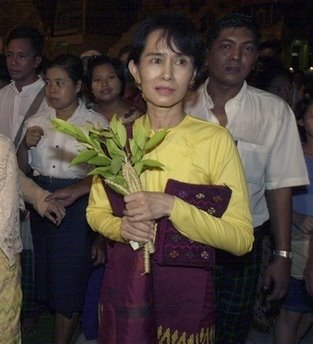


 Posts
Posts


