Thu Oct 9, 4:23 AM ET
TOKYO (Reuters) - Japanese Prime Minister Taro Aso sought new ways to stimulate the economy on Thursday, as a 14.5 percent dive in machinery orders provided further evidence the global financial crisis is pushing Japan into recession.
Tokyo has already prepared an $18 billion stimulus package. But, a day after major central banks staged coordinated rate cuts to kick-start financial markets, Aso asked his ruling party to consider compiling another one.
"It is extremely unclear how financial market developments will affect the real economy, and we need to respond to it," Aso told reporters.
--------------------------------------------------------------------------------
Lawmakers of the ruling Liberal Democratic Party met to discuss such a package, which may include loans for small firms and corporate tax cuts, and vowed to hammer out new measures by the end of this month.
The world's second-largest economy has so far proven more resilient than Europe and the United States in the face of global financial turmoil, and its banks have bought into U.S. lenders hit by bad subprime debt.
The fear is that Japan will suffer as the crisis spreads beyond banking and markets.
The slide in machinery orders for August reinforced expectations that Japan is on the brink of recession, after the economy contracted at its fastest rate in seven years in the second quarter.
"There is a chance Japan's economy may contract again toward the end of this year and early next year. In this market environment, corporate revenues and sentiment could worsen further," said Yoshiki Shinke, a senior economist at Dai-ichi Life Research Institute.
The Nikkei stock average (.N225) fell to its lowest close in more than five years on Thursday, with hopes for new policy steps warring with concerns over the global economy. (.T)
Asian Development Bank President Haruhiko Kuroda said he was closely watching how global share price falls affect Asia's emerging economies.
While the worst stage of inflation has ended for many Asian economies, the global economic slowdown was making a significant impact on the region's growth, Kuroda told a news conference.
CENTRAL BANK HOLDING BACK
Unlike its neighbors, China, South Korea and Taiwan, Japan has not joined a round of interest rate cuts by central banks around the world, part of an effort to contain the worst financial crisis since the Great Depression.
The Bank of Japan says its rates, already very low at 0.5 percent, do not need to be cut, though analysts believe it may be forced to move depending on the reaction of markets.
Japan's fiscal policy has almost as little room for maneuver as its monetary policy, given the dire state of public finances.
Aso said he was not planning to issue deficit-covering bonds to finance the new package because of budget conditions, although he did not rule out other forms of bond issues.
Japanese media reported the new spending package would be bigger than the existing 1.8 trillion yen ($17.92 billion) extra budget for the current fiscal year, which is expected to pass parliament next week.
"Even if the government has to launch fresh economic stimulus measures, I do not think that additional spending on public works or interest rate cuts are necessary," said Yasuo Yamamoto, senior economist at Mizuho Research Institute.
The fall in often-volatile machinery orders was four times as big as the market had expected, and the third monthly fall in a row.
For a graphic for machinery orders, go to:
https://customers.reuters.com/d/graphics/JP_MCHORD0810.gif
Machinery orders are a leading gauge for capital spending, one of the key areas of growth for Japan's economy in recent years as large exporters geared up production.
Government officials say the economy is either heading toward or already in recession, which Japan defines as a downturn in the economic cycle, rather than the more widely used definition of two straight quarters of economic contraction.
(Additional reporting by Tetsushi Kajimoto and Kaori Kaneko; Editing by Hugh Lawson)
Copyright © 2008 Yahoo! Inc. All rights reserved.
Questions or Comments
Privacy Policy -Terms of Service - Copyright/IP Policy
Friday, October 10, 2008
Japan looks for new ways to boost economy By Yuzo Saeki


Film Reveals Murder of Burmese Fishermen In Thailand
Film Reveals Murder of Burmese Fishermen
--------------------------------------------------------------------------------
Thursday, October 9, 2008
--------------------------------------------------------------------------------
A film capturing eyewitness accounts of the appalling maltreatment of Burmese fishermen in Thailand was released on Thursday at the Fishers’ Conference of the International Transport Workers’ Federation (ITF) in Pusan, South Korea.
Titled “Abandoned, not Forgotten,” the 10-minute documentary was produced and directed by David Browne for the ITF.
In one scene, an ex-fisherman describes how a cook beat a young Burmese crew member with an iron bar. “The skipper asked if the guy was dead or not. I told him: ‘He hasn't died yet, leave him alone, I'll look after him.’ The guy was hit again on the back of his head and his brains spilled out.
He took an hour to die.” He concluded: “I think our Burmese boatman die like dogs and pigs.”
The film can be seen at: www.itfglobal.org/fisheries/film.cfm or http://www.youtube.com/watch?v=deCo_ZBSk-U
In a press release by the ITF on Thursday, General Secretary David Cockroft said, “This film is a sometimes sickening but very necessary addition to the evidence that many Burmese citizens forced to flee their country are being appallingly treated. This is a 21st century scandal, and everyone involved—including those who wittingly or not buy or sell fish products tainted by this horrible exploitation—must examine their consciences and act.”
According to London-based ITF, an estimated 250,000 Burmese migrant fishermen and women working in fish-processing factories are employed in Thailand’s billion-dollar, export-driven fishing industry. Only 70,000 are legally registered. With little or no legal status or protection, many face brutality and near slavery, said the statement.
Along with 186 affiliated seafarers’ unions—including Burmese, Thai and Indonesian unions—the ITF urged the Thai authorities to “tackle the systemic exploitation and abuse,” as well as calling for: action by the flag states of the vessels to fulfill their obligations and ensure that the rule of law is upheld on their territory; action by all buyers and companies involved in the buying, processing and exporting of the fish stocks to ensure that decent conditions are upheld throughout their supply chains; and the commissioning of a tripartite investigation mission by the ILO (International Labor Organization).
Meanwhile, a Thai human rights group, Labor Rights Promotion Network, has called for a total compensation package of 15 million baht (531 million kyat/ US $430,000) to be shared among the families of 39 Burmese fishermen who died aboard—and the 38 surviving Burmese crew members of—a Thai fishing fleet which lay adrift for three months without fresh water or food.
The calls came after a labor court in Thailand ordered the owners of the Praphasnavee fishing fleet to recompense the survivors, but did not award compensation to family members of the fishermen who died of starvation in June 2006 aboard six deep-sea trawlers. Copyright © 2008 Irrawaddy Publishing Group | www.irrawaddy.org
Thursday, October 9, 2008
"Amar Kanwar, The Torn First Pages"
http://www.absolutearts.com/artsnews/2008/10/09/35228.html
2008-10-08 until 2008-11-09
Haus der Kunst
Munich, , DE Germany
"Imagine the formal presentation of poetry as evidence in a future war crimes tribunal. Imagine twenty sheets of paper floating forever in the wind." (Amar Kanwar) "The Torn First Pages" is a 20-channel video installation in three parts by the Indian artist and filmmaker Amar Kanwar, co-commissioned by Thyssen-Bornemisza Art Contemporary. Made between 2003-08 this filmic installation will be premiered at Haus der Kunst in its recently completed form and run from October 8 to November 9, 2008. "The Torn First Pages" is an ode to the thousands engaged in the struggle for democracy in Burma and presented in honor of the bookshop owner Ko Than Htay, who was imprisoned for 'tearing out the first page' of all books and journals that contained ideological slogans from the military regime. The twenty-channel video installation directly, elliptically and metaphorically encounters resistance and the struggle for a democratic society, contemporary forms of non-violence, political exile, memory and dislocation.
"The Torn First Pages" takes the viewer on a visual journey into the stories, lives and violent deaths of the protagonists of Burmese resistance virtually combining a poetic expressivity in image and language with the exploration of violence in its multifarious forms and its capacity of intruding the private, the personal, the home. With a penetrating, telescopic gaze Kanwar rescues and reanimates the image and its history in our collective memories. In Kanwar's investigations, the image is the "presentation of poetry", but is also being examined with reference to the question of "evidence", the process of collecting, archiving and circulating material evidences of crime and political resistance.
The video "Ma Win Maw Oo" for instance revolves around a forgotten but very dramatic photograph of a high-school student who was shot dead by Burmese soldiers during the 1988 student protests. This photograph captured the moment when Win Maw Oo was being carried by two medical students just after she was shot. It gained worldwide publicity for a day as a news photograph before it disappeared from public memory. In picking the picture of Ma Win Maw Oo, bringing it into motion, blurring and even distorting it Amar Kanwar magically and uncannily revives a moment in history, a personal fate representing a collective trauma.
In "The Face" - another episode of "The Torn First Pages" - Kanwar juggles, dissects and accelerate a picture showing General Than Shwe, the supreme head of the Burmese military dictatorship as he tosses rose petals an extra time for the press photographers at the cremation memorial site of Gandhi in Delhi. Based on film footage secretly shot at the ceremony at Rajghat on the 25th of October 2004, Kanwar literally unveils The Face of military representation by zooming in on the features of the General who is known for the distance he keeps from cameras. The manic repetition of the general's pose in front of the media reveals the absurdity and ludicrousness of the act.
"The Torn First Pages" also follows the paths of Burmese activism into exile - in Oslo, Delhi, Fort Wayne (USA). Part 2 is about the diaspora in Fort Wayne and a road journey with a Burmese activist in the United States in search of the late Tin Moe, famous Burmese poet in exile to record him reciting one of his most famous haiku's that was found scribbled on the walls of prisons inside Burma. Part 3 revives old and new archival footage anonymously and secretly filmed inside Burma, from the time of the independence of Burma, the 8 /8/88 uprising through to the recent rebellion led by the monks.
Amar Kanwar lives and works in New Delhi where he was born in 1964. He had solo exhibitions in Whitechapel Art Gallery, London and Apeejay Media Gallery, New Delhi (2007), at the National Museum, Oslo (2006) and The Renaissance Society in Chicago (2004) amongst others. He has participated in various group exhibitions such as Documenta 11 (2003) and 12 (2007) in Kassel, Sydney Biennial 2006, Image War: Contesting Images Of Political Conflict, ISP Exhibition, Whitney Museum, New York, and Territories, Kunst-Werke Berlin KW Institute of Contemporary Art, Berlin (2004).
"The Torn First Pages" will be shown from November 19th, 2008 onwards at Thyssen-Bornemisza Art Contemporary in Vienna. Founded in 2002 by Francesca von Habsburg, the foundation is committed to supporting the production and presentation of unconventional contemporary art projects that defy traditional disciplinary categorizations.
Six videos from part one of "The Torn First Pages" will be screened in September 2008 in Docking Station of Stedelijk Museum CS.
IMAGE
Amar Kanwar
The Torn First Pages
Still from Ma Win Maw Oo, 2005
Video, colour, 4 mn, 44 s
Belong to Part 1 of The Torn First Pages 2008
(6 channel video installation, Colour, Sound)
Courtesy: Amar Kanwar and Galerie Marian Goodman, Paris
ゥ Amar Kanwar
UN Outlines Steps to Improve Burma’s Human Rights
--------------------------------------------------------------------------------
Thursday, October 9, 2008
--------------------------------------------------------------------------------
Tomás Ojea Quintana, the UN special reporteur on human rights in Burma, outlined “core human rights elements” that should be put in place before the 2010 general election, in a statement released on Wednesday.
The elements include:
—Amend domestic laws that limit freedom of expression, opinion and peaceful assembly.
—Release of political prisoners.
—Repeal discriminatory laws.
—Stop the recruitment of child soldiers.
"Respect for international human rights standards is indispensable" for the regime's proposed "roadmap to democracy" to gain international acceptance, Quintana said.
He said full enjoyment of human rights does not exist in Burma, according to "reliable reports on the extension of detentions and/or new arrests of political activists."
The release of political prisoner would reduce tension and inspire political participation among stakeholders in Burma, he said.
The transition to a multi-party democratic and civil government, as planned under the new constitution, will require “an intensive process of incorporating democratic values,” Quintana said.
He suggested a number of changes in the country’s judiciary, which currently "is not independent and is under the direct control of the government and the military."
Proposed changes include guaranteeing the due process of law, establishing a fully independent and impartial judiciary and setting up a mechanism to investigate human rights abuses.
Quintana, who took up his post in May 2007, visited Burma in August and met with prominent political prisoners, including U Gambira, the head of the All-Burmese Monks Alliance, a leading force in the 2007 demonstrations. He met with Gambari in Insein Prison, where he was being held prior to standing trial for posing a threat to the security of the state.
Meanwhile, UN Secretary-General Ban Ki-moon said on Tuesday his planned visit to Burma in December might not take place unless he sees the regime is ready to produce tangible results toward progress in democratization.
Also, the UN High Commissioner for Human Rights, Navi Pillay, this week called for the release of all political prisoners including detained democracy leader Aung San Suu Kyi.
The junta now holds 2,123 political prisoners in various prisons across the country, according to a report compiled by the Thailand-based Assistance Association for Political Prisoners (Burma) and the US-based Campaign for Burma.
Two leading activist groups in a joint letter to UN Secretary-General Ban released on Sunday said, "Dramatic increases in the number of political prisoners show the junta's defiance of the United Nations and international community, as well as its own people."
Copyright © 2008 Irrawaddy Publishing Group | www.irrawaddy.org
Appeal against Suu Kyi’s Detention Handed in at Naypyidaw
--------------------------------------------------------------------------------
Thursday, October 9, 2008
--------------------------------------------------------------------------------
A legal representative of Burma’s detained opposition leader Aung San Suu Kyi handed in to the military government in Naypyidaw on Wednesday a formal appeal against the latest extension of her house arrest.
Suu Kyi’s lawyer, Kyi Win, told The Irrawaddy on Thursday that the appeal had been handed in personally by his assistant, Hla Myo Myint.
The government had given no indication when the appeal would be heard in court, Kyi Win said. “But we are hoping for a positive outcome.”
Suu Kyi’s latest five-year term of house arrest was extended in May for a further year—illegally, according to Kyi Win, because article 10 (b) of the Burmese State Protection Law 1975 stipulates that a person judged to be a “threat to the sovereignty and security of the State and the peace of the people” can only be detained for up to five years.
Suu Kyi has spent more than 13 years of the past 19 years confined to her Rangoon home.
Kyi Win said he planned to meet Suu Kyi soon to discuss the appeal.
Suu Kyi has reportedly been in poor health recently. She refused for about one month to accept deliveries of food and other household supplies at her home in what was seen as a protest against her continuing house arrest. Last week, she was visited by an eye specialist, Dr Kan Nyunt, and her personal physician, Dr Tin Myo Win.
At a Geneva press conference earlier this month, a UN High Commissioner for Human Rights official, Navanethem Pillay, expressed concern about Suu Kyi’s continuing detention and urged the regime to free her and all other political prisoners.
Suu Kyi had “in fact served a sentence that far exceeds that served by many hardened criminals,” Pillay said.
Pillay welcomed the recent release of seven political prisoners, but said it was a very small step when more than 2,000 political activists were still detained. “I urge the government to release them all as soon as possible,” she said.
Copyright © 2008 Irrawaddy Publishing Group | www.irrawaddy.org
Burmese in Exile Stage Demonstration on General Maung Aye's Visit to Bangladesh
Thursday,09 Oct,2008
About 30 Burmese democratic activists staged a demonstration in Bangladesh's capital, Dhaka, on Monday, to protest the visit of Burma's Senior General Maung Aye to Bangladesh.
Ko Kyaw Myint, an organizer of the protest said, "We expressed our desire to General Maung Aye and the Bangladesh government through this protest because there are many human rights violations in Burma by the present military government. It is not the the right time for Bangladesh to cooperate with Burma." .
General Maung Aye arrived in Dhaka about 11 am on Monday and was received at the airport by Bangladesh Chief Adviser Dr. Fakhruddin Ahmed. .
The demonstration took place in front of the Dhaka high court after Maung Aye's arrival. The demonstrators angrily shouted many slogans against Burmese military government and held posters and banners that read, "Get Out Maung Aye, Get Out Maung Aye," and, "Bangladesh - Stop Cooperating with the Burmese Military Government." .
"We would like to say to the Bangladesh government to stop extending its relations with Burma, because the Burmese military government abuses human rights in Burma. Burmese people now respect Bangladesh, if the government of Bangladesh extends its cooperation with the military government, the image of Bangladesh will be affected. So we request Bangladesh to not look only at business, but also at Burmese people who are being oppressed by the present military government," said Ko Kan Myint. Bangladesh police eventually dispersed the demonstrators after destroying their banners and posters, but the protesters were able to demonstrate for about 30 minutes and drew the attention of Bangladesh to their activities..
Maung Aye will leave Bangladesh for Burma on 9 October from Ragamati Town after visiting there. Ragamati is located in Chittagong Hill Tract where Buddhist Chakamar people are living. .
Narinjara News (NN) was founded by a group of Arakanese in exile in Bangladesh from Burma in 2001 seeking to voice for the people depriving of human and democratic rights and to pave the way for them who are struggling for those rights. The Narinjara News is an independent organization, not affiliated with any political party or organization. Any opinion or advice relating to our News Agency is warmly welcomed and please email to: narinjara@narinjara.com
Copyright © 2005-2008 Narinjara. All rights reserved.
Desertions, Assassinations Plague Burmese Armed Forces

Burmese troops—the show of unity hides growing unhappiness and resentment. (Photo: Nic Dunlop/Panos)
--------------------------------------------------------------------------------
By MIN LWIN Thursday, October 9, 2008
--------------------------------------------------------------------------------
A soldier deserted recently from Burma’s Light Infantry Battalion (LIB) 707, in Taikgyi Township, Rangoon Division, after murdering his commander—the latest sign of rising dissatisfaction among the lower-ranking members of the Burmese armed forces.
The deserter, who fled with a number of weapons, was later killed in a manhunt.
Desertions, small mutinies and assassinations are plaguing Burma’s ruling military, according to observers abroad and sources within the country.
Low-ranking soldiers are increasingly unhappy about their conditions of service. “There is a big gap between high ranking officers and other ranks,” said Htay Aung, a Burmese military researcher based in Thailand.
Ordinary soldiers earn around 22,000 kyat (less than US $20) per month, and most have difficulty surviving, particularly if they are family men. They are also assigned sub-standard housing, while high-ranking officers are given luxury homes in Naypyidaw and Rangoon.
Htay Aung said soldiers were treated “like slaves” by their officers, whose wives often assigned them menial domestic duties.
An army training officer said defectors were leaving not for political reasons but because of their treatment by their commanders.
The murder of the commander of Light Infantry Battalion (LIB) 707 was no isolated incident.
In 2005, a young captain with Light Infantry Battalion No. 375, based in Kyauktaw, Arakan State, killed the wife and other family members of his commanding officer and then committed suicide.
In 2001, a medical corps sergeant shot dead Maj Min Min Soe and a captain from No. 4 Military Operations Command after accusing them of abusing their positions.
In the same year, Tin Oo, Secretary 2 of the SPDC and Army Chief of Staff, died in a helicopter crash after previously surviving three assassination attempts.
In July 1977, Capt Ohn Kyaw Myint, personal secretary to then Army Chief of Staff Gen Kyaw Htin, was arrested, along with a dozen other army officers, and accused of plotting to assassinate dictator Gen Ne Win and other state leaders.
The captain said he and other members of the group opposed Ne Win’s “Burmese Way to Socialism,” which they felt was leading the country to ruin.
In the late 1960s, Capt Kyaw Zwa Myint, a military intelligence officer and personal assistant to Ne Win, fled to Karen rebel-controlled territory after plotting to assassinate Ne Win. He later died in Australia.
Copyright © 2008 Irrawaddy Publishing Group | www.irrawaddy.org
Wednesday, October 8, 2008
Where there's political will, there is a way
LAURENCE GRAY
It is amazing the political will and financial resources that can be marshalled by rich nations when they are under threat.
The result is hundreds of billions of dollars invested to prevent not just a meltdown of the US financial system but its tsunamic impact on economies everywhere.
Natural disasters are becoming the ‘‘new normal’’... A ferry sits high and dry after it was tossed ashore at Mohipur, when water levels rose more than five metres during Cyclone Sidr, which hit Bangladesh on Nov 19, 2007.
The decisive response is a lesson worth noting, as the world today marks Disaster Reduction Day - an international day established to remind governments that they need to do much more to help countries avert and prepare for natural disasters.
The potential global impact of a financial disaster, including lost jobs, homes and savings, and the political response to it, provide politicians with a clear example of how to address something potentially far more damaging - the threat of climate change.
This threat has yet to evoke the same sense of urgency among politicians but desperately needs to, if many millions of people in poorer parts of the world are not to be swept up in the consequences of inaction.
Just as in the debate over the financial crisis, climate change too has been marked by warnings, denials, anger, blame, grandstanding, a questioning of the forces at work and demands that the system - or the ecosystem - be left to correct itself.
Unlike the financial crisis, what is lacking now from global leaders is a sense of foreboding, urgency and action.
Papua New Guinea, Bangladesh and Indonesia are already feeling the heat of climate change-induced disasters, but their voice barely registers within the corridors of power in the West.
Like President Bush and national leaders around the globe who have of late been issuing increasingly shrill warnings of financial collapse, environmentalists have been warning that the earth is reaching a tipping point which, if passed, would unleash massive climatic changes.
Those who deal with disasters on a daily basis, like Sir John Holmes, the UN's emergency relief chief, says the number of disasters has doubled from around 200 to over 400 per year over the past two decades, with nine out of every ten being climate-related.
He states that these events are not abnormal but the "new normal".
World Vision, the organisation I work for, has just published Planet Prepare, a report that looks specifically at the disaster threats facing coastal communities in the Asia-Pacific region (http://www.wvasiapacific.org).
Publication of the report was postponed to take account of Cyclone Nargis, which hit Burma five months ago, killing as many as 140,000 people. Most of the very poor farmers and fisherfolk who lived in the delta flatlands of the Irrawaddy were killed not by the cyclonic winds but by the resulting sea surge that swept up to 35km inland.
The frightening scenario Planet Prepare highlighted was how sea level rise combined with massive populations living in delta or low-lying and sinking cities are putting tens of millions of poor people at great risk.
The warning signs are clear: Antarctic ice shelves are threatening to collapse, and mass deforestation and rapidly rising carbon-based energy use are combining to further raise atmospheric temperatures and sea levels. This will result in more frequent and violent storms and surges.
Here are some lessons that should be applied from the financial crisis if we are to stand any chance of responding to the impact of climate change.
Lesson One: Those at the bottom of the pyramid suffer most. In the United States, low-income sub-prime mortgage defaulters have lost homes while many more are at risk. A worsening crisis means that those without savings and jobs will be extremely vulnerable.
Climate change, likewise, will disproportionately impact the poor. This is especially true in Asia, with its massive coastal capitals - including Manila in the Philippines, Jakarta in Indonesia and Dhaka in Bangladesh.
A one-metre rise in sea level would inundate 800,000sqkm of land in Asia, displacing more than 100 million people. In Vietnam alone, 11% of the population would be displaced.
Lesson Two: We are all inter-connected. Any collapse of Wall Street would domino across the globe, resulting in devastating consequences for banks, bourses and economies. In turn this could lead to mass job losses and an increase in poverty and unknown economic, political and social consequences.
In a similar way, our environment is globalised and therefore any nations failure to significantly reduce greenhouse gases has severe implications for others.
America's gas guzzling cars emit carbon dioxide that will lead to sea level rises that will impact China, while Australian coal burnt in China's power stations will help fuel hurricanes that impact Florida.
However, some wealthier nations have historically emitted more carbon dioxide and therefore have a larger obligation to act.
Lesson Three: The money can be found.
The US$700 billion bailout package proves that wealthy nations can find the money when they have to, and they can sell it to their electorates when the threat and cost of inaction is made clear.
In environmental terms, aside from a global commitment to reducing greenhouse gases, tens of billions of dollars must be spent to help the developing world prepare for climate change that is already locked into the system.
This money is needed to help communities adapt, to build protective infrastructure, train children and adults how to prepare for and survive disasters.
Every US$1 spent on building disaster resilience is a wise investment because it saves many more that would otherwise be spent on post-disaster relief responses.
In 1970, Bangladesh lost over 300,000 people to a massive cyclone.
In response, humanitarian organisations like World Vision worked with the Bangladesh government to build scores of cyclone shelters and invested in early warning systems.
When Cyclone Sidr barrelled into Bangladesh last November, some 4,000 people died - a huge number, but far lower than what might have been.
If climate change is not taken seriously enough, the world will be forced to cope with mass migrations of millions and likely political and social upheaval associated with poverty and displacement.
The challenge climate change presents has obvious parallels with how governments are responding to the current financial crisis.
The danger signs are clear, the need for an urgent response is undeniable, and the money can be found.
All that is lacking is the decisive political will from wealthy nations to act quickly and comprehensively.
If we fail to do so, we will all suffer - and the poor more than most.
Time is running out.
Laurence Gray is Advocacy Director for World Vision, Asia-Pacific
Two Japanese, American win 2008 physics Nobel

Yoichiro Nambu (R), one of three winners of the 2008 Nobel Prize for physics, laughs with University of Chicago Provost Thomas Rosenbaum (C) and President Robert Zimmer before a news conference at the University of Chicago October 7, 2008.
REUTERS/John Gress
STOCKHOLM (Reuters) - Two Japanese scientists and a Tokyo-born American shared the 2008 Nobel Prize for physics for helping to explain the behavior of subatomic particles, work that has helped shape modern physics theory, the prize committee said on Tuesday.
The Nobel committee lauded Yoichiro Nambu, now of the University of Chicago, and Makoto Kobayashi and Toshihide Maskawa of Japan for work that helped show why the universe is made up mostly of matter and not anti-matter via changes known as broken symmetries.
Nambu's analogy likens the changes to when one dinner guest uses the wrong bread plate, forcing all the other guests at a round table to change as well.
"The work he has done has had implications from the study of the early universe all the way to the behavior of magnetic materials," University of Chicago Provost Thomas Rosenbaum told a news conference.
Tue Oct 7, 2008 4:49pm EDT
By Niklas Pollard
The three men's work, done in the 1950s through the 1970s, predicted the behavior of the tiny particles known as quarks and underlies the Standard Model, which unites three of the four fundamental forces of nature: the strong nuclear force, weak nuclear force and electromagnetic force.
Nambu also influenced the development of quantum chromodynamics, which describes some interactions between protons and neutrons, which make up atoms, and the quarks that make up the protons and neutrons.
He shared half of the 10 million Swedish crown ($1.4 million) prize with Kobayashi of Japan's High Energy Accelerator Research Organization and Maskawa of Kyoto University.
Kobayashi and Maskawa predicted there were three families of quarks, instead of the two then known. Their calculations played out as predicted in high-energy particle physics experiments and there are now six known types of quarks -- up, down, strange, charm, bottom, and top.
Kobayashi said the news of his Nobel prize came as a shock. "It is my great honor and I can't believe this," he said.
Maskawa said he was not surprised.
"There is a pattern to how the Nobel prize is awarded," he was quoted as saying by Kyodo. "I am very happy that Professor Yoichiro Nambu was awarded. I myself am not that happy."
While his work helps explain how particles shift from one state to the next, Nambu described the initial reaction from his peers as "very poor."
"There was no eureka moment," University of Chicago's James Cronin, the 1980 Nobel laureate in physics, told the news conference.
But, he added, "It has been clear for so many years that of all of the people who have won the Nobel, there has been one missing, and that is Yoichiro Nambu."
Physicists are now searching for the broken symmetry, the Higgs mechanism, which threw the universe into imbalance at the time of the Big Bang 13.7 billion years ago.
Scientists at the Large Hadron Collider at the European Organization for Nuclear Research, or CERN, in Switzerland will be looking for the Higgs particle when they restart the collider in spring 2009.
The prizes, awarded by the Nobel Committee for Physics at the Royal Swedish Academy of Sciences, are given annually for achievements in science, peace, literature and economics.
They were first awarded in 1901 in accordance with the 1895 will of Swedish dynamite millionaire Alfred Nobel.
(Additional reporting by Chisa Fujioka in Tokyo, Michael Kahn in London, John Gress, Mike Conlon and Julie Steenhuysen in Chicago; editing by Maggie Fox and Vicki Allen)
© Thomson Reuters 2008. All rights reserved. Users may download and print extracts of content from this website for their own personal and non-commercial use only. Republication or redistribution of Thomson Reuters content, including by framing or similar means, is expressly prohibited without the prior written consent of Thomson Reuters. Thomson Reuters and its logo are registered trademarks or trademarks of the Thomson Reuters group of companies around the world.
Thomson Reuters journalists are subject to an Editorial Handbook which requires fair presentation and disclosure of relevant interests.
Myanmar Political Prisoner Rejoins Suu Kyi's Party
YANGON (AFP)--Myanmar's longest-serving political prisoner Win Tin has rejoined the ruling committee
of Aung San Suu Kyi's party, two weeks after being freed from jail, a party spokesman said Tuesday.
The 79-year-old former journalist, imprisoned for 19 years, will return to the National League of
Democracy's Central Executive Committee, Nyan Win said.
"He started coming to the headquarters on Monday to start his duties as a member (of the committee).
We are very glad he is rejoining," Nyan Win said.
Win Tin was released along with more than 9,000 inmates on September 23 in an amnesty ahead of
national elections promised for 2010.
He was one of the founders of the NLD party together with Nobel peace laureate Suu Kyi, who remains
detained at her lakeside home in Yangon.
Win Tin never witnessed his party's landslide victory in 1990 elections - a win never recognized by the
junta - because he was imprisoned in July 1989 for his role as Aung San Suu Kyi's advisor, and for his
letters to the then-United Nations envoy to Myanmar.
Win Tin was officially invited by the NLD leadership to rejoin the party's ruling committee on the 20th
anniversary of its founding on September 27.
Two days after Win Tin's release, Myanmar's police chief held his first meeting with six NLD leaders,
asking them to retract their latest statement calling for a constitutional review - a move they refused.
A new constitution was brought in after a much-criticized May referendum held in the wake of a
massive cyclone that swept across the country, leaving 138,000 people dead or missing.
The junta's constitution paves the way for multiparty elections to be held in 2010 but bars Aung San Suu
Kyi, who has spent most of the past two decades under house arrest, from standing.
Myanmar has been ruled by the military since 1962.
S Korea considers to dispatch destroyer to Africa to fight pirates
www.chinaview.cn 2008-10-07 19:29:45 Print
SEOUL, Oct. 7 (Xinhua) -- South Korean Foreign Minister Yu Myung-hwan said Tuesday that his government is considering to dispatch a destroyer to waters off Somalia to fight pirates there.
At an inspection of the Foreign Ministry by lawmakers, Yu said consultations among related ministries are under way on the issue of dispatching a navy ship.
Yu's remarks came after eight South Koreans and 13 Myanmar aboard a South Korean ship were held hostage by pirates off the coast of Somalia last month.
Yu said the negotiations for rescue of the abductees have proceeded and the South Korean government expects the case to be resolved before long.
South Korea's Yonhap News Agency said the country may dispatch the Yi Sun-shin class destroyer to waters off Somalia.
Meanwhile, South Korean President Lee Myung-bak said in South Korea's southeastern port city of Busan, where he attended an international fleet review, that "The South Korean Navy should now play a greater role in the global fight against terrorism and piracy."
"In compliance with the nation's enhanced international status, the Korean Navy should further reinforce its role in international efforts to remove common threats to the world. The government will extend its full support to beefing up the power of the Korean military," the president said after exchanging views with South Korean Navy generals and political leaders on ways to eradicate Somali pirates.
More than 25 cases of ship kidnappings were reported on waters off Somalian coast in 2007, Yonhap said.
In April 2006, 25 crew on a South Korean tuna ship were hijacked by Somali pirates and were released for a ransom after four months.
In 2007, two South Korean fishing vessels were seized by Somali pirates. The pirates released the crew after six months.
South Korean Foreign Ministry said the dispatch of a navy ship need approval from the National Assembly.
Editor: David Du
Roundtable: No change at the top
http://english.dvb.no/news.php?id=1836
Oct 7, 2008 (DVB)蜂n both the military and opposition groups in Burma, there have been few changes in leadership or policy and newer or younger members have been unable to move to the highest positions.
Dr Aye Chan, a history professor at Kanda University in Japan, Dr Aung Khin, a London-based historian and political analyst Aung Naing Oo spoke to DVB about the stagnation at the highest levels of the government and opposition, and discussed whether a change of leadership could mean a change in policy.
Political analyst Aung Naing Oo said the issue was common to both the regime and opposition groups.
Aung Naing Oo: 的n Zimbabwe, Mugabe has been in power for 28 or 30 years, and in Cuba, Castro was in power for 40 or 50 years, and the same in North Korea. If you look at these dictatorial countries, the leaders stay in power for a long time. In Burma too, leaders have tended to stay in power for a long time. If you look at U Nu痴 parliamentary democracy era, the democratically elected U Nu was often re-elected. After that, general Ne Win was in power for 26 years, then general Saw Maung stayed for a while and now from 1992 to this day, general Than Shwe has ruled our country.
典herefore, the military government doesn稚 change leaders, and the opposition doesn稚 much either. Change only happens when they die. For example, Kachin Independence Organisation chairman Brang Seng, Karen National Union chair general Mya and New Mon State Party chairman Nai Shwe Kyin were leaders for a long time. People have great respect for them. But because they were in their positions for a long time, the people who came up behind them have not been able to show off their talents or use their energy properly. And it ends up in blocking the way of talented people.・
History professor Aye Chan believes this outlook is rooted in Burmese culture.
Aye Chan: 的t is based on the Burmese people痴 political traditions and culture. In Burma, the idea of a leader appointed by the people is not understood. Only people who have managed to seize power are recognised as leaders. Based on this political tradition, the army gave this military bureaucracy a political form. Politics is dominated by a bureaucracy, and this became politics dominated by military bureaucrats. Therefore it is very difficult to change. The army bureaucracy holds all the keys to the economy and power.・
Historian Aung Khin blames both leaders and party members for not challenging policy.
Aung Khin: 撤olitics can稚 be carried out one group of people. You have to look at whether the party members carry out the policy of the party effectively. If party members and the majority just follow the policies handed down by the central committee, like the communist parties do, you would have to say that the participation of the party members is not effective.・
While the army痴 lack of change in leadership is understandable, the problem for the opposition is a lack of unity, according to Aye Chan.
Aye Chan: 鄭s far as the opposition is concerned, they can稚 unite under a single ideology. Another point is that if we look at Burmese society, there are many ethnic nationalities with different aims and political beliefs, and there is no single united front.・p>
Aung Naing Oo: 典he second, third or lower levels of leaders can稚 challenge those above them. Furthermore, they don稚 have many options apart from the status quo. In the National Coalition Government of the Union of Burma, only members of parliament are allowed to take part, and only about 20 MPs came out, they have to be chosen from inside repeatedly, and no leaders with new ideas appear.
的n the KNU and the NMSP, we had general Mya and Nai Shwe Kyin, they were chosen in accordance with revolutionary traditions, and they ended up being chairmen for life. However much you talk about democracy, you can稚 override their authority and they don稚 change.・
Aung Khin: 的n other countries, a leader can lead up to a point and if they are not successful they can make way for another one. In the National League for Democracy, Daw Aung San Suu Kyi is the only leader. When she is free, the party is active. When she is detained, it is not active. Why is it like this? It is something to think about. In politics, when a leader falls, another one rises. It was the same in the past in Burma. When the top level leader is in prison, the second-in-command takes his place. And when the second level goes to prison, the third takes his place. It is not like that here; it is formed like the army. Obey the orders or you will be expelled.
鄭 civil organisation can have proper discussions. Members must make effective decisions; they should not only obey orders. As far as I know, army officers can稚 do that kind of thing, that痴 why politics is dead. Now that U Win Tin and others a lot of experience have been released, the army officers don稚 know their capabilities and are afraid of what they can do. They are afraid of this and send them to prison. That痴 it.・
The All Burma Students・Democratic Front is one of the few organisations that has made significant changes, but its enthusiastic commitment to democratic processes has been blamed by some for the weakening of the organisation.
Aung Naing Oo, a former ABSDF leader, disputes this accusation.
鄭s some leaders did not know what to do, and it was in the initial stages, some misused incomes funds, and this could not be covered up. The grassroots comrades used democratic means to remove them. The reason why there has been change within ABSDF is that there have been people with leadership qualities from all over Burma. It is not made up of one ethnic group. Therefore, there are more people who could become leaders. First, politically well-known activists such as Ko Moe Thee Zun became chairs. But when they were wrong, there were many chances to dislodge them by democratic means.
典he ABSDF痴 mistake was not that they used democracy too much. The reasons why the ABSDF has become weak are firstly that they have no private income. They can稚 sell teak like the Karen. They can稚 sell jade like the Kachin. Another point is that ethnic groups are united by nationalism, and nationalism is more solid than weak democracy. It is easier to rally people. Ethnic groups also have their own territories and resources; they can recruit soldiers from their ethnic groups. The ABSDF didn稚 have these things and became weak.・
When asked whether a change in leadership could bring about a change in Burmese politics, Aye Chan was sceptical that any significant change could be achieved within the military.
Aye Chan: 的t痴 not possible. The army bureaucracy has been established and it has become a system with strong basis. If there was no general Than Shwe, general Maung Aye would take his place. If there was no general Maung Aye, the people below him would take his place. That痴 how it is. Moreover, they will systematically place their own people and family members in the army bureaucracy; they will become a more solid organisation. At the same time, the opposition will become weaker.・
Aung Khin: 典he reason a change of leadership is needed is due to the lack of any other change. Something has to happen. If there has been no change in 20 years, this is not good. It would be better if something changed. People are waiting and waiting for it and become dejected and apathetic.・
Aung Naing Oo: 的 don稚 think that there could be an immediate and easy leadership change in the organisations as they currently are. In some organisations, there is little choice and they have to choose the best of a bad lot. Although people are saying that a leadership change is needed, if you have no good leaders to choose from, whether you are using a democratic approach or something else, it is very difficult to make changes.
典hat痴 why we are always seeing problems among ethnic nationality groups and within the NLD, opposition between the young people and the current leaders. But if a group is united behind its leaders, the group never changes and will stay under that leader. If they go on like that, that organisation will never improve and the political organisation will never change.
徹rganisations want democracy but they do not have the proper conditions or time. They should think carefully if change is needed. If it is, they must include young people and new blood. These young people and elders working together need to make the right changes・p>
Reporting by Htet Aung Kyaw
Burmese newcomers not refugees, but America's new immigrants
http://www.news-sentinel.com/apps/pbcs.dll/article?AID=/20081007/EDITORIAL/810070329
Recently, there have been some concerns about the influx of Burmese newcomers who are scheduled to come to Fort Wayne. Because of its scale, the local media and people have their eyes on this group.
The Burmese community is not a new face in Fort Wayne; it actually has been here since the early 1990s. For years, there has been very minimal assistance for the newcomers, but their resilience, friends and families have helped them to start living in this new country, providing translation, transportation, job search, food and more. Typical Burmese work 12/7 to build their lives and would continue to do well if many area factories would not have closed. For years, the Burmese have contributed to Fort Wayne’s economy. They are taxpayers, homeowners, college students and voters.
But now there are concerns regarding health care issues that strain the city and county resources. Questions asked include: Is it true that they bring disease with them? Will they become a burden on public assistance? How can they work if they cannot speak English? Who are these people? How can we afford to help them when we have no funding? The lack of knowledge about the group has created many misunderstandings and stereotyping.
The confusion, unclear messages and news coverage about the Burmese newcomers have not only caught the attention of local residents, but also become the center of discussion at various social events in the Burmese community itself. Many are questioning how the news articles impact the Burmese community as a whole. They are asking themselves: Who are those “refugees” they’re talking about? Why do they call us refugees? Are there really refugees on American soil? Do my fellow citizens understand the term and definition of the word “refugee”? Do they really have correct information when talking to reporters? Are they aware that a complete health screen is an important step in obtaining a U.S. visa?
Many of my fellow countrymen have been left behind because of the health concern. Do they believe that commercial airlines would let TB patients get on board? Please realize how much damage can happen when these allegations are made toward many innocent people. The people of Fort Wayne deserve the right to hear the truth that will help bring the community together. This knowledge will help to clear all the doubts about Burmese newcomers so the community can actually open its arms to welcome them and help the group to become productive citizens and get on their feet.
The Burmese are here to start new lives. Being dependent on government assistance won’t give them the lives they want (i.e. house, car, job and education for their children). They know hard work will make it happen; many others have already set the example. They have spent many years in refugee camps and depend upon the United Nations High Commissioner for Refugee (UNHCR) services. They didn’t know what tomorrow would bring them. A refugee’s world is a life with not much hope, no opportunity, no certainty and no country. We have been called “displaced persons.”
It was a hard life, but many have no choice. The life in Burma was even harder. In the dark of night, Burmese soldiers raged through the villages and raped the girls and women, killed the men and the elderly and took the boys away, training them to be “child soliders.” In Burma, the poor get poorer, and if you relate to the regime you will always be rich. Even now people are jailed in their own country. There is no freedom.
There are not many Burmese who make it to the United States, and those who do make it do not want to forget their refugee memories. They will certainly pass their stories on to their children so they will appreciate this great nation and feel that they are blessed to live in a democratic society. Now the question is, should one continue calling them Burmese refugees? Is it fair to label all Burmese refugees? Isn’t it offensive? America is the land of the free; there are no refugees here. She has welcomed immigrants from everywhere around the world and let them pursue the happiness of freedom. Do the Burmese deserve the same opportunity? Some say, “In America, we’re all immigrants.” The Burmese newcomers are the new immigrants.
“It upsets me when people call me a refugee; it seems like they put me down,” said Ma So Nilar Aung, who left Burma in the early 1990s and lived in Japan 13 years before she won a lottery visa to the United States in 2005.
“I don’t like it,” said Zaw Naing Win Han. He spent 15 years working in Japan. He was granted permanent residence in this country through marriage.
“I’ve never been a refugee in my life. I am an immigrant,” said Tin Tin Pyone Win, a mother of two who shared that her husband visited Burma and met and married her. She left Burma for America in 2000 on an American spouse visa. Both their children were born here. She spent only one night at the Thai airport for her transit flight to the United States. “I was one of the many,” she added. “There are many mothers, fathers, wives, sisters and brothers who got here on a family visa.”
Their U.S. family members had to work for years to save money for reunion expenses such as passports, plane tickets and travel.
“I don’t think they have the right to call all Burmese refugees, especially the children. They are American-born kids,” Win said.
--------------------------------------------------------------------------------
Kyaw T. Soe is a graduate student and founder and coordinator of the IPFW New Immigrant Literacy Program at Indiana University-Purdue University Fort Wayne. He immigrated to Fort Wayne from Burma in 1993.
Ban asks Myanmar to show progress in reform programme
Asia-Pacific News
Oct 7, 2008, 19:40 GMT
New York - UN Secretary General Ban Ki-moon said Tuesday he would cancel a planned visit to Myanmar unless the government there shows progress in democratization and humanitarian programmes.
Ban last visited Myanmar in May in the wake of the destruction caused by Cyclone Nargis in a bid to convince the military government to accept international relief aid and admit foreign workers. The government did soften its stance against international aid workers by loosening up visa restrictions.
But Ban has not yet made a return trip to make sure that funds and relief goods were used properly.
He said his plan for a new visit remains, but is dependent on whether Myanmar has carried out democratic reform, national reconciliation and the release of all political prisoners as demanded by the UN.
'I would be willing to make a return visit to Myanmar at an appropriate time, but you should also know that without any tangible or very favorable result to be achieved, then I may not be in a position to visit Myanmar,' Ban said.
'I'm now in the process of making some groundwork which may allow me to consider my own visit, but I need some more time,' he said. 'I will have to consider all the circumstances, and when it would be appropriate timing for me to visit.'
The Myanmar government has so far refused to release Aung San Suu Kyi, leader of the National League for Democracy, who has spent more than 10 years under house arrest for demanding democracy. The military has ruled the impoverished nation for more than four decades.
U.S. recognizes universal jurisdiction over child soldier cases
by Mizzima News
Monday, 06 October 2008 17:18
United States President George Bush, on Friday, signed into law a bill which empowers United States courts to prosecute members of any nationality for their role in the recruitment of child soldiers anywhere in the world.
The legislation makes anyone present in the United States who has been involved in the conscription of children under the age of 15 into the armed forces of any country or group liable to federal prosecution within the United States judicial system.
According to Human Rights Watch, Burma may have more child soldiers than any other country, with estimates running as high as 70,000 – a vast majority of whom serve in Burma's state army.
Passage of the Child Soldiers Accountability Act will ensure, according to Senator Patrick Leahy, "that those who commit human rights violations cannot come to this country [United States] as a sanctuary from prosecution"
Leahy, Chairman of the Senate Judiciary Committee, greeted the Senate's passage of the bill with the words: "During the last five years, America's reputation has suffered tremendously. Some of our ability to lead on human rights issues has been needlessly and carelessly squandered…We should do everything we can to stop this offense [recruitment of child soldiers] to human rights and human dignity."
Human Rights Watch's (HRW) Jo Becker added, "This new law is a breakthrough because it no longer leaves the prosecution of child recruiters to international tribunals and the national courts of conflict-affected countries."
HRW, along with other international rights groups such as Amnesty International, has long been a vocal advocate in insisting that states maintain a moral obligation to prosecute war crimes and crimes against humanity in accordance with a principle of "universal jurisdiction."
Employment of child soldiers was first recognized as a war crime under the jurisdiction of the International Criminal Court in 1998. The authority of the ICC is supplemented by several individual countries, including the United Kingdom, Spain, Canada and Belgium, which also maintain laws permitting domestic courts to prosecute persons charged with war crimes and/or crimes against humanity.
Yet an idea of "universal jurisdiction" remains a highly divisive subject on the international stage.
Initially coming to prominence on the international stage with the Nuremburg Tribunal regarding Nazi atrocities during World War II, the concept of "universal jurisdiction" postulates that all states have an obligation in bringing justice to the perpetrators of particular crimes of international concern, regardless of where the crime was committed or the nationalities of those involved.
However several countries, including China, have objected to "universal jurisdiction" on the basis that such a doctrine directly interferes with the right and concept of state sovereignty.
To some degree reflecting states' concerns over forfeiting national sovereignty, the Rome Statute of the ICC – dealing with the prosecution of war crimes and crimes against humanity – remains unratified by numerous influential countries, including the United States, Burma, Russia, India and China.
Of the 108 countries that have acceded to the terms of the Statute, a mere nine are from Asia, with Cambodia the only ASEAN member to do so.
Burma's ruling military junta has repeatedly denied that it actively recruits child soldiers, claiming to have prosecuted dozens of persons found to be illegally involved in such an undertaking and returning over 200 children to their respective parents between the years of 2002 to 2007.
Next >
Democratic Voice of Burma: A new constitution for a blossoming political society – Aung Htoo
Mon 6 Oct 2008
Filed under: News, Opinion, Other
The last demand set out in the National League for Democracy’s 27 September statement was the right to freedom of organisation, existence and movement for political parties.
It is obvious that such a demand is intended not only for the benefit of the NLD but also for all existing political parties in Burma. It is understood that there will be no stability and development in a country without the free existence and organisation of political parties and civic organisations and strong movements. The NLD takes this issue very seriously that’s why it included this demand in its statement.
The NLD’s demand is for all political parties and organisations. It is relevant to every ethnic group and region in the whole country.
If you look at all the countries in the world, you will observe different political systems in different countries. However, you will notice that stable and developed countries have powerful political parties and civic organisations and strong social movements. There is no country in the world that has long-lasting stability and development because of the capacity and leadership of a handful of military generals.
If you look at the background to the military coups in Burma’s history, you will learn that the army staged a coup in 1962 because of the lack of power and ineffective efforts of political parties then. The army had the opportunity to take over power when the Anti-Fascist People’s Freedom League, a popular front organisation that played a key role in Burma’s independence movement, split into ‘the Clean’ and ‘the Stable’ factions. After the general elections in 1960, the then election winning party, the Union Party, split again into ‘the U-Bo’ and ‘the Masters’ groups.
In his history book ‘Burma in the Darkness’, author Win Tint Htun mentions that U Nu, the then chairperson of the Union Party Caretaker Committee, highlighted the internal disputes and divisions within the party at the UP’s National Conference held in Kabaraye Hill on 27 January 1962 as follows:
“How is everything with you, Ko Shwe U-Bo and Ko Shwe Masters? Are you not tired from fighting each other? The fight between U-Bo and Masters is a very good one to watch. If I may use boxing language, they both use feet, heels, kneels, elbows, fists, heads, chins, finger nails and everything they have to defeat each other. It is a serious fight. I think Ko Shwe U-Bo and Ko Shwe Masters have become quite exhausted. Aren’t you tired yet?”
In India, a contemporary of Burma’s in its independence struggle during the British colonial era, the political parties that were established even before independence are still in existence and powerful. Due to the wide influence of political parties and civic organisations, the very strong Indian army has never been able to take over the country’s power. There is no prospect of a military coup in India in the near future.
Nowadays, the Communist Party of Burma is the only political party left in Burma which was actively involved in the independence movement. However, it can no longer operate above ground for a number of reasons. Other political forces from that time such as the We Burmans Association, Burma’s Freedom Bloc, the People’s Revolutionary Party and the Socialist Party do not exist any more.
As for the Burma Socialist Programme Party founded after the military coup in 1962, it was merely a superficial grouping formed by military dictators to cling on to power and was thus consigned to the trash bin of history during the 1988 ‘8888’ people’s uprising.
The NLD came into existence in a country with political party background outlined above. Considered a civic party, the NLD has become a political party that has received enormous support from the nation since the military coup in 1962. As is the nature of a political party, the NLD may have had mistakes in its strategy. However, we have to acknowledge that it has a rightful political claim.
Why can we conclude the NLD has a rightful political claim?
Firstly, the legitimacy of the result of the 1990 May elections was accepted by not only the people of Burma and the international community but also the State Peace and Development Council.
The military regime has never said that the 1990 May elections result is illegitimate. The NLD has been constantly calling for the convening of the parliament based on that result.
Secondly, the NLD pointed out that the procedure of drafting the 2008 state constitution was wrong. It also pointed that the military regime had used different methods such as threats, intimidations, lies, deceptions and power abuses in order to adopt the constitution by force.
Thirdly, the NLD strongly rejects and states that it cannot accept the SPDC-sponsored magic show, the election, to be held in 2010.
In the midst of the NLD’s struggling for existence based on its righteous political stance amid incredible hardships and severe restrictions, key party leaders U Win Tin, U Khin Maung Swe and Dr Than Nyein were released from prison.
There is a saying in Burmese that “a boy comes for the good”, a metaphor for someone who can bring hope for the future to others. As for those three people, we have to say that it is the older people who have come for the good. Why?
These three leaders are very old now. U Win Tin is almost 80. They had to spend many years in prison and their health deteriorated throughout their prison terms. They could be rearrested and thrown into jail at any time if they say the wrong thing. Former army captain Win Htein, who was granted freedom on the same day these three were freed, was rearrested the next day.
Nonetheless, within a few days of being released from prison U Win Tin, U Khin Maung Swe and Dr Than Nyein announced that they would take assignments and continue serving the NLD.
People tend to say that appreciation and honour should be given only after someone has died as human beings can have many different faces. But these three people should be publicly honoured as democracy heroes even before they die for their announcement that they would steadfastly continue serving the NLD amidst severe restrictions alone.
I hope there will be 30, 300 or more democracy heroes in the NLD like these three people.
There is no shortcut to bring freedom, peace, justice and development to individual and to society as a whole. The only possible way to ensure them is by allowing the formation of strong and powerful political parties and civic organisations. To reach that end, party and organisation building should become a focal point and the persons who build these organisations should become key players.
U Win Tin, a very old man who values the NLD’s rightful political stance and will steadfastly continue serving the NLD, cannot be traded with a million youth who don’t understand any stance and work for the dictators. Political parties and civic organisations with rightful stances can be strong only if there are people like U Win Tin in these organisations.
We will be able to build a country that enjoys long-lasting freedom, peace and development only if there are a variety of political parties and civic organisations actively playing their roles like the various types of flowers are blooming in a garden.
The present SPDC constitution only allows political parties if their aims include non-disintegration of the union, non-disintegration of national solidarity and perpetuation of sovereignty. It is certain that the growth of genuine political parties and civic organisations will be terminated under such a constitution.
Therefore, the only thing we have to do is to get rid of the SPDC constitution packed with nonsensical articles and to bring about the emergence of a new constitution that permits the right for political parties and civic organisations to enjoy their freedom of organisation, existence and movement. Beautiful flowers will then blossom.
Japan Says Economy `Deteriorating' as Indicator Dives (Update1)
By Keiko Ujikane and Jason Clenfield
Oct. 7 (Bloomberg) -- Japan's government said for a third month that the world's second-largest economy is ``deteriorating'' after an indicator of current conditions fell the most ever.
The coincident index slid to 100.7 in August from 103.5 in July, the Cabinet Office said today in Tokyo. The 2.8 point drop was the biggest since the gauge was first compiled in 1980.
The word ``deterioration'' signals ``the chance of a recession is high,'' the government said, acknowledging the country may have slipped into the first downturn in six years. Crude oil's 38 percent decline since reaching a record in July probably won't be enough to spur Japan's economy as the U.S. financial crisis saps growth in the country's export markets.
``We think the economy has entered a recessionary phase'' since the first quarter, said Takehiro Sato, chief Japan economist at Morgan Stanley in Tokyo. ``The recent pullback in energy prices is a positive development, but we see increasing downside risks to our scenario, given feedback from the financial markets to the real economy.''
The three-month moving-average of the index, which the government uses to make its monthly assessment, fell to 102.2 in August from 103.2 in July, today's report showed.
The Bank of Japan today acknowledged that a recovery in the world's second-largest economy may be delayed, saying there are ``substantial uncertainties'' about the outlook.
``Economic growth has been sluggish and these conditions may persist for some time given that the slowdown in overseas economies is becoming clearer,'' the bank said today after leaving the benchmark rate at 0.5 percent in a unanimous vote. It said the economy will pick up ``in the longer run.''
Japan's largest manufacturers turned pessimistic for the first time since 2003 and factory output fell at the fastest pace in at least five years in August, reports showed in the past month.
To contact the reporter on this story: Keiko Ujikane in Tokyo at kujikane@bloomberg.net
Last Updated: October 7, 2008 01:42 EDT
Japan's opposition leader hospitalised: party
Tue Oct 7, 1:03 AM ET
TOKYO (AFP) - Japan's opposition leader Ichiro Ozawa, who has struggled to portray himself as fit to be prime minister ahead of elections, checked into hospital for several days with a bad cold, his party said Tuesday.
Ozawa, 66, who has had a history of health problems, went to a Tokyo hospital late Monday after his voice grew so hoarse he had trouble speaking.
"I presume he's taking two or three days off as a break," Yukio Hatoyama, the secretary general of Ozawa's Democratic Party of Japan (DPJ), told reporters.
The DPJ declined to provide details. Jiji Press reported that Ozawa was receiving fluid from a drip and resting.
In recent days, Ozawa has been seen at party meetings wearing a scarf and a small mask over his mouth.
A former heavy smoker, Ozawa was hospitalised for 10 days last year due to fears of a relapse of a heart ailment.
The DPJ is hoping for a landmark victory in upcoming elections against the ruling Liberal Democratic Party, which has been in power for all but 10 months since 1955 but has gone through four prime ministers in the past two years.
Newspaper polls show that the DPJ has taken a narrow lead in voter preferences. But Ozawa lags far behind Prime Minister Taro Aso as the public's choice to the next leader.
Ozawa, a former ruling party stalwart who defected in 1993, has a rough public image. He has won the nickname "The Destroyer" for his passion for battles in parliament.
Last week he presented to parliament an outline of a DPJ-led government, promising to fix Japan's ailing pension system, close the widening gap between rich and poor and curb the powerful bureaucracy.
Aso took office on September 24 with a mission to lead his party into elections. But Aso said Monday he would not call snap polls immediately, hoping instead to focus on reviving the economy.
Burma Demands Attention: General Assembly President

The 63rd session of the United Nations General Assembly at UN headquarters. (Photo: AP)
--------------------------------------------------------------------------------
By LALIT K JHA / UNITED NATIONS Monday, October 6, 2008
--------------------------------------------------------------------------------
UN General Assembly President Miguel d'Escoto Brockmann said Burma “is certainly one of the areas of our world that demands our attention and our solidarity."
Brockmann made his remarks during a briefing at the conclusion of the general debate of the UN General Assembly. He said his "solidarity with the people of Myanmar" remains, in response to a question on Burma.
Since he assumed the presidency of the General Assembly this session, Brockmann so far has maintained a silence on Burma, making no comments regarding violation of human rights, restoration of democracy or continued arrests of political activists in Burma.
When asked specifically what his plans were for Burma as the General Assembly president, he said: "We do not come here with a pre-conceived plan, or with the idea that the president of the General Assembly is going to solve all conflicts and they are going to have to accept my preconceived recipes for peace."
However, Brockmann, who is never shy of reflecting his anti-US agenda at the UN, said he is working on the Burma issue by getting the best and most reliable information from various sources.
"My job as president is to work with the General Assembly members, to gather [them] and come at some viable way of helping our brothers and sisters in Myanmar in whatever the difficulties are," he said.
"It is premature to tell you what exactly what those steps would be," he said. Discussions are currently in an initial, consultative phase that allows member states to gather objective information on the situation, he said.
Meanwhile, the UN High Commissioner for Human Rights, Navi Pillay, called for the release of Burma's political prisoners including detained democracy leader Aung San Suu Kyi.
"We believe that there are still 2,000 political prisoners in Myanmar," said Pilly on Thursday during her first press conference since taking office. "We are asking the authorities in Rangoon to free them."
The high commissioner also called the detention of Suu Kyi "completely illegal, even in respect of the country's law."
Copyright © 2008 Irrawaddy Publishing Group | www.irrawaddy.org
Credential Challenge to Continue, Say Exiled MPs
--------------------------------------------------------------------------------
By LALIT K JHA / UNITED NATIONS Tuesday, October 7, 2008
--------------------------------------------------------------------------------
The Members of Parliament Union (Burma), an exiled group of elected MPs who are heading the campaign to challenge the credentials of the Burmese military junta at the United Nations, have said that they are not deterred by the initial negative response from the UN, and that they would "intensify" their drive to have the junta denied recognition by the world body.
In addition, the “credential challenge campaign” of the Members of Parliament Union (Burma) has hired the services of two eminent US law firms, which will aid and advise it on the legal path to be followed, said Vice-president San San.
In his original letter to UN Secretary-General Ban Ki-Moon on September 8, San San challenged the credentials of the military junta to represent the people of Burma at the UN.
Asserting that the Members of Parliament Union (Burma) are the legitimate, democratically elected leaders of Burma, San San said they had appointed Thein Oo as their representative to the UN and as such he should be considered Burma's Permanent Representative to the United Nations.
The office of the secretary-general responded to the letter about a fortnight later, which was interpreted by many that the request had been rejected by Ban.
However, a copy of a letter signed by a senior UN official on behalf of the UN secretary-general indicates that Ban's office has raised technical points regarding legal requirements.
"The secretary-general's role is limited to a technical role in reviewing the formal criteria for credentials set forth in the Rules of Procedure,” said the senior official.
The procedure for the execution, submission and examination of credentials of representatives is set out in rules 27 through 29 of the Rules of Procedures of the General Assembly.
Rule 27 provides inter alia that "the credentials of representatives and the names of members of a delegation shall be submitted to the Secretary-General,” while Rule 28 provides that a committee “shall examine the credentials of representatives.”
"As such, the Secretary-General has decided not to take any action on your letter as it does not comply with the formal legal requirement set out in rule 27," the letter said.
"The Secretary-General, however, has taken note of the contents of your letter which together with its attachments, will remain on file with the Office of Legal Affairs, available for perusal by any member of the Credentials Committee at their request," the UN official said.
Members of Parliament Union (Burma) Secretary Ko Ko Lay said members of the campaign committee are not at all disappointed with the response from the UN.
He said that his team was now aided by a battery of eminent attorneys who were looking into how they can fulfill the legal requirements set out in rule 27.
"Credential challenge is only the first step in a new initiative to use all available international legal and political mechanisms to challenge the legitimacy of the regime and bring to light the multitude of abuses the regime commits against Burmese people," he said.
Encouraged by the support the Credential Challenge Campaign has been receiving from the international community, especially from Western nations, Ko Ko Lay said he was hopeful that they could achieve their goal within a few years.
At the same time, he conceded that none of Burma’s neighbors have been willing to support the committee on the issue.
Copyright © 2008 Irrawaddy Publishing Group | www.irrawaddy.org
Burma's IT Generation Combats Regime Repression
--------------------------------------------------------------------------------
By YENI Tuesday, October 7, 2008
--------------------------------------------------------------------------------
A truck carrying a squad of police pulls up in front of a Rangoon's Internet café. The police burst into the café and shout to the customers sitting at the computer terminals: "Hands off!" Then they tour the terminals and check every screen, asking users to describe what they are looking at.
If anyone is found using G-talk, the police inquire further—"Who are you chatting with?" "Where do they live?" Customers who come up with wrong or suspicious answers can be arrested.
Burma’s Internet cafes are becoming subject to severe surveillance by the police. (Photo: AFP)
This scenario is a common one in Rangoon's Internet cafes nowadays—in this era where tech-savvy young Burmese chat away on G-talk, check out the social-networking sites Facebook, Hi5 and Friendster, surf exiled Burmese websites and blogs and even share information about how to slip past regime censors by using proxy servers.
Since the September 2007 uprising, the Internet has shaped the way they think, relax and communicate in their isolated, military-ruled country. The Internet has created a virtual community and a new arena for freedom of expression.
"The uprising in Burma is ultimately an example of a protest where digitally network technologies played a critical role," researcher Mridul Chowdhury reported in his paper "The Role of the Internet in Burma’s Saffron Revolution," a case study for the Berkman Center for Internet & Society at Harvard University.
Equipped with cell phones and digital cameras, and with access to the Internet, determined young Burmese are communicating with each other and the outside world as never before.
During last year’s monk-led demonstrations, known as the Saffron Revolution, Internet users also became publishers of text, audio, and video files illustrating what was happening inside the country. Suddenly, Burma was attracting the full attention of such international media as the BBC, CNN and Al Jazeera. Condemnation of the regime’s repression of the protests followed from many governments.
Burma’s IT generation had a chance to flex its muscles before the generals pulled the plug on the Internet at the height of their crackdown on the September protests.
The junta has prevented Burmese citizens from using services like Hotmail, Yahoo and Gmail and to block Web sites and blogs set up by exiled Burmese critics of the regime. But Internet cafes responded by installing foreign-hosted proxy servers to circumvent the government restrictions.
Risking arrest, imprisonment and torture, young Burmese—notably journalists and bloggers—have continued to play a crucial role in informing the outside world of the true situation in Burma.
They are more likely than ever to see the Internet as a means of achieving freedom of expression with the advent of information technology. In their blogs and chat rooms, they have been demonstrating the active role they play in sharing information and debating important issues in politics and other areas of domestic concern.
This is the reason why, one year after the Saffron Revolution, Internet cafes are becoming subject to severe surveillance by the police. Cafe owners are forced to take screenshots of user activity every five minutes and deliver these images to the authorities on a regular basis.
The owner of one Internet cafe in downtown Rangoon said the local authorities and police intelligence officers had issued orders to provide ID information about customers.
According to Internet cafe owners and users in Rangoon, Internet speeds have slowed down considerably since mid-September, making it impossible to upload large files such as photos or videos.
Meanwhile, the Web sites of the exile-run, Oslo-based Democratic Voice of Burma (DVB) and New Delhi-based Mizzima News were hit in July by DDoS attacks, shutting them down for several days.
Another DDoS attacks were again in September launched against The Irrawaddy, DVB and the Bangkok-based New Era Journal. The Web site of Mizzima News was hacked on October 1 with a cross-site scripting, making it inaccessible.
According to Chiang Mai-based freelance journalist Brian McCartan, two community forums Mystery Zillion and Planet Myanmar—Web sites providing information and instruction on how to circumvent the regime's control—were also disabled and shut down by similar attacks in August.
This kind of action by the regime, however, may indicate that the Internet has had an influence not only on ordinary users but also on the government’s overall response to the street demonstrations, the experts argue.
"While any number of deaths is unacceptable, it is also possible that the government actually exercised restraint in the use of force against civilian protesters because of the Internet and international media attention," Chowdhury wrote.
He pointed out that at least 3,000 demonstrators were killed in the nationwide uprising in 1988, while the official death toll in the crackdown on the 2007 demonstrations was far lower—31.
"It is plausible that the military felt it was under greater scrutiny because of the Internet, and that it was therefore more restrained in its use of force," Chowdhury said.
Copyright © 2008 Irrawaddy Publishing Group | www.irrawaddy.org
NLD Seeking to Negotiate ‘Democratic Reforms’
--------------------------------------------------------------------------------
By SAW YAN NAING Tuesday, October 7, 2008
--------------------------------------------------------------------------------
The National League for Democracy (NLD) is seeking to negotiate “democratic reform” with the Burmese generals if they will establish a constitution review committee, a NLD spokesperson said on Tuesday.
“If we get those chances, we will hold bilateral negotiations and go on based on our agreement,” said Nyan Win, an NLD spokesperson. “Our idea is for ‘democratic reform.’ We willingly want to negotiate with them [authorities].”
Other NLD members said that if the military government is willing to review the constitution, the opposition NLD party may be willing to take part in the national elections in 2010.
The junta held a referendum in May on the constitution, which was drafted by its hand-picked delegates. After the referendum, it announced that more than 92 percent of the voters approved the constitution. Critics and opposition groups inside and outside the country called the constitution and referendum a sham.
The constitution guarantees the military continues to dominate the country’s political future by assigning its own representatives seats in the people’s parliament without contesting in elections.
On September 22, the NLD released a statement calling for a review of the constitutional process, calling the draft constitution “one-sided” and lacking the participation of the 1990-elected members of parliament.
Nyan Win did not discuss any details it might propose regarding the constitution. The Burmese authorities have not responded to the request
Some observers said they were pessimistic the junta would review its own constitution.
Cin Sian Thang, the chairman of the Zomi National Congress, said he didn’t think the generals would agree to a review because they are in the middle of their “seven-step road map” to democracy.
“Even if we [ethnic leaders and NLD leaders] didn’t agree with the junta’s road map, they [Burmese authorities] are likely to continue. If they finish their process, the situation in Burma will only worsen,” he said.
The UN Special Envoy Ibrahim Gambari earlier this year also asked the junta to review the constitution but Information Minister Brig-Gen Kyaw Hsan told the envoy in March, “It is impossible to review or rewrite the constitution which was drawn with the participation of delegates from all walks of life.”
Thakin Chan Htun, a veteran Burmese politician in Rangoon, said the general election should be free and fair and the detained democracy leader Aung San Suu Kyi should be allowed to participate.
To be a free and fair election, he said, the junta should first release all political prisoners including Aung San Suu Kyi.
All Burmese citizens should be allowed to vote in the multi-party election and the international community, including UN representatives, foreign observers and journalists, should be allowed to freely report on the general election, said Thakin Chan Htun.
The state constitution is step three of the regime’s seven-step “road map.” The fifth-step is the 2010 general election.
On September 25, after releasing a statement calling for a review of the constitution, the NLD was warned by the head of Burma’s police, Brig-Gen Khin Yi, to withdraw the statement. The authorities said it might motivate citizens to undertake activities critical of the military government and undermine the security of the state.
The NLD, the main opposition party in Burma, won a landslide victory in parliamentary elections in 1990. However, the current Burmese government, led by Snr-Gen Than Shwe, ignored the election results and refused to transfer power to Suu Kyi’s NLD.
Copyright © 2008 Irrawaddy Publishing Group | www.irrawaddy.org
Monday, October 6, 2008
Struggling Japan PM says no snap elections now

by Shingo Ito
Mon Oct 6, 4:20 AM ET
TOKYO (AFP) - Japan's new Prime Minister Taro Aso on Monday brushed aside talk of calling a snap election, vowing instead to concentrate on revitalising the ailing economy as he struggles to win over voters.
Speaking in parliament just two weeks after taking office, Aso indicated he was not minded to put his government to the test just yet, amid poll ratings which have disappointed ruling party leaders.
"Our priority is to let the supplementary budget pass. Therefore, I don't have dissolution (of parliament) in mind at this stage," Aso said.
"I presume that what people are most concerned about right now are the prospects for the economy," he said.
Aso was speaking to a parliamentary committee which is looking at an extra 1.81 trillion yen (17 billion dollar) budget that he has proposed to help the world's second largest economy cope with rising prices.
He is also looking at additional funding to help stimulate Japan's economy, which is teetering on recession as the global financial crisis saps foreign demand for its exports.
The former foreign minister took over as premier on September 24 from Yasuo Fukuda, who resigned amid sagging popularity after raising medical costs for elderly people to ease the budget burden.
But Aso's initial poll ratings disappointed strategists in his conservative Liberal Democratic Party (LDP) who hoped he could call an election quickly to contain a rising opposition, which controls one house of parliament.
The latest opinion poll by the Asahi Shimbun showed public support for the Aso cabinet has slid even further, falling to 41 percent now from 48 percent immediately after he took office.
Ominously for Aso, 40 percent of voters said they preferred a government led by the opposition Democratic Party of Japan against 34 percent who favoured the LDP, which has been in power for all but 10 months since 1955.
The liberal newspaper surveyed 1,036 eligible voters on Saturday and Sunday.
"Let's say a doctor comes to a person whose heart isn't beating well and proposes to improve his health. That won't mean anything if his heart stops," Aso explained.
"We have to do a lot of things such as cardiac massage or drip infusion," he added. "The economy is in a considerably severe situation. If we fail to take action right now, something terrible may happen."
Akira Nagatsuma, a senior opposition lawmaker who has aggressively pushed the government on social issues, went on the offensive in parliament, accusing welfare ministry officials of deliberately falsifying information about pension payments to cut costs -- a potentially criminal offence.
"If we take over, we will put an end to such cold governance," Nagatsuma said.
Elections to the lower house of parliament must be held by September next year but the opposition has stepped up demands for an early vote.
Aso has broken ranks with recent LDP premiers such as Junichiro Koizumi by supporting government spending to boost the economy, downplaying free-market reforms that the opposition charges has widened the gap between rich and poor.
A separate survey by the Nikkei business daily found 69 percent of Japan's major companies agreed that Aso's priority should be economic stimulus rather than cutting the national debt, which is the worst among rich nations.
In the parliament session, Aso also pressed for a renewal of a naval mission in the Indian Ocean providing fuel and other logistical support to the US-led "war on terror" in Afghanistan.
"Using common sense, it's impossible for me to fathom that Japan alone would withdraw in the middle of the fight against terrorism in Afghanistan," Aso said.
The opposition forced a temporary halt to the operation last year, arguing that Japan -- officially pacifist since World War II -- should not take part in "American wars."
Burma Ruby ban starts 26 October
The phase 1 plan of implementation of "Tom Lantos Block Burmese JADE Act of 2008" has been issued by the U.S. Customs & Border Protection.
After the implementation of the ban, no jadeite and rubies of Myanmar origin can be imported into the United States. The ban includes all Burmese origin jadeite and rubies, even those that are taken to Thailand or elsewhere and transformed substantially.
A statement issued by the Jewelers Vigilance Alliance informed about the 30-day grace period that has been established whereby importers and exporters that may not meet all mandatory requirements can still import and export non-Burmese goods until Oct. 26.
After the implementation of the ban, a harmonized Tariff System code, issued by the customs, is to be used for all non-Burmese rubies and jadeite and jewelry containing these gemstones imported into the U.S. Phase 2 of the plan would be developed later on to support additional verification of export controls and to streamline the process chalked out in Phase 1.
For further clarification, importers and exporters can contact U.S. Customs at jade.act@cbp.dhs.gov.
Backlash From Tainted Milk Scandal Spreads to Burma
By Blaine Harden
Washington Post Foreign Service
Monday, October 6, 2008; 9:23 AM
TOKYO, Oct. 6 -- Thanks to tainted milk, China's product-safety reputation is plumbing new depths. Even Burma -- where one of the world's most repressive and isolated military governments relies on trade with China -- has now warned its people to steer clear of all Chinese dairy products.
The generals who run Burma are sealed off from much of the world by economic sanctions, following a bloody military assault last year on Buddhist monks and democracy protesters. They increasingly depend on China for everything from military hardware to consumer goods.
Still, the Burmese government has publicized its destruction of 16 tons of Chinese baby food tainted with melamine, the industrial chemical that was mixed with milk products, leading in China to the deaths of four infants, the sickening more than 54,000 babies and a Chinese government crackdown on 22 dairy companies.
"Authorities concerned have urged the people not to consume milk and dairy products," the state-run New Light of Myanmar reported Sunday in Rangoon, the Burmese capital.
The anomaly of consumer protection in Burma points to the scale and severity of China's global public-relations disaster in the wake of what appears to have been a long-standing, industrial-scale scheme to adulterate infant formula and other milk products.
Dairy operators add melamine to milk products to increase its protein levels -- and their profits. The chemical often causes kidney stones when consumed by babies in infant formula.
A global backlash to the milk scandal continues to burp up melamine-tainted foods, from "Chocolate Pillows" sweets in Osaka, Japan, to a milkshake in Austria to White Rabbit Creamy Candies in West Hartford, Conn.
The scandal has touched some of the world's largest food companies, with Nestle, Cadbury, Mars and Kraft Foods recalling products or suspending sales. Imports of Chinese dairy products have been halted from Brunei to Burundi, Cambodia to Russia.
"China is overwhelming other countries with its ability to produce things at a cheaper price," said Yoko Tomiyama, head of the Consumers Union of Japan, where paranoia about Chinese food products is now ubiquitous. "As long as this globalized consumer system prevails, there will always be the next melamine."
Over the weekend, China announced the arrest of six more people suspected of producing and selling melamine. They were detained in northern China, where the country's milk industry in based.
Trying to contain damage from the scandal, China announced Sunday that no traces of melamine were found in a large test of milk products sold across the country. Chinese newspapers reported Monday that the tests were conducted in 27 cities on more than 600 batches of milk and that they found no melamine.
It was the second time in a week that the General Administration of Quality Supervision, Inspection and Quarantine has said that tests have found no contamination.
The stock price of three of China's largest dairy companies rose Monday in trading in Hong Kong and Shanghai, after government tests cleared some of their products of contamination.
Complaints by parents about sick children first surfaced last December in Shijiazhuang, the capital of Hebei province. Doctors there also issued warnings.
But the scandal did not become public until Sept. 11, when a journalist posted an item on a Chinese social Web site about the sick children. It mentioned Sanlu Dairy Co., a 50-year-old firm that health officials say covered up the complaints of worried parents.
Hundreds of police have since conducted raids on pastures, breeding farms and milk-purchasing stations in the Shijiazhuang area.
The agriculture ministry said over the weekend that it was trying to help dairy farmers whose businesses have been ruined by collapsing demand for milk. In a statement posted on its Web site, the ministry said:
"On the one hand, we must crack down on illegal behavior, but on the other hand, we must protect the interests of the dairy sector."
Special correspondent Akiko Yamamoto contributed to this report.


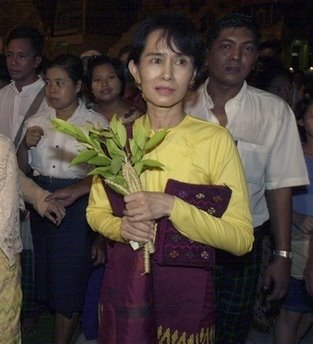


 Posts
Posts


