Ben Bernanke couldn't have planned it better if he tried. Monday's announcement of new stock-buyback programs by three well-known companies -- Microsoft, Hewlett-Packard and Nike -- was a reminder of the strength of nonfinancial U.S. companies.
In contrast to banks in need of a bailout, all three companies have solid balance sheets and strong cash flows. Microsoft dwarfs the others. It had about $30 billion in cash and investments at June 30.
Microsoft Has Solid Balance Sheet
THE WALL STREET JOURNAL
Ben Bernanke couldn't have planned it better if he tried. Monday's announcement of new stock-buyback programs by three well-known companies -- Microsoft, Hewlett-Packard and Nike -- was a reminder of the strength of nonfinancial U.S. companies.
In contrast to banks in need of a bailout, all three companies have solid balance sheets and strong cash flows. Microsoft dwarfs the others. It had about $30 billion in cash and investments at June 30.
The timing of the announcements, however, may be somewhat symbolic. H-P and Nike, at least, have buyback programs under way that are far from being exhausted. As of July 31, H-P had $3 billion of repurchase authorization remaining under its current $8 billion plan, and it had only spent $1.6 billion in the quarter ended July. Nike was only two-thirds of the way through its $3 billion plan as of May 31. Microsoft was announcing a new program to replace one whose authorization was exhausted earlier in the quarter.
The real significance of Microsoft's announcement came in its decision to tiptoe into the debt market with a $2 billion commercial-paper program. Microsoft historically hasn't needed to borrow money because it generates so much cash. On Monday it became the first new corporate issuer to secure a triple-A rating from Moody's since 2002.
It certainly doesn't need to borrow to fund the buyback. But establishing a presence in the debt markets will give Microsoft the flexibility to make big acquisitions, whether renewing its pursuit of Yahoo (whose shares are back below the level that proved too tempting for Microsoft in February), or another multibillion-dollar morsel.
-- Martin Peers
Tuesday, September 23, 2008
Microsoft Has Solid Balance Sheet


Nomura Confirms Plan To Acquire Lehman's European Operations
TOKYO -- Nomura Holdings Inc. (NMR) said it has bought the European and Middle Eastern equities and investment banking operations of Lehman Brothers Holdings Inc. (LEHMQ), a day after snagging the Wall Street firm's entire Asian franchise for $225 million.
By Alison Tudor
Of THE WALL STREET JOURNAL
TOKYO -- Nomura Holdings Inc. (NMR) said it has bought the European and Middle Eastern equities and investment banking operations of Lehman Brothers Holdings Inc. (LEHMQ), a day after snagging the Wall Street firm's entire Asian franchise for $225 million.
Lehman filed for Chapter 11 bankruptcy protection last week.
The onslaught by Japan's biggest broker by market cap shows its determination to establish itself as a global financial powerhouse. Armed with cash that it recently raised, Nomura is keen to grab market share at a time when the U.S. financial crisis is creating new opportunities.
Lehman Brothers consistently has commanded 4% of investment banking revenue globally, ranking ninth in its peer group, while Nomura had a 0.7% market share and was ranked 25th so far this year.
Nomura entered exclusive negotiations with Lehman's London insolvency administrator PricewaterhouseCoopers LLP after Britain's Barclays PLC (BCS) dropped out.
Nomura has based its international operations in London. Its four main business lines in Europe are markets, investment banking, merchant banking and asset management.
Dan Schwarzmann, joint administrator and partner at PricewaterhouseCoopers, said in a statement: "We have now focused on one party as they are interested in acquiring a wider team, which should result in a better deal for staff and creditors of these businesses."
Across the Asia-Pacific region, Lehman Brothers employed nearly 3,000 people, allowing Nomura to almost double its presence in the region outside of Japan when the two businesses are integrated. Since employees are key resources in any acquisition of a financial company, Nomura will have to act quickly to retain staff and manage any differences between the firms' cultures.
Analysts in Tokyo say they are also concerned that Nomura will have to rebuild Lehman's former trading positions and client relationships without the flagship U.S. operations, which were bought by Barclays. It may take time for the acquired businesses to once again turn a profit, they cautioned.
Nomura's aggressive move comes after a rough year of pruning its exposure to U.S. real estate mortgage-backed securities and financial insurance firms called monolines, it is back on the offensive. Still, it has plenty of cash, since it has raised 600 billion yen since April.
The collapse of Lehman Brothers gives the Japanese broker the chance to put some of this capital to work, and acquire assets shorn of links to toxic loans which have threatened to topple an increasing number of U.S. financial institutions in the last week. "It's an opportunity of a lifetime," said one senior executive at Nomura..
---By Alison Tudor, Wall Street Journal Asia
Burma Tops US Agenda at Upcoming UN General Assembly
By LALIT K JHA / UNITED NATIONS Monday, September 22, 2008
The United States of America has made it clear that the current situation in Burma is among its top priorities during the annual General Assembly Session of the United Nations, which opened last week.
The 63rd session of the UN General Assembly formally began with Burma taking over as one of the 21 vice presidents of the annual session. More than 100 heads of governments and heads of states, besides a large number of world leaders, are scheduled to address the General Assembly beginning on Tuesday.
In the run up to the General Assembly Session, top United States officials said President George W Bush and Secretary of State Condoleezza Rice, when they meet world leaders, will make it a point to seek cooperation of the international community to help in the restoration of democracy in Burma and protection of human rights.
Bush will also take up the issue when he meets UN Secretary-General Ban Ki-moon at UN headquarters in New York.
"The president will meet with Secretary-General Ban to discuss the full range of challenges facing the United Nations, including U.N. reform, Georgia, Afghanistan, Sudan, Burma and Zimbabwe," National Security Adviser Stephen Hadley told White House reporters.
Briefing reporters about US priorities during the General Assembly, the country's US Ambassador to the UN Zalmay Khalilzad said: "We'll continue efforts to increase pressure on Burma, to make progress on the political track. There has been no progress on that."
Joining the US on this issue would be two other permanent members of the Security Council—Britain and France. The latter made it clear last week that it is not satisfied with the steps initiated by the secretary-general on Burma and wants more pressure on Burma.
However, the new General Assembly President Miguel d'Escoto Brockmann, the former Nicaraguan Foreign Minister and a fierce critic of the US, is unlikely to take a strong interest on Burma as was the case with his predecessor, Srgjan Kerim, who regularly used to meet with Special UN Envoy on Burma Ibrahim Gambari for updates.
Brockmann has made it clear that he holds an anti-US agenda at the UN, which will make things difficult for the pro-Burmese democracy lobby at the UN.
Myanmar opposition wants review of constitution
http://paokhun.burmabloggers.net/?p=342
The party of detained pro-democracy leader Aung San Suu Kyi urged Myanmar’s ruling junta on Monday to set up a committee to review the military-backed constitution, saying it was «approved by force» in a referendum earlier this year.
The terms of the charter perpetuate the military’s influence over politics and bar Suu Kyi from public office.
«The majority of the people do not accept the constitution which was illegally approved by force,» said a statement by Suu Kyi’s National League for Democracy, charging that the authorities used coercion, intimidation, deception and misrepresentation to get voters’ approval. Myanmar’s ruling military junta claimed the constitution received the approval of more than 92 percent of voters in May.
The party’s statement said the government should set up a «Constitution Review Committee» of elected members of parliament from the 1990 general election, the military, ethnic representatives and constitutional experts.
It said the constitution was not written by elected representatives but «unilaterally drawn up by the delegates hand-picked by the authorities. Myanmar’s generals had billed the referendum that led to the adoption of the constitution as an important step in their «roadmap to democracy.» It offered the first chance for voters to cast ballots since 1990. The country had been without a charter since the current junta seized power in 1988 and threw out the last constitution.
A general election was held in 1990, but the military refused to recognize the landslide victory of Suu Kyi’s party. Suu Kyi, who won the 1991 Nobel Peace Prize, has spent more than 12 of the past 19 years in detention and is currently under house arrest in Yangon.
Posted on September 23rd, 2008 under Daily News • RSS 2.0 feed • Both comments and pings are currently closed
BREAKING NEWS of AAPP
BREAKING NEWS
Date: September 23, 2008
"I will keep fighting until the emergence of democracy in this country," he told reporters outside a friend's house. He was still wearing his light-blue prison clothes" U Win Tin said to Reuter after his release.
Military regime granted amnesty for 9002 prisoners on Today newspaper but we could confirm that very few political prisoners were included until 5:30 pm. They are:
(1) U Win Tin From Insein Prison – who is a famous journalist
(2) Dr.May Win Myint from Insein Prison – who is also MP
(3) U Aung Soe Myint from Thayet prison – who is also MP
(4) U Khin Maung Swe from LaShow prison – who is also an MP
(5) Win Htain – From Kathar prison – who is an personal Assistance to Daw Aung San Suu Kyi
(6) Dr.Than Nyein – From Prome prison – who is also an MP
U Win Tin, 78 was arrested on July 4, 1989, He had been in prison for over 19 years.
Dr. Than Nyein, 72 and Dr.May Win Myint, 59 were arrested in September 1997. They were given 7 years imprisonment. They completer their imprisonment in 2004 but they were arrested again under state protection act " Article 10/a. Both of them had been in prison for almost 11 years.
U Khin Maung Swe, 67 was arrested in August 1994. He was given 7 years imprisonment. Even though he was released its 7 years imprisonment in 2001, he had to continue his imprisonment until today. He had been in prison for over 14 years.
U Win Htein, 67 was arrested on May 21, 1996. He had been in prison for over 12 years.
U Aung Soe Myint, 57, was arrested on August 31, 2003. He had been in prison for over 5 years.,
NOTES: Today, 40 prisoners were released from Thayet prison but one political prisoner was included.
80 prisoners were released from Myitkyinar prison but no political was included.
AAPP
More information: contact to Ko Tate at 66-(0)81-2878751
Bo Kyi at 66-(0)81-3248935
------------ --------- --------- --------- --------- --------- ---------


Burma frees longest-serving political prisoner
http://www.abc.net.au/news/stories/2008/09/23/2372461.htm?section=world
Burma's longest-serving political prisoner, journalist Win Tin, has been freed after 19 years in prison.
ailing 79-year old was arrested in 1989 and sentenced to 20 years in jail for giving shelter to a girl thought to have received an illegal abortion, and for distributing anti-government propaganda.
He vowed to continue his struggle against 46 years of military rule only moments after his release.
"I will keep fighting until the emergence of democracy in this country," he told reporters outside a friend's house. He was still wearing his light-blue prison clothes.
He was released on the same day that 9,002 prisoners were set free, but said he had complained to prison officials about being lumped in as part of a nationwide amnesty for mainly ordinary criminals getting out on good behaviour.
"I did not accept their terms for the amnesty. I refused to be one of 9,002," he said, adding that no conditions had been attached to his release.
"Far from it. They should have released me five years ago. They owe me a few years."
He also played down worries about his health, which many human rights groups had feared was in severe decline.
"I am quite OK. I am quite all right," he said.
-Reuters
ေထာင္တြင္း ၁၉ ႏွစ္ေက်ာ္ၾကာ ေနခဲ့ရသူ သတင္းစာဆရာၾကီး ဦး၀င္းတင္ လြတ္ေျမာက္ျပီ မဇၩိမသတင္းဌာန
အဂၤါေန႔၊ စက္တင္ဘာလ 23 2008 12:49 - ျမန္မာစံေတာ္ခ်ိန္
စစ္အစိုးရက ယေန႔ လႊတ္ေပးေသာ အက်ဥ္းသား ၉၀၀၂ ေယာက္တြင္ သတင္းစာဆရာၾကီး ဦး၀င္းတင္ အပါအ၀င္ ႏိုင္ငံေရး အက်ဥ္းသား ၃ ဦး ပါရွိသည္ဟု အမ်ဳိးသား ဒီမိုကေရစီ အဖြဲ႔ခ်ဳပ္ ေျပာေရးဆိုခြင့္ ရွိသူက ေျပာသည္။
အသက္ ၇၈ ႏွစ္ အရြယ္ရွိျပီျဖစ္ေသာ ဦး၀င္းတင္သည္ အင္းစိန္ေထာင္အတြင္း ၁၉ ႏွစ္ေက်ာ္ၾကာ ေနခဲ့ရျပီးေနာက္ လြတ္ေျမာက္လာျခင္း ျဖစ္သည္။ မရမ္းကုန္းျမိဳ့နယ္ ျပည္သူ႔လႊတ္ေတာ္အမတ္ ေဒါက္တာ ေမ၀င္းျမင့္ႏွင့္ ေတာင္ငူလႊတ္ေတာ္အမတ္ ဦးေအာင္စိုးျမင့္ဦး တုိ႔ကိုလည္း စစ္အစိုးရက လႊတ္ေပးခဲ့သည္ဟု ဦးဥာဏ္၀င္းက ေျပာသည္။
ဦး၀င္းတင္ကို ပံုမွန္ ေထာင္၀င္စာ သြားေရာက္ ေတြ႔ဆံုေလ့ရွိသူ မိတ္ေဆြၾကီး ဦးေမာင္ေမာင္ခင္ကေတာ့ အင္းစိန္ေထာင္ဗူး၀တြင္ ေစာင့္ဆုိင္းလွ်က္ ရွိေၾကာင္း မဇၩိမသို႔ ေျပာျပသည္။
တခ်ိန္တည္းမွာပင္ သပိတ္က်င္းျမဳိ့နယ္ အမ်ဳိးသား ဒီမိုကေရစီ အဖြဲ႔ခ်ဳပ္၀င္ ဦးေအးသိန္းသည္ ကေလးအက်ဥ္းေထာင္မွ ယေန႔ လြတ္ေျမာက္လာသည္ဟု မဇၩိမက စံုစမ္း သိရွိရသည္။
------------ --------- --------- --------
ဦးဝင္းတင္၏ မိတ္ေဆြၾကီး ဦးေမာင္ေမာင္ခင္ ေျပာၾကားခ်က္
လႊတ္ေတာ့ မလႊတ္ေသးဘူးဗ်။ ေထာင္ဗူးဝေတာ့ ေရာက္ေနၿပီ။ ျမင္ခဲ့တဲ့ လူေတြကေတာ့ ေသခ်ာေျပာတာဘဲ။ ဦးဝင္းတင္နဲ႔ ေဒါက္တာ ေမဝင္းျမင့္ တို႔၊ ႏုိင္ငံေရးသမားၾကီးေတြေပါ့ဗ်ာ။ ႏွစ္ေတြ ထပ္ထပ္ တိုးေနတဲ့ သူေတြကိုေပါ့ဗ်ာ။
က်ေနာ္ ၾကားတာကေတာ့ ၁၂း၃ဝ နာရီခြဲ ၁ ခ်က္တီးေလာက္မွာ လူၾကီးေတြက မိန္႔ခြန္းေခၽြၿပီး လႊတ္မယ္လို႔ ေျပာမယ္။ သတင္းေတြ လိုက္ၿပီး စုစည္း လိုက္တဲ့အခါက်ေတာ့ ေသခ်ာဘို ့ေတာ္ေတာ္ နီးစပ္ပါတယ္။
က်ေနာ္တို႔ကေတာ့ လႊတ္ၿပီဆိုမွ လြတ္ၿပီလို႔ က်ေနာ္တို႔ ယံုရမွာေပါ့ေနာ္။
၂ဝ ရက္ေန႔က က်ေနာ္ သူ႔ကို သြားေတြ႔တယ္။ သူသိတယ္။ သူတို႔ ေထာင္သားေတြကို လႊတ္လိမ့္မယ္ကြ၊ အို၊ နာ၊ က်ဳိး၊ ကန္း ေတြကိုတဲ့။ အသက္ၾကီးတဲ့ သူေတြ၊ နာမက်န္းတဲ့ သူေတြ။ ငါေတာ့ အဲဒါကို ျငင္းထားတယ္။ ငါ့ကို ႏိုင္ငံေရးအရ ဖမ္းရင္ေတာ့ ႏုိင္ငံေရးအရ လႊတ္ရမယ္လို႔ က်ေနာ္ ေျပာထားတယ္တဲ့။
သူ႔ကို ႏိုင္ငံေရးအရ လႊတ္ရင္ေတာ့ သူထြက္လာမွာပါ။
၂ဝဝ၅ ခုႏွစ္ကလည္း မိန္႔ခြန္းေတြ ပါေတြေခၽြ၊ သူ႔အေၾကာင္းေတြ ပါေတြေျပာ၊ ထမင္းေတြ ဘာေတြ ေကၽြးၿပီးေတာ့ အထဲ ျပန္ေခၚသြားတာ။
က်ေနာ္က ဒီမွာ တယ္လီဖုန္းေတြ ေစာင့္ေနတာ။ လႊတ္လာရင္ အစုိးဘက္က လူၾကီးေတြ က်ေနာ့္အိမ္ကုိဘဲ လာပို႔ေပးမွာပါ။ က်ေနာ့္အိမ္က ေထာင္နဲ ့မ်က္ႏွာခ်င္းဆိုင္မွာဘဲေလ။ ဒီမွာလည္း ေစာင့္ေနၾကတာ။
------------ --------- --------- --------
အမ်ဳိးသား ဒီမိုကေရစီ အဖြဲ႔ခ်ဳပ္ ျပန္ၾကားေရးအဖြဲ႔ဝင္ ဦးသိန္းညႊန္႔ ေျပာၾကားခ်က္
ဦးဝင္းတင္နဲ့ ေဒါက္တာ ေမဝင္းျမင့္ တု႔ိ က်ေနာ္အမႈသည္၊ က်ေနာ္ လုိက္ခဲ့တာပါ။ သူတုိ႔ လြတ္လာျပီဆုိေတာ့ က်ေနာ္ အရမ္း ဝမ္းသာပါတယ္၊ က်ေနာ္ ေရွ႔ေနအျဖစ္ ႏွစ္ခု ေျပာခ်င္တယ္။ သူတုိ႔ ဘယ္အေၾကာင္းနဲ့ပဲ လြတ္လာ၊ လြတ္လာ က်န္တဲ့ ႏုိင္ငံသားေတြ ေထာင္ခ်၊ အခ်ဳပ္မွာ ရွိေနတဲ့ လူေတြကုိေရာ လြတ္လာတာကုိေရာ ျမင္ခ်င္ပါတယ္။ က်န္တဲ့ ႏုိင္ငံေရး အက်ဥ္းသမားေတြ အပါအဝင္ လြတ္လာတယ္ဆုိေတာ့ ဘာဘဲ ေျပာေျပာဗ်ာ၊ အမ်ဳိးသာ ျပန္လည္ သင့္ျမတ္ေရးအတြက္ ေကာင္းတဲ့ဟာျ ဖစ္ပါေစဗ်ာ။ က်ေနာ္ ဒီေလာက္ပဲ ေျပာခ်င္တယ္။
Japan incoming PM works to keep coalition

Photo: AFP
TOKYO, Sept 23, 2008 (AFP) - Japan's premier-designate Taro Aso got down to business Tuesday by trying to ensure an alliance with his party's partner, which has been increasingly uneasy about the coalition as tough elections loom.
The brash conservative handily won the ruling Liberal Democratic Party (LDP) leadership election on Monday, fuelling speculation that he would call general elections as soon as late October.
The 68-year-old former foreign minister was to meet Tuesday with Akihiro Ota, head of New Komeito, to confirm the two-party coalition in a deadlocked parliament half controlled by a rising opposition.
New Komeito, Japan's third largest party, enjoys steady support from a Buddhist sect. It has been restless with Aso's predecessor Yasuo Fukuda, fearing he would lead the two parties to election defeat by weakening social welfare services.
Soon after his election, Aso pledged to take action to boost Asia's largest economy , saying he saw people suffering when he toured the countryside.
"The important thing is that we can't forget that now is a time of recession," Aso said Tuesday.
Aso is to appoint a new cabinet Wednesday afternoon soon after parliament votes him in to replace Fukuda, who abruptly quit on September 1 after months of sliding poll ratings.
Potential members of the new cabinet include Fiscal and Economic Policy Minister Kaoru Yosano, the runner-up in the LDP leadership vote who had accused Aso of fiscal irresponsibility by backing spending to boost the weak economy.
Aso may also provide key cabinet posts to former defence minister Shigeru Ishiba, who finished last in the race, outspoken nationalist Shoichi Nakagawa and former education minister Takeo Kawamura, local media reported.
Newspapers urged Aso to swiftly map out concrete plans on the economy, which suffered its worst contraction in seven years last quarter amid the global slowdown, and to address a scandal over pesticide-tainted rice.
"Aso has to pick people who are trustworthy and immediately respond to such difficult issues in forming his cabinet," the Yomiuri Shimbun said in an editorial.
"As a national leader he needs to elucidate his policy goals and explain how he will achieve them," the best-selling daily said.
The LDP has been in power for all but 10 months since 1955. But the opposition has been making headway and is more confident than ever leading into general elections.
"The LDP presidential race was just an early skirmish. The real fight is general elections," said Tetsuro Kato, professor of politics at Hitotsubashi University in Tokyo.
"The LDP is faced with the toughest moment it has ever experienced," Kato said. "It used to survive by just switching the face of the party, but that doesn't appear to work anymore."
General elections do not need to be held until September next year, but Aso is widely expected to call them soon, hoping he can seize on initial popularity.
Aso is known as a charismatic if gaffe-prone campaigner. The fifth-generation politician has charmed audiences with his love of pop culture and comic books.
Some analysts speculate that Aso will try to call the election before the November 4 presidential election in the United States, fearing that a victory by Barack Obama in Japan's closest ally would buoy the opposition here.
Japan's main opposition Democratic Party has tried to associate itself with the Democrats across the Pacific, adopting Obama's mantra that the country needs "change."
Aso has pledged a close relationship with the United States and is expected to clash with the opposition by trying to extend a naval mission in the Indian Ocean supporting the "war on terror" in Afghanistan.
Aso has also said he wants friendly relations with China and South Korea, although he has caused controversy in the past by praising aspects of Japan's past colonialism.
Monday, September 22, 2008
How Asia's Bankers Avoided Crisis
By Michael Schuman / Hong Kong
Monday, Sep. 22, 2008
Ten years ago, Asian bankers got a good finger-wagging from their American and European counterparts as the region's financial sectors melted down in a major crisis. Today, Asia has the right to do some finger-wagging of its own.
As the U.S. financial crisis deepens, Asia has looked on nervously, but with little fear of getting dragged into the maelstrom. Asian financial institutions have generally avoided the kind of risky, subprime mortgage-related investments that have crippled financial firms in the U.S. and Europe. Fitch Ratings figures that at mid-year Asian banks accounted for only 6% of the total losses on subprime investments at the world's banks. (European banks, on the other hand, were responsible for 47%.) Even those financial institutions that carried some exposure — like Japan's Mizuho Financial Group, which has reported subprime-linked losses of more than $6 billion through June — are considered strong enough to ride out the storm. Jesper Koll, Japan director for Singapore-based Tantallon Capital, says Japanese financial companies "are a sideshow to what is going on."
This isn't to say that Asia hasn't been affected by America's financial woes. Asian stock markets, despite a recent rally, have tumbled in recent months on concerns over the state of the U.S. economy. Losses may also continue to mount as the financial crisis in the U.S. unfolds. Major Japanese banks, for example, have some $3 billion in exposure to Lehman Bros., which filed for bankruptcy last week. Individuals have also been hurt. In Hong Kong, hundreds of residents who purchased Lehman bonds held a protest on Sunday demanding the government help secure their investments.
But Asia's financial systems "are not expected to face a crisis situation," according to a Standard & Poor's report released this month. The primary reason is that the region's banks had little need to dabble in high-risk U.S. mortgage investments. With economies roaring at home, they found ample opportunities for profit. "They had a lot better things to do with their money," says Deborah Schuler, group credit officer at Moody's in Singapore. "There is real growth in Asia and they were financing it."
Banks also learned lessons from the 1997-98 financial crisis, which was partly caused by weak risk management. Lenders haphazardly tossed money at conglomerates for questionable industrial projects and property investments, and they chased high-yield, high-risk investments around the globe. But they paid the price in bank and finance company failures. In August 1997 Thailand closed 42 finance companies, Indonesia closed 16 banks two months later, and South Korea closed 14 merchant banks in December 1997, according to Merrill Lynch. Others were sold or merged. Those that survived cleaned up their act. Credit analysts are more thoroughly trained and better technology systems allow managers to more carefully assess the risk in their portfolios. As a result, Asia's financial institutions are much more conservative than in the past.
The region might be safe for now, what the future holds is unclear. Asia's economies, though far from recession, are decelerating as a result of the overall global slowdown. That could lead to problems at home, including rising nonperforming loans. "Asian banking systems might have dodged the turmoil from the U.S. subprime crisis but they are not immune to economic slowdowns," Standard & Poor's concluded. In these turbulent times, avoiding one bullet doesn't necessarily save you from others.
—With reporting by Coco Masters/Tokyo
Japan ruling party picks brash Aso

Newly elected Liberal Democratic Party President Taro Aso smiles prior to the ruling party presidential election voting at the party headquarters in Tokyo Monday, Sept. 22, 2008. Japan's troubled ruling party has elected brash former Foreign Minister Aso as its new leader.
(AP Photo/Koji Sasahara)
By JOSEPH COLEMAN, Associated Press Writer
Mon Sep 22, 4:29 AM ET
TOKYO - Brash conservative Taro Aso easily won the presidency of Japan's struggling ruling party Monday, virtually ensuring his election as prime minister later this week amid political and economic turmoil.
Aso, 68, a former foreign minister and grandson of a prominent prime minister, received 351 of the 525 votes cast in the Liberal Democratic Party ballot. His triumph over four rivals had been widely expected.
The former Olympic skeetshooter immediately vowed to rejuvenate his troubled party and lead it to victory in as-yet-unscheduled elections in the powerful lower house of parliament.
"Who else but our party can achieve policies in order to address the public's concerns?" Aso said at LDP headquarters. "I am committed to winning the elections and take a further step to achieve economic recovery and pursue reforms."
Aso, a sharp-tongued conservative who favors the alliance with the U.S. and a diplomatically assertive Japan, backs government spending to revive the flagging economy and has said he would not raise the consumption tax anytime soon.
Aso is all but guaranteed to be elected prime minister in the LDP-dominated parliament on Wednesday, making him the third leader Japan has had since September 2006 — and the first Roman Catholic to hold the job.
Outgoing Prime Minister Yasuo Fukuda threw the political world into disarray three weeks ago when he abruptly announced he would step down after only a year in office, weary of battling with a divided parliament.
The LDP runs the lower house, but the opposition took control of the upper house in elections last year, and has repeatedly embarrassed his government by blocking or delaying high-profile legislation.
The next prime minister will face mounting pressure to renew the LDP's mandate by calling early lower house elections — possibly as soon as next month.
The opposition immediately renewed its attacks, arguing the LDP has no right to govern until it proves it has public support.
"If he wants to be prime minister, he should wait until voters decide who should head the country in the general elections," Naoto Kan, a leader of the opposition Democratic Party of Japan, told TBS television.
The turmoil at the top is raising worries about how the country will handle its economic troubles. Inflation is up and growth has stalled, effectively ending a lengthy period of expansion. The financial meltdown in the United States, a leading market for Japanese autos, electronics and other vital exports, has intensified the fear.
"Concerns about the political vacuum are growing as the LDP eyes a leadership battle with the opposition party," the Nikkei business newspaper said in a commentary Monday. "The public is closely watching if Aso can promptly demonstrate his leadership."
As prime minister, Aso would bring a colorful personality to a post that has suffered in the two years since Junichiro Koizumi — a silver-maned leader who publicly imitated Elvis Presley during a trip to Graceland — left office.
Koizumi's nationalist successor, Shinzo Abe, quit after only a year amid scandals and his own health troubles. The dour Fukuda, considered at first an experienced hand, failed to energize the party or draw voter interest.
Aso, however, is likely to make headlines from day one.
He has riled Beijing by calling China a military threat, angered Asians by claiming that Taiwan's educational success is rooted in Japanese wartime colonial policies, and compared the leading opposition party to the Nazis.
Aso, however, is also a determined competitor. He lost three LDP presidential races over the past seven years before finally winning on Monday. After losing to Fukuda last year, he vanished from the political stage for nearly a year until he returned in August as the No. 2 in command in the LDP — and Fukuda's presumed heir.
The ruling party drummed up a considerable amount of publicity over the past couple of weeks by crowding the presidential race with a total of five candidates, even though it was widely assumed Aso would win.
The competitors included former Defense Minister Yuriko Koike, the first woman to run for LDP president. She came in third place, with 46 votes. Economics Minister Kaoru Yosano was second with 66 votes.
Political analyst Minoru Morita said the fate of Aso's government depends on the results of the parliamentary election, in which his party could lose a large number of seats in the lower house.
"As the LDP's grip on power is weakening, Aso could end up not being able to achieve anything," Morita said.
___
Associated Press writer Mari Yamaguchi contributed to this report.
The Burmese Junta looks to the stars

Jean-Claude Bührer. Photo M. Bührer
21 September 08 -
One of the most feared regimes in the world relied on the stars and auspicious numbers before it cracked down on the Monks in September 2007, according to Burma expert and former Le Monde reporter, Jean-Claude Buhrer
Interview by Carole Vann, Human Rights Tribune - Exactly a year ago, thousands of Burmese monks took to the streets in a show of popular discontent at an astronomical rise in prices. Thanks to mobile phones, these images were quickly seen around the world. But the authorities rapidly and violently put down the protests and Myanmar was once again under the control of the Generals, who despite the ravages of cyclone Nargis in April remain in power.
The former Le Monde correspondent and an expert on Burma, Jean-Claude Buhrer has just published, with Claude Levenson, "Burma: the Monks against the Dictatorship"(*). He gives his view on the powerful yet also superstitious Generals.
A year after the Monks protests, we hear nothing out of Burma. What has been happening?
The Burmese Generals have, as they do after every show of popular discontent, cracked down. Since they grabbed power, the military have always used force. In 1988, when the students took to the streets, at least 3000 people were killed. Last year the military killed dozens when they fired into the crowds, stepped up their arrests and emptied the monasteries. In Burma, there are almost 500,000 monks. With the people too scared to speak out, they were the only counterweight to an omnipotent army of some half a million men. However, as a result of the authoritie’s incompetence, it was the monks who helped the population after the deadly cyclone, Nargis, hit Buma in May.
The authorities failed to act for 10 days after the protests broke out. Why was that?
The government was overwhelmed by the scale of the protests. At first the authorities did not dare take on the monks as they did not want to act against fellow Buddhists. But when it became obvious that the protests were growing and not dying out, they decided to crack down.
The date that they chose to act was also significant. The Burmese attach a lot of importance to astrology and the science of numbers. The military bases all its decisions on numbers. For them the number 9 is a good omen. They therefore decided to unleash the army on the 27 September 2008, because this date has 3 nines in it. 27 that is 2+7=9: September is the 9th month in the year: 2007 is again 2+7= 9. They believed that this was the day to act. Another example of this is that just before the popular uprisings in 1988, as the economy was going badly, the military decided to replace the bank notes of 50 and 100 kyats with notes of 45 and 90 kyats. They thought that they would bring luck. Obviously these changes made life pretty complicated for traders and householders.
Their superstitions mean that when anything is going badly, they just change the name and believe that they have solved the problem. After the major demonstrations in 1988, they changed the name of the country. Burma became Myanmar and the names of many towns changed too. They imposed these changes at the UN, just as the Khmer Rouge had done changing Cambodia into Kampuchea.
In the same vein, they inherited from Britain the tradition of driving on the left, but overnight they decided to switch to driving on the right. As the steering wheels remained on the right and people still got off buses on the left, this caused chaos. People stepped off the buses no longer onto the pavement but into the middle of the road. In 2005 they had another one of their mad whims, when they suddenly decided to move the capital from Rangoon to Naypyidaw, "the city of kings" where members of the Junta live, cut off, in a sort of bunker.
UN efforts in Burma have been a fiasco haven’t they?
In 1992, two years after the military ignored the results of Aung San Suu Kyi’s party’s resounding victory in the elections, the UN appointed a first special rapporteur, a Japanese who did not do much. Then there was a Mauritian who did not even visit. He was replaced in 2000 by a Brazilian, Paulo Sergio Pinheiro, but in 2003 he became persona non grata, after he protested when he found hidden microphones while he was talking to prisoners.
It was only in November 2007, following the popular protests and a special session on Burma at the Human Rights Council, that the military let down their guard, letting Pinheiro as well as the special envoy of the UN Secretary General, the Nigerian diplomat, Ibrahim Gambari, into the country. But neither of them, ignored by the Junta, could do a lot. Frustrated, Paulo Pinheiro, threw in the towel in March, while the last mission of Ibrahim Gambari came to nothing.
Is there any way to put pressure on Burma?
The UN Security Council can’t do anything as it comes up against the double veto of China and Russia. Beijing is the main partner and arms supplier to the Junta. China has built hydroelectric dams on the border and has observation towers in Burma. As for Russia, it also provides weapons and has signed a cooperation accord on nuclear energy. For its part, India cooperates with the Junta in order to neutralise various rebellious minority groups that live on its border with Burma.
In spite of EU sanctions, Total remains one of the major investors in Burma. And the Burmese Junta can count on the indulgence of its partners in ASEAN (Association of South East Asian Nations), who are more interested in its gas, forests, precious stones and other natural resources. The military said at a meeting of ASEAN members that it was unmoved by external pressure and that they were used to living as an autarky. And if necessary, they would close in on themselves just like an oyster around its pearl.
Translated from the French by Claire Doole
Gene Sharp, American Revolutionary
Living quietly in Boston, Gene Sharp has had broad international influence over the last twenty years through his books and pamplets aimed at overthrowing authoritarian regimes through nonviolent resistance: Written in 1993, his 90-page pamplet “From Dictatorship to Democracy” has had the most influence, but he also wrote a 902-page “Politics of Nonviolent Action” in 1973, and co-authored a booklet, “The Anti-Coup”. Gene’s writings have had an impact in Burma, Georgia, Iran, Kyrgyzstan, Russia, Serbia, Ukraine, Venezuela, Vietnam, and Zimbabwe.
Burma's secret schools of dissent, 意見の相違のビルマの秘密の学校
 READING, WRITING, ARITHMETIC – AND RIGHTS: Burmese monks are adopting teaching methods used in secret refugee schools in Thailand. AFP Photo/Khim Maung Win
Monks teach children critical thinking and human rights, to groom the next generation of activists. Part 3 of three.
By Anand Gopal |
Correspondent of The Christian Science Monitor from the September 22, 2008 edition Mae Sot, Thailand; and Rangoon, Burma -
Deep in the Thai jungle bordering Burma (Myanmar), a group of children gather every day for their lessons. In an elongated but modest teak shack, nearly a dozen ashen-faced children – all different ages – sit in front of a tattered blackboard. "What do you want to be when you grow up?" teacher Zaw Lazein Oo asks. Each student answers in measured English. "A doctor," answers one. "An aid worker," another replies. Such open-ended questions are unthinkable in Burma's government schools, where learning is by rote and adheres strictly to the ruling junta's ideology. But a new generation of political activists is striving to change that by setting up a network of secret schools – from the Thai-Burmese border to monasteries in Burma – that service impoverished students and teach critical thinking and human rights. "In Burma, education means obeying teachers, not fostering students' potential," says Htat Shwe, a teacher of another secret school near Mae Sot, Thailand, and a member of the underground opposition group the 88 Generation Students. (His and other activists' names in this story have been changed for their security.) Many of the teachers were active in last September's protests, known here as the "Saffron Revolution" after the color of the robes of monks who led it, and bring their politics to the classroom.
深くビルマ(ミャンマー)に接するタイのジャングルで子供のグループは彼らのレッスンのための毎日を集める。 細長くしかし適度なチークの掘っ建て小屋では、ほぼダースashen直面された子供-すべての異なった年齢-ずたずたに裂かれた黒板の前に坐らせなさい。 " 育つとき何になりたいと思うか。" Zaw Lazein Oo教師は頼む。 測定された英語の各学生の答え。 " 医者、" 答え1。 " 援助の労働者、" 別のものは答える。 そのような自由回答式質問法はBurma'で全く考えられない; 学習が機械的にあり、支配junta'に厳しく付着するsの政府の学校、; sのイデオロギー。 しかし政治運動家の新しい世代はそれを秘密の学校のネットワークのセットアップによって-タイビルマのボーダーからビルマの修道院への-そのサービスによって貧しくされる学生変え、重大な考えおよび人権を教えるように努力している。 " ビルマでは、教育はstudents'を促進していない教師の、従順を意味する; 潜在性、" Htat Shwe、地下の対立する組織のMaeSot、タイおよびメンバーの近くの別の秘密の学校の教師を88人の世代別学生言う。 (彼のおよび他のactivists' この物語の名前は保証のために変わった。) 教師の多数は最後のSeptember'で活発だった; sは、"としてここに知られていて抗議する; サフランRevolution" それを導いた修道士のローブの色の後で、教室に彼らの政治を持って来れば。
For decades, many of these activists had to learn about human rights and Burmese history by reading smuggled books or through underground political discussion groups. More recently, young Burmese in Rangoon have turned to the American Center, an appendage of the US Embassy that provides foreign books and magazines. But for ordinary, impoverished Burmese children who have no background in politics, these secret schools can open the door to a new world, says Mr. Shwe. He and his colleagues challenge students to question everything they are taught and emphasize political theory and human rights along with subjects like math and English. The schools bring education to poor Burmese refugees and introduce important ideas that students would not normally encounter, says David McLaughlin, a researcher at Michigan State University and an expert on Burmese migrant education. "Many people in Burma are so used to the dictatorship that they have no idea that they have rights under international law," Shwe says. Students in his class memorize the Universal Declaration of Human Rights and study other countries' political systems. Students in Mr. Lazein Oo's class learn words like "revolution" and "resist" during their English vocabulary lessons. Children often go back home to their parents and explain human rights to them, says Shwe. While there are 54 officially recognized schools for Burmese refugees in Thailand bordering Burma, Mr. McLaughlin says countless more are run secretly by activists.
長年に渡って、これらの運動家の多数は人権およびビルマの歴史について密輸した本を読むことによってまたは地下の政治ディスカッション・グループを通って学ばなければならなかった。 もっと最近、ラングーンの若いビルマ語はアメリカの中心、洋書および雑誌を提供する米国大使館の付加物に回った。 しかし普通のために、政治で背景がない困窮したビルマの子供は新しい世界に、これらの秘密の学校言うShwe氏をドアを開けることができる。 すべてに彼ら質問し、数学のような主題および英語と共に政治理論および人権を強調する彼および彼の同僚の挑戦学生は教えられる。 学校は貧しいビルマの避難者にミシガン州大学で教育を持って来、学生が普通出会わないという重要な考えを、言うビルマの移住性の教育のデイヴィッドMcLaughlin、研究者および専門家をもたらす。 " ビルマの多くの人々は国際法の下で権利を有することを、"わからないこと従って独裁制に使用されてある; Shweは言う。 彼のクラスの学生は人権の普遍的な宣言を暗記し、他のcountries'を調査する; 政治体制。 氏のLazein Oo'学生; sのクラスは"のような単語を学ぶ; revolution" そして" resist" 英国の用語のレッスンの間。 子供は頻繁に彼らの親に家に戻り、それらに人権を、言うShweを説明する。 ビルマに接するタイのビルマの避難者のための54の公式に確認された学校の間、McLaughlin氏は多くが運動家によって秘密に動かされることを無数ことを言う。
A network of jungle schools exists in Burma, too, often hidden deep in the mountains along the Thai border or in territory held by ethnic rebels long engaged in war against Burma's junta. "In the secret schools in Burma, students tell their friends in government schools about political rights and challenge their preconceived notions of what the rest of the world is like," Shwe says. "In this way we hope that more people within Burma will learn about the true political situation of the country and one day act to change it." While Burma once had a strong education system, years of military rule and corruption have eroded its schools. Education through secondary school is technically free, but hidden fees make it inaccessible for many. Learning is almost entirely by rote – teachers deliver perfunctory lectures that require students to repeat phrases in unison, without any explanation of underlying concepts. Such learning often leaves students unprepared for exams, and those who want to succeed are forced to pay for private tutoring with the teacher. "Usually the teacher will only pass those students who come for tutoring," says Thaw Htun, a former university student and opposition sympathizer.
ジャングルの学校のネットワークはタイのボーダーに沿う山または民族の反逆者の長いによって握られるBurma'に対して戦争で従事している領域に深く隠れるビルマに、余りに、頻繁にある; sの会議。 " ビルマの秘密の学校では、学生はその他の国々がであるものののよう政治的権利についての政府の学校の彼らの友人を言い、彼らの予想された概念に、"挑戦する; Shweは言う。 " このように私達はビルマ内のより多くの人々がit."を変える国および日の行為の本当の政治状態について学ぶことを望む; ビルマに一度強い教育制度がある間、軍事政権および堕落の年は学校を腐食させた。 中学校を通した教育は技術的に自由であるが、隠された料金はそれを多数のために得難くさせる。 学習はほとんど完全に機械的にある-教師は根本的な概念の説明なしで学生が調和の句を繰り返すように要求する形式的な講議を提供する。 そのような学習は頻繁に学生を検査のために不意に残し、成功したいと思う人は教師を含む私用個別指導の支払をするために強制される。 " 通常教師は個別指導のために来るそれらの学生、"だけを渡す; ThawHtun、前の大学生および反対の共鳴者を言う。
Such corruption extends to higher education, leading to a generational of professionals with suspect skills. "I am very underconfident in my abilities," says a surgeon outside Rangoon. "I paid to earn my degree but now I am very scared that I will harm my patients because I don't have adequate training." With government schools prohibitively expensive for many, poor families often turn to monastery education centers. Here Buddhist monks educate children free of charge in subjects such as math and English as well as Buddhism. While these centers provide relief for many poor children, they too are steeped in outdated practices such as rote memorization, says Ashin Zawta, a Rangoon-based monk. Mr. Zawta, who is associated with the All Burma Monks Alliance, an underground network of political monks, says he is now copying the methods of the activists who run secret schools. "Education is vital if we are to overturn this regime," he says. In a small, poorly lit monastery on the outskirts of Rangoon, a dozen children – mainly orphans – gather to hear Zawta lecture about Burmese history.
そのような堕落は疑わしい技術の専門家の世代に導く高等教育に伸びる。 " 私は私の能力、"で非常にunderconfidentである; ラングーンの外の外科医を言う。 " 私は私の程度を得ることを支払ったが、今私が私の患者にのでI don'害を与える非常におびえている; tに十分なtraining."がある; 多数のために非常に高い政府の学校によって貧しい家族は頻繁に修道院の教育センターに回る。 ここに僧侶は仏教と同様、数学のような主題および英語の子供を無料で教育する。 これらの中心が多くの貧しい子供に救助を提供する間、機械的暗記のような旧式の練習で余りに、言うAshin Zawtaのラングーン基づかせていた修道士を浸される。 すべてのビルマの修道士の同盟と関連付けられる氏はZawtaの、政治修道士の地下ネットワーク、彼が今秘密の学校を経営する運動家の方法をコピーしていることを言う。 " 教育は私達がこの政体を転覆させるべきなら重大"である; 彼は言う。 ラングーンの郊外の小さい、不完全につけられた修道院では、ダース子供-主に孤児ビルマの歴史についてのZawtaの講議を聞くために-は集まる。
They learn of things they may never hear about in a government school, from the details of Burma's experiment with democracy in the 1950s (which was overturned by a military coup) to the Saffron Revolution. Zawta and other monks have initiated such lessons in monasteries across the city. In Mandalay, a group of prominent monks is trying to foster critical thinking by establishing a school with textbooks from the West. "After last September, many monks realized that we need to introduce politics to the next generation, and the only way we can do that is by getting them to think critically," Zawta says. But the networks of secret schools faces many obstacles. Some rely on remittances from relatives abroad or donations from Burmese political groups. But most are volunteer efforts. In one jungle school, three teenagers teach a handful of orphans for no pay, just a bowl of rice. "We have to persist despite the difficulties," Shwe says. "We hope to create the next generation of leaders." • Parts 1 and 2 ran last Thursday and Friday, respectively .
彼らはBurma'の細部からの事の政府の学校で決して約聞くかもしれない学ぶ; (軍不意の一撃によって転覆した)の民主主義のsの実験サフランの回転への50年代。 Zawtaおよび他の修道士は街中修道院のそのようなレッスンを始めた。 マンダレイでは、顕著な修道士のグループは西からの教科書が付いている学校の設立によって重大な考えることを促進することを試みている。 " この前の9月後で、多くの修道士は私達が次世代に政治をもたらす必要がある私達が"してもいいそれらを批判的に考えるために得ることによって行う唯一の方法ことを意識し; Zawtaは言う。 しかし秘密の学校のネットワークは多くの障害に直面する。 一部は親類からの送金かビルマの政治団体からの寄付に外国に頼る。 しかしほとんどは有志の努力である。 1つのジャングルの学校では、3人のティーネージャーは支払のための少数の孤児、ちょうど米のボールを教えない。 " 私達は難しさ、"にもかかわらず主張しなければならない; Shweは言う。 " 私達はleaders."の次世代を作成することを望む; • パート1および2最後の木曜日および金曜日を、それぞれ動かした。
A helping hand for Myanmar
IMPHAL, Sept 21: Even as the North East looks forward to the gains that the “Look East Policy” being pursued by government of India can bring to the region, private players in the health sector in Manipur are gearing up to market its services to the neighbouring country of Myanmar.
And it makes sense as the health care system in Myanmar, especially on the north western border is not exactly known for its excellence.
A Myanmarese trade delegation which recently visited a city hospital – Shija Hospital and Research Institute were impressed by the set up and facility offered and declared that if there are no legal hurdles, their fellow would prefer to come here than go to south Asian countries like Singapore and Thailand.
Dr Palin, managing director of the institute, quoted Mr U Aye Ko, Secretary, Myanmar Border Trade and Commerce, one of the 17 delegates to be shown around the 200 bedded ISO certified Hospital at foothills of Langol in Imphal West in this regard. “I am impressed at the health care facilities available here,” said Mr Ko.
According to Dr. Palin, managaing director of the Shija Hospital, it costs five times less for a Myanmarese citizen to fly to Gauhati for health care than fly to Singapore or Thailand where it is prohibitively high.
“It would still be cheaper for them if they come by land route to Imphal,” Dr. Palin said speaking to The Statesman.
What's left is for both the countries to include health care in the list of trading items agreed between Indian government and Myanmar government in the Indo-Myanmar Trade Agreement, Dr Palin said. He also said a memorandum has been submitted to the state chief minister Mr Okram Ibobi Singh to urge the Centre to take the next step to suitably amend the trade treaty. n SNS
Dark Burmese days,暗いビルマ日
It is a year since a Burmese soldier shot Japanese photographer Kenji Nagai in the heart while he was covering Burma's saffron revolution for the Japanese agency APF News. Nagai's dying moments, spent lying on his back attempting to film his killer, who stood over him taking aim, were captured by another foreign journalist. Reuters photographer Adrees Latif was crouching on a bridge overhead. His image, which subsequently won a Pulitzer Prize, provoked a worldwide furore, exposing the junta's defence - that Nagai's death was caused by a stray bullet - as worthless.
それは彼がBurma'を覆っている間中心のビルマの兵士によって撃たれる日本のカメラマン以来のKenji Nagai年である; 日本代理店APFのニュースのためのsのサフランの回転。 Nagai' sの死ぬ時、彼のに使いきったあることはもう一人の外国のジャーナリストによって狙いをつけている彼に立った彼のキラーを撮影するように試みる背部捕獲された。 Adrees Latif Reutersのカメラマンは橋で頭上に身をかがめっていた。 続いてピューリッツァー賞に勝った彼のイメージはjunta'を露出する世界的な激しい興奮を誘発した; sの防衛-そのNagai' sの死は-無益ように…外部弾丸によって引き起こされた。
The killing of a foreign journalist was highly unusual in a country where reporters who slipped quietly into the country on tourist visas were rarely apprehended. I spent two weeks there earlier this year without any interference. Andrew Marshall, who covered the saffron revolution for Time, says: "The main difficulty in Burma is reporting the story without endangering your interviewees or the people who help you meet them."
外国のジャーナリストの殺害は観光ビザの国に静かに入れたレポーターがまれに理解されなかった国で非常に珍しかった。 私は干渉なしで2週を今年初めにそこに過ごした。 時間のためのサフランの回転をカバーしたとアンドリューマーシャルは言う: " それらに会うのを助ける人々あなたの被面接者を危険にさらさないでかビルマの主要な難しさは物語を報告している。
For Burmese journalists, the situation is a little different. "Getting caught can mean torture and imprisonment. It can even be a death sentence. They are the ones who run all the risks," says Nic Dunlop, a photographer who worked in Burma for more than a decade.
ビルマのジャーナリストのために、状態はやや異なっている。 " 捕まることは苦悶および投獄を意味できる。 それは死刑である場合もある。 それらはすべての危険を動かす物、言うNic Dunlop、働いた十年より多くのためのビルマでカメラマンをである。
Days after the September demonstrations were violently suppressed, after the foreign journalists had flown home, the junta rounded up local reporters and photojournalists. According to Reporters without Borders, 15 journalists were arrested and accused of sending information abroad at this time. The hunt for photojournalists was so intense that several stopped working, threw away their cameras and went into exile.
9月のデモンストレーションの後の幾日は激しく抑制された、外国のジャーナリスト空路帰国した後、会議はローカルレポーターの上でおよびフォトジャーナリストは円形になった。 Reporters without Bordersに従って、15人のジャーナリストは現時点で情報を外国に送ることの阻止され、訴えられた。 フォトジャーナリストのための追跡は複数が働くことを止め、カメラを捨て、そして亡命したほど強かった。
Among those currently detained are photographer U Thaung Sein, in prison for more than two years for photographing Burma's new capital, Naypidaw; blogger and comedian U Zargana, arrested in June for talking to the BBC about the devastation caused by cyclone Nargis; and journalist U Win Tin, who has served 19 years of a 20-year sentence for spreading propaganda during demonstrations in the 1980s.
現在引き留められるそれらの中で撮影Burma'の2年間以上刑務所のカメラマンU Thaung Seinは、ある; sの新しい首都、Naypidaw; サイクロンNargisによって引き起こされる荒廃についてのBBCに話すことのための6月に阻止されるbloggerおよびコメディアンU Zargana; そして80年代のデモンストレーションの間に19年間の広がりの宣伝のための20年文に役立ったジャーナリストUの勝利錫。
In addition, in the last week, three Burmese news agencies in exile - the Irrawaddy, the Democratic Voice of Burma and The New Era Journal, whose websites locals rely on for uncensored news - have been victims of cyberspace attacks. Each has been bombarded by requests for information designed to overwhelm servers and render sites incapable of responding to regular traffic. Fearful of further unrest during the anniversary of the saffron revolution, the junta appears to be doing its utmost to continue silencing Burmese media.
さらに、先週に、流浪- Irrawaddy、民主党の声およびウェブサイトの支部が無検閲のニュースのために頼るビルマの新しい時代ジャーナル、-の3つのビルマの通信社はサイバースペースのずっと攻撃の犠牲者である。 それぞれはサーバーを圧倒し、場所を規則的な交通に返答のできないするように設計されている情報要求によって衝撃された。 サフランの回転の記念日の間にそれ以上の不安の恐ろしい、会議はビルマ媒体を沈黙させ続けるように最大限度をするようである。
Amy Gold
Wall Street at a Crossroads
Jesse Stanchak
Posted Monday, Sept. 22, 2008, at 6:34 AM ET
After a whirlwind weekend of negotiations, the political dimensions of the Treasury Department's $700 billion mortgage bailout proposal are starting to take shape, even as the financial sector continues to shift dramatically. The New York Times, the Washington Post, the Los Angeles Times and USA Today each lead with their latest analysis of how the Treasury Department's proposal will wind its way through Congress. The Wall Street Journal leads with the end of the era of investment banking, as Morgan Stanley and Goldman Sachs opt to become holding companies.
Now that Treasury Secretary Henry M. Paulson has presented members of Congress with an outline of his plan, Congress is weighing in with a few ideas of its own. While support for the concept of the buyout seems solid at the moment, the papers all say that Democrats and Republicans each have concerns they want addressed. The NYT focuses on high-ranking Democrats' desire to see greater industry regulation attached to the bill, up to and including regulating the salaries of executives whose companies participate in the buyout. Other concerns include increasing the programs' oversight requirements and perhaps including some sort of assistance for troubled homeowners. The WSJ says that the argument for housing aid adds a bitter twist to the debate, since "taxpayers are now both creditors and debtors in the housing mess." The LAT suggests the buyout may help homebuyers indirectly, even without any special aid for consumers.
House Republicans, meanwhile, want assurances that any profits made from the eventual sale of these distressed assets will be used to pay down the national debt, says the WP. Some Republicans continue to voice concern over the scope and cost of the package, but the papers all agree that the chances of anyone stalling the measure are slim. Paulson is quoted in all the papers asking Congress to pass his proposal without significant changes and saying he still hopes Congress will pass the bill before leaving for a recess on Friday.
--------------------------------------------------------------------------------
--------------------------------------------------------------------------------
The WSJ explains that the conversion of the last two investment banks to commercial banking is meant to stabilize the financial titans and keep them from going the way of Lehman Bros. Becoming retail banks will mean that Morgan Stanley and Goldman Sachs will be able to use bank deposits as a cushion for their investments. In exchange, they will now face greater regulation, stricter debt limits. and, in all likelihood, lower profitability than they've seen in the past. The NYT calls the move, "a blunt acknowledgment that their model of finance and investing had become too risky."
Financial institutions are lobbying members of Congress at full tilt, reports the NYT. Some are pushing for an expanded bailout package that would go beyond just mortgages and allow the government to buy up "any financial instrument." The paper also says that several companies are especially interested in who will manage the government's new acquisitions, a contract that could easily be worth billions annually.
The NYT notes that the Asian markets' reaction to the weekend's developments were cautiously positive in early trading.
The WP fronts a man-on-the-street piece about local taxpayer resentment of the buyout plan.
The NYT goes inside with a piece on how the power of the Treasury secretary has grown over the last two years. The paper goes on to speculate about who will take over from Paulson after the next president takes office.
USAT off-leads with Pakistan saying it has declined the FBI's help in investigating the hotel bombing in Islamabad. The attack killed 53 people, including two Americans. Inside, the NYT examines the political implications of the attack.
Virginia's 13 electoral votes are in play for the first time in more than 40 years, a phenomenon that's made life easier for fundraisers from both parties. Virginians gave $25.3 million during the current election cycle, says the WP, up from $14.2 million during the 2004 campaign. Contributions to Democratic presidential candidates led donations to Republicans by about 5-to-3, with about 85 percent of all donations coming from northern-Virginia donors.
Of course, voting in Virginia has already begun for some people, according to USAT. Virginia is one of 34 states that have some type of early-voting program. The paper claims that more people will vote early this year than ever before, with one expert predicting that nearly one-third of the electorate will vote before Nov. 4.
The LAT fronts coverage of last night's Emmy Awards, in which Mad Men and 30 Rock won the top prizes.
The NYT fronts (and USAT teases) a farewell to Yankee Stadium
Sunday, September 21, 2008
SPDC’s new target: Burmese citizens’ emails,SPDCの新しいターゲット: ビルマの市民の電子メール
BDD Saturday, September 20, 2008
Sources close to regime said that SPDC Science and Technology Minister U Thaung reportedly instructed IT department officials to create the data bank of Burmese citizens' email addresses worldwide. This is not a new instruction but he had in 2006. U Thaung was very interested in getting Burmese political activists’ email addresses since he became a minister of S&T.
政体の近くの源はビルマcitizens'のデータ・バンクを作成するようにSPDCの科学技術がU Thaungを伝えられるところによれば指示したそれに部門の役人世話すると言った; 世界的の電子メールアドレス。 これは新しい指示ではないが、彼は2006年に持っていた。 U Thaungはビルマの政治運動家の電子メールアドレスを得ることに非常に興味があった彼が科学技術の大臣になったので。
Burmese military officers who graduated in computer science from Moscow Institute of Electronic Technology were assigned in Cyber city which in near Mandalay to get more information from websites.
電子技術のモスクワの協会からのコンピュータ・サイエンスで卒業したビルマの軍当局者はCyber都市で近いマンダレイにウェブサイトからより多くの情報を入れるために割り当てられた。
That wasn't clear recent DDoS attack against Irrawaddy and DVB websites were from his ministry or other foreign based hackers. But insider said U Thaung’s pet projects has already developed the softwares that could hack the Burmese citizens’ email addresses to attack the different people and political activists to create more confusion within own citizens.
それはIrrawaddyに対してDDoSの明確ではない最近の攻撃ではなかったし、DVBのウェブサイトは彼の大臣か他の外国の基づいたハッカーからあった。 しかし部内者はU Thaungが持論既に異なった人々を攻撃するためにビルマの市民の電子メールアドレスを切り刻むことができ、より多くの混乱をの内の作成する政治運動家が市民を所有するソフトウェアを開発してしまったことを言った。
Sources said that others should not under estimate the senior general Than Shwe’s psychological warfare tactics, he could use his tactics to create more confusion and get more upper hand for SPDC.
源は他が見積もりの下で年長大将のThanShwe心理戦争べきではないと言った-作戦、彼はより多くの混乱を作成し、SPDCのためのもっと優勢であるのに彼の作戦を使用できる。
Now regime has extended new political battle through cyber warfare against the independent media from urban warfare against Buddhist monks, NLD, 88 generation groups and rest of the citizens, and other rural suppression against the ethnics.
今度は政体は市民の僧侶に対して市街戦からの独立メディアに対してcyber戦いによって新しい政治戦いを、NLD、88の世代別グループおよび残り、およびethnicsに対して他の田園抑制拡張してしまった。
Main Target for this time is private citizens’ emails to use as a tool to attack the political activists and others. Nobody knows regime would target Western security agencies and government websites.
この時間の主要なターゲットは政治運動家および他を攻撃するのに用具として使用するべき一般市民の電子メールである。 政体が西部の警備機関および政府のウェブサイトを目標とすることをだれも知らない。
During the crisis, Japan has feels like an island of calm
By Martin Fackler
Sunday, September 21, 2008
TOKYO: Wall Street may be suffering the worst financial storm since the Great Depression, but Japan has felt like an island of Zen-like calm.
The world's second-largest economy after the United States has often seemed to be marching to its own drummer, sometimes to disastrous effect. But rarely has the disconnect been as stark as during the current crisis.
While European and American financial titans have teetered and collapsed, giant Japanese banking groups have stood relatively unscathed. The growing global credit crisis, which threatens companies and consumers elsewhere, has yet to appear here, where the problem for years has been that the nation's banks have too much cash, not too little.
And while the U.S. Federal Reserve seems to be shoring up the entire American financial sector, the last time the Japanese central bank intervened in markets, it did so in dollars instead of yen - to help international markets.
Indeed, television news gives the current upheaval, known here as "Lehman Shock," less coverage than more domestic issues like a tropical storm and a scandal over tainted rice. Even in the race for prime minister, the financial crisis has emerged as just one of a dozen issues, and usually not the top one.
Japan has been affected by the global economic downturn, with its economy contracting in the second quarter from the previous quarter. And its stock market gyrated and declined this week. But in an era dominated by globalization, where seemingly unrelated events can affect the lives of people half a world away, Tokyo has so far floated above the anguish gripping New York and London.
"The financial crisis looks like fire on a distant shore," said Atsushi Nakajima, chief economist at the research arm of Mizuho Financial Group. "Japan has remained very calm and peaceful."
Part of the reason is that Japan has already suffered its agonizing crisis. The 1980s bubble economy collapsed in the 1990s because banks were burdened with real estate-related bad loans, not unlike those that Washington is preparing to take over from banks.
In Japan, it took a "lost decade" to work through those debts. The Japanese became very cautious after the bitter experience of the cleanup, and one result is that they seem to have largely avoided the risky subprime loans that set off the U.S. financial crisis.
According to the International Monetary Fund, subprime-related losses at Japanese financial companies have totaled just $8 billion, out of global subprime-related losses that some say could total $1 trillion.
"Japan learned its lesson in the 1990s," said Akio Makabe, an economics professor at Shinshu University. "It was wise when Wall Street was foolish."
Of course, Wall Street's pains have been felt here. The stock market fell last week in volatile trading, with the benchmark Nikkei 225 index sliding 2.4 percent - largely the result of heavy sales by foreign investors. There are also bigger fears that slowdowns in the United States and China will end up hammering Japan's export-driven manufacturing sector.
There have also been small but telltale signs of rising risk aversion in credit markets. Japanese banks raised short-term interbank lending rates to foreign banks to 0.7 percent, from 0.5 percent, though they still use the lower rate among themselves. That contrasts with New York, where a benchmark interbank lending rate has tripled in recent days to about 3 percent.
Still, its relative detachment makes Japan an oddity in a world where globalization has seemed inevitable. Countries in Europe have also tried to find ways to be part of the global economy while staying apart from it, but to no avail. Other nations, like China, have bet their future on becoming enmeshed in it.
Japan's aloofness has its downside. For example, with its healthy banking system and abundance of capital, Japan would seem in an ideal position to help bail out the shell-shocked global economy, stepping in for the weakened United States and Europe.
Instead, Tokyo has kept a low profile throughout the crisis, other than joining a multinational effort by central banks to pump dollars into the global economy to keep it moving.
When asked during a debate of prime minister candidates Friday whether Japan could assert more leadership during the crisis, the leading candidate, former Foreign Minister Taro Aso, said he was "proud that Japan was not involved in that money game," referring to U.S. mortgage debt.
Economists and bankers say Japan is able to keep itself apart for a very simple reason: it has enough cash to finance its own needs.
The country has a $14 trillion pile of household savings, the product of decades of trade surpluses and frugal lifestyles. This has allowed Japan to finance its immense $8.1 trillion fiscal deficit and still have enough money left over to be the world's largest creditor nation for the last 17 years.
Last year, the country's net overseas assets - the sum of all Japanese investments abroad, minus what foreigners hold in Japan - reached a record ¥250 trillion, or $2.4 trillion.
That means that Japan's domestic economy has been largely insulated from global credit market turmoil because it does not borrow from those markets. At the same time, with so much money flowing out - usually into safer investments like U.S. Treasury bonds - stability in the United States clearly matters.
Still, Japan's corporate coffers are filled with cash from the nation's long economic recovery in the 2000s after the stagnant 1990s.
"Japan is clearly in a different place" from the rest of the world, said John Richards, head of Asia research at the Royal Bank of Scotland. "It doesn't need money."
This blessing has also been a curse to investors, economists say. Japan's wealth shields it from pressures to meet global standards of economic growth or corporate profitability. This is what allowed the nation to accept near zero growth rates in the 1990s and what allows the survival of Japanese corporate practices like valuing employees and clients over shareholders.
Asian Countries Ban Chinese Milk Products
By Peter Bachmann, on Sunday, 21 September 2008
Published in : The News, News September 2008
Several Asian countries, including Japan, Singapore and Malaysia, have banned Chinese dairy products after baby formula and fluid milk was found to be contaminated with melamine, a toxic chemical added to artificially increase the protein level.
Japan, Singapore, Malaysia, Burma, Bangladesh as well as Hong Kong have banned Chinese dairy products, Asian media reports. Several food producers in Asia have also withdrawn products made with Chinese powder or fluid milk.
In the meantime, the Chinese government has asked its provinces to set up 24-hour hotlines to assist people that may have consumed melamine-contaminated milk from the three main dairy producers, Yili, Mengniu and Bright Dairy. Doctors are being told to provide free medical checks for babies that suffer kidney problems.
The European Union said no Chinese milk products have officially entered EU countries, but is warning that illegally distributed dairy products from China should not be consumed. The U.S. Food and Drug Administration issued a warning not to buy dairy products from China over the Internet, and has started an information campaign in cities with a large Chinese population.
CHILD SOLDIERS IN BURMA, ビルマの子供の兵士

(photo: AP / David Longstreath)
http://irrawaddy.burmabloggers.net/?p=695
Sep,21,2008
Child soldiers and the China factor
子供の兵士および中国は考慮する
By Jo Becker
UNITED NATIONS, New York:
国際連合、ニューヨーク:
Myint Win was 11 years old when he was first recruited into Burma’s national army. He was picked up by soldiers while selling vegetables at a railway station and sent to a military training camp. He weighed only 70 pounds, or about 32 kilograms, and said that the guns were so heavy he could hardly lift them.
MyintWinは彼がビルマの国民の軍隊に最初に募集された11歳だった。 彼は兵士によって駅の野菜を販売している間取られ、軍事訓練のキャンプに差し向けられた。 彼は70ポンド、か約32キログラムだけ重量を量り、銃があった従って重い彼がほとんどそれらを持ち上げることができないと言った。
He was able to escape, but was recruited a second time at the age of 14. This time he tried to negotiate. “I’ll give you money,” he said to the lance corporal. The recruiter replied, “I don’t want your money.” Myin Win said, “I’ll call my mother and she can vouch for me.” The soldier told him, “I don’t want to see your mother or father and I don’t want money. I want you to join the army.”
彼は脱出して、しかし二回目14歳で募集できた。 今回彼は交渉することを試みた。 「私はお金を与える」、彼は陸士長に言った。 リクルーターは答えた、「私はほしいと思わないあなたのお金が」。 Myinの勝利は言った、「私は私の母を電話し、彼女は私のために保証してもいい」。 兵士は彼に言った、「私はあなたの母か父および私はお金がほしいと思わないことを見たいと思わない。 私は軍隊に加わってほしい。
Myin Win was sent to training again and, while still only 14, deployed into ethnic minority areas where he was ordered to burn down houses and capture civilians. “We were ordered that if we see anyone, including women and children, then we must approach and catch them and take them to our officers for interrogation,” he said. “If they try to run, shoot them.”
MyinWinは再度訓練に送られ、彼が家を燃やし、一般市民を捕獲するように命令された少数民族区域に、がまだ14だけ、配置された。 「女性を含んでだれでも、および子供、見れば私達近づかなければなり、それらをつかまえ、質問のための私達の役人に連れて行くために」、彼が言った私達は発注された。 「彼らが走ることを試みたらそれらを撃ちなさい。
Burma’s military regime may have the largest number of child soldiers in the world. Thousands of children serve in Burma’s national army, swept up in massive recruitment drives to offset high rates of desertion and a lack of willing volunteers. The United Nations Secretary General has identified the regime as one of the world’s worst perpetrators of child recruitment, citing it in six separate reports to the UN Security Council since 2002.
ビルマの軍の政体に世界の子供の兵士の最大数があるかもしれない。 たくさんの子供は脱走の高い比率を相殺するために大きい募集ドライブで掃除されるビルマの国民の軍隊で役立ち、決定の欠乏は自ら申し出る。 国際連合の事務総長は2002年以来の国連安全保障理事会に6つの別々のレポートのそれを引用している世界で子供の募集の最も悪い犯罪人の1人として政体を識別した。
Two years ago, the Security Council created a special working group specifically to address abuses against children in armed conflict. The group is empowered to recommend arms embargoes and other targeted sanctions against violators, like Burma, that repeatedly recruit and use child soldiers.
2年前に、安全保障理事会は武力紛争の子供に対して乱用に演説するために特別なワークグループをとりわけ作成した。 グループは繰り返し子供の兵士を募集し、使用する妨害者に対して武器禁輸および他の目標とされた認可を、ビルマのような推薦するために権限を与えられる。
But in Burma’s case, the Security Council has shamefully squandered its responsibility. After a formal review of Burma’s violations, the working group’s recent report fails even to acknowledge that Burma’s army recruits children. Far from considering well-justified sanctions, the working group repeatedly welcomed the regime’s “cooperation” with the UN.
しかしビルマの場合で、安全保障理事会は恥じて責任を浪費した。 ビルマの違反の形式的な検討の後で、ワークグループの最近のレポートは認めないビルマの軍隊が子供を募集すること。 よ正当化された認可の考慮どころか、ワークグループは繰り返し国連との政体の「協同」を歓迎した。
The approach to Burma is in stark contrast to the Security Council working group’s tough - and effective - approach to other perpetrators like Sri Lanka’s Liberation Tigers of Tamil Eelam. Last year the Security Council threatened sanctions against the Tamil Tigers for the group’s use of child soldiers during Sri Lanka’s two-decade-long civil war, and gave a six-month deadline for action. It worked. Reports of child recruitment by the Tamil Tigers dropped from 1,090 in 2004 to 26 in the first six months of this year.
ビルマへのアプローチは安全保障理事会と全く対照的にある堅いワークグループ-有効-スリランカのLTTEのような他の犯罪人に近づけば。 グループのスリランカの2十年長い内戦の間の子供の兵士の使用のためのタミル人のトラに対する去年安全保障理事会の脅された認可は、行為のための6ヵ月の締切を与え。 それは働いた。 タミル人のトラによる子供の募集のレポートは2004年から今年の最初の6か月の26に1,090から落ちた。
In other cases, the Security Council has also obtained results. In Ivory Coast, it pushed government and rebel forces to adopt action plans to end child recruitment; the practice has now been abandoned in that country. In the Democratic Republic of Congo, it referred information on violations to sanctions committees and urged the arrest and prosecution of commanders responsible for child recruitment. Although some child recruitment continues in the country, an estimated 30,000 child soldiers have been released or demobilized since 2003.
それ以外の場合、安全保障理事会はまた結果を得た。 象牙海岸では、それは政府および子供の募集を終えるために活動計画を採用するように反乱軍を押した; 練習はその国で今断念されてしまった。 民主党のコンゴ共和国では、それは認可委員会に違反の情報を関係し、子供の募集に責任がある司令官の阻止そして実行をせき立てた。 子供の募集が国で続くが、推定30,000人の子供の兵士は2003年以来解放されるか、または復員していた。
So why is the Security Council giving Burma a free pass? In a word, China. A stalwart ally of Burma’s military regime, China tried to prevent the Security Council from discussing Burma’s record of violations against children. According to diplomats, China’s representatives (often backed by Russia and Indonesia) have consistently rejected all efforts to pressure Burma to address its use of child soldiers - including proposals for a more detailed action plan on the issue from Burma’s government, access by UN personnel to Burma’s territory to verify Burma’s claims that it has no child soldiers, or even a follow-up report on progress.
従ってビルマを与えているフリーパスである安全保障理事会はなぜか。 単語では、中国。 ビルマの軍の政体の頑丈な同盟国、中国は試みた子供に対して安全保障理事会がビルマの違反の記録を論議することを防ぐことを。 外交官に従って、中国の代表は(頻繁にロシアおよびインドネシア著支持される) -ビルマの政府からの問題のより詳しい活動計画、ビルマの領域へのアクセス演説するためにビルマに圧力をかけるためのすべての努力を、また更に進歩の追跡調査報告のための提案を含む…一貫して子供の兵士がないこと国連人員によって子供の兵士の使用にビルマの要求を確認する拒絶した。
Despite all eyes being on China during the recent Olympic Games, this obstructionist behavior provides another sad illustration of China’s failure to uphold basic human rights standards, including protections for some of the world’s most vulnerable children.
最近のオリンピック大会の間に中国であるすべての目にもかかわらずこの議事進行妨害者の行動は世界の最も傷つきやすい子供の何人かのための保護を含む基本的な人権の標準を、支える中国の失敗の別の悲しい実例を提供する。
One diplomat said, “China’s position was that we must build a relationship of trust with Burma, and to do that, we must accept whatever they say.” Including, apparently, the fiction that Burma has no child soldiers.
Without credible pressure from the Security Council, UN officials in Burma - already doing little to engage the military regime on its use of child soldiers - are unlikely to demand concrete action. And unfortunately for Myin Win and thousands like him, the regime has even less incentive to end the routine recruitment of children into its military ranks.
言われた1人の外交官は「中国位置私達がビルマとの信頼の関係を造らなければならないそれをするために、私達は」。の言うものは何でも受け入れなければならないことであり を含んでビルマに子供の兵士がないこと、外見上、フィクション。安全保障理事会からの確実な圧力なしで、ビルマの国連役人は-既に子供の兵士の使用の軍の政体を従事させるために少しする-具体的な行動を要求してまずない。 そして不運にもMyinWinおよびたくさんのために彼を、政体持っている軍の階級に子供の定期的な募集を終えるより少ない刺激を好みなさい。
This entry was posted on Sunday, September 21st, 2008 at 2:26 am and is filed under News.You can follow any responses to this entry through the RSS 2.0 feed. Both comments and pings are currently closed.
Food for None: Milk Powder and Rice Scandals
http://skybe4.spaces.live.com/blog/cns!35F7AC2D08A736AB!575.entry
September 21
"I hate them, I hate them," said Qu Chunli. "They're killing our children."
Her baby was fed Sanlu brand milk powder for the last eight months. In the hospital, he was diagnosed to have stones in his urinary tract, much to the family's outrage (NPR).
The Chinese are angry.
September 21
"I hate them, I hate them," said Qu Chunli. "They're killing our children."
Her baby was fed Sanlu brand milk powder for the last eight months. In the hospital, he was diagnosed to have stones in his urinary tract, much to the family's outrage (NPR).
The Chinese are angry.
And understandably so, 22 diary producers (Sanlu Group, Mengniu, Yili and Yashili etc) had cut low-protein milk powder with Melamine - a chemical used in plastics - to boost its perceived protein value. Ingested Melamine causes kidney stones and leads to kidney failure (USNews FAQ).
So far 18 people have been arrested, one city mayor sacked, diary products were recalled, investigators dispatched (Washington Post), and inspection exemptions granted to food producers were revoked (Xinhua Net).
Laudable but too late.
6,200 babies have kidney problems, 1,300 warded, 4 died (PressTV, Tehran), and hospitals are visited by hordes of overwrought families whose babies - precious because each family can only have one - are checked, scanned, prodded, probed and tested for kidney stones and Melamine poisoning. Also, consumers have lost confidence in Chinese food products. Starbucks pulled all milk products from their menu (Yahoo News), Singapore, Malaysia, Burma, Hong Kong and Japan banned imports of Chinese milk products (Voice of America) and foreign milk producers seize the opportunity to carve up and corner the Chinese milk powder market (Reuters).
As the Chinese grapple with the health and economic fallout from the milk powder scandal, Japan has its own food scandal. This time - yes, it's not the first time - a rice scandal.
Three small companies (Mikasa Foods, Ohta Industry and Asai Ltd) had cheaply bought pesticides- and mould-tainted rice from the government before selling them at higher prices to other food producers. The rice was used to feed patients and converted into rice wine (Flex News). The companies have apologised and Mikasa's president committed suicide (Flex News) - noble but pointless.
As much as the press, victims and "socially-conscious" folk rant and rave over these scandals, it will happen again. And again. And again.
Guess why.
Greed.
Need I say more?
Chinese Communist Party Card a License to Steal ,中国共産党カード盗む免許証

A baby who drank tainted milk powder receives an ultrasonic examination in a hospital on September 17 in Wuhan of Hubei Province, China. (China photos/Getty Images)
感染した粉乳を飲んだ赤ん坊は湖北省、中国のウーハンの9月17日に病院の超音波検査を受け取る。 (中国の写真かGettyのイメージ)
http://en.epochtimes.com/n2/opinion/ccp-melamine-corruption-4503.html
By D.J. McGuire
Sep 20, 2008 Share: Facebook Digg del.icio.us StumbleUpon
Related articles: Opinion > Thinking About China
The melamine dairy scandal is now an international crisis. The chemical that has now made over 6,000 babies ill on the mainland may have tainted milk in Taiwan , as well as Bangladesh, Yemen, Gabon, Burundi and Burma . Meanwhile, the cadres are admitting that more than one in five domestic milk producers have poisoned milk, including some given the Communist seal of approval after the last milk scandal in 2004.
今ではメラミン酪農場のスキャンダルは国際的な危機である。 本土で6,000人の赤ん坊に今病気に作ってしまった化学薬品はバングラデシュ、イエメン、ガボン、ブルンディおよびビルマと同様、台湾のミルクを、感染するかもしれない。 その間、幹部は2004年に最後のミルクのスキャンダルの後で共産主義の認可の印があるいくつかを含んで5人の国内ミルク生産業者に付き1人以上ミルクの毒したことを、是認している。
How could this happen? Well, one of the prime culprits (Sanlu) was run by Tian Wenhua. Wenhua had another job, too: "secretary of the corporation committee of the Communist Party."
これがいかに起こることができるか。 それで、主な被告人(Sanlu)の1つはTian Wenhuaによって動かされた。 Wenhuaに別の仕事が、余りにあった: " 共産主義Party."の株式会社委員会の秘書;
Can you say, "corruption?"
堕落言うことができるか。
One need not be a reader of this space to know that graft is endemic and widespread in the Chinese Communist regime. It is so bad that the Chinese Mafia (known as triads) and the Chinese Communist Party are becoming indistinguishable in many areas. What is not so well-known is why this has happened.
1つは接木が中国共産党員の政体で風土性そして広まっていることを知るこのスペースの読者である必要はない。 中国のマフィア(トライアドとして)ことは知られているとても悪いおよび中国共産党は多くの地域で識別不可能になっている。 従ってない何がこれがなぜが起こったかある有名。
A totalitarian regime like the Chinese Communist Party is difficult to maintain in a nation of over 1.3 billion people. Not even a determined and bloodthirsty group in Beijing can do it all by themselves. They need local enablers and enforcers in all of the regions and provinces. Moreover, they need something to keep said enablers and enforcers on their side.
中国共産党のような全体主義の政体は1.3十億人上のの国家で維持しにくい。 北京の断固としたな、流血のグループはそれをすべて独自ですることができる。 それらは地域および地域すべてでローカルenablersおよび執行者を必要とする。 さらに、それらは側面の言われたenablersそして執行者を保つことを何かを必要とする。
A start is making sure no public office can come without Communist Party membership; the regime has stuck to that for nearly sixty years. The real trick, however, came after Mao died, when Deng Xiaoping and his minions came up with the perfect alternative to socialism—corporatism.
開始は官公署が共産党会員なしに来ることができないことを確かめている; 政体はほぼ60年間それに付いた。 しかし秘訣は毛の後にとう小平および彼の子分が社会主義協調組合主義に完全な代わりとかなったときに、死んだ来た。
Most economists and politicians ignore corporatism as a model, but for the CCP, it was a godsend. The notion of "private" corporations and the state basically working cooperatively as one unit was the perfect beginning for what the cadres really wanted: the benefits of a private sector without losing government control. The cadres switched gears economically, shifting from labor-oriented mandates to business oriented mandates. In effect, the CCP itself became a super-corporation, with only Party members (or their children, other relatives, spouses, or mistresses) allowed to "own" businesses (those that refused to do the Party's bidding would suddenly find their "private" firms seized, while they themselves were jailed).
CCPのためのモデルが、それ天の恵みだったがのでほとんどの経済学者および政治家は協調組合主義を無視する。 "の概念; private" 1単位が完全な始めだったので株式会社および協力的に働く州基本的に幹部は実際にほしいと思ったものがのための: 負けた公共的支配のない民間部門の利点。 幹部のスイッチギヤ経済的に、労働方向づけられた命令から業務用の命令に移る。 事実上、CCP自体は"に許可されて党員が極度株式会社に、(か彼らの子供、他の親類、配偶者、または主婦だけ)なった; own" ビジネス(Party'をすることを断ったそれら; sの値をつけることは突然"を見つける; private" 彼らは自身拘留されたが)握られる会社。
Corporatism was prominent in much of the 19th century, but largely collapsed when it became clear that a corporate-controlled regime had trouble regulating the practices of the puppeteers. For the CCP, however, no such concerns are necessary. In fact, the more corrupt the "private" firms are, the more dependent they are upon the CCP to survive. Thus, corruption is no longer an effect of the Communist regime; it has become an instrument of the Communist regime.
協調組合主義は団体管理された政体に悩みが人形遺いの練習を調整することをあったことは明確になったときに19世紀の多くで顕著、主として倒れられてだったが。 しかしCCPのためにそのような心配は必要ではない。 実際は、多くは"を買収する; private" 会社はある、より依存している存続するCCPに。 従って、堕落はもはや共産主義の政体の効果ではない; それは共産主義の政体の器械になった。
That instrument is hardly limited to bad corporate actors. Local cadres have been using the Party card for decades to acquire ill-gotten gains at the expense of their own people, all the while proclaiming loyalty to the Beijing crew. In response, Beijing has no choice but to back their local malefactors, so long as the problem isn't so widespread as to risk a revolt —as the milk scandal is now.
その器械は悪い団体俳優にほとんど限られない。 ローカル幹部は長年に渡って自身の人々を犠牲にして不正利得を得るのに北京のずっと乗組員に忠誠を宣言する党カードをその間ずっと使用している。 それに答えて、北京に選択がローカル犯罪人を支持するために、限り問題isn'ない; 危険に関して広まったtそう反乱-ミルクのスキャンダルとして…今ある。
Perhaps if the democratic world has a better understanding of its own economic history, it would be able to spot the signs of corrupt corporatism, and steer clear of the Pollyanaish nonsense that surrounds the "engagement" viewpoint. With any luck, the reality of the regime's depravity and deceitfulness would open people's eyes about the cadres' Korean colony, their overall foreign policy, and the Long Arm of Lawlessness. There would, at last, be the universal realization that the antics of the Chinese Communist Party are not the exceptions to the rules, but the rules themselves (for what it's worth, the message does seem to be clear among the Chinese people themselves).
多分民主的な世界に自身の経済史のよりよい理解があれば、それは不正な協調組合主義の印に斑点を付けられた"を囲むPollyanaishのナンセンスを避ける; engagement" 視点。 運を使って、regime'の現実; 悪変およびdeceitfulnessはpeople'を開ける; cadres'についての目; 無法の韓国のコロニー、全面的な外交政策および長い腕。 中国共産党のおどけが規則へ例外ではない、しかし規則自身があること、最後で、普遍的な認識(どんなit'のために; 価値は、メッセージ中国人自身間で明確ようである)。
There have simply been too many stories of graft, theft, land seizures, and other perfidy to just assume it all away as a series of isolated incidents. In fact, far from being able to fight corruption, the Chinese Communist Party is now dependent upon corruption, and cannot survive without it. From local cadres to Beijing leaders, from "private" thieves to their public-office-holding patrons, the Chinese Communist Party lives off its members' infinite and unchallenged license to steal (without getting caught).
接木、盗難、土地の握りおよびちょうど一連の隔離された事件としてそれをすべて仮定する他の背信の余りにも多くの物語が単にずっとある。 実際は、ずっと堕落を戦えるから中国共産党は堕落に今依存して、それなしで存続できない。 ローカル幹部から"からの北京のリーダーへの、; private" 彼らの公衆オフィス保有物のパトロンへの盗人はmembers'を離れて、中国共産党住んでいる; 盗む無限および問題にされていない免許証(捕まることなしで)。
It was once said that the Roman Empire survived as long as it did by offering the people "bread and circuses." The Communists are stealing the bread, so they have only "circuses." That is what fuels the radical nationalism and the demand for overseas appeasement and silence. In time, that will also fail, and the Chinese people will rise up and take their country back.
人々の"の提供によってした限りローマ帝国が存続したことが一度言われた; パンおよびcircuses." 共産主義者はパンを盗んでいる、従って"だけ有する; circuses." それは海外緩和および沈黙のための過激な国粋主義そして要求に燃料を供給するものがである。 時間では、それはまた失敗し、中国人は立上がり、彼らの国を取り戻す。
The only question is this: how many millions of dollars and people will be lost before then?
唯一の質問はこれである: 何何百万のドルおよび人々がそれ以前に失われるか。
D.J. McGuire is cofounder of the China e-Lobby and the author of Dragon in the Dark: How and Why Communist China Helps Our Enemies in the War on Terror.
D.J. McGuireは中国のeロビーの共同出資者および暗闇のドラゴンの著者である: いかに、そして共産主義の中国が対テロ戦争の私達の敵をなぜ助けるか。
Myanmar to destroy Chinese baby formula
YANGON: Myanmar will seize and destroy imported Chinese baby formula to safeguard against poisoning by the toxic chemical melamine, a senior health ministry official told AFP Saturday.
The health ministry said tracking down baby formula imported from neighbouring China was a priority and authorities have told child medical specialists to be alert for symptoms of poisoning.
“We are now planning to destroy imported baby milk formula from China. We are also recalling products in the markets,” said deputy director general Kyaw Nyunt Sein.
He said authorities were also working to seize baby formula smuggled from China, and planned to issue a warning about affected brands.
Chinese products are widely used in military-ruled Myanmar, which is under trade embargoes from numerous Western countries demanding democratic reform.
China said this week that milk powder contaminated with melamine, which is used in plastics, had made at least 6,200 babies ill nationwide and killed four over a period of many months.
Stores in mainland China and Hong Kong this week pulled hundreds of products from their shelves as the full extent of the contamination began to emerge, and Singapore and Malaysia suspended imports of Chinese milk and milk products.
Yili, Mengniu and Guangming - big brands consumed and trusted by hundreds of millions of Chinese - were affected by the recall after authorities checked their products and found traces of melamine.
Melamine added to milk and other food products gives the appearance of higher protein levels. afp
Burma brave
September 21, 2008
Burma brave
Under the Dragon celebrates the 'gentle generosity' of the natives of this brutally repressed South Asia nation
By AL PARKER, SUN MEDIA
UNDER THE DRAGON
By Rory Maclean
Palgrave/Tauris
Rory Maclean's Under the Dragon is the finest book you will ever read about Burma -- that tragically abused and heartbreakingly beautiful southeast Asian country.
Don't make the mistake of calling it Myanmar, the name imposed by the corrupt and brutal military tyrants who have terrorized and despoiled their own land and people since 1962.
As Canadian Maclean says in an opening note: "Because the Burmese people, who have scant say in the conduct of their lives, were not consulted about (the) alternation, I have retained the original name..."
Only four month ago, when cyclone Nargis ravaged Burma, killing 130,000 and displacing 2.4 million more, the world spotlight shone on that benighted land.
But the military regime pushed the light away, the world acquiesed and darkness again enveloped Burma.
Read Under the Dragon and you will curse that darkness. And you will curse anyone who could help the starving, enslaved Burmese people and doesn't.
Maclean's book, republished in a new trade paperback this month, originally appeared in 1998. A decade later, it is still the freshest, most relevant, insightful and painfully revealing book you will find on the Burmese tragedy.
Ostensibly searching for the origins of a century-old basket, Maclean and his wife Katrin tracked across Burma on foot, jeep, bus and train, eschewing tourist comforts and privileges to live among the people of Burma.
Maclean tells their collective story by weaving together individual lives like the strands of a basket-- from Ni Ni, the poor girl with sensitive hands who survived the serfdom of forced labour and brothels, to the state censor who became a free-speech activist, from Kalashnikov-toting teenagers in mountain militias to "the Lady" -- Aung San Suu Kyi -- the Nobel Prize-winning heroine who is the hope and heart of her people and who has, as a result, spent most of the past two decades under house arrest, harassed and vilified by the military junta.
And that's what Maclean calls "the central dichotomy of Burma: that the gentle generosity of the people -- the constant offers to share food, to give us presents and pay our bus fare -- was at odds with the grasping brutality of authority."
It's a dichotomy that has not been reconciled to this day, but one that is overcome by the words Maclean sees on the T-shirt of one of the Lady's supporters as the author talks to her: "Fear is a habit; I am not afraid."
Maclean is the right person to tell Burma's story. He's a staggeringly wonderful writer and also one of the bravest men I know, truly brave because he sees the mortal threats before him, fears them, and still moves forward.
Like Burma's finest, he will not let fear be a habit. Buy Under the Dragon and you can help kick the habit.
---
Also republished this month is Maclean's Next Exit Magic Kingdom: Florida Accidentally. Its dark humour and wry eccentricity stands in sharp contrast to the melancholy sonata of Under the Dragon, but Next Exit is just as deftly written and richly detailed as Maclean's Burma masterpiece.
One year after Myanmar protests, Suu Kyi faces junta alone

BANGKOK (AFP) — One year after Myanmar's brutal crackdown on protests led by Buddhist monks, the world remains divided on how to handle the regime, leaving democracy leader Aung San Suu Kyi alone against the generals.
With the United Nations powerless to extract reforms from the military regime, the 63-year-old Nobel Peace Prize winner has used sometimes desperate measures to make her own silent protests heard.
Aung San Suu Kyi, confined to house arrest for most of the last 19 years, refused to meet UN envoy Ibrahim Gambari last month and began turning away her daily food deliveries until her thin body was so weakened that her doctor had to place her on a drip.
Just one year ago on September 22, Aung San Suu Kyi stepped out of her house, tearfully greeting Buddhist monks protesting against the military, which has ruled this poor nation since 1962.
In the days that followed, more than 100,000 people took to the streets until security forces launched a crackdown on September 26. The UN estimates 31 people were killed, 74 were missing, and thousands arrested.
Under global pressure, particularly from neighbouring China, the regime made a few concessions, notably appointing a liaison officer in October to coordinate contacts with Aung San Suu Kyi.
Just one month later, she made known her desire for higher-level talks, which never materialised.
UN efforts to launch a dialogue with her National League for Democracy (NLD) as well as ethnic leaders are now at a stalemate, while Myanmar currently holds more political prisoners -- over 2,000, according to Amnesty International -- than it did before the "Saffron Revolution."
"I don't think the military is prepared to work with Aung San Suu Kyi -- they see her as a threat, so they'd rather not cooperate with her," said Myanmar analyst Aung Naing Oo, an exile living in Thailand.
The international community remains divided on Myanmar, with Western nations tightening sanctions and issuing statements to express their outrage.
But China, Russia, India and other Asian countries refuse to confront the regime, in the name of "non-interference."
"You have to wonder if the events in Tibet didn't force China to reconsider," one Western diplomat said, noting that Beijing is "much less inclined to exert pressure today on Myanmar."
India has taken a "pragmatic" approach, the diplomat said, since it has "everything to gain from good cooperation" -- not just access to Myanmar's increasingly important natural gas fields, but also help in combating insurgents on their common border.
And Russia's return to the global stage has allowed it to make clear that regarding Myanmar, "it's no longer the West that makes the law."
In May, junta leader Than Shwe, 75, didn't hesitate to push through a new constitution favorable to the military -- even as the nation was reeling from a cyclone that left more than 138,000 dead or missing and 2.4 million in need of aid.
Two long weeks passed before the junta agreed to a minimal level of cooperation with the UN and other aid agencies. Gambari's efforts to extend this humanitarian cooperation into the political arena have yielded no tangible results.
One year after the protests, the anger felt by much of the population has been replaced by resignation.
"The military is firmly in charge (and) the NLD doesn't have many cards to play," said John Virgoe, of the International Crisis Group.


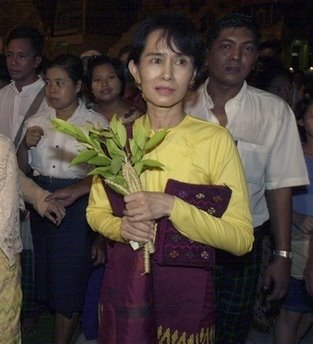


 Posts
Posts


