Asia Times Online :: China News, China Business News, Taiwan and Hong Kong News and Business.: "Various China-related democracy issues need to be integrated through a broad and overarching theme and coordinated from closer locations in Asia. This was the latent international strategy that emerged from the Third International Conference on Global Support for Democratization in China and Asia (GSDCA) which was held last week in Tokyo."
Friday, August 22, 2008


Thursday, August 21, 2008
Myanmar's Suu Kyi skips meeting with U.N. envoy | International | Reuters(MORE)
Myanmar's Suu Kyi skips meeting with U.N. envoy | International | Reuters: "YANGON (Reuters) - Detained Myanmar opposition leader Aung San Suu Kyi failed to attend a scheduled meeting with a U.N. special envoy on Wednesday, prompting speculation she is taking a stand against the junta's treatment of the emissary."
MY OPINIOM-I think that Daw Aung San Suu Kyi is showing that she is not a toy playing by military junta.
(Phone Hlaing)
ASEAN considers observer status for Burma's elected government(MORE)
ASEAN considers observer status for Burma's elected government: "ASEAN members meeting in Singapore this week will consider the admission of members of Burma's civilian government in exile as observers of the group."
ဒီေန ့ေျပာခ်င္တာ
ျပႆနာေတြကိုေျဖရွင္းရာမွာ ပညာေရးဟာ အေကာင္းဆုံးလက္နက္ပဲ ျဖစ္ပါတယ္။
နားလည္မႈက မုန္းတည္းမႈကိုဖယ္ရွားနိုင္သလိုပဲ၊ ပညာေရးကေႀကာက္ရံြ ့မႈကိုဖယ္ရွားပစ္ေပးပါလိမ္ ့မယ္။
အသိဥာဏ္ေခါင္းပါးျပီး မိုက္မဲတာဟာ တစ္ခါတရံ ေႀကာက္ရံြ ့မႈရဲ့ အႀကိဳးဆက္လည္း ျဖစ္နိုင္ပါတယ္။
(ေဒၚနယ္ထရန္ ့)
Wednesday, August 20, 2008
Leading insurers Chubb and XL Capital quit Burma - Telegraph(MORE)
Leading insurers Chubb and XL Capital quit Burma - Telegraph: "Two leading insurance companies are pulling out of the Burmese market in response to human rights offences being committed by the country's military dictatorship.
The insurers, Chubb and XL Capital, announced their withdrawals in separate statements today.
It comes just three weeks after a Burma Campaign UK report, Insuring Repression, which highlighted the flow of billions of dollars from insurance companies to the Burmese regime."
Russia claims pullback but forces move other way - Yahoo! News(MORE)
Russia claims pullback but forces move other way - Yahoo! News: "By MIKE ECKEL, Associated Press Writer
Tue Aug 19, 1:56 AM ET
GORI, Georgia - Russia said Monday it had begun withdrawing from the conflict zone in Georgia, but it held fast to key positions and sent some of its troops in the opposite direction — closer to the Georgian capital.
ADVERTISEMENT
Russian troops and vehicles roamed freely around the strategically located central city of Gori, Russian forces appeared to blow up the runway at a military base in the western town of Senaki.
There were few signs Russia was following the terms of a cease-fire to end the short war, which has driven tensions between Russia and the West to some of their highest levels since the breakup of the Soviet Union."
Taiwan Wants To Force XP Out Of Retirement - Microsoft Blog - InformationWeek(MORE)
Taiwan Wants To Force XP Out Of Retirement - Microsoft Blog - InformationWeek: "I like XP, I really do. It's got a lot of life in it, and runs on systems where Vista can't even fit. But Taiwan's announcement of an antitrust investigation into Microsoft (NSDQ: MSFT)'s retirement of XP is just crazy.
Let's review where XP stands. Although you can't buy a retail license of XP as of June 30, you can buy Vista Business or Vista Ultimate licenses and exercise the XP downgrade rights. Some major OEMs like Dell (Dell) are are even listening to their customers and doing the downgrade at the factory. So although XP isn't as easy to get or as cheap as it once was, it's still available."
Mekong Flood Warning System Fails(MORE)
Mekong Flood Warning System Fails: "BANGKOK — As communities along the Mekong River face some of the worst floods in decades, a flood warning network that combines scientific and local knowledge is under scrutiny. Activists say it has failed its first major test."
The End of the Post-Soviet Era
http://www.themoscowtimes.com/article/600/42/369956.htm
"19 August 2008
By Sarah E. Mendelson
The dream that many inside and outside Russia had since the Soviet collapse -- to see Russia integrated with the West -- was crushed long before Russian tanks rolled into Georgia. The Kremlin's assault on democratic institutions such as the press, political parties and the parliament began years ago. The controlled process by which Prime Minister Vladimir Putin moved from president to prime minister was the defining moment. It marked the end of the post-Soviet era."
Pundits and policymakers in Washington are now scrambling frantically to figure out what a new U.S. policy should look like. Will the United States be successful in forging this new policy together with Europe, or will there be divisions? No one I have talked to has good answers yet to these questions, but surely the answers will come through analyzing what type of power Russia is and what type of power the United States wants to be.
Under Putin, Russia has been advancing a sort of "benevolent authoritarianism." The government has engaged in elaborate soft-power projects at home and abroad, such as the Nashi youth movement, Russia Today satellite television and rewriting history books. This effort seemed to be paying off. Many world leaders view Russia as a status quo power -- one that is needed to help solve some of the world's most difficult problems, such as Iran and North Korea. At the same time, they tend to dismiss Russia's human rights abuses, violations of international law and poor governance inside the country.
To Our Readers
The Moscow Times welcomes letters to the editor. Letters for publication should be signed and bear the signatory's address and telephone number.
Letters to the editor should be sent by fax to (7-495) 232-6529, by e-mail to oped@imedia.ru, or by post. The Moscow Times reserves the right to edit letters.
Email the Opinion Page Editor
The quandary for the United States is that it has only two models to choose from: a containment policy from the Cold War era or a policy of integrating Russia as used in the post-Soviet era. Neither approach is appropriate today.
I do not believe that Russia currently poses an existential threat to the United States or the West as it did during the Cold War, despite its nuclear arsenal. But evidence suggests that the Kremlin is interested in shaping a new international order and taking advantage of the decline in U.S. influence worldwide. President Dmitry Medvedev's July 15 speech calling for a new international collective security arrangement is one such example.
The United States must proceed with enormous caution. On the one hand, it is true that existing institutions such as the Organization for Security and Cooperation in Europe and the Council of Europe are feeble. On the other hand, Russia has exerted much greater influence on every multilateral institution to which it is a party than the reverse. The Kremlin has successfully used divide-and-conquer strategies numerous times on numerous issues, including at the United Nations, where it (together with China) successfully delayed international responses to Darfur, Burma and Zimbabwe. The Kremlin is sending a clear message to the world: Countries can commit horrendous human rights abuses with impunity.
At a minimum, this lack of response has had an enabling quality. While violating another state's sovereignty, Russia advances a 19th-century approach to international affairs. It views democracy as a rather weak system and unsuitable for Russia. It also considers the elastic sovereignty of the European Union soft and ineffective. The Kremlin has betted on international ambivalence toward Russia's crackdown on the opposition and its monopolization of power, and I fear that it made a good bet.
The West has not yet identified what ought to replace containment or integration, but diplomacy will be critical to the task. Moscow will be largely successful in undermining the human rights and democracy agenda until and unless the United States adopts smarter policies and coordinates with Europeans. There should be no gap between Washington and its European allies on these issues.
U.S. Defense Secretary Robert Gates delivered a speech months ago in Kansas about the need for enhanced U.S. capacity "to engage, assist and communicate with other parts of the world." His points about civilian national security capacity are relevant for a new U.S. policy on Russia. This new policy, which has yet to be constructed, will not be mainly about military might. Instead, as Gates points out, the United States has weakened and even obliterated many policy instruments and agencies that it will need in order to face future Russian challenges.
Going forward, there will be much speculation about what the new policies toward Russia should look like. For the next decade, we will most likely see a continuation or strengthening of Putin's policies, with Russia slipping farther from the West and with the Kremlin forming its own set of allies and networks. Yet in contrast to the myth that Putin is modernizing the country, the government structure is rotten with corruption.
Putin's platform cannot respond to the challenges Russia faces internally. And here may lie the seeds of a future democratic Russia. Maybe within a decade -- maybe two decades -- Russians will become tired of the manufactured Soviet nostalgia we see today and begin to demand governance structures that are more consistent with the dreams many of us had when the Soviet Union collapsed. While the role of outsiders will likely be modest in this future transformation, we should be thinking about how to get back to that ideal. It is in both U.S. and Russian national security interests to do so.
Sarah E. Mendelson is director of the Human Rights and Security Initiative at the Center for Strategic & International Studies in Washington.
BURMA NEWS: MYANMAR /TIBET NEWS , BURMA DISASTER NEWS, FREE BURMA / TIBET NEWS: Heavy Rains, Chinese Dams Lead to Flooding(MORE)
BURMA NEWS: MYANMAR /TIBET NEWS , BURMA DISASTER NEWS, FREE BURMA / TIBET NEWS: Heavy Rains, Chinese Dams Lead to Flooding: "Tuenjai said the flooding is a long-term concern for people living along the Mekong River which run through China, Thailand, Burma, Laos, Cambodia and Vietnam. one of the main problems, she said, is a series of river dams built by China in the past decade, according to a report on the Mekong Post Web site."
China undeserving ,値しない中国
China undeserving | pressconnects.com | Press & Sun-Bulletin:
"China is a major trade partner, major arms supplier and major defender of the junta in the international arena, especially in the United Nations Security Council. The military junta in Burma is still in power, despite strong and continuous resistance by the people of Burma, because of China´s support."
" 中国は国連安全保障理事会の国際的な場の会議の主要な貿易相手国、主要な武器の供給業者および主要な擁護者、特にである。 ビルマの軍の会議は中国サポートのためにビルマの人々によって強く、連続的な抵抗にもかかわらず力に、まだある。
China has provided billions of dollars in weapons, used its veto power at the U.N. Security Council to paralyze peaceful efforts at change, and unilaterally undermined diplomatic efforts to free the world's only imprisoned Nobel Peace Prize recipient, Aung San Suu Kyi, and all political prisoners.
中国はU.Nの安全保障理事会で拒否権使用される武器のドルの十億を変更で平和な努力を無力にする提供し世界を放すための一方的に下を掘られた外交的な取り組みはノーベル平和賞受け手、Aung San Suu Kyiおよびすべての政治犯だけを投獄した。
I think morally it is premature to allow China to host the Olympics. We cannot overlook policies that violate the conscience in favor of a facade of peace. That would be too convenient and irresponsible for the rest of the world to do.
私は道徳的に中国がオリンピックを催すように早期であることを考える。 私達は平和の正面を支持して良心に違反する方針を見落とすことができない。 それはするべきその他の国々のために余りに便利、責任のない。
Ten-Seng Guh
Bronze Age and Iron Age artifacts unearthed in Myanmar | Latest News(MORE)
Bronze Age and Iron Age artifacts unearthed in Myanmar | Latest News: "New Delhi, August 18 (ANI): A team of archaeologists has unearthed ancient artifacts from the Bronze Age and the Iron Age in Myanmar.
Found in Thazi township in the central Mandalay division by the Archaeological, Natural Museum and Libraries Department under the Ministry of Culture, the artifacts provide an evidence of transition from Bronze culture to Iron culture in Myanmar."
ReliefWeb » Document » Myanmar: Cyclone-hit farmers switch to fishing(MORE)
ReliefWeb » Document » Myanmar: Cyclone-hit farmers switch to fishing: "Meanwhile, agriculture experts warn that the more farmers face problems with equipment and seeds, the greater the chance that the country will face a rice shortage in future. They are calling on the international community for greater assistance.
'It's not a good sign to see the farmers fishing instead of working on a field,' one local agriculture expert, who preferred anonymity, warned. 'Their basic needs should be secured so they can concentrate on their [farming],' he said."
Free Preview - WSJ.com
Free Preview - WSJ.com: "A New Breed of Monk Rises in Myanmar
By a WSJ Staff Reporter
Word Count: 1,160
SAGAING, Myanmar -- Sitagu Sayadaw sits on a raised platform, three visitors kneeling below him, and explains the source of his power as a Buddhist monk. 'I don't have any guns but I have very strong weapons: love, kindness and compassion,' he says, as two novice monks massage his feet.
He also possesses two traits that have propelled him to the equivalent of monastic superstardom in this Buddhist but military-run country: a knack for self-promotion and a keen sense of self-preservation.
Mr. Sitagu Sayadaw represents a new breed of monk who eschews traditional asceticism in favor of tactics more familiar ..."
SFFB Investing in his neighbors: A former dentist helps fellow refugees learn the mysteries of money management(MORE)
SFFB Investing in his neighbors: A former dentist helps fellow refugees learn the mysteries of money management: "Most of the 4,000 to 5,000 Burmese immigrants in Fort Wayne, even those who were professionals or had college educations before leaving their native country, earn modest incomes. Kyi said many work in factories or slaughterhouses. Hundreds of women who sewed for Vera Bradley suppliers lost their jobs recently. Some women find work as cooks or servers.
Another obstacle is the absence of many traditional financial services in Burma. Most Burmese know little or nothing about retirement savings, insurance, home mortgages or interest rates."
Junta commander: Thailand violating Burmese sovereignty — Shan Herald Agency for News (S.H.A.N.)(MORE)
Junta commander: Thailand violating Burmese sovereignty — Shan Herald Agency for News (S.H.A.N.): "Junta commander: Thailand violating Burmese sovereignty
In a public speech given to the local officials and people yesterday at a location in Shan State’s Mongton township, opposite Chiangmai, the Burma Army commander of the Triangle Region Command had charged Thailand of “violating the territorial integrity” of Burma, according to sources on the border.
19 August 2008"
U.N., Myanmar resolve aid currency problem, in theory(MORE)
U.N., Myanmar resolve aid currency problem, in theory: "BANGKOK (Reuters) - The United Nations and Myanmar have resolved a problem with distorted official exchange rates that led to U.N. losses of more than $1.5 million in the delivery of aid to survivors of Cyclone Nargis. U.N. officials said on Monday the military government had agreed to let outside donors pay local companies directly and in U.S. dollars, rather than via the official, long-winded system involving foreign exchange certificates.BANGKOK (Reuters) - The United Nations and Myanmar have resolved a problem with distorted official exchange rates that led to U.N. losses of more than $1.5 million in the delivery of aid to survivors of Cyclone Nargis. U.N. officials said on Monday the military government had agreed to let outside donors pay local companies directly and in U.S. dollars, rather than via the official, long-winded system involving foreign exchange certificates."
Myanmar natural gas sales up 25 percent: Financial News - Yahoo! Finance(MORE)
Myanmar natural gas sales up 25 percent: Financial News - Yahoo! Finance: "YANGON, Myanmar (AP) -- Myanmar's natural gas sales soared nearly 25 percent to $2.5 billion in the financial year through March, according to official statistics."
Gambari has Big Agenda during Visit(MORE)
Gambari has Big Agenda during Visit: "Burmese dissidents called for UN Special Envoy to Burma Ibrahim Gambari to call for tripartite talks with opposition groups, the release of political prisoners and to deliver frank accounts of his meetings with opposition groups and Burmese officials"
Is Suu Kyi Trying to Get the Message Out?(MORE)
Is Suu Kyi Trying to Get the Message Out?: "Neighbors of the democracy leader Aung San Suu Kyi said a new message appeared last month on a large outdoor signboard in her compound, saying, “All martyrs must finish their mission.”"
Tuesday, August 19, 2008
Epoch Times - Burma's ‘Blood Jade' Used in Olympic Medals?(CLICK FOR DETAIL)
Epoch Times - Burma's ‘Blood Jade' Used in Olympic Medals?: "Burmese democracy activists are imploring visitors to the Olympics to boycott merchandise made from “Blood Jade,” a name given to high-quality jade mined under oppressive and dangerous conditions in Burma and sold for export by the country's military Junta.
In a report entitled, “Blood Jade: Burmese Gemstones and the Beijing Games,” released by the All Kachin Students and Youth Union (AKSYU), as much as 90 per cent of jadeite (a variety of jade) sold in China comes from mines in Kachin State along the Burma-China border."
Begging won't save Burma - 頼むことはビルマを救わない
The Boston Globe
Begging won't save Burma,頼むことはビルマを救わない
August 18, 2008
THE UNITED Nations can be an irreplaceable forum for diplomacy and a provider of humanitarian assistance. But this parliament of Nations has repeatedly failed to live up to its responsibility to protect populations from criminal regimes. Nowhere has that failure been more flagrant than in Burma, where a vicious military junta continues to deceive and defy the world body."
国際連合は外交のためのかけがえのないフォーラムおよび人道的支援の提供者のどれである場合もある。 しかし国家のこの議会は繰り返し刑事政体から人口を保護する責任に沿い損った。 どことも分からぬ所に不道徳な軍の会議が世界body."を欺き、挑み続けるビルマでより目にあまるその失敗がある、;
The junta's disregard for UN Secretary-General Ban Ki-moon and his special envoy for Burma, Ibrahim Gambari, will be at center stage this week, when Gambari visits that sad land. As in his previous visits, Gambari can be expected to implore the same generals who callously turned away offers of relief for cyclone victims last spring to release political prisoners and bring about a reconciliation with the National League for Democracy, the overwhelming winner of the last free elections held in Burma, in 1990.
ビルマの国連事務総長Ban Ki-moonおよび彼の特使、イブラヒムGambariのための会議の無視は、センター・ステージにこの週、時悲しい土地Gambariの訪問である。 彼の前の訪問でように、Gambariは解放の政治犯に堅くサイクロンの犠牲者のための救助の提供を去年の春回し、民主主義のための国民リーグとの約和解を持って来る同じ大将、1990年にビルマで、行なわれる最後の自由な選挙の圧倒的な勝者を懇願すると期待することができる。
But Gambari's mission is not merely to beg junta leaders for goodwill gestures. His mandate from the UN General Assembly lists two clear and measurable "indicators of achievement" for the year 2008. One is to obtain the release of Nobel Peace Prize winner Aung San Suu Kyi from house arrest - and of other political prisoners from prison. The second is to bring about "reopening of the offices of the National League for Democracy throughout the country."
しかしGambariの代表団はただ好意の意思表示のために会議のリーダーを頼むことではない。 国連総会からの彼の命令は明確な2つおよび測定可能な"をリストする; achievement"の表示器; 2008年のため。 1つは自宅軟禁からのノーベル平和賞勝者Aung San Suu Kyi -と刑務所からの他の政治犯の解放を得ることである。 第2 "をもたらすことである; country."中の民主主義のための国民リーグのオフィスの再開;
If Gambari fails to fulfill this mandate, he should explain why. The UN should then seek more effective means of protecting citizens of Burma from a regime that murders and rapes its own people and conscripts more child soldiers than any other country. In place of fruitless dialogue, the UN will have to explore an arms embargo, banking sanctions, and serious pressure from Burma's Asian neighbors.
Gambariがこの命令を達成しなければ彼はなぜ説明するべきである。 国連はそれから殺害し、自身の人々を強姦し、そして他のどの国もよりより多くの子供の兵士を徴集する政体からビルマの市民を保護するより有効な方法を追求するべきである。 無益なダイアログの代わりに、国連は武器禁輸をなり、ビルマのアジア人の隣人からの認可探検しなければおよび深刻な圧力を取引する。
© Copyright 2008 Globe Newspaper Company.
Detained Suu Kyi meets lawyer as release speculation grows : Asia World
Detained Suu Kyi meets lawyer as release speculation grows : Asia World- "Yangon - Myanmar opposition leader Aung San Suu Kyi has been permitted a rare meeting with her lawyer, the second this month, giving rise to speculation about her possible release, opposition party sources said on Sunday. Suu Kyi, who has been under continuous house arrest for the past five years, was allowed to meet her lawyer Kyi Win for five hours on Sunday morning, according to National League for Democracy (NLD) spokesman Nyan Win. An earlier meeting took place on August 8, the first since her detention."
Suu Kyi, who heads the NLD party that won the 1990 general election, has been kept in near complete isolation since May 30, 2003, when she was charged with disturbing the peace by campaigning in the provinces.
Under Myanmar emergency law political prisoners can only be kept under detention for a maximum of five years on charges of disturbing the peace but Suu Kyi's detention was last May extended for another six months, raising legal questions.
Myanmar's ruling junta has been sending mixed signals about the duration of Suu Kyi's incarceration. There have been hints that she may be released within six months, but many observers believe it is unlikely that she will be released before the next general election, slated for 2010.
The NLD party won the 1990 polls by a landslide, but the military government, which has ruled since 1962, refused to accept the results of the poll. Suu Kyi has been kept under house arrest for around 13 of the past 18 years.
Suu Kyi, who won the Nobel Peace Prize in 1991, is widely seen as Myanmar's democracy icon, and is one of the few opposition leaders with enough popular and international support to undermine the military's monopoly of political power in the south-east Asian nation.
BURMA DEMOCRACY & DEVELOPMENT: Intelligence: Barraging or Compromising,攻撃するか、または妥協
"Regime hardliners and moderates alike reviewing current NCUB’s initiative of Credential Challenge against the regime at UN, said close regime associate.
" 同様に国連で政体に対してクレデンシャルの挑戦の現在のNCUBの率先を見直している政体の強硬派および穏健派は近い政体の仲間を言った。
Rebutting for NCUB, they are formulating to secure their credibility and forced legitimacy at the referendum on May 10th 2008. Now the SPDC has to reduce the pressures, reviewing whether they would face the UN unseat campaign or compromise with Daw Aung San Suu Kyi."
NCUBのために反駁して、それらは2008年5月10日の国民投票で信頼性および強制合法性を保証するために作り出している。 今度はSPDCは国連に席を奪うDaw Aung San Suu Kyiのキャンペーンか妥協の直面するかどうか見直す圧力を減らさなければならない。
Regime’s seven-step roadmap must be smooth and peaceful after considered top 88 generation leaders, monks, political activists and NLD activists are being detained or jailed. However, regime also faces dilemma of social and economic downturn, and Nargis cyclone impact on the other hand.
政体のseven-step道路地図は滑らかでなければなり、考慮された上の後で平和88人の世代別リーダー、修道士、政治運動家およびNLDの運動家は引き留められるか、または拘留されている。 但し、政体はまた一方で社会的で、経済停滞のジレンマ、およびNargisのサイクロンの影響に直面する。
In terms of facing reality, regime needs international assistance as well as recognition of their legitimacy but hardly to get approval without compromising with Daw Aung San Suu Kyi. The pressure of unseating the SPDC at UN is not only a major threat for them but UN, ASEAN and China are being indirectly pressured, close SPDC associate said.
表面仕上げの現実の点では、政体は合法性の認識と同様、国際的な援助をDaw Aung San Suu Kyiと妥協しないでほとんど承認を得るために必要としない。 国連のSPDCの席を奪うことの圧力はそれらのためのただの主要な脅威であるが、国連、ASEANおよび中国は間接的に、言われる近いSPDCの仲間圧力をかけられている。
They were eager to know relations between NCUB and NCGUB-US based exile government would or wouldn’t join the unseating campaign, source close to regime informed. One of the NCGUB ministers was monitored for this challenge.
それらはNCUBとNCGUB-USによって基づいた流浪の政府間の関係が席を奪うキャンペーン、知らせられた政体の近くの源をか、または結合しないことを知って熱望していた。 NCGUBの大臣の1つはこの挑戦のために監視された。
They seemed to be very serious about NCGUB would join this campaign because of military affairs security officers were eager to know one of the ministers of NCGUB, two sources claimed.
それらは軍事警備員がNCGUBの大臣の1人を知って熱望している要求された2つの源のために結合するこのキャンペーンをNCGUBについて非常に深刻ようである。
UN office also closely monitors the stance of NLD for unseating SPDC, it became a serious agenda for UN if oppositions will bring the issue as reality. The UN mandate is to narrow down the differences between pro-democracy groups and military generals.
オフィスがまたSPDCのそれの席を奪うためのNLDのスタンスを厳密に監視する国際連合は反対が現実として問題を持って来れば国連のための深刻な議題になった。 国連命令は民主化のグループと軍大将の違いを狭くすることである。
Normally, NLD and other pro-democracy groups requested for having a dialogue with NLD, reviewing constitutions and freeing political prisoners included Daw Aung San Suu Kyi. But this time what NCUB’s approach is different and which is pressuring and not requesting or begging, said regime’s source.
通常、NLDのダイアログを持っていること、憲法を見直すことおよび政治犯を放すために要求されたNLDおよび他の民主化のグループはDaw Aung San Suu Kyiを含んでいた。 しかしどんなNCUBのアプローチが異なって、どれが圧力をかけて、要求しないか、または頼んでいないか今回は、政体の源を言った。
Thus, UN, ASEAN, China and SPDC might lose their wait and see strategy and plans to allow regime to lead the country if campaign’s momentum becomes increasing.
従ってキャンペーン運動量が増加していればようになれば、国連、ASEAN、中国およびSPDCは様子を見政体が国を導くように作戦および計画を彼等の失うかもしれない。
Posted by BURMA DEMOCRACY & DEVELOPMENT at 8/18/2008 10:20:00 AM
The Assam Tribune Online
The Assam Tribune Online: "Experts worried over fall in rice output
SURAJIT kHAUND
GUWAHATI, Aug 17 – Rice production in India and several South East Asian countries has been dwindling gradually. Vietnam, Myanmar and Laos, which are known as major rice bowls in Asia, has been encountering the problem for the past several years. The Indian Government has already imposed restriction on export of rice. To overcome the problem, these countries too have already started a slew of measures."
Sunday, August 17, 2008
Desperate and tainted: Malaysia's leadership crisis | theage.com.au
Desperate and tainted: Malaysia's leadership crisis | theage.com.au: "Martin Jacques
August 17, 2008
Page 1 of 2 | Single Page View
COMMENT
A FEVERISH atmosphere now grips Malaysia. The country is awash with rumours. Until the resignation in 2003 of prime minister Mahathir Mohamad, politics were entirely predictable. Now they are becoming highly unpredictable.
Malaysia is a great Asian success story. It has enjoyed a growth rate of up to 8% for much of the past 20 years, and the fruits of prosperity are everywhere. Malaysia is the economic star of the Muslim world. The architect of this economic transformation was Mahathir, but since he stepped down, the country has been engulfed by growing doubts about his legacy and new priorities."
FT.com / Home UK / UK - The money heads for Panama and Singapore
FT.com / Home UK / UK - The money heads for Panama and Singapore: "By Vanessa Houlder in London and Haig Simonian in Zurich
Published: August 16 2008 03:00 | Last updated: August 16 2008 03:00
Tax dodgers are transferring money from Liechtenstein to Panama, Singapore and other secretive offshore centres, intelligence from foreign tax authorities shows.
One official said the switch had been prompted by the greater focus on evasion after the theft of client details from LGT and Liechtensteinische Landesbank.
The banks themselves have said little about the extent of outflows from the principality. LGT revealed earlier this year it had suffered only limited damage. However, updated information when the two banking groups report first-half results later this month should show accelerated withdrawals, according to some local financiers."
Global Economy Shifting Center | Article Discovery - News Analysis
Global Economy Shifting Center | Article Discovery - News Analysis: "Most investors know by now that the economic center of the world is in the process of shifting from West to East. Transfers of funds to pay for crude oil imports are a big part of this shift as far as America is concerned. You can not pay out over seven hundred billion dollars a year to oil exporting nations without creating a huge balance of payments problem.
The following list of “tallest, biggest, and largest” shows in a down to earth basic way the results of the global economy shifting its center. These interesting facts are from an author named Ferrez Zagawriteit. Just look at some of these. Some are trivial and some are important. However, all together they paint a pretty stark picture for Westerners staying on top of the economic heap in the 21st century :
· World’s tallest building – Dubai, UAE
· Largest publicly trading company – Beijing, China
· Biggest oil refinery - Under construction in India
· Largest passenger airplane - Airbus - Europe
· Largest investment fund on the planet - Abu Dhabi, UAE
· Biggest movie industry - Bollywood, India. (Not Hollywood)
· Largest Ferris wheel - Singapore
· Largest casino - Macau. (Macau actually just passed Las Vegas in gambling revenues.)
· The Mall of America in Minnesota was once one of the largest shopping malls in the world. Now it doesn’t even make the top 10."
FT.com / Home UK / UK - Japan unlikely victim of global economic woe
FT.com / Home UK / UK - Japan unlikely victim of global economic woe: "By Michiyo Nakamoto and Chris Giles in London
Published: August 14 2008 03:00 | Last updated: August 14 2008 03:00
Japan's economy had been seen as relatively immune to the ravages of the credit crisis hitting the US and Europe.
Its banks were much healthier than those on either side of the Atlantic; it was benefiting from an export boom to the rest of Asia; and its economy grew unexpectedly quickly in the first quarter of the year, recording an expansion of 0.8 per cent, four times the rate of anaemic US growth.
But although a bad quarter was expected - and there was an almost equally bad period exactly a year earlier - the contraction of Japan's gross domestic product by 0.6 per cent in the second quarter has jolted everyone out of any complacency that the world's second largest economy could continue to operate untouched by events elsewhere."
Virtual Collector: Analysis: Russia is a foe to be reckoned with
Virtual Collector: Analysis: Russia is a foe to be reckoned with: "Last month, Dmitry Rogozin, Russia's hawkish ambassador to Nato refused to reveal how the Kremlin would retaliate if Poland agreed to co-host an American missile defence shield.
But he did promise that the response would come as a 'pleasant surprise' for the West.
Just as he intended, the Kremlin's reply was neither pleasant nor, entirely, a surprise.
Alongside the ambitions of Georgia and Ukraine to join Nato, missile defence has been the principal source of tension between Moscow and the West. Vladimir Putin, the prime minister, has threatened to retrain nuclear missiles on Europe for the first time since Soviet times and Russia has already walked away from an arms treaty that was pivotal in ending the Cold War.
But the Russians have gone even further in their threats. Poland faces not just the prospect of having Russian missiles pointing in its direction but also risks '100 percent' a military attack. And not just any attack, if Gen Anatoly Nogovitysn is to be believed, but a nuclear attack."
Asian Energy: China's Energy Strategy: Panda or Dragon?
Asian Energy: China's Energy Strategy: Panda or Dragon?: "Until 15 years ago, China exported oil to neighbouring countries. Today, it has an almost insatiable appetite for the stuff. Since the Great Helmsman’s death in 1976, the People’s Republic has become the world’s second largest oil consumer (behind the U.S.) During those years Chinese consumption has quadrupled to about 7.7 million barrels per day while production – about 3.7 million barrels per day – has barely doubled.
The International Energy Agency thinks China will burn 16.5 million barrels per day by 2030, after buying 13.1million barrels abroad. Think about it: Saudi Arabia’s total output is now less than 11 million barrels per day."
Myanmar party hopes envoy visit will revive talks - International Herald Tribune
Myanmar party hopes envoy visit will revive talks - International Herald Tribune: "YANGON, Myanmar: Myanmar's main opposition party said Sunday that it hopes a visit this week by a U.N. special envoy will help restart stalled talks between pro-democracy leader Aung San Suu Kyi and the ruling military junta.
U.N. special envoy Ibrahim Gambari, who is promoting national reconciliation and democratic reform in Myanmar, is to spend five days in the country starting Monday."
Burmese exiles seem resigned to status quo
Burmese exiles seem resigned to status quo: "(08-17) 04:00 PDT Chiang Mai, -- Thailand - President Bush breezed through Thailand on his way to the Beijing Olympics last week and used the occasion to rail at the Burmese government - putting smiles on the faces of Burmese activists here.
This city, about 75 miles east of the Burmese border, is the capital of the Burmese resistance. And, as many Burmese noted, Bush's visit coincided with an important anniversary. On Aug. 8, 1988, Burma's military junta crushed the first major citizen uprising, killing 3,000 people.
'I want the people of your country to know, the American people care deeply about the people of Burma, and we pray for the day in which the people will be free,' Bush told a group of Burmese dissidents. The same day, first lady Laura Bush spent two hours visiting a Burmese refugee camp in Mae Sot, near the border."
Gambari begins a five-day visit to Burma
Gambari begins a five-day visit to Burma: "Mizzima News
Saturday, 16 August 2008 11:54
New Delhi — Ibrahim Gambari, the United Nations special envoy to Burma, on Friday has departed for a five-day visit to the Southeast Asian nation.
Gambari will arrive Rangoon on August 18 to begin his fourth visit since the Burmese military regime has crackdown on monk-led protests in September 2007."
UNDP provides loans to Myanmar cyclone-affected farmers - People's Daily Online
UNDP provides loans to Myanmar cyclone-affected farmers - People's Daily Online: "The United Nations Development Program (UNDP) has provided loans to farmers in a Myanmar cyclone-hit area to help them in their rehabilitation work including recultivation, the local weekly Voice reported Sunday."
What Lessons do we get from Georgia in the Burmese Context?
Kanbawza Win
Now that the world media is highlighted by the Beijing Olympics and the conflict in Georgia, and as a teacher of the history of Imperialism may I take this opportunity to highlight some of the facts and figures of the Georgia crisis especially to the pro ethno democratic forces and draw lessons as we can no longer afford the trial and error method. A country living under the shadow of the evil Chinese empire must be able to see things clearly and visualise all the trappings for the future of Union of Burma.
Washington is no innocent bystander in this bloody struggle, which provoked a response by Russia that now dominates the news. Long before Aug. 8, Georgia, a country in the Caucasus Mountains south of Russia, attacked a small autonomous region known as South Ossetia. Georgia's military assaulted the city of Tskhinvali the capital of Ossetia destroying the parliament building, the university and the main hospital. According to AP interviews with survivors, there was hardly a single building left undamaged. Eduard Kokoity, the South Ossetian leader, estimated that more than 1,400 civilians were killed in the assault (Reuters, Aug. 8). Russian military forces then struck back at Georgia's military bases, airfields and the main Black Sea port of Poti. Most news coverage in the West, however, is slanted to give the impression that Russia initiated the conflict with Georgia.
Of course Washington does not claim credit for the invasion of South Ossetia ordered by Georgian President Mikheil Saakashvili, especially now that his forces have been routed. But the White House made clear its political support for Saakashvili and had sent Condoleezza Rice, the Secretary of State. Georgia has been closely allied with the U.S. military in its war in Iraq.
Everybody knows the U.S. and NATO have heavily armed and trained the Georgian military. There are U.S. military "advisers" in Georgia today. A thousand U.S. Marines from the Third Battalion, 25th Marine Regiment just finished three weeks of joint manoeuvres there called "Operation Immediate Response." In the period leading up to Georgia's attack on South Ossetia, the Pentagon had supplied Georgia with hundreds of tanks, armoured vehicles, artillery weapons, rocket launchers and dozens of combat helicopters and anti-aircraft missile systems. Hundreds of other weapons systems have poured in from other NATO members and from Israel. (Interfax, Aug. 7) In exchange Georgia had provided the third-largest military force in the U.S. occupation of Iraq. But on Aug. 10 the U.S. began ferrying the 2,000 Georgian troops out of Iraq to the war zone in Georgia. Along with the "advisers" and U.S. troops sent for manoeuvres, U.S.-origin mercenaries and privatized military trainers function in Georgia. Tens of thousands of "civil society" operatives, international consultants, policy experts and technical assistants operate in Georgia, Ukraine and other former Soviet Republics.
Now in the Burmese context, Prof. Dr Khin Mg Kyi has said we are but in name, that Burma is an autonomous region of China, the Generals has secretly sell the country long ago to the Chinese in return to support the Junta to maintain in power. Hence if we were to take the covert support from the West, particularly form the US, to make a coup de grace which I have highlighted in my previous article, what will China do is food for thought? The country under the occupation of the Chinese army will be worst that the marauding Burmese Generals. Shall we jump out of the frying pan into the fire? But this does not mean that we have to accept the status quo.
The media's war reporting on Georgia's invasion of South Ossetia has echoed the kind of misinformation that characterized the reporting on the U.S. invasion of Iraq. One must know that Georgia is at the centre of U.S. imperialism' s moves to control the oil-rich Caspian Sea region. Georgia is the energy highway for Europe, with at least two major pipelines passing though it. These pipelines are emerging to rival the Russian oil pipelines that have been Europe's primary source for natural gas and oil. Until 2005, the only pipeline from the Caspian oil centre of Baku in Azerbaijan was through Russia. In 2005, the Baku-Tbilisi- Ceyhan (BTC) oil pipeline opened. Owned by British Petroleum and Unocal, this pipeline goes through Georgia to the Turkish port city of Ceyhan. The BP consortium also owns the Baku-Tbilisi- Erzurum pipeline, which opened in 2007. Another pipeline, named Western Early, goes through Georgia passing the border of South Ossetia to the Georgia port city of Supsa. Hence s the oil that was once the most valuable resource of the former Soviet Union is now going to market through facilities controlled by U.S. and its allies.
With Iraq's oil resources conquered, and Iran's under threat of blockade or bombardment, the U.S. is determined to also control the Caspian oil fields. By removing Russian control over these oil fields, the U.S. would deliver a major blow to the possible emergence of Russia as a capitalist power. For all its flowery words of democracy and freedom, the U.S. ruling class has no intention of freeing Burma or allowing Russia to become an imperialist rival, like Europe and Japan. The U.S. has been working covertly and overtly to break up Russia and the states that were formerly part of the Soviet Union, concentrating on the states around the Caspian oil fields. The Caspian Sea has two huge oil fields. One is east of Baku. The other is the Tengiz oilfield, on the Caspian's northwest shore in Kazakhstan. In addition there are massive reserves of natural gas throughout the Caspian region. It is the primary supplier of natural gas to Europe.
The known reserves of Caspian oil are larger than the oil fields of Nigeria or Libya, putting the Caspian oil fields in the same league as the fields of Iran or Kuwait.
A consortium of 11 major oil corporations set up outposts on the Caspian. Atlantic Richfield, Chevron, Exxon, Mobil, Pennzoil, Philips Petroleum, Texaco and BP Amoco spent billions of dollars buying up Soviet-era oil interests and drilling rights. But the Caspian Sea is landlocked. The oil must be transported out of the region by pipeline. Whoever controls the pipelines will ultimately control the oil. South Ossetia is but one of the targets.
Within the United Nations Security Council, U.S. and British representatives blocked a Russian-drafted resolution calling on Georgia and South Ossetia to immediately put down their weapons. The U.S. rejected the three-sentence statement that would have required both sides "to renounce the use of force." It was a clear confirmation of U.S. support for Georgia's continued "use of force" against the small Ossetian nationality. However, Russia succeeded in repelling Georgia's invasion of South Ossetia. So as of Aug. 13, Georgia and Russia agreed to a "peace plan" brokered by French President Nicolas Sarkozy.
This is the true story, at least from my humble perspective. The point which I am driving it is that will the Chinese stand by now that the construction of the oil pipe line from Arakan to Kunming is being implemented? With the current situation in Burma, it will not be so much of a problem to deliver a coup de grace to the Burmese Junta. But after that what? Has the ethnics and the pro democracy group has come to a broad understanding? The ethnics have their own fighting force whereas the pro democracy has the masses. Have they ever made an attempt to thrash out their different perspective for a common good of the country?
The Burmese resistance (including the ethnics) have lacked the most important factor and the joke, that if two Burmese were put into the cell they will form three political parties captures a shameful truth. In other words these numerous resistance group actions are indicating that they would prefer the Burmese military Junta then come to agreement with each other. Every resistance leader knows that once they become a united political force under one umbrella then the Junta will fall and yet they would not lift a finger to help that unity.
Until and unless these two groups have an understanding of each other, I don't see any bright future for the Union of Burma. We must present to the international community that we are the better alternative than the Junta. If the Maha Bama drives it to the position prior to 1962, surely the ethnic will not join and there is the danger of Balkanization. On the other hand the Chinese will give credence to the Maha Bama headed by the Junta and the Burmese revolution will be driven back for a couple of decades and the people will continue to suffer. I think Burmese democracy starts in our hearts and if we don't agreed and compromise with each other after more than half a century Burma will set up a record of being a century under the heels of the military. It is far better to reach a sort of understanding an agreement than relying on the imperialistic power or the evil empires or the cutthroat neighbouring countries as the example of Georgia unfold before our eyes.
Vancouver
-- ------------ --------- --------- --------- --------- --------- --------- --------- ------The Kanbawza is an online freelance or a free contributing media and distributing news, commentary and information from individuals, professional and non-professional journalists. The issue does not focus on one particular group people or region, anyone is free to join and work with TK as a voluntary or a free writer. TK believes in unity in diversity which all human being can work together for their common interests. Please send your article to thekanbawza@ gmail.com
__._,_.___
The New Straits Times Online........
The New Straits Times Online........: "THAUNG HTUN: 888 has dark significance in Yangon
Thaung Htun"
In Broken Economy, Burmese Improvise or Flee, 壊れた経済では、ビルマ語は即席に作るか、または逃げる
Washington Post Foreign Service
Saturday, August 16, 2008; A08
RANGOON, Burma -- For the crowds of young Burmese outside the Immigration and Customs Office here, the commodity of choice is a shiny, tomato-red, cardboard-stiff new passport.
ラングーン、ビルマ -- ここの移住および税関事務所の外の若いビルマ語の群集のために、選択の商品は光沢がある、トマト赤く、ボール紙堅く新しいパスポートである。
One recent morning, hundreds of men and women flooded in and out of the office, located on a rickshaw-crammed boulevard, or camped under umbrellas along the sidewalk to wait for their passport applications to be processed. Some scoured billboards that listed openings in garment factories, shipyards and other workplaces in Singapore, Thailand and Malaysia.
人もの1最近の朝、何百および女性は人力車詰め込まれた通りにあるか、または彼らのパスポート塗布を処理されるべき待つために歩道に沿う傘の下でキャンプされたオフィスを出入りしてあふれた。 ある人々はシンガポール、タイおよびマレーシアの衣服の工場、造船所および他の仕事場の開始をリストした掲示板を磨いた。
A pair of 22-year-olds took turns using each other's backs to fill out forms. Both said they hoped to go to Dubai, in the United Arab Emirates, to find jobs as hotel waiters for a year, maybe two.
組の22歳は記入するのに背部形作る互いを使用することを交代でした。 両方言われて彼らは多分2ドバイに、アラブ首長国連邦で、仕事を1年間ホテルのウエーターとして見つけるために行くことを、望んだ。
"It's like the collapse of the Berlin Wall," said a passing 29-year-old man, meaning the pent-up outflow of people. Unemployed for three years, he has yet to hear back about a passport application he filed last year.
" それはベルリンの壁、"の崩壊のようである; 人々の抑えた流出を意味している渡る29歳の人を言った。 3年間失業者、彼はまだ彼が去年ファイルしたパスポート塗布について聞くために持っている。
The run on the passport office reflects a social crisis at the heart of an economy in free fall.
パスポートオフィスの操業は自由な落下の経済の中心に社会的な危機を反映する。
Sixty years ago, Burma, also known as Myanmar, was among the wealthiest countries in Southeast Asia, outshining its neighbors with higher standards of living and greater social mobility. Its universities attracted students from across the region, and its rich stock of natural resources promised steady growth.
60年前に、ビルマ、別名ミャンマーは生存およびより大きい社会的な移動性のより高い標準の隣人を凌ぐ東南アジアの最も豊かな国間に、あった。 その大学は地域から学生を引き付け、天然資源の豊富な在庫は安定した成長を約束した。
But decades of mismanagement by military rulers who have kept as tight a grip on the economy as on their political power have sent the country to the bottom of regional and global rankings -- among the worst for poverty, health care and corruption. The education system has been deliberately weakened in response to students' anti-government organizing, and virtually all avenues to prosperity are controlled by senior generals.
しかし彼らの政権の経済のグリップを地方および全体的なランキングの底に送るために国を同様に堅く保った軍の定規による不始末の十年 -- 窮乏、ヘルスケアおよび堕落のための最も悪いのの中。 教育制度はstudents'に応じて慎重に弱まった; 繁栄への反政府組織、および事実上すべての道は年長大将によって制御される。
When the military seized power in 1962, it set the country on what it called the "Burmese Road to Socialism," confiscating private property and curtailing free enterprise. After a failed street uprising in 1988, there were limited moves toward liberalization. But today the government remains heavily involved in the economy, with military officers heading most state enterprises, often as a reward for political loyalty. A handful of enterprises known as "crony" companies for their closeness to the junta benefit from policies that promote monopoly.
"と呼んだことをの1962年のそれに軍の握られた力が国を置いた時; 社会主義、"へのビルマの道; 没収の私有地および自由企業を省略すること。 1988年に壊れる通りの反乱の後で、自由化の方に限られた移動があった。 しかし今日政府は政治忠誠のために報酬としてほとんどの国営企業の、頻繁に先頭に立っていて軍当局者が経済で重く含まれて、残る。 "として知られている一握りの企業; crony" 会議への彼らの近似のための会社は独占を促進する方針から寄与する。
"Our view is that Burma is an accident waiting to happen," said Mark Canning, Britain's ambassador to the country.
" 私達の眺めは"ビルマが起こるために待っている事故であることである; 缶詰になる言われた印国への英本国の大使。
Diplomats and analysts say that economic grievances could at any moment trigger another street revolt akin to the two major ones of the past twenty years. Both began among disaffected youth.
経済的な不満が過去の20年の物いつでも2専攻学生と同類別の通りの反乱を誘発できると外交官および分析者は言う。 両方とも不満を抱いた青年の中で始まった。
A student-led response to the overnight demonetization of small bank notes in 1988 evolved into a massive pro-democracy protest. And last August, a sharp rise in fuel prices and bus fares prompted thousands to take to the streets, including a young generation of Buddhists monks, who often are keenly aware of lay folk's financial difficulties because daily donations in their alms bowls decrease.
(Note by Phone Hlaing -FWUBC-It mean here that the monks came out for the people ,not for themselves.)
1988の小さい銀行券の夜通しの通貨廃止への学生導かれた応答は大きい民主化の抗議に展開した。 そしてこの前の8月の燃料価格およびバス代の急激な上昇は施しボールの毎日の寄付が減るので頻繁に置かれた民俗財政の難しさ鋭くに気づいている僧侶の若い生成を含む通りに、取るためにたくさんを促した。
修道士が人々のために出て来たこと中間それここに.Note by Phone Hlaing -FWUBC
Today, more than a third of children are malnourished, the average household spends up to 70 percent of its budget on food, and more than 30 percent of the population lives under the poverty line, according to United Nations estimates.
今日、子供の三番目より多くは栄養不良である、平均世帯は食糧に予算の70%まで、および最低生活線の下で国際連合の見積もりに従って人口生命の30%以上、過ごす。
At tea shops or grocery stalls, people pull out bricks of local bills to pay for basics in an economy that the International Monetary Fund estimates suffered inflation of 40 percent in 2007.
茶店か食料雑貨の停止で、人々はローカル手形の国際通貨基金が2007年に40%の苦しまれたインフレーションを推定する経済の基本原則の支払をするために煉瓦を引き出す。
Fuel rationing and price controls have insulated the country from much of the recent shocks to the world economy. Nonetheless, black market prices for gasoline and diesel fuel have continued to spiral upward in recent months, residents say. A cyclone three months ago that wrought havoc on the country's rice production areas has pushed the economy further toward desperation.
配分し、価格統制燃料は最近の衝撃の多くからの世界経済に国を絶縁した。 それにもかかわらず、ガソリンおよびディーゼル燃料のためのやみ市場の価格は最近の数か月の間に上向きに螺線形になり続けたと居住者は言う。 サイクロンは破れかぶれの方に3か月前に国の米の生産区域のその細工した破壊経済を更に押した。
So far, the generals have been able to largely shrug off Western sanctions, by dealing instead with India, China and Thailand, to which they funnel vast stores of natural gas.
これまでは、大将は天燃ガスの広大な店を漏斗で注ぐインド、中国およびタイを代りに取扱うことによって西部の認可を、受け流せた主として。
Revenue from energy sales is set to increase significantly once production begins at the offshore Shwe and Shwe Phyu fields, which are estimated to hold up to 10 trillion cubic feet of natural gas. South Korea's Daewoo International Corp. is partnering with Burma to develop the fields, and Chinese firms, including Sinopec and China National Petroleum Corp., have exploration projects underway in the country.
エネルギー販売からの収入は生産が10の兆立方フィートの天燃ガスに遅れるために推定されるShweおよびShwe沖合いのPhyu分野で始まればかなり増加するために置かれる。 南朝鮮Daewoo International Corp.はビルマと分野を開発するために組んで、Sinopecを含む中国の会社に、国でChina National Petroleum Corp.、進行中の調査のプロジェクトがあり。
Even without the new fields, sales of oil and gas topped $3.3 billion last year, with $2 billion in sales of gas to Thailand alone, according to Sean Turnell, a professor at Macquarie University in Sydney.
新しい分野なしで、の販売石油およびガスはシドニーのMacquarie大学で、ショーンTurnellに従って、単独でタイへのガスの販売の$2,000,000,000との$3.3十億を、教授去年越えた。
Those funds largely disappeared into the military's parallel universe of separate schools and hospitals, subsidized housing and the multimillion-dollar construction of a remote new capital, Naypyitaw, whose name roughly translates as "abode of the kings." It reportedly includes an artificial beach resort, golf courses and an air-conditioned zoo.
それらの資金は別の学校および病院の軍の平行宇宙、遠隔新しい首都、名前が"として大体翻訳するNaypyitawの助成金を支給されたハウジングおよび数百万ドルの構造に主として消えた、; kings."の従われる; それは伝えられるところによれば人工的なビーチリゾート、ゴルフコースおよび冷暖房がある動物園を含んでいる。
But 250 miles south of the junta's fantasyland, in the former capital, Rangoon, electricity functions erratically and abandoned government offices and colonial-era edifices molder and blacken in a peculiar form of urban leprosy. Decades-old cars sputter along with wires poking out and monsoon waters sloshing around below the passenger seats.
しかし会議のfantasylandの250マイルは南、前の首都で、不規則的にラングーン、都市ハンセン病の独特な形態で電気機能および断念された官庁および植民地時代の建物朽ち、黒くなる。 十年古い車は突くワイヤーおよび助手席の下でぼちゃぼちゃとかき回すモンスーン水と共に放出させる。
The junta sharply restricts car imports, which means that a 1988 Toyota Camry can sell for upwards of $20,000, according to local residents. A memory card needed to make a cellphone function costs anywhere from $2,000 to $3,000.
会議ははっきりと車の輸入高を制限する、従って1988年のToyota Camryが$20,000の上向きにのために販売できることを意味する地方住民に従って。 メモリ・カードは携帯電話を費用どこでも$2,000に$3,000から作用させる必要があった。
Official statistics on employment, and most other economic indicators, are notoriously unreliable, but analysts and Burmese residents say unemployment -- and underemployment -- is on the rise. Salaries that were already inadequate have failed to keep pace with inflation.
雇用の公式の統計、および他のほとんどの経済指標は、悪名高く信頼できないが、分析者およびビルマの居住者は失業を言う -- そして不完全雇用 -- 増加しているがある。 既に不十分だったサラリーはインフレーションに合わせなかった。
To make up the shortfall, professionals such as government geologists double as taxi drivers, professors sell exam scores, civil servants demand bribes to process paperwork and prison guards run elaborate operations allowing the smuggling of money to inmates, in return for a 20 percent cut, local residents and former detainees said.
不足を埋め合せるためには、政府の地質学者のような専門家はタクシー運転手が検査スコアを販売すると同時に教授、書類事務を処理するために、公務員の要求の賄賂倍増し、刑務所護衛官は精巧な操作を動かしとお金の密輸を収容者に許可する20%切口に対して、地方住民および前の抑留者は言った。
Teachers sometimes sell lunch to their students. "Can you imagine asking your students for money? I couldn't do it," said a 26-year-old former elementary school teacher who switched to being a tour guide.
教師は時々彼らの学生に昼食を販売する。 " お金をあなたの学生に頼むことを想像できるか。 私はそれをの"することができなかった; ツアー・ガイドであることに転換した26歳の前の小学校教師を言った。
So many people engage in corruption that the Berlin-based watchdog group Transparency International rated Burma in 2007 as tied with Somalia as the most corrupt country in the world.
そう多くの人々は堕落でほとんどとしてソマリアと結ばれるように2007のベルリン基づかせていた番犬のグループの透明物国際的な評価されるビルマが世界の国を買収すること従事する。
For many people in the business community, the line between the licit and the illicit is a blur.
ビジネスコミュニティーの多くの人々のために、licitと不法の間のラインは汚点である。
As he weighed a handful of knuckle-size green gems in his Rangoon shop, a jeweler said he regularly bribes a customs official so that he can smuggle rubies and jade to sellers in Hong Kong and Bangkok.
彼が重量を量ったので彼のラングーンの一握りの指の関節サイズの緑の宝石は買物をする、彼が香港およびバンコクの販売人にルビーおよびヒスイを密輸してもいいように彼が規則的に税関の係員を買収することを宝石屋は言った。
Sales of diamonds are less problematic. For those, he said with a grin, there is no need to travel because diamonds are the gems of choice of senior generals. A broker coming directly from Naypyitaw visits regularly, he said.
ダイヤモンドの販売はより少なく問題となる。 それらのために、ダイヤモンドが年長大将の選択の宝石であるので彼はにやにや笑いと言った、移動する必要性がない。 Naypyitawの訪問から規則的に直接来る仲介商彼は言った。
The junta's penchant for diamonds hasn't gone unnoticed. In 2006, outraged Rangoon residents circulated a bootleg DVD of Senior Gen. Than Shwe's daughter at her wedding, showing her covered with diamond-encrusted jewelry.
junta' ダイヤモンドのための好みは見過ごされている行かなかった。 2006年に、ラングーンの憤慨させた居住者は年長の一般的なThanShwe'の禁制品DVDを循環した; 彼女の結婚式の娘、彼女がダイヤモンド覆われた宝石類でカバーした提示。
Meanwhile, the climate of nepotism and capricious junta policies means that uncertainty pervades even among the most seemingly successful.
その間、縁故採用および気まぐれな会議の方針の気候は不確実性が最も表面上は成功したのの中で浸透することを意味する。
In his sparsely furnished living room, an avowed former "crony" of senior generals recounted how he grew a small logging firm that traded rosewood and teak to China into a sprawling foreign investment firm that eventually bankrolled three ministers and a mayor, all of them senior military officers. In return for supplying licenses and contracts, the four received large deposits in private Singapore bank accounts, he said.
彼のまばらに供給された居間では、公然の前の" crony" 詳述される年長大将の彼が結局3人の大臣および市長を資金援助をした不規則に広がる海外投資の会社に中国にシタンおよびチークを交換した小さい記録の会社をいかに育てたか、すべて年長の軍当局者。 供給免許証および契約に対して、4つは私用シンガポールの銀行口座の大きい沈殿物を受け取ったと、彼は言った。
Profits, however, one day started to slip, the deposits to those bank accounts slimmed, and the businessman was thrown in jail, charged with the very thing that swelled the officers' accounts, he said -- using a local company as a front for illicit foreign dealings.
しかし利益は1日細くされたそれらの銀行口座に、沈殿物入れ始めビジネスマンはofficers'を膨らましたまさに事と満たされた刑務所で投げられた; 記述、彼は言った -- 不法な外国の取引のための前部としてローカル会社を使用して。
But nearly eight years behind bars hasn't dissuaded him from attempting another trek down Burma's twisted path to prosperity. Only six months since he was released, gray-haired and frail, from Insein prison, he says he searches the Internet daily for information on how to tap the booming emigrant industry -- funneling unskilled Burmese workers to jobs outside the country. "This is not a legal way. It is a form of trafficking," he said.
しかし棒の後ろのほぼ8年は別のTREK試みることからの彼をBurma'を思い切らせなかった; 繁栄への歪んだ道。 彼が解放されてので、Inseinの刑務所から、6ただ月、白髪まじりおよび弱い彼は活気づく移民企業を叩く彼が方法の情報をインターネットの日刊新聞を捜すことを言う -- 国の外の仕事への未熟なビルマの労働者を漏斗で注ぐこと。 " これは法的方法ではない。 それはの"の形態売買である; 彼は言った。
For help, he said, he would be turning to old friends in the Home Ministry. As for his clients, he added, they don't really know what they're getting into. But "if they have a chance to go abroad, they can make money."
助けのために、彼は言った、彼は家大臣の旧友に回っていた。 彼の顧客に関しては、彼は得ているものに、彼ら実際に知らない加えた。 しかし" 外国に行くチャンスを有すればお金をもうけてもいい。
Business Round-up (August 16, 2008)
Business Round-up (August 16, 2008): "Junta Silent on Asean Mutual Energy Security Pact"
Saturday, August 16, 2008
Myanmar dissidents stay out of sight - UPI.com
"YANGON, Myanmar, Aug. 14 (UPI) -- A student opposition movement in Myanmar is leaving its trademark red cross in public places but is otherwise keeping a low profile, its members say.
The crosses -- spray-painted on walls and traffic signals -- have been appearing more frequently, the German magazine Der Spiegel reports. Students who go out at night with cans of paint have adopted the name 'Red Campaign' for their movement."
The campaign operates deep undercover, with members organized into groups of five. In one recent case, when posters that said "Remember 88" were pasted on a university wall, soldiers were sent to remove them.
"The government has seldom been so hated as it is now," a teacher who is a leader in another group, "88 New Generation," said.
The 88 refers to Aug. 8, 1988, when 1 million people participated in non-violent protests against the former dictator, Ne Win. Aung San Suu Kyi emerged as a leader in 1988 and has been under house arrest for most of the time since.
On the 20th anniversary last week, demonstrations were held around the world against the military junta, except in Myanmar, formerly known as Burma, where a silent march ended in about 50 arrests.
© 2008 United Press International, Inc. All Rights Reserved.
Bangkok Post | Top Stories | Burma ripoff
"Rangoon - The United Nations on Thursday finally acknowledged that over the past three months some $1.56 million in aid for the victims of Cyclone Nargis has been lost to 'odd' Burmese foreign exchange regulations.
'The loss in value due to foreign exchange for the Cyclone Nargis international humanitarian aid during the last three months has been about $1.56 million,' said Daniel Baker, UN Humanitarian Coordinator in Burma."
"We are not getting the full value of dollars donated for emergency relief, and donors are extremely worried and keen to see that this issue is resolved," said Baker, in the latest UN update on relief efforts for Cyclone Nargis.
UN Under Secretary-General for Humanitarian Affairs John Holmes had raised concerns about the loss during his first visit to the country last month.
Under Burma's foreign exchange controls, all foreign agencies must convert their dollars in to Foreign Exchange Certificates (FECs) at government banks before making local purchases.
A sharp devaluation of the FECs against the dollar between May to July meant the UN and various non-governmental organizations providing relief to victims of Cyclone Nargis, were losing up to 20 to 25 per cent on the FEC exchange rate.
The Burmese military government has apparently refused to drop its foreign exchange requirements, which have been in place for decades, but recommended that UN agencies and NGOs make direct dollar transfers when making purchases in the country, as a means of skirting the FEC use.
The FEC system was put in place to assure that official transactions put dollars in the state banking system and got them out of the ubiquitous black market.
Attracting international aid for the relief effort for Cyclone Nargis, which smashed into central Burma on May 2-3 leaving about 140,000 people dead or missing, has already been complicated by the government's initial reluctance to allow supplies in to the hard-hit Irrawaddy delta and its refusal to grant visas to foreign aid workers.
The refusal to lift its foreign exchange requirements of monetary aid was deemed another barrier to donations for the Cyclone Nargis effort.
The UN had made flash appeals for approximately $500 million in emergency aid for the cyclone's victims.
The country has been cut off from aid from multilateral lenders such as the World Bank and Asian Developemnt Bank and from bilateral aid from most western countries since 1988, when the army cracked down on a pro-democracy movement, killing an estimated 3,000 people.
Benchmarking Burma - WSJ.com, ビルマ記録
By BENEDICT ROGERS
FROM TODAY'S WALL STREET JOURNAL ASIA
August 15, 2008
The United Nations special envoy on Burma, Ibrahim Gambari, is expected to arrive in Rangoon in the next few days for another round of talks with the country's military regime. If his visit is to have any meaning, he must move beyond the U.N.'s traditional diplomatic niceties and make concrete demands for change.
ビルマの国際連合の特使、イブラヒムGambariは、国の軍隊の政体の別の会談のためのこれから数日間のラングーンで着くと期待される。 彼の訪問が意味を持つことなら彼はU.Nの従来の外交正確さを越えて動き、変更のためのコンクリートの要求をしなければならない。
Since 1990, U.N. envoys have made 37 visits to Burma. The Human Rights Council and General Assembly between them have passed more than 30 resolutions, and the Security Council has made two Presidential Statements. All of this has had little effect. Vague requests to the junta to engage in dialogue with democracy leader Aung San Suu Kyi, made without any deadline, have led nowhere. She remains under house arrest, just as she has been for 12 years.
1990年以来、U.Nの公使はビルマに37の訪問をした。 その間の人権議会および総会30以上の議案を可決し、安全保障理事会は2つの大統領声明をした。 これすべては僅かな影響をもたらした。 会議への不明瞭な要求は締切なしでなされる民主主義のリーダーAung San Suu Kyiとのダイアログで従事するどこも導いた。 彼女は自宅軟禁の下にちょうど彼女が12年のためだったので、残る。
So rather than more of the same, the U.N. must present the regime with specific benchmarks for progress, accompanied by deadlines. The first benchmark should be the release of political prisoners, who currently number over 2,000. Many are in extremely poor health due to bad prison conditions, mistreatment, torture and the denial of medical care. Mr. Gambari should insist that the junta release political prisoners before U.N. Secretary-General Ban Ki-moon's visit to Burma in December. And Mr. Ban should be willing to cancel his trip if the junta doesn't comply.
従って同じの多くよりもむしろ、U.Nは締切と一緒に伴われる進歩のための特定の基準との政体を示さなければならない。 最初の基準は2,000に現在番号が付いている政治犯の解放べきである。 多数は医療の悪い刑務所の状態、酷使、苦悶および否定による非常に悪い健康にある。 Gambari氏は12月のビルマにU.Nの事務総長の訪問の前にBanKimoonことを会議解放の政治犯主張するべきである。 そしてMr.Banは会議が従わなければ彼の旅行を取り消して喜んでべきである。
Another important benchmark would be immediately ending the military offensive against civilians in eastern Burma, which has destroyed 3,200 villages and displaced more than a million people since 1996. The junta has destroyed twice as many ethnic villages as has the Sudanese regime in Darfur. Burma has the highest number of forcibly conscripted child soldiers in the world.
別の重要な基準は3,200の村を破壊し、1996年以来の百万人より多くを転置した東のビルマの一般市民に対してすぐに軍の抗勢を終えていた。 会議はDarfurでスーダンの政体を持っているその民族の村を二度破壊したあることが。 ビルマに世界で高頻度の強力に徴集された子供の兵士がある。
Setting such benchmarks with realistic deadlines would enable Mr. Gambari to evaluate the progress he is or isn't making. If the junta complies, so much the better. But if it misses the benchmarks, that would clearly signal the need for international action.
現実的な締切のそのような基準を置くことはMr.Gambariが彼によってがあったりまたは作っていない進歩を評価することを可能にする。 会議が従えば、そんなによりよいの。 しかし基準を逃せば、それははっきり国際的な行為のための必要性に信号を送る。
The international community could impose several powerful sanctions for failure to meet these benchmarks. One would be revoking the junta's credentials to represent Burma in world bodies like the U.N. The junta is an illegitimate government, having overwhelmingly lost elections in 1990 and proven itself negligent in its handling of Cyclone Nargis. According to the U.N., more than a million cyclone victims have still not received help. The U.N. also says the regime has been stealing millions of dollars of aid money through its below-market fixed exchange rates. The junta is unfit to govern, and there is a legitimate alternative in the form of the leaders elected in 1990 now living as a government in exile.
国際地域社会はこれらの基準に会う失敗のための複数の強力な認可を課すことができる。 1つはU.Nのような国連のビルマを表すために会議の信任状を取り消していた。 会議は圧倒的に選挙を失い、サイクロンNargisの処理で怠慢なそれ自身を証明される不法な政府、1990年にである。 U.Nに従って、百万のサイクロンの犠牲者より多くはまだ助けを受け取ってしまわなかった。 U.Nはまた政体がずっと市場以下の固定為替相場によって何百万の援助のお金のドルを盗んでいることを言う。 会議は支配して不適当であり今流浪の政府として住んでいる1990年に選ばれるリーダーの形に正当な代わりがある。
Beyond that, a universal arms embargo should be imposed through the Security Council -- and maximum pressure placed on China and Russia not to use their veto. Major financial centers such as Tokyo, Hong Kong and Singapore, as well as the European Union, should impose carefully targeted financial sanctions against the ruling generals' personal assets. And the international community should call the generals by name for what they are: criminals. The prosecution of Sudan's leader Omar al-Bashir and the capture of Radovan Karadzic have set a precedent. Burma's generals should be brought to account in the International Criminal Court or through another jurisdiction.
それを越えて、自在継手の武器禁輸は安全保障理事会を通して課されるべきである -- そして拒否権を使用しないために中国およびロシアに置かれる最高圧力。 東京、香港およびシンガポールのような主要な金融センターは、欧州連合、また支配generals'に対して、注意深く目標とされた財政の認可を課すべきである; 個人的資産。 そして国際地域社会はであるもののための大将を名指しで電話するべきである: 犯罪者。 Sudan'の実行; sのリーダーオマールAlバシルおよびRadovan Karadzicの捕獲は先例を置いた。 ビルマ大将は国際的な刑事法廷でまたは別の司法権によって説明するために持って来られるべきである。
The U.N.'s credibility is on the line to an unusual degree in Burma, given the obvious illegitimacy of the regime and the obvious harm it's doing to its people. Mr. Gambari owes it both to the Burmese people and to the U.N. to try a different, and hopefully more productive, approach on this trip.
U.Nの信頼性は人々にしている明らかな害および政体の明らかな非合法があるビルマの珍しい程度にラインにある。 Gambari氏はビルマの人々とU.Nに別およびうまく行けばより生産的試みるためにそれをこの旅行のアプローチ負う。
Mr. Rogers is advocacy officer for South Asia at Christian Solidarity Worldwide and the author of "A Land Without Evil: Stopping the Genocide of Burma's Karen People" (Monarch Books, 2004).
ロジャース氏はキリスト教の団結に南アジアおよび"の著者のための世界的に唱道の役人である; 悪のない土地: ビルマカレンPeople"の集団虐殺の停止; (君主は2004年予約する)。
Wednesday, August 13, 2008
Burmanet » Nikkan Berita (Japan): 20 Years since 1988 - Japanese Policy Betrays the Burmese People - Benedict Rogers, 1988年の-日本の方針はビルマの人々を裏切る-ベネディクトロ
Tue 12 Aug 2008
Filed under: News, Opinion, Other
Twenty years ago on August 8, 1988, thousands of Burmese pro-democracy demonstrators were slaughtered by their country’s military regime in a massacre known as “8888″. Since then, Burma’s illegal junta has intensified its grip on power, and continued its crimes against humanity. In doing so, it has been assisted by the Japanese government. August 8, 2008 was also the opening ceremony of the Olympic Games in Beijing. China has been the major ally of Burma’s military regime, providing arms, investment and diplomatic cover. As Japanese people tune in to watch the Games, they should ponder the question: is it not time their government reconsidered its policy toward the Burmese regime, and put pressure on China to stop protecting these thugs?
1988年8月8日のたくさんに前に20年のビルマの民主化のデモンストレーター「8888 ″として知られていた大虐殺の国の軍の政体によって屠殺された。 それ以来、ビルマの違法会議は力のグリップを激化させ、人間性に対して罪を続けた。 その際に、それは日本の政府によって助けられた。 2008年は8月8日また北京のオリンピック大会の開会式だった。 中国は腕、投資およびずっと外交カバーを提供しているビルマの軍の政体の主要な同盟国である。 ゲームを見るために日本人が調整すると同時に質問を熟考するべきである: それ政府がビルマの政体の方に方針を再考した時間、および中国の置かれた圧力はこれらの刺客を保護することを止めるためにではないか。
Since 1988 Burma’s political and humanitarian crisis has only got worse.
Over 2,000 political prisoners are in jail, subjected to daily torture. Burma’s democracy leader, Nobel Laureate Aung San Suu Kyi, remains under
house arrest. The Burmese army has the highest proportion of forcibly
conscripted child soldiers in the world. Since 1996, over 3,200 villages in
eastern Burma have been destroyed by the military in a campaign of ethnic
cleansing that targets civilians. Rape is deployed as a weapon of war,
forced labour is widespread and people are used as human minesweepers. Over a million people are internally displaced, on the run in the jungle without food, medicine or shelter. Millions more have fled across Burma’s borders into exile.
1988年のビルマの政治および人道主義の危機以来ただより悪くなった。 2,000人の政治犯に毎日の苦悶に服従する刑務所にありなさい。 ビルマの民主主義のリーダー、ノーベル賞受賞者Aung San Suu Kyiは、残る 自宅軟禁。 ビルマの軍隊に強力にの高い比率がある 世界の徴集された子供の兵士。 3,200の村に1996年以来、 東のビルマは民族のキャンペーンの軍隊によって破壊された その清潔になることは一般市民を目標とする。 強姦は戦争の武器として配置される、 強制労働は広まって、人々は人間の掃海艇として使用される。 百万人に内部的に食糧、薬または避難所なしでジャングルの操業で、転置される。 何百万は流浪にビルマのボーダーを渡ってもっと逃げた。
In 1990, Aung San Suu Kyi’s National League for Democracy (NLD)
overwhelmingly won elections, but has never been permitted to take up its
rightful place in government. Instead, many elected representatives from the pro-democracy movement have been jailed or exiled. Last September, in a repeat of the massacre 20 years ago, Buddhist monks courageously led peaceful protests - and were once again gunned down. Japanese
photo-journalist Kenji Nagai was among those killed.
1990年に、民主主義(NLD)のためのAung San Suu Kyiの国民リーグ 圧倒的に勝たれた選挙が、しかし決してずっととることは可能になっていない 政府の合法的な場所。 その代り、民主化運動からの多くの選ばれた代表は拘留されるか、または追放された。 大虐殺の繰り返しのこの前の9月、20年前に、僧侶は勇ましく平和な抗議を-導き、もう一度撃たれた。 日本人 ながいけんじ フォトジャーナリストは殺されたそれらの中にあった。
Cyclone Nargis struck Burma in May this year and caused great destruction. Prior to the cyclone, the regime received over 40 warnings from Indian meteorologists, but failed to notify residents in the Irrawaddy Delta. As the scale of the devastation became clear, the international community rushed to offer assistance, but the regime had the audacity to refuse offers of international aid. It eventually relented, but imposed heavy
restrictions. Since then the military rulers obstructed and diverted aid for
their own purposes, and now stand accused of stealing millions of dollars
from UN aid money through foreign exchange mechanisms. Over 2.5 million people are still homeless, a million people have received no help, and the death toll exceeds 130,000. In the face of such criminal negligence, Japan has said nothing.
サイクロンNargisは5月のビルマを今年打ち、大きい破壊を引き起こした。 サイクロン前に、40回の警告にインドの気象学者から届いたが、政体Irrawaddyのデルタの居住者を知らせられない。 荒廃のスケールが明確になったと同時に援助を提供するために、国際地域社会は急いだが政体に国際的な援助の提供を断る大胆不敵があった。 それは結局寛大になったが、重い課した 制限。 それ以来軍の定規は援助をのための妨げ、転換した 自身の目的は、今何百万のドルの窃盗の訴えられて立ち 国連援助のお金から外貨のメカニズムを通した。 2.5百万人にホームレスはまだある、百万人は助けを受け取らないし、死者数は130,000を超過する。 そのような犯罪的過失に直面して、日本は何も言わなかった。
Despite the devastation caused by the cyclone, the junta went ahead with its sham referendum on a new constitution, declaring a 99% turnout and claiming that 92.4% voted for the constitution. What did Japan do? Senior Vice Minister for Foreign Affairs, Hitoshi Kimura, said that the fact that
Japanese embassy staff were able to observe the poll, albeit in just a few
polling stations, “made it a good opportunity from the point of view of
improvement of transparency.”
サイクロンによって引き起こされた荒廃にもかかわらず会議は99%の生産高を宣言し、主張する新しい憲法の偽りの国民投票と前方にことを憲法のために投票された92.4%行った。 日本は何をしたか。 外交のためのHitoshi Kimura、年長の次官はと事実それ言った 日本の大使館員はちょうど少数の投票を、とはいえ観察できた 投票所は、「それによい機会をの視点からした 透明物の改善」。
It is difficult to imagine a more absurd position. The referendum law made
it illegal to campaign against the constitution or even criticize it. Opponents were subject to a jail sentence of at least three years. Moreover, Buddhist monks and nuns, numbering 500,000, were denied the vote, as were religious leaders from other faiths. Millions in the conflict areas, 700,000 Muslim Rohingyas, and millions of refugees in exile were excluded. Further, the junta rejected international monitors. There are widespread reports of vote rigging, harassment, intimidation and bribery. Most people who voted yes did so not out of belief but from fear. Ballot papers were easily identifiable - so the regime could scrutinise how people had voted, and punish those who voted no. In some areas, the army and local officials cast votes on behalf of people. To hold a referendum days after a cyclone was not just callous, it was a blatant sign that the junta had no intention of holding a free vote. Yet still, Japan stayed silent.
より不合理な位置を想像することは困難である。 なされる国民投票の法律 憲法に対してキャンペーンに違法それはまた更にそれを批判する。 反対者は少なくとも3年の禁固刑に応じてあった。 さらに他の信頼からの宗教指導者があったように、500,000に番号を付けている僧侶および尼僧は投票を否定された。 対立区域、700,000イスラム教のRohingyas、および何百万の流浪の避難者の何百万は除かれた。 更に、会議は国際的なモニターを拒絶した。 不正選挙、悩みの種、強迫および汚職の広まったレポートがある。 投票したほとんどの人々は確信から恐れからはいないそうした。 投票用紙はひと目で分かった-従って政体は人々が吟味しいかに投票した、No.を投票した人をできるか罰。 人々に代わるある区域、軍隊およびローカル役人の鋳造物の投票。 サイクロンはちょうど堅くなかった後国民投票日を保持する、会議が自由な投票を開くことを考えていなかったというやかましい印だった。 けれどもまだ、日本は無声にとどまった。
An official in the Ministry of Foreign Affairs (MOFA) told me earlier this
year that Japan’s priority is to preserve its relations with the junta in Burma. Such a policy is not sustainable. Japan’s policy on Burma is not just a betrayal of the Burmese people, but of the liberal democratic values on which modern Japan is built.
It is time for Japan to turn up the heat on the junta and end its deafening
silence. The constitution, which enshrines military rule and lacks legitimacy, should be rejected. Japan should support efforts through the UN to impose meaningful benchmarks for progress in democratic reform and a universal arms embargo. In addition, with Tokyo being Asia’s financial center, Japan should consider introducing financial sanctions targeting the assets and transactions of the generals. Japan could also support bringing a case to the International Criminal Court, charging the generals with crimes against humanity. The Japanese people must urge their government to awaken its moral senses.
(MOFA)外務省の役人は私にこれを先に言った 日本の優先順位がビルマの会議との関係を維持することであること年。 そのような方針は支持できない。 ビルマの日本方針はビルマの人々の、現代日本が造られる寛大で民主的な価値のちょうど裏切りではないが。 それは会議の熱の上で回り、耳を聾を終える日本の時間である 沈黙。 軍事政権を安置し、合法性に欠けている憲法は拒絶されるべきである。 日本は国連を通して民主的な改良および普遍的な武器禁輸の進歩のための意味を持った基準を課すための努力を支えるべきである。 さらに、アジアの金融センターで東京が日本は大将の資産そしてトランザクションを目標とする財政の認可をもたらすことを考慮するべきである。 日本はまた人間性に対する罪と大将を満たす国際的な刑事法廷に言い分の持って来を支えることができる。 日本人は彼らの政府を道徳観念を覚醒させるようにせき立てなければならない。
Benedict Rogers is a writer and human rights activist and has made over 20 visits to Burma and its borderlands. He works for the human rights organization Christian Solidarity Worldwide, and is Deputy Chairman of the
Conservative Party Human Rights Commission in the UK. He is the author of A Land Without Evil: Stopping the Genocide of Burma’s Karen People (2004, Monarch Books) and a new report recently launched in Japanese, Carrying the Cross: The military regime’s campaign of restriction, discrimination and persecution against Christians in Burma.
ベネディクトロジャースは作家および人権の運動家、20の訪問にビルマおよび国境地方に作った。 彼は人権構成キリスト教の団結のために世界的に働き、の副議長である イギリスの保守党の人権の任務。 彼は悪なしに土地の著者である: ビルマのカレンの人々(2004年の君主本)および新しいレポートの集団虐殺を停止して最近十字を運んでいる日本語で進水した: ビルマのクリスチャンに対する制限、差別および迫害の軍の政体のキャンペーン。
China’s foreign policy towards US-appointed ‘rogue states’: interest and principles?, 結合された状態任命された無法国家の方の中国の外交政策: 興味および主義か。

Clemens Stubbe Østergaard
Associate Professor
Department of Political Science, Aarhus University
(CLEMENS@ps.au.dk)
The period of the Olympic Games will no doubt see more attempts from lobby-groups and foreign governments to pressure China in the field of foreign policy, be it Darfur and Zimbabwe (and China-Africa relations) or Burma and Taiwan (or Iran). To support these efforts, usually an oversimplified picture of the local situation is disseminated through the Western press, and also an exaggerated image of China’s possibilities to influence and change the picture - if only it would get in line with US-EU policy. Researchers in privately or government financed thinktanks do their bit.
オリンピック大会の期間は間違いなくロビーグループからのより多くの試みをおよび外国の政府Darfurおよびジンバブエ(および中国アフリカの関係)ならば外交政策の分野の中国に、圧力をかけるまたはビルマおよび台湾見る(またはイラン)。 これらの努力を支えるためには、通常ローカル状態の単純化しすぎられた映像はまた中国の可能性の西部の出版物および大げさなイメージによって-だけUS-EUの方針と一直線に得たら映像に影響を及ぼし、変えるように広められる。 個人的に研究者か政府によって融資されるシンクタンクは彼らのビットをする。
This is easy to do, partly because the issues are very complicated and it is tempting to resort to “good guy-bad guy” imagery, and partly because there is generally not much coverage of Chinese diplomatic activity and diplomacy in many multilateral contexts as well as summit meetings. As we know most of the mediaspace alotted to China is taken up by ‘wow-articles’ on the economy or ‘fie-articles’ on lack of human rights and democracy, i.e the need for regime change. This latter in a manner often resembling the 19th century European missionary activity to bring salvation to the “heathen Chinee”. Then as now, ignorance about China was an important factor. And we are still preaching.
これは多くの多角の文脈の中国の外交活動そして外交の多くの適用範囲が首脳会議と同様、一般にないので「よく人悪い人」の依頼するために心をそそるイメージである部分的に問題が非常に複雑のでし易く部分的に。 私達が知っているように中国に割り当てられる人権および民主主義の政体の変更のためのすなわち必要性の欠乏の経済または`のfie記事の`のワウ記事によってmediaspaceのほとんどはとられる。 頻繁に19世紀のヨーロッパの宣教師活動に類似しているこの後者「異教のChinee」に救助を持って来るためにある意味では。 それから今として、中国についての無知は重要な要因だった。 そして私達はまだ説教している。
Chinese arguments in relation to the issues mentioned, are usually dismissed as mere window-dressing, scantily covering narrow economic and geostrategic interests. Not so our own arguments of course. And no doubt national interests in the shape of investment, oil, trade, etc do count for a country as focused on economic development as China. However, global stability and free trade are also of the first importance for a country as dependent on world trade as China. Some of China’s arguments or ‘principles’ should perhaps be looked at more closely, from the point of view of furthering stability and the avoidance of military means and war.
述べられる通常ただの窓着服ように問題に関連する中国の議論は退去し、乏しく狭い経済的で、戦略地政治学的な興味をカバーする。 そう私達の自身の議論当然。 そして投資、オイル、貿易、等の形をした疑いの国益は中国として経済開発に焦点を合わせられるように国のために数えない。 但し、全体的な安定性および自由貿易は中国国際貿易の国の扶養家族のための最初の重要性を同様にまたもつ。 中国の議論か`の主義のいくつかは軍隊平均および戦争の安定性そして回避の促進の視点から多分よく見るべきである。
A common factor in the cases mentioned is the attempt by Western countries, led by the US, to use the UN Security Council to ‘bully’ the country in question into submission. The Chinese argue that it is not the purpose of the SC to interfere in other UN members internal affairs, at least not without the accept of the country involved. The UN Charter supports this view, and demands a threat to the peace before the SC is involved. China (and Russia) do not normally veto these attempts, but argue against them in the prolonged closed negotiations of the SC, which go on in a smaller meeting room adjacent to the offical SC chamber. Anyone who remembers Colin Powell’s speech to the Security Council, laying out ‘evidence’ against Iraq, will be skeptical of grandstanding in the SC.
述べられる`のbullyに国連安全保障理事会を使用するために米国によって導かれる西欧諸国によって場合のよくあるファクタは試み服従に疑わしい国行う。 中国人はそれが他の国連メンバーの国内事情で干渉するSCの目的ではないことを少なくともない論争する含まれる国の受諾なしで。 国連チャーターはSCが複雑である前にこの眺めを支え、平和への脅威を要求する。 中国(およびロシア)普通これらの試みを拒否しないが、役人SCの部屋に隣接してより小さい会議室で入るSCの延長された閉鎖した交渉のそれらに対して論争する。 安全保障理事会にコリン・パウエルのスピーチを覚えているだれでも、`のevidenceをイラクに対して広げて置いて、SC.のスタンドプレーの懐疑的である
The Chinese view is that it is first of all the responsibility of a troubled country’s neighbours and the regional organisations concerned that must be activated. They are directly involved and affected, understand the issues and can take the lead in finding a brokered solution. Therefore they should be given a chance, and bringing in the Security Council too early - based on Western impatience - can hurt the proceedings more than benefit them. So in Africa the OAU and other multilaterals are key to succesful settlements in Darfur and Zimbabwe, just as ASEAN or the ASEAN Regional Forum and its offspring are the key to solving the Burma issue, the 6-party talks to the North Korean problems, and perhaps the SCO for Central Asia issues. It is dysfunctional to ‘go global’ at once, the Permanent 5 members of the SC should let regional powers handle it. (Linked to this is of course a certain distrust about the effectiveness of having the US be the world policeman, a policeman with a marked preference for the gun. )
中国の眺めはそれがまず最初にかかわっている活動化させなければならないおよび悩まされていた国の隣人地方組織の責任であることである。 それらは直接、理解したり問題をそして仲介された解決を見つけることの鉛を取ってもいい含まれ、影響され。 従ってそれらはチャンスを与えられるべきで安全保障理事会を加えることは余りに早く-西部の苛立ちに基づいて-進行を傷つけるにはもっとより寄与するできる。 従ってアフリカにOAUおよび他のmultilateralsはDarfurの巧妙な解決に主であり、ASEANとしてジンバブエは、ちょうどかASEAN地方フォーラムおよび子孫ビルマ問題の解決へキーである、6党は中央アジア問題のための北朝鮮問題および多分SCOに話す。 それは`globalに正常に機能しないすぐに行く、SCのパーマ5のメンバー地方力のハンドルを許可するべきであるそれ。 (これにつながれて当然米国を持っていることの有効性についてのある特定の不信の念はである世界の警官、銃のためのマーク付きの好みの警官。 )
There is a second step, however. In the case of Sudan, China has helped pressure pres. Bashir to accept a UN security presence and has contributed its full contingent of peacekeepers. A number of important actors, like UN’s Jan Eliasson, the British Foreign Minister and the US’ Special Rapporteur on Darfur have praised China for this consistent pressure since the autumn of 2006. (China has participated in all UN Peacekeeping Operations in Africa).
しかし第2ステップが、ある。 スーダンの場合には、中国は圧力presを助けた。 国連保証存在を受け入れるバシルは調停者の完全な偶発事を貢献し。 何人かの重要な俳優、国連1月Eliassonのような、Darfurのイギリスの外相および米国の特別な報告担当者は2006年の秋以来のこの一貫した圧力のための中国を賞賛した。 (中国はアフリカのすべての国連和解操作に加わった)。
Just as China opposes what it regards as abuse of the Security Council, it also is skeptical of the utility of imposition of sanctions. I believe it sincerely regards them as ineffectual, can find very few examples of sanctions having worked, and see them as disproportionately hitting the already sick and impoverished, while profiting elites and black marketeers. Sanctions do also tend to cut off the dialogue necessary for coming up with negotiated settlements. In Sudan’s case, how would sanctions help the desperate situation in Darfur? Would they solve the severe problems related to historical hate and prejudice, climate-induced agricultural crisis and starvation, a fragmented country, lack of opportunities for young men, etc. etc.? (see the work of Alex de Waal). Sanctions will mostly contribute a “feel-good” factor in the countries imposing them, and in the Chinese view it is at best naïve to expect them to do more.
安全保障理事会の乱用とみなすものに中国は反対するように、また認可の賦課の実用性の懐疑的である。 私はエリートおよびやみ商人に利益を得ている間、それが効果がないと誠意をこめてそれらを、働く認可の少数の例を非常に見つけることができるみなす信じ不釣合いに既に病気および困窮したことを見る当ることとしてそれらを。 認可はまた上がることに必要な交渉された解決を用いるダイアログを断ち切りがちである。 スーダンの場合では、認可はいかにDarfurの絶望的な状況を助けるか。 それらは歴史的憎悪とおよび偏見、若者のための機会の気候引き起こされた農業の危機および飢餓関連していた、厳しい問題分解された国、欠乏、等等解決するか。 (アレックスde Waalの仕事を見なさい)。 認可は大抵それらを課す国の「爽快な」要因を貢献し中国の眺めにそれは精々多くをするとそれらが期待するnaïveである。
This does not mean that China is passive in this and the other contexts. It is very active diplomatically, ‘behind the scenes’, using whatever limited leverage it may have with those governments. But it does so in a covert way that allows them not to lose face from giving in to international pressure, and so furthers negotiations with the opposition (Zimbabwe, Sudan), constitutional reform (Burma), accept of UN forces (Sudan), a solution to the nuclear problem (North Korea -and hopefully Iran). This may involve strong arm-twisting, but the basic approach is to give priority to stability (in the country and the region), to economic development as the only factor which will bring real change to troubled countries, and not least to the problem-solving capacity and views of the countries and organisations of the relevant region itself. Not forgetting promoting China’s own interests too, of course - though stability and the avoidance of military means are themselves part of these.
これは中国がこれおよび他の文脈で受動であることを意味しない。 それはどんな限られたてこ比をそれらの政府と有するかもしれない外交的に非常に活発、`behind the scenes',を使用してである。 しかしそれはそれらが国際的な圧力に屈服からの表面を失わないことを可能にするそうし従って反対(ジンバブエ、スーダン)の交渉を、憲法改革(ビルマ)、受け入れる、核問題(北朝鮮-およびうまく行けばイラン)への解決促進する秘密の方法で国連軍(スーダン)の。 強い腕ねじれることを含む基本的なアプローチは安定性(国および地域で)、経済開発悩まされていた国への実質の変更を持って来る、および特に関連した地域の国そして組織自体の問題解決容量そして概観にとして優先順位をである唯一の要因与えること。 -軍の平均の安定性そして回避自身がこれらの部分であるけれども忘れていなくて中国を促進して興味を、当然余りに所有しなさい。
In their preference for stability, the Chinese sometimes end up supporting dictatorships. (This is of course not unknown for the Western side too. Still, we are much better at managing image-formation and public relations than they are. The world hardly noticed when Thailand became a military dictatorship). They also tend to take a much longer view than western governments permit themselves, dogged as those are by almost permanent election-campaigning. Finally, they go to great pains to limit further militarisation and the resort to war, because of the cost, and because of the damage it may exert on the international system itself. They have reached a point where they benefit greatly from the “status quo”, the international system and the globalisation created and still dominated by the West.
安定性のための彼らの好みでは、中国人は時々支持の独裁制を終える。 (これは当然西部の側面のためのない未知数であるも。 まだ、私達は管理のイメージ形成およびPR活動にそれらがあるより大いによりよくある。 世界はほとんどタイが軍の独裁制にいつなったか)気づかなかった。 それらはまたそれらがほとんど永久的な選挙運動をすることによって行うと同時に欧米政府が彼ら自身を、後をつけられて許可するより大いに長期的視野を取りがちである。 最後に、それらは大きい苦痛に費用のために戦争にそれ以上の軍事化およびリゾートを、限ることを行き損傷のために国際的なシステム自体で出るかもしれない。 それらは「現状」から非常に寄与するポイント、西によって作成され、まだ支配される国際的なシステムおよびグローバル化に達した。
Added to this immediate interest in preserving a system which confers advantages on it, China has -partly for historical reasons - a different emphasis from the West in a number of questions. Sovereignty is still important, as it is for most countries that have tried losing it. The United Nations and the body of international law is important, as it is for most of the world’s weaker or smaller nations. Sanctions rarely work and instead solutions must come from the people itself, as most of the countries involved in anti-colonial struggle have experienced. And finally, multilateral and diplomatic solutions to conflicts are preferable, as countries with long experience of the horrors of war also tend to feel. Add to this the marked pragmatism, which clashes with for instance the strong ideological bent of neo-conservatives and the fundamentalist Christian right, which encompasses more than 30% of Americans. The Chinese ‘model’, is that there is no model, no “one size fits all”, you look around globally and learn from what you find useful and combine it with local conditions.
利点それで相談するシステムの維持のこの目前の利害に加えられて、中国に-部分的に歴史上の理由で-西からの別の重点があるいくつかの質問で。 主権はそれを失うことを試みたほとんどの国のためであるので、まだ重要である。 世界のより弱くかより小さい国家のほとんどのためであるので、国際法の国際連合そしてボディは重要である。 認可はまれに働かないし、代りに解決は人々自体から反植民地苦闘にかかわる国のほとんどが経験したように来なければならない。 そして最終的に、対立への多角および外交解決は戦争の恐怖の長い経験の国がまた感じがちであるので、望ましい。 これに例えば新保守主義者およびアメリカ人の30%以上取囲む、根本主義者のキリスト教の権利の強いイデオロギーの曲がったのと衝突するマーク付きの実利主義を加えなさい。 中国の`model',は、「1つのサイズ合うすべてに」モデルがないことではない、有用見つけ、ローカル条件とそれを結合するものをから全体的にのまわりで見、学ぶ。
Do these differences in emphasis make it impossible to “get the Chinese on board” ? First of all, there is no choice. None of the world’s larger problems can be solved without China, be they non-traditional security threats, conflict resolution, or regulation of the international economy. Secondly, there is a certain consistency in the application of principles, which is sometimes lacking in the foreign policies of the US or EU. This makes China more predictable and also implies that the principles are not just fig-leaves applied in embarrassing situations. Predictability makes it easier to cooperate. Thirdly, China has proved receptive to diplomatic pressure, for instance from the neighbours in ASEAN which have drawn it into regional multilateralism. It has adapted to, though perhaps not yet adopted, a number of international norms, i.e. real international norms, not just those claimed to be that by individual countries. China is in a learning phase, it is a new situation for it to be a great power. While the Chinese want to be a “responsible great power”, and have shown it by revising some of their policies, this phase is also one in which it is crucial that their experience be positive. That they are treated as equal, that being bound by international norms and regimes is reciprocal, that the West accepts relinquishing some influence, in order that China may gain some. There are many ‘win-win’ situations, but there are also some zero-sum games.
重点のこれらの相違は中国語をの上で」得ることを不可能に「するか。 まず、選択がない。 世界より大きい問題のどれも中国なしで解決することができなかったり国際的な経済の従来とは違う保証脅威、紛争解決、または規則である。 2番目に、時々米国またはEUの外交政策で欠けている主義の適用にある特定の一貫性がある。 これは中国をより予想できるようにし、また主義が決まり悪い状態でちょうどイチジク去る応用にないことを意味する。 予測可能性はそれを協力することもっと簡單にする。 3番目に例えば、中国はASEANの隣人からの外交圧力にそれを引いたかどれが感受性が強い地方多角主義に、証明した。 に、けれども多分まだ、いくつかの国際的な標準を採用されなくて、すなわち実質の国際的な標準、それであることを個々の国によって主張されるちょうどそれら合わせた。 中国は学習段階、それにである強国であるそれのための新しい状態ある。 中国人が「責任がある強国」でありたいと思い彼らの方針の一部の修正によってそれを示した間、この段階はまた彼らの経験は肯定的であることは重大の1である。 それらは同輩として扱われること、西が影響を放棄することを受け入れる国際的な標準および政体によって区切られて相互があること、中国がいくつかを得るために。 多くの`勝つwin'状態にあるが、またあるゼロ和ゲームがある。
Europe has a special role in this connection. Our hands are not tied by the budgetary requirements of a very large defence industry, at least not yet, and we are much closer to China in preferring diplomatic and multilateral solutions. We don’t have geostrategic conflicts or visions of superpower rivalry with China either. Our faith in “regime change” through military intervention or state sponsoring of ‘colour revolutions’ is limited. Though we culturally are very different there is a chance, not of convergence, but of constructive cooperation based on common interests on the world scene. Alternatively, some are talking of a future Chinese-American strategic alliance, giving the two a joint global hegemony, and easing the power transition involved in integrating a China which will by then be a bigger economy than the USA. Given a freer rein, i.e. with a reduced foreign policy role for the Pentagon, skilful American diplomacy could work towards this idea.
ヨーロッパにこの関係に於いての特別な役割がある。 私達の手は非常に大きい防衛産業の予算上条件によって、少なくともまだ結ばれないし、私達は外交および多角の解決を好むことの中国に近い方の多くである。 私達は中国との超出力の競合の戦略地政治学的な対立か視野をどちらか持っていない。 `色の回転の武力干渉または州の後援による「政体変更」のの私達の信頼は限られている。 私達が文化的に非常に異なっているけれども集中性の、しかし世界場面の共通の利益に基づいて建設的な協同のチャンスが、ないある。 また、一部は未来の中国アメリカの戦略的な同盟の話し、2に共同全体的なヘゲモニーを与え、そしてそれまでに米国より大きい経済の中国の統合にかかわる力の転移を楽にすることである。 米国国防総省のための減らされた外交政策の役割の無制限な自由を、すなわち与えられて、巧みなアメリカの外交はこの考えの方に働くことができる。
Clemens Stubbe Østergaard
This entry was posted on Monday, August 11th, 2008 at 12:17 am and is filed under China, foreign policy, security policy. You can follow any responses to this entry through the RSS 2.0 feed. You can leave a response, or trackback from your own site.
Call for Action Against Military Junta in Burma,ビルマの軍の会議に対する行為のための呼出し
By Tanvi
New Delhi: The Chinese showed their firepower to the world on 8/ 8/08 at the inauguration ceremony of the Beijing Olympics. Twenty years ago on a similar date - 8/8/88 - a fire of a different kind was raging in China's neighbouring country, Burma, when its people revolted against the first military regime to overthrow the dictatorship.
著 ニューデリー: 中国人は北京のオリンピックの就任式式で8 8/08の世界に火力を示した。 20年前に同じような日付- 8/8/88 -別の種類の火は中国の近隣諸国、ビルマで独裁制を打ち倒すために人々が最初の軍の政体に対して反抗したときに、激怒していた。
On Burma (GJB), which is a part of New Yorkbased Global Justice Centre, launched a global campaign against Burma's General Than Shwe and the current military regime, junta , to start a trial against them in the International Criminal Court.a day when the entire world was spellbound by the spectacular opening event in China on Friday, an NGO, Global Justice for
ビルマ(GJB全世界が金曜日の中国の豪華な開始でき事によって魅了されたときに)、ニューヨークを基盤とする全体的な正義の中心の部分である、でビルマ大将ThanShweおよび現在の軍の政体の会議に対して世界的な推進運動を、NGOの全体的な正義のための国際的な犯罪者Court.a日のそれらに対して試験を始めるために進水させた
Justifying their demand, people associated with the movement highlighted the torture inflicted on the people of Burma by the junta in a panel discussion and talk organised by GJB and NGO Ritanjali at India Habitat Centre on Friday. From the brutal crackdown on a peaceful protest by monks last September to blockage of international aid for victims rendered homeless by Cyclone Nargis , the speakers stressed the need for an international campaign against the junta.
彼らの要求を正当化して、動きと関連付けられた人々は金曜日のインドの生息地の中心でGJBおよびNGO Ritanjaliが組織した公開討論会および話の会議によってビルマの人々で加えられた苦悶を強調した。 修道士による平和な抗議の残酷な取締りからされたCyclone Nargisによってホームレス犠牲者のための国際的な援助の妨害へのこの前の9月スピーカーは会議に対して国際的なキャンペーンのための必要性に重点を置いた。
Abby Goldberg, director of development and communications at the GJC, said: " It is becoming much more clear to the international community that it will be difficult to communicate and negotiate with the military junta which is committing genocide in Burma."
、AbbyゴールドバーグはGJCの開発そしてコミュニケーションのディレクター言った: " それはビルマの集団虐殺を託している軍の会議と伝達し合い、交渉することは困難であること国際地域社会にはるかに明確になっている。
Explaining that the international justice mechanisms were developing and there was hope for the Burmese people, she said: " We believe that no exceptions can be made to justice . Whatever has been happening will have to be accounted for."
国際的な正義のメカニズムが成長し、ビルマの人々のための希望があったことを説明する、彼女は言った: " 私達は例外が正義に作ることができないことを信じる。 起こっているものは何でもずっと説明されたfor."はあることをなる;
Providing testimony to several reports of oppression and sexual harassment of women in Burma, Cheery Zahau, a Burmese refugee who left her country in 1999 at 17, cited many such cases. Cherry, is working with the Women's League of Chinland in Mizoram, said: " I know the Indian people sympathise with us, but we also want you to write to your government to take note of our plight. India should support us in the name of democracy and freedom." Monk Ashin Aggadahja, taking forward Cheery's appeal, said: " I urge everyone to punish those who grossly violate human rights."
証明を、陽気なZahauビルマの女性の圧迫そしてセクハラの複数のレポートに提供するの17で1999年に彼女の国を去った多くのそのような場合引用されるビルマの避難者。 チェリーはWomen'を、使用している; MizoramのChinlandのsリーグは、言った: " 私はインドの人々が私達に共鳴しているが、私達の状態のノートを取るために私達がまたあなたの政府に書いてほしいことを知っている。 インドは民主主義およびfreedom."の名で私達を支えるべきである; 前方陽気な懇願を取る修道士Ashin Aggadahjaは言った: " 私は大きく人間rights."に違反する人を罰するように皆をせき立てる;
Striking a common cause with the Burmese people, Youdoun Aukatsang, one of the youngest members elected to the 14th house of the Tibet Parliament in Exile, expressed her solidarity and support for the Burmese. Focussing on the commonalities between the people of Tibet and Burma, she said, " We are neighbours, we share so many things - our religion, the repression, the torture , and even the refugee experience. It is a state-sponsored terrorism being carried out to destroy our culture, our very being."
ビルマの人々とのコモン・コーズ、Youdoun Aukatsang、ビルマ人のための彼女の団結そしてサポート表現される流浪のチベットの議会の第14家に選ばれる最も若いメンバーの1を打つ。 チベットの人々とビルマ間の共通性に焦点を合わせること、彼女は言った、" 私達は隣人、私達共有するそう多くの事-私達の宗教、抑圧、苦悶および避難者の経験--をである。 私達の文化、私達のまさにbeing."を破壊することを遂行する国家的テロである;
Snippets from documentaries based on the Burmese struggle were screened for the audience to press on the need for strong mobilisation of the international community.
ビルマの苦闘に基づいてドキュメンタリーからの断片は聴衆が国際地域社会の強い動員のための必要性で押すことができるように選別された。
GJB has also initiated a postcard campaign through which signatured postcards would be handed over to foreign minister Pranab Mukherjee. The postcards urge the Indian government to pressure the United Nations' Security Council to end impunity for General Than Shwe.
GJBはまた郵便はがきを引き渡される外相にPranab Mukherjee signatured郵便はがきのキャンペーンを始めた。 郵便はがきはインド政府を国際連合'に圧力をかけるようにせき立てる; 概要のためのThanShwe免除を終える安全保障理事会。
toireporter@timesgroup .com
(c) 2008 The Times of India. Provided by ProQuest Information and Learning. All rights Reserved.
Story Source: The Times of India
Subscribe to:
Posts (Atom)


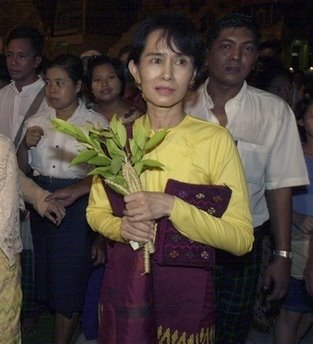


 Posts
Posts


