http://www.asianewsnet.net/news.php?id=5723&sec=1
News Desk
The Straits Times
Publication Date: 15-05-2009
Myanmar pro-democracy leader Aung San Suu Kyi was charged on Thursday with violating the terms of her house arrest in a bizarre case involving an American man who swam across a lake to sneak into her home, her lawyers said.
Suu Kyi, whose latest detention period officially ends on May 27, could face a prison term of up to five years if convicted, said lawyer Hla Myo Myint.
The trial is scheduled to start on Monday at a special court at Yangon's notorious Insein Prison, where she was charged yesterday.
Activists denounced her trial as a ploy by the country's junta to keep the 63-year-old Nobel Peace laureate sidelined ahead of an election next year.
It would be the first nationwide election since the ruling military junta swept aside the results of the 1990 election that would have brought Suu Kyi's National League for Democracy (NLD) to power.
An NLD spokesman said the opposition leader had been charged under Myanmar's Law Safeguarding the State from the Dangers of Subversive Elements, which carries a three year to five year jail term if a detainee 'violates the restrictions imposed on them'.
The American man, who has been identified as 53-year-old John William Yettaw of Missouri, was arrested last week for allegedly swimming across a lake to secretly enter Suu Kyi's home and staying there for two days.
He was charged at yesterday's hearing with illegally entering a restricted zone, which carries a maximum penalty of five years in prison, and breaking immigration laws, which is punishable by up to a year behind bars.
Kyi Win, another lawyer for Suu Kyi, said the opposition leader had not invited the man to visit her home, and that the incident was merely a breach of security in the lakeside area where the authorities normally keep a close watch on her.
"Everyone is very angry with this wretched American. He is the cause of all these problems," he told reporters.
The Myanmar authorities said they arrested Yettaw on May 6 after he swam back across the lake while returning from Suu Kyi's residence.
Yettaw was said to have swum up to the house with the help of floats made from large, empty plastic containers, then slipped past the security forces surrounding the compound.
It was apparently the second time Yettaw - described by the state media as a psychology student - had tried to meet Suu Kyi at her home.
Kyi Win said the American was told to leave after attempting to meet the opposition leader last year. This time, he refused.
"He said he was so tired and wanted to rest, but she pleaded with him. Then he slept overnight on the ground floor," the lawyer said.
Yettaw's motives are unclear. He told Suu Kyi that he was a Mormon, and he prayed extensively while he was in her house.
His stepson Paul Nedrow told the Associated Press news agency that Yettaw was "harmless and not politically motivated".
He said he was concerned over his stepfather's health as he was a diabetic, and the ailment 'could cause him to become disoriented'.
Armed police yesterday drove Suu Kyi and two women who live with her from their lakeside home to Insein Prison.
The two women, who have lived with her since she was last detained in 2003, were also charged with the same offence, lawyers said.
Suu Kyi's detention at Insein Prison will renew fears for her health after she was put on an intravenous drip last week for dehydration and low blood pressure.
The United States and human rights groups have demanded that she be allowed to see her main doctor, Dr Tin Myo Win.
However, he was also detained for questioning last week and charged yesterday with "encouraging a violation of the law".
U Nyan Win, another lawyer representing the NLD leader, said her trial could last anywhere from one week to two weeks, depending on how many witnesses are called.
Friday, May 15, 2009
Suu Kyi faces jail over uninvited guest


UN urged to intervene Suu Kyi arrest
By The Nation
The United Nations Security Council, China, Japan and the Asean should take immediate action to intervene to release Burma' opposition leader Aung San Suu Kyi from brutal Insien prison, London-based human right dedicate group said Friday. Ads by Google
"25 Pounds in 2 Weeks"
Amazing African Weight-Loss Secret. As Seen on CNN & Dr. Oz.
www.AppliedNutritionalResearch.com
The military junta planned to try Suu Kyi after an American John Yettaw swam across Inya Lake to her resident in Rangoon where she was under detention for nearly six years.
The current term of her house arrest since May 2003 expires late this month and her lawyer planned to appeal for here release.
The opposition leader faced five years jail term, if convicted, on the charge of violating house arrest condition which barred her from meeting with outsiders.
Amnesty International (AI) is also highlighting the detention of Aung San Suu Kyi's two female companions, Khin Khin Win and her daughter, who were arrested at the same time.
All three are facing trial on May 18 in connection with an incident at the beginning of May when an American national allegedly swam across the lake in front of her house and stayed there for two days.
Suu Kyi begged Yattaw to leave her resident as learned the American might cause problem for her, according to her lawyer Kyi Win.
UN Leads Condemnation of Myanmar’s New Charges Against Suu Kyi
http://www.bloomberg.com/apps/news?pid=20601089&sid=a0J2VBNCdLE8
By Michael Heath and Ed Johnson
May 15 (Bloomberg) -- The United Nations led international condemnation of new charges brought by Myanmar’s military junta against pro-democracy leader Aung San Suu Kyi and demanded her immediate and unconditional release.
The Nobel Peace Prize winner will stand trial next week accused of breaching the conditions of her house arrest order after an American national allegedly swam across a lake last week to visit her. Two of her maids also face trial.
“I call on the government of Myanmar to release Aung San Suu Kyi and her aides unconditionally,” UN human rights envoy Tomas Ojea Quintana said in a statement yesterday. “Since her house is well guarded by security forces, the responsibility for preventing such intrusions” lies with them, he said.
Suu Kyi, 63, has spent 13 years in detention since her National League for Democracy party won 1990 elections in the country previously known as Burma, a result rejected by the military that has ruled since 1962. Secretary of State Hillary Clinton said Suu Kyi had been charged with a “baseless” crime.
“We oppose the regime’s efforts to use this incident as a pretext to place further restrictions on her, and therefore we call on the Burmese authorities to release her immediately and unconditionally,” Clinton said. She also called for the release of Suu Kyi’s doctor and more than 2,100 political prisoners.
Suu Kyi’s trial will begin May 18, nine days before her detention order is due to expire. She faces a maximum sentence of five years in prison if found guilty, Nyan Win, a spokesman for the NLD, said yesterday from the former capital, Yangon, after the hearing at Insein Prison.
The American national John Yettaw, was charged with breaching a security law, he said.
Security Breach
Yettaw was detained by police last week for entering Suu Kyi’s lakeside home and staying there for two days, according to state-run media. He arrived uninvited and Suu Kyi encouraged him to leave, Jared Genser, her U.S.-based legal counsel, said yesterday before the court hearing.
Myanmar authorities have described Yettaw as a 53-year-old former soldier from Detroit. The state-run New Light of Myanmar newspaper said he arrived in Yangon on a tourist visa on May 2 and swam to Suu Kyi’s compound the following night. He was arrested in the early hours of May 6 while swimming back across the lake.
Authorities confiscated his passport, a black haversack, torch, folding pliers, a camera, two $100 bills and some Myanmar currency, according to the newspaper. They are investigating his motives for entering Suu Kyi’s home, it said.
China, India
Human Rights Watch called on China and India, Myanmar’s closest allies, to pressure the ruling generals to free Suu Kyi. The New York-based group said the charges against her are part of an intensified campaign against pro-democracy activists that has brought increased arrests as the regime seeks to crush the opposition before elections.
The junta plans a ballot in 2010 after passing a constitution last year that it said was backed by 92 percent of voters. The NLD and other groups have denounced the charter, which bars Suu Kyi from holding office.
“China, India, Singapore, Thailand and other Southeast Asian countries should be calling for a genuine and participatory political process in Burma, which means serious public pressure for the release of political opponents,” said Elaine Pearson, deputy Asia director at Human Rights Watch.
“Suu Kyi’s latest arrest shows how their silence simply encourages more contempt for basic freedoms,” she said in a statement.
Clinton, China
Clinton told reporters in Washington yesterday the U.S. wants a statement from the Association of Southeast Asian Nations expressing concern about the treatment of Suu Kyi. Myanmar is a member of the 10-member regional bloc.
The Obama administration will also raise the matter with nations “like China, and see if we can’t, on a humanitarian basis, seek relief for Aung San Suu Kyi from this latest effort to intimidate and perhaps even incarcerate her,” Clinton said.
Suu Kyi has been detained since May 2003 under a law that allows someone deemed a threat to national security to be held without charge, according to Genser, president of the U.S.-based Freedom Now group. The junta says it can detain her under the law for six years, or until May 27, he added.
The opposition leader has suffered from dehydration, low blood pressure and a loss of appetite over the past few weeks, Nyan Win said. She underwent gynecological surgery in 2003, needed hospital treatment in 2006 and suffered low blood pressure and was unable to leave her bed in September.
To contact the reporters on this story: Michael Heath in Sydney at mheath1@bloomberg.net; Ed Johnson in Sydney at ejohnson28@bloomberg.net.
Last Updated: May 14, 2009 23:07 EDT
Remarks With Malaysian Foreign Minister Y.B. Datuk Anifah bin Haji Aman After Their Meeting by Secretary Clinton: May 2009

SECRETARY CLINTON: Good afternoon. I want to thank Foreign Minister Anifah for being here today. He has traveled a far distance from Malaysia to participate in meetings both here at the State Department and at the United States Senate. And President Obama and I look forward to working with the new Malaysian Government, and we see many opportunities for engagement between our two countries.
I am especially delighted because I think that the role that Malaysia is playing and can play, regionally and even globally, on a number of important issues is significant, and therefore we want to broaden and deepen our strategic cooperation.
Before providing a readout of our meeting, however, I wanted to speak to the case of Aung San Suu Kyi. I am deeply troubled by the Burmese Government’s decision to charge Aung San Suu Kyi for a baseless crime. It comes just before the six-year anniversary of her house arrest, and it is not in keeping with the rule of law, the ASEAN charter, or efforts to promote national reconciliation and progress in Burma.
We oppose the regime’s efforts to use this incident as a pretext to place further unjustified restrictions on her, and therefore we call on the Burmese authorities to release her immediately and unconditionally, along with her doctor and the more than 2,100 political prisoners currently being held.
I have a great admiration for Aung San Suu Kyi, for her sacrifices and her love of her country. There are certainly political differences that exist in any society. The minister and I understand that. But we all should be striving to enhance the rule of law. And the ASEAN charter, which the minister and I spoke about in our meeting, sets a very clear direction for all the countries in the region to be headed.
FOREIGN MINISTER ANIFAH:we are also very concerned as to what’s happening in Burma, in Myanmar, and we hope to use the ASEAN Forum to put forward and to – also to discuss further, and if it’s necessary, upon my arrival in Malaysia I will immediately contact the secretary general of ASEAN if it is possible to have a meeting immediately to address the issues which is also of concern to ASEAN members.
West condemns Aung San Suu Kyi charges, Asia silent
Friday, 15 May 2009, 9:09 am | 271 views
Thu, May 14, 2009
AFP
LONDON (AFP) - Western governments lined up to condemn “disturbing” new charges brought against Myanmar’s pro-democracy icon Aung San Suu Kyi on Thursday, but there was a deafening silence in Asia.
Gordon Brown, leader of the former colonial power Britain, said the junta which has kept her under house arrest for years wanted any excuse to extend her detention while the European Union said the move could not be justified.
The United States also said it was “troubled” by the development but there was no immediate response from the Association of Southeast Asian Nations (ASEAN), the regional bloc which includes the country formerly known as Burma.
“I am deeply disturbed that Aung San Suu Kyi may be charged with breaching the terms of her detention,” Brown said in a statement.
“The Burmese regime is clearly intent on finding any pretext, no matter how tenuous, to extend her unlawful detention,” he said.
“If the 2010 elections are to have any semblance of credibility, she and all political prisoners must be freed to participate.”
The 63-year-old, who was stopped by the junta from taking power after winning elections two decades ago, has been charged with breaching the terms of her house arrest after a US man swam across a lake and hid inside her home.
She will go on trial on Monday on the charges, which carry a maximum jail term of five years and would stretch her detention past its supposed expiry date this month and through elections due in 2010.
The Nobel Peace Prize laureate and her two maids appeared in court at the notorious Insein Prison near Yangon, hours after police whisked her away from the residence where she has been detained for most of the past two decades.
Piero Fassino, the European Union’s special envoy to Myanmar, said there was “no justification” for the decision to charge her.
Fassino told Italy’s Channel 5 television the international community should use “every possible means to press for the release of Aung San Suu Kyi” as well as “the 2,000 other political prisoners who are held in Burmese jails.”
French Foreign Minister Bernard Kouchner and human rights minister Rama Yade issued a joint statement condemning the arrest “in the strongest terms”.
“This decision is all the more unacceptable given the Nobel Peace laureate’s state of health which has deteriorated over the past several days,” they said.
In Norway, where Aung San Suu Kyi was awarded the Nobel prize in 1991, Foreign Minister Jonas Gahr Stoere said he was “disturbed” by the charges and demanded her immediate release.
And in the United States, the State Department said Secretary of State Hillary Clinton had asked for more information on the “troubling” developments.
“We have seen this report, which is certainly troubling if true,” spokesman Ian Kelly said.
The chorus of official condemnation in the West however was in sharp contrast to the reaction in Asia.
Calls and emails to the Jakarta secretariat of ASEAN were not immediately answered and there was no immediate official reaction from Myanmar’s eastern neighbour and ally China, nor any Asian governments.
ASEAN has long been wary of criticising Myanmar but the 10-nation club has found itself embarrassed by the regime, led by the reclusive General Than Shwe.
During an ASEAN summit in Thailand last month, Myanmar threatened to boycott a meeting with human rights advocates if a Myanmar activist was present. The activist was not allowed into the session.
At the summit, leaders urged Myanmar’s junta to move towards democracy but Aung San Suu Kyi’s name was never mentioned.
In Japan, dozens of pro-democracy campaigners rallied to demand her release.
“Free Suu Kyi!” chanted more than 60 expatriates from Myanmar in front of the country’s embassy in Tokyo, holding banners that read: “The military junta should stop oppression with its unfair trial!”
http://www.asiaone.com/print/News/Latest%2BNews/Asia/Story/A1Story20090514-141534.html
——-
From U.S. Campaign for Burma group:
This morning Nobel Peace Prize Recipient Aung San Suu Kyi was moved from her Rangoon home to Burma’s notorious Insein Prison, where she will face trial on Monday for supposedly violating the terms of her house arrest by hosting an unauthorized visitor after an American man swam uninvited to her compound and refused to leave.
Aung San Suu Kyi has been under house arrest continuously since 2003 and for a total of over 13 of the past 19 years. According to the State Protection Law, under which she has been held, she can be detained for a maximum of six years. This period was due to expire in less than two weeks, on May 27th, 2009. Now, the military junta is using trumped up charges stemming from the incident of the American swimmer to extend her detention. Suu Kyi was the victim, not the perpetrator, of this crime. For more information, please read USCB’s press release from earlier today.
The crime for which Aung San Suu Kyi is now being tried carries a minimum prison sentence of three years. This is a critical time for the military regime in Burma, which has faced great difficulty in gaining support for its plan to host elections based on a sham constitution in 2010. We must take action to ensure that the regime continues to feel pressure from the international community.
Take Action Now:
1.) Email UN Secretary General Ban Ki-moon and urge him to send his envoy to Burma and to take a stand for Aung San Suu Kyi’s security and freedom. Click here to send an email to the Secretary General.
2.) Plan a Demonstration
Burma groups around the world have called for demonstrations in support of Aung San Suu Kyi to be held at Burmese embassies on Monday, May 18th.
US Campaign for Burma has organized a demonstration in Washington, DC at 12:30pm on Monday, May 18th, in front of the Burmese military attache (2300 California St. NW, near Dupont Circle). For more information contact Mike Haack at mike@uscampaignforburma.org. If you are interested in organizing one in your home town, email Mike with the details and he will notify Burma supporters in your area.
3.) “Arrest Yourself” for Aung San Suu Kyi and Host a House Arrest Party to Educate Your Friends
Participate in Arrest Yourself 2009 and show your solidarity with Aung San Suu Kyi: uscampaignforburma.org/arrestyourself2009.
Learn More:
The world is giving more and more attention to Aung San Suu Kyi’s cause. You can learn more about the regime’s detention of Aung San Suu Kyi on the news section of our website, or by reading these articles from CNN International, BBC, Al Jazeera, Agence France Presse, and Straight Times.
Thank you for taking action for Aung San Suu Kyi and Burma,
Jeremy Woodrum
Director
U.S. Campaign for Burma
Protests In Japan As Myanmar's Aung Can Suu Kyi Charged
http://www.nasdaq.com/aspx/stock-market-news-story.aspx?storyid=200905140705dowjonesdjonline000347&title=protests-in-japan-as-myanmars-aung-can-suu-kyi-charged
TOKYO (AFP)--Dozens of Myanmar protesters rallied Thursday in Japan after the Southeast Asian country's military junta charged pro-democracy icon Aung San Suu Kyi with breaching the terms of her house arrest.
"Free Suu Kyi!" chanted more than 60 expatriates from Myanmar in front of the country's embassy in Tokyo, holding banners that read: "The military junta should stop oppression with its unfair trial!"
Myanmar's regime Thursday charged pro-democracy icon Suu Kyi with breaching the terms of her house arrest and moved her to a house at a prison after a U.S. man swam across a lake and hid inside her home, her lawyer said.
Expatriates are also lobbying Japanese lawmakers to issue a statement calling for the release of all political prisoners in the former Burma, said Min Nyo, who heads an activist exile group.
"We are also seeking truly democratic elections at home, joined by all political parties, after reconciliation among all the people," he said.
Japan, the top donor to Myanmar among the OECD's major economies, in 2003 suspended most assistance other than emergency aid and some training funds to Myanmar.
It further cut its aid after the regime cracked down on pro-democracy demonstrations in 2007.
But Japan refuses to join its Western allies in slapping punishing sanctions on Myanmar. China, which often spars with Japan for influence, is Myanmar's main political and commercial partner.
(END) Dow Jones Newswires
05-14-090705ET
Copyright (c) 2009 Dow Jones & Company, Inc.
【PFB緊急声明】アウンサンスーチー氏の訴追に抗議し早期釈放を求める
みなさま、
ビルマ情勢をうけ、本日、ビルマ市民フォーラムは以下の
緊急声明を発表いたします。
ビルマ市民フォーラム
代 表 永井 浩 (神田外語大学教授)
事務局長 渡辺 彰悟 (弁護士)
http://www1.jca.apc.org/pfb/
━━━━━━━━━━━━━━━━━━━━━━━━━━━━━━
緊 急 声 明 (2009.5.15)
-アウンサンスーチー氏の訴追に抗議し早期釈放を求める-
━━━━━━━━━━━━━━━━━━━━━━━━━━━━━━
本日,ビルマ軍事政権はアウンサンスーチー氏をインセイン刑務所に
連行し,同氏を国家防御法違反の罪で起訴したとの情報が流れている。
ビルマ市民フォーラムはかかる事態を深く憂慮し,ビルマ軍事政権の
蛮行に対して強く抗議する。
アウンサンスーチー氏は,1989年以後約20年間のうち13年以上もの
間自宅軟禁下に置かれてきた。現在は3度目の自宅軟禁であり,2003年
5月以降今日まで続いていた。この拘束期限は今月末のはずであったし,
国際社会は同氏の解放を心待ちにしていた。
このような状況下で,今月7日には同氏の脱水症状,血圧の低下,
食事をうけつけない等の体調不良が伝えられ,これに対して軍政が適切な
医療の提供を認めない等,同氏の健康や生命を危うくすることを厭わない
軍政の姿勢が露骨となっていた。
そして,今般,軍政は先日の米国人男性が湖を泳ぎ渡り自宅を訪問した件に
絡めて,これを理由として国家防御法を適用して,アウンサンスーチー氏を
インセイン刑務所に連行し,刑務所内の特別法廷において起訴したという
のである。
軍政の狙いはあまりにも明白である。今月末に解放しなければならない
アウンサンスーチー氏をどんなことがあっても自由にしない,アウンサン
スーチー氏のビルマ国内における存在意義を否定するというものである。
ビルマ軍事政権が,今の権益維持のためならどのようなことでも平然と
やってのけるということは,これまでの歴史が示しているところであるが,
今回の事態はその極め付けでもあり,ビルマの民主化を願うビルマ国民,
そして国際社会に対する重大な挑戦でもある。愚挙・蛮行としか形容の
しようがないものである。
私たちビルマ市民フォーラムは,ビルマ軍政にかかる暴挙をやめ,直ちに
アウンサンスーチー氏を解放することを求める。
日本政府は,今回の事態についてビルマ軍事政権に対し,断固たる強い
抗議をなすべきである。ビルマ軍事政権がかかる姿勢を継続する以上,
ビルマの民主化への道が閉ざされていることは明白であり,この間の憲法
国民投票や,来年に予定されている選挙そのものが,ビルマ軍政の用意した
茶番であることも,今回の事態は非常に明白な形で露呈させていることを
日本政府は認識すべきである。
以上
2009年5月15日
ビルマ市民フォーラム
代 表 永井 浩
事務局長 渡辺 彰悟
---------------------------------------------------
(追記)
ビルマ市民フォーラムは1996年12月に結成された市民団体で,
ビルマ(ミャンマー)における人権の確立と民主化の推進を目標に,
国内在住のビルマ人(難民および難民申請者を数多く含む),
ならびにこの問題に関心を有する多くの日本人と共に,さまざまな
活動を続けています。
━━━━━━━━━━━━━━━━━━━━━━━━━━━━
以上、
━━━━━━━━━━━━━━━━━━━━━━━━━━━━
◇ ビルマ市民フォーラム事務局 ◇
━━━━━━━━━━━━━━━━━━━━━━━━━━━━
〒160-0004 東京都新宿区四谷一丁目18番地6 四谷1丁目ウエストビル4階
いずみ橋法律事務所内
電話03-5312-4817(直)/ FAX:03―5312-4543
E-mail: pfb@izumibashi-law.net
ホームページ: http://www1.jca.apc.org/pfb/
အမ်ဳိးသား ဒီမုိကေရစီ အဖဲြ႔ခ်ဳပ္ေၾကညာခ်က္။ ၈/၀၅/၀၉
အမ်ဳိးသား ဒီမုိကေရစီ အဖဲြ႔ခ်ဳပ္
ေၾကညာခ်က္။ ၈/၀၅/၀၉
ရက္စြဲ - ၁၄၊ ေမ၊ ၂ဝဝ၉ ခုႏွစ္။
အမ်ဳိးသား ဒီမိုကေရစီ အဖြဲ႔ခ်ဳပ္ေခါင္းေဆာင္ အေထြေထြ အတြင္းေရးမႉး
ေဒၚေအာင္ဆန္းစုၾကည္သည္ ႏိုဘယ္လ္ ၿငိမ္းခ်မ္းေရးဆုရွင္ တဦးျဖစ္ပါသည္။
ထို႔အျပင္ အမ်ဳိးသား ျပန္လည္ သင့္ျမတ္ေရးအတြက္ မူလကနဦး
စတင္ၾကိဳးပမ္းခဲ့သူျဖစ္ၿပီး၊ ေတြ႔ဆံုေဆြးေႏြး ညိႇႏိႈင္းအေျဖရွာေရးကို
အစဥ္တစိုက္ ၾကိဳးပမ္းေနသူ ျဖစ္ပါသည္။ ႏိုင္ငံေရးအရ အေပးအယူျပဳလုပ္သည့္
ျပဳျပင္ေျပာင္းလဲႏိုင္စြမ္းရွိသူ ျဖစ္ပါသည္။
ကုလသမဂၢ အပါအဝင္ ႏိုင္ငံတကာ အဖြဲ႔အစည္းမ်ားက ျမန္မာႏိုင္ငံ
အသြင္ကူးေျပာင္းေရး လုပ္ငန္းစဥ္မ်ားတြင္ သက္ဆိုင္သူမ်ားအားလံုး
ပူးေပါင္းပါဝင္ လုပ္ေဆာင္ၾကရန္ ေတြ႔ဆံုေဆြးေႏြးေရးမွတဆင့္ အမ်ဳိးသား
ျပန္လည္သင့္ျမတ္ေရးကို တည္ေဆာက္ရန္အတြက္ တိုက္တြန္းႏႈိးေဆာ္လ်က္
ရွိပါသည္။
သို႔ပါလ်က္ အာဏာပိုင္တို႔က ေနအိမ္အတြင္း ထိန္းသိမ္းထားျခင္းမွ အၿပီးအျပတ္
လြတ္ရက္ေစ့ခါနီးေနေသာ ေဒၚေအာင္ဆန္းစုၾကည္အား မည္သည့္ျပစ္မႈကိုမွွ်
က်ဴးလြန္ရျခင္း မရွိပါဘဲ ႏိုင္ငံေတာ္အား ေႏွာင့္ယွက္ဖ်က္ဆီးလိုသူမ်ား
ေဘးအႏၲရာယ္မွ ကာကြယ္ေစာင့္ေရွာက္သည့္ ဥပေဒပုဒ္မ ၂၂ အရ ေနာက္ဆံုး
အင္းစိန္ေထာင္အတြင္းရွိ လံုးခ်င္း အိမ္တအိမ္၌ ထားရွိသည္ဟု ၾကားသိရပါသည္။
ယင္းအမႈကို ၂ဝဝ၉ ခုႏွစ္၊ ေမလ ၁၈ ရက္ေန႔တြင္ စတင္စစ္ေဆးမည္ ျဖစ္ပါသည္။
ထို႔ကဲ့သို႔ တရားစြဲဆိုျခင္းမွာ မလုပ္သင့္၊ မလုပ္ထိုက္ေသာေၾကာင့္
အမ်ဳိးသား ဒီမိုကေရစီအဖြဲ႔ခ်ဳပ္က ျပင္းထန္စြာ ကန္႔ကြက္ေၾကာင္း
ေၾကညာလိုက္သည္။
၁၄ ရက္၊ ေမလ ၂ဝဝ၉ ခုႏွစ္တြင္ က်င္းပေသာ ဗဟိုအလုပ္အမႈေဆာင္အဖြဲ႔ အစည္းအေဝး
ဆံုးျဖတ္ခ်က္အရ -
(ဗဟိုအလုပ္အမႈေဆာင္)
အမ်ဳိးသား ဒီမိုကေရစီ အဖြဲ႔ခ်ဳပ္
I went to prison for telling a lie. In Burma, people are in prison for telling the truth-Jonathan Aitken
http://www.telegrap h.co.uk/comment/ personal- view/5324040/ I-went-to- prison-for- telling-a- lie.-In-Burma- people-are- in-prison- for-telling- the-truth. html
Burma’s plight has been neglected for too long. The time has come to say enough is enough, says Jonathan Aitken.
Jonathan Aitken
Last Updated: 1:58PM BST 14 May 2009
Burma’s democracy leader Aung San Suu Kyi has suffered a further travesty of justice, on top of the 13 years of house arrest she has already endured. Later this month her current period of detention expires, but now she has been moved to the notorious Insein Prison to stand trial on new charges. Even before today, her detention - according to the United Nations - violates both international and Burmese law, and she remains the world’s only jailed Nobel Laureate. The brutal junta ruling Burma even denied her medical treatment, and arrested her personal doctor. She has committed no crime – indeed, it is the regime that is criminal.
But Aung San Suu Kyi is simply the most visible of Burma’s prisoners of conscience. At least 2,100 dissidents remain in jail, in conditions far more brutal than her house arrest. A recent report, Burma’s Prisons and Labour Camps: Silent Killing Fields, released by the Assistance Association for Political Prisoners (Burma), details systematic and horrific torture, denial of medical treatment and refusal of visits from family. Food is inedible and exercise severely restricted. At least 127 are in poor health, and 19 urgently need medical care. Since 1988, at least 139 political prisoners have died in jail.
Some of the most recent inmates have been given sentences of staggering absurdity, for simply expressing an opinion, and jailed in remote locations hundreds of miles from relatives. Elected Shan Member of Parliament Khun Tun Oo was jailed for 93 years in 2005. Leading activist Min Ko Naing, jailed for 65 years last year, is losing his eyesight. Ko Ko Gyi, serving the same sentence, has liver problems. Comedian Zarganar, serving 35 years for organising relief for the victims of Cyclone Nargis, also has liver and heart disease. A further 20 civilians who volunteered to help in the post-Cyclone disaster situation have been jailed for their efforts.
And it is not only those in jail who are prisoners. Burma’s ruling military junta has held the entire nation captive for almost fifty years. It ranks alongside North Korea, Sudan and Zimbabwe in the inhumanity stakes. The regime’s callousness was on full display a year ago, when after Cyclone Nargis, the worst natural disaster in years, it initially refused international aid and denied access to aid workers. Over 140,000 people died, with more than 2.5 million left homeless.
As if this catalogue of horrors was not enough, the regime is carrying out a campaign of ethnic cleansing against the Karen, Karenni and Shan peoples in eastern Burma. More than 3,300 villages have been destroyed and a million people driven from their homes into hiding, without food, medicine or shelter. Civilians, including women and children, are shot at point-blank range. Rape is used as a weapon of war, forced labour is widespread and the use of human minesweepers common. It has the highest number of forcibly conscripted child soldiers in the world. Burma has become Asia’s Darfur, but without the world’s cameras.
Even more forgotten still are the ethnic groups in northern and western Burma. The Muslim Rohingyas are denied citizenship despite living in Burma for generations. The Chin are a majority Christian population, and they are targeted for their faith. Christians are forced to tear down crosses and build Buddhist pagodas in their place. Forced conversion is common. The regime misuses religion as a political tool, and perverts Buddhism for its own purposes.
For too long, Burma’s plight has been neglected. The time has come to say enough is enough. It is time for the UN to invoke its much-flaunted Responsibility to Protect mechanism, to impose an arms embargo on the regime and establish a commission of inquiry to investigate crimes against humanity.
As an immediate step, the UN Secretary-General must hear the appeals of hundreds of thousands of people around the world who have signed a petition calling on him to make the release of political prisoners in Burma a top priority. The UN should send a senior envoy immediately to Burma, to secure the release of Aung San Suu Kyi and other political prisoners and access to medical care. As Aung San Suu Kyi has said, “until all of our political prisoners are free, none of us can say that Burma is now truly on the road towards democratic change.”
In 1997, I went to prison for very different reasons. I was convicted of perjury. I had committed a crime, and paid the price. Since then, I have devoted my time to two causes – prison reform and international human rights. I know that I went to prison for telling a lie. It is for that reason that I cannot stay silent when in Burma, over 2,000 people are in prison for telling the truth.
Jonathan Aitken is a former Cabinet minister, and Honorary President of the international human rights organisation Christian Solidarity Worldwide (CSW). CSW has recently launched a new online campaign, www.changeforburma. org
スーチーさん連行:ミャンマー大使館前で150人が抗議

http://mainichi.jp/select/wadai/news/20090515k0000m040067000c.html
スーチーさん連行:ミャンマー大使館前で150人が抗議
アウンサンスーチーさんの起訴に対して抗議する在日ミャンマー人たち=東京都品川区のミャンマー大使館前で2009年5月14日午後3時23分、山本晋撮影 ミャンマーの軍事政権が軟禁中の民主化運動指導者、アウンサンスーチーさん(63)を特別法廷のある刑務所に連行し、起訴した問題で、在日ミャンマー人ら約150人が14日、東京都品川区の同国大使館前で、早期釈放を求める抗議活動をした。
在日ミャンマー人らは同日昼、大使館前に集まり始め、スーチーさんの状況について説明を要求。応答がなかったため約1時間にわたり「民主化の指導者、スーチー氏を釈放しろ」とシュプレヒコールをあげた。15日も抗議を続けるという。
約20年前にスーチーさんのボディーガードをしていたという同区の会社員、フォンミントンさん(39)は「健康不安が伝えられるスーチーさんを訴追するのは暴挙。(今月末に期限が切れる)軟禁の期間を延ばすための口実作りだ」と語気を荒らげた。【前谷宏】
【関連記事】
ミャンマー:スーチーさんを訴追か 外国人の無許可宿泊で
ミャンマー:スーチーさん体調悪化
ミャンマー:スーチーさん宅に潜入か 米国籍の男逮捕
NEWS25時:ミャンマー スーチーさん体調悪化
ミャンマー:スーチーさん宅に侵入? 米国籍の男逮捕
毎日新聞 2009年5月14日 20時41分(最終更新 5月14日 22時43分)
Myanmar democracy leader facing trial after American's swim
(CNN) -- Myanmar opposition leader Aung San Suu Kyi will stand trial Monday for an incident in which an American allegedly swam across a lake and stayed for two days in her closely guarded residence, where she is under house arrest.
Officials in Myanmar say this self-portrait was found on John Yettaw's digital camera.
1 of 3 The southeast Asian country's military junta rarely allows visitors to see Suu Kyi, and foreigners are not allowed overnight stays in local households.
The government said the presence of the American, John William Yettaw, in the lakeside home violated the conditions of Suu Kyi's house arrest.
Yettaw, was charged Thursday on two criminal counts -- entering the country illegally and staying at a resident's home without government permission, according to a spokesman for Suu Kyi's political party.
Both charges carry a maximum sentence of five years in prison.
Suu Kyi on Thursday was taken to a prison compound near Yangon , where authorities set up a special room for her until the trial, said Nyan Win, spokesman for her National League for Democracy party.
The government detained her at the Insean Prison compound under Section 22 of the country's legal code, a law against subversion of government, Nyan Win said.
If convicted, Suu Kyi could face three to five years in prison.
U.S. Secretary of State Hillary Clinton called for the immediate release of Suu Kyi on Thursday.
"I am deeply troubled by the Burmese government's decision to charge Aung San Suu Kyi for a baseless crime," Clinton said at the State Department in Washington, referring to Myanmar by its former name of Burma.
"We oppose the regime's efforts to use this incident as a pretext to place further unjustified restrictions on her. We call on the Burmese authorities to release her immediately and unconditionally, along with her doctor and the more than 2,100 political prisoners currently being held."
The junta changed the nation's name, and changed the capitol's name from Rangoon to Yangon, when it seized control of the country. Political dissidents and nations including the United States have refused to acknowledge those changes and still use the old names.
Clinton was speaking at a question-and-answer session with the visiting foreign minister of Malaysia, and Clinton said she was raising the issue of Suu Kyi's arrest with Malaysia and the other members of the Association of Southeast Asian Countries. She said the United States also will raise the issue with countries like China.
The timing of her detention raised suspicion among Suu Kyi's supporters, who said the government's action Thursday is an excuse to extend her house arrest, set to expire this month.
Don't Miss
John Yettaw -- the man at the center of the case
Myanmar citizens' rage boils in film about 2007 protests
Suu Kyi: Face of Myanmar's democracy movement
In depth: Myanmar: Two days, two tragedies
"This is the cunning plan of the regime to put Daw Aung San Suu Kyi in continuous detention beyond the six years allowed by the law they used to justify the detention of her," said the U.S. Campaign for Burma, a pro-democracy group fighting for her release. "Daw" is an honorific.
Rights group Amnesty International said the junta was reacting to a decision last year by the United Nations' Working Group on Arbitrary Detention that ruled her house arrest illegal both domestically and internationally.
Suu Kyi's lawyer, U Kyi Win, blamed the Nobel Peace Prize laureate's prison detention on Yettaw.
Some initial reports out of Myanmar spelled his name differently: Yeattaw.
Local media said the 53-year-old former military serviceman from Falcon, Missouri, swam almost 2 miles across Inya Lake on May 3 and sneaked into Suu Kyi's home. Police maintain a round-the-clock presence outside the house, and swimming in the lake is forbidden.
A neighbor of Yettaw's in Falcon, Mike Assell, described him as someone who was friendly but did not actively participate in community activities. Watch Yettaw's neighbor describe him »
"I think he wasn't really afraid to talk to folks, but he really was not outgoing and went out of his way to stop and talk too much," Assell said. "He has his own -- I don't know if agenda's the right word -- he has his priorities and he is working toward those."
Public records yielded little about Yettaw, a father of seven. At one point, he owned a construction company. And he lost a 17-year-old son to a motorcycle wreck in Lebanon, Missouri, in 2007.
Yettaw appeared in court Thursday along with Suu Kyi and two of her assistants, party spokesman Nyan Win said.
A U.S. Embassy official met with Yettaw on Wednesday for three minutes, the first since his arrest. He appeared to be doing well, the embassy said.
On Thursday, Myanmar officials were expected to charge Yettaw with immigration violations. But the charges had not been announced.
Yettaw entered Suu Kyi's house once before, in 2008, the U.S. Campaign for Burma said. She refused to meet with him, and this time, she spoke to him only long enough to tell him to leave, it said.
Reports from news outlets affiliated with the military junta said Yettaw confessed to the 2008 visit and said he had stayed for a longer period then.
This time, the reports said, Yettaw met Suu Kyi's two housekeepers, a mother and daughter who are her only permitted companions.
Yettaw, a diabetic, apparently told the women he was tired and hungry after his swim. They offered him food, the newspapers said.
The housekeepers also were charged under Section 22 on Thursday.
Yettaw was arrested while swimming away from the house. Authorities said he told officials he was visiting Yangon on a tourist visa and was staying at a hotel when he swam across the lake with a 5-liter water bottle, presumably to use as a float.
Authorities found a U.S. passport, a backpack, a flashlight, a pair of folding pliers, a camera and money on him, local reports said.
The Myanmar-language Web site tharkinwe.com published two photos that officials said they found on Yettaw's digital camera.
One showed a middle-aged man posing in front of a mirror for a self-portrait. The other was a picture of a pair of feet with flippers on them.
Assell, the neighbor, said the man in the picture was Yettaw.
Suu Kyi's party said Yettaw's appearance at the house confirms security concerns the leader has voiced to the government.
"This is a political issue, not a criminal issue," said Nyan Win, the spokesman. "She has done nothing wrong."
Suu Kyi, 63, rose to global prominence during protests in the country in 1988.
She was first detained in 1989 and has been under house arrest for 13 of the past 19 years.
In 1990, her party won the general elections, which the ruling military junta did not recognize. The following year, she won the Nobel Peace Prize.
Myanmar's government has scheduled elections for next year that it says will lead the nation toward democracy. Human-rights organizations have said the vote will merely extend military rule in the nation.
CNN's Katherine Wojtechi, Kocha Olarn, Saeed Ahmed and Geraldine McBride contributed to this report.
Missouri man detained in Myanmar
http://www.columbiamissourian.com/stories/2009/05/12/report-detained-american-visited-suu-kyi/
Tuesday, May 12, 2009 | 8:31 a.m. CDT
BY GRANT PECK/The Associated Press
BANGKOK — An American accused of swimming across a lake to sneak into the home of detained Myanmar opposition leader Aung San Suu Kyi might have made another secret visit to her last year.
Last week's incident — initially thought to be the first case of someone creeping unnoticed into Suu Kyi's closely guarded compound — has raised fears that the Nobel Peace laureate might have been ensnared in activities that could put her in further legal trouble.
MoreStory
Related Articles
Southern Missouri man charged in Myanmar swim
Authorities on Tuesday tightened security in the back of Suu Kyi's lakeside home. Workers rolled barbed wire along the water's edge, where a newly erected fenceof tall wooden poles was built, according to witnesses who spoke on condition of anonymity for fear of reprisals.
A news report in a Myanmar-language Web site published two photos said to have been found in the digital camera of the visitor, identified by the U.S. Embassy as John William Yettaw. One photo shows a heavyset, middle-aged man posing for a self-portrait in front of a mirror. The report says Yettaw is from Falcon, Mo.
The Web site, tharkinwe.com, seems to be close to the country's military-ruled government and hostile to Suu Kyi's democracy movement.
Pro-democracy activists and diplomats in Yangon have voiced suspicions that the incident might have been concocted by the government. There has been no government comment beyond the original report in the state-run press.
Suu Kyi has already spent more than 13 of the last 19 years — including the past six — in detention without trial for her nonviolent promotion of democracy, despite international pressure for her release. She has recently been ill, suffering from dehydration and low blood pressure. Dr. Pyone Moe Ei was allowed to see her on Monday afternoon, and Nyan Win, a spokesman for Suu Kyi's party, said Tuesday that her medical condition had improved after the doctor administered an IV drip.
Her usual doctor, Tin Myo Win, was detained last week for questioning after the swimming incident.
Her house is a restricted zone, she has no telephone, and she cannot be contacted for comment.
Suu Kyi is not allowed visitors, aside from her doctor. On infrequent occasions, she is allowed out under tight guard to meet with fellow party leaders and visiting U.N. representatives.
Myanmar's state-run newspapers reported last week that Yettaw swam about 1¼ miles on the night of May 3 to the lakeside home of the 63-year-old Suu Kyi and left the same way on the night of May 5, before being arrested the next morning.
The reports said the man was found with an empty 1.3-gallon plastic water jug — presumably used as a flotation device — as well as a U.S. passport, a flashlight, pliers, a camera, two $100 bills and some local currency.
Aside from the number of his passport and the claim that the man arrived in Yangon on May 2 and spent two full days inside Suu Kyi's compound, no other details were given. The authorities were said to be investigating his motives.
The U.S. Embassy has requested access to the detained man, which as of Tuesday had still not been granted, embassy spokesman Richard Mei said. He confirmed that Yettaw had made a previous visit to Myanmar, and said his family had been told of his arrest.
Mei said the embassy did not know about Yettaw's activities.
The most surprising assertion on the tharkinwe.com Web site was that Yettaw had confessed to swimming to Suu Kyi's house during his earlier visit to Myanmar in late 2008 and staying there for a longer period. It cited him saying he scouted his swimming route using the Google Earth Web service.
The Web site's report also said on arrival last week at Suu Kyi's house, Yettaw first met her two female assistants — a mother and daughter who are her sole allowed companions — and told them he was tired and hungry after the swim and has diabetes. The two women, supporters of Suu Kyi's party, were said to have given him food.
One of many strict rules the junta imposes on citizens is that they must notify local officials about any overnight visitor who is not a family member. The law also states that foreigners are not allowed to spend the night at a local's home.
Some members of Suu Kyi's party, the National League for Democracy, have been jailed for about two weeks for violating that law.
"I'm not really concerned she could be penalized for this break-in because she didn't invite him in," said Nyan Win, adding that it was worrisome how easily the man accessed her home. "My main concern is her security."
Fw: <講演会の案内>上智大学アジア文化研究所「旅するアジア」-「難民キャンプの人類学:タイ・ビルマ国境カレンニー難民キャンプから」
━━━━━━━━━━━━━━━━━━━━━━━━━━━━━━
ビルマ市民フォーラム メールマガジン 2009/5/13
People's Forum on Burma
━━━━━━━━━━━━━━━━━━━━━━━━━━━━━━
以下、講演会のお知らせを転送させていただきます。
ぜひご参加ください。
(重複の際は何卒ご容赦ください。)
ビルマ市民フォーラム(PFB)事務局
http://www1.jca.apc.org/pfb/
【転送・転載歓迎】
━━━━━━━━━━━━━━━━━━━━━━━━━━━━━━
<上智大学アジア文化研究所 講演会の案内>
━━━━━━━━━━━━━━━━━━━━━━━━━━━━━━
上智大学アジア文化研究所が主催する公開講演会「旅するアジア」
(2009年度第2回:5月22日)のご案内です。
今回は神戸大学大学院(日本学術振興会特別研究員)の久保忠行氏に
「難民キャンプの人類学」という興味深い題目で、講演をしていただ
きます。下記詳細をご確認のうえ、ぜひ、ご参加ください。
事前予約不要、入場無料です。
上智大学アジア文化研究所公開講演会「旅するアジア」(2009年度第2回)
講演者:久保忠行氏(神戸大学大学院・日本学術振興会特別研究員)
題 目:「難民キャンプの人類学:タイ・ビルマ国境カレンニー難民キャンプから」
司 会: 根本 敬(上智大学アジア文化研究所、ビルマ市民フォーラム)
日 時: 5月22日(金) 18時00分~20時00分
事前予約不要・入場無料
場 所: 上智大学2号館5階 510会議室
(JR・東京メトロ四ツ谷駅から徒歩4分)
http://www.sophia.ac.jp/J/sogo.nsf/Content/campusmap_yotsuya
http://www.sophia.ac.jp/J/sogo.nsf/Content/access_yotsuya
Teamsters Call for Transparency at Chevron in Shareholder Proposal
http://sev.prnewswire.com/oil-energy/20090512/DC1548212052009-1.html
Proposal Focuses on Chevron's Role in Burma and Resulting Risks to Shareholder Value
WASHINGTON, May 12 /PRNewswire-USNewswire/ -- Representatives from the International Brotherhood of Teamsters and Simon Billenness, Co-Chair of the U.S. Campaign for Burma, gave presentations via teleconference today on the Country Selection Criteria shareholder proposal at Chevron Corporation, which goes to a vote at the company's May 27, 2009 annual meeting of shareholders.
The presentations focused on Chevron's role in Burma and the resulting risks to shareholder value, and the need for Chevron to be transparent about the standards used by the company in its assessment of high-risk countries for potential or continued investment.
Chevron, in partnership with Total of France, the Petroleum Authority of Thailand, and Myanma Oil and Gas Enterprise, holds equity in the largest investment project in Burma: the Yadana gas-field and pipeline, which is reportedly the single largest source of income for the Burmese military regime.
Chevron's investment in Burma exposes the company to staggering legal, financial, political, and reputation risks and raises serious questions about Chevron's current policies and processes for evaluating and managing in-country operational risks.
The Teamsters General Fund is the lead filer of the Country Selection Criteria proposal, which asks Chevron to disclose the criteria under which it starts and ends investments in high risk countries like Burma. If adopted, the proposal would provide shareholders with the information they need to evaluate Chevron's procedures and policies in this area and make informed choices regarding Chevron's governance.
Described by the New York Times as "a super-specialist" in human rights and shareholder advocacy, Simon Billenness has over 15 years of experience helping institutional investors address key issues concerning human and labor rights, the environment, and country risk. He is a pioneer in shareholder engagement with companies operating in countries racked by conflict and under repressive regimes. His country and regional expertise includes Latin America, Burma (Myanmar), Nigeria, Sudan/Darfur, and China.
Simon Billenness developed his professional expertise as a Senior Analyst for Trillium Asset Management, Senior Policy Advisor for Corporate Engagement at Oxfam America, and Special Advisor with the Office of Investment at the AFL-CIO.
Billenness is a member of the Board of Directors of Amnesty International USA, where he serves as liaison to the Investment Committee and the Business and Human Rights Program. He also serves on the Board of Directors of the U.S. Campaign for Burma and the Unitarian Universalist Association Committee on Socially Responsible Investment.
Thursday, May 14, 2009
在日ビルマ人がスーチー氏訴追に抗議/Fw: [burmainfo] AAPP:アウンサンスーチー氏、インセイン刑務所に収容される
━━━━━━━━━━━━━━━━━━━━━━━━━━━━━━
ビルマ市民フォーラム メールマガジン 2009/5/14
People's Forum on Burma
━━━━━━━━━━━━━━━━━━━━━━━━━━━━━━
ビルマ情報ネットワーク(BurmaInfo)からのメールを転送させていただき
ます。(重複の際は何卒ご容赦ください。)
下記、政治囚支援協会(AAPP)からの情報の通り、今朝、ビルマ軍事政権が民主化指導者
アウンサンスーチーさんを訴追すると、インセイン刑務所内の裁判所へ連行した
事態をうけ、本日午後、在日ビルマ人のみなさんが在日ミャンマー大使館前で
抗議行動を行いました。関連報道の一部を、あわせてご紹介いたします。
本日の抗議行動終了後、スーチー氏が国家保護法22条違反容疑で起訴され、刑務所へ
収容されたことをうけ、在日ビルマ人のみなさんは、明日も引続きビルマ大使館前で
抗議行動をつづけることを決めました。
(抗議行動の予定期間:4月15日~4月22日 午前10時~午後4時、在日ビルマ
大使館前)
現在、アウンサンスーチー氏をはじめ、ビルマの全ての政治囚の釈放を求め、
世界32カ国で署名キャンペーンが行われています。
スーチー氏の釈放のために、今、この瞬間も獄中で闘い続ける
政治囚のために、ぜひ署名活動へご協力ください。
日本からも、ぜひ声をあげましょう!
Free Burma ! Free Aung San Suu Kyi !
▼オンライン署名はこちらから
http://www.amnesty.or.jp/modules/wfsection/article.php?articleid=2349
<関連報道>
【毎日】2009年5月14日
スーチーさん連行:ミャンマー大使館前で150人が抗議
http://mainichi.jp/select/wadai/news/20090515k0000m040067000c.html
【AFP】2009年5月14日
スー・チーさん起訴に、在日ミャンマー人が抗議行動
http://www.afpbb.com/article/politics/2602403/4147224
【共同】2009年5月14日
在日ミャンマー人が抗議行動 スー・チーさん起訴で
http://www.47news.jp/CN/200905/CN2009051401000720.html
ビルマ市民フォーラム事務局
http://www1.jca.apc.org/pfb/
━━━━━━━━━━━━━━━━━━━━━━━━━━━━━━
政治囚支援協会(AAPP)からの情報をお送りします。
ビルマ情報ネットワーク(BurmaInfo)
秋元由紀
========================================
政治囚支援協会(AAPP)
インフォメーション・リリース
2009年5月14日 即日解禁
アウンサンスーチー氏、インセイン刑務所に収容される
(タイ・メーソット発)政治囚支援協会(AAPP)は本日〔2009年5月14日〕、アウン
サンスーチー氏、キンキンウィン氏とその娘のウィンママ氏(以上2人はアウンサン
スーチー氏と同居する国民民主連盟(NLD)党員)、そして米国人男性ジョン・ウィ
リアム・イェットー氏が、国家保護法22条違反容疑で起訴されたことを確認した。起
訴内容は、アウンサンスーチー氏の自宅軟禁に関して定められた規則や規制に違反し
たことに関連する。4人はインセイン刑務所敷地内の特別法廷に出廷し、起訴内容を
告げられた。
本日、裁判官が法廷で起訴内容を読み上げた。裁判官による質問は行われなかった。
裁判官は被告4人に対し、5月18日に再び出廷するよう命令した。法廷はインセイン刑
務所敷地内にある。審理を進めたのはラングーン西部管轄担当判事のタウンニュン氏
とニーニーソー氏で、法務顧問のミンチャイン氏も同席した。被告側には代理人をつ
けることが認められた。弁護士はチーウィン氏とフラミョーミン氏である。
米国人のジョン・ウィリアム・イェットー氏は出入国法違反でも起訴されたが、詳細
はわかっていない。この罪状での起訴に関連して、イェットー氏は別途出廷した。
最新情報によれば、アウンサンスーチー氏、キンキンウィン氏、ウィンママ氏はアウ
ンサンスーチー氏の自宅には戻っていない。3人は現在、インセイン刑務所に収容さ
れている。
アウンサンスーチー氏、キンキンウィン氏、ウィンママ氏は、14日早朝、武装警官に
よってアウンサンスーチー氏の自宅からインセイン刑務所まで連行された。
ジョン・ウィリアム・イェットー氏は今朝、出廷するためにアウンタパヤー警察尋問
センターからインセイン刑務所まで連行された。
以上
問合せ
政治囚支援協会
ボーチー +66(0)81-3248935
コーテート +66(0)81-2878751
(日本語訳 ビルマ情報ネットワーク)
========================================
Wednesday, May 13, 2009
How I took on the Burmese junta and won -by Ben Bland
http://blogs.telegraph.co.uk/asia_file/blog/2009/05/11/how_i_took_on_the_burmese_junta_and_won
Posted By: The Asia File at May 11, 2009 at 13:41:04 [General]
Posted in: Business
The repressive Burmese junta may have to put plans for an extensive new airport in their secretive capital Naypyidaw on hold after one of Australia's largest engineering companies pulled out of the project in rather hasty fashion because I exposed their involvement in the questionable development.
Rather bizarrely, the company in question, Downer EDI, claimed that it was unaware that its wholly-owned Singapore-based consultancy arm CPG had been contracted to design the airport until I informed them of the fact last week (see the full story here).
CPG was working alongside some pretty shady characters on this project and it really doesn't reflect well on a sizable publicly-listed company such as Downer, which is a constituent of Australia's benchmark ASX 200 share index.
Downer has also been a big donor to Australia's ruling Labor party, which has spoken out strongly against the Burmese junta and last year increased the scope of sanctions against the regime and its cronies.
But the company has moved to rectify the situation pretty quickly, saying it will pull out of the airport contract as soon as it can regardless of the possible financial penalties involved.
Most companies opt for damage limitation when caught out but not many executives would put their hands up so quickly and perform such a rapid U-turn. It's either a sign of how transparent and contrite they are or how seriously they believe they have erred.
I doubt the generals or their henchmen at Asia World, the Burmese conglomerate charged with building the airport, will be too pleased to have lost their major design partner. Particularly as they have worked with CPG, which used to be the Singapore public works department before it was privatised, in the past on other projects such as the redevelopment of Yangon (Rangoon) airport.
No international company with an ounce of decency should be involved in Burmese projects such as this that only benefit the generals at the expense of their people.
But I don't believe that extensive sanctions are the best way to curb the excesses of the vile military government in Burma and to promote democracy. The only hope for the country lies in greater engagement with the outside world, not more isolation.
China’s “String of Pearls” strategy around India in tatters
http://frontierindia.net/wa/chinas-string-of-pearls-strategy-around-india-in-tatters/266/
May 11th, 2009 |
Posted by P. Chacko Joseph
Published in Opinion and Editorials
The Chinese “String of Pearls” strategy around India appears to be have broken. By definition, the “String of Pearls” describes the manifestation of China’s rising geopolitical influence through efforts to increase access to ports and airfields, develop special diplomatic relationships, and modernize military forces that extend from the South China Sea through the Strait of Malacca, across the Indian Ocean, and on to the Arabian Gulf (USAF Lieutenant Colonel Christopher J. Pehrson, “string of Pearls: meeting the challenge of china’s rising Power across the asian littoral” July 2006, Strategic Studies Institute, United States Army War College).
Around India, the Chinese pearls include Myanmar, Bangladesh, Nepal, Sri Lanka, Maldives, Mauritius, Seychelles and Pakistan.
Currently there might be no comprehensive policy by the current Indian government to contain it, but, a mix of luck, some policy, some internal and external events seem to have worked in favour of India.
Myanmar ( Burma): Sittwe Port, Coco Island, Burma Hianggyi, Khaukphyu, Mergui and Zadetkyi are the main names associated with Chinese interest in Myanmar. India shares a border of more than 1,600 kms with Myanmar. Myanmar also serves as a gateway to South East Asia and ASEAN and is supposed to be the Eastern Flank to the Bay of Bengal.
“Look East” policy by former Indian Prime minister, Father of Modern India, Hon. PV Narasimha Rao, had brought Myanmar in Indian sights. Subsequently, India had toned down its criticism of the junta, supplied Myanmar with military spares, joint action on rebels in each others borders and offered economic co-operation. Vice Senior General Maung Aye visited India from 2 to 6 April 2008. During his visit, The Kaladan Muti Model Transit Transport Project agreement was signed which saw India gaining access to Sittwe. India also signed Double Taxation Avoidance Agreement with Myanmar. India and Myanmar are engaged in various sectors like cross-border developmental projects, trade, IT, Telecommunication, hydrocarbon etc.
Myanmar does not lean towards China or India. It makes best of the competition between China and India which are competing for Myanmar’s resources.
Bangladesh: Bangladesh currently has an India friendly government and army. Before this Bangladesh had an anti-Indian government and Army. China had taken full advantage of it.
Nepal: China and India are currently locked under a tussle over Nepal. China can do little but has increased considerable influence with the Nepali Maoist. India is not expected to loose its clout in Nepal.
Sri Lanka: This is another area where China is trying to influence. Hambantota port is being developed by China and China is a supplier of military wares to Sri Lanka. Indian influence in Sri lanka is not expected to be lost.
Maldives, Mauritius and Seychelles: china is trying, but, it is not successful in getting ports or bases in these countries due to Indian objections.
Pakistan: Pakistan is currently involved in counter insurgency in its own country and has a very heavy US influence. Pakistan proxy is not currently available to China due to US influence. Gwadar port, which was built with Chinese assistance is under the management of Singapore based company. Chinese have not been able to complete central Asia - Gwadar link due to US influence and Indian friendly government in Afghanistan.
There are two more countries that are within the Chinese String of Pearls strategy, i.e, Thailand and Cambodia. Thailand has a proximity with Indian Andaman and Nicobar Island. India needs to work on relations with Thailand. Cambodia is currently of less direct significance to India.
For china, the fight for dominance over these regions is not yet over as it needs to secure its energy and trade route with Middle East and Africa. India needs a strategy to keep these gains and discourage Chinese dominance within Indian Ocean.
China is a threat to global good
http://www.upiasia.com/Security/2009/05/11/china_is_a_threat_to_global_good/5754/
By Susenjit Guha
Column: Brain StormPublished: May 11, 2009TOOLBAR
Kolkata, India — As the world watches, unable to pressure the Sri Lankan government to agree to a ceasefire with rebel Tamil forces, a humanitarian crisis is underway with nearly 170,000 civilians displaced and 50,000 trapped in the war zone.
It has become common for rampaging armed forces, those in cahoots with terrorists that the world is battling, despots and dictators to be dismissive of the United Nations. Much of this cockiness lies in the covert moral and logistic support lent by China in regions marred by conflicts. China is hungry for resources to widen its reach for major slices of business and to make its presence felt globally.
The Sri Lankan offensive against the Liberation Tigers of Tamil Eelam is not at fault, as the LTTE, a terrorist organization, has used all possible means of violence over the years to foment terror in the beautiful island resembling a teardrop in the Indian Ocean. Lots of blood, sweat and tears have flowed in the quest for a separate Tamil homeland, in protest against the marginalization of Sri Lanka’s Tamil people. But the process of terror has always been condemnable and has encouraged terror groups like al-Qaida to emulate their suicide attack techniques.
But what happened so suddenly that the Sri Lankan armed forces finally managed to decimate the formidable LTTE?
We can look to China for an answer. Having supported despots in Africa and Myanmar for the sake of resources to feed a surging Chinese economy, Sri Lanka was a natural choice to complete China’s string of pearls in the Indian Ocean.
China has started building and ramping up ports in Burma, Bangladesh and Pakistan, which can be used for docking and refueling its navy. In addition, it is constructing a US$1 billion port in the fishing village of Hambantota in Sri Lanka’s southern corner. This port could double up as the Chinese Navy’s stopover point, during patrols, to guard against the piracy of oil imports from the Middle East and act as a base in the Indian Ocean.
It is no wonder that the Sri Lankan armed forces are fighting their last battle to crush the LTTE with an urgency never seen before. When Sri Lanka sought arms for its civil war, governments the world over shunned it, including India.
But China did not, and has been chipping in arms over the past two decades. Chinese arms supplies increased further when the United States suspended all military aid to Sri Lanka, citing human rights violations. Chinese aid to Sri Lanka jumped to US$1billion last year, leaving other nations lagging behind.
Likewise, China beefed up Myanmar’s armed forces and supported that country when it was accused of human rights violations in 2007, when monks and civilians protested against rampant corruption, price rises and food shortages.
Pakistan can deny that it harbors terrorists and yet fuel terror acts in neighboring countries on the strength of Chinese military aid and support. Meanwhile the United States and Western powers take Pakistan’s words at face value even as the terror situation steadily worsens.
According to Jane’s Defense Weekly, Sri Lanka has bought US$37.6 million worth of arms and supplies for its army and navy. China gave the country six F-7 fighter jets for free in 2007, according to reports of the Stockholm International Peace Research Institute. According to media reports, Lanka Logistics and Technologies – in which Sri Lanka’s defense secretary and brother of the president has a majority stake – handled the bulk of arms shipments from China.
These arms ultimately resulted in the deaths of thousands of civilians. At least 378 of those still trapped in the battle zone reportedly died in shelling of the area over the weekend. U.N. reports peg civilian casualties at 6,500 since January this year, which the Sri Lankan government vehemently denies. It has kept the war zone out of bounds for journalists and aid workers.
Sri Lanka is acting with the same nonchalance toward global criticism and pressure as Myanmar’s armed forces did last year, on the strength of counterweight China. Calls for evacuating the civilians have fallen on deaf years.
U.S. Lieutenant-Colonel Christopher J. Pehrson of the Pentagon’s air staff warned of China’s desperate need for the Hambantota port in a 2006 paper, a warning echoed by the U.S. Joint Forces Command last November.
With a trail of blood on its hands from volatile Africa, Myanmar and Sri Lanka, China is a threat to global good and reticent about human rights violations and human catastrophes, all in a bid to preserve its own commercial and national interests.
The United States has also been accused of partying with despots and affecting civilian casualties, but at least democracy allows a groundswell of dissent as was evident in the last U.S. presidential elections. China has stifled a moral counterweight, which makes it more dangerous.
--
(Susenjit Guha is a freelance writer living in Kolkata, India. He can be contacted at sguha60@yahoo.com. ©Copyright Susenjit Guha.)
A boost for DPJ, at LDP's expense
http://search.japantimes.co.jp/mail/nn20090512a2.html
Tuesday, May 12, 2009
ANALYSIS
By MASAMI ITO and KAZUAKI NAGATA
Staff writers
With Democratic Party of Japan President Ichiro Ozawa intending to resign over a political fundraising scandal, the party may regain some momentum for the upcoming general election, analysts say.
This could be bad news for Prime Minister Taro Aso, who has been enjoying a surge in the support rating for his Cabinet.
Norihiko Narita, president of Surugadai University in Saitama Prefecture, pointed out that the public's discontent was not with the DPJ but with Ozawa.
"Now that the DPJ is able to remove this big obstacle, it is going to have the wind at its back," Narita said, adding that if Ozawa had remained in his post, he was likely to have evoked even more public resentment.
"For the LDP, on the other hand, things are going to get tough," Narita said.
According to Narita, Ozawa's announcement to resign was "the biggest political decision" he has ever made, even more momentous than bolting from the Liberal Democratic Party in 1993.
"I think he just risked everything for his final battle to take power," Narita said. Ozawa's decision to step down "shows his strong will (for the DPJ) to seize control of the government."
With Ozawa set to walk away from the party's leadership, the question arises as to who the next DPJ president will be. Various names have been mentioned, including former DPJ chief Seiji Maehara and current deputy chief Naoto Kan.
However, critics agree the most likely candidate is former party chief Katsuya Okada.
With a scandal-free, "clean" image, it is likely that his leadership would unify the party, Narita said.
But Narita voiced concerns that Okada may not be as flexible as Ozawa over forming an alliance with other opposition parties.
Even though the Upper House is controlled by the opposition parties, the DPJ does not have an outright majority and must rely on the cooperation of other parties, such as the Social Democratic Party and Kokumin Shinto (People's New Party).
"Ozawa is realistic, but Okada has a tendency to stick to his opinions," Narita said.
SDP leader Mizuho Fukushima, however, stressed that her party will continue to cooperate with the DPJ.
"The opposition parties will continue fighting together no matter who becomes the head of the DPJ," Fukushima said. "The SDP will continue making efforts to bring down the LDP-led government."
The big question remains when Aso will dissolve the Lower House and call a snap election. There is not much time left, as the term of the lower chamber ends in September.
Nobuhiro Hiwatari, a political science professor at the University of Tokyo's Institute of Social Science, said Ozawa's resignation is unlikely to have any affect on the timing of the general election.
He predicted the election will be held after the Tokyo Metropolitan Assembly race and the Group of Eight in July, with Aso hoping that public support will grow as more of his policies are implemented to pull the economy out of recession.
"There doesn't seem to be many people saying Aso should hold an election as soon as he can, and he may have gained more of a free hand," Hiwatari said. "And from Aso's viewpoint, he may be thinking of holding the election after" scoring more points.
Either way, the next few months are going to be a war of nerves for both the LDP and DPJ because the election will decide which party will lead the nation.
Hiwatari said that while Ozawa's three years of leadership strengthened the DPJ as an organization, it is still not clear what direction the party wants to take. With its membership ranging from liberals to ultraconservatives, the DPJ has often been criticized for not having unified policies.
"Ozawa was known for pouring his energy into election campaigns, but when it came to policies, all one really knew was that he was against the ruling bloc," Hiwatari said. Under its next president, the DPJ "needs to organize its policies because right now it is known for its inconsistencies."
Tuesday, May 12, 2009
Dhaka to take its maritime boundary row with India and Myanmar to UN
http://www.newkerala.com/nkfullnews-1-36717.html
Dhaka, May 12 : Bangladesh is preparing to take to the UN its maritime boundary row with India and Myanmar in the Bay of Bengal.
"We are making preparations to put forward our objection at the UN by June to Myanmar's claim and by November to India's claim in the Bay of Bengal," an official told New Age newspaper Monday.
Bangladesh is preparing its case for extraction of marine resources, especially gas exploration, in the upper reaches of Bay of Bengal but has not been able to invite tenders for block bidding as its maritime boundary has not been demarcated as yet.
Myanmar has submitted its claim on maritime delimitation to the Commission on the Limits of the Continental Shelf, a UN body, to deal with the law of the sea last December while India is set to submit its claim Tuesday.
According to the UN Convention on Law of the Sea, Bangladesh must demarcate its sea boundaries by July 27, 2011, India by June 29, 2009 and Myanmar by May 21, 2009.
Retired commodore Khorshed Alam, an additional secretary at the foreign ministry, told New Age that according to the UN provision, claims submitted by any country would not be taken for final consideration before settling the objection raised by a neighbouring country which might have overlapping claims.
The former navy official said that Bangladesh was well prepared to lay its claims at the UN before the deadline.
Dhaka resumed negotiations on the issue with India and Myanmar last year after a lapse of almost three decades. It proved to be a non-starter with each side sticking to its position.
Bangladesh opted to go for the negotiations as India and Myanmar recently opposed its offshore block bidding for exploration of oil and gas even within its territorial waters as Dhaka did not have an internationally accepted exclusive economic zone.
Burma after Nargis
http://www.e-ir.info/?p=1266
Written by Sean Turnell on May 12, 2009 – 7:26 am
Loading ...
No Comment
One year ago Cyclone Nargis struck southern Burma. This ‘natural’ disaster brought about the death of at least 140,000 people, made homeless 800,000 more, and caused severe hardship for the inhabitants of much of the Irrawaddy Delta.[1] The land of the Delta is Burma’s (and once the world’s) ‘rice bowl’, and so the destruction wrought here a year ago has been greatly damaging to food security amongst the poor throughout the country.
Of course, the people of Burma are not unused to suffering. For nearly fifty years, however, this suffering has been almost entirely man (sic) made, the product of a military regime that has ruled the country since 1962 and whose brutality is matched only by its ineptitude in managing the economy.[2] This regime now styles itself the ‘State Peace and Development Council’ (SPDC), but its appetite for undermining the institutions necessary for a vibrant market economy, while at the same time embarking upon ill-informed and irrational economic policy-making, remains little diminished.
Cyclone Nargis brought with it then a different type of suffering from Burma’s traditional government-induced variety, but the latter did not take long to reassert its primacy. Infamously, this included the refusal by the SPDC to allow foreign relief into the country in the first crucial weeks following the cyclone. Shamed before the world, the regime later relented, but up to the present it continues to make life difficult for aid and relief workers. For foreign aid workers this largely amounts to restrictions upon their movements and a certain routine harassment. For local aid respondents the punishment for good deeds rendered have been much more serious, and at the time of writing some 21 local aid volunteers languish in prison for having the temerity to distribute aid from outside the channels determined by the SPDC, and/or for letting the world know something of the pitiful state of their fellow citizens.
The difficulties of aid delivery in Burma is not a story, alas, that (many) international aid agencies and NGOs that operate in the country are anxious to share publicly, even if in private they mostly acknowledge the problem. It’s a reluctance familiar to long-time observers of Burma and the ‘politics’ that pervades the discourse on the country, but the vehemence of the response to critics of post-Nargis reconstruction has been surprising nonetheless. Special umbrage seems to have been taken, in particular, to a recent joint report into human rights abuses after the Cyclone by the Emergency Assistance Team (EAT, a Thailand-based NGO) and the Johns Hopkins Center for Public Health and Human Rights (hereafter EAT/JHU Report), which was described (in somewhat blustering and hysterical terms) as being both ‘inaccurate’ and ‘a disservice to the courageous and resilient survivors of Cyclone Nargis’. [3]
The motivation of the international aid ‘industry’ in Burma in striking out against an organisation such as EAT/JHU is perhaps easy to understand. International aid agencies need to maintain relations with the Burmese authorities to undertake their work, and (as the behaviour of the SPDC in the first weeks following Nargis and beyond amply illustrates) they are well aware of the suspicions that the SPDC attaches to their activities. Nevertheless, the response to the EAT/JHU report is overdone and overwrought. International agencies have a duty to be true to their mandate, but so do others, unconstrained by the self-censorship of vested interest, to truth and to calling the situation as they see it. For too long have Burma’s military rulers been allowed to lurk in the darkness, and for too long have the Burmese people suffered in silence.
Twelve months on from Nargis, and it is apparent that the Cyclone’s economic impact has been more in the way that it has revealed some of Burma’s most intractable problems, rather than in being a cause of them. Prime amongst these problems, however, is growing household indebtedness. The lack of financial capital is clear at all levels and sectors of Burma’s economy, but it is at its most critical in agriculture and rural areas, the source and location of the activities through which most Burmese attempt to eke out a living. Burma’s agriculture sector is now devoid of new and affordable credit, while the cash economy more broadly is collapsing under the weight of existing debt and the near-total absence of wage employment.[4] The lack of affordable credit in rural areas will have dire consequences which, in the short-term, include the phenomenon of cultivators being forced to sell the entirety of their crop immediately at harvest (and at fire-sale prices that barely cover costs) in order to meet debt and other obligations, only to ‘buy back’ food for their own consumption at exorbitant prices later. Longer-term, the absence of rural credit means that few small cultivators in Burma now use fertilizer or other inputs critical to improving yields. The productivity of Burmese agriculture is falling, and its rich alluvial lands are being degraded and despoiled. In the wake of these short and long run trends, in 2009 Burma - once the world’s largest rice exporter - faces the real prospect of widespread food shortages.
The absence of a functioning system of rural credit is the direct result of the policies and practices of the country’s military regime (commercial banks are forbidden to lend to farmers, for instance), and of their wilful indifference to providing a solution. Any long-run and sustainable fix to Burma’s credit system (and many other areas of its economy) will only come with the application of plausible rights to property, commerce, and the retreat of the state from its present suffocating dominion, but in the short-run great relief could be provided via the simple infusion of cash into existing institutions. Burma currently receives between $1 and $2 billion a year from its sales of natural gas to Thailand, but these funds are kept far from the country’s public accounts. Squirreled away offshore and in local banks accessible only to the top leadership of the SPDC, Burma’s gas earnings are today employed in constructing the country’s new jungle capital of Naypyidaw, in buying military equipment from China, and in funding other schemes and proclivities that have long characterised the oftentimes bizarre aspects of the country’s policy-making processes.[5]
Burma’s people need money, but Burma’s state apparatus does not. International aid agencies, as well as the UN and affiliated bodies, have been vocal in pressing the international community to provide more aid to Burma. In this, and of itself, they are right. Likewise, however, it is right to emphasise that prime responsibility for improving the lot of the people of Burma belongs to those who would claim to rule over them. Burma’s military rulers have long shirked their responsibilities even as their means for achieving them has grown. Holding the SPDC to the duties that must accompany their (violently) self-appointed reign might reasonably be the least of the responsibilities discharged to the rest of us.
Sean Turnell is Associate Professor of Economics at Macquarie University, Sydney, and an Editor of Burma Economic Watch. His work has been cited by media including the Wall Street Journal, Financial Times, The Economist, New York Times, Washington Post, The Guardian, The Times, Australian Financial Review, The Australian and many others. He has made appearances in the electronic media for the BBC, ABC, SBS, Bloomberg Television, CNN, Al-Jazeera, Sky-News and the Canadian Broadcasting Corporation.
--------------------------------------------------------------------------------
[1] These numbers are drawn from the ‘Post-Nargis Joint Assessment’ taskforce (PONJA), established under the Tripartite Core Group that comprises representatives of Burma’s government, ASEAN, the UN and its agencies. The PONJA report on the damage wrought by Cyclone Nargis can be downloaded at: http://www.aseansec.org/21765.pdf, accessed May 8, 2009.
[2] For a recent analysis of the unfortunate decline of Burma’s economy in recent decades, see this author’s recent book, Fiery Dragons: Banks, Moneylenders and Microfinance in Burma, NIAS Press.
[3] The EAT/JHU Report, After the Storm: Voices from the Delta, which was published in March 2009, can be found at: http://www.jhsph.edu/humanrights/locations/asia/BurmaCyclone.html, the collective response of 21 aid agencies to it at: http://www.burmalibrary.org/docs07/Joint_INGO_Response_to_After_theStorm.pdf, and a final rejoinder from the EAT/JHU team at: http://www.reliefweb.int/rw/rwb.nsf/db900sid/RWST-7RBQVW?OpenDocument&rc=3&cc=mmr
[4] Some idea of the crisis in Burma’s rural sector, and especially that occasioned by credit problems, can be gleaned from the recent (January 2009) ‘Special Report’ of a joint food security assessment mission to Burma by the Food and Agriculture Organization of the UN (FAO) and the World Food Programme (WFP). This report can be accessed at: ftp://ftp.fao.org/docrep/fao/011/ai478e/ai478e00.pdf.
[5] For more on some of these issues, and especially on the SPDC’s larceny with respect to Burma’s gas earnings, see the author’s Burma’s Economy 2008: Current Situation and Prospects for Reform, available at: http://www.econ.mq.edu.au/Econ_docs/bew/BurmaEconomy2008.pdf.
Worst Countries to Blog
http://www.nhpr.org/node/24797
By Abby Goldstein on Monday, May 11, 2009.
Let’s take a stroll through a Burmese Internet café. Rows of tech-savvy young people chat away online, send Facebook messages, and surf the Internet.
But they aren’t free to read and write anything they like. Internet café owners are required to take regular screen shots and turn them over to Burma’s military-run government. Anyone who dares to browse, and much less blog on one of Burma’s “illegal” websites could face decades of jail time. In 2007 the Burmese government shut down the Internet altogether.
But Burma is not alone in its Internet crackdown. More than 20 Chinese bloggers are now in prison, and Iran is considering legislation that would make blogging about corruption or prostitution a crime punishable by death.
The Committee to Protect Journalists recently released its list of the ten worst countries in which to blog. Nations in Asia and the Middle East are at the top of the list. Joel Simon is the executive director of the Committee to Protect Journalists, and joins us on the line from New York.
The Committee to Protect Journalists: 10 Worst Countries to be a Blogger
(Photo by Marc oh! via Flickr/Creative Commons)
Monday, May 11, 2009
ICC campaign (English version)(please click to sign)
To/
Mr. Fredrik Reinfeldt
Prime Minister
Royal Government of Sweden
Subject: :Request to lead Swedish government and European Union in order to
seek justice and criminal accountability for victims of heinous crimes in
Burma/ Myanmar
Dear Your Excellency,
I would like to request your kind attention in regard to heinous crimes being committed by the ruling military regime in Burma, SPDC, against its own people, particularly for those offenses, which constitute international crimes such as crime against humanity, genocide and war crimes, since the emergence of the International Criminal Court, July 1, 2002, inter alias, as follows:
1. The regime used about 5,000 members of its lackey organization, namely Union Solidarity and Development Association (USDA) and crashed down Daw Aung San Suu Kyi, democracy icon in Burma, and members of the National League for Democracy (NLD) while making organizing trip at Depayin in upper Burma on May 30, 2003. Since that time, Daw Aung San Suu Kyi has been victim of crime and she has been under detention for almost six years. In recent month, UN Working Group on Arbitrary Detention made a ruling that detention of Daw Aung Sun Suu Kyi is against the national laws as well as international laws.
2. The International Committee of the Red Cross issued a global alert on Burma, on June
29, 2007, verifying the regime's criminal violations of the Geneva Conventions, stating that such violations were personally observed by ICRC delegates, that all confidential bilateral negotiations had broken down, and that the crimes by the government were likely to be ongoing. The president of the International Committee of the Red Cross (ICRC), Jakob Kellenberger, stated as follows:
"…I urge the government of Myanmar to put a stop to all violations of international humanitarian law and to ensure that they do not recur. ... I would also like to remind all States party to the Geneva Conventions of their obligation, under Article 1, to respect and to ensurerespect for the Conventions."
3. In September 2007, the military regime brutally suppressed peaceful demonstration of
several thousands of monks, and killed and tortured them. Without paying any regard to the effective Criminal Procedural Code in Burma, the military security forces of the SPDC raided the monasteries, searched the campuses, ruined the properties of Buddhist religion, and seriously tortured the monks.
4. In June 2008, the Amnesty International reported that for 2½ years a human rights
emergency has been occurring in the form of a military offensive by the SPDC army waged against ethnic Karen civilians in Kayin (Karen) State and Bago (Pagu) Division. Accordingly, an estimate of 147,800 people have been and remain internally displaced in Kayin State and Bago Division and many of these people have been subject to widespread and systematic human rights violations including unlawful killings, torture and other ill-treatment, enforced disappearances and arbitrary arrests, the imposition of forced labour including portering, the destruction of homes and villages, and the destruction or confiscation of crops and food stocks and other forms of collective punishment. The research undertaken by AI raises grave concerns that the violations of international human right and humanitarian law against the Karen have been part of a widespread and systematic pattern of crimes which may constitute a crime against humanity.
5. In the wake of the SPDC's criminal negligence after Cyclone Nargis occurred in delta
area of Burma, on May 22, 2008, European Parliament made a resolution on the tragic
situation in Burma, as follows:
Takes the view that, if the Burmese authorities continue to prevent aid from reaching those in danger, they should be held accountable for crimes against humanity and calls on EU Member States to press for a UN Security Council resolution referring the case to the ICC for investigation and prosecution.
6. On 27 February 2009, John Hopkins Bloomberg School of Public Health in the United
States and Emergency Assistance Team (Burma) jointly released a report entitled "After
the Storm; Voices from the Delta" and mention that the SPDC obstructed relief to victims
of the cyclone, arrested aid workers and severely restrained accurate information in the
wake of the worst natural disaster to befall modern Burma. The report charges these
abuses may constitute crimes against humanity through the creation of condition whereby
the basic survival needs of victims cannot be adequately met, "intentionally causing great
suffering, or serious injury to body or to mental or physical health" violating Article
7(1)(k) of the Rome Statue of the International Criminal Court.
7. Rape reports published by ethnic women in Burma including the Shan, Mon, Karen,
Palaung, and Chin (Shan Women’s Action Network, Shan Human Rights Foundation,
Human Rights Foundation of Mon land, Karen Women’s Organization, Palaung’s
Women Organization, Women League of Chin Land and Women’s League of Burma as
well as by Refugees International, document sexual and other forms of violence against
women systematically perpetrated by the junta and even identify perpetrators, give
relevant dates and the battalion numbers of the rapists. Despite that the military regime committed heinous crimes one period after another consistently, the judiciary inside Burma has been keeping silent and no legal action has been taken on the perpetrators for those heinous crimes. The military regime and its lackey perpetrators have been enjoying impunity endlessly and people in Burma lack any protection.
The Responsibility to Protect Doctrine or R2P is a catalyst in transforming the meaning of UN membership and participation in the international community by affirming that with state sovereignty comes the “obligation of a State to protect the welfare of its own people.” It makes clear that in exceptional cases where a State cannot or will not protect civilians the international community has a right to act, and a responsibility to do so. The legal import of UNSCR 1325 to Security Council Actions is that when the council is confronted with evidence of systematic crimes including rape in the context of conflict there should exist a presumption of a threat to international peace and security. In this case such presumption should require a UN Charter Chapter VII referral to the ICC.
In conclusion, I would like to request your Excellency to lead Swedish government and, if possible, European Union to press for a UN Security Council resolution referring the situation of Burma/Myanmar to the ICC for investigation and prosecution in order to seek justice and criminal accountability for victims of heinous crimes there. Only then, repeated crimes will be prevented; the rule of law will be restored; a genuine stability will be established; and a peaceful democratization process will also be facilitated in Burma.
Respectfully,
Download here ( Letter to Prime Minister | English | Burmese language )
Petition to Swedish Prime Minister
Sign the Petition Here:
Name
First Last Email
City
Country
SBHRA intends to send the petition before July 1, when Sweden assumes the leadership of the European Union. So, we would be glad to have your signature by June 15, 2009.
ေရႊဂံုတိုင္ေၾကျငာစာတမ္းအား ဂ်ပန္ရွိျမန္မာတို႔ေထာက္ခံ
တိုက်ိဳ၊ ေမ(၁ဝ)
၂ဝ၁ဝ ေရႊးေကာက္ပြဲႏွင့္ပါတ္သတ္၍ အန္အယ္လ္ဒီအဖြဲ႕ခ်ဳပ္(ဗဟုိ)မွ ႏိုင္ငံေရးအက်ဥ္းသားမ်ားလြတ္ေပးရန္၊ ၂ဝဝ၈ ခုႏွစ္အေျခခံဥပေဒကိုျပင္ဆင္ရန္ႏွင့္ ေရႊးေကာက္ပြဲတြင္အလႊာအသီးသီးပါဝင္ျပီး ႏိုင္ငံတကာကေစာင့္ၾကည့္ခြင့္ေပးရန္ စသည့္ခြၽင္းခ်က္(၃)ခုပါရွိသည့္ ေရႊဂံုတုိင္ေၾကျငာခ်က္စာတမ္းကို ဂ်ပန္ႏိုင္ငံရွိ ျမန္မာ့ဒီမိုကေရစီအင္အင္းစုမ်ားမွ ေထာက္ခံႀကိဳဆိုေၾကာင္း ျပသသည့္အခမ္းအနားတရပ္ကို ယေန႔နံနက္မနက္ပိုင္းတြင္ တိုက်ိဳျမိဳ႔၊ အီကဲဘူးကူးရိုးရွိ ခန္းကိုးပလာဇာခန္းမ ၇ ထပ္၌ က်င္းပျပဳလုပ္ခဲ့ၾကသည္။
''ေရႊဂံုတိုင္ေၾကျငာစာတမ္းက လက္ရွိျမန္မာႏိုင္ငံရဲ႔ႏိုင္ငံေရးအက်ပ္အတည္းေတြ၊ ထြက္ေပါက္အေနနဲ႔ေရာ ေနာက္ အနာဂါတ္ျမန္မာႏိုင္ငံကို ေကာင္းမြန္တဲ့လမ္းေၾကာင္းေပၚေရာက္ရွိေရးအတြက္ အျပဳသေဘာေဆာင္တဲ့ေၾကျငာစာတမ္းတခု ျဖစ္သလို ဒီပါတီရဲ႔အေျခခံမႈဝါဒေတြ၊ သေဘာထားေတြကို ထင္ဟပ္တယ္၊ ေနာက္ျပည္သူ႔ဆႏၵကိုေဖာ္ေဆာင္ေပးတဲ့အတြက္ ေထာက္ခံတာပါ''ဟု အန္အယ္လ္ဒီ(ဂ်ပန္)၏ ဒု-ဥကၠ႒ဦးလွဟန္မွ ေထာက္ခံရျခင္းအေၾကာင္းကိုေျပာျပသည္။
(၁၉၉ဝ)ခုႏွစ္ေရြးေကာက္ပြဲအျပီးတြင္ ''ဂႏၶီေၾကျငာစာတမ္း''ကိုထုတ္ျပန္ခဲ့ဖူးျပီး ေတာင္းဆိုခ်က္အျပင္ ထူးျခားစြာျဖင့္ ႏိုင္ငံေရးလမ္းညြန္ခ်က္မ်ားပါ ပါဝင္သည့္ ယခုထုတ္ျပန္သည့္''ေရႊဂံုတိုင္ေၾကျငာစာတမ္း''ျဖင့္ ေၾကျငာစာတမ္း(၂)ခုကို အန္အယ္လ္ဒီအဖြဲ႔ခ်ဳပ္အေနႏွင့္ သမိုင္းဝင္ထင္ထင္ရွားရွားထုတ္ျပန္ခဲ့ျခင္းျဖစ္သည္။
''ေရႊးေကာက္ပြဲဘဲျဖစ္ျဖစ္၊ ဘာပဲျဖစ္ျဖစ္ က်ေနာ္တို႔လိုခ်င္တဲ့ Multi-Democratic System ကိုသြားတဲ့အခါ Democratic Principleကင္းမဲ့တဲ့ Conditionေအာက္မွာဘယ္လိုမွလြတ္လပ္တဲ့အလုပ္မျဖစ္ႏိုင္ဘူး၊ အလားတူပါဘဲ Constitutionအမွားအယြင္းရဲ႔ေနာက္မွာ ေရႊးေကာက္ပြဲနဲ႔Democratic Principleကို မေဖာက္ေဆာင္ႏိုင္ပါဘူး''ဟု ဂ်ပန္ႏိုင္ငံသို႔ ေရာက္ရွိေနသည့္ ေက်ာင္းသားတပ္မေတာ္ဥကၠ႒ရဲေဘာ္သံခဲမွတက္ေရာက္ေျပာၾကားသည္။ ဂ်ပန္ရွိျမန္မာႏိုင္ငံသားအလုပ္သမားသမဂၢ၏ဥကၠ႒ျဖစ္သူဦးတင္ဝင္းမွလည္း ''ဒီသမိုင္းဝင္ေၾကျငာစာတမ္းတခုဟာ က်ေနာ္တို႔ တကယ္ဘဲ ေထာက္ခံဖို႔သင့္သလားဆိုတာ ျပန္စဥ္းစားရေအာင္၊ ဒီေနရာမွာက်ေနာ္ထင္ပါတယ္၊ ဒီေၾကျငာခ်က္ဟာ ျပည္သူလူထုႏွင့္တကြ အမ်ဳိးသားဒီမိုကေရစီအဖြဲ႔ခ်ဳပ္ရဲ႔ခံယူခ်က္၊ သေဘာထားျဖစ္ခ်င္တဲ့ဆႏၵကိုေရာက္ေအာင္ ပို႔ေပးႏိုင္သလားဆိုတာစဥ္းစားရမယ္၊ အဲ့လိုသြားတဲ့ေနရာမွာ လက္ေတြ႔မပါတဲ့ ဆႏၵသက္သက္လားဆိုတာဆိုတာ စဥ္းစားရမယ္''၄င္း၏အျမင္ကိုရွင္းလင္ေျပာျပသည္။
အဆိုပါေထာက္ခံႀကိဳဆိုသည့္အခမ္းအနားကို ဂ်ပန္ႏိုင္ငံအေျခစိုက္ NLD(LA-JB) မွ ဦးစီးျပဳလုပ္ခဲ့ျခင္းျဖစ္ၿပီး အဖဲြ႔အစည္းအသီးသီးမွ ဒီမိုကေရစီအင္အားစု အစံုအလင္တက္ေရာက္ေထာက္ခံခဲ့ၾကသည္။ ဂ်ပန္အစိုးရအပါအဝင္ႏိုင္ငံတကာရိွ အစိုးရမ်ားမွ နအဖစစ္အစိုးရအား လိုက္ေလ်ာပူးေပါင္းပါဝင္လာေစေရး ဖိအားေပးႏိုင္ရန္အတြက္ အလုပ္သေဘာပါသည့္ ေၾကျငာစာတမ္းအခုကို ဂ်ပန္ရွိတိုင္းရင္းသားအဖြဲ႔အစည္းမ်ားမွေခါင္းေဆာင္မ်ားႏွင့္အတူ ယခုေၾကျငာစာတမ္းေထာက္ခံပြဲအျပီး၌ ပူတြဲထုတ္ျပန္ခဲ့ၾကေၾကာင္းလည္း သိရွိရသည္။
Reported by: Thant Myo Htway(Moe Thauk Kye)


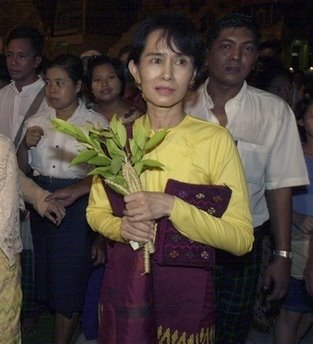


 Posts
Posts


