http://democracyforburma.wordpress.com/2009/03/18/a-leader-of-burma%E2%80%99s-2007-saffron-revolution-u-gambira-is-urging-the-burmese-people-to-carry-on-in-resisting-the-military-government-and-has-agreed-to-appeal-his-conviction-and-lengthy-prison/
A leader of Burma’s 2007 Saffron Revolution, U Gambira, is urging the Burmese people to carry on in resisting the military government and has agreed to appeal his conviction and lengthy prison sentence, according to his mother.
2009 March 18
tags: Human Rights, world focus on Burma, Junta, UN, Burma, prisoner, monksby peacerunningU Gambira, leader of the All-Burma Monks Alliance, is serving a 69-years jail term Khandee prison for his role in the 2007 protests. He was transferred from Mandalay prison in February after staging a hunger strike there.
His mother, Daw Yay, said that when she visited her son in prison he quoted Burma’s late independence hero Gen. Aung San, father of detained opposition leader and Nobel peace laureate Aung San Suu Kyi.
“If one wants [to follow] the way of the Buddha, one must practice Buddhism. If one wanted independence, one must practice the way towards independence,” she quoted U Gambira as saying.
“He is continuing along that same road,” she said.
Hunger strike
U Gambira began a hunger strike Feb. 15 in Mandalay prison to demand the release of Aung San Suu Kyi and other political prisoners, prompting authorities to transfer him in iron shackles to remote Kamdee prison in the north of the country, she said.
“The trip from Mandalay to Kamdee prison was like being sent to Hell alive,” she said, adding that it required a three-day boat trip from Monywa to Homalin. “I was in the middle seat of the boat without a back rest. It was very uncomfortable.”
“My life, and my family’s life, is just clockwork now. We eat and sleep like robots. There is no life in our bodies,” she said, calling on the authorities to free all political prisoners on humanitarian grounds.
“The ordeal we are going through—it’s a punishment for our entire family.”
Daw Yay said that she had persuaded her son to appeal his conviction for treason, although he initially refused, and that she would travel from her home in Mandalay to the former capital, Rangoon, to file papers on his behalf.
Friday, March 20, 2009
U Gambira is urging the Burmese people to carry on


Suu Kyi a ‘Beacon of Hope’: Clinton
http://www.irrawaddy.org/article.php?art_id=15294
--------------------------------------------------------------------------------
By LALIT K JHA Friday, March 13, 2009
--------------------------------------------------------------------------------
WASHINGTON — US Secretary of State Hillary Clinton on Thursday called the iconic Burmese pro-democracy leader, Aung San Suu Kyi, a beacon of hope for people around the world.
Clinton’s comments occurred at a function at the State Department on the occasion of Women’s History Month.
“Aung San Suu Kyi, whom I mentioned yesterday and I mention as often as I can because having been in prison now for most of the past two decades, she still remains a beacon of hope, strength, and liberty for people around the world,” Clinton said.
The secretary also mentioned Mukhtar Mai of Pakistan, who survived a horrific assault in what is euphemistically called an “honor crime,” and then used the money she received in a court settlement to help educate the rural poor in Pakistan.
“These women are not just improving the world for other women,” Clinton said. “Their courage and actions are helping to create societies where every boy and girl, every man and woman, has the opportunity to live up to his or her God-given potential.”
She said these women understand that the struggle for women’s rights in the 21st century is no longer limited to fighting for the ballot, or equal pay for equal work, or the end of domestic violence, or the right to speak out, or the right to worship or associate.
“All of these items are critical and necessary, but they are no longer sufficient. In order to secure the full spectrum of women’s rights, we have to create economic opportunity and economic security,” Clinton said.
“It is essential that we improve access to healthcare and that we protect Mother Earth from our assaults, so that we can guarantee a better future, and that we do all that we can to help improve education so that we will have more allies and partners and fewer adversaries,” she said.
Clinton said wherever there is oppression, women need to stand against it. “Wherever there is violence, we as women must work to end it. Wherever there is poverty or sickness, we as women must work to cure it. And wherever our planet is in danger, we as women must work to protect it,” she said.
Copyright © 2008 Irrawaddy Publishing Group | www.irrawaddy.org
We Will Boycott Election: CRPP
http://www.irrawaddy.org/article.php?art_id=15301
--------------------------------------------------------------------------------
By LAWI WENG Friday, March 13, 2009
--------------------------------------------------------------------------------
The Committee Representing the People’s Parliament (CRPP) will not participate in next year’s general election in Burma unless political prisoners are released and the junta agrees to a review of the constitution, according to Aye Thar Aung, a spokesman for the committee, who spoke to The Irrawaddy on Friday.
“The release of political prisoners is the first step toward democracy,” he said. “The second is to allow for a review of the new constitution. If not, we will not be involved in the election.”
The announcement came after a meeting was held in Rangoon on Thursday between representatives of the five political parties that comprise the CRPP coalition: the National League for Democracy (NLD), the Shan Nationalities League for Democracy, the Mon National League for Democracy, the Arakan League for Democracy, and Zomi National Congress.
Between them, the five parties took 89 percent of the electoral votes at the 1990 general election—some 433 of the parliament’s 485 seats—with the NLD winning a landslide victory.
However, the elected representatives were never allowed to take power and many of their members were subsequently arrested and imprisoned by the military junta.
Despite the announcement, Nyan Win, a spokesperson for the NLD, refused to comment to The Irrawaddy on Friday about the CRPP decision or the 2010 election.
The NLD has previously called on the Burmese military regime to review the new constitution and release all political prisoners, including its general secretary, Aung San Suu Kyi.
At the 14th Asean Summit in Thailand last month, Burmese Prime Minister Thein Sein reportedly promised that Burma would allow United Nations to monitor the 2010 election, a date for which still has not been announced.
But Aye Thar Aung said that allowing the international community to monitor next year’s general election is not as important a factor as the need to review the new constitution.
“It is simply unacceptable that the military will reserve 25 percent of seats in the parliament for itself according to the new constitution,” he said.
He added that the CRPP seeks meaning dialogue between the military junta and the opposition groups for the future of democracy in Burma.
Some leaders of political parties within the CRPP are still in detention, including Suu Kyi and Tin Oo of the NLD, and ethnic Shan leader Hkun Htun Oo.
Copyright © 2008 Irrawaddy Publishing Group | www.irrawaddy.org
Political Prisoners Doubled in Two Years, Say Activists
http://www.irrawaddy.org/article.php?art_id=15302
--------------------------------------------------------------------------------
By WAI MOE Friday, March 13, 2009
--------------------------------------------------------------------------------
COMMENT(5)
The number of political prisoners in Burma has almost doubled since July 2007, according to activists who launched a campaign on Friday to press for their release.
Before the start of demonstrations in August 2007, it was estimated that Burmese jails held 1,100 political prisoners. Today the number stands at 2,100, said Khin Ohmar, a leading Burmese activist at the launch of the campaign “Free Burma’s Political Prisoners Now!” (www.fbppn.net) in Chiang Mai, northern Thailand.
“Unless political prisoners are released, there is no peace and stability in the country,” she said.
The “Free Burma’s Political Prisoners Now!” campaign is organized by the Thailand-based Burmese Assistance Association for Political Prisoners-Burma (AAPP) and the Forum for Democracy in Burma (FDB), an umbrella dissident group of seven organizations in exile.
Khin Ohmar, of the FDB, was banned from attending the Asean summit in Thailand last month, along with a Cambodian activist.
The current campaign aims to collect a symbolic 888,888 signatures on a petition for the release of Burma’s political prisoners. The petition will be circulated in Thailand, Australia, Canada, Hong Kong, India, Indonesia, Japan, the Philippines, South Korea, and the United Kingdom.
In Thailand, the launch was held at the Foreign Correspondents Club in Bangkok and Chiang Mai University’s International Center.
Friday was chosen for the launch because March 13 was proclaimed Burma’s Human Rights Day by pro-democracy leader Aung San Suu Kyi and other leading dissidents to mark the anniversary of the deaths of activists Phone Maw and Soe Naing in clashes with police in 1988.
The petition calling for the release of political prisoners will be circulated until May 24, the day that Suu Kyi should be released from her current term of house arrest under Burmese law. It will be sent to UN Secretary-General Ban Ki-moon,
The UN General Assembly has been urging the release of Burma’s political prisoners for more than a decade.
AAPP Secretary Tate Naing said at Friday’s launch that the 2010 election would be meaningless if political prisoners were still behind bars on polling day.
“The release of political prisoners is number 1 priority for national reconciliation and democratization in the country,” he said.
COMMENT(5)
Name:
E-mail: (Your e-mail will not be published.)
Comment:
You have characters left.
Word Verification: Type the characters you see in the picture.
Nay Tun Wrote: 14/03/2009
Why haven't the US and EU countries (France once advised UN that it should use R2P during Nargis) proposed asylum for Aung San Suu Kyi and her followers in prison? I am sure the junta will release them immediately. I found no other better solution than that.
For example I heard that some 88 generation have children such as Jimmy/Nilar Thein or Ma Mie Mie. I am sure their families will be very happy if their children can study in US or France or UK for free.
France gives special scholarships to political asylum seekers. In the UK there are special scholarships for the children of pro-opposition politicians from Myanmar.
In the US, Soros's OSI is a very consistent scholarship source for all children of NLD MP-elects and the 88 generation group.
That is just for your info.
zaw win Wrote: 14/03/2009
When the Muslim separatist movement started to flare up in the south the then PM Thaksin asked the Thais to make origami paper birds. Even though educated Thais cringed in shame, Thaksin's govt. rained down the south with paper birds using air force planes. He assumed all Thais are as stupid as those poor ignorant villagers who do not understand the complexities of tax evasion.
Instead of addressing the real issues facing the Muslim south he thought that the sight of paper birds falling from the skies will soften the hearts of hardcore Muslim fundamentalists. Well, where is Thaksin now?
This Signature campaign is just like this.
Only a few of these lazy day dreaming NGOS or so called experts on so and so will believe that after seeing these signatures the junta's heart will soften. Grow up, fellas.
Pi Tu Wrote: 14/03/2009
I want to say signing the petition is like providing a piece of sand and a brick for democratization in Burma. I am always happy to support this campaign as it will be a strong knock in international communities, though the dictators won't care and they ignore the demand of international communities. I completely agree with the statement that without releasing all the prisoners, there will be no justice and the forthcoming 2010 election is not just since it is manipulated by the power-crazy generals and they ignore the rights of ethnicities who are pressed to take part in the election. It is obvious that the brutal SPDC is not willing to discuss with the opposition.
Tettoe Aung Wrote: 14/03/2009
Is there any surprise after that document was leaked in September last year? The military regime intends to crack down on dissent as their preparation for the forthcoming 2010 elections. The question is why a country like Australia is helping them in upgrading the regime's police force. It may be the previous government's decision but it has bad consequences.
hsi hsa paw Wrote: 13/03/2009
We are very sad when are reading this news.
We would like to support this campaign.
So what can we do?
Americans’ Opinion of United Nations at Record Low
http://www.cnsnews.com/public/content/article.aspx?RsrcID=44971
Friday, March 13, 2009
By Patrick Goodenough, International Editor
Flags of member nations flying at United Nations headquarters in New York City. (U.N. Photo by Araujo Pinto)(CNSNews.com) – The Obama administration’s attempts to revamp the U.S. relationship with the United Nations comes at a time when Americans’ opinion of the world body’s effectiveness has dropped to an all-time low.
In the latest annual Gallup poll on the subject, only 26 percent of respondents said the U.N. was doing a good job “in trying to solve the problems it has had to face.”
The score marks a new low point in a steady decline since 2002, when 58 percent of respondents thought the U.N. was doing a good job. This year’s is also the lowest score registered by Gallup in more than half a century of tracking the issue.
Gallup previously attributed the downward trend since 2002 to the U.N.’s stand on the 2003 war in Iraq, corruption and scandals including the oil-for-food affair and sexual abuse by peacekeepers in Africa. But even subsequent attempts to reform the U.N. and the departure of former Secretary-General Kofi Annan in 2006 do not appear to have checked the slide.
More recent criticism has focused on the inability of the Security Council to take unified positions on contentious issues including Iran, Burma, Darfur and Zimbabwe; controversies at the new, ostensibly reformed Human Rights Council; claims of financial irregularities in the U.N. Development Program’s operations in North Korea; alleged collaboration between the U.N. agency for Palestinian refugees UNRWA and Hamas in Gaza; and attacks on U.S. and Israeli policies in the General Assembly, including by the body’s current Nicaraguan president.
The Democratic Party platform for 2008 called the U.N. “indispensable,” and said while it needed reform those problems would not be solved unless the U.S. “rededicates itself to the organization and its mission.”
Since taking office, President Obama has taken steps to improve the relationship, including reinstating funding to the U.N. Population Fund, restoring the position of ambassador to the U.N. to cabinet rank, and returning to the Human Rights Council as an observer.
U.N. Secretary-General Ban Ki-moon and President Obama hold a joint press conference after holding talks at the White House on March 10, 2009. (U.N. Photo by Eskinder Debebe)On Tuesday, he met with U.N. Secretary-General Ban Ki-moon, and said afterwards that “the United Nations can be an extraordinarily constructive, important partner in bringing about peace and stability and security to people around the world.”
He also praised Ban, saying he had “shown extraordinary leadership during his tenure.”
One day later, Ban angered some Republican lawmakers when during a visit to the U.S. Congress he was quoted as having described the U.S. as a “deadbeat” donor to the U.N.
White House spokesman Robert Gibbs on Thursday called the word choice “unfortunate, given the fact that the American taxpayer is the largest contributor to the United Nations.”
Ban at a press conference also addressed the incident, calling it a “misunderstanding.”
He said he had noted the generous U.S. financial support for the U.N. but also pointed out that the U.S. was “the largest debtor, owing more than $1 billion in arrears, soon to reach $1.6 billion. My point was simply that the United Nations needs the fullest support of its members, and never more so than in these very demanding time.”
Ban also said Obama and Secretary of State Hillary Clinton had both “showed their commitment to resolve this issue as soon as possible.”
“America being called a ‘deadbeat’ by an organization that as a whole excuses catastrophic human rights abuses, terrorism and widespread financial fraud around the world might be laughable, if it weren’t so expensive,” Rory Cooper, director of strategic communications at the Heritage Foundation, commented in a blog posting Thursday.
‘Paying our dues’
One of the advocacy priorities for 2009 for the United Nations Association of the U.S.A. is to lobby for the U.S. to “pay its dues” on time and in full.
“By failing to fully pay our mutually agreed-upon share of U.N. expenses, we are undermining our influence at the United Nations and the important work of the organization,” the association argued in an advocacy agenda document adopted last December.
U.N. Secretary-General Ban Ki-moon meets with President Obama at the White House on March 10, 2009 (U.N. Photo by Eskinder Debebe)“The United States can make a powerful statement about its support for global cooperation and the importance of fulfilling international commitments by meeting the most basic obligation of UN membership – paying our dues.”
U.N. member states’ contributions to operating costs are calculated from assessments based on their relative “capacity to pay,” taking into account gross national income and other factors.
The U.S. contribution is assessed at 22 percent of the regular operating budget, which finances the Security Council, General Assembly, Economic and Social Council and several other bodies. It also contributes 25 percent of the peacekeeping budget.
The next biggest contributor (2008 figures) is Japan, at 16.6 percent. No other country comes close, including the other four permanent members of the Security Council – Britain 6.6, France 6.3, China 2.6 and Russia 1.2 percent.
Together, the top 15 contributing nations contribute around 84 percent of the regular budget.
In 2006, the Bush administration proposed reforming the assessment process, arguing that using purchasing power parity (PPP) data rather than gross national income as determined by GDP would produce a “more balanced” outcome.
PPP compares living conditions across countries, by comparing how much is needed to buy the same basket of goods and services.
If that measure was used to calculate U.N. contributions, major funders including the U.S. and Japan would pay less, while Russia and China would pay more – in China’s case, significantly so.
Japan that same year also proposed changes to the way member states’ dues are assessed, stung by China’s ongoing opposition to Japan’s aspirations to become a permanent member of the Security Council.
Arguing that contributions should reflect member states’ status and level of responsibility at the U.N., Tokyo said each permanent Security Council member should contribute a minimum of 3-5 percent of the total budget.
Like the U.S. proposal to shift to calculations based on PPP, the Japanese recommendation would have impacted on Russia and China, both of which contribute less than three percent. Meanwhile dues paid by others – including Japan – would have consequently dropped.
China and Russia quickly rejected Japan’s proposal.
John Bolton, former U.S. ambassador to the U.N., told lawmakers in 2007 that a system of “voluntary contributions” would allow the U.S. and other member states “to judge the effectiveness of the various parts of the U.N. system, and demand results.”
“Non-responsive programs and funds can be defunded, effective agencies and personnel can be rewarded and augmented,” he said. “Most importantly, the crippling mentality of ‘entitlement’ that pervades the main U.N. organization will be stripped away.”
Viewer Comments
The following comments are posted by our readers and are not necessarily the opinions of either CNSNews.com or the story’s author. To be considered for publication, comments must adhere to the Terms of Use for posting to this Web site. Thank you.
Showing 1-3 of 3 Comments Newer to Older Older to Newer Loading...
thinking at 06:33 AM - March 15, 2009
The best way to change the disparity in pay is to make it so that your vote carries the same weight as your % of financial support. It'll never happen but boy I bet China and Russia would up what they pay real quick hehe. In any event I have to agree, turn out the lights. It was a failure under the name of "The League of Nations" and its a failure now. It has been taken over by corrupt people and Leftist organizations. They only have power and control on there minds and if we're not careful they will control us soon. If your not convinced look at the EPA and how it is in danger of being replaced or overseen by the UN's version. I would be interested it seeing what other agencies the UN has its sights on.
zanne at 11:26 PM - March 13, 2009
A useless U.S. taxpayer expense. Turn off the lights/send everyone home. The UN is a filthy,ugly money pig.
Peted at 09:23 AM - March 13, 2009
Is the U.N. paying rent on the U.N. building or is that a U.S. taxpayer giveaway? These jackasses have to be evicted and the whole mess moved to a more accommodating country such as Zimbabwe.
2 million methamphetamine pills seized in Myanmar
http://www.gmanews.tv/story/152607/2-million-methamphetamine-pills-seized-in-Myanmar
03/13/2009 | 03:38 PM
Email this | Email the Editor | Print | ShareThisYANGON, Myanmar — An anti-drug squad in Myanmar has seized 2 million methamphetamine tablets hidden in the fuel tank of a truck headed to the Thai border, state-owned media said Friday.
The report follows an announcement Thursday that Myanmar seized more than 1.3 million methamphetamine tablets in February, a 25-fold increase over January's total.
The New Light of Myanmar newspaper said the 10-wheel truck was traveling from Kengtung in eastern Myanmar to the border town of Tachileik when it was stopped and searched. The truck owner was arrested as part of an ongoing sweep against traffickers.
The most recent U.S. State Department report on the international illicit drug trade said Myanmar "is a significant player in the manufacture and regional trafficking of amphetamine-type stimulants."
Large quantities of the drugs end up in Thailand, where their use has been rampant in recent years.
A separate report in the newspaper said the Myanmar government has destroyed 7,893 acres (3,194 hectares) of opium poppy fields in the Shan and Kachin states during this year's growing season.
Myanmar, also known as Burma, is the world's second largest producer of heroin after Afghanistan, according to U.S. and U.N. experts, although the Central Asian country leads by a long shot, accounting for 90 percent of the world's production of the narcotic.
Heroin is produced from the opium poppies. - AP
Medical interpreters key to improving health care
http://www.democratandchronicle.com/article/20090312/NEWS0201/903120334/1002/NEWS
March 12, 2009
Medical interpreters key to improving health care
Mark Hare
Effective communication between doctors and patients is essential to improving medical care, says Eric Candle, the New York state representative for the International Medical Interpreters Association.
While Candle is an advocate for programs to train and certify medical interpreters who can assist those with limited English ability, he says the problem of failed communication extends well beyond immigrants.
Perhaps as many as half of all American adults are not "medically literate" and "cannot successfully navigate the medical care system," he says.
Candle, of Fairport, owns ECdata, Inc. a Brighton computer services company. Having immigrated years earlier and settled in Rochester, Candle brought his parents from Russia in 1993. Candle speaks German and Russian — which he says allows him to communicate with Ukrainians and others from former Soviet republics.
In 1988, as immigrants from Eastern Europe and Russia began to arrive in larger numbers, word of his language skill spread and "people started asking me for help," he says.
Immigrants with little or no English proficiency delay seeking medical care as long as possible and then opt for more expensive emergency room care, he says.
Citing research by The Joint Commission, an Illinois-based medical research and accreditation organization, Candle says the annual cost of "misdirected, misunderstood medical care is $73 billion. The price tag includes everything from the cost of illness prolonged by patients' inability to follow care instructions to the cost of redundant testing and procedures performed because of insufficient record-keeping or patients' inability to explain their medical care or history."
Language and cultural barriers present real problems, says Kathy Miraglia, director of interpreter services for the University of Rochester's Strong Memorial Hospital. Miraglia, an American Sign Language interpreter, says the hospital has sign language and Spanish interpreters on staff 24/7 and can call in other translators as needed, or use a telephone translation service with access to interpreters in any of more than 170 languages.
There is a need for trained interpreters, and a program to train and certify interpreters through one or more area colleges would be welcome, she says.
Representing the IMIA, Candle has been reaching out to Rochester area colleges in hopes of beginning such a program.
It's not easy. Finding start-up funds is the first hurdle, he says. And, says Miraglia, there needs to be a source of money to pay interpreters once they are trained.
A certification program, backed by national standards, would guarantee providers access to interpreters whose abilities are proven. And face-to-face contact is far superior to telephone or video services as a way to build trust and detect subtle evidence of confusion or doubt.
In Monroe County alone, he says, there are 120,000 people who speak little or no English. The need is great. Hospitals have many pressing needs, he says, "but it's important that they see this not as an investment, but as a way to curbs expenses and provide better care."
This and many other communities are again being remade by new waves of immigrants — from China, Vietnam, Burma, Africa and Eastern Europe.
Their health, and potential contributions to our community, depend on their access to quality care, and on their ability to understand and participate in their own treatment.
--------------------------------------------------------------------------------
Secretary of State Hillary Clinton Announces 2009 International Women of Courage Awards
Written by Press Release
Thursday, 12 March 2009 18:54
Washington, DC--(ENEWSPF)--March 11, 2009.
SECRETARY CLINTON: Well, this is such an exciting occasion, and there were so many people who wanted to come today, but unfortunately, there is a limit to how many people we can let into this magnificent room. So there are people watching on closed-circuit TV all over this building, and beyond.
And it is my pleasure to welcome you to the State Department to celebrate International Women’s Day with a very special event and a very special guest. The event is the International Women of Courage Awards, and in a minute, you will meet these remarkable women and learn more about their lives and their work. And I am especially delighted to thank one person in particular whose presence here means a great deal to all of us – our First Lady, Michelle Obama. (Applause.)
Now, I know a little bit about the role that – (laughter) – Michelle Obama is filling now. And I have to say that in a very short time, she has, through her grace and her wisdom, become an inspiration to women and girls not only in the United States, but around the world. And it is so fitting that she would join us here at the State Department to celebrate the achievements of other extraordinary women, and to show her commitment to supporting women and girls around the globe.
She understands, as we all do here at the State Department, that the status of women and girls is a key indicator of whether or not progress is possible in a society. And so I am very grateful to her and to President Obama, who earlier today announced the creation of the White House Interagency Council on Women and Girls. That will – (applause). That office will help us collaborate across every department and agency in our government.
President Obama has also designated an ambassador-at-large to consolidate our work on women’s global issues here at the State Department. Now, this is a position that has never existed before, and I am very pleased that someone you all know, if you have ever worked on women’s issues – know and appreciate a longtime colleague and friend, Melanne Verveer, who’s been nominated to fill that post. (Applause.)
And I also want to thank Ambassador Susan Rice and our excellent U.S. delegation to the United Nations Commission on the Status of Women, which is in the middle of its annual meetings now, for the work that they are doing and for the engagement that they demonstrate.
Today, we’re focusing on the International Women of Courage Awards. It’s a fairly new tradition here at the State Department, but it’s already become a cherished institution. For the past three years, our embassies have sent us stories of extraordinary women who work every day, often against great odds to advance the rights of all human beings to fulfill their God-given potential. Today, we recognize eight of those women. Each is one of a kind, but together they represent countless women and men who strive daily for justice and opportunity in every country and on every continent, usually without recognition or reward.
And I want to say a special word about someone who could not join us, who we honor today – Reem Al Numery, who was forced to marry her older cousin when she was just 12 years old. She is now fighting to obtain a divorce for herself and end child marriage in Yemen. She was not able to be here, but we honor her strength and we pledge our support to end child marriage everywhere, once and for all. (Applause.)
We also express our solidarity with women whose governments have forbidden them from joining us, especially Aung San Suu Kyi, who has been kept under house arrest in Burma for most of the past two decades, but continues to be a beacon of hope and strength to people around the world. Her example has been especially important to other women in Burma who have been imprisoned for their political beliefs, driven into exile, or subjected to sexual violence by the military.
Our honorees and the hundreds of millions of women they represent not only deserve our respect, they deserve our full support. When we talk about human rights, what I think of are faces like these. What I am committed to is doing everything in my power as Secretary of State to further the work on the ground in countries like those represented here to make changes in peoples’ lives. That doesn’t happen always in the halls of government. It happens day to day in the towns and cities, the villages and countryside where the work of human rights goes on.
We simply cannot solve the global problems confronting us, from a worldwide financial crisis to the risks of climate change to chronic hunger, disease, and poverty that sap the energies and talents of hundreds of millions of people when half the world’s population is left behind. The rights of women – really, of all people – are at the core of these challenges, and human rights will always be central to our foreign policy.
Earlier today I met with Foreign Minister Yang of China and conveyed to him, as I do in my meetings with all other leaders, that it is our view in the Obama Administration that every nation seeking to lead in the international community must not only live by, but help shape the global rules that will determine whether people do enjoy the rights to live freely and participate fully.
The peace, prosperity and progress that we know are best served and best serve human beings come when there is freedom to speak out, to worship, to go to school, enjoy access to health care, live and work with dignity.
The United States is grounded in these ideals, and our foreign policy must be guided by them. Indeed, our own country must continually strive to live up to these ideals ourselves. Not only does smart power require us to demand more of ourselves when it comes to human rights, but to express those views to others and to actually assist those who are on the frontlines of human rights struggles everywhere.
It is important that we focus on human rights because I know what inspiration it has given to me over many years. The people I have met, they have constantly reminded me of how much work lies ahead if we are to be the world of peace, prosperity and progress that we all seek.
I’ve met a lot of people, particularly women, who have risked their lives – from women being oppressed by the Taliban in Afghanistan, to mothers seeking to end the violence in Northern Ireland, to citizens working for freedom of religion in Uzbekistan, and NGOs struggling to build civil society in Slovakia, to grassroots advocates working to end human trafficking in Asia and Africa, and local women in India and Bangladesh, Chile, Nicaragua, Vietnam and many other places who are leading movements for economic independence and empowerment.
These personal experiences have informed my work. And I will continue to fight for human rights as Secretary of State in traditional and especially non-traditional ways and venues.
All of you gathered here represent the kind of broad coalition that we need – business leaders, NGO leaders, ambassadors, experts, people from every corner of our government, citizens who are moved and touched by the stories of courage that we will be hearing some more of today.
And it is exciting that we have now in our own country someone who is standing up for the best of America, a woman who understands the multiple roles that women play during the course of our lives, and fulfills each one with grace. An example of leadership, service, and strength. It is my great pleasure and honor to introduce the First Lady of the United States, Michelle Obama.
(Applause.)
(The First Lady makes remarks.)
(Applause.)
SECRETARY CLINTON: Thank you so much, Mrs. Obama, and it’s exciting to have your leadership and example for not only girls and women in our country, but those around the world.
Now, we’re going to start with the extraordinary women who we honor today. The first woman, Wazhma Frogh, from Afghanistan, is being recognized for her courageous efforts to combat sexual and domestic violence and child and marital rape throughout Afghanistan, despite facing dangerous conditions. She has come a long way, and we stand in solidarity with her and the people of Afghanistan. (Applause.)
Next, from Guatemala, Norma Cruz. We are recognizing her for her unyielding efforts to end the culture of impunity surrounding the murder and other forms of violence against women in Guatemala. At great risk to her personal safety, Norma Cruz has been outspoken and extraordinarily brave, and we are honored to have her with us today. Norma Cruz. (Applause.)
Suaad Allami, from Iraq. I told Suaad when we were waiting to come out how pleased I was to see her, and how grateful we are for the progress that we’ve seen, but we know how much more needs to be done in her country. And we honor her for bravely promoting the legal rights, the health, the social well-being and the economic and political empowerment of women in Iraq, despite threats to her own safety. Thank you so much, Suaad. (Applause.)
Veronika Marchenko, from Russia. We honor her for her stalwart leadership in seeking justice for the families of bereaved service members, young men conscripted into the Russian Army. For her commitment to seeking the truth and in promoting improved human rights conditions for those who serve in the Russian army, and being a networking presence to bring together those who served and their families to find answers to so many of the questions that no one had ever, ever bothered to answer before. Thank you so much. (Applause.)
Our next honoree is from Uzbekistan, Mutabar Tadjibayeva, for her courage, her conviction, her perseverance in promoting human rights, the rule of law, and good governance in Uzbekistan, and for standing up for justice at great personal risk. Mutabar is someone who has been in prison for quite some time, and she still has a big smile on her face, and I salute her courage and her persistence. (Applause.)
From Niger, Hadizatou Mani. Hadizatou is such an inspiring person. Enslaved by being sold at a very young age, she never gave up on herself or on her deep reservoir of human dignity. When she finally escaped from slavery, she didn’t forget those who were still enslaved. For her inspiring courage in successfully challenging an entrenched system of caste-based slavery, and securing a legal precedent that will help countless others seek freedom and justice, we honor and salute her. (Applause.)
You know, before I introduce our final honoree, who will respond on behalf of all of the honorees, I just want to say that over the course of many years of doing human rights work, and particularly on behalf of girls and women, I’m sometimes asked, well, do ceremonies like this really matter; is that just not something, you know, that you do and it’s a nice feeling, and then you go back to wherever you came from?
I know that these kinds of recognitions and moments of honor by both governments and NGOs and other institutions and individuals are extremely important. They provide a recognition of an individual’s struggle and courage that stands for so much more. They provide a degree of awareness about the problems that the individual is fighting to remedy. They serve notice on governments that the first and highest duty is for every government to protect the human rights of every individual within that jurisdiction. And they provide a degree of protection.
And so I salute those in the State Department who have recognized the importance of this and kept it going, and we are proud to continue that tradition.
Our final speaker, Ambiga Sreenevasan, has a remarkable record of accomplishment in Malaysia. She has pursued judicial reform and good governance, she has stood up for religious tolerance, and she has been a resolute advocate of women’s equality and their full political participation. She is someone who is not only working in her own country, but whose influence is felt beyond the borders of Malaysia. And it is a great honor to recognize her and invite her to the podium. (Applause.)
MS. SREENEVASAN: The First Lady Mrs. Obama, Madame Secretary Hillary Clinton, ladies and gentlemen, I am humbled to be in the company of seven extraordinary women receiving this award for courage, and I am deeply honored to now speak on their behalf and on mine.
We accept this award in all humility, remembering that we have been fortunate in being singled out from among countless courageous women in our countries who are dedicated to the cause of equality and justice.
It is also timely for us to remember all the women in other conflict-ridden territories, like Palestine and other countries, who have to show courage every single day in their struggle to survive and to keep their families together.
Each of us fights causes that promote equality and justice, and by presenting us with this award you honor those causes and all the people who work tirelessly for them with unflinching dedication.
This award will help to bring to the international stage our voices and our advocacy on these important issues. This occasion gives us an opportunity to reflect on the importance of the rule of law in promoting the rights of women around the world. When the rule of law is upheld, equality is upheld, the cause of justice is upheld, and human rights are upheld.
Today, we are witnessing a struggle for the souls of our nations, taking place between the forces of the old and the forces of change. We see our commitment to the rule of law, fundamental liberties, and the independence of our institutions being tested. The strength of our nations will depend on how well they withstand this test.
There are those who claim that democracy is a Western concept and is unsuitable elsewhere. There are yet others who perpetrate injustices behind a veneer of democracy. We say that democracy is universal, and a true democracy and the rule of law will prevail when the collective voices of the people are raised in its support.
On my part, I have for the past two years had the privilege to lead and serve the Malaysian Bar, a professional organization consisting of approximately 13,000 lawyers. History will bear testament to the fact that the Malaysian Bar has always been true to its first article of faith, to uphold the cause of justice without regard to its own interests or that of its members uninfluenced by fear or favor. In a sense, I was merely stepping into the shoes of the many other brave leaders of the bar who came before me, whereas many of the awardees today are pioneers in their struggle for justice.
This award has given us the opportunity which we would not otherwise have had, to share our stories, our successes, our failures, to reach out across our borders and to establish a base upon which we can build a meaningful network of support. These stories must be told in all our countries. By this experience, we are both enriched and enraged; enriched by what we have shared, and enraged that so many of our sisters endure intimidation and suffering in their countries. Nevertheless, ours is a message of hope that something has been achieved, despite the odds.
Martin Luther King said, “Injustice anywhere is a threat to justice everywhere.” This means that although we may come from different walks of life, our struggle is common. And each success is a success for all, just as each failure is a failure for all. When we unite on a human rights platform, whether domestically or internationally, above politics and political alliances, we create more enduring partnerships and relationships. When we pursue freedom and empowerment for others, we reaffirm and protect our own.
In my interaction with the other awardees present here today, it was evident that the passion we feel for our causes is driven by the love of our homelands and our people. That, in turn, drives our passion for what is right and what is just. Our people deserve nothing less. We all believe in striving for ideals that are– if I may borrow the words – self-evident; namely, the ideals of truth, justice, goodness, and universal love and understanding. Our stories are a testament to the universality of these ideals.
We are truly and deeply honored by this award, more so, when it comes from you, Madame Secretary, yourself a woman of courage, who has inspired women around the world to reach great heights. Your untiring efforts in championing women’s rights worldwide are well known. Your immortal words that, “Human rights are women’s rights, and women’s rights are human rights,” resonate with all of us here.
We would also like to express our deep admiration for the First Lady Mrs. Obama, and we would also like to express our appreciation for your sharing this moment with us. Madame Secretary, on behalf of all the awardees, I thank you. And we accept the honor with humility and pride. Thank you. (Applause.)
SECRETARY CLINTON: Thank you. These women of courage will serve to remind us every day as we do our work in this venerable building – here we are in the Benjamin Franklin Room, and I’m about to invite you to join our reception in the Thomas Jefferson Room – that our own country has a lot to live up to. But we derive inspiration from those who are struggling so hard just to realize the basic rights that we sometimes take for granted. And it is our responsibility not only to continue to do what we must here at home to realize the dream that America represents, but to use our talents and our abilities and resources to help others as well.
It is such a great privilege to be here with all of you, to be the Secretary of State at this moment of history in an administration represented by Mrs. Obama today, led by President Obama, who means so much already to so many around the world. Now, it’s our job to realize the promise that that represents. Thank you all very much. (Applause.)
Source: state.gov
Articles by this Author:
Fathead Adds NFL Players and Dallas Cowboys Cheerleaders to Lineup
Hundreds 'Home for the Holidays' Thanks to Unique Alliance
Chicago Rush Bob McMillen Named Cover Athlete for: Road to Glory
CNA Building Lights up Chicago Skyline for Chicago Bears
View all articles by this author
The Military Mind-set -BURMA
http://www.irrawaddy.org/opinion_story.php?art_id=15290
CONTRIBUTOR
The Military Mind-set
--------------------------------------------------------------------------------
By SAW TUN Friday, March 13, 2009
--------------------------------------------------------------------------------
I would like to try to explain what I believe to be the genuine attitude of the Burmese military government.
What is the aim of the Burmese Tamadaw [the military]? How do they think?
Until 1988, late dictator Gen Ne Win, who was the god father of the current ruling generals, didn’t favour the communism and parliamentary democracy. He ordered prominent political theorists to draw up a middle-way political ideology. Finally, due to the economic decline, he began to follow the reforms conducted by China’s paramount leader Deng Xiaoping.
However, Ne Win gave up his political control by the nation-wide democracy uprising, which produced the1988 student movements.
His protégé, former spy chief Gen Khin Nyunt, also stated that the enemy of the military was the Communists and Western neo-colonialists [a phrase usually used by Communists] who were accused of controlling the opposition movement from behind the scenes. Until now, the generals continue to teach army officers along similar lines.
Not like Ne Win, the current ruling generals lacked the experience of independent struggles or Cold War politics. They are not able to stand on a nationalistic platform and non-alliance ideology. They are not skilful in playing political theory games.
But they have learned some effective ways to hold on to their power.
My Brother’s Lesson
“What is military training?” asked my brother, who was a military officer, when I was young. I replied that the training taught me to be disciplined.
“No, it teaches you to immediately follow an order without thinking,” he said. “When you hear ‘Attention,’ you follow the order at once, don’t you? When you hear, ‘At ease,’ you follow it without thinking, don’t you?’”
The training and lectures eventually gives all soldiers a military mindset, which is comprised of the following characteristics:
-We work harder than others for the sake of the country.
-We sacrifice our lives to work for the sake of the country.
-Our comrades are injured or killed by our enemies.
-The enemies who injure or killed us are supported by a part of the population.
-We must follow orders, live under the discipline of the army at all the time.
-We are soldiers serving the country 24-hours a day.
In a soldier’s view, thus, ordinary people and civil servants live more easy-going lives. They are undisciplined and have many leisure hours. They do business to become rich.
The result is that soldiers believe they have the sole right to hold state power due to their hard work and sacrifices. These basic opinions are what hinder the relationship between the people and the military, the military and opposition groups and also warp the military view of the international community, which is constantly telling them to give up their hold on power.
Military officers were surprised when I, a scholar, travelled with them through the forests and mountains. They didn’t think anyone except a soldier could do such hard work.
When the army cracks down on peaceful demonstrators, they viewed them as lazy opportunists who are asking for rights without working hard.
The army, in a way, blames the people for failing to develop the country. Although the army as a whole works hard, the people and civil servants don’t work hard. Foreigners work and think smarter than lazy Burmese people, and these are the reasons developed countries are ahead of Burma.
However, when ordinary people go abroad to seek job opportunity, they see foreigners as human beings like them. They work industriously because they receive advantages from their work. They are disciplined because reap advantages from performing well. They know exactly the things that Burma could not move forward because of the army’s heavy handed control.
The Influence of Communist Thought Patterns
After removal of Ne Win from politics, the military generals didn’t have anyone to give them effective policy guidance that could have gone about reshaping the country.
Khin Nyunt, who was more broad-minded than others, formed the American-style Institute of Strategic and International Studies, and selected young military officers for the intelligence units and trained them in international politics.
Using various underground political strategies, Khin Nyunt approached the United States, the European Union and Japan. He drew up the junta’s political road map, the Naypyidaw plan, and the policies propagated in the National Defence College.
Although the generals never believed in communism and socialism, they studied the tactics and methods of these ideologies, which are premised on hostility to politicians and negativism toward multi-party and federal systems.
Clearly, the generals followed the dictum of Mao Tse Tung: “Crack down on the extreme minority, leave the educated to live in illusion, and label the majority of ordinary people as supporters.”
Today the generals are trying to divide Asean and educated Burmese people from the opposition groups. Speaking in Communist terms, they see Asean and the educated class as walking in illusion.
The army believes students and the educated class get into politics because of their misconceptions. At first, they aimed at strictly controlling the student movement itself, but later in 2007, they labelled most students as part of the extreme group.
Because of their highly indoctrinated, military mind-set, military leaders are cut-off and isolated from the people. They truly have no understanding of the people’s plight.
Military officers do not associate with the general population even if they are appointed to civilian positions, because they are trained not to be too close to the people. Military officers who understand the life of the people are dismissed from their positions.
Military leaders who are retired from the army are isolated. Many incumbent military leaders are desperately afraid of being retired, because they know no other way of life—or thought.
The author is a Rangoon-based observer of politics and military affairs in Burma.
Copyright © 2008 Irrawaddy Publishing Group | www.irrawaddy.org
Thursday, March 19, 2009
A STATEMENT ON 21TH ANNIVERSARY OF BURMA’S HUMAN RIGHTS DAY
ANTI-DICTATORSHIP, PEOPLE’S FREEDOM MOVEMENT IN BURMA
A STATEMENT ON 21TH ANNIVERSARY OF BURMA’S HUMAN RIGHTS DAY
(March 13, 1988)
The brutal gunned down death of an engineering student of the famed Rangoon Institute of Technology (RIT) named Phone Maw on this day 21 years ago, ultimately culminated in the toppling of 26-year authoritarian rule of the late military despot Ne Win and another two successive rules of his Burma Socialist Program Party.
The students’ demands for justice for Phone Maw’s death led subsequently to Daw Aung San Suu Kyi’s debut on the political scene of Burma, heralding an era where the people of Burma made public their desire for freedom and majority rule worldwide. Non-violent political confrontation against the brutality was born along with the death of Ko Phone Maw, and widespread among the political oppositions ever since then.
Over twenty years, a sophisticated “symbolic action” by way of non-violence was overwhelmed among the oppositions both inside and overseas. It was very powerful movement appealing the international community’s sympathy and intervention against the regime’s continuous atrocities and human rights violations. We the oppositions had done a remarkable job pushing Burma’s agenda at the UNSC table to do what the world body has supposed to act upon finally.
The failure part of the UN with its useless rules and regulations, which kept on sending ineffective missions consecutively to Burma, had prolonged the confusion of the international community hoping something good might eventually came out of it for more than a decade. Finally, the UN’s failure to intervene the “Saffron Revolution” in 2007 has concluded that UN has no clue how to handle the regime that has set to go on its own legalizing its endless rule via 2010 elections regardless.
As a result, more than 2000 political prisoners are still held in prisons, not to mention Daw Aung San Suu Kyi and others deprived of their freedom and right to participate in the politics of their country also, has added much credulity and less credibility on the upcoming military farce 2010 elections, certainly to be rigged as most believed.
The prevailing circumstances have reminded us especially the opposition leaders and the ethnic leaders that this is the time for us to find an alternative way to go on our fight to bring down the regime. Remember, we did what we supposed to for twenty years. The failure part is not ours but the UN itself. As a result it is the time for us to abandon the ”UN Approach” and to engage in the “strategic action” that allow the people to join in our struggle by giving them the hope they desperately needed and by convincing them that we can bring down the regime on our own if we really are united. Daw Suu had repeatedly said that if you really want democracy, put your own effort. Don't wait for somebody else. You are the master of your soul. We are on our own to fight back the regime. We are the ones who can make up our own history by showing the world that we can achieve the international standard democracy at our own cost. Our courage, determination and unity will be tested in this battle.
Since we have been calling on the Anti-Dictatorship, People’s Freedom Movement for quite sometime, we strongly believe in the power of the people. While marking the 21TH ANNIVERSARY OF BURMA’S HUMAN RIGHTS DAY, we vow to fight for freedom and democracy in Burma along with the people of Burma until victory.
Campaign Planning Committee
Washington DC
USA
March 13, 2009
--- On Wed, 3/11/09, Bo kyauk
From: Bo kyauk
Subject: [8888peoplepower] Fwd: request letter to Burmese People
To: 8888peoplepower@ yahoogroups. com, aungmm210@gmail. com, winmaw.88@gmail. com, "Maung Soe"
Date: Wednesday, March 11, 2009, 1:11 AM
သို ့
ရဲေဘာ္မ်ားအားလုံး(မိမိကိုယ္ကို ဗမာႏိုင္ငံသားလို ့ခံယူထားသူအားလုံး) နည္းမ်ဳိးစုံတိုက္ပဲြထဲမွာ တန္ျပန္တိုက္ခိုက္ေရးလဲ လုပ္မွ ဒုတိယလြတ္လပ္ေရး ရမွာဗ်။ လက္မွတ္ေတြပဲ ထိုးဖို ့ တိုက္တြန္းမေနၾကနဲ ့ တန္ျပန္တိုက္ခိုက္ေရးအတြက္လဲ အားျဖည့္ဖို ့ လုပ္ၾကပါအုံး/
---------- Forwarded message ----------
From: wbu rf
Date: 2009/3/10
Subject: request letter to Burmese People
To: wailinnzin@gmail. com, bokyauk1967@ gmail.com
ဗမာႏိုင္ငံလုံးဆိုင္ရာ ပူးေပါင္းေတာ္လွန္ေရးအင္အားစု က ျပည္သူလူထုသို ့ ပန္ၾကားခ်က္ကို အားလုံးသို ့ ျဖန္ ့ေ၀ေပးေစလိုပါသည္၊
ေအာင္မင္းႏိုင္
Will the Chinese Communist Party Survive the Crisis?
http://www.carnegieendowment.org/publications/index.cfm?fa=view&id=22847&prog=zch
Minxin Pei
Foreign Affairs, March 12, 2009
Until recently, most leading China watchers thought the Chinese Communist Party (CCP) had become remarkably resilient. Through learning and adaptation, it seemed, the world's largest and most powerful one-party regime had become politically nimble and skillful enough to overcome difficulties that would have overwhelmed lesser autocratic rulers. For two decades, the party has compiled an impressive list of achievements: at home it has kept the economy growing at a gravity-defying double-digit rate, while abroad it has pursued a pragmatic foreign policy, avoiding confrontation with the United States and methodically gaining prestige and influence.
Because of the global economic crisis, however, Beijing is in trouble. The problems are numerous: China's exports are plummeting, tens of millions of migrant laborers have lost their jobs, millions of college graduates cannot find employment, industrial overcapacity is threatening deflation, and the once red-hot real estate sector has nose-dived. The country's faltering growth is posing the hardest test yet to the CCP's resilience.
To be sure, the Chinese economy has fared less badly than many others. The country's insulated banking sector remains largely unscathed. Indeed, the government's fiscal balance sheet is strong enough to fund a $580 billion stimulus package (although only about a quarter represents genuinely new fiscal spending). China's colossal $1.9 trillion in foreign exchange reserves provide a comfortable insurance policy against global financial turmoil, and the country should be able to avoid an outright recession.
But a reduced annual growth rate -- now down to about seven percent from over 11 percent a couple of years ago -- will bring enough trouble. Every year, the Chinese labor market grows by more than ten million workers, the bulk of whom are leaving the countryside for urban areas in search of employment. Each percentage point of GDP growth translates into roughly one million new jobs a year, which means that China needs GDP to rise at least ten percent every year in order to absorb the influx of laborers.
With no end to the global crisis in sight, many are wondering how long China's economic doldrums will last and what the political impact of stagnation will be. The conventional wisdom is that low growth will erode the party's political legitimacy and fuel social unrest as jobless migrants and college graduates vent their frustrations through riots and protests. Although this forecast is not necessarily wrong, it is incomplete.
Strong economic performance has been the single most important source of legitimacy for the CCP, so prolonged economic stagnation carries the danger of disenchanting a growing middle class that was lulled into political apathy by the prosperity of the post-Tiananmen years. And economic policies that favor the rich have already alienated industrial workers and rural peasants, formerly the social base of the party. Even in recent boom years, grass-roots unrest has been high, with close to 90,000 riots, strikes, demonstrations, and collective protests reported annually. Such frustrations will only intensify in hard times.
It might seem reasonable to expect that challenges from the disaffected urban middle class, frustrated college graduates, and unemployed migrants will constitute the principal threat to the party's rule. If those groups were in fact to band together in a powerful coalition, then the world's longest-ruling party would indeed be in deep trouble. But that is not going to happen. Such a revolutionary scenario overlooks two critical forces blocking political change in China and similar authoritarian political systems: the regime's capacity for repression and the unity among the elite.
Economic crisis and social unrest may make it tougher for the CCP to govern, but they will not loosen the party's hold on power. A glance at countries such as Zimbabwe, North Korea, Cuba, and Burma shows that a relatively unified elite in control of the military and police can cling to power through brutal force, even in the face of abysmal economic failure. Disunity within the ruling elite, on the other hand, weakens the regime's repressive capacity and usually spells the rulers' doom.
The CCP has already demonstrated its remarkable ability to contain and suppress chronic social protest and small-scale dissident movements. The regime maintains the People's Armed Police, a well-trained and well-equipped anti-riot force of 250,000. In addition, China's secret police are among the most capable in the world and are augmented by a vast network of informers. And although the Internet may have made control of information more difficult, Chinese censors can still react quickly and thoroughly to end the dissemination of dangerous news.
Since the Tiananmen crackdown, the Chinese government has greatly refined its repressive capabilities. Responding to tens of thousands of riots each year has made Chinese law enforcement the most experienced in the world at crowd control and dispersion. Chinese state security services have applied the tactic of "political decapitation" to great effect, quickly arresting protest leaders and leaving their followers disorganized, demoralized, and impotent. If worsening economic conditions lead to a potentially explosive political situation, the party will stick to these tried-and-true practices to ward off any organized movement against the regime.
If popular unrest is not a true threat to the party's continued rule, then what is? The answer could likely be disunity among the country's elite. Those who talk of China's "authoritarian resilience" consider elite unity to be one of the CCP's most significant achievements in recent decades, citing as evidence technocratic dominance, a lack of ideological disputes, the creation of standardized procedures for the promotion and retirement of high officials, and the relatively smooth leadership succession from Jiang Zemin to Hu Jintao.
But there are reasons to remain skeptical of such apparent harmony -- arrangements of power that are struck in times of economic prosperity often come undone when crisis hits.
The current Chinese leadership is a delicately balanced coalition of regional, factional, and institutional interests, which makes it vulnerable to dissension. To most Western eyes, China is blessed with strong, capable, and decisive leaders. But to the Chinese leaders themselves, the situation looks somewhat different. Their resumés are remarkably similar, as are their records as administrators. No single individual towers above the others in terms of demonstrated leadership, vision, or performance -- which means that no one is beyond challenge, and the stage is set for jockeying for preeminence.
So far, the real glue that has held the CCP together is a vast patronage system that has been underwritten by a long period of economic growth. The regime has used its financial resources to balance domestic interests, satisfy different constituencies, and purchase the contingent support of China's social elites. But this patronage system is extremely expensive -- administrative expenses alone consume more than 20 percent of China's government budget, and over 40 percent of China's GDP comes from fixed-asset investments such as factories and warehouses -- a sector that is state-dominated and stuffed with pork. In other words, China's nonideological ruling elites have stuck with the party because it has been paying them off. But when economic hardship ends the easy handouts, the elites' support and loyalty to the system can no longer be taken for granted.
Rising social discontent may not be enough to force the party out of power, but it might be sufficient to tempt some members of the elite to exploit the situation to their own political advantage. Such political entrepreneurs could use populist appeals to weaken their rivals and, in the process, open up divisions within the party's seemingly unified upper ranks.
Any of these sources of elite dissension could lead to confusion and turmoil within the Chinese state's repressive apparatus, rendering it less capable of containing social instability and thus creating a vicious cycle of events that could result in progressive destabilization.
Does this mean the CCP's rule is doomed? Not yet. The government has weathered the early stages of the crisis successfully, and even tensions within its upper ranks might yield something less than regime change. But as the economic slowdown continues, some political impact in China is likely -- and any change is apt to come from the top rather than the bottom.
Limitations of the global human rights paradigm
http://www.mizzima.com/edop/commentary/1832-limitations-of-the-global-human-rights-paradigm-.html
by Morten B. Pedersen
Thursday, 12 March 2009 10:18
Since the 1988 uprising, Burma campaign groups have adopted the standard approach of the transnational human rights movement everywhere, advocating shaming and sanctions to induce the military regime to comply with international norms.
This approach has propelled some significant advances at the global level. But it has mainly made inroads in countries which are substantially integrated into the international political and economic system. Moreover, it is becoming increasingly clear that much of the progress is more apparent than real. While more and more governments are signing international human rights treaties, national implementation is halting far behind. Similarly, any celebration of the dramatic increase in the number of countries holding national elections for government office should be tempered by the failure of many of them to allow a genuine contest for power, never mind to provide broader human rights. Rather than the oft-proclaimed victory of liberal democracy, the post-Cold War era has seen the growth of electoral authoritarianism and illiberal democracy.
Shaming only works with rulers who are significantly concerned about their international reputation. As for sanctions, they rarely work under the best of circumstances and nearly always fail when directed against autocratic regimes for the purposes of bringing about broad reforms such as democracy and human rights. Even when changes do result, the fact that they have been forced upon governments by external pressure rather than originating internally in the countries in question means that they tend to only be skin deep.
In the case of Burma, these structural limitations of the global human rights paradigm should have set warning lights flashing. The country’s military rulers are deeply insular, steeped in a xenophobic nationalism which produces a highly defensive, indeed hostile, response to international interventions in what they perceive as their internal affairs. No Burmese officer could ever allow himself to be seen to give in to such pressure. Advocates of sanctions may believe the generals can be beaten into submission, but international status is of little consequence for this regime and its material dependence on the West is marginal. It is a moot point whether universal sanctions would make any difference, because neither the agenda nor the methods of Western countries have any support among Burma’s neighbors and primary trading partners.
To make matters worse, the domestic opposition is weak and divided. The few political parties and organizations that are active are top-heavy with feeble organization and, generally, weak links between them. Civil society, including the private media, is expanding, but hardly any groups have a democratic or overt human rights agenda. Indeed, very few people are politically active. Although the monkhood, to a degree, stands out from this pessimistic picture, it is – for cultural and institutional reasons – more likely to step in temporarily in times of crisis than to provide sustained political leadership. These weaknesses are the result, in large part, of decades of state repression, but they are by now so deeply rooted in the broader social and economic realities that it is hard to be optimistic about the prospects for opposition-driven reform in the foreseeable future – which is not to deny the immense courage and sacrifices made by those who struggle against the odds.
Regrettably, these conditions are often ignored. Many of the leading advocates of sanctions against Burma came out of the anti-apartheid campaign against South Africa and have sought to replicate it with little apparent thought to the major differences between the two cases. To others, sanctions are simply a moral choice. But neither analogy, nor morality, is adequate grounding for policy, which requires careful analysis of the circumstances of each particular case.
Problems with current sanctions on Burma
Sanctions might – if properly directed and implemented – elicit smaller concessions by the military regime in particular areas of human rights. But the existing sanctions regime breaks every rule in the book, reflecting its origins in moral politics rather than purposeful policymaking.
Numerous studies show that to be successful sanctions must be used strategically as part of a bargaining process, involving incentives as well as disincentives. The goals must be clearly specified and realistic, and the impact must be regularly reviewed to facilitate adjustments. Further, there is today broad expert agreement that any harm to the wider population must be minimized, for practical as well as ethical reasons. Current sanctions on Burma satisfy none of the following criteria.
First, the numerous pieces of overlapping sanctions legislation in the US in particular expound different and often entirely unrealistic conditions for lifting sanctions. At this point, it is hard to envision any changes short of the transfer of power to an Aung San Suu Kyi-led government that would lead to the lifting of American sanctions or, for that matter, European consumer boycotts. This may be an admirable ambition, but it all but guarantees that the military leadership will resist whatever Western countries throw at them. After all, it is not normal human behavior to give up power and privileges, never mind risk prosecution and potentially harsh punishment.
Secondly, Western governments and campaign groups have consistently failed to respond in kind to strategic concessions by the regime. Burmese officials often comment that it makes little difference what they do. So, there is no motivation for them to engage in the kind of interest-based bargaining on which sanctions depend to have an impact. On the contrary, sanctions have fuelled a vicious cycle of hostility and alienation, which raise the costs of compromise on all sides and push change further and further into the future.
Thirdly, no meaningful impact assessments were done before the introduction of any of the current sanctions, nor have any attempts been made to properly review existing measures, which are simply routinely extended every year because it would seem “wrong” – and be too politically costly – to do otherwise. In other words, the sanctions process has come to be driven largely by domestic political imperatives in Western capitals rather than an independent assessment of its impact in Burma.
According to Benedict Rogers of Christian Solidarity Worldwide, sanctions have only been put in place in recent years and need more time to work. But such an understanding is merely a “red herring”. The most serious sanctions – the excommunication of the military rulers from international society and denial of most forms of international assistance – have been in place since 1988. Moreover, sanctions don’t usually take “time to work”. On the contrary, they tend to lose their potency over time as the shock value diminishes and the target finds alternative sources for fulfilling its needs. This is exactly what has happened in Burma, which since 1988 has built a state capitalistic economy oriented almost entirely towards its neighbors.
Although there is some scope for further tightening financial sanctions against regime members and supporters, it is folly to believe that this would convince them to give up the privileges of power, which has made them rich in the first place. Without regional cooperation, sanctions will remain largely symbolic measures, which may feel gratifying to those imposing them, but won’t do much good for the Burmese people.
There are, of course, benefits from expressing moral values, independently of the effect it has in the target state. But any such external benefits must be weighed against the damage sanctions do to people suffering under an abusive regime and to the longer-term development prospects of the country. In the case of Burma, such damage includes the loss of hundreds of thousands of existing or potential jobs, the denial of any meaningful aid or protection for millions of deeply impoverished families, and a further erosion of the country’s civilian institutions and overall capacity for governance.
Need for fundamental policy changes
Rogers appears to concede that the single-minded pursuit of maximum sanctions by many campaign groups in the 1990s was misled. Indeed, he has expropriated much of the traditional language of sanctions critics, who for years have been calling for better targeting of sanctions, greater diplomatic engagement and increased aid. But in the end his recommendations amount to little more than cosmetic reforms of a policy regime that is in urgent need of a fundamental overhaul.
I agree that sanctions can be useful, to some extent, to keep change on the agenda both inside and outside Burma. But no amount of international sanctions is going to induce Burma’s rulers to relinquish power. There is too much at stake for them, personally as well as institutionally, and they are under little sustained pressure domestically to do so. Sanctions, therefore, need to be used far more selectively and strategically than is the case today – not as a primary tool, but in support of serious diplomatic and other engagement.
While further sanctions, strictly targeted and flexibly applied, may be appropriate, broad economic boycotts or embargoes are not. American bans on investments and imports should be lifted unconditionally, as should European consumer boycotts on labor-intensive industries and the general suspension of development aid – not because the generals deserve it (they don’t), but simply because these measures hurt ordinary people and undermine the country’s future under any government. It will make little difference politically, the generals are secure enough in power as it is. In fact, it may help generate a more positive atmosphere in which dialogue and compromise become more feasible.
I agree, too, that high-level diplomatic engagement is essential. But it will make no significant difference unless international leaders also adopt a more realistic agenda. Burma’s rulers will reject any and all demands that threaten their vital interests, in whatever shape or form they are made. They might, however, be persuaded to allow further liberalization, undertake limited economic reforms or reduce the impunity with which the army and other state agencies exploit local communities, especially if they got something in return. Such limited strategic objectives should be the immediate focus of international pressure and dialogue, not sweeping demands for regime change, which – however welcome it would be – is entirely unrealistic and best kept only as a long-term aim.
Moreover, high-level diplomacy won’t do on its own. To make a difference, engagement must be a broader and deeper exercise, targeting all levels of the state and society. There needs to be many more international actors on the ground who can work with regime moderates and technical government personnel to push gradual reform, and who have the access to help nurture local civil society networks, as well as the flexibility and local knowledge to exploit openings in the ever-shifting political environment.
Although the limitations are obvious, international and non-governmental organizations, such as the International Labor Office (ILO), International Committee of the Red Cross (ICRC) and Médecins Sans Frontières (MSF), to mention but a few, have helped transform generalized pressure into specific policy and institutional changes. Others play similarly important roles in providing training and education and in nurturing social capital within the broader society. Such work has immediate benefits for victims of repression and bad governance, and helps build for the future.
Finally, I certainly agree that foreign aid should be increased. But new aid needs to go beyond support for exile democracy groups and narrow humanitarian assistance.
While Western aid for democracy forces is an important expression of solidarity, it should not be mistaken for effective action for change. Burma is not Eastern Europe. There is no democratic institutional legacy, which can be revived and revitalized to provide an effective counterweight to authoritarianism in the near future. It will have to be built from the bottom up, through long-term educational, social and economic reforms and support.
Similarly, although current humanitarian aid certainly saves lives, it does little if anything to address the causes of poverty. No humanitarian policy will be worthy of its name unless it engages with the government, as well as civil society, to change policies that limit people’s ability to make a living and build capacity for improved national and local governance.
The transparent subjugation of aid to Burma to the democracy agenda has heightened the suspicions of the military rulers to aid programs, thus triggering further restrictions on access and operational autonomy. Demands that aid agencies avoid any cooperation with the government not only compound this problem, but are also counter-productive as they limit the transfer of new ideas and best practices and impede the building of local constituencies for change.
In order to promote governance reforms, the international community needs to work simultaneously to encourage reformers within the regime itself and to empower Burmese society at large. Without willing army leaders no reforms will be possible, and without broad-based popular pressure reforms are unlikely to go beyond limited liberalization. Current policies fail in each of these respects. Indeed, they entirely lack a strategic perspective adequate to the massive task at hand, not to mention proper empirical grounding.
Looking ahead
Sanctions have a place in the broader web of Burma policies. But like any other tool they must be used strategically to try to nudge open Burma’s closed regime and society and promote gradual change, not simply to punish.
Burma’s problems have been greatly compounded by the long-standing isolation of the country, its rulers and its people from the world. Despotism flourishes in backward and isolated societies. More, not less, international linkages are needed to further the socialization of the regime into international norms and strengthen capacity across the state, civil society and the private sector to overcome the deep structural obstacles to progress.
None of this is to say that greater engagement and more development aid will bring about democracy in Burma. That will be a long and difficult process, driven primarily by domestic developments. What the international community can do is to help the Burmese people cope with the current situation and seek to nudge incremental changes, which over time can create the conditions for broader reform. This requires more sustained, across-the-board engagement, far greater attention and resources and, perhaps most importantly, a willingness to defer overly idealistic goals, such as liberal democracy, which provide a poor guide for effective action in one of the world’s most closed and impoverished societies.
I agree with Rogers that current policy debates often leave much to be desired. But he might want to look for the problems a bit closer to home. The mere listing of human rights violations does not present a case for any particular policy; it merely emphasizes that something needs to be done. Moral extortion of policymakers and companies may be an effective campaign strategy, but does nothing to further understanding and enlightened policies. As for pushing economic sanctions, including consumer boycotts, without any serious analysis of how they affect the target or innocent bystanders, such an approach is simply irresponsible.
We need more debate, not less. But mainly we need better debate, which challenges policymakers to think harder about ends and means and which forces everyone to take greater account of the realities on the ground in Burma and the impact international actions have on people there. Sanctions may feel morally just, but in this case they are neither effective nor even ethical.
The author is a research fellow at Centre for International Governance & Justice, Australian National University, specializing in international statecraft and human rights. He previously worked as senior analyst for the International Crisis Group in Burma. He is the author of “Promoting Human Rights in Burma: A Critique of Western Sanctions Policy” (Rowman and Littlefield, 2007).
Save the Mekong Coalition Launch
http://www.bicusa.org/en/Article.11066.aspx
March 14th 2009 in Bangkok
A new coalition to save Southeast Asia’s Mekong River will be launched at a special photography exhibition in Bangkok this weekend.
The exhibition by one of Thailand’s leading photographers, Suthep Kritsanavarin, is entitled “Siphandone – Mekong Fishing Under Threat.”
The Siphandone area is located on the Mekong River in southern Laos, nearby to Thailand’s Ubon Ratchathani province and Cambodia’s Stung Treng province. It is just one area threatened by a series of eleven big hydropower dams proposed for the lower stretches of the mighty river, which is shared by China, Burma, Thailand, Lao PDR, Cambodia and Vietnam.
The Save the Mekong coalition was formed in response to growing public concern about the effects big dams would have on the Mekong’s migratory fish stocks, regional food security, and the livelihoods of millions of people.
The coalition is open to non-government organizations, community groups, academics, artists and ordinary citizens within the Mekong region and internationally, anyone who shares concerns regarding the future of one of the world’s greatest river systems.
Save the Mekong aims to do two things: raise public awareness about the risks associated with damming such an important international river, and persuade policymakers to adopt more sustainable and peaceful ways of meeting people’s energy and water needs.
Over the coming months, Save the Mekong coalition partners in the Mekong region and internationally will launch a series of activities supporting the coalition’s message.
During March and April, Save the Mekong will be collecting signed postcards from people in the Mekong countries and around the world, urging the region’s political leaders to keep the Mekong flowing freely as a precious source of food, income and life for present and future generations.
People can also sign an online petition.
More information on the coalition and plans to build hydropower dams on the Mekong is available in English, Burmese, Chinese, Khmer, Lao, Thai and Vietnamese on the coalition’s web site www.SavetheMekong.org.
More information on the coalition and plans to build hydropower dams on the Mekong is available in English, Burmese, Chinese, Khmer, Lao, Thai and Vietnamese on the coalition’s web site www.SavetheMekong.org.
For more information, CONTACT:
Premrudee Daoroung, Co-Director, Towards Ecological Recovery and Regional Alliance (TERRA) Tel. 02-691-0718-20, 081-4342334 email: fer@terraper.org; www.terraper.org
Carl Middleton, International Rivers, Mekong Program Coordinator, Tel: 084-6815332 Email: carl@internationalrivers.org; www.internationalrivers.org
Japan to help Myanmar upgrade public transportation in Yangon
http://news.xinhuanet.com/english/2009-03/12/content_10997978.htm
www.chinaview.cn 2009-03-12 11:17:29 Print
YANGON, March 12 (Xinhua) -- The Japan International Cooperation Agency (JICA) will help Myanmar upgrade the urban public transportation of Myanmar's former capital of Yangon to international standard as part of the cooperation program between Japan and the Association of Southeast Asian Nations (ASEAN).
The JICA, which is Japanese government's overseas aid agency, had conducted research for two times in Myanmar with a workshop being held on the move last year and the findings will be based to seek ways of improvement of the urban transportation, the Yangon Times weekly quoted the Myanmar Engineering Association as reporting Thursday.
According to statistics of the Yangon municipal authorities, there is a total of 310 bus lines with 6,330 buses transporting over 3 million passengers per day in the city.
As part of its efforts to reduce traffic jam and ensure safety in traveling, the Yangon traffic police authorities have started removing a total of 370 very-old-aged buses running in the former capital, which were left behind by the Second World War, and replacing them with modern ones. Of the total, 207 have been transferred to the remote suburban areas.
Instead, about 300 modern buses have been imported to reinforce the city's public transportation, the authorities said.
Meanwhile, except for authorized persons, motor cycles are banned for running in the municipal areas in Yangon division.
According to statistics, the number of motor vehicles operating in the whole of Myanmar stood at 1.9 million as of the end of last year, up from over one million correspondingly in the previous year.
Of the total, motor cycles accounted for 1.1 million, or 75 percent of the total, while passenger cars remained at 200,000, or 15 percent.
Editor: Wang Guanqun
Myanmar, Thailand to cooperate in generating electricity from wind
http://www.macaudailytimesnews.com/index.php?option=com_content&task=view&id=24005&Itemid=32
Thursday, 12 March 2009
Myanmar Ministry of Energy and its Thai counterpart have agreed to cooperate in generating electricity from wind in Myanmar's coastal regions during this year as a follow-up of a solar-system electricity production cooperation project, sources with the Myanmar Hydrology and Meteorology Department said yesterday.
Under a memorandum of understanding between the two parties, Thai electrical experts will come to Myanmar in the near future to make feasibility on installation of energy measurement apparatus.
Last year, the two parties had constructed five solar energy measurement towers in five regions of Yangon, Mandalay, Shwe Bo, Meikhtila and Pyay, the report said.
Meanwhile, Myanmar is making endeavors to apply tidal wave to generate electricity to electrify coastal villages in cyclone-hit region, according to engineering circle.
The project will be implemented by organizations led by the Myanmar Engineers Association during this year.
Such way of generating electricity was once applied in 2006 to affect Ngaputaw village in Ayeyawaddy division but due to cyclone Nargis last year, the project was put off.
Meanwhile, application of bio-digesters, which produce bio- energy out of animal waste, became widespread in 2007 after innovation years ago.
According to local report, since bio-digesters were introduced in Myanmar's two divisions of Bago and Ayeyawaddy, it has electrified over 2,000 houses in 12 villages.
UNHCR to upgrade its mission in Myanmar
http://www.alertnet.org/thenews/newsdesk/UNHCR/9685ef7a0871998b622c0ebf92f812bf.htm
12 Mar 2009 14:10:54 GMT
Source: UNHCR
Reuters and AlertNet are not responsible for the content of this article or for any external internet sites. The views expressed are the author's alone.
Thursday, 12 March 2009
BANGKOK – The United Nations High Commissioner for Refugees, António Guterres, undertook a mission to Myanmar from 7-12 March. In the course of the visit, he travelled to the capital, Nay Pyi Taw, as well as to Sittwe and Myeik, where he had an opportunity to observe UNHCR operations in northern Rakhine State and in the South East of the country.
In Nay Pyi Taw, Guterres met with the Ministers of Home Affairs and Immigration, Foreign Affairs, and Border Areas and National Races and Development Affairs.
Both sides agreed on the importance of a continued presence of UNHCR in northern Rakhine State and the South East. The extension of UNHCR's programme for the population of northern Rakhine State was agreed, bringing to a positive conclusion discussions that had been taking place with the government in this regard. A number of specific sectors were identified by the Minister of Home Affairs and the High Commissioner in which it was felt that increasing the scale of activities conducted directly by UNHCR or in conjunction with the UN country team and other partners would complement UNHCR's protection role in relation to voluntary return and reintegration. Sectors considered particularly important were health, education, water and sanitation, agriculture and infrastructure. The High Commissioner was informed that the government had designated the Deputy Minister of Home Affairs to coordinate a development programme for northern Rakhine State. Frank and open discussions also covered all areas of concern to UNHCR, from prevention of displacement to voluntary return, registration and legal status, and improvements to economic and social conditions.
On the basis of his observations and the discussions held, the High Commissioner came to the conclusion that UNHCR's current level of activities in northern Rakhine State does not correspond to the actual needs and a decision was taken to upgrade the programme with immediate effect. It was also agreed that UNHCR and the government would examine the scope for a strengthening of UNHCR activities in the South East of the country and the agency was invited to submit a concrete proposal to the Minister of Border Areas and National Races Development Affairs in this regard.
The visit included meetings with the Resident Coordinator and UN Country Team in Yangon. The High Commissioner encouraged the Country Team to develop a joint initiative for northern Rakhine State, including the five priority areas mentioned above. He also met with the Tripartite Core Group that coordinates assistance provided to the delta area in the aftermath of Cyclone Nargis. UNHCR has contributed to the emergency shelter sector of the relief operation and currently focuses its activities on protection of the most vulnerable.
In concluding his visit, Guterres expressed his appreciation for the hospitality that had been extended to him by the government and for the arrangements that had been made to facilitate his mission, including his field visits to northern Rakhine State and the South East that provided the opportunity to see at first hand the actual conditions on the ground.
UNHCR news
Wednesday, March 18, 2009
Off to help kids in Burma

Bon voyage: Katie Andersen and Angela Colson left for Burma yesterday to begin improving the quality of early childhood education. Picture: Helen Nezdropa.
http://stgeorge.yourguide.com.au/news/local/news/general/off-to-help-kids-in-burma/1457833.aspx
BY ALICIA WOOD
12/03/2009 5:08:00 PM
REBUILDING a community after a natural disaster is no easy task. Gymea businesswoman Angela Colson said Burmese residents are still reeling from Cyclone Nargis that devastated the region in May last year.
Ms Colson has worked with the Burmese community for five years, and co-ordinated an emergency relief collection after the cyclone struck.
She travelled on March 4 back to the cyclone-ravaged region with her friend, Katie Andersen, to help improve the quality of early childhood education.
Ms Andersen, an early childhood educator, and Ms Colson will meet with staff from orphanages and day-care centres to assess their level of training. "We want it to be a collaborative effort,'' Ms Colson said.
"We are hoping to create a program that empowers them to use their existing knowledge in an educational way,'' Ms Andersen said.
After the 10-day trip, the pair plan to return to Australia to create a training program for staff in orphanages and day- care centres. They will then travel back to Burma to work with staff to develop it, with their goal being an overall improvement in the quality of education for young children.
"The context is very complicated politically, and we are hearing there is an ongoing need, and ongoing health concerns, but we are just working in small areas and doing what we can,'' Ms Colson said.
Scientists find Dracula-fish in Burma
http://www.presstv.ir/detail.aspx?id=88227§ionid=3510208
Wed, 11 Mar 2009 15:33:24 GMT
The Danionella dracula
Researchers have found a fish with Dracula-like fangs, which they believe is one of the most interesting recently-identified vertebrates.
The 17mm-long fish, which was found in a stream near Mogaung in Burma, is the only one of its kind to have bones projecting through the skin that resemble real teeth.
Writing in the Royal Society's journal Proceedings B, scientists at London's Natural History Museum say the males use their fangs to jostle each other, but they do not bite.
"When you watch them in captivity you can see the males sparring," BBC quoted NHM's Ralf Britz as saying.
"They display with their lower jaws open incredibly widely, then they nudge each other; but we don't see any wounds."
Scientists say the translucent fish is the only known species of over 3,700 types of carp-like fish to have evolved with teeth.
"The teeth that Danionella dracula has are very surprising because none of the other 3,700 species in the Cypriniform group have any teeth in their jaws,” said Dr. Ralf Britz of London's Natural History Museum.
"In fact, they lost their jaw teeth about 50 million years ago in the Upper Eocene Period. Danionella dracula, however, evolved its own dracula-like teeth structures by growing them from the jaw bones rather than re-evolving jaw teeth," he explained.
HRF/TE/HGH


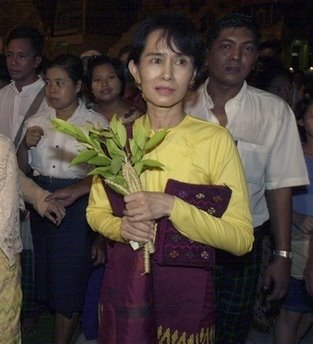


 Posts
Posts


