http://news.yahoo.com/s/afp/20090123/wl_asia_afp/myanmarpoliticsprisonrights_20090123070007/print
Fri Jan 23, 1:58 am ET
BANGKOK (AFP) – A Buddhist monk imprisoned in Myanmar for leading street protests against the junta has gone on hunger strike to demand access to his family, according to an exiled group of former political prisoners.
Monk Gambira began to refuse food ten days ago, said Bo Kyi of the Thailand-based Assistance Association for Political Prisoners-Burma.
Burma is the country's previous name.
"He was at Mandalay prison when his family visited him. He was not allowed to see his family, therefore he demanded a meeting with (them). Then he set on hunger strike," Bo Kyi said.
Gambira was transferred from Mandalay prison to the remote Hkamti prison three or four days later, Bo Kyi told AFP, citing his family members and prison sources.
The reports could not be confirmed by official sources.
Gambira was sentenced to 68 years in prison last November, for his involvement in monk-led protests against the regime in 2007.
The protests began sporadically against fuel-price hikes in the August, but subsequently involved tens of thousands of people, led by the monks.
At least 31 people were killed and 74 went missing in the brutal crackdown that followed the demonstrations, according to the United Nations.
In recent weeks about 270 activists including monks, student leaders and NLD members have been handed long jail terms for their roles in the 2007 protests and for helping victims of Cyclone Nargis last May.
In mid-January a Myanmar court also jailed a student activist for 104 years, while the junta freed six people who had campaigned for the release of pro-democracy icon Aung San Suu Kyi, officials said.
Myanmar's military rulers have kept 63-year-old Nobel Peace Laureate Aung San Suu Kyi under house arrest in Yangon for most of the past 19 years. She currently has an appeal pending against her detention.
Myanmar has been ruled by the military since 1962.
Aung San Suu Kyi's party won a landslide victory in 1990 elections but the junta never allowed them to take office.
Copyright © 2009 Agence France Presse. All rights reserved. The information contained in the AFP News report may not be published, broadcast, rewritten or redistributed without the prior written authority of Agence France Presse.
Copyright © 2009 Yahoo! Inc. All rights reserved.Questions or CommentsPrivacy PolicyTerms of ServiceCopyright/IP Policy
Sunday, January 25, 2009
Jailed Myanmar monk goes on hunger strike


A Thai Democrat?
http://online.wsj.com/article/SB123264907613206837.html
Prime minister Abhisit Vejjajiva isn't practicing what he preaches.
By COLUM MURPHY | From today's Wall Street Journal Asia
BANGKOK
"If we can get the economy rolling again, if we achieve a more stable environment . . . then I will look for the appropriate time to return power to the people."
It's a hedged pledge from Thailand's third prime minister in four months, Abhisit Vejjajiva. In the wake of the September 2006 military coup, the 44-year-old Eton- and Oxford-educated economist seems the best hope so far for Thailand to finally embrace full democracy. Mr. Abhisit enjoys a reputation as a liberal, clean and reform-minded leader. Yet even he wasn't elected to his current position by the Thai people; he took office in December 2008 after the last government fell amid street protests.
Tim FoleyThat puts the British-born Mr. Abhisit in an awkward position to get Thailand back on the democratic track. It's important to his people, Thailand's neighbors and its biggest ally -- the United States -- that he succeeds. Thailand is one of Southeast Asia's biggest economies and a major gateway to the region. It's an increasingly important strategic ally for the West as China expands its influence and Burma's generals drive that country deeper into chaos. A politically stable Bangkok could also help fight transnational issues such as human trafficking and trade in illegal narcotics.
"Obviously, I would have preferred to come to power under different circumstances," the prime minister tells me in an interview earlier this month at Government House. "But I think what matters to the people now is whether the government can make sure that the country gets through both the economic and political crises."
The two are, in fact, related. Political crises have discouraged one of the country's main sources of income -- tourists -- from coming to the Land of Smiles. Thailand's export-driven economy has slumped in the face of recessions in its big trading partners. The Ministry of Finance estimates that the country will grow between zero and 2% this year. Unemployment, a key concern, is expected to jump to 900,000 this year from the current half a million.
More
Read the complete interview and listen to the podcast at FEER.com.
Mr. Abhisit has reacted fast. He announced an $8 billion "Plan of Action" three weeks ago, which includes low-interest loans to farmers, aid to the elderly and urban poor, job creation and expanded free education. The plan is also a way for an unelected leader to gain popularity among Thailand's poor in the north and northeast provinces -- who historically supported Mr. Abhisit's political rival, former Prime Minister Thaksin Shinawatra.
Mr. Abhisit insists that his economic blueprint isn't meant to mimic Mr. Thaksin's spending. While in the past he pledged that any government led by him would not "go down the populist route," today he justifies his actions: "I think it is a standard stimulus package in the Keynesian tradition."
Regardless of the impetus, pouring out cash seems to have been a successful political gambit. Thailand held parliamentary by-elections earlier this month, and Mr. Abhisit's Democrat Party-led coalition came out on top, winning 20 of 29 seats, plus the governorship of the capital, Bangkok. "They say politics is the art of the possible," he says. "We have put together a coalition . . . the country is already seeing a difference."
One big difference, of course, is the lack of political challenge from Mr. Thaksin's now-defunct Thai Rak Thai party, which was disbanded by a tribunal set up in the coup's aftermath. Mr. Thaksin then backed the newly formed People's Power Party from exile abroad. Yet that party, too, was disbanded by judges in the face of street protests late last year. Mr. Abhisit doesn't seem concerned about the fate of Mr. Thaksin and his proxies at the hands of the courts.
"On one side there are people who attach great importance to electoral politics and majority rule -- and rightly so," the prime minister says. "But the other side looks at the other aspect -- the essential aspect -- of democracy, which is accountability, and what has led the country into this situation is that the majority in the past abused power, pretty much broke all the rules."
Certainly, the multibillionaire CEO-turned-politician Mr. Thaksin was no angel. Yet his main "mistake" was to win over the loyalty of the bulk of Thai voters through the one-man-one-vote parliamentary system. His power base threatened the cozy status quo enjoyed by Thailand's army, urban elites and favored entrenched business concerns. Mr. Abhisit, a member of the Bangkok elite, ran against Mr. Thaksin's proxies in December 2007 and lost.
Mr. Abhisit likes to emphasize accountability and the rule of law. But so far he hasn't practiced what he preaches. His government has watched as the angry mobs that felled the last, elected government get off largely scot-free. Mr. Abhisit responds: "I think it is up to the police, the attorney-general and the courts." Mr. Abhisit has appointed one of the protest leaders, Kasit Piromya, as foreign minister. He is also emphasizing his loyalty to the monarchy by cracking down on Web sites suspected of slandering Thailand's king.
Yet the confident Mr. Abhisit thinks he can forge a new kind of democracy for Thailand. "I think that each country could have a unique set of rules, but not contrary to the fundamental principles," he says. "The army should be professional armed forces and they shouldn't be dragged back into politics." Let's hope not, for his sake -- and for Thailand's.
Mr. Murphy is deputy editor of the Far Eastern Economic Review.
A New Government for Burma-by Sein Win

http://www.feer.com/politics/2009/january/A-New-Government-for-Burma
January 2009
A New Government for Burma
by Sein Win
Posted January 23, 2009
(This commentary first appeared in The Wall Street Journal Asia, our sister publication, on January 22, 2009.)
DUBLIN—The Burmese junta’s disgraceful nonresponse to Cyclone Nargis last year called international attention to the direct human consequences of repressive rule in the Southeast Asian country. Since then, Burma’s economic plight has only worsened. It is time for the political opposition abroad to present a broader, more coherent alternative for the Burmese people.
To this end, the legitimately elected representatives of the people of Burma—the Members of Parliament from the 1990 elections—are meeting in Dublin over the next few days to elect a new government-in-exile. The convention delegates are motivated by a sense that change in the culture of Burma’s exiled opposition is needed. All are aware that the plight of Burma’s people can no longer be tolerated; the status quo cannot be continued.
This move is a huge step forward for the multi-ethnic, multi-cultural Burmese people, who have never enjoyed a government that gave all groups an equal voice. A new government-in-exile should also provide comfort to Burma’s neighbors, who worry about civil unrest when the junta falls.
We sketched out our core beliefs in this month’s edition of the Far Eastern Economic Review, a sister publication of this newspaper (see FEER essay here). In Dublin, we call for an inclusive process that will lead to an interim constitution, taking into account the interests of all stakeholders in Burma. We also call for the release of all political prisoners; for the lifting of restrictions on liberties such as free speech and free association; and for an agreement on a realistic timetable for free and fair elections in Burma.
We have a vision of a nation-building process for Burma that will create a federal union with an appropriate relationship between the central government and the states and regions, ensuring, for example, the equitable distribution of revenue from natural resources. We support free trade.
We will also be good regional and global citizens. Our Asian partners need to become involved in solving Burma’s myriad problems by urgently and effectively pushing for increased dialogue and national reconciliation. We look to the United Nations to forge a path by which such a dialogue can take place.
We call on the U.N. Secretary-General to conduct a goals-oriented tour of Burma as soon as the Burmese generals are prepared to compromise. We suggest enacting a regional strategy to democratize Burma perhaps through the Association of South East Asian Nations, overseen by the United Nations.
Burma desperately needs a liberal, open regime. Even before the global economic crisis landed, the Burmese economy was being run into the ground by the current regime’s mismanagement and corruption.
Now, the global financial crisis is making a bad situation even worse. Natural gas revenues—which account for around 40% of Burma’s total export income—fell 28.5% in the first nine months of 2008, compared to the same period last year. Tourism has slowed to a trickle. Unemployment is spiking.
This isn’t just a problem for our country, but for our neighbors, too. Burma is Asia’s second largest opium producer—behind Afghanistan—and a major exporter of synthetic drugs such as amphetamines. Our refugees—who are fleeing in droves—are carrying HIV, drug-resistant tuberculosis and malaria abroad. Today, over 3.5 million Burmese are displaced with some 10% of the population currently living overseas, one of the highest proportions in the world.
Our country needs major economic and social reforms that only a government with popular support can deliver. Yet the national elections scheduled for 2010 will be a parody of democracy. The tricks and thuggery of the military were instrumental in the passage of the 2008 constitution that legitimizes military rule in Burma. The same constitution, which mandates that 75% of the parliament will be civilian—with the remainder reserved for the military—will also ensure a rigged outcome of the elections in 2010.
The nominally civilian Union Solidarity and Development Association and the Swan-ah-Shin—pseudo-independent political groups backed by the government—are already working behind the scenes to fill the civilian seats with military lackeys. The resulting government will have little inclination to address the political or economic concerns of the Burmese people.
The Burmese government-in-exile has already initiated steps to enable clusters of Burmese, as well as foreign experts in political, economic, and other fields, to work on a blueprint for a transition to democracy in Burma. This presents better, clearer, options for the Burmese people. The interests of the military are included in this blueprint as well. We do not want the military to be what stands in the way of Burma’s progress.
We look forward to working together in an inclusive new government to show that Burma can have a better future for its people. And when we return home, we’ll show the international community what Burma should be: engaged abroad, prosperous and free.
Sein Win is prime minister of the National Coalition Government of the Union of Burma, based in Washington D.C., and a delegate to the Dublin convention. This commentary first appeared in The Wall Street Journal Asia, our sister publication, on January 22, 2009.
Can the ILO Be Saved from Itself?
http://www.heritage.org/Research/InternationalOrganizations/hl1106.cfm
January 22, 2009
by Charlotte M. Ponticelli
Heritage Lecture #1106
For the better part of the past two years, I have had the great privilege of heading the Department of Labor's Bureau of International Affairs. Simply put, it's the agency that carries out the international responsibilities of the Department of Labor.
One of my major responsibilities has been representing the Department of Labor--and, indeed, the United States government--in international organizations that deal with labor and employment issues. And, of course, the major international organization I have worked with is the International Labor Organization.
My bureau works closely with the ILO on a number of projects.
We oversee labor programs funded by the State Department and implemented by the ILO in the Middle East and Latin America.
We oversee numerous projects that are implemented by the ILO's International Program for the Elimination of Child Labor (IPEC). Over the past decade, the U.S. has funded nearly $370 million worth of programs in over 75 countries. As a result of these programs, we have rescued more than a million children from exploitive child labor.
On a regular, ongoing basis, we also represent the United States government at the ILO's annual conference and at its Governing Body meetings. We do this along with the AFL-CIO, which represents American workers, and the U.S. Council for International Business, which represents U.S. employers. Both of these partners, I should add, have been helpful and dedicated to making the ILO a strong and effective voice for democracy and rights.
I think this is an opportune time, with the current economic challenges, to talk about the ILO itself: to give you my perspective on what it does well, what concerns the U.S. government has had, and what we at my Bureau see as the road ahead.
The Mission of the ILO
When I worked here at The Heritage Foundation, I would look up every day at the words in gold letters on the wall in the foyer that read: "The Heritage Foundation is committed to building an America where freedom, opportunity, prosperity and civil society flourish." Those words certainly have guided my work at the State Department and the Labor Department over these past seven years.
I recall once, shortly before leaving Heritage to move over to State, that I had suggested at a strategy meeting on foreign policy priorities that we needed to change just two words so that the vision would be, "Building a world where freedom, opportunity, prosperity and civil society flourish." So it's appropriate for me to ask: How does the ILO fit into that vision?
The International Labor Organization was created in 1919, in the wake of World War I, with the purpose of creating an international institution that could bring governments, employers, and workers together to improve living and working conditions and help preserve social stability in the new post- World War I order. As the sole remaining component of the League of Nations, and as a member of the present-day U.N. system, the ILO has been a strong voice for worker rights, for helping to build democracy in Poland and South Africa, and building strong, open-market systems in Eastern Europe after the collapse of the Soviet Union.
The ILO continues to be a beacon in promoting freedom in some critical places across the globe. For example:
In Burma, the ILO is the sole U.N. agency that plays a useful role on the ground. It has been directly responsible for enabling victims of forced labor to report on their treatment without fear of reprisal. The ILO's special adviser in Burma has helped people get out of jail, has helped rescue child soldiers, and has actually engaged the military in dialogue on forced labor.
In Belarus, the ILO's Governing Body has been in perfect sync with the Bush Administration's goal of pushing for democracy, both by condemning Belarus for its lack of freedom of association and by at the same time offering to work with the government to move forward.
In Zimbabwe, thanks to the workers and employers--and with no thanks to countries like South Africa or China--the ILO has been in the forefront of criticizing the atrocities of the Mugabe regime. In the labor area, this includes the systematic arrest, detention, and harassment of trade unionists. At its last session, the Governing Body decided to send to Zimbabwe a Commission of Inquiry, one of the highest-level investigatory missions available.
In regard to Iran, the ILO has regularly condemned the Iranian government for arresting and imprisoning independent trade union leaders and for its record on discrimination in the workplace.
And in Colombia, the ILO--largely at the behest of the United States--has established an office on the ground to help address key labor issues, including violence against trade union officials. The Colombian government, the business community, and the labor unions themselves supported the establishment of the office.
In addition to the tremendous work on child labor, forced labor, and trafficking, the ILO also supports U.S. efforts to bring about democratic reform in the Middle East, assisting the Department of Labor with State/Middle East Partnership Initiative-funded projects in Bahrain, Oman, Morocco, and Egypt, and work mandated by Congress that supports the CAFTA-DR[1] trade agreement. And in collaboration with the ILO, we've recently launched new projects in Tanzania and Haiti.
The Other Side of the Story
There's also another side to this story. Go to the ILO Web site or look at the Director-General's speeches over the past few years. You won't find very many references to all of the good work I've just described. What you will find are articles and speeches that deal with the ILO's role in:
Climate change and energy policy,
Reforming the international monetary system,
Changing the rules of the international trade system,
Addressing international investment issues,
Addressing the global food crisis,
Mandating social policy for individual countries, and
Suggesting that the ILO take the lead in addressing global social policy in the current economic crisis.
Here's an example: Speaking at the Vatican on Human Rights Day in December, ILO Director-General Juan Somavia said, "We have a multilateral system that is underperforming. It is not delivering the type of policy coherence we need today. There is a profound need...for a new form of global governance...a global community of multiple actors including, but going beyond governments."[2]
Here's another example: In November, the officers of the Governing Body issued a statement calling for six steps to be taken to address the financial crisis. I won't enumerate them, but among them were:
Ensuring the flow of credit to consumption, trade, and investment;
Supporting productive, profitable, and sustainable enterprises, together with a strong social economy and a viable public sector, so as to maximize employment and decent work;
Maintaining development aid as a minimum at current levels and providing additional credit lines and support to enable low-income countries to cushion the crisis.
I would note that in the discussion of the crisis at that Governing Body in Geneva, only one party noted the importance of the ILO working to ensure that basic workers' rights would not be lost in the shuffle: It wasn't the workers' group or the European Union--it was the United States.
In short, the key problem is that the ILO is seeking to become the world's lead institution in addressing the social consequences of globalization. This is not a conspiracy theory; rather, it's a point made regularly by the Director-General. The world of work, a challenging field unto itself, suddenly loses importance and instead becomes a platform for launching all sorts of social projects.
That's why we have been very concerned about a new instrument that was adopted by the organization's conference just this past June, called the ILO Declaration on Social Justice for a Fair Globalization.[3] The title alone suggests exactly what is wrong with the ILO at this time. What is worrisome is that it opens the door to efforts to attribute universal applicability to conventions that heretofore would be relevant only if a country formally ratified them. That means, for example, that select conventions on employment and social protection could conceivably take on the status of agreed international principles without our consent.
Now we, of course, would not honor this. Suffice it to say, it would be appalling, both morally and in terms of economic efficiency, if an international organization were to determine the "right" balance between employment and social protection.
Management
How well are these resources managed? In short, not well. The ILO fails to ensure adequate impact analysis of its programs. We receive reports from them on what they did and how they managed programs, but we can't get answers to questions like, "What do we get for the $10 million spent on Project X?"
When our Secretary of Labor raised this with the Director-General, he replied, "You have to realize that it's sometimes very difficult for the ILO to measure the impact of what we do. After all, we don't sell shoes. We hold seminars. We give advice. And how do you measure the impact of advice?"
Perhaps there is something to be said for that question, but for an organization that spends almost one-half billion dollars per year, that's not enough.
Tripartism
The ILO is the only tripartite organization in the U.N. system--that is, the only organization in which each country is represented three ways: by representatives of the government, employers, and workers. In my view, this tripartite nature is both the strength and the weakness of the organization. The good part is that it includes the private sector and civil society. But there are two difficult issues.
First, the ILO is disproportionately run by workers--and, to be exact, by trade unions. Workers see the ILO as their organization, but if its outputs are going to be useful, governments and employers have to see it as their organization too. This drove the International Organization of Employers earlier this year to stand up and demand that the ILO ensure "that employer priorities, objectives and resources are treated on an equal basis with those of the workers." This might not be easy: Just a year ago, during a discussion on "sustainable enterprise," the representatives of workers objected to any inclusion of the word "entrepreneur."
Second, governments are being marginalized. If workers and employers agree on an issue, the views of the governments--the funders of the Organization--become irrelevant because the worker-plus-employer majority is declared to be "consensus." Something must be done to address this issue.
At some point, the ILO's tripartite structure must be evaluated. Is it right that the 10 percent of workers in this country who are unionized should be allowed to speak for the entire American workforce? The same holds true for many other countries.
There are many times when the interests of organized labor and the interests of other employees may differ significantly. Perhaps thought should be given to including other worker groups--maybe professional associations or entrepreneurs or non-governmental organizations--to better represent the real workforce. I don't have an easy answer to this, but it's something we will surely have to deal with in the future.
What Should the ILO Be Doing?
What should the ILO be doing? Here's what I would suggest. It may not be glamorous, but we think the ILO could--and should--focus its activities on helping countries improve their capabilities in these areas:
Labor Law and Implementation. The United States strongly supports the principles underlying the ILO's core conventions in the areas of freedom of association, collective bargaining, forced labor, child labor, and discrimination. These principles are included in our trade laws and are regularly taken into account in making many important foreign policy decisions. I believe that the ILO can and should promote worker rights and democratic labor policies.
But the balance between drafting standards and implementing laws and policies must be redressed on a very large scale. Much attention is given to the adoption of new instruments, but implementation, which is what affects most people, receives much less attention. Syria and Iran have ratified numerous ILO conventions, but it is the United States that is taken to task by the workers for its low record of ratification of ILO conventions. The ILO should shift its focus away from endless legislating toward more real-life implementation.
Building Capacity. Open-market systems work well when there is an infrastructure that supports well-operating workplaces and well-trained workers. The ILO runs quality programs that promote training, skills development, and entrepreneurship development. It helps developing countries build their labor administrations, including their programs for addressing working conditions, inspection systems, and the oversight of occupational safety and health. Unfortunately, none of this is of much interest currently to the leadership in Geneva.
Child Labor, Forced Labor, and Trafficking. The U.S. funds most of the ILO's efforts in these areas. They do a great job. The ILO gave a lot of publicity to these programs when they started but very little now. These are core ILO issues and should receive the appropriate attention.
Fewer International Meetings, More Work in the Field. The ILO tends to view international meetings as the ultimate step in addressing issues. They divert tens of millions of dollars that could be better spent on country programs. Conferences are glamorous and field work is not, but focusing on the delivery of services and programs brings about real results for real people.
Corporate Social Responsibility. One other area the ILO might focus more on is corporate social responsibility (CSR). Public-private partnerships are increasingly becoming the way of the future. The ILO should do more in this area--not by becoming a rule-making operation (i.e., corporate codes of conduct), but by more directly furnishing advice, information, and guidance to enterprises that are genuinely committed to strengthening compliance with appropriate international standards. Many companies already do this, but the ILO could be of great help to those that need assistance.
Conclusion
As we look at the problems and the potential of the ILO, it's worth asking the question, "If the ILO disappeared tomorrow, would we need to replace it?" Or, as I said in the blurb for this meeting, "Can the ILO be saved from itself?"
The short answer is yes; the ILO could be a very useful tool in addressing many of the issues the world faces in the era of globalization. Both the United States worker and employer representatives agree on this.
Unfortunately, the ILO is veering further from, rather than closer to, being in a useful position. I hope that the new Administration, which has given much attention to labor issues, will use its influence to push the ILO to do its real job: to create better opportunities and better workplaces for working people, to promote job creation, to help provide businesses with the skilled workers they need, and to help boost economic development and prosperity around the world.
Charlotte M. Ponticelli, at the time of this lecture, served as Deputy Under Secretary for International Affairs at the U.S. Department of Labor. She has also served in the U.S. Department of State as Senior Coordinator for International Women's Issues and Senior Advisor to the Assistant Secretary for Population, Refugees and Migration, and on the U.S. Commission on Civil Rights.
--------------------------------------------------------------------------------
[1]The Central America-Dominican Republic-United States Free Trade Agreement, signed on August 5, 2004; text available at http://www.ustr.gov/Trade_Agreements/Bilateral/CAFTA/CAFTA-
DR_Final_Texts/Section_Index.html.
[2]See International Labor Organization, "ILO Director-General calls on G20 to Address the Social Implications of the Global Economic Crisis," press release, December 10, 2008, at http://www.ilo.org/global/About_the_ILO/Media_and_public_
information/I-News/lang--en/WCMS_101001/index.htm.
[3]Adopted June 10, 2008; text available at http://www.ilo.org/public/e
nglish/bureau/dgo/download/dg_announce_en.pdf.
Fw: [burmainfo] 書籍の案内アラン・クレメンツ著「ダルマ・ライフ―日々の生活に"自由"を見つける方法」
━━━━━━━━━━━━━━━━━━━━━━━━━━━━━━
ビルマ市民フォーラム メールマガジン 2009/1/23
People's Forum on Burma
━━━━━━━━━━━━━━━━━━━━━━━━━━━━━━
ビルマ情報ネットワーク(BurmaInfo)からのメールを転送させていただき
ます。
(重複の際は何卒ご容赦ください。)
PFB事務局
http://www1.jca.apc.org/pfb/
━━━━━━━━━━━━━━━━━━━━━━━━━━━━━━
春秋社から、アラン・クレメンツ著、三木直子訳『ダルマ・ライフ――日々の生活に
"自由"を見つける方法』の案内をいただきました。
以下、春秋社の案内の一部をご紹介します。
ビルマ情報ネットワーク(http://www.burmainfo.org)
秋元由紀
========================================
『ダルマ・ライフ――日々の生活に“自由”を見つける方法』
A・クレメンツ著/三木直子(みき・なおこ)訳
四六判/372頁/定価(本体2500円+税)
アメリカ人としてはじめてビルマで得度して僧になったクレメンツがヴィパッサナー
瞑想をどのように修行し、日々を過ごしたか、またビルマの民主化運動家がどのよう
にして軍事政権と闘い、何を得ようとしていたのかが克明に綴られている。国際的な
注目を集めるビルマの状況に対して、新たな角度から光をあてる一冊。
【著者略歴】
クレメンツ:
ジャーナリストであり、執筆家であり、仏教と人権、そして精神的・社会的行動主義
の統合について世界各地で講演活動を行う。
ビルマで得度した最初のアメリカ人であり、70年代、80年代の大半を、うち5年近く
は僧侶として、ビルマで過ごした。1984年、ビルマの独裁政権により何の理由もなく
国外撤去を強いられるが、以後も何度もビルマに戻り、ビルマ国内で人権が侵害され
る様子を目撃し、記録し続ける。アウンサンスーチーへのインタビュー『希望の声』
(増補版、岩波書店)でも注目されている。ビルマでテーラヴァーダ(上座部)仏教
の修行を重ねたのち、世界のさまざまな紛争地帯に赴き活動。アムネスティ・イン
ターナショナル創立30周年記念講演では基調演説を行った。
三木直子 :
翻訳家。ブレンダ・デーヴィス『魂からの癒し』、『過去世ソウルヒーリング』、ガ
ンガジ『ポケットの中のダイヤモンド』(徳間書店)など訳書多数。
========================================
━━━━━━━━━━━━━━━━━━━━━━━━━━━━━━━━━━━━━━
配布元: BurmaInfo(ビルマ情報ネットワーク)
http://www.burmainfo.org
連絡先: listmaster@burmainfo.org
バックナンバー: http://groups.yahoo.co.jp/group/burmainfo/
※BurmaInfoでは、ビルマ(ミャンマー)に関する最新ニュースやイベント情報、
参考資料を週に数本配信しています。
━━━━━━━━━━━━━━━━━━━━━━━━━━━━━━━━━━━━━━
Fw: [burmainfo] 今週のビルマのニュース(0903号) ロヒンギャ難民問題ほか
━━━━━━━━━━━━━━━━━━━━━━━━━━━━━━
ビルマ市民フォーラム メールマガジン 2009/1/23
People's Forum on Burma
━━━━━━━━━━━━━━━━━━━━━━━━━━━━━━
ビルマ情報ネットワーク(BurmaInfo)からのメールを転送させていただき
ます。
(重複の際は何卒ご容赦ください。)
PFB事務局
http://www1.jca.apc.org/pfb/
━━━━━━━━━━━━━━━━━━━━━━━━━━━━━━
ビルマ情報ネットワークの「今週のビルマのニュース」をお送りします。
「今週のビルマのニュース」バックナンバー
http://www.burmainfo.org/weekly.html
きょうのビルマのニュース(平日毎日更新)もご利用ください。
http://d.hatena.ne.jp/burmainfo/
ビルマ情報ネットワーク (www.burmainfo.org)
秋元由紀
========================================
今週のビルマのニュース Eメール版
2009年1月23日号【0903号】
========================================
【今週の主なニュース】
ロヒンギャ難民問題ほか
・ビルマから船で逃れてきたロヒンギャ民族数百人をタイ当局が
洋上に放置などしたとされる問題で、タイのアピシット首相は21日、
国際機関と協力すると述べた。国連難民高等弁務官事務所
(UNHCR)はタイが拘束している難民と会う許可を求めており
回答を待っているが、首相は許可を出すかどうかには
言及しなかった(22日付APほか)。
・14万人が犠牲になったサイクロン襲来から8か月がたった。
国連のミャンマー常駐調整官は、被災地域が完全に回復
するには「資金状況によっては3、4年かかるだろう」と
述べた(16日付IRIN)。
・EUは今年ビルマに向けて約5240万ドルの人道援助を
出すことを決めた。半分以上がサイクロン被災地域の
住民に、残りはタイのキャンプに住むビルマ難民や
アラカン州北部に住むロヒンギャ民族などに向けられる
(21日付イラワディ誌)。
・ブッシュ前米大統領は退任を数日後に控えた15日、
ビルマに対する制裁の一部を取り消した。制裁では
軍政に資金提供を行う個人や企業の資産が凍結される
ことになっていたが、今回の取り消し措置により、
米財務省が指名しない個人や法人については資産が
凍結されないことになった。なぜこのような措置を
取ったのかは不明。米議会のバーマン下院議員
(外交委員会委員長)は取消措置を非難した
(17日付ワシントン・インディペンデント)。
・米国務副長官候補のジェームズ・スタインバーグ氏は、
北朝鮮とビルマの関係について米議会上院外交委員会
からの質問に答え、「北朝鮮の協力によってビルマで
核開発事業が始まることがあれば非常な懸念事項と
なるだろう」と述べた。
・19日、アウンサンスーチー氏が「良心のトランペット」
賞を受賞した。同賞は故マーティン・ルーサー・キング
牧師の息子が設立した団体が毎年キング牧師の生誕
記念日に授与するもの。アウンサンスーチー氏の代理
として米国ビルマ・キャンペーンの事務局長で元政治囚
のアウンディン氏が受け取った。
【ビルマへの政府開発援助(ODA)約束状況など】
〔日メコン交流年2009イベントカレンダーより〕
1月11~24日 ジェトロヤンゴン主催
ミャンマー縫製産業生産管理技術人材育成支援事業
【イベントなど】
・在日ビルマ人共同行動実行委員会アクション-
国連事務総長に対し、一刻も早くビルマを訪問し、
スーチーさんを含むすべての政治囚の釈放と対話
の促進を軍政に働きかけるよう要請するアピール行動
(国連大学前、19~23日15~16時)
・SEEDS Asia モルディブ・ミャンマー活動報告会
~沿岸侵食・サイクロン被害からコミュニティを守る
(西宮市国際交流協会、29日18時半)*要申込
・難民の認定をしない処分取消等請求事件
ロヒンギャ難民(複数)
(大阪地裁1007号法廷、2月4日13時15分~)
・難民の第三国定住に関するシンポジウム
外務省主催、国際移住機関(IOM)共催
(三田共用会議所、2月5日13時半~)
*要申込
・ミャンマーの伝統糸あやつり「ヨウッテー・ポエー」~
シリーズアジアの人形芝居part14~
王族から庶民にまで広く愛されたミャンマーの華麗なる伝統芸能
7年ぶりの来日公演
現代人形劇センター主催
(ラゾーナ川崎プラザソル2月7日15時、18時半。
カスケードホールいきいきプラザ一番町 B1階2月10日15時、19時。
レクチャーデモンストレーション 東京ミッドタウン
富士ゼロックス501会議室、2月11日14時、16時)
*チケット発売中
・ビルマ市民フォーラム例会
外国人労働者は今…在日ビルマ人・外国人労働者の
おかれている状況について
(池袋・ECOとしま8階、2月21日18時~)
☆春秋社より新刊のお知らせ~
アラン・クレメンツ著「ダルマ・ライフ-日々の生活に"自由"を見つける方法」。
著者はビルマで得度して僧になった初めての米国人。
国際的な注目を集めるビルマの状況に対して、
新たな角度から光をあてる一冊。
四六判/372頁/定価(本体2500円+税)
★ジェーン・バーキン最新アルバム『冬の子供たち』が
発売中。アウンサンスーチー氏に捧げる楽曲「アウンサンスーチー」を収録。
☆特定非営利活動法人メコン・ウォッチの
季刊誌「フォーラムMekong」、最新号はビルマ特集。
-ビルマ~サイクロン後の人々、軍政-
http://www.mekongwatch.org/resource/forum/FM_vol9_2_01.html
【もっと詳しい情報は】
きょうのビルマのニュース(平日毎日更新)
http://d.hatena.ne.jp/burmainfo/
ビルマ情報ネットワーク
http://www.burmainfo.org/
【お問い合わせ】
ビルマ情報ネットワーク 秋元由紀
====================================
今週のビルマのニュース Eメール版
2009年1月23日号【0903号】
作成: ビルマ情報ネットワーク
協力: ビルマ市民フォーラム
====================================
━━━━━━━━━━━━━━━━━━━━━━━━━━━━━━━━━━━━━━
配布元: BurmaInfo(ビルマ情報ネットワーク)
http://www.burmainfo.org
連絡先: listmaster@burmainfo.org
バックナンバー: http://groups.yahoo.co.jp/group/burmainfo/
※BurmaInfoでは、ビルマ(ミャンマー)に関する最新ニュースやイベント情報、
参考資料を週に数本配信しています。
━━━━━━━━━━━━━━━━━━━━━━━━━━━━━━━━━━━━━━
Saturday, January 24, 2009
Remembering U Thant and His Achievements
http://www.irrawaddy.org/article.php?art_id=14975
Remembering U Thant and His Achievements
--------------------------------------------------------------------------------
By SAW YAN NAING Thursday, January 22, 2009
--------------------------------------------------------------------------------
The 100th birthday of the late UN Secretary General U Thant is being observed on Thursday—and nowhere with more reverence than in his native country, Burma.
Family members, friends, former colleagues and foreign diplomats were gathering for a commemoration ceremony at the Inya Lake Hotel on Thursday evening, said his son-in-law, Dr Tin Myint Oo.
U Thant, the third general secretary to run the UN since its post-war foundation, served from 1961 to 1971 and won lasting respect for his many achievements.
Multimedia (View)
He succeeded Dag Hammarskjöld when the Swedish diplomat died in an air crash in the Congo while on a mission to help end the civil war there.
U Thant was credited for completing Hammarskjöld’s work in the Congo and for helping to defuse the Cuban missile crisis shortly afterwards.
In the 10 years U Thant was in office, the UN faced many other world crises, including the Vietnam War and the 1965 conflict between India and Pakistan.
Colleagues who traveled with him to crisis zones recalled that o¬n many occasions he made bold and single-minded attempts to restore peace.
At home at the UN, U Thant established many of the world body’s development and environmental agencies, funds and programs, including the UN Development Programme, the UN University, the UN Institute for Training and Research and the UN Environmental Programme.
Veteran Burmese journalist Win Tin said in Rangoon that U Thant was a successful UN head and “different.”
“We should keep him in our memory,” Win Tin said. “We have to be proud of him.”
Veteran Burmese politician Thakin Chan Htun agreed, and said in Rangoon: “We have to be proud of him. We should not forget him and we should honor him.”
In a speech in New York in 2003, the then UN Secretary General, Kofi Annan, hailed U Thant’s significant contributions in development programs, poverty alleviation, education, environmental protection and health.
Kofi Annan also praised U Thant’s treatment of the media. “It was U Thant who more than anyone before him opened up the United Nations to the media, because he understood that for the organization to earn the support of the world’s people, they must be kept fully informed and aware of its work.”
U Thant’s press secretary, Rames Nassif, once recalled: “For U Thant, the press conference was a pleasant experience. He had natural warmth towards journalists and was comfortable with them. He enjoyed thinking of himself as a former journalist, and often mentioned this.”
In his earlier years as a journalist in Burma, U Thant regularly contributed to magazines and newspapers under several pen names, including Thilawa, and translated a number of books, including one on the League of Nations.
U Thant served as secretary for Burma’s first Prime Minister U Nu, a close friend, from 1951 to 1957. He wrote speeches for U Nu, organized his overseas travel and meetings with foreign guests.
San San Nu, a daughter of U Nu, said of U Thant: “He was very clever and he was very generous, too. That’s why our father called on him to work with him.”
U Thant was born on January 22, 1909, in Pantanaw, in lower Burma’s Irrawaddy division. He was educated at the National High School in Pantanaw and at Rangoon University.
He died of lung cancer in New York on November 25, 1974, and his body was returned to Burma—but became the center of a political row.
Burma’s ruling dictator, Gen Ne Win, refused to hold a state ceremony for U Thant and also ignored his family’s request to have him interred near Rangoon’s Shwedagon Pagoda.
A group of students seized U Thant’s coffin from the airport and kept it at Rangoon University campus. Troops stormed the campus, killing at least 13 students and injuring 70 others. Around 3,000 students were arrested.
Finally, U Thant was laid to rest in a tomb near Shwedagon Pagoda in Rangoon. The currently UN General Secretary, Ban Ki-moon, visited the tomb during a visit to Burma in May last year.
Copyright © 2008 Irrawaddy Publishing Group | www.irrawaddy.org
Centennial birthday of Myanmar's former UN chief marked - Summary
http://www.earthtimes.org/articles/show/251955,centennial-birthday-of-myanmars-former-un-chief-marked--summary.html
Yangon - Relatives of Myanmar's former United Nations secretary general U Thant commemorated the centennial birthday of the controversial Burmese national hero on Thursday, amid reports that UN special envoy Ibrahim Gambari will visit the country soon. The birthday anniversary celebration was organized by the U Thant Institute and Aye Aye Thant, daughter of U Thant, who is also the president of the institute.
UN representatives, foreign diplomats, a Myanmar foreign ministry representative attended the event, sources said.
Bishow Parajuli, the resident UN humanitarian coordinator, read out a message from UN Secretary General Ban Ki-moon at the ceremony.
Such events require official permission in Myanmar, which is ruled by a military junta. The permission to hold a party commemorating U Thant's centennial anniversary came amid reports that UN special envoy to Myanmar Ibrahim Gambari has planning a four-day visit to the country starting January 31.
Western diplomats at the U Thant ceremony confirmed the visit.
Gambari's last visit in August, 2008, proved a diplomatic disappointment, as he was denied meetings with both junta chief Senior General Than Shwe and opposition leader Aung San Suu Kyi, who has been under house arrest since May, 2003.
The UN has made little progress in pushing the junta towards freeing Suu Kyi and over 2,000 political prisoners and introducing democratic reforms.
U Thant, one of the few Burmese to reach international stature, remains a controversial figure in military-controlled Myanmar, also known as Burma.
U Thant served as the third secretary general of the United Nations, from 1961 to 1971. He was widely credited for his successful efforts for defusing Cuba's Missile Crisis and ending Congo's civil war during his term.
Born in Pantanaw town, in the Irrawaddy delta region, on January 22, 1909, U Thant died on November 25, 1974, while living abroad in self-imposed exile.
When his body was brought back to Yangon, then called Rangoon, for burial former military dictator General Ne Win refused it national honours.
University students snatched U Thant's coffin as it was heading for an ordinary burial on December 5, 1974, and took it to the Rangoon University Student Union grounds, turning the funeral into an anti-Ne Win uprising.
On December 11, 1974, troops stormed the university campus, dug out U Thant's coffin and reburied it at the current mausoleum at the foot of famous Shwedagon pagoda. Many students were killed in the incident, marking one of the first serious uprisings against Ne Win.
The current military regime remains loyal to the memory of Ne Win, whose coup in 1962 overthrew the country's first elected prime minister U Nu and put the country under the military's grip, where it remains today.
Copyright, respective author or news agency
Myanmar strives for development of cross-border fiber links with neighbors
http://en.ce.cn/National/Politics/200901/21/t20090121_18026625.shtml
Last Updated(Beijing Time):2009-01-21 15:15
Two cross-border fiber optic link projects, Myanmar-Thai's and Myanmar-India's, in addition to the already-established Myanmar-China's to boost information link between Myanmar and the two neighbors will be operational in the next two months as work on the two projects has almost been completed, according to the state-run Myanmar Posts and Telecommunications (MPT) Wednesday.
The project has been implemented as part of the information superhighway network (ISN) project of the six-country Greater Mekong Sub-region (GMS)-Economic Cooperation.
With the Myawaddy-Maesot cross-border network link as the final phase completed in last November, the Myanmar-Thai fiber optic link will be put into service in February, the MPT told media persons.
According to the MPT, the Myanmar-Thai fiber optic link, which is of 10 gigabyte and set up in cooperation with its Thai counterpart, will bring the country's total gigabyte to 20 after that with China.
The MPT also estimated that the cross-border optical fiber link between Myanmar and India will be completed and operational by March.
Under the Indian government loan, the project, which worths 7 million U.S. dollars, started in 2006 December.
The 640-kilometer-long Myanmar-India optical fiber link, which connects Indian's northeastern border town of Moreh and Myanmar's second largest city of Mandalay, passes through 6 cities of Tamu, Kampatwa, Kyi Gone, Shwebo, Monywa and Sagaing.
Along the fiber link, ADSL+2 system with 7,000 lines are being installed in 80 locations including Yangon, Mandalay and Nay Pyi Taw.
The project was signed between the MPT and the Telecommunications Consultants India Limited (TCIL) during Indian President APJ Abdul Kalam's state visit to Myanmar in March 2006.
According to the contract, MPT and TCIL agree to implement SDH/STM 4 optical fiber link between the two cities and the ADSL system.
Earlier in March last year, fiber link between Myanmar and China, built since April 2007 and involving China Telecom and Yunnan Telecom, was set up in Myanmar's border town of Muse also as part of the regional ISN project.
The Myanmar-China fiber optic link was built across China's Kunming and Myanmar's Muse with its link further extended to reach the commercial city of Yangon.
The establishment of the fiber optic links between Myanmar and the three neighbors would not only improve the country's domestic information link system but also boost the country's information link with other GMS member countries, experts said, adding that the move would also improve Myanmar's international telephone service, internet usage and video-conferencing utilization.
There are 12 ISN fiber optic links being built across the GMS to boost information links.
With regard to the building of the fiber optic link across GMS, a memorandum of understanding was signed at the ministerial meeting of the GMS in Laos in 2004.
The ISN project covers building of a commercialized information and communication platform in order to launch basic business of chatting, data, connection of internet as well as distant education, medical treatment, e-government and e-commerce which will sharply raise the capacity of the internet to promote the socio-economic development of the sub-region.
Source:Xinhuanet
Related articles
America's Future Is Tied to Asia's Print Mail
http://www.aei.org/publications/filter.all,pubID.29233/pub_detail.asp
By Michael Auslin
Posted: Wednesday, January 21, 2009
ARTICLES
Far Eastern Economic Review (January 2009)
Publication Date: January 21, 2009
To mitigate consequences of an economic downturn well underway and security threats that are ever-present on the Korean Peninsula, the Taiwan Straits, and beyond, Obama and his team should boldly engage Asia by promoting free trade and reassessing the security environment, especially surrounding the Six Party Talks.
Resident Scholar
Michael Auslin
It's no surprise that U.S. President Barack Obama has said little about Asia since being elected last November. Compared to America's economic disaster and the ongoing Middle East crises, Asia may seem a veritable sea of tranquility. Yet turbulent currents are running under the surface, and the costs of either economic or political disruption in Asia could well dwarf anything else America faces. For this reason alone, the new president and his team need a bold engagement with Asia in his first days in office.
Even in this economic collapse, Asia continues to produce nearly two-thirds of global output, the majority of which is exported to the West. Yet Japan, China, and other major producers are facing a severe downturn in exports, and Japan, where manufacturing output dropped by nearly 8% in November, has already slipped into an official recession. Chinese consumer goods factories are laying off workers or shutting down, and numerous experts warn of potential social unrest if economic conditions worsen in China's less prosperous interior regions. Even recent mini-tigers, like Vietnam, are revising their growth predictions downward.
The danger in the coming years is that fragile Asian economies might look to exclusive trading arrangements or move to protect domestic markets, partly as a result of citizen demands. This would turn back decades of growth that have pulled millions in Asia out of poverty and have benefited Western business and consumers, as well. President Obama should therefore throw his support behind ratification of the Korea-U.S. Free Trade Agreement and use its passage as a stepping stone to a renewed round of free trade negotiations with the Association of Southeast Asian Nations (Asean) and Japan. Having the U.S. play a major role early on will make more likely the prospect of region-wide free-trade talks, and increase the chance that Japan and China will have confidence to work together, and not in competition, in a multilateral setting.
President Obama and his team must recognize that America's future is tied to Asia's, and that their success will in part will be viewed through an Asian prism.
Similarly, the Obama administration should consider high-level, public discussions between the U.S. and Asian nations on paths forward in the economic crisis. Pulling together Japan, Korea, China, India, Indonesia, and others for a "lessons learned" summit from the 1997 Asian financial crisis and the 1990s failed pump-priming policies of the Japanese may result in a series of initiatives that have more common agreement behind them than the irrelevant G-20 summit convened by former U.S. President George W. Bush in November.
Economics are not the only landmine facing President Obama's Asian policy. Security and political issues in Asia present a mixed bag that will require a nuanced U.S. approach. The failure of the Six Party Talks means that Secretary of State Hilary Clinton will have to work from a de facto U.S. acceptance of a nuclear North Korea that appears interested only in an endless diplomatic rondeau. President Obama and Secretary Clinton must determine if there is any utility in sending U.S. officials back for another round of talks when other parties to the talks appear satisfied with the status quo.
Beyond Korea, both Washington and Beijing have an enormous stake in good Sino-American ties. However, outstanding differences over policy toward Burma and Tibet, along with the continued Chinese military buildup, may make managing relations more difficult, especially if the economic slowdown leads to nervousness among China's leaders. One way to ensure the continued development of positive relations with Beijing is for the U.S. to work as closely as possible with its allies and other friendly nations in Asia to craft common agendas for security issues, trade relations, environmental problems, and the like, thus encouraging China to play a supportive role in such innovative regional initiatives. This should be accompanied by continued high-level Sino-American discussions, but the Obama Administration should resist the temptation to place U.S.-China relations above those of our allies or Asia as a whole.
There is also the specter of democratic instability throughout Asia, from Thailand to Japan. No president wants to see democracy wobble on his watch, and a key part of Obama's Asia policy should be to support democratic governance among our allies and friends, through grass-roots and official dialogues. Finally, no U.S. role in Asia will be credible without a continued commitment to maintaining the U.S. military capability that has ensured regional stability for decades; any hint that the U.S. is wavering in its promise to defend Asia's commons or its friends could lead to unforeseen results.
President Obama faces challenges unlike any other U.S. president in recent history. It will be tempting to let U.S. policy in Asia slide, or to hope that things there stay peaceful. Regardless of the effort involved, President Obama and his team must recognize that America's future is tied to Asia's, and that their success will in part will be viewed through an Asian prism.
Michael Auslin is a resident scholar at AEI.
China Censors Obama's Speech
http://www.irrawaddy.org/article.php?art_id=14962
--------------------------------------------------------------------------------
By ANITA CHANG / AP WRITER Wednesday, January 21, 2009
--------------------------------------------------------------------------------
BEIJING — The official Chinese translation of President Barack Obama's inauguration speech was missing his references to communism and dissent, while a live broadcast on state television Wednesday quickly cut away to the anchor when the topic was mentioned.
The comments by the newly installed US president veered into politically sensitive territory for China's ruling Communist Party, which maintains a tight grip over the Internet and the entirely state-run media. Beijing tolerates little dissent and frequently decries foreign interference in its internal affairs.
At one point, Obama said earlier generations "faced down communism and fascism not just with missiles and tanks, but with sturdy alliances and enduring convictions." He later addressed "those who cling to power through corruption and deceit and the silencing of dissent—know that you are on the wrong side of history."
The Chinese translation of the speech, credited to the Web site of the official China Daily newspaper, was missing the word "communism" in the first sentence. The paragraph with the sentence on dissent had been removed entirely.
The censored version was carried by the state-run Xinhua News Agency and posted on popular online portals Sina and Sohu. Another portal, Netease, used a version without the paragraph mentioning communism, but retaining the part about dissent.
The news channel of state broadcaster China Central Television broadcast the speech live early Wednesday local time, but appeared caught off-guard by the statement about facing down communism.
The translator had no sooner said "fascism and communism" when the audio faded out from Obama's speech and cameras cut back to the studio anchor, who seemed flustered for a second before turning to ask an expert what challenges the president faces in turning around the US economy.
Wang Jianhong, deputy director of the CCTV general editing department, said he did not stay up to watch the inauguration broadcast but suggested the transition was a normal part of the program.
"There are breakaways even when broadcasting China's own meetings," he said. "Americans might care a lot about the presidential inauguration, but Chinese may not be very interested."
No one in the editing department of the China Daily Web site was immediately available to answer questions.
The full translation of Obama's speech could be viewed on the Web site of Hong Kong-based broadcaster Phoenix Satellite Television, which has a reputation as a more independent news source. The China Daily Web site posted Obama's full remarks in English only.
Copyright © 2008 Irrawaddy Publishing Group | www.irrawaddy.org
Burmese refugees protest in front of UN office in Malaysia
http://www.mizzima.com/news/regional/1585-burmese-refugees-protest-in-front-of-un-office-in-malaysia.html
Burmese refugees protest in front of UN office in Malaysia
by Myint Maung
Wednesday, 21 January 2009 23:06
New Delhi (Mizzima) - Nearly three hundred Burmese refugees on Wednesday demonstrated in front of the United Nations High Commissioner for Refugees (UNHCR) office in Malaysia's capital of Kuala Lumpur, demanding recognition of refugee status and equal treatment among refugees.
The protestors, mainly Rohingyas from Burma's western Arakan state, said they were being treated differently and were not being granted equal status by the UN agency.
Nyi Nyi, a leader of the protestors, said they held a brief demonstration and submitted their demands in writing to an official from the agency.
"We are demanding recognition as refugees, equal treatment by the office and a cessation to official corruption in granting refugee recognition," Nyi Nyi said.
Nyi Nyi added that they were met by a protection officer from the UNHCR office, to whom they handed their demands.
The UNHCR, however, denied the allegation, saying they treat all refugees equally.
Yante Ismail, the UNHCR Kuala Lumpur office spokesperson, was quoted by the AFP as saying, "UNHCR's policies towards all refugee groups are nondiscriminatory. We do our utmost to assist and protect all refugees."
"The UNHCR will continue to engage different refugee communities to address their problems," she stipulated.
According to the UNHCR there are some 45,400 refugees and asylum seekers in Malaysia, of whom approximately 40,000 are from Burma – with the majority of the Burmese refugees reportedly Rohingya Muslims from Burma's Arakan state.
Minister for Foreign Affairs Welcomes Burma Parliamentary Congress to Ireland
http://foreignaffairs.gov.ie/home/index.aspx?id=80905
20/01/2009
The Minister for Foreign Affairs, Micheál Martin, TD, today welcomed Members of the Parliamentary Union (MPU) of Burma, the National Coalition Government of the Union of Burma (NCGUB) and its Prime Minister, Dr Sein Win, who are in Ireland to hold a Congress and consultations with other representatives of Burmese civil society and ethnic groups.
The MPU Congress will elect a new government-in-exile for the next four-year period. The Department of Foreign Affairs has provided financial support to enable this four-yearly Congress and associated meetings to be held in Ireland. Similar support was provided for a Congress here in 2000.
The Minister said: “This year’s MPU Congress is taking place against the backdrop of a country ravaged by more than 18 years of brutal military dictatorship; the detention and suppression of Aung San Suu Kyi and all those seeking justice and democracy; decades-long sentences on political opponents; flagrant infringements of human rights and fundamental freedoms; wars against the country’s many ethnic groups; the plundering of the country’s wealth and natural resources to fund their brutal regime and for their personal gain; and a deeply flawed Road Map political process, which is to culminate in elections scheduled for next year.”
Minister Martin also paid tribute to Burma Action Ireland for its long-standing support for the cause of the Burmese people and its role in preparations for the Congress.
Ends+++
20th January 2009
Press Office
http://www.irrawaddy.org/highlight.php?art_id=14968
Obama’s Inauguration Attracts Big Interest in Burma
--------------------------------------------------------------------------------
By SAW YAN NAING Wednesday, January 21, 2009
--------------------------------------------------------------------------------
A Rangoon monk who watched the entire US presidential inauguration on TV summed up the feelings of countless Burmese when he said afterwards: “We’d like to see that happen in Burma, but we don’t know when.”
A young Rangoon journalist said: “We want to freely elect our leader like that, but that’s just a dream.”
Tuesday’s inauguration of Barak Obama as the 44th president of the US attracted huge interest in Burma.
The unnamed journalist said Obama’s path to the White House had been followed especially keenly by the Burmese media and intellectuals.
Burmese from all walks of life, however, watched the inauguration on satellite TV or tuned in to Burmese radios broadcasting from abroad.
Hla Oo, a resident of Mogok in upper Burma, said he believed Obama would offer more help to Burma’s democracy movement than did his predecessor, George W Bush.
A businessman in Bogalay in the Irrawaddy delta said he thought Obama was capable of solving all the problems he faced.
The popular desire for change that swept Obama to power was shared by the people of Burma, the businessman said.
“We want change,” he said. “Change from a system of military rule to democratic rule.
“We are fed up with the military regime. We have lived in fear for a long time. We also want change and liberation.”
Most Burmese opposition leaders expect US support for the pro-democracy movement to remain strong under Obama’s administration.
Nyan Win, spokesman for the National League for Democracy (NLD), told The Irrawaddy on Tuesday: “We believe that the US will keep up its support for human rights and the democracy movement in Burma.”
Some dissidents, however, believe the Burmese people themselves remain the most potent force for political change.
Aye Tha Aung, chairman of the Arakan League for Democracy, said he didn’t expect greater support from the US for political change in Burma.
“The most important forces for change in Burma are the Burmese people, opposition groups and ethnic leaders,” he said.
Ludu Sein Win, a veteran Burmese journalist in Rangoon, said nothing more than condemnation of the regime could be expected from the Obama administration.
“I want to urge the Burmese people: Don’t rely on Obama and [UN Secretary-General] Ban Ki-moon,” Sein Win said. “We must rely on ourselves.”
Burmese astrologers also watched the inauguration with interest—one of the best known, San Zarni Bo, predicted that the new US president could face assassination attempts in 2009, 2010 and 2013. All attempts would fail, he said.
Copyright © 2008 Irrawaddy Publishing Group | www.irrawaddy.org
Chinese teenagers kidnapped by Burma militants
http://www.telegraph.co.uk/news/worldnews/asia/china/4305315/Chinese-teenagers-kidnapped-by-Burma-militants.html
At least 50 teenagers from the northern Chinese province of Shanxi have been kidnapped by Burmese militants.
By Malcolm Moore in Shanghai
Last Updated: 3:46PM GMT 21 Jan 2009
According to Chinese state media, the parents of the children have reportedly been told that their children will be tortured if the ransom demands are not met.
Zhang Yunbao, a police captain from Yuncheng, told the state-run China Daily newspaper that the police had received "at least 50 reports" of kidnapped children but that the actual number could be much higher.
The teenagers are allegedly being held in the lawless Burmese city of Myitkyina after being lured south with the promise of jobs.
The first kidnapping case in Shanxi occurred last September, when 16-year-old Zhou Dawei told his parents he was travelling to the southern province of Yunnan, which borders Burma - also known as Myanmar - to take a job.
At the beginning of October, he called his father, Zhou Runsheng, to say that he had been arrested for drug-dealing and that he would be executed if a fine of 80,000 yuan (£8,000) was not paid.
Similar demands were made to the parents of other missing children over the following days. One teenager, who was released after the ransom was met, said he had been invited to a birthday party by a friend, and introduced to a man who offered him the chance to make money working for Burmese militants.
After crossing the border, however, he was thrown into a cell where several other boys were being held. Captain Zhang said the Chinese police know where the boys are being held but that it is outside their jurisdiction.
"The Myitkyina area is controlled by militants who don't even listen to the Burmese government," he said.
【訂正/再送】第55回ビルマ市民フォーラム例会のご案内:外国人労働者は今・・在日ビルマ人・外国人労働者のおかれている状況について
先ほどご案内した内容に誤りがありました。
訂正し、再送いたします。
大変申し訳ありませんでした。
ビルマ市民フォーラム事務局
【転送・転載大歓迎】
━━━━━━━━━━━━━━━━━━━━━━━━━━━━
■第55回ビルマ市民フォーラム例会のご案内
<2月21日(土) 18時~/ 東京・池袋>
 ̄ ̄ ̄ ̄ ̄ ̄ ̄ ̄ ̄ ̄ ̄ ̄ ̄ ̄ ̄ ̄ ̄ ̄ ̄ ̄ ̄ ̄ ̄ ̄ ̄ ̄ ̄ ̄
外国人労働者は今・・・
在日ビルマ人・外国人労働者のおかれている状況について
━━━━━━━━━━━━━━━━━━━━━━━━━━━━
◆日時=2009年2月21日(土)午後6時~午後8時30分
*午後5時45分開場
◆会場= 池袋・ECOとしま(豊島区立生活産業プラザ)
8階 多目的ホール
*所在: 豊島区東池袋1-20-15、Tel 03-5992-7011
*交通: 池袋駅東口徒歩5分
地図:http://www.city.toshima.lg.jp/shisetsu/shisetsu_community/005133.html
◆資料代= 200円(会員)・500円(非会員)
◆定 員= 80名 (事前申込み不要/先着順)
 ̄ ̄ ̄ ̄ ̄ ̄ ̄ ̄ ̄ ̄ ̄ ̄ ̄ ̄ ̄ ̄ ̄ ̄ ̄ ̄ ̄ ̄ ̄ ̄ ̄ ̄ ̄ ̄
次回、PFB例会では、以下、2つをテーマに実施いたします。
参加申込は不要です。ぜひお越しください。
①「在日ビルマ人や外国人労働者のおかれている状況について」
…ティンウィン(在日ビルマ市民労働組合会長/PFB運営委員)
昨今の経済危機により、日本人のみならず多くの在日ビルマ人や在日
外国人も厳しい状況におかれています。昨年末には日本人の雇用など
に関する報道が大きくなされましたが、その影で、多くの在日外国人
労働者もまた、日本人よりもさらに厳しい状況におかれています。
こうした状況や在日外国人労働者の思いを多くの方に知っていただくため、
ビルマ人の労働組合の会長として日々様々な相談や対応に追われている
在日ビルマ難民ティンウィンさんに、ビルマ人のみならず、群馬県を
中心にした外国人労働者の状況について、お話ししていただきます。
②「在日ビルマ難民のおかれている現状と展望(仮題)」
…渡辺 彰悟(弁護士/ビルマ弁護団事務局長/PFB事務局長)」
2008年のビルマ人難民認定申請者の状況について報告します。
また、日本政府は昨年、紛争や弾圧を逃れて他国に避難している難民を
受け入れる「第三国定住プログラム」の開始を正式に決定し、2010年
にはタイの難民キャンプで暮らすビルマ難民30人程を日本に受け入れ
るわけですが、そういった新しい動きも含め、日本の難民認定制度に
おける今後の課題や展望を話します。
━━━━━━━━━━━━━━━━━━━━━━━━━━━━
★PFBでは、日本人と在日ビルマ人を対象に、時々のビルマ情勢や
在日ビルマ難民の抱える問題などをテーマに、隔月で例会を実施して
おります。会員・非会員を問わず、どたなでもご参加いただけます。
初めての方でもぜひお気軽にご参加ください。
━━━━━━━━━━━━━━━━━━━━━━━━━━━━
以上
━━━━━━━━━━━━━━━━━━━━━━━━━━━━
◇ ビルマ市民フォーラム事務局 ◇
━━━━━━━━━━━━━━━━━━━━━━━━━━━━
〒160-0004
東京都新宿区四谷一丁目18番地6 四谷1丁目ウエストビル4階
いずみ橋法律事務所内
電話03-5312-4817(直)/ FAX:03―5312-4543
E-mail: pfb@xsj.biglobe.ne.jp
ホームページ: http://www1.jca.apc.org/pfb/index.htm
━━━━━━━━━━━━━━━━━━━━━━━━━━━━
Wednesday, January 21, 2009
Is North Korea helping Burma build a secret underground weapon?
http://www.shaneabrahams.com/2009/01/is-north-korea-helping-burma-build-a-secret-underground-weapon/
Burma’s military is reportedly building a network of underground tunnels between Naypyidaw, the country’s administrative capital and the town of Pin Laung in Shan State. According to the Democratic Voice of Burma, local residents speculate the tunnels are part of a secret weapons project, while workers report the project is being constructed with the assistance of North Korean scientists.
Work on the site has been going on for about three months, with three teams of workers from different parts of Burma. One worker said they were digging a very large tunnel with four main entrances to it. Inside the tunnel there were a lot of different sectors with maze-like paths scattered all around and also some parking lots.
He also reported often seeing North Koreans there, about every five days.
Visitors to the site from Naypyidaw have to pass through five military checkpoints, while troops and anti-aircraft batteries have been deployed on surrounding hilltops.
However, workers, who are forced to live on the site, complain they have not been paid for two months. DVB quotes one worker as saying, “They promised us 30,000 kyat a month for our labour
but they haven’t paid us since November last year and they also kept our ID cards so we can’t leave the site.”
Several years ago, I met a Burmese exile, who claimed the military were trying to acquire nuclear weapon technology from the Russians and that work had begun on a secret site inside Burma.
The junta moved the country’s capital from Rangoon to remote Naypyidaw in 2005. And many analysts speculate the move was due to the junta’s paranoia over a possible attack by the US.
Given President George W. Bush’s willingness to invade Iraq based on flimsier evidence than this, one wonders how the incoming Obama administration will view this latest news.
第55回ビルマ市民フォーラム例会のご案内:外国人労働者は今・・在日ビルマ人・外国人労働者のおかれている状況について
【転送・転載大歓迎】
━━━━━━━━━━━━━━━━━━━━━━━━━━━━
■第55回ビルマ市民フォーラム例会のご案内
<2月21日(土) 18時~/ 東京・池袋>
 ̄ ̄ ̄ ̄ ̄ ̄ ̄ ̄ ̄ ̄ ̄ ̄ ̄ ̄ ̄ ̄ ̄ ̄ ̄ ̄ ̄ ̄ ̄ ̄ ̄ ̄ ̄ ̄
外国人労働者は今・・・
在日ビルマ人・外国人労働者のおかれている状況について
━━━━━━━━━━━━━━━━━━━━━━━━━━━━
◆日時=2009年2月21日(土)午後6時~午後8時30分
*午後5時45分開場
◆会場= 池袋・ECOとしま(豊島区立生活産業プラザ)
8階 多目的ホール
*所在: 豊島区東池袋1-20-15、Tel 03-5992-7011
*交通: 池袋駅東口徒歩5分
地図:http://www.city.toshima.lg.jp/shisetsu/shisetsu_community/005133.html
◆資料代= 200円(会員)・500円(非会員)
◆定 員= 80名 (事前申込み不要/先着順)
 ̄ ̄ ̄ ̄ ̄ ̄ ̄ ̄ ̄ ̄ ̄ ̄ ̄ ̄ ̄ ̄ ̄ ̄ ̄ ̄ ̄ ̄ ̄ ̄ ̄ ̄ ̄ ̄
次回、PFB例会では、以下、2つをテーマに実施いたします。
参加申込は不要です。ぜひお越しください。
①「在日ビルマ人や外国人労働者のおかれている状況について」
…ティンウィンさん(在日ビルマ市民労働組合会長/PFB運営委員)
昨今の経済危機により、日本人のみならず多くの在日ビルマ人や在日
外国人も厳しい状況におかれています。昨年末には日本人の雇用など
に関する報道が大きくなされましたが、その影で、多くの在日外国人
労働者もまた、日本人よりもさらに厳しい状況におかれています。
こうした状況や在日外国人労働者の思いを多くの方に知っていただくため、
ビルマ人の労働組合の会長として日々様々な相談や対応に追われている
在日ビルマ難民ティンウィンさんに、ビルマ人のみならず、群馬県を
中心にした外国人労働者の状況について、お話ししていただきます。
②「在日ビルマ難民のおかれている現状と展望(仮題)」
…渡辺 先生(弁護士/ビルマ弁護団事務局長/PFB事務局長)」
2008年のビルマ人難民認定申請者の状況について報告します。
また、日本政府は昨年、紛争や弾圧を逃れて他国に避難している難民を
受け入れる「第三国定住プログラム」の開始を正式に決定し、2010年
にはタイの難民キャンプで暮らすビルマ難民30人程を日本に受け入れ
るわけですが、そういった新しい動きも含め、日本の難民認定制度に
おける今後の課題や展望をお話いたします。
━━━━━━━━━━━━━━━━━━━━━━━━━━━━
★PFBでは、日本人と在日ビルマ人を対象に、時々のビルマ情勢や
在日ビルマ難民の抱える問題などをテーマに、隔月で例会を実施して
おります。会員・非会員を問わず、どたなでもご参加いただけます。
初めての方でもぜひお気軽にご参加ください。
━━━━━━━━━━━━━━━━━━━━━━━━━━━━
以上
━━━━━━━━━━━━━━━━━━━━━━━━━━━━
◇ ビルマ市民フォーラム事務局 ◇
━━━━━━━━━━━━━━━━━━━━━━━━━━━━
〒160-0004
東京都新宿区四谷一丁目18番地6 四谷1丁目ウエストビル4階
いずみ橋法律事務所内
電話03-5312-4817(直)/ FAX:03―5312-4543
E-mail: pfb@xsj.biglobe.ne.jp
ホームページ: http://www1.jca.apc.org/pfb/index.htm
━━━━━━━━━━━━━━━━━━━━━━━━━━━━
Obama takes office, saying choose 'hope over fear'

WASHINGTON – Stepping into history, Barack Hussein Obama grasped the reins of power as America's first black president on Tuesday, saying the nation must choose "hope over fear, unity of purpose over conflict and discord" to overcome the worst economic crisis since the Great Depression.
In frigid temperatures, an exuberant crowd of more than a million packed the National Mall and parade route to celebrate Obama's inauguration in a high-noon ceremony. They filled the National Mall, stretching from the inaugural platform at the U.S. Capitol to the Lincoln Memorial in the distance.
With 11 million Americans out of work and trillions of dollars lost in the stock market's tumble, Obama emphasized that his biggest challenge is to repair the tattered economy left behind by outgoing President George W. Bush.
"Our time of standing pat, of protecting narrow interests and putting off unpleasant decisions — that time has surely passed," Obama said in an undisguised shot at Bush administration policies. "Starting today, we must pick ourselves up, dust ourselves off and begin the work of remaking America."
The dawn of the new Democratic era — with Obama allies in charge of both houses of Congress — ends eight years of Republican control of the White House by Bush, who leaves Washington as one of the nation's most unpopular and divisive presidents, the architect of two unfinished wars and the man in charge at a time of economic calamity that swept away many Americans' jobs, savings and homes.
Obama's election was cheered around the world as a sign that America will be more embracing, more open to change. "To the Muslim world," Obama said, "we seek a new way forward, based on mutual interest and mutual respect."
Still, he bluntly warned, "To those leaders around the globe who seek to sow conflict, or blame their society's ills on the West — know that your people will judge you on what you can build, not what you destroy."
"To those who cling to power through corruption and deceit and the silencing of dissent, know that you are on the wrong side of history, but that we will extend a hand if you are willing to unclench your fist."
Two years after beginning his improbable quest as a little-known, first-term Illinois senator with a foreign-sounding name, Obama moved into the Oval Office as the nation's fourth youngest president, at 47, and the first African-American, a barrier-breaking achievement believed impossible by generations of minorities.
He said it was a moment to recall "that all are equal, all are free and all deserve a chance to pursue their full measure of happiness."
Obama called for a political truce in Washington to end "the petty grievances and false promises, the recriminations and worn-out dogmas, that for far too long have strangled our politics."
He said that all Americans have roles in rebuilding the nation by renewing the traditions of hard work, honesty and fair play, tolerance, loyalty and patriotism.
"What is required of us now is a new era of responsibility, a recognition, on the part of every American, that we have duties to ourselves, our nation and the world, duties that we do not grudgingly accept but rather seize gladly, firm in the knowledge that there is nothing so satisfying to the spirit, so defining of our character, than giving our all to a difficult task."
With the economy in a long and deepening recession, Obama said it was time for swift and bold action to create new jobs and lay a foundation for growth. Congressional Democrats have readied an $825 billion stimulus plan of tax cuts and spending for roads, bridges, schools, electric grids and other projects.
"The question we ask today is not whether our government is too big or too small, but whether it works," the new president said.
A mighty chorus of cheers erupted as Obama stepped to the inaugural platform, a midday sun warming the crowd that had waited for hours in the cold. There were some boos when Bush and Vice President Dick Cheney came onto the platform.
In his remarks, Obama took stock of the nation's sobering problems.
"That we are in the midst of crisis is now well understood," he said.
"Our nation is at war, against a far-reaching network of violence and hatred. Our economy is badly weakened, a consequence of greed and irresponsibility on the part of some, but also our collective failure to make hard choices and prepare the nation for a new age," Obama said. "Homes have been lost, jobs shed, businesses shuttered. Our health care is too costly, our schools fail too many, and each day brings further evidence that the ways we use energy strengthen our adversaries and threaten our planet."
It was the first change of administrations since the terror attacks of Sept. 11, 2001. Crowds filled the Mall for a distant glimpse of the proceedings or just, in the words of many, simply "to be here." Washington's subway system was jammed and two downtown stations were closed when a woman was struck by a subway train.
Bush — following tradition — left a note for Obama in the top drawer of his desk in the Oval Office.
White House press secretary Dana Perino said the theme of the message — which Bush wrote on Monday — was similar to what he has said since election night: that Obama is about to begin a "fabulous new chapter" in the United States, and that he wishes him well.
The unfinished business of the Bush administration thrusts an enormous burden onto the new administration, though polls show Americans are confident Obama is on track to succeed. He has cautioned that improvements will take time and that things will get worse before they get better.
Culminating four days of celebration, the nation's 56th inauguration day began for Obama and Vice President-elect Joe Biden with a traditional morning worship service at St. John's Episcopal Church, across Lafayette Park from the White House. Bells pealed from the historic church's tower as Obama and his wife, Michelle, arrived five minutes behind schedule.
The festivities won't end until well after midnight, with dancing and partying at 10 inaugural balls.
By custom, Obama and his wife, and Biden and his wife, Jill, went directly from church to the White House for coffee with Bush and his wife, Laura. Michelle Obama brought a gift for the outgoing first lady in a white box decorated with a red ribbon.
Shortly before 11 a.m., Obama and Bush climbed into a heavily armored Cadillac limousine to share a ride to the Capitol for the transfer of power, an event flashed around the world in television and radio broadcasts, podcasts and Internet streaming. On Monday, Vice President Dick Cheney pulled a muscle in his back, leaving him in a wheelchair for the inauguration.
Just after noon, Obama stepped forward on the West Front of the Capitol to lay his left hand on the same Bible that President Abraham Lincoln used at his first inauguration in 1861. The 35-word oath of office, administered by Chief Justice John Roberts, has been uttered by every president since George Washington. Obama was one of 22 Democratic senators to vote against Roberts' confirmation to the Supreme Court in 2005.
The son of a white, Kansas-born mother and a black, Kenya-born father, Obama decided to use his full name in the swearing-in ceremony.
To the dismay of liberals, Obama invited conservative evangelical pastor Rick Warren — an opponent of gay rights — to give the inaugural invocation.
About a dozen members of Obama's Cabinet and top appointees were ready for Senate confirmation Tuesday, provided no objections were raised. But Republican Sen. John Cornyn of Texas indicated he would block a move to immediately confirm Secretary of State-designate Hillary Rodham Clinton. Still, she is expected to be approved in a roll call vote Wednesday.
More than 10,000 people from all 50 states — including bands and military units — were assembled to follow Obama and Biden from the Capitol on the 1.5-mile inaugural parade route on Pennsylvania Avenue, concluding at a bulletproof reviewing stand in front of the White House. Security was unprecedented. Most bridges into Washington and about 3.5 square miles of downtown were closed.
Among the VIPs at the Capitol was pilot Chesley "Sully" Sullenberger, the hero of last week's US Airways crash into the Hudson River.
Obama's inauguration represents a time of renewal and optimism for a nation gripped by fear and anxiety. Stark numbers tell the story of an economic debacle unrivaled since the 1930s:
_Eleven million people have lost their jobs, pushing the unemployment rate to 7.2 percent, a 16-year high.
_One in 10 U.S. homeowners is delinquent on mortgage payments or in arrears.
_The Dow Jones industrial average fell by 33.8 percent in 2008, the worst decline since 1931, and stocks lost $10 trillion in value between October 2007 and November 2008.
Obama and congressional Democrats are working on an $825 billion economic recovery bill that would provide an enormous infusion of public spending and tax cuts. Obama also will have at his disposal the remaining $350 billion in the federal financial bailout fund. His goal is to save or create 3 million jobs and put banks back in the job of lending to customers.
In an appeal for bipartisanship, Obama honored defeated Republican presidential rival John McCain at a dinner Monday night. "There are few Americans who understand this need for common purpose and common effort better than John McCain," Obama said.
Young and untested, Obama is a man of enormous confidence and electrifying oratorical skills. Hopes for Obama are extremely high, suggesting that Americans are willing to give him a long honeymoon to strengthen the economy and lift the financial gloom.
On Wednesday, his first working day in office, Obama is expected to redeem his campaign promise to begin the withdrawal of U.S. forces from Iraq under a 16-month timetable. Aides said he would summon the Joint Chiefs of Staff to the Oval Office and order that the pullout commence.
___
Associated Press Writers Alan Fram, Donna Cassata, Gillian Gaynair, Ricardo Alonso-Zaldivar, Kevin Freking, Ed Tobias, Ben Evans, Seth Borenstein and H. Josef Hebert contributed to this report.
Obama takes office, saying choose 'hope over fear'
http://news.yahoo.com/s/ap/20090120/ap_on_go_pr_wh/inauguration_rdp
http://news.yahoo.com/
Slideshow: Presidential Inauguration Play Video Video: LIVE - Barack Obama’s inauguration ceremony ABC News Play Video Video: Celebrities party for Obama Reuters AP – President Barack Obama gives his inaugural address at the U.S. Capitol in Washington, Tuesday, Jan. 20, … WASHINGTON – Stepping into history, Barack Hussein Obama grasped the reins of power as America's first black president on Tuesday, saying the nation must choose "hope over fear, unity of purpose over conflict and discord" to overcome the worst economic crisis since the Great Depression.
In frigid temperatures, an exuberant crowd of more than a million packed the National Mall and parade route to celebrate Obama's inauguration in a high-noon ceremony. They filled the National Mall, stretching from the inaugural platform at the U.S. Capitol to the Lincoln Memorial in the distance.
With 11 million Americans out of work and trillions of dollars lost in the stock market's tumble, Obama emphasized that his biggest challenge is to repair the tattered economy left behind by outgoing President George W. Bush.
"Our time of standing pat, of protecting narrow interests and putting off unpleasant decisions — that time has surely passed," Obama said in an undisguised shot at Bush administration policies. "Starting today, we must pick ourselves up, dust ourselves off and begin the work of remaking America."
The dawn of the new Democratic era — with Obama allies in charge of both houses of Congress — ends eight years of Republican control of the White House by Bush, who leaves Washington as one of the nation's most unpopular and divisive presidents, the architect of two unfinished wars and the man in charge at a time of economic calamity that swept away many Americans' jobs, savings and homes.
Obama's election was cheered around the world as a sign that America will be more embracing, more open to change. "To the Muslim world," Obama said, "we seek a new way forward, based on mutual interest and mutual respect."
Still, he bluntly warned, "To those leaders around the globe who seek to sow conflict, or blame their society's ills on the West — know that your people will judge you on what you can build, not what you destroy."
"To those who cling to power through corruption and deceit and the silencing of dissent, know that you are on the wrong side of history, but that we will extend a hand if you are willing to unclench your fist."
Two years after beginning his improbable quest as a little-known, first-term Illinois senator with a foreign-sounding name, Obama moved into the Oval Office as the nation's fourth youngest president, at 47, and the first African-American, a barrier-breaking achievement believed impossible by generations of minorities.
He said it was a moment to recall "that all are equal, all are free and all deserve a chance to pursue their full measure of happiness."
Obama called for a political truce in Washington to end "the petty grievances and false promises, the recriminations and worn-out dogmas, that for far too long have strangled our politics."
He said that all Americans have roles in rebuilding the nation by renewing the traditions of hard work, honesty and fair play, tolerance, loyalty and patriotism.
"What is required of us now is a new era of responsibility, a recognition, on the part of every American, that we have duties to ourselves, our nation and the world, duties that we do not grudgingly accept but rather seize gladly, firm in the knowledge that there is nothing so satisfying to the spirit, so defining of our character, than giving our all to a difficult task."
With the economy in a long and deepening recession, Obama said it was time for swift and bold action to create new jobs and lay a foundation for growth. Congressional Democrats have readied an $825 billion stimulus plan of tax cuts and spending for roads, bridges, schools, electric grids and other projects.
"The question we ask today is not whether our government is too big or too small, but whether it works," the new president said.
A mighty chorus of cheers erupted as Obama stepped to the inaugural platform, a midday sun warming the crowd that had waited for hours in the cold. There were some boos when Bush and Vice President Dick Cheney came onto the platform.
In his remarks, Obama took stock of the nation's sobering problems.
"That we are in the midst of crisis is now well understood," he said.
"Our nation is at war, against a far-reaching network of violence and hatred. Our economy is badly weakened, a consequence of greed and irresponsibility on the part of some, but also our collective failure to make hard choices and prepare the nation for a new age," Obama said. "Homes have been lost, jobs shed, businesses shuttered. Our health care is too costly, our schools fail too many, and each day brings further evidence that the ways we use energy strengthen our adversaries and threaten our planet."
It was the first change of administrations since the terror attacks of Sept. 11, 2001. Crowds filled the Mall for a distant glimpse of the proceedings or just, in the words of many, simply "to be here." Washington's subway system was jammed and two downtown stations were closed when a woman was struck by a subway train.
Bush — following tradition — left a note for Obama in the top drawer of his desk in the Oval Office.
White House press secretary Dana Perino said the theme of the message — which Bush wrote on Monday — was similar to what he has said since election night: that Obama is about to begin a "fabulous new chapter" in the United States, and that he wishes him well.
The unfinished business of the Bush administration thrusts an enormous burden onto the new administration, though polls show Americans are confident Obama is on track to succeed. He has cautioned that improvements will take time and that things will get worse before they get better.
Culminating four days of celebration, the nation's 56th inauguration day began for Obama and Vice President-elect Joe Biden with a traditional morning worship service at St. John's Episcopal Church, across Lafayette Park from the White House. Bells pealed from the historic church's tower as Obama and his wife, Michelle, arrived five minutes behind schedule.
The festivities won't end until well after midnight, with dancing and partying at 10 inaugural balls.
By custom, Obama and his wife, and Biden and his wife, Jill, went directly from church to the White House for coffee with Bush and his wife, Laura. Michelle Obama brought a gift for the outgoing first lady in a white box decorated with a red ribbon.
Shortly before 11 a.m., Obama and Bush climbed into a heavily armored Cadillac limousine to share a ride to the Capitol for the transfer of power, an event flashed around the world in television and radio broadcasts, podcasts and Internet streaming. On Monday, Vice President Dick Cheney pulled a muscle in his back, leaving him in a wheelchair for the inauguration.
Just after noon, Obama stepped forward on the West Front of the Capitol to lay his left hand on the same Bible that President Abraham Lincoln used at his first inauguration in 1861. The 35-word oath of office, administered by Chief Justice John Roberts, has been uttered by every president since George Washington. Obama was one of 22 Democratic senators to vote against Roberts' confirmation to the Supreme Court in 2005.
The son of a white, Kansas-born mother and a black, Kenya-born father, Obama decided to use his full name in the swearing-in ceremony.
To the dismay of liberals, Obama invited conservative evangelical pastor Rick Warren — an opponent of gay rights — to give the inaugural invocation.
About a dozen members of Obama's Cabinet and top appointees were ready for Senate confirmation Tuesday, provided no objections were raised. But Republican Sen. John Cornyn of Texas indicated he would block a move to immediately confirm Secretary of State-designate Hillary Rodham Clinton. Still, she is expected to be approved in a roll call vote Wednesday.
More than 10,000 people from all 50 states — including bands and military units — were assembled to follow Obama and Biden from the Capitol on the 1.5-mile inaugural parade route on Pennsylvania Avenue, concluding at a bulletproof reviewing stand in front of the White House. Security was unprecedented. Most bridges into Washington and about 3.5 square miles of downtown were closed.
Among the VIPs at the Capitol was pilot Chesley "Sully" Sullenberger, the hero of last week's US Airways crash into the Hudson River.
Obama's inauguration represents a time of renewal and optimism for a nation gripped by fear and anxiety. Stark numbers tell the story of an economic debacle unrivaled since the 1930s:
_Eleven million people have lost their jobs, pushing the unemployment rate to 7.2 percent, a 16-year high.
_One in 10 U.S. homeowners is delinquent on mortgage payments or in arrears.
_The Dow Jones industrial average fell by 33.8 percent in 2008, the worst decline since 1931, and stocks lost $10 trillion in value between October 2007 and November 2008.
Obama and congressional Democrats are working on an $825 billion economic recovery bill that would provide an enormous infusion of public spending and tax cuts. Obama also will have at his disposal the remaining $350 billion in the federal financial bailout fund. His goal is to save or create 3 million jobs and put banks back in the job of lending to customers.
In an appeal for bipartisanship, Obama honored defeated Republican presidential rival John McCain at a dinner Monday night. "There are few Americans who understand this need for common purpose and common effort better than John McCain," Obama said.
Young and untested, Obama is a man of enormous confidence and electrifying oratorical skills. Hopes for Obama are extremely high, suggesting that Americans are willing to give him a long honeymoon to strengthen the economy and lift the financial gloom.
On Wednesday, his first working day in office, Obama is expected to redeem his campaign promise to begin the withdrawal of U.S. forces from Iraq under a 16-month timetable. Aides said he would summon the Joint Chiefs of Staff to the Oval Office and order that the pullout commence.
___
Associated Press Writers Alan Fram, Donna Cassata, Gillian Gaynair, Ricardo Alonso-Zaldivar, Kevin Freking, Ed Tobias, Ben Evans, Seth Borenstein and H. Josef Hebert contributed to this report.
Is China's influence on Burmese generals eroding?
http://www.mizzima.com/news/regional/1576-is-chinas-influence-on-burmese-generals-eroding.html
by Mungpi
Tuesday, 20 January 2009 20:57
New Delhi (Mizzima) - Though it may seem to many, including the international community, that China, Burma's strongest ally, is the only country that can influence the rogue military rulers of Burma, an analyst said, China is also currently facing a tough situation as the Burmese generals are stupid and stubborn and do not do what they are asked to by their elder brother – China.
Mya Maung a long time Sino-Burmese analyst based along the two countries' border in Ruili, during an interview with Mizzima said China is currently in a tight spot as the Burmese regime is stubbornly refusing to follow its suggestions.
Surprisingly, he said, China's suggestions to Burmese military rulers include implementing an inclusive political dialogue with opposition groups, as well as to reconsider the constitution, which the junta had claimed was approved during a referendum in May.
"But the problem is China has its own national interests to think of at and they are not in a position to put too much pressures on the junta," Mya Maung said.
According to him, among many economic ventures that China seeks in Burma, connecting a gas pipeline from Burma's western Arakan state to Yunnan province and using the Sittwe port as a sea gateway, are crucial.
"China may seem to be endorsing the junta's roadmap, but it is more concerned that there is some kind of stability in the country," Mya Maung said.
He said the Chinese government sees that the United Nations' initiative is ideal for Burma's political solution as it has strongly opposed the Western nations' way of pressuring the junta with economic sanctions.
China believes in engagement but would like a strong and stable government that would be accountable, Mya Maung said.
Currently, the United States and European Union has imposed economic sanctions on Burma's military rulers.
Complimenting Mya Maung's analysis, a secret document leaked to Mizzima reveals that China's ambassador to Burma Mr. Juan Mu urged the Burmese Foreign Minister, during one of their meetings in early last year, to cooperate with the UN special envoy Ibrahim Gambari and follow his suggestions on political reforms.
The meetings minutes between Burmese Foreign Minister Nyan Win and Ambassador Juan Mu, reveals that the Chinese ambassador had urged Nyan Win to allow Gambari to play a greater role by allowing him a tripartite meeting with Daw Aung San Suu Kyi and liaison minister Aung Kyi, and to allow him multiple-entry Visa to Burma, and to open a liaison office in Rangoon.
Juan Mu also said, China is endorsing the United Nations initiative and would be ready to provide necessary support to the special envoy Ibrahim Gambari.
But Nyan Win, yet another puppet Foreign Minister of the Junta's paramount leader Senior General Than Shwe, refused the request saying a tripartite meeting between Gambari, Aung Kyi and Aung San Suu Kyi is impossible but assured meetings with junior junta officials.
Nyan Win, during the conversation with Juan Mu, also said Gambari cannot be given multiple entry Visa to Burma and the regime could not allow him to have a liaison office in Rangoon.
Juan Mu, representing the voice of China, however, told Nyan Win that China fully understood Burma's situation and would use its influence to convince the international community particularly the diplomatic community in Rangoon on the junta's planned roadmap.
Mya Maung said, though China wants to see a stable Burma, in recent days it has failed to influence the junta, led by Senior General Than Shwe, in many areas including its response to the deadly Cyclone Nargis.
"These are signs that China, though it may seem to be the only country with a lot of influence on Burma's military rulers, are having a tough time with the generals, as they are forced to consider their interest," Mya Maung concludes.


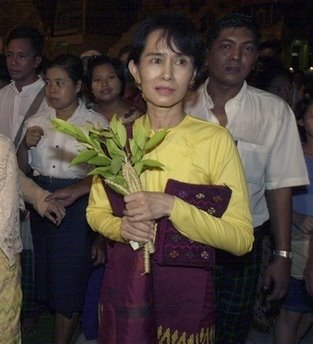


 Posts
Posts


