၃၁-၁-၀၉
အိုင္ယာလန္ႏိုင္ငံ၊ ဒပ္ဘလင္ျမိဳ႕ေတာ္အနီး၊ မာလာဟိုက္တြင္ က်င္းပျပီးစီးခဲ့သည္ စတုတၴၳအၾကိမ္ေျမာက္ ျပည္သူ႕လႊတ္ေတာ္ကိုယ္စားလွယ္မ်ားအဖြဲ႕(MPU) ညီလာခံတြင္ အၾကိတ္အနယ္ ေဆြးေႏြး-ျငင္ခံုမႈမ်ား ရွိခဲ့သည္ မွန္ေသာ္လည္း ကိုယ္စားလွယ္မ်ားအားလံုးက လူၾကီးလူေကာင္းဆန္စြာ ျပဳမူ-ဆက္ဆံ-ေျပာဆိုခဲ့ၾကပါသည္။ စစ္အစိုးရ၏ ကုလသမဂၢၢေနရာစိန္ေခၚေရး (Credential Challenge) ကိစၥ လုပ္သင့္-မသင့္ကုိ မဲခြဲဆုံးျဖတ္ျပီးမွသာလ်င္ အစီအစဥ္အရ ၀န္ၾကီးခ်ဳပ္ကို ေရြးခ်ယ္ခဲ့ျခင္းျဖစ္သည္။ (Credential Challenge) ကိစၥအတြက္ မဲခြဲစဥ္သည့္အခ်ိန္တြင္ မည္သူသည္ ၀န္ၾကီးခ်ဳပ္ျဖစ္လာမည္ကို မည္သူမွ် ၾကိဳတင္ခန္႕မွန္းႏိုင္ျခင္းမရွိခဲ့သည္မွ အမွန္ပင္ျဖစ္သည္။
ထို႕ေနာက္ လွ်ဳိ႕၀ွက္မဲျဖင့္ ေရြးခံရသည့္၀န္ၾကီးခ်ဳပ္မွ ၀န္ၾကီးအဖြဲ႕စာရင္းကို လ်ာထားခဲ့ျခင္းသာျဖစ္ျခင္းေၾကာင့္ (Credential Challenge) ကိစၥအတြက္ ၀န္ၾကီးေနရာေပး၍ မဲ၀ယ္-မဲဆြယ္မႈျဖစ္စရာအေၾကာင္းလံုး၀မရွိပါ။ ၀န္ၾကီးခ်ဳပ္မွ တင္သြင္းသည့္ ၀န္ၾကီးမ်ားအားလည္း လွ်ဳိ႕၀ွက္မဲျဖင့္သာ လံုးလံုးလ်ားလ်ားအမ်ားစုဆႏၵၵမဲ (Absolute majority) ျဖင့္ ညီလာခံမွ အတည္ျပဳသည္ျဖစ္ျခင္းေၾကာင့္ ဒီမိုကေရစီက်င့္စဥ္အတိုင္း အျပည့္အ၀ ရြက္ေဆာင္ျခင္းျဖစ္ပါသည္။ ဒီမိုကေရစီနည္းက် ေရြးခ်ယ္ျပီးသည့္ ၀န္ၾကီးအဖြဲ႕သည္ အလွည့္က်သဘာပတိ ေဒၚစန္းစန္း၏ေရွ႕ေမွာက္တြင္ပင္ ကတိသစၥၥာ ဆိုခဲ့ၾကသည္လည္းျဖစ္ပါသည္။
ေဒါက္တာတင့္ေဆြ
ျပန္ၾကားေရး၀န္ၾကီး
ျပည္ေထာင္စုျမန္မာႏိုင္ငံ အမ်ိဳးသားညြန္႕ေပါင္းအစိုးရ
ျဖည့္စြက္ခ်က္။
ဝန္ႀကီးခ်ဳပ္အျဖစ္ ေရြးခ်ယ္တင္ေျမႇာက္ျခင္းခံရသည့္ ေဒါက္တာစိန္ဝင္းသည္ မဲ (၂၂)မဲရရွိၿပီး Credential challenge လုပ္လိုသည့္ဘက္မွ ဝန္ႀကီးခ်ဳပ္ေလာင္း ဦးသိန္းဦးသည္ (၁၀)မဲ ရရွိခဲ့ရာ၊ ကြာျခားသည္မွာ (၁၂)မဲျဖစ္၍ ဝန္ႀကီးေနရာေပးၿပီး မဲဝယ္သည္ဆိုသည့္ စြပ္စြဲခ်က္မွာ လံုးဝ အေျခအျမစ္ကင္းမဲ့ပါသည္။
Sunday, February 1, 2009
New Parallel Government


UN special envoy to meet Aung San Suu Kyi in Myanmar
http://www.newkerala.com/topstory-fullnews-84089.html
Yangon, Jan 30 : The United Nations special envoy to Myanmar, Ibrahim Gambari, is scheduled to meet opposition leader Aung San Suu Kyi on an official visit expected to start this weekend, government sources said Friday.
Gambari is expected to arrive in Yangon Saturday to revive his so far unsuccessful efforts to push Myanmar's ruling junta to free Suu Kyi and thousands of other political prisoners and to allow democratic reforms in the military dictatorship.
On his last trip in August 2008, Gambari was denied an audience with military supremo Senior General Than Shwe. The UN special envoy also failed to meet Suu Kyi, who has been under house arrest in her Yangon home since May 2003.
Suu Kyi reportedly judged a meeting then with Gambari as unnecessary as he had failed to meet Than Shwe, the prime decision-maker in Myanmar.
It was unclear whether Gambari will be granted an interview with Than Shwe this trip, but government sources said the special envoy was scheduled to meet Suu Kyi, members of the National League for Democracy (NLD) opposition party and some government ministers based in Yangon, formerly known as Rangoon.
Gambari was also scheduled to visit parts of the Irrawaddy Delta, which was devastated by cyclone Nargis in May last year.
The cyclone left 140,000 dead or missing, and 2.4 million in dire need of emergency assistance, the delivery of which was initially hampered by the military, but finally allowed in.
--- IANS
UN envoy to hold talks in Myanmar with all parties (Roundup)
http://www.monstersandcritics.com/news/asiapacific/news/article_1456765.php/UN_envoy_to_hold_talks_in_Myanmar_with_all_parties__Roundup__
Asia-Pacific News
Jan 30, 2009, 16:56 GMT
New York/Yangon - The United Nations special envoy for Myanmar, Ibrahim Gambari, was to begin on Saturday a four-day visit to the country for talks on ongoing issues, the UN said Friday in New York.
Gambari was expected in Yangon on Saturday to revive his unsuccessful efforts to push Myanmar's ruling junta to free opposition leader Aung San Suu Kyi and thousands of other political prisoners and to allow democratic reforms in the military dictatorship.
The UN had been urging the military regime to free all political prisoners, including Suu Kyi, and launch democratic reform of its institutions.
Government sources in Yangon said Gambari's schedule would include a meeting with Suu Kyi, leader of the main opposition National League for Democracy (NLD), who has been under house arrest for more than 10 years.
'Mr Gambari looks forward to holding meaningful discussion with all parties on all the points he raised during his last visit,' said UN spokeswoman Marie Okabe.
Gambari received an invitation by the Myanmar government to pay another visit and UN Secretary General Ban Ki-moon has asked him 'to continue his consultations with the government and other relevant parties in the implementation of the good offices' mandate entrusted to the secretary general by the UN General Assembly,' Okabe said.
On his last trip in August 2008, Gambari was denied an audience with military supremo Senior General Than Shwe. The UN special envoy also failed to meet with Suu Kyi, who has been under house arrest in her Yangon home since May 2003.
Suu Kyi reportedly judged a meeting then with Gambari as unnecessary as he had failed to meet with Than Shwe, the prime decision-maker in Myanmar.
It was unclear whether Gambari would be granted an interview with Than Shwe this trip, but government sources said the special envoy was scheduled to meet with Suu Kyi, NLD members and some government ministers based in Yangon, formerly known as Rangoon. Gambari was also scheduled to visit parts of the Irrawaddy Delta, which was devastated by cyclone Nargis in May last year.
The cyclone left 140,000 dead or missing, and 2.4 million in dire need of emergency assistance, the delivery of which was initially hampered by the military, but finally allowed in.
Watch out for Bangladesh and Thailand: Military commander
http://democracyforburma.wordpress.com/2009/01/30/watch-out-for-bangladesh-and-thailand-military-commander/
January 30, 2009 · No Comments
by Mungpi
Friday, 30 January 2009 21:07
New Delhi (Mizzima) – Burma’s military generals in a secret meeting warned commanders and officers to beware of Bangladesh in the wake of a maritime dispute between the two countries in November.
Maj-Gen Soe Win, commander of the Northern Military Command, during a meeting held recently said that Burma considers Bangladesh a hostile neighbour, and warned commanders and officers to keep an eye on Bangladesh’s military movements.
The minutes of the meeting held in Naypyitaw, a copy of which is in Mizzima’s possession, said while Burma was exploring for gas in its territorial waters and in its economic zone, Bangladesh had strongly opposed the activity that led Burma to withdraw.
“In other words,” Soe Win said, “Bangladesh is provoking us.” Soe Win also accused the United States, which has imposed financial sanctions on the generals, of backing and inciting Bangladesh to oppose the exploration.
Besides, Soe Win, voicing the general’s paranoia, said the army has received information of movements of US Navy fleets using Thai and Bangladesh waters as a base.
“Therefore, all must understand that there is a likelihood of foreign invasion and we must carefully observe military movements,” Soe Win added.
During the meeting, attended by several field officers and commanders, Soe Win reminded them of the need to maintain vigilance along the border areas as a preparation for any possible intrusion from foreign countries.
Though there seems to be no other verification for Soe Win’s fears, the Generals, however, are reportedly intensifying military presence in Arakan state, which borders Bangladesh.
According to a Bangladesh-Burma border based Burmese journalist, the junta is stepping up its military presence, particularly the artillery battalion in the border township of Maungdaw in Burma’s western Arakan state.
“The junta is shifting several of its battalions to a new military base in Maungdaw. Particularly the artillery battalion,” the journalist, who requested not to be named, told Mizzima.
The journalist, citing local sources in the area said the Burmese Army is being stationed in a long stretch of valley behind the cover of mountains to conceal their presence.
“It looks to me that the army is preparing for an impending war or some kind of conflict. But we don’t know against whom,” he added.
Similarly, an Editor of the Dhaka based Burmese News Agency Narinjara told Mizzima that in recent months, at least 13 battalions of the Burmese Army have moved up to northern Arakan state in Maungdaw Township.
“We also can confirmed that the army is building an airbase in Maungdaw Township,” Narinjara’s editor Khaing Mrat Kyaw said.
He added that Burma’s military leaders including Vice Snr. Gen. Maung Aye, the junta’s second strongman, and Prime Minister Thein Sein have paid visits to Arakan state in recent weeks to check on the progress.
“Obviously it is some kind of preparation. And I think the junta wants to make a come back in the Bay of Bengal to continue the gas exploration,” Khaing Mrat Kyaw said.
“They seem to be really sore with Bangladesh over the last dispute,” Khaing Mrat Kyaw remarked.
In early November, Bangladesh and Burma had a face off, when Bangladesh objected to the exploration work of a South Korean company Daewoo, which was accompanied by Burmese naval vessels in the Bay of Bengal.
Bangladesh said the block in which the Burmese vessel and Daewoo were test drilling comes under its maritime boundary and immediately sent two Navy vessels to the spot.
Burmese generals, though saying that the area belongs to the Burmese economic zone, later moved out of the area.
During the stand off Bangladesh deployed two naval vessels in the Bay of Bengal and reinforced its border security, but Burma was unable to bring in timely reinforcements, Khaing Mrat Kyaw said.
“I think that’s why they are now building their bases and even constructing roads and railways, so that they can move their army anytime quickly,” Khaing Mrat Kyaw observed.
http://www.mizzima.com/
UK Government said Burma’s 2010 Election Will Entrench Military Rule
http://burmadigest.wordpress.com/2009/01/30/uk-government-said-burma%E2%80%99s-2010-election-will-entrench-military-rule/
Burma DigestJanuary 30, 2009
Posted by burmadigest under News
- Report courtesy of Burma Campaign UK
British Foreign Office Minister Bill Rammell MP has strongly criticised the Burmese military regime’s elections planned for 2010, saying that they are “designed to entrench military rule behind a facade of civilian government.”
Bill Rammell’s written statement came in response to a Parliamentary Question by Jim Cunningham MP on 12th January 2009, and was published in Hansard. The Minister also stated that; “We will continue to give our full support to the UN Secretary General and his efforts to break the current deadlock.”
The United Nations had been trying to broker tri-partite dialogue between Aung San Suu Kyi’s National League for Democracy, ethnic groups, and the regime. The regime has defied the UN Security Council and General Assembly, and instead pushed ahead with its so-called road-map to democracy. Among the many undemocratic measures in the new constitution, the military have an effective veto over decisions made by the new Parliament and government.
Full statement from the Minister:
Mr. Jim Cunningham: To ask the Secretary of State for Foreign and Commonwealth Affairs what recent assessment the Government have made of the political situation in Myanmar.
Bill Rammell: The military regime in Burma is determined to maintain its hold on power regardless of the cost and suffering of its people. The junta’s ‘Roadmap to disciplined democracy’, including a new constitution and elections planned for 2010, is designed to entrench military rule behind a facade of civilian government. The process excludes the opposition and meaningful participation by the ethnic groups. Fundamental rights are consistently ignored. Since early November, over 200 pro-democracy activists have been given sentences of up to 65 years in prison. These severe sentences are clearly designed to silence all dissent ahead of the 2010 elections. There are now over 2,200 political prisoners in detention, including opposition leader Aung San Suu Kyi, and other pro-democracy leaders. Ethnic minority groups have been methodically marginalised.
Against this backdrop, we will continue to do all we can to generate international pressure for a peaceful transition to democracy and respect for human rights in Burma. In particular, we will continue to give our full support to the UN Secretary General and his efforts to break the current deadlock.
A UN envoy returns to Burma
http://www.iht.com/articles/2009/01/30/opinion/edburma.php
The Boston GlobePublished: January 30, 2009
The UN special envoy for Burma, Ibrahim Gambari, is making his seventh visit to that country, which has become a virtual prison camp under its military junta.
Gambari's UN mandate is to gain the release of the Nobel Peace Prize laureate, Aung San Suu Kyi, and other political prisoners, and to persuade the country's ruling junta to include her National League for Democracy in an effort toward political reconciliation.
On his previous trips, Gambari failed to move the regime toward dialogue with the league, an opposition party that won over 80 percent of parliamentary seats in Burma's last free election in 1990 - a result the junta refused to honor.
Worse yet, during his last visit, five months ago, Gambari foolishly asked the league to participate in the sham election that dictator General Than Shwe wants to stage in 2010. Under a rigged 2008 constitution, Suu Kyi would be prohibited from even voting, and 25 percent of Parliament seats would go to the military.
Gambari will be visiting the country, which is also known as Myanmar, in the aftermath of a crackdown on dissidents in which government courts handed down harsh prison sentences to scores of pro-democracy activists. On this trip, he should stick to his orders, demanding Suu Kyi's freedom and dialogue with her party. And if he is granted permission to meet with her, he should insist that she be allowed to confer first with party leaders who are not in prison.
Today in Opinion
Arms control treaties: The rules of the gameA UN envoy returns to BurmaA good start in reviving the economyIn June, on the occasion of Aung San Suu Kyi's 63d birthday, Barack Obama saluted her, saying: "She has sacrificed family and ultimately her freedom to remain true to her people and the cause of liberty. And she has done so using the tools of nonviolent resistance in the great tradition of Mahatma Gandhi, Nelson Mandela, and Martin Luther King."
Obama would be acting within that tradition if he aligned America with Burma's democrats and pressed Gambari not to deviate from his democratizing mission.
Raids in Rangoon Yield More Heroin
--------------------------------------------------------------------------------
By THE IRRAWADDY Friday, January 30, 2009
--------------------------------------------------------------------------------
Police and customs officers in Rangoon have confirmed that a special anti-narcotics task force has seized substantial quantities of heroin in a series of raids carried out in the former Burmese capital since late last week.
Police said at least 28 kilograms of heroin were found last Sunday in a container on the Singaporean-flagged ship Kota Tegap, which was docked at the Asia World Port Terminal, located in Rangoon’s Ahlone Township.
Burma's Home Minister Maj-Gen Maung Oo, second from right, together with Rangoon-based diplomats check the illicit drugs before being put into flames, during the drug burning ceremony held at a remote town Lashio in Burma's northeastern Shan state in June, 2007. (Photo: AFP)
The port is owned by Tun Myint Naing, the son of former drug kingpin and militia leader Lo Hsing Han and one of those listed for sanctions by the US Treasury Department.
According to a report by Washington-based Radio Free Asia, the container, which was bound for Singapore, is owned by the Myanmar Timber Enterprise, a government-owned business that is also under US sanctions.
Police told The Irrawaddy on Friday that in a subsequent sting operation, the Central Committee for Drug Abuse Control (CCDAC) discovered another large cache of heroin in FMI City, an upscale residential area in Hlaing Tharyar Township. Further details were not available.
The CCDAC is a high-level task force chaired by Minister for Home Affairs Maj-Gen Maung Oo. Brig-Gen Khin Yi, the director general of the national police force, serves as secretary of the committee, which is based in the junta’s capital of Naypyidaw.
According to sources at the customs department, the police special intelligence department, known as the Special Branch, is now questioning port employees, high-ranking government officials and prominent businessmen in connection with the heroin seizure at the Asia World Port Terminal last weekend.
Observers say that drug traffickers are increasingly using maritime routes to smuggle drugs out of Burma due to a tough suppression campaign by neighboring countries such as Thailand and China.
On Tuesday, the Norway-based Democratic Voice of Burma reported that Kyaw Kyaw Min, a crab exporter in Bogalay Township, Irrawaddy Division, was arrested for attempting to smuggle 32 kilograms of heroin out of the country aboard a container ship.
Meanwhile, Singapore’s Central Narcotics Bureau seized 44.2 kilograms of heroin last year, up from 17.2 kilograms seized in 2007, the Straits Times reported Friday.
A shipment of 11 kilograms of high-grade heroin, bound for the European market, was seized in June, said the report, adding that it was the biggest seizure of its kind in the last 10 years. The report added that most of the heroin came from Thailand and Burma.
According to the 2008 World Drug Report, opium poppy cultivation in Southeast Asia increased by 22 percent last year, mainly driven by a 29 percent increase in opium cultivation in Burma.
The Burmese regime seized 103.8 kilograms of heroin and 1,690 kilograms of opium from January 2007 to June 2008, according to official figures.

Junta commander: 2010 elections could be postponed
by admin — last modified 2009-01-29 14:59
A junta commander in southern Shan State said the planned 2010 elections could be postponed due to several reasons, while meeting with people from several civil services early in the month, according to reliable sources.
By Hseng Khio Fah
29 January 2009
On 2 January, Kunhing Area Commander, Lieutenant-Colonel Tin Maung Shwe held a civil service meeting with people from immigration, police department, educational department, health department and traffic police.
“Elections could be delayed due to four reasons,” an official who wishes to remain anonymous quoted the commander as saying.
Disruptive activities by dissidents both inside and outside the country
Tension with Bangladesh over gas exploration
Incomplete census
Problems in the drug eradication program
“The generals want the new American administration to remove Burma out of its decertification list,” commented one source.
Burma has since 1988 been in the US blacklist.
--------------------------------------------------------------------------------
www.shanland. org
--------------------------------------------------------------------------------
Suu Kyi, Gambari Likely to Meet: NLD-IRRAWADDY
http://www.irrawaddy.org/highlight.php?art_id=15029
--------------------------------------------------------------------------------
By WAI MOE Thursday, January 29, 2009
--------------------------------------------------------------------------------
Burma’s pro-democracy leader Aung San Suu Kyi will probably meet with United Nations Special Envoy to Burma Ibrahim Gambari during his forthcoming visit to Burma, her party, the National League for Democracy (NLD), said on Thursday.
NLD spokesperson Win Naing told The Irrawaddy that the NLD expected its leader to meet with Gambari, and it hoped the Nigerian diplomat would discuss meaningful issues and perhaps achieve a tangible breakthrough of some type during his visit.
Detained pro-democracy leader Aung San Suu Kyi (L) meets UN special envoy Ibrahim Gambari (R) in March 2008. (Photo: AFP)
“UN Secretary-General Ban Ki-moon said the UN envoy won’t visit unless there is a sign of progress in Burma,” he said. “And then the UN announced Mr Gambari’s trip—it seems there is something in hand for the envoy. In this situation, Daw Aung San Suu Kyi could meet Mr Gambari.”
The UN said on Monday that Gambari would visit Burma at the end of this month.
“What I can tell you about the reports you have been seeing is that I can confirm that the secretary-general has asked Mr. Gambari to return soon, and that the Myanmar [Burmese] Government has extended an invitation for him to visit the country,” UN spokesperson Marie Okabe said. “At this point, however, discussions are ongoing about the details of the visit.”
The visit will be the seventh trip to Burma for the special envoy since 2006. During his last visit, in August, he failed to meet with the Burmese junta leader, Snr-Gen Than Shwe, and Suu Kyi. He held two meetings with NLD leaders.
According to diplomatic sources, the first meeting between Gambari and the NLD was about 30 minutes. Gambari reportedly urged the NLD to join the 2010 elections. Gambari was criticized by the NLD for stepping out of a purely mediation role.
Win Naing said that during the second meeting, the NLD did not talk with Gambari about the 2010 election issue, but party leaders discussed four issues which were needed for Burma’s national reconciliation process.
The four issues were: release of political prisoners including Aung San Suu Kyi; holding a meaningful dialogue between the military regime and opposition groups; forming an economic development committee; and opening a liaison office in Burma for the UN secretary-general, Win Naing said.
Win Naing said the NLD was not optimistic about Gambari’s seventh trip.
“After the last six visits to Burma by the special envoy, we did not see any concrete results for political development in the country,” he said. “But we hope there may be a solution to start a genuine dialogue on this trip.”
In regard to Suu Kyi, Win Naing said her lawyer, Kyi Win, was denied permission to visit her by authorities, and a second lawyer, Hla Myo Myint, was recently harassed by authorities.
The NLD won a landslide victory in the 1990 elections, winning more than 80 percent of the constituencies. The military regime failed to honor the election results.

Putin's Grasp of Energy Drives Russian Agenda
By ANDREW E. KRAMER
Published: January 28, 2009
MOSCOW — The titans of Russia’s energy industry gathered around an enormous map showing the route of a proposed new pipeline in Siberia. It would cost billions and had been years in the planning. After listening to their presentation, President Vladimir V. Putin frowned, got up from his chair, whipped out a felt pen and redrew the map right in front of the embarrassed executives, who quickly agreed that he was right.
Vladimir Rodinov/Presidential Press Service, via Associated Press
Vladimir V. Putin, then the president of Russia, in 2006 ordering energy executives to reroute a proposed pipeline in Siberia.
Mikhail Metzel/Associated Press
Prime Minister Vladimir V. Putin and Alexei Miller, the chief executive of Gazprom, in a control room in Moscow this month.
The performance, which was carried on state television in 2006, was obviously stage managed, but there was nothing artificial about its point. It was a typical performance for a leader who has shown an uncanny mastery of the economics, politics and even technical details of the energy business that goes well beyond a politician taking an interest in an important national industry.
“I would describe it as very much his personal project,” said Clifford G. Gaddy, a senior fellow at the Brookings Institution in Washington and an expert in Russia’s energy policy. “It is the heart of what he has done from the very beginning.”
Indeed, from his earliest days in power in 2000, Mr. Putin, who left the presidency in 2008 and became prime minister, decided natural resource exports and energy in particular would not only finance the country’s economic rebirth but also help restore Russia’s lost greatness after the collapse of the Soviet Union.
Just this month, Mr. Putin’s personal immersion in the topic was on full display as he ordered natural gas shut off to Ukraine, in the process cutting supplies to Europe. It was portrayed by the Kremlin as a protracted commercial dispute with Ukraine. But the hundreds of thousands of shivering gas customers in the Balkans and Eastern Europe sent an unmistakable message about the Continent’s reliance on Russian supplies — and Mr. Putin’s willingness to wield energy as a political weapon.
When talking about energy, he often rattles off obscure statistics not often heard outside a Houston boardroom, like average daily production of fields and throughput capacity of pipelines.
Mr. Putin “clearly knows as much about BP’s business in Russia as I do,” Anthony B. Hayward, BP’s chief executive, once said after a meeting with him.
In fact, the standoff in Ukraine was just one part of a far larger Russian playbook on natural gas policy under Mr. Putin. In the past year, Russia has formed a cartel-like group with Middle Eastern nations with the goal of dampening global competition in natural gas, sewn up sources of supply in Central Asia and North Africa with long-term contracts to thwart competitors and used its military to occupy an important pipeline route in Georgia.
And this broader struggle extends over a dozen countries from Azerbaijan to Austria. In its sprawl and slow pace, it is often compared to the 19th-century struggle for colonial possession in Central Asia known as the Great Game. In the modern variant, Mr. Putin, a master strategist, has proved far more effective than his European counterparts.
“He has been thinking for some time, ‘What are the means and tools at Russia’s disposal, to make Russia great?’ ” said Lilia Shevtsova, a researcher at the Carnegie Moscow Center. In the post-Soviet world, she said, Mr. Putin concluded that “military power would no longer be sufficient.”
A spokesman for Mr. Putin, Dmitri S. Peskov, said that the energy market “was, is and will remain a strategic sphere for Russia” and that government leaders in Moscow should be versed in the topic. Mr. Peskov denied the Kremlin used exports for political purposes. Of Mr. Putin’s deep personal knowledge of the business, he said the prime minister showed a similar attention to detail in other matters, too.
In this contest, Russia’s overarching goal is to prevent the West from breaking a monopoly on natural gas pipelines from Asia to Europe. Boris E. Nemtsov, a former Russian first deputy prime minister who is now in the opposition, said: “It is the typical behavior of the monopolist. The monopolist fears competition.”
As they did two years ago after a similar supply disruption, European officials have promised in the wake of the Ukraine dispute to take steps to diversify the Continent’s sources of gas to end its reliance on Russia, which supplies nearly 30 percent of the total. European dependence is expected to grow as North Sea gas fields decline.
Page 2 of 2)
At a conference in Budapest on Tuesday, Prime Minister Mirek Topolanek of the Czech Republic called for a renewed effort to build the long-delayed Nabucco pipeline to bring Central Asian gas to Europe without passing through Russian territory.
Skip to next paragraph
Multimedia
Map
Gas Pipelines
Related
Times Topics: Vladimir V. PutinBut there is a reason the project has never gotten off the ground: as determined as Europe is to end its reliance on Russian gas, Mr. Putin is equally adamant about extending it.
The Nabucco pipeline was proposed in 2002 by executives from European energy companies with the express intent of undercutting Russia’s gas monopoly. It would pass through Turkey and Georgia to the Caspian Sea.
Under the best of circumstances, building an international pipeline is an intricate and arduous process, technically, financially and politically. However, Nabucco’s planners rapidly discovered that their biggest obstacle was not a mountain chain or a corrupt local politician, but Mr. Putin himself. When OMV, the Austrian energy company, formally created a consortium for Nabucco in 2005, he responded with a competing idea: a pipeline called South Stream that would terminate at the same gas storage site in Austria, but originate in Russia and bypass Ukraine by traveling under the Black Sea.
In a contest often compared to chess, this Russian countermove, like all good chess moves, was both offensive and defensive.
To pay the hefty upfront construction costs, a pipeline needs both an assured source of supply and a market for the gas it transports. The South Stream pipeline would flood the gas market in southeastern Europe, locking up the customers the bankers behind Nabucco were counting on to finance the project.
At the same time it would undermine Ukraine’s domination of gas lines headed west, one of the biggest obstacles to Russian domination of the European gas market.
But Mr. Putin did not stop there. Leaving nothing to chance, he also took steps to choke off potential sources of upstream gas supplies deep in Central Asia.
The race to secure these rich sources of natural gas unexpectedly accelerated in 2006 with the death of the eccentric and isolationist dictator of Turkmenistan, Saparmurat Niyazov. While energy executives around the world rushed to Ashgabat, the Turkmen capital, to meet the new leader, Gurbanguly Berdymukhammedov, a former dentist, Mr. Putin was the first to cut a big deal.
Smiling and holding shovels at a televised ceremony to mark the start of construction, Mr. Putin and Mr. Berdymukhammedov agreed in 2007 to build a pipeline north, to Russia, depriving Nabucco of potential supply. It was not until 2008 that European Union officials got to Ashgabat with a memorandum of understanding for a trans-Caspian pipeline that could link to Nabucco. It has yet to be acted upon.
Farther west, it was the same story.
In February 2008, Mr. Putin signed an agreement with Bulgaria — over the objections of the United States and in spite of Bulgaria’s status as a new NATO member — making it a partner in the South Stream pipeline.
And in April 2008, Mr. Putin was in Athens, cutting a deal for a spur of South Stream. In this flurry of diplomacy he again beat his Western opponents. The United States State Department’s point man on Eurasian pipelines, Matthew J. Bryza, in Athens the next day, could only rue the signed deal. Mr. Bryza was left explaining to the Greeks: “If you have only one supplier of feta, you’re in a vulnerable position. The same for gas.”
The West still had an important pipeline partner in Georgia, a critical geographical link. But that all but evaporated in the brief war last summer.
By 2007, a pipeline section had been laid across Georgia, the Baku-Erzurum pipeline, which is now used for local distribution but will become a part of the Nabucco pipeline, if it is ever built. This brought the struggle for Nabucco to a pivotal stage, for it was now playing out along a storied trade route in the petroleum business, and one highly sensitive to the Russians.
In the 19th century the Rothschild banking family and the Nobel brothers of Sweden had built a railroad and pipeline across Georgia to sell Baku oil, undercutting the near monopoly in the business, Standard Oil of the United States, which was supplying Europe with kerosene produced in America.
After the breakup of the Soviet Union, the revival of this pre-Bolshevik energy corridor became a major foreign policy goal of the United States, intended to strengthen the economic independence of former Soviet states and diversify world oil supplies away from the Middle East. At a narrow point, the pipeline route passes just south of the Russian-controlled enclave of South Ossetia and north of another Russian ally, Armenia.
The August war sent a chill through boardrooms in the West when, for example, Russian tanks scurried back and forth over one of the buried pipelines and one crew occupied a pumping station. Russia, said Svante Cornell, a specialist on Central Asia and the Caucasus at the School for Advanced International Studies at Johns Hopkins University, sent a simple message: “We can blow this up at any time.”
While his track record is very strong, Mr. Putin is not infallible. Last summer he made a rare mistake by locking in long-term contracts for Central Asian gas at close to the height of the market — $340 for 1,000 cubic meters in 2009. While Mr. Putin achieved his goal of depriving Nabucco of more potential sources, Russia is now selling that gas in a down market to Ukraine for an average of less than $240 per 1,000 cubic meters — one possible reason, energy experts have said, that Mr. Putin tried to force Ukraine to pay more for gas this winter.
Despite its best intentions, Europe is likely to remain dependent on Russian energy supplies for the foreseeable future and, perhaps, indefinitely if Mr. Putin has his way. And that reflects his long-held beliefs.
As far back as 1997, while serving as deputy mayor of St. Petersburg, Mr. Putin earned a graduate degree in economics, writing his thesis on the economics of natural resources.
Later, when scholars at the Brookings Institution analyzed the text, they found 16 pages had been copied without attribution from a 1978 American business school textbook called “Strategic Planning and Policy,” by David I. Cleland and William R. King of the University of Pittsburgh. Mr. Putin has declined to comment on the allegation.
Tellingly, the passages they say were plagiarized relate to the indispensable role of a chief executive in planning within a corporation — the need for one man to have strategic vision and control.
Saturday, January 31, 2009
Secret UN deals may entice Myanmar
http://www.atimes.com/atimes/Southeast_Asia/KA30Ae01.html
By Brian McCartan
CHIANG MAI - New hopes are rising that the goodwill engendered by the joint United Nations and Association of Southeast Asian Nations (ASEAN) relief effort for Cyclone Nargis last year can be parlayed into greater multilateral access to the isolated and impoverished country through a possible aid-for-reform deal.
United Nations special envoy to Myanmar Ibrahim Gambari's seventh visit to the country is scheduled for this week and will be closely watched by international observers. Gambari said previously that significant steps, such as the release of political prisoners and moves towards genuine free and fair elections in 2010, would need to be taken before he would return to Myanmar.
That stand was a diplomatic response to junta leader Senior
General Than Shwe's refusal to meet with the envoy during his last two visits to the country. Opposition leader Aung San Suu Kyi also declined to see Gambari during his most recent visit in August. Now there is speculation that Gambari aims to take a new diplomatic tack by dangling offers of development assistance in exchange for political reforms, including Suu Kyi's and other political prisoners release, and the inclusion of opposition parties in the upcoming polls.
A December 28 editorial in the Washington Post citing unnamed UN officials said "special envoy Ibrahim Gambari has proposed that nations offer Burma [Myanmar] financial incentives to free more than 2,000 political prisoners, including Nobel laureate Aung San Suu Kyi and to open the country to democratic change". A confidential document outlining the strategy was presented to UN secretary general Ban Ki-moon in November, according to the Washington Post.
A former UN official who claims to have seen the secret document, however, downplays those claims. While many hope the joint cyclone relief effort will open access to the rest of the country for badly needed development projects, the idea of holding out aid as a "reward" for political reforms runs counter to humanitarian norms that govern relief and development operations, he said.
What the document definitely does call for is increasing development assistance for projects aimed at Myanmar's most vulnerable and impoverished people, but not direct disbursements to the junta, the former UN official says. It also proposes that policy reforms are vital, including economic reforms, which, if properly implemented, would improve the investment climate. The UN official says this should not be perceived as a call for foreign direct investment to Myanmar, which is currently sanctioned by both the US and European Union.
One initiative Gambari is expected to push is the establishment of a forum of experts - both local and international - to advise on social and economic policy, including towards exchange rate unification, health, agriculture and education. He will aim to build on the on-the-ground presence of the UN, ASEAN and international non-governmental organizations (NGOs) during the ongoing Cyclone Nargis relief effort.
UN and ASEAN officials have categorized that controversial operation as a disaster relief success story, although one aid worker notes that the first six weeks after the storm were "an abomination" due to the government's inept handing of the crisis and its initial blockage of foreign aid and international aid organizations.
According to the first periodic review of the relief effort, released on December 15, there has been "significant progress" in both relief and recovery, according to the Tripartite Core Group (TCG), a coordinating body composed of representatives from the UN, ASEAN and the Myanmar government.
While the relief effort is far from finished, recovery operations have already begun, including a three-year plan known as the Post-Nargis Recovery and Preparedness Plan, or PONREPP. PONREPP establishes the framework for the international community's assistance, scheduled to run from January 2009 to December 2011, which will focus on "restoring productive, healthy and secure lives".
The joint aid effort is expected to cost $400-$500 million per year; the UN's revised appeal for cyclone relief assistance now stands at 64% funded, with $304 million received from international donors. The world economic downturn is unlikely to affect donations for 2009, since most donors have already committed, but the second and third years of the recovery plan could face funding shortages.
Unprecedented access
The UN's and other organization's access to needy communities is unprecedented in Myanmar's humanitarian context, aid workers say. According to a recent paper written by Julie Belanger and former UN spokesman Richard Horsey for the Overseas Development Institute of the Humanitarian Policy Group, the TCG effort has been the most effective tool yet for successful coordination between the government, UN and international NGOs.
However, the TCG mechanism is due to expire in July this year, although its possible continuation will be broached at the ASEAN summit to be held next month in Thailand. With unprecedented direct and high level access to the junta, aid officials working in the cyclone-hit Irrawaddy Delta have been able to explain their operations and negotiate problems in a way that is all but impossible in other areas of the country.
The paper also cautioned that the future of humanitarian operations in the Delta, or elsewhere in Myanmar, will depend on the unsettled domestic political situation.
The UN and NGOs are sanguine that the goodwill won during the cyclone relief effort can be leveraged into greater access to other areas of the impoverished country. Myanmar is ranked as a least developed country and ranks 132 out of 177 on the UN's Human Development Index.
A mounting food crisis is a call for an expansion of aid. A report by the World Food Program (WFP) released this week states that, although widely assumed shortages due to damage caused by Cyclone Nargis did not materialize and this year's rice harvest was better than expected, one million Burmese are still short of food in the cyclone-affected Irrawaddy Delta and another five million in other areas are also in need.
Although there have been some openings, including increased access to provide food aid to the country's famine-hit western Chin State, some believe the xenophobic junta intends to maintain an "aid wall" around the cyclone-hit Delta areas. Local organizations and international NGOs usually are only allowed to operate in secure government areas, which are delineated by the geographical dividing line marked by the mountains lining its border with Thailand.
Those mountainous areas are where insurgent groups are still engaged in armed struggle against the military regime and where some of the most egregious rights abuses take place. Access to ceasefire areas along the Thai border is also difficult, with the UN and NGOs often denied access by the government - although local groups and staff are often able to enter the remote regions. As such, rather than going through Myanmar, international aid organizations distribute aid through a number of NGOs that work from inside Thailand along the two countries' border.
This longstanding cross-border aid operation was for the first time given an official stamp of approval by the UN, according to an undated confidential document compiled by the UN Office for the Coordination of Humanitarian Affairs (UNOCHA) and reviewed by Asia Times Online. The document appears to mark one of the first times the UN has approved such an arrangement, which touches on sensitive sovereignty issues the global organization tends to shy from.
Sources in border-based relief organizations who declined to be named said that they were confused by the document and its confidential nature. That's because the prevailing perception in the Thailand-based aid community was that the UN was in favor of a shift to providing more aid through Yangon. There is some speculation that perhaps the UN is interested in keeping the cross-border option open in case its negotiations with the generals for greater access is denied.
While noting that there are issues that need to be addressed, such as the potential need for armed escorts and the diplomacy of dealing with local relief groups with known ties to armed opposition groups, the document notes that the people stuck in the middle of the armed conflict remain vulnerable and in need of aid which can only be distributed through Thailand.
The UN and aid workers have consistently contended that humanitarian aid and politics should be separate. Activists and opposition groups believe that UN-backed aid and development programs have recently lent international legitimacy to the regime. For instance, they note that while the UN worked alongside Myanmar officials in distributing cyclone relief, in other areas of the country the regime mounted a brutal crackdown on political dissidents, where thousands were imprisoned, and sustained a costly brutal war along its border with Thailand.
In those same border areas, relief and human-rights organizations such as the Free Burma Rangers, Backpack Health Workers and Karen Human Rights Organization report that their relief workers are often shot on sight by government soldiers. Several have been arrested, tortured and imprisoned, they say.
These presumably are some of the same organizations the UN now says it would support funneling aid through. Gambari's challenge will be to foster confidence in both the generals and political opposition at a time when the UN is sending mixed signals about its intentions.
Brian McCartan is a Chiang Mai-based freelance journalist. He may be reached at brianpm@comcast.net.
(Copyright 2009 Asia Times Online (Holdings) Ltd. All rights reserved. Please contact us about sales, syndication and republishing.)
Strategic Outlook of 2010 and the Role of Moderates in Burma Conflict-MIZZIMA
http://www.mizzima.com/edop/commentary/1617-strategic-outlook-of-2010-and-the-role-of-moderates-in-burma-conflict.html
by Min Zaw Oo
Thursday, 29 January 2009 11:29
Key Points
1. The west-driven support to Burma's pro-democracy movement has reached its limit.
2. The regime has maintained its intuitional apparatus to crackdown domestic oppositions after the monk-led protest and the Cyclone Nargis.
3. The military is facing dilemma to proceed to the transition in 2010 because of the distrust of the oppositions and the lack of civilian partnership.
4. Factional mobilizations can lead to instabilities after 2010.
5. Conflict prevention based on reconciliation and nation-building should be priority after the coming election.
6. The emergence of moderate political forces is critical to promote reconciliation after 2010.
----------------------------------------------------------------------------------
The Burmese regime has claimed to hold a new election in 2010 to facilitate a formation of a civil-military government in accordance with the military-orchestrated constitution which was approved in a widely slated referendum held last year. The prospect of the new election is a moral and strategic dilemma to the oppositions, especially the National League for Democracy (NLD) and its supporters who are entrenched in their upholding of the NLD's victory in the eighteen-year-old election.
Any proponent of the new election will undoubtedly find it hard to make a moral advocacy without risking an inadvertent endorsement of the reprobated constitution. However, the participation of moderate pro-democracy forces in the 2010 election is strategically sound and practically necessary to avoid instability and foster much-needed reconciliation for Burma's political and ethnic crises. This essay addresses why the 2010 election is important, and how the moderates can nurture reconciliation after 2010.
The State of the Opposition Movement
Before we think of the future, we should honestly assess our pro-democracy opposition movement, especially its west-driven support.
The attack on Aung San Suu Kyi's motorcade in Depayin and the crackdown on the NLD in 2003 marked a turning point in the conflict. The Depayin incident was also an enlightening moment for some opposition members to re-evaluate their strategies in Burma's protracted conflict.
The Depayin clampdown invigorated ferocity and anguish among the Burmese opposition communities. The emotional instinct called for escalation of the conflict to punish the military's onslaught on the NLD. Furious responses from the international community, including the abrasive condemnations coming from the US senior official, appeared to convince Burmese oppositions that their supporters in the west were ready to boost up Burma's opposition movement beyond rhetoric and miniscule financial supports.
Nevertheless, Burma's pro-democracy movement was merely a moral case for the west. Moral concern is usually inferior to strategic needs in international relations.
Even the Bill Clinton's administration approved about $ 100 million to support the Iraqi oppositions in 1998.1 Compared to this amount, less than $10 million of US funding, including the money to assist refugees and humanitarian programs, was a drop in an ocean of need to boost up an opposition movement.
The Depayin crackdown revealed the reality of the international support to the pro-democracy movement. A few exiles had reached a conclusion on the international front—the west-driven support to Burma's pro-democracy movement has exhausted its capacity in the international system.
On the political front, the NLD explicitly called for the intervention of the United Nations Security Council. The actual reason behind the NLD's SOS signal was its leadership's realization that the government had effectively clamped down the party's capacity to mobilize inside the country. While Aung San Suu Kyi and her able colleagues were under detention, the junta's restrictions had potently demolished the party's grassroots foundation.
The Burmese oppositions and their supporters in exile well heeded the NLD's distress call. Some activist lawyers in Washington prepared a lengthy and controversial appeal, commissioned by Former Czech President Vacláv Havel and noble laureate Desmond M. Tutu. The document argued that Burma under the military junta was a threat to regional stability although all neighboring countries refused to endorse this claim. Burma's threat to peace allegation came neither from the Pentagon nor the US intelligence community. It was a pure agenda from the activists using it as leverage to elevate pressure over the regime.
Despite the understanding in advance that such appeal at the UNSC would not survive, the US Congress and the Bush administration rode the flow of the activists' agenda. In contrast, the Clinton administration chose not to pursue the similar agenda at the UNSC after US ambassador to UN Madeleine Albright met Daw Aung San Suu Kyi in 1995 because of the same reason of an eventual failure. The result is the history.
Both the free Burma movement and the free Tibet campaign share the same fate. Both movements have been remarkably successful in awareness campaigns. However, awareness is only the first step to mobilize international support in transnational causes. The actual policy making depends on the willingness and capability of the international powers. Both free Burma and Tibet movements grind to a halt when their fates fall into the hands of the international system.
In the domestic front, the junta faced two major crises almost simultaneously within 8 months. The monk-led uprising brought thousands of people to the streets for the first time in eighteen years. Cyclone Nargis virtually destroyed the rice bowl of Burma in the delta region and killed over 130,000 people, marking it the worst natural disaster in Burma history. Nevertheless, the regime survived both crises.
The military proved its institutional capacity to shoot, arrest and torture even monks who are regarded one of the three most revered in Burmese society. The Cyclone deepened poverty and forced people to prioritize their economic survival over political dissatisfaction. The regime has successfully preserved its capacity to quash political challenges after two major crises.
The Limitations of the Military Junta
The major difference between Gen. Ne Win's military coup in 1962 and the current junta is the former's ability to consolidate its power by institutionalizing a one-party state 12 years after the military takeover. The State Peace and Development Council (SPDC) successively claimed it was a coup d'état government. The nature of the current junta is transitional. Unlike Ne Win's coup, the current junta is not capable of institutionalizing its rule into a formal political system.
In addition, the regime is under constant pressures domestically and internationally although the junta is capable of withstanding them from pushing it to collapse or concede the oppositions' demands. The Depayin incident accelerated the regime's eventual end game, 7-step Road Map to a political transition.
The transition plan is based on the regime's orchestrated constitution which the junta forced through in a rigged referendum amidst the cyclone crisis in May 2008. According to the Road Map, the regime will hold a new election in 2010 and form a new government. The military will have 25 percent of seats in the Parliament, and the military's interests will be protected.
However, the interpretation of the constitution in practice will depend on the degree of participation by civilian politicians in the election and the authority of the elected representatives in the government. The constitution itself does allow elected members to hold substantial power in the new government. The legitimacy of the 2010 election depends on the participation of pro-democracy civilians and their roles in the new government.
The regime is also facing a dilemma based on three major concerns. First, the military is reluctant to open up political space for the civilian politicians to mobilize to contest in the election because the regime learned a hard lesson after it had released former student leaders and allowed them to organize their supporters. Their mobilization paved a way to the monk-led protest in 2007. The regime is very careful this time not to repeat the previous mistake.
Second, the regime is concerned with the repetition of the NLD's another victory in the 2010 election. The dominance of anti-military oppositions in the civilian portion of elected representatives will encourage the oppositions to challenge the military after the election. In other words, the military wants more 'moderate' opposition to contest in the election than the hard-liners. The release of student leaders in 2004 partially aimed at creating a so-called 'third force' between the NLD and the regime. However, the student leaders chose to take hard-line stance.
The regime's strategy appears to minimize the influence of hard liners, including the NLD, in the opposition movement. The recent arrests and severe jail-terms imposed on the activists are a part of the plan to steer clear hard-line elements before the election comes. On the other hand, an alternative third-force in the opposition movement is not in an organized form. Because of the nature of polarization in Burma's conflict, many moderate individuals are reluctant to engineer a third-force platform which is a politically derogative term for the Burmese oppositions.
Third, the regime is worried that the emerging civilian-led government would undermine the military's institutional interests. The military wants to avoid creating a Frankenstein monster by its own Road Map. The military therefore embedded protective clauses in the constitution to guarantee its own interests because of its distrust on civilian politicians.
Overall, the SPDC does not have viable civilian partnership in the new government after 2010. Lack of confidence on civilian politicians and amicable partnership has fostered siege mentality among the military leaders who cling onto the constitution and use suppression to safeguard their interests.
Civilian Forces in the 2010 Election
Depending on their roles and stance towards the coming election, there are four types of civilian politicians, in addition to the pro-military elements to contest the election. The majority of the oppositions strongly condemned the regime's road map. They will continue to reject the 2010 election and refuse to participate. These hardliners among the opposition movement are mostly in exile. Most hardcore activists inside the country have been placed under detention since the crackdown of the monk protests. The hardliners' voice will make little impact on the holding of the election.
The second type of oppositions sees the election as a step towards a confrontation with the military. Despite its call to recognize the result of the 1990 general election, the NLD is likely to participate in the 2010 election because it is the only option for Daw Suu's party to reclaim its legitimacy and remobilize its supporters after 2010. For many hardliners, including the Burmese Communist Party, the coming election is a tactical battleground for further escalation of the conflict.
The third political group views the coming election as an enticing opportunity to pursue their interests. Many ceasefire groups fall into this account. They will seek to strengthen their legitimacy through the existing electoral process regardless of the degree of fairness and freedom of the election. Some ceasefire groups are also inclined to transform into the fourth category, the third force.
Most individuals in the so-called third force inside Burma are non-NLD pro-democracy activists who disagree with the NLD's sanction-oriented policy and confrontation with the regime. They regard themselves moderates and share a view that the current NLD-led opposition movement is a failure. Many individuals in the third force include former political prisoners, elected representatives from the NLD, current leaders in NGOs, and environmental activists. Although they have not emerged as an institutionalized political force, they are likely to establish their political platform to contest the 2010 election.
Potential Instability after the 2010 Election
Under the current constitution, the likely polity in Burma is inclined towards illiberal democracy after 2010. Illiberal democracy is the most potent ingredient for instability when poor economic performance and factional mobilization characterize a new transition, according to the study of world-wide instabilities since 1955.2
Any new government, regardless of the forms of transition, will not be able to revive the country from current economic pauperization in a short term. Poverty will continue and quality of life remains poor after 2010. Economic destitutions are usually channeled towards political discontent. Under poverty, Burmese people will remain dissatisfied with the government as long as the military is a part of the ruling institution.
Illiberal democracy also expands political space for formerly suppressed oppositions who were deprived of political mobilization under the previous system. Economically dissatisfied public is vulnerable to political instigation stirring up unrests. The hardline oppositions will utilize newly emerging political space to mobilize poverty-stricken angry publics to pressure the new government. Their objective will aim to scrap the existing constitution and boot the military out of politics.
On the other hand, the military is likely to be politically defensive after the 2010 election while taking shelter under its brainchild constitution. The military's 25 percent of representatives in the parliament and its supporters will continue to preserve the military's institutional interests threatened by the oppositions' mobilization. Alternatively, the military may disenfranchise potential hardliners in the 2010 election and continue to deny their political freedom even after 2010. In both scenarios, the confrontation between the military and hardcore oppositions is likely to escalate after the election.
Another challenge for the post-2010 government is disarrangement and demobilization of ceasefire groups. Twenty-year old ceasefire has not addressed political settlement of fifteen major ceasefire groups whose strength reaches over 40,000 armed troops, approximately four-time larger than the size of Taliban in Afghanistan. Any misstep in the 2010 transition can trigger the revival of major armed conflicts in the country. The outbreak of wars will inevitably promote the role of military in Burma's politics.
Realistic Reconciliation after 2010
The only way to avoid potential instabilities, destructive confrontation and the revival of suppression is to purse realistic reconciliation after 2010. Reconciliation needs political space, common ground and readiness of both parties. The opposition's call for reconciliation in the past has failed because of the lack of all major premises.
The transition in post-2010 may not foster willingness to reconcile but will create political space to expand shared common ground where confidence can be restored among major parties in the conflict. In the past up to this point, both sides use 'reconciliation' merely as a political lexicon to take advantage over another while neglecting common grounds to cooperate on shared interests of the nation.
It will be the first time in 22 years both civilian politicians and the military representatives will be sitting under the same roof in the Parliament. It will also be the venue for both the military and civilians to interact in policy making and mutually envisioning the future. Against all odds, the transition in 2010 offers an opportunity to jumpstart confidence building to seek much need reconciliation for the country.
Realistically, the regime's Road Map is inevitable. The military will not drop its Road Map and seek an alternative political settlement with the opposition. Any political outcomes have to go through the military-led transitional process. In the past, the military is asked to sit down at a table set up by the opposition. It is now inexorable for the oppositions to proceed to the table prepared by the military.
The reconciliation after 2010 may not be an immediate tripartite dialogue among the military, pro-democracy oppositions, and ethnic minorities. The process will be likely initiated in phases, starting with the military and moderate political forces in the parliament and the government. The ceasefire groups in the political process can play a crucial role in steering the dialogue towards the issues of ethnic minorities.
Prevention of destructive conflicts and nation-building should be the priorities after 2010. These two critical processes are the indispensable steps towards successful democratization. Factional mobilization will be detrimental to any progress of liberalization and democratization. The grim truth about democratic transition is the fact that among 108 democratic transitions, only 12 countries have consolidated democracy since 1955.3 In many cases, instability follows transitions. Some countries fell back to some forms of autocracy. Many transitional countries are still struggling with factionalism.
Moderates Matter
Burma conflict is vastly factionalized, and the polarity between the military and the oppositions is deeply entrenched. The traditional opposition forces will likely take the path of confrontation with the military after 2010. Confidence building won't be materialized as long as both the civilian politicians and the military fail to cooperate in shared common interests, such as economic development, health care, security and public welfare. The essential approach is collaboration in common grounds instead of all-out confrontation.
As long as the junta sees no viable civilian partnership after 2010, the military will restrict the participation of civilian politicians in the coming election and their capacity to mobilize. The only civilian force willing to categorically cooperate with the military is moderate non-NLD pro-democracy activists who feel discontented with the status quo in the opposition movement. Although the military may not trust this so-called third force, it is the only viable civilian partnership the military needs to implement its Road Map.
The military and the third force share similar interests in development-related fields which can be the initial point of cooperation to foster confidence in civil-military relation. Pro-democracy orientation of the moderates can bridge the relationship between traditional oppositions and the military. The third force can function as a requisite buffer between both ends of hardliners by minimizing polarization in Burma conflict.
The major drawback of the potential third force in Burma is the lack of substantial leadership and institutionalization. The moderate force has not been able to organize its political platform and leadership structure to function as a feasible political institution. The election in 2010 will likely be a breeding ground to shape the structure of moderate force in Burmese politics. As long as the military's Road Map is the inescapable point for a change in Burma, the emergence of competent third force is strategically important to jumpstart reconciliation after 2010.
(Min Zaw Oo is a security analyst focusing on South and Southeast Asia region. He is also a PhD candidate at George Mason University, writing his dissertation on the analysis of 108 democratic transitions. Oo holds a MA in Security Studies, Georgetown University, and a MS in Conflict Analysis and Resolutions, George Mason University.)
EU experts to help improve Myanmar marine products export quality
http://news.xinhuanet.com/english/2009-01/29/content_10733166.htm
www.chinaview.cn 2009-01-29 13:36:11 Print
YANGON, Jan. 29 (Xinhua) -- Experts of the European Union (EU) will examine Myanmar's marine products to help improve quality of export products for the European market, the local Yangon Times quoted the Myanmar Fisheries Products Producers and Exporters Association as reporting Thursday.
Invited and proposed by the association, the EU experts will visit Myanmar early next month to inspect the export quality of fishery products from 22 fisheries-related cold storages.
Myanmar's marine product exports amounted to 353 million U.S. dollars in the first three quarters (April-December) of the fiscal year 2008-09 ending March, a drop of 30 million dollars from 2007-08's 387 million dollars correspondingly, according to earlier local report.
The report attributed the fall to the impact of the global financial crisis.
Myanmar's fisheries Department revealed that purchase order from abroad was down by 50 percent compared with normalcy, while domestic purchase power fell by 40 percent.
Along with the reduction of foreign market demand, price of fish also dropped in the domestic market, the report added.
Of Myanmar's marine exports through both normal trade and border trade, fish, prawn and crab are leading.
In 2007-08, Myanmar exported 352,652 tons of marine products, gaining 561 million U.S. dollars, according to official statistics.
In Myanmar's marine export country line-up, China stood atop, followed by Thailand, Japan and Singapore.
The country's fishery sector remained as the fourth largest contributor to the gross domestic product and also the fourth largest source of foreign exchange earning during the past five years.
Editor: Yao
'Six million Burmese need food'
http://news.bbc.co.uk/2/hi/asia-pacific/7856265.stm
By Jonathan Head
BBC South East Asia correspondent
Some rural areas of Burma have been plagued by rats
The United Nations has warned of acute food shortages in parts of Burma, despite a better than expected rice harvest over the past year.
Its World Food Programme has issued a report warning that six million people in Burma are now in need of food aid.
They include a million in the Irrawaddy Delta, hit by Cyclone Nargis last year.
But the WFP says it cannot get enough food aid to the western Rohingya and Chin areas, because of restrictions imposed by the military government.
When Cyclone Nargis wiped out Burma's rice-bowl, the Irrawaddy Delta, last year, it was widely assumed that the country would face severe food shortages.
And the UN's World Food Programme says that is what has happened - but not because Burma is growing any less rice.
Military restrictions
Production has dropped by half in the Irrawaddy Delta - but in other regions, yields have been much higher, so that there is actually a healthy surplus available for export.
Burma's 'abused Chin need help'
But the number of Burmese who cannot grow or buy enough to eat has risen sharply to six million, says the WFP.
The UN wants to increase food aid - but cannot, because the government inexplicably stopped it from buying rice locally last year, and because the military restricts access to the worst-hit areas along the western border.
These are where ethnic Rohingya and Chin people live; their plight is reported to be desperate, with Chin state hit by a huge plague of rats.
The UN is hoping its appeal will persuade the Burmese government to lift these restrictions.
The dire conditions in which most Rohingyas live is one of the factors driving so many of them to Thailand, where they claim to have been subjected to brutal treatment at the hands of the Thai military in recent weeks.
China slow down hits Burmese mining
http://www.mizzima.com/news/inside-burma/1613-china-slow-down-hits-burmese-mining.html
by Moe Thu
Wednesday, 28 January 2009 14:40
Rangoon (Mizzima) -- Like most other sectors that earn Burma hard currency, the mining sector is likely to crash given the slow down in China, which has dramatically brought down mineral and metal prices.
The price of refined tin and lead went down to US$11,000 a ton in the second week of this month in the world market, a 27 percent drop compared to early November 2008.
"We are inevitably planning to stall the operations of mining in Tanintharri Division," said one of the local miners, adding that decreased prices of minerals provided a very limited option to sustain. It is a reflection with mines across the country.
The operation would suffer more losses, if it continued in addition to higher operation costs here, the miner said. Most miners came up with a decision to stop production and to shift to maintenance works at their sites.
Another miner, who mines for mineral and gem stone, said he began to struggle carrying on production of mineral and gems stone. However, he said he reduced the volume of production as the prices started declining.
China is buying nearly all the mineral and jade stones produced in Burma. According to official figures, China is the second biggest trade partner of the Southeast Asian nation after Thailand.
"I think the sale at the up-coming emporium, Burma is planning to stage in March, will not be good as the Chinese economy is slowing down," a miner said.
The miners said some small mining companies were likely to sell their businesses due to the decrease in mineral and gems prices.
Burma exports jade, raw mineral, fishery products and teak to China and imports electronic products and machinery from China.
China's economy slowed to 6.8 percent in the final quarter of 2008 and 9 percent for the whole year, which was down from 13 percent growth rate in 2007, the National Bureau of Statistics reported, confirming the world's third-largest economy was severely hit due to the burden of the global financial crisis and domestic constraints.
Another miner said another reason of closing down of the mining companies is due to the higher operation costs and government's tax policies.
Mining companies need to pay 30 per cent of their production, 10 per cent for export tax and need to pay tax to the internal revenue department.
"The government takes 48 per cent as tax, so we only get half of what we produce," he said adding that plus there is high cost of fuel and dynamite that is used at the mines.
There are some 30 local mine operators, who are primarily involved in metal mining, most of which are no longer competitive in the unfortunate face of the on-going financial turmoil.
"As they are not in a competitive position, they could not survive like a few other foreign companies such as Ivanhoe and China Nonferrous Metal Mining company (CHMC) CNMC Nickel company," said a Rangon-based business writer.
Apart from them, there are 60 local miners that are involved in gems and jade mining.
UN: Myanmar faces food crisis because of cyclone
Source: Associated Press
BANGKOK, Thailand (AP) — Myanmar faces food shortages in many parts of the country, largely due to last year's cyclone and a rat infestation that destroyed crops elsewhere in the impoverished country, according to a U.N. report released Wednesday.
The report by the United Nations Food and Agriculture Organization and the World Food Program forecasts that 85,000 tons of emergency food relief will be needed this year in the cyclone-affected Irrawaddy delta. Almost 100,000 more tons will be needed elsewhere: Food stocks in Chin State have been ravaged by rats while Rakhine in the north, historically among the country's poorest states, also needs assistance.
Blessed with abundant natural resources and fertile land, Myanmar was once the world's top rice producer.
But years of government mismanagement have placed it among the 20 poorest countries in the world, the United Nations estimates, with a per capita income of only $200 — 10 times less than its neighbor Thailand.
Border pillar disappears, Myanmar encroaching
http://www.e-pao.net/GP.asp?src=1..280109.jan09
Molcham learns to live with bunkers
Source: The Sangai Express / Laishram Shamungou
Indo-Myanmar border, January 27 2009: Along with disappearance of border pillar 94 erected at Charoi village under Kamjong sub-division of Ukhrul district along the international boundary with Myanmar, the eastern neighbour has also claimed Charoi Khunou village as theirs.
Even though the area around border pillar 66 erected at Molcham village in Chandel district is regarded as a disputed site between the two countries, Myanmar has been encroaching into the area.
On the other hand, for the Assam Rifles and Army deployed along the international border with Myanmar, it remains a mammoth challenge to ensure security of the inhabitants.
Under such circumstances, every household located in the border areas have been building bunkers inside their houses for their safety in the event of any gun battle between security forces and militants.
These were observed by this reporter during an extensive tour of these villages located along the 350 kms long borderline with Myanmar starting from border pillar 39 erected at Singhat sub-division of Churachandpur district and covering villages along the international boundary in Chandel district till border pillar 129 erected in Chingai sub-division of Ukhrul district.
During the extensive tour of these villages after the Somtal Operation where the security forces and insurgents are still engaged in gun fights, some villagers even asked this reporter if he didn't fear for his life.
After the disappearance of border pillar 94 erected at Charoi village in Kamjong sub-division of Ukhrul district, Myanmar Army often come to nearby Charoi Khunou village with the claim that the area is within their territory, said some villagers while interacting with this reporter.
They further informed that the joint effort of Indian army and local villagers to locate border pillar 94 proved futile last year.
Charoi village has been totally deserted after the ethnic clash between Kukis and Nagas in early 90's, they conveyed.
Since border pillar 66 erected at Molcham village under Khengjoi TD Block of Chandel district disappeared, over 100 acres around the spot where the border pillar was identified by the two countries as disputed area and no one was allowed entry from either side.
But Myanmarese have encroached upon the disputed area and have been cultivating pine-apple, sugar-cane and banana over an area of 10 acres, informed the Molcham village chief.
Talking over the matter with officers of the 10 JK Light Infantry stationed at Molcham, they said that the spot from where the border pillar disappeared has been identified.
A border pillar may be re-erected any time there if the Govt directs them to this effect, they said.
For the 26, 27 and 10 Sector AR and Army deployed in border areas in CCpur, Chandel and Ukhrul, it remains a mammoth task for the security personnel to contain insurgent activities or maintain law and order in these border areas.
Even as the AR claimed to have driven off all UG elements after Operation Somtal, all households in villages along the international boundary have been digging holes insides their houses as a sort of underground bunkers, noting the possibility of gun battle between SF and UGs any time.
Ear lier when gun fights broke out between SF and UGs, villagers used to flee to safer areas.
But these days, the villagers feel more secure in their underground bunkers instead of running in the open field.
When there was gun fight, the villagers called in their children and put them inside underground bunkers.
At these border villages, empty, dilapidated houses earlier occupied by fled away villagers could be observed.
It was also observed that no villagers residing in these border areas were allowed to venture outside once night falls.
Security in border villages under Singhat subdivision of CCpur district, particularly Behiang area was very tight.
Stringent and detail checking was conducted when this reporter went to this border villages.
No person including media persons could get easy passage into the border villages of Ukhrul district.
Security forces deployed in the border villages of Kasom Khullen etc conducted veirfication of each and eeery visitor meticulousy and asked details about the purpose of their visit.
Villages located along the border with Myanmar in Ukhrul district like Wanglee, Skipe, Kamang Ashang Khullen etc face wildfire every summer which originated from Kabow valley and often consumed their properties including houses.
The villagers made 'firelines' around their houses to protect themselves and their properties from such destructive wildfire.
Sometimes Myanmarese Army wielding weapons intrude into Skipe village under Kamjong sub-division, conveyed the villagers.
Report: Myanmar's Chin people persecuted
http://www.google.com/hostednews/ap/article/ALeqM5jMyxf92WgZCIgmp4uRUmOP52IUkwD95VSUOG0
By DENIS D. GRAY –
BANGKOK, Thailand (AP) — The "forgotten" Chin people, Christians living in the remote mountains of northwestern Myanmar, are subject to forced labor, torture, extrajudicial killings and religious persecution by the country's military regime, a human rights group said Wednesday.
A report by the New York-based Human Right Watch said tens of thousands have fled the Chin homeland into neighboring India, where they face abuse and the risk of being forced back into Myanmar.
"The Chin are unsafe in Burma and unprotected in India, but just because these abuses happen far from Delhi and Rangoon (Yangon) does not mean the Chin should remain `forgotten people,'" the report said.
It said the regime also continues to commit atrocities against its other ethnic minorities.
Myanmar's ruling junta has been widely accused of widespread human rights violations in ethnic minority areas where anti-government insurgent groups are fighting for autonomy. The government has repeatedly denied such charges, but an e-mailed request for comment on the new report was not immediately answered.
A top official for India's Mizoram state, Chief Secretary Vanhela Pachau, said he hadn't seen the report and could not comment.
Human Rights Watch said insurgents of the Chin National Front also committed abuses, including the extortion of money from villagers to fund their operations.
"(The police) hit me in my mouth and broke my front teeth. They split my head open and I was bleeding badly. They also shocked me with electricity. We kept telling them that we didn't know anything," said a Chin man accused of supporting the insurgents, who are small in number and largely ineffective.
He was one of some 140 Chin people interviewed by the human rights group from 2005 to 2008. The group said the names of those interviewed were withheld to prevent reprisals.
A number spoke of being forced out of their villages to serve as unpaid porters for the army or to build roads, sentry posts and army barracks.
"We are like slaves, we have to do everything (the army) tells us to do," another Chin man said.
The report said the regime, attempting to suppress minority cultures, was destroying churches, interfering with worship services and promoting Buddhism through threats and inducements. Some 90 percent of the Chin are Christians, most of them adherents to the American Baptist Church.
The suffering of the Chin, the report said, was compounded by recent food shortages and famine caused by a massive rat infestation in Chin State, already one of the poorest regions of Myanmar.
"For too long, ethnic groups like the Chin have borne the brunt of abusive military rule in Burma," said the report, using the former name for the country.
Ethnic insurgencies erupted in Myanmar in the late 1940s when the country gained independence from Great Britain.
Former junta member Gen. Khin Nyunt negotiated cease-fires with 17 of the insurgent groups before he was ousted by rival generals in 2004.
Among rebels still fighting are groups from the Karen, Karenni, Shan and Chin minorities.
At least half a million minority people have been internally displaced in eastern Myanmar as a result of the regime's brutal military campaigns while refugees continue to flee to the Thai-Myanmar border. More than 145,000 refugees receive international humanitarian assistance in Thai border camps.
Associated Press writer Muneeza Naqvi in New Delhi contributed to this report.
UN envoy to ‘test waters’ in Myanmar
http://www.thenational.ae/article/20090128/FOREIGN/716423762/-1/NEWS
Larry Jagan, Foreign Correspondent
Last Updated: January 28. 2009 9:30AM UAE / January 28. 2009 5:30AM GMT
The reclusive Myanmar leader Senior Gen Than Shwe salutes during the 10th graduation parade of the Defense Services Medical Academy in Yangon, Myanmar, last month. Khin Maung / AP
BANGKOK // The UN’s special envoy to Myanmar, Ibrahim Gambari, will make another visit to the country this week in what may be his final effort to broker talks between the military government and the detained opposition leader, Aung San Suu Kyi.
The trip starts on Saturday and is scheduled to end on Tuesday, Mr Gambari told The National. But he declined to give any more details. “We are still working on the modalities of the visit,” he said.
He is expected to meet senior members of the military government, opposition leaders, including Ms Suu Kyi, who is under house arrest, and representatives of the country’s ethnic minorities, according to senior UN officials who requested anonymity.
“Although it’s only a four-day working trip, he will extend his stay if it seems progress can be made on his top priorities,” a UN official close to Mr Gambari said. “Meeting Aung San Suu Kyi and hearing her views is obviously a crucial part of this visit,” he said. She did not see him on his last visit, though she had on a previous trip.
The former Nigerian diplomat will tour the region after his talks with the military, according to UN sources in New York. Although all the stops have not yet been finalised, he is expected to visit Bangkok, Beijing, Jakarta, Singapore and Tokyo for discussions on how best to proceed.
This visit signals the UN’s renewed efforts to engage directly the military regime in Myanmar, once known as Burma, after months of debate about how best to encourage the junta to introduce genuine democratic reforms and include all the country’s political players, especially Ms Suu Kyi. A planned December visit by the UN secretary general, Ban Ki-moon, was cancelled because he felt his visit would not produce any results.
Mr Gambari’s latest visit – his first in five months, and his seventh since he took the job in early 2006 – is something of a stock-taking mission, according to diplomats in Yangon, the former capital.
“Mr Gambari will be testing the waters, seeing where the regime might be willing to accept international support and assistance, while at the same time reiterating the international community’s message: national reconciliation must be genuine and truly inclusive,” said a western diplomat in the former capital. Most analysts remain pessimistic Mr Gambari will achieve much.
The main opposition party, the National League for Democracy (NLD), led by Ms Suu Kyi, is hopeful that the visit will at least break the ice, and may lead to renewed contact between them and the junta, and the possible start of tentative talks – at least at a lower level within the regime.
But many analysts are cautious about raising expectations for this visit because Mr Gambari’s failed efforts to produce results on his last visit led to massive resentment within the country. “Don’t expect anything,” said a western diplomat who has been close to the international mediation efforts. “The visit has a very low objectives and expectations,” he said.
The real test of whether the envoy’s forthcoming trip is more successful than usual will be whether he is able to meet the junta’s top general, Than Shwe. The senior general has refused to meet him on all but his first few visits.
“He is likely only to be allowed to meet the largely ceremonial prime minister, Thein Sein,” said Win Min, a Burmese academic based at Chiang Mai, Thailand. “The top general obviously has no regard for him and believes it isn’t necessary to talk directly to him.”
The NLD said it would discuss with Mr Gambari the arrest and harsh sentencing of more than 300 NLD members and other political prisoners over the past few months. The number of political prisoners has more than doubled in the past year to nearly 2,500, according to Benjamin Zawacki, the Myanmar researcher of the UK-based group Amnesty International.
But the envoy is more likely to be trying to find a way to get the regime to accept international mediation. The junta did eventually agree to a tripartite formula – the UN, the regional grouping ASEAN and the government – to provide and monitor international assistance to the regime after Cyclone Nargis, which hit the country in May. “This may also be a formula for the political arena as well,” Surin Pitsuwan, the ASEAN secretary-general, recently said in an interview.
ljagan@thenational.ae
Burmese Monk Talks about Compassion, Obama in Mahachai -IRRAWADDY
.jpg)

--------------------------------------------------------------------------------
By LAWI WENG Tuesday, January 27, 2009
--------------------------------------------------------------------------------
E-MAIL
PRINT
TEXT SIZE
About 10,000 Burmese migrant workers living in Mahachai, in Thailand’s Samut Sakhon Province, attended a Buddhist sermon on compassion given by Dr Ashin Nyanissara, a famous Burmese monk, on Monday night, said one of the organizers of the talk.
Dr Ashin Nyanissara, who is better known as Sitagu Sayadaw, is the abbot of the Sitagu International Buddhist Missionary Center in Sagaing and one of Burma’s most respected monks. He has been active in raising funds for relief efforts in the Irrawaddy delta, where over 130,000 people were killed by Cyclone Nagris on May 2-3.
Monday’s talk raised about 400,000 baht (US $11,450) in donations, according to Ashin Wayama Sayadaw, a monk who helped organize the event.
This was the second time that Sitagu Sayadaw had come to Mahachai to speak. Last July, he gave a talk to around 5,000 people at the Thai Union Sports Stadium in Mahachai.
In his two-and-a-half-hour sermon, Sitagu Sayadaw discussed the common Buddhist themes of compassion and change. On the latter topic, he focused on the message of new US President Barack Obama, whose inaugural speech last Tuesday attracted worldwide attention.
“Most people who live here want to see change, so [Sitagu Sayadaw’s] talk really spoke to them,” said Ashin Wayama Sayadaw. “It gave them a way out of their feeling. I was also very impressed.”
Sitagu Sayadaw (Photo: Myo Thaw)
Myo Thaw, a Burmese worker who attended the talk, said, “It is difficult for us to hear dhamma talks here. After I listened to him speak, my mind was cleansed and strengthened. This is what I desperately needed.”
“In Burma, it would be very difficult to see him. I could only see his picture in Burma,” he added.
Moe Thee, another Burmese worker, said, “When I heard him talk about how our donation would be used to provide clinics and schools in the delta, I felt very happy. I donated as much as I could. I want to donate more.”
Many Burmese migrants had the day off on Monday because it was the start of the Chinese New Year. According to sources, the event was held in part to give Mahachai’s large Burmese migrant population an opportunity to gather as a community.
It is estimated that more than 4 million migrants work in Thailand, of whom only about 500,000 are registered.
According to the Thai Labor Promotion Network, there are about 300,000 Burmese migrants, including those who have registered or are waiting for registration, in Mahachai.
A week after Cyclone Nargis hit the Irrawaddy delta, Sitagu Sayadaw set up emergency relief centers and clinics in Ka Don Ka Ni, Amar, Set San and Kunthi Chaung, which were among the worst-hit villages in the region.
Myanmar, children exploited for less than 30 cents a day
http://www.asianews.it/index.php?l=en&art=14318&size=A
01/27/2009 12:04
MYANMAR
They work as farmhands, waiters, on building sites and in the fishing industry. Their “wage” varies from 0.25 to 0.85 US dollars a day. According to Save the Children over 400 children have abandoned school.
Yangon (AsiaNews/Agencies) – Small children forced to work for a “wage” less then 30 cents of a US dollar a day. The alarm is being sounded by a non governmental organisation – that asks to remain anonymous for security reasons – in Myanmar, according to who the practise of the forcing minors to work, in slave-like conditions, is still widespread today. Among those worst hit are children in the Irrawaddy delta region, badly hit by cyclone Nargis last May.
Burmese businessmen, fishermen, and farmers use male workers aging between 10 and 15 in order to pay out below minimum wages: for one working day the children receive a wage that varies between 300 and 1000 kyat ( 0.25 – 0.85US dollars), compared to an adult wage that varies between 1500 and 3000 kyat (1.50 – 2.50 US dollars).
“Children willingly work for 300 kyat and a meal”, says a member of the NGO, while local sources add “they are easier to control and they put up with heavy workloads”. In Myanmar it is not uncommon to meet children as young as eight who work aboard fishing boats, as waiters in the building industry or in the fields.
“I am tired but I am happy that I survived”, 10 year-old orphan Myo Min tells The Irrawaddy. Now he lives with his brother and works full time on a fishing boat. 11 year-old Po Po, also lost a brother and his father last May: he has abandoned his studies and now works as a waiter in a restaurant in Labutta. He earns 5000 kyat a month (equal to 4.20 US dollars) as a dishwasher and says he cries “every night” because he misses his mother.
According to the international organisation Save the Children An estimated 400,000 children did not return to school after the cyclone; about 40 percent of the 140,000 people who were killed or disappeared in the cyclone disaster were children. Many who survived were orphaned or separated from their parents.
Is armed humanitarian intervention the answer in Burma?
http://www.hot001.com/index.php/htm/education/2009-01-27/58067.html
at:2009-01-27 12:24:25 Click: 50
The blogosphere is fired up by the notion of using force to deliver humanitarian aid to the people of Burma/Myanmar. However, is that the right course of action? Notable blogs such as The Duck of Minerva, Hidden Unities and Coming Anarchy have recently posted items discussing this subject. They're not the only ones, over at the Washington Post, Fred Hiatt argues forcefully for the international community to keep the promise made at the UN's 60th anniversary, to "intervene, forcefully if necessary, if a state failed to protect its own people." Anne Applebaum, at Slate makes an equally strong case to use force to deliver aid to the thousands of Burmese affected by this catastrophe. To boot, Robert Kaplan has provided a blue-print for how to do this militarily, even as he also argues for us to hold a realistic view of the dangers involved, echoing former Secretary of State Colin Powell's Pottery Barn rule, "we break it, we own it". Even the French government, through its Foreign Minister, Bernard Koucher, has called for a military humanitarian intervention in this case (The European Commission rejected his proposal). One of the few voices arguing against embarking on such an endeavor is Dave Schuler at The Glittering Eye, who questions the premises on which such calls are based, as well as the slippery slope they lead us to, if we are truly to follow the path of military humanitarianism.Peter at the Duck of Minerva focuses on what factors lead to a possible American intervention, or what would make Burma part of the Axis of Evil. In Burma, the US is not really interested in its natural resources, and though the generals in charge are horrible thugs, they generally keep to themselves, and do not seek to shake the international order, so American interests are not really at stake. In his words: Moral of the story: if you’re evil, we’ll go to the mattress to take care of business. If you’re just plain bad, you’re probably in the clear.To be sure, Peter, like most commentators, recognizes that part of the reason behind the military junta's intransigence has more to do with what they see as the danger of allowing international aid; a challenge to their legitimacy. Here, think of how the Bush administration's handling of Katrina led to his losing the trust and support of the majority of the population in the United States. In an authoritarian dictatorship, the loss would be even more crippling as they already have problems with legitimacy to begin with, and far worst than just a disputed election.
Eddie at Hidden Unities argues that given that "the credibility of the international human rights regime and the concept of 'responsibility to protect' is an at all time low, this catastrophe presents an opportunity to rehabilitate it. Not only that, but it would also help rehabilitate the value of "coalitions of the willing" which any action would have to be, given the fact that both Russia and China would veto any action through the UN Security Council. Still, he argues that these countries, along with India, Singapore and Thailand could be embarrassed into participating in one way or another, since the threat of force by a large coalition would force them to pressure the junta a lot more to accept international aid. He ends by arguing that "the concept of waging personal war against dictators and tyrants is one that should be further explored by governments and interested groups." This is in line with Thomas Barnett's theory, which calls for taking out those regimes which are so devoid of being rehabilitated, examples of which he cites as North Korea, and Zimbabwe. Eddie, argues that given the current reality, Myanmar's (Burma's) military junta is a good candidate. Eddie, however, does not argue for bringing democracy to the country, but suggests that even a junta controlled by Beijing, but which is actually competent would be preferable to the status quo.Applebaum and Kaplan essentially make the same argument, that given the current situation the lesser of the two evils is to intervene with force, not necessarily to topple the military junta, but to deliver aid to the areas where it is needed. Kaplan even suggests that the US navy, which currently is holding exercises in Thailand, could enter the Irrawaddy Delta delivering aid from ships, with a small military footprint on the shore to reduce the likelihood of a military engagement with the military of Myanmar/Burma. Following this, Kaplan rightly recognizes that such an operation may hasten the collapse of the country's government, leaving the US and the international community dealing with not only a humanitarian crisis, but also a country which has historically led with various insurgent movements by various minority ethnic groups fighting against largely Burman controlled governments. Kaplan ends his piece by stating: It seems like a simple moral decision: help the survivors of the cyclone...Sending in marines and sailors is the easy part; but make no mistake, the very act of our invasion could land us with the responsibility for fixing Burma afterward.Indeed, as noted above, many of these bloggers, pundits and government officials base their arguments on the UN recognized R2P or Responsibility to Protect, which was adopted in 2005 partly due to remorse for the shortcomings exposed in the international community's failure to act during the Rwandan genocide in the 1990's.The case is made even stronger by what Applebaum's argues is the Junta's overriding objective, its survival, at the cost of that of its own people. The crisis and number of dead so far, 60,000+, is only surpassed by the North Korean famine of 1995, which claimed the lives of as many as 3 million people. What makes matters worst is that according to recent news reports, not only is the military junta insisting that all aid go through the military, but also the fact that many aid groups are now complaining that the junta is in fact stealing aid meant for the victims, diverting it or warehousing it and not allowing it to reach those in need. As if all of this was not enough, to make you want to support forceful action, the economist reported last year that both Pyongyang and Russia were helping the military junta in Myanmar/Burma, in setting up a 10 megawatt nuclear research reactor in the country.On the other side, it seems clear that the military junta is paranoid when it comes to outsiders, and it truly believes that any attempt to deliver aid using military vessels, such as has been suggested by Kaplan and others, is actually seen as a foreign invasion, and an attempt to topple the government. Hence, the voices calling for such action, rather than helping to build the trust of the junta, may actually be increasing their fears, and hence fueling their intransigence. This of course, is premised on them having ready access to the internet, particularly online papers such as the Washington Post, or the New York Times, if not other international media which no doubt have reported on these grumblings.Dave Schuler, has a pretty good argument against intervening. Rather than summarizing it, I'll place a snippent here for your reference. To read the rest, please visit his site. Dave argues as follows What argument can be made for coercive humanitarian aid in Burma that couldn’t have been made 20 years ago?Is it the scale of the calamity? Following that logic we should have invaded China a dozen times over. Over the period of the last 60 years the Chinese government has killed a number of its own citizens greater than the total population of Burma. As had the Soviet Union.Is it the lack of willingness of the ruling junta to accept aid? On that basis any number of governments including our own would justify invasion....Bad things happen. Our hearts go out to those who are suffering. The purpose of our military is to defend our country and its interests seen in a fairly narrow sense.Must we go abroad in search of monsters to destroy? Where does it end?Indeed, if we intervene in Burma/Myanmar, based on any of the factors mentioned above, it does open the door to other types of intervention that would further undermine the principle of state sovereignty, something which given most of the third worlds history of colonialism, many are loathe to support. This is part of what explains South Africa's opposition to the violation of state sovereignty, be it in Burma/Myanmar or Zimbabwe. To be sure, economic interests play a huge role as both India and China want to enlarge ports in Burma/Myanmar to increase their access to its oil wealth. This while Thailand wants to tap its lumber industry and Singapore wants to continue providing for its banking needs.The US, and those members of the international community that care about this, can indeed put pressure on the regime through attacking their bank accounts, as Eddie suggested, or even waving the possibility of trial and judgment by the ICC for crimes against humanity. However, what is exposed in all this is the lack of a mechanism for processing failed states. Tom Barnett has written extensively on this at his blog and in Blueprint for Action and summarized here courtesy of the SecondLife Future Salon blog.China, India and Russia would have to be part of this system, it cannot work without them, but before they can accept it, they need to be sold on its need and the opportunities it presents.However, that is something to address at the theoretical level. In Burma, Myanmar the suffering now is real. It remains to be seen, how the recent earthquake in China will affect its posture vis a vis Burma. After all, if China's nationals have the right to expect that their government will do everything it can to bring aid to them following such a catastrophe, why shouldn't the Burmese people have the right to expect the same from their own government, or the international community?For now, the international community continues to beg the military junta in Myanmar/Burma to allow more international aid in, and so far that is all its limited to. Meanwhile, the Burmese population continues to wait, for aid that may never come, and if it does, may come too late.So what is the answer to the question in the title of this post? As a neo-Barnettist, I can get behind the push for an armed humanitarian intervention, but only if we can have more players (like France, China and India) to help us carry the load, and with the caveat that we work toward creating a regime for dealing with these failed states in the future. Still, as Dave Schuler argues, we also need to address the very real problems that such an intervention would create, in terms of how we deal with the implications of our actions. After all, the US is stretched thin as a result of Iraq and Afghanistan, and we can ill afford to get caught in another low-intensity conflict, particularly with China on the opposing end. Watching the suffering, it's hard not to be for intervening, and fast, but as they say, the road to hell is paved with good intentions.Other links of interestSecurity Dilemmas: To Send Aid Or Not To Send Aid, That Is The QuestionLooks at how aid allows the junta to remain in power, hence the question of whether or not to send aid.
View text Add Favorite Close


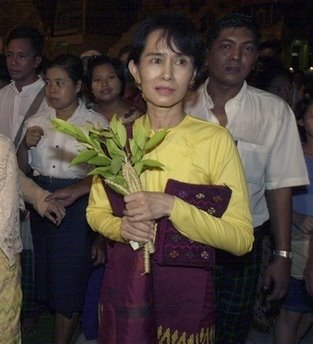


 Posts
Posts


