============ ========= ========= ========= ========= ========= =======
Understanding new Thai policy towards Burma
China leads surge in foreign investment in Myanmar during first 9 months
Junta Determined to 'Guide' 2010 Polls
Bush to Discuss Burma with Ban at White House
Myanmar grants free rice export from Yangon region
Going metric would be nice global gesture
Foreign investment in Myanmar soars
Opposition: No hope for future of Myanmar
Defiant Burma junta marks independence day
Burma Blacklists U.S. Artist
Human Rights Abuse in Myanmar?
============ ========= ========= ========= ===
REGIONAL PERSPECTIVE
Understanding new Thai policy towards Burma
By Kavi Chongkittavorn
The Nation
Published on January 5, 2009
AFTER EIGHT YEARS, it will not be easy to undo the Thai foreign policy towards Burma initiated by the Thaksin-led government and its nominees. A complete overhaul of the Burma policy is out of the question. However, some major shifts by the current government could be forthcoming that would firm up bilateral ties and strengthen Bangkok's voice on Burma within Asean. Additional principled guidelines, drawing from the Asean Charter, are imperative aimed at supporting the international community's effort to promote an open society there.
Gone quickly would be the preponderance of one-man decisions on key policies, especially those dealing with cross-border security, investment and trade cooperation.
In the past few years, Thailand has been rather compromising in its security considerations in exchange for economic benefits, which often went to individuals rather than the country as a whole. In particular, from 2001 to 2006, the Thai side allowed the Burmese side greater leeway along the 2004-km border such as issues related to Burmese migrant workers, illegal cross-border activities and harassment of minorities and Burmese exiles.
Picking up the pieces of Burmese policy where the Democrat-led government left off in early 2001, this time around the Thai foreign policy will be decided in a transparent way without any hanky panky as in the past. Foreign Minister Kasit Piromya said succinctly that from now on, Thailand will deal with Burma in a straightforward manner without any dubious deals or transactions based on "four-eye meetings", which was the trademark of Thaksin's personalised diplomacy.
Prior to the return of the Democrat-led government, Thai-Burmese relations were very superficially closed, representing no real national agenda. Thai leaders were myopic, deluded in thinking that defending the Burmese regime within Asean and the international community would help them win favours from the junta leaders and subsequently secure the country's future energy and natural resources need. Indeed, the energy dependence on Burma was exaggerated to justify Thailand's closer ties with Burma, including its passivity.
Throughout the year 1999-2000, before Thaksin came to power, the Burmese people's struggle for democracy and open society was at its peak with all the support of the international community. Asean was far more united as far as peer pressure on Burma was concerned. Thailand dutifully played the leading role on Burma throughout by bringing in the international community. Former foreign minister Surin Pitsuwan, currently the Asean secretary-general, pushed Asean to engage in enhanced dialogue with Burma as well as emerging transnational issues affecting the region.
However, soon after the arrival of the Thaksin-led government in early 2001, Thai policy towards Burma turned upside down. After a few weeks of border tension and tough talks on Burma's role on cross-border illegal drugs trade, former prime minister Thaksin Shinawatra unexpectedly softened his Burmese policy, much to the chagrin of the international community. Since then, Thailand's credibility on Burma has disappeared.
During the Cambodian conflict, Thailand's role in Asean as a frontline state was well recognised as it was pursued based on the region's interest, not tempered with vested personal interests. Asean helped to internationalise the conflict playing out at the UN continuously for nearly a decade, which gave Asean an international voice, before the Paris peace agreement in 1989. In Burma's case, it was the opposite. Thailand failed miserably to assert itself in the Asean overall approaches albeit it was the most affected by the Burmese growing oppression. Bangkok's willingness to play second fiddle to Burma further divided Asean and stymied broader cooperation with international community.
Subsequent revelations by Surakiart Sathiratai, foreign minister in the Thaksin government, showed that investment and commercial deals with Burma at that time were not honest as they were coaxed with conflict of interest.
The scandal over the Export and Import Bank of Thailand's Bt4-billion loan to the junta was just one example. Like rubbing more salt into the wounds, former prime ministers Samak Sundravej and Somchai Wongsawat made ridiculous remarks defending Burma.
Samak was the most embarrassing as he praised the military junta leaders as peace-loving leaders and boasted about their closed friendship. Under the Surayud Chulanont government (2006-7), Thailand maintained a strict policy of no new contacts or improvement of existing ties.
Burma could have made a transition to democracy if the Thai governments in question had not indulged in personalising, nationalising and making the Burmese problem bilateral. The leader's personal and group interests linked to Burma weakened not only Thai credibility, it also belittled Bangkok's voice within Asean. That helps explain why in the absence of a Thai role, Singapore, Malaysia and Indonesia have become more pro-active in shaping the grouping's views and positions on Burma.
Coming to power at this juncture poses serious challenges to both Prime Minister Abhisit Vejjajiva and Foreign Minister Kasit on Burmese policy. They have to revitalise and synergise the role of Thailand, Asean and the international community to move the situation in Burma forward.
At present, the Asean Charter, imperfect as it is, will serve as a useful tool to encourage reluctant Asean countries to get more involved on issues of human rights and democracy. The rumblings over the charter's ratification in Indonesia and Philippines were indicative of the strong desire for such endeavour.
As the Asean chair, Thai leaders will adopt a comprehensive strategy on Burma that put together various parts and needs from within region. Furthermore, this strategy must also work in tandem with the current international efforts, especially through the offices of the United Nations and related agencies and its special envoy.
After all, the Burmese quagmire is not the problem of any particular country or regional community.
It must be kept at the multilateral level so that all stakeholders can work together to end the current impasse and sufferings.
============ ========= ========= ========= ====
China leads surge in foreign investment in Myanmar during first 9 months
By Associated Press 3:10 AM CST, January 5, 2009
YANGON, Myanmar (AP) — Foreign investment in Myanmar — much of it from China — nearly doubled in the first nine months of 2008 compared to the same period last year, according to government statistics seen Monday.
Mining accounted for more than 88 percent of the total foreign investment — a record for that sector.
Investment from January to September last year jumped to $974.9 million dollars from $502.5 million in the same period the previous year, said the Ministry of National Planning and Development in its latest statistical survey.
That was the second-highest amount for this nine-month span after 2006, when Thailand built a hydroelectric plant.
China accounted for $855 million of the $860.9 million invested in mining while Russia and Vietnam added $114 million in the oil and gas sector. China has signed a number of agreements with the resource-rich country to mine gems, gold and nickel.
The U.S. and European Union have imposed economic sanctions on Myanmar to pressure the military government to improve human rights and release detained pro-democracy leader Aung San Suu Kyi.
Since Myanmar liberalized its investment code in late 1988, it has attracted large investments in the hydro-electric power and oil and gas sectors.
============ ========= ========= =======
Junta Determined to 'Guide' 2010 Polls
By MARWAAN MACAN-MARKAR / IPS WRITER Monday, January 5, 2009
BANGKOK — Burma’s military regime ended 2008 with greater resolve to steamroll over opposition voices in order to pave the way for a junta-friendly government when the country holds general elections in 2010.
On December 30, nine supporters of pro-democracy leader Aung San Suu Kyi were arrested when they staged a protest in Rangoon, the former capital, calling for her release. Some of the protesters were wearing the colors of the National League for Democracy (NLD), the party that she heads.
Burmese soldiers parade during a ceremony marking the country's Armed Forces Day in the country's new capital, Naypyidaw. (Photo: AFP)
The risk these activists took in placing their lives on the side of political freedom has been heightened in the wake of harsh judgments delivered against leading voices of the country’s struggling democracy movement in November. Some of them were given long jail terms and Min Ko Naing, a widely respected former university student leader, was put away for 65 years.
The November verdicts, which saw 215 political activists sentenced, were largely linked to the peaceful, pro-democracy street protests, led by thousands of Buddhist monks, held in September 2007.
Buddhist monks who were in the vanguard of the protests, which was crushed by the junta, were not spared. U Gambria, a leader of the All Burma Monks’ Alliance, was sentenced to 68 years in jail.
The verdicts delivered by a military-controlled court inside Rangoon’s notorious Insein prison were as harsh on Burmese who led a humanitarian effort to aid the victims of the powerful Cyclone Nargis, which tore through the country’s Irrawaddy Delta in early May, killing tens of thousands and affecting millions.
Zarganar, a well-known comedian who was arrested for leading a team of entertainers to help the cyclone victims, was slapped with a 59-year sentence.
"This is all part of an aggressive campaign to jail good, pro-democracy activists who could run in the 2010 elections," says Debbie Stothard of ALTSEAN, a regional human rights group monitoring abuse in Burma. "Anybody who could be a viable opposition figure has been locked up. There are no signs of the regime easing up."
Even token pressure from marginal voices in the country is being stifled, she revealed in an IPS interview. "The New Year will see more arrests. They are creating another Zimbabwe."
Such ability to crush an already beleaguered people has become possible given the ease with which the junta succeeded in bullying and bluffing the United Nations through the year.
Other members of the international community, including giants China and Russia, also played their part to help the Burmese military dictatorship impose its roadmap for a "discipline flourishing democracy."
The junta’s success at reducing the world body to a minor irritant became more evident after UN Secretary-General Ban Ki-Moon cancelled plans to visit Burma, or Myanmar, in December. That the junta was in no mood for Ban—or for a push by his office for concrete issues to be discussed during such a visit—was hardly a surprise.
Ban’s predicament highlighted a defining feature of how the Burmese regime was responding to international pressure. In May, Ban became the first UN chief to visit Burma following the devastating Cyclone Nargis. But all the assurances he got from the military regime for more openness to enable humanitarian assistance to the victims amounted to little.
The UN received another embarrassing snub from the junta in August, when Ibrahim Gambari, the world body’s special envoy to Burma, was treated like an unwelcome guest and relegated to meeting minor officials during a visit aimed to prod the regime towards democratic reform. Earlier in 2008, Gambari had received a tongue-lashing from Burma’s information minister, removing all doubt about the contempt with which the junta views the Nigerian diplomat.
Yet at the same time, sections of the international community still place faith in the UN to deliver. In early December, for instance, a group of more than 100 former heads of governments and states wrote a letter to Ban, asking him to travel to Burma to secure the release of Suu Kyi and the over 2,100 political prisoners by December 31.
"It is important that Secretary-General Ban Ki-moon travel to the country himself and engage in serious dialogue with the military regime and impress on them the calls by leaders and lawmakers from Asia and around the world for the release of all political prisoners," Kraisak Choonhavan, a Thai parliamentarian, said at the time.
Among the leaders who signed this unprecedented petition were former US presidents George H W Bush and Jimmy Carter, former Australian prime minister John Howard, former Japanese prime minister Junichiro Koizumi and former Philippines president Corazon Aquino.
The petition to Ban drew attention to developments in the UN Security Council in October 2007, when a presidential statement had urged the prompt release of all political prisoners in Burma.
Yet what has prevailed since that rare pressure on the junta from the UN’s most powerful body illustrates the aggressive and defiant position Burma’s military regime is pursuing. In mid-2007, the number of political prisoners stood at 1,200; now it has nearly doubled to over 2,100.
The military regime "will stop at nothing to prevent people from joining demonstrations or be influenced by the voices of the democracy activists," says Bo Kyi, a former political prisoner who heads the Assistance Association for Political Prisoners in Burma, a human rights group based on the Thai-Burma border. "They want to create a greater climate of fear among the general public."
It is all part of the junta’s plan to be certain of victory at the 2010 polls "even before the elections," Bo Kyi explained in an interview. "They want to avoid a repeat of the 1990 elections."
At that poll, held after the regime brutally crushed a pro-democracy uprising in 1988, where close to 3,000 activists were shot to death, the NLD trounced the junta-backed National Unity Party with a thumping majority. But the regime refused to recognize the results and began targeting the elected parliamentarians.
Burmese political activists like Bo Kyi believe that only the international community in 2009 can stall the junta’s plans to hijack the 2010 polls. "The international community needs to exert real pressure that they will not accept the results of the 2010 elections without the release of all political prisoners and a free environment for the polls."
Copyright © 2008 Irrawaddy Publishing Group | www.irrawaddy. org
============ ========= ========= =========
Bush to Discuss Burma with Ban at White House
By LALIT K JHA Monday, January 5, 2009
WASHINGTON — US President George W Bush will discuss the current situation in Burma along with other issues when he meets with UN Secretary-General Ban Ki-moon on Tuesday in the White House.
It will probably be Bush's last meeting with Ban as the US President, the White House said.
Before handing over the presidency to Barack Obama on January 20, Bush has invited Ban and his wife, Ban Soon-taek, to the White House for lunch.
"This meeting will be an opportunity for the President to thank Secretary-General Ban for his leadership of the United Nations and his cooperation on key issues over the past two years," said White House spokesperson Gordon Johndroe.
"They will discuss the future of the United Nations and the challenges that remain, such as UN reform, the Middle East, Burma, Somalia and peacekeeping in Darfur," Johndroe said.
However, the meeting is unlikely to yield any result for the people of Burma, given that Bush is leaving office and Ban has been unable to make any headway towards restoration of democracy in Burma.
Ban was scheduled to visit Burma in December, but he has postponed his trip until a time when it would yield tangible results.
Johndroe said during the meeting the US President will stress the need for a United Nations that can act effectively to promote freedom, democratic governance, human rights and a world free from terror.
Meanwhile, in a statement issued Friday, one day before the 61st anniversary of Burma's Independence Day, the State Department wished the people of Burma well on the occasion of the 61st anniversary of its independence from the British rule.
"We wish to express our warmest wishes to the people of Burma on this occasion. As we reflect on Burma's independence struggle, led by Gen Aung San, we are reminded of our own history," said the brief statement.
The State Department said the US stands with the Burmese people on in honoring Aung San's vision for an independent, peaceful, and democratic Burma.
The US also looks forward to the day when Burma's citizens will be able to enjoy the fruits of freedom and democracy. "We earnestly hope that day will come soon," the statement said.
============ ========= ========= =======
Myanmar grants free rice export from Yangon region
www.chinaview. cn 2009-01-05 14:52:47
YANGON, Jan. 5 (Xinhua) -- Myanmar has granted free export of rice from rice-producing Yangon region over six months after storm, the local Weekly Eleven journal reported Monday, quoting the Ministry of Commerce.
Export of surplus rice from other regions through border trade is also allowed; other local report also quoted the ministry as saying.
The country's rice export is mainly done through normal trade only but it will also be permitted to do so through border trade if there is surplus rice produced regionally, the sources said, adding that the grant covers surplus rice produced from Sagaing, Bago and Ayeyawaddy divisions.
So far, a total of 35,755 tons have been shipped by 19 companies, of which 3,055 tons were exported by 9 companies through border points since the near-end of last year.
According to the figures of the Central Statistical Organization, in 2007-08, Myanmar exported 358,500 tons of rice, gaining 100 million U.S. dollars. The export tonnage in the first three quarters of 2008-09 went to 150,000 tons amid storm.
Of the rice export, 101,235 tons were shipped to South Africa, 11,908 tons to Singapore, 8,007.85 tons to Sri Lanka, 2,499.7 tons to the United Arab Emirate, 1,500 tons to South Korea and 1,197.7 tons to Egypt, said the Myanmar Agricultural Produces Trading.
Myanmar government has urged agricultural entrepreneurs to make greater efforts for exporting more rice, saying that the country has enough cultivable land to boost paddy production.
Editor: Xiong
============ ========= ========= ========= =
Going metric would be nice global gesture
By Steve Elliott-Gower
For the Journal-Constitutio n
Monday, January 05, 2009
There are only three nations in the world that have not officially adopted the International System of Units (the metric system) as their primary measurement system: Liberia, Myanmar and the United States.
Now one can understand why America has declined to support the Kyoto Protocol, the Landmine Ban Treaty, the Arms Trade Treaty, the Cluster Bomb Treaty, the declaration to decriminalize homosexuality, and the International Criminal Court, but the innocuous metric system? How can this be?
Could it be that the idea was originally French? It was, after all, Louis XVI who first convened a group of scientists, led by Antoine Lavoisier, to develop a universal measurement system to replace the old French system of quirky lieues, lignes and vergees, which might mean one thing in Beauce and another in Provence. Despite the fact that both Louis and Lavoisier lost a few lignes at the guillotine, the metric system was adopted by the revolutionary government of France and today is officially recognized worldwide as the Systeme International d’Unites —- hence its abbreviation “SI.”
The opportunity to go metric was certainly there for America in the early 1800s. President Thomas Jefferson, an amateur scientist and mathematician, recognized the merits of metric, and there was a lot of pro-French, anti-British sentiment in the country. (Noah Webster, by the way, was busy changing the traditional British spellings of words such as labour, colour and velour.) But it didn’t happen. Although the U.S. Coast and Geodetic Survey used meter and kilogram standards, the rest of America stuck with its pecks, rods, gills, furlongs, hogsheads and Winchester bushels.
An opportunity was missed, but the idea of a metric America has never quite died.
The U.S. government authorized the official use of metric measures, alongside British measures, in 1866; signed the Treaty of the Meter in 1875; authorized a three-year study on the feasibility of adopting the metric system in 1968, resulting in the 1971 blockbuster “A Metric America: A Decision Whose Time Has Come”; passed the Metric Conversion Act of 1975, which established the U.S. Metric Board (disestablished in 1982) and asked the private sector to make progress toward the metric system (amended in 1988 when the private sector said no thanks); and in 1991 required all government agencies to file an annual report on their efforts to go metric. There hasn’t been much activity since then.
Of course there has been some slow progress toward metrification. Our cars have KPH as well as MPH on the speedometers (although speed limits are posted almost exclusively in MPH), most packaged goods are labeled with traditional and metric measures, and we now have 2-liter bottles of soft drinks to sate our thirst. Yet we’re still a long way from joining the rest of the world in the metric system.
There just hasn’t been the political will to embrace metrification. It’s not the sort of thing that inspires Homeric rhetoric. Moreover, like raising taxes, it may just seem un-American and, well, too dang foreign.
Ultimately, America’s coolness toward the metric system may represent an example, albeit a minor example, of American Exceptionalism —- the idea that America is qualitatively different from other nations as a result of its unique history, institutions, ideals and destiny; a go-it-alone destiny measured in dollars and democracies, not millis and micros.
Which brings us to the present, the future and the point.
America can survive and even prosper without the metric system, but not without the rest of the world.
America can also play an enormously constructive leadership role in tomorrow’s interdependent world, but it will mean eschewing exceptionalism; it will mean joining the community of nations to recognize broader global interests. Joining the International System of Units would be a small gesture in that direction; more significant, of course, would be joining the Kyoto Protocol, the Landmine Ban Treaty, the Arms Trade Treaty, the Cluster Bomb Treaty, the declaration to decriminalize homosexuality, the International Criminal Court, and other widely supported international agreements.
> Steve Elliott-Gower is director of the honors program and associate professor of political science at Georgia College & State University.
============ ========= ========= ========= =
Jan 5, 4:10 AM EST
Foreign investment in Myanmar soars
YANGON, Myanmar (AP) -- Foreign investment in Myanmar - much of it from China - nearly doubled in the first nine months of 2008 compared to the same period last year, according to government statistics seen Monday.
Mining accounted for more than 88 percent of the total foreign investment - a record for that sector.
Investment from January to September last year jumped to $974.9 million dollars from $502.5 million in the same period the previous year, said the Ministry of National Planning and Development in its latest statistical survey.
That was the second-highest amount for this nine-month span after 2006, when Thailand built a hydroelectric plant.
China accounted for $855 million of the $860.9 million invested in mining while Russia and Vietnam added $114 million in the oil and gas sector. China has signed a number of agreements with the resource-rich country to mine gems, gold and nickel.
The U.S. and European Union have imposed economic sanctions on Myanmar to pressure the military government to improve human rights and release detained pro-democracy leader Aung San Suu Kyi.
Since Myanmar liberalized its investment code in late 1988, it has attracted large investments in the hydro-electric power and oil and gas sectors.
© 2009 The Associated Press. All rights reserved. This material may not be published, broadcast, rewritten or redistributed. Learn more about our Privacy Policy.
============ ========= ========= =========
Opposition: No hope for future of Myanmar
January 4, 2009 2:27 AM
YANGON, Myanmar (AP) - Myanmar's pro-democracy party marked the 61st anniversary of the country's independence from Great Britain on Sunday, saying it foresaw no hope for the military-ruled country.
At a ceremony inside the dilapidated headquarters of the opposition National League for Democracy, its chairman Aung Shwe also called for the release of Nobel Peace Prize winner Aung San Suu Kyi and other party leaders.
Suu Kyi - who has been under house arrest for more than 13 of the past 19 years - put up a banner at the gate of her home quoting a speech her father, independence hero Gen. Aung San, had once given: ''Act decisively in the interest of the nation and the people.''
In a speech to about 250 party members and diplomats, Aung Shwe said that national unity is in disarray and that there is ''no harmony between the government and the governed.''
''Hope for the present and future of the country is totally lacking,'' Aung Shwe said.
Myanmar gained independence from Britain on Jan. 4, 1948, after more than 120 years of colonial rule. It has been under harsh military rule since 1962.
Meanwhile, the leader of the military junta Senior Gen. Than Shwe warned that ''neocolonialists' ' were interfering in domestic affairs and inciting riots to undermine unity and stability.
============ ========= ======
Defiant Burma junta marks independence day
RANGOON, BURMA Jan 04 2009 09:04
Burma marked the 61st anniversary of its independence on Sunday with pomp and defiance, as the military junta called on citizens to support 2010 elections derided as a sham by democracy campaigners.
Soldiers raised the national flag at 4.28am (9.48pm GMT) -- the exact time of the country's freedom from Britain -- at a city hall in the remote capital of Naypyidaw, 400km north of Rangoon.
In comments read out by a subordinate in the bunker-like capital, Senior General Than Shwe trumpeted his seven-step "Road Map" to democracy, which the junta says will lead to multi-party elections next year.
He urged people to "cooperate in realising the state's seven-step Road Map with union spirit and patriotic spirit with the firm resolution to build up a peaceful, modern and developed democratic nation with flourishing discipline".
Than Shwe accused "neo-colonialists" -- usually a reference to the United States -- of interfering in Burma's affairs.
"The entire people are duty-bound to safeguard the motherland.. . while keeping a watchful eye on attempts of neo-colonialists to harm the sovereignty of the country," Than Shwe said.
About 3 000 ministers, government employees and senior officials attended the ceremony and the formal military parade, although the ageing Than Shwe was not present.
The US, European Union and United Nations have dismissed the lengthy "Road Map" as a sham due to the absence of detained opposition leader Aung San Suu Kyi's National League for Democracy (NLD) party.
Burma pro-democracy activists say the polls are aimed at cementing the military's grip on the nation, with Aung San Suu Kyi banned from running and 25% of Parliament seats reserved for members of the armed forces.
============ ========= ========
Burma Blacklists U.S. Artist
2009-01-04
An American academic couple abandons a visit to Burma because one of them is blacklisted.
BANGKOK—A prominent American professor and human rights advocate has scrapped a visit to Burma after authorities turned away his wife at the airport, saying she had been blacklisted.
Eric Stover, a professor at the University of California-Berkeley , arrived at Mingalardon airport aboard Thai Airways in the former Burmese capital, Rangoon, on Jan. 1, with his wife, Pamela Blotner, according to sources who asked not to be named.
Stover, director of the human rights center at Berkeley’s Institute of International Studies, went to Burma to conduct a workshop on medical ethics from Jan. 9-11, the sources said. Blotner is a visual artist and academic in California.
A Thai Airways official and Burmese immigration official informed the couple that Blotner’s name was on a government blacklist, and the couple returned to Bangkok, the sources said. A third official photographed them.
Stover is a former director of the nonprofit Physicians for Human Rights. Blotner, an artist, created the Burmese American Art Exchange, which exhibited the work of 12 American and 24 Burmese artists at the U.S. Embassy in Rangoon in late 2007.
Blotner has paid several visits to Burma. Burmese artists, she was quoted as saying in a U.S. newspaper earlier this year, “bring the same wonder into making art that a child does but with an adult’s intelligence and sensibility.”
“On some levels, the [Burmese government] censorship is ...horrific but it’s also galvanizing. It’s something to fight against. These are the things that draw artists together.”
Reported and translated by Ko Ko Aung for RFA’s Burmese service. Service director: Nancy Shwe. Executive producer: Susan Lavery. Written and produced in English by Sarah Jackson-Han.
============ =========
01-04-2009 15:03
Human Rights Abuse in Myanmar?
By David Watermeyer
It is tragic, yet sadly unsurprising, that the Korean government has rejected a serious complaint filed against Daewoo International and Korea Gas Corporation (KOGAS) by the Organization for Economic Cooperation and Development (OECD) regarding their ``complicity in human rights abuses" in Myanmar (Burma) in the course of building a pipeline through the country.
``Burma'' is used here to show solidarity with those who denounce as nothing less than evil the actions of military junta who were responsible for naming the county Myanmar.
According to a news release put out by the Shwe Gas Movement (SGM), SGM global coordinator Wong Aung, a member of the Arakan ethnic group, through whose community the proposed pipeline will traverse, strongly criticized the Korean government's decision on Tuesday.
An extraction from the report says, ``The Korean government has decided to ignore the reality of major resource extraction projects in Myanmar and the specific devastating effects of the Shwe project on the people in the pipeline regions.
The Korean government has a responsibility under OECD guidelines. In rejecting the complaint they are abdicating their responsibility to investigate violations and mediate disputes in line with the guidelines; guidelines to which the have agreed to be obligated.''
All over the world people have watched in horror as atrocity after atrocity is committed by the military junta in that country, where unarmed Buddhist monks were gunned down like flies and rations from foreign countries after Cyclone Nargis devastated the country on May 3 meant for the starving millions by were blocked from delivery by this same military junta in an unspeakable act of callousness.
What is less known is how the junta continues to empower itself to rule over its people through dealings with various other countries and companies.
If these entities would not support the military junta but rather join the rest of the world in condemning and boycotting it, the tyrannical regime would not be able to continue.
The news release said, ``Daewoo International and the KOGAS have breached and will continue to breach a number of the OECD Guidelines for Multinational Enterprises related to their activities in Burma (Myanmar)."
``These breaches are related to the companies' exploration, development, and operation of the natural gas project in Burma known as the Shwe Gas Project, meaning ``gold" in Burmese."
Few are unaffected by the trying economic times we are living in and that may play a part in why KOSGAS and Daewoo International, despite being told clearly at the highest level what is going on, appear to be paying no heed to the cries of the Myanmarese population.
But surely there are other options to explore than being complicit in evil.
David Watermeyer is a freelance writer residing in Seoul. He can be reached at davidnwatermeyer@ yahoo.co. uk. The views expressed in the above article is those of the author and do not reflect the editorial policy of The Korea Times.
Wednesday, January 7, 2009
NCGUB: News & Articles on Burma - Monday,5 January, 2009


Myanmar junta condemns 'neocolonialist' threat to independence
Yangon- Myanmar's military junta on Sunday condemned "neocolonialists" and appealed for a renewed sense of nationalism as it marked the 61st anniversary of independence from Britain. Junta chairman Senior General Than Shwe said the country was threatened from the outside by Western nations and organizations bent on destabilizing the regime.
"Today, neocolonialists are interfering in the internal affairs of other countries, putting pressure on and coercing other countries to serve as their minions, and resorting to all possible ways of forcing a government to serve as a puppet one that will dance to their tune with the intention of harming the sovereignty of their targeted counties," an official translation of the general's speech read.
"Moreover, they are using some international organizations to gain support for their schemes, and driving a wedge among national people and inciting riots to undermine national unity, peace and stability of a nation."
Than Shwe said all Burmese people were duty-bound to safeguard the country's independence and sovereignty.
The military junta is an international pariah for its human rights abuses and refusal to return the country to civilian democratic rule.
Burma junta marks independence day
http://au.news.yahoo.com/a/-/world/5243894/burma-junta-marks-independence-day/
January 4, 2009, 9:07 pm
Burma has marked the 61st anniversary of its independence with pomp and defiance, as the military junta called on citizens to support 2010 elections derided as a sham by democracy campaigners.
Soldiers raised the national flag at 4.28am (0848 AEDT) on Sunday - the exact time of the country's freedom from Britain - at a city hall in the remote capital of Naypyidaw, 400km north of Rangoon .
In comments read out by a subordinate in the bunker-like capital, Senior General Than Shwe trumpeted his seven-step "Road Map" to democracy, which the junta says will lead to multi-party elections next year.
He urged people to "cooperate in realising the state's seven-step Road Map with union spirit and patriotic spirit with the firm resolution to build up a peaceful, modern and developed democratic nation with flourishing discipline".
Than Shwe accused "neo-colonialists" - usually a reference to the United States - of interfering in Burma's affairs.
"The entire people are duty-bound to safeguard the motherland ... while keeping a watchful eye on attempts of neo-colonialists to harm the sovereignty of the country," Than Shwe said.
About 3,000 ministers, government employees and senior officials attended the ceremony and the formal military parade, although the ageing Than Shwe was not present.
The United States, European Union and United Nations have dismissed the lengthy "Road Map" as a sham due to the absence of detained opposition leader Aung San Suu Kyi's National League for Democracy (NLD) party.
Burmese pro-democracy activists say the polls are aimed at cementing the military's grip on the nation, with Aung San Suu Kyi banned from running and 25 per cent of parliament seats reserved for members of the armed forces.
The NLD held a parallel independence day ceremony on Sunday attended by foreign diplomats and party members in Rangoon .
"Although there were many security members, they did not disturb us," said NLD spokesman Nyan Win, adding that the party used the opportunity to call for the release of Aung San Suu Kyi and other political prisoners.
Burma has been ruled by the military since 1962, despite a 1990 election win by Aung San Suu Kyi and her NLD. Instead of allowing her to take office, the military regime simply kept her under house arrest.


Tuesday, January 6, 2009
Understanding new Thai policy towards Burma
http://www.nationmultimedia.com/2009/01/05/opinion/opinion_30092409.php
By Kavi Chongkittavorn
The Nation
Published on January 5, 2009
AFTER EIGHT YEARS, it will not be easy to undo the Thai foreign policy towards Burma initiated by the Thaksin-led government and its nominees. A complete overhaul of the Burma policy is out of the question. However, some major shifts by the current government could be forthcoming that would firm up bilateral ties and strengthen Bangkok's voice on Burma within Asean. Additional principled guidelines, drawing from the Asean Charter, are imperative aimed at supporting the international community's effort to promote an open society there.
Gone quickly would be the preponderance of one-man decisions on key policies, especially those dealing with cross-border security, investment and trade cooperation.
In the past few years, Thailand has been rather compromising in its security considerations in exchange for economic benefits, which often went to individuals rather than the country as a whole. In particular, from 2001 to 2006, the Thai side allowed the Burmese side greater leeway along the 2004-km border such as issues related to Burmese migrant workers, illegal cross-border activities and harassment of minorities and Burmese exiles.
Picking up the pieces of Burmese policy where the Democrat-led government left off in early 2001, this time around the Thai foreign policy will be decided in a transparent way without any hanky panky as in the past. Foreign Minister Kasit Piromya said succinctly that from now on, Thailand will deal with Burma in a straightforward manner without any dubious deals or transactions based on "four-eye meetings", which was the trademark of Thaksin's personalised diplomacy.
Prior to the return of the Democrat-led government, Thai-Burmese relations were very superficially closed, representing no real national agenda. Thai leaders were myopic, deluded in thinking that defending the Burmese regime within Asean and the international community would help them win favours from the junta leaders and subsequently secure the country's future energy and natural resources need. Indeed, the energy dependence on Burma was exaggerated to justify Thailand's closer ties with Burma, including its passivity.
Throughout the year 1999-2000, before Thaksin came to power, the Burmese people's struggle for democracy and open society was at its peak with all the support of the international community. Asean was far more united as far as peer pressure on Burma was concerned. Thailand dutifully played the leading role on Burma throughout by bringing in the international community. Former foreign minister Surin Pitsuwan, currently the Asean secretary-general, pushed Asean to engage in enhanced dialogue with Burma as well as emerging transnational issues affecting the region.
However, soon after the arrival of the Thaksin-led government in early 2001, Thai policy towards Burma turned upside down. After a few weeks of border tension and tough talks on Burma's role on cross-border illegal drugs trade, former prime minister Thaksin Shinawatra unexpectedly softened his Burmese policy, much to the chagrin of the international community. Since then, Thailand's credibility on Burma has disappeared.
During the Cambodian conflict, Thailand's role in Asean as a frontline state was well recognised as it was pursued based on the region's interest, not tempered with vested personal interests. Asean helped to internationalise the conflict playing out at the UN continuously for nearly a decade, which gave Asean an international voice, before the Paris peace agreement in 1989. In Burma's case, it was the opposite. Thailand failed miserably to assert itself in the Asean overall approaches albeit it was the most affected by the Burmese growing oppression. Bangkok's willingness to play second fiddle to Burma further divided Asean and stymied broader cooperation with international community.
Subsequent revelations by Surakiart Sathiratai, foreign minister in the Thaksin government, showed that investment and commercial deals with Burma at that time were not honest as they were coaxed with conflict of interest.
The scandal over the Export and Import Bank of Thailand's Bt4-billion loan to the junta was just one example. Like rubbing more salt into the wounds, former prime ministers Samak Sundravej and Somchai Wongsawat made ridiculous remarks defending Burma.
Samak was the most embarrassing as he praised the military junta leaders as peace-loving leaders and boasted about their closed friendship. Under the Surayud Chulanont government (2006-7), Thailand maintained a strict policy of no new contacts or improvement of existing ties.
Burma could have made a transition to democracy if the Thai governments in question had not indulged in personalising, nationalising and making the Burmese problem bilateral. The leader's personal and group interests linked to Burma weakened not only Thai credibility, it also belittled Bangkok's voice within Asean. That helps explain why in the absence of a Thai role, Singapore, Malaysia and Indonesia have become more pro-active in shaping the grouping's views and positions on Burma.
Coming to power at this juncture poses serious challenges to both Prime Minister Abhisit Vejjajiva and Foreign Minister Kasit on Burmese policy. They have to revitalise and synergise the role of Thailand, Asean and the international community to move the situation in Burma forward.
At present, the Asean Charter, imperfect as it is, will serve as a useful tool to encourage reluctant Asean countries to get more involved on issues of human rights and democracy. The rumblings over the charter's ratification in Indonesia and Philippines were indicative of the strong desire for such endeavour.
As the Asean chair, Thai leaders will adopt a comprehensive strategy on Burma that put together various parts and needs from within region. Furthermore, this strategy must also work in tandem with the current international efforts, especially through the offices of the United Nations and related agencies and its special envoy.
After all, the Burmese quagmire is not the problem of any particular country or regional community.
It must be kept at the multilateral level so that all stakeholders can work together to end the current impasse and sufferings.
Monday, January 5, 2009
India’s border disputes with all her neighbors
http://rupeenews.com/2009/01/04/indias-border-disputes-with-all-her-neighbors/
Posted on January 4, 2009 by Moin Ansari
Noticia de Rupia | Nouvelles de Roupie | Rupiennachrichten | новости рупии | 卢比新闻 | Roepienieuws | Rupi Nyheter | ルピーニュース | Notizie di Rupia | PAKISTAN LEDGER | پاکستاني کھاتا | RUPEE NEWS | January 4th, 2009 | Moin Ansari | معین آنصآرّی | اخبار روپیہ |
India has been unable to resolve any problems or border disputes with any of her neighbors. She has the unique distinction of having wars with all her neighbors. Khaled Ahmed reviews the book by Gupta and Sharma.
Book review: India’s maritime troubles -by Khaled Ahmed
Contested Coastlines: Fisherfolk, Nations and Borders in South Asia;
By Charu Gupta & Mukul Sharma Routledge 2008 Pp251; Price Indian Rs 650. Available in bookstores in Pakistan
South Asia has unresolved border disputes with consequences for human beings living alongside these disputed lines. It also has unresolved maritime problems with consequences for fishermen who go to the sea to catch fish and are caught because they have crossed lines they can’t see.
The tragedy is that the people who catch them also can’t see where the national boundary is. Fishermen therefore have become a symbol of the immaturity of the nation states in South Asia. It is a shame that imprisoned fishermen are dramatically “exchanged” every now and then as a reluctant confidence-building measure with which to dupe the world.
Gupta and Sharma have written a very important book and its importance lies in its humanist involvement in the plight of fishermen. The book also contains the best account in one place of the three big maritime muddles that bring a bad name to the subcontinent.
Sadly, nationalisms have become attached to the Sir Creek dispute between Pakistan and India; and if you ask a Pakistani or an Indian what the quarrel is all about, he doesn’t know. Yet he supports governments who don’t want to resolve the dispute but in fact use Sir Creek as one of the grounds on which to condemn the ‘enemy’ country.
India has a coastline 7,417 km long, out of which the Gujarat state has 1,663 km, which is one-third of the entire coastline, which makes Gujarat the principal maritime state of India. Because of a rich delta, Gujarat has the best fishing, and the Gulf of Kutch has the best fish known in India. Next to Gujarat is Pakistan, and there are no agreed maritime frontiers between the two. The Maritime Zones Act of India 1976 and 1981 under which the fishermen are caught and punished doesn’t conform to the United Nations Convention on Law of the Seas (UNCLOS), which India has signed. Pakistan is guilty of the same non-conformity.
The rival geographies of India and Pakistan are symbolised by the rival cartographies relating to Sir Creek, which is a 100 km long estuary in the marshes of the Rann of Kutch between Gujarat and Sindh. Sir Creek is not a flowing creek but a tidal channel which has no officially demarcated boundary separating Pakistan and India. Till 1954 there was free movement across the Creek. Then came the issue of finding out where the border lay. And this border was also to decide where in the Arabian Sea the line will be drawn separating Indian waters from Pakistani waters.
Till these two issues are resolved, the two countries cannot set up their continental shelves up to 350 nautical miles and describe their economic zones up to 200 nautical miles. The deadline for doing so falls in 2009. This is the area where the two could find oil and gas deposits. They can’t exploit these deposits without first sorting out the maritime boundary dispute. And the line that is drawn to describe the national frontier along Sir Creek will decide who gets how much of the sea off the Gulf of Kutch. That explains why there is no ‘give and take’ in the bilateral negotiations.
The western side of Sir Creek is under Pakistani control, and there are naval installations on the Indian side. Pakistan owns 16 creeks of Sindh and lays claim to the 17th called Sir Creek by saying that the dividing line must run along the eastern bank of the Creek - on the basis of an old map that India no longer recognises despite past record of an agreement of 1914 signed by the governments of Bombay, Sindh and the Raja of Kutch.
The Pakistani claim thus includes the left bank of the Creek, which means that the maritime border too will have to run further east than where the Indians think it is right now. The Creek no longer flows and has shifted westwards, to Pakistan’s disadvantage. Pakistan wants the boundary established according to the historical maps; India wants that too but according to thalweg.
As both the countries are deadlocked after 9 rounds of discussions till 2006, the fisherfolk suffer at the hands of the police and intelligence agencies. These poor original owners of the coast are doomed because both countries have killed the world’s biggest mangroves and fish reserve through pollution and are now simply focused on oil and gas that might or might not be there on the continental shelf. Let’s hope that there is no secret discovery of oil or gas in the uncharted waters or the two will likely have another casus belli.
India and Sri Lanka share a maritime border which is more than 400 km long cutting across three different seas: the Bay of Bengal in the north, the Palk Bay in the centre and the Gulf of Mannar in the south. In 1974 and 1976, the two countries signed agreements on how to sort out their boundaries in the sea and their territorial waters extending 12 nautical miles from the coast. The second agreement barred fishing in each other’s side of the line demarcated in the Bay of Bengal and the Gulf of Mannar. But there are islands given to one or the other country which cause confusion among the fishermen. The result is jailed fishermen in India and Sri Lanka.
With countries located close to one another and in some ways opposite rather than alongside each other, there is bound to be trouble when demarcating long 200 nautical miles exclusive economic zones. And if the sands are shifting either in the case of Sir Creek or in the case of an island in the case of Bay of Bengal, the states are going to be selfish in the absence of statesmen among their politicians. The India-Bangladesh land border is 4,000 km long and there are 20 million illegal Bangladeshis in India, which makes India rather nervous about people it catches crossing over.
The Bay of Bengal is the crux of the problem. Bangladesh has a concave coast reducing its continental shelf if the line is drawn from the coast; India has a convex coast and gets a larger share of the Gulf as continental shelf. India and Burma both reject Bangladesh’s stance that its shelf be measured from where its coastline is navigable and not choked with riverine effluvium. To make things worse, India and Bangladesh claim a 2 miles square island, two miles from India and five from Bangladesh, which has appeared in the Bay of Bengal composed of drifting volcanic silt. The quarrel is based on the flow of the river Haribanga inside the Bay.
When the coastal states are looking at the sea with greed and refuse to demarcate their areas of control, the fishermen come in the middle of the crossfire. The book describes the suffering of these poor people whose lives are already faced with destruction because of the environmental damage caused by these states to their fish beds. In old days, they had no problems with going far into the sea. Today navies patrol the waters jealously and spend their bravado on these victims of ‘contested coastlines’.
Myanmar to conduct 1st pilot training course at home
http://news.xinhuanet.com/english/2009-01/04/content_10600969.htm
www.chinaview.cn 2009-01-04 13:35:19 Print
YANGON, Jan. 4 (Xinhua) -- Myanmar will conduct its first commercial pilot license course at home as a base to enable the country's trainees to pursue further training abroad, the local weekly Voice quoted the Department of Civil Aviation (DCA) as reporting Sunday.
Conducted by the DCA under the Ministry of Transport in accordance with the prescription of the International Civil Aviation Organization, the domestic pilot training course is aimed at nurturing civilian pilots in addition to military's, the report said.
The availability of the training course domestically has saved much expense for Myanmar young trainees to pursue abroad, retired pilots said.
According to an earlier official report, Myanmar's first two prospective women pilots with one of the domestic private airlines are being trained in Malaysia on flying skill.
The two women staff of the Air Bagan, who are among the six selected with four other male staff, underwent training at the Integrated Aviation Academy of Malaysia.
There is a total of four airlines operating domestic routes in Myanmar, of which one is the state-owned Myanmar Airways, while the other three are private-owned which are Air Mandalay, Yangon Airways and Air Bagan.
Editor: An
Human Rights Abuse in Myanmar?-SOUTH KOREA
http://www.koreatimes.co.kr/www/news/opinon/2009/01/160_37236.html
By David Watermeyer
It is tragic, yet sadly unsurprising, that the Korean government has rejected a serious complaint filed against Daewoo International and Korea Gas Corporation (KOGAS) by the Organization for Economic Cooperation and Development (OECD) regarding their ``complicity in human rights abuses" in Myanmar (Burma) in the course of building a pipeline through the country.
``Burma'' is used here to show solidarity with those who denounce as nothing less than evil the actions of military junta who were responsible for naming the county Myanmar.
According to a news release put out by the Shwe Gas Movement (SGM), SGM global coordinator Wong Aung, a member of the Arakan ethnic group, through whose community the proposed pipeline will traverse, strongly criticized the Korean government's decision on Tuesday.
An extraction from the report says, ``The Korean government has decided to ignore the reality of major resource extraction projects in Myanmar and the specific devastating effects of the Shwe project on the people in the pipeline regions.
The Korean government has a responsibility under OECD guidelines. In rejecting the complaint they are abdicating their responsibility to investigate violations and mediate disputes in line with the guidelines; guidelines to which the have agreed to be obligated.''
All over the world people have watched in horror as atrocity after atrocity is committed by the military junta in that country, where unarmed Buddhist monks were gunned down like flies and rations from foreign countries after Cyclone Nargis devastated the country on May 3 meant for the starving millions by were blocked from delivery by this same military junta in an unspeakable act of callousness.
What is less known is how the junta continues to empower itself to rule over its people through dealings with various other countries and companies.
If these entities would not support the military junta but rather join the rest of the world in condemning and boycotting it, the tyrannical regime would not be able to continue.
The news release said, ``Daewoo International and the KOGAS have breached and will continue to breach a number of the OECD Guidelines for Multinational Enterprises related to their activities in Burma (Myanmar)."
``These breaches are related to the companies' exploration, development, and operation of the natural gas project in Burma known as the Shwe Gas Project, meaning ``gold" in Burmese."
Few are unaffected by the trying economic times we are living in and that may play a part in why KOSGAS and Daewoo International, despite being told clearly at the highest level what is going on, appear to be paying no heed to the cries of the Myanmarese population.
But surely there are other options to explore than being complicit in evil.
David Watermeyer is a freelance writer residing in Seoul. He can be reached at davidnwatermeyer@yahoo.co.uk. The views expressed in the above article is those of the author and do not reflect the editorial policy of The Korea Times.
Opposition: No hope for future of Myanmar
http://www.google.com/hostednews/ap/article/ALeqM5ha1V_z9Mndrl3jzuD2Ip68UrRMmAD95G8TS80
YANGON, Myanmar (AP) — Myanmar's pro-democracy party marked the 61st anniversary of the country's independence from Great Britain on Sunday, saying it foresaw no hope for the military-ruled country.
At a ceremony inside the dilapidated headquarters of the opposition National League for Democracy, its chairman Aung Shwe also called for the release of Nobel Peace Prize winner Aung San Suu Kyi and other party leaders.
Suu Kyi — who has been under house arrest for more than 13 of the past 19 years — put up a banner at the gate of her home quoting a speech her father, independence hero Gen. Aung San, had once given: "Act decisively in the interest of the nation and the people."
In a speech to about 250 party members and diplomats, Aung Shwe said that national unity is in disarray and that there is "no harmony between the government and the governed."
"Hope for the present and future of the country is totally lacking," Aung Shwe said.
Myanmar gained independence from Britain on Jan. 4, 1948, after more than 120 years of colonial rule. It has been under harsh military rule since 1962.
Meanwhile, the leader of the military junta Senior Gen. Than Shwe warned that "neocolonialists" were interfering in domestic affairs and inciting riots to undermine unity and stability.
"Neocolonialists" normally refers to Western nations that have been sharply critical of the regime's human rights record and brutal crackdowns on any protests.
The current junta emerged in 1988 after violently suppressing mass pro-democracy protests. It held a general election in 1990, but refused to recognize the results after a landslide victory by Suu Kyi's party.
Hosted by Copyright © 2009 The Associated Press. All rights reserved.
Rats Causing Famine in Myanmar
http://www.gfa.org/rats-causing-famine-in-myanmar
These men are trying to protect their field by beating the rats with sticks.
See more photos here.
Bamboo is normally a steady source of food for people in Southeast Asia. But part of the bamboo plant's natural growing cycle has caused parts of the region to be overrun with rats, which has caused a famine in the small country of Myanmar (Burma). At least 40 children have died, and more than 100,000 are living on the brink of starvation because of this crisis.
The events that led to the famine began in September 2007, when the bamboo plants began blooming and producing fruit, an event that happens only once every 50 years. The rats eat the fruit, which increases their fertility and greatly multiplies their birthrate. Once the rats have finished eating the bamboo plants, they plow their way through other fields, devouring grain, corn and rice. The rats even dig up and eat the seeds farmers have planted in the ground.
At least 40 children have died in the famine, and more than 100,000 are living on the brink of starvation because of this crisis.
The twice-a-century event is called a "mautam." "Mau" is the Burmese word for bamboo and "tam" means famine.
Gospel for Asia missionary Kyetipat Maung reports that people have resorted to eating the only thing there is an abundance of—the rats themselves.
"My family normally eats rice, but the rats have destroyed everything we had, and the only things left are the rats and wild potatoes for our family," said Gway Win, a man who lives in the same village as Kyetipat. "We catch more than 50 rats every day, and we eat the rat meat for survival."
The rat infestation is most severe in Myanmar's Chin state, at its western border with India. Kyetipat reports that 79 villages are directly affected by the famine. In the five worst-hit districts, no food has been harvested for a full year. The crisis has resulted in a myriad of related health problems, including malaria, typhoid, diarrhea and skin problems.
Schools in the area are even closed as a result.
"The students are out searching for vegetables and fruits in the jungle," a local teacher explained.
"My family normally eats rice, but the rats have destroyed everything we had, and the only thing left is the rats and wild potatoes for our family." Gway Win, famine survivor.
Many people have left their villages and gone to neighboring India, where the crisis has not had such a tragic effect. Although the bamboo bloom occurs in India, the government has programs in place to protect the crops and stop the proliferation of rats. There are only scattered reports of major rat infestations in India, mostly in the state of Manipur at the India-Myanmar border.
Adding to the problem in Myanmar is the ruling junta's refusal to distribute aid to the affected people. There are reports that officials intercept food donations and resell them at more than twice their pre-famine value.
GFA missionaries, like Kyetipat, are doing all they can to help, from distributing food to killing rats. They are able to help because they already live and work in the affected areas, whereas the government bans aid workers from outside organizations.
This mautam is much worse than the previous event. The last time the bamboo bloomed, in the late 1950s, it only lasted a few months. This time, the plants have bloomed in stages over a 15-month period, which has extended the misery.
Kyetipat and the other missionaries in this area ask for your fervent prayer for the people in Chin, Myanmar.
Pray that the natural blooming cycle of the bamboo will end quickly.
Pray that rat control efforts will be successful.
Ask the Lord to put a shield of protection around our missionaries as they distribute aid to those most in need.
Ask the Lord to spare lives, especially the thousands who have yet to hear the Gospel.
Pray that each of the Christians who live in Myanmar would model Christ's love during this time of great difficulty.
Petition the Lord to replace Myanmar's ruling junta with officials who will lead the country in a more godly direction.
မဂၤလာ၂၀၀၉
From: "Moe Hnin Aye"
၂၀၀၉ မဂၤလာခုႏွစ္တြင္းသို ့မဂၤလာရွိစြာျခည္းနင္း၀င္ေရာက္လာေလျပီ
နအဖ ၂၀၁၀ ေရြးေကာက္ပြဲၾကီးနီးလာျပီ အစိုးရမင္းမ်ား မ်ားလာေတာ့မည္
၁၉၉၀ ေရြးေကာက္ပြဲအမတ္မင္းမ်ား အေ၀းေရာက္အစိုးရအဖြဲ ့ၾကီးကိုလည္း
တိုးခ်ဲ ့ေတာ့မည္ လက္ရွိအေ၀းေရာက္အစိုးရမင္းမ်ားႏွင့္ ဒီမိုကေရစီလည္း မရ
ႏိုင္ ေနာက္ထပ္နံမည္တစ္မ်ိဴးႏွင့္ အစိုးရတရပ္ေပၚလာမလိုျဖစ္ေနရာမွ ပူးေပါင္း
၍ တိုးခ်ဲ ့ဖြဲ ့စည္းေတာ့မည္ၾကားရ၍ ျပည္သူျပည္သားမ်ား ၀မ္းသာရမလိုျဖစ္
ေနသည္ လက္ရွိအေ၀းေရာက္အစိုးရ၀န္ၾကီးခ်ဴပ္ကလည္း သူမသိလို ့ေျပာေန
သည္ မည္သို့ျဖစ္ေလမည္မသိ ေနာင္တစ္ခ်ိန္တြင္ သူသာလွ်င္၀န္ၾကီးခ်ဴပ္
ျဖစ္ေလသည္ ဟူ၍ ၀န္ၾကီးခ်ဴပ္ဦးစိန္၀င္းက ေျပာလာလွ်င္ မည္သို ့လုပ္ၾက
မည္နည္း ဘယ္လိုပဲျဖစ္ျဖစ္ တိုးခ်ဲ ့ဖြဲ ့စည္းျပီးပါက ၀န္ၾကီးမ်ား၀န္ကေလးမ်ား
ေပါမ်ားလာေတာ့မည္
နအဖအစိုးရမင္းမ်ားကေစလႊတ္လိုက္ေသာေထာက္လွမ္းေရးမ်ားကလဲ
မ်ားလွသည္ နံမည္အတိအက်သိရ၍ အတိုက္အခံမ်ားကေတာ္လွေလသည္
နံမည္တူ စက္ရုံအလုပ္ရုံအလုပ္သမားမ်ားေက်ာခ်မ္းစရာေကာင္းလွသည္ ေထာက္လွမ္းေရးမ်ားနွင့္နံမည္တူေနက ခက္လွေျချပီ ျမန္မာျပည္အငတ္ေဘး
ကလြတ္နိုင္စရာ နယ္စပ္သို ့အလုပ္လာလုပ္ခါမွ ေထာက္လွမ္းေရးလို ့စြပ္စြဲခံရ
လွ်င္ကိုယ္က်ိဴးနဲရေျခမည္
ဘာပဲျဖစ္ျဖစ္ အတိုက္အခံတို ့လုံျခံဳေရးတိုးျမွင့္ရေတာ့ေပမည္ ကိုယ္ေဘး
၀န္းက်င္၌ေထာက္လွမ္းေရး ယူဆရသူတို ့ရွိမရွိ အကဲခတ္ရေပေတာ့မည္ လူၾကီးမ်ားနွင့္မသင့္ျမတ္သူတို ့ေထာက္လွမ္းေရးျဖစ္ေနက ခက္ေပေတာ့မည္
ျပည္သူလူထုၾကီးကိုစည္းရုံးေရးလုပ္စရာမလိုေပ ေထာက္လွမ္းေရးမ်ားတိုးလာ
လွ်င္ခက္ေပမည္မဟုတ္ေလာ ကမၻာအင္အားၾကီးႏိုင္ငံမ်ား စီမံခန္ ့ခြဲေရးညံ့ဖ်င္း
၍ စီးပ ြားေရးက်ဆင္းရေလသည္ သူတို ့မွာအစိုးရမင္းအဖြဲ ့မ်ားနည္းလွလို့ျဖစ္ရ
သည္ ကြ်နု္ပ္တို ့ျမန္မာနိုင္ငံသားမ်ားပူစရာမလိုေပ အစိုးရမင္းမ်ား မ်ားလာ
ေတာ့မည္ျဖစ္၍ စစ္မွန္ေသာဒီမိုကေရစီနွင့္စည္းကမ္းရွိေသာဒီမိုကေရစီမ်ားတစ္
ခုခုမ်ားမၾကာမီကြ်န္ုပ္တို ့ရလာေပေတာ့မည္ျဖစ္၍ အစိုးရမင္းမ်ား မ်ားျပားေသာ္
လည္းျပည္သူျပည္သားတို ့အဖို ့၀မ္းသာပီတိျဖစ္မိရပါေၾကာင္း ၂၀၀၉ ခုနွစ္ႏွစ္
သစ္မဂၤလာ အခါသမယတြင္ ၀မ္းေျမာက္ပိတိဂြမ္းဆီထိျဖင့္ ဇနပုဒ္မွေအာင္
တုတ္ (ယာေတာကသာေဗ်ာႏွင့္အမ်ိဴးမေတာ္ပါ)မိတ္ေဆြမ်ားထံနုတ္ခြန္းဆက္
သလိုက္ပါသည္။ေကာင္းေပစြ ေကာင္းေပစြ(စိတ္ညစ္ဖို ့)……..သာဓု၊သာဓု၊
Myanmar terminates some publications for failure to register
http://news.xinhuanet.com/english/2009-01/03/content_10596921.htm
www.chinaview.cn 2009-01-03 13:59:35 Print
YANGON, Jan. 3 (Xinhua) -- The Myanmar Information Ministry hasterminated some 11 journals and 20 magazines, the local weekly Voice journal reported Saturday, quoting the Central Press Scrutiny and Registration Board.
The 11 journals, revoked from publication for failure to apply for renewal of registration, included Thet Thant Yaung, Viva Sports, Aung Nameik, Film News, International Crimes, Maha, Bulletin, Trend, Aung Su Youth, Music World and Company Directory.
According to statistics, there are over 250 private magazines and 200 journals being sold in the domestic markets.
Among the journals granted over the past few years, sports journals dominated in number, followed by news journals which carry domestic and international news, news related to arts, children, health and crime.
The number of journals covering domestic news has grown over the past decade in Myanmar, thanks to market demand and the emergence of more such journals also contributes to the development of journalism, readers said.
The Information Ministry took over the duties of the press scrutiny and registration from the Ministry of Home Affairs in February 2005, granting the publication and distribution of journals and magazines as long as they conforms to the prescribed policy.
Other official statistics show that there were a total of over 5,000 printing houses and 759 publishers in Myanmar. More than 9,700 titles of books on various topics were also published.
Editor: Yao
US backs democracy in Myanmar ahead of anniversary
http://www.google.com/hostednews/afp/article/ALeqM5g6s37TOjL-8x8R7UGQjwykJwNNVQ
WASHINGTON (AFP) — The United States on Friday highlighted its support for efforts to establish democracy in military-run Myanmar, ahead of the country's 61st anniversary of independence.
State Department spokesman Sean McCormack alluded to the human rights crackdown by the military junta that has been in power since 1962, as he commemorated the anniversary of independence from Britain on January 4, 1948.
"We wish to express our warmest wishes to the people of Burma on this occasion," McCormack said in a statement, referring to the country's name before the junta changed it to Myanmar in 1989.
"As we reflect on Burma's independence struggle, led by General Aung San, we are reminded of our own history," the statement said, alluding to the US drive for independence from Britain in the 18th century.
"We support the peaceful efforts of people everywhere to exercise freely their universal human rights," he said.
"We stand with the Burmese people today in honoring Aung San's vision for an independent, peaceful, and democratic Burma and look forward to the day when Burma's citizens will be able to enjoy the fruits of freedom and democracy," he said.
"We earnestly hope that day will come soon," according to McCormack's statement.
Massive protests in 2007, sparked initially by fuel-hikes and involving tens of thousands of people, were eventually crushed by the military. At least 31 people were killed, according to the United Nations.
2010 will not be the End of Everything-BURMA DIGEST
http://burmadigest.info/2009/01/02/2010-will-not-be-the-end-of-everything/
Jan 2nd, 2009
This year, this very new year, 2009 is a critical year before the ultimate year of 2010 comes along.
The military regime wants to manage a complete fatal blow to the pro-democracy movement in 2010. They hope that their planned self-declaration of victory in 2010 elections will be the end of everything. The military strongmen through their puppet civilian government will rule Burma happily ever after, they hope.
General Than Shwe’s new skin
2090 is a critical year for the regime to get everything done as far as possible in their power to clear the field for 2010 elections. They know they cannot go on for ever as an illegitimate de-facto military regime; they are virtually the one and the only remaining military government in the twenty-first century world.
Even the Chinese Communist government is showing more respect for democracy and Human-rights than the Burmese military regime does. China has change of Presidents every eight years, and they have regular local elections; and, even the internet users in China have more freedom than those in Burma. And response by Chinese government to natural disasters in their country is clearly better than that by the Burmese military regime. And with the rapidly growing economy, Chinese people can at least enjoy economic prosperity despite the lack of political freedom. If the saying is true that “Something is better than nothing”, people of China are faring far better than people of Burma, although both countries are ruled by authoritarian governments.
So, Burmese regime knows that they MUST change, at least their skin. But, they cannot give up their power. Senior General Than Shwe, the current Burmese military Supremo, knows too well what happens when a military strongman lose his power in Burma, as he himself has crafted the ugly fates for his predecessors, General Ne Win (who died under house-arrest while many of his favoured family members are facing death sentences) and General Saw Maung (who allegedly died as a wretched madman). Than Shwe family is living like a Royal family in Burma, and they are unimaginably rich with billions of dollars stashed away in their secret bank-accounts in foreign banks. Than Shwe has frequently ranked as top human-rights abuser in various international indexes; and attempts are afoot to try to get him indicted at International Criminal Court, albeit still a long way to go. As Than Shwe cannot give up power_ his power is the only reliable protection for his and his family’ fortunes_ and cannot keep power as the world’s only remaining military ruler, he will make a complete change in the appearances. There is NO alternative.
So, the regime will make sure that Burma gets a constitution passed in a referendum and a civilian government elected in an election, but at the same time keeping power effectively in military’s hands. Now, they have already got a pro-military constitution which gives 25% of seats in the parliament to the unelected hand-picked military officers and allows the military to remain as a totally independent state within the State and also grants immunity to the de-facto military regime for all the crimes they have committed previously. And the constitution was passed in a referendum which was held amidst the chaos of Cyclone Nargis disaster which killed more than 100,000 people. And the regime just conveniently declared that their pro-military constitution got an illogical approval figure of more than 95% in the referendum! One cannot help but remember that Saddam Hussein used to get more than 95% votes in his elections.
Now, the regime is preparing the field for the 2010 elections. All pro-democracy activists who count have now been safely locked away behind bars serving 60-80 years prison sentences. Even their lawyers have been jailed, effectively making it very difficult for them to get any more legal help for their appeals.
Opposition Blues
While the regime is gaining momentum along their roadmap towards a fake democracy in Burma, the opposition groups are in TOTAL disarray now.
The National League for Democracy, the main pro-democracy party founded by people’s leader Aung San Suu Kyi, is suffering from an identity crisis and a sticky dilemma. With Aung San Suu Kyi under a seemingly endless house-arrest and almost all other strong activists in jail, the party is left in the care of a group of elderly caretaker leaders (some of them almost 90 years old now!) who were themselves military generals before they were sacked from the army by the former military strongman General Ne Win. For a long time serious discontent has been brewing up among younger generation party activists regarding their elderly leaders’ lack of action and apparent indecision. In earlier 2008 it appeared that the party was going to boycott the constitutional referendum, but the leaders decided just shortly before the referendum to take part and to make a “Vote NO” campaign; however, by then, it has already become too late for the grass-root followers of the party to effectively launch a “Vote NO” campaign against the powerful and ruthless military machinery hell-bent on getting a “YES” vote for their pro-military constitution. Now there is a talk about changing the old-guard of the party with newer generations. With or without a new leadership, the party still faces another indecisive situation concerning 2010 elections. Previously it was supposed to be a total boycott on the elections, but later it appeared the party would take part if regime agrees to make some roll backs on the pro-military constitution, and very recently it has just become that the leadership is still considering the pros and cons of taking part in the election and no decision has yet been made. One just cannot help feeling a déjà vu.
And there is a rift between the Washington-based exile/rival pro-democracy government, aka National Coalition Government of Union of Burma NCGUB, and Thai-Burma border based National Council of Union of Burma NCUB. Although the middle “G” is the only difference in the abbreviations of their names, the two leading exile organizations lately seem to be having different opinions on almost everything. They could not agree on the credential challenge against military regime at the UN General Assembly, they could not agree on the extension of the existing exile government, and their surrogates are shooting ugly character-killing accusations against each other through internet forums, blogs and mail groups. And now the NCUB has made it clear in their 2009 New Year statement that they will form a new exile government, apparently with or without agreement from the existing exile government NCGUB. But one question remaining is, with what kind of mandate the new exile government(s) is(are) to be formed.
A culture of split, rift and disunity is nowadays seen, sadly, not just among the elite exile leaders, but it is also rampant through out the entire rank and file of the entire exile movement. The once esteemed leading student activists in exile now seem to have given up their fight against military regime and concentrating most of their energies on mud-slinging and smearing campaigns against each other on the internet, sometimes stooping as low as distributing slur emails using fake identities or creating blogs which are dedicated for insulting each other but for nothing else. The exile branch in Malaysia of Burma’s National League for Democracy is having a noxious in-fighting between its Kuala Lumpur-based office and its Penang-based office, accusing each other of funds misappropriation and collaboration with military regime. The dissidents in Japan are accusing each other of facilitating fake asylum claims. This is not an exhaustive list, just a few examples to reflect the current situation of internal mess and tangles.
Global downturn
The strongest supporter on Burmese pro-democracy movement, the USA, is going to get a more diplomatic and less warrior-like new administration very soon. The US economy is facing the worse crisis in almost a century. And the mighty American military is bogged down in Iraq and Afghanistan.
The Europe is also suffering from a similarly bad credit crunch. Moreover, Europe has never been keen on getting tough on Burmese military regime; as long as the Total Oil Company is investing in Burma, EU’s leading member, the French, will just talk tough on every possible occasion, only to take the lime light, but actually avoiding any tough action or sanctions on the military regime of Burma.
UN Special Envoy has lost virtually all his credibility because of his failure to be impartial, but instead accommodating too much to the military generals. He is now saying that the international community should give money to Burmese military generals in the form of developmental aids to buy freedom of political prisoners from regime’s prisons. If his plans ever come to fruition, it will just encourage the regime to create more and more political prisoners to get more and more ransom money from the international community.
Precedence predicts
Like the maggots which thrive in rubbish and filth, military regime strives better amidst chaos. It enjoyed holding a constitutional referendum while almost the entire lower half of the country was submerged in post-cyclone floods and commotions. Chaotic conditions give them better chance to practise their tricks of vote-rigging and voter-intimidation to get their desired results in referendum and elections. The international community’s economic turmoil, the confusion inside Burma’s National League for Democracy and the unruliness among Burmese exiles will just give the military regime an ideal chance in 2009 to unleash all their hoax and scam and deception and dirty tricks to lay the grounds for a coalition of pro-regime pro-military parties to win an unnatural near 100% landslide in 2010 elections.
Possible Outcome
So taking everything into consideration, and barring a miracle, there is very little to NIL chance of the opposition turning the tide in 2009 and stopping the regime in the tracts along their roadmap towards a puppet democracy system in Burma.
After declaring victory in 2010 elections the regime may take a while before making an ultimate change of shape and becoming a civilian government. They need to craft a smooth transition, i.e., an apparent transfer of virtual power but not the actual transfer of real power. Than Shwe may become the civilian President himself leaving a trusted subordinate as the military commander-in-chief, or he may remain as military commander-in-chief himself while installing a faithful surrogate as the civilian President.
Probably, the new form of administration, whatever it might be, may become up and running in 2011.
Regime’s hope for an end-game
Regime hopes that when a civilian administration is up and running after 2010 elections, the international community will forget all about the past, also ignore all the deficiencies of the new civilian administration, and start doing business with Burma. Sanctions will be lifted, visa-bans will be removed, investments will flow in, World Bank will come back will new loan offers, the opposition will become dead and buried, international community will lost their interest in any remnants of the pro-democracy movement; Than Shwe dynasty will rule on for ever in Burma, albeit in a new form of incarnation which is more acceptable to international taste.
The End is also the Beginning
In the endless cycles of history, an end is simultaneously a new beginning.
Of course, there is very little logical argument left to say that the regime has not won the struggle which started with the 8888 people-power uprising and reaching the peak in the pro-democracy parties’ landslide victory in 1990 elections.
Even now the UN, the EU, many Western governments, all donor agencies and NGOs are charting their plots to resume business fully with the new administration, which ever form it may take, after 2010 elections in Burma. In the eyes of many international governments and organizations, the significance of the prodemocracy movement and the opposition groups is rapidly fading and diminishing. When the World fully re-engages with whatever administration in Burma after 2010, the opposition groups may no longer play any role, sadly, in the World’s business plans with Burma.
But all is not lost yet for the opposition groups. They can, and should, still play a part in the affairs of post-2010 Burma. How?
There is a proverbial aphorism in Burma that ‘all the peas coming from the same basket tend to be of the same quality and have the same flaws’. The new administration in post-2010 Burma, a direct descendant from the world top human right abuser military regime, will bear the same traits of corruption, nepotism, ineptitude, disrespect to human rights, oppression on basic freedoms, indifference to people’s sufferings and the intolerance to any form of dissent or criticism; and above all else, the abhorrent army will still be as powerful as ever, as arrogant as ever and may even remain above the law as ever.
So starting from 2011, as soon as the new administration comes into force, the opposition’s duty will be to monitor the new administration’s actions, and to make a detail list of its failures and wrongdoings. And once a good thorough list of the new administration’s evils and wrongdoings has been comprehensively complied, the opposition may launch a new movement against the new but equally shoddy and depraved administration.
The international community may also need to try to learn a lesson from how former strongman Ne Win tricked the people of Burma and the world by transferring power from him (General Ne Win) to himself (President Mr Ne Win) forming a fake civilian government consisting solely of ex-military officers, going on stealing all the wealth from Burma and transforming her from a richest country in South east Asia to a poorest country in the world within about 30 years of his rule in various different shapes and forms (1958-1988).
So, a word of humble advice to the opposition is - not to look back and regret on the last 20 years’ innumerable missed opportunities, but to look beyond 2010 and start plotting and planning on how to raise a fresh new movement to hold the post-2010 administration accountable. Of course, a new movement will need new spirits, new generation leaders and activists, new approaches and new visions.
- by Thuria Tayza
Sunday, January 4, 2009
Bush to host UN leader for a final time
http://www.iht.com/articles/ap/2009/01/02/america/NA-US-United-Nations.php
The Associated PressPublished: January 2, 2009
WASHINGTON: With a thanks and a goodbye, President George W. Bush is hosting U.N. Secretary-General Ban Ki-moon one final time.
Bush and first lady Laura Bush plan to hold a White House lunch on Tuesday for Ban and his wife, Yoo Soon-taek.
In a statement, White House spokesman Gordon Johndroe said the meeting will be a chance for the president to thank Ban "for his leadership of the United Nations and his cooperation on key issues over the past two years."
Johndroe said the two leaders will discuss the future of the United Nations, the Middle East, Somalia, Darfur and Myanmar, also known as Burma. Bush will push for a "United Nations that can act effectively to promote freedom, democratic governance, human rights, and a world free from terror," Johndroe said.
Bush leaves office on Jan. 20.
Burma: life behind bars
http://www.radionetherlands.nl/thestatewerein/otherstates/tswi-090103-Burma-Bo-Kyi
by Phil Thornton
31-12-2008
Living and working in Burma is tough. Writing stories and poetry, telling jokes or criticising the military regime risks a Draconian jail sentence. In early November a prison court sentenced 14 activists to 65-year jail sentences.
One Burmese man has made it his life's work to ensure these prisoners will not be forgotten.
Bo Kyi at the AAPP office
In a small wooden house inside a tree-lined compound in the Thai border town of Mae Sot a group of men and women tap computer keyboards, talk on cell phones and show guests around a tiny airless room filled with photos. It is a reconstructed Burmese prison cell. The men and women work for the Association Assisting Political Prisoners (AAPP) and all are former prisoners. Their sentences ranged from fourteen years for writing leaflets to five years for attending a student protest.
Award
A founding member and now secretary of AAPP, Bo Kyi was jailed three times for a total of seven years and three months. Since his release from jail in 1998, Bo Kyi has campaigned to free all Burmese political prisoners and for this work he was recently recognized by the New York based Human Rights Watch and accredited with their Human Rights Defender award.
Bo Kyi says while it is nice to receive awards, it is critically important to continue to keep international pressure on the regime to release all Burma's political prisoners:
"Burma is a silent killing field. By putting political opponents in jail they [the military regime] are systematically killing our activists, our writers, our poets and our artists. In jail there is no hospital care and no doctors. Prisoners are being put in jails in remote areas far from their families. Many are sick and can't get help."
He was jailed for the first time in 1990 for leading a demonstration for the release of political prisoners.
"I was sentenced to three years hard labour. I was interrogated and tortured for 36 hours. I was given no food or water and was kept handcuff and blindfolded."
Blood spots
Bo Kyi was denied access to his family and says they did not know what had happened to him.
"I was put in a small cell, I could see blood spots and many names, including those of my friends. I was not allowed to shower for nine days."
Bo Kyi: "Jail taught me to live in the present"
In spite of the torture and beatings he was determined to stay positive.
"I wanted to study. I had an English dictionary smuggled in. I ate the pages as I learnt them. I ate a lot of dictionary when I was in jail",
he laughs, adding on a more serious note,
"I also learnt I had no future. It [jail] taught me to live in the present, other wise I would have gone crazy thinking about the future."
Cynical stunt
The Burmese regime's State Peace and Development Council (SPDC) rules Burma with an iron fist. The Association Assisting Political Prisoners estimates Burma currently has 2,123 political prisoners in its jail.
In spite of international condemnation the regime continues to jail its opponents, in September this year 140 people were arrested for political reasons.
In what was seen as a cynical stunt to disrupt international events planned to commemorate last year's monk and civilian protests in Rangoon, the regime released 9002 prisoners, only seven of these were political, the rest were classified by AAPP as ‘petty criminals'.
In spite of his experiences in jail, Bo Kyi is not after revenge.
"Those who tortured me are also victims of the system. Sooner or later Burma will change, the people want change, but in the meantime people will have to speak out. International NGOs working inside Burma have been silenced, but they have to speak out. We can't let our brothers and sisters rot in jail because they had the courage to protest for change."
Leading saffron monk's memoir -MIZZIMA
http://www.mizzima.com/edop/commentary/1497-leading-saffron-monks-memoir.html
Commentary
by U Pyinya Zawta
Friday, 02 January 2009 19:30
Burmese monks are known to have played an important role in their nation's politics throughout its history. While they did not partake in mundane political processes, they traditionally held positions of moral authority, and dispensed wisdom and guidance to past kings, rulers and governments in Burma. On some occasions, emissaries from the monasteries were despatched on peace missions to avoid war with foreign powers.
Buddhist monks gave council to past monarchs, ranging from the first King Anawrahta of unified Burma in Bagan, to the last King Mindon and his son King Thibaw, guiding them on how to properly conduct themselves as responsible rulers. Burmese monks fulfilled their obligations toward their religion and the people in the past as royal advisers, and most importantly, as the guardians of sacred rights and responsibilities of all citizens.
Burmese monks continued to play an important role in national affairs even after Burma fell under British colonialism, in 1886. During the Colonial era, a monk leader U Ottama brought political enlightenment back to Burma and eventually helped lead the nation to independence from Britain. His lectures inspired generations of followers including Ko Aung San who later became the father of Burma's Independence. Another brave and defiant monk, U Wisara, died in prison after a 166-day hunger strike in 1929, but still helped reawaken political consciousness in Burma, and with his final words, to "never forget," urged the people to persevere until independence was obtained from Britain.
After the 1948 independence, numerous political and social organizations proliferated in Burma. During this period Burmese monks formed the All Burma Young Monks' Union (ABYMU) to continue championing the causes of their people.
But after the 1962 military coup, General Ne Win abolished all civil and political organizations in Burma, and the ABYMU was banned in 1964. Even though barred by the military, young Buddhist monks remained at the forefront of political movements from the 1974 U Thant crisis, to the 1975-1976 one hundred years' anniversary of labor unrests in Burma.
During the nationwide uprising in 1988 when one government faction after another failed to control the county, monks used their authority to prevent anarchy and chaos and provided sanctuary to the public. After the military took back power through another coup on September 18th, 1988, the All Burma Young Monks' Union was again established, as an Upper Burma branch in Mandalay and as a Lower Burma branch in Rangoon, and monks joined the people's protest against the return of the military dictatorship.
In 1990, the National League for Democracy (NLD) members, student activists, and ordinary citizens made alms donation to the monks marching peacefully on Zay-Cho and 26-B roads in Mandalay, marking the two year anniversary of the '88 uprising. When the army forcibly tried to stop the procession, unrest broke out and many monks were brutally beaten. Since the authorities prevented the monks from alms collection by egregiously violating Buddha's Dharma, two monk leaders, U Raza Dama Bewitha and U Kovida Bewitha of the Upper Burma Young Monks' Union called for a religious boycott dubbed 'Overturning of the Alms Bowl,' against the SLORC government, for the first time.
Led by monks from major monastic academic institutions, the Young Monks Union in Rangoon joined the boycott movement, as prescribed under Buddha's Dharma laws, and they affirmed their pledge with obeisance toward the Shwe Dagon Pagoda, on 3 October 1990, the Tha-din-kyut full moon day of Burmese year 1352, at the Ngar Htait Kyi Pagoda pavilion.
With prompting from U Ahnt Maung, a high ranking member of the government's religious affairs department, the military junta in panic arrested and sentenced to long prison terms senior monks from renowned monastic academies, members of the Rangoon Young Monks' Union, and monks from other Sangha academies. Tragically Ashin U Arsara from the Thayettaw monastery died in Thayet prison and Ashin U Zaw Tika from the Shwebon Pyint monastery died in Insein prison, both from torture and inhumane conditions. The fates of many other monks taken away by the government during the 1990 boycott protest remain unknown.
Finally, after almost two decades since many monks were arrested and imprisoned, the monks' resistance against military oppression in Burma seemed to have all but evaporated. But the Saffron Uprising in 2007 proved that the monks' resolve to defend the future of Burmese Buddhism and their people was growing only stronger, not weaker.
Before the leading monks' organization the 'All Burma Monks Alliance' was founded during the Saffron Revolution, many smaller monks' coalitions had already been established. As the first step, the All Burma Young Monks Union organized a central working committee with five leading monks from Rangoon and one from Mandalay, selected from many monks' organizations. At the same time various smaller local monks' organizations were being created, in Pegu, Pye, Magwe, Moulmein, and Arkan areas. The famous leading monk, Ashin U Gambira, who was arrested last year, and six other monks led the formation of the Rangoon Young Monks' Union to represent monks from the Rangoon area.
Monks from upper Burma in Mandalay formed the Federation of All Burma Monks' Union and helped organize monks' reading groups, libraries, and literary discussion groups, among other activities. Young Monks' Unions, like Students' Unions, were being formed all over Burma with the sole intention of ending the military dictatorship in Burma. During the mean time, Young Monks' Union members helped other monks' organizations to coordinate, consult and exchange ideas by helping them communicate with each other. When the regime became suspicious at times, new monks and civilians were used as dispatchers. And on occasion, meetings were cancelled in order to evade the junta's relentless assaults.
Since 2005, there was a growing realization that a mass movement to overthrow the Burmese dictatorship was becoming inevitable, and many activist groups began expanding their underground movements in anticipation.
When the military junta suddenly increased the price of fuel on August 15, 2007, impoverished people in Burma faced an unprecedented level of hardship. When small demonstrations broke out against the severe economic conditions, government thugs' organizations named, Swan Ahh-shin, Union Solidarity and Development Association (USDA), and riot police were sent in to violently suppress the peaceful protests, and swiftly ended the public outcry.
In order to come to the rescue of frightened and battered citizens suffering under severe economic hardships, the monks took it upon themselves to unite all of the monks' unions and to create a larger monks' alliance at a meeting scheduled for September 9, 2007 at a monastery in Mandalay. By September 4 many monks had left their monasteries and were on the way to the meeting.
But on September 5 when the Pakokku monks came out to chant the peaceful prayers of the 'Metta Sutta,' - the sutra of loving kindness to radiate the spirit of love to all beings - in sympathy with the suffering public, the local government militia brutally attacked the monks and tied them to electric poles, beat them with rifle butts, and arrested them. News of these actions spread quickly, and the next day unrest broke out and cars were burnt in Pakokku.
Burmese monks from all over the country felt compelled to respond to such shocking violence against revered Buddhist monks who were marching peacefully. When the monks gathered on September 9 as previously agreed, the meeting was forced to move to a new location for fear of detection by the authorities. Finally, monks at the meeting unanimously decided to boycott the military if the government failed to comply with the following demands by a given deadline.
The monks demanded that the State Peace and Development Council (SPDC)
1. Apologize to the Pakokku monks, by midnight of September 17
2. Reduce the prices of fuel oil and basic commodities
3. Unconditionally release Aung San Suu Kyi and all other political prisoners
4. Hold dialogue with the democratic political opposition representatives in order to begin a national reconciliation process
The ensuing united monks' organization was named the 'All Burma Monks' Alliance' (ABMA) and the monks decided to proceed with boycotting the military on September 18, 2007 after the regime failed to meet the demands before the deadline.
Members of All Burma Monks' Alliance
1. All Burma Young Monks' Union
2. Federation of All Burma Monks' Union
3. Rangoon Young Monks' Union
4. Sangha Duta Council of Burma
The executive founding members of ABMA
1. U Pakada (Pannasara )
2. U Medhavi
3. U Kheminda
4. U Aww Ba Tha
5. U Tay Za
6. U Gambira
The announcement of the above formation of the ABMA was handwritten, photographed, and published via email media sent from a handheld camera, since computer communications were disrupted or unavailable.
During the Saffron uprising, generous provisions of food and essential services were donated to the monks by a caring public. There were exemplary unforgettable individuals like one outstanding patron who took diligent care of the monks.
On September 18, 2007 the ABMA effectively began the boycott against the SPDC regime, and the event became known as "the Saffron Revolution." The United Nations and the rest of the world were forced to acknowledge the Burmese people's struggle for freedom from brutal military dictatorship.
Much of the credit for the Saffron Revolution was since given to famous organizations or people, but the real contribution to the Saffron Revolution was made by the monks and people who genuinely shared the grievances of ordinary citizens, and who took unified and daring actions inside Burma.
Many Burmese people were aware of the 2007 Saffron Revolution and people from all over the world had also taken notice and became more interested in Burma, since 'The Golden Uprising' - as it was known in Burmese - eventually brought the UN Secretary General's special envoy, Mr. Ibrahim Gambari, to Burma.
But the Saffron Revolution did not simply emerge without effort. The Saffron Revolution was born of the leadership of the All Burma Monks' Alliance - ABMA - the joint organization of four original monks' unions and the extraordinary courage of the member monks, and their ability to unite for the sake their people. The uprising took place precisely because of the determined leadership of the All Burma Monks' Alliance (ABMA).
The All Burma Monks' Alliance (ABMA) was founded on 9 September 2007. Numerically it lines up as 9-9-9, when 2 and 7 from the year 2007 are added and also when all numbers 9+9+2+7=27 are added, including the sum of 27; 2+7=9.
After the thugs hired by the junta government attacked a group of monks marching peacefully in Pakokku, on 5 September 2007, the ABMA made four demands to the Burmese military government, with 17 September 2007 as a deadline to respond. The ABMA announced via local media that if the military failed to accede to its demands, the monks would carry out a boycott against the government officials beginning on 18 September 2007. Numerically digits of the date 09 18 2007 also add up to numeral 9.
September 18, 2007 was the 19th anniversary of the military coup and therefore an important date for Burma's generals. It also became a symbolically significant day for the Burmese monks, as the severe moral rebuke by the monks against the army junta, called 'overturning of the alms bowls,' was to begin on that same day. As early as 5:00 AM on 18 September, reporters began calling the ABMA leaders about the monks' boycott against the military. The reporters continued calling every hour on that day, asking whether the monks' boycott -- of refusing alms from military families, effectively denying them important religious merit -- would still be taking place. Early on, while events were still unfolding, it was very difficult to predict the day ahead. But, at that moment it became evident that the honor and esteem of Burmese monks and their religion was terribly at stake. As the gravity of the risk we had taken became clearer, we anxiously continued reassuring the public that conditions were good and that monks were proceeding with a boycott against the Burmese military. Still, we were not able to give a real encouraging answer, yet. Till noon of that day we were not quite sure of the outcome of the decision we had made while we responded to the inquiries about the monks' boycott.
The dramatic event of the 18 September 2007 Saffron Revolution was similar to the '8-8-88' uprising in Burma. Even as news media were reporting the rising momentum for countrywide mass protests in 1988, no one dared predict the inevitability of 8-8-88 uprising with confidence. Even at 7:00 and 8:00 a.m. there was still no certainty that the uprising was to take place. Only at 9: a.m. on 8 August 1988, when marchers from labour and student movements joined and advanced together along the promenade could we let out a sigh of relief.
In spite of heavy army roadblocks, the Burmese monks had also successfully staged a protest against the SLORC military government for the first time on 3 October 1990, the full moon day of the lunar month Thadingyut, (the end of Buddhist Lent), Burmese year 1352, at Rangoon's Ngar Htait Kyi Pagoda.
The most anxious moment on 18 September 2007 was at noon after our daily meal, as we watched the day's events with anticipation and saw nothing unusual. But after that moment many monks began gathering at Thingan-Kyun, Kyaikasan, and Shwedagon pagodas.
The authorities moved to close down the monks' quarters at Kyaikasan Pagoda, and monks from the Thingan-Kyun monastery began arriving at the Kyauk-sar-daw historic pagoda of the Magin monastery. The government and its violent militia organizations, the USDA (Union Solidarity and Development Association) and Swan Ah Shin (SAS-force of violence) were sent into pandemonium. Meanwhile, the monks began to arrive and seated themselves with great dignity and grace on the ground of the Kyauksardaw Pagoda. And then there was only utter silence.
Until suddenly, when sounds came from the distance, we only listened, listened for the sounds. It was 1:30 PM on 18 September 2007, and the resounding murmurs of the monks' Metta Sutta prayers could now be heard from afar. The monks were praying and chanting to emphasize their rebukes against the military for violating Buddha's teaching.
Soon after, the phones began to ring constantly, and the news of monks chanting the Metta Sutta and marching to the Shwedagon Pagoda in Rangoon and to other pagodas and monasteries in Taunggote, Pakokku, and Kyaukpadaung began to reach us.
Then phone calls from news media started to come in. And it was recorded that the All Burma Monks' Alliance had survived this great day. Followed by more dramatic days….
May freedom come to the people of Burma soon…
The writer is the founding member and Foreign Executive Director of the All Burma Monks' Alliance
New Year’s Resolutions for the NLD -IRRAWADDY
http://www.irrawaddy.org/print_article.php?art_id=14868
By MIN ZIN Friday, January 2, 2009
--------------------------------------------------------------------------------
The Burmese military junta is at its happiest when history repeats itself. Under the leadership of Snr-Gen Than Shwe, the regime replays its old maneuvers—content that its strategy has for so long been unbreakable.
A recognizable play in the regime's game plan has long been the tactic of combining brute force and naked aggression through harsh crackdowns with political offensives aimed at weakening the opposition and defusing international pressure.
But if the regime’s policymakers are so predictable, surely the question is what the opposition will do to counter their plans and achieve the two most important results for political transition— constitutional reform and the release of political prisoners.
Take, for starters, the case of the 2,100 political prisoners languishing in Burma’s jails—234 of whom were arrested during or after the nationwide protests in September 2007 and have received sentences of up to 68 years imprisonment each since November 2008.
The goal of the harsh sentencing is clear—to eliminate potential opposition in the run-up to the 2010 election, which is the fifth step in the regime's master-plan known as the “Seven-Step Roadmap to Democracy.”
The intended effect of the brutality is a "shock and awe" campaign—terrorizing the public and creating an environment of fear ahead of the election. The junta hopes the Burmese population will become depoliticized and will meekly allow the military to steal the election.
International outcry has pronounced loud again. Sources in United Nations said that Secretary-General Ban Ki-moon is even considering the option for "temporary suspension of his good offices mission on Burma". Some sources close to Burmese Foreign Ministry confirmed that China and Russia are pressing the generals in Naypyidaw to cooperate with Secretary-General's good office and show a "positive gesture" to calm down mounting international criticism before the scheduled 2010 election in Burma.
As history has its proof, it is now time for Than Shwe to pull out a card and play magic with his international supporters. One possible prospect will be the release of Aung San Suu Kyi, the opposition leader and the only imprisoned Noble Peace Prize winner, in near future – as earliest as by May or as latest as November 2009 – which in itself presents what the junta considers to be several favorable conditions.
First, the junta knows that releasing Suu Kyi could be well enough to relieve the concerns of China, Russia, Asean and other apologists for the junta that have found it hard recently to defend the Burmese regime in the international arena.
If the military rulers were sublimely tactful, they could even invite either UN Special Envoy Ibrahim Gambari or Secretary-General, and allow the Good Offices to take credit for Suu Kyi’s release.
In this manner, the junta could use the release of Suu Kyi to fend off international criticism against the systematic crackdowns, forcibly ratified constitution and scheduled election for 2010.
In fact, the military generals believe they can afford to release the opposition leader without compromising with her. Indeed, in accepting her freedom Suu Kyi could find herself in a Catch-22 situation where she cannot criticize the government without finding herself back in a cage.
No political transition is likely to take place within the framework of the current constitution. Even amendments made to the constitution in the hope of gradual reform will not be possible within a military-dominated parliament and the junta’s foreseeable power arrangement in a post-2010 Burma.
The question, therefore, is what the opposition can do to counter military's strategy and achieve two most important results needed for political transition—constitutional reform and the release of political prisoners.
Over the past 20 years, the opposition parties in Burma have shown an unyielding faith in the power of principles. Now it is time for them to learn the principles of power.
Paradoxically, the first principle of power that the opposition should pursue is a moral strategy. The National League for Democracy (NLD) and other opposition parties should declare that they will not take part in the 2010 elections unless the junta agrees to engage in political dialogue with the opposition to negotiate a constitutional review and to release the political prisoners.
This is not only a righteous strategy that will create a feel-good factor among opposition members, but it can be used as a playing card to achieve three concrete political gains.
First of all, it could motivate the opposition's own bases—NLD organizers throughout the country and its supporters, as well as legitimate ethnic political parties—most of whom have taken back seats in recent political debates due to the NLD's defensive, reactive and passive policy.
NLD Chairman Aung Shwe, who has always avoided public communication, should make himself available to Burmese-language shortwave radio stations abroad to address the public to articulate why the NLD has decided not to take part in the 2010 election and what the NLD demands are.
The party leadership should not take for granted that their cause is self-evident. They must publicize their agenda and promote it with clarity as a moral offensive.
Second, an election boycott could narrow the regime's bases—in particular, the full participation of ethnic minority groups that reached ceasefire deals with the military over the past 20 years.
All ethnic groups know the military's constitution is far below their acceptable thresholds.
Although groups such as the Kachin Independence Organization (KIO) and the United Wa State Army (UWSA) may be planning to take part in the 2010 election through their proxy ethnic parties, they will be afforded the chance NOT to throw their weight behind the regime's terms and conditions, especially it involves the disarmament of their troops.
The opposition’s rejection of the 2010 election will, therefore, lend ceasefire groups political justification and strategic space (as the regime will be busy dealing with the NLD) to resist the regime's disarmament plan.
This will complicate the junta's political ploy or, in a worst case scenario, lead to a resumption of localized arm conflicts between certain ethnic ceasefire groups and the Burmese army. Such a situation would alarm China since the most volatile areas are around the Sino-Burmese border where formidable Wa and Kachin ethnic groups are based.
The third political gain the opposition could muster from a moral boycott strategy is that it will force the international community—particularly those who want to expedite the junta’s "road map"—to side with opposition's reasonable demands.
However, before all that comes into play, the opposition parties must show flexibility and articulate that it is not rejecting outright the regime's road map.
If the junta accepts a constitutional review and the release of political prisoners, the opposition can consider lending legitimacy to the road map. The opposition should also make it clear that it welcomes international humanitarian assistance to Burma, which is severely impoverished and falling into deeper humanitarian crises.
All in all, this is high time for the opposition to occupy the moral high ground and translate it into power and advantage. Of course, the route will not be an easy one as the regime will impose its nastiest crackdown on the opposition.
Some skeptics might also argue that it is nothing new for the Burmese opposition to take up a righteous policy and yet still lose the game.
However, what the opposition has so far adopted is a reflexive and ungainly position. What the opposition needs now to use the moral high ground wisely and publicly, and transform it into strategy, well-timed and coordinated toward achieving well-defined political gains.
This is the first principle of power the opposition should pursue and should constitute its New Year resolution for 2009.
Min Zin, a Burmese journalist in exile, is a teaching fellow at the University of California, Berkeley, School of Journalism.
Copyright © 2008 Irrawaddy Publishing Group | www.irrawaddy.org
Saturday, January 3, 2009
Myanmar opposition leader Aung San Suu Kyi in good health
http://www.earthtimes.org/articles/show/248507,myanmar-opposition-leader-aung-san-suu-kyi-in-good-health.html
Yangon - Myanmar opposition leader Aung San Suu Kyi was allowed a New Year's Day visit Thursday by her personal doctor who declared her in good health, officials said. Doctor Tin Myo Win visited Suu Kyi at her lakeside home - where the Nobel laureate has been kept under detention in near complete isolation since mid-2003 - briefly on Thursday afternoon, a government official confirmed.
"This visit is just a regular visit for January. Her health is good," said the official, who was briefed by Tin Myo Win.
The doctor is one of few people allowed to visit Suu Kyi, the daughter of Myanmar independence hero Aung San, who has spent about 13 of the past 18 years under house arrest with the latest incarceration beginning in May, 2003.
Suu Kyi is allowed a visit by her doctor once a month, but has been denied visits by members of the National League for Democracy (NLD) party, which she leads but cannot communicate with.
It has been widely speculated that Myanmar's ruling junta will keep Suu Kyi under house arrest until after the general election scheduled for 2010.
The NLD won the 1990 general election by a landslide, with many voting for the party to protest Suu Kyi's arrest and detention in 1989 for publicly criticizing former military strongman Ne Win.
Although the NLD won at the polls, the military denied the party power, claiming a new constitution needed to be drafted before civilian rule could take place in Myanmar.
Myanmar, also called Burma, has been under military rule since 1962.
Copyright, respective author or news agency


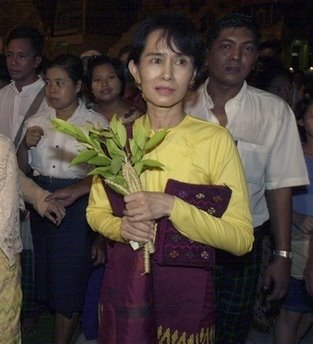


 Posts
Posts


