Mizzima News -
by Brian McCartan
Sunday, 05 July 2009 21:20
Mae Sot, Thailand (Mizzima) - The victory of the Burmese Army and its proxy, the Democratic Karen Buddhist Army (DKBA), in attacks on bases of the Karen National Union (KNU) last month, puts the regime in firm control of a major portion of its border with Thailand for the first time in 60 years. Success brings with it a whole new order of forces along the border.
Burmese and DKBA forces took the border camps of the Karen National Liberation Army (KNLA), the armed wing of the KNU, after a month-long battle in June. The fighting was relatively light with many of the 200 Burmese and DKBA casualties the result of landmines. Fighting, the threat of landmines and fear of being taken as porters by the attackers resulted in over 3,500 Karen villagers fleeing their homes to take refuge on the Thai side of the border.
The Burmese regime and the DKBA have big plans for the border now that it is under their control. The State Peace and Development Council (SPDC) has long aimed to establish several economic zones along the stretch of the border from Myawaddy north to the confluence of the Salween and Moei Rivers. One of these special economic zones is slated for construction on the outskirts of Myawaddy and another to the east of the township capital of Hlaing Bwe.
Past Thai governments have given their verbal support for these plans, although little money has of yet been put into them. Now that the area is in firmer control and the threat from the KNLA reduced, the economic zone plans may be dusted off again. Burma hopes to entice Thai investment and develop an otherwise economically poor area, while Thailand sees the economic zones as a way of using cheap Burmese labour without having to deal with a large influx of migrant workers. At one point, the area around Hlaing Bwe was also seen as a potential repatriation point for Karen refugees in the Mae La refugee camp.
A component of the DKBA’s acceptance of the junta’s border guard programme is that the DKBA will be allowed to keep, and possibly even expand, its economic activities. Although details of the concessions are still unclear, notes from internal DKBA meetings in May and June seen by Mizzima, indicate that the DKBA is moving some of its tax gates and setting up new units as a part of a major expansion. Certain officers, including Colonel Maw Tho who is already heavily involved in legal and black market trade with Thailand from his base in Myawaddy, will be reassigned to specifically economic activities.
A greatly expanded DKBA taking control of a large portion of the border is likely to make Thai security officials nervous. Following the fall of the KNU headquarters at Manerplaw in January 1995, DKBA troops carried out a reign of terror along the border, burning refugee camps, kidnapping and sometimes killing Karen and Thai civilians, looting Thai shops along the border and even attacking Thai army and police forces. Although the attacks largely stopped in 1998, occasional incursions have taken place since.
This year DKBA incursions increased as it made itself felt along the border. In January 2009, DKBA troops burned down field huts, stole livestock and looted houses along the border in Umphang district of Tak province. During and immediately following the recent attacks on the KNLA’s 7th Brigade, Karen sources say DKBA troops crossed the border several times to demand rations for their troops and to eat and drink in local shops around Mae Salit.
An ambush on June 26 on the Moei River that killed five DKBA soldiers including Colonel San Pyone and wounded another 20 has many Karen worried about possible retaliatory attacks. San Pyone is widely believed to have been the leader and triggerman in the assassination of KNU General Secretary Mahn Sha La Phan on Valentine’s Day last year. The KNLA military officers claim it was not a revenge attack because they have no troops in the area. This leaves open the possibility of involvement of the KNU/KNLA Peace Council, another splinter Karen group, the SPDC or Thai security forces. Whoever carried out the attack, the incident shows that despite greater DKBA and government control, stability is far from assured.
The transformation of the DKBA into a border guard under the central command of the Burmese Army may bring some stability, even if it costs the regime a scapegoat for cross-border incursions. The SPDC has been careful in the past to blame all cross-border attacks on the DKBA and say that it has very little influence on the group’s actions. Recent fighting against the KNLA’s 7th Brigade was described in the state-run media as Karen-on-Karen fighting. With the DKBA’s transformation into a border guard force within the Burmese Army, this pretext will no longer be possible.
One area Thai security forces will be keen to keep a watch on is the effect greater territorial control and legitimization as a unit of the Burmese military will have on the DKBA’s drug trafficking activities. Karen military sources allege the DKBA operates several amphetamine, or yaba, laboratories in areas near the border. While DKBA production and trafficking activities are not at the same level as groups such as the United Wa State Army (UWSA) in Shan State, Thai narcotics officials and opposition sources say the DKBA moves both yaba and heroin through its border camps near Myawaddy and Three Pagodas Pass. The group’s transformation into a border guard unit would make the military regime directly complicit in any continued drug activities.
Recent media reports describing the KNU as all but finished following the loss of its border camps last month are rather premature. KNLA sources say that they intend to continue to operate as guerrilla units in north central Karen State. The loss of the central border region, however, will make it harder for the KNU to communicate and supply its units as well as arrange supplies for villagers and internally displaced villagers that it cares for. The KNLA still has the bulk of its forces in northern Karen State as wells as in parts of Pegu Division and Mon State as well as maintains forces in areas of southern Karen State and Tenasserim Division.
Within Karen State itself, firmer control by the DKBA and Burmese government means that many Karen who still sympathize with the aims of the KNU will now be forced to work with the new rulers. Human rights monitors in the area for several years have said the greater DKBA presence has made their work much more dangerous. DKBA threats of retribution have made many villagers afraid to speak out about abuses.
A KNU source says that greater DKBA control will have little effect on Karen representation in the 2010 elections. The DKBA is different from other ethnic insurgent groups in that it has no political wing. Minutes of a May 7 meeting of DKBA commanders indicate that the DKBA has been told they may participate in politics, but in order to do so, DKBA members, or any other Karen, must either form a new political party or contest the election as an individual. KNU source, however, say it is irrelevant since the SPDC has already decided who the winning candidates are.
The KNU’s position in central Karen State has certainly been greatly weakened by the loss of its border camps last month. Whether firmer government and DKBA control of the area will translate into greater peace and development for the local population is far from clear. Fighting with the KNU in this area may be almost over, but new border tensions may only be beginning.
Monday, July 6, 2009
Victory over KNU, new order on Thai-Burma border


Saturday, July 4, 2009
Thursday, July 2, 2009
UN secretary general plans to meet Aung San Suu Kyi: Official
July 1st, 2009
YANGON - UN Secretary General Ban Ki-moon is likely to meet Myanmar opposition leader Aung San Suu Kyi during his visit to the country later this week, an official said Wednesday.
“He (Ban Ki-moon) is supposed to meet Aung San Suu Kyi when he arrives here but we cannot definitely tell his schedule,” said an official who requested anonymity.
Ban is scheduled to visit Myanmar Friday and Saturday at the official invitation of the ruling junta.
He is expected to meet the country’s most powerful man, Senior General Than Shwe, head of the State Peace and Development Council, as Myanmar’s junta styles itself, officials said.
Besides Suu Kyi and Than Shwe, Ban also plans to meet with political parties and ethnic groups and travel to the Irrawaddy delta region that was devastated by Cyclone Nargis on May 2-3 last year, killing up to 150,000 people.
Ban last visited Myanmar in May 2008 to hasten international aid to the country, whose military rulers are notoriously paranoid about western interference in their internal affairs.
Ban’s talks with Myanmar’s senior leadership are expected to focus on a plea for the release of all political prisoners including Suu Kyi; resumption of dialogue between the government and opposition; and the need to create conditions conducive to credible elections planned in 2010.
“The secretary general believes that the sooner these issues are addressed, the earlier Myanmar will be able to move towards peace, democracy and prosperity. He looks forward to meeting all key stakeholders to discuss what further assistance the United Nations can offer to that end,” a UN statement said.
The first day of Ban’s visit will coincide with the resumption of the trial of Suu Kyi on charges of violating her house arrest, by allowing a US citizen to swim to her lakeside residence in Yangon.
Suu Kyi’s trial, being held at a special court set up in Yangon’s Insein Prison, is scheduled to resume Friday with testimony from defence witness Khin Moe Moe, an attorney.
The trial began May 11. While the prosecution was allowed to present 14 witnesses in the first week, the defence was initially allowed only one. Later, Khin Moe Moe was permitted to testify.
Critics say the military junta is using the case as a pretext to keep the 1991 Nobel peace laureate in jail during a politically sensitive period, leading up to next year’s general election.
Suu Kyi’s National League for Democracy won the 1990 general election by a landslide but has been blocked from power by Myanmar’s junta for the past 19 years.
The new trial of Suu Kyi, whose most recent six-year house arrest sentence expired May 27, has sparked a chorus of protests from world leaders and statements of concern from its regional allies in the Association of South-East Asian Nations.
ASEAN – toothless but with a “sharp tongue”?
http://theonlinecitizen.com/2009/07/asean-toothless-but-with-a-sharp-tongue/
Wednesday, 1 July 2009, 4:47 pm | 190 views
ASEAN ministers are expected to endorse the setting up of an ASEAN Human Rights Commission in July when they meet for the 42nd ASEAN Ministerial Meeting. Civil society groups in the region, however, have expressed concerns that the commission would be all form and no substance, without any power to intervene if a member country violated these rights.
Singapore’s Minister for Foreign Affairs, Mr George Yeo, was reported by the local media in July 2008 as having said:
“Whether or not the human rights body we establish will have teeth I don’t know. But it will certainly have a tongue, and I hope it will have a sharp tongue.” (MFA)
The following is a report, headlined “Toothless rights body would hurt ASEAN group”, from the Philippine Daily Inquirer:
Leila Salaverria
BANGKOK—As the target date for launching the ASEAN human rights body (AHRB) nears, civil society groups have warned depriving it of watchdog powers would erode the credibility of the regional organization.
The warning came amid concerns over Burma’s (Myanmar’s) renewed crackdown on democracy fighter Aung San Suu Kyi and Thailand’s refusal to accept thousands of Burmese refugees fleeing from military rule.
About 200 civil society groups and individuals have endorsed a letter urging the Association of Southeast Asian Nations (ASEAN) to give the AHRB the power to investigate complaints of abuses, conduct country visits and review the human rights situation in the region.
The letter, addressed to a panel drafting the AHRB’s terms of reference (TOR), also calls for the appointment of independent experts to the body.
The terms of reference, which detail the AHRB’s powers and duties, are expected to be adopted in July at the 42nd ASEAN Ministerial Meeting. The AHRB itself is to be formally launched in October.
The draft TOR has not been made public but journalists who have seen it say that while it focuses on promoting human rights, it gives no power to the AHRB to investigate and prosecute.
The TOR is expected to maintain ASEAN’s adherence to its noninterference policy, which some members have invoked to ward off criticisms of their rights records.
The civil society groups warned that a human rights body with no protection powers or independent experts would not fulfill its pledge to respect fundamental freedoms, protect human rights, and promote social justice.
“This would reflect badly on ASEAN as being unable to live up to the spirit of its own Charter and further dent the credibility of ASEAN in the eyes of the international community for setting up a substandard regional human rights mechanism as compared to those in the African, Inter-American and European systems,” the June 22 letter said.
The letter was cosigned by the Solidarity for Asian People’s Advocacy Task Force on ASEAN and Human Rights and the Asian Forum for Human Rights and Development (Forum-Asia).
Indonesia’s example
Forum-Asia underscored the importance of having competent experts in the AHRB, saying they could make the body relevant to beleaguered peoples.
They could also help the AHRB initiate actions to reduce human rights problems even with a limited mandate, Forum-Asia’s Yuyun Wahyuningrum, program manager for East Asia, told the Inquirer.
Wahyuningrum said it was vital that the people manning the AHRB would not be afraid to contradict the government line, if necessary.
She said this was the case with Indonesia’s National Human Rights Commission which, although created by then President Suharto, did not become a government mouthpiece but criticized abuses and tried to curb them.
First time
Former ASEAN Secretary General Rodolfo Severino of the Philippines said the establishment of the body was a step forward.
“For the first time, ASEAN will have a body concerned with human rights. This is an advance. It certainly will not have powers of ’enforcement’ in an association of sovereign states, but it can bring opinion to bear on egregious violations of human rights,” Severino said in an email interview.
He pointed out there was no transnational human rights body anywhere with the power to punish or protect.
Dr. Termsak Chalermpalanupap, ASEAN’s director of Political and Security Directorate, said in an article the AHRB mandate includes protection and promotion of human rights but would focus on protection first.
He said its functions could evolve over time and the body “is merely the new beginning.”
No biting
Responding to claims that the AHRB would be toothless, Chalermpalanupap said the body was not intended to have teeth or to function as an independent watchdog.
“The AHRB shall operate through consultation and consensus, with firm respect for sovereign equality of all Member States. Good points can be made and constructive actions can be agreed upon in friendly discussion and persuasion. No ‘biting’ is ever required,” Chalermpalanupap said.
As for concerns that the noninterference principle would hamper AHRB’s functions, he said the ASEAN charter also speaks of collective responsibility in enhancing peace, security and prosperity in the region, and of enhanced consultation on common concerns.
Wahyuningrum said noninterference could not be invoked when it came to crimes against humanity, genocide and humanitarian cases.
She said ASEAN members were signatories to the Universal Declaration of Human Rights, and in signing such conventions, they gave up part of their sovereignty.
(This article was written under the 2009 Southeast Asian Press Alliance fellowship)
—–
Wednesday, July 1, 2009
ミサイル開発装置不正輸出、あて先はミャンマー軍傘下の組織
http://www.yomiuri.co.jp/feature/20080115-899562/news/20090630-OYT1T00623.htm
北朝鮮系貿易商社が長距離弾道ミサイル開発に必要な磁気測定装置をミャンマーに輸出しようとした外為法違反事件で、装置はミャンマー陸軍傘下の組織「防衛産業理事会(DDI)」に届けられようとしていたことが30日、神奈川県警の調べで分かった。捜査関係者が明らかにした。
北朝鮮の指示を受けた貿易商社社長らが不正輸出を図ったとみられており、県警は、ミャンマー軍事政権にミサイル技術を拡散させようとしていた裏付けとみて捜査している。
捜査関係者によると、北朝鮮系貿易商社「東興貿易」(東京都新宿区)が2008年9月、磁気測定装置をミャンマー第2工業省に輸出しようとした際、防衛産業理事会の通称名「DDI」のマークが箱に付いていた。
また、東興貿易が今年1月にマレーシア経由で輸出しようとした装置の箱にも「DDI」のマークがあった。
ミャンマーは、1988年に成立した軍事政権が軍の強化を進めており、現在の兵力は社会主義時代の約3倍にあたる約50万人。武器の調達は、小銃などの基本装備を中国、戦闘機を中国とロシア、軍事用IT機器をシンガポールから輸入しているとみられている。
一方、ミサイルについては、ミサイル関連技術輸出規制(MTCR)で国際的に技術の輸出が禁止されている。このため、ミャンマー軍事政権がMTCRに加盟していない北朝鮮から入手を図った可能性が高いとみられている。
(2009年6月30日16時03分 読売新聞)
3 HELD OVER EXPORT BID OF DPRK MISSILE KNOW HOW TO MYANMAR
http://www.yomiuri.co.jp/dy/national/20090630TDY01304.htm
The Yomiuri Shimbun
YOKOHAMA--Kanagawa prefectural police arrested three people Monday over an attempt to illegally export to Myanmar a magnetic measuring device believed necessary for developing long-range ballistic missile systems on instructions from North Korea, the police said.
Arrested on suspicion of violating the Foreign Exchange and Foreign Trade Law were Lee Kyoung Ho, 41, of Itabashi Ward, Tokyo, president of trading firm Toko Boeki; Miaki Katsuki, 75, of Setagaya Ward, president of a manufacturing firm; and Yasuhiko Muto, 57, of Nerima Ward, president of an export agency.
The police initially thought the company was trying to export the device to North Korea itself via Myanmar, but they then found out the content of the order from a North Korea-aligned Hong Kong-based firm.
As the police now suspect the firm has exported other missile development-related equipment to Myanmar, they believe North Korea was attempting to promote the transfer of missile technologies, such as its Taepodong system, to Myanmar.
The Yomiuri Shimbun
YOKOHAMA--Kanagawa prefectural police arrested three people Monday over an attempt to illegally export to Myanmar a magnetic measuring device believed necessary for developing long-range ballistic missile systems on instructions from North Korea, the police said.
Arrested on suspicion of violating the Foreign Exchange and Foreign Trade Law were Lee Kyoung Ho, 41, of Itabashi Ward, Tokyo, president of trading firm Toko Boeki; Miaki Katsuki, 75, of Setagaya Ward, president of a manufacturing firm; and Yasuhiko Muto, 57, of Nerima Ward, president of an export agency.
The police initially thought the company was trying to export the device to North Korea itself via Myanmar, but they then found out the content of the order from a North Korea-aligned Hong Kong-based firm.
As the police now suspect the firm has exported other missile development-related equipment to Myanmar, they believe North Korea was attempting to promote the transfer of missile technologies, such as its Taepodong system, to Myanmar.
According to the police, the three conspired to export the magnetic measuring device to Myanmar via Malaysia around January 2009 at a price of about 7 million yen without seeking approval from the Economy, Trade and Industry Ministry.
Export of the device is restricted under the so-called Catch-all Control that prohibits exports of products that could be used for weapons of mass destruction.
Previously, around September 2008, the company had also tried to export the same instrument to Myanmar's Second Industry Ministry. Both attempts to export the device were aborted immediately before shipment when METI notified the company that it had failed to submit an export application.
According to investigation sources, the prefectural police have analyzed material they seized during a search of Toko Boeki in February this year.
The illegal export attempts to Myanmar were based on an order by the Beijing office of New East International Trading Ltd. based in Hong Kong around spring 2008. The firm is believed to be under the direct control of the Second Economic Committee of Pyongyang's Workers' Party of Korea. The committee is responsible for the party's military procurement.
The company's Pyongyang office has been included in a METI-announced blacklist of companies believed to have been involved in the development of weapons of mass destruction.
Diplomatic ties between Myanmar and North Korea were severed after a 1983 terrorist attack by North Korean agents in Yangon, but the two countries resumed ties in 2007. In 2004 a high-ranking U.S. government official revealed that North Korea had proposed the sale of missiles to Myanmar.
(Jun. 30, 2009)
How high carbohydrate foods can raise risk for heart problems
Tel Aviv, 29 June —
Doctors have known for decades that too much
carbohydrate-laden foods like white bread and corn
flakes can be detrimental to cardiac health. In a
landmark study, new research from Tel Aviv
University now shows exactly how these high
carb foods increase the risk for heart problems.
“Looking inside” the arteries of students eating
a variety of foods, Dr. Michael Shechter of Tel
Aviv University’s Sackler School of Medicine and
the Heart Institute of Sheba Medical Center —
with collaboration of the Endocrinology Institute
— visualized exactly what happens inside the body
when the wrong foods for a healthy heart are eaten.
He found that foods with a high glycemic index
distended brachial arteries for several hours.
Elasticity of arteries anywhere in the body can
be a measure of heart health. But when
aggravated over time, a sudden expansion of the
artery wall can cause a number of negative health
effects, including reduced elasticity, which can cause
heart disease or sudden death.—Internet
高炭水化物食品をどのようにすることができます
心の問題の危険性を高める
テルアビブ、 6月29日-
医師の知っている
数十年が過ぎる
炭水化物を多く含んだ食品
白パンやトウモロコシのような
フレーク支障が出ることができます
心臓の健康に。一で
画期的な研究では、新しい
テルアビブから研究
大学の今を示して
まさにこのような高
炭水化物食品の増加
心臓病の危険性。
"探し"を内部に
学生の食事の動脈
食品、博士は様々な
マイケルShechter電話
Aviv大学のサックラー
医学部と
ハート研究所
シバ医療センター-
とのコラボレーション
内分泌研究所
-正確に可視化が
体の内部に発生する
食品の場合、間違った
健康な心臓を食べている。
彼が見つかりましたが、食品と
高血糖インデックス
膨張した上腕動脈
数時間。
動脈の弾力性
体内のどこにでもすることができます
心の尺度になる
健康。しかし、
時間以上の悪化を
の急拡大
動脈壁を引き起こす可能性があります
負の数の健康
などの効果、縮小
弾力性を引き起こす可能性があります
心臓病や突然の
死。
Supreme Court (Yangon) pronounced the order to confirm Yangon Division Court’s order dated 9 June and dismiss the Criminal Revision Case. (DAW SU)
THE NEW LIGHT OF MYANMAR Tuesday, 30 June, 2009
YANGON, 29 June—Final statements of both sides
were heard at Supreme Court (Yangon) on 24 June for
Criminal Revision Case No 333 (b)/2009 filed by
Daw Aung San Suu Kyi, Daw Khin Khin Win and Ma
Win Ma Ma in dissatisfaction with Yangon Division
Court’s order of confirming Yangon North District
Court’s order of refusing nomination of defence
witnesses U Win Tin and U Tin Oo in Yangon North
District Court’s Criminal Case No 47/2009 against
US citizen Mr John William Yettaw, Daw Aung San
Suu Kyi, Daw Khin Khin Win and Ma Win Ma Ma.
Supreme Court (Yangon) pronounced the
judgment on the Criminal Revision Case at 10 am
today.
In the judgment, Supreme Court (Yangon) said
that the lawsuit against applicant No (1) Daw Aung
San Suu Kyi was filed under Section (22) of the Law
to Safeguard the State Against the Dangers of Those
Desiring to Cause Subversive Acts; that the Section is
to take action if a person against whom action is taken
opposes, breaches or fails to abide by the restriction
order (or) prohibition order; that Daw Aung San Suu
Kyi just needs to argue, providing an evidence that
she did not oppose or breach the restriction order (or)
prohibition order in the trial filed by the initial court;
that the lawyer of Daw Aung San Suu Kyi in the case
said that the witnesses they nominated were important
for the judgment, U Tin Oo, for instance, was
nominated as he was assumed to be a witness capable
of giving profound statements that action should not
be taken under the Law to Safeguard the State Against
the Dangers of Those Desiring to Cause Subversive
Acts; that according to the provision of Section (7) of
that Law, the provision is that the cabinet is authorized
to pass an order, as may be necessary, restricting any
fundamental right, not the provision that action is
Supreme Court (Yangon) dismisses criminal revision case for
refusing nomination of two defence witnesses in trial against
US citizen Mr John William Yettaw, Daw Aung San Suu Kyi,
Daw Khin Khin Win and Ma Win Ma Ma
taken in accordance with the judiciary or judicial trend;
that therefore, it is to be assumed that there is no need
to take into consideration the statements of the lawyer
of the applicants; that the lawyer of the applicants also
demanded that U Win Tin and U Tin Oo should be
examined as defence witnesses regarding political
character of Daw Aung San Suu Kyi; that the
explanation of the provision of Section 55 of the
Evidence Law says that the term “character” stipulated
in Sections 52, 53, 54 and 55 comprises both reputation
and disposition; that according to the explanation,
there is no provision in the Evidence Law that says
there is the right to nominate a witness regarding
political character; that in view of the statements given
by the witnesses in the case of the initial court, there is
not any argument regarding character or political
character of applicant Daw Aung San Suu Kyi, the
accused of the initial court; that therefore the character
of Daw Aung San Suu Kyi does not attract any argument
in the initial case; that according to the documents of
the file of the initial court, applicant Daw Aung San
Suu Kyi, the accused of the initial court, was examined
as the accused, not as a witness in the court; that so it
can be deduced that the application for examining U
Win Tin and U Tin Oo as defence witnesses for
character of Daw Aung San Suu Kyi is particularly
intended to disrupt and delay the case; that the district
court refused to summon and examine U Win Tin and
U Tin Oo as defence witnesses in accordance with the
provision of Section 257 (1) of Code of Criminal
Procedure; that the lawyer of the applicants publicly
admitted that the judge of the district court pronounced
an order according to Section 257 (1) of Code of
Criminal Procedure; that Yangon Division Court
reviewed that it dismissed the revision case as it is
designed to delay the trial as evidenced by the
documents of the initial court, although the initial
court’s order does not enumerate, in accordance with
Section 257 (1) of Code of Criminal Procedure, the
reason of why the nomination of three defence
witnesses was refused; that however, it cannot be said
that the review of the division court is wrong; that the
lawyer of the applicants submitted that the division
court pronounced an order “it is right according to
Paragraph 1115 of Manual to Courts” and it did so
without any authority bestowed on it; that it is
required to find out whether his statement is right
or not; that with daily records, stating in brief the
reason of refusing the nomination, the district court
pronounced the order to refuse the nomination of
defence witnesses, according to Paragraphs 1115
and 1116 of Manual to Court, and the court
procedure, so it is not wrong; that it is virtually
illogical to say that the division court’s confirmation
of the district court’s daily records, referring to
Paragraph 1115 of Manual to Courts, is beyond its
authority; that therefore, it is assumed that the
criminal revision case to summon and examine U
Win Tin and U Tin Oo as defence witnesses is
intended to hinder and delay the trial because they
just wanted to submit a subject that does not need
any argument in the case; that the district court’s
order to refuse to summon and examine U Win Tin
and U Tin Oo as defence witnesses, and the division
court’s confirmation of the district court’s order
are in accordance with the law; and that therefore
making a deduction that the Supreme Court does
not need to intervene in the case with the authority
to revise the orders of the district and division
courts, it pronounced the order to confirm Yangon
Division Court’s order dated 9 June and dismiss
the Criminal Revision Case.—MNA
Sunday, June 28, 2009
Israel launches world’s first hybrid solar power station

Photo takenon 24 June,2009 showsthe solarreceiver ofthe world’sfirst hybrid
solar thermalgas turbinepower stationat KibbutzSamar insouthernIsrael.
XINHUA
KIBBUTZ SAMAR, 25 June — AORA,
A leading Israeli solar energy technology company,launched Wednesday world’s first hybrid
solar thermal power station at KibbutzSamar in southern Israel.
This marked the first time that concentratingsolar power (CSP) stations can provide
environmentally-friendly power 24hours a day, according to AORA’s CEO,
Haim Fried. AORA’s “Power Flower” station, named due to its unique yellow tulip design, consists of a field of 30 tracking mirrors (heliostats) situated on half an acre of land.
Each of the station’s 30 heliostats tracks the sun and reflects its rays towards the top
of a 30 meter-high tower housing a special solar receiver along with a 100 kilowatt gas
turbine. The patented receiver uses the solar energy to heat air to a temperature of 1,000
degrees Celsius and directs this energy into the turbine, which converts the thermal energy
into electric power that will be fed directly into the national grid.
Xinhua
Daw Aung San Suu Kyi Trial-YANGON, 26 June
YANGON, 26 June—Judges sat for Criminal Cases Nos 47/2009, 48/
2009, and 49/2009 filed against US citizen Mr John William Yettaw, Daw Aung
San Suu Kyi, Daw Khin Khin Win and Ma Win Ma Ma at Yangon North District
Court this morning.
In the process, Supreme Court (Yangon), in relation to its Criminal
Revision Case No 333 (B)/2009, summoned Criminal Case No 47/2009 of
Yangon North District Court. So, Yangon North District Court was in no position
to continue Criminal Case No 47/2009.
Therefore, Yangon North District Court, in order to question defence
witness Daw Khin Moe Moe, put off Criminal Case No 47/2009 to 3 July
together with Criminal Cases Nos 48/2009 and 49/2009.
Friday, June 26, 2009
Michael Jackson, the 'King of Pop,' dies at age 50
အသားအေရာင္နဲ ့လူမ်ိဳးခဲြျခားမႈကို သူ ့နည္းသူ ့ဟန္နဲ ့အသက္ဆုံးတိုင္ တိုက္ပဲြဝင္သြားတဲ့ ေပါ့ဘုရင္ကိုဦးညႊတ္ဂုဏ္ျပဳပါတယ္။
I solute you and god bless you.
ုဘုန္းလိႈင္-FWUBC
Autopsy set after Michael Jackson's sudden death
Remembering the 'King of Pop'
Slideshow:Michael Jackson dies at 50 Play Video Video:Jermaine Jackson: Want privacy in 'tough time' AP Play Video Video:Sights and Sounds: Remembering the 'King of Pop' AP AP – FILE - In this Aug. 29, 1993 file photo, pop singer Michael Jackson performs during his 'Dangerous' concert … By LYNN ELBER, Associated Press Writer Lynn Elber, Associated Press Writer – 1 hr 7 mins ago
LOS ANGELES – Michael Jackson, defined in equal parts as the world's greatest entertainer and perhaps its most enigmatic figure, was about to attempt one of the greatest comebacks of all time. Then his life was cut shockingly — and so far, mysteriously — short.
The 50-year-old musical superstar died Thursday, just as he was preparing for what would be a series of 50 concerts starting July 13 at London's famed 02 arena. Jackson had been spending hours and hours toiling with a team of dancers for a performance he and his fans hoped would restore his tarnished legacy to its proper place in pop.
An autopsy was planned for Friday, though results were not likely to be final until toxicology tests could be completed, a process that could take several days and sometimes weeks. However, if a cause can be determined by the autopsy, they will announce the results, said Los Angeles County Coroner Investigator Jerry McKibben.
Police said they were investigating, standard procedure in high-profile cases.
Jackson died at UCLA Medical Center after being stricken at his rented home in the posh Los Angeles neighborhood of Holmby Hills. Paramedics tried to resuscitate him at his home for nearly three-quarters of an hour, then rushed him to the hospital, where doctors continued to work on him.
"It is believed he suffered cardiac arrest in his home. However, the cause of his death is unknown until results of the autopsy are known," his brother Jermaine said.
Cardiac arrest is an abnormal heart rhythm that stops the heart from pumping blood to the body. It can occur after a heart attack or be caused by other heart problems.
Jackson's death brought a tragic end to a long, bizarre, sometimes farcical decline from his peak in the 1980s, when he was popular music's premier all-around performer, a uniter of black and white music who shattered the race barrier on MTV, dominated the charts and dazzled even more on stage.
His 1982 album "Thriller" — which included the blockbuster hits "Beat It," "Billie Jean" and "Thriller" — is the best-selling album of all time, with an estimated 50 million copies sold worldwide.
As word of his death spread, MTV switched its programming to play videos from Jackson's heyday. Radio stations began playing marathons of his hits. Hundreds of people gathered outside the hospital. In New York's Times Square, a low groan went up in the crowd when a screen flashed that Jackson had died, and people began relaying the news to friends by cell phone.
"No joke. King of Pop is no more. Wow," Michael Harris, 36, of New York City, read from a text message a friend had sent him. "It's like when Kennedy was assassinated. I will always remember being in Times Square when Michael Jackson died."
The public first knew him as a boy in the late 1960s, when he was the precocious, spinning lead singer of the Jackson 5, the singing group he formed with his four older brothers out of Gary, Ind. Among their No. 1 hits were "I Want You Back," "ABC" and "I'll Be There."
He was perhaps the most exciting performer of his generation, known for his backward-gliding moonwalk, his feverish, crotch-grabbing dance moves and his high-pitched singing, punctuated with squeals and titters. His single sequined glove, tight, military-style jacket and aviator sunglasses were trademarks, as was his ever-changing, surgically altered appearance.
"For Michael to be taken away from us so suddenly at such a young age, I just don't have the words," said Quincy Jones, who produced "Thriller." "He was the consummate entertainer and his contributions and legacy will be felt upon the world forever. I've lost my little brother today, and part of my soul has gone with him."
Jackson ranked alongside Elvis Presley and the Beatles as the biggest pop sensations of all time. He united two of music's biggest names when he was briefly married to Presley's daughter, Lisa Marie. Jackson's sudden death immediately evoked comparisons to that of Presley himself, who died at age 42 in 1977.
"I am so very sad and confused with every emotion possible," Lisa Marie Presley said in a statement. "I am heartbroken for his children who I know were everything to him and for his family. This is such a massive loss on so many levels, words fail me."
As years went by, Jackson became an increasingly freakish figure — a middle-aged man-child weirdly out of touch with grown-up life. His skin became lighter, his nose narrower, and he spoke in a breathy, girlish voice. He often wore a germ mask while traveling, kept a pet chimpanzee named Bubbles as one of his closest companions and surrounded himself with children at his Neverland ranch, a storybook playland filled with toys, rides and animals. The tabloids dubbed him "Wacko Jacko."
"It seemed to me that his internal essence was at war with the norms of the world. It's as if he was trying to defy gravity," said Michael Levine, a Hollywood publicist who represented Jackson in the early 1990s. He called Jackson a "disciple of P.T. Barnum" and said the star appeared fragile at the time but was "much more cunning and shrewd about the industry than anyone knew."
Jackson caused a furor in 2002 when he playfully dangled his infant son, Prince Michael II, over a hotel balcony in Berlin while a throng of fans watched from below.
In 2005, he was cleared of charges that he molested a 13-year-old cancer survivor at Neverland in 2003. He had been accused of plying the boy with alcohol and groping him, and of engaging in strange and inappropriate behavior with other children.
The case followed years of rumors about Jackson and young boys. In a TV documentary, he acknowledged sharing his bed with children, a practice he described as sweet and not at all sexual.
Despite the acquittal, the lurid allegations that came out in court took a fearsome toll on his career and image, and he fell into serious financial trouble.
Michael Joseph Jackson was born Aug. 29, 1958, in Gary. He was 4 years old when he began singing with his brothers — Marlon, Jermaine, Jackie and Tito — in the Jackson 5. After his early success with bubblegum soul, he struck out on his own, generating innovative, explosive, unstoppable music.
The album "Thriller" alone mixed the dark, serpentine bass and drums and synthesizer approach of "Billie Jean," the grinding Eddie Van Halen guitar solo on "Beat It," and the hiccups and falsettos on "Wanna Be Startin' Somethin'."
The peak may have come in 1983, when Motown celebrated its 25th anniversary with an all-star televised concert and Jackson moonwalked off with the show, joining his brothers for a medley of old hits and then leaving them behind with a pointing, crouching, high-kicking, splay-footed, crotch-grabbing run through "Billie Jean."
The audience stood and roared. Jackson raised his fist.
During production of a 1984 Pepsi commercial, Jackson's scalp sustains burns when an explosion sets his hair on fire.
He had strong follow-up albums with 1987's "Bad" and 1991's "Dangerous," but his career began to collapse in 1993 after he was accused of molesting a boy who often stayed at his home. The singer denied any wrongdoing, reached a settlement with the boy's family, reported to be $20 million, and criminal charges were never filed.
Jackson's expressed anger over the allegations on the 1995 album "HIStory," which sold more than 2.4 million copies, but by then, the popularity of Jackson's music was clearly waning even as public fascination with his increasingly erratic behavior was growing.
Jackson married Lisa Marie Presley in 1994, and they divorced in 1996. Later that year, Jackson married Deborah Rowe, a former nurse for his dermatologist. They had two children together: Michael Joseph Jackson Jr., known as Prince Michael, now 12; and Paris Michael Katherine Jackson, 11. Rowe filed for divorce in 1999.
Jackson also had a third child, Prince Michael II. Now 7, Jackson said the boy nicknamed Blanket as a baby was his biological child born from a surrogate mother.
Billboard magazine editorial director Bill Werde said Jackson's star power was unmatched. "The world just lost the biggest pop star in history, no matter how you cut it," Werde said. "He's literally the king of pop."
Jackson's 13 No. 1 one hits on the Billboard charts put him behind only Presley, the Beatles and Mariah Carey, Werde said.
"He was on the eve of potentially redeeming his career a little bit," he said. "People might have started to think of him again in a different light."
__
AP Special Correspondent Linda Deutsch and AP writers Derrik J. Lang, Solvej Schou, Anthony McCartney and Thomas Watkins in Los Angeles; and Virginia Byrne, Hillel Italie, Nekesa Mumbi Moody and Jocelyn Noveck in New York contributed to this report.
KNU Headquarters Overrun: Now What?
http://www.irrawaddy.org/article.php?art_id=16188
--------------------------------------------------------------------------------
By SAW YAN NAING Thursday, June 25, 2009
--------------------------------------------------------------------------------
After a long offensive, the Burmese army and its ceasefire militia, the Democratic Karen Buddhist Army (DKBA), has overrun the Karen National Liberation Army (KNLA) Brigade 7 headquarters.
The question now is: What’s next?
Karen sources and analysts said the fighting will continue as the joint Burmese army and DKBA troops focus their attacks toward the KNLA Brigade 6 area.
Analysts said powerful business interests are supporting the offensive.
Enlarge Image
(Graphic:
The Irrawaddy)
The Burmese regime’s goal is to control all of central Karen State, where the Karen National Union’s KNLA Brigade 7 and 6 are now located, in order to dominate the business and border trade activity with Thailand, said one DKBA businessman who asked for anonymity.
Once dominated, many industries, companies and infrastructure will be improved and supported by the Myanmar Federation of Chambers of Commerce and Industry, said the businessman.
Important activities will include logging and mining natural resources, including zinc, he said.
He said the Burmese authorities and DKBA troops will construct roads to connect between army headquarters in Myaing Gyi Ngu and border areas.
Once the clashes end, the relationship between the DKBA and local Thai authorities and businessmen in Mae Sot will expand when compared to the past, businessmen said.
During the recent fighting, a KNU leader said two DKBA leaders were spotted in a car traveling with Thai police near the border where Karen refugees have sought shelter in Tha Song Yang District in Tak Province.
Analysts also said the situation will be more dangerous for the KNU and Burmese opposition groups in exile when the border area is controlled by DKBA troops.
Maj Hla Ngwe, the joint secretary (1) of the KNU, said the loss of KNLA Brigade 7 headquarters could affect the work of Burmese opposition organizations based in Mae Sot.
“The opposition movement will be limited. They might not launch campaigns as they did before,” said Hla Ngwe.
Border sources also say more assassinations could be expected in the border area, where many Burmese and ethnic opposition groups are based.
In February 2008, the KNU’s late general secretary, Mahn Sha, was gun down by two DKBA members at his home near the center of Mae Sot. Many sources claimed the assassination also involved Thai border police.
Border sources said that DKBA members will have easy access to Mae Sot once the relationship between the DKBA and Thai border authorities is established.
A sign of the evolving transition in the power center, said the businessman, is that DKBA soldiers are now receiving medical care in Mae Sot. What’s happening is “very obvious,” he said.
The DKBA plans to expand its troops from 6,000 to 9,000 in preparation for its transformation to become a border guard force under the Burmese army. The DKBA split from it mother organization, the KNU, and signed a ceasefire agreement with the Burmese regime in 1995.
Copyright © 2008 Irrawaddy Publishing Group | www.irrawaddy.org
Sunday, June 21, 2009
JAMよりスタディーツアーのご案内JAM 2nd meeting briefing schedule and Study Tours
ホーム メータオ・クリニックとメータオ・クリニック支援の会 活動・レポート・PR情報 ご支援いただける方々へ お問い合わせ FAQ リンク Reporting activities to support the clinic and clinic METAO METAO Home PR people you support and information contact us FAQ links
You are here: ホーム You are here: Home
おしらせ News
第2回JAMスタディツアー日程および事前説明説明会 JAM 2nd meeting briefing schedule and Study Tours
日時 :09年7月18日(土)~7月23日(木) 5泊6日 Date: 1909 July 18 (Sat.) - Thursday, July 23 5 nights 6 days
参加費:99,800円 Fee: 99,800 yen
定員 :10名 Capacity: 10 persons
〆切 :6月27日(土) Deadline: Saturday, June 27
日程・内容 Content Schedule
詳細およびお申し込みは以下をご参照ください。 For more information and application please see below.
第2回JAMスタディツアー参加者募集要項 Second Call for Participants JAM Study Tours
第2回JAMスタディツアー事前説明会要項 JAM 2nd Study Tour Pre-Application Meeting
スタディツアー参加申込書 The Study Tour Registration
保護者同意書 Written parental consent
特徴1. 10万円でおつりが来る安さ! Features 1.10 yen for something cheap! でご提案します。 Offers.
10万円以下(99,800円)タイへのNGOツアーとしては、最安値です。 10 million yen (99,800 yen) to Thailand as a tour NGO is low. (JAM調べ) 学生の皆さんにも参加しやすい価格に挑戦しました! (JAM police) tried to price and easy to join the students!
特徴2. 一粒で何度もおいしい! Features 2. With a grain of good times! 多様性に触れるツアーのご提案です。 Tour is offering a touch of diversity.
今回の訪問地メソト(Mae Sot)では、国境地帯の性格上、タイ文化にもミャンマーの文化にも触れられます。 Visit the Mae Sot (Mae Sot), the nature of the border, you are exposed to a culture of Myanmar and Thai culture. また、キリスト教、仏教、イスラム教などの宗教施設もある、多様性に富んだ街です。 Also, Christianity, Buddhism, Islam and other religious facilities, a city rich in diversity.
また、あのノーベル平和賞候補者、ドクター・シンシアとの座談会も緊急決定! The Nobel Peace Prize candidate, so I decided the urgent discussion with Dr. Cynthia!
※過去のスタディーツアーに関しては活動・レポートよりご覧いただけます。 ※ Study Tour in the past about our activities from the report.
更新情報 Updates
2009/06/16 2008年度、JAM総会での発表資料および活動報告掲載(資料追加) 2009/06/16 fiscal 2008, JAM on the report and presentation to the annual meeting (additional materials)
2009/06/16 前川看護師沖縄公演「国際協力に関心を」、資料掲載 2009/06/16 concert master Okinawa Nursing MAEKAWA "an interest in international cooperation", on the article
2009/06/08 新たにメータオクリニックへ医師を派遣(現地ブログ開設) 2009/06/08 METAOKURINIKKU dispatching doctors to the new (opened in blog)
2009/05/27 過去の会報を掲載 2009/05/27 newsletter published in the past
セミナー・講演情報 Conference Information Seminar
JAMメンバーによる講演の予定です。 Presentation by members of the JAM will.
2009/06/25 OurPlanet-TVのラジオ番組「東京ラブレター」 2009/06/25 OurPlanet-TV radio, "Tokyo Love Letter"
2009/09/06 日本ビルマ救援センター(大阪) 2009/09/06 Burmese Relief Center-Japan (Osaka)
2009/06/14 学びフォーラム(京都) 横川 裕美子先生(京都橘大学看護学部)が、滋賀・京都地区の高校生を対象にした「学びフォーラム」でJAMの活動を紹介してくださいました。 2009/06/14 Learning Forum (Kyoto) Dr. Yokogawa Yumiko (Kyoto Tachibana University Faculty of Nursing), a district high school students in Kyoto, Shiga "learning forum" to introduce Mr. JAM activities. 横川先生、ありがとうございました! Yokogawa teacher, thank you!
2009/04/16 鎌倉大船ロータリークラブ Rotary Club Oohune Kamakura 2009/04/16
2009/03/08 第24回日本国際保健医療学会東日本地方会 2009/03/08 The 24th East Regional Meeting of Japan Society for International Health
2008/10/07 ピースロード鎌倉 Kamakura 2008/10/07 piece Rhodes
2008/08/22 アジア保健教育機構 Health Education Organization Asia 2008/08/22
講演のご要望・過去の講演資料請求などございましたら、 お問い合わせページよりご連絡ください。 Request Information Feel free speech and the speech of the last request, please contact us from contact page.
新型インフルエンザ緊急レポート Pandemic flu emergency report
新型インフルエンザ確認に伴い、JAMでも対応を開始しております。 With the new flu, JAM has started to respond. 随時レポートしてまいりますので、日々のサイトのご確認をお願いいたします。 We have reports from time to time, we thank you for your site.
レポート第一弾 (20090501) Series of reports (20090501)
©2009 NGO メータオ・クリニック支援の会 © 2009 NGO Committee in support METAO Clinic
当サイトへのリンクの際には、必ず事前にご連絡をお願いいたします。 The link to this site, thank you to us in advance.
ご意見・お問い合わせは「お問い合わせ」よりお願いいたします。 Contact us in "contact us" thank you.
当会は、特定の政治・宗教とは一切関係ありません。当会, religion and politics is not related to any particular.
Original Japanese text:
第2回JAMスタディツアー参加者募集要項
Contribute a better translation
JAMよりスタディーツアーのご案内(7月)Sunday, 21 June, 2009 20:17
From: "ml@japanmaetao.org"
JAMよりスタディーツアーのご案内 (20090621)
━━━━━━━━━━━━━━━━━━━━━━━━━━━━━━━━━━━
ご支援いただき誠にありがとうございます。
JAMスタディツアー参加者募集のお知らせです。
「国境の町で、文化や宗教の多様性に触れる旅」
■ 日 時:2009年7月18日(土)~7月23日(木) 5泊6日
■ 参加費: 合計 99,800円
■ 対 象:JAM 賛助会員
■ 定 員:15名
■ 申込方法:JAMのホームページTOPにリンクされております参加申込書に
必要事項をご記入いただき、support@japanmaetao.org へ添付してください。
■ 申込締切:2009年6月27日(土)※ 夏期繁忙期間のため、
※航空券の残りが少なくなっているため、参加希望の方は早めのお申込を
お願いいたします。
■ 事前説明会について 本ツアー参加者を対象に、7月4日(土)に
事前説明会を予定しています。
※詳細はHPをご覧下さい。
■ 申込・問い合わせ先: support@japanmaetao.org (担当 岡谷)
■以前開催したスタディツアーの内容がJAMのホームページに掲載されています。
「活動・レポート」→「スタディツアー体験レポート」とお進みになり、ご覧ください。
ご質問等ございましたら、support@japanmaetao.org までお願いいたします。
━━━━━━━━━━━━━━━━━━━━━━━━━━━━━━━━━━━
発行:メータオ・クリニック支援の会
WEBサイト:http://www.japanmaetao.org/
MAIL:support@japanmaetao.org
※このメールは送信専用メールアドレスから配信されております。このまま
ご返信いただいてもお答えできませんのでご了承ください。
━━━━━━━━━━━━━━━━━━━━━━━━━━━━━━━━━━━
本メールの無断転載を禁止します。
Saturday, June 20, 2009
Female senators back Suu Kyi-USA
http://www.straitstimes.com/Breaking+News/SE+Asia/Story/STIStory_392955.html
June 20, 2009
WASHINGTON - THE 17 women serving in the US Senate made a joint appeal on Friday for the release of Myanmar's opposition leader Aung San Suu Kyi as she spent her 64th birthday in prison.
The 17 of the 50 US senators who are female issued a joint statement voicing solidarity with the Nobel Peace laureate.
'The military junta has tried for years to stifle the will of the people and silence the voice of Suu Kyi through a brutal campaign of violence and oppression,' they said.
'Yet Aung San Suu Kyi remains a beacon of hope for a future of democracy, the rule of law and human rights,' they said.
The Women's Caucus of the US Senate is headed by Dianne Feinstein, a Democrat representing California, and Kay Bailey Hutchison, a Republican from Texas.
Activists around the world rallied on Friday for the release of Ms Suu Kyi, who has spent 13 of the past 19 years under house arrest.
The democracy icon is now on trial at Yangon's notorious Insein Prison over a bizarre incident in which an American man swam to her home. -- AFP
In Myanmar, Two Hidden Worlds Amid privations, its regime prospers by trading with China and India
Saturday, June 20, 2009
By WALL SREET JOURNAL REPORTERS
This grandiose new city has four-lane highways that are largely empty, a gems museum with sapphires and a zoo with air-conditioned Arctic habitats for penguins. Government officials reside in high-security compounds that can’t be visited by foreigners.
A five-hour drive to the south, residents in Yangon get by with hours at a time of no electricity. Their once-grand city is filled with collapsing Victorian mansions and abandoned colonial administrative buildings. Roads are often impassable during monsoon rains, and most cars date to the 1980s or early 1990s. Some taxis are so worn out that they have holes in the floorboards that allow passengers to see the road rushing by underneath.
The divide between Myanmar’s shining new capital, home to much of its military elite, and its commercial capital underscores the failure of a decade of U.S. and European sanctions, efforts to break the country’s military regime by cutting it off from doing business with much of the Western world. Instead, the country’s leaders and top businessmen have survived and even thrived by replacing Western buyers with Asian ones. Trade with China has more than doubled over the past five years, and sales of natural gas and other resources to Thailand, India and other Asian powers are also growing quickly. In the process, the regime has only tightened its grip.
All that is leading dissidents, human rights advocates and congressional leaders to an increasingly widespread conclusion: It’s time for a new approach. Many believe it will require a far greater effort by Western governments to engage directly with the secretive regime. It will also require exerting more pressure on Asian trading partners, including China and Singapore, to pressure the junta to curb human rights abuses and make other changes. Many advocates are calling for more radical approaches, including offering to dismantle some of the sanctions —albeit with threats of more serious actions, such as arms embargoes or criminal tribunals like ones in Rwanda or Sudan, if the regime doesn’t reform.
Others go so far as to propose that the West should accept a diminished role for Aung San Suu Kyi, Myanmar’s leading opposition figure. The Nobel laureate is arguably the world’s most revered prisoner of conscience since Nelson Mandela, but she has drawn criticism for her inflexibility in dealing with the regime. It’s unclear when, or if, she’ll be able to lead the opposition again. The 64-year-old is on trial for letting an American well-wisher visit her home this May in violation of a longstanding house arrest, and faces up to five more years in jail.
In February, U.S. Secretary of State Hillary Clinton acknowledged that past strategies including sanctions weren’t working, and promised the U.S. would conduct a thorough review—still incomplete—of its policies towards Myanmar. Top officials in the Obama administration are also hoping to significantly increase humanitarian aid, according to people familiar with the matter, which many Myanmar experts hope will be a step towards rebuilding a civil society that could mature into a new opposition movement to supplement or replace Ms. Suu Kyi.
Once dismissed as a backwater, Myanmar has seen its profile rise dramatically in recent years because of its position between China and India, the world’s two biggest emerging superpowers. Both are jockeying for Myanmar’s natural gas, copper and other resources, and Myanmar offers China a potential alternate overland route for oil and gas, bypassing the crowded Strait of Malacca near Singapore that handles much of East Asia’s supply today.
Trade with China jumped to more than $2.6 billion in 2008 from about $630 million in 2001, according to Chinese government data. Analysts say the official numbers vastly understate the full extent of China’s investments in Myanmar. In downtown Yangon, its commercial capital, trucks laden with massive logs or other goods—sometimes with Chinese characters painted on the side of the vehicles—are a common sight.
Monywa, once a relatively minor village in central Myanmar, has emerged as a major trading center for beans and other legumes, commodities in heavy demand across Asia, especially India. Myanmar is now the world’s second biggest exporter of the crops after Canada, and Monywa has reaped the rewards. It has quadrupled in size to 400,000 people over the past two decades. The number of traders has grown to roughly 1,000 from 200 in the 1990s and multistory homes with Greek columns are commonplace, as are imported SUVs, which can cost $100,000 in Myanmar.
In places like Monywa, “it’s easy to make money,” says one local trader in his 20s.
Some analysts and U.S. congressional leaders fear Myanmar could become a nuclear threat. Russia has acknowledged signing an agreement with Myanmar in 2007 to help build a nuclear reactor and a center for nuclear research there, reportedly for medical research purposes, but Russian officials have said no concrete projects ever materialized. Others point to growing ties between Myanmar and North Korea.
Any new diplomatic initiative from the U.S. would require finding a way to deal with one of the world’s most reclusive regimes. Top officials—including the country’s senior-most general, a psychological warfare expert in his 70s named Than Shwe—are ensconced in Naypyitaw. Members of the inner circle rarely meet with Western ambassadors, who remain in Yangon.
Attempts to reach the regime for this article were unsuccessful. The generals typically make their views known through state-run newspapers. In recent weeks they have blasted foreign countries for interfering in Myanmar’s internal affairs and defended the imprisonment of Ms. Suu Kyi as necessary for public security.
The government usually prohibits foreign journalists from entering. Authorized guests, including aid workers, often must get permission to travel outside Yangon. Residents can be imprisoned if caught aiding international journalists.
In the 1800s, British soldiers conquered what used to be known as Burma. It became the world’s biggest rice exporter and a major source of timber. In the late 1940s, nationalists led by Ms. Suu Kyi’s father, Aung San, secured independence. Aung San was assassinated and in 1962 the military took over for good, implementing a series of disastrous socialist policies that sent the economy into a tailspin.
Anger boiled over in 1988 student protests, in which more than 3,000 were killed, and the government agreed to hold national elections. When Ms. Suu Kyi’s party won, the military ignored the result.
The U.S. banned new American investments in Myanmar in 1997, and in 2003 it outlawed imports of Myanmar goods and restricted American banks from doing business there. The Bush administration added additional targeted sanctions against members of the regime.
The practical effect of the sanctions, though, has been to push the regime deeper into the arms of China and other Asian powers, while leaving much of the rest of society to suffer the consequences. Per capita gross domestic product is about $1,200, only slightly higher than Rwanda, and far below Singapore’s $52,000 and $47,000 in the U.S.
In Yangon, U.S. trade restrictions ripped apart the garment industry earlier this decade, throwing as many as 80,000 young women out of work, according to economists. Trucks filled with soldiers are seen often, as are signs with pro-government messages such as one that exhorts residents to “Crush all internal and external destructive elements as the common enemy.”
In Yangon’s central business district there are offices or billboards for many of Asia’s biggest brand names, including Mitsubishi and Canon, but almost no sign of Western companies. Thai oil and gas producer PTT Exploration & Production PCL has Myanmar investments that provide about one-third of Thailand’s natural gas needs, worth $2 billion or more in recent years. Cnooc Ltd. is exploring for oil and a number of Chinese resources and engineering firms are involved in hydropower and mining ventures.
Much of the money flows directly to the regime and its allies. According to the U.S. government, the military owns a majority stake in virtually all enterprises responsible for extracting natural resources. The government is now sitting on more than $3 billion in foreign exchange reserves, compared to just $30 million in 1988. Wealthier residents, including businessmen linked by U.S. intelligence reports to the military, have access to art galleries, pricey French restaurants and shopping trips to Singapore.
Adding to the frustration is evidence that Ms. Suu Kyi’s opposition is in tatters. Leaders of Ms. Suu Kyi’s political party, the National League for Democracy, are in their 70s and 80s, and the junta has imprisoned most of the younger blood, exiles and human rights groups say, with more than 2,000 political prisoners now under lock and key. The government has also pressured monasteries to purge monks involved in 2007 street protests, and it routinely blocks blogs and Web sites, such as youtube, that it deems to be subversive.
“Almost no one is willing to join the (opposition) party for fear of being arrested,” said one resident. Party leaders meet regularly at their headquarters, a modest house surrounded by shops on a busy street in central Yangon; it’s widely assumed the building and its occupants are monitored by the government.
Another resident said she started attending meetings at NLD headquarters when Ms. Suu Kyi’s trial began, but stopped because she felt they were going nowhere. “They were old, they were like aunties and uncles,” said the young woman, who thought the meetings felt “like a reunion” for old dissidents. Without Ms. Suu Kyi, “there is no one,” she said.
Even some dissidents who support sanctions say additional tactics are needed, including more direct engagement with the regime. Others believe the sanctions would be more effective if fine-tuned to focus only on the junta members themselves, or backed up with more potent punishments, including arms embargoes or criminal tribunals.
More than 50 U.S. congressmen signed a letter in recent weeks calling for a U.N. Security Council inquiry into alleged crimes against humanity in Myanmar, similar to what occurred in Rwanda, Bosnia and Sudan. The United Nations’ former special rapporteur on human rights in Myanmar, Paulo Sergio Pinheiro, has issued similar calls in the past six weeks, as has a team of leading jurists in conjunction with Harvard Law School.
Those efforts may well be blocked at the U.N. by nations that have defended Myanmar in the past, notably China and Russia. But backers say the U.S. hasn’t been willing to press hard enough to get Asian nations to get tough on Myanmar.
Another option gaining popularity in Washington: significantly boosting humanitarian aid, partly to build stronger groups to counter the military.
One group is Myanmar Egress, a local think tank set up in 2006 by young intellectuals with the goal of trying to end the stalemate between the government and Ms. Suu Kyi’s backers. Egress has produced studies for the government outlining its vision for reform. In one, co-founder and former Yale student Nay Win Maung suggested that Ms. Suu Kyi propose to contest only 50% of the seats in an election planned by the regime in 2010. In return for effectively conceding the vote, the government would end her house arrest and release political prisoners.
Mr. Maung’s approach has angered some Myanmar exiles, who are suspicious of engaging with the state and distrust Mr. Maung, whose parents were in the military and taught at Myanmar’s version of West Point. His approach, though, has made him a useful mediator between foreign aid groups like Oxfam and the generals, local aid workers say. The U.K.’s Department for International Development, for example, is funding an Egress project to train Myanmar citizens in managing aid projects.
The junta could block or limit aid if it suspects it’s being used to undermine the regime, as it did temporarily last year after Cyclone Nargis, which killed 135,000 people or more. Currently, development aid to Myanmar totals less than $3 per person, compared with about $50 in Sudan.
Whatever happens, “if people want to punish the regime, they need to find ways to do it that don’t punish the people,” says Andrew Kirkwood, Myanmar country director for Save the Children, the aid organization.
Mr. Pinheiro, the former U.N. special rapporteur, who is pressing for an inquiry into human rights violations, says, with a new administration in Washington and interest rising in Myanmar, “I think there is a space here to have something new, something more flexible” that ultimately will bring some results.
Jeg's Comment on PHOTOS: What you are to view is what the military does not want the west to see as according to Than Shwe regime the dictatorship has made many improvements to the country... can you pick any improvements in your sights? if you do please share.
Burmese army drives ethnic rebels from last stronghold
http://www.independent.co.uk/news/world/asia/burmese-army-drives-ethnic-rebels-from-last-stronghold-1708992.html
Thousands of refugees flee to Thailand as Karen fighters resort to guerrilla war
By Andrew Buncombe, Asia Correspondent
Friday, 19 June 2009
An ethnic rebel army that has been fighting for greater autonomy from Burma for more than 60 years has been driven from its stronghold after weeks of fighting against government troops, raising the prospect of a fresh flood of refugees into Thailand.
More than 4,000 civilians have fled into neighbouring Thailand this month following attacks by Burmese troops against the Karen National Union (KNU). Yesterday, the rebels revealed that having given up several camps, they had now been forced from their main base.
"Our troops are planning to move behind enemy lines to pursue guerrilla warfare," the KNU's vice-president, David Tharckabaw, told the Associated Press. "If it is necessary, any camp can be abandoned."
The struggle by the Karen, squeezed into ever smaller patches of jungle in the east of Burma, represents an ultimately futile battle against the odds. It is one of the world's longest-running conflicts.
With almost all other ethnic rebel groups having now agreed peace deals with the Burmese junta, the KNU has been struggling to survive against a determined effort by the government to crush the last of the rebels.
About 100,000 Karen refugees have taken shelter in Thai camps over the past two decades after fleeing the government's counter-insurgency operations. Aid groups suggest that another half-million Karen are displaced inside eastern Burma.
Human rights groups and the UN have long accused the Burmese government of torturing, killing and raping Karen civilians while trying to stamp out the insurgency, though the military regime denies the allegations.
Last week, the EU condemned the fighting, saying that it "noted with serious concern the mounting offensive of the Burmese army and its allies against the Karen... which has resulted in large numbers of civilians fleeing from the conflict area.
"The EU calls for an immediate ceasefire and requests the authorities and military operators to ensure the protection of civilians at all times."
During the Second World War, British forces recruited ethnic Karen to help drive the Japanese from Burma, with an undertaking that at the conclusion of the war, they would win their independence.
With victory secured, however, that pledge was forgotten and independent Burma's first leader, General Aung San, the father of the imprisoned pro-democracy leader Aung San Suu Kyi, was also opposed to Karen autonomy.
The stepping up of the junta's operation against the Karen, who are seeking a federal state rather than independence, comes as preparations are made to mark Aung San Suu Kyi's 64th birthday today.
The opposition leader is to spend her birthday at the notorious Insein jail in Rangoon, where she is being held after an American man swam to her house, uninvited. She has been accused of violating the conditions of her house arrest after she let the man stay at her home for two nights.
Ms Suu Kyi has spent 13 of the past 19 years in detention since the junta refused to recognise the victory of her party, the National League for Democracy, in a 1990 election.
In Rangoon, members of her party were planning a celebration at their headquarters where they intended to give breakfast to Buddhist monks. "We have to hold the birthday party without the host again. We would be very happy if she could be released, we are hoping and praying for this," said a senior party member, Lei Lei.
A website set up to gather birthday wishes for Aung San Suu Kyi, "64 for Suu," has collected more than 10,000 names, including those of Gordon Brown, David Beckham, George Clooney and Julia Roberts.
Undercover report from inside Burma-19-JUNE-2009
Protests and vigils are being held around the world on to mark the birthday of the detained Burmese opposition leader Aung San Suu Kyi.
In Burma her supporters say they want to protest but face severe punishment and even threats of death from the army.
Foreign reporters are not allowed inside Burma - but the BBC's Nick Springate travelled there and compiled this report.
Friday, June 19, 2009
ေဒၚေအာင္ဆန္းစုႀကည္(၆၄)ေျမာက္ေမြးေန ့အထိန္းအမွတ္ စာစု
၁၈-၀၆-၂၀၀၉
ေဒၚေအာင္ဆန္းစုႀကည္(၆၄)ေျမာက္ေမြးေန ့အထိန္းအမွတ္ စာစု
အရင္ဆုံးသတင္းေပးခ်င္တာက ဂီရင္းလို ့ေခၚတဲ့ ျမန္မာ့ဒီမိုကေရစီေရးကို
ေထာက္ခံအားေပးေနတဲ့ ဂ်ပန္လႊတ္ေတာ္အမတ္မ်ားအဖဲြ ့က ေဒၚေအာင္ဆန္းစုႀကည္ကို
Democracy and Peace Award ဆုကို နက္ျဖန္ ေဒၚေအာင္ဆန္းစုႀကည္ေမြးေန ့မွာခ်ီး
ျမင့္မွာျဖစ္ျပီး ေဒၚေအာင္ဆန္းစုႀကည္ရဲ့ကိုယ္စား အမ်ိဳးသားဒီမိုကေရစီအဖဲြ ့ခ်ဳပ္ဒုတိယ
ဥကၠဌ ဦးတင္ဦးရဲ့ သားလဲျဖစ္ အမ်ိဳးုသားဒီမိုကေရစီအဖဲြ ့ခ်ဳပ္လြတ္ေျမာက္နယ္ေျမ
ဂ်ပန္ရဲ့ ဥကၠဌလည္းျဖစ္တဲ့ ကိုသန္ ့စင္ဦးကလက္ခံရယူမွာျဖစ္ေႀကာင္းသတင္းပါးလို
ပါတယ္။
ေနာက္တခုက ေဒၚေအာင္ဆန္းစုႀကည္အသက္(၆၄) နွစ္ျပည့္အထိန္းအမွတ္ ဆန္လႉပဲြ
ကိုလဲ ဂ်ပန္ေရာက္ ျမန္မာနိုင္ငံသားမ်ားစုေပါင္းျပီး ထိုင္ျမန္မာနယ္စပ္ မဲေဆာက္ဧရိယာ
မွာျပဳလုပ္ေနပါတယ္။ ျမန္မာက်ပ္ေငြသိန္း(၁၁၀) ဖိုးေလာက္အလႉခံရရိွပါတယ္။
အမ်ွေပးေဝပါတယ္။
သာဓုေခၚႀကပါခင္ဗ်ား
အခုက်ႊန္ေတာ္တင္ျပခ်င္တာက - တရားကိုျမင္မွ ဘုရားကိုျမင္မယ္
ဆိုတဲ့ဆိုရိုးစကားဗုဒၶဘာသာမွာရိွပါတယ္။ အခုလဲေဒၚေအာင္ဆန္းစုႀကညရဲ့နိုင္ငံ
ေရးအျမင္ကိုသိမွ ေဒၚေအာင္ဆန္းစုႀကည္ကိုသိမွာျဖစ္လို ့ ၈၈- အေရးအခင္း
ေနာက္ပိုင္း လူငယ္မ်ိဳးဆက္သစ္ေတြကို ရည္ရြယ္ျပီး ေဒၚေအာင္ဆန္းစုႀကည္ရဲ့
အေတြးအေခၚေတြထဲက စာပိုဒ္(၃) ပိုဒ္ကို ေခါင္းစဥ္ခဲြျပီးမွတ္မွတ္ရရတင္ျပခ်င္ပါတယ္။
ျမန္မာလူထုနဲ ့ဒီမိုကေရစီ
ဒီမိုကေရစီနိုင္ငံမ်ားမွ နိုင္ငံသူနိုင္ငံသားမ်ားရရိွေသာ အခြင့္အေရးမ်ားခံစားပိုင္ခြင့္မ်ားကို
ျမန္မာျပည္သားတို ့မခံစားထိုက္ဟူေသာ စကားသည္ ေစာ္ကားရာေရာက္ပါသည္။
တခ်ိန္တည္းတြင္ ျမန္မာနိုင္ငံအစိုးရကမူ ဒီမိုကေရစီနိုင္ငံအစိုးရမ်ားထက္ ပိုမို၍ အခြင့္အေရးမ်ား
ခံစားပိုင္ခြင့္ရိွသည္ဟု ယူဆထားျခင္းမွာ ယုတၱိတန္ပါသလားဟု ေမးစရာျဖစ္ပါသည္။
ဥပေဒ
ဥပေဒဟူသည္ တရားမွ်တမႈနွင့္ ထပ္တူထပ္မွ်ျဖစ္ျပီး တရားမွ်တမႈရိွျခင္းေႀကာင့္ ျပည္သူ
ျပည္သားမ်ား ေႀကေႀကနပ္နပ္နွင့္ ျငိမ္သက္ေနႀကေသာ ျငိမ္ဝပ္ပိျပားမႈမ်ိဳးသာလွ်င္ မြန္ျမတ္ပါသည္။
ဥပေဒကို အစိုးရ၏ ဖိနိွပ္ခ်ဳပ္ခ်ယ္ေသာကရိယာအျဖစ္ အသုံးျပဳျခင္းသည္ အာဏာ
ရွင္စနစ္၏ အမ်ားသိႀကန္အင္လကၡဏာတရပ္ပင္ျဖစ္သည္။
ဒီမိုကေရစီတိုက္ပဲြ
သစ္ပင္၏အရိပ္သည္ေအးျမ၏
ထို ့ထက္ မိဘ၏အရိပ္သည္ပိုေအးျမ၏
ထို ့ထက္ ဆရာသမား၏အရိပ္သည္ပိုမိုေအးျမ၏
ထို ့ထက္ မင္း ၏အရိပ္သည္ ပိုမို၍ေအးျမ၏
သို ့ေသာ္ အေအးျမဆုံးမွာ ဗုဒၶရွင္ေတာ္ျမတ္၏ အရိပ္ျဖစ္၏
ထို ့ေႀကာင့္ ျပည္သူလူထုကို ျငိမ္းခ်မ္းေရးနွင့္ လုံျခံဳေရးဟူသည့္
ေအးျမေသာအရိပ္အာဝါသေပးနိုင္ရန္အတြက္ အုပ္ခ်ဳပ္သူတို ့သည္ ဗုဒၶ၏အဆုံးအမ
ႀသဝါဒမ်ားကို လိုက္နာရမည္ျဖစ္သည္။ ယင္းႀသဝါဒမ်ားထဲတြင္ သစၥာရိွျခင္း ၊
ဂရုဏာထားျခင္း နွင့္ တရားဓမၼေစာင့္စည္းျခင္း တို ့သည္အဓိကျဖစ္သည္။
ဤသို ့ေသာအရည္အခ်င္းမ်ားေပၚတြင္ အေျချပဳေသာ အစိုးရကိုရရန္ရည္ရြယ္၍
ျမန္မာနိုင္ငံသားတို ့က ဒီမိုကေရစီတိုက္ပဲြဝင္ေနႀကျခင္းျဖစ္သည္။
အထက္ပါ ျမန္မာ့ဒီမိုကေရစီတိုက္ပဲြေအာင္ျမင္ဖို ့ဗုဒၶဘာသာဝင္တေယာက္အေနနဲ ့
ကၽြန္ေတာ့္ရဲ့အျမင္ကိုတင္ျပခ်င္ပါတယ္။
ဒီမိုကေရစီတိုက္ပဲြေအာင္ျမင္ဖို ့
၁။ကိုယ့္အားကိုယ္ကိုးရမယ္(ကယ္တင္ရွင္ေတြကိုေစာင့္မေနႀကပါနဲ ့ ဗုဒၶ ကေဟာထားတယ္ ကိုယ့္အား
ကိုယ္ကိုးပါတဲ့-ဟုတ္ပါတယ္ကိုယ့္ကိုယ္ကိုကိုယ္ ကိုယ့္နိုင္ငံကိုကိုယ္ကယ္တင္ႀကရမွာပါ။ ဘယ္သူ ့ကိုမွ
ဘယ္နိုင္ငံကိုမွ လာကယ္တင္လိမ့္မယ္ဆိုျပီးေမွ်ာ္ေနလို ့မရပါဘူး ဘယ္နိုင္ငံမဆို ကိုယ့္အက်ိဳးစီးပြား
အတြက္အရင္ႀကည့္ျပီးမွလုပ္ႀကတာပါ
၂။စည္းလုံးညီညြတ္ရမယ္(ဦးတည္ခ်က္ကို့အဓိကထားျပီးတေယာက္နဲ ့တေယာက္သေဘာထားႀကီးျပီး
စိတ္ရွည္သည္းခံဖို ့လိုပါတယ္၊ တေယာက္အားနွင့္ယူေသာ္မရ အမ်ားအားနွင့္ယူေသာ္ရ၏တဲ့။)
ျပီးေတာ့ကိုယ္က်င့္တရားေပၚမွာအေျခခံတဲ့
(က) ျပင္းျပတဲ့ဆႏၵ
(ခ) ျပင္းျပတဲ့ဝီရိယ
(ဂ) စဲြျမဲတဲ့စိတ္ဓါတ္(
ဃ)စူးစမ္းေလ့လာမႈ တို ့ရိွရပါမယ္။
(ကိုယ့္က်င့္တရားမေကာင္းတဲ့လူေတြမ်ားေနရင္ဒီမိုကေရစီနိုင္ငံထူေထာင္လဲနိုင္ငံေကာင္းလာမွာမဟုတ္
ပါဘူး ျပီးေတာ့ ဗုဒၶကေဟာထားပါတယ္ တရားကိုေစာင့္ေရွာက္ေသာသူကို တရားကျပန္ေစာင့္ေရွာက္၏တဲ့
စစ္အာဏာရွင္ေတြ ကိုယ္က်င့္တရားပ်က္ျပားတာကေတာ့ေျပာစရာကိုမလိုေတာ့ပါဘူး ျပည္သူေတြေရာ
ဘယ္ေလာက္ကိုယ္က်င့္တရားေစာင့္ႀကသလဲဆိုတာကိုယ့္ဘာသာကိုယ္ေမးခြန္းထုတ္ဖို ့လိုပါတယ္။
အဲ့ဒီမွာေျပာခ်င္တာက ၆၂ ခုနွစ္စစ္တပ္ကအာဏာသိမ္းျပီး ဗိုလ္ေနဝင္းက အူမေတာင့္မွသီလေစာင့္
နိင္မယ္ ဆိုတဲ့စကားနဲ ့ျမန္မာနိုင္ငံသားအမ်ားစုကို ကိုယ္က်င့္တရားပ်က္ေအာင္လုပ္ခဲ့တယ္ အခု
ဗုဒၶရဲ့အဆုံးအမအရ ဘယ္သူတရားပ်က္ပ်က္ကိုယ္မပ်က္နဲ ့ဆိုတဲ့ အဆုံးအမအတိုင္း ကၽြန္ေတာ္
တို ့တေတြ ကိုယ့္ရဲ့ကိုယ္က်င့္တရားကို ကိုယ့္ဘာသာထိန္းျပီး ျပဳျပင္ဖို ့အခ်ိန္တန္ေနျပီ ေနာက္ေတာင္
က်ေနပါျပီ)
ေနာက္ဆုံးအေရးအႀကီးဆုံးအခ်က္ကေတာ့ သတိတရား ပါဘဲ
တခြန္းထဲနဲ ့မွန္ေသာစကားကိုေျပာေသာေႀကာင့္ ဗုဒၶ ဟုေခၚ၏(အဲ့ဒါ ဗုဒၶ ရဲ့ဂုဏ္ပုဒ္ေတြထဲကတခုပါ)
အဲ့ဒီ ဗုဒၶရွင္ေတာ္ျမတ္က သတိလက္မလြတ္နဲ ့လို ့အႀကိမ္ေပါင္းရာေက်ာ္ေျပာသြားပါတယ္ ခႏၶာဝန္
ခ်ခါနီးေနာက္ဆုံးအခ်ိန္မွာလဲေနာက္ဆုံးေဟာသြားတာက သတိမလြတ္ေစႀကနဲ ့ေဟ့လို ့မွာသြားရွာပါ
တယ္။ သတိတရားအေရးအႀကီးဆုံးပါ သတိတလုံးလြတ္ျပီဆိုရင္ အေပၚကေျပာထားတာေတြ ကိုယ္
က်င့္တရားေတြအကုန္ကုန္ပါျပီ။
ျမန္မာနိုင္ငံသားအားလုံးကိုယ္စိတ္နွစ္ျဖာက်န္းမာခ်မ္းသာႀကပါေစ။
ေဒၚေအာင္ဆန္းစုႀကည္ကိုယ္စိတ္နွစ္ျဖာက်န္းမာခ်မ္းသာပါေစ။
ေလးစားစြာျဖင့္-
(ဘုန္းလိႈင္)
Thursday, June 18, 2009
UN chief urges Myanmar to release Suu Kyi
http://www.google.com/hostednews/afp/article/ALeqM5h43HOb8ShnMZ8ZmOo-tu8gTFawyQ
Jun 16, 2009
TOKYO (AFP) — UN chief Ban Ki-moon urged Myanmar on Tuesday to free all political prisoners, including detained opposition leader Aung San Suu Kyi, days ahead of a visit to the military-ruled country.
Ban is due to arrive in Myanmar on Friday for rare talks with the military junta, but Aung San Suu Kyi's party says he must also meet her if he hopes to make real progress toward democratic reforms.
"They should release all political prisoners, including Aung San Suu Kyi," said Ban, who was in Japan en route to Myanmar where the Nobel Peace laureate has been detained for 13 of the past 19 years.
"They (the junta) should immediately resume dialogue between the government and opposition leaders," he added after talks with Japanese Foreign Minister Hirofumi Nakasone.
His diplomatically risky two-day trip starts on the day a Myanmar court is due to resume its trial of the 64-year-old on charges of violating her house arrest after an American man swam to her lakeside home.
"We welcome Mr Ban Ki-moon's visit," Nyan Win, the spokesman for Aung San Suu Kyi's National League for Democracy (NLD) and a member of her legal team, told AFP.
He said the visit would focus on three issues: "to release all political prisoners, to start dialogue, and also to ensure free and fair elections in 2010.
"Regarding these three things, he needs to meet with Aung San Suu Kyi."
A UN statement said Ban looked forward to meeting "all key stakeholders," but did not specify whether he would meet the woman he described in May as an "indispensable patron for reconsidering the dialogue in Myanmar."
Aung San Suu Kyi is currently being held at Insein prison in Yangon where her internationally condemned trial is taking place alongside that of American John Yettaw. She faces up to five years in jail if convicted.
Her NLD won a landslide victory in Myanmar's last election in 1990, but it was never recognised by the military and she has spent most of the intervening years in detention.
Ban decided to go ahead with his mission after being briefed Sunday by his special envoy to Myanmar, Ibrahim Gambari, who paid a short preparatory visit to the country last week.
Gambari met twice with Myanmar Foreign Minister Nyan Win in the generals' remote administrative capital Naypyidaw before holding talks with Singapore's ambassador and UN staff in Yangon, but did not meet with Aung San Suu Kyi.
The UN statement said Ban would highlight a resumption of dialogue between the government and opposition as a necessary part of reconciliation.
He would also focus on "the need to create conditions conducive to credible elections," as well as on the release of political prisoners, it added.
The junta has vowed to hold elections in 2010, but critics say they are a sham designed to entrench its hold on power and that Aung San Suu Kyi's trial is intended to keep her behind bars during the polls.
Diplomats at the United Nations said Ban had faced a dilemma in responding to the invitation from Myanmar's rulers.
Refusing to visit would be seen as not fulfilling his role as UN secretary general, but to accept and return empty-handed would be seen as a slap in the face, said a diplomat on condition of anonymity.
Other diplomats said Ban faced conflicting pressures.
Veto-wielding China, a traditional ally of Myanmar, and the Association of Southeast Asian Nations, of which Myanmar is a member, were pushing Ban to go without setting conditions, they said.
But Western nations were pressing him to secure at least some concessions from the military regime.
Ban's last Myanmar trip was in the aftermath of Cyclone Nargis in May last year, when he visited devastated regions and pressured the junta into allowing foreign aid workers into the hardest-hit areas.
He was the first UN chief in 44 years to visit Myanmar but was effectively barred from bringing up issues of political reform.
Copyright © 2009 AFP. All rights reserved.
Friday, June 12, 2009
Reasons why Thailand can't push Burma too far
http://www.nationmultimedia.com/2009/06/11/politics/politics_30104843.php
By Supalak Ganjanakhundee
The Nation
Published on June 11, 2009
There are at least four reasons why Thailand is not able to push Burma's political development toward democracy and national reconciliation, as well as to free opposition leader Aung San Suu Kyi.
First, the current government led by the Democrat Party has no record of civilian supremacy, not to mention democracy and reconciliation. The Thai government is not comfortable commenting on any military run government since it obtained help from military top brass to form its own coalition. Prime Minister Abhisit Vejjajiva knows very well how much he owes the commanders.
People in this country love to call on the military to intervene whenever they have problems with civilian government. The latest military coup d'etat happened only three years ago.
The Thai military junta dissolved at the end of 2007. Nobody in this country could say the military has no influence in politics, notably over this current government.
So-called national reconciliation is a political term this government might not be able to spell out. As long as it cannot reconcile the red- and yellow-shirted movements, it's better to have no comment about the even worse national division in Burma.
Disunity in that country is deeper than in Thailand, absolutely. It is not just a matter of political difference, but also a problem of race.
Second, Thai elites - notably those in power - have no clear vision about future opposition and dissident groups. They have no more faith in the opposition's fighting against the Burmese junta.
It seems the Thai elite jump to the conclusion the opposition, and even the rebellious ethnic minorities Thailand uses as a buffer, have a very slim chance of defeating the Tatmadaw [Burmese military].
Foreign Minister Kasit Piromya has talked to ethnic minorities along the Thai border several times over past months since he took the position, to convince them to turn themselves into the junta's fold.
The move is most helpful for the junta but weakens the dissidents.
Very few Thais connect strongly with Aung San Suu Kyi and her National League for Democracy. Some female members of the ruling Democrat Party and SEA Write-award winning author Jiranan Pitpreecha met Suu Kyi more than a decade ago.
Thammasat University conferred an honorary doctorate degree on her when she turned 60, but such a link is very slim. No strong pressure group could force the Thai government to help her.
Third, the Thai economy relies too much on resources from Burma. The government, every government, would never dare challenge the junta. Making Burma angry might cause trouble in business.
Thailand could not join any economic sanctions to pressure the junta since they would pose a direct challenge to its own economy. The jewellery industry, for example, suffered from the US's Tom Lantos Block Burmese Jade Act of 2008, since it stifled imports from any country of gems and jewellery containing Burmese raw material.
Rubies and other Burmese gemstones account for about 20 per cent of raw materials for the Thai jewellery industry.
Exports of gems and jewellery to the US dropped sharply in the last quarter of 2008 when the Act was enforced in October. Exports to the US contracted 35.19 per cent between October and December last year, according to Ministry of Commerce data.
Besides gemstones, Thailand is buying via pipeline more than a billion cubic feet of gas a day from Burma's Yadana and Yedagun gas fields, accounting for some 20 per cent of total consumption in this country.
Fourth, Thailand has the burden of proximity as it shares more than 2,200 kilometres of border with Burma.
The borders shelter problems ranging from smuggling and trafficking to political conflict. The junta knows how to use border issues to mount pressure on Bangkok.
Burma's military offensive against the Karen National Union over past weeks caused at least 3,000 people to flee to Thailand, home already to 111,000 displaced persons from Burma.
The operation coincided with the Thai Asean Chairman's statement on Aung San Suu Kyi.
As long as this country fails to overcome these obstacles, it will find it very difficult in lending a hand to save Aung San Suu Kyi.
Burma gas sales surge but little cash leaks out
By Amy Kazmin in Rangoon
Published: May 11 2009 03:00 | Last updated: May 11 2009 03:00
Strong exports of natural gas have swollen Burma's foreign exchange reserves
to a record high but have not been used by the military regime to boost
health or education spending for the impoverished population, the
International Monetary Fund says in a report.
In its annual evaluation of Burma's economy, the IMF says the global
economic slowdown and the devastating May 2008 cyclone, which killed 140,000
people, have taken their toll. Gross domestic product growth slowed to about
4.5 per cent last year, from 5.5 per cent a year earlier.
Spending on extravagant showcase projects - such as the new political
capital, Naypitaw - is being financed by printing money, fuelling inflation
of about 30 per cent. Social spending, meanwhile, remains the lowest in
Asia, according to the IMF.
The report, which has not been publicly released but was obtained by the
Financial Times, says Burma's prospects "look bleak" if it fails to sweep
away socialist legacies - including the multiple exchange rate system and
stifling economic controls - or improve the deteriorating business climate.
How Burma's rulers use the revenue from natural gas exports to Thailand,
through pipelines operated by Total and Petronas, is also under scrutiny.
Gas revenues are added to the budget at the 30-year-old official exchange
rate of Kt6 to the dollar. The black market rate is about Kt1,000.
As a result the gas money has had "a small fiscal impact", accounting for
less than 1 per cent of budget revenue in 2007-08, instead of 57 per cent if
valued at market rates. The IMF has urged the regime to report gas sector
revenues at the market exchange rate to stabilise state finances.
The downbeat assessment comes as independent agricultural experts warn of
rising distress among Burmese farmers after a steep fall in prices at
harvest.
Analysts fear there will be a significant drop in rice planting in the
monsoon season, which begins soon, as heavily indebted farmers try to reduce
costs.
"The rural economy here is on the verge of some type of collapse," said one
Rangoon-based expert. "Rice farming is not profitable."
Analysing Burma's economic performance is challenging because of the paucity
of accurate and timely data. Many western policymakers still see Burma as
largely cut off from the global economy, especially after the US and EU
tightened sanctions following a harsh military crackdown on mass protests in
September 2007.
The IMF says the impact of western sanctions has been "moderated by strong
regional trade links", although the region's woes are hitting Burma's
natural gas, other commodity exports and remittance flows from millions of
Burmese working abroad.
"A lot of people thought that, since they have no banking system, they would
escape the impact of the crisis," said one diplomat. "But it's such a simple
economy, so dependent on commodity prices."
Burmese authorities have acknowledged the slowdown, though they still see
growth as a robust 10 per cent. Exchange reserves stand at $3.6bn (€2.7bn,
£2.4bn).
The IMF says growth will be about 4 per cent - "insufficient to reduce
poverty" without major reforms.
http://www.ft.com/cms/s/0/795043a4-3dc2-11de-a85e-00144feabdc0.html?nclick_check=1
==============================
HIV/AIDS | New York Times Examines HIV/AIDS Treatment Access in Myanmar
[April 1, 2009]
The New York Times on Wednesday examined antiretroviral treatment access in
Myanmar, which ranks among the lowest countries worldwide in international
assistance per capita. Medecins Sans Frontieres runs 23 clinics in the
country, and the clinics serve as the primary source of antiretrovirals for
HIV-positive people in Myanmar, according to the Times. According to MSF,
240,000 people are living with HIV in Myanmar, and 76,000 are in urgent need
of antiretroviral access. In addition, about 25,000 HIV-positive people die
annually in the country.
MSF clinics have provided 11,000 HIV-positive people with drug access, but
the group has said that it cannot increase its budget in Myanmar without
taking funding away from projects elsewhere. MSF last year announced that it
had stopped accepting new patients to continue providing treatment to
current clients. This year, the group has accepted about 3,000 new patients.
"When we stopped last July, it was devastating for the staff," Joe
Belliveau, MSF operations manager, said, adding, "They couldn't even treat
the ones dying on their doorsteps."
The Global Fund To Fight AIDS, Tuberculosis and Malaria this year has
applied for government permits to bring antiretrovirals into Myanmar, and
the Times reports that the number of HIV-positive people with treatment
access likely will increase. Currently, fewer than 20% of HIV-positive
people in need of drugs receive them -- either from international groups or
in small amounts from the government -- according to an MSF report released
in November 2008 (Mydans, New York Times, 4/1).
Online A New York Times photography slideshow is available online.
http://www.globalhealthreporting.org/article.asp?DR_ID=57803
==============================
Tuberculosis | Myanmar To Take Nationwide Census on TB Patients, Health
Ministry Says
[April 7, 2009]
Myanmar plans to take a nationwide census on the number of people with
tuberculosis beginning this month, officials from the Ministry of Health
said Sunday, Xinhuanet reports. According to Xinhuanet, Myanmar is one of
the 22 countries with the highest TB burdens worldwide.
According to the health ministry, about 130,000 TB patients were treated
successfully in 2008. The country reported an 87% TB case detection rate and
an 85% treatment success rate in 2008, the ministry said. The country spent
about $440,000 in fiscal year 2007-2008 to treat TB patients. According to
Xinhuanet, Myanmar is increasing efforts to fight HIV/AIDS, TB and malaria
to meet the United Nations Millennium Development Goals. There are about
100,000 new TB cases annually in the country, Xinhuanet reports (Xinhuanet,
4/5).
http://www.globalhealthreporting.org/article.asp?DR_ID=57895
=============================
Nargis highlights extreme needs in rest of Myanmar
01 May 2009 18:06:00 GMT
Written by: A Myanmar writer
Reuters and AlertNet are not responsible for the content of this article or
for any external internet sites. The views expressed are the author's alone.
When Cyclone Nargis slammed into Myanmar last year it triggered a
humanitarian effort on a scale never before seen in the impoverished nation.
Attention from the media, donors and relief agencies prompted the brutal
regime to open its doors to foreign aid in the disaster zone.
In stark contrast, aid workers say the rest of Myanmar continues its
downward spiral with chronic food insecurity and health crises going largely
unchecked, resulting in tens of thousands of preventable deaths every year.
Figures from the United Nations show 10 percent of the population fall below
the poverty line, meaning 70 percent of their income is spent on food.
"That's 5 million people who are extremely vulnerable in terms of food
security and that's a lot in a country that's food surplus," said Chris
Kaye, country director of the United Nations' World Food Programme.
WFP says it's working to prevent a hunger crisis in northern Rakhine State,
where successive poor harvests, rising food prices as well as political
issues concerning the statelessness of the Muslim Rohingya minority have
contributed to a dire situation.
Other critical areas where WFP is providing food include Chin - the poorest
state in the country - where rat infestations have destroyed large parts of
last year's harvest, and former poppy farming areas in Shan state, where
villagers are facing a challenging transition from lucrative, easy to grow
poppy crops to subsistence farming.
HEALTH
In 2007, the government spent only $0.70 per person on healthcare, according
to medical charity Medicins Sans Frontieres (MSF).
Myanmar has one of the highest rates of tuberculosis (TB) in the world with
tens of thousands falling victim to the illness each year. In addition, a
multi-drug resistant strain of TB is also spreading, for which there is
currently no treatment in Myanmar.
Malaria remains the number one killer, and although the treatment is
available, it costs between $3 and $4 - still expensive in a country where
many people earn less than $2 a day.
Worse, a new strain of malaria that is resistant to artemisinin - the latest
and most effective drug to treat the disease - has been found in western
Cambodia, and there are fears that migrant Myanmar workers in the
Thai-Cambodia border area may bring it into the country.
HIV/AIDS also kills thousands a year due to lack of affordable drugs, aid
workers say. Myanmar has about 240,000 people living with HIV. And only a
fifth of the 75,000 or so needing anti-retroviral treatment (ART) receive
it.
But Frank Smithuis, MSF Holland's head of mission, says it's unfair to blame
the Myanmar government for the lack of ART.
"Of course it would be good if the Myanmar government spent more on ART," he
added. "But if you look at other countries in the area, take Laos and
Cambodia, national governments do not pay for ART, it's donors that actually
pay."
Andrew Kirkwood, country director for Save The Children UK in Myanmar,
agrees.
"One third of all children under five are malnourished, and about 100,000
kids under five die every year mostly of malaria, diarrhoea and pneumonia,
three diseases that we know how to treat exactly for pennies," he said.
"It's obscene that the international community isn't trying to do more about
that."
TO FUND OR NOT TO FUND?
Aid to Myanmar is a controversial issue and like everything else about the
country, politicised.
Donors have a range of concerns, from whether their aid actually reaches
those who need it most to the junta's well-documented human rights abuses,
not to mention the debate over whether areas such as healthcare and food
security are the government's responsibility.
Overseas development aid in Myanmar has always been low. According to U.N.
figures from 2005, Myanmar received less than $3 per person in aid while
other developing countries in the region such as Laos and Cambodia received
over $50 and $37 respectively.
But Save The Children UK, which has 1,500 staff in the country, says the
last year's cyclone relief efforts should show it is possible to provide
effective humanitarian aid.
"Hopefully, if there's a silver lining in the Nargis experience, it has
demonstrated to the international community just what can be done inside the
country with assistance," Kirkwood said.
Reuters AlertNet is not responsible for the content of external websites.
http://www.alertnet.org/db/blogs/58220/2009/04/1-180659-1.htm
==========================


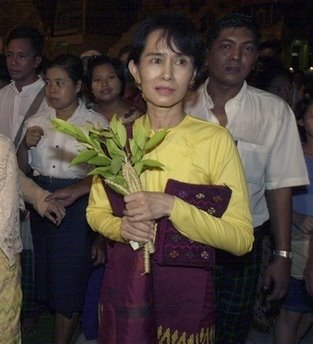


 Posts
Posts


