http://www.foreignpolicyjournal.com/2009/05/09/the-freedom-agenda-as-foreign-policy-lessons-for-the-new-administration/
May 9, 2009
by Eric Patterson and Jonathan Amaral
“America’s larger purpose in the world is to promote the spread of freedom-that it is the yearning of all who live in the shadow of tyranny and despair.”
-Barack Obama (2007)
“It is the policy of the United States to seek and support the growth of democratic movements and institutions in every nation and culture, with the ultimate goal of ending tyranny in our world.”
-George W. Bush (2005)
Introduction
Heated debate surrounds George W. Bush’s Freedom Agenda; however cheerleading democracy is nothing new in presidential rhetoric. As one scholar observes, “advancing freedom is an expression of the United States’ most sacred ideals” and has an “established parentage” of American executives, including Franklin D. Roosevelt, Harry S. Truman, John F. Kennedy, Jimmy Carter, Ronald Reagan, and Bill Clinton.[1]
In contrast to gallons of ink spilled on theories of democracy promotion and critiques of the Bush Doctrine, this essay considers the Freedom Agenda as foreign policy and assesses the results of the implementation of this constellation of discrete policies. We argue that the Freedom Agenda is more than words-it was an integral part of the Bush Administration’s foreign policy which has been funded and institutionalized by Congress, but which has only seen mixed results to this point. Because the Obama campaign pledged support for democracy promotion, we conclude with five lessons that the new Administration should consider when taking the next steps in promoting democracy and advancing human freedom.
9/11, the Bush Doctrine, and the Freedom Agenda
George W. Bush entered office pledging to follow a “humble” foreign policy and concentrate on domestic reform, but was goaded by 9/11 to formulate a new approach to address the dangers of state-sponsored terrorism. Traditional approaches to foreign policy (realism, liberal internationalism, etc.) were powerless to address the exigencies of the current strategic dilemma. The principles to this approach began taking form in a number of speeches such as a commencement address at West Point in the summer of 2006 and were shortly thereafter articulated in a uniform approach in the National Security Strategy of 2002, which mentions freedom and liberty five dozen times.[2]
That approach was the Bush Doctrine. Mark Amstutz points out four distinct elements of the Bush Doctrine for U.S. foreign policy, the fourth of which is the foundation for the Freedom Agenda:
1. A preponderant American is good for the world.
2. Multilateral cooperation is best, but the U.S. will act alone when necessary.
3. Every tool, including prevention and preemption, should be used to stop terrorists and rogue states from acquiring or using weapons of mass destruction.
4. The U.S. must champion human rights, freedom, and democracy.[3]
Many, such as Robert Jervis and John Lewis Gaddis, recognized that the Bush Doctrine outlined in the 2002 National Security Strategy of the United States (NSS) was a “grand strategy” for the United States. Gaddis argued that one way the NSS was innovative was its argument that hopelessness, not poverty, is the root cause of terrorism. The NSS asserts that lack of social and political liberty causes this hopelessness; therefore it is a vital national security imperative for the U.S. to spread freedom.[4]
Where did these ideas, particularly the focus on liberty and democracy, come from? Certainly, they are a part of historical U.S. discourse, and undoubtedly between 2002 and 2004 they were germinating within and being debated in the White House, U.S. government agencies, and Bush’s reelection campaign. They were also influenced by the book The Case for Democracy by Natan Sharansky, which Douglas Feith called “required reading” within the Administration. A former Soviet political dissident and Israeli politician, Sharansky champions the transformative capacity of democracy. His thesis, based in large part on his experience as a political prisoner who witnessed the collapse of the Soviet Union from the inside, is that the desire for freedom is universal, democracies do not make war upon one another, and democratic regimes should act in unison, demanding concessions from dictatorships to allow more freedom in order to foster internal change from within.[5]
In Bush’s case, he received a copy of the book just after the 2004 election. The president was taken with this vision. Sharansky’s argument paralleled and extended many of Bush’s ideas elaborated in the NSS and numerous speeches, they seemed to take the President’s notions to their logical conclusion. It was then that the President decided to meet with Sharansky just weeks later.[6] The result of this exchange was to formalize the thinking about democracy promotion and human liberty as the Freedom Agenda.[7] Six weeks later the president fully outlined the Agenda in his Second Inaugural address:
America’s vital interests and our deepest beliefs are now one. From the day of our Founding, we have proclaimed that every man and woman on this earth has rights, and dignity, and matchless value, because they bear the image of the Maker of Heaven and earth. Across the generations we have proclaimed the imperative of self-government, because no one is fit to be a master, and no one deserves to be a slave. Advancing these ideals is the mission that created our Nation. It is the honorable achievement of our fathers. Now it is the urgent requirement of our nation’s security, and the calling of our time.[8]
In his speeches, President Bush outlined a philosophy of freedom. That worldview is based on a number of key assumptions, rooted in the Western liberal tradition and U.S. history, from the Declaration of Independence to Harry Truman to Ronald Reagan, including:
• contra realpolitik, politics have moral content.
• the desire for freedom is universal
• those who are free have a moral obligation to help others who aspire to it
• free societies are characterized by human and civil rights and civil liberties.
• history is on the side of freedom due to inherent human desire for liberty.
• advancing human freedom is a vital interest of U.S. foreign policy.
In short, for President Bush the Freedom Agenda was not a tertiary policy priority it was at the center of his foreign policy after 9/11. The questions before us are how, how well, and with what consequences has the Freedom Agenda been implemented as foreign policy?
Implementing the Freedom Agenda
In a series of public speeches and fact sheets the Bush Administration trumpeted its activities under the Freedom Agenda. What did Administration do to advance the cause of freedom? In its early fact sheets,[9] the Administration focused specifically on democracy promotion and human rights initiatives, such as the following:
• Increased funds for democracy building. Doubled the federal budget for democracy programs, such as support for good governance, human rights and election monitoring, and funding for civil society, political parties, and independent media. For example the FY2009 budget requested $1.72 billion for such activities, as compared to $650 million in FY 2001.
• Publicly recognized champions of democracy. The President personally met with over 100 activists and dissidents from dozens of “unfree” countries and directed U.S. ambassadors to seek and meet such activists in their postings. This included not only dissidents from autocratic regimes like Burma and Belarus, but also individuals from China, Pakistan, Russia, and even Spain. Also, initiated legal funds and awards to recognize individuals, from the new Human Rights Defenders Fund to the Secretary of State’s Freedom Defenders Award and Diplomacy for Freedom Award.
• Engaged in multilateral democracy promotion. Proposed and supported the UN Democracy Fund, launched an annual Roundtable on Democracy at the UN General Assembly, and supported the G-8’s Partnership for Progress and a Common Future for countries in the “Broader Middle East and North Africa” (BMENA).
• Pressed “valued partners” like Egypt and Saudi Arabia to transition to free political systems. President Bush and his secretaries of state have met privately with foreign leaders and urged them to open their political systems to real competition as well as respect civil liberties and human rights.
More recently, the Administration broadened its reporting on the Freedom Agenda to include a broader array of initiatives that are integrated with democracy promotion, such as rational foreign aid, free trade, and humanitarian assistance.[10] Specific examples include the following:
• Smartened foreign aid strategies to focus on good governance, such as through the Millennium Challenge Accounts. The Millennium Challenge Corporation has provided $6.5 billion to 18 countries who meet stringent accountability criteria and commit via a compact to accountability.[11]
• Promoted free trade. The Administration strongly advocated the Doha Round, implemented 11 new bilateral free trade agreements, and has pressed for others (e.g. Colombia).
• Supported vital humanitarian aid. The President’s signature program was the AIDS program (Presidents Emergency Plan for AIDS Relief-PEPFAR), but the Administration also had initiatives on malaria, river blindness, and hookworm as well as has spent $1.8 million on food aid in 2007-2008.
Finally, many things are not mentioned in the fact sheets, such as support for democratic transitions and/or consolidation around the globe, including the liberation of Afghanistan and Iraq, support for a two-state solution in the Middle East, and the Middle East Partnership Initiative (MEPI). Writing about MEPI, Wittes and Yerkes demonstrate that Administration had profoundly increased its attention and financial resources to promoting democracy in the broader Middle East, by consistent cultivation of this forum as well as supporting the G-8’s Broader Middle East and North Africa effort (BMENA).[12]
Moreover, in order to institutionalize the Freedom Agenda, President Bush signed a new classified national security presidential directive (NSPD-58) in July 2008.
Congress and the Freedom Agenda
One aspect of institutionalization of the Freedom Agenda that has largely gone unreported is the role of Capitol Hill. Congress funds the Federal government, provides oversight and direction to the State Department and related agencies, and has been responsible in the recent past for major human rights and civil liberties legislation such as the Trafficking in Victims Protection Act of 2000 and the International Religious Freedom Act of 1998. What has been missed in the growing literature on the Bush Administration and the Freedom Agenda is how Congress has evolved on the issue, and come to support it.
We can best see this in how the 107th Congress gave little attention to democracy promotion in its fiscal year (FY) 2003 budget, and how that markedly changed over the subsequent five years. The State Department Authorizations Act for FY 2003 (passed just a year after 9/11 as part of Public Law 107-228) “expressed the sense of the Congress that the budget for the [State Department's] Bureau of Democracy, Human Rights, and Labor should be substantially increased,” but did not provide extra funding to that end. Congress also established and funded a modest “Human Rights and Democracy Fund” administered by the Bureau to “support defenders of human rights” and “promote and encourage the growth of democracy…in other countries.” That was all-two short paragraphs tucked into a massive authorization bill.
By 2005 a far more robust set of legislative options were promulgated by the Congress. Senators John McCain (R) and Joe Lieberman (D) introduced the “Advance Democracy Act of 2005,” which was simultaneously presented in the House of Representatives by Tom Lantos (D) and Frank Wolfe (R). Although the legislation did not proceed far in the 109th Congress, the original version of the Advance Democracy Act of 2005 would have instituted the following:
• Spent approximately two pages defining and defending human liberty and representative government.
• Declared that freedom and democracy in foreign countries is “a fundamental component of U.S. foreign policy.”
• Elevated issues of democracy promotion by adding it to the title of an existing Under Secretary of State: the Under Secretary for Democracy and Global Affairs.
• Created a new office of Democratic Movements and Transitions as well as Regional Democracy Hubs in U.S. missions in six regions.
• Established a Democracy Promotion and Human Rights Advisory Board to advise the Secretary of State.
• Called for a website reporting on democracy and human rights.
• Required each embassy in non-democratic countries to develop a plan to promote democracy and support individuals and organizations committed to democratic ideas.
• Provided monies for various funds on democracy promotion and human rights.
• Expressed the “sense of the Congress” that the U.S. government should strengthen its ties to other democratic countries and multilateral institutions (e.g. the Community of Democracies).
• Authorized an additional $250 million for democracy promotion over the next two years.
It is easy to gloss over the significance of this proposed piece of legislation. The Advance Democracy Act was profound in declaring freedom and democracy as “fundamental components” of U.S. foreign policy, and for providing real tools for promoting democracy such as a sizable new financial investment, additional staff, and clear directives to U.S. missions. All of this was in a text presented to Capitol Hill less than two months after the President’s Second Inaugural Address, clearly putting a large part of the Congress squarely in the President’s camp on this issue. This was a clear victory for the Administration and added valuable resources to implementation of the Freedom Agenda.
Indeed, between September 2002 and the introduction of the Advance Democracy Act on March 3, 2005 an evolution in thinking had not only occurred in the White House, but also on Capitol Hill. The President’s argument at West Point and in the National Security Strategy of 2002-that the expansion of liberty was fundamental to American ideals and interests-became a viewpoint shared across the political aisle. The hopes of securing the peace in Afghanistan and Iraq and the inspiration of an “Arab Spring” and the “Color Revolutions” combined with President Bush’s Second Inaugural speech to provide a vision of a free twenty-first century world empowered (in part) by the U.S.
In 2005 the Advance Democracy Act failed to pass the 109th Congress. However, the 110th Congress folded it into Public Law 110-53 as Title XXI, the “Advance Democratic Values, Address Non-Democratic Countries, and Enhance Democracy Act of 2007″ or the “ADVANCE Democracy Act of 2007″ which was signed by the president in August 2007.[13] The 2007 law closely mirrored the original version from 2005, and although it did not set up a new Office of Democratic Movements and Transitions, it does implement most of the other points adumbrated above, as well as the following:
• Directs the Secretary of State to staff new “Democracy Liaison Officers” assigned to regional and multilateral organizations, combatant commands, and regional public diplomacy centers.
• Directs the Assistant Secretary for Democracy, Human Rights, and Labor as well as Chiefs of Mission abroad to seek out, consult, support, and provide assistance to democratic actors in civil society as part of country-specific strategies for democracy promotion, including “issuing public condemnations of violations of … human rights, including violations of religious freedom, and visiting local landmarks and other local sites associated with nonviolent protest in support of democracy.”
• Mandates that the Secretary of State provide training (e.g. Democracy Fellows) and recognition (awards, incentives) for Foreign Service officers engaged in democracy promotion.
• Funds U.S. government and international democracy programs, such as $28 million for the UN Democracy Fund (2008-2009) and $3 million for Hungary’s International Center for Democratic Transition (2008-2010).
What is striking is that this fiscal authorization bill is unusual in its rich language of liberty and representative government. At times the document reads like the president’s Freedom Agenda speeches, referencing the Declaration of Independence and the UN Declaration of Human Rights. For instance, early in the Advance Democracy Act a lengthy justification of democracy and democracy promotion is advocated:
“It is the policy of the United States to promote freedom and democracy in foreign countries as a fundamental component of the United States foreign policy … to affirm fundamental freedoms and international recognized human rights … to condemn offenses against those freedoms and rights as a fundamental component of United States foreign policy … to protect and promote such fundamental freedoms and rights, including the freedoms of association, of expression, of the press, and of religion, and the right to own private property; to commit to the long-term challenge of promoting universal democracy … to support … free, fair, and open elections, … to strengthen cooperation with other democratic countries…”
The language herein often sounds as if it were directly lifted from President Bush’s speeches, such as the following from Section 2102 of the Act: “The development of democracy constitutes a long-term challenge that goes through unique phases and paces in individual countries,” or “to use the instruments of United States influence to support, promote, and strengthen democratic principles, practices, and values.” Likewise, the action items derive, or parallel, activities that President Bush called for two to four years ago.
In sum, the Freedom Agenda is simply not just presidential oratory, it is an integral part of the Bush Doctrine and the Administration’s “grand strategy” for U.S. foreign policy. Moreover, the intellectual commitments of the Agenda found strong allies on Capitol Hill that implemented far-reaching changes in how the Department of State approaches issues of democracy, civil liberties, and human rights. These changes were enshrined in law, buttressed with increased funding, and nurtured with Congressional oversight and annual reports. [1265]
Evaluating Success: the Freedom Agenda as Foreign Policy
We have argued that although President Bush’s Freedom Agenda fits clearly within trends in U.S. foreign policy that champion democracy, the Administration’s active commitment to this Agenda surpassed its predecessors by a significant margin. Furthermore, we have reported on the activities of the White House, the Executive branch, and the Congress to advance representative government and individual liberty worldwide.
So, how has the Freedom Agenda fared as a foreign policy? In other words, has the Freedom Agenda been successful? This begs the question, what is the measure of success for foreign policy? Former Secretary of State Madeline Albright says, “The purpose of foreign policy is to influence the policies and actions of other nations in a way that serves your interests and values. The tools available include everything from kind words to cruise missiles.”[14] With this in mind, has the Bush Administration accomplished what it wanted? Has it laid a foundation for future success of the Freedom Agenda? To answer these questions, we will briefly look at the elements we can analyze to report on success or failure: the inputs, outputs, and outcomes of the Freedom Agenda.
One way to think about the success of any project is to begin with its goals, consider the inputs and outputs of the system, and then evaluate the outcome against the original objectives. If we were designing a product, our goal would be to build and sell the product, our inputs would include human capital and materiel, the output would be the product, and a successful outcome would be the sale of said product.
First, the “inputs.” U.S. presidents and other high officials have routinely called for greater democracy abroad, but provided little real stimulus toward that end. Therefore, if President Bush was serious about the Freedom Agenda, then we should find more than words-we should find evidence of concrete activities, “inputs,” that were sown and cultivated over time into a harvest (outcome) of democracy and liberty. Are there such inputs?
The Administration would certainly have said so. Indeed, earlier in this paper we presented material from the White House’s “fact sheets” that detail numerous activities directly designed to promote freedom around the globe: presidential meetings with dissidents, speeches by the president and his proxies, the expansion of free trade agreements, work on Middle Eastern democracy such as MEPI and BMENA, increased funding for democracy programs, the liberation of Iraq and Afghanistan, and support for democratic movements and transitions, especially in Eastern Europe, the Caucuses, and the greater Middle East. Thus, the Administration meets the “input” test: certainly President Bush and his team took some specific, concrete actions to advance the Freedom Agenda.
However, inputs are not the ultimate measures of success. A job, such as building a house or a car, is not successful based on its inputs (e.g. hours labored, money spent, number of people on the project), but rather in terms of the outputs and ultimate outcome. Inputs are at best building blocks. In other words, inputs must coalesce into meaningful outputs, or products, of the system. Are there “outputs” of the Freedom Agenda?
The most important outputs of the Agenda are those structural changes and institutionalized practices adopted to implement the Freedom Agenda. On the domestic front, perhaps the most important “outputs” are when the president’s directives have been codified into law by the Congress. For instance, President Bush ordered the Secretary of State to direct her chiefs of mission to meet with supporters of democracy and speak against repression in their host countries. The President also called for increased funding for democracy promotion. In many cases, these ideas developed concurrently with the Congress, ultimately resulting in the Advance Democracy Act of 2007, which does these things and more (outputs). In addition, in July 2008 the president signed a new National Security Presidential Directive (NSPD 58) to institutionalize the Freedom Agenda within the federal government. One can also point to five years of investment in Iraq and seven years invested in Afghanistan, as well as various free trade agreements, and the on-again, off-again Middle East peace process based on the Roadmap’s “two state solution” as “outputs” of the Administration. Some of the outputs turned out to be “lemons,” but in the end, the Freedom Agenda in law was a major success “output” for the Administration.
Nevertheless, outputs again only tell a partial story with regards to measuring success. Real success is not measured just in outputs, but in outcomes. To return to an automobile analogy, a corporation can engineer and build a car, but if no one purchases it, the successful operational “output” can nonetheless be a failure with strategic consequences.
Foreign policy outcomes are intricate and therefore notoriously tricky to parse, both due to the difficulty of examining direct causal evidence as well as the complexity of independent variables affecting the desired outcome. Additionally, the lengthy time horizon makes such analysis problematic (e.g. George Kennan’s containment and the end of the Soviet Union). It is simply impossible to completely control for all the variables involved, just as it is impossible for the U.S. to control world populations and foreign governments.
Can the Agenda point to successful outcomes of democracy and human flourishing? Are we closer to that vision in 2008 than we were in 2000? Are the seeds sown in the last few years likely to make the world a more free and democratic place in the next five years? The next ten years?
The world is a more democratic place than it was a decade ago, largely due to the Color Revolutions and the continuing consolidation of democracy in parts of Africa, Asia, and Latin America. However, these were not caused by the Bush Doctrine. Ongoing democratic transitions and consolidations, from Liberia to Ukraine, did receive some modest “inputs” along the way, but it is unclear that the Freedom Agenda played any role. It is simply too soon to tell in the case of Afghanistan and Iraq-both of which were established as democracies following military intervention justified in terms of U.S. national security interests, not democracy promotion. Similarly, the Middle East Roadmap appears to be dead and, as one scholar points out, we are experiencing a concurrent rise in authoritarian alternatives like China and Venezuela.[15]
It is more likely that the “hard evidence’ of the Freedom Agenda’s efficacy will be in the areas of free trade (establishing new free trade areas), smart development aid (e.g. the Millennium Challenge Corporation) and human flourishing (e.g. PEPFAR, the malaria initiative) rather than in terms of regime change. Perhaps most importantly, these initiatives-when combined with other ventures such as MEPI-weave the Agenda into a larger tapestry of interconnected policies and values that are now well established.
Finally, the Freedom Agenda and its progeny, most notably the Advance Democracy Act, are now a standard by which the content of U.S. foreign policy goals are evaluated by people around the world. The Agenda has forced the U.S. government to decide in favor of universal democracy promotion as a key objective of U.S. foreign policy and willfully connect it to issues of human rights, private property, and religious freedom.
Hence, the U.S. will find itself under increasing pressure to address the anachronisms and perceived hypocrisies that are discordant in its foreign policy, such as support for authoritarian regimes in the interests of “stability.” Most importantly, as the Freedom Agenda was largely embraced by candidate Obama, it seems obvious that American will continue contributing toward the desired outcomes of global freedom and democracy.
Conclusion: Lessons for the New Administration
It is critical for the new Administration to learn from the successes and failures of the Bush era. Both of the recent presidential contenders supported the Freedom Agenda. Senator McCain was one of the primary sponsors of the Advance Democracy Act and Senator Obama got on the bandwagon as a co-sponsor. Regarding the victor, political scientist Amy Zegart writes, “Obama has managed to out-freedom Bush.” She concludes that Bush’s “grand strategy will undoubtedly set the course of American foreign policy for the next administration, and possibly the next generation.”[16]
“Out-freedom Bush?” Consider one of Obama’s most important foreign policy speeches, made in 2007 at the Chicago Council on Global Affairs:
“We have heard much over the last six years about how America’s larger purpose in the world is to promote the spread of freedom-that it is the yearning of all who live in the shadow of tyranny and despair.
“I agree. But this yearning is not satisfied by simply deposing a dictator and setting up a ballot box. The true desire of all mankind is not only to live free lives, but lives marked by dignity and opportunity; by security and simple justice…. It also requires a society that is supported by the pillars of a sustainable democracy: a strong legislature, an independent judiciary, the rule of law, a vibrant civil society, a free press, and an honest police force. It requires building the capacity of the world’s weakest states and providing them what they need to reduce poverty, build healthy and educated communities, develop markets, and generate wealth…. As President, I will double our annual investments in meeting these challenges to $50 billion…. Part of this new funding will also establish a two billion dollar Global Education Fund that calls on the world to join together in eliminating the global education deficit, similar to what the 9/11 commission proposed. Because we cannot hope to shape a world where opportunity outweighs danger unless we ensure that every child, everywhere, is taught to build and not to destroy…. Finally, while America can help others build more secure societies, we must never forget that only the citizens of these nations can sustain them.[17]
Similar language by the president-elect and his advisors abounds. So, what are the lessons regarding a Freedom Agenda for the Obama Administration? First, remember that the Freedom Agenda was not, and is not, without its skeptics in government. The most important of those skeptics are those within the Administration or within the bureaucracy who do not support the Agenda, or in the latter case, do not support the president. It is telling, for instance, how rarely senior Bush Administration officials spoke about the Agenda, freedom, and democracy in their speeches. This hush is obvious when one combs through the speeches of former Secretary of State Colin Powell and his successor’s first year in office, as well as the language of other senior leaders such as Vice President Cheney, Secretaries of Defense Rumsfeld and Gates, the Deputy Secretaries at the Departments of State and Defense, and the like.[18] Many of these individuals are self-proclaimed “realists” and they may have thought that President Bush’s early speeches on liberty and democracy were just rhetoric to smile at. If this is the case, the president ultimately surprised them with his dogged determination to press the Freedom Agenda.
Ergo, a lesson for the next president is that the senior leadership must be on board and must speak consistently about human liberty and democratic values, because the world community can easily spot the lacunae. So too can the bureaucrats who populate federal agencies.
A related, second barrier to implementation of the Agenda is institutional and bureaucratic resistance. Those who represent the U.S. abroad, be they in military uniform, a government aid worker, or a diplomat, are busy people with a full range of prescribed activities. They feel they do not have time for more work. And the Freedom Agenda is not just more work, it is uncomfortable and tiresome work because it demands that U.S. officials at foreign embassies report on barriers to democracy, including religious persecution, as well as meet with representatives from civil society who are challenging barriers to democracy. Such actions are not just more tasks, they have every likelihood of disrupting the relationship between the ambassador’s team and their local interlocutors.
As one goes through the documents and statements of U.S. government agencies such as the State Department, it is remarkable how little the Freedom Agenda has been accepted as central to the life of the Foreign Service. A single glaring example may suffice: in early 2008 the United States recognized the independence and statehood of Kosovo, a tiny new “country” that had won its freedom from Serbia thanks to a NATO bombing campaign nearly a decade ago. Amazingly, when one goes through the rationale for supporting Kosovar independence in the speeches of Secretary of State Rice, Under Secretary Burns, and Assistant Secretary Fried, there is absolutely no linkage whatsoever to the Freedom Agenda or even normative support for national self-determination and democratization. The Agenda has just not sunk in.
Consequently, the president-elect must have a disciplined message across his Administration on advancing freedom and enforce the implementation of such efforts. However, if the President of the United States finds it difficult to control his Cabinet and the massive bureaucracy of the federal government, it is even truer that the U.S. simply cannot control outcomes around the world. The U.S. can speechify, fund, pamphletize, praise, caution, and even invade other countries in order to advance democracy, but its success largely lies in the hands of local leaders in foreign countries. Thus, the next president needs to concern himself with what type of activities are most likely to actually promote human liberty and democratic institutions around the world. It may very well be that some of our current efforts do not result in our preferred outcomes and that we will have to change course, such as diverting funds from supporting election in foreign countries to supporting foreign elementary education in order to cultivate a literate citizenry.
Another problem of the Freedom Agenda faced by the Bush Administration was its weak connections to other strands of U.S. foreign policy. This disconnectedness can be seen in at least two areas. The first is the disjointed nature of the essential freedom argument: the Freedom Agenda spends much of its rhetorical energy on notions of political liberty and democratic structures, but says little about other features such as religious liberty or private property. In other words, the Freedom Agenda as a normative vision privileges certain elements of liberty (e.g. voting) over others (e.g. religious freedom). Government actors engaged in these issues are scattered across multiple bureaus and agencies with little interaction. A good example of this is the complete disconnect between the Freedom Agenda and the 1998 International Religious Freedom Act (with its own State Department Office and an independent Commission on International Religious Freedom). A new president should re-tool the Freedom Agenda by explicitly defining how its constituent policies (e.g. human rights, private property, free trade, and religious freedom) relate to and reinforce one another.
Even more problematic, however, is the disjuncture between the Agenda and other major U.S. foreign policy goals. As Jennifer Windsor has argued, it is simply unclear how the Agenda relates to energy policy, education, engagement with the UN, and a host of other priorities.[19] The U.S. government needs to be explicit about the limits of the Agenda, about how we try to mediate between this and other vital interests (such as access to petroleum or fighting terrorists), and the fact that the Agenda will not always trump other strategic objectives. The new president must engage in this kind of frank discussion enhance the credibility of U.S. democracy promotion efforts.
By far, the majority of criticism of the Bush Administration is about the means of advancing the Freedom Agenda, not its ends. Wittes and Yerkes are among many who argue that linking democracy promotion to the war in Iraq has harmed the Freedom Agenda worldwide.[20] Larry Diamond, a foremost scholar of democracy and a thought leader for Paul Bremer’s Coalitional Provisional Authority, recently critiqued the Bush Administration as “pretentious, unilateral, and impulsive,” but recently wrote in a “progressive” magazine, “As we disengage from Iraq, we must find ways … to renew the freedom agenda if we are going to serve our long-term security interests in the region.”[21] Thomas Carothers, a senior fellow at the Carnegie Endowment for International Peace, does not dispute that democracy promotion must continue into future administrations, but he scathingly demands a “decontamination” of U.S. foreign policy from George W. Bush’s policies (e.g. Guantanamo and the detention of enemy combatants) and a “repositioning” and “recalibration” of democracy promotion.[22] The argument that these scholars are making is that democracy can never be promoted by force. We tend to disagree-democracy was imposed at the end of World War II on Germany and Japan, but it is worth remembering that the Bush Administration said little about promoting democracy in the lead up to the Iraq invasion-the war was a national security imperative. The application of the Freedom Agenda to Iraq was murky before March 2003.
Nonetheless, the next Administration will undoubtedly confront at least one opportunity for intervention, most likely in response to an armed crisis in the developing world. A lesson to be drawn from the past decade is that a stated goal of any military intervention, whether national security or humanitarian in focus, should be human liberty and democratic structures.
In conclusion, the ideas within the Freedom Agenda are nothing new-it is an expression of American values that hearkens back to the founding of the republic. Nevertheless, the Bush Doctrine is new for it defines the Freedom Agenda of individual liberty and democratic institutions as a key U.S. foreign policy goal. What is also new is the institutionalization of democracy promotion and related activities by executive order and Congressional legislation as well as the embrace of this signature piece of President Bush’s grand strategy by both of his would-be successors. The Freedom Agenda is foreign policy, but only time will tell us if our children’s world will be freer and more prosperous due to the vision and actions of this Administration.
____________________
[1] Jennifer Windsor, “Advancing the Freedom Agenda: Time for a Recalibration?” in The Washington Quarterly 29:3 (Summer 2006), p. 32.
[2] Mark Amstutz reports that in the 2002 National Security Strategy “the term freedom is used at least forty-six times, while the notions of democracy and liberty appear, respectively, thirteen and eleven times.” Mark Amstutz, “Reinhold Niebuhr’s Christian Realism and the Bush Doctrine” in Christianity and Power Politics Today, Eric Patterson, ed. (New York: Palgrave-Macmillan, 2008), p. 124.
[3] I have paraphrased Amstutz’s longer material. Here it is in its entirety: 1. Belief that unipolarity is conducive to peace and that a preponderance of American power can contribute to a peaceful and prosperous world order 2. The need for multilateralism to advance peace, freedom, and security, but a willingness to act unilaterally when necessary 3. Belief that the United Sates must be willing to use preemptive and preventive force to confront terrorist groups and rogue states with weapons of mass destruction (WMD) 4. The need for the United States to champion human rights and help foster political democracy.
[4] John Lewis Gaddis, “A Grand Strategy” in Foreign Policy (November/December 2002). Robert Jervis recognized the Bush Doctrine as a grand strategy, but strangely left out the democracy promotion component entirely. See his “Why the Bush Doctrine Cannot Be Sustained” in Political Science Quarterly 120, no. 3 (2005).
[5] First page of Preface to the paperback edition by Ron Dermer.
[6] Others have reported the importance of Sharansky’s book and the author himself on the Bush Administration. Former Under Secretary of Defense and Rumsfeld confidante Douglas Feith, in his book War and Decision (New York: HarperCollins, 2008), says he did little outside reading while in office due to the pace of the job, but he did read Sharansky as it was virtually “required reading” in the Administration (p. 452). Interestingly, Glenn Kessler, in The Confidante (London: St. Martin’s, 2007), a book about Condoleezza Rice, concurs about the influence of Sharansky on top Administration officials (pp.89-91). Jacob Weisberg’s The Bush Tragedy (New York: Random House, 2008) lambasts President Bush, the Administration, and Sharansky. He calls the Freedom Agenda “the exfoliated version” of “Sharanskyism”
(p.214-215).
[7] Fourth page of the Preface to the paperback edition by Ron Dermer.
[8] Second inaugural.
[9] For instance, see the June 5, 2007 “Fact Sheet: Advancing Freedom and Democracy Around the World” at http://www.whitehouse.gov/news/releases/2007/06/20070605-6.html.
[10] See the July 24, 2008 “Fact Sheet: Advancing the Freedom Agenda” at http://www.whitehouse.gov/news/releases/2008/07/20080724-8.html.
[11] See http://www.mcc.gov/press/releases/documents/release-092308-billions.php.
[12] For a thoughtful description and discussion of MEPI, see Tamara Cofman Wittes and Sarah E. Yerkes “The Middle East Freedom Agenda: An Update” in Current History (January 2007).
[13] PL 110-53 is the “Implementing Recommendations of the 9/11 Commission Act of 2007″ and it is a large, consolidated bill covering many agencies that includes much of that year’s Foreign Relations Authorization Act. The bills mentioned in this essay can be found at the Library of Congress website, www.thomas.loc.gov.
[14] Madeline Albright, The Mighty and the Almighty (New York: Harper Collins, 2007): see her chapter “Dueling with Dictators” for a discussion of this oft-quoted remark.
[15] Windsor, 2006.
[16] Amy Zegart, “The Legend of a Democracy Promoter” in The National Interest Online (September 16, 2008). Available at http://www.nationalinterest.org/Article.aspx?id=19688.
[17] The transcript of this address is available at http://www.thechicagocouncil.org/dynamic_page.php?id=64.
[18] We have done a careful search of the speeches of these individuals and found that until about 2007, Administration officials rarely mentioned the Freedom Agenda. Since then, it is primarily Secretary of State Rice and National Security Advisor Hadley who utilize the president’s language on the issue. Bizarrely, Secretary Rice talks about a “democracy agenda” about as much as the President’s “freedom agenda,” suggesting a political scientist’s focus on institutions rather than the President’s emphasis on values.
[19] Windsor, 2006.
[20] Wittes and Yerkes, 2007.
[21] Larry Diamond, “Pursue a New Freedom Agenda” in Democracy: A Journal of Ideas, Issue #6, Fall 2007. Available at www.democracy journal.org/ID6557.
[22] See Carothers, 2007 and Thomas Carothers, “The Backlash Against Democracy Promotion” in Foreign Affairs (March/April 2006). To be fair, Carothers recognized that the Bush Administration had a particularly hard path in front of it in advancing the Freedom Agenda: it did so in the aftermath of 9/11, it took the Agenda to the area least favorable to democracy in the world (the Middle East), it was hampered by a reluctance within the entrenched American bureaucracy and senior officials in the Administration itself to move forward on the Agenda, and the U.S. has competing imperatives such as rooting out terrorists and access to oil.
Sunday, May 10, 2009
The Freedom Agenda as Foreign Policy: Lessons for the New Administration


Saturday, May 9, 2009
No more denial: Children affected by armed conflict in Myanmar (Burma)
http://www.reliefweb.int/rw/rwb.nsf/db900SID/EDIS-7RSPGF?OpenDocument
Source: Watchlist on Children and Armed Conflict
Date: 06 May 2009
May 6, 2009, New York - The UN Security Council should move swiftly to protect the tens of thousands of children in Myanmar who are raped, abducted and recruited as soldiers by the Myanmar armed forces and non-state armed groups, according to Watchlist on Children and Armed Conflict's new report released today.
No More Denial: Children Affected by Armed Conflict in Myanmar (Burma), is released this week to mark the first anniversary of devastating Cyclone Nargis that hit Myanmar in May 2008 and to draw urgent attention to the plight of children in Myanmar who have been subject to heinous violations of their rights every day since the Cyclone and for decades prior. The release of the 60-page study also coincides with the UN Secretary-General's preparation of his new report on children and armed conflict in Myanmar soon to be delivered to the Security Council.
"Too much time has been wasted denying the extent of the crisis that children in Myanmar's conflict zones are facing. The UN must act now to protect these children and to bring the perpetrators to justice," said Julia Freedson, Director of the Watchlist on Children and Armed Conflict, a global network of non-governmental organizations based in New York. "Now is the time for the Secretary-General to fully document the real situation in Myanmar and for the Security Council to take strong action in response to such atrocities," she said.
No More Denial is the most comprehensive and up-to-date report available on the situation facing children in Myanmar's armed conflict areas. It documents killing and maiming of children, child soldiering, rape, abduction, forced displacement, attacks on schools, denial of humanitarian access and other violations. It also charges the UN Security Council with remaining largely silent despite evidence from UN and local sources of these violations.
"When I hear the voices of these children, I ask how can anyone deny this reality – these violations are happening right before our own eyes," said Esther Lay, Programme Director at the Karen Human Rights Group (KHRG), an independent local human rights group focusing on Burma. "On behalf of our children and communities, we implore the UN to work with local civil society to help us protect the children and reclaim our people's future."
Children as young as nine constantly face the threat of forced recruitment by security forces, non-state armed groups and civilians, even in public places such as bus or train stations and markets. Armed forces have also occupied schools, recruited teachers and students for forced labor and planted landmines close to schools or on the paths to school. Approximately one in five children in the eastern conflict areas dies before reaching the age of five, often due to denial of humanitarian assistance and medical treatment by the Myanmar authorities. This rate is comparable to some the world's deadliest conflict zones, including Democratic Republic of Congo and Afghanistan.
The Watchlist's report includes dozens of concrete policy recommendations. Highlights include:
- The UN Security Council should impose targeted measures (sanctions) on the Myanmar government and relevant non-state armed groups if no real progress is achieved in ending the recruitment and use of children within a specified time frame. These may include travel bans, asset freezes or arms embargos.
- The Secretary-General should provide information to the Security Council on all six grave violations called for under SC Resolution 1612, including sexual violence, attacks against schools, denial of humanitarian assistance and others. This should be done by working in close collaboration with local civil society organizations that have access to conflict-affected areas.
- The UN should leverage the support that came in during the cyclone to increase humanitarian access and aid in conflict areas.Contact: Yvonne Kemper (New York)
Contact:
Yvonne Kemper (New York)
+212-551-2981 or +1 201 920 3119 (mobile)
email: yvonnek@watchlist.org
With the exception of public UN sources, reproduction or redistribution of the above text, in whole, part or in any form, requires the prior consent of the original source. The opinions expressed in the documents carried by this s
Influenza A (H1N1) Q & A(新型インフルエンザQ&A・英語版)
http://www.fukushihoken.metro.tokyo.jp/iryo/kansen/sinpojiumu/SwineInfluenzafaq/index.html
Q What are the human symptoms of Influenza A(H1N1)?
A Symptoms such as fever, lethargy, loss of appetite, and
coughing are seen. There are also patients who complain
of symptoms including a runny nose, sore throat, nausea,
vomiting, and diarrhea.
Q How does Influenza A(H1N1) spread?
A The virus is transmitted from person to person, through
contact with saliva droplets (coughing or sneezing) or with
contaminated surfaces and materials, including hands, toys,
plates, glasses, computer keyboards, telephones, door handles,
bathroom faucets and other daily living utensils.
Q What protective steps should I take?
A There have been no confirmed cases of people infected
with Influenza A(H1N1) in Japan (as of April 30).
If you plan to go to the United States or Mexico,
you are advised to:
1) Wear a mask to prevent infections through coughs or sneezes
2) Wash your hands often
3) Consult a local doctor if flu-like symptoms appear such as fever
and cough
In addition, those who had flu-like symptoms during their stay abroad
or have such symptoms upon their return, are requested to report
this to the quarantine office.
Q I don’t have any symptoms, but is there a place where I can be tested
for this?
A You do not need to be tested if you do not have any symptoms.
Please note that there are no tests that can confirm infection
before the symptoms appear even for those with the high
possibility of being infected due to their travel abroad.
Please consult the public health center if any symptoms
appear within 10 days of your return. If you have had
close contact with an infected person, please also call
the public health center.
http://www.metro.tokyo.jp/INET/OSHIRASE/2009/04/20j4u501.htm
Q Is there a vaccine for Influenza A (H1N1)?
A There is currently no effective vaccine to protect
humans from Influenza A(H1N1). It is also believed
that seasonal influenza vaccines are not effective
against this virus. However scientific work is now
underway on the development of a vaccine with the
aim to have it available within the year.
Foreign aid continues flowing to Myanmar
http://enews.mcot.net/view.php?id=9842
Foreign aid continues flowing to Myanmar
Hanoi (VNA) – More foreign aid continue coming to Myanmar in order to help cyclone victims for the recovery of their livehood, according to news agencies.
The Japan International Cooperation Agency (JICA) has donated fishery equipment for cyclone survivors to use in fishery recovery work in storm-hit areas in the country, agencies said, citing the weekly 7-Day News in Myanmar on May 7.
The equipment worth 120,463 USD, which included water pumps and engines, refrigerators, fishing nets, oxygen bottles and other fishery-related materials, were handed over to the Myanmar Fishery Department recently by JICA.
The Japanese government will also provide 3 million USD more of aid through the International Organization for Migration (IOM) to rebuild the remaining damaged houses in the cyclone-hit regions.
Meanwhile, the United Nations Food and Agriculture Organization (FAO) will extend its aid supplies to Myanmar cyclone victims later this month.
The aid supplies for the survivors in four cyclone-hit townships include tractors, cattle, paddy seed and vegetables seedlings, Xinhua news agency reported, citing Myanmar’ Biweekly Eleven.
Earlier this year, FAO donated two batch of poultry and cattle to cyclone victims.
Deadly tropical cyclone Nargis, which occurred over the Bay of Bengal, hit five divisions and states -Ayeyawaddy, Yangon , Bago, Mon and Kayin on last May 2 and 3. The storm killed 84,537 people, injured 19,359 and left 53,836 people missing. (VNA)
Today In Asia : Last Update : 13:07:15 8 May 2009 (GMT+7:00)
Fw: [burmainfo] FW: ビルマ:サイクロンから1年 弾圧は続く(ヒューマン・ライツ・ウォッチ、2009年5月1日)
━━━━━━━━━━━━━━━━━━━━━━━━━━━━━━
ビルマ市民フォーラム メールマガジン 2009/5/8
People's Forum on Burma
━━━━━━━━━━━━━━━━━━━━━━━━━━━━━━
ビルマ情報ネットワーク(BurmaInfo)からのメールを転送させていただき
ます。
(重複の際は何卒ご容赦ください。)
PFB事務局
http://www1.jca.apc.org/pfb/
━━━━━━━━━━━━━━━━━━━━━━━━━━━━━━
以下、ご紹介させていただきます。
ビルマ情報ネットワーク (http://www.burmainfo.org)
箱田徹
----
報道発表(報告書発表) 日本語訳
ヒューマン・ライツ・ウォッチ www.hrw.org
ビルマ:サイクロンから1年 弾圧は続く
投獄された活動家と草の根の援助要員を釈放せよ
英語オリジナル:http://www.hrw.org/en/news/2009/04/30/burma-one-year-after-cyclone-repression-continues
(ニューヨーク、2009年5月1日) - サイクロン「ナルギス」がビルマに未曾有の
被害を引き起こして今月2日で1年が経つ。「ビルマ軍事政権は被災者に独自に人
道援助を提供した、あるいは政府の対応を批判としたとして投獄されている人々
をすべて釈放すべきだ」ヒューマン・ライツ・ウォッチは今日、このように述べ
た。サイクロン「ナルギス」は2008年5月2日にビルマのイラワジデルタ地域を襲っ
た。約14万人が亡くなったとされ、240万人が甚大な被害を受けた。
サイクロンの襲来直後、ビルマ政府は援助活動をなかなか本格実施せず、国際人
道機関に対しては被災地へのアクセスの許可を渋った。また今日までに、サイク
ロン被災者の救援活動を行おうとした国内の援助要員のうち、ビルマの超人気喜
劇俳優ザガナ氏など少なくとも21人に不当判決を下し、投獄している。
「サイクロン被災者の基本的自由は、サイクロン以前とほとんど変わらず制限さ
れたままだ。ドナー側、および中国などビルマ軍政の友好国は、軍政幹部に対し
て、ザガナ氏ら被災者支援を行った活動家を釈放するよう強く働きかけるべきだ」
ヒューマン・ライツ・ウォッチのアジア局長代理エレーン・ピアソンはこのよ
うに述べた。
ザガナ氏は草の根ボランティア数百人を組織し、援助物資の募集とサイクロン被
災地での配付を行っており、外国メディアの取材に対してビルマ軍事政権=国家
平和発展評議会(SPDC)を批判した。当局は2008年6月に氏を「公序紊乱」などの
容疑で逮捕。氏は不当な裁判によって59年の刑を下され、その後に刑期は35年に
減刑された。現在カチン州ミッチーナの刑務所に収監されているが、これには明
らかに家族と引き離す意図がある。ザガナ氏の家族は、氏の健康がすぐれないに
も関わらず、十分な治療を与えられていないと訴えている。
ヒューマン・ライツ・ウォッチはまた、援助機関が忍耐強く援助活動を行う一方
で、ビルマ政府は、サイクロン復興のための支出を透明性が確保された形で大幅
に増やす必要があると述べた。
昨年のサイクロン「ナルギス」襲来後、ビルマ政府は、人道援助機関が援助物資
を輸送し、被災地で配付するのに必要なアクセスを得るための初期段階での努力
を妨害。軍政は緊急事態に対処する経験を積んだ外国の人道援助要員へのビザ発
給を拒否した。またアメリカ合衆国、イギリスとフランスの派遣した軍艦の援助
物資を最後まで陸揚げすることを許可せず、貴重な時間を浪費し、避けられたは
ずの被害を発生させた。
潘基文国連事務局長がデルタ地帯を訪問した5月末には状況は改善した。国連と
東南アジア諸国連合(ASEAN)はビルマ政府との協定を仲介。この三者は「三者
コア・グループ」(TCG)を設置し、援助とその後の復興事業を調整する上で中
心的な役割を果たした。同グループの設置以来、依然若干の規制は実施されてい
るが、支援要員と人道援助要員へのアクセスは徐々に改善されている。
投獄中の活動家の釈放を
サイクロンの直後から、ビルマ国内の民間団体や仏教僧、キリスト教系の慈善団
体、以前から活動していた国際組織の現地スタッフらが、きわめて困難な状況下
で、当局による移動や被災地へのアクセスの制限を何とかすりぬけつつ、被災地
で救援活動を行った。こうした人々の活動がなければ、救援は遅れ、死者の数は
もっと増えていたと思われる。
こうした努力に対し、政府は続く数ヵ月の間に、ザガナ氏ら、救援活動に関わっ
た少なくとも21人を逮捕した。
ザガナ氏以外にも、次の援助関係者が投獄されている
・エイカインウー氏(24)は『エコ・ヴィジョン・ジャーナル』誌記者で2年の刑、
チョーチョーテイン氏は『ウィークリー・ジャーナル』誌の元記者で7年の刑を
宣告されている。この2人のジャーナリストは2008年7月、サイクロン被災者をラ
ングーン(ヤンゴン)に案内し、被災者が赤十字国際委員会と国連開発計画に面
会した際に通訳を務めたあと逮捕された。
・ミンテイントゥン氏は2008年7月に逮捕され、非公開裁判を経て2009年3月に17
年の刑を宣告された。氏はマレーシアに住むビルマ人移民労働者だったが、サイ
クロン後にマレーシアで募った寄付を元手にして、援助物資を配付するためビル
マに帰国していた。
・医師のネイウィン氏は2008年6月14日に、サイクロン被災者の埋葬費カンパを
行ったとして、娘のピョーピョーアウン氏と共に逮捕・投獄された。この親子は
「死者埋葬グループ」を結成したところだった。ネイウィン氏は1989年~2005年
まで政治活動を理由に投獄されていた。二人は2009年2月に非合法結社法違反容
疑で起訴された。同法は「法と秩序、平和と安定、または安全で確実な通信・交
通を何らかの形で阻害するかもしれない行為を試み、扇動し、奨励し、あるいは
教唆するか……または……政府機構の秩序に影響を与えるか、それを破壊するか
もしれない行為を試み、扇動し、奨励し、あるいは教唆する組織」を全面的に禁
止している。ピョーピョーアウン氏はさらに「公序紊乱」を引き起こす文書を発
表したことでも有罪判決を受けた。
・現在も収監されており、既に判決が出ているか、まだ公判審理中の援助関係者
は次の通り(敬称略)である。チョーチョータン、テットゾー、アウンチョーサ
ン(いずれもジャーナリスト)、ミャットゥ(元政治囚)、ティンティンチョー、
インインウィン(両人とも「88世代学生」グループ)、リンテッナイン、ポンペ
イッチウェ、セインヤザートゥン、ウェイリンアウン(いずれも学生活動家)、
チョーチョティン、ニーミョフライン、テインジーウー(いずれも国民民主連盟
=NLD党員)、ゾーナイン(俳優)、ニャントゥン(現地の援助活動家)
「サイクロン「ナルギス」の被災者に対するビルマ政府の無関心さに光を当てた
として投獄された援助関係者や活動家の悲惨な境遇からは、ビルマ軍政の偽善ぶ
りがはっきり見てとれる。ビルマ政府は自分たちの手柄になるときは海外からの
支援金や援助を喜んで受け入れるが、過酷な状況にある被災者を自らの手で救お
うとする決意にあふれた人々は容赦なく弾圧している」 ピアソンはこのように
述べた。
ビルマ政府は自ら援助を行うべき
「三者コア・グループ」(TCG)は今年2月に「ナルギス後復興準備計画」
(PONREPP)を発表。この計画は、同グループによれば「生産的な生活、健康な
生活、安心の出来る生活を促進するための人間中心のアプローチ」である。この
計画は6億9千万ドル(690億円)の資金を必要としているが、現在までに集まっ
たのは3億ドル(300億円)である。計画によると、ビルマ政府は、10億ドル
(1000億円)を超すと推計される復興資金を確保するため、こうした国際社会の
支援額と同額を拠出することとされている。しかし、政府がこれまでに実際にど
れだけの額の拠出を約束したのか、あるいは実際に拠出したのかはまったく明ら
かにされていない。
ヒューマン・ライツ・ウォッチは、ビルマ政府は、復興事業に対して十分な額を
拠出することで、自らのコミットメントを示すべきであると述べた。ビルマ政府
は約35億ドル(3500億円)の外貨準備を有し、天然ガス輸出により毎月約1億
5000万ドル(150億円)の収入があると見られる。政府が実際にどれだけの額を
復興事業に用いたのかは定かではないが、ともかくビルマ政府は、国内のほかの
場所についてはインフラ事業を行っている。その一例は、ビルマの都市からはる
か遠くにつくられた、贅を尽くした仏教寺院、官庁街、複数車線の自動車専用道
路に修繕されたばかりの空港を備えた新首都ネーピドーである。
ビルマ軍事政権が、ビルマ国内の多くの貧困層のための食糧や保健、教育に資金
を使わず、軍事費や新首都ネピードーの建設などの貧困層の裨益しない大規模プ
ロジェクトに資金をつぎ込んでいることを、ビルマの活動家は長年批判をしてき
た。たとえば、ビルマ国内でHIV/AIDSが広範に流行しており、国際組織や地元の
コミュニティーグループがHIVと生きる人びとの予防サービスを行うために多大
な努力をしているにも拘わらず、最も最近の統計によると、ビルマ軍事政権は、
国内のHIV/AIDSプロジェクトに年に20万ドル(2000万円)以下しか使っていない。
「ビルマ軍政幹部は、政府資産を自国民の福祉に投入する代わりに、自分たちの
ポケットに押し込んでしまうことで悪名高い。ドナーたちは、サイクロン復興事
業を資金面で可能にするため、軍政は自らの資産の一部を用いるべきだと強く主
張すべきだ」 ピアソンはこのように述べた。
ドナー側は、援助が最も弱い立場の人々に確実に届くようしなければならない
ヒューマン・ライツ・ウォッチは、2008年7月に、詳細な書簡を発表した。そし
てドナー側に対し、人道援助機関が公平性、アカウンタビリティ、コミュニティ
参加という国際基準に従って援助を実施することができるよう、ビルマ軍事政権
に対し、人道援助機関が必要とするアクセスを許可するようはたらきかけること
を求めた。ヒューマン・ライツ・ウォッチは国際社会に対し、援助が、支援をもっ
とも必要とする人々に確実に届くようにした上で、復旧事業の成功に必要な資金
をプレッジするよう求めた。イラワジデルタの状況は確かに大きく改善している
が、これらの諸原則は現在も有効であり、支援活動の基準となるべきものである。
ヒューマン・ライツ・ウォッチは、連邦団結発展協会(USDA)のような政府を後
ろ盾とする組織や、軍政幹部と緊密な関係にある民間企業、とくに米・豪・EUの
制裁リストに載っている会社については、国際社会が資金提供して行われる復興
事業には絶対に関与させないよう求めた。
USDAはビルマ国内の政治弾圧と人権侵害に深く関与する官製大衆団体である。ビ
ルマ政府はこれまでも、繰り返し、同国内で活動する人道援助機関にUSDAとの協
力を強要しようとしてきた。ヒューマン・ライツ・ウォッチは、同協会が人権侵
害に関与していることに長年懸念を表明してきた。2007年9月のラングーンでの
大規模な抗議行動の際には、USDAの民兵部門と、関係する民兵組織である「スワ
ン・アシン」が各所で投入され、非暴力のデモ参加者の身柄の拘束や殴打、脅迫
を行っていた。国連機関は、USDAがこうした弾圧に加わっていることを踏まえて、
この団体と共同で開発事業を行うことを避けてきた。
ヒューマン・ライツ・ウォッチは、確かに大量の時間とお金がイラワジデルタに
使われているが、ビルマのほかの地域の人道状況はきわめて深刻なままである、
と述べた。『国連人間開発報告書』最新版では、ビルマは177の国・地域のうち
132位だった。深刻な貧困が引き続き重大な問題となっており援助の増額と開発
の振興が必要とされる地域は、アラカン州北西部、チン州、東部ビルマの紛争地
帯である。食糧農業機関(FAO)と世界食糧計画(WFP)が行った最近の調査によると、
これらの地域には厳しい貧困と栄養失調の問題が存在している。しかし、援助関
係者とその活動内容に関して政府が規制を加えているため、抑圧的な軍政が作り
出した衛生状態と生活条件の悪化という事態を解決するためにビルマが緊急に必
要としている援助活動の拡大が阻害されいてる。
2006年2月にビルマ政府が定めた移動と事業展開に関する規制によって、プロジェ
クトの承認にはかなり時間がかかるようになり、政府の役人が外国の援助要員の
行き先すべてについてくるようになった。赤十字国際委員会は、2006年の早い時
期から、刑務所を政府から独立して訪問して民族紛争地域をモニタリングすると
いう重要な事業の実施の許可を得られていない。
「現状を憂慮するドナー国政府やビルマの活動家は、サイクロンの被害が甚大だっ
た地域でのアクセスや政府の協力体制が改善されたことがビルマのそのほかの地
域についても状況の改善をもたらすことを、希望している。だが残念ながら、そ
のほかの地域では、こうした改善の兆候はない」 ピアソンはこのように述べた。
----
サイクロン・ナルギスから1年後のイラワジデルタで最近撮影された写真のスラ
イドショーは次のURLからご覧いただけます
http://www.hrw.org/en/features/burma-one-year-after-cyclone-nargis
ブラッド・アダムズ(アジア局長)によるビルマの人権状況についての解説付き
スライドショーは以下のURLからご覧いただけます
http://www.hrw.org/en/features/burma-cyclone-donors-should-ensure-transparency-and-accountability-0
クリスチャン・ホルストの写真とゲティ・イメージズのルポをお求めの方は、次
までご連絡ください
christina.cahill@gettyimages.com
+1-646-613-4187
ヒューマン・ライツ・ウォッチが2008年7月に支援国・機関に向けた発行した書
簡は次のURLを参照
http://www.hrw.org/en/news/2008/07/22/letter-donors-reconstruction-after-cyclone-nargis
ヒューマン・ライツ・ウォッチの2009年版年次報告のビルマの章は以下のURLか
らご覧ください
http://www.hrw.org/en/node/79297
Friday, May 8, 2009
The United Nation's Historic Failure In Myanmar
May 06, 2009 11:05 AM EDT (Updated: May 06, 2009 11:16 AM EDT)
views: 169 | rating: 10/10 (1 vote)
The United Nation's has just ruled that the continued detention of Myanmar's pro-democracy leader Aung San Suu Kyi legally violates the country's own laws as well as those of the international community.
Of course, the legal opinion of the United Nations means very little to the military government of Myanmar. The sad reality is that Suu Kyi, has now spent 13 of the last 19 years under house arrest, with the ruling junta annually extending her detention despite years of intervention of the U.N.
The failure of the United Nations in Myanmar ( Burma) is just one more example of how ineffective the international organization is in solving global political issues. The repression of Burma and the injustice of Aung San Suu Kyi by the military government of Myanmar should be seen in an historical context.
In 1991, Burma held a democratic election and the opposition party to the military won eighty two percent of the vote. An articulate women with Burmese heritage by the name of Aung San Suu Kyi led the victorious opposition party. Stunned by their defeat, the military arrested everyone in the opposition party including Suu Kyi, voided the election and changed the name of the country to Myanmar.
Every year since the overthrow of that democratically elected government the response of the United Nations has been to issue Resolutions. Resolutions that have been ignored by the country's ruling military junta. The truth is that the United Nations can surely produce an impressive pile of words on paper but it is historically lacking in the will and skill to produce a tangible political outcome that promotes basic human rights and justice.
As the years have gone by, the sad situation in Myanmar has continued to deteriorate, with the country becoming a helpless victim to the military junta. In 2005, former Czech Republic President Vaclav Havel and South Africa's retired Bishop Desmond M. Tutu, wrote a report on the dubious situation in the country for United Nations Security Council.
The report outlined in detail the myriad of problems in the country. It was a report that 14 years after the overthrow of legitimate democratic rule, indirectly highlighted the United Nations total failure in changing the political and human rights conditions in Myanmar.
The 2005 Havel/Tutu report was a complete indictment of the most brutal military dictatorship in the world today. The report described a country that was the world's leading producer of heroin and was heavily involved in drug trafficking.
In addition, over 200,000 refugees had fled the country to escape the brutality of the military regime. There were no basic human rights, children's rights, healthcare, education, political rights or free speech. Atrocities such as murder, rape, and forced labor were common. In addition, HIV aids was a major national problem and the country was the poorest in the world. That United Nations Report from 2005 could be written about the conditions in Myanmar today.
As the United Nations produces Resolutions, Reports, Diplomatic Missions and empty Sanctions, the years have certainly not been kind to the people of Myanmar. The injustice to the democratically elected Aung San Suu Kyi has now reached nearly two decades.
Just last week, U.N. Secretary General Ban Ki-moon described the United States as a "deadbeat" donor to the world body because it is perennially late paying its dues. However, since the United States pays 22 percent of the organization's nearly $20 billion operating budget, it is a major sponsor of this institution of political incompetence.
Indeed, spending nearly 5 billion dollars a year on an organization as historically corrupt and politically dysfunctional as the United Nations is not deadbeat but delusional. The stark reality is that the United Nations does not improve the human condition except as a agency of charity and disaster relief.
The United States should insist on real reform from the U.N. but to begin to reform anything the United Nations needs first to look back to the principles of its original Charter. A Charter that; "reaffirms faith in fundamental human rights, in the dignity and worth of the human person, in the equal rights of men and women and of nations large and small".
The historic failure of the U.N. in Myanmar shows how far it has lost its way. The United States should withhold its annual dues until the U.N. Charter becomes its guiding force not the deadbeat document of empty words that it has become today.
Read The United Nation's Historic Failure In Myanmar and other articles on on eWorldvu. eWorldVu is an online magazine focused on politics, science, and other selected topics of interest in the world today. eWorldvu encourages intellectual discussion and all informed opinions are always welcome.
State Media: American Caught Making Secret Visit to Aung San Suu Kyi
http://www.voanews.com/english/2009-05-07-voa8.cfm
By VOA News
07 May 2009
Burmese opposition leader Aung San Suu Kyi (File)
Burmese state media are reporting a U.S. citizen has been arrested after he allegedly swam across a lake and snuck inside the residence of detained opposition leader Aung San Suu Kyi.
Reports say the man recently checked into a Rangoon hotel across the lake from Aung San Suu Kyi's residence.
They say the man allegedly confessed to swimming across the Inya Lake on Sunday. He was caught trying to swim back to his hotel late Tuesday.
The U.S. Embassy in Rangoon says it has seen the reports and was trying to learn more.
Official Burmese media say the man was carrying a U.S. passport and his name is John William Yeattaw.
Witnesses near the home say police were seen at Aung San Suu Kyi's lakeside compound on Thursday.
The Nobel Peace Prize Laureate has been under house arrest for 13 of the past 19 years.
The French Press Agency says the American arrived in Burma last week on a tourist visa.
The current term of Aung San Suu Kyi's house arrest is due to expire at the end of this month. Earlier this week, Burma's military junta rejected an appeal to free her despite persistent calls for her release from opposition party leaders in Burma and the international community.
Some information for this report was provided by AFP and AP.
OVER 60 BRITISH MPS CALL FOR UN INQUIRY INTO CRIMES AGAINST HUMANITY IN BURMA
CHRISTIAN SOLIDARITY WORLDWIDE
For Immediate Release
07 May 2009
OVER 60 BRITISH MPS CALL FOR UN INQUIRY INTO CRIMES AGAINST HUMANITY IN BURMA
Over 60 British MPs are calling for a United Nations (UN) commission of inquiry into crimes against humanity in Burma, just two weeks before Nobel Laureate and democracy leader Daw Aung San Suu Kyi is due for release from house arrest.
Former Foreign Office Ministers, Ian McCartney, MP and Keith Vaz, MP join over fifty other MPs in signing an Early Day Motion (EDM) tabled by John Bercow MP, Co-Chair of the All Party Parliamentary Group for Democracy in Burma, to express their profound concern at the deteriorating human rights situation in Burma.
EDM 1336 urges the UN to invoke the principle of Responsibility to Protect in relation to a campaign of ethnic cleansing Burma’s military regime is carrying out against its ethnic nationalities.
The Burmese junta’s policies include the widespread use of rape as a weapon of war, forced labour, the use of human minesweepers, child soldiers, and the destruction of over 3,300 villages in eastern Burma since 1996, in addition to the imprisonment of over 2,100 political prisoners. Attacks on civilians have also resulted in the internal displacement of one million people.
John Bercow MP said: “I have visited the ethnic peoples on both the Thailand-Burma border and the India-Burma border with CSW, and have been shocked by the horrific stories I have heard from victims of this barbaric regime. I have sat face to face with victims of unspeakable torture, including women and children who have seen their loved ones murdered. They have looked me in the eye and pleaded for the world to hear their cry. It is time their cries were answered and the junta's crimes investigated. The people of Burma urgently need the freedom and justice they have been denied for so long."
Alexa Papadouris, CSW's Advocacy Director said: “CSW strongly urges the British Government and other Governments to take this call seriously and to initiate a commission of inquiry into the junta's crimes against humanity. We will not stop campaigning and we will not stop speaking out until the suffering in Burma is over and all Burma’s people are free.”
For further information or to arrange interviews please contact Theresa Malinowska, Press Officer at Christian Solidarity Worldwide on email theresamalinowska@ csw.org.uk or visit www.csw.org. uk.
CSW is a human rights organisation which specialises in religious freedom, works on behalf of those persecuted for their Christian beliefs and promotes religious liberty for all.
Note to Editors:
1. The full EDM text reads: That this House expresses profound concern at the desperate and deteriorating human rights situation in Burma; condemns the continuing widespread and systematic use of rape as a weapon of war, torture, forced labour, forced relocation, religious persecution, forcible recruitment of child soldiers and use of human minesweepers by the military regime; further condemns the military offensives in eastern Burma, including attacks on civilians, resulting in the internal displacement of one million people and the destruction of more than 3,300 villages in eastern Burma alone, and the imprisonment of over 2,100 political prisoners and continued detention of Nobel Laureate Aung San Suu Kyi; calls on Her Majesty's Government to draw these gross violations of human rights to the urgent attention of the UN Security Council and the Secretary-General; urges Her Majesty's Government, along with other governments, to propose the establishment of a commission of inquiry to investigate allegations of crimes against humanity and war crimes in Burma; and urges the UN to invoke the principle of Responsibility to Protect in relation to the crisis in Burma.
2. To find out more about CSW’s Change for Burma! Campaign and to watch an interview with John Bercow MP, please click here.
3. To sign a CSW supported online petition led by the Assistance Association for Political Prisoners and the Forum for Democracy in Burma, calling on the UN Secretary-General to make the release of Burma’s 2,100 political prisoners a personal priority, please click here or visit www.changeforburma. org
ENDS
Thursday, May 7, 2009
EU-Japan call for inclusiveness in 2010 election
http://www.mizzima.com/news/election-2010/2080-eu-japan-call-for-inclusiveness-in-2010-election.html
by Mizzima News
Tuesday, 05 May 2009 20:20
New Delhi (Mizzima) - The European Union and Japan on Monday said Burma’s 2010 elections could be welcomed if it is based on an inclusive dialogue among all stakeholders in the country.
Leaders of the EU and Japan, in a joint statement released on Monday, expressed hope that the Burmese regime would tackle the country’s severe political, structural and economic problems and foster a peaceful transition to a legitimate, democratic and civilian government without delay.
The leaders also pointed out that “elections proposed for 2010 could be welcomed by the international community if they were based on an inclusive dialogue among all the stakeholders in Myanmar [Burma].”
In the context of the election, the leaders also called on the Burmese junta to release political prisoners and detainees, including Daw Aung San Suu Kyi, and to lift all restrictions imposed on political parties immediately.
The EU, which has imposed economic sanctions and travel restrictions on Burma’s military generals, extended its common position on Burma for another year in April. But it recorded its willingness to open a dialogue with the regime.
Japan, however, has not imposed any sanctions against the Burmese military regime, and continues to cooperate with Burma’s military.
The summit was chaired by Mr Václav Klaus, President of the Czech Republic, which currently chairs the European Union.
Summit leaders, in their statement, said they are willing to respond positively if the Burmese regime could provide proof of political progress and steps towards respect for human rights.
The EU and Japan also reiterated their support for the United Nations Secretary General’s special Rapporteur on the situation of human rights in Burma and called on the Burmese junta to cooperate fully with him.
Next >
Free Burma's Political Prisoners Now! FOR ACTION PLEASE
Dear Friends in the Asia-Pacific region, We are now at 286,144 signatures and counting. Thank you to those of you who have been in touch to update us on your campaign activities and petition counts. We know that many groups are small, busy and have few resources, so we really appreciate it.
FOR ACTION - PETITION COUNTS
However, we are in URGENT need of your latest petition counts and updates. If we don't get feedback from endorsing groups, then we don't make progress towards our target, it's as simple as that!
And if we don't hear about your activities, then there is nothing to put in the newsletter Pease share your counts and news with us.
FOR ACTION - EMBEDDING THE CAMPAIGN FILM ON YOUR WEBSITES
I know some of you have already done this. For those of you who haven't and would like to, here's how:
Wordpress; Click on the Embed Video button and type in the url of the film. (http://www.fbppn.net/?page_id=333)
Blogspot; If you go to the video page - http://vimeo.com/3621854 - you will see in the right hand corner a button that says "embed". Click on it and it will give you a code which you just paste into your website or blog, in the html part of the website.
Own Website; if you host your own website, just embed the code that Vimeo gives you, into the website code (as above for Blogspot)
Different websites have different programs and therefore different ways to embed films. It is possible that none of the above works and therefore we recommend you consult your website help menu, on how to embed films.
FOR INFO
a) In the next day or so we will send all endorsing groups information about our plans for after 24 May, for delivery of the petition to Ban ki-Moon and follow-up work
b) on Monday 11 May AAPP will release a new report highlighting the current bad health situation of Burma's political prisoners, made worse by the regime's systematic transfers to remote prisons. Please consider how you can use this for campaign work in your country.
With grateful thanks for everything you are doing for the campaign,
Rachel
Rachel Fleming
Campaign Co-ordinator
Free Burma's Political Prisoners Now!
www.fbppn.net
Assistance Association for Political Prisoners (Burma)
Two prominent Myanmar opposition leaders sent a joint appeal Tuesday to US Secretary of State Hillary Clinton, urging her to keep sanctions
http://democracyforburma.wordpress.com/2009/05/06/the-opposition-figures-%E2%80%94-ashin-aww-bar-sa-of-the-all-burma-monks%E2%80%99-alliance-and-tun-myint-aung-of-the-88-generation-students-%E2%80%94-said-they-signed-the-letter-in-a-hiding-place-as-t/
The opposition figures — Ashin Aww Bar Sa of the All Burma Monks’ Alliance and Tun Myint Aung of the 88 Generation Students — said they signed the letter in a hiding place as they fear they will be arrested imminently.
2009 May 6
tags: 88 students, Burma, Junta, monks, world focus on Burmaby peacerunningMyanmar opposition appeals to Clinton
May 6, 2009
Agence France Presse: Two prominent Myanmar opposition leaders sent a joint appeal Tuesday to US Secretary of State Hillary Clinton, urging her to keep sanctions on the military regime and engage regional powers.
The opposition figures — Ashin Aww Bar Sa of the All Burma Monks’ Alliance and Tun Myint Aung of the 88 Generation Students — said they signed the letter in a hiding place as they fear they will be arrested imminently.
In the letter, the two asked the United States to maintain sanctions until the junta releases political prisoners and enters “meaningful” dialogue with the opposition.
The junta has “been complaining that the US and Western nations that have imposed sanctions are making the people poor, our country underdeveloped and our economy destroyed,” they wrote in the letter.
“Let us be clear — it is the military junta and its disastrous economic policies, terror, corruption, illegal rule and mismanagement that have turned one of the richest countries in Asia into one of the least developed in the world,” they wrote.
US President Barack Obama’s administration is conducting a review of policy on Myanmar, also known as Burma, whose junta has kept democracy icon Aung San Suu Kyi under house arrest for nearly two decades.
A senior State Department official recently told Congress that the administration was not considering lifting sanctions. A prominent US senator, Jim Webb, has supported an eventual end to sanctions, saying the current approach was not working.
In the letter, the Myanmar opposition leaders supported US efforts to hold direct dialogue with the junta but said Washington needed to reach the country’s top leader, Senior General Than Shwe.
They also called on the United States to engage other nations in a solution on Myanmar including China — the junta’s main backer — and nations in the Association of Southeast Asian Nations (ASEAN).
The All Burma Monks’ Alliance and 88 Generation Students were both involved in protests in 2007 that started as rallies over the rising cost of living but escalated into the regime’s biggest threat in nearly 20 years.
At least 31 people were killed when security forces cracked down on the protesters, according to the United Nations.
Lessons for Burma from Thailand Crisis
http://burmanewscasts.blogspot.com/2009/05/lessons-for-burma-from-thailand-crisis.html
Wednesday, May 6, 2009
By PAVIN CHACHAVALPONGPUN
The Irrawaddy News
What does Thailand’s protracted political crisis tell its neighboring countries? What are the lessons to be learned from the Thai experiences? And what is the most vital message for the Association of Southeast Asian Nations (Asean), of which Thailand is a member, as the organisation moves toward a greater regional integration?
The current political stalemate in Thailand is the work of two competing networks; one that supports former Prime Minister Thaksin Shinawatra and the other the old establishment.
Thaksin is represented by the red-shirt movement which comprises the United Front for Democracy against Dictatorship (UDD), the poor in far-flung regions and underprivileged Thais. The old establishment is supported by Bangkok elite, part of the military and big business. Its notable agent is the People’s Alliance for Democracy (PAD), whose members choose to wear yellow shirts that symbolise the king’s color.
The battle between the two political networks has been ferocious. The Pattaya incident and the Bangkok inferno signalled that at least one side of the network was willing to engage in a warlike fight to undermine its opponent. In the process, leaders of both networks claimed to act for democracy. But their brands of democracy have so far failed to untie the political deadlock.
The deep turmoil in Thailand reveals certain realities which have long existed in the region. Yet, leaders in the region have pretended not to see them. This time, as Thailand found itself on the brink of becoming a failed state, a few lessons could be learned by its neighboring countries.
First, continued crisis and escalating violence imply that democracy has remained a fragile commodity. A decade ago, Thailand was praised for its rapid economic development and progressive democratisation. Today, its political domain is transformed into a battlefield between two powerful forces possessing two different ideologies.
The Thai case shows that an elected government with excessive power, living on corruption and lack of respect for human rights, can be vulnerable; that traditional power-holders must face up to modern-day reality whereby the voice of the majority is the true voice of democracy; that the military has to be depoliticised for the sake of democracy; and that violent means employed to serve political purposes only further alienate democracy.
The rise of the red-shirt movement has the potential to lead a new opinion in certain Southeast Asian states where democratic rights have been taken away from the people. Not every member of the red shirts supports Thaksin. Some have participated in the rallies genuinely for the return of real democracy to the majority of Thais.
Second, although the power struggle is a part of Thailand’s democratic evolution and this proves that the country has come a long way since the political transition in 1932, its political drama does not necessarily encourage positive changes in certain parts of the region. It could send out the wrong message.
The message, for example, that anti-government activities must not be tolerated. The message that stability is more precious than changes, or even more than democratic rights, and that challenge in all forms to the ruling regime must not be allowed. And that Western democracy is not really compatible with Asian societies, as defended by Asian leaders for generations.
In other words, the Thai conflict could have compelled illegitimate regimes elsewhere, including Burma, to tighten their grip of power for fear of public disobedience and uncontrollable situations.
Third, Asean has been led to believe that the sole major obstacle to regional integration stems from the widening gap between the more and the less economically developed members. Unless Asean closes this economic gap, regional integration will remain largely elusive.
Yet, Asean leaders have overlooked the fact that a widening political gap, in terms of different levels of democratic development, has also affected the process of regionalism. The Thai political unrest has already delayed Asean gatherings. The political storm has held back the Thai leadership in Asean. The organisation has been operating on autopilot since last year. The slow response to the global financial crisis proved this point.
However, this is not Thailand’s problem alone. The gap in the levels of democratisation in the region has so far tarnished the good works Asean has achieved in other areas.
This existing political gap has produced different mentalities and attitudes among Asean leaders as they look ahead into the future. Some are enthusiastic about Asean’s newborn regionalism. Some are using Asean as merely a symbol of their pretentious embrace of international norms and practices.
Both Thailand and Asean have a long way to go until they meet their needed objectives. Crisis in Thailand can be used to remind its neighbours that true democratisation is an extremely arduous process. But its postponement would only make this exercise even more excruciating and troublesome.
The author is a visiting research fellow at the Institute of Southeast Asian Studies, Singapore. This commentary is his personal view.
at 5/06/2009 07:57:00 PM
Myanmar opposition weighs options
http://www.atimes.com/atimes/Southeast_Asia/KE07Ae01.html
By Marwaan Macan-Markar
BANGKOK - With the hint of a general election in the air, the largest opposition party in military ruled Myanmar faces a dilemma. Should it or should it not contest the planned poll in 2010?
The uncertainty that grips the National League for Democracy (NLD) was evident in the statements that flowed from a rare meeting of its leadership during the last week of April. The NLD has opted for a wait-and-see approach about fielding candidates for next year's poll.
The party has tactfully used this pre-election summit at its headquarters to test the political waters - now that the junta has made a commitment towards parliamentary elections after 19 years as part of its "roadmap to democracy".
It was a gamble with high risks, even possible jail terms for the 150 delegates from across the country who attended. After all, the junta's oppressive sweep has forced the party to close down all its offices across the country bar one, and denied the party the right to meet as a collective for over a decade.
The regime in Myanmar has also arrested and imprisoned scores of NLD members, including those elected to parliament during the 1990 poll. No one symbolizes this more than Aung San Suu Kyi, the Nobel Peace Prize winner, who heads the NLD. The pro-democracy leader continues to remain under house arrest, now in its 13th year.
In a direct challenge to the junta's push towards the polls, the NLD's chairman, Aung Shwe, called for the "unconditional release" of all political prisoners - now over 2,100 - and freedom for Suu Kyi to pave the way for an inclusive political environment ahead of next year's country-wide elections.
Some Western diplomats, such as United States ambassador of Southeast Asian affairs Scot Marciel, believe the elections will only prove productive if all parties are allowed to participate.
"At this point it's hard to have faith," Marciel told Asia Times Online in a March interview. "Pretty much all the opposition is in prison. If the government wants to make progress politically it has to include the people - all the people. If no one else is involved, the problems will continue. What's needed is a genuine political process that's inclusive. We [the US] love elections, but not false elections. Those don't get you anywhere." (See US finger on the pulse
March 3, 2009.)
The party's two-day gathering in Yangon, the former capital, also called for a "review of the 2008 constitution" and "politically substantive initial dialogue" between Suu Kyi and Myanmar's head of state, Senior General Than Shwe, according to a NLD document.
Regarding the 2010 poll, the NLD held back from giving it any legitimacy by stating, "We need to wait and see the political party registration law and electoral law to decide whether we could participate in the election under this constitution."
"The NLD is not going to give in to the junta very easily. The party wants to hear the views of all leaders and to be able to speak in one voice when the decision is made about the 2010 elections," said Zinn Lin, an NLD member currently living in exile in Thailand. "The last time the party tried to meet was in 1998, but the authorities didn't permit that gathering. And they have been denied this right until now."
"It is uncertain what will happen to the delegates who came for the meeting, because the party's headquarters was watched by hundreds of intelligence officers and people from the special branch, taking pictures and filming it on video," Zinn Lin told Inter Press Service. "Such intimidation is proof that NLD members are not free to operate ahead of the election that the military regime wants to have next year."
The climate of intimidation NLD members face is a far cry from what it was during the months leading up to the 1990 general elections. "The 1990 elections were conducted under a free and fair situation. Political parties openly campaigned," said Win Hlaing, minister in the prime minister's office of the National Coalition Government of the Union of Burma (NCGUB), the democratically elected government in exile.
"There has been no positive change since then, after General Than Shwe's era began," he said. "There is so much hardship and intimidation. The NLD and all opposition voices are targets."
Mark Canning, the British ambassador in Myanmar, echoes such sentiments. "It remains the case that the situation in Burma [Myanmar] is characterized by the denial of freedom. It is a very, very repressive place," he said in Bangkok last week.
The junta's oppression is rooted in the outcome of the 1990 poll that shocked the military regime of the day, which had been in power since a 1962 coup. The NLD, which had been formed ahead of that poll, won a convincing 82% of the seats in the 485-seat legislature.
It was a victory fueled by local anger following 28 years of military oppression and a brutal crackdown of a pro-democracy uprising in August 1988, which saw over 3,000 unarmed protesters gunned down by troops on the streets of Yangon.
The military regime refused to recognize the results of the 1990 election, denying the opposition the opportunity to replace the powerful military government.
To avoid a repeat of such an election debacle in 2010, the junta has pushed through a new constitution with conditions that favor undiluted power of the military, including a required 25% of the seats in the upper and lower houses of the new legislature reserved for army officers.
The May 2008 referendum to approve the new constitution was mired in charges of vote-rigging and other election malpractices. The junta, however, praised the outcome, which it claimed had been endorsed by 94.4% of the voters and had a 98.1% turnout.
"The 2008 constitution makes it impossible for political parties to contest in 2010 based on their own vision," said Aung Htoo, general secretary of the Burma Lawyers' Council, based in Mae Sot, on the Thai-Myanmar border. "Chapter 10 denies parties like the NLD to set their own objectives. Under this constitution, you cannot even form a Green Party to campaign for the environment.
"I don't think that the party registration law and the electoral law that the NLD is waiting to see will improve anything," he said. "The constitution's restrictions are what matters."
(Inter Press Service)
Marwaan Macan-Markar著 バンコク、軍の支配されたミャンマーの最も大きい野党は-空気の総選挙のヒントに…ジレンマに直面する。 それはべきまたはそれ2010年に計画された投票を争うべきではないか。 民主主義(NLD)のための国民リーグを握る不確実性は4月の先週の間にリーダーシップのまれな会合から流れた声明で明白だった。 NLDは来年'の守備につく候補者についての静観的静観的アプローチを選択した; sの投票。 党は本部で如才なく-会議が"の一部として19年後に議会選挙の方の責任を作ったので政治水をテストするのにこの選挙前の頂上を使用した; democracy"への道路地図;。 それは高いリスク、出席した国からの150人の代表者のための可能な懲役の賭けだった。 結局、junta' sの圧制的な広がりはオフィスをすべて閉めるために党を全国各地から禁止し1つを、否定した党に十年の共同体として会う権利を強制した。 ミャンマーの政体はまた1990年の投票の間に議会に選ばれるそれらを含むたくさんのNLDのメンバーを、阻止し、投獄した。 誰もAung San Suu KyiのNLDの先頭に立つノーベル平和賞勝者よりこの多くを象徴しない。 民主化のリーダーは第13年に自宅軟禁の下に、今残り続ける。 junta'への直接挑戦; 投票、NLD'の方のs押し; 、sの議長"を求められるAung Shwe; 無条件release" すべての政治犯の-今2,100に-および来年'に先んじる含んだ政治環境のための道を開くSuu Kyiのための自由; sの全国的な選挙。 東南アジアの出来事Scot Marcielの米国の大使のような何人かの西部の外交官は、すべての党が加わるその時だけ選挙が生産的証明することを信じる。 " この時点でit' 信頼、"を持つ懸命のs; Marcielは3月のインタビューのアジアの時間をオンラインで告げた。 " ほとんどすべての反対は刑務所にある。 政府が進歩を行政上したいと思えば人々-すべての人々--を含まなければならない。 誰も複雑なら、問題は続く。 What' 必要とされるsは本物の政治的措置that'である; 含んだs。 私達は[米国]選挙、偽の選挙を愛する。 それらのdon' tはanywhere."を得る; (脈拍の米国指を見なさい 2009年3月3日。) party' ヤンゴンのまた"を求められる前の首都のsの2日間の収集、; 2008年のconstitution"の検討; そして" 行政上本質的な最初のdialogue" Suu KyiおよびMyanmar'間; 、NLD文書に従うShweより年長の一般的sの国家首脳。 2010投票に関して、NLDはそれに合法性を与えることからの"によって示すこと躊躇した; 私達は政党登録法律および私達がこのconstitution."の下で選挙に加わることができるかどうか決定するために選挙の法律を様子を見必要がある; " NLDは会議に非常に容易に屈服することを行っていない。 党は決定が2010の選挙についてなされるとき1つの声、"で話せるすべてのリーダーの意見を聞き、たいと思う; 言われたZinn林の現在タイの流浪に住んでいるNLDのメンバー。 " 最後会うために試みられた党は1998年、しかし権限didn'にあった; 集まるtの割り当て。 そしてそれらはこの権利の。"を今まで否定された; " それは起こる何が会合のために来た代表者に不確かである、のでparty' sの本部は映像を撮っていたりおよびビデオのそれを撮影している何百もの特別な枝からの情報部員そして人々"見られた; Zinn林は内側のプレスサービスを告げた。 " そのような強迫は軍の政体に。"が来年ありたいと思うことNLDのメンバーが選挙に先んじて作動して自由ではないこと証拠である; 強迫NLDのメンバーの表面の気候はそれが1990年の総選挙まで導く月の間にだったものからの大きな違いである。 " 1990年の選挙は自由で、公平な状態の下で行なわれた。 政党は率直に、"運動をした; 言われた勝利Hlaing、主なminister'の大臣; ビルマ(NCGUB)の連合、流浪の民主的に選ばれた政府の国民の連合の政府のsのオフィス。 " 肯定的な変更はShwe'より一般的の後にそれ以来、ずっとない; s時代は、"始まった; 彼は言った。 " そんなに困難および強迫がある。 NLDおよびすべての反対の声はtargets."である; 、ミャンマー缶詰になるの印エコーのイギリスの大使そのような感情。 " それはビルマ[ミャンマー]の状態が自由の否定によって特徴付けられること事実に残る。 それは、非常に抑圧的な場所、"非常にである; 彼はバンコクで先週言った。 junta' sの圧迫は1962年の不意の一撃以来の力にあった、日の軍の政体に衝撃を与えた1990年の投票の結果で定着する。 その投票に先んじて形作られたNLDは485座席立法府の座席の確信の82%に勝った。 それは28年間の軍の圧迫に続くローカル怒りによって燃料を供給された勝利であり、の民主化の反乱の残酷な取締りは3,000人の非武装の抗議者にヤンゴンの通りの軍隊によって見た8月1988年の撃った。 軍の政体は反対に強力な軍事政権を取り替える機会を否定する1990年の選挙の結果を確認することを断った。 2010年にそのような選挙の大失敗の繰り返しを避けるためには、会議は陸軍将校のために確保される新しい立法府の上部および下院の座席の必須の25%を含む軍隊の純粋な力を、支持する条件の新しい憲法によって押した。 新しい憲法を承認する2008年5月の国民投票は投票索具および他の選挙の不良処置の充満で陥っていた。 しかし会議は投票者の94.4%によって裏書きされ、あった98.1%生産高が要求した結果を賞賛した。 " 2008年の憲法は政党が2010基づいた自分自身で争うことを視野、"で不可能にする; 、言われたAung HtooビルマLawyers'の書記長; タイミャンマーのボーダーにMaeのSotで、基づく議会。 " 第10章は自身の目的を置くためにNLDのような党を否定する。 この憲法の下で、環境のために運動をするために緑の党を形作ることができない。 " I don' tは党登録法律および見るためにNLDが待っている選挙の法律が何でも改善すると、"考える; 彼は言った。 " constitution' sの制限はmatters."何である;
Right Group Focuses on Burmese Children
http://www.irrawaddy.org/article.php?art_id=15594
--------------------------------------------------------------------------------
Wednesday, May 6, 2009
--------------------------------------------------------------------------------
A US-based human rights advocacy group, the Watchlist on Children and Armed Conflict, called on Wednesday for the UN Security Council to protect the tens of thousands of children "who are raped, abducted and recruited as soldiers" in Burma.
The group has released a 60-page study, “No More Denial: Children Affected by Armed Conflict in Myanmar (Burma),” to mark the first anniversary of Cyclone Nargis that hit Burma in May 2008 and "to draw urgent attention to the plight of children who have been subject to heinous violations of their rights every day since the cyclone and for decades prior."
The report documents killing and maiming of children, child soldiers, rape, abduction, forced displacement, attacks on schools, denial of humanitarian access and other violations. It also charged the UN Security Council with remaining largely silent despite evidence from UN and local sources of these violations.
According to the report, children as young as nine constantly face the threat of forced recruitment by security forces, non-state armed groups and civilians, even in public places such as bus or train stations and markets.
"Approximately one in five children in the eastern conflict areas dies before reaching the age of five, often due to denial of humanitarian assistance and medical treatment by the Myanmar authorities. This rate is comparable to some the world's deadliest conflict zones, including Democratic Republic of Congo and Afghanistan," the report said.
The Watchlist on Children and Armed Conflict was formed in 2001 by a group of leading human rights and humanitarian organizations in response to the need for improved monitoring and reporting on violations against children. Today, these organizations form Watchlist's international Steering Committee.
—CARE International
—Coalition to Stop the Use of Child Soldiers
—International Save the Children Alliance
—Norwegian Refugee Council
—Women's Refugee Commission
—World Vision International
Last month, the Annual Report of the UN Secretary-General to the Security Council on Children and Armed Conflict was released. It reported that the Burmese military regime’s army and nine armed ethnic groups are still recruiting child soldiers.
The report accused both the Burmese junta and an array of armed ethnic groups, including ceasefire groups and active anti-government forces, of continuing to engage in the practice of recruiting child soldiers.
Copyright © 2008 Irrawaddy Publishing Group | www.irrawaddy.org
Regime Ignores Own Laws to Hold Suu Kyi: Rights Groups
http://www.irrawaddy.org/article.php?art_id=15595
--------------------------------------------------------------------------------
By SAW YAN NAING Wednesday, May 6, 2009
--------------------------------------------------------------------------------
Burma’s ruling regime is breaking its own laws and ignoring world opinion by continuing to detain opposition leader Aung San Suu Kyi, say members of her party and human rights groups.
On Friday, Hla Myo Myint, one of the lawyers representing Suu Kyi, traveled to the junta’s capital of Naypyidaw to receive a letter rejecting an appeal for her release, according to sources from her party, the National League for Democracy (NLD).
Kyi Win, the main lawyer working on the case, said he was unhappy with the response from the Burmese regime, which he said was against the law and lacking in fairness.
Kyi Win submitted two appeals against Suu Kyi’s detention twice last year, arguing that under Burmese law, she could not be held without charges for more than five years.
Suu Kyi has spent about 13 of the past 19 years under house arrest. Her latest period of detention began in May 2003, after she and her supporters came under attack by junta-backed thugs while traveling upcountry.
Speaking with The Irrawaddy on Wednesday, Debbie Stothard, coordinator of Altsean, a regional human rights group monitoring abuse in Burma, said the regime’s refusal to release Suu Kyi sent the message that it is completely indifferent to the rule of law.
“It’s pretty clear that the [regime] doesn’t even respect its own laws, let alone international law,” said Stothard.
She also said that the Burmese military regime would not move forward with democratic reforms unless it comes under concerted pressure from the international community, including China.
Stothard said the international community needs to be much more united and give the regime some reason to fear the consequences of failing to respond to demands for the release of all political prisoners, including Suu Kyi.
The United Nations should also put full diplomatic pressure on the rest of the international community to form a united front against the Burmese government, she added.
Bo Kyi, the joint secretary of the Thailand-based Assistance Association for Political Prisoners—Burma (AAPP), responded to the regime’s rejection of Suu Kyi’s appeal by saying that in Burma, the law serves only to further the interests of those in power.
“The law of the Burmese government is like rubber. They can bend it as they please, but we can’t use it against them because there is no rule of law in Burma. Suu Kyi’s detention and release are entirely in their hands,” he said.
The AAPP recently launched a petition for the release of all political prisoners in Burma and has so far collected more than 300,000 signatures, according to Bo Kyi.
Copyright © 2008 Irrawaddy Publishing Group | www.irrawaddy.org
Friday, May 1, 2009
ビルマ・グローバル署名キャンペーン- ―888,888の署名を集めよう!― Fw: Urgent & Special Request for Free Political Prisoners Campaign
今すぐビルマの政治囚の釈放を!
FREE BURMA’S POLITICAL PRISONERS NOW!
2009年3月13日、「ビルマ人権の日」に当たるこの日、署名キャンペーン「Free Burma’s Political Prisoners Now!」が始まりました(5月24日まで)。4月21日現在、世界5大陸32カ国で199の在外ビルマ人団体やビルマの民主化を求めるグループが参加しています。
これは、国連の播其文事務総長に対して、ビルマ軍政に全ての政治囚を釈放させることを事務総長自身が最重要課題とするよう、求めるものです。
キャンペーンでは、今年2009年5月24日(アウンサンスーチー氏の自宅軟禁をこれ以上延長できない、とビルマの法律上定められた期限)までに888,888筆の署名を集めることを目標にしています。“888888”という数字は、ビルマで過去最大の民主化運動が燃え上がり、そして軍事政権によって弾圧された1988年8月8日(ビルマ人にとっては忘れられない日です)を象徴したものです。
軍事政権が長く続くビルマでは、人権の抑圧が激しく、政治活動の自由や表現の自由はほとんどありません。その結果、現在2,100人以上の政治囚がビルマ各地の刑務所に捕らわれています。軍事政権は、昨年5月の「憲法草案に対する国民投票」など、「見せかけの民主化」プロセスを進めていますが、アウンサンスーチー氏も指摘するとおり、全ての政治囚の即時・無条件釈放がなければ、本当の民主化プロセスとはいえません。
ビルマ(ミャンマー)の人権状況・政治囚について
日本では、在日ビルマ人各団体のほか、ビルマの民主化を目指して活動するNGOが協力して、この署名キャンペーンに取り組んでいます。
政治囚の釈放には、皆さん一人ひとりの力が必要です。ビルマの民主化と政治囚の釈放を願う世界中の人びと共に、ぜひ声を上げていただきますよう、皆さまのご協力をどうぞよろしくお願いいたします。
オンライン署名に参加する
署名用紙による参加もできます
キャンペーンの詳細
期間: 2009年3月13日~5月24日
お問合せ先: fbppn.japan@gmail.com
キャンペーン本部: Free Burma’s Political Prisoners Now!(英語)
私たちも署名に賛同しています
相原久美子(参議院議員)、川田龍平(参議院議員)、近藤昭一(衆議院議員)、今野東(参議院議員)、中村哲治(参議院議員)、那谷屋正義(参議院議員)、白眞勲(参議院議員)、平岡秀夫(衆議院議員)、福島みずほ(参議院議員)、藤谷光信(参議院議員) (4月13日現在/敬称略/五十音順)
ビルマのことをもっと知ろう!
アムネスティ・インターナショナル日本 ビルマ(ミャンマー)の人権
ビルマ市民フォーラム
日本ビルマ救援センター
ビルマ情報ネットワーク
きょうのビルマのニュース
ヒューマンライツ・ナウ
--- On Fri, 1/5/09, PFB
From: PFB
Subject: Urgent & Special Request for Free Political Prisoners Campaign***
To: "Phone Hlaing"
Cc: "Arata KUMAZAWA"
Date: Friday, 1 May, 2009, 12:12 PM
Dear Burmese groups and Burmese friends in Japan,
(I may miss many groups or friends in this e-mail since I don't know their
E-mail addresses, so I would be happy if you could send forward this e-mail to
your friends or othre groups in Japan that I'm missing. Thank you.)
I am writing as I'd like to request a special favor from you.
I know some of you have already know about the Global signature campaign
" Free Burma 's Political Prisoners Now !!(organized by AAPP and FDB)
" and work so hard for the campaign here in Japan.
The petition calls on the UN Secretary General Ban Ki-moon to make it his
personal priority to secure the release of all political prisoners in Burma, as
the essential first step towards national reconciliation and democratization in
the country. The target symbolizes 8.8.88, the day the junta massacred some
3,000 people who courageously protested in Burma’s largest democracy uprising.
Besides that, in Japan, we added one more point in this letter that; calling on
"the Japanese Government" to give more pressure on SPDC to release of
all political prisoners in Burma. And we will submit the signatures that we
collect in Japan not only to the UN Secretary General Ban Ki-moon but also to
the MOFA.
As far as I know,the following organization have endorsed the campaign from
Japan.
-----------------------------
*Japanese Organizations:
People Forum on Burma ? Japan
Amnesty International ? Japan
Burma Relief Center ? Japan
Human Rights Now
Foundation for Human Rights in ASIA(FHRA)
*Burmese Organizations:
National League for Democracy ? Liberated Area ? Japan
AAPP- Japan
Democratic Party for a New Society-Japan Branch (DPNS-JPB)
All Burma Federation of Student Union (Foreign Affairs Committee) ABFSU
(FAC)"
League for Democracy in Burma (LDB)
Joint Action Committee of Burmese Community ? Japan
Burma Office Japan
-----------------------
Please find attached the press release announcing the quarter of a million
milestone, in case you haven't already seen it.
We have reached the milestone of 250,000 signatures now since the launch of the
campaign, we have only 3 weeks to go to reach the target of 888,888 signatures.
Now in Japan, many Burmese groups and Japanese NGOs are joining this campaign
and collecting signatures. But we need more support from ALL OF YOU/ YOUR
Organizations for getting to reach the target of 888,888 signatures by May
24th,2009!!!
If you have not endorsed the campaign, PLEASE PLEASE consider about it and join
us as soon as possible !
(If you would like to endorse the campaign, please let me know your
organization's name ASAP, so that I will inform the campaing head office.)
Now, every week the campaign committee tries to give an update on the number of
signatures on website or newsletter to the world, so from Japan, PFB is
collecting all the information - number of signatures from each organization and
inform the campaign committee office the total number of signature from Japan
every Thursday.
SO, I would like to ask you to let me know the number of signatures your
organization have collected every Thursday. OR you can send the signature
papers to me (PFB) or BOJ by FAX or post.
< Next deadline will be,, May 7th, 1:00pm.>
* Here is the website of this campaign and organizations which have endorsed
the campaign:
http://www.fbppn.net/?page_id=1750
* Oneline signature (Japanese version)
https://burmacampaignuk.wufoo.com/forms/aeaaaaaaaeaie/
* Download the paper (Japanese version)
http://www1.jca.apc.org/pfb/image/fbppn.pdf
* Here is the Japanese version website:
Please let your Japanese friends know this website, and ask them take action
for Burma's political prisoners !!!
http://www.amnesty.or.jp/modules/wfsection/article.php?articleid=2349
< FYI >
* BOJ is now consulting with Mr.Suematsu and is tryinf to collect signatures
from all Myamar - GIREN members.
*AI ; Kumazawa-san is also working with AI-secretariat to collecting signatures
from AI-GIREN members.
Sorry for my poor English, I hope you understand....
If you have any questions, please feel free to contace me.
As you all are aware that releasing all political prisoners is sooooo...
important.
I hope many of you join this campaign for the brave people who are now
continuing the fight for Burma in prison.
Thank you very very much for your understanding and cooperation.
Best regards,
Sayaka MIYAZAWA
PFB Secretariat
TEL; 03-5312-4817
FAX: 03-5312-4543
pfb@izumibashi-law.net
http://www1.jca.apc.org/pfb/
http://pfbkatsudo.blogspot.com/


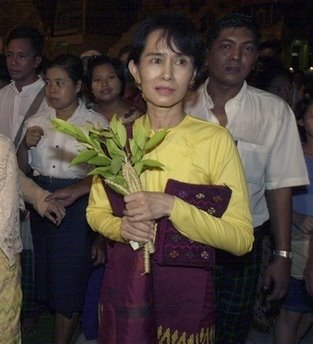


 Posts
Posts


