http://in.reuters.com/article/domesticNews/idINLR72918320090327
Fri Mar 27, 2009 6:18pm IST
By Stephanie Nebehay
GENEVA, March 27 (Reuters) - The United Nations on Friday condemned what it called systematic human rights violations in Myanmar and urged the ruling military junta to release all its political prisoners, believed to number 2,100.
The Western-sponsored resolution was criticised by most Asian countries and Russia who said the non-binding resolution was counter-productive.
"Condemnation and exerting pressure are not helpful to fundamentally solving the problem," China's envoy said. The resolution called on Myanmar's military rulers to halt "politically motivated arrests" and immediately release without conditions all political prisoners held in "harsh conditions, in unknown locations or without charge."
They included opposition leader Aung San Suu Kyi, the Nobel laureate whose latest house arrest began in 2003.
The Human Rights Council also called on Myanmar authorities to review the "harsh sentences" handed down against critics since November at closed-door trials and to end impunity for human rights abusers.
The council also extended for one year the mandate of its special investigator on Myanmar, Tomas Ojea Quintana, saying the situation in the country needed careful monitoring.
Quintana, in a report to the Council earlier this month, said about 400 political prisoners had been given sentences ranging from 24 to 65 years in recent months.
The Argentinean lawyer called for the release of more than 2,100 political prisoners -- including activists, journalists and people arrested for lodging complaints about forced labour -- to allow them to take part in an election set for 2010.
Quintana, who has visited Myanmar twice in the past six months, has urged the country to halt its use of civilians in forced labour -- including as "human minesweepers."
Wunna Maung Win, Myanmar's ambassador to the U.N. in Geneva, rejected the resolution as "lopsided and highly intrusive." "We believe country-specific, politically motivated resolutions have no place in the work of the Council," he said. "Nevertheless, as a member of the United Nations we shall continue cooperation with the Human Rights Council."
Yangon's envoy recently told the Council the country holds no political prisoners, only individuals serving prison terms for breaking domestic laws.
Myanmar's military, which has ruled in various guises since 1962, has promised an election in 2010 as part of what it calls a "roadmap to democracy." Western governments have criticised the poll as a sham aimed at entrenching military rule.
The country's information minister said on Friday his country would open talks with the United States after a rare visit by a top U.S. diplomat amid a review of Washington's policy towards the regime.
The United States, which is not a Council member, was among co-sponsors of the EU text, along with Australia and Canada.
The Geneva forum ends its four-week session on Friday. (Editing by Matthew Jones)
© Thomson Reuters 2009. All rights reserved. Users may download and print extracts of content from this website for their own personal and non-commercial use only. Republication or redistribution of Thomson Reuters content, including by framing or similar means, is expressly prohibited without the prior written consent of Thomson Reuters. Thomson Reuters and its logo are registered trademarks or trademarks of the Thomson Reuters group of companies around the world.
Thomson Reuters journalists are subject to an Editorial Handbook which requires fair presentation and disclosure of relevant interests.
Wednesday, April 1, 2009
UN rights body condemns systematic abuses in Myanmar


UN reappoints Myanmar investigator, slams junta
http://www.etaiwannews.com/etn/news_content.php?id=904866&lang=eng_news
Associated Press
2009-03-27 08:18 PM Fonts Size:
The U.N. Human Rights Council has reappointed an investigator to provide detailed human rights reports in Myanmar for another year.
The 47-nation body passed a resolution Friday condemning violations in the country also known as Burma. It urged the government to release all political prisoners.
Myanmar's military junta had sought to end the work of U.N. investigator Tomas Ojea Quintana, saying life has improved in the southeast Asian country.
Myanmar says the resolution aims to embarrass the government. China, Russia, India and some other Asian countries did not back the Europe-proposed resolution, saying it was condemnatory and unhelpful.
TATA Motors to make trucks in Burma
http://www.mizzima.com/news/inside-burma/1902-tata-motors-to-make-trucks-in-burma.html
by Salai Pi Pi
Friday, 27 March 2009 17:52
New Delhi (Mizzima) – India’s leading automaker TATA Motors on Thursday met Burmese Minister of Energy (2) Vice-Admiral Soe Thein, and held parleys on setting up a truck manufacturing unit in Burma, the state-run media said.
The New Light of Myanmar, Burma’s official newspaper, on Friday reported that Mr. Manas Kumar Mishra of TATA Motors Ltd. on Thursday met Soe Thein in Naypyitaw, Burma’s new jungle capital and discussed setting up a truck manufacturing unit in Burma.
“Both sides discussed the speedy implementation of a heavy turbo truck assembly and component parts production factory project and starting manufacturing operations from December 2009,” the paper said.
A document of India’s Ministry of External Affairs (MEA), which is in Mizzima’s possession said the project is part of India’s “Look East Policy”, which includes setting up several bilateral development projects such as construction of roads, power projects, oil refinery units, transmission lines, telecommunications, and Information technology services in Burma, by India.
The MEA said India has sanctioned a USD20 million Line of Credit (LoC) for setting up a truck manufacturing unit to be taken up by TATA Motors.
Since the formal launch of the “Look East Policy” in 1994, India has engaged Burma in areas of trade and development and has maintained regular exchange of high-level officials visits.
India’s Vice-President M. Hamid Ansari last month, paid a four-day visit to Burma, during which the two countries signed a Memorandum of Understanding (MoU) on setting up a Industrial Training Centre and a Centre for English Language Training (CELT).
According to the MEA, bilateral trade between India and Burma for the fiscal year 2007-08 stood at USD 901.3 million. For the same fiscal year, Burma’s export to India was USD 7272.85 million, while India’s export was USD 173.46 million.
TATA Motors Ltd is the world’s fourth largest truck manufacturer and second largest bus manufacturer.
Edited by Mungpi
World's inaction in Burma a crime
http://www.independent.ie/opinion/letters/worlds-inaction-in-burma-a-crime-1688594.html
Friday March 27 2009
A recent report into the humanitarian effort following last May's Cyclone Nargis, which killed 140,000 people and left many hundreds of thousands homeless, accuses the Burmese government of blocking aid to the victims.
While we should not be surprised that the Burmese authorities, notoriously one of the most repressive regimes in the world, abused their position, what's truly shocking is that the international community allowed it to happen.
This is yet another example of the utter inability of the UN Security Council in its current guise to serve the needs of those who need them most.
The UN has a responsibility to protect those who are being mistreated by their government, yet not one single UN soldier set foot on Burmese soil to ensure that the aid reached those who needed it.
The report calls for the Burmese to be brought before the International Criminal Court for their actions.
But what is truly criminal is the international community's inaction -- sitting on its hands while the world's most vulnerable were left to fend for themselves as their government so cruelly ignored their suffering.
John O'Shea
Goal, PO Box 19 Dun Laoghaire
Myanmar junta chief urges political parties to behave - Summary
http://www.earthtimes.org/articles/show/261759,myanmar-junta-chief-urges-political-parties-to-behave--summary.html
Posted : Fri, 27 Mar 2009 06:41:58 GMT
Author : DPA
Naypyitaw, Myanmar - Myanmar's military supremo on Friday urged political parties to abide by the constitution his junta pushed through last year and avoid "inciting unrest" prior to a general election planned in 2010. Senior General Than Shwe, 76, who heads the State Peace and Development Council, as the ruling junta styles itself, vowed to hold the election "systematically."
"I would like to request those who will be involved in organizing work for parties to refrain from inciting unrest, to avoid personal attacks and smear campaigns against other parties and to find unity in diversity by practising tolerance, forgiveness and understanding toward one another," Than Shwe said in a speech marking the 64th anniversary of Armed Forces Day.
Than Shwe appeared in good health as he stood in the hot sun for more than an hour to review 13,000 troops marching at the parade grounds in Naypyitaw, the military's new capital, in the annual ceremony marking the birth of the Myanmar Army, which has dominated the country's politics since a coup in 1962 toppled elected prime minister U Nu.
In his 10-minute speech, Than Shwe focused on the need for political parties to abide by the pro-military constitution and preserve the unity of the nation at a time then the country is gearing up for the election, whose date the junta has yet to set.
The last election, held in 1990, was won by the National League for Democracy (NLD), led by Aung San Suu Kyi, daughter of Myanmar independence hero General Aung San, who is deemed the founding father of the armed forces.
It was still uncertain whether the NLD would contest the upcoming polls. The party's electoral win in 1990 was ignored by the military, which has kept Suu Kyi under house arrest for the 13 of the past 19 years.
Than Shwe warned that democracy in Myanmar is not yet "mature" and the military "has to safeguard the constitution and assure whoever is doing organizing work for political parties does it maturely."
In May, the junta pushed through a nationwide referendum on a new constitution that would essentially cement military control over any elected government in the future.
The referendum was highly criticized abroad because not only was it neither free nor fair but it was also pushed through on May 10 despite the devastation wrought by Cyclone Nargis, which hit central Myanmar on May 2-3, leaving 140,000 dead or missing.
Although the junta drew criticism for slowing down an international relief operation for the victims of Nargis, apparently to assure the referendum was carried out, Than Shwe used Armed Forced Day to brag of the relief effort.
"Another clear instance of the united strength of the government, the people and the armed forces can be seen in the expeditious and effective relief, resettlement and rehabilitation in the aftermath of the disaster brought about by the cyclone in 2008," he said, neglecting to mention the contributions made by the international aid community.
The constitution, which took 14 years to draft, was a crucial part of Myanmar's seven-step so-called road map to democracy, which is to end with next year's election.
Myanmar's military hierarchy is seeking to establish a "discipline-flourishing democracy," in which the armed forces play a guiding and disciplining role.
Meanwhile, in Yangon, authorities acknowledged that one man died and two other people were injured when a bomb exploded Thursday night in the North Okalapa district.
It was believed that the man who died had planted the bomb, allegedly as a sign of protest before Armed Forces Day.
Copyright, respective author or news agency
စန္းရွင္း (Sanction) လိုအပ္ေသးေၾကာင္း ထပ္မံျငင္းခံုျခင္း
http://burmadd.blogspot.com/2009/03/sanction_20.html
စန္းရွင္း (Sanction) လိုအပ္ေသးေၾကာင္း ထပ္မံျငင္းခံုျခင္း
ျမန္မာျပည္ကို အေနာက္ႏုိင္ငံအစိုးရမ်ားမွ စန္းရွင္းလို႔ေခၚတဲ့ စီးပြားေရးအရ ပိတ္ဆို႔အေရးယူထားတာ ဆယ္စုႏွစ္ တခု ေက်ာ္ခဲ့ ပါၿပီ။ ဒီဆယ္ႏွစ္ေက်ာ္ ကာလေနာက္ပုိင္းမွာ အျငင္းပြားေနၾကတာေတြလဲ ေနရာအႏွံ႔မွာ ရႈ႔ေထာင့္မ်ဳိးစံုနဲ႔ ရိွေနပါတယ္။ စစ္ အစိုးရကို အခုလို စီးပြားေရးအရ ပိတ္ဆို႔တာနဲ႔ ပတ္သက္ၿပီး ေထာက္ခံသူေတြရိွသလို ကန္႔ကြက္ သူေတြလည္း ရိွေနပါတယ္။
Ko Zaw Min
အသစ္တက္လာတဲ့ အမရိကန္ႏုိင္ငံျခားေရးဝန္ႀကီး မစၥကလင္တန္က အေမရိကန္အစိုးရအေနနဲ႔ ျမန္မာႏုိင္ငံအေပၚ ထားရိွတဲ့ သူတို႔ရဲ့ ေပၚလစီမ်ားကို ျပန္လည္ေလ့ေလာသံုးသပ္မယ္လို႔ တေလာတံုးက ေျပာခဲ့ပါတယ္။ သူတို႔ အေမရိကန္ ေတြရဲ့ ေပၚလစီ ေတြဟာ ျမန္မာ့ဒီမိုကေရစီ အေရးအတြက္ အမွန္တကယ္ လက္ေတြ႔က်မက် ဆုိတာကို ျပန္လည္သံုးသပ္ မယ္လို႔ ဆိုလုိက္တာ လည္း ျဖစ္ပါတယ္။ သို႔ေသာ္ မစၥကလင္တန္က အေမရိကန္ေတြ အေနနဲ႔ စစ္အစိုးရအေပၚ စီးပြားေရးအရပိတ္ဆို႔အေရးယူတဲ့ သူတို႔ရဲ့ ေပၚလစီကို ေျပာင္းမယ္လို႔ေတာ့ အတိအလင္း မေျပာေသးပါဘူး။ အဲသလို အသံမ်ားထြက္လာတာနဲ႔ တၿပိဳင္တည္း ဆိုသလို စီးပြားေရးပိတ္ဆို႔ အေရးယူမႈဟာ ျမန္မာျပည္အတြက္ အလုပ္မျဖစ္ဘူး ဆိုတဲ့ လူပုဂၢိဳလ္မ်ားက အေမရိကန္ေတြေတာ့ ျမန္မာႏုိင္ငံနဲ႔ပတ္သက္လို႔ သူတို႔ ေပၚလစီကို ေျပာင္းေတာ့မယ္လို႔ ဝမ္းသာ အားရျဖစ္ၾကပါတယ္။
တကယ္တန္း ေျပာရရင္ အေမရိကန္က ျမန္မာစစ္အစိုးရကို စီးပြားေရးအရ ပိတ္ဆို႔အေရးယူတဲ့ ေပၚလစီကို ခ်မွတ္ခဲ့ေပမဲ့ ဒီလို ပိတ္ဆို႔အေရးယူျခင္းဟာ ၿပီးျပည့္စံုတဲ့ ပိတ္ဆို႔မႈ မဟုတ္ခဲ့ပါဘူး။ အေျခခံအားျဖင့္ ဆိုရရင္ ေနာက္ထပ္ ရင္းႏွီးျမဳတ္ႏွံမႈ အသစ္ မလုပ္ဖို႔ဆိုတဲ့ ျဖစ္စဥ္ေအာက္မွပဲ သြားခဲ့တာျဖစ္ပါတယ္။ ရိွထားၿပီးသား ရင္းႏွီးျမဳတ္ႏွံမႈေတြ အတြက္ အၾကံဳးမဝင္ပါ။
တရုတ္တို႔၊ အိႏိၵတို႔၊ ထုိင္းႏုိင္ငံတို႔၊ မေလးရွားတို႔၊ စကၤာပူတို႔နဲ႔ စီးပြားေရးအရ အခ်ိတ္အဆက္ေတြ ရိွေနတဲ့အတြက္ ျမန္မာ စစ္ အစိုးရက ဒီပိတ္ဆို႔မႈကို မမႈပါဘူးလို႔ ဆိုသူေတြလည္း ရိွပါတယ္။ ဒါေပမဲ့ တဖက္မွာ ျပန္တြက္ၾကည့္ျပန္ ေတာ့လည္း ျမန္မာ စစ္အစိုးရအတြက္ေတာ့ ဒီလို စီးပြါေးရးအရ ပိတ္ဆို႔ခံရျခင္းဟာ အထိနာတာေတာ့ အမွန္ပါဘဲ။ ဒါေၾကာင့္ ကုလ အထူး ကိုယ္စားလွယ္ မစၥတာဂမ္ဘာရီ ျမန္မာႏုိင္ငံကို ေနာက္ဆုံးတေခါက္ လာေတာ့ ျမန္မာဗိုလ္ခ်ဳပ္မ်ားက သူတို႔အေပၚ စီးပြားေရး အရ ပိတ္ဆို႔ထားတာေတြ ျပန္ရုပ္သိမ္းဖို႔ အေနာက္ႏုိင္ငံေတြကို တိုက္တြန္းေပးပါလို႔ ေျပာခဲ့ပါတယ္။ ဒါဟာ ဘာကိုျပသလဲ ဆိုရင္ အေမရိကန္ အပါအဝင္ ဥေရာပႏုိင္ငံမ်ားရဲ့ ပိတ္ဆို႔မႈဟာ စစ္ဗိုလ္ခ်ဳပ္မ်ားအဖို႔ အထိနာတယ္ဆိုတာကို ျပဆိုေနတဲ့ အေထာက္အထားပါ။
ကေန႔ အေရွ႔ေတာင္အာရွမွာ ျမန္မာႏိုင္ငံထက္ အလြန္႔အလြန္သာလြန္ၿပီး စီးပြားေရးေကာင္းေနတဲ့ ႏုိင္ငံမ်ား၊ အေရွ႔အာရွမွာ တရုတ္အပါအဝင္ စီးပြားေရး သိပ္တိုးတက္ သိပ္ေကာင္းေနတဲ့ႏုိင္ငံမ်ား ရိွေနၾကပါတယ္။ အဆိုပါ ႏုိင္ငံမ်ားဟာ အိမ္နီးျခင္း ကုန္သြယ္ေရးေလာက္နဲ႔ အခုလို တိုးတက္လာေနတာ မဟုတ္ပါ။ တကမၻာလံုးနဲ႔ ကုန္သြယ္ ေနလို႔သာျဖစ္ပါတယ္။ အထူး သျဖင့္ အေမရိကန္ေစ်းကြက္နဲ႔ ဥေရာပႏုိင္ငံမ်ားေစ်းကြက္မ်ားမွာ မျဖစ္မေန ကူးသန္းၿပီး ေရာင္းဝယ္ ေဖာက္ကားေနရပါ တယ္။
ဆိုလိုျခင္တာကေတာ့ ရိုးရိုးပါဘဲ။ နဂိုထက္ပိုၿပီး ခ်မ္းသာတိုးတက္ျခင္ရင္ ကိုယ့္ထက္ခ်မ္းသာတဲ့ သူမ်ားနဲ႔ ဆက္ဆံ ေရာင္း ဝယ္ ေဖာက္ကားဖို႔လိုပါတယ္။ ႏုတ္ခမ္းပဲ့ျခင္း မီးမႈတ္ေနလို႔ကေတာ့ ဒံုရင္းပဲ ရိွမွာပါ။ ႀကိဳက္သည္ျဖစ္ေစ မႀကိဳက္သည္ ျဖစ္ေစ ေျပာဖို႔ တခုရိွပါတယ္။ ခ်မ္းသာျခင္ရင္ မိမိထက္ ခ်မ္းသာတိုးတက္ၿပီးသား မိမိထက္ အေျခခုိင္တဲ့ အရင္းရွင္ ႏုိင္ငံမ်ားနဲ႔ အဆင္ ေျပဖို႔လိုပါတယ္။ တရုတ္အစိုးရ သည္ပင္လွ်င္ အထက္က ေျပာခဲ့တဲ့ ေစ်းကြက္မ်ားနဲ႔ ကင္းႏုိင္ျခင္း မရိွပါဘူး။ ျပန္ေကာက္ရမယ္ ဆိုရင္ ျမန္မာစစ္အစိုးရရယ္၊ စစ္အစိုးရနဲ႔ အလြမ္းသင့္တဲ့ လူေတြရယ္ ေျပာေနသလို အိမ္နီး ျခင္းႏုိင္ငံမ်ားနဲ႔ စီးပြားေရးအရ ကုန္သြယ္ျခင္းျဖင့္ အေမရိကန္အပါအဝင္ အေနာက္ႏုိင္ငံအစိုးမ်ားကို ဂရုစုိက္စရာ မလိုဘူး ဆိုတာ တကယ္ေတာ့ မဟုတ္ပါ။ ႏုိင္ငံေရးအရ ကစားတဲ့ေနရာမွာ (သို႔) ႏုိင္ငံတကာ အစည္းအေဝးမ်ားနဲ႔ ကြန္ဖရင့္ေတြမွာ ႏုိင္ငံေရးလက္နက္ တခုအေနနဲ႔ ထည့္သြင္း အသံုးခ်ျခင္းထက္ မပုိပါ။
ေကာင္းပါၿပီ။ အေမရိကန္နဲ႔ ဥေရာပႏုိင္ငံေတြက စီးပြားေရးအရ ပိတ္ဆို႔တာကို ရုတ္သိမ္းလုိက္ၿပီ ဆိုပါစို႔။ အဲသည့္အတြက္ ျမန္မာျပည္မွာ ႏုိင္ငံျခား ကုမၸဏီေတြလိမ့္ဝင္လာၿပီ ဆိုပါစို႔။ ျမန္မာျပည္သူ ျပည္သားေတြ ထီေပါက္သလုိ အဆင္ေျပလာ မယ္လို႔ ဘယ္သူေတြက အာမခံမွာလဲ။ ႏုိင္ငံျခားကုမၸဏီေတြ အမ်ားအျပား ေရာက္လာၾကလို႔ ႏွစ္အနည္းငယ္အတြင္း စီးပြား ေရးဦးေမာ့လာမယ္လို႔ ဘယ္လိုေျပာႏုိင္မလဲ။
ႏုိင္ငံျခားရင္းႏွီးျမဳတ္ႏွံမႈမ်ား ပိုမ်ားလာလို႔ ပိုၿပီးစီးပြားေရးေကာင္းလာမွာထက္ လက္ရိွတည္ရိွေနတဲ့ ျမန္မာျပည္ရဲ့ ႏုိင္ငံေရး၊ အုပ္ခ်ဳပ္ေရး၊ ဥပေဒေရး ယဥ္ေက်းမႈေတြအေပၚကေန တြက္ထုတ္လုိက္ရင္ ပိုေတာင္ဆိုးလာဦးမယ္လို႔ ရဲရဲႀကီး ေျပာလုိက္ ပါ့မယ္။
ရွင္းပါအံ့။ ျမန္မာျပည္မွာ အုပ္ခ်ဳပ္ေရးအဆင့္အတန္း အလြန္နိမ့္ပါတယ္။ စစ္တပ္ကပဲ ေနရာတုိင္းမွာ အုပ္ခ်ဳပ္ ေနပါတယ္။ ဒါေၾကာင့္ ဘာလုပ္လုပ္ အုပ္ခ်ဳပ္သူလူတုိင္းကို ေၾကာက္ေနရသလို လာဘ္ေပးလာဘ္ယူ မ်ားကလည္း ေၾကာက္ခမန္းလိလိ ႀကီးမားလြန္းပါတယ္။ ဥပေဒေရးရာကို ၾကည့္ျပန္ေတာ့လည္း ဥပေဒစိုးမိုးမႈ လံုးလံုးမရိွပါ။ ကိုယ္နဲ႔ မတဲ့သူမွန္သမွ် ၿပိဳင္ဖက္ မွန္သမွ်ကို အျပဳတ္တုိက္ဖို႔ ဥပေဒလက္လြတ္ ၿဖိဳခြင္းတဲ့နည္းကို သံုးပါတယ္။ ေဒၚဝင္းဝင္းႏုရဲ့ မႏၱေလးဘီယာစက္ရံုကို စစ္တပ္နဲ႔ ဝင္သိမ္းခဲ့တာကို ျပန္ၾကည့္ႏုိင္ပါတယ္။ ကိုယ္ရဲ့စီးပြားဖက္မ်ားၾကေတာ့ လိုသလို အခြင့္ထူးေတြကို ေပးထားၿပီး ႀကိဳက္တဲ့ စီးပြား ေရးကို ႀကိဳက္သလို လုပ္ခြင့္ေပးပါတယ္။ ေနာက္အေရးႀကီးတဲ့ အခ်က္တခုကေတာ့ ႏုိင္ငံတခုမွာ မရိွ မျဖစ္လိုအပ္တဲ့ ႏုိင္ငံ တကာ အဆင့္မီွ အေပၚထပ္အေဆာက္အဦ (လမ္း၊ တံတား၊ ေလဆိပ္၊ ေရဆိပ္၊ လွ်ပ္စစ္စြမ္းအင္ အစရိွျဖင့္) မရိွပါဘူး။ ေနာက္အဆိုးဆံုး အခ်က္ကေတာ့ တည္ၿငိမ္တဲ့ ေငြေၾကးစနစ္မရွိတဲ့ ကိစၥပါ။ အခုအထိ အေမရိကန္ (၁) ေဒၚလာရဲ့ ေပါက္ေစ်း ဟာ ေျခာက္က်ပ္ဝန္းက်င္မွာဘဲ ရိွေနပါေသးတယ္။
အခုလက္ရိွ အေျခအေနမွာ အုပ္ခ်ဳပ္ေရးႏွင့္ ဥပေဒေရးတို႔ ျဖစ္ျခင္သလို ျဖစ္ေနေတာ့ ဗိုလ္ခ်ဳပ္မ်ားနဲ႔ အလြမ္းသင့္တဲ့ စီးပြားေရး ကုမၸဏီေတြက လုပ္ျခင္သလို လုပ္ပါတယ္။ အရွည္ကိုမၾကည့္ပါ။ ဥပမာတခုအေနနဲ႔ တင္ျပရရင္ ေတဇရဲ့ သစ္ကုမၸဏီကို ရွမ္း ျပည္အတြင္း သစ္တန္တသိန္း ခုတ္ခြင့္ေပးလုိက္ျခင္းပါဘဲ။ သဘာဝအရင္းအျမစ္ေတြကို စနစ္တက် ဘယ္လို ထုတ္ယူသံုးစြဲ ရမလဲဆိုတာကို ဂရုစုိက္ျခင္းမရိွပါ။ မိမိနဲ႔ အဆင္ေျပတဲ့ ဗိုလ္ခ်ဳပ္မ်ား အုပ္ခ်ဳပ္ေနစဥ္၊ အာဏာ ရိွေနစဥ္မွာ ရသေလာက္ ညွစ္ယူထားဖို႔က စီးပြားေရးသမားမ်ားရဲ့ အျမင္ပါ။ သူတို႔ဖက္က ၾကည့္ရင္လည္း ဗိုလ္ခ်ဳပ္ေတြ အခ်င္းခ်င္း အာဏာလုလို႔ သူတို႔ဖက္ကဗိုလ္ခ်ဳပ္ေတြ ရံႈးနိမ့္ခဲ့ရင္ အရင္လက္ထက္ မွာတံုးက ရထားတဲ့ အခြင့္အေရးေတြ ပိတ္သြားႏုိင္ပါတယ္။ အဲသည္ ေတာ့ မိုးရြာတံုးေရခံၾကေဟ့ ဆိုတဲ့မူကို လက္ကုိင္ထားၿပီး စီးပြားေရးသမားမ်ားကလည္း လုပ္ၾကပါတယ္။
အဲသည္ေတာ့ အခုလိုအခ်ိန္မွာ အေမရိကန္နဲ႔ အေနာက္ႏုိင္ငံေတြက သူတို႔ရဲ့ စီးပြားေရးပိတ္ဆို႔မႈ ေပၚလစီေတြကို ျပန္လည္ရုပ္ သိမ္းၿပီး သူတို႔ရဲ့ကုမၸဏီမ်ား ျမန္မာျပည္ကို သြားေစလုပ္ေစဆိုၿပီး ခြင့္ျပဳလုိက္တယ္ဆိုပါစို႔။
အရင္ဆံုး အျမတ္မရဘဲ ႏွစ္နာမွာက ျမန္မာျပည္သားေတြသာ ျဖစ္ပါတယ္။ လာသမွ် ႏုိင္ငံျခားကုမၸဏီေတြ အရည္ ညႇစ္သြား တာကို တုိင္းျပည္ကခံရမွာပါ။ ဒါဟာ အုပ္ခ်ဳပ္ေရးႏွင့္ ဥပေဒေရးတို႔ ျဖစ္ျခင္သလိုျဖစ္ေနတဲ့ အေျခအေနေၾကာင့္ပါ။ စနစ္ ပ်က္ေနတဲ့ တုိင္းျပည္မွာ ဘယ္လိုႏုိင္ငံျခား ရင္းႏွီးျမဳတ္ႏွံ႔မႈေတြ လာလာ လူတစုကလြဲလို႔ တိုင္းသူျပည္သားမ်ား အက်ဳိးခံစား ရမွာ မဟုတ္ပါ။ ေျပာရရင္ ေလးငါးႏွစ္ေလာက္အတြင္းမွာ ျမန္မာျပည္ရဲ့ သဘာဝရင္းျမစ္ေတြ ကုန္ခမ္း သြား ပါလိမ့္မယ္။ ရတုန္းယူထားတဲ့ဆို႔ ေခတ္ႀကီးမွာ လုပ္ရတဲ့ စီးပြားေရးမို႔ ဘယ္စီးပြားေရး သမားကမွ သဘာဝအရင္းအျမစ္ ေတြကို ထိန္း သိမ္း ၿပီး စနစ္တက်လုပ္မယ္လို႔ မထင္လုိက္ပါနဲ႔။ စီးပြားေရးသမား ဆိုတာ ဗမာျဖစ္ျဖစ္ ႏုိင္ငံျခားသားျဖစ္ျဖစ္ အတူတူပါဘဲ။ လူတစုအတြက္ ေကာင္းေပမဲ့ လူမ်ားစုအဖို႔ အက်ဳိးထိခုိက္ပါတယ္။
ဒီေနရာမွာ ေျပာလိုတာက ႏုိင္ငံေရးမဟုတ္ပါ။ အတုိက္ခံဒီမိုကေရစီ အုပ္စုမ်ားကို ေထာက္ခံလို႔ သူတို႔ေပၚလစီကို ႀကိဳက္လို႔ စီးပြားေရးပိတ္ဆို႔ျခင္းကို ေထာက္ခံေနျခင္း မဟုတ္ပါ။ ကိုယ့္ျပည္သူေတြအတြက္ ဘယ္ေလာက္ အက်ဳိးရိွမလဲ။ အေကာင္း ထက္ အပ်က္ကပိုမ်ားလာႏုိင္သလား (သို႔) အပ်က္ထက္ အေကာင္းေတြဘဲ ေပၚလာ မလားဆိုတာကို ႀကိဳတင္တြက္ခ်က္ဖို႔ လိုတာမို႔ တင္ျပျခင္းသာ ျဖစ္ပါတယ္။
ထပ္မံျဖည့္စြက္လိုတဲ့ အျခားအခ်က္မ်ားလည္း ရိွပါေသးတယ္။ ဒါကေတာ့ ဥပမာအားျဖင့္ ေတဇကုမၸဏီဟာ ျမန္မာ ကုမၸဏီ ျဖစ္ပါတယ္။ ျမန္မာကုမၸဏီတခုက ရွမ္းျပည္အတြင္းက ရွမ္းလူထုေတြ ႏွစ္အတီအေတ ကတည္းက ပုိင္ဆုိင္လာတဲ့ သစ္ေတာ ေတြကို ဝင္ၿပီးခုတ္ျခင္သလို ခုတ္သြားတာ မတရားပါဘူး။ ကိုယ္က်င့္သိကၡာအရ မွားယြင္းပါတယ္။ ရွမ္းလူထုရဲ့ သဘာဝအရင္း အျမစ္ကို ရွမ္းလူထုကသာ အဆံုးအျဖတ္ ေပးရမွာျဖစ္ပါတယ္။ သို႔ေသာ္လည္း အုပ္ခ်ဳပ္ေရးနဲ႔ ဥပေဒေရး ေတြ ျဖစ္ခ်င္သလို ျဖစ္ေနတဲ့ အခ်ိန္မွာ ရွမ္းလူထုဟာ လက္မိႈင္ျခၿပီး ထုိင္ၾကည့္ ေနရတာကလဲြလို႔ ဘာမ်ားတတ္ႏုိင္ပါ့မလဲ။ ဥပမာ တခုအေနနဲ႔ ရွမ္းကုမၸဏီတခုက ႏုိင္ငံျခားမွာ ေရာင္းရင္ ဝင္ေငြေကာင္းလို႔ဆိုၿပီး ျမန္မာျပည္အလယ္ပုိင္းက ကုကၠိဳပင္ ေတြကို အလံုးအရင္းနဲ႔ ခုတ္ခ်င္သလို လာခုတ္မယ္ဆိုရင္ ျမန္မာေတြ ဘယ္လိုခံစားရမလဲ။ ကုိယ္ခ်င္းစာတတ္ဖို႔လိုပါတယ္။ အဲသလိုပါပဲ က်န္ေနတဲ့ တုိင္းရင္းသား ျပည္နယ္မ်ားက အရင္းအျမစ္ေတြကို ထုတ္ယူ၊ သံုးစြဲ၊ ေရာင္းျခမယ္ဆိုရင္ အဆိုပါ တုိင္းရင္းသားလူထုရဲ့ အဆံုး အျဖတ္နဲ႔သာ ျပဳလုပ္ျခင္းက ေရရွည္အနာဂတ္ ျပည္ေထာင္စုအတြက္ ပိုေကာင္းပါလိမ့္မယ္။
ေနာက္တခ်က္ကေတာ့ စြမ္းအင္ကိစၥပါ။ အခုရေနတဲ့ သဘာဝဓာတ္ေငြ႔ကို ႏုိင္ငံျခားအကုန္ထုတ္ၿပီး ေရာင္းတာထက္ ႏုိင္ငံ သားေတြ အလုပ္လုပ္ဖို႔ ကုန္ထုတ္လုပ္ဖို႔ သံုးစြဲခြင့္ေပးဖို႔လိုပါတယ္။ ဥပမာအားျဖင့္ ငါးလုပ္ငန္းက ႏုိင္ငံျခားကို ငါးေတြတင္ပို႔ မယ္ ဆိုပါစို႔။ မတင္ပို႔ခင္စပ္ၾကား ငါးေတြပုတ္မကုန္ေအာင္ အေအးခန္းႀကီးေတြနဲ႔ ထားရပါတယ္။ သို႔ေသာ္ ျမန္မာႏုိင္ငံမွာ လွ်ပ္စစ္စြမ္းအင္ကို လံုေလာက္ေအာင္ မစီမံေပးႏုိင္လို႔ ဒီဇယ္အင္ဂ်င္ႀကီးမ်ားနဲ႔ အဲသည့္ အေအးခန္းမ်ားကို လည္ပတ္ရပါ တယ္။ ဒီဇယ္ဖိုး ထပ္ကုန္တဲ့အတြက္ ထိုငါးမ်ားပုဇြန္မ်ားကို ႏုိင္ငံျခားပို႔တဲ့အခါမွာ ျမတ္သင့္သေလာက္ အျမတ္ မက်န္ ေတာ့ပါ။ ဒီၾကားထဲမွာလည္း အုပ္ခ်ဳပ္စီမံခန္႔ခြဲေရး ပ်က္စီးယိုယြင္း ေနတဲ့အတြက္ ငါးေတြ ႏုိင္ငံျခား မပို႔ခင္မွာ ဟိုေပး သည္ကမ္း လုပ္ရတဲ့အတြက္ ကုန္ၾကစရိတ္ ထပ္တက္လာပါတယ္။
အခုေနအခါမွာ စီးပြားေရးပိတ္ဆို႔မႈေတြ မရိွေတာ့ဘူး ဆိုပါစို႔။ ႏုိင္ငံျခားရင္းႏွီး ျမဳတ္ႏွံမႈေတြလည္း တျပံဳႀကီးဝင္လာ ၾကၿပီ ဆိုပါစို႔။ သူတို႔အရင္လုပ္မွာက ဘယ္လိုစီးပြားေရးလုပ္ငန္းမ်ဳိး ျဖစ္မယ္ထင္ပါသလဲ။ ေခတ္မီွစက္ရံုေတြ ေထာင္ၿပီးလုပ္မယ္ လို႔ ထင္ပါသလား။ မထင္ပါခင္ဗ်ားလို႔သာ ျပန္ေျပာရမွာပါ။ ျမန္မာျပည္ဟာ ဘာမွအဆင္သင့္ မျဖစ္ေသးတဲ့ ႏုိင္ငံျဖစ္တာမို႔ စက္မႈလုပ္ငန္းေထြထက္ သဘာဝ အရင္းအျမစ္ေတြကို တုိက္ရိုက္ ထုတ္ယူ ေရာင္းစားလိုတဲ့ ကုမၸဏီေတြကသာ အမ်ားစု ျဖစ္ပါလိမ့္မယ္။ အဲတာက အရင္းနည္းၿပီး အခိ်န္တိုတိုအတြင္းမွာ အျမတ္မ်ားလို႔ဘဲ ျဖစ္ပါတယ္။ သဘာဝ အရင္းအျမစ္ေတြ ျဖစ္တဲ့ သစ္ေတာမ်ားကို ခုတ္ယူျခင္း ေရာင္းျချခင္း၊ ေရနံနဲ႔ သဘာဝ ဓာတ္ေငြ႔မ်ားကို ထုတ္ယူျခင္း၊ ငါးမ်ားအလြန္ အကၽြံ ဖမ္းျခင္း၊ ပတ္ဝန္းက်င္ကို ညွစ္ညမ္းေစတဲ့ သတၳဳမုိင္း လုပ္ငန္းမ်ား တုိင္းျပည္အႏွံ႔ေပၚလာျခင္း၊ ျမစ္ေတြကိုပိတ္ၿပီး ဆည္ ေဆာက္ျခင္း၊ သစ္ေတာမ်ားကို ဧကေပါင္း သိန္းနဲ႔ခ်ီၿပီး ခုတ္ထြင္၍ ေငြအျဖစ္ျမန္တဲ့ ေရာ္ဘာလို ဆီအုန္းလို အပင္မ်ား စုိက္ပ်ဳိးျခင္း စတာေတြအျပင္ ေျမာက္မ်ားလွတဲ့ ေငြရလြယ္တဲ့ လုပ္ငန္းမ်ားကိုသာ လုပ္ၾကမွာပါ။
စက္မႈလုပ္ငန္းမွာ လာေရာက္ျမဳတ္ႏွံမယ့္ ႏုိင္ငံျခားကုမၸဏီေတြလည္း အနည္းအက်ဥ္း ရိွေကာင္းရိွပါလိမ့္မယ္။ သို႔ေသာ္ ဘယ္လုိစက္မႈ လုပ္ငန္းမ်ားကို ထူေထာင္မွာလည္းဆိုတာ ဒီေနရာမွာ ေမးစရာရိွပါတယ္။ ဥပမာ အားျဖင့္ ၁၉၉ဝ ခုႏွစ္မ်ား တံုးက ဘဂၤလားဒက္ရွ္ ႏုိင္ငံမွာ ႏုိင္ငံျခား အထည္ခ်ဳပ္စက္ရံုေတြ မိႈလိုေပါက္ခဲ့ပါတယ္။ အက်ဳိးဆက္ အားျဖင့္လည္း ဘဂၤလား ေအာက္ေျခ ျပည္သူေတြ အလုပ္မ်ားရခဲ့ပါတယ္။
သို႔ေသာ္ ၁၉၉၄ ေနာက္ပုိင္းမွာ ကမၻာ႔အထည္ေစ်းကြက္ အေျပာင္းအလဲမ်ားလိႈင္းမ်ားက ႏုိင္ငံတကာ အထည္ခ်ဳပ္လုပ္ငန္း ကို ေကာင္းေကာင္းႀကီး ဒုကၡေပးပါတယ္။ ဘဂၤလားဒက္ရွ္ႏုိင္ငံကိုလည္း ခ်န္မထားခဲ့ပါဘူး။ (ဘဂၤလားဒက္ရွ္ အတုိက္ခံမ်ား ေၾကာင့္ မဟုတ္ပါ) ဘဂၤလားဒက္ရွမွာလည္း အထည္ခ်ဳပ္စက္ရံုေတြ တရံုၿပီးတရံု ပိတ္ကုန္ပါတယ္။ အဲသည္ေတာ့ အလုပ္လက္မဲ့ေတြ ၿမိဳ႔ေပၚမွာ ေသာင္တင္ခဲ့ၾကပါတယ္။ အဆိုးဆံုးကေတာ့ အထည္ခ်ဳပ္စက္ရံု ရင္းႏွီးျမဳတ္ႏွံမႈက ဘဂၤလား ဒက္ရွ္ ႏုိင္ငံအတြက္ ဘာနည္းပညာမွ ခ်န္မထားခဲ့ႏုိင္ပါဘူး။ သူလည္းထြက္ ကိုယ္လည္း လက္မဲ့က်န္ ဆိုတာမ်ဳိးဆိုသလို ျဖစ္ခဲ့ပါတယ္။ ေနာက္ တခ်က္ သတိထားဖို႔ကလည္း အထည္ခ်ဳပ္လုပ္ငန္းဆိုတာ ဆင္းရဲတဲ့ႏုိင္ငံမ်ားမွာ ခ်မ္းသာတဲ့ ႏုိင္ငံ ေတြက လာေထာင္စားတဲ့ လုပ္ငန္းျဖစ္ပါတယ္။ အလုပ္ရွင္ေငြရွင္ ျပန္ထြက္သြားတဲ့အခါမွာ ဆင္းရဲသားဟာ လက္ခ်ည္းပဲ က်န္ရစ္ပါတယ္။ အနည္းဆံုး တူတူတန္တန္ နည္းပညာ ေလးေလာက္ေတာ့ က်န္ရစ္ခဲ့သင့္တာေပါ့။ အဝတ္အထည္ပဲ ခ်ဳပ္တတ္တဲ့ နည္းပညာေလာက္သာ က်န္ရစ္ခဲ့တာေတာ့ ရင္နာစရာပါ။ အခုလည္း တရုပ္ျပည္မွာ အထည္ခ်ဳပ္လုပ္ငန္း ေတြ၊ အရုပ္စက္ရံုေတြ ပိတ္ရေတာ့ တရုတ္ လုပ္သား သန္းေပါင္းမ်ားစြာ အလုပ္လက္မဲ့ ျဖစ္တာကို ရင္ဆုိင္ေနရပါတယ္။
လက္ရိွ စီးပြြါးေရးပိတ္ဆို႔ခံထားရတဲ့ အေျခအေနမွာေတာင္ သဘာဝအရင္းအျမစ္ေတြကို လုပ္ျခင္သလို လုပ္ေနၾကတာ စီးပြား ေရး ပိတ္ဆို႔မႈ မရိွလို႔ကေတာ့ အခ်ိန္တုိတိုအတြင္း ကုန္ပါေပါ့လားဆိုတဲ့ ဘဝကိုရင္ဆုိင္ရမွာပါ။ နိဂံုးခ်ဳပ္ရရင္ေတာ့ ႏုိင္ငံေရး၊ အုပ္ခ်ဳပ္ေရး၊ ဥပေဒေရး ပ်က္ျပားေနတဲ့ ျမန္မာႏုိင္ငံ၊ တနည္းဆိုရရင္ ေျခာက္လံုးပူး ေသနတ္ကို ခါးထိုးၿပီး အရက္မူးေနတဲ့ ေကာင္းဘြိဳင္ေတြ ဗိုလ္က်အုပ္ခ်ဳပ္ေနတဲ့ ျမန္မာႏုိင္ငံကို အခုေနအခါ အေနာက္ ႏုိင္ငံမ်ားက စီးပြားေရး ပိတ္ဆို႔တာကို ျပန္ဖြင့္ လုိက္ရင္ ေကာင္းက်ဳိးထက္ ဆုိးက်ဳိးသာ ပိုမိုမ်ားျပား လာလိမ့္ဆိုတာ အတပ္ေျပာရဲပါတယ္။
ေဇာ္မင္း (လူ႔ေဘာင္သစ္)
၁၈ ရက္ မတ္လ ၂ဝဝ၉ ခုႏွစ္
Cruise Specialists Hosts Name Top Five Cruise Ports Around the World
http://www.foxbusiness.com/story/cruise-specialists-hosts-cruise-ports-world/
LaGraff and Atkins recently revealed their top five spots to visit onboard a cruise:
1. Islands of Tahiti: Water, Water, Water! "If you love to swim, these
are the best waters in the world for a dip," explained Atkins.
"The islanders spend hours in the warm, blue waters. Every day you
can see families playing on the beach and gracefully bodysurfing the
waves." The duo recommends snorkeling while drifting with the
current down the beachfront, watching the hundreds of colorful fishes.
2. Saigon: "The streets are utter chaos with noisy scooters, cars,
hawkers and street vendors, but Saigon is a fun place to visit,"
said LaGraff. "You can visit the American War museum, check out the
fascinating Cu Chi tunnels, shop at the colorful local markets in
Chinatown, or pamper yourself with reasonably priced spa
treatments."
3. Burma: "We added Burma to our list because of its past and
hopefully its future," declared LaGraff. "Before the military
takeover, the Burmese people were some of the most artistic and
enlightened in the world. We find their everyday street scenes
fascinating, as well as the hundreds of breathtaking Buddhist pagodas
that dot the landscape."
4. Sydney: "We love entering Sydney by ship as the entrance is through
a narrow pass called the heads," described Atkins. "Slowly the
great city unfolds like a movie, culminating in the magnificent opera
house." They travel everywhere around Sydney on the fast and
efficient ferry system. One of their favorite activities is climbing the
famed harbor bridge Sydneysiders call "the hangar" to get a
good workout and enjoy super views of the city.
5. Shanghai: "We hereby declare Shanghai our favorite shopping city in
the world, surpassing our old number one -- Hong Kong," exclaimed
Atkins. "There are bargains galore, and street stalls are loaded
with all sorts of clothes and collectibles. Tailors are good and cheap,
as are the fabrics, especially silk. One of the couple's favorite
places to visit in Shanghai is the Bund, a lively people watching
pedestrian walkway along the Pudong River that boasts excellent views of
Shanghai.
Thailand supports democratization of Burma: Abhisit
http://www.mizzima.com/news/election-2010/1891-thailand-supports-democratization-of-burma-abhisit.html
by Usa Pichai
Wednesday, 25 March 2009 20:08
Chiang Mai (Mizzima) - The Prime Minister of Thailand has said talks with ethnic rebels, the Karen National Union, depends on the Burmese military junta and the United Nations, reiterating that Thailand supports democratization and national reconciliation in the country.
Abhisit Vejjajiva, Thailand’s Prime Minister on Tuesday was commenting on the Burmese government’s desire that Thailand persuade the KNU to begin a process of reconciliation with the junta and contest the 2010 general elections.
“The issue depends on the Burmese regime and the UN to make the discussion operational. Thailand would help as a neighbouring country. However, the negotiation should be held to solve the problem because some ethnic group members migrated to live in Thailand,” Abhisit said, according to a report in a Thai government website.
The Thai PM also added that he has not yet been informed that the Thai Foreign Minister agreed to hold talks with the ethnic group, which does not see eye to eye, with the junta’s constitution.
“At the moment, the Burmese junta has worked mainly with the UN rather than with the ASEAN,” he said.
He said the Thai government supported efforts by the Burmese government regarding national reconciliation and the restoration of democracy in the country.
In addition, he added the position of the Association of Southeast Asian Nations was clear. It wanted to see all parties take part in Burmese general elections in the coming year.
However, numerous voices from among the international community have expressed doubts whether the 2010 election will allow fair participation by all parties.
Abhisit’s comment came after Thailand’s Foreign Minister Kasit Piromya said, during his visit to Burma that he was asked by the military junta to meet representatives of ethnic rebels and to persuade the KNU to join the junta’s road map to democracy.
Kasit made his introductory two-day visit to Burma on Sunday and Monday, discussing bilateral issues and laying the groundwork for an official visit by Thai Prime Minister Abhisit Vejjajiva.
The Karen Nation Union and the Shan State Army, which rejected the junta-backed seven-step road map to democracy, are two major armed factions continuing to wage war against the regime.
On Tuesday David Takapaw, Vice-President of the KNU, reacted saying that they will not yield to any form of pressure to partake in the 2010 general election unless Burma’s generals implement changes in their roadmap.
However, Takapaw said the KNU is ready to hold talks with the Burmese regime if it is aimed at addressing the ongoing conflict in Burma.
China's grand bargain
http://www.boston.com/bostonglobe/editorial_opinion/oped/articles/2009/03/26/chinas_grand_bargain/?page=full
By Robert I. Rotberg
March 26, 2009
AS THE G20 group of nations prepares to meet next week to discuss the world economy, a grand bargain with geostrategic significance is implicitly being crafted between Washington and Beijing. Secretary of State Hillary Clinton hinted as much when she said in February that the United States would not hammer China about its human rights violations.
China and the United States need each other. China wants the United States to keep its trillions of dollars in Treasury securities safe and valuable. It would like Washington to stop beating the hollow drum of foreign-exchange policy and yuan deflation. China also wants the United States to help reinflate the global economy so that it can grow back from 6 percent per annum GDP to 8 percent or more. Otherwise unrest may escalate.
China also does not want the United States to press human rights issues for fear of further encouraging dissent. That posture obviously goes for Tibet, for the Uighur claims on Xinjiang, for labor violations in the Guangdong area, and, possibly, for attacks on China's abysmal food security record.
House Speaker Nancy Pelosi and other members of Congress are rightly appalled at any backtracking. Criticism of China's record at home and abroad is well-merited.But, as Secretary Clinton and President Obama know, Washington needs China's help on global climate change and on such key security issues as North Korea, Burma, Iran, Sudan, and Zimbabwe.
Restraining the nuclear ambitions and capacity for mischief of the odious regime in Pyongyang is unlikely without China's support for a negotiated dismantling of fissile enrichment and missile launching facilities. Only China has the necessary leverage and influence with Kim Jong-il and his regime.
On Burma, Clinton has admitted that US and European sanctions have accomplished little, and that the ruling military junta pays little attention to what the UN, the Association of Southeastern Nations, or the West wants by way of ameliorations and respect for internal human and political rights. It only responds to Beijing, its funder, main supplier of arms, commercial and strategic partner, and a key economic mainstay.
On Iran, the Obama administration will also need China (and Russia) in finding diplomatic or economic means to deter Iran's rush toward nuclear capability. Absent such support, the task of constraining or preventing Iran from becoming a bomb maker is difficult, if not impossible. (China is Iran's largest trading partner.)
In Africa, China is a major investor. China imports more than 10 percent of its oil from Angola, Equatorial Guinea, Nigeria, and Sudan, and obtains minerals such as copper from Zambia and Congo, platinum and chrome from Zimbabwe and South Africa, and much more. It also purchases large forests of African timber. None of that mercantile activity is objectionable to Africa or the United States, nor should Washington worry about Chinese infrastructural construction of ports, railways, and roads in Africa.
But China also supplies arms to Africa. It backs President Robert Mugabe in Zimbabwe, gives him aircraft and armored cars, and takes land and minerals in exchange. Oppression in Sudan is heavily facilitated by China, which trains the pilots who bomb Darfuri refugee camps and provides the weapons with which the janjaweed and others kill innocent civilians. More so, China pumps Sudan's oil, guards the oil wells and pipeline, runs the refinery, and funds President Omar al-Bashir, recently indicted by the International Criminal Court for war crimes. If the Obama administration is going to reduce the killing fields in Darfur and remove Mugabe from power in Zimbabwe, it will need China's help.
As the global economy continues to fray, there is a crucial need for collective action on fiscal matters, monetary policy, antagonism against protectionism, and on help for the developing world. The United States and Europe cannot create or fulfill such an agenda without China's cooperation. Only with China can they craft policies to create increased domestic consumption everywhere (especially in China and other surplus-rich Asian economies) and thus avert the collapse of global prosperity.
Any such grand bargain is messy, but necessary and compelling.
Robert I. Rotberg is director of the Program on Instrastate Conflict at Harvard's Kennedy School and President of the World Peace Foundation. He recently published "China into Africa: Trade, Aid, and Influence."
Are You Funding Forced Abortions in China?
http://newsblaze.com/story/20090325074631zzzz.nb/topstory.html
Not only elective abortions. Forced abortions.
It doesn't matter whether you are pro-life or pro-choice on this issue. No one can support forced abortion, because it is not a choice.
What do I mean by "forced abortions"? Here are a couple of examples from the U.S. Department of State China Report, just released on February 25, 2009: "In March [2008] family planning officials in Henan Province reportedly forcibly detained a 23-year-old unmarried woman who was seven months pregnant. Officials reportedly tied her to a bed, induced labor, and killed the newborn upon delivery. In April [2008] population-planning officials in Shandong provinces reportedly detained and beat the sister of a woman who had illegally conceived a second child in an attempt to compel the woman to undergo an abortion."
According to the Congressional-Executive Commission on China report, released on October 31, 2008, "Violators of the [one-child] policy are routinely punished with exorbitant fines, and in some cases, subjected to forced sterilization, forced abortion, arbitrary detention, and torture."
In my opinion, systematic use of forced abortion is a crime against humanity. And now, you and I will be footing the bill.
Just this month, Congress quietly passed $50 million in funding for UNFPA, the United Nations Family Planning Fund. The bill includes language that voids Kemp-Kasten, which for 23 years has stood to prevent US dollars from funding coercive family planning.
The US cut off funding UNFPA in 2001 because an investigation, headed by then Secretary of State Colin Powell, found that UNFPA was complicit with the Chinese Family Planning officials in coercive implementation of China' One-Child Policy. According to our own State Department, as well as Amnesty International, China Aid and others, the implementation of China's One-Child Policy remains coercive.
Why must we fund forced abortion with our tax dollars?
Not only are women dragged out of their homes screaming and pleading in "family planning raids," but the One-Child Policy has also led to many other serious human rights violations. I'll name just three:
1. Gendercide. Because of the traditional preference for boys, most of the aborted babies are girls. There are 120 boys born for every 100 girls born in China, and in some areas the number is as high as 130 boys born for every 100 girls. Since the One-Child Policy was instituted in 1978, 400 million births - greater than the entire population of the United States - have been "prevented." You could say that an entire nation of women is not living in China today because they were selectively aborted before they were born. This is gendercide.
2. Human Trafficking and Sexual Slavery. Because of abortion, abandonment, and infanticide of baby girls, there are an estimated 30 million Chinese men who will never marry because they cannot find wives. This gender imbalance is a powerful, driving force behind trafficking in women and sexual slavery from nations surrounding China. According to the February, 2009 State Department China Report, "Over the past five years, there reportedly was an increase in cross-border trafficking cases, with most trafficked women and girls coming from North Korea, Mongolia and Vietnam. Others came from Burma, Laos, Russia and Ukraine."
3. Female suicide. According to the World Health Organization, China has the highest female suicide rate of any country in the world. Approximately 500 Chinese women commit suicide each day. Forced abortion traumatizes women. Could this high suicide rate be related to forced abortion?
And now, our taxpayer dollars will subsidize forced abortion in China. Think about that when you write your check to Uncle Sam on April 16. Then let President Obama and your Congressional Representatives know what you think. If there's enough of an outcry, Congress can pass an amendment blocking our UNFPA funding from going to nations that practice coercive family planning. China should be excluded from UNFPA funding.
The great 19th century admirer of American democracy, Alexis de Tocqueville once observed, "America is great because she is good, and if America ever ceases to be good, she will cease to be great." May we not lose our goodness, and hence our greatness as a nation by funding forced abortions in China.
EU eyes extending Myanmar sanctions - officials
http://in.reuters.com/article/southAsiaNews/idINIndia-38696420090325
Wed Mar 25, 2009 4:25pm IST
JAKARTA (Reuters) - The European Union will wait until next month before deciding whether to extend sanctions against Myanmar, a special envoy said on Tuesday, although another EU official saw little prospect of them being lifted.
There has been an emerging debate in the international community over policies towards Myanmar after Washington said it was reviewing its policy and conceded that sanctions had not influenced the junta on human rights and democracy.
The EU's special envoy to Myanmar, Piero Fassino, said there had been no decision yet on new sanctions, which expire at the end of April.
"Our attitude about this is in relation with the evolution of the situation. If there will be some positive new steps, we take note," said Fassino, who is on a trip to the region before reporting back to Brussels.
"The European Council many times declared we are ready to change the sanctions if there are some positive steps in (the) direction to obtain our goals," he said, without elaborating.
But another EU official was pessimistic there could be progress within a month to justify lifting sanctions.
"The chances that (the junta) will move in the next month, there is only one month's time, I don't think they're very big," the official told Reuters, asking not to be identified.
The sanctions apply to a long list of Myanmar officials and firms associated with its military rulers.
The EU has been pushing Myanmar to open a dialogue with the opposition, release political prisoners and guarantee elections due in 2010 are free and fair.
The junta, which has ruled the former Burma since 1962, has refused to recognise a 1990 landslide election victory of the opposition National League for Democracy. Its leader Aung San Suu Kyi has been under house arrest for most of the past two decades.
Myanmar has been pursuing its own "roadmap" to democracy, which includes a referendum on an army-drafted constitution.
Western governments have criticised the poll as a sham aimed at entrenching military rule. The 10-member Association of South East Asian Nations (ASEAN), of which Myanmar is a member, has sought to address democratic reforms and human rights issues in the former Burma under a policy of "constructive engagement".
But the EU and Washington have urged ASEAN to put more pressure on their neighbour.
U.S. Secretary of State Hillary Clinton said last month on a trip to the region that the sanctions had not influenced the junta, but also said that trying to engage them had failed.
© Thomson Reuters 2009. All rights reserved. Users may download and print extracts of content from this website for their own personal and non-commercial use only. Republication or redistribution of Thomson Reuters content, including by framing or similar means, is expressly prohibited without the prior written consent of Thomson Reuters. Thomson Reuters and its logo are registered trademarks or trademarks of the Thomson Reuters group of companies around the world.
Thomson Reuters journalists are subject to an Editorial Handbook which requires fair presentation and disclosure of relevant interests.
Burma key to war on drugs
http://www.bangkokpost.com/opinion/opinion/13930/burma-key-to-war-on-drugs
Published: 25/03/2009 at 12:00 AM
Newspaper section: NewsPrime Minister Abhisit Vejjajiva is to kick off a new campaign against illegal drugs next week. And there is good reason for the new impetus on the "war on drugs".
In announcing the new campaign, Mr Abhisit cited frightening new evidence that the rate of addiction is rising once again. His figures appear to confirm the general feeling throughout the country that neither drug suppression nor treatment have been adequate. The government must lead the fresh campaign against illicit drugs while keeping in mind that the public will not accept either legal abuses or official violence of the past.
The serious drug problem in today's world has several faces. One of the most important is that the drugs which debase and imperil the country come almost exclusively from outside. Thailand of the past was a drug producer, home to traffickers selling out their country and exporting their illegal products. Today, the country imports virtually all illegal drugs. Chiefly, they come from Burma, where the government appears to do little against one of the world's richest and most prolific trafficking rings. So-called recreational drugs also come from South America and Europe, frequently carried through neighbouring countries along the way.
Mr Abhisit has promised to increase border security as part of the six-month anti-drug programme he will kick off on April 1. Of all the ways to fight drug trafficking, this may be the most difficult and prone to failure. The long and difficult Burmese and Lao borders in particular are virtually impossible to seal. Smugglers detect an effort to guard one portion of border and move to another.
The premier and his anti-drug security forces of the military and police should put more emphasis on gaining information about the drug gangs. Last week, a joint US-Thai operation dealt a significant blow to the narcotics trade when agents arrested some top traffickers and hit them where it really hurts - in their pocketbooks.
Authorities seized more than 117 million baht in cash and goods. The three arrested men, former associates of the late heroin warlord Khun Sa, admitted to having sold 750kg of heroin and methamphetamines in the past year.
The arrested men pinpointed a large drugs laboratory. Close to the Thai border of Tak province, it is reportedly owned by the United Wa State Army, Southeast Asia's biggest and most influential drug cartel. The UWSA thrives in what seems to be the absence of any action against the group by the generals in Burma.
The public backs increased government action against drugs. Weekly surveys by Abac Poll show that drugs have been the top overall concern of viewers of the premier's weekly talk on TV. Mr Abhisit was correct to equate drugs with terrorism and international crime as the chief threats to the country. The prime minister correctly ordered that the war on drugs must adhere to civil and human rights.
Two additional steps are vital to defeat the drug traffickers. The first is to make good on Mr Abhisit's pledge to redirect some anti-drug resources to help addicts and victims. It is as necessary to reduce the demand for drugs as the supply. But the key to reducing supply rests with the military dictators of Burma. Foreign Minister Kasit Piromya was in Burma and agreed to talk about the Burmese concern over the Karen resistance, but without gaining any concessions from the junta on the UWSA. So long as Burma allows drug trafficking to flourish, Thailand and other neighbours will remain at a disadvantage.
Myanmar opposition urges US to talk to junta
http://www.google.com/hostednews/ap/article/ALeqM5gtK-SdwRWf4Gw5Om2FeG2vaMYKRwD9754CJO1
Hosted by Back to Google News
YANGON, Myanmar (AP) — Myanmar's opposition party urged the U.S. to open talks with the country's junta, a spokesman said Wednesday, the last day of an American diplomat's visit amid signs of a shifting U.S. approach to the military rulers.
The U.S. is Myanmar's strongest critic and applies political and economic sanctions against the junta for its poor human rights record and failure to hand over power to a democratically elected government.
But President Barack Obama's administration has said it is reviewing its Myanmar policy, which thus far has done little to nudge the junta toward reforms.
U.S. Secretary of State Hillary Rodham Clinton has said Washington is "looking at what steps we might take that might influence the current Burmese government and we're also looking for ways that we could more effectively help the Burmese people." Burma is another name for Myanmar.
During a four-day visit, Stephen Blake, director of the State Department's Mainland Southeast Asia office, held talks with senior members of the opposition National League for Democracy, led by Nobel Peace laureate Ang San Suu Kyi.
He told the party that "no decision has been made" about future U.S. policy toward Myanmar, party spokesman Nyan Win said, adding that the party urged the U.S. to initiate talks with the junta.
Blake also met with Myanmar Foreign Minister Nyan Win at the administrative capital of Naypyitaw during the trip, U.S. Embassy spokesman Richard Mei said.
The state-controlled New Light of Myanmar newspaper said Wednesday that Blake and the foreign minister, who is not related to the opposition party spokesman, "discussed issues of mutual interest and promotion of bilateral relations."
Myanmar was Blake's last stop on a tour of Southeast Asia that also took him to Cambodia, Laos, Vietnam and Thailand, Mei said. He called Blake's Myanmar trip "a fairly routine visit by the person in charge of these countries."
Blake also met other government officials, representatives of the United Nations and private groups, Mei said.
Myanmar has been under military rule since 1962. The current junta came to power in 1988 after crushing pro-democracy demonstrations and killing as many as 3,000 people. It called elections in 1990 but refused to honor the results when Suu Kyi's party won overwhelmingly. Suu Kyi has spent 13 of the last 19 years under house arrest.
Copyright © 2009 The Associated Press. All rights reserved.
Related articles
US official in rare talks with Myanmar regime
AFP - Mar 25, 2009
Burmese opposition leader's detention violates laws: UN panel
CBC.ca - Mar 24, 2009
Myanmar opposition asks for Suu Kyi meeting
AFP - Mar 23, 2009
More coverage (34) »
Add News to your iGoogle Homepage
Map
©2009 Google - About Google News - Blog - Help Center - Help for Publishers - Terms of Use - Privacy Policy - Google Home
NDF welcomes mediator role by Thailand to end conflict in Burma
http://www.asiantri bune.com/ oldsite/show_ news.php? id=3089
Asian Tribune - Date : 2003-03-16
The Central executive Committee of the National Democratic Front (NDF) has expressed warm welcome to the Prime Minister of Thailand and his government for the offer to participate in the process of seeking a peaceful solution to the longstanding conflict in Burma as a good neighboring gesture.
In a statement has clearly stated its position on the offer of the Prime Minister of Thailand to play a mediator role between the State Peace and Development Council (SPDC) and the armed ethnic groups for the national reconciliation of Burma.
The statement further announced: “The NDF, which is a political alliance and was formed by armed-resistance ethnic groups in 1976, has attempted several times with great efforts in order to solve the problems by political means, but without success. Therefore, the NDF would like to request and encourage to the Prime Minister of Thailand to play mediation and state its willingness to cooperate in such a peaceful process as necessary.”
The full text of the NDF is given below:
(1) It is learned through the Thai newspapers and news agencies after having visited Burma that Thai Prime Minister Thaksin Shinawatra offered to play mediator between the State Peace and Development Council ( SPDC ) and the armed ethnic groups of Burma.
(2) The NDF warmly welcomes the Prime Minister of Thailand and his government for the offer to participate in the process of seeking a peaceful solution to the longstanding conflict in Burma as a good neighboring gesture.
(3) The NDF, which is a political alliance and was formed by armed-resistance ethnic groups in 1976, has attempted several times with great efforts in order to solve the problems by political means, but without success. Therefore, the NDF would like to request and encourage to the Prime Minister of Thailand to play mediation and state its willingness to cooperate in such a peaceful process as necessary.
(4) However, the NDF believes it is necessary to study and discuss the basic guidelines that the Thai government will employ in these diplomatic negotiations. We also believe that the NDF should be allowed to meet and discuss with the body that will lead negotiations.
(5) Owing to the fate of every ethnic group in Burma depends on achieving real peace and democracy, the NDF welcomes political dialogue leading to the cessation of war and violence in Burma. As the dialogues have been one of the main political objectives of the NDF, this position statement is released in order to work out in accordance with the NDF policy.
http://www.asiantri bune.com/ oldsite/show_ news.php? id=3089
IMF warns global crisis could lead to war
http://www.moneymarketing.co.uk/cgi-bin/item.cgi?id=183168&d=340&h=341&f=342
Leah Milner - 24-Mar-2009
The managing director of the International Monetary Fund has warned that the global financial crisis can exacerbate social unrest in emerging economies and even lead to war.
Speaking at a meeting of the International Labour Organization yesterday, Dominique Strauss-Kahn called for increased co-operation between the IMF and ILO, warning of the dire consequences of allowing the crisis to develop into a "wasteland of unemployment".
He said the international economy could start to recover in 2010, but this is dependent on bold policy decisions, reiterating his call for a global fiscal stimulus of 2 per cent of international GDP.
Strauss-Kahn warned that there are particular dangers in emerging economies, that have been dependent on the international community for capital.
He said:“IMF support in this case is not enough.
"These countries need to rebuild their model and learn to live with less capital inflow. Financial help alone without a change of policy is not useful."
He said that poor countries not only face the risk of unemployment and social unrest, but also threats to democracy and even war.
US State Department official visits Myanmar
http://www.earthtimes.org/articles/show/261400,usstate-department-official-visits-myanmar.html
Posted : Wed, 25 Mar 2009 04:12:08 GMT
Author : DPA
Category : Asia (World)
Asia World News | Home
Yangon - A US State Department official has met with Myanmar's foreign minister to promote bilateral relations with the pariah regime, state media reports said Wednesday. Stephen Blake, director of the State Department's Mainland Southeast Asia Office, met Tuesday with Myanmar Foreign Minister Nyan Win in Naypyitaw, Myanmar TV reported. "He met with Nyan Win and discussed about promoting bilateral relation between Myanmar and America," the state-run channel said.
Blake also met with high officials from other ministries during his visit in Naypyitaw, situated about 350 kilometres north of Yangon, government sources said.
"I was surprised when I heard the news broadcasted on TV," said a retired Myanmar diplomat who asked to remain anonymous.
"Even though he is just a director from State Department, his trip seemed to be significant one because no high-ranking officials from [the] United States have visited here for a long time," the source said.
The US has imposed sanctions on Myanmar in 1988 after the regime launched a brutal crackdown on pro-democracy demonstrators that left an estimated 3,000 people dead.
It has not posted a full ambassador to Myanmar for years.
There have been signs that US President Barack Obama may reexamine US policy towards Myanmar in light of the failure of sanctions and tough talk to significantly influence the ruling junta's policies over the past two decades.
US Secretary of State Hillary Rodham Clinton during her visit to Indonesia last month that the US was conducting a review on its foreign policy towards Myanmar.
Copyright, respective author or news agency
EU could ease Myanmar sanctions
http://www.eubusiness.com/news-eu/1237969023.15
25 March 2009, 11:53 CET
(JAKARTA) - The European Union could consider easing sanctions on Myanmar at a top meeting next month if it sees democratic progress in the military-ruled nation, the EU's senior Myanmar envoy said Wednesday.
The European Council, the EU's principal decision-making body, could vote for an easing of sanctions if Myanmar's military junta eases restrictions on opponents ahead of elections slated for 2010, Piero Fassino told reporters.
"The European Council many times declared we are ready to change the sanctions, suspend the sanctions, if there are some positive steps in the direction of our goal," Fassino said.
"If in the next month, there is some positive evolution, for example putting in place real democratic guarantees, we'll consider this, we'll reflect how to handle these measures," he said.
The European Council's external relations council is slated to discuss sanctions against Myanmar at the end of April.
Fassino said the EU would only consider the 2010 elections to be free and fair if the government passes fair electoral rules and frees political prisoners, including opposition leader Aung San Suu Kyi.
"It is impossible to achieve a free and fair election if the leader of the opposition is in prison," he said.
Fassino's comments were made at the end of his visit to Indonesia, following meetings with Indonesian Foreign Minister Hassan Wirajuda and Association of Southeast Asian Nations secretary general Surin Pitsuwan.
Asian nations including Indonesia, which underwent a turbulent transition from military-led rule to democracy a decade ago, could play a key role in ensuring the fairness of 2010 elections, Fassino said.
Text and Picture Copyright 2009 AFP. All other Copyright 2009 EUbusiness Ltd. All rights reserved. This material is intended solely for personal use. Any other reproduction, publication or redistribution of this material without the written agreement of the copyright owner is strictly forbidden and any breach of copyright will be considered actionable.
Tuesday, March 31, 2009
Campaign for Democracy and Workers’ Rights
http://www.scoop.co.nz/stories/WO0903/S00486.htm
Wednesday, 25 March 2009, 2:02 pm
Press Release: International Trade Union Confederation
Burma: Historic Trade Union Congress Reaffirms Campaign for Democracy and Workers’ Rights
Brussels, 24 March 2009 (ITUC OnLine): An historic three-day Congress of the Federation of Trade Unions of Burma (FTUB) concluded on the Thai-Burma border today, with the adoption of the organisation’s new Constitution, and the re-election of U Hla Oo as President and Maung Maung as General Secretary. The FTUB, which was founded in 1999, has been at the forefront of the struggle for democracy and human rights since its inception. The Constitution confirms the status of the FTUB as an independent, democratic trade union organization, committed to bringing about respect for labour rights, in particular the standards of the International Labour Organisation, for all Burmese workers.
SEARCH NZ JOBS
Congress delegates expressed their thanks to the international trade union movement for the strong solidarity shown by trade unions across the globe in support of their Burmese colleagues, and pledged to strengthen cooperation with trade unions around the world.
A key feature of the Congress was the re-affirmation of the FTUB’s commitment to and end to military rule and the introduction of democracy. The Congress called for a boycott of the military’s sham “elections” in 2010, which are intended to bring a measure of credibility to the regime without it having to concede the absolute power that it currently holds. The Congress also pledged to carry on the fight against the systematic use of forced labour by the military, with evidence that the regime has been using forced labour on reconstruction projects following the devastating Cyclone Nargis of May 2008.
The FTUB also maintained its call for economic sanctions against the military junta, noting that 90% of the people of Burma have to live on less than 1US$ per day, and that the only people gaining any real benefit from Burma’s trade and economic relations with other countries are the small minority of the population who run the regime and their closest supporters.
“The FTUB comes out of this Congress strong, unified and determined to work for a better future for Burmese workers and the entire population of the country. The Federation clearly has extremely strong support within the country, despite the ongoing harassment and brutality of the regime towards anyone who they suspect of supporting genuine trade unionism. The ITUC and its international partners will continue and strengthen our support to the FTUB in its struggle for democracy, justice and workers’ rights,” said ITUC Deputy General Secretary Jaap Wienen, who represented the Confederation at the Congress.
The ITUC represents 170 million workers in 312 affiliated national organisations from 157 countries. http://www.ituc-csi.org http://www.youtube.com/ITUCCSI
ENDS
The Scramble For A Piece of Burma
http://kaylatt.blogspot.com/2009/03/scramble-for-piece-of-burma.html
By Hannah Beech / Arakan and Kachin States Thursday, Mar. 19, 2009
Last year, the Chinese came. The villagers living in western Burma's remote Arakan state couldn't quite fathom what the Chinese told them, that below their rice fields might lie a vast reserve of oil. For three months the Chinese drilled the earth near the muddy Kaladan River in search of black gold. Then, just as suddenly, they left.
In December, the Indians arrived. Through Burmese intermediaries, they took the village's paddies as their own, depriving locals of their main source of income. Compensation was promised, villagers tell me, but none has been paid so far. So the impoverished residents of Mee Laung Yaw village, who lack electricity and eat eggplant curry as a poor substitute for meat, spend their days gazing at their expropriated fields, now fenced in and dominated by an oil-exploration tower that dwarfs their bamboo shacks. Several villagers took lowly construction jobs on the site but they were never paid so they've stopped showing up for work. "I hope they don't find any oil," says village chief Aye Thein Tun. "Because even if they do, none of it will come to us. It will just go to other countries."
The Western dialogue over what to do about Burma's repressive military regime is often framed as a single dilemma: whether or not to impose international sanctions. The debate is polarizing. The pro-sanctions crowd claims the moral high ground, deploring the enrichment of a clutch of ethnocentric Burmese generals whose impulses are most brutal against the roughly 40% of the population that, like the villages of Arakan state, is composed of ethnic minorities. The engagement side preaches practicality, arguing that some investment will trickle down to the populace and that cultural exchange is better than imposed isolationism. When U.S. Secretary of State Hillary Clinton visited Asia on her inaugural foreign trip last month, she weighed in on the Burma question, acknowledging: "Clearly the path we have taken in imposing sanctions hasn't influenced the Burmese junta ... [which is] impervious to influence from anyone." (See pictures of Burma's discontent.)
The truth about Burma, renamed as Myanmar by its generals, is that the sanctions debate is immaterial. While American and European foreign policy thinkers ponder how to financially strangle an army government that has ruled since 1962, Burma's regional neighbors are embarking on a new Great Game, scrambling to outdo each other for access to this resource-rich land. "Sanctions don't work if most countries ignore them," says Naw La, an exiled environmentalist with the Kachin Development Networking Group in Thailand. "The military is selling our natural heritage without any concern for our people."
The Mosquito Coast
In return for oil, natural gas, timber, hydropower, gemstones, cash crops and a periodic table's worth of minerals, countries like China, India, Thailand, Malaysia and South Korea are propping up — and massively enriching — Burma's top brass. In the first nine months of 2008, foreign investment in Burma almost doubled year on year to nearly $1 billion, according to government figures that don't even take into account significant underground economic activity. Burma today is estimated to produce 90% of the world's rubies by value, 80% of its teak, and is home to one of Asia's biggest oil and natural-gas reserves. The country's jade is the world's finest, and its largely untouched rivers promise plentiful hydropower for its neighbors. "Multinationals are getting rich off Burma, and so is the military regime," says Ka Hsaw Wa, co-founder of EarthRights International, an NGO that sued U.S. energy giant Unocal, which eventually provided out-of-court compensation to villagers who are believed to have toiled as slave labor for the Yadana gas pipeline from southern Burma to Thailand. "It is the local people who are suffering and dying," says Ka Hsaw Wa.
But as resource-hungry countries cozy up to the junta, they are discovering that Burma's natural wealth is most bountiful in areas where ethnic minorities simmer under the rule of the ethnic Burmese generals. Officially, the Burmese junta recognizes that the country is a union of at least 135 distinct groups. Yet the top ranks of the military are practically devoid of any non-Burmese presence. Army persecution of Burma's diverse tribes has festered for decades, and the proliferation of junta-controlled mines and concessions in the minority regions only exacerbates the tensions. Hundreds of thousands of ethnic villagers have been forced to relocate or have been conscripted into chain gangs, according to human-rights groups like Amnesty International and Human Rights Watch. Even when operations begin, paid jobs land disproportionately in the hands of ethnic Burmese migrants, not those of local minorities. A new report by the Geneva-based International Displacement Monitoring Center estimates that in eastern Burma alone nearly half a million minority people have been displaced.
The British, trying to hold together an ethnic patchwork of a colony, knew too well the perils of Burma's tribal politics. They resorted to divide-and-conquer schemes, much as the current military regime has done. Intense negotiations by the junta led to many ethnic insurgencies laying down their guns in the 1980s and '90s — and opened up a vast territory for resource exploitation. But as the inequities between the Burmese majority and the tribal groups — the Arakanese, the Shan, the Kachin, the Karen, the Mon, the Wa and the Chin, to name a few — yawns ever wider, the chance of renewed armed conflict grows stronger. "To the military, we [ethnic minorities] are like mosquitoes," says a young Arakanese Buddhist monk, who participated in the crushed antigovernment uprising of September 2007 and chafes at Burmese discrimination against his people. "We buzz in their ear, and they slap at us and don't care if they kill us." But, he adds, "there are many mosquitoes." In the end, it may be the foreign participants in this new Great Game, unschooled in how to navigate ethnic complexities, who will get bitten.
Minority Report
Arakan's capital, Sittwe, is a sleepy port near the Bay of Bengal where the pace of life inches along at the speed of a pedicab. But nearby, the rush for oil and gas is intense; last year, Russian, Thai and Vietnamese companies signed exploration deals with the junta. In late December, a consortium of four foreign companies, led by South Korea's Daewoo, inked an agreement with the junta and China National Petroleum Corp. to extract natural gas from Arakan's offshore Shwe fields and pipe it northeast through Burma to China's Yunnan province. The pipeline, along with a plan for a new deepwater port in Arakan where ships laden with Middle Eastern oil can dock and disgorge their valuable cargo, gives China an alternative to the expensive and sometimes dangerous Strait of Malacca by directly supplying energy to its landlocked west. The Shwe project is Burma's largest ever foreign-investment commitment. (The second largest is the Yadana pipeline to Thailand.) Though Arakan sits on the country's biggest oil and natural-gas fields, Sittwe only gets three hours of electricity a day. The town boasts an "e-library" located in a government building, but all the computers sit unused because there is no power during office hours.
When I flew on a wheezing Myanma Airways plane to Sittwe, a squad of military officers with pistols on their hips boarded the flight. As the plane climbed into the air, two men in uniform stood in the aisle and unrolled a large, laminated map that showed the Shwe pipeline route in red. Yet the general public in Arakan has not been told what many suspected and what the map I saw indicated: that the pipeline, on which construction is scheduled to begin this year, will travel through populous areas and will likely result in extensive village relocations. (Both Daewoo and the Indian company exploring for oil in Arakan did not respond to Time's requests for comment.) For locals, reporting what I had seen on the plane could land them in a labor camp for compromising national security. The week before I arrived, several Arakanese with vaguely political backgrounds were rounded up by the police and haven't been seen since. "They close our ears and they close our mouths," says an Arakanese political dissident, noting the heavy Burmese security presence that can make even casual conversation at a teahouse fraught. "And now, they are taking our treasures, our oil and gas. What do we get in return? Nothing."
The inequity is straining the network of fragile cease-fires in tribal areas. "We have sent many letters registering our complaints to the government, but we haven't heard back," says Colonel Gun Maw. Not hearing back from the Burmese junta is something to which the spokesman for the Kachin Independence Organization (KIO) is accustomed. An ethnically based movement in northern Burma's Kachin state, the KIO waged a long insurgency against the Burmese regime before signing a peace treaty in 1994. Most Kachin are Christian, and they believe their faith makes them particularly vulnerable to persecution by the exclusively Buddhist junta. In a complicated arrangement, the KIO controls some territory on Kachin's border with China. Chinese trucks that rumble through KIO turf pay taxes on the jade, gold and timber they're carrying, and KIO officials say the Chinese generally pay up, lest instability infect the area. "China wants Burma as a buffer state," says Gun Maw. "It wants Burma to be secure — so China will be secure."
Today, the KIO is waging an information campaign on a series of seven planned dams in Kachin, which will flood hundreds of villages and could threaten many others because the region's frequent seismic activity could trigger reservoir floods. (Two previously built dams in Kachin were rendered useless after breaking, and nearby villagers, who never received any electricity, were killed by the rush of water.) The dams, which are slated to generate seven times Burma's entire current electricity capacity, are being jointly developed by state-owned Chinese companies and a Burmese firm, Asia World, whose managing director was the target of U.S. sanctions last year. China will receive most — if not all — the generated power, leaving the Kachin people literally in the dark. The largest dam will be at Myitsone, where two rivers meet to become the mighty Irrawaddy. Chinese engineers and ethnic Burmese workers are already on-site. "All we can do is pray that the dam doesn't get built," says Nlam Brang Nu, the Baptist pastor of Tang Hpre village, which will be inundated when Myitsone is completed. "It is in God's hands."
Cycle of Depression
The Chinese are learning that the Kachin, like other ethnic groups in Burma, may not be willing to turn the other cheek much longer. Last year, armed KIO soldiers showed up at a pair of dam sites staffed by Chinese workers and demanded work cease until the Chinese paid them taxes. The projects are located in an area nominally under KIO control, but the former rebels were angry that the dam deal was negotiated directly between the Burmese government and Chinese hydropower firms without their input. (Eventually, the Chinese paid up.) More foreigners could get caught in the cross fire. Next year, Burma's generals will oversee nationwide elections, two decades after they ignored the results of the last polls. But for the cease-fire groups to participate in the balloting, the junta requires them to give up their guns. For many ethnic organizations, the KIO included, that's not acceptable. Between sips of whiskey chased by Red Bull, a gun runner in the Kachin capital Myitkyina tells me that he's fielding more orders for Chinese-made arms from various ethnic insurgent groups. "We have to defend ourselves," he says. "Otherwise the government will keep taking from us until we have nothing left."
That's the plight of most everyone in Burma, even the ethnic Burmese. Balancing on a narrow bamboo raft in the middle of the Irrawaddy River, ethnic Burmese migrant Aung Tun sifts for specks of gold. Over the past decade, Chinese demand for gold has skyrocketed, and thousands of ethnic Burmese have moved to Kachin to pan for the mineral, as well as mine jade. But for the right to float his raft on the river, Aung Tun must pay fees to the Burmese government, the Burmese police and the KIO. If the specks of gold add up, he can make the payments. Otherwise, Aung Tun goes into debt. If he survives, that is. During the five years that Aung Tun has panned the Irrawaddy, 25 people have died in his work group, which numbers no more than 40 laborers at one time. Some drowned during storms, while others succumbed to malaria or never came up after diving deep into the river. "The foreigners want gold," he says, squinting for yellow dust in the brown silt. "So we look for it." The equation in Asia's new Great Game is simple — and deadly.
Posted by Kay Latt at 11:11 AM
Coalition group will not contest 2010 election
http://democracyforburma.wordpress.com/2009/03/24/burmese-political-coalition-group-the-forum-for-democracy-in-burma-has-stated-that-it-opposes-the-planned-2010-elections-and-will-educate-burmese-people-about-the-problems-with-the-election/
Burmese political coalition group the Forum for Democracy in Burma has stated that it opposes the planned 2010 elections and will educate Burmese people about the problems with the election.
2009 March 24
tags: 2010 Election, Burma, Human Rights, Junta, world focus on Burmaby peacerunningCoalition group will not contest 2010 election
Mar 24, 2009 (DVB)–Burmese political coalition group the Forum for Democracy in Burma has stated that it opposes the planned 2010 elections and will educate Burmese people about the problems with the election.
The statement was made at the end of a five-day seminar, which took place from 18 to 22 March, held at an unspecified place along the Thai-Burma border.
The FDB is a coalition of exiled organisations and activists. The seminar was attended by 32 coalition group members and five observers.
Dr Naing Aung, leader of the FDB, said the coalition had chosen to stand strong against the ruling State Peace and Development Council’s plan to hold elections in 2010, and vowed that the group would cooperate with the public for their campaign.
“We will be educating our people more about the election,” he said.
“The aim of the election is to bring the 2008 constitution to life which would lead us to remain as slaves of the military the same as 20 years ago,” said Naing Aung.
The 1990 elections were won by the opposition National League for Democracy in a landslide victory but the military government ignored the results and has continued to rule.
“We will be looking for various methods to fight for our rights,” he added.
“It is unlikely that we would be on safe ground when calling for our rights since Burma is ruled by an oppressive government.”
Myanmar builds over 8,000 more basic education schools for past 20 years
http://english.people.com.cn/90001/90781/90879/6620444.html
Myanmar built 8,748 basic education schools for the past 20 years, bringing the total to 38,162 as of 2008 since 1988, according to the latest official progress-indicating figures published in Monday's New Light of Myanmar newspaper.
These basic education schools include primary, middle and high schools, of which the primary schools stood the most with 31,329 and schools with multi-media classrooms being 1,829.
A total of 20 teacher ship education colleges were introduced over the two decades.
Relating to higher education, 17 university colleges were built over the period, bringing the total to 44 in 2008.
Other figures revealed that the number of teachers and students went to over 260,000 and 8.83 million respectively as of 2008.
With regard to science and technology education, 30 technological universities, 4 such colleges and 26 universities of computer studies were constructed with one each of Aerospace Engineering University and maritime university added over the period.
Meanwhile, Myanmar has been striving for the increase of the country's adult literacy rate annually with the figures attaining 94.83 percent in 2008, up from 83 percent in 1996.
The Ministry of Education, international agencies, governmental and non-governmental organizations, regional and local authorities and the communities reportedly made the efforts.
In the formal education sector, endeavors for 100 percent enrollment for all school age children and all students to complete basic education were exerted as a mass movement.
The education authorities urged more active participation in the literacy campaign to improve the education and socio-economic life of the people.
Moreover, Myanmar is also striving for the rural schools to keep pace with urban ones to reduce the development gap of education between the two areas.
Source: Xinhua
Number of Internet cafes jumps in Myanmar
http://www.istockanalyst.com/article/viewiStockNews/articleid/3141685
Tuesday, March 24, 2009 11:37 AM
YANGON, Mar. 24, 2009 (Kyodo News International) -- Number of Internet cafes in Myanmar has jumped 11 percent in less than three months, a local weekly paper reported in its latest issue.
The number of cybercafes increased from 409 in January to 455 in mid-March, the Weekly Eleven newspaper reported, quoting figures from state-run Myanmar Infotech, the only provider authorized to issue Internet cafe licenses in Myanmar.
Of the total, 353 are located in the country's largest city Yangon and in nearby areas, while 13 are in the country's second largest city Mandalay, the report said.
Myanmar started allowing Internet cafes, which are officially called Public Access Centers, in 2004.
The number of such centers stood at only around 20 in Yangon in 2006 but has grown significantly as Myanmar Infotech began more generously issuing licenses to promote education.
Myanmar is one of the 12 countries listed as ''Internet Enemies'' by Paris-based Reporters Without Borders in its latest annual report on Internet freedom, issued March 12.
The country not only has one of the lowest Internet penetration rates in the world but its users are among the most threatened, the press freedom organization said.
''Going on line is itself seen as a dissident act,'' it says, adding that laws relating to electronic communications and the dissemination of news online ''are among the most dissuasive in the world, exposing Internet-users to very harsh prison sentences.''
The other countries on the list are Saudi Arabia, China, Cuba, Egypt, Iran, North Korea, Syria, Tunisia, Turkmenistan, Uzbekistan and Vietnam.
(Source: iStockAnalyst )
Five African soccer players agree with Myanmar private professional club
http://news.xinhuanet.com/english/2009-03/24/content_11065468.htm
www.chinaview.cn 2009-03-24 19:24:07 Print
YANGON, March 24 (Xinhua) -- A local private professional soccer club, the Yadanarpon FC, which will enter the Myanmar National League Cup in May, has agreed with five African players to be included in its squad, local media reported on Tuesday.
The Yadanarpon FC has already agreed with three Cote d'Ivoire players and two Senegal players to play for the club, the First Eleven sports journal said.
The club not only has called goalkeeper Yin Min Aung from the premier club, Yangon City Development Committee, with a transfer fee of 1.5 million kyats (about 1,500 US dollars) and a salary of 500,000 kyats (about 500 dollars) but also is trying to call some local famous soccer players for the team, it added.
The Yadanarpon FC has already hired French coach Rohan and the Belgium technical director Robert for the club since early this month and the calling of all the local players essential for the club is targeted to complete in March and the camping of the players will start on April 1, the club's owner Sai Sam Tun said earlier.
He allocated a fund of 500 million kyats (about 500,000 dollars) for the expenditure of the club for one year.
The Yadanarpon FC will give a salary of 1.5 million kyats (about 1,500 dollars) for a foreign player and 500,000 kyats (about 500 dollars) for a local player, Sai Sam Tun said at a press conference on transformation of Myanmar football to professional one earlier this month.
Myanmar to hold National League Cup soccer tournament in May this year, participated by eight local professional clubs, as its first introduction of professional soccer in the country.
It will be the first tournament of transformation of Myanmar football to a professional one, in which up to five foreign professional players will be allowed for the first time to include in each squad.
The Myanmar National League Cup soccer tournament will be held in two zones, upper Myanmar and lower Myanmar, with four local professional clubs each in one zone. The matches for the upper Myanmar zone will feature in central Mandalay and those for the lower Myanmar zone in the former capital of Yangon with home and away system.
Kanbawza FC, Yadanarpon FC, Magway FC and Zeya Shwe Myay FC will be included in the upper Myanmar zone, while Yangon United FC, Southern Myanmar FC, Okkthar United FC and Delta United FC in lower Myanmar zone.
The top two teams each from the two zones will appear in the semifinals of the Myanmar National League Cup, which will have to play home and away basis in Yangon and Mandalay, while the champion of the League Cup will be decided with only one match in Yangon.
Meanwhile, the points-system Myanmar National League soccer tournament will be introduced in January 2010, participated by the eight local professional clubs.
Initially invested by local entrepreneurs, the eight professional clubs will make preparation for the next-year Myanmar National League from March to December this year and the professional clubs will be increased up to 12 in 2011.
Editor: Fang Yang
Threats in Indian Ocean
http://www.koreatimes.co.kr/www/news/opinon/2009/03/137_41852.html
By Lakhvinder Singh
Recently, many conventional and unconventional threats have begun emerging in the Indian Ocean. Recent incidents of piracy and hijacking have once again highlighted the growing dangers to the sea-lanes of communication there.
Today, piracy is the No. 1 threat to security in the region with the Strait of Malacca and the South China Sea the main areas of pirate activity.
Though there could be many reasons for the growing phenomena, it's mainly attributed to regional economic conditions and the mindset of the coastal people. Piracy is invading the Bay of Bengal and the Arabian Sea, and the area seems to be more dangerous and lethal.
Earlier piracy often involved the mere stealing of valuables from ships with very few cases of associated violence. However, lately, it has evolved into a deadly and destructive force, as many crewmembers have lost their lives and ships have been destroyed in recent incidents.
Piracy, though important, is not the only serious threat to the safety of the sea-lanes of communication in the region. Many other factors of transnational nature have also begun to pose serious threats to peace and security.
Foremost is the growing threat of maritime terrorism in the Indian Ocean. As trade by sea has increased substantially, so has the threat of maritime terrorism.
The sealed containers used to transit goods from one port to another often pass through ports without undergoing thorough inspections and may hide anything from a small nuclear devise to dirty radiological bombs to human suicide bombers.
The growing use of sea routes by drug traffickers is also a serious threat to the safety and security of the sea-lanes in the region. Illegal drug trade and maritime terrorism are often intertwined. Funds and profits made from drugs often fuel terrorist activities and insurgencies.
Terrorist groups have been sighted working in tandem with drug cartels active in this region.
The emerging centers of the drug trade, namely the Golden Crescent (Iran and Pakistan) and the Golden Triangle (Myanmar and Thailand), are heavily dependent upon the sea routes to supply their products to drug cartels around the word.
This nexus between drug traffickers and maritime terrorist organizations poses one of the greatest threats to prosperity, peace and stability to counties in the Indian Ocean region.
The growing menace of gunrunning is another major problem. It, too, is deeply intermingled with drug trafficking and maritime terrorism in the region.
The link between the three is so deeply rooted and widespread that one cannot be eliminated without affecting the other two.
The sea is the least risky and fastest means for gunrunning and the most lucrative for gunrunning. Nearly every insurgent group in the region relies extensively on drug profits to continue their movement and equip their cadres with the latest weapons.
The Taliban movement in Afghanistan, which heavily depends on drug money, is a case in point. Until and unless this drug money is halted, the hope of wining the war against the Taliban might remain a mere dream for American and European forces.
Apart from these major transnational threats, other looming causes of serious security threats include oil-related disasters at sea, sea pollution and sea mining.
In addition to creating ecological havoc and affecting maritime security, oil related disasters seriously hinder economic activity in the region.
The extensive use of sea mining by many regional countries to deter illegal ships from docking on their shores threatens to disrupt sea traffic.
In some recent cases, even a mere threat or a well-calculated disinformation campaign about the laying of a minefield has deterred many merchant ships from entering certain areas.
The increasing threat to the safety of the sea-lanes of communications, mitigated by the economic and political interdependence of regional countries, has forced many to work together in the management and protection of sea-lanes.
These emerging transnational threats are making the nations think with inter-regional perspectives to tackle this growing menace. Many now feel the urgency for a concrete security regime that can establish security arrangements and prevent future problems and tensions in the region.
India and Korea have great potential for cooperation in this regard. Already two of the largest economies in Asia, they are poised to play important and leading roles in the economic growth of the region.
While most trade and other economic activities are done through the troubled sea-lanes of the Indian Ocean, it is the smooth flow of ship movement that creates economic and industrial stability for both countries.
India-Korean cooperation in the Indian Ocean can go a long way in securing the sea-lanes.
India, trying to control growing terrorism, must act together with other regional countries to deny free access of the Indian Ocean to rogue elements. Korea, with its own high stakes in the security of sea-lanes, can help.
Lakhvinder Singh, senior research fellow at the Institute for Far Eastern Studies in Seoul, is president of the Indo-Korean Business and Policy Forum. He can be reached at www.ikbforum.com.
Singapore to launch tougher public order law
http://in.reuters.com/article/lifestyleMolt/idINTRE52N25920090324
Tue Mar 24, 2009 4:03pm IST
By Nopporn Wong-Anan
SINGAPORE (Reuters) - Singapore, which already has tough restrictions on freedom of assembly, plans to tighten them further ahead of a major Asia-Pacific summit in the city-state.
The Public Order Bill, introduced in parliament on Monday before the Asia-Pacific Economic Cooperation (APEC) summit in November, was needed to "squarely address gaps in the current framework to enhance the ability of the police to ensure security during major events," the Ministry of Home Affairs said.
Under the proposed law, police could prevent activists from leaving home if they knew they were going to a political rally. It would also allow police to order a person to leave an area if they determine he is about to break the law.
All outdoor activities that are cause-related will need a police permit, no matter how many people are involved. That is a change from the current law requiring a permit for gatherings of five or more people.
Opposition politicians and activists were quick to criticize the proposed law. "Even in communist China, peaceful protests are tolerated," said Chee Siok Chin of the opposition Singapore Democratic Party.
The bill allows police to stop people from filming law enforcement if it could put officers in danger. The bill cited live media coverage of Indian police trying to rescue hostages in the Mumbai attacks last November as posing risks to the officers.
Police could stop small peaceful protests against unpopular visiting government leaders, such as from Myanmar, if the law was introduced, activists said.
Last week, three Singaporeans tried to present a bouquet of orchids to visiting Myanmar Prime Minister Thein Sein for him to give to detained Myanmar opposition leader Aung Sann Suu Kyi.
Thein Sein was having an orchid named after him at the Botanical Gardens, a Singapore tradition for visiting heads of government.
The law is certain to pass, since the ruling People's Action Party (PAP) has an overwhelming majority in parliament.
It also passed an amended law on Monday to ease a decade-long ban on political party documentary-like films, but introduced restrictions on dramatized political videos.
"These two sets of amendments should be viewed as part of the longstanding periodic adjustments the PAP has made to limit politics to tightly controlled electoral contests conducted in the absence of a meaningful civil society," said Garry Rodan of Murdoch University in Western Australia.
Others said the two laws were pre-emptive measures for the government to prevent a repeat at the APEC meeting of confrontation between police and protesters that took place during the World Bank/IMF meeting in 2006, and also to deal with potential social unrest during Singapore's worst-ever recession.
"As long as the government feels a threat, it needs greater measures to deal with greater problems," said Terence Chong at the Institute of Southeast Asian Studies in Singapore.
(Editing by Neil Chatterjee and Bill Tarrant)
© Thomson Reuters 2009. All rights reserved. Users may download and print extracts of content from this website for their own personal and non-commercial use only. Republication or redistribution of Thomson Reuters content, including by framing or similar means, is expressly prohibited without the prior written consent of Thomson Reuters. Thomson Reuters and its logo are registered trademarks or trademarks of the Thomson Reuters group of companies around the world.
Thomson Reuters journalists are subject to an Editorial Handbook which requires fair presentation and disclosure of relevant interests.
From Stalin to Burma, a history lesson
http://www.mizzima.com/edop/commentary/1880-from-stalin-to-burma-a-history-lesson.html
by Harry Poppkick
Monday, 23 March 2009 19:28
They may wear different cloaks, but under the surface all dictators are similar. As the memory of dictators like Joseph Stalin fades, mistakes of the past repeat themselves with a vengeance in forgotten places like Burma.
One writer said of Stalin: “He had found Russia working with wooden ploughs and left it equipped with atomic [stock]piles.” But perhaps the true question doesn’t regard Stalin’s undisputable impact on humanity, but whether the legacy justified all the human sacrifice. To Stalin, the millions killed as a consequence of his ambitious drive were simply stepping stones along the road to national prosperity. However, such a Machiavellian frame of mind can neither be justifiable nor ethical.
Stalin utilized numerous harsh methods in attempting to meet his ‘utopian’ goals. Collective farms were prevalent, while each Five Year Plan sought to leapfrog Russia ahead of competing nations and systems. Toward this end, virtually every industry fell under the direct control of the government and its de facto and shackled workforce. And the sad truth, more often than not, was results never met by an increasingly impoverished population.
Stalin’s principle instrument for maintaining control over his country was his secret police. Through this institution, fear was instilled in the hearts of the people. The final death toll from Stalin’s regime is indeed staggering, with estimates ranging from 10 to 20 million people having perished.
Stalin was under the belief that all his actions, extreme or otherwise, were necessary in order to pull Russia into the industrial age. Yet, ultimately, the major flaw in Stalin’s reasoning was that he claimed all sacrifices were necessary and for the future of Russia. “Life has improved, comrades. Life has become more joyous,” he once remarked. And while he was thinking about the future of the country and the generations to come, the standard of living within Russia had plummeted.
Today, forgetting that dictatorship is a self inflicted wound, some intellectuals and humanitarians reason that simply sending more aid and increasing engagement are starting points to improving the political situation in Burma. But when they begin to regard the active opposition, as symbolized by Aung San Suu Kyi, as increasingly irrelevant, the time has come to refresh their memory about Joseph Stalin and the enormous price of dictatorship. It is one thing to want to bring Burma into the international community, but it is another to coddle and nurture tyrants without speaking out against their inhumane acts.
So far, newly elected U.S. President Barack Obama and Foreign Secretary Hillary Clinton have taken a cautious and slow approach toward Burma. But in a world of competing interests and ideology, it will be a great tragedy if they fail to take a firm stand against the dictators in Burma.
After all, the United States and its allies helped reform the militaries in Indonesia and Turkey within democratic transitions and transformations. Now, the U.S., United Nations, ASEAN and the European Union need decisive and effective leadership to help Burma. Obama and Clinton have a great chance to seize this mantle…if they are willing to seriously take on the leadership role.
Today, even as Burma’s generals tragically act more and more like Stalin, could it not be that the army as an institution in Burma was originally inspired by similar beliefs to those of countries such as Indonesia and Turkey? This should offer an important clue as to where to begin with Burma.
(Harry Poppick is a student in the United States and his mother is from Burma. This paper was written for a history class project.)
KNU Willing to Talk, but not on Burmese Territory
http://www.irrawaddy.org/highlight.php?art_id=15358
--------------------------------------------------------------------------------
By LAWI WENG Tuesday, March 24, 2009
--------------------------------------------------------------------------------
The Karen National Union’s deputy chairman, David Takapaw, has welcomed Thailand’s offer to mediate talks between the KNU and the Burmese regime, but said they would have to be held outside Burma.
“We are always ready for peace talks,” he told The Irrawaddy on Tuesday. “But we will not attend any talks in Burma at this time. Talks must be held in another country.”
Thai Foreign Minister Kasit Piromya, who met Burmese government leaders in Naypyidaw at the weekend, said he would approach the KNU in the hope of getting talks started. It was in Thailand’s interest for peace to reign in Burma, he said.
Thai army officials recently asked Karen rebel leaders living in the Thai border town of Mae Sot to return to KNU-controlled areas of Karen State. The rebels belong to the KNU’s armed wing, the Karen National Liberation Army (KNLA).
Burmese researcher Aung Thu Nyein said the Thai government’s efforts to help bring about peace talks between the Burmese regime and the KNU would increase pressure on KNU leaders who live in Thailand.
“Thailand needs border stability for trade with the Burmese regime,” he said. “From an economic point of view, this might put more pressure on the KNU leaders to talk to the regime.”
The KNU has engaged in peace talks with the Burmese regime four times since the present regime took power in 1988.
The late chairman of the KNU, Gen Saw Bo Mya, held peace talks with regime leaders in Rangoon in 2005, two years before his death. Contacts have been at a standstill since then.
Takapaw said whenever the KNU talked to the regime “they always insist that we give up our arms and return to the ‘legal fold.’ But how we can agree to live under a regime that isn’t the official government?”
Takapaw said that if the KNU agreed to talks on Burmese territory the Burmese negotiators would have the upper hand. “Such a meeting wouldn’t be on equal terms,” he said.
The KNU has been in conflict with the Burmese army for more than 50 years. It turned to guerrilla tactics after regime forces overran its headquarters in 1995.
Burmese army offensives have been accompanied by the destruction of Karen villages, displacement of local populations, the killing of civilians and other serious human rights abuses. More than 100,000 Karen villagers have sought refuge in camps along the Thai-Burmese border.
Copyright © 2008 Irrawaddy Publishing Group | www.irrawaddy.org
Myanmar opposition asks for Suu Kyi meeting
http://nz.news.yahoo.com/a/-/world/5427452/myanmar-opposition-asks-for-suu-kyi-meeting/
March 24, 2009, 8:42 pm
YANGON (AFP) - Myanmar's opposition Tuesday issued a fresh appeal for permission to see Aung San Suu Kyi and other detained leaders, after a UN panel said the ruling junta broke the country's own law by holding her.
The Nobel laureate's National League for Democracy (NLD) issued a statement asserting its right to meet with all its central executive committee members, including those in detention, to discuss the party's future plans.
The party had sent a request to the leader of the military regime, Senior General Than Shwe, last Thursday but had not yet received a reply, it said.
"As the NLD is a legally operating political party according to political party registration law, it is essential that we draw up party policies, regulations, aims and future plans," the statement said.
"The time has come to make decisions by holding discussions with all central executive commmittee members... including vice-chairman U Tin Oo and general secretary Daw Aung San Suu Kyi ," it said, using honorific forms of their names.
Aung San Suu Kyi and Tin Oo have been detained at their homes since being arrested together in May 2003, after a pro-government mob attacked their convoy during a political visit to central Myanmar .
The 62-year-old Aung San Suu Kyi has spent most of the past 19 years under house arrest because of her political activities, while Tin Oo has undergone several periods of incarceration since the 1970s.
A United Nations rights panel on Monday released documents saying that the junta's continued detention of Aung San Suu Kyi violated Myanmar's own law, in addition to international law.
The UN Working Group on Arbitrary Detention said that Myanmar was breaking its own 1975 State Protection Law, which only allows detention without charge for those who pose a risk to state security or public peace.
Aung San Suu Kyi's party won a landslide victory in elections in 1990 but the junta never allowed it to take office.
Myanmar has been ruled by the military since 1962.
Authorities plan to hold elections in 2010 but the NLD has refused to take part as Aung San Suu Kyi is barred from standing.
Rights groups have accused the junta of trying to suppress dissenting voices ahead of the elections, which have been derided as a sham by activists.


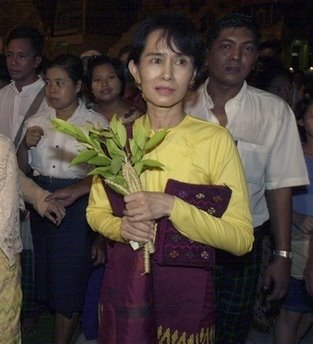


 Posts
Posts


