http://news.xinhuanet.com/english/2009-01/09/content_10629165.htm
www.chinaview.cn 2009-01-09 11:18:00 Print
YANGON, Jan. 9 (Xinhua) -- The Myanmar authorities have stepped up tight bio-security against cross-border bird flu, banning poultry import from neighboring Bangladesh, the local Biweekly Eleven reported Friday.
Bio-security check is also being carried out at the Maungtaw border point in prevention against mixing of home-breed poultry with migratory wild birds which are moving into Myanmar in the cold season especially at this time, the report said.
The Livestock Breeding and Veterinary Department (LBVD) has called on the country's people to take preventive measures against cross-border bird flu, saying that the avian influenza was found occurring intermittently in neighboring countries in both the east and northwest and attributing the phenomena to have been caused by the migratory birds, carriers of deadly H5N1 virus from one place to another.
Migratory birds from different regions across the world used to fly over Myanmar territory during the winter season period between November and February, according to experts.
The authorities have also called for keeping awareness about the modes of infection of the avian influenza and intensifying precautionary and educational measures to prevent any occurrence in humans and birds.
Meanwhile, Myanmar is cooperating with the Food and Agriculture Organization (FAO) and the United States Agency for International Development (USAID) in prevention against avian influenza.
In April last year, the World Animal Health Organization (OIE) declared Myanmar as a bird-flu-free country three months after the country was proved that there was no residual bird flu virus remained over the period since January.
From February 2006 until the last in December 2007, there were numerous outbreaks of the avian influenza in Myanmar covering 25 townships of six states and divisions.
All of the occurrences were blamed for infecting from abroad especially that the virus was carried into the country by migratory birds from the cold regions in the world infecting local birds, according to the LBVD.
Myanmar reported outbreak of the avian influenza in the country for the first time in some poultry farms in Mandalay and Sagaing divisions in early 2006, followed by those in Yangon division in early 2007, in Mon state's Thanbyuzayat and western Bago division's Letpadan in July and in eastern Bago division's Thanatpin and in Yangon division's Hmawby in October the same year.
Despite the declaration as a bird-flu-free country, the Myanmar livestock authorities continued to call on the country's people to exercise a long-term precaution against the deadly H5N1 bird flu.
Editor: Han Jingjing
Sunday, January 11, 2009
Myanmar steps up tight bio-security against cross-border bird flu


Ban must visit Burma to begin the end-game
http://www.europeanvoice.com/article/2009/01/ban-must-visit-burma-to-begin-the-end-game/63584.aspx
By Thaung Htun
09.01.2009 / 13:03 CET
A more active role by the UN's secretary-general is one of ways the international community can deepen its engagement with Burma's problems, argues the government-in-exile.
In backing a visit to Burma (Myanmar) by the United Nations Secretary-General Ban Ki-moon, the EU's envoy, Peiro Fassino, in mid-December added to the clarion call for the UN to take a lead role in Burma.
The EU itself is already well engaged, via a range of economic sanctions. It has opened channels of dialogue on Burma with interlocutors like the Philippines. Just before Christmas it pledged a further €40.5 million to aid efforts inside Burma, focusing particularly on victims of the Nargis cyclone of last May.
But, the EU cannot enact positive change on its own. It needs concerted action from the UN, starting with a high-profile, top-level, well-focused visit by Ban himself.
Instead, the United Nations secretary-general seems to be waiting for a miracle before he is prepared to visit Burma. Like a scientist afraid of his own experiment, he aims to plot the result before he begins the process.
He is seeking, he says, an assurance that there will be an outcome. This is an untenable position, overly cautious by far for a situation as critical as the one in which Burma finds itself. The UN is willing to allow the Burmese military junta to ride roughshod over international standards of human rights, political practice, economic sustainability and foreign relations. The global body is allowing the regime to push on towards a sham election in 2010, which will inevitably bolster their power and defer the development of democracy in Burma.
While the shortcomings of the UN indicate a global system that is failing Burma, the UN is not alone.
Regionally, a virtual free-for-all has erupted as investors from China, Russia, Korea, Thailand, and elsewhere rush into Burma. A resources and energy assets boom has given the military regime an opportunity to open the flood-gates. Sanctions in place in the EU and the US have ensured Burma's neighbours have few serious competitors, or watchdogs.
A step-by-step plan
The National Coalition Government of the Union of Burma, as the legitimate and mandated de jure government in Burma has outlined a step-by-step plan for more focused and successful engagement with Burma.
The first vital and unavoidable step would be for the secretary-general to visit the country – and to so as soon as possible. That would be an opportunity to present and embody the international community's concern over widespread human rights violations and the volatile actions of the country's rulers.
Second, the UN's special envoy, Ibrahim Gambari, must go to Burma again to meet officials and to establish the infrastructure to: a) ensure the release of all political prisoners; b) facilitate open negotiations between Aung San Suu Kyi, the victor in Burma's last democratic elections, and the State Peace and Development Council (SPDC), the name Burma's military regime has given itself; c) to set a permanent liaison office in Burma to pursue the direct intentions of the secretary-general and; d) to bring solutions to Burma's economic crisis.
Third, a process of on-going engagement needs to be rolled out. The generals need to be obliged to meet and engage appropriately with the UN special envoy and must grant all relevant UN officers unlimited access throughout the country.
Fourth, the UN should kick off a process of national reconciliation, capitalising on the work already done in this direction by the National Coalition Government of the Union of Burma (NCGUB), which I represent at the UN. This process must be inclusive of all opposition parties, the military and all ethnic groups. This must take place before the proposed elections in 2010 to head off the usual ruses employed by the generals in order to exploit international goodwill, to marginalise authentic opposition voices in Burma and to ensure the irrevocably flawed 2010 election can never take place.
Fifth, all such processes need to have the full-backing of the UN and have their agenda set by the UN. This needs the backing of the UN member states, who must stand up and act on Burma more than they are, and should be a priority as the run-in to the 2010 election looms closer.
Sixth, this process has to be fully open, the dialogue made public and the results known to all, so as to ensure full accountability and the good governance of the initiative.
These are concrete steps, not idle thoughts. Such a programme could bring progress to Burma. The international community understands these mechanisms and can work within them. And yet there is inaction, a sense the rhetoric is there to knit a veil for international leaders.
Recently, Ban said that the actions of the junta are “abhorrent and unacceptable” and called for “bold action” on the generals' part to move towards democracy. But, the words will sink quickly unless they are forcefully backed up by Ban himself.
This is not the time to be overly fastidious in the interests of protocol or realpolitik, or to protect the perceived dignity of the secretary-general's office. Our people are in grave danger.
We can only hope the EU will continue to provide weight to the growing movement to begin the process of lasting change in Burma.
Thaung Htun represents Burma's government-in-exile, the National Coalition Government of the Union of Burma (NCGUB), at the United Nations.
© 2009 European Voice. All rights reserved.
Fall in rice price hurts Myanmar exporters, farmers
http://www.alertnet.org/thenews/newsdesk/BKK357563.htm
09 Jan 2009 07:36:25 GMT
Source: Reuters
By Aung Hla Tun
YANGON, Jan 9 (Reuters) - The fall in world rice prices is hurting exporters in Myanmar, who say they are shipping grain at a loss, and is adding to the problems of poor farmers struggling to recover from Cyclone Nargis.
"A tonne of our 25 percent broken rice now fetches only $250 in the international market," one rice exporter told Reuters.
"With a 10 percent deduction for export tax, we get only $225 per tonne, compared with about $260 a tonne we had to pay in the domestic market a few months ago," the exporter said, asking not to be identified.
Vietnamese 25 percent broken rice, an Asian benchmark, was quoted at around $335 per tonne this week. Rice from Myanmar is generally of inferior quality because of poor milling. The main buyers are Bangladesh, Sri Lanka and African countries.
After a bumper harvest in Myanmar, a tonne of 25 percent broken rice in the domestic market now costs around $230.
That's a little better for exporters but not much good for farmers, who say they are selling below cost price, with the result that some are being forced off the land.
"With soaring costs for inputs and labour, and falling rice prices, it's no longer commercially viable for us to grow rice," farmer Ba Tin from the cyclone-hit Kawthmu Township said, adding some farmers in the region had lost their land to private firms.
Army-ruled Myanmar earned $100 million from exporting 358,500 tonnes of rice in fiscal 2007/2008 (April/March) -- a fraction of what it sold in its heyday as the world's largest rice exporter, before independence from Britain in 1948.
In its best year, 1934, when it was called Burma, it exported 3.4 million tonnes. Thailand, today's top exporter, shipped around 10 million tonnes last year.
Myanmar had stood to benefit from a jump in world prices and a panic about supplies in 2008, when some big exporting countries restricted sales to ensure their people had enough to eat.
In February 2008 it agreed to sell 300,000 tonnes a year to Bangladesh.
But then Cyclone Nargis struck in May, and the generals banned rice exports from that month to preserve stocks.
Officials say the ban was eased from July and government data shows Myanmar exported 127,600 tonnes worth $43 million in the first seven months of the fiscal year from April to October 2008. Around 101,000 tonnes was sold in April, before the cyclone.
EXPORT DRIVE
Prices have since collapsed. Thailand's benchmark 100 percent B grade white rice traded at $550 per tonne this week, barely half the record high of $1,080 seen in April 2008.
Sein Win Hlaing, secretary general of Myanmar's Federation of Chambers of Commerce and Industry, said the export market was being liberalised to help the sector. Trade has until recently been controlled by exporters close to the junta.
"We do realise the grave consequences of plunging rice prices. We have relaxed some restrictions to forge the export drive. Small-scale exporters are being allowed," he said.
But economists said problems were piling up.
"Falling rice prices in the world market are only partially to blame. The main thing is we have to cut costs for the growers. We need to provide them with soft loans and subsidised inputs," said a former Yangon University economist, declining to be named.
The fall in domestic prices is not all bad news, though, with many people in Yangon relieved at cheaper food.
"After Cyclone Nargis we were worried that rice prices would go up," food stall owner Kyaw Myint said. "Now I'm very glad to be able to sell steamed rice to my customers, all in the lowest income bracket, at very low prices." (Editing by Alan Raybould)
Fw: [burmainfo] 今週のビルマのニュース(0901号) 新たな亡命政府が発足?ほか
━━━━━━━━━━━━━━━━━━━━━━━━━━━━━━
ビルマ市民フォーラム メールマガジン 2009/1/9
People's Forum on Burma
━━━━━━━━━━━━━━━━━━━━━━━━━━━━━━
ビルマ情報ネットワーク(BurmaInfo)からのメールを転送させていただき
ます。
(重複の際は何卒ご容赦ください。)
PFB事務局
http://www1.jca.apc.org/pfb/
━━━━━━━━━━━━━━━━━━━━━━━━━━━━━━
ビルマ情報ネットワークの「今週のビルマのニュース」をお送りします。
「今週のビルマのニュース」バックナンバー
http://www.burmainfo.org/weekly.html
きょうのビルマのニュース(平日毎日更新)もご利用ください。
http://d.hatena.ne.jp/burmainfo/
ビルマ情報ネットワーク (www.burmainfo.org)
秋元由紀
========================================
今週のビルマのニュース Eメール版
2009年1月9日号【0901号】
========================================
【今週の主なニュース】
新たな亡命政府が発足?
・ビルマは4日、英国からの独立61周年記念を迎えた。
自宅軟禁されているアウンサンスーチー氏は同日、父
アウンサン将軍「国と国民のために決然と行動せよ」
という言葉の書かれた幕を自宅の外に掲示した。
氏が書記長を務める国民民主連盟(NLD)本部では
式典が開かれ、党員や外交官ら約300人が参加した
(5日付DVBほか)。
・軍政トップ・タンシュエ将軍は4日、恒例となっている
独立記念日の晩餐会を欠席した。欠席の理由については
体調が悪かった、外交官と会うのを避けたかった、など
憶測があるが詳細は不明
(5日付イラワディ誌)。
・国外に拠点を置く民主化団体の連合体であるビルマ連邦
国民評議会(NCUB)は1日に声明を発表し、2010年に
総選挙開催を予定している軍政に対抗するため、2009年に
新しい亡命政府を設立する計画があると発表した。1990年の
総選挙で当選した議員や少数民族の代表などで形成する。
民主化勢力には既に、アウンサンスーチー氏のいとこを首相
とするビルマ連邦国民連合政府(NCGUB)という亡命政府が
あるため、新たな亡命政府の発足にはNCUB内部にも賛否
両論ある模様。
【その他】
ビルマへの観光客が大幅減、ほか
・12月30日にラングーンでスーチー氏の解放を求めるデモを
行った国民民主連盟(NLD)党員9人が逮捕された
(30日付イラワディ誌ほか)。
・2008年にラングーンのミンガラドン空港から入国した観光客の
数が2007年に比べて大幅に減少した(6日付AFP)。また2008年
9月までのビルマの日本との貿易額は前年同時期に比べて5.6%
減って約2億7600万ドルだった(6日付JEN)。
・ビルマ西部アラカン州沖のシュエ・ガス田開発で、同田の権益を
持つ大宇ら韓国企業が経済協力開発機構(OECD)の「多国籍企業
行動指針」に違反しているという指摘が市民団体などから提起されて
いたが、韓国政府が「違反は一切ない」と回答したことがわかった
(12月24日付イラワディ誌ほか)。
・カレン女性機構(KWO)によれば、12月27日にカレン州ニャウンレビン
地区の村でカレン民族の少女(7)の射殺体が見つかった。
強かんされた跡があった。事件の直前に村に入ったビルマ軍
兵士に容疑がかけられており、家族らがビルマ軍に捜査を求めて
いるがビルマ軍は応じていない。
【ビルマへの政府開発援助(ODA)約束状況など】
〔草の根・人間の安全保障無償資金協力〕
12月24日
・イラワジ管区 橋建設 約807万円
・モン州 橋建設 約800万円
【イベントなど】
・在日ビルマ人共同行動実行委員会アクション-国連事務総長に対し、
一刻も早くビルマを訪問し、スーチーさんを含むすべての政治囚の
釈放と対話の促進を軍政に働きかけるよう要請するアピール行動
(国連大学前、5~9日15~16時)
・日本ビルマ救援センター
月例ビルマ問題学習会「ビルマ難民の第三国定住について」
講師:中尾恵子
(大阪ボランティアセンター、16日19時~)
・難民の第三国定住に関するシンポジウム
外務省主催、国際移住機関(IOM)共催
(三田共用会議所、2月5日13時半~)
*要申込
・ミャンマーの伝統糸あやつり「ヨウッテー・ポエー」~
シリーズアジアの人形芝居part14~
王族から庶民にまで広く愛されたミャンマーの華麗なる伝統芸能
7年ぶりの来日公演
現代人形劇センター主催
(ラゾーナ川崎プラザソル2月7日15時、18時半。
カスケードホールいきいきプラザ一番町 B1階2月10日15時、19時。
レクチャーデモンストレーション 東京ミッドタウン
富士ゼロックス501会議室、2月11日14時、16時)
*チケット発売中
・第55回ビルマ市民フォーラム例会(池袋・ECOとしま8階、2月21日18時~)
★ジェーン・バーキン最新アルバム『冬の子供たち』が
発売中。アウンサンスーチー氏に捧げる楽曲「アウンサンスーチー」を収録。
☆特定非営利活動法人メコン・ウォッチの
季刊誌「フォーラムMekong」、最新号はビルマ特集。
-ビルマ~サイクロン後の人々、軍政-
http://www.mekongwatch.org/resource/forum/FM_vol9_2_01.html
【もっと詳しい情報は】
きょうのビルマのニュース(平日毎日更新)
http://d.hatena.ne.jp/burmainfo/
ビルマ情報ネットワーク
http://www.burmainfo.org/
【お問い合わせ】
ビルマ情報ネットワーク 秋元由紀
====================================
今週のビルマのニュース Eメール版
2009年1月9日号【0901号】
作成: ビルマ情報ネットワーク
協力: ビルマ市民フォーラム
====================================
━━━━━━━━━━━━━━━━━━━━━━━━━━━━━━━━━━━━━━
配布元: BurmaInfo(ビルマ情報ネットワーク)
http://www.burmainfo.org
連絡先: listmaster@burmainfo.org
バックナンバー: http://groups.yahoo.co.jp/group/burmainfo/
※BurmaInfoでは、ビルマ(ミャンマー)に関する最新ニュースやイベント情報、
参考資料を週に数本配信しています。
━━━━━━━━━━━━━━━━━━━━━━━━━━━━━━━━━━━━━━
Burmese Censor Board tightens grip on films for festivals
http://www.mizzima.com/news/inside-burma/1496-burmese-censor-board-tightens-grip-on-films-for-festivals.html
by Mizzima News
Friday, 02 January 2009 18:20
Chiang Mai (Mizzima) — Burma's Information Ministry has announced that makers of films and documentaries will need to seek prior permission from the Censor Board to be able to contest in international film festivals, sources in the Burmese film industry said.
"The film censorship board has issued a new order. All films and documentary makers must seek permission before contesting at international film festivals," a film director in Rangoon said on condition of anonymity.
According to sources in Rangoon's film industry, the new regulation came into being after director Kyi Phyu Shin won the "2008 Best Short Film Award" of the National Geographic Society with her 15 minute-long documentary film in 2008.
Director, Kyi Phyu Shin, won the award for her documentary film on the life of a Burmese painter called Wathone. The English-subtitled film named 'Scathes of Wathone' included interviews with Wathone.
Saturday, January 10, 2009
ဂ်ပန္နိုင္ငံ ျမန္မာဗုဒၶဘာသာဘုန္းေတာ္ႀကီးေက်ာင္းျဖစ္ေျမာက္ေရး ဂီတပဲြက်င္းပမည္
ဂ်ပန္နိုင္ငံ ရိွ ဗုဒၶ ဘာသာဝင္သူေတာ္စင္အေပါင္းတို ့တတ္နိုင္သမ်ွပါဝင္အားေပးႀကပါခင္ဗ်ား။
သီခ်င္းဝါသနာမပါသူမ်ားအေနျဖင့္လည္း ျမန္မာဗုဒၶဘာသာဘုန္းေတာ္ႀကီးေက်ာင္း(လက္ရိွေနရာ-အိုးဆုခသို ့ဆက္သြယ္၍
တတ္နိုင္သမ်ွပါဝင္လႉဒါန္းကုသိုလ္ယူနိုင္ႀကပါသည္ခင္ဗ်ား။
အိုးဆုခဘုန္းေတာ္ႀကီးေက်ာင္းဖုန္းနံပါတ္-၀၃-၃၉၁၆-၁၉၅၆
Stage show for Monestry
Friday, January 9, 2009
Many condolences on the death of U Saw Mra Aung
http://www.narinjara.com/details.asp?id=2020
Many political parties inside and outside of Burma have sent condolences to Arakan League for Democracy and the family on the loss of Dr U saw Mra Aung, who was president of Arakan league for Democracy, a biggest ethnic political party in Burma.
United Nationalities league for Democracy (Liberated Area) said in the condolence letter that U Saw Mra Aung was working for democracy and equal rights for all ethnic people in Burma. U Saw Mra also accepted the position of chairman of parliament in order to fight against military government unitedly among pro democracy groups when CRPP was formed in 1998. Therefore the death of U Saw Mra Aung is a great loss for all people in Burma.
The Burma Campaign UK ( BCUK) also sent a condolence letter on the loss of U Saw Mra Aung and expressed that the Death of Dr. Saw Mya Aung is a great loss for the Arakan people and the movement of ethnic nationalities in the struggle for democracy, human rights and freedom in Burma.
BCUK said that BCUK honours Dr. Saw Mya Aung for his strong leadership and his dedication to the struggle for freedom and equality for the Arakan and all the people of Burma against the repressive military dictatorship.
BCUK said that he did not live to see the freedom for the Arakan people, but the struggle will continue and his dream will come true.
The Chin National community - Japan also expressed in its condolence that U Saw Mra Aung was not only a lover for Arakanese people but also other ethnic nationalities in Burma because he scarified his life for democracy and freedom in Burma.
The Muslim Liberation Organization of Burma (MLOB) also expressed condolence on the loss of U Saw Mra Aung and said that it is not only a loss for Arakanese people but also other nationalities in Burma because he scarified his life for democracy, human rights and equal rights in Burma.
The organization honoured U Saw Mra Aung as a great leader for his contribution for democracy in Burma.
An Arakanese group, All Arakan Students and Youth Congress spoke of his background history and said that U Saw Mra Aung was a great leader of the Arakanese community and he scarified his life for the Arakanese people for development like other people in the world.
Dr. Saw Mya Aung, 92, who was president Arakan League for Democracy as well as president of CRPP parliament, was elected as a Member of Parliament representing Mrauk U township constitutioncy 1 in the 1990 elections. His party won 11 seats in 1990 elections in Arakan state.
He died in his house located in Than Lwin Road, Kamar Wrat Township, in Rangoon on 5 January 2009 and he was buried in Ray Way cemetery January 6 morning .
Top Bush Aide Hopes Obama Will Push Burmese Cause -IRRAWADDY
http://www.irrawaddy.org/print_article.php?art_id=14888
--------------------------------------------------------------------------------
By LALIT K JHA Thursday, January 8, 2009
--------------------------------------------------------------------------------
WASHINGTON — A top aide to US President George W Bush said on Wednesday that he hoped the incoming administration of President-elect Barack Obama would continue to push for democracy and protection of human rights in Burma.
“I hope the new administration will continue pushing the cause of human rights and freedom in Burma,” said Bush’s national security advisor, Stephen Hadley, in his valedictory speech at the prestigious Center for Strategic and International Studies, a Washington-based think tank.
During its eight years in power, the Bush administration led the international community in imposing sanctions on the Burmese military regime and calling for the restoration of democracy and release of all political prisoners, including Aung San Suu Kyi.
Although it was not able to achieve any of these objectives, the Bush administration was successful in putting Burma on the agenda of the UN Security Council.
First Lady Laura Bush also took a strong interest in the people of Burma and often encouraged the administration to take measures against the country’s ruling junta.
Since becoming the president-elect, Obama has remained largely silent on foreign policy issues. Although he and his team have occasionally expressed their views on critical foreign policy issues, they have said nothing so far on Burma.
Copyright © 2008 Irrawaddy Publishing Group | www.irrawaddy.org
Foreign investment in Myanmar soars
Wednesday, January 7, 2009
Foreign investment in military-ruled Myanmar nearly doubled in the first 10 months of last year, with the bulk coming from Chinese-backed mining projects, official figures showed yesterday.
Between January and October 2008, China invested 855 million dollars in Myanmar's mining sector, making up most of the 975 million dollars total foreign investment.
Foreign investment for the same period a year earlier was 505 million dollars, according to the ministry of National Planning and Economic Development.
China made its massive investment in July, alongside another five million dollars from Singapore, 94 million dollars from Russia and 20 million dollars invested by Vietnam in Myanmar's oil and gas sector, statistics showed.
The Chinese investment is the largest since Thailand invested six billion dollars in the 2005-6 fiscal year for a hydroelectric dam project.
The United States and European Union have both tightened trade sanctions on Myanmar since a brutal crackdown on protests against the country's military rulers in 2007.
But neighbouring countries such as Myanmar's ally China continue to buy vast amounts of Myanmar's natural resources -- mainly gas, precious jade and gems.
Myanmar has been ruled by the military since 1962. It began to open up its economy in 1989 after a 1988 democracy uprising in which around 3,000 people were killed.
Posted by Saigon Charlie at 6:15 PM
Drug Trade In The ‘Golden Triangle’
http://www.scoop.co.nz/stories/WO0901/S00106.htm
Thursday, 8 January 2009, 11:51 am
Press Release: United Nations
Real Lives Touched By Drug Trade In ‘Golden Triangle’ Featured In UN Photo Stories
New York, Jan 7 2009 11:10AM The lives of real people affected by the illicit drug trade in the area known as the Golden Triangle – Thailand, Laos and Myanmar – are showcased in a new set of photo stories published by the United Nations Office on Drugs and Crime (UNODC).
The second volume of the photojournalism book “De Narcoticis” is produced by award-winning photographer, journalist and UNODC Goodwill Ambassador, Alessandro Scotti.
The project “gives a face” to a problem that is often depicted through data and numbers, and focuses on a range of actors, including law enforcement officers, traffickers, plantation workers and addicts, notes Mr. Scotti.
“It’s an underworld which has been examined closely enough to give us plenty of figures and statistics, but which is less known for its personal stories,” he says.
“The people involved in trafficking have only a very partial perception of the overall phenomenon, and yet their lives are powerfully affected by it. They are simple people with a limited perception of the impact of their actions.
“Most are in any case tied to the ‘job’ for their very survival; desperate people with otherwise limited life chances or opportunities,” he says.
This is why UNODC’s work is so important, Mr. Scotti adds. “UNODC offers a holistic approach including development strategies which allow alternative businesses to grow and become sustainable. A stronger economic and social framework leads to a different balance.”
The first volume of “De Narcoticis” focused on Colombia, which now produces only 5 per cent of the world’s opiates – down from over 70 per cent some 30 years ago – and where UNODC has been partnering with local authorities in combating the drug trade.
ENDS
Presuming a democratic Myanmar: Looking beyond election 2010
http://www.thejakartapost.com/news/2009/01/08/presuming-a-democratic-myanmar-looking-beyond-election-2010.html
Nehginpao Kipgen, , Rockville, MD | Thu, 01/08/2009 10:36 AM | Opinion
It is sad to see a government sentencing its own citizens to prison terms ranging from six months to 65 years. The alleged convicts are none other than some of the most admired artists, revered monks and peaceful activists who dearly love their country.
The international community's political rhetoric, without any substantive action, has emboldened the military generals to advance their seven-step road map toward a "disciplined and flourishing democracy" slowly but steadily.
It was not surprising to see UN chief Ban Ki-moon's lukewarm reaction toward a largely symbolic petition submitted to him by 112 former world leaders asking him to visit Burma (Myanmar) in the wake of widespread arrests in recent weeks and months. The Dec. 3 petitioners included Jimmy Carter and Tony Blair, among others.
Out of frustration, Ban -- through his spokesperson Michele Montas -- responded to the letter and said: "...will not be able to do so without reasonable expectations of a meaningful outcome, which is what we have been saying all along...."
What could that paper tiger achieve anyway? Had the same letter been sent by the same number of incumbent world leaders, it would have had better leverage. The move was an encouraging sign, but will have very minimal impact, if any.
It would be more efficacious if the 112 world leaders instead convinced their own governments to take pragmatic action in line with what the UN chief is asked of.
It is the UN Security Council that can initiate effective action and the good offices of the Secretary-General that can implement, and not vice-versa. Ban Ki-moon sees the limitations his good offices can play in the absence of any enforcement mechanism.
If Ban were to go to Myanmar without having to achieve any substantive results, he could demean the Secretary General's office. His basic demands such as the release of political prisoners and an initiation of dialogue with the opposition groups have not materialized.
Instead of listening to the repeated calls for the release of political prisoners, the military authority -- in recent weeks -- has handed down long prison terms to anyone seen to be a disturbance in the upcoming 2010 election.
On the other hand, the military was sending yet another clear message to the international community. Senior General Than Shwe was heard bragging about the 15-year existence of the military-backed Union Solidarity and Development Association (USDA) and its rising 24.6 million members.
On the fourth day of the association's 15th anniversary on Nov. 29, Gen. Than Shwe was heard saying: "....plans are well underway to see to the remaining steps including the 2010 transition work program. So, it is fair to say that the future of the State structure is certain to materialize".
In the new constitution, 25 percent of the seats in both houses of parliament (House of Representatives and House of Nationalities) are reserved for the military. Amendment of the constitution will require the approval of more than 75 percent of the votes. In other words, the constitution has been designed to perpetuate military rule.
The generals learned a lesson from the 1990 general election -- any free and fair election will go in favor of the National League for Democracy (NLD) and other democratic opposition groups. It remains to be seen whether the NLD will be allowed to participate in the election.
If the NLD is barred from the election or if the party chooses not to participate, the political scenario beyond the 2010 election could become even murkier. While the new government will be busy with its own agendas, the NLD will continue to lobby the international community to recognize the 1990 election results.
The 2010 election will bring a transition to Myanmar, but the new government will still be directly or indirectly under the military. One other significant implication is that the results of 1990 general election will become bygone history.
As usual, the international community will send mixed responses regarding the election outcome. While most western nations will not or perhaps will reluctantly recognize the results, many Asian governments will welcome it as a positive step toward democracy.
It is these conflicting approaches that have given the military generals political breathing space. Sanctions versus engagements and or appeasements by the international community are responsible for the military regime's survival.
One must not, however, believe that the successful implementation of the State Peace and Development Council's seven-step road map will bring an end to Burma's decades-old political problems.
We will continue to see simmering political turmoil in the country. The military generals are indifferent to and even anathema toward any concept of federalism, which has been the basic demand of the country's ethnic nationalities -- with the exception of the Myanmarese.
A long-lasting solution to Myanmar's problems needs the sincerity, honesty and participation of all ethnic groups. Different ethnic groups should be brought into confidence, and their legitimate demands should be examined. This process of democratization has to be an inclusive approach.
Myanmar's political landscape could still be dramatically changed before and after the 2010 general election provided that the international community steps up a coordinated "stick and carrot" approach.
Meanwhile, the military junta's capability should not be undermined. The regime takes pride in having one of the largest armies in the region with over 400,000 personnel. The military is also well protected by the UN Security Council's veto structure.
If the international community is serious about finding a solution to Myanmar's political problems, it should take actions that can make a difference. There are ways to bring down or convince the military generals.
Military intervention, a model based on the six-party talks regarding North Korea's nuclear stand-off and the UN Security Council Resolution will be some of the swiftest, if not most effective, tools to bring about a democratic change in Myanmar. However, none of the above is likely to happen in the near future.
If no realistic action is on the agenda, the international community should look beyond the 2010 election and start planning for new policies and strategies to be pursued under a new military-controlled government.
The writer is the General Secretary of U.S.-based Kuki International Forum (www.kukiforum.com) and a researcher on the rise of political conflicts in modern Burma (1947-2004).
Fw: [BRCJ]1月の活動案内
━━━━━━━━━━━━━━━━━━━━━━━━━━━━━━
ビルマ市民フォーラム メールマガジン 2009/1/8
People's Forum on Burma
━━━━━━━━━━━━━━━━━━━━━━━━━━━━━━
日本ビルマ救援センター(BRCJ)からのお知らせを転送させていただき
ます。
(重複の際は何卒ご容赦ください。)
PFB事務局
http://www1.jca.apc.org/pfb/
━━━━━━━━━━━━━━━━━━━━━━━━━━━━━━
新年明けましておめでとうございます
今年もよろしくお願いいたします
今月の月例学習会のご案内です。
なお、2月は20日(金)、3月は19日(木)に実施いたします。
━━━━━━━━━━━━━━━━━━━━━━━━━━━━━━━━━━━━
■月例ビルマ問題学習会 (16日、大阪市・谷七)
「ビルマ難民の第三国定住について」
━━━━━━━━━━━━━━━━━━━━━━━━━━━━━━━━━━━
○日時:1月16日(金) 19:00~20:30
○講師:中尾 恵子
○内容:昨年12月19日に難民対策連絡調整会議から「第三国定住による難民
の受入れに関するパイロットケース実施の具体的措置について」が発表されま
した。BRCJが年に2回実施しているタイ・ビルマ国境の難民キャンプ訪問
より、現地の難民の声や、すでに第三国へ出発した難民の報告などをご紹介い
たします。
○会場:大阪ボランティアセンター(大阪社会福祉指導センター)
地下1階ボランティアルーム
地下鉄「谷町6丁目駅」より谷町7丁目交差点を右
地下鉄「谷町9丁目駅」より谷町7丁目交差点を左
*向かいの大阪社会福祉会館ではありません。お間違えのないように。
会場周辺の地図は、次のアドレスからご覧いただけます。
http://www.osakafusyakyo.or.jp/sidoucenter/sidoucenter-access.htm
━━━━━━━━━━━━━━━━━━━━━━━━━━━━
◇■日本ビルマ救援センター(BRCJ)事務局■◇
FAX:050-2008-0125
E-Mail:brcj@syd.odn.ne.jp
URL:http://www.burmainfo.org/brcj
-- Burmese Relief Center-Japan
Outrages and Musings -The Open Society and Its Enemies Today
http://outragesandmusings.blogspot.com/2009/01/open-society-and-its-enemies-today.html
Outrages and Musings
Wednesday, January 07, 2009
The Open Society and Its Enemies Today
The term 'open society' connotes personal liberty, tolerance, transparency, and democracy. It was employed by the French philosopher Henri Bergson to describe political cultures that are non-authoritarian and based on the twin pillars of personal liberty and human rights. But it was another European philosopher, Karl Popper, who gave the term its popularity when he chose it as the title of a two volume study of the roots of totalitarian and fascism that he wrote during the Second World War.
When his book, The Open Society and Its Enemies (OSE), was published in 1945 his primary target were the "closed societies" of the time, the totalitarian regimes of Nazi Germany and the Soviet Union. Popper's main goal in this work, and in his Poverty of Historicism (1957), was to trace the historical roots of these totalitarian ideologies in the history of western thought. In the first volume of OSE he argued for a heterodox interpretation of Plato's Republic which Popper portrayed as the source of the idea of utopian social control. In the second volume he attempted to show that influential nineteenth century thinkers, particularly, Hegel and Marx, adapted Plato's dangerous ideas and set them loose on the world in the form of utopian holistic historicism. While Popper vigorously opposed these systems of totalitarian control, he was emphatic about the need for open societies not not to tolerate intolerance and warned repeatedly that in order to safeguard liberty we must be constantly vigilant about forms of social control and intolerance that would subvert the possibility of openness. We must, he argued, "claim, in the name of tolerance, the right not to tolerate the intolerant" (OSE vol.1, p. 265).
More than sixty years after OSE appeared we live in a much more open world. Nazism was defeated and forever discredited; the totalitarian regimes the former Soviet Union and its planned economy has likewise fallen and has been replaced by a market economy and somewhat greater tolerance of dissent. The Chinese are this year celebrating twenty five years of economic liberalization that has ushered in an era of unprecendented economic growth and prosperity for the most populous nation on earth. There are only a handful of totalitarian societies left today. One can mention the regime in North Korea, the military dictatorship in Burma, as perhaps also al Qaeda, the Taliban, and other religious extremist groups who seek to create an Caliphate that will enforce an orthodox form of Islam.
But we should also understand that there are enemies of the open society in our midst. These foes of freedom and reason employ more subtle means of silencing dissent, sowing division, and promoting intolerance and bigotry. These enemies employ forms of propaganda and thought control designed to control what people think and believe in democratic societies, and unless we learn to recognize their tactics, we can fall prey to the threat of closing our minds to new ideas and frustrating the process of inquiry.
The idea of a open society is based on tolerance of difference and indeed the celebration of diversity of race, of religion, of politics, of culture, of taste, of values. Open societies value plurality and oppose homogeneity and above all purity. But a culture of tolerance of openness is vulnerable to various forms of lies, deception, and manipulation. By being open such societies are vulnerable to attack from elements within the society that seek to close it, not in the crude way of earlier forms of totalitarianism, by excluding people or ideas from full participation in it, but rather by sophisticated techniques of thought control and manipulation of public opinion. These techniques have gotten out of control in American politics and have created a culture of deception, in which every kind of lie and deception is tolerated and indeed celebrated as "spin".
Noam Chomsky was among the intellectuals to clearly understand this threat. Writing in the 1980s in books like Necessary Illusions and the Manufacture of Consent, he identified the forms of thought control in democratic societies that are used by the enemies of liberty and democracy to maintain their power and privilege. They employ sophisticated techniques of public relations, advertising, and propaganda to manipulate public opinion. They use the "big lie" favored by Hitler and Goebbels; they engage in revisionist historical myth-making; and they distort language in ways that Orwell would have recognized so as to make things appear other than they are. In an age of mass media and mass communication, these techniques are even more potent because those who employ them are able to use the media as an electronic megaphone to pour their poison into the ears and eyes of millions.
The the recently deceased playwright Harold Pinter was another voice who warned us about the dangers of lies and deception particularly by politicians. He contrasted literary truth, which is in his view multifaceted, and partly subjective, with factual truth:
Political language, as used by politicians, does not venture into any of this territory since the majority of politicians, on the evidence available to us, are interested not in truth but in power and in the maintenance of that power. To maintain that power it is essential that people remain in ignorance, that they live in ignorance of the truth, even the truth of their own lives. What surrounds us therefore is a vast tapestry of lies, upon which we feed.
He used the occasion of his receiving the Nobel Prize for Literature to denounce in not uncertain terms the way in which, in particular, the United States government lied about its reasons for invading Iraq saying that:
The invasion of Iraq was a bandit act, an act of blatant state terrorism, demonstrating absolute contempt for the concept of international law. The invasion was an arbitrary military action inspired by a series of lies upon lies and gross manipulation of the media and therefore of the public; an act intended to consolidate American military and economic control of the Middle East masquerading -- as a last resort -- all other justifications having failed to justify themselves -- as liberation. A formidable assertion of military force responsible for the death and mutilation of thousands and thousands of innocent people.
But exposing lies can be a challenging enterprise. In order to prove that someone is lying one must first show that the statements he or she made are factually false, then one show that the speaker believed that these statements were in fact true, and finally, one must prove that the speaker intended to deceive his or her audience by claiming certain things to be true that he or she believed to be false. Because politicians can easily conceal what it is they believe to be true and their intention to deceive, our political culture is rife with lies. But it is also awash with something else that may be even more common and more insidious --- bullshit.
I am using the term "bullshit" here in a precise, philosophical sense identified by Harry Frankfurt in his small book of the same name. In this work Frankfurt defines bullshit as speech that has no regard for the truth, but is chosen because it is likely to influence people's perceptions of reality. Lies and bullshit are closely related, in that they both involve misrepresentation: in order to lie, one must believe that something is true and then speak with the intention to make one's audience believe the opposite of what one believes to be true. Both the honest person and the liar must therefore have some regard for the truth. The bullshitter, on the other hand, "does not care whether the things he says describe reality correctly. He just picks them out, or makes them up, to suit his purpose" (p. 56). As Frankfurt further explains the distinction between lying and bullshit:
What bullshit essentially misrepresents is neither the state of affairs to which it refers nor the beliefs of the speaker concerning that state of affairs.... What he does necessarily attempt to deceive us about is his enterprise.... Both he and the liar represent themselves falsely as attempting to communicate the truth. The success of each depends upon deceiving us about that. But the fact about himself that the liar hides is that he is attempting to lead us away from a correct apprehension of reality; we are not to know that he wants us to believe something that he supposes to be false. The fact about himself that the bullshitter hides, on the other hand, is that the truth values of his statements are of no central interest to him; what we are not to understand is that his intention is neither to report the truth nor to conceal it. (pp. 53-55)
Frankfurt's analysis of bullshit allows us to distinguish between bullshit and fiction. When a writer of fiction, such as Pinter, or any other novelist or playwright, writes without regard for the truth, we do not call it bullshit because there is no attempt to deceive us into thinking that the speaker is attempting to tell the factual truth -- he or she is asking us to willingly suspect our disbelief and play along with the fictional premises of the work of art. Writers of fiction aren't interested in reporting the truth or concealing it, but neither are they trying to conceal that fact. But bullshitters are; they are trying to make us believe they are speaking truthfully when in fact they have no regard for the truth at all.
There is no better example of bullshit than "Joe the Plumber" from last fall's presidential campaign. Here is a guy, Samuel J. Wurzelbacher by name, who asked then candidate Barack Obama a question about the implications of his tax policies by portraying himself as a licensed plumber who was planning to buy his boss's business which he claimed was worth $250,000. In fact, as we later found out, Mr. Wurzelbacher does not have a plumber's license, his bosses' business is only worth $100,000, he himself makes $42,000 a year and owed back taxes on that amount. "Joe the Plumber" represented himself as a hard-working and successful small businessman, but in fact he was a fraud and what he said was total bullshit. He did not care whether the premises of his question were true or false, all that mattered to him was that he thought he could get Obama to admit that under his proposed tax policies he would be subject to an increase in his marginal tax rate. He just made up facts to suit his purpose.
So what happened to this bullshit artist? Instant meida celebrity and, at least among the Republican faithful, Joe to Plumber became a symbol for the notion (also bullshit) that Obama is a socialist because he favored having rich people pay a modestly higher marginal income tax rate. Rather than being ridiculed and publicly shamed, Joe the Bullshitter was lionized.
Our media culture is awash in bullshit. It is full of speech that does not even attempt to communicate truths or make claims whose veracity can be rationally assessed. Most people no longer seem to be interested in truth; what matters is someone's ability to lead his audience to accept something, or as Stephen Colbert says, to believe things on account of their "truthiness". We are suffering from "truth decay" that is rotting our ability to determine what to accept as true and worthy of belief.
The key question for defenders of open societies is how best to respond to this brown tide of bullshit that is polluting our public discourse? The financier George Soros, who was a student of Popper's, and whose main philanthropic foundation is named the Open Society Institute, wrote an interesting editorial commentary that identified the reason why lies and bullshit are threats to an open society:
Popper failed to recognize that in democratic politics, gathering public support takes precedence over the pursuit of truth. In other areas, such as science and industry, the impulse to impose one’s views on the world encounters the resistance of external reality. But in politics the electorate’s perception of reality can be easily manipulated. As a result, political discourse, even in democratic societies, does not necessarily lead to a better understanding of reality.
Soros argues that, "the separation of powers, free speech, and free elections alone cannot ensure open society; a strong commitment to the pursuit of truth is also required." He suggests that we need to have new ground rules for political discourse, that we need to inoculate the public against various forms of deception by exposing them to public scrutiny, and that we need to name and shame those who use them. Likewise, Pinter concluded his Nobel speech with these words, "I believe that despite the enormous odds which exist, unflinching, unswerving, fierce intellectual determination, as citizens, to define the real truth of our lives and our societies is a crucial obligation which devolves upon us all. It is in fact mandatory."
If in order to protect an open society we should not tolerate intolerance and bigotry, then neither should we tolerate lies and bullshit. In traditional closed societies, the pursuit of truth is frustrated by techniques of social control that limit dissent and critique of current orthodoxies. But in democratic societies such as our own, the pursuit of truth is under an even more insidious attack. By tolerating and rewarding bullshit we indicate that the truth does not matter; that one need not consider it as relevant at all. All that matters in a society that tolerates so much bullshit is that people come to believe what the bullshitters want them to believe, at least for a while.
What is to be done about the bullshit storm? I suggest that our first line of defense is to put our bullshit detectors on high alert and be prepared to recognize it and name and shame those who use it. I see some evidence that this kind of response to bullshit and deception is beginning to appear more frequently in the mainstream American media. As a long time reader of such publications as the Nation, the New York Review of Books, and Salon.com (not to mention Chomsky and Pinter), I am used to learning that the things reported in the mainstream corporate new media are lies and bullshit. But I have recently been amazed that correspondents from these liberally biased news media have begun to become regular guests on cable TV news shows such as Keith Olberman's Countdown and on the Rachel Maddow Show. What I appreciate about these cable new shows is that their hosts, Olbermann and Maddow, are not afraid to name and shame the liars and bullshitters. The other night, for instance, in talking about the flap over Pastor Rick Warren claiming that he never compared gay marriage to incest and pedophilia, Maddow simply showed a video clip of Warren saying that he is opposed calling relationships between brothers and sisters, men and children, and men with multiple wives "marriage" and that he believes that gay marriage is comparable to them. She nailed him in a lie and he was even a finalist for the "Denial is not just the name of a river in Egypt" award for the most barefaced lie of the year (Sen. Ted Stevens won that one).
Olbermann and Maddow are, of course, using humor and political satire as defenses against bullshit; a technique pioneered by Jon Stewart and Stephen Colbert on their wildly popular late night shows on Comedy Central. Using comedy to convey political criticism is a great anti-bullshit technique because comedy, like fiction, is not supposed to be taken seriously as an attempt to speak the truth. However, like fiction, one can invert their assumption by mocking and making fun of those who lie for a living -- what Olbermann calls professional prevaricators -- and with tongue in cheek, outing their deceptions. While seeming not to be pursuing the truth, one can speak truthfully about what others are lying and bullshitting about.
The Blogosphere is, of course, also full of bullshit, but it is sometimes a good place to go to find bullshitter detectors doing their duty. The You Tube effect, shown, for instance, with the "macaca" episode involving the Virginia politician George Allen, came from blogs that posted the video showing exactly what Allen had said. Politicians no longer have plausible deniability when there are video cameras on everyone's mobile phones.
To be continued....
Posted by Morton Winston at 6:50 AM
Labels: bullshit, Chomsky, Colbert, deception, Frankfurt, Joe the Plumber, Maddow, Olbermann, Open Society, Pinter, Popper, Soros, Stewart, tolerance
Older Post Home
About Me
Morton Winston
I am Professor of Philosophy and Chairman of the Department of Philosophy and Religion at The College of New Jersey. I also have a long career as a human rights activist with Amnesty International and Social Accountability International.
View my complete profile
Blog Archive
▼ 2009 (2)
▼ January (2)
The Open Society and Its Enemies Today
New Look for 2009
Soldier’s Arrest for Transporting Drugs a Sign of the Times
http://www.irrawaddy.org/print_article.php?art_id=14885
--------------------------------------------------------------------------------
By MIN LWIN Wednesday, January 7, 2009
--------------------------------------------------------------------------------
A warrant officer from Light Infantry Battalion (LIB) 701, based in Hmawbi Township, Rangoon Division, was arrested for drug trafficking in late December, according to a source close to Rangoon Regional Military Command.
“He was not selling, he was just a carrier,” said the source. “He did it because he couldn’t support his family on his salary.”
The man was found to be in possession of the drug while going through a checkpoint on the main road from Rangoon to Mandalay, the source said. No further details about the type or quantity of the drug were available.
The arrest highlighted a growing problem among low-ranking members of Burma’s 400,000-strong armed forces. Unlike the top generals who use the military to maintain their hold on power in the country, most rank-and-file soldiers are struggling to get by.
“Regional military authorities don’t provide sufficient rations and other supplies for soldiers and their families,” said a sergeant from LIB 701, speaking on condition of anonymity. “That’s why soldiers are always looking for some other way to support their families.”
While many military families try to subsist on earnings from a variety of side businesses, from raising livestock to making bricks or wooden furniture, even this extra income is often not enough. Like other public servants in this impoverished country, many soldiers survive on the spoils of petty corruption and other illegal activities, including drug trafficking.
Non-commissioned members of the armed forces are paid less than half as much as junior officers, with monthly salaries starting at 21,000 kyat (US $16) for a private. First class warrant officers can make as much as 50,000 kyat ($40) per month.
“We earn small salaries and work six days a week, even though we are not on the frontlines,” said the sergeant from LIB 701. “We don’t care where we get our money from, as long as we can support our children.”
With such attitudes prevalent among lower-ranking soldiers, commanding officers often look the other way or engage in illegal activities themselves. When caught, however, soldiers often face harsh sentences for their crimes.
Unlike soldiers near the bottom of the military hierarchy, those close to the ruling generals rarely face serious penalties for breaking the law.
Last year, Aung Zaw Ye Myint, son of Lt-Gen Ye Myint, was briefly detained at the Wat Htee Kan military camp in Prome, Pegu Division, after Burmese police raided his office at Rangoon’s Yetagun Tower on May 29 and found illegal drugs and six guns.
The Wat Htee Kan camp has served as a sort of reform school for the miscreant sons and grandsons of top-ranking generals since Burma’s socialist era.
Aung Zaw Ye Myint was a familiar figure in Rangoon’s elite circles, mingling with movie stars and the children of other top generals. He was well known as a reliable source of hard-to-find street drugs for a small but well-connected clientele.
Copyright © 2008 Irrawaddy Publishing Group | www.irrawaddy.org
Thursday, January 8, 2009
China: Revolution or Reform? - A Summary of the "Charter 08" Dispute
New America Media, News Analysis, Xujun Eberlein, Published: Jan 07, 2009
(Note: the following text is the original draft, slightly longer than the NAM published version, with more complete links. Posted with NAM's permission. - Xujun)
During the final month of 2008, there was a heated debate among Chinese bloggers and commentators outside of China. The cause of it was "Charter 08," a democracy manifesto originally signed by over 300 Chinese citizens and published on the internet on December 10. Times Online said Sunday that since then it "has been signed by more than 7,000 prominent citizens," but the number is difficult to verify.
Two versions of the English translation for this manifesto can be found online, one at nybooks.com (by professor Perry Link), and one at Human Rights in China. While the former is widely linked and reprinted, the latter is a more accurate translation of the Chinese original. A detailed recounting of the birth of the Charter can be found on Fool’s Mountain.
By now the hubbub around "Charter 08" has largely died down, however the issues raised in the dispute continue to beckon for attention. There are unanswered questions as to why the Chinese government and the US media reacted the way they did, and whether the Charter has achieved its intended effect. As such it might be a good time to look back at the reactions the event has provoked, and make a few observations.
The official reaction from the Chinese government was both harsh and overdone. Liu Xiaobo, a primary drafter and signatory of "Charter 08," was arrested in Beijing two days before its publication. No explanation was given by the government. Twenty three days later, Liu was allowed to see his wife for New Year’s Day, but police still did not say why he was detained. Many other signatories were summoned and threatened, according to a post on Fool’s Mountain.
Any discussion of "Charter 08" likely has been banned in China; a Google search using the Chinese keywords turned up no mainland links on the subject.
A well-known dissident writer and journalist in Beijing, Dai Qing, also one of the signatories, said in an interview with Voice of Germany that "the [Chinese] government's reaction is too irrational, a total surprise to us."
On December 11, The US State Department's spokesman Sean McCormack said in a statement that "We are particularly concerned about the well being of Liu Xiaobo, a prominent dissident writer, who remains in the custody of authorities."
According to Time Magazine, Chinese Foreign Ministry spokesman Liu Jianchao told journalists on Dec. 16 that the U.S. position was another example of the unwelcome "interference of other nations in China's internal affairs."
Curiously, major US media outlets, CNN including, have been unusually quiet, despite the fact that the Charter is hailed as a major breakthrough by its supporters. Time Magazine and the Christian Science Monitor were pretty much alone in reporting on the Charter, with the latter commenting in a somewhat upbeat tone that "the Communist Party's hesitancy to crack down harshly on the scholars, lawyers, engineers, and others who issued the so-called 'Charter 08' document sends a subtle signal of hope."
More curious, and changing, reactions, came from Falun Gong, or FLG, a religious and political group that has been banned in mainland China. A search on the FLG website Sunday came up with 100 links cheering "Charter 08," with titles such as "Reform Is Dead, Long Live Revolution!" However a click on any of those links gave only a blank page. Remnants of posts here and there indicate that FLG originally found "Charter 08" an exciting sign of the coming revolution and supported it whole-heartedly. Later, though, they made a 180 degree turn after the FLG leader deemed the manifesto not revolutionary enough, but rather a "ghost shadow" of the communist party.
Understandably however, revolution is favored by few Chinese, whether supporters or contenders of Charter 08. In contrast, many pointed out the legitimacy of Charter 08 in accordance with China's constitution.
Among the well-known signatories, Dai Qing calls the Charter a mild appeal. "If the government can't even accept such a mild appeal, I think the government is too frail," she says in the aforementioned interview. A scholar of Western philosophy, Xu Youyu says the Charter is totally constitutional, and his signing was a citizen's "rational and responsible decision." Bao Tong, a high-ranking official imprisoned after the June 4th movement in 1989 and still under house-arrest, angrily inquired of the government "What crime has Charter 08 committed?"
On nearly every website I visited that discusses Charter 08, in English or Chinese, there are not only voices advocating and opposing, but also supporters raising constructive criticism and contenders issuing moral support (plus the usual white noises and meaningless vituperates). The issues that are at the center of argument include – by no means a exhaustive list – whether the ideas are too "Western," or the proposed democracy model suits China; whether the proposal for a "Federal Republic of China" makes sense, or it has gone too far; whether the wording in the Foreword is needlessly inflammatory; whether Taiwan's democracy is a good model for the mainland; whether the aim of the Charter is to agitate the government or have a practical impact.
There are also a few one-of-a-kind remarks worth noting:
-- A blogger on dwnews.com is unhappy that the signatories include a well-known advocate for Tibet independence. He says he is against the Charter because it supports the Dalai Lama's "republic of greater Tibet". (On a related note, On December 12, the Daila Lama issued a statement saying “I am greatly encouraged by the launching of Charter 08.")
- Taiwan News published an editorial on Dec. 25 to praise Charter 08 but also criticize it as "unable to transcend 'great Chinese nationalism' as its implied commitment to eventual unification seems to share the CCP`s rejection of the free right of choice of Taiwan`s 23 million people, not to mention the people of Tibet or even Hong Kong and Macau."
- A religious blogger claims that she does not support the Charter because it doesn't address how to reform the Chinese people's faith.
As a Chinese adage goes, "What bewilders the players, spectators see clearly." A European expat blog in China, Chinayouren blog, which was the first to note the inconsistency between the Chinese original of Charter 08 and Prof. Link's translation of it, published a post on December 26 titled "Charter 08 and political change in China." It assesses positively the Charter's significance and provides several constructive criticisms. The author points that, "A document of this kind should try to seek the maximum consensus in mainland China. This is, in my understanding, the main weakness of the Charter 08." The post ends with:
"… Most importantly, from a theoretical point of view, figures like Mao or KMT should have no place in a Charter that wants to unite the Chinese. The recent History of China is an amazing tale of cruel failures and unequaled successes. Events that need to be openly discussed at some point, certainly, and compensation given to the victims. But direct accusations are altogether at a different level and unworthy of sharing the same document with the generous ideals stated in the Charter. These things do not only weaken the Charter 08 from a practical point of view, but also reduce its soundness as a Universal Statement."
If nothing else, "Charter 08" has stimulated a great discussion on China's future direction. #
Posted by Xujun Eberlein at 11:10 AM
Labels: China and Chinese, media and journalism
0 comments:
BURMA: Home to 50 million forgotten consumers
http://www.nationmultimedia.com/2009/01/08/opinion/opinion_30092673.php
By ERIC ROSENKRANZ
SPECIAL TO THE NATION
Published on January 8, 2009
I was having dinner with an old friend recently. As we were going through our usual casual conversation about everything in general and nothing in particular, he asked me, "Eric, what is the largest untapped market for consumer goods in the world?"
I scratched my head, mentally browsing all the continents and made a few (wrong) guesses.
My friend told me: Burma.
With an estimated population of 50 million, squeezed between the two fastest-growing economies in the world (China and India) and kept artificially poor by 50 years of debilitating government policies, Burma's consumer goods market is ready to explode.
As we read news about Burma we always hear the same sad but true story: a fairy tale democratic icon set in deadlock with a horrible dictatorship ... and with no solution in sight.
Here is some other news about Burma: this is a country where live not only 200 generals and one Lady, but also 50 million ordinary people, 50 million consumers who have developed very similar consumption habits to their neighbours in Thailand.
A quick visit to Mingalar Zay, the main wholesaler's market in Rangoon, will make you wonder whether you are in Burma or in Thailand. Many brands - local as well as international - familiar to Thai consumers are part of the Burmese people's everyday life.
My friend, who started the Burma operation of a UK-based multinational company in 1993, witnessed firsthand the positive impact of an investment by a large company: creation of quality jobs, improving the life of local people, and setting up of new standards that in turn positively influenced the government's behaviour.
"Our employees," he remembers, "were all paid in the top quartile, had performance bonuses, medical insurance, extensive training, and career development opportunities including overseas secondment and financial support to study for further qualifications."
When, under the pressure of pro-sanction campaigners, this company pulled out of Burma in 2003, "life changed again for my local colleagues, but this time not for the better".
It is not the intention of this article to engage in a debate of the effectiveness of sanctions, nor is it appropriate to suggest that anyone act against the laws of any country. However, for a business inclined to consider a new marketplace, there are plenty of opportunities for regional and international companies to develop or strengthen their business in Burma.
Who are these consumers?
There are about 10 million households in Burma and this number is increasing fast as the number of persons per household (currently slightly above 5) is decreasing rapidly as lifestyles modernise.
Thirty per cent of the population is urban and 50 per cent of the non-rural population lives in Rangoon and Mandalay.
The population of Burma is very young, with 45 per cent below the age of 19.
The average disposable income per household in Rangoon and Mandalay is between US$150 (Bt5,230) and $200 per month.
A recent ranking on brand awareness shows that only two foreign brands made it into the top 20.
Modern trade is emerging and growing fast: Rangoon and Mandalay count no less than 30 well supplied supermarkets.
"The conclusion is simple," says Luc de Waegh, founder of West Indochina (WIC), a consultancy dedicated to increasing the consumer-goods businesses in Thailand and Burma.
"There is enormous potential for growth. It is still affordable to build up brands and establish a position for the long run in this market, which is bound to catch up with its Thai neighbour. Total media spend is estimated at less than US$20 million per year (less than 1 per cent of media spend in Thailand)."
Depending on product categories, current consumption per person is 10 to 30 times lower than Thailand today.
"Year on year growth rates of 25 - 40 per cent are common," adds de Waegh.
What is a company to do, if it is interested in expanding into Burma but wants to do so by following legally and ethically appropriate standards? Here are some tips from WIC:
1. Identify the right partner. Stories of partnerships that went horribly wrong are legion but there are outstanding exceptions. A low profile is a key to success in Burma and the best partners are not always the loudest
2. Choose the most appropriate legal structure. It is possible to operate a business to international standards - you just need to know how.
3. Select the best manufacturing option. The less you import, the better off you are - Burma is rich in local resources.
4. Hire an efficient distributor. A stable supply chain is a key to success; some distributors have established reliable logistics systems, some are even investing in good-standard trade marketing/merchandising.
5. Get the best advice regarding your communication campaign. The cheapest option is not always the best - but the best option is still very cheap.
Doing business in Burma is certainly not plain sailing but in these difficult economic times, what company can afford to ignore the potential of 50 million untapped consumers?
____________________
Eric Rosenkranz is the CEO of e.three, a Singapore-based consulting firm. For more information about doing business in Burma, visit www.westindochina.com.
The world looks away as Burma mocks democracy
http://network.nationalpost.com/np/blogs/fullcomment/archive/2009/01/06/david-scott-mathieson-the-world-looks-away-as-burma-mocks-democracy.aspx
David Scott Mathieson:
Posted: January 06, 2009, 9:30 AM by Kelly McParland
Dictatorships are not known for their sense of humour, nor do they appreciate being laughed at. It came as no surprise then when the ruling military regime in Burma recently sentenced the country’s best known comedian, named Zarganar, to 45 years in prison.
Zarganar (which means pliers in Burmese — he was a practising dentist) was arrested in June for staging private relief operations for survivors of Burma’s devastating cyclone in May, and for speaking out about the poor response by the authorities. These efforts, and his unique blend of sardonic wit and absurd reflections about the crushing repression of the military government, landed him in prison for his third stretch in the past 15 years.
Zarganar’s sentencing is part of an astonishingly brutal campaign by the ruling State Peace and Development Council (SPDC) in Burma to eradicate all political opposition in the country ahead of planned elections in 2010. In recent months, hundreds of prominent activists, Buddhist monks and nuns, journalists, labour activists, bloggers and hip-hop artists have been sentenced to lengthy jail terms. Some of them are facing between 100 and 150 years back in prison, many for their third or fourth times. Even some of the lawyers representing these activists have been imprisoned, for speaking out about the grossly unfair secret trials held in jail or in closed courthouses.
The activists include a brave labour rights representative named Ma Su Su Nyay, who was handed more than 12 years, and Min Ko Naing, the leader of Burma’s 1988 student-led uprising who has already received more than 65 years just on a few charges; his sentencing will probably land him 150 years back in jail, where he spent most of the time between 1988 to 2004 in solitary confinement. Both of them have been past recipients of Canada’s John Humphrey Freedom Award.
The past several months have constituted Phase Two of the SPDC’s crackdown on peaceful dissent, following on from August and September, 2007, when many of the activists were arrested for their parts in protests against military rule, which saw thousands of Buddhist monks march through the streets to carve out space for larger demonstrations. When the SPDC finally cracked down, dozens of people were killed and thousands were arrested, Zarganar included. He was held in a tiny cell, and when finally released cracked jokes about police dogs and which parts of his anatomy they tried to bite off. Grim humour.
The SPDC has been sentencing these activists for two reasons. The first is to decapitate any possibility of challenge to a tightly scripted and controlled political reform process, by locking away the leadership and spiritual and artistic supporters of resistance to military rule. The second is to instill fear in an already fearful and beaten down population; by targeting a cross-section of Burma’s resurgent civil society, the regime is stating clearly that resistance is futile.
Future military rule with a civilian façade is the end goal, and Burma’s recently released constitution ensures just that. The planned elections had their prelude in a ruthlessly orchestrated referendum just a week after the cyclone, conducted while the SPDC was blocking urgently needed international assistance. The result? A 98% voter turnout and 92% approval, laughably improbable even by Burma’s low standards.
As this despicable process proceeds, the world has shrugged its shoulders in exasperation. The United Nations’ muted response to the sentencing rounds is in contrast to the outrage the world expressed after the 2007 demonstrations were met with violence. The UN’s efforts at mediation inside Burma are, unfortunately, in tatters. That diplomatic solutions have been elusive is clear: The West and Asia have been at loggerheads over divergent approaches to Burma for years; both quiet persuasion and business investments, over loud human rights moralizing and sanctions, have been equally ineffective in shifting this implacable and shady regime. As China’s heavy investments show, especially recently announced plans to build two massive oil and gas pipelines through Burma into Yunnan, the SPDC is content to maintain control over a resentful population as long as they can survive on the proceeds of natural resource sales and the diplomatic cover provided by China, Russia, India and Burma’s Southeast Asian neighbours.
The world must speak out, now more than ever, to deny legitimacy to a military reform process that mocks the very idea of democracy and fundamental freedoms. The regime thrives on frustration and lack of attention, happily repressing its people in quiet. If we do not loudly and strongly condemn this draconian process, hundreds of Burma’s leading thinkers and performers will disappear into the country’s squalid gulag, and the ephemeral promise of a liberal and free Burma could well be lost to another generation.
National Post
David Scott Mathieson is Burma consultant for Human Rights Watch.
New Delhi and Boeing ink sub hunter deal

http://www.itexaminer.com/new-delhi-and-boeing-ink-sub-hunter-deal.aspx
Will replace aging Tupolev-142M fleet
By Aharon Etengoff in San Francisco @ Tuesday, January 06, 2009 5:26 AM
New Delhi and Boeing have inked a lucrative, $2.1 billion contract for the delivery of eight P-8 Poseidon sub hunters.
The new aircraft will replace a fleet of outdated Russian-manufactured Tupolev-142M planes.
The P-8 is is based on Boeing's popular 737-800 commercial jet, but features the wings of the 737-900ER (extended range). The plane is equipped with a sophisticated radar system used to facilitate advanced reconnaissance missions over an area of 600 nautical miles.
The long-range maritime reconnaissance (LRMR) aircraft is expected to be armed with Harpoon missiles, depth bombers and torpedoes. The Poseidon, which is capable of carrying 120 sonobuoys, has two pylons under each wing for weapons and can be refueled in mid-air.
C Uday Bhaskar, former head of India's Institute of Defence Studies and Analyses, told the Financial Times that the government should have purchased the planes years ago.
"It was very long required for India as far as maritime surveillance. But the general mood in the country post-Mumbai has allowed this to go ahead," said Bhaskar.
Indeed, chief of naval staff admiral Sureesh Mehta recently acknowledged significant gaps in coastal surveillance and admitted that the "systemic failure brought about by Mumbai terror attacks needs to be taken stock of".
It should be noted that the Indian navy has already taken several significant steps to bolster its blue-water capabilities, including the acquistion of a Russian aicraft carrier and a 16,900-tonne Jalashwa transport ship. The 173-metre-long Landing Pontoon Dock (LPD), currrently the second largest Indian warship in service, is capable of transporting four landing craft, six helicopters and a battalion of 900 soldiers.
New Delhi has also made a salient effort to increase its role in various multinational naval campaigns. For example, the Indian navy participated in evacuating 2,280 civilians during the 2006 Israel-Lebanon war. It was also the first to send relief supplies to Myanmar in May, which had suffered extensive casualties from a devastating cyclone. Nevertheless, India has steadfastly refused to join a formidable anti-terror naval task force led by the US and Britain because it does not fall under the auspices of the UN.
"Power projection today every nation is doing. India is now in a position to project its power and earn goodwill. Though this event is not related to any entry into the Security Council yet, it's part of a larger scheme of things," explained lieutenant general (retired) Raj Kadyan. X
အမ်ဳိးသား ဒီမိုကေရစီ အဖြဲ႔ခ်ဳပ္အတြက္ ႏွစ္သစ္သံႏၷိဌာန္
Tuesday, 06 January 2009 19:14 မင္းဇင္
http://www.irrawadd y.org/bur/ index.php? option=com_ content&view=article&id=563:2009- 01-06-12- 16-18&catid=14:2008- 10-21-07- 40-03&Itemid=25
အကယ္၍ သမိုင္းတေက်ာ့ ျပန္လည္ခဲ့ပါလွ်င္ အေပ်ာ္ရႊင္ ဆံုးသူမွာ ျမန္မာ စစ္အစိုးရသာ ျဖစ္ေပလိမ့္မည္။ ဗိုလ္ခ်ဳပ္မႉးႀကီး သန္းေရႊ၏ ဦးေဆာင္မႈ ေအာက္တြင္ ကာလ ၾကာရွည္စြာ အလုပ္ျဖစ္၊ ေအာင္ပြဲရခဲ့ေသာ စစ္အစိုးရက ကစားနည္းေဟာင္း၊ ဗ်ဴဟာအေဟာင္းမ်ားကိုသာ ျပန္လည္ အသံုးခ်လိမ့္မည္ ျဖစ္သည္။
စစ္အစိုးရ၏ ကစားပြဲ အစီအစဥ္တြင္ ျမင္သာသည့္နည္းတခုမွာ ရက္စက္ၾကမ္းၾကဳတ္သည့္ အင္အားအသံုးျပဳမႈႏွင့္ ျပင္းျပင္း ထန္ထန္ႏွိပ္ကြပ္ျခင္းကို ေျပာင္အသံုးခ်ေနသည့္ တခ်ိန္တည္း၌ အျခားတဖက္တြင္ ႏိုင္ငံေရးထိုးစစ္ဆင္ကာ အတိုက္ အခံမ်ားကို အင္အားခ်ိနဲ႔ေစရန္ ျပဳလုပ္ျခင္း၊ ႏိုင္ငံတကာဖိအားကို ေလ်ာ့က်ေစရန္ ႀကိဳးပမ္းေနျခင္းတို႔ ျဖစ္သည္။
စစ္အစိုးရ၏ မူ၀ါဒခ်မွတ္သူမ်ားက ဤသို႔ေအာင္ပြဲရရန္ေသခ်ာသည့္ နည္းနာမ်ဳိးကုိ တဖန္ျပန္လည္ အသံုးျပဳမည္ဟုေသခ်ာ ေနသည့္ကာလ၌ မလြဲမေသြ ေမးရမည့္ ေမးခြန္းမ်ားရွိေနသည္။ ပထမေမးခြန္းမွာ ၎တို႔၏ အႀကံအစည္ကို ဆန္႔က်င္တုန္႔ျပန္ရန္ မည္သို႔လုပ္ေဆာင္ၾကမည္နည္း ဆိုသည့္ ေမးခြန္းျဖစ္ၿပီး ေနာက္ေမးခြန္းမွာ အေရးအႀကီးဆံုး အခ်က္ျဖစ္သည့္ ႏိုင္ငံေရး အသြင္ေျပာင္းလဲေရး၊ ဖြဲ႔စည္းပံု အေျခခံဥပေဒ ျပန္လည္ျပဳျပင္ေရးဆြဲေရးႏွင့္ ႏိုင္ငံေရး အက်ဥ္းသားမ်ား လြတ္ေျမာက္ေရး စသည့္ ရလဒ္မ်ား ရရွိေစရန္ မည္သို႔ ဆက္လက္ ေဆာင္ရြက္ၾကမည္နည္း ဟူသည့္ ေမးခြန္းျဖစ္သည္။
ျမန္မာစစ္အစိုးရ၏ အက်ဥ္းေထာင္မ်ားအတြင္း ဘ၀ဆံုးပါးရမည့္ ႏိုင္ငံေရးအက်ဥ္းသား ၂၁၀၀ ၏ အေရးကို မည္သို႔ ေဆာင္ရြက္ၾကမည္နည္း။ ၎တို႔အနက္မွ ၂၃၄ ဦးသည္ ၂၀၀၇ ခုႏွစ္ စက္တင္ဘာလ ဆႏၵျပပြဲမ်ား အၿပီးတြင္မွ ဖမ္းဆီးအက်ဥ္းခ်ခံခဲ့ရျခင္းျဖစ္ၿပီး အမ်ားစုမွာ ၂၀၀၈ ခုႏွစ္ ႏို၀င္ဘာလတြင္ ၆၈ ႏွစ္စီ အသီသီး ေထာင္ဒဏ္မ်ား ခ်မွတ္ခံခဲ့ရသူမ်ား ျဖစ္သည္။
ယခုကဲ့သို႔ ျပင္းထန္သည့္ ႏွစ္ရွည္ေထာင္ဒဏ္မ်ား ခ်မွတ္ခံရျခင္းမွာလည္း စစ္အစိုးရက အားစိုက္ႀကိဳးပမ္းေနသည့္ “ဒီမို ကေရစီလမ္းျပေျမပံု” အဆင့္ ၇ ဆင့္၏ ပဥၥမအဆင့္ျဖစ္ေသာ လာမည့္ ၂၀၁၀ ျပည့္ႏွစ္ ေရြးေကာက္ပြဲတြင္ ေပၚေပါက္လာႏိုင္ သည့္ အတိုက္အခံ အင္အားစုမ်ားကို ႀကိဳတင္ရွင္းလင္းထားျခင္းသာ ျဖစ္သည္။
ရက္စက္ၾကမ္းၾကဳတ္မႈ၏ ရည္ရြယ္ခ်က္မွာ ထိတ္လန္႔ တုန္လႈပ္သြားေစရန္ စစ္ဆင္ေရးတခု ဆင္ႏႊဲျခင္းသာျဖစ္ၿပီး လူထုမ်ားအၾကား အေၾကာက္တရား လႊမ္းမိုးေနေစရန္ႏွင့္ ေရြးေကာက္ပြဲမတိုင္မီကာလတြင္ အေၾကာက္တရား ႀကီးစိုးေန သည့္ ၀န္းက်င္တခု ဖန္တီးထားေရးသာ ျဖစ္သည္။ စစ္အစိုးရက ေမွ်ာ္လင့္ခ်က္ထားသည္မွာ ျမန္မာႏိုင္ငံရွိ ျပည္သူလူထု အဖို႔ ႏိုင္ငံေရးႏွင့္ ကင္းကင္းေနေစေရးျဖစ္ၿပီး လာမည့္ ေရြးေကာက္ပြဲတြင္ သူတို႔ စစ္အစိုးရ စိတ္ႀကိဳက္ မဲခိုး၊ မဲလိမ္ ခ်ယ္ လွယ္ႏိုင္ေစရန္ ျဖစ္သည္။
ႏိုင္ငံတကာမွ ျပစ္တင္ရႈံ႕ခ်မႈမ်ားမွာလည္း အခ်ိန္မွန္မွန္ ထြက္ေပၚေနခဲ့ၿပီး ယခုတခါ ေနာက္ထပ္တႀကိမ္ ျပစ္တင္ေျပာဆိုေန ျပန္ၿပီ ျဖစ္သည္။ ကုလသမဂၢအတြင္းရွိ သတင္းအရင္းအျမစ္မ်ား အဆိုအရ အေထြေထြအတြင္းေရးမႉးခ်ဳပ္ မစၥတာ ဘန္ကီ မြန္းက ျမန္မာႏိုင္ငံအေရး ေဆာင္ရြက္ေနသည့္ သူ၏ သံတမန္ေရး လုပ္ငန္းမ်ားကိုပင္ ဆိုင္းငံ့ထားရန္ စဥ္းစားေနသည္ဟု ဆိုလာသည္။ ႏိုင္ငံျခားေရး၀န္ႀကီးဌာနႏွင့္ နီးစပ္သည့္ သတင္းရင္းျမစ္မ်ား၏ အဆိုအရ တ႐ုတ္ႏွင့္ ႐ုရွား ႏိုင္ငံတို႔ကလည္း ေနျပည္ေတာ္ရွိ ျမန္မာဗိုလ္ခ်ဳပ္ႀကီးမ်ားကို ကုလ အေထြေထြအတြင္းေရးမႉးခ်ဳပ္၏ ကိုယ္စားလွယ္အဖြဲ႔ႏွင့္ ပူးေပါင္း ဆက္ဆံရန္ ဖိအားမ်ား ေပးေနၾကသည္ဟု အတည္ျပဳ ေျပာၾကားၾကသည္။ ထို႔အျပင္ လာမည့္ ၂၀၁၀ ျပည့္ႏွစ္ ေရြး ေကာက္ပြဲမတိုင္မီ ျပင္းထန္လာမည့္ ႏိုင္ငံတကာ ျပစ္တင္ေ၀ဖန္မႈမ်ားကို ေလ်ာ့က်သြားေစရန္အတြက္ အျပဳသေဘာ ေဆာင္သည့္ လိုက္ေလ်ာမႈမ်ား ျပဳရန္လည္း တိုက္တြန္းနားခ်ေနၾကသည္။
သမိုင္းက တေက်ာ့ျပန္လည္လာၿပီဟု ဆိုရမည္ျဖစ္သည္။ ယခုအခ်ိန္သည္ ဗိုလ္ခ်ဳပ္မႉးႀကီးအေနႏွင့္ ၎ကိုေထာက္ခံေန ၾကသည့္ ႏိုင္ငံတကာ အင္အားစုမ်ား ေက်နပ္ေစရန္ ၀ွက္ဖဲတခ်ပ္ ထုတ္သံုးရေတာ့မည့္ အခ်ိန္ ျဖစ္ေနေပၿပီ။ ျဖစ္ႏိုင္ေျခ တခုမွာ အတိုက္အခံေခါင္းေဆာင္ႏွင့္ ၿငိမ္းခ်မ္းေရးႏိုဗဲလ္ဆုရွင္ ေဒၚေအာင္ဆန္းစုၾကည္ကို ျပန္လႊတ္ေပးႏိုင္ေျခ ရွိေနသည္။ အနီးစပ္ဆံုး ေမလ၊ သို႔မဟုတ္ ေနာက္အက်ဆံုး ၂၀၀၉ ခုႏွစ္ ႏို၀င္ဘာလတြင္ ျပန္လႊတ္ေပးလာဖြယ္ ရွိသည္။ ဤသို႔ လႊတ္ေပးျခင္းျဖင့္ စစ္အစိုးရအဖို႔ မ်က္ႏွာသာရလာစရာ အေၾကာင္း ရွိေနပါသည္။
ပထမအခ်က္မွာ ေဒၚေအာင္ဆန္းစုၾကည္ကို ျပန္လႊတ္ေပးျခင္းျဖင့္ တ႐ုတ္၊ ႐ုရွား၊ အာဆီယံႏိုင္ငံမ်ားႏွင့္ စစ္အစိုးရ ဘက္ေတာ္သား ေထာက္ခံေနသူမ်ားအၾကား ျဖစ္ေပၚေနသည့္ စိုးရိမ္ပူပန္မႈမ်ား ေလ်ာ့က်သြားလိမ့္မည္ကို သူသိေနသည္။ မၾကာေသးမီက ဖိႏွိပ္ေခ်မႈန္းေနမႈမ်ားေၾကာင့္ ႏိုင္ငံတကာ အသိုင္းအ၀ိုင္းတြင္ပင္ ေထာက္ခံေျပာဆိုေပးရန္ ခပ္ခက္ခက္ ျဖစ္ေနၾကရသည္ မဟုတ္ပါလား။
အကယ္၍ စစ္အစိုးရကသာ ပါးနပ္လိမၼာပါက ကုလသမဂၢ၏ အထူးကိုယ္စားလွယ္ မစၥတာ အီဗရာဟင္ ဂန္ဘာရီ သို႔မဟုတ္ အေထြေထြအတြင္းေရးမႉးခ်ဳပ္ ကိုယ္တိုင္ကို သူတို႔ဘက္ ပါလာေအာင္ ဆြဲေဆာင္စည္း႐ံုး ႏိုင္ပါေသးသည္။ ကုလသမဂၢ၏ ျမန္မာ့အေရးေဆာင္ရြက္ေနသည့္ သံလုပ္ငန္းအေနျဖင့္လည္း ေဒၚေအာင္ဆန္းစုၾကည္လြတ္ေျမာက္ လာမႈအေပၚ ေအာင္ျမင္မႈတခုသဖြယ္ ဂုဏ္ယူေနရန္ ရွိပါသည္။
ဤသို႔ ေဒၚေအာင္ဆန္းစုၾကည္ကို ျပန္လႊတ္ေပးျခင္းျဖင့္ စနစ္တက် ဖိႏွိပ္ၿဖိဳခြဲေခ်မႈန္းေရး လုပ္ေနသည့္အေပၚ ႏိုင္ငံတကာက ျပစ္တင္ေ၀ဖန္မႈမ်ားကို ပါးနပ္စြာ ေရွာင္လႊဲႏိုင္ၿပီး ဖြဲ႔စည္းပံု အေျခခံဥပေဒႏွင့္ ၂၀၁၀ ေရြးေကာက္ပြဲကို မလႊဲမေရွာင္သာ ေထာက္ခံ အသိအမွတ္ျပဳရမည့္ အေျခအေနမ်ဳိးလည္း ဆိုက္ေစႏိုင္သည္။
စစ္အစိုးရ ဗိုလ္ခ်ဳပ္မ်ားက ေဒၚေအာင္ဆန္းစုၾကည္ႏွင့္ နည္းနည္းမွ် အေပးအယူမလုပ္ဘဲ လႊတ္ေပးလိုက္လွ်င္လည္း ျဖစ္ႏိုင္သည္ကို သိၾကသည္။ အကယ္၍ စစ္အစိုးရက ေဒၚေအာင္ဆန္းစုၾကည္ကို လႊတ္ေပးလိုက္လွ်င္ေသာ္မွ ေဒၚစုက ေရြးခ်ယ္ရခက္လွသည့္ အေျခအေနမ်ဳိး ႀကံဳရႏိုင္သည္။ စစ္အစိုးရကို ထပ္၍ ေ၀ဖန္မည္ဆိုလွ်င္လည္း ေနာက္တႀကိမ္ အခ်ဳပ္ထဲ ျပန္၍ထည့္ထားခံရမည့္ တ၀ဲလည္လည္ သံသရာထဲ ျပန္က်ေရာက္သြားလိမ့္မည္။
လက္ရွိ ဖြဲ႔စည္းပံု အေျခခံဥပေဒအရဆိုလွ်င္ မည္သို႔ေသာ ႏိုင္ငံေရး ျပဳျပင္ေျပာင္းလဲမႈမ်ဳိးမွ ဆက္လက္ျဖစ္ထြန္းလာရန္ မရွိ ပါ။ ဖြဲ႔စည္းပံု အေျခခံ ဥပေဒကို ျပင္ဆင္ေျပာင္းလဲမႈမ်ား လုပ္ႏိုင္သည္ ဆိုဦးေတာ့ စစ္တပ္က လႊမ္းမိုးထားေသာ လႊတ္ေတာ္ႏွင့္ ၂၀၁၀ ေနာက္ပိုင္း စစ္အစိုးရဆင္ထားသည့္ ဖြဲ႔စည္းပံု အေနအထားတြင္ တျဖည္းျဖည္း ျပဳျပင္ ေျပာင္းလဲ မႈမ်ား လုပ္ေဆာင္သြားရန္ပင္ ျဖစ္ႏိုင္ေျခ မရွိပါ။
ထို႔ေၾကာင့္ ေမးခြန္းမ်ား ထပ္မံေပၚေပါက္လာျပန္သည္။ စစ္အစိုးရ၏ မဟာဗ်ဴဟာကို အတိုက္အခံမ်ားက မည္သို႔ တန္ျပန္ၾကမည္နည္း၊ အေရးအပါဆံုး ရလဒ္ ၂ ခုျဖစ္သည့္ "ႏိုင္ငံေရး အသြင္ေျပာင္းလဲေရး၊ ဖြဲ႔စည္းပံု အေျခခံဥပေဒ ျပန္လည္ျပဳျပင္ေရးဆြဲေရးႏွင့္ ႏိုင္ငံေရးအက်ဥ္းသားမ်ား လြတ္ေျမာက္ေရး" ရည္မွန္းခ်က္မ်ား ရရွိေစရန္ မည္သို႔ ဆက္လက္ေဆာင္ရြက္ၾကမည္နည္း ဟူသည့္ ေမးခြန္းမ်ား ျဖစ္သည္။
လြန္ခဲ့သည့္ ႏွစ္ ၂၀ ကာလအတြင္း ျမန္မာႏိုင္ငံရွိ အတိုက္အခံႏိုင္ငံေရးပါတီမ်ားက မူအေပၚခိုင္က်ည္စြာ ရပ္တည္၍ ဤ ရပ္တည္ခ်က္ေၾကာင့္ ျဖစ္လာသည့္ အစြမ္းခြန္အားကို ျပသခဲ့ၾကသည္။ ယခုတႀကိမ္တြင္လည္း မူအေပၚရပ္တည္မႈေၾကာင့္ ျဖစ္လာသည့္ ခြန္အားအစြမ္းကို တဖန္ျပန္၍ ျပသရေတာ့မည့္ အခ်ိန္ ျဖစ္ေနေပၿပီ။
သို႔ေသာ္ အနည္းငယ္ ကသိကေအာင့္္ႏိုင္လွသည့္ အခ်က္ရွိေနသည္။ ၎အခ်က္မွာ အတိုက္အခံအင္အားစုမ်ားက ခြန္အားအာဏာအျဖစ္ က်င့္၀တ္ပိုင္းဆိုင္ရာကိစၥကို အဓိကထားအေျခခံကာ မဟာဗ်ဴဟာ ခ်မွတ္ေရး ျဖစ္သည္။ အကယ္၍ စစ္အစိုးရက အတိုက္အခံ အင္အားစုမ်ားႏွင့္ ႏိုင္ငံေရးအရ ေတြ႔ဆံုေဆြးေႏြးမႈ မေဆာင္ရြက္လွ်င္၊ အတိုက္အခံမ်ားက ဖြဲ႔စည္းပံု အေျခခံဥပေဒအေပၚ ျပန္လည္သံုးသပ္ႏိုင္ေရး၊ ႏိုင္ငံေရးအက်ဥ္းသားမ်ား လြတ္ေျမာက္ေရးအတြက္ ေဆြးေႏြးမႈ မျပဳႏိုင္လွ်င္ ၂၀၁၀ ေရြးေကာက္ပြဲတြင္ အမ်ဳိးသား ဒီမိုကေရစီအဖြဲ႔ခ်ဳပ္ႏွင့္ တျခား အတိုက္အခံ ႏိုင္ငံေရးပါတီမ်ား ပါ၀င္လိမ့္မည္ မဟုတ္ေၾကာင္း မူအရ တိတိလင္းလင္း ထုတ္ျပန္ေၾကညာရန္ လိုအပ္ေနသည္။
ဤမဟာဗ်ဴဟာမွာ အတိုက္အခံအင္အားစုမ်ားအၾကား မိမိက မွန္သည့္ဘက္မွ ရပ္တည္သည္ဟု ရဲရဲယံုၾကည္၍ စင္ေပၚက ေနႏိုင္ေသာ ဗ်ဴဟာတရပ္ ျဖစ္ရံုမွ်မက အေကာင္အထည္ရွိသည့္ ႏိုင္ငံေရး ရလဒ္ ၃ ခု ရႏိုင္ရန္အတြက္ ကစားစရာ ၀ွက္ဖဲတခ်ပ္လည္း ျဖစ္ေနသည္။
ပထမတခ်က္မွာ တႏိုင္ငံလံုး အႏွံ႔အျပားရွိေနသည့္ အမ်ဳိးသားဒီမိုကေရစီအဖြဲ႔ခ်ဳပ္၏ ေအာက္ေျခအင္အားစုမ်ား၊ ေထာက္ခံသူမ်ားကို ျပန္လည္တက္ႂကြလာေအာင္ ႏိႈးေဆာ္ႏိုင္႐ံုမွ်မက အမ်ဳိးသားဒီမိုကေရစီ အဖြဲ႔ခ်ဳပ္က ေနာက္ဆုတ္၍ ခုခံစစ္ဆင္ေနကာ စစ္အစိုးရေနာက္က လိုက္၍ တုံ႔ျပန္ေန႐ံုသာ လုပ္ေနေသာေၾကာင့္ ေဘးဖယ္၍ ၾကည့္ေနၾကသည့္ တရား၀င္ တိုင္းရင္းသား ႏိုင္ငံေရးပါတီမ်ားကိုပါ ႏိုင္ငံေရးေဆြးေႏြးျငင္းခုန္မႈမ်ားအတြင္း ျပန္၀င္လာေအာင္ ဆြဲေဆာင္ ႏိုင္ေစလိမ့္မည္ ျဖစ္သည္။
လူအမ်ားႏွင့္ ဆက္ဆံစကားေျပာရန္ အစဥ္သျဖင့္ ေရွာင္ဖယ္ေနခဲ့သည့္ NLD ပါတီ ဥကၠ႒ ဦးေအာင္ေရႊအေနႏွင့္လည္း ကိုယ္တိုင္ကိုယ္က်ထြက္၍ ျမန္မာဘာသာျဖင့္ အသံလႊင့္ေနသည့္ ျပည္ပအေျခစိုက္ ေရဒီယိုဌာနမ်ားတြင္ ဤရပ္တည္ခ်က္ မူ၀ါဒႏွင့္ ပတ္သက္၍ ေျပာဆိုသင့္ေနၿပီ ျဖစ္သည္။ NLD ပါတီအေနႏွင့္ ၂၀၁၀ ေရြးေကာက္ပြဲတြင္ မပါ၀င္ရန္ ဆံုးျဖတ္ထား ေၾကာင္းႏွင့္ ပါတီ၏ ေတာင္းဆိုခ်က္မ်ားက မည္သို႔ ျဖစ္ေၾကာင္း ျပည္သူလူထုကို ပြင့္ပြင့္လင္းလင္း အသိေပးေျပာၾကား သင့္ၿပီ ျဖစ္သည္။
ပါတီေခါင္းေဆာင္မႈ အေနႏွင့္လည္း မိမိတို႔၏လႈပ္ရွားမႈသည္ အေရးပါ အရာေရာက္သည့္ေနရာတြင္ ရွိေနၿပီးသားဟု အလြယ္ ယူဆမထားသင့္ပါ။ သူတို႔၏ ရည္မွန္းခ်က္မ်ားကို လူအမ်ားသိေအာင္ ေဆာင္ရြက္ရန္ လိုအပ္ၿပီး က်င့္၀တ္ ေရးရာအရ (မူအရ) ထုိးစစ္ဆင္ျခင္းအျဖစ္ ရွင္းလင္းေသခ်ာစြာ ေဆာင္ရြက္သင့္သည္။ ျမႇင့္တင္သင့္သည္။
ဒုတိယအခ်က္မွာ ေရြးေကာက္ပြဲကို သပိတ္ေမွာက္ျခင္းအားျဖင့္ စစ္အစိုးရ၏ အင္အား အေျခခံမ်ားကို ေလ်ာ့နည္းသြားေစ လိမ့္မည္။ အထူးသျဖင့္ လြန္ခဲ့သည့္ ႏွစ္ ၂၀ ကာလအတြင္း စစ္အစိုးရႏွင့္ အပစ္အခတ္ရပ္စဲေရး ျပဳထားၾကသည့္ တိုင္းရင္း သား အင္အားစုမ်ားက ေရြးေကာက္ပြဲတြင္ ပူးေပါင္းေဆာင္ရြက္မည့္ အေရးကို ျပန္၍ စဥ္းစားလာၾကပါလိမ့္မည္။
စစ္အစိုးရ၏ ဖြဲ႔စည္းပံုအေျခခံဥပေဒသည္ သူတို႔လိုလားသည့္ အခြင့္အေရးမ်ားထက္ မ်ားစြာနိမ့္ေနေၾကာင္း တိုင္းရင္းသား အုပ္စုမ်ားကလည္း ေကာင္းစြာ သေဘာေပါက္ထားၾကပါသည္။
ကခ်င္ လြတ္လပ္ေရးအဖြဲ႔ (KIO) ႏွင့္ ၀ျပည္ေသြးစည္းညီညြတ္ေရးတပ္မေတာ္ (UWSA) စသျဖင့္ေသာ အဖြဲ႔မ်ားက သူတို႔ ၏ အဆြယ္အပြားႏိုင္ငံေရးပါတီမ်ားမွတဆင့္ ၂၀၁၀ ေရြးေကာက္ပြဲတြင္ ပါ၀င္ၾကရန္ ျပင္ဆင္မႈ ရွိေကာင္းရွိေနႏိုင္ေသာ္ လည္း စစ္အစိုးရ အလိုက် သူတို႔က ေထာက္ခံပံ့ပိုးေပးလိုက္ရသည့္ အျဖစ္မ်ဳိး မျဖစ္ရေလေအာင္ ႀကိဳးပမ္းႏိုင္ေစ ပါလိမ့္မည္။ အထူးသျဖင့္ သူတို႔၏လက္နက္ကိုင္တပ္မ်ား လက္နက္ျဖဳတ္ေရးကိစၥမ်ားႏွင့္ ပတ္သက္လာသည့္အခါ စဥ္းစားစရာ အခ်က္ အမ်ားအျပား ရွိေနပါလိမ့္မည္။
အတိုက္အခံ အဖြဲ႔မ်ားက ၂၀၁၀ ေရြးေကာက္ပြဲကို ျငင္းပယ္ျခင္းအားျဖင့္ တိုင္းရင္းသား အပစ္အခတ္ရပ္စဲေရး အဖြဲ႔မ်ားက လည္း ဤအခ်က္ေၾကာင့္ ႏိုင္ငံေရးအရ အေၾကာင္းျပခ်က္ ရေစႏိုင္ၿပီး မဟာဗ်ဴဟာေျမာက္ ကစားႏိုင္မည့္ အခြင့္ အေရးတရပ္လည္း ေပၚေပါက္လာႏိုင္သည္။ စစ္အစိုးရက NLD ကိစၥႏွင့္ လံုးပန္းေနရင္း အခ်ိန္ကုန္ေစမည္ျဖစ္ေသာ ေၾကာင့္ စစ္အစိုးရက ေဆာင္ရြက္လာမည့္ လက္နက္ျဖဳတ္သိမ္းေရး အစီအစဥ္ကို အံတုဆန္႔က်င္ခြင့္ ႀကံဳေစမည္ ျဖစ္သည္။
ထိုအေျခအေန ႀကံဳရပါက စစ္အစိုးရ၏ ႏိုင္ငံေရး ကစားကြက္ကို ပိုမို ရႈပ္ေထြးခက္ခဲလာေစမည္ ျဖစ္သည္။ အဆိုးဆံုး အေနအထားအရ ဆိုလွ်င္ တခ်ဳိ႕ေဒသမ်ား၌ တိုင္းရင္းသားအဖြဲ႔မ်ား၏ လက္နက္ကိုင္တိုက္ပြဲမ်ား ျပန္လည္ ျဖစ္ ေပၚလာႏိုင္ဖြယ္ပင္ ရွိေနသည္။ သို႔ဆိုလွ်င္ အင္အားေကာင္းသည့္ ၀၊ ကခ်င္အဖြဲ႔အစည္းမ်ား အေျခခ်ေနၾကသည့္ တ႐ုတ္ -ျမန္မာ နယ္စပ္၏ ျပန္လည္ေပါက္ကြဲလုနီး အေျခအေနအေပၚ မူတည္၍ တ႐ုတ္ႏိုင္ငံကလည္း ျမန္မာ့အေရးကို ပိုမို သတိႀကီးႀကီးထား ကိုင္တြယ္လာလိမ့္မည္ ျဖစ္သည္။
ဤသို႔ က်င့္၀တ္ေရးရာအရ အေပၚစီးယူ၍ သပိတ္ေမွာက္သည့္ ဗ်ဴဟာေၾကာင့္ အတိုက္အခံအင္အားစုမ်ား ရလာႏိုင္သည့္ ႏိုင္ငံေရးအက်ဳိးအျမတ္တခုမွာ ႏိုင္ငံတကာ အင္အားစုမ်ားအေပၚတြင္ သိသိသာသာ ဖိအားျဖစ္ေပၚလာေစႏိုင္ျခင္း ျဖစ္သည္။ အထူးသျဖင့္ စစ္အစိုးရ၏ "လမ္းျပေျမပံု" ကို ျမန္ျမန္အဆံုးသတ္ေစလိုေသာေၾကာင့္ အတိုက္အခံအဖြဲ႔မ်ားကို သင့္ေလ်ာ္သည့္ ေတာင္းဆိုမႈမ်ားသာ လုပ္ေစခ်င္ေနုေသာ ႏိုင္ငံတကာ အဖြဲ႔အစည္းမ်ား အေနႏွင့္လည္း စဥ္းစား ခ်င့္ခ်ိန္ဖြယ္ ရလာေစမည္ ျဖစ္သည္။
သို႔ေသာ္ ဤအေျခအေနမ်ားအားလံုး သက္၀င္ ျဖစ္ေပၚမလာမီ အတိုက္အခံ ႏိုင္ငံေရးပါတီမ်ားအေနႏွင့္ ေပ်ာ့ေျပာင္း ညင္သာမႈျပသရန္ လိုေနပါေသးသည္။ စစ္အစိုးရ၏ လမ္းျပေျမပံုတခုလံုးကို လံုး၀ျငင္းပယ္ေနျခင္း မဟုတ္ေၾကာင္းကို လည္း ေသခ်ာရွင္းလင္း ေျပာျပထားသင့္ပါသည္။
အကယ္၍ စစ္အစိုးရက ဖြဲ႔စည္းပံု အေျခခံဥပေဒ ျပဳျပင္ေျပာင္းလဲေရးႏွင့္ ႏိုင္ငံေရး အက်ဥ္းသားမ်ား လႊတ္ေပးေရးအတြက္ သေဘာတူလာခဲ့ပါလွ်င္ အတိုက္အခံအဖြဲ႔အစည္းမ်ား အေနႏွင့္ စစ္အစိုးရ၏ လမ္းျပေျမပံုကို ေထာက္ခံရန္ စဥ္းစားႏိုင္ပါ သည္။ ထိုမွ်မက အတိုက္အခံ အင္အားစုမ်ားက ႏိုင္ငံတကာ၏ စာနာမႈဆိုင္ရာ အကူအညီမ်ားကို မကန္႔ကြက္ေၾကာင္း၊ ႀကိဳဆိုေၾကာင္းလည္း ႀကိဳတင္ရွင္းလင္းစြာ ေျပာထားသင့္သည္။ ျမန္မာႏိုင္ငံ၏ အေျခအေနမွာ ဆင္းရဲတြင္း နက္သထက္ နက္လာေနၿပီး ပိုမို ခက္ခဲၾကပ္တည္းသည့္ ကပ္ေဘးဆိုက္ေနရၿပီ ျဖစ္ေသာေၾကာင့္လည္း ဤသို႔ အကူအညီမ်ား ရရွိရန္ လိုအပ္ေနျခင္း ျဖစ္သည္။
ထိုအခ်က္မ်ား အားလံုးကိုၿခံဳလွ်င္ ယခုအေျခအေနသည္ အတိုက္အခံ အင္အားစုမ်ားအေနႏွင့္ က်င့္၀တ္ေရးရာအရ အျမင့္ ဆံုးေနရာကို ယူ၍ သိမ္းပိုက္ရေတာ့မည့္ အခ်ိန္ ျဖစ္သည္။ ဤသို႔ က်င့္၀တ္ပိုင္းဆိုင္ရာအရ အသာစီးရေနမႈကို ခြန္အားအာဏာႏွင့္ အခြင့္ေကာင္းအျဖစ္ ေျပာင္းလဲ အသံုးခ်ရမည္ ျဖစ္သည္။ သို႔ေသာ္လည္း ဤေရြးခ်ယ္လမ္းကို ေလွ်ာက္လွမ္းၾကရမည့္ အေရးမွာ မလြယ္ကူလွပါ။ စစ္အစိုးရက နည္းမ်ဳိးစံုသံုး ညစ္ပတ္၍ အတိုက္အခံအင္အားစု မ်ားကို ၿဖိဳခြင္းေခ်မႈန္းမႈႏွင့္ ႀကံဳရႏိုင္ပါေသးသည္။
တခ်ဳိ႕ေသာေ၀ဖန္သူမ်ားက ဤနည္းဗ်ဴဟာသည္ ျမန္မာအတိုက္အခံမ်ားအတြက္ အသစ္မဟုတ္လွေၾကာင္း၊ အမွန္တရားဖက္က ရပ္သည့္မူကို ကိုင္ၿပီး ကစားခဲ့သည့္ ကစားပြဲတြင္ ယခုတိုင္ ရႈံးနိမ့္ေနရေသးေၾကာင္း ဆိုလာႏိုင္ပါေသးသည္။
သို႔ေသာ္ အမ်ဳိးသားဒီမိုကေရစီအဖြဲ႔ခ်ဳပ္ အေနႏွင့္ ေပ်ာ့ေျပာင္းသည့္ သေဘာထား ရပ္တည္ခ်က္မ်ား အႀကိမ္ႀကိမ္ ျပသခဲ့ၿပီး အက်ဳိးမျဖစ္ခဲ့သည္မွာ အထင္အရွားပင္ ျဖစ္သည္။ ယခုအခ်ိန္တြင္ အတိုက္အခံမ်ားက ေဆာင္ရြက္ရန္ လိုအပ္ေနသည့္ အခ်က္မွာ က်င့္၀တ္ပိုင္းဆိုင္ရာအရ မွန္ကန္သည့္၊ မူအရမွန္သည့္ အေပၚစီးအေနအထားကို ယူ၍ ပါးနပ္စြာ လူ အမ်ား လက္ခံလာေအာင္ ေဆာင္ရြက္ေရးပင္ ျဖစ္သည္။ ဤမူကို မဟာဗ်ဴဟာအျဖစ္ အသြင္ေျပာင္း၍ အခ်ိန္ကိုက္ ေသခ်ာ သတ္မွတ္ထားသည့္ ႏိုင္ငံေရးရလဒ္မ်ား ရရွိေရးအတြက္ ပူးေပါင္းဆက္စပ္မႈရွိစြာ ေဆာင္ရြက္ေရးပင္ ျဖစ္သည္။
ဤအခ်က္သည္ပင္ အတိုက္အခံမ်ားအတြက္ ပထမဦးဆံုး ပင္မ ခြန္အားအာဏာျဖစ္ၿပီး ဤလမ္းအတိုင္း ဆက္ေလွ်ာက္ မည္ဟု ၂၀၀၉ ခုႏွစ္အတြက္ သံႏၷိဌာန္ခ်မွတ္ ေဆာင္ရြက္သင့္ေပသည္။
မင္းဇင္ေရးသားသည့္ New Year’s Resolutions for the NLD ကို ဆီေလ်ာ္ေအာင္ ျပန္ဆိုေဖာ္ျပပါသည္။
ကိုမင္းဇင္သည္ ျပည္ပအေျခစိုက္ ျမန္မာသတင္းေထာက္ တဦးျဖစ္ၿပီး ကယ္လီဖိုးနီးယား တကၠသိုလ္ (ဘာ့ကေလ) သတင္းစာပညာ ေက်ာင္းတြင္ စာသင္ၾကား ပို႔ခ်ေနသည့္ဆရာ ျဖစ္ပါသည္။
ေဒၚစု လြတ္လပ္ေရး သီခ်င္းမ်ားဖြင့္ -IRRAWADDY
http://www.irrawaddy.org/bur/index.php?option=com_content&view=article&id=562:2009-01-05-12-52-09&catid=1:news&Itemid=2
ေဒၚစု လြတ္လပ္ေရး သီခ်င္းမ်ားဖြင့္
Monday, 05 January 2009 19:50 ကိုစိုး
အက်ယ္ခ်ဳပ္ က်ခံေနရဆဲ ျဖစ္သည့္ ျမန္မာ့ ဒီမိုကေရစီ ေခါင္းေဆာင္ ေဒၚေအာင္ဆန္း စုၾကည္သည္ ယမန္ေန႔က က်ေရာက္သည့္ ၆၁ ႏွစ္ေျမာက္ လြတ္လပ္ေရး ေန႔တြင္ ၎၏ ေနအိမ္၌ လြတ္လပ္ေရးႏွင့္သက္ဆိုင္သည့္ သီခ်င္း မ်ားကို ဖြင့္ခဲ့သည္ဟု အမ်ိဳးသား ဒီမိုကေရစီအဖြဲ႕ခ်ဳပ္ (အန္အယ္လ္ဒီ) ေျပာခြင့္ရပုဂၢိဳလ္ ဦးဥာဏ္၀င္းက ေျပာျပသည္။
ေနအိမ္အက်ယ္ခ်ဳပ္ က်ခံေနရဆဲ ေဒၚေအာင္ဆန္းစုၾကည္ (ဓာတ္ပံု - Pornchai Kittiwongsakul/EPA)
ေဒၚေအာင္ဆန္းစုၾကည္က ၿခံတခါး၀ နဖူးစည္းတြင္ အ၀တ္အနီေပၚ၌ စာလုံးအ၀ါေရာင္ျဖင့္“တိုင္းျပည္နဲ႔ လူမ်ိဳး အက်ိဳးကို ေရွး႐ႈၿပီး ျပတ္ျပတ္သားသား ေဆာင္႐ြက္ၾက။ ဗိုလ္ခ်ဳပ္ ေအာင္ဆန္း ”ဟု လြတ္လပ္ေရး ဖခင္ ဗိုလ္ခ်ဳပ္ ေအာင္ဆန္း၏ ေျပာစကား ေရးသားထားသည့္ ဆိုင္းဘုတ္တခုကို ခ်ိတ္ဆြဲထားေၾကာင္းလည္း ဦးဥာဏ္၀င္း က ေျပာသည္။
“ေဒၚေအာင္ဆန္းစုၾကည္ကိုယ္တိုင္ ေဆာင္႐ြက္တာလို႔ သိရတယ္၊ အဲဒါ ပတ္၀န္းက်င္က လူေတြက လြတ္လပ္ ေရးနဲ႔ ဆိုင္တဲ့သီခ်င္းေတြ ဖြင့္တာၾကားရတယ္လို႔ အဲဒီလိုလည္း ေျပာပါတယ္”ဟု ၎က ဆိုသည္။
ေဒၚေအာင္ဆန္းစုၾကည္၏ က်န္းမာေရးႏွင့္ ပတ္သက္၍ ၿပီးခဲ့သည့္ ၾကာသပေတးေန႔က မိသားစု ဆရာ၀န္ ေတြ႕ရွိ ခ်က္အရ ေကာင္းမြန္သည္ဟုၾကားသိရေၾကာင္း၊ ေဒၚေအာင္ဆန္းစုၾကည္ အိမ္အနီး၀န္းက်င္တြင္ လုံၿခံဳေရးမ်ား ပုံမွန္ ရွိေနဆဲျဖစ္ေၾကာင္းလည္း သိရသည္။
ယမန္ေန႔က ရန္ကုန္ၿမိဳ႕ရွိ အန္အယ္လ္ဒီ ႐ုံးခ်ဳပ္တြင္ ၆၁ ႏွစ္ေျမာက္ လြတ္လပ္ေရးေန႔ အခမ္းအနားက်င္းပ၍ ေၾကညာခ်က္တေစာင္ ထုတ္ျပန္ခဲ့သည္ဟု ဦးဥာဏ္၀င္းက ဆက္လက္ ေျပာဆိုသည္။
ယင္းေၾကညာခ်က္တြင္ ျပည္သူ႔လႊတ္ေတာ္ ေခၚယူေပးရန္၊ ဖြဲ႕စည္းပုံအေျခခံ ဥပေဒသုံးသပ္ေရးေကာ္မတီ ဖြဲ႕စည္းေပးရန္၊ ယင္းေကာ္မတီက ၆ လအတြင္း အၿပီးအျပတ္ ေဆာင္႐ြက္ရန္စသည့္ အခ်က္မ်ား အဓိကပါ၀င္ သည္ဟု ၎က ဆုိသည္။
အန္အယ္လ္ဒီေနႏွင့္၂၀၁၀ ေ႐ြးေကာက္ပြဲႏွင့္ ပတ္သက္ၿပီးမည္ကဲ့သို႔ ေဆာင္႐ြက္မည္ကို ေျပာဆုိမထားေသာ္ လည္း ၁၉၉၀ ျပည့္ႏွစ္ေ႐ြး ေကာက္ပြဲ ရလာဒ္ကို ေကာင္အထည္ မေဖာ္ဘဲႏွင့္ ေနာင္ျပဳလုပ္မည့္ ေ႐ြးေကာက္ပြဲ မ်ားႏွင့္ ပတ္သက္၍ ထည့္သြင္း စဥ္းစားရန္မရွိဟူေသာ အဓိပၸာယ္ရသည့္ ေဒၚေအာင္ဆန္းစုၾကည္၏ မိန္႔ခြန္း ေကာက္ႏုတ္ခ်က္ကို စာမ်က္ႏွာ ၆ မ်က္ႏွာရွိ အဆိုပါ လြတ္လပ္ေရးေန႔ ေၾကညာခ်က္တြင္ထည့္သြင္း ေဖာ္ျပထား ေၾကာင္းလည္း သိရသည္။
ယင္း ၆၁ ႏွစ္ေျမာက္ လြတ္လပ္ေရးေန႔ကို ဂုဏ္ျပဳ၍ အေမရိကန္ႏိုင္ငံျခားေရးဌာနကလည္း စစ္အာဏာရွင္ လက္ေအာက္မွ လြတ္ေျမာက္ေရးႏွင ့္ဒီမိုကေရစီ ေဖာ္ေဆာင္ ေရးတို႔အတြက္ႀကိဳးပမ္းအားထုတ္ေနၾကသည့္ ျမန္မာႏိုင္ငံသားမ်ား၏ ၿငိမ္းခ်မ္းစြာလႈပ္ရွား ေဆာင္႐ြက္မႈမ်ားကို အေမရိကန္ႏိုင္ငံက ဆက္လက္ေထာက္ခံ အားေပးသြားမည္ျဖစ္ေၾကာင္း ဇန္န၀ါရီ ၂ ရက္ေန႔က ထုတ္ျပန္ေၾကညာခဲ့သည္။
စစ္အစိုးရ ဗိုလ္ခ်ဳပ္မႉးႀကီးသန္းေ႐ႊကမူ ၎၏ ၆၁ ႏွစ္ေျမာက္ လြတ္လပ္ေရးေန႔ သ၀ဏ္လႊာတြင္ လမ္းျပေျမပုံ (၇) ဆင့္အတိုင္း ဆက္လက္အေကာင္အထည္ေဖာ္ေဆာင္သြားမည္ ျဖစ္ေၾကာင္း၊ ၎တို႔၏ ဖြဲ႕စည္းပုံအေျခခံဥပေဒ ကို လည္း ျပည္သူတရပ္လုံးက တခဲနက္ေထာက္ခံထားၿပီးျဖစ္ေၾကာင္း၊ ထုိ႔ေၾကာင့္ ဖြဲ႕စည္းပုံသစ္ႏွင့္အညီ ဒီမို ကေရစီ ႏိုင္ငံေတာ္သစ္ႀကီး ေပၚထြန္းရန္အတြက္ ေဆာင္႐ြက္သြားရန္ တိုက္တြန္း ေျပာၾကားထားေၾကာင္းကို အစိုးရ သတင္းစာမ်ားတြင္ ေဖာ္ျပထားသည္။
တခ်ိန္တည္းတြင္ပင္ ၎ ဗိုလ္ခ်ဳပ္မႉးႀကီး၏ စစ္အစိုးရကို စာတေစာင္ေရး၍ ေဒၚေအာင္ဆန္းစုၾကည္ ေနအိမ္ အက်ယ္ခ်ဳပ္အယူခံလႊာႏွင့္ ပတ္သက္ၿပီး ေဒၚေအာင္ဆန္းစုၾကည္အား ေတြ႕ခြင့္ေပးရန္ ထပ္မံ ေတာင္းဆို ထားေၾကာင္း ေရွ႕ေနႀကီး ဦးၾကည္၀င္းက ေျပာသည္။
ေဒၚေအာင္ဆန္းစုၾကည္၏ အယူခံလႊာကို ကုိင္တြယ္ ေဆာင္႐ြက္မည့္ အစိုးရ အဖြဲ႕မွ ၀န္ႀကီးခ်ဳပ္ ဗိုလ္ခ်ဳပ္ႀကီး သိန္းစိန္သို႔ လိပ္မူ၍ အယူခံလႊာႏွင့္ပတ္သက္ၿပီး ေဒၚေအာင္ဆန္းစုၾကည္ႏွင့္ ေတြ႕ဆုံရန္လိုအပ္ေၾကာင္း ၿပီးခဲ့ သည့္ ဒီဇင္ဘာ ၃၀ ရက္ေန႔က စာေရးသား ေတာင္းဆိုလိုက္ျခင္းျဖစ္သည္ဟု ဦးၾကည္၀င္းက ေျပာျပသည္။
“စာတင္တာ အဓိက က အယူခံလႊာတင္ၿပီးၿပီဆိုတာကို ေဒၚစုကို သတင္းပို႔ဖို႔ နဲ႔ အယူခံလႊာရဲ႕ ေနာက္တဆင့္ ေလွ်ာက္လွဲခ်က္ ေပးတာ၊ အဲဒီအခါမွာ က်ေနာ္တို႔ ေရွ႕ေနေတြရဲ႕သေဘာနဲ႔ ေျပာတာမ်ိဳး မျဖစ္သင့္ဘူး၊ ကာယကံ ရွင္ရဲ႕ ညႊန္ၾကားခ်က္ ရယူဖို႔ ၊ ညႊန္ၾကားခ်က္ ရယူၿပီးေျပာမွ စစ္မွန္တဲ့ ေလ်ွာက္လွဲခ်က္ျဖစ္မွာေပါ့၊ အဲဒီ ၂ ခ်က္ အတြက္ ေဒၚစုနဲ႔ ေတြ႕ဆုံဖို႔ လိုပါတယ္၊ ေတြ႕ဆုံခ်င္ပါတယ္ မဟုတ္ဘူး၊ အဲဒီအတြက္ ထပ္တင္တာပါ”ဟု ၎က ဧရာ၀တီသို႔ ေျပာဆိုသည္။
၂၀၀၈ ခု ဒီဇင္ဘာလအေစာပိုင္းက ေဒၚေအာင္ဆန္းစုၾကည္ႏွင့္ ေတြ႕ခြင့္ ေတာင္းခဲ့သည္ကို သက္ဆိုင္ရာ အာဏာပိုင္မ်ားက အယူခံလႊာကိစၥႏွင့္ပတ္သက္ၿပီး အစိုးရအဖြဲ႕က ေဆာင္႐ြက္ေနသည့္အတြက္ ေတြ႕ဆုံရန္ မလိုေၾကာင္း ေျပာဆို၍ ခြင့္ျပဳခ်က္မေပးခဲ့ေသာေၾကာင့္ ယခုကဲ့သို႔ ထပ္မံ ေတာင္းဆိုရျခင္းျဖစ္သည္ဟုလည္း ဦးၾကည္၀င္းက ေျပာသည္။
အယူခံလႊာတြင္ ေဒၚေအာင္ဆန္းစုၾကည္က သူ႔ကို ပုဒ္မ ၁၀(ခ) အရ အေရးယူထားသည္မွာ ဥပေဒ ႏွင့္ ညီမညီ၊ အေရးယူထားသည့္ကာလမွာ ဥပေဒႏွင့္ ညီမညီ၊ အတူေန ေဒၚခင္ခင္၀င္း သားအမိ အေနႏွင့္ တားဆီးမိန္႔ အက်ဳံး ၀င္ မ၀င္၊ က်န္းမာေရးႏွင့္ ပတ္သက္၍ မိသားစု ဆရာ၀န္ႏွင့္ ပုံမွန္ေဆးစစ္ခြင့္၊ ေရွ႕ေန ဦးၾကည္၀င္း အတြက္ လက္ေထာက္ေရွ႕ေန ထပ္မံငွားရမ္းျခင္း စသည့္ အခ်က္မ်ား ပါ၀င္ေၾကာင္း သိရသည္။
ဦးၾကည္၀င္းက ဆက္လက္ၿပီး ေဒၚေအာင္ဆန္းစုၾကည္သည္ လာမည့္ ၂၀၀၉ ေမလ တြင္ အက်ယ္ခ်ဳပ္သက္တမ္း ကုန္ဆုံးမည္ ျဖစ္ေသာေၾကာင့္ ၎အား ယခုလတ္တေလာ ျပန္လႊတ္ေပးမည္ဆိုပါလွ်င္ အစိုးရအပါအ၀င္အားလုံး အတြက္ ေကာင္းမြန္သည့္ လုပ္ရပ္တခုျဖစ္ေၾကာင္း ေျပာဆုိသည္။
“ေဒၚစုကို ျပန္လႊတ္မယ္လိုလိုလည္း ၾကားတယ္၊ ျဖစ္ႏိုင္တာက အခုအေရးယူထားတဲ့ ႏိုင္ငံေတာ္အား ေႏွာင့္ ယွက္ ဖ်က္ဆီးလိုသူမ်ား ေဘးအႏၲရာယ္မွ ကာကြယ္ေစာင့္ေရွာက္သည့္ ဥပေဒနဲ႔ပတ္သက္ ၿပီး ပုဒ္မ ၁၆ မွာ ျပဌာန္းထားတာကေတာ့ ရက္ေပါင္း ၆၀ မွာ အနည္းဆုံးတႀကိမ္ ျပန္လည္ၿပီးေတာ့ တားဆီးထားတာတို႔ကန္႔သတ္ ထားတာတို႔ကို ျပန္သုံးသပ္တာ၊ သုံးသပ္ၿပီးေတာ့ အခ်ဳပ္အခ်ာ အာဏာ၊ ႏိုင္ငံေတာ္ရဲ႕လုံၿခံဳ ေရး၊ ဒါေတြေပၚမွာ ဘာမွအႏၲရာယ္ မရွိေတာ့ဘူးဆိုရင္၊ လႊတ္ေပးမယ္၊ သူတို႔ အဲဒီ ပုဒ္မကို က်င့္သုံးၿပီးလႊတ္လိုက္ ရင္ က်ေနာ္တို႔ ေတာင္ ေလွ်ာက္လွဲခ်က္ေတြ ဘာေတြ လုပ္စရာ မလိုဘူး”ဟု ၎က ဆိုသည္။
ေဒၚေအာင္ဆန္းစုၾကည္ သည္ ၂၀၀၃ ခုႏွစ္ ေမလ တြင္ ျဖစ္ပြားခဲ့ေသာ ဒီပဲယင္းအၾကမ္းဖက္တိုက္ခိုက္မႈအၿပီးမွ စတင္၍ ေနအိမ္ အက်ယ္ခ်ဳပ္ျဖင့္ အထိန္းသိမ္းခံေနရသည္မွာ ၅ ႏွစ္ျပည့္ၿပီ ျဖစ္ေသာ္လည္း စစ္အစိုးရက ၂၀၀၈ ခု ႏွစ္ ေမလတြင္ အက်ယ္ခ်ဳပ္သက္တမ္း ထပ္မံတိုးခဲ့သည္။ ၁၉၈၉ ခုႏွစ္မွစ၍ ေနအိမ္အက်ယ္ခ်ဳပ္ဘ၀ျဖင့္ေနရ ခ်ိန္ စုစုေပါင္း ၁၃ ႏွစ္ ရွိၿပီ ျဖစ္သည္။


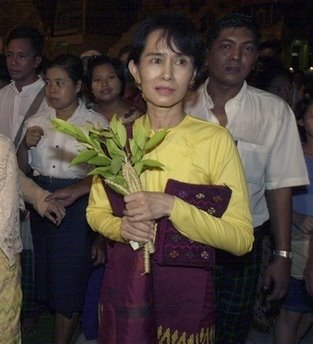


 Posts
Posts


