http://www.independent.co.uk/news/world/asia/how-burmas-opposition-lost-its-fear-1059464.html
Supporters of Aung San Suu Kyi's National League for Democracy party attend a rally in Rangoon
Despite the junta's crackdown, Phoebe Kennedy finds a new mood of defiance on the streets of Rangoon
By Phoebe Kennedy in Rangoon
Wednesday, 10 December 2008
I was bumping along Rangoon's streets in a battered taxi when I saw the crowd, men and women wearing red armbands, most with heads bowed, looking uncomfortable, even frightened.
Any crowd in Burma's old colonial capital is a rarity and I asked the driver who they were. "NLD," he muttered. I asked him to stop and walked back up the street. I had not noticed it before but tucked between two shops selling cheap wooden furniture is the office of the National League for Democracy (NLD), the party of Aung San Suu Kyi, the icon of Burmese democracy and political prisoner who remains confined to her decaying lakeside home on University Avenue, a mile or so away.
The NLD was the landslide winner of elections in 1990, immediately annulled by the ruling military to keep themselves in power. In the 18 intervening years, depressingly little has changed in Burma's political landscape.
U Hla Tin introduced himself as a member of parliament (who has never taken up his seat) and steered me through the overspill of NLD members on the pavement. The crowd of about 80 people was braving not just the glare of Burma's midday sun but the scrutiny of watching plain-clothed military intelligence officers across the street.
A recent flurry of lengthy jail sentences meted out to Burmese dissidents made their simple decision to come out to support their party a stunningly brave one. In recent months, hundreds of activists, along with journalists, bloggers, a comedian and a hip hop star have been handed decades-long sentences and dispatched to remote jails across the Burmese gulag.
"Aren't you scared?" I asked the MP. "No," he said with a smile. "We don't care." He and his colleagues had faced up to the worst that could happen to them, it seemed, and were no longer afraid.
Inside, in a gloomy shop-cum-house, with yellowing walls and ceiling fans whirring, it was hard to believe we were in the offices of the party which should be running a country of more than 50 million. I was ushered to a plastic chair near the front.
U Hla Pe, a member of the NLD central executive committee, read dryly from a written speech calling for political prisoners to be released and for the junta to implement an urgent review of a new constitution which enshrines their role in any future elected government.
A woman in the audience, her greying hair pinned back, wiped away silent tears as she listened to demands that are unlikely ever to be met. U Hla Pe finished, took a sip from his water glass, his hand shaking, and was helped down from the wooden podium. He rejoined the NLD top brass seated behind him; two rows of noble, elderly men, their political dreams reduced to empty protocol.
The NLD has been criticised for its lack of direction and new ideas. Not surprising, given that most of its best political minds are behind bars. And communication with Ms Suu Kyi, under house arrest, is impossible, said U Hla Tin. "We don't speak to her, we don't hear from her, no no no," he shook his head. "How can we know what she's thinking?"
Rudderless and reduced by imprisonments, the remnants of Suu Kyi's party are trying to decide whether to contest elections set for 2010. There is almost no prospect of a fair vote, Burma's generals will no doubt ensure that their puppet civilian organisation, the Union Solidarity and Development Association (USDA) will form the winning party. But the NLD's refusal to engage with the military's stage-managed "road-map to democracy" means the party risks becoming isolated and irrelevant as the years tick by.
Some of Ms Suu Kyi's supporters want a change of tactic. According to the online bulletins of Burma's exiled opposition, calls for greater engagement in the military's skewed political process are led by the veteran journalist and NLD executive U Win Tin, released in September after 19 years in jail. Reports say pressure has been added by Western diplomats who have met privately with NLD leaders to urge them to participate.
But the party rank and file are circumspect. "In the West you always talk of a level playing field," said another disenfranchised MP. "Here our game is played on the side of a mountain."
They streamed out of the meeting, walking in pairs or small groups to catch an ancient bus or taxi home. They kept their heads down, with wary sideways glances at the men across the street.
Friday, December 12, 2008
How Burma's opposition lost its fear


Human Rights and Wrongs
http://hrforall.wordpress.com/2008/12/10/human-rights-and-wrongs/
Posted by: hrforall on: December 10, 2008
In: HR Education Comment!
Dean Johns
As a human who happens to write, I most of all love to write in support of human rights. It’s the worthiest possible cause. It puts me in the best possible company. And it gives me at least a grain of hope that I can help right some human wrongs.
It also reminds me how fortunate I am, as a citizen of a relatively free country, to enjoy the right to write in comparative safety - unlike fellow writers in so many countries around the world who constantly put their liberty and even their lives on the line.
And even more gutsy are those who don’t just write, but riot, rage and revolt against their oppressors.
So it’s a particular pleasure to pay tribute to the courage of these heroes and heroines who fight the good fight, and also to express sympathy for all those millions of souls still helpless in the face of overwhelming political, economic and military might, by writing in celebration of the 60th anniversary of the Universal Declaration of Human Rights (UDHR).
Humanity has made a great deal of progress since Dec 10, 1948. Most subjects of former colonies have won liberty from their imperial overlords. Millions of Eastern Europeans have been freed from the death-grip of the USSR. South Africans have rid themselves of the curse of apartheid.
Indigenous peoples have achieved long-overdue recognition and rights in Canada, Australia and even some countries in South America. African-Americans have progressed from being begrudged the vote to seeing one of their own elected to the presidency.
But many others haven’t been so fortunate. Billions of our fellow humans are largely or totally deprived of their rights by rotten regimes in a depressingly long roll-call of countries including China, Burma, Vietnam, North Korea, Cuba, Haiti, the Congo, Eritrea, Sudan, Niger, Chad, Saudi Arabia, Libya, Morocco, Syria, Somalia, Kazakhstan, Uzbekistan and Zimbabwe.
Then there are all those nations that like to present themselves as worthy global citizens, but actually grant their people only those human rights that suit the purposes of whichever parties or personalities happen to be in power. Turkey, Egypt, Pakistan, the Philippines, Indonesia and Singapore, for example - plus, of course, Malaysia.
How Malaysia compares
Let’s focus on Malaysia for now and see how the situation here after 50+ years of Barisan Nasional (BN) rule stacks-up against the 60-year-old UDHR.
Concepts involving entrenched inequality, like ketuanan Melayu (Malay supremacy), the New Economic Policy and special privileges including legal immunity for ‘royalty’ seem to me fundamentally at odds with the first two Articles of the UDHR.
Article 1: All human beings are born free and equal in dignity and rights…
Article 2: Everyone is entitled to all rights and freedoms set forth in this Declaration, without distinction of any kind, such as race, colour, sex, language, religion, political or other opinion, national or social origin, property, birth or other status.
Next let’s examine what the UDHR has to say about selective prosecution, as in the case of opposition supporters for sedition, while seditious comments by keris-waving BN politicians are tolerated and even encouraged.
Article 7: All are equal before the law and are entitled without any discrimination to equal protection of the law.
And while we’re on this subject, what about the incarceration of bloggers and political activists under the ISA, without charge or trial?
Article 9: No one shall be subjected to arbitrary arrest, detention or exile.
Article 10: Everyone is entitled in full equality to a fair and public hearing by an independent and impartial tribunal, in determination of his rights and obligations and of any criminal charge against him.
Then there are those perennially sensitive if not incendiary issues, especially as relating to Malays, of religious freedom and ‘apostasy’. But the UDHR doesn’t leave room for much doubt or debate
Article 18: Everyone has the right to freedom of thought, conscience and religion; this right includes freedom to change his religion or belief…
As for the matter of media censorship and control in favour of BN and the suppression of dissenting views:
Article 19: Everyone has the right to freedom of opinion and expression; this right includes freedom to hold opinions without interference and to seek, receive and impart information and ideas through any media…
It’s the same story for Malaysia’s laws against public vigils and rallies.
Article 20: Everyone has the right to freedom of peaceful assembly and association…
Malaysia is in flagrant and consistent breach of several other Articles of the UDRH too, most notably to me in its shameful exploitation of foreign workers for pathetic rates of pay and poor housing.
Article 23: Everyone has the right to work…to just and favourable conditions of work…(and) everyone, without any discrimination, has the right to equal pay for equal work.
The BN government habitually tries to justify its systematic denial of so many human rights by claiming that Malaysia is an exception to the rule by virtue of “special circumstances”, “sensitive issues” or “Asian values”.
But almost 10 years before Malaysia even existed as an independent nation, the framers of the UDHR foresaw the need to warn against such nonsense.
Article 30: Nothing in this declaration may be interpreted as implying for any state, group or person any right to engage in any activity or to perform any act aimed at the destruction of any of the rights and freedoms set forth herein.
The UDHR isn’t, as BN and many other ruling regimes seem to imagine, just a piece of paper they can cynically sign and blithely ignore. It’s a legally-binding document that they have a duty to uphold.
And if they fail in this duty, we the people have the right - indeed the responsibility, according to UDHR Article 29 - to write or otherwise voice our protests as loudly as humanly possible.
Some of these Articles are abbreviated for reasons of length. Read the full version of the UDHR here.
Asylum claims nearly double,Swamped, the Foreign Ministry is running out of support funds
http://search.japantimes.co.jp/mail/nn20081211a1.html
By SETSUKO KAMIYA
Staff writer
The number of people seeking asylum in Japan is surging toward a new record, and the government is grappling to deal with the flood, a nonprofit support organization has warned.
Due to the rapid increase, to almost double the number of last year's applicants, the government's budget for supporting the refugees, many of whom have no means of support, is close to drying up, the Foreign Ministry admitted Wednesday.
According to the Japan Association for Refugees, 1,450 people had applied for refugee status as of the beginning of this month, after exceeding 1,000 in September.
The previous record for applications is 954, set in 2006.
The applicants include people from Myanmar, one of the largest groups applying for refugee status since the democratization movement started there in the 1980s. The number has continued to increase since the junta's crackdown last year.
Other significant increases in asylum seekers include people from Sri Lanka, where a ceasefire between the government and Tamil Tiger rebels expired earlier this year, Bangladeshis and Kurds, JAR said.
There has also been a notable increase from unstable areas of Africa, including Ethiopia, the Democratic Republic of Congo and Cameroon, the NPO said.
The Justice Ministry's Immigration Bureau said it won't provide official figures for applicants or approvals until next year but confirmed the trend identified by JAR.
The increase in applicants from Africa has been attributed to the Tokyo International Conference on African Development in Yokohama in May and the Group of Eight summit in Hokkaido in July, said Eri Ishikawa, secretary general of JAR.
"Through those two events, Japan's commitment to Africa was reported by the media in those countries, and people may have gained a good impression of Japan as a country that gives humanitarian aid, leading many to consider Japan as a place they can escape to," Ishikawa said.
The Foreign Ministry in principle provides financial support to asylum seekers in dire need, including those having no job, money or place to live.
According to an official at the Foreign Ministry's Human Rights and Humanitarian Affairs Division who handles such support, an adult is provided ¥1,500 and a child ¥750 a day for living expenses. If housing is needed, a family receives a maximum of ¥60,000 a month for rent.
A single person can get ¥40,000.
In principle, the financial support is given for four months.
Through its affiliated Refugee Assistance Headquarters, the ministry provided support to 235 asylum seekers just in November.
Last year, 95 people a month received support, said the government official, who declined to be named.
"The number of people we support has been rising constantly this year," she said.
This year, based on past needs, the budget was set at ¥78 million, but this has almost been exhausted because of the rapid rise, she admitted.
The ministry is now mulling measures to secure sufficient funding until the March 31 end of the fiscal year.
The official said the ministry will push to increase the budget for next year under the assumption the trend will continue.
Ishikawa of JAR, who shares the view that more people will continue to seek asylum in Japan, said it takes an average of two years to resolve an application.
Since many asylum seekers can't work and don't have access to medical insurance during this time, four months of support is clearly insufficient, she said.
Ishikawa said the amount of money a refugee is entitled to is even lower than what a Japanese citizen would get from welfare.
"The support should be designed to cover two years, or the government should allow people waiting for their status to work," she said.
"Without a job or any financial support, these people cannot live."
Has international diplomacy on Burma touched its zenith?
http://www.aseanmp.org/news/?p=1784
10 December 2008
Irrawaddy (by Dr. Sein Myint)
The 241 members of Asean Inter-Parliamentary Myanmar Caucus (AIPMC) called on the UN Secretary General Ban Ki-moon to visit Burma and press for the release of political prisoners and kick start political reforms, after his refusal to a similar petition made by 112 former Presidents and Prime Ministers to him.
Instead, the UN Chief said “his direct involvement was “not enough” to resolve the current political stalemate in Burma” and redirected the onus to the Group of Friends on Burma ‘to use their influence, available leverage and tools” to mount pressure on the Burmese military leaders. Most particularly, of her immediate neighbours China, India and Thailand.
Has international diplomacy on Burma reached its zenith? Or to put it more bluntly, has the UN’s shuttle diplomacy arrived at a dead-end? Depending on one’s perspectives on UN effectiveness and role, some might say ‘aye’ and some might say ‘nay’.
The ‘nayers’ would say that the ultimate authority of the UN lies with its Security Council that could still adopt a binding resolution on Burma if there are ‘No’ veto from five permanent member ‘PM’ states. However, the ‘ayers’ would argue that this is unlikely to happen, especially the two PMs, i.e. the Chinese and the Russians, allies of the Burmese junta, will not allow passage of any resolution on Burma initiated and proposed by the US and her Western allies under the current geo-political circumstances.
And many past and present world conflicts that UN has failed to prevent and act on, perhaps for many reasons, attest and add strong support to the pessimistic ‘ayers’ on UN ineffectiveness. However, the optimist ‘nayers’ would cast a long short based on the ‘dynamic’ nature of politics, that eventual possibility of international consensus is still likely to obtain if the global polarization can be reduced dramatically resultant of the incoming US new administration.
But, as one former diplomat pointed out that the ‘good offices’ of the UN Secretary General provided services as mandated by the General Assembly but is under no instruction from the Security Council. Without any resolution from the Security Council, the UN SG has no power to act and enforce upon any member state.
It is evident that the ruling military government in Burma was determined and carefully planning to control political power in the country for a long time. Starting from the secretive construction of the new capital in the jungle years before to the recent long prison sentencing of political opposition activists and potential dissidents, clearly demonstrated their preparedness to face any internal or external pressure exerted on them.
The recent discovery of natural energy resources help the Generals to cultivate closer economic relationships with willing and eager energy starved neighbours, effectively breaking those selective economic sanctions imposed by the US and the West. Furthermore, deepening polarization between the West and Russians helps provide the shrewd military generals opportunity to exploit the geopolitics to their advantage, able to block any proposed and intended resolution initiated by the US and her allies at the UNSC.
Such ineffectiveness and powerlessness of the UN has frustrated many Burmese exiled students and activists who are compelled to ask questions on the impotence of this international diplomacy. And thus start calling upon their fellow countrymen and women to rise up on the basis of self reliance and to shed the ‘dependant mentality’ dominating the exiled political leadership for the last two decades.
As Newton’s second law of nature implied that on each and every action there are equal and opposite reaction, thus, it is naturally only a matter of time when equal reactionary forces would emerge to counter the injustice inside Burma. As shown in many political histories, once political problems could not be solved peacefully, desperation would force discontented individual(s) seeking alternative options to counter the injustice.
Therefore, it is imperative that key democratic countries should help unite the exiled Burmese democratic movement to form a broad grass-root based democratic umbrella global organization that has the mandate if exiled communities across the globe. Under the prevailing political circumstances, the united but not fragmented exiled community is the only viable force left to lead the restoration of democracy in Burma peacefully while countering current military rulers’ seven step road map in the long run.
[Dr. Sein Myint is the director of Policy Development of Justice for Human Rights in Burma, located in Maryland, USA . He is an Honorary Member of Amnesty International Chapter 22 in Washington D.C.]
Burma: Struggling for human rights
http://preciousmetal.wordpress.com/2008/12/10/burma-struggling-for-human-rights/
From Mizzima News
December 10th marks the 60th anniversary of the Universal Declaration of Human Rights, adopted by the United Nations, to which military-ruled Burma is party.
While the world marks the occasion, Burmese continue to live without their basic rights, denied by their military rulers, says David Scott Mathieson, Burma consultant for the New York-based Human Rights Watch (HRW), who has closely monitored human rights developments in Burma for years.
Mathieson, during a brief interview with Mizzima’s Salai Pi Pi, said the United Nations as well as the world community faces a huge task in assisting Burmese in achieving their basic rights.
Q: What is the picture of human rights in Burma today?
Mathieson: Unfortunately, there is little to celebrate in Burma with the 60th anniversary of the Universal Declaration of Human Rights, because of the human rights condition that has come to depict Burma. In almost every aspect of Universal Human Rights, the situation in Burma is quite grave.
Q: Has there been any progress in the human rights situation in Burma?
Mathieson: There has been very little progress in the past 60 years on human rights in Burma. We can say, especially in the past 20 years, that there has actually been more deterioration [in the human rights situation in Burma]. There is still a long way to go.
Q: From a human rights aspect, how do you view the recent sentencing of several political prisoners in Burma?
Mathieson: The recent sentencing of political activists, artists like Zarganar, journalists, Buddhist monks, Internet activists and poets, demonstrates very clearly to the United Nations and the world that the military government is not serious about respecting human rights. All these people, around 200, are people who should be involved in the country’s politic on a daily basis and especially on the day to mark the Universal Declaration of Human Rights.
Q: What do you think should be done to promote human rights in Burma?
Mathieson: Basic freedoms need to be respected. The first thing that the international community has to do is not to simply criticize the SPDC [Burma's military government]. They must also put pressure on human rights bodies within the international community. And they need to put more pressure on China, India, Russia and the countries of Southeast Asia to be more proactive on human rights in Burma.
Secondly, I think Burmese society has to be supported by the international community. We must support civil society in the country in helping to end military rule and in achieving the basic freedoms they have long been denied.
Q: Anything else that you would like to add on the human rights situation in Burma?
Mathieson: As the situation is getting worse, international attention must increase. It is not enough for the international community to express their frustration with the SPDC. They must find a way to make the situation better. And I think the international community owes the people in Burma that much. We witnessed in the past year the crackdown [of the September 2007 monk-led protests] and the response to the cyclone [Nargis] – the people inside Burma are suffering. These are but two more reminders on the eve of the 60th anniversary of the Universal Declaration that more needs to be done.
Russian business presence becoming stronger in Burma
http://kaytu.burmabloggers.net/?p=1228
12.11.2008 | Author: admin | Posted in Daily New
Rangoon (Mizzima) - With several Russian firms directly investing or having businesses interests in Burma and with the closer cooperation between the two countries, a Rangoon based observer said, Russia is likely to emerge as a major investor in the near future in the Southeast Asian country.
The observer, who closely follows Russian-Burmese relationship, said since about eight years ago Russia’s private and public enterprises slowly emerged in Burma and began investing and operating businesses in sectors including gold and copper mining, onshore-offshore oil and gas explorations, steel manufacturing and even had a finger in garment and the fisheries industries.
Of the many businesses ventures in cooperation with Russian enterprises are the prominent Russian Oil and Natural Gas Company Silver Wave Sputnik Petroleum Pte Ltd., Victorious Glory International Pte Ltd., and Technoprom Exports of Russia.
Russia’s Oil and Natural Gas companies had conducted two onshore and two offshore projects, with each project estimated to be valued at between US$ 30 million to US$50 million, the observer, who declined to reveal his identity for fear of reprisal told Mizzima.
“As a principle, the military government [of Burma] does not allow any foreign company to be involved in onshore exploration and production. But the Russian case is an exception,” the observer said.
Another important project the US$160 million development of a steel manufacturing facility by ‘Technoprom Exports’ of Russia is also nearly complete in southern Shan State.
According to the observer, the project, which has a capacity of producing 200,000 tonnes of cast iron per annum, is expected to be commissioned in early 2009 and that the iron produced would be fed to a steel mill run by the Myanmar Economic Corporation (MEC), a major business undertaking of the army based in Myingyan of Mandalay Division.
The facility located in the town of Pingpet in southern Shan State, will have a commercial-scale coal-powered generator that produces 65 megawatt of electricity. The coal will be transported to the plant from Tigyit coal mine, Burma’s biggest coal mine located in Tigyit village of Pinlong Township, about 22 miles south of Kalaw town in Southern Shan State.
The observer said Russia is likely to emerge as a major investor in Burma, because it is one of the foremost world powers. Burma’s military rulers are seeking stronger support by giving them secret business deals in the country.
While Burma has publicly declared that it maintains a policy of non-alignment, it is apparent that Burma needs an alliance with some major power like Russia, in order to survive in the long run in the international arena, he added.
Meanwhile, another informed industrial source claims that a Russian firm is now seeking business deals in Burma’s garment and fisheries industries. “A Russian firm, yet be identified, plans to set up and run a garment factory in Rangoon, that will manufacture bullet-proof jackets,” the source said. However, the information could be independently verified.
Comments are closed.
Unhappy Human Rights Day in Burma
http://www.upiasia.com/Human_Rights/2008/12/11/unhappy_human_rights_day_in_burma/9180/
By Awzar Thi
Column: Rule of LordsPublished: December 11, 2008
Font size:
Hong Kong, China — While governments and groups around the world made effusive statements and gave awards to mark the 60th Anniversary of the Universal Declaration of Human Rights on Dec. 10, the Asian Human Rights Commission struck a more somber note.
“The celebration,” the regional body said, “is a grim reminder that even after 60 years of the adoption of this great declaration, the gap between what is declared and what is actually achieved ... is enormous. Both in the field of civil and political rights as well as economic, social and cultural rights, people in Asia ... have so little to celebrate.”
The downbeat mood was certainly shared in Burma. There, a handful of people belonging to local group Human Rights Defenders and Promoters gathered in Rangoon to mark the date.
Their International Human Rights Day event was muted by comparison to most around the world, and even compared to the one that they had held the year before. But that they got together at all demonstrated their commitment to what the day represents.
Government-backed thugs and officials harassed and questioned the participants as they arrived for the program on Tuesday. The following morning, police and other authorities visited and threatened the organizers.
“They seemed quite angry,” one told Radio Free Asia. “‘Every year you lot upset the public like this,’ they said.”
For upsetting the public with talk about human rights, dozens of the group’s members are already languishing in jail. They include its leader, who has been accused of plotting bomb attacks after he spoke out on the need for more emergency relief in the wake of Cyclone Nargis, which hit the country in May. Others have been imprisoned on offences ranging from sedition to illegal tutoring. Many were arbitrarily detained and charged after last year’s protests.
Police have lodged the name of an associate living abroad with Interpol, which has obligingly posted a wanted notice for him on its Web site. His alleged offences include people smuggling and terrorism.
The gap between what has been declared and what has been achieved could hardly be wider than in Burma today, a fact that Human Rights Defenders and Promoters also plainly acknowledge.
“In stark contrast to the aims and pledges contained in the Universal Declaration of Human Rights, our country, Burma,” its statement read, “is utterly violating human rights in the gravest manner.”
One person who had come from cyclone-ravaged areas to attend the gathering put it more bluntly: “Across the whole country, you’ll see human rights abuses whenever you step outside your house.”
After a tumultuous year in which global interest in Burma was not matched with efforts to support domestic efforts for real change, the group’s statement also contained a sense of despair at the ineffectual work of international agencies.
“Contrary to their aims and objectives, the U.N. and the Human Rights Council as well have failed to successfully prevent human rights abuses,” it said pointedly.
Nothing in this year’s speeches of either the U.N. secretary-general or the high commissioner for human rights will give the rights defenders in Burma, or elsewhere in Asia, cause for optimism.
In her address, High Commissioner Navanethem Pillay blandly iterated, “Tens of millions of people around the world are still unaware that they have rights that they can demand.” She said that she warmly welcomed the designation of 2009 as the International Year of Human Rights Learning, to make up for this presumed deficit in knowledge.
For millions in Burma and Asia, the declared year will consist of nothing more than lost time and wasted opportunities. As Human Rights Defenders and Promoters make clear, their problem is not a lack of knowledge. They understand the issues better than the high commissioner. Their problem is a lack of means to implement and enforce their rights.
Nobody needs to be told about rights that they can’t obtain. What people need are practical ways to protect those rights, and to obtain redress where they are wronged. Learning about human rights is only useful if accompanied with well-informed steps toward those ends.
The United Nations should instead do some learning itself. It should spend time learning about how rights are systemically denied in countries across Asia, including Burma, and about what can be done to intervene actively to make it otherwise. This is a much harder task than the one it has set itself for 2009, but it’s the only one really worth doing.
“Unfortunately, in the countries of the region the ordinary folk react to human rights discourse without much enthusiasm,” the Asian Human Rights Commission said in its closing remarks on Wednesday, “due to their realization that the systems of oppression that exist, which are defective administration of justice systems, will not allow them to enjoy these rights.”
That’s the nub of Burma’s problems. The Human Rights Defenders and Promoters know it. Anyone who steps outside their door there knows it. The U.N. technocrats probably know it too, even if they won’t admit it. Enough of learning; without implementing, there will only be many more unhappy Human Rights Days to observe in Rangoon.
--
(Awzar Thi is the pen name of a member of the Asian Human Rights Commission with over 15 years of experience as an advocate of human rights and the rule of law in Thailand and Burma. His Rule of Lords blog can be read at http://ratchasima.net)
Sacrificing the Mekong River Basin in the Name of Electricity
http://ki-media.blogspot.com/2008/12/sacrificing-mekong-river-basin-in-name.html
Wednesday, 10 December 2008
Written by John Schertow
Toward Freedom
The Mekong river is considered the lifeblood of southeast Asia. It starts out on the Qingzang plateau in Tibet, a place known as 'roof of the world', and makes its way through Burma, Laos, Thailand, Cambodia and Vietnam before pouring itself into the China Sea.
Along this path, carved out over millennia, the Mekong has ensured the health and security of countless people, providing them with food, water for crops, and a means of trade and transportation. Today the Mekong supports as many as 100 million people. However, the onset of Hydro development, which began in the early 1990s, threatens to drastically change that.
In effect, the Mekong River Commission (MRC), an inter-governmental body of Mekong countries, wants to turn the Mekong river basin into an international sacrifice zone, where abundance and food security will be replaced with increasing poverty, food shortages and the heavy loss of diversity.
It's strange, but the MRC says this is all necessary and that they have no choice but to exploit the natural resource power of the Mekong river, because of the never-ending need for more electricity in Southeast Asia's urban centers. And so, they are attempting to build dozens, possibly hundreds of dams along the river and its tributaries.
At the same time the MRC insists that it supports sustainable development, that it cares deeply about the Mekong basin and, as stated in their mandate, that they will make every effort “To promote and coordinate sustainable management of water and related resources for the countries’ mutual benefit and the people’s well-being” in a manner that is “consistent with the needs to protect, preserve, enhance and manage the environmental and aquatic conditions and maintenance of the ecological balance exceptional to this river basin.”
It certainly sounds like something local, riparian communities and environmental groups can support. However, the reality of the MRC is a far cry from this glowing image of social and environmental heroism.
In fact, it's often suggested that the MRC must be replaced because out of either fear or inability or just plain old greed, it has created “a vacuum of accountability” that allows developers move forward with their hydro projects “unchallenged,” with little regard to their effect on the Mekong basin or its inhabitants, without even so much as an environmental assessment.
Results and Consequences
Next to the Amazon, the Mekong River is the world's most bio-diverse inland waterways. It is home to as many as 1,250 species of fish, including the giant catfish and the world's few remaining freshwater dolphins.
Each year, between June and December, the Mekong grows to about thirty times its low season size, replenishing the water table and triggering a mass migration of fish to their breeding and feeding grounds in Cambodia's Tonlé Sap Lake.
"As the floodwaters recede, the fishermen of the region work together constructing what are, in effect, long bamboo fences around the lake to trap the migrating fish. The fences stretch for some 1,500 km, using 3 million stakes or more. Huge quantities of fish are caught - around 30 tons an hour in one single fishery. Although this is not industrial fishing in the accepted sense, it is artesian fishing on a massive scale and a truly impressive sight," describes the New Agriculturist.
Historically, the communities would get about 80% of their nutritional needs from this annual effort.
Today, such a prospect is impossible. "It is now estimated that the total fish catch from the Lower Mekong Basin is two million tons per year," the New Agriculturist adds.
More than that, communities say the dominant species have begun to mature at a much younger age, which means, on top of the steep decline in population, the fish are now smaller and less valuable. Some communities say they now have to fish 'night and day' - even for weeks on end, to meet the same yield that they would historically gather with ease. Others have been simply forced to abandon their livelihood altogether.
Communities rely on farming to meet the rest of their subsistence needs. However, this too is being threatened by the dams. "The dams’ reservoirs retain a lot of nutrient-rich sediment that would otherwise be spread by [the] annual floods to the lower Mekong," says Nguyen Tan, an agriculture expert at Can Tho’s Department of Agriculture and Rural Development in Vietnam.
This is causing soil throughout the basin to become less fertile, which, on top of affecting the health of the ecosystem, is leaving farmers with no choice but to rely on poisonous chemical fertilizers.
Displacement is another major concern. To date, hydro development has primarily taken place on the upper end of the Mekong, where there are at least three dams in operation, and as many as 280 more in various stages of planning and development.
It is unclear how many people have been displaced by the upper Mekong dams, however, there is an increasing push to get started on the lower Mekong, particularly where it runs through Laos, which threatens to displace more than 75,000 people, and "condemn millions [more] to serious food shortages and increased poverty," says Chris Lang, an environment researcher based in Frankfurt.
Jeremy Bird, the executive director of the MRC, claims there will be "...tremendous efforts... targeted towards first of all avoiding those impacts."
It's almost comical, given that Bird says any such effort should not involve those who would be affected the most, the riparian communities.
Bird's opinion was brought to life in September 2008, when “the MRC organized a meeting in Vientiane to discuss the proposals to dam the lower Mekong,” Lang points out. “None of the millions of people who will be affected... were invited to the meeting." Bird explained to a journalist from Inter Press Service that he did not see that as a problem on the grounds that the meeting was held in English and "in an environment that the communities are not familiar with."
Drowning the Future
In an industry that drowns in hypocrisy, much like the forest regions and livelihoods it destroys, Mr. Bird's statements should come as no surprise. The MRC, while presenting itself as a champion of sustainable development, has and will continue to facilitate the destruction of the Mekong river basin, threatening along with it the livelihoods and cultures of millions of people.
After all the name of the game here is power, not the kind we need for light bulbs and cell phone chargers, but that all-corrupting power where, be it through the clench of a fist, the muzzle of a gun, or through scratches on some eco-friendly paper, one can decide the future of countless others.
This desperate situation begs the need for the riparian communities to come together and confront the MRC, the state governments, and the corporations that will force them to bear the full burden of hydro development while benefiting from it the least.
***
You can find more articles by John Schertow at his blog, www.intercontinentalcry.org
Junta Has Crushed Peaceful Dissent: Laura Bush
http://www.irrawaddy.org/article.php?art_id=14775
--------------------------------------------------------------------------------
By LALIT K JHA Thursday, December 11, 2008
--------------------------------------------------------------------------------
NEW YORK — Praising the courage of the people of Burma for standing up to the barbaric rule of the country’s junta, US first lady Laura Bush said on Wednesday that the Burmese military regime has crushed peaceful dissent for decades.
“Children are conscripted as soldiers, and families are forced to perform life-threatening labor,” Bush told a select audience at the Council on Foreign Relations, a New York-based think tank, speaking on the occasion of Human Rights Day.
Bush, who has taken a personal interest in the plight of Burma, has been instrumental in shaping US policy on the country during her eight years in the White House. She has spent a significant amount of time talking about the country, its people and the brutality of its military rulers.
“The women of Burma have responded to this brutality with inspiring courage,” she said, adding that she herself has been inspired by the leadership and courage of Burmese opposition leader Aung San Suu Kyi.
Referring to her frequent interaction with Burmese, Bush recalled her visit to the Thai-Burmese border in August, where she met Dr Cynthia Maung, who operates the Mae Tao clinic.
Hundreds of patients pass through the clinic’s doors every day. Most are migrant workers or refugees from Burma, while many others make the dangerous cross-border journey to Thailand because they have no access to health care in Burma.
“At Dr Cynthia’s clinic, I saw an American doctor performing eye surgery removing cataracts, which let people who had had these very severe cataracts see again for the first time, and it was a really—it was a thrill to get to see that. And also I saw victims of land mines waiting for treatment in the clinic,” she said.
Dr Cynthia left Burma in 1988, joining thousands of others who fled to Thailand following the military’s crackdown on a nationwide pro-democracy uprising. She crossed the border and opened the clinic expecting to be there for a few months, but 20 years later, she’s still there.
“The ruling junta has labeled Dr Cynthia an insurgent and an opium-smuggling terrorist. But she continues her work to give the people of Burma the care their government denies them,” Bush said.
Observing that a single voice can be a great weapon against a regime that denies basic human rights, Bush said in April she presented the Vital Voices Human Rights Global Leadership Award to Charm Tong.
At the age of 17, Charm Tong stood before the United Nations Commission on Human Rights to describe the military campaign being carried out against women in Burma’s Shan State.
“She spoke unflinchingly of rape and abuse, though her audience included representatives of the regime she condemned. Charm Tong continues to speak out about the regime’s abuses, and she ministers to the needs of those who have fled Burma,” the first lady said.
Bush also recounted the heroism of another Burmese woman, Su Su Nway, who defied junta representatives who tried to force her and her fellow villagers to repair a road.
“She brought the local officials to court under a law prohibiting forced labor—and she won. But the government filed a complaint against Su Su Nway for ‘insulting and disrupting a government official on duty.’ This labor activist was sentenced to 18 months in jail. She was released in June 2006 and then returned immediately to advocate for human rights. Then she was arrested in … November 2007 after posting fliers near a UN official’s hotel. She has since been sentenced to 12 years.”
Bush said all these female dissidents were following in the footsteps of Aung San Suu Kyi, the world’s only detained Nobel Peace Prize winner.
As leader of the democratically elected National League for Democracy (NLD), Aung San Suu Kyi has spent most of the past two decades under house arrest. The NLD won the last countrywide election in 1990, but has never been permitted to take power.
“Her example of strength has earned support from around the world, including from here in the United States,” Bush said, recalling bipartisan expressions of solidarity for the detained democracy icon in the US Senate.
Bush also took aim at Snr-Gen Than Shwe, who heads the Burmese junta, for his ongoing campaign to silence opponents of the regime ahead of planned elections in 2010, despite promises of working toward a democratic transition for his country.
“Since the Saffron Revolution of 2007, the number of political prisoners in Burma has increased from around 1,100 to more than 2,100 now. Female activist Nilar Thein was forced to leave her newborn child and flee into hiding. After a year on the run, she was captured and jailed this September. Her husband is also imprisoned,” Bush said.
The first lady said the Burmese military junta has repeatedly ignored calls from the international community to end its repression, and is instead going ahead with its own agenda.
Bush also announced another $5 million in disaster assistance funds to communities devastated by Cyclone Nargis.
“This assistance will support the efforts of non-governmental organizations like the World Food Program and Save the Children to ensure access to clean water, adequate shelter, basic health services, and other essential needs in the most affected areas,” she said.
Copyright © 2008 Irrawaddy Publishing Group | www.irrawaddy.org
Myanmar at centre of elephant smuggling trade: report
http://www.google.com/hostednews/afp/article/ALeqM5iFeSkJXcMIdcyuDmR6f96bvF-p5g
BANGKOK (AFP) — Myanmar is at the centre of an illegal trade in elephants and ivory, with more than 250 live animals smuggled out of the country in the past decade, a report said Wednesday.
Most of the elephants were destined for use in the tourist trekking industry in neighbouring Thailand, said the report by the wildlife trade monitoring network TRAFFIC.
Smuggling of live elephants and ivory is in "blatant contravention" of national laws and of the CITES (Convention on International Trade in Endangered Species of Wild Fauna and Flora), the group said.
"Our research found evidence of corruption allowing the illicit smuggling of ivory and elephants to take place," Chris Shepherd, senior programme officer with TRAFFIC, was quoted as saying in a statement.
"Females and juvenile elephants are particularly targeted to supply the demand from the tourism industry in Thailand, where they are put to work in elephant trekking centres," said Shepherd.
Smugglers took elephants over the frontier by bribing border officials, the report said, citing one guard as saying he had charged up to 200 dollars per animal because he was saving up to fly to Germany for the 2006 World Cup.
Yet no cross-border trade of live elephants had been reported to CITES by either Myanmar or Thailand, and some traders said elephants had disappeared from parts of Myanmar owing to numbers captured for the live trade, it said.
A survey by the group of 14 markets and three border markets in Thailand and China, which both adjoin Myanmar, also found 9,000 pieces of ivory and 16 whole tusks for sale, it said.
Reports of elephant disappearances and the amount of ivory on sale "suggests that trade poses a significant threat to the survival of Asian elephants in Myanmar," said Vincent Nijman, a co-author of the report.
Myanmar has the largest elephant population in Southeast Asia, with an estimated 4,000 to 5,000 animals, the report said.
TRAFFIC and conservation group WWF called on authorities in Myanmar to work closely with enforcement officers in Thailand and China to address the illegal trade.
"Both Thailand and China must do much more to increase enforcement and crack down on this insidious trade," Susan Lieberman, director of the WWF international species programme, was quoted as saying in the TRAFFIC statement.
It called for greater monitoring of domestic elephant populations in Myanmar, including the use of microchip and tattoo-based identification systems to prevent illegal cross-border movement.
Thursday, December 11, 2008
Myanmar beans to penetrate Middle East market
http://www.hindu.com/thehindu/holnus/015200812111031.htm
YANGON (Xinhua): Myanmar is planning to penetrate the Middle East market with its quality beans to boost the country 's agricultural exports, the Yangon Times, one of the leading local news journals reported on Thursday.
Exporting through Israel, Myanmar will make the move, the Union of Myanmar Federation of Chambers of Commerce and Industry (UMFCCI) was quoted as saying.
Myanmar exported 1.3 million tons of beans and pulses last year, of which 800,000 tons were sold to India, the report said.
Myanmar stands the second largest beans exporter in the world after Canada with 70 percent of the crop being shipped to India.
Meanwhile, Israel buys Myanmar's marine products every year.
In a latest official report, India's state Trading Corporation (STC) has recently agreed with the UMFCCI to import 1.8 million tons of Myanmar's quality beans and pulses at international current prices on a monthly basis .
The deal was made during a visit to Nay Pyi Taw by Indian Deputy Minister of Customer Affairs, Foods and Public Distribution NK Raghupathy.
Laura Bush honored with 2008 Freedom Award
http://arpwar.burmabloggers.net/?p=1854
admin | Daily News, Head Lines, Human Rights, Politics | December 9th, 2008
New Delhi (Mizzima) – United States first lady Laura Bush has been honored with the 2008 Freedom Award by Christian Freedom International (CFI) for her advocacy toward alleviating the protracted humanitarian crisis in eastern Burma.
The Michigan-based CFI on Friday announced Mrs. Bush as the winner in recognition of her role in raising the profile of the humanitarian crisis in Burma.
Mrs. Bush, who personally visited refugee camps along the Thai-Burma border in August, in a video message said, “I personally witnessed the devastating effect of these atrocities when I visited camps on the Burma border. That crisis needs our support and attention.”
The first lady said tens of thousands of people from ethnic areas of Burma have been forced to spend decades in refugee camps and are struggling for survival in the mountains and the jungle without adequate food, medicine and shelter.
According to the Thai-Burma Border Consortium (TBBC), over the past year at least 66,000 civilians have been forced to leave their homes in eastern Burma because of increasing military activity and systematic human rights abuses including forced relocation of villagers by the Burmese Army.
The TBBC, a consortium of 12 international non-governmental organizations, provides food and shelter to 140,000 Burmese refugees in nine camps along the Thai-Burma border.
Sally Thompson from the TBBC told Mizzima that the high level visit by Laura Bush had raised awareness of the situation of the people in Burma and displaced people on the Thai-Burma border.
“As a first lady, she was able to use her position to increase understanding of the situation of those people inside Burma and those who have been displaced beyond the border,” Sally said.
In her effort to push for United Nations action on Burma, Mrs. Bush, in September 2006, hosted a Dialogue on Burma during the General Assembly.
“Together we can fulfill Aung San Suu Kyi’s call to use our freedom to promote freedom and democracy for all Burmese,” Mrs. Bush said in her viddeo message.
CFI is a relief group that has provided humanitarian aid to refugees, particularly Karen and Karenni, on the Thai-Burma border since 1998. The group also works in facilitating the resettlement efforts of Burmese refugees seeking asylum in the United States.
Comments are closed.
Wednesday, December 10, 2008
Making human rights a reality-AMNESTY INTERNATIONAL
http://www.amnesty.org/en/news-and-updates/feature-stories/making-human-rights-reality-20081209
9 December 2008
Around the world, in every region, in every country, there are people who work tirelessly to make human rights a reality. Without these people, who often put their life and liberty on the line, human rights would only be an abstract concept – something everyone has in principle or on paper, but not all have in reality.
Who are these people defending human rights? They include:
grassroots community activists who protest against companies which destroy their local environment and livelihoods;
the surviving families of people who have been forcibly disappeared who demand answers and justice;
people determined to bring to light the true scale of sexual violence against women, and who provide unconditional support to victims;
doctors who distribute essential medicines against the will of the government;
lawyers who defend human rights activists and provide legal support, often without fees;
journalists who risk their lives to uncover corruption and human rights violations;
trade unionists who campaign for workers' rights to live in dignity;
people who work for human rights for their families, communities and wider society.
These people do their work on the street, in the court room, in the hospital – everywhere human rights are abused or violated. Those who come to the defence of those whose very rights are at stake – and do so in a peaceful manner while respecting all human rights are those we call human rights defenders.
Defending human rights is essential work not only for others – by defending others they are exercising their own human rights -- such as the freedom of expression or association. To be a human rights defender is to demand that everyone's – including their own – rights must be respected and protected at all times. No matter what.
Yet it is this claim of their own human rights which causes many to want to silence them. Human rights defenders commonly face intimidation, threats and even death at the hands of those who disagree with them – both from state authorities and others. Sometimes members of their own family and/or their community isolate and try to silence them.
Ten years ago, all members of the United Nations committed to promote and protect the work of human rights defenders. The resulting UN Declaration on Human Rights Defenders says we all have the right to defend human rights.
Ten years on, however, and 60 years since the Universal Declaration of Human Rights, defending human rights remains a contested and sometimes dangerous business. Everywhere there are human rights defenders, there are states forgetting or wilfully ignoring what they agreed in 1998.
The future of everyone's human rights are inherently connected to the ability of human rights defenders to operate freely and without intimidation.
"In this anniversary year, let’s recommit to the legitimacy of the work of human rights defenders and celebrate their ongoing commitment to make human rights a reality," said Eleanor Openshaw, Human Rights Defenders Coordinator, from Amnesty International.
Human Rights Defender in Thailand: Somchai Homlaor
http://www.amnesty.org/en/news-and-updates/feature-stories/human-rights-defender-thailand-somchai-homlaor-20081209
9 December 2008
Somchai Homlaor has been a key figure in the defence of human rights in Thailand for 25 years, since his trial by fire during the birth of the nation’s modern human rights movement. In October 1973, while obtaining a law degree from prestigious Thammasat University, a young Somchai Homlaor was a leader in mass student-led protests – violently suppressed by the military government – demanding democracy and human rights.
Three years later, he had founded a human rights group and he was again a protest leader during the October 1976 protests that similarly ended in bloodshed, including his own. He was detained for 10 months on spurious charges, after which he had to seek refuge in the northern Thai jungle, under Communist Party of Thailand control, for three years.
Since then Somchai Homlaor has founded, led, or been a prominent member of nearly every major human rights organization and movement in Thailand.
In 1986, Somchai Homlaor’s work with Amnesty International forced him to flee once again, this time out of the country. When Amnesty International published evidence that a Cambodian refugee had been tortured by the Thai military, Somchai Homlaor, who had uncovered most of the information, was forced to flee to Hong Kong.
At various times during the 1990s, Khun Somchai was the Secretary-General of both the Campaign for Popular Democracy and the Asian Forum for Human Rights and Development. The Campaign for Popular Democracy spearheaded the popular uprising that toppled the military-backed government in “Black May” 1992. This action was once more accompanied by much civilian bloodshed.
On account of his leadership the Asian Forum for Human Rights and Development was Southeast Asia’s pre-eminent human rights organization.
He was also the President of Thailand’s Union for Civil Liberty, the Chair of the Lawyers Council of Thailand’s Human Rights Committee, and a Board member of the 14 October (1973) Foundation, which works to keep the memory and spirit of those – and his – formative demonstrations alive.
Today, Somchai Homlaor applies his experience and legal expertise to a wide range of human rights groups and causes in Thailand. Within the National Human Rights Commission, an independent body that awarded him its 2007 Thai Human Rights Defender Award, Somchai Homlaor is Vice-Chair of the Subcommittees on Enforced Disappearance, Law, Policy, and the Justice System, and on Torture.
Under Thailand’s 2008 Constitution, he serves as a Committee member of the National Legal Reform Committee and is an Executive Board member of the Political Development Council.
Somchai Homlaor is a Committee member of Focus on the Global South, focusing on fair trade, a senior legal consultant for the Asia-Pacific regional office of the International Commission of Jurists, focusing on the rule of law, and an Executive Committee member of both the Thai Working Group for an ASEAN Human Rights Mechanism and the Asian Institute for Human Rights.
He is the founder and Secretary-General of the Human Rights and Development Foundation (HRDF), focusing on migrant workers and the Chair of the Campaign Committee for Human Rights, which concentrates on human rights advocacy.
Perhaps most importantly, Somchai Homlaor is the President of the Cross Cultural Foundation (CrCF), an NGO that organizes human rights education activities and training and seeks to build bridges between different elements of society. In particular, the CrCF focuses on the civil armed conflict between Muslim militants and largely Buddhist security forces and civilians in southern Thailand.
"At a time when most regional and international human rights and intergovernmental organizations are focusing on Myanmar in Southeast Asia," said Donna Guest, Deputy Director, Asia Pacific Program, Amnesty International, "Somchai Homlaor and the CrCF are bringing much-needed attention – and trying to effect real change – to a conflict that has killed over 3,500 people since January 2004."
Read More
Making human rights a reality (Feature, 9 December 2008)
Eight ministers and Rangoon's mayor to resign soon for 2010 election-MIZZIMA
http://www.mizzima.com/news/inside-burma/1414-eight-ministers-and-rangoons-mayor-to-resign-soon.html
by Mizzima News
Tuesday, 09 December 2008 18:07
Chiang Mai (Mizzima) - At least eight ministers in the cabinet of Burma's military government along with the mayor of Rangoon will resign from their current positions in preparation to contest the upcoming 2010 election, a source in the military said.
According to the source in Naypyitaw, ministers from the Ministries of Forestry, Construction, Immigration & Population, Livestock Breeding & Fisheries, Transport, Agriculture & Irrigation, Industry (1), Communication, Posts & Telegraphs, in addition to the mayor of Rangoon, will soon retire from their positions as part of the lead up to the 2010 general election.
Despite criticism from the political opposition, Burma's military junta is determined to carry out its planned seven step roadmap, which includes the general election as its fifth component.
"The ministers will contest in constituencies where they are sure of gaining majority support," said an observer in Burma, adding that Aung Thawng from the Ministry of Industry (1) is likely to contest in Mandalay, while Brigadier General Thein Zaw from the Ministry of Communication, Posts & Telegraphs is likely to run in Myitkyina, Kachin state.
He added that the junta is also likely to impose restrictions on opposition parties – including the National League for Democracy (NLD) – in contesting the election that is likely to shape a new government for the country with limited civilian participation.
Despite a landslide win in the last general election in 1990, Burma's military junta denied power to the NLD, instead placing party leader and Nobel Peace Laureate Aung San Suu Kyi under house arrest.
The list of the eight ministers and the mayor, who are likely to resign from their positions, are given below:
Sl. No
Position/ Names Position/Ministries
1 Brigadier General, Thein Aung
Minister, Ministry of Forestry
2 Major General, Saw Tun
Minister, Ministry of Construction
3 Major General, Saw Lwin Minister, Ministry of Immigration & Population
4 Brigadier General, Maung Maung Thein Minister, Ministry of Livestock Breeding & Fisheries
5 Major General, Thein Swe Minister, Ministry of Transport
6 U, Aung Thaung
Minister, Ministry of Industry No. (1)
7 Major General, Htay Oo
Minister, Ministry of Agriculture and Irrigation
8 Brigadier General, Thein Zaw Minister, Ministry of Communications, Posts & Telegraphs
9 Brigadier General, Aung Thein Linn Mayor of Rangoon
Human Rights Day, Bill of Rights Day, and Human Rights Week, 2008 -WHITE HOUSE
http://www.whitehouse.gov/news/releases/2008/12/20081209-8.html
A Proclamation by the President of the United States of America
White House News
The United States was founded on the principle that government must respect people's rights to speak freely, worship as they choose, and pursue their dreams in liberty. As we remember the enduring importance of our Constitution's Bill of Rights, our thoughts turn to those who have yet to secure these precious liberties. During Human Rights Day, Bill of Rights Day, and Human Rights Week, Americans celebrate the rights bestowed upon all by our Creator and reaffirm our deep commitment to helping those whose desire for liberty and justice is still dismissed and denied.
In a free society, every person is treated with dignity and can rise as high as their talents and hard work will take them. Yet in countries like Belarus, Burma, Cuba, Iran, North Korea, Sudan, Syria, and Zimbabwe, fervent pleas for freedom are silenced by tyranny and oppression. So long as there are people who fight for liberty, the United States will stand with them and speak out for those who have no other voice.
Freedom is the eternal birthright of all mankind, and during Human Rights Day, Bill of Rights Day, and Human Rights Week, we renew our commitment to lead the cause of human rights and pray for the day when the light of liberty will shine on all of humanity.
NOW, THEREFORE, I, GEORGE W. BUSH, President of the United States of America, by virtue of the authority vested in me by the Constitution and laws of the United States, do hereby proclaim December 10, 2008, as Human Rights Day; December 15, 2008, as Bill of Rights Day; and the week beginning December 10, 2008, as Human Rights Week. I call upon the people of the United States to mark these observances with appropriate ceremonies and activities.
IN WITNESS WHEREOF, I have hereunto set my hand this ninth day of December, in the year of our Lord two thousand eight, and of the Independence of the United States of America the two hundred and thirty-third.
GEORGE W. BUSH
2 men arrested for smuggling 5 women from Myanmar into Japan
http://mdn.mainichi.jp/mdnnews/news/20081210p2a00m0na010000c.html
Two men have been arrested for smuggling five women from Myanmar into Japan and putting them to work in restaurants, Tokyo police announced Wednesday.
Arrested under the Immigration Control and Refugee Recognition Law were 69-year-old Hideo Kobune, president of NPO Wellness Network 21, and notary public Izumi Omori, 58. Their accomplice, a 27-year-old Myanmarese woman who worked as a broker, is already under arrest.
Police say that Kobune forged graduation certificates from a Japanese language school in Myanmar, as well as fake certificates of employment from his trading and software companies, and used them to obtain residence status certificates for five Myanmarese women. They each paid him around 1.5 million yen.
The pair are believed to have made around 160 million yen from smuggling since February 2006. Kobune is also believed to have used his NPO to lean on the Japanese consulate in Guangzhou, China, to expedite visa applications for Chinese immigrants, who formed the majority of the 135 people he illegally brought into Japan.
"I admit making them work in the restaurants, but Omori actually brought them into the country," Kobune told investigators. Omori has denied the charges, saying: "I don't see it as mass smuggling."
Set up in 2003, the NPO had links to a Tokyo-based criminal organization, according to police.
集団密航:助長容疑でNPO理事長ら逮捕 謝礼は1億円超
ミャンマー国籍の女性を集団密航させて飲食店で働かせていたとして、警視庁組織犯罪対策1課は10日、NPO法人「ウエルネス・ネットワーク21」(東京都中央区)理事長、小舟日出雄(69)=江東区亀戸=、行政書士の大森泉(58)=葛飾区四つ木=の両容疑者を入管法違反(集団密航助長)容疑で逮捕したと発表した。06年2月以降、中国やミャンマー国籍の男女計約135人を集団密航させるなどして、謝礼として計約1億6000万円を受け取っていたとみられる。
調べでは、小舟容疑者らは、ミャンマー国籍のブローカーの女(27)=同法違反容疑で既に逮捕=と共謀。07年4月、いずれも同国籍の女(33)ら5人を都内の飲食店で働かせる目的で不法に入国させた疑い。
小舟容疑者らは、ブローカーの女の親族女性(44)を通じ、ミャンマーの日本語学校の卒業証明書を偽造。さらに自分が経営する中央区の貿易会社やソフトウエア開発会社などとうその雇用契約書を作成し、東京入国管理局に提出し、在留資格証明書を得ていた。5人はそれぞれ約150万円を小舟容疑者らに謝礼として支払っていた。
また、135人のうち約9割が中国籍の男女で、小舟容疑者は9月、中国・広州の日本総領事館でNPOの名前を出したうえで「在留資格証明書が出ているのに、なぜ早くビザを発行しないのか」と抗議したこともあったという。
小舟容疑者は「飲食店などで働かせたことは認めるが、集団密航は大森容疑者の依頼でやった」と供述し、大森容疑者は「集団密航させたという認識はない」と容疑を否認しているという。
NPO法人は03年設立。ホームページによると、福祉の充実などを目的とした情報収集や調査研究が主な事業。組対1課によれば、活動実態はほとんどなく在京の指定暴力団とも関係があったという。【武内亮】
英訳
毎日新聞 2008年12月10日 11時45分(最終更新 12月10日 12時46分)
The Elders: Moral Authority Without Superpowers
http://gleektopia.wordpress.com/2008/12/09/the-elders-moral-authority-without-superpowers/
In news on 09/12/2008 at 13:58
An interesting group of folks-Yunus and Cardoso are high on my list-although I can’t see Kofi ‘we didn’t understand how bad Rwanda was’ Annan being all that influential amongst leaders in Central Africa at this point. Besides, the group itself may be all bark and no bite without the cooperation of at least one great power. Anyone who thinks it will be a government other than the U.S. and/or the Europeans are kidding themselves.
“The Elders, a group founded in 2007, is made up of a dozen former world leaders working behind the scenes and in plain sight to stem the spread of conflicts, poverty and human rights issues. The founding roster for “The Elders” includes:
• Nelson Mandela, former president of South Africa
• Graca Machel, former first lady of Mozambique, activist for women’s and children’s rights, and Mandela’s wife
• Archbishop Desmond Tutu, former chair of the Truth and Reconciliation Commission in South Africa
• Jimmy Carter, former U.S. president responsible for the 1978 Camp David peace accords between Israel and Egypt
• Mary Robinson, former president of Ireland and former U.N. High Commissioner for Human Rights
• Lakhdar Brahimi, former Algerian diplomat
• Muhammad Yunus, economist and founder of the Grameen Bank
• Fernando Cardoso, former president of Brazil
• Kofi Annan, former secretary general of the United Nations
• Aung San Suu Kyi, pro-democracy activist and the prime minister-elect of Myanmar (formerly known as Burma), unrecognized winner of the 1990 Burma election
• Ela Bhatt, founder of the Self-Employed Women’s Association, a trade union with more than 1 million members in India
• Gro Harlem Brundtland, former prime minister of Norway and former director general of the World Health Organization “
via NPR
Criminals are winning when it comes to combating cybercrime
http://www.thetechherald.com/article.php/200850/2593/Criminals-are-winning-when-it-comes-to-combating-cybercrime
The criminals are winning the game of cybercrime vs. cyberlaw.(IMG:J.Anderson)
In the new Virtual Criminology Report (VCR) from McAfee, there is a comment in the Foreword that paints a grim reality for practitioners of the security art. Despite all that has been done to combat cybercrime, the criminals have the upper hand. While you would expect this outlook from a security vendor, looking back on 2008, there is a lot of truth to that statement.
In the past three installments, the McAfee VCR has mostly been a trending report on cyber threats. This year痴 report instead looks at how cybercrime is winning the battle over cyberlaw. To back that train of thought, the McAfee report lists three findings that came to light.
The first was that cybercrime is simply not a top priority for many governments. Political attention is diverted to other matters when you consider the economy and the other risks such as terrorism (i.e. kidnappings, hostage taking, and massive amounts of destruction -- not the let's take away your shoelaces and bottle of water kind).
Mary Kirwan, international lawyer and former cybercrime prosecutor in Canada, sums it up by saying: "The bad guys will inherit the earth, and we will be left swinging in the wind."
"The Achilles heel of the technology sector is the same vulnerability that has the financial services sector currently on its knees: a wealth of arrogance. Complexity is worshipped as an end in itself, and simplicity is scorned. There痴 no understanding of critical interdependencies, through lack of communication," she added.
"We致e a poor grasp of what glues the Frankenstein monster we致e created together, and what can just as equally tear it all apart. But the bad guys are in the know, and they are ready to exploit the demonstrable lack of big picture thinking in the sector."
Another finding is that there is little to no cross-border law enforcement against criminals who commit crimes online. No international efforts mean that criminals in China will continue to victimize people in Europe or America with little done to catch them.
Eugene Spafford, Professor of Computer Sciences at Purdue University and Executive Director of the Center for Education and Research in Information Assurance and Security (CERIAS) in the U.S., explains:
"Criminal behavior is still receiving political cover. For example, in the case of the Myanmar denial of service attacks, they took place with local Eastern European and Russian support. Russia and China are especially reluctant to cooperate with foreign law enforcement bodies for reputation and intelligence reasons."
Finally, the report says that, on every level, law enforcement is ad hoc and ill-equipped to cope with cybercrime. "While there has been progress, there is still a significant lack of training and understanding in digital forensics and evidence collection as well as in the law courts around the world," the report says.
"There are mountains of digital evidence out there; the problem is that there aren稚 enough well-trained investigators, prosecutors and judges to use it effectively. With PC and broadband penetration increasingly high, direct, and indirect evidence is easy to find from machines. Few criminals have the technical ability to avoid leaving or wiping digital traces," commented Peter Sommer, Visiting Professor at the London School of Economics・Information Systems Integrity Group and Visiting Reader at the Open University.
Clearly the resolution for the problems listed in the McAfee report is information and training. The problem is that since most law enforcement offices and investigators are trapped by political red tape, information is a rare commodity.
The criminals instantly share information on a global scale, and laws mean nothing to them. With that in mind at this stage of the game, none of the major players in the cybercrime arena are taking steps to move the scales back to center, leaving law enforcement out in the cold.
Training, on the other hand, is readily available yet rarely taken advantage of. Add the economy into the mix, and more political hurdles, and law enforcement is second or even third rate when it comes to investigating crimes.
From the report, a comment that demonstrates this point came from a reformed criminal called Matthew Bevan.
"I don稚 think law enforcement is equipped to deal with cybercrime, and this has always been the case as people that love IT and have the right skills go into IT jobs, not a law enforcement role," he offered.
"It is extremely rare that an IT specialist would join the police. Therefore, law enforcers lack the right skills to interpret cybercrime and know what to look for. A simple example could be a new USB stick that looks like a torn cable but actually holds 4GB worth of data -- the police wouldn稚 recognize this."
McAfee痴 report centering on cybercrime couldn稚 come at a better time. Also released this week is a report from the Center for Strategic and International Studies that urges President-elect Obama to create a White House department aimed at protecting U.S. cyber interests from attack by foreign agents.
Titled Securing Cyberspace for the 44th Presidency, the CSIS report says: "The United States must treat cybersecurity as one of the most important national security challenges it faces."
Maybe with a new political climate on the U.S., and the growth of Internet-related crimes, there will be a shift in power and cyberlaw will move to match, if not beat, cybercrime during 2009.
Ineffective Law Enforcement, Bad Economy Fueling Cybercrime
http://www.pcworld.com/businesscenter/article/155178/ineffective_law_enforcement_bad_economy_fueling_cybercrime.html
Tuesday, December 09, 2008 7:58 AM PST
Cybercriminals operating worldwide are benefitting from ineffective law enforcement and a growing economic recession that could make jittery people more susceptible to cybercrime scams.
So concludes security firm McAfee in its new report, "Virtual Criminology Report--Cybercrime vs. Cyberlaw." published Tuesday. The report pulls together the opinions of about two dozen legal experts, academic researchers and security-response professionals working as far afield as Britain, continental Europe, the Baltic countries, Brazil, India, Japan, Australia, New Zealand and North America.
"There have been a few cases where cybercriminals have been promptly arrested, but they're usually responsible for the small attacks," says Paulo Lima, a Brazilian lawyer specializing in computer-related crime. "Those responsible for the large operations have never been arrested. The public sector has usually acted in a mitigating manner, attacking the symptom and not the illness -- there is an antiquated system and a completely unprepared law enforcement body."
Lima's sentiment is echoed in Britain, India and elsewhere by those involved in trying to combat a worldwide cybercrime spree that includes phishing, denial-of-service (DoS) extortion rackets, botnets, spam, cyber-espionage and national attacks of a political nature.
"Cybercrime has become a big problem in India this year," says Vijay Mukhi, president of the Foundation of Internet Security and Technology in India. "However, politicians and judges do not understand how to deal with it, and in fact few of them ever use the Internet. Police are reluctant to register cases because they prove too difficult to prosecute."
The view among some in the United Kingdom is only slightly more optimistic. Peter Sommer, a British professor and consultant whose main research field is the reliability of digital evidence, says there's some progress being made in how the U.K. courts address technology-related crimes, but the computer forensics piece of the puzzle is not yet complete. "The Council for Registered Forensics Practitioners scheme to accredit experts is still not yet working," he adds.
Anther problem is talent: In many places around the world, private industry is siphoning the cybercrime fighting talent from government, offering them more money to work in the private sector.
In addition, many worry that the growing economic recession and banking fiscal crisis is being exploited by cybercriminals to prey upon jittery consumers.
"We are seeing rounds of phishing e-mails which purport to be from banks responding to the crisis," says Philip Virgo, secretary general of London-based EURIM, a group whose membership includes high-tech vendors, businesses and British and European legislators focusing on IT policy issues. "We are also seeing a round of phony CV [resume] sites, whose main aim is to collect personal details."
Politics is also an issue. China, Russia and Moldova are often blamed as international sources for all kinds of cybercrime, and the McAfee report takes up the issue of whether there are places around the world where prosecution of cybercrime is thought to be especially lax.
"Criminal behavior is still receiving political cover," says Eugene Spafford, professor of computer sciences at Purdue University and executive director of the Center for Education and Research in Information Assurance and Security in the United States.
One example Spafford cites is the July cyberattack on Web sites protesting the Burmese military regime, in which the government in Myanmar was thought to have had a hand. "In the case of the Myanmar denial-of-service attacks, they took place with local Eastern European and Russian support," he says.
"Russia and China are especially reluctant to cooperate with foreign law enforcement bodies for reputation and intelligence reasons," Spafford adds.
Another contributor to the report, Dmitri Alperovitch, says he believes that Russian's President Vladimir Putin and political influence within the Federal Security Service (Russia's successor to the Soviet KGB) are hampering efforts to prosecute cybercrimes, such as those related to the Storm botnet. Alperovitch is director of intelligence analysis and hosted security at Secure Computing (recently acquired by McAfee).
McAfee says Russia is the predominant source of the most sophisticated, well-designed malware.
"The vast percentage of 'professional' malware we see today is, frankly, coming out of Russia," acknowledges Dave Marcus, director of security research and communication at McAfee Avert Labs. "We find it on Russian hosting sites and the read-me documents are in Russian."
National concerns about political uses of malware and denial-of-service attacks are growing, according to the McAfee report.
Estonia, which suffered massive and crippling DoS attacks in April 2007, this year established a "top-secret cybersecurity hub," which has been "operational as of August 2008 and backed by NATO and seven EU countries (Estonia, Germany, Italy, Latvia, Lithuania, Slovakia and Spain)," the McAfee report states.
Estonia also is said to have pledged 50,000 Euros to back the Council of Europe Convention on Cybercrime.
But while some countries end up as high-tech crime scapegoats, the report notes, in reality it's very difficult to precisely identify origination points.
"In fact, obfuscation seems to be the name of the game," says Alana Maurushat, acting director of the Cyberspace Law and Policy Centre of the University of New South Wales in Australia. "It is easy to make it appear as if malware or espionage activities are originating from a county other than the original source. There is considerable misdirection as to origin of attacks. Much traffic is misdirected as a decoy. The actual attack may originate in the same city as the target. This is often done with cases of country espionage and corporate espionage."
Those out on the Web front lines say they can only speak about what they witness daily.
"We're getting hacking attempts constantly," says Clay Hill, Web site manager at the libraries division at Mississippi State University, which allows authorized access to research. "And most of it is from China."
Cybercrime toll mounts for business
http://www.networkworld.com/news/2008/092208-cybercrime.html
Council of Europe, ISPs draft anti-cybercrime tactics
http://www.networkworld.com/news/2008/040108-council-of-europe-isps-draft.html
Diary of a Deliberately Spammed Housewife
http://www.networkworld.com/news/2008/070108-mcafee-spam-experiment.html
Sponsored Resource:Ten quick fixes for the worst security nightmares
Sponsored Resource:Learn more about ultra light notebooks from Asus and the best warranty in the industry.
Sponsored Resource:Thinking about a new Laptop? Lenovo has models to meet everyone's needs.
Sponsored Resource:Get the truth about remanufactured ink. Learn more from HP.
ASEAN human rights body: Will it have an impact on Myanmar's junta?
http://www.thejakartapost.com/news/2008/12/10/asean-human-rights-body-will-it-have-impact-myanmar039s-junta.html
Djoko Susilo , Jakarta | Wed, 12/10/2008 10:51 AM | Opinion
Almost a year ago, at a meeting of parliamentarians of the Association of Southeast Asian Nations, I urged the ASEAN states to freeze Myanmar's membership from the 10-member grouping since there had been no serious political will to implement democracy and protect human rights, such as by releasing its jailed political opponents -- especially Daw Aung San Suu Kyi from her house detention.
Last year's incidents in Myanmar proved that such a call is indeed still valid and it will still be valid until the domestic situation in that country moves toward democracy.
The violent crackdown and the junta's brutality against the peaceful demonstrations of the Buddhist monks -- who were supported by the Myanmarese people -- were well documented and widely known throughout the international community, yet the junta recently tried to fool the world by announcing a so-called general election.
Regrettably some ASEAN leaders have expressed their readiness to cooperate with the junta and welcomed the last false referendum and the planned election as "real" progress. It is a shameful act and betrays the people of Burma/Myanmar. They don't really care about the sufferings of the people who have been oppressed by the military junta for almost two decades.
Indeed, we cannot just sit back and wait until the situation improves. Action must be taken because there has been no serious will from the military junta to work for a peaceful solution to Myanmar's problems.
With this appeal, the international community needs to work together and have a untied stand to put more pressure on Myanmar. The Indonesian government, in this case, supports the efforts of democratization and reconciliation. In his meeting with UN special envoy Ibrahim Gambari, President Susilo Bambang Yudhoyono said it was necessary to push for Myanmar's reconciliation process from many aspects.
However, the Indonesian government believes that those aspects that must be advocated in Myanmar are not only related to democracy and human rights, but also to security and stability as potential threats to Myanmar's disintegration. This is the way to handle Myanmar's psychological issues, especially with the sense of insecurity and inconvenience of the ruling government in the context of the new Myanmar.
The Indonesian government also strongly supports Gambari's mission to solve Myanmar's problems within UN's framework and Indonesia will ensure that the issue remains on the UN Security Council's agenda.
In addition, Indonesia urges the Chinese and Indian governments to do more to convince Myanmar to improve its dismal human rights record. We believe it is important to enlist the help of these two nations to convince the junta to fulfill its promise to embrace democracy.
Within the ASEAN context, especially in its relations between the Myanmar issue and the signing of the ASEAN Charter in Singapore last year or its finalization later this year (probably) in Thailand, many have expressed concerns as to whether the charter will work as expected, especially after the recent troubles in that member country. The Indonesian parliament, for example, has expressed its concern over several of the ASEAN Charter's articles -- a legally binding treaty that regulates relations among the 10 members of ASEAN.
Recent reports of senior officials meeting in Denpasar, Bali, in preparation for the upcoming ASEAN summit produced discouraging news. The members of the high-level panel have yet to agree on the official name of the human rights body. Some reports suggest that many countries in ASEAN are more interested in the "promotion" rather than the "protection" of human rights.
Sihasak Phuangketkeow, a senior Thai diplomat who chaired the meeting said that human rights promotion and protection would be an evolutionary process given the differences of the ASEAN members, in terms of their diversities, stages of development and political awareness.
Thus, member countries do not expect too much on the protection of human rights from within ASEAN, let alone its ability to maintain peace and security in the region. Myanmar will be the biggest offender, and the crimes committed by the junta will go unpunished.
Indonesia acknowledges that ASEANS's diplomatic efforts to prod Myanmar to rapidly democratize have failed. ASEAN has recognized that its constructive engagement has not produced any tangible results. But sanctions and pressures by western countries have also failed.
Within the ASEAN Parliamentary, the Myanmar tragedy is a catastrophe for the region. The Parliamentarians urge their governments to take strong actions and recognize the seriousness of the human security problems caused by the Myanmar regime. We must be as one to end the misery and sufferings of the Myanmar people.
The writer is member of the Indonesian House of Representatives and Chairman of the ASEAN Inter-Parliamentary on Myanmar Caucus.
Online writers future targets
http://thenutgraph.com/article-1235.html
10 Dec 08 : 8.00AM
By Elizabeth Looi
elizabethlooi@thenutgraph.com
PETALING JAYA, 10 Dec 2008: Online journalists and bloggers may face greater scrutiny in the future compared to traditional media workers, warns human rights group Aliran.
Its joint coordinator Mustafa K Anuar said this future scenario was likely, as some bloggers here have already been hauled up or detained for their postings.
Mustafa, who is from Charter2000-Aliran, admitted that although there were bloggers who relied on unverified sources for stories, there were also those who were careful with their stories, analyses and comments.
"It is these online writers and bloggers that the powers-that-be are concerned about, especially if these writers are able to side-step the official censorship mechanisms and at the same time command a sizeable following," he told The Nut Graph in a telephone interview.
Mustafa was commenting on a report by New York-based Committee to Protect Journalists (CPJ) on imprisoned journalists.
The non-profit organisation found that more online journalists and bloggers were jailed compared to those in other media. Some 45% of media workers jailed worldwide in 2008, as of 1 Dec, were bloggers, web-based reporters, or online editors.
China had the highest number of journalists and bloggers who were jailed, followed by Cuba and Burma, the report stated. Malaysia was not included in the survey.
(image source: wikipedia.org)
Mustafa felt that the CPJ findings did not reflect the local situation. Although there have been a few cases of bloggers being targeted by the authorities, in general, online journalists here do not face as high a possibility of persecution as some of the countries mentioned in the CPJ report.
"Having said that, I believe that these (limited Malaysian) cases are meant to warn other bloggers and online writers who might have the penchant for news-breaking stories, incisive analyses and critical commentaries about the Malaysian socio-political situation," he said.
Among the prominent bloggers who were arrested this year were Malaysia Today editor Raja Petra Kamarudin and Syed Azidi Syed Aziz, who is known as Kickdefella.
Raja Petra was arrested under the Internal Security Act (ISA) on 12 Sept 2008 and sentenced to two years in the Kamunting Detention Centre. But he was released on 7 Nov. Syed Azidi, on the other hand, ran afoul of the Sedition Act when he suggested flying the Jalur Gemilang upside down on his blog. The blogger, whose case is still pending, is out on bail.
Writer Alliance for Media Independence (Wami) chairperson Wong Chin Huat told The Nut Graph that it would be better for Malaysia to produce its own national media freedom report.
He felt that the methodology used by most international media freedom reports may not be suitable or fair as a yardstick to measure media freedom in Malaysia.
But generally, Wong was pessimistic about the future of online media here.
"Until and unless we can change the paradigm of our thinking, our freedom will be limited.
"But based on my observations, we have more freedom now to talk about ethnic-related issues, for example, or to criticise a political leader, compared to 10 years ago," he noted.
Reported Myanmar Landmine Deaths Double - Group
http://www.nasdaq.com/aspxcontent/NewsStory.aspx?cpath=20081209%5cACQDJON200812090455DOWJONESDJONLINE000127.htm&&mypage=newsheadlines&title=Reported%20Myanmar%20Landmine%20Deaths%20Double%20-%20Group
BANGKOK (AFP)--Reported deaths in Myanmar from landmines more than doubled in a year, as both the military government and armed rebel groups continue to lay the lethal ordnance, a monitoring group said Tuesday.
The Landmine Monitor's 2008 report found that 47 people in Myanmar were killed by mines in 2007, up from 20 people in 2006, while 338 people were injured - 115 more than a year earlier.
"Globally there are very few governments using this weapon any longer - that is not the case in Myanmar," said Yeshua Moser-Puangsuwan, research coordinator with global watchdog Landmine Monitor.
He said that Myanmar was one of the only countries in the world where the state was consistently "using them on a widespread basis."
Moser-Puangsuwan stressed that the hike in deaths could be the result of better reporting rather than increased use of mines, but said the figure was also likely an underestimation as it did not cover military casualties.
"This is basically a civilian figure. The figure is certainly higher," he told reporters in Bangkok.
Myanmar's junta has for decades been battling insurgencies by armed ethnic rebel groups, mostly in remote border areas.
The military has ruled Myanmar since 1962, often justifying its tight grip on power by insisting that only the generals are able to suppress the rebellions and prevent the nation from splintering.
Civilians are often caught up in the fighting, with human rights groups documenting widespread abuses by the armed forces including torture, forced labor, killings, arbitrary arrest and the destruction of villages.
Human Rights Watch has accused the military of planting mines around rice crops and routes to fields in an effort to hamper the annual harvest, effectively starving civilians off their land in insurgency-hit areas.
Moser-Puangsuwan said Landmine Monitor had also received disturbing reports of prisoners being forced to clear landmines "without protective gear, without any training, and sometimes with their bodies alone."
Many rebel groups have reached ceasefire agreements with the junta, but others battle on. The Karen National Union has been waging its insurgency since 1949, and Landmine Monitor said it continued to plant mines.
The group said it also had reports of land mine use by organizations including the Shan State Army - believed to be the largest rebel movement - the Karenni Army, the Democratic Karen Buddhist Army and the United Wa State Army.
Myanmar is not a party to the 1997 Mine Ban Treaty.
Click here to go to Dow Jones NewsPlus, a web front page of today's most important business and market news, analysis and commentary: http:// www.djnewsplus.com/al?rnd=%2BMcNpk7BTRKDnX6TXbKO2A%3D%3D. You can use this link on the day this article is published and the following day.
(END) Dow Jones Newswires
12-09-080455ET
Copyright (c) 2008 Dow Jones & Company, Inc.
tjynfjynfqkdif& m vl@tcGifhta& ;ae@ ESpf(60) jynfh txdrf;trSwf
xkwfjyefa=unmcsuf
1? ,ae@ ouU&mZf 2008 ckESpf 'DZifbm (10) &ufae@onf/ urBmhukvor*~ tzJG@=uD; .
tjynfjynfqkdif &m vl@tcGifhta& ;a=unmpmwrf; =uD;udk w&m;0ifxkwfjyefcJho nfh
ESpf(60)jynf@ ae@xl;ae@jrwf= uD;jzpfay onf? ESpf
(60)wdkifwnfjrJpGm &SdcJhonfh tjynfjynfqkdif& mvl@tcGifhta& ;ae@=uD;udk
av;eufpGm*k% fjyK=udK qkdyga=umif; jynfaxmifpkjrefr mekdifiHtrsdK; om;aumifpD.
oabmxm;udk xkwfjyefvkdufygonf?
2? urBmhukor*~tzJG@ =uD;rS OD;aqmifwm0ef, lI 1948ckeSpf 'DZifbm (10)
&ufae@wGif tjynfjynfqkdif& m vl@tcGifhta& ;a=unmpmwrf; =uD;udk urBmhol
urBmom;rsm; . arG;&mygtajccHtcGif hta&;rsm; udk vlom;
yDopGmcHpm; &&Sdekdifa& ;twGuf rGefjrwfonfh &nfrSef;csufjzifh
xkwfaz:jyXmef; cJhonf? urBmhekdifiHt oD;oD;.acgif; aqmifrsm; taejzifhvnf;
tjynfjynfqkdif& mvl@tcGifhta& ;a=unmpmwrf; yg vrf;n$efjy Xmef;csufrsm; udk
tjynfht0 =udK;yrf;az: aqmifaeonfudkvnf ; Tae@xl;ae@jrwf= uD;wGif *k%f,l
rSwfwrf;jyKtyfygon f?
3? odk@aomfvnf; urBmhukvor*~ tzJG@0ifekdifiHw ekdifiHjzpfonfh
jrefrmekdifiH& Sd wkdif;&if;om; aygif;pkHekdifiH om; rsm;taejzifh
ESpfaygif;( 60) wkdif wnfjrJcJhonfh
tjynfjynfqkdif& mtajccHvl@ tcGifhta& ;a=unmpmwrf; yg
vlom;wkdif; cHpm;cGifh& Sdonfh
tajccHtcGifhta& ;rsm;udk& &SdcHpm;cGifhrsm ;qkH;&_H; aeonfrSm
rsm;pGmpdwfrcsrf; ajr@ zG,f&mjzpfonf? tqkd;&Gm;qkH; aom
ekdifiHom;tcGifhta &;qkdif&m csdK;azgufcH& r_rsm;ESifh =uKHawG@cHpm; ae&
onfudk wurBmvkH;todyifjzpf onf?
4? odk@jzpfI etzppftm%m&Sifpepfv ufatmufwGif
urBmhukvor* ~tzJG@0ifekdifiH wekdifiHjzpfonfh jrefrm ekdifiHom;rsm; taejzifh
tjynfjynfqkdif& m vl@tcGifhta& ;a=unmpmwrf; =uD;yg tajccHtcGifhta& ;qkdif&m
jyXmef;csufrsm; . tumtuG,fvkH; 0uif;rJhaer_ tay:
urBmhukvor* ~tzJG@0ifekdifiH rsm;taejzifh vlom; csif;pmemr_pdwf" gwfjzifh
0dkif;0ef;ulnDapmi fha&Smufay; &ef txl;vkdtyfaejyDjzpf a=umif;tav; teufarwWm
&yffcHvkdayonf? urBmhukvor*~ tzJG@=uD;rSvnf; xda&mufonfh
ulnDapmifha& Smufr_rsm; jyKvkyfay;&ef txl;vkdtyfaejyDjzpf a=umif; tav;teuf
wifjyvkdayonf?
5? wcsdefwnf;wGif
rdrdwdk@jynfaxmifp kjrefrmekdifiHtr sdK;om;aumifpDta ejzifhvnf; ESpfaygif;
(60)wkdif cdkif jrJpGmwnf&Sdaeonfh
tjynfjynfqkdif& mvl@tcGifhta& ;a=unmpmwrf; yg tajccHtcGifhta& ;rsm;ESifhtnD
jrefrmekdifiH& Sdwkdif;& if;om;aygif; pkHjynfolw& yfvkH;
tjynfht0cHpm; ekdifonftxd qufvufwkdufyJG0ifoG m; rnfjzpfa=umif;
opPmt"dXmefjyK& if; Ta=unmcsufudk xkwfjyefvkdufygonf?
jynfaxmifpkjrefrme kdifiHtrsdK; om;aumifpD
&ufpJG - 2008 ckeSpf 'DZifbmv (10)&uf
qufoG,f&ef - OD;jrifhod%f; zkef;- 66 - 087- 808-3552
60 Anniversary of Human Rights days Photos -Tokyo-Japan
Please click the photo to see more photos.
ဓါတ္ပုံအားလုံးကိုႀကည့္ရန္ ေအာက္ပါပုံကို ကလစ္လုပ္ပါ။
 |
| 60th.Anniversay of Human Right Demo in TOKYO-JAPAN |
PHOTOS BY U THAN WIN-BDA-FWUBC
For more photos from U THAN WIN please open the following link.
http://picasaweb.google.co.jp/uthanwin2006
 |
| 60 anniversary of human rights days -tokyo-japan |
PHOTOS BY PHONE HLAING -PEACEFUL BURMA MEDIA


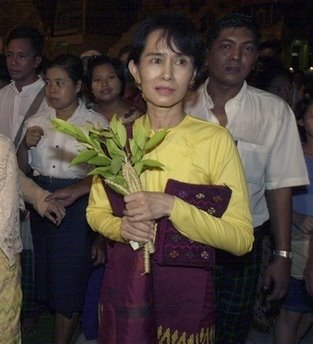


 Posts
Posts


