http://singaporedissident.blogspot.com/2008/12/asylum-in-us-for-burmese-facing.html
Tuesday, December 30, 2008
Readers of this blog who are unfamiliar with the goings on in Lee Kuan Yew's Singapore, may think reading the comments that there are many who think Singapore is a democracy based on the rule of law. The reader is warned that they may be Singapore government employees whose job is to discredit those who criticize Lee Kuan Yew's authoritarian rule. Please use your discretion as to how much weight you will give these comments.
Ladies and Gentlemen,
Here is a urgent short post, for the attention of Burmese in Singapore facing on going and imminent deportation to Burma because they took part in Burmese pro democracy protests in Singapore. Burmese are presently being deported from Singapore with their work passes not being renewed They face life in prison and torture when returned. The Lee Kuan Yew government, a close ally of the junta is collaborating with them in this shameful exercise. Please see the article More Burmese facing expulsion from Singapore of December 30th in the Singapore Democratic Party website.
If you can somehow enter the United States, you will be given asylum. Asylum is granted to those who are being persecuted by a government for among other things, their political beliefs. Persecution can be in the form of, among other things, infliction of punishment by one form or another. It can also be a case where the victim is facing imminent harm, life imprisonment, as in this case.
It does not matter how you get to the US. Even if you enter through fraudulent documents, or other means of illegal entry, you are still eligible for a grant of asylum. The illegal entry is excused. All that you have to accomplish is to board an aircraft bound for the US. Once you arrive at a US port of entry, articulate your fear of persecution, to an Immigration Officer, if you were to be returned. This will entitle you to a hearing before an Asylum officer.
For instance, if you manage to get hold of a Singapore passport, which does not require a visa to enter the US, this may help you board an aircraft. Of course there is the danger of your being apprehended at Singapore airport. The better alternative is to board a flight with a Singapore passport, from an airport outside Singapore. All this of course involves great risk, but this is a choice you would have to make, in these unthinkable circumstances.
Then there are of course, those who may be able to arrange a passage to Mexico, perhaps with a visa from some other country, say Manila, Philippines, or to a Central American country such as Nicaragua. From there, your agent might be able to arrange a passage to the border to help you cross. I am sure there are Burmese in the diaspora who know these things better than I do, to help you to save your lives. My knowledge of these things comes from my having represented asylum clients from many countries.
One possible way is for you to get work on board a cruise ship that stops at a port in the US, say Miami, eg Carnival Cruises on the Caribbean run. This will enable you to get a C1/D crew visa. This will allow you to land in the US, and once this is accomplished, you can apply for asylum. Please note that with this visa category, your only means of remaining in the US is through asylum. You cannot for instance marry an American to get a Green Card or do it by other means. I understand there are agents of these shipping companies in Burma and elsewhere who hire Burmese ship's crew.
Personally I do not know any alien smuggling operations and even if I knew, it would be unethical for me to be directly involved in it. From an ethical standpoint I am however able to tell you what I know.
The United States, unlike Singapore, honors its obligations under the treaties and conventions of the United Nations to protect refugees. They take this obligation seriously.
If you do land in American soil and need my help, don't hesitate to contact me. I will help you. Take care of yourselves and good luck.
Gopalan Nair
39737 Paseo Padre Parkway, Suite A1
Fremont, CA 94538, USA
Tel: 510 657 6107
Fax: 510 657 6914
Email: nair.gopalan@yahoo.com
Blog: http://singaporedissident.blogspot.com/
Your letters are welcome. We reserve the right to publish your letters. Please Email your letters to nair.gopalan@yahoo.com And if you like what I write, please tell your friends. You will be helping democracy by distributing this widely. This blog not only gives information, it dispels government propaganda put out by this dictatorial regime.
Posted by Gopalan Nair at 10:50 AM
Friday, January 2, 2009
Asylum in the US for Burmese facing deportation -SINGAPORE


Doctors Without Borders Releases 11th Annual "Top Ten" List
http://www.medicalnewstoday.com/articles/134173.php
31 Dec 2008
Massive forced civilian displacements, violence, and unmet medical needs in the Democratic Republic of Congo, Somalia, Iraq, Sudan, and Pakistan, along with neglected medical emergencies in Myanmar and Zimbabwe, are some of the worst humanitarian and medical emergencies in the world, the international medical humanitarian organization Doctors Without Borders/Médecins Sans Frontières (MSF) reports in its annual list of the "Top Ten" humanitarian crises.
The report underscores major difficulties in bringing assistance to people affected by conflict. The lack of global attention to the growing prevalence of HIV-tuberculosis co-infection and the critical need for increased global efforts to prevent and treat childhood malnutrition - the underlying cause of death for up to five million children per year - are also included in the list.
-- Click here to read the report
http://www.doctorswithoutborders.org/publications/topten/
http://www.doctorswithoutborders.org
--------------------------------------------------------------------------------
Article URL: http://www.medicalnewstoday.com/articles/134173.php
[Ye Yint Thet Zwe] "တႏွစ္ေဟာင္းလို ့"
တခ်ိဳ ့
ေဟာင္းေပမယ့္
ေကာင္းေနဆဲ
တခ်ိဳ ့
ေကာင္းေပမယ့္
ေဟာင္းေနဆဲ
တခ်ိဳ ့
ေဟာင္းလည္း မေဟာင္းဘူး
ေကာင္းလည္း မေကာင္းဘူး
ဘယ္လိုပဲျဖစ္ျဖစ္
ေဟာင္းခ်င္တဲ့သူေတြ ေဟာင္းပါေစ
ေကာင္းခ်င္တဲ့သူေတြ ေကာင္းပါေစ
ေျပာင္းခ်င္တဲ့သူေတြ ေျပာင္းပါေစ
တို ့တေတြမွာေတာ့
ဘယ္ေတာ့မွ မေဟာင္းတဲ့
ကိုးဆယ္ရဲ ့ ရလဒ္ေကာင္းေတြရွိတယ္
အနာဂတ္ေကာင္းဘို ့
စီအာပီပီ ရဲ ့ ေကာင္းေၾကာင္းေတြရွိတယ္
အစဥ္တစိုက္ မေျပာင္းလဲတဲ့
စစ္မွန္ေသာ အေႏွာင္အဖြဲ ့ကင္းေသာ
ေတြ ့ဆံုေဆြးေႏြးေရး အေၾကာင္းေတြရွိတယ္
မေကာင္းတာမွန္သမွ်
ႏွစ္ေဟာင္းမွာ ခ်န္ရစ္ၾက
ဆရာႀကီးသခင္ကိုယ္ေတာ္မိွဴင္းရဲ ့စာတပိုဒ္နဲ ့
ႏွစ္သစ္ကို တက်ိဳက္ၿပီးတက်ိဳက္ ေမာ့လိုက္ၾကေဟ့
"ေကာင္းက်ိဳးအေထြေထြရယ္နဲ ့ ခၽြန္ေစျမေစေသာ
ေဒါင္းအိုးေ၀ရယ္နဲ ့ တြန္ေစ ကေစေသာ ။
--
Posted By Ye Yint Thet Zwe to Ye Yint Thet Zwe at 12/31/2008 12:01:00 AM
Win Tin Denies NLD Divided Over 2010 Election -IRRAWADDY
http://www.irrawaddy.org/highlight.php?art_id=14863
--------------------------------------------------------------------------------
By MIN LWIN Wednesday, December 31, 2008
--------------------------------------------------------------------------------
Win Tin, a leading member of Burma’s main opposition party, the National League for Democracy (NLD), denied claims that he had said the party was divided over whether it would take part in an election slated for 2010.
Speaking to The Irrawaddy on Tuesday, Win Tin said that he was misquoted in a report by Deutsche Presse Agentur (DPA), which stated that he had told a visiting European diplomat that “some [in the party] want to participate [in the election] and some do not.”
“The NLD hasn’t considered joining the military-backed election in 2010,” he said.
“I told the Italian diplomat that there are two approaches in the NLD. Some, like me, reject the constitution outright, while some want to amend the constitution after parliament is convened,” he said, adding that he was referring to a parliament consisting of representatives elected in 1990.
Win Tin, who was released earlier this year from Rangoon’s notorious Insein Prison after serving 19 years, said that “throughout my prison life and since my release, I have rejected the junta-backed constitution.”
According to the DPA report, published on November 29, Attilo Massimo Ianucci, the Asia-Pacific chief of Italy’s foreign ministry, had urged the NLD to participate in the 2010 election.
“He said at present, the military occupied 100 percent of the government and after 2010, there would be only 25 percent. It is much better than the current situation,” Win Tin was quoted as saying.
In a statement issued on December 10 to the Foreign Correspondents Club of Myanmar, based in the former capital Rangoon, Win Tin reiterated that he has always rejected the junta’s efforts to write a new constitution through the military-backed National Convention, first convened in 1993. He said that he clearly stated his position on the matter in front of visiting US Congressman Bill Richardson and military intelligence agents while he was still in prison.
He added that he has always maintained three fundamental demands, summarized as “Suu Hlut Twe.”
“Suu” stands for the unconditional release of pro-democracy leader Aung San Suu Kyi and all other political prisoners; “Hlut” stands for the convening of the Hluttaw (the people’s parliament) with representatives elected in the 1990 elections; and “Twe” stands for dialogue between the military government and opposition groups.
Copyright © 2008 Irrawaddy Publishing Group | www.irrawaddy.org
အားလံုးအတြက္ အာဟာရ ႏွစ္သစ္စကားThursday, 1 January, 2009 01:16
ခ်စ္ေသာမိတ္ေဆြ ညီအကိုေမာင္ႏွမမ်ားအတြက္ အာဟာရစာေစာင္၀ိုင္းေတာ္သားမ်ား၏
ႏွစ္သစ္စကားျဖစ္ပါတယ္။
အခ်ိန္ႏွင့္ တေျပးညီ ေရွ႕သို႔ခ်ီ
ကာလယႏၲရားက နရီစည္းခ်က္ မွန္ကန္စြာ တသမတ္ထဲ ခုတ္ေမာင္းေနေပမယ့္၊
က်ေနာ္တို႔ သက္ဝင္လႈပ္ရွားတဲ့ အေျခအေနနဲ႔ အေျဖရလဒ္ကေတာ့ တသမတ္ထဲ
ျဖစ္မလာတတ္ပါဘူး။ အဆီအေငၚမတည့္ အံေခ်ာ္လဲြမွားမႈေတြကို
မလိုလားေပမယ့္လည္း မလဲႊသာ မေရွာင္သာ ႀကံဳရပါေသးတယ္။ အတက္အက်၊
အနိမ့္အျမင့္၊ က်ဆံုးေအာင္ျမင္၊ ေသဆံုးရွင္သန္တို႔ ေဝဆာလ်က္
အေရာင္အေသြးမ်ဳိးစံုနဲ႔ ျပ႒ာန္းစီရင္ေနတတ္တာ ဓမၼတာပါပဲ။ အႏုသုခုမ ဘဝအလကၤာ
ပန္းခ်ီကား တခ်ပ္ႏွယ္။
အခ်ိန္ကို က်ေနာ္တို႔ေတြ ဆဲြဆန္႔ျခင္း၊ ခ်ဳံ႕ပစ္ျခင္း၊
တားဆီးရပ္တန္႔ျခင္းငွာ မစြမ္းသာပါဘူး။ သူက ဘယ္ေတာ့အခါကမွ က်ေနာ္တို႔ကို
ေစာင့္ဆုိင္းျခင္း မရွိ၊ သြားၿမဲအတုိင္း သြားလ်က္ပင္။ ဒါေပမဲ့ အခ်ိန္ကို
သဘာဝက ေရြးခ်ယ္ခြင့္ေတာ့ မေပးပါ။ က်ေနာ္တို႔ လူသားေတြကိုသာ
ထူးျခားေကာင္းမြန္၊ သစ္လြင္တိုးတက္တဲ့ ေမွ်ာ္လင့္ခ်က္ေတြ ထားရွိခြင့္နဲ႔
လုိက္ပါလုပ္ေဆာင္ခြင့္ ေပးပါတယ္။ သဘာဝတရားႀကီးဆီကေန က်ေနာ္တို႔က
ေရြးခ်ယ္ခြင့္ဆိုတဲ့ ေမတၱာလက္ေဆာင္ကို အခ်ိန္ထက္ ထူးကဲစြာ ရရွိေနတာ
ျဖစ္ပါတယ္။
အခုလို ႏွစ္သစ္ကူးကာလမ်ဳိးမွာ လူသားေတြဟာ တဦးခ်င္းအလုိက္၊
တမ်ဳိးသားလံုးအလိုက္ ဆုိင္ရာဆုိင္ရာ ဦးတည္ခ်က္၊ ရည္ရြယ္ခ်က္ေတြ
ထားရွိတတ္သလို၊ လက္ေတြ႔ အေကာင္အထည္ေဖာ္လိုတဲ့ စိတ္ဆႏၵေတြနဲ႔အတူ
အားသစ္အင္သစ္ ခြန္အားသစ္ေတြလည္း ျဖစ္ထြန္းေပၚေပါက္ေလ့ ရွိပါတယ္။ ဒီလို
ဆႏၵမ်ဳိးေတြဟာ ကရား ေရလႊတ္သလို၊ ရင္ထဲမွာ တားမရ၊ ဆီးမရ တသြင္သြင္
ဝင္ေရာက္စီးဆင္းၾကပါတယ္။
ဒါကေတာ့ ၿပီးခဲ့တဲ့ တႏွစ္လံုး ႀကံဳေတြ႔ခဲ့တဲ့ အေကာင္းအဆိုး ရလဒ္ေတြကို
ျပန္ေျပာင္း ေအာက္ေမ့ရာမွာ ညစ္ႏြမ္းေဆြးေျမ႕ အကုသိုလ္နဲ႔
ေလ်ာ္ကန္သင့္ျမတ္ ကုသိုလ္တရားတို႔ရဲ႕ သက္ေရာက္တဲ့ အက်ဳိးအာနိသင္ေတြကို
ဆင္ျခင္ရင္း၊ ကၽြဲကူးေရပါဆိုသလို အသစ္အသစ္ေသာ လုပ္ရပ္ေကာင္းေတြ
ျဖစ္ေပၚဖို႔ အခုိင္အမာ ဆံုးျဖတ္ၾကတဲ့ သေဘာပါပဲ။ ႏွစ္ကူးအခါသမယက 'သတိ'
ဆိုတဲ့ ခ်ပ္ဝတ္တန္ဆာကို က်ေနာ္တို႔အေပၚ ထပ္မံ ဝတ္ဆင္ေပးျခင္းပင္။
ႏွစ္သစ္ ၂ဝဝ၉ ခုႏွစ္အတြင္း တမ်ဳိးသားလံုး လိုလားေတာင့္တေနတဲ့ ဒီမိုကေရစီ
ႏိုင္ငံေတာ္သစ္ ေပၚထြန္းေရးမွာ ျပည္တြင္းျပည္ပ ဒီမုိကေရစီေရး
လႈပ္ရွားတက္ႂကြသူေတြနဲ႔ က်ေနာ္တို႔ အာဟာရစာေစာင္ ဝိုင္းေတာ္သားေတြ
ေလွ်ာက္လွမ္းလိုတဲ့ ဦးတည္ခ်က္အျဖစ္ ယံုၾကည္ပါတယ္။ ဒါက အသစ္ေသာ အေရးကိစၥ
မဟုတ္ပါ၊ ႏွစ္ေပါင္းမ်ားစြာအတြင္း တေလွ်ာက္လံုး မက္ခဲ့ၾကတဲ့
အိပ္မက္ေဟာင္းတခုပဲ ျဖစ္ပါတယ္။
ဒါေပမဲ့လည္း ပိုမိုသစ္လြင္ ေကာင္းမြန္တဲ့ စိတ္ဓာတ္၊ ဆႏၵနဲ႔ လက္ေတြ႔က်တဲ့
လုပ္ရပ္ေတြ ျဖစ္ေပၚလာေစဖို႔ အင္တုိက္အားတုိက္
လက္တဲြေဆာင္ရြက္သြားလိုပါတယ္။
ထပ္ခါတလဲလဲ မွားယြင္းေနတဲ့ အမူအက်င့္ေဟာင္းေတြ ေျမျမႇဳပ္သၿဂႋဳဟ္ေရး၊
အႀကိမ္ႀကိမ္ ေတာင္းဆိုေနရဆဲ မျဖစ္မေန ညီညြတ္ေရး၊ သခၤန္းစာေကာင္းေတြယူၿပီး
အဆံုးသပ္ ေအာင္ပဲြခံေရးအတြက္ ဆက္လက္ေတာင္းဆိုဆဲ လူထုနဲ႔အတူ
အံုႂကြတိုက္ပဲြဝင္ေရးကို အေလးအနက္ထားကာ ဘက္ေပါင္းစံုကေန အေကာင္အထည္
ေဖာ္သြားလိုပါတယ္။
အခ်ိန္ကာလထက္ ပုိမိုရရွိတဲ့ ေရြးခ်ယ္ခြင့္ကို မွန္ကန္စြာ
ရယူအသံုးျပဳတဲ့အေနနဲ႔ စစ္အာဏာရွင္စနစ္ ဖ်က္သိမ္းေရးနဲ႔ ဒီမိုကေရစီ
ႏုိင္ငံေတာ္သစ္ ေပၚထြန္းေရးအတြက္ အခ်ိန္နဲ႔ တေျပးညီ တိုက္ပဲြဝင္
ခ်ီတက္ၾကပါစို႔။
အာဟာရ ဝိုင္းေတာ္သားမ်ား
Myanmar Sends 19 North Korean Refugees To Thailand
http://www.javno.com/en/world/clanak.php?id=219732
Nineteen North Korean refugees, detained at a Myanmar border town early this month, have been released and sent to neighbouring Thailand, a government official said on Wednesday.
The group, which included 15 women and a young boy and had faced up to three years in prison for illegal entry, were sent to the border town of Tachileck, where they crossed into Thailand, said the official who declined to be named.
Hundreds of North Koreans flee the hermit state every year, usually crossing into China and then on to a third country on their way to eventual asylum in South Korea, rights groups say.
Many end up in Thailand, packing detention facilities. South Korea grants asylum to the North Koreans at a slower rate than they have been arriving, creating a bottleneck that has strained ties between Seoul and Bangkok.
A South Korean diplomat in Yangon confirmed the group were in Thailand and "will be allowed to go to South Korea".
The military-ruled former Burma severed its ties with North Korea in 1983 after a major bomb attack in Yangon, allegedly plotted by Pyongyang, against former South Korean President Chun Doo Hwan while he was on a state visit.
Seventeen South Korean officials in Chun's delegation, including cabinet ministers, were killed in the bomb attack at the Martyrs Mausoleum in Yangon.
Since restoring diplomatic ties in 2007, Myanmar and North Korea have hosted top-level visits by officials from the world's two most isolated countries.
Human Rights Update: Burma, the Congo & Tibet -- Just Another Day?
http://words-of-power.blogspot.com/2008/12/human-rights-update-burma-congo-tibet.html
By Richard Power
No, I am not going to write about Gaza. I refer you to Steve Clemons' Washington Note. Steve offers a sophisticated perspective on the conflict (as well as a range of vital geopolitical issues); his views, and those of his featured colleagues, are both pragmatic and compassionate. (Click here, and here, and here, for some examples.)
Of course, I want the Obama-Biden administration to prove Robert Fisk wrong on Israel/Palestine (click here), just as I want it to prove George Monbiot wrong on Climate Change (click here); although, I confess I am skeptical on both fronts.
But, no, I am not going to write about Gaza.
I am going to stay focused on those situations I have committed myself to; they are, for me, free of any ambiguity whatsoever: Burma, Congo, Tibet and Darfur.
The Burmese Thugocracy remains entrenched and unchallenged, in any meaningful way. The great nations have not made life uncomfortable for them. Nor have those corporate interests that influence the policies of the great nations. Nor has the UN.
In a recent editorial, the independent (and exiled) Burmese newspaper, Irrawaddy, mocked the ineffectual performance of UN Special Envoy Gambari:
The Nigerian diplomat must be insane to think that the corrupt generals who terrorized the whole nation can be bribed into compromise. ... The Burmese generals must be laughing at Gambari and his proposal. The country’s political prisoners, however, have nothing to laugh about. They will be asking whether a more effective and better informed UN special envoy cannot be appointed. Persuasion and bribes won’t move the captors of more than 2,000 innocent people. Irrawaddy, 12-29-08
Of course, Gambari has had no impact on business as usual:
The China National Petroleum Corporation (CNPC) has concluded a 30-year deal to buy natural gas from Burma, the Chinese Corp announced ... The signing guarantees that energy-hungry China can fill a portion of its energy demand for nature gas from Burma’s offshore Blocks A-1 and A-3 in the Bay of Bengal for at least 30 years. In the two offshore fields, South Korea’s Daewoo International Corp owns a 51 percent share; Myamar Oil & Gas Enterprise, 15 percent; India’s Oil & Natural Gas Corp, 17 percent; Gail, 8.5 percent; and Korea Gas, 8.5 percent. ... Irrawaddy, 12-26-08
But before you beat your chest about China, check your stock portfolio (or what is left of it) against the Burma Campaign/UK's "Dirty List" of corporations doing business with the Thugocracy.
Meanwhile, UN Goodwill Ambassador Mia Farrow continues posting from the outskirts of Hell:
The impact of the violence is evident everywhere and it cannot be overstated. No institutional structure is in place. All ordinary ways of life have been disrupted. ... Children live in terror of being raped or abducted -- the girls are used for sex, boys are forced to fight. Civilians are attacked, raped, tortured and murdered.
Although the United Nations has dispatched the largest peacekeeping operation in the world, it has been unable to protect the people of North Kivu. Last month, with peacekeepers less than a mile away, at least 150 people were massacred. Mia Farrow, CNN, 12-23-08
And in Tibet, documentation on the torture of dissidents has been released:
The UN Committee Against Torture has delivered a damning assessment of China’s record on torture. ... In one section titled “Widespread torture and ill-treatment and insufficient safeguards during detention” the Committee states it remains “deeply concerned” about widespread reports of the “use of torture and ill-treatment of suspects in police custody, especially to extract confessions….to be used in criminal proceedings”. In its own submission to the Committee (2) Free Tibet submitted evidence of government. Tibetan News and Culture, 12-5-08
When will human rights, along with sustainability, be recognized for what it truly is -- the secret ingredient without which no real security is achievable?
See also The Bush Legacy on Darfur: Joy to the World? Glories of His Righteousness? Wonders of His Love? He Rules the World?
For a Words of Power Archive of Human Rights Updates, click here.
For a Words of Power Archive of Crisis in Darfur Updates, click here.
Richard Power's Left-Handed Security: Overcoming Fear, Greed & Ignorance in This Era of Global Crisis is available now! Click here for more information.
Darfur, Steve Clemons, Mia Farrow, Burma, Congo, Tibet, Richard Power, Words of Power
Labels: Burma, Congo, Human Rights, Tibet
posted by Richard Power @ 7:53 PM
Cooping up Africa's coup leaders
http://www.sundaytimes.lk/081228/Columns/inside.html
By Thalif Deen at the united nations
NEW YORK - When a disgruntled military force staged a coup in Sudan in the late 1960s, the army officers leading the revolt were so disciplined that the battle tanks rumbling through the streets to the presidential palace in Khartoum stopped at every traffic light scrupulously obeying signals. Or so the story goes.
Last week's coup in Guinea -- the umpteenth military putsch in the sprawling crisis-prone African continent -- was equally restrained. Judging by the initial reports coming out of the capital Conakry, there were no shots fired and no blood on the streets in a performance perhaps worthy of most Western democratic elections.
Guinean soldiers escort the remains of dictator Lansana Conte during his funeral ceremony on Friday. AFP
As in most coups, the first casualties were the state-run radio and TV stations because they were the swiftest means of communication to the outside world and the rest of the country.
The junior officers who pulled off the coup in Guinea justified the military takeover on the ground that President Lansana Conte — who died last week, and who himself seized power after the death of Sekou Toure 24 years ago — ruled with an iron fist presiding over a corrupt and badly administered regime.
Since the battle cry of the new government in Guinea is "We want Change", Captain Moussa Dadis Camara, installed as President after the coup, has already been dubbed "Obama Junior", named after the President-elect Barack Obama (who has called for radical political changes in the US).
But ultimately all military rulers — as are most civilian leaders — wind up leading authoritarian, corrupt and inefficient governments. As Alexander Pope once remarked: "For forms of government, let fools contest. Whatever is best administered is the best." The underlying message is that all governments are bad.
In Asia, the military has run — and ruined — governments in several countries, including Burma (Myanmar), Bangladesh, Pakistan, Thailand and the Philippines. General Zia-ur Rahman in Bangladesh reportedly survived some 21 coups against him, with coup plotters coming along a virtual assembly line.
But historically most of the military coups — some bloody, others bloodless — have taken place in the African continent. The countries that have experienced coups include Burkina Faso, Liberia, Sudan, Libya, Algeria, Nigeria, Togo, Uganda, Mauritania, the Democratic Republic of Congo and Guinea.
One of the bloodiest was in Liberia where a junior officer, Master Sergeant Samuel K. Doe, took power, and whose army brutally killed President William Tolbert Jr and publicly executed 13 of his cabinet ministers on a beach in the capital of Monrovia back in 1980.
But when Doe redeemed himself as a Cold War ally of the US, his military government was not only recognized by the West but was also the beneficiary of increased military and development aid from the then Reagan administration. The ultimate redemption came when Doe, who broke diplomatic relations with Libya on the bidding of the US, was a guest of the White House notwithstanding his dubious past.
The coup in Guinea will predictably be condemned by France, (its former colonial ruler), the African Union and the United Nations — all of which believe in Western-style democracy. But the military government's ultimate survival will depend largely on one political factor: its relationship with the Western world and its willingness to play ball with its former colonial master, France.
Zimbabwe's Robert Mugabe, who infuriated the West by his decision to take over lands belonging to British white settlers, is considered a political pariah, despite the fact that he has the overwhelming support of the African Union, including neighbouring South Africa.
The Western world has continued to tighten the screws on Zimbabwe and has publicly called for the resignation of Mugabe blaming him for the country's continued financial and humanitarian crisis. Although he did not come to power through the military, he is fighting a losing battle against vested interests in the West.
Like Zimbabwe, most of the African countries have democratically elected governments, with military rule the exception. But corruption and maladministration are common to both military and civilian regimes — irrespective of whether the countries are in Africa, Asia or Latin America.
Former UN Secretary-General Kofi Annan, himself an African, once lambasted African leaders who subvert democracy and who line their pockets with public funds. He said "billions of dollars of public funds continue to be stashed away by some African leaders — even while roads are crumbling, health systems have failed, school children have neither books nor desks nor teachers, and phones do not work." Annan also criticised African leaders who overthrow democratic regimes to grab power by military means.
Salim Ahmed Salim, the Secretary-General of the Organization of African Unity, the predecessor of the AU, said at that time that Annan was lucky, "because anybody else would have been lynched for saying so."
But ultimately the OAU summit in Algiers unanimously decided to bar all military leaders from future meetings. That decision still stands. Since then, when African governments have changed unconstitutionally, there has been strong international pressure to ensure the speediest possible return to legitimacy. Still, Annan's proposal calling on the General Assembly to bar military leaders from the UN did not gather any political momentum since there have been no takers.
Burmese Migrants Earning, Learning in Thailand
http://www.irrawaddy.org/article.php?art_id=14862
--------------------------------------------------------------------------------
By SAW YAN NAING Wednesday, December 31, 2008
--------------------------------------------------------------------------------
A 56-year-old ethnic Shan migrant worker, Sam Htun, is typical of many Burmese who live in Thailand, grateful for the opportunity to work for a decent income.
“I feel my life in Thailand is more secure than in Burma,” he says. “In Thailand, it is easier to make a living.”
Burmese migrant workers in Chiang Mai prepare a rudimentary dinner for a ceremony. (Photo: Saw Yan Naing/The Irrawaddy)
He lives in Chiang Mai, in northern Thailand, where thousands of Burmese migrant workers have gainful employment, enabling many workers to send money home to family and loved ones.
Sam Htun earns about 4,500 baht (about US $130) a month. In Burma, he earned 10,000 to 20,000 kyat (about $8 to16) per month. He never had enough money to get by, he said.
He now sends about 17,000 kyat (about $13) every month to his family in Taunggyi in Shan State in eastern Burma. He said he left Burma because he felt oppressed by Burmese authorities and because of the poor economy.
He is one of the hundreds of Shan migrant workers who stay at Kakanok 2, a Burmese migrant worker camp in San Kamphaeng in Chiang Mai Province.
The Kakanok 2 camp houses about 200 Burmese migrant workers, mostly ethnic Shan, who have legal work permits.
Most work in construction and have lived in Chaing Mai from three to eight years. A close knit community, they attend training workshops and hold ethnic celebrations on holidays and other occasions.
A Burmese migrant workers’ shantytown in Chiang Mai.
(Photo: Saw Yan Naing/The Irrawaddy)
Much of the training is provided by a nongovernmental organization, the Human Rights and Development Foundation, which specializes on migrant labor rights.
The migrant workers have created their own worker rights group, the Migrant Workers Federation. On International Migrant Workers Day, December 18, they held a simple ceremony attended by about 200 migrants, guests and a few journalists.
When the ceremony started about 7 p.m, workers, children and elders gathered in a hall, looking happy and excited.
During the evening, there were question and answer games that served to educate workers about labor rights. For a correct answer, prizes were awarded.
“The ceremony is good because it educates migrant workers about their rights,” said migrant worker Sam Htun.
The chairman of the Migrant Workers Federation, Sai Kad, who organized the ceremony, said, “I’m glad when I see a lot of migrant workers come together and enjoy the evening. It makes me want to fight more for the rights of migrant workers.”
He said too many migrant workers still experience poor working conditions, and they didn’t know how to complain and demand compensation from employers if they are injured or denied wages.
“Before, they didn’t even know they were abused,” he said. “But they know now.”
A 26-year-old migrant worker, Sai Hla Woon, said, “I’m glad I came to this program. I learned something. We can rely on ourselves and help each other.”
“If I am mistreated now, I will go to the labor protection and welfare office,” he said.
Copyright © 2008 Irrawaddy Publishing Group | www.irrawaddy.org
The little ray of hope that flew out of the Pandora's box of 2008
http://www.marionstar.com/article/20081231/OPINION02/812310303
December 31, 2008
Every year around this time the Associated Press conducts a poll of editors and news directors from across the nation who vote on the biggest, most important stories of the year. The AP releases the Top Ten rankings in late December.
Not surprisingly, the top story from this year was the presidential election. Not only was the outcome historic, the entire process - from a long, grueling primary to a hard-fought general election - dominated the news cycle for nearly the entire year.
Close on the heels of that top story was, as the AP referred to it, the "economic meltdown." In some ways, that story surpassed even the presidential election in the final months of the year.
The number three story was the fluctuating price of crude oil, which went from a high of $150-a-barrel in July before plunging below $35 a barrel by year's end. The price at the pump followed this roller coaster ride, going from over $4 a gallon in mid-summer to under $1.60 by late December.
The "surge" of troops in Iraq came in at number four on the Top Ten. Ironically, the success of the surge seems to have diminished its newsworthiness.
The fifth and sixth top stories involved China. For the first time ever, China hosted the Olympics, and the summer games in Beijing were deemed a success. The other China story was much grimmer: the huge earthquake in Sichuan province in May that killed more than 70,000 and left 5 million people without homes.
Sarah Palin's story - from being virtually unknown outside of Alaska, to becoming a household name after John McCain picked her as his running mate - was voted the seventh top news item of 2008.
The terrorist attack in the city of Mumbai, in which 164 people were killed, came in at number eight on the list. Given the heightened tension that the attack caused between India and Pakistan - never terribly friendly to begin with - it's likely this story isn't over yet.
The number nine story was Hillary Clinton's run for office. She didn't win, but she came closer than any woman ever did to capturing a major party's presidential nomination.
And rounding out the Top Ten was the armed conflict between Russia and Georgia. Because the five-day war occurred during the Beijing Olympics, it probably didn't get the coverage it would have otherwise received.
Rather incredibly, the story of Cyclone Nargis, the tropical storm that hit Burma, did not crack the Top Ten. More than 84,000 people were killed in that disaster. The death tolls from the Burmese cyclone and the Chinese earthquake are just mind-boggling. For those stories not to be the top two of the year probably says something about how insular we are in our view of the world.
But there was one story - from the world of medical science - that didn't even gain honorable mention. It appeared, largely unnoticed, one day in November, and then nothing more was really said about it.
The story involved a woman named Claudia Castillo, a 30-year-old mother of two from Barcelona, Spain. Castillo's windpipe was badly damaged by long-term tuberculosis. Her left lung had collapsed and she faced the possibility of having the lung removed, a dangerous option that would have severely restricted her quality of life.
But then her doctors decided upon a different, pioneering approach to Claudia's problem: they grew a new windpipe using stem cells. The entire procedure, which included doctors working in three different countries - Spain, Italy and England - was almost too fantastic to believe.
First, the doctors got a windpipe from an organ donor. That windpipe was used as a kind of scaffold upon which the stem cells would be placed and where they would be manipulated to grow a new windpipe.
Of course, stem cell research has been a hot-button political topic for years because much of it has involved the use of embryonic stem cell tissue, which is typically derived from aborted fetuses. But in this procedure, doctors used adult stem cells to grow the new windpipe.
And here's the best part: the stem cells weren't just from any adult; they were from Claudia's own body. The doctors in England took a sample of Claudia's bone marrow from her hip, and after millions of cells had been produced, injected various chemicals to induce the cells to turn into highly specialized cells that would create the new windpipe grown on the scaffolding provided by the donated one.
All of which is very good news, and not just because it avoids the ethical and moral implications that accompany embryonic stem cells. The truly great benefit here is that the new windpipe in Claudia's throat contains her own DNA because it was constructed using her own stem cells. Thus, rejection by the body isn't an issue as it is in typical organ transplants.
By the time her story was published, in mid-November, Claudia was already home and, in her own words, "enjoying life and ... very happy that my illness has been cured."
While the early results are encouraging, the doctors and scientists involved cautioned that this is only a halting first step. But it's a promising step, and some of the doctors voiced real optimism, saying that this technique might even be adapted to other organs. And another said that while it's still years away, one day we may be able to produce organs in the laboratory using a patient's own stem cells, without the need of donor organs to use as templates.
So, as it stands, really significant advancement in growing new organs from stem cells that could cure many of our diseases is still well in the future, if it happens at all. But if does happen, this story - which was barely noticed amidst the political turmoil, economic upheaval and deadly natural disasters of 2008 - may end up being like the little ray of hope that flew out of the Pandora's box of 2008.
Happy New Year everyone.
--------------------------------------------------------------------------------
MYANMAR: Multi-purpose cyclone shelters needed - UN specialist
http://www.irinnews.org/Report.aspx?ReportId=82154
humanitarian news and analysis
UN Office for the Coordination of Humanitarian Affairs
Photo: Lynn Maung/IRIN
The first purpose-built school-cum-cyclone shelter was completed in November
YANGON, 31 December 2008 (IRIN) - A UN specialist has called for the building of cyclone shelters in southern Myanmar ahead of the next monsoon, expected in about five months’ time.
“Multi-purpose cyclone shelters should be built before the monsoon season comes to disaster-prone areas in order to reduce the risk of future disasters,” Dillip Kumar Bhanja, disaster risk reduction specialist for the UN Development Programme (UNDP) in Myanmar, told IRIN in Yangon, the former Burmese capital.
“Tens of thousands of people died because they didn’t have access to cyclone shelters,” he said.
Almost eight months after a devastating cyclone slammed into southern Myanmar, survivors still do not have the cyclone shelters they need.
Cyclone Nargis left close to 140,000 people dead or missing and affected another 2.4 million more when it hit Myanmar’s Ayeyarwady and Yangon divisions on 2-3 May.
Of the 11 severe tropical cyclones to have struck Myanmar over the past 60 years, two made landfall in Myanmar’s Ayeyarwady Delta. The area was also affected by the 2004 Indian Ocean tsunami, which claimed more than 60 lives and left over 2,000 homeless along the coast.
Shelters planned
Photo: Lynn Maung/IRIN
Eight months on, cyclone survivors such as this one say they feel unsafe in their makeshift huts when the wind blows
In response the UN, in collaboration with its partners on the ground, plans to build a number of multi-purpose cyclone shelters along the coast in 2009.
“We’re in the process of assessing the existing designs and identifying villages in the delta for construction of the multi-purpose community buildings,” Dillip confirmed, adding, however, that the number had yet to be determined.
According to the Post-Nargis Joint Assessment (PONJA) report - viewed by many as a blueprint for humanitarian response in the area - the need for disaster shelters in the area against cyclones, tsunamis and other catastrophic events was great.
Where appropriate, the shelters should be multi-purpose buildings (e.g. education facilities) with reinforced walls and iron shutters, connected to livestock shelters, with adequate water, sanitation facilities and survival supplies for use after such disasters.
These shelters should also be connected with communication networks for the delivery of relief supplies during a disaster, and/or speedy evacuation, the report said.
A handful of shelters built so far
To date, fewer than six cyclone shelters in the townships of Yangon and Ayeyarwady have been built.
The first purpose-built school, a one-storey school-cum-cyclone shelter, was built by the Myanmar Engineering Society in Kunchangone Township with funding from the Institution of Engineers (Singapore), the Myanmar Club RIT [Rangoon Institute of Technology], Myanmar Engineers (Australia), the Asian Institute of Technology (Thailand), and some Myanmar private companies.
Completed in early November, the 223 square metre school is custom-designed to resist tropical storms and earthquakes, as well as accommodate over 350 people in a disaster, according to Than Myint, president of the Myanmar Engineering Society.
Government and humanitarian agencies are also planning to establish multi-purpose cyclone shelters in the worst-hit areas of Yangon and Ayeyarwady divisions, with plans to build over a dozen multi-purpose shelters in Bogale, Labutta, Pinzalu, Dedaye and Kunchangone townships in early 2009.
Such facilities will have the capacity to accommodate 500-1,500 people, according to the Ministry of Social Welfare, Relief and Resettlement.
The buildings would be purpose-built schools or offices that would be converted into shelters during times of disaster.
UNICEF to build storm-resistant schools
Meanwhile, a UN Children’s Fund (UNICEF) official said they would build seven quake and storm-resistant schools in cyclone-hit regions.
Other NGOs that have pledged to build multi-purpose cyclone shelters include the Japan International Cooperation Agency (JICA), Myanmar’s Forest Resource Environment Development and Conservation Association (FREDA), Muslim Aid, and World Concern.
Starting in November 2009, JICA hopes to build over 20 such shelters with a budget of US$3.6 million. “Mainly, we’ll build school-cum-cyclone shelters in the most vulnerable places along the coastal area of Labutta township,” the head of the project told IRIN.
FREDA plans to build three cyclone shelters in Bogale, while Muslim Aid and World Concern are planning to build about four cyclone shelters in Pyapon and Labutta respectively.
Additionally, a group of Myanmar doctors will reportedly build several cyclone-shelters in Labutta area, the worst hit area.
Time running out
But experts fear that completion of many of these shelters will not be possible before the start of the next cyclone season in late April, early May.
“We have different kinds of challenges, such as funding and logistics,” said one NGO official.
Most villages in the badly affected Ayeyarwady Delta are only reachable by a myriad of inland waterways, using small boats.
During the dry season, as streams become shallower, boats laden with construction material would find it difficult to enter.
lm/ds/cb
Themes: (IRIN) Aid Policy, (IRIN) Natural Disasters
[ENDS]
Report can be found online at:
http://www.irinnews.org/Report.aspx?ReportId=82154
[This report does not necessarily reflect the views of the United Nations]
Services: Africa | Asia | Middle East | PlusNews | Radio | Film & TV | Photo | E-mail subscription
Copyright © IRIN 2008
The material contained on www.IRINnews.org comes to you via IRIN, a UN humanitarian news and information service, but may not necessarily reflect the views of the United Nations or its agencies.
All IRIN material may be reposted or reprinted free-of-charge; refer to the IRIN copyright page for conditions of use. IRIN is a project of the UN Office for the Coordination of Humanitarian Affairs.
Junta Determined to 'Guide' 2010 Polls-BURMA
http://www.ipsnews.net/news.asp?idnews=45270
BURMA:
Marwaan Macan-Markar
BANGKOK, Dec 31 (IPS) - Burma’s military regime ended 2008 with greater resolve to steamroll over opposition voices in order to pave the way for a junta-friendly government when the country holds general elections in 2010.
On Dec. 30, nine supporters of pro-democracy leader Aung San Suu Kyi were arrested when they staged a protest in Rangoon, the former capital, calling for her release. Some of the protesters were wearing the colours of the National League for Democracy (NLD), the party that she heads.
The risk these activists took in placing their lives on the side of political freedom has been heightened in the wake of harsh judgements delivered against leading voices of the country’s struggling democracy movement in November. Some of them were given long jail terms and Min Ko Naing, a widely respected former university student leader, was put away for 65 years.
The November verdicts, which saw 215 political activists sentenced, were largely linked to the peaceful, pro-democracy street protests, led by thousands of Buddhist monks, held in September 2007.
Buddhist monks who were in the vanguard of the protests, which was crushed by the junta, were not spared. U Gambria, a leader of the All Burma Monks’ Alliance, was sentenced to 68 years in jail.
The verdicts delivered by a military-controlled court inside Rangoon’s notorious Insein prison were as harsh on Burmese who led a humanitarian effort to aid the victims of the powerful Cyclone Nargis, which tore through the country’s Irrawaddy Delta in early May, killing tens of thousands and affecting millions.
Zarganar, a well-known comedian who was arrested for leading a team of entertainers to help the cyclone victims, was slapped with a 59-year sentence.
‘’This is all part of an aggressive campaign to jail good, pro-democracy activists who could run in the 2010 elections,’’ says Debbie Stothard of ALTSEAN, a regional human rights group monitoring abuse in Burma. ‘’Anybody who could be a viable opposition figure has been locked up. There are no signs of the regime easing up.’’
Even token pressure from marginal voices in the country is being stifled, she revealed in an IPS interview. ‘’The New Year will see more arrests. They are creating another Zimbabwe.’’
Such ability to crush an already beleaguered people has become possible given the ease with which the junta succeeded in bullying and bluffing the United Nations through the year.
Other members of the international community, including giants China and Russia, also played their part to help the Burmese military dictatorship impose its roadmap for a ‘’discipline flourishing democracy.’’
The junta’s success at reducing the world body to a minor irritant became more evident after U.N. Secretary-General Ban Ki-Moon cancelled plans to visit Burma, or Myanmar, in December. That the junta was in no mood for Ban -- or for a push by his office for concrete issues to be discussed during such a visit -- was hardly a surprise.
Ban’s predicament highlighted a defining feature of how the Burmese regime was responding to international pressure. In May, Ban became the first U.N. chief to visit Burma following the devastating Cyclone Nargis. But all the assurances he got from the military regime for more openness to enable humanitarian assistance to the victims amounted to little.
The U.N. received another embarrassing snub from the junta in August, when Ibrahim Gambari, the world body’s special envoy to Burma, was treated like an unwelcome guest and relegated to meeting minor officials during a visit aimed to prod the regime towards democratic reform. Earlier in 2008, Gambari had received a tongue-lashing from Burma’s information minister, removing all doubt about the contempt with which the junta views the Nigerian diplomat.
Yet at the same time, sections of the international community still place faith in the U.N. to deliver. In early December, for instance, a group of more than 100 former heads of governments and states wrote a letter to Ban, asking him to travel to Burma to secure the release of Suu Kyi and the over 2,100 political prisoners by Dec. 31.
‘’It is important that Secretary-General Ban Ki-moon travel to the country himself and engage in serious dialogue with the military regime and impress on them the calls by leaders and lawmakers from Asia and around the world for the release of all political prisoners,’’ Kraisak Choonhavan, a Thai parliamentarian, said at the time.
Among the leaders who signed this unprecedented petition were former U.S. presidents George H. W. Bush and Jimmy Carter, former Australian prime minister John Howard, former Japanese prime minister Junichiro Koizumi and former Philippines president Corazon Aquino.
The petition to Ban drew attention to developments in the U.N. Security Council in October 2007, when a presidential statement had urged the prompt release of all political prisoners in Burma.
Yet what has prevailed since that rare pressure on the junta from the U.N.’s most powerful body illustrates the aggressive and defiant position Burma’s military regime is pursuing. In mid-2007, the number of political prisoners stood at 1,200; now it has nearly doubled to over 2,100.
The military regime ‘’will stop at nothing to prevent people from joining demonstrations or be influenced by the voices of the democracy activists,’’ says Bo Kyi, a former political prisoner who heads the Assistance Association for Political Prisoners in Burma, a human rights group based on the Thai-Burma border. ‘’They want to create a greater climate of fear among the general public.’’
It is all part of the junta’s plan to be certain of victory at the 2010 polls ‘’even before the elections,’’ Bo Kyi explained in an interview. ‘’They want to avoid a repeat of the 1990 elections.’’
At that poll, held after the regime brutally crushed a pro-democracy uprising in 1988, where close to 3,000 activists were shot to death, the NLD trounced the junta-backed National Unity Party with a thumping majority. But the regime refused to recognise the results and began targeting the elected parliamentarians.
Burmese political activists like Bo Kyi believe that only the international community in 2009 can stall the junta’s plans to hijack the 2010 polls. ‘’The international community needs to exert real pressure that they will not accept the results of the 2010 elections without the release of all political prisoners and a free environment for the polls.’’
(END/2008)
Contact Us | About Us | Subscription | News in RSS | Email News | Mobile | Text Only
Copyright © 2009 IPS-Inter Press Service. All rights reserved.
The Stories We Missed in 2008 -BURMA -IRRAWADDY
COMMENTARY
--------------------------------------------------------------------------------
By AUNG ZAW Wednesday, December 31, 2008
--------------------------------------------------------------------------------
As I was preparing to take a break for the New Year, a Burmese colleague who has extensive sources in Burma walked into my office.
I knew this individual to be one of our most avid readers—and an unsparing critic who has often alerted me to the shortcomings of our coverage. But I also knew that he was uniquely well-informed and always constructive in his criticism, so I stopped what I was doing and braced for an earful.
“Your coverage on Burma this year was excellent,” he started. “Your reports on Cyclone Nargis, the referendum, political prisoners, women’s issues, tycoons—spot on! Superb!”
I thanked him on behalf of our hardworking staff, and explained how we started every morning with an editorial meeting to go over the stories and opinion pieces of the day and to discuss the content of the monthly print edition. He listened politely as I told him how pleased we were with the success of our Web site, which has been receiving astonishing numbers of visitors.
Then he started his criticism: “You claim to be an independent news organization searching for the truth, but this year you have failed to expose the reality of the exiled opposition.”
He said we didn’t write enough about the government-in-exile—the National Coalition Government of the Union of Burma (NCGUB)—or the National Council of the Union of Burma (NCUB) and other umbrella organizations, and that what we did write was too soft.
“Several years ago, you wrote a good editorial about the NCGUB, but you no longer write this stuff,” he said.
I recall that editorial well. It questioned the effectiveness of the NCGUB under the leadership of its self-appointed prime minister, Dr Sein Win, cousin of detained democracy icon Aung San Suu Kyi. Most Burmese exiles agree that Sein Win is a fine person, but they say that he is simply not articulate or media-savvy enough to be a good lobbyist for Burma’s democratic opposition.
My visitor pointed out that nearly a decade after we published our editorial, the NCGUB was still underperforming. Like many others, he noted that US officials in the Bush administration have shown little interest in meeting with the Washington-based NCGUB, preferring instead to establish contacts with rank-and-file activists living in exile in Thailand or the US.
“What about Maung Maung?” my visitor continued, referring to the general secretary of the NCUB. “You published some good articles about him last year, but you didn’t really follow up on them.”
In September 2007, at the height of the Saffron Revolution, Maung Maung upset many fellow exiles when he took credit for the monk-led uprising. My visitor was among those shocked by Maung Maung’s claims and their consequences for the pro-democracy movement.
“Maung Maung was quite effective when he was working on labor issues,” my visitor said. “Even the regime acknowledged his campaign.”
But, he added, Maung Maung undid much of the good he accomplished over the years when he made claims that undermined the credibility of exiled opposition groups.
“Do you know that the people who are now pushing hard for governments and aid groups to start sending money into Burma are using Maung Maung and the NCGUB to discredit opposition groups in exile? They are both doing a disservice to Burma and the democracy movement. Why can’t someone remove them?”
He added: “No one knows where Maung Maung lives or what he does. There is very little transparency.”
But, I argued, Maung Maung is not the only Burmese exile known to the outside world. There are others, like Bo Kyi from the Assistance Association for Political Prisoners—Burma, and Shan activist Charm Tong, who are widely recognized for their excellent work.
My visitor nodded. “I agree, but my point is that the ineffective groups and politicians are having a negative impact on the image of the movement.”
I couldn’t argue with that, and my visitor also sounded more conciliatory when the topic returned to The Irrawaddy’s coverage of the year’s events.
“I really liked your piece on Kyaw Myint,” he said, referring to a former Wa drug lord who is also known as Michael Hu Hwa. Kyaw Myint is now a businessman based in Vancouver, Canada, where he has also been using his money to recruit exiled activists to his newly formed political party.
This prompted me to mention that we have provided extensive coverage of ethnic issues over the past year. However, I had to confess my regret that we did not write in greater depth about the fate of Shan leader Hkun Htun Oo, who is serving a long sentence at a prison in Kachin State.
This wasn’t the only ethnic-related issue we had failed to cover, my guest insisted. “You don’t expose those ethnic groups that are just political opportunists who will take sides with whoever is in power in Burma,” he complained.
“What about some of the ethnic leaders in exile? I’ve heard that some of them are ready to get on the next plane to Rangoon—they’re just waiting for the visas.”
This was intriguing, but he didn’t divulge any details, so I said we would need more information before we could follow up on it. I told him that if we could confirm what he was saying, we would publish a full report.
He then turned his attention to another group: the so-called “third force,” consisting of Burmese and foreign academics who profess neutrality in the struggle between the junta and pro-democracy forces.
“I heard you received a lot of flack for your coverage of the EU Burma Day meeting in Brussels, where there was a lot of talk about the third force inside Burma.”
I responded that this was a touchy subject, but my well-informed friend wouldn’t let the matter rest there.
“You are always crowing about your investigative reporting and independent journalism, but you don’t even educate your readers about who the third force groups are—their shady backgrounds and who is behind them. It could be a real exposé. But your reports on them are just hit and miss.”
I told him that there are people now quietly monitoring what the third force and the “new opposition” groups are doing in Burma. I added that we would soon have some exclusive news to report on them.
“Don’t be shy about going after these opportunists,” my visitor said. “If you don’t demonstrate that you are watchdog, you will become just another lapdog instead.”
I wasn’t sure how to take this, but before I could let it sink in, my guest touched another nerve.
“By the way, have any of your donors threatened you because of your criticism of the UN and Ibrahim Gambari’s mission, or for questioning the value of humanitarian assistance to Burma as long as the junta still runs the whole show?”
I immediately came to the defense of our donor’s honor. “I swear to God, there has been no pressure from our donors—only expressions of respect for our work here. We are immensely grateful to them for respecting our editorial independence.”
He smiled at this, as if to show he understood what I really wanted to say. Then his look and tone became even more conspiratorial.
“I’m no Deep Throat, but I can tell you some things, if you’re inclined to listen.”
I nodded, and he began: “There are those who say that aid to border-based groups will soon be a thing of the past. They say that cutting off assistance to the troublesome exiles in Thailand is the only way to end the conflict in Burma.”
I immediately countered that no one could be stupid enough to believe such nonsense. I pointed out that many of the so-called “cross border” groups, such as the human rights organizations and the school projects and Dr Cynthia Maung’s clinic, were providing invaluable assistance to hundreds of thousands of people inside Burma—a fact that everyone acknowledges.
“But there are some donors and policymakers who are only too happy to ignore these facts,” he said. “On the other hand, if they hear something negative about the groups on the border, they are quite happy to pass it along.”
We discussed this sad state of affairs for a while, noting with disappointment that despite The Irrawaddy’s efforts to highlight the degree of cooperation between nascent civil-society groups inside Burma and exiled groups along the border, especially during the Saffron Revolution and Cyclone Nargis, this was a story that has gone largely unnoticed by the outside world.
We agreed that if anything good has come out of these two major crises, which struck Burma within a year of each other, it was that they served to strengthen the bond between Burmese inside and outside the country.
“But this cooperation is now in danger because some aid groups want to divide them,” said my visitor.
I told him to stop being so alarmist, and assured him that if I detected such a policy taking shape, I would be the first to report on it.
At this point, my guest decided to tackle another subject that he felt we had been remiss in covering over the past year.
“What about the National League for Democracy? Your editorials on Suu Kyi and the rest of the party’s aging leadership have been too soft. Why don’t you write about how they seem to be just hanging on for dear life, without doing anything to advance the country’s political situation?”
“They’re not just clinging to survival,” I retorted. “They’re waiting for Suu Kyi’s release and for the junta to begin a dialogue with them.”
“But dialogue is not going to happen. You know it, and so do they.”
Before I could say any more on the perennial subject of the regime’s lack of good faith and its stubborn determination to avoid an honest dialogue at all costs, my guest changed topics again.
“You criticize China every chance you get, but why don’t you mention India’s disgraceful Burma policy? Right now, New Delhi is calling for the international community to tackle the problem of terrorism in Pakistan, but they don’t seem to mind shaking hands with the terrorist regime in Naypyidaw. What hypocrites!”
Then he abruptly shifted to another subject that evidently filled him with indignation.
“Why don’t you write about prostitution in the Irrawaddy delta? I’ve heard that even sex workers are chasing after the aid money that’s making its way into the region,” he said.
“‘Follow the money.’ Isn’t that what you journalists say when you want to get to the bottom of some dirty business? You should be taking lessons from the sex workers.”
I thanked him for his suggestion, but I refrained from mentioning that our local stringers were not much good at chasing after money. In fact, they’re lucky to get US $250 a month from us, which is about all our donors are willing to allow for local staff inside Burma—even though they are facing 20-year prison sentences if caught working for The Irrawaddy.
All of this was becoming a bit depressing to think about, so I was glad when my guest decided he had offered enough criticism for one session. We exchanged New Year’s greetings, and he left me to my own thoughts.
It had been a challenging conversation, and it certainly made me wonder how we would ever live up to our readers’ expectations. But I vowed to myself that next year there would be fewer gaps in our coverage of Burma.
Copyright © 2008 Irrawaddy Publishing Group | www.irrawaddy.org
Activists calling for release of Suu Kyi arrested
http://news.yahoo.com/s/ap/20081230/ap_on_re_as/as_myanmar_activists_arrested_1
Tue Dec 30, 6:03 am ET AP – Myanmar's reclusive leader Senior General Than Shwe salutes during the 10th graduation parade of the … YANGON, Myanmar – Nine activists were arrested in Myanmar's commercial capital Tuesday during a march calling for the release of Nobel Peace Prize laureate Aung San Suu Kyi, witnesses said.
The eight men and one woman from Suu Kyi's National League for Democracy party were grabbed and shoved into waiting trucks by plainclothes police officers outside the old parliament building in Yangon, witnesses said on condition of anonymity because of fear of government retribution.
The protesters started their march at the party's headquarters and walked silently along Yangon's main road for about 30 minutes before they were detained, witnesses said. Some carried a banner calling for Suu Kyi's release.
It was not immediately clear where the NLD members were taken.
NLD spokesman Nyan Win said he heard that female party member Htet Htet Oo Wei was among those who marched but he could not confirm her arrest.
Htet Htet Oo Wei has been arrested several times in the past and was detained for about a month in May after she and nearly 20 party members marched from party headquarters to Suu Kyi's house.
Suu Kyi — the face of Myanmar's beleaguered opposition — has been detained continuously since May 2003 despite a worldwide campaign calling on the country's military rulers to release her. Her house arrest was extended for another year in May.
Myanmar has been under military rule since 1962. The current junta came to power in 1988 after crushing a nationwide pro-democracy uprising.
It held elections in 1990 but refused to honor the results after Suu Kyi's party won a landslide victory. Since then, it has drafted a constitution that voters approved in May. It paves the way for elections in 2010.
Critics have dismissed the junta's democratic road map, saying it is little more than a veiled effort by the generals to remain the dominant force in politics.
More Burmese facing expulsion from Singapore
http://www.sgpolitics.net/?p=1704
December 30, 2008 by admin
Filed under: Civil and political rights, Regional Affairs, Voices of the People
Written by Seelan Palay, for the Singapore Democrats
30 December 2008
Original link
(Seelan Palay also blogs at Singapore Indian Voice.)
Yet another two Burmese nationals working in Singapore have fallen victim to the Government for their support of the pro-democracy movement in their home country.
In the latest development, Singapore’s Manpower Ministry is refusing to renew the work permits of Mr Moe Kyaw Thu, 35 and Mr Win Kyaw, 38, who had both worked here for 11 years each. Moe is a construction supervisor and Win, a technical supervisor.
This drastic turn of events resulted from the two men’s involvement in highlighting human rights abuses by the Burmese military junta following its crackdown of pro-democracy movement in Rangoon led by monks in September last year.
Moe in particular appealed to MOM reiterating that he has no police record of any kind and he has fully respected the laws of Singapore while working here.
Both men have participated in the activities of the Overseas Burmese Patriots (OBP), an advocacy group formed in Singapore after the military crackdown. The group was involved in organizing and conducting a series of public campaigns in Singapore against the Burmese regime.
One of the activities was when over 40 Burmese, assembled in groups of four, held a peaceful protest along Orchard Road on 20 Nov 07 during the ASEAN Summit in nearby Shangri-la Hotel.
Following the event, the group was accused by the Singapore Government of deliberately breaking local laws. Its members were given a police warning for their participation in the protest. But none of the Burmese activists were ever charged with any unlawful act while pursuing their political objectives.
The hands of the PAP Government first became apparent in September this year when three members of the OBP were expelled when their work permits or residence in Singapore came up for renewal.
Deputy Prime Minister and Home Affairs Minister Wong Kan Seng defended the Government’s action then, stating that the Immigration and Checkpoints Authority “considers this small group to be undesirable persons and rightly decided they should leave.”
In the ongoing saga, despite their employers wanting to retain them, Moe and Win have been ordered to leave Singapore by the end of January 2009.
“If they send me back, my family will suffer greatly. I’d have to spend the rest of my life in prison.” said Moe.
The latest expulsions go against the sympathy and support of the Burmese pro-democracy activists receive throughout the world. The inhumane act of the Singapore Government is an indirect endorsement of the murderous Burmese junta.
Japanese economy to shrink 6.5%, Bank of America predicts
http://search.japantimes.co.jp/cgi-bin/nb20081230n2.html
Tuesday, Dec. 30, 2008
Bloomberg
Japan's economy may shrink at an annual 6.5 percent pace this quarter, Bank of America Corp. said after reports last week showed industrial production and exports posted their biggest declines on record.
Gross domestic product in the three months ending Wednesday will decline more than the 2.7 percent previously predicted, said Tomoko Fujii, head of Japan economics and strategy at Bank of America in Tokyo.
Companies from Toyota Motor Corp. to Sony Corp. idled plants and fired workers this quarter as recessions in the U.S. and Europe caused sales of cars and televisions to collapse. The global slump is spreading to developing markets including Asia, the destination for about half of Japanese exports.
"External demand has vanished all of a sudden," Fujii said. "Almost every industrialized nation is in a recession. Even in China, growth is slowing sharply."
A 6.5 percent annualized contraction would be the steepest since the first quarter of 1998, when the Asian financial crisis and a consumption tax increase led to a 7.5 percent decline. The economy shrank in each of the past two quarters.
Factory output plunged 8.1 percent in November from October, the most since comparable data were first kept 55 years ago.
Blood types — do they shape a personality or mere stereotypes?
http://search.japantimes.co.jp/cgi-bin/nn20081231f3.html
Wednesday, Dec. 31, 2008
By NATSUKO FUKUE
Staff writer
Can blood type determine character?
Blood simple: Best-selling books that describe people's character by blood type are displayed at a Tobu book store in Adachi Ward, Tokyo. NATSUKO FUKUE
Scholars say blood type and personality have no apparent correlation.
But many Japanese believe there is a link, and such claims are often featured in magazines, books and television shows.
This year, four books linking character traits to blood types A, B, O and AB have sold a combined 5 million copies.
According to Tohan Co., Japan's largest book distributor, "B-Gata Jibun no Setsumei Sho" ("A Book of Self-Explanation for Type-B"), sold 1.55 million copies, taking third place on a best-seller list.
What's more, the book on type O, written by the same author, ranked fourth, while the one on type A ranked fifth and the one on AB took ninth.
"We didn't expect to sell so many books," said Taku Kabeya, chief editor of Bungeisha Co., the publisher. "It shows Japanese are very interested in blood types."
The anonymous man who wrote the four books apparently has type B. Other than mentioning he is engaged in architectural design, no psychological background or profile about him is provided.
According to Kabeya, this writer's books differ from others on the subject because he specifies various character traits according to blood type. With each description there is a box for readers to check whether his character portrayals match theirs.
"(The four books are) the antithesis of existing books that make definitive statements about a person's character based on blood type," he said. "(They) allow readers to pinpoint their own character."
Blood type notions are popular topics with younger women, often in the context of relationships and possible personality conflicts.
Mayumi Hikida, 28, who lives in Fukuoka Prefecture, said discussions regarding blood types and personalities should be tongue-in-cheek and not considered a serious judge of character.
"A blood type is like a horoscope. It does not determine people's character," she said.
Fukuoka housewife Mari Ota, 27, who has type B, said descriptions in the best-sellers did not fit her character but they were still enjoyable reads.
"I read a lot of books that talk about the destiny of a type B person and compatibility between different blood types," she said, adding that she was serious about blood type theory when she was a teenager.
One reason such discussions are popular here is that the blood-type distribution in Japan is more diverse than in Europe and North America, said Yasufumi Shibanai, an associate professor of sociology at Doshisha University in Kyoto.
In Japan, type A accounts for about 40 percent of the population, type O for 30 percent, type B for 20 percent, and type AB for 10 percent.
South Korea, China and Taiwan also have diverse distributions, making blood types a popular topic in those countries as well.
Shibanai said some of the credit for promoting the blood type debate belongs to the enthusiastic coverage by the Japanese media.
"If books on blood type theory become popular, the media will report about it," Shibanai said. "People will then become interested and start observing people on the assumption that their character fits the categories portrayed in books and the media."
He warned, however, that this could prompt people to attempt to assume the personality traits attributed to them.
"These are all interconnected and hype the theory," Shibanai said.
Austrian biologist Karl Landsteiner first identified blood types in the early 1900s.
In 1916, a Japanese doctor, Kimata Hara, released a paper on the link between blood types and character. The theory gained ground in 1927 when Takeji Furukawa, a former professor of Ochanomizu University in Tokyo, published a series of articles titled "The Study of Temperament through Blood Type."
In the 1970s, writer Masahiko Nomi expanded on Furukawa's premise.
Although research from the 1910s to 1920s did not provide a conclusive link between blood type and character, many Japanese believe they are connected.
Psychologists are concerned that dwelling on blood types could lead to discrimination against people in minority blood groups.
Daisuke Nakanishi, an associate professor of psychology at Hiroshima Shudo University, points out that type B and type AB generally conjure up negative personality connotations. People with type B are often regarded as self-centered.
Nakanishi said a person's behavior and character are the product of many variables.
"But by believing blood types can determine character, we stereotype people."
Shibanai of Doshisha University agrees.
"Only 30 percent of the Japanese population is type B or type AB. . . . Attaching negative characteristics to a small blood group is similar to the psychological process of discriminating against minorities," Shibanai said.
"We know in our mind that we should not discriminate against people, but we're unconsciously doing so regarding blood types."
UN General Assembly isn’t the right Forum
http://asiantribune.com/?q=node/14921
Wed, 2008-12-31 06:19
By Nehginpao Kipgen
In a vote of 80 to 25 with 45 abstentions, the UN General Assembly on 24 December 2008 adopted a resolution condemning human rights violations by the Burmese military regime. The resolution called for the release of over 2,100 political prisoners, including Aung San Suu Kyi.
The world’s highest body criticized the military regime’s political road-map "are not transparent, inclusive, free and fair, and that the procedures established for the drafting of the (country's new) constitution resulted in the de facto exclusion of the opposition from the process."
The General Assembly also expressed concerns over “continuing practice of enforced disappearances, use of violence against peaceful demonstrators, rape and other forms of sexual violence, torture and cruel, inhumane or degrading treatment."
The Burmese military, to nobody’s surprise, categorically rejected the resolution by accusing the Assembly of making a “blatant interference” in its internal political process. The regime in a direct challenge to the international community said it is not bound by the resolution.
The Burmese government’s representative told the Assembly that the State Peace and Development Council (SPDC) has made a significant political progress and the country is on its way to having a multi-party general election in 2010, the fifth stage of the seven-step roadmap toward a democratic transition.
The absence of international community’s coordinated approach was again witnessed. Of the 10 ASEAN members, in which Burma is also a member, 4 members - Brunei Darussalam, Laos, Malaysia, Vietnam - voted against the resolution. Other 4 members - Indonesia, Philippines, Singapore, Thailand - abstained from voting; Cambodia was not present for the vote.
While western countries, including the United States, supported the General Assembly’s motion, Burma was once again defended by two of UN Security Council permanent members – China and Russia.
India voted against the resolution, while Israel and Japan voted in favor of the resolution. Zimbabwe, a country which is also under the radar screen of the United Nations, unsurprisingly defended Burma by voting against the resolution.
Resolutions in the UN General Assembly are largely symbolic and are not binding. Successive resolutions have been passed and statements have been released since 1991 by different UN agencies with little or no impact on the military regime.
This resolution of the General Assembly, like in the past, will gradually die down after making some news headlines. One significant consequence though is that the Burmese democratic movement is still a concern to the international community.
The UN Security Council on 11 October 2007 issued a Presidential Statement calling for the military regime to release all political prisoners and "create the necessary conditions for a genuine dialogue with Daw Aung San Suu Kyi and all concerned parties and ethnic groups in order to achieve an inclusive national reconciliation with the direct support of the United Nations." That too was not followed up with any concrete action.
UN resolutions and statements have not deterred the military from pursuing its agenda. UN special envoys come and go without achieving any substantive results. Effective UN intervention would happen when a binding resolution can be passed by the Security Council.
Article 41 under Chapter VII of the UN Charter states that: "The Security Council may decide what measures not involving the use of armed force are to be employed to give effect to its decisions, and it may call upon the Members of the United Nations to apply such measures…..."
For any Security Council binding resolution to happen, the support of the five permanent members is necessary. This is why the Burmese military leaders have been vigorously wooing the support of China and Russia by strengthening economic and military ties, among others.
Without Security Council’s endorsement, resolutions and statements by the different UN agencies, including the General Assembly, would remain a paper tiger. The good offices of the Secretary General also has limited roles, and the Secretary General himself is as frustrated as anyone.
If there is no change in the veto power system, a unilateral action could be one other option to look into. If neither of the two actions are initiated, the international community should explore other possible pragmatic strategies.
The UN General Assembly is not the right forum that can deliver change in Burma.
Nehginpao Kipgen is the General Secretary of US-based Kuki International Forum (www.kukiforum.com) and a researcher on the rise of political conflicts in modern Burma (1947-2004).
- Asian Tribune -
Thursday, January 1, 2009
Wednesday, December 31, 2008
The Best and the Worst of 2008: The World
http://takingnote.tcf.org/2008/12/the-best-and-the-worst-of-2008-the-world.html
by Jeffrey Laurenti
Choosing which developments of the past year may prove of enduring significance, whether as the most positive or negative or some mixture of both, is inevitably subjective, but this observer of the global scene would spotlight the following:
Ten Best
· Bush agrees to Iraq withdrawal. After nearly six years of summoning America to fight till “victory” in Iraq, President George W. Bush capitulated to the demands of the elected regime the United States had brought to Baghdad for the complete withdrawal of all U.S. troops by 2011. Far from locking in an open-ended U.S. military presence in the Arab heartland as advocates of the invasion had expected, the status of forces agreement became the rallying point for a fractious Iraqi political class—emboldened by an improving security situation—to unite in demanding that the Americans go home.
· Cuba opens the door a crack. The Castro family continued to hold the reins in Havana after an incapacitated Fidel’s resignation, but successor Raúl initiated a series of steps to loosen the straitjacket of his brother’s purist communism: permitting Cubans to buy cell phones and computers; issuing private taxi licenses; opening foreign tourist enclaves to Cubans; allowing farmers to buy land and sell produce directly; even eliminating some salary caps. Though security services continued to jail dissenters, Cuba signed the International Covenant on Civil and Political Rights that Fidel had long opposed, prompting the European Union to relax sanctions against Havana and again join this year’s lopsided U.N. majority (185–3) calling for an end to the failed U.S. embargo.
· ICC prosecutor targets Sudan president on Darfur. Luis Moreno-Ocampo, chief prosecutor for the International Criminal Court (ICC), threw the U.N. Security Council into turmoil by demanding from the ICC tribunal an arrest warrant against Sudanese president Omar al-Bashir, charging him with ordering genocide—Moreno did not shy away from the word—in the guise of “counterinsurgency.” Echoing longstanding arguments made by U.S. opponents of the ICC, Russia and China warned that an indictment would get in the way of a political deal to “solve” the Darfur crisis; human rights defenders, by contrast, saw the execution of arrest warrants as a big step toward a real solution, one founded on justice.
· Iraq accountability gathers steam. Raising hopes among U.S. advocates of the rule of law, the expiring Bush administration found itself under intensifying pressure on multiple fronts regarding widespread alleged illegalities in Iraq and in its treatment of detainees. Federal courts insisted on judicial review of Guantánamo detentions, inspectors-general documented massive waste in the U.S. occupation and willful deception on its failures, the administration’s favored private security force faced indictments for wanton killing of Iraqi civilians and expulsion from the country—and the Senate Armed Services Committee officially traced responsibility for torture directly to top administration officials.
· Literacy campaign produces progress. Halfway through the United Nations’ decade-long global effort to conquer illiteracy—of which U.S. First Lady Laura Bush has been a chief patron and honorary ambassador—the U.N. Educational, Scientific and Cultural Organization reported a jump in the global literacy rate from 76 to 84 percent so far this decade. With the largest pools of illiterate adults residing in such high-growth developing economies as Brazil, China, and India, these countries’ redoubled investment in literacy should yield major reductions in the worldwide total of adults disabled by illiteracy, but UNESCO warns that most other developing countries are not on track to meet the Millennium Development Goal of halving every country’s illiteracy rate by 2015.
· Lula’s Brazil eclipses Venezuela as lighthouse for the Latin left. Venezuela’s Bush-bashing president Hugo Chávez—beset by electoral setbacks at home and an abrupt crash in the oil revenues that had fueled his patronage of like-minded leaders abroad—continued to lose traction with Latin America’s resurgent democratic left. Brazil’s Lula da Silva, steadier and respected across the ideological spectrum, cemented his position as leader of the Latin left—deftly able to confront conservative Washington without provoking it, even while admitting communist Cuba into the Latin/Caribbean region’s Rio Group.
· Multiplying mediators move Middle East peace. As President Bush’s Annapolis “peace process” promising an accord between Israelis and Palestinians by the end of 2008 stalled out, other mediators emerged to facilitate negotiations that he could not—with Egypt and Qatar mediating talks between Israel and Hamas-ruled Gaza (and between Hamas and Palestinian president Mahmoud Abbas’s West Bank-based authority), and Turkey as go-between for Israeli and Syrian negotiations. Though embattled prime minister Ehud Olmert outraged his former allies on the Israeli right by confessing that long-held “messianic dreams” of a greater Israel are unattainable and a return to the 1967 borders essential for Israel’s survival, his lame-duck government’s massive assault on Gaza when a fraying truce expired at year’s end left prospects for peace in 2009 problematical.
· Obama election excites worldwide “hope.” The world watched with amazement as American voters defied all expectations to nominate and then elect as president a biracial son of Africa, raised in Muslim Indonesia and pan-Asian Hawaii—symbolically as well as substantively as complete a repudiation as could be imagined of the harsh ideology Americans had accepted with Bush in 2004. The unprecedented 200,000 people who gathered in July to hear the candidate in Berlin evidenced the hopes for change invested in Barack Obama worldwide, as well as a reawakened admiration of America’s ideals, which his post-election commitment to “strengthening international institutions” did not disappoint.
· Polio, eliminated from Somalia, is again in retreat. Despite war and political anarchy, Somalis—supported financially by U.N. agencies, governments, and private funders such as Rotary International—succeeded in 2008 in eliminating polio, which had re-entered the country three years ago from northern Nigeria. With new polio infections worldwide having fallen from 350,000 twenty years ago to 1,308 in 2007, the World Health Organization this year targeted Afghanistan and Pakistan as the next countries to be made polio-free, leaving India and Nigeria as the last redoubts of the disease.
· Wobbly Pakistan returns generals to the barracks. Despite military ruler Pervez Musharraf’s efforts to cling to power through manipulated elections, Pakistan’s voters swept his loyalists out of parliament and handed power to a democratic coalition that forced the general into retirement. But the Islamabad security establishment—long involved with Islamic extremists in fomenting conflict in both Afghanistan and India—continues to resist control by elected civilians, as do restive tribal regions near Afghanistan, and the fate of Pakistan’s restored democracy remains very much in doubt.
Ten Worst
· Afghanistan unravels. Hamid Karzai’s beleaguered government in Kabul proved increasingly ineffectual in providing services to its population, or even security in its supposed strongholds, as Taliban insurgents extended their attacks throughout the country. Few European allies seemed to share the emerging Washington political consensus that more Western troops are needed to turn the tide militarily, and Karzai himself helplessly demanded control over high-casualty U.S. air strikes and invited direct talks with the Taliban’s Mullah Omar on an all-Afghan peace settlement.
· Burma cyclone heightens country’s misery and isolation. Myanmar’s rigid military rulers, whose violent suppression of Buddhist monks’ protests in September 2007 had outraged the West, adamantly rejected nearly all outside assistance when Cyclone Nargis, Asia’s most violent storm in two decades, slammed into the low-lying Irrawaddy delta, killing some 146,000 people. The upland-based military regime’s fierce indifference to survivors’ desperate circumstances seemed especially callous after even China welcomed aid following a deadly earthquake just weeks later, and it triggered calls in some Western circles for military intervention to deliver aid supplies (and presumably topple the regime) under guise of a “responsibility to protect.”
· Climate change negotiations stall. Even as U.N. meteorologists reported another year of rising average temperature and extreme weather, and despite the warning shot of a staggering spike in oil prices, negotiations on a global pact to reverse greenhouse gas emissions failed to make substantive progress, with the Bush administration frozen in continuing denial and newly industrializing countries coy about restricting their fast-growing emissions. With Italy’s Silvio Berlusconi citing the global economic crisis as a reason to block European Union commitments to deep reductions, even the Europeans began backpedaling, approving a climate-change package late in the year that the World Wide Fund for Nature charged would actually lower E.U. carbon emissions just 4 percent—not the promised 20 percent—below 1990 carbon emissions levels.
· Congo war drains lives and resources. Hopes that the U.N.-sponsored election in 2006 would lead to Congo’s peaceful reunification evaporated this year, as president Joseph Kabila’s government suffered demoralizing military reversals at the hands of Rwandan-backed rebel forces in eastern provinces and erosion in its authority elsewhere in the country. The Congo war, while drawing far less international attention than Darfur, continued as the world’s deadliest conflict, producing an estimated 5 million fatalities and tying down the U.N.’s largest peacekeeping operation of 19,000 troops at a cost of $1.2 billion a year.
· India, Pakistan veer toward confrontation. The progress that South Asia’s two nuclear-armed antagonists had seemed to make toward détente, especially after elected civilians regained office in Pakistan, was reversed late in the year after a Pakistan-based extremist group long tied to Islamabad’s secret security services launched a devastating terrorist attack on Mumbai. U.S. officials, anxious to keep Pakistan’s troops in its western provinces to suppress armed elements aiding Afghanistan’s Taliban, worked feverishly to contain the crisis; by explicitly citing Kashmir as part of the regional puzzle, President-elect Obama raised concerns among Indian officials who have long and successfully strived to keep the state’s status off the international agenda.
· Irish block E.U. integration. Ireland’s voters, whose spectacular economic growth has resulted directly from gaining membership in the European Union, in June voted down the Lisbon Treaty, a streamlined version of the draft E.U. constitution that was derailed in 2005. Though Dublin vowed to hold a new referendum in 2009, advocates of the overhaul to free E.U. decision-making from a single member’s veto feared that the continent’s small island outpost may have dashed hopes for a united Europe to become a credible heavyweight on the international stage.
· Russia’s estrangement divides the West. Russia—already irate about Bush administration plans to place antimissile facilities in Poland and expand NATO to include the ex-Soviet republics of Ukraine and Georgia—made good on its threat to counter Western recognition of Kosovo’s independence by crushing Georgia’s bid to seize control of South Ossetia and recognizing it and Abkhazia as independent. Washington found ready allies among NATO’s ex-communist member states for rushing Kiev and Tbilisi into the Atlantic alliance, but western Europeans lead by Germany, France, and Italy—all determined to prevent a gratuitous new cold war with Moscow—adamantly opposed extending NATO security guarantees to the two seemingly unready and politically divided states.
· Somalia breakdown spawns pirate swarms. Somalia’s bickering “transitional government” was poised to transit out of Mogadishu by year’s end as the Ethiopian troops that the Bush administration had recruited two years earlier to battle Islamist factions proved unable to control their resurgence. Unchecked by any government authority, Somali seafarers revived the ancient practice of piracy, hijacking freighters for ransom and imperiling shipping through the Red Sea; and the U.N. Security Council’s call for naval forces to suppress the pirates afforded China’s modernizing navy the chance to make its international debut.
· U.S. leads world economy over the brink. The free-market “pirates” who had hijacked the U.S. political-financial complex and infected financial institutions worldwide with their unregulated toxic securities sought government rescue as their house of cards collapsed, dragging one pillar of the U.S. economy after another into the black hole of a global financial meltdown. Spurning the Washington orthodoxy imposed on other troubled economies in recent decades, American authorities spent freely on serial bailouts hoping to free up credit, prop up demand, and avert a second Great Depression—leaving America’s yawning financial and trade imbalances with East Asia (and consequent power realignments) to the incoming Obama administration to sort out.
· Vise tightens on Zimbabwe. The desperate economic conditions caused by the aging Robert Mugabe’s implacable land expropriations led to his defeat in the first round of Zimbabwe’s presidential election, but he clung to power through a wave of terror unleashed by loyalist goons. While a number of African countries finally broke with the one-time liberation hero, South Africa led a Security Council bloc that rebuffed Western eagerness to intervene—but South Africa’s own much touted “quiet diplomacy” proved utterly incapable of persuading Mugabe to share power with the elected opposition, as by year’s end a cholera epidemic delivered nature’s own harsh verdict on his sclerotic regime.
Posted by Jeffrey Laurenti on December 30, 2008 in International Affairs | Permalink | Email this post
Change we can believe in? 2008 showed the world needs it
http://www.theage.com.au/opinion/editorial/change-we-can-believe-in-2008-showed-the-world-needs-it-20081230-77c9.html?page=-1
December 31, 2008
AROUND the world, 2008 challenged preconceptions and overturned complacent assumptions. It is a year in which an "unsinkable" global economy steamed into the iceberg of the US financial crisis. The resulting crises dramatically altered the political calculus, at national and global levels. At the same time as the financial crisis demonstrated the worldwide impact of US policy, it helped ensure the remarkable election of America's first black president, Barack Obama.
By the time of the US election, it was clear the status quo was no longer tenable — whether the issue be financial regulation, economic development and trade, energy policy and climate change or global security and diplomacy. The US has a central role to play in almost every one of these global challenges. No wonder the eyes of the world are on the US President-elect to see what change he delivers once he assumes office on January 20.
Eight years of the Bush Doctrine has laid bare the intellectual poverty of the "with us or against us" mentality of the "war on terror". Squandering the sympathy aroused on September 11, 2001, the Bush Administration alienated even once friendly nations with its scorn for multilateral diplomacy and international laws and conventions.
It is easier to avoid a mess in the first place than to clean it up later. The closure of Guantanamo Bay is emblematic of the difficulties confronting Mr Obama, but may be among the least of them. Six years into the disastrous folly of the Iraq war, George Bush is the last of the leaders of the so-called coalition of the willing still in office. Mr Obama is committed to withdrawing US troops from Iraq, but the seven-year conflict in Afghanistan is now sucking in the depleted stocks of the US and its allies.The Obama administration will need to harness global diplomacy and political progress in Afghanistan in tandem with military muscle, the limitations of which are now obvious.
The US and Europe will also have to repair relations with Russia after the war in Georgia. Even though the Kremlin might have been chastened by the collapse of oil revenue and foreign investment, any eastward expansion of NATO and missile defences will be seen as provocative — and Europe's energy dependence on Russia is open to exploitation.
The world will again look to the US to give the lead in tackling a long list of festering conflicts, failed states and the humanitarian disasters that inevitably accompany these. The people of Sudan's Darfur region, Congo, Burma, Somalia and Zimbabwe, among others, are dying as they wait for the world to go beyond diplomatic platitudes. One of the Bush Administration's undeniable achievements was a multibillion-dollar increase in AIDS relief for Africa, but rich nations as a whole have not lived up to their Millennium Development Goal promises to end hunger and disease. Mr Obama's appointment of UN ambassador Susan Rice, an advocate of "dramatic intervention" to stop crimes against humanity, could be seen as a signal of intent to bolster, rather than undermine, the UN.
Every conflict represents ongoing political failure. Nowhere is this more evident than in the Middle East, where generations of Israelis and Palestinians have been trapped in a conflict that defies resolution by military means. In the absence of meaningful political dialogue to halt the rockets that threaten its civilians, Israel has resorted to a military assault on Hamas strongholds in Gaza, with disproportionate casualties among Palestinian civilians. Never has the need for the US and other global powers to twist arms to secure a settlement been clearer; rarely have the prospects for peace seemed dimmer. The Obama administration should aim to reclaim the mantle of honest broker, prepared to speak home truths about the concessions needed to achieve a just and secure future for Israelis and Palestinians alike. Outcast nations such as Syria must be induced to be part of the solution.
Concerted diplomatic efforts are also needed to defuse the nuclear threats from Iran and North Korea and to put nuclear rivals India and Pakistan back on the path of rapprochement after the terrorist atrocities in Mumbai. If there is a silver lining to the clouds of global recession, it is that old enemies China, Korea, Japan and Taiwan have already begun improving relations in their desire to co-ordinate their responses. It remains to be seen how China's leaders manage the domestic fallout.
Long after economic hard times are past, the uncertainties of climate change will still confront every nation. A post-Kyoto agreement is due to be struck at a UN summit late next year. In contrast to his obstructionist predecessor, who ensured the US is now the lone dissenter from Kyoto, Mr Obama has talked the talk on climate change. Now he must lead global action. If 2008 was the year the world held its breath to see if the US would elect a leader capable of re-engaging with other nations and global institutions, 2009 will establish the worth of the change that Mr Obama and other leaders are now promising.
Burma’s Bleak Prospect in 2009-IRRAWADDY
http://www.irrawaddy.org/highlight.php?art_id=14860
NEWS ANALYSIS
--------------------------------------------------------------------------------
By WAI MOE Tuesday, December 30, 2008
All parties in Burma can expect 2009 to be a busier year than the one now ending as the country heads for a general election in 2010, with uncertainty and many more challenges to be faced.
The election will be the fifth stage of the seven-step “road map” to a system of “disciplined democracy” unveiled by the ruling generals in August 2003.
The year 2009 will be consequently quite exciting. The military junta, their cronies and proxy parties will be preparing for victory, applying various strategies to achieve that result.
According to the state-run media, Burmese government ministers and leading members of the regime-backed Union Solidarity and Development Association have been making field trips to rural areas, meeting with local people. These trips were seen as part of the preparations for the coming election.
However, the Economist Intelligence Unit (EIU) said in a forecast for Burma that the military junta would face serious challenges ahead of the 2010 election, despite maintaining its firm grip on power in the next two years.
The EIU said the political scene in Burma would be volatile as the public held the military in intense abhorrence because of its handling of the Cyclone Nargis disaster and the military’s brutal suppression of the September 2007 demonstrations.
Diplomats at the UN also hope that democracy leader Aung San Suu Kyi will be released from house-arrest in 2009. There are rumors that she could be freed as early as January, perhaps as a strategy to appease western governments and critics before confining her again in her home.
The EIU, however, doesn’t share those hopes or believe the rumors. It said in its December report: “There is little prospect that Aung San Suu Kyi will be released from house-arrest ahead of the election.”
In September 2008, the junta released Suu Kyi’s former associate, the veteran journalist Win Tin, after 18 years’ imprisonment.
After his release, Win Tin attempted to reorganize Suu Ky’s National League for Democracy (NLD). The party re-launched its regular weekly meetings of the Central Executive Committee – since 2003 these meetings had been held randomly.
He also held a regular roundtable called “Youth and the Future” at the party’s headquarters. Suu Kyi had previously participated in the discussions.
Win Tin also visited family members of political prisoners to offer moral support. This initiative, called the “White Campaign,” was previously carried out by the 88 Generation Students group led by prominent pro- democracy activist Min Ko Naing and former student leaders, most of whom are now in jail.
It is expected that the NLD will become more dynamic in 2009, and some party members expect reforms that will replace ageing leaders with younger people.
So far, however, the NLD has kept quiet about the election. It did call in September, though, for a review by the regime of the military-sponsored constitution.
Predicting Burma’s future is not easy, although the EIU said in its report: “Nevertheless, it is still unlikely that any attempt to overthrow the military would succeed, as the armed forces can be expected to remain vigilant and will crack down hard on any signs of gathering protest.”
It added that internal conflict is the most likely obstacle to smooth progress by the military in implementing its plans.
The health of junta leader Snr-Gen Than Shwe is a factor in the election run-up, the EIU suggests.
By making two trips within as many recent weeks to the cyclone-devastated Irrawaddy delta, Than Shwe has shown the world, however, that he’s in good health and that he remains firmly in control. Burma’s future thus remains as bleak as ever.


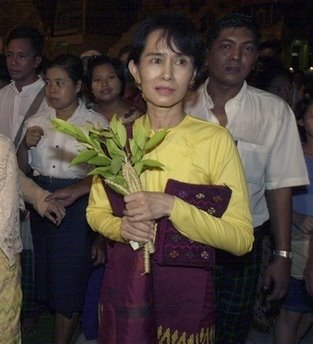


 Posts
Posts


