http://www.hindu.com/thehindu/holnus/001200812171233.htm
YANGON (Xinhua): A cross-border optical fiber link between Myanmar and India to boost information link is expected to be completed and operational by March next year, the local weekly Yangon Times journal reported Wednesday.
Under the Indian government loan, the project, which worths 7 million U.S. dollars, started in 2006 December.
The 640-kilometer-long Myanmar-India optical fiber link, which connects Indian's northeastern border town of Moreh and Myanmar's second largest city of Mandalay, passes through six cities of Tamu, Kampatwa, Kyi Gone, Shwebo, Monywa and Sagaing.
Along the fiber link, ADSL+2 system with 7,000 lines are being installed in 80 locations including Yangon, Mandalay and Nay Pyi Taw, the report added.
The project was signed between the state-run Myanma Posts and Telecommunications (MPT) and the Telecommunications Consultants India Limited (TCIL) during then President APJ Abdul Kalam's state visit to Myanmar in March 2006.
According to the contract, MPT and TCIL agree to implement SDH/ STM 4 optical fiber link between the two cities and the ADSL system.
Meanwhile, in April this year similar link between Myawaddy ( Myanmar) and Maesot (Thailand) was established as part of the information superhighway network (ISN) project of the six-country Greater Mekong Subregion (GMS)-Economic Cooperation.
The Myanmar-Thai fiber optical link extends as angon-Hmawby- Bago-Kyaikhto-Tahton-Pha an-Kawkareik-Thingan Nyinaung-Myawaddy on the Myanmar side, while Maesot-Bangkok stands on the Thai side.
Those links on the two countries' respective sides have been in place, leaving the cross-border link between Myawaddy and Maesot is to be connected to complete the network.
Also in March this year, fiber link between Myanmar and China, built since April 2007 and involving China Telecom and Yunnan Telecom, was set up in Myanmar's border town of Muse also as part of the regional ISN project.
The Myanmar-China fiber optic link was built across China's Kunming and Myanmar's Muse with its link further extended to reach the commercial city of Yangon.
Thursday, December 18, 2008
Myanmar-India optical fiber link project to complete next March


How the Regime Punishes Political Prisoners’ Families
http://www.irrawaddy.org/highlight.php?art_id=14811
--------------------------------------------------------------------------------
By SAW YAN NAING Wednesday, December 17, 2008
--------------------------------------------------------------------------------
The wife of imprisoned activist Pyone Cho spent about 90,000 kyat (US $75) on a 10-day journey to visit him in jail in Kawthaung, southern Burma. The sister of another political prisoner, the prominent labor rights activist Su Su Nway, spent only slightly less on a six-day journey to visit her in Kale Prison in Sagaing Division, central Burma.
Family members spoke to The Irrawaddy about the huge difficulties they faced as a result of the regime’s decision to consign activists condemned in the recent series of trials to prisons in various remote parts of Burma.
Mandalay prison. (Photo: Nic Dunlop/The Irrawaddy)
The decision is being described by human rights organizations as a form of torture, imposed not only on the abused prisoners themselves but also on their families.
More than 100 of the estimated 215 activists sentenced in the November trials to terms of imprisonment of up to 68 years have been consigned to at least 20 isolated prisons in various parts of Burma, according to the Thailand-based Assistance Association for Political Prisoners (Burma), known as the AAPP.
AAPP Joint-Secretary Bo Kyi said it was international practice elsewhere in the world to confine condemned people in prisons close to where family members lived. “Here [Burma] they were moved to prisons far from their relatives.”
Bo Kyi accused the regime of intentionally creating problems for prisoners and their families, causing mental and physical pain.
Many of the political prisoners were being held under inhumane conditions and were being tortured, Bo Kyi said. Some prisons had no doctors or facilities for treating inmates.
“Some political prisoners are not allowed to walk outside their compounds,” Bo Kyi said. “They even can’t see the sun. It is very dangerous for the health of those detained in cold locations over the next few months.”
Several political prisoners, including Zarganar, Burma’s best-known comedian, are in Myitkyina Prison, Kachin State, where temperatures drop below zero in winter.
One Rangoon source said a youth member of the opposition National League for Democracy, Aung Kyaw Oo, serving a 19-year sentence in Pegu Prison, had been savagely beaten and denied medical treatment.
When Aung Kyaw Oo’s wife visited the prison on December 3 she was denied permission to see him and had to wait until December 13. A prison source said Aung Kyaw Oo had told his wife about the beatings.
A defense lawyer, Saw Kyaw Kyaw Min, who recently fled to Thailand, said one of his clients, Myint Aye, founder of the group called Human Rights Defenders and Promoters, had also been tortured while in prison.
“Prison authorities questioned him continuously for five days. They didn’t let him sit down and sleep. He finally collapsed.”
Myint Aye was convicted of involvement in a bomb attack on an office run by the junta-backed Union Solidarity and Development Association in Rangoon’s Shwepyithar Township on July 1.
The New York-based international rights group Human Rights Watch has also deplored the regime’s decision to send political detainees to remote prisons.
In a statement issued on Tuesday, Elaine Pearson, the group’s deputy Asia director, accused the regime of using the country's legal mechanisms to threaten political prisoners and deny them access to justice.
The statement also urged Asean Secretary-General Surin Pitsuwan to assign an independent legal assessment team to closely watch the treatment of political prisoners in Burmese courts and in Burmese prisons.
It said Asean should address Burma's lack of respect for the rule of law when it holds its rescheduled summit meeting in early 2009.
Pearson said: “The government locks up peaceful activists, sends them to remote prisons, and then intimidates or imprisons the lawyers who try to represent them. This abuse of the legal system shows the sorry state of the rule of law in Burma.”
Copyright © 2008 Irrawaddy Publishing Group | www.irrawaddy.org
UN chief criticizes Myanmar and Zimbabwe
http://news.yahoo.com/s/ap/20081217/ap_on_re_us/un_un_human_rights_1
By EDITH M. LEDERER, Associated Press Writer Edith M. Lederer, Associated Press Writer
Wed Dec 17, 4:57 pm ET
UNITED NATIONS – Secretary-General Ban Ki-moon criticized the governments of Myanmar and Zimbabwe Wednesday and said a year of multiple crises has put human rights on trial.
At a year-end news conference, the U.N. chief said 2009 "promises to be no less difficult" than 2008, with a worsening humanitarian situation in Afghanistan, the danger of anarchy in Somalia, a continuing global financial crisis and the need to reach an Israeli-Palestinian peace agreement.
Ban said he has been frustrated by the failure to protect innocent lives, and the lack of resources and political will to tackle important issues such as poverty, conflicts and climate change.
Though the world came together to confront the global financial crisis, "I fear we are only at the end of the beginning," Ban said, stressing that "global solidarity" will be key to a solution.
Ban said he was pleased at the world's response to natural disasters, including the devastating cyclone in Myanmar and hurricanes that lashed Haiti.
"Yet I am disappointed by the unwillingness of the government of Myanmar to deliver on its promises for democratic dialogue and the release of political prisoners," he said.
In Zimbabwe, Ban said, "the humanitarian situation grows more alarming every day" and the country "stands on the brink of economic, social and political collapse."
The secretary-general said he told President Robert Mugabe "things need to change urgently" during a meeting several weeks ago on the sidelines of a U.N. conference in Doha, Qatar, and Mugabe agreed to receive his envoy, Haile Menkarios.
"Now we are told that the timing is not right," Ban said. "If this is not the time, when is?"
The Southern African Development Community has insisted on leading diplomatic efforts to address the crisis, but eight months of talks have produced few results, Ban said, adding that "a fair and sustainable political solution" must come quickly.
In Congo, Ban said, U.N. forces "have held the line" but have been unable to protect innocent people from violence.
"Our record on human rights is on trial — in many places, in many ways," he said. "In this 60th anniversary year, we must stand strong for the Universal Declaration of Human Rights."
In conflict-wracked Darfur, he urged Sudan's President Omar al-Bashir to fully cooperate with U.N. resolutions and lamented that the joint U.N.-African Union peacekeeping force still needs helicopters and will only be 60 percent deployed by the end of the year.
In Afghanistan, he said "a political surge and a clear change of direction are required" to deal with growing insurgent attacks and the worsening humanitarian situation.
While the U.N. responded well to the world food crisis, tackling the problem on a wide front including nutrition, agricultural production, trade and social protection, "it has not gone away" he said.
Ban said he was pleased with U.N. and international efforts to keep climate change high on the global agenda.
"2009 will be the year of climate change," he said, stressing the importance of reaching a global deal requiring nations to make mandatory cuts in greenhouse gases starting in 2013.
Copyright © 2008 The Associated Press. All rights reserved. The information contained in the AP News report may not be published, broadcast, rewritten or redistributed without the prior written authority of The Associated Press.
Copyright © 2008 Yahoo! Inc. All rights reserved.Questions or CommentsPrivacy PolicyTerms of ServiceCopyright/IP Policy
World Press tells junta to stop repression of media-MIZZIMA
http://www.mizzima.com/news/world/1458-world-press-tells-junta-to-stop-repression-of-media.html
by Solomon
Wednesday, 17 December 2008 20:23
The World Association of Newspapers (WAN) condemned the Burmese military junta for cracking down on freedom of expression, called for the release of all jailed journalists and urged its neighbouring countries to pressure the junta for change.
Larry Kilman, Director of Communications, Public Relations of WAN said, the Board of directors of WAN which represents more than 18,000 publications in five continents, met on December 15, 2008 in Beirut, Lebanon and urged the military junta in Burma to release all detained journalists and to end restriction on freedom of expression.
"The Board of directors from WAN, while issuing the resolution and condemning the lack of press freedom in Burma, urged the military junta to stop arrests and the crackdown on the press," Kilman said.
"There is no press freedom in Burma. It is one of the most repressive regimes and is an embarrassment to the entire region," added Kilman.
The Committee to Protect Journalists (CPJ) said on December 4 that Burma is the third worst country in terms of imprisoning journalists in the world after China and Cuba. Burma has at least 14 journalists behind bars.
"The Burmese regime, one of the most repressive in the world, recently stepped up its attack on freedom of expression," said WAN.
WAN also called on the Association of Southeast Asian Nations (ASEAN) "To abandon their discredited policy of non-interference and mount pressure on Burma's rulers to adopt international norms of free expression."
Despite condemnation and pressure from the international community the Burmese military junta arrested journalists and bloggers and sentenced them to long terms in prison. They were sent to prisons in remote areas where their family members would find it difficult to visit.
The blogger and well know comedian Zargarnar (Maung Thura) were sentenced up to 59 years in prison for disseminating information about the September 2007 protests and in the aftermath of Cyclone Nargis.
Blogger Nay Phone Latt was sentenced to 20 ½ years in jail for posting free writing that fired the feelings of Burmese youth in his blog site. Journalist Ein Khaing Oo from Ecovision weekly Journal was sentenced to two years in prison for covering a story about Cyclone Nargis victims.
"For press freedom in Burma the best solution is democracy and that is not there," said Larry Kilman.
A Rangoon based veteran editor of a privately owned monthly journal said the journal had fallen in quality because of extreme censorship by the junta authorities. It has been reducing its print order every month.
"We are more and more disappointed with the government's censor board. They are rejecting whatever they want without following exact rules," the editor who wished not to be named told Mizzima.
"It is Impossible to publish stories relating to political issues. The junta is also prohibiting news and write ups which are not political in nature," he added.
Now they have reduced the print order. While earlier they published over 10,000 copies monthly now it is well below that figure.
"We have to reduce the number of journals because the demand has fallen and the censor board destroys the quality of journals," he added.
Wednesday, December 17, 2008
EarthRights International Special Commentary:POLITICAL ASYLUM IN JAPAN
http://socialsense.blogspot.com/2008/12/political-asylum-in-japan.html
One of my more enjoyable experiences while serving on active duty was the time I spent in Japan. Altogether, I served at various bases in Japan and Okinawa for a total of seven years. From an intrapersonal standpoint, I found the Japanese people warm, gracious, and always exceedingly polite. But I must also say that the Japanese people are unique in the entire world. As I began to study their history and culture, as I began to study their language, I found that they are really a closed society. My oldest friend George, who continues to live in Japan . . . who raised a family there, can probably attest to the fact that no matter how long a foreign born person lives in Japan, no matter how well one adjusts to their culture, and no matter how well one can speak the language, they are never accepted as “Japanese.” Tolerated, yes . . . accepted as an equal, never. This fact doesn’t suggest that Japanese people are racists . . . it merely illustrates that they are Japanese.
I recall one incident, years ago, in which an inebriated Marine erroneously stumbled into the wrong house in the middle of the night. This is understandable even if he wasn’t drunk because Japanese residences often look identical. In any case, the woman who lived there was quite frightened, and she ended up stabbing the Marine with a kitchen knife killing him immediately. As it turned out, this woman was a second-generation Korean who lived her entire life in Japan; for all intent and purposes, she was Japanese—as we might have regarded her as another American. The next morning, however, the news headlines read, “Korean stabs American Marine.” I cannot say whether the headline reflected Japan’s innate bias towards everyone not Japanese, or whether it was simply a matter of embarrassment because a Japanese woman could possibly be guilty of such a crime.
With the foregoing as a backdrop, I found a recent Article in the Japan Times (online) that informs us about the sharp increase in political asylum immigrants in Japan. As I began to read the article, I fully expected to read something about people from Korea, China, Vietnam, or the Philippine Islands. But according to journalist Setsuko Kamiya, the number of people requesting political asylum has nearly doubled in the past year, and many of these people are from Africa, Sri Lanka, and Myanmar (formerly known as Burma). According to this article:
“The Justice Ministry's Immigration Bureau said it won't provide official figures for applicants or approvals until next year but confirmed the trend identified by JAR. The increase in applicants from Africa has been attributed to the Tokyo International Conference on African Development in Yokohama in May and the Group of Eight summit in Hokkaido in July, said Eri Ishikawa, secretary general of JAR. ‘Through those two events, Japan's commitment to Africa was reported by the media in those countries, and people may have gained a good impression of Japan as a country that gives humanitarian aid, leading many to consider Japan as a place they can escape to,’ Ishikawa said.
This is yet another example of nations attempting to do the right thing, but Japanese officials, in failing to consider the unintended consequences of opening immigration floodgates, now find themselves in an uncomfortable position. The article continues:
“The Foreign Ministry in principle provides financial support to asylum seekers in dire need, including those having no job, money, or a place to live. According to an official at the Foreign Ministry's Human Rights and Humanitarian Affairs Division who handles such support, an adult is provided ¥1,500 [roughly $16.00] and a child ¥750 [roughly $8.00] a day for living expenses. If housing is needed a family receives a maximum of ¥60,000 [roughly $645.00] a month for rent. A single person can get ¥40,000 [roughly $430.00]. In principle, the financial support is given for four months.
Through its affiliated Refugee Assistance Headquarters, the ministry provided support to 235 asylum seekers just in November. Last year, 95 people a month received support, said the government official, who declined to be named. ‘The number of people we support has been rising constantly this year,’ she said. This year, based on past needs, the budget was set at ¥78 million [roughly $839,000], but this has almost been exhausted because of the rapid rise, she admitted."
The numbers of people seeking political asylum are actually modest, as least when compared to the large numbers of immigrants we deal with here on a daily basis, but it is significant for Japan. Traditionally, the Japanese do not encourage “immigration.” In fact, I am amazed they are doing it at all. Learning to live in Japan isn’t easy, true even for those who really do enjoy the culture and who have the knack for learning a difficult language.
I again recall one of the major news issues of the day in 1982. In 1976, the Japanese granted political asylum to a Vietnamese family. In the space of six years, the family’s daughter had mastered the Japanese language well enough to complete her secondary schooling and gain admission to the prestigious Sophia University in Tokyo. This was a major event because no one quite expected a foreigner to speak Japanese as well as . . . well, the Japanese themselves. And, once again, no matter how long these Africans, Sri Lankans, and Burmese live in Japan, no matter how well they learn the language and customs, no matter how well they succeed financially, they will always be outsiders. In Japanese, the word is “Gaikokujin (外国人),” which means a person from a foreign land. It can also mean “long nose barbarian,” so it is not a word many people use today . . . but they surely did when I lived there. Maybe they were trying to tell me something.
Posted by Mustang at 06:00
Comments (16) | Trackback (0)
Social Sense
Ugh. The rest of the post got cut off! he best was the part after I took the client home
Was it too long? Can you recover it?
rocket | 12.17.08 - 5:39 am | #
--------------------------------------------------------------------------------
Hi Mustang
Nice post about the Japanese. As you know I work very closely with them and have been to Japan. As far as never feeling Japanese well, I have lived in France since 1977 but have never acquired nationality and I can say that many immigrants and sons/daughters of immigrants who have acquired French nationality are never accepted as French either especially if they originate from any country in Africa be it north or south. (see Paris riots 2005)
America is unique as everyone comes or family has come from elsewhere and so nationality is not associated subtly with the underlining question of bloodline as it is in older countries with extremely old cultures.
One of the interesting insular aspects of Japanese life is how they consider their rice. (It seems as if American rice farmers are always fighting to get American rice into Japan.) Serve rice to a Japanese and the first question is
Is it Japanese rice?
Basically meaning that no other rice measures up to Japanese rice.
Many of the Japanese that I work with in Paris are on three year expat stints and are happy to return to Japan as they tell me often because they miss Japanese food. Although available in different specialty stores in Paris it is expensive.
As per the matter of Japanese politeness, it can often be overwhelming (the whole business card thing which I have to tell them functions differently in Europe than Japan)for someone living in Paris where things have a hard time getting done and the notion of time is completely different from that perception of time and respect for promptness by Asians. Lest I speak about the grouchiness of the French. For the Japanese living in France this gray zone of time perception can be particularly destabilizing.
I don't think we can fully understand the relation among classes in Japan or age differences unless we speak the Japanese language but many aspects are apparent for the non Japanese.
As my Japanese language studies are reduced to one word a week now because I am extremely busy, I am getting no closer to speaking "decent" Japanese than I was 6 months ago.
I can tell a funny story about a Japanese client I had many years ago in Paris. We went into a private club in the Opera area of Paris a part of it on the Rue St Anne which is a small Japanese area with lots of restaurants and some clubs reserved for Japanese. Women serving the men and intimate conversation with the women working there etc and lots of salarymen and Karokee. You get the gist. Well I being the only westerner found no problem drinking with my client and several of his friends but at one moment he informed me that I would have to leave because now was discussion time between Japanese men. Of course I understood and it had absolutely no effect on future relations which often ended up in drunken stupors. Me scraping the client off the ground and then taking him home. One time after a drinking binge I took him (he was married)home
rocket | 12.17.08 - 5:32 am | #
--------------------------------------------------------------------------------
Mustang, I envy your time there. I find hem to be a fascinating people as I do with most Asians.
Chuck | Homepage | 12.16.08 - 11:15 pm | #
--------------------------------------------------------------------------------
I remember an old advertisement for some condos in Florida that said they were just like France only better. Why were they better? Because they were just like living in Paris without having to put up with the French.
Shoprat | Homepage | 12.16.08 - 7:38 pm | #
--------------------------------------------------------------------------------
Ducky,
Have you been to France? Where and for how long? Defending the French is more than difficult. Think the Milice and who actually rounded up French and other nationality Jews..in France.
Who, indeed, did collaborate with the Nazis?
How riven with communists were elements of the French government and military?
Comparing the French - as a nation/nationality - with Texans?
Who pays taxes in France? Who attempts to avoid it?
Would you trust a French promise?
Tad | 12.16.08 - 7:26 pm | #
--------------------------------------------------------------------------------
Anyone that has been to France knows that most of the French hate most of the other French.
-----------------------
Sort of like New Englanders and the far less refined Texans?
Ducky's here | 12.16.08 - 5:33 pm | #
--------------------------------------------------------------------------------
Their socialism and morals are so awful as to be beyond belief. We have scandals. They conduct themselves scandalously as a matter of routine.
---------------
Well the socialism is no problem. Conservatives aren't an adequate judge of morals and the rest is great.
I don't see the downside.
Ducky's here | 12.16.08 - 5:31 pm | #
--------------------------------------------------------------------------------
Oh, "Ducky's here".
Where?
Why not in France?
Tad | 12.16.08 - 5:02 pm | #
--------------------------------------------------------------------------------
Ducky's Away,
NOTE: What does "Ducky's Away" mean?
I've been to France more times than most Englishmen, most Germans, most Belgians, most Italians, most Spaniards, and most Luxembourgundians...all countries that border France...oh, yes, do not forget the Swiss.
I would hate to be French. Anyone that has been to France knows that most of the French hate most of the other French. Parisians think they are the cats' ass, and they're right. The folks in the provinces hate the Parisians and the government and those from other provinces. Really odd country. It IS quite beautiful and the food is mostly very good. Their socialism and morals are so awful as to be beyond belief. We have scandals. They conduct themselves scandalously as a matter of routinue.
One man's opinion.
Tad | 12.16.08 - 4:46 pm | #
--------------------------------------------------------------------------------
You're from away, eh Jungle Mom?
Ducky's here | 12.16.08 - 4:36 pm | #
--------------------------------------------------------------------------------
A friend who did business in Japan and was interested in the country told me that there is a culture there that a Westerner will never be shown.
I don't know about Japanese, but I sure wouldn't mind being French.
Ducky's here | 12.16.08 - 4:35 pm | #
--------------------------------------------------------------------------------
Sir,
They called you a Long-Nosed Barbarian because, ah,
you're a Long-Nosed Barbarian?
Bye the Bye: As you know, the Japanese are very class oriented amongst themselves also.
Meanwhile, their own actions in Korea, Manchuria, China, Philippines, Burma, Singapore, the Dutch East Indies...all in WW II...were more than awful.
I served with a Marine Sergeant in the very early 60s who'd been a kid on Guam when the Japanese seized it. The stories related were not too good, to say the least.
BTW, don't most Japanese history books play down WW II?
Just asking.
Further, just why are we (USA) doing very much of the heavy lifting in the defense of Japan?
Tad | 12.16.08 - 11:59 am | #
--------------------------------------------------------------------------------
excellent observation. I would still call it racist. Maybe not in the sense that we use racial,being not a good thing, but it is in terms of we and they.....stay well....
tapline | Homepage | 12.16.08 - 10:48 am | #
--------------------------------------------------------------------------------
You NEVER feel FRENCH when you live there, either.
of course, most Americans don't WANT to feel FRENCH!!!
Z | Homepage | 12.16.08 - 10:27 am | #
--------------------------------------------------------------------------------
This is much like New Englanders. I met a man in Maine and asked if he was from that town. He said ,"Yes." but his wife said,"NO.".
The man began to laugh and said,"Well, my grandfather moved here before I was born, but they still don't consider me a local."
Jungle mom | Homepage | 12.16.08 - 7:13 am | #
--------------------------------------------------------------------------------
//As I began to study their history and culture, as I began to study their language, I found that they are really a closed society.//
Not surprising considering the Japanese people lived in almost complete isolation during the Edo period, which lasted over 250 years. That's a long time for a nation to be cut off from the world, especially at a time when European exploration and trade was beginning to flourish. That same spirit and attitude is hard to eliminate, despite the fact that many years have past.
Another example of this is Italy. As many already know, between the last remnants of the Roman Empire and the 19th century, the Italian peninsula was divided into several states controlled by wealthy ruling families. How similar is that mentality today, with the Italian mafia.
Old habits and customs die hard.
LASunsett | Homepage | 12.16.08 - 6:37 am | #
--------------------------------------------------------------------------------
United Nations Secretary General Ban Ki-moon Urges Corporate Interests in Burma to Use Their Influence with Military Junta to Push for Democratic Refo
http://www.earthrights.org/content/view/593/114/
EarthRights International Special Commentary:
Written by Paul Donowitz and Matthew Smith
Monday, 15 December 2008
United Nations Secretary General Ban Ki-moon Urges Corporate Interests in Burma to Use Their Influence with Military Junta to Push for Democratic Reforms and Improvement in Human Rights
When asked what advice he would give to private businesses invested in Burma’s (Myanmar’s) energy sector, the UN Secretary General Ban Ki-moon firmly stated that "they should try to use their cooperation or their relationship to impress upon the Myanmar authorities so that they can commit to their democratization process, and also humanitarian and promotion of human rights..." ERI is heartened that the Secretary General recognizes that corporations choosing to operate in Burma must play a positive role. However, ERI continues to document the negative environmental and social impacts of foreign investments in the country’s oil and gas sector, and questions the current commitment of corporations in this sector to influence positive change in the country.
Read more > >
ERI is particularly concerned about South Korea’s Daewoo International, the operator of a natural gas project set to carry gas from the Bay of Bengal to China through politically and environmentally sensitive regions in Burma. Abuses connected to this project - known as Shwe, meaning “gold” in Burmese - have begun and were documented in a recent Organization for Economic Cooperation and Development (OECD) complaint filed with the Government of South Korea by ERI and the Shwe Gas Movement (SGM). If the project moves ahead, ERI believes that widespread abuses in the project area are unavoidable, including forced labor, forced relocation, and other abuses perpetrated by the Burmese military on behalf of Daewoo and other companies involved in the project.
Moreover, Daewoo International was recently at the center of a maritime border dispute in the Bay of Bengal between Burma and Bangladesh, exploring for natural gas in disputed waters under the cover of Burmese warships. The company participated in activities intended by the Burmese authorities to exacerbate longstanding differences between the two countries; an act inconsistent with Ban Ki-moon’s call to influence positive change.
Like Daewoo, the US oil company Chevron and the French oil company Total are also failing Ban Ki-moon’s call to use their power and influence to facilitate positive changes in Burma. The companies continue to operate a natural gas pipeline that has been associated with longstanding, widespread human rights abuses in the country’s Tenasserim region. Called Yadana, meaning “treasure” in Burmese, the project officially began in the mid-1990s and since its inception has led directly to human rights abuses by the military – abuses continue today. The project has also financed repression as the project is the single largest source of revenue for the military regime (an estimated US$ 969 million to the junta last year alone, according to ERI).
Since 1996, ERI has researched and published five advocacy reports detailing the suffering of local people and the human rights abuses committed on behalf of the companies’ interests; most recently in the ERI report The Human Cost of Energy: Chevron’s Continuing Role in Financing Oppression and Profiting from Human Rights Abuses in Military-Ruled Burma (Myanmar) (April 2008). The report details how human rights impacts directly connected to the project continue to date, such as forced labor, rape, and killings committed by pipeline security battalions. The companies are aware of these abuses, yet they continue unabated – Chevron, for its part, faces significant legal liability in US Courts for these abuses. The companies continue to deny any wrongdoing, and argue they are benefiting the people of Burma.
Chevron and Total should heed the Secretary General’s call and use their influence to effect positive change in Burma. The companies should stop relying on the Burmese military for pipeline security, publish all payments made to the Burmese regime, and use their financial resources to implement a sustainable socio-economic program in their project area.
Major construction on Daewoo International’s project has not yet begun in earnest – the company should recognize that the best way to heed the Secretary General’s call is to postpone the Shwe Project until local people can be included in development decisions, and until the project can proceed without negative human rights impacts. In the mean time, the company should publish all payments made to the Burmese regime.
Read the full transcript of Ban Ki Moon's interview here.
RELATED NEWS:
- Read Matthew Smith's op-ed about Daewoo's involvement in aggravating tensions between Burma and Bangladesh over maritime boundaries.
- Bloomberg News - "Daewoo-Led Group May Conclude Myanmar Gas Agreement with CNPC"
Japan quietly seeks global leadership niches
http://news.yahoo.com/s/csm/20081217/ts_csm/o3japan_1
By Amelia Newcomb Amelia Newcomb – Wed Dec 17, 3:00 am ETTokyo – In the 1980s, the buzz here was about "Japan bashing" – the biting criticism of a country that was eviscerating America's postwar industrial dominance. This is still the world's second-biggest economy. But more recently, Japanese have spoken in bemused terms about "Japan passing" – shorthand for a country feeling overshadowed by a rising China and India.
Japan's meteoric economic rise never led to a parallel surge in diplomatic clout. But today, as a pacesetter in everything from green cars to pop culture, it seeks to carve out a bigger role in world affairs as a "soft power."
The country has had remarkable success in shifting the one-dimensional perception of Japan Inc. to a multifaceted image that many in the industrialized world are now hastening to emulate in key areas like energy innovation. Still, Japan's new emergence is closely tied to its ability to reform its domestic political structure and speak more surely on the international diplomatic stage – something far from certain at this juncture.
"Japan used to be [just] an economic superpower," says Michael Auslin, a resident scholar at the American Enterprise Institute in Washington. "Now it talks about being a social superpower. Japanese say, 'We're First World, but what kind of power are we?' "
Japan's promotion of a changed image was underscored earlier this year by the ascension – a cutesy gesture, perhaps – of a cartoon character, Doraemon, as the country's roving cultural ambassador.
The animated cat's job, said then-Foreign Minister Masahiko Komura at the March announcement, was to "deepen people's understanding of Japan so they will become our friends." For his part, Doraemon – who is as familiar to young people in Asia as Snoopy was to generations of young Americans – promised to share globally "what kind of future [Japanese] want to build."
To Kenjiro Monji, it's one small piece of a diplomacy that is crucial to that future – influencing the public as well as opinion leaders by presenting ideas and policies more effectively. Japan's director general of public diplomacy, he points to polls by the BBC this year that gave Japan the No. 2 slot in terms of positive image among global respondents.
"The image of Japan is very good, and not just in cultural areas. It is seen as contributing to stability as well," he says.
Still, Mr. Monji says Japan could do far more to capitalize on its deft touch with practical and whimsical technology alike as well as popular culture. He is enthusiastic about the startup of an English language TV broadcast – a BBC-like program by Japan International Broadcasting – that aims to reach most corners of the globe by March 2009.
Plans are also in the works to open more than 100 language centers around the world to spread the study of Japanese, an effort funded by the Japan Foundation. Cultural grant aid is another target.
But Japan's cultural dynamism stands in sharp contrast to its domestic political and dip- lomatic profile – one that hampers Japan's ability to wield clout in more traditional spheres of influence.
That's something Ichiro Asahina, an idealistic and animated 30-something official with Japan's Ministry of Economy, Trade, and Industry, hopes to change.
After a stint at Harvard's Kennedy School of Government, Mr. Asahina concluded that Japan's bureaucracy, long the destination for the best and brightest, was failing to help blaze a path out of Japan's domestic economic and political troubles.
He and like-minded colleagues started brainstorming how best to nudge change within Kasumigaseki, Japan's ministerial hub. In 2005, Project K, as the group dubbed itself, ratcheted things up – publishing a book that pitched mission statements, a national strategy office, and other reforms to help ministries become more dynamic and open to frank discussion. They developed an acronym – PEATH, for peace, environment, art, technology, and human resources – to describe where the group, which now claims some 50 members, thought Japan could be most influential.
Their activism proved a magnet for criticism – and plaudits. "Things are moving toward change," Asahina asserts, noting that their tome sold a surprising 10,000 copies. "Many Japanese young people want a stronger role for Japan in the world – we think Japan can do a lot for the world's prosperity."
For this generation, unlike their parents and grandparents, validation does not have to come from the West. They exude an assurance born of Japan's broad cultural reach, its environmental leadership (this is, they note, home of the Kyoto Protocol on climate change and the trendsetting Toyota Prius), and its industrial competitiveness. Their country's World War II history, while an issue, does not encumber them; many observers see them as pragmatic.
"They're practical on security issues," says Steven Vogel, professor of political science at the University of California at Berkeley, noting that young people tend to take for granted the existence of the Self-Defense Forces and are less opposed to a military role overseas than their parents. "[It's] not a shift to the right, but stems from the disappearance of [ideological] splits. They are unraveling old constraints."
The debate over what kind of global leader Japan wants to be is far from settled. But it's clear that its under-the-radar influence – relative to the attention China gets – is strong, and growing in some areas.
Japan is building, of course, on a strong base. It remains a key US security partner in Asia. A study this year by the Chicago Council on Foreign Relations ranked Japan ahead of China and South Korea in cultural, economic, diplomatic, and political influence in Asia.
Japan has fallen from its 1990s perch of top donor of overseas development assistance, but still ranks 5th worldwide. Its manufacturing prowess and energy efficiency are second to none; Toyota now vies with GM's as the world's No. 1 car producer. Millions of people around the world are huge fans of Japanese comics and animation.
In the coming year, a global financial crisis, threats to world shipping lanes, and a growing US focus on Afghanistan will test how Japan chooses to exercise its influence in the world.
Already, in the financial crisis, Japan has expanded its global footprint with the Nomura Group's $2 billion purchase of Lehman Brothers' Asian, European, and Middle Eastern operations, and with Mitsubishi Financial's $9 billion investment in Morgan Stanley, the struggling New York investment firm. The government has also pledged $100 billion to the IMF to aid developing countries, the only country so far to do so. In the first such meeting outside a multilateral forum, Japanese leaders this week hosted Chinese and South Korean counterparts in Fukuoka to discuss how to buffer the Asian region.
Of course, Japan's slow response to its own bubble in the 1990s has offered a cautionary tale to the US and Europe on how to manage the credit crisis.
Japan just passed a law recommitting itself to Afghanistan-linked support operations, despite opposition. It provided 600 noncombat troops in southern Iraq, withdrawing them in 2006. Working with the UN Development Program, the country just invested $92 million to help 21 African countries deal with climate change – part of its $10 billion Cool Earth Partnership. And the rise in piracy off Somalia has prompted discussion of a bill to allow Japan, constitutionally limited to a defensive military, to send destroyers to escort oil tankers and commercial ships.
A world vastly different from the one that shaped Japan's postwar policy is driving a change in outlook, says Kenneth Pyle, an expert at the University of Washington. But it's unfolding gradually: Just as it took 15 years from the arrival of American gunboats in 19th-century Japan until a modern government formed, Japan is now deciding how best to respond to a world where cold wars and a weak China are the stuff of history books.
"Right now, there a kind of interlude, an interregnum where the international system is not clear," he says. "They are assessing, and it's going to take some time."
To some observers, Japan is in need of a leadership that interacts and communicates as easily as its pop culture. "In a globalizing world, Japan needs to be understood," says Sakie Fukushima, a managing director of Korn/Ferry International. "It needs to express opinions more effectively and be part of the world."
But the current prime minister, Taro Aso, has not won his countrymen's confidence. The nation faces political stasis, a rising income gap in a proudly middle-class society, a burgeoning elderly class, and a dropping birthrate. Last month, Japan officially tipped into recession, bringing gloomy reminders of the troubled 1990s.
Mr. Aso now confronts a divided parliament and a devastating 22 percent approval rating – boding ill for his Liberal Democratic Party in national elections, that must be held by next September.
For Aso and Japan, much depends on choices of a rising generation. Critics see some worrying trends: Interest in some foreign countries has waned; for the third consecutive year, the number of Japanese studying in the US has declined, while India, China, and Korea have seen double-digit increases.
Asahina, the government official, is aware of the hurdles even reform-minded officials face. "Most young bureaucrats share [Project K's] feeling," he says. "But to have a feeling and to take action are different. Most people are waiting and seeing."
He argues that Japan can take advantage of its membership in both Western and Asian spheres, with its "ambiguous" position an asset in bridging differences between other countries. "Japan has the potential to be persuasive in the world," Asahina adds. "We have to speak out strongly and differentiate ourselves. We can remodel."
Burma: Lawyer’s Testimony Highlights Distorted Justice
http://www.hrw.org/en/news/2008/12/16/burma-lawyer-s-testimony-highlights-distorted-justice
ASEAN Should Monitor Jailed Activists
December 16, 2008
The government locks up peaceful activists, sends them to remote prisons, and then intimidates or imprisons the lawyers who try to represent them. This abuse of the legal system shows the sorry state of the rule of law in Burma.
Elaine Pearson, deputy Asia director at Human Rights Watch
Related Materials: Burma: Free Activists Sentenced by Unfair Courts
Letter to ASEAN Secretary General Ong Keng Yong
Crackdown(New York, December 16, 2008) - Burma's military government has used the country's legal mechanisms to intimidate political prisoners and to deny them access to justice, Human Rights Watch said today, citing new testimony from a defense lawyer who has just fled the country. In a crackdown that started in October 2008, Burma's courts have sentenced over 200 political and labor activists, internet bloggers, journalists, and Buddhist monks and nuns to lengthy jail terms.
With the Association of Southeast Asian Nations (ASEAN) Charter having entered into force on December 15, Human Rights Watch urged ASEAN to dispatch an eminent independent legal team to monitor the trials and conditions of activists held in isolated prisons.
"The government locks up peaceful activists, sends them to remote prisons, and then intimidates or imprisons the lawyers who try to represent them," said Elaine Pearson, deputy Asia director at Human Rights Watch. "This abuse of the legal system shows the sorry state of the rule of law in Burma."
Saw Kyaw Kyaw Min, a 28-year-old lawyer from Rangoon, fled to Thailand several days ago after weeks in hiding. In late October 2008, a Rangoon court sentenced him to six months in prison under Section 228 of the Burmese Penal Code for contempt of court. He failed to intervene, on the judge's order, after his clients turned their backs on the judge to protest the way they were being questioned.
Saw Kyaw Kyaw Min had been defending 11 clients, all members of the National League for Democracy (NLD). Three other lawyers - Nyi Nyi Htwe, U Aung Thein, and U Khin Maung Shein - were arrested and sentenced to terms of four to six months in prison on the same charges. Saw Kyaw Kyaw Min learned of the charges in advance and went underground.
He described to Human Rights Watch the secretive workings of the Burmese legal system and the way in which political prisoners are denied access to fair trials. He said political activists awaiting sentencing in prison can meet with their defense lawyers only at police custody centers with police and intelligence officers present. Trials are often shrouded in secrecy, with lawyers not informed when their clients are to appear in court. Lawyers representing political prisoners face arbitrary delays when requesting assistance from authorities or documents such as case files, he said.
Human Rights Watch has already documented problems with the current unfair trials, including lack of legal representation for political prisoners. Among the hundreds sentenced in recent months, in late November a Rangoon court sentenced prominent comedian and social activist Zargana to 59 years in jail for disbursing relief aid and talking to the international media about his frustrations in assisting victims of Burma's devastating Cyclone Nargis.
Many political prisoners have recently been transferred to isolated regional prisons where medical assistance is poor or nonexistent and food is scarce. During the past few weeks, authorities sent Zargana to Mytkyina Prison, in the far-north Kachin State; the '88 Generation Students leader, Min Ko Naing, was transferred to the northeast Kentung jail of Shan State; and internet blogger Nay Phone Latt, who was sentenced to 20 years in prison for posting anti-government material on his website, was sent to the far-south prison at Kawthaung, across from Ranong in Thailand.
The newly-in-force ASEAN Charter sets out principles such as adhering to the rule of law and protecting and promoting human rights to which all members states, including Burma, should adhere. But compliance provisions are weak. ASEAN faces a considerable challenge in addressing Burma's lack of respect for human rights in the lead-up to multiparty elections in 2010.
Human Rights Watch urges Secretary-General Surin Pitsuwan of ASEAN to dispatch an independent legal assessment team to monitor the treatment of political prisoners in Burma's courts and prisons. Human Rights Watch said ASEAN should also address Burma's lack of respect for the rule of law when it holds its rescheduled ASEAN summit meeting in early 2009.
"This is a test for ASEAN," said Pearson. "If ASEAN lets Burma get away with this farce of justice, the ASEAN Charter really is worthless."
Saw Kyaw Kyaw Min's account to Human Rights Watch
Saw Kyaw Kyaw Min was admitted to the Burmese Bar earlier in 2008. Since 2007, he has played a lead role in trying to represent activists charged under a raft of spurious laws, and he has been arrested several times for his political activities.
On October 23, he and another lawyer were defending 11 clients, members of the NLD, in Hlaingtharya Court, Rangoon on a range of charges related to peaceful political activities in 2007. Some of the defendants turned their back on the judge, U Thaung Nyunt of the Rangoon Northern District Court, to protest the unfair way defendants were being questioned by the prosecution. The judge instructed the lawyers to stop the defendants' behavior. According to Saw Kyaw Kyaw Min: "We both said to the judge, ‘We don't want to forbid our clients from doing anything, because we are defense lawyers and we act according to our clients' instructions.' The judge stopped the proceedings and set another court hearing date."
The next day, court officials informed Saw Kyaw Kyaw Min that his contempt-of-court hearing was set for October 30. Days later, at the courthouse, he saw and overheard a police officer and an assistant judge conspiring to arrest him. He fled and went into hiding.
Thailand left out as Asean signs trade deals
http://www.bangkokpost.com/breakingnews/135440/thailand-left-out-as-asean-signs-trade-deals
Published: 17/12/2008 at 12:42 AM Singapore - Six southeast Asian nations signed trade agreements on Tuesday paving the way for a single market in the region, pressing on with the pacts despite the postponement of a key summit.
The economic ministers of Brunei, Cambodia, Indonesia, Laos, Singapore and Malaysia signed three separate deals covering trade in goods, investment and services.
Besides the six nations attending Tuesday's signing ceremony, Thailand and three other Asean members - Vietnam, the Philippines and Burma - were due to sign at a later date, officials said.
The six decided to press on with the signing rather than wait for a summit of the Association of Southeast Asian Nations (Asean) that was delayed by recent unrest in Thailand.
"As these agreements are integral to Asean's economic integration, the Asean economic ministers agreed to meet in Singapore to sign and have them enter into force as soon as possible," said Malaysian Trade Minister Muhyiddin Yassin.
The three agreements were originally to be signed at the 10-member Asean's annual summit in Thailand this month, officials said.
Anti-government protests in Thailand, which currently chairs Asean, forced that country's former government to move the summit from Bangkok to the northern city of Chiang Mai, and then to postpone it until March.
After Thailand's opposition leader Abhisit Vejjajiva was elected Monday as the country's new prime minister, the foreign ministry said the summit will be held from Feb 24-26.
"The economic ministers felt that we should proceed" to sign the trade deals without delay before February, Singapore's Minister for Trade and Industry, Lim Hng Kiang, told reporters on Tuesday.
"We felt we should have a meeting, sign and press on because if you postpone everything till end February we lose two months."
The documents signed Tuesday have taken on added importance during a global economic crisis, Lim said.
Asean has made itself more attractive to foreign investment but, with the world in a credit crunch, the level of foreign investment will fall over the next two years, he said.
"And if Asean cannot portray itself as a more attractive venue I think then we lose out."
Indonesia's Trade Minister Mari Pangestu also stressed the need for Asean to forge closer economic ties in light of the global financial crisis.
"I think from the Asean perspective, it was important for us to ensure that we don't experience any delays in the progress that we have achieved in terms of the Asean economic community," she told AFP after the signing ceremony.
Asked if the crisis would affect Asean's integration goals, she said: "One would hope not because I think we have all the interest to make sure that this continues to work."
She added: "If the global situation becomes more uncertain, then making regional cooperation and integration work will make you stronger."
The agreements signed Tuesday liberalise trade in services and grant benefits to investors.
The third covers trade in goods. Tariffs on most goods had already been cut to between zero and five percent as part of Asean's plan to establish a single market and manufacturing base by 2015. (AFP)
Burmese Defense Lawyer Flees to Thailand, Blasts Regime
http://www.irrawaddy.org/article.php?art_id=14795
--------------------------------------------------------------------------------
By SAW YAN NAING Monday, December 15, 2008
--------------------------------------------------------------------------------
A young Burmese lawyer sentenced to six months imprisonment for questioning court proceedings against his dissident clients has fled to Thailand after a hazardous journey from Rangoon.
Saw Kyaw Kyaw Min, 29, was one of four defense lawyers convicted of contempt of court after complaining of unfair treatment by the Rangoon court. The other three—Aung Thein, Khin Maung Shein and Nyi Nyi Htwe—are being detained by Burmese authorities.
Saw Kyaw Kyaw Min, who escaped to Thailand some two weeks ago, gave a press conference in the Thai-Burmese border town of Mae Sot on Monday, accusing the Burmese courts of allowing themselves to become tools of the Burmese regime. He had been engaged to represent more than 20 political activists.
In a telephone interview on Monday with The Irrawaddy, Saw Kyaw Kyaw Min said:
“There are no fair trials in Burma. Defense lawyers are denied the right to defend their clients. The Burmese authority is using the courts to pressure political activists by pronouncing long terms of imprisonment.”
By imprisoning young political activists, the Burmese authorities were trying to silence an entire political generation in the run up to the 2010 general election, Saw Kyaw Kyaw Min said.
Among those defended by Saw Kyaw Kyaw Min was the prominent human rights activist Myint Aye, founder of a rights advocacy group known as the Human Rights Defenders and Promoters.
Myint Aye was sentenced to life imprisonment for his alleged involvement in a bomb attack on an office of the junta-backed Union Solidarity and Development Association in Rangoon’s Shwepyithar Township on July 1.
According to the state-run newspaper New Light of Myanmar, Myint Aye funded the bombing, which it said had been carried out by two members of the opposition National League for Democracy, Zaw Zaw Aung and Yan Shwe. Exiled Burmese dissidents based in Mae Sot had also helped fund the attack, the newspaper alleged.
Saw Kyaw Kyaw Min said Myint Aye was innocent and he accused the Burmese authorities of illegally sentencing him.
About 215 political activists, including members of the 88 Generation Students group, Buddhist monks, cyclone relief workers, journalists and bloggers, were given prison sentences of up to 68 years in a series of trials in November. More than 100 were transferred to prisons in remote areas around Burma, according to the Assistance Association for Political Prisoners (Burma).
According to rights groups, more than 2,100 political prisoners are estimated to be still behind bars in Burma.
Copyright © 2008 Irrawaddy Publishing Group | www.irrawaddy.org
Thailand's new PM likely to be more 'pro-Active' on Burma: Activist
http://www.mizzima.com/news/regional/1445-thailands-new-pm-likely-to-be-more-pro-active-on-burma-activist.html
by Mungpi
Monday, 15 December 2008 20:49
New Delhi (Mizzima) - Thailand's opposition leader, Abhisit Vejjajiva, has been elected as the country's new Prime Minister after winning a special vote in Parliament on Monday.
Abhisit, on Monday, won 235 votes, edging out Pracha Promnok who received 198 votes, to become Thailand's 27th Prime Minister.
The 44-year old Abhisit, who was born in Britain, will also become the fifth Prime Minister of Thailand within a period of less than two-and-a-half years.
The election came after Thailand's constitutional court in early December forced former Prime Minister Somchai Wongsawat to resign. Somchai and his Peoples Power Party, along with two other parties, were charged for election fraud related to polls convened over a year previously.
While electing Abhisit as the new Prime Minister seems to provide at least a momentary end to the political deadlock that has dragged on in Thailand for months, supporters of the ousted government, known as the red-shirts, on Monday reacted furiously – rampaging through barricades and preventing MPs from leaving Parliament.
While the election of Abhisit as the new Prime Minister signals an end to the immediate political crisis, Burmese pro-democracy activists based in Thailand said Abhisit's new government is more likely to take a pro-active role regarding Burma's politics.
According to Nyo Ohn Myint, in-charge of the Foreign Affairs Committee of the exiled National League for Democracy-Liberated Area (NLD-LA), with his fair knowledge and understanding of political situation in Burma, Abhisit is likely to be more pro-active than other earlier Thai governments.
Abhisit, during a conference on 'Safeguarding Democracy – Role of Opposition,' held in Bangkok on Saturday, acknowledged that Thailand's former Prime Minister, Thaksin Shinawatra, had used Thailand's foreign policy to make personal deals with Burma's military junta.
Nyo Ohn Myint, who was also a participant in the conference, said Abhisit, during an informal discussion, had promised to be more 'pro-active' towards Burma's political crisis if elected as the new head of state.
"I also made a point to him that, as a neighbor, Burma's political problems impact on Thailand," Nyo Ohn Myint added.
Nyo Ohn Myint said that while it is still too early to predict what will be Thailand's foreign policy under the newly elected Premier, it would look more positive if the leaders do not have any personal business connections with Burma's military rulers.
Thaksin, Thailand's former Prime Minister, now in exile, during his tenure conducted lucrative business deals with Burma's military junta. Critics said Thaksin used Thailand's foreign policy to deal with Burma's military junta for personal gain.
"I believe that if the new elected leaders of Thailand do not have personal business ties with Burma's military rulers, Thailand could take a better position on Burma," Nyo Ohn Myint speculated.
Thailand, with its ongoing political crisis, is unlikely to have Burma as a major focus of its any new foreign policy, but Nyo Ohn Myint said the Thai government is likely to more sympathetic towards Burmese refugees and migrants.
Thailand currently hosts over two million Burmese migrant workers, who are employed in varied fields of work, including the sex industry. Additionally, there are some 140,000 Burmese refugees eking out a survival in nine camps along the Thai-Burmese border.
Different View: Singapore's law and order
http://burmadd.blogspot.com/2008/12/different-view-singapores-law-and-order.html
BDD
Singaporean government authorities arrested opposition leader John Tan, joint secretary of Singapore Democrat Party because of wearing T-Shirt has picture of Kangaroo head and human body. He is now serving 14 days in jail for violation the law.
In fact, Singaporean government's suppression against the opposition, political and social activists in a different way. John said that he has faced more than three dozens of cases against him and he was supposed to serve his T-Shirt jail term today in Singapore.
He is posting his facing jail term T-Shirt with a former Burmese political prisoner and NLD LA Foreign Affairs Committee secretary Moe Zaw Oo, who faced 10 years in jail. John might face 14 years in Burma if he were a Burmese political activist, who knows?
'Momentous' day for ASEAN as charter comes into force
http://www.google.com/hostednews/afp/article/ALeqM5jaCndX1mbdxcrjpbN7_ygho93ELQ
JAKARTA (AFP) — The Association of Southeast Asian Nations took a major step towards becoming an EU-style community Monday with the passing into force of a new charter setting benchmarks for democracy.
The charter sets out rules of membership, transforms ASEAN into a legal entity and envisages a single free trade area by 2015 for the region of 500 million people.
It came into force with a meeting of ASEAN foreign ministers at the bloc's Jakarta secretariat, 30 days after Thailand became the last member to deposit its ratifying documents.
"This is a momentous development when ASEAN is consolidating, integrating and transforming itself into a community," Indonesian President Susilo Bambang Yudhoyono said.
"It is achieved while ASEAN seeks a more vigorous role in Asian and global affairs at a time when the international system is experiencing a seismic shift," he added, referring to climate change and economic upheaval.
"Southeast Asia is no longer the bitterly divided, war-torn region it was in the 1960s and 1970s."
ASEAN consists of Brunei, Cambodia, Indonesia, Laos, Malaysia, Myanmar, the Philippines, Singapore, Thailand and Vietnam.
The charter was supposed to have been activated at a summit in Thailand this month but that meeting was postponed by a domestic political crisis which has underscored the fragility of democracy and human rights across the region.
Thai Information Minister Mun Patanotai presided over the presentation ceremony as representative of the bloc's current chair, as the country lacks a foreign minister to do the job.
Thai lawmakers on Monday elected opposition leader Abhisit Vejjajiva as the country's third prime minister in four months after half a year of crippling protests.
"Democracy -- it's a yo-yo in the system, it's a yo-yo in the region," ASEAN Secretary-General Surin Pitsuwan told reporters.
"Some countries used to be ahead of others, now they are behind. They're all in the process of transforming themselves to become more open, more participatory, more democratic...
"In spite of the political setback in Thailand, which is now the ASEAN chair country, I believe ASEAN will not and cannot be slowed down."
He said that despite some calls for a new round of protectionism in the face of the global economic meltdown, the bloc agreed that closer economic integration was the best way out of the crisis.
"We also realise that the best way out of this -- and the best protection, best buffer, best shield -- would be to continue ... to bring down our tariffs and non-tariff barriers," he said.
The charter will give ASEAN, often dismissed as a talking shop, greater clout in international negotiations but critics argue that some member states will continue to get away with gross human rights abuses.
The bloc's proposed new rights body has no teeth and the charter has no provision to sanction members like Myanmar , where the junta has kept democracy leader Aung San Suu Kyi under house arrest for most of the past 18 years.
The country's secretive junta is under European Union and United States sanctions over its human rights record.
No date has been set for the creation of the planned rights body but a first draft of its terms of reference will be handed over to a meeting of foreign ministers in Thailand in July, officials said.
U.N. to commemorate former Secretary General U Thant -MIZZIMA
http://www.mizzima.com/news/world/1444-un-to-commemorate-former-secretary-general-u-thant.html
by Salai Pi Pi
Monday, 15 December 2008 20:46
New Delhi (Mizzima) - The United Nation's Postal Administration (UNPA) will early next year release three postal stamps in commemoration of the 100th anniversary of the birth of former U.N. Secretary General, and Burmese national, U Thant.
In February, 2009, the UNPA will issue three commemorative postal stamps in denominations of US$ 0.94, CHF 1.30 and EUR 1.15 in conjunction with the theme, "100th anniversary U Thant".
Burma's U Thant, who was unanimously appointed to the position by the General Assembly, served as the third Secretary General of the United Nations from 1961 to 1971.
U Thant was the first Asian to hold the post in the world body, followed only by current Secretary Genearl Ban Ki-moon of South Korea.
U Thant was born at Pantanaw of the Irrawaddy Division in Burma, on January 22nd, 1909, and passed away on November 25th, 1974, with lung cancer.
During his tenure as the Secretary General, U Thant had done many successful mediation efforts in preventing the possibly war in Yemen in 1962 and Bahrain in 1968 that could have provoked a wider regional conflict.
Despite of his popularity, Burma's military dictator General Newin, who took power in a bloodless coup in 1962, refused to honor him with a state funeral, after his body was flown in from New York.
Newin's act immediately provoked the Rangoon university students, who then took the body of U Thant to the university campus in order to organize a grand funeral. But Newin sent troops to the campus and begun opening fire on students.
The event, which started off as a demand to hold a state funeral for U Thant, was later known as the "U Thant uprising' in modern Burma's history, as students and civilians following the bloody crackdown marched the streets of Rangoon in protest against Newin and his Burma Socialist Program Party (BSPP).
The United Nations is the only organization in the world which is neither a country nor a territory that is permitted to issue postage stamps, according to the UNPA.
The UNPA is also the only postal authority to issue stamps in three different currencies, namely U.S. dollars, Swiss francs and the Euro.
Tuesday, December 16, 2008
ICT exhibitions mark Myanmar rapid development in advanced technology
http://news.xinhuanet.com/english/2008-12/16/content_10512270.htm
By Feng Yingqiu
YANGON, Dec. 16 (Xinhua) -- A current five-day information and communication technology (ICT) week exhibition in Myanmar's northern city of Pyin Oo Lwin has unprecedented drawn a large number of visitors since its inauguration on last Friday.
In the 7th ICT week exhibition 2008 being held at the Yadanabon Teleport from Dec. 12 to 16, modern technology and IT products of IT companies from Yangon and Mandalay are introduced.
Attached with related seminars and workshops, the scale of the exhibition is so grand that it could prove the rapid development of the country in the advanced technology, experts said.
In March and October this year, two other ICT exhibitions respectively took place in Yangon which were co-sponsored by the Myanmar Computer Federation (MCF), Myanmar Computer Professionals Association and the Myanmar Computer Entrepreneurs Association.
In these exhibitions, nearly 100 companies showcased accessories of computers, new technology for networking, software solutions, computer courses and books.
Myanmar has been striving for the development of ICT. In December last year, Myanmar's first largest ICT park, also known as the Yadanabon Cyber City, was introduced in Pyin Oo Lwin. The launching of the cyber city was for the first time attached with such ICT week exhibition activities joined by over 100 local and foreign ICT companies.
As part of the project in the development of the cyber city, Myanmar authorities have allotted 372 acres (150 hectares) of land in the soft-base factory area of the Yadanabon cyber city for 35 more local and foreign IT companies to develop their business undertakings.
To encourage and help employees settle in the cyber city, Myanmar is also implementing new private housing projects there, offering land lease grant for 30 years for the establishment which is not allowed for re-sale or transferred within 10 years.
Under the projects, school, market, fire station, police station, clinic, sports ground and park are to be built.
Private entrepreneurs, who win the land lease grant, are set to start construction within three months and complete in a year after being allotted with the land plot, according to the city development committee which also prescribed that the allotted land plot will be confiscated in case the construction work could not start in a duration period of up to a year.
The cyber city, which covers an overall area of 10,000 acres (4,050 hectares), located in the hilly Pyin Oo Lwin near a highway, 67 km east of the second largest city of Mandalay in the north, and 20 percent of the cyber city area produce software and hardware.
The internet of the cyber city not only links with the whole country but also connect neighboring China, Thailand and India.
Meanwhile, Myanmar is also striving to introduce a wireless internet system of WiFi by early next year. Arranged by the local IT company of Exotic Wing, the system will be in service starting with the coverage of 16 main townships in the former capital city of Yangon, the company sources said.
By then, laptops with the WiFi system can enter the world from any corner of the city, experts said.
Besides, Myanmar has also planned full coverage of public access centers (PAC) in every township in the country by next March to facilitate communication links.
There are so far 240 PAC in Myanmar, according to the Myanmar Info-Tech.
The telecommunications authorities also revealed that the number of Internet users in Myanmar has also reached nearly 300,000, up from merely dozens in four years ago.
Myanmar has been implementing an ICT development master plan under the Initiative for ASEAN Integration (IAI) and detailed programs to link international networks are also being carried out in accordance with the master plan drafted by the Myanmar Computer Federation.
Being a signatory to the e-ASEAN Framework Agreement initiated at 2000 Singapore summit, Myanmar has formed the e-National Task Force to support the IT development.
Besides, the country has also signed a series of memorandums of understanding since 2003 with such companies as from Malaysia, Thailand, China and South Korea on ICT development.
On the occasion, Myanmar official media called on youths in the country, who take interest in IT, to apply advanced IT technology extensively in their striving for the national economic development.
Editor: Bi Mingxin
AK-47s—Made in Wa State-IRRAWADDY
http://www.irrawaddy.org/article.php?art_id=14804
--------------------------------------------------------------------------------
By LAWI WENG Tuesday, December 16, 2008
--------------------------------------------------------------------------------
The United Wa State Army (UWSA), an armed ethnic ceasefire group based in Shan State, northern Burma, is manufacturing arms and ammunition for use by their own battalions and to sell to other armed groups in the region, according to sources close to armed groups in Shan State.
Speaking to The Irrawaddy on Tuesday, Sai Sheng Murng, the deputy spokesman of the rival Shan State Army-South (SSA) said, “For more than one year now, the UWSA has been manufacturing AK-47 rifles similar to those made in China.”
Another source close to the UWSA said, “They (the UWSA) learned how to make arms from the Chinese.
“The arms and bullets the Wa produce are not only for their own battalions. They sell the arms to their ethnic allies in Shan State,” he added.
There are several armed ethnic groups in the northern region, including the Shan State Army, the Kokang, Mongla and Kachin.
Currently, the munitions factory is situated in Kunma, the hometown of UWSA Chairman Bao You-xiang, in the Wa hills 125 kilometers (78 miles) north of the group’s headquarters at Panghsang on the Chinese border, said the source.
According to a Jane’s security report on December 12, the UWSA has turned to arms production to supplement their income from arms and drugs trafficking. The report said that the UWSA facility marks the first time an insurgent group in the region has succeeded in setting up a small-arms production line.
In May, Jane’s Intelligence Review reported that the UWSA were acting as traffickers and middlemen, buying from Chinese arms manufacturers, then reselling the weapons to Indian insurgent groups and the Kachin Independence Army, which has also signed a ceasefire agreement with the Burmese military government.
The UWSA has an estimated 20,000 soldiers deployed along Burma’s borders with Thailand and China, according to Burmese military analyst Aung Kyaw Zaw, while an estimated 60,000 to 120,000 Wa villagers inhabit areas of lower Shan State.
The UWSA signed a ceasefire agreement with the Burmese military in the early 1990s. Leaders of the group, including its commander Wei Hsueh Kang, are wanted by the US government for their roles in the region’s drug trade.
Copyright © 2008 Irrawaddy Publishing Group | www.irrawaddy.org
Gwynne Dyer: Democracy fails in Thailand
http://www.straight.com/article-176158/gwynne-dyer-democracy-fails-thailand
By Gwynne Dyer
The political crisis in Thailand is over, and so is the ten-year experiment with democracy. The rich and the comfortably off have risen in outraged revolt against equal treatment for the poor, and it's back to the bad old days of shaky coalitions and bought-and-paid-for politicians. The misleadingly named People's Alliance for Democracy (PAD) has won.
It was the PAD's yellow-clad protesters and street-fighters who occupied government offices, and eventually both of Bangkok's airports, in a non-stop campaign to oust the People Power Party (PPP) from power. (The yellow was to signify their allegiance to the revered 81-year-old king of Thailand, Bhumibol Adulyadej, although it was never clear if he shared their goal.)
The government had to be overthrown by street demonstrations, not by a legitimate vote in parliament, because the People Power Party actually had a majority in parliament. The PPP's crime, in the view of the PAD, the army, the police, the Bangkok middle class, and perhaps even the royal palace, was that the wrong people had voted for it: the rural poor.
The PPP was the descendant of Thai Rak Thai (Thais Love Thais), the creation of Thaksin Shinawatra, the telecommunications billionaire who turned to politics in 1998. It was a new style of party for Thailand, appealing directly to the urban poor and the rural majority of Thai voters over the heads of the political bosses who had traditionally bought up their votes.
Thai Rak Thai won the 2001 election, delivering Thaksin to the prime minister's office, and he actually kept many of his promises. Development funds flowed into the rural areas, his "30-baht" scheme for universal health care brought medical aid to remote villages for the first time, and farmers got cheap loans. It alienated the urban elite who had previously got the biggest share of state spending, but Thaksin's popularity soared even higher in rural areas.
He was the first prime minister ever to complete a four-year term, and in the 2005 election his party won an absolute majority of the seats in parliament—another first. Even more importantly, the political godfathers who used to buy and sell the rural vote flocked to his banner, giving him a virtually impregnable political position.
For a moment there, it looked as though Thaksin had succeeded in transforming Thai politics. He was quite autocratic in power, seeking to punish media outlets that criticised him and authorising an anti-drugs campaign that resulted in many illegal killings, but his popularity was unquestionable. And then it all fell apart.
The counter-attack by the old guard came in the form of street demonstrations against Thaksin's new government that were used as the excuse for a military coup in 2006. The courts, which have not been exactly impartial in this affair, then ordered Thai Rak Thai disbanded because of alleged election irregularities (doubtless true, but equally true for all the other parties).
Thaksin's party was immediately re-founded as the People Power Party, but he was not so easily able to evade a court judgement finding him guilty of conflict of interest over the purchase of land in Bangkok. The amount of money involved was paltry for a man of Thaksin's wealth, and other Thai politicians have gone unpunished for far graver offences, but he ended up fleeing from Thailand in order to avoid a jail sentence.
The military then reckoned that it was safe to hold another election, but Thaksin's renamed PPP won again last year: the poor knew who was on their side. Thaksin stayed in exile, but his close ally Samak Sundaravej became prime minister in his stead—and immediately faced the same legal vendetta. Early this year the courts got him for conflict of interest. The charge? He was moonlighting as the host of a television cooking show. In this struggle, no pretext is too petty.
Samak was replaced as prime minister in late September by Thaksin's brother-in-law Somchai Wongsawat. The PAD then launched non-stop demonstrations that gradually paralysed the government. Three weeks ago they seized control of both Bangkok's airports, shutting down the tourist trade that accounts for six percent of Thailand's economy. And last week the courts came through for them again, ordering the disbanding of the PPP and two allied parties for electoral fraud.
That was the final blow. The regional godfathers, recognising that Thaksin is finished, have begun selling their services to the old-line Democratic Party again. It won't even be necessary to carry out the PAD's project to take the vote away from the rural population—they were proposing a parliament that was 70 percent appointed and only 30 percent elected—because the regional bosses will go back to brokering the rural vote in the good old-fashioned way.
It is a sad outcome, but not a surprising one. Relatively few Asian countries are openly run as dictatorships nowadays—China, Vietnam and Burma are the main exceptions—but the urban elites and the big land-owners really still call the tune in most of the so-called democracies. Thaksin had his faults, but he was trying to break Thailand free from that model. Unfortunately, he failed.
Gwynne Dyer's new book, Climate Wars, was published recently in Canada by Random House.
60 years on, UN rights declaration faces new challenges
http://www.mmorning.com/ArticleC.asp?Article=6439&CategoryID=7
The declaration was adopted in Paris on December 10, 1948, breaking new ground by encoding basic principles that would serve as the template for future rights conventions.
The 30-point document, based on France’s 1789 Declaration of the Rights of Man and the 1776 US Declaration of Independence, was adopted by 58 countries at a meeting of the UN General Assembly.
The Soviet Union, its East bloc allies, and South Africa abstained after a tortuous debate in which communist countries held up “real” economic and social rights against the “bourgeois” cultural and social principles defended by the West.
With the atrocities of World War II and the Holocaust fresh in their minds, the countries adopted the non-binding declaration at the Palais de Chaillot.
“This was the first manifesto adopted by organised humanity”, said René Cassin, a French legal expert who took part in drafting the ground-breaking document.
Article 1 of the Universal Declaration proclaims: “All human beings are born free and equal in dignity and rights. They are endowed with reason and conscience and should act towards one another in a spirit of brotherhood”.
On Wednesday, representatives from the United Nations, the European Commission and non-governmental organizations gathered at the Palais de Chaillot to take stock.
The declaration did not prevent a new genocide from occurring, in Rwanda in 1994, and basic human rights continue to be violated on a daily basis around the globe.
Human rights remains an ideology challenged by states which see it as a ploy by the West to impose its ideas on the rest of the world, said French former Justice Minister Robert Badinter.
“There are opposing trends from nationalists who say they are masters in their own house in China, Venezuela, Cuba or Burma, and from Islamists who say human rights stem from religious concepts”.
The rise of Russia and China as economic powers that strongly reject Western criticism of their rights record has reshaped the debate as has Washington’s “war on terror” launched after the September 11, 2001 attacks.
“Who cares about Chechnya these days?” asks Reed Brody, of the US-based Human Rights Watch.
Russia fought two brutal wars in the Caucasus republic of Chechnya that human rights groups say have left more than 100,000 civilians dead. In poor countries, campaigners say development is a top priority and that the biggest threat to basic rights is economic and environmental degradation.
“For billions of people, food and shelter are basic human rights”, said Brody. “Since the September 11 attacks, human rights often take a back seat to security concerns”.
Despite the shortcomings, rights champions tip their hats to the UN declaration as a landmark document that changed international diplomacy.
Amnesty International secretary general Irene Khan said the declaration “put human rights on the international agenda.
“Today no government denies that human rights are a valid concern of the international community. They may fail to respect human rights but they can’t deny the validity of these rights”, said Khan.
The world would look to President-elect Barack Obama to restore the United States’ human rights reputation after it was tarnished by the war on terrorism, Khan said.
In an interview to mark the 60th anniversary of the declaration, Irene Khan said that in the wake of the September 11, 2001 attacks, Western countries resorted to the tactics they once condemned.
“What the 9/11 attacks did was expose the hypocrisy of Western democracies that until then had been champions of human rights abroad”, Khan said. “Suddenly they were caught with problems in their own territory. And then facing that problem, they chose to take the easy path out of it, eroding human rights rather than standing up for them. “I think that sent a very bad message across the world to others”.
While the “war on terror” was conceived by the US Administration of President George W. Bush, “those who followed it were not just powerless innocents”, Khan said, singling out European governments which cooperated in the renditions of terrorist suspects.
The ‘renditions’ -- transferring terrorist suspects to third countries for interrogation, often passing through European airports or airspace -- became one of the most contentious elements of the war on terrorism.
Photographs of naked and hooded Iraqi prisoners being subjected to humiliation and made to simulate homosexual sex in the notorious US-run Abu Ghraib prison also became potent symbols of abuses by American forces.
But Khan is optimistic that the inauguration of the first black US president in January will see human rights move back to the top of Washington’s agenda. “I hope very much that the US really takes a strong stand on human rights in the future”, Khan said.
The Universal Declaration milestone was marked just days after the attacks in Mumbai (Bombay) and amid fears in the West over the spread of religious extremism, but Khan said the impact of the document remains profound.
“Today no government denies that human rights are a valid concern of the international community”, she said.
She admitted however that the outlook was gloomy as the global economic slowdown posed new challenges for human rights -- and she said governments had a duty to protect their citizens.
2009: World economy in big trouble
http://biz.thestar.com.my/news/story.asp?file=/2008/12/16/business/20081216114059&sec=business
Published: Tuesday December 16, 2008 MYT 11:48:00 AM
Updated: Tuesday December 16, 2008 MYT 12:16:46 PM
2009: World economy in big trouble
By VIOREL URMA
NEW YORK: Battling the worst financial crisis in nearly 70 years, the world economy will brake sharply in 2009, with the United States, Western Europe and Japan in recession.
Developing economies in Asia, Africa and the Middle East will experience curtailed growth due to plunging commodity prices and a world trade contraction, but likely will escape the red ink.
Evidence of the global slide is still mounting.
Manufacturers around the world are under severe strain and laying off hundreds of thousands of workers; banks are failing, triggering a severe credit crunch; home foreclosures are skyrocketing; and auto sales are plummeting, which could push some carmakers into bankruptcy.
As a result, consumer confidence and spending have slumped, and business investment is drying up.
"Looking at where we are today, the good news, if any, is that we have probably stepped back from the brink of financial catastrophe,'' said Olivier Blanchard, chief economist for the International Monetary Fund.
Conditions have deteriorated so much since the IMF's semiannual World Economic Outlook was released in October that it issued an update last month cutting its 2009 forecast for developed countries' economies to a drop of 0.3 percent, from 0.5 percent growth in the previous estimate.
Such a decline would mark the first contraction in any year since World War II.
Overall, the IMF now expects the world economy to grow at a 2.2 percent pace in 2009, down from its October projection of 3 percent.
Developing economies are projected to see GDP growth rate at 5 percent, despite diving commodity prices that have hit oil exporters especially hard.
Meanwhile, the World Bank's Global Economic Prospects report issued last week predicts that global GDP growth will slip from 2.5 percent in 2008 to 0.9 percent in 2009.
Developing countries' growth is expected to decline from 7.9 percent in 2008 to 4.5 percent in 2009.
It said the global economy is shifting from "a long period of strong growth'' led by developing countries to a time of "great uncertainty.''
"The slowdown in developing countries is very significant because the credit squeeze directly hits investments, which were a key pillar supporting the strong performance of the developing world during the past five years,'' said Hans Timmer, a senior World Bank economist.
The bank now predicts that world trade, an engine of growth for many developing economies, will contract by 2.1 percent in 2009, marking the first time since 1982 that trade will shrink.
The report also said the commodities boom of the past five years, which drove up prices 130 percent, has come to an end. Oil prices are likely to average about $75 a barrel in 2009.
The price of crude has fallen about 70 percent due to the sharp economic downturn since it peaked at $147.27 a barrel in July.
In its latest economic outlook, the Organization for Economic Cooperation and Development said economic output will shrink by 0.3 percent in 2009 for the 30 market democracies that make up its membership, against the 1.4 percent growth prediction for 2008.
The Paris-based organization said the United States was expected to contract by 0.9 percent in 2009 following a 1.4 percent expansion in 2008.
Japanese output is projected to contract by 0.1 percent next year, following 0.5 percent growth this year, while the 15-nation euro-zone will likely shrink by 0.6 percent in 2009, after 1.0 percent growth this year.
"Many OECD economies are in, or are on the verge of, a protracted recession of a magnitude not experienced since the early 1980s,'' OECD Chief Economist Klaus Schmidt-Hebbel warned.
"As a result, the number of unemployed in the OECD area could rise by 8 million over the next two years.''
But few things are definite.
"Uncertainties surrounding the projections are exceptionally large,'' Schmidt-Hebbel said .
"Much will depend on how quickly the financial crisis - the main driver of the downturn - is overcome.''
Among the risks are financial institutions suffering further failures and emerging market economies being hit harder by the downturn in global trade.
Positive developments would include central banks shoring up their finances and governments adopting more substantial fiscal stimulus measures, such as higher spending and lower taxes, economists said.
In the United States, a huge decline in wholesale inventories of durable and nondurable goods and in sales provided further evidence that the economy is in a steep recession.
In November, American shoppers handed retail stores their worst results in at least 39 years.
Many analysts believe the current recession, which has already lasted 12 months, will drag until at least the middle of next year.
If it lasts past April, it will become the longest recession in the post World War II period, surpassing recessions in the mid-1970s and early 1980s that each lasted 16 months.
As the U.S. is sinking deeper into economic despair, analysts predict more grim news in the months ahead.
Employers cut payrolls in November at the fastest pace in 34 years as the unemployment rate rose to 6.7 percent, the highest level since 1993.
The month's 553,000 drop in jobs brought cumulative losses in 2008 to nearly 2 million, the Labor Department said, and the total number of unemployed Americans increased to 10.3 million.
Some analysts predict that 3 million more jobs will be lost before spring 2010 and that the once-humming US economy could stagger backward at a shocking 6 percent rate in 2008's fourth quarter.
"It's a mess,'' said Mark Zandi, chief economist at Moody's Economy.com.
"Businesses, battening down the hatches, are concerned about their survival and are cutting workers.''
"The economy is in a free fall,'' said Richard Yamarone of Argus Research.
"It is as if someone flicked off the switch on hiring.''
U.S. automakers have been particularly hard hit, with sales dropping to the lowest level in 26 years.
The top executives of General Motors Corp., Ford Motor Co. and Chrysler LLC have appealed to Congress for as much as $34 billion in government assistance, saying the alternative was bankruptcy that could lead to the loss of about 3 million jobs.
The White House is exploring new ways to help Detroit's big three after the Senate last week rejected a $14 billion bailout.
To battle the worst financial crisis since the 1930s, President-elect Barack Obama is working on a fiscal stimulus package of at least $500 billion.
Obama has promised to make the "single largest new investment'' in big public works projects as part of his plan to save or create 2.5 million jobs.
As uncertainties on bank solvency and credit supply persist, the federal government has committed more than $7 trillion in its efforts to contain the deepening financial crisis - although there is widespread agreement it won't really spend anything close to that figure.
In other economic predictions for 2009:
_The Paris-based International Energy Agency said last week that global oil demand will shrink this year for the first time since 1983.
The IEA cut its global demand forecast for 2008 by 350,000 barrels a day to 85.8 million barrels a day, down 0.2 percent from 2007.
The IEA also cut its forecast for global oil demand in 2009, saying it would increase by just 0.5 percent to 86.3 million barrels a day.
The OPEC cartel, which accounts for about 40 percent of global crude supply, has signaled it plans to cut output quotas at a meeting Dec. 17 in Algeria.
_The Middle East and North Africa region appears to have held up well in 2008, growing at 5.8 percent, but the aggregate number hides big swings in trade, current account positions and external financing requirements, according to the World Bank.
With oil exporters facing diminished revenues in 2009, regional growth is expected to be just 3.9 percent in 2009. - AP
World economy in crisis: Any hope for price swing?
http://www.businessdayonline.com/index.php?option=com_content&view=article&id=1906:world-economy-in-crisis-any-hope-for-price-swing-&catid=67:oil&Itemid=193
Tuesday, 16 December 2008 00:15 Anonymous
User Rating: / 0
PoorBest
Following the sudden drop in the crude oil prices in the international market last month, many countries should now be counting their losses. After reaching a world record of $147per barrel in July, there were high expectations among producing nations that the skyrocketed prices would be sustained till the end of the year. unfortunately, this has not been the case, against the predictions and projections of international analysts.
Rise and fall oil prices
Throughout the first half of 2008, oil regularly reached record high prices. On February 29, 2008 , specifically, oil prices peaked at $103.05/bbl, and reached $110.20/bbl on March 12, 2008 , the sixth record in seven trading days. Prices on June 27, 2008 touched $141.71/bbl for August delivery in the New York Mercantile Exchange (after the recent $140.56/bbl), amid Libya ’s threat to cut output, and OPEC’s predicted prices may reach $170 by the Northern summer. The most recent price per barrel maximum of $147.02 was reached on July 11, 2008 . After falling below $100 in the late summer of 2008, prices rose again in late September.
On September 22, oil rose over $25 to $130/bbl before settling again to $120.92/bbl, marking a record one-day gain of $16.37/bbl. Electronic crude oil trading was temporarily halted by NYMEX when the daily price rise limit of $10 was reached, but the limit was reset seconds later and trading resumed. By October 16, prices had fallen again below $70/bbl. Incidentally, as the cost of producing petroleum did not rise significantly, the price increases have coincided with a period of record profits for the oil industry.
Between 2004 and 2007, the profits of the six super majors – ExsonMobil, Total, Shell, BP, Chevron, and ConcoPhillips, totaled $494.8 billion.
Why rise and fall?
According to the US –based Energy Information Administration, the reasons for the surge ranged from the relentless growth for the economies of China and India to widespread instability in oil-producing regions, including Iraq and Nigeria ’s Delta region. Triple-digit oil prices have redrawn the economic and political map of the world, challenging some old notions of power. Oil-rich nations are now enjoying historic gains and opportunities, while major importers including China and India , home to a third of the world’s population confront rising economic and social costs.
From the mid- 1980s to September 2003, the inflation adjusted price of a barrel of crude oil on NYMEX was generally under $25/barrel. In 2004, the price rose above $40, and then $50. a series of events led the price to exceed $60 by August 11, 2005 and then briefly exceed $75 in the middle of 2006. prices then dropped back to $60/barrel by the early part of 2007 before rising steeply again to $92/barrel by October 200, and $99.29/barrel for December futures in New York on November 21, 2007 .
Higher oil production in Saudi Arabia during summer 2008 combined with demand response to extremely high prices and recent credit market problems that point to a lower trajectory for the world economy and oil consumption growth are currently reinforcing the sentiment of a loosening in the global oil balance. As a result, the recent supply disruptions in the Gulf of Mexico have not resulted in the kind of price increases that would have been expected had they occurred earlier in the year.
However, unless the global economy is weaker than anticipated, EIA expects that the call on organisation of the Petroleum Exporting Countries’ (OPEC) crude oil will exceed OPEC crude oil production over the next six months. This market balance and the relatively low level of organisation for Economic Cooperation and Development (OECD) commercial oil inventories suggest some upward pressure on prices. Meanwhile, if non-OPWEC oil production increases as expected during 2009, it is anticipated that oil price pressures would then moderate.
EIA reviews export earnings
As the economic crunch persists, the Energy Information Administration has revised downward its forecast of OPEC oil export revenues by $32 billion this year to $1.084 trillion from the $1.116 trillion forecast in September.
The EIA has also lowered its forecast of OPEC’s 2009 oil export earnings to $1.226 trillion, a downward revision of $142 billion. The EIA bases its earnings estimates on projections from its Short Term Energy Outlook. The October projection, it said, sees the price of US West Texas Intermediate crude averaging $111.57/barrel this year, $34/bbl lower than its September forecast.
Author of this article: Anonymous


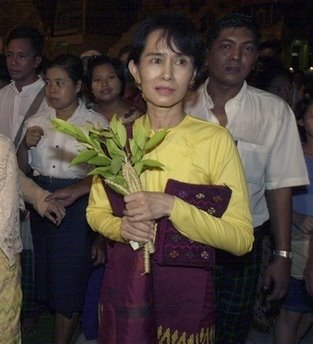


 Posts
Posts


