News &Articles on Burma Thursday, 16 February 2012 ----------------------------------------------- SSA: We don't trust the military, but it's time to enter the ring Ethnic MPs ignore order to don Burmese costume on Union Day Burma reforms 'not set in stone' 8 million 'ecstasy' tablets, weapons seized in Tachileik China notes increase in meth drug smuggling Nationwide peace is near: Aung Min Opposition Leader Bets On Myanmar Reforms Burma needs to end ethnic wars for genuine change Outcast no more Rule of law holds key to Myanmar reforms Daw Aung San Suu Kyi says Burma is just an ethnic nationality Myanmar to promote railway sector with loans from China, India -------------------------------------------- SSA: We don't trust the military, but it's time to enter the ring Thursday, 16 February 2012 10:55 S.H.A.N. In response to critics, bother former supporters and rivals alike, who say the movement's leadership has gone nai"ve by entering a ceasefire pact with Naypyitaw, the Restoration Council of Shan State / Shan State Army (RCSS/SSA) argues the matter of trust, though important, is secondary. "The world wants peace in Burma and our people want a respite from the endless conflict," said 73 year old Sao Pai Mong, the RCSS/SSA's principal adviser. "We know (by offering ceasefire talks and eventual political dialogue) the regime has challenged us to fight in the ring (and not outside it as it used to). By accepting the challenge, it doesn't mean we have placed our fate in the regime's hands." He cited several reasons why Naypyitaw especially the Tatmadaw (Armed Forces) could not be trusted: continued construction of fortifications, refusal to withdraw its troops to towns and cities, and continued harassment and attacks on the SSA, among others. It shows they have only changed clothes but they still remain the same people, he said. Nevertheless, he believes Lt-Gen Yawdserk, leader of the SSA South, as the RCSS/SSA is commonly known, is correct in concluding a ceasefire agreement with President Thein Seins government. You cannot win by staying outside the ring, he reasoned. And we believe in our leaders ability to handle the problems that come with it. At the same time, he will need a lot of second line leaders who are as farsighted and share the same breadth of vision. He said the second phase of the peace process, as announced by U Aung Min, Naypyitaws chief negotiator on 19 November 2011, should focus on education and healthcare for the people and capacity-building for members of the movement. Asked what he thought about President Thein Sein, he replied, The Burmese leaders have a poor track record of getting rid of those who had performed outstanding services for the nation. Just look at the examples: Aung San after he won over the non-Burmans, Kyaw Zaw after he defeated the Kuomintang and Khin Nyunt after he achieved ceasefire agreements with several armed opposition movements. President Thein Sein certainly cannot afford to be careless. The RCSS/SSA signed the ceasefire agreement on 2 December and became one of the 7 major armed movements that are at an uneasy truce with the regime. The second agreement, signed on 16 January, has designated some 2,000 square kilometer area stretching along the Thai Burma border, opposite Maehongson and Chiangmai for resettlement and development. But the Burma Army so far has refused to implement it. Loi Taileng, the SSA Souths main base, is still conferring with Naypyitaw on how to go about it, said Yawdserk yesterday. http://www.english.panglong.org/index.php?option=com_content&view=article&id=4422:ssa-we-dont-trust-the-military-but-its-time-to-enter-the-ring&catid=85:politics&Itemid=266 ------------------------------------------- Ethnic MPs ignore order to don Burmese costume on Union Day Thursday, 16 February 2012 11:07 S.H.A.N. More than half of non-Burman ethnic MPs just ignored instruction to wear Burmese attire to attend the Union Day dinner party hosted by President Thein Sein on 12 February, according to Shan MPs. Sai Hak aka Thiha Kyaw (Photo: Kawli Media) "It could be a mistake by the organizers," said Sai Hak aka Thiha Kyaw, People's Assembly representative for Mongyai township, Shan State North. "Anyway, since it was a Union Day and not a Burman Day, most of us decided that the order was not meant for us non-Burmans." Among the Shans at the dinner party, there was only Sai Mawk Kham, Vice President #2, who had chosen to wear the traditional Burmar/Burman garb, according to government-owned MRTV news. The Union Day came into being when Burma, Federated Shan States, Chin Hills and Kachin Hills signed the Panglong Agreement in 1947 to form what was to become the Union of Burma. http://www.english.panglong.org/index.php?option=com_content&view=article&id=4423%3Aethnic-mps-ignore-order-to-don-burmese-costume-on-union-day&catid=85%3Apolitics&Itemid=266 -------------------------------------------- RADIO AUSTRALIA NEWS Burma reforms 'not set in stone' Last Updated: 5 hours 10 minutes ago The UN Special Rapporteur on Human Rights in Burma has warned that reforms in the country are not yet set in stone. Burma has seen some astonishing change in the last year since opposition leader Aung San Suu Kyi was released from house arrest. Ms Suu Kyi is now a candidate in elections due to be held in April. But the UN Special Rapporteur, Tomas Ojean Quintana, has told Newsline that the military still hasn't entirely relinquished its hold on power. "There is an important process of reform that I see irreversible in some aspects at the same time I see that the military still holds an important piece of the power," he said. "It is too soon to say that everything is finished and now there is democracy in the country." Mr Quintana said he has been told by the Burmese Government that it is considering allowing international observers in to monitor the April elections. http://www.radioaustralianews.net.au/stories/201202/3432808.htm?desktop -------------------------------------------- 8 million 'ecstasy' tablets, weapons seized in Tachileik Thursday, 16 February 2012 12:34 Kyaw Kha Chiang Mai (Mizzima) -- Police were tipped off to a huge drug shipment probably bound for Thailand stored in three homes in a village outside of Tachileik on the northern Thai-Burma border on Monday. Around 8.7 million amphetamine tablets and assorted weapons were confiscated, said Burmese authorities. Ecstasy pills are a staple of the drug trade around the Golden Triangle. Photo: wikipedia.orgAuthorities raided three houses in the Lwetawkham village tract in Tachileik Township and found amphetamine-type tablets, assault rifles and drug-making material, according to a source close to the police. "One of the members of this drug gang gave police a tip-off by phone. All of the owners of the houses are ethnic Akha and all of them managed to escape the raid. Only the drugs, weapons and equipment were found," a source told Mizzima. The raids took place on Monday morning. One AK-47 assault rifle, one M-16 rifle, a .38 pistol and one M-22 rifle were seized. Sixty kilograms of caffeine used in making the drugs was also seized. The Tachileik police said that the drugs were probably going to be sent to Thailand. In its 2011 report, the UN anti-narcotics agency sounded the alarm over soaring production and consumption of heroin and new "designer drugs" that are again making Southeast Asia a major drugs hub. The agency's World Drug Report 2011 warned that Burma has become a prime source of synthetic narcotic methamphetamine. A record 15.8 tons of methamphetamine pills were seized in 2009, the latest year for available figures, up by more than one third from 2008. Most of the drugs came from or were seized in Burma, which the UNODC called "one of the primary sources of methamphetamine pills in Southeast Asia." Burma has also seen a surge in opium poppy production to make heroin, according to the agency. The world opium market is now said to be valued at more than $US 68 billion a year. The Golden Triangle of Laos, Burma and Thailand are at the center of the drug trade. The UN said that governments and experts in Asia had reported a "significant" increase in use of amphetamine-type stimulants over the past year, particularly of methamphetamine. http://www.mizzima.com/news/inside-burma/6596-8-million-ecstasy-tablets-weapons-seized-in-tachileik.html --------------------------------------------- China notes increase in meth drug smuggling Thursday, 16 February 2012 17:12 Mizzima News (Mizzima) -- A Chinese official says "speed" drugs such as methamphetamine, or "ice," are significantly on the rise, and China will step up efforts to combat border smuggling. Opium poppies growing in a cultivated field in Tanai Township in southern Kachin State. Photo: Mizzima Opium poppies growing in a cultivated field in Tanai Township in southern Kachin State. Photo: Mizzima The increase is especially noticeable in some border areas owing to "domestic and overseas factors," he told China Daily on Tuesday. Ma Yan, a vice-president of a criminal tribunal under the Supreme People's Court, said illegal drug making in border areas, particularly southwest China, is causing serious concern. Yang Wu, a 32-year-old farmer, was among those arrested by poice. Yang was sentenced to death for smuggling with his accomplices up to 18 kilograms of the new-type "designer" drugs. They transported the drug from Southwest China's Yunnan Province, which borders Burma, and sold them in East China's Zhejiang Province. Capital punishment is considered in cases involving the production or smuggling of "a large amount of drugs" and for repeat offenders, Ma said, without specifying how many of those convicted have been sentenced to death. Sun Jungong, a spokesman of the Supreme People's Court, said last year more than one in four dealers among the total 19,000 drug criminals received severe sentences -- from five years in prison to the death sentence -- 11 percent more than those convicted of other types of crime. China Daily reported on Tuesday that drug trafficking in the Golden Triangle was on the rise and a crackdown was underway aimed at blocking smugglers from entering the country's western border region. The Mekong River threads along the Golden Triangle, the border area between Burma, Laos and Thailand, which in recent months has been the scene of clashes between drug runners and Burmese and Thai soldiers who work on the river to ensure the safety of cargo ships. Xinhua reported in December that Chinese cargo ships departing from Yunnan Province were escorted by five patrol vessels. When they entered a section of the Mekong River on the Laos-Thailand border, a fleet of 10 Thai patrol vessels loaded with armed officers and heavy machines guns waited to escort them to Chiang Saen port in Thailand. An armed helicopter hovered in the sky. Meanwhile, clashes between Burmese soldiers and a Burmese drug gang led by Sai Naung Hkam occurred on the Mekong River during a joint patrol by Burma and Laos forces. Two Burmese soldiers were killed. The drug gang was led by Sai Naung Hkam, a former officer in the now defunct Mong Tai Army, which was headed by the late Burmese drug lord Khun Sa, who had a close relationship with former Burmese junta military officers. Residents say Sai Naung Hkam extorts money from cargo ships running on the Mekong River. On October 31, a four-country meeting between China, Laos, Thailand and Burma was held in Beijing, in which it was agreed to conduct joint law enforcement along the Mekong River. http://www.mizzima.com/news/regional/6599-china-notes-increase-in-meth-drug-smuggling.html -------------------------------------------- Nationwide peace is near: Aung Min Thursday, 16 February 2012 15:25 Mizzima News (Mizzima) -- Burma's peace negotiator says all remaining armed rebel groups should have cease-fire deals signed within three months. After that, he said, will come dialogues on-going dialogues intended to provide "everlasting peace." Government peace delegation leader Rail Transportation Minister Aung Min speaks at a press conference in this file photo. Photo: MizzimaIn his first interview with a foreign news organization, Aung Min, a retired general and the current minister for rail transportation appointed by President Thein Sein to solve the decades old hostilities, told Reuters news agency on Wednesday the government and ethnic armed groups were beginning to trust each other. "This is a chronic disease that has been happening for over 60 years. Successive governments couldn't cure the disease because the remedy didn't fit," Aung Min told the agency in his first interview with a foreign news group. Burma has changed, he said, allowing for a new approach to peace talks. After the cease-fires, the negotiations will cover broad areas, such as ethnic groups' longing for a true federal system, with broad powers granted to states or regions, similar to systems in the U.S. and the European Union. Nine of 16 rebel groups have signed cease-fire agreements with the government, he said, and he expected six more agreements to be reached within a few months. The Kayah Nationalities Progressive Party (KNPP) would sign a deal on March 1, he said, and five smaller parties were expected to sign soon. He declined to comment about the fighting still going on in Kachin State despite an order by President Thein Sein and the armed forces commander-in-chief for troops to end offensives. The era of former junta leader, Senior General Than Shwe, who ruled Myanmar during an era of brutal suppression of democratic groups, is over. He said Than Shwe had no influence in the current government, in which he played a large role in putting it in place. "Than Shwe has retired completely. We don't need to follow his orders or influence. There is now virtually no contact," he was quoted as saying. He said Than Shwe spends a lot of time reading now, and the country owned him thanks for putting in place a peaceful transition to democracy. Regarding rumours of tensions between more democratic and more conservation groups in the government and military, he said they were just rumours and "we are all" for President Thein Sein. He credited Thein Sein as putting in place a "three-step plan" for peace, first involving cease-fires, followed by political negotiations, followed by a special assembly of Parliament which would offer a formal peace agreement. Whether self-determination was involved in the process, he said he couldn't say, but he left the door open in terms of amending the 2008 Constitution, and "the groups would be encouraged to form political parties and join Parliament." Aung Min painted a colorful picture of previous cease-fire negotiations, reflecting scenes of deep distrust of the government. He said a few ethnic leaders were afraid to eat food offered to them for fear it was poisoned, and some refused to accept token gifts. "At first they didn't trust me, they carried out body searches on me for weapons," he told Reuters. "They weren't brave enough to eat food I had brought, in case I poisoned them. They didn't accept gifts and souvenirs in case there were bombs or booby-traps. I had to win their trust and confidence..." In the past, he said negotiators only sought cease-fires, but now Burma is seeking real peace, even though it will take time and will not be easy. "This is our plan for eternal peace," he said. http://www.mizzima.com/news/inside-burma/6597-nationwide-peace-is-near-aung-min.html ------------------------------------------ NPR Opposition Leader Bets On Myanmar Reforms by Anthony Kuhn February 15, 2012 Ethnic Karen women welcome opposition leader Aung San Suu Kyi to War Thein Kha village. The area is in Kawhmu Township, which Suu Kyi is campaigning to represent in Myanmar's parliament. February 15, 2012 The military-backed government of Myanmar, also known as Burma, has surprised many skeptics with the pace of its political reforms releasing political prisoners, easing censorship and making peace with ethnic insurgents. But none of these reforms have won it as much praise as its efforts to mend fences with opposition leader and Nobel laureate Aung San Suu Kyi. After nearly two decades under house arrest, Suu Kyi is now aiming to work for democracy within the system by running for a seat in parliament. Lately, she has been on the campaign trail, standing up through the sunroof of her SUV, gathering up bouquets of flowers and cheers from well-wishers. Her supporters pack the dusty roads leading to the township of Kawhmu, the rural constituency she hopes to represent. Campaigning For Parliament At the entrance to one village, Suu Kyi is greeted by ethnic Karen residents, chanting a traditional welcome. The farmers' mouths are stained a rusty red from chewing betel nut. Their cheeks are smeared with a white herbal sunblock. Kawhmu is deep in the countryside, a four-hour drive from Yangon, the country's largest city. Suu Kyi says she chose the area for its ethnic diversity. The area was hard-hit by Cyclone Nargis in 2008, and many residents were angry at the government's slow and feeble response to the emergency. Suu Kyi asks the villagers for their support as they sit in a sun-baked field. She says she's wary of making campaign pledges, warning that the road to a better Burma will not be an easy one. The recent political reforms haven't changed much in Kawhmu. There's not much industry and not many jobs here. "I and a lot of folks here want to vote for Suu Kyi," says 25-year-old farmer Sa Tun Lin. "I don't understand politics too well, but I want to choose someone who will work hard for the benefit of the people." Suu Kyi is the daughter of Gen. Aung San, the Burmese national hero who negotiated independence from Great Britain in 1947. She didn't get into politics until 1988, and she has spent much of the time since then under house arrest. Suu Kyi's party, the National League for Democracy, boycotted the 2010 elections as unfair. It was not until last December that she announced that she had changed her mind and decided to return to electoral politics. Skepticism Over Reforms Some of her colleagues, including the party's co-founder, 82-year-old Win Tin, think she is too optimistic. "I don't know whether you can trust, you see, this government or this president and so on," he says. "You cannot easily trust the army. The army can take power at any time according to that constitution." Win Tin, a journalist who spent nearly two decades in jail for his political activism, would prefer to build up the party before competing in elections. But he says he knows that Suu Kyi is "The Lady," and the only person with the charisma and credentials needed to lead the Burmese pro-democracy movement. "We have some different opinions on some issues," he concedes, "but anyhow, I stand with her, I follow her and I support her." If she's elected to parliament, Suu Kyi says she wants to revise the constitution, which mandates a leading role for the army and gives it the right to invoke emergency powers that can be exercised without any accountability. 'Joining Our Efforts' Even if Suu Kyi and her party sweep the April 1 by-elections, the military and the ruling party will still hold an overwhelming advantage in parliament. Pushing any major revisions through will be difficult. Speaking at party headquarters, Suu Kyi says diplomatically that she's not trying to get the military to give up any of its power. "I would like the military to cooperate with us in building democracy in Burma," she insists. "It's not a matter of relinquishing anything, but of joining in our efforts." Suu Kyi appears to be gambling that the new administration is serious about democratic reform. The government, meanwhile, is gambling that embracing Suu Kyi will persuade foreign powers to lift their sanctions on Myanmar. Officials have raised the possibility that that once in parliament, Suu Kyi could go from lawmaker to Cabinet minister. Her party won a landslide electoral victory in 1990, but the ruling junta refused to stand aside. Whether Suu Kyi and the party could some day have another chance at holding power will have to wait at least until the next general election in 2015. http://www.npr.org/2012/02/15/146892722/opposition-leader-bets-on-myanmar-reforms ------------------------------------------ Burma needs to end ethnic wars for genuine change By Zin Linn Feb 16, 2012 11:48AM UTC This February is the 65 Anniversary time of Burma's Panglong agreement which guarantee to form a democratic federal union. The agreement has been ignored by the military leaders as they did not support the 'Federalism' since 1962 military coup. The Panglong Agreement was signed on Feb. 12, 1947, between General Aung San and leaders of the Chin, Kachin and Shan ethnic groups guaranteeing to establish a genuine federal union of Burma. However, the civil war that made the country of inferior quality has been going on and on for over six decades. Although the government has been attempting through two peacemaking teams, the key ethnic rebel groups, Karen National Union (KNU) and Kachin Independence Organization (KIO) are still unconvinced of the plan for political settlement. The ethnic armed groups do not trust fully on government's peace talks. The fact is that while offering peace proposal, the government has been increasing its deployment of armed forces in the conflict zones. Besides, the Burma Army's soldiers are on the loose committing lots of crimes and human rights abuses in the ethnic territories. Moreover, the difficulties of ending the war against the KNU and the KIO are intertwined with the natural resources benefit in the respective ethnic states. Myitsone dam venture and Shwe-gas twin pipeline development projects are connected with the Kachin warfare and Dawei deep sea-port multi-billion mega projects need security guarantee by the KNU. Additionally, the government wants to show the international community that their peace process is on the progress. By doing so, the regime could earn the trust from the Western democracies and sanctions may lift at the same time. According to yesterday Reuters News, Burmese government expects to reach ceasefire deals with all of the country's ethnic minority rebel armies within three months before starting a process of political dialogue towards "everlasting peace," its top peace negotiator Aung Min, a retired general and minister for rail transportation, said on Wednesday. It was difficult to gain the trust of the ethnic minority factions, Aung Min said, but most were sincere about peace and some leaders had stayed with him at his home in Naypyitaw, he said. However, the second week of February seemed more skirmishing between the Kachin Independence Organization (KIO) and government armed forces, even though there were reports about ceasefire or peace talks next week, according to Kachin News Group (KNG). On 9 February Burmese soldiers and armed-units from the KIO's military wing the Kachin Independence Army (KIA) exchanged firing of guns in two different places near the road of 800km Shwe-gas and oil pipeline venture, referring local residents of Namtu in the northern Shan township the Kachin News Group reported. Namtu Township under control of the KIO's 8th Battalion was also the site of combating on 8 February in the Bang-Wa area. On 8 February, there was armed conflict in Manje (Mansi) township in southern Kachin State. The KIA's Battalion 12 defended against the government forces from Light Infantry Division No. 99 for nearly three hours. The battle took place in an area beyond Mong Hkawng. A strength of two hundred Burmese army columns attempted an advance on the Kachin positions, quoting KIA officers based on the front line KNG said. At the beginning of this week fighting broke out near the KIA's Battalion 9 base in Daklek Bum mountain, situated between Kutkai and Nampaka next to the Mandalay-Muse Chinese border trade route. At least five Burmese soldiers from the Nampaka-based Infantry Battalion No. 123 died in action and more than 7 appeared to have been seriously injured during clashes, witnesses reported to the Kachin News Group. In addition, more than 20,000 combat soldiers from nearly 200 battalions have been deployed in the Kahin frontline, the biggest military maneuver in Burma's long-lasting civil war, as reported by Kachin News Group. Several Kachin citizens think the reason of renewing the war after a 17-year cease-fire is the desire for natural resources in Kachin State by the Burmese military-backed government. Despite the fact that Burma's President Thein Sein has issued an instruction twice to Burma's Commander-in-Chief to halt the offensive against the KIO, the war continues and the inhabitants continue to run for their lives. According to Reuters, Aung Min declined to comment on the conflict in Kachin State. The Kachin offensives launched by Burma Army are still raging on despite orders to stop fighting by President Thein Sein. Government has reached temporary ceasefire agreements with 9 ethnic rebel groups. Some armed ethnic groups are still to be discussed, including the KIA. The KIA is the second strongest armed ethnic group in military-ruled Burma. It has five brigades. Four of them are based in Kachin State. There are about 30 battalions, with over 30,000 fighters- including regular and reserved forces. Most political analysts believe stopping the aggressive wars on ethnic people is the most important issue to be addressed by the new Thein Sein government if it wants to build the nation to become an economic tiger in the region. http://asiancorrespondent.com/76168/burma-needs-to-end-ethnic-wars-for-genuine-change/ -------------------------------------- Outcast no more Posted on 16 February 2012 - 05:13am YAP MUN CHING visits Myanmar's old and new capitals to find its people revelling in a fresh wave optimism. IF THERE is any doubt that the Myanmar capital Nay Pyi Taw was built to impress, one only has to take the drive from its shiny new airport to the massive Parliament House. As the four-lane road widens to a 20-lane highway, there sits the massive complex made up of a series of large pagoda-roofed buildings set in a vast compound surrounded by a canal that reminded one vaguely of a moat. A sturdy black and gold iron grill gave the area a further line of defence. Barely six months ago, this building was symbolic of all that was wrong with Myanmar. To most outsiders, Myanmar was routinely viewed as a country of 60 million largely living in poverty under a super elite military class which had no compunction in locking up suspected dissidents regardless of whether they were women, children or monks. To fill the giant parliament, a controversial election was held in November 2010 to elect 330 lower house and 224 upper house representatives to complement the 25% of seats reserved for military appointees. Above all, the government was reviled for its treatment of democracy leader Aung San Suu Kyi whom it kept under house arrest for more than 15 years in total, while it secretly carved out a new capital in the sparsely populated central Burman plains. Myanmar, in short, was the "Golden Land" brought to its knees by decades of internal strife and mismanagement. Sometime in July last year, things began to change. All of a sudden, the country began liberalising at a pace dizzying even to those at the heart of the fight for greater political and civil rights. A year after releasing Suu Kyi after the expiry of her last detention order in November 2010, the new military-backed civilian government followed up on its reform drive by freeing most of its political prisoners. It went on to clear the way for Suu Kyi to contest in the April 2012 by-elections to replace cabinet ministers constitutionally required to vacate their parliamentary posts. Responding to these developments, Myanmar's biggest critics, the United States and United Kingdom, quickly deployed their envoys to re-engage with the government with promises of progressive sanctions relief upon further reform. From a position of isolation and neglect, Myanmar found itself transformed almost overnight into the top destination for diplomats and international business people. At a recent meeting with the latest delegation comprising top corporate leaders from the Asean Business Club, Vice-President of the Union of Myanmar Federation of Chambers of Commerce and Industry (UMFCCI) Maung Maung Lay admitted that the organisation was finding itself "overwhelmed" by the sudden changes and ensuing international attention. "The reforms are moving at a much faster pace than we expected," he said. "The private sector has no means and capacity to digest what the government has undertaken recently. This is what we have to admit." UMFCCI joint secretary U Moe Kyaw said the surge of interest occurred soon after US President Barack Obama acknowledged the "flickers of progress" in Myanmar in a speech last November. "After Obama's speech and (US Secretary of State Hillary) Clinton's visit, we received many groups. However, we will always remember that Asean has been our friend in need and we will never abandon our friends from the region," he said during the roundtable session at the UMFCCI's office in Yangon. Attracting considerable attention from the business community are three special economic zones (SEZs) that are being developed to attract foreign investment. According to Moe, the first SEZ expected to come online in 2014 is the Thilawa Zone east of the Yangon River. Already, sections of the zone have been reserved for exclusive development by Chinese, Japanese and Korean investors. "These countries have deep pockets and they are incredibly interested," Moe said, adding that a mixed zone may be designated for interested Asean countries. While infrastructure plans are being drawn up, Moe said a more pressing need is for the legal framework to be developed to cope with these changes. "We are opening up for business but not too quickly. We have to first update our foreign investment law. This is a big step for Myanmar. We have many workers abroad and we have to look at attracting them to come back and develop businesses here. "We are also worried about the Asean Economic Community to open our doors to parties interested in our market and resources. We do not want to be pushed back and segregated," Moe added, pointing out that Malaysia and Thailand are among countries which have been able to protect their national interests. Underscoring Myanmar's newfound voice in the international arena, Maung confidently described the recent developments in his country as "irreversible". "We are on the verge of taking off. We will face headwinds and there will be turbulences but we will take off. We have been ostracised in the past but we are now gaining trust among our friends overseas," Maung said. Spurring this new wave of optimism is the positive engagement that has taken place between the new government led by Prime Minister Thein Sein and the opposition helmed by Suu Kyi. In a move surprising even to many of her own supporters, Suu Kyi appears to have warmed up to Thein Sein unlike previous military leaders she had to deal with. The pair are reported to have met on several occasions and are said to have developed an understanding to work together in the interest of the country while keeping hardliners at bay. One of her supporters said this is because Thein Sein is known as one of the least corrupt generals. "We don't like the generals but at least this one is clean," he said. A more compelling reason, said other observers, is that geopolitical developments have made it worthwhile for both sides to put an end to the decades long standoff. "It is no longer necessary to talk about hardliners or softliners. The reforms will go according to the new world order. The government does not want to face an Arab spring in Myanmar or the mob justice that (former Libyan leader Muammar) Gaddafi received," said one Myanmar businessman. Similarly, the political opposition also finds it increasingly untenable to maintain its position in favour of western sanctions while global economic power shifts from a troubled Europe over to Asia. "(Suu Kyi) is a very intelligent woman. She knows that what we did in the past did not work so we have to try something else," said Kyaw Min Hlaing, an opposition supporter who contested in the 2011 elections under the flag of the National Democratic Force (NDF), an offshoot of Suu Kyi's National League for Democracy. Hlaing, who lost his Yangon area constituency by a hair's breadth of 170 votes, said the new wave of openness ushered in by the elections has also resulted in more room for political expression in the once tightly controlled society. "People used to be afraid to express themselves. But they are now openly commenting and criticising the government," he said. Although unsuccessful in his bid for a parliamentary seat, Hlaing said that as the legitimate opposition candidate, he is permitted to shadow his political rival in the same constituency. "This is not because the government changed the laws. It is because they are finally following the law," he said. Characteristically, however, the Lady at the heart of the struggle is more circumspect about the developments. During a news conference held after an hour-long meeting with the Asean Business Club delegation, Suu Kyi cautioned that although the government's reform gestures are much welcomed, they are by no means irreversible and much effort remains necessary to ensure that Myanmar remains on its reform track. She said that foreign investors should "wait and see a little for their own good as well as that of the country", stressing that it is more important to first have sound investment laws and respect for the rule of law so that both investors and the people can benefit from economic development. While she maintained that she is not yet "satisfied" with the government's reform programme, she conceded that the opposition is nevertheless "pleased" with them. "I think they still need to be strengthened and they need to be put on the right path." Despite her careful approach, it is undeniable that Myanmar is experiencing a spring of sorts, very different from the one that took place in the Middle East a year ago. At no point since Suu Kyi entered the scene in 1988 has the military government been as accommodating to the civilian political opposition. Even more important to real peace in Myanmar is that the conciliatory gestures made by the military have not stopped with Suu Kyi. In tandem with their engagement with the democratic parties, the military is also negotiating crucial ceasefires and peace agreements with ethnic armed groups that have been waging a low intensity wars against the central government for decades. Late last year, the government signed a ceasefire with a Shan armed group, followed a month later by an agreement with its enemy for more than half a century, the Karen National Union. The Mon armed group is also reported to have reached an agreement with the government early this month. Talks are being held with the Kachin, Wa, Chin and other Shan groups. Whether the democratic opposition is playing any role in these developments is a matter for conjecture but in July, Suu Kyi wrote an open letter to the prime minister offering to act as mediator between the government and the armed insurgents. While it is true that there is nothing to stop the military from reversing its decisions, the unexpected breadth and pace of the reforms have shaken not a few sceptical minds. It may still be years before Myanmar will achieve a level of economic prosperity and political openness that will put it more at par with its better off Asean neighbours but at long last, it is finally taking the first tentative steps in the right direction. Yap Mun Ching's visit was made possible by the Asean Business Club. Comments: letters@thesundaily.com http://www.thesundaily.my/news/296367 --------------------------------------------- THE SUN DAILY Rule of law holds key to Myanmar reforms Posted on 16 February 2012 - 05:13am Last updated on 16 February 2012 - 05:40pm Yap Mun Ching Suu Kyi ... The rule of law will help us cope with the many ills of the country. Picture by Yap Mun Ching IT WAS some minutes after the doors to her verandah flew open that Aung San Suu Kyi emerged to meet waiting reporters. Unusually, she was held back on this occasion not by her supporters but by a group of star-struck CEOs. When she finally appeared, it was evident that the democracy advocate and until recently, one of the most famous prisoners of conscience, had no difficulty charming the corporate titans who run some of the largest companies in Southeast Asia. It is this ability to inspire that has made Aung San Suu Kyi such an iconic figure in her country and such a formidable foe to her detractors. Aside from her lineage as the daughter of slain independence hero Gen Aung San, the Lady (as she is widely known) has earned her stripes through personal sacrifice. In the two dozen years since she moved back to Yangon from her adopted home in Oxford, she has faced down death threats and prolonged imprisonment with the same quiet dignity and fortitude that she dealt with separation from her family. Now, as she prepares to run in the country's first by-election, she appeared happy and relaxed. Fielding questions from reporters, the Lady was in her element as she hinted at her campaign agenda and her views on issues as diverse as tourism in Myanmar, sanctions and Myanmar's prospective chairmanship of Asean. In her own words: It is said that the government may invite you to join the government if you win the by-election. What are your views on this? This is not a question I can answer at the moment. In the first place, I have not yet won and the government has not yet invited me. There are other considerations such as a clause requiring ministers to leave their parliamentary seats. I am not contesting (to join the government). Do you think Myanmar is ready for the Asean chairmanship in 2014? We are not yet in 2014. Politics is such that even one month can bring new developments. I think it is too soon to say whether Myanmar is ready but Asean has decided it is and political developments have to be served. I believe in the future of my country but I am cautious about predictions about the immediate future. What are your comments on the economic sanctions on Myanmar? The sanctions are a matter for the countries that imposed them. When they impose sanctions, these countries need to know why and under what conditions they can be dismantled. If they were dismantled, it would mean the conditions have been met and this would be a good thing for the country. You have spoken out against tourism in Myanmar. Have your views changed? Actually, we brought out a policy on tourism last year. We encourage tourism that benefits the public without hurting the environment. We believe in tourism that is ethical and environmentally conscious. There are over 100,000 Myanmar refugees in Malaysia. Do you think the time is right for them to consider returning? No, I think it is too early for them to return. They have got to have something to return to. I have been discussing the matter of migrant workers and refugees and how much more needs to be done for them, not just by the government of Burma but also by the governments of the host countries. What political reform are you most concerned about? I have been going on ad nauseum about the rule of law. I think it is very important to protect everyone's interests whether they are businessmen or citizens. The rule of law will help us cope with the many ills of the country. There is a view that political reforms are not progressing as fast as economic reforms. (Both) have to go in tandem. I don't think you can have genuine reforms without judicial reforms. It is no use having good investment laws if you don't have a good judicial system to make sure the laws are applied. Where would you like to see Myanmar in 10 years? I would like to see Myanmar ahead of all the Asean countries. Just a very simple ambition. http://www.thesundaily.my/news/296365 ------------------------------------ Narinjara News Date:2/16/2012 Daw Aung San Suu Kyi says Burma is just an ethnic nationality on 65th Union Day Rangoon: Myanmars democracy leader Daw Aung San Suu Kyi has stated that Burman is just an ethnic nationality in the union of Burma. She said this in the ceremony of celebrating the 65th Union Day that was held by the six ethnic brotherhood parties in Rangoon, said U Hla Saw, the general secretary of the Rakhine Nationalities Development Party. Daw Aung San Suu Kyi has said she recognizes the role of ethnic nationalities, also saying she generally supports the genuine union that is demanded by the ethnic peoples for equal ethnic rights. The wonderful words she stated in the ceremony are that Burma is also an ethnic nationality in the union, said U Hla Saw. He said the union day celebration was held by the Nationality Brotherhood Forum that is founded by the six ethnic political parties for their political collaborations. What Daw Aung San Suu Kyi spoke about in the ceremony is the point that we must discuss among our ethnic forces as well. We have never heard Burma mentioned as an ethnic nationality though the other seven nationalities are being mentioned as ethnic nationalities in the political history of Burma, said U Hla Saw. He said Burma is never described as an ethnic nationality; while the other people living in different regions in the union of Burma are being called Karen ethnic, Rakhine ethnic, Kachin ethnic and so on. U Hla Saw also said their ethnic political parties have collaborated and observed the union day in order to show their desire for a union that guarantees democracy and equal ethnic rights. Ethnic conflicts are the most important problems in our country and without democracy it will be difficult to solve those problems. At present, ethnic democratic parties are officially allowed to stand and the government has also agreed to ceasefires with the ethnic armed groups that are fighting for the ethnic rights. These are the constructive signs with respect to our union if we compare this to the eras of BSPP, SLORC or SPDC governments. As we hope for a more meaningful union that guarantees democracy and equal ethnic rights, we the ethnic parties have observed the union day collaboratively, said U Hla Saw. He said that a statement on the day was also jointly issued by the parties of the forum, and he read the statement to the attendees in the ceremony. I did not deliver any formal speech in the ceremony, but I gave the introductory speech spotlighting the present situations facing the ethnic regions before reading our parties statement on the union day, he said. According to their statement, Burma gained independence after all ethnic nationalities in the country agreed to build a union that guarantees democracy and equality of rights on this day, but the union that coined the independence since then has never existed until today and the ethnic states at present have become the poorest, the most backward, the most suppressed and the most war-torn regions in the false union. The parties also urged the other forces of democracy in their statement to work together and strive for turning Burma into a genuine union in the present transitional period to democracy. U Sai Nyaunt Lwin of the Shan National League for Democracy, who was recently released from prison, and other prominent politicians were also said to have attended the ceremony of the union day that was held collaboratively by the ethnic political parties. http://www.narinjara.com/details.asp?id=3258 ---------------------------------- Myanmar to promote railway sector with loans from China, India Updated: 2012-02-16 10:40 YANGON - The Myanmar railway authorities are making efforts to boost the railway sector of the country with loans from China and India, a local media reported Wednesday. For the coming fiscal year 2012-13 starting April, $155 million of loans obtained from the two neighbors will be used in purchasing new goods wagon, locomotives and passenger coaches from these countries to replace the outdated ones, said the Popular News. Better services will be offered along with the increase of train fare, a railway official was quoted as saying. Besides China and India, Myanmar has also been purchasing locomotives from France, Germany and Japan. According to an earlier report, the state-run Myanmar Railway was operating 27 locomotive repairing factories, 52 passenger coach maintaining factories, and the Myit Nge passenger coach and goods wagon factory. With about 130,000 passengers depending on rail transport in Yangon daily, the city circular trains are running about 200 rounds a day. Of the various types of trains running in Myanmar, there are 1, 252 passenger coaches, of which four-decade-old ones accounted for 32 percent. Of the 3,311 goods wagons, 40-year-old ones took 56 percent and out of 386 locomotives, 30-year-old ones represented 47 percent. According to statistics, the length of Myanmar's railroad has reached 5,726 kilometers (km) with 2,844 km more under construction. Meanwhile, 475 km more railways are set to be implemented in the future, aimed at narrowing the development gap between the urban and rural areas and promoting socio-economic development. Myanmar has steadily expanded its railway network in the last two decades, from 3,161 km in 1988 to 5,403 km in 2010. http://www.chinadaily.com.cn/usa/business/2012-02/16/content_14622753.htm __._,_.___ Reply to sender | Reply to group | Reply via web post | Start a New Topic Messages in this topic (8)
Friday, February 17, 2012


Friday, February 10, 2012
News &Articles on Burma-Thursday, 09 February 2010-uzl
News &Articles on Burma Thursday, 09 February 2010 ----------------------------------------------- Don't rush to Burma, firms told The master plan for Myanmar SSA: Burma Army downgrading government peace efforts Myanmar's Defence Chief Meets Visiting Malaysian Counterpart After a decade ban, Mon revel in Rangoon Burma pledges full release of dissidents Hillary Clinton Meets Zaganar ABSDF Holds Peace Talks with Govt KNU Divided Over Peace Treaty EU says Burma elections a test of credibility Is Burma seeking a role in U.S. war games? Myanmar changes not like Arab Spring: State media -------------------------------------- Don't rush to Burma, firms told Lindsay Murdoch, South-east Asia Correspondent February 10, 2012 BURMA'S hardliners and reformers are locked in an intensifying power struggle as pro-democracy leader Aung San Suu Kyi warns foreign businesses against rushing to invest in the impoverished country. ''I think [business people] should wait and see a little, for their own good as well as the country,'' Ms Suu Kyi said in Rangoon, where hotels are full, mostly with visiting business delegations. ''I think it's not just a matter of potential investments but also a matter of the potential of the country to cope with the investments,'' she said. Referring to Burma's corrupt judicial system, she told heads of large Asian corporations that ''it's no good having good investment laws if you don't have a good judicial system to make sure the laws are applied.'' Earlier this week US Secretary of State Hillary Clinton signed a waiver that will make it easier for the World Bank and other multilateral institutions to advise Burma on reforms. After 50 years of international isolation and disastrous military rule, Burma offers the least legal protection for foreign companies and investors of any country, a report by the risk analysis firm Maplecroft says. Ms Suu Kyi repeated comments that the reforms implemented since August last year are not ''past the point where you can say it's irreversible''. ''We are going to have to make it irreversible ... that's why we are contesting in the byelections.'' Ms Suu Kyi, daughter of Burma's independence hero Aung San, is campaigning for a seat in elections scheduled for April 1. Analysts say her message of political freedom and democracy could snowball into a groundswell of support for more aggressive reforms. But Burma's Railways Minister, Aung Min, who has played a key role in negotiating peace deals with armed ethnic groups, has confirmed reports of the power struggle in the capital, Naypyidaw, telling Thailand-based exiles that reforms implemented by President Thein Sein had met with stiff opposition from within the government, the Irrawaddy newspaper run by Burmese exiles reported. Reports have emerged from within the military-dominated government recently that hardliners led by Vice-President Tin Aung Myint Oo want to derail reforms. Some of the hardliners who were close to ageing military strongman Than Shwe before he retired are said to be upset at the recent release of about 2000 political prisoners. There has been heated debate about the release in the powerful 11-member National Defence and Security Council, which is co-chaired by Thein Sein, according to informed reports. Hardliners wanted the prisoner releases to occur after the April by-elections for more than 40 parliamentary seats. They are said to be poised to attack the reformers if social unrest or political demonstrations breaks out, reports say. But at least 60 per cent of government ministers are sitting on the fence, waiting to see who wins the power struggle, several reliable analysts say. http://www.watoday.com.au/world/dont-rush-to-burma-firms-told-20120209-1rwp8.html ------------------------------------- ASIA TIMES ONLINE: Feb 10, 2012 The master plan for Myanmar By Bertil Lintner BANGKOK - Myanmar is winning more foreign friends while international criticism of the current and previous government's abysmal human rights records has all but ceased. Old adversaries in the United States and European Union have scrapped - or are planning to scrap - economic sanctions against the regime, and big-time multinational companies are preparing to lunge into what many seems to believe is Asia's last investment frontier. A nearly unanimous Western world has heaped praise on President Thein Sein's supposed moves towards "democratic reform" and "national reconciliation". But what has actually changed and what's behind the hype? In near unison, the international community condemned the Myanmar regime for its brutal repression of Buddhist monk-led pro-democracy protests in 2007, its initial callous response to the Cyclone Nargis disaster in 2008 - when a widely condemned sham referendum on a new constitution was held in the killer storm's wake - and a blatantly rigged general election swept by military-backed candidates in November 2010. One theory goes that the administration is locked in a power struggle between military "hardliners" and "reformers", and that the latter, at least for now, have the upper hand. Several Western countries have apparently taken the policy decision that every effort should therefore be made to support the "reformers" and recent reform signals to ensure that Myanmar doesn't return to its old repressive ways. The EU and US have expressed public views to that effect. On January 31, EU president Herman Van Rompuy said in a statement after a summit in Brussels: "I welcome the important changes taking place in Burma/Myanmar and encourage its government to maintain its determination to continue on the path of reform." The US State Department said the day before that it was "encouraged " by Myanmar's recent reforms, "including its decision to allow opposition leader Aung San Suu Kyi to run in upcoming elections". Others, however, suspect that the signs emerging from Myanmar's leadership reflects a well-orchestrated "good cop, bad-cop" routine to neutralize domestic opposition and win new foreign allies, especially among former critics in the West. Either way, Thein Sein's regime has so far skillfully played its cards in a way that few, probably even among themselves, could have foreseen. "Those in power are military men, not representatives of a democratic government. This is how they work," says a Myanmar national who has followed political developments for decades. Well laid plans In order to understand Myanmar's policy shift - and why the West has been so supportive - it is instructive to look back to the early 2000s. Then condemned and pressured by the international community, the ruling military junta announced in August 2003 a seven-step "Roadmap to Discipline-Flourishing Democracy." That plan called for the drafting of a new constitution, general elections, and convention of a new parliament which would "elect state leaders" charged with building "a modern, developed and democratic nation". The "roadmap" was made public, but at the same time a confidential "master plan" which outlined ways and means to deal with both the international community, especially the US, and domestic opposition was also drawn up. The authors of that plan are not known but an internal military document written by Lt Col Aung Kyaw Hla, who is identified as a researcher at the country's prestigious Defense Services Academy, was completed and circulated in 2004. The Burmese-language document, received and reviewed by this writer, outlines the thinking and strategy behind the master plan. It is, however, unclear whether "Aung Kyaw Hla" is a particular person, or a codename used by a military think-tank. Anecdotal evidence suggests the latter. Entitled "A Study of Myanmar-US Relations", the main thesis of the 346-page dossier is that Myanmar's recent reliance on China as a diplomatic ally and economic patron has created a "national emergency" which threatens the country's independence. According to the dossier, Myanmar must normalize relations with the West after implementing the roadmap and electing a government so that the regime can deal with the outside world on more acceptable terms. Evidently the internal thinking was that normalization with the West would not be possible as long as Myanmar was ruled by military juntas. Aung Kyaw Hla goes on to argue in the master plan that although human rights are a concern in the West, the US would be willing to modify its policy to suit "strategic interests". Although the author does not specify those interests, it is clear from the thesis that he is thinking of common ground with the US vis-a-vis China. The author cites Vietnam and Indonesia under former dictator Suharto as examples of US foreign policy flexibility in weighing strategic interests against democratization. If bilateral relations with the US were improved, the master plan suggests, Myanmar would also get access to badly needed funds from the World Bank, the International Monetary Fund and other global financial institutions. The country would then emerge from "regionalism", where it currently depends on the goodwill and trade of its immediate neighbors, including China, and enter a new era of "globalization". The master plan is acutely aware of the problems that must be addressed before Myanmar can lessen its reliance on China and become a trusted partner with the West. The main issue at the time of writing was the detention of pro-democracy icon Suu Kyi, who Aung Kyaw Hla wrote was a key "focal point": "Whenever she is under detention pressure increases, but when she is not, there is less pressure." While the report implies Suu Kyi's release would improve ties with the West, the plan's ultimate aim - which it spells out clearly - is to "crush" the opposition. At the same time, the dossier identifies individuals, mostly Western academics, known for their opposition to the West's sanctions policy, and somewhat curiously suggests that "friendly" Indian diplomats could be helpful in providing background information about influential US congressmen. The dossier concludes that the regime cannot compete with the media and non-governmental organizations run by Myanmar exiles, but if US politicians and lawmakers were invited to visit the country they could help to sway international opinion in the regime's favor. Over the years, many Americans have visited Myanmar and often left less critical of the regime than they were previously. In the end, it seems that Myanmar has successfully managed to engage the US rather than vice versa. Institutional Sinophobia Aung Kaw Hla's internal thesis is the first clear sign of dissatisfaction with the regime's close ties with China, which, in part, were forged because the West downgraded its relations with Myanmar after massacres of pro-democracy demonstrators in 1988 and other gross human-rights violations. More signs of a worsening relationship could be discerned in internal reports that began to circulate within the military in 2010. China, until then praised as a dependable ally, was beginning to be viewed increasingly as the root of Myanmar's many ills, from the rape of the country's forests to rampant drug trafficking. China's close ties with the United Wa State Army, Myanmar's main drug-trafficking militia, has not go unnoticed by the authorities in Naypyidaw. Then, in September 2011, came Thein Sein's decision to suspend the China-backed US$3.6 billion joint-venture Myitsone dam project in the far north of the country. Seen from a US perspective, encouraging Myanmar to move away from China became a priority when Naypyidaw showed that it was willing to engage with the US. Washington was also eager to undermine Myanmar's disturbing military ties with North Korea. Not surprisingly, North Korea was high on the agenda when US Secretary of State Hillary Clinton visited Myanmar last December. The last of several recorded attempts to ship weaponry from North Korea to Myanmar took place in May and June 2011, several months after the supposedly "reformist" Thein Sein became president and after government officials had claimed that there was no military cooperation with North Korea. On May 26, the USS McCampbell caught up with M/V Light, a Myanmar-bound North Korean cargo vessel suspected of carrying missile parts and possibly other military equipment. The US destroyer approached the ship and asked to board but the North Koreans refused. The first encounter took place in the sea south of Shanghai and a few days later closer to Singapore. The M/V Light eventually stopped and turned back to its home port in North Korea - all the way tracked by US surveillance planes and satellites. After that incident - and incentives from the US such as easing restrictions on Naypyidaw's access to multilateral lending institutions - there has been no known attempt by North Korea to ship weapons to Myanmar. And the US is no doubt taking full advantage of Myanmar's drift away from China. "What the US is trying to do is to send every signal of support to the forces pushing for liberalization in Burma," said Robert Fitts, a former US diplomat in the region now attached to Thailand's Chulalongkorn university. The US will soon send a new ambassador to Myanmar, representing an upgrade of diplomatic relations. On February 7, the New York Times quoted US officials as saying that the director of the Central Intelligence Agency (CIA), David Petraeus, may visit Myanmar later this year. The CIA is not exactly known for being a leading proponent and promoter of liberal values in the developing world; the agency has other priorities such as Myanmar's strategic importance to the US. But therein lies a danger, which Aung Kyaw Hla outlined in his thesis of more than seven years ago. If Myanmar does manage to improve bilateral relations with the US, China could counteract in a way that threatens Myanmar's integrity and independence. A balanced approach is therefore needed, Aung Kyaw Hla argued, but it was not set out in the master plan how that balance may be achieved. Well-worn routine There are other reasons to doubt that Myanmar's new policies will work over the long term. While the international community appears to fall for the latest incarnation of the regime's well-worn good cop, bad cop routine, local and exiled mainstream opposition groups are less likely to be so gullible. One of the supposed "good cops" in Myanmar's current nominally civilian leadership is former Maj Gen Aung Min, currently the railway minister, who has been tasked with shuttling back and forth between Myanmar and Thailand to meet with influential exiled dissidents. Some of those who have recently met him are deeply suspicious of his motives and the less conciliatory signals sent from the regime's "bad cops". They note that Aung Min once served under Tin U, Myanmar's powerful intelligence chief until he was ousted in 1983, ostensibly for corrupt practices but more likely because he had built up a state within a state that threatened the leadership of former junta leader Gen Ne Win. Writing in the Far Eastern Economic Review in 1983, British journalist Rodney Tasker characterized Tin U and his intelligence colleagues as "men of the world compared with other more short-sighted, dogmatic figures in the Burmese [Myanmar] leadership. They were allowed to travel abroad, talk freely to foreigners and generally look behind the rigid confines of the current regime." But they were also known to be ruthless and extremely skilled at manipulating their enemies and adversaries. Tin U himself was trained by the CIA on the US-held Pacific island of Saipan in 1957. Aung Min somehow survived the 1983 purge and moved to join Myanmar's Intelligence Battalion 21 in 1992. He was with the 66th Light Infantry Division in 2000, was elevated to Southern Commander of the Myanmar Army in 2001, and became railway minister in 2003 under the previous military junta led by Gen Than Shwe. In today's context, solving the long-burning ethnic issue will be key to realizing the master plan's ultimate vision of keeping the military in power. One of the supposed "bad cops" in the current power configuration is Aung Thaung, another peace negotiator, who met ethnic Kachin rebel leaders in Ruili in southwestern China earlier this year. A former heavy industry minister, he is believed by many to have been one of the architects behind a 2003 mob attack on Suu Kyi and her colleagues in Depayin that left scores of her supporters dead and wounded. "The good cop" Aung Min did not attend the talks in Ruili but some analysts suggest may later step in to "rescue" the talks with a softer approach. Whether Myanmar's many rebellious ethnic minorities will accept these well-known personalities and well-worn negotiating tactics remains to be seen. The fact that the government has consistently refused to even consider a federal structure does not bode well for reaching lasting agreements with armed groups. The 2008 constitution lays down the fundamentals for a centralized state structure where the military is a main, if not dominant, player. Thus the recent euphoria over recent "reforms" in Myanmar may therefore be short-lived. Unless the present constitution is scrapped or widely amended, which is extremely unlikely due to the military's de facto veto power in parliament, Myanmar's ethnic issue will likely remain unsolved. And if the country becomes an arena of competition between the US and China, there will certainly be more trouble ahead - as Aung Kyaw Hla warned in his master plan now being put into practice. Bertil Lintner is a former correspondent with the Far Eastern Economic Review and author of several books on Burma/Myanmar, including Aung San Suu Kyi and Burma's Struggle for Democracy (Published in 2011). He is currently a writer with Asia-Pacific Media Services. http://atimes.com/atimes/Southeast_Asia/NB10Ae01.html --------------------------------------------- SSA leader: Burma Army downgrading government peace efforts Thursday, 09 February 2012 11:51 S.H.A.N. Burma Army units have been in a drive to and to dislodge units of Shan State Army (SSA) that had concluded a ceasefire agreement on 2 December in Shan State East, according to Lt-Gen Yawdserk, Chairman of the Restoration Council of Shan State (RCSS), the SSA's political arm. "The agreement with the government is that we stay out of towns and the Burma Army out of the countryside," he said, "and that movements outside of one's sphere of control must be notified in advance to the other. This is a deliberate act of discredit against the government." According to SSA sources, SSA units in Shan State East are under relentless pressure to withdraw to their main bases along the Thai-Burmese border. Inevitably, the drive resulted in clashes: one on 6 February near South Monghai, Tachilek district and the other on 7 February in Mongpulong, Mongpiang township. "I have lodged a protest with the Triangle Region Command in Kengtung," said the SSA leader. "So far no reply has been forthcoming." The SSA's liaison officer in Kengtung, Shan State East capital and headquarters of the Triangle Region Command, is Col Aung Mawng. All SSA units have been placed on a state of alert since. "Now we are learning first hand how the Burma Army is flouting ceasefire orders coming from Naypyitaw in Kachin State," said an SSA officer who requested anonymity. "It should serve as another warning for all movements that have signed ceasefire agreements." So far, Naypyitaw has concluded ceasefire pacts with 8 armed movements (though 2 say they have only reached initial agreement to discuss for durable ceasefire). It is still in negotiation with two other main groups: Kachin Independence Organization (KIO) and Karenni National Progressive Party (KNPP). http://www.english.panglong.org/index.php?option=com_content&view=article&id=4404:ssa-leader-burma-army-downgrading-government-peace-efforts&catid=85:politics&Itemid=266 ------------------------------------ February 09, 2012 15:21 PM Myanmar's Defence Chief Meets Visiting Malaysian Counterpart NAY PYI TAW, Feb 9 (BERNAMA-NNN-MNA) --The Commander-in-Chief of Defence Services of Myanmar, General Min Aung Hlaing, met the visiting Chief of Defence Forces of the Malaysian Armed Forces, General Zulkefli bin Mohamed Zin, at Zeyathiri Beikman here Tuesday. Gen Min Aung Hlaing said Myanmar and Malaysia had been strengthening friendly ties for many years and both countries are members of the Association of Southeast Asian Nations (Asean). He added that defence services personnel representatives are attending the two houses of the Myanmar and regional and State legislatures in accordance with provisions of the constitution of Myanmar. He explained that the Tatmadaw (Armed Forces) were systematically participating in the endeavours for establishment of a discipline-flourishing, modern and developed democratic nation which is the primary goal of the nation, and various countries recognize the participation of the Tatmadaw. He said sports teams of both armed forces will be exchanged for promoting bilateral relations. Myanmar is maintaining cordial relations with neighbouring countries and global countries, including Asean member countries, he added. Gen Zulkefli voiced his appreciation for the warm welcome he and his entourage received. He expressed his amazement at the progress of Nay Pyi Taw. He believed that Myanmar will host the XXVII SEA Games in 2013 and assume the Chairmanship of Asean in 2014 successfully. He said his visit is aimed at raising friendly relations between the two armed forces and the two countries. He also noted that he is delighted with the undertaking of various tasks for unity in Myanmar. At the welcoming ceremony held earlier, the two generals took the salute and inspected the Guard of Honour. -- BERNAMA-NNN-MNA http://www.bernama.com/bernama/v6/newsworld.php?id=644558 --------------------------------- After a decade ban, Mon revel in Rangoon By NANG MYA NADI Published: 9 February 2012 Mon children attend a ceremony in Mawlamyaing village near the Thailand-Burma border in 2007 (Reuters) Ethnic Mon gathered en masse in Rangoon yesterday to mark the first public celebration of Mon National Day in more than a decade, after the government relaxed a ban first enacted in a bid to clamp down on displays of ethnic nationalism in mainland Burma. Hundreds gathered at the People's Square and Park in the former capital to watch traditional dance shows and tuck into Mon food. The decision to allow celebrations to go ahead follows the signing of a tentative ceasefire agreement between the government and the armed New Mon State Party (NMSP) in late January. Nai Pe Tin, chairman of the event's organising committee, said that the decision to drop the ban was another sign of the pseudo-civilian government's attempts to reach out to ethnic groups. After 2009 the regime had begun to roll back restrictions on Mon National Day, but until yesterday continued to block public events. Naypyidaw has moved to secure a number of ceasefire deals with rebel armies which ostensibly represent the interests of millions of disparate minority populations who have long been persecuted by the government. Meals were offered to monks in the Mon state capital of Moulmein, while migrant workers as far afield as Bangkok marked the day, which celebrates the founding in 573 CE of Hanthawaddy, the Mon kingdom, with smaller ceremonies. The NMSP, which was formed in 1962, agreed to a ceasefire with the former junta in 1995, but relations have dramatically fluctuated since 2010 when the government demanded that the NMSP become a Border Guard Force. The January agreement, while not a formal ceasefire, could pave the way for an official truce once planned future negotiations take place. http://www.dvb.no/news/after-a-decade-ban-mon-revel-in-rangoon/20164 -------------------------------------- Burma pledges full release of dissidents By FRANCIS WADE Published: 9 February 2012 Political prisoners seen leaving the gates of Insein jail in the 13 January amnesty (Reuters) Fears over the fallout from a UN report detailing the human rights situation in Burma, and which is being delivered in March by rights' envoy Tomas Ojea Quintana, may have spurred the government into promising the release of all "prisoners of conscience". Parliamentary speaker Shwe Mann is quoted by the domestic Weekly Eleven journal as acknowledging that the 13 January amnesty of political prisoners might not have been all-encompassing. Shwe Mann, a powerful figure in the government and former third-in-command of the junta that ceded power in March last year, met with Quintana during his visit last week. The parliamentary speaker was reportedly pressed by the envoy to come clean on the remaining dissidents behind bars, to which he replied: "We said that the latest prisoner release was based on the list of the NLD [National League for Democracy], and the remaining prisoners of conscience might be those who breached laws," he said. The wording of the statement appears to be an admittance that highly arbitrary laws have been used to jail opposition figures, something long denied by a government known for criminalising freedom of speech and media. "However, I promised him that more prisoners of conscience would be examined and released if the NLD provides a list of them," he continued. The categorisation of the thousands of opposition figures that were jailed in Burma during military rule has been a topic of hot debate: the government has long refused to acknowledge the presence of 'political prisoners', but has begrudgingly adopted the term 'prisoners of conscience' in recent months. Like the NLD, however, it rejects the notion that detainees jailed for committing or intending to commit violent acts, such as rebel soldiers, can be classed 'prisoners of conscience'. However Shwe Mann appears to concede, perhaps inadvertently, that highly arbitrary laws, if any, were used to jail opposition figures Prior to the January amnesty, the party produced a list of 591 political prisoners, only 299 of which were freed. Around 300 others released were former intelligence agents and customs officials purged after the fall of ex-prime minister Khin Nyunt, and whose jailing, despite being largely on charges of corruption, was likely politically motivated. Quintana, who was able to visit the notorious Insein prison in Rangoon, said upon his departure on 5 January that despite a "wave of reforms" in recent months, "serious challenges remain". He is due to submit a report to the UN in March in which he will examine the continuing obstacles to democracy in a country where many top government ministers held senior ranks in the former junta. The issue of the remaining political prisoners, among whom are nearly 50 monks, is seen as problematic for western countries increasingly keen to engage with the government -- both the EU and US say their release must come before the dropping of sanctions. http://www.dvb.no/news/burma-pledges-full-release-of-dissidents/20169 ----------------------------------------- Hillary Clinton Meets Zaganar By SAW YAN NAING and LALIT K JHA/ THE IRRAWADDY Thursday, February 9, 2012 US Secretary of State Hillary Clinton met with three well-known Burmese activists including comedian Zarganar on Thursday in Washtington DC, according to a press release by the US State Department. Clinton greeted the Burmese comedian who was recently freed from prison, as well as National League for Democracy empowerment activist Khin Than Myint, and National Democratic Front Kachin ethnic minority rights activist Daw Bauk Gyar. The Burmese dissidents discussed the issues of political prisoners, womens rights, and ethnic minorities in Burma with senior officials. It was great, said an excited Khin Than Myint after her meeting with Clinton. I told her that we really appreciate her support, especially for democracy, human rights and women rights. I think she is really interested in womens affairs, that is why I encouraged her to promote the status of women in Burma, she said. Speaking to The Irrawaddy immediately after the meeting at the Foggy Bottom headquarters of the State Department, Zarganar said, This is the very start of improvement in our country. We wish it to go forward. It is very important for us, Noting that national reconciliation is vitally important for the people of Burma, Zarganar said that both the Burmese government and the opposition should show good will. Clinton previously met Zarganar in Rangoon in December when he was participating in a civil society roundtable. During his first foreign trip to Thailand, Zarganar said that the lifting of Western sanctions will bring more foreign aid to Burma, but balked when asked if he would formally join the political arena and run for Parliament. During the military regime under Than Shwe rule, Zarganar was an outspoken critic of the government. Prior to his release, Zarganar was serving a 24-year prison sentence in Myitkyina Prison in Kachin State, northern Burma, for publicly criticizing the slow and ineffective government relief efforts in the wake of Cyclone Nargis in 2008. http://www.irrawaddy.org/article.php?art_id=23001 ---------------------------------------- ABSDF Holds Peace Talks with Govt By SAW YAN NAING / THE IRRAWADDY Thursday, February 9, 2012 ABSDF fighters at the frontline in Karenni State. (Photo: Paddy OHanlon) Leaders of armed dissident group, the All Burma Students Democratic Front (ABSDF), held their first ever negotiations with a Burmese government delegation on Thursday at the Thai-Burmese border, and agreed to a further round of talks aimed at a ceasefire and a peace agreement. Speaking to The Irrawaddy after the historic meeting in Mae Sot, ABSDF Vice-chairman Myo Win said the day's talks with Naypyidaw's Union-level Peace Discussion Group were a first step, but that no agreement had been signed. He confirmed that both sides had agreed to further negotiations. We received an agreement from them [government peace delegation] to hold further talks in Yangon, he said. And we agreed to solve political problems by political means. He said that no date had yet been set for the second round of talks. The ABSDF was established by Burmese university student activists in 1988 after they fled to Burmas border regions in the wake of a crackdown on pro-democracy demonstrators. The government delegation was led by Saw Khin Soe, a retired army officer, in place of Aung Thaung, the head of the Naypyidaw peace delegation, who was unable to attend. We can say that we spoke frankly to each other and with respect, said Myo Win, a former Rangoon University student who joined the ABSDF at its forming nearly 24 years ago. The ABSDF is allied with ethnic rebels such as the Karen National Union (KNU) and the Karenni National Progressive Party, both of which helped students in 1988 when they arrived at the Thai-Burmese border by providing shelter, food, weapons and training. The Naypyidaw peace delegation has already reached ceasefire agreements with several armed ethnic groups, including the KNU, Shan State ArmySouth and the United Wa State Army. http://www.straitstimes.com/BreakingNews/SEAsia/Story/STIStory_764772.html -------------------------------------- KNU Divided Over Peace Treaty By SAW YAN NAING / THE IRRAWADDY Thursday, February 9, 2012 Disagreement within the Karen rebel leadership over its recent signing of a truce with a Burmese government peace delegation has led to confusion. Nineteen members of the Karen National Union, led by its military chief Gen. Mutu Say Poe, signed on Jan. 12 a ceasefire agreement with Burmese government peace delegation in Karen capital, Pa-an, without the consensus of other top KNU officials. Brig-Gen Saw Johnny, the commander of Brigade 7 of the KNU's military wing, Karen National Liberation Army (KNLA), was involved in the negotiations in Pa-an. He told The Irrawaddy that the KNU delegation signed an 11-point agreement, including an immediate ceasefire, with the Burmese government delegation. He said that the KNU delegation signed the agreement to end hostilities between the Burmese army and the KNLA. How can we proceed with peace talks if we dont stop fighting each other, Johnny said. Now the government officials are able to travel freely to our areas and visit us. They also ordered their troops not to attack our units. But this is just the first step of many, he added. We dont know for how many months or years we will have to continue this process of peace talks. However, hardline KNU leaders are believed to be unhappy with the agreement, complaining that it is too early to trust the new government, and that the Burmese army have not withdrawn their battalions from Karen areas. They, however, agreed to hold further talk with the Burmese peace delegation perhaps in Naypyidaw in late February. Sources close to the KNU leadership say that the hardliners include Vice-president David Takapaw and General-secretary Zipporah Sein who insist the Burmese army withdraw all its troops from Karen State before calling a ceasefire. Speaking to The Irrawaddy on Tuesday, Zipporah Sein denied that a ceasefire agreement was signed in Pa-an. However, she said that an agreement to hold further ceasefire talks was signed. The KNU's president, Tamla Baw, Vice-chairman David Takapaw, General-secretary Zipporah Sein, and Joint General-secretary 1 Saw Hla Ngwe are believed to be the main hardline faction that rejects the ceasefire. According to sources close to the KNU, the KNU representatives who attended the peace talks in Pa-an included Saw David Taw, Gen. Mutu Say Poe, Saw Ah Toe, Saw Roger Khin, and Brig-Gen Johnny. One source said that these were the pragmatic faction of the KNU, and that they wanted to test the water. However, other Karen sources said that this faction appears more interested in development and business opportunities in Karen State. Sources said some Karen communities are worried that the ceasefire will only benefit the government, politically and economically. Various sources from within the Karen community say they believe the KNU delegation signed an agreement which was conducive to their own interests but not to those of the KNU or of the Karen people. But the KNU peace delegation maintains that they are motivated by a series of political reforms in Burma, and that they take encouragement from the recognition of opposition leader Aung San Suu Kyi, the release of political prisoners, and the government's concessions on media and Burmese dissidents. Saw David Taw, a Pa-an signatory, on behalf of the peace delegation, noted that the KNU's previous ceasefire in 2004 had been a verbal agreement. He said he believed the Jan. 12 agreement was evidence of steps toward a real peace. His colleague, Brig-Gen Johnny, said that the Burmese government needed to prove their political commitment to the world. I think the government is in a real political crisis, he said. It seems like they really need to enact reforms. Since the Jan. 12 agreement, government troops have been given access by the KNU to receive supplies and rations in Karen State. In the past, Karen guerrillas had been largely successful in cutting government army supply lines. However, some grassroots organizations close to the KNU say they are worried the Burmese army will launch a series of severe attacks to wipe out KNLA bases once they stock up on rations, supplies and manpower. Brig-Gen Johnny maintained that it was very difficult to persuade the government to withdraw all its troops from the region, and said that the KNU and Naypyidaw were embarking on a journey of building bilateral trust. We have been fighting each other for more than 60 years, so we cannot resolve all the issues in just one or two days, he said. We need more time to build trust. If the government break their word, the ceasefire can be broken at any time, he added. http://www.irrawaddy.org/article.php?art_id=23004 ------------------------------------- RADIO AUSTRALIA NEWS EU says Burma elections a test of credibility Created: Thu, 09 Feb 2012 04:00:23 GMT+0700 Burma's upcoming by-elections will be crucial for the credibility of reforms that remain "fragile," the EU's foreign aid chief said ahead of a trip to offer almost $US200 to the country. While calling for free and fair polls that "bring more unity," Andris Piebalgs, the European Union development commissioner, said the EU would not be sending observers to the April 1 by-elections. "There is a lot of opening and a very promising dynamic in Myanmar [Burma], even if it is still fragile," Mr Piebalgs said in an interview before traveling to Myanmar Saturday to become the first EU official to meet President Thein Sein since reforms began there in March. "We'll pass the message that we have noticed it and appreciate what is being done, and what still has to be done," he said, adding that more political prisoners could be released. "The elections will be crucial for the credibility of the change," the commissioner added. After nearly half a century of outright military rule in the country formerly known as Burma, the regime has surprised observers with a series of reforms culminating recently with democracy icon Aung San Suu Kyi standing for a seat in parliament. Thein Sein's nominally civilian government, which came to power in Myanmar last year following controversial 2010 elections, has made a number of positive moves including releases of political prisoners. The EU agreed in January to begin easing sanctions on Myanmar to encourage reform, lifting travel bans against the nation's leaders and pledging further action pending continued change. The 27-nation bloc will progressively re-examine its sanctions, which include an arms embargo, a ban on gems and an assets freeze on nearly 500 people and 900 entities. "We haven't fully re-evaluated yet our relations with Myanmar," Mr Piebalgs told AFP. "We have removed part of the restrictive measures, but the country is still in transition, the political situation is still delicate." http://www.radioaustralianews.net.au/stories/201202/3427214.htm?desktop --------------------------- Is Burma seeking a role in U.S. war games? Kyodo: Burmese officials interested in joining Cobra Gold, among the world's largest military exercises Patrick WinnFebruary 9, 2012 00:25 U.S. marines stand guard during Exercise Cobra Gold 2009 at a Thai military base. (PORNCHAI KITTIWONGSAKUL/AFP/Getty Images) According to this blurb in Japan's Kyodo news service, officials from Burma (officially titled Myanmar) are feeling out the possibility of joining America's largest war games in Asia. The Cobra Gold exercise, held jointly with Thailand, is a weeks-long display of American military power: live fire drills, search-and-rescue ops and a full-on beach assault waged with fighter jets and amphibious vehicles. Many of America's Asian allies -- Japan, South Korea, Singapore, Indonesia -- send troops to participate. (My on-the-ground coverage of the war games in 2009 is here.) But does Burma really have a shot at getting an invite? The past months have shown taught us to expect the unexpected from Burma, which has only recently attempted to transform itself from an tyrannical pariah state into an up-and-coming quasi-democracy. Its U.S. ties are fast warming on the heels of Hillary Clinton's December visit. Sending a secretary of state to Burma -- still under sanctions for its military abuses -- which would have been unthinkable just two years ago. But welcoming Burma's army to Cobra Gold, for the moment, is a huge long shot. Hillary sitting down with Burma's new reformist president is, for most, politically palatable. U.S. troops collaborating with an army known for forced labor, shelling ethnic villages and firing on protesters is not. In the minds of most international observers, Burma's army still evokes villainy. What Burma may be angling for is a less controversial opportunity: sending military attaches to observe future war games. But American marines storming the hill with Burmese commandos? That remains unthinkable. http://www.globalpost.com/globalpost-blogs/southeast-asia/burma-myanmar-cobra-gold ------------------------------------------- Myanmar changes not like Arab Spring: State media Published on Feb 9, 2012 YANGON (AFP) - Myanmar state media contrasted the country's reforms with the Arab Spring on Thursday, saying the nominally civilian government would avoid bloodshed in its transition to democracy. The comment piece in the New Light of Myanmar also said the examples of Iraq and Afghanistan showed how 'errors of strategy' condemn people to a 'cycle of tears'. 'Despite the poetic title, (the) Arab Spring is the spring painted in blood and is supposed to end with troubles and poverty. What resulted from it are only splits between ethnic groups,' the English-language official paper said. Myanmar will avoid this thanks to its 'harmonious' changes and the 'genuine goodwill' of the former and current governments that 'helped the country walk on the road to democracy in (a) stable and peaceful manner'. http://www.straitstimes.com/BreakingNews/SEAsia/Story/STIStory_764772.html
News & Articles on Burma-Tuesday, 07 February 2012-uzl
News & Articles on Burma Tuesday, 07 February 2012 ---------------------------------------- Thousands flee north Burma for safety in China Crowds cheer Suu Kyi on Burma poll trail Suu Kyi campaign leaves Burmese leaders on edge Hamish McDonald Is Myanmar the new Asian tiger? Suu Kyi campaigns for Burma polls as US eases sanctions Four Karen armies in talks over alliance Western companies 'still wary' of Burma Burma: regime critic Aung Zaw allowed inside after two decades in exile Bitter struggle puts reform process at risk Economic dimensions in Myanmars opening ---------------------------------------- RADIO AUSTRALIA NEWS Thousands flee north Burma for safety in China Last Updated: 6 hours 3 minutes ago Thousands of Burmese refugees have flooded into makeshift tent cities in China to escape fighting between the Burmese military and the rebel Kachin Independence army. Aid groups say as many as 10,000 refugees, many of them women, children and elderly people, have fled to an area in southwestern Yunnan province. The refugee influx creates a humanitarian crisis and a complex diplomatic dilemma for stability-obsessed Beijing. http://www.radioaustralianews.net.au/stories/201202/3425418.htm --------------------------------------- SKY NEWS Crowds cheer Suu Kyi on Burma poll trail Updated: 02:16, Wednesday February 8, 2012 Aung San Suu Kyi has been met by thousands of cheering supporters in Burma's Irrawaddy delta on her second campaign trip ahead of by-elections that could sweep her into parliament. Huge crowds clogged the streets of Pathein on Tuesday to see the democracy icon, whose decision to contest the April 1 vote is seen as a key sign of reform in a country that emerged from nearly half a century of direct army rule last year. Local people waved pictures of the Nobel laureate and held out flowers, while saffron-robed monks waved the flag of her National League for Democracy (NLD) party. "We all need to work for free and fair elections," Suu Kyi told supporters packed into the town's sports stadium. "I saw many young people on my way here - they are the force, the future of the country." Suu Kyi's latest foray outside of Rangoon comes after a planned two-day visit to the central city of Mandalay on Saturday was postponed because the venue offered by the authorities was too small. In her first campaign trip to the southern city of Dawei in late January, streets were flooded with tens of thousands of local people. Suu Kyi's participation in the April vote is likely to lend legitimacy to Burma's parliament, which is dominated by former generals. The April polls, held to fill places vacated by those elected in 2010 who have since become ministers and deputy ministers in the government, will mark the first time Suu Kyi has been able to directly participate in a Burma vote. The NLD is running for all 48 seats up for grabs in the polls and Suu Kyi is standing in a rural constituency near Yangon, but the seats available are not enough to threaten a majority held by the army-backed ruling party. A new regime has surprised observers with reforms including welcoming the NLD back into the political mainstream, signing ceasefire deals with ethnic minority rebels and releasing hundreds of political prisoners. The nominally civilian government came to power following November 2010 elections that were marred by widespread complaints of cheating and the absence of Suu Kyi, who was under house arrest at the time. The United States on Monday lifted one of its many sanctions against Burma in recognition of recent positive moves and other Western nations have also tentatively begun easing punitive measures. But controversy surrounding the 2010 vote means the upcoming by-elections will be heavily scrutinised. http://www.skynews.com.au/topstories/article.aspx?id=716015&vId= -------------------------------------- The Sydney Morning Heral Suu Kyi campaign leaves Burmese leaders on edge Hamish McDonald February 8, 2012 RANGOON: Burma's opposition leader, Aung San Suu Kyi, has resumed the campaign trail for a slew of parliamentary byelections, with her popularity causing evident nervousness in the new government dominated by former army generals. Before her mass meeting in Pathein, a port city in the Irrawaddy delta, local authorities suddenly announced an unusual ''pre-entrance test'' exam for local students seeking to enrol in universities, ensuring that large numbers of students would be otherwise engaged while she was in town. Last weekend, Ms Suu Kyi called off a planned rally in the second-biggest city, Mandalay, after authorities refused to let her National League for Democracy use a large football stadium, instead offering a smaller field. Advertisement: Story continues below Her party is running candidates for all the 40 seats vacated in the 440-seat lower house of parliament in the capital Naypyidaw by members elevated to ministerial and other executive positions. The seats are scattered across the country, mostly in the central plains dominated by the ethnic Burman majority and the result will be a pointer to elections due in 2015. The military has 25 per cent of the seats, voted ''according to discipline'', and the constitution can be amended only by a 75 per cent vote, but the prospect of a sweep by Ms Suu Kyi and the NLD, and formation of a government, is a nightmare for the military's old guard. Yet Ms Suu Kyi's decision to enter the race - after previously boycotting the November 2010 elections and swearing not to accept the 2008 constitution engineered by the former military regime - is also seen as a reflection of consideration by the NLD that the new President, former general Thein Sein, might be building a popular political persona himself. As well as meeting Ms Suu Kyi and drawing her into the political system, the President has begun releasing political prisoners, suspended a much-criticised Chinese dam on the upper Irrawaddy and signalled intentions to open Burma's moribund economy. ''Daw Suu [or ''Aunty Suu'' as Ms Suu Kyi is often called here] is the conscience of our nation and icon of freedom, but to be honest the action on reform has to be attributed to this government,'' a prominent local business figure said. ''The credit should fairly go to our current leadership.'' A former senior army staff officer who is now a political adviser to Thein Sein, Ko Ko Hlaing, said critics had previously dismissed the new government as ''old wine in a new bottle'' but were now realising the political climate was completely different to that under the former regime of Senior General Than Shwe, now formally retired. ''In this byelection the environment has changed because relations between the newly elected President and Daw Suu are very different from the previous relations between Senior General Than Shwe and Daw Suu,'' Ko Ko Hlaing said. ''We have to remember there is a new government and a new atmosphere. So the political culture and the mood among political forces are not so similar to the previous time.'' Previously a prime minister appointed by the State Peace and Development Council, the military's ruling body, Thein Sein emerged as a conciliatory figure, meeting a stream of foreign leaders as his prisoner releases and registration of the NLD as eligible to contest the byelections earned recognition. ''As a military man everyone has to obey the order of his superior,'' Ko Ko Hlaing said. ''That's why under Senior General Than Shwe he acted like a good staff When he takes the responsibility of state power and he is the most senior person in the country he has to make decisions by himself. So he can do everything that he thinks is correct. ''The situation of the country is not the same We have to play according to the rules of the new game. According to the new constitution, as a democratic government, so there will be very significant differences between the activities of the present government and the previous government.'' The Herald's Asia-Pacific editor, Hamish McDonald, is in Burma as a guest of Melbourne University's Asialink for a dialogue with Burmese and other south-east Asian officials, businessmen, and opinion leaders. Read more: http://www.smh.com.au/world/suu-kyi-campaign-leaves-burmese-leaders-on-edge-20120207-1r5fb.html#ixzz1liM4pesk -------------------------------------- Is Myanmar the new Asian tiger? Despite some reforms, Myanmar remains a hardcore military dictatorship and lacks a civil society. Last Modified: 07 Feb 2012 09:57 Bangkok, Thailand - While the big story of 2012 in south-west Asia is the increasingly lethal US-Iran psychodrama, there's no bigger story in south-east Asia in the Year of the Dragon than the controlled opening of Myanmar. Everyone and his neighbour, East and West, has been trekking to Myanmar since US Secretary of State Hillary Clinton's visit last November. It's virtually impossible these days to book a flight or a hotel room. Like Ashgabat in Turkmenistan and Astana in Kazakhstan a few years ago, the new capital Naypyidaw ("the abode of kings") - built from scratch with natural gas wealth halfway between Rangoon and Mandalay - is surging as a new promised land. In parallel, the European Union (EU) has lifted a travel ban on senior Myanmar officials. The Myanmar delegation was virtually mobbed at the recent World Economic Forum in Davos. Imagine rows of European CEOs salivating to the tune of Rail Transport Deputy Minister U Lwin saying: "Like Norway and Sweden, we have access to two seas and have fishing potential." Talk about a lot of fish to fry; the global mandarins of turbo-capitalism in crisis are falling over themselves with all that gold, gas, oil, teak, jade, uranium, coal, zinc, copper, precious gems, loads of hydropower and - crucially - cheap labour, all there for the taking. This may not be exactly a letter of recommendation - considering the ignominious past record - but still the IMF, after a two-week trip, declared Myanmar as the "next economic frontier in Asia". And this even before the US and the EU lift all their sanctions, arguably within the next few months, supposing the April 1 by-elections - where the star of the show will be The Lady, the iconic Aung San Suu Kyi - and her National League for Democracy (NLD) party - are really free and fair. In the long run, Myanmar will also need to be compatible with the Association of Southeast Asian Nations (ASEAN) Economic Community playbook, to go into full effect by 2015. Myanmar takes over the chairmanship of ASEAN in 2014. Yet for all the hoopla around President Thein Sein's "economic reforms" and the usual suspect companion rhetoric of "untapped markets" and "wide interest from foreign investors", this is still an ultra-hardcore military dictatorship. Thein Sein, a former prime minister, is an ex-general and member of the junta. He became president less than a year ago, after sham elections in November 2010 from which Suu Kyi was excluded. It's always crucial to remember that the 1990 general election was overwhelmingly won by the NLD. The junta ignored it - and kept Suu Kyi under house arrest for no less than 14 of the past 20 years. There's no guarantee against the junta deciding to re-arrest Suu Kyi all over again - when no one is watching. The amazing race What's certain is that the (remixed) road to Mandalay will be long. Myanmar badly needs foreign capital. It starts with a new investment law - spun by Myanmar officials as "the most attractive in the region", and including an eight-year tax exemption if projects are profitable for the country. The law may be approved by the end of this month. Then there's the herculean task of completely overhauling a supremely corrupt and incompetent legal system, and at least trying to contain corruption in all areas of activity. According to Transparency International's Corruption Perceptions Index, Myanmar is only less corrupt than North Korea and Somalia. The infrastructure is in tatters - from erratic electricity to crumbling roads, railways and ports. Myanmar will go nowhere without massive investment in the transportation/energy infrastructure. In this race against time, Asia is ahead of the West. Thein Sein is just back from Singapore - the ultimate economic success story in East Asia. The Lion City will advise Myanmar not only in legal, banking and financial reform but also on trade, tourism and urban planning. Japan, for its part, wants a bilateral investment treaty as soon as possible. And Thai Prime Minister Yingluck Shinawatra also met with Suu Kyi in December. Thais pride themselves of being one of Myanmar's top trading partners already, and want to market themselves as investment leaders and the key hub for regional trade involving Myanmar. And then there are the two hippos in the golden pond - China and India. Enter Pipelineistan Myanmar is usually regarded in the West as the strategic crossroads between BRICS members India and China, and between them and the rest of south-east Asia. For the paranoid/conspiratorial set, it's above all a land bridge for China to dominate the Indian Ocean. As far as the Pentagon is concerned, Myanmar is absolutely essential in the strategy, recently announced by President Obama, of "pivoting" from the Middle East to East Asia. For their part, Myanmar's wily leaders are now starting to play up Singapore elder statesman's Lee Kuan Yew's maxim that the US "must be a counterbalance" to China in south-east Asia. It's unlikely that Myanmar will be turned into a Chinese province. The Pipelineistan scenario is fascinating. A port is already under construction in Kyaukpyu - in Arakan state, on the west coast of Myanmar, close to Bangladesh. This is the home of the immense Shwe gas fields. The port will connect via a dual oil and gas pipeline to Yunnan, the huge southwest China province. For China this Pipelineistan node could not be more strategic, because it bypasses a crucially problematic choke point for Beijing; the Strait of Malacca. And the best route to the heart of China from the Indian Ocean is via Myanmar - and not via Pakistan or Bangladesh. But as Zha Daojiong, a professor at the School of International Studies at Peking University has observed, there is no conspiracy involved. Actually Myanmar's first choice for the delivery of oil and gas was India. Only after India dragged its feet, "and the international consortium of gas field developers (that did not include Chinese) was running out of patience, did Myanmar turn to China as an outlet for sales". There's no way Myanmar won't be central to China's vast, complex energy strategy. The gas to Yunnan will certainly come from Myanmar. But the oil will have to come from the Middle East (mostly Saudi Arabia and Iran, top Chinese providers) and Africa (Angola and Sudan). For all these networks to function smoothly, China needs a stable, relatively prosperous Myanmar. Then there's the even bigger Dawei port, in the southern coast. This one is geared towards Thailand, the rest of Southeast Asia and southern China. For Beijing, this is also a key alternative to the Strait of Malacca; it will boast a Chinese-style Special Economic Zone (SEZ) and an industrial park, developed by an Italian-Thai partnership. Another SEZ established near Rangoon will also benefit China plus Japan, Korea and Thailand. The Lady and the tramps The military junta, which used to be known by the Orwellian acronym SLORC (State Law and Order Restoration Council) renamed the country Myanmar in 1989. Myanmar is the Bamar term for the country's central valley. Needless to say, the country's ethnic hill tribes - Karen, Shan, Kachin and others - could never agree with it, and fought it relentlessly. In practice, the now "reformed" junta has treated the absolutely majority of its citizens - even the Bamars - in an absolutely ghastly way. For all the official talk of an ongoing "peace process", the concept of civil society in Myanmar is still virtually non-existent. So it all depends now on the election on April 1, and how Suu Kyi and her party will be able to rally not only Myanma but also the hill tribes towards sharing a real social contract. That's the hope shared by all who have been deeply moved by the terrible beauty (Yeats comes to mind) of the country and the graciousness of its people (including this writer; and in this respect, my friend Peter Popham's book, The Lady and the Peacock: The Life of Aung San Suu Kyi, is highly recommended.) Yet Myanmar is immensely more complex than a simple beauty (The Lady) and the beast (the junta) script. It will take the political activism of millions to end what's been a de facto civil war raging for the past six decades; most of all a war of the Myanmar military against the overwhelming majority of their own people. Pepe Escobar is the roving correspondent for Asia Times. His latest book is named Obama Does Globalistan (Nimble Books, 2009). http://www.aljazeera.com/indepth/opinion/2012/02/201223141639797384.html ------------------------------------ BBC News: 7 February 2012 Last updated at 07:23 GMT Suu Kyi campaigns for Burma polls as US eases sanctions Aung San Suu Kyi in Pathein on 7 February 2012 Ms Suu Kyi said she would focus on the rule of law and development Burmese pro-democracy leader Aung San Suu Kyi is travelling outside her home town for the first time as a registered candidate for elections. Ms Suu Kyi is visiting the Irrawaddy Delta, an area she last visited two decades ago. On Monday, her candidacy for 1 April by-elections was formally accepted. Meanwhile, the US has eased one of the sanctions it levels against Burma, in what it said was a response to ongoing reforms. The partial waiver, signed on Monday, will allow Burma to receive limited technical assistance from international financial institutions. April polls On Tuesday, crowds of cheering supporters greeted Ms Suu Kyi as she campaigned in the region devastated by Cyclone Nargis in 2008. In a speech punctuated by jokes, Ms Suu Kyi told a huge crowd gathered on a football pitch in the main town that she was confident Burma would move forward. Her party's election campaign, she said, would be focused on the rule of law, development and national reconciliation. The Nobel Peace laureate, who spent years under house arrest, is standing for parliament in the rural township of Kawhmu, southwest of Rangoon. Supporters of Aung San Suu Kyi Crowds of supporters greeted Aung San Suu Kyi as she started her parliamentary campaign According to UN Human Rights Rapporteur Tomas Ojea Quintana, the polls will be a key test of the military-backed government's commitment to reform. Mr Quintana was in Burma for a six-day mission last week. Ms Suu Kyi's National League for Democracy (NLD) boycotted the elections in November 2010 that saw a military junta replaced with a nominally civilian government backed by the armed forces. Since then, the new administration has embarked down a road of reform, leading the NLD to rejoin the political process. Western nations have said that they will match progress on reform with movement on sanctions. According to the US State Department, US Secretary of State Hilary Clinton on Monday signed a partial waiver of restrictions under the Trafficking Victims Protection Act "in response to encouraging reforms under way" in Burma. This would allow institutions like the World Bank and the International Monetary Fund to conduct assessment missions in the country. Other US sanctions against Burma, however, remain in place. http://www.bbc.co.uk/news/world-asia-16921340 --------------------------------------- Four Karen armies in talks over alliance By NANG MYA NADI Published: 7 February 2012 Officials from four ethnic armies in Karen state held talks last week over the possibility of developing an alliance, following ceasefire talks between the government and one of Burma's most prominent armed opposition groups, the Karen National Union (KNU). The discussions brought together groups whose past relations exemplify the dynamic history of the war-torn eastern state, where six decades of conflict have caused changing allegiances: the Democratic Karen Buddhist Army (DKBA), the Karen Peace Force (KPF) and the KNU/KNLA Peace Council all formed after a split in the KNU in the mid-1990s, and allied themselves to the former junta. Now however they are in talks to rekindle an alliance, prompted largely by a decision by the KNU to meet with government officials in early January to negotiate a truce. The KPF and the Peace Council had maintained ceasefires with the government, while the DKBA's was broken in November 2010 after it refused to become a government-aligned Border Guard Force. In December last year however that was rekindled. "We, all armed Karen associations, need to unite together in the future," said Saw Lont Lon, foreign affairs coordinator of the DKBA. "We discussed how to unite ourselves, to solve political problems and to build an understanding among the armed groups, all of whom are looking to future ... development and peace in the region." The issue of designating economic zones in Karen state featured in the talks, Saw Lont Lon added. While the finer details of the ceasefire offers have not been revealed, it is likely the KNU, and indeed the DKBA last year, were offered business concessions along the border with Thailand, where trade in timber can be lucrative. Saw Lont Lon said however that it was only an informal meeting, but that more official negotiations would take place soon. The hope is to launch a state-wide Karen conference that would include religious, political and social organisations, as well as the armed groups. Government efforts to negotiate with rebel groups have been largely successful, although fighting continues in Kachin state and several clashes have occurred in Karen state since the ministers met with the KNU on 12 January. The KNU's General Secretary, Zipporah Sein, told the New York Times however that no official agreement had been signed. In Karenni state, north of Karen state, rebels from the Karenni National Progressive Party (KNPP) say they have also agreed among themselves to hold ceasefire talks with Naypyidaw, although details of future meetings with the government's so-called 'peace delegation' are vague. Additional reporting by Ko Htwe http://www.dvb.no/news/four-karen-armies-in-talks-over-alliance/20110 -------------------------------------- Western companies 'still wary' of Burma By NAY THWIN Published: 7 February 2012 Labourers work on a building in Rangoon, which has seen a flurry of development as the country attempts to open up to western investment (Reuters) Japanese and Korean companies are leading the way in terms of recent interest in Burma but western investors continue to tread with caution, awaiting signs of concrete reforms in the business environment before launching ventures, according to a leading business figure in Burma. Myo Thet has been meeting with companies "every day for a year", he tells DVB. The secretary of Burma's largest business federation, the Union of Myanmar Federation of Chambers of Commerce and Industry (UMFCCI), is well placed to assess the current developments and says that "there is still rather low interest from the west". "There have been some bank owners from the west and also Australia but it's still low compared to Asian countries. We wish to see more [investment] not only from the east but also the west ... because the west, in terms of technology and finance, is stronger." Sanctions have been largely to blame for lack of interest from European countries, as well as Australia, Canada and the US, but that could be about to change: the EU has already dropped a longstanding visa ban on President Thein Sein and other ministers, while the US yesterday relaxed restrictions on the World Bank and IMF entering Burma. But according to industry minister U Soe Thein, who was at the World Economic Forum in Davos last month, companies are "rushing" to Burma, and claimed his maiden appearance at the Forum was proof of the country's growing status as a strategically key market for the west. Economic reforms underway are aimed at making the business environment more attractive to western investors, many of whom fear the effects of widespread corruption and conflict in the resource-rich border regions. Investment figures suggest Asian companies are less nervous about those two factors, with China leading the way in FDI, followed by Thailand and Singapore. Japan is also fronting around a quarter of the capital for the massive Tavoy industrial project in southern Burma, which will eventually cost some $US50 billion. While much of this is concentrated in the energy sector, with Burma hosting significant gas and hydropower resources, Myo Thet thinks outside interest in the agriculture and service sectors will grow. "Malaysia is keen to invest in rubber plantations and other forestry and agricultural projects, which can bring outstanding business development," he said. Later this month around 120 delegates from Singapore will arrive, and Myo Thet they will bring with them a proposal for greater Singaporean investment in the tourism and electricity sectors. He suggested that Burma was trying to lessen its dependence on China, which has become "the sole monopolist" over the country's economy, by seeking a greater variety of countries keen to invest in Burma. In a bid to attract more business interest, the government announced last month that it would offer eight-year tax exemptions to companies newly investing there. The government has also claimed it is revising restrictive investment laws enforced by the former junta. http://www.dvb.no/news/western-companies-still-wary-of-burma/20104 --------------------------------------- Burma: regime critic Aung Zaw allowed inside after two decades in exile Regime allows one of its most high-profile detractors to visit Patrick WinnFebruary 7, 2012 02:47 Aung Zaw, a Burmese exile who founded and continues to operate The Irrawaddy. The news outlet is known for its strong critiques of Burma's army-managed regime. (Screengrab) Journalist-in-exile Aung Zaw, one of the most prominent critics of Burma's government abuses, has been allowed to visit his homeland after two decades living abroad. This is surprising even to those growing numb to the flurry of recent changes in Burma, officially titled Myanmar. Aung Zaw runs The Irrawaddy, an online magazine known for detailing the misdeeds of Burma's goverment. He's also published in the Asian Wall Street Journal and the Bangkok Post in Thailand, where his operation is based. (Sample Aung Zaw headline: "Junta's dream is the world's nightmare.") Until recently, information from inside the authoritarian state has been a precious commodity. Burmese who gather news in their own country have traditionally done so at the risk of detainment or worse. "I have always wanted to return to Burma as a journalist," he said, according to The Irrawaddy. "I expect to be very busy meeting with fellow journalists and possibly with government officials." Aung Zaw has been granted a five-day journalist visa. Now that the government has allowed one of its best-known detractors to visit, is there any journalist that's still forbidden from entering Burma? http://www.globalpost.com//globalpost-blogs/southeast-asia/aung_zaw_irrawaddy ------------------------------------- Bangkok Post Bitter struggle puts reform process at risk Published: 7/02/2012 at 12:00 AM Newspaper section: News Myanmar's reform process is in the balance as the hardliners and liberals in government are locked in a bitter power struggle. Change in Myanmar remains fragile, despite encouraging signs and growing goodwill towards President Thein Sein internationally. So far there have been a lot of good intentions, but this has only produced limited practical change, according to analysts. The reason is that the liberal-minded ministers who support Thein Sein and the reform agenda are being cramped by the persistent pressure from the hardliners, led by the Vice President Tin Aung Myint Oo, who are intent on derailing the reform process. The case of the release of political prisoners highlights the bitter battle being waged behind the scenes. Government ministers, advisers and even the president himself had promised the international community that the political prisoners would be freed as soon as possible. The speaker of the lower house, Shwe Mann, hinted to US Secretary of State Hillary Clinton on her visit to Myanmar last December that they should all be free before the end of the year. Now many have been freed, including the high-profile activists from the 88 Generation students' group, Min Ko Naing and Ko Ko Gyi; the Shan political leader Khun Htun Oo; the Buddhist monk Gambira, and the former prime minister and intelligence chief, Khin Nyunt. But many still remain in prison as the power struggle at the top of the regime intensifies in the lead-up to the forthcoming by-elections in April. Before their release on Jan 13, there had been hints that most of the political prisoners would be freed on Jan 4 (Independence Day) and Feb 12 (Union Day). But when only a handful of political prisoners were let out and the sentences of other prisoners reduced, there was widespread dismay amongst the liberal circles in Myanmar. President Thein Sein appeared to have been cowed again by the hardliners. Aung Min, the railways minister who has been leading the peace process and ceasefire talks with many of the rebel ethnic groups, was visibly depressed by the fresh holdup, according to one of his close personnel friends. Speaker Shwe Mann virtually made a public apology. The fate of the political prisoners is a microcosm of the broader power struggle that continues to dog the reform process. Although the president is the one who finally decides who will be released and when, he is constantly walking a tight-rope, trying to build a consensus around his "gentleman's agenda" and not provoke the hardliners in his cabinet. A precarious game in Nay Pyi Daw: Reform-minded President Thein Sein, far left, is being obstructed every step of the way by hardliners led by Vice President Tin Aung Myint Oo. Now news of what happened has emerged. At the Dec 30 meeting of the powerful National Defence and Security Council _ the 11-member body chaired by Thein Sein and military C-in-C Gen Min Aung Hlaing, which discusses security and other major issues of national concern _ the topic of the political prisoners was heatedly debated. The country's leading hardliner, Tin Aung Myint Oo, strongly disagreed with releasing political prisoners before the April 1 by-elections, saying they could disrupt the poll. Apparently the former second most powerful general, Maung Aye, has been constantly campaigning behind the scenes to prevent the political activists, including Khin Nyunt and his military intelligence officers, from being freed. Shwe Mann _ the third top military man in the old regime _ has been at the forefront of trying to get the political prisoners released as soon as possible. At the meeting, he argued that if the government did not keep its promise to free them, then Aung San Suu Kyi and her National League for Democracy (NLD) might decide not to contest the by-elections. Interior Minister Ko Ko, another former general, supported the immediate release of the prisoners. Some of the others suggested it was important not to release political prisoners, especially Min Ko Naing and the other 88 Generation leaders, until at least after all the candidates for the by-elections had officially registered. The hardliners' greatest fear is that the 88 group would form a party and run in the elections. So, in the face of this strident opposition, the president dithered. In the end only a handful of activists were released for Independence Day; though two weeks later a significant batch of high-profile detainees including the hardliners' bete noire, the 88 student leaders and Khin Nyunt, were freed. The president's apparent volte-face was brought about by the reformers' successful peace talks with the ethnic minorities, especially the Karen National Union (KNU). This emboldened Thein Sein and gave him room to manoeuvre. On Jan 12, immediately after the KNU signed the truce with the Myanmar government delegation led by Railways Minister Aung Min, the latter rang Thein Sein, according to sources at the meeting. This was what the president was waiting for; four hours later he announced the major prisoner release and signed off on freeing most of the high-profile prisoners. That's how fragile the situation is, stressed sources in the Myanmar government. The hardliners have been dogging the president and the liberals all along the way, making it as hard as possible for the reform process to proceed unhindered. They have been pushing for the prisoner release to be delayed until after the by-elections _ or at least to keep the 88 Generation student leaders and Khin Nyunt detained until after the registration of candidates. They were in fact freed shortly before that. The favourite method of the hardliners is to mention the former military supremo Than Shwe, who is officially retired and now lives in a mansion not far from the president's palace. The hardliners, especially Aung Thaung, the former industry minister and now a leading member of the ruling Union Solidarity and Development Party (USDP), constantly claim that the "old man" would be upset by a massive prisoner release, thereby hoping to dissuade the president from speeding up the process. These old reactionaries from the former regime, who were close the old man before and still see him occasionally, are at the forefront of the battle to limit reform. Everything is being tossed into the arena in this silent, dirty war. The hardliners are using every hiccup and problem to hound the liberals. The failure of the peace talks with the Kachin is strengthening the hardliners' hand. Now they are waiting for social unrest and possible political demonstrations to use against Thein Sein and his liberal supporters as a pretext to attack the government's recent release of political prisoners _ behind the scenes, of course. For the moment there is something of an impasse, at least until the by-elections on April Fools' Day. The result of these elections may then determine the pace and extent of reform in the future. Some 20% of ministers are liberal and 20% are hardline, with 60% sitting on the fence waiting to see who wins, the railways minister told foreign diplomats recently. It is a precarious game the liberals are playing, according to officials close to them. "If we lose we'll end up in jail." one of them confided. Larry Jagan is a former BBC regional correspondent based in Bangkok who extensively covers Myanmar issues. http://www.bangkokpost.com/opinion/opinion/278587/bitter-struggle-puts-reform-process-at-risk -------------------------------------- Economic dimensions in Myanmars opening Simon Tay, Singapore | Tue, 02/07/2012 10:40 AM Just as Myanmars long-detained icon, Aung San Suu Kyi, began campaigning for a parliamentary seat, the countrys President Thein Sein made a state visit to Singapore. Accompanied by a high-level delegation, the presidents visit concluded with an agreement for technical assistance and training in a number of key areas including finance, investment law and trade facilitation. These two events over the same week demonstrate the ambitious pace of change and growing confidence in Myanmar. Reaching out to Singapore also brings into the spotlight an economic dimension to the ongoing political reform. Businesses from many countries have been eager to explore investments in Myanmar. Considered the last, large and untapped market in Asia, many sectors of the economy have been underdeveloped or else dominated by Chinese firms. ASEAN the regional group to which Myanmar belongs wants to be supportive and so does Singapore. This goes beyond the politics of having Myanmar assume the groups chairmanship in 2014. ASEANs plan for a more integrated economic community in 2015 can also gain. Much however depends on whether sanctions put in place by the West for more than two decades are lifted. The European Union has already begun to unwind its sanctions. In Washington DC, a complex legal process is gaining bipartisan support. There is cause for optimism, but is Myanmar ready for business and investment? Can the country follow up its current political reform with parallel reforms to the economy and boost the countrys development? A recent publication by the International Monetary Fund predicts the economy will grow at a rate of some 5.5 percent for 2012. Such projections in line with neighboring Indo-Chinese economies are significant given the weak global outlook. But there is potential for greater, sustained growth. Consider the countrys ample natural resources of oil and gas, as well as forestry products and minerals. Factor in a strategic location that can link China, India and Southeast Asia. Add also that Myanmar has sizeable population of some 54 million, many of whom are of working age, and eager for jobs. The economy, among the regions poorest at present, has the potential to grow. There are of course concerns, many of which are typical of frontier economies like the need for infrastructure and concerns about corruption and power shifts during this political change. But Myanmar also faces special challenges. One key issue are exchange controls and currency stability. Officially, US$1 is exchanged for just 6 Myanmar kyats. But in the widespread black market, the rate currently hovers around 750 kyats and has been as high in recent years as 1250 kyats. Only with astute financial management can the country hope to liberalize its currency while maintaining macroeconomic stability. Another issue important for businesses coming in is that investment protection laws need improvement, with stable policies to be put in place. Recall that in the mid 1990s, some companies invested in the country, anticipating its membership in ASEAN. Many investors of that period were however left stranded by circumstances and policy changes. Another issue to watch will be the central governments effort to settle decades of fighting with different ethnic groups. The recent cease-fire deal with the Karen is a prime example. The Karen have been active in the Dawei industrial zone in the south of the country and this is now undergoing a major overhaul worth $50 billion as a cornerstone of the governments revitalization plan. As economic opening moves ahead, it will be essential that gains go beyond the circle of those in power. If development is to be sustained in tandem with political reform, the government must give attention to educating and training its people, and meeting their basic needs, such as housing. This sets the context for the agreement between the governments of Myanmar and Singapore. Tapping on Singapores expertise in finance, law and providing public services can help Myanmar kick-start economic development. The agreement was in many ways to be expected, given that the countries have long-standing ties in trade, as well as training programs for public officials. The spotlight has understandably been on Myanmars dramatic political opening. Economic reform is now emerging as a twinned issue and the agreement with Singapore is but an early step on this path. Advocates for human rights and democracy will continue to watch developments in Myanmar but expect that businesses too will increasingly be part of the equation for change. The writer is chairman of the Singapore Institute of International Affairs http://www.thejakartapost.com/news/2012/02/07/economic-dimensions-myanmar-s-opening.html


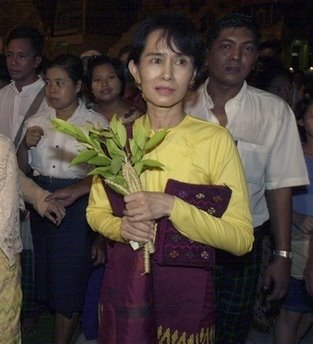


 Posts
Posts


