News & Articles on Burma
Monday, 07 March, 2011
-------------------------------------------------------------
MYANMAR: Rights abuses lead to health "catastrophe" - report
Myanmar 'Developing Scud Missiles with N.Korean Assistance'
Parliamentary Debates to Be Concluded Before April
'Four Cuts' Forcing Shan Villagers from Homes
Tay Za, USDP Secure IT Monopoly
Politicians decry military budget
USDP ‘foreigners’ resign their seats
A Myanmar Times closure would be bad news
-----------------------------------------------
MYANMAR: Rights abuses lead to health "catastrophe" - report
Photo: Contributor/IRIN
The bullet that kills in Myanmar's conflict zones is more often than not disease
BANGKOK, 7 March 2011 (IRIN) - Human rights abuses and counter-insurgency campaigns in Chin State, western Myanmar, are causing a "health catastrophe", says a new study, results which echo an earlier survey in the eastern state of Shan.
"The indirect health outcomes of the abuses likely dwarf the actual killings by the military leaders," said Richard Sollom, deputy director of the US-based NGO Physicians for Human Rights (PHR) and author of a recent medical study on Chin State.
Persecution of civilians has resulted in a "man-made health catastrophe" in ethnic areas, according to Vit Suwanvanichkij at the Johns Hopkins Bloomberg School of Public Health in the US.
In eastern Myanmar, the child mortality rate is almost double and maternal mortality triple the national average (122 per 1,000 live births and 380 per 100,000 live births, respectively, according to World Health Organization, WHO), which is related to the "epidemic" of human rights abuses committed against ethnic groups in that area, said Suwanvanichkij.
"Public health indicators in ethnic areas are similar to that of long-term war-torn countries like Rwanda and Sierra Leone," said Debbie Stothard, coordinator of the Bangkok-based Burma rights advocacy group, Altsean.
Nearly one-third of all households in Shan State in eastern Myanmar reported one or more human rights abuses from 2009 to 2010, according to a separate 2010 health survey, conducted by community health organizations.
"Consistently, the minority of deaths are directly from violence. Far more... lose their lives indirectly from the malign neglect of the Burmese military regime," said Suwanvanichkij.
Not only does the government invest the least worldwide in its healthcare system - less than 2 percent in 2009 according to the WHO - but rights groups say it also obstructs healthcare in conflict areas.
"The military actively prevents healthcare workers from doing their jobs by destroying healthcare facilities controlled by communities or insurgent groups," said David Scott Mathieson, Myanmar's senior researcher for Human Rights Watch.
Six out of 10 deaths among internally displaced persons in the east are from preventable illnesses, said Suwanvanichkij.
Babies and hunger
Shan State researchers found the occurrence of human rights abuses in a household increased the odds of an infant dying by up to 50 percent.
In Chin State (western Myanmar), almost 92 percent of households experience forced labour and reported the military stealing or destroying their family's food stock.
"With already amongst the worst food insecurity in the world, such predatory practices by the government can easily push families over the brink - worsening poverty, increasing malnutrition, and further barring access to healthcare," said Suwanvanichkij.
Forty-three percent of families in Chin State reported moderate to severe household hunger to PHR.
Families in Chin State whose food was destroyed or seized reported hunger levels more than six times higher than those left alone, according to PHR.
"If people are forced to give food to the military out of fear, have household crops destroyed or their food stores stolen and livestock stolen or killed, they are obviously going to be more likely to suffer from hunger," said Sollom.
Displacement and disease
Displaced families are about three times more likely to have acutely malnourished children, according to PHR. Almost half a million people are displaced in Myanmar, according to the Mae Tao Clinic in Mae Sot, Thailand.
"Being on the move in the rainy season without access to clean water leaves them vulnerable to malaria and diarrhoea - a major killer of children under five," said Stothard.
Local health workers continue to risk their lives in conflict zones to bring much-needed healthcare to the displaced, but as long as human rights violations continue, the health crisis will not improve, Stothard added. http://www.irinnews.org/report.aspx?ReportID=92119
-------------------------------------------
CHOSUNNILBO: March 7, 2011
Myanmar 'Developing Scud Missiles with N.Korean Assistance'
Myanmar is developing its own Scud-type missiles with North Korean assistance, according to Japanese daily Sankei Shimbun.
The two countries have been maintaining close military ties since 2008 as the relationship between the two has grown stronger over the years.
Sankei Shimbun reported Sunday that a munitions factory located near the small Myanmar town of Minhla is in fact a workplace for North Korean missile experts.
Experts fear the development could spark a regional arms race, prompting neighboring countries such as Thailand to develop or procure their own missile arsenal.
Arirang News / Mar. 07, 2011 10:19 KST http://english.chosun.com/site/data/html_dir/2011/03/07/2011030700895.html
-------------------------------------------
Parliamentary Debates to Be Concluded Before April
By THE IRRAWADDY Monday, March 7, 2011
All the ongoing parliamentary sessions are to be concluded by the end of this month, leaving MPs uncertain about future parliamentary procedures, according to opposition parties in Rangoon.
“All parliamentary debate is to be concluded by the end of the month,” said Khin Maung Swe, the leader of the opposition National Democratic Force. “No one, including the MPs, knows when parliamentary meetings will be held again.”
Since the Constitution stipulates that the combined Houses of Parliament must meet at least once within a period of 12 months, observers assume that the next parliamentary session will be several months from now. However, several MPs in Naypyidaw told The Irrawaddy that they themselves do not know any dates for future House meetings.
“It seems the new government is unwilling to call frequent parliamentary sessions,” said an opposition MP. “That's why we now have several parliamentary committees which will, sort of, represent the MPs.”
A senior government official in Naypyidaw said parliamentary meetings will only be convened in times of emergency. He added that four 15-member committees representing public finance, passing parliamentary bills, rights and other parliamentary issues will be formed at all levels of both Houses of Parliament and the regional parliaments.
A parliamentary source said that these parliamentary committees are to be formed of 10 MPs from the junta's proxy Union Solidarity and Development Party and five MPs from other political parties.
The potential absence of parliamentary sessions in the coming months casts into uncertainty the roles of several MPs. http://www.irrawaddy.org/highlight.php?art_id=20890
---------------------------------------------
'Four Cuts' Forcing Shan Villagers from Homes
By KO HTWE Monday, March 7, 2011
The Burmese army's use of the infamous “four-cuts” strategy and military build-up are driving many villagers in southern Shan State from their homes and landing them among the country's many “internally displaced persons,” observers said.
The “Four Cuts” strategy means cutting off access to food, funds, information and recruitment, often with devastating consequences. The Burmese military's use of this strategy has forced the relocation of the residents of villages located in the area controlled by the Shan State Army-South (SSA-South) Brigade 1, based in Mong Hsnu Township, and SSA-South Brigade 7, based in Kunhing Township.
Many villagers from Kunhing Township left for the border to find safer and better places to live, according to a member of the Shan Nationalities Development Party from Kunhing Township.
“Transportation vehicles are full of passengers because many locals headed to the border. At least 200 to 300 people left their native land,” he said.
In addition, the construction of a new regional command by the Burmese military has forced the residents of villages in Kyethe, Kali and Namsam townships to relocate.
“Most villagers are afraid of the threat of battles because the Burmese army has deployed more troops and tanks,” said Saengjuen Sarawin, the deputy editor of the Shan Herald Agency for News (SHAN).
In Namsam Township, the Burmese army forced the residents of three villages to abandon their homes and torched at least 300 houses, according to SHAN reports.
Kham Harn Fah, the director of the Shan Human Rights Foundation, said they also heard news about village relocations but have not yet contacted internally displaced people.
“If they [authorities] build up more army forces, people will gradually move to the border. The extension of the army makes it hard for them to live in the area,” said Kham Harn Fah.
In 2009, the Burmese army forced an estimated 10,000 people in central Shan State to leave their villages and torched more than 500 homes, according to Shan human rights groups’ reports.
The SSA-S and Shan State Army-North (SSAN-N) are among the armed groups resisting the regime demand to transform their forces into members of the its border guard force. Other groups defying the regime demand include the National Democratic Alliance Army and the United Wa State Army.
http://www.irrawaddy.org/article.php?art_id=20888
------------------------------------
Tay Za, USDP Secure IT Monopoly
By NAYEE LIN LATT Monday, March 7, 2011
Frustration and fury have been expressed by representatives of Burmese IT companies, including the semi-governmental Yatanarpon Teleport Company, after it emerged that FTTx (Fiber Transfer to X) contracts previously agreed with the military government were to be suspended in favor of a deal with tycoon Tay Za and an IT firm run by the junta's proxy party to establish a dual-monopoly of Burma's broadband networks.
Most of the affected firms have already installed FTTx services in Rangoon and Mandalay, according to agreed designated zones, and stand to lose their investments.
FTTx is a generic term for any broadband network architecture that uses optical fiber to replace all or part of the typical communication systems, including Internet, television and telephone.
Mostly based Yatanarpon Teleport located near city of Pyin Oo Lwin, the companies signed BOT system contracts with the Ministry of Communications, Posts and Telegraphs [MCPT] in September, sources close to these companies told The Irrawaddy. Many of the deals involved partnership with Yatanarpon Teleport, the country's largest IT firm.
The companies currently holding FTTx contracts are: E-Lite Company, Red Link, High the Princess, Fortune International, MDS, Kinetic Myanmar, Sky Net, and Fisca.
According to the sources, all contracts will soon be handed to the E-Lite owned by Burma's top businessman Tay Za, who is blacklisted under Western sanctions, and the ITCS, which is owned and controlled by the junta's political proxy Union Solidarity and Development Party (USDP).
“We have been working on these contracts for four or five months and have already spent a lot of money in implementing operations,” said a representative of one of the affected companies. “Now we are told to stop. We have been sidelined in favor of Tay Za.”
He said that billions of kyat, or millions of dollars, have already been spent by the affected firms on setting up the necessary infrastructure in Rangoon alone.
“By this way, I don't see Burma as a potential place for foreign companies to work,” he added.
“Our contract is for five years,” said a Sky Net staffer. “But now E-Lite and [USDP-run] ITCS will take over all the IT business in Rangoon. We are being kicked out.
“What about the investment we have outlaid? We are being forced to terminate our business in the middle of operations,” he said.
He add that the business climate in Burma is completely unfair, and that Elite is in a privileged position because of Tay Za's close connection to the military junta.
There are currently 13 WiFi zones in Rangoon, a number that will increase once the FTTx system is up and running. FTTx, unlike ordinary communications technology, can offer high-speed data transfer via underground fiber-optic cables.
“All the concerned companies are really angry at the authorities, especially because the situation is so unfair,” said the Sky Net staffer. “The Rangoon market for this service is growing. E-Lite approached the MCPT and convinced it to give E-Lite a monopoly on the service.”
“We can do nothing about it,” he said. “We have to do what we are told. We don't know if we will get compensation. The government has not made any comment.”
According to sources, the MCPT requested the affected companies to detail their expenditures to date after notifying them that their operations would have to be suspended. But, no compensation has been paid yet, they said.
A source said that although ITCS is registered as a private company, incumbent government officers and USDP members play significant roles in its boardroom, just as they do at Yatanarpon Teleport.
Moreover, he said, the ITCS sells mobile phones and prepaid cards in a joint venture with Myanmar Post and Telecommunications.
Elite Company is a subsidiary of Htoo Trading Co. Ltd, which also belongs to Tay Za. In collaboration with Myanmar Post and Telecommunications, it already has stakes in several related sectors, including: providing a nationwide Internet service via fiber optic cables; manufacturing IT-related materials; importing and distributing mobile phones; setting up CMDA phone lines; and the sale of prepaid phone cards.
http://www.irrawaddy.org/article.php?art_id=20886
---------------------------------------
By DVB:Published: 7 March 2011
Politicians decry military budget
The announcement last week that Burma will channel nearly a quarter of its annual budget to the military has brought widespread criticism from the country’s political opposition.
Anger has also been directed at the formation of a Special Funds Law that gives the commander-in-chief, currently Than Shwe, supreme authority to allocate unlimited additional money to the army without any notice, and without parliamentary consent.
“Deciding the country’s budget is a serious business – it should be discussed with the people’s representatives in the parliament before being approved,” said Thu Wei, chairman of the Democratic Party Myanmar, which won three seats in the November elections last year.
He added that the unilateral decision over the new budget “implies the government’s lack of confidence in parliamentary representatives”.
The National League for Democracy (NLD), which boycotted the polls but remains a potent opposition force in Burma, released a statement saying that the country’s “main sectors for…development”, those of healthcare and education, had been grossly overlooked in favour of the military.
The healthcare sector is set to receive only 9.5 billion kyat ($US110 million), or 1.3 percent of the total budget. This equates to around $US2 per person per year. The nearly 500,000-strong military, on the other hand, will get around $US2.04 billion, despite Burma having no external enemies.
“We see that it is necessary to increase the defence budget when the country is developed,” said Aye Thar Aung, secretary of the Committee Representing the People’s Parliament (CRPP), “but for now, when the country’s economy, education and health sectors are poor, we think the defence budget should be decreased and spending increased for these sectors.”
No official data on Burma’s prior military spending is in circulation, but analysts regularly estimated the figure to be around 40 percent of the annual budget. While the latest announcement, bar the Special Funds Law, signals a decrease from before, it will do little to support the junta’s assertions that Burma is transitioning to civilian rule.
Khin Maung Swe, the head of the National Democratic Force, which occupies 16 parliamentary seats, noted that neighbouring Thailand spends 11 percent of its budget on healthcare. He said that his party would submit a bill to parliament proposing that 10 percent be allocated to the “deteriorating” health sector.
http://www.dvb.no/news/politicians-decry-military-budget/14619
----------------------------------------
USDP ‘foreigners’ resign their seats
By AHUNT PHONE MYAT
Published: 7 March 2011
The Burmese junta’s perennial fear of foreign influence in the country reared its head again last week after two members of its proxy election-winning party were forced to quit their parliamentary seats.
While details surrounding the resignation of Union Solidarity and Development Party (USDP) members Cho Nwe Oo and Ahunt Gyi remain murky, fellow MPs have speculated that it may be related to their holding of a Foreign Registration Card (FRC).
Burmese law dictates that parliamentary members must be born of Burmese parents, and cannot be someone “who owes allegiance to a foreign government, or [is] subject to a foreign government or a citizen of a foreign country”.
Cho Nwe Oo’s resignation took place on Friday last week. Until then she had been one of only a handful of female USDP representatives and a member of the Public Accounts Committee in the Nationalities Parliament.
Both are believed to have fathers of Chinese origin, a detail which is flagged up on their Burmese identity cards. Quite how they initially made it into parliament is unclear, given the rigour with which Burmese intelligence normally vets its political players.
Also of Chinese origin is Khin Nyunt, Burma’s former prime minister and intelligence chief who was purged in 2004 by Than Shwe and placed under house arrest, where he remains.
The law banning those with foreign relations from entering parliament however appears to be concentrated largely on banishing opposition leader Aung San Suu Kyi from Burma’s political arena, as well as stirring nationalistic resentment of the country’s leading icon and key threat to the junta’s grip on power.
The 65-year-old Nobel laureate had been married to the late British scholar, Michael Aris, who died in 1999. They have two children, Kim and Alexander Aris, both of whom are British passport holders.
http://www.dvb.no/news/usdp-%E2%80%98foreigners%E2%80%99-resign-their-seats/14611
------------------------------------------------------
A Myanmar Times closure would be bad news
By CLIVE PARKER
Published: 7 March 2011
With The Myanmar Times in the middle of a serious threat to its very existence, one might be forgiven for thinking the exile media would relish the prospect of the newspaper’s demise, such is the level of animosity between Burmese news organisations inside and outside the country. But whatever feelings people have towards its former publisher, Ross Dunkley, surely the end of the paper would be a major setback for Burma’s news media and the flow of information in the country, in the same way that the demise of The Irrawaddy print edition was a major setback.
What critics fail to acknowledge is that without The Myanmar Times, the Burma cause would be worse off because ultimately everyone is trying to reach the same goals, namely greater freedom of expression and an improvement in the country’s situation. They are just trying to achieve these aims in very different ways.
While those criticising The Myanmar Times regularly point out that every article in the newspaper is censored, and in recent years the Ministry of Information has forced publication of state propaganda, they routinely fail to mention key positives that represent what could be lost.
Using funding and donations from Japan’s Sasakawa Peace Foundation, The Myanmar Times has trained dozens of Burmese journalists to an international standard. It has also provided Burmese journalists with well-paid jobs, thereby building journalistic capacity among people that otherwise may have become rickshaw drivers or clerks in office jobs.
In terms of information flow, although the newspaper is indeed censored, it also has amongst the largest on-the-ground presence of any news media outlet in the country, a major asset for those seeking information on Burma. It was therefore no surprise when The Myanmar Times produced pre-election coverage last year that was superior to anything else available, and that includes the exile media.
The paper was also surprisingly dissenting ahead of the election and, although censored, those with modest Burma knowledge knew how to read the articles, as they do with any other journal inside the country: readers simply read between the lines. This is a key point on censorship that most critics overlook, either willfully or due to ignorance: that although key information is missing, readers know what to expect and fill in the blanks elsewhere, thus avoiding any indoctrination.
So why are these major contributions overlooked? Much of the disagreement between news media inside and outside the country stems from a key difference in philosophy, mostly in regards to censorship. The very essence of the exile media is, of course, that it bypasses the censors, while publications inside do not.
Much of the exile media’s venom has been targeted at The Myanmar Times and Living Color in particular because they were considered close to the now-defunct Military Intelligence. Both gained their publishing licences through ties to MI, an arm of the junta blamed for much of the pre-2005 interrogation and torture that targeted Burmese dissidents.
The Myanmar Times has no doubt received additional critical attention due its status as a foreign investor, a position Aung San Suu Kyi reiterated in her response last week to Dunkley’s continuing legal problems. “We all have to work towards greater freedom of information but I don’t know whether that kind of freedom of information can be obtained by investing in Burma in the media through the authorities,” she told Malaysian journalists in Kuala Lumpur via an audio feed.
Where the exile media comes into its own is on stories that the generals don’t want us to read – an obvious plus. After all, don’t the best news publications talk directly to power?
In response, Dunkley answers his critics by arguing The Myanmar Times is on the playing field while the exile media is just watching from the sidelines. Where exile media claims to offer ‘the truth’, being further away from the scene and therefore the facts makes accuracy all the more difficult in a country not known for its clarity.
Whichever side you sympathise with – and clearly both make valid arguments – this difference in outlook has led to acrimony that over time has created a cycle of criticism from both sides. The recent funding realities that have seen exile media outlets lose money in favour of projects inside the country certainly have not helped resolve differences.
This persistent divide has not only exposed inherent hypocrisies on both sides, it has also played into the hands of the regime in that the subsequent lack of collaboration and mutual appreciation has weakened the flow of information on Burma. When media inside the country and outside respect and utilise each other’s strengths to improve their own transmission of information, they can begin to nullify junta efforts to promote silence and distortion. This means greater cooperation and communication in the interests of increasing access to information.
When unconstructive, one-sided and misleading criticism becomes the norm, not only have media outlets failed in terms of impartiality and accuracy – a fatal journalistic flaw – they contribute to a huge bubble of misinformation and destroy the possibility for cooperation.
This all represents too much wasted energy and intellectual dishonesty on the part of too many people that work on Burma. When these same people begin to acknowledge and utilise the positives produced by organisations that are too often considered ideological opponents, then they should realise they are not opponents at all. Disagreement and criticism is democratic and useful but only when it is accurate, balanced and constructive.
Most Burma media organisations have a genuine desire to further the cause of freedom of expression, reform and prosperity in the country, as shown by their actions, and this includes many publications inside the country. Once this reality is honestly and actively acknowledged, reconciliation among these groups can be realized. And then major progress on informing people about Burma can really begin.
Clive Parker has worked as a journalist at The Myanmar Times and The Irrawaddy.
http://www.dvb.no/analysis/a-myanmar-times-closure-would-be-bad-news/14607
Tuesday, March 8, 2011
News & Articles on Burma-Monday, 07 March, 2011


Sunday, March 6, 2011
News & Articles on Burma-Saturday, 05 March, 2011
News & Articles on Burma
Saturday, 05 March, 2011
-------------------------------------------------------------
Aung San Suu Kyi’s NLD disapproves of junta’s budget sharing
Myanmar citizens among 6 dead in Russia crash
Myanmar pro-democracy group slams govt's budget
NLD Slams Military Fund
Naypyidaw Orders New “Four Cuts” Campaign
Prepare now for by-elections, MP warns opposition parties
Burma court looks at Australian's bail plea
Kachin army blocks Tatmadaw rations
Burma junta buys MiG-29s, spends $2 per person on health
UN Resolution on Libya Exposes German Hypocrisy on Burma
------------------------------------------------
Aung San Suu Kyi’s NLD disapproves of junta’s budget sharing
By Zin Linn Mar 05, 2011
Aung San Suu Kyi’s National League for Democracy (NLD) has criticized the government’s freshly released budget for allocating in excess of funds to the military’s defense and not a sufficient amount to social services such as health and education..
A statement by the NLD on Friday also said the budget should not be decided by the outgoing ruling junta. The budget distribution must be settled and passed by the newly elected parliament.
The outgoing military regime endorsed the budget on 27 January, just a few days before parliament met for the first time on 31 January. The Government Gazette released by the incumbent military junta says that 1.8 trillion kyat (about $2 billion at free market rates of exchange), or 23.6 per cent of the budget this year will go to defense. The health sector, meanwhile, will get 99.5 billion kyat ($110 million), or 1.3 per cent. Education will obtain a 4.3 per cent allotment.
Quoting Ministry of Commerce statistics, 7 Day News weekly journal reported that Burma exported goods valued at $ 5.5 billion and imported goods valued at $3.3 billion. A ministry official told the Journal that most of Burma’s export revenue came from selling natural gas, followed by jade, to Asian countries. Actually, most of those incomes from exports never used in the public sectors, especially in health and education. Those financial benefits constantly flow into the defense budget expending the military strength without facing any external threat.
According to the NLD’s 4-March-statement, the unlimited ‘Special Funds’ that allows to be used by the commander-in-chief of the military – to safeguard national sovereignty and protect disintegration of the union – is totally unreasonable. The worst is that the decree says the military commander-in-chief will not be subject to questioning, explanation or auditing by any individual or organization concerning the use of ‘Special Funds’.
The funds, which actually as old as the military ruling, seem the carry-over practice of the military intelligence activities. As it is not transparent and counter check, the practice leads to corruption because responsible persons are not held accountable for those finances.
For that reason, the decree allows the commander-in-chief to use the funds without giving any grounds to respond to anyone or any organization, the law is not corresponding to the standard of the law, the NLD criticizes in its statement. Its statement also says the fiscal year 2011-2012 budget allotments should have been passed by the freshly elected legislative body, rather than endorsed by the departing junta.
The Budget is the government’s most important economic strategy and it presents a comprehensive proclamation of the nation’s priorities. Parliament, which is formed with representatives-elect, is the best proper place to guarantee that the Budget goes with the nation’s needs with the available resources.
However, Burma’s current budgetary confusion clearly shows that the commander-in-chief of the military is above the president and the parliament. He’s also above the laws as he himself is the sole creator of the current ruling laws including the fiscal year 2011-2012 budget allotments.
http://asiancorrespondent.com/49658/aung-san-suu-kyis-nld-disapproves-of-junta%E2%80%99s-budget-sharing/
-------------------------------------------------
Myanmar citizens among 6 dead in Russia crash
(Reuters)
5 March 2011
A mid-sized Russian-built plane crashed in western Russia on Saturday, killing all six people on board, officials said, two of the dead were citizens of Myanmar.
The Antonov An-148, with four crew members and two other people aboard, crashed in the Belgorod province, some 600 km (370 miles) south of Moscow, during a training flight, the Emergency Situations Ministry in Moscow said.
State-run Itar-Tass cited provincial emergency officials as saying two of the dead were Myanmar citizens who were pilots by profession.
The Myanmar embassy in Moscow said it had no information about the crash.
RIA cited a source at the plant that built the plane as saying it was to be delivered to Myanmar at some point.
http://www.khaleejtimes.com/displayarticle.asp?xfile=data/international/2011/March/international_March251.xml§ion=international&col =
----------------------------------------------
Myanmar pro-democracy group slams govt's budget
March 4, 2011
YANGON, Myanmar—Myanmar's pro-democracy group has criticized the government's recently released budget for allocating too much money to the military and not enough to social services.
A statement Friday from Aung San Suu Kyi's officially disbanded National League for Democracy also said the budget should have been passed by the newly elected parliament, rather than enacted by the outgoing ruling junta.
The government enacted the budget on Jan. 27, just a few days before parliament met for the first time in more than two decades. Details published in the Government Gazette revealed that almost one-quarter of the 7.6 trillion kyat ($8.45 billion) national budget will be allocated to defense. Education will get a 4.3 percent share, and health 1.3 percent.
----------------------------------------------
NLD Slams Military Fund
By THE ASSOCIATED PRESS Saturday, March 5, 2011
RANGOON—Burma's pro-democracy group on Friday criticized a new law that allows the country's military chief access to a special fund without any oversight from parliament.
The fund—created at the same time as the new budget of which almost one-fourth was allocated to the military—can be used by the commander in chief to pay for expenses related to national defense and security. He needs only the president's approval to do so, according to a statement from Aung San Suu Kyi's National League for Democracy.
Burmese President-elect Thein Sein is a former general who served as the outgoing ruling junta's prime minister. He now heads the military-backed Union Solidarity and Development Party, which won a huge majority in last November's election that much of the international community dismissed as rigged in favor of the junta. A mandatory allocation of one-quarter of the seats in parliament to military appointees assures that the ruling generals remain in charge.
The Special Funds law allows the money to be used "to safeguard national sovereignty and protect disintegration of the union" and says the military commander "shall not be subject to questioning, explanation or auditing by any individual or organization" regarding its use.
So-called secret funds are used in several countries to conceal details of sensitive military and intelligence activities. However, they can also serve as slush funds, leading to corruption because users are not held accountable for them.
"Since the law allows the commander in chief to use the funds without having the need to answer to anyone or any organization, the law is not in line with norms of the law," said the NLD statement.
Suu Kyi's organization also criticized the government's recently released budget for allocating too much money to the military and not enough to social services.
Its statement also said the fiscal year 2011-2012 budget should have been passed by the newly seated parliament, rather than enacted by the junta.
The government enacted the budget on Jan. 27, just a few days before parliament met for the first time in more than two decades. Details published in the official Government Gazette revealed that almost one-quarter of the 7.6 trillion kyat ($8.45 billion) national budget will be allocated to defense. Education will get a 4.3 percent share, and health 1.3 percent.
Burma is one of Asia's poorest countries, reflected in its health indicators. It has the 44th highest infant mortality rate of 193 countries listed by the UNICEF in its 2011 State of the World's Children report.
http://www.irrawaddy.org/article.php?art_id=20881
--------------------------------------------------
Naypyidaw Orders New “Four Cuts” Campaign
By WAI MOE Friday, March 4, 2011
The War Office in Naypyidaw has ordered Burmese government forces based in ethnic areas to relaunch their infamous “Four Cuts” strategy against the ethnic cease-fire groups that continue to resist the junta's Border Guard Force (BGF) plan.
The Burmese army's “Four Cuts” policy was developed in the 1970s during the former regime of the Burmese Socialist Programme Party with the intention of undermining ethnic militias by cutting off access to food, funds, information and recruitment, often with devastating consequences.
According to military sources, the War Office recently ordered regional commanders to reimpose the strategy in areas including Kachin State, Shan State, Karenni State , Karen State , Mon State and Tenasserim Division.
Military sources said the renewed campaign would include an additional “cut”—a policy of severing communication routes between allied ethnic groups.
Commenting on the information about the new “Four Cuts” campaign, Aung Kyaw Zaw, a Burmese military observer at the Sino-Burmese border who has close contacts to several ethnic armed groups, said the junta’s plan could be irrelevant because many ethnic armies are based in border areas.
“The Four Cuts strategy was designed for inland counterinsurgency operations,” he said. “In particular, there were government offensives against the Communist Party of Burma and the Karen National Union in the Pegu Mountains. But now the groups that are being targeted are based at the Sino-Burmese border and the Thai-Burmese border.”
Some observers expressed concern about an escalation of human rights violations such as forced relocations, the burning of villages and summary executions in ethnic areas, atrocities that invariably accompany such a strategy, they said.
“The Four Cuts strategy has been modified by the current military junta,” said Htet Min, a former army officer who is now living in exile. “When I was in the military, it was also called 'sweeping' an area, meaning removing any suspected villagers and burning their villages.”
Aung Lynn Htut, a former counter intelligence officer now living in the US, said the massive internal displacement in eastern Burma is directly related to the “Four Cuts” strategy, which was known in the far south of Burma as “No Man's Land” policy during operations in the 1990s, directly commanded by the office of the commander-in-chief.
The “No Man's Land” policy was ordered by the War Office to execute anyone, including children, who were found in areas of military operations,” he said.
Since 1989, the military regime has signed cease-fire agreements with as many as 17 ethnic armed groups. However, the major cease-fire groups have rejected the BGF plan that was first raised in April 2009.
Those groups include: the United Wa State Army; the Kachin Independent Organization; the National Democratic Alliance Army, also known as the Mongla group, the Myanmar National Democratic Alliance Army or the Kokang group, the New Mon State Party, and a faction of the Democratic Karen Buddhist Army.
http://www.irrawaddy.org/article.php?art_id=20880
------------------------------------------------
Prepare now for by-elections, MP warns opposition parties
By Shwe Yinn Mar Oo and Soe Than Lynn
February 28 - March 6,, 2011
DEMOCRATIC political parties should begin preparing for the approximately 70 by-elections that will have to be held as a result of representatives being appointed into the new government, an Amyotha Hluttaw member said last week.
Under the 2008 constitution, ministers and deputy ministers in the new government are considered to have resigned from the day of the election. More than two dozen ministers nominated by President U Thein Sein were members of either the Pyithu Hluttaw or Amyotha Hluttaw.
The Amyotha Hluttaw Election Law states that a vacancy that arises in the upper house for any reason shall be filled by the holding of a by-election.
Amyotha Hluttaw representative Dr Myat Nyarna Soe said he expected about 70 seats in the upper and lower houses of the Pyidaungsu Hluttaw to be empty when the names of deputy ministers have also been announced.
“For those 70 constituencies, there must be by-elections. We need to send questions to the Hluttaw Office asking when the by-elections are going to be held, because the law doesn’t give a time frame,” he told The Myanmar Times last week.
He said political parties should draw on the lessons learned in the November 7 election to give them the best chance of winning the vacated seats.
“They should start preparing now. It is sure that we minority [opposition parties] can’t field many candidates, while the powerful Union Solidarity and Development Party will be ready to contest every seat. They have to think about it and prepare,” said Dr Myat Nyarna Soe, who won Yangon Region Amyotha Hluttaw Constituency 4 as a representative of the National Democratic Force (NDF).
He said he was hopeful the democratic parties could win at least some of the vacant seats and while the USDP would still maintain a massive majority it would give opposition parties a stronger voice.
The USDP has 388 of the 493 seats in the Pyidaungsu Hluttaw – the combined Pyithu and Amyotha Hluttaws – for elected representatives. An additional 25 percent of seats are reserved for appointed military personnel.
“Even if we get another 70 seats more, it will not be a big change. But it means we would have about one-third of seats [rather than about one-fifth]. The more representatives from democratic parties in the hluttaw, the more the representatives who would speak out for the people and who would [work] for the people,” he said.
The second largest party in the Pyidaungsu Hluttaw in terms of candidates is the Shan Nationalities Democratic Party (SNDP), with 21. Vice chairman U Hsaung Hsi said the party was ready to contest by-elections in areas it thought it could gain enough support to win the seat.
“For example, I am sure that there will be a vacancy for the [Pyithu Hluttaw] representative from Lashio. Even if they convene the by-election within a month, it will not pose a problem for the party. We are still in touch with both the party members and the voters, our members are still active,” the Pyithu Hluttaw representative from Kyaukme said last month.
U Hsaung Hsi said he had already sent questions to the Hluttaw Office asking when the by-elections are to be held, how they would be held and how the government was making arrangements for them to be held in a free and fair manner.
He said he expected other opposition political parties would also contest the by-elections as they have been encouraged by the public interest in political affairs.
However, a spokesperson for the NDF, which has 12 representatives in the Pyidaungsu Hluttaw, said he thought the party was not yet in a position to take part in by-elections.
Party co-founder U Khin Maung Swe said the NDF had been contacted by some members interested in contesting by-elections but lacked the funds to register candidates and campaign.
“I don’t know where we will compete exactly but I think at a minimum we should be able to field candidates in constituencies in Yangon,” he said, adding that he hoped the by-election would not be held before May.
“If they are not in May, they might be held in October,” said U Khin Maung Swe.
One constituency that is certain to see a by-election is Mingalar Taung Nyunt in Yangon, as former labour minister and USDP Pyithu Hluttaw representative U Aung Kyi was listed among the 30 ministers in the new government.
On November 7 U Aung Kyi defeated Democratic Party (Myanmar) chairman U Thu Wai by more than 8000 votes – 28,566 to 20,257 – to secure a place in the Pyithu Hluttaw.
U Thu Wai said he was still unsure whether he would re-contest the seat, adding the funding was the major difficulty.
“I think by-elections will only be held when the government is formed and stable,” he said. “In the [November 7] election, voting was cancelled in some places because of security issues. So I think they will make those places stable first and then the by-elections will be held after that.”
http://www.mmtimes.com/2011/news/564/news56402.html
-------------------------------------------------------
Burma court looks at Australian's bail plea
Australian journalist and publisher Ross Dunkley appears to face criminal charges in Rangoon. [Reuters]
A court in Burma has agreed to consider a bail application from an Australian news publisher who has spent three weeks in Rangoon's Insein prison.
Ross Dunkley, publisher of the Myanmar Times and the Phnom Penh Post, was arrested for breaching his visa after a prostitute alleged he assaulted her.
He has been kept in prison even though she withdrew the charges last week.
On Thursday he made his second appearance in court, where a judge promised a ruling after another hearing next Tuesday.
Mr Dunkley's local business partner, Tin Htun Oo, insisted outside the court that the case is not politically motivated.
Tin Tun Oo said there was no business dispute and said he had signed Mr Dunkley's bail application to help his request.
"Ross's case is not linked to business or politics. I think it's just a personal matter," he added. "It's not true that it happened at my instigation. I will try to help him."
He said the ownership structure of their company had not changed. http://www.radioaustralianews.net.au/stories/201103/3155700.htm?desktop
--------------------------------------------------
Kachin army blocks Tatmadaw rations
By NAW NOREEN
Published: 4 March 2011
Food rations being delivered to Burmese troops stationed in Bhamo were reportedly blocked by the Kachin Independence Army (KIA) as rising tensions in the northern state show no sign of abating.
The battalion due to receive the rations had allegedly been deployed in territory belonging to the KIA, one of Burma’s biggest ethnic armies. The Burmese army has beefed up its presence in the unstable region with additional deployments of troops and tanks close to the group’s headquarters in Laiza.
The recent incident is the latest in ongoing encounters between the two forces: reports from the region claim that troops led by Major Myint Naing Oo carrying supplies to a military base were stopped by the KIA. Burmese soldiers were then ordered to block the road between Mong Hkawng and Mansi in Bhamo district for three days between 23 and 25 February.
Sporadic bursts of fighting have broken out in Kachin state since late last year, following the KIA’s rebuttal of junta demands to become a Border Guard Force (BGF). On 6 February gunfire was exchanged after a Burmese battalion entered KIA territory under the pretext of seeking and destroying illicit narcotics.
The KIA has been undertaken a drug eradication programme in areas belonging to another Kachin army, the New Democratic Army-Kachin (NDA-K), which is loyal to the junta. Burmese officials reportedly warned the group against destroying poppy fields.
And in January a new military command zone was designated for Tanaing, a region controlled by the KIA, adding to Burmese army presence there.
http://www.dvb.no/news/kachin-army-blocks-tatmadaw-rations/14585
-----------------------------------------------------
Burma junta buys MiG-29s, spends $2 per person on health
By Zin Linn Mar 03, 2011 11:08PM UTC
This month Burma is to receive the first of 20 RSK MiG-29s costing about €400 million ($553 million), more than doubling the country’s MiG-29 fleet, reports Flight International.
The MiG-29s were ordered in November 2009. The aircraft will be delivered in three designs, comprising 10 MiG-29B and six MiG-29SE single-seat fighters and four MiG-29UB twin-seat operational trainers.
Burma earlier bought used MiG-29s from Belarus, but approached manufacturer and Russian arms export company Rosoboronexport for help after experiencing a high corrosion rate. Moscow responded with help on weapons, spare parts and training, including the installation of a simulator at one of its air bases, Flight International said.
As reported by the Defense Industry Daily , Burma’s air force ordered 12 MiG-29Bs from Russia in 2001, to supplement a fleet that mostly relies on Chinese F-7 (MiG-21 copy) and J-6/ Q-5 (MiG-19 copy and heavily modified MiG-19 derivative) fighters. Present-day levels of readiness among the regime’s existing aircraft types are doubtful, and in late January 2010, one of those F-7s crashed, killing the pilot. This is not exceptional with MiG-21s and their derivatives, which can be challenging to fly safely.
The MiG-29. Pic: AP.
Meanwhile, the UN special rapporteur on human rights in Burma, Tomás Ojea Quintana, criticized the Burmese junta over its human rights violations. Human rights violations in Burma are burdening other countries in the region, with an influx of refugees fleeing a host of abuses from forced labour and land confiscation to arbitrary detention and sexual violence.
At the same time, several human rights organizations, including Human Rights Watch and Amnesty International, claim hat there is no independent judiciary in Myanmar. The military government restricts Internet access through software-based censorship that limits the material citizens can access on-line. Forced labour, human trafficking, and child labour are common.
According to the UN estimation, one child in three under the age of five is already suffering from malnutrition. Burma’s authoritarian military regime is getting in the way of health community’s efforts to control infectious disease threats in Burma, according to an investigation published in Public Library of Science Medicine.
Dr Chris Beyrer (Johns Hopkins Bloomberg School of Public Health) and colleagues carried out field investigations in Burma in 2005 and 2006, and also searched the medical and policy literature on HIV, TB, malaria, and avian flu in Burma. The researchers found that the SPDC’s investment in healthcare is one of the lowest worldwide and that the health sector has been weakened by widespread corruption.
So, political opposition and independent observers condemn the junta for the amount spend on the defense budget, while key areas such as education and health are neglected. The recent Government Gazette released by the incumbent military junta says that the health sector will get 99.5 billion kyat ($110 million), or 1.3 percent of this budget year 2011-12. That means regime will spend less than $2 per head on public healthcare.
For that reason, people are asking International Community for tighter sanctions (not humanitarian aid) on the military regime until the ruling generals commit themselves to democratic reforms.
http://asiancorrespondent.com/49518/burma%E2%80%99s-junta-purchases-mig-29s-while-2-per-head-public-healthcare/
-------------------------------------------
CONTRIBUTOR
UN Resolution on Libya Exposes German Hypocrisy on Burma
By MARK FARMANER Friday, March 4, 2011
There has been widespread surprise that China voted in favor of the new UN Security Council resolution on Libya. The resolution imposes economic sanctions, an arms embargo, and refers Libya to the International Criminal Court. These kinds of actions are usually vociferously opposed by China, as part of its so-called policy of noninterference in the internal affairs of countries.
For those who follow Germany’s policy on Burma, their vote in favor of the resolution is also noteworthy, and also begs the question: if Libya, why not Burma? The human rights abuses listed as justification for action in the resolution on Libya are all taking place in Burma.
Much of the language used in the resolution has for many years featured almost word for word in UN General Assembly resolutions on Burma and reports from the UN Special Rapporteur on Burma:
“Violence and use of force against civilians … systematic violation of human rights, including the repression of peaceful demonstrators … violence against the civilian population made from the highest level of the Libyan government … widespread and systematic attacks currently taking place in the Libyan Arab Jamahiriya against the civilian population [that] may amount to crimes against humanity … refugees forced to flee the violence in the Libyan Arab Jamahiriya … shortages of medical supplies to treat the wounded … the need to respect the freedoms of peaceful assembly and of expression, including freedom of the media … the need to hold to account those responsible for attacks, including by forces under their control, on civilians... .”
Yet despite these similarities, the German approach to Burma has been the polar opposite to its approach to Libya. On Burma, Germany consistently opposed targeted economic sanctions, agreed to an arms embargo but allegedly supplied dual use factory equipment enabling Burma to build its own weapons, and refuses even to support a UN Commission of Inquiry into Burma, let alone a referral to the International Criminal Court.
Germany has given a variety of reasons to justify its policy towards Burma’s generals. On occasion it argues against sanctions in principle, saying that they are a step short of war and should only be used as a last resort. On other occasions, it grasps at and exaggerates the smallest possible positive moves by the regime, arguing they justify relaxing pressure.
More recently Germany argues that sanctions have been tried and have failed, and that now some sanctions should be lifted and more engagement should be tried instead. There is deep irony in this argument. For more than a decade Germany has argued against and done all it can to block the European Union imposing effective targeted economic sanctions. Germany was also one of the main countries ensuring those sanctions that have been imposed were watered down.
In the mid 1990s, when strong calls for targeted sanctions first began, as a major trading partner and investor in Burma, the European Union had significant economic muscle it could have used to pressure the generals into dialogue. Germany has consistently been one of the main countries that stopped effective sanctions being imposed. Having undermined effective sanctions, Germany then has the cheek to argue that sanctions against Burma don’t work.
Germany seems reluctant to admit its role behind the scenes, and its vehement opposition to increasing pressure on Burma’s generals. It doesn’t like to make public statements which it might have to defend. Instead it prefers to let political foundations in Germany to take the lead in pushing for a softer policy towards Burma’s generals. German diplomats and politicians prefer to do their dirty work behind the scenes in private meetings with other EU members. They even deny they have tried to block sanctions. However, their opposition is well known in diplomatic and NGO circles, and in a cable from the US Embassy in London released by Wikileaks, the British Foreign Office described Germany as being “at the far end opposing sanctions.”
Perhaps useful for understanding Germany’s position on Burma is its long history of aiding, trading and arming dictatorships in Burma.
Germany historically had uniquely close ties to the isolationist Ne Win regime. State-owned German company Fritz Werner was involved in the country for decades, supplying arms and equipment for manufacturing arms. It was the first foreign company allowed to have a joint venture in Burma while the isolationalist Ne Win still ruled the country, and the company remains operating in Burma to this day. Fritz Werner supplied the G3 assault rifles used by the Burmese Army to massacre student protestors in 1988. Germany was also a large aid donor, and trained soldiers from the Burmese military.
Even to this day, Germany still assists representatives of the military regime, giving them diplomatic training. This training is, no doubt, very useful for the regime when it tries to deny human rights abuses, as it did when it claimed that there are no political prisoners in Burma, and then lobbies to prevent international action in response to its human rights abuses.
Germany plays down its business involvement in Burma, but it is not insignificant, especially for an economy the size of Burma’s. Germany has unashamedly continued to send trade delegations to Burma, going against the spirit, if not the letter, of European sanctions. Germany is the dictatorship’s largest European trading partner. Some estimates put bilateral annual trade at over $600 million a year. German turbines pump the gas from offshore fields that are the largest source of income for the dictatorship. German companies have exported, and transport, timber, gems and other products.
The European Union is currently in the process of reviewing its policy on Burma ahead of the annual renewal of its Council Decision at the end of April. Once again, Germany is one of the main countries proposing a softer line, even arguing for a relaxation of some sanctions. This is despite the fact that there has been no improvement in the human rights situation in the country and that even Germany had to admit that the election held in November last year was not free and fair, despite diplomats privately briefing that they were a positive step forward.
Commenting on the UN Security Council Resolution on Libya, German Chancellor Angela Merkel stated: “The unanimous decision of the UN Security Council is a strong signal to Colonel Gaddafi and other despots that human rights abuses do not go unpunished.”
No despot aware of Germany’s approach to Burma will take her warning seriously. The message that Burma’s rulers get from Germany is one of comfort, protection and financial benefit. Merkel has to explain why there is one rule for human rights abuses in Libya and another for the same abuses in Burma. The policy isn’t consistent and leaves Germany open to the charge of hypocrisy.
So why does Germany support action against Libya and not Burma? Why isn’t Germany arguing that more trade and tourists will persuade Gaddafi to reform? Perhaps one reason is the high-profile nature of what is happening in Libya, on TV screens every night. Similar abuses in Burma take place every day, but in places with no phones, Internet or TV cameras. Perhaps the discrepancy can be put down to ignorance.
Or perhaps there is another reason. There is a big difference between quietly blocking and undermining sanctions against Burma in private meetings with European partners. It is quite another to publicly vote against sanctions against Libya at the UN Security Council, where the world will see what they are doing.
Germany’s actions effectively defend the dictatorship in Burma, but they don’t want the world to know what they are doing behind the scenes. If there is a lesson to be drawn from Germany’s vote on Libya, perhaps it is that when the world is watching, Germany will support action against dictatorships.
So, Angela Merkel, we are watching now. Will you continue to propose relaxing EU sanctions on Burma? Will your government continue to oppose the EU supporting a UN Commission of Inquiry into war crimes and crimes against humanity in Burma? And whatever the position of your government is on these issues, will you have the courage to defend them publicly?
Mark Farmaner is Director of Burma Campaign UK
Copyright © 2008 Irrawaddy Publishing Group | www.irrawaddy.org
http://www.irrawaddy.org/opinion_story.php?art_id=20874
Friday, March 4, 2011
လႊတ္ေတာ္ျပင္ပ ႏုိင္ငံေရး လုပ္ေဆာင္ေနေၾကာင္း ေဒၚေအာင္ဆန္းစုၾကည္ေျပာၾကား
2011-02-24
နိုင္ငံေရးလုပ္တဲ့အခါမွာ လႊတ္ေတာ္တြင္း နိုင္ငံေရးရွိသလို လႊတ္ေတာ္ျပင္ပမွာလည္း နိုင္ငံေရးရွိရမွာ ျဖစ္တဲ့အတြက္ NLD အဖြဲ႕ခ်ဳပ္ဟာ ဒီေန႔ကာလမွာ လႊတ္ေတာ္ ျပင္ပ နိုင္ငံေရး လုပ္ေဆာင္ေနတာ ျဖစ္ေၾကာင္း ေဒၚေအာင္ဆန္းစုၾကည္က ေျပာဆိုလိုက္ပါတယ္။
(Photo Courtesy of Myanmar Egress)
အမ်ိဳးသား ဒီမိုကေရစီ အဖြဲ႕ခ်ဳပ္ အေထြေထြ အတြင္းေရးမႉး ေဒၚေအာင္ဆန္းစုၾကည္ (အလယ္) အား ေဖေဖာ္ဝါရီ ၂၄ ရက္ေန႔က လာေရာက္ ေတြ႕ဆံု ေဆြးေႏြးေသာ ျမန္မာ အီးဂရက္စ္ သင္တန္းသူ သင္တန္းသားမ်ားႏွင့္အတူ NLD ဌာနခ်ဳပ္႐ံုးတြင္ ေတြ႕ရပံု ျဖစ္ပါသည္။ (Photo Courtesy of Myanmar Egress)
ဒီကေန႔ မနက္မွာ ရန္ကုန္ၿမိဳ႕အေျခစိုက္ ျမန္မာအီးဂရက္စ္ အဖြဲ႕ဝင္ေတြနဲ႔ ေတြ႕ဆံုစဥ္မွာ ေဒၚေအာင္ဆန္းစုၾကည္က အခုလို ေျပာၾကားလိုက္တာ ျဖစ္ပါတယ္။
ျမန္မာအီးဂရက္စ္အဖြဲ႕ဝင္ေတြက အခုခ်ိန္မွာ လႊတ္ေတာ္ေပၚလာတဲ့အျပင္ အစိုးရအဖြဲ႕လည္း ေပၚလာၿပီ ျဖစ္ေၾကာင္း ေျပာဆိုေဆြးေႏြးတယ္လို႔ ဆိုပါတယ္။ ဒီေဆြးေႏြးခ်က္အေပၚမွာ ေဒၚေအာင္ဆန္းစုၾကည္က ျပန္လည္ ရွင္းျပလိုက္တာလို႔ အေထြေထြ အတြင္းေရးမႉးရဲ့ ႐ံုးအဖြဲ႕မႉး ဦးဝင္းထိန္က RFA ကို ေျပာပါတယ္။
“ေဒၚစု ရွင္းျပလိုက္တာကေတာ့ ႏိုင္ငံေရးမွာ လႊတ္ေတာ္ထဲမွာ အတိုက္အခံ အျပင္ကို လႊတ္ေတာ္ ျပင္ပမွာ ႏိုင္ငံေရး ရွိသင့္တယ္၊ ရွိလည္း ရွိရမယ္။ ေဒၚေအာင္ဆန္းစုၾကည္ လုပ္ေနတဲ့ ဥစၥာက လႊတ္ေတာ္ျပင္ပ ႏိုင္ငံေရး လႈပ္ရွားမႈ လုပ္ေနတာ။ ေနာက္တခုက ႏိုင္ငံေရးသမား မွန္လို႔ရွိရင္ တပ္မေတာ္သားပဲျဖစ္ျဖစ္၊ ဘာပါတီကမဆို ျပည္သူလူထုကို မလွည့္ျဖားရဘူး၊ ႐ိုးသားေျဖာင့္မတ္ရမယ္၊ အဲဒီ ႐ိုးသား ေျဖာင့္မတ္တဲ့ ေပတံနဲ႔ပဲ တိုင္းရမယ္ဆိုၿပီး သူတို႔ကို ရွင္းျပလိုက္တာေပါ့။ ေတာ္ေတာ္မ်ားမ်ားကေတာ့ ဘဝင္က်သြားၾကပါတယ္။”
ေဒၚေအာင္ဆန္းစုၾကည္ကို သြားေရာက္ေတြ႕ဆံုတဲ့ အီးဂရက္စ္အဖြဲ႕မွာ သင္တန္းဆရာ တဦး အပါအဝင္ သင္တန္းသူ သင္တန္းသားေတြနဲ႔ စုစုေပါင္း ၁၁ ဦးေလာက္ ပါဝင္ပါတယ္။ သူတို႔ကို အန္အယ္ဒီ ဌာနခ်ဳပ္ ႐ုံးခန္းမွာ လက္ခံေတြ႕ဆုံခဲ့တယ္လုိ႔ အန္အယ္ဒီ ျပန္ၾကားေရးအဖြဲ႕ဝင္ ဦးအုန္းႀကိဳင္က RFA ကို ေျပာျပပါတယ္။
“ဒီေန႔ အေထြေထြ အတြင္းေရးမႉးက မနက္ ၁၁ နာရီမွာ ျမန္မာ အီးဂရက္စ္ သင္တန္းက သင္တန္းသား သင္တန္းသူ ၁၁ ေယာက္၊ ေနာက္ ျပည္တြင္းက ဆရာတေယာက္ အဖြဲ႕ခ်ဳပ္႐ံုးမွာ ရွိတဲ့ သူ႔ရဲ့ ႐ံုးခန္းမွာပဲ လက္ခံၿပီးေတာ့ ေတြ႕ဆံုပါတယ္။ တနာရီေလာက္ ၾကာပါတယ္။ တက္ေရာက္လာတဲ့ ကေလးေတြက အဲ လႊတ္ေတာ္အေၾကာင္း၊ အစိုးရ ဖြဲ႕စည္းတဲ့အေၾကာင္း၊ အဲဒီကိစၥေတြ ေမးၾကပါတယ္။ အဲဒါကို အေထြေထြ အတြင္းေရးမႉးက စိတ္ရွည္လက္ရွည္ ျပန္လည္ ေျဖၾကားပါတယ္။”
ျမန္မာအီးဂရက္စ္အဖြဲ႕က လူငယ္ေတြနဲ႔ ေတြ႕ဆုံပဲြဟာ ၁၂ နာရီေလာက္မွာ ၿပီးဆုံးခဲ့ပါတယ္။
ေန႔လည္ပုိင္းမွာ ျပဳလုပ္တဲ့ အန္အယ္ဒီ ဗဟုိ အလုပ္အမႈေဆာင္ အစည္းအေဝးမွာေတာ့ လာမဲ့ ေတာ္လွန္ေရးေန႔ အခမ္းအနားကုိ စည္စည္ကားကား က်င္းပႏုိင္ဖုိ႔ ေဆြးေႏြး ဆုံးျဖတ္ခဲ့ပါတယ္။
ဒါ့အျပင္ ဒီကေန႔ ေန႔လည္ ၁ နာရီမွာ ႏုိင္ငံေရးႏွင့္ ေဘာဂေဗဒ ဆုိတဲ့ေခါင္းစဥ္နဲ႔ လူငယ္ပညာေပး ေဆြးေႏြးပဲြတရပ္ကုိ အန္အယ္ဒီ ဌာနခ်ဳပ္မွာ ျပဳလုပ္ခဲ့ပါတယ္။ ဒီေဆြးေႏြးပဲြကုိ ဗဟုိအလုပ္အမႈေဆာင္ အဖဲြ႕ဝင္ ဦးေစာႏုိင္းႏုိင္းနဲ႔ စီးပြားေရးပညာရွင္ ဦးမ်ိဳးျမင့္တို႔က ဦးေဆာင္ေဆြးေႏြးခဲ့ၿပီး လူႀကီးလူငယ္ တက္ေရာက္သူ စုစုေပါင္း ၆၀ ေက်ာ္ေလာက္ ရွိပါတယ္။
နိုင္ငံေရးနဲ႔ ေဘာဂေဗဒ ေဆြးေႏြးပြဲအေၾကာင္းနဲ႔ ပတ္သက္လို႔ ဦးေဆာင္ ေဆြးေႏြးခဲ့သူတဦး ျဖစ္တဲ့ ၁၉၉၀ ေ႐ြးေကာက္ပြဲ အနိုင္ရ NLD ျပည္သူ႔လႊတ္ေတာ္ ကို္ယ္စားလွယ္ ဦးေစာနိုင္းနိုင္းကို RFA ဝိုင္းေတာ္သား ကိုေနရိန္ေက်ာ္က ဆက္သြယ္ ေမးျမန္းထားပါတယ္။
ews & Articles on Burma-Thursday, 03 March, 2011
News & Articles on Burma
Thursday, 03 March, 2011
-------------------------------------------------------------
The Privileged Prisoner
Suspected Bomber Still Unconscious
Fog lifts on Myanmar-North Korea barter
Burma implicated in major oil fraud
ICC for Libya ... Why Not Burma?
China Is Your Special Friend
Aust publisher faces court in Burma
Cease-fire Groups Wary as Burmese Army Buildup Continues
Could Asean Drift Apart?
Myanmar airline launches Yangon-Guangzhou direct flight service
--------------------------------------------------------
The Privileged Prisoner
By WAI MOE Thursday, March 3, 2011
Ross Dunkley, the Australian co-founder and CEO of The Myanmar Times who is currently facing charges of assaulting a Burmese sex worker, is being treated far better than most of his fellow inmates at Rangoon's notorious Insein Prison, according to prison sources.
Dunkley, who appeared at a township court in Rangoon on Thursday for his second hearing since his arrest on Feb. 11, was stripped of his positions at The Myanmar Times and faces an uncertain future after more than a decade of doing business in Burma.
Although his current situation is a far cry from the life he had at his home on Rangoon's upscale Inya Road, it is still not as bad as that of most of the more than 10,000 detainees in Insein Prison. Sources at the prison say he is receiving “exclusive treatment” in a special cell built for high-profile prisoners.
The sources said that since his arrest three weeks ago, Dunkley has been staying in cell 14 of cell block 1, which was specially remodeled in the 1990s, when Than Tun, a prominent businessman, was detained there.
“Unlike other cells in Burma’s prisons, this one has a Western-style toilet and a bathroom,” said a prison official, speaking on condition of anonymity.
By contrast, ordinary prisoners—including an estimated 2,200 political prisoners—must use bowls placed on the concrete floors of their 12 foot by 8 foot cells as toilets.
“His [Dunkley's] cell has wooden floors,” said the prison official. “We put him there because he is a well-known foreigner who has close relations with our bosses.”
The official said that Dunkley declined to eat the boiled rice he was offered for breakfast, so he eats food and instant coffee sent to him by friends and colleagues, including Tin Tun Oo, who replaced Dunkley as CEO of The Myanmar Times.
In addition to the food supplied to him from outside the prison, Dunkley receives prison meals that include servings of chicken, eggs or fish, unlike the plain dishes of low-grade rice, fish paste, boiled beans and vegetable soup given to other prisoners.
“The rice we give him isn't of especially high quality, but it is cooked in the prison hospital, so it's better than what we give to the rest of the prisoners,” said the official.
One of the greatest dangers facing prisoners in Burma is infection and other health problems caused by unsanitary conditions. According to the Thailand-based Assistance Association of Political Prisoners-Burma (AAPP), 146 political prisoners have died in Burma’s prisons since 1988, while hundreds of non-political prisoners are believed to have died in prisons and labor camps.
Among the political prisoners who have died in a Burmese prison is one foreigner—Leo Nichols, the honorary consul for Norway, Denmark, Finland and Switzerland. He died in Insein Prison in 1996 within two months of his arrest on charges of operating an unregistered telephone and fax machine.
Although Dunkley isn't likely to meet a similar fate, a prolonged spell in Insein prison, even under special conditions, could take a toll.
“Dunkley's new life in Insein Prison will be a struggle, even though he's a foreigner facing non-political charges and receiving special treatment,” said AAPP joint secretary Bo Kyi, who spent seven years in prison as political prisoner.
http://www.irrawaddy.org/article.php?art_id=20871
------------------------------------------------
Suspected Bomber Still Unconscious
By BA KAUNG Thursday, March 3, 2011
The Rangoon man who injured himself and seven others when he set off a bomb on Sunday is still unconscious in Insein General Hospital. Meanwhile, Burma's state-run media on Tuesday said authorities had found improvised explosive material in his family home.
The New Light of Myanmar (NLM) reported that the suspected bomber has been identified as Zaw Min Than, aged 26, and that he suffered serious injury to his left foot, right calf and fingers. Three others are reported to be in a critical condition. However, the other four, including a 3-year-old girl, did not sustain serious injuries, the newspaper said.
Rangoon officials search Zaw Min Than's home in Rangoon. (Photo: The New Light of Myanmar)
Earlier reports suggested that Zaw Min Than accidentally detonated an explosive device near a shopping store in Rangoon's Insein Township where he lives. Tuesday's report said that after a search of his home, officials seized an improvised bomb made of a detonator, four cells, a watch, TNT, and other materials.
The authorities have not linked Zaw Min Than with any anti-government group. But according to unconfirmed reports, the authorities found his cellphone at the bombing scene, and based on the contacts on the phone, they are tracking down members of the outlawed All Arakan Students' and Youths' Congress (AASYC), which is based in Thailand.
On Thursday, the AASYC told The Irrawaddy that they denied any link to the explosion and its suspected bomber. “We had no idea about this incident,” said Tun Zaw, the group's general secretary. On the AASYC website, the group says its policy is to engage “in non-violent opposition to the Burmese military regime, in alliance with any and all democratic organizations.”
Zaw Min Than faces the prospect of lengthy imprisonment if he recovers from his injuries, and is tried for making or detonating the bomb.
In 2009, a group of 23 Arakanese young men were arrested for alleged connections with the AASYC and receiving financial support from it for anti-government activities. According to Asian Human Rights Watch, 13 of the suspects were tortured before being sentenced to lengthy prison sentences on charges of contacts with illegal associations and of trading in drugs and explosives.
Several former political prisoners in Rangoon told The Irrawaddy that they were questioned by Burmese authorities over Sundays' incident. http://www.irrawaddy.org/article.php?art_id=20868
------------------------------------------
ASIA TIMES ONLINE:Mar 4, 2011
Fog lifts on Myanmar-North Korea barter
By Bertil Lintner
BANGKOK - With the Middle East and North Africa in turmoil, North Korea risks losing some of its oldest and most trusted customers for military hardware. Pyongyang has over the years sold missiles and missile technology to Egypt, Libya, Yemen, the United Arab Emirates, Syria and Iran, representing an important source of export earnings for the reclusive regime. The growing uncertainty among those trade partners could explain why North Korea is now cementing ties with a client much closer to home: military-run Myanmar.
In April 2007, North Korea and Myanmar resumed diplomatic relations. Those ties were after North Korean agents planted a bomb in the then capital of Yangon in October 1983, killing 18 high-ranking South Korean officials who were on a visit to the country. Only days after the restoration of diplomatic ties, a North Korean freighter, the MV Kang Nam I, docked at Thilawa port, 30 kilometers south of Yangon.
Officials claimed at the time that the ship docked to seek shelter from a storm. However, two local reporters working for a Japanese news agency were turned back and briefly detained when they went to the port to investigate, indicating that there could have been other, more secret reasons for the Kang Nam I's arrival.
The same ship was put on global radar in June 2009 when it was pursued by the USS John S McCain and then reversed course. It was believed that it was on its way back to Myanmar with more unspecified cargo. Military observers tied the Kang Nam 1 incidents to the arrival of another North Korean ship, MV Bong Hoafan, at a Myanmar port in November 2006 before the resumption of diplomatic relations. Curiously, it was also reported to have been "forced" to seek shelter at a Myanmar port because of "adverse weather conditions".
An Asia Times Online investigation has found that those were not isolated incidents. Shipping records from Myanmar show that North Korean ships have been docking regularly at Thilawa and Yangon ports for almost a decade. Even the ill-fated Kang Nam 1 had docked in Myanmar long before the 2007 and 2009 incidents. The ship made its first voyage to Myanmar in February 2002, carrying what was declared as "general cargo," according to the shipping records.
North Korean shipments are almost invariably specified as "general goods" and sometimes "concrete", but both in and outgoing cargo is usually handled by Myanmar's Ministry of Heavy Industry 2, which supervises the country's defense industries, the armed forces' Directorate of Procurement, and the military's own holding company, the Union of Myanmar Economic Holdings (UMEH).
When the MV Bochon, another North Korean ship, arrived at Thilawa in October 2002, the Myanmar military's high command sent a document marked "top secret" to the port authorities, requesting them to clear the entire docking area for "security reasons". They were also advised, according to the shipping records, that some "important cargo" would be offloaded within 36 hours.
When the MV Chong Gen approached Thilawa on April 12, 2010, it asked for permission to fly a Myanmar flag instead of its North Korean one, according to the shipping records. The captain also requested a Myanmar SMC card (smart media card) for a mobile phone, along with coastal charts. These were odd requests for a ship that was officially carrying 2,900 tons of cement and 2,105 tons of "general goods" from the North Korean port of Nampo.
Bizzare barter
Indeed, the requests made by North Korean ships traveling to Myanmar have often been outright bizarre. MV Du Man Gang appears to be one of the most regular North Korean visitors at Thilawa. On one of its many trips to Myanmar, in July 2009 it asked for 150 crates of Myanmar brandy. In March 2010, when another North Korean ship, the MV Kan Baek San, arrived in Myanmar, the North Korean ambassador asked for an unspecified quantity of Myanmar vodka to be sent to the ship, according to the shipping records.
The involvement of North Korean diplomats in these shipments is otherwise more convoluted. In September 2009, the MV Sam Il Po docked at a smaller terminal in Yangon and both the North Korean ambassador Kim Sok Chol and defense attach? Kim Kwang Chol were present to inspect the cargo along with Lt Col Thein Toe from the Myanmar military. The unspecified cargo was received by UMEH, which in return supplied 1,500 tons of rice which was taken back to North Korea.
That was not the only incident when North Korean freighters returned with Myanmar rice. The MV So Hung arrived in November 2008 with 295 tons of material for the Ministry of Defense and left with 500 tons of rice. When the MV Du Man Gang docked in July 2009 it left with not only brandy but also 8,000 tons of rice. In June 2010, the MV An San arrived with 7,022 tons of what was alleged to be "concrete" and left in July with 7,000 tons of rice.
All this seems to confirm what diplomatic observers have long suspected: that Myanmar and North Korea, two countries with limited access to bank and other international financial trade facilities, are engaged in barter trade. Myanmar's ruling generals want more weapons but often don't have the foreign funds handy to pay for them - or at least they don't want such transactions to show up in their bank records. North Korea, meanwhile, is starved for food and likewise lacks the finances to pay for imports.
When money is involved in North Korea-Myanmar trade, transactions are always done in cash and thus untraceable. Like all other ships, North Korean ones have to pay port fees in Myanmar. The MV Du Man Gang, for instance, asked to pay US$30,994 in cash rather than make a bank transfer. Other ships have made similar requests which has led to speculation about the kind of currency the North Koreans, notorious for counterfeiting US dollars, may be using.
Large quantities of counterfeit US notes have recently shown up in areas around Myanmar. In July and August 2009, a customer tried to change U$10,000 in fake notes at the State Bank of India's main office in Imphal, Manipur. The fake bills were all of the US$100 denomination and of excellent quality, according to sources. It was the first such incident in Manipur. Although it is not clear whether the bogus notes were printed in North Korea, Imphal is located just over 100 kilometers from Moreh, an Indian town opposite Myanmar's Tamu where a virtually unregulated border trade is booming.
Trade between North Korea and Myanmar is also apparently being done through front companies. In June 2010, the North Korean freighter MV Ryu Gong arrived with 12,838 tons of what was also described as "cement". While the shipment was handled by the Ministry of Heavy Industry 2, the stated recipient was a little-known company known as Shwe Me, or "black gold" in Myanmar.
Port documents show that the company has nearly a million US dollars in assets but what it actually intended to do with all that cement is unclear. Just as puzzling is the involvement of Singapore-based shipping companies, which handle most of the cargo's logistics and operate under innocuous sounding names including words like "maritime" and "services". One of the companies has a distinct Korean name but is actually based in Singapore.
Port records point to a brisk trade between North Korea and Myanmar, all of which is handled by Myanmar's military rather than civilian-owned private companies. In August last year, then prime minister and now president Thein Sein visited Pyongyang. According to the official Korea Central News Agency, he said that "the government of Myanmar will continue to strive for strengthening and development of the friendly and cooperative relations between the two countries."
With those intentions publicly well-stated, Myanmar may well be on its way in overtaking Egypt, Libya and other traditional military trading partners in the Middle East and North Africa as North Korea's main market for its military hardware.
Bertil Lintner is a former correspondent with the Far Eastern Economic Review and the author of several books on Myanmar. He is currently a writer with Asia Pacific Media Services. http://www.atimes.com/atimes/Southeast_Asia/MC04Ae01.html
----------------------------------------------
Burma implicated in major oil fraud
By JOSEPH ALLCHIN
Published: 3 March 2011
An investigation in the Maldives has implicated the Burmese military and a number of private companies in an $US800 million money-laundering scam involving the sale of Maldivian cut-price oil.
The allegations were made after the Maldivian government in March last year hired a UK-based auditing firm called Grant Thornton to investigate the corruptive practices of former president and autocrat Maumoon Abdul Gayoom, who left office in 2008.
The audit unearthed fudged accounts that showed that the unit prices of barrels of oil differed in invoices for different accounts, with one irregularity amounting to over $US5 million. A Maldivian government official who asked to remain anonymous told DVB that the total scale of the fraud was more than half the country’s GDP.
The scam, which can be read in full here, used a joint venture between the Singaporean subsidiary of the Maldivian State Trading Organisation (STO), set up by Gayoom’s half brother, Abdul Yameen, and a Malaysian company called Mocom, also based in Singapore. Amongst the management and directors of the joint venture were several people of Burmese origin, namely Gemyl Aung and Kamal Bin Rashid, also known as Myint Lwin Oo.
Ships carrying the oil from Singapore, which had been channeled through the two companies, had records demonstrating that they embarked but never arrived in the Indian Ocean archipelago. Instead the vessels were selling on the bounty to international buyers on the black market, including Burma’s military junta. The Burmese then helped hide the fraudulent transactions to create a “super profit”, as the Grant Thornton audit puts it.
The companies which show up on invoices seen by the auditors were the powerful Kanbawza Bank, which is owned by junta crony Aung Ko Win, the Golden Aaron Pte Ltd. and SH Trading, both owned by members of the same family which owns Asia World, namely Steven Law and his Singaporean wife, Cecilia NG. The junta parastatal company, the Union of Myanmar Economic Holdings (UMEH), also appeared to have played a role.
The Singaporean police are reportedly investigating the situation, but failed to respond to DVB’s request for confirmation.
Both Gayoom and Yameen both strenuously deny the charges. Gayoom claims that the investigation is an attempt to “tarnish [his] reputation” following his party’s recent success in local elections in the Maldives. Yameen meanwhile described the charges as “absolute rubbish”, according to the Minivan News.
The Gayoom regime was unseated in a 2008 election and replaced by the government of Mohamed Nasheed, who had been a political prisoner under Gayoom. The former president had been Asia’s longest serving head of state after coming to power in 1978.
http://www.dvb.no/news/burma-implicated-in-major-oil-fraud/14566
----------------------------------------------
COMMENTARY
ICC for Libya ... Why Not Burma?
By HTET AUNG Thursday, March 3, 2011
2011 has begun with a series of pro-democracy uprisings in North Africa and the Middle East quickly nicknamed by the world's media the “Jasmine Revolution.” But the sweet scent of freedom drifting across the Maghreb got lost along the way in Libya.
In mid-February, inspired by successful demonstrations that ousted leaders in neighboring Tunisia and Egypt, disgruntled Libyans took to the streets to protest the stagnant corrupt rule of Muammar al-Qadhafi, who has ruled his so-called “Jamahiriya,” his very own people's republic, with an iron fist since staging a coup in 1969.
Unlike the pro-democracy demonstrations in other parts of the Arab world, Libya's unarmed protesters were met with the wrath of al-Qadhafi who cracked down harshly on the opposition, deploying his loyal armed forces, mercenaries, and even fighter jets.
On Feb. 25, the United Nations Human Rights Council (HRC) convened a special session in Geneva. It quickly passed a resolution by consensus calling for the Council “to dispatch an independent, international Commission of Inquiry [CoI] to Libya to investigate all alleged violations of international human rights law in the country.”
The day after the HRC resolution, the United Nations Security Council (UNSC) unanimously adopted a historic resolution to impose sanctions against the al-Qadhafi regime, including a referral of the case to the International Criminal Court (ICC) to investigate whether the Libyan regime had committed “a crime against humanity” in attacking its own citizens.
In a rare move in recent UN history, the five nations that wield veto power—the United States, China, the United Kingdom, France and Russia—were united in voting for action against the al-Qadhafi regime.
The ICC initiated on Feb. 28 a process to decide whether to open an investigation on crimes against humanity in Libya. ICC prosecutor Luis Moreno-Ocampo said that there would be no impunity for guilty leaders, and that he would make a decision “without delay,” according to the UN News Center.
Within days, the world body proved that it can be strong and effective in dealing with a rogue regime, and it must be commended for that. But why then is the UN so impotent in dealing with the military junta of Burma?
The answer is plain and simple: in condemning the Libyan government, the UNSC spoke with one voice, an approach that has been totally absent in the case of Burma.
The Burmese people suffered under a barrage of brutal crackdowns each and every time they have stood to call for a transition from military dictatorship to democracy. All the Burmese protesters can expect is: to be shot in the street; to be arrested and tortured; to be forced to flee into exile; or to receive an inhumane prison sentence.
In 2007, Burma's military rulers showed their utter contempt by ordering their troops to fire on not just unarmed protesters but Buddhist monks and nuns.
In 2003, the junta committed an act of thuggery by staging a premeditated attack on pro-democracy leader Aung San Suu Kyi and her motorcade in Depayin, a town in central Burma, with loyalist thugs killing an estimated 70 activists using little more than sticks and stones and their bare fists.
In the past 20 years, the Burmese army has burnt down more than 3,000 villages in Burma's frontier ethnic states, causing a half million displaced persons, mostly ethnic minority groups, in jungles or fleeing across the border into Thailand.
All these human right abuses have been well documented in resolutions, and have been heard at the UN General Assembly and the HRC every year since the early 1990s.
However, the Burmese military junta continues to enjoy impunity for war crimes and crimes against humanity.
The lack of the independent CoI has exacerbated the situation, and has convinced the generals that they are untouchable in any of the international legal arenas.
In early 2010, Tomás Quintana, the UN Special Rapporteur on Human Rights to Burma, took an unprecedented move in a report to the HRC, calling for a CoI into possible crimes against humanity and war crimes in Burma. Neither the HRC nor the UNSC have acted on this recommendation to date.
The Asian Legal Resource Center (ALRC) issued a press release on March 3 regarding its separate submission to the 16th regular session of the HRC [Feb. 28 to March 25] in Geneva. In its press release, the ALRC referred to the Japanese government delegation's questions to the Burmese delegation during the session, and said:
“The problem of systemic rights abuse in Myanmar [Burma] is less a problem of refusal to engage with the standards of the international community, less a problem of engagement with international law, than it is a problem of engagement with domestic law, or rather, with any standards of law whatsoever.”
The statement also pointed out the weakness of the HRC, stating: “The gap between domestic law and reality in Myanmar is not a simple consequence of practices that engender rights abuses; it is a matter of policy. This is a primary cause of chronic rights abuse in Myanmar, yet it is one that has not yet been properly or fully acknowledged by the Human Rights Council.”
Unfortunately, the people of Burma never hear one voice from the UNSC, and the consequence is a lack of any international legal framework to address the junta's continuing code of human rights violations.
Is it because Burmese strongman Snr-Gen Than Shwe has not bombed peaceful demonstrators in the streets like al-Qadhafi? Is it because the junta has successfully covered up its bloody tracks? Is it because there has never been a division within Burma's military ranks?
Although the current state violence in Libya is quite different from the incidents in Burma in terms of intensity and scope, the people of Burma have long deserved that the UN proclaims the injustice in the country with one clear voice.
Copyright © 2008 Irrawaddy Publishing Group | www.irrawaddy.org
http://www.irrawaddy.org/opinion_story.php?art_id=20865
------------------------------------------------------
China Is Your Special Friend
March 3, 2011: The new democracy in Myanmar is very much the same old military dictatorship. The recent elections were rigged and the parliament is full of supporters of the generals. Thus the military has gotten 23 percent of the government budget for the next year. The generals expect to get more for their money, mainly because North Korea just lost a lot of its weapons customers with the overthrow of several Arab dictatorships. As a result, Myanmar can demand more for less from a desperate North Korea. The trade has been going on since 2007, when diplomatic relations were resumed with North Korea, and a barter trade (rice from Myanmar for weapons and other goods from North Korea) established. This avoided problems with international embargos on North Korean arms exports. Cargo ships coming from North Korea had cargos described as "cement" and "general cargo." These ships were unloaded in heavily guarded, military controlled, port areas.
The extra cash for the military is going to pay for new weapons from China and Russia. Later this month, Russia is expected to begin delivering 20 MiG-29 fighters that were ordered two years ago. Indian firms will provide maintenance and technical support. India has long used MiG-29s and has built an infrastructure to support this aircraft. While most Indians do not approve of the generals running Myanmar, they do appreciate the cooperation of the generals in defeating tribal separatists and communist rebels in India's northeast. India is also building a road to connect with Myanmar in the northeast, to encourage trade and help build the economy in the thinly populated area that borders China and Myanmar.
China has replaced Thailand as the largest foreign investor in Myanmar. The Myanmar generals see China as their economic savior, and China is eager to have an ally so close to India. Increased maritime trade with Myanmar is but the beginning of a process that will lead to Chinese warships eventually operating out of Myanmar ports. This is a nightmare for India, which is trying to make nice with the Myanmar generals, in an attempt to halt the growth of Chinese influence, and presence, in the area.
February 27, 2011: A bomb exploded in the capital, wounding four people. No one took credit for it.
February 19, 2011: Tribal rebels in the east killed four civilians, during an encounter with troops. http://www.strategypage.com/qnd/myanmar/articles/20110303.aspx
-----------------------------------------------
Aust publisher faces court in Burma
Ron Corben
March 3, 2011 - 8:24PM
AAP
Australian Ross Dunkley, publisher of the Burma-based Myanmar Times, faced a special court on Thursday on charges of breaching Burma's immigration laws and assault, legal sources said.
Dunkley, 55, has been held at Burma's notorious Insein prison since his arrest on February 10, in a case some analysts say is tied to a fight for control of the Rangoon-based publishing company, Myanmar Consolidated Media (MCM).
Dunkley and investors including Australian mining magnate Bill Clough hold a 49 per cent share in MCM. The remaining 51 per cent share is held by Burmese businessman Dr Tin Htun Oo.
Advertisement: Story continues below
An agreement was reached last month to appoint Dr Htun Oo as chief executive officer and editor of the Burmese-language Myanmar Times.
Mr Clough, also CEO of Twinza Oil, with a $30 million stake in Burma's oil industry, took up the post as acting managing director and editor-in-chief of the English-language version of the Myanmar Times.
David Armstrong, chairman of Post Media, an investor in MCM, said the agreement reached marked a "compromise" between the foreign and Burmese shareholders.
Mr Dunkley's lawyer, Saw Yan Naing, told The Irrawaddy on-line magazine the Australian faced two charges - breaching Burma's immigration laws and assault of a Burmese woman, translated as harassing a woman's dignity.
Saw Yan Naing said the trial could take up to three months. A guilty verdict on either charge could mean a prison term.
Mr Armstrong expressed his support for Dunkley as he faced court on Thursday.
"I'm sure he,s innocent of these charges," Mr Armstrong told AAP.
He said Dunkley's lawyers were expecting up to ten witnesses to be cross-examined by the prosecution.
Dunkley purchased a Cambodian daily, the Phnom Penh Post, in 2008 and had invested in media in Vietnam in the 1990s. In 2000, he took a share in the Myanmar Times, which also publishes two Burmese-language magazines and employs more than 350 people.
Human rights activists say the fighting over control of MCM reflects the military's moves to tighten its grip on the media.
© 2011 AAP http://news.theage.com.au/breaking-news-world/aust-publisher-faces-court-in-burma-20110303-1bgch.html
------------------------------------------------
Cease-fire Groups Wary as Burmese Army Buildup Continues
By SAI ZOM HSENG Wednesday, March 2, 2011
The United Wa State Army (UWSA), the strongest ethnic armed group to reject the Burmese junta’s Border Guard Force (BGF) plan, is watching recent moves by the regime to increase its troop strength in northern Shan state with concern.
A UWSA officer speaking on condition of anonymity said that the group has been on the alert since the regime recently started sending several battalions and tanks to areas bordering Wa-controlled territory.
“We have been watching closely since they started sending tanks and troops to Mong Naung through Tangyan at the end of February because Tangyan is not very far from our headquarters,” he said, speaking to The Irrawaddy on Wednesday.
However, the troop buildup in the area is not directed at the UWSA, but at Brigade 1 of the Shan State Army-North (SSA-North), according to Aung Kyaw Zaw, a Burmese military observer based on the Sino-Burma border.
The SSA-North has also been pressured to join the BGF plan, but the group's Brigade 1 has refused and engaged in several skirmishes with regime troops since last September.
Brigade 1, led by Col Pang Fa, is the strongest of the SSA-North's three brigades, with an estimated 3,000 troops. Brigades 3 and 7 have already joined the BGF and are now standing as local militia groups.
According to Aung Kyaw Zaw, the regime's reinforcements in the area are mostly just part of an effort to increase pressure on SSA-North Brigade 1.
“If they really wanted to defeat the SSA-North, they would need to send several infantry divisions, as they did when they seized control of Manerplaw,” he said, referring to the former headquarters of the non-cease-fire Karen National Union (KNU).
One reason the junta is not likely to attack the SSA-North breakaway faction is the proximity of the UWSA and another group, the Shan State Army-South (SSA-South), which continues to fight the regime.
At the end of February, the SSA-South captured three military outposts controlled by Pa-O Phyu militia groups in southern Shan State, killing six and seizing over 100 kg of opium and chemicals used to process heroin.
Both the UWSA and the SSA-South have offered support to SSA-North Brigade 1 since it resumed hostilities with the Burmese army. The UWSA source confirmed that his group has provided ammunition and food to the SSA-North, but declined to say if it took part in skirmishes with Burmese troops.
The UWSA and the SSA-North are both members of the recently formed Committee for the Emergence of a Federal Union, an umbrella group of anti-regime forces that also includes the KNU, the Kachin Independence Organization (KIO) and several other ethnic armed groups. The SSA-South is not a member, but has reportedly considered joining.
Meanwhile, relations between the Burmese junta and the KIO have worsened since the Kachin Independence Army (KIA), the KIO's armed wing, clashed with regime troops in early February.
According to a KIO source, the KIA had planned to destroy thousands of acres of poppies in the Satone area of Kachin State, but is wary of engaging a BGF formed by another ethnic Kachin armed group.
“The regime has been putting pressure on us at our liaison office in Myitkyina. We planned to destroy the poppy fields in Satone, but if we did, it would start big trouble between us and the Kachin BGF,” the source said, adding that the Burmese army's Northern Regional Command also has several battalions in the area.
The junta has called on ethnic cease-fire groups to transform themselves into BGFs under Burmese military command. However, most armed groups, including the KIA, UWSA and the SSA-North, have refused and called for political dialogue.
http://irrawaddy.org/article.php?art_id=20862
-------------------------------------------
Could Asean Drift Apart?
By GEOFF WADE / ASIA SENTINEL Thursday, March 3, 2011
Last year the Association of Southeast Asian Nations celebrated its 43rd anniversary with fanfare, but cracks were visible in the organization.
Thanks to the lopsided development of the Greater Mekong Sub-region, propelled by China with the help of the Asian Development Bank, the area along China's border has been transformed into a region of its own—a trend that could permanently divide Asean.
The Greater Mekong Subregion, or GMS, nominally comprises Cambodia, Laos, Burma and Vietnam as well as Thailand and two Chinese provinces, Yunnan and Guangxi.
However, in reality, China in toto is a member with national-level technocrats engaging in GMS initiatives, and through this massive membership imbalance, the country of 1.3 billion overwhelms the polities and economies of mainland Southeast Asia.
About US$11 billion has been injected into infrastructure investment in the GMS region over the last decade with one-third coming from the Asian Development Bank (ADB). This aid has been channeled into three so-called economic corridors—multi-country transport arteries now being built across mainland Southeast Asia.
The North-South Economic Corridor connects Kunming to Bangkok, while the East-West Corridor ties the Indian Ocean coast of Burma with the South China Sea ports of Vietnam. The Southern Economic Corridor connects Bangkok with Phnom Penh, Ho Chi Minh City and Vung Tau. China openly declares that GMS is the most effective economic mechanism in the region.
The Mekong River—after which the grouping is named—is itself a bone of contention. China already has four dams on the upper part of the river, currently invests in three hydropower dam projects in Laos and another in Cambodia, and plans 12 more on the lower part.
Under a new initiative launched by Chinese President Hu Jintao in July 2009 Yunnan province has been designated as the bridgehead to the mainland of Southeast Asia, through transportation routes, mines, energy infrastructure and foreign trade production bases in mainland Southeast Asia.
The China- Asean Free Trade Agreement, or CAFTA, initiated on 1 January 2010, has greatly increased Chinese trade and investment in the mainland Southeast Asia states. In these increasing interactions, among China's aims is the promotion of renminbi settlement in trade exchanges with GMS partners.
In the first half of 2010, the Agricultural Bank of China started a renminbi-settlement program for cross-border trade with Yunnan, part of China's push to internationalize its currency. Up to 50 percent of cross-border trade is now settled in renminbi.
The funding for economic development of mainland Southeast Asia derives from both ADB coffers and Chinese loans and investment, often difficult to distinguish. China is establishing a US$10 billion China-Asean Fund on Investment Cooperation to support regional infrastructural development. Integration measures include communications and transport infrastructure.
An integrated railway system will connect all GMS countries by 2020, with China as key in providing skills and funding. China-funded high-speed railways and roads will connect Kunming with Yangon, Bangkok, Vientiane and Phnom Penh, while a network of hydro-dams, power-transmission grids and energy pipelines also tie the mainland states to China.
The Kyaukphyu-Kunming oil and gas pipeline, connecting the Burmese coast with Yunnan, when completed in 2013, will reduce China's reliance on the Straits of Malacca for its vital energy supply.
Investment funds have also flowed into these countries from China in much greater volumes.
More than US$8 billion of Chinese funds has been invested in Burma since March 2010 in hydropower, oil and gas, and mining.
By July 2010, Cambodia had 360 Chinese investment projects, the value of agreements totaling US$80 billion.
In November, Wu Bangguo, chairman of China's National People's Congress, visited Cambodia and signed 16 more deals totaling US$6.4 billion.
The degree to which Chinese interests are gaining control over most of the upstream industrial sectors in Vietnam is evident from the official estimate that about 90 percent of engineering, procurement and construction contracts are won by Chinese firms.
Numbers of Chinese people moving into these countries are burgeoning.
Laos, a country of 7 million, estimates 400,000 illegal immigrants from China are in the country.
In the cultural sphere, the countries report increased education in the Chinese language, with Cambodia now claiming the best Chinese language curricula in Southeast Asia and schools staffed with hundreds of teachers from China.
This flurry of developments along its border and the growing Chinese engagement with the countries of mainland Southeast Asia—in effect dividing Asean—have not gone unnoticed by regional powers.
Japan has met with the Mekong nations of Cambodia, Laos, Burma, Thailand and Vietnam, without including China, assuring them of assistance.
Japan's official development assistance committed to the Mekong region over the coming three years is US$ 5.9 billion and more private investment in the GMS is encouraged.
Korea has also declared intentions to participate in GMS development, particularly in terms of transforming transport corridors into full-fledged economic corridors and addressing environmental issues.
In a July 2010 speech in Hanoi, US Secretary of State Hillary Clinton spoke of US interests in the South China Sea and noted that the US saw its relationship with Vietnam "not only as important on its own merits, but as part of a strategy aimed at enhancing American engagement in the Asia-Pacific and in particular Southeast Asia."
Recent US inclusion in the East Asian Summit partially aims at countering perceived Chinese hegemony in mainland Southeast Asia.
The idea of "Asean centrality" in regional architecture, being widely promoted by western interests, is premised on two conditions: that Asean will develop sufficient weight to constitute a bloc, and that members will adopt a common stand on key issues.
Neither condition is likely to be realized, much less maintained, in the near future.
Asean states show an unwillingness to surrender any sovereignty to a central administration and the inability of the body to take unified positions on international issues.
In turn, new physical infrastructure connections, economic interactions, and intimate political and military engagements with China increasingly divide mainland Southeast Asian states from the maritime Asean countries.
Burma, Cambodia and Laos are already virtual client states of China, while Vietnam and Thailand are economically beholden to the economic behemoth.
Asean's most recent response to threat of division is a call for more "connectivity" among its members.
A master plan—announced at the 17th Asean Summit in Hanoi in October 2010, for physical, institutional and people-to-people connectivity—openly recognized emerging division: "This is not likely to be smooth sailing, especially since the two programs [Asean and GMS] have been pursuing parallel efforts and have sunk substantial investments in certain areas of cooperation."
With growing distance between the mainland and maritime states, the likelihood of an Asean Community coming into being by 2015 is increasingly slim. Together with China, the mainland states are now forming a Greater Mekong Region, and the links being developed will override those existing and planned among Asean states. Asean is indeed dividing.
These changes may simply reflect the mainland states' geographic proximity to China or could be a manifestation of a long Chinese tradition to either divide neighboring polities or incorporate them within the Chinese polity.
In either case, revival of a hierarchy is underway in mainland Asia, a phenomenon that some perceive as an indication of the Westphalian system's irrelevance to Asia.
Geoff Wade is a historian with interests in Sino-Southeast Asian relations over time and comparative historiography.
http://irrawaddy.org/highlight.php?art_id=20863
------------------------------
Myanmar airline launches Yangon-Guangzhou direct flight service
English.news.cn 2011-03-03 17:26:46 FeedbackPrintRSS
YANGON, March 3 (Xinhua) -- Myanmar Airways International (MAI) launched its maiden flight between Yangon, Myanmar and Guangzhou, China on Thursday to boost exchange between the two cities, sources with the airline said.
Using Air Bus A-320, the flight will operate biweekly and special package tour will be planned later, it said.
The MAI represents another airline that link Yangon with the Chinese southern city after China Southern Airlines.
Another newly-bought A-320 aircraft of MAI, expected to arrive later this month, will be used to fly the routes of Yangon-New Delhi and Singapore-Jakarta-Singapore, while the A-330 aircraft, anticipated to reach by October, will be used to fly South Korea, Japan, United Arab Emirate and Qatar.
At present, MAI operates with three airbus of A-320 and one airbus of A-321 to Bangkok, Singapore, Kuala Lumpur, Gaya and Siem Reap (Angkor Wat).
On Feb. 23, the MAI launched its inaugural flight between Yangon and Siem Reap (Angkor Wat), an ancient city of Cambodia, offering biweekly flights on Wednesday and Saturday.
The private-run MAI was once a joint venture set up by the state-run Myanmar Airways and a Singapore-based company in 1993.
In 2007, the Region Air of China's Hong Kong took over the stake from the Singapore's with 49 percent held by it, while the remainder 51 percent possessed by the state-run Myanmar Airways.
In May 2010, a giant Myanmar private company group, Kanbawza, took over the MAI for continuous operation under the government's privatization plan, buying up 80 percent stake of the airline with the remainder continued to be held by the government.
Besides the MAI flying internationally as Myanmar's national flag carrier, there are also 13 foreign airlines flying Yangon which comprise Air China, China Southern Airline, Thai Airways International, Indian Airlines, Qatar Airways, Silk Air, Malaysian Airlines, Bangkok Airways, Mandarin, Jetstar Asia, Phuket Airline, Thai Air Asia and Vietnam Airlines.
http://news.xinhuanet.com/english2010/travel/2011-03/03/c_13759814.htm


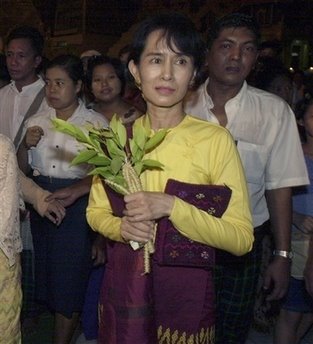


 Posts


