News & Articles on Burma
Tuesday, 22 March, 2011
-------------------------------------------------------------
Wa Leader Vows to Fight On
Thailand Accused of Creating Instability in Burma
Wa Leader Vows to Fight On
1,000 Burmese Fisherman in Need of Rescue
Burmese Army warned to stop movement in KIA areas
The brunt of the fighting comes to the people – as usual
Monks condemn Germany’s sanctions line
Funeral charity marks 100,000 cremations
Thailand could help curb Karen insurgents: Myanmar
Can Indonesia become the central leader of Asean?
-----------------------------------------------
Wa Leader Vows to Fight On
By WAI MOE Tuesday, March 22, 2011
Leaders of the United Wa State Army (UWSA)—Burma's largest ethnic armed group—said on Sunday that they will not give up “an inch” of their land and called on Wa people to fight against their common enemies. The statement comes amid strained tensions between the Burmese junta and minority groups near the Sino-Burmese border.
“We will not give up any bullet or any weapon which is protecting as many as 500,000 multi-ethnic people’s lives and properties in Wa territory. Holding arms is quite necessary for our security and development of our land,” said UWSA leader Bao Youxiang, according to sources in group headquarters Panghsang.
His address came on Sunday before more than 200 attendees at the closure of the five-day year-end conference in the Wa town near the Sino-Burmese border.
“The Wa regions have been being built for more than 20 years [since the 1989 ceasefire and split from communists] by Wa people through their good will and hard work. Therefore we will not give up an inch of our people’s land freely and easily,” he added.
At the meeting, Bao Youxiang repeatedly mentioned the togetherness of the Wa region saying “successful development projects” were due to the unity of people living in the area. He added that “unity could vanquish any enemy and any threat.”
Bao Youxiang—who is believed to be in his 60s—did not appear throughout the first four days of the event, but gave a rousing speech at the end of the conference. UWSA’s other senior members— including Zhao Zhongdang, who is expected to succeed Bao Youxiang—led the meeting. Discussions centered on handling fresh military threats on the UWSA from government troops, and alliances with other ethnic groups in the region.
However, despite Bao Youxiang’s defiant speech, the UWSA seems to be edging towards negotiations with the junta over the Border Guard Force (BGF).
After the Wa meeting, officials of the Military Affairs Security (MAS) reportedly came to Panghsang on Monday to pick up their Chinese counterparts for a regular border committee. While MAS officials were in the Wa headquarters, the UWSA leadership handed over a letter for Naypyidaw.
Although Wa officials declined to talk about details of the letter, observers said it was from Bao Youxiang to ex-Gen Thein Sein who is President-in-waiting for the new government in Naypyidaw.
Sources close to the UWSA said Thein Sein has a close personal relationship with the Wa leader ever since the pair crossed paths when the Burmese general was posted as the commander of Triangle Regional Military Command in eastern Shan State.
Shortly after Thein Sein was named president of the Republic of the Union of Myanmar in early February, Bao Youxiang was the only person among ethnic armed groups which dispute the BGF who sent a letter of congratulations to Naypyidaw.
While key UWSA members gathered in Panghsang for the meeting, junta troops launched a series of attacks on the Shan State Army-North (SSA-North) in an attempt to seize the group’s headquarters in Wimhing, Shan State. The SSA-North also rejected the BGF plan.
Ethnic minority sources claim junta troops used large caliber shells during operations against the SSA-North. “Our intelligence reports said that the government army sent more reinforcements—including at least eight trucks and extra 120 mm-artillery weapons—to northern Shan State,” said an SSA officer who spoke on condition of anonymity.
The SSA had an alliance with the UWSA and other ethnic armed groups—such as the Kachin Independence Army (KIA) and the Mongla group of the National Democratic Alliance Army—following continuous pressure from Naypyidaw over the BGF issue and the fall of the Kokang army in 2009.
But UWSA leaders reportedly told their SSA-North counterparts recently that the agreement did not extend past last year. However, with non-military aid apparently still offered to the SSA-North, it is uncertain what the exact scope of the alliance remains.
Apart from the UWSA and its former communist comrades in the Mongla armed group, the SSA-North and the KIA formed a new alliance in 2010 alongside other armed ethnic groups based along the Thai-Burmese border. These include the Karen National Union, the Karenni People Progressive Party and the New Mon State Party.
Ethnic minority sources said the UWSA and the Mongla group’s decision to abstain from the new alliance is due to China’s opposition, even though Wa and Mongla leaders support the alliance informally.
“Chinese officials do not want the UWSA and Mongla group to have a close relationship with other ethnic groups based on the Thai-Burmese border. The Chinese think these groups are pro-West,” an ethnic minority source revealed on condition of anonymity.
http://www.irrawaddy.org/article.php?art_id=20985
-------------------------------------------
Thailand Accused of Creating Instability in Burma
By HTET AUNG Tuesday, March 22, 2011
Burma's information minister has accused Thailand of not being a friendly neighbor by promoting instability in Karen State, according to the state-run New Light of Myanmar.
“If the neighbor [Thailand] would stand as a friendly nation, [the] problems of Kayin [Karen] State would soon be solved,” said Information Minister Kyaw San at a parliamentary session in Naypyidaw.
“There are base camps which they call refugee camps in the territory of the neighbor near Myanmar [Burma] border. Those camps are founded with contribution[s] of some certain super powers, INGOs and the neighbor. Insurgents use those camps as their base and launch guerrilla attacks on the army, which is the reason that [exchanges of fire] are still occurring in Kayin State.”
The remark was reportedly made in response to a question by Saw Thein Aung, a leader of Phalon Sawaw Democratic Party, who is an elected MP in the Lower House representing Hlaingbwe constituency.
Saw Thain Aung asked the government about its plan to restore peace and stability in Karen State and the role of Karen nationals in the process. He also said that the people in Karen State want a cease-fire and peace, and are “sympathetic toward war refugees.”
Although the state media didn't mention Thailand by name, the information minister blamed the “neighbor” as a source of prolonging instability in Karen State. Thailand has given sanctuary along the border to refugees fleeing from Karen State, although the Burmese regime does not recognize the shelters as refugee camps.
The junta has previously made this accusation, but on this occasion it went a step further in attacking the international nongovernmental organizations (INGOs) based in Thailand that provide humanitarian assistance to the refugee camps along the Thai-Burmese border.
The junta's attack on the INGOs coincides with the decision of the European Union (EU) to reduce aid to the Burmese refugees in Thailand, which came soon after the EU Commissioner for International Cooperation, Humanitarian Aid and Crisis Response Kristalina Georgieva led an EU delegation to Mae La refugee camp, the biggest camp with about 50,000 refugees.
According to camp sources, the EU commissioner told the camp management body that the EU will reduce their aid in the coming years, but will provide assistance to promote livelihoods for the refugees with the goal of allowing them to stand on their own feet by getting access to paid jobs inside and outside the camps.
Thailand currently hosts about 150,000 Burmese refugees in nine refugee camps along its western border opposite Shan, Karenni and Karen states and Tenasserim Division.
Currently, there are 78,682 refugees from Karen State living in three refugee camps—Mae La, Nu Po and Umpiem Mai, located in Tak Province—according to 2011 data issued by the Thailand Burma Border Consortium, an umbrella organization comprised of INGOs that provides food, materials for building shelters, and other assistance to the refugees.
For more than a quarter of a century, Thailand has hosted and received Burmese refugees due to continuing armed conflict between various ethnic armed groups and the Burmese army.
http://www.irrawaddy.org/article.php?art_id=20982
------------------------------------------
Wa Leader Vows to Fight On
By WAI MOE Tuesday, March 22, 2011
Leaders of the United Wa State Army (UWSA)—Burma's largest ethnic armed group—said on Sunday that they will not give up “an inch” of their land and called on Wa people to fight against their common enemies. The statement comes amid strained tensions between the Burmese junta and minority groups near the Sino-Burmese border.
“We will not give up any bullet or any weapon which is protecting as many as 500,000 multi-ethnic people’s lives and properties in Wa territory. Holding arms is quite necessary for our security and development of our land,” said UWSA leader Bao Youxiang, according to sources in group headquarters Panghsang.
His address came on Sunday before more than 200 attendees at the closure of the five-day year-end conference in the Wa town near the Sino-Burmese border.
“The Wa regions have been being built for more than 20 years [since the 1989 ceasefire and split from communists] by Wa people through their good will and hard work. Therefore we will not give up an inch of our people’s land freely and easily,” he added.
At the meeting, Bao Youxiang repeatedly mentioned the togetherness of the Wa region saying “successful development projects” were due to the unity of people living in the area. He added that “unity could vanquish any enemy and any threat.”
Bao Youxiang—who is believed to be in his 60s—did not appear throughout the first four days of the event, but gave a rousing speech at the end of the conference. UWSA’s other senior members— including Zhao Zhongdang, who is expected to succeed Bao Youxiang—led the meeting. Discussions centered on handling fresh military threats on the UWSA from government troops, and alliances with other ethnic groups in the region.
However, despite Bao Youxiang’s defiant speech, the UWSA seems to be edging towards negotiations with the junta over the Border Guard Force (BGF).
After the Wa meeting, officials of the Military Affairs Security (MAS) reportedly came to Panghsang on Monday to pick up their Chinese counterparts for a regular border committee. While MAS officials were in the Wa headquarters, the UWSA leadership handed over a letter for Naypyidaw.
Although Wa officials declined to talk about details of the letter, observers said it was from Bao Youxiang to ex-Gen Thein Sein who is President-in-waiting for the new government in Naypyidaw.
Sources close to the UWSA said Thein Sein has a close personal relationship with the Wa leader ever since the pair crossed paths when the Burmese general was posted as the commander of Triangle Regional Military Command in eastern Shan State.
Shortly after Thein Sein was named president of the Republic of the Union of Myanmar in early February, Bao Youxiang was the only person among ethnic armed groups which dispute the BGF who sent a letter of congratulations to Naypyidaw.
While key UWSA members gathered in Panghsang for the meeting, junta troops launched a series of attacks on the Shan State Army-North (SSA-North) in an attempt to seize the group’s headquarters in Wimhing, Shan State. The SSA-North also rejected the BGF plan.
Ethnic minority sources claim junta troops used large caliber shells during operations against the SSA-North. “Our intelligence reports said that the government army sent more reinforcements—including at least eight trucks and extra 120 mm-artillery weapons—to northern Shan State,” said an SSA officer who spoke on condition of anonymity.
The SSA had an alliance with the UWSA and other ethnic armed groups—such as the Kachin Independence Army (KIA) and the Mongla group of the National Democratic Alliance Army—following continuous pressure from Naypyidaw over the BGF issue and the fall of the Kokang army in 2009.
But UWSA leaders reportedly told their SSA-North counterparts recently that the agreement did not extend past last year. However, with non-military aid apparently still offered to the SSA-North, it is uncertain what the exact scope of the alliance remains.
Apart from the UWSA and its former communist comrades in the Mongla armed group, the SSA-North and the KIA formed a new alliance in 2010 alongside other armed ethnic groups based along the Thai-Burmese border. These include the Karen National Union, the Karenni People Progressive Party and the New Mon State Party.
Ethnic minority sources said the UWSA and the Mongla group’s decision to abstain from the new alliance is due to China’s opposition, even though Wa and Mongla leaders support the alliance informally.
“Chinese officials do not want the UWSA and Mongla group to have a close relationship with other ethnic groups based on the Thai-Burmese border. The Chinese think these groups are pro-West,” an ethnic minority source revealed on condition of anonymity.
Copyright © 2008 Irrawaddy Publishing Group | www.irrawaddy.org
http://www.irrawaddy.org/article.php?art_id=20977
---------------------------------------------
1,000 Burmese Fisherman in Need of Rescue
By KO HTWE Tuesday, March 22, 2011
Nearly 1,000 fishermen whose boats were swept out to sea by a storm are in need of urgent rescue assistance, according to Tun Lwin, the retired director-general of Burma's Department of Meteorology and Hydrology.
The stranded fisherman had been among nearly 2,000 from the Cyclone Nargis hit areas of Pyapon, Dedaye, Labutta and Myaungmya townships in the Irrawaddy Division who gather at the mouth of the Pyapon River between October and April of every year in search of fish and prawns. Most of these fishermen lost their boat in Cyclone Nargis and since have used a bamboo raft for fishing.
On and around March 13, three continuous days of winds of up to 70 miles per hour sent nearly 125 fishing boats out to open sea, Tun Lwin wrote on his website. Some were stranded on Heingyi Island and some drifted to shores of Kyaikkami and Ye townships in Mon State.
Fishing vessels and the Burmese Navy rescued nearly 800 fishermen, of whom 200 are now in Tavoy Township in Tanitharyi Division and 600 are in Rangoon.
“Authorities are collecting meals for the refugees who are being housed in the Tavoy High School. The security is strict around the camp,” said a resident of Tavoy, also known as Dawei.
Authorities said they will send the rescued fisherman to their homes within four or five days.
“There are also a lot of causalities and the need to rescue more fisherman who have drifted out to sea,” said another Tavoy resident.
However, the Burmese state-run newspaper Myanmar A Lin said on Tuesday that the Burmese Navy rescued 3,374 fisherman and 3,152 of those fishermen have been sent home.
The Myanmar [Burma] Climate Change Watch website mentions the danger of the downburst on its web page but does not mention details of the meso scale phenomena. In Burma, weather forecasting is made with limitations because of the lack of equipment to measure localized phenomena, according to Tun Lwin's website.
http://www.irrawaddy.org/article.php?art_id=20983
------------------------------------------------------
Burmese Army warned to stop movement in KIA areas
Tuesday, 22 March 2011 19:29 KNG
The Kachin Independence Army (KIA) warned the Burmese Army to stop any movement in areas controlled by the KIA in Northern Shan State, after a recent offensive against the Shan State Army-North (SSA-N) was launched by Burmese troops, said local military sources close to the KIA.
The warning was released by Dai Lawn Rung, the central military command of the KIA, based in Laiza, in Kachin State. It means Burmese troops will face armed resistance if they enter the KIA areas, according to KIA officials in N. Shan State.
kia_4th_brigade
The entrance of KIA's 4th brigade based in Loikang, near Kutkai in Nothern Shan State.
Local military observers in Munggu (Mongkoe) told the Thailand-based Kachin News Group, “At the moment, Burmese troops have stopped any movement in the KIA areas. Fighting will break out if they neglect the KIA’s warning.”
The KIA’s 4th brigade, which has five battalions, is based in N. Shan State. Battalions No. 17 and No. 29 are nearest to the current military conflict between Burmese troops and the SSA-N.
The KIA is closely watching the latest fighting between the SSA-N and Burmese troops, according to the KIA officials.
Both the KIA and SSA-N are members of the recently formed United Nationalities Federal Council (UNFC), the political and military alliance organized by 12 ethnic groups.
The United Wa State Army (UWSA), the KIA’s ally outside the UNFC and the strongest armed ethnic group said it also will fight the Burmese Army if they enter its territories.
The SSA-N wants the stronger armed groups, like the KIA and the UWSA, to join the military response against Burmese troops, according to local military analysts.
The two groups are preparing for inevitable civil war with the Burmese junta. However, both are reluctant to respond to the junta’s military action against the SSA-N so far.
Military analysts near the China border said the current fighting between the Burmese Army and SSA-N will test the UNFC, which formed in last month.
The KIA is the second strongest armed ethnic group in military-ruled Burma. It has five brigades. Four of them are based in Kachin State. There are about 30 battalions, with over 30,000 fighters- including regular and reserved forces, said KIA.
There is no official ceasefire agreement between the KIA and Burmese regime. However, the KIA will not start the war according to KIA officials. http://www.kachinnews.com/news/1874-burmese-army-warned-to-stop-movement-in-kia-areas.html
-------------------------------------------
The brunt of the fighting comes to the people – as usual
Tuesday, 22 March 2011 13:04 S.H.A.N.
Since 22 February, travel between the Monghsu gemland and the rest of Shan State has been restricted. But since 13 March, when the Burma Army launched the offensive with at least 19 battalions on the Shan State Army (SSA) North that had turned down its “One country one military” program, the situation has turned from bad to worse in Monghsu and its neighboring townships: Kehsi. Tangyan and Mongyai.
The following are the first reports that have reached SHAN from the conflict zone:
Nampook village, Phak Narm village tract, Kehsi township
On 9 March 2011, a cow worth 500,000 kyat ($500) was taken by the Langkher-based battalion (number of unit unidentified) for food. Later on 14 March 2011, another cow worth 600,000 kyat ($600) was taken from the main village, Phak Narm. There was no compensation.
On 15 March, Capt Min Min Hlaing, commander of the unit, summoned Loong Sai, 50, headman of Wanwarp to Nampook. On his arrival, the major accused him of being late and punched his face and kicked him several times. His soldiers later visited Loong Sai and asked him to stay calm as the major was a habitually short tempered person.
Namlao, Mongkao tract, Tangyan township
On 16 March 2011, after the SSA had retreated from Namlao, more than 100 villagers, most of them women, children and the elderly people, were detained at the military camp. The occupying force was made up of Infantry Battalion 33 (Mongkao-based) and Infantry Battalion 291 (Lashio-based).
On the next day, young people in Mongkao were summoned and detained at a villager’s house in Namlao. They were accused of assisting the rebels by not giving information to the Army.
As a result, more than 500 people had fled and taken refuge in the jungle. Their left behind possessions were ransacked and looted by the soldiers. At least 50 motor vehicles were taken each for his own
Markman village, Kehsi township
On 18 March 2011, Maj Aye Aung of Light Infantry Battalion 578 (Langkher-based), 67 strong, took the following items without paying:
Liquor 50 bottles Price K 50,000 ($50)
Chicken 150 Price K 400,000 ($400)
Cooking oil 5 pails Price K 170,000 ($170)
Ajinomoto 10 bags Price K 20,000 ($20)
Rice 1 tang Price K 20,000 ($20)
On the next day, he and his men arrived at Pa Tep village and commandeered a bullock cart for use. The owner Sai Pi, 45, and another youth Sai Aung, 25, were beaten as they had no information about the rebels.
Sai Pi was punched, kicked and beaten with a piece of wood used as a fence stake, until he was drenched in blood. As for Sai Aung, he was hit on his forehead with a rifle stock.
They also took 50 liquor bottles, 20 bottles of cooking oil, 5 cooking pots, 10 Ajinomoto bags and 3 Buddha images from the village. http://www.shanland.org/index.php?option=com_content&view=article&id=3518:the-brunt-of-the-fighting-comes-to-the-people-as-usual&catid=87:human-rights&Itemid=285
------------------------------------------------
Monks condemn Germany’s sanctions line
By JOSEPH ALLCHIN
Published: 21 March 2011
Two monks representing the All Burma Monks Alliance (ABMA) will present an open letter to the German foreign ministry today and lead a silent protest outside its Berlin headquarters.
Ashin Sopaka, who will present the letter alongside Ashin Kovida, told DVB that he was calling on the German people to oppose their government’s alleged lobbying of other EU nations to remove sanctions on the country. “They are more interested in business with this regime; they said this is a new government so they want to work together – this is their interest. That’s why they want to lobby and work with the junta, and they don’t want to hear criticisms from other countries.”
Activist group Burma Campaign UK corroborates that the German government as well as Italy and Spain have been lobbying other EU nations to support the removal of the EU’s weak sanctions on Burma. This allegation also appeared in a leaked Wikileak cable, where a British diplomat told his US counterpart that the Germans had “‘heard what they wanted to hear’ about the situation in Burma and therefore ‘have subsequently started discussions within the EU about relaxing the current measures’.”
Since the junta held an election in November last year there have been renewed calls for an end to sanctions. Sopaka however told DVB of the protest: “We want to tell the story that is going on behind – how they organised the election and formed the new government. We want to tell them that they changed only their clothes, their uniforms, from soldiers to normal; they didn’t change their policies. We want to tell them that there are more political prisoners now, and the monks are still in jail.
“We wish that they stay with the EU common position; that is our hope. I hope they understand and hear our voice.”
Germany has a long history of business dealings with the Burmese junta, and following the September 2007 monk-led protests German campaigners noted that slain Japanese journalist Kenji Nagai was in all probability murdered by a German-made G3 assault rifle, which has been the primary battle assault rifle of the Burmese army since the 1960s. Moreover, in a major investigation by DVB a Burmese defector alleges that the German machine parts company Deckel Maho Gildemeister (DMG) had supplied parts for Burma’s nuclear program.
Reflecting what activists allege to be an attitude of appeasement by the German government, a large EU delegation of some 30 diplomats met with Aung San Suu Kyi in Rangoon to discuss sanctions. This was also joined by a plea from parties, including the National Democratic Force (NDF), which split from the National League for Democracy (NLD) in order to take part in last year’s elections, to remove sanctions.
Sopaka will lead the silent protest today outside the foreign ministry in central Berlin from 2pm to 6pm.
The junta meanwhile responded to the NLD’s continued support of sanctions with the threat that the party, including Aung San Suu Kyi, could meet a “tragic end”.
http://www.dvb.no/news/monks-condemn-germanys-sanctions-line/14864
---------------------------------------------
Funeral charity marks 100,000 cremations
By BARANI
Published: 22 March 2011
A charity set up by a prominent Burmese film star to provide free funerals for hard-up families yesterday held its 100,000th ceremony in Rangoon.
A regular target of attacks from the Burmese junta, the Free Funeral Service Society (FFSS) was founded a decade ago to relieve families of the onerous cost of funerals, which often cost several hundred dollars in country where average annual salaries are little more than $US400.
The founder, Kyaw Thu, a two-time Myanmar Academy Award winner and once one of Burma’s leading film icons, told DVB that the group was also able to provide the family of Chit Han, who was cremated yesterday, with 350,000 kyat ($US400).
Since Kyaw Thu’s retirement from the big screen and switch to social work he has become an increasingly vocal critic of the ruling junta, and was arrested after publicly supporting the September 2007 monk-led uprising.
His relief work and raising of some $US400,000 following 2008’s cyclone Nargis also drew the ire of the generals, who eye with distaste anyone filling the void left by the decrepit public services.
The rising popularity and influence of the FFSS, which relies on private donations, among the Burmese public has worried the junta, so much so that in February 2008 it ordered several Rangoon journals not to publish information about the group’s activities, while the year before, its registration renewal was refused by the government until an appeal met with success.
http://www.dvb.no/news/funeral-charity-marks-100000-cremations/14871
------------------------------------------------
Mar 22, 2011
Thailand could help curb Karen insurgents: Myanmar
YANGON - A TOP official in Myanmar says a decades-old insurgency in the country could be curbed with the help of neighboring Thailand.
Information Minister Kyaw Hsan did not mention Thailand by name, but referred to the country neighbouring Kayin State. Karen ethnic rebels in that eastern region have been fighting for autonomy.
The government-run New Light of Myanmar newspaper reported that Kyaw Hsan made the comments Monday in response to a question in parliament.
Aside from Thailand, he was also quoted as saying 'the modest cooperation' of certain powers and non-governmental organisations would lead to an effective solution to Kayin's unrest.
Myanmar is ruled by a military junta. Human rights groups have long accused the army of abuses in insurgent areas. -- AP http://www.straitstimes.com/BreakingNews/SEAsia/Story/STIStory_647892.html
-------------------------------------------------
Can Indonesia become the central leader of Asean?
By Sarinna Areethamsirikul
Bangkok
Published on March 22, 2011
Indonesia is now not only the largest economy in Southeast Asia, but also the only Asean member ranked as a free country by the Freedom House Index (FHI). No one can deny the current force of economic and political development or development of civil society organisations (CSOs) in Indonesia. This situation has revitalised the new phase of Indonesian leadership in Asean. The Philippines has risen from the political ashes under the government of President Beningo Aquino III. By contrast, Thailand has demoted its democratic paradigm since the 2006 coup.
What is so significant about Indonesia's rising star of democracy while other Asean members continue with the ideologies of socialism and authoritarian democracy?
Indonesian leadership does not stop within Asean, as it is now recognised by the international community as the regional representative at the G-20. The largest Muslim country in the world also plays a bigger role at the Organisation of Islamic Conference (OIC) and is a vital US partner against terrorism in Southeast Asia.
Indonesia is the current Asean chair, which provides an opportunity for the country to officially demonstrate its intention and responsibility to lead Asean in 2011 and beyond. Some say one year is too short to make a change in the direction of Asean. It is partly true. But with hundreds of Asean meetings each year, Indonesia should be able to create a new regional atmosphere either through public announcements or actions. Indonesia can influence the new direction of Asean by supporting Asean's new credos - democracy and human rights under the Asean Charter - bringing these ideals a little closer to reality.
Challenges for Indonesia and Asean are climate change, regional infrastructure building (under "Asean Connectivity"), human and drug trafficking, migration, and the protection of low skilled workers, women, children and the disabled.
In addition, Asean now has its own human rights commission, the Asean Inter-governmental Commission on Human Rights (AICHR). But the AICHR apparently has only the mandate of promotion, not protection of human rights. The terms of reference (TOR) shamefully make the commission look like a lame duck. The commission does not have the power to hear or investigate cases, to make country visits or even produce fact-finding reports. Indonesia should try to expand the AICHR's connection with Asean in order to build a pro-human rights atmosphere and shape the draft of the Asean Human Rights Declaration.
Another issue that sooner or later will get regional attention again is democratic development in Burma. The assessment of the future political situation in Burma and how Asean can improve its relationship with the recalcitrant member are big tests.
The question is whether Indonesia has the will to take a lead. If yes, what are the complications of becoming the regional leader?
Jakarta is the centre of Asean diplomacy, where the Asean Secretariat is located and the Asean permanent representatives and ambassadors to Asean reside. This gives Indonesia leverage to raise attention, discuss issues, call for meetings and create regional direction.
If Indonesia is willing to lead, the principles of the "Asean Way" such as consensus, consultation and non-intervention should be eased in order to shift the regional environment from passive to proactive and more effective. This will irritate Asean members that prefer domestic politics to remain within borders even when they infringe on the regional values of democracy and human rights.
Indonesia will start increasing its military spending this year from around 1 per cent of GDP to 1.5 per cent by 2014. Some Asean members have showed support for this increase and even complimented it as a way to enhance the capacity of Asean defence, particularly in the Malacca Strait.
Building up armed forces and modernising the defence sector always raises a red flag to neighbours. Indonesia does not want to send the wrong signal or set off an arms race in the region. Closer defence cooperation among members will possibly assuage this concern.
The expansion of Indonesian leadership together with the increase in its military budget may shake the balance of power in Asean and ignite fears of a self-proclaimed regional leader, because Asean has never endorsed the creation of a responsible de facto regional leader like Germany in the EU or the United States in Nato. When a country has obvious newfound power, people certainly expect something out of that privilege. It is hard for Indonesia to create a new regional atmosphere while maintaining complementary, not competing, cooperation, but so far the signs have been good.
Sarinna Areethamsirikul is a lecturer at Naresuan University's Bangkok campus.
http://www.nationmultimedia.com/2011/03/22/opinion/Can-Indonesia-become-the-central-leader-of-Asean-30151407.html?utm_source=feedburner&utm_medium=email&utm_campaign=Feed%3A+Nationmultimediacom-Opinion+%28NationMultimedia.com+-+Opinion%29
Wednesday, March 23, 2011
News & Articles on Burma-Tuesday, 22 March, 2011


Tuesday, March 22, 2011
News & Articles on Burma-Monday, 21 March, 2011
News & Articles on Burma
Monday, 21 March, 2011
-------------------------------------------------------------
Aung San Suu Kyi Speaks to Amnesty International Activists
Legal Action On Cards for NDF Leadership
Saudi oil to traverse Burma
Market Prices Remain High Despite Fee Decrease
Heavy Security Requirements Imposed for Water Festival
Shan rebel army: We are not terrorists
Wa army on 24-hour standby-only
UWSP conference ends on development note
Myanmar cracks down on massage parlors in capital
Anxiety pervades Burmese border town
Burma tries to strangle Skype
-------------------------------------------------
Aung San Suu Kyi Speaks to Amnesty International Activists
Asia, General Amnesty, United States | Posted by: Jungwon Kim, March 19, 2011 at 9:43 PM
27Share
There is an antidote to the weariness, cynicism and paralysis perpetuated by the heartless churn of our 24-hour news cycle: Just listen to the voices of those who walk the razor’s edge each day as they fight to change the world. Burmese opposition leader Aung San Suu Kyi addressed Amnesty activists by phone at the end of Day 2 of our 50th anniversary conference, graciously acknowledging the role of grassroots activism in her release after 15 years of detention by the military junta and encouraging us not to forget the 2,000-plus political prisoners who remain locked up in Burma.
Her brief address was followed by a riveting speech by Jenni Williams, co-founder of Women of Zimbabwe Arise, a group of women who have been jailed, tortured and persecuted for their non-violent demonstrations to demand social justice. Williams recalled one August night when police abducted seven WOZA members. “The phone calls started at 3 a.m. We heard our members had been arrested in suburbs, so we called Amnesty International. By 12 noon, all seven members were delivered back to their homes by the same police officers who had abducted them,” said Williams.
Earlier in the day, I spotted New York Times columnist Nicholas Kristof listening to similarly harrowing tales at the well-attended panel discussion, “Muzzling the Watchdogs,” featuring Mexican journalist Lydia Cacho, Sri Lankan journalist J.S. Tissainayagam and Iranian American journalist Roxana Saberi. All three had been arrested, imprisoned and persecuted for their work to expose injustice, and each was the subject of Amnesty International urgent actions and/or international letter campaigns demanding their freedom.
Lydia Cacho, the woman Mother Jones called “Mexico’s most wanted journalist,” thanked Amnesty International members for throwing her a lifeline time and time again. From the beginning of her career in journalism, Cacho focused on women’s and children’s rights—”before they were called human rights.” She fought editors to get her stories published and even opened a shelter for women and children fleeing violence—a move that put her life in peril repeatedly. The danger of Cacho’s work intensified after she published The Demons of Eden, her 2004 book exposing a Cancun child pornography ring involving prominent businessmen with connections to high-level government officials. Since then, she has been hunted and persecuted by powerful forces within Mexico’s government and criminal underworld.
Cacho, who has survived kidnap, torture, multiple assassination attempts and judicial persecution, emphasized how grassroots human rights work reinforces our interdependence. “Every time you take a stand for anyone—and you have saved the lives of everyone at this table in some way—you are being a true defender of free expression,” Cacho told the large audience who attended the panel. “Your voice is so powerful. It not only makes your rights valuable, it makes our rights valuable.”
I had the immense privilege of interviewing Cacho earlier in the day, and her account of her 2005 kidnapping at the behest of the governor of the state of Puebla was chilling. Her response to my question of how she kept herself from unraveling during that ordeal of torture and threats is something I wish every activist here could have heard. “When you have looked into the eyes of an eight-year-old girl who tells you about being raped and tortured repeatedly on videotape—not to save herself but solely in order to save other girls from ever having to live through such unspeakable horror—there is nothing else you can do but continue the fight. She gave me strength.”
After spending nearly two full days interviewing human rights defenders I have admired for years, I have come away with this observation: These people who dedicate their lives to fight seemingly insurmountable odds share in common a luminous sense of purpose that comes from the surrender of the individual to the collective. This connection with a larger purpose has sustained them through unspeakable hardships most of us cannot imagine. And while most of us may not be cut out for the kind of danger or hardship they face on a daily basis, each and every one of us can offer an act of solidarity that may, at that critical moment, tip the scales in favor of life over death. http://blog.amnestyusa.org/us/aung-san-suu-kyi-speaks-to-amnesty-international-activists/
----------------------------------------------
Legal Action On Cards for NDF Leadership
By THE IRRAWADDY Monday, March 21, 2011
Burma's Election Commission (EC) is reportedly planning to take legal action against top leaders of the National Democratic Force (NDF) party for alleged misappropriation of funds during last year's election.
Sources at the EC said that cases against three senior NDF members—party leader Khin Maung Swe, Dr. Than Nyein and Dr. Win Naing—have been prepared for their alleged abuse of election funds. Action against them could commence when the current parliamentary session is completed at the end of the month.
This report, however, cannot be independently verified by The Irrawaddy.
Than Nyein, the chairman of the NDF—a breakaway faction of pro-democracy leader Aung San Suu Kyi's National League for Democracy (NLD) party—said that he had no knowledge of any legal action being taken against them.
He said that NDF leaders already resolved allegations regarding the supposed misuse of election funds with the commission three month ago. It also concerns receiving funds from overseas, which is prohibited under election rules.
Despite a previously tense relationship resulting from their contrasting views on the November elections, Suu Kyi and senior NDF members recently had a private meeting at the home of NLD deputy leader Tin Oo in Rangoon. But Than Nyein said these discussions were simply of a personal nature and there are no plans for any political cooperation yet.
Asked if there is any concern about a possible government crackdown on the party due to increased interactions with Suu Kyi, Than Nyein said, “Many people are meeting Daw Suu these days. I don't think we would be singled out and punished for this.”
http://www.irrawaddy.org/article.php?art_id=20975
--------------------------------------------
Saudi oil to traverse Burma
By JOSEPH ALLCHIN
Published: 21 March 2011
China has signed a major agreement with Saudi Arabian state-owned oil company Saudi Aramco to supply its Yunnan province with oil, which will likely travel through Burma to the southwestern Chinese region.
Aramco is the world’s most valuable company, worth somewhere between $US2.2 trillion to $US7 trillion. It announced the signing of the memorandum of understanding (MOU) with PetroChina Company Ltd., a subsidiary of China’s state-owned oil giant China National Petroluem Company (CNPC), to supply some 200,000 barrels of oil a day to the proposed Yunnan refinery that will serve as the endpoint of the trans-Burma Shwe pipeline.
The deal represents a new and very important strategic relationship between the world’s second top oil producer and what is becoming one of the top consumers that was underscored by Khalid A. Al-Falih, president and CEO of Aramco, in its press release:
“We don’t consider ourselves simply sellers of oil to China, but rather strategic partners whose many relationships in that important country are founded on mutual respect, interdependence and mutual benefit.”
That the relationship will hinge on Burma also underscores the importance of the Shwe gas pipeline to the Chinese, with Reuters noting that “This pipeline would make the Saudi crude very competitive because it would slash the journey time through the congested Malacca Strait that links Asia with the Middle East.”
Despite the importance and scale of the economics involved, Wong Aung of the campaign group Shwe Gas Movement (SGM) estimates that as many as 15,000 people will lose their land and livelihoods, often without any compensation.
With a barrel of oil currently trading at over $US100, this makes the daily crude delivery of the Shwe pipeline worth some $US20 million in Saudi oil alone, which is roughly equivalent to four months worth of Burmese government expenditure on health moving through the country in a single day.
Although Russia is by a whisker the world’s top producer of oil, Saudi Arabia is thought to possess the largest provable reserves of crude and as a result has received protection and patronage from the United States, despite it being regarded as one of the most repressive regimes, with sentences for “drunkenness” often including amputations.
That relationship extended to the largest recorded arms sale last year, which according to The Economist was worth up to $US90 billion. The deal included sophisticated weapons systems, including the F-15 fighter jet, apache helicopters, air defences and other equipment. The Saudi military was recently deployed in neighbouring Bahrain to suppress popular pro-democracy protests there. Bahrain houses the US fifth fleet and is a key strategic ally of both the US and Saudi Arabia.
http://www.dvb.no/news/saudi-oil-to-traverse-burma/14856
--------------------------------------------
Market Prices Remain High Despite Fee Decrease
By KO HTWE Monday, March 21, 2011
The price of rice and other marketplace goods has not decreased across Burma despite a Ministry of Transportation regulation issued last Tuesday to temporarily reduce transportation fees by about 30 percent nationwide while increasing the tonnage allowed on trucks.
Tuesday's regulation came after the Burmese military government in August agreed to conform with transportation standards in the rest of the member states of the Association of Southeast Asian Nations (Asean).
Following Asean standards, Burma reduced its allowance on tonnage: six-wheel trucks to carry loads of just 16 tons, down from 20 tons previously, while the legal weight limit for 10-wheel trucks was lowered from 35 to 21 tons, and for 12-wheel trucks from 40 to 25 tons.
On Tuesday, the Ministry of Transportation issued an amendment to that order, stating that forthwith all six-wheel trucks can carry an additional two tons [i.e., from 16 to 18 tons], while 10-wheel and 12-wheel trucks can now carry an additional five tons [i.e., from 25 to 30 tons].
The previous limits on truck loads caused transportation fees to rise immediately.
The Ministry of Transportation's move on March 15 has been widely seen as an attempt to stifle growing unrest with inflation by allowing retailers to reduce the cost of goods.
“Although the authorities have said the adjustment is temporary, I think we will be able to reduce the transportation fees,” said the owner of a Rangoon-based Transportation Company.
“For instance,” he said, “the cost of shipping a sack of rice from Rangoon to southern Shan State has dropped from 3,500 kyat (US $4.04) to 2,500 kyat ($2.89). The cost of transporting concrete has now been reduced from 3,800 kyat to 2,500 kyat.”
“After the new amendment, the transportation fee for goods dropped from 150 kyat ($0.15) to 100 kyat ($0.10) per viss (1.63 kg),” said Aung Tun, who works for a transportation company in Rangoon.
Elsewhere in the country, transport fees for general commodities dropped to 40 kyat per viss from Mandalay to Muse, and from Rangoon to Taunggyi; 30 kyat per viss from Rangoon to Mandalay; and 15 kyat per viss from Pa-an to Rangoon, according to the Rangoon-based 7 Day News weekly journal.
However, six days after the reduction in transport fees, the price of general commodities remains the same.
“Some people told me that the transportation fees has dropped, but the price of goods at the market is still the same,” said a housewife in Taunggyi.
In Rangoon, the price of one viss of ginger from Shan State has remained at around 1,100 kyats ($1.27), while a viss of potatoes is still 400 kyat ($0.46).
“We can reduce the transportation fees,” said Aung Tun. “But the price of goods is up to the merchants.”
http://www.irrawaddy.org/article.php?art_id=20974
-----------------------------------------------
Heavy Security Requirements Imposed for Water Festival
By THE IRRAWADDY Monday, March 21, 2011
Burmese authorities will impose heavy security requirements on those who want to set up pavilions during the annual water festival this year, according to Rangoon police sources.
Those who want to build private water-throwing pavilions this year will be required to install CCTV cameras, hire security guards and closely cooperate with the authorities, according to a senior police official in Rangoon.
The official also said that the pavilion organizers would need to have bomb-searching equipment on stand-by and create a small space at the pavilions where vehicles could be searched for bombs and explosives.
These requirements will apply to all the private pavilions to be set up in Naypyidaw and major cities such as Rangoon and Mandalay during the water festival, when thousands of revelers gather to celebrate the Buddhist new year.
“Thorough security planning will be done this year to prevent the repeat of last year's bombing,” said a government official in Rangoon, referring to the deadly bomb blasts last year near Kandawgyi Lake in Rangoon.
The bombing, which killed at least 10 people, including a senior military officer, and injured over one hundred, was believed to have been an unsuccessful attempt by militant dissidents to assassinate Nay Shwe Thwe Aung, the grandson of junta chief Snr-Gen Than Shwe.
The official also added that no pavilion would be allowed to be set up along Rangoon's University Avenue—where pro-democracy leader Aung San Suu Kyi lives—and that not many pavilions would be allowed around Kandawgyi Lake.
A young businessman in Rangoon said that a pavilion costs about US $5,780, not including a deposit with the municipality, and due to increased costs resulting from the new security measures there will be fewer pavilions this year.
“I heard that a pavilion would require at least a 10-member security unit,” he said. “So this will be a complex issue.”
Some young people in Rangoon said they are still scared by the memories of last year's bombing and therefore may not join the water festival this year.
“I will go to the meditation center during the festival instead,” said a 19-year-old university student in Rangoon.
http://www.irrawaddy.org/article.php?art_id=20973
-------------------------------------------
Shan rebel army: We are not terrorists
Monday, 21 March 2011 18:26 S.H.A.N.
Coming out on 19 March, a day before the junta run media began calling them “insurgents”, a word synonymous with “terrorists” in the Burmese version, the Shan State Progress Party / Shan State Army (SSPP / SSA) made a flat denial of the accusation.
“We have concluded a ceasefire agreement in order to resolve (political problems) through political means,” it reads. “However, the SPDC government simply ignored our efforts and pressured us by military force to transform ourselves into (SPDC run) militias and surrender.
The multiple attacks on us: 2 in September, 3 in November, 1 in December and 6 in March are all self-evident.”
The statement continues: “We are not struggling on the basis of narrow-minded racism. We are not terrorists and we are not calling for secession.”
The statement claims resorting to military methods in order to resolve political issues only serves to undermine regional security and world peace. “It is like providing a wheel when the economy’s going down,” it adds.
It calls for the new government led by former general Thein Sein to respect and recognize “Equality, Justice and Self Determination which are the birth rights of the people of all national races.”
According to earlier reports, Naypyitaw had given an ultimatum to the group to surrender by 1 April. The statement appears to make it clear that the struggle will continue until “the emergence of a federal union based on the Panglong spirit.”
The 1947 Panglong Agreement had guaranteed total autonomy, human rights and democracy to the non-Burman peoples of Burma.
http://www.shanland.org/index.php?option=com_content&view=article&id=3516:shan-rebel-army-we-are-not-terrorists&catid=85:politics&Itemid=266
------------------------------------------------
Wa army on 24-hour standby-only
Monday, 21 March 2011 17:34 Hseng Khio Fah
The United Wa State Army (UWSA) has reportedly ordered all of its frontline units along the Salween that serves as a shared boundary with its ally the Shan State Army (SSA) ‘North,’ which has been fighting with the Burma Army for a week, on an 24 hour alert, according to sources from the UWSA.
“We have alerted all our troops to be ready to defend ourselves even though we don’t want to fight. But the fight won’t be started by our side,” said a high officer who requested not to be named.
At present, the military junta has deployed more troops in areas along the Salween to cut off possible links between the two. The SSA is active on the west of the Salween while the UWSA is in the east.
The SSA is a signatory together with the UWSA, National Democratic Alliance Army (NDAA) and Kachin Independence Army (KIA) which had reached an agreement in April 2010 to help each other whenever one of them is attacked.
The SSA has been fighting against the attacking Burma Army since last Sunday 13 March, up to date. The latest fighting between the two reportedly took place in Kehsi township twice.
According to an SSA officer, the Burma Army has suffered more than 130 casualties, at least 30 killed and 100 wounded, while the SSA has had 4 killed and 8 wounded.
However, the UWSA, the strongest group, said it could not help in the fighting although they are allies. “The reason is because we are still expecting to talk with the military junta. We therefore decided not to get involved in their fighting and to only keep an eye on the Burma army movement’s and the new government’s decision,” said the Wa officer.
“Nevertheless, war is like fire, it can spread out. We therefore have to be prepared, so we can defend ourselves when attacked.”
Currently, two groups of the alliance: the SSA and the KIA have been named by the military junta as “insurgent groups.”
The junta run newspaper New Light of Myanmar reported on Sunday, 20 March that “the insurgent group, the SSA Wanhing (Wanhai) was carrying out terrorist acts and destructions while the government is striving for ensuring better transport across the nation,” saying the SSA was destroying roads and bridges in Monghsu and Mongyai townships.
Due to the offensive, dozens of civilians were reportedly killed and injured by the junta’s heavy weapons while hundreds of people had to flee to other areas for their safety. http://www.shanland.org/index.php?option=com_content&view=article&id=3515:wa-army-on-24-hour-standby-only&catid=86:war&Itemid=284
----------------------------------------
Mar 21, 2011
Myanmar cracks down on massage parlors in capital
YANGON - AUTHORITIES in Myanmar have announced a ban on massage parlors in the country's remote capital, Naypyitaw.
The privately run Myanmar Times newspaper says there are also new restrictions on restaurants and karaoke lounges in a bid to curb disguised prostitution.
They have been ordered to install transparent glass in their rooms, while beauty parlors will be required to install 'adequate' lighting.
Many massage parlors are fronts for brothels, while the other venues also sometimes offer sexual services. Prostitution is illegal in Myanmar and anyone caught running a brothel can be imprisoned.
The newspaper says the measures were announced on March 8 for Pyinmana township, which is the previously settled area around which the new capital was established in 2005. -- AP
http://www.straitstimes.com/BreakingNews/SEAsia/Story/STIStory_647550.html
----------------------------------------
UWSP conference ends on development note
Monday, 21 March 2011 17:56 Phanida
Chiang Mai (Mizzima) – The United Wa State Party (UWSP) pledged to work harder to develop the Wa Region but warned that if the Burmese junta attacks its territory, it will mount a vigorous defence, at the end of its five-day annual conference.
Two Wa soldiers, members of the largest, most well-armed ethnic army in Burma. Photo : AFP
Two Wa soldiers, members of the largest, most well-armed ethnic army in Burma. Photo : AFP
During the conference, which ended Sunday in Pangsang, members heard reports and plans from 27 departments on how to develop the region, according to an UWSP official.
Party chairman Bao Yu Xiang, who attended the conference on Sunday, told Mizzima that the Wa army was ready to defend against any junta military offensive. The United Wa State Army, the armed wing of the UWSP, has rejected the Burmese regime’s order to transform itself into a Border Guard Force.
On March 16, Kyauk Win Kwan, the UWSP vice chairman, said the Wa can successfully avoid the junta’s orders to join the BGF.
The Wa army is well armed and has the capacity to defend its region, Aung Kyaw Zaw, an analyst based on the Sino-Burmese border told Mizzima. The UWSA has nine brigades and a total of more than 30,000 troops, he said.
Aung Kyaw Zaw said that during the coming year the Wa party hoped to take part in a political dialogue with the new parliamentary government.
Since 2005, the Wa army has stopped growing poppy to produce opium in the area and promoted growing alternative crops such as rubber and tea plants, according to a UWSA officer.
‘Because we do not grow poppy anymore, we had some financial problems but we overcame them’, he said. ‘Some Wa have earned a lot of money from rubber while some have not prospered from rubber fields. Some people allege that we are still growing poppy, but that’s not true’, he told Mizzima.
The UWSA separated from the Burma Communist Party in 1989 and signed a cease-fire agreement with the Burmese junta the same year.
http://www.mizzima.com/news/inside-burma/5042-uwsp-conference-ends-on-development-note.html
------------------------------------------
Anxiety pervades Burmese border town
By NAW NOREEN
Published: 21 March 2011
Residents of Myawaddy have reported a tense atmosphere in the Burmese border town following reports that the Democratic Karen Buddhist Army (DKBA) is preparing for an attack.
A frontline commander for the ethnic opposition force, which has been battling the Burmese army in Karen state since November last year, said that the group was drawing up plans for an assault on the town in the near future.
“We are planning urban warfare to take down the [junta’s] equipment and buildings [in Myawaddy],” said Major San Aung. “However, we cannot tell you the exact date and time of the attack.”
One man in the town said that an explosion reportedly took place last week at the old bus terminal, although details of the perpetrator remain unknown.
“Most of the shops are closed today and there isn’t a lot of movement in the streets, although some big shops are open,” said the local, adding that rumours suggested they would begin on Friday last week following the end of high school exams.
San Aung said that fighting had broken out on Friday at an army checkpoint in Kawkareit town, around 20 miles west of Myawaddy.
In November last year the DKBA launched an attack on government positions in Myawaddy, which lies across the border from Thailand’s Mae Sot, sparking a wave of fighting that has spread across eastern Karen state and reined in other opposition Karen forces, such as the Karen National Liberation Army (KNLA).
Myawaddy had acted as a key overland trading point between Thailand and Burma until July last year when the cross-border bridge connecting it to Mae Sot was shut by the Burmese, with recent rumours suggesting it was down to Thailand’s alleged hosting of Karen insurgents.
http://www.dvb.no/news/anxiety-pervades-burmese-border-town/14852
----------------------------------------
Burma tries to strangle Skype
Internet voice calls are a precious lifeline in Burma. Naturally, the government wants to ban it.
Patrick WinnMarch 21, 2011 03:29
If you think U.S. cell phone bills are extortionate, consider this: until recently, acquiring a mobile phone number in Burma meant forking over nearly $1,700 to a state-run telecom.
That's just for the SIM card, the chip inside your phone that stores your number. It's an absurd charge in a country with a $1,100 per capita GDP, one of the world's lowest.
That would be like requiring someone in the U.S., where per capita GDP is $47,400, to spend more than $72,000 on a mobile phone number. (Now, for added effect, count how many cell phones you've lost.)
It's little wonder that Burmese fortunate enough to live near Internet cafes have discovered Skype and software like it such as Google Chat and Pfingo. Depending where you call, chatting through the Internet is somewhere between free (computer-to-computer) to about 25 cents a minute.
This is revolutionary in Burma, where a bleak economy and oppressive military have forced millions to live abroad. Though Burma's Internet infrastructure is pathetic, and its connection speeds sluggish, the Web is a crucial conduit linking Burmese on the inside to their friends and loved ones abroad. Even pro-democracy icon Aung San Suu Kyi uses Skype.
But Burma's military-controlled government wants to forbid Internet voice calls, according to this excellent report in Burma's exile media outlet, The Irrawaddy. At least one Web cafe owner inside Burma, reached by the Irrawaddy, says the ban will slash his revenue by up to 40 percent. Their report states that the junta has threatened cafes that offer Internet voice calls with "legal action" because it's "illegal under existing telecommunication laws."
Why does the junta want to snuff out service like Skype?
Money, for starters. These services deliver profit to foreign companies instead of the military government's telecom monopoly. Similar reasoning has triggered restrictions in countries from Belize to Oman.
Skype is also far more difficult to monitor than dedicated mobile numbers or land lines. That's a threat to the paranoid junta, which actively seeks out and crushes dissent.
According to the Irrawaddy, Burma's telecom agency has recently reduced the cost of a single SIM card to $560. Progress? Barely. In neighboring Thailand, competing telecoms recruit customers by handing out SIM cards for free. (I bought the SIM card and number I've used for years from a 7-11 for about $1.50.)
Hopefully the Skype ban won't stick in Burma's Internet cafes. Perhaps it will, snuffing out a smart, cheap and simple link between Burmese people and the outside world.
http://www.globalpost.com/dispatches/globalpost-blogs/the-rice-bowl/burma-tries-strangle-skype
Friday, March 18, 2011
News & Articles on Burma-Thursday, 17 March, 2011
News & Articles on Burma
Thursday, 17 March, 2011
-------------------------------------------------------------
SSA ‘North’ given ultimatum to surrender
As Head of New Military Council, Than Shwe to Reign Supreme
Thein Sein Likely to be Sworn in before Chinese Visit
Civilians Killed in Shan State Clashes
SSA ‘North’ given ultimatum to surrender
Counterpoint on Myanmar's transition
Health experts denied policy role
UWSA Hold Meeting Amid BGF Tensions
Burma’s new parliament will activate arguable Conscription Law
Ten Days at a Karen Guerrilla Base
-------------------------------------------------
SSA ‘North’ given ultimatum to surrender
Thursday, 17 March 2011 17:05 Hseng Khio Fah
The Shan State Army (SSA) ‘North’, the group that has been fighting with the Burma Army since Sunday, 13 March, was given ultimatum to surrender by the end of the month and to pull out from all their bases spread out in areas outside its main base, within this week, according to sources close to the SSA.
“They [the junta] told the group to pull out from all their bases in other townships like Monghsu, Tangyan and Hsipaw by March 20. And they have to assemble at its headquarters in Wanhai,” said a source close to SSA leadership.
The SSA bases that the Burma Army orders has ordered to evacuate were those located in Shan State South’s Monghsu and Kehsi and Northern Shan State’s Tangyan, Mongyai, Hsipaw and Lashio. The SSA is mainly active in Shan State South’s Kehsi and Monghsu townships and Shan State North’s Mongyai and Tangyan townships.
An officer from the SSA said the Burma Army is likely to move in for the final assault soon, as its troops are now moving closer to their base. The distance is only 2 miles between them. The total strength of Burma Army troops around the SSA is at least about 2,000 plus 120 military trucks.
In addition, he said, “In our four days long fighting, the Burma Army has only used firepower more than manpower. Due to that reason, we have lost four of our core bases to the Burma Army. On the other hand, we have yet to receive any support from our allies.”
SHAN editorial has quoted Sao Saimong Mangrai, the late Shan scholar, who commented in his classic “The Shan States and The British annexation”:
“If a disaster occurs somewhere in the world, some Shans are apt to say that it is not in Burma and therefore it matters not. Should the disaster take place in Burma, the same people say it is not in the Shan States. If it happens in the Shan States, they say it is outside their state. If it does in their state, they will say it is not in their town or village. If it comes to their town or village, they say. 'That is not our house'. If the disaster befalls their own house……..”
According to the latest information, the SSA has lost their Namma base, southwest of Lashio, Loikhio base in north of Monghsu and all gateways to its ally Untied Wa State Army (UWSA) controlled areas during yesterday’s fighting.
Dozens of civilians in the conflict zones were reportedly killed and injured by the Burma Army’s heavy shells. The latest report says some 1,000 people including the injured are seeking shelter in Monghsu township. http://www.shanland.org/index.php?option=com_content&view=article&id=3511:ssa-north-given-ultimatum-to-surrender&catid=86:war&Itemid=284
---------------------------------------------------
As Head of New Military Council, Than Shwe to Reign Supreme
By THE IRRAWADDY Thursday, March 17, 2011
Snr-Gen Than Shwe will remain the most powerful man in Burma even after he hands over his position of commander-in-chief of the armed forces to his successor, thanks to the creation of a new military council that is in effect the latest incarnation of the junta that has ruled the country for the past two decades.
According to military sources in the regime's capital of Naypyidaw, as head of the new State Supreme Council (SSC), Than Shwe will retain his power over the Tatmadaw, or armed forces, and Burma's national politics.
The sources said that although Gen Min Aung Hlaing will become the new Tatmadaw commander-in-chief, he will only be allowed to supervise and manage military affairs in accord with the will of the SSC, with all important decisions being made by Than Shwe.
“Important matters such as promotions in the army, arms purchases, nuclear plans and many other defense-related issues will be directly taken care of by Snr-Gen Than Shwe. Gen Min Aung Hlaing, as the commander-in-chief, will only have symbolic jobs, such as giving speeches at the graduation ceremonies of the Defense Services Academy and military parades. He has to follow direct instructions from Than Shwe at all times,” said a senior officer in Naypyidaw, speaking on condition of anonymity.
The source added that although the junta chief will step down as commander-in-chief, he will not resign from the army and will keep his current rank so that he can lead the SSC. Vice Snr-Gen Maung Aye, the regime's second-in-command, will also be part of the SSC with his current rank, he said.
In the meantime, Min Aung Hlaing has reportedly already assumed some duties as commander-in-chief, and has also become a member of the SSC.
The senior officer also said that Burma's president-elect, former general Thein Sein, who will also serve as the chairman of the National Defense and Security Council, will have to submit monthly reports on administrative, security and economic affairs to Than Shwe after his government is inaugurated.
“Than Shwe has shared his authority with many different people, but he controls them all from the top. Neither the president nor the commander-in-chief can do anything without his approval. Everything will be under his control,” said the senior officer.
The SSC is not an authorized body under the Constitution, which was adopted after a rigged referendum in May 2008.
Military sources also said that Than Shwe plans to reform the country's intelligence units by appointing someone to lead it and putting it under th control of the SSC.
The sources also said that henceforth, no one in the armed forces will ever be given a rank higher than general, with just Than Swe and Maung Aye occupying the position of senior general. http://www.irrawaddy.org/article.php?art_id=20958
------------------------------------------
Thein Sein Likely to be Sworn in before Chinese Visit
By WAI MOE Thursday, March 17, 2011
The Burmese military junta is planning to hold an inauguration ceremony for President-in-waiting Thein Sein and his Cabinet ahead of a visit to Burma by a high-ranking Chinese leader, according to intelligence sources in Naypyidaw.
The possible dates for the swearing-in ceremony are reportedly during the week following Armed Forces Day on March 27 to Friday, April 1. Jia Qinglin, the fourth highest ranking leader in the Chinese politburo hierarchy, arrives on Saturday, April 2.
A senior official in Naypyidaw confirmed the Jia Qinglin visit, describing the trip as a “congratulatory visit” by Beijing.
“The Chinese always keep our government close to them,” he said. “The Chinese leader will come to congratulate U Thein Sein.”
He added that following the visit, a Burmese delegation consisting of several members of the new government will travel to China to meet their counterparts.
Officials from both countries have been preparing for the Burma visit of Jia Qinglin who is the chairman of the Chinese People's Political Consultative Conference and a member of the powerful Politburo Standing Committee of the Communist Party of China.
Nearly three months after Burma’s Nov. 7 general election, the opening session of the Parliament—which is dominated by military officers and members of the junta-backed Union Solidarity and Development Party—was held on Jan.
31. The parliament chose Prime Minister ex-Gen Thein Sein as President, while Secretary-1 ex-Gen Tin Aung Myint Oo and a Shan USDP MP, Sai Mauk Kham, were selected as vice-presidents on Feb. 4.
Two day later, the state-run New Light of Myanmar reported Chinese President Hu Jintao and his successor Vice-president Xi Jinping sent congratulation to Thein Sein and his two vice-presidents, the first recognition of Burma’s new presidency by a foreign nation.
Burma's junta are anxious to swear in its new cabinet ahead of the start of the new fiscal year on April 1. This date will not, however, mark the end of the era of the State Peace and Development Council (SPDC) which has ruled the country since 1988. Observers have pointed out that the SPDC's official budget is included in Burma’s 2011/12 fiscal year budget.
Observers also noted that Beijing’s decision to sent its fourth-ranking official to Naypyidaw marks a diplomatic recognition of Thein Sein as No. 4 in the Burmese junta's hierarchy after Snr-Gen Than Shwe, Vice Snr-Gen Maung Aye and ex- Gen Shwe Mann who is now house speaker.
Jia Qinglin’s visit comes shortly after a senior official of the Chinese People’s Liberation Army (PLA) made a four-day visit to Burma. Lt-Gen Jia Tingan, the PLA’s deputy director of General Political Department, visited the country on March 12-16.
The Chinese army officer's trip came at a time of heightened tensions between Burmese government troops and ethnic armed groups in Shan State, one of overland gateways to China.
Burma's state media reported on Thursday that Jia Tingan met his Burmese counterpart, Maj-Gen Tin Ngwe who is the chief of the Bureau of Special Operations-5, in Rangoon on Wednesday following a visit to Naypyidaw, Mandalay and the military town of Pyin Oo Lwin.
China is the Burmese junta’s closest ally, as well as a leading investor and business partner in the country. On the other hand, Burma is China’s strategic route to access the Indian Ocean. China has invested at least US $2.5 billion in Sino-Burmese oil and gas pipeline projects from Burma’s western port town of Kyaukpyu to Kunming, the capital of China’s southwest province of Yunnan.
http://www.irrawaddy.org/article.php?art_id=20957
--------------------------------------------------
Civilians Killed in Shan State Clashes
By KO HTWE Thursday, March 17, 2011
Ongoing clashes between Burmese regime troops and the Shan State Army-North (SSA-North) have killed at least three civilians in the past week and forced nearly 500 others to flee from their villages, according to residents of Mongshu Township.
Speaking to The Irrawaddy on Thursday, local people who are helping the victims said that six villagers had been injured in the fighting in addition to the three killed, who included one 10-year-old child.
They said the injured civilians, from the village of Honam in Mongshu Township, were hurt during a clash on Monday.
“We are trying to take care of them because they are afraid to go to the hospital,” said one Mongshu resident, speaking on condition of anonymity.
There has been continuous fighting between junta troops and the SSA-North in Mongshu and Tangyan townships since last month. According to the Thailand-based Shan Herald Agency for News, the conflict is severely affecting civilians in several townships.
“Many villagers are taking shelter in the homes of their relatives. There has been a notable increase in the number of people coming into town from the surrounding area,” said a resident of Mongshu.
Those caught in the crossfire are not the only ones on the move. Sources said a Burmese military commander has ordered people from around 11 villages in Kunhing, Namsan and Kyethi townships to leave their homes as part the Burmese army's “four-cuts” strategy, aimed at depriving insurgents of local support.
Military sources said that the Burmese army is planning to mount a full-scale assault on SSA-North Brigade 1, based in Kyethi Township, before the end of this month. As part of the offensive, it has sent 10 battalions to blockade the Brigade 1 headquarters.
The SSA-North controls territory in Kyethi and Monghsu townships in southern Shan State and Mongyai and Tangyan townships in the northern part of the state.
Brigade 1, led by Col Pang Fa, is the strongest of the SSA-North's three brigades, with an estimated 3,000 troops. The former cease-fire group's other two brigades, 3 and 7, have joined a Border Guard Force (BGF) under Burmese military command, but Brigade 1 refused to accede to the scheme.
The Burmese regime has pressured 17 cease-fire armies to accept the BGF plan, but only a few have joined. The others, including the largest groups—the United Wa State Army (UWSA), with 30,000 troops, and the 10,000-strong Kachin Independence Army—have refused.
The UWSA and the Shan State Army-South, a non-cease-fire armed group, have offered support to SSA-North Brigade 1 since it resumed hostilities with the Burmese army. http://www.irrawaddy.org/article.php?art_id=20956
--------------------------------------------
SSA ‘North’ given ultimatum to surrender
Thursday, 17 March 2011 17:05 Hseng Khio Fah
The Shan State Army (SSA) ‘North’, the group that has been fighting with the Burma Army since Sunday, 13 March, was given ultimatum to surrender by the end of the month and to pull out from all their bases spread out in areas outside its main base, within this week, according to sources close to the SSA.
“They [the junta] told the group to pull out from all their bases in other townships like Monghsu, Tangyan and Hsipaw by March 20. And they have to assemble at its headquarters in Wanhai,” said a source close to SSA leadership.
The SSA bases that the Burma Army orders has ordered to evacuate were those located in Shan State South’s Monghsu and Kehsi and Northern Shan State’s Tangyan, Mongyai, Hsipaw and Lashio. The SSA is mainly active in Shan State South’s Kehsi and Monghsu townships and Shan State North’s Mongyai and Tangyan townships.
An officer from the SSA said the Burma Army is likely to move in for the final assault soon, as its troops are now moving closer to their base. The distance is only 2 miles between them. The total strength of Burma Army troops around the SSA is at least about 2,000 plus 120 military trucks.
In addition, he said, “In our four days long fighting, the Burma Army has only used firepower more than manpower. Due to that reason, we have lost four of our core bases to the Burma Army. On the other hand, we have yet to receive any support from our allies.”
SHAN editorial has quoted Sao Saimong Mangrai, the late Shan scholar, who commented in his classic “The Shan States and The British annexation”:
“If a disaster occurs somewhere in the world, some Shans are apt to say that it is not in Burma and therefore it matters not. Should the disaster take place in Burma, the same people say it is not in the Shan States. If it happens in the Shan States, they say it is outside their state. If it does in their state, they will say it is not in their town or village. If it comes to their town or village, they say. 'That is not our house'. If the disaster befalls their own house……..”
According to the latest information, the SSA has lost their Namma base, southwest of Lashio, Loikhio base in north of Monghsu and all gateways to its ally Untied Wa State Army (UWSA) controlled areas during yesterday’s fighting.
Dozens of civilians in the conflict zones were reportedly killed and injured by the Burma Army’s heavy shells. The latest report says some 1,000 people including the injured are seeking shelter in Monghsu township. http://www.shanland.org/index.php?option=com_content&view=article&id=3511:ssa-north-given-ultimatum-to-surrender&catid=86:war&Itemid=284
-----------------------------------------------
ASIA TIMES: Mar 18, 2011
Counterpoint on Myanmar's transition
By Stanley A Weiss
YANGON - As demonstrators from Tunis to Cairo to Tripoli wonder if their revolutions will succeed, Myanmar remains an unfortunate poster child for what happens when revolutions go wrong. With a population equal in size to the United Kingdom, and a per capita income of less than US$2 per day, Myanmar has suffered under military rule since 1962.
Peaceful demonstrations for democracy like those seen in Tunisia, Egypt, and Libya (seen, that is, everywhere but here, since coverage is censored) led to soldiers opening fire on defenseless monks and students - first in 1988 when an estimated 6,000 were killed; and again in 2007 when hundreds died and thousands were jailed in unrest that became known around the world as the "Saffron" revolution.
So, it came as no surprise last November when the international community dismissed Myanmar's first general election in two decades, which saw regime-backed candidates win handily, as "neither free nor fair", in US President Barack Obama's words. As the new elected government prepares to take over this month, there are still unanswered questions about what the people in Myanmar think and what people in the West understand about Myanmar's transition. This writer reached out to contacts made in the years I've traveled to Myanmar and three strong themes emerged from their insights.
First, the elections mattered more than the West realizes. "What has been missed in the West is that these elections took place within a much broader political transition," said Myanmarese historian Thant Myint-U, the grandson of former United Nations (UN) secretary general U Thant. "Nearly the entire junta has resigned their military commissions. Many ran in the elections and some will wind up in the new government. A whole new generation of army officers has been promoted to the leadership. Under the new constitution, the National Assembly and various regional assemblies will be one of three political actors, along with the presidency and the army."
A long-time political activist, who was once jailed by the junta, he added, "When the junta started the Union Solidarity and Development Party [USDP] that won the elections, the high level members they chose for ranking positions were from small towns - doctors, high school principals, business people - who were already well-known and popular in their society. When you look at the candidates who won, they won. What has escaped notice by the West is that the new President, Thein Sein, is clean and his children are clean, with no corruption scandals. It's a start."
Long-time Myanmar scholar Robert Taylor said, "While outwardly it appears that the generals have traded suits for uniforms, underlying it there is change of a more substantial nature. The army realizes that it cannot govern alone forever and wants to open up political space and opportunities for those who share its goal of economic development, political stability and political nationalism."
"And don't forget," added Thant Myint-U, "In the election dozens of parties competed, most entirely independent of the junta. Millions have voted for the first time in 20 years. Is this a step toward democracy? Only time will tell. But who can say, even in hindsight, what the important steps were that eventually led to democracy in, say, South Korea or Indonesia."
Second, many Myanmarese feel embittered toward the West. "There is solid mistrust and resentment toward the West, not only among the generals but the country as a whole," says the activist. "We're tired of being represented in your newspapers as cowering in fear and barefoot, scrabbling in the mud. It's just insulting. America now talks about China's growing influence here. We just happen to be right next to it. So, finally the American administration is looking at a map?"
A local expatriate who requested anonymity said, "It is too late for the United States here now. You were arrogant for too long to think Western input was needed. It's not. Now, a major economic corridor is forming in Myanmar, and massive investment is flowing in. Sad to say, but you've lost this generation."
Third, Western sanctions are not just useless but they actually strengthen the regime while weakening the opposition. "What the West doesn't understand," says a transplanted British citizen, "is that the sanctions of the international community [imposed by the US] have not only failed but the community itself has failed to achieve the respect of the generals that would enable meaningful dialogue".
Thant Myint-U agrees: "US policy for a long time has been based on an objective that was extremely unlikely to be met - a dialogue between opposition leader Aung San Suu Kyi [who was recently released after 17 years in jail and under house arrest] and the junta leading to democratic change. Western sanctions that were put in place to force the dialogue have not bankrupted the government, nor pressured leaders toward political reform. What they have done is severely weaken the position of independent businessmen and the middle classes on whom an open society depends."
Adds the expatriate: "The regime has no reason or incentive to want sanctions lifted. They want no NGOs [non-governmental organizations], no UN, and no ILO [International Labor Organization] to have to compromise with."
"Like it or not," Thant Myint-U adds, pointing to Tunisia, Egypt and Libya, "We have to accept that we no longer live in a time when the West can determine political change half way around the world." Unfortunately for the West, that may be the revolution that lasts.
Stanley A Weiss is Founding Chairman of Business Executives for National Security, a nonpartisan organization based in Washington.
http://www.atimes.com/atimes/Southeast_Asia/MC18Ae01.html
--------------------------------------------------
Health experts denied policy role
By AHUNT PHONE MYAT
Published: 17 March 2011
A proposal for Burma to develop a board of experienced medical professionals to improve the country’s woeful healthcare system has been rejected by parliament.
Advocates of the new board were told by Burma’s health minister, Kyaw Myint, that the current National Health Committee was sufficiently placed to tackle crises that have developed from long-term economic and administrative mismanagement.
The proposal was out-voted by 172 to 20, according to Hpone Myint Aung, representative for the opposition National Democratic Force (NDF) in the National Parliament.
But its chief proponent, U Steven Thabeik, said that Burma’s health system is only just adequate in urban areas such as Rangoon and Mandalay, while the isolated border regions have long suffered and “people die unnecessarily”.
He drew on his experiences of his native Chin state in Burma’s northwest, where famine has been persistent and where, according to a Physicians for Human Rights study last year, 43 percent of households suffer from moderate to severe hunger.
The men and women that make up the National Health Committee are largely government ministers with little hands-on experience in the health profession. Hence, according to U Steven Thabeik, the need for experts to guide health policy.
A World Health Organisation (WHO) report in 2000 ranked Burma’s healthcare system second worst in the world, one place above the then war-ravaged Sierra Leone.
Critics of the junta have found little to praise since the new parliament sat in January, the vast majority of which is dominated by junta-backed Union Solidarity and Development Party (USDP) members, including health minister Kyaw Myint.
The new budget unveiled last month allocated just 9.5 billion kyat ($US110 million), or 1.3 percent of the total, to the health sector. This equates to around $US2 per person per year. Neighbouring Thailand meanwhile spends more than 10 percent of its annual budget on healthcare.
The health crisis is particularly severe in the war-torn ethnic regions such as Karen state, where victims of the 60-year civil war are often forced to flee to Thailand for medical treatment.
http://www.dvb.no/news/health-experts-denied-policy-role/14815
--------------------------------------------------------
UWSA Hold Meeting Amid BGF Tensions
By WAI MOE Wednesday, March 16, 2011
As tensions threaten to spill over between Naypyidaw and several ethnic armed groups in northeastern Burma, more than 200 key members of the largest ethnic army, the United Wa State Army (UWSA), have gathered for an annual meeting at UWSA headquarters, Panghsang. Talks are expected to focus on the potential for armed conflict and forming alliances with other groups.
Among those in Panghsang this week are UWSA battalion commanders, administrative officers and leaders of the United Wa State Party, the political wing of the Wa army, which has an estimated 30,000 troops.
“Traditionally, the meeting is held at the end of every year,” said a UWSA source on the Sino-Burmese border. “But it had to be postponed until now.”
UWSA sources said the meeting began on Tuesday and will go on for three days. The discussions come just days after skirmishes broke out between government troops and the Shan State Army (SSA)-North, an ally of the UWSA, near the town of Monghshu in Shan State. Meanwhile, more government troops have been reinforced in Tangyang, which is strategically located as the main “gateway” to the Wa headquarters.
According to sources in Panghsang, the SSA-North leaders reportedly met with their UWSA counterparts on the sidelines of the annual meeting and agreed better cooperation between the two groups in defending themselves from Burmese army attacks.
Despite no official confirmation, reports said that UWSA troops were also involved alongside SSA troops in the skirmishes over the weekend. Sources close to ethnic armed groups claimed eight government troops, including an officer, were killed during the clash.
On the Burmese government army side, the Light Infantry Division (LID) 33 headquarters in Sagaing and the LID 99 bases in Meikhtila have reportedly mobilized their front lines.
Both the UWSA and the SSA-North are among at least 17 ethnic armed groups which have signed cease-fire agreements with the military junta since 1989. However, the truce appears to be over as tensions boiled over after Naypyidaw ordered all the cease-fire groups to transform their units into a Border Guard Force (BGF) under government army command in April 2009. The order was rejected by a majority of the groups
Due to the BGF tensions, regime troops launched a snap offensive against the Kokang armed group, a small alliance of the UWSA, in August 2009, which affected as many as 37,000 ethnic Kokang civilians who fled to China. Naypyidaw’s close ally, Beijing, complained about border stability to their Burmese counterparts.
As former communist insurgents, the UWSA leadership has historical ties with the Chinese People’s Liberation Army (PLA) while millions of ethnic Wa people live in both Burma and China. Military observers said until now the UWSA has been provided with logistics and IT technology by the PLA.
A Wa district leader recently told The Irrawaddy that unless Beijing gives the Burmese junta the green light, the Burmese regime will be extremely cautious about launching an offensive against the Wa army.
Due to Chinese influence, the UWSA recently avoided attending an ethnic armed groups’ alliance initiative, proposed by the Kachin Independence Organization, one of the larger ethnic armed groups which also rejected the BGF plan.
Meanwhile, the UWSA will mark its 22nd anniversary in April. It formed after splitting from the Communist Party of Burma in 1989 and signing a cease-fire agreement with the junta.
Wa issues are frequently said to go far beyond Panghsang, but are spread to the geopolitical playgrounds of Beijing and Naypyidaw due to the group's longstanding affinity with trade in illegal drugs.
Wa sources said that since February, the Wa police and Chinese anti-drug units have joined the fresh “war on drugs” in Wa areas.
“The operation began in early February,” a Panghsang resident told The Irrawaddy. “The special task forces of Wa and Chinese police are patrolling every night. If somebody goes outside after 10 pm, he/she might get seized by task forces. If they are suspected of drug trafficking, they will be arrested immediately.”
http://www.irrawaddy.org/article.php?art_id=20951
---------------------------------------
Burma’s new parliament will activate arguable Conscription Law
Thu, 2011-03-17 01:33 — editor
* News Comments
By - Zin Linn
The first regular session of People’s Parliament or Lower House went on for the eighth days at People’s Parliament Hall of Parliament Building on 11 March. Present were Speaker of the People’s Parliament Thura Shwe Mann and Parliament representatives.
On the Tuesday session’s attendance was 431 out of 433 representatives-elect, and the Speaker of Lower House Thura Shwe Mann declared that the seventh-day session turnout was 99.54 per cent and valid. Of the questions submitted by representatives-elect, acceptable topics were raised. The incumbent junta’s respective ministers replied to the queries.
Soe Win of Sangyoung Constituency raised a question on the recently-enacted civil military service law, whether it has come into force or not; and how young citizens will be called for military service if it comes into force.
Attorney-General Aye Maung quoted the speech by General Aung San at the constituent assembly on 16 June 1947, that in the colonial days, to defend Myanmar (Burma) was the duty of the British, but it was the duty of Myanmar people when the nation regained independence. If the number of servicemen was not enough, a military service law had to be enacted for all healthy adult citizens to serve military service, at least two or three years. They had to engage in battles if there was a war. It was one of the major tasks to be carried out when the nation regained independence.
He went on to say that Civil Military Act (1959) was promulgated on 11 March 1959. The act came into force on 1 July 1962. The Article 171 of the 1974 constitution says, “Every citizen shall, in accordance with law (a) undergo military training, and (b) undertake military service for the defense of the State.”
The Article 385 of the 2008 constitution says, “Every citizen has the duty to safeguard independence, sovereignty and territorial integrity of the Republic of the Union of Myanmar.”
Additionally, Article 386 says, “Every citizen has the duty to undergo military training in accord with the provisions of the law and to serve in the Armed Forces to defend the Union.”
Thus, the recently-enacted civil military service law will come into force on the date featured on the notification issued by the President; and that the processes to summon people for military service are stated in the law.
The controversial Conscription Law, which is to be ratified in Burma, has been criticized by the National League for Democracy (NLD) on 19 January. As said by the draft law, it will come into force on the day that the military regime endorses the law by an article in an official decree.
According to NLD, a draft law is related to the whole population in the country and it should be approved through lower and upper houses of the parliaments. Releasing the draft law ahead of the parliament assemblies looks like a deceitful ploy. And it also shows the military is above the parliament, considered a sham lawmaking body.
The military authorities will be misused the rights of the grassroots level people under this law in the name of ‘the State’, NLD pointed out in its statement.
Although the 1959 Public Military Service Act said the state had the authority to order any person who is qualified to serve in the armed forces, the current junta’s draft law prescribes that all male and female adults between selected ages should be subjects to serve in the military, the NLD statement pointed out.
Burma Army has been exercising forced conscription and it has the highest number of child soldiers in the world. As stated by rights groups, there are about 70,000 child soldiers in the Burma Army, some as young as 11, being taken from bus stops and street corners, or on their way home from school, and forced to join the army.
Hence, Attorney-General’s explanation is certainly in agreement with the incumbent junta’s arguable Conscription Law dated November 4, 2010. According to the observers, Attorney-General’s explanation goes against the opinion of the voters and their representatives.
- Asian Tribune - http://www.asiantribune.com/news/2011/03/16/burma%E2%80%99s-new-parliament-will-activate-arguable-conscription-law
-------------------------------------
Ten Days at a Karen Guerrilla Base
By SAW YAN NAING Wednesday, March 16, 2011
PAPUN DISTRICT, Eastern Burma—I was excited about my first trip inside northern Karen State to the headquarters of the Karen National Liberation Army (KNLA) Brigade 5, the rebel base at the heart of one of the world’s longest running ethnic insurgencies.
On day one, my colleague and I arrived at the small Thai border town of Mae Sam Laep on the bank of the Salween River which demarcates much of the borderline between Burma and Thailand. Sitting at a small shop eating lunch, we could see Burmese government soldiers mulling around their base on the other side of the river.
We took a longtail boat upstream. All along the Salween, the natural beauty of the jungle, its tropical fresh air and songbirds seemed to welcome us. Brought up at a refugee camp, it was many years since I had been able to take in the magnificence of my homeland—the towering mountains, the rocky riverbank, the teak trees and bamboo plants, and the swirling flow of the Salween. We waved to the villagers along the riverbanks, washing, scrubbing pots, fishing, swimming, tending to vegetable gardens.
March is dry season; it's very hot and many of the trees in Karen state are bare. But, as the sun went down, it became cool—then cold. As the sun set behind the mountains, I shot some video footage.
The Karen boat driver had advised us that we were to pass Thai checkpoints, Burmese army camps and a Karen refugee camp called Ei Htu Hta—housing about 4,500 refugees of war.
It took about two and half hours to reach the nearest KNLA base. We showed the soldiers our letter of permission from the Karen National Union (KNU) and then went ashore.
The following morning, a KNLA commander ordered one of his men to guide us to the Brigade 5 headquarters. We took another boat trip and reached a Karen village called Mae Nu Hta on the Burmese side of the Salween within four hours.
I thought we were at the HQ, but the guide pointed toward the huge mountains. We had a brief rest and then started climbing. With his wispy beard, the KNLA soldier just smiled at us. He could see the doubt in my eyes. “Don't worry,” he said. “We can sleep in a hut in the jungle if you get too tired.”
After one hour of walking, we stopped to catch our breath. My shirt was soaked through with sweat. It was getting dark, but we had to go on. The night sky was crystal clear and peppered with bright stars. We had to use our flashlights to keep going. At about 10 pm, we reached a hamlet where we slept.
We were trekking again the next morning by 7 am. Finally, we got to Dae Bu Noh where KNLA Brigade 5 is based.
I busied myself talking with villagers, students, teachers, medics, mothers, KNLA officers and soldiers.
I learned that the people in the village call Dae Bu Noh a “black zone,” meaning an area where armed conflict between the Karen guerrillas and Burmese troops can break out at any time.
A medic explained: “If they [Karen rebels and Burmese army units] meet, they fight. If the government troops come through the village, the villagers run away. If they don’t run, they may get shot. In the 'black zone,' the only option is to escape every time.”
I was under the misconception that the “black zone” was an area where civilians got caught in the crossfire. However, that is not the case: the Karen villages in this region are deliberately targeted by government troops, routinely accused of being KNU supporters or sympathizers. Villagers are tortured, killed or forced to serve as porters. Women can get raped and even children get mistreated.
According to KNLA Brigade 5 records, there are some 10,000 internally displaced persons (IDPs) currently in the Papun District of northern Karen State alone.
Located in one of the most remote and cut-off areas in Southeast Asia, villages in Papun District seldom see anything in the way of aid from Rangoon-based NGOs.
Most Karen people here depend on rice and vegetable farming, breeding livestock, and selling a few simple handicrafts.
To obtain “imported” items such as pots and pans, clothes and other basic commodities, the menfolk often walk for two days to buy supplies at the Thai border.
When asked about the effects of the reduction in cross-border humanitarian aid, most shrug and have no idea what I am talking about.
They may have a GDP of almost zero, but these simple villagers are almost completely self-sufficient.
They tell me they could survive well by themselves without any outside help— if only they were not terrorized by the Tatmadaw, the Burmese army.
Like a game of cat and mouse, the Karen villagers learn how to detect when the Tatmadaw is closing in, and usually flee just in time. They stock hideaways in the jungle and stay there when the Burmese soldiers patrol their village, returning only when they are sure the troops have left.
Pway Doh Moe, a housewife who has lived in Dae Bu Noh for 40 years, said she dreads the summertime because that is when the Burmese army launch military offensives and patrol the villages.
“When it comes to the dry season, we are overcome with fear,” she said. “We cannot sleep for worry. Every day, we are afraid that the Tatmadaw will suddenly appear.”
She said that in 2007 the government troops came to the village and burned down a makeshift clinic. They made themselves at home in the village until the KNLA launched an assault on them. Then they ran away.
“At that time, everyone in the village fled. We had to hide in the jungle for three weeks,” she said.
“We just want to live without fear,” she added.
Most of the current residents in Dae Pu Noh are IDPs who have been on the run since 1990 due to repeated military offensives in northern Karen State. Established in 1972, the village now houses more than 1,200 people.
They all seem to trust in the ultimate victory of Karen resistance. Many say nobody will respect the Karen people unless they possess their own state.
It's a big ask—the KNU has been fighting for autonomy for 63 years, ever since Burma gained independence from Britain in 1948. Unlike other ethnic armed groups such as Wa, Kachin and Mon, the KNU has never signed a cease-fire agreement with the Burmese junta.
A military training officer told me about the time he went to Thailand. His eyes grew wide with wonder as he recalled all the modern towns with restaurants, cars and electricity.
“It was like a dream,” he said.
“My home is in Karen State. I want to stay here. But without freedom, we will be oppressed and live in poverty forever. We have to fight until we win,” he said.
We left Dae Pu Noh village on Mar. 7, heading out of the village and immediately up a steep mountain at 6:30 am. We knew from our KNU guide that the mountain is estimated to be about a 3,500-foot climb.
From the top of the mountain, we could see for miles and miles in every direction. But there was nothing to see except hills and trees.
The KNU soldier-cum-guide told us that we were passing the area where a well-known British officer from the famed Force 136, Maj. Hugh Seagram, once hid out under the protection of the Karen fighters.
Seagram was famous in hand-to-hand combat against Japanese forces. He fought alongside the Karen guerrillas to repel the Japanese throughout World War II. Seagram, whose name is still widely known among KNU fighters, eventually surrendered to the Japanese army in 1944 after learning that Karen villagers were being tortured to reveal his hideout. He was executed by the Japanese army.
We passed several villages and witnessed the lifestyles and livelihoods of the local people. Some make a living by collecting and selling leaves, which are used as roofing tiles in the villages.
Before crossing back into Thailand, we spent two days in the jungle with the KNLA soldiers and visited Ei Htu Hta refugee camp on the bank of the Salween River.
We visited a school and I spoke with a 17-year-old Karen schoolgirl, Naw Katherine, who had just finished her exams. She told me she wanted to become a schoolteacher to help her fellow Karens who have been suppressed for decades. She said she could not bear to see another generation growing up without an education.
“I want to serve my country and my people,” she said. “I want my people to be educated. I am very sad to see my people being displacing and fleeing into other countries even though we have our own state,” she said.
Tow days later and I'm back in the comfort of The Irrawaddy office in Chiang Mai with its air-conditioning, WiFi and fresh coffee. I can't help remembering the misery and hardship I saw in Karen State—the desperate faces of the villagers, the refugees and KNLA troops.
The voice of Pway Doh Moe echoes in my ears. I recall her words as I finished interviewing her. She looked me straight in the eye while shaking her head forlornly. “We are getting older every day out of worry and fear,” she said.
http://www.irrawaddy.org/highlight.php?art_id=20946
Thursday, March 17, 2011
News & Articles on Burma-Wednesday, 16 March, 2011
News & Articles on Burma
Wednesday, 16 March, 2011
-------------------------------------------------------------
Home News Burmese troops forced out by Kachin army in north
FIFA President holds press conference in Yangon
UN in Myanmar identifies strategic priorities for the future
Can aid bring the west's influence to bear on Burma?
Clamp tightened on MPs questions
Karens Flee Fighting in Burma, But Live in Limbo in Thailand
----------------------------------------------
Home News Burmese troops forced out by Kachin army in north
Burmese troops forced out by Kachin army in north
Tuesday, 15 March 2011 00:00 KNG
Burmese troops were forced out of the territory of the Kachin Independence Army (KIA) in Waingmaw Township in Kachin State on Saturday, March 12, said sources from both sides.
Eighteen Burmese soldiers, who entered the area of the KIA’s Ngwa Lay post, in Lahpai Village, on the Stilwell Road, also Ledo Road between Sadung-Kambaiti, finally withdrew from the area after they were repeatedly warned that the KIA troops would open fire, said a local resident.
kachin-army
More KIA troops are deploying in Sadung, Waingmaw township in eastern Kachin State, where the Burmese troops are increasingly operating.
KIA sources said the KIA refused the Burmese military’s request for permission to go to Kambaiti through Ngwa Lay post, after being asked many times.
The Burmese troops were from the battalion under command of the Burmese Army’s Regional Operation Command (ROC) based in Danai (Tanai) in Hukawng Valley, western Kachin State, according to residents of Lahpai.
The KIA official said it has informed the Burmese junta that it will stop Burmese troops when they enter KIA territories in Kachin State and Northern Shan State.
James Lum Dau, of KIO foreign affairs in Bangkok, Thailand, told the Kachin News Group, “We are still keeping the policy that we will not start war with the Burmese junta. We are seeking ways to establish a genuine political dialogue with the Burmese military leaders.”
Since December last year, several separate Burmese troops, with around 100 soldiers or over 10 soldiers, have operated near other controlled areas of the Kachin Independence Organization (KIO), the political-wing of KIA, in Sadung area, in Waingmaw Township, according to the KIA officials.
Some parts of Sadung, where over 20,000 acres of opium are currently grown, are jointly controlled by the Burmese junta and it’s Border Guard Force, formerly known as the New Democratic Army-Kachin (NDA-K), according to the KIA Drug Eradication Committee.
Villagers and the KIA Drug Eradication Committee said the Burmese Opium Eradication Campaign in the area not only demands money from opium field owners but also interferes with the current KIA drug eradication campaign.
Two-days of fighting took place between Burmese troops and the Shan State Army-North (SSA-N) at Mong Awd village tract, in Monghsu, Shan State on March 13 and 14.
Both the KIO and SSA-N are members of the United Nationalities Federal Council (UNFC), an alliance of 11 ethnic organizations, which formed last month.
The UNFC aims to restore a genuine federal union in Burma by pressuring the ruling Burmese military junta politically and militarily. However, the alliance is now in “wait and see” mode, while observing the new military-backed civilian government being formed by the Burmese junta.
James Lum Dau said the junta’s recent attempts to intimidate the KIO and other ethnic armed groups are typical and are nothing to worry about. http://www.kachinnews.com/news/1870-burmese-troops-forced-out-by-kachin-army-in-north.html
---------------------------------------------------
FIFA President holds press conference in Yangon
08:48, March 16, 2011
The International Federation of Association Football(FIFA) president Joseph Sepp Blatter held a press conference in Myanmar's Yangon Tuesday.
Blatter, who headed a 7-member delegation, arrived in Yangon Tuesday at the invitation of the President of Myanmar Football Federation (MFF) U Zaw Zaw who is a famous business tycoon of Myanmar during the World Cup in South Africa last June.
"This is my first visit to Myanmar. I will meet with Myanmar's Prime Minister U Thein Sein in the new capital of Nay Pyi Taw tomorrow. I am very glad to meet with him," Blatter said. "I have a very good impression on Myanmar and people in the country are very nice".
He visited Yangon and Mandalay, observing facilities constructed under the arrangement of FIFA Goal Project during his 2-day visit in Myanmar.
The facilities include Goal Hotel where MFF office is located in Yangon, Youth Football Academy in Mandalay and International Standard audience-stand at Thuwunna Sport Ground in Yangon.
He attended the opening ceremony of Youth Football Academy in Mandalay Tuesday afternoon.
He will visit Nay Pyi Taw on Wednesday and observe new sports grounds and stadium which is an construction for coming South East Asian Games to be hosted in Myanmar in 2013 .
While in Myanmar he will seek ways for the Myanmar Football Federation(MFF) to strengthen the local professional leagues.
Blatter, a Swiss citizen, was elected as the 8th FIFA President in June, 1998.
The 75-year-old is one of the most talented and experienced persons of international sports diplomacy and is totally committed to serving football, FIFA and the youth of the world.
Source: Xinhua http://english.people.com.cn/90001/90779/90871/7321134.html
------------------------------------------
UN in Myanmar identifies strategic priorities for the future
Source: United Nations Country Team in Myanmar
Date: 15 Mar 2011
Yangon, 15 March 2011 ---- Four strategic priorities and key elements of the new Strategic Framework for the United Nations in Myanmar were presented today at the monthly Humanitarian Partnership Group meeting, attended by over 80 experts, heads of missions and UN agencies, diplomats and aid workers.
The priorities, which are the result of extensive analysis of humanitarian and development challenges in the country, will guide UN engagement and programming and form the basis of a new Strategic Framework for the period 2012-2015. "The UN Strategic Framework aims to be a collective, coherent and integrated programming and monitoring framework for UN contributions in Myanmar, based on the UN's comparative advantages.
The UN Strategic Framework is based on the analyses of the country's situation, development challenges that it faces and opportunities ahead of it," said Bishow Parajuli, UN Resident/Humanitarian Coordinator, who chaired the meeting.
The UN Resident/Humanitarian Coordinator explained that consultations had been held with focal points from all relevant government ministries, the latest in February. Based on these consultations it had been agreed that UN engagement would focus on four Strategic Priorities, namely:
1. Encourage inclusive growth (both rural and urban), including agricultural development and enhancement of employment opportunities
2. Increase equitable access to quality social services
3. Reduce vulnerability to natural disasters and climate change
4. Promote good governance and strengthen democratic institutions and rights.
http://www.reliefweb.int/rw/rwb.nsf/db900sid/KKAA-8EZ7LQ?OpenDocument&RSS20&RSS20=FS&utm_source=feedburner&utm_medium=feed&utm_campaign=Feed%3A+ReliefwebClimateChange+%28ReliefWeb+-+Climate+Change%29
---------------------------------------
Can aid bring the west's influence to bear on Burma?
The UK is to become Burma's biggest foreign aid donor, but the country's oppressive regime and its opaque political arena mean bringing change won't be easy
MDG : Myanmar : A girl fetches water from a pond on the outskirts of Yangon A girl fetches water from a pond on the outskirts of Rangoon. Photograph: Nyein Chan Naing/EPA
"We do not have a normal aid relationship here," says Paul Whittingham, head of the Burma section of the Department for International Development (DfID). And it isn't, not only does Burma receive some of the lowest levels of development assistance in the world but aid giving is also extremely politicised.
So it was a brave move for Britain's coalition government to increase aid to the country in its aid reviews last week: the UK is to become Burma's largest foreign donor. The government has pledged to spend £185m over the next four years. This reflects a "strong commitment" by the development secretary, Andrew Mitchell.
The world came to know most about Burma's donor situation in the wake of perhaps its darkest hour, when it was hit by Cyclone Nargis, the country's worst cyclone on record.
The surprising aspect of this disaster was how the military were prepared to make a dark situation that much darker. In the days and weeks after the tragedy aid was blocked by the government, which ignored the massive loss of life and the suffering.
DfID's new funding will be more per year than the Burmese government spends on health. The government of Burma is "not committed to poverty reduction", says Whittingham. Such a record leads to the abnormal situation Whittingham refers to, asserting that: "It is not an easy country in which to do business."
Perhaps the most controversial area is the funding of civil society organisations (CSOs), the most opaque and political area of aid giving. Mark Farmaner, director of the Burma Campaign UK, notes that there are around 300 such groups in the country and only 10% are registered – registration for some equates to approval from the regime.
But these registered groups nonetheless receive foreign money. Farmaner believes there is a "preference" among donors to work with groups that have an understanding with the country's repressive regime. However, even those registered are keen not to reveal foreign funding links, and ask donors and the press not to reveal the connections.
Donor preference reflects a cultural difference between many in Rangoon and elected representatives in donor nations and exiled Burmese. The latter would seemingly prefer much of the funding to be channelled to exiled groups linked to the largest democratic entity, Aung San Suu Kyi's National League for Democracy (NLD). Both camps allege that the other is out of touch.
This cultural difference was evidenced by the US mission to Burma in a leaked cable from 2008, sent by the chargé d'affaires, Shari Villarosa. While lambasting the NLD, describing its leadership as "sclerotic", she suggested: "We should seek every opportunity to support and increase the capacity of Burma's nascent civil society", in order, "to reform their political and economic systems in a manner that best promotes US economic and strategic interests".
Civil society then, should be funded as a way of effecting political change. We cannot know which organisations are being funded because they face repression from the military. The military may well argue its case for blocking foreign money, saying it is likely to create imbalances in a poor country. The danger is that western representatives will be free to act with as little scrutiny as the government.
Dr Maung Zarni, a fellow at the London School of Economics, says: "The words 'civil society' include only organisations and individuals on the ground which are free-market-friendly and amenable to dominant western views."
Whittingham, however asserts: "I have absolute confidence that we can support a range of civil society groups inside the country, and I don't want to comment on individual examples."
What appeared in last year's election was the National Democratic Force (NDF), an NLD splinter. It participated in the fraudulent "poll", seeing co-operation with the military as pragmatic – and preferable to principled objection – and was the toast of diplomatic Rangoon.
CSO's made in the west's image are seemingly favoured by diplomats and made up of an elite who will subsequently favour Washington over Beijing. They hope to slowly seduce the military to create an investment friendly Burma without the "idealist" Suu Kyi and her NLD.
A prime example is Myanmar Egress, a CSO tolerated by the military and connected to the NDF. It is uniquely capable of lobbying, and boasts about that fact to journalists.
The NLD's vice-chair, Tin Oo, asked in a letter to the top European commission diplomat to Burma, Andreas List: "Is 'Myanmar Egress', the organisation founded by Mr Nay Win Maung, independent from the junta's influence or is it a broker between the government's cronies and the NDF, which it is touting as a substitute for NLD?"
Meanwhile, the NLD is under severe pressure, with its members jailed, exiled or swamped by military intelligence. It is not allowed to act as a political party.
For many, the west has "lost" Burma – its soft-power washed away by its principled sanctions and relegated by China's permanence in the region. This renewed commitment by DfID suggests a need to wrestle it back, using one of the most important soft-power tools: development aid.
http://www.guardian.co.uk/global-development/poverty-matters/2011/mar/16/burma-uk-international-aid-dfid
------------------------------------------
Clamp tightened on MPs questions
By DVB
Published: 16 March 2011
MPs in Burma have been given what appears to be a veiled warning about the submission of questions to parliament, in a move that could further stifle political debate in the military-ruled country.
Parliament began accepting questions for the first time on 10 March, six weeks after it first opened following the November elections last year.
Shwe Mann, speaker of the People’s Parliament and former top-ranking junta chief, told representatives yesterday that only questions with direct relevance to current affairs could be asked in the chamber, although little clarification was given to define the boundaries of discussion.
According to National Democratic Force (NDF) representative Kyi Myint, the powerful speaker was making reference to queries submitted by MPs regarding the controversial allocation of national budgets, some of which Shwe Mann claimed had “no relevance with the country’s situation”.
The announcement of a new government budget has drawn sharp rebukes from opposition parties in Burma, with nearly a quarter allocated to the military and the creation of a Special Funds Law that gives the commander-in-chief, currently Than Shwe, supreme authority to allocate unlimited additional money to the army without any notice, and without parliamentary consent.
The healthcare sector is meanwhile set to receive only 9.5 billion kyat ($US110 million), or 1.3 percent of the total budget. This equates to around $US2 per person per year.
Neighbouring Thailand meanwhile spends more than 10 percent of its annual budget on healthcare; among Shwe Mann’s instructions, Kyi Myint said, was that MPs in Burma shouldn’t make comparisons with neighbouring countries.
Five queries were raised by MPs in the People’s Parliament session yesterday, including the one directed to the education minister regarding the maintenance of basic education schools in Arakan state.
Hpone Myint Aung, the NDF’s representative in the National Parliament, said meanwhile that many queries submitted by MPs were turned down by the government under the ‘no relevancy’ pretext.
He said that MPs were stonewalled on topics related to finance, particularly when mooting the prospect of infrastructural projects such as roads and bridges which would require significant amounts of money.
Burma’s three parliaments are dominated by the junta-backed Union Solidarity and Development Party (USDP), of which Shwe Mann is a member and which swept 80 percent of the vote in the elections.
http://www.dvb.no/news/clamp-tightened-on-mps-questions/14784
------------------------------------
Karens Flee Fighting in Burma, But Live in Limbo in Thailand
Danielle Bernstein | Mae Sot March 16, 2011
The European Commission visited Burmese refugee camps along the Thai-Burma border this week to evaluate a shift in priorities from basic relief services to longer-term sustainable assistance. But as aid workers on the border scramble to cope with the newest wave of ethnic Karen refugees fleeing war at home, questions remain about whether sustainable assistance is possible in such an unstable region.
More than 10,000 refugees from eastern Burma have crossed into Thailand since fighting erupted between government troops and the opposition Democratic Karen Buddhist Army in November after the country’s first national elections in two decades.
Thailand considers them to be illegal migrants, so they are not allowed in the refugee camps, and have little access to humanitarian aid. Instead, they seek shelter in the jungle or in squatter camps.
Four months of continuous fighting in border areas of Burma’s Karen State shows no signs of letting up. Sally Thompson, of the Thai/Burma Border Consortium says the election has made Thai authorities more reluctant to offer aid to refugees.
"The fact that the elections have been held is seen as the start of a new phase which is not more refugees,” Thompson said. “The hope from the Thai government and others is that the new phase is that the refugees will be able to gradually return back to Burma so there is not a willingness at this stage to put new mechanisms in place that are likely to attract more refugees to Thailand it would be seen from the Thai government’s perspective if they were to establish more official sites they consider that would be a pull factor."
Thompson’s organization estimates more than 140,000 people from Burma live in 10 refugee camps along the border. Thousands more reside in nine camps inside Burma that the consortium monitors.
The lack of health care at home or in Thailand remains a critical issue for the refugees.
"Basically there’s no effective health system in eastern Burma and so people are coming to places like Mae Tao clinic because it’s the only place they can get any health care,” Thompson added. “There’s no health system that’s been put in place from the government’s side what people have access to is what the ethnic groups themselves have established."
The Mae Tao clinic, founded by Dr. Cynthia Maung in Mae Sot, provides free health services to refugees. Lok Gwa, a trainee surgeon at the clinic, says since the border was closed in September, they have been seeing fewer patients. Hospital records confirm patient numbers have held at around 10,500 a month, about 2,000 less than usual.
The clinic’s staff says this indicates not that fewer people are sick, but that fewer can reach the clinic and either go without, or must have health care come to them.
Naw Paw Hser Mu Lar has spent the past 10 years as a member of the Backpack Health Worker Team, a network of more than 300 mobile health care providers who care for those living in conflict areas in Burma.
She says the fighting has led to a rise in malaria, diarrhea, maternal and child illnesses, and land mine injuries since November.
"Policy has not changed,” said Mu Lar. “I think more fighting than last year. More patients. More fighting means more patients, more serious cases."
Mahn Mahn, the president of the Backpack Health Worker Team, has similar fears.
"In terms of before the election in Burma we expected there would be more conflict but nobody in the international community believed us,” Mahn Mahn said. “But anyway, before the election in Burma we started to prepare for after the election, and fighting started in Myawady and then we started to form the seven emergency backpack teams."
Human rights activists and refugees say the conflict escalated after the election, as the Burmese army tries to gain control over more Karen territory.
Burma’s military government has signed peace agreements with several of the country’s ethnic militias, including the Democratic Karen Buddhist Army. But none of the ethnic groups agreed with a government demand that they become part of a national border guard, and as a result, fighting has flared in many parts of the country.
A European Union delegation plans to visit the border refugee camps this week. The team aims to evaluate new sustainable options for helping the Burmese, even as Thai officials look to repatriate them. Thompson sees the resolution to Burma’s refugee crisis as primarily a political one.
"Until the ethnic issue is resolved in Burma the conflict will be ongoing,” Thompson said. “It’s very unlikely in the short-term that the ethnic issue will be resolved so it’s very likely that we will see low intensity ongoing conflict in the ethnic areas which will continue to generate more arrivals into Thailand."
Karen refugees began fleeing into Thailand 26 years ago, and aid workers say what originally was seen as temporary situation has become permanent. The EU says its delegation hopes to come up with ways to help the refugees rebuild their lives, and bring them health care, education and livelihoods. http://www.voanews.com/english/news/asia/southeast/Karens-Flee-Fighting-in-Burma-But-Live-in-Limbo-in-Thailand-118072334.html
__._,_.___


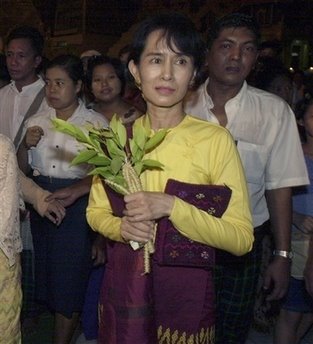


 Posts


