News & Articles on Burma
Thursday, 23 December, 2010
-------------------------------------------------
Suu Kyi to meet breakaway democracy group
USDP Candidates Prepare for Opening of Parliament
Than Shwe's Son-in-law Named Ambassador to China
Aung San Suu Kyi (A dialogue with Aljazeera)
Pro-junta parliamentarians gather for closed-door meeting
Shan look to heroic Thai king for inspiration
Suu Kyi could be a boon for Myanmar's old soldiers
Burma’s post-election press freedom maintains the status quo
Wa offers another olive branch to junta
Volunteer Group Aids All Comers in Mae Sot
More Land in Arakan State Confiscated for Railway
Burma must let IAEA to inspect its doubtful nuclear sites
--------------------------------------------------
Dec 23, 2010
Suu Kyi to meet breakaway democracy group
YANGON - MYANMAR democracy icon Aung San Suu Kyi will meet former colleagues who rebelled against her election boycott and formed a new party to fight the controversial poll, the breakaway group said on Thursday.
The Dec 30 meeting will be the first held between Suu Kyi and members of the National Democratic Force (NDF) since her release from house arrest days after the November vote, NDF leader Khin Maung Swe told AFP.
'We will explain to her that we formed a party for national reconciliation, as confrontation is not the way to achieve democracy,' he said.
The NDF was formed by senior members of Suu Kyi's National League for Democracy (NLD), which was disbanded for boycotting the poll.
The breakaway group won 16 seats in the election after fielding 161 candidates but has complained of widespread fraud by the junta-backed party, which has claimed an overwhelming victory.
'I want to meet her as soon as possible. I haven't seen her for about two decades already. She was in detention when I was freed from my prison sentence,' Khin Maung Swe said. -- AFP http://www.straitstimes.com/BreakingNews/SEAsia/Story/STIStory_616995.html
---------------------------------------------------------
USDP Candidates Prepare for Opening of Parliament
By BA KAUNG Thursday, December 23, 2010
The junta's proxy Union Solidarity and Development Party (USDP) concluded on Thursday a special conference in Naypyidaw to prepare for the newly-elected parliament and government, according to party officials.
Four hundred elected USDP members attended the three-day meeting. They discussed the party's parliamentary agenda and reorganization plans, said Khin Shwe, a business tycoon and one of the participants.
USDP Chairman Thein Sein, who is also the current government's prime minister, instructed the newly elected legislators on the “code of conduct” to be followed in parliament.
“The prime minister told us how we should speak and behave in parliament and also how to fulfill the party's campaign promises to the public, such as paving streets,” said Khin Shwe.
The Naypyidaw meeting was the party's first major gathering since the Nov. 7 election, where it claimed nearly 77 percent of the seats contested.
The DPA German news agency quoted an unnamed government official as saying that the meeting took place behind closed doors. Nominations for important government posts could have been discussed, the official said.
However, Khin Swe said the details of what was discussed at the meeting remained sketchy, although they also involved the question of how to reform “some negative aspects of the party at the grassroots level.”
A top-level party meeting preceded the three-day plenary, according to party sources. Those who attended included the junta's third and fourth ranking members, Shwe Mann and Tin Aung Myint Oo, both of whom were elected to parliament in the Nov. 7 election.
During preparations for the opening of parliament next month, the USDP has reportedly reached out to pro-democracy opposition parties, which won a small fraction of the contested seats, inviting them for talks.
The party's move is viewed as an attempt to neutralize possible opposition in parliament, while pro-democracy leader Aung San Suu Kyi has called on opposition parties operating both inside and outside parliament to coordinate their efforts to achieve a democratic breakthrough in Burma.
Thu Wai, chairman of the Democratic Party (Myanmar), complained the USDP meeting lacked transparency and accused the party of failing to join talks with the international community.
“All the other parties meet foreign diplomats, but the USDP did not,” he said.
His party won no seats in the bi-cameral parliament. Three of its candidates won election to regional parliaments, one of whom is currently locked in a legal dispute with the unsuccessful USDP candidate who has accused the Democratic Party member of vote buying.
While the USDP will dominate the legislature, the new Constitution provides for a vital role still to be played by the army, guaranteeing it a quarter of the parliamentary seats.
When the parliament assembles, vice-presidents will be nominated by the army and a majority of civilian representatives in the parliament, many of whom will be the elected USDP candidates. One of three vice-presidents who is required to be “acquainted with political, administrative, economic and military affairs” will be selected as president.
The presidency is expected to go to either junta chief Snr-Gen Than Shwe or the junta's third ranking official, Shwe Mann, a USDP MP-elect.
In the run-up to the election, Suu Kyi said that the future civilian government would be incapable of reining in the broad-ranging powers of the president. Her party, the National League for Democracy, boycotted the election, and the regime has made no response to her calls for a dialogue. http://www.irrawaddy.org/article.php?art_id=20395
--------------------------------------------------
Than Shwe's Son-in-law Named Ambassador to China
By WAI MOE Thursday, December 23, 2010
In his 18 years as head of Burma's ruling junta, Snr-Gen Than Shwe has worked tirelessly to cement not only the regime's hold on power, but also the status of his closest relatives as members of the country's de facto royal family.
Now, in the latest move to ensure that his influence survives the transition to quasi-civilian rule following this year's election, he has named his son-in-law as his point man in China, the regime's most important and powerful ally.
According to sources in Naypyidaw, Maj Zaw Phyo Win, husband of Than Shwe's youngest daughter, Thandar Shwe, has been appointed Burma's ambassador to Beijing, following a stint as the Burmese consul general in Kunming, in China’s southwestern province of Yunnan.
Thandar Shwe and Zaw Phyo Win were last in the international media spotlight in 2006, when a leaked video of their wedding outraged Burmese observers with its displays of opulence, in a country where millions live in poverty due to the regime's stranglehold on the economy.
More recently, Zaw Phyo Win appeared in Burma's state-run media during a state visit to Kunming by Foreign Minister Nyan Win, who was in the city to attend an opening ceremony for the Burmese consulate's new office building on Sept. 12.
Observers say that Than Shwe appears to be trying to emphasize the regime's “pauk phaw” (brotherly) relationship with Beijing by sending close relatives to serve as his representatives to China, which recently granted a US $6 billion loan to Burma.
Like her husband and Than Shwe’s three other daughters, Thandar Shwe also works with Burma’s Ministry of Foreign Affairs (MOFA). She is currently a senior diplomat to China, while her sisters—Kyi Kyi Shwe, Aye Aye Thit Shwe and Dewa Shwe—are senior officials with the Burmese embassy in Singapore.
In addition to Than Shwe’s daughters, other relatives are also posted with the Foreign Ministry, including two of Zaw Phyo Win’s sisters. According to sources in Naypyidaw, the family's connections to the ministry are so strong that it is often jokingly referred to as the “Shwe MOFA.”
Some officials in Naypyidaw say that these foreign postings serve no other purpose than to give Than Shwe's daughters opportunities for overseas shopping trips. “They are go abroad and they draw foreign salaries,” said one source, describing the extent of the duties involved in these postings.
Other relatives of Burma's top general have similarly benefited from their family connections. In June 2008, Brig-Gen Thein Naing, the husband of Than Shwe's daughter, Khin Pyoe Shwe, took over as the commander of Mingaladon Airbase in Rangoon. Soon after this, he was promoted from colonel to brigadier general. He currently serves at the office of the air force commander in chief.
Nepotism is nothing new to military-ruled Burma. The family of the late dictator Ne Win also enjoyed privileges that made them objects of scorn among ordinary Burmese, until they were finally placed under arrest for allegedly plotting to overthrow the current regime in Ne Win's dying days.
Unlike Than Shwe, however, Ne Win did not directly involve his family in affairs of state. Than Shwe, on the other hand, routinely brings family members to official ceremonies and on state visits alongside other senior military officials.
“History repeats itself within one decade. Ten years ago, the current top two generals, Than Shwe and Maung Aye, were not comfortable with the behavior of Ne Win’s grandsons, who had nothing but contempt for the generals,” said a Burmese official close to the regime's senior leadership, speaking on condition of anonymity. “Now the generals serving under Than Shwe are grumbling about members of his family, who in some ways are worse than Ne Win’s relatives.”
Nay Shwe Thway Aung, Than Shwe's favorite grandson, has earned a reputation as the most notorious member of the ruling family. He has been accused of ordering military officers serving as his assistants to carry out attacks on business rivals, and even top generals are said to be wary of displeasing him.
According to business sources in Rangoon, earlier this year Nay Shwe Thway Aung took a new Mercedes Benz from a warehouse of the military-owned Union of Myanmar Economic Holding, Ltd (UMEHL), paying just 10 million kyat (US $11,600) for a luxury vehicle valued at least 200 million kyat ($230,000) in Burma.
“It happened with the acknowledgment of [former UMEHL head] ex Lt-Gen Tin Aye. Nay Shwe Thway Aung sent one of his friends to take the Mercedes from the warehouse,” said a Rangoon-based businessman who spoke on condition of anonymity.
“Even Tin Aye, who is one of the top junta members, cannot deter the grandson from this kind of act because he is Than Shwe’s favorite,” the source added. http://www.irrawaddy.org/highlight.php?art_id=20396
-----------------------------------------------
Dec 23, 2010
IAEA wants to visit suspect nuclear sites in Myanmar
VIENNA - THE UN atomic watchdog has asked Myanmar to be allowed to visit a number of suspect nuclear sites and facilities, a source close to the agency said Thursday.
The International Atomic Energy Agency (IAEA) 'has sent an official letter to Myanmar requesting access' to the sites, the source told AFP, speaking on condition of anonymity.
The source was not aware whether any response had been received as yet.
Last week, the Wall Street Journal reported that the IAEA's safeguards department, which has already sought details in recent months from the Southeast Asian country about a purported nuclear drive, had sent a letter to the ruling military junta.
The watchdog's request for information comes at a time when the United States and some Asian countries have expressed heightened concern about military - and possible nuclear - collaboration between Myanmar and North Korea.
Washington has suspected for years that Myanmar has a secret nuclear programme with the support of Pyongyang. According to recent diplomatic cables leaked by the the anti-secrecy website WikiLeaks, witnesses have reported suspicious activity as far back as 2004, with dockworkers and foreign businessmen saying they had seen evidence of alleged secret nuclear and missile weapons sites being built deep in the Myanmar jungle. -- AFP http://www.straitstimes.com/BreakingNews/SEAsia/Story/STIStory_616914.html
-------------------------------------------------
Aung San Suu Kyi (At the Crossroads: a dialogue with Aung San Suu Kyi )
A dialogue with the recently released Burmese dissident about democracy, conflict, and the need for reconciliation.
News special Last Modified: 22 Dec 2010 14:00 GMT
http://english.aljazeera.net/programmes/general/2010/12/2010122115315511156.html
Aung San Suu Kyi, the recently released Burmese dissident, has become an international symbol of peaceful resistance in the face of oppression and human rights violations in Myanmar.
The 65-year-old has spent most of the last 20 years in some form of detention because of her efforts to bring democracy to military-ruled Burma.
In 1991, one year after her party, the National League for Democracy, won an overwhelming victory in an election the junta later nullified, she was awarded the Nobel Peace Prize.
Now she talks to Al Jazeera about the country's future, the need for change, and why she believes that national reconciliation is the road Myanmar has to take to get the country out of the present state of economic stagnation and political unfreedom.
She speaks about democracy, development, a strong civil society, and the humanitarian situation in Myanmar - and how change and progress could be achieved.
To put the challenges facing Myanmar into global context we are joined by a distinguished panel of experts:
Helping us facilitate the dialogue is Maung Zarni, a Burmese dissident and an academic research fellow at the London School of Economis. His first-hand knowledge of Burma allows him to share his insights of armed conflicts, resistance, and the Burmese military.
Mary Kaldor is professor and co-director of Gobal Governance. She has written extensively on global civil society, how ordinary people organise to change the way their countries and global institutions are run.
Timothy Garton Ash is a historian, political commentator and regular colomnist for the UK newspaper The Guardian. He is professor of European studies at Oxford University. His main interest is civil resistance and the role of Europe and the old West in an increasingly western world. In 2000, Aung San Suu Kyi invited Professor Garton Ash to Burma to speak to members of her party, the National League for Democracy, about transitions to democracies.
At the Crossroads: a dialogue with Aung San Suu Kyi can be seen from Wednesday, December 22, at the following times GMT: Wednesday: 0030, 0730; Thursday: 1230, 1900. http://english.aljazeera.net/programmes/general/2010/12/2010122115315511156.html
-----------------------------------------------------
Pro-junta parliamentarians gather for closed-door meeting
Dec 23, 2010, 4:54 GMT
Yangon - Elected members of Myanmar's pro-junta political party that won last month's general election gathered this week in Naypyitaw for closed-door discussions on nominations for the country's top leadership, sources said Thursday.
Legislators from the Union Solidarity and Development Party (USDP), which won 77 per cent of the contested seats in the November 7 polls, met from Tuesday until Thursday in Naypyitaw, the military's new capital situated about 350 kilometres north of Yangon.
'The meeting is for preparing for the coming parliaments,' a government official said. 'I think there may be some nominations for important posts for the new government,' said the official, who requested anonymity.
Last month, military-ruled Myanmar held its first polls in two decades for its three houses of parliament - upper, lower, and regions or states.
USDP, the proxy party of Myanmar's ruling junta, won 76.8 per cent of the 1,096 contested seats, or altogether 842 seats in the three chambers of parliament.
According to Myanmar's constitution, the elected legislators must nominate a new president and vice presidents within three months of the election, who will then select cabinet ministers and open parliament.
The selection process will be dominated by the winning USDP, which is packed with ex-military men and government ministers.
Even without the massive USDP election win, the next parliaments would not be free from military controls since the current constitution allows the army to appoint 25 per cent of all legislators, enough for them to veto any legislation they disapprove of.
Myanmar's elections were strongly criticized by the international community for being unfair and for excluding Nobel laureate Aung San Suu Kyi and her National League for Democracy opposition party.
Suu Kyi, 65, was freed from a seven-year house detention term on November 13, a week after the polls.
The National League for Democracy won the 1990 general election by a landslide, but it was blocked from assuming power by the military. The party was officially disbanded in May for failing to register to contest the polls.
Beside the USDP, other parties that won seats in the election included the pro-establishment National Unity Party with 5.7 per cent, the pro-democracy Shan Nationalities Democratic Party with 5.2 per cent and the Rakhaine National Development Party polled 3.2 per cent.
The National Democratic Force, a breakaway faction from the main opposition National League for Democracy party, came in sixth with 1.5 per cent of all contested seats.
Myanmar has been under military dictatorships since 1962.
http://www.monstersandcritics.com/news/asiapacific/news/article_1607505.php/Pro-junta-parliamentarians-gather-for-closed-door-meeting
------------------------------------------------------
Shan look to heroic Thai king for inspiration
By The Nation
Published on December 23, 2010
The Shan State Army (SSA) ethnic group - which is fighting for independence from Burma - has erected a statue of Thai hero King Naresuan the Great at its stronghold in Doi Tailang as a symbol of its struggle, according to Shan commander Yawd Serk.
The nearly three-metre-tall bronze statue of the Thai king who liberated the Ayutthaya kingdom from Burma in 1584, was erected last Friday in Doi Tailang, opposite northern Mae Hongson province.
"I initiated this project five years ago, but managed to complete it only this year after all difficulties were cleared," Yawd Serk said.
The statue of the legendary king was made in Thailand, but Thai authorities were reluctant at first to allow Yawd Serk to move it out of the Kingdom to erect in Burma's Shan state, fearing conflict with Naypyidaw.
"Nobody opposed the idea this year. I believe that is because King Naresuan wants to live with us in the land of Tai," he said, "I understand that Thai and Tai people share the same faith."
Shan people called themselves Tai for their Tai ethnicity.
The Shan leader wants the Thai king to be a symbol of bravery for his Tai fellows in Shan state.
A Shan legend said King Naresuan was willing to help his Shan friend Sao Khamkainoi build a Tai state, Yawd Serk said. "Unfortunately, King Naresuan passed away before the dream came true and I believe his soul is around Tai territory to help protect us," the Shan commander said.
The great king died in Muang Hang, somewhere northwest of Chiang Mai's Fang district, in 1650, during an unfinished mission to expand the Ayutthaya Empire over a collapsed Burma. The Ayutthaya kingdom was secured and maintained a significant role in the region during his reign. http://www.nationmultimedia.com/2010/12/23/national/Shan-look-to-heroic-Thai-king-for-inspiration-30145020.html
----------------------------------------------------
Suu Kyi could be a boon for Myanmar's old soldiers
By Martin Petty
BANGKOK | Wed Dec 22, 2010 5:58pm IST
BANGKOK (Reuters) - Myanmar's military rulers are not getting softer as they maintain their longstanding grip on power, but by freeing pro-democracy leader Aung San Suu Kyi, they could be getting smarter.
Myanmar's democratic facelift is almost complete and with the spotlight firmly on the recently released Nobel laureate, the generals have the perfect distraction to consolidate power behind a civilian-fronted government for decades to come.
A landslide win last month by an army-backed party in an election fraught with allegations of fraud will ensure political and economic power remains in the hands of the current leaders after a government is formed in the next six weeks.
Analysts suggest that Suu Kyi, the arch-enemy of 77-year-old junta supremo Than Shwe and number two Maung Aye, 72, might now be more of an asset than a threat.
The charismatic Suu Kyi, whose party boycotted the poll, has no political role in the new system.
But she has been given an unprecedented free rein that has revived hopes of Western engagement and eased international pressure on the regime as it adds the finishing touches to its new military-managed democracy.
"They're extremely reluctant to release control. They still want to rule this country completely," said Aung Thu Nyein, a Harvard-educated academic and expert on Myanmar politics.
"The generals feel very secure now because of their party's landslide win. China and their other allies have endorsed the polls. They can rule the country as civilians and Suu Kyi is no longer a threat to them."
The release from house arrest of Suu Kyi, analysts say, was no act of benevolence on the part of her foes, who have yet to respond to her calls for dialogue. Most believe the military, which has ruled for almost half a century and curtailed the country's development, will continue to ignore her.
FREE REIN FOR SUU KYI
But the reclusive junta's restraint in letting Suu Kyi conduct myriad media interviews and meetings with diplomats and political allies suggests they might want her to do something they seem incapable of: initiating engagement with the West.
Experts say Suu Kyi could be key to boosting the country's tainted image, and a chance to get Western sanctions lifted, attract foreign businesses and reduce Myanmar's dependence on neighbouring China, its biggest political and economic ally.
"They're trying to use Suu Kyi and (show) a glimmer of reform for their own purposes, namely, to encourage greater investment and re-engage with the West as a hedge against China," said Josh Kurlantzick of the U.S-based Council on Foreign Relations.
"I don't think they want to be this close to China. I think they have concerns about any closeness with any major power, so they need to hedge against that." http://in.reuters.com/article/idINIndia-53731720101222?rpc=401&feedType=RSS&feedName=southAsiaNews&rpc=401
----------------------------------------------------
Burma’s post-election press freedom maintains the status quo
By Zin Linn Dec 22, 2010
Burma was at the forefront of press freedom in Southeast Asia before the 1962 military coup. The country then enjoyed a free press; censorship was something unheard of. As many as three dozen newspapers, including English, Chinese and Hindi dailies, existed between 1948 and 1962.
The situation changed in 1962 when the military seized power. All newspapers were nationalized and a Press Scrutiny Board created to enforce strict censorship on all forms of printed matter. Since then, censorship and self-censorship have become commonplace in Burma.
The Press Scrutiny and Registration Division (PSRD) is a major tool or repression of the Than Shwe military regime. Not surprisingly, Burma stands downgraded from a free state to a prison state. All news media in Burma is strictly censored and tightly controlled by the military – all daily newspapers, radio and television stations are under supervision of the junta.
The radio, television and other media outlets are monopolized for propaganda warfare by the regime and opposition views are not allowed.
Currently, PSRD or state censor-board has been stepping up barring on news and interviews with Democracy Icon Aung San Suu Kyi as instruction orders comes from information ministry based in the junta’s capital Naypyidaw, one editor who wants to remain anonymous said.
Journalists from Venus journal had met Suu Kyi 14 December and People’s Era journal on 14 December. Both journals put forward the copies of their interview with the Lady and respective photos to the infamous PSRD. The censor-board yet notifies the journals that any issue of the Lady would be postponed due to the instruction from Naypyidaw.
One sports journal and eight news periodicals including 7 Day News, The Voice, People’s Era and Venus journals have been suspended by the junta’s PSRD because of covering news articles of Burma’s Nobel laureate.
The board has also released notice limiting the size of Aung San Suu Kyi’s portrait to a maximum of 2 x 3 inches for publication in journals. In addition, the board also barred the journals not to cover her photos on front or back pages.
At the same time, a township court in Rangoon sentenced photo-journalist Sithu Zeya to eight years imprisonment for taking photograph the aftermath of the April 15, 2010 bomb blast in the former capital.
Sithu Zeya was sentenced three years for violating the Immigration Act and five years for violating the 1957 Unlawful Associations Act for links he made with unlawful organizations, according to his lawyer U Aung Thein, At some point in cross-examination by special branch police, Sithu Zeya apparently confessed his former relationship with an official from the exile media organization Democratic Voice of Burma (DVB).
Moreover, he also confessed that he was present at media training in Thailand. The police plaintiff put forward those confessions at the trial. His lawyer said the case will be appealed to a higher court because the evidence shown to the township court was flawed and there were not enough witnesses.
If the junta is sincere about democratic reforms, the media must be free at the outset. Access to information is crucial to a healthy democracy. Article 19 of the Universal Declaration of Human Rights says, “Everyone has the right to freedom of opinion and expression; this right includes freedom to hold opinions without interference and to seek, receive and impart information and ideas through any media and regardless of frontiers.”
But in Burma, the political opposition as well as journalists and media personnel are under the strictest rules of the stratocracy. In most countries, journalists or media workers can do their jobs and live well. But in military-ruled Burma, it is very thorny and hazardous work.
Japanese journalist Kenji Nagai was killed while covering the 2007 Saffron Revolution, and some citizen journalists are still in prison.
According to the Burma Media Association and Reporters Sans Frontieres, at least 12 journalists and dozens of media workers are still in custody since the aftermath of Cyclone Nargis and the constitutional referendum in May 2008.
Although the optimistic politicians and media personnel hope for better free-press environment after the recent polls, the scenario looks gloomy and it remains the status quo.
http://asiancorrespondent.com/44250/burma%E2%80%99s-post-election-press-freedom-maintains-the-status-quo/
--------------------------------------------------
Wa offers another olive branch to junta
Thursday, 23 December 2010 14:19 Hseng Khio Fah
E-mail Print PDF
The United Wa State Army (UWSA), one of the ceasefire groups at loggerheads with the Burma Army over the Border Guard Force (BGF) program, has extended an offer for peace talks with the new government that is expected to be installed early next year, according to local sources.
[Xiao Minliang speaking at a party conference (On his right hand side is Bo Lakham) (Photo: UWSA)]
The announcement was made at UWSA's political wing United Wa State Party (UWSP)'s 5th district level party congress which is being held in Mongmai, 170 km north of its main base Panghsang. The USDP was formed on 20 December 1988.
The congress fittingly started on 20 December and to be held until 29 December, has some 2,500 participants including Xiao Minliang, vice chairman of the Wa State; Bo Lai Kham, Chairman of the Wa Political Consultative Conference;Bao Youri, Political Commissar of the Wa's southern military region 171; and Ai Lon, deputy Commander in Chief.
"We are ready to send a delegation to talk with the new government on the basis of 'Opposition to War' and 'Work for Peace and Development' principles," he was quoted as saying.
Panghsang is only reiterating its statement on 6 November, a day before the elections, expressing its readiness to resume peace talks with the new government, said a participant.
[Bao Samrai, Commander, 618th Brigade (Photo: UWSA)]
The two sides have also been reinforcing more troops and weapons, building bunkers, and digging trenches in bases along the front, since the Beijing-mediated talks failed earlier this year.
The UWSA had also set up a new brigade, the 618th, at Manghseng-Nawngkhet area facing Burma Army's strongest base Loi Panglong, a Wa officer said.
Currently, the UWSA has 9 Brigades, one artillery unit and 4 people's militia brigades in the 4 districts under its control: Mongmai (916th Brigade), Wiangkao (917th Brigade), Mongpawk 918th Brigade) and Mongyawn (unidentified). Each brigade is 2,500-3,200 strong, he claims.
Elections for district committee members are being held today. http://www.shanland.org/index.php?option=com_content&view=article&id=3375:wa-offers-another-olive-branch-to-junta&catid=85:politics&Itemid=266
---------------------------------------------------
Volunteer Group Aids All Comers in Mae Sot
By ALEX ELLGEE Thursday, December 23, 2010
MAE SOT—It is early morning and the doors to the People’s Volunteer Association (PVA) office have been open for only one hour. Street vendors are still setting up their stalls to catch the first factory workers on their way to work. But inside the office, there is already a line of people queuing to talk with PVA staff who wear their signature green T-shirts.
“We’re always busy, busy busy,” said director Thein San, as he juggled phones and gave instructions to various workers and office members.
A PVA counselor talks to a Burmese woman. (Photo: Alex Ellgee)
“The office opens just before seven and closes around ten thirty, but our phones ring all night,” he said.
The problems the people have who come to ask for help offer a good overview of what keeps the PVA staff busy twenty-four hours every day.
A young Burmese man named Aung Oo sat anxiously in the office, after running for his life from the village where he worked. Having worked on a farm for eight years, he had asked for permission from his Thai employer to leave his job and return to Burma.
But the employer became enraged and fired several gunshots into the air and then accused him of stealing 20,000 baht. He ordered him to pay it back by continuing to work or otherwise he would call the police.
Like many Burmese workers who face similar situations because of their vulnerability, Aung Oo went straight to the PVA office to seek help.
“We have a good relationship with Thai police, so we will go down to the local station and try to work it out with the employer,” said Thein San, after consulting with Aung Oo.
Set up in 2008, the People's Volunteer Association functions a little like a neighborhood citizens' watch, whose mission includes aiding the Thai police in settling disputes, providing refugee care, mediating domestic abuse issues, labor rights, health and education issues, and, really, to help solve refugees' problems any way they can.
Bo Bo, a Burmese leader in the area, said: “They have helped our community so much with all the problems we face, living here as poverty stricken Burmese in another country. Without them we would be facing even more hardships and oppression.”
Thein San, who founded the volunteer group in 2004, previously served as an All Burma Student Democratic Front (ABSDF) commander. A photo from the 1990s on an office wall shows him with his battalion making their way through the jungle. Having fought guerillas warfare campaigns against the regime’s army since he fled Rangoon in 1988, he said he was ready to find a new way to help the Burmese people.
Until 2008, the group operated with less than 50 volunteer members, but it then decided to change its name and strategy.
“We didn’t want to limit it to just Burmese people. We wanted to include all people, including Thai,” he said.
During a demonstration in December 2009, Thein San played a pivotal role in calming the situation and earning the trust of the Mae Sot chief of police. When two Burmese men were badly beaten by Thai security forces while they waited outside a factory for their sisters, 3,900 factory workers demonstrated to demand the security workers face punishment.
The protest began at 11 p.m. and by early morning the whole factory was surrounded by Thai riot police and armed soldiers. Mae Sot’s chief of police was about to order a crackdown when Thein San pleaded with him for a chance to calm things down.
“He gave me the loudspeaker, and I organized the demonstrators to make a statement,” he said, pointing to photos of the event on the wall. “Then the police backed off and the demands were met, so it ended peacefully.”
Another major PVA breakthrough was an unofficial MoU, which stated that a special PVA member card can be shown to police and the card holder will not be arrested. The cost of the card is used to help fund PVA work.
Asked what is PVA’s biggest problem, Thein San said, “funds,” but added: “We don’t want to rely on donors. We want to be able to stand on our two feet and become self-reliant.
“The benefit of PVA is that we’re not like NGOs. We help people who are facing problems in any type situation, and when they call us, we go to them straight away. NGOs will only stick to their line, and will turn away people in need if it’s not in line with their field of work.”
The group's symbol is a hawk inside two triangles. “We chose a hawk because we are fast to help the people and we're always looking and studying carefully how we can help them,” said Thein San. “The two triangles show the organization’s inclusiveness for all people.”
PVA now has a safe house that can house 16 people and Thein San has a plan to set up PVA schools in remote areas.
“Everyone makes schools in Mae Sot. There are so many, but in the remote villages they have nothing.”
PVA also has its own doctor who travels to remote areas to treat patients.
“It is too far for many migrant workers to travel to the Mae Tao Clinic. They have problems with transport fees, and they're also scared of the Thai police,” said the doctor. “With our limited funds, I do as much as I can to help the people who live far from the medical clinics.”
Another client in the office that morning was a victim of domestic violence, a common case for the PVA staff. Settling domestic disputes is a major part of their work.
Thein San said in order to deal with the woman's case, the husband would be invited to the office, and the staff would counsel the couple about domestic violence and its negative effects. They will then get her husband to sign an agreement saying that if he commits domestic abuse again, he must pay compensation to his wife.
Later that morning, a lady rushed into the office. Thai forestry department officials had arrested her husband for cutting down a tree. She said he was only carrying wood for his Thai employer, who was cutting the trees, but the employer blamed it on his workers when the authorities arrived.
Handed over to the Thai police, her husband was put in jail and required to pay a 15,000 baht (US $470) fine, an amount too large for a Burmese migrant worker family that normally earns about 3,000 baht ($95) a month.
In this case, Thein San will consult with a Thai lawyer who works with PVA on unfair cases involving the authorities.
While the PVA headquarters is based in Mae Sot, the group has six offices around Mae Sot and in the future it would like to expand to Bangkok, Chiang Mai and other areas.
In the last two months, the number of members has increased from 50 to 700, said Thein San. He said he hoped to have 1,000 member by the end of the year.
As this reporter was leaving the office, a young PVA worker named Johnny was preparing documents to take to the police station.
He said he joined PVA because the organization stands for all people, and he wanted to help all the communities living in the Mae Sot area.
He recalled a tragic situation recently when a Burmese pedestrian was hit and severely injured by a drunk driver. When Johnny was told, he went to the scene of the accident and helped the victim to the hospital, where he later died.
“We contacted his family, but they are inside Burma and couldn’t afford to travel, so we organized his funeral for them,” said Johnny. “If we had not come, then there wouldn’t have been anyone to help him.”
Copyright © 2008 Irrawaddy Publishing Group | www.irrawaddy.org
http://www.irrawaddy.org/article.php?art_id=20374
------------------------------------------
More Land in Arakan State Confiscated for Railway
By KHIN OO THAR Thursday, December 23, 2010
More residents in Burma's western Arakan (Rakhine) State suffer as their farm land and plantations have been confiscated or damaged due to a railway project in the area, according to local sources.
“Apart from receiving no compensation, we weren't even informed that our lands were confiscated. Some rubber plantations located along the railway were also destroyed,” a resident in the construction area told The Irrawaddy. He said about two acres of his land were confiscated and part of his rubber plantation was destroyed.
Local residents said that the authorities had confiscated more than 1,000 acres of land between Mrauk U and Kyauk Taw townships, which are on the projected Sittwe-Ann-Minbu railway line.
Last month, several ancient temples and cultural heritage sites in Mrauk U Township were damaged or destroyed because they were located on the planned railway route, according to local residents.
“By building this railway, the military regime is launching a psychological offensive against local people, rather than developing our area. It has destroyed what the locals value one by one, and it does as it wants,” said a Mrauk U resident.
He said the construction of the railway on ancient cultural land in Mrauk U began on Nov. 7. Authorities later altered sections of the route because of repeated objections from local residents.
The route is now affecting land around the Arakan State's most ancient city of Dannyawaddy, he said.
A resident of Kyauk Taw told The Irrawaddy that a dispute broke out recently between the army and Myanma Railway officials after an earth excavator that was used in the railway construction work between Kyauk Taw and Mrauk U damaged underground cables connecting local army posts.
“A battalion commander ordered them to stop the construction work immediately after their property was damaged,” he said.
The order came from the commander of Light Infantry Battalion (LIB) 377 on Dec. 17. LIBs 377, 378 and 540 are based in the area, he said.
According to residents of Sittwe, the capital of Arakan State, the regime has been working on the railway line in Arakan State since 2009. Several sections have been completed, they said, but some completed sections, especially in the Sittwe area, frequently need to be repaired.
The Sittwe-Ann-Minbu railway is scheduled to be part of the regime's nationwide railway network.
http://www.irrawaddy.org/article.php?art_id=20389
----------------------------------------
ASIAN CORRESPONDENT.COM
Burma must let IAEA to inspect its doubtful nuclear sites
By Zin Linn Dec 23, 2010 10:54PM UTC
Burma (Myanmar) has signed the Nuclear Non-Proliferation Treaty and is a member of the International Atomic Energy Agency (IAEA). It is also a member of the Association of Southeast Asian Nations (ASEAN) whose members jointly signed the 1995 Southeast Asian Nuclear-Weapon-Free Zone Treaty, also called the Bangkok Treaty.
Robert Kelley, a former director of the International Atomic Energy Agency (IAEA), scrutinized the files smuggled out of Burma by Major Sai Thein Win,a Russia-trained missile-engineer, and said the evidence indicated “a clandestine nuclear programme” was in progress.
Burma is carrying out a secret atomic weapons programme that could “really speed up” if the army-ruled country is aided by North Korea, according to the top nuclear scientist. Kelley shared his views on the issue at Foreign Correspondents Club of Thailand in Bangkok on 26 October, 2010.
The DVB documentary featured Major Sai Thein Win, who said he had served in the engineering unit developing a nuclear reactor and rocket engine parts in a military facility. The Burmese regime said Sai Thein Win had deserted from the army in February 2010.
On 23 December, the UN atomic watchdog has asked Burma to be allowed to visit a number of suspect nuclear sites and facilities, AFP said quoting a source close to the agency.
The International Atomic Energy Agency (IAEA) ‘has sent an official letter to Myanmar requesting access’ to the sites, the source told AFP, speaking on condition of anonymity. But, the source did not mention whether any answer had been received as yet.
Washington has speculated for years that Burma has a secret nuclear programme with the backing of Pyongyang. According to recent diplomatic cables leaked by the anti-secrecy website WikiLeaks, witnesses have reported suspicious activity as far back as 2004, with dockworkers and foreign businessmen saying they had seen evidence of alleged secret nuclear and missile weapons sites being built deep in the jungle of Burma.
Kelley also mentioned his concerns in an article published in Thailand daily The Nation on 26 October, 2010, saying: “In the non-proliferation community, we have argued for more and better tools to detect potential proliferators. Now we have used some of those tools to identify one, but the response from many quarters is that it is too soon, too difficult and too hard, to investigate and stop Burma.”
“But when is the right time? When it is too late? What tools will the world use then? Sanctions? Bombs? These are key questions. Intelligence analysis has done its job: it’s identified the parts of a potential smoking gun. Now is the time to act,” Kelley warns in his article.
On the contrary, a large portion of the country’s budget, an estimated 40-50 percent goes to finance a 400,000-strong armed force. The warning sign is that defense will continue to be top of the junta’s budget. Russia had delivered 20 MiG-29 planes to Burma’s air force. Kommersant – Russia’s Daily Online reported that the contract was worth nearly 400 million Euros (570 million dollars).
However, UNICEF reports that spending on the public health care in Burma amounts to 40 cents per citizen per year, compared to $ 61 in Thailand. According to the UN estimation, one child in three under the age of five is suffering from malnutrition.
Even though, the junta continues strengthening its military might without any external threats. But, it neglects the social welfare of the citizens. Due to its mismanagement policies and corruptions, the country’s swollen unemployment problem forces the citizens to leave the native land.
Over the past two decades, more than two million Burmese workers have fled to Thailand. Trafficking in women and children has increased along the 2,400 km-long Thailand-Burma border. The regime’s negligence of health-care has also produced a new HIV/AIDS flow into neighbouring countries. Trans-border crime has gone up with a massive influx of narcotics drugs, including heroin and methamphetamines.
The recent vote-rigging elections result is going to legalize the military rule. It is not a good sign for the region as the 2008 constitution allows the military to take the lion share of the national budget. So, the junta’s nuclear development plan seems to be growing underneath.
In brief, ASEAN members should take notice of Robert Kelley’s remark on Burma’s nuclear issue. He says, “It is time to invoke Articles 12 and 13 of the Bangkok Treaty that allow the group to begin an investigation of these assertions and force Burma to come clean. Citizens of this populous region may not feel threatened today or next year, but they will never know when they can feel safe without resolution of this issue.”
http://asiancorrespondent.com/44423/burma-must-let-iaea-to-inspect-its-doubtful-nuclear-sites/
__._,_.___
Friday, December 24, 2010
News & Articles on Burma-Thursday, 23 December, 2010


Thursday, December 23, 2010
BURMA RELATED NEWS - DECEMBER 22, 2010-UTK
*************************************************************
BURMA RELATED NEWS - DECEMBER 22, 2010
*************************************************************
Reuters - Suu Kyi could be a boon for Myanmar's old soldiers
Al Jazeera - Aung San Suu Kyi
Scoop.co.nz - Myanmar Cyclone Victims Start to Rebuild But Need More Funds, UN Reports
VIVA News - Aung San Suu Kyi Thanks Indonesia
IRIN News - MYANMAR: Cyclone Giri survivors still need shelter
Brisbane Times - Time for a change as Asia's stars rise in the East
Industrial Fuels and Power - India’s NHPC looking to build 12.47GW of hydropower in Myanmar
NPR - The New Republic: Burmese Junta Can't Be Ignored
San Clemente Times - SC Woman Helps in Myanmar
Hindustan Times - Impressions of Myanmar
Foreign Relations - Burma Bombshell
The Irrawaddy - USDP Files Lawsuits Alleging Vote Rigging
The Irrawaddy - Seeking the Cold Truth About Burma
The Irrawaddy - Next Year Crucial for Democracy Movement: Suu Kyi
The Irrawaddy - A Vietnam Syndrome for Burma?
Mizzima News - UN nuclear watchdog asks regime to allow inspections
DVB News - DVB reporter gets 8 year jail term
*************************************************************
Suu Kyi could be a boon for Myanmar's old soldiers
By Martin Petty
BANGKOK | Wed Dec 22, 2010 5:58pm IST
BANGKOK (Reuters) - Myanmar's military rulers are not getting softer as they maintain their longstanding grip on power, but by freeing pro-democracy leader Aung San Suu Kyi, they could be getting smarter.
Myanmar's democratic facelift is almost complete and with the spotlight firmly on the recently released Nobel laureate, the generals have the perfect distraction to consolidate power behind a civilian-fronted government for decades to come.
A landslide win last month by an army-backed party in an election fraught with allegations of fraud will ensure political and economic power remains in the hands of the current leaders after a government is formed in the next six weeks.
Analysts suggest that Suu Kyi, the arch-enemy of 77-year-old junta supremo Than Shwe and number two Maung Aye, 72, might now be more of an asset than a threat.
The charismatic Suu Kyi, whose party boycotted the poll, has no political role in the new system.
But she has been given an unprecedented free rein that has revived hopes of Western engagement and eased international pressure on the regime as it adds the finishing touches to its new military-managed democracy.
"They're extremely reluctant to release control. They still want to rule this country completely," said Aung Thu Nyein, a Harvard-educated academic and expert on Myanmar politics.
"The generals feel very secure now because of their party's landslide win. China and their other allies have endorsed the polls. They can rule the country as civilians and Suu Kyi is no longer a threat to them."
The release from house arrest of Suu Kyi, analysts say, was no act of benevolence on the part of her foes, who have yet to respond to her calls for dialogue. Most believe the military, which has ruled for almost half a century and curtailed the country's development, will continue to ignore her.
FREE REIN FOR SUU KYI
But the reclusive junta's restraint in letting Suu Kyi conduct myriad media interviews and meetings with diplomats and political allies suggests they might want her to do something they seem incapable of: initiating engagement with the West.
Experts say Suu Kyi could be key to boosting the country's tainted image, and a chance to get Western sanctions lifted, attract foreign businesses and reduce Myanmar's dependence on neighbouring China, its biggest political and economic ally.
"They're trying to use Suu Kyi and (show) a glimmer of reform for their own purposes, namely, to encourage greater investment and re-engage with the West as a hedge against China," said Josh Kurlantzick of the U.S-based Council on Foreign Relations.
"I don't think they want to be this close to China. I think they have concerns about any closeness with any major power, so they need to hedge against that."
Some analysts say the regime's elaborate democratic facade and Suu Kyi's release could have been designed to appease its neighbours and other Asian trade partners, rather than the West.
Their willingness to play ball with a dictatorship has frustrated the West but they can -- and probably will -- now argue that the country once known as Burma is a fledgling democracy moving in the right direction.
The army-dominated parliament, which has limited powers, will choose a president most likely to be one of the junta top brass, who can appoint almost anyone to serve in the government. There is no requirement for ministers to have been elected.
The status quo scenario, whereby the junta and its allies continue to dominate politics and the economy and sideline their opponents, would therefore mean even closer ties with China and other Asian nations. Many of those countries are more likely to accept the regime's grip on power from behind-the-scenes.
ASIAN FOCUS
Others argue that this approach might be more beneficial to the regime: by opening its doors to the West, it could face pressure to reform, become transparent and introduce a proper regulatory framework that might be unfavourable to its business cronies, many of whom are also the targets of sanctions.
Myanmar is already reaching out to Southeast Asia, likening itself to neighbouring Thailand -- one of Asia's most attractive emerging markets -- and touting its vast natural resources, energy reserves and tourism potential.
A brochure by the newly formed Myanmar Business Council distributed at a recent Association of South East Asian Nations (ASEAN) meeting reads: "Unfavourable sanctions leaves Myanmar to focus on their neighbours."
What experts are sure about is that unlike the old adage, Myanmar's old soldiers won't be fading away.
"They've put a very positive spin on things and we would be naive to think Burma is moving forward," said Aung Zaw, editor of the Thai-based Irrawaddy magazine.
"There's no sign the regime is willing to open up. They've released Suu Kyi to provide a distraction and there's no sign of dialogue or compromise with her.
"We've seen this all before. The regime is very, very confident it will have full control of the country and when Suu Kyi steps out of line, they'll lock her up again."
*************************************************************
Al Jazeera - Aung San Suu Kyi
A dialogue with the recently released Burmese dissident about democracy, conflict, and the need for reconciliation.
News special Last Modified: 22 Dec 2010 14:00 GMT
Aung San Suu Kyi, the recently released Burmese dissident, has become an international symbol of peaceful resistance in the face of oppression and human rights violations in Myanmar.
The 65-year-old has spent most of the last 20 years in some form of detention because of her efforts to bring democracy to military-ruled Burma.
In 1991, one year after her party, the National League for Democracy, won an overwhelming victory in an election the junta later nullified, she was awarded the Nobel Peace Prize.
Now she talks to Al Jazeera about the country's future, the need for change, and why she believes that national reconciliation is the road Myanmar has to take to get the country out of the present state of economic stagnation and political unfreedom.
She speaks about democracy, development, a strong civil society, and the humanitarian situation in Myanmar - and how change and progress could be achieved.
To put the challenges facing Myanmar into global context we are joined by a distinguished panel of experts:
Helping us facilitate the dialogue is Maung Zarni, a Burmese dissident and an academic research fellow at the London School of Economis. His first-hand knowledge of Burma allows him to share his insights of armed conflicts, resistance, and the Burmese military.
Mary Kaldor is professor and co-director of Gobal Governance. She has written extensively on global civil society, how ordinary people organise to change the way their countries and global institutions are run.
Timothy Garton Ash is a historian, political commentator and regular colomnist for the UK newspaper The Guardian. He is professor of European studies at Oxford University. His main interest is civil resistance and the role of Europe and the old West in an increasingly western world. In 2000, Aung San Suu Kyi invited Professor Garton Ash to Burma to speak to members of her party, the National League for Democracy, about transitions to democracies.
At the Crossroads: a dialogue with Aung San Suu Kyi can be seen from Wednesday, December 22, at the following times GMT: Wednesday: 0030, 0730; Thursday: 1230, 1900.
*************************************************************
Press Release: United Nations
Scoop.co.nz - Myanmar Cyclone Victims Start to Rebuild But Need More Funds, UN Reports
New York, Dec 21 2010 3:10PM
Local communities in Myanmar have shown remarkable resilience in coping with the destruction caused by Cyclone Giri, which killed at least 45 people and affected 260,000 others two months ago, with substantial food, healthcare and emergency shelters distributed, according to a new United Nations assessment.
“Humanitarian emergency assistance is forthcoming, and people are slowly starting to rebuild their communities with what little they have left and the aid they are receiving,” the UN Resident Coordinator Bishow Parajuli told international donors on his return to Yangon, Myanmar’s largest city, from visiting several villages in Rakhine state to see relief and recovery efforts in the aftermath of the category 4 cyclone.
But the humanitarian community in Myanmar still needs funding, according to a news release. Only $20.5 million of the estimated $57 million required for both emergency and early recovery phases have so far been allocated by donors, with the main gap occurring in early recovery shelter and livelihood support, he said.
“People are in dire need of more permanent shelter structures and livelihood support,” said Mr. Parajuli, calling their resilience remarkable. “The destruction in these villages has been massive. Up to 70 to 80 per cent of all houses were completely destroyed and schools and health facilities are severely damaged.”
People now rely on emergency supplies distributed to the worst-hit areas by the Government, international and local non-governmental organizations (NGOs) and UN agencies.
According to Government estimates, at least 20,000 houses were completely destroyed, leaving over 100,000 people homeless, and 56 per cent of schools have collapsed or been damaged. Some 17,500 acres of agricultural lands and nearly 50,000 acres of agricultural ponds were also destroyed.
The response from the authorities and the international humanitarian community was immediate and relief and recovery efforts will continue in the coming months, said Mr. Parajuli, who is also UN Development Programme (UNDP) Resident Representative.
He was accompanied on his three-day mission by officials from the UN High Commissioner for Refugees (UNHCR), the UN World Food Programme (WFP) and the UN Office for Coordination of Humanitarian Affairs (OCHA).
The delegation met with Government officials and staff from UN agencies and international and local NGOs based in Sittwe, the capital of Rakhine state, and Myebon, where the most severe damage occurred in the 22 October cyclone. They also visited the villages of Min Chaung and Shin Taung in Myebon Township and Byine Thit in Pauktaw Township.
Following the November distributions, WFP and eight partners plan to distribute an additional 6,500 metric tons of mixed food commodities to nearly 200,000 beneficiaries in the four affected townships this month and next. In the livelihood sector, efforts include renovation of embankments, cash-for-work and restoration of fishermen’s livelihoods.
In education, the UN Children’s Fund (UNICEF) is supporting the provision of 100 temporary learning spaces and has so far provided school kits to 7,000 children, as well as implementing an expanded immunization plan. As of 10 December, emergency shelter kits had reached 38 per cent of the 52,000 affected households and additional relief items for 22,000 households are planned for the coming months.
*************************************************************
Aung San Suu Kyi Thanks Indonesia
Since Suu Kyi stepped out of her house arrest on November 13.
Rabu, 22 Desember 2010, 14:52 WIB
Renne R.A Kawilarang, Denny Armandhanu
VIVAnews - Burmese pro-democracy icon Aung Sa Suu Kyi is thankful of Indonesia's backup in promoting democracy in Burma. According to spokesperson of Foreign Affairs Ministry Michael Tene, Suu Kyi's appreciation over Indonesia was expressed through phone calls with Indonesian Foreign Affairs Minister Marty Natalegawa yesterday, Dec 21.
"Suu Kyi expected that Indonesia is capable of giving positive suggestions to Myanmar in the future," Tene said.
Indonesia, said Tene, stated its stance against Suu Kyi's house arrest. Mr Natalegawa emphasized Indonesia's consistency in condemning Suu Kyi's house arrest.
"Foreign Affairs Minister told Suu Kyi that Indonesia has been consistent over any attempt on Suu Kyi's freedom and is glad over her release," said Tene.
Moreover, Natalegawa also articulated his belief over Suu Kyi's role on the democracy in Myanmar.
"The Minister said Indonesia is convinced that Suu Kyi can become part of future solutions and progress in Myanmar," he said.
Since Suu Kyi stepped out of her house arrest on November 13, she actively makes approaches toward some state figures.
The 65-year-old Nobel Peace Prize laureate has been jailed or under house arrest for more than 15 of the last 21 years, and has become a symbol for the struggle for freedom from military rule.
One of her most famous speeches is the "Freedom From Fear" speech, which begins: "It is not power that corrupts but fear. Fear of losing power corrupts those who wield it and fear of the scourge of power corrupts those who are subject to it."
*************************************************************
MYANMAR: Cyclone Giri survivors still need shelter
RAKHINE STATE, 22 December 2010 (IRIN) - Two months after Cyclone Giri struck the west coast of Myanmar, Kyi Than and his family of four are still living in a tiny makeshift hut with another family.
"We don't know how long we have to live like this," said Kyi Than, a day labourer in his 40s. When the cyclone destroyed their house, Kyi Than and his neighbour scavenged for anything useful to build a new home.
Their two families, nine members in total, now live in a makeshift hut just 3.3m by 2.1m wide and 1.8m high, which has no floor but a tarpaulin sheet on the ground.
Kyi Than is worried the dwelling will not last until the monsoon season in May.
Two months since the category-four storm struck on 22 October - affecting an estimated 260,000 and leaving 45 dead - shelter remains a pressing need.
According to the UN, up to 70-80 percent of all houses in the villages of Min Chaung and Shin Taung in Myebon Township and Byine Thit in Pauktaw Township were destroyed, while schools and health facilities were severely damaged.
"[The] most precarious conditions are prevailing even after two months," Thierry Delbreuve, head of the UN Office for the Coordination of Humanitarian Affairs (OCHA) in Myanmar, who visited the affected area, told IRIN. "Those families who lost their homes are living in public buildings or with host families and in temporarily erected structures covered with tarps."
More shelter kits needed
Cyclone Giri, which made landfall in four townships of the western Rakhine state, left more than 100,000 people homeless, after completely destroying over 20,000 houses, and damaging another 30,000.
In an effort to provide emergency shelters, the government, UN agencies, and international and local NGOs have been delivering tarpaulin sheets, ropes, tents, and tools to the survivors.
According to OCHA, as of 10 December emergency kits have been distributed in 38 percent of the cyclone-affected areas.
However, many cyclone-affected families have yet to receive any help.
"Many families are still in need of tarpaulin sheets with which they can make the roof or the walls for their makeshift huts," one aid worker from an international agency said on condition of anonymity. "But we are still unable to provide emergency kits to all the needy households due to lack of sufficient funds."
Logistical challenges
Insufficient funds are just one problem, with many aid agencies reporting logistical challenges in reaching those affected.
"A major challenge for our relief activities was to arrange the timely transport of relief items from Yangon to the project area," said Arno Coerver, country coordinator of Malteser International/Myanmar, a German-based relief organization.
Malteser has concentrated relief efforts in Pauktaw and Myebon townships on providing household kits and tarpaulins to 1,250 families, as well as providing emergency sanitation (latrines).
Many villages are only accessible by water. In some cases, agencies must rely on the tide to deliver aid.
Rising prices
In Rakhine State, people traditionally construct their houses with wood, bamboo, and nipa palm for roofs.
Before the cyclone, such housing material was not expensive but now prices have spiralled, with many cyclone survivors saying they have to spend at least US$500 to rebuild their homes.
"How can we afford such things when we don't have any income?" asked one woman from a small coastal village about six hours by motor boat from Myebon.
"We can't even dream of rebuilding such a house while we're unable even to find food ourselves," another cyclone survivor added.
OCHA estimates that $17.5 million is needed to repair the damaged houses and to build temporary shelters.
Given that sub-standard housing led to the extensive damage caused by the cyclone in the first place, funding for shelter activities should be a priority in order to be prepared should another cyclone make landfall in the region, Delbreuve said.
"If no sustainable solutions are found," said Delbreuve, "the international community needs to spend similar amounts every time a disaster hits the region."
According to the UN, overall funding needs for all sectors for both emergency and early recovery phases are estimated at $57 million.
*************************************************************
Brisbane Times - Time for a change as Asia's stars rise in the East
William Pesek
December 23, 2010
Julian Assange must feel like he was robbed. Time magazine looked past the suddenly ubiquitous founder of WikiLeaks.org to name Mark Zuckerberg ''person of the year''. The founder of Facebook was the safe choice - honour the internet celebrity connecting people, not riling them. Assange was relegated to runner-up, as was the Afghan President, Hamid Karzai, and the former Alaskan governor, Sarah Palin.
Yet Asia produced more than its fair share of contenders in 2010. Time hasn't chosen an Asian since the Taiwanese-born scientist David Ho in 1996 and that was after a 10-year drought after Corazon Aquino's nod in 1986. Here are four Asian options who could easily have supplanted Zuckerberg this year.
❏ Kim Jong-un: little is known about the 27-year-old tipped to lead North Korea when his father, Kim Jong-il, dies. Yet the succession drama has gone global in a big way. The timing of the North's deadly attacks on the South this year isn't a coincidence; the Kim dynasty is in self-preservation mode.
Kim the younger would inherit an impoverished Orwellian state with nuclear weapons and geriatric, reactionary generals who might harbour doubts about a Swiss-educated Michael Jordan fan. At last month's Group of 20 summit in Seoul, I heard more than a few South Korean businessmen refer to Kim as the ''nuclear kid''. How that process goes will say much about the future of Asian markets, credit ratings and regional co-operation. Kim Jong-un may turn out to be person of the next decade.
❏ Liu Xiaobo: it's hard to think of an individual China would rather the world talk less about. Officials in Beijing are beyond enraged that the jailed activist won the Nobel peace prize. It was a well-deserved honour and China's over-the-top reaction was as surreal as it was telling.
China is racing ahead. Its economy grew at a 9.6 per cent annualised rate in the third quarter while Europe tries to stave off disaster, US unemployment rises and Japan's living standards slide. Its political development is lagging far behind, though, and Liu's Nobel put the issue in the spotlight as rarely before.
❏ Aung San Suu Kyi: never one to mince words, the Singaporean statesman Lee Kuan Yew seems to have been extra candid in conversations with US diplomats about Burma, according to documents released by WikiLeaks. He was quoted as calling Burma's junta ''stupid'' and observing that dealing with them was like ''talking to dead people''.
Well, Suu Kyi's recent release from seven years of house arrest pumped new life into the chances of political reform in one of Asia's most isolated nations. No one believes Burma is about to roll out the welcome mat for free markets. But with Suu Kyi back in action, progress suddenly has a shot.
❏ Xie Xuren, Zhou Xiaochuan and Zhu Changhong: Xie is China's Finance Minister, Zhou runs the central bank and Zhu is chief investment officer overseeing the nation's $2.7 trillion of currency holdings. At a time when the world economy is reeling, this trio will increasingly hold our attention.
Last week, Portuguese officials could barely contain their glee over Chinese statements of financial support. The mere possibility was a tonic for European markets.
Get used to such news items involving cash-rich China. The International Monetary Fund used to be the bailout king. China seems sure to grab that role for developing and developed nations alike. Remember that when the US cuts taxes or adds stimulus it's effectively borrowing the money from China.
That gives Xie, Zhou and Zhu remarkable leverage over global markets. Get ready for the mantra of 2011: Brother, can you spare some yuan?
*************************************************************
Industrial Fuels and Power - India’s NHPC looking to build 12.47GW of hydropower in Myanmar
under News December 21st, 2010 by IFandP Newsroom
State-owned Indian power utility NHPC has announced that it is planning to build 20 hydropower projects with a combined generating capacity of 12,466MW in Myanmar.
Construction is expected to take place over the 2012-17 period. The projects will be in addition to the two already announced by NHPC, which will be constructed over the same period at a cost of US$5.6bn.
Such large-scale investment in a country with one of the most unpalatable regimes in the modern world is likely to attract criticism from some circles. However, the recent release of pro-democracy leader Aung San Suu Kyi suggests that the country could be on the verge of substantial change, with some drawing parallels to the release of Nelson Mandela, which helped hasten the end of apartheid in South Africa. The country has an economic hydropower potential of 37GW.The majority of electricity from the previously announced projects will go to Thailand, while its geographical location raises the possibility of exporting power to mainland China.
*************************************************************
NPR - The New Republic: Burmese Junta Can't Be Ignored
by Joshua Kurlantzick
Joshua Kurlantzick is a fellow for Southeast Asia at the Council on Foreign Relations.
Many minor Wikileaks scoops have attracted media notice — like the fact that Libyan leader Muammar Qaddafi apparently always travels with a buxom Ukrainian "nurse" — but one frightening disclosure in particular has not received nearly enough attention. In several cables written from the U.S. embassy in Rangoon, the largest city (and former capital) of Burma, diplomats provided information about the Burmese junta's potential cooperation with North Korea, including details of what may be nascent nuclear and missile programs.
In one cable, from back in 2004, American officials reported that sources told them North Korean workers potentially were helping the junta build a ballistic missile program at one secret military site inside Burma. In another cable, a source told U.S. officials of reports that Burma is importing significant quantities of ore, possibly in order to be refined into uranium. In still another cable, sources reported on more details of covert military cooperation between Burma and North Korea, including on potential nuclear production.
The fact that two of the world's most repressive and opaque regimes could be collaborating on nuclear and missile technology is disturbing enough. But nearly as disturbing is that reports of this collaboration have been surfacing for years, mostly among Burmese exiles — yet, until recently, diplomats mostly shrugged these stories off. Indeed, foreign governments know so little about (or are so disinterested in) Burma that the junta may have been able to start building a nuclear program with scarcely anyone knowing or caring. Save Kim Jong Il, that is.
The first reports that the junta might be launching nuclear and missile programs started filtering out of Burma at least five years ago, from exiles and several foreign intelligence analysts. These reports were picked up by news outlets run by Burmese exiles, such as the Democratic Voice of Burma, a radio station based in Norway. Last winter, the respected Institute for Science and International Security (ISIS) published a report detailing a range of suspicious sites in Burma and Burmese purchases of sophisticated machine tools as well as other technology that would have little civilian use. Yet, as recently as a year ago, when I spoke with several top Asian officials about the potential of a Burmese nuclear program, they pooh-poohed the possibility, saying that they doubted the junta had any real intention to build nukes, or the capabilities to get it done.
Just last month, a United Nations investigation found further evidence that North Korea was providing nuclear equipment banned for export to Burma. Proof that something problematic might be going on, in other words, is right under our noses. But, while some senior U.S. policymakers, like Assistant Secretary of State Kurt Campbell, recognize the nuclear threat in Burma, they seem to be in the minority. Several months ago, the investigative reporting outfit ProPublica reported that many officials in the U.S. government have rejected findings that suggest Burma may be working to obtain nuclear and missile capability.
Why won't foreign governments consider the possibility? Denying that Burma could be trying to construct a nuclear or missile program fits into a larger pattern of mistaken thinking about the junta — a pattern that involves seeing the regime as crazy, unpredictable, or even stupid. This attitude is evident in much of the media coverage of the country, which focuses on the junta's superstitions — it has used astrologers to help it pick propitious dates — or other bizarre tendencies. In conversations with officials from another, wealthier Asian nation last year, I was repeatedly told how hard it was to deal with the junta because its leaders have little education. Former Singaporean Prime Minister Lee Kuan Yew has been blunter, telling American diplomats, in one conversation captured in a Wikileaks-released cable, that the junta is "dense."
To be sure, building a nuclear program is a serious undertaking — witness the trouble Iran is having — and the impoverished and relatively isolated Burmese junta would face an uphill climb. What's more, to produce a nuclear program, Burma would likely have to alienate its major patron, China, which certainly has no interest in having another nuclear state right on its border. And, even if the junta is importing workers and knowledge from North Korea, that doesn't absolutely mean it will, or can, build nukes or missiles.
But, as I have written previously for The New Republic, the junta often has the last laugh with the international community. Twice before, in 1995 and 2002, the regime released opposition leader Aung San Suu Kyi from house arrest and then used her freedom to gain what it wanted from the international community: increased investment as well as membership in the Association of Southeast Asian Nations. In both cases, outsiders hailed a new era of reform — but, both times, when the junta had gotten what it wanted, it put Suu Kyi back into jail. (She was released again a few weeks ago and, for the time being, remains free.) The regime then continued keeping its people under mercilessly tight control, violating their most basic rights.
There could be another explanation for U.S. denial of Burma's nuclear ambitions: Burma expert Bertil Lintner has suggested in the Asia Times that some lower-ranking U.S. officials may be trying to play down evidence of a nuclear program so as not to threaten the Obama administration's new policy of engagement with the junta. But even if this were the reason — in whole or in part — for Washington's quiet approach, it would still be yet another example of U.S. naivete when it comes to Burma. After all, engagement doesn't seem to be working: Another Wikileaks-released cable reveals that U.S. officials have suggested junta leader Than Shwe might be willing to make compromises in order to gain closer relations with the United States—compromises that we have yet to see.
In the end, neither the hope of engagement nor a faith in the regime's essential incompetence seem like good reasons to play down the nuclear issue. To be fair, the Obama administration doesn't lack for major headaches around the world. But it might be time to add this one to the list.
*************************************************************
SC Woman Helps in Myanmar
by San Clemente Times
Dec 21, 2010 | 199 views |
San Clemente resident Marina Goffredo recently returned from a humanitarian trip to Myanmar (Burma).
Working with the aid group Shanta Foundation, Goffredo assisted in Shanta’s goal of building and sustaining clinics, schools and co-operative loan programs in 10 villages in the Shan tribal area of Myanmar.
In Myanmar, less than 50 percent of children will complete five years of education. They also suffer from a range of diseases including AIDS and tuberculosis.
Goffredo took dental equipment donated by several local dentists, including Drs. Ron Redmond, John Redmond and Cheryl Colker. The dental supply donations helped equip several dental clinics started by Dr Tom Grams in 2007. Grams was one of 10 aid workers tragically killed in Afghanistan in August.
The Shanta Foundation, a federally recognized 501(C)3, was created by Mike and Tricia Karpfen in 2006 after their visit to numerous countries in Southeast Asia and southern Africa. Both had been involved in the Kripalu Center, the nation’s largest residential wellness center.
For more information on the foundation’s efforts go to their website, www.shantafoundation.org.
*************************************************************
Hindustan Times - Impressions of Myanmar
Geetika jain, Hindustan Times
New Delhi, December 21, 2010
I’d stopped to take a photograph of local men playing a game of chinlon, with a cane ball, when our otherwise relaxed guide, Mrs. Kyi Kyi, ushered us away. “The party’s headquarters are here, we must not linger.” Earlier, she not only dissuaded us from tarrying near the barricade outside Aung San
Suu Chi’s house, but also wouldn’t use her name, always referring to her as “the lady,” because “even walls have ears.”
That was just over a year ago. Although hundreds of other opponents are still awaiting release, the ruling junta has succumbed to external and internal pressures and freed Suu Chi.
Relic from a bygone era
Myanmar’s essence is that of a teenager experiencing a prolonged childhood enforced by draconian parents. Whispers arrive of her neighbours’ free ways, their adoption of western comforts and lifestyle and she awaits her moment.
For now, Myanmar has six digit phone numbers and the mobile network does not reach beyond the border. There are no ATMs, very few credit card facilities. The internet is censored, sometimes even the mail. There are very few foreign visitors, so notes are seldom exchanged.
On the streets, blue jeans are a rarity, people wear tops with cotton longy wrapped around their waists and the women pretty their hair with scented flowers. Small street kitchens, hawker stalls and tea shops are where people huddle close, share meals and words. Myanmar cuisine is varied and delicious. It surprised me to see how many vendors, rickshaw pullers and merchants read their books as they waited for customers. The people smear their faces with a wood paste called tanakha. What might seem rather clownish make-up to us, is an effective skin protector to them.
The Buddhist path and the earning of merit in this life is a pre-occupation. Barefoot monks and novices do the rounds early in the morning; housewives have enormous pots of cooked food ready for handouts. Impressive gold clad temples, pagodas and shrines are everywhere, contrasting with often dilapidated streets and ageing buildings. The exquisite Shwedagon Paya in Yangon is filled day and night with worshippers. They release birds from cages, clad images of Buddha with squares of gold leaf and bathe idols with cupfuls of water.
Glimpses of Indian influence
Several people I met, spoke of their desire to make a pilgrimage someday to the birthplace of Buddha, Bodh Gaya, in India. There was much that reminded me of India. The ubiquitous Nat (from Sanskrit Nath) shrines are a relic of pre-Buddhist religion. Redented temple architecture is redolent of Hindu influences and many classical dance themes emanate from the Ramayana and Jataka stories. The wearing of sarongs, similar to our dhotis and lungis, use of turmeric in the cuisine, betel stained mouths and counting in “lakhs” were some of the things that roused familiarity.
As we left the land of rubies and teak, of rich natural resources, which are in the hands of a few, what played on my mind was how, despite hardship, tyranny and inequalities, the ordinary people manage to conduct themselves in the most elegant and dignified manner.
*************************************************************
Foreign Relations - Burma Bombshell
Author: Joshua Kurlantzick, Fellow for Southeast Asia
December 20, 2010
The New Republic
Many minor Wikileaks scoops have attracted media notice—like the fact that Libyan leader Muammar Qaddafi apparently always travels with a buxom Ukrainian “nurse”—but one frightening disclosure in particular has not received nearly enough attention. In several cables written from the U.S. embassy in Rangoon, the largest city (and former capital) of Burma, diplomats provided information about the Burmese junta's potential cooperation with North Korea, including details of what may be nascent nuclear and missile programs.
In one cable, from back in 2004, American officials reported that sources told them North Korean workers potentially were helping the junta build a ballistic missile program at one secret military site inside Burma. In another cable, a source told U.S. officials of reports that Burma is importing significant quantities of ore, possibly in order to be refined into uranium. In still another cable, sources reported on more details of covert military co-operation between Burma and North Korea, including on potential nuclear production.
The fact that two of the world's most repressive and opaque regimes could be collaborating on nuclear and missile technology is disturbing enough. But nearly as disturbing is that reports of this collaboration have been surfacing for years, mostly among Burmese exiles—yet, until recently, diplomats mostly shrugged these stories off. Indeed, foreign governments know so little about (or are so disinterested in) Burma that the junta may have been able to start building a nuclear program with scarcely anyone knowing or caring. Save Kim Jong Il, that is.
The first reports that the junta might be launching nuclear and missile programs started filtering out of Burma at least five years ago, from exiles and several foreign intelligence analysts. These reports were picked up by news outlets run by Burmese exiles, such as the Democratic Voice of Burma, a radio station based in Norway. Last winter, the respected Institute for Science and International Security (ISIS) published a report detailing a range of suspicious sites in Burma and Burmese purchases of sophisticated machine tools as well as other technology that would have little civilian use. Yet, as recently as a year ago, when I spoke with several top Asian officials about the potential of a Burmese nuclear program, they pooh-poohed the possibility, saying that they doubted the junta had any real intention to build nukes, or the capabilities to get it done.
Just last month, a United Nations investigation found further evidence that North Korea was providing nuclear equipment banned for export to Burma. Proof that something problematic might be going on, in other words, is right under our noses. But, while some senior U.S. policymakers, like Assistant Secretary of State Kurt Campbell, recognize the nuclear threat in Burma, they seem to be in the minority. Several months ago, the investigative reporting outfit ProPublica reported that many officials in the U.S. government have rejected findings that suggest Burma may be working to obtain nuclear and missile capability.
Why won't foreign governments consider the possibility? Denying that Burma could be trying to construct a nuclear or missile program fits into a larger pattern of mistaken thinking about the junta—a pattern that involves seeing the regime as crazy, unpredictable, or even stupid. This attitude is evident in much of the media coverage of the country, which focuses on the junta's superstitions—it has used astrologers to help it pick propitious dates—or other bizarre tendencies. In conversations with officials from another, wealthier Asian nation last year, I was repeatedly told how hard it was to deal with the junta because its leaders have little education. Former Singaporean Prime Minister Lee Kuan Yew has been blunter, telling American diplomats, in one conversation captured in a Wikileaks-released cable, that the junta is “dense.”
To be sure, building a nuclear program is a serious undertaking—witness the trouble Iran is having—and the impoverished and relatively isolated Burmese junta would face an uphill climb. What's more, to produce a nuclear program, Burma would likely have to alienate its major patron, China, which certainly has no interest in having another nuclear state right on its border. And, even if the junta is importing workers and knowledge from North Korea, that doesn't absolutely mean it will, or can, build nukes or missiles.
But, as I have written previously for TNR, the junta often has the last laugh with the international community. Twice before, in 1995 and 2002, the regime released opposition leader Aung San Suu Kyi from house arrest and then used her freedom to gain what it wanted from the international community: increased investment as well as membership in the Association of Southeast Asian Nations. In both cases, outsiders hailed a new era of reform—but, both times, when the junta had gotten what it wanted, it put Suu Kyi back into jail.
(She was released again a few weeks ago and, for the time being, remains free.) The regime then continued keeping its people under mercilessly tight control, violating their most basic rights.
There could be another explanation for U.S. denial of Burma's nuclear ambitions: Burma expert Bertil Lintner has suggested in the Asia Times that some lower-ranking U.S. officials may be trying to play down evidence of a nuclear program so as not to threaten the Obama administration's new policy of engagement with the junta. But even if this were the reason—in whole or in part—for Washington's quiet approach, it would still be yet another example of U.S. naivete when it comes to Burma. After all, engagement doesn't seem to be working: Another Wikileaks-released cable reveals that U.S. officials have suggested junta leader Than Shwe might be willing to make compromises in order to gain closer relations with the United States—compromises that we have yet to see.
In the end, neither the hope of engagement nor a faith in the regime's essential incompetence seem like good reasons to play down the nuclear issue. To be fair, the Obama administration doesn't lack for major headaches around the world. But it might be time to add this one to the list.
Joshua Kurlantzick is a fellow for Southeast Asia at the Council on Foreign Relations.
*************************************************************
The Irrawaddy - USDP Files Lawsuits Alleging Vote Rigging
By KO HTWE Wednesday, December 22, 2010
Three Union Solidarity and Development Party (USDP) candidates have filed lawsuits accusing the winning candidates of vote rigging in the election on Nov. 7.
Sai Kham Hlaing, a USDP candidate who competed in Kunhing Township for a State and Region Parliament (1) seat, filed a lawsuit against Sai Moon, the winning candidate representing the Shan Nationalities Development Party (SNDP).
Sai Saung See, a spokesperson and deputy SNDP chairman, said the SNDP didn’t violate any rules in the election process and the accusation is groundless.
“He [Kham Hlaing] must show evidence. The difference in the vote count between the SNDP and the USDP was nearly 2,000 in that seat. The case is now being examined in Naypyidaw,” Sai Saung See said.
Kham Hlaing alleged that 50 SNDP members organized within 500 yards of a polling station and that the SNDP also worked with members of the local people's militia, which was transformed from Shan State Army Brigade-7, to put pressure on local residents to vote for the SNDP, according to a letter the Election Commission (EC) sent to Sai Moon.
An official poll watcher in Kunhing Township, however, said that, “In fact, the SNDP lost in the area controlled by SSA Brigade-7.”
Kham Hlaing was set to become a state minister had the won in the election, according to USDP sources.
SNDP candidate Sai Tun Kyi, who ran for State and Region Parliament (2) in Kunhing Township, also filed a lawsuit against Sai Nu, the winning USDP candidate, accusing him of vote rigging. The difference between the two candidates was only seven votes.
“We have clear evidence in the case,” Saung See said.
Sai Myo Aung, a SNDP candidate who was elected to the State and Region Parliament in Momauk Township in Kachin State, also faces a lawsuit filed by the losing USDP candidate, said Saung See.
In the pre-election period, the USDP and the authorities were collecting advance pro-USDP votes through intimidation in many rural areas across Shan State, according to sources.
The SNDP, the largest ethnic party contesting in the election in Shan State, complained to the EC about vote rigging in advanced voting but no action has been taken in response to the allegations.
The SNDP won 57 of the 156 constituencies it contested in the Nov. 7 election. Most of the constituencies were in Shan and Kachin states.
The Democratic Party (Myanmar)'s chairman Thu Wai told The Irrawaddy that party candidate Tin Tin Mar, who won the State and Region Parliament seat in Chanayetharzan Township in Mandalay Division, also has been named in a lawsuit filed by the USDP. The EC is expected to make a decision in the case on Dec. 29, he said.
Thu Wai said most people have been talking about widespread USDP vote rigging in the election, “so they are trying to refute that” by filing the lawsuits.
The USDP has alleged that Tin Tin Mar paid local residents 1,500 kyat (US $1.5) per vote and campaigned in the area of polling stations on election day.
A fee of 1 million kyat (US $1,136) is required to file an election fraud lawsuit with the authorities, and it carries a possible two-year jail term if the case is lost.
On Nov. 17, the EC told candidates who planned to challenge election results that they could be fined 300,000 kyat ($340) and sentenced to three years in prison if their accusations are deemed to be unfounded.
“Both plaintiff and defendant have to pay 100,000 kyat ($100) in the lawsuit. If one side cannot afford that amount, they forfeit the case. So we have to collect the money for that lawsuit,” Thu Wai said.
*************************************************************
The Irrawaddy - Seeking the Cold Truth About Burma
By SAW YAN NAING Wednesday, December 22, 2010
Extreme cold and snowfalls welcomed me to Germany on my first visit to Europe. After the warmth of Thailand, it was like being on another planet.
A high-speed train took me from Frankfurt International Airport to the center of one of Germany's oldest cities. The landscape outside the train window was a winter wonderland—farmland, roads, trees, gardens, rooftops were all white with snow.
A friendly taxi driver took me from the railroad station through streets hung with Christmas decorations to the human rights foundation center where I was to attend a human rights workshop.
I was one of 25 participants from more than 20 countries, who included researchers, politicians, activists, lawyers, journalists and university students. We began to get to know each other at dinner that day.
The workshop began the following day in seminar rooms decked out with the national flags of the participants, who came from all over the world. Despite our different nationalities and backgrounds, I learned that we all had one thing in common—our home countries were not free of problems.
During the seminar, we were able to travel to the eastern part of Germany, the former German Democratic Republic, ruled by a repressive communist government until reunification in 1989.
Reunification came after pro-democracy demonstrations by huge crowds in several east German cities. The demonstrations were peaceful—unlike Burma's own uprising the previous year, when some 3,000 people died when regime troops fired on unarmed protesters.
In eastern Germany, I sought the views of German residents about the situation in Burma but, sadly, received no concrete replies, only idealism.
Some said the Burma situation is not important, others found it difficult and complicated. Some declared that the European Union (EU) doesn’t really want to change things in Burma. They detected disagreement and confusion within the EU over Burma.
The UK, Sweden, the Czech Republic, Ireland, Denmark and the Netherlands were mentioned as countries that wanted to uphold the EU’s common policy on Burma, while others, especially Germany and Spain, were seen to be pushing more of a pro-engagement line, if not openly supporting the regime’s election.
Some EU officials are said to be highly critical of Aung San Suu Kyi and her party's decision not to contest the Nov. 7 election. They are also reported to view civil society groups, campaigners on the border and ethnic campaign movements as “troublemakers.”
Workshop participants from countries of the Association of Southeast Asian Nations (Asean), all agreed that Asean’s non- interference policy protects the Burmese government and its human rights abuses.
All participants agreed that the seminar was a great opportunity to meet people from so many countries and backgrounds and share our experiences and events in our own homelands.
The discussions went on over breakfast, lunch and dinner, during coffee breaks and sessions at the bar. It was also a social occasion—where photos were taken, addresses exchanged and basic language lessons were given. All went home able to say in at least a couple of foreign languages: "Hello! How are you?"
Contacts made in Germany were kept up at home, thanks to the Internet and the encouragement of the foundation. We may be thousands of miles apart, but I feel that we have a global house on the Internet. I can talk to my international friends on the Internet and also spread news about Burma to a wider world.
A Chinese friend's wish for a "free and prosperous Burma" remains with me. Working with that hope, I'm again busy at my desk at The Irrawaddy, reporting on events in my troubled country.
*************************************************************
The Irrawaddy - Next Year Crucial for Democracy Movement: Suu Kyi
By BA KAUNG Wednesday, December 22, 2010
Describing the coming year as “crucial” for Burma's pro-democracy movement, Aung San Suu Kyi has called on opposition parties operating both inside and outside parliament to coordinate their efforts to achieve a democratic breakthrough in the country.
“If both sides desire to strive towards a democratic system and improve the human rights conditions in the country, they would need approaches necessary for that to happen,” Suu Kyi said in a recent interview with the BBC's Burmese-language service.
“Both sides need to compromise with each other,” she added.
Win Tin, a leading member of Suu Kyi's disbanded National League for Democracy (NLD) party, said that democratic and ethnic parties working inside the parliament, which is due to be formed sometime early next year, could be forces to be reckoned with.
He added, however, that policy differences could stand in the way of cooperation between the parties and the NLD.
“We are still not sure about the agendas of those democratic parties preparing to work in the parliament. For example, some of them do not share our views on the proposed ethnic conference,” he said, referring to the NLD's support for efforts to revive talks with ethnic groups demanding greater autonomy.
Even if the NLD is able to work together with pro-democracy parties in parliament, its would-be partners will be greatly outnumbered by the regime-backed Union Solidarity and Development Party (USDP), which claimed nearly 77 percent of the seats contested in last month's election.
But Win Tin remained optimistic that some form of cooperation remained possible.
“I think all the democratic forces should be able to work together. We are even prepared to talk with the USDP,” he said.
Khin Maung Swe, the leader of the National Democratic Force (NDF), which won 12 seats in the bicameral parliament, said he welcomed Suu Kyi's call for cooperation among democratic forces but was not sure how things will work in parliament once it is formed.
“We have no experience with parliamentary politics and there are also uncertainties about its procedures,” he said.
Soe Tun, one of the leaders of the 88 Generation Student Group, said that he also supported the idea of working together with elected members of the new parliament, even though many members of his own group remain in prison and he himself has been forced to go into hiding since a military crackdown on monk-led protests in 2007. Such a move would have several advantages, he said.
“For example, we could raise the issue of transparency in the parliament,” he said.
He noted, however, that for the NLD to be able to work together with the parliamentary democracy forces, it might have to consider seeking a legal status by transforming itself into a registered organization under the new government.
Meanwhile, there were also calls for members of the international community to work more closely together to foster democratic change in Burma.
In an interview with Asia Times online, Nobel economics laureate Amartya Sen recently predicted that Suu Kyi would be forced to return to past populist practices which would risk her rearrest if the international community did not get its act together on Burma's democratic movement.
Soe Tun agreed, saying that South Africa would not have achieved national reconciliation or the dismantlement of its apartheid system without international pressure on the country.
“The Mandela factor alone will not solve our country's problems, either,” he said, referring to the charismatic leadership of Nelson Mandela, who, like Suu Kyi, became a democratic icon after spending years as a political prisoner.
*************************************************************
The Irrawaddy - A Vietnam Syndrome for Burma?
By SIMON ROUGHNEEN Tuesday, December 21, 2010
HANOI—One thousand years old this year, Hanoi's streets remain decorated with thousands of the gold-starred red flags of the resistance. Nominally a socialist republic, the country's economy has in fact adapted the post-Deng economic model of China, applied with a Vietnamese touch.
Now a focus for Western investors such as Intel, Boeing, Microsoft, Apple and many more, Vietnam has seen spectacular economic growth since the Đổi Mới system was introduced, and particularly since the normalization of relations with the US in 1995. Membership of the World Trade Organization came in 2007, another boost for the latest addition to Asian Tiger ranks and adding to the growing incentives for foreign multinationals to invest.
According to economist Suiwah Leung, “During the last two decades, the country has had an average FDI/GDP ratio of 5.9 percent; the highest among many Asean countries during their respective periods of rapid growth from the mid-1970s to mid-1990s.”
In his August 2009 meeting with Burma Prime Minister Thein Sein, US Sen. Jim Webb, who fought in the Vietnam War and has worked on America's relations with Asian countries for many years, said that the Vietnam experience was one that Burma could look to. Links between the two countries are growing.
In April 2010, a bilateral trade fair was held in Rangoon and flights from Burma's main city to Hanoi and Ho Chi Minh City were launched. The value of bilateral trade between Burma and Vietnam has increased almost 60 per cent year on year, now coming up on US $160 million, according to Vietnamese deputy industry and trade minister Nguyen Thanh Bien, who was in Rangoon last week
According to the August 2009 diplomatic cable drafted by the US Embassy in Rangoon and published by Wikileaks, Sen. Webb deferred to Thein Sein's view that economic development was needed before a country could democratize. The cable added that Sen. Webb “had observed parallels between Burma and Vietnam during his 2001 personal visit to Burma.”
With Vietnam's economic growth spurred by a normalization of relations with the US, which is the country's second biggest trade partner after China, Webb hinted that the removal of sanctions on the Burmese junta could, in his view, help revitalize the Burmese economy, noting “that one of his friends had closed his business in Burma because of sanctions, putting people out of work. Burma's citizens could have a better life if relations (between Burma and the US) were better.”
The recent Nov. 7 elections seem to have put paid to some of the optimism in US and Western policy-wonk circles about a looming, if flawed, transition to democracy in Burma, with the junta accused of ballot-stuffing by way of advance voting, intimidation and setting electoral rules that hampered the opposition parties. The Union Solidarity and Development Party (USDP) won with 76 percent of the vote, for 75 percent of available seats, and with the military guaranteed the remaining 25 percent of seats, as well as key positions in the next government, Burma will be a democracy in name only.
In Vietnam, there is no pretense. With its centralized political system maintaining rigid control and brooking no dissent, the Vietnam government is betting its legitimacy on delivering economic growth and rising living standards for the country's 90 million people. In Hanoi, there are signs of this growth everywhere, from new construction sites to increasingly heavy traffic and the feeling is of an increasingly confident city and people.
Despite categorizing Vietnam alongside Cambodia, Laos and Burma as countries that should not have been admitted to the Association of Southeast Asian Nations (Asean) during the 1990s, Singapore's Lee Kuan Yew conceded that Vietnam had made progress where the others had not and labeled the Hanoi leadership as “bright.”
Like in China, Facebook is blocked, though getting around the restriction is fairly easy. However, around 20 writers, bloggers, lawyers and people from religious minorities have been arrested or jailed in the past two months, adding to a list of dissidents, some fairly high profile, that have been imprisoned in Vietnam in recent years.
The government accuses most of those imprisoned of various forms of sedition, or of breaching public order, and the country's Constitution elevates the ruling Communist Party above the law.
Although the country's parliament has seen some debate over issues such as troubles in Vinashin, a state-owned shipping company, opposition parties are not tolerated and there is no sign that anything like a multiparty system will come to Vietnam anytime soon.
Could Burma, wealthy with natural resources and an investment target for companies from China, Thailand, India and South Korea, take the Vietnam-style route to prosperity, sugaring a “benign authoritarianism” with the promise of higher living standards and economic opportunity?
It is an understatement to say that Intel or Microsoft will not be setting up shop in Rangoon or Mandalay anytime soon. While sanctions preclude any such investment, the chief obstacle to Burma's adopting a Vietnam-style road seems to be the Burmese rulers, who are motivated by retaining power and enriching their families and business associates, in the first instance. An out-dated and complex exchange rate fiddle means that the country's oil and gas income is downplayed in official figures, with the real revenue possibly siphoned off into military spending or personal bank accounts. When a “wave of privatization” was implemented in Burma during 2010, more than 300 state-owned businesses were sold, but the buyers were all regime cronies.
State-owned enterprises still make up a large chunk of the national economy in Vietnam, perhaps at least a quarter, and there are stories of corruption, but the government is capable of convincing Western investors to put their money into the country and has been commended for economic reforms and legal amendments in recent years.
In contrast, economic policy making in Burma has been dismissed as opaque and incompetent even at the best of times, with digressions into numerological folly—such as former dictator Ne Win's decree that all currency denominations should be divisible by 9— marking Burma out as an economic twilight zone, attractive only to those who want to take oil, gas, gems, timber and other resources., out of the country. Even if Western sanctions were reduced or dropped, it remains to be seen whether Burma’s rulers would break with a half century of disastrous economic policies in response.
*************************************************************
UN nuclear watchdog asks regime to allow inspections
Wednesday, 22 December 2010 01:55 Thomas Maung Shwe
Chiang Mai (Mizzima) – The United Nations’ nuclear watchdog, the International Atomic Energy Agency, wrote to Burma’s ruling military junta recently asking that it be allowed to visit alleged nuclear sites in Burma, according to a report in The Wall Street Journal on Friday that cited unnamed US officials.
The letter from IAEA Department of Safeguards chief Herman Nackaerts followed two other letters to Burma asking for “clarification of its alleged efforts to develop nuclear technologies at sites in the country’s north”, the journal reported, citing the US officials.
As Burma is a signatory to the UN nuclear non-proliferation treaty, the IAEA is allowed to request to see Burma’s alleged nuclear facilities. However, under international law, Burma can argue it has the right to deny such requests.
The latest IAEA letter was sent after revelations contained in secret diplomatic cables released by whistle-blower website WikiLeaks that the US government was concerned about reports of Burma-North Korea nuclear co-operation. A cable read that the US embassy in Rangoon was told by a source that suspiciously large shipments in the north of the country were destined for a rumoured nuclear power plant under construction near Minbu in Magway Division.
The cables also revealed that Australian ambassador to Rangoon Michelle Chan was told last August by a Burmese government official “the Burma-DPRK [North Korea] connection is not just about conventional weapons. There is a peaceful nuclear component intended to address Burma’s chronic lack of electrical power generation”.
In a remarkable about-turn, a follow-up cable described how the source later told Chan there had been misunderstanding and that Burma was “in fact” not working with North Korea on a nuclear programme.
Responding to the apparent retraction, a cable written by a staff member of the US embassy in Rangoon last November concludes “Bottom line: GOB-DPRK [Government of Burma-Democratic People’s Republic of North Korea] co-operation remains opaque. Something is certainly happening; whether that something includes ‘nukes’ is a very open question which remains a very high priority for embassy reporting.”
The leaked cables also revealed that in 2004 the US embassy in Rangoon received reports that: “North Korean workers are reportedly assembling ‘SAM missiles’ and constructing an underground facility at a Burmese military site in Magway Division.”
Members of Burmese dictator Than Shwe’s entourage during a 2004 trip to New Delhi told the Indian government that they “wondered whether they would have to ‘go nuclear’ to get US attention”, a November 2004 US diplomatic cable released last week said.
The memo written by staff at the US embassy in Delhi quotes extensively from information relayed to the Americans from a senior Indian diplomat about Than Shwe’s October 2004 trip to the Indian capital.
Former IAEA director believes Burma likely involved in nuclear project
This past May, the Democratic Voice of Burma (DVB), a news organisation in exile, released a documentary that featured the testimony of a defector who said Burma was pursuing both rocket and nuclear programmes. Defector Major Sai Thein Win, a former senior scientist in the Burmese military, had left the country with substantial documentation, which DVB then showed former IAEA director Robert Kelley.
Kelley wrote that information provided by the defector “suggests that Burma is mining uranium, converting it to uranium compounds for reactors and bombs, and is trying to build a reactor and or an enrichment plant that could only be useful for a bomb. There is no chance that these activities are directed at a reactor to produce electricity in Burma. This is beyond Burma’s engineering capabilities. It is up to Burma to notify the IAEA if these conditions have changed. Clearly, if it is trying to secretly build a bomb and is breaking these rules it will not be voluntarily notifying the IAEA”.
In June, after the airing of DVB’s report featuring Kelley, Burmese state media quoted from a letter written by Tin Win, Burma’s representative to the IAEA, informing the nuclear watchdog that: “No activity related to uranium conversion, enrichment, reactor construction or operation has been carried out in the past, is ongoing or is planned for the future.”
Former IAEA experts duel over alleged atomic programme
Kelley’s conclusions have been challenged by other nuclear experts including his former boss at the IAEA, Olli Heinonen. The former deputy director of the IAEA was featured in a recent 15-minute documentary on American public television that aired last month. The feature, a collaboration between PBS and not-for-profit investigative news organisation ProPublica, alleged that Kelley’s concerns about Burma’s nuclear programme were overblown.
Heinonen told ProPublica that despite the information provided by the defector and Kelley’s interpretation of the evidence from the defector, “There is no alarming factor triggering suspicions about nuclear weapons programmes at this stage.”
Several weeks after the airing of the documentary however Heinonen and ProPublica were forced to withdraw one of their key allegations against Kelley. An article accompanying the documentary on ProPublica’s website, co-authored by ProPublica’s managing editor Stephen Engelberg and Natan Dotan, quoted Heinonen dismissing Kelley’s supposed conclusion about a photo of a specialised “glove box”, because the process to make uranium metal needs very high temperatures and was unsuited for such a device. Heinonen was quoted saying: “When you look at the picture you see, for example, that the box has rubber gloves. You would not build a box with rubber gloves to do such a process.”
He said the operator would “burn his fingers literally”, adding: “I don’t think this box is for that purpose.”
The trouble with ProPublica’s apparent refutation of Kelley’s claim was that neither Kelley nor DVB actually claimed that the glove box would be used for the stage of the uranium metal processes that required high heat.
Kelley sent a scathing response to ProPublica, which said: “You claim that I said that a glove box could be used to make uranium metal. I said no such thing. Nuclear industrial chemistry is a highly technical field where precision and expertise is essential. For you to make such a stupid misquote, particularly given how easy it should’ve been to check this fact, is indefensible. The written record clearly shows it to be patently false. All my briefings show both the glove box and the bomb reactors and clearly differentiate them.”
Kelley also took a shot at his former boss: “You have Olli Heinonen on the record trying to figure out the difference between a bomb reactor and a glove box. Heinonen was the senior official at the IAEA responsible for directing the team assessing my accusations against Burma. He has not read the report well enough to know the difference between these two industrial uranium devices. Do not mix up my precise explanation in the report with his bumbling attempt to explain something I never said. He is your only ‘technical’ source to criticise me and he is lost in this topic. You have provided no credible source to say I am wrong.”
Following Kelley’s letter, ProPublica included a statement at the end of the article which downplayed their initial allegation against Kelley. ProPublica now claims that the article has been “clarified to more accurately paraphrase references to a device known as a ‘glove box’ in a report about possible Burmese nuclear weapons development by Robert Kelley.”
In the revised version Heionen was quoted saying that it would be “cumbersome” to use the “glove box”.
ProPublica claimed their reporter Dafna Linzer had asked unnamed sources inside the US government about Kelley’s report. She was quoted in the documentary as saying that the nuclear experts in the CIA and the Department of Energy’s (DOE) nuclear division who looked at the report found that “while Burma may have some nuclear work, it is not nuclear-weapons related”.
Next, the documentary shows ProPublica’s Engelberg confronting one of DVB’s funders with a rather bold assertion about Kelley’s report. Referring to the report, Engelberg claimed: “The first step that we did in terms of vetting it was to go to the American Intelligence Community, which takes frankly a very dim view of these allegations, are you aware of that?”
Kelley responded to this in his letter to ProPublica: “You claim that the CIA and DOE reviewed my report ‘line by line’ and rejected its findings. You put this information forward as if there is unanimity within the intelligence community in the USG [United States Government] about the report. Yet, senior officials of the Department of Energy intelligence unit who have done bomb reductions of uranium discussed my technical findings and agreed they are reasonable. In addition, IAEA experts agreed with me. Moreover, no one from these communities who read the whole report has challenged the technical evidence I present.”
Thai PM dismisses claims of Burma nuclear programme
The Bangkok Post reported on December 12 that Thai Prime Minister Abhisit Vejjajiva had downplayed reports that Burma was seeking a nuclear weapon. Abhisit was quoted as saying: “I can remember that Burma confirmed in an Asean-US summit that it wanted to see Asean as a nuclear-free region.”
The Oxford-educated Abhisit also claimed that none of the members of Asean (Association of Southeast Asian Nations) wanted nuclear weapons in the area but that Thailand was always monitoring the nuclear issue for reasons of national security.
The following day the Bangkok Post shot back with an editorial scolding Abhisit, whom the paper generally supports politically.
“It was good of Prime Minister Abhisit Vejjajiva to defend the Burmese government against yet another charge of secret nuclear projects. But Mr Abhisit’s attempt at rebutting the latest WikiLeaks memo on the subject was weak. He quoted statements by Burmese leaders, who hardly are good examples of openness and virtue. The six-year-old document from the US embassy in Rangoon certainly provided no proof that Burma has lied to the world about its nuclear ambitions. Neither did Mr Abhisit’s good-natured trust of propaganda statements from the military junta.”
*************************************************************
DVB News - DVB reporter gets 8 year jail term
By NANG KHAM KAEW
Published: 22 December 2010
A man arrested by Burmese authorities for photographing the aftermath of the deadly bombings in Rangoon in April this year has been sentenced to eight years imprisonment.
Sithu Zeya, 21, a reporter for the Democratic Voice of Burma, was yesterday found guilty by Rangoon’s Mingalartaungnyunt township court of illegal border crossing and holding ties to an unlawful organisation. He was arrested shortly after the April bombings and has been held by police since.
“I am sad that he’s now ended up prison for taking some photos,” said his mother Yee Yee Tin. “He just finished school and had not even started working yet. He is interested in journalism, that the only thing I know.”
Sithu’s father, Maung Maung Zeya, also a DVB reporter, was arrested a day after his son and is still awaiting a verdict, but from a high-level court. Yee Yee Tin said that she was expecting his sentencing to be harsher.
Sithu is facing a further charge under the Electronics Act, which can result in up to 20 years in prison. The family’s legal advisor, Aung Thein, said that none of the accusations were supported by strong evidence.
“The prosecutors couldn’t provide any independent evidence for the accusations on [Sithu Zeya’s] illegal border crossing and contact with the individuals of the so-called ‘unlawful association.’ The verdict was based on informal confession results from torturing the accused while he was under interrogation,” said Aung Thein.
Sithu Zeya was arrested on 15 April after taking photographs of the bombing at X20 pavilion during Rangoon’s Thingyan Water Festival. Nine people died in the incident, which was the worst attack in Rangoon since 2005. It preceded a number of other bombings around Burma, focused mainly on controversial hydropower projects.
Maung Maung Zeya remains in detention in Rangoon’s Insein prison and is due to appear in court today. Maung Maung Zeya is the son of renowned late writer Linyon Maung Maung.
*************************************************************
Wednesday, December 22, 2010
スー・チーさんに連帯呼びかけ ミャンマーNLD議長
産経新聞 12月21日(火)19時42分配信
拡大写真
タン・ニェイン議長(写真:産経新聞)
【シンガポール=宮野弘之】ミャンマーの野党、国民民主勢力(NDF)のタン・ニェイン議長は21日までに、産経新聞のインタビューに応じ、2月までに招集される新たな国会では、他の民主化勢力や民族政党との野党連合を結成し、国軍与党と対峙(たいじ)していく方針を明らかにした。また、民主化運動指導者のアウン・サン・スー・チーさんに対し、彼女が率いた旧国民民主連盟(NLD)の枠を超え、ともに民主化運動を進めることに期待を示した。
NDFは、選挙のボイコットをNLDが決めたことに反発、同議長や幹部のキン・マウン・スエ氏らが立ち上げた政党で、先の総選挙では、最大都市ヤンゴンを中心に16議席を獲得した。選管の最終発表はないが、国軍の代理政党とされる連邦団結発展党(USDP)は下院で79・6%にあたる259議席を確保したとされる。
今回の選挙結果について、同議長は「予想以上に少ない議席だが、NDFが政治的な目的を実現するための足場ができる。そこで民主勢力を統合し国民の困窮や必要なもの、望むことについて質問し、修正を求めていく」と述べた。
具体的には、野党のラカイン民族開発党、連合民主党、統一民主党、さらにモンやチン族の民族政党と国会内での協力を進める方針だ。同席したキン・マウン・スエ氏によると、野党共通の課題として、全政治犯の釈放や経済改革、健康・社会問題をとりあげていくことで一致したという。
議長はさらに「従来の野党のように、単に与党と対立するだけでなく、責任ある立場から国民の利益のために行動する」と語った。
一方、選挙参加をめぐる路線対立から分派した旧NLDとの関係について、同議長は「旧NLDが選挙をボイコットし、政党登録をしないと決めたのに対し、われわれは仮に法律が不公正でも、真の民主政党は戦うためには法に従い、存在すべきだと考えた。それが彼らとたもとを分かった理由だ。彼らにその気があるなら、和解することはやぶさかではない」と述べた。
同時にスー・チーさんについて議長は「彼女の国への愛情、国民のために犠牲となることをいとわない決意と勇気には疑問の余地はない。ただ、彼女が現実の政治から離れている間に物事は大きく変わった。彼女がそれに気づき、われわれと一緒に民主運動を引っ張っていくことを期待している」と述べた。
"Prime Minister KAN's TV" E-mail Service -(December 21, 2010)
===================================================================
"Prime Minister KAN's TV" E-mail Service
(December 21, 2010)
===================================================================
- Update Information
"No. 7 [Transformation] The Isahaya Bay Lawsuit: A Political
Decision Calling for the Acceptance of the Court Ruling"
http://nettv.gov-online.go.jp/eng/prg/prg2018.html
-------------------------------------------------------------------
Prime Minister KAN's TV
-------------------------------------------------------------------
The following are the messages contained in the videos:
"No. 7 [Transformation] The Isahaya Bay Lawsuit: A Political
Decision Calling for the Acceptance of the Court Ruling"
Narration: A major political decision has been made by Prime
Minister Kan concerning the Isahaya Bay Reclamation Project. On
December 15, the Prime Minister announced that the government would
not appeal the ruling of the Fukuoka High Court calling for the
opening of the floodgates that divide Isahaya Bay for five years.
Prime Minister: I have been personally aware of the Isahaya Bay
Reclamation Project, including its problems, from a very early
stage, and have frequently visited the site.
Narration: Prime Minister Kan has been deeply concerned about the
Isahaya Bay issue since his days as an opposition party politician.
His questions about the fundamental necessity of the project and
concerns about visible environmental degradation, along with
particular worries about the harm the project might do to the
fisheries industry, led him to head out to sea and observe the Bay
for himself.
Prime Minister: This project cost 250 billion yen and caused sea
pollution, or rather, the changing of sea currents leading to
pollution at the local fishing grounds. In opening the gates, the
court ruling seeks to improve this situation and investigate the
various adverse effects on fisheries.
Narration: Before the beginning of discussion on these issues, as
a politician, one question in particular has always troubled Prime
Minister Kan.
Prime Minister: There is the fundamental question of whether or not
such a large-scale 250 billion yen project was needed in the first
place. Particularly when I was an opposition politician, I was
maintaining that this was a symbol of wasteful public work. I was
wondering why this project was necessary from the very beginning.
Regardless, and unfortunately, the project went forward and was
completed.
Narration: Although the massive project has been finished, and one
cannot turn back the clock, this bold decision made by the Prime
Minister to accept the court ruling and to open the floodgates is
a symbolic event of the regime change that the people of Japan
brought.
What Japan needs now is to move forward. Of particular importance
will be the response of the people farming in the reclaimed land of
the Bay.
Narration: The Prime Minister gave the next instruction immediately
after he made his initial decision.
Prime Minister: I instructed everyone involved to make sure that
the opening of the floodgates does not aversely affect the farmers
of the area and that seawater be guided in such a way so as not to
negatively affect farming.
Narration: How can vibrant fishery and agriculture coexist in this
region? Full-fledged efforts for this are entering a new stage.
===================================================================
Publication : Cabinet Public Relations Office
1-6-1 Nagata-cho, Chiyoda-ku, Tokyo 100-8968, Japan
က်န္းမာေရးေဆာင္းပါး(ဦးသန္းဝင္းေပးပို ့သည္)
This is a very good article.
Not only about the warm water after your meal, but about Heart Attacks .
The Chinese and Japanese drink hot tea with their meals,
not cold water, maybe it is time we adopt their drinking habit while eating.
(ဒီေဆာင္းပါးေလး ဟာ အလြန္ေကာင္းမြန္တဲ့ က်န္းမာေရး နဲ ့ပက္သက္တဲ ့ေဆာင္းပါးေလးပါ။)
ထမင္းစားျပီးတိုင္း ေရေႏြးေသာက္ဖို ့ သတိေပးတာ တခုတည္း မဟုတ္ပဲ နွလုံးခုန္ ရုတ္တရက္
ရပ္တန့္ ေစတဲ ့ ေရာဂါကိုလဲ သတိေပးရာ ေရာက္ပါတယ္။
တရုတ္လူမ်ဳိး နဲ ့ ဂ်ပန္လူမ်ဳိး ေတြ ဟာ ထမင္းစားေနစဥ္ မွာ ေရေႏြး
ေသာက္သုံးတဲ ့ အေလ့ ရွိၾကပါတယ္။
ေရေအး ( ေရခဲ ေရ ေသာက္သုံးေလ့ ) မရွိၾကပါဘူး။
ခုခ်ိန္မွာ ေတာ့ သူတို ့ဆီကထမင္းစား စဥ္ ေရေႏြးေသာက္သုံး တဲ ့ အေလ့ အထ ကို
ကြ်န္ေတာ္တို႕ေတြေျပာင္းလဲ က်င့္သုံးသင့္ပါတယ္။
For those who like to drink cold water, this article is applicable to you.
It is nice to have a cup of cold drink after a meal.
However, the cold water will solidify the oily stuff that you have
just consumed.
It will slow down the digestion. Once this 'sludge' reacts with the acid,
it will break down and be absorbed by the intestine faster than the solid food.
It will line the intestine..
Very soon, this will turn into fats and lead to cancer.
It is best to drink hot soup or warm water after a meal.
ခုေဆာင္းပါးေလး က ေတာ့ ထမင္းစား ျပီး ေတာ့ ေရခဲေရ ေသာက္သုံးသူေတြ အတြက္
ေတာ့ သက္ေရာက္မွဳ ့ ရွိပါတယ္။
တကယ္ေတာ့ ထမင္းစားျပီးေတာ့ ေရခဲ ေရ ဒါမွမဟုတ္ အေအး တခုခု
ေသာက္သုံးလိုက္ျခင္း ဟာ အေတာ္ ေလး အရသာရွိပါတယ္။ ဒါေပမယ့္လည္း ေရခဲေရ က
ေနျပီးေတာ့ မၾကာခင္က မွ စားသုံးထားတဲ ့ အစာေတြ ကို ဆီခဲ ေတြ လို
အစိုင္အခဲ အျဖစ္ ကို ေရာက္ေစပါတယ္။ ျပီးေတာ့ အဖတ္ေတြကလဲ အက္စစ္ အျဖစ္
တုန့္ျပန္ျပီးေတာ့ အဲတာေတြ ကို ျဖိဳခြဲ ျပီးေတာ့ အူနံရံ ေတြ က ေနျပီး အခဲ
အစာေတြထက္ ပိုမို လွ်င္ျမန္စြာ စုပ္ယူပါလိမ့္မယ္။ အဲတာ ေတြ ဟာ အူထဲ မွာ
သြားျပီးေတာ့ စီတန္းေနပါျပီ။ မၾကာခင္ပဲ အဲတာ ေတြ ဟာ အဆီခဲ အျဖစ္
ေျပာင္းလဲ သြားျပီးေတာ့ ကင္ဆာ ေရာဂါ ကို ျဖစ္ေစ ဖို ့ ဦးတည္နိုင္ပါတယ္။
အေကာင္းဆုံး ကေတာ့ အစာ စားျပီးတိုင္းမွာ စြပ္ျပဳပ္ ပူပူေလး ျဖစ္ျဖစ္
ေရေႏြးၾကမ္းျဖစ္ျဖစ္ ေသာက္သုံးတာ ျဖစ္ပါတယ္။
Common Symptoms Of Heart Attack...
A serious note about heart attacks -
You should know that not every heart attack symptom is going to be the
left arm hurting .
Be aware of intense pain in the jaw line .
(အေရးၾကီးတဲ ့ နွလုံးခုန္ရုတ္တရက္ ရပ္တာမ်ဳိး- သင္သိသင့္တာ ကေတာ့
နွလုံးခုန္ရုတ္တရက္ ရပ္တန့္ တဲ ့ လကၡာေတြ အားလုံးမွာ
ဘယ္ဖက္လက္ေမာင္းကိုက္ျခင္းမ်ဳိး
မဟုတ္ပါ။ ေမးရုိးတေလွ်ာက္ နာက်င္လာျခင္းဟာ
လဲ သတိထားသင့္ပါတယ္။)
You may never have the first chest pain during the course of a heart attack
.Nausea and intense sweating are also common symptoms.
60% of people who have a heart attack while they are asleep do not wake up.
Pain in the jaw can wake you from a sound sleep.
Let's be careful and be aware. The more we know, the better chance we
could survive.
(နွလုံးခုန္ရုတ္တရက္ ရပ္တန့္ စဥ္အတြင္းမွာ ေတာ့ သင္ဟာ ဘယ္ေတာ့မွ
ပထမရင္ဘတ္နာျခင္း ကိုခံစားရမယ္မဟုတ္ပါ။
ဖ်ားနာျခင္းနဲ႕ ေခြ်းထြက္လြန္ျခင္း ေတြဟာလည္း အမ်ားဆုံးလကၡဏာေတြ ပါပဲ။
၆၀ ရာနွဳန္းေသာ နွလုံးခုန္ရုတ္တရက္ ရပ္တန့္ ၾကတဲ ့ သူေတြ ဟာ
အိပ္ေပ်ာ္ေနယင္းကေန ျပီး ျပန္လည္ နိုးထလာျခင္း မရွိေတာ့ ပါဘူး။
ေမးရုိးနာက်င္မွဳ ့ က သင့္ ကို နိုးထေအာင္လုပ္နိုင္ပါတယ္။
ကြ်န္ေတာ္ တို ့တစ္ေတြ ဂရုျပဳျပီး ေတာ့ သတိထားရမွာပါ။ အဲတာ က ကြ်န္ေတာ္
တို ့ ဆက္လက္ အသက္ရွင္ရပ္တည္ဖို႕အခြင့္အေရးေကာင္းျဖစ္ပါတယ္။
A cardiologist says if everyone who reads this message sends it to 10 people,
you can be sure that we'll save at least one life.
Read this & Send to a friend.
It could save a life. So, please be a true friend and send this article to
all your friends you care about.
(ႏွလုံးေရာဂါအထူးကု တစ္ေယာက္ က ေျပာတာ က ဒီစာ ကိုဖတ္မိသူတစ္ေယာက္
က ေန ျပီးေတာ့ ေနာက္ထပ္ ၁၀ ေယာက္ ကို ဆက္ေပးပို့မယ္ဆိုယင္ သင္ နဲ ့
ကြ်န္ဳပ္တို ့ ဟာ အနဲ ဆုံး အသက္တစ္ေခ်ာင္း ကို ကယ္ဆယ္နိုင္မယ္ျဖစ္ပါတယ္။
ဒီေဆာင္းပါးေလး ကို ဖတ္ပါ။ျပီးေတာ့ မိတ္ေဆြတစ္ေယာက္ဆီ ကို ပို ့ေပးလိုက္ပါ။
ဒီလုပ္လုပ္ျခင္းဟာ အသက္တစ္ေခ်ာင္း ကို ကယ္ဆယ္ျခင္းမ်ဳိးျဖစ္ပါတယ္။
ဒါေၾကာင့္ မိတ္ေဆြေကာင္း အျဖစ္ နဲ ့သင့္သူငယ္ခ်င္းမ်ား၊
မိတ္ေဆြမ်ားကို ဒီေဆာင္းပါးေလး နဲ ့အတူ ဂရုတစိုက္ရွိဖို ့ ေပးပို
့ျဖစ္ေအာင္ ပို့ေပးလိုက္ပါဗ်ာ။
(ဆီေလွ်ာ္ ဤေဆာင္းပါးကိုၾကိုက္နွေအာင္ ဘာသာျပန္ဆိုထားျခင္း ျဖစ္ပါတယ္။)
မူယင္း အဓိပၸါယ္ နဲ့ အနီးဆုံး ျဖစ္ေအာင္ပါ။
မူယင္း ကို ၾကိဳက္ယင္ လဲ ဘာသာျပန္ကို ျဖဳတ္ထားျပီး ဆက္လက္ ျဖန့္ေ၀သြားေစခ်င္ပါတယ္။
ခင္မင္ေလးစားေသာ
ေရႊအိမ္စည္


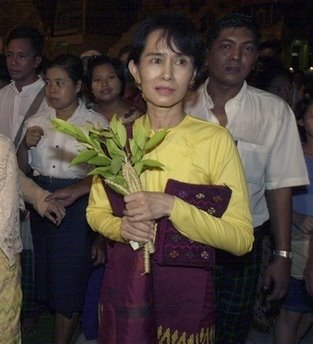


 Posts
Posts


