News & Articles on Burma
Monday, 06 December, 2010
--------------------------------------------------
Student army to join Karen fighting
Transformed Shan force given choice to revise its decision
New wave of refugees flees Burma
More Refugees Flee Karen State Fighting
Fuel price cap sparks imbalance
Makeover in Myanmar
A new phase in Burmese politics
Suu Kyi Set Free but Media Still Held Captive in Burma
Thailand’s refugee treatment slammed
US official expected to visit Myanmar, meet Aung San Suu Kyi
Socially-active Artists Banned from State TV, Radio
-----------------------------------------------
Student army to join Karen fighting
By JOSEPH ALLCHIN
Published: 6 December 2010
A Burmese student army that rose to prominence following the 1988 uprising is preparing to fight alongside Karen troops in the volatile eastern state.
The decision was confirmed today by a senior official in the All Burma Students’ Democratic Front (ABSDF) who asked to remain anonymous. The group, which at its peak had more than 10,000 troops, will join sides with a breakaway faction of the Democratic Karen Buddhist Army (DKBA) as fighting against Burmese forces continues close to the Thai border.
A delegation from the ABSDF met with DKBA commander Na Kham Mwe shortly after 8 November, the official said, when the group took key government positions in Karen state’s Myawaddy. “We are ready to cooperate with Na Kham Mwe’s group which is fighting the [Burmese army],” he added.
Than Khe, chairperson of the ABSDF, said that the group, whose numbers have now significantly diminished since the mid-1990s, approved with Na Kham Mwe’s decision to defect from the pro-junta DKBA faction which has now become a government-backed Border Guard Force (BFG).
“We can support this motive because the timing is very good,” he told DVB. “At the same time the objective is also very meaningful: it shows the people that we do not accept the 2010 elections. We show our solidarity and support to him and those men who were fighting in Myawaddy.”
The ABSDF has been linked with the Karen struggle ever since its formation in the late 1980s, when thousands of students fled to the jungle and were sheltered by the Karen National Union (KNU) and it armed wing, the Karen National Liberation Army (KNLA).
When the DKBA split from the KNLA in the mid-1990s and allied itself with the junta, the ABSDF was “caught in the middle”, according to its former foreign affairs spokesperson, Aung Naing Oo.
As a result of the new dominance of the pro-junta faction, and due to splits within the ABSDF, its fighting capabilities diminished. But the breakaway faction of the DKBA has given added hope that an inter-ethnic and organisational alliance is possible.
“This is part of the national reconciliation process,” said Than Khe. “Without working practically we cannot get the understanding needed for reconciliation.”
The junta’s quest to transform all 17 ceasefire groups into border militias has stumbled: few have accepted the demands, and tensions are now high in the border regions where the Kachin Independence Army and the United Wa State Army are also preparing for possible attacks.
“We can co-operate with any groups who have the basic principle of restoring democracy and the federal union to Burma and freeing the people from dictatorship,” added Than Khe.
http://www.dvb.no/news/student-army-to-join-karen-fighting/13243
----------------------------------------------------
Transformed Shan force given choice to revise its decision
Monday, 06 December 2010 16:28 Hseng Khio Fah
The Shan State Army (SSA) North’s 7th Brigade that transformed itself into Burma Army-controlled Home Guard Force (HGF) was given the option to consider returning to the armed struggle if the group was unhappy, according to informed sources from Shan State South.
“The regional commander told the group to make a clear-cut decision whether it will be a unit under the army or return to the jungle,” a source close to the group said.
The group was told by Commander of Taunggyi based Eastern Region Command Brig-Gen San Oo while he was on a trip to supervise security for Deputy Senior General Maung Aye and director of the Burma Army Artillery (unidentified) to inspect the sites in Mongzang, Monghsu township and Kunhing-Takaw motor road for setting up artillery bases on 30 November.
The commander said if the group decided to be one of the Burma Army’s subordinate units, it must fully obey the army’s directive; otherwise it is free to join its former sister unit, the 1st Brigade.
The group was reported to be still behaving like it used to be as an independent armed movement enjoying ceasefire agreement with the junta, local sources said.
Sources have reported that many fighters of the group refused to put on militia uniforms provided by the Burma Army in late April even though they had transformed themselves into a home guard force, under the command of the Burma Army.
“The group also failed to persuade the 1st Brigade to become a militia unit as demanded by the former Northeastern Region Command commander Aung Than Htut,” a source said.
The 7th Brigade and 3rd Brigade transformed themselves into junta run home guard force in April. The 1st, which is regarded as the strongest SSA unit, with an estimated strength of 4,000, has refused to accept the demand. It had since October already fought 4 times against attacking Burma Army units. http://shanland.org/index.php?option=com_content&view=article&id=3349:transformed-shan-force-given-choice-to-revise-its-decision&catid=86:war&Itemid=284
----------------------------------------------
Bangkok Post
New wave of refugees flees Burma
* Published: 6/12/2010 at 12:00 AM
* Newspaper section: News
More than a thousand refugees have crossed into Thailand following a fresh round of fighting between Karen ethnic rebels and Burmese government forces along the border.
Tak governor Samart Loifa said yesterday 1,129 refugees were staying at a border patrol police base in tambon Mahawan of Mae Sot district.
Most of the refugees fled fighting on Friday night but the latest group of five refugees only entered Thailand yesterday.
The governor insisted the authorities would not send the refugees back to Burma as long as the fighting continued.
''It's very likely that the fighting will be prolonged,'' he said.
''Humanitarian groups and the Thai authorities are doing our best to take care of the refugees by giving them food, drinking water and medical treatment.''
The New York-based Human Rights Watch has called on the Thai government to stop treating refugees fleeing conflict in eastern Burma as ''human ping pong balls'' who are returned to their home country prematurely.
More than 20,000 people have crossed the border into Thailand since fighting erupted in November, and while many returned within days, refugees continue to flee renewed conflict, the group said in a statement.
The Burmese general elections on Nov7 had done nothing to change the government forces' tactics of ''terrorising'' civilians, who need expanded protection when they seek refuge in Thailand, HRW deputy Asia director Elaine Pearson said.
''People fleeing conflict in Burma are being treated like human ping pong balls _ reluctantly allowed into Thailand when fighting flares but then returned to Burma at the first sign of quiet,'' she said.
''Thailand should not return refugees until the risk to them in Burma truly ends, but should allow them to stay in safe areas away from the border with access to protection services and assistance from humanitarian agencies.''
Tensions soared in Burma on polling day when Democratic Karen Buddhist Army (DKBA) ethnic rebels occupied Myawaddy town in Karen state, opposite Tak, sparking a state army counter-attack and a mass exodus of civilians into Thailand.
Subsequent sporadic fighting at several points along the border, with state troops conducting a major build-up, has caused continued displacement.
Ms Pearson added: ''Sadly, so far neither side in the recent fighting has shown much regard for the civilians caught in the crossfire.''
She said the Burmese people suffered from indiscriminate shelling and rights abuses such as forced labour. http://www.bangkokpost.com/news/local/209876/new-wave-of-refugees-flees-burma
-------------------------------------------------
More Refugees Flee Karen State Fighting
By THE IRRAWADDY Monday, December 6, 2010
Refugees from Burma continue to flow into neighboring Thailand as fighting fails to die down in Karen State between Burmese government troops and breakaway forces of the Democratic Karen Buddhist Army (DKBA).
The latest military action was reported early on Monday from Myawaddy Township, where the village Metta Linn Myaing was shelled by junta troops. More than a dozen artillery shells hit the area of the village, according to local sources.
The English language Bangkok Post quoted the governor of Thailand's Tak Province, Samart Loifa, as saying that 1,129 refugees were staying at a border patrol police base in Mahawan, in Mae Sot district, on Dec. 5.
The current conflict started when the breakaway faction of the DKBA led by Col Saw Lha Bwe, who opposed the junta's plan to transform his troops into the regime's Border Guard Force, overran for a short time key government positions in Myawaddy Township on election day, Nov. 7.
Government troops drove the DKBA forces out of Myawaddy, but isolated clashes have been occurring since, sending waves of refugees into Thailand.
“Sadly, so far neither side in the recent fighting has shown much regard for the civilians caught in the crossfire,” said Elaine Pearson, deputy Asia director at Human Rights Watch (HRW).
When fighting at first died down after government troops retook control, of Myawaddy, Thai authorities encouraged refugees to return home. The HRW called on the Thai authorities, however, to stop pressuring refugees to prematurely return to Burma, where they may be caught in the fighting or subjected to human rights abuses.
The situation in Karen State was further complicated when the Karen National Union (KNU) entered into the conflict in support of the DKBA breakaway forces. On December 1, the KNU called for the withdrawal of the junta troops from the areas held by the Karen armed groups.
David Takapaw, the vice chairman of the Karen National Union (KNU), told The Irrawaddy: “We will not stop fighting if they [the Burmese army] insist on trying to deploy in our area.” http://www.irrawaddy.org/highlight.php?art_id=20259
----------------------------------------------
Fuel price cap sparks imbalance
By JOSEPH ALLCHIN
Published: 6 December 2010
Major fiscal imbalances are occurring in Burma as the market adjusts to the new prominence of private fuel stations.
Key to the problem is the 2,500 kyat ($US2.80) per gallon price cap artificially placed on fuel sales; a little over half of the more than $US4 per gallon for unleaded petrol in neighbouring Thailand.
Burma economics expert Sean Turnell told DVB that gas prices determined by the state will inevitably cause problems. “If the state is going to determine the price, it doesn’t really matter if the fuel outlets are owned by the government or the private sector – you still have not got a market-determined price and if you haven’t got a market-determined price, you haven’t got a balance between supply and demand.”
Whilst many private filling stations are owned by large domestic conglomerates such as Htoo Trading or Max Myanmar, they have to buy the fuel from the government at around $US2.60 and sell it at the artificially-capped rate of $US2.80.
The $US0.20 margins are so small that the incentive to sell fuel is diminished, as are the profits needed to expand. This means that there is little money to buy assets such as new filling stations in more remote areas.
“If you’ve got a margin of less than five percent, then that’s nothing,” said Turnell. “How would you possibly recoup labour costs, rent costs or increase of capital costs or anything? That’s a certain loss-maker.”
The executive director of Htoo Trading, U Min Swe Oo, told the Myanmar Times in May that “[the private filling stations] will be a great challenge for businesspeople and creates many options for customers”. Indeed now customers will have to search for the cheapest prices on the black market, given the likelihood of filling stations running out of fuel or the lengthy queues they have faced since the recent introduction of a three-gallon limit on each fuel purchase.
Moreover, the challenge of turning a profit and meeting demand from disparate customers is likely to push retailers toward the black market, a sector that the recent mass privatisation had hoped to eliminate.
Fuel prices in rural areas or small towns in Burma are often significantly higher than urban areas because there are no local filling stations. Furthermore, private business has no interest in setting up shop there given the small profit margins available in the official sector, and the smaller demand in less affluent areas.
Thus private individuals in search of an income fill this void by buying the maximum capacity from fuel stations in urban areas such as Rangoon, and selling it on at inflated prices. Burmese economist Aung Thu Nyein confirmed that, “The private pumps are smuggling out their fuel to the black market”.
The Weekly Eleven magazine reported that black market prices in one small town in Arakan state were hovering between 4000 and 5000 kyat ($US4.50 to $US5.50) per gallon, close to the price of neighbouring Thailand.
The government’s artificial price is capped partly to prevent social unrest, as seen in September 2007, but the country has to import around 23,000 barrels of refined fuel a day. Unlike richer countries, Burma does not have the means to refine oil, and thus is forced to purchase the more expensive processed version.
The government is largely responsible for the import of fuel, and with the extent of black market profiteering, it is hard for the government to respond adequately to demand, leading to inevitable shortfalls.
The fuel sector is therefore caught between the inflexibility of the government’s price cap and role in importing the commodity from regional countries, and the lack of incentives that the private sector now has in distribution. Privatised fuel stations are meanwhile reduced to a veneer where the lack of profitability makes every part of the retail chain an accessory of the black market.
http://www.dvb.no/news/fuel-price-caps-spark-imbalance/13230
-------------------------------------------------
Makeover in Myanmar
6 December 2010,
Myanmar, it seems, is poised to witness a unique transition of power. If United Nations envoy to Burma, Vijay Nambiar, is to be believed, one can hope for ‘new’ opportunities for the liberal democrats who had boycotted the polls at the outset last month in protest against the reigning military junta.
Hinting at by-elections for the vacant seats, the diplomat perhaps has just furthered the impression that a host of pro-democracy politicians and activists can now make their way into the parliament, which at the moment is loaded with military-backed elected nominees. This new political space for persons of repute that had struggled for civilian supremacy is a welcome development, and can go a long way in uplifting Myanmar from the throes of backwardness and iron-fisted governance.
Nobel laureate Aung San Suu Kyi, on the other hand, has also sent in the right signals. By offering to walk an extra mile with the generals, she has in fact stressed on an evolutionary process, rather than seeing through a stage-managed revolution of sorts. However, secluded she may be and in wilderness her party in the present power decorum, one thing is for sure: a credible government cannot come into existence without being endorsed by Suu Kyi and her comrades. This silver lining in the political process makes the generals feel jittery and inadvertently come to terms with the very concept of sharing power with the genuine representatives of the people. This is no small achievement on the part of Suu Kyi to make the adamant generals fall in line, irrespective of the fact that they continue to wield power by ?hook or crook.
A peaceful transition of power in Yangon can have lessons for many such societies elsewhere in Asia and Africa. The very fact that Suu Kyi and other pro-democracy elements have not called for annulling the results of the charade November vote, irrespective of their severe reservations on its fairness, is real accommodation. Moreover, the UN envoy’s proposition that the newly elected parliament can find credibility with the introduction of new faces from the rank and file of democrats’ is a novel idea to keep the fragile boat of representative government sailing. The large turnout itself was a proof that people want to register their protest with the junta at work, and make use of an opportunity to exhibit their flair for democracy. Now Suu Kyi and Nambiar’s synopsis make it a perfect case for the Myanmarites to feel the change in the air. The junta has no option but to supplement the world body’s efforts of broadening the government’s base for the collective good of its people and the region. Yangon’s junta is once again the dock. http://www.khaleejtimes.com/DisplayArticle08.asp?xfile=data/editorial/2010/December/editorial_December11.xml§ion=editorial
---------------------------------------------
Bangkok Post
A new phase in Burmese politics
What drives Brig Gen Saw La Bwe, the commander of the DKBA's 5th Brigade?
Published: 5/12/2010 at 12:00 AM
Newspaper section: Spectrum
The exact motive of the Democratic Karen Buddhist Army's (DKBA) 5th Brigade and its charismatic and controversial leader Brig Gen Saw La Bwe is the most talked about subject among Burma's armed resistance and independence groups.
On Nov 7, the date of Burma's first "election" in 20 years, Brig Gen Saw _ also known as Na Kam Mui _ thrust himself into the limelight when his troops seized the Burmese border town of Myawaddy and engaged in fighting with the Burmese army the following day.
It was a provocative move from Na Kam Mui, who changed his mind after earlier agreeing to join the Border Guard Force (BGF) which aims to bring all the ceasefire groups under the junta's control. The other four DKBA brigades joined the BGF before the election, which was ordered by the ruling State Peace and Development Council (SPDC).
The DKBA was formed in 1994 after the defection of some Buddhist commanders and their troops from the Christian-dominated Karen National Union (KNU). The split centred around religious disputes, especially the row over the building of the Myit Zone Zedi Buddhist pagoda near the KNU headquarters at Manerplaw. Na Kam Mui, who was at that time a KNU Colonel, defected in 1995.
Maj Gen Timothy Laklem, KNU/KNLA-Peace Council.
Manerplaw, just over the Burmese border from Mae Sot district in Tak province, was the headquarters of the KNU and at least 25 other groups. They were attacked in January, 1995, and overrun by the Burmese army after the Buddhist defectors showed the Burmese army how to penetrate Manerplaw. It was perceived as a major betrayal of the KNU and other independence groups by the DKBA.
With his chequered past, some members of armed resistance groups _ speaking on condition of anonymity _ expressed unease over Na Kam Mui becoming a major player in the resistance movement.
Older KNU members said they will never forgive their Buddhist members for betraying them at Manerplaw, which was an enormous setback for the entire independence movement.
"He has a long-time relationship with one young KNU commander who signed a treaty with him a few years ago. Now he wants to work more closely with the KNU, not to help the Karen people but for his own personal interests," said one KNU commander.
"If Na Kam Mui is sincere, he should have immediately renamed his group because this name is associated with a lot of bad things done to the Karen people during the past 15 years.
"Taking over Myawaddy on Nov 7 was good timing and an excellent opportunity for him to show off, to gain popularity, and to score few points with the KNU and other groups that applauded him, like the Shan State Army-South, led by Lt Gen Yawd Serk.
"Of course, he knew he couldn't hold the town for too long. It was a clever move. You can't hold Myawaddy for a month or even for a few days because the Burmese army will attack you with all they've got. You can't win. That's why we use guerrilla warfare."
KNU Deputy Foreign Minister Brig Gen Hsar Gay.
He believes that Na Kam Mui and his KNU friend were behind the incidents in Myawaddy and in Three Pagodas Pass where there was fighting after the election that occurred almost simultaneously, despite the two places being hundreds of kilometres apart.
"The DKBA has no presence at Three Pagoda Pass. About 200 KNU troops were involved with some elements of the New Mon State Party," the commander concluded.
Whether he's loved or loathed, it's generally agreed Na Kam Mui is an influential businessman and smart operator.
Since the DKBA was formed, the KNU, other groups and even the Thai authorities have accused it of various crimes, including human and drug trafficking, smuggling and extortion.
However, not all resistance leaders speak negatively about Na Kam Mui.
KNU Deputy Foreign Minister Brig Gen Hsar Gay said "It's important that we have a good understanding with Na Kam Mui and his people. We are, in fact, cooperating but we don't yet have an official agreement because we have to see how we can align ourselves politically with him and we have to make sure that we will pursue common political goals. "He won't become a big player, but he will be one of the players. It all depends on the agreement that the KNU can reach with him. Of course, it will weaken the ex-DKBA forces and their base because it is the first time in their history that someone left them."
When asked how the KNU can accept and cooperate with Na Kam Mui after his past actions, Brig Gen Hsar said things had changed and they had to deal with the current reality. "Now we have to bring both groups together because it will be good for the unity of the people. That's why we haven't signed an agreement with him yet because we have to settle certain political issues first to see whether we will pursue common political goals."
Brig Gen Hsar said under an official agreement they would have to cooperate both militarily and politically. "If we start closely cooperating with them, we will have to see how our allies react and how they can be brought in. There must be a political consistency among us."
Maj Gen Dr Timothy Laklem, head of Foreign and Diplomatic Relations at the KNU/KNLA-Peace Council said despite the incorporation of the four other regiments into the BGF, the DKBA still exists under the command of Na Kam Mui.
BROTHERS IN ARMS: Brig Gen Saw La Bwe flanked by other DKBA leaders.
He said the fighting between the DKBA and the Burmese army on Nov 7 was to be expected. ''It wasn't a set up to show something,'' he said. '' The regime forced voters to vote for the Union Solidarity and Development Association. Whether it is the DKBA, KNU or our group, we Karen are all together as one. It is our Karen area. We all live in Karen State. It doesn't belong to the SPDC.''
Maj Gen Laklem then produced an email he said was from Na Kam Mui in which the commander had refused a new ultimatum from the newly-appointed Eastern Com mander, Lt Gen Tun Ne Lin to join the BGF.
In an interview with Na Kam Mui published in Spectrum on Dec 13, 2009, he said that most of his people were happy to join the BGF.
''Development along the border is our main objective because we want our people to be prosperous,'' Na Kam Mui told Spectrum. ''After joining the BGF, we can receive salaries, cars, rations, food, medical help as well as uniforms and ammunition from the Burmese government.
''I've been here many years waiting for this to come, so that we don't have to carry the burden of looking after our army. We should accept anything that is good for our people. We've been staying along the border, acting as an unofficial border guard force and I'm waiting for it to be recognised legally. The DKBA has had a military alliance with the Burmese government since early 1994, and it has worked well so far.''
However, Maj Gen Laklem said the junta started to apply pressure on Na Kam Mui to join the BGF at the beginning of this year. ''After he defected about three months ago, one SPDC commander told him: 'Do you want to be a friend, an enemy, or a slave'?'' Maj Gen Laklen recounted. ''His response was: 'If you treat me as a friend, I am a friend; if you treat me as an enemy, I am your enemy; if you treat me as a slave, I will treat you as a slave.'''
U Aye Saung, Secretary General of the People's Liberation Front, said of Na Kam Mui: ''Now he has done something bad to the SPDC that damaged its reputation, so I have to support him. We should forget the past.''
Saw Kwe Htoo Win, chairman of the KNU Mergui-Tavoy district said that some DKBA soldiers don't want to join the BGF nor abandon their name.
''I believe that Na Kam Mui wants to be independent from both the SPDC and the KNU, but prefers to work with the latter. I don't know if he can be trusted because I have never had a relationship with him. I don't know his ideas and background. But if he fights the SPDC then we have to trust him and work with him.''
THE LAST HOLDOUT ?
Brig Gen Saw La Bwe, also known as Na Kam Mui, is commander of the 5th Brigade of the Democratic Karen Buddhist Army (DKBA). He refused to be integrated into the Border Guard Force (BGF) as ordered by Burma's Ruling State Peace and Development Council (SPDC) and defected several months ago with his troops.
Since then he has come under pressure from the SPDC, with a large financial reward offered for information leading to his capture _ dead or alive.
Na Kam Mui was also recently given an ultimatum by the SPDC to join the BGF or face attack. He rejected the "offer" and vowed to fight if confronted.
He also recently joined hands with a former enemy, the Karen National Union (KNU), and is on good terms with other Karen opposition armed groups that could increase their military capability.
Q: Can you briefly explain the DKBA's situation?
A: The Burmese regime is trying to swallow up the identity of all the ethnic groups through the BGF programme to use ethnic forces as a shield and protect and maintain the long-term survival of its dictatorship. The reason I refused to join the BGF is that the regime has never had any good intentions for all the peoples in Burma.
In my 10 years of experience, they always say one thing but do another. They can't be trusted. I do not want to see the continued suffering of my Karen and all those who live under the oppressive rule of the regime.
We are standing with all Karen groups that carry the patriotic spirit for justice and freedom of all Karens, whether DKBA, Karen National Union/Karen National Liberation Army [KNU/KNLA], Karen Peace Force, KNU/KNLA-Peace Council [KNU/KNLA-PC], Thandaun Peace Force or other ethnic resistance groups who are opposing cruelty and oppression. In my conscience, I'd rather fight to defend the rights of the people than become a slave dog of this cruel regime.
Q: What is your current status?
A: The fighting will most likely continue with combined efforts from all Karen resistance forces. We will not fight aimlessly, that would harm the innocent. But we will have specific targets to weaken the regime to defend the innocent against violations. I feel very sorry to see young Burmese soldiers who have no choice but to accept their superiors' orders and become victims of the cruelty of war. I deeply sympathise with parents and families who lose their young men. The regime has created this problem and has to be held accountable and responsible.
Q: The SPDC has offered a reward for your capture. What is your comment?
A: Anyone right-thinking person would know this warrant has no credibility and is not legitimate. The whole world knows that the real criminals are the regime, not me, I'm simply protecting and standing up for the freedom of my own Karen and all peoples in Burma. I believe that no Thai authority has such a low-class mentality to follow the order of the regime.
Q: Why did the DKBA fight the Burmese troops simultaneously on two fronts on election day? Who started the fighting?
A: On Nov 8, fighting broke out in Myawaddy, a border town in Karen State, close to Mae Sot. The junta's troops pointed guns at people, forcing them to vote. In response, I sent troops to protect the innocent citizens. While we were monitoring the voting area, the junta troops spoke aggressively to my troops, trying to force us to leave and began to shoot at us. They began shelling the middle of the public area and even on the Thai side. We had to return fire to protect the civilians and ourselves. During the crossfire, we assessed that it would be better for us to pull out our troops from Myawaddy to protect innocent people.
Q: Do you associate with the KNU/KNLA and KNU/KNLA-PC?
A: I associate with all Karen groups who believe in freedom and justice for all Karen people.
Q: What are your plans?
A: I will continue to struggle alongside all ethnic forces and all peoples in Burma until this regime is removed and held accountable for what it has done against the citizens of Burma. I will continue until I see a true democratic society in Burma.
Q: What do you think about Aung San Suu Kyi's release?
A: I am thrilled to see her released. At the same time I am concerned and worry about the dirty game that the regime will play, even to the extent of a possible assassination attempt. They have attempted to do this before, and I am certain they will not hesitate to try again.
Q: What is your opinion of the Burmese election?
A: I can say on behalf of myself and all the ethnic groups, including many people from abroad, that we knew the intentions of the regime before the elections. I have stated many times in the media that this regime will never have good intentions or the ability to bring change for the country to move forward. They think they own the country and can do whatever they like. This election is a game the regime is playing to tease the international community.
Q: Would you accept Mrs Suu Kyi as prime minister?
A: Of course, she has gained the majority vote from the people and deserves the legitimate role chosen by the people. Any democratic country that believes in the principle of democracy should not accept this regime as a legitimate government.
Q: What do you think about armed struggle? Should it stop? Is it worth?
A: The nature of a military regime is not to understand the language of diplomacy or political talks, but guns. The regime uses guns cruelly against its own people. We have guns to protect innocent lives and to secure peace.
Q: Are you going to join with the KNU/KNLA-PC or KNU/KNLA?
A: We are the same blood ... from one family, although we have different names, we all fight against a common enemy which is attempting the genocide of all Karen.
Q: Do you want an independent Karen State, and if so, will you fight until you get one?
A: Of course, we want an independent Karen State but it might be too early as the international community still wants to see a federal union and we currently agree to that.
However, all the ethnic groups, including the Karen, are sick and tired of the discrimination and brutality of the regime for more than six decades. They have been trying to swallow up the identity of ethnic groups with their Myanmar-isation ideology for example: Changing the name of Burma to Myanmar; changing the union flag to the one star [Myanmar] flag without any consideration or discussion with the ethnic groups or even the National League for Democracy. This is a part of their strategy to wipe out all the ethnic groups including Karen.
Burma is not owned by this military regime or the Myanmar race alone. We desire independence like East Timor. However, we still want to give Aung San Suu Kyi a chance to reconcile all the ethnic groups to establish a true Democratic Federal Union of Burma, the same as her father, but based on equality for all.
If that fails then for the sake of long-lasting peace, all the ethnic groups will combine together and claim independence for their respective states.
http://www.bangkokpost.com/news/investigation/209789/a-new-phase-in-burmese-politics
--------------------------------------------------
Suu Kyi Set Free but Media Still Held Captive in Burma
Simon Roughneen
December 5, 2010
Burma has in recent weeks been one of the top world news stories. The country's November 7 general election was followed less than a week later by the release of Aung San Suu Kyi, one of the world's best-known political dissidents, whose appearance at her front gate on November 13 was carried on news networks around the world.
However, getting news out of Burma is no easy task. Foreign journalists were banned from entering the country to cover the elections. Though an estimated 30 to 40 managed to sneak in on tourist visas, seven were deported after being detained by the police. Fourteen media workers are currently behind bars, some serving sentences of up to 35 years. There are a total of around 2,200 political prisoners who remain locked up, despite the release of Suu Kyi.
Still, high-profile reporters such as BBC's John Simpson managed to interview Suu Kyi after her release, with no apparent retaliation or punitive measures by the ruling junta. One reporter in Rangoon, who asked to remain anonymous due to the restrictions on foreign journalists operating in Burma, told me the apparent indifference to the journalists-posing-as-tourists was more due to ineptitude on the part of the police, rather than newfound tolerance.
Telecom backwater
Chinese correspondents are the only foreign press permitted to work in Burma on a full-time basis; news agencies and wire services such as Associated Press, Reuters and Agence France-Presse are allowed only to deploy Burmese stringers.
The information challenge was heightened in the week before the November 7 election, when a moratorium on new SIM cards was imposed by the junta, pushing the price of black-market SIMs to well over $1,000. Economics are another form of censorship in Burma, as the average wage is a little over $200 per year. Even if the release of Suu Kyi somehow galvanized the public into another confrontation with the junta, there is little prospect of seeing the SMS-organized mass protests that emerged a decade ago elsewhere in Southeast Asia, such as when tens of thousands of protesters took to the streets of Manila to demand the ouster of President Joseph Estrada.
All told, only four percent of the population is wired up to telephone networks, one of the world's lowest telephone usage rates. There are rumors that various multinational telecommunications companies are seeking ways into the market, trying to get around U.S., E.U. and Australian sanctions by setting up shell companies in Singapore and Hong Kong. However, the privatization of various state assets over the past year appears to have benefited only a narrow cabal of Burmese businessmen affiliated with the ruling junta. There are 1.3 million mobile phones and 866,084 landlines in Burma, according to statistics released by Myanmar Post and Telecommunications. The country has a population of roughly 50 million people. In contrast, over half the population of neighboring Thailand has mobile phones.
The country has been deemed "an enemy of the Internet" by Reporters Sans Frontiers (RSF), and Vincent Brossell, RSF's Asia representative, told me that "it is so risky to try to work with people inside Burma."
When it comes to the Internet, foreign news and social networking sites are blocked, though tech-savvy Internet users and Internet cafe owners in Rangoon and Mandalay can find ways around the wall using various proxies. However, just one in 455 Burmese were Internet users in 2009, according to the International Telecommunications Union. Internet cafes in Rangoon and Mandalay charge around $0.40 an hour for access, which is far too expensive for ordinary Burmese.
Enhanced online surveillance
A new ISP regime is being implemented by the ruling State Peace and Development Council, the official title for the junta. The planned "national web portal" will split the military, government and general ISPs into separate services, meaning that the publicly available Internet can be closed down or slowed without impinging on the government or army's web access. Critics say the new plan will enhance surveillance and online snooping, and make the country's few bloggers more vulnerable than ever to arrest.
During the monk-led mass protests in September 2007, citizens used the web to send reports and video to the outside world, circumventing the ban on foreign media. Blogger Nay Phone Latt was a central figure in that effort, but he was given a 12-year jail term for his efforts—a harsh reminder of what happens to those who use the Internet to speak out against the ruling junta.
Any hope that the release of Suu Kyi signals even a tentative loosening-up appears to be misplaced. The military censors have stuck to the old ways, as evidenced by the fact that only ten of the country's 100-plus privately owned publications were sanctioned to offer coverage of the release of Suu Kyi. All publications in Burma must have their content approved in advance by the Press Scrutiny Board. Speaking at a seminar on post-election Burma in Bangkok on November 23, Aung Zaw, the editor of Irrawaddy, a news magazine based in Thailand but run by Burmese journalists, told me that "media in Burma are trying to push the envelope with the censor, since the release of Aung San Suu Kyi."
Shawn Crispin, southeast Asia representative of the Committee to Protect Journalists, told me there is a "yawning news gap" caused by heavy censorship and intimidation inside Burma. Burmese exiles try to fill the void, operating mainly from India and Thailand. Clandestine reporters inside the country take great risks to funnel information to editors in Chiang Mai, New Delhi and beyond.
Late in 2009, Hla Hla Win, a reporter for the Norway-headquartered Democratic Voice of Burma, was sentenced to a total of 27 years in jail for violating the Electronics Act, another draconian lever used by the junta to stop information from getting around the country or to the outside.
First Eleven's cover
However, since the release of Suu Kyi, even the state-watched media in Burma have shown daring creativity to get their message out, risking the wrath of the regime in the process. Sports journal First Eleven led with a front-page story on the Tuesday after Suu Kyi's release that was a combination of headlines ostensibly about English Premier League soccer matches, but that also used colored lettering to discuss Suu Kyi's release. Three innocuous-looking headlines—"Sunderland Freeze Chelsea," "United Stunned by Villa" and "Arsenal Advance to Grab Their Hope"—read as "Su Free Unite and Advance to Grab The Hope."
First Eleven got the ruse past the censors by submitting the advance copy of the page in black and white, but were subsequently hit with a two-week publishing ban after the military realized that they had been fooled. http://www.worldpress.org/Asia/3661.cfm
----------------------------------
US official expected to visit Myanmar, meet Aung San Suu Kyi
Dec 6, 2010, 4:41 GMT
Yangon - A US State Department official was to arrive in Myanmar Tuesday for the first high-level talks between the two countries since the release of opposition leader Aung San Suu Kyi, diplomatic sources said.
Deputy Assistant Secretary of State for East Asia and the Pacific Joseph Y Yun was scheduled to spend four days in the country and was expected to meet with Suu Kyi and other political party and military leaders, the sources said.
Suu Kyi, head of the opposition National League for Democracy, was released from house arrest shortly after Myanmar's first election in two decades on November 7, which the ruling junta won amid criticism of the vote's fairness.
US President Barack Obama called the election a sham as Suu Kyi was barred from participating and because of other restrictions intended to ensure military-backed candidates won.
But the US administration has signaled its willingness to engage the ruling junta diplomatically and economically to encourage reforms. Suu Kyi has also said she favours dialogue with the regime, and that she does not aspire to political office herself.
US Assistant Secretary of State Kurt Campbell visited Myanmar in November 2009 and in May 2010. He met with Suu Kyi, then still under house arrest, during his second visit. http://www.monstersandcritics.com/news/asiapacific/news/article_1603629.php/US-official-expected-to-visit-Myanmar-meet-Aung-San-Suu-Kyi
-----------------------------------------
Thailand’s refugee treatment slammed
AFP/Bangkok
Thailand must stop treating refugees fleeing conflict in eastern Myanmar as “human ping pong balls” who are returned to their home country prematurely, a top rights group warned yesterday.
Since fighting erupted in November more than 20,000 people have escaped across the border to Thailand, and while many returned within days, refugees continue to flee renewed conflict, said a Human Rights Watch (HRW) statement.
An election on November 7 has done nothing to change the Myanmar army’s tactics of “terrorising” civilians, who need expanded protection when they seek refuge in Thailand, according to HRW deputy Asia director Elaine Pearson.
“People fleeing conflict in Burma are being treated like human ping pong balls—reluctantly allowed into Thailand when fighting flares, but then returned to Burma (Myanmar) at the first sign of quiet,” said Pearson.
“Thailand should not return refugees until the risk to them in Burma truly ends, but should allow them to stay in safe areas away from the border with access to protection services and assistance from humanitarian agencies.”
Tensions soared in Myanmar on polling day when Democratic Karen Buddhist Army (DKBA) ethnic rebels occupied Myawaddy town in Karen state, sparking a state army counter-attack and a mass exodus of civilians into Thailand.
Subsequent sporadic fighting at several points along the border, with state troops conducting a major build-up in the area, has caused continued displacement.
“Sadly, so far neither side in the recent fighting has shown much regard for the civilians caught in the crossfire,” said Pearson.
Send Article
http://www.gulf-times.com/site/topics/article.asp?cu_no=2&item_no=402810&version=1&template_id=45&parent_id=25
-------------------------------------------------
Socially-active Artists Banned from State TV, Radio
By KO HTWE Monday, December 6, 2010
The Burmese regime has ordered a blackout on news about several socially-engaged personalities from the country's arts and entertainment scene.
The blackout was ordered by regime censors after a group led by Kyaw Thu, founder of the Free Funeral Services Society and one of Burma's best-known actors, visited the HIV/AIDS shelter in Rangoon's Dagon Myothit (South) Township,run by the National League for Democracy.
A patient eats orange as he rests in a HIV/AIDS hospice founded by a member of Aung San Suu Kyi's National League for Democracy (NLD) party in Rangoon. (Photo: Reuters)
Accompanying Kyaw Thu were along writer Than Myint Aung, film director Min Htin Ko Ko Gyi, popular vocalist Than Thar Win, punk-rock singer Kyar Pauk (aka Han Htoo Lwin) and rapper Annaga. They donated food and clothing.
According to sources close to the state-owned television station MRTV, the Ministry of Information presented MRTV and the state-run Cherry FM radio station with a list of their names and instructed the two establishments not to broadcast news about them.
“We received a letter from the ministry with a list of the artists [who visited the shelter] and were told not to air any program mentioning them,” said a Cherry FM official.
“It’s an abuse of human rights,” said Kyaw Thu. “We are doing social work, not politics. We went there to encourage the patients and hand out donations.”
Kyaw Thu and his wife were arrested at the time of the September 2007 demonstrations after giving food and water to the monks who participated.
The following month, his HIV/AIDS awareness film, “Absolutely safe” (A-Kywin-Mè Longyon-Ya), was banned by the government censorship board.
The censorship board has also banned news about the popular satirical troupe “Forever Rose” (Htar Wa Ya Ninsee), directed by Maung Myo Min (Yintwin-Phyit), Burma’s most popular film director. News about another troupe, “New Year Rose” (Nit Thit Ninsee), has also been blacked out, said Maung Myo Min. http://www.irrawaddy.org/article.php?art_id=20258
__._,_.___
Tuesday, December 7, 2010
News & Articles on Burma-Monday, 06 December, 2010


News & Articles on Burma-Sunday, 05 December, 2010
News & Articles on Burma
Sunday, 05 December, 2010
--------------------------------------------------
Burma's pro-junta party thanks voters
Day I met Aung San Suu Kyi
Myanmar election losers attract new supporters
Burma undergoing political change - UN envoy
Burmese Army despatching more arms to Kachin State
-----------------------------------------
Burma's pro-junta party thanks voters
05 December 2010 | 07:31:03 PM | Source: AAP
Burma's main military-backed political party has thanked citizens for voting overwhelmingly in its favour in last month's elections, the first in two decades.
The Union Solidarity and Development Party, in a half-page advertisement carried on Sunday in the state-run Myanma Ahlin newspaper, said it had won 882 of a total 1154 seats at stake in the November 7 polls. Official final results have yet to be released.
Opponents as well as outside critics of the junta, such as the US government, said the vote was neither free nor fair, and instead manipulated to ensure that the military's allies would win.
The advertisement said the party pledged to work hand-in-hand with the people for security, food and shelter needs and human rights and other democratic rights.
http://www.sbs.com.au/news/article/1433241/Burma
------------------------------------
Day I met Aung San Suu Kyi
Kate Dennehy
December 5, 2010 - 1:09PM
Meeting Burma's pro-democracy leader, Aung San Suu Kyi was a humbling experience for former Queensland politician Ronan Lee.
He travelled to Rangoon to witness Burma's historic elections last month but never expected Ms Suu Kyi would be released from the two-storey house where the country's military had detained her since 2003.
On November 13, they released Ms Suu Kyi, 65, a winner of the Nobel Peace prize, who had either been imprisoned or held under house arrest for 15 of the past 21 years.
Advertisement: Story continues below
“I never in a million years thought the junta would let her out,” he said by telephone last week.
“Actually meeting her was a surreal and humbling experience. I've met the Dalai Lama but she was even more impressive, so serene after all she and her family have been through, but incredibly confident and determined.”
Workers at her National League for Democracy (NLD) party headquarters introduced him to "The Lady", as she is known, a few days after her release.
“We just chatted and she told me she'd spent the morning at a monastery praying for the country many political prisoners,” he said. The office was more like a half-way house full of volunteers who cook, clean and quietly spread her message of democracy.
Mr Lee held the Queensland state seat of Indooroopilly for the ALP from 2001 but defected to the Australian Greens in 2008 and lost the seat at the election last year.
He then moved to Tasmania to work as head of office for Australia's first Greens Minister, Nick McKim, and run an environmental communications business but he said he left this year “utterly exhausted” to regain his health and “gain some work-life balance”.
Watching history unfold in Burma with about 20 locals was “confronting", he said.
“We heard about her release watching a television in a roadhouse along the bus route to Mandalay,” he said. “The room was completely silent except for the noise of the television report that had more pictures than commentary. It was clear she was free but there was no cheering, no noise at all; just people staring at the television, looks were exchanged but no words spoken. Dissenting opinions are not safe to share in public so are kept for small conversations with trusted friends.”
After he met Ms Suu Kyi last week he became aware he was being followed. “A couple of guys dressed in civilian clothes would pretend their car had broken down every time we got out of our car. When we got back in, they'd close the bonnet and jump in again.”
He said Ms Suu Kyi has a security team that follows her everywhere for fear she will be assassinated like her father, Aung San, the independence general who was murdered by a political rival.
Ms Suu Kyi joined the NLD as its secretary-general in 1988 and pushed for political reforms including freedom and democracy. Despite her being under house arrest in 1990, the NLD won 82 per cent of the seats in parliament but the military regime refused to recognise the results.
During her detention her husband died in Britain, her two children have grown into adults and she has become a grandmother of children she has never seen. The junta would have allowed her to visit her husband but it was unlikely she'd ever be granted entry back into Burma so she stayed to fight for democracy and the release of more than 2000 political prisoners.
One of her sons, Kim Aris, 33, who lives in Britain, visited her after her release.
Her supporters fear Suu Kyi might be rearrested at any time but the outpouring of good wishes from world leaders could prevent that for now.
kdennehy@fairfaxmedia.com.au http://www.brisbanetimes.com.au/national/day-i-met-aung-san-suu-kyi-20101205-18l3s.html
----------------------------------------------
Myanmar election losers attract new supporters
Dec 5, 2010, 8:05 GMT
Yangon - Although they won few seats in last month's parliamentary elections, Myanmar opposition parties were heartened by an upsurge in applications for party membership, a newspaper said Sunday.
The Myanmar Times quoted opposition party leaders as saying new supporters were seeking them out because they want to participate in electoral politics.
Military-ruled Myanmar held its first election in two decades on November 7 in a vote widely seen as rigged to ensure the armed forces retain their dominant position.
'The last election has made people realize that politics is not a dangerous issue and that it is relevant for every single person in the country,' U Nay Myo Wai, general secretary of the Peace and Diversity Party, was quoted as saying. 'They have to participate if they want a change. As a result, our party is getting more new members.'
'When we were registering our party, we needed to have 1,000 members, and at that time, it was very hard for us to convince people to join, but now here they are, coming to us without any encouragement,' U Nay Myo Wai said.
The Peace and Diversity Party fielded seven candidates on November 7, none of whom were successful.
Parties representing Myanmar's ethnic minorities, which tended to do better in the election, were also reported to be gaining support.
U Zaw Aye Maung from the Rakhine Nationalities Development Party, which won 35 of the 44 seats it contested, said he was surprised at the number of new members the party had attracted after the election.
'Many Rakhine people have come and joined up at our offices in Rakhine region,' he said. 'It is such a big improvement.'
Myanmar's best-known opposition party, the National League for Democracy (NLD), led by Nobel Peace Prize laureate Aung San Suu Kyi, refused to participate in the election because of harsh restrictions imposed by the ruling junta.
Suu Kyi was released from house arrest after the election and has appeared at several public gatherings, attracting large crowds of enthusiastic supporters. http://www.monstersandcritics.com/news/asiapacific/news/article_1603496.php/Myanmar-election-losers-attract-new-supporters
-----------------------------------------
4 December 2010 Last updated at 17:08 GMT
Burma undergoing political change - UN envoy
Vijay Nambiar and Aung San Suu Kyi in Rangoon. Photo: 27 November 2010 Vijay Nambiar met Aung San Suu Kyi during his last week's visit to Burma
The UN envoy to Burma has said it is clear that political change is taking place in the country, despite UN criticism of last month's poll there.
The UN envoy to Burma has said it is clear that political change is taking place in the country, despite UN criticism of last month's poll there.
Vijay Nambiar told the BBC that parliamentary by-elections could now open up "opportunities" for broadening the political spectrum.
The party of pro-democracy leader Aung San Suu Kyi boycotted the election, won by the biggest military-backed party.
She was not released from house arrest until after the poll.
"Government formation is taking place (in Burma). I think there will be new spaces, new slots in the parliament which will open up for by-elections," Mr Nambiar, who visited Burma last week, told the BBC Burmese Service.
He described the by-elections as "small opportunities for increasing the political space for a broader, inclusive involvement".
Mr Nambiar's comments come despite strong criticism of Burma's poll by the UN, which said they were neither free nor fair.
The elections on 7 November - the first to be held in Burma in 20 years - were won by the Union Solidarity and Development Party (USDP).
Six days later, Aung San Suu Kyi was released from house arrest. Her now-disbanded National League for Democracy (NLD) won the last election in 1990, but was never allowed to take power.
She has urged her followers not to give up hoping for change and has also said she is willing to talk to Western nations about lifting sanctions on Burma, which she previously supported.
http://www.bbc.co.uk/news/world-asia-pacific-11919892
--------------------------------------------
Burmese Army despatching more arms to Kachin State
Friday, 03 December 2010 22:22 KNG
The threat to the Kachin Independence Organization (KIO) has increased manifold with the Burmese military junta despatching significant quantity of arms to Kachin State, northern Burma.
The end of November has seen the regime stepping up the despatch of various kinds of weapons and military equipment made in China in more than 12 trucks from Mandalay the second largest city in Burma to Bhamo (Manmaw in Kachin) Township the second biggest city in Kachin State said, local eye witnesses.
manmaw_kachin_stateThe trucks carting the weapons are continuing to head towards Laiza the headquarters of KIO, said residents of Bhamo.
“There were 10 trucks carrying an assortment of machine guns and heavy weaponry. Four or five soldiers were guarding each truck,” said residents.
Yesterday evening, at least five trucks transporting heavy weapons entered the city and more weapons are coming in ships from Mandalay, said residents of Bhamo.
People, who saw the weapons being transported, are in a state of panic. They fear war breaking out between the Burmese Army and the Kachin Independence Army (KIA), the armed wing of KIO, said a local.
“In the past they (junta) have resorted to threatening civilians by showing off their weapons. These arms were not from lower Burma but from the military camps based in the state,” said a resident.
The junta has gone about reinforcing its troops and increasing arms supply in its army camps close to the KIO/KIA headquarters. Earlier the regime ordered the closure of all KIO liaison offices across the country.
The junta has also prohibited all trade on the China-Burma border areas controlled by the KIO, including at the trade point near Laiza over the last two weeks.
After the border trade ban the Kachin ethnic armed group KIO has been told to shift all businessmen living in Laiza. http://www.kachinnews.com/news/1815-burmese-army-despatching-more-arms-to-kachin-state.html
Sunday, December 5, 2010
EBC Meeting Invitation (12-12-2010) [1 Attachment]
သို႔
အဖြဲ႔ဝင္မ်ား
၂ဝ၁ဝ ေရြးေကာက္ပြဲ ဆန္႔က်င္ေရးေကာ္မတီ (ဂ်ပန္)
ယေန႔ (၅-၁၂-၂ဝ၁ဝ) AUN office တြင္ က်င္းပေသာ ၂ဝ၁ဝ ေရြးေကာက္ပြဲ
ဆန္႔က်င္ေရးေကာ္မတီ (ဂ်ပန္) EBC ၏ ဆံုးျဖတ္ခ်က္အရ ေအာက္ပါအစီအစဥ္
အတိုင္း အစည္းအေဝး က်င္းပမည္ျဖစ္ေၾကာင္း ေလးစားစြာ ဖိတ္ေခၚ
အေၾကာင္းၾကားအပ္ပါသည္။
ေန႔ရက္ - ၁၂-၁၂-၂ဝ၁ဝ (တနဂၤေႏြေန႔)
အခ်ိန္ - နံနက္ ၉ နာရီခြဲမွ မြန္းတည့္ ၁၂ နာရီထိ
ေနရာ - AUN office, Takadanobaba, Shinjuku
ျပန္ၾကားေရး
၂ဝ၁ဝ ေရြးေကာက္ပြဲ ဆန္႔က်င္ေရးေကာ္မတီ (ဂ်ပန္)
လူ႔အခြင့္အေရးမ်ားေန႔” အခမ္းအနား (တိုက်ဳိ) တြင္ ပါဝင္လႈပ္ရွားၾကပါရန္ ဖိတ္ေခၚျခင္း
၆၂ ႏွစ္ေျမာက္ “လူ႔အခြင့္အေရးမ်ားေန႔” အခမ္းအနားကို ဂ်ပန္ႏိုင္ငံရွိ ျမန္မာအသိုင္းအဝိုင္းမွ အျခားႏိုင္ငံျခားသား အဖြဲ႔အစည္းမ်ားႏွင့္အတူ ေအာက္ပါအစီအစဥ္အတိုင္း က်င္းပမည္ ျဖစ္ပါ၍ တခဲနက္ ပါဝင္ လႈပ္ရွားၾကပါရန္ ေလးစားစြာ ဖိတ္ေခၚအပ္ပါသည္။
ေန႔ရက္ - ၁ဝ-၁၂-၂ဝ၁ဝ (ေသာၾကာေန႔)
အခ်ိန္ - ညေန ၃ နာရီမွ ၄ နာရီခြဲထိ
ေနရာ - UN University ေရွ႕ကြက္လပ္ Shibuya, Tokyo, Japan
ျပန္ၾကားေရး
၂ဝ၁ဝ ေရြးေကာက္ပြဲ ဆန္႔က်င္ေရးေကာ္မတီ (ဂ်ပန္) (EBC)
News & Articles on Burma-Saturday, 04 December, 2010
News & Articles on Burma
Saturday, 04 December, 2010
--------------------------------------------------
Belgian ambassador meets Suu Kyi
Regime Reinforces Troops, Weapons in Kachin State
Weekly Business Roundup (December 4, 2010)
Imprisoned Student Leader Warns of Second Depayin
Myanmar has 2,200 political prisoners
Myanmar Gets The Message, U.N. Says
----------------------------------------------
Belgian ambassador meets Suu Kyi
AFP December 4, 2010, 1:03 am
BRUSSELS (AFP) - The ambassador of Belgium, which currently holds the rotating EU presidency, on Friday met Myanmar's Aung San Suu Kyi at her home and reiterated support for her fight for democracy.
Belgium's Foreign Minister Steven Vanackere said in a statement that the ambassador had told the democracy leader, who was released November 13, that European Union member states would back efforts to win democracy in Myanmar.
"The November 7 election not having produced an opening that was awaited, Belgium as well as other EU member states must back the democratic opposition in general and Aung San Suu Kyi in particular", he said.
"It is indispensable that the voice of the democratic opposition, as well as those of ethnic minorities and civil society, be heard," Vanackere added.
The minister also called for the release of the country's estimated 2,100 political prisoners.
"I urge the Myanmar regime to ensure that Aung San Suu Kyi's recent release be a first step towards the unconditional release of all the other political prisoners."
Amnesty International claims there are still more than 2,200 political prisoners in Myanmar being held under vague laws frequently used to criminalise peaceful political dissent.
Follow thewest.com.au on Twitter http://au.news.yahoo.com/thewest/a/-/world/8449121/belgian-ambassador-meets-suu-kyi/
-------------------------------------------
Regime Reinforces Troops, Weapons in Kachin State
By KO HTWE Friday, December 3, 2010
The Burmese army deploys more troops and weapons near the headquarters of the Kachin Independence Organization (KIO) in Laiza and at other locations across Kachin State, according to residents.
Big-Gen Gwan Maw, the deputy commander in chief of the Kachin Independence Association (KIA), told The Irrawaddy on Friday: “What will happen depends on the troops that are serving on the front line. For the time being, there's no fighting because war depends on orders from superiors based on policy.”
Asked if the KIA was ready if the regime started fighting, he said, “A state of readiness is the nature of a army.”
The last direct talks between the regime and the KIA was more than three months ago. The KIO and its armed wing, the KIA, signed a cease-fire agreement with the junta in 1994 and now controls substantial areas of Kachin State. Tension between the two sides has ratcheted up in recent months.
Awng Wa, a leader of the Kachin Development Networking Group (KDNG), told The Irrawaddy on Friday said that government troops under the regime's Northern Command are reinforcing their weapons.
“The government is sending weapons to the troops based in Bamho Township,” said Awng Wa. “Now we can see many regime soldiers across the state.” He said the KIA is ready if the regime attacks.
A Laiza resident said townspeople have noticed many more government troops in the surrounding villages.
In its continuing campaign of intimidation and pressure, the regime recently closed the Lajayawng border crossing, a vital trade link between China and Kachin State about two miles from KIO headquarters in Laiza, to put more pressure on the cease-fire group.
“The closure weakens trade and commerce in the area,” said Gwan Maw. He said the KIA suggested that three-wheel taxi drivers leave the area because there was no work. Merchants in the area could decide for themselves whether or not to leave, he said.
In addition, the Burmese military government recently ordered the KIO to close all its liaison offices, in another attempt to force it to accept the BGF plan.
Recently, tension was also increased when the KIA reportedly shot at a helicopter flying close to its headquarters.
The regime has put pressure on 17 cease-fire groups to place their armed forces under Burmese army control since April 2009. Several of the smaller ethnic cease-fire groups have accepted the BGF plan, but all of the larger armies, such as the United Wa State Army—with 30,000 troops and the KIO with 10,000—have rejected the plan.
http://www.irrawaddy.org/highlight.php?art_id=20248
--------------------------------------------
Weekly Business Roundup (December 4, 2010)
By WILLIAM BOOT Saturday, December 4, 2010
EU Sanctions ‘Hurt Many Innocent Small Burmese Businesses’
Many small family businesses in Burma have suffered from “misdirected” sanctions by the European Union, says a former senior British diplomat in Southeast Asia.
“Many innocent family businesses feature on the [sanctions] list simply because their businesses, such as furniture and jewelry, fall within the targeted sectors [of] timber and precious stones,” said Derek Tonkin, the British ambassador to neighboring Thailand for three years in the late 1980s.
Writing in the Brussels-based newspaper European Voice, Tonkin said the target lists were vaguely drawn up using Internet trade directories “without any thought for their relevance or accuracy.”
The small silversmiths and goldsmiths of Pakokku, allied to the monasteries not the military, have also suffered, he said.
Tonkin was writing as a debate has opened up on whether the EU should reconsider sanctions enforcement in the wake of Aung San Suu Kyi’s release from seven years of house arrest.
Advisers Stopped French President Forcing Total from Burma
French President Nicholas Sarkozy planned to force French companies, including oil and gas developer Total, out of Burma but was persuaded not to, according to revelations by WikiLeaks.
Sarkozy’s concern about Total’s continued business operations in Burma despite European sanctions were the subject of confidential US diplomatic messages sent from Paris to Washington, according to WikiLeaks.
It quotes US ambassador to France Craig R Stapleton describing the French leader as “forward-leaning” in his policies on Burma.
However, he was advised against intervening beyond existing EU sanctions by French political advisers.
Total and Chevron of the US have been able to continue operating gas fields in the Andaman Sea under a so-called “grandfather agreement” which meant they were excluded from sanctions imposed by the EU and the US after they had begun operations in Burma.
China to Build More Burma Dams as NGO Urges Better Standards
A Chinese environmental protection group has urged Chinese state-owned firms engaged in hydroelectric dam construction in Burma to use better environmental standards.
The Global Environmental Institute, a Beijing-based NGO, said with standards in Burma very low it was in the interests of developers as well as the local population to “adopt higher standards.”
The NGO was quoted by the Burma Rivers Network, a human rights group based in Thailand, after the Burmese authorities announced that another hydro dam is to be built in the Shweli region of Shan State.
A new dam is also planned at Bilin in Mon State.
China’s Huaneng Lancang River Hydropower Company has been commissioned to build the Shweli-2 dam in a joint venture with Burmese military leadership-linked Asia World, one of the Burmese companies on a US sanctions list.
The Shweli-2 dam will reportedly have an electricity generating capacity of 460 megawatts. Most electricity from the Shweli-1 dam is pumped to China, says the Burma Rivers Network.
It said there are no environmental standards on dam developments in Burma.
“If you compare it to Thailand or China and what they do in their countries, the affected communities there are consulted, so that’s why they avoid these places and come to Burma and do whatever they want,” said Burma Rivers Network spokesperson Sai Sai.
Sittwe Redevelopment Project by Indian Firm Finally Begins
The Indian engineering firm Essar has finally started work on renovating Burma’s west coast port of Sittwe, more than two years after an agreement was reached with the military government.
In that time, the project cost has risen about 35 percent to US $135 million.
Essar has begun a combined project to build modern ship handling facilities in Sittwe and dredge and widen the River Kaladan between its mouth at Sittwe and the landlocked India state of Mizoram.
A road parallel to the river is also being constructed.
It’s India’s biggest-ever infrastructure project undertaken in Burma, although Indian companies are investing much more financially in the Shwe gas field off the coast of Sittwe.
No reason has ever been given for the repeated delays in beginning the port and river project, which Essar says will now not be completed before mid-2013.
The work is expected to provide some employment for local people in and around Sittwe with some spinoff service business and trade in the longer term. However, India’s primary aim is to use Sittwe as a transshipment port in the movement of goods between its isolated far northeastern states and the major Indian Ocean port of Kolkata.
http://www.irrawaddy.org/article.php?art_id=20251
-------------------------------------------
Imprisoned Student Leader Warns of Second Depayin
By KO HTWE Saturday, December 4, 2010
Htay Kywe, one of the imprisoned leaders of the 88 Generation Students group, said he is worried that Aung San Suu Kyi could face another attack like the one that killed many of her supporters in May 2003, according to his brother-in-law, Phyo Min Thein.
Phyo Min Thein, who is also a prominent political activist and former member of the Union Democratic Party, told The Irrawaddy on Friday that Htay Kywe spoke of his concerns during a 45-minute family visit at Buthitaung Prison in Arakan State on Dec. 2.
In this image taken from TV from footage issued on Saturday Oct. 13, 2007 by the Democratic Voice of Burma, based in Norway, shows Htay Kywe seen in Rangoon. (Photo: AP)
He said that Htay Kywe, who is currently serving a 65-year sentence for his political activities, asked him to convey his concerns to Suu Kyi, who was released from house arrest on Nov. 13.
“He said he is worried that she could face another situation similar to the one at Depayin and asked me to warn her about that,” Phyo Min Thein said.
On May 30, 2003, around 5,000 armed thugs recruited by the pro-junta Union Solidarity and Development Association (USDA) ambushed Suu Kyi’s convoy in Depayin, Sagaing Division, killing an estimated 100 people.
Htay Kywe also expressed his continuing support for Suu Kyi as the leader of Burma's pro-democracy movement.
“He said that all political forces need to cooperate under the leadership of Aung San Suu Kyi to achieve national reconciliation,” said Phyo Min Thein, adding that they also discussed the lack of progress in reaching this goal.
According to Phyo Min Thein, Htay Kywe appeared to be thinner than usual and was suffering from a stomach ailment. He added that members of Burma's Special Branch police force monitored them throughout the visit.
Concerning prison conditions, Htay Kywe said that he is able to write and draw, but wants the authorities to move political prisoners serving their sentences in remote areas closer to their families.
The Burmese regime often forces its imprisoned opponents to serve long sentences in relatively inaccessible parts of the country, making it difficult for them to receive regular family visits.
In a recent interview with United Press International, Suu Kyi described conditions in Burma's prisons as “brutal.”
During another visit in August, Htay Kywe told family members that Burma's Nov. 7 election would be meaningless without the participation of Suu Kyi's National League for Democracy and called on the army, political forces, pro-democracy parties and ethnic groups to work together toward an “all-inclusive” solution to the country's political problems.
Htay Kywe was first arrested in 1991 and sentenced to 15 years in prison for violating Burma's draconian security laws. Initially held in Rangoon’s notorious Insein Prison, he was transferred to Tharrawaddy Prison in Pegu Division in 1995.
He was released in July 2001, but was subsequently arrested on several occasions under Section 10 A of the 1975 State Protection Law, which allows the military authorities the right to detain suspects arbitrarily.
In 2005, Htay Kywe co-founded the 88 Generation Students group along with other prominent leaders of the nationwide pro-democracy uprising of August 1988, including Min Ko Naing, Ko Ko Gyi, Min Zeya and Pyone Cho.
From 2005 to 2007, the group engaged in nonviolent activities, including group visits to political prisoners’ homes and holding Buddhist ceremonies at Shwedagon Pagoda in Rangoon to commemorate political prisoners still behind bars.
On Nov. 11, 2007, Htay Kywe and other members of the 88 Generation group were given 65-year prison sentences for their alleged involvement in massive monk-led pro-democracy protests in September of that year.
Most of the imprisoned 88 Generation leaders are serving their sentences in remote areas, including Buthitaung Prison in Arakan State, Kengtung Prison in Shan State, Loikaw Prison in Karenni State, Kawthaung Prison in Tenasserim Division, Kalaymyo Prison in Sagaing Division, and Myitkyina and Putao prisons in Kachin State.
Buthitaung Prison is notorious for its harsh treatment of political prisoners and its severely cold weather.
According to the Thailand-based Assistance Association for Political Prisoners, there are 2,203 political prisoners in prisons across Burma.
http://www.irrawaddy.org/article.php?art_id=20253
-------------------------------------------
Myanmar has 2,200 political prisoners
Published: Dec. 3, 2010 at 11:28 AM
YANGON, Myanmar, Dec. 3 (UPI) -- Myanmar opposition leader Aung San Suu Kyi, who was kept under house arrest most of the last two decades, said prison conditions in the country can be brutal.
The Nobel laureate, who was released in November, vowed to spotlight the plight of other political prisoners, the Los Angeles Times reported Friday.
Suu Kyi said she drew strength from her dawn meditation sessions.
Myanmar, formerly known as Burma, has about 2,200 political prisoners.
People can be imprisoned in Myanmar for speaking out against the military, or even passing a rumor, and they face long prison terms, enduring torture, consuming barely edible food, lack medical care and spend years in solitary confinement, the report said.
"There's a great difference between prison and house arrest," said Phyo Min Thein, an opposition politician and brother-in-law of a political prisoner serving a 65-year sentence.
"Aung San Suu Kyi was treated well, while those in prison are treated with extreme oppression. Is it fair? Everything isn't fair. We live under an unfair system."
Political prisoners often include comedians, musicians, artists and writers and one of their major challenges is staying mentally healthy while being deprived of contact with loved ones, the report said.
U Khun Htun Oo, 67, a political representative of the Shan ethnic minority and in failing health, received 93 years in 2005 for a private discussion about political transition.http://www.upi.com/Top_News/World-News/2010/12/03/Myanmar-has-2200-political-prisoners/UPI-62211291393718/
------------------------------------------
Myanmar Gets The Message, U.N. Says
Published on December 03, 2010
The military junta in Myanmar needs to consider political transformation that includes elements previously excluded from the government, a U.N. official said.
Vijay Nambiar, the U.N. special envoy to Myanmar, said he was encouraged by the openness exhibited by military authorities in Myanmar, adding he was allowed to meet with anybody he wanted to in the country.
Myanmar recently released Nobel Peace Prize laureate and pro-democracy leader Aung San Suu Kyi from house arrest. The release, however, followed a general election that world leaders brushed off as a sham.
Several political parties were disbanded ahead of the election, including Suu Kyi's National League for Democracy.
Rights groups, meanwhile, complain there are more than 2,000 political prisoners still behind bars.
Nambiar said he felt there was a role for the United Nations to play in encouraging political reform and socioeconomic development in the country.
"I did sense that the government did receive my message," he told U.N. Radio. "Now what they do is to be seen." http://www.officialwire.com/main.php?action=posted_news&rid=265051&catid=3
Saturday, December 4, 2010
変化なければ次も不参加」=総選挙、条件で柔軟姿勢も―スー・チーさん電話会見
「変化なければ次も不参加」=総選挙、条件で柔軟姿勢も―スー・チーさん電話会見
時事通信 12月3日(金)14時7分配信
【バンコク時事】先月13日に自宅軟禁を解除され、7年半ぶりに自由の身となったミャンマーの民主化運動指導者アウン・サン・スー・チーさん(65)が3日までに、時事通信の電話インタビューにヤンゴンの自宅で応じた。スー・チーさんは総選挙について、状況が現在と変わらなければ、今後も参加は難しいとの意向を明らかにした。
先月7日に行われた総選挙は、スー・チーさん率いる最大野党国民民主連盟(NLD)がボイコットし、民主化勢力は惨敗した。スー・チーさんは、今後参加するには状況の改善が必要と指摘。一方で、「厳しい条件を付けてきたわけではない。交渉の中で話し合っていけばいい」と柔軟な姿勢も示した。
News & Articles on Burma-Friday, 03 December, 2010
News & Articles on Burma
Friday, 03 December, 2010
--------------------------------------------------
Washington's Burma policy isolates ... Washington
Shan party considers pushing human resources bill
USDP turns eyes to Shan state
Regime Reinforces Troops, Weapons in Kachin State
Captured Karen troops ‘executed’
Myanmar change to include non-participants in polls: UN
Nambiar asks for wider representation in Myanmar
UN Faces Hurdles As It Seeks Mediator’s Role in Burma
Burma: Elections Offer Few Answers
Aung San Suu Kyi has shown that goodness can sometimes be enough
New Zealand MP speaks with Suu Kyi
Aung San Suu Kyi asks New Zealand for support
After the elections
Burma off Security Council agenda
-----------------------------------------------------
Washington's Burma policy isolates ... Washington
By Stanley A. Weiss
Friday, December 3, 2010
The recent release of Aung San Suu Kyi from house arrest, after deeply flawed elections that allowed the military in Myanmar, also known as Burma, to tighten its half-century-long grip on the country, raises numerous political questions: What comes next for her? Will the ruling junta engage her newly reconstituted National Democracy Party? Will other political prisoners be freed?
While political headlines are filled with uncertainty, recent business headlines are not. It was reported last month that Chinese companies had invested $10 billion in Myanmar's economy from January through May. A Thai-Italian partnership signed a $10 billion contract Nov. 2 to build a massive industrial zone on Myanmar's coast - a project that Myanmar's dictator, Senior Gen. Than Shwe, reportedly views as "an experiment in opening the largely state-controlled economy." More than 30 companies, from Russian to Indian to French, are engaged in oil and gas exploration across Myanmar.
Yet while American companies' interest in doing business in Myanmar has increased, Reuters reported last month, Western sanctions continue to prevent American participation.
Washington's claim on the moral high ground is admirable, if one sets aside the fact that the only people who continue to suffer from Western sanctions are the 50 million people of Myanmar. After nearly two decades of U.S.-led sanctions that have sought to isolate Myanmar's military rulers, it is increasingly clear that the only nation really isolated in Southeast Asia today is . . . America.
By refusing to engage Myanmar because of its repressive practices, Washington has forced that country's leaders - who have no idea how to construct a modern economy - to emulate the nearest successful model: China. Than Shwe recently said as much, proclaiming his desire to "emulate China's remarkable . . . transformation into one of the most successful capitalist stories ever."
ad_icon
A longtime American observer of Myanmar who was recently in Southeast Asia told me: "A senior official from one country said, 'Our people won't even buy your jeans anymore, such is the grass-roots backlash. By abandoning the people of Myanmar to China, you Americans have squandered moral stature as the world's savior.' "
But that perception could still be changed, he added. "The real issue in Myanmar lies in the business sector. This is where Yankee ingenuity can lead by example."
With the election over, America should do four things:
First, recognize that further sanctions mean surrendering Myanmar to China. There is a good reason sanctions haven't worked: Too many others don't recognize them. The dissident news agency Mizzima reported in July that from 1988 to early 2009, Myanmar attracted foreign investment worth $15 billion. In 2011-12, according to the Irrawaddy news agency, the junta expects foreign investment to top $16 billion.
For China, which recently approved $90 billion in soft import-export loans for the junta, Myanmar represents a wealth of natural resources as well as direct access to the Indian Ocean - which is why Beijing is building oil and gas pipelines from Kunming, in southwest China, to the port of Kyaukpyu in Myanmar. By 2012, they will carry 85 percent of China's imported energy.
If the U.S. response to last month's elections is, as rumored, a ban on U.S. dollar transactions with Myanmar, "China would have a blank slate in Myanmar for years to come," says the longtime observer.
Second, focus on capacity building. Myanmar's economy was neglected for decades. Efforts have been made recently to build up foreign reserves, improve dialogue with international financial institutions and issue bonds to finance the nation's 2009-10 budget deficit (a departure from its practice of printing money).
Washington should work with the Association of Southeast Asian Nations (ASEAN) to build capacity in Myanmar - starting with governance training for newly elected leaders and the revival of the financial sector. ASEAN has incentive to participate: Myanmar, a member, remains the biggest hurdle to a U.S.-ASEAN free-trade agreement and to ASEAN's goal of regional economic integration by 2015.
Third, rebuild the agricultural sector. Seventy percent of Myanmar's people live in rural areas, and agriculture accounts for 40 to 50 percent of gross domestic product. Before World War II, Myanmar was the world's biggest exporter of rice. Misguided government policy has squandered that legacy. America should work with the U.N. Development Program and ASEAN to help build a bank-based rural credit system to bring Myanmar's rice economy into the 21st century.
Fourth, link the West's economic sanctions to Myanmar's economic policies. Currently, Western sanctions will be lifted only if political benchmarks are met. Those carrots have proved ineffective. They might be productive, however, if linked to economic concerns such as respect for private property, the lifting of arbitrary restrictions on private business and the creation of a working credit system. Economic benchmarks led to political change in Korea, Indonesia and Singapore. For Western companies eager to enter new markets, it could be a huge opportunity.
A century ago, Myanmar's economy was the region's crown jewel. Korea and even China considered it a role model. The recent election was deeply flawed, but it provided hope for a new beginning. It's time to end the U.S. isolation in Southeast Asia and engage Myanmar.
The writer is founding chairman of Business Executives for National Security, a nonpartisan organization based in Washington.
http://www.washingtonpost.com/wp-dyn/content/article/2010/12/02/AR2010120205215.html?nav=rss_opinion/columns
---------------------------------------------------
Shan party considers pushing human resources bill
Friday, 03 December 2010 17:03 Hseng Khio Fah
The Shan Nationalities Democratic Party (SNDP), the second winning party in Shan State is considering drafting a human resources bill to bring before the first legislature in 22 years, according to a party executive committee member.
“Our country is weak in human resources. For instance, our education is poor and our people’s political awareness is low. Another one is health care problem. These are the basic factors that we need to develop,” a CEC who asked not to be named said.
The party will further propose that ethnic nationalities’ cultural and literary activities to be allowed conduct freely.
According to him, SNDP will work together with any party by peaceful means on the basis of equality and conciliation, not confrontation which does not mean that it will work as a subordinate to any party.
“Those are our first priorities that we are planning to discuss in our coming meeting,” the member said.
The SNDP plans to hold its meeting in Shan State South’s capital Taunggyi for 5 days from 11 to 15 December. The first two days 11-12 December will be CEC meeting and the rest will be meeting with members from all over the country.
“Everything is new experience for us. So we need to be well prepared. We are also planning to expand our CEC from 15 members to 21 members,” Sai Hsawng Hsi, vice-chairman of SNDP said.
Recently Industry Minister No. 2 Aung Thaung, the Union Solidarity Development Party mission and Construction and No. 2 Electric Power Minister Khin Maung Myint met SNDP members in Muse and afterwards met with Sai Hsawng Hsi and Sai Kham Kyaw, SNDP Kyaukme township branch chairman in Lashio. Chairman Sai Ai Pao had also reportedly met with USDP general secretary Htay Oo in Rangoon on November 16.
“They were meetings to promote friendship between us before the parliamentary sessions begin,” said Sai Hsawng Hsi. “They [USDP members] also agreed everything will go smoothly when we work together in the parliament if we know each other first.”
The SNDP won 57 out of 156 seats contested: 50 in Shan State, 6 in Kachin State and 1 in Mandalay Region.
http://shanland.org/index.php?option=com_content&view=article&id=3346:shan-party-considers-pushing-human-resources-bill&catid=85:politics&Itemid=266
---------------------------------------------------
USDP turns eyes to Shan state
By NANG KHAM KAEW
Published: 3 December 2010
The victorious party in Burma’s recent elections has met with a prominent Shan party days after analysts claimed it was looking to court ethnic groups prior to taking power.
The Union Solidarity and Development Party (USDP), led by Burmese prime minister Thein Sein, won 76 percent of the November vote, giving it a clear majority in parliament.
But this appears to have done little to ease concerns about the clout of ethnic parties in a country where more than 30 percent of the population is non-Burman. USDP representatives this week courted an Arakanese party as speculation emerged of a possible power-sharing deal, mirroring similar rumours that circulated after its meeting last week with the Shan Nationalities Democratic Party (SNDP).
“The USDP’s secretary Htay Oo proposed a good-will meeting so our chairman [Sai Ai Pao] went to see them,” said Saw Than Myint, the SNDP’s MP-elect in Kachin state. “They want to become friendly with ethnic parties that will become part of the parliament.”
He said however that the two parties “did not discuss forming an alliance – it’s a bit early for that”, with the first session of parliament not due to convene until February next year.
Added to the USDP’s parliamentary majority is a constitutional decree that awarded 25 percent of seats to pre-appointed military men. Although the ruling junta promised a transformation to civilian rule, this appears not to be the case.
Low-intensity conflict between ethnic armies and the Burmese army has undermined the junta’s attempts to gain control of the whole country. Such is the scant level of support it receives in many ethnic areas that it scrapped voting for the 7 November elections in more than 3,000 villages in the volatile border regions, ruling around one million out of the polls.
The SNDP is the offspring of the Shan Nationalities League for Democracy (SNLD), which came third in the last elections in 1990. That vote was won overwhelmingly by the opposition National League for Democracy (NLD), despite the junta expecting an easy win for its proxy, the National Unity Party.
Around five million people live in Shan state, which shares borders with China, Laos and Thailand. It is also home to Burma’s largest ethnic army, the United Wa State Army (UWSA), which has developed into the key military threat to the ruling junta. With the SNDP ostensibly representing the interests of the Shan ethnic group, the USDP appears keen to shore up support there prior to taking office.
But the SNDP has said it will ally itself to four other ethnic parties from Arakan, Chin, Mon and Karen states. Saw Than Myint said the alliance hadn’t yet reached a formal agreement, but would look to “negotiate…together to bring equal ethnic rights”.
http://www.dvb.no/news/usdp-turns-eyes-to-shan-state/13206
-----------------------------------------------------
Regime Reinforces Troops, Weapons in Kachin State
By KO HTWE Friday, December 3, 2010
The Burmese army deploys more troops and weapons near the headquarters of the Kachin Independence Organization (KIO) in Laiza and at other locations across Kachin State, according to residents.
Big-Gen Gwan Maw, the deputy commander in chief of the Kachin Independence Association (KIA), told The Irrawaddy on Friday: “What will happen depends on the troops that are serving on the front line. For the time being, there's no fighting because war depends on orders from superiors based on policy.”
Asked if the KIA was ready if the regime started fighting, he said, “A state of readiness is the nature of a army.”
The last direct talks between the regime and the KIA was more than three months ago. The KIO and its armed wing, the KIA, signed a cease-fire agreement with the junta in 1994 and now controls substantial areas of Kachin State. Tension between the two sides has ratcheted up in recent months.
Awng Wa, a leader of the Kachin Development Networking Group (KDNG), told The Irrawaddy on Friday said that government troops under the regime's Northern Command are reinforcing their weapons.
“The government is sending weapons to the troops based in Bamho Township,” said Awng Wa. “Now we can see many regime soldiers across the state.” He said the KIA is ready if the regime attacks.
A Laiza resident said townspeople have noticed many more government troops in the surrounding villages.
In its continuing campaign of intimidation and pressure, the regime recently closed the Lajayawng border crossing, a vital trade link between China and Kachin State about two miles from KIO headquarters in Laiza, to put more pressure on the cease-fire group.
“The closure weakens trade and commerce in the area,” said Gwan Maw. He said the KIA suggested that three-wheel taxi drivers leave the area because there was no work. Merchants in the area could decide for themselves whether or not to leave, he said.
In addition, the Burmese military government recently ordered the KIO to close all its liaison offices, in another attempt to force it to accept the BGF plan.
Recently, tension was also increased when the KIA reportedly shot at a helicopter flying close to its headquarters.
The regime has put pressure on 17 cease-fire groups to place their armed forces under Burmese army control since April 2009. Several of the smaller ethnic cease-fire groups have accepted the BGF plan, but all of the larger armies, such as the United Wa State Army—with 30,000 troops and the KIO with 10,000—have rejected the plan.
http://www.irrawaddy.org/highlight.php?art_id=20248
------------------------------------------------
Captured Karen troops ‘executed’
By NAW NOREEN
Published: 3 December 2010
Six troops belonging to a Karen ceasefire army that were captured last week in raid by Burmese soldiers are rumoured to have been executed.
The men from the KNU/KNLA Peace Council had been manning an outpost close to Myawaddy in eastern Burma on 30 November when they came under attack. One soldier was killed by a bullet to the head, while six others were taken hostage.
General Htein Maung, head of the 2,000-strong Peace Council, said that the attack on the Hpalu outpost which the group had held for nearly three years came “out of the blue”.
“Our troops were confused and they weren’t sure whether to shoot back or not,” he said, adding that the six were captured along with their equipment. “We heard [Thursday] that all six have been executed.”
Another senior Peace Council official, The Htee, told DVB that the junta’s Military Affairs Security (MAS) office in Myawaddy had “promised to release” the six, but later reneged. When DVB contacted the office, staff there denied any knowledge of them.
A 2007 ceasefire agreement between the Peace Council, which is comprised of breakaway members of the Karen National Liberation Army (KNLA), now appears to be in tatters.
The Peace Council has in recent weeks been fighting alongside a renegade faction of the Democratic Karen Buddhist Army (DKBA) against the Burmese junta. Burmese troops are hunting DKBA commander Na Kham Mwe, who refused demands to transform into a junta-backed border army and is now believed to be in eastern Karen state, close to the border with Thailand.
Htein Maung described the attack on the outpost as “an insult”, saying that he signed the ceasefire agreement with the junta “simply because we didn’t want any more fighting”.
The incident comes nearly a month after heavy fighting broke out in the Myawaddy region which pushed up to 20,000 refugees into Thailand. Na Kham Mwe’s faction had taken key government positions in Myawaddy, and further south in Payathonzu, before an assault by Burmese troops forced them to withdraw.
Fighting has continued since 8 November and refugees have moved back and forth across the border, with some alleging that the Thai army had refused them sanctuary on the Thai side of the border.
http://www.dvb.no/news/captured-karen-troops-%E2%80%98executed%E2%80%99/13194
-------------------------------------------------------
Myanmar change to include non-participants in polls: UN
New York, Dec 3 : The United Nations envoy on Myanmar on Thursday urged the Government to work out a broad-based political transition that includes those who did not participate in recent elections.
Among these is recently released Nobel Peace Prize laureate and pro-democracy leader Aung San Suu Kyi's National League for Democracy (NLD), victor of the last elections two decades ago, which were invalidated by the South-east Asian country's rulers.
"I got a programme which was fairly open and they allowed me to meet the people I wanted to meet, which were quite unusual and I think it was very welcome," UN Secretary-General Ban Ki-moon's Special Adviser on Myanmar, Vijay Nambiar, said of his recent visit to the country.
One of the purposes of the visit was to encourage the Government to "build on recent developments and in a sense to work out a political transition that was broad-based and inclusive so that it involved both those who participated and who didn't," said Nambiar, referring to the Nov 7 elections.
"I did sense that the Government did receive my message," he told UN Radio. "Now what they do is to be seen."
During his visit, Nambiar, who is also Ban's Chief of Staff, met with Suu Kyi, who was recently released after spending much of the past two decades under house arrest, and other members of the NLD. He also met with representatives of some of the major political parties who participated in the recent polls and members of civil society groups.
Nambiar, whose visit was carried out at the invitation of the Government and in continuation of the good offices dialogue between the UN and Myanmar, reiterated the UN's long-term commitment to continue to work with the Government and people of Myanmar in their efforts to address the political, humanitarian and developmental challenges facing their country.
"There is a role for the United Nations both in the context of the political developments as well as the broader context of the socio-economic development," he said, citing the UN's humanitarian role in the devastation following cyclones Nargis and Giri.
"Of course the Government does see the increasing role of the UN in the context of sensitizing the international community to being able to draw down the sanctions which individual Member States have imposed on Myanmar, and they see that this could be an occasion - the new developments - to get a slightly better international environment that will help their economic development."
--IBNS http://www.newkerala.com/news/world/fullnews-97275.html
-------------------------------------------------------
Nambiar asks for wider representation in Myanmar
United Nations, Dec 3 : The UN envoy on Myanmar, Vijay Nambiar, has requested that Yangon work out a broad-based political transition that includes those who did not participate in elections held last month.
Among them is recently released Nobel Peace Prize laureate and democracy icon Aung San Suu Kyi. Her party, the National League for Democracy (NLD), won the last elections two decades ago, which were invalidated by the Southeast Asian nation's rulers.
Mr Nambiar, special adviser to Secretary-General Ban Ki-moon, was somewhat upbeat about the current situation in the reclusive country, now ruled by the military.
''I got a programme which was fairly open and they allowed me to meet the people I wanted to meet, which was quite unusual and I think it was very welcome,'' he said, talking to UN Radio.
Mr Nambiar, who is a career diplomat, is formerly the envoy of India to the United Nations.
''One of the purposes of the visit was to encourage the government to build on recent developments and in a sense to work out a political transition that was broad-based and inclusive so that it involved both those who participated and who didn't,'' Mr Nambiar said, referring to the November 7 elections.
''I did sense that the Government did receive my message.
Now what they do is to be seen,'' Mr Nambiar added.
During his visit, Mr Nambiar, who is also the Chief of Staff to Mr Ban, met Ms Suu Kyi, now freed after spending much of the past two decades under house arrest, and other members of the NLD.
He also held talks with representatives of some of the major political parties which participated in the recent polls and members of civil society groups.
Mr Nambiar, whose visit was carried out at the invitation of the government and in continuation of the good offices dialogue between the UN and Myanmar, reiterated the world body's long-term commitment to continue to work with the government and people of Myanmar in their efforts to address the political, humanitarian and developmental challenges facing their country.
''There is a role for the United Nations both in the context of the political developments as well as the broader context of the socio-economic development,'' he said, citing the UN's humanitarian role in the devastation following cyclones Nargis and Giri.
''Of course, the Government does see the increasing role of the UN in the context of sensitizing the international community to being able to draw down the sanctions which individual Member States have imposed on Myanmar, and they see that this could be an occasion 'the new developments' to get a slightly better international environment that will help their economic development,'' Mr Nambiar said, according to a transcript on the radio interview made available at UN headquarters in New York.
--UNI http://www.newkerala.com/news/world/fullnews-97269.html
---------------------------------------------
UN Faces Hurdles As It Seeks Mediator’s Role in Burma
By MARWAAN MACAN-MARKAR / IPS WRITER Friday, December 3, 2010
BANGKOK — Barely a week after a ranking United Nations official visited military-ruled Burma, the country’s strongman has sharply reminded the global body about the challenges that await any envoy who refuses to march in step with the junta.
On Wednesday, Snr-Gen Than Shwe declared that the Nov. 7 general election was "free and fair" and that the Southeast Asian nation was heading towards handing "over state power to the public."
The reclusive military leader’s views of the country’s first general election in two decades—made during a speech to mark the anniversary of a 1920 student strike against British colonialism—could not have been more blunt.
They ran counter to those expressed by Vijay Nambiar, UN special envoy to Burma.
Only days before, Nambiar told reporters at the end of his trip to Burma, also known as Myanmar, that he had informed the military government about the many concerns expressed about the Nov. 7 poll.
The questions about the elections—which many western governments described as having been rigged to ensure victory for a junta-backed party—need to be taken up "as transparently as possible," Nambiar informed journalists at the end of his weekend visit.
"This is important for laying the foundation of a credible transition" to democratic rule, he was quoted as having said, according to the Associated Press news agency.
But Than Shwe’s snub is not the only challenge Nambiar faces as the United Nations mounts its third attempt in a decade to meet its declared political mission for Burma: to use the office of the UN secretary-general "to facilitate the process of national reconciliation and democratization through his special adviser for Myanmar."
Nambiar, who is also chief of staff for UN Secretary-General Ban Ki-Moon, has to grapple with the new political equation in Burma following the release from house arrest of the widely popular democracy leader Aung San Suu Kyi.
Since her release in mid-November, the 65-year-old Nobel Peace laureate has been treading a cautious, yet determined path to breathe life into the besieged democracy movement, which she has been the icon of since late 1988.
On Wednesday, Suu Kyi, who has been shut away for over 15 of the past 21 years as a prisoner in her home, appealed to a broad slice of the country—including soldiers and civil servants—to unite under the banner of national reconciliation.
"I have worked to fulfill national reconciliation, and I will keep trying to promote national reconciliation," said Suu Kyi during a speech in Rangoon, the former capital, to mark Burma’s National Day, as the anniversary to celebrate the 1920 student strike against British colonial rule is called.
Suu Kyi is open to the United Nations playing a role to bridge the wide political gulf between the military, the pro-democracy movement and Burma’s ethnic minorities. "She wants the UN to play a role, but how and what form is not clear," said a European diplomat who visits Burma frequently.
But the military government harbors other ideas. "They are not receptive to an explicit UN political presence on the ground, which is what Suu Kyi wants," the diplomat, who spoke on condition of anonymity, told IPS. "The government does not see a role for the UN."
Little wonder why analysts concede that Nambiar’s mission should force the United Nations to examine its political relevance in Burma. "I don’t think the UN has much clout to bring the parties together under the current circumstances," Aung Naing Oo, a Burmese political analyst living in exile, told IPS. "The military feels it is in a position of power and economically strong so it does not need to listen to the UN on national reconciliation."
In fact, the junta’s rejection of UN mediation efforts has been a familiar feature of its political exchanges with the world body over the past 10 years. At times, these have even exploded into open disagreement between ranking government officials and a visiting envoy or the junta doing an about-turn on promises made.
Suu Kyi, too, has snubbed the world body during her last seven-year period as a political prisoner.
Nambiar’s predecessor, Ibrahim Gambari, hit a diplomatic low during a 2008 visit to Burma when the then detained pro-democracy leader turned down two requests by Gambari for a meeting. Even an attempt by two of Gambari’s aides to show up outside the gates of Suu Kyi’s home and shout Gambari’s name proved futile.
But this political minefield has not dimmed the world body’s quest to make its presence felt in order to pave the way for national reconciliation. In November, Nambiar’s office received more funds to increase its staff to four for its Burma mission, up from the two during Gambari’s stint as the Burma envoy.
"There is definitely a role for the UN to play in Burma, but they have to move beyond thinking it is just about the military and Suu Kyi," said David Scott Mathieson, Burma consultant for Human Rights Watch, a New York- based global rights watchdog. "There are so many other elements to be considered, including the concerns of the ethnic groups."
"The situation now is far more complex," he told IPS. "It is the Mount Everest of diplomatic efforts. And Nambiar is starting at the shores of the Indian Ocean."
Copyright © 2008 Irrawaddy Publishing Group | www.irrawaddy.org
http://www.irrawaddy.org/print_article.php?art_id=20244
-------------------------------------------------------
Burma: Elections Offer Few Answers
MILESTONES: BURMA
By Thomas Clouse
Burma held its first election in two decades in early November. The winners of the election will take control of the government from the military, which has ruled the country for 48 years. The initial results suggested there would be little change within the country, with the pro-military Union and Solidarity and Development Party taking the majority of the 1,159 open offices in national and regional parliaments. Many of the USDP's candidates ran unopposed, and others were likely helped by alleged vote-rigging, voter intimidation and other forms of election fraud.
The National League for Democracy, led by Nobel Peace Prize winner Aung San Suu Kyi, disbanded as a political party before the election and called for a boycott of the election process, which it claimed would be undemocratic. Suu Kyi was released from house arrest shortly after the election, having been detained for 15 of the past 21 years. According to a spokesperson for the National League for Democracy, Suu Kyi will participate in an election fraud investigation.
The election triggered conflict within Burma, especially in the ethnically diverse northeastern region. As a result, an estimated 15,000 refugees poured across the border into Thailand. Despite the conflict, some of the country's nonmilitary parties did win offices. The National Democratic Front, a breakaway faction of Suu Kyi's pro-democracy party, vowed to investigate election fraud but also committed to participating in the parliamentary process with the seats that the NDF did win.
Burma's election drew criticism abroad for its lack of transparency and allegedly flawed election process. In a statement posted on the US State Department website, Secretary of State Hillary Clinton said, "The electoral process was severely flawed, precluded an inclusive, level playing field and repressed fundamental freedoms. As a result, the elections were neither free nor fair."
Mahdev Mohan, associate fellow with the Singapore Institute for International Affairs (SIIA), offered a more positive assessment. "Although the former ruling generals continue to hold a dominant position in the economy, when the new constitution comes into effect [at least in theory,] there will be a chance for the rule of law to take root and support the growth of business and investment." http://www.gfmag.com/latest/regulars/milestones/10913-burma-elections-offer-few-answers.html
-----------------------------------------------------
Aung San Suu Kyi has shown that goodness can sometimes be enough
o Sarah Brown
o guardian.co.uk, Friday 3 December 2010 00.01 GMT
o Article history
The Burmese opposition leader has made huge personal sacrifices in her delivering her clear, firm call for democracy
Aung San Suu Kyi Aung San Suu Kyi is greeted by supporters at her party headquarters in Rangoon this month. Photograph: Reuters
This year, Daw Aung San Suu Kyi has been the patient heroine who has shown us that sometimes goodness is enough.
Gordon Brown on Aung San Suu Kyi
Gordon Brown
1. The liberation of Aung San Suu Kyi is a great victory for people power
Her quiet but firm message could not have been clearer, and her call for democracy since her election as Burma's leader has tested her country just as her personal sacrifice has agonised so many.
It has been a privilege for my husband Gordon and I to have supported her campaign over so many years, and so heartwarming to see her gentle smile as she emerged from house release to greet the crowds around her home. And what a joy to see her greet her son Kim for the first time after such an unbearable long separation.
Let's hope that 2011 brings the democratic change that Burma so desperately needs for its people – and peace and togetherness for Aung San Suu Kyi's family.
http://www.guardian.co.uk/commentisfree/2010/dec/03/aung-san-suu-kyi-burma
------------------------------------------------------
New Zealand MP speaks with Suu Kyi
NZPA
Last updated 12:44 03/12/2010
Myanmar's democracy icon Aung San Suu Kyi wants New Zealand to help bring democracy to her country, Labour's foreign affairs spokeswoman Maryan Street says.
Ms Suu Kyi was recently released from house arrest after seven years of detention.
The 65-year-old Nobel Peace Prize laureate has been detained for 15 of the past 21 years because of the military government's concerns about her popularity.
A week before her release last month, a military-backed political party swept the first elections in 20 years amid widespread accusations that the balloting was rigged. Final results have yet to be announced, but some military candidates grabbed 90 percent and more of the votes in their constituencies.
Ms Street spoke to Ms Suu Kyi for 20 minutes last night.
The two discussed how New Zealand could help with peaceful democratic reform.
"She said that New Zealand's relationships with the Association of Southeast Asian Nations (Asean) nations would be most important in building support in the region for peaceful democratic reform in Burma," Ms Street said.
The Government should use its diplomatic relations to work with Myanmar's neighbours and build a consensus on the need for democracy there, she said.
"We sit as an adjunct member of Asean and enjoy good relations with its individual member states. It is time to use that goodwill to advance the security of the region by helping Suu Kyi achieve peaceful reform in Burma."
Meanwhile, the Government has agreed to a recommendation by Foreign Affairs Minister Murray McCully to refer to Myanmar as Burma.
The Asian nation was known as Burma until 1989 when the military government officially changed it to Myanmar.
Mr McCully said today the commitment had been made while National was in opposition.
"Cabinet formally agreed that New Zealand would adopt a general practice of using the term 'Burma'," he said.
"This was an expression of solidarity with those who advocate a return for democracy in Burma, Myanmar being the name adopted by the military regime."
Mr McCully said the decision placed New Zealand in broadly the same position as the United Kingdom, the United States and Canada, and in an identical position to Australia.
"The New Zealand position also places us in support of Aung San Suu Kyi and the opposition movement in Burma who use the term 'Burma' because they do not accept the legitimacy of the military regime who purported to change the name," he said. http://www.stuff.co.nz/world/asia/4420428/New-Zealand-MP-speaks-with-Suu-Kyi
---------------------------------------------
Aung San Suu Kyi asks New Zealand for support
Friday, 3 December 2010, 10:08 am
Press Release: New Zealand Labour Party
Hon Maryan Street
Spokesperson for Foreign Affairs and Trade
Burmese democracy leader Aung San Suu Kyi has asked for support from New Zealand to help build peaceful democratic reform in her country in the wake of her release from house arrest.
Labour’s Foreign Affairs Spokesperson Maryan Street spoke to the Nobel peace laureate for 20 minutes last night.
“It was an absolute privilege to speak to Suu Kyi. She asked how we in New Zealand might be of greatest assistance to her in achieving her long-held goal of a peaceful negotiated reconciliation in Burma,” said Maryan Street.
“She said that New Zealand’s relationships with ASEAN nations would be most important in building support in the region for peaceful democratic reform in Burma. New Zealand could usefully talk and work with Burma’s neighbours to build a consensus of view and activity which would strengthen the security of the region.
“She said that her aim was to create a new spirit of union amongst the ethnic groups in Burma and negotiate a reconciliation with the military regime.
“The New Zealand government should employ all its diplomatic expertise in the region to this end,” said Maryan Street.
“We sit as an adjunct member of ASEAN and enjoy good relations with its individual member states. It is time to use that goodwill to advance the security of the region by helping Suu Kyi achieve peaceful reform in Burma,” she said.
“This is one call the government should heed.
“Suu Kyi said that she would stay in close touch, which I am very keen to do. She also sent her love and encouragement to all Burmese in New Zealand. I know that will mean a lot to the Burmese communities where I live in Nelson, as well as those in Wellington, Palmerston North and Auckland,” said Maryan Street.
http://www.scoop.co.nz/stories/PA1012/S00027/aung-san-suu-kyi-asks-new-zealand-for-support.htm
-----------------------------------------
After the elections
Posted by Daniel Pye | 0
Burma’s first general election in 20 years is over and as expected the paramilitary associates of the military junta, which is unlikely to retreat into the wings, have claimed an overwhelming victory.
Now a renewed civil war is developing in border areas, with the military positioning itself for a massive summer offensive, backed up by 50 newly acquired Russian helicopter gunships.
The fraudulent election may have created unity of purpose among the resistance armies of Burma’s long-suffering ethnic nationalities not seen since the aftermath of the 1988 uprising.
Recently the battle for the border town of Myawaddy, between members of the armed Karen resistance and the military, made headlines and sent tens of thousands of civilians fleeing into Thailand. International attention focused fleetingly on the Karen struggle, the world’s longest running armed resistance movement.
Myawaddy is a symptom of a wider crisis – one that has paralysed communities and quietly suffocated a nation.
After 15 years of infighting, the Democratic Karen Buddhist Army (DKBU) – a Karen splinter group armed by the junta – has allied itself with the Karen National Union (KNU), in a move that could tip the balance of the war. It was the DKBA that captured Myawaddy earlier this month.
Two of the country’s largest resistance groups – the United Wa State Army and the Kachin Independence Organization – have been preparing to fight the central government for several months, knowing full well the intentions of the regime, and have now entered into an alliance with the KNU, the New Mon State Party, the Karenni National Progressive Party (KNPP) and the Chin National Front.
The agreement means that if one group is attacked the others will begin to fight in their areas and amounts to a declaration of independence. The aim is a parallel government structure similar to the federated union of autonomous states that has been the longstanding demand of the ethnic nationalities.
To an extent the junta has cornered itself, and must now either back down over its new border guard force or engage in counter-guerrilla warfare, which it may not be prepared for in the long run.
‘We intend to set up different military front lines in the country when the Burmese military attack one of our members. That way they can’t reinforce their troops at only one position. They have to defend every corner from our attacks. This is how we will be better prepared to counter their offensives,’ Bee Htoo, army chief of the KNPP, told The Irrawaddy magazine.
The purchase of 50 Soviet-era MI-24 helicopter gunships from Russia and the sheer weight of Burma Army troop numbers (around 500,000 trained soldiers) mean ethnic groups will have to rely heavily on guerrilla tactics, while the army will continue to target the civilian population for forced relocation. The MI-24s are heavily armoured and are particularly suited to ‘counter-insurgency’ work.
Sporadic fighting between government forces and ethnic groups has already begun, but is limited to local pitched fire fights. Though the new gunships are yet to be deployed, reports suggest they have been stationed in central and northern Burma, ready for open conflict with former ceasefire groups the United Wa State Army and Kachin Independence Organization.
The air force has been used since its creation in 1947-48 as a tool to suppress dissidents. Its planes were first sent against suspected members of the Burma Communist Party in the late 1940s and have been used to support ground campaigns against ethnic minorities for several decades.
The lay of the land
Burma’s topography has been a huge factor in its development. A vast lowland plain – the Irrawaddy basin – is surrounded by a horseshoe-shaped mountain range of dense jungle, as yet unconquered by the encroaching city.
This led to a centralized bureaucracy developing in the centres of power like Mandalay, Pegu and Rangoon, and many small hill states evolving to survive the ebb and flow of great power.
This tense relationship between lowland and highland Burma has characterized its recent history and since Ne Win’s 1962 coup, the military have undertaken many campaigns to subdue the highlanders, whom they regard as inferior and uncivilized.
The mountains of the north and east – the Shan and Kachin Hills, part of the greater Southeast Asian massif – have historically been home to princes, petty warlords and kings who’ve fought against rule from Mandalay and Rangoon.
Since April 2009, the junta has pressurized, coerced and bribed militia leaders from armed resistance groups into joining its new border guard force.
The junta’s strategy of depriving resistance armies of funds, food, recruits and information (read forced relocations, lynching civilians) has weakened following the election. So Myawaddy was a symptom of the unity that the election fraud has created amongst ethnic armies.
Thai traders living on the border quietly sell canned fish, rice and noodles to the resistance groups, happy for the money they receive and hopeful that deals will continue to be made.
http://www.newint.org/blog/2010/12/02/after-the-elections/
---------------------------------------------------
Burma off Security Council agenda
By JOSEPH ALLCHIN
Published: 3 December 2010
The issue of Burma will not be discussed at the UN Security Council this month as speculation abounds that China has pulled the topic from the agenda.
This comes despite the fact that the current Security Council chair, the US, is a vocal critic of the Burmese regime. Inner City Press news agency said that “China had opposed the inclusion of Myanmar [Burma] in the Program of Work, even as a footnote”.
China has repeatedly blocked attempts by other member nations to censure the military government in Naypyidaw, and in October was accused of waging a diplomatic campaign to block a commission of inquiry into possible war crimes committed by the junta.
At a press conference to announce the program of work, the US ambassador to the UN, Susan Rice, appeared to intentionally dodge a question about a mysterious blank spot where Burma should have been.
Rice did however confirm that UN Chief of Staff, Vijay Nambiar, who recently visited the country, will brief the Council on his findings on 6 December, listed on the Council’s program in the section entitled ‘any other business’.
Nambiar failed to meet any senior junta members, and his trip was dogged by controversy after registered journalists were barred from his press conference in Rangoon prior to departure.
Unlike other UN officials, he has so far steered clear of condemning the junta, regarded as one of the world’s most draconian governments on a raft of so-called ‘freedom indexes’.
His appointment comes shortly after a controversial stint as UN envoy to Sri Lanka, when he appeared to ignore pleas by the Tamil Tigers to oversee a surrender of the ethnic rebels, who were later gunned down. Nambiar, a close aide to Ban Ki-moon, takes the place of maligned UN envoy to Burma, Ibrahim Gambari, who was heavily criticised following a term that reaped few results.
The UN is also reeling after the exposure of US diplomatic cables that ordered officials to spy on senior UN staff, including Ban Ki-moon. It comes as part of a huge exposure of cables by whistleblowing website, Wikileaks, which was dropped to by its domain name provider. The leak included evidence that French President Nicholas Sarkozy had earlier considered pulling French companies out of Burma. http://www.dvb.no/news/burma-off-security-council-agenda/13210


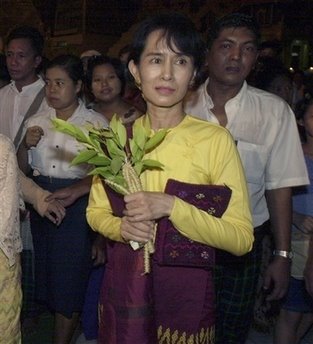


 Posts


