http://news.bbc.co.uk/2/hi/asia-pacific/8194868.stm
How do you apply pressure on Burma?
By Paul Reynolds
World affairs correspondent, BBC News website
Burma's ruling junta appear impervious to international criticism
Britain is to propose a UN arms embargo on Burma, but is facing an uphill struggle as the world once again divides on how to deal with a dictatorial and repressive regime.
Some governments will press for more pressure on Burma through increased sanctions.
These are mostly the Western liberal democracies. They are highly sensitive to pressure from human rights campaigners - and there are few lobbies more effective than the Burmese one.
Nine Nobel Peace Prize winners, led by Archbishop Desmond Tutu and President Oscar Arias of Costa Rica, have added their voices to the powerful crescendo. They have repeated a call for an arms embargo that they made in last year.
Many Western countries have imposed a range of sanctions already, to little effect. Many of them will now support an arms embargo.
The US already bans all imports from Burma, including the highly-prized Burmese jade, and applies a range of other economic sanctions targeted at the junta's leadership.
The prospect of a formal worldwide arms embargo must be minimal
Washington is also currently concerned about North Korea possibly selling missile technology to Burma, and has taken action to freeze funds held by two North Korean companies.
The EU has a full arms embargo and bans the import of timber and precious stones as well.
Other governments see opportunities for trade.
The Burmese junta embarked a few years ago on a modernisation plan for its armed forces, and has bought the weapons to equip them, mainly from China but also from Russia and Ukraine.
British proposals
The conviction and sentence of Aung San Suu Kyi has prompted the British government to declare its next move.
The British Foreign Office minister Ivan Lewis said: "What we must do now, and Britain will lead on this, is ensure that the international community finally acts firmly. The measures that we will propose are that we move quickly to ensure further EU sanctions targeting the regime's economic interests.
No major action was taken after troops suppressed protests in 2007
"The prime minister will be writing to the secretary general of the United Nations today and the permanent members of the Security Council... urging further international sanctions.
"Specifically we now want to see an arms embargo against the regime. We want to see Burma's neighbours, the Asean countries, China, Japan, Thailand, apply maximum pressure."
This is easier said than done. Sometimes in situations like these, governments make statements of intent to show their determination and to head off pressure on themselves from the lobby groups.
But statements of outrage and intent cannot always be followed up with collective action.
In this case, the attitude of Russia and China might well be one of reluctance.
In January 2007, before the repressed uprising later that year, the US and UK sponsored a Security Council resolution urging Burma to open dialogue with the opposition. Nine countries voted in favour, three abstained and two voted against. The resolution failed because two of the negative votes were from Russia and China, both veto holders.
There is no shortage of countries willing to arm Burma's military
It is true that the council issued statements after the 2007 protests calling on the Burmese government to create conditions for a dialogue - but that was not a full resolution and did not commit the member states to anything.
An arms embargo would be a major signal and is much harder to achieve.
So there will be a lot of harsh criticism of Burma and calls for joint action, but the prospect of a formal worldwide arms embargo must be minimal.
The best that can hoped for, perhaps, is that the governments that have sold weapons to Burma will be forced to tread softly and perhaps put further Burmese requests on the back burner.
Glimmer
There is one glimmer of hope for campaigners. The sentence on Aung San Suu Kyi was reduced from three years hard labour in prison to an 18-month extension to her house arrest.
This was probably a tactical move by the regime to avoid an even greater international outcry. It also achieves their goal of preventing her from taking any role in elections next year under the new constitution they have forced through.
It shows perhaps that they are aware of the outside world - but only to an extent.
Paul.Reynolds-INTERNET@bbc.co.uk
Wednesday, July 28, 2010
How do you apply pressure on Burma?


Overview of Burma sanctions
http://news.bbc.co.uk/2/hi/asia-pacific/8195956.stm
Overview of Burma sanctions
Burma's decision to extend pro-democracy leader Aung San Suu Kyi's house arrest has triggered renewed calls for sanctions against its military rulers. The BBC looks at the existing sanctions and economic limitations in place.
EUROPEAN UNION
In 1996 the EU adopted a Common Position on Burma which included a ban on the sale or transfer of arms and weapons expertise to the country, visa restrictions on members of the military regime and their families and allies, and a freeze on officials' overseas assets.
It also suspended all bilateral aid other than humanitarian assistance.
The sanctions were extended after troops violently suppressed anti-government protests in 2007 to include a ban on imports of gems, timbers and metals. But critics say no monitoring mechanism was put in place to enforce the ban.
They were further tightened in August 2009 when pro-democracy opposition leader Aung San Suu Kyi's house arrest was extended.
UNITED STATES
The US imposed an arms embargo on Burma in 1993 and then widened its sanctions four years later to include all new investment.
However, existing investment - including Unocal's (now Chevron's) gas project - was exempted.
In 2003, the Burma Freedom and Democracy Act banned imports from the country, but teak and gems - two of Burma's major exports - that had been processed in a third country were allowed. The act also restricted financial transactions, froze the assets of some financial institutions and extended visa restrictions on officials.
The Tom Lantos Block Burmese Jade (Junta's Anti-Democratic Efforts) Act of 2008 imposed a specific ban on jadeite and rubies which were mined in Burma, and on jewellery containing either of these precious stones.
US President Barack Obama renewed existing sanctions against Burma in May 2009.
CANADA
Canada imposed sanctions on Burma in 2007 which banned exports, apart from humanitarian goods, and barred imports. The assets of Burmese citizens connected to the junta were frozen. Canada also outlawed the provision of financial services and technical data to Burma.
ASIA PACIFIC
Japan cut aid to Burma in October 2007 following the death of a Japanese journalist covering the mass protests led by monks in September.
Japanese aid resumed following Cyclone Nargis in May 2008.
South East Asian grouping Asean has opposed the use of sanctions against Burma.
Australia has maintained visa restrictions on senior Burmese military figures and a ban on defence exports since 1988.
New Zealand has a long-standing ban on visas for military leaders and their families.
The choices facing Burma's military
http://news.bbc.co.uk/2/hi/asia-pacific/8177328.stm
The choices facing Burma's military
By Kate McGeown
BBC News
Despite the junta's best efforts, Aung San Suu Kyi is still an iconic figure
Burma's Senior General Than Shwe faces a dilemma.
He desperately wants to keep his most influential opponent away from the Burmese public, yet he fears the uproar that will ensue if he keeps her locked up.
Than Shwe and his ruling generals have already procrastinated over Aung San Suu Kyi's latest trial. Most court hearings in Burma last a few days at most, but this one has been going on for more than two months.
Now they've stalled again, postponing the verdict until 11 August.
Unlike the other 2,000 political prisoners - whom the Burmese military seem to keep in jail without much thought for public opinion - it is evident that Burma's officials do not know what to do with this demure 64-year-old woman.
Revered and respected
Aung San Suu Kyi is not an ordinary prisoner. As the daughter of Burma's independence hero General Aung San, she was always going to command people's respect.
But as the rightful winner of the country's last democratic elections in 1990 - which the military refused to recognise - she gained credibility in her own right.
John Yettaw's nocturnal swim gave the junta the pretext they wanted
By imprisoning her for so long, the junta has unwittingly given her even more symbolic significance in the eyes of Burmese people.
"An aura has built up around her," said Maung Zarni, a research fellow at the London School of Economics. "The public view her as the conscience of Burmese society."
It is especially important for the military generals that Aung San Suu Kyi is out of the way ahead of the next elections, which they plan to hold in early 2010.
The polls are widely seen as an attempt to legitimise the regime by increasing its democratic credentials.
But in order for this to work to its favour, the generals need to make sure their allies win.
In the 1990 elections, the military miscalculated in a big way - they were trounced by Ms Suu Kyi's party, the National League for Democracy. This time they don't want to take any chances.
When an eccentric American swam to Ms Suu Kyi's lakeside house in his homemade flippers in May, he gave the generals the excuse they were looking for.
By accusing her of breaking the terms of her house arrest because she let her uninvited well-wisher stay the night, they finally had a reason to extend her detention and keep her safely locked away throughout the election process.
Risky strategy
But even if the junta find some tenuous legal reason to jail Ms Suu Kyi, or extend the terms of her house arrest, they know they will stoke intense public outrage.
The public view her as the conscience of Burmese society.
Maung Zarni, Research fellow on Burma, London School of Economics
Keeping behind bars a woman who is not only a Nobel Peace Prize laureate but also the world's most famous political detainee is a high-risk strategy.
Burmese people will be angry and upset if she is found guilty, but according to Mung Pi, who runs a blog site for Burmese exiles, the government knows there is not much that people inside the country can actually do to change things.
"A guilty verdict probably won't lead to large street protests, because people are still suffering from 2007," he said.
In September 2007 large-scale demonstrations led by monks - the most revered sector of society - were brutally quashed by the military, and the opposition movement is still said to be recovering. The generals know that, right now, their opponents do not have the strength to fight back.
Than Shwe did not let Ban Ki-Moon meet Ms Suu Kyi on his trip to Burma
"The opposition movement has the moral backing of the people, but it's whoever controls the streets, not the moral high ground, who matters," said Maung Zarni.
Coping with the indignation of the international community, though, is a different matter.
On the surface, it seems that the Burmese generals are completely intransigent when it comes to the demands of the rest of the world.
They have ignored recent incentives from US Secretary of State Hillary Clinton and refused to let UN Secretary General Ban Ki-Moon meet Aung San Suu Kyi on a recent visit.
They also remain resolutely unswayed by the constant pleas from celebrities and protest marches.
But there are times when the junta does listen to the outside world.
It belatedly reacted to criticism of its handling of the devastating cyclone last year, letting in foreign aid after initially saying it could manage alone.
And if the military really was oblivious to international reaction, it would surely not have bothered to plan elections - no matter how flawed those elections might be.
Chinese influence
The lengthy delays in Aung San Suu Kyi's trial are another indication that the recalcitrant generals can sometimes be swayed by foreign influence.
"The regime wants to take its time because of the mounting pressure it's under," a diplomat in Rangoon told reporters.
The regime wants to take its time because of the mounting pressure it's under
Western diplomat in Rangoon
It is still doubtful the military will take much notice of the West, though. The long years of EU and US sanctions mean that Burma has been thrown into the arms of China and Russia, as well as neighbouring Asian nations.
"When push comes to shove, they can afford to just ignore... what the West thinks. They're backed by China," said Justin Wintel, the author of a book on Aung San Suu Kyi.
And as long as they can rely on China and Russia to veto any major action by the UN Security Council, and their neighbours at the Asean regional forum to do little more than voice occasional disapproval, the generals probably feel there will be no serious ramifications to keeping Aung San Suu Kyi behind bars.
Which is ultimately why most analysts believe that Ms Suu Kyi will be found guilty; the negatives of having her free outweigh the positives.
But even if he does send her to jail, Than Shwe already knows that she is likely to remain his most potent opponent.
She may be out of sight, but someone as iconic as Aung San Suu Kyi will never be out of Burmese minds.
Who is at the heart of Burma's junta?
http://news.bbc.co.uk/2/hi/asia-pacific/8586697.stm
Who is at the heart of Burma's junta?
This year's Armed Forces Day in Burma comes after election laws were announced and before a poll date is revealed.
But while elections elsewhere might imply an end to military rule, the BBC's Vaudine England has been finding out that the country's top generals are as solidly in charge as ever.
OVERVIEW
The elections are described by analysts as the moment when top leader Than Shwe seeks legitimacy and secures a political transition that keeps his old age free from prosecution or disgrace.
Speculation is swirling as to what role the general sees for himself - either Than Shwe will want to remain as army chief or will need a solid ally in place so he can become president.
This is likely to be the last time Than Shwe addresses this gathering as armed forces commander in chief
Professor Win Min
Payap University, Chiang Mai
None of these calculations take the opposition into account, analysts agree. Indeed, the election laws bar the opposition leader Aung San Suu Kyi and all political detainees from taking part.
"It's not Suu Kyi who keeps him awake at night, but the question of how his trusted officers can ensure his future security and that of his family," says Aung Zaw, editor of Irrawaddy magazine.
"I doubt he will announce a successor - he doesn't need to do that - but this is likely to be the last time Than Shwe addresses this gathering as armed forces commander in chief," says Professor Win Min, at Payap University in Chiang Mai, northern Thailand.
With or without elections, Burma's military will remain the only institution that counts. So who is in charge?
SENIOR GENERAL THAN SHWE
No-one doubts this general's supremacy. He is chairman of the 12-member State Peace and Development Council (SPDC), aka the junta, and commander in chief of the armed forces. An impressive rise for a former postal clerk who did not finish secondary school.
General Than Shwe is said to hate pro-democracy leader Aung San Suu Kyi
Born in 1933, he joined the army in 1953 and helped former top leader Ne Win mount a coup against a democratically elected government in 1962.
He emerged as the chairman of SLORC, the State Law and Order Restoration Committee, precursor to the SPDC, and the body formed when the military took control after the 1988 elections which were won by Ms Suu Kyi and the National League for Democracy.
In 2004, he dispensed with a key source of competition to his power, namely then prime minister and intelligence chief Khin Nyunt. He remains under house arrest and hundreds of his followers were purged.
Than Shwe is patron of the Union Solidarity and Development Association (USDA), a mass organisation known for brutally enforcing military wishes in civilian guise.
He harbours a reportedly visceral hatred for Ms Suu Kyi and is said to be secretive, deeply superstitious, xenophobic and rich.
DEPUTY SENIOR GENERAL MAUNG AYE
Maung Aye is thought to have widespread business interests
Born in 1937, General Maung Aye is the closest source of competition, and sometimes conflict, to General Than Shwe.
Once commander of Burma's drug-growing northeast region, he is now also known for his complex business involvements.
He is reputedly hostile to Burma's ethnic groups, yet is believed by some watchers to have argued against the use of force to crack down on the monk-led opposition protests in 2007.
GENERAL SHWE MANN
Recent analysis has concluded that Shwe Mann, joint chief of staff and coordinator of special operations, is Than Shwe's preferred successor.
Some analysts believe Shwe Mann is Burma's leader-in-waiting
Born in 1947, he is described as down to earth, with the respect of the foot soldiers he commanded for many years.
He too has complex business links - one of his three sons married into a leading real estate developer's family, another is in business with Tay Za, a tycoon subject to United States' economic sanctions.
TEAM PLAYERS
Ranked as number four in the junta, Prime Minister Thein Sein does not appear on lists of expected successors to Than Shwe.
Number five in terms of influence is General Tin Aung Myint Oo, followed by Lt Gen Tin Aye, the chief of military ordinance.
This is a hugely important job, reportedly involving Tin Aye in negotiations with North Korea among other weapons suppliers.
The other important lieutenant general is Myint Shwe, who could be ranked as number seven, analysts say, even though he is the only name here who is not a member of the SPDC.
A key indicator of who is closest to Than Shwe at any time can be found in his choice of shopping partners on trips to Singapore - long a discreet playground and medical centre for the generals.
"Than Shwe has been trying to promote Shwe Mann but his inability to do so shows he could not yet reach an agreement with Maung Aye," believes Professor Win Min.
With Armed Forces Day being attended by a longer list of guests than usual, the only certainty is that the power - and the opacity - of the junta will remain.
India, Myanmar boost ties, sign counter-terror pact
http://www.hindustantimes.com/india-news/newdelhi/India-Myanmar-boost-ties-sign-counter-terror-pact/Article1-578616.aspx
India, Myanmar boost ties, sign counter-terror pact
Indo-Asian News Service
New Delhi, July 27, 2010First Published: 22:06 IST(27/7/2010)
Last Updated: 22:08 IST(27/7/2010) Email printBookmark & Share more...
India on Tuesday signed a clutch of pacts to boost counter-terror cooperation and cement cultural ties with Myanmar, the energy-rich Southeast Asian country whose military junta is considered a pariah in many Western capitals. The two countries signed five pacts after Prime Minister Manmohan Singh held talks with visiting Myanmar military ruler General Than Shwe over a wide range of issues, including counter-terror cooperation, enhanced energy ties and collaboration in a string of developmental projects.
Among the pacts is a treaty on mutual legal assistance in criminal matters that will be crucial in enabling India get access to insurgents from India's northeast states who continue to shelter along the sprawling 1,650-kilometer India-Myanmar border.
The treaty aims at deepening bilateral cooperation in combating transnational organized crime, terrorism, drug trafficking, money laundering and smuggling of arms and explosives.
Increased collaboration for developing cross-border connectivity and infrastructure development figured prominently in the discussions.
The two sides also signed pacts in the areas of small development projects, science and technology and information cooperation.
A memorandum of understanding on Indian assistance in restoring the Ananda temple in Bagan, a renowned Buddhist shrine and a major tourist site in central Myanmar, was also inked.
Against the backdrop of China's growing clout in Myanmar, India has rolled out the red carpet to welcome Than Shwe, who began his five-day visit to the country Sunday by offering prayers at the Mahabodhi temple at Bodh Gaya in Bihar. Than Shwe, who heads State Peace and Development Council, as the junta calls itself, was accorded a ceremonial welcome at the forecourt of the Rashtrapati Bhavan Tuesday morning.
He met Vice President Hamid Ansari, External Affairs Minister S. M. Krishna and Leader of Opposition in the Lok Sabha Sushma Sawraj before sitting down for talks with the prime minister.
Than Shwe's visit to India, the world's most populous democracy, takes place days after the US renewed sanctions barring trade with companies tied to the junta in Myanmar. On the eve of the visit, the US has said it “expects to send a clear message to Burma that it needs to change its course".
Thousands of Myanmarese refugees staying in India for years aired their outrage at Than Shwe's visit and have urged the Indian government not to endorse the upcoming elections in that country. The United Nations High Commissioner for Refugees has officially said about 3,500 Myanmarese refugees are in India, with another 4,500 asylum seekers. Unofficial figures put the number at about 100,000, mostly in the northeastern states.
"We feel outraged with his visit as India is the largest democracy in the world, and the land of the Buddha and tolerance," said Tint Swe, who was elected a member of the Myanmarese parliament in 1990 and is now a leading member of the Burmese Pro-Democracy Movement in India.
India supported the pro-democracy uprising in 1988 led by iconic leader Aung San Suu Kyi, but started engaging the junta in the mid-1990s in view of Beijing's surging trade, energy and defence deals with Myanmar.
Besides energy, India sees Myanmar as a gateway for increased connectivity of its northeastern states to Southeast Asia. The transport corridor that would give India's landlocked northeastern states access to the Bay of Bengal through the Myanmar port of Sittwe was also discussed between the two sides.
India focuses on economy, security with Burma
India focuses on economy, security with Burma
Nirmala Ganapathy
The Straits Times
Publication Date : 27-07-2010
As the international community presses the Burmese junta on democratic reforms, the Indian leadership will focus on economic cooperation and border security during talks with Burmese Senior General Than Shwe.
Prime Minister Manmohan Singh is scheduled to meet Gen Than Shwe for talks on Tuesday (July 27), during which issues such as increasing connectivity and stepping up economic engagement are high on the agenda. But more than that, the message from the Indian leadership continues to be this: engagement with Burma remains a priority for India.
"We regard Myanmar (Burma) as an important neighbour and there have been regular high-level visits. There is a steady progress and consolidation of ties," said official sources.
In an indication of the high level of comfort enjoyed by the two sides, Gen Than Shwe is currently on one of the most wide-ranging visits undergone by a visiting dignitary, travelling to four different parts of the country.
His visit started in the Buddhist holy place of Bodhgaya and will end with visits to Hyderabad, India's IT hub, as well as Jamshedpur, the steel city of conglomerate Tata.
On both sides, ties are being driven by strategic considerations. On the economic front, India wants to move fast on the Kaladan multi-modal transit project, a US$120 million project, which involves sea, river and road connectivity, and to see some movement on a trilateral highway project connecting India, Burma and Thailand.
Due to its geographical position, India has always considered Burma a gateway to Southeast Asia and also to India's northeast. At present, access to the north-eastern states is through a bottleneck access point through the state of West Bengal. Although Bangladesh provides the natural alternative, due to domestic reasons, Dhaka has been hesitant in allowing access. Nevertheless, India has found a willing partner in Burma.
The Kaladan project will establish a transport corridor that starts in Sittwe port in Burma and leads to the northeastern states.
Apart from connectivity, border security is also high on the Indian agenda. Officials point out that Burma has helped India out with insurgents in the north-east who have been unsuccessful in building safe havens across the border.
In the wake of these considerations, coupled with New Delhi's fear of Beijing extending its influence in Burma, the debate on democracy has had little impact on India's ties with Burma.
India's former foreign secretary, Lalit Mansingh, said: "We have important economic interests but more than that, there is the strategic interest, Myanmar (Burma) is vital for security interests."
Experts say India and China offer alternatives to Burma in the face of increasing international isolation over its lack of democratic reforms.
U.S.-Japan Relations for the 21st Century
U.S.-Japan Relations for the 21st Century
Kurt M. Campbell
Assistant Secretary, Bureau of East Asian and Pacific Affairs
Statement before the House Armed Services Committee
Washington, DC
July 27, 2010
--------------------------------------------------------------------------------
Chairman Skelton, Mr. McKeon, distinguished Members of the Committee, it is a privilege to appear before you today.
The U.S.-Japan alliance is the cornerstone of our engagement in the Asia-Pacific. The alliance has provided a basis for peace and security in the Asia-Pacific for a half-century and has -- in many ways -- underwritten the “Asian economic miracle” and the spread of democratic governance throughout the region. This year the United States and Japan are celebrating the 50th anniversary of our Treaty of Mutual Cooperation and Security, a historic milestone that offers both an opportunity to reflect on the successes of the past and, perhaps more importantly, to chart a forward-looking course for this relationship to ensure that it is well positioned to manage issues of consequence both in the region and beyond.
The Obama administration entered office with a deep appreciation of the strategic importance of the U.S.-Japan alliance. Then-Prime Minister Taro Aso was the first foreign leader to meet with President Obama. Japan was President Obama’s first stop on his first visit to East Asia as President. Secretary Clinton’s maiden voyage as Secretary of State was to Asia, and it was no coincidence that her first stop was in Japan. As the world’s first and second largest economies the U.S. and Japan have worked closely to contribute to the global economic recovery.
Bilateral Relations
Together, the United States and Japan bring tremendous capability and creativity to bear on the challenges the world faces today. Our economic relationship is strong, mature, and increasingly interdependent, firmly rooted in the shared interest and responsibility of the United States and Japan to promote global growth, open markets, and a vital world trading system. Our bilateral economic relationship is based on enormous flows of trade, investment, and finance. In previous decades our economic relationship was often characterized by conflict over trade issues. Today, even as we continue to address trade irritants such as beef and Japan Post, we are able to prioritize new modes of cooperation that allow us to pursue common interests – such as innovation and entrepreneurship, the internet economy and cloud computing – as building blocks to improve opportunities for our trade and economic growth. We have a shared interest in greener, more sustainable growth. Climate change is a trend that obviously presents enormous challenges for both the United States and Japan, but also creates opportunities for us both to leverage our comparative advantage in innovation to develop new, growth-inducing energy technologies. We were also very pleased that our two nations initialed the text of an Open Skies aviation agreement in December of last year. It is a landmark agreement that is a pro-consumer, pro-competitive, pro-growth accord. The agreement will strengthen and expand our already strong trade and tourism links with Japan.
As our security and economic relationship has evolved, so has our cultural relationship matured and grown. We have a longstanding tradition of exchange and cooperation between our two countries, and between the people of our two nations. We have cooperation in the fields of education and science, and through traditional programs such as the Fulbright Exchange and the JET (Japan Exchange and Teaching Program). The global challenges we face today require a complex, multi-dimensional approach to public diplomacy. As President Obama said recently, "... cooperation must go beyond our governments. It must be rooted in our people - in the studies we share, the business that we do, the knowledge that we gain, and even in the sports that we play." The Secretary echoed the President’s views when she said, “What we call people-to-people diplomacy has taken on greater significance, as our world has grown more interdependent, and our challenges, more complex. Government alone cannot solve the problems that we face. We have to tap into the challenge of our people, their creativity and innovation, and their ability to forge lasting relationships that build trust and understanding.”
The historic elections in late August of 2009 ushered in the Democratic Party of Japan (DPJ). It should come as no surprise that over the past 10 months the relationship has had its shares of ups-and-downs. Some commentators have even suggested that the U.S.-Japan alliance is in a period of “strategic drift” --- nothing could be further from the truth. In fact, public opinion polling shows support in Japan for the U.S.-Japan alliance is the highest it has ever been – over 75 percent. After spending over half of my professional career thinking about the U.S.-Japan alliance I feel confident in saying that our alliance will continue to grow stronger. I would now like to take this opportunity to lay out three elements of our relationship that I believe underscore the bilateral, regional and global depth and breadth of our relationship.
It is now more than 10 months since Japan’s historic change of government in September 2009. The new ruling coalition came to power with a manifesto calling for a review of many of the policies of its LDP predecessors, including aspects of the alliance with the United States, with some envisioning an “alliance without bases.” However, in practice the Japanese government has continued to reaffirm the crucial role of the Alliance in ensuring Japan’s security and maintaining peace and security in the Asia-Pacific region. This past January, then-Prime Minister Hatoyama, in a statement celebrating the 50th anniversary of the signing of the revised U.S-Japan Security Treaty, said that “it is not an exaggeration to say that it was thanks to the U.S.-Japan security arrangements that Japan has maintained peace, while respecting freedom and democracy, and enjoyed economic development…since the end of the last World War to this day.” To celebrate this 50th anniversary year, and to deepen and broaden our alliance, we and our Japanese allies are meeting at all levels and across government bureaucracies to share views and assessments of Asia’s dynamic strategic environment and charting a course to seize opportunities while minimizing potential for conflict.
Over the last fifteen years, the United States and Japan have worked together to update our alliance, through efforts ranging from the force posture realignment to the review of roles, missions, and capabilities. The alliance has grown in scope, with cooperation on everything from missile defense to information security. Additionally, Japan provides approximately $1.7 billion annually in host nation support to the U.S. military, a key Japanese contribution to our alliance.
There are more than 48,000 American military personnel deployed in Japan, including our only forward deployed carrier strike group, the 5th Air Force, and the III Marine Expeditionary Force. Through the Defense Policy Review Initiative (DPRI), the United States and Japan made a landmark alliance commitment under the 2006 U.S.-Japan Realignment Roadmap, which was reaffirmed by the 2009 Guam International Agreement, to implement a coherent package of force posture realignments that will have far-reaching benefits for the Alliance. These changes will help strengthen the flexibility and deterrent capability of U.S. forces while creating the conditions for a more sustainable U.S. military presence in the region. The transformation includes the relocation of approximately 8,000 Marines and their 9,000 dependents from Okinawa to Guam, force posture relocations and land returns on Okinawa, and other realignments and combined capability changes on mainland Japan (e.g., increased interoperability, as well as collaboration on ballistic missile defense). This realignment will strengthen both countries’ ability to meet current responsibilities and create an Alliance that is more flexible, capable, and better able to work together to address common security concerns.
It is understood by all that the relocation to Guam of significant elements of the III Marine Expeditionary Force is dependent on tangible progress by the government of Japan towards completion of the Futenma Replacement Facility, a linchpin of the Realignment Roadmap. The new Japanese government undertook an extensive review of existing plans for the Futenma Replacement Facility, carefully examining alternatives with a goal of reconciling operational and security requirements with the recognition that the people of Okinawa, by hosting the majority of U.S. military facilities in Japan, bore a greater responsibility for our joint security than other regions of Japan. This review culminated in the conclusion, as expressed in the May 28 Joint Statement of the U.S.-Japan Security Consultative Committee, that the replacement facility would best be located in Okinawa at Camp Schwab and adjacent waters. Secretaries Clinton and Gates, along with their Japanese counterparts, directed that an experts group undertake a study regarding the replacement facility’s location, configuration, and construction method. The objective is to ensure that the construction of the replacement facility can be completed without significant delay. The Experts Study Group has been meeting steadily since June and we fully expect it to achieve its goals.
Let me also mention briefly another issue that is important to us in the State Department, that is connected with our relationship with Japan and also, because in some cases these families include former or current service members, relevant to this committee. That is the issue of international parental child abduction. Japan remains the only G7 country not to have ratified the Hague Convention; the Department of State consistently urges them to do so at the highest levels. In fact, Secretary Clinton has raised it with her Japanese counterpart, including most recently last week. In recent months, for the first time ever, the GOJ has co-sponsored with the Japanese Bar Association a symposium on the Hague Convention and International Parental Child Abduction. The Japanese Ministry of Foreign Affairs has also posted for the first time preventative passport regulations to their official website. Where the dialogue was once muted less than a year ago, it is now part of the general discourse. While this issue resolved is by no mean resolved, we believe these GOJ efforts are signs of increased engagement by the Government of Japan.
Regional Engagement
We have enjoyed unprecedented cooperation with Japan on a number of consequential regional issues. Japan’s steadfast support for the Republic of Korea was vital in rallying the international community to offer a united response to the Cheonan sinking. Japan is a key partner in our efforts to seek the verifiable denuclearization of the Korean Peninsula in a peaceful manner and in holding North Korea to its commitments under the 2005 Joint Statement of the Six Party Talks. We also value our close cooperation on the adoption and implementation of UN Security Council resolutions to curb North Korea’s proliferation activities. Japanese insights into North Korean developments are equally valuable.
We and Japan have a mutual desire to engage constructively with a rising China. We share a stake in a successful China that follows international norms and standards. Japan has joined us in encouraging greater transparency from the Chinese military, and joins us as we carefully watch China’s growing maritime strength. Over the past few years Sino-Japanese relations have grown stronger and we look to both Beijing and Tokyo to continue to take steps to enhance mutual confidence and trust.
Southeast Asia is another area where we have longstanding and fruitful cooperation with Japan. It is an area where we and our Japanese allies share significant interests and objectives. We cooperate in encouraging economic and social development throughout the region, from Timor-Leste to Burma. We maintain close contact and coordinate our efforts in order to gain the maximum benefit from a useful division of labor. Japan remains an important partner and advocate for ASEAN. Where there appears to be potential for instability, we seek to harmonize our messages and ensure that we are reinforcing each other effectively.
One of the most significant and consequential developments over the past ten years has been the strengthening of the U.S.-India relationship. Our efforts have been complemented and supported by Japan. Under the leadership of both the LDP and DPJ government, Japanese-Indian relations have strengthened and become more robust. Both nations recently signed a civil nuclear cooperation agreement, and Delhi continues to look to Tokyo as it charts an Eastward course.
As Japan’s chairmanship of APEC continues and the United States is preparing for its host year in 2011, we have been working to create opportunities to strengthen economic integration and address trade and investment issues in order to make it cheaper, easier, and faster to trade in the Asia-Pacific region.
We appreciate Japan’s support for U.S. participation and inclusion in the East Asia Summit, a process the Secretary and President plan to engage in 2010 and 2011. Existing organizations such as ASEAN, APEC, and the ASEAN Regional forum and new ones like the ASEAN Defense Ministers Plus and an expanded East Asia Summit provide excellent platforms for advancing the multitude of shared U.S. and Japanese economic, security, and political interests and values.
Global Cooperation
Japan continues to be an increasingly active partner in global affairs, and our bilateral and multilateral cooperation transcends the Asia-Pacific region.
Our strong relationship with Japan is global in reach. Japan is working with us and others on post-earthquake recovery in Haiti and Chile, to eradicate disease and develop environmentally friendly sources of energy. In addition to their work in Haiti, Japan is involved in UN peace-keeping missions in Syria, Nepal, and Sudan, and has made contributions in kind to numerous UN missions.
In Iraq, our Japanese allies have pledged nearly $5 billion in aid to Iraq, focusing on rebuilding the industrial base and energy, transportation, and irrigation infrastructure. By generating economic opportunities for the Iraqi people, these activities complement our own and contribute to our shared goal of ensuring the country’s long-term stability.
Japan is a vital international supporter of reconstruction, reintegration, and development in Afghanistan. Japan has assumed the lion’s share of the cost of salaries for the Afghan police force. With a $5 billion commitment over five years, Japan is the second largest single donor, after the United States, to Afghanistan. Japan is providing expertise as well as funding, and helping the Afghan government develop programs to hasten the reintegration of former Taliban into normal society. In Pakistan, as well, Japan is contributing to the country’s stability by providing over $2 billion of humanitarian and development assistance. Japan is helping the international community ensure refugees and internally displaced Pakistanis receive the food, shelter, and medical services they need. In a program that complements the American work Secretary Clinton announced in Islamabad on July 19, Japan is extending the electricity grid to areas of the country that have not had it before and developing the energy sector throughout the country.
As a nation dependent on international trade, Japan values the security of its sea lines of communication. Japan is an active and important member of the international flotilla that is combating piracy off the Horn of Africa to ensure freedom of navigation and safety of mariners. Japan has also signed a bilateral agreement with Djibouti to construct a base to support its counter-piracy efforts, and is the largest single bilateral donor to Djibouti.
The architecture of international cooperation is sturdy, but it also dates in part to the cold war or even earlier. We and Japan are seeking new ways to structure international cooperation.
Japan is one of the United States’ closest partners as we confront the global challenge posed by climate change. Last fall, the President endorsed the U.S.-Japan Clean Energy Action Plan, which will build on our extensive scientific cooperation to help our economies transition to greater reliance on renewable forms of energy and ensure that transition creates economic opportunities here at home. We are both committed to ensuring all countries do their part to address this global threat, assisting those that can benefit from our technical expertise. Japan was a strong partner in developing the Copenhagen Accord, and pledged in Copenhagen to provide as much as $15 billion in financing to assist developing countries in combating climate change, premised on the development of a fair and effective global framework. We continue to coordinate closely as we look to the next Conference of the Parties in Mexico this winter.
Whatever challenges we may face in the next half century, I am confident that our relationship with Japan will be an important element of our success. Our relationship continues to develop and evolve, and continues to contribute to peace, prosperity and security throughout the region and the globe. We are under no illusions that there will not be periods of ups-and-downs in the relationship. However, our shared values and strategic interests will enable us to continue to move the relationship forward and ensure that it remains the cornerstone of our strategic engagement in the Asia-Pacific
Thank you again for giving me the opportunity to testify about the U.S.-Japan relationship and I look forward to answering your questions.
Burma: Genocide against Ethnic Minorities
http://www.unpo.org/article/11341
Burma: Genocide against Ethnic Minorities
Several academics and think tanks have pointed out that the Burmese Junta meets most of the criteria for crimes against humanity or genocide in its treatment of ethnic minorities. However there a few options for the international community to prevent further escalation, the most promising might be the investigation of the International Criminal Court.
Below is an article published by the Democratic Voice of Burma:
Readers of this website should need no convincing of the seriousness of ongoing human rights violations against minority ethnic groups in Burma. Medicins Sans Frontieres has described Burma’s ethnic Rohingya minority has one of the world populations “most in danger of extinction” and leading scholars, including William Schabas, president of the International Association of Genocide Scholars, have suggested that the Muslim group may be victims of crimes against humanity, a sentiment that has been echoed by multiple other bodies.
Numerous human rights and legal advocacy groups have similarly said that Burma’s other ethnic minorities – the Chin, Kachin, Karen, Karenni, Mon, and Shan – are also seriously threatened by the ruling junta, which has held power in various forms since 1962.
In the past decade and a half, there has been significant progress in our understanding of genocide and how to prevent it, mainly as the result of our failures to do so. One of the most crucial lessons learned from this bitter experience is that, from the standpoint of saving human lives, the question of whether or not a situation meets the legal definition of genocide is beside the point. And the point, for those in the field of genocide prevention today, is not how to stop genocide once it has begun, but rather how to prevent it from happening in the first place.
To that end, the Auschwitz Institute for Peace and Reconciliation, based in New York, operates a genocide prevention program targeting the women and men in government who shape and implement the policies that determine whether or not a society will tip over the edge into mass slaughter. Key to the program is the forging of a community of policymakers to support one another in their everyday work. Given that some of those who take part come from countries that are at risk of genocide, or perhaps even in the midst of one, we do not take a position on whether or not the situation in any particular country constitutes genocide. To do so would defeat our purpose, since the countries that are most at risk of genocide are the very ones we most hope to attract.
This is important because, up until now, there has been no community of prevention between the level of grassroots activism and the officialdom of national governments and the UN. And research has shown that the more connected a country is to the rest of the world – especially economically and politically – the less likely it is that conflict there will escalate into genocide. Some of the other risk factors for genocide, according to US political scientist Barbara Harff, include a prior history of genocide, ethnic and religious divisions within society, exclusionary ideology, and autocratic rule.
Burma has all these in spades. Other researchers may look to different indicators, but the pattern is unmistakable. Most genocide scholars and human rights groups agree there has already been one genocide in Burma since 1962 – that of the Rohingya – and there is ample evidence to suggest that government killings of other ethnic groups constitute at least crimes against humanity, if not full-blown genocide.
US political scientist Ted Robert Gurr recently published a brief paper titled ‘Options for the Prevention and Mitigation of Genocide: Strategies and Examples for Policy-Makers’. His analysis and recommendations are grounded in the most recent experience of the international community as well as the most up-to-date scholarship. Other, more comprehensive attempts to address the issue have come from Minority Rights Group International, which focuses on UN policy; the Genocide Prevention Task Force, focusing on US policy; and the Will to Intervene Project, which looks at both US and Canadian policy.
There are several drawbacks, however, to all of these approaches. One is that they tend to stress intervention over prevention, which tilts the balance toward short-term military solutions and away from longer-term, political or economic approaches. The second is that they view the solution as coming from outside the country at risk, as opposed to from within.
In any case, history clearly suggests that it would be naïve to expect direct action by the international community to prevent genocide in Burma anytime soon. Perhaps the most promising avenue for change at the moment is the recently created International Criminal Court (ICC), which is empowered to investigate and prosecute genocide, war crimes, and crimes against humanity. In 2009, the former UN special rapporteur on human rights in Burma called on the UN security council to investigate crimes against humanity in Burma with an eye to referring the case to the ICC. And earlier this year, the British government issued a statement saying that it would support a referral of Burma to the ICC by the UN Security Council. The wheels of international justice grind slowly, though. The question is, can they grind quickly enough for Burma’s ethnic minorities?
Alex Zucker is Communications and Development Officer of the New York-based Auschwitz Institute for Peace and Reconciliation. The opinions expressed here do not necessarily represent the views of the Auschwitz Institute for Peace and Reconciliation.
Shan trafficking victims lobby UN
http://www.dvb.no/news/shan-trafficking-victims-lobby-un/10722
Shan trafficking victims lobby UN
(0) Like Share Comments (1)
Chinese men below an anti-human trafficking slogan (Reuters)By AYE NAI
Published: 13 July 2010
Two ethnic Shan women who were trafficked and sold as wives to Chinese men before being released in 2008 have now approached an UN agency to demand for help in rescuing the remaining victims.
Six women in total from Burma’s northeastern Shan state were sold for US$1,200 by a ring of Burmese human traffickers in 2008: three reportedly remain with their captors in China, while the third women released has since died of AIDS-related diseases.
The two now back in Burma are filing a report to the International Labour Organisation (ILO), which has offices in Rangoon. Previous reports filed to the Myanmar Women’s Affairs Federation and local police in Shan state were fruitless. Thet Wei, chairman of a Rangoon-township National League for Demcoracy (NLD) committee, is helping the women.
“All six were sold to become wives. [The traffickers] tricked them into going to China by promising jobs that pay 80,000 kyat [US$80] per month. After they arrived in China, they were sold to the Chinese men to become their wives,” he said.
It was only when relatives of three of the women travelled to China to confront the captors that they were released. The relatives reportedly cited the harsh penalties that China carries for human traffickers: in the past year, Beijing has returned more than 300 Burmese trafficking victims.
Julia Marip, of the Kachin Women’s Association Thailand (KWAT), said that about 60 percent of these were women sold for forced marriages, out of an estimated total of 50,000 women each year bought by Chinese men.
“If you look at the root of the human trafficking problem, you’ll see that [Burma] is in a very bad situation with economic downfall and poverty. These issues must be dealt with first in order to effectively handle the human trafficking problem,” she said.
Burma became one of the signatory countries to the UN Anti-Human Trafficking agreement in early 2004,. The country also has its own anti-human trafficking laws, which at the of June this year saw a racket in Magwe division’s Chauk township being handed 15-years prison sentences for selling a 16-year-old girl to Chinese men.
A US report in 2009 said that trafficking of Burmese women into forced marriages was “a major problem”, although the UN’s resident coordinator in Burma, Bishow Parajuli, said in January this year that the Southeast Asian pariah had made good progress in the past six years.
China and Malaysia remain the top destinations for women sold as wives to men. The US report cited statistics released by the ILO that estimate that at least 12.3 million people worldwide are in forced labour, bonded labour or commercial sexual exploitation.
Tuesday, July 27, 2010
European Karen Network: New Burma Army Attacks Target Civilians – Europe Must Support Commission of Inquiry
http://www.facebook.com/note.php?note_id=433002284728&id=192809468269&ref=mf
New Burma Army Attacks Target Civilians – Europe Must Support Commission of InquiryShare
Today at 6:03pm
Media Release from European Karen Network
For immediate release, 27 July 2010
New Burma Army Attacks Target Civilians – Europe Must Support Commission of Inquiry
As the Burmese Army steps up attacks against ethnic Karen civilians in Eastern Burma, the European Karen Network, which represents Karen communities in Europe, today called on European governments to support a UN Commission of Inquiry into war crimes and crimes against humanity committed by the dictatorship.
On 23rd July Burma Army soldiers attacked Tha Dah Der village in Mutraw (Papun) District, Karen State, burning 50 homes, a school and a church. Approximately 540 people from this and neighbouring villages are now in hiding in the jungle. They have only a small amount of food they were able to carry with them, and no shelter. It is the rainy season in Eastern Burma at the moment.
Hundreds more civilians are fleeing towards the Thailand border as the Burmese Army and troops from the Democratic Karen Buddhist Army, which has been allied to the dictatorship, prepare for a new offensive. The offensive is expected against Democratic Karen Buddhist Army soldiers who are refusing to join the Burmese Army as a border guard force, which the dictatorship is demanding ahead of their fake elections later this year.
The European Karen Network has also received a report that a Karen woman in Mutraw (Papun) District was raped by a Burmese Army soldier on 10th July 2010.
The new attack on 23rd July and the rape on 10th of July are against civilians, not soldiers, as such constitute war crimes and crimes against humanity.
The European Karen Network calls on European governments to:
•Support a UN Commission of Inquiry into war crimes and crimes against humanity committed by the dictatorship in Burma.
•Provide cross-border aid to those displaced by the attacks.
•Stop ignoring attacks against ethnic people and making policy solely based on developments in Rangoon and Nyapyitaw.
•Call on the dictatorship in Burma to stop attacks against Karen and other ethnic civilians.
“The dictatorship talks about reform and elections but its real intentions can be seen in its actions, burning civilian villages and raping women.” said Nant Bwa Bwa Phan, board member of European Karen Network from Germany. “The people ruling Burma are criminals and the international community is letting them stay free. European governments are complicit in these crimes because they fail in their responsibility to take action.”
Monday, July 26, 2010
FEARS OF NUCLEAR ACTIVITY IN BURMA
FEARS OF NUCLEAR ACTIVITY IN BURMA
Sunday July 25,2010
By James Murray: Exclusive
FEARS that Myanmar’s ruthless military leaders are in the early stages of building nuclear bombs have been sparked by a set of chilling satellite images.
The junta ruling the East Asian country, formerly known as Burma, have banned basic human rights, but spent tens of millions of pounds building the bases with the reported help of nuclear experts from Russia and North Korea.
The images acquired by the journal Jane’s Intelligence Review from a commercial company, DigitalGlobe, will alarm western governments concerned about Myanmar’s motives.
The first indications of its nuclear ambitions came last February when army Major Sai Thein Win defected with a dossier on the secret sites.
Now living in fear of his life outside the country, Major Win, who was deputy commander of two machine tool factories, painted a vivid picture of the programme.
An engineer who spent five years working in Russia, he said he made a prototype for a long- range missile engine and parts for a laser beam intended to enrich uranium.
He worked at two sites near Mandalay, Myaing and Pyin U Lwin. According to the Democratic Voice of Burma pressure group, both factories are situated in dense forest.
The several hundred photographs of the plants which Major Win brought with him have aroused huge interest among defence chiefs in neighbouring Asian countries and western governments.
Major Win says the head of the programme reports directly to the leaders of the military junta in Myanmar’s capital Nay Pyi Taw, 400 miles from the former capital, Rangoon, now Yangon.
The country’s nuclear effort is managed by the Directorate of Defence Services Science and Technology Research Centre in Pyin U Lwin at the Defence Services Technological Academy. Hundreds of military officers are educated there but it is not thought they conduct experiments with nuclear materials or explosives.
Evidence has also emerged of a “nuclear battalion” is working at a place called Thabeikkyin where there are also extensive mining and ore concentrations. There are suggestions that they are trying to produce yellowcake, a kind of uranium concentrate powder, for possible use in processing uranium.
The Democratic Voice for Burma says the mission “is to build a nuclear reactor and enrich uranium for a nuclear bomb”. It adds: “There is considerable research work at the site devoted to this end. It is not clear that either the reactor or enrichment plant would be built, possibly only designed here.”
However, experts at Jane’s Intelligence Review say although the country is clearly taking measures to have it own nuclear programme, it is “severely hampered” because the programme is too ambitious and expertise is limited.
Myanmar has obsolete agreements with the Geneva-based International Atomic Energy Agency but has not signed protocols which would allow detailed inspections of the factories.
Leaders have ignored requests to improve the agreements which mean the country is virtually exempt from inspections. Christian Le Mière, editor of Jane’s Intelligence Review, said: “There is no question Myanmar is attempting to build the components for a nuclear fuel cycle.
“However, Major Sai Thein Win’s testimony and other evidence also reveal intrinsic flaws within the programme.
“Careful analysis of the data reveals that Myanmar is vastly out of its depth. Almost all of its diagrams and computer-assisted designs for tool production are categorically flawed.
“Nevertheless, with Myanmar’s current freedom from sanctions and relative economic prosperity, the junta may be able to outsource the technical know-how and tools to reach its goals far sooner than expected.”
http://www.express. co.uk/posts/ view/188985/ Fears-of- nuclear-activity -in-Burma
Friday, July 23, 2010
Clinton warns Myanmar on NKorea cooperation
Clinton warns Myanmar on
NKorea cooperation
By MATTHEW LEE, Associated Press Writer
2 hrs 2 mins ago
HANOI, Vietnam – U.S. Secretary of State Hillary Rodham Clinton warned Myanmar's military
rulers on Thursday against any cooperation with North Korea on a nuclear program and called
on the junta to hold free and fair elections this year.
In Vietnam for regional security talks with senior officials from around Southeast Asia, Clinton
said the U.S. was concerned about reports that North Korea has delivered military equipment
to Myanmar, also known as Burma.
"We continue to be concerned by the reports that Burma may be seeking assistance from
North Korea with regard to a nuclear program," she added. "We will be discussing further ways
in which we can cooperate to alter the actions of the government in Burma and encourage the
leaders there to commit to reform and change and the betterment of their own people."
Clinton also said she shared concerns about upcoming elections in Myanmar, which U.S.
officials say hold no hope of being free and fair. Myanmar has said it will hold elections this
year but has not given a date, and it appears unlikely that opposition figures will be able to
participate.
Myanmar's problems, Clinton said, have an impact "not only on the people of that country but
on their neighbors, as the outflow of refugees continues," contributing to regional instability.
Copyright © 2010 Yahoo! Inc. All rights reserved. Questions or Comments Privacy Policy About Our
Ads Terms of Service Copyright/IP Policy
Print Story: Clinton warns Myanmar on NKorea cooperation - Yahoo! News Page 1 of 1
http:/
Tuesday, July 20, 2010
Burma's Soldiers Of Fortune

Ruling class Army cadets at ease in a juice bar in Pyin U Lwin, home to top military academies for training officers
Reportage / Getty Images for TIME
Read more: http://www.time.com/time/magazine/article/0,9171,2003999,00.html#ixzz0uA3ljCoi
http://www.time.com/time/printout/0,8816,2003999,00.html
Monday, Jul. 26, 2010
Soldiers Of Fortune
By Hannah Beech / Pyin U Lwin
The weekend invasion begins with the click-clack of thumbtack-adorned shoes. For four hours, senior cadets from Burma's Defense Services Academy (DSA) and its sister technological institute march through the streets of Pyin U Lwin, briefcases in hand, maroon berets perched on proudly angled heads. Most are preoccupied with securing the rations of daily life: soap, socks, kung fu DVDs. But even as the stern-faced students contribute to the local economy, shopkeepers whisper about the arrogance of kids who are indoctrinated to believe they are, as the massive English sign in front of the DSA campus proclaims, the "triumphant elite of the future." Even after promised elections later this year, Burma, known by the ruling junta as Myanmar, will remain one of the most militarized states in the world. No wonder the privileged young men marching through this central Burmese town expect nothing less than to one day rule their cowed nation.
At a juice bar in this agreeable former British hill station once known as Maymyo, I chat with a group of cadets hunched over glasses of strawberry milk. Their attitude toward locals notwithstanding, the cadets are polite and surprisingly willing to speak to a foreigner. One baby-faced 20-year-old tells me his major is naval architecture, sharing dreams of designing warships for a nation that boasts 450,000 soldiers and dedicates 21% of its spending to the military, according to lowball official statistics. Another student is focusing on hydro-engineering; he plans to build dams, a lucrative new pursuit of Burma's military dictatorship, which sells plentiful energy to neighboring nations while leaving two-thirds of local households without access to any electricity. Yet another narrow-shouldered cadet is studying nuclear chemistry and confides, "my specialty is uranium and plutonium studies." His chosen subject is particularly topical given the U.S. State Department's recently stated concerns over a possible Burmese nuclear program — a project that a DSA graduate turned defecting army major tells exile media has its headquarters at the Defense Services Technological Academy's fortified campus in Pyin U Lwin. (See pictures of Burma's slowly shifting landscape.)
Later, I wander into an Internet café packed with cadets waiting for the electricity to be restored — a constant waiting game in Burma — so they can play World of Warcraft. I ask if they are skilled at the computer game. "Of course, we are good," says an English-speaking nuclear-physics major, his tone factual, not boastful. "We are students at the DSA. We are very superior." A Burmese friend, who passed all the academic and psychological requirements for the DSA but was rejected at the last moment because he had flat feet, fills me in on the cadets' mentality. "The point of going to the DSA is so you can become a rich and powerful person," he says, relating the trajectory of a schoolmate who attended Burma's West Point. His childhood buddy is now a rising star at a northern regional command, which means he can profit from government timber and mining businesses. "He is rich, his parents are rich, his brothers and sisters are rich, his children will be rich," says my friend. "They don't worry about anything."
Burma may be one of the poorest and most isolated nations on earth, but an emerging elite — a burgeoning officer class, attendant business cronies and the coddled offspring of both groups — is only getting richer, more powerful and less accountable. Over the past few years, the Burmese economy has been transformed as the junta has auctioned off the nation's plentiful natural resources to the highest foreign bidder, Western sanctions notwithstanding. The influx of cash has been reserved for the razor-thin top stratum of Burmese society, whose ostentatious displays of wealth shock a citizenry struggling just to survive. "For a long time, as the regime ran the economy into the ground, there was a feeling that most everyone was growing poor equally," says Sean Turnell, an economist at Macquarie University in Sydney who studies Burma. "But now tensions are growing because you see a small elite growing immeasurably richer while others are getting poorer. It's all about relative position, and in Burma today, the inequalities are growing faster than just about anything." (See pictures of Burma's decades-long battle for democracy.)
Poor Little Rich Country
Burma, which has been run by a military regime since an army coup in 1962, is no tropical North Korea. Amid the crumbling colonial buildings, Rangoon, the country's largest city, boasts glittering nightclubs, day spas and even espresso bars. In fact, because of mushrooming foreign direct investment (FDI) in the country's natural bounty — in 2009, 100% of implemented FDI was from the resource-extraction business — the government has more than $5 billion in foreign-currency reserves at its disposal, according to the International Monetary Fund (IMF). Financial chicanery, however, keeps most money flows obscure. For instance, Burma converts revenues from its lucrative natural-gas sector at an official exchange rate of $1 to 6 kyat, though the market exchange rate is roughly $1 to 1,000 kyat. That means of every $1,000 in energy earnings, just $6 goes into national coffers. Where the rest goes is a mystery. Global watchdog Transparency International ranks Burma as the third most corrupt nation in its survey of 180 nations, outdone only by Afghanistan and Somalia.
See pictures of tension in Burma.
Read "Chevron, Total Accused of Human-Rights Abuses in Burma."
Certainly, the revenues from natural gas, oil, timber, gems and other commodities haven't been used for the betterment of the Burmese. Five years ago, the country's military rulers spent billions of dollars building a sprawling new capital out of scrubland, forcing many civil servants to move from Rangoon with just a couple of days' notice. In two decades, the nation has doubled the number of soldiers in the Tatmadaw, as the Burmese armed forces is called, even though there are far fewer battles to fight against ethnic insurgent groups. Twenty Russian fighter jets — not to mention suspicious nuclear technology — are the military's latest playthings. On the outskirts of Pyin U Lwin, another costly megaproject is materializing: a cybercity whose vastness belies the fact that Burma, even with a proliferation of Internet cafés in Rangoon, remains one of the least wired nations on earth. And in the big cities and beyond, construction crews are busy outfitting Burma's upper classes with marble-lined mansions, fancy vacation homes and towering Buddhist pagodas chiseled with the names of generals and their cronies.
The building boom has surged even as at least one-third of the nation lives below the poverty line, according to the U.N. Inflation is so high that the U.N. estimates an average household spends 73% of its income on food. The World Health Organization ranks the country's health care system as the second worst in the world, just ahead of Sierra Leone's. On the recently built highway from Rangoon to Naypyidaw, the new capital, I meet a 15-year-old girl who spends her days in the 45�C heat carrying chunks of rock on her head. She has been working on this road since she was 11 years old. Her daily pay? $1.50 — and that's when Max Myanmar, a company run by a junta crony whose name was added to the U.S. sanctions list last year, bothers to pay at all. On its polished English-language website, Max Myanmar says employees' welfare is a top priority and that the conglomerate covers "field allowance, bonus, meals, medicare, education allowance and annual celebrations for pleasure and relaxation." The girl laborer has enjoyed none of these. But she dreams one day of reaching the end of her road. "I have heard that Naypyidaw has so much electricity that nighttime looks like day," she says. "Can you imagine such a beautiful place?" (See pictures of Burma's discontent.)
Following the Money
With the nation set to hold carefully orchestrated elections later this year, the economic disparities may soon yawn even wider. The junta ignored the results of Burma's 1990 polls, which the military's proxy party lost badly to Nobel Peace Prize winner Aung San Suu Kyi's National League for Democracy (she remains under house arrest). Now, military leaders seem to want to present a fig leaf of civilian rule to the West. Top posts like the presidency and key Cabinet seats, as well as a big chunk of parliament, will be reserved for military members. But to maintain the appearance of a transition to civilian government, the junta has in recent months privatized dozens of state-owned (read: military-owned) companies. Auctioning off these enterprises creates cash to fund the military's proxy Union Solidarity Development Party in the upcoming polls. In addition, many high-ranking officers are being forced to stand in the elections and they, along with other top brass uncertain about the postelection landscape, must be worried about losing their military lifeline. A redistribution of state assets to people close to them secures their future. (Read "Burma Court Finds Aung San Suu Kyi Guilty.")
Indeed, control of factories and banks, gas stations and ruby mines has been handed over, without exception, to a select circle of favored businessmen or military progeny. Many of these men — for they are all men — are targets of Western sanctions, such as Tay Za, a DSA dropout whose business empire has tentacles in everything from airlines to hotels, and Steven Law, the son of a drug lord whose conglomerate constructs dams, roads and practically any other project that uses copious amounts of cement. These cronies burnish ties with the junta through directorships, donations and even marriages. "I don't know of a single big company that doesn't have a princeling or other [general's] family member on its board or involved somehow," says economist Turnell. "The problem with this system is that these robber barons aren't creating an environment for sustained growth or the building of industry. It's just pure racketeering."
I see how wealthy the Burmese elite has become when I tour the Mindhama Residences in Rangoon, a Tay Za – owned housing development just across the street from an exhibition center where massive slabs of jade are piled high on government trucks. With villa types named after Burma's mineral wealth, like Imperial Jade and Red Ruby, the mansions start at $850,000 and go up to $1.2 million, not counting interior decor. All but one has been sold — this in a nation where per capita GDP is just $442, according to the IMF. Might I be interested in the remaining one? The agent allows me to gawp at the splendor: swirls of gilt and meters of marble, Jacuzzi bathtubs, crystal chandeliers. I feel like I have wandered into a Texas McMansion. "Who has bought the other houses," I ask, feigning interest in my potential neighbors. "Some businessmen," he says. "But mostly ..." he trails off, then taps his fingers to his shoulders, the Burmese code for army stripes.
Read "A Closer Look at Burma's Ethnic Minorities."
Read "Viewpoint: Why Foreigners Can Make Things Worse for Burma."
Hardwired
The red sign blocking the main entrance to the half-built Yadanabon Cybercity looks innocuous enough to someone who doesn't read the local language, a swirl of curved Burmese letters and numbers. But the people of Burma have been conditioned to fear this sign: "This area is under military order 144," it says. "Shoot to capture." It's a measure of Burma's peculiar mix of isolationist paranoia and technological ambition that its future Silicon Valley has been declared a military zone inaccessible to normal civilians. Inside the 4,050-hectare construction site, I drive along empty stretches of tarmac, past plots of land that will soon boast offices for Burma's biggest crony companies: Htoo Trading, Tay Za's conglomerate; IGE, headed by the son of Burma's Minister of Industry General Aung Thaung, who is barred by the European Union; Redlink Communications, owned by the sons of the junta No. 3, General Thura Shwe Mann, one of whom is on the U.S. visa blacklist. Thai, Malaysian, Russian and Chinese firms have staked their ground too. Burma's state media reports that foreign companies have so far invested $22 million in the first phase of Yadanabon.
Ever since images of protesting monks escaped from Burma during the crushed demonstrations of 2007, the regime has been scrambling to centralize control over the Internet. Thousands of websites have been blocked, cyberdissidents jailed and debilitating strikes launched against exile-media websites. Yadanabon will be the nerve center of Burma's Internet operations. But it's not all computer cubicles and high-tech wizardry. On a point overlooking the famous hills of Shan State, $200,000 vacation villas are being built. One model drawing shows a BMW SUV in a garage, and the half-finished houses already feature Tudor trimmings and spacious verandas. Nearby, a farmer toils on a sliver of land that has belonged to her family for at least three generations. Soon the Cybercity will eat up this tiny plot too. The woman doesn't expect any compensation since she received nothing when the rest of her fields were confiscated a year ago. "We are little people, so we cannot complain," she says. "All we can do is concentrate on feeding ourselves." (See pictures of the junta blocking Burma from receiving aid after a cyclone ripped through the country.)
The man entrusted to oversee Yadanabon is neither a businessman nor even an adult. But being the grandson of junta leader Than Shwe brings perks. A scrawny soccer fan with no discernible skills on the pitch, Nay Shwe Thway Aung was once added to the Burmese national team when prominent Japanese player Hidetoshi Nakata went to Rangoon for an exhibition match. Other privileged Burmese youth have made an impression off the field. The most notorious was an informal collective of military offspring called Scorpion, which was forced to disband after two members spooked the junta No. 2, General Maung Aye, by riding up to his car on motorcycles and making menacing gestures. Maung Aye responded by outlawing most motorcycles in Rangoon, a ban that still holds today. (Read "Getting to Know Burma's Ruling General.")
Even beyond Scorpion, there are plenty of other rich kids roaming Rangoon. At the packed JJ nightclub — where the bidding at "model shows," as prostitute auctions are called, reaches $2,500 for a comely maiden — one manager complains about the impunity with which military officers and their sons operate. "They drink for free and can pick girls for free," he says. "Nobody dares say no; otherwise we will be finished."
Flying High
There are no such diversions in Naypyidaw, the austere capital that takes a good hour to cross in a car — an hour in which I pass perhaps a dozen other vehicles. When I visited two years ago, I figured the barren landscape dotted with little more than grandiose ministry buildings and golf courses would eventually be filled with normal signs of life. But today, save the occasional color-coded civil-servant housing complex or shopping center already deteriorating under the unrelenting sun, the capital is still a monochromatic emptiness, as if Mark Rothko took to urban planning. The rumor goes that Naypyidaw was built without nightclubs or bars to prevent princelings and their cohorts from bad behavior.
So the party goes on in Rangoon instead — or in Singapore, where some wealthy Burmese maintain homes and bank accounts. Riding one afternoon in Rangoon in a dilapidated taxi that saw its best days four decades ago, I hear a deep-throated purr behind me. Turning around, I spot a sunflower-yellow Lamborghini careening past the potholes of Strand Road. The taxi driver knows the luxury car well. It is a plaything of Tay Za's family. Later I spot the same vehicle, along with several Mini Coopers and a Ferrari, parked at the mansion of the man the U.S. Treasury Department calls "an arms dealer and financial henchman of Burma's repressive junta." In June, Tay Za is believed to have helped the Burmese regime buy even flashier modes of transport: 50 Karakorum light attack aircraft from China. (His aviation company is also credited with brokering last year's deal for the Russian MiGs.) All these new planes will surely please the DSA cadets, who perhaps one day can graduate from computer games to real fighter jets. For the "triumphant elite of the future" — like the rest of Burma's pampered classes — even the stratosphere is within easy reach.
ဦးေအာင္ဆန္း၏ေနာက္ဆုံးေန႔၊ ေရး - ဒဂုန္တာရာ

ဒဂုန္တာရာ
ဇူလုိင္လ ၁၉ ရက္၊ စေနေန႔ ၁၀ နာရီခြဲ။
မုိးလင္းကတည္းကပင္ ေကာင္းကင္သည္ အံု႔မႈိင္း ညိဳ႕မႈန္လ်က္ရိွသည္။ တိမ္တုိက္ဟူ၍ ဘာမွၾကည္လင္စြာမျမင္ရ။ မုိးကိုၾကည့္ရသည္မွာ ျမဴသန္းေနေသာပင္လယ္ျပင္ႀကီးလုိ ၀ိုး၀ိုး၀ါး၀ါးေနသည္။ မုိးသည္ ကင္းကင္းလြတ္လြတ္စဲသည္ ဟူ၍မရွိ၊ တဖြဲဖြဲ ဖြဲေနလုိက္၊ တၿဖိဳင္ၿဖိဳင္ရြာခ်လုိက္ ႏွင့္၊ ေနာက္ ေစြ၍ ေနေလသည္။
ဒီကေန႔ အတြင္း၀န္မ်ားရံုးသို႔ သြားစရာရွိသည္။ တုိင္းျပဳျပည္ျပဳလႊတ္ေတာ္ အထူးအရာရွိ ဦးသိန္းဟန္(ေဇာ္ဂ်ီ)က စေနေန႔ ေန့လယ္တြင္ ေဆာင္းပါးလာယူရန္ ခ်ိန္းထားသည္။ ဗိုလ္ခ်ဳပ္၏ အပါးေတာ္ၿမဲ ဗုိလ္ထြန္းလွထံမွလည္း ခရီးသြားျခင္း ေဆာင္းပါး၀င္ယူရင္း ခဏတျဖဳတ္ စကားစမည္ေျပာၿပီးေနာက္ ေဇာ္ဂ်ီဆီသို႔ သြားမည္ဟု စိတ္ကူးထား သည္။
၁၀ နာရီေလာက္ကတည္းက အ၀တ္အစားလဲၿပီး မုိးအတိတ္ကို ေစာင့္လ်က္ရွိသည္။ မုိးကား မစဲႏုိင္။ သို႔ႏွင့္ စားပြဲတြင္ ထုိင္ကာ အၿပီးမသတ္ေသးေသာ ကဗ်ာတပုဒ္ကိုစပ္ရင္း ၁၁ နာရီ ထုိးသြားေလၿပီ။ မုိးကား မတိတ္ေသးေပ။
ေနာက္ဆံုးတြင္ မုိးစဲလိမ့္မည္ မဟုတ္ဟု စိတ္ခ်လုိက္ၿပီး အေပၚအက်ႌ ၀တ္ကာ လမ္းမႀကီးသို႔ ထြက္ခဲ့သည္။ အဆင္ သင့္ ေတြ ့ေသာ ေဒါင္းတံဆိပ္ တာေမြ ဘတ္စ္ကားကို တက္စီးလုိက္သည္။ ကားထဲတြင္ ၾကည့္ျမင္တုိင္ဘက္မွ လုိက္ပါ လာမည္ ထင္ရေသာ ေတာသား ၃ ေယာက္ႏွင့္ တရုတ္မ ၂ ဦးကိုေတြ႕ရသည္။ ကား ျပတင္း တံခါးမ်ားမွာ ပိတ္ထားသည္။ ခရီးသည္တုိ႔ကား တိတ္ဆိတ္စြာလုိက္ပါလာၾကသည္။ အျပင္ဘက္တြင္ကား မုိးသည္ရြာလ်က္ပင္။ ရႊံ႕ဗြက္ခ်ဳိင့္၀ွမ္းတုိ႔ျဖင့္ ျပြမ္းေသာ ရန္ကုန္ ကားလမ္းကား စုိစြတ္လွသည္။
ကားသည္ သိမ္ႀကီးေစ်းတြင္ ေခတၱရပ္ၿပီး ဆက္လက္၍ တဟုန္တည္း ေမာင္းလာသည္။ ခရီးသည္ အဆင္း အတက္ သိပ္ မရွိလွ။ သို႔ႏွင့္ စပတ္လမ္း(ယခု ဗုိလ္ေအာင္ေက်ာ္လမ္း) ေရာက္လ်ွင္ က်ေနာ္ ဆင္းလုိက္သည္။
ထုိ႔ေနာက္ ဒါလဟုိဇီ လမ္း(ယခု မဟာဗႏၶဳလ လမ္း)ဘက္မွ စပတ္လမ္းကို ျဖတ္ကူးလုိက္သည္။ လမ္းေဘးတြင္ ေမာ္ေတာ္ကားမ်ားသည္ ဟုိတစု သည္တစု ရပ္လ်က္ရွိသည္။ ကားတခ်ဳိ႕ကား သြားလာလ်က္။
ထီးေဆာင္းလ်က္၊ မုိးကာ၀တ္လ်က္ လူမ်ားသည္ သြားၾကလာၾကႏွင့္ ရႈပ္ရွက္ခတ္ေနသည္။
သူရိယတုိက္ေရွ႕အ၀င္ တံခါးမေပါက္ႀကီးတြင္ကား လူမ်ားသည္ အတြင္းသိုေမ်ွာ္လုိက္။ စကားေျပာလုိက္ႏွင့္ ေနၾက သည္ကိုေတြ႕ျမင္ရသည္။ က်ေနာ္ကား ရံုးဆင္းခ်ိန္မို႔ လူေတြရႈပ္ေနတာ ထင္ပါရဲ့ ဟုသာ သာမန္ ေအာက္ေမ့ မိသည္။
က်ေနာ္သည္ အင္မတန္အရိပ္ေျခကို မသိတတ္၊ မျမင္တတ္သူ ျဖစ္ေခ်သည္။ ခါတုိင္းကဲ့သို႔ပင္ ရဲရဲတင္းတင္း တံခါး ေပါက္မွ အတြင္းသို႔ ၀င္သြားသည္။ လမ္းကူး တြင္ကားလက္နက္ကုိင္ စစ္သားမ်ား ေစာင့္က်ပ္လ်က္ ရွိသည္ကို ေတြ႕ရ သည္။ ခါတုိင္းလည္း ေစာင့္ေနက်ပဲဟု ထင္လုိက္မိသည္။ က်ေနာ္သည္ အတြင္း၀န္ရံုးကို သြားခဲလွေပသည္။
ညွဳိးေလ်ာ္ေသာ မ်က္ႏွာႏွင့္ လံုခ်ည္ အျပာ ၀တ္ထားေသာ စာေရးမ ႏွစ္ဦးသည္ သုတ္သုတ္ သုတ္သုတ္ႏွင့္ ရံုးထဲမွ ထြက္လာသည္။ သို႔ႏွင့္ အလယ္ ဆင္၀င္ေအာက္ ကားဆုိက္သည့္ေနရာသုိ႔ ေရာက္လာသည္။ ခါတုိင္းလုိ ရံုးေစမ်ား ခ်ာပရာစီမ်ား ရပ္ျပဳေနသည္ကို အလ်င္းမေတြ႕ရ၊ တိတ္ဆိတ္ ၿငိမ္သက္၍ ေနသည္။
ဗိုလ္ထြန္းလွ အခန္းသို႔တက္ရန္ ေလွကားထစ္ တထစ္ ႏွစ္ထစ္ တက္မိၿပီးမွ တိတ္ဆိတ္ၿငိမ္ခ်က္သား ေကာင္းလွသည္ ကို စိတ္ထင့္သြား၍ ဗိုလ္ထြန္းလွ ေခတၱရံုးဆင္းခ်ိန္ လက္ဖက္ရည္ေသာက္ သြားေနလိမ့္မည္ဟုေတြးကာ မတက္ ေတာ့ဘဲ ဆင္၀င္ေအာက္မွျဖတ္သန္းကာ တဘက္ရွိ တုိင္းျပဳျပည္ျပဳ လႊတ္ေတာ္ရံုးခန္းသို႔ လာခဲ့ေလသည္။ ေဇာ္ဂ်ီထံသို႔ အျပန္က်မွပဲ ၀င္ေတာ့မည္ေလ၊
လႊတ္ေတာ္ရံုး ၀င္၀င္ျခင္း သခင္ႏု၏ ရံုးခန္းတံခါးမွာ ပိတ္ထားသည္ကို ေတြ႕ရသည္။ သကၠလပ္ ခန္းဆီး အစိမ္းပုတ္ ၾကီးမွာလည္း ဆြဲပိတ္၍ထားသည္။ သခင္ႏု၏ရံုးခန္းကုိေက်ာ္၍ေဇာ္ဂ်ီ၏အခန္းသို့ေရာက္ေလျပီ။ သူ႔အခန္းမွာ လည္း တံခါး ပိတ္ထားၿပီး ခန္းဆီးအစိမ္းပုတ္ၾကီးလည္း ဆြဲ၍ထားသည္။ ရံုးေစ ႏွစ္ေယာက္မွာ နံရံကိုမွီကာရပ္ေနၾကသည္။ ခါတုိင္းလုိစကားေျပာမေနၾက။ သူတုိ႔သည္ေငးမႈိင္ေတြေ၀၍ တမ်ဳိးၾကီးျဖစ္ေနသည္ဟု ေအာက္ေမ့လုိက္သည္။
က်ေနာ္က ငုိင္တုိင္တုိင္ေနေသာ ရံုးေစတဦးအား ‘ဦးသိန္းဟန္ရွိသလား’ ဟုေမးသည္။ ‘ရွိပါတယ္ခင္ဗ်’ ဟု ခပ္တုိးတုိး သာသာေအးေအးေျဖသည္။ သည္ေတာ့မွ မ်က္ႏွာပ်က္ေနေၾကာင္းအေသအခ်ာ သိလုိက္ေတာ့သည္။ စိတ္ထဲတြင္ကား မရွင္း။
တံခါးေစ့ထားသျဖင့္ အတြင္းသို႔ ရုတ္တရက္မ၀င္၀ံ့ေသးဘဲ တံခါး၀တြင္ ရပ္ကာ ရံုးေစဘက္သို႔တဖန္လွည့္၍ ‘‘အထဲမွာအစည္းအေ၀းလုပ္ေနသလား’’ ဟု ေမးရသည္။
ရံုးေစသည္ ဘာမွမေျပာဘဲ အသာတယာ ေစ့ထားေသာ တံခါးကိုဖြင့္ေပးသည္။ လွမ္းၾကည့္လုိက္ရာ သူ၏စားပဲြတြင္ ထုိင္ေနေသာ ေဇာ္ဂ်ီကုိေတြ႕မွ ထီးကိုေထာင္ၿပီးအတြင္းသို႔ ၀င္လုိက္သည္။
ရံုးခန္းကား တိတ္ဆိတ္ၿငိမ္သက္လ်က္။ ေစ့ထားေသာ ျပတင္းတံခါးမွ ျပာစိမ္းစိမ္း မွန္ေရာင္ရိုက္ဟပ္သျဖင့္ အခန္းသည္ စိမ္းစိမ္း ျပာျပာ ျဖစ္ေနသည္။ အခန္းထိပ္ရွိ စားပဲြႀကီးတြင္ကား တုိင္းျပဳျပည္ျပဳ လႊတ္ေတာ္ အႀကံေပး အရာရွိ ၀တ္လံု ဦးခ်န္ထြန္းသည္ ေခါင္းငိုက္ကာ ေငးမႈိင္လ်က္ရွိသည္။
ေဇာ္ဂ်ီသည္ က်ေနာ္၀င္လာသည္ကို ျမင္ေသာ အခါ ဆိတ္ဆိတ္ပင္၊ စကားမဟဘဲ ထုိင္ရန္ ကုလားထုိင္ကိုသာ လက္ ျဖင့္ ညႊန္ျပသည္။ သူသည္ေငးငိုင္၍ေနသည္။ အတန္ၾကာတိတ္ဆိတ္လ်က္ရွိသည္။ က်ေနာ္ကား ခါတုိင္းလႈပ္ရွား ဆူညံ၍ ေနတတ္ေသာ အတြင္း၀န္မ်ားရံုးသည္ ဘာေၾကာင့္ ယခုလုိအံု႔မႈိင္းရီေ၀၍ေနသည္၊ ဆိတ္ၿငိမ္၍ ေနသည္ကို အံ့ၾသလ်က္ရွိသည္။
အတန္ၾကာ ဆိတ္ၿငိမ္ေနရာမွ ‘‘အားလံုးေတာ့ဒုကၡျဖစ္ကုန္ၿပီ’’ ဟု ေဇာ္ဂ်ီက တုိးတုိးညည္းေလသည္။ က်ေနာ္ကား ဘာမွန္း မသိေသးသျဖင့္ ေၾကာင္ေနရာ သူကအကဲခတ္မိ၍ ေနရာမွထကာလက္ျပ၍ အျပင္သို႔ေခၚခဲ့သည္။ က်ေနာ္သည္ထိက္ကနဲျဖစ္သြားသည္။
‘‘လက္ဖက္ရည္ဆုိင္ သြားရေအာင္’’
မုိးတဖြဲဖြဲတြင္ ရံုးခန္းအျပင္ဘက္ ေျမနီလမ္းကေလးေပၚေရာက္မွ က်ေနာ္က မေနႏုိင္၍ ဘာျဖစ္လုိ႔လဲဆရာ ဟု ေမးမိသည္။
‘‘မင္း မၾကားေသးဘူးလား’’ဟု ေဇာ္ဂ်ီက အံ့ၾသေနသည္။
‘‘ဟင့္အင္း … က်ေနာ္အခုပဲ ဘတ္စ္ကားေပၚကဆင္းၿပီး ရံုးကုိတန္းလာတာ’’
သည္ေတာ့မွ ေဇာ္ဂ်ီက ျဖစ္ပံုကို ေျပာျပသည္။ ျခေသ့ၤတပ္ စစ္ယူနီေဖါင္းကို ၀တ္ထားေသာ လက္နက္ကုိင္ လူ ၄ ေယာက္သည္ က်ေနာ္ ျဖတ္လာခဲ့ေသာ အလယ္ဆင္၀င္ေအာက္မွ တက္လာကာ ဦးေအာင္ဆန္း ရံုးခန္း အတြင္းသို႔ အတင္းတြန္း၀င္၍ အစည္းအေ၀းျပဳလုပ္လ်က္ရွိေသာ အမႈေဆာင္ ၀န္ၾကီးမ်ားအားစတင္းဂန္းျဖင့္ပစ္ခတ္ၾကၿပီး မည္သူမ်ွ ဖမ္းဆီးျခင္းမခံရဘဲ ဂ်စ္ကားျဖင့္ ထြက္ေျပး လြတ္ေျမာက္သြားသည္။ က်ေနာ္ မေရာက္မီ ၁ နာရီ ေက်ာ္ေက်ာ္ခန္႔က ျဖစ္သည္။
က်ေနာ္သည္ သည္သတင္းကိုၾကားေသာအခါ ထိတ္လန္႔ တုန္လႈပ္သြားသည္။ အသားမ်ား တဆတ္ဆတ္တုန္လာ သည္။ အတြင္း၀န္ရံုး လက္ဖက္ရည္ဆုိင္ထဲတြင္ကား စာေရး စာခ်ီ စေသာ ရံုးသားတုိ႔သည္ ညွိဳးးငယ္ေသာ မ်က္ႏွာျဖင့္ ဆိတ္ျငိမ္စြာစားေသာက္၍ ေနၾကသည္ကုိေတြ႔ျမင္ရသည္။ တစားပြဲျခားရွိ ႏုိင္ငံေရးရာအတြင္း၀န္ ကုိေက်ာ္ျမင့္ ကေလး က လွမ္း၍ ႏႈတ္ဆက္လုိက္သည္။ သူသည္ ခပ္ေအးေအး ခပ္ေတြေတြပင္ လက္ဖက္ရည္ကို ေသာက္ေနသည္။
‘‘အင္မတန္ႏွေျမာဖို႔ ေကာင္းတယ္ဗ်ာ၊ သိပ္ၿပီး ရက္စက္ၾကမ္းၾကဳတ္တဲ့ႏုိင္ငံေရး လုပ္ႀကံမႈပဲ’’ စသည္ျဖင့္ လူအခ်ဳိ့သည္ျငီးတြားလ်က္ရွိၾကသည္။
ေဇာ္ဂ်ီက ‘‘အမ်ဳိးသားပ်က္စီးျခင္းတရပ္ပဲ’’ ဟု တသသေျပာသည္။
‘‘က်ေနာ္ ရံုး၀င္းထဲ၀င္လာေတာ့ လက္နက္ကိုင္ ပုလိပ္ေတြကိုေတြ႔တယ္။ ဒါေပမယ့္ က်ေနာ္ ၀င္လာတာကုိမတားၾက ဘူး။ ဆင္၀င္ေအာက္ အ၀င္မွာေတာင္ အသိစာေရး ၁ ေယာက္နဲ႔ေတြ႕သားပဲ။ သူကလည္း ဘာမွမေျပာဘူး’’။
‘‘လူေတြဟာမေျပာရက္ၾကဘူး’’ ဟု ေဇာ္ဂ်ီကဆုိေလသည္။
လက္ဖက္ရည္ေသာက္ေနၾကစဥ္ ခုတင္ပဲ ေဆးရံုကျပန္လာေသာ ရံုးသားတဦး အပါးကပ္လာ၍ ‘‘ဘယ့္နဲ႔လဲ’’ဟု က်ေနာ္တုိ႔က ၀ုိင္း၍ေမးျမန္းၾကသည္။ သူက မုိင္းပြန္ေစာ္ဘြားႀကီးမွ တပါး အားလံုးဆံုးရွာၿပီဟု ေျပာသည္။ သူ႔အသံမွာ တုန္ေန၍မ်က္ႏွာမွာ ျဖဴဖတ္ျဖဴေရာ္ျဖစ္ေနသည္။
‘‘ဗိုလ္ခ်ဳပ္ေကာ’’ ဟု တေယာက္က တုိးတုိးေမးသည္။
‘‘မ်က္ႏွာကို အ၀တ္ျဖဴနဲ႔ ဖံုးထားတယ္’’
က်ေနာ္လည္း ၾကာၾကာမေနႏုိင္ဘဲ ဂ်ဴဒါအီစကယ္လမ္း(ယခု သိမ္ျဖဴလမ္း) တံခါးေပါက္မွေက်ာ္၍ အျပင္ဘက္လမ္းသို႔ ထြက္ခ့ဲသည္။ မုိးသည္ တစိမ့္စိမ့္ရြာလ်က္ပင္။ လူတအုပ္သည္ မုိးထဲတြင္ ထီးေဆာင္း၍၊ တခ်ဳိ႕ထီးမပါဘဲ၊ အခ်ဳိ႕ ပလက္ေဖာင္းေပၚတြင္ရပ္ကာ အတြင္း၀န္ရံုးဘက္သို႔ ေမွ်ာ္ၾကည့္ေနၾကသည္။ ကုလားႏွင့္ တရုတ္လည္းပါသည္။
လူတေယာက္က က်ေနာ္၏ လက္ေမာင္းကိုဆဲြကုိင္၍ ‘‘ဒီမယ္… ခုနက၀န္ႀကီးေတြ ေသနတ္ပစ္ခံရတယ္ ၾကားတယ္၊ ဟုတ္သလားခင္ဗ်ာ’’ဟု ေမးသည္။ သူကား အေၾကာင္းမ်ဳိးစံုကို သိခ်င္ေနေပလိမ့္မည္။
‘‘ဟုတ္ကဲ့…’’ ဟူ၍သာ ေျဖၾကားျပီး တဘက္သို႔ ျဖတ္ကူးရင္းအသင့္ေတြ႕ရေသာ ေဒါင္းတံဆိပ္ကားကုိ တက္စီးလုိက္ သည္။ ကားသည္ လမး္မေတာ္ဘက္သုိ႔ေျပးလ်က္ရွိသည္။
ကားထဲတြင္ လူမနည္းလွေပ။ ခရီးသည္အားလံုး မ်က္စိမ်က္ႏွာမေကာင္းၾက။ ခပ္ရြယ္ရြယ္ မိန္းမပ်ဳိတဦးက ‘‘ျဖစ္မွျဖစ္ရေလေနာ္ ျဖစ္မွျဖစ္ရေလ’’ ဟု ျမည္တမ္းလ်က္ရွိသည္။
ေစ်းသည္ဟုထင္ရေသာ ခပ္အုိအုိမိန္းမႀကီး ႏွစ္ေယာက္သည္ ‘‘ဗုိလ္ခ်ဳပ္ အသက္ရွင္ပါေစေတာ္’’ ဟု ဆုေတာင္း၍ ေနသည္။
ယခုမွပင္ သိရေသ ာ မိန္းမတေယာက္က ေမးျမန္းသည္ကို ‘‘မေျပာၾကနဲ႔ မေျပာၾကနဲ႔’’ ဟု အသာလက္ကုတ္၍ တီးတုိးတားျမစ္သည္။ သူတုိ႔သည္ မေျပာရက္ၾက။ သန္႔ျပန္႔စြာ ၀တ္စားထားေသာ တရုတ္တဦး က‘‘အားကီး ရက္စက္တာပဲ’ဟု က်ေနာ့္ ဘက္သို႔ လွည့္၍ ေရရြတ္လ်က္ရွိသည္။ မ်က္ႏွာထားတင္းတင္းႏွင့္ ဘတ္စ္ ကား ဒရိုင္ဘာသည္ ေတာက္ေခါက္လုိက္သည္။
သိမ္ႀကီးေစ်းသို႔ ေရာက္ေသာအခါ လူသြားလူလာ ကင္းရွင္းေနေပၿပီ။ ေစ်းဆုိင္မ်ားပိတ္ထားေလၿပီ။ သတင္းသည္ တမုဟုတ္ခ်င္းပ်ံ႕ႏွံ႔၍သြားေလၿပီ။ ေမာ္ေတာ္ကား၊ လန္ခ်ားတုိ႔ကား ခပ္ျမန္ျမန္သြားလာေနၾကသည္။
ကားလမ္းေပၚမွဆင္း၍ လမ္းထဲသို႔ ၀င္လာေသာအခါ အိမ္၀တြင္ လူတုိ႔သည္ မႈိင္တုိင္တုိင္ႏွင့္ရပ္ကာၾကည့္ေနသည္ကို ေတြ႕ျမင္ရသည္။ လူတုိ႔သည္ အၿငိမ္မေနႏုိင္ၾက။ မုိးသည္မစဲဘဲ ရြာလ်က္ပင္။
လူတုိ႔သည္ ျဖစ္မွျဖစ္ရေလ၊ ျဖစ္မွျဖစ္ရေလ ဟု တတြတ္တြတ္ ျမည္တမ္းရင္းပင္ ညေနေစာင္းလာေတာ့သည္။ ဗိုလ္ခ်ဳပ္ ဆုံးေၾကာင္းကား ညေနထုတ္ သတင္းစာမ်ားမွ ၾကားရေလၿပီ။
မည္သူ႔မ်က္ႏွာၾကည့္ၾကည့္ မ်က္ႏွာညိွဳးငယ္ႏြမ္းလ်စြာႏွင့္။ လမ္းမေပၚမွ စက္ျပင္ဆရာ တဦး၏ မိန္မပါးစပ္မွ ‘‘က်ဳပ္တုိ႔ေတာ့ ထမင္းလည္း မခ်က္ေတာ့ဘူး၊ စားခ်င္စိတ္လည္း မရွိေတာ့ပါဘူးရွင္’’ဟူေသာအသံသည္ သဲ့သဲ့မွ် ေပၚထြက္လာသည္။
ေန၀င္မီးၿငိမ္း အမိန္႔ထုတ္ထားသျဖင့္ ညဥ့္ဦးသည္ တိတ္ဆိတ္ကာ ေမွာင္လွသည္။ အိမ္သားမ်ား ဆံုတုိင္း ေန႔ခင္းက အေၾကာင္းကိုသာ ေျပာၾကသည္။ ရွဳိက္သံ၊ တမ္းတသံ၊ ညဥ္းညဴသံ၊ တသသံ။
တိတ္ဆိတ္ေမွာင္မည္းသျဖင့္ ေစာေစာ အိပ္ရာ၀င္ၾကေသာ္လည္း အိပ္မေပ်ာ္ႏုိင္ၾက။ ေန႔ခင္းကဟာ အိပ္မက္ပဲ ျဖစ္ပါေစေတာ့ဟု မိန္းမမ်ားက ဆုေတာင္းၾကသည္။
ညဥ့္နက္ေသာ္လည္း ေခ်ာင္းဟန္႔သံ၊ လူးလြန္႔သံတုိ႔သည္ ဆက္၍ေနသည္။ ရွဲခနဲ မီးျခစ္၍ေနာက္ေဖး ထၾက ျပန္သည္။
တေရးႏုိးဆံုလွ်င္ ‘‘ဘယ္ေတာ့မ်ားမွ ေမ့ေပ်ာက္ပါ့မလဲေနာ္’’ဟု အိပ္ခ်င္သံႏွင့္ဆုိၾကသည္။ တေရးႏုိးတုိင္းသတိရလ်က္ ရွိသည္။ မၾကာခဏအိပ္မက္ၿပီး ႏုိးသည္။ သို႔ႏွင့္ပင္ တေအာက္ေမ့ေမ့၊ တသသႏွင့္ထုိညကို လြန္ေျမာက္ရသည္။
၁၉၄၇
ၾသဂုတ္လ
“အယ္ဒီတာ စာပြဲ၊ စာေပ၊ အႏုပညာ ေ၀ဖန္ေရး ႏွင့္ ပန္းႏုေရာင္အို” စာအုပ္မွ
Burma honors its fallen martyrs amid political insecurity

Jul. 16 2010 - 02:29 pm
By Zin Linn,
Burma’s Independence has been blended together with blood and lives of the nation’s top leaders. July 19 has been known as Martyr's Day in Burma and citizens will commemorate their independence heroes as always amid political insecurity. On July 19, 1947, seven independence leaders of Burma were assassinated by a group of armed men while they were holding a cabinet meeting at 'The Secretariat' or government house in downtown Rangoon. The assassination plot was made by Galon U Saw, a former prime minister of British colonial Burma.
The assassinated cabinet ministers were General Aung San (father of Aung San Suu Kyi), Thakin Mya, Dedoke U Ba Cho,U Razak, U Ba Win (oldest brother of Aung San and father of Dr Sein Win, the leader of the National Coalition Government of the Union of Burma), Mahn Ba Khaing and Meng -pawng Saopha Sao Sam Htun. Cabinet secretary U Ohn Maung and a bodyguard called Maung Htwe were also slain in the killing.
Most Burmese people believe that the then British authorities had involved in the assassination plot behind the curtain; two British officers were also arrested at the time and one of them charged and convicted for supplying arms and munitions to U Saw. Six months after the assassination, Burma gained its independence from British colonialist.
Trying to gain political power by means of gun or bloodshed is an unacceptable practice, Aung San Suu Kyi highlights time and again publicly. She also believes in non-violent politics to stop the bloodstained politics. That’s why she repeatedly voices that political problems must be solved out by means of political methods. Hence, she always states practicing dialogue is the best way for conciliatory conclusion in political dealings. She offers dialogue to the incumbent junta since September 1988 after founding of her party, the National League for Democracy. But, the authoritarian generals turn a deaf ear not only to the Lady but also to the ethnic leaders so far.
As a result, the socio-economic atmosphere of the country is worsening day-to-day because of political instability. The junta may not be able to manage the socio-economic situation, which is deteriorating fast. It will soon come face-to-face with a bleak future if it continues to refuse dialogue or the national reconciliation process being urged by the opposition the National League for Democracy (NLD) and the United Nationalities Alliance (UNA).
The regime has also ignored calls from the international community, especially from the UN, US and EU, to release over 2,100 political prisoners for meaningful dialogue with the oppositions. In addition, the groupings urge to review the 2008 Constitution, which will not bring real changes to the Burmese citizens. People are convinced that, like the referendum held at gunpoint, the secret ballot will not be free, fair and inclusive. The junta may not be able to deal with the worsening socio-economic situation if it continues to turn down the national reconciliation process being urged by the opposition NLD and the UNA as well as the UN. Without National Reconciliation settlement via dialogue, Burma may not rise above the current political and economic melancholy.
The remarkable withdrawal of the key opposition party-- the NLD -- from planned elections this year has added to the awareness that the votes would bring no change to Burma's political surroundings, other than a magic show of the generals who aim changing into civilian clothes to maintain authority. The withdrawal decision is in line with people’s opinion that NLD must flex its muscles to confront the unreasonable laws forbidding the Lady from participating and call for her expulsion from the party.
Actually, the 2010 election planned by Burma’s ruling junta seems to be a trap for overemotional politicians. Several Burmese politicians are eager to run in the incoming elections hoping a considerable political space. However, they are now stuck in the entanglements when the 'Election Commission’s Directive No.2/2010 dated June 21, 2010' came out in the daily papers. The analysts view the junta’s poll process as ‘deceit’ for there will be more and more complicated regulations before the unknown election date.
Political parties in Burma that want to assemble and give speeches at a designated place must apply to the Election Commission (EC) for permission at least seven days prior to the event, according to state-run media. The new 'EC Directive No.2/2010 dated June 21 requiring political parties to provide the specific place, date, starting and finishing time, and the name and address of speakers. The EC will issue a permit or reject the request at least 48 hours before the requested date.
It looks like creating hindrance towards the political parties on purpose. But, the junta-backed USDP has none of such obstacle. The election date has not been set and the regime has maintained tight restrictions on political opposition in the country and has not granted any operational breathing space for political parties to have a word with the public.
“The nearer the election, the more difficulties we have,” U Thu Wai, the chairman of Democratic Party (Myanmar), spoke out to the media.
Meanwhile, the Obama administration on 12 July criticized the upcoming general election of Burma as scheduled is “flawed” and that the military government has not taken any step towards establishing democracy in the country.
“We think that this is a flawed electoral process,” said State Department spokesman P. J. Crowley.
On the other hand, the State Peace and Development Council (SPDC) is building a multipurpose network of tunnels, bunkers and other underground installations where they and their military hardware can be hidden against any external airborne attack, including most likely from the United States. At the same time, military junta has formed a strategic missile force that works with North Korean contractors. Burma’s missile force is armed with two types of surface-to-surface short and medium range ballistic missiles, such as the Scud-type Hwasong-6 from North Korea, and 122-mm and 240-mm multiple rocket launch systems brought in from China and North Korea.
Moreover, Burma's ruling junta has been in progress with a clandestine program to develop nuclear weapons in a high-stakes bid to put off supposed unfriendly foreign powers. In fact, there has never been a serious threat of foreign invasion. To sum up, the junta – taking example of North Korean style strategy - is strengthening its military might to maintain its political-power everlastingly. According to military experts, Burma spends 40 to 60 percent of the national budget for the armed forces.
In contrast, 0.4 percent of the national budget is spent on health-care, while 0.5 percent is spent for education, according to a report released in 2007 by the International Institute for Strategic Studies, a think-tank based in London. UNICEF reported that SPDC spending on health care in Burma amounted to U.S. $0.40 cents per person per year in 2005, compared to U.S. $61 in neighboring Thailand.
Furthermore, the junta designs the 2010 election as a self-seeking political game undoubtedly to legalize the government by the military. As a result, one cannot discover an inch of political space in the military run parliament aftermath of the upcoming polls.
As the junta monopolizes the state’s assets, natural resources, businesses, institutions and so on, no other political party can compete with the military-backed USDP, led by the current Prime Minister Thein Sein. The political scenario looks like status quo under the gun for the head of Union Election Commission has to obey the order of the military chief.
General Aung San, the founding father of the Burma’s Independence Army, never intended the army to intervene in governmental affairs. A liberal and a democrat, he saw from the fascist Japanese army the dangers of military absolutism. But unfortunately, on July 19, 1947, he was assassinated by a foolish politician and the country lost a genuine national vanguard. Due to his death, the country’s fledgling democracy and unison also ended up.
Although 63 years has passed by, people are still honoring the country’s martyrs, especially Aung San of Burma. It is ironic that Burma’s military top brass are putting their oars in the parliamentary affairs of the nation against the will of General Aung San. Hence, Burma has to put more effort into its struggle for liberation.
------------ ----
Zin Linn is an exiled freelance journalist from Burma.


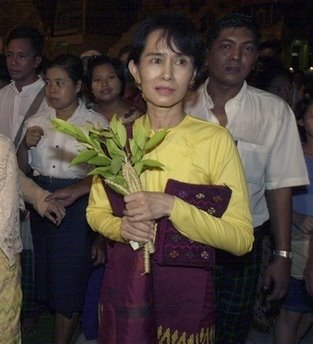


 Posts
Posts


