http://www.google.com/hostednews/ap/article/ALeqM5ixM7Q-rota6NUElM_rCNT0jwuJ7wD94J5IU00
By ALEX KENNEDY –
SINGAPORE (AP) — Singapore's economy has skidded into a recession for the first time since 2001, the government said Friday, warning that it could contract by up to 1 percent next year as a global slowdown saps export demand.
The city-state's economy shrank 6.8 percent in the third quarter from the previous quarter, more than the 6.3 percent contraction estimated last month, the Trade and Industry Ministry said in a statement.
"Singapore's economy is expected to face a broad-based slowdown in 2009," the ministry said. "Considerable uncertainty remains as to how deep and long this downturn will last."
In the second quarter, gross domestic product declined 5.3 percent. Two straight quarters of economic contraction is the traditional definition of a recession.
Compared to a year ago, the economy shrank 0.6 percent in the third quarter, the ministry said.
The government expects economic activity of between negative 1 percent and growth of 2 percent in 2009, and it cut the city-state's 2008 growth forecast to 2.5 percent from 3 percent.
The global economic downturn has dried up demand for Singapore's exports and hurt the financial sector. Manufacturing slid 10 percent in the third quarter from the previous quarter, while construction fell 11 percent and financial services plunged 22 percent, the ministry said.
"The slowdown in international and regional trade will significantly impact our wholesale trade and the transport and storage sectors," the ministry said.
The government cut its inflation forecast for next year to between 1 percent and 2 percent from between 2.5 percent and 3.5 percent, the ministry said.
Hosted by Copyright © 2008 The Associated Press. All rights reserved.
Saturday, November 22, 2008
Singapore skids into first recesssion since 2001


ASEAN members to join Army shoot meet in Tarlac
http://www.abs-cbnnews.com/nation/regions/11/20/08/asean-members-join-army-shoot-meet-tarlac
abs-cbnNEWS.com | 11/20/2008 9:50 PM
CAMP O'DONNEL, TARLAC - Eleven-member countries from the Association of Southeast Asian Nations (ASEAN) will show their finest forms during exhibition and competition games using various kinds of rifles in the Army Rifle Meet slated on Dec. 10, military officials here announced.
The six-day friendly competition’s primary objective is to promote good relations among Army soldiers in ASEAN member countries, said Army Capt. Vicky Agoncillo, Public Information Office (PIO) chief of Light Armor Division (LAD), stationed here.
"This is a great undertaking by the Philippine Army (PA) not only because the activities will hone the marksmanship skills of each soldier but it would also foster brotherhood with all the Army units of ASEAN-member countries," said Agoncillo, adding the event would be an interesting one.
ASEAN-member countries include Malaysia, Indonesia, Burma, Thailand, Singapore, Cambodia, Taiwan, Brunei, Laos, Myanmar, Vietnam and the Philippines.
Army units in the Southeast Asian countries, Agoncillo said, have signified its interest to join in the competition, the Army official said.
Agoncillo said the Army Rifle Meet will be the second to be held in Central Luzon. She said the first was more than a decade ago and was held in Fort Ramon Magsaysay, home of 7th Infantry Division, in Palayan City in Nueva Ecija.
Security preparations are in full swing as construction of additional firing ranges are in near completion, said the woman Army officer adding the shooting range would not be so sophisticated as the Olympic games shooting range, but the scoring system would be computerized.
Army Rifle Meet hosting, Agoncillo said, rotates or passes from one country to another, and "for this year the Philippine Army was chosen to sponsor the activities which is considered as one of the biggest event in the history of the Armed forces.
Agoncillo had extended her invitations to various media organizations from Pampanga and Tarlac to cover the event.-Jess Malabanan
as of 11/20/2008 9:50 PM
Unfriendly neighbors in Southeast Asia
http://www.upiasia.com/Politics/2008/11/20/unfriendly_neighbors_in_southeast_asia/6056/
By Mong Palatino
Column: PeripheriesPublished: November 20, 2008TOOLBAR
Daly City, CA, United States, — There are numerous border disputes in Southeast Asia. The most well-known case today involves the historic Preah Vihear temple and the four square kilometers of territory around it, which are claimed by both Thailand and Cambodia. Last month, Thai and Cambodian soldiers violently clashed near the controversial temple.
Fortunately the clash produced few deaths and injuries. But unfortunately, it generated ultranationalist and racist sentiments in both countries. Many Thais, including politicians, accused Cambodians of betraying Thailand in the past.
On the other hand, some Cambodians criticized their neighbor for being arrogant. Thailand and Cambodia do not only share borders, they also have a common political and economic history.
The border dispute between Thailand and Cambodia is just one of the many quiet conflicts in Southeast Asia, especially in the Indochina region. There are still unsettled border feuds between Vietnam, Laos, Malaysia, Thailand, Myanmar and Cambodia today. Recently, a maritime dispute in the Bay of Bengal was reported between Myanmar and Bangladesh.
In other parts of the region, the Philippines has not renounced its claim over Sabah, which is part of Malaysia today. Some Filipino scholars believe Malaysia has been secretly supporting the Muslim insurgents in the southern Philippines to protect its interests in Sabah.
This year Singapore was recognized by the World Court as the owner of a tiny but important island in the Singapore Strait, which is also claimed by Malaysia.
These border disputes are partly colonial legacies. Western powers created artificial boundaries in the past which inflamed ethnic rivalries.
It is also understandable why governments today are asserting their geopolitical interests. Each country has to protect its sovereignty and more importantly, it has to secure the territories with abundant resources. But the aggressive behavior of many leaders in the region may also be a tactic to gather domestic support for their unpopular administrations. Nationalism is being invoked for the wrong reasons.
The border disputes in the region signify the lack of camaraderie among Southeast Asians. Every country believes its people are superior over their neighbors. This form of racism seems to be endorsed by social and cultural institutions of many countries in the region. An editor of the Bangkok Post raised this point when he exposed what Thai schools are teaching his daughter:
“Like most Thais, she feels Burma is fierce and heartless, Cambodia cannot be trusted and Laos is inferior to Thailand – because the history textbooks teach her so.”
Many people in Thailand believe they once owned parts of their neighboring countries, making them feel they are the greatest in the region. In a similar way, almost all Filipinos think that other Southeast Asians have learned agriculture by studying in the Philippines.
Last month, homeowners in a village in Singapore protested the construction of a dormitory for migrant workers, citing security concerns, the migrants’ poor hygiene and the negative impact of the building on real estate prices in the area. They have forgotten that many of their ancestors were also migrants and that most of the migrant workers today in Singapore have come from neighboring countries in the region.
The unfriendliness of Southeast Asians to each other is really disappointing. But this condescending behavior toward fellow Southeast Asians is almost no different to what the people in the region are showing to their fellow citizens in their home countries.
The dominant Buddhist Thais are not on good terms with many ethnic Malay Muslims who are living in southern Thailand. The Catholic majority in the Philippines is denying Muslim Filipinos in the southern Philippines their right to self-determination. Many residents of West Papua are asserting their independence from Indonesia. Racism is again a very serious, if not the most important, political issue in multi-ethnic Malaysia.
The unspoken hostility between Southeast Asians makes it difficult and almost impossible to implement region-wide initiatives. For example, there have been proposals for sending a unified team to the Olympics, the use of a single currency like the euro for Europe, and the issuance of a single visa for the whole region.
A divided Southeast Asia does not benefit the interests of each country in the region. It makes it easy for big countries like China, Japan and the United States to obtain advantageous deals from Southeast Asian countries.
The United States has clinched military basing agreements with several Southeast Asian countries; Japan has been successful in acquiring one-sided bilateral economic agreements in the region; and China is acting like the big brother of Southeast Asian nations.
Things could be different if Southeast Asia were united. Powerful countries would rethink their negotiating tactics if they were dealing with a united Southeast Asia, instead of a small country with little economic and political bargaining power.
But many Southeast Asians do not realize this need for unity. They have overlooked the advantages of creating a united regional bloc since they are distracted by trivial conflicts. It seems they prefer to convince themselves that their neighbors are inferior instead of reaching out to their fellow Southeast Asians.
China, Japan and India are among the big powers in Asia. A united Southeast Asia could alter the balance of power in this part of the world.
--
(Mong Palatino is an activist and regional editor for Southeast Asia of Global Voices Online. He can be reached at mongpalatino@gmail.com and his website is www.mongpalatino.motime.com. ©Copyright Mong Palatino.)
Monk, comedian handed lengthy Myanmar prison terms
http://www.google.com/hostednews/ap/article/ALeqM5i4JZ40iX6CTZZ8suKU3jnsICaI0QD94JCV180
YANGON, Myanmar (AP) — Courts in military-ruled Myanmar handed long prison sentences Friday to a prominent Buddhist monk and a popular comedian who are active in the country's pro-democracy movement, rounding out two weeks of an intensive judicial crackdown on activists.
At least 100 people have received prison sentences of two to 65 years since early November, with many being held for more than a year before being tried. Many of the trials were held in closed sessions, sometimes without defense lawyers or family present.
Comedian and activist Maung Thura — who is better known by his stage name, Zarganar — was sentenced to 45 years imprisonment for violations of the Electronics Act, which regulates all forms of electronic communication, said his lawyer, Khin Htay Kywe.
The comedian still faces other charges, she said.
Another lawyer said Buddhist monk Ashin Gambira was sentenced to 12 years imprisonment on various charges, including insulting religion, having links with illegal organizations and violating the Immigration Act. The lawyer spoke on condition of anonymity for fear of antagonizing the government.
The monk helped organize last year's mass pro-democracy demonstrations. He was previously sentenced to 56 years imprisonment on other charges, bringing his total sentence to 68 years.
Monks inspired and led pro-democracy demonstrations that were violently suppressed by the army in September last year. The authorities began their crackdown by raiding several monasteries in Yangon in the middle of the night and hauling away monks.
The wave of harsh sentences has been condemned worldwide by Western governments and human rights organizations, who charge that it makes a mockery of the ruling junta's professed plan to restore democracy with a 2010 election.
On Tuesday, five United Nations experts issued a statement in Geneva strongly condemning the "severe convictions and the unfair trials of prisoners of conscience in Myanmar."
Their statement from the U.N. human rights experts said they "demand that all detainees be retried in open hearings respecting fair trial standards and the immediate release of their defense counsels."
Those sentenced recently included some 70 members of the opposition National League for Democracy party of detained Nobel laureate Aung San Suu Kyi. Some of the most severe sentences were handed to 23 members of the 88 Generation Students group, veteran activists who have been spearheading nonviolent protests for the past several years.
Bloggers, musicians and poets have also been among the victims.
On Thursday, well-known hip-hop singer Zeyar Thaw, a member of the band "Acid," was jailed for six years, and 14 members of Suu Kyi's party got 2 1/2 years each for calling for her release on her birthday in June, party spokesman Nyan Win said.
Zeyar Thaw is thought to be a leader of Generation Wave, an illegal student group formed in the wake of last year's protests to carry on the struggle for democracy.
Zarganar was arrested in June after he gave interviews to foreign media in which he criticized the junta's slow response to the May cyclone that killed more than 84,000 people.
Three associates were tried with him. Sportswriter Zaw Thet Htwe and video journalist Thant Zin Aung were given 15 years each and face further charges, while Tin Maung Aye got 29 years, Zarganar's lawyer said.
Zaw Thet Htwe was arrested in 2003 for allegedly plotting to "overthrow the government through bombings and assassinations." He was convicted of high treason and sentenced to death but was later given a reduced sentence and released in 2005 after serving 18 months.
Zarganar has been imprisoned several times, and was held for three weeks for providing food and other necessities to Buddhist monks during last year's demonstrations.
The 47-year-old comedian is also a successful producer, director, writer and actor. He frequently upsets officials with his popular satirical jokes about his country's political, economic and social situation, and the junta banned him from making public performances in 2006 after he made remarks to foreign media that upset them.
Amnesty International and other international human rights groups say the junta holds more than 2,100 political prisoners, up sharply from nearly 1,200 in June 2007 — before last year's pro-democracy demonstrations.
The prisoners include Suu Kyi, who is under house arrest, as she has been for more than 13 of the past 19 years.
Throwing Away the Key in Burma
http://www.spectator.org/archives/2008/11/20/throwing-away-the-key-in-burma/
By Anonymous on 11.20.08 @ 2:00PM
Editor's Note: The identity of the author, an American, is anonymous (as are the identities of those he interviewed) because disclosing their names could compromise their safety in Burma.
BANGKOK, Thailand -- The time of reckoning for those who protested Burma's high fuel prices in September 2007 came long ago, but only now are most of them beginning to learn their long-term futures. It is bleak.
This land of rich resources, renamed Myanmar in 1989 by its military dictatorship, delivered last week the verdicts of several prisoners -- many of them Buddhist monks -- it has held since the government (again) expunged political dissent last year. The decisions were announced after alleged trials were held at the frightening Insein Prison. Reports vary, but last week on Tuesday as many as 23 dissidents received sentences of 65 years each for their roles in the protests, and two days the same punishment was revealed for another 13.
The defendants' hearings are more appropriately characterized as show trials without the show. Any prosecution and defense activity, if there was any, was conducted behind the walls of Insein. The protesters' defense lawyers were themselves jailed for contempt of court, which further illustrates the futility of pursuing justice in Burma. And nearly three-quarters of those detained in the last 15 months still await almost certain similar fates, according to the Thailand-based Assistance Association for Political Prisoners.
As for most of the rest of Burma -- especially in the former capital of Yangon, where this reporter recently visited -- there is little hope for even a minimal standard of living. Oppression and corruption dominate. General Than Shwe leads the ruling military junta, and discussion about his regime's destructive policies is spoken in careful words where no one can overhear.
The torture and squalor of places like Insein only speak to the fate of those who have crossed the government. Those who remain "free" live a frustrating and meager existence. A layer of mildew coats nearly all buildings. Regular (that is, most without a family or friendly connection with the Shwe regime) citizens live in shacks, or in the aforementioned concrete apartments. Thousands try to live by peddling goods or food on sidewalks. Roads are in gross disrepair and workers overload old, sputtering modes of transport (at least those that are motorized: taxis, truck beds, buses, trains and boats) that they depend upon each day. Very few people own cars.
As for the things we take for granted in the West, operators in the Shwe regime demand their cut of the slim earnings of others. Territorial officials (those who oversee individual neighborhoods) must be bribed for "protection." Guests from outside -- especially foreigners -- have to be reported to those officials (who get extra bribes for the added "trouble"), and none are allowed to lodge overnight in homes -- they must stay in hotels.
"They are like an employee waiting for a salary," a local friend, who sometimes entertains visitors from outside the country, said of these neighborhood officials. He added that towards the end of each month his local authority often complains about an artificial problem with his business to remind him it's time to pay up again.
Simple occupations like driving a taxi -- despite their ubiquity -- are burdensome. To own a '70s- or early '80s-era jalopy (usually a Toyota model) costs in the neighborhood of $12,000 to $15,000, according to locals -- vehicles you can no longer get parts for in the U.S. Cab drivers (not the owners) pay more than $400 annually just for the privilege of carrying passengers. Above that they pay $15 daily to the owner for the use of the vehicle -- if their fare revenue falls short of that amount, then they must pay out of their own pockets. With no meters running up the tab, cross-town fares a pittance, and the great amount of competition for customers, earning $15 in a day is not a given.
As for the struggles of other citizens, they can muster little resistance to the Shwe regime. Internet communications are extremely limited, cell phones are cost prohibitive and even fax machines must be registered with the government. Burmese can consider little more complexity in life other than simple survival.
(Page 2 of 2)
"People don't have a chance to think about the country," said one community religious leader, "because they struggle for food."
He said Cyclone Nargis, which in early May severely damaged Yangon and devastated the Irrawaddy Delta region south of the city, came without warning to most Burmese. Alerts went out over state-run broadcast media but few heard it, since most people don't bother to watch or listen to the government propaganda.
"They warned people on TV," he said, "but we didn't watch TV at the time.
"That's the only way they can keep control. Their very intention is to keep people away from knowledge and education."
Today's scarcity of Buddhist monks on the streets of Yangon illustrates the suffocating power of Myanmar's government. Before the September 2007 crackdown they were everywhere, but now they are scattered in exile or await their prison sentences.
Nothing under earthly power can be done about it, barring an outside overthrow. Democracy activist Aung San Syu Kyi has lived under house arrest, off and mostly on, since the military junta overturned the country's last democratic elections in 1990. And there are no signs of change, given last year's flattening of the peaceful monk marches.
British Prime Minister Gordon Brown wrote in his book Courage: Eight Portraits, "So Suu Kyi's courage is the courage to sacrifice her own happiness and a comfortable life so that, through her struggle, she might win the right of an entire nation to seek happy and comfortable lives."
Sadly, this long struggle she has shared with her nation has not broken the stranglehold that evil has upon Burma.
International Action Committee for Burma (IACB)
Call for global collective actions against the Military Junta for the severe convictions and unfair trials in Burma
1. 88 Generation Students who are trying for democratic transition in Burma and seeking for national reconciliation unlawfully received harsh long jail terms of 65 years.
2. 88 Generation Students are separated from their groups and are sent to far away prisons where it is very difficult to contact family and loved ones.
3. Lawyers who support and defend for the activists were captured and received jail terms without appropriate law. The cruel intention of this act is to threaten lawyers not to defend the activists.
4. The above actions prove that State Peace and Development Council has no intention to provide freedom and democracy to the people who are longing for it.
5. Therefore, any citizens from any country who is pro-democracy, pro-human rights, or pro-justice should be against:
· the lawlessness cruel act of the SPDC regime
· the one sided constitution of 2007 which has no democratic value
· the coming election in 2010 which will legalize the brutal acts of the regime
We call all of you to stand together as unified forces with Burmese people who have been severely oppressed by the Burmese military regime.
Starting from November 22nd 2008, activists around the world who are willing to help for democratic change in Burma will demand the urgent and unconditional release of Daw Aung San Suu Kyi, ethnic minority leaders, student leaders, and all political prisoners.
Contact Persons
North America: Moe Thee Zun Tel: 347-475-2542 , Thet Htun Tel: 206-403-0161 ,
Ko Myo Tel 347-668-5046
Europe : Sonny Aung Than Oo Tel: 491735347534, Moe Maung Maung Tel: 4721382098
Asia: Yan Naing Htun Tel: 821197234773, Ko Ko Aung Tel:09015062893
International Action Committee for Burma (IACB) is comprised with
1. 88 Generation Students’ Exile Thet Htun
2. 88 Generation activists ( Thailand ) Aung Myo Tint
3. 88 Generation activists ( Norway ) Moe Maung Maung
4. 88 Generation activists ( UK )
5. 88 Generation Activists ( Australia )
6. 88 Generation activists ( Netherlands ) Aung Phyo
7. National Campaign for Food and Freedom (NCFF) Ko Yin Aye
8. International Campaign for Burma ( New York ) Ko Myo
9. Burmese Student Net work ( Canada ) San Aung
10. Burma Bureau ( Germany ) Sonny Aung Than Oo
11. All Burma Student League ( India ) Ko Kyaw Than
12. DFB ( Japan ) Joint Action Committee ( Tokyo ) Ko Ko Aung
13. NLD (LA) ( Malaysia ) Aung Kyaw Satt
14. Overseas Burmese Patriots ( Singapore ) Ko Soe Tun .
15.NLD (LA) Korea Branch Yan Naing Htun
16. Activists from Belgium Brian
17. Activists from France Thi Ha Zaw
18. Anti Dictatorship, People's Freedom Movement Shwe Zin Htun
19. Civil Society for Burma Tin Win Thein
[federalistfriends] The big problem inside the Federal Union of Burma
by admin — last modified 2008-11-21 05:35
The perspectives of Col. Yawd Serk
A few days ago, I had the chance to speak to the chairman of the Restoration Council of the Shan State (RCSS), Col. Yawd Serk, and he states that there are three reasons for the big problem inside the Union of Burma:
1 – The clique of the State Peace and Development Council (SPDC) is the world's worst dictatorship. This SPDC calls itself the legal government of the Federal Union of Burma. But the world community can not consider the SPDC as the legitimate government of Burma, because on 02 March 1962, the military leader Gen. Ne Win couped the power of the government. After that, the Federal Government has been disbanded. Up to this day, the Burmese army is using brutal methods to control the people of the country. They never handed the power back to the people that they are ruling. During the elections of 1990, the political party, National League for Democracy (NLD) received the strongest voice of support from the people and won the elections with a landslide victory. But the SPDC never gave the power to the democratically elected parties to allow them to establish a new government. Then the SPDC announced to organize further elections for 2010, and learning from the past experiences, these elections will have no positive result for the people of Burma. They are just showing another nice facade to the international community to please their doubts, and in reality they only have the aim to get elected to be the legitimate rulers of the country to continue their power, that is soaked with blood.
2 – The SPDC has killed thousands of people, who protested peacefully on three separate occasions in the past by shooting into the crowds of demonstrators, who were unable to defend themselves. This already shows clearly that the SPDC is abusing basic human-rights. Besides that, thousands of ethnic people have also been killed by the SPDC's military forces. We, the ethnic people did not have any other chance to defend and protect ourselves, but by picking up arms. At present, the SPDC regime is only one group of military rulers, who control the whole country. The international community and all the governmental representatives in the UN, as well as democracy-loving people should blame the SPDC rather than doing economical trades with them. The international companies should better withdraw their investments from Burma.
3 – In concern to the drug problem in the Golden Triangle: if the world community really wants to eradicate drugs, the policy towards Burma should be reformed. The DEA has tried to eradicate drugs inside Burma for some 50/60 years now, but instead of improvements, the narcotic problem is getting more and more serious. This indicates clearly, that the SPDC is involved in the drugs-business. The information and the black list of drug-dealers, which is run by the DEA, are fake. They only listen to the one side, which is presented by the SPDC. If the DEA would evaluate Col. Yawd Serk, they should look at his background. He himself joined the revolution at the age of 17 with Sao Gawnzerng as a radio communicator. After being a radio communicator, he worked for the intelligence service of the revolutionary Shan forces and was stationed at the front-line for most of the time until the Shan United Revolutionay Army (SURA) was united with the Shan United Army (SUA) of Khun Sa, forming the Muang Tai Army (MTA). "I have never been a business-man and I don't even know how to run a trading business," Yawd Serk states. If the DEA would be able to reconstruct their policy to include Yawd Serk on the eradication of drugs, he would propose them his narcotic eradication plan. Yawd Serk is very aware of the reason why the DEA is not supporting him and the RCSS, because the DEA cares more about what the SPDC is telling them.
Col. Yawd Serk wants to suggest at the ASEAN meeting, which is going to be held in Thailand in December 2008, to discuss the big problem in Burma and to push the SPDC to hand over the power to their people. By this, the ASEAN can improve their image, which has been badly damaged by the SPDC. "If the SPDC will stubbornly rule the country without listening to anyone, this will keep damaging the image of the ASEAN. This should not be forgotten by the ASEAN governments, " he says. "The ASEAN should not only deal with the people in power but they should see the suffering of the people inside Burma and the murdering of innocent people." Only because of this continuing suffering and killing, the people flee their homeland. ASEAN should not only care about their businesses with Burma but should also see the suffering of the Burmese people trying to live peacefully in one world. It is the humanitarian need to help and support each other for a peaceful world and this should be considered as the most important issue rather than playing political games and doing business for their own benefit.
Burma has been in a political and economical deadlock for more than 45 years now and the UN should be clearly aware of the games, which the SPDC is playing with the international community. Even the relief donations for the victims of cyclone Nargis never got to the people who needed it and ended up in the pockets of the military regime. For more than 45 years, the international community has never made a serious step to help the decades-long suffering people of Burma, and keeps on going to believe the games of the SPDC. But the past decades show a clear different picture, that there will never be a genuine transition towards democracy from the regime itself. The evidence of how the SPDC is involved in the drugs-trade and how it is heavily abusing its people are clear facts since many years. During these days, in the preparation for the upcoming elections in 2010, the SPDC again is silencing all oppositions by giving them life-long prison terms. Another crackdown against the democratic forces inside Burma is taking place right now.
The opposition groups and ethnic liberation forces, who have the genuine aim for a democratic transition, are receiving little or no support from the international community, even though the SPDC are claimed to be involved in the drugs-business and abusing human-rights. Since these opposition forces have the support of the people, they can be considered as the only legitimate representatives of the people of Burma. The NLD won the elections in 1990, the Shan National League for Democracy (SNLD) won the second largest vote and the RCSS has the support of their civilians for fighting for freedom and democracy.
For a real democratic change in Burma, the international community should rethink their political approach towards Burma and support the real democratic forces of Burma. Only this can lead to an end of these decades' long civil-war and human-rights abuse.
19 November 2008
Sai Lern Kham
SHAN Embassy Germany / Liaison Office of the RCSS in Germany
--------------------------------------------------------------------------------
http://www.shanland .org/Mailbox/ 2008/the- big-problem- inside-the- federal-union- of-burma
--------------------------------------------------------------------------------
ဂုရုေရ
[Ye Yint Thet Zwe]
ဂုရုေရ
လက္မျပ ႏႈတ္မဆက္ပဲ
ရုတ္တရက္ႀကီးကို
ခင္ဗ်ား တိတ္တဆိတ္ထြက္ခြြါသြားခဲ့ေပါ့ ။
ဂုရုေရ
မယံုႏိုင္စရာ
ေၾကကြဲစိတ္ဟာ
ကိုယ္ စိတ္ ႏွလံုး
သံုးပါးလံုးကို ဆြံ ့အ ေစခဲ့ၿပီ။
ခင္ဗ်ားနဲ ့က်ေနာ္
ခရီးတခုကို အတူသြားဘူးခဲ့
မယ္လအူး စခန္းမွာ
ရက္တခ်ိဳ ့အတူေနဘူးခဲ့
မဲေဆာက္က ကိုလြမ္းဏီအိမ္မွာ
ညေနခင္းတခ်ဳိ ့ကို
အေရေဖ်ာ္ေသာက္ဘူးခဲ့။
ဂုရုေရ
အခုေတာ့ဗ်ာ
ေတာ္လွန္စစ္ကို ခ်စ္တဲ့
ကဗ်ာေတြကို တပ္မက္တဲ့
ရန္ ငါ စည္းျပတ္တဲ့ ခင္ဗ်ား
အိမ္အျပန္ ေစာလြန္းလွခ်ည္ရဲ ့။
ေၾကကြဲမႈရဲ ့ေကာင္းကင္မွာ
ေဒါင္းသံနဲ ့ေဒါင္းအလံေတြ
လေရာင္ကိုထိုးေဖာက္
ခင္ဗ်ားကို ေစာင့္ေနေလရဲ ့။
(ကမၻာေျမေရ ဂုဏ္ျပဳအပ္တဲ့ ဧည့္သည္တေယာက္ကို ဆီးႀကိဳေပေတာ့။
ေရာက္ရာဘ၀မွာ အာဏာရွင္စနစ္ကို အဆံုးသတ္ႏိုင္သူ ျဖစ္ပါေစ။)
Fw: [burmainfo] 今週のビルマのニュース(0836号)
━━━━━━━━━━━━━━━━━━━━━━━━━━━━━━
ビルマ市民フォーラム メールマガジン 2008/11/21
People's Forum on Burma
━━━━━━━━━━━━━━━━━━━━━━━━━━━━━━
ビルマ情報ネットワーク(BurmaInfo)からのメールを転送させていただき
ます。
(重複の際は何卒ご容赦ください。)
PFB事務局
http://www1.jca.apc.org/pfb/
━━━━━━━━━━━━━━━━━━━━━━━━━━━━━━
ビルマ情報ネットワークの「今週のビルマのニュース」をお送りします。
「今週のビルマのニュース」バックナンバー
http://www.burmainfo.org/weekly.html
きょうのビルマのニュース(平日毎日更新)もご利用ください。
http://d.hatena.ne.jp/burmainfo/
ビルマ情報ネットワーク (www.burmainfo.org)
秋元由紀
========================================
今週のビルマのニュース Eメール版
2008年11月21日号【0836号】
========================================
【今週の主なニュース】
民主化活動家らへの判決続く
・先週始まった民主化活動家や僧侶への長期の禁固刑
判決言い渡しは今週も続き、これまでに70人以上が刑を
宣告された。判決を受けた活動家の多くは遠隔地の刑務所に
移送され、家族などが食糧や薬を差し入れるのが困難になった。
軍政が2010年に予定している総選挙を前に、反対意見を
徹底的に抑え込む姿勢を打ち出したとみられる(20日付APほか)。
・一連の長期禁固判決の言い渡しについて欧米政府が
非難の声明を発表。日本政府・外務省も17日の外務報道
官談話で「深く憂慮して」いるとした。
【その他】
参議院ODA調査派遣報告書、ほか
・8月に行われた参議院ODA調査派遣の報告書が20日、
発表された。ラオス、タイ、カンボジアを訪れた派遣団第一班
(中村哲治団長)は、タイでタムヒン難民キャンプ(ビルマから
の難民約7000人を収容)内の学校を視察し、難民支援などを
行うNGO代表者らと会談した。所見の部分で報告書は「ミャンマー
情勢の悪化に伴いタイ国境にミャンマー難民が押し寄せてきて
おり、このような難民に対する国際的な援助が問題となっている」
とした上で、「(難民支援活動)に対する我が国の援助は、
草の根無償資金という1年限りの援助にとどまっており、
さらに継続的な取組を行うことができないか検討する必要が
あると考えられる」とした。
<背景>参議院では、参議院改革協議会報告書(平成15年)
の提言「ODA経費の効率的運用に資するため、新たにODAに
関する専門の調査団を派遣すること」等に基づき、平成16年度
から毎年度ODA調査のための議員派遣を行っている。
・ベンガル湾からビルマを横断して中国雲南省の昆明まで
石油と天然ガスを運ぶパイプラインを建設する計画で、
ビルマ軍政が中国に経営権を付与した。
チャイナデイリーによれば、来年前半にも雲南省で
工事が始まる(19日付AFP、18日付日経ほか)。
・ビルマ民主化を支援し、サイクロン被災者支援も行う
国際ビルマ仏教僧協会(別名サーサナモリ、2007年10月に
設立)のアシン・ナヤカ師が来日。軍政の僧侶に対する弾圧
の実態を訴え、国際社会の中で日本政府が率先して軍政
に民主化改革を行うよう働きかけるべきだ、などと語った
(15日付朝日新聞ほか)。
【ビルマへの政府開発援助(ODA)約束状況など】
新たな発表はなし
【イベントなど】
・宇田有三写真展「アウンサンスーチーとビルマ」
(岐阜県 瑞浪芸術館、10月25日~11月24日)
・ミャンマーでのボランティア活動紹介・
ミャンマー雑貨販売 国際協力サークルELAN
(東京外国語大学研究講義棟332教室、20~24日10時~18時)
・連続セミナー「外国籍の家族と子どもの今」第5回
日本の難民・移民の現在と未来 トークショー第2部
『難民の家族』にビルマ難民Mさん家族
(日本キリスト教会館4F、23日14時~)
・神戸松蔭女子学院大学 2008年秋季特別講座シリーズ
「ミャンマー(ビルマ)の現状」
講師:日本ビルマ救援センター代表 中尾恵子氏
(神戸松蔭女子学院大学、26日14時40分~)
・アジアと日本のつながりを考える国際セミナー
「100人の村 あなたもここに生きています」
ヒューライツ大阪ほか主催
秋元由紀がパネリストとして参加
(大阪市阿倍野区民ホール・小ホール、12月5日14時~)
・ビルマ市民フォーラム例会
「初めての方のための『ビルマ入門講座』
-ビデオ上映と講演-根本敬」
(文京シビックセンター、12月6日18時半~)
・世界人権宣言60周年記念・世界人権デー マーチング
呼びかけ団体 在日ビルマ人共同行動実行委員会ほか
(宮下公園集合、12月10日14時半~)
★ジェーン・バーキン最新アルバム『冬の子供たち』が
11月26日に発売予定。アウンサンスーチー氏に捧げる
楽曲「アウンサンスーチー」を収録。
☆インターネット放送局「アワープラネットTV」がビルマ
でのダム開発問題を取り上げた。
ビルマ情報ネットワークの秋元由紀が解説(映像、16分)。
http://www.ourplanet-tv.org/video/contact/2008/20081008_10.html
★特定非営利活動法人メコン・ウォッチの
季刊誌「フォーラムMekong」、最新号はビルマ特集。
-ビルマ~サイクロン後の人々、軍政-
http://www.mekongwatch.org/resource/forum/FM_vol9_2_01.html
【もっと詳しい情報は】
きょうのビルマのニュース(平日毎日更新)
http://d.hatena.ne.jp/burmainfo/
ビルマ情報ネットワーク
http://www.burmainfo.org/
【お問い合わせ】
ビルマ情報ネットワーク 秋元由紀
====================================
今週のビルマのニュース Eメール版
2008年11月21日号【0836号】
作成: ビルマ情報ネットワーク
協力: ビルマ市民フォーラム
====================================
━━━━━━━━━━━━━━━━━━━━━━━━━━━━━━━━━━━━━━
配布元: BurmaInfo(ビルマ情報ネットワーク)
http://www.burmainfo.org
連絡先: listmaster@burmainfo.org
バックナンバー: http://groups.yahoo.co.jp/group/burmainfo/
※BurmaInfoでは、ビルマ(ミャンマー)に関する最新ニュースやイベント情報、
参考資料を週に数本配信しています。
━━━━━━━━━━━━━━━━━━━━━━━━━━━━━━━━━━━━━━
US Congress warned of Chinese cyber, space threats
http://www.google.com/hostednews/afp/article/ALeqM5hldzmsW1nog87bKj041dypZ3AtKg
WASHINGTON (AFP) — China has developed a sophisticated cyber warfare program and stepped up its capacity to penetrate US computer networks to extract sensitive information, a US congressional panel has warned.
"China has an active cyber espionage program," the US-China Economic and Security Review Commission said in its annual report to the US Congress. "China is targeting US government and commercial computers."
In its 393-page report, the panel also criticized Beijing for exercising "heavy-handed government control" over its economy and "continuing arms sales and military support to rogue regimes" such as Sudan, Myanmar and Iran.
The commission also issued a warning about China's space program. "China continues to make significant progress in developing space capabilities, many of which easily translate to enhanced military capacity," it said.
"Although some Chinese space programs have no explicit military intent, many space systems -- such as communications, navigation, meteorological, and imagery systems -- are dual use in nature," the commission said.
The commission, which was established by Congress in 2000 to analyze the economic and national security relationship between the two nations, said China was investing heavily in cyber warfare.
"Since China's current cyber operations capability is so advanced, it can engage in forms of cyber warfare so sophisticated that the United States may be unable to counteract or even detect the efforts," the commission said.
It said Chinese hacker groups may be operating with government support.
"By some estimates, there are 250 hacker groups in China that are tolerated and may even be encouraged by the government to enter and disrupt computer networks," the commission said.
It quoted Colonel Gary McAlum, chief of staff for the US Strategic Command's Joint Task Force for Global Network Operations, as saying China has recognized the importance of cyber operations as a tool of warfare and "has the intent and capability to conduct cyber operations anywhere in the world at any time."
"China is aggressively pursuing cyber warfare capabilities that may provide it with an asymmetric advantage against the United States," the commission said. "In a conflict situation, this advantage would reduce current US conventional military dominance."
The commission recalled that unclassified US military, government and government contractor websites and computer systems were the victims of cyber intrusions in 2002 codenamed "Titan Rain" and attributed to China.
The commission made 45 recommendations to Congress including possible "additional funding for military, intelligence and homeland security programs that monitor and protect critical American computer networks."
On the economic front, the commission said "China relies on heavy-handed government control over its economy to maintain an export advantage over other countries."
"The result: China has amassed nearly two trillion dollars in foreign exchange and has increasingly used its hoard to manipulate currency trading and diplomatic relations with other nations," it said.
"Rather than use this money for the benefit of its citizens -- by funding pensions and erecting hospitals and schools, for example -- China has been using the funds to seek political and economic influence over other nations," said Larry Wortzel, chairman of the commission.
Beijing's "continuing arms sales and military support to rogue regimes, namely Sudan, Burma, and Iran, threaten the stability of fragile regions and hinder US and international efforts to address international crises, such as the genocide in Darfur," the commission added.
The commission acknowledged some progress by China, specifically its adherence to non-proliferation agreements and involvement in the six-party talks to dismantle North Korea's nuclear weapons production capacity.
But it criticized China's use of prison labor to produce goods for export and an "information control regime" that it said regulates the print and broadcast media, Internet, entertainment and education.
The Commission also warned that fish imported into the United States from Chinese fish farms "pose a health risk because of the unsanitary conditions" and recommended greater powers for the US Food and Drug Administration.
The report is available on the commission's website at www.uscc.gov.
Burma and Russia Promote Friendly Relations, Cooperation
http://www.voanews.com/burmese/archive/2007-06/2007-06-18-voa3.cfm
VOA News
Washington
18 June 2007
Burmese media are reporting that Burma and Russia have agreed to promote friendship, bilateral relations and cooperation between the two countries.
The New Light of Myanmar newspaper says Deputy Foreign Minister U Kyaw Thu and his Russian counterpart Alexander Losyukov reached the agreement Friday during their regular consultation meeting in Rangoon.
In May of this year, Burma's military government signed a deal with Russia to jointly design and build a nuclear research center. The United States expressed concern about the deal, saying Burma does not have the regulatory or safety provisions to successfully handle that type of nuclear program.
Russia and China have become major suppliers of arms to Burma since the West imposed sanctions in 1988 over Burma's poor human rights record.
E-mail this article
Obama plans to nominate Clinton for top diplomat

photo Sen. Barack Obama, D-Ill., takes the stage with Sen. Hillary Rodham Clinton, …
By NEDRA PICKLER, Associated Press Writer Nedra Pickler, Associated Press Writer – 2 hrs 4 mins ago
WASHINGTON – President-elect Barack Obama plans to nominate Hillary Rodham Clinton as secretary of state after Thanksgiving, a new milestone for the former first lady and a convergence of two political forces who fought hard for the presidency.
One week after the former primary rivals met secretly to discuss the idea of Clinton becoming the nation's top diplomat, an Obama adviser said Thursday that the two sides were moving quickly toward making it a reality, barring any unforeseen problems.
The senior adviser, speaking on condition of anonymity because the president-elect is not prepared to officially announce the nomination, said Obama believes Clinton would bring instant stature and credibility to U.S. diplomatic relations.
Obama is convinced the advantages of Clinton serving far outweighed potential downsides, the adviser said.
Transition aides said the two camps have worked out financial disclosure issues involving Clinton's husband, former President Bill Clinton, and the complicated international funding of his foundation that operates in more than 40 countries. The aides said Obama and Hillary Clinton have had substantive conversations about the secretary of state job.
Clinton has been mulling the post for several days, but the comments from the transition aides suggested that Obama's team does not feel she is inclined to turn it down. Clinton spokesman Philippe Reines would not comment, except to say that anything about Cabinet appointments is for Obama's transition team to address.
Clinton would have to surrender her New York Senate seat, which she has held for eight years, to take the job.
The nomination would be a remarkable union between the former first lady who was an early favorite to win the presidency and the first-term senator who upset her in the primary and cruised to a general election victory. Such a high-profile seat in the Cabinet for Clinton also would be another achievement for the most accomplished former first lady in U.S. history, who has been the first presidential spouse to serve in the Senate and run for the White House herself.
Obama was picking other Cabinet posts as well. Obama has informally selected Washington lawyer Eric Holder as attorney general and former Senate Majority Leader Tom Daschle as health secretary and is likely to choose Arizona Gov. Janet Napolitano to be secretary of homeland security, Democrats said.
Any of the plans could be sidetracked by unexpected glitches in the final vetting process, officials note.
___
On the Net:
Obama transition: http://www.change.gov
Friday, November 21, 2008
Writer Hnin Pan Ein flees to border -MIZZIMA
http://www.mizzima.com/news/inside-burma/1327-writer-hnin-pan-ein-flees-to-border.html
by Zar Ni
Wednesday, 19 November 2008 20:36
Chiang Mai (Mizzima) – Popular writer Hnin Pan Ein fled to the Thai-Burma border on Friday to join her former political prisoner husband, after being frequently intimidated and harassed by authorities inside Burma.
After her husband, Nay Oo, the South Dagon Township National League for Democracy (NLD) Youth Organizer and a former political prisoner fled to the Thai-Burma border last month, local authorities regularly kept watch and intimidated his family, finally forcing them to make the decision to join him in exile.
"First I decided to stay inside Burma as long as I could, even after my husband fled into exile. But when they [the authorities] hinted that they would arrest and interrogate us, while keeping close watch on our family, I realized that I could no longer stay inside Burma. I had to take into consideration the security of my son," Hnin Pan Ein told Mizzima.
"After my husband went into exile, Military Affairs Security (MAS) and Police Special Branch (SB) personnel frequently visited my home to inquire about my husband. We were scared by the frequent knocks on the door," she added. MAS and SB serve as the intelligence wings of the military and police.
She said that her husband fled to the Thai-Burma border last month after intimate friends and colleagues were arrested.
Previously, he was sentenced to 14 years imprisonment on February 19, 1989, charged with various crimes, including the distribution of illegal documents.
Hnin Pan Ein has written many travelogues, essays, articles and stories based on her experiences visiting her husband in Kalemyo prison in Sagaing Division. The manuscripts appeared in several monthly magazines, such as Nweni and Mahaythi.
Even after her husband was released on July 6, 2005, she continued writing on the same theme, based on others' experiences in visiting their beloved ones languishing in remote prisons under harsh environments.
Many of her 200 short stories and articles were censored either in whole or in part by the censor board.
Hnin Pan Ein started her writing career in 2000. Her travelogue, Tamarpan and Bawalan, was very popular among the people. She was honored with the My Best Like award, given by a literary fan living in Japan, for her 'Gratitude of the Environment and a Star'. She also received the Tawphayarlay Prize for her 'Modern Memory and Collected Short Stories' as well as the Naymin Ahman literary group's Best Short Story prize for 'Lotus Beside a Spring'.
"I will continue my writing, which will continue to reflect the situations in which all of us are living and the evil political situation inside Burma," she said.
China says employment situation 'critical'
http://news.yahoo.com/s/afp/20081120/bs_afp/financeeconomychinaunemployment_081120050916
Thu Nov 20, 12:09 am ET AFP/File – Chinese job-seekers at an employment agency in the city of Xiamen in Fujian Province in late October. …
BEIJING (AFP) – China warned Thursday it was facing serious unemployment problems due to the global economic crisis, amid signs it was increasingly concerned about social tensions across the country.
"Currently, the employment situation is critical, and this impact (of the financial crisis) is still unfolding," Yin Weimin, China's social security minister, told reporters in response to a question on recent labour unrest.
Yin announced a series of measures to try to stave off unemployment -- predicted to rise next year -- and to help those who have lost their jobs, particularly among the more than 200 million rural migrant workers.
The trouble has been most acute in southern Guangdong province, China's manufacturing heartland, where one-fifth of factories in major cities are expected to close by January alone, according to industry estimates.
Thousands of workers have recently gathered outside shuttered factories there, demanding unpaid wages and forcing local authorities to intervene.
Experts have warned labour unrest could spike as more migrant workers lose their jobs.
Yin said measures included helping the migrants find a job when they come to urban areas, for example by giving them information about available positions, and providing extra training for those returning home.
Unemployment in China stands at 4 percent, and Zhang Xiaojian, vice minister of social security, said the government expected to hit 4.5 percent by the end of the year.
"But next year the registered (official) unemployment rate will certainly increase," Zhang said.
The official unemployment rate does not include the millions of migrant workers who are not registered in the place they live in.
Zhang added that demand for workers in 84 cities across China in the third quarter of this year had fallen 5.5 percent -- the first third-quarter drop in "many years."
ACTIVISTS WANT ASEAN LEADERS TO FOCUS ON ABUSES IN MYANMAR
http://malaysia.news.yahoo.com/bnm/20081119/tts-myanmar-asean-993ba14.html
Bernama - Thursday, November 20BANGKOK, Nov 19 (Bernama) -- Asean leaders have been urged to pay more serious attention to the alleged human rights abuses in Myanmar where in November the military regime sentenced 119 pro-democracy activists, some with up to 65 years' imprisonment.
Burma Partnership, a movement of organisations and individuals promoting freedom, democracy and human rights in Myanmar, said the nine Asean members should recognise the widespread and increasing problems in the country, and that the situation would not improve until strong international action was taken.
"Burma (Myanmar) is already a red stain on Asean's name, and its increasing instability is spilling over.
"Asean needs to take significant measures to propel the release of all political prisoners in Burma and the return of a proper process of national reconciliation," the movement said in an open letter to the nine leaders.
It said that despite calls from many international leaders, including United Nations Secretary-General Ban Ki-moon and Asean ministers for the release of political prisoners and valid progression towards national reconciliation, especially in the run-up to the 2010 elections, nothing had changed.
"The military junta is avidly ignoring these calls by locking up and harassing any organisation or person that questions their tyranny," Burma Partnership said.
-- MORE
MYANMAR-ASEAN 2 (LAST) BANGKOK
The letter was sent to the leaders of Brunei, Cambodia, Indonesia, Laos, Malaysia, the Philippines, Singapore, Thailand and Vietnam.
The movement said Asean leaders should demand the release of all political prisoners in Myanmar, including pro-democracy leader Aung San Suu Kyi and ethnic leaders.
"As the Asean Summit is approaching, we particularly ask you to make this issue focal there," it said, referring to the 14th Asean Summit to be held in Chiang Mai, Thailand from Dec 13 to 18.
According to the movement, the military junta has stepped up arrests and sentencing of political prisoners who are not violent criminals, "but monks, students, bloggers, lawyers, journalists, musicians, poets and political leaders who peacefully demand a stable government that respects the rule of law and the people's right to life, liberty and security".
"These arrests and sentences stand against the Asean Charter, and will contribute to regional instability," it said.
Among those sentenced to jail was U Gambira, leader of the All Burma Monk's Alliance who organised nationwide peaceful gatherings of monks in September 2007. He received 12 years' imprisonment.
-- BERNAMA
AR AR MO
Myanmar activist follows dad, grandfather to jail
http://www.sfgate.com/cgi-bin/article.cgi?f=/n/a/2008/11/19/international/i124820S30.DTL&feed=rss.business
Wednesday, November 19, 2008
(11-19) 12:48 PST YANGON, Myanmar (AP) --
A court in military-ruled Myanmar sentenced a student activist to 6 1/2 years in jail on Wednesday, a week after his father received a 65-year prison term for his own political activities and a decade after his grandfather died in custody.
Colleagues said Di Nyein Lin was one of three student activists sentenced by a court in a suburb of Yangon for various offenses, including causing public alarm and insulting religion. They spoke on condition of anonymity for fear of retribution.
In an intensive crackdown on the country's pro-democracy movement, at least 70 activists have received prison sentences in the past two weeks, many after being held for more than a year before being tried.
The courts' actions — which would keep many of the activists in jail long past a general election set by the ruling junta for 2010 — have received worldwide condemnation.
Di Nyein Lin's father, Zaw Zaw Min, was one of 23 members of the 88 Generation Students group who were each given 65-year sentences last week. Many members of the group were at the forefront of a 1988 pro-democracy uprising that was smashed by the military.
Di Nyein Lin's grandfather, Saw Win, was a member of Nobel Peace Prize laureate Aung San Suu Kyi's National League for Democracy party, and died in prison about 10 years ago.
Di Nyein Lin is a leader of the outlawed All Burma Federation of Students Union, to which several of the 88 Generation Students' members belonged in 1988.
Most of the 88 Generation members were arrested on Aug. 21, 2007, for protesting a fuel-price hike. Others were arrested after the government violently suppressed rallies in September of that year that followed the fuel protests and were led by Buddhist monks.
They were sentenced under various charges, including a law calling for a prison term of up to 20 years for anyone who demonstrates, makes speeches or writes statements undermining government stability, and for having links to illegal groups and violating restrictions on foreign currency, video and electronic communications.
The other student activists sentenced Wednesday were Kyaw Swa Htay, who received a five-year sentence, and Kyaw Hsan, sentenced to four years in jail.
Amnesty International and other human rights groups say the junta holds more than 2,100 political prisoners, up sharply from nearly 1,200 in June 2007 — before last year's pro-democracy demonstrations.
The prisoners include Suu Kyi, who is under house arrest, as she has been on and off since 1989.
What to do about Burma
http://asiasentinel.com/index.php?option=com_content&task=view&id=1557&Itemid=168
Written by Nehginpao Kipgen
Thursday, 20 November 2008
The US appears ready to move beyond sanctions
With years of sanctions following years of sanctions that have had little effect on Burma's leaders, the US government has apparently shifted to a new policy with the creation by the Congress of a post for policy chief for Burma to increase pressure on the junta.
That was followed by the announcement by the White House on November 10 of the nomination of Michael Green, who has served as a senior director for Asian Affairs on President George W. Bush’s National Security Council, to the position.
According to the legislation passed by the Congress, the policy chief is to consult with the governments of China, India, Thailand and Japan, members of Association of Southeast Asian Nations (ASEAN), and the European Union to coordinate international strategy to see if they can move the junta into a more reasonable stance than its hard-line refusal to allow the Burmese even a modicum of democracy.
Whether this maneuver brings vigor to the Burmese democratic movement is a question remains to be seen, however. Green, long involved with the Burmese situation, should have noticed the quandary over the Burmese political imbroglio, especially the futility of conflicting approaches by the international community. Sanctions have little impact on the military regime due to engagements by neighboring countries, notably China, India and members of ASEAN. Nor have popular uprisings had any effect. They have been tasted twice, in 1988 and in 2007. Both events were brutally crushed by the military with force.
There is no doubt about the U.S. sanctions hurting the military generals and also the general public. Had there been a coordinated international approach, Burma could have been different today. It must be difficult for the US government to abandon its traditional policy of isolating the Burmese generals and start engaging with them. But they have to realize that sanctions alone are not effective in resolving Burma’s crisis when there is engagement on the other end.
While sanctions are in place, the new envoy can start initiating a ‘carrot and stick’ policy by working together with key international players. The one similar to the North Korean six-party talks model which involved United States, North Korea, China, Japan, Russia and South Korea should be given emphasis on Burma. The hard work of the US in North Korea has now paid off with North Korea being removed from the State Department’s list of terrorists, and in return, North Korea promised to shut down and dismantle its nuclear facilities.
It was not only the stick that worked but also the carrot. The U.S. offered energy and food assistance to the North Korean leadership. A similar initiative could convince Burma’s military generals to come to the negotiating table. The Burmese talks, also a six-party negotiation involving the United States, European Union, ASEAN, China, India, and Burma should be initiated. In the beginning, the junta and some other countries might resist the proposal, but we need to remember that the North Korean talks were also initially not supported by all parties.
Now that the UN Secretary General is heavily involved in the process, the US could garner stronger support from the international community. Without such a move from the U.S., Ban Ki-moon’s 'Group of Friends of the Secretary General on Myanmar' will yield little.
The most effective UN intervention would happen if the Security Council were decide to take action. This scenario is bleak with China and Russia vetoing the move, and likely to do it again if the Burma issue were to come up on the Council’s agenda.
The creation of a U.S. special envoy and policy chief for Burma is a welcome move. With this new position coming into place, the U.S. should start moving beyond imposing sanctions.
Nehginpao Kipgen is the General Secretary of US-based Kuki International Forum (www.kukiforum.com) and a researcher on the rise of political conflicts in modern Burma (1947-2004).
Comments (4)
Observer
written by Redwing , November 20, 2008
Do something? Do what? So far everything that has been tried has been a miserable failure because the world has not taken into consideration the reality in Burma. The generals are in charge and there is nothing that can be done to change that fact in the short run, other than outright invasion and occupation, a la Iraq. Just clamoring for action has no utility whatsoever unless there is a workable strategy for doing something that is effective. So far no one has been able to come up with such a plan. As in Iraq, the first step toward a workable approach must include close cooperation with Burma's neighbors. They do not agree with the western effort to isolate Burma because they have correctly argued from the outset that this will not work. Unless the international community can come up with a better alternative than this there is no hope of success in developing a common policy more aligned with the facts on the ground.
report abusevote downvote upVotes: +0
WHEN?
written by David Calm , November 20, 2008
DO SOMETHING NOW!!! The people are suffering. Enough is enough. These monster generals have played their selfish game for far too long. The Burmese people deserve freedom and opportunity. WORLD UNITE!
report abusevote downvote upVotes: +1
As the world faces new economic challenges, we still need to remember and try to help in places like Burma
written by Keerock Rook , November 20, 2008
True, sanctions have not worked, but the tools available to apply pressure have been limited for the reasons you sited.
Every aspect of Burmese society is infused by a military that has had decades of having its own way.
Along with having raw materials to sell and eager neighbors willing to buy, neighboring countries, like Thailand, are now acting more like Burma in suppressing participatory democracy among their own people.
The attempt by UN Secretary General to call the top Burmese General to help get aid to the Burmese people during the cyclone illustrates the challenges. The general wouldn't answer the phone or return the call.
Having said that any effort to help the Burmese people is worth a try.
report abusevote downvote upVotes: +0
Observer
written by Redwing , November 20, 2008
Why would the Burmese generals want to negotiate with anyone at this point.? Western sanctions hurt the Burmese people much more than the leadership, who are buttresed by the sale of gas and other commodities to their friends in China and India. This is more wishful thinking, of the type that has failed for the last 20 years. The US and other western countries will have to come up with a much more innovative approach if they expect to promote meaningful change in Burma. That will have to start wthl accepting that this will be a slow and gradual process which will require some accommodation with the Burmese military leadership in the short run. Otherwise they are just continuing to spin their wheels.
report abusevote downvote upVotes: +0
Show/Hide comment form
Japan posts trade deficit in October, exports dive
http://news.yahoo.com/s/ap/20081120/ap_on_bi_ge/as_japan_trade_2
By JAY ALABASTER, Associated Press Writer Jay Alabaster, Associated Press Writer – Thu Nov 20, 1:07 am ET
TOKYO – Japan posted its second trade deficit in three months in October as exports of goods such as cars and electronic gadgets suffered a record fall, adding to a grim outlook for the world's second-largest economy.
The trade deficit, a rarity for Japan, follows confirmation earlier this week that the nation had slipped into recession and comes as a slew of major manufacturers, hit by waning global demand, announce production cuts.
Japan's economy is dependent on exports, but they plunged 7.7 percent in October from a year earlier, the biggest drop since 2001, according to government figures released Thursday.
The country reported double-digit drops in sales of automobiles and electronics, two pillars of the economy. That included big falls in exports to the U.S. and Europe, where the 15-country euro-zone is also in a recession.
With scarce natural resources, Japan must purchase many necessities abroad — it is the world's largest importer of food and imports nearly all of its oil. While imports are down from recent months as oil prices eased, they were still 7.4 percent higher than a year earlier.
The combination of falling exports and a rise in imports led to a 63.9 billion yen ($666 million) deficit for the month. Japan also posted a deficit in August, but before that had not had one in 26 years. This excludes the month of January, when trade deficits are more common because of the slowdown for the New Year holidays.
As the global economy grinds to a halt, many of Japan's big-name exporters are scaling back production. Isuzu said Thursday it would cut 1,400 contract workers as it lowers its truck output, after similar slashes in production by Toyota Motor Corp., Honda Motor Co. and Nissan Motor Co.
Electronics makers such as Sharp Corp. are also mulling production cuts in mainline products like LCD TVs as sales cool abroad.
Exports totaled 6.93 trillion yen ($72.2 billion), versus imports of 6.99 trillion yen ($72.8 billion).
In August, Japan posted a 332.1 billion yen deficit, which swung to an 88.5 billion yen surplus in September.
Shares in Tokyo fell Thursday following a big retreat overnight on Wall Street. Japan's benchmark Nikkei 225 stock index was down almost 6 percent at 7,794.13 during afternoon trade.
Asian (con)Fusion: Exclusive - Inside Burma's notorious jails
http://blogs.independent.co.uk/independent/2008/11/exclusive---ins.html
By Andrew Buncombe
There are days as a journalist when you realise you're not telling people the whole story. I have lots of days like that in regard to Burma. Who really knows what is going on in this secretive, isolated country?
Because foreign journalists are all but banned and the local media utterly suppressed, the picture we get from outside is patchy, inconclusive and often confused. Even when you're there, the best you can do is look and listen, try and discreetly speak to as people as possible and make an informed judgement.
I was thinking about this after last week's flurry of sentences handed down to the 88 Students Generation Group, a brave and dedicated group of activists who were involved in the 1988 democracy campaign and demonstrated again last summer, only to be seized by the authorities. Among them is Min Ko Naing, whose taken name means "conqueror of kings".
Anyway, having sentenced up to 60 activists with terms of 65 years, reports suggest that the regime has now begun moving the prisoners to jails outside of Rangoon, presumably in order to make it harder for their families to visit. Who can imagine how these activists must be thinking now, sentenced to spend the rest of their lives in jail, simply for speaking out against the government?
While thinking about this, I remembered James Mawdlesy, the young British activist who was arrested in Burma on three ocassions and sentenced to 17 years in jail back in 1998. As it was, he spent more than 400 days as a prisoner in Keng Tung jail, in Shan state.
I spoke to James when he was released in 2000 and even then his thoughts were about the other prisoners still inside. He eventually wrote a book about his experiences. Over the weekend I emailed James and asked if he could share some insights about life in Burma's jails.
He kindly replied, writing:
"Burmese prisons are predominantly about the exploitation of the vulnerable. Prisoners become slaves who are robbed of everything. Unless a prisoner is willing to become an exploiter himself, he will suffer without respite. Conditions are worse for political prisoners. If they are not broken by beatings then they will be isolated indefinitely.
I've seen prisoners whose skin was falling off due to vitamin deficiencies. When I raised this with a visiting doctor he merely laughed. I've seen prisoners whose eyes have died, prisoners with blood pouring down their faces, prisoners who have almost forgotten that they are human.
Despite all the suffering of Burmese prisoners, many endure with great resilience and courage, and they showed me compassion, generosity and even humour. I am convinced that Burma will become free, but the cost to get there is incalculable."
Burmese Workers Head Home as Recession Begins to Bite -IRRAWADDY
http://www.irrawaddy.org/article.php?art_id=14667
By KYI WAI Thursday, November 20, 2008
RANGOON — Burmese workers are rapidly losing the last economic lifeline available to them—employment in the more vibrant economies of other Asian countries.
As the deepening recession takes hold in the world’s fastest-growing region, many companies are cutting jobs and reducing work hours in a bid to survive the crisis. For many Burmese employed in countries such as China, Malaysia, Singapore and Thailand, this means fewer job prospects and, in many cases, a one-way ticket back to Burma.
“Some general laborers have already returned from Malaysia, the most popular destination for Burmese working abroad,” said the director of an overseas employment agency in Rangoon.
“In many sectors, from commodities to furniture and electronics manufacturing, companies are laying off workers and cutting back on overtime pay,” he added.
“This has put low-paid workers in a difficult position, giving them little choice but to pack up and return to Burma.”
The situation is much the same in Singapore, where the downturn has hit everything from manufacturing and retail jobs to the financial sector and the tourism and transport industries.
“I was working for a subcontractor, but I lost my job earlier this month,” said a Burmese man who worked at an air-conditioner factory. “I was paid 500 Singapore dollars (US $327) per month for 5 months. Now I cannot repay my debts.”
Most Burmese workers pay substantial sums to employment agencies for the privilege of having jobs that pay far more than they can earn at home. A general labor position, for instance, typically costs US $850-1,650 (depending on the job and the country). In many cases, workers borrow money or mortgage their homes to pay the agencies.
“I took out a 1.5 million kyat ($1,180) mortgage on my father’s house to pay for a job overseas,” said one man who had recently returned from Malaysia. “Now I have to do my best to find another job abroad so I can pay back the interest.”
But that isn’t going to be easy. According to the director of one employment agency, there have been no new orders from overseas employers since October. Moreover, he added, many of those who were working a month ago have returned as a result of job cutbacks.
The loss of this income from abroad is expected to have a significant impact on Burma’s economy, which is barely able to support the country’s population.
“Families depending on overseas remittances will be in a very tough situation,” said a professor of economics. “They will have no way to pay back their debts. If unemployed workers can’t find new jobs, there will be problems in the economy.”
He added that the country’s military government has so far taken no actions to mitigate the effects of the global slowdown on the local economy. It was especially important, he said, to create new job opportunities.
There are estimated to be around three million Burmese working outside the country, around half of whom are legally employed. The rest are illegal migrants working mainly in Thailand and China.
UN experts call for retrial of Myanmar activists
http://jurist.law.pitt.edu/paperchase/2008/11/un-experts-call-for-retrial-of-myanmar.php
Wednesday, November 19, 2008
Andrew Morgan at 5:18 PM ET
[JURIST] A panel of UN experts on Wednesday urged [press release] authorities in Myanmar [JURIST archive; BBC backgrounder] to retry political and religious prisoners. The group, including Special rapporteur on the situation of human rights in Myanmar Tomas Ojea Quintana [official website], called for fair and open trials [Reuters report] for dozens of activists convicted [JURIST report] in judicial proceedings inside Yangyon's Insein Prison [BBC backgrounder]. The panel considered such a process to be part of general reforms necessary for moving toward multi-party democratic government, including:
a comprehensive review of national legislation to ensure its compliance with international human rights standards, the release of political prisoners of conscience, and reform of the armed forces and the judicial system.
They also urged Myanmar to release lawyers who were jailed for contempt of court after making public their clients' complaints about the proceedings.
Last week, dozens of activists from 88 Generation Students [BBC backgrounder], including Min Ko Naing [advocacy website], Ko Ko Gyu, and Ktay Kywe, were sentenced to 65 years in prison for their participation in pro-democracy demonstrations last year. UN Secretary-General Ban Ki-moon [official profile] also voiced concern about the lengthy and severe prison terms, calling for the military junta to release [JURIST report] democracy activists and other political prisoners. Despite the September release [JURIST report] of more than 9,000 political prisoners, human rights groups estimate that more than 2,100 Burmese remain imprisoned for their religious and political beliefs.
CPC delegation ends Myanmar visit
http://news.xinhuanet.com/english/2008-11/20/content_10387926.htm
www.chinaview.cn 2008-11-20 17:41:10 Print
NAY PYI TAW, Myanmar, Nov. 20 (Xinhua) -- A high-ranking delegation of the Communist Party of China (CPC) on Thursday concluded its three-day good-will visit to Myanmar and left for Vietnam, the last leg of its tour to four southeast Asian nations.
During the visit, the delegation led by Zhang Gaoli, a member of the Political Bureau of the CPC Central Committee and party chief of China's Tianjin municipality, met with Myanmar Prime Minister General Thein Sein and member of the State Peace and Development Council (SPDC) Lieutenant-General Tin Aye in Nay Pyi Taw.
Zhang exchanged views with Thein Sein on bilateral ties, domestic political and economic situation and issues of common concern. Both sides expressed wishes to further strengthen their cooperation in all sectors.
Also during the visit, Zhang met with Yangon Mayor Brigadier-General Aung Thein Lin in the former capital where he attended a signing ceremony of a memorandum of understanding between the China Chamber of International Commerce (CCOIC) Tianjin Chamber of Commerce and the Union of Myanmar Federation of Chambers of Commerce and Industry (UMFCCI) on promotion of trade cooperation between the two parties.
Zhang's CPC delegation arrived Yangon Tuesday for a three-day good-will visit to Myanmar at the invitation of the SPDC.
Myanmar is the third leg of Zhang's trip to four southeastern Asian nations which had taken him to Laos and Cambodia.
Editor: Bi Mingxin
Economic crisis as a force for change -MIZZIMA
http://www.mizzima.com/edop/commentary/1336-economic-crisis-as-a-force-for-change-.html
by Myat Soe
Thursday, 20 November 2008 17:58
Some economic watchers remark, "When Uncle Sam sneezes, the whole world catches cold." Now, as Uncle Sam has caught a bad cold in the face of a severe economic downturn, investment and trading partners are scrambling to stop a domino effect taking its toll on their own economic interests.
As early as May 2007, a sharp increase in fuel prices forced many factories out of business, and many blue collar American workers in the automobile and other manufacturing industries lost their jobs. By September 2007, in Fort Wayne, Indiana alone, over twenty large manufacturing companies closed their doors and many workers lost their jobs.
Previously, as long as the price of the Euro continued to climb against the American dollar, those outside the United States were often content to think of the crisis in the US as a cyclical phenomenon. But when the US financial crisis began spinning out of control and spreading panic among investors to a level not seen since the Great Depression, the corresponding fallout swept across the globe like a tsunami.
During the ensuing stock market upheavals, Russia and China even resorted to temporary halting trading altogether. Ireland, whose economy had been doing extremely well, began struggling to stabilize its banks. The International Monetary Fund was forced to step in and bailout economies in places such as Hungary and Ukraine to the tune of tens of billions of dollars.
Furthermore, Japan, with over a four trillion dollar economy, admitted last Sunday that it had officially entered into a recession, as did Germany. Subsequently, Japan announced a 105.8 billion dollar stimulus plan to prevent further economic deterioration. The United States government had already approved a 700 billion dollar financial rescue bill and China announced a 586 billion dollar stimulus plan to shore up its own economy. And last Saturday, an emergency G-20 economic summit was convened in Washington, DC, to address the urgent crisis in the world's economy.
Sadly, the impact of the financial crisis will be quite severe on the people of Burma as well. First, there are millions of Burmese workers working abroad, and their livelihood will be greatly diminished by the worldwide economic downturn.
Secondly, the people of Burma are without social or economic safety nets. Consequently, the situation in Burma will become more and more tense with each passing day.
Thirdly, it will become more and more cost prohibitive for Burmese to import commodities, compared to their cheaper exports; this, for people already burdened with high unemployment and inflation and saddled with real estate and investment losses.
But while the world wrestles with the economic tsunami, the Burmese junta has been busy handing down up to sixty-five year prison terms to brave political leaders and monks who last year protested against the severe economic hardship in Burma and increasing commodity prices.
Unfortunately, the generals continue to rule Burma without any apparent interest in working to solve Burma's economic and political crisis; instead, only scheming to ensure victory in the forthcoming 2010 elections. Instead of looking toward rapid economic adjustment and finding a solution to the country's economic malaise, the regime is trying to escalate tension within opposition groups and the civilian population.
By the harsh sentencing of activist leaders, essentially a life term behind bars, the military generals in Burma have mocked the world by openly brutalizing the people they have sworn to protect. Burma cannot wait another sixty-five years to be free from tyrannical rule.
Economic crises can become a force for change, as almost happened in 1988 in Burma. And during such crises, the world must make sure to stand with the people of Burma, and not with their oppressors.
(The writer is a former Central Executive Committee member of the All Burma Federation of Student Unions (1988) and currently serves as the Research Director of Justice for Human Rights in Burma. He graduated from Indiana University, and earned his MBA from Indiana Wesleyan University.)

Soon, India to China via Burma?
http://www.travelpod.com/travel-blog-entries/happysheep/shangri-la-la/1227160380.html
Yunnan province looks more to its neighbours than it does to the rest of China, sharing borders with a number of SE Asian countries - Vietnam, Laos, Burma - as well as sharing the Mekong river.
So no surprise that China is keen on re-establishing the Old Burma Road through to India. It used to be a supply line when the Japs cut off all other trade routes during the war.
China seeks reopening of trade route to India
China is keen on reopening the Steelwell Road that runs from Lydo in Assam to Yunnan province of China via Myanmar. "The Chinese government will send a formal proposal to its Indian counterpart," said Li Jiashou, chairman of China Council for the Promotion of International Trade (CCPIT), Yunnan Sub-council.
He was speaking during a ceremony to mark the signing of a Memorandum of Understanding (MoU) between Indian Chamber of Commerce and CCPIT, Yunnan province on Wednesday. The MoU was signed to promote economic cooperation between Yunnan and the eastern regions of India within the framework of the bilateral agreements between the two countries. The MoU also stipulates provisions for exchange of economic data and information between eastern India and Yunnan.
"The reopening of the road will facilitate more trade between these regions of the two countries. The Indian government has already widened the road on the Indian side and our government has built an expressway on our side. We have already talked to Myanmar through which 400 km of the road runs," the Chinese official said.
The oil and gas line across Myanmar to China.
http://burma-genocide.blogspot.com/2008/11/oil-and-gas-line-across-myanmar-to.html
Wednesday, November 19, 2008
The oil and gas line across Myanmar to China.
How many will be killed again for this pipe line? This article show the reason that Communist China wants Burma to be under the control of the Juntas.
China plans to build major oil, gas pipeline across Myanmar
BEIJING, NOV 19 (PTI)
China today announced revival of its plan to build a giant USD 2.9 billion oil and gas pipeline across Myanmar, in a major move to get a toehold on emerging Asian energy markets.
China, which has outbid Indian oil companies in a number of major contracts in Myanmar, said the work on the new pipeline connecting Myanmar with its Yunnan province would begin early next year, the China Daily newspaper reported today.
Quoting Chinese oil companies' officials, it said that the project, a joint venture between China and Myanmar, was being undertaken to reduce Beijing's over-dependence on energy transportation from the Gulf through the straits of Malacca.
The project includes constructing two separate pipelines one worth USD 1.5 billion oil pipeline and the other USD 1.4 billion gas pipeline, with the country's major China Natural Petroleum Corporation holding a 50.9 per cent stake in the project.
The remaining stake would be held by Myanmar Oil and Gas Enterprises.
Once completed, the pipeline is expected to provide an alternative route for China's crude import from West Asia and Africa through the straits of Malacca.
Currently, 80 per cent of China's crude imports of 200 million tonnes pass through the straits of Malacca. According to international energy agencies projections, China and India are going to be world's leading importers of oil and gas in next 10 years.
China plans to extend its oil and gas pipelines by 60 per cent by 2010. It has already made operational the first West-East gas pipeline in 2004 and the work on the second such project has already began in February this year.
Posted by Shanlay at 9:24 AM
An arms trade treaty: In our sights or in our dreams?
http://www.isn.ethz.ch/isn/Current-Affairs/Special-Reports/A-World-of-Weapons/Editorial/
by Sarah Parker
At the meeting of the First Committee of the General Assembly on October 31, 2008, an overwhelming majority of states voted in favor of establishing an open-ended working group to consider the development of an Arms Trade Treaty (ATT). The treaty would establish common, legally binding standards governing states’ decisions to sell arms.
This constitutes a remarkable achievement given the importance of arms trading to states’ defense and security interests and given the ability of international arms trade to avoid international regulation thus far. However, getting the idea of an ATT on the international agenda is only half the battle, and there are some weaknesses in the current process that threaten the likelihood that an ATT will be agreed or that, if agreed, it will be effective.
The international trade in weapons remains largely unregulated at the international level, mainly because states are fiercely protective of the notion that the right to self-defense, enshrined in the UN Charter, is closely linked with a right to buy and sell arms. At present, states have broad discretion to sell arms on the international market, and those constraints that do exist, in the form of arms embargoes and regional commitments such as the EU Code of Conduct on Arms Transfers, have not always proved to be effective in preventing irresponsible transfers.
In recent years, however, the impetus for states to agree on international measures to regulate the arms trade has been growing. On the one hand, media reports and civil society watchdogs have raised awareness of the damaging effects of irresponsible arms sales to countries in civil conflict or states with questionable human rights records. On the other hand, as a consequence of globalization, the production of weapons increasingly involves more than one country, with different components being produced in different states, especially where high-tech weapons are involved.
Also, the number of countries producing weapons under license has increased. Such developments make it harder to control the trade and make it easier for unscrupulous brokers and governments to buy weapons.
The aim of an ATT would be to curb irresponsible transfers of arms by establishing a set of common standards that all states would apply when deciding whether or not to sell arms. The hope is that an ATT would increase the checks and balances in place, close some of the loopholes that exist as a consequence of states applying different criteria under their distinct national systems, and enhance states’ accountability for irresponsible arms sales. However, there are several issues that mar its chances of success.
First, a number of major players in the arms industry – both exporters and importers – are yet to be convinced that an ATT is feasible or desirable, including China, Egypt, India, Iran, Israel, Pakistan, Russia, Venezuela and the US. Since one of the main objectives of an ATT is that it be universally binding on all states, it is not clear how deliberations will - or even can - proceed without the support and participation of these states.
Second, the emphasis has been on why an ATT is needed and on getting it on the agenda by using bold but vague promises that it will put an end to irresponsible trading without really fleshing out how. Assertions that common, legally binding standards will prevent irresponsible transfers overlook the fact that a) legally binding guidelines only matter if there is an effective enforcement mechanism allowing action to be taken against states that violate the treaty; and b) even if common international standards exist, in practice states will apply them at the national level and make subjective assessments of the risks involved.
For example, one state’s interpretation of what constitutes a risk of arms being diverted to terrorists might be very different to another state’s understanding of the same circumstances. For example, in 2005, the Austrian government approved the sale of long-range sniper rifles to Iran for the police to use against drug smugglers, despite concern in the US and the UK that the rifles would find their way into Iraq and be used against coalition forces. In other words, here is a situation where two countries – Austria and the UK – both committed to the EU Code of Conduct on Arms Transfers, made very different assessments of the risk that arms transferred might be diverted.
Political will is such that states are unlikely to agree to a treaty that provides for an independent, objective assessment of their application of the common standards or that incorporates a strong enforcement mechanism that contemplates fines or even sanctions for violations. Why would they agree to such restrictive measures when currently they are basically free to sell arms as they choose, and where limitations such as arms embargoes do exist, states rarely pay for their indiscretions and misdemeanors?
It is likely that the most that may be achieved is a set of common standards – without an independent mechanism for assessing their application. Indeed many states think an ATT should and will simply ‘codify’ existing international obligations in the context of arms transfers. If this is all an ATT will do - reflect existing international obligations that are already binding on states – is it necessary to spend years negotiating a treaty? Is it not the role of the International Law Commission, at least as a first step, to codify international law and make recommendations in this regard? Mere codification is presumably not the main objective of an ATT, and this needs to be made clear in deliberations of the open-ended working group.
A third weakness is the fact that so far much of the discourse on an ATT has taken place in disarmament fora among disarmament diplomats. The central issue - and indeed the central word of the title: 'trade' - has been carefully avoided. This is not entirely surprising since the ATT initiative was started by a group of Nobel Peace laureates who were concerned with the humanitarian consequences of irresponsible arms transfers, which foster human rights abuses and prolong conflict. Any talk of a regulatory system that might facilitate arms trading seems instinctively contradictory to the aim of reducing irresponsible trading and preventing human rights violations.
Arguably, however, some of the checks and balances sought by an ATT coupled with greater transparency might be better achieved through trade negotiations.
The moral imperative for curbing the irresponsible arms trade is undeniably strong, and this has driven the ATT process successfully thus far. ATT proponents – both states and civil society – have succeeded in mobilizing public opinion on the issue and putting it firmly on the political agenda.
It is clear why we need an ATT, but what remains to be seen is whether deliberations on an ATT can navigate the complex and sensitive economic, security and sovereignty implications raised and adopt an instrument that will actually affect state behavior.
Sarah Parker is a Researcher with the Geneva-based Small Arms Survey. She previously worked for the United Nations Institute for Disarmament Research and authored two reports on the Arms Trade Treaty based on a review of states’ views of the initiative as submitted to the Secretary-General in 2007. Previously, Sarah worked as a commercial lawyer in Sydney, Australia.
Publications consulted in the writing of this article can be found by clicking the 'Resources' tab at the top of the page.
Toolbox
Print Email
--------------------------------------------------------------------------------
--------------------------------------------------------------------------------
Standoff in the Bay of Bengal
http://www.isn.ethz.ch/isn/Current-Affairs/Security-Watch/Detail/?ots591=4888CAA0-B3DB-1461-98B9-E20E7B9C13D4&lng=en&id=93998
Tensions are palpable as Burma and Bangladesh face off over rights to a resource-rich piece of the Bay of Bengal, and their neighbors watch and wait, Animesh Roul writes for ISN Security Watch.
By Animesh Roul in New Delhi for ISN Security Watch
--------------------------------------------------------------------------------
In reaction to a move seen as an encroachment on its territory, Bangladesh deployed warships and land forces along its border with Burma (Myanmar) in early November over the latter's bid to explore oil and gas in a disputed maritime zone in the Bay of Bengal, creating the first major naval deployment in the bay over offshore oil and gas rights since 1972.
Myanmar has dismissed Bangladesh's claims on this oil-rich area as "unlawful" and vowed to continue exploration. Tensions have been relatively eased as Dhaka called back its frigates and Myanmar temporarily halted activities in the area. However, despite Dhaka’s multi-pronged diplomatic efforts involving China and South Korea, the stand-off remains unresolved.
Still worse, an inconclusive round of bilateral talks in Myanmar's new capital, Naypyidaw, to settle the controversy has triggered both sides to deploy troops along the border near Myanmar's Rakhain state.
Bangladesh claims that Myanmar’s exploration activities impinged on its right to the Exclusive Economic Zone (EEZ) and the continental shelf, as accorded by the UN’s Law of the Sea (UNCLOS). On the other hand, Dhaka itself has yet to complete the delimitation of its maritime boundary accordingly. Its littoral neighbors and legitimate claimants of the Bay, India and Myanmar, found significant amounts of hydrocarbons in 2005-2006 and demarcated their respective offshore gas fields as per the "equidistant" principle. In some areas, these demarcations overlap Bangladesh’s share of the bay's gas fields.
Under UNCLOS, India and Myanmar must complete the demarcation process by 2009, where as Bangladesh has until 2011.
The ongoing face-off is not an isolated event. On earlier occasions, Myanmar’s naval forces blocked Bangladesh’s efforts to survey in the EEZ. To ward off any such future maritime aggression and protect its only mineral-rich maritime territory, the impoverished and politically unstable Dhaka has begun modernizing its naval force in recent years, putting many domestic priorities at stake.
Myanmar’s recent overtures certainly have heightened the risk of war between otherwise friendly Asian nations, very often overwhelmed by a spurt of bilateral ambitious project agreements. However, all bonhomie seems to be marred by this long-standing maritime boundary dispute.
Observers also speculate that Myanmar's junta may postpone many projects relating to border trade and infrastructure with Bangladesh due to the dispute.
India, the largest of the three littoral countries, has remained mute on the dispute between its neighbors, perhaps due to the past experience. Bangladesh and India had problems earlier concerning the exploration of deepwater blocks. Dhaka protested against New Delhi’s alleged encroachment and allotment of gas blocks for exploration under its New Exploration Licensing Policy (NELP) in 2006. Mahmudur Rahman, a former energy adviser to the Bangladeshi government, claimed that both Myanmar and India had encroached 18,000 and 19,000 sq km, respectively, into Bangladesh’s territorial waters. India and Myanmar denied the claim.
Understandably, the resource- rich Bay of Bengal has re-emerged as a theater of conflict, as littoral countries are increasingly engaged in harvesting hydrocarbons unilaterally: This is bound to trigger tension. Myanmar leased the present zone of contention, Block No AD-7, to South Korea's Daewoo International Corp in 2005. The company started explorations in the area in September but South Korea reportedly called it back following Bangladesh’s protest.
China intervened to defuse the latest tension, but remains elusive in terms of the overall controversy, preferring to wait and watch. Myanmar is a storehouse of oil, gas and other natural resources, which the junta exchanges for military aid. These resource revenues form the backbone of country’s economic security. Furthermore, Myanmar has already entered into agreements to export gas to China and India, but surprisingly, not with Bangladesh yet.
Despite the deadlock, diplomatic maneuvers continue. Foreign Ministry representatives from both Myanmar and Bangladesh met on the sidelines of the Bay of Bengal Initiative for MultiSectoral Technical and Economic Cooperation conference in New Delhi last week and agreed to carry forward dialogues to reach an amicable solution. The latest round of bilateral talks between Dhaka and Naypyidaw on 16-17 November ended inconclusively. The next round is scheduled for January.
Always at a receiving end, Bangladesh must trust India and Myanmar while mutually agreeing to draw the maritime boundary in the bay. It is imperative that all parties who have stakes on the bay waters, including India, engage in meaningful dialogue to resolve the maritime boundary issue equitably and more importantly, amicably, in order to avoid upsetting shaky regional stability.
--------------------------------------------------------------------------------
Animesh Roul is a senior correspondent for ISN Security Watch based in New Delhi.
--------------------------------------------------------------------------------
The views and opinions expressed herein are those of the author only, not the International Relations and Security Network (ISN).
--------------------------------------------------------------------------------
Publisher
International Relations and Security Network (ISN)


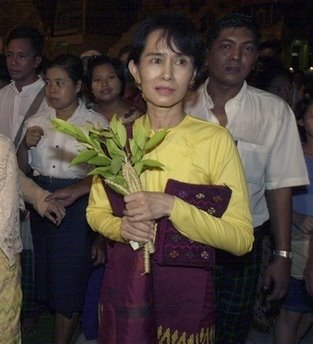


 Posts
Posts


