
http://www.irrawaddymedia.com/article.php?art_id=14330
The National League for Democracy will celebrate its 20th anniversary on Saturday in Rangoon with newly released political prisoners.
Win Tin, a founder of the NLD, was released on Tuesday along with six other NLD members.
Filipino protesters display photos of Burma's last year protests led by Buddhist monks during a silent protest outside the Burmese Embassy at the financial district of Makati city of Manila on Friday. (Photo: AP)
The NLD is the main opposition party which won a landslide victory—392 out of 492 seats—in parliamentary election in 1990. However, the current Burmese government led by Snr-Gen Than Shwe ignored the election result and refused to transfer power to the parliament.
Meanwhile, on Thursday the NLD was warned by the head of Burma’s police, Brig-Gen Khin Yi, to withdraw a statement it made following the release of the political prisoners, said party spokesperson Nyan Win.
The statement called for a review of the junta’s constitutional process. The regime saw the statement as potentially motivating citizens to undertake activities critical of the military government.
Nyan Win said, “They [Burmese authorities] said our earlier statement can motivate people to launch a movement against them. So, they asked us to withdraw our statement.”
“We replied that our statement contained credible information, and we have proof for it. So, we can’t withdraw it,” he said
The NLD statement urged Burmese authorities to reconsider the state constitution, calling the draft constitution one-sided and lacking the participation of the 1990 elected members of parliament.
A lawyer, Thein Nyunt, who is also a member of the NLD information department, said, “It is necessary to review the constitution before it becomes legitimate.”
Burmese authorities unofficially warned opposition leaders that action could be taken against them if they continued to make such statements.
Six members of the NLD’s Central Executive Committee met with Brig-Gen Khin Yi at the Ministry of Home Affairs for about one hour on Thursday, said Nyan Win.
He said Burmese authorities are trying to pressure NLD leaders to stop public criticism of the military regime.
In May, the NLD dismissed the national referendum on the draft constitution, calling it non-inclusive, non-transparent and undemocratic.
The party’s leader, Aung San Suu Kyi, has been detained under house arrest for more than 13 of the past 19 years. The latest round of her house arrest began o¬n May 30, 2003, following the ambush of her motorcade by a government-orchestrated mob in Depayin in Burma’s northwest Sagaing Division.
Copyright © 2008 Irrawaddy Publishing Group | www.irrawaddy.org
Saturday, September 27, 2008
NLD to Celebrate 20th Anniversary


Frightened Myanmar protesters stay away for anniversary

Photo: AFP
http://asia.news.yahoo.com/080926/afp/080926080744asiapacificnews.html
Friday September 26, 4:07 PM
YANGON (AFP) - Armed police in trucks patrolled Myanmar's main city on Friday as frightened protesters stayed home on the anniversary of last year's brutal military crackdown on mass anti-government protests.
Few worshippers turned out to pray at the famous Shwedagon Pagoda in Yangon, a rallying point for the protests that saw thousands of people led by Buddhist monks march against the military junta in the biggest uprising since 1988.
A spokesman for Myanmar's pro-democracy party said people were too scared to take to the streets this year to commemorate the uprising, amid tightened security over the past month in the run-up to the anniversary.
"My feeling on the anniversary is that I saw people completely show their desire last year, but because of the tight security this year people cannot demonstrate like this," National League of Democracy's (NLD) Nyan Win told AFP.
A small bomb injured seven people on Thursday and another was defused in front of Yangon's City Hall, another venue of last year's protests, state media and police reported.
"People are frightened now because of the bomb blast yesterday. I do not think protests like last year will happen again because of the security," a taxi driver said.
ADVERTISEMENT
The protests began sporadically in August 2007 over a hike in fuel prices, and slowly escalated, with 100,000 people led by the revered monks eventually staging what was dubbed the "Saffron Revolution," because of the colour of their robes.
The military regime finally launched a crackdown on September 26, opening fire on the crowds, killing 31 people according to the United Nations, including one Japanese journalist who was shot at close range.
Another 74 people remain missing and thousands more were arrested.
Security has been tightened around Yangon, with army trucks and police posted at intersections across the city and night patrols outside monasteries.
On Friday, about ten armed police trucks carrying about 200 police circled near the Shwedagon Pagoda's eastern gate.
"People are frightened. I'm praying that nothing will happen," a shopkeeper near the pagoda said.
Political repression by the junta has also increased in the past year and international diplomacy has failed to bring about change, according to the New York-based Human Rights Watch (HRW).
While the United Nations Special Advisor on Myanmar, Ibrahim Gambari, has visited the country four times, he has won only "fruitless dialogue," it said.
On Tuesday, Myanmar authorities freed seven political prisoners, members of the NLD, including the well-known journalist Win Tin, 79, who had been imprisoned since 1989.
But a day later, one activist was rearrested according to Myanmar exiles in Thailand. "I also heard he was rearrested. We still do not know the reason," Nyan Win also said.
HRW said 39 political arrests had been made in August and September alone.
On Thursday, the national police chief, Khin Yee, met for the first time with six members of the NLD's executive committee to ask for a retraction of their latest statement, Nyan Win said, adding that the request was refused.
The statement called for a review of the junta's new constitution which was issued after a referendum held in May.
Myanmar's junta, which has ruled the country since 1962, was criticised for holding the referendum just days after a cyclone left 138,000 people dead or missing across the country.
Pro-democracy activists said the vote was neither free nor fair, but the military says the new constitution has paved the way for multi-party elections to be held in 2010.
The rules render Nobel prize winner Aung San Suu Kyi ineligible to stand for election. Her NLD party won elections in 1990 but was never allowed to take power.
Call to raise Burma issue at UN
http://ukpress.google.com/article/ALeqM5hS9whEkyXSwndVzWEI-c0WYvXJKg
Call to raise Burma issue at UN
Irish campaigners for democracy in Burma urged the Foreign Affairs Minister to raise the issue at a United Nations summit on Monday.
Minister Micheal Martin is due to deliver a wide-ranging address in front of world leaders at the UN General Assembly in New York. Burma Action Ireland held a silent demo in Dublin to remember the brutal crackdown on pro-democracy marches led by Buddhist monks in Burma a year ago.
The Remember the Brave Monks of Burma demo on Grafton Street marked the first anniversary of the so-called Saffron Revolution in the Asian country.
Monks protest in Sittwe, western Burma
စစ္ေတြကသံဃာေတာ္ေတြကေတာ့စံျပဘာဘဲလို ့ျပည္ပေရာက္ဒီမိုကေရစီေရးလွဳပ္ရွားသူေတြႀကားထဲေလးေလးစားစားေျပာေနတဲ့အသံ
ေတြက်ယ္က်ယ္ေလာင္ေလာင္ကိုႀကားေနရပါတယ္-သံဃာေတာ္အရွင္ျမတ္မ်ားမွတပါးကိုးကြယ္ရာအျခားမရိွပါဘုရား။
ုဘုန္းလိွဳင္-fwubc
Mizzima News
Saturday, 27 September 2008 21:38
New Delhi - About 150 Buddhist monks in Sittwe town in western Burma's Arakan state staged a protest march on Saturday morning to observe the first anniversary of last year's 'Saffron Revolution', eyewitness said.
Than Hlaing, a local resident of Sittwe town who witnessed the protest march told Mizzima that about 150 monks began marching from the Sittwe main road at about 10 a.m. (local time). The demonstration was peaceful.
"The monks were marching silently. Police and other officials in several cars and motorcycles followed them and asked them why they were marching," Than Hlaing said.
"People on the road were bowing and paying obeisance to the marching monks," he added.
The monks, he said, took the right side and continued marching on to U Ottama till the end of the road. They dispersed peacefully later.
"As soon as the first batch dispersed, another group of about 100 followed them and dispersed at the same point," said Than Hlaing adding that the monks ended the march at about 10:30 a.m. (local time).
While the authorities did not disrupt the procession, officials, however, followed the monks, Than Hlaing said. He was told that a monk, Shin Thawbanah, of the Ashokayone Monastery was taken away by the police.
"I was told that he [Shin Thawbanah] was taken to the police station for interrogation," said Than Hlaing, adding that he was unaware of the details.
The monks, according to Than Hlaing, were marching along the street in commemoration of the first anniversary of last year's monk-led protests, that was brutally crushed by the ruling junta.
According to the UN, at least 31 people were killed while thousands of monks and activists were arrested and detained. But activists and opposition political groups said, the number of deaths following the junta's brutal crackdown could be hundreds if not thousands.
Friday, September 26, 2008
JAC Statement on Nagai Kenji for MOFA Japan.
Date: 26th September, 2008.
H.E. , Hirofumi Nakasone,
Foreign Minister,
Ministry of Foreign Affairs,
Tokyo
Japan
Your Excellency,
Greetings.
We have the honor to write to you in respect of the matters mentioned below, that we would like to appeal to Your Excellency attention.
Tomorrow will be the first anniversary of Journalist Nagai Kenji, who was trying to show the real picture of Burma, was shot and killed at point blank by the Burmese army. This event had appalled the international community and outraged the Japanese people. Your Excellency government had assured to take an appropriate action.
One year ago, the monks, nuns, and citizens of Burma marched peacefully in a nationwide protest exemplifying one of the most principled and courageous nonviolent actions of our time, the “Saffron Revolution.”
Looking back one year ago, it was hard to hold back tears at what the Burmese military junta did to its own people. It was this week last year that thousands of monks, nuns, students and ordinary people poured to the streets of Rangoon and braved the security forces and their brutality. The army and police opened fire on peaceful demonstrators, killing dozens.
There was outrage all over the world. And, yet, the military dictators stood firm and carried on doing what it does best: intensifying the suppression of the Burmese people. The generals, hiding in their upcountry bunkers, knew full well that the fate of the demonstrators would not occupy the evening.
One year later we observe a dark anniversary: On every front, Burma’s generals have resisted change. The repression continues daily with activists, monks, and members of opposition political parties arrested and tortured. There are more than 2000 political prisoners, including heroic figures like leaders Min Ko Naing, Ko Ko Gyi, Su Su Nway, Nilar Thein, Khun Htun Oo, Zarganar and our leader nobel laureate Aung San Suu Kyi. U Gambira, a monk leader of the Saffron Revolution, is imprisoned, awaiting his sentence.
The number of political prisoners in Myanmar has roughly doubled, to about 2,000 from 1,000 a year ago, according to the United Nations and Amnesty International. The prisoners include most of the country's smartest and most dedicated activists.
Nobel Peace Prize laureate Suu Kyi, detained for 13 of the past 19 years, remains a lonely and isolated figure under house arrest, forced to threaten a hunger strike to get some concessions. We firmly believe that the continued detention of our pro-democracy leader Aung San Suu Kyi is a major impediment to any political reform occurring our country.
Just recently, the Burmese authorities arrested Nilar Thien, a leader of the 1988 student group. More and more students activists have been were arrested without making newspaper headlines. The regime has completely ignored the international community's appeal for the release of Aung San Suu Kyi and nearly 2,000 political prisoners.
As a peace loving and democratic nation, Japan should not allow these to carry on indefinitely. Moreover, as a leading nation in Asia and a responsible member of the international community, Your Excellency government has to do much more to settle these predicaments.
1. As the representatives of the Joint Action Committee of the Burmese Community in Japan, we would like to take an opportunity to appeal to Your Excellency to take consistent and steadfast measures to resolve the killing of Mr. Nagai Kenji.
2. Urge the Burmese military junta to release Daw Aung San Suu Kyi and all political prisoners immediately and unconditionally.
3. Urge the military junta to accept the request of National League for Democracy to convene a parliament with elected members in 1990, in order to modify the new constitution acceptable to all stakeholders.
We wish you Well and Wisdom in Your deliberations.
Joint Action Committee.
New Coup D'Etat Rumblings in Venezuela

http://www.thepeoplesvoice.org/cgi-bin/blogs/voices.php/2008/09/25/p28995
Stephen Lendman
Since taking office in January 2001, the Bush administration targeted Hugo Chavez for removal. It tried and failed three previous times:
-- in April 2002 for two days; aborted by mass street protests and support from many in Venezuela's military, especially from its middle-ranking officer corp;
-- the 2002 - 2003 general strike and oil management lockout causing severe economic disruption; and
-- the August 2004 national recall referendum in which Chavez resoundingly prevailed with a 59% majority.
Other disruptions have occurred since and now may again be ongoing. US intervention is innovative and determined to regain control of Venezuela and its vast hydrocarbon resources, the largest by far in the hemisphere after Canada. Perhaps the world with the US Department of Energy's estimate of 1.36 trillion extra-heavy oil barrels included besides its proved 80 billion barrels of light sweet reserves, ranking it seventh overall behind the five largest Middle East producers and Canada.
Throughout most of his tenure and since the Bush administration took over, CIA and various misnamed US quasi-governmental agencies have been active in Venezuela. Ones like the National Endowment of Democracy (NED). The International Republican Institute (IRI) with John McCain as its chairman and its ties to extremist Republican party elements, and the US Agency for International Development (USAID). All are imperial instruments. Undemocratic and for rule by the power of money.
They fund opposition groups and coup supporters. Arrange (staged for media) anti-Chavez marches and street protests. Spend millions to subvert democracy to return the country to its past. Oligarchs who once controlled it. Washington and Big Oil that control them.
They plot assassination attempts, according to Chavez to remove him. To reverse Bolivarianism and its socially beneficial gains in health care, education, housing, feeding the hungry, lifting millions out of poverty, and enfranchising all Venezuelans in the country's participatory democracy. Strengthening it at the grassroots.
Recent Disturbing Events
On September 10, Venezolana de Television's (VTV) La Hojilla program disclosed a recording (from an undisclosed source) of a planned military coup against Chavez - by active and retired plotters. Participants named were Vice Admiral and National Guard Forces Inspector General Carlos Alberto Millan Millan. National Guard General Wilfredo Barroso Herrera, and retired Air Force General Eduardo Baez Torrealba (involved in the April 2002 aborted coup). Unknown is who else is behind this and how deep the suspected plot runs.
Conversations recorded were about "tak(ing) the Miraflores (presidential) Palace (government headquarters and) the TV installations....that is all effort towards where (Chavez) is. If he's in Miraflores, the effort goes toward there." Talk also was about seizing the "command headquarters (with) the troops inside" and about Maracay, Aragua state's Air Base Libertador where Venezuela's F-16s and other planes are based.
Baez Torrealba was heard saying: "We are divided into four zones....east, west, and two in the centre" and have an F-16 pilot. He mentions either attacking Chavez's plane or capturing it. Possibly the presidential palace the way the CIA engineered it in Chile for Augusto Pinochet against Salvador Allende on September 11, 1973 - with bombs, rockets and tank fire. Open warfare on Santiago's streets. Whether planned for Caracas is anyone's guess but it certainly is possible.
Chavez knows the history as well as past conspiracies against himself. He said on-air that his government "infiltrated the most radical and fascist movements (and have) known for a long time that they are looking for land and air rockets and sophisticated equipment to blow up the presidential plane" and that past plans were to bomb the Miraflores. He also knows that CIA is behind them and said if there's a coup, "the counter-coup would be overwhelming" - meaning a mass popular uprising to reverse it with military support, similar to 2002.
Chavez then confirmed the detentions of several suspected coop plotters and said others fled the country. He also expelled US ambassador, Patrick Duddy. Gave him 72 hours to leave, and recalled his Washington envoy, Bernardo Alvarez, in sympathy with Bolivia's Evo Morales. On September 10, he declared US ambassador, Philip Goldberg, persona non grata. Accused him of supporting eastern Bolivian fascist elements and working with them to plan a coup against his presidency.
On September 20, another incident occurred, so far unexplained. In west Caracas, a grenade was thrown from a residential building, killing two and injuring 19 others. A 23-year old man was identified as the perpetrator, who then, it was claimed, jumped to his death from the building's eighth floor. No further information is available at this time but authorities are investigating.
Then around the same time in London, Samuel Moncada, Venezuela's UK ambassador, attended a fringe Labour Party meeting and expressed "fear(s) that the next few weeks will be very dangerous for us." He believes that the Bush administration may try to oust Chavez in its remaining months. Others in Venezuela also think something is going on to destabilize the country. Possibly a plot to assassinate their president and bring down his government.
Disturbing Latin American stirrings in the final Bush administration months along with all else on their plate and planned in the Middle East, Central Asia and elsewhere. Plus the November presidential and congressional elections and a hugely calamitous financial crisis commanding daily headlines and top-level meetings as first order of business because of its seriousness.
Nonetheless, the Bush administration expelled Venezuela's Washington ambassador after he'd been recalled following Chavez saying "When there is a new government in the United States, we'll send an ambassador." Given the campaign rhetoric by both US presidential candidates, he may have a change of heart. Both promise permanent wars. New fronts to wage them on, and an uncompromising pro-corporate agenda. Not good news for independent democrats like Chavez, especially ones in oil-rich countries like Venezuela.
Separately on September 12, the Bush administration went further with US Treasury officials announcing sanctions and the freezing of assets against Hugo Carvajal Barrios and Henry Rangel Silva, both Venezuelan intelligence chiefs. Also named was Ramon Rodriguez Chacin, the country's former Justice and Interior Minister. Serious and unwarranted accusations against high government officials for supporting drugs trafficking and supplying arms to Colombia's FARC-EP resistance.
On September 17, Washington also blacklisted Venezuela (for the fourth time) and Bolivia (for the first time) for not cooperating in the "war on drugs" and designated both countries and Burma as "hav(ing) failed demonstrably during the previous 12 months to adhere to their obligations under international counternarcotics agreements," in a statement released by the White House. The State Department listed 20 countries as illicit major drugs producers or transit sites.
It omitted what scholar/researcher Peter Dale Scott calls "Deep Events (or "deep politics" that governments try to suppress) and the CIA's Global Drug Connection" in his article by that title. The "complex geography or network of banks, financial agents of influence and the 'alternative' or 'shadow' CIA" and its possible involvement in major "deep events" like the Kennedy assassination and 9/11. A "global financial complex of hot money uniting prominent business, financial and government (elements) as well as underworld figures." An "indirect empire (between) CIA, organized crime, and their mutual interest in drug-trafficking."
For the enormous profits that CIA uses for its operations and helps it plot coups against countries like Iran (1953), Guatemala (1954), Venezuela (2002) and maybe again in 2008 along with Bolivia and the current Iranian government. For state terrorism like Operation Condor (in Latin America in the 1970s). Iranian and Pakistani incursions currently. All its other nefarious activities, including "strengthening drug networks....in Laos, Pakistan, Lebanon, Turkey, Columbia," Thailand and Afghanistan - the world's largest by far opium producer after Washington replaced the Taliban and allowed regional "warlords" to ramp up replantings.
Also its involvement in a possible plot against Chavez. At the least, the latest Bush administration efforts to tarnish and disrupt his democratic government with considerable media support for its accusations and much more.
The Corporate Media on the Attack
A New York Times September 18 Simon Romero article is headlined: "Alleging Coup Plot, Chavez Ousts US Envoy." In it he suggests the accuracy of a Human Rights Watch's (HRW) biased 2008 Venezuela report discussed below. That "into its 10th year (Chavez's) government has consolidated power by eliminating the independence of the judiciary, punish(ed) critical news organizations, and engag(ed) in wide-ranging acts of political discrimination against opponents." Leaving mentioned the Chavez government's views to suggest his own and HRW's.
Do it in spite of its tainted state. An example is how it "condemn(es) human rights abuses in Colombia." Not the repressive government. The most fascist in the region, but the FARC-EP and ELN resistance against it. More on HRW below.
A Miami Herald op-ed piece is headlined: "Expulsions Underscore Chavez's Intolerance for Dissent" and states that expelling "two respected human rights monitors from Venezuela is the latest evidence that President Hugo Chavez is determined to muzzle dissenting views....Mr. Chavez never misses an opportunity to rail against the United States, but his real enemies are those who dare to take issue with his politics. His anti-democratic agenda has restricted legitimate political activity by his opponents for years, and his arbitrary behavior is getting worse." The most far right US elements couldn't say it better or be more mirror opposite the facts.
A Los Angeles Times August 9 editorial accused Chavez of a "power grab (and) attack(ing) democracy." The Washinton Post calls him a Venezuelan caudillo or strongman. So does the Wall Street Journal repeatedly. Reckless commentaries accuse him of rigging elections. Excluding his most formidable opponents. Violating Venezuelan law, and now engaging in drugs trafficking, terrorism, and delivering a suitcase with $800,000 in slush money to Argentina's Cristina Kirchner for her 2007 presidential campaign. The Inter-American Dialogue's Peter Hakim has "no doubt" this latter charge (playing out in a Miami courtroom) is politically motivated and "is coming from the US government." So are all the others.
The Journal's Mary O'Grady wages constant war against Chavez, and her latest September 15 op-ed refers to his "Russian Dalliance." His holding joint exercises with Moscow's "flotilla." Russia "evoking memories of the 1962 Cuban missile crisis by playing war games with another would-be Latin strongman." Chavez "only too happy to be used." Suggesting he and Evo Morales are communists and all the negatives that implies. That Chavez is a "dictator." That his "economy (is) in shambles" when, in fact, it's had 19 consecutive impressive quarters of growth and grew at 7.1% in the second quarter - compared to America's unprecedented economic crisis and contraction. That Chavez is so worried about a "serious challenge to (his) chavismo (that he) trotted out the Uncle Sam boogeyman, called in the Russians, and (sent) Washington's ambassador packing."
Human Rights Watch on the Attack
Too often, Human Rights Watch (HRW) fails to practice its stated mandate - that it's "dedicated to protecting the human rights of people around the world....stand(ing) with victims and activists....upholding political freedom (and) bring(ing) offenders to justice." Instead it functions the way James Petras characterizes similar NGOs as the "executing agents of US imperialism."
Its support for the oppressed is dubious at best. Tainted at worst, and its latest September 18 Venezuela report is disturbing, biased, and inaccurate. It's not dissimilar to how it covers the Israeli - Palestinian conflict. Distorting it to downplay Israeli violence. Playing up to the Israeli Lobby, and operating more by a political agenda than as a credible human rights organization. Clearly with its funding sources in mind that must be placated and never offended. HRW does it skillfully.
From its 1978 beginnings as the US Helsinki Watch Committee (or Helsinki Watch), HRW advanced America's interests as a propaganda instrument against Soviet Russia. Despite occasional good work, too often it's "serv(ed) as a virtual public relations arm of the (US) foreign policy establishment," according to Edward Herman, David Peterson and George Szamuely in their 2007 report titled: "Human Rights Watch in Service to the War Party."
Exhibits A and B: against Serbia's Slobodan Milosevic and Saddam at a time "the United States and Britain were clearly planning an assault on Iraq with a 'shock and awe' bombing campaign and ground invasion in violation of the UN Charter." HRW ignored the impending onslaught. The "supreme international crime," and focused on Saddam's much lesser ones. A "valuable public relations gift to US and British leaders" instead of denouncing them.
When the Pentagon-led NATO countries bombed Yugoslavia in 1999, HRW attacked the victim and absolved the aggressor. It supported regime change "either through (Milosevic's) indictment or a US war (for) the same outcome." It blamed him for the conflict America began and waged throughout the 1990s with its NATO allies. It ignored Washington's imperial aim to dismantle Yugoslavia. Its outrageous war crimes in doing it, and instead cited Serbia's "vicious wars in Bosnia, Croatia and Kosovo." It demanded responsible Serbs be held to account before the kangaroo International Criminal Tribunal for the Former Yugoslavia (ICTW). Run by made-in-Washington rules to avoid any prosecution of its own role.
It showed HRW's commitment to human rights is hollow and hypercritical. Its analysis opposite of the truth. Its disdain for the rule of law, and its judgment fully supportive of its funding sources. Organizations like:
-- the Ford Foundation;
-- the Rockefeller Foundation;
-- the Carnegie Corporation of New York; and
-- Time Warner.
Individuals like:
-- Edgar Bronfman, Jr., corporate CEO and member of one of Canada's most wealthy and influential Jewish families;
-- Katherine Graham (now deceased) of the Washington Post Corporation with her son and current chairman, Donald Graham, likely continuing her support;
-- and George Soros who was active in founding HRW jointly with the US State Department.
Some of its Americas Advisory Board members are also closely linked to the National Endowment of Democracy (NED) and its anti-democratic agenda. Figures like George Soros and Robert Pastor, Jimmy Carter's Latin American National Security Advisor and Senior Fellow at the Carter Center on Latin America and the Caribbean.
HRW failed to denounce CIA's 2002 coup attempt against Chavez or the 2004 one against Haiti's Jean-Bertrand Aristide. The thousands of Lavalas supporters murdered in its aftermath. The continuing daily human rights abuses committed by so-called UN Peacekeepers, police and other security forces. The unconscionable human misery in the coup's aftermath.
It said nothing about Venezuelan dominant media's advance knowledge about and support for the 2002 coup. The air time they gave plotters. Their virulent propaganda and calls for people to take to the streets "for freedom and democracy" by ousting Chavez. Their suppressing all pro-government reports and opinions. Their falsely reporting that Chavez resigned when, in fact, he was forcibly removed and was being held against his will. They knew because they were briefed in advance and were part of the scheme.
When hundreds of thousands of Chavez supporters were on the streets demanding his reinstatement, they ignored them and aired old movies and cartoons. Even when the coup was aborted, they maintained strict censorship in a further act of defiance. Yet, when Chavez refused to renew RCTV's VHF license (a mere slap on the wrist for an act of sedition), HRW vehemently complained and denounced the act as censorship. It continues to criticize Chavez, most noticeably in its 230 page 2008 report titled, "A Decade Under Chavez: Political Intolerance and Lost Opportunities for Advancing Human Rights in Venezuela."
The report is unfairly one-sided and biased by criticizing the "government's willful disregard for the institutional guarantees and fundamental rights that make democratic participation possible." In response, the government expelled two HRW employees - America's Director, Jose Miguel Vivanco, and his Deputy, Daniel Wilkinson. A Foreign Relations Ministry press release stated: Vivanco and Wilkerson "have done violence to the constitution (and) assaulted (Venezuela's) institutions (by) meddling illegally in (its) internal affairs."
The statement added that HRW is linked to America's "unacceptable strategy of aggression" and expelling them was done to defend "the people against aggressions by international factors." Not accidently was the report released two months before Venezuela's November 23 regional and local elections for governors and mayors. HRW did the same thing previously to sway voters away from Chavez candidates and issues and toward ones embracing a pro-Washington agenda. In October 2007, ahead of the December constitutional reform referendum, it criticized the measures and warned about the loss of freedoms if the vote was positive. Its latest report also comes at a time of increased tension between Washington and Caracas ahead of elections in both countries.
The Washington-based Venezuela Information Office (VIO) released an analysis of HRW's report titled: "The Truth Suffers in Human Rights Watch on Venezuela." It's summarized below and can be read in full along with other current Venezuela information on: rethinkvenezuela.org.
VIO is blunt and accurate in calling HRW down on its blatantly biased account. Not surprising given its history as explained above. It exaggerates and lies about human rights deficiencies, and at the same time, ignores Venezuela's impressive social and other advances under Chavez. Unparalled in the country's history. Nothing comparable in America where human rights and social gains are vanishing under both parties. Along with democracy that's pure fantasy. Facts that HRW is loath to point out nor would it dare at the risk of offending its funding sources.
VIO deconstructs the HRW report by stating "myths," and "facts".
HRW myth: political discrimination defines the Chavez presidency.
VIO fact: HRW mischaracterizes Chavez's condemnation of the aborted 2002 coup as "political discrimination" against the plotters. An absurdity on its face, but not to HRW.
HRW: Chavez disdains the separation of powers and an independent judiciary.
VIO: Chavez inherited a government for the rich. Mass poverty, and (according to an earlier HRW report) a judiciary plagued by "influence-peddling, political interference, and, above all, corruption....In terms of public credibility, the system was bankrupt." Since 1999, Chavez made great strides in cleaning it up. He still has a long way to go, but he's heading in the right direction.
HRW: Chavez "shifted....the mass media in the government's favor."
VIO: In print and electronically, Venezuela's corporate media are dominant. The five leading private TV channels control 90% of the market and most viewers. They operate freely with no government censorship. Are unrestrained in their one-sided anti-goverment reporting, including "calling for the overthrow of elected leaders" as they did in 2002. All major newspapers are corporate-owned. TVes (Venezuela's first public broadcaster) and TeleSur (the regional, multi-nation supported operation) reach much smaller audiences.
HRW: Chavez "has sought to remake the country's labor movement in ways that violate basic principles of freedom of movement."
VIO: In fact, Chavez is actively pro-labor. Supports unions and collective bargaining on equal terms with management. In 2003, pro-government workers founded the National Workers Union (UNT). Chavez is responsive to its rights and equitable demands.
HRW: Chavez has been "aggressively adversarial....to local rights advocates and civil society organizations."
VIO: Chavez is responsive to local leaders. Promotes the creation of community councils to address their own needs and find solutions free from federal government control and influence. The idea is democracy at the grassroots, and it works.
VIO concludes that HRW systematically mischaracterizes the Chavez government. Wrongly accuses it of political discrimination and targeting opponents. The truth is mirror opposite even to the extent of pardoning coup plotters and promoting open dialogue.
In addition, Venezuela has a vibrant and improving participatory democracy, anchored at the grassroots. Each government branch provides "strong checks and balances" against the others. The nation is a free and open society. The Bolivarian Constitution respects and guarantees human and labor rights for all Venezuelans equally. Social ones also, including healthcare, education, food, housing, jobs, security and more.
In its biased and inaccurate account, HRW reports none of this and all other impressive achievements under Chavez. Doing so would offend its corporate and other backers. They want Chavez ousted. Bolivarianism ended, and Venezuela returned to its past. HRW is an imperial agent. On board to make it happen.
Targeting Latin American Democracy
Subversion in Venezuela and possible civil war in Bolivia threaten Latin America's democracy. Fascists never rest and now control five of Bolivia's richest states, according to long-time regional expert, James Petras. They "forcefully oust(ed) all national officials, murder(ed), injur(ed) and assaulted leaders, activists and voters who have backed the (Morales) national government - with total impunity."
Why so? Because, in nearly three years in office, Evo Morales tried to bargain with the far right. Be conciliatory and compromising. Back down from even "the mildest social reforms." Favor business over progressive social change in spite of winning a nearly 70% majority in an August 10 recall election. Allowed the opposition to be "aggressive(ly) violent." Seize power in Santa Cruz, Pando, Beni, Tarija and Chuquisaca. Rule by thuggery and intimidation. Head the country toward fascism. Erase the few social reforms achieved in the past three years. Hand the country back to oligarchs and their Washington bosses.
Threaten to take the model to Venezuela. End the region's most impressive participatory democracy. Its social gains, and a leader who's committed to improving them. Stand up against the same dark forces targeting Bolivia. Refuses to surrender the way Morales has done. Share power with the fascist right. Give in to their demands. Back their neoliberal agenda. Betray the people who elected him overwhelmingly. And face the possibility of what Michel Chossudovsky calls the "Kosovo Option."
Break up Bolivia by the Yugoslav model. Use extreme violence to do it. It made Kosovo an independent state. Planning the same scheme for Bolivia's resource-rich states. Perhaps the same fate for Venezuela and extinguishing all Latin American democracy.
A very disquieting option. Unthinkable but possible under the current US administration and which ever new one succeeds it. More conceivable given a shaky world economy and how that distracts away from politics. Even the most destructive kind. Allowing democracy to be lost without even noticing.
Unlikely? Who back in summer 2007 imagined the kind of financial crisis that emerged. A potential economic armageddon. An unprecedented situation with no rules around to address. The possibility that nothing can stop a meltdown. And if it happens that democracy may go with it.
Preventing a similar Latin America outcome is crucial. Confronting the region's dark forces to stop them. Understanding, as Petras states, that "you cannot 'make deals' with fascists." You don't defeat them "through elections and concessions to their big property-owning paymasters." You confront them head on. Forcefully. Expose and denounce them. Ally with a democratic constituency and beat down their threat that's real, menacing and must be stopped or its heading everywhere. Maybe sooner than anyone imagines.
Some hopeful signs, however, are present, and maybe more will follow. In mid-September, nine South American presidents held a crisis summit in Santiago, Chile and expressed "their full and firm support for the constitutional government of President Evo Morales (and) reject(ed) and will not recognize any situation that attempts a civil coup (or) rupture of (Bolivia's) territorial integrity." Let's hope they mean what they say and will back their words with resoluteness. Except for Chavez away on foreign tour, they met again on September 24 at the UN in New York to continue discussions.
In addition, on September 17, the National Coalition for Change (CONALCAM indigenous, campesino and urban movements) signed a pact with the Bolivian Workers Central (COB) to "defend the unity of the homeland that is being threatened by a civil coup lead by terrorists and fascists" directed out of Washington.
Events are fast-moving. They affect Venezuela and the region, and Roger Burbach, Director of the Center for the Study of the Americas (CENSA), reports that 20,000 miners, peasants and coca growers marched on Santa Cruz. The "bastion of the right wing rebellion" against Morales. He calls it a "popular upheaval" sweeping the country. But it's too soon to predict an outcome, and much to worry about given Morales' weak-kneed approach and reluctance to be as resolute as his supporters. Burbach calls it "restraint." For Petras, it's capitulation, surrender, and a doomed strategy.
But not if mass protests can help it with Joel Guarachi, head of the National Confederation of Peasant Workers, saying 600,000 protesters are located throughout the 16 Santa Cruz provinces alone. Venezuelans share a common interest and may react the same way if Bolivarianism and their president are threatened.
Let's hope so. With a few months left in office, the Bush administration may be unleashing its last hurrah in Latin America. A "hail Mary" effort to reclaim the region. Remove its weak democracies in countries like Bolivia and strong ones in Venezuela. And do it in the face of overwhelming domestic problems at home and lost wars abroad. Will it work? Not if Bolivians and Venezuelans have anything to say about it, and they're saying plenty. Stay tuned.
-###-
Posted on: http://www.globalresearch.ca/index.php?context=va&aid=9609 September 25, 2008. Stephen Lendman is a Research Associate of the Centre for Research on Globalization. He lives in Chicago and can be reached at: lendmanstephen@sbcglobal.net Visit his blog site at sj.lendman.blogspot.com, and listen to The Global Research News Hour Mondays on http://www.RepublicBroadcasting.org from 11AM - 1PM US Central time for cutting-edge discussions of world and national topics with distinguished guests. All programs are archived for easy listening.
Backgrounder: The Mekong River
http://news.xinhuanet.com/english/2008-09/25/content_10108110.htm
VIENTIANE, Sept. 25 (Xinhua) -- The Mekong River Commission (MRC) on Thursday launched a consultation meeting for the regional Mekong Hydropower Program platform here on Thursday, aiming to shape a way for the river's future hydropower development, which is shared by Cambodia, Laos, Thailand, Vietnam, Myanmar and China.
The Mekong River Basin is defined by the land area surrounding all the streams and rivers that flow into the 4,800 kilometer-long Mekong River. This includes parts of China, Myanmar and Vietnam, nearly one third of Thailand and most of Cambodia and Laos. With atotal land area of 795,000 square kilometers, the Mekong River Basin is nearly the size of France and Germany together. From its headwaters thousands of meters high on the Tsinghai-Tibetan Plateau, it flows through six distinct geographical regions, each with characteristic features of elevation, topography and land cover.
The most abundant resources in the Mekong River Basin are water and biodiversity. Only the Amazon River Basin has greater diversity of plant and animal life. So much water flows into the mainstream Mekong from the surrounding basin area where, on average, 15,000 cubic meters of water passes by every second. This water nourishes large tracts of forest and wetlands which produce building materials, medicines and food, provides habitats for thousands of species of plants and animals and supports an inland capture fishery with an estimated commercial value of 2 billion U.S. dollars per year. Known mineral resources include tin, copper, iron ore, natural gas, potash, gem stones and gold.
Farmers in the Mekong River Basin produce enough rice to feed 300 million people a year. Demand for agricultural products from the basin is estimated to increase anywhere from 20 to 50 percent in the next 30 years. Agriculture, along with fishing and forestry,employs 85 percent of the people living in the basin.
The Lower Mekong River Basin (Cambodia, Laos, Thailand and Vietnam) is home to approximately 60 million people. There are over 100 different ethnic groups living within the basin's boundaries, making it one of the most culturally diverse regions of the world.
The Mekong River Basin is one of the most productive inland fisheries in the world. The basin provides a wide variety of breeding habitats for over 1,300 species of fish and the annual rise and fall of the river ensures a nutrient-rich environment on which fish can feed. Conservative estimates indicate that basin dwellers eat over one and half million tons of fish per year. The fishery provides a livelihood not just for fishers and their families but for thousands more who are employed full or part time making and selling food products and fishing gear, repairing boats and providing hundreds of related services.
Editor: Wang Hongjiang
No progress in Burma, says group
http://news.bbc.co.uk/2/hi/asia-pacific/7637056.stm
Repression in Burma has increased since the ruling military government crushed pro-democracy protests a year ago, says the US-based Human Rights Watch group.
The group says some 2,100 political prisoners are in Burmese jails while "pseudo-political reforms" go on.
It accuses the international community of failing to demand real reform and accountability from Burma's rulers.
The crackdown which began on 26 September 2007 was a response to weeks of peaceful protests.
The protests were partly triggered by soaring fuel costs, but demonstrators later demanded action against poor living standards and unpopular government policies.
"Last September, the Burmese people courageously challenged their military rulers, and they were answered with violence and contempt," said Elaine Pearson, deputy Asia director at Human Rights Watch.
Rather than let Burma's rulers continue to engage in fruitless dialogue, the international community should demand real action
Elaine Pearson
Deputy Asia director, HRW
"The repression continues. While a handful of political activists have been released, more are being arrested and thousands remain in prison."
The group acknowledges that seven political activists were among thousands of prisoners recently released by Burmese authorities. But it says about 39 political activists were arrested in August and September alone.
It also says the authorities have done nothing to bring justice to the perpetrators of extra-judicial killings, arbitrary arrests and torture during last year's crackdown.
In the statement, the group says UN envoy Ibrahim Gambari has failed to effect any real change despite four trips to the country in the last year.
The international community, it suggests, has "let Burma's rulers continue to engage in fruitless dialogue" - and instead should "demand real action".
The military government says it has a "roadmap" for democracy, which allows for elections in 2010. It has pushed through a constitution which reserves a quarter of the seats in any future parliament for the military.
The Burmese opposition does not recognise the military-backed constitution.
Story from BBC NEWS:
http://news.bbc.co.uk/go/pr/fr/-/2/hi/asia-pacific/7637056.stm
Published: 2008/09/26 06:51:44 GMT
© BBC MMVIII
Burma's Bluff
http://online.wsj.com/article/SB122237104112976025.html?mod=googlenews_wsj
Burma's state media reported 9,002 prisoners were released this week as part of the junta's plan for a "peaceful modern discipline-flourishing democratic nation." Seven were political prisoners; most of the other 8,995 were petty criminals. That's a good indication of what the junta's plan for a "democratic nation" looks like.
It is, of course, still worth celebrating the freedom of the seven who were released -- especially today, which marks the one-year anniversary of the brutal crackdown on the Saffron Revolution. More than 2,100 political prisoners remain incarcerated, and 37 of those were arrested this month alone, according to Bo Kyi, co-founder of the Assistance Association for Political Prisoners in Burma.
Burma's ruling junta probably timed its prisoner bluff to coincide with the debates of the United Nations General Assembly, which began the same day the "amnesty" was announced. The generals want to deflect criticism from the country's brutal human-rights record. And U.N. officials are ready to grasp at any proof that U.N. Special Envoy Ibrahim Gambari's efforts to coax Burma toward democracy have been a success.
One of the dissidents released this week was Win Tin, a poet and activist imprisoned for more than 19 years. He told an Indian-based newspaper how he sees Burma today: "The democracy we [have] is not genuine democracy, just the democracy in uniform, democracy given by the military. We don't want this sort of democracy, democracy with an ogre's face." It's time for the U.N., and the world, to call the generals on their bluff.
Bitterness lingers on in Burma a year after `Saffron Revolution'
Military now looks set to proceed unchallenged with its own so-called road map to democracy
Sep 26, 2008 04:30 AM
Grant Peck
ASSOCIATED PRESS
BANGKOK, Thailand–As the crowd marching through the streets of Burma's biggest city swelled to 100,000, the question wasn't what did they want, but when would the government crack down.
The answer came days later, on Sept. 26, 2007, when truckloads of heavily armed soldiers and riot police flooded Rangoon's streets, hurling tear gas, beating and shooting at Buddhist monks and other pro-democracy protesters. In three days of mayhem, at least 31 people were killed, according to a United Nations estimate.
A year later, Burma's "Saffron Revolution" – named after the colour of the robes worn by the militant young monks spearheading the protests – is a bitter memory.
"I have lost hope in the future of the country. A regime that can kill monks will not give up its power easily. There could only be more bloodshed if people go out on the streets again," Maung Maung, a 52-year-old electrician, said this week in Rangoon, also known as Yangon.
An explosion that appeared to have injured seven people near Rangoon's City Hall yesterday indicated some remnants of the violence may remain. Riot police poured into the area where the explosion occurred and sealed it off with yellow tape, adding to the already tight security in place around the city since late August.
After putting down the biggest and most sustained demonstrations since 1988 – when a popular uprising failed in an attempt to end 26 years of army-backed rule – the military now looks set to proceed virtually unchallenged with its so-called road map to democracy.
Having pushed through a new constitution that enshrines the military's leading role in politics – engineering a 92 per cent "yes" vote in a national referendum in May – the junta, formally known as the State Peace and Development Council, or SPDC, is preparing to hold a general election in 2010 totally on its own terms.
Provisions of the new constitution would also bar opposition leader Aung San Suu Kyi from holding any kind of political office in Burma, also known as Myanmar.
"It is hard to envisage the planned elections being disrupted in any significant way at all. People will largely vote as instructed, just as they agreed to hand in pre-marked voting cards to endorse the new constitution," said Monique Skidmore, a professor at Australia's University of Canberra.
"Fear is an incredibly powerful weapon in Burma and the population knows well when the SPDC will brook no resistance."
The number of political prisoners in Burma has doubled to about 2,000 from 1,000 a year ago, according to the United Nations and Amnesty International. The prisoners include most of the country's smartest and most dedicated activists.
Nobel Peace Prize laureate Suu Kyi, detained for 13 of the past 19 years, remains isolated under house arrest, forced to threaten a hunger strike to get such concessions as being allowed to receive mail from her sons in England.
Her National League for Democracy party, meanwhile, ponders the unappealing choice of taking part in the 2010 election under what are certain to be onerous conditions, or boycotting the polls, leaving them even further out in the cold.
The party won a 1990 election, but the military refused to let Parliament convene.
Thursday, September 25, 2008
Bailout plan's big mystery
http://finance.yahoo.com/banking-budgeting/article/105838/Plan%27s-Basic-Mystery-What-Is-All-This-Stuff-Worth
Plan's Basic Mystery: What's All This Stuff Worth?
by Vikas Bajaj
Thursday, September 25, 2008
What would you pay, sight unseen, for a house that nobody wants, on a hard-luck street where no houses are selling?
That question is easy compared to the one confronting the Treasury Department as Washington works toward a vast bailout of financial institutions. Treasury Secretary Henry M. Paulson Jr. is proposing to spend up to $700 billion to buy troubled investments that even Wall Street is struggling to put a price on.
A big concern in Washington — and among many ordinary Americans — is that the difficulty in valuing these assets could result in the government's buying them for more than they will ever be worth, a step that would benefit financial institutions at taxpayers' expense.
Anyone who has tried to buy or sell a house when the market is falling, as it is now, knows how difficult it can be to agree on a price. But valuing the securities that the Treasury aims to buy will be far more difficult. Each one of these investments is tied to thousands of individual mortgages, and many of those loans are going bad as the housing market worsens.
"The reality is that we are not going to know what the right price is for years," said Andrew Feltus, a bond portfolio manager at Pioneer Investments, a mutual fund firm based in Boston. "It might be 20 cents on the dollar or 60 cents on the dollar, but we won't know for years."
While prices of most stocks are no mystery — they flicker across PCs and televisions all day — the troubled investments are not traded on any exchange. The market for them is opaque: traders do business over the telephone, and days can go by without a single trade.
Not only that, many of these instruments are extremely complex. Consider the Bear Stearns Alt-A Trust 2006-7, a $1.3 billion drop in the sea of risky loans. Here's how it worked:
As the credit bubble grew in 2006, Bear Stearns, then one of the leading mortgage traders on Wall Street, bought 2,871 mortgages from lenders like the Countrywide Financial Corporation.
The mortgages, with an average size of about $450,000, were Alt-A loans — the kind often referred to as liar loans, because lenders made them without the usual documentation to verify borrowers' incomes or savings. Nearly 60 percent of the loans were made in California, Florida and Arizona, where home prices rose — and subsequently fell — faster than almost anywhere else in the country.
Bear Stearns bundled the loans into 37 different kinds of bonds, ranked by varying levels of risk, for sale to investment banks, hedge funds and insurance companies.
If any of the mortgages went bad — and, it turned out, many did — the bonds at the bottom of the pecking order would suffer losses first, followed by the next lowest, and so on up the chain. By one measure, the Bear Stearns Alt-A Trust 2006-7 has performed well: It has suffered losses of about 1.6 percent. Of those loans, 778 have been paid off or moved through the foreclosure process.
But by many other measures, it's a toxic portfolio. Of the 2,093 loans that remain, 23 percent are delinquent or in foreclosure, according to Bloomberg News data. Initially rated triple-A, the most senior of the securities were downgraded to near junk bond status last week. Valuing mortgage bonds, even the safest variety, requires guesstimates: How many homeowners will fall behind on their mortgages? If the bank forecloses, what will the homes sell for? Investments like the Bear Stearns securities are almost certain to lose value as long as home prices keep falling.
"Under the current circumstances it's likely that you are going to take a loss on these loans," said Chandrajit Bhattacharya, a mortgage strategist at Credit Suisse, the investment bank.
The Bear Stearns bonds are just one example of the kind of assets the government could buy, and they are by no means the most complicated of the lot. Wall Street took bonds like those of Bear Stearns and bundled and rebundled them into even trickier investments known as collateralized debt obligations, or C.D.O.'s
"No two pieces of paper are the same,"said Mr. Feltus of Pioneer Investments.
On Wall Street, many of these C.D.O.'s have been selling for pennies on the dollar, if they are selling at all. In July, Merrill Lynch, struggling to bolster its finances, sold $31 billion of tricky mortgage-linked investments for 22 cents on the dollar. Last November, Citadel, a large hedge fund in Chicago, bought $3 billion of mortgage securities and other investments for 27 cents on the dollar.
But Citigroup, the financial giant, values similar investments on its books at 61 cents on the dollar. Citigroup says its C.D.O.'s are relatively high quality because they were created before lending standards weakened in 2006.
A big challenge for Treasury officials will be deciding whether to buy the troubled investments near the values at which the banks hold them on their books. That would help minimize losses for financial institutions. Driving a hard bargain, however, would protect taxpayers.
"Many are tempted by a strategy of trying to do both things at once," said Lawrence H. Summers, a former Treasury secretary in the Clinton administration. As a hypothetical example, Mr. Summers suggested that an institution could have securities on its books at $60, but the current market price might only be $30. In that case, the government might be tempted to come in at about $55.
Many financial institutions are so weak that they must sell their troubled assets at prices near the value on their books, Carlos Mendez, a senior managing director at ICP Capital, an investment firm that specializes in credit markets. Anything less would eat into their capital.
"Depending on your perspective on the economy, foreclosure rates and home prices, the market may eventually reflect that price. But most buyers are not willing to make that bet right now," he said. "And that's why we have these low prices."
Ben S. Bernanke, the chairman of the Federal Reserve, told Congress on Tuesday that the government should avoid paying a fire-sale price, and pay what he called the "hold-to-maturity price," or the price that investors would bid if they expected to keep the bond till it was paid off.
The government would buy the troubled investments with the intention of eventually selling them back to the market when prices recover.
The Treasury has suggested it might conduct reverse auctions to determine the price for securities that are not trading in the market.
Unlike in a traditional auction in which would-be buyers submit bids to the seller, in a reverse auction the buyer solicits bids from would-be sellers. Often, the buyer agrees to pay the second-highest bid submitted to encourage sellers to compete by lowering their bids for all the assets submitted. The buyer often also sets a reserve price and refuses to pay any more than that price.
--------------------------------------------------------------------------------
Visit the Banking & Budgeting Center
But Mr. Paulson told Congress on Tuesday that the government would use many other means in addition to auctions, suggesting that it would exercise wide discretion over the final prices to be paid.
Financial institutions will have an incentive to sell their worst assets to the government, a risk that the Treasury will have to guard against, said Robert G. Hansen, senior associate dean at the Tuck School of Business at Dartmouth College.
"I am worried that the people who are going to offer the securities to the government will be the ones that have the absolute worst toxic waste," Professor Hansen said. Even so, he added, the government could actually make a profit on its purchases — provided the Treasury buys at the right prices. Richard C. Breeden, a former chairman of the Securities and Exchange Commission, said the auctions could thaw parts of the markets that have been frozen since late last year.
"One of the problems that many institutions are having is finding any bid for some of these assets, even though they are not without value," said Mr. Breeden, who is chairman and chief executive of Breeden Capital Management, an investment firm in Greenwich, Conn.
"What are these assets worth?" asked Mr. Breeden. "Sometimes, because of fear or extreme uncertainty in the markets, you get in a situation in which there are no bids at all, or at least no realistic bids."
Edmund L. Andrews contributed reporting.
Chavez gets cozy with U.S. enemies

Chad Groening - OneNewsNow - 9/24/2008 9:35:00 AM
The founder of a conservative military think tank believes that Venezuela is a present and growing danger as its radical leader continues to reach out to countries and groups that are not friendly to the United States, including Russia.
During the Cold War, Latin America was an ideological battleground between the United States and the Soviet Union. Recently the Kremlin has once again moved to intensify contacts with Venezuela, Cuba, and other Latin American countries.
Venezuelan President Hugo Chavez has been very cozy with Moscow. A Russian Navy squadron set off for Venezuela this week and will conduct joint military maneuvers with the Venezuelan Navy. That deployment follows a weeklong visit to the Latin American country by a pair of strategic Russian bombers.
Frank Gaffney is president of the Center for Security Policy and is a former member of the Ronald Reagan defense team. He says Chavez is courting U.S. enemies around the world.
"You have a guy in Chavez who is in our proverbial back yard," Gaffney contends. "His anti-Americanism and his radicalism and his support for our enemies -- both in the region and beyond Iran and Hamas and Hezbollah, most especially, but increasing now [in] China and Russia as well -- is a present and growing danger."
Chavez reportedly said in an interview with Russian television that Latin America needs a strong friendship with Russia to help reduce U.S. influence and keep peace in the region.
Explosion rattles Yangon amid tight security
The Associated Press
Thursday, September 25, 2008
YANGON, Myanmar: An explosion went off in Myanmar's main city Thursday amid tight security to mark the one-year anniversary of the junta's crackdown on pro-democracy protesters.
Three people appeared to have been lightly wounded by the morning blast near Yangon's City Hall, said witnesses who spoke on condition of anonymity fearing reprisals from the junta.
The explosion occurred at a bus stop near City Hall, which was central to street protests led by Buddhist monks a year ago
Riot police poured into the area and sealed it off with yellow tape, adding to the already-tight security in place around the city since late August.
"The explosion shook my building and made a very loud noise," said Thein Myint, who owns a stationary shop about 100 yards (meters) from where the blast went off.
The junta, which has been in power since 1962, sparked global outrage last year when it showed it would kill its own people in order to maintain power.
At least 31 people were killed when troops fired on protesters Sept. 26-27, 2007, violently crushing the peaceful uprising against the military government. The anti-government protests were the biggest demonstrations in the country in 20 years.
Japan reports rare trade deficit
ReutersPublished: September 25, 2008
TOKYO: The Japanese trade balance slid into deficit in August, according to data released Thursday, as sky-high oil prices ramped up import costs while exports slowed to a crawl, adding to the pain for an economy already teetering on the brink of recession.
Excluding the month of January, when Japanese exports tend to drop on slower factory activity during the New Year holidays, the August results were the first monthly deficit since 1982, when Japan was reeling from the aftermath of an oil crisis.
In a further sign of trouble for an export-reliant economy, exports to the United States posted their sharpest fall ever from the same month a year earlier, while a Bank of Japan board member warned of more turmoil in the U.S. economy.
"The data really showed that economic conditions both in Japan and overseas are weakening," said Satoru Ogasawara, a strategist at Credit Suisse. "Demand from not only the United States, but also Europe and Asia has been faltering, and it is likely to continue at least until the end of this fiscal year."
Japanese exports edged up 0.3 percent in August from a year earlier, short of a median forecast for a 2.4 percent rise, data from the Japanese Ministry of Finance showed.
Today in Business with Reuters
Bush seeks support for bailout; Paulson gives in on executive payU.S. economic activity slowing in many areas Japan reports rare trade deficit
Exports have been losing steam this year as the yearlong mortgage crisis has taken its toll on U.S. financial markets, as well as Europe and Asia, hurting the main driver of the Japanese economy.
A Bank of Japan policy board member, Tadao Noda, cautioned that the U.S. economy could face a deeper adjustment after several major American financial institutions either collapsed or came close to it in recent weeks.
"Just as Japan learned in the 1990s, financial institutions whose capital has been damaged have no choice but to be cautious about corporate lending," Noda, a banking industry veteran, said in a speech.
"Finance serves as the lifeblood of the economy, so if there is clogging that is bound to have an impact on the real economy."
While repeating the bank's standard line that the Japanese economy will eventually return to growth, Noda said he expected world economic growth to recover only in 2010 after slowing in 2008 and 2009.
Hirokata Kusaba, a senior economist at Mizuho Research Institute, said: "The overall tone sounded bearish. He spent more time explaining downside risks for the economy as the situation including developments in the U.S. economy is becoming precarious, while crude oil prices have shown signs of peaking."
Noda's comments did not move financial markets, which are focusing on details of Washington's plan to help banks offload toxic assets.
Investors expect the Bank of Japan to keep rates on hold at 0.50 percent for at least a year.
Japanese exports to the United States fell a record 21.8 percent in August, marking the 12th straight month of annual declines, on sluggish shipments of automobiles.
Exports to the European Union slipped, the third fall in four months, leaving solid demand from emerging economies including oil-producing nations as the only cushion against blows to exports.
Exports to Asia were up 6.7 percent, and those to China, Japan's largest export destination, rose 8.8 percent.
But economists say an easing of oil prices since July, while positive for Japanese consumers and companies in the long run, bodes ill for Japanese exports to resource-rich countries.
"Given the recent retreat of oil prices from the peak level, growth in exports to resource-rich nations may also slow down, adding to the downward momentum of overall exports," said Tatsushi Shikano, senior economist at Mitsubishi UFJ Securities.
The Japanese economy shrank in the second quarter at its sharpest rate in seven years as crumbling U.S. and European export markets hit factories, and consumers tightened their belts in the face of high energy and grocery prices.
New Japan finance minister Nakagawa in hot seat
Reuters
NEWSMAKER-New Japan finance minister Nakagawa in hot seat
09.24.08, 8:24 AM ET
Japan - By Yuzo Saeki
TOKYO, Sept 24 (Reuters) - Japan's new finance minister, Shoichi Nakagawa, is landing in the hot seat as he seeks to rescue the world's No.2 economy from recession while also taking charge of Japanese financial markets in the midst of a Wall Street meltdown.
The former banker and close ally of newly elected Prime Minister Taro Aso is an outspoken proponent of tax cuts and increased spending in troubled times -- a new approach for the finance ministry which has been more focused on cutting Japan's sky-high public debt.
"Reforms should be carried out with eye on people's livelihoods and economic conditions. If those circumstances change, it is natural that we reassess the content of reforms," Nakagawa, 55, wrote in a magazine article last month arguing the government should take stimulatory steps in tough times.
He argued that debt reduction efforts should not be abandoned but his approach may clash with his colleague, Economy Minister Kaoru Yosano, who is known as a fiscal hawk keen to keep a promise to balance the government's budget within three years.
Japan's economy suffered its biggest quarterly contraction in seven years in the second quarter and, with stormclouds building over the economy of key customer the United States, Japan is heading towards a recession.
Nakagawa is a former farm minister and a vocal nationalist, and, like many Japanese lawmakers, comes from a family of politicians.
He will also serve as financial services minister in Aso's cabinet, in charge of the agency that regulates Japan's financial markets.
"Looking at developments in the United States, coordination between the fiscal and financial authorities is very important," said Kyohei Morita, chief economist at Barclays (nyse: BCS - news - people ) Capital Japan.
"While the financial affairs minister is not a regular participant of meetings of the Group of Seven finance ministers, we need someone who can attend the meeting and, at the same time, consider policy for the financial sector."
But others, looking longer term, pointed out the Financial Services Agency (FSA) was separated from the the powerful finance ministry a decade ago with the aim of separating markets regulation from government fiscal imperatives.
Nakagawa backs using some of Japan's foreign exchange reserves to create a sovereign wealth fund, seeking to emulate the returns obtained by similar funds in Singapore and other nations that actively manage such government cash.
Creation of sovereign wealth fund has been a contentious issue being widely debated in the political and academic circles, and opposed as too risky by the finance ministry, which manages the country's foreign reserves.
Nakagawa, whose former cabinet portfolio includes trade minister, has also headed the ruling Liberal Democratic Party's powerful policy research council.
Outside economics, Nakagawa has been an outspoken critic of China, once warning that Beijing's growing military capabilities could result in Japan becoming just another Chinese province in the future.
Similar comments now could have diplomatic fallout.
"The danger is that someone talks off-topic in a semi-private venue," said Phil Deans, a professor at Temple University in Tokyo, referring to the appointment of Nakagawa and other staunch conservatives. "This may not impact on the fundamentals of the relationship (with China), but it means the danger is there."
Nakagawa is a son of a late former farm minister Ichiro Nakagawa and a graduate of the prestigious University of Tokyo.
He worked for Industrial Bank of Japan, a precursor of Mizuho Financial Group (nyse: MFG - news - people ) for five years before entering parliament in 1983, taking over the seat of his father who had committed suicide. (Editing by Rodney Joyce)
Copyright 2008 Reuters, Click for Restriction
China plans first spacewalk
http://www.usatoday.com/tech/science/space/2008-09-24-chinaspace_N.htm?csp=34

Yahoo! Buzz Digg Newsvine Reddit FacebookWhat's this?By Calum MacLeod, USA TODAY
BEIJING — From a secretive desert town in China's northwest, the country will launch its third manned spaceflight Thursday, which will feature the nation's first spacewalk.
Chinese television will broadcast the takeoff from the Jiuquan satellite launch center in Gansu province, as well as the spacewalk, for the public to view another milestone soon after last month's Olympic Games in Beijing.
Russian technicians will provide support for the spacewalk during the Shenzhou 7 mission, according to the state-run Xinhua News Agency.
Two of the three "taikonauts" on board will suit up, but only one will step into space for about 40 minutes, 213 miles above Earth. The spacewalk could be Friday or Saturday.
"We are confident, determined and able to take the first step of Chinese people in space," astronaut Jin Haipeng told reporters Wednesday. Jin and the two other astronauts — including Zhai Zhigang, who is likely to make the spacewalk — are fighter pilots, all age 42, and have lived and trained together for the past decade.
FIND MORE STORIES IN: United States | Russia | China | Earth | Rhode Island | Olympic Games | ETrade Financial Corp. | Xinhua News Agency | Apollo | Newport | Long | Gansu | Inner Mongolia | Astronautics | Shenzhou | Chairman Mao Zedong | Jiuquan | Joan Johnson-Freese | Mike Griffin | Beijing University of Aeronautics | Training Center
China's "Divine Vessel" spacecraft, powered by China's Long March rockets, will blast off at around 9 a.m. Thursday ET (9 p.m. in China), weather permitting, for a mission that will last three to five days.
The Shenzhou 7 is scheduled to land in the central area of Inner Mongolia in northern China.
The spacewalk marks a milestone in China's fast-developing space program, a multimillion-dollar, military-backed operation that has excited this nation of 1.3 billion people, and whose secrecy has worried NASA and China's Asian neighbors.
Chinese officials deny any military purpose to its space program.
"So far, China's manned space program hasn't carried out a single military task," said Cui Jijun, director of the Jiuquan center, according to Xinhua. Cui said the manned space program is scientific exploration that could boost technology and innovation.
In the 1950s, Chairman Mao Zedong complained that China could not even shoot a potato into space, but the nation has caught up quickly in recent years.
In 2003, China became the third nation after the United States and Russia to send a man into space. China sent two astronauts up in 2005 for its second spaceflight.
Top Chinese scientists have openly discussed long-term plans to land a man on the moon and to build a space station.
NASA chief Mike Griffin told a U.S. congressional hearing in February that China is becoming a more serious competitor in manned spaceflight.
The spacewalk "is a big technical step forward," said Joan Johnson-Freese, an expert on China's space program at the U.S. Naval War College in Newport, R.I. "If they show it live (on TV), that shows a marked increase in their own confidence."
The payoffs can be considerable, Johnson-Freese said.
The Chinese "basically studied our Apollo program playbook and want those multiple benefits," she said. China's space program "gives the communist government great prestige and credit from its people, just like the Olympic Games. Economically, it shows the rest of the world that if you can do space technology, you can do a lot more than knock off designer clothing."
The spacewalk is being closely watched at Beijing University of Aeronautics and Astronautics, where one-third of the 23,000 students are directly involved in aerospace.
"Some people may say that China still has many poor people and the space program is expensive, but we need all-round development," says student Chen Shichun, 21. "Space can help develop technologies that boost the economy for everyone."
One example is the "space vegetable" experiment, in which scientists sent plant seeds into space, then cultivated them into super-large vegetables on Earth.
This latest mission will release a communication satellite to film the spacewalk and could be used for a future space station.
The Chinese spacecraft borrows heavily from the Soviet Soyuz design, and Chinese astronauts have trained in Russia.
In the future, China may train foreign astronauts, said Chen Shanguang, the head of the China Astronaut Research and Training Center, according to Xinhua.
"International cooperation is an inevitable trend in manned space flights, which are large-scale projects with complex technologies and huge investment," he said.
The United States remains far ahead of China's program. "What China is doing is pretty spartan and prudent," Johnson-Freese said.
A Year After Protests, Burma's Military Remains Firmly in Control
By Ron Corben
Bangkok
24 September 2008
A year after Burma's military crushed protests led by Buddhist monks, human rights groups accuse the government of continuing to harass of the clergy. As Ron Corben reports from Bangkok, experts on Burma see little sign of change in the country, despite the recent release of thousands of prisoners.

Rain-drenched Buddhist monks march in Burma's largest city, Rangoon, 22 Sep 2007
A year ago this week thousands of Buddhist monks left their temples in Burma and led massive demonstrations against the military's mismanagement of the economy.
This monk, at a demonstration last year, calls for a countrywide protest, and urges people go to the revered Shwedagon Pagoda in Rangoon.
The protests began after the military dramatically raised fuel prices, which hit people hard in one of the world's poorest nations.
They culminated with up to 100,000 people marching through Rangoon on September 24.
Protesters call on the government to end the hardships the people face and to release political prisoners, including opposition leader Aung San Suu Kyi, who is under house detention.
But the military swiftly moved against the protesters. Many Burmese using mobile phones and cameras captured images of the military moving against the crowds and beating protestors. The images were soon sent to the outside world.

Picture received by MoeMaka Media internet blog shows debris at Ngwe Kyar Yan monastery after security forces stormed the building in eastern part of Rangoon, 27 Sept 2007
Soldiers broke into monasteries and arrested hundreds of monks. Thousands of other people were arrested. The United Nations says at least 30 people were killed in the crackdown. The military government says 10 died. The protests were the largest seen in Rangoon since the military killed hundreds of protesters calling for democracy in 1988.
Debbie Stothardt, spokeswoman for the rights group, the Alternative ASEAN Network, says last year's protests showed the bravery of the people.
"It was a very inspiring situation because most people in the international community assumed that people in Burma where too afraid or too intimidated to stand up against the regime," she said.
The world reacted with condemnation and calls for Burma to release all political prisoners. But efforts to impose tougher sanctions against the government died in the United Nations Security Council.
And while most Western countries ban trade with Burma, its giant neighbors, India and China, continue to pay the military for Burma's natural gas, timber and gems.
Burma's government says it has a "road map to democracy," including elections in 2010. But human rights groups and Burmese exiles say the election process and the new constitution are flawed because the military retains vast powers.
Carl Thayer, a security analyst and Burma expert at Australian National University, says he sees little prospect for change.
"They're pursuing their roadmap to democracy as they see it," he said. "There will be elections and they have a variety of political parties that are in a constellation backing the military regime with the regime mass organizations that will dominate the elections. But I think they can wait out international pressure."
In some ways, life has gotten harder in Burma. In May, Cyclone Nargis killed more than 130,000 people and left hundreds of thousands homeless. For weeks, Burma's government blocked international relief efforts. In desperation, people turned to the monasteries and private donors for shelter and food, only, in many cases, to be forced away by soldiers.

Burmese journalist Win Tin after his release, 23 Sep 2008
This week, the government released more than 9,000 prisoners in what it called a goodwill gesture. Among them were at least seven political prisoners, including 78-year-old U Win Tin, who had been jailed since 1989. He declares he will continue to press for democracy.
Rights advocates say Burma still holds as many as 1,900 political prisoners, an increase of more than 65 percent since July 2007.
Some experts on Burma, however, do think last year's crackdown may have fired up public anger, which ultimately could erupt.
Thayer at Australian National University says the bloody crackdown shocked him. And, he says, it may have shaken average soldiers in the devoutly Buddhist country.
"Of course I don't think the average conscript inside the Myanmar military would be happy at how the monks were treated, to see the monks defrocked, to see some killed, others in prison - must be disheartening to them," said Thayer.
Saw Steve is with the Committee for the Karen People, an advocacy group for ethnic Karen refugees from Burma. He says the crackdown hardened attitudes against the military.
"It should not be like that. For us it is very sad. It doesn't show like the way to democracy," he said. "It is not the peaceful means. It's very terrorizing so it doesn't show the way to the peace and that will create more hostility."
The military has ruled Burma for nearly 50 years, and the current government has been in power since 1988. It ignored the May 1990 election that gave a landslide victory to Aung San Suu Kyu and her National League for Democracy. Instead, it jailed, killed or forced into exile thousands of NLD supporters.
Where did the 'Asian century' vanish to?
http://nationmultimedia.com/2008/09/25/opinion/opinion_30084327.php
EDITORIAL
By The Nation
Published on September 25, 2008
Regional bickering, historical baggage and poor leaders conspire to darken Asia's bright future
Not long ago, just before the turn of the millennium, many people were talking about the coming of the Asian century. They pointed to burgeoning Asian economies, military modernisation, the rise of China and India, along with the economic might of Japan and South Korea. But eight years into this millennium, things don't seem that pretty.
Thais are bickering with neighbours, and among themselves. Sixteen years ago the Thais took to the streets to demand the return of electoral democracy. Today, we appear to be back to square one. People are back on the streets, but this time they are saying they don't want what they had demanded in 1992. And by the time we Thais figure out what we want, we will probably still be bickering with our neighbours, be it the Cambodians or the Burmese.
Over the past four years, we have had several spitting contests with Malaysia over the violence in the restive South - and they didn't get us anywhere.
In the lower region of Southeast Asia, Malaysia and Singapore still can't come to terms over the latter's independence. Indonesia and Malaysia, in spite of sharing the same language, are bickering over a cultural song that is being use to promote tourism. Would it not be smarter to jointly promote the two countries? Tourists are always suckered by a two-for-the-price-of-one destination deal.
In the Philippines, there were high hopes that peace in Mindanao could be achieved, but President Gloria Arroyo could not find it within herself to stand up to the nationalists, who forced the government to scrap the entire peace process and to come up with an entire new blueprint. This will not see the light of day for some time yet.
In northeast Asia, Japan and China appear to be moving in the right direction after some soul-searching moments over the past few years that brought bilateral ties to their knees. Today, overall ties are on the right track. The two countries like to point to their trade volumes. But the people still hate each other as much as ever.
Paradoxically, the entire region is more integrated. Whether it is Japanese fads and Korean fashion or satellite television, Asian countries are closer to each other than ever before. Still, infectious nationalism rears its ugly head in many countries in the region, stirring up hatred that justifies small-minded agendas. The recent suggestion from Cambodian strongman Hun Sen that Thailand should relinquish its chairmanship of Asean, or Tokyo Governor Shintaro Ishihara calling China's space programme "outdated", are just two examples.
Officials who get paid to be optimistic often boast about "e" this and "e" that - be it e-commerce or e-tourism - and that information is just a click on your computer screen. But while this information may be just a click away, our knowledge and understanding of our neighbours has not improved.
Part of the problem is that Asia does not have enough dynamic leaders who are willing to make bold moves or take initiatives that may come at the expense of their popularity. This means letting go of some of the historical baggage and coming clean with people about the current, real situation.
Moreover, Asian powers are fixated on "win-win" diplomacy while turning a blind eye to the fact that such an approach comes as the expense of progress. Asean's dealings with Burma, whether in diplomacy or humanitarian crises, are a case in point.
Asian countries often talk about how a united Asia, through its regional and sub-regional groups and forums, could counter US influence in the region. But suspicion and wariness continue to characterise relationships between most Asian governments.
Few Asian leaders would admit to it but there appears to be a general satisfaction with the US role as security guarantor and economic partner. The problem with this arrangement is that when Asian powers get too comfortable, they do not want to give anything up. They forget that leadership comes with certain tasks, risks and costs. They forget, too, the part about commitment.
Freed Myanmar dissident calls for more releases

Photo: AFP
PARIS (AFP) - Freed Myanmar dissident Win Tin said Wednesday two decades of torture and isolation in jail had not dented his determination to fight on for the political prisoners held by his country's military regime.
"It's not enough, this release of political prisoners, because there are some 2,000 prisoners," the 79-year-old journalist and activist said, in an interview with Radio France International one day after his release.
Until Tuesday, when the military junta released more than 9,000 prisoners from its jails in an amnesty ahead of elections promised for 2010, Win Tin had been the longest serving political prisoner in Myanmar.
Campaigners say few of those released were political prisoners, and Amnesty International shares Win Tin's estimate of 2,000 imprisoned dissidents.
Speaking with good humour and in fluent English, Win Tin described his harsh treatment and his plans to resume a political career cut short in 1989 when he was arrested for advising opposition leader Aung San Suu Kyi.
Asked how he was feeling, he said: "Not too bad altogether, 19 years and three months. See, I'm now 79 and that's rather old for a Burmese. So I try to be healthy, I try to be normal.
"I tried to survive by keeping some political convictions. That is: the release of political prisoners, the convention of parliament and political dialogue between us and the government," he said.
"There were many tortures and mistreatments in the prison," he said.
"I was interrogated for five days at a stretch. Sleep deprivation, that was very hard. I was hooded and I was interrogated and somebody hit me. I was beaten many, many times.
"And of course from 1996 until now I was kept in solitary confinement, but it wasn't too bad," he added, explaining that he had no contact with other prisoners but could see his family for 15 minutes per fortnight.
Asked whether he thought Myanmar was ready for democratic reform, he said he would attempt to play a role, but warned: "I'm rather pessimistic because the army is so big in every structure of Burmese life."
SPIRALING CORRUPTION,China's robber-baron ways
http://www.iht.com/articles/2008/09/23/opinion/edhill.php
SPIRALING CORRUPTION
China's robber-baron ways
By Steven Hill Published: September 23, 2008
Only a short time after China's magnificent Olympic coming-out party, the land of Mao's successors found itself making less celebratory news.
"Tainted Milk Formula Sickens Thousands of Chinese Infants" read one of many recent headlines. Twenty-two companies that produce or distribute milk powder had been secretly adding melamine, normally used for making plastics and glue, into milk powder, making thousands of infants sick and causing several deaths.
It is one of the puzzling questions about China: How can a country that organized such a splendid Olympic splash be the same country that produces deadly food scares on a regular basis?
The answer says a lot about today's China. In its March to modernity, Beijing's ruling Communist Party took off the economic shackles of the Mao years and relaunched the country as a capitalist-communist state - a real oddball coupling, if ever there was one. Part of this process involved the radical devolution of economic power to over 30 provinces, fostering a kind of anarchic federalism.
As with American federalism, the national government in China is responsible for certain duties and the country's provincial governments are responsible for others. But in China, none of this arrangement is written down or spelled out anywhere, as it is in the U.S. Constitution.
An inadequate case for the bailout planA fast-fading world of good intentions'Trust me' on the bailout? That's just not good enough
Instead, it is still a work in progress, with provincial officials taking as much rope as they dare. Power at the provincial level is still vested in the local Communist Party, but also intertwined with personal and family networks, motivated by the former leader Deng Xiaoping's maxim, "to get rich is glorious."
That's an odd motivation for the heirs of Karl Marx, and in practice it's led to lots of cronyism and corruption.
The scale of corruption in China is startling. The Chinese researcher Sun Yan has written that the average "take" in the 1980s was $5,000, but now it is over $250,000. The number of arrests of senior Communist Party members quadrupled between 1992 and 2001. Four provincial governors and one provincial party secretary recently were charged with corruption.
Even at the level of the central government, corruption has been debilitating and helps set the national tone. High-level officials, including the mayor of Beijing, a vice chairman of the National People's Congress, the former president of the Bank of China, the vice governor of the People's Bank of China and the director of China's foreign exchange administration, were arrested and imprisoned for embezzlement and fraud. One of them eventually was executed, and another leaped to his death.
To put that in perspective, says the author Will Hutton, it would be as if the mayor of New York, the speaker of the House of Representatives, and the chief executives of Goldman Sachs and Citibank, along with a governor of the Federal Reserve, were all either imprisoned for fraud, executed or committed suicide.
The Chinese economist Hu Angang has estimated an annual economic loss due to corruption of approximately 15 percent of GDP. In this climate, cutting foreign substances into milk formula, pet food or medicine becomes standard operating procedure, like a drug dealer looking to maximize the street value of his stash by mixing in filler material.
To be fair, not all the provinces and not all the business people or bureaucrats engage in such illicit behavior. And China's leadership has taken steps to crack down. Punishments have been increased, tougher laws have been passed. Officials now are forbidden to enter business relationships with family members. Audits and anti-corruption screenings have been introduced.
But when I questioned a Chinese official about corruption, his defense - "we're not as bad as Burma" - was hardly convincing.
Yes, the central government in Beijing can use its authoritarian power to pull off a brilliant Olympics party. And over the past 30 years, the Chinese leadership has accomplished the remarkable feat of lifting 400 million people out of poverty. But China is still very much a developing country, plagued by a mess of contradictions.
It is difficult to imagine how the country's anarchic, robber-baron ways will serve China well for the next 30 years. Either political reform and accountability will slowly take root, or China's modernization will falter.
Steven Hill is director of the Political Reform Program of the New America Foundation.


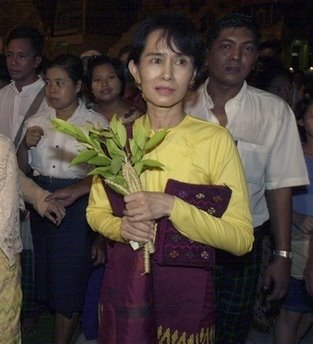


 Posts
Posts


