By Ariana Eunjung Cha
Washington Post Foreign Service
Thursday, September 18, 2008; A13
SHANGHAI, Sept. 17 -- A third infant died and the number of sick grew fivefold to more than 6,200 as China's investigation into contaminated baby formula widened to include other dairy products made by two dozen companies and sold around the world.
Supermarkets in Hong Kong pulled ice cream imported from the mainland that had traces of the chemical melamine off their shelves. Taiwan issued an across-the-board ban on dairy products from Chinese companies involved in the scandal. Chinese exporters scrambled to test samples of milk powder sent to Bangladesh, Yemen and Burma.
An inspection this week of dairy companies found that milk powder from at least 22, or one-fifth of all producers, contained melamine, renewing fears that the overhaul of the food safety system last year after a string of recalls was inadequate.
Health Minister Chen Zhu said Wednesday that the government has dispatched 5,000 inspectors to the country's dairy producers and that it would for the first time mandate checks for toxic substances.
The delayed disclosure of the discovery of melamine in the milk powder highlights the weaknesses of China's two-tiered product safety regulatory system, one that is designed to protect and nurture a handful of privileged, mostly state-owned companies such as Sanlu Group, whose products were first found to be contaminated.
Even as inspections at other food-producing companies have grown more strict over the past year, Sanlu was exempt from these checks through a controversial program that is based on the idea that companies that had done well on quality tests in the past could be trusted to regulate themselves.
At least nine of the 22 dairy companies found to have problems were exempt from government inspections for their milk powder or baby formula, according to a Washington Post analysis.
Melamine, a white crystalline powder used in making plastics and tanning leather that was found in the infant formula, was at the heart of China's troubles last year, too.
Unscrupulous dealers had mixed the substance into a key ingredient in pet food because it would boost readings on nutrition tests for protein content. The chemical was linked to the deaths of thousands of dogs and cats, triggering an international inquiry into the safety of Chinese products.
Angry parents of the sick babies in China who consumed the milk powder are now asking: How could a substance that was already known to kill pets have made its way into the food chain and now be killing babies?
"We have aching hearts that our babies are suffering like this at such a young age, and we are hateful to those ones trying to make illegal money out of this," said Fan Xiangjun, 23, a construction worker whose 9-month-old son drank Sanlu baby formula and has been in the hospital in the northwestern city of Lanzhou for 20 days with kidney stones.
As of Wednesday, 158 of the 6,244 babies that have fallen ill are in serious condition and are suffering from acute kidney failure.
Luo Yunbo, a professor of food science at China Agricultural University and vice president of the Beijing Food Association, thinks the milk powder contamination was the result of "negligence."
"We missed the chance," Luo said. "We should have thought of similar food products that also use nitrogen content as the main test indicator for protein, and we should have thought about how to deal with the problem of fake protein content."
For most of China's food producers, the months since March 2007 -- when the investigation into contaminated pet food from China began -- have been marked by turmoil. Their profits have been cut by inflation and their markets wiped out by import bans from countries concerned about food safety.
As part of an overhaul that included the government-ordered execution of the former head of the State Food and Drug Administration and several of his deputies, China last year began random spot-checks of key exports such as wheat and other grain products and seafood.
Sanlu, however, is one of 2,152 companies that make products that have been awarded a special three-year "mianjian," or inspection-exempt status. In the eyes of Chinese authorities, Sanlu, which received its milk powder exemption in December 2005, had proved that its internal controls were so good that the government no longer needed to monitor its production and shipping process.
"The mianjian system is wrong. . . . You cannot exempt inspections simply because it has been good in the past," said He Bing, a professor at the China University of Political Science and Law in Beijing, who has been pushing to abolish the program.
In a notice posted early Thursday, China's General Administration for Quality Supervision, Inspection and Quarantine said it would revoke mianjian licenses -- the pride of the companies that had them and used them on advertisements -- for all food producers effective immediately. "The national exemption marks on their products and printed packages are no longer valid," the watchdog agency said.
Dairy products produced by Mengniu, Yashili and Shanghai Yili AB Foods that were recalled on Wednesday were also part of this inspection-exempt program.
Mengniu, China's largest dairy company, announced that it had stopped production of its milk powder and was recalling it from stores. The company said it was "deeply sorry" and promised to compensate victims.
The delay from March, when Sanlu first started hearing complaints from parents, and June 28, when the first kidney stone case was reported, and then Sept. 11, when a public warning was issued and the milk powder recalled, speaks to the shortcomings that remain in China's food safety system.
Zhang Wei, a doctor, said he knew there was something wrong with the milk powder three months ago, when 14 babies in a row were brought to his hospital with the same nightmarish symptoms.
The infants, ranging from newborn to 11 months, were feverish, vomiting and could not urinate. Zhang, chief urologist at the People's Liberation Army No. 1 Hospital in Lanzhou, knew they had kidney stones, which occur when urine has too much of a substance that can form small crystals.
"At the start, we were thinking it could be water, but after asking the parents, we found out they all drink different waters. Some take well water; some, tap water. So it could not be water contamination. Plus the babies don't smoke, eat. The only thing is they all drink Sanlu milk," Zhang said in a phone interview Wednesday.
Chinese milk powder is banned in the United States, but the U.S. Food and Drug Administration has said it is concerned that some may have made its way into the country illegally and warned consumers to avoid milk powder from China.
Researchers Liu Songjie, Wu Meng and Crissie Ding contributed to this report.
Friday, September 19, 2008
China Widens Milk Probe as 3rd Baby Dies, Cases Mount


Burma Watchers To Burmese Junta: Democratize Or Face More Protests
http://www.mindanaoexaminer.com/news.php?news_id=20080919032553
MANILA, Philippines (September 19, 2008) - "There is no way the military regime can hide the continuing denial of human rights in Burma and its deplorable management of the country. It is therefore urgent for the international community to take stronger and more comprehensive action against the kind of government that turned its country into a garrison state".
Thus said Free Burma Coalition-Philippines spokesperson Egoy Bans on the 20th anniversary of the bloody coup d'etat staged by the State Law and Order Restoration Council (SLORC), now known as State Peace and Development Council (SPDC), the official name of Burma's military junta.
FBC-Phils and other pro-democracy groups around the world, hold the SLORC responsible for the 1988 arrest and murder of thousands of peaceful activists and civilians calling for democratic reforms in Burma. Year 1988 also saw the rise to popularity of Daw Aung San Suu Kyi as she assumed leadership of the main opposition party, the National League for Democracy.
Bans said, "Twenty years have passed but nothing has significantly changed in Burma. In the guise of restoring peace and order, SLORC was founded and later changed its name to SPDC in another attempt to fool the people into believing empty promises of political change and economic development.
Except for the junta's name, nothing has changed at all. Peace, development, democracy and even the rule of law are nowhere to be found."
FBC-Phils also challenged the military regime of Burma to democratize or else the junta faces more international condemnation. "This is a show of force between the junta and the international community. The world is closely watching Burma and we will not stop staging protest actions, particularly infront of the junta's embassies wherever they are stationed," Bans stressed.
CHALLENGE TO CHINA
FBC-Philippines likewise criticized China for cuddling the junta saying that it "has contributed so much to the suffering of the peoples of Burma" through continued supply of arms and ammunition to SPDC's armed forces.
In 2006, China and Russia vetoed a United Nations Security Council (UNSC) resolution on Burma saying that Burma does not pose a threat to regional peace and security.
FBC-Phils explained that China "acts like the popular Big Brother" and blocks any UN effort to address growing global concern for human rights and democracy in Burma. The international community has constantly asked China to play a crucial role in Burma's democratization but the Chinese regime has refused citing the principle of non-interference or respect for a country's sovereignty by not meddling with its "internal affairs."
"Although China is not the only country engaged in Burma, it is imperative for the Chinese government to break its silence on the issues of human rights violations of the SPDC. Before quickly defending the junta, China should first offer viable alternatives for democratic reforms in Burma," Bans concluded.
Burma-Thailand Gas Pipeline Construction Set to Begin
Posted on: Thursday, 18 September 2008, 12:00 CDT
Text of report in English by Burmese newspaper The Myanmar Times on 25 August
Construction of the third Thai-Myanmar gas pipeline to carry natural gas from newly discovered offshore deposits in Myanmar is expected to begin at the end of the rainy season, said an official from the pipeline survey company said on August 19.
"The third gas pipeline connecting the M9 block to Thailand is expected to begin early next season," said U Thein Shwe, managing director of Geocomp Myanmar, which won a contract to conduct a survey for a gas pipeline route.
He said the company had submitted a feasibility report on the selection of pipeline routes in third week of July, and Thai oil company PTTEP was satisfied with the report.
According to U Thein Shwe, the proposed pipelines are on each side of the existing two gas pipelines, whose combined capacity is 1000 million cubic feet of gas a day (mmcfd).
However, he declined to disclose which route the Thai company has selected.
PTTEP announced at the end of July that it expected to seal a deal with Myanmar government to buy natural gas from the M9 block.
The proposed natural gas pipeline will carry 300 mmcdf, of which 240 mmcdf will be transported to Thailand and the remaining 60 mmcdf will be used for domestic consumption, the company said.
The M9 block is located about 300 kilometres south of Yangon, and was discovered by PTTEP in early 2007. The company is expected to spend about US$1 billion to develop the M9 field, with production starting in 2011 or 2112.
PTTEP is also the operator and sole share-holder of five potential offshore oil and gas blocks in Myanmar M3, M4, M7, M9 and M11, all located in the Gulf of Mottama.
PTTEP is currently buying about 1000 million cubic feet of gas a day (mmcfd) from Myanmar's Yadana and Yedagun gas fields via pipeline.
Originally published by The Myanmar Times, Rangoon, in English 25 Aug 08.
(c) 2008 BBC Monitoring Asia Pacific. Provided by ProQuest LLC. All rights Reserved.
Source: BBC Monitoring Asia Pacific
Irrawaddy: A day of shame and a day of hope – Editorial
Thu 18 Sep 2008
Filed under: News, Opinion, Other
Today, September 18, is the anniversary of two important events in Burma’s political history. The first is the bloody coup that installed the current regime in power 20 years ago, and the second is the start of last year’s uprising by Buddhist monks who took to the streets to seek a peaceful end to decades of brutal military rule.
The coincidence of these two anniversaries serves as a sad reminder of Burma’s plight as a nation struggling for survival under rulers hell-bent on holding onto power. In the 19 years that separate these two events, Burma moved not one step closer to peace and political reconciliation. It is as if the country’s history simply collapsed on this day.
As if to underline the futility of the Burmese people’s desire for freedom, this September, too, has been a month of arrests, torture, intimidation and trials that make a mockery of the law.
The streets of Rangoon are now monitored by soldiers, police and armed thugs known as Swan Arr Shin, the Masters of Force, who are constantly on the alert against any signs of potential unrest. In recent weeks, they have arrested a number of prominent activists, including Nilar Thein, a mother who has not seen her infant daughter since she was forced to go into hiding after last year’s protests. She is now in prison and at risk of torture, according to Amnesty International.
The regime has also apprehended at least 14 other activists in recent weeks. One of the detained activists is the younger brother of the prominent activist-monk U Gambira, who is also in prison for his leading role in last year’s “Saffron Revolution.”
There is also growing concern over the fate of Aung San Suu Kyi, Burma’s most famous torchbearer for the democratic cause. For four weeks from the middle of August, she refused to accept food deliveries to her home, where she has been under house arrest for 13 of the past 19 years. This prompted fears that she had gone on a hunger strike—something she hasn’t done since 1989, when she was first refused permission to leave her home. These fears have been confirmed by reports that she is now malnourished and receiving intravenous fluid to help her recover her strength.
Despite claims that it is moving towards democracy, the Burmese regime continues to hold more than 2,000 political prisoners. And even after signing numerous ceasefire agreements with ethnic insurgent groups, forced labor, rape and mass killings are still commonplace in border regions.
Burma’s rulers have succeeded only in placing the country near the bottom of every human development index. Burma is now among the worst countries in the world in terms of poverty, education, healthcare and corruption. The result of decades of economic mismanagement has been dire: more than a third of children in Burma are malnourished, the average household spends up to 70 percent of its budget on food, and more than 30 percent of the population lives under the poverty line, according to United Nations estimates.
It is difficult to believe that Burma’s economy was once regarded as one of the strongest and most promising in the region. But now the country’s immense natural wealth serves only to enrich the junta and a handful of cronies.
The regime is quick to blame its Western critics for Burma’s precipitous economic decline, but it refuses to acknowledge that the US and the EU have imposed sanctions for a reason. Burma’s human rights record is appalling, and the junta’s refusal to engage in meaningful reconciliation talks with the democratic opposition has sent a strong signal to the West that the ruling generals have no interest in moving the country forward.
All of this has earned Burma a place among the world’s pariah states. But the junta doesn’t seem to mind that Burma now stands alongside North Korea, Zimbabwe and Sudan as a country that routinely brutalizes its own population.
Burmese people, however, are keenly aware that their country has been dragged down to this shameful state. More than anything else, the two anniversaries that we mark today show that Burma is a nation divided between those who have no shame, and those who, despite their fear and their past failures to liberate their country, still nurture some hope for the future.
Christian Science Monitor: Monks with guns? Burma’s younger activists get bolder – Anand Gopal
Thu 18 Sep 2008
Filed under: News, Inside Burma
If Ashin Zawta has his way, the next time the government of Burma (Myanmar) clamps down on dissent it will have to deal with a new force: monks with guns.
“Last September the Army proved too powerful for us and defeated our nonviolent tactics,” says the young monk, whose real name, like those of other activists in this story, has been changed for security reasons. “We need weapons. That is the only way we can bring down this regime.”
One year after monks led thousands in Burma’s largest antigovernment protests in 19 years, many activists say they are losing patience with the slow pace of change. Up against a powerful regime, they are calling for fresh tactics, from teaching human rights theory to stockpiling arms.
“The younger activists’ frustrations are growing. They want to take up arms because they were so brutally suppressed last September. They have gone their whole lives without seeing change,” says Win Min, an expert on Burmese political affairs at Thailand’s Chiang Mai University.
While the activists turning toward violence still form a minority, young monks have never before openly advocated violence, and this may signal a new phase in the evolution of the political opposition, says Mr. Win.
Burma’s military government killed dozens of protesters and detained at least 800 in August and September 2007 when a surge in fuel prices sparked large demonstrations, led by Burma’s widely respected monks. The stark defeat of the uprising – which became known as the Saffron Revolution, for the monks’ deep-red robes – left many younger activists questioning the prevailing political wisdom.
Though Buddhism is traditionally associated with nonviolence, Mr. Zawta says the junta does not respect life or Buddhism, forcing some monks to take this extreme position.
“The regime is like a rabid dog,” Mr. Zawta says. “It bit us and infected us with militancy. The old ways aren’t working – the only solution is to arm the people.
“Some of the old monks preach caution and tell us to focus on patience and the Buddhist way,” he continues. “But many of us are realizing that we have to go out there and do something.”
New tactics: teach rights, deliver aid
The younger monks are more active, Zawta says, adding that more are learning English so they can communicate with international media and expose conditions inside the country.
As with many young monks, last year’s protests politicized Zawta. He forged links with the All Burmese Monks Alliance (ABMA), an underground network of activist monks that formed in the wake of last September’s crackdown. The Alliance, which has become a leading underground opposition group, gives political sermons and organizes aid delivery to Burma’s south, which was devastated by cyclone Nargis in May.
Most monasteries in Burma provide free education to the community’s poor, including lessons in English, math, and Buddhism. But Zawta and other Alliance-affiliated monks have supplemented the curriculum with a dose of human rights theory and political history. “Most young people don’t even know about 1988,” he says, referring to the failed uprising of that year.
Years ago such overt anti-regime talk in monasteries would have been unthinkable. But members of the post-September generation say monks can no longer play a secondary role in Burmese politics.
This new focus comes with a price, however. Authorities have cracked down on the monk movement, arresting many of the leaders of last year’s protests. Earlier this month, intelligence agents raided a monastery in Rangoon, Burma’s main city, and arrested a senior monk. The government also recently derobed ABMA leader U Ashin Gambira and plans to try him on sedition charges.
Some leading monks have fled for Thailand, while others remain in country and work underground, surreptitiously distributing leaflets and facilitating other activists’ work. The Monks Alliance has housed activists being hunted by the government in their monasteries.
Older activists: too cautious?
The security dragnet is forcing some groups, such as the semi-legal National League for Democracy (NLD), led by Nobel Peace Prize laureate Aung San Suu Kyi, to operate with caution. During the September demonstrations, NLD’s central committee urged party members to avoid the protests, though it verbally supported the monks.
“But the youth[s] started helping the monks anyway, and they defied party orders and marched,” says Nay Shi Shwe, a leader of the NLD’s youth wing.
“There is definitely frustration with the leadership,” he continues. Young people “think that this is a good opportunity to fight the dictatorship, but the old men are taking too much time. They want to wait until 2010″ – the year of scheduled elections – “but we want action now.”
Older activists of the NLD, whose election win in 1990 was ignored by the ruling junta, say that too open an association with proscribed groups and illegal demonstrations may jeopardize the party’s hard-fought semi-legal status and disqualify them from the 2010 elections.
But to some, the party seems to be caught in suspension, without a coherent policy to address the current political climate. “The NLD is slowly losing relevancy,” says a member of the underground group, the 88 Generation Students.
Still a unifier: Aung San Suu Kyi
But while the NLD stagnates, youths, monks, and underground activists agree that Ms. Suu Kyi, who has been under house arrest for 12 of the past 18 years, is the only figure who can unite the opposition and revitalize the party.
When Suu Kyi reportedly refused to meet the United Nations envoy to Burma, Ibrahim Gambari, a few weeks ago, the hopes of many activists who are frustrated with the UN and NLD jumped.
“The UN is no good. All they do is talk, and when they come here they are focused on dealing with the regime [rather] than with fighting for democracy,” says Thaw Htun, an opposition sympathizer.
Mr. Gambari is mandated to help facilitate the release of Suu Kyi and the reopening of NLD offices, but in six visits he has only met mid-level government officials and no one from the junta leadership.
Suu Kyi’s lawyer, U Kyi Win, suggests that her refusal may be a strategy to convince authorities to alleviate the conditions of her detention rather than a principled opposition to the UN’s role in Burma. She’d also refused food deliveries for almost a month until the government agreed this week to some of her requests, including the right to receive mail regularly and certain foreign publications.
Activists with the underground groups say they are not banking on legal strategies or UN visits. Instead, many are looking for new opportunities in the current political climate.
“My vision is that through the development of local NGOs after Nargis, we can start building community-based activist groups,” says Hein Thein, a longtime opposition member.
Mr. Thein says these groups can function like “urban guerrillas,” rising to protest when needed and blending back into society during times of repression. If the whole community is involved in such work, he says, it becomes very hard for authorities to crack down effectively.
Other sections of the underground, like some young monks, think armed insurrection is the key. “We can’t make the mistakes our predecessors did,” says Tha Kay, one such advocate. “We have to develop new leaders and a new vision. For example, we are stockpiling arms. It’s too early to use them, but the time will definitely come.”
Thursday, September 18, 2008
Morgan Stanley in talks as fear grips financials
By Christian Plumb and Steve Slater 40 minutes ago
NEW YORK/LONDON (Reuters) - Morgan Stanley topped the list of major financial firms scrambling to find a buyer, while central banks rushed in $180 billion of extra liquidity to calm panicked stock and money markets.
Morgan Stanley was in deal talks with U.S. regional banking powerhouse Wachovia Corp and the negotiations have advanced to a more formal stage, a source familiar with the firm's plan said.
The No. 2 U.S. investment bank, whose shares are down 50 percent this month, has also approached Chinese sovereign wealth fund China Investment Corp about boosting its stake in Morgan Stanley, the source said, following a $5 billion investment late last year.
HSBC Holdings was named by CNBC as another potential bidder for Morgan Stanley, but a person familiar with the matter said the bank "is not interested."
Morgan Stanley and larger rival Goldman Sachs Group Inc, the largest surviving independent Wall Street investment bank, are facing concern that the credit crunch could constrict the short-term funding they've traditionally relied on. The deposit base of a commercial bank could be a more stable alternative.
Morgan Stanley shares were down 8 percent in early trading, but the cost of insuring its debt against default fell.
"Morgan Stanley is in merger talks with Wachovia, a move that would make more sense if Morgan were seeking synergies rather than seeking safety," Christopher Low, chief economist at FTN Financial in New York, said in a research note. "Wachovia, after all, has huge option ARM exposure through Golden West, and option ARMS are shaping up as this year's subprimes."
Wachovia shares rose 16 percent in morning trade, with the Dow Jones industrial average gaining 119 points. Following the near collapse and bailout of insurance giant American International Group Inc, Kraft Foods Inc replaced AIG in the index.
British bank Lloyds TSB took advantage of the market turmoil to achieve a long-held ambition by scooping up the country's biggest mortgage lender, HBOS, in a $22 billion all-share deal.
HBOS shares, which had slumped due to fears about its funding, soared 40 percent, and the UK government promised to rewrite competition laws to let the deal with Lloyds TSB go through.
As Morgan Stanley cast around for a lifeline, the Government of Singapore Investment Corp (GIC) said it would consider all possibilities, including taking a stake if approached.
Morgan Stanley officials in New York did not immediately return phone calls seeking comment.
A spokeswoman at HSBC, which this week became the world's biggest bank by market value, also declined to comment, but a source told Reuters the bank wasn't interested in Morgan Stanley.
A senior executive at CITIC Group's CITIC Securities arm said his firm was not in talks about investing in Morgan Stanley. An official at CITIC Group could not be reached for comment.
With the financial landscape undergoing its most dramatic transformation since the Great Depression, top U.S. savings bank Washington Mutual was also tipped for takeover.
LIQUIDITY BOOST CALMS NERVES
After Asian stocks plunged overnight, the U.S. Federal Reserve announced coordinated moves with five of the world's major central banks to add up to $180 billion in liquidity to global money markets, which gave some reassurance to panicked investors and slashed overnight money rates from 8.5 percent to 2 percent.
As an indication of the demand for liquidity, the Bank of England said it had received bids of 202 billion pounds for the 66 billion pounds on offer in its weekly open market operation.
The MSCI index of Asia stocks excluding Japan, which had been down almost 5 percent, was down just 1.3 percent after the central banks' move, while Tokyo shares ended 2.22 percent lower. Hong Kong's Hang Seng index ended flat, having earlier fallen more than 7 percent.
European banking shares gained, with the DJ Stoxx banking index up 1.6 percent, helped by the leap in HBOS stock and strong gains for Swiss banks UBS and Credit Suisse and for RBS and Barclays in London.
Barclays seized the rare positive moment to announce a 750 million pound fundraising to help with its purchase of assets from Lehman Brothers Holdings Inc, which filed for bankruptcy protection on Monday.
Russian stock markets remained closed for a second day, with the Kremlin pledging $20 billion in support when they re-open on Friday.
"After the bailing out of AIG failed to reassure the market, it is difficult to imagine what could really stop the un-orderly deleveraging that is going on," French investment bank Calyon said in a note on Thursday.
The Federal Reserve had hoped its $85 billion rescue of AIG on Tuesday might calm the markets, but financial stocks have continued to fall, triggering a wave of panicked matchmaking.
Shares of Macquarie Group, Australia's biggest investment bank, skidded 23 percent to their lowest level in more than five years amid funding worries.
Industrial and Commercial Bank of China, which had been the world's most valuable bank until being surpassed by HSBC on Wednesday, fell nearly 14 percent, though later recovered those losses to end slightly higher.
The AIG rescue capped a week of bailouts, bankruptcy and moves by central banks around the world to flood the financial system with funds to prevent it from seizing up.
'ANYTHING'S POSSIBLE'
Washington Mutual, beleaguered by mortgage losses, put itself up for sale, sources familiar with the situation said. Potential suitors include Citigroup, JPMorgan, Wells Fargo and HSBC.
WaMu shares soared 18 percent in early trading.
Last weekend, investment bank Merrill Lynch & Co struck a deal to sell out to Bank of America Corp.
U.S. authorities have spent $900 billion to prop up the financial system and housing market.
The rescue of AIG came just over a week after the government bailed out mortgage finance companies Fannie Mae and Freddie Mac, and six months after the Fed brokered the sale of failed investment bank Bear Stearns to JPMorgan Chase.
(Additional reporting by Joseph A. Giannone and Richard Leong in New York, Olesya Dmitracova in London, Kevin Plumberg and Tony Munroe in Hong Kong and Saeed Azhar in Singapore; Editing by Alexander Smith, Will Waterman and John Wallace)
Central banks launch $300 billion assault on credit crisis
NEW YORK (AFP) - Central banks threw more than 300 billion dollars at the global credit storm Thursday as pressure mounted on Wall Street legend Morgan Stanley and Swiss bank UBS.
The massive injection boosted battered US and European shares. Wall Street rose 1.27 percent in early trading.
The rescue of top British mortgage lender HBOS also helped but British Prime Minister Gordon Brown added to political calls for action, setting a priority to "ensure the stability of the (financial) system."
US President George W. Bush vowed his administration would confront the financial crisis however. "The American people can be sure we will continue to act to strengthen and stabilize our financial markets and improve investor confidence," Bush said at the White House.
The US Federal Reserve led the onslaught to relieve "elevated pressures" in strangled global markets by offering 180 billion dollars and promising more.
Central banks have now spent more than 600 billion dollars this week to avert a global system failure. In addition, the Fed rescued US insurance titan AIG with 85 billion dollars, having allowed Lehman Brothers bank to fail.
The Fed was joined by the European Central Bank with the British, Japanese, Swiss and Canadian banks in offering to swap currencies for dollars.
Figures from the central banks pointed to a total lifeline of 290 billion dollars on Thursday. The ECB also injected 25 billion euros (36 million dollars) directly and the Fed announced a similar cash stimulus and said it was ready to do more.
"For the time being, this (central bank action) has stabilised the financial system," said Andrew Busch at BMO Capital Markets.
The action shored up European stocks. London's FTSE 100 leading shares index gained 0.86 percent in late afternoon trade as HBOS shares rocketed 34.1 percent to 197.2 pence. This follows a 10-percent drop in three days.
Asian stocks ended with heavy falls on reports that Morgan Stanley, one of the last two independent US merchant banks, was in merger talks. Morgan Stanley's shares slumped 24 percent on Wednesday.
US reports said Morgan Stanley was seeking a merger with Wachovia Corporation or state controlled Chinese conglomerate CITIC. The Swiss market was alive with rumours that UBS, the country's biggest bank, might merge with Credit Suisse.
CITIC declined to comment on a report by CNBC television, quoting US and Chinese sources, that it was in talks with Morgan Stanley. The sovereign wealth fund, China Investment Corporation, already owns 9.9 percent of Morgan Stanley.
The New York Times said Morgan Stanley was in "preliminary" talks with Wachovia Corporation of the United States.
US thrift Washington Mutual is also at the centre of market worries.
In Zurich, UBS shares, which had crashed more than 70 percent on subprime losses, rallied 10 percent with a boost from "rumours circulating on a merger between UBS and Credit Suisse," a trader there told AFP.
Russian President Dmitry Medvedev ordered his government to support the Russian financial system, saying it was the "most important priority", after the stock market in Moscow was closed for a third day in a row.
"We have enough reserves, we have a strong economy," Medvedev said. "The market will get all necessary support."
The global panic drove money to the safety of US Treasury bonds and gold, with some T bond yields falling to the lowest level since 1954, sending the interest rate landscape haywire.
This contrasts with tension on interbank money markets, the heartbeat of the banking system which has slowed critically because banks are frightened of lending to each other.
Sucden brokerage analyst Nimit Khamar in London said the "critical" factor for "any normality in the markets" was whether central bank action would bring down interbank rates.
Short-term interbank rates sent conflicting signals in Europe. London's overnight Libor dollar rate eased sharply to 3.84 percent, but the eurozone one-week Euribor rate rose slightly to 4.557 percent.
The euro rose to a two week high of 1.45 against the dollar, and the oil price rallied for a second day, to 102 dollars, because the central bank move had "sparked some interest" in dollar-based assets, Khamar said.
British authorities oversaw the takeover of Halifax Bank of Scotland (HBOS) by Lloyds TSB in an all-share deal worth 12.2-billion-pounds (15.4 billion euros, 21 billion dollars).
Prime Minister Brown said the world had to "clean up the financial system, and he slammed "irresponsible" behaviour in the financial sector, after the HBOS rescue which Britain's financial regulator said would "enhance stability".
Brazil on the Road to Fossil Fuel Independence
In the world today, Brazil is the one country that has already taken major steps to greatly reduce their dependence on foreign oil. During the 1973 oil crisis, the Brazilian Government at the time decided to implement their "National Alcohol Program", better known in Brazil as "Proalcool". It was a planned strategy to implement an ethanol production infrastructure for Brazil's automobiles. Today, 8 out of 10 cars on the road in Brazil run on ethanol. Some run on 100% ethanol. This brilliant program set the stage for ethanol to fulfill the promise of energy independence and freedom from reliance on fossil fuels for the Brazilian people.
The Source
The United States is the largest producer of Ethanol producing about 35% of the world's ethanol. Brazil is a close second producing about 32 to 33% of the world's ethanol. In America, Ethanol is derived from the distillation of sugar that is obtained from corn. In Brazil, ethanol is derived from the sugar cane plant. Sugar cane grows all year round in Brazil. The ethanol derived from sugar cane provides 8 times the energy that was used to make it. Also, the waste material after the sugar is extracted from the cane is used as energy for power plants. Ethanol burns cleaner than regular gasoline because of the extra oxygen in its chemical makeup. Because ethanol is distilled from a plant, it emits no harmful toxic emissions such as carbon monoxide.
The CO2 that is released into the air when ethanol is burned is absorbed by the original plant or biomass (such as the sugar cane plant) that the ethanol was extracted from to begin with, making ethanol a carbon-neutral fuel. Brazil is poised to greatly surpass the United States in ethanol production worldwide. The road that led to this energy paradigm shift was not so smooth though. In the beginning, the government was subsidizing sugar cane growers. But as soon as oil prices dropped in the early 80's, the government stopped subsidizing sugar cane growers and many of them went out of business. Demand for ethanol had dropped.
The Future
Brazil has managed to achieve a 50% replacement of petroleum by ethanol. Also, 80% of all of Brazil's car fleet is flex-fuel capable. They can run on 100% gasoline or any combination of ethanol/gas mix such as E10, E25, or E85. Brazil is on the road to total oil replacement by ethanol, a notion that doesn't sit well with the national oil company in Brazil; Petrobras. The present sugar cane cultivated area in Brazil dedicated to ethanol production is about 7.4 million acres. It constitutes about 1% of the total arable land. In Brazil, there has been an increase of about 3% a year in ethanol production without having to add to the arable land with more sugar cane plantations. This is due to the refining of extraction technology and the derivation of higher yielding sugar cane plants. It wouldn't be hard for Brazil to achieve 100% replacement in the very near future.
If you want to learn more information about ethanol and ethanol production and products, please stop by http://www.allethanol.com and have a look.
Reporting the ASEAN: Repression of ASEAN Media Continues
This is a slightly revised version of the author’s presentation in Jakarta, Indonesia on July 29 and August 26 during the training of journalists from member-countries of the Association of Southeast Asian Nations (ASEAN) organized by the International Institute for Journalism (IIJ) of InWEnt-Germany.
BY DANILO ARAÑA ARAO
Bulatlat
Vol. VIII, No. 32, September 14-20, 2008
The Association of Southeast Asian Nations (ASEAN) uses the term “nations” instead of “countries,” and for good reason. A country is defined as “the land in which one was born or to which one owes allegiance” (“The New Lexicon”, 1990, p. 223). Nation, on the other hand, refers to “a body of people recognized as an entity by virtue of their historical, linguistic or ethnic links” (“The New Lexicon”, 1990, p. 666)
It is therefore possible for a country to be composed of different nations. At the same time, it is plausible for a nation to have different countries. This explains, for example, the use of the term “Arab nation” to refer to different countries in the Middle East and beyond. The use of the word “nation” in its singular form, however, may not apply to the countries of Southeast Asia.
While its official website (http://www.aseansec.org) does not readily admit this fact, the Association of Southeast Asian Nations (ASEAN) apparently uses the word “nations” to refer to the diversity of cultures among its member-countries. The latter may be “one” in terms of location and the consequent affiliation with ASEAN and other regional and global institutions, but the cultures are diverse, even within each other’s countries.
From an editorial point of view, the word “nations” is crucial to understanding the context in which there is a big difference not only in the different levels of development of their media organizations but also in the overall political and economic situation of each of the member-countries.
While the wide cultural diversity of ASEAN member-countries exists, journalists who write about the ASEAN should realize that the economic diversity is quite narrow – i.e., it confined only to the different levels of development (or “maldevelopment,” depending on one’s framework of analysis) in each of the member-countries.
Membership in the ASEAN requires the opening up of economies and the implementation of policies along globalist lines. Depending on how one analyzes globalization, the latter can have positive and negative effects on the people, particularly the poor.
The ASEAN currently has 10 member-countries. These are Brunei Darussalam, Cambodia, Indonesia, Laos (referred to by ASEAN as Lao PDR), Malaysia, Burma (referred to by ASEAN as Myanmar), Philippines, Singapore, Thailand and Vietnam (referred to by ASEAN as Viet Nam).
One does not need to look far in assessing the situation of the ASEAN media. Several references can provide basic data on each of the 10 countries’ media situation. A high degree of cultural sensitivity (and perhaps some background in political science), however, should be observed in reading and understanding them.
According to The ASEAN Media Directory (1998) published by the Konrad Adenauer Foundation (KAF), the ASEAN media scene ranges “from the very free in the Philippines and the almost totally free in Thailand (where government still controls broadcast media), to the pliant in Indonesia, Malaysia, Singapore and Brunei, to those strictly following party line as in communist Vietnam, Laos and military-ruled Myanmar.” (p. xii)
This publication may be very informative, but the use of the word “communist” to refer to some ASEAN member-countries is very inappropriate, if not totally irresponsible. Throughout the history of the world, there is no such thing as a “communist country” even if they may be “communist-led” by virtue of the power and influence of their respective communist parties.
The most that so-called communist countries like China have achieved is the economic stage of socialism. A review of concepts of political science would show that communism can only be achieved once the state has “withered away” and rendered itself obsolete. This is clearly not the case in Vietnam, Laos and Burma.
One may argue that the use of the words “communist” and “communist-led” is just a matter of semantics, but the use of appropriate terms can make a big difference in making the people understand the situation in countries called as such.
“Media freedom” is also not clearly defined in the study, and one can extrapolate that it is related to the existence of pertinent laws and the extent of private ownership of media. It is assumed that the provision of free speech and freedom of expression already makes the media free. In addition, the vibrancy of the press is based on the number of privately-owned media organizations operating in the country.
As early as now, it is necessary to stress that media freedom is more than the existence of laws or private ownership of media.
In this context, one needs to be critical of The ASEAN Media Directory’s description of the media situations in the 10 ASEAN member-countries.
· Brunei: “[L]iterally the Adobe of Peace, [it] has one privately-owned English newspaper, the 45-year old Borneo Bulletin; one Malay-language weekly newspaper, the three-year old Media Permata (Prime Media); a television channel, one satellite television and five radio stations operated by the government-run Radio Television Brunei; one lifestyle magazine in English, Regal, published every two months. One other English-language lifestyle quarterly Mutiara temporarily ceased publication in March 1998. While foreign advertising is allowed in Bruneian media, materials that run counter to Islamic culture and values are discouraged.” (p. 15)
· Burma: “Since 1963 when the military placed Burma under socialist military rule, all media – newspapers, television and radio – are nationalized and strictly controlled by the government under the Ministry of Information. The narrow range of media today in Burma, also known as Myanmar, reflects the political realities: analysis and discussion on current affairs are non-existent.” (p. 69)
· Cambodia: “Cambodian politics and the local tri-media cannot, with rare and sporadic exceptions, be separated. Almost all Khmer newspapers – there are 78 titles – have political affiliations. Even though ownership may be private, it is private in concept rather than [in] reality. The biggest newspapers in terms of circulation, income and influence are beholden to the ruling political party, the Cambodian People’s Party (CPP).” (p. 23)
· Indonesia: “The last several years have been a robust span of time for the Indonesian media scene, until the regional currency crisis that began in September 1997.” (p. 33) “[T]he fact that there are still new titles coming out amid the crisis indicates that the media industry is poised for rebound once the economy recovers.” (p. 35)
· Laos: “The Lao People’s Revolutionary Party (LPRP) that governs Laos exhibits a built-in media contradiction since joining ASEAN. In an (sic) utopian, idealistic manner, it tries its level best to control media, pushing the cause and glory of the Revolution that imposed communism in 1975. On the other hand, membership in ASEAN means opening up national markets. Media is a market. `Bland’ is the word that usually comes to non-Lao minds when describing Lao media. `No life’ are words Laotians use themselves when describing Lao television (two stations), radio (one station) and print media (hardly a dozen newspapers and magazines). Almost all are government-controlled.” (p. 47)
· Malaysia: “Media in Malaysia operates essentially under government guidance. Despite the yearly launches of new radio stations and television channels in the past four years, the content remains placid and cautious. Media has grown in volume but its development has not been in quality, restrained as it is by a lot of pressure coming from political as well as religious bodies. This constraint did not prevent it from proliferating due to a booming economy…” (p. 53)
· Philippines: “The Philippine media enjoys a distinction of being the freest, most rambunctious and irreverent in Asia. With it goes the downside of being branded irresponsible. The Hong Kong-based Political and Economic Risk Consultancy rated the Philippine press lowest in Asia for quality and reliability. Yet the Philippines is one of the few Asian countries where the media operates within a democratic framework which is unique in ASEAN. Media is a business and is a tool to maintain political and economic power of the owners.” (p. 79)
· Singapore: “Singapore has an extensive media industry disproportionate to its small three-million population and geographical size. Its location at a crosswords (sic) places the city-state at a vantage point to be the information hub of Southeast Asia. The ratio of newspaper circulation and reach to population is the level of a developed country. Media ownership of print and broadcast is largely in the hands of the Straits Times Group and the Singapore government. Media control through legislation and policing is among the toughest in the region. Even the dominant Straits Times newspaper is continuously surprised by the limits of information flow.” (p. 99)
· Thailand: “Thailand has more media choices than most of its Asian neighbors. There are over 40 TV channels (including cable and satellite options), about 500 radio stations, over 80 newspapers and 690 magazines in the country. Deregulation of Thailand’s media industry started in 1992 has enabled it to develop into one of the most exciting in Asia. However, since this growth has not been disciplined by any industry regulations, the market has developed in a highly fragmented and uncontrolled way, with no auditing of circulation figures and no lid on abuses.” (p. 117)
· Vietnam: “For a country where political control is central to the government’s philosophy, Vietnam has a surprisingly vibrant media. Newsstands in the commercial hub of Ho Chi Minh City in the south and the capital of Hanoi display a bewildering selection of morning newspapers, competing for attention with glossy weeklies and monthlies covering a range of issues from the latest fashion trends for hip young urbanites to science and the legal system for intellectuals and business for the country’s aspiring entrepreneurs. The past decade of tentative economic reforms – known as `doi moi’ (renovation) – has seen dramatic growth in the number of publications. There are currently around 500, supporting a vast army of editors, reporters, photographers and production personnel. The impetus behind growth came from the reduction – and in some cases complete removal – of state subsidies, which forced newspapers to seek advertising dollars in order to survive.” (pp. 133-134)
While the description of the political and legal environments is appreciated, one needs to know the actual experiences of journalists in each of the 10 member-countries. With regard to the law, it must be kept in mind that what is stated is not necessarily what is implemented. Governments also tend to interpret laws based on how they can suit their interests, making such laws infringe on press freedom even if, in theory, they should not. The laws on libel and national security are examples of how a government can apply laws to suppress freedom, even to the extent of harassing, intimidating or even killing journalists.
The title of a study of the Southeast Asian Press Alliance (SEAPA) in May 2008 on the state of the press in Southeast Asia may give one an idea of what is happening to the Association of Southeast Asian Nations (ASEAN) media today: Slipping and Sliding.
On a positive note, the SEAPA reported that there have been “positive developments” in the past two years. (2008, p. 2), noting the following developments:
Indonesia most recently moved forward on its access to information legislation. Thailand made a peaceful transition from the policies of a coup-installed military regime to the realities of an elected government, and Malaysia has undergone a stunning electoral exercise that may allow for more checks and balances and meaningful opposition participation in government, and thereby more chances for political and media reform towards a more open society. Still, the most reliable conclusion for the region and the different countries that comprise Southeast Asia is that the fight to protect and promote press freedom in this part of the world is far from won. (“Slipping and Sliding”, 2008, p. 2)
The recent passage of “national security” laws was said to be a “familiar theme” in 2007 to all countries in Southeast Asia, from “Vietnam to the Philippines and Malaysia to Laos.” The SEAPA acknowledged that the Southeast Asian press will be uncertain in the years ahead, mainly because such laws have dire implications on free expression and press freedom. (2008, p. 2)
In the case of the Philippines, President Gloria Macapagal-Arroyo enacted into law the Human Security Act (HSA) of 2007 (Republic Act No. 9372) on March 6, 2007. It took effect on July 15, 2007, about two months after the 2007 national and local elections. In a paper I wrote titled “The Human Security Act and Philippine Journalism” (February 2008) published by Bulatlat.com and the Institute for War and Peace Reporting (IWPR), I explained:
A person is said to commit a crime of terrorism if he or she engages in piracy in general and mutiny in the high seas or in the Philippine waters; rebellion or insurrection; coup d’etat, including acts committed by private persons; murder; kidnapping and serious illegal detention; and crimes involving destruction. With regard to crimes involving destruction, these refer to violations of Presidential Decree (PD) No. 1613 (The Law on Arson); RA 6969 (Toxic Substances and Hazardous and Nuclear Waste Control Act of 1990); RA 5207 (Atomic Energy Regulatory and Liability Act of 1968); RA 6235 (Anti-Hijacking Law); PD 532 (Anti-Piracy and Anti-Highway Robbery Law of 1974); and PD 1866 (Degree Codifying the Laws on Illegal and Unlawful Possession, Manufacture, Dealing in, Acquisition or Disposition of Firearms, Ammunition or Explosives).The law’s Sec. 3 qualifies that, to be considered acts of terrorism, these crimes should sow and create “a condition of widespread and extraordinary fear and panic among the populace, in order to coerce the government to give in to an unlawful demand.”
xxx
The opposition to the HSA mainly rests on the law’s broad definition of who is a terrorist. The so-called “condition of widespread and extraordinary fear and panic” among the people that may result from the identified crimes is so broad that anything and everything can be interpreted as such.
Comparing the findings of the KAF in 1998 and the SEAPA in 2008, there is clearly no qualitative change in the media situation. The SEAPA notes the following situations in ASEAN member-countries:
· Burma: “With the people of Burma repressed and suppressed more than ever, Burmese journalists say international pressure on the junta must not let up.” (p.
· Cambodia: “Cambodia appears to have in place all the laws ensuring media freedom, but the reality is a different matter altogether. The constitutional provision for press freedom is ironically often invoked to restrict this very right, for it says, rather too broadly, that the exercise of this right must not infringe upon the rights of others, `affect good traditions of society’, and violate public law and order and national security. xxx Another restrictive constitutional provision that has been repeatedly invoked is Article 7, which states: `The King shall be inviolable’.” (p. 10)
· Indonesia: “The press in Indonesia…is backed by Constitutional guarantees for freedom of expression and press freedom, a progressive Press Law and Human Rights Law, and by the 2005 Ratification of the International Convention on Civil and Political Rights (ICCPR) Law. (p. 18) xxx While the courts may need a compelling mechanism to apply the Press Law, Indonesia’s media community faces the continued challenge of defending the ground it is gaining against government offensives and extremist pressure out to undermine its independence and plurality.” (p. 22)
· Laos: “Although Article 44 [of the constitution] accords citizens the right to freedom of speech and the press, the role of the press is also outlined constitutionally as a link between the [Lao People Revolutionary Party (LPRP)], the state and the masses. Hence, all publications in Laos must be approved by the Ministry of Information, which issues them with publishing licenses, and newspaper editors and broadcast producers are appointed mostly from the party.” (p. 23)
· Malaysia: “Contributing to the lack of media freedom is the general political and civil rights environment in Malaysia, which has the mechanisms of a democracy but not the substance. Article 10 of the Constitution guarantees freedom of speech but also allows Parliament to impose restrictions for security reasons.” (p. 29)
· Philippines: “[T]he Philippine media remain vulnerable to laws and policies set by a hostile government, criminal defamation suits from powerful politicians, and contract-style attacks affecting provincial radio journalists in particular. The impunity that continues in attacks against Filipino journalists in 2007 was further complicated by the active promulgation of repressive laws and the restrictive interpretation of existing ones by the [administration] of President Gloria Macapagal-Arroyo. Laws on criminal libel, meanwhile, were abused by political figures, most prominently by the husband of President Arroyo.” (p. 32)
· Singapore: “Singapore continues to be unblinking and unapologetic in its restrictive rules and policies [with regard to press freedom and free expression]. xxx In the past two years Singapore has put in place stricter guidelines for the foreign media and served notice that it is keeping close watch on the Internet. xxx Intolerant of dissent or alternative views, the government has long monopolized and subjugated a once lively local press and continues to strategize, through new laws and regulations, to thwart any novel attempts to break its stranglehold on freedom of expression.” (p. 37)
· Thailand: “In a full year under military rule in 2007, free expression in Thailand was unstable as it hinged on the benevolence and patience of the military. xxx The new Constitution gives the same protections for free expression, and is in areas better at explicitly stating protection for editorial independence, banning prior censorship and barring direct and indirect political ownership of businesses related to media and telecommunication. It also suggests a self-regulatory or an independent body to protect media rights, which includes guarding against political and commercial interference in editorial matters. (pp. 41-42) [T]hreats to Thailand’s free press come not only from government, but also from powerful private interests that can abuse even civil defamation statutes.” (p. 45)
· Vietnam: “The country’s 1992 constitution recognizes the right to freedom of opinion, expression and association for all citizens. However, the Press Law puts all administrative aspects of the press, including editorial appointments, under government hands, and spells out the function of the press as protecting `party lines and policies’, as well as detecting and promoting `positive factors’. Hence, the government runs some 600 media outlets from the digital, broadcast and print sectors.” (p. 46)
The SEAPA study unfortunately did not include an assessment of the press in Brunei Darussalam, an ASEAN member-country. It did include, however, an assessment of East Timor’s.
In an article, Sonny Inbaraj, an editor of The Nation (Bangkok), wrote that the media are “not always independent, vigilant and defiant of authority as it should be – more so in Southeast Asia when state and business elites control the press and there exists legislation to jail journalists and editors if they `step out of line’. Conversely, in the West, media campaigns will not be mobilized where victimization, even though massive, sustained and dramatic, fails to meet the test of utility to elite interests – in other words, if the news runs against the interests of the state or economic elites.” (1996)
In any case, the media situation of the 10 ASEAN member-countries shows the uneven levels of development which, at first glance, makes it hard to make comparisons among them. The Philippines and Singapore, for example, are diametrically opposed when it comes to the media’s role in national development and the concepts of freedom of expression. There are governments that look at media as simply tools of the state and that they should only report on the “positive” and the “favorable,” an attitude that is not entirely different from the occasional demand of media consumers for the “good” news.
Regardless of the media diversity among ASEAN member-countries, a clinical study of the recent and past data shows that they actually have the following major points in common:
There are threats to freedom of the press in all ASEAN member-countries, whether direct or indirect;
New policies are being introduced by governments which may appear harmless to the practice of the journalism profession but, upon close scrutiny, can have negative repercussions on media;
Existing laws are being interpreted and implemented to suit the interests of those in power, even at the expense of freedom of the press;
Private ownership of media organizations should not be an indicator of a vibrant press because monopoly ownership of the media and business interests of owners must be taken into account, along with the extent of government’s control over them;
An increased number of media organizations in a country is not necessarily good for the people because the quality of their content must be duly considered;
The media are suppressed in the guise of protecting the State, but the officials do so mainly to perpetuate themselves in power and consequently protect their interests;
Gains in upholding and protecting press freedom are products of the journalists’ and the entire people’s assertion of their rights.
The unequal development of the media among the 10 ASEAN member-countries may be rooted in their diverse historical contexts. It is understandable, for example, for the Philippines to have what SEAPA described as a “robust” media because it has a rich tradition of advocacy (even revolutionary) journalism dating back to the 19th century under Spanish occupation. Cambodia, on the other hand, finds it unacceptable for the media to report on anything negative about the King because doing so is perceived to compromise, among others, the culture in that particular country.
It is in this light that the journalists in ASEAN member-countries should do the following courses of action to promote professionalism in the practice of journalism and to protect freedom of the press:
Learn, relearn and unlearn the basic concepts related to journalism and its role in social development and change, regardless of the respective country’s political and economic situation;
Uphold and protect the highest professional and ethical standards of journalism, on the assumption that there are universal standards that can apply to any cultures of the world;
Engage in information sharing and networking with other ASEAN journalists regarding the media and overall situation of each other’s countries;
Encourage other ASEAN journalists and ASEAN-based media advocacy groups to help in demanding a government’s lifting of laws and other statutes that infringe on freedom of the press, as well as a stop to the harassment, intimidation and killing of ASEAN journalists by those who wield power and influence;
Participate in the people’s assertion of basic rights on the grounds that freedom of the press is part of what they are fighting for in the first place;
Continue to report about the situation in ASEAN member-countries and the ASEAN as an organization in particular, focusing on the latter’s actions and their implications on the people, particularly the poor.
The Association of Southeast Asian Nations (ASEAN) can be newsworthy.
The reportage, however, must not only be limited to the ministerial meetings held annually. A simple comparison of its fundamental principles and the resulting policies and strategies show glaring contradictions.
The 10 member-countries have global importance because of their sheer size: As of 2007, they have a combined population of 575 million, a land area of 4.5 million square kilometers and total trade of $1.4 billion (i.e., 2006 data, computed as the sum of exports and imports).
The official website of the ASEAN also stressed:
The ASEAN region is a leading recipient of FDI [foreign direct investment] flows in the developing world, with five ASEAN countries in the top 20 developing-countries recipients of such long-term global capital flows from 1997 to 1998. Between 1993 and 1998, ASEAN received about 17.4% of the US$760 billion in cumulative global net FDI flows to developing countries. Over the same period, ASEAN received an annual average of US$22 billion in net FDI flows, compared with an annual average of US$7.8 billion in the period between 1986 and 1991. FDI flow in ASEAN increased on average by about 14% annually from 1996 to 1998, while FDI stock in ASEAN grew tenfold from US$23.8 billion in 1980 to US$233.8 billion in 1998. (“Asean Investment Area”, n.d.)
The ASEAN, established on August 8, 1967, is said to be a “child of the Cold War” and was born “amidst turmoil and conflict in the region.” It was reportedly founded on the countries’ “desire to promote economic growth and welfare of the people in the region. The original five countries [Indonesia, Malaysia, Philippines, Singapore and Thailand] were then facing a common threat from communist insurgencies.” (Tan & Stehling, 1998, p. x)
Its six fundamental principles include the following: “[M]utual respect for the independence, sovereignty, equality, territorial integrity, and national identity for all nations; xxx [and] non-interference in the internal affairs of one another.” (“Overview”, n.d., italics mine)
These two principles, just like the four others, may sound harmless and even noble, but these are subverted by some agreements recently forged by the ASEAN member-countries.
For example, the ASEAN Vision 2020, adopted during the ASEAN’s 30th anniversary, has a “shared vision of ASEAN as a concert of Southeast Asian nations, outward looking, living in peace, stability and prosperity, bonded together in partnership in dynamic development and in a community of caring societies.” (“Overview”, n.d., italics mine)
The principles of “mutual respect” and “non-interference” are clearly compromised by imposing, albeit indirectly, an economic direction that seeks globalist ends. Being “outward-looking” means that a country should constantly assess what is in demand in the global market and should consequently make the necessary adjustments in terms of its policies and programs. Even if the ASEAN does not explicitly state its bias for globalization instead of protecting domestic industries, an outward-looking economic orientation naturally results in a country’s being export-oriented and foreign investment-led.
ASEAN journalists could very well study the positive and negative implications of this implied bias for globalization, especially in the context of the social cost it brings to the poor people.
The ASEAN Investment Area (AIA), the framework agreement of which was signed on October 7, 1998 in Manila, seeks the “immediate opening up of all industries for investment, with some exceptions…to ASEAN investors by 2010 and to all investors by 2020.” The AIA also wants to promote “freer flows of capital, skilled labor, professional expertise and technology amongst the member-countries.” (“Asean Investment Area”, n.d., italics mine)
These objectives further quality what is meant by an outward-looking orientation among ASEAN member-countries. To encourage investors, the ASEAN enumerates the benefits they stand to get:
“greater investment access to industries and economic sectors as a result of the opening up of industries under the AIA arrangements, if investors quality as ASEAN investors;
“national treatment, if investors qualify as ASEAN investors;
“greater transparency, information and awareness of investment opportunities in the region;
“more liberal and competitive investment regimes; and
“lower transaction costs for business operations across the region.” (“Asean Investment Area”, n.d., italics mine)
For those who want to write about the AIA, they should note that an ASEAN investor is “defined as being equal to a national investor in terms of the equity requirements of the member-country in which the investment is made. Thus, a foreign firm with a majority interest can avail itself of national treatment and investment market access privileges…” (“Asean Investment Area”, n.d.) This simply means that the rights and privileges of a local investor will also be given to a foreign counterpart, making competition more “even.”
The ASEAN reported that “ASEAN investors can now invest in manufacturing sector in any member-country subject to certain exclusions.” The same is now true for non-ASEAN investors if they came in between 1999 and the end of the year 2000. They also stand to enjoy special privileges like “income tax exemption, full foreign equity ownership, duty-free imports of capital goods, domestic market access, and at least 30-year long-term lease for industrial land.” (“Recent Developments”, 1999) As regards the latter, the Philippines enacted an Investors Lease Act in 1993 that provides for a 50-year lease of land for foreign investors, renewable for another 25 years.
One of the strategies of the AIA is to eliminate “investment barriers, liberalizing investment rules and policies and granting national treatment.” (“Asean Investment Area”, n.d.) As early as 1999, ASEAN Secretary-General Rodolfo Severino said, “It is clear that ASEAN leaders have made regional economic integration a primary component of the region’s response to the economic troubles that have hit it.” (“Recent Developments”, 1999)
It is imperative for an ASEAN journalist to know that the diversity in the ASEAN is not just cultural but also economic in nature. In terms of export receipts, the 2006 data show that Singapore has the highest at $272 billion while Cambodia has the lowest at $3 billion. With regard to foreign direct investments inflow in 2006, Singapore has the highest at $24 billion while Burma has the lowest at $143 million.
The basic question that must be asked in analyzing the AIA is how national treatment can benefit developed ASEAN countries like Singapore and affect developing ASEAN countries like Cambodia and Burma.
An enterprising journalist can indeed explore several angles on the ASEAN, although it is hoped that the implications on the lives and livelihood of the people, particularly the poor, be given due attention.
A journalist’s role, regardless of nationality, is to provide relevant information in the shaping of public opinion. Media can help create an informed citizenry with regard to the ASEAN by constantly monitoring the latter’s actions and analyzing the implications of their policies and programs. Bulatlat
Works Cited for the Three-Part Series
Arao, D. A. (2008). The Human Security Act and Philippine journalism. Retrieved on July 9, 2008 from http://risingsun.dannyarao.com.
Asean Investment Area: An update. (n.d.). Retrieved on July 9, 2008 from http://www.aseansec.org/11461.htm.
Inbaraj, S. (1996). Free media in ASEAN: A reality or myth? Retrieved on July 9, 2008 from http://bar.austlii.edu.au/au/journals/HRD/1996/2.html.
Overview: Association of Southeast Asian Nations. (n.d.). Retrieved on July 9, 2008 from http://www.aseansec.org/147.htm.
Recent developments in Asean economic integration. (1999, September). Retrieved on July 9, 2008 from http://www.aseansec.org/11487.htm.
Slipping and sliding: The state of the press in Southeast Asia. (2008, May). Bangkok: Southeast Asian Press Alliance.
Tan, A. & Stehling, T. B. (1998). The ASEAN media directory. Makati: Konrad Adenauer Foundation.
The new lexicon Webster’s dictionary of the English language. (1990). New York: Lexicon Publications, Inc.
This entry was posted on September 17, 2008 at 10:04 am and is filed under ASEAN, media. You can follow any responses to this entry through the RSS 2.0 feed. You can leave a response, or trackback from your own site.
UN president: World powers 'addicted to war'
Sep 17 2008 WalesOnline
THE new president of the United Nations General Assembly has accused some of the world body’s most powerful members of relying on warfare.
“It is a sad but undeniable fact that serious breaches of the peace and threats to international peace and security are being perpetrated by some members of the Security Council that seem unable to break what appears like an addiction to war,” Miguel d’Escoto Brockmann said, without naming any countries.
Mr d’Escoto’s comments came as he opened the assembly’s 63rd annual session yesterday.
During his acceptance speech in June, he criticised what he called “acts of aggression” in Iraq and Afghanistan without mentioning the US by name.
Mr D’Escoto, a Nicaraguan Roman Catholic priest allied with his country’s left-wing president, also took a swipe at the US for what he said was its “unjust” 46-year-long trade embargo against Cuba.
His remarks before a half-filled chamber were his first as president of the 192-nation assembly. He will preside over its year-long session, including two weeks of ministerial meetings that begin next week.
Much of Mr d’Escoto’s antipathy was directed at the 15-nation UN Security Council, the United Nations’ most powerful body, which is dominated by the US, China, Russia, Britain and France – the five permanent members with veto power.
That configuration reflects the balance of power at the end of the Second World War, when the UN was created. It was much on Mr d’Escoto’s mind as he dedicated his presidency to seeking “the democratisation of the United Nations” and to helping the “dispossessed”.
Turning to Cuba, Mr d’Escoto wondered aloud why the United Nations has been powerless to overturn the US trade embargo imposed on Fidel Castro’s government in February 1962.
“If the opinion of more than 95% of the membership of the United Nations can be so casually ignored, of what use is this General Assembly?” he said.
The General Assembly’s resolutions aren’t binding, unlike the Security Council, which can set international law. But the assembly controls the UN budget and serves as a world forum for debate.
Mr D’Escoto has long been a supporter of Sandinista leader Daniel Ortega, who once allied himself with Fidel Castro and the Soviet Union and won re-election as Nicaragua’s president in 2006. Mr D’Escoto was foreign minister of Nicaragua when the Sandinistas ruled in the 1980s.
The assembly’s presidency rotates by region and lasts for a year. The assembly elected Mr d’Escoto, who was born in Los Angeles, to succeed Macedonian diplomat Srgjan Kerim.
Meanwhile UN secretary-general Ban Ki-moon said he would use the assembly’s ministerial session to hold talks with world leaders on issues ranging from climate change to the detention of Burma opposition leader Aung San Suu Kyi.
He called it a top priority “to mobilise and galvanise all political wills and resources starting from now” to craft a new climate change agreement next year to succeed the 1997 Kyoto Protocol.
Speaking about Suu Kyi, Mr Ban said Burma’s military junta “should release her from house arrest” to allow the 63-year-old Nobel Peace Prize winner, who has been on a recent hunger strike, to lead “a genuine and free life”.
Monk attempts suicide at Shwedagon Pagoda: AP
Mizzima News
Wednesday, 17 September 2008 22:02
New Delhi - A Buddhist monk on Tuesday attempted suicide at the famous Shwedagon Pagoda in Rangoon, Burma's former capital out of desperation over financial hardship.
The monk, thought to be in his fifties, was immediately rushed to the Rangoon General Hospital after he had slashed his throat on Tuesday afternoon, according a report by the Associated Press (AP).
"The monk later said he tried to kill himself because he was desperate. He said he came to Yangon [Rangoon] for treatment and ran out of money," the AP quoted a member of the Shwedagon Pagoda trustees as saying.
The trustee said the monk was in a stable condition, the report added.
However, with Rangoon General Hospital staffs refusing to talk, the information could not be independently verified by Mizzima.
The suicide attempt by the monk is the second suicide bid at the pagoda this year. Earlier in March, Kyaw Zin Naing, a 26-year-old man, set himself ablaze at the shrine, after shouting anti-government slogans.
Kyaw Zin Naing later died of burn injuries after he was taken to the hospital.
EU Faces Diminished Status in UN Human Rights Debates
Human Rights | 17.09.2008
Großansicht des Bildes mit der Bildunterschrift: The EU has been increasingly undermined on human rights issues at the UN
A new study has claimed that the European Union is facing a crisis in the United Nations with its influence in human rights issues being undermined by rising regional powers and disillusioned opponents.
The growing assertiveness of Russia and China and the increasing alienation felt by Islamic, African and Latin American states are adding pressure on the EU at a time when it is struggling to make its mark on human rights issues at the world body.
The report by the European Council on Foreign Relations (ECFR) shows that the EU's support in the UN General Assembly for its human rights positions have dropped from 70 percent approval in the 1990s to 48 percent in 2007 and 55 percent in 2008. In contrast, the report shows that Russia and China have gone from less than 50 percent to over 80 percent in the same period.
Recent damaging defeats over human rights issues concerning Iran, Burma and Belarus -- where the EU managed to gain just 80 votes in support of its motions from the 165 members of the General Assembly -- are described in the ECFR study as the EU's "slow motion crisis."
The EU is also seen as a meddlesome body by states such as Sudan, Burma and Zimbabwe which have set themselves in opposition after becoming the focus of the EU's interventionist human rights approach.
Meanwhile, Russia and China's doctrine of non-interference in sovereign states has also attracted support from these and other countries as well as in the UN Security Council, leading to more EU setbacks.
Moscow and Beijing have scored victories over the EU in recent human rights efforts to mandate action in Burma and Zimbabwe by arguing that respect for sovereignty trumped humanitarian concerns.
"If Europe can no longer win support at the UN for international action on human rights and justice, overriding national sovereignty in extreme cases, it will have been defeated over one of its deepest convictions about international politics as a whole," the study said.
Introverted EU needs to get out more
Bildunterschrift: Großansicht des Bildes mit der Bildunterschrift: EU diplomats and ministers meet regularly in New York
The report highlights the introverted EU policy of holding hundreds of internal meetings a year between its own diplomats in New York instead of focusing on outward diplomacy with other UN members.
The EU has also suffered at a UN level from the effects of almost eight years of confrontation with the Bush administration in the United States, the most powerful and influential player in the United Nations.
If the situation in the General Assembly seems dire, the strife the EU finds itself in at the Human Rights Council could even be described as worse. In 2007, the EU's members had to threaten to walk out to stop Chinese-led efforts to block the monitoring of individual countries' rights situations.
In the Council, where the US has no presence due to its refusal to recognize the body, European officials feel increasingly isolated.
Outside of the United Nations, the report suggests that the EU's foreign and immigration policies have created obstacles and barriers between the bloc and many, mostly Islamic, nations. Afghanistan, Bosnia and Turkey are the only Muslim-majority states that can be relied upon to vote with the EU.
The Organization of the Islamic Conference, which argues for limits on human rights in the name of religious beliefs, has become a robust opponent to the EU. With over 50 members, it can usually out-vote the Europeans, and relations are increasingly poisonous.
"This reflects not only disputes over the Middle East, but a fundamental clash over cultural and religious values," the ECFR report said. "The EU needs an engagement strategy to win back the support of the African and Latin American countries that it has lost, and win over more moderate members of the Islamic bloc."
Report recommends re-engagement and re-building
Bildunterschrift: Großansicht des Bildes mit der Bildunterschrift: The EU is advised to engage more with Africa
The ECFR offered some possible solutions to the EU's dilemma, including transparency-building measures such as an annual European Commission report on EU voting and coalition-building at the UN.
The report also recommended the EU appoints two or three new EU officials to coordinate UN diplomacy with third countries, backed up by a panel of "senior Europeans" to draft and review strategies.
The EU should also build on its existing agreements with nations which have been alienated to rebuild trust, the report suggested. The ECFR recommended the expansion of the Cotonou Agreement -- a long-standing development accord with African and Caribbean countries -- to re-engage opposing nations from those regions.
Many African and Asian states abstain on a large percentage of human rights votes and a more outward-looking EU might pick up these swing voters fairly easily, the report said. For now, potential African allies often suspect that the EU's agenda has colonialist overtones, as revealed in clashes over Zimbabwe and the International Criminal Court's indictment of Sudan's president.
The report is sure to make for uncomfortable reading in the European Union. It is clear that the stakes are high and the bloc has much to lose. If the EU cannot regain the initiative at the UN, its claim to be a global force for human rights will be sadly diminished, the report said.
Thailand's Crippled Government Appoints New Prime Minister
by Richard S. Ehrlich
BANGKOK, Thailand -- Thailand's crippled government appointed on Wednesday (September 17) a new prime minister, Somchai Wongsawat, but the soft-spoken bureaucrat with questionable family relations faces the same anti-democracy forces which toppled two previous elected leaders.
Somchai is married to a politician, Yaowapa, who is a sister of former prime minister Thaksin Shinawatra.
Thaksin was ousted in a bloodless September 2006 military coup.
"I cannot deny my family ties, but what matters is how I behave," Somchai told a news conference on Tuesday (September 16).
"My priority is to return normality" to Bangkok. "I personally do not harbor any anger or hatred against anybody."
Thailand's political crisis has become so bitter that Somchai, 61, plans to temporarily govern from newly converted rooms inside Bangkok's sprawling domestic Don Muang airport, on the northern edge of the capital.
Anti-government mobs have blocked the prime minister's office and other administration buildings since Aug. 26, paralyzing the previous prime minister, Samak Sundaravej, and more than 2,000 of his officials.
A belligerent, anti-democracy protest by more than 10,000 people -- grouped under a deceptive People's Alliance for Democracy (PAD) banner -- continued on Wednesday (September 17) to blockade the prime minister's office, known as Government House.
After frequent tropical rain, the site degenerated into a muddy, smelly gathering where people camp out to hear PAD leaders shout speeches from a stage in front of the prime minister's office.
Somchai's polite, business-like public demeanor is starkly different from rough-and-ready Samak who did not mind appearing crude, rude and tantrum-prone while repeatedly cursing Thai journalists probing his inability to end PAD's protests.
A Constitution Court stripped Samak of power on Sept. 9 because of a conflict of interest, after he received payment for hosting two cooking shows on television while prime minister.
Bangkok's protests were expected to continue against the new prime minister, who is widely perceived as too close to Thaksin.
Somchai becomes prime minister when King Bhumibol Adulyadej endorses him -- which may occur within days.
Somchai was a caretaker prime minister during Samak's final days, and was also Samak's education minister. Earlier, Somchai was a judge and permanent justice secretary.
He became prime minister by winning 298 of Parliament's 480 seats on Wednesday (September 17).
Thailand's Parliament is dominated by Samak's People Power Party and a fluctuating, squabbling coalition of five smaller parties, which achieved power in a December election.
The Supreme Court slapped Thaksin with a second arrest warrant on Tuesday (September 16) after he failed to appear at a corruption trial for allegedly arranging a government loan to Burma's military regime in 2004.
The cash was to enable Burma to purchase telecommunications equipment from Shin Satellite, then owned by billionaire Thaksin's family.
Thaksin and his fugitive wife, Pojaman, are also dodging earlier arrest warrants issued after the couple jumped bail in August, to avoid an alleged real estate corruption case at the Supreme Court's Criminal Division for Holders of Political Positions.
Judicial officials were considering how to demand Britain extradite Thaksin and his wife back home.
Two years ago, the coup against Thaksin was cheered by much of Bangkok's relatively wealthy elite, academia, business community, media and middle-class, because they opposed Thaksin's alleged corruption.
PAD originally began as a street campaign to oust Thaksin, and then turned against Samak, labeling him a "proxy" of Thaksin.
PAD opposes the current system of one-person-one-vote, because Thailand's mostly rural population overwhelmingly preferred Thaksin and Samak in past elections.
PAD prefers a partially appointed parliament and other limits on elections.
Their support includes monarchists, military factions, businessmen, and some among Bangkok's middle-class who are impressed by PAD's ability to overturn nationwide elections.
PAD's round-the-clock protests became an unsolvable problem for the previous prime minister, because Samak did not know how to clear them from around his office without sparking bloodshed.
The military and police remained mostly passive when confronted with PAD's protests, but authorities said they will arrest PAD's top leaders for alleged insurrection.
One anti-PAD man was beaten to death and several people were injured during street clashes on Sept. 2 when the two sides fought with machetes, clubs, slingshots, rocks and fists.
Two rival former army officers told the Bangkok Post they had "trained" fighters on each side.
Most of Bangkok has remained calm, but this Buddhist-majority country -- a staunch U.S. military ally -- has become weary with the costly crisis.
After Samak declared a brief state of emergency earlier this month, many international tourists avoided the "Land of Smiles" amid worries that Thailand was unstable, especially after PAD temporarily blocked some airports.
*************
Richard S Ehrlich is a Bangkok-based journalist who has reported news from Asia since 1978. He is co-author of "Hello My Big Big Honey!", a non-fiction book of investigative journalism, and his web page is http://www.geocities.com/asia_correspondent
Rangoon rent-a-witness
By Awzar Thi
Column: Rule of LordsPublished: September 18, 2008TOOLBAR
Hong Kong, China — Win Maw was always running a risk by sending news from the protests in Rangoon to an overseas radio station last year. But when the police caught up with him in November, they had a problem. He hadn’t actually done anything illegal.
As it is not an offense for someone in Burma to contact a foreign broadcaster, the investigating officer in Win Maw’s case had to stretch the law quite some distance to come up with an alleged crime. In the end, he chose a highly malleable section of the criminal code on upsetting public tranquility, one that has been used against many people in Burma since last year and one that can be stretched very far indeed.
But this decision should have introduced some new problems. The section on public tranquility requires the police to show that the accused either intended to or did in fact upset public tranquility through his behavior. It is not enough for them to merely prove that Win Maw was sending news abroad. They have to demonstrate that he did so with a specific intent or desired result.
In March, the Special Branch officer handling the case, Police Major Ye Nyunt, submitted his complaint to the court. In it, he claimed that Win Maw had upset public tranquility specifically by sending false news overseas that would alarm the public. So it follows that this is what would need to be proven in court, through evidence revealing the contents of what he sent and its conceivable consequences.
Or so it would be if Burma had a sane legal system. That it does not is apparent from what was brought to the court in lieu of the requisite proof.
First, there was the material evidence, or rather, the lack of it. Among the items seized from Win Maw were some legally-published books, some pictures of Daw Aung San Suu Kyi, which are also legal, and a computer hard drive.
The hard drive should have helped the police case, right? After all, if Win Maw was to have committed an offense of the sort with which he was accused, then surely there would be some evidence of it in the contents of the computer drive. But no, the police have not yet submitted the hard drive’s contents to the court, just the drive itself.
Then there were 18 suspicious-sounding “political” texts. What were these? Diabolical tracts urging overthrow of the state? Draft federal constitutions? Again the answer is no. When pressed in court, the police admitted that they were nothing other than English-language learners from the American Center, where the accused had in the past gone to study.
So much for the material evidence. Secondly, there were the prosecution witnesses. Eight were listed, of which six were police. That leaves two witnesses who were ordinary civilians. Who were these people and what was their part in the case against Win Maw?
In fact, they were procedural witnesses, required by law to verify that they had seen the police search Win Maw’s house and seize the items that they recorded.
The purpose of having two persons witness a search is so that if there are inconsistencies or uncertainties in the police account, then they can later be called to testify and verify what was or was not done.
But in the inferior criminal justice system operating in Burma today, this purpose has either been completely misunderstood or has been reduced to a point of mere formality and irrelevance, at least for Police Major Ye Nyunt.
That’s because he has apparently decided to dispense with the difficulty of finding witnesses in the vicinity of a search at the time it is undertaken, which is what the law envisages, and instead just brought his own people along with him.
The two listed as witnesses of the search of Win Maw’s house are, it seems, rent-a-witnesses whose names appear on the lists in cases against other people that the same officer has been responsible for investigating: different cases, different suburbs, different dates and sometimes even different charges, but always the same two witnesses.
The concept of an independent judiciary has long since been erased from Burma’s courts, and with it has gone the hope of any other sort of independence. Even an independent witness, let alone a witness that actually has anything to say, is too much to expect. The police officer bringing the case has also lost all sense of what evidence consists; either that or he has lost all respect for it. In either event, the outcome is the same.
Burma’s justice system was not built upon fine sentiments or noble ideals. It was, from the start, a device for strict control; before 1948, it was used by a foreign regime, now it is being use by an indigenous one. But whereas it has never stood for lofty principles, in the past it at least recommended itself through some minimum procedural safeguards for human security.
It is the stripping of these measures from the system that has caused the greatest harm and made the lives of people all around the country more uncertain than at any other time in modern history. More than in any oppressive law, it is in the easy capacity of a policeman to rent his witnesses that the defeat of the system of justice is most pronounced.
--
(Awzar Thi is the pen name of a member of the Asian Human Rights Commission with over 15 years of experience as an advocate of human rights and the rule of law in Thailand and Burma. His Rule of Lords blog can be read at http://ratchasima.net)
Wall Street's Just Deserts
By Harold Meyerson
Thursday, September 18, 2008; A21
At the risk of speaking ill of the dead, what good was Lehman Brothers, anyway? And if Merrill Lynch was so bullish on America, why is it that, despite the torrent of foreign investment that flowed in to Lehman, Merrill and their Wall Street peers over the past half-decade, so few jobs were created in America during that period of "recovery"?
During the late, lamented Wall Street boom, America's leading investment institutions were plenty bullish on China's economy, on exotic financial devices built atop millions of bad loans, and, above all -- judging by the unprecedented amount of wealth they showered on the Street -- on themselves. The last thing our financial community was bullish on was America -- that is, the America where the vast majority of Americans live and work.
Over the past eight years, the U.S. economy has created just 5 million new jobs, a number that is falling daily. The median income of American households has declined. Airports, bridges and roads are decaying. Rural wind-power facilities cannot light cities because our electrical grid has not been expanded. New Orleans has not been rebuilt. And as productive activity within the United States has ceased to be the prime target of investment, household consumption -- more commonly known as shopping -- has come to comprise more than 70 percent of our economy.
The banks' underinvestment in America was hardly due to a lack of capital. But even as petrodollars and China's dollars poured into Wall Street, the investment houses directed trillions into new and ever more dubious credit instruments, which yielded massive profits for Wall Streeters and their highflying investors, and put chump change into efforts to improve, to take just one example, American transportation.
It was not ever thus on Wall Street. In the late 19th and early 20th centuries, bankers such as August Belmont and J.P. Morgan invested European capital in American railroads and steel. Moreover, by the 1830s, a major political party, the Whigs, had arisen on a platform of "internal improvements" -- fast-forwarding the nation's development through a public commitment to building roads, rails and canals. Their successor party, the Republicans, continued these commitments, as Lincoln's support for the transcontinental railroad and land-grant colleges makes clear.
By the mid-20th century, the behemoths of American manufacturing reinvested their own resources to meet most of their capital needs, while New Deal-era and subsequent administrations (including that of Republican Dwight Eisenhower) invested heavily in the nation's infrastructure. Wall Street played a diminished role during the golden years of mass American prosperity but came roaring back beginning with the financial deregulation of the Reagan era.
Finance set the terms of corporate behavior over the past quarter-century, and not in ways that bolstered the economy. By its actions -- elevating shareholder value over the interests of other corporate stakeholders, focusing on short-term investments rather than patient capital, pressuring corporations to offshore jobs and cut wages and benefits -- Wall Street plainly preferred to fund production abroad and consumption at home. The internal investment strategy of 100 years ago was turned on its head. Where Morgan once funneled European capital into American production, for the past decade Morgan's successors have directed Asian capital into devices to enable Americans to take on more debt to buy Asian products.
Worse yet, as Wall Street turned its back on America, so did government. The Bush administration and congressional Republicans (John McCain among them) kept American incomes low by opposing hikes in the minimum wage; helping employers defeat unionization; and shunning policies to modernize infrastructure, make college more affordable, and boost spending on basic science and research.
Today, it's the Democrats who sound like Lincoln's Republicans. In recent months, the Obama campaign and liberal think tanks in particular have generated numerous proposals for heightened public commitment to infrastructure and education. Unlike tax cuts, which chiefly bolster our ability to consume imported goods and commodities, infrastructure investments make us more productive and have a multiplier effect that creates more jobs over and above those that the government funds directly. Congressional Democrats have included major infrastructure investments in their pending new stimulus bill, which Bush and GOP leaders oppose.
Someone needs to invest in the United States of America. For the past decade and, in a broader sense, for the entire duration of the Reagan era, both government and Wall Street have opted not to. Should Barack Obama win, the era of neglectful government will probably come to an end. No matter who wins, Wall Street is vanishing before our eyes. And by the measure of their contribution to America's economic strength and well being, both Reagan-age government and Wall Street's investment banks plainly deserve to die.
meyersonh@washpost.com
Japan provides more assistance to Myanmar to fight malaria
2008/09/18
Bernama
YANGON, THURS:
The Japanese government has provided US$3.1 million more assistance to Myanmar in fighting malaria under its grassroot grant assistance scheme, Xinhua news agency quoted a local daily as reporting Thursday.
Medicines for effective treatment, medical care and prevention against the disease as well as mosquito nets will be distributed to malaria-sensitive divisions and state of Bago, Magway and Rakhine under the Japanese grant aid agreed upon recently, the Biweekly Eleven said.
In February 2007, the Japanese government had extended similar grant aid of US$178,822 to Myanmar to help fight malariain the country’s Bago division covering the region’s eastern and western parts, according to earlier official report.
Malaria is among the three diseases of national concern which Myanmar has been encountering. The other two are HIV/AIDS and tuberculosis (TB).
Myanmar treats the three diseases as priority with the main objectives of reducing the morbidity and mortality in a bid to become no longer a public problem and meet the Millennium Development Goals of the United Nations.
In its prevention efforts against malaria, the Myanmar government has distributed 50,000 long lasting insecticidal nets annually since 2000 to hardly accessible areas of national races with up to 400,000 existing bed nets also impregnated with insecticide annually since then.
Web Campaign Fights Brutal Regime in Burma
By Ethan Cole
Christian Post Reporter
Wed, Sep. 17 2008 11:01 AM EDT
[-] Text [+]
E-mail Print RSS More on Topic An online campaign by a Christian rights group was launched Wednesday to raise public awareness and press for political change in Burma, which has one of the world’s most brutal military regimes known for using violence to silence critics and for its ethnic cleansing campaign.
Related
Burma Rape Report Exposes Brutal Army
Myanmar Protest, Violence Sparks Prayer Calls
Pressure Builds Up Over Myanmar Crisis
Christian Rights Group Wants U.N. to Intervene in Burma Crisis
The Web site, “Change for Burma!” is created by two U.K.-based groups - Christian Solidarity Worldwide and Partners Relief and Development - that are calling the United Nations to increase pressure for change in Burma (also known as Myanmar).
Its launch day is exactly a year after the country’s largest pro-democracy protests in 20 years. Tens of thousands of people, led by Buddhist monks, had protested last year against government violence and economic hardship throughout streets in Burma, resulting in hundreds of peaceful protesters killed by police and military forces.
The campaign also comes a day before the 20th anniversary of the seizure of power by Burma’s current military junta – the latest in a succession of military regimes that have ruled the country since 1962.
“This is an exciting new campaign to mobilize people to use their freedom to promote Burma’s freedom,” said CSW’s advocacy officer for South Asia, Benedict Rogers.
Rogers, author of A Land without Evil: Stopping the Genocide of Burma’s Karen People, has visited Burma and its borderlands 23 times during which he witnessed the people’s suffering firsthand.
“The struggle for human rights in Burma deserves as much attention as South Africa’s anti-apartheid movement received, and our aim is to inspire and equip people to rise up and demand real action,” he said.
Organizers seek to inform the public about the army military’s frequent attacks on villages of ethnic minorities including the Karen, Karenni, and Chin people – who are mostly Christians – and systematic rape of ethnic women.
The Chin population in Burma is about 90 percent Christian and is severely persecuted by Burma’s traditionally pro-Buddhist military regime.
Burma has one of the world’s worst religious freedom records and is repeatedly designated by the State Department as a “country of particular concern” (CPC) – the worst religious freedom violator label.
Visitors on the “Change for Burma!” Web site can email British Members of Parliament to urge them to ask the U.N. Security Council to bring the Burmese government before the International Criminal Court. They hope the ICC will impose a universal arms embargo on the country.
On the Web: http://www.changeforburma


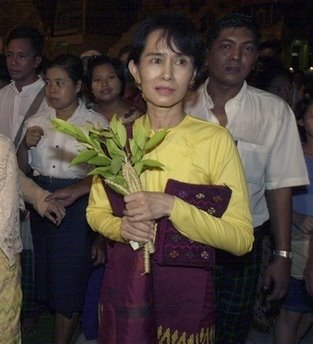


 Posts
Posts


