News & Articles on Burma
Tuesday, 01 March, 2011
-------------------------------------------------------------
Burma's Civil Servants Expect 380 Percent Salary Hike
Business lobby broadens its Asian horizons
Number of checkpoints between Kengtung-Tachilek increases
Burmese MPs Complain of Detention-like Conditions
Daily MP life: everything you ever wanted to know
Czech FM Promises Suu Kyi Continued Support
EU Official to Visit Thailand, Discuss Burmese Refugee Camps
UN’s Libya action must be reproduced
Myanmar: Call to build up local NGOs
Suu Kyi Strikes a Chord
Myanmar, North Korea in missile nexus
Maday Island Deep-Sea Port No Boon to Locals
------------------------------------------------------
Burma's Civil Servants Expect 380 Percent Salary Hike
By WAI MOE Tuesday, March 1, 2011
Senior officials at several government ministries in Burma's capital, Naypyidaw, have told their staff that all civil servants' salaries will be increased by at least 380 percent in April.
“The current monthly salary for general civil service staff is 21,000 kyat [US $23.86],” an employee from the Ministry of Education told The Irrawaddy on Tuesday. “But after the increases, basic staff will get 100,000 kyat [$113.63] per month.”
Government sources said they had heard that salaries for staff at the Ministry of Defense, including soldiers, were to be increased by 520 percent.
Rumors about massive salary hikes first began to circulate the Burmese capital in mid-February. Since then, consumer prices for basic goods have gone up dramatically.
An official with the Ministry of Finance and Revenue said that the military government’s plan is to equate salaries in Burma's civil service with other member-states of the Association of Southeast Asian Nations [Asean], calling it “Asean standard.”
“The increase in salaries is because of the Asean uniformity requirement,” he said. “All prices and salaries must be brought in line.”
However, several Burma observers said they were skeptical on the meaning of the expression, “Asean standard,” and pointed out that there exists a massive gap between salaries of Asean citizens across the board.”
“The current military regime has increased civil service salaries several times since its coup in 1988,” said businessman in Rangoon. “But when the regime increases salaries, then inflation and commodity prices go up too.”
He also noted that the rate of exchange for Burmese kyat was about 25 to the US dollar in 1988, whereas it is now about 1,000 kyat to the dollar.
During the 22-year rule of the military regime, Burmese civil servants' salaries have increased five times: in April 1989, in April 1993, in April 2000, in March 2006, and in January 2010.
Amid the government’s plan for the most massive salary increase since 1988, the prices of everyday commodities, particularly food prices, continue to rise at marketplaces around the country.
Perhaps the two most important staples, rice and cooking oil, have increased in price substantially in the past month.
The Weekly Eleven journal in Rangoon reported that since the third week of February, the price of imported palm oil has increased from 1,950 kyat [$ 2.21] to 2,725 kyat [$3.09] for a viss [5.1 kg tin]. The journal reported that the price of palm oil in Burma is 30 percent more than on other international markets.
On Monday, Paw San Hmwe Rice, a high-quality Burmese rice, was retailing for 35,000 kyat [$39.70] per 20-kg sack, compared to 29,500 kyat [$33.50] less than a month ago.
Although Burma received more than $5 billion from sales of natural gas and jade to neighboring countries in 2010, the military-ruled nation is still one of the least developed countries in the world. The majority of the Burmese population still survive on less than one US dollar per day. http://www.irrawaddy.org/article.php?art_id=20855
----------------------------------------------------
Business lobby broadens its Asian horizons
By AHUNT PHONE MYAT
Published: 1 March 2011
Burma’s leading industry federation is embarking on a reshuffle of its top staff whilst preparing to open an office in Beijing, a signal of the country’s growing economic ambitions.
The recent announcement that the Union of Myanmar Federation of Chambers of Commerce and Industry (UMFCCI) is to develop a tangible presence in China serves to strengthen Burma’s lucrative economic relationship with its northern neighbour, which recently became the country’s top foreign investor.
The UMFCCI, Burma’s largest business federation, represents nearly 11,000 Burmese and 770 foreign companies operating in the military-ruled country. A significant number of overseas businesses there are from China, which has been hungrily eyeing Burma’s natural energy reserves, the sector that has attracted the majority of its investments.
The mooted appointment of a new UMFCCI chairman comes as former head, Win Myint, takes a position in the new Burmese cabinet. Although his title is yet to be confirmed, rumours are circulating that he will become the Minister of Co-operatives.
Although it bills itself as an independent body tasked with “representing and safeguarding the interest of private business sector”, the UMFCCI receives significant involvement from the Burmese government.
The clout wielded by the federation has strengthened since it was upgraded in 1999 in line with Burma’s shift towards a market-oriented economy, and it now acts as a mascot for the country’s unstable yet burgeoning business environment.
Indeed despite warnings from international watchdogs such as EarthRights International that doing business in Burma carries significant reputational and material risks, investment from East Asian companies is rising. Work recently began on the $US8 billion Tavoy deep-sea port in the country’s south, led by Thai construction giant Ital-Thai, while agreements to explore and exploit Burma’s vast natural gas reserves continue to be pushed through.
But it is China that has emerged as the regional trailblazer, with Beijing backing numerous hydropower plants and the controversial Shwe dual pipeline that will transport Burmese gas and Middle Eastern oil across Burma to its energy-hungry southern provinces.
In January last year, Win Myint, who has held the UMFCCI chairmanship since 1999, stressed the importance of increased trade between the two countries, particularly in the agricultural sector which accounts for some 60 percent of the Burmese labour force’s income. Back then, border trade dominated Burma’s economic ties with China, but that is rapidly changing with the increased focus on the energy sector.
http://www.dvb.no/news/business-lobby-broadens-its-asian-horizons/14519
----------------------------------------------------------
Number of checkpoints between Kengtung-Tachilek increases
Tuesday, 01 March 2011 16:52 Hseng Khio Fah
The number of checkpoints between Kengtung and Tachilek in Shan State East, opposite Thailand’s Mae Sai, has more than tripled and the gate fee has also doubled, according to bus drivers.
“There were only about four or five gates before. Now there are no less than 20 gates including Burma Army checkpoints that collect fees from us,” said a driver who owns a 10-wheel truck.
The previous main checkpoints were at Markyang (Tachilek), Talerh, Mongphyak, and Kengtung.
“In addition, the gate fees have also increased,” he said.
According to him, before a bus was required to pay Kyat 3,000 (US$ 3.40) and now is up to 5,000 Kyat (US$ 5.7) and a 10 wheel truck is from 5,000 Kyat (US$ 5.7) to 10,000 Kyat (US$11.36).
However, car drivers and car owners have reportedly submitted a petition to Kengtung command in order to reduce the gate fees and to withdraw some of the checkpoints.
“Actually, Union Solidarity and Development Party (USDP) promised us that if we voted for its party, it would reduce the number of checkpoints and the gate fee,” said a businessman.
Two weeks ago, Naypyitaw has ordered closure of one of the bus lines, Hsarm Lao, owned by the United Wa State Army (UWSA)’s Hongpang Co. that runs between Tachilek and Kengtung, 160 km north of the border.
However, a new bus line called Tet Nay Win which is believed to be owned by the military junta authorities has replaced it. There are two others bus lines running between the two cities: Shwe Myodaw and Shwe Yegan. The bus fare is K 4,000 (roughly $ 4) per passenger. http://www.shanland.org/index.php?option=com_content&view=article&id=3489:number-of-checkpoints-between-kengtung-tachilek-increases&catid=93:general&Itemid=291
-------------------------------------------------------
Burmese MPs Complain of Detention-like Conditions
By SAI ZOM HSENG Tuesday, March 1, 2010
One month after Burma's new Parliament was formed, opposition MPs say that restrictions on their movements in the capital, Naypyidaw, have begun to make them feel like they are being detained by the country's military authorities.
“We were warned when we arrived here that we couldn't move around freely. Even though we receive stipends, we feel like prisoners,” said one MP, speaking on condition of anonymity.
“When we are not in session, we are only allowed to go to the dining hall or tearoom or return to our hostels,” he added.
Since it convened on Jan. 31, the new Parliament has elected a president and vice-presidents and drawn up a list of candidates for cabinet posts, but has yet to form a government. According to MPs, the main business at the moment is forming committees.
Both houses of Parliament have created 15-member draft legislative committees, with each house also having four sub-committees, while parliaments in the country's 14 states and regions also formed legislative and ethnic affairs committees this morning, sources said.
Meanwhile, residents of Naypyidaw said that security in the city has been tightened since a bomb blast in Rangoon on Sunday.
“Security forces won’t allow anyone without an original identity card to enter the city. They won't accept recommendation letters or student identity cards,” said one resident, adding that there are around 20 police truck patrolling the city every night.
http://www.irrawaddy.org/article.php?art_id=20853
-----------------------------------------------
Daily MP life: everything you ever wanted to know
Tuesday, 01 March 2011 13:55 Ko Wild
Mizzima reporter Ko Wild interviewed two members of Parliament, one in the Upper House and one in the Lower House, about what the daily life of a lawmaker in Naypyidaw is like. They asked to remain anonymous in order to speak freely.
A file photo of a special express bus carrying Burmese lawmakers at a checkpoint on a road leading to the Union Parliament in the capital of Naypyidaw in January 2011. Photo : AFP
A file photo of a special express bus carrying Burmese lawmakers at a checkpoint on a road leading to the Union Parliament in the capital of Naypyidaw in January 2011. Photo : AFP
Question: What is it like working in the huge Parliament complex?
Answer: The buildings of the Lower House and Upper House are adjoining buildings. The Lower House has a separate dining hall. Beside the dining hall, there are two vice-presidential palaces. In the rear area, there are 20 buildings for parliamentary affairs committees. There are a total of 31 buildings including the presidential palace in other parliament premises. A boundary wall encloses the entire parliamentary premise. There are two main gates. There is also a moat. There are several boundary walls inside the premises, and we are not allowed inside these places. The Speaker warned us on the first day of Parliament not to go to these unauthorized areas.
Q: How do you travel around in Naypyidaw?
A: I live at a guest house provided by the City Development Committee (municipal). It usually takes about 20 minutes to reach Parliament on an air-conditioned express bus. The bus stops at the outer gate, and we have to walk a short way. Then we have to take a minibus at another gate to reach our Parliament building.
Q: What kind of security check do you go through?
A: The parliament staff checks us with mine detectors when we enter the premises. We must show our ID number. The staff won’t allow anyone inside who doesn’t have an ID.
Police stand guard at a checkpoint leading into a compound of official hostels provided to Burmese members of Parliament in the capital of Naypyidaw. Photo : AFP
Police stand guard at a checkpoint leading into a compound of official hostels provided to Burmese members of Parliament in the capital of Naypyidaw. Photo : AFP
Q: What are the living conditions inside the hostels that house members of Parliament?
A: The hostels are allocated by party affiliation. If a party won only one or two seats, the MPs have to stay with MPs from another party. Similarly, independent MPs have to stay with other MPs. There are 29 single-story hostels numbered from 1 to 29, eight rooms in each hostel. There is a corridor in each hostel and there are glass windows and wooden doors. Each room is 20’x25’ and equipped with one ceiling fan and two fluorescent lamps with a bathroom and water closet attached. The bathroom is about 9’x9’ and has one basin, one mirror and a 2-foot high plastic bucket. There is one shower in it, but it is unusable. We cannot use the water available in the hostel for even washing your face. We have to use bottled water for that purpose.
Q: Are there recreation facilities?
A: If you don’t have a radio, you will be out of contact with the outside world. There are TV sets in offices, and we can watch there. But most of us stay in our own rooms and barely go out to see TV. The allowances given to holders of public offices at the grades of Union level and regional and state level are more generous that we get at the MP level.
Q: Are there any special security arrangements for MPs?
A: They do not provide round the clock security for us. But there are policemen deployed at the hostel gate. The policemen check us when we go out and come in to our hostels. There are no security guards at the hostels. Media persons cannot come to us without being checked. A guest has to wait at the gate office after signing a registration book. We have to meet with our guests at the gate. Our hostels are surrounded by a boundary wall, and there is only one main gate on this wall.
Q: What other regulations govern MPs?
A: We have to notify officials one day in advance if we want to hold a reception or a meeting in a government room. Then they will arrange a room or meeting hall for us. But many of us avoid this, thinking that people can overhear our discussions. So we talk to each other at either teashops or while strolling around. Sometimes we talk in our rooms.
Q: You receive a living stipend from the government, correct?
A: The military regime issues 10,000 kyat (US$ 11.50) as a daily allowance to MPs who attend Parliament sessions. Each day, MPs usually have to spend at least 5,000 kyat (US$ 5.70) for meals, 2,000 kyat (US$ 2.30) for lodging and 3,000 kyat (US$ 3.45) for miscellaneous expenses including transportation.
Q: What is the food like in the area?
A: Most meals cost around 2,000 kyat (US$ 2.30) in the parliamentary dining halls, and we get coupons to buy food at a buffet lunch or dinner. Otherwise, we eat on our own at various local places.
http://www.mizzima.com/edop/interview/4948-daily-mp-life-everything-you-ever-wanted-to-know.html
----------------------------------------------------
Czech FM Promises Suu Kyi Continued Support
By THE IRRAWADDY Tuesday, March 1, 2011
The Czech Republic's Minister of Foreign Affairs Karel Schwarzenberg told Burmese opposition leader Aung San Suu Kyi in a telephone conversation on Monday that his country continues to support her efforts towards democratic change in Burma.
“It was a great honor and privilege for me to have an opportunity to talk with her. She is one of the biggest heroes of our time,” said Schwarzenberg.
“I respect and admire her stand and the example she is giving to us, an example of someone who is making so many personal sacrifices for the sake of her people,” he added.
Suu Kyi was released on Nov. 13 last year after spending more than seven years under house arrest. She has spent a total of 15 years years in detention since she was first arrested by the Burmese junta in 1989.
“She [Suu Kyi] needs to get the chance to communicate her opinions directly and I will further encourage my colleagues and fellow foreign ministers to be in direct contact with her,” said Schwarzenberg.
“Having our own Czechoslovak 40-year-long experience with an undemocratic regime, we understand how important it is to have such brave people who dare to speak out,” he added.
The Czech foreign minister also shared with Suu Kyi the Czech government’s reading of the current situation in Burma, including the Czech position that EU sanctions on the Burmese regime should stay in place until it is clear how the new government will interact with all stakeholders in the country.
The Czech Republic is a leading EU supporter of the Burmese democracy movement. At a recent activist conference in Prague, Schwarzenberg and former Czech President Václav Havel delivered opening remarks.
Zoya Phan, the international coordinator for the London-based Burma Campaign UK and an attendee at the Prague conference, said that the Czech Republic's policy on Burma is very much appreciated.
She said she hoped the Prague conference would help the debate over an EU common position on sanctions, which will be under discussion in April when it comes up for its annual renewal.
http://www.irrawaddy.org/article.php?art_id=20849
----------------------------------------------
EU Official to Visit Thailand, Discuss Burmese Refugee Camps
By SIMON ROUGHNEEN Tuesday, March 1, 2011
BANGKOK—The lead European Union (EU) official on humanitarian issues will visit Thailand next week to meet government officials and non-governmental organizations (NGOs) to assess the situation in Burmese refugees camps in northern Thailand.
The visit by EU Commissioner Kristalina Georgieva comes after NGOs and Burmese exile groups complained of cuts in humanitarian aid to refugees in the camps. Many of the refugee camps have been in place since the 1980s and their population is around 150,000.
Mathias Eick, the Regional Information Officer for ECHO, the European Commission's (EC) humanitarian arm, said that the EC's funding “has remained more or less constant over the last few years, at around 12.5 million euros per annum.”
Since 1994, “the European Commission has provided more than 140 million euros in support to refugees from Myanmar in Thailand,” Mr Eick added.
However, the EC—which functions as a sort-of cabinet within the EU's dispersed and complex governing structures—is shifting its approach to Burmese refugees in Thailand. According to Mr Eick, “As the camps have existed for 25 years, and also serve as a pull factor for economic migrants and third-country resettlement seekers, there is now a need to move from a humanitarian relief focus to more sustainable long term solutions for the refugees.”
Speaking on condition of anonymity, a spokesperson for an organization working with refugees in the camps along the border between Thailand and Burma said that cuts in direct assistance to refugees is cutting into the basic nutrition and health-care needs of the people in the camps.
EU ambitions “to promote a more development-oriented approach to Burmese refugees in Thailand” will not work, says the refugee camp worker, “unless there are changes to Thai policy regarding refugees.” This currently restricts refugees to the camps, thereby limiting the options for those refugees who would prefer not to be reliant on humanitarian relief and making it unclear how the ECHO could implement its “more sustainable long terms solutions for the refugees.”
Georgieva is set to look into reports that some of those entering the camps are not refugees, but economic migrants, or people seeking repatriation to a country outside Thailand. However Thai authorities have not run a screening program for the camps since 2005, making it impossible for camp management officials to ascertain the motives and identity of everyone entering the camps. That uncertainty is not sufficient in itself to justify funding cuts, says the camp worker.
ECHO and the EC are responsible for 30-40 percent of all humanitarian spending by the EU and member states, an average of 640 million euros per annum, according to the ECHO website. In 2008, the most recent year that records are available on the ECHO website, the biggest EU member-state donors to ECHO were the United Kingdom (343 million euros), Germany (224 million euros), Denmark (178 million euros), Italy (141 million euros) and Ireland (117million euros).
Of these, Germany and Italy are thought to be the lead players promoting closer ties with the Burmese Government, as the EU “Common Position” on Burma comes up for its annual review in April. David Mathieu, a Burma expert at Human Rights Watch, said that “there are major divisions in the EU over Burma, and the divisions have always been there but have certainly been growing over the past few years, and are more pronounced since the elections.”
Burma's elections held on November 7, 2010 produced a landslide win amid allegations of rigging and ballot-stuffing for the junta-backed party known as the Union Solidarity and Development Party (USDP), which took 76 percent of the vote. 25 percent of seats were reserved for current army officers in any case, and the new government is comprised mostly of military men, and is nominally headed by former Gen Thein Sein, who was prime minister under the old military regime.
Mathieson says that the view held in some quarters that the elections and formation of a new government mean that there is even a small window of change opening in Burma, is “a cereal-box platitude,” and that nothing has changed in how Burma is ruled since the elections.
The EU Common Position mandates some sanctions on the Burmese government, and Burmese groups in Europe have been lobbying for these sanctions to be at least retained in the upcoming review.
The EU envoy to Burma/Myanmar, Piero Fassino, is due in Thailand next week, two days before Georgieva's visit.
Requests to his office for comment on the upcoming visit were not answered, with Mr Fassino having just won the primary election contest in the race to become Mayor of Turin, Italy.
Despite divisions within the EU, it seems unlikely that sanctions will be eased at this juncture, according to people close to the debate.
Mark Farmaner, head of the Burma Campaign UK, said, “The regime has been so blatant in rigging the vote and controlling all aspects of government that it seems most EU countries skeptical about sanctions have had to concede there is no justification for lifting economic sanctions.”
http://www.irrawaddy.org/article.php?art_id=20854
-------------------------------------------
UN’s Libya action must be reproduced
By NANT BWA BWA PHAN
Published: 1 March 2011
A petition sent yesterday to UN Secretary General Ban Ki-moon that carried 84,000 signatures was a desperate appeal from Karen civilians who have lived in fear of the Burmese army for their whole lives, as have their parents and grandparents before them.
People from Burma have watched in disbelief at how swiftly Ban Ki-moon and the UN Security Council have acted in response to Colonel Gaddafi’s attacks on Libyan civilians. It took just two weeks for a unanimous Security Council resolution to be passed, demanding an end to the attacks, imposing sanctions, and referring Libya to the International Criminal Court (ICC). Attacks against Karen and other ethnic civilians have been going on for more than sixty years, with no action taken by the international community.
Since Burma got independence from Britain in 1948, our Karen people have been targeted for planned, widespread and systematic attacks by the ruling governments in Burma. These have forced hundreds of thousands of us into hiding, refugee camps and to other countries.
The Karen National Union (KNU), the largest political organisation representing the Karen people of Burma, organised this petition at the request of the Karen civilians. We are asking UN Secretary General Ban Ki-moon to take effective action to immediately stop the Burmese regime’s military operations and human rights violations in Karen areas. This petition is supported by KNU branches and Karen communities around the world. The petition was signed by 83,950 Karen civilians from Burma, aged from 16 to 103 years, who are victims and survivors of military attacks and human rights abuses by the Burmese army.
The dictatorship in Burma continues to target civilians in their military operations in our homeland. These attacks are in breach of the Geneva Conventions, and require immediate international action. Our Karen community in the UK fully supports the KNU, not only for defending the Karen people and finding ways to listen to them, but also for leading the Karen struggle for our rights, protection and security to establish a federal democratic Burma where everyone can live side by side in peace. The crisis in our country requires high level international attention in order to influence the dictatorship.
The elections held on 7 November 2010 did not represent any kind of progress towards democratisation, national reconciliation, or peace and stability in Burma. The election was designed only to legitimise the continuation of the military rule, under civilian guise. The constitution that this election brought in gives no protection to the ethnic people. As our General Secretary, Zipporah Sein has said, it is a death sentence for ethnic diversity in Burma.
In order to solve the political problems in Burma, the KNU has always called for dialogue with the ruling regime. This is in line with calls from the international community, including the United Nations, European Union and the US, to solve the problems through dialogue. However, the dictatorship ignores this call and continues its military offensives against the Karen people.
Ban Ki-moon has never made the strong statements on Burma that he has with Libya. This is why Karen communities worldwide also delivered copies of the petition to presidents and prime ministers across the world, calling on them to also take action. We asked them to use their influence to support Ban Ki-moon to secure a nationwide ceasefire as a top priority, leading to meaningful and inclusive dialogue to achieve genuine national reconciliation and a federal Burma. We also called on them to pressure the regime to enter into dialogue with the KNU and other ethnic political parties, together with the rest of the democracy movement in Burma.
The international response to what has happened in Libya has been swift and strong. It has been the opposite with Burma. Are the lives of Karen people and others from Burma less valuable than the lives of people in Libya? Of course the answer is no. In which case, Ban Ki-moon must listen to the 84,000 people who appealed for his help yesterday. We are suffering just as much as the people of Libya. He must put the issue of a nationwide ceasefire at the top of his agenda for Burma. If he continues to fail to act, the cost will be counted in more lost lives, more rape, more torture, and more burnt villages.
Nant Bwa Bwa Phan is the UK representative of the Karen National Union.
http://www.dvb.no/analysis/un%E2%80%99s-libya-action-must-be-reproduced/14506
-----------------------------------------------
Myanmar: Call to build up local NGOs
Source: United Nations Office for the Coordination of Humanitarian Affairs - Integrated Regional Information Networks (IRIN)
Date: 01 Mar 2011
YANGON, 1 March 2011 (IRIN) - The international community should make better use of local NGOs and community-based organizations in Myanmar, while at the same time building capacity among them, aid officials say.
"Local NGOs... have local knowledge, contacts and they don't have to worry about getting permission on planning and resources from a central head office. They also have little problem accessing different parts of the country," said Walter Davis, programme manager for Paung Ku, a consortium of 11 international and local organizations established in 2007 to strengthen civil society in Myanmar.
But as things stand, most donors continue to funnel money through international NGOs (INGOs), which at times compete with local groups.
"INGOs need to change to do more capacity building. The rules of engagement still see local NGOs as subcontractors because their capacity is weaker," said Aung Tun Thet, a senior adviser to the UN Resident Coordinator in Myanmar.
"INGOs need to decide whether they are in direct competition with [local organizations] or whether they are here to mentor local NGOs," he added.
Post-Nargis growth
Cyclone Nargis in 2008 spawned hundreds of civil society organizations to cope with the humanitarian crisis that killed a reported 140,000 and affected another 2.4 million, by UN estimates.
"Nargis was a catalytic push for the mushrooming of local NGOs. There were 50 times as many NGOs as before," said Aung Tun Thet.
"Faced with the magnitude of Cyclone Nargis, donors needed to find a way to give money and not go through the government - the elephant in the room," he added.
Local groups were a natural funding vehicle as they reacted most quickly when the tidal surge hit.
But when the government declared an end to the tsunami's emergency phase in 2010, many of these same NGOs collapsed or turned to development activities - often lacking basic capacity to carry out the work.
"With such rapid evolution [of NGOs activated by Cyclone Nargis], the rigor required of NGOs did not accompany this expansion. These groups have good intentions but lack basic rudimentary management skills," said Aung Tun Thet.
Too often, local groups have been recruited and supported to serve the project needs of INGOs, but not beyond, said Ingeborg Moa, Myanmar director of Norwegian People's Aid, which has supported dozens of local groups since 2004.
"If more funding could be [made] available for organizational development, capacity building and support for initiatives that aim to strengthen local organizations' overall capacities, not just their capacity to 'deliver services' as implementing partners of international organizations, this would be a big step in the right direction," said Moa.
Removing barriers
Focusing on so-called shortcomings in local accounting and management systems may be misguided, according to a December report by Paung Ku, which includes Save the Children, Oxfam and CARE, as well as local groups.
Receipts, for example, are often difficult to obtain in Myanmar, leaving many organizations unable by international standards to account for resources and unable to qualify for international funds, Davis said.
"Myanmar has a long history of using accountability mechanisms related to religious donations, with Buddhist monks playing a key check and balance role. Strengthening these existing frameworks may ultimately be more effective in building accountability than continuing to use imported concepts," said Davis.
A cumbersome government NGO registration process is an additional obstacle for local groups to tap international funds.
"The government would not allow any group without a [memorandum of understanding] to accept donor funds. What is needed is a more transparent registration process," said Aung Tun Thet.
An official at the local relief NGO, Aung Yadanar, based in the town of Pyapon in southern Myanmar, said he applied for registration soon after he co-founded the NGO in 2008 - but has yet to receive any news.
"In the meanwhile, we have to keep [a] good relationship with township authorities so that we can do our job."
Even without being formally registered, the group still receives funding from the UK Department for International Development, which also provides technical assistance along with the Ministry of Agriculture.
There are an estimated 300 NGOs working in Myanmar, of which a maximum 10 percent are registered, according to the UN Myanmar Information Management Unit (MIMU) [ http://www.themimu.info/ ].
mh/ds/mw http://www.reliefweb.int/rw/rwb.nsf/db900SID/MUMA-8EJ4ES?OpenDocument
[END] A selection of IRIN reports are posted on ReliefWeb. Find more IRIN news and analysis at http://www.irinnews.org
------------------------------------------
The Diplomat
Suu Kyi Strikes a Chord
By Luke Hunt
March 1, 2011
It was a commanding performance sprinkled with a few laughs.
Nobel Laureate Aung San Suu Kyi sounded a conciliatory note when she recently spoke with foreign correspondents in Kuala Lumpur via an audio link from Rangoon.
In drawing parallels between protests in the Middle East—censored out of the Burmese press—and the pro-democracy movement in her own country, she said an unwillingness by armies in Tunisia and Egypt to open fire on their own people was key.
It's an incomprehensible thought in Burma, as the nation’s monks discovered in 2007 when thousands demonstrated. Some were shot, arrested and beaten, while others simply disappeared. ‘The people have stood up in Burma before as you know, and in those instances they were fired upon by the army and I think that makes a great difference,’ she said.
‘Now the situation in Libya is that the army itself appears divided in regards to how the situation should be handled. In Burma, I don’t think there was any noticeable division with regards to the policies of the military.’
Suu Kyi won democratic elections in 1988, but the military declined to accept the result, opting to physically crush and intimidate any opposition out of business. She spent most of the next two decades under arrest, but was freed after last November’s poll, which was condemned as a sham in the West.
Relations with the junta haven’t improved much since she got out. The military recently warned Suu Kyi and her National League for Democracy (NLD) that they’d meet a tragic end if they continued to support Western sanctions against Burma.
But Suu Kyi was unfazed, saying she’d been reviled by the junta for 20 years, so nothing has changed.
She said she was happy to promote talks aimed at ending sanctions and steering the country towards national reconciliation, while at the same time warning investors that Burma remains fraught with difficulties in terms of dealing with the junta. Critics have argued that Suu Kyi and the NLD have sent mixed signals on sanctions, prompting speculation of a split among the leadership.
During a speech at the World Economic Forum in Davos last month, Suu Kyi appeared to signal a policy change by lauding potential investment and lamenting that the Burmese people had been left behind while Burma’s neighbours did deals with the junta, exploiting the country’s natural resources.
Her tone on business in Burma was clear when she commented on the jailing of Australian Ross Dunkley, publisher of The Myanmar Times, who was jailed in Rangoon for a visa violation amid reports his local business partners were attempting to seize control of the newspaper.
‘I'm not certain exactly why Ross Dunkley has been arrested but certainly one thing I can say is that there is no freedom of the media yet in Burma and it helps if people try to expand the limits of what journalists can do in Burma,’ she said. ‘I think we all have to work towards greater freedom of information, but I don't know whether that kind of freedom of information can be obtained by investing in Burma in the media through the authorities.’
She added that even Burma can’t escape 21st century technology that has significantly expanded the ability of people to organize without government interference, which was a major factor behind the protests in the Middle East.
‘There haven't been reports about what’s happening across Tunisia, Egypt and Libya in the national papers, but those who know about those events are comparing what’s happening there with what happened in Burma 1988.
‘Everybody is waiting around to see with great interest what transpires because people were impressed with what happened, particularly in Egypt.’
Suu Kyi said she has also been attempting to establish Facebook and Twitter accounts, but complained the Internet connections in Burma were too slow. She added: ‘I think that I must say that I’m also reading a book on how to manage my dog.’
http://the-diplomat.com/asean-beat/2011/03/01/suu-kyi-strikes-a-chord/?utm_source=feedburner&utm_medium=feed&utm_campaign=Feed%3A+the-diplomat+%28The+Diplomat+RSS%29
----------------------------------------
ASIA TIMES ONLINE
Mar 2, 2011
Myanmar, North Korea in missile nexus
By Bertil Lintner
BANGKOK - Military-run Myanmar's growing weapons ambitions, including new revelations that the reclusive regime is producing long-range Scud-type missiles with North Korean assistance, threaten to destabilize the region and make the Southeast Asian country a new global weapons proliferation hotspot.
According to exclusive information received by Asia Times Online, one of two munitions factories located near the small town of Minhla on the west bank of the Ayeyarwady River, south of Minbu in Magway Division, is involved in the production of sophisticated Scud-type missiles. North Korean experts are reportedly assisting Myanmar's own military technicians in the top-secret project.
Known as ka pa sa, shorthand for the Burmese-language initials
of the the Directorate of Defense Industries, the country's weapons factories have for decades produced basic armaments for the military. But ka pa sa 2 and 10 near Minhla are now churning out more advanced weapons, including Scud-type missiles, than the country has to date. These are more difficult to detect from the air because they are located partly underground.
A Scud-armed Myanmar would place its capabilities a significant notch above its Southeast Asian neighbors, which do not possess such long-range missiles. The revelations could spark a regional arms race, prompting neighboring countries such as Thailand to develop or procure their own missile arsenal.
The existence of the two factories was outlined in an August 27, 2004 United States embassy cable from Yangon, which was made public by WikiLeaks late last year. One of the US Embassy's sources claimed that North Korean workers were assembling surface-to-air missiles at "a military site in Magway Division" where a "concrete-reinforced underground facility" was also under construction. The source told the embassy that "he had seen a large barge carrying a reinforced steel bar of a diameter that suggested a project larger than a factory".
Asia Times Online has discovered that the site referred to in the embassy cable is ka pa sa 10, situated near Konegyi village in Minhla township. Construction of the site began in 1993, but has only recently been completed. The site reportedly covers 6,000 acres (2,428 hectares) and, according to a source who used to work at the facility, the aim is to produce surface-to-air, surface-to-surface and air-to-air missiles.
The same source, who requested anonymity for personal security reasons, claimed that the North Koreans working at the site first entered Myanmar discreetly by road from China. They were met at the border and then brought to Minhla by officers from Myanmar's Defense Production Directorate, known as ka ka htone, according to the source.
On the Myanmar side, between 600 and 900 army technicians and other military personnel are currently based at ka pa sa 10. Initially Russian and Chinese technicians also took part in the facility's construction, but they appear to have since left and been replaced with North Korean experts.
Ka pa sa 2 controls no less than 100,000 acres of land near Malun village, which is also based in Minhla township. According to the source, the somewhat older factory employs 900 engineers and other military personnel and produces 60mm, 81mm and 120mm mortars and 105mm artillery pieces.
The complex also includes a huge firing range where heavy weapons, including artillery and rockets, are tested. According to the source, Singapore, as a small island country which doesn't have enough space for such testing, paid for the construction of the firing range. Weapons are also brought from Singapore and tested at the site.
Name games
On October 4 last year, the English-language weekly Myanmar Times reported that Myanmar authorities had inaugurated on September 19 a "25.4-mile section, or approximately 40 kilometers, of railroad between Minhla in Bago Region and Minbu in Magwe Region". Construction of the new section, "which is part of the ongoing Kyangin-Pakokku Railroad Project along the western bank of the Ayeyarwady River", started in April 2007, according to the same news report.
The infrastructure project's opening was presided over by then prime minister, now President Thein Sein, underscoring the apparent importance of the short rail link. According to the Myanmar Times, Thein Sein also stated that the railroad would enable "the people to have easy access to various regions of the nation".
The problem with the report is that Minhla in Bago Region is located several miles to the east of the Ayeyarwady, and nearly 200 miles or, more than 300 kilometers, south of Minbu. Deliberate or otherwise, the reports confused the location of the two towns that share the same name. A 40-kilometer railroad between "upper" Minhla on the western bank - the only stretch of railroad on that side of the river - and Minbu could only serve one major purpose: to transport heavy goods relevant to producing Scud-type missiles or supplying a nuclear program to and from Minbu, a major port on the Irrawaddy River.
So far, however, there are no reports to suggest that Minhla's two ka pa sa facilities are involved in Myanmar's nascent and clandestine nuclear program. That research is reportedly carried out at Myaing to the north of Pakokku, which is also in Magway Division but far from the Minhla facilities. The progress of Myanmar's nuclear research is not known, but it is believed to be in its infancy and widely regarded as a pipedream that is unlikely to succeed in developing nuclear weapons.
Still, North Korean involvement in ka pa sa 2 may be cause for international concern - even for Myanmar's traditional military partner, China.
In the 1990s, China supplied Myanmar with between US$1 billion and $2 billion worth of military hardware. The list of imported armaments included 80 Type-69II medium-battle tanks, more than 100 Type-63 light tanks, 250 Type-85 armored personnel carriers, multiple launch rocket systems, howitzers, anti-aircraft guns, HN-5 surface-to-air missiles, mortars, assault rifles, recoilless guns, rocket-propelled grenade launchers, JLP-50 and JLG-43 air defense radars, heavy trucks, Chengdu F-7M Airguard jet fighters, FT-7 and FT-6 jet trainers, A-5C ground attack aircraft, SACY-8D transport aircraft, Hainan class patrol boats, Houxin-class guided missile fast attack craft, minesweepers and small gunboats. In 2000, China delivered 12 Karakoram-8 trainers/ground attack aircraft, which are produced in a joint venture with Pakistan.
Since then, however, it appears that Chinese deliveries of military equipment have waned significantly. However, in November 2007, immediately after the crackdown on a widespread protest movement led by Buddhist monks, China supplied Myanmar with howitzers and bomb-detection equipment.
According to a February 18, 2011, report by the US Congressional Research Service (CRS), China followed that up with a delivery of 450 military trucks in December 2007. In January 2008, China sent another 500 military trucks to Myanmar and in August that same year supplied an additional 3,500 military trucks with spare parts. In 2009, China delivered another five large military trucks and in March last year sent an additional 400 military use vehicles.
That bilateral cooperation was reaffirmed last September when Myanmar junta leader General Than Shwe traveled to China, ostensibly to update the authorities in Beijing on his country's upcoming elections, which were held in November. During the visit, Than Shwe also inspected Huawei Technologies, which CRS says has supplied Myanmar's military with communications equipment. At the end of last year, Myanmar's air force agreed to buy 50 K-8 jet trainers from China; CRS speculates that some of the assembly work for the order will be done in Myanmar.
While China remains a major player in the still ongoing expansion of Myanmar's military forces, it is no longer Myanmar's main military partner. The regime in Naypyidaw is increasingly turning to North Korea for assistance in clandestine military research and the production of more sophisticated weapons, which seems to be at the top of the junta's list of strategic priorities. As the newly exposed North Korean-staffed facilities indicate, Myanmar's generals are angling to diversify their sources of hardware and know-how.
Bertil Lintner is a former correspondent with the Far Eastern Economic Review and the author of several books on Myanmar. He is currently a writer with Asia Pacific Media Services.
http://www.atimes.com/atimes/Southeast_Asia/MC02Ae01.html
--------------------------------------------
Maday Island Deep-Sea Port No Boon to Locals
By KHIN OO THAR Tuesday, March 1, 2011
Until recently, Maday Island on the coast of the Bay of Bengal in Burma's western Arakan State was a virtually unknown and unspoiled island possessing both natural beauty and resources that provided a simple living for about 2,400 residents. But that changed in 2009, when Burma's junta chief Snr-Gen Than Shwe and China's Vice President Xi Jinping inked an agreement to build a deep-sea port on the island that will be used by China to import crude oil from Africa and the Middle East and natural gas from Arakan State.
China currently imports crude oil from Africa and the Middle East that meet 80 percent of its fuel needs through the Strait of Malacca. Consequently, it has faced huge transportation costs, long transportation times and potential threats from pirates launching raids in the Strait. The completion of the Maday Island deep-sea port will allow China to bypass the Strait and save time and money.
In August 2007, the Burmese regime announced that it will sell gas to China from blocks A-1 and A-3 of the offshore gas fields located off the Arakan Coast that were discovered in December 2003. In June 2008, a Memorandum of Understanding was signed between the China National Petroleum Corporation (CNPC), the regime and other partners for the sale and transport of gas to China. An export gas agreement was then signed on December 24 of that year under which Burma agreed to supply China with gas for at least 30 years.
According to the Shwe Gas Movement, which is made up of individuals and groups who are concerned about the overall impact of the extraction of natural gas in Burma, the sale of gas will provide the junta with an estimated US $1.2 billion annually.
Apart from the deep-sea port, Chinese companies and Korea's Daewoo International Company have begun construction of oil and natural gas reservoirs and gas refinery projects on Maday Island and in Kyaukpru (also known as Kyauk Phyu), the pleasant port city known as the “Second Singapore” among Arakanese people that is located about 13 kilometers from the island.
In addition, the IGE Company, owned by Nay Aung, the son of former Industry 1 Minister Aung Thaung, has been granted a contract for the construction of gas pipelines from Maday Island to China.
According Arakan Oil Watch (AOW), an independent non-governmental organization that is an active member of the Shwe Gas Movement, the $1.5 billion oil pipeline, carrying 12 million tons of crude oil per year, will travel the 1,100 kilometers from Maday Island to China's Kunming city through central Burma. The natural gas pipeline will run parallel to the oil pipeline and extend even further, from Kunming to Guizhou Province and the Guangxi Zhuang Autonomous Region, for a total of about 1,700 kilometers. It is expected to transport 12 billion cubic meters of natural gas to China every year.
CNPC is heading up the Maday Island deep-sea port construction project, with about 10 other Chinese companies involved under its management. In addition, The Htoo Group of Companies and Asia World, owned by Burmese business tycoons Tay Za and Zaw Zaw, respectively, have reportedly been granted permission for the construction of some parts of the port.
According to Arakan Oil Watch, CNPC began construction of the deep-sea port and an oil reservoir on Maday Island in October 2010 and will finish the projects by 2013. The construction has already taken its toll on the island's mountainous environment and about 2,400 residents living in six villages.
Locals said farm lands are being confiscated on Maday Island in order to build the port and refinery and in Kyaukpru in order to build an international airport, hotels, golf courses and hospitals. In addition, about 500 acres of farmland near Gangawtaw Pagoda in Kyaukpru were confiscated for the construction of a gas refinery.
“Five mountains on Maday Island have already been demolished and many plots of garden land have already been confiscated and cleared. The confiscation of farmland continues as necessary,” said a resident of Ywarma Village on Maday Island.
“Farming and gardening are the main businesses for country folks like us. If we don't have land, we will have nothing to work on,” said another Maday Island villager whose land was confiscated.
U Ohn, one of Burma's most prominent environmentalists and the vice-chairman of the Forest Resource Environment Development and Conservation Association, told The Irrawaddy that the environment on Maday Island and in the surrounding Kyaukpru area will be severely affected by construction of the deep-sea port and related projects.
“What has been written in the book with regard to environmental conservation is really great. But there has been no implementation. We were not consulted on anything about the environmental impact of projects in Kyaukpru,” said U Ohn.
U Ohn said wastes and poisonous chemicals from gas extraction will not only affect the environment but also endanger aquatic animals as the amount of water pollution will be huge. In addition, the loss of mountains, mangrove forests and reefs along the coast will be inevitable, he said.
People on Maday Island said that apart from economic hardships they will encounter due to the confiscation of their farm and garden lands, they are anxiously worried about being left unprotected if they face another natural disaster. They said that although they were affected by Cyclone Giri in October 2010, they survived because they were protected by the surrounding mountains which have now been demolished one by one because of the deep-sea port project.
“These mountains protect us from natural disasters such as storms and floods. We can face catastrophe any time if there are no mountains around us,” said a Maday Island resident.
The regime, however, insists that despite the environmental impact and hardships faced by locals, the deep-sea port project is worthwhile because the Kyaukpru area will be developed as a result.
“I accept the fact that our area will be developed under these projects but there will be more disadvantages than benefits,” said a Kyaukpru lawyer. “China will extract natural resources from our area for about 30 years, so after the completion of those projects we will be left with nothing but empty buildings.”
The lawyer said if the regime really wants to focus on local development it should build up the skills of young people in the area and let them be involved in the projects. The opposite, however, seems to be occurring, as locals are reportedly precluded from working on the deep-sea port project.
The CNPC and its subsidiaries reportedly do not allow local people to work on their projects and have appointed Chinese to many positions. Kyaukpru residents said there are an estimated 2,000 Chinese currently working in their area.
“Our farm lands were confiscated but we can't work on those projects. We are not even allowed to catch fish and move around freely in nearby areas,” said a Maday Island resident.
He said those who lost their farmland were compensated only 200,000-700,000 kyat [$230-805] per acre, compared to the minimum market value of at least one million kyat per acre.
“We only received about one third of the compensation given by foreign companies because local authorities took some,” confirmed a villager from Kyauk Tan Village on Maday Island.
They said that even though locals are not allowed to work on the deep-sea port construction, they can take hard-labor jobs on the gas refinery project.
“I earn 1,500 kyat [$ 1.70] for my work from 6 a.m. to 6 p.m.,” said a worker.
He said that although his daily wages are too small to meet the current commodity prices, people have no choice because they don't have any other job options. Female workers are given only 1,000 kyat [$ 1.15] a day, he said.
In addition to the Chinese, people from other parts of Burma will be coming to the Kyaukpru area to work on the projects. Restaurants, entertainment businesses, bars and brothels are consequently emerging in the area to meet the needs of those employees.
“We now can see people take sex workers with cars and motorcycles. But we can't stop them because authorities have allowed such business,” said a Kyaukpru resident.
He said Chinese companies neither follow local regulations nor pay respect to religion. Some company staff even drink alcohol inside monasteries, he said.
Among the other hardships they have to endure, Kyaukpru residents face the bitter irony of having little access to electricity even though their area is rich in natural gas and oil. Instead, they use wood and charcoal fires for heating and cooking.
“It costs 600 kyat [$ 0.7] for a unit of electricity. An average monthly electricity bill is more than 20,000 kyat per household. For those who have businesses, they have to pay more than 100,000 kyat,” said a Kyaukpru resident.
People in Sittwe, the capital of Arakan State, said they only have access to electricity about three hours a day.
Four hydro-power plant projects are being implemented in Arakan State, but the regime has already signed deals with China, India and Bangladesh to sell them the electricity from these power plants.
With Maday Island and Kyaukpru residents apparently enduring all of the hardships related to the deep-sea port and related projects while the Burmese regime, the Chinese and other outside parties reap the benefits, legal experts and politicians in the area said they will try their best to protect locals from repression and human rights abuses.
“We will raise this issue in the national parliament if we can. Otherwise, we will discuss it in the state parliament. If the parliaments do not agree with us we will speak out against the projects,” said Ba Shin, a Kyaukpru resident and member of the Pyithu Hluttaw [People's Assembly] from the Rakhine Nationalities Development Party.
“I don't see any significant benefit for local people following the completion of those projects. So, we will only discuss issues beneficial for our people,” he said.
Copyright © 2008 Irrawaddy Publishing Group | www.irrawaddy.org http://www.irrawaddy.org/highlight.php?art_id=20851
Wednesday, March 2, 2011
News & Articles on Burma-Tuesday, 01 March, 2011


Tuesday, March 1, 2011
News & Articles on Burma-Monday, 28 February, 2011
News & Articles on Burma
Monday, 28 February, 2011
-------------------------------------------------------------
Burma Arrests Two Foreigners for Spying: Sources
New Burma banknote rumour sends rice prices up
Bomb Injures Six in Rangoon
84,000 Karens Petition Ban Ki-moon
Jailed activist ‘signs empty paper’
Burma Suspends Rice Exports after Rise in Local Price
UNSC Resolution on Libya Sends a Message to Other Regimes
Bangladesh lodges claim on extended continental shelf to UN
------------------------------------------------
Burma Arrests Two Foreigners for Spying: Sources
By WAI MOE Monday, February 28, 2011
Two foreigners working as volunteers at a private school in Rangoon run by a prominent local businessman have reportedly been arrested on suspicion of being CIA agents, according to official sources in Burma's former capital.
Sources from Military Affairs Security (MAS), the Burmese regime's military intelligence agency, said that the two foreigners were arrested in the third week of February. No further details about their identities or nationalities were available.
The MAS sources said that the pair worked as volunteer teachers at a school run by Dr Sai San Tun, the owner of the Alpine Drinking Water Company and the Yadanarbon Soccer Club.
When contacted by The Irrawaddy on Monday, Alpine Drinking Water's head office in Rangoon declined to comment on the case. The US embassy in Rangoon was also not available for immediate response.
Foreigners working in Burma, including diplomatic staff and aid workers, are viewed with suspicion by the Burmese authorities, who maintain strict surveillance of their activities in the country.
Since a crackdown on protesting Buddhist monks in 2007, the regime has stepped up its efforts to keep an eye on foreigners. Foreign NGO workers traveling outside of the cities for field research report that they are routinely followed by government agents.
In December 2009, a female teacher with the American Center in Rangoon was deported from Burma after she gave a talk on environmental issues to members of the opposition National League for Democracy in Mandalay, the second largest city in Burma.
http://www.irrawaddy.org/article.php?art_id=20845
--------------------------------------------------
New Burma banknote rumour sends rice prices up
Burma's rice prices go up following new banknote rumours. [ABC]
The price of rice and other goods has gone up in Burma's capital, Rangoon, amid rumours that the government is planning to introduce a new type of banknote.
Reports that the government's preparing to introduce a new 10,000 kyat banknote has sent high-grade rice costs up from $US34 a kilo to $US38.
Traders in the city say bad weather, higher transport and cooking oil costs have also had an impact on prices.
There are also reports that local traders are holding on to supplies, hopeful of getting more money for their rice in future.
http://www.radioaustralianews.net.au/stories/201102/3150498.htm?desktop
-------------------------------------------------
Bomb Injures Six in Rangoon
By THE IRRAWADDY Monday, February 28, 2011
At least six people, including one child, were injured when a bomb exploded in Rangoon's Insein Township on Sunday evening, according to police officials in the former Burmese capital.
The incident occurred at around 7 pm, when an unidentified man accidentally set off an explosive device which he was carrying with him, injuring himself and at least four other people, the police said.
Although no one was killed, several of the victims were said to be in critical condition, and the man suspected of carrying the explosive lost a leg.
The explosion is still under investigation and the authorities have yet to identify the man accused of carrying the explosive. However, a police official in Rangoon who is handling the case said that exiled dissidents were most likely responsible for the incident.
“According to our latest findings, this is connected to political exile groups,” the official said on condition of anonymity.
Witnesses said that the number of injured would have been much higher if the explosion had occurred in a more crowded place.
“It was a very large explosion. There would have been far more casualties if it had exploded in the city center,” said a witness.
Sources in Rangoon said that on the night of the incident, the authorities blocked roads and checked cars. They added that some former political prisoners were also questioned about the incident.
In April last year, a deadly bombing took place during the annual water festival marking the Burmese New Year.
The explosion, which killed at least 10 people, including a senior military officer, was believed to have been an unsuccessful attempt by militant dissidents to assassinate Nay Shwe Thwe Aung, the grandson of junta chief Snr-Gen Than Shwe.
The authorities blamed exiled groups for the incident and handed down an eight-year prison sentence to a Rangoon resident accused of involvement in the explosion. http://www.irrawaddy.org/article.php?art_id=20837
------------------------------------------
84,000 Karens Petition Ban Ki-moon
By THE IRRAWADDY Monday, February 28, 2011
Some 84,000 Karen people from across the world have signed a petition that is to be handed over to world leaders, including UN Secretary-General Ban Ki-moon, calling on them to immediately stop the Burmese regime attacking Karen civilians and commiting human rights abuses against them.
Endorsed by 30 Karen organizations from 15 countries, the first ever worldwide Karen petition will be sent to many world leaders and organizations, including Ban’s office, British Prime Minister David Cameron and Australian Prime Minister Julia Gillard. The petition will also be delivered to the governments of Japan, Norway, Germany, Denmark, Sweden and Canada among others.
“This is an unprecedented appeal to the United Nations from ordinary villagers in Burma who are facing appalling human rights abuses,” said Zipporah Sein, the general-secretary of the Karen National Union (KNU), an armed Karen resistance group that has been fighting for autonomy for more than six decades.
“The Burmese army has been committing war crimes and crimes against humanity for so long,” she said. “We call on the UN secretary-general to use his power to put pressure on the Burmese regime to stop their military operations and human rights violations in Karen State and other Karen areas.
“We urge Ban Ki-moon to work with concerned governments around the world to secure a nationwide ceasefire, leading to meaningful and inclusive dialogue to achieve genuine national reconciliation and the establishment of a federal Burma that guarantee ethnic equality and human rights,” comcluded the KNU general-secretary.
All signatories of the petition have been affected by Burmese government forces. Many were subjected to abuses including forced labor, looting, extortion, destruction of homes, villages, crops and fields, forced relocation, extrajudicial killings, beatings, torture and the systematic rape of women and children by the Burmese army for decades, according to a statement released by the KNU on Monday.
More than 3,600 villages have been destroyed in eastern Burma in the past 15 years, an average of four every week, according to KNU records.
The KNU statement said that in 2010, in the months leading up to the general election in Burma, 18 civilians in KNU-controlled areas were killed, 38 civilians were tortured and beaten, 52 civilians were arrested without reason, 2,336 civilians were used as forced labor, 198 homes, schools and churches were destroyed, 146 fields and orchards were destroyed and more than 3,000 civilians were forced to flee and hide in the jungle
It also said that November's general election did not represent any kind of progress toward democratization, national reconciliation or peace and stability in Burma, and will not solve the fundamental problems, which are a lack of ethnic equality and human rights.
The statement went on to say that the constitution that the elections brought in was only designed to enshrine military rule without granting any ethnic rights or protection, and that it “is a serious threat to ethnic minorities in Burma.”
One day after the election, a serious clash between the Burmese army and a splinter group of Karen rebels, Democratic Karen Buddhist Army Brigade 5, broke out at the Thai-Burmese border that caused more than 20,000 Burmese refugee to flee to Thai soil. The conflict is continuing and there are still some 10,000 Karen refugees stranded on the border.
Last week, the UN special rapporteur on human rights in Burma, Tomás Ojea Quintana, criticized the Burmese junta over its human rights violations. He said that Burma “is burdening other countries in the region, with an influx of refugees fleeing a host of abuses from forced labor and land confiscation to arbitrary detention and sexual violence.”
Related article: 9,000 War Refugees Still Stranded in Thailand
http://www.irrawaddy.org/article.php?art_id=20842
-----------------------------------------------
Jailed activist ‘signs empty paper’
By MIN LWIN
Published: 28 February 2011
An activist serving a 58-year sentence in Rangoon’s Insein prison has been allegedly forced into making a confession that resulted in an additional decade being tacked onto his jail term.
Kyaw Zwa Linn, 25, a member of the banned All Burma Students’ Democratic Front (ABSDF), has been held in prison since September 2008 after being convicted on a raft of charges, including possession of explosives. His family only learnt of the additional sentencing after word was passed from a source visiting a fellow political inmate in Insein prison last week.
“Kyaw Zwa Linn was forced to give his fingerprint on an empty paper,” the man said. “This is worrying for political prisoners’ security – they don’t know what [the authorities] will do next with those [fingerprints].”
It is not clear however what confession he is alleged to have made, although the charge and 10-year sentence also comes under the Explosives Act and relates to the same incident.
It was two separate explosives charges that originally landed Kyaw Zwa Linn with 18-year and 20-year sentences in 2008, although two years later, and on two more charges, that was brought to a total of 58 years. The recent sentencing means he will not be released until 2076.
Lawyer Saw Kyaw Kyaw Min, who in the past has represented a number of political activists, said that it against Burmese law to give multiple sentences under one accusation, adding also that a signed confession should not carry any significant weight in a Burmese court.
“The law doesn’t give police approval to use a confession with the signature or fingerprint of the defendant against him or her in a trial. Neither are they allowed to use testimony by police officers,” he said, added that the case should be dismissed.
http://www.dvb.no/news/jailed-activist-%E2%80%98signs-empty-paper%E2%80%99/14500
---------------------------------------------
Burma Suspends Rice Exports after Rise in Local Price
By The IRRAWADDY Monday, February 28, 2011
Burma's Trade Policy Council, chaired by the military junta’s Secretary-1 Tin Aung Myint Oo, has temporarily suspended rice exports following an increase in the price of rice inside Burma, according to businessmen in Rangoon.
“Except for rice currently in warehouses at the Rangoon port, future rice exports have been effectively stopped by the Trade Policy Council,” said a businessman from Rangoon’s Bayinnaung Market who is involved in rice exporting. “The order is intended to maintain the rice price in the country.”
After the rice export freeze by the Trade Policy Council—which oversees all exports, imports and investment in the country—the price of low quality rice, which Burma exports to some countries in Africa, dropped a small amount.
However, the price of high-grade rice, such as Paw San Hmwe and Inn Ma rice, has yet to decrease for Burmese consumers.
On Monday, Paw San Hmwe was still 35,000 kyat (US $39.70) for a 20-kg pack, up from 29,500 kyat ($33.50) in February. The price of low quality rice has dropped from 13,500 kyat ($15.30) to 12,500 kyat ($14.20) per 20 kgs.
The increase in rice prices came amid reports that the Burmese government planned to increase salaries for government staff in the coming 2011-12 fiscal year that begins in April.
Sources in Naypyidaw said the authorities would change government salaries and other regulations to conform with “the standards of the Association of Southeast Asian Nations.”
However, Burmese consumers said they worry that commodity prices will increase even more after government salaries are officially increased.
“In the past, commodity prices were always hiked when the government increased salaries for staff,” said a 49-year-old housewife in Rangoon. “Therefore, the majority of people will be hit by more expensive commodity prices.”
Recently, fuel prices in Burma have been also risen due to instability in the global oil price. Diesel fuel was previously 3,000 kyat ($3.40) per gallon but is now 4,000 kyat ($4.5) per gallon. The price of petrol per gallon is now 3,600 kyat ($4.09), up from 2,900 kyat ($3.29).
http://www.irrawaddy.org/article.php?art_id=20847
---------------------------------------
UNSC Resolution on Libya Sends a Message to Other Regimes
By LALIT K JHA Monday, February 28, 2011
WASHINGTON—The unprecedented unity shown by the powerful 15-member United Nations Security Council (UNSC) in passing a strong resolution against Libyan leader Muammar Al-Gaddafi, including a travel ban and asset freeze, also sends a tough warning to other hardline regimes, including Burma's military junta.
The resolution, passed unanimously late Saturday night after hours of debate, sends a strong message that the international community will no longer tolerate regimes across the globe that kill their own citizens or commit gross human rights violations to hold onto power.
“It is obvious that this referral is going well beyond Libya,” France's ambassador to the UN, Gerard Araud, told reporters Saturday night following a decision by the UNSC to refer Gaddafi and his cronies to the International Criminal Court (ICC) for alleged crimes against humanity.
Despite their initial reservations on this issue, China and India both finally agreed to go along with the rest of the Security Council in passing the resolution. This is particularly notable in the case of China, which in the past has used its veto power to block moves by Western countries led by France to invoke the “responsibility to protect” principle in the case of Burma.
This will make it more difficult in the future for China to block strong international action against the Burmese regime, as it did following the bloody crackdown on monk-led protests in September 2007 and in the aftermath of Cyclone Nargis in May 2008, when the junta was accused of dragging its heels in response to the disaster, resulting in thousands of deaths.
The decision to condemn Gaddafi—and the newfound willingness of China and others to recognize the need to take strong action against oppressive regimes—was immediately applauded in Washington.
“The Security Council resolution, which was passed in record time and included countries that are often reluctant to empower the international community to take such actions, sends a strong, unmistakable signal,” US Secretary of State Hillary Clinton told reporters traveling with her on her way to Geneva to attend the meeting of the UN Human Rights Council.
Araud, the French ambassador, went even further in describing the move as a significant break from the past, calling the ICC referral “a warning to all the leaders who could be tempted to use repression against this wind of change, this wind of liberty. We feel it, we felt it in the Security Council chamber, we feel it in the corridors of this organization.”
“There is an earthquake going on, and it has reached New York. I don’t know if there will be a tomorrow. I do hope there will be a tomorrow. I do hope that responsibility to protect, international justice and sanctions against dictators will have a follow-up and that dictators will listen to what is happening even in the usually prudent Security Council,” the French ambassador said.
It is noteworthy that France had moved to invoke the UN’s responsibility to protect option on Burma in response to both the 2007 Saffron Revolution and Cyclone Nargis, but was both times rebuffed by the Chinese. At the time, French Foreign Minister Bernard Kouchner suggested that the UN invoke this collective responsibility to protect the people of Burma.
China was not the only country that balked at the idea of invoking the responsibility to protect, or “R2P,” principle in response to the Burmese junta's handling of the Nargis relief effort. Although some experts called on the US and UK to join France in taking drastic action to deal with the disaster in Burma, neither country supported the move at the time.
“The United States and Britain should join with the French government and introduce a resolution in the UN Security Council demanding that the Burmese government accept the offers of international relief supplies and personnel, let them enter the country immediately and without interference, and allow the UN to take charge of the humanitarian mission,” wrote Ivo Daalder, a senior fellow at the Brookings Institution, and Paul Stares, the director of the Center for Preventive Action at the Council on Foreign Relations, in The New York Times on May 13, 2008.
The Burmese expatriate community had also urged the UN to invoke the R2P principle to save the lives of people stranded in the Irrawaddy delta after Cyclone Nargis devastated the area.
“Now is the time to act. You have helicopters, ships and supplies ready and waiting. Stop waiting for China or the Burmese regime's approval and send aid now,” wrote Aung Din, the director of the US Campaign for Burma, in a letter addressed to heads of state in the aftermath of Cyclone Nargis.
http://www.irrawaddy.org/article.php?art_id=20840
---------------------------------------
Bangladesh lodges claim on extended continental shelf to UN
* By Anisur Rahman, Correspondent
* Published: 00:00 February 28, 2011
* Gulf News
Dhaka: Bangladesh lodged its submission on the extended continental shelf to the United Nations as a separate arbitration at a UN tribunal is under way on disputes with neighbouring India and Myanmar, foreign ministry officials said here on Sunday.
A foreign office spokesman said Foreign Minister Dipu Moni lodged the claim with the UN Division of Ocean Affairs and Law of the Sea in New York on Friday, saying the seabed appeared an issue of economic interest for all nations and "more so for a country like Bangladesh with limited resources and extensive development challenges".
"This is Bangladesh's most significant claim of the continental shelf in the Bay of Bengal since its independence and the claim ranges from 400-460 nautical miles on the seabed of the Bay of Bengal," he said.
He added that the lodging of the claim was an "outstanding obligation of Bangladesh" under the UN Convention on the Law of the Sea (Unclos) to provide the commission with scientific and technical information on the Limits of the Continental Shelf (CLCS) to support the claim.
http://gulfnews.com/news/world/other-world/bangladesh-lodges-claim-on-extended-continental-shelf-to-un-1.768816
Monday, February 28, 2011
BURMA RELATED NEWS - FEBRUARY 26, 2011
************************************************************
BURMA RELATED NEWS - FEBRUARY 26, 2011
************************************************************
IPS - Global Fund Back With New Hope
New Zealand Herald - Looking to build hope in a troubled Burma
Reuters - Q+A: How U.S. financial sanctions on Libya might work
CNN - 25 years on, Philippines offers lessons for Egypt
E-Commerce Times - Worries Abound Over US Cyber-Emergency Internet Policy
ANN - Uprisings possible without the Internet
The Japan Times - 186 fewer apply for refugee status
The Japan Times - Refugee families' dads land jobs in farming
Times of India - Mizoram bird flu alarm
AsiaNews.it - Thousands of Karen refugees in Thailand risk hunger
Mizzima News - Border town struggles to clean up its drug image
Mizzima News - Suu Kyi supports expansion of ILO in Burma
************************************************************
Global Fund Back With New Hope
By Marwaan Macan-Markar
BANGKOK, Feb 26, 2011 (IPS) - Burma’s transition from an overt military rule to a civilian administration of retired generals is getting a shot in the arm from a former critic of the junta – the Global Fund to Fight AIDS, Tuberculosis and Malaria.
The Fund that left the South-East Asian nation in protest more than five years ago is returning this year to Burma, or Myanmar. The move follows three agreements inked last November to finance two-year grants of up to 112.8 million dollars against the three killer diseases.
It marks an increase from the 98.4 million dollars that the Geneva-based humanitarian body had pledged during its first foray. The group pulled out in August 2005 citing political interference in its programmes.
Support for HIV/AIDS initiatives is billed to get the largest share, 46 million dollars, with malaria receiving 36.8 million dollars and tuberculosis (TB) 30 million dollars, according to the Global Fund.
"Burma re-applied for Global Fund grants in 2009 and due to the technical merit of the proposals the board decided to approve them," Marcela Rojo, spokesperson for the Global Fund confirmed in an IPS interview.
The decision coincided with last year’s general election in Burma, the first in two decades. The Nov. 7 poll gained notoriety for its irregularities, prompting critics to say that little has changed since the country came under the grip of oppressive military rule in 1962 after a coup.
"No one really expects the new government to improve the human rights situation, but one practical dividend that must come with the new parliament is increased humanitarian space," says David Scott Mathieson, Burma consultant for Human Rights Watch, a New York-based global watchdog.
"The Global Fund (entry), given its past experience, is going to be an important litmus test in assessing the new government’s sincerity," he added.
The significance of its re-entry is clear to the Fund, as it begins working with its international partners in the country, Save the Children and the United Nations Office for Project Services (UNOPS).
"Strong additional safeguards have been put in place to ensure strict oversight of these grants and to ensure the ability of the Global Fund to move quickly should any irregularities be identified," said Rojo. These include an assurance from Burmese officials that the Fund’s staff will have immediate access to implementation sites.
"Funding for life saving drugs, awareness raising in the most vulnerable populations, and behavioural change campaigns will feature in the package to combat HIV," said Andrew Kirkwood, head of Save the Children’s Burma office, that receives 28.3 million dollars for its AIDS programmes.
"The goal is to reduce HIV transmission and HIV-related morbidity, mortality, disability and social and economic impact," he added in an interview.
Burma reportedly has nearly 240,000 people living with HIV, of which 120,000 need life prolonging anti-retroviral (ARV) drugs. Many of them belong to the three most vulnerable groups: female sex workers, men who have sex with men, and injecting drug users.
Malaria has left an equally troubling trail, with nearly 70 percent of the country’s 57 million people at risk, and 475, 297 already infected, according to health reports. TB is as virulent, with some 200,000 cases reported in 2008, placing Burma 20th among 22 countries across the world topping in the burden of the disease.
Dovetailing with the Fund’s initiative is another international programme, the Three Diseases Fund (3DF), aimed at caring for the sick infected by HIV, TB and malaria.
Set up by a coalition of donors from Australia, Britain, Sweden, the Netherlands and the European Commission, 3DF invested an estimated 100 million dollars when it came to Burma in 2006 after the Global Fund quit.
"These programmes have provided 21,138 people living with HIV antiretroviral medication, detected and treated more than 100,000 cases of tuberculosis and treated over one million cases of malaria," Sanjay Mathur, director of UNOPS in Burma told IPS.
"The challenge to cover all those in need has always been daunting," admits Paul Yon, head of the Medecins Sans Frontier (MSF- Doctors Without Borders) mission in Burma.
"The pulling out of the Global Fund in Myanmar did not make the situation better for the people in need of HIV/AIDS, tuberculosis and malaria treatment for sure," he told IPS. "MSF has always been advocating for international inputs and to get donors such as the Global Fund back in the country."
The desperate need for foreign funds was brought home by MSF in 2008, when it warned that 76,000 patients needed the life-prolonging ARV therapy but only about 25,000 were receiving first-line drugs.
By then, the military regime’s record on welfare was as notorious as its oppressive grip. The junta had only permitted some 1,800 people to be treated with ARVs in 22 hospitals across the country. The health budget that year to care for people living with HIV was only 200,000 dollars, compared to the nearly 8 billion dollars the regime had earned from natural gas sales from the resource rich country between 2000 and 2008.
"Aid has always been a political issue in Burma and it will be that way now that the Global Fund is back," said a Rangoon-based doctor who spoke on condition of anonymity. "We need this assistance, because it is a lifeline for the patients."
************************************************************
New Zealand Herald - Looking to build hope in a troubled Burma
By Simon Scott
5:30 AM Monday Jan 17, 2011
Political leaders much talked about in their own time are, with a few notable exceptions, largely forgotten by history.
Their influence and fame begin to expire as soon as their hold on power does and often their lives never seem to live up to their words.
They frequently become just a name in a book on a library shelf, a paragraph, perhaps, in a student's history notes or the answer to a tricky question at a pub quiz night.
Aung San Suu Kyi, on the other hand, seems destined to outlive her time.
More than just a spokeswoman for Burma's struggle for democracy, "The Lady", as her people affectionately call her, is the embodiment of that struggle itself.
Like a modern Gandhi, she lives those timeless and universal notions which have always appealed to humans - freedom, sacrifice, endurance, peace, courage, forgiveness and most of all, hope, when there is little reason for it.
At 65 years of age, she has spent 15 of the past 21 years under house arrest in Rangoon for speaking out against the country's repressive ruling regime and yet still remains fearless.
Released from house arrest only two months ago, she is already risking her freedom by speaking publicly about the troubles in Burma.
Although Suu Kyi has been released, more than 2000 political prisoners remain behind bars in Burma.
The daughter of Burma's famous independence leader General Aung San and a Nobel Peace Prize recipient, Suu Kyi became involved in politics in Burma in 1988 and led the National League for Democracy (NLD) to victory in the 1990 elections - a victory that was denied her by the ruling military regime which refused to give up power.
She is a mother of two and recently met her youngest son Kim Aris for the first time in 10 years after he was finally granted a visa to visit her in Burma.
Herald: Looking ahead in 2011, what is your vision for the future of Burma and what kind of a role do see yourself playing in that future?
Suu Kyi: Well, what I see for 2011 is the need to try to make the people understand that we have the capacity to bring about change. What I want most of all is to empower the people and make them understand 'we are the ones who can bring about change in this country'.
Herald: It seems that the Burmese people have pinned their hopes on you. Do you feel that it is realistic for them to see you as the saviour of Burma?
Suu Kyi: I think they should pin their hopes on themselves. I always tell people, that they can't hope without endeavour. If they have any hopes, they have got to work towards the realisation of their hopes. I'll do everything I can to help bring about the realisation of the hopes of our country, but they also have to do their part.
Herald: At the end of 2010 two key events occurred in Burma, the November elections and your own release from house arrest. Do you think these events can be seen as being a sign of positive change?
Suu Kyi: My release from house arrest had to do with the fact that my term of detention was over anyway and they could not legally have kept me under dentition anymore. Of course, if they wanted to they could have done anything at all, but I think that they decided that it was much better to be legalistic. So I don't think that this was anything out of the ordinary. As for the elections, it was part of the road map that they had written out - that they had blueprinted some years ago. So, I don't think it was a new development. It was just another step in the road map they had marked out.
Herald: Critics say the November vote was a charade aimed at preserving the current rule in Burma and giving it legitimacy in the eyes of the international community. Do you agree? Can you think of one positive thing that came out of the election?
Suu Kyi: I think it did make some people understand what elections should not be about, or how elections should not be conducted. I think that is positive, if people can start to get an understanding of what should not be done if elections are supposed to be democratic.
Herald: It seems that the ruling generals are in a bind of sorts. Even if they really do decide they want to move the country towards democracy, they will no doubt be fearful that by handing more power to the people they will be putting themselves at risk for retribution, such as being put on trial for crimes against humanity. Is there any way to get out of this bind?
Suu Kyi: I think that we need a new kind of thinking on both sides. The people need to be more confident of their ability to change things, and at the same time, I think those in authority have to learn to think that they should not see the people as the enemy.
Herald: Many people in New Zealand support you and your struggle for democracy in Burma. Do you have anything you would like to say to them? Is it really possible for the average New Zealander to make a difference in Burma?
Suu Kyi: Oh, yes, of course. Anybody who supports our movement gives us some strength, helps us in some way however small it may be. And I'm immensely grateful to the people of New Zealand for the interest they have taken in our movement. After all, New Zealand is far removed from us and it is a completely different sort of society and yet, the fact that they care enough, about the rights of the people in Burma, is a great boost to our morale, it does strengthen us. I have been trying to build up a network for Democracy in Burma and would like to think the people of New Zealand would be a strong and very active part of the movement.
Herald: In January 2010 the Australia and New Zealand Free Trade Area was established. This was a trade agreement between Australia and New Zealand and Asean member countries, including Burma. Do you think countries like New Zealand should sign these kinds of agreements which facilitate economic co-operation and trade with Burma?
Suu Kyi: We would very much like to be certain that whatever business activities [or] economic activities New Zealand undertakes with regard to Burma, [that they] keep in sight very, very clearly the need for certain policies in this country with regards to the rights of workers and with regards to accountability and transparency and other necessary democratic values.
Herald: What is your current advice to New Zealand tourists wanting to visit Burma and why?
Suu Kyi: We are going to work out a policy on tourism as to what kind of tourists and what way we would welcome tourists to come. How they should come and how they should go about the country. What kind of hotels they should use and what kind of facilities they should use and what they should look out for.
Herald: Do you mean doing things in such a way so that money gets directed towards the people rather than the regime?
Suu Kyi: That's right. In such a way that tourism would benefit the people rather than the powers that be.
Herald: Your youngest son Kim was recently able to come to Burma to visit you for the first time in a decade. What was it like seeing him after all that time?
Suu Kyi: Oh, it was lovely. I think the loveliest thing of all was that we didn't feel we had been apart for 10 years. It was very nice. We felt very close to each other, as close as we have ever been.
Herald: Was there any one moment or time during your son's visit that was especially memorable?
Suu Kyi: Just being together, I think, and he cooked breakfast for me one day which was very nice. I didn't have time to cook for him at all.
Herald: What did he cook?
Suu Kyi: He made me a mushroom omelette. [It was] very tasty. He is a good cook.
Herald: What are your hopes in terms of seeing him again? Do you think he will be able to visit you again?
Suu Kyi: We hope so - both of us hope very much that he will be able to come again soon. But it depends on many, many things, because he has other commitments as well.
Herald: Now that you have been released from house arrest, are you concerned about your own safety and security? Are you fearful your life is at risk or that you may be re-arrested?
Suu Kyi: Actually, I have to admit, I don't think about it very much. People keep speaking about my security, but I believe it is the duty of the Government to look after the security of all its citizens including myself.
************************************************************
Q+A: How U.S. financial sanctions on Libya might work
Fri Feb 25, 10:23 pm ET
WASHINGTON (Reuters) – The United States on Friday imposed sanctions on the Libyan government, targeting its longtime leader Muammar Gaddafi, his family and other senior officials.
President Barack Obama signed an executive order freezing any financial assets tied to Gaddafi's government that were held by U.S. banks and institutions throughout the world.
Following are some questions and answers on how the United States imposes and enforces sanctions, and what legal authorities would be required.
CAN THE U.S. TREASURY FREEZE LIBYAN ASSETS?
Obama's executive order clears the way for the sanctions to be imposed. Various executive orders exist targeting governments that are accused of oppressing their people or that are seen as security threats to the United States, including Iran, Sudan, Zimbabwe and Myanmar. Other executive orders target behaviors such as financing of terrorism, proliferation of weapons of mass destruction or narcotics trafficking.
HOW CAN OBAMA IMPOSE AN EXECUTIVE ORDER?
Based on an assessment of the situation or threat, he has declared a "national emergency" under authorities granted by the National Emergencies Act and the International Emergency Economic Powers Act. This allows an executive order blocking transactions with targeted parties and freezing their assets.
In addition, if the U.N. Security Council were to issue a resolution ordering sanctions on a country, Obama could issue an executive order to implement those sanctions, allowing the Treasury to act.
HOW DO FINANCIAL SANCTIONS WORK?
Once an order is issued, the Treasury's Office of Foreign Assets Control identifies individuals, companies and other entities linked to the targeted regime or that show evidence of engaging in the targeted behaviors. It puts them on a list of "specially designated nationals," which blocks Americans from engaging in transactions with them. Assets they may have under U.S. jurisdiction are frozen. Financial institutions are notified to scrutinize transactions for possible links to the blacklisted individuals or entities. The aim is to deny them access to the international financial system.
HOW EFFECTIVE ARE FINANCIAL SANCTIONS
They have been effective in closing off access to the financial system for certain entities, such as accused terrorist financing networks, but it not clear whether they are effective in changing governments' policies or behavior.
In 2005, the blacklisting of Macau's Banco Delta Asia shut down North Korea's main conduit to the international financial system. Both U.S. and foreign banks declined transactions with the bank, and the action became a major issue in nuclear talks with Pyongyang.
The strengthening of sanctions against Iran last year over its nuclear and missile programs has hurt Iran's economy, cutting off access to imported materials. But there is little evidence it has had any effect on Tehran's nuclear program. Iran has also been adept at creating new shell companies to conceal transactions, Treasury officials say.
But others argue that U.S. sanctions on Libya helped push Gaddafi to renounce his country's programs to develop weapons of mass destruction and open Libyan territory to international weapons inspectors. Washington lifted those sanctions in 2004.
COULD THE U.S. GOVERNMENT SEIZE LIBYAN ASSETS IN COURT?
Yes. The U.S. Justice Department could go to federal court to try to seize any assets, such as money or property, that the government believes are the proceeds from alleged illegal activity. It can be a particularly lengthy process to seize assets, as it is subject to challenges by the owners and appeals. The process, known as civil asset forfeiture, can be undertaken if the funds from illicit activity overseas are found in the United States, either in bank accounts or in the form of property.
For example, the Justice Department has sought to seize two properties, including a luxury Manhattan apartment, that are believed to have ties to alleged corrupt activities by the former president of Taiwan and his family.
************************************************************
25 years on, Philippines offers lessons for Egypt
By Maria Ressa, Special to CNN
February 25, 2011 4:51 p.m. EST
STORY HIGHLIGHTS
Philippines marks 25 years since people power toppled President Ferdinand Marcos
Since then, U.S.-style democracy has "largely failed" in the Philippines
Meanwhile, since its government fell in 1998, Indonesia has become a stable nation with a growing economy
Editor's note: Maria Ressa is CNN's former Jakarta bureau chief and author of "Seeds of Terror: An Eyewitness Account of Al-Qaeda's Newest Center of Operations in Southeast Asia." She worked as a journalist in Southeast Asia for nearly 25 years, most recently for ABS-CBN, and is the first Author-in-Residence at the International Centre for Political Violence & Terrorism Research (ICPVTR) in Singapore.
(CNN) -- When you live under a dictator, you follow the rules. Why? Because you're afraid -- for your job, your family, your life. Your neighbors are afraid. It creates a culture of fear and silence.
The system only changes when people find the courage to band together and challenge authority. When enough do that, they break the wall of fear. Tunisia and Egypt are the latest countries to do just that, the people winning their freedom and fanning a contagion effect across the Middle East and North Africa.
This isn't the first time it's happened, and as history has shown, deposing a dictator may be the easiest part of building a nation. No country knows this better than the birthplace of people power, the Philippines, which is celebrating its 25th anniversary this week.
The 1986 people power revolt sparked pro-democracy movements across the world: Thailand, South Korea, Taiwan, Romania, Mongolia, Indonesia and many more.
1986 in the Philippines had many similarities to Egypt: Ferdinand Marcos, a U.S.-backed dictator in power for 21 years, was pushed out by more than two million people facing tanks and troops. The call to come to the streets and peacefully protest was also spread by the technology of the time -- not Facebook and Twitter -- but radio.
Euphoria infused the entire society: it was a moment of redemption. Spontaneously created, people power in the Philippines was triggered by a failed military coup; the calls of the powerful Catholic Church to help the soldiers; the journalists who risked their lives to get the message out; alternative political figures who rallied around a widow, Corazon Aquino; and the people who answered the call and came to the streets. In those moments of uncertainty, Filipinos took a stand and risked all they had.
Globally, the social movement that creates people power is driven by activists who call for passionate volunteers. They are more motivated than those who join political parties and government bureaucracies because this is an outpouring of emotion with only one general goal: depose the dictator. They are good fighting evil.
In Egypt, the protesters changed the fight against Hosni Mubarak. In the past, it was led by a political party, the Muslim Brotherhood, with clear leadership, hierarchy, structure and ideology (making it easier for government to track and control). Then the organizational framework changed when it became a social movement, largely leaderless, with no clear goals beyond demanding the end of Mubarak's regime.
Protesters broke the wall of fear and reached a tipping point quicker, amplifying their new-found courage through social media. That shift surprised the Egyptian government, creating uncertainty, volatility and the breakaway of the military which ended Mubarak's rule. Turning a social movement into a political system that delivers on the exuberance of people power is not easy. Only two nations have done it in the past 25 years: Indonesia and South Korea.
They did it by combining the revolutionary zeal of the social movement with working institutions and the experience of government bureaucracy. They did not abolish everything overnight. South Korea, where people overthrew a U.S.-backed military dictatorship, introduced reforms at a calibrated pace to create a stable democracy.
In 1998, Indonesia, which has the world's largest Muslim population, had much in common with Egypt today: a Muslim majority with a large Christian minority; strongman ruler in power for at least 30 years; a powerful military intertwined with government; an Islamist underground that was seen as a threat and also the best excuse for authoritarian rule.
Once the government was toppled, Indonesia combined reforms with a balance of its institutional past -- strengthening its political parties and systems, painstakingly building its democracy.
Thirteen years later, Indonesia is the democratic model in Southeast Asia, turning its political successes into tangible benefits for its 237 million people. Its $695 billion economy, Southeast Asia's largest, continues to grow. It is politically stable, has controlled its Islamist threat, and has a vibrant civil society. Last week, senior U.S. officials said Indonesia is "widely seen as the best example" of where Egypt could go.
Contrast that with Thailand's 1992 revolution against a military regime. It changed the government but failed to nurture its newfound democracy. Elections since then have been rituals, full of sound and fury signifying nothing. Now as it prepares for elections later this year, it faces an insurgency in the south, a border dispute with Cambodia and two different groups (red shirts and yellow shirts) staging regular protests. Their dissenters are addicted to the streets -- much like the Philippines.
People power in the Philippines became a political tool, brandished by its people and its symbol, Corazon Aquino. She led mass protests against her three successors: fighting charter change under President Fidel Ramos; successfully deposing President Joseph Estrada in a second people power uprising which bastardized its meaning because he was a democratically elected leader; helping install President Gloria Macapagal-Arroyo, then later calling for protests against her.
Mrs Aquino's attempts to rekindle people power and repeat her extra-constitutional triumph challenged her primary legacy -- democracy -- and further weakened the fledgling institutions she left behind.
What's clear is that American-style democracy has largely failed in the Philippines. More form than substance, it has given little back to the people who risked their lives in the streets 25 years ago. Figures from the Asian Development Bank show the Philippines is the only Southeast Asian nation to record an increase in the absolute number of poor people since 1990 (although no figures are available for Myanmar).
On World Governance indicators -- Voice and Accountability, Political Stability, Government Effectiveness, Regulatory Quality, Rule of Law and Control of Corruption -- the Philippines actually slid backwards between 1998 and 2009. A survey done in 2006 showed that only 36% of Filipinos believed Ferdinand Marcos should have been removed by people power.
His son, Ferdinand "Bongbong" Marcos, Jr. is now a senator and tweeted this after Hosni Mubarak stepped down: "25 years from now in 2036 -- a pretty long time -- I hope Egypt does not look back and lament that things have since gone for the worse."
Ironically, Aquino's son, Benigno "Noynoy" Aquino, III, now has the challenge of fulfilling the promise of people power (which brought his mother into power). Elected by the largest margin since 1986, he was a reluctant candidate with a hodge-podge political machinery that has yet to translate to effective governance. (One of the main problems of the Philippines remains its underdeveloped political parties, depriving politicians of the chance to practice running institutions before they actually get into power).
Still, no one doubts his good intentions. So in its birthplace, where is people power 25 years later? The daily and exhausting drama of real-life political theater and the repeated attempts to replay the now tired script of people power -- all this have only succeeded in trivializing its meaning.
By the third time, people power became a parody of itself. It prevented the painful but necessary growth of all sectors of a society that needed to learn accountability for its choices during elections and a government bureaucracy that needed to institute systems of transparency so it could be held accountable.
People power should never have become part of the regular political arsenal; it was a once-in-a-lifetime act that should have been followed by the hard work of building democratic institutions. That never happened. That is the work that, 25 years later, desperately needs to be done in the Philippines -- and the lesson Egypt should take to heart.
The opinions expressed in this commentary are solely those of Maria Ressa.
************************************************************
TECHNOLOGY LAW CORNER
Worries Abound Over US Cyber-Emergency Internet Policy
By C. Donald Brown, E-Commerce Times
02/26/11 5:00 AM PT
Sen. Lieberman has categorically stated that there is no "kill switch" in the bill he cosponsored, and that "it is impossible to turn off the Internet in this country." Its purpose is to protect "the most critical infrastructures that Americans rely on in their daily lives -- energy transmission, water supply, financial services, for example -- to ensure that those assets are protected in case of a potentially crippling cyberattack."
In the midst of the civil unrest in Egypt and throughout the Middle East, U.S. Senate-proposed legislation that has become known as the "Internet kill switch bill" was recently reintroduced.
The controversial bill, first introduced by Sen. Susan Collins, R-Maine, and Sen. Joe Lieberman, I-Conn, in June 2010, seeks to empower the president and, in turn, the Department of Homeland Security to issue decrees that pertain to certain privately owned computer systems should the president declare a "national cyberemergency."
Amid criticism from the likes of the American Civil Liberties Union and the Electronic Frontier Foundation, Sen. Collins has stated that the proposed bill is proactive in that "we cannot afford to wait for a cyber 9/11 before our government finally realizes the importance of protecting our digital resources."
Moreover, in addressing the concerns directed to the expansive nature of the bill, the senator has stated that "the emergency measures in our bill apply in a precise and targeted way only to our most critical infrastructure."
In contrast to the control exerted most recently in Egypt, proponents of are of the view that the proposed bill provides for protections against cyberattacks and that it would not be implemented to control freedom of speech nor the organization of peaceful assemblies.
Addressing Civil Disobedience by Turning Off the Internet
The reintroduction of the proposed bill comes at a time when the Egyptian uprising, and Egypt's deactivation of the Internet in an effort to silence mounting dissent, has dominated the news.
By unplugging itself entirely from the Internet, Egypt did what was once thought unthinkable for any country with a major Internet economy. What occurred in Egypt has shown that a country with strong control over its Internet Service Providers (ISPs) can force all of them to simultaneously "switch off" the Internet.
The notion of quelling dissent by limiting people's access to communications -- including the Internet -- is not new. Various countries have attempted to restrict Internet access and cellphone use by their citizens. This tactic was used by the governments of both Myanmar and Iran.
In 2007, the Myanmar government shut down the Internet during anti-government protests. However, unlike Egypt, Myanmar was not as pervasively connected to the Internet.
In 2009, widespread demonstrations occurred following the presidential elections in Iran. The protests were organized in part through social media websites such as Facebook and Twitter. As a result, the Iranian government filtered and censored the Internet. However, it still allowed the Internet to function.
For years, China has restricted the content that can be viewed by its citizens over the Internet.
Still, it should be noted that until the Internet went dark in Egypt, a shutdown had never been implemented on such a large scale and in such synchronicity. Egypt demonstrated that it could be done.
Can the US Government Kill the Internet?
So, could the complete shutdown of the Internet occur in the United States? Even with the looming passage of the controversial "kill switch bill," it is unlikely that what occurred in Egypt could happen in the United States.
The U.S. has numerous ISPs and numerous ways of connecting to the Internet. While Egypt has dozens of ISPs, there are only five large carriers for Internet connectivity. It would be extremely difficult for the U.S. to coordinate a comparable, simultaneous shutdown.
This fact was emphasized by Sen. Lieberman, who has categorically stated that there is no "kill switch" in this bill, and that "it is impossible to turn off the Internet in this country."
Instead, the proposed legislation would see government control asserted over "the most critical infrastructures that Americans rely on in their daily lives -- energy transmission, water supply, financial services, for example -- to ensure that those assets are protected in case of a potentially crippling cyberattack," he said.
Despite these assurances, civil liberties groups and other critics are concerned that the president would still be given tremendous authority to interfere with Internet communications. As such, the issue for critics is not whether there is an Internet "kill switch."
Instead, the question that should be asked is whether the government can interfere with communications; and if so, whether there are significant protections, such as the ability to obtain a judicial review, to ensure the government does not overstep its boundaries.
The government recognizes that "a total Internet kill switch is totally unacceptable," said Jim Harper, member of a DHS advisory panel. "A smaller Internet kill switch, or a series of kill switches, is also unacceptable... . How does this make cybersecurity better? They have no answer."
Though critics from industry groups or technology companies may have views that differ in their particulars, they are united in that the proposed bill "is in need of additional refinement" before it should be unleashed on the American public.
************************************************************
Asia News Network
Uprisings possible without the Internet
Jeremy Au Yong, The Straits Times
Publication Date : 26-02-2011
The Web doesn't spark revolts but it helps in mobilising protesters
It is not immediately obvious, but nearly all street protests involve only a minuscule proportion of a country's population. None of the high-profile protests in recent memory, whether in Bahrain, Libya, Egypt, Tunisia, Iran or Moldova, have involved even 1 per cent of the people.
The 300,000 Egyptians, for instance, who descended on Tahrir Square in Cairo represent just 0.4 per cent of the country's 83 million people. Many other revolts involve even fewer.
That makes the 1979 Iran Revolution particularly noteworthy. The number of Iranians who gathered to voice their anger with the Shah was estimated at between six million and nine million - more than 10 per cent of Iran's population then. Looking at it some three decades later, it seems particularly impressive that such a widespread movement was put together without the Internet.
Iranian activists then did not have a Facebook page, did not send out any Twitter message and did not have Google. This makes one wonder: How much credit can social media take for the revolutions unfolding now in North Africa and the Middle East?
One way to answer that question would be to ask: Would the protests that we are seeing now have happened without social media?
There is no doubt that the Egyptian protests could have occurred offline. The protests continued, even intensified, after the country was cut off from the Web. But what if there had never been Internet in the first place?
There is no shortage of examples of large-scale protests around the world that had nothing to do with cyberspace: Among others, the eastern European protests of 1988 through the early 1990s, the Indonesian reformasi movement of the late 1990s and the Philippine protest that unseated then president Joseph Estrada in 2001. In each case, demonstrators used offline tools to organise.
In the Philippines, activists wrote a simple SMS message that was forwarded numerous times that day: 'Go to EDSA. Wear Black.' (EDSA is the acronym for Epifanio de los Santos Avenue, a highway that connects Manila to five other cities.)
In the case of Iran in 1978, the exiled Ayatollah Khamenei communicated with activists back home through cassettes that were smuggled into the country. Elsewhere, everything from radio transmitters to fliers and payphones have been the revolutionary tools of choice.
Granted, it is hard to guess if the lack of Twitter might have been a reason why people did not come out against oppressive governments elsewhere. But what these examples show is that there are certain commonalities among revolutions. They do not require online tools as such, but all protests need to be organised and protesters need communication tools.
It just so happens that the Internet is perfect for this job. It is fast, wide-reaching, and relatively resilient against government action. It is harder to break up activists meeting online compared with those sitting in a coffee shop. But as many of these previous protests show, when there is no Internet, activists can just use a different, if less perfect, tool.
Perhaps it would be more instructive to figure out if the Internet can actually be the tipping point in a given protest. Can Facebook and Twitter or YouTube actually cause a revolution?
In recent history, economic pressure has proved to be a common trigger of unrest in South-east Asia. The 2007 protests in Burma were largely caused by the junta's decision to suddenly remove fuel subsidies. The 1998 protests that heralded the fall of Suharto in Indonesia can be attributed to the economic crisis that hit the country hard. Elsewhere, violent death is a frequent flashpoint.
Oxford historian Mark Almond, writing for the BBC, noted that the most common catalyst for radicalising discontent over the past 30 years has been violent death. The Tunisian revolution, for instance, was triggered by the self-immolation of street vendor Mohamed Bouazizi. He set himself on fire on Dec 17 last year to protest against the confiscation of his goods and subsequent harassment.
Similar self-immolation incidents took place in Egypt last month, though some point to another death six months earlier - that of Mr Khaled Mohamed Saeed last June. Mr Khaled, aged 28, is believed to have been beaten to death by Egyptian police.
What is interesting here is that the Internet was integral to him becoming a martyr. Outrage was at its most intense after photos of him badly disfigured made the rounds online. A Facebook page set up in his honour attracted more than 900,000 members.
On the face of it, this seems like pretty solid evidence that the Egyptian revolution might not have happened without the Internet. Yet, it should be pointed out that news of the deaths in the 1978 Cinema Rex fire that aggravated the situation in Iran managed to make the rounds without the Internet.
What the Egyptian example shows us is simply the power of the Internet to mobilise and to do so quickly. There is no denying the resourcefulness of a determined, even if unplugged, activist, but it is clear that the rapid spread of unrest in the Arab world today can largely be attributed to the Internet's power.
It has been just two months since Tunisia's revolution and already it has influenced events in Egypt, Bahrain, Libya, Yemen and, most recently, Morocco.
In contrast, the 1979 Iranian revolution began almost two years before it actually hit its peak. The Tiananmen Square protests in China in 1989 took about as long to gestate.
And maybe that's just it: The Internet's single greatest gift to revolutionaries is speed. The lack of the Internet doesn't completely stall a revolution - it just slows it down.
************************************************************
02/25/2011 17:09
MYANMAR – THAILAND
AsiaNews.it - Thousands of Karen refugees in Thailand risk hunger
Members of the Burmese ethnic minority fled their country because of fighting between the military and rebels. At least 10,000 complained about the lack of adequate shelter and food. Women, the elderly and children are the most affected. The Thai government is stopping donations of rice. Aung San Suu Kyi expresses her solidarity.
Yangon (AsiaNews) – Thousands of ethnic Karen refugees, who fled Myanmar, could die of hunger in Thailand. Most have been living in makeshift tents in Tak province since January after intensified fighting between Karen rebels and Myanmar’s military forced them to leave their homes for the border area and then across the border into Thailand.
Opposition leader Aung San Suu Kyi spoke about the refugee crisis, expressing hope that the refugees can come home quickly and enjoy better living conditions.
An estimated 10,000 Karen refugees have been surviving in Thailand without adequate shelter and food, eating plain rice, struggling to make any money since they are unable to work. “We only get rice,” said one man in the border town of Mae Sot, “two cups per person each day, provided once every two weeks”.
Making matters worse, “It’s difficult enough even for the [sympathisers] to donate rice because Thailand doesn’t officially approve this.”
Elderly women and young children are among the refugees who are most at risk for malnutrition.
In Thailand, they live makeshift tents set up in wooded areas. Some have found shelter in local farms.
Most want to go back to their villages in Myanmar, but the border region is covered in landmines. Last week for example, a seven-year-old girl was injured after she rode her bike over a mine.
Moreover, for many refugees the trip itself would be too expensive.
The United Nations special envoy to Burma, Tomas Ojea Quintana, said yesterday that rising numbers of Burmese refugees and asylum seekers in Southeast Asian countries is evidence that the Myanmar’s regime is experiencing a serious domestic crisis that has become a regional problem.
Aung San Suu Kyi, head of the National League for Democracy (NLD), also spoke out on the refugee issue, expressing her solidarity towards fellow Burmese fleeing the country.
“I am very sorry that conditions in our country are such that the Burmese have been forced to become refugees,” said the Nobel Prize laureate.
“We hope that the day will come when they will be able to return to their homes in safety,” she noted, urging host countries “to look upon these refugees with compassion and understanding.”
************************************************************
Saturday, Feb. 26, 2011
The Japan Times - 186 fewer apply for refugee status
Kyodo News
The number of foreigners who applied for refugee status in Japan in 2010 totaled 1,202, down 186 from a year earlier, while only 39 people were certified as refugees, up by nine, the Justice Ministry said Friday.
Applicants from Myanmar, the largest group, decreased by 226, apparently because the situation in the country has been stabilizing since 2007, a year that saw violent repression of antigovernment demonstrations, according to the ministry's Immigration Bureau.
Those who applied for refugee status in 2010 included 342 people from Myanmar, 171 from Sri Lanka, 126 from Turkey, 109 from Nepal and 91 from India. The number of Nepalese more than doubled from the previous year.
************************************************************
Saturday, Feb. 26, 2011
The Japan Times - Refugee families' dads land jobs in farming
By MASAMI ITO, Staff writer
The fathers of five refugee families from Myanmar who have been undergoing language training and living orientation after arriving in Japan under the U.N.-sponsored third-country resettlement program have landed jobs on farms, Foreign Minister Seiji Maehara said Friday.
The fathers of two ethnic Karen families comprising 12 refugees will work farms to grow leaf vegetables and peanuts in Yachimata, Chiba Prefecture, and the fathers of the remaining three families comprising 15 refugees will cultivate shiitake in Suzuka, Mie Prefecture, the Foreign Ministry said.
"I hope that the refugees will be able to live a stable life independently with the support of their local governments, their employers and society," Maehara said.
The Foreign Ministry refused to reveal other details for privacy reasons.
The three-year pilot program began last fall, under which 90 refugees will be accepted from the Mera refugee camp in Thailand. Japan is the first Asian country to participate in the program.
The government is now in the process of choosing the next 30 candidates who will arrive in Japan this fall.
The five families who came here last fall have been on a six-month training program. According to the Foreign Ministry, the 27 refugees, ranging from adults to young children, have been studying Japanese as well as learning to adjust to daily life in Japan.
The training program will end March 9 and the five families are expected to start their new lives later that month.
"The government will continue to follow up on the lives of the refugees and is prepared to give them advice in various areas," Maehara said.
************************************************************
Times of India - Mizoram bird flu alarm
TNN, Feb 26, 2011, 12.15am IST
AIZAWL: The Mizoram government has sounded a bird flu alert and imposed a ban on import of chicken and eggs from Myanmar and Tripura where avian influenza was detected recently.
An official statement issued here on Friday said all veterinary doctors and technical staff posted in the border areas had been instructed to verify any death of chicken and other bird within their respective jurisdictions and maintain close vigil on the illegal import of birds and eggs from across the border. Mizoram shares a 404-km international border with Myanmar and 66-km boundary with Tripura.
The statement said H1N1 case was detected in Myanmar's Sittwe district bordering Mizoram on January 18, while the bird flu outbreak was confirmed in Tripura on February 9 at a state government-run poultry farm where over 30,000 ducks and chickens had to be culled.
************************************************************
Mizzima News - Border town struggles to clean up its drug image
Saturday, 26 February 2011 18:19 Jim Andrews
A shootout in a Thai town on the Burmese border is a reminder that the illegal drug trade is thriving in northern Thailand, despite efforts to crack down.
“Two policemen were shot by drug dealers in the noodle shop over there,” said a Swiss volunteer teacher, pointing across the road to where the clash occurred the day before.
Welcome to Arunathai, aka Nong Ook, a dusty little Thai town whose one main street leads to a narrow country road that ends abruptly at the closed Burmese border 3 kilometres away.
For the police officers, it was a close call. In the clash with the drug traders, troops quickly sealed off the town and a tense standoff occurred as the two forces of law and order argued over ownership of confiscated drugs. The injured officers were taken to hospital, where they recovered.
Arunathai - literally “the place where the sun comes up” - was mostly built on drug money. The town is Thai in name only - 90 percent of its 1,600 families are ethnic Chinese, direct descendants of Kuomintang forces who sought refuge in this remote corner of Thailand in the chaotic years following World War II. Although successive Thai anti-narcotics campaigns have replaced opium-producing poppy fields with alternative crops, the raw drug and its derivative, heroin, are still successfully smuggled from Burma across the nearby, porous border.
But the battle in the main street of Arunathai was over an insidious alternative to opium and heroin. As Burmese and Thai government efforts to stamp out the trade gained strength in recent years, methamphetamine, or so-called “ya ba (crazy medicine),” joined the shopping list of illegal, addictive substances produced and marketed by operators characterized by author and Burma expert Bertil Lintner as “merchants of madness”.
Millions of smuggled methamphetamine pills are confiscated by Thai police and members of the government’s anti-drugs force every year, and hundreds of once prosperous dealers are serving long sentences in the country’s prisons.
Crooked police officers and local politicians are among those behind bars and some have paid the ultimate penalty for tapping into the lucrative trade - this week four senior Thai police officers from northern Thailand were sentenced to death by a Thai court for trying to sell 150,000 “ya ba” tablets for 11.25 million baht to an undercover agent in a sting operation.
Crackdowns have failed to stem the trade. In the first three months of a “war on drugs” launched by Thailand’s former Prime Minister Thaksin Shinawatra in 2003, more than 40 million methamphetamine pills were seized and 43,000 dealers were arrested. The controversial campaign came at a huge cost in human lives, however—at least 2,500 people were killed, mostly in extrajudicial “executions”.
Thaksin’s radical campaign, however, only interrupted the trade in methamphetamines, and after a lull the annual haul of the addictive tablets rose steadily from 17.7 million in 2004 to a current estimate of nearly 30 million.
The events of 2003 still hang heavily over Arunathai, where local people are reluctant to talk about Thaksin’s “war on drugs”. The recent shootout in the noodle shop is shrugged off as just another incident in the continuing tension that holds the little town in its grip.
Thai army and border police checkpoints straddle the one paved road into town, while army bases dot the border area. Local community leaders who work to keep the town drug-free claim the continuing trade is carried out by smugglers who are unwanted outsiders.
It wasn’t always so. When fleeing remnants of the anti-Communist Kuomintang, defeated in 1949 by Mao Zedong’s forces, settled here after being pushed out of the Chinese western province of Yunnan and then out of Burma, many of the refugee soldiers kept themselves alive by cultivating opium and selling it on a relatively open market.
Arunathai - then a tiny settlement with the name Nong Ook - was ideally located amid the rolling uplands and mountains of Northern Thailand. The climate, soil conditions and elevation were just right for the cultivation of the poppies that provided opium.
Better still, the region was remote from the reach of officialdom. A mule track was the only way in to the settlement, and few outsiders ventured the long journey from the nearest towns of any size, Chiang Dao, 50 kilometres south, and Chiang Rai, about an equal distance east.
Today, another nearby township established by Kuomintang forces, Santikhiri, perched picturesquely on the Doi Salong mountain, attracts thousands of tourists annually by cleverly marketing its fascinating history. On its one main street, handicraft and souvenir boutiques jostle with guesthouses for space, hemmed in by mountain slopes clothed in fruit orchards and tea plantations. On the outskirts of town, a luxury resort beckons with an infinity pool where swimmers can sip sundowners as they drink in the magnificent views.
Arunathai, on the other hand, is a very poor cousin, a shabby little backwater where it’s difficult to find even a cup of the tea that has made Santikhiri famous. Its one guesthouse offers very simple accommodation for 300 baht a night.
Yet whatever Arunathai lacks in tourist facilities it makes up for in authenticity. Ninety percent of its estimated 5,000 people are ethnic Chinese, tracing their ancestry back to roots lying deep within China. Signboards are written in Mandarin as well as Thai, and sometimes only in the Chinese script.
Liu Hua Chang, who has served three terms as Arunathai’s kamnan, or local mayor, and is now the owner of a motorcycle agency, is a prominent and proud representative of these second-generation ethnic Chinese. His father - whose own father hailed from the far eastern Chinese province of Jiang Su - was captain of a mule train company in the 93rd Division of Chiang Kai-shek’s nationalist army, the Kuomintang.
The 93rd Division’s presence in this region of Indochina dates back to World War II, when the allies accepted an offer in 1942 by Chiang Kai-shek to commit some of his crack troops to help protect the supply routes between Rangoon and Shan State, the so-called “Burma Road”.
Units of the 93rd Division from China’s Yunnan Province established a base in Kengtung, Shan State, but came under heavy bombardment by Thai aircraft flying in support of Japan’s Northern Army.
The surviving Kuomintang forces withdrew into the jungle-clad mountains of eastern Shan State and fought their way back to China.
At the end of the war in Asia, in 1945, a reconstituted 93rd Division found itself again in action when civil war broke out in China between Chiang Kai-shek’s nationalist Kuomintang and the Communist forces of Mao Zedong.
When Mao Zedong emerged victorious in 1949, several units of the 93rd Division in Yunnan Province refused to surrender and withdrew to Burma. For the next 20 years they fought for survival against Burmese government forces and troops of the outlawed Burmese Communist Party.
At the outbreak of the Korean War in 1950, America’s Central Intelligence Agency hired Kuomintang troops in Shan State to slip into Yunnan Province on espionage missions - and so began a murky chapter in which the Kuomintang were dragged into the opium trade to finance their undercover operations.
Most of the Kuomintang forces were pushed out of Burma in 1961 and settled across the border in Thailand, establishing bases in areas under constant threat by Thailand’s emerging Communist movement. The Thai government took eager advantage of the Kuomintang’s anti-communist stand and enrolled the Chinese soldiers in its campaign to eradicate the rebels.
As a reward for their assistance in ridding Thailand of the Communist threat, the Kuomintang troops and their families were given sanctuary. Many were granted Thai citizenship.
It took several years, however, to wean the new settlers away from the opium, after a Western anti-drug drive began in the 1950s and the Thai government made trade in the drug illegal in 1959. In 1967, a Kuomintang commander, Tuan Shi-wen, told a British newspaper: “We have to continue to fight the evil of communism, and to fight you must have an army, and an army must have guns, and to buy guns you must have money. In these mountains, the only money is opium.”
Today, the fields of opium-producing poppies have disappeared from the mountainsides of this region of Northern Thailand, replaced by alternative crops like fruit and tea. But, despite Thai government efforts to stamp out the influx of drugs from Burma, methamphetamine pills still drive a lucrative but illegal part of Arunathai’s economy and the potential for shootouts on the main street remain.
************************************************************
Mizzima News - Suu Kyi supports expansion of ILO in Burma
Friday, 25 February 2011 19:08 Myo Thant
Chiang Mai (Mizzima) – Burma's pro-democracy leader, Aung San Suu Kyi, was briefed by an International Labour Organization (ILO) team in Rangoon on Friday led by Executive Director Guy Ryder.
Suu Kyi gave her support during a meeting held in her home on University Avenue. ILO projects include protecting labour rights and interests and advocating for the freedom to form trade unions.
‘The ILO explained to Daw Suu their planned expansion and the mandate they presented to the Burmese regime’, NLD leader Ohn Kyaing told MIzzima.
The meeting included Ryder, ILO liaison officer Steve Marshall and three other ILO representatives, in addition to Nyan Win and Hanthar Myint of the NLD.
An ILO team met with about 80 human rights activists at Traders Hotel in Rangoon on Thursday.
During the meeting, participants expressed concern about the recruitment of child soldiers in Burma, and ILO officials said they planned to continue to hear complaints from Burmese citizens and work with the regime to remove child soldiers from the armed forces.
An NLD official said, ‘They explained how the army took responsibility for these child soldiers. The Army has issued orders of discharge in some cases, but not in others.’
The ILO and the Burmese government renewed a memorandum of understanding for one year on Thursday, which includes procedures for lodging complaints against forced labour cases and child soldier conscription.
People can also lodge complaints of forcible seizure of farmland with the ILO, said officials.
Human Rights Education Institute in Burma (HREIB) director Aung Myo Min said that the Burmese government has estimated that there are about 60,000 child soldiers in the army. Other armed groups may contain about 6,000 child soldiers, say observers.
************************************************************


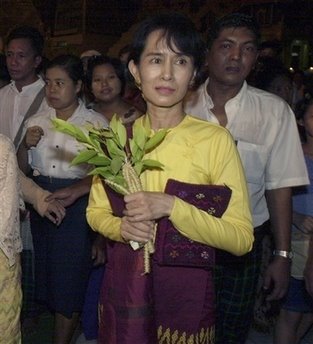


 Posts


