
http://burmadd.blogspot.com/2009/02/clinton-to-visit-asean-sec.html
US Secretary of State Hillary Rodham Clinton will visit the headquarters of ASEAN on Wednesday. She will be the first highest US senior official to visit the ASEAN Secretariat.
Secretary-General of ASEAN, Dr Surin Pitsuwan said, "We are very pleased to welcome Secretary Clinton to ASEAN and to the ASEAN Secretariat. We are honored and thank her for taking the time off from her very busy schedule to include a visit to the headquarters of ASEAN in her first overseas trip as Secretary of State. It is a gesture that will be well noticed by this region."
Source: The Nation
Thursday, February 19, 2009
Clinton to visit Asean Headquarter


Junta commander: Wa has Hobson’s choice
No.15-02/2009
17 February 2009
War
Junta commander: Wa has Hobson’s choice
A senior Burma Army commander in Shan State East has recently commented, during an informal meeting with businessmen in Kengtung, that war with the United Wa State Army (UWSA) was inevitable unless the latter complied with the former’s demands.
“The Wa need to either surrender or become a local militia force under the Defense Services,” he said.
The Army has been displaying its newly acquired howitzers and armored personnel carriers (APCs) around Mongton and Monghsat townships, where Wa units are stationed, opposite Chiangmai province, according to a young businessman engaging in cross border trade. He refused to reveal the commander’s identity fearing backlash.
At least 15 105-mm howitzers were already in Monghsat the year before. 40 more, of a smaller caliber, arrived in January. “They could be 76.2 mm (2 in),” said a Thai security official. “But the report didn’t give us the particulars.”
The maximum range of the “3 inchers,” as the 76 mm model is known to some, has 13.29 km (8.25 mile) maximum range.
The Burma Army has been reinforcing and replenishing its forces facing the UWSA and its ally National Democratic Alliance Army (NDAA) in Mongla since late last year. “An unconfirmed report says LIDs (Light infantry Divisions) 66 ( from Innma) and 88 (from Magwe) have arrived in Shan State,” said an NDAA officer.
The pressure on the UWSA and NDAA, compared to other ceasefire groups particularly the Shan State Army (SSA) North, has been on the upsurge. An SSA North officer, in response to SHAN inquiry, said, “Maybe the generals (of the Burma Army) believe if the UWSA gives in, others like us will follow suit.”
Clinton en Route for Indonesia, China

--------------------------------------------------------------------------------
By WAI MOE AND LALIT K JHA Tuesday, February 17, 2009
--------------------------------------------------------------------------------
United States Secretary of State Hillary Clinton is scheduled to arrive in Indonesia on Wednesday and will travel to China on Friday. In both countries, she is expected to talk about Burma.
The Indonesian and Chinese visits come as the second and as the final stops respectively on her four-nation tour of Asia, which also includes Japan and South Korea.
Secretary of State Hillary Rodham Clinton, center, escorted by Tokyo University President Hiroshi Komiyama, right, arrives for a townhall meeting with students of the university in Tokyo on Tuesday. (Photo: AP)
Khin Maung Swe, a member of the central executive committee of the main opposition National League for Democracy (NLD), told The Irrawaddy on Tuesday that he hoped Secretary Clinton would raise Burmese issues with her Indonesian and Chinese counterparts.
“The international community should be more proactive on behalf of the people of Burma—not just pay lip service to the problems,” he said. “She can raise the issue of political progress in Burma with both countries.”
Ahead of Clinton’s arrival, Indonesian Foreign Affairs Minister Hassan Wirajuda said that his country and the US will discuss Iran, the Association of Southeast Asian Nations (Asean), Afghanistan and East Asia.
China and Indonesia are historically and strategically close to Burma’s military junta. Analysts insisted Clinton should speak out about the US’ concerns on democratization and human rights issues in Burma.
Aung Din, the policy director with the US Campaign for Burma, said the fact that Secretary Clinton chose East Asia as her first trip showed the extent of US interest in the region, including Burma.
“I expect Mrs Clinton will discuss Burma issues when she meets with the leaders of China, Indonesia, Japan and South Korea,” he said. “Burma is one of the main topics on this trip.”
He added that the release of political prisoners and genuine democratic transition in Burma are common ground among all countries. “They are just different in method. So I hope the US, China and other Asian nations will work together to find a solution to Burma’s problems,” he said.
China is an economic and strategic partner for the US, as well as the main supporter of the Burmese junta. China has signed an agreement with the Burmese junta to build an oil and natural gas pipeline from the Bay of Bengal to southwestern China through Burma, which is due to begin this year.
Indonesia, the world’s third largest democracy, was very close to the Burmese regime during the reign of President Suharto. However, in recent years, Indonesia has also suggested the Burmese junta move toward democracy based on the Indonesian experience.
Three of the countries on Clinton’s trip— China, Indonesia and Japan— are members of UN Secretary-General Ban Ki-moon’s “Group of Friends of the Secretary-General on Myanmar,” along with the United States. The group was formed to find solution to Burma’s political woes.
US policy under the Bush administration was seen as strong and outspoken. Under the Tom Lantos Block Burmese JADE (Junta’s Anti-Democratic Efforts) Act 2008, the US imposed direct sanctions on military leaders in Burma and their business cronies. In addition, the act commissioned a “US Special Representative and Policy Coordinator” for Burma to work with Burma’s neighbors and develop a more proactive approach.
“All countries in Asia share a sense of frustration at the lack of progress inside Burma,” said David Mathieson, a Burma researcher with Human Rights Watch. “The US, China and Indonesia should take the lead in a more effective Burma policy. Burma issues must definitely come up during her trip.”
Clinton’s decision to choose Asia for her maiden voyage as Secretary of State was undoubtedly intended to send a message. On arriving in Japan, she said the trip was “to convey that America's relationships across the Pacific are indispensable to addressing the challenges and seizing the opportunities of the 21st century.”
“The choice of Asia as her first destination is intended to signal a more global focus for US President Barack Obama’s administration, as opposed to the heavy emphasis on the Middle East and South Asia seen in the last years of the Bush administration,” said Rodger Baker, East Asia analyst, writing in the global intelligence Web site Startfor.
State Department officials who briefed journalists before Clinton left the US mentioned that Burma, along with Tibet, could figure in Clinton's talks with Chinese authorities.
However, the tone and tenor of response from State Department officials clearly indicated that it would come up only as a routine matter, and not something which the US would push China to react on immediately.
In her first major foreign policy speech delivered at the prestigious Asia Society in New York on Friday, Clinton said, "As part of our dialogues, we will hold ourselves and others accountable as we work to expand human rights and create a world that respects those rights, one where Nobel Peace Prize winner Aung San Suu Kyi can live freely in her own country, where the people of North Korea can freely choose their own leaders, and where Tibetans and all Chinese people can enjoy religious freedom without fear of prosecution."
Copyright © 2008 Irrawaddy Publishing Group | www.irrawaddy.org
TCG unveils three-year plan to rebuild livelihoods in delta
http://www.mmtimes.com/no458/n002.htm
By Thet Khaing
A THREE-YEAR recovery plan for cyclone-damaged areas in Ayeyarwady and Yangon divisions was launched last Monday and will focus on rebuilding the livelihoods of about 2.4 million people.
The government has welcomed the Post-Nargis Response and Preparedness Plan, which also provides for building houses and cyclone shelters before the start of the next cyclone season in May.
The plan, released in Bangkok, was compiled by the Tripartite Core Group and is based on a needs survey it conducted late last year.
The TCG was formed soon after Nargis hit last May to oversee relief and recovery work and comprises representatives of the Myanmar government, the Association of Southeast Asian Nations and the United Nations.
“The close collaboration between the government and the international community over the last nine months has been vital to the relief and early recovery efforts,” the chairman of TCG, U Kyaw Thu, who also heads the Civil Service Selection and Training Board, was quoted as saying in a statement released by the group after the launch.
He said the plan, which was commissioned by the group, was a result of the collaboration on all sides.
The group had also promoted complementarities between the government’s reconstruction plan and the Post-Nargis Response and Preparedness Plan (PONREPP), said U Kyaw Thu, who attended the launch along with ASEAN Secretary General Mr Surin Pitsuwan, other TCG members, and international aid donors and members of international NGOs working on cyclone relief in Myanmar.
The recovery plan outlined by the post-Nargis plan identifies eight areas of activity, including rebuilding houses, as well as educational and healthcare infrastructure, and providing microfinance and other income-generating schemes, until the end of 2011.
The plan says at least US$691 million would be needed for rebuilding work, which will be in addition to other funding appeals by the UN and international aid organisations.
“[PONREPP] underlines the importance of cash grants and micro-credit as components of recovery assistance. It highlights the urgent need to continue the construction of improved household and community shelters, as well as disaster risk reduction initiatives before the onset of the next cyclone season in May 2009,” the statement said.
The UN resident/humanitarian coordinator, Mr Bishow Parajuli, who represents the UN on the TCG, said education and healthcare were other major areas of recovery identified by the plan.
“The recovery strategy further aims at restoring the local education and health systems, through the repair of damaged and destroyed schools and health facilities, and improving household and community facilities and access to safe water and sanitation,” Mr Parajuli was quoted as saying in the statement.
“It addresses the specific needs of children, women, elderly and the disabled, as well as issues such as psychosocial support and return, resettlement and re-integration,” he said.
In an interview with The Myanmar Times last week, Mr Parajuli said the plan signals the continued smooth cooperation between the government and the international community in helping cyclone victims.
“The strategy proposed in the PONREPP has been embraced by the national authorities, humanitarian community and the donors,” Mr Parajuli said.
“I think the launch [of PONREPP] emphasised that there has been good cooperation with the government and also that huge needs exist, so there is still need for assistance and international support is necessary,” he said.
“It is important to note that the success of this plan can only be achieved if the stakeholders remain committed to support and implement the strategy proposed,” Mr Parajuli said.
He said the level of support from international aid donors so far was better than many had anticipated.
“Myanmar received good support, and the international donor community has been very generous,” Mr Parajuli said, adding that the UN had received 65 percent of the $477 million targeted in the UN Revised appeal launched last July.
He said managing the recovery effort would require the continued effective role of the TCG, the mandate of which expires in July.
“The whole coordination of the PONREPP will depend on the TCG, so it is definitely expected that TCG should continue its work,” Mr Parajuli said.
“Its role will continue to be to facilitate the delivery of relief effort and advocate on the need and to ensure transparency, accountability and efficiency,” Mr Parajuli said.
The government said it would consider on extension of the group’s mandate in June. The TCG’s continuation is also one of the conditions set by many international aid donors to provide further funding support.
The British ambassador to Myanmar, Mr Mark Canning, whose country is the largest single donor to the cyclone relief effort, has praised the role of the group.
“The TCG has demonstrated the value of a mechanism which is able to make rapid decisions and to cut through problems when they arise,” Mr Canning told The Myanmar Times last week.
“It has helped to promote understanding of how the development community works and, I hope, has also showcased to those that were perhaps unfamiliar with its excellent work what it can do,” he said.
Mr Canning said Britain was considering providing more assistance for rebuilding livelihoods, as well as for healthcare and education.
“Our role in the delta was consistent with what we have been doing in the humanitarian sector here for some time,” he said.
“We have never subscribed to the view that it is not possible to deliver humanitarian support in this country,” Mr Canning said.
He added that apart from $90 million for cyclone relief work, Britain has also contributed $40 million to the Three Diseases Fund, to combat tuberculosis, HIV/AIDS and malaria in Myanmar.
Mr Canning said he hoped the release of the post-Nargis plan would encourage more potential donors to provide funding.
“It has in effect a menu from which donors can choose, according to their resources and priorities but in the knowledge that their contribution will be in sync with what others are doing. It should therefore maximise the impact of every donor dollar,” Mr Canning said.
He said Britain would encourage other donors to increase their support to meet the growing need for humanitarian assistance in Myanmar.
“It may not always be the easiest place to operate but good work can, and is, being done,” Mr Canning said.
The plan has proposed the establishment of three bodies under the supervision of the TCG to ensure that the relief effort is efficient, accountable and effective.
They include a Recovery Forum, whose members will comprise representatives from the government, donors and the UN and other aid agencies. The RF’s role will include information sharing, minimising the duplication of tasks and fund mobilisation.
“The RF would be a deliberative, not an executive body, but its recommendations should carry considerable weight in related policy-setting bodies,” the plan said.
Another proposed body is a Recovery Coordination Centre, which will be based in Yangon and provide information to aid agencies on international funding support and areas where there are shortfalls.
The plan said the third proposed body is a Township Coordination Committee, to supervise field operations by aid agencies.
Thai Army chief visits Burma
http://nationmultimedia.com/breakingnews/30095905/Thai-Army-chief-visits-Burma
Army Commander-in-Chief Gen Anupong Paochinda left for an official visit to Burma Tuesday.
Speaking to reporters before leaving on Army plane to Burma, Anupong said the visit would be his first official trip to pay visit to Burmese military leaders after he became the Army chief.
He said he was not certain whether it would appropriate to discuss the issue of Rohingya boat people with the Burmese military leaders.
The Nation
UN human rights envoy on 'Show Boat' mission to Burma
http://www.mizzima.com/edop/anslysis/1716-un-human-rights-envoy-on-show-boat-mission-to-burma.html
by Larry Jagan
Monday, 16 February 2009 19:33
Bangkok (Mizzima) - The United Nations' human rights envoy to Burma is currently half-way through a six-day visit to the country, assessing the current human rights situation. During his trip, the special rapporteur, Tomas Ojea Quintana, hopes to meet privately with some of the Burma's key political prisoners, according to UN sources.
But many analysts and diplomats in Rangoon believe the trip is only a "show-boat" mission, agreed to by the junta to give them face before the regional grouping of the summit South-East Asian leaders of ASEAN meet in Thailand in two weeks time.
"The SPDC [State Peace and Development Council] invited the UN VIPs only to prevent a strong declaration being adopted at the ASEAN summit criticising them," a senior diplomat told Mizzima, on condition of anonymity.
The UN envoy made his first visit to Burma last August, and is keen to see what developments there has been since, before he reports to the UN Human Rights Council, scheduled for later next month.
But pro-democracy activists and human rights advocates believe the visit is very timely, as more than 300 political dissidents have been sentenced to stiff jail terms in the past six months – around 20 leading student activists from the pro-democracy movement 20 years ago were each sentenced to 65 years in prison for their alleged involvement in the anti-prices protests in September 2007.
On the eve of his visit, UN officials told Mizzima that the envoy had hoped to meet senior members of the junta, opposition leaders and representatives of the country's ethnic minorities. He is particularly keen to talk to the detained opposition leader, Aung San Suu Kyi, according to UN sources, but is not overly hopeful that a meeting with her will be arranged, they added. Mr. Quintana had also planned to visit some of the key ethnic minority areas in Burma's border regions, including Arakan, Karen and Kachin states.
"It is important that the envoy visit ethnic areas – and tries to set his own agenda," said a UN expert who declined to be identified. "It is good for him to show the junta that he does not want to be herded around and sees places other than Rangoon and the capital Naypitdaw.
He was heavily criticised by opposition groups after his last visit for not being adventurous – flying in a helicopter with the former deputy foreign minister Kyaw Thuu around the Irrawaddy delta – which was devastated by Cyclone Nargis last May – on a superficial inspection tour of the government's aid efforts. Nor did he try to see Aung San Suu Kyi on that visit, telling Mizzima that was too sensitive a request.
So far the envoy has been able to visit Karen area, and is expected to visit the Kachin region bordering China in the north before he leaves Burma on Thursday [19th February]. It is highly unlikely that he will be allowed to go to Arakan, a UN official in Rangoon told Mizzima. And that may yet prove to be the crucial visit, if the envoy is able to make his trip count for anything other than helping the regime dodge regional and international criticism, especially over its handling of its Muslim minority.
The issue of the Rohinyga refugees, who have fled Burma's north-western province, will be high on the envoy's agenda on this visit, a senior UN official told The National on condition of anonymity. The issue of the Rohingyas has surfaced again recently after several thousand, trying to get to Malaysia in small boats from Bangladesh, were towed out to sea a set adrift by the Thai military authorities after they were intercepted in Thai waters. They were given little food or water, and their boats engines disabled. Around a thousand ended up in the Andamans and several hundred made it to a small Indonesian island.
It has become a major regional issue – with the Thais defending their actions and now calling for a regional conference to discuss the matter. "The problem of the Rohingyas is a regional issue and needs to be tackled regionally," the ASEAN secretary-general Surin Pitsuwan told Mizzima earlier last week. Thailand and Indonesia have agreed to hold a bilateral meeting in Bali month, Thailand's foreign minister told journalists last week. Thailand hopes to use the Bali process to resolve the Rohingya issue. The ASEAN summit will also discuss the matter later this month, according to Thailand's Prime Minister, Abhsit Vejjajiva, who is hosting the ASEAN meeting.
These Burmese refugees are members of the ethnic Rohingya Muslim minority, who live in northern Arakan state, in western Burma bordering Bangladesh. They have fled social and religious persecution by the Burmese military authorities there. Most human rights activists believe that the abuses committed by the junta in the Muslim-dominated areas of western Burma are worse than anywhere else in the country.
"Burma's Rohingya minority is subject to systematic persecution – they are effectively denied citizenship, they have their land confiscated, and many are regularly forced to work on government projects," Benjamin Zawacki, Amnesty International's Burma researcher told Mizzima. "The regime creates conditions and circumstances that make it clear to the Rohingyas that they are not wanted or welcome in the country; so it's no surprise that they try to flee the country by the thousands," he added.
During his mission to Burma last August, Mr. Quintana suggested to Burma' ruling junta that they should implement four key human rights elements before the national elections which are scheduled to held in 2010. These include legislative reforms to ensure human rights protection, the progressive release of political prisoners, the independence for the judiciary and training on human rights for the army.
But it is the issue of political prisoners that is certain to be the key issue on this visit. The UK-based human rights group, Amnesty International says the number of political prisoners doubled last year to over 2,100. The opposition National League for Democracy (NLD) has begun a renewed campaign for the release of all political prisoners. Last week the NLD launched a petition calling on the country's military rulers to free all political prisoners, including the group's leader, Aung San Suu Kyi who has spent more than 13 of the last 20 years under house arrest.
The signature campaign is aimed at showing the government and the world that Burma's people support freedom for all political dissidents, the NLD spokesman, Nyan Win told Mizzima. These signatures will be collected from all over Burma, despite restrictions on political activity by the country's military rulers, he added.
"The release of political prisoners is by far the most important issue for Burma at the moment," according to the Burmese dissident and democracy campaigner, Aung Din, now living in exile in the United States. "How can there be free and fair elections if most of the opposition politicians are behind bars," he added.
Mr. Quintana is also expected to be pre-occupied with this issue during this visit. He hopes to see some of the key political prisoners, including the student leaders Min Ko Naing and Ko Ko Gyi.
But he will also be seeking clarification of Aung San Suu Kyi's legal position. Lawyers for the opposition leader insist that under the country's draconian security regulations Aung San Suu Kyi can only be held for a maximum of six years. This should run out at the end of May -- but as the opposition leader was held in prison immediately after her arrest in 2003 and was allowed to have a hysterectomy before being returned to house arrest – the regime believes October is the date her detention started.
Most analyst and diplomats in Rangoon believe there is no way she will be released anytime this year. The regime does not want senior opposition figures to compete in the elections planned for next year, though they would like a token contest to prove the elections are free and fair. The Constitution already bars Aung San Suu Kyi from standing, as she was married to a foreigner – the renowned British academic and Tibet scholar Michael Aris.
If the regime feels it has effectively sewn up the elections – it may be tempted to release political prisoners in the lead-up to the elections, including Aung San Suu Kyi. This may then encourage the NLD to field candidates, at the last moment, but with the odd stacked against them.
No matter what the regime may be thinking, political prisoners and a genuine dialogue between the military and pro-democracy leader are the key issues that are going to dog them in the international arena, as well as at ASEAN. The regime knows this only too well, and over the last few months have been conducting a diplomatic charm offensive. Three weeks ago, Ibrahim Gambari, the UN special adviser to the UN secretary general, Ban Ki-moon made another unsuccessful foray into Burma's political mine-field. The UN's chief for refugees, that UN High Commissioner for Refugees, Antonio Guiterrez is also expected to visit Burma in the next few weeks.
Mr. Quintana had been hoping to come earlier than the current visit, but his trip was put off several times, according to UN officials. The authorities were suggesting March, but the envoy insisted that it had to be this month – and that in the last two weeks of February he would be gathering information for his human rights report in the region, irrespective of whether he was give permission to visit Burma. That was enough to make the junta relent and allow him in – their charm offensive would certainly have been deflected if they refused to receive him.
But most analysts and activists are understandably pessimistic that the UN envoy will emerge from this visit with any concrete results.
"We have seen it all before, the regime allows high-profile UN visits to help deflect international attention and pressure from them," the former political prisoner and spokesman for the Burmese government in exile, Zin Linn told Mizzima. "They come, they talk and they leave, and nothing really changes."
Just in case anyone is under any illusion that these UN visits lead to an improvement in the human rights situation in Burma or helps political dialogue, the regime showed its true colours on the eve of the envoy's visit – by extending the house arrest of the NLD's deputy chairman of the NLD, U Tin Oo for another year and sentencing two other party activists, Nyipu and Tin Min Htut to 15 years in jail on three offences, including the electronic act – which means breaking the regime's ban on unauthorised use of computers. More importantly, their lawyers were denied access to the court during their trial.
映画『ビルマ、パゴダの影で』上映会 アムネスティ・インターナショナル日本・水戸グループ
━━━━━━━━━━━━━━━━━━━━━━━━━━━━━━
ビルマ市民フォーラム メールマガジン 2009/2/17
People's Forum on Burma
━━━━━━━━━━━━━━━━━━━━━━━━━━━━━━
アムネスティ・インターナショナル日本・水戸グループ企画、ドキュメンタリー
「ビルマ、パゴダの影で」上映会のお知らせを転送いたします。
▼映画『ビルマ、パゴダの影で』公式サイトはこちら
http://www.uplink.co.jp/burma/
PFB事務局
http://www1.jca.apc.org/pfb/
━━━━━━━━━━━━━━━━━━━━━━━━━━━━━━
アムネスティ・インターナショナル日本・水戸グループ企画
━━━━━━━━━━━━━━━━━━━━━━━━━━━━━━
ドキュメンタリー「ビルマ、パゴダの影で」水戸上映会
ミャンマーの今を知っていますか
http://www.amnesty.or.jp:80/modules/piCal/index.php?action=View&event_id=0000002099
━━━━━━━━━━━━━━━━━━━━━━━━━━━━━━
日時:2009年3月8日(日)
開場:13:30
開演:14:00(終演予定16:00)
会場: あむねすみと2 F
水戸市桜川2丁目1 -2(ハングルアカデミー大教室)
*駐車場の準備はありません。 周辺の駐車場をご利用ください
入場料: 500円
主催: アムネスティ・インターナショナル日本・水戸グループ
問い合わせ: Tel 029-231-8151 (ハングルアカデミー)
http://www.net1.jway.ne.jp/abeusr1/
◎人権パスポートをお持ちの方にはイベント参加スタンプをお押します。
私たちアムネスティ水戸グループは3月8日、アイリーヌ.マーティー
監督のドキュメンタリー映画「ビルマ、パゴダの影で」の上映会を
開きます。映画は撮影チームが軍事政権の厳しい妨害の下、首都
ヤンゴンを始め山岳地帯の少数民族・難民キャンプにまで足を踏み
入れ撮影した映像で、軍事政権下ビルマの厳しい現状を伝える内容です。
また、リリース以来、多くの国際映画祭に招請、上映されています。
07年には日本人ジャーナリスト、長井健司氏が取材中に殺害され、
今日に至っても真相究明がなされていません。
アウンサンスーチー女史の自宅軟禁からの解放も度重なる国際社会の
勧告にも関らず、状況変化の兆しが全く見えていません。映画を通して
ビルマ問題の理解を深め、私たちの積極的な意志表示が改善への一助に
なればと思います。多くのご来場を期待しております。
●ストーリー
監督、マーティーさんの撮影動機は彼女の世界周遊旅行中の81年に
体験した人々の親しみやすさと、2度目、98年訪問時に知った際立
った社会的変化とその過程で知人家族を襲った人権侵害による悲惨な
結末との落差にシヨックを受けジャーナリスト、映像作家として座視
出来ない事実の告発をと、映画の企画・製作ノートに書かれています。
勿論、軍事政権下では目的通りの撮影は許可されるべくも無く撮影
クルーはスイスの観光用PR番組の撮影と偽りビルマ(ミャンマー)に
潜入し、多くの困難に遭遇しながら、これを乗り越え、ジャングルの
奥深く国境地帯へ少数民族の証言を求めて旅をします。映画は一般
メディアが伝えない貴重な映像と現状の報告です。
●監督 Irene Marty (アイリーヌ・マーティー)
1958年スイスのアルトドルフに生まれ、大学卒業後に世界周遊
旅行に出る。
1979年、カリフォルニアのサンフランシスコに移り、米国と
アジアでドキュメンタリーを製作、ZDFテレビの助監督等を務め、
2005年には
Aproposfilm社を設立し、代表、監督および作家として活躍されています。
●~アムネスティ・インターナショナル日本・水戸グループ~
http://www.net1.jway.ne.jp:80/abeusr1/
私たちは20年続いている小さなグループですが、2006年に念願の
事務所とスペースを持ちました。月例会は、毎月第2土曜日の午後
2時から、水戸駅南口あむねすみとビル水戸グル-プ事務所にて。
例会は見学自由、(非会員の方たちも例会に参加下さっています)。
学習会やビデオ上映会を開催し、難民問題も取り組んでいます。
━━━━━━━━━━━━━━━━━━━━━━━━━━━━━━
JAPANESE RESTAURANTS -thailand seen as regional springboard
http://www.nationmultimedia.com/2009/02/17/business/business_30095883.php
By Kwanchai Rungfapaisarn
The Nation
Published on February 17, 2009
Network to boost fish, agricultural exports as home demand slows
Amid a domestic recession and a downturn in Japanese consumption, that country's government is promoting fish and agriculture exports through a well-recognised international network of Japanese restaurants.
Thailand will be in the top five of strategic countries targeted to promote Japanese restaurants in Southeast Asia, Yasumasa Asai, head of the Thai branch of the Organisation to Promote Japanese Restaurants Abroad (JRO), told a press conference yesterday in Bangkok.
"We are promoting Thailand as a hub and key springboard for expanding Japanese restaurants into other neighbouring markets in Asean, including Singapore and Myanmar [Burma]," he said. "We'll launch many measures set to help about 1,000 Japanese eateries run by 500 entrepreneurs in Thailand be more competitive amid the current economic difficulties."
Asai said the number of Japanese restaurants in Thailand had already increased sharply from last year, when about 750 outlets were operating.
He said measures to fight the bad economy, including having operators of Japanese restaurants pool their purchases of food ingredients and raw materials, would be enhanced, in order to reduce costs.
Up to 15 per cent of ingredients in Japanese food, such as specific kinds of alcohol and fish, have been imported from Japan, while certain ingredients, such as soy sauce, miso and some fruits, could be produced and locally sourced in Thailand.
"We'll work together to create new menus that require a good combination of Thai and Japanese ingredients," Asai said.
He said the JRO had developed a strategy focused on expanding Japanese restaurants in key regions, particularly East and Southeast Asia.
Due to its large population, Bangkok will play a major role in expanding Japanese restaurants into neighbouring countries.
"We've set a target of 300 official members this year and 500 next year," said Asai.
He said the JRO considered Thailand a significant potential market, posting strong annual sales growth by Japanese restaurants of 20 per cent. There are now 500 companies operating such restaurants in Thailand, half of them Japanese firms.
"Another 30 or 40 Japanese-restaurant entrepreneurs in Japan have shown an interest in opening outlets in Thailand in the near future," said Asai.
The JRO is a non-profit organisation established to promote Japanese restaurants in foreign countries. It has branch offices in 10 markets around the world, including Thailand and Singapore in Southeast Asia. Other offices are planned soon in Spain, Germany, Italy, Dubai and Hong Kong.
President and CEO Kazu Katoh said Japanese restaurants were popular and existed in many countries.
An estimated 25,000 Japanese restaurants operate in major cities around the world, excluding small sushi outlets in supermarkets.
"The JRO has a mission of supporting and exchanging valuable ideas between Japanese-restaurant entrepreneurs worldwide. Our aim is also to promote the value and benefit of Japanese food, including the use of original ingredients and cooking techniques on a global scale," said Katoh.
The JRO opened its Thai office last year to encourage entrepreneurs in the Kingdom achieve the highest benefit for consumers.
Mitsuhito Sendai, director of the Food Service Industry Office in Japan's Agriculture, Forestry and Fisheries Ministry, called supporting Japanese restaurants in all major countries around the world part of his government's strategy for boosting exports of fish and agricultural products used as major ingredients in Japanese food. This will help counter the local recession and the significant decline in domestic consumption resulting from a lower birth rate.
"The ministry has set a target of increasing its exports of fish and agricultural products to ฅ1 trillion [Bt382 billion] in 2013, from ฅ300 billion in 2006," said Sendai.
While achieving annual growth of 10 per cent in export sales from 2004-07, the value of Japanese exports of fish and agricultural products was stagnant last year at about ฅ430 billion, due to the global economic turmoil.
Child Soldiers and Their Refugee Problems
http://birdsongslaw.wordpress.com/2009/02/16/child-soldiers-and-their-refugee-problems/
Posted by: birdsongslaw | February 16, 2009 Child Soldiers and Their Refugee Problems
Birdsong has only lately come to learn that there have been about 300,000 child soldiers who have fought in wars and rebellions across the world since the 1990’s. Birdsong’s student, Shelya Nieves, has researched the problems of child soldiers and the problems they present in the context of refugee law. She has written an outstanding paper on the subject that she has allowed me to post on the blog. You will find this information very enlighting.
CHILD SOLDIERS:
What to do with a never-ending pool of soldiers?
Shelya Nieves
Introduction
About 300,000 children fought as combatants in armed conflicts in more than 30 countries during the late 1990s.[1] Government and non-government forces conscripted these children voluntarily or by force.[2] Children operated as spies, laborers, or sexual slaves, but an increase in their use specifically for combat purposes was particularly noticed by international organizations.[3] Oftentimes, the children were forced into service by threats, and sometimes drugged in order for them to carry out their combat duties.[4] Some children committed human rights abuses after being conscripted as fighters.[5]
In response to these occurrences, the international community responded in part by creating criminal measures designed to penalize and prevent the conscription of children in armed conflict. The Rome Statute made it a war crime to use children under the age of 15 in hostilities.[6] The United Nations added the Optional Protocol on the involvement of children in armed conflict (Child Soldiers Protocol) to the Convention on the Rights of the Child. The Child Soldiers Protocol created guidelines for voluntary conscription of children under the age of 18 and the means to denounce violators who conscript children younger than the age of 15.[7] More than 100 states have ratified the Child Soldiers Protocol since its inception.[8] As a result, several leaders of organizations that recruited children have been charged and convicted of war crimes.[9] In 2008, the U.S. enacted the Child Soldiers Accountability Act which corresponds with the standards laid out in the Rome Statute.[10]
Despite these advances in international law and a decrease in armed conflicts, children continue to be used in hostilities. Current estimates place the range from 200,000 to 300,000 in 17 armed conflicts worldwide.[11] This estimate remains relatively unchanged from that of more than a decade ago. The decrease in children used in hostilities suggests that the drop is more a result of armed conflicts ending then a decrease in recruitment or conscription.[12] The roles of children in hostilities has also shifted and shown increased involvement in terrorist activities.[13] This trend is one that should be of particular interest to the United States given the position terrorism has claimed in the discourse of national security.
In the refugee and asylum law context, the combination of the persecutor bar and terrorism related legislation has the potential to bar children from receiving protection.[14] Children are not always treated as victims of armed conflicts when applying for asylum. Instead, some nations do not recognize former child soldiers as victims who themselves may have suffered persecution.[15] In other circumstances, government authorities’ detained children solely on suspicions that they belonged to armed groups, or treated in an adversarial manners.[16]
The continued use of children as combatants suggests the pattern is unlikely to end despite multi-faceted efforts to criminalize recruiters, arrange peace settlements, and demobilize and reintegrate children into their communities. In addition, scores of other children exist as available replacements when other children demobilize or when armed conflicts reignite.[17] The question arises how will the U.S. address claims for asylum or withholding of removal from children who may have fought against the U.S. as minors.
Part I of this paper will examine how asylum and withholding of removal claims of former child soldiers has been addressed up to the present, and the application of the “persecutor bar”. Negusie v. Mukasey, under review by the Supreme Court, will also be examined and its implications to former child soldiers assessed. Part II will address terrorism related legislation, its impact on asylum and withholding of removal claims, and its potential affect on former child soldier claims. Part III discusses the need for duress and infancy to function as mitigating factors in claims by former child soldiers — regardless of whether the child volunteered or was forced into combat.
I. Protection Available to Former Child Soldiers & their Applications
A. Protection Available under Immigration Law
An applicant seeking asylum in the United States must establish that he or she is a refugee.[18] A refugee is a person outside his or her country of origin, or country of habitual residence if the person has no nationality.[19] The person must be unable or unwilling to return to the country, and is unable or unwilling to avail himself or herself of that country’s protection because of persecution or a well-founded fear of persecution.[20] The persecution must be based on one of five protected grounds: (1) race; (2) religion; (3) nationality; (4) membership in a particular social group; (5) or political opinion.[21] An applicant’s testimony alone can satisfy the burden of proof if the trier of fact deems the person’s testimony credible.[22]
A person who does not meet the definition of refugee or is denied asylum may nonetheless receive an alternate form of relief via withholding of removal.[23] Withholding of removal is granted when a person’s life or freedom would be threatened if returned to the destination country.[24] The person’s claim must be based on the applicant’s race, religion, nationality, membership in a particular social group, or political opinion.[25] As with an asylum claim, an applicant’s testimony alone can satisfy the burden of proof if it is credible.[26]
Withholding of removal may also be granted under CAT. However, the standard is different under CAT. A person seeking protection under CAT must establish that it is more probable than not that he or she will be tortured if returned to the proposed country of removal.[27] The immigration judge may choose to grant withholding of removal or deferral of removal.[28]
The applicant must meet the standards of torture as defined by CAT. The act defines torture as any act that causes severe pain or suffering.[29] The actor must inflict the pain with the intent to acquire information, punish, or intimidate the subject or a third person.[30] The actor must also act with the instigation, consent, or acquiescence of a public official or a person acting in official capacity[31]. The pain can be mental or physical.[32] Mental pain, however, must be prolonged.[33] The mental pain must also be the result of at least one of the following: (1) severe physical pain inflicted intentionally; (2) use or threatened use of mind-altering substances or procedures; (3) threats of imminent death; (4) or threats to do any of the aforementioned to another person.[34]
Provisions exist that bar relief outright. Asylum is not granted if the applicant was firmly resettled in a country prior to arriving to the U.S.[35] The remaining exclusions to relief apply to asylum and withholding of removal, but not CAT claims. A person is ineligible for relief if he or she has committed any one of the following: (1) ordered, incited, assisted or otherwise participated in persecution; (2) convicted of a serious crime while in the U.S.; (3) convicted of a serious nonpolitical crime outside the U.S.;
(4) or reasonable grounds exist to believe the person would be a danger to the security of the United States.[36] Persons ineligible for asylum or withholding of removal because of one of the mandatory bars may only receive deferral of removal under CAT.[37]
B. Grounds for Establishing Asylum or Withholding of Removal
As previously discussed, a grant of asylum or withholding of removal under title 8, section 1231 must be based on one of the five protected grounds. At first glance, former child soldiers do not fit into one of these categories neatly. A minor is not by itself a protected class. Nor is it always found that child soldiers fight because of the same reasons as adults.[38] Thus, it is not apparent if a child soldier suffered persecution because of political opinion simply because he or she was a member of a rebel group. However, some courts have successfully devised a classification that makes relief for former child soldiers more accessible.
In Lukwago v. Ashcroft, the Third Circuit held that a former child soldier could qualify as a member of a particular social group.[39] Lukwago, a Ugandan, was 15-year-when the Lord’s Resistance Army (LRA) forcibly conscripted him in 1997.[40] Lukwago was kidnapped by the LRA after the rebels attacked his home and killed his parents.[41] The LRA initially made him perform manual labor like collecting firewood and water.[42] He was trained to shoot a gun and made to fight against government soldiers about 10 times.[43] He also witnessed the LRA attack villages where rebels would injure civilians by cutting their lips and fingers.[44] Rebels threatened to shoot him for performing poorly in combat or if he tried to escape.[45]
The rebels’ threats proved to be true. Lukwago saw the LRA kill two children who had tried, but failed to escape.[46] At another point, Lukwago and a child he befriended were carrying guns and weapons they had stripped off of dead government soldiers.[47] Lukwago’s friend became tired.[48] LRA rebels beat the boy.[49] Then, they made Lukwago place a rock on the boy’s chest and sit on it until the boy stopped breathing from the pressure.[50] Lukwago escaped after being held by the LRA for about four months.[51]
The immigration judge (IJ) denied Lukwago’s asylum and withholding of removal claims.[52] However, the IJ granted withholding of removal under CAT based on evidence that the Ugandan government tortured former child soldiers.[53] Lukwago and the government appealed.[54]
The Board of Immigration Appeals (BIA) denied Lukwago protection under any provision. The BIA determined that Lukwago failed to establish he had suffered past persecution, or had a well-founded fear of future persecution by either the LRA or the Ugandan government.[55] It also reversed the IJ’s prior grant of protection under CAT. The BIA determined Lukwago failed to establish that he would suffer torture by the Ugandan government in light of an amnesty agreement it developed for former rebels, and he provided no evidence that the LRA tortured former rebels or captives who escaped from the group.[56]
On review, the Third Circuit determined Lukwago could indeed qualify for asylum.[57] As a former child soldier, Lukwago had a shared past experience with other former child soldiers of forced recruitment, torture and escape.[58] This shared experience equated to a common immutable characteristic that was sufficient to establish membership in a particular social group.[59] It stated the experience of abduction and being a former soldier was not a characteristic he could change, but one that became fundamental to his identity.”[60] Thus, the Court remanded Lukwago’s asylum and withholding of removal claims. As for the CAT claim, the Court determined that the BIA’s denial of protection was reasonable given the amnesty policy established by the Ugandan government.[61]
Under Lukwago, former child soldiers may receive asylum using the protected ground of membership in a particular social group. However, the definition of a “particular social group” varies as noted by the Third Circuit.[62] As such, an IJ may conclude that former child soldiers are not to a social group and deny asylum. The difference in definitional standards of what constitutes a particular social group leaves some former child soldiers with a higher burden and a greater probability that asylum will not be granted.[63]
C. The Persecutor Bar
Asylum or withholding of removal is denied under the persecutor bar if the alien ordered, incited, assisted, or otherwise participated in the persecution of another person on account of any of the protected classes. The persecution bar has particular implications for claims by former child soldiers.[64] Children used as combatants are just as likely as their adult counterparts to have committed acts that could be construed as the persecution of others. The circuits have differed on how to apply the bar in the context of former child soldiers.
Sackie requested withholding of removal under CAT after the government sought his deportation for his criminal convictions.[65] Sackie, a Liberian, was forcibly recruited in 1990 at the age of 14.[66] The group that took Sackie, the National Patriotic Front of Liberia (NPFL), gave him cocaine regularly and made him kill others under threat of death.[67] In 1990, the NPFL split and a faction fought against its former leader.[68] The faction, Independent National Patriotic Front of Liberia (INPFA), continued the practice of making Sackie consume drugs.[69] He was also branded with the group’s markings.[70] He saw others killed who did not comply with the rebels’ orders.[71] He killed women and children two or three times.[72]
Despite these occurrences, the initial immigration judge did not conclude that Sackie was barred for assisting in the persecution of others and granted him asylum.[73] The BIA disagreed with the IJ. It concluded that Sackie did not meet his burden of establishing past persecution or a well-founded fear of future persecution.[74] The BIA also concluded that Sackie’s convictions required the IJ to deny asylum.[75] The IJ’s grant of asylum was vacated, and the BIA remanded for relief to be evaluated under CAT.[76]
A different IJ reviewed Sackie’s CAT claim and denied protection.[77] The BIA affirmed the decision.[78] On appeal, the district court affirmed the denial of asylum, but concluded that the BIA and the second IJ erred in denying Sackie relief under CAT.[79] The district court concluded that sufficient evidence in the record existed to show that Sackie had suffered torture as a former child soldier in the form of prolonged mental suffering.[80] Sackie’s markings identifying him as a former member of INPFL also increased the probability that he would be tortured if returned to Liberia.[81] Thus, the district court granted Sackie withholding of removal under CAT.[82]
Lukwago and Sackie demonstrate that former child soldiers are capable of receiving protection despite past conduct that might be considered as persecution of others. Other circuits have been less favorable in assessing child soldiers conduct when granting relief.
In Bah v. Ashcroft, the Fifth Circuit held that the subjective motivations of an applicant who sought asylum were irrelevant when assessing whether the person’s actions amounted to the persecution of others.[83] Bah lived in Sierra Leone with his father and sister.[84] The Revolutionary United Front (RUF) attacked his town and made Bah and his family march 10 miles.[85] The RUF then set his father on fire, and raped and killed his sister.[86] Bah was kept alive.[87] Bah joined the group after a RUF member told him the group would kill him otherwise.[88]
Like Lukwago, Bah was given cocaine by the rebel leaders.[89] Bah shot a prisoner and cut off the limbs of civilians when ordered to do so.[90] He tried to escape several times but was unsuccessful. Government forces caught him during his first escape attempt, but he was subsequently freed by RUF forces that fought the government troops.[91] Bah escaped a second time but was captured by Nigerian peacekeepers who tortured him during his captivity[92] Again, RUF forces overtook those holding Bah.[93] He succeeded in his third escape fleeing to Guinea and eventually to the U.S.[94]
The IJ determined that Bah’s actions made him ineligible for asylum and withholding of removal because his conduct amounted to participation in the persecution of others.[95] Bah also could not receive protection under CAT because he failed to establish that he would more likely than not be tortured if removed to Sierra Leone.[96] The BIA affirmed the decision.[97]
The Fifth Circuit supported the BIA’s and IJ’s assessments. The court rejected Bah’s argument that he did not share RUF’s intent in persecuting others, but was forced to join the group against his will.[98] The court reasoned that the language of the statute implied a person’s motivations were irrelevant.[99] An objective standard was to be used when assessing whether the alien’s conduct resulted in the persecution of others.[100]
The Fifth Circuit also upheld the denial of protection under CAT because Bah failed to meet his burden. Evidence of disarmament, demobilization and reintegration of RUF members in Sierra Leone existed.[101] The court believed it enough to counter Bah’s evidence that RUF members were maimed and murdered, and that Bah’s own desertion was published in a newspaper advertising a reward for his capture.[102] Thus, there was insufficient evidence to determine that Bah would more likely than not be tortured if removed to Sierra Leone.[103]
The divergent approaches taken by the circuits in addressing claims highlights the dilemma these applicants face. The result in Bah indicates that a disparity between circuits will develop given the already existing different standards for membership in a social group and duress. Applicant’s ability to establish their case will be eroded since a claim’s success will be partly dependent upon which circuit a claim is filed.
D. Possible Duress Exception to Persecutor Bar
A possibility exists that former child soldiers may have their actions construed through the filter of duress. Negusie v. Mukasey, under Supreme Court review, questions whether asylum or withholding of removal can be granted to a person forced against their will and under threat of death or torture to engage in persecution.[104] The determination of this case would no doubt have a direct impact on the ability of former child soldiers to receive protection.
Negusie v. Keisler revolves around the decades’ long conflict between Eritrea and Ethiopia. The Eritrean government was known to commit abuses against its own people during the conflicts.[105] The Eritrean government conscripted minors.[106] Resisters or deserters of national service were imprisoned, sometimes along with family members, and tortured.[107] The Eritrean government also banned all but four religions that were government approved.[108] The government was also suspected of particularly disfavoring Protestants.[109]
Negusie lived in Eritrea in 1994.[110] The Eritrean government forcibly conscripted him in 1994 via an arrest.[111] Negusie performed hard labor and received military training for about a month.[112] In 1998, Negusie was conscripted for the second time into the Eritrean army after the country renewed fighting with Ethiopia.[113]
Negusie resisted orders deploying him to the front.[114] He was subsequently imprisoned for six months in solitary confinement.[115] After his release from solitary confinement, prison officials made Negusie perform hard labor.[116] He converted to Protestantism while imprisoned.[117] Negusie alleges prison personnel beat him and threatened him with death if he practiced his religion.[118]
Negusie eventually became a guard at the same facility.[119] Despite this change from prisoner to guard, he was not allowed to leave the building.[120] He complied with orders not to give water to prisoners and to prevent them from taking showers.[121] He also saw prisoners tortured by other guards who applied palm oil to the prisoners and left them exposed to the sun.[122] Negusie managed to escape after having spent two years as a guard at the facility.[123]
The IJ denied Negusie’s asylum and withholding of removal claims because of he was ineligible under the persecution bar.[124] The IJ’s decision was based on Negusie’s action of keeping prisoners imprisoned when he knew that persecution occurred in the facility.[125] Thus, the IJ used the same objective standard enunciated by the Fifth Circuit in Bah. The IJ did grant deferral of removal under CAT for Negusie.[126] The IJ determined that as a deserter Negusie would be more likely than not be tortured if removed to Eritrea.[127] Negusie appealed to the BIA.[128]
The BIA dismissed Negusie’s appeal.[129] The BIA reasserted that an objective standard was to be used when examining whether an alien assisted in persecution.
It stated that “[t]he fact that [Negusie] was compelled to participate as a prison guard, and may not have actively tortured or mistreated anyone, is immaterial. . . . [A]n alien’s motivation and intent are irrelevant to the issue of whether he ‘assisted’ in persecution … [I]t is the objective effect of an alien’s actions which is controlling.”[130] The BIA affirmed the IJ’s CAT decision for deferral of removal. Negusie appealed.[131] The Fifth Circuit reiterated its objective analysis enunciated in Bah that whether the applicant shared the persecutor’s intentions was irrelevant.[132]
The Supreme Court granted certiorari.[133] The government’s main argument focuses on the plain-language of the persecutor bar.[134] Congress wrote the statute without words referring to motive, intent, or acquiescence.[135] Rather, the statute is comprised of verbs indicating that the mere completion of the act establishes persecution.[136]
Such a standard would be harsh – particularly if applied to children. A child is simply not as capable of resisting an adult– especially if that adult is armed or has threatened the child. Negusie does not differ greatly in facts from what former child soldiers who have received protection experienced during their time as soldiers. Excluding duress as a defense or as a mitigating factor for the IJ to consider would effectively erode the advancements made by former child soldiers who have received relief.
Such a rigid position regarding the persecution bar is unnecessary. The Supreme Court should follow the lead of other nations that recognize duress as a defense in immigration law.[137] Additionally, it would run counter to decisions by the Department of Homeland Security that allows for a duress defense when an alien is charged with aiding a terrorist organization with material support.[138] The Supreme Court should implement a reading of the persecution bar that assesses whether the person acted under coercion or duress.
II. Terrorism-Related Legislation and Its Possible Affect on Child Soldiers
Terrorism has taken center stage in the discourse of national security and in the international realm. Children have encountered first-hand the effect of terrorism related legislation. Authorities have arrested minors suspected of terrorist involvement over seemingly minor offenses.[139] Some detentions were triggered by stone throwing or for participation in demonstrations.[140] In some instances, children were held in custody for extended periods and reportedly beaten.[141]
The United States has already encountered this conundrum with some its detainees held in Guantanamo Bay. Three prisoners in Guantanamo were teenagers when detained in Afghanistan.[142] One of these former teenagers, Mohammed Jawad, claims he was drugged to make him sleepy and disorientated the day he allegedly threw a grenade that injured two U.S. soldiers.[143] This allegation makes his categorization as volunteer in an armed group less believable. Jawad’s situation illustrates the difficulty in labeling a child’s decision to join an armed as voluntary.
Even for those children who are not physically coerced by force or drugs to engage in combat, the manner in which modern armed conflicts occurs casts doubt on children labeled as volunteers in any armed group. Wars once waged away from civilians have transferred to populated or urban areas.[144] In this scenario, war undoubtedly has a direct impact on a child’s life influencing their perspectives on armed groups or government forces.[145] Children may not volunteer to further an armed group’s goals, but feel it to be a necessity for protection, food, or as a mechanism to avenge abuses committed against them and their families.[146]
A. Terrorism-Related Legislation
Former child soldiers also may be barred from asylum or withholding of removal if they are deemed a danger to the country.[147] This bar was not applied to Lukwago, Sackie or Bah. However, none of these men volunteered in the rebel groups or fought against the United States.
Anti-terrorism legislation enacted made persons ineligible for asylum or withholding of removal if they fell within the definition of terrorist activities.[148] Most noticeably, terrorism enacted legislation has been criticized for being overly broad and causing the denial of asylum or withholding of removal claims on minor issues.[149] These laws are likely to impinge asylum claims from former child soldiers considering the type of activities the armed groups carried out while using children.[150]
Terrorist activities have been defined in the statutes beyond generally recognized methods such as hijacking, kidnapping, or assassinations.[151] The definition is broadened for the modern context of terrorist groups by including the use of biological, chemical, or nuclear materials.[152] Some of the other provisions include activities that are not usually associated with terrorism. The use of explosives, firearms, or other dangerous weapons is declared a terrorist activity when done with the intent to endanger people or to cause substantial damage to property.[153] Damage to property or possession of a weapon are broad concepts that can be applied to large amounts of people.[154]
Another anti-terrorism related measure that is criticized for its effect on immigration law is the material support bar. Under the material support bar, an alien is ineligible for asylum or withholding of removal if he or she provided material support to an individual or group which the alien knew or should have known was a terrorist.[155] Material support has been provided if a person offers a “safe house, transportation, communications, funds, transfer of funds or other material financial benefit, false documentation or identification, weapons (including chemical, biological, or radiological weapons), explosives, or training.”[156] The concerns over the material support bar is that it can be construed and enforced against those who provided de minimis support in the form of food or shelter.[157]
Aliens facing the material support have but one defense—that the person did not know or should not have reasonably known that the organization was a terrorist group.[158] The person must establish this burden with clear and convincing evidence.[159] A person may seek a waiver but the process requires the Attorney General to first consult with the Secretaries of State and Homeland Security, which can be burdensome process.[160]
B. Current Application of Terrorism Legislation
In Matter of S- K-, the applicant was a native of Burma.[161] The Burmese military has been suspected of conscripting children under the age of 15 and using them in combat against militant ethnic groups for many years.[162] The applicant in Matter of S-K- was an ethnic Chin and a Christian.[163] Both statuses made her a minority.[164] Burmese authorities detained her brother and her fiancé.[165] The fiancé was eventually killed by the Burmese military.[166]
The applicant became a supporter of the Chin National Front (CNF), which sought independence for ethnic Chins. According to the applicant, the Burmese government was known to torture CNF members and sympathizers.[167] The applicant worked in Singapore and gave $1000 Singapore dollars in one year to CNF.[168] She also tried to supply the CNF with binoculars and a camera. A CNF member told the applicant that the Burmese government knew of her monetary contributions to CNF, and warned her not to return to Burma when her Singapore visa expired.[169] She instead fled to the U.S.[170]
The IJ determined that the applicant had established a well-founded fear of persecution if returned to Burma.[171] However, her asylum claim was barred because she knew or had reason to know that CNF used firearms and explosives, and thus endangered the safety of others or helped CNF acquire the ability to cause substantial property damage.[172]
On appeal, the BIA rejected the applicant’s argument that the IJ had erred in concluding that the CNF was a terrorist organization.[173] Once the government raises the applicability of the material support bar, the burden shifts to the applicant to establish by preponderance of the evidence that the bar does not apply.[174] Thus, the BIA specifically noted the broad wording and implications of intended by the legislation.
[T]he fact that Congress included exceptions elsewhere in the Act for serious nonpolitical offenses and aliens who have persecuted others, even where persecuted themselves, and that it has not done so in section 212(a)(3)(B), indicates that the omission of an exception for justifiable force was intentional. . . . [W]e find that Congress intentionally drafted the terrorist bars to relief very broadly, to include even those people described as “freedom fighters,” and it did not intend to give us discretion to create exceptions for members of organizations to which our Government might be sympathetic.[175]
The BIA also rejected the applicant’s argument that her financial support was not material.[176] Her contribution was sufficient to help CNF acquire materials and supplies.[177] The BIA affirmed the denial of asylum and withholding of removal.[178]
Another case involving the material support bar is Singh-Kaur v. Ashcroft.[179] Some of criticisms of the material support and the concern over the application to seemingly de minimis support were raised in Singh-Kaur.
Singh entered the United States in 1989.[180] He filed for asylum upon his arrival.[181] However, no immigration proceeding occurred for almost four years, and then government sought Singh’s removal.[182] Singh applied for an adjustment of status based on his skill worker visa.[183]
Singh disclosed his membership in the Babbar Khalsa (BK) group, which he described as an organization promoting and protecting the Sikh religion.[184] He also had belonged to the Sant Jarnail Sing Bhindrawala (SJ), which Singh described an organization that fought for Sikh religious and political goals.[185] BK was the militant arm of SJ.[186] Singh demonstrated with both groups.[187] He aided BK further after a bombing occurred at a Sikh holy site.[188] Singh helped transport weapons through his village by providing shelter to those who were transporting the weapons.[189]
He argued to the IJ that he never supported nor was involved in violent acts against the Indian government.[190] Singh also disclosed in his asylum application that he was on an Indian military and government watch list.[191] However, Singh argued that the Indian police believed he opposed the government solely because he was a Sikh.[192] The IJ granted his asylum claim.[193]
The government appealed, and the BIA vacated the IJ’s grant of asylum and ordered Singh removed from the country.[194] The BIA determined that Singh was ineligible for adjustment of status because of the material support bar.[195] The BIA stated that Singh knew BK and SJ fought against the Indian government.[196] This knowledge along with his support barred him from the adjustment of status.[197]
On appeal, the Third Circuit affirmed the BIA’s decisions. It stated that setting up tents and providing food fell within the definition of material support and the objective of the legislation.[198] Singh’s belief that his involvement was minimal was irrelevant under the material support bar.[199]
C. Material Support Bar and Its Implications for Former Child Soldiers
It appears that the “material support” provisions will continue to be strictly read without further input from Congress or intervention from the Attorney General. It is highly unlikely former child soldiers would qualify for asylum or withholding of removal if challenged with the material support bar. The statue’s strict interpretations provide no wiggle room for a subjective analysis of duress or an actor’s age. Thus, the trier of fact will not consider these factors when determining if the person’s conduct constituted material support.
A possible opportunity may exist in that children of a certain age may not have the required mental ability to know or reasonably know if they are providing material support to a terrorist organization. The child may not even understand the concept or definition of a terrorist group. Here, a former child soldier may be able to assert a defense. However, the defense would also be dependent upon the child not being classified as a terrorist based on his or her conduct.
Again the broad wording of the statute is felt. Any group with a weapon for non-monetary purposes can be labeled a terrorist group under the language of the statute.[200] Armed street gangs could meet this definition. An organization’s motives for resistance to a government or the inability of political change also become irrelevant under the material support bar.[201] The government undoubtedly has an interest in preventing former enemies from entering the country. However, this interest should become less rigid when the threat comes in the form of a child.
III. Why “Duress” and “Infancy” are Needed as Defenses or Mitigating Factors
A. Mental & Physical Vulnerability
Children are targeted precisely because their minds are moldable.[202] Adults who recruited children in the 1990s did so on the belief that children did not question orders, were more obedient and easier to manipulate than adults.[203] Unstable environments create a situation where children are at a higher risk of “joining” an armed group. Children who are internally displaced, living in refugee camps, in poverty, or lack adult protection are particularly vulnerable.[204] Armed groups that can supply meals and shelter become an attractive option to a hungry child.
Regions that suffer continuous armed conflict also create strains on society that lead to the recruitment of children in hostilities.[205] This scenario played out in Afghanistan in the 1990s during which it was estimated that child participation as combatants rose from 30 percent to 45 percent.[206] A decrease in the age of recruitment as a conflict continues is also a noted trend.[207] Civil wars in certain regions have lasted decades exposing generation after generations of children to violence. These children may join groups not to further the armed groups’ goals, but in response to the negative experiences they or their families encountered with the government or other armed groups.[208]
Children face cultural, economic, political and societal pressures that they cannot assess on the same level as an adult.[209] Ideology can be a particularly strong influence in a child’s decision to join an armed group. Children in early adolescence undergo mental development that includes the formation of personal identity and their roles within society.[210] Armed groups have used this critical time in a child’s mental development to espouse political and religious beliefs that encourage children to join armed groups voluntarily. For example, the Machel Report stated that ideological indoctrination resulted in the large number of children in the Rwandan conflict and the use of minors in suicide bombings in Sri Lanka and Lebanon in the 1990s.[211]
The practice of using minors as suicide bombers has not disappeared. Instead, it appears to be an increasingly favored tactic used by terrorist groups.[212] Children appear less suspicious than adults making them a more favorable choice for suicide bombings.[213] Unfortunately, education has been a conduit through which children have been encouraged to commit suicide bombings. A lack of an educational system is a recognized risk that radical groups exploit.[214] Armed groups are known to use madrasas (Islamic religious schools) and summer camps to recruit children.[215] Some schools encouraged the children to “volunteer” in militant groups and while other schools emphasized martyrdom.[216] Underage suicide bombers have been used by the Taliban in Afghanistan and by militants in Pakistan.[217] Various militant groups in Iraq have used children, and there are reports that a terrorist cell comprised exclusively of children existed or was being formed in late 2008.[218]
Mohammed Jawad, one of the Guantanamo detainees who was a teenager when caught, was exposed to many of elements characterized as risk factors. His father died when he was young during the civil war in Afghanistan against the Soviet Union.[219] His family moved to a refugee camp in Pakistan.[220] His stepfather kicked him out at the age of 13.[221] About a year later, Jawad met a man at a mosque who offered him employment by clearing landmines in Afghanistan.[222] According to Jawad’s version, he did not join an Islamic militant group to fight against the U.S. troops in Afghanistan. Rather, adults lulled him to the camps with offers of employment. Such an offer to a child can easily equate to food and shelter.
The circumstances under which children “join” an armed group differ greatly than that of adults. Clearly, children are mostly not seeking to overthrow the government. Instead, their decisions stem from a combination of factors that are reactions to events in their lives. Some may label the child’s decision as voluntary. However, this is somewhat of a hasty conclusion. Children and pre-teens are not as capable as adults of analyzing the consequences of fighting in an armed conflict.[223] The facts and motives behind the recruitment of children illustrate why their age and circumstance regarding conscription should be a factor in any claim for protection.
B. Applicable Criminal and Policy Principles
Principles regarding the criminal responsibility of children can be a basis on which to advocate for duress and infancy in the context of child soldiers.[224] Children should not per se receive automatic relief because of their age. However, international standards suggest that children should not be held criminally responsible when at the time of the offense they were unable to understand the consequences.[225] The setting of an international standard for child participation in hostilities at the age 15 suggests that children below that age are incapable of making such a decision.[226] It seems counter-intuitive that recruiting children under the age of 15 is considered a war crime, yet the very child would be denied protection for an act they could not assent to.[227] For instance, children may not have the requisite mens rea of a war crime if they were forced to consume drugs prior to any attacks.[228] Therefore, a child’s age and manner of recruitment should factor into the analysis and remain an individualized process.[229] Otherwise, children would be barred from asylum or withholding of removal because of conduct for which they had no ultimate understanding of its consequences.
Age may simply not be a pragmatic standard to use when determining whether to grant asylum or withholding of removal for former “voluntary” child soldiers. Nor should the child automatically be denied relief because he or she meets the age of criminal responsibility in the U.S.[230] Any set standard or analysis for protection should consider that children mature at different times in different cultures.[231] Some cultures do not recognize maturity on the basis of age but instead focus on certain skill sets, financial independence or gender.[232]
Another conflict in setting a concrete age standard would be that it ignores the reality of conflict. Many children participate in armed groups as young children or teenagers but reach the age of 18 as members of the armed group.[233] If a certain age were set for an infancy defense or as mitigating factor, these former children would be exempt from protection simply based on the timing of when they escaped or the conflict ended. Again, such a rigid standard is unnecessary.
Conclusion
About 200,000 to 300,000 children under the age of 18 are believed to be participating in armed conflicts throughout the world in 2008.[234] Despite the decrease of use of child soldiers from a decade ago, these figures are partially due to a drop in armed conflicts rather than avoidance of using children as soldiers.[235] The changing nature of armed conflict throughout the world suggests that immigration judges will encounter with greater frequency claims colliding with the persecutor or material support bar.
Without adequate development in demobilization and reintegration efforts for former child soldiers, these former combatants will no doubt spread outside their countries and may end up on the shores of the U.S. [236] Even more troublesome is evidence that suggests former child soldiers in past decades have re-engaged in combat after demobilization or upon returning to their communities.[237] Immigration law must assess how to treat these applicants who may have been indoctrinated into fighting for an armed group as a child, but have since become repentant. Children who participated with terrorist or armed groups may face harm if returned to their country of origin.[238] For instance, adults may believe the child aided the U.S. and seek retribution believing the child is a U.S. spy.[239]
Solutions balancing the interest of the applicant and those of the nation must be reached. For those applicants who specifically fought against the U.S., asylum may still be granted via a safe third country.[240] Such a solution seems feasible and advancing within the international community. Portugal offered to resettle some of the Guantanamo detainees and encouraged other European Union nations to do the same.[241]
Duress and infancy principles provide the best means for assessing a child’s circumstances and the pressures he or she faced as a child soldier. Children encounter greater emotional, physical and mental pressures than adults during times of war.[242] Their protection claims should address this critical and distinguishing factor. Duress and infancy principles are measures already familiar within the legal community. Standards can be borrowed from criminal law making it easier and quicker to apply then relying upon a Congressional mandate. Duress and infancy provide the most efficient mechanism to provide former child soldiers a truly equitable evaluation of their claims for protection.
--------------------------------------------------------------------------------
[1] Coalition to Stop the Use of Child Soldiers, Child Soldiers Global Report 2001, at 10 (2001) http://www.child-soldiers.org/library/global-reports (follow “Child Soldiers Global Report 2001” hyperlink; then follow “Child Soldiers Global Report 2001” PDF hyperlink) [hereinafter Global Report 2001]. Six non-governmental organizations, including Amnesty International and Human Rights Watch, founded the Coalition to Stop the Use of Child Soldiers in 1998 to end the use of persons under the age of 18 in armed conflict.
[2] Report of the Expert of the Secretary-General, Graça Machel, Impact of Armed Conflict on Children, at 16, delivered to the General Assembly, U.N. Doc. A/51/306 (Aug. 26, 1996) [hereinafter Machel Report].
[3] Id. at 18. See also Global Report 2001, supra note 1, at 10.
[4] Machel Report, supra note 2, at 19. See also Global Report 2001, supra note 1, at 10.
[5] Global Report 2001, supra note 1, at 15.
[6] Rome Statute of the International Criminal Court, art. 8. ¶ 2(b)(xxvi), U.N. Doc. A/CONF. 183/9* (July 17, 1998) [hereinafter Rome Statute].
[7] Optional Protocol to the Convention on the Rights of the Child on the involvement of children in armed conflict, G.A. Res. 54/263, U.N. Doc. A/RES/54/263 (Feb. 12, 2002) [hereinafter Child Soldiers Protocol].
[8] Coalition to Stop the Use of Children, Child Soldiers Global Report 2008, at 2 (2008), http://www.child-soldiers.org/library/global-reports (follow “Child Soldiers Global Report 2008” hyperlink; then follow “COMPLETE REPORT (PDF) hyperlink) [hereinafter Global Report 2008].
[9] Id. at 22 (citing charges by the International Criminal Court against Ugandan and Congolese rebel leaders, and convictions by the Special Court for Sierra Leone against leaders of armed groups and Charles Taylor, the former Liberian president).
[10] 18 U.S.C.S. § 2442 (LexisNexis 2006) (effective Oct. 3, 2008) (criminalizing the recruitment of children under the age 15, barring entry into the U.S., and making the crime a deportable offense).
[11] Id. ¶ 1.
[12] See Global Report 2008, supra note 8, at 12.
[13] Id. at 22 (using children as suicide bombers in Afghanistan, Iraq, Occupied Palestinian Territory, and Pakistan); See also Report of the Special Representative of the Secretary-General for Children and Armed Conflict, at 8-9, delivered to the Human Rights Council and the General Assembly, U.N. Doc. A/63/227 (Aug. 6, 2008) [hereinafter Children and Armed Conflict Report] (describing anti-terrorism measures that resulted in arrests of children, extended detention and physical abuse).
[14] Benjamin Ruesch, Comment, Open the Golden Door: Practical Solutions for Child-Soldiers Seeking Asylum in the United States, 29 U. La Verne L. Rev. 184, 198-204, (2008).
[15] Global Report 2008, supra note 8, at 21.
[16] Id. at 18 (citing the Philippines for detaining children beyond government time limits and Burma for charging and imprisoning children for desertion).
[17] Cris R. Revaz & Jonathan Todres, The Optional Protocols to the Convention on the Rights of the Child and the Impact of U.S. Ratification, in The U.N. Convention on the Rights of the Child: An Analysis of Treaty Provisions and Implications of U.S. Ratification, 293 -309, at 303, Jonathon Todres, Mark E. Wojcik, & Cris R. Revaz eds., 2006).
[18] 8 U.S.C. § 1158(b)(1)(A) (2006).
[19] 8 U.S.C. § 1101(A)(42)(A) (2006).
[20] Id.
[21] Id.
[22] 8 U.S.C. § 1158 (b)(1)(B)(i)-(iii).
[23] 8 U.S.C. § 1231 (b)(3) (2006).
[24] Id. § 1231 (b)(3)(A).
[25] Id.
[26] Id. § 1231(b)(3)(C).
[27] 8 C.F.R. § 208.16(c)(4) (2007).
[28] Id.
[29] 8 C.F.R. § 208.18 (a)(1) (2007).
[30] Id.
[31] Id.
[32] Id.
[33] Id. § 208.18 (a)(4).
[34] Id. § 208.18 (a)(4)(i)-(iv).
[35] 8 U.S.C. § 1158(b)(2)(vi).
[36] Id. § 1158(b)(2)(A). See § 1231(b)(3); see also 8 C.F.R. § 208.16(d)(2).
[37] 8 C.F.R. § 208.17 (2007).
[38] Machel Report, supra note 2, at 17 (describing reasons child soldiers “join” armed groups including family poverty, hunger, or safety concerns).
[39] Lukwago v. Ashcroft, 329 F.3d 157, 178 (3d Cir. 2003).
[40] Id.
[41] Id.
[42] Id.
[43] Id.
[44] Id.
[45] Id.
[46] Id.
[47] Id.
[48] Id.
[49] Id.
[50] Id.
[51] Id.
[52] Id. at 165 (deciding Lukwago’s testimony was not credible because of inconsistencies in his testimony and mannerisms).
[53] Id.
[54] Id.
[55] Id. at 166.
[56] Id.
[57] Id. at 178.
[58] Id.
[59] Id. (citing Matter of Acosta, 19 I & N Dec. 211, 233 (1985)).
[60] Id. at 178.
[61] Id. at 183.
[62] Id. at170 (citing the Ninth Circuit’s use of “a voluntary associational relationship” under Sanchez-Trujillo v. INS, 801 F.2d 1571, 1576 (9th Cir. 1986), and the Second Circuit’s definition of individuals who possess a fundamental characteristic that distinguishes them in the eyes of the persecutor under Gomez v. INS, 947 F.2d 660, 664 (2d Cir. 1991)).
[63] Ruesch, supra note 14, at 197-98 (advocating Third Circuit standard to protect children from being denied relief under Second or Ninth Circuit standards).
[64] 8 U.S.C. § 1158(b)(2)(A)(i).
[65] Sackie v. Ashcroft, 270 F. Supp. 2d 596, 597 (E.D. Penn. 2003). The government argued for Sackie’s deportation based on his convictions of providing false information to police, receiving stolen property, and access device fraud stating were crimes of moral turpitude and the crimes amounted to aggravated felony.
[66] Id. at 601.
[67] Id. at 597-98.
[68] Id. at 598
[69] Id.
[70] Id. at 601.
[71] Id.
[72] Id.
[73] Id. at 600.
[74] Id.
[75] Id.
[76] Id. at 600-01.
[77] Id.
[78] Id. at 601.
[79] Id.
[80] Id. at 601-02.
[81] Id. at 602.
[82] Id. at 602-03.
[83] Bah v. Ashcroft, 341 F.3d 348, 351 (5th Cir. 2003) (per curiam).
[84] Id. at 349.
[85] Id.
[86] Id.
[87] Id.
[88] Id.
[89] Id. at,350.
[90] Id.
[91] Id.
[92] Id.
[93] Id
[94] Id.
[95] Id.
[96] Id.
[97] Id.
[98] Id. at 351.
[99] Id.
[100] Id.
[101] Id. at 352.
[102] Id.
[103] Id.
[104] Negusie v. Keisler, 2007 WL 3022792, at *6 (Oct. 15, 2007) (Pet’r’s Br.), cert. granted, 128 S. Ct.1695 (2007).
[105] Id.
[106] Id.
[107] Id.
[108] Id. at *7
[109] Id.
[110] Id.
[111] Id.
[112] Id.
[113] Id.
[114] Id.
[115] Id. at *7-*8.
[116] Id.
[117] Id. at *8.
[118] Id.
[119] Id.
[120] Id.
[121] Id.
[122] Id.
[123] Id.
[124] Id. at *9.
[125] Id.
[126] Id.
[127] Id.
[128] Id.
[129] Id. at *9.
[130] Id. at *9-*10 (citing the unreported BIA opinion).
[131] Id. at *10.
[132] Id. (citing Negusie v. Gonzales, 231 Fed. App’x 325, 326 (5th Cir. 2007)).
[133] Negusie v. Mukasey, 128 S. Ct. 1695 (2008).
[134] Negusie v. Mukasey, 2008 WL 3851621, at *11-*13 (Aug. 15, 2008) (Resp’t’s Br.).
[135] Id.
[136] Id.
[137] Mary-Hunter Morris, Note, Babies and Bathwater: Seeking an Appropriate Standard of Review for Asylum Applications of Former Child Soldiers, 21 Harv. Hum. Rts. J. 281, 293 (Summer 2008) (citing Australia, Canada, the United Kingdom and the European Union as states that explicitly or impliedly allow a duress defense).
[138] Id. at 294-95 (citing Exercise of Authority under Sec. 212(d)(3)(B)(i) of the Immigration and Nationality Act, 72 Fed. Reg. 9958 (Mar. 6, 2007)).
[139] Children and Armed Conflict Report, supra note 13, at 9.
[140] Id.
[141] Id.
[142] Amnesty International, Omar Khadr is ‘salvageable’, military commissions are not, at 1(June 5, 2008) http://www.amnesty.org/en/library/info/AMR51/055/2008/en. See also Amnesty International, From ill-treatment to unfair trial: The case of Mohammed Jawad, child ‘enemy combatant’, at 55-56 (Aug. 13, 2008) http://www.amnesty.org/en/library/info/AMR51/091/2008/en [hereinafter Jawad].
[143] Jawad, supra note 138, at 55-56.
[144] Wendy Perlmutter, An Application of Refugee Law to Child Soldiers, 6 Geo. Pub. Pol’y Rev. 137, 140 (Spring 2001).
[145] Id.
[146] Id. at 145-46.
[147] 8 U.S.C. § 1158(b)(2)(A); see also 8 U.S.C. § 1231(b)(3).
[148] § 1158 (b)(2)(A)(v)(adding as a mandatory bar aliens who meet the statutory definition of terrorist or terrorist-related activities). See also 8 U.S.C. § 1231(b)(3) (defining persons engaged in terrorist activities as a danger to the country).
[149] Morris, supra note 137, 289. See also Ruesch, supra note 14, 201-02.
[150] Morris, supra note 137, 287-291.
[151] 8 U.S.C. § 1182 (a)(3)(B)(iii) (2007).
[152] Id. § 1182 (a)(3)(B)(iii)(a).
[153] Id. § 1182 (a)(3)(B)(iii)(b).
[154] See Matter of S- K-, 23 I & N Dec. 936, 947 (2006) (Osuna, acting vice chairman, concurring).
[155] § 1182 (a)(3)(B)(iv)(VI)(aa)-(dd).
[156] § 1182(a)(3)(B)(iv)(VI) (aa)-(dd).
[157] Morris, supra note 137, at 289.
[158] § 1182(a)(3)(B)(iv)(VI)(dd).
[159] Id.
[160] Morris, supra note 137, at 290.
[161] Matter of S- K-, 23 I & N Dec. at 936.
[162] Global Report 2008, at 15 (stating that Burmese military was believed to contain thousands of children and use them in counter-insurgency operations).
[163] Id.
[164] Id. at 937.
[165] Id.
[166] Id.
[167] Id.
[168] Id.
[169] Id.
[170] Id.
[171] Id. at 938.
[172] Id.
[173] Id. at 941-42.
[174] Id. at 939.
[175] Id. at 941.
[176] Id. at 942.
[177] Id. at 945-46. The court also stated in footnote 13 that the applicant’s donation was almost three times the annual income in Burma.
[178] Id.
[179] 385 F.3d 293 (3d. 2004).
[180] Id. at 294.
[181] Id.
[182] Id. at 295.
[183] Id.
[184] Id. at 294.
[185] Id.
[186] Id. at 295.
[187] Id. at 294.
[188] Id .at 294-95.
[189] Id. at 295.
[190] Id. at 294.
[191] Id.
[192] Id. at 295.
[193] Id. at 296.
[194] Id.
[195] Id.
[196] Id.
[197] Id.
[198] Id. at 299.
[199] Id. at 300.
[200] Matter of S- K-, 23 I & N Dec. at 948 (Osuna, acting vice chairman, concurring).
[201] Id. (explaining groups that share U.S. goals would fall under the definition of a terrorist organization despite the government making no similar declaration).
[202] Children and Armed Conflict Report, supra note 13, at 11.
[203] Machel Report, supra note 2, at 13.
[204] Global Report 2008, supra note 8, at 26.
[205] Machel Report, supra note 2, at 13.
[206] Id.
[207] Id.
[208] Perlmutter, supra note 144, at 145-46.
[209] Machel Report, supra note 2, at 17 (stating that voluntary military service is influenced by factors such as a family’s need for money or abuse suffered by an ethnic group).
[210] Id.
[211] Id.
[212] Children and Armed Conflict Report, supra note 13, at 9.
[213] Id. See also Martin Chulov, Raid Uncovers al-Qaida Network of Child Suicide Bombers in Iraq, The guardian, Dec. 4, 2008, at 30. A 10-year-old boy followed a sheikh for three days posing as a flower seller before committing the suicide bombing.
[214] Global Report 2008, supra note 8, at 26-27.
[215] Id. at 26 (mentioning Afghanistan, Bangladesh and Pakistan).
[216] Id. (discussing schools in Thailand that encourage minors to volunteer). See also Machel Report, supra note 2, at 17 (blaming ideology for underage suicide bombers Sri Lanka and Lebanon).
[217] Global Report 2008, supra note 8, at 26.
[218] Chulov, supra note 213 (detailing how an Al-Qaeda leader was found dead with a computer memory stick containing training and recruitment methods for children).
[219] Jawad, supra note 138, at 55-56.
[220] Id. at 55.
[221] Id.
[222] Id. at 55-56.
[223] Nienke Grossman, Rehabilitation or Revenge: Prosecuting Child Soldiers for Human Rights Violations, 38 Geo. J. Int’l L. 323, 341. (Winter 2007) (arguing that because children lack the ability to consent to combat under the age of 15 , it is implied that they lack the mental capacity to make the decision).
[224] Id. at 339-343.
[225] Id. at 340-42. (arguing that the Rome Statute and Child Soldiers Protocol children from ages 15 to 18 should also be protected from criminal responsibility).
[226] Id. at 341-42.
[227] Matthew Happold, Excluding Children from Refugee Status: Child Soldiers and Article 1F of the Refugee Convention, 17 Am. U. Int’l L. Rev. 1131, 1171-72 (2002).
[228] Grossman, supra note 223, at 344-345.
[229] Ruesch, supra note 14, at 191.
[230] Happold, supra note 227, at 1155-56.
[231] Angela Veale, The Criminal Responsibility of Former Child Soldiers: Contributions from Psychology, in International Criminal Accountability and The Rights of Children 97-108, 104 (Karin Arts & Vesselin Popovski eds., 2006).
[232] Id. at 97.
[233] Id.
[234] U.S. Department of State, supra note 11, ¶ 1.
[235] Global Report 2008, supra note 8, at12.
[236] Children and Armed Conflict Report, supra note 13, at 12 (reporting that 67% percent of United Nations donor nations stated in a survey reluctance in funding reintegration programs for former child soldiers that focus on the development of communities).
[237] Morris, supra note 137, at 298.
[238] Melissa A. Jamison, Detention of Juvenile Enemy Combatants at Guantanamo Bay: The Special Concerns of Children, 9 U.C. Davis J. Juv. L. & Pol’y 127, 166-67 (Winter 2005) (noting U.S. officials refusal to release name of boys held in Guantanamo Bay for fear of attacks from al-Qaeda and Taliban against the youths).
[239] Ruesch, supra note 14, at 184 (citing, Taliban hang teen for having dollars, Newsday, Oct. 2, 2007 at A08; A. Barton Hinkle, Fight Against Darkness Takes U.S. Into Gray Territory, Richmond-Times Dispatch, Oct. 5, 2007 at A13) (boy’s killers claimed the teen was a spy because he had U.S. money).
[240] Jamison, supra note 238, at 166-67.
[241] William Glaberson, Move May Help Shut Guantanamo Camp, N.Y. Times, Dec. 12, 2008, at A10.
[242] Jamison, supra note 238, at 153-155.
Posted in Immigration Law, Politics | Tags: Birdsong's student Shelya Nieves writes on child soldiers, child soldiers, child soldiers as refugees, Nieves writes about child soldiers
« GOP, O Wither Goest Thou?Krystal Birdsong’s Writing 8 »Leave a responseClick here to cancel reply.
Name*
Email*
Website
Your response:
Notify me of follow-up comments via email.
CategoriesAll About Krystal Birdsong Constitutional Law Criminal Law Diversity News Evidence Law General Commentary Immigration Law Politics Uncategorized Weird Criminal Law Stories Browse Monthly Archives February 2009 January 2009 December 2008 November 2008 October 2008 September 2008 August 2008 July 2008 June 2008 April 2008
Linksblackamericaweb.com
carmelocampos@yahoo.com
Gideon Roberts’ Media Visas
Jeff City Law
National Society of Black Attorneys and Law Students
Simple Justice
The Legal Satyricon
SubscribeEntries (RSS)
Comments (RSS)
Blog at WordPress.com. | Theme: Ocean Mist by Ed Merritt
62th. Anniversary MonNational day- TOKYO. JAPAN-(PLEASE CLICK THIS HEADING TO WATCH PHOTOS
From: "KAY THI"
KNU Denies Shelling Border Town
http://democracyforburma.wordpress.com/2009/02/16/knu-denies-shelling-border-town/
February 16, 2009 · No Comments
File photo shows Karen National Union soldiers near the Thailand-Burmese border. (Photo: AFP)
The Karen National Union (KNU) has rejected claims by Burma’s state-run media that it shelled a number of sites near a town on the country’s border with Thailand, suggesting the attacks were staged by the Burmese army to portray its enemies as terrorists.
According to The New Light of Myanmar, a Burmese junta mouthpiece, the incident took place early Saturday morning near Myawaddy, a town in Karen State located opposite Thailand’s Tak Province.
The newspaper reported that two shells landed about 10 km southwest of the town, one near a lodging house and another in the compound of a Buddhist monastery. No casualties were reported.
The attacks occurred on the same day that the UN’s special rapporteur on human rights in Burma, Tomas Ojea Quintana, arrived in the country for a six-day visit, and a day before he was scheduled to traveled to Pa-an, the capital of Karen State.
The KNU, Burma’s oldest ethnic insurgent group, immediately denied any involvement in the incident, and suggested that it was carried out by the Burmese military to coincide with the UN envoy’s visit.
“They want to accuse the KNU of being a terrorist group while Quintana is visiting Burma,” said David Takapaw, vice chairman of the KNU, speaking to The Irrawaddy on Monday.
Indeed, The New Light of Myanmar report seemed to suggest that the purpose of the attacks was to terrorize the local population. It said that the KNU was guilty of “firing from the distance into the towns and villages in a cowardly way with heavy weapons.”
However, Takapaw denied the charges, saying that since the KNU doesn’t possess the kind of heavy artillery allegedly used in the attacks, they could only have been carried out by the better-armed Burmese military.
The Burmese newspaper also accused the KNU of “bullying the innocent people with the use of arms, murdering, planting mines, looting, robbing people of their possessions, demanding extortion money [and] burning down the houses of people.”
Similar charges have been leveled against the Burmese army by human rights groups, which have extensively documented the targeting of civilians by government forces during the regime’s decades-old war with ethnic insurgents. http://www.irrawaddy.org/article.php?art_id=15121
Categories: Burma
Tagged: Human Rights, world focus on Burma, Junta, Burma, FREE BURMA, Karen, KNU
Subscribe to:
Posts (Atom)


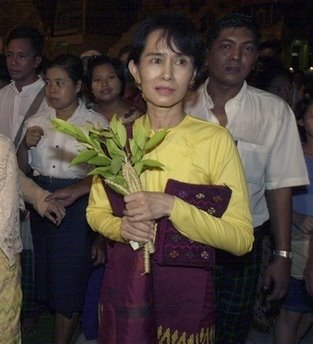


 Posts
Posts


