http://yaleglobal.yale.edu/display.article?id=11673
Rich with uranium and desperate for control, the Burmese junta may find a nuclear option attractive
Bertil Lintner
YaleGlobal, 3 December 2008
Power salute: Burmese strongman General Than Shwe; reports of Burmese search for nuclear technology are a cause of regional concern. Enlarge image
CHIANG MAI: Over the past year, Southeast Asia’s diplomatic community has tried to sort fact from fiction in a stream of unconfirmed reports from Burma, the region's most isolated and secretive country. Burma’s fledgling nuclear program with Russian assistance and its mysterious connections with North Korea raise concern in the region about its purpose.
According to Burmese exiles in Thailand, the Russians and North Koreans assist the Burmese in developing nuclear capability. But wary of similar reports by Iraqi exiles a few years ago, which turned out to be false, the international community remains skeptical. In a research paper for Griffith University, for example, Australian scholar Andrew Selth, dismisses the reports.
Nevertheless, certain facts are not in doubt. Burma first initiated a nuclear research program as early as 1956, when its then-democratic government set up the Union of Burma Atomic Energy Center, UBAEC, in then-capital Rangoon. Unrelated to the country's defense industries, it came to a halt when the military seized power in 1962. New power-holders, led by General Ne Win did not trust UBAEC head Hla Nyunt.
In February 2001, Burma's present junta, the State Peace and Development Council decided to revitalize the country's nuclear program, and Russia's Atomic Energy Ministry announced plans to build a 10-megawatt nuclear research reactor in central Burma. In July 2001, Burma established a Department of Atomic Energy, believed to be the brainchild of the Minister of Science and Technology, U Thaung, a graduate of Burma's Defense Services Academy and former ambassador to the United States. US-trained nuclear scientist Thein Po Saw was identified as a leading advocate for nuclear technology in Burma.
At a press conference in Rangoon on January 21, 2002, Vice-Chief of Military Intelligence Major-General Kyaw Win issued a statement: “Myanmar's consideration of building a nuclear research reactor is based on the peaceful purposes getting modern technologies needed for the country, availability of radioisotopes being used peacefully, training technicians and performing feasibility study for generation of electricity from nuclear power."
While Burma suffers from chronic power shortages, the need for a research reactor, used mainly for medical purposes, is unclear. Radioisotopes allow imaging of the brain, bones, organs, lungs and blood flow, advanced technology for Burma's basic health services.
However, observers pointed out the Russian-made nuclear-research reactor that the Burmese authorities sought to acquire is similar to the 5-megawatt research reactor that the then–Soviet Union installed at Yongbyon in North Korea in 1965, from which North Korea later extracted plutonium for a nuclear device. Burma’s military leaders couldn’t help but notice how North Korea stood up to the US, a harsh critic of the Burmese regime, mainly due to its nuclear program.
Reports have been murky since. In April 2007, days after the restoration of diplomatic ties between Burma and North Korea – broken since North Koreans detonated a bomb in Rangoon in 1983 – a North Korean freighter, the Kang Nam I, docked at Thilawa port. Burmese officials claimed that the ship sought shelter from a storm. But two Burmese reporters working for a Japanese news agency were briefly detained when they went to the port to investigate, indicating possible other, more secret reasons for the visit.
According to the July 2007 issue of the Irrawaddy, a Thailand-based publication by Burmese exiles: "by a strange coincidence, the 2,900-ton North Korean cargo vessel MV Bong Hoafan...sought shelter from a storm and anchored at a Burmese port last November. The Burmese government reported that an on-board inspection had 'found no suspicious material or military equipment.' But journalists and embassies in Rangoon remained skeptical."
At about the same time, the South Korean news agency Yonhap reported "a North Korean ship under US surveillance was believed to have unloaded self-propelled artillery at a Myanmar port."
The deal with Russia was stalled for several years, but in May 2007, Russia's atomic energy agency, Rosatom, announced construction of the nuclear-research reactor. According to Rosatom, the reactor would use low-enriched uranium, not plutonium. Up to 350 Burmese nationals, most military personnel, already trained in Russia under the initial 2001 agreement, and since then several hundred more trained at Russian institutions.
Signatories of the agreement reached in Moscow on May 15, 2007 were U Thaung and Rosatom head Sergey Kiriyenko. According to Rosatom's press release: " The sides have agreed to cooperate on the establishment of a center for nuclear studies in the territory of Myanmar (the general contractor will be Atomstroyexport). The center will comprise a 10-megawatt light water reactor working on 20 per cent-enriched uranium-235, an activation analysis laboratory, a medical isotope production laboratory, silicon doping system, nuclear waste treatment and burial facilities. The center will be controlled by IAEA."
Despite that claim, the International Atomic Energy Agency reported on May 17, 2007, that Burma had not reported plans to build a nuclear reactor. As a signatory to the Non-Proliferation Treaty, Burma is required to allow inspections of any nuclear facilities.
The agreement does not mention North Korea, but in November 2003 the Norway-based broadcasting station Democratic Voice of Burma, run by Burmese exiles, reported that 80 Burmese military personnel had departed for North Korea to study "nuclear and atomic energy technology."
The report remains unconfirmed, its source unclear. If Burmese military personnel traveled to North Korea, it’s more likely for training in maintenance of missiles, which Burma then wanted to buy from North Korea but could not yet afford.
Alarm bells rang in August 2008, after India withdrew permission for a North Korean plane to overfly its airspace on route to Iran, just before taking off from Mandalay in Burma where it had made a stopover. The Ilyushin-62 carried unidentified cargo, and it’s destination after the stopover was unclear.
Reports of some cooperation between Burma, Russia, North Korea and Iran have also come from two Burmese nationals, an army officer and a scientist, who recently left the country. According to them, a Russian-supplied 10-megawatt research reactor is being built, at Myaing, north of Pakokku, said to be for peaceful research. But according to the defectors, another facility exists south of the old hill station of Myin Oo Lwin, formerly known as Maymyo. Three Russians supposedly work there while a group of North Koreans are said to engage in tunneling and constructing a water-cooling system. The defectors also assert that in 2007 an Iranian intelligence officer, identified only as "Mushavi," visited Burma. Apart from sharing nuclear knowledge, he reportedly provided advice on missile systems using computer components from Milan.
Burma has uranium deposits, and the Ministry of Energy has identified five sources of ore in the country, all low-grade uranium unsuitable for military purposes. But the defectors claim that two more uranium mines in Burma are not included in official reports: one near Mohnyin in Kachin State and another in the vicinity of Mogok in Mandalay Division. The ore is supposedly transported to a Thabeikkyin refinery, conveniently located between the two alleged mines.
Until such reports can be verified, or refuted, speculations remain. But a nuclear-powered Burma would be a nightmare for all neighbors and would upset the balance of power in the region. All that is certain is that Burma has a nuclear program. It may be years, if not decades, away from developing nuclear-weapons capability. But the fact that the country's military leadership experiments with nuclear power is cause for concern.
Bertil Lintner is a Swedish journalist based in Thailand and the author of several works on Asia, including “Blood Brothers: The Criminal Underworld of Asia” and “Great Leader, Dear Leader: Demystifying North Korea under the Kim Clan.”
Rights:
© 2008 Yale Center for the Study of Globalization
Related Articles:
Trade and Security Trump Democracy in Burma – Part I
Trade and Security Trump Democracy in Burma – Part II
A Quietly Growing Nuclear Danger in North Korea
Keeping North Korea from the Brink – Part I
Saturday, December 6, 2008
Burma’s Nuclear Temptation-Bertil Lintner


Ban Rules Out Visit to Burma
ဘာမွ မထူးျခားဘူးဆိုရင္ မသြားဘူးလို ့မစၥတာဘန္ကီမြန္းကေျပာပါတယ္။
http://www.irrawaddy.org/article.php?art_id=14751
By LALIT K JHA Thursday, December 4, 2008
NEW YORK — The UN secretary general, Ban Ki-moon, on Wednesday ruled out a visit to Burma until such time as he is assured that his presence in the country will help to move it closer to the goal of establishing a genuine democracy.
The onus for this lies on the Burmese military junta, said Ban’s spokesperson, Michele Montas.
“The secretary-general has consistently said that the primary responsibility lies with the government to deliver substantive results, including freeing political prisoners and including having a dialogue with Aung San Suu Kyi,” Montas said.
The spokesperson confirmed that the secretary-general has received a letter from more than 100 former prime ministers and presidents from over 50 countries, urging him to press for the release of political prisoners before the end of the year.
Ban also received a phone call from the former prime minister of Norway, Kjell Magne Bondevik, who had taken the lead in bringing the former world leaders together on one platform.
“They discussed the letter, asking the secretary-general to visit Myanmar [Burma] and to urge the release of political prisoners by the end of this year,” Montas said, adding: “The secretary-general once more reiterated his pledge to remain fully engaged, both personally and through his personal envoy in Myanmar.”
Ban said he would like to visit Burma again to discuss a broad range of issues.
“However, he will not be able to do so without reasonable expectations of a meaningful outcome, which is what we have been saying all along,” Montas said.
Montas also said that Ban’s special envoy to Burma, Ibrahim Gambari, would not visit Burma unless he too was sure of achieving some tangible results.
“Gambari himself will not go unless there is some chance that this will move forward. He will not just go for the sake of going, in other words,” the spokesperson said.
Meanwhile, having guided America’s foreign policy on Burma during the last eight years, the US first lady, Laura Bush, said on Wednesday that she would continue to raise her voice on behalf of the people of Burma even after she leaves the White House on January 20.
“I will continue that,” Bush said in an interview with CNN on Wednesday.
“The president is going to build a Freedom Institute with his presidential library, and so it’ll be a really good vehicle for me, as well, to continue to talk about Burma, to meet with dissidents from Burma like the young Buddhist monk that I had the chance to meet with when we were in New York earlier this fall,” she said.
Inspired by Aung San Suu Kyi, the pro-democracy icon, Bush has been instrumental in pushing for US sanctions against the Burmese military junta and its cronies. The US has led the world in initiating action against the Burmese regime.
Bush, who has met with a number of Burmese pro-democracy leaders, is often the first internationally recognized figure to issue statements on issues related to Burma.
India angry as 'never before' over attacks: PM
http://asia.news.yahoo.com/081205/afp/081205124036asiapacificnews.html
MUMBAI (AFP) - India has been angered "as never before" by the attacks in Mumbai, Prime Minister Manmohan Singh said Friday, as his new home minister hinted at growing evidence of Pakistani involvement.
"We have told the world that the people of India have felt a sense of hurt and anger as never before due to the Mumbai terror strikes," Singh said following talks here with visiting Russian President Dmitry Medvedev.
The attacks by Islamist gunmen against multiple targets in India's financial capital nine days ago killed 163 people, including 26 foreigners. Nine militants were killed, while one was captured alive.
"It is the obligation of all concerned that perpetrators of this horrible crime are brought to book," Singh said.
India says all 10 gunmen involved in the assault came from Pakistan, and has handed Islamabad a list of 20 terror suspects, with demands for their arrest and extradition.
Suspicion has focused on Lashkar-e-Taiba, a Pakistan-based militant group which has fought Indian control of divided Kashmir. Lashkar was blamed for an attack on the Indian parliament in 2001, which pushed the two nations to the brink of war.
ADVERTISEMENT
Earlier Friday, Indian Home Minister Palaniappan Chidambaram clearly had Pakistani groups in mind when he spoke of proof that elements outside the country were responsible.
"There is ample evidence to show that the source of the terrorist attack was clearly linked to organisations which have in the past been identified as being behind terrorist attacks in India," Chidambaram said.
"There are one or two countries which have broadly confirmed our preliminary conclusions," he added.
The United States has been sharing intelligence with India in the wake of the Mumbai bloodshed.
Chidambaram acknowledged there had been some security and intelligence "lapses" prior to the attacks.
"These are being looked into and I will do my utmost ... to overcome the causes of these lapses and try to improve the effectiveness of the security system," he said.
CNN and other US networks reported that the United States had warned India in October that hotels and business centres in Mumbai would be targeted by attackers coming from the sea.
One US intelligence official even named the Taj Mahal hotel, one of 10 sites hit in the 60-hour siege by gunmen, as a specific target, ABC television said.
Several Indian newspapers on Friday cited unidentified intelligence sources as saying that Pakistan's powerful spy agency, the Inter Services Intelligence (ISI), was involved in training the gunmen.
The Indian Express said intercepts of conversations between the gunmen and their handlers showed the use of communication pathways often used by the ISI.
"We are 100 percent convinced that the ISI is involved," the India Abroad News Service quoted a highly placed intelligence source as saying.
US Secretary of State Condoleezza Rice was in Islamabad Thursday in an effort to defuse tension in the region after visiting New Delhi the previous day.
Rice said it was crucial for the Pakistani government to provide full and transparent cooperation with the Indian investigations.
Pakistani President Asif Ali Zardari said he was determined that his country would not be used to orchestrate attacks or shelter terrorists and vowed "strong action" against any Pakistani elements involved.
Indian jitters following the attacks saw New Delhi's international airport locked down for about 40 minutes overnight Thursday after security guards heard what they thought were gunshots.
The incident was finally dismissed as a false alarm.
Security was tightened across India after the Mumbai attacks, and the alert level at several airports was raised even higher Thursday after Defence Minister A.K. Antony warned of possible "terror strikes from the air."
Tourists flood out of Thailand but turmoil remains
http://asia.news.yahoo.com/081205/afp/081205075003asiapacificnews.html
BANGKOK (AFP) - Thousands of stuck travellers were preparing to leave Bangkok's main airport as it resumed full operations, but political uncertainty dragged on after the king cancelled his annual birthday speech.
King Bhumibol Adulyadej turned 81 on Friday but pulled out of his customary birthday address the previous day due to illness, ending hopes that he might offer guidance on a way out of the nation's long-running political crisis.
A mid-morning ceremony complete with puppet shows and classical dance officially reopened Suvarnabhumi international airport, after an eight-day siege by anti-government protesters ended on Wednesday.
"Suvarnabhumi has officially resumed operations. All of the staff here are so happy to return to work," an Airports of Thailand spokeswoman said.
"Thai Airways TG971 bound for Moscow officially marked the full and smooth resumption of the airport."
The siege of Suvarnabhumi and the smaller Don Mueang domestic airport left an estimated 350,000 travellers stranded in Thailand, and cost the kingdom billions of dollars in lost revenue.
ADVERTISEMENT
Frustrated holiday-makers have been struggling to get out of a naval base southwest of the capital and a handful of regional airports, but there is a huge backlog of people waiting to fly out of the "Land of Smiles."
Suvarnabhumi can handle 700 flights and 100,000 passengers a day, although the spokeswoman said she expected up to 80,000 travellers and 550 flights to pass through the hub Friday.
Tourists in sunglasses and shorts milled around the futuristic steel-and-glass terminal, where there was little sign that one week ago thousands of protesters were setting up makeshift food stalls and tents.
Dozens of flights had already left the two-year-old hub since a court dissolution of the ruling party gave demonstrators a face-saving way to leave, but check-in and immigration were not up and running until Friday.
The People's Alliance for Democracy (PAD) decided to abandon its blockade of the airports after Tuesday's Constitutional Court ruling forced premier Somchai Wongsawat from office -- a key demand of their movement.
The PAD launched their campaign in May, accusing the government of acting as a puppet for Thaksin Shinawatra, the premier ousted in a 2006 coup who is living in exile to escape corruption charges.
Analysts say there is now a pause in the turmoil as Thais celebrate the king's birthday with reverential ceremonies, but warn that protests could erupt again.
Allies of Somchai have vowed to regroup under new names and simply re-form the government, since they still have a majority.
They are set to name a likely successor on Sunday, although a parliamentary session early next week when MPs would have voted for a new premier has been cancelled and has not been rescheduled.
The PAD, which draws its support from the urban elite and elements in the military and palace, has warned that it will resume protests if the new premier is too close to Thaksin. Somchai is Thaksin's brother-in-law.
"Any effort to nominate another proxy of deposed prime minister Thaksin Shinawatra to lead a new administration will only result in another crisis," an editorial in the Bangkok Post said Friday.
King Bhumibol -- the world's longest reigning monarch -- pulled out of his highly anticipated address to the nation at the last minute on Thursday as millions of Thais were tuning in to hear it.
Crown Prince Maha Vajiralongkorn said that the king was "mildly sick" in a brief broadcast, while Princess Maha Chakri Sirindhorn said in the same broadcast he "has a blockage in his throat and has poor appetite."
The announcement prompted speculation that the king did not want to get involved in the turmoil that has rocked Thailand since Thaksin was ousted, and sparked concerns for the health of the monarch, adored as semi-divine here.
Ex-PoWs deserve apology, says professor
http://www.cambridge-news.co.uk/cn_news_home/DisplayArticle.asp?ID=371390
A JAPANESE professor who lectures on her country's role in the Second World War says Cambridgeshire's former prisoners of war deserve a full apology for the way they were treated.
Prof Tomoyo Nakao, who teaches at Okayama University in Japan, has interviewed many ex-prisoners about the cruelty they suffered at the hands of her countrymen.
Many hundreds of men from the Cambridgeshire Regiment were locked up by the Japanese army in Singapore prison camps in the early 1940s, and were beaten, starved and forced to work as slaves building the Burma railway.
In the News last week, some of the surviving veterans spoke about how they had never received a "proper" apology from the Japanese government or Japan's emperor - and claimed they probably would never get one.
Prof Nakao, who has visited Cambridge to speak to former prisoners and has written a book about the issue of reconciliation, said: "There are young ones as well as veterans who are concerned.
"I teach my students about the PoW issue, and I quite agree that the PoWs have not been given proper words of apology.
"I have just published a book about the failure of post-war Japan-Anglo reconciliation, in which I tried to explain why those Japanese 'apologies' issued by our prime ministers and emperor were not sufficient, and did not work, in spite of the fact that the Japanese are made to believe - by some books and in the media - that they were successful."
She added: "One of my students told me that after we discussed the issue in class, she had come to understand the importance and weight of the word of apology.
She said to me: 'I do believe that we need to apologise, and that we know what we are apol-ogising for.'
"It sounds easy but I know it is difficult. However, it is most necessary to do so. And it is important that we do not simply issue an apology, but that we make an effort to obtain forgiveness in the real sense of the word."
Prof Nakao said: "In Japan, many are made to believe that reconciliation has been achieved, and that the PoWs are now satisfied. For me, that is hard to believe."
She is a member of the International Oral History Association and has just started a website focusing on dialogue between the UK and Japan - http://powow.asia
Kyaw Zaw urges perseverance against Burmese regime
http://english.dvb.no/news.php?id=1984
Dec 4, 2008 (DVB)General Kyaw Zaw, a veteran politician and one of the Thirty Comrades, has urged the people of Burma to keep on fighting against the military dictatorship and not to give in to pressure from the regime.
Kyaw Zaw, speaking on the occasion of his 89th birthday yesterday, called for unity and perseverance.
"I am 89 years old today, I am now a geriatric, as [Burmese revolutionary icon] Sayagyi Thakhin Ko Daw Hmine often described himself,・Kyaw Zaw said.
I am so proud and delighted to see our people are still fighting relentlessly against the military dictatorship through over the generations with no fear in the face of the various pressures from the government," he said.
"I would like to urge everyone to keep on fighting and not to give up," he continued.
"I ask everyone to stand together in unity and show understanding towards each other; also I would like to urge the SPDC and all the troops in the military to show respect to the people as their mentors and not to treat them like their enemies."
Kyaw Zaw, along with Ye Htut, is one of the two surviving members of the Thirty Comrades, who travelled to Japan in 1941 for military training, founded the Burmese Independence Army and returned to Burma to fight against British colonial rule.
He was dismissed from the army in 1957 after being accused of leaking information on the army movements to the Communist Party of Burma, of which he was a senior member.
He went on to stand for parliament in 1960 but was unsuccessful.
Since going in to exile, Kyaw Zaw has called for dialogue between the military regime and the National League for Democracy and urged the people of Burma to continue their struggle against the junta.
Kyaw Zaw now lives in exile in China.
Reporting by Aye Nai
China's cold war on Tibet
http://www.isn.ethz.ch/isn/Current-Affairs/Security-Watch/Detail/?fecvnodeid=59999&v5=59999&fecvid=5&lng=en&id=94401
By rejecting the Dalai Lama's call for autonomy for Tibet, Beijing could face greater upheaval in the future that would also affect ties with other countries, Sudeshna Sarkar writes for ISN Security Watch.
By Sudeshna Sarkar in Kathmandu for ISN Security Watch
--------------------------------------------------------------------------------
Less than a week before the scheduled start of a critical China-EU Summit in Lyon on 1 December, the Chinese government has asked for the talks to be postponed indefinitely after learning that French President Nicolas Sarkozy, the rotating president of the Council of the European Union, would meet the Dalai Lama after the session.
The Chinese Foreign Ministry said the meeting between the exiled Tibetan leader and Sarkozy, scheduled for this Saturday, had aroused "strong dissatisfaction of the Chinese government and people."
"The Tibet issue is related to China's sovereignty and territorial integrity and [has bearing on] China's core interest," a Ministry spokesperson said in a statement. "We resolutely oppose [the] Dalai's separatist activities in any [country] in whatever capacity, and the contact between foreign leaders with him in whatever form."
Almost as soon as Beijing decided to shelve the Lyon meeting, it sent Chinese Foreign Minister Yang Jiechi, who was to visit Myanmar this week, to Nepal first - the communist republic's southern neighbor, which is now emerging as an important factor in the battle over Tibet.
Yang's three-day visit to Kathmandu ended in a bounty comprising both usual and unusual offers. While China signed the usual technical and economic cooperation agreement worth 100 million yuan (over US$14 million) and agreed to look into the possibilities of extending the Beijing-Lhasa railway to its border with Nepal to boost bilateral trade and tourism, it also, unusually, offered security assistance. The latter comes at the cost of annoying India (the other South Asia giant), which contends that per old treaties, Nepal must consult New Delhi over security agreements with other countries.
Nepali Foreign Minister Upendra Yadav, who signed the agreement with his Chinese counterpart in Kathmandu on Wednesday, parried media questions on what the security assistance entailed. "It's training and equipment," Yadav said. "The details would be decided by the appropriate channels of both countries."
Nepal is currently ruled by the Maoist party, consisting of former guerrillas who laid down arms two years ago and agreed to support a competitive multi-party democracy. When the then-coalition government, which included the Maoists, received unspecified military supplies from India in March, the former guerrillas called a general strike and set police posts on fire.
Devendra Poudel, a regional leader of the Maoists, was quoted at that time as saying that India's move was "a conspiracy to sabotage" the March national elections.
The re-emergence of a security assistance offer by Beijing less than nine months later is fueling speculation over the catalyst, especially with a renewed shoring up of Sino-Nepali military ties. In September, less than a month after he assumed office, Nepal Defense Minister Ram Bahadur Thapa visited Beijing. The trip resulted in the communist republic offering once again unspecified military assistance.
In November, a high-level Chinese military delegation headed by a major-general visited Kathmandu. A second delegation, led by a lieutenant-general, is scheduled to arrive Saturday.
The Dharamshala factor
These activities are most likely related to the six-day meeting of exiled Tibetan leaders held last month in Dharamshala, India, the seat of the Dalai Lama's government in exile. The group gathered to decide the future strategy of the diaspora, which remains scattered since China's invasion and annexation of the Buddhist kingdom of Tibet in 1951.
With the Dalai Lama finally admitting that talks with Beijing - begun in 2002 to seek greater autonomy for Tibet - had failed, there was fear that the younger generations of Tibetans, who advocate a push for independence, would assume leadership and begin a new movement that could lead to confrontation and bloodshed.
Though the special meeting averted an immediate crisis by endorsing the Dalai Lama's leadership and his advocacy of the "Middle Way" approach - seeking greater autonomy within the framework of the Chinese republic in a peaceful way - Beijing still can't afford to relax.
The meeting, for one, has set the clock ticking. The nearly 500 representatives present at the Dharamshala gathering also agreed that they might be forced to seek independence if results of further engagement with China were not evident "in the near future."
Also, while the diaspora awaits results of engagement it has launched a Charter for Engagement in the Future of Tibet - an attempt to "engage directly with the challenges facing Tibetans on the plateau" and build a new consensus.
Beijing wants to stop such engagements at any cost and suppress any eventual attempt at freedom, which has led to its increased focus on Nepal. The border between Tibet and Nepal, though dominated by high Himalayan ranges, is the traditional route used for decades by Tibetans trying to escape from China-controlled Tibet or re-enter the heavily guarded territory. If the border can be controlled, contacts between Tibetans at home and abroad as well as future independence movements can also be controlled.
With this in mind, China has not just stepped up deployment of soldiers along the border but is also pressuring Nepal to regulate its border with India further southward. India and Nepal share an 1,800-km open border, which can be crossed by the nationals of both countries without passports or visas. China suspects that Tibetans from Dharamshala, or even the US and other countries, have been using this border to cross into Nepal to stoke anti-China protests in Kathmandu for nearly seven months.
The protests, with images of unarmed monks and women being subjected to brute force by security personnel, embarrassed Beijing before, during and after the 2008 Summer Olympic Games.
The Chinese government considered the protests so grave an affront that it asked the then-Chinese ambassador to Nepal, Zheng Xianglin, to urge the Nepal government to adopt harsher measures that would deter the protesters. When the suggestion was not heeded by Nepal, Zheng was recalled after completing only half of his three-year term.
The new Maoist-led government of Nepal has pledged to uphold Beijing's "One China" policy that considers Tibet and Taiwan inalienable parts of the communist republic. It has also pledged not to allow Nepal's soil to be used for anti-China activities.
Though the earlier government made the same pledge, the Maoists have been able to implement it more effectively. The Tibetan protests have died down under Maoist rule and the threat of deportation hangs over future protesters.
Though successful with is neighbor, Beijing has been unable to convince other governments to adopt its views about Tibet and the Dalai Lama. China, which went to war with India in 1962, is displeased with New Delhi for allowing the Dalai Lama's "government in exile" to function from Dharamshala. It is also angered by repeated US intervention on behalf of Tibetans.
Washington had offered to Kathmandu to resettle 5,000 Tibetan refugees living in Nepal. However, the offer was blocked by an angry Beijing, which says there are no Tibetan refugees, only "illegal immigrants" who should be dealt with accordingly.
China: EU also to blame
The EU, especially France, is now on Beijing's peeve list as being the cause for the postponed summit.
"The current situation is not caused by China, nor should China be held responsible for it," the Chinese Foreign Ministry said. "Nevertheless, China has not changed its determination and policy to actively develop its ties with the European Union. China is still willing to work together with the EU from the long term perspective, to push forward the healthy and stable development of China-EU relations on the basis of mutual respect on an equal footing."
Vincent Metten, EU policy director of International Campaign for Tibet, a New York-based Tibet rights organization, said in a statement that Beijing's "disproportionate action" was counterproductive to its own interests and may damage Europe's confidence in China as a responsible partner.
"Beijing cannot escape the reality that the EU, the US and the United Nations all have serious concerns about the political and human rights situation in Tibet," Metten said. "[All of them] respect the Dalai Lama's leadership and his willingness to engage with China."
Employers cut 533K jobs in Nov., most in 34 years
အေမရိကားမွာဒီနွစ္ နိုဝင္ဘာလ တလထဲမွာ အလုပ္ျပဳတ္တဲ့သူ ငါးသိန္းသုံးေသာင္းေက်ာ္ရိွပါတယ္
ဒါဟာ ၃၄ နွစ္အတြင္းမွာအမ်ားဆုံးျဖစ္ပါတယ္၊ အခုအလုပ္လက္မဲ့ရာခိုင္နႈန္း
ဟာ ေျခာက္ဒႆမ ခြန္နွစ္ရိွပါတယ္ ။
http://news.yahoo.com/s/ap/20081205/ap_on_bi_ge/financial_meltdown/print
By JEANNINE AVERSA, AP Economics Writer Jeannine Aversa, Ap Economics Writer
9 mins ago
WASHINGTON – Skittish employers slashed 533,000 jobs in November, the most in 34 years, catapulting the unemployment rate to 6.7 percent, dramatic proof the country is careening deeper into recession.
The new figures, released by the Labor Department Friday, showed the crucial employment market deteriorating at an alarmingly rapid clip, and handed Americans some more grim news right before the holidays.
As companies throttled back hiring, the unemployment rate bolted from 6.5 percent in October to 6.7 percent last month, a 15-year high.
"These numbers are shocking," said economist Joel Naroff, president of Naroff Economics Advisors. "Companies are sharply reacting to the economy's problems and slashing costs. They are not trying to ride it out."
The unemployment rate would have moved even higher if not for the exodus of 422,000 people from the work force. Economists thought many of those people probably abandoned their job searches out of sheer frustration. In November 2007, the jobless rate was at 4.7 percent.
The U.S. tipped into recession last December, a panel of experts declared earlier this week, confirming what many Americans already thought.
Since the start of the recession, the economy has lost 1.9 million jobs, the number of unemployed people increased by 2.7 million and the jobless rate rose by 1.7 percentage points.
Job losses last month were widespread, hitting factories, construction companies, financial firms, retailers, leisure and hospitality, and others industries. The few places where gains were logged included the government, education and health services.
The loss of 533,000 payroll jobs was much deeper than the 320,000 job cuts economists were forecasting. The rise in the unemployment rate, however, wasn't as steep as the 6.8 percent rate they were expecting. Taken together, though, the employment picture was dismal.
The job reductions were the most since a whopping 602,000 positions were slashed in December 1974, when the country was in a severe recession.
All told, 10.3 million people were left unemployed as of November, while the number of employed was 144.3 million.
Job losses in September and October also turned out to be much worse. Employers cut 403,000 jobs in September, versus 284,000 previously estimated. Another 320,000 were chopped in October, compared with an initial estimate of 240,000.
Employers are slashing costs to the bone as they try to cope with sagging appetites from customers in the U.S. and in other countries, which are struggling with their own economic troubles.
The carnage — including the worst financial crisis since the 1930s — is hitting a wide range of companies.
In recent days, household names like AT&T Inc., DuPont, JPMorgan Chase & Co., as well as jet engine maker Pratt & Whitney, a subsidiary of United Technologies Corp., and mining company Freeport-McMoRan Copper & Gold Inc. announced layoffs.
Fighting for their survival, the chiefs of Chrysler LLC, General Motors Corp. and Ford Motor Co. will return Friday to Capitol Hill to again ask lawmakers for as much as $34 billion in emergency aid.
Workers with jobs saw modest wage gains. Average hourly earnings rose to $18.30 in November, a 0.4 percent increase from the previous month. Over the year, wages have grown 3.7 percent, but paychecks haven't stretched that far because of high prices for energy, food and other items.
Worn-out consumers battered by the job losses, shrinking nest eggs and tanking home values have retrenched, throwing the economy into a tailspin. As the unemployment rate continues to move higher, consumers will burrow further, dragging the economy down even more, a vicious cycle that Washington policymakers are trying to break.
Federal Reserve Chairman Ben Bernanke is expected ratchet down a key interest rate — now near a historic low of 1 percent — by as much as a half-percentage point on Dec. 16 in a bid to breathe life into the moribund economy. Bernanke is exploring other economic revival options and wants the government to step up efforts to curb home foreclosures.
Treasury Secretary Henry Paulson, whose department oversees the $700 billion financial bailout program, also is weighing new initiatives, even as his remaining days in office are numbered.
President-elect Barack Obama, who takes office on Jan. 20, has called for a massive economic recovery bill to generate 2.5 million jobs over his first two years in office. House Speaker Nancy Pelosi, D-Calif., has vowed to have a package ready on Inauguration Day for Obama's signature.
The measure, which could total $500 billion, would bankroll big public works projects to create jobs, provide aid to states to help with Medicaid costs, and provide money toward renewable energy development.
At 12 months and counting, the recession is longer than the 10-month average length of recessions since World War II. The record for the longest recession in the postwar period is 16 months, which was reached in the 1973-75 and 1981-82 downturns. The current recession might end up matching that or setting a record in terms of duration, analysts say.
The 1981-82 recession was the worst in terms of unemployment since the Great Depression. The jobless rate rose as high as 10.8 percent in late 1982, just as the recession ended, before inching down.
Given the current woes, the jobless rate could rise as high as 8.5 percent by the end of next year, some analysts predict. Projections, however, have to be taken with a grain of salt because of all the uncertainties plaguing the economy. Still, the unemployment rate often peaks after a recession has ended. That's because companies are reluctant to ramp up hiring until they feel certain the recovery has staying power.
Copyright © 2008 The Associated Press. All rights reserved. The information contained in the AP News report may not be published, broadcast, rewritten or redistributed without the prior written authority of The Associated Press.
Online journalists now jailed more than others
အခုအခါမွာ အြန္လိုင္းဂ်ာနယ္လစ္ေတြကမၻာတလႊားမွာ တျခားနယ္ပယ္က ဂ်ာနယ္လစ္ေတြထက္ပိုျပီး
မတရားဖမ္းဆီးအေရးယူခံေနရပါတယ္ ၊ ဒီထဲမွာကၽြန္ေတာ္တို ့ ကို ေရႊ နအဖ ကလဲအားက်မခံ ထိပ္တန္းကပါဝင္ေနပါတယ္။
http://www.thezimbabwetimes.com/?p=8321
December 4, 2008
By Our Correspondent
NEW YORK - A total of 23 journalists remained jailed in connection with their work in Sub-Saharan Africa, two-thirds held without charge, according to an annual report released today by the Committee to Protect Journalists.
Thirteen journalists were held in Eritrea, which was the fourth jailer of journalists worldwide behind China, Cuba and Burma. The survey found more Internet journalists jailed worldwide today than journalists working in any other medium.
CPJ’s survey found 125 journalists in all behind bars on December 1, a decrease of two from the 2007 tally. (Read detailed accounts of each imprisoned journalist.) China continued to be world’s worst jailer of journalists, a dishonor it has held for 10 consecutive years. Cuba, Burma, Eritrea, and Uzbekistan round out the top five jailers from among the 29 nations that imprison journalists. Each of the top five nations has persistently placed among the world’s worst in detaining journalists.
Eritrea’s secret prisons held but four of at least 17 journalists worldwide held in secret locations. Eritrean authorities have refused to disclose the whereabouts, legal status, or health of any of the journalists they have been detaining for several years. Unconfirmed reports have suggested the deaths of at least three of these journalists while in custody, but the government has refused to even say whether the detainees are alive or dead.
Two other Eritrean journalists were being held in secret in neighboring Ethiopia, while the government of The Gambia has declined to provide information on the July 2006 arrest of journalist “Chief” Ebrima Manneh. Many international observers, from the U.S. Senate to the West African human rights court, have called on authorities to free Manneh, who was jailed for trying to publish a report critical of Gambian President Yahya Jammeh.
About 13 percent of jailed journalists worldwide, including those imprisoned in Eritrea, Ethiopia and The Gambia, face no formal charge at all. Countries as diverse as Israel, Iran, the United States, and Uzbekistan also used this tactic of open-ended detention without due process. In Sub-Saharan Africa, 16 out of 23 journalists were behind bars without charge.
Antistate allegations such as subversion, divulging state secrets, and acting against national interests are the most common charge used to imprison journalists worldwide, CPJ found. About 59 percent of journalists in the census are jailed under these charges, many of them by the Chinese and Cuban governments, but also by countries like Senegal, the Democratic Republic of Congo and Ivory Coast.
The survey found that 45 percent of all media workers jailed worldwide are bloggers, Web-based reporters, or online editors. Online journalists represent the largest professional category for the first time in CPJ’s prison census. At least 56 online journalists are jailed worldwide, according to CPJ’s census, a tally that surpasses the number of print journalists for the first time.
This trend applied in Sub-Saharan Africa where at least one online journalist remained imprisoned as of December 1, 2008.
“Online journalism has started to change the media landscape in Sub-Saharan Africa and eased access to communication,” said CPJ’s Program Coordinator Tom Rhodes. “But some governments have reacted adversely to this trend and a growing pattern of harassment of online journalists has developed.”
The number of imprisoned online journalists has steadily increased since CPJ recorded the first jailed Internet writer in its 1997 census. Print reporters, editors, and photographers make up the next largest professional category, with 53 cases in 2008. Television and radio journalists and documentary filmmakers constitute the rest.
“Online journalism has changed the media landscape and the way we communicate with each other,” said CPJ Executive Director Joel Simon. “But the power and influence of this new generation of online journalists has captured the attention of repressive governments around the world, and they have accelerated their counterattack.”
In October, CPJ joined with Internet companies, investors, and human rights groups to combat government repression of online expression. After two years of negotiations, this diverse group announced the creation of the Global Network Initiative, which establishes guidelines enabling Internet and telecommunications companies to protect free expression and privacy online. Yahoo, Google, and Microsoft have joined the initiative.
Illustrating the evolving media landscape, the increase in online-related jailings has been accompanied by a rise in imprisonments of freelance journalists. Forty-five of the journalists on CPJ’s census are freelancers; most of them work online. These freelancers are not employees of media companies and often do not have the legal resources or political connections that might help them gain their freedom. The number of imprisoned freelancers has risen more than 40 percent in the last two years, according to CPJ research.
“The image of the solitary blogger working at home in pajamas may be appealing, but when the knock comes on the door they are alone and vulnerable,” said CPJ’s Simon. “All of us must stand up for their rights—from Internet companies to journalists and press freedom groups. The future of journalism is online and we are now in a battle with the enemies of press freedom who are using imprisonment to define the limits of public discourse.”
Nowhere is the ascendance of Internet journalism more evident than in China, where 24 of 28 jailed journalists worked online. China’s prison list includes Hu Jia, a prominent human rights activist and blogger, who is serving a prison term of three and a half years for online commentaries and media interviews in which he criticized the Communist Party. He was convicted of “incitement to subvert state power,” a charge commonly used by authorities in China to jail critical writers. At least 22 journalists are jailed in China on this and other vague antistate charges.
Cuba, the world’s second worst jailer, released two imprisoned journalists during the year after negotiations with Spain. Madrid, which resumed some cooperative programs with Cuba in February, has sought the release of imprisoned writers and dissidents in talks with Havana. But Cuba continued to hold 21 writers and editors in prison as of December 1, all but one of them swept up in Fidel Castro’s massive 2003 crackdown on the independent press. In November, CPJ honored Héctor Maseda Gutiérrez, who at 65 is the oldest of those jailed in Cuba, with an International Press Freedom Award.
Burma, the third worst jailer, is holding 14 journalists. Five were arrested while trying to spread news and images from areas devastated by Cyclone Nargis. The blogger and comedian Maung Thura, who uses the professional name Zarganar, was sentenced to a total of 59 years in prison during closed proceedings in November. Authorities accused Maung Thura of illegally disseminating video footage of relief efforts in hard-hit areas, communicating with exiled dissidents, and causing public alarm in comments to foreign media.
Uzbekistan, with six journalists detained, is the fifth worst jailer. Those in custody include Dzhamshid Karimov, nephew of the country’s president. A reporter for independent news Web sites, Karimov has been forcibly held in a psychiatric hospital since 2006.
Here are other trends and details that emerged in CPJ’s analysis:
In about 11 percent of cases, governments have used a variety of charges unrelated to journalism to retaliate against critical writers, editors, and photojournalists. Such charges range from regulatory violations to drug possession. In the cases included in this census, CPJ has determined that the charges were most likely lodged in reprisal for the journalist’s work.
Violations of censorship rules, the next most common charge, are applied in about 10 percent of cases. Criminal defamation charges are filed in about 7 percent of cases, while charges of ethnic or religious insult are lodged in another 4 percent. Two journalists are jailed for filing what authorities consider to be “false” news, including Senegalese journalist El Malick Seck. (More than one type of charge may apply in individual cases.)
Print and Internet journalists make up the bulk of the census. Television journalists compose the next largest professional category, accounting for 6 percent of cases. Radio journalists account for 4 percent, and documentary filmmakers 3 percent.
The 2008 tally reflects the second consecutive decline in the total number of jailed journalists. That said, the 2008 figure is roughly consistent with census results in each year since 2000. CPJ research shows that imprisonments rose significantly in 2001, after governments imposed sweeping national security laws in the wake of the 9/11 terrorist attacks on the United States. Imprisonments stood at 81 in 2000 but have since averaged 128 in CPJ’s annual surveys.
The United States, which is holding photographer Ibrahim Jassam without charge in Iraq, has made CPJ’s list of countries jailing journalists for the fifth consecutive year. During this period, U.S. military authorities have jailed dozens of journalists in Iraq - some for days, others for months at a time - without charge or due process. No charges have ever been substantiated in these cases.
CPJ does not apply a rigid definition of online journalism, but it carefully evaluates the work of bloggers and online writers to determine whether the content is journalistic in nature. In general, CPJ looks to see whether the content is reportorial or fact-based commentary. In a repressive society where the traditional media is restricted, CPJ takes an inclusive view of work produced online.
The organization believes that journalists should not be imprisoned for doing their jobs. CPJ has sent letters expressing its serious concerns to each country that has imprisoned a journalist.
CPJ’s list is a snapshot of those incarcerated at midnight on December 1, 2008. It does not include the many journalists imprisoned and released throughout the year; accounts of those cases can be found at www.cpj.org. Journalists remain on CPJ’s list until the organization determines with reasonable certainty that they have been released or have died in custody.
Journalists who either disappear or are abducted by non-state entities, including criminal gangs, rebels, or militant groups, are not included on the imprisoned list. Their cases are classified as “missing” or “abducted”.
Print This Article Email This Article
Friday, December 5, 2008
Doctor visits Myanmar's Aung San Suu Kyi: witnesses
ေဒၚေအာင္ဆန္းစုႀကည္ကို ေဒါက္တာတင္မ်ိဳးဝင္းလစဥ္သြားေနႀက ေဆးစစ္ေပးဖို ့သြားပါတယ္။ ေဒၚစုဟာ
အစာငတ္ခံဆႏၵမျပေပမဲ့ ျမန္မာနိုင္ငံမွာ လူ ့အခြင့္အေရးပိုမိုတိုးတက္ရရိွဖို ့့ နဲ ့မိမိကိုေနအိမ္အက်ယ္ခ်ဳပ္ခ်ထားျခင္း
တို ့ကိုကန္ ့ကြက္တဲ့အေနနဲ ့ အစာအနည္းငယ္သာစားတာ အခုဆိုရင္ (၃) လရိွ ပါျပီ၊ ေဒါက္တာတင္မ်ိဳးဝင္းရဲ့အဆို
အရ ေဒၚစုဟာ အာဟာရဓါတ္ခ်ိဳ ့တဲ့ေနတယ္လို ့ဆိုပါတယ္။
Myanmar's Aung San Suu Kyi
http://news.yahoo.com/s/afp/20081204/wl_asia_afp/myanmarpoliticssuukyi_081204162413
YANGON (AFP) – A doctor visited Myanmar's detained democracy leader Aung San Suu Kyi on Thursday, witnesses said, three months after her refusal of food supplies sparked concerns.
Her regular doctor Tin Myo Win and his assistant went into the lakeside compound where Aung San Suu Kyi is detained in the early afternoon and stayed about four hours, witnesses near her Yangon home told AFP.
A spokesman for her National League for Democracy party said she was expected to receive a routine medical check-up, a month after the doctor's last visit.
YANGON (AFP) – A doctor visited Myanmar's detained democracy leader Aung San Suu Kyi on Thursday, witnesses said, three months after her refusal of food supplies sparked concerns.
Her regular doctor Tin Myo Win and his assistant went into the lakeside compound where Aung San Suu Kyi is detained in the early afternoon and stayed about four hours, witnesses near her Yangon home told AFP.
A spokesman for her National League for Democracy party said she was expected to receive a routine medical check-up, a month after the doctor's last visit.
NLD spokesman Nyan Win previously said that Aung San Suu Kyi was given a clean bill of health after the doctor's visit in October.
Tin Myo Win gave Aung San Suu Kyi an intravenous drip on September 14, about a month after she began refusing food rations delivered to her home, prompting her lawyer Kyi Win to describe her as "malnourished."
The NLD and Kyi Win always denied the 63-year-old was on hunger strike, but said she was only eating small amounts of food to call for greater human rights in Myanmar and to protest her detention.
Aung San Suu Kyi, who has no other source of food aside from the daily supplies provided by the military regime, started accepting the food rations again a few days after being given the drip.
The Nobel peace prize winner had been detained for most of the past two decades. She is kept mostly isolated from the outside world, only receiving occasional visits from her doctor and lawyer.
Nyan Win said Aung San Suu Kyi's lawyer had requested a meeting with her to discuss an appeal against her detention.
"Lawyer U Kyi Win asked the authorities this week to meet with Daw Aung San Suu Kyi for her legal appeal. We are hoping to meet her. But we haven't got any reply yet," Nyan Win told AFP.
The NLD won a landslide victory in a 1990 election but the military never allowed it to take office and instead cemented its decades-long grip on power.
Myanmar's longest-serving political prisoner hospitalized
http://www.newkerala.com/topstory-fullnews-56386.html
အန္ကယ္ဦးဝင္းတင္ေဆးရုံတင္ထားရပါတယ္။
Yangon, Dec 5 : Win Tin, 79, Myanmar's longest serving political prisoner who was released from prison three months ago, has been hospitalized, family members confirmed Friday.
"He had low blood pressure and difficulty breathing so we sent him to Yangon Medical Centre in Yangon at 7.30 pm Thursday," a relative of Win Tin's told DPA.
Win Tin was released Sep 23 after serving 19 years in prison.
A central executive member of the opposition National League for Democracy (NLD) party, Win Tin was released under a broad government amnesty that included more than 9,000 prisoners, most of them common criminals.
Win Tin was a prominent journalist, before he was arrested in 1989 and spent 19 years in prison.
Upon his release, Win Tin told a handful of journalists that the country's military rule must end, and he will "keep fighting until the emergence of democracy" in Myanmar.
Win Tin was arrested in July 1989, and three months later was sentenced to three years, but in 1992 before his release he was sentenced to an addition 11 years.
Long prison terms for politcal opponents of Myanmar's ruling junta are common. Myanmar has been under military rule since 1962.
Myanmar's courts last month sentenced dozens of political activists to 65 years in jail for participating in demonstrations in August and September 2007.
The country's main opposition leader, Aung San Suu Kyi, has spent at least 12 of the last 19 years under house arrest.
--- IANS
Thailand's revered king cancels speech to country awaiting guidance

King Bhumibol Adulyadej reportedly is ill. It was hoped that the monarch, who has helped resolve numerous political problems, would nudge political factions toward a compromise.
By Paul Watson
December 5, 2008
Reporting from Bangkok, Thailand -- Dashing the hopes of Thais who looked to their monarch to help lead them out of a political crisis, King Bhumibol Adulyadej on Thursday canceled the speech he normally gives on the eve of his birthday.
Princess Maha Chakri Sirindhorn said that the monarch, who celebrates his 81st birthday today, was ill.
"Yesterday, his majesty the king was eating fine," the princess said. "But today the king suffered from bronchitis."
She said that the king was weak but that his condition was not serious.
The king has helped resolve numerous political problems during his 62-year reign, and many here hoped he would use his birthday address to nudge the country's rival political factions toward a compromise.
Instead, the royal silence has left a void as politicians haggled behind the scenes, trying to build a new governing coalition to fill the vacuum left by Prime Minister Somchai Wongsawat's resignation Tuesday.
Bhumibol, revered as a demigod by many Thais, was admitted to a hospital last year for treatment of what his doctors said was poor blood flow to the left side of his brain.
If he were to suffer a serious illness now, it could complicate efforts to resolve Thailand's political stalemate, which dealt a severe blow to an economy already reeling from a spreading global downturn.
Banned from politics for five years by the Constitutional Court, Somchai handed over power to a caretaker prime minister. His party and two allied parties, found guilty of voter fraud in last year's elections, were ordered dissolved.
Somchai's disbanded People's Power Party has regrouped as the Puea Thai party. The antigovernment People's Alliance for Democracy, or PAD, which agreed to suspend its protests after the court order, regards the new party as another front for former Prime Minister Thaksin Shinawatra.
Thaksin, who lives in exile and has been sentenced to two years in prison on corruption charges, was ousted in a bloodless military coup in 2006. His civilian successors, Samak Sundaravej and then Somchai, were seen as continuations of Thaksin's rule.
Thais fear that the military will intervene again if Thaksin allies return to government and PAD protesters return to the streets. The country is still struggling to recover from the massive economic damage wrought by a weeklong blockade of Bangkok's two airports.
Suvarnabhumi Airport resumed receiving international flights Thursday, two days after protesters ended an occupation that stranded more than 300,000 travelers. The country's airport authority says Suvarnabhumi, one of the region's busiest hubs, will be fully operational today.
The outgoing government had made a commitment for more than $28 million to compensate foreign tourists for food and lodging, with individual payments of nearly $60 a day.
Watson is a Times staff writer.
paul.watson@latimes.com
Japan Stocks Fall on Bank Earnings Concern; Tiremakers Jump
http://www.bloomberg.com/apps/news?pid=20601084&sid=aCb5Hbxe2XvE
By Masaki Kondo
Dec. 5 (Bloomberg) -- Japan stocks fell, extending a weekly loss, as a dimmer earnings outlook for lenders prompted Goldman Sachs Group Inc. to cut price targets on the nation’s biggest banks, overshadowing benefits to manufacturers from oil’s decline.
Mitsubishi UFJ Financial Group Inc. and Mizuho Financial Group Inc. Japan’s biggest listed banks, dropped more than 5 percent, driving a gauge of lenders to a two-week low. Toyo Tire & Rubber Co., Japan’s fourth-largest tiremaker, surged 8 percent after crude sank to the lowest level in almost four years. Orix Corp. erased an 11 percent plunge to rise 0.5 percent after saying it asked authorities to investigate “ill-founded” rumors.
“Earnings at financial companies will inevitably worsen. You can’t rule out the possibility that smaller players will fail,” said Naoteru Teraoka, who helps oversee $21 billion at Chuo Mitsui Asset Management Co. in Tokyo. “Higher oil prices have been the main cause of inflation, so their decline is positive in that it lowers costs for manufacturers.”
The Nikkei 225 Stock Average swung between gains and losses at least 13 times, and closed down 6.73, or 0.1 percent, to 7,917.51 in Tokyo. The broader Topix index slipped 2.86, or 0.4 percent, to 786.02. The Nikkei posted a 7 percent weekly drop, the biggest since the five days ended Oct. 24, while the Topix lost 5.9 percent.
The Nikkei has tumbled 48 percent in 2008, set for its worst year on record, as the collapse of the American mortgage market and ensuing credit crises sparked the first simultaneous recession in the U.S., Japan and Europe since World War II. Japan’s three biggest banks in October cut full-year profit targets by more than half on rising bad-loan costs.
Shifting Impact
Mitsubishi UFJ slumped 5.4 percent to 435 yen, and closest rival Mizuho lost 6.7 percent to 210,700 yen. No. 3 Sumitomo Mitsui Financial Group Inc. declined 3.3 percent to 296,000 yen. Fukuoka Financial Group Inc., Japan’s second-largest regional bank by assets, dived 5.6 percent to 288 yen. The Topix Banks Index sank to the lowest since Nov. 20 and led declines among industry groups.
“Banks revenues continue to deteriorate, and the impact of macro environment worsening is shifting from the P&L to the balance sheet,” Goldman wrote in a report dated yesterday. The brokerage cut 12-month price estimates on Mitsubishi UFJ, Mizuho and Sumitomo Mitsui by as much as 55 percent, and lowered Fukuoka’s rating to “sell” from “neutral.”
Daiwa Securities Group Inc., Japan’s second-largest brokerage, soared 7.7 percent to 461 yen, while larger rival Nomura Holdings Inc. gained 4.1 percent to 611 yen. Goldman raised its rating on the brokerage industry to “neutral” from “cautious,” citing “little downside risk.”
‘Positive Side’
Oil has fallen 70 percent from a record $147.27 a barrel on July 11 as expectations evaporated that demand in emerging markets would make up for a slowdown in developed countries. Merrill Lynch & Co. commodity strategist Francisco Blanch yesterday said oil may sink below $25 a barrel next year if the global recession spills over into China.
Toyo Tire & Rubber Co. gained 8 percent to 175 yen, while Bridgestone Corp., the world’s biggest tiremaker, added 1.5 percent to 1,376 yen, ending a four-day slide. Tokai Rubber Industries Ltd. climbed 3.7 percent to 675 yen.
About 60 percent of the material used in tires is oil based, according to the Japan Automobile Tyre Manufacturers Association. Crude oil for January delivery fell 6.7 percent yesterday to $43.67, the lowest settlement price since January 2005.
“It’s high time we thought about the positive side of falling oil prices,” Yoshinori Nagano, a senior strategist at Tokyo-based Daiwa Asset Management Co., which manages about $96 billion, said in an interview with Bloomberg Television.
Rumor Investigation
Orix, Japan’s largest non-bank financial company, added 0.5 percent to 4,400 yen after having lost more than a quarter of its value in the past three days. Some major institutional investors are spreading ill-founded rumors that are affecting the company’s share price, Orix spokesman Ataru Yoshida said today. The company requested an investigation by the Securities Exchange and Surveillance Commission, Orix said in a statement.
Chugai Pharmaceutical Co., the Japanese unit of Roche Holding AG, plunged 8.3 percent to 1,469 yen, leading declines on the Nikkei. U.S. regulators delayed their decision for a second time on whether to approve the company’s rheumatoid arthritis drug Actemra.
Nikkei futures expiring in December added 1.3 percent to 7,980 in Osaka and slumped 0.6 percent to 7,970 in Singapore.
To contact the reporter for this story: Masaki Kondo in Tokyo at mkondo3@bloomberg.net.
Last Updated: December 5, 2008 02:22 EST
U.A.E. Seeks Japan’s Help to Develop Nuclear Power Plants
http://www.bloomberg.com/apps/news?pid=20601130&sid=aOPsk3yXu3Ts
By Megumi Yamanaka
Dec. 5 (Bloomberg) -- The United Arab Emirates will hold talks with the Japanese government and reactor makers such as Hitachi Inc. and Toshiba Corp. this month as it seeks Japan’s help to develop nuclear power plants.
Japan, the world’s third-biggest atomic generator, may help the U.A.E. by offering services to develop legal frameworks and educate workers on atomic power, said government officials who declined to be named as negotiations haven’t been completed.
A delegation headed by Mohammed al-Hammadi, president of Emirates Nuclear Energy Corp., arrived late yesterday for a week- long visit to hold talks with government officials on areas of cooperation. The U.A.E., holder of almost 8 percent of the world’s crude reserves, wants to develop nuclear energy as an alternative source of electricity.
“Japan is behind others such as France in terms of making approaches but has built up a high level of technology for reactors that the U.A.E. wants,” Yuzuru Aizawa, an analyst at the Institute of Energy Economics, Japan’s biggest energy research body, said by phone.
Japan is poised to become the fourth country to sign atomic- power pacts with the emirates after France, the U.S. and the U.K. inked agreements this year.
Japan, the biggest buyer of oil from the U.A.E., imported about 58.5 million kiloliters (368 million barrels) from the Middle Eastern country last year.
Nuclear Project
Emirates Nuclear Energy hasn’t made any decision on a prime contractor, it said on its Web site. The agency chose in October CH2H Hill Cos Ltd., a U.S. consulting firm, to help implement a civil nuclear power program under a 10-year contract.
Abu Dhabi, the biggest of the seven emirates, this year started to import natural gas from its neighbor Qatar because its own deposits are too high in sulfur, making it too costly to process for power plants.
Electricity demand in the U.A.E. is expected to triple to 41,000 megawatts by 2020, Foreign Minister Abdullah bin Zayed al- Nahyan said in April.
Total SA, Suez SA and Areva SA have shown interest in building reactors in the U.A.E. with “local partners,” they said in a joint statement in January. Contracts may be worth as much as 4 billion euros ($5.1 billion), a French government spokesman said Jan. 11.
“The U.A.E. is expecting to get access to Japanese technology,” Aizawa said.
Meeting in Tokyo
The U.A.E. delegation including members of Emirates Nuclear Energy will meet with officials from the Japanese government and companies including Mitsubishi Heavy Industries Ltd. and visit a nuclear power plant and factories of Hitachi and Toshiba.
The U.A.E.’s planned nuclear program is the second of its kind in the Persian Gulf.
The emirates wants to set “a good example” in nuclear development for Middle Eastern countries, al-Nahyan said.
Iran is currently building its first reactor. The six Gulf Cooperation Council states, which include the U.A.E., Saudi Arabia, Kuwait, Qatar, Bahrain and Oman, asked the International Atomic Energy Agency last year to prepare a study on the viability of nuclear power for the region.
The U.A.E. is a signatory to the nuclear non-proliferation treaty and would have to negotiate with the IAEA once it makes a decision on nuclear power use.
To contact the reporter on this story: Megumi Yamanaka in Tokyo at myamanaka@bloomberg.net.
Last Updated: December 4, 2008 19:12 EST
Myanmar in need of sustainable TB drug supply: minister
http://balita.ph/2008/12/05/myanmar-in-need-of-sustainable-tb-drug-supply-minister/
December 5, 2008 12:44 pm by pna
YANGON, Dec. 5 — A high-ranking Myanmar health official has stressed the need for sustainable supply of TB (tuberculosis) drug in the country, saying that the requirement is to retain the current achievement in "stop-TB strategy" under implementation, official press media reported Friday.
Minister of Health Dr. Kyaw Myint made the remarks at a recent review meeting of Myanmar's Health Department under the ministry and the Global Drug Facility (GDF) held in Nay Pyi Taw.
According to the report, the GDF has provided TB drug to Myanmar since 2003 and the TB eradication tasks have been carried out in the country under its national health plan.
TB remains one of the three major communicable disease designated in Myanmar and the government has offered effective treatment to patients suffering from the disease under the anti-TB national project.
Highly-effective medicines in treating TB have been or are being provided free-of-charge for treating every TB-suspected patient who reports to the nearest hospitals or clinics, project officials said.
Myanmar has been making efforts in fighting three diseases of national concern — HIV/AIDS, TB and malaria, treating the three diseases as priority with the main objectives of reducing the morbidity and mortality in a bid to become no longer a public problem and meet the Millennium Development Goals of the United Nations.
Of the three diseases, it was estimated that about 100,000 new TB patients developed annually and about half of them are infectious cases.
Myanmar achieved 95 percent case detection rate and 84 percent treatment success rate with regard to TB. With the introduction of Directly Observed Treatment Short Course (DOTS) strategy of the WHO in Myanmar since 1997, over 85 percent of TB patients have recovered from the disease, the report disclosed. (PNA/Xinhua)
FFC/LBV/ebp
Myanmar calls for precaution against cross-border bird flu
http://www.hindu.com/thehindu/holnus/099200812051122.htm
YANGON (Xinhua): The Myanmar Livestock Breeding and Veterinary Department (LBVD) Friday called on the country's people to take preventive measures against cross-border bird flu, saying that the avian influenza was found occurring intermittently in neighboring countries in both the east and the northwest since last month.
The statement of LBVD attributed the phenomena to have been caused by migratory wild birds, carriers of deadly H5N1 virus from one place to another.
The statement urged poultry traders to step up bio-security measures against the probability.
Migratory birds from different regions across the world used to fly over Myanmar territory during the winter season period between November and February, especially December, according to experts.
The authorities have also called for keeping awareness about the modes of infection of the avian influenza and intensifying precautionary and educational measures to prevent any occurrence in humans and birds.
Meanwhile, Myanmar is cooperating with the Food and Agriculture Organization (FAO) and the United States Agency for International Development (USAID) in prevention against avian influenza.
In April this year, the World Animal Health Organization (OIE) declared Myanmar as a bird-flu-free country three months after the country was proved that there was no residual bird flu virus remained over the period since January.
Over the past two years since February 2006 until the last in December 2007, there were numerous outbreaks of the avian influenza in Myanmar covering 25 townships of six states and divisions.
All of the occurrences were blamed for infecting from abroad especially that the virus was carried into the country by migratory birds from the cold regions in the world infecting local birds, according to the LBVD.
Myanmar reported outbreak of the avian influenza in the country for the first time in some poultry farms in Mandalay and Sagaing divisions in early 2006, followed by those in Yangon division in early 2007, in Mon state's Thanbyuzayat and western Bago division' s Letpadan in July and in eastern Bago division's Thanatpin and in Yangon division's Hmawby in October the same year.
Despite the declaration as a bird-flu-free country, the Myanmar livestock authorities continued to call on the country's people to exercise a long-term precaution against the deadly H5N1 bird flu.
--------------------------------------------------------------------------------
Health
Rangoon firms into lay-off; job seekers mount-MIZZIMA
http://www.mizzima.com/news/inside-burma/1404-rangoon-firms-into-lay-off-job-seekers-mount.html
by The The
Thursday, 04 December 2008 10:28
New Delhi (Mizzima) – Over the past three months reduction and lay-off of staff members have been on in Rangoon as companies struggle to survive the impact of the global financial meltdown, resulting in job seekers mounting, an employment agency in Rangoon said.
With the decline in business, companies have been forced to cut their staff strength and recruitment has become more competitive, with most firms seeking skilled and experienced workers. This has led to the rise in the number of unemployed educated youths in the Burmese capital, a Rangoon based well-known agency said.
"In earlier months, of a total of 100 applicants, at least 50 would be employed. But now, we have about 7,000 applicants seeking jobs, and we are only able to find placement for about 25 per cent," the Chief Executive Officer of the agency told Mizzima.
He, who wished to be identified as Aung Myint, said earlier the job market for fresh graduates and skilled labourers was much better as companies and firms were willing to recruit freshers on cheap pay packets.
But, he said, the situation is changing fast as companies are cutting costs and managing with a minimum number of employees.
Adding to the problems at home, several Burmese migrant workers from neighbouring Southeast Asian countries have made a desperate return home after being laid-off as a consequence of the global financial crisis faced by companies. This has added to the number of job-seekers in Rangoon, according to Aung Myint.
A managing director of a domestic employment agency in Rangoon told Mizzima that the prospect of finding jobs for returnees is grim as the situation at home and abroad are different.
However, contrary to the claims of the employment agencies, Burma's Prime Minister Thein Sein said, the country can offer jobs to even up to 100,000 returnees as the country's various sectors including the fishery and agriculture, still need a lot of work force.
Thein Sein was quoted by the government-owned newspaper, the New Light of Myanmar, as saying that the government could create jobs for all the returnees.
But the managing director of the Rangoon-based agency said, differences in nature of the business and types of business would be one area that could bar returnees from getting absorbed in the domestic job market.
"It is impossible for an IT expert to re-start working on paddy fields or to work as a fisherman. What I mean is the differences between the business status and types of business. So, it is difficult for returnees to be easily employed," he said.
A youth, who recently returned from Singapore, after being sacked by a construction company as part of the firm's lay-off process, said he is unable to find a suitable job.
The youth, who holds a diploma from Burma's Government Technological Institute, said in desperation that the only option would be to seek a way out again to go to another country in search of a job.
"What will I do in Burma? I can only hope to go out again to some other country," the youth said.
Thursday, December 4, 2008
Cuban journalist, North Korean radio station and two Burmese bloggers win 17th annual Reporters Without Borders Prize
ကိုဇာဂနာနဲ ့ ကိုေနဘုန္းလတ္တို ့ကို Cyber- dissident Category မွာ ၂၀၀၈ နွစ္ ရဲ့
The Reporters Without Border Prize ကိုခ်ီးျမွင့္လိုက္ပါတယ္။
http://www.rsf.org/print.php3?id_article=29551
International | 4.12.2008
The Reporters Without Borders Prize jury chose Ricardo González Alfonso of Cuba as “2008 Journalist of the Year” for helping an independent press to survive in Cuba. After daring to challenge to the state’s monopoly of news and information, González was arrested on 18 March 2003 along with 26 other dissident journalists during the crackdown known as the “Black Spring.” Accused of being “in the pay of the United States” and “undermining Cuba’s independence and territorial integrity,” he was given a 20-year prison sentence. He has been held in Havana’s Combinado del Este prison since late 2004, despite poor health.
The jury awarded the 2008 Media prize to Radio Free NK’s North Korean journalists in order to pay tribute to their courage and determination. Kim Jong-il’s totalitarian regime has Radio Free NK, North Korea’s first dissident radio station, in its sights. Obsessed by the desire to control news and information, the regime has on several occasions threatened to suspend dialogue with South Korea if this Seoul-based station is not banned. The North Korean journalists who produce Free NK’s programmes are often threatened and the South Korean police have been protecting its manager since a plot to kill him was foiled.
Finally, Zarganar and Nay Phone Latt, two Burmese bloggers, were chosen as joint winners in the “Cyber-dissident” category.
Dubbed the “Burmese Charlie Chaplin,” comedian Zarganar defended human rights and denounced the military government’s abuses in sketches and entries in the blog he had been keeping since August 2007. Until his arrest in June of this year, he had become a reliable source of information in a country strangled by censorship and repression.
A special court in Insein prison sentenced 28-year-old blogger Nay Phone Latt on 10 November 2008 to 20 years and six months in prison on a charge of violating the Electronic Act, which provides for severe penalties for those who use the Internet to criticise the government.
Awarding annual prizes since 1992
By awarding an annual prize to a journalist, a news media and a cyber-dissident, Reporters Without Borders alerts public opinion to the wide range of violations of the right to be kept informed and to inform others, and to the need for a commitment to supporting press freedom. The winner in each category receives 2,500 euros.
Since its creation, the Reporters Without Borders - Fondation de France Prize has been awarded to: Zlatko Dizdarevic (Bosnia and Herzegovina - 1992), Wang Juntao (China - 1993), André Sibomana (Rwanda - 1994), Christina Anyanwu (Nigeria - 1995), Isik Yurtçu (Turkey - 1996), Raúl Rivero (Cuba - 1997), Nizar Nayyouf (Syria - 1998), San San Nweh (Burma - 1999), Carmen Gurruchaga (Spain - 2000), Reza Alijani (Iran - 2001), Grigory Pasko (Russia - 2002), Ali Lmrabet (Morocco - 2003), Hafnaoui Ghoul (Algeria - 2004), Zhao Yan (China - 2005), U Win Tin (Burma - 2006) and Seyoum Tsehaye (Eritrea - 2007).
Several winners were released from prison just weeks or months after being awarded the prize. They include Moroccan journalist Ali Lmrabet, who was awarded the prize on 10 December 2003 and was freed on 7 January 2004, and Russian journalist Grigory Pasko, awarded the prize in December 2002 and freed in January 2003. Massoud Hamid of Syria, winner of the 2005 prize in the “cyber-dissident category,” was released in July 2006. Win Tin, the 2007 laureate, was released in September 2008 after 19 years in prison.
The winners of the Reporters Without Borders Prize are chosen by an international jury.
More information about the winners of the 2008 Reporters Without Borders Prize
JOURNALIST OF THE YEAR, for demonstrating a commitment to press freedom in his or her work, publicly-expressed views or stance. This year’s winner, Ricardo González Alfonso, used to work for the state TV agency, where he was in charge of children’s broadcasting. Born in 1950, he began working for Cuba Press, an independent news agency, in 1995 and became Reporters Without Borders correspondent in 1998. He and his friend Raúl Rivero set up the Manuel Márquez Sterling Association in May 2001 to train Cuba’s independent journalists, who are often self-taught. In December 2002, he and other journalists launched the fortnightly De Cuba, with a first-issue print run of 200 copies. It tackled subjects ignored by the government such as racism in Cuba and the Varela Project campaign, which gathered more than 11,000 signatures to a petition calling for democratic change by constitutional means.
The other 2008 nominees in this category were: Moussa Kaka (Niger), Michel Kilo (Syria), Natalia Morar (Russia), Nguyen Viet Chien (Vietnam) and J.S Tissainayagam (Sri Lanka).
➢A NEWS MEDIA embodying the struggle for the right to be kept informed and to inform others. Radio Free NK. The station broadcasts several hours of programming every day denouncing the North Korean regime’s lies. North Korea’s sealed radio sets can only be tuned to government radio stations, and the political police have never stopped systematically checking radio sets to ensure they are not being tampered with. Nonetheless, more and more radio sets that can be used to listen to Free NK’s shortwave broadcasts are entering North Korea across the Chinese border.
Thanks to a network of clandestine correspondents inside North Korea and in the Chinese border area, Free NK is able to broadcast exclusive news reports about the world’s most closed country. Its manager, Kim Seong-min, a former North Korean government poet, uses a very “North Korean” style in the programmes in order to better reach listeners who have heard nothing but official propaganda for 60 years.
The other 2008 nominees in this category were: Chrono-tm.org (Turkmenistan), Democracy Now! (United States), Contravía (Colombia), Wechange.org (Iran) and Lynx (Guinea Conakry).
➢TWO CYBER-DISSIDENTS prevented from giving us news and information via the Internet. Zarganar: An outspoken critic of poverty, privileges and government corruption in his blog, he was arrested in September 2007 for supporting the peaceful demonstrations being staged by Buddhist monks. Arrested again in June of this year on a charge of “disturbing public order” after talking to the BBC about the situation of the victims of the previous month’s Cyclone Nargis, he was sentenced to 45 years in prison by a special court inside Insein prison in November. He was given an additional 14-year prison sentence a few days later. Two journalists have also received long prison sentences for, like him, gathering information about the post-Nargis situation in the Irrawaddy delta. He is still in Insein prison. Arrested for the first time during a severe crackdown on opposition activity in 1988, he had been forbidden since 2006 to embark on new artistic activities, including theatre and film. Nay Phone Latt: The owner of two Internet cafés in Rangoon, Nay Phone Latt was arrested on 29 January 2008 while in possession of a video banned by the military government. He kept a blog (http://www.nayphonelatt.net/) in which he described the difficulties that Burmese youth have to express themselves. It was also a very important source of information about the street demonstrations by Buddhist monks and young people in the autumn of 2007. The government is still cracking down hard on those who participated in or reported on this so-called Saffron Revolution. Nay Phone Latt suffers from an eye ailment but the authorities in Insein prison are not letting him see a doctor.
The other 2008 nominees in this category were: "Zola" (China), Cedric Kalonji (Democratic Republic of Congo) and Wael Abbas (Egypt).
Reporters Without Borders defends imprisoned journalists and press freedom throughout the world. It has nine national sections (Austria, Belgium, Canada, France, Germany, Italy, Spain, Sweden and Switzerland). It has representatives in Bangkok, London, New York, Tokyo and Washington. And it has more than 120 correspondents worldwide.
© Reporters Without Borders 2008
© Reporters Without Borders - 47, rue Vivienne, 75002 Paris - France
| About us | Contact us | Links | RSS | Rsfblog | Journalists Memorial | '
Thailand’s revolting middle-classes
http://blogs.ft.com/rachmanblog/2008/12/thailands-revolting-middle-classes/
December 2, 2008
I am sure that if you are stuck in Bangkok airport, the theoretical implications of Thailand’s political crisis do not rank very high up your list of concerns. Nonetheless, they are fascinating.
Remember all those theories about how the emergence of an urban middle-classes is a force for democratisation, because the bourgeoise will demand political rights? Well, in Thailand the precise opposite is happening. The urban middle-classes are rising up and demanding that democracy be rescinded.
Do not be fooled by the fact that the group occupying the airport call themselves the “People’s Alliance for Democracy“. Their intent is clearly anti-democratic. They have just brought down an elected government. Their broader demands are for Thailand’s directly-elected parliament to be replaced by a legislative body that is 70% appointed. Sondhi Limthongkul, a Thai tycoon (Thaicoon?), who is the group’s de facto leader says bluntly that - “Representative democracy is not suitable for Thailand.”
The middle-class backers of the PAD hate the fact that under universal suffrage, the votes of the rural poor in the north of Thailand are usually decisive. They see this as a formula for corruption and pork-barrel politics. Hence, their desire to roll back democracy.
The implications for China are fascinating. There too the urban middle-class seem to be emerging as a conservative force, suspicious of democracy and the peasant power that it might unleash.
December 2nd, 2008 in Thailand | Permalink
61 Responses to “Thailand’s revolting middle-classes”
Comments
Calling the urban middle classes in Thailand and China conservative doesn’t fly, they are elitist liberals who want increased freedoms for themselves, ones that the people in the country who are much more traditional aren’t ready for, don’t want or don’t understand.
The countryside usually votes conservative no matter where you go, be it the US, France, UK or Thailand. The contrast between urban and country is simply stronger in Thailand but I have heard urban people the world over remark how the hicks in the country usually squander their right to vote by voting conservative or populist.
Posted by: Felix Drost | December 2nd, 2008 at 12:50 pm | Report this comment
As a Thai, I did not study US history deeply in school. However, I remember hearing once from someone that in the US, (not sure after the revoluation or after the civil war), it has been for several decades that the North states had to live with Presidents who came from the South Sates as the election system that was based on equal voting system. If this was also the case, it shoudl be something the Thai should learn to live and bear with the evoluation of democracy.
Posted by: Eric in the City | December 2nd, 2008 at 12:55 pm | Report this comment
Dear Gideon,
Read Fareed Zakaria’s article on the rise of illiberal democracies, and you will see that what is happening in Thailand makes perfect sense.
http://www.fareedzakaria.com/ARTICLES/other/democracy.html#n1
One of the problems is that the bourgeoise class is still too small, and their candidate keeps loosing. Another problem is that the winning candidate keeps trying to reverse “democracy” (by this I don’t talk about the election process, but of separation of powers, checks and balances, human rights, etc).
Posted by: Christoffer Larsson | December 2nd, 2008 at 1:08 pm | Report this comment
Democracy with universal suffrage is mob rule - it means that your vote will count the same as an ignorant, misinformed or just plain stupid person. Remember, 50% of voters have below average intelligence and can be easily manipulated in to voting any which way by astute politicians, who will promise them the Moon before a election, usually at a cost to the small minority of richer voters. We have just seen Obama gain the US presidency promising change and then appoint Geithner to the Treasury and kept Gates at Defence. Plus ca Change?
Posted by: jo10 | December 2nd, 2008 at 1:08 pm | Report this comment
The Thai situation is not necessarily a challenge to middle-class democratisation theory. The PAD protestors are not the rising middle class which the theory talks about, because such rising middle classes are excluded from power, rather than part of it.
The British experience of the growth of democracy, would suggest that the PAD are the type of people who opposed Chartism - “power for our sort and not for yours”.
Posted by: Anthony Zacharzewski | December 2nd, 2008 at 1:11 pm | Report this comment
jo10: this is a common but misconceived argument because it assumes that voters take all input equally and decide every issue individually without any external philosophy or frame of reference. Are you an economist by any chance?
It’s also not true that 50% of voters have below average intelligence. 50% of voters have below *median* intelligence, but that’s true for a population of Einsteins as well as for a population of dunces. Mean intelligence is something different, and there’s no way of knowing what proportion is below and what proportion above the mean, even if you believe unreliable measures like IQ tests.
Posted by: Anthony Zacharzewski | December 2nd, 2008 at 1:16 pm | Report this comment
Many educated people assume those without that advantage are plain stupid. But you don’t need to read and write to make rational choices. My mother-in-law, an illiterate Chinese peasant, was a highly astute woman who had a very clear grasp of Chinese politics amongst other things.
I am sure the Thai peasantry voted for Thaksin et al in main because he delivered genuine benefit to people like them. I’m not sure I would vote the same way in other circumstances, but I’m happy to respect their motivation.
Posted by: FFScotland | December 2nd, 2008 at 1:33 pm | Report this comment
I am a middle class citizen living in Bangkok and I find Sondhi’s 70/30 ‘new’ politics incredibly ridiculous. If you ever get the chance to listen to him talk on his ASTV cable channel, you wonder, is this person supposed to represent the ‘educated’ middle class? His chosen words induce separation and hate and yet people listen to him. PAD blames the grassroots for being too stupid to be able to elect the government, but when the grassroots’ chosen government is in power, the economy flourishes. Whereas when PAD’s preferred party; the Democrats is in power it’s status quo at best.
The media is intolerably biased- a PAD protestor dies and she/he gets a hero’s funeral. A pro-government dies from a clash against PAD? Noone cares. At least the grassroots are working and are contributing to the GDP, while the middle class ‘intellectuals’ are so free they can seize the Government House for months and can come up with great ideas like taking control of the airport and effectively damaging Thailand’s image and economy.
Posted by: Jade | December 2nd, 2008 at 2:42 pm | Report this comment
The revolt of Thailand’s middle class is an interesting topic and GR’s titles usually catch the eye, particularly the present one.
As far as democracy is concerned, the Swiss have a monopoly. Unfortunately, so far we can’t cash in on that.
However,I pass on the following info (gratis):
Any country which genuinely wishes to be a real democracy should get in touch with Professor Leonhard Neidhart, Professor Emeritus for Politics at the University of Konstanz (Germany).
Posted by: J.J. | December 2nd, 2008 at 3:17 pm | Report this comment
I don’t know if the Thai middle classes are the ones who are being conservative.
Can’t the supporters of Thaksin and the newly deposed government be termed lumpenproletarian in the sense that Karl Marx was referring to (see below) and hence aren’t they the true conservatives?
“According to Marx, the lumpenproletariat had no real motive for participating in revolution, and might in fact have an interest in preserving the current class structure, because the members of the lumpenproletariat usually depend on the bourgeoisie and the aristocracy for their day-to-day existence. In that sense, Marx saw the lumpenproletariat as a counter-revolutionary force.”
(from Wikipedia)
Best,
P
Posted by: P :-( | December 2nd, 2008 at 3:30 pm | Report this comment
I have lived in Bangkok for 9 years, speak Thai and have many Thai friends who are of the sort that would be described as the ‘middle class elite’.
I find the level of understanding of the press in the west to be shallow at best,
the government of Thaksin did everything it could to undermine democracy. The latest government has just been found guilty of what amounts to electoral fraud, Thaksins last government was similarly guilty, yet they are always described as ‘democratically elected’. If current Thai democracy is the party that can pay people most for their votes wins, whats so good about it? The difference between elections in Bangkok and in the provinces is that in Bangkok they are free and fair and in the provinces they aren’t. That is a fact and is the reason that people in Bangkok want to overthrow the government. They WANT democracy, but not the sort that we have here now.
Posted by: Andy | December 2nd, 2008 at 3:34 pm | Report this comment
A ready solution to this impasse exists. Let Thailand split into two independent units: the Thai heartlands centered on Bangkok (perhaps renamed Siam) and Isan (the Northeast) — plus most likely Lanna (the North — Thaksin’s home base). The combined population of pro-Thaksin Isan alone is well in excess of 30 million. If minute Montenegro or Estonia can make a go of independence, why not Isan? All it needs is an international airport — but then so does Bangkok! Urban Thais have nothing but deep scorn for the Isan labor force that cleans their houses, drives their taxis, and powers their factories. The two groups are joined by an accident of history, and barely speak the same language. Let each go its separate way. It worked fro the Czech and Slovak Republics. Why not in (soon to be former) Thailand?
Posted by: Paul | December 2nd, 2008 at 4:07 pm | Report this comment
I have never been in Thailand, having canceled a trip to that fascinating country exactly two years ago when I saw pictures of tanks in the streets. I was assured by friends who had recently lived in Thailand that nothing was wrong and the tanks were only there for decoration, in effect.
They may have been right for the following two years. Perhaps political crises move at a very slow place in Thailand, but, at any rate, I am glad I am not there now.
Moreover, I only know half a dozen words of Thai and have only read half a dozen books about the country, as well as about the same number of FT articles. I am clearly no expert.
But how much of an authority does one have to be to recognize that Thaksin’s corrupt, one man rule was a travesty of democracy, not the real thing? Therefore I have to conclude that the post by Andy, who, unlike most of the other above commentators, including, I strongly suspect, GR himself, seems to know what is really going on in Thailand, is the only one so far worth paying any attention to.
Posted by: algasema | December 2nd, 2008 at 4:11 pm | Report this comment
I think that you have to buy voters to win the election, no matter where you are. In US for example, all politicians promised to cut taxes during the election…Nobody wins an election by telling people that they would suffer.
The only difference is that in the developed countries, the pie is so big that you can buy votes without hurting others’ interests too much. Thus everyone can afford a piece of pie. Not so in Thailand for example, if the rural poors want a bigger part of pie, then the existing middle calss people will suffer for sure…
Posted by: Fatbrick, analyst, 30 | December 2nd, 2008 at 4:13 pm | Report this comment
[…] simplistic both in its account of the situation and in its interpretation of democracy (see article here). According to Mr. Rachman (who by the way likes clichés): “The urban middle-classes are […]
Posted by: Democracy in Thailand : Global Dashboard | December 2nd, 2008 at 5:04 pm | Report this comment
On the whole I’m sympathetic to the Thailand’s middle classes. There is a strong tendency, in developing countries, for uneducated masses to vote in demagogues, irrespective of their ability or criminality, this is equally bad for democracy. Examples include Mugabe (in days gone by), Chavez, Evo Morales, Zuma and Bhutto.
The ousted PM Thaksin Shinawatra is no poster boy for democracy, being extremely corrupt.
It was suggested (in a comment on previous posting on Pakistan by a liberal) that third world countries should limit suffrage to the educated (in effect the middle classes). I think there is a strong case for this approach. Look at Africa, for most states short bouts of democracy interrupt the norm of dictatorship. By restricting suffrage to the smaller educated community would reduce major political swings and conflict, this would also strengthen other institutions, such as the courts.
However, a 70% appointed legislature seems a step too far.
I’m surprised Gideon didn’t make the link to Bolivia….a similar situation there.
Posted by: Cleisthenes | December 2nd, 2008 at 5:21 pm | Report this comment
I am sure Andy accurately reflects the views of many middle class Thais. But the fact is, the country is in a mess. This mess, I believe, is substantially due to precisely those views. They personalise everything down to Thaksin, his cronies and corruption. They fail to see the PPP and mutations have a genuine constituency, however much they disagree with them. They support or tolerate any means to attack anything connected with Thaksin, no matter how undemocratic, corrupt or destructive. They don’t WANT democracy unless it furthers the anti-Thaksin agenda. The Thai middle classes are indeed revolting
This is not to exonerate Thaksin and the PPP, except to point out that they really did win elections on a popular mandate, despite hurdles being placed in their way and a degree of corruption which all parties joined in.
Posted by: FFScotland | December 2nd, 2008 at 5:32 pm | Report this comment
While the PAD claimed to represent the middle class many of the people actually at the sites were far from being representative of it. Many looked suspiciously like cooks, maids and drivers of well to do Thais who in the great tradition of the country paid them to do their dirty work. The fact that 240,000 tourists were taken hostage in this situation has opened a dangerous new chapter in the country’s politics. Traveller beware!
Posted by: Suzi | December 2nd, 2008 at 5:35 pm | Report this comment
[…] candid take on an FT Blog: Remember all those theories about how the emergence of an urban middle-classes is a force for […]
Posted by: So many ways of looking at it all… at The FARANG Speaks 2 Much | December 2nd, 2008 at 5:58 pm | Report this comment
I will say it bluntly: I am revolted by Thailand’s revolting middle classes.
Posted by: RCS | December 2nd, 2008 at 6:44 pm | Report this comment
[…] more: FT.com | Gideon Rachman’s Blog | Thailand’s revolting middle-classes This entry was posted on Tuesday, December 2nd, 2008 at 5:23 am and is filed under Uncategorized. […]
Posted by: FT.com | Gideon Rachman’s Blog | Thailand’s revolting middle-classes | Rick Alberto Homepage | December 2nd, 2008 at 7:21 pm | Report this comment
RSC, are we to suppose that Thaksin was a sirring example of liberal democracy in action? Comparisons between Asian and western countries are always suspect, but if one had to draw a comparison between Thaksin and anything in US history, Huey Long of Louisiana might be a good example. An even better one, as I believe the FT has pointed out, is between Thailand and Italy, another country controlled by a billionaire media mogul.
As for one of the above comments to the effect that poor people in third world counties should not be allowed to vote, there is much international support for that. Robert Mugabe would no doubt agree. So would the Burmese Junta and the rulers of Uzbekistan and dozens of other dictatorships around the world.
As for the proposal to split off Thailand’s rural areas into a separate country, would anyone suggest the same for Italy? Or is this suggestion only meant to apply to Asian counties, not the white nations of the west?
Posted by: algasema | December 2nd, 2008 at 7:34 pm | Report this comment
Sorry, RCS. I keep repeating the same algasema in the spelling of your initials. My apologies.
Posted by: algasema | December 2nd, 2008 at 7:36 pm | Report this comment
I also misspelled “Asian countries”. Two algasemas in a row.
Posted by: algasema | December 2nd, 2008 at 7:39 pm | Report this comment
algasema,
I could not believe my eyes when I read your comment. You, who were stirred to outrage by the tactics you claimed the Republican Party was planning to use to disenfranchise poor black and Latino voters, are now willing to lend your pen in support of the most specious arguments favoured by authoritarian regimes the world over?!
Do you also favour removing from power the democratically-elected government of Italy for failing to conform to your refined tastes? If this is what we get from a fervent Obama supporter, I am beginning to perceive the truth in some of the claims made against the New York left. The Socratean elitocrats.
Posted by: RCS | December 2nd, 2008 at 8:04 pm | Report this comment
RCS, with all due respect, might I suggest that you re-read my comment? My point was to oppose all attempts to disenfranchise poor or less educated voters, as first the Southern Dixiecrats and later the Republicans tried to do with Southern blacks for so long, for example. I never, for one, suggested that any US voter should have been disenfranchised merely for believing obvious lies such as the ones that Barack Obama was a Muslim or a terrorist sympathizer.
But there is good reason to believe that Thaksin was elected only because of illegal or corrupt practices such as vote buying among rural voters. Even if he was elected fairly, he hid not govern according to the rule of law, but tried to turn his country into a one man dictatorship.
I have cautioned against making comparisons with the west, but there is one 20th century Central European leader who comes to mind who was elected democratically but who then promptly turned his country into one of the worst dictatorships known in the history of the human race.
Certainly, Thaksin was nowhere near as evil, but to call him a democrat would be about as realistic as saying that the leaders of Hamas have been working for a lasting peace and amicable co-existence with Israel. And, by the way, were they not also elected democratically in an election that was, in all likelihood, fairer than the one which brought Thaksin to power?
Posted by: algasema | December 2nd, 2008 at 8:52 pm | Report this comment
Pedants’ corner : It’s “the bourgeoisie” (noun).
The “bourgeoise” is married to a bourgeois, or is the adjective in the feminine form.
Meanwhile, the Thai middle-class is, I hope, revolting in transitive form and not as an adjective …
Posted by: elizabeth schumann | December 2nd, 2008 at 10:05 pm | Report this comment
.
On democracy : its freshness flavor and use
Reading some of the above comments has been a delightful experience with the anti-people rhetoric coming from probable middle-class contributors .
There always has been a strong conservative element in rural and lower classes ,
Urban “liberals” sneer at such stuborness ,grumbling that Democracy is wasted on the people
A basic point on Democracy is
It’s not a procedure or a process .
it’s a basic belief than the majority will not force unaceptable outcomes on the minority , in exchange the majority can choose the agents of government.
not liking the outcome of an election is not a valid reason .
.
Posted by: jeannick | December 2nd, 2008 at 10:06 pm | Report this comment
algasema,
My apologies for misunderstanding your comment before last. I take back my words.
You are mostly right, I think — a difficult issue, hard to decide. However the Thai middle classes certainly have chutzpah. I cannot accept their behaviour. If we took a similar tact in Israel, there would be no Likud, no settlements, no corruption probes against a sitting PM (formerly Likud), no religious coercion, no awful ‘Eastern’-style music… in fact it would be nice to keep some of the people out of shopping centres, hotels, flights, camping grounds, national parks and especially the trains.
Posted by: RCS | December 2nd, 2008 at 10:33 pm | Report this comment
I understand, RCS. Some Israelis, at least, may need to take lessons in chutzpah from the Thai. Talk about power shifting to the east.
Posted by: algasema | December 3rd, 2008 at 1:00 am | Report this comment
Anthony Zacharzewski was clearly not educated in Russia where they had a good educational system for mathematicians. In a group with no negative values the mean is always greater than the median. However some of his other comments are valid.
Good to see algasema venturing outside domestic elections; however Andy’s comment does not justify a tiny minority (the chattering classes in Bangkok) usurping the government - even if you ignored the “bought” votes, Thaksin and his supporters would still have a clear majority. Try counting: Eric and Jade outnumber Andy as commentators with genuine local knowledge. Also anyone who suggests that Thaksin hoped to turn his country into a one-man dictatorship is merely reinforcing my prejudices about the quality of American education (in theory it is possible for a non-US person to say this, in practice…). Virtually every Thai trusts the King to prevent this - fifty years ago they probably expected him to take out any would-be tyrant physically, now they assume he will ask the nation to do so.
I have not got a copy of Webster’s American dictionary, but I assume that ft.com uses English English so “democratic” IS a realistic description of the election that brought Thaksin to power and the one electing PPP.
P should do some homework - Thailand is the world’s leading exporter of rice (on a $/head basis if not always absolutely) so any egalitarian solution would see massive enrichment of the farmers who grow the rice. PAD wants to preserve the political (and, by implication, economic) advantages of the urban middle class. Unless by “conservative” he means Disraeli rather than his fellow-countrymen who have misappropriated the name and the new edition of Webster has somehow changed the definition of proletariat he is talking nonsense.
jeannick is mostly talking propaganda - democracy is rule by the people, categorised as mob rule by the local intellectuals more than two millennia ago; her claim that her personal view is a “basic belief” is arrogant; however her last remark is a key point.
As for Andy: “Licence they mean when they cry liberty”
Posted by: John | December 3rd, 2008 at 2:44 am | Report this comment
PAD declared their winning and is moving out of the airports today after the Thai constitution court’s order to dissolve PPP, ChatThai and Matchima parties on yesterday which automatically force the current PM and his government to step down.
I do not get it. As early as last week, their condition was still based on “Representative Democracy”. Their protest, at the extreme cost to the country, ends in accordance with the existing judge system. In other words, if we trust in the system, it may be seen as even without such protest, the judges would stil decide this way. Otherwise, ones may see the protests as creating the pressure to the court to decide the other way.
I just hope to see more news coverage on individual joining the PAD to see whether a majority of them understand what they are protesting for other than just follow the order of PAD leaders.
For those following this situation, I suggest you watch the news on King’s birthday speech to be given on 4 December.
Posted by: Eric in the City | December 3rd, 2008 at 4:29 am | Report this comment
Middle class only is not enough. It goes for freedoms as long as it feels stability and no threat to property or social status.
Having state-dependent or tycoon-dependent media and short term (i.e. populistic) political landscape you may easily create an illusion of approaching threat. In Thai case you have middle class considering that rural voters are actually being fooled and manipulated. The question here is who pulls the strings on both sides?
Posted by: Andrei, Russia | December 3rd, 2008 at 4:37 am | Report this comment
Andre, you’ve hit the nail on the head. Thai politics is like a prism the links are murky at best and convenient lumping of categories does not always hold water. Family, social class, regional loyalties, school ties all interweave to complicate the siutation. In fact don’t be surprised if it turns out that some people are backing both sides to make sure that they are on the winning side, another time honored tradition in the country.
Posted by: Suzi | December 3rd, 2008 at 7:28 am | Report this comment
I don’t call “one man, one vote” democracy.
During the lifetime of a government there are definitely occasions when the voters should have the right to a referendum. Last Sunday there were 5 separate referendums for the voters to
accept or reject in Switzerland. Four got a “No” and one got a “Yes”.
In Switzerland, by rotation, each of the 7 cabinet ministers gets to be president for one year only. So maybe it is not surprising that I reject the idea of a president being elected for four years in office. The wrong man in office for too many years can bring even a country like the USA to its knees.
Posted by: J.J. | December 3rd, 2008 at 8:02 am | Report this comment
Normally, I tend to agree with your views. Unfortunately, you have missed some key reasons why Thais are facing this mess. It is his unique charisma, combined with his seemingly limitless personal (and liquid) wealth, that makes Thaksin such a polarizing figure in politics. He is unusually well positioned to usurp traditional sources of power and authority in a tradition bound society, all wrapped up in a pseudo democratic package delivered periodically in parliamentary elections through dominance of a pivotal rural vote.
His announcement that he will re-enter Thai politics (after his visa window defenestration by the British government several weeks ago) raised the temperature on this already combustible mix of tradition bumping up against popular politics. No surprise that we and they are where we are.
Posted by: Karl | December 3rd, 2008 at 10:04 am | Report this comment
I’m surprised that no-one is discussing the similarities between the Thai situation and those in Bolivia & Venezuela.
In all these countries, largely uneducated electorates have voted in populist demagogues who are corrupt and unafraid to use illegal means to get their policies through.
Could “middle class revolt” be the start of a trend?
Is it safe to use only the winning of an election, irrespective of how fraudulent, the only measure of democratic credentials?
Should not other factors count?
An honest electoral procedures?
A functioning free press?
Rule of law?
Independent courts?
Independent civil service?
No corruption?
Be honest, Thaskin and the PPP are exceptionally corrupt. Thaskin, who lives a playboy life buying football clubs, using stolen money, is apparently still controlling the PPP.
This is complex story and I really think its simplistic to merely write off the PAD as a bunch of “undemocratic rich folk trying to oppress the poor”.
Posted by: Cleisthenes | December 3rd, 2008 at 11:34 am | Report this comment
It is very funny to read that a British journalist calls vote buying a democracy and even called a government who comes into power by vote buying a democratically elected government.
I do not think that the British would have done it differently had Mrs. Thatcher privatised BT by valuing it at a tiny fraction of its real value and sold the bulk of shares to her entourages and nominees and her husband asked for 20% commission on each government project.
That kind of politicians by your standard could be statemen, but to the educated middle class people in Bangkok, we call them traitors.
Posted by: somsak | December 3rd, 2008 at 3:19 pm | Report this comment
I have lived in Thailand for ten years and have over time watched the country seeemingly self destruct on the alter of democracy. The West generally sees democracy as the answer to many insidious systems but when I look around the neighbouring countries, democracy does not appear to have played the most significant part in the development of Singapore, Malaysia and Hong Kong and is very much work in progress in Indonesia and the Philippines. Japan has had a single party ruling since the war and Korea is split in two.
The successful countries in Asia seem to have benefited from a strong benvolent leadership which punishes corruption and rewards hard work and education.
For this reason the form of democracy practiced by the Thai Rak Thai and PPP is probably not the best solution for Thailand and the PAD suggestion that a portion of the leadership is appointed has merit.
Posted by: Mark Hamill-Stewart | December 3rd, 2008 at 3:49 pm | Report this comment
Mark HAmill-Stewart: “Japan has had a single party ruling since the war and Korea is split in two.”
This is wrong. Even where their exists no competition, there is a material difference between a system which allows for potential competition and one which shuts the doors altogether.
This is like some anti-trust cases: even where there exists a monopoly, the mere potential that new entrants might be tempted to join the market puts a cap on prices.
Posted by: RCS | December 3rd, 2008 at 4:13 pm | Report this comment
The US constitution and bill of rights mitigate the effects of “mob rule” in voting.
It’s not the democratic voting that presents a problem it is with the way the government is set up. America is the role model. I believe that if every country had our constitution and bill of rights, peace and prosperity could break out all over the world.
Posted by: lilybart | December 3rd, 2008 at 5:21 pm | Report this comment
What is so difficult about this? Thaksin’s power was (and in some respects still is) based on 1) Control of media outlets, 2) Political patronage, and 3) Infrastructure and social support programs that disproportionally aid rural areas.
In large part, these protests, and the opposition to Thaksin in general, is an attempt by the city dwellers, who have always controlled the government and society of Thailand through monarchies, juntas, and short-lived Republics, to retain that control.
Are the city dwellers then undemocratic? No, but they do want to hold on to their influence. Thus their support for the Junta, thus their calls to Monarchical authority. The problem here, I think, lies not so much in the people involved as in the generally loose political traditions of Thailand and a constitution which does not provide adequate legal protection to minority views, or adequate levels of local and regional autonomy. The elites oppose Thaksin partly because they fear and resent him, but also because they deeply fear what will happen to them when they don’t hold the reins of power, and the reason they fear this is because they know, from their own experience of governing, how those reins can be used to harm and control. This, in my view, is largely the result of political professionals’ love-affair with Parliamentary systems. A federal democracy, with clearly delineated authorities and zealously enforced rights and protections is much more stable, responsive to the population, and easier to live with as a citizen, than the centralized, almighty oligarchies created in emulation of Britain.
Posted by: Julian | December 3rd, 2008 at 5:21 pm | Report this comment
As a Fleming I would never suggest Thailand to adopt the Belgian system but it has kept things peaceful in Belgium so I suppose it has its merits.
To my mind, Swiss direct democracy would be the best solution, also a federalised Thailand could possibly help to ease its tensions with its muslim minority which seem be forgotten during these troublesome times…
Posted by: Johan Van Loon | December 3rd, 2008 at 5:40 pm | Report this comment
I have cautioned against making comparisons with the west, but there is one 20th century Central European leader who comes to mind who was elected democratically but who then promptly turned his country into one of the worst dictatorships known in the history of the human race.
Hitler wasn’t democratically elected, at least not in the sense you seem to mean.
Posted by: Scott de B. | December 3rd, 2008 at 5:44 pm | Report this comment
Mark, what people need is an effective democracy: ie a government that functions well and represents the voters at large. Currently, Thailand is becoming less democratic and more screwed up. Is there a link? I believe so.
Your ten years included a period of self appointed “leadership” by the military. This was a period of sharp relative decline for Thailand. Even the generals thought their own government was incompetent: “The way things turned out did not live up to our expectations. We cannot blame anyone but ourselves” - Council for National Security chairman, Air Chief Marshal Chalit Pukbhasuk
Posted by: FFScotland | December 3rd, 2008 at 5:45 pm | Report this comment
All this discussion about who represents the middle class, who is uneducated, etc. misses the point. Nations need the following factors in addition to democracy in order to produce stability and prosperity:
1) Secularism in government.
2) An independent judiciary.
3) A system of checks and balances limiting individual or party power.
4) An unchangable legal guarantee of the rights of minority groups and dissentors.
5) A free press.
6) An educated population that is aware of the successes and failures of world history.
7) Federalism, to give local people control of local issues.
Zero tolerance for corruption, and an independent investigative force to enforce it.
9) Police and military forces that are more loyal to democracy than to politicians.
10) A process that makes changing the constitution nearly impossible.
Posted by: Chris B | December 3rd, 2008 at 5:52 pm | Report this comment
John wrote:
“Anthony Zacharzewski was clearly not educated in Russia where they had a good educational system for mathematicians. In a group with no negative values the mean is always greater than the median.”
1,10,11,12,13
median = 11
mean = 9.4
5,6,15,16
median = 10.5 =((6+15)/2)
mean = 10.5
I won’t mention where I was educated because making broad generalizations about the education of individuals from various countries is apparently invalid.
Posted by: Chris B | December 3rd, 2008 at 6:21 pm | Report this comment
It’s extremely tricky comparing democratic systems in different parts of the world. Come to think of it, it’s extremely tricky even comparing democratic systems in the West. The Electoral College in the US, and the Parliamentary system in the UK are two complicated issues that come to mind.
Countries like Lebanon struggle with the same kind of mindframe that is currently plaguing Thai politics. The problem there is, of course, religion rather than socio-economic standing. A truly democratic system, rather than the quota-based system which is in place, would tip the delicate sectarian balance.
These issues are difficult to fully comprehend for a Western audience (of which I’m probably part).
Posted by: Nasri Atallah | December 3rd, 2008 at 6:37 pm | Report this comment
We in the West (particularly the media) have made a fetish of the ballot. Voting is of course a fundamental part of a true democracy, but only one part. Holding a free and fair election doesn’t make a country ipso facto a democracy, as we all should have learned by now. Transparency and the rule of law, an independent judiciary, checks and balances, a free press, the right to assemble, etc. are equally fundamental, sine-qua-non elements of a real democracy. For a country transitioning from one-party rule or dicatorship, I would advocate getting some of those other parts in place before holding elections; long-term results may end up being much better - look at Hong Kong and Singapore.
Posted by: JH | December 3rd, 2008 at 6:59 pm | Report this comment
[…] Interesting discussion on the recent government crisis in Thailand here. […]
Posted by: Memnison Journal » Thailand and whose idea of democracy: | December 3rd, 2008 at 7:00 pm | Report this comment
The middle-class Thais are onto something. Here in the US, the elderly, red states, and the lower class unduly influence elections, even though they are net recipients of federal tax money.
They insist that they are the “core” of America, and not the cancer that’s eating it alive. They’re angry, too, rather than grateful that those of us who actually pay taxes haven’t yet deported them to the middle of the Pacific Ocean.
Posted by: Blue's Clues | December 3rd, 2008 at 7:07 pm | Report this comment
The challenge is to the idea that democracy is inherently good. It is not, and honest advocates for democracy (including yours truly) have to to acknowledge that. Sometimes the will of the people is to elect fundamentalists (Hamas), corrupt oligarchs (Thaksin), or authoritarians in democratic clothing (Putin).
The situation in Thailand is a bit more complicated than the press lets on, although I can’t say that the self-titled PAD is justified in their actions.
Posted by: Joel | December 3rd, 2008 at 7:22 pm | Report this comment
This is one of GR’s favourite themes. He had a similar post on Thailand a while back, and I won’t repeat the comments I made then.
Many interesting comments. I agree with the following points in those comments:
Many educated people assume those without [education] are plain stupid. But you don’t need to read and write to make rational choices. FFScotland
I am a middle class citizen living in Bangkok and I find Sondhi’s 70/30 ‘new’ politics incredibly ridiculous. If you ever get the chance to listen to him talk on his ASTV cable channel, you wonder, is this person supposed to represent the ‘educated’ middle class? Jade
I haven’t had the chance to hear Sondhi, but I suspect Jade is right. The PAD have no viable alternative to democracy.
But I also agree that a functioning democracy entails more than voting. It also requires the rule of law. So I take note of the following comments:
The latest government has just been found guilty of what amounts to electoral fraud, Thaksins last government was similarly guilty, yet they are always described as ‘democratically elected’. If current Thai democracy is the party that can pay people most for their votes wins, whats so good about it? Andy
A cynic might say that votes are “bought” in advanced democracies too, though indirectly through advertising, etc.
I also note the comments on the corruption connected with the Thaksin government, and find them plausible. Allegations have been upheld in a court of law.
John makes two key points: even if you ignored the “bought” votes, Thaksin and his supporters would still have a clear majority. PAD wants to preserve the political (and, by implication, economic) advantages of the urban middle class.
From that I draw three tentative conclusions. One, there is no sustainable alternative to democracy. And efforts to try to imitate Western history by introducing democracy by steps don’t work. They result in either dictatorship or periods of fitful democracy.
Two, democratic systems that have been stable in developing countries are ones where, at least in an initial phase, there has been a clearly predominant mass party that is strong in rural as well as urban areas: Congress in India, Labour in Israel, the ANC in South Africa, PRI in Mexico, etc. It should be added that that they do not offer the rotation of government that democracy needs in the long term. (An extreme case was the PRI’s rule in Mexico. People said that Mexico was a democracy except on election days.)
Three, many developing countries would be wise to opt for decentralised, federal democracies rather than centralised, unitary democracies. They would also be wise to think in terms of proportional, coalition government rather than majority, winner-takes-all government. Federalism has been found to be a good base for stability in developed and developing countries alike. And at least periods of coalition government help to build attitudes of compromise and mutual respect that are so important for the survival of democracy.
In Thailand, the urban elite is going to have to come to terms with the interests of the rural poor, and seek to organise them in mass parties rather than trying to exclude them from the political process. In the medium, the urban elite can gain economically from the growing domestic demand that a richer countryside would generate.
Lastly, the idea that either the US [lilybart] or Switzerland [J.J.] has a monopoly on democracy is rubbish. But both have interesting features for developing countries to consider. Federalism in both countries, direct democracy (referendums, etc) in both countries, although not at national level in the US. Switzerland also shows how a preference for coalition government can help democracy survive in a multi-lingual country.
Posted by: Edward S | December 3rd, 2008 at 7:34 pm | Report this comment
As always, these discussions inevitably lead back to Churchill’s famous adage: democracy is indeed the worst form of governance — except all others.
The Thai middle classes are on to — nothing. A Hundreds years hence they will reach the one conclusion they could have reached now. But they just had to reinvent the wheel to show what an ingenious people they are.
Posted by: RCS | December 3rd, 2008 at 7:36 pm | Report this comment
‘Thaicoon’ made me smile. Your journalism always works so well because you keep both humour and appropriate deportment, the former being so often sacrificed as a foolish and half-baked nod to the latter…
Posted by: Justin | December 3rd, 2008 at 7:48 pm | Report this comment
I note the post’s reference to “theory.” The academic political science literature moved on from the bourgeoisie-democracy connection a while back. In fact Thailand is fairly predictable according to Eva Bellin’s 2000 paper “Contingent Democrats,” in the journal World Politics. The gist: the bourgeoisie will be pro-democracy if they don’t depend too much on state largesse and aren’t terribly threatened by poorer classes.
Posted by: Theo | December 3rd, 2008 at 9:00 pm | Report this comment
Purba Negoro: “As an Indonesian who has travelled extensiveley as a bureaucrat within ASEAN and one who is intimately aquainted with both the ruling class and poor- I can inform you all the poor majority DO NOT WANT DEMOCRACY.”
Mr Purba, shall we have a vote on that?
Posted by: RCS | December 3rd, 2008 at 9:20 pm | Report this comment
John: even if you ignored the “bought” votes, Thaksin and his supporters would still have a clear majority.
How can you measure how many votes were bought?
Thai people have tolerated corruption for a long time. However, when Thaksin came in, he set a new standard for corruption. It was obvious, out in the open, daring and in the scope Thais have never seen. The “middle-class” were the ones suffered most. They saw their hard-earned money funneling into the wealth of this one man. The ultra wealthy generally have a strong tie to the government in some ways and were benefiting. The very poor were the voting machines, having not much else to contribute to Thaksin’s wealth. The anger is deep because a lot of “middle-class” in Thailand are really just the 2nd or 3rd generation of wealth. They had seen their parents/grandparents, and in some cases themselves, working days/nights and weekends. To be robbed outright like this is infuriating to say the least.
Was Thaksin the most evil man? That, I don’t know. Was he exploiting the country with no shame? Absolutely.
To those who would like to argue on the definition of “democracy”, if you would like to make a point worth reading in this issue, I suggest you learn more about Thailand. If not, it’s like claiming you can judge a married couple’s argument without ever knowing them at all.
Thailand is a unique country with complex history. RCS, have you ever known a poor Thai person from the rural area who actually died as a result of the poorly-planned, poorly managed “30-baht cures all” program from Thaksin? Reading the Western press might not give you a well-rounded knowledge on all issues. That should not be surprising, I hope.
Posted by: LaLana | December 3rd, 2008 at 10:31 pm | Report this comment
Isn’t it heart of democracy to run a country according to the majority.Is it that ridiculous if the poors want better life for themselves. To say the rural people are stupid and cant think for themselves is ignorant at best and to say all the rural votes were brought is as ridiculous as to say Barrack Obama is a terrorist.
The Thai elites should realize that no matter how much money and power they have, they are just a minority group after all.(they surely have the power to spread the wealth but would they?)
The main issue right now is not about Thaksin anymore, but it is about class struggling.
The poors saw hope and change and they are holding on to it. The elites saw the poors have some sort of hope and trying to change so they are destroying it. It’s that simple.
Posted by: Mod, Korat | December 4th, 2008 at 6:02 am | Report this comment
The problem is that Westerner used to reify the concept of democracy and taught that if developing countries adopt democratic system, it was because of an acknowledgment of liberty, human rights and so on.
The deconstructed reality is different, they embraced democracy because it allow the urban elite to stay in power and to give them the legitimacy to stay there. The majority of elected people come from the urban elites. Nowadays, the extension of universal suffrage toward the poor is changing that. Morales election was a turning point. Thailand is not different.
Posted by: JC, HEID, Geneva | December 4th, 2008 at 8:32 am | Report this comment
Purba Negoro says:
“As an Indonesian who has travelled extensiveley as a bureaucrat within ASEAN and one who is intimately aquainted with both the ruling class and poor- I can inform you all the poor majority DO NOT WANT DEMOCRACY.”
“All the poor majority do not want democracy.” Ok, then let’s say 99% of the poor majority want democracy. More seriously, one of the striking features of many elections in developing countries is how the poor turn out in large numbers to vote, and are willing to wait many hours to cast their vote. And their votes make a difference. In the latest elections in India, most pundits expected the BJP to win easily. But primarily the rural poor turned the election in favour of the Congress-led coalition. The poor know that the vote is one of the few chances they have to countervail the inequities of the economic and social system.
But thanks for this insight into ASEAN’s thinking on democracy. It confirms my suspicions.
Purba Negoro says:
I quote Sukarno, “democracy is NOT the end. It is not the means to an end. No! The end is a just and prosperous society.”
We indigenous ruling class know precisely what is best for our own peasantry.
The Sukarno experience highlights the disadvantage of authoritarian regimes: their inflexibility and vulnerability to crises. That’s because a change of government requires a change of regime. The more democratic Asian regimes survived the economic crisis of the late nineties. The most autocratic one, Sukarno’s, collapsed. On that occasion, the peasantry did not seem to be convinced that the ruling class knew what was best for them.
Purba Negoro also says:
Singapore- not a democracy- and one of the world’s most prosperous nations.
I would not call Singapore a dictatorship, but rather a preponderant party democracy (the PAP), which, within the present regime, could evolve into an effective two- or multi-party system. (Though it is sometimes said that Singapore is the world’s only Social Democratic dictatorship).
Perhaps the best way out of the current political deadlock in Thailand would be for the two sides to form a joint, coalition government, at least until fresh elections can be held. If a grand coalition government is good enough for Germany, Austria, and Switzerland (permanently), it is good enough for Thailand too. The king of Thailand could help bring about such a solution. Actively bringing parties together to form a government is a service that a king is supposed to provide in a constitutional monarchy.
While in Thailand, I have noticed that there are few women in Thai politics, certainly not in leading positions. That contrasts with the strong position of women in Thai economic and social life, in comparison with many other Asian countries. A stronger female presence could temper macho attitudes, though the example of the Philippines is not too encouraging in that respect.
Posted by: Edward S | December 4th, 2008 at 12:51 pm | Report this comment


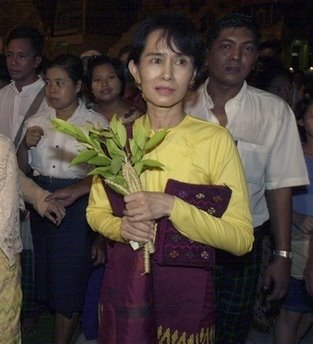


 Posts
Posts


