News & Articles on Burma
Wednesday, 28 September, 2011
----------------------------------------
Burma is still reluctant to initiate reform
Burma to free more prisoners: minister
Myanmar Reforms, Invites Foreign Investors
Goods May Soon Flow Again to Wa State
Wa top official remains in jail
Burmese Army Kills Two Civilians in Raid
Do Not Back Down on Burma
Burma promises prisoner amnesty
Burma FM says prisoner release looming
Kachin Rebels Lose Major Stronghold as Govt Army Advances
----------------------------------
Burma is still reluctant to initiate reform
By Zin Linn Sep 28, 2011 7:05PM UTC
Recent developments have potential for progress in Burma (Myanmar), Secretary-General Ban Ki-moon said yesterday, while calling on the new namesake civilian Government to do more to guarantee creating a comprehensive transform.
A new Government was established in Burma (Myanmar) six months ago, and more recently the country has received a series of high-level bilateral visits. In addition, President Thein Sein has made a pledge for the nation to “catch up with the changing world.”
“Real opportunities for progress exist, but the Government must step up its efforts for reform if it is to bring about an inclusive – and irreversible – transition,” Mr. Ban said in a press statement issued after the ministerial meeting of the Group of Friends on Myanmar (Burma), which was held at UN Headquarters on the margins of the 66th session of the General Assembly, according to the UN News Centre.
“In particular, the authorities must cultivate improved dialogue with all political actors and release all remaining political prisoners,” he said.
Mr. Ban said change is not only possible, but necessary, adding that the international community has a responsibility to support Myanmar’s change.
The Group of Friends, founded in December 2007, is designed to serve as a consultative forum for developing a shared approach in support of the Secretary-General’s good offices mandate on Myanmar. Its members are Australia, China, the European Union, France, India, Indonesia, Japan, Norway, Russia, Singapore, the Republic of Korea, Thailand, the United Kingdom, the United States and Viet Nam.
Meanwhile, Myanmar’s Foreign Minister told the Assembly’s high-level debate on Tuesday that the Government has launched a series of political, economic and social reforms aimed at improving the welfare of its people, but voiced regret that these efforts are being hampered by international economic sanctions.
The unilateral sanctions imposed by the United States against Myanmar should lift at this moment, FM Maung Lwin said. Myanmar (Burma) has emerged as a new democratic nation in accordance with the constitution approved by the overwhelming majority of the people, he emphasized.
But, Burma’s 2008 constitution is null and void under international law. Burma’s new constitution, additionally, guarantees the military impunity from prosecution, encouraging the military’s continuing crimes against humanity, genocide, and war crimes, the Global Justice Center criticizes.
FM Maung Lwin should not be neglected the facts on the ground. Actually, Assistant Secretary Kurt Campbell and Special Representative and Policy Coordinator for Burma Ambassador Derek Mitchell met with him on the margins of the UN General Assembly in New York on September 22.
During the meeting, Campbell and Mitchell welcomed recent positive steps taken by the Burmese Government, including President Thein Sein’s dialogue with Aung San Suu Kyi. They emphasized that the United States seeks concrete steps from the Thein Sein Government to show a true commitment to reform including release of all political prisoners, further meaningful dialogue with Aung San Suu Kyi, a cessation of warfare against ethnic people, and transparency in its relationship with North Korea.
It is nonsensical that Maung Lwin is asking to lift sanctions without releasing 2,000 political prisoners, no meaningful dialogue with Aung San Suu Kyi and no cessation of warfare against Kachin, Shan and Karen ethnic armed groups who revolt seeking self-determination for nearly six decades.
Maung Lwin stated that Myanmar keen on to the promotion and protection of human rights, and those rights are guaranteed by the new constitution. But actually, the constitution is major divergence between military-backed government and the political oppositions.
Maung Lwin’s speech is in fact one-sided viewpoint that neglects the UN’s successive decisions on Burma (Myanmar) and the findings of the Special Rapporteur on Human Rights.
In his end-of-mission statement in August, the Special Rapporteur on Human Rights in Burma, Tomás Ojea Quintana expressed concern about the ongoing charges of torture and abuses during interrogation, the use of prisoners as porters for the military, and the transfers of prisoners to remote prisons where they are unable to receive family visits or packages of essential medicine and supplemental food.
Quintana also expressed concern about attacks against civilian populations, extrajudicial killings, sexual violence, arbitrary arrest and detention, internal displacement, land confiscations, the recruitment of child soldiers, as well as forced labour and portering.
As a gesture of “national reconsolidation,” the Government had last month offered an olive branch to all “national race armed groups,” Maung Lwin said, adding that some of the groups had accepted the reconciliation offer.
But, while Maung Lwin was delivering an address about his regime’s olive-branch policy towards ethnic armed groups, his government has been launching a major offensive targeting the KIA’s Brigade 4 near the Sino-Burma border. The Kachin Independence Organization urged the international community, including the UN, the Association of Southeast Asian Nations and Burma’s neighbors, to help ending of country’s civil war by way of national reconciliation.
Hence, FM Maung Lwin’s expressions at the UN Assembly are quite the opposite of his government’s activities on the ground. Burma actually is not on the right track to reform so far. http://asiancorrespondent.com/66058/burma-is-still-reluctant-to-initiate-reform/
-----------------------------------------
BANGKOK POST
Burma to free more prisoners: minister
Published: 28/09/2011 at 01:32 AM
Online news: Asia
Burma will free more prisoners in the future, the country's foreign minister told the UN on Tuesday, without saying whether these would include political detainees.
Myanmar's Foreign Minister, U Wanna Maung Lwin arrives for the the Association of Southeast Asian Nations (ASEAN) Summit in Jakarta, May 2011. Myanmar will free more prisoners in the future, the country's foreign minister told the UN on Tuesday, without saying whether these would include political detainees.
Foreign Minister U Wanna Maung Lwin, making the country's first address to the UN General Assembly since a nominally civilian government took power, also appealed for the lifting of international sanctions.
Seeking to boost the government's international image, Lwin said that since a first amnesty was decreed by the military-backed President Thein Sein in May about 20,000 inmates had been released.
The minister also highlighted a deal reached with some armed opposition ethnic groups in August and how a national human rights commission started work this month.
"The president in exercising the mandate vested upon him by the constitution will further grant an amnesty at an appropriate time in the near future," Lwin said.
Burma's democracy icon Aung San Suu Kyi has said she believes the president wants "positive" change in the country which had been ruled by a junta for decades up to the elections last November.
But many governments say they want to see more proof of the change and rights groups are wary of the Burma government's public statements.
"The foreign minister would be more convincing if the government released all political prisoners and held security forces accountable for the brutal suppression of monks and peaceful protesters exactly four years ago," said Elaine Pearson, deputy Asia director for Human Rights Watch.
The minister did not say if the estimated 2,000 political prisoners would be among those who would qualify for the new amnesty.
But he did say that sanctions by the United States, European Union and other countries were hurting the poor nation.
"It is regrettable that the government's efforts to improve the livelihood of the people are hampered by the economic sanctions," he said, calling for a lifting of the "unilateral sanctions."
"Burma has transformed towards a democratic nation in a smooth and peaceful manner," said Lwin.
"The steps taken by the government of Burma are concrete, visible and irreversible," he added. "Burma has strong determination to continue implementing the democratization process amidst all the challenges." http://www.bangkokpost.com/news/asia/258593/burma-to-free-more-prisoners-minister
-----------------------------------------
September 28, 2011 12:03 PM
Myanmar Reforms, Invites Foreign Investors
By P.Vijian
NEW DELHI, Sept 28 (Bernama) -- Myanmar is steadily dismantling its rigid trade policies, to entice foreign funds in an effort to shape the agrarian economy and compete with its prosperous Asean neighbours.
After the nation's military leadership allowed a civilian president to rule in the resource-blessed country last March, investment-hungry Myanmar is liberalising to promote investments.
"Myanmar's trade laws and policies are now more attractive and friendly to facilitate investments.
"Myanmar is situated between large markets like China and India and can serve as a gateway to Asean with extensive trade opportunities," visiting Myanmar Trade Minister, U Win Myint, told a trade meeting in Delhi on Tuesday.
According to the country's National Planning and Development Ministry, Myanmar pulled in US$20 billion (RM62 billion) in foreign direct investments (FDI) between 2010 until March this year.
Neighbouring China pumped in US$8.3 billion (RM25.7 billion) while Hong Kong was the second largest investor with US$5.4 billion (RM16.7 billion) -- funds much needed to rev up one of Southeast Asia's most backward economies.
On the sidelines of the meeting, Myanmar's Federation of Chambers of Commerce and Industry president Win Aung, also assured major reforms were in the pipeline to lure foreign money to the country's shores.
"The liberalisation of trade polices has started substantially with laws for FDIs and land lease to be very flexible. Foreign private companies are encouraged to form partnerships (with local firms)," said Aung.
A partner of the trade-robust 10-member Asean bloc, currently Myanmar's economy is moving at about five percent.
-- BERNAMA http://www.bernama.com/bernama/v5/newsbusiness.php?id=616225
--------------------------------------------
Goods May Soon Flow Again to Wa State
By SAI ZOM HSENG Wednesday, September 28, 2011
Although a two-year-old Burmese government blockade of goods to Wa State is still being enforced, some United Wa State Party (UWSP) officials are hoping that goods will soon be allowed to flow into their area through a track in northern Shan State.
The last meeting between the government and the UWSP, which is the political wing of the United Wa State Army (UWSA), produced good results, according to a UWSP official. The meeting was held in Keng Tung, eastern Shan State, in the first week of September.
The official told The Irrawaddy on Tuesday that the civilian government just wants to make sure that the UWSA is not involved in the fighting between the government troops and other ethnic armed groups.
“If we think carefully, there’s a link between the meetings in Keng Tung, the recent skirmishes between the government and other ethnic armed groups and the Myitsone Dam Project, which has become a controversial issue for all people in the country. The government doesn’t want us involved in those problems. They want to control us in the name of ‘ensuring peace, stability and development,’” he said.
During the early September meeting in Keng Tung between the government representatives and delegations from the UWSA/UWSP and the National Democratic Alliance Army (NDAA), an ethnic armed group based in Mongla, eastern Shan State, the government temporarily dropped its Border Guard Force (BGF) proposal and an interim ceasefire agreement was signed.
A source close to the UWSA and UWSP said that in exchange for signing the interim ceasefire agreement and promising that they won’t get involved in the other armed conflicts, the government dropped its ban on the importation of goods into Wa State and its suspension of Yangon Airways, which is owned by Aik Hawk, an ethnic Wa who is the son-in-law of UWSA/UWSP leader Bao Yuxiang.
As a result, goods will soon be allowed to be imported along the Lashio-Tangyan-Panghsang highway, a track in northern Shan State. In addition, Yangon Airways will begin flying again in October, and government medical and educational staff, who left Wa State when tension rose between the UWSA and the Tatmadaw, will now return to Panghsang and Mong Maw, the major cities in the state.
The previous Burmese regime proposed the BGF plan in 2009 in order to control all ethnic armed groups, but the strong armed groups such as the UWSA, the Kachin Independence Army, the Shan State Army, the Karen National Union, the Myanmar National Democratic Alliance Army (an ethnic Kokang armed group that has now been defeated by the Burmese army) and the New Mon State Party refused to transform.
The UWSA is known as the strongest ethnic armed group and has approximately 20,000 to 30,000 troops. http://www.irrawaddy.org/article.php?art_id=22156
-----------------------------------------
Wa top official remains in jail
Monday, 26 September 2011 16:29 Hseng Khio Fah
One of the United Wa State Army (UWSA) top ranking officials, Ta Pan, was not seen among group of 16 opium traffickers released recently by the government’s special amnesty, according to sources from the group.
“They were only his followers, not him. He is still required to serve his full term,” said a source.
Ta Pan was Commander of Mongyawn-based 2518th Independent Regiment (new renamed 518th Brigade) and is an adopted son of Bao Youri, eldest brother of Bao Youxiang, the United Wa State Army's supreme commander and leader.
He together with other 16 officers were arrested by the Burma Army in September 2005 in Mongpiang, 100 km west of Kengtung following a seizure of 496 kg of heroin.
They were sentenced to ten years in jail under the Narcotic Law Section 19 (A) by the district court in Kengtung, capital of Shan State East on 22 September, 2005, and transferred to Buthidaung Prison on the western Burmese border.
According to Narinjara report on 21 September, the government on 16 September released 16 opium traffickers who are the Wa ethnic nationalities from Buthidaung prison with the special relaxation on their lengthy jail terms.
“Their release can likely be related to the recent ceasefire agreement signed between the two sides [The UWSA and Government],” according to a border watcher.
The release came after the government and its group met on 6 September to sign a new ceasefire pact.
8 top leaders of the UWSA, including Chairman Bao Youxiang and Wei Hsuehkang have indicted by a New York Court in January 2005. http://shanland.org/index.php?option=com_content&view=article&id=4062:wa-top-official-remains-in-jail&catid=93:general&Itemid=291
------------------------------------
Burmese Army Kills Two Civilians in Raid
By LAWI WENG Wednesday, September 28, 2011
Two civilians were shot dead in Lort Taing village, Kaleingaung Sub-Township, while Burmese government troops hunted an armed ethnic Mon group, according to local sources.
Speaking to The Irrawaddy on Wednesday, a local resident from the settlement in northern Tenasserin Division’s Yebyu Township said Light Infantry Battalion (LIB) 282 soldiers killed the pair at around 7 pm on September 25.
“There were two victims, one is Karen and another is Mon,” he said.
They [LIB 282] did not give compensation to the families who held funerals on September 26, he added.
The Mon victim was called Nai Wan and over 50 years old, according to another villager who recently arrived at the Thai-Burmese border.
“Nai Wan got shot while he was having tea near to a house while there was a video show,” said the source.
He also revealed that LIB 282 sprayed bullets at local people while Burmese soldiers attempted to arrest some members of a Mon armed group who entered the village in the evening.
One member of the Mon armed group, led by Nai Chain Dein and Nai Bin, was arrested by LIB 282, according to villagers.
Lort Taing is a Karen village of around 100 houses including some Mon families. It lies around one hour's drive from Yebyu Township.
Meanwhile, troops from LIB 282 have not allowed residents of Lort Taing to leave their village. This means local people have not been able to tend to their crops which has caused food shortages, according to sources.
The Burmese government has categorized Lort Taing village has a “black area” in Kaleingaung Sub-Township. Many villagers have been detained and tortured at the hands of both Mon armed groups and Burmese military battalions stationed in the area. http://www.irrawaddy.org/article.php?art_id=22158
---------------------------------
Do Not Back Down on Burma
By Walter Lohman and Robert Warshaw
September 27, 2011
Known globally for headlines about brutal military crackdowns on protestors, incarceration of over 2,000 political prisoners, rampant corruption, ethnic war, press censorship, and shady dealings with North Korea—involving potentially the development of nuclear weapons—the reclusive nation of Burma has recently attracted attention for nominal reforms, among them the November 2010 election that created a “civilian” government and the subsequent release of Nobel Peace Prize winner Aung San Suu Kyi from house arrest.
As most of the rhetoric and “reforms” are either institutional window dressing or have been seen before,[1] they could very well prove nothing more than an extensive public relations campaign ahead of a decision on whether Burma chairs the Association of Southeast Asian Nations (ASEAN) in 2014. Burma remains far from taking action on the key indicators of real reform. Until it does, the U.S. should hold fast its sanctions and limit future engagement.
Burmese Reforms: Beyond the Surface
Few observers question that last November’s election was farcical at best. President Obama denounced it, asserting that it “failed to meet any of the internationally accepted standards associated with legitimate elections.”[2] Despite widespread criticism, the elections elevated former general and Prime Minister Thein Sein to the presidency.
Aung San Suu Kyi’s release from house arrest and August’s hour-long meeting with Thein Sein were positive steps—but hardly ones taken for benevolent reasons. Simply put, President Thein Sein has likely calculated that her followers no longer threaten his regime, at least not until the 2015 elections. Indeed, with her National League for Democracy party banned from political activism, her movements closely scrutinized, and her appearances restricted, the Nobel Prize winner enjoys only a modicum of freedom. Earlier this month, she published her first article in the Burmese media in many years, yet the government slashed all political reference within it. Meanwhile, over 2,000 political prisoners are still languishing in Burmese prisons.
Burma still ranks abysmally in the annual Freedom House rankings, receiving the lowest score possible. Transparency International’s Corruption Perception Index lists Myanmar as the world’s second most corrupt nation,[3] and The Heritage Foundation’s Index of Economic Freedom ranks Burma as Asia’s second-least-free economy, behind only North Korea. Burma has also “failed demonstrably” on counter-narcotics[4] and is “of particular concern” regarding religious freedom.[5] While few expected dramatic change after one year of civilian rule, policymakers should not forget the realities in Burma as characterized by these various rankings.
Frankly, Burma is still miles away from meriting the lifting of sanctions. U.S. Special Representative and Policy Coordinator for Burma Derek Mitchell’s recent fact-finding trip to Burma did nothing to change this outlook. Mitchell met separately with government and opposition leaders, discussing a broad range of issues. However, he admitted to “no outcomes that were tangible” and recognized that this trip’s purpose was to engage relevant parties, build relationships, and foster trust.
What Should the U.S. Want from Burma, and What Should It Expect?
What the U.S. should want from Burma is simple: rule of law, respect for internationally recognized human right standards, and stability. This will not happen overnight. At the most realistic levels, the U.S. should want Burma to take demonstrable steps toward developing a genuine democratic system, permitting real political dissent, further loosening restrictions on Aung San Suu Kyi, freeing political prisoners, protecting basic human rights, combating its drug trade, and severing its ties with North Korea.
What the U.S. should expect, however, is not so encouraging. The current regime still views maintaining power as its top priority, and without democratic legitimacy, brute force is ultimately its only claim to power. Any genuine challenge to its prerogatives of power will be swiftly extinguished. It will certainly entertain no changes that facilitate such challenge.
Stay the Course
With ASEAN set to decide soon whether Burma will assume the 2014 ASEAN chairmanship, the Burmese regime knows that any political crackdown would seriously jeopardize its standing. To that end, Burma, acting in its national interest, should demonstrate with its actions that its reforms are not merely a public relations campaign.
Until then, U.S. sanctions, outlined through executive orders and congressionally passed mandates,[6] should continue to push Burma toward more substantial political reforms and should not be lifted for the foreseeable future.
Recommendations
Push for a U.N. Commission of Inquiry for Burma. The Administration has publicly supported the inquiry into crimes against humanity and war crimes but refrained from exercising any diplomatic influence to make it happen. As currently constituted, this makes it either a cynical ploy to appease human rights groups or another effort at “leading from behind” that is actually not “leading” at all.
Limit engagement with the Burmese regime to the special envoy level. Two years ago, President Obama accommodated the Burmese junta in order to convene the first ever U.S.–ASEAN Leaders Summit—he consented to attend despite the presence of the Burmese prime minister. If that is the price the U.S. must pay to engage ASEAN as a whole at the head-of-government level, it was a tolerable deal. But that annual meeting is where presidential-level engagement should end.
Establish concrete, identifiable benchmarks for continued diplomatic engagement. These should include releasing political prisoners, lifting political censorship, ending the regime’s war against ethnic minorities, and measurably improving its overall human rights conditions. Further engagement by Ambassador Mitchell should be contingent on identifiable steps toward these benchmarks.
Make clear to ASEAN that, under current circumstances, Burma’s 2014 chairmanship is unacceptable. Without major, irreversible political changes in Burma, it is absolutely inconceivable that any U.S. Administration will continue diplomatic engagement through Burma’s chairmanship year. ASEAN should fully understand that if Burma is permitted the chairmanship in 2014, this means no U.S. participation in ASEAN-centered meetings—most notably the U.S.–ASEAN Summit, the East Asia Summit, and the ASEAN Regional Forum—and no new initiatives in the lead-up and through its chairmanship.
Sustain Pressure on Naypyidaw
U.S. sanctions alone have not yielded satisfactory results in Burma, but that does not mean the absence of sanctions would promote reform. In fact, a persuasive argument can be made that a sanctions policy involving the full weight of American diplomacy has never been tried.
Certainly, removing sanctions now would do more to bless the superficial changes that have taken place since 2010 in Burma than they deserve. With the 2014 ASEAN chairmanship in Burma’s sights, a new campaign of U.S.-led pressure, along with continued sanctions, is needed to bring real reform to Burma.
Walter Lohman is Director of, and Robert Warshaw is a Research Assistant in, the Asian Studies Center at The Heritage Foundation. http://www.heritage.org/Research/Reports/2011/09/Do-Not-Back-Down-on-Burma
-----------------------------------------
Burma promises prisoner amnesty
Wednesday September 28 2011
Military-dominated Burma said its democratic reforms were irreversible and promised a prisoner amnesty in the near future.
Foreign minister Wanna Maung Lwin told the United Nations General Assembly that talks last month between Burma's president and democracy leader Aung San Suu Kyi were intended to put aside differences and find common grounds to co-operate.
The minister urged nations to lift economic sanctions.
In November, Burma held its first elections in 20 years. The new government is nominally civilian but remains dominated by the military, which has ruled since 1962.
Western nations are urging Burma to free its more than 2,000 political prisoners and reconcile with Ms Suu Kyi, whose party won 1990 elections but was barred from taking power. The party boycotted the November poll, saying the rules governing it were unfair.
Wanna Maung Lwin gave no details about the planned amnesty, other than that it would happen "at an appropriate time in the near future".
"We hope the near future will come very soon," said British ambassador to the UN Sir Mark Lyall Grant, after a meeting later of the Friends of Burma, a group of about 15 interested Western and Asian nations.
In his address, Wanna Maung Lwin referred to a May amnesty granted by president Thein Sein that he said led to the release of 20,000 prisoners by the end of July.
Western nations were, however, disappointed, as only a few dozen political detainees were reportedly freed.
Another amnesty could be well-timed. Burma is vying to win the support of neighbouring governments for its bid to chair the Association of South-east Asian Nations in 2014. ASEAN leaders may reach a decision at a summit this November. http://www.goreyguardian.ie/breaking-news/world-news/burma-promises-prisoner-amnesty-2889066.html
------------------------------------
Burma FM says prisoner release looming
By JOSEPH ALLCHIN
Published: 28 September 2011
Burma’s foreign minister has told the UN General Assembly (UNGA) that an amnesty for prisoners is on the cards, but gave no date for a possible release.
Addressing the UN General Assembly in New York, Wunna Maung Lwin said that the country’s president would grant the amnesty “at an appropriate time in the near future”.
Among Burma’s prisoner population are nearly 2000 jailed activists, lawyers, doctors and journalists. The government however refuses to acknowledge that it holds political prisoners.
Wunna Maung Lwin said that between 16 May and the end of July the government had released 20,000 prisoners – only a fraction of these were political prisoners.
Rumours have circulated that prominent political prisoners, such as the comedian Zarganar, may be released in the coming weeks.
The amnesty would be part of national “re-consolidation” efforts, said the foreign minister, along with an “olive branch” for “national race” armed groups. He said offers of negotiation had been accepted by some armed groups, but did not mention the ongoing offensives against the Kachin and Shan armies.
Wunna Maung Lwin also took a shot at international sanctions on Burma, claiming that: “It is regrettable that the government’s efforts to improve the livelihood of the people are hampered by the economic sanctions.”
Political prisoners are seen as one of the biggest indicators of a lack of progress in the country since elections last year. Human Rights Watch’s deputy Asia director, Elaine Pearson, said: “Burma’s foreign minister would be more convincing if the government released all political prisoners and held security forces accountable for the brutal suppression of monks and peaceful protesters exactly four years ago.”
But accepting that the 2000-odd prisoners of conscience are indeed political, or that accountability for the military should be sought, remains very unlikely: the 2008 constitution, which Wunna Maung Lwin contentiously told the summit was “approved by the overwhelming majority of the people,” guarantees that military personnel are immune from prosecution in a civilian court, and a state of emergency can be declared at any time.
The foreign minister added: “The new government pledged that all citizens shall enjoy equal rights in terms of law and is determined to reinforce the judicial power,” despite a recent affirmation in parliament of racial profiling for Arakanese Muslims because they looked like Bangladeshis.
“The government also assured the nation to amend and revoke existing laws and adopt new laws as may deem necessary to implement the necessary provisions of the fundamental rights of citizens,” he continued.
The government is expected to release a new law regarding the rights of labour to organise, but the voting record for amending laws within parliament has been concurrent with the make-up of the houses, which vote overwhelmingly with a conservative, pro-military line.
This has included bills on amending laws such as the Unlawful Association Act, which is used to block potential candidates from holding office or arbitrarily detaining journalists such as 21-year-old DVB reporter, Sithu Zeya, who is serving an 18-year sentence, pending an appeal.
The UN Secretary General, Ban Ki-moon, responding in a press statement released after the foreign minister’s address, said: “Real opportunities for progress exist, but the Government must step up its efforts for reform if it is to bring about an inclusive – and irreversible – transition.” He further added to the chorus calling for the release of political prisoners. http://www.dvb.no/news/burma-fm-says-prisoner-release-looming/17850
--------------------------------------
Kachin Rebels Lose Major Stronghold as Govt Army Advances
By BA KAUNG Wednesday, September 28, 2011
Civilians have fled in terror as the Kachin Independence Army (KIA) loses its major stronghold in Burma's northern Shan State after a massive four-day military offensive by government troops.
The KIA Brigade 4 headquarters at Loikang, near Kutakai Township, fell into government hands at 6:30 pm on Tuesday evening after being relentlessly pounded “day and night” with heavy artillery fire on multiple fronts.
According to latest reports from frontline areas, both sides have thousands of soliders fighting and at least 15 battalions of the Burmese government army are relentlessly shelling rebel-controled areas with 120mm, 105mm and 80mm artillery fire.
“This stronghold is not of much strategic value and our battalions in the surrounding mountains remain as strong as before,” said Col Zau Raw, commander KIA forces in northern Shan State.
The current conflict by Kutakai Township, northern Shan State, lies a few kilometers from the proposed Chinese oil pipeline (Photo: Irrawaddy)
The government army has also reportedly reinforced its troops in Myitkyina and Bhamo townships of Kachin State, indicating it will launch further military offensives towards KIA bases in the region. Some exchanges of fire were also reported between the two sides in areas near the KIA's main headquarters in Lazia, Kachin State, on Tuesday.
Government forces—under the direct command of northeastern Shan State regional commander Maj-Gen Aung Kyaw Zaw—seems determined to drive Kachin rebel troops out of Shan State and secure the economically and militarily strategic region near the Sino-Burmese border. China's major oil pipeline from the Bay of Begal to Yunnan Province will pass through central Burma and near the current conflict zones in Shan State.
Kachin rebels are relying on the mountainous terrain of both Kachin and northern Shan states where they have used guerrilla tactics to fight the Burmese government for greater autonomy since 1961.
The KIA has an estimated 10,000 troops with 4,000 of them under the command of KIA Brigade 4 based across northern Shan State. The KIA 9th and 2nd battalions under Brigade 4 already lost their bases to advancing government troops on Monday.
Zau Raw said that his troops were launching guerrilla counter attacks in a number of areas across northern Shan State as Burmese government troops advance. Both sides have not released the exact number of casualties suffered and the Burmese government's official media outlet is yet to comment on the latest fighting.
Thousands have already left the warzone and fled to safer areas, but there have been reports of the Burmese and Chinese authorities blocking refugees from crossing the border into China.
“Hundreds of civilians were seen fleeing in all directions to escape the bombardment. Thousands of displaced civilians are in dire need of humanitarian assistance from inside Burma and the outside world as they have been subject to investigation, rape, torture, extra-judicial execution and destruction of homes and communities,” said KIA sources.
The current conflict is the most intense since the collapse of a 17-year ceasefire agreement between the two sides in June when fighting broke out near Chinese-built hydropower plants in Bhamo Township of Kachin State. This followed the KIA's outright rejection of the government's border guard force plan under the new civilian administration which took office in March this year.
During two following rounds of peace talks, the government offered the KIA a chance to renew the 1994 ceasefire agreement but rejected their demands for a political dialogue between all ethnic armed groups and Naypyidaw.
KIA officials have said that they are prepared to continue fighting as long as the Burmese government does not seek a political solution to the decades-old conflict.
This latest round of hostilities brings a sharp contrast to the rosy picture created by the nominally civilian government in Naypyidaw, which is adopting a range of tentative economic and political reforms and reaching out to the democratic opposition led by pro-democracy icon Aung San Suu Kyi.
Timeline
February 1947—Kachin leaders sign the Panglong Agreement with the Burmese government, which laid the foundation for the creation of a fully autonomous Kachin State.
February 1961—A group of educated young Kachin men found the Kachin Independence Army (KIA) and pledged to fight for a free Kachin republic.
Intense fighting with the Burmese Army ensues.
October 1980—Brang Seng, the chairman of the Kachin Independence Organization (KIO), the KIA's political wing, goes to Rangoon and meets with Burmese government for peace talks. He asks the Burmese government for Kachin State autonomy with self determination.
December 1980—The Burmese government rejects the KIO's demand for the inclusion of autonomous rights in the Constitution, saying the demands had not been accepted “by a vote of the people.” Peace efforts break down and fighting resumes.
February 1994—KIO signs a ceasefire agreement with the ruling military regime of the State Law and Order Restoration Council.
September 2010—KIO formally rejects the Burmese government's border guard force (BGF) plan which would subjugate the KIA under Burmese military command. The KIO calls for the emergence of a genuine federal state. Naypyidaw subsequently forces the closure of KIA liaison offices in Kachin State.
September 2010—Burma's Election Commission rejects the registration of three Kachin political parties from running in the country's first national elections in 20 years, saying the party leaders were linked with the KIA.
May 2011—KIO sends a letter to the Chinese government urging Beijing to withdraw its investment from the controversial Myitsone Hydropower Dam project in Kachin State, warning that local resentment against this project could spark a civil war.
June 9, 2011—Deadly fighting between the KIA and Burmese Army breaks out near a hydropower dam project, bringing this strategic region neighboring China to the verge of a civil war.
June 30, 2011—KIA and government officials hold their first round of peace talks, during which the KIA explicitly says it wants to have a political dialogue with Naypyidaw rather than renewing a ceasefire agreement.
August 1, 2011—Second round of peace talks held between KIA and Burmese government delegation. The KIA repeats its call for political talks with Napyidaw but the government delegation asks rebel leaders to accept the BGF plan and work under the new Constitution.
http://www.irrawaddy.org/article.php?art_id=22160
__._,_.___
Thursday, September 29, 2011
News & Articles on Burma-Wednesday, 28 September, 2011-uzl


Wednesday, September 28, 2011
News & Articles on Burma-Tuesday, 27 September, 2011-uzl
News & Articles on Burma
Tuesday, 27 September, 2011
----------------------------------------
Burma: Foreign Minister Meeting (Taken Question)
Burma police prevent rare democracy protest
Petition urges US to press Burma war probe
Thousands Flee as Kachin Fighting Escalates
Ban to Hold Meeting on Burma, as KIO Calls for UN Help
Death of a Journalist
Kachin Rebels Under Heavy Govt Army Bombardment
UN war crimes’ probe wins support in US
Protracted shelling unnerves Kachin army
War in NE Burma produces new IDPs
India wants to double trade with Myanmar
------------------------------
Burma: Foreign Minister Meeting (Taken Question)
Tuesday, 27 September 2011, 2:53 pm
Press Release: US State Department
Taken Question
Office of the Spokesperson
Washington, DC
Question Taken at the SEPTEMBER 26 Daily Press Briefing
September 26, 2011
Question: Can you please provide a read-out of Assistant Secretary Campbell’s meeting with Burmese Foreign Minister Wunna Maung Lwin?
Answer: Assistant Secretary Kurt Campbell and Special Representative and Policy Coordinator for Burma Ambassador Derek Mitchell met with Burmese Foreign Minister Wunna Maung Lwin on the margins of the United Nations General Assembly in New York on September 22. The meeting was productive with an open and candid exchange of views by both sides. Assistant Secretary Campbell and Ambassador Mitchell welcomed recent positive steps taken by the Government of Burma, including President Thein Sein’s dialogue with Aung San Suu Kyi. They emphasized that the United States seeks concrete steps from the Government of Burma to signify a genuine commitment to reform including release of all political prisoners, further meaningful dialogue with Aung San Suu Kyi, a cessation of hostilities in and violence against ethnic areas, and transparency in its relationship with North Korea. http://www.scoop.co.nz/stories/WO1109/S00813/burma-foreign-minister-meeting-taken-question.htm
----------------------------------------------
BANGKOK POST
Burma police prevent rare democracy protest
Published: 27/09/2011 at 04:32 AM
Online news: Asia
Police in military-dominated Burma on Monday prevented a rare protest by pro-democracy activists on the fourth anniversary of a bloody crackdown on a monk-led uprising, an official said.
Myanmar protesters offer prayers at the Sule Pagoda after they agreed to call off a rally when asked by the authorities to do so, in downtown Yangon. Police in military-dominated Myanmar on Monday prevented a rare protest by pro-democracy activists on the fourth anniversary of a bloody crackdown on a monk-led uprising, an official said.
About 200 people had planned to march to Rangoon City Hall but agreed to call off the rally when asked by the authorities to do so, according to witnesses. Afterwards about 30 of them held prayers at a pagoda.
"After police asked them to stop, they prayed ... and then dispersed," according to a government official who did not want to be named.
Police said no arrests were made.
"We came here to pray for the release of political prisoners and to mark the fourth anniversary of the Saffron Revolution, but a police officer asked us not to go anywhere so that's why we have to go home," one of the activists said.
Other activists wore slogans on their T-shirts calling for an end to a controversial hydroelectric power project in northern Kachin State, electricity from which is destined for neighbouring China.
Last week police arrested a man who staged a rare solo protest against the Myitsone dam outside a Chinese embassy building in Rangoon. Concerns are growing in Burma about the impact of the project on the Irrawaddy River.
Security was tight on the anniversary of the crackdown on the 2007 protests, which began as small rallies against the rising cost of living but escalated into huge anti-government demonstrations known as the "Saffron Revolution."
At least 31 people were killed by security forces while hundreds were beaten and detained in the crackdown that ensued.
Burma is now ruled by a nominally civilian government but its ranks are filled with former generals and the country still has more than 2,000 political prisoners.
In recent weeks the regime has shown signs of engaging with its opponents, including pro-democracy leader Aung San Suu Kyi, whose party won a 1990 election but was never allowed by the junta to take power.
The regime released the Nobel Peace Prize winner in November last year, shortly after an election that was marred by widespread complaints of cheating and intimidation. Suu Kyi's National League for Democracy party boycotted the vote.
In an interview with AFP earlier this month, Suu Kyi said there had been "positive developments" in Burma, but it was unclear whether President Thein Sein would be able to carry through his reform pledges.
The dissident said she did not want a popular revolt in Burma of the kind seen in Libya, adding: "Everybody knows that Libya's troubles are going to drag on for a long time." http://www.bangkokpost.com/news/asia/258495/burma-police-prevent-rare-democracy-protest
----------------------------------------
BANGKOK POST
Petition urges US to press Burma war probe
Published: 27/09/2011 at 01:32 AM
Online news: Asia
A petition by thousands of Americans on Monday urged the United States to press for a UN-led probe into alleged crimes against humanity in Burma, saying the country needs accountability to move ahead.
US Campaign For Burma activists protest across the street from the Burmese Embassy in Washington DC in 2007. A petition by thousands of Americans on Monday urged the United States to press for a UN-led probe into alleged crimes against humanity in Myanmar, saying the country needs accountability to move ahead.
The US Campaign for Burma said that 13,000 US citizens signed the petition, many of them at concerts by U2 whose frontman Bono is a longtime supporter of Burma's opposition leader Aung San Suu Kyi.
The advocacy group's executive director Aung Din presented the petition to the US State Department's ambassador-at-large on war crimes, Stephen Rapp, on the fourth anniversary of Burma's bloody crackdown on a monk-led uprising.
The State Department and rights groups say that Burma's military has razed villages, forced villagers into labor and used rape as a weapon of war in its campaign against ethnic minority rebels.
"Justice is a crucial part of national reconciliation in any country. Burma cannot move forward until these attacks stop and the rule of law is realized," Aung Din said in a statement, using Burma's earlier name.
"Four years ago peaceful monks were massacred, and yet the perpetrators of these atrocities have never been held accountable. How long will the Obama administration wait before taking real action to help find justice?" he said.
The United States has publicly supported a UN-led Commission of Inquiry into possible crimes against humanity but has done little to make the idea a reality, with officials believing that Asian nations would oppose the effort.
President Barack Obama's administration in 2009 opened a dialogue with Burma after concluding that the previous efforts to isolate the regime had failed. US officials have hailed what they see as promising signs but insist that more action is needed.
Burma's junta handed power to a nominally civilian government in March, although the opposition says that the change is cosmetic with the military still firmly in charge.
Suu Kyi, in a recent interview with AFP, said that a UN probe would help bring "future harmony and forgiveness" and "has nothing to do with revenge."
But the International Crisis Group in a recent report warned that a commission could "cause retrenchment" by Burma's leadership. http://www.bangkokpost.com/news/asia/258423/petition-urges-us-to-press-burma-war-probe
------------------------------------------
Thousands Flee as Kachin Fighting Escalates
By KO HTWE Tuesday, September 27, 2011
Thousands of villagers have been forced from their homes since Friday as fighting between the Burmese Army and Kachin Independence Army (KIA) Battalion 4 intensifies, according to volunteer groups.
Kaw Ja, a member of a Kachin youth group which is helping refugees in the area, said that many thousands of people living in four townships in the northern Shan State battle region have taken shelter with relatives or friends due to the conflict.
She claimed that as many as 20,000 refugees may have abandoned their homes in the region, but The Irrawaddy cannot independently verify this figure.
“Villagers can hardly be found in the war zone. But it is hard to tell if they are refugees or internally displace people because most take shelter in houses of relatives or close friends. Some villagers who have no relatives or friends have taken shelter at the church, but they run away when the police investigate and take their photo,” said Kaw Ja.
There are more than 200 villages boasting a population of over 200,000 people from various ethnic groups in the area controled by KIA Battalion 4. Many residents who accept villagers face an investigation from authorities for having overnight guests without permission, she added.
“I heard villagers are running as much as they can, but still nobody is giving them assistance,” said La Rit who heads the Kachin Refugee Support Group.
Due to the outbreak of violent clashes between the KIA and government troops in June, Laiza has seen an influx of more than 10,000 refugees.
Speaking to The Irrawaddy on Tuesday, KIA spokesman La Nan said that he did not know many details about the refugees other than increasing numbers could be heading to border towns such as Muse, Kyugok and Namkham.
Since 1997, the Burmese regime has destroyed more than 3,000 villages and displaced over half-a-million civilians in eastern Burma, according to the Thailand Burma Border Consortium, an umbrella organization responsible for the distribution of aid at the Thai-Burmese border.
Most villagers head to churches in the area but investigations by the Burmese authorities make them flee in terror, claims Mai Ja of the Kachin Women's Association Thailand, one of the groups engaged in relief efforts near the Sino-Burmese border.
Recently, international and regional human rights groups —including the International Federation for Human Rights, Altsean-Burma and Burma Lawyers’ Council—urged the European Union to support the establishment of a UN Security Council Commission of Inquiry into crimes against humanity and war crimes committed in Burma. http://www.irrawaddy.org/article.php?art_id=22152
--------------------------------------------
Ban to Hold Meeting on Burma, as KIO Calls for UN Help
By LALIT K JHA Tuesday, September 27, 2011
WASHINGTON — As UN Secretary General Ban Ki-moon prepares to hold a meeting of his “Group of Friends on Burma” on Tuesday to discuss the current situation in the country, the Kachin Independence Organization (KIO) is calling on the world body to take a more active role in resolving its armed conflicts.
Several ministers from key countries are expected to participate in the meeting of the “Group of Friends,” a consultative forum for developing a shared approach in support of the implementation of the secretary-general’s good offices mandate in Burma.
Among its key members are Australia, Indonesia, Russia, the United States, China, Japan, Singapore, Vietnam, France, Norway, Thailand, India, Portugal and Britain. Burmese Foreign Minister Wunna Maung Lwin, who is in New York to attend this year's session of the UN General Assembly, is expected to attend the meeting.
The announcement of the meeting came on the same day that KIO President Lanyaw Zawng Hra wrote to Ban seeking UN assistance in ending Burma's civil war. In his five-page letter, Lanyaw said that ethnic conflict in Burma directly affects regional development and the stability of neighboring countries.
The KIO urged the international community, including the UN, the Association of Southeast Asian Nations and Burma's neighbors, to help the country find a way to end its civil war and finally achieve national reconciliation.
“Despite the fact that Burma achieved independence in I 948 as the Union of Burma, it has been operating as a Unitary System, rather than practicing a true federal system as agreed to by independence leader Gen. Aung San and ethnic leaders,” the letter said.
Lanyaw said that over the past 60 years, successive governments have ignored agreements with ethnic groups and broken promises to build a federal union. “In fact they have found new ways to suppress the concerns of the ethnic minority people; continuing to ignore our basic rights despite our willingness to resolve these differences through peaceful means,” he wrote.
“This ongoing disrespect of our original agreement ensured by the Burman majority rulers has driven the ethnic minority to maintain arms to protect our peoples and to ensure our basic rights, self-determination and promised autonomy inside our own lands,” he wrote.
Claiming that since independence in 1948, the ethnic minority territories have been pushed to the outer edges of the country bordering all of the neighboring nations, the letter said the civil war is happening in almost all of the border areas of Burma.
“One can interpret this civil war as a people's war to secure equal rights for not only the ethnic minority, but also the problems of unequal development in the country. It also presents a very complex set of national security issues. As such, these civil wars are not only the concern of our own country but also viewed as problematic and burdensome for our neighboring nations,” he said. http://www.irrawaddy.org/article.php?art_id=22147
----------------------------------------
Death of a Journalist
By YAMAMOTO MUNESUKE Tuesday, September 27, 2011
It was painful to witness the images broadcast worldwide on September 27, 2007. Japanese cameraman Kenji Nagai was lying on his back on a street in Rangoon. Then there was the piercing sound of a bullet fired from the rifle of a soldier.
Kenji Nagai, a man I considered a colleague, was dead. Immediately, I thought: It could have been me. As a photojournalist, I also report on conflicts. I have covered many Asian countries, including Burma, and I imagined myself in Kenji Nagai’s place, lying dead on a street in Rangoon.
But, I was in Japan, and he was in Rangoon. However, I knew the streets where the pro-democracy demonstrations occurred—the scene was very familiar to me.
For me, the shooting confirmed the true mentality of the Burmese junta, which has been killing and imprisoning the Burmese people with impunity for decades: 3,000 or more people dead in 1988 alone, the year I started covering events in Burma.
On the day Kenji Nagai was murdered, I was taking photographs of Burmese exiled activists who were demonstrating in front of the Burmese Embassy in Tokyo, demanding the Japanese government stop supporting the State Peace and Development Council financially.
Later that day, my mobile phone started ringing, one call after another without a break. News agencies and newspapers were calling me to check if the unidentified Japanese journalist killed in Rangoon was me or not. One call was from Australia, from my Burmese friend who had worked as my interpreter when I made trips to Burma. He explained that he was worried about me when he heard the news.
Before long, the Japanese media confirmed the dead journalist was Kenji Nagai. His name was new to me, and we had never met.
The TV news showed video of the shooting of Kenji Nagai over and over again for several days. The Japanese public was horrified and angry. The Japanese government seemed shocked. Perhaps for the first time, the government realized the SPDC is truly an evil government.
When the funeral service was held on October 8, 2007 in Tokyo, hundreds of Burmese exiles attended the service to honor Kenji Nagai. They apologized for his death on behalf of the SPDC government, which they hate. It was a natural feeling for the Burmese people who live in Japan to express their sorrow for Kenji Nagai, who was now a martyr in the Burmese struggle for democracy.
Media coverage on Kenji Nagai focused on his personality, his professional work in Iraq and elsewhere, but neglected any factual background on what had been happening in Burma under the military regime for the past 20 years. There were almost no critical questions about Japan’s foreign policy toward the military junta—whether it was trying to help the country move toward democracy or helping the SPDC.
As a photojournalist, I have been critical of Japan’s foreign policy which has favored the SPDC generals rather than the democratic forces and the ethnic minorities. You can get a sense of Japan’s policy toward the SPDC through various comments made by top Japanese diplomats.
For instance, the then Foreign Minister Yoriko Kawaguchi made an ignorant comment in May 2003, when she was asked about the murderous attack on Aung San Suu Kyi’s motorcade at Depayin. She said, “There is no deterioration of environment for dialogue between the SPDC and Aung San Suu Kyi.” She retracted her comment the next day.
In May 2006, Japanese ambassador to the UN, Kenzo Oshima, said, “Burma does not constitute a regional threat yet,” and along with China and Russia, Japan opposed efforts by the US and EU to put Burma on the Security Council agenda.
The latest and most shameless comment was made by Yoichi Yamaguchi, the former Japanese ambassador to Burma (1995-97). After the killing of Nagai, he was quoted in the Japanese media as saying several offensive comments:
“Aung San Suu Kyi’s National League for Democracy gave money to the demonstrators.”
“There is not a single so-called political prisoner there [in Burma] in the true sense.”
“The regime has succeeded in maintaining economic growth of over 5 percent annually, earning it the widespread trust of the people.”
After Kenji Nagai’s death, the Japanese government took a seemingly strong stance. In New York, Foreign Minister Komura demanded an apology from the SPDC. But as time passed and the crackdown by security forces continued, the Japanese government remained quiet, simply waiting for the UN Security Council to act.
“The government will coordinate efforts with the United Nations and the Association of Southeast Asian Nations to make progress in the democratization of Myanmar [Burma],” Komura said after the UNSC’s presidential statement was announced.
Later, Japan cancelled a grant of up to 552 million yen (US $4.7 million).
The grant had been intended to finance the construction of a human resources center.
On October 28, the People’s Forum on Burma, an NGO formed in Tokyo in 1996 to support the Burmese people’s struggle for democracy, made a plea for the Japanese government to fundamentally change its foreign policy toward the SPDC by giving full-scale humanitarian support to the 160,000 displaced people in refugee camps in Thailand.
The group also asked for a halt in grants to the Union Solidarity and Development Association, which was accused of taking part in the suppression of the demonstrators. In 2006, the USDA received a Japanese grant of nearly 24 million yen ($209,000) for construction of three grade school buildings. It also demanded that Japan stop humanitarian aid to subsidize Burma’s healthcare and education budgets while the military regime allocates more than 50 percent of its national budget on the military.
The group wants to pressure the Japanese government to support the Burmese people and the pro-democracy groups, instead of helping to keep the generals in power.
A Burmese citizen in Tokyo, a former political prisoner, said Burmese exiles remember two Japanese citizens: one with hate, and one with great respect.
One is former ambassador Yoichi Yamaguchi; the other is journalist Kenji Nagai.
Yamamoto Munesuke’s books include “Burma’s Children” and “Burma’s Great Illusions.” He was deported from Burma in 1998 “for gathering news,” following his exclusive interview with Aung San Suu Kyi.
http://www.irrawaddy.org/article.php?art_id=22150
------------------------------------
Kachin Rebels Under Heavy Govt Army Bombardment
By BA KAUNG Tuesday, September 27, 2011
Incessant barrages of heavy artillery fire by Burmese government troops on Monday evening have forced Kachin Independence Army (KIA) forces in northern Shan State to withdraw their military bases.
More than 1,000 government troops have been involved in the ongoing military onslaught since Friday. The KIA's two battalions reportedly lost their bases on Monday, which are located between Muse and Kutakai towns close to the Sino-Burmese border.
The KIA has an estimated 10,000 troops with 4,000 of them based in northern Shan State. The government's military offensive against the KIA—under the direct command of military regional commander Maj-Gen Aung Kyaw Zaw—has raged for five days without any signs of abating.
In its Tuesday offensive which began at 8 am, hundreds of Burmese Army soldiers opened a three frontal attack against a strategic mountain called “Chan Shin” which was held by KIA forces headquartered in Loikang, near Kutkai.
Col. Zau Raw, commander of KIA forces in northern Shan State, told The Irrawaddy that the government army has been using 105mm artillery and is trying to seize their military stronghold in Loikang.
“The KIA has occupied all the strategic locations in the area and instead of directly confronting the Burmese Army forces, we are launching counter guerrilla attacks and also using heavy weapons,” he said. He added that refugees fleeing the conflict were prevented from crossing the Sino-Burmese border by Chinese authorities, but The Irrawaddy cannot independently verify this report.
The KIA official revealed that three KIA soldiers have been killed since Friday and a number have also been wounded. But the number of government casualties remains unknown with Burmese state-run media neglecting to mention the fighting until Tuesday.
The current conflict is the most intense since the collapse of a 17-year ceasefire agreement between the two sides in June when fighting broke out near Chinese-built hydropower plants in Bhamo Township of Kachin State. This followed the KIA's outright rejection of the government's border guard force (BGF) plan under the new civilian administration which took office in March this year.
During two following rounds of peace talks, the government offered the 10,000-strong KIA a chance to renew the 1994 ceasefire agreement but rejected their demands for a political dialogue between all armed ethnic forces and Naypyidaw.
Sporadic fighting between the two sides has continued in different parts of Kachin and Shan states since then.
The KIA has been fighting the Burmese government from 1961 until 1994 when a fragile ceasefire agreement was reached. It sought to guarantee regional development and offered political solutions for the KIA's demand for greater autonomy within a federal system, but this never materialized.
Kachin leaders rejected the current 2008 Constitution as they believe it failed to guarantee ethnic rights, and are currently asking Napyidaw for a political dialogue while expressing a lack of confidence regarding the government's recent tentative economic and political reforms.
The government appears well prepared for the latest offensive against KIA troops as it has renewed a temporary ceasefire with the 20,000-strong United Wa State Army (UWSA)—Burma's largest ethnic armed group—in east of the country a few weeks ago. The UWSA also refused to accept the BGF plan.
Even though there has been no indication that the UWSA is providing military aid to the KIA in the latest fighting, another local armed group, the Shan State Army, is now fighting alongside KIA troops against the government army, KIA officials claim.
The fighting has forced the China-run hydropower plants in Bhamo Township to shut down and creates difficulties for other major Chinese investments. These include the controversial Myitsone Dam Project in Kachin State and a strategic oil pipeline passing from the Bay of Bengal to Yunnan Province through central Burma and northern Shan State.
Asked if the Burmese authorities will be able to wipe out KIA forces in Shan State, Zau Raw said, “No, No. That will be impossible. We have been fighting this war for over 50 years with guerrilla tactics and we are still using this same method.”
“Heavy clashes have broken out across the region and our policy is to continue to defend our areas by guerrilla warfare.” http://www.irrawaddy.org/article.php?art_id=22153
------------------------------------------
UN war crimes’ probe wins support in US
By AFP
Published: 27 September 2011
Some 13,000 Burmese pro-democracy activists in US have signed a petition urging Obama to back a UN war crimes' probe into Burma (Reuters)
A petition by thousands of Americans on Monday urged the United States to press for a UN-led probe into alleged crimes against humanity in Burma, saying the country needs accountability to move ahead.
The US Campaign for Burma said that 13,000 US citizens signed the petition, many of them at concerts by U2 whose frontman Bono is a longtime supporter of Burma’s opposition leader Aung San Suu Kyi.
The advocacy group’s executive director Aung Din presented the petition to the US State Department’s ambassador-at-large on war crimes, Stephen Rapp, on the fourth anniversary of Burma’s bloody crackdown on a monk-led uprising.
The State Department and rights groups say that Burma’s military has razed villages, forced villagers into labour and used rape as a weapon of war in its campaign against ethnic minority rebels.
“Justice is a crucial part of national reconciliation in any country. Burma cannot move forward until these attacks stop and the rule of law is realised,” Aung Din said in a statement.
“Four years ago peaceful monks were massacred, and yet the perpetrators of these atrocities have never been held accountable. How long will the Obama administration wait before taking real action to help find justice?” he said.
The United States has publicly supported a UN-led Commission of Inquiry into possible crimes against humanity but has done little to make the idea a reality, with officials believing that Asian nations would oppose the effort.
President Barack Obama’s administration in 2009 opened a dialogue with Burma after concluding that the previous efforts to isolate the regime had failed. US officials have hailed what they see as promising signs but insist that more action is needed.
Burma’s junta handed power to a nominally civilian government in March, although the opposition says that the change is cosmetic with the military still firmly in charge.
Suu Kyi, in a recent interview with AFP, said that a UN probe would help bring “future harmony and forgiveness” and “has nothing to do with revenge.”
But the International Crisis Group in a recent report warned that a commission could “cause retrenchment” by Burma’s leadership. http://www.dvb.no/news/un-war-crimes-probe-gathers-steam-in-us/17840
-------------------------------------
Protracted shelling unnerves Kachin army
By AYE NAI
Published: 27 September 2011
Four days of heavy shelling by Burmese troops against Kachin forces in the country’s northeast has prompted the rebel group to relocate non-combatants to safer areas and send all its soldiers to the frontline.
The spokesperson of the Kachin Independence Army (KIA), La Nan, said the group will “utilise guerrilla warfare tactics” in a bid to fend off the Burmese assault, which has seen around 1000 troops deployed to KIA territory in northern Shan state.
Two KIA bases have been vacated since the assault began on Friday in Muse, Kutkai and Man Tong townships.
“It’s quite intense fighting. The [Burmese army’s] forces are exceeding 1000 troops and they are still reinforcing,” said La Nan.
The current fighting marks some of the heaviest seen since clashes broke out between two sides in June, triggered largely the KIA’s refusal to accede to demands to become a government-controlled Border Guard Force. The government is also keen to gain control of areas close to KIA territory that host lucrative hydropower projects.
The fighting has affected areas of northern Shan state and southern and central Kachin state where the KIA has a strong presence. Until June the opposition group had maintained a 17-year ceasefire with the central government.
The Kachin Women’s Association Thailand reported yesterday that it has so far documented 37 cases of rape in areas of Kachin state where government troops are active. The group said it had counted 18 by the end of June, and feared the phenomenon, long derided by human rights groups as a “weapon of war” of the Burmese army, was escalating.
According to the KIA, the current offensive is being directly supervised by Lieutenant General Soe Win, the Burmese military’s second-ranking official, and the Northeastern Regional Military Command. It pre-empted the army’s quarterly meeting in Naypyidaw on Saturday last week.
Prior to the first wave of attacks on Friday, the KIA’s Brigade 4 raided a police station in the Shan state town of Muse. It has also launched attacks on Burmese outposts in Lweje town and Singlun village tract in eastern Kachin state, while battles continue in Dawphonyan sub-township.
“Although [the government] is talking about political dialogue, the military can use military means to solve the problems,” said La Nan. “Their aim is to conquer everything. I think the result of the quarterly meeting will be a war cry.”
The political wing of the KIA, the Kachin Independence Organisation, recently sent a letter to UN chief Ban Ki-moon urging the body to mediate in the conflicts unfolding inBurma’s border region.
The Burmese army is also battling opposition forces in Karen state and southern Shan state. http://www.dvb.no/news/protracted-shelling-unnerves-kachin-army/17845
-------------------------------
War in NE Burma produces new IDPs
Published on Monday, 26 September 2011 10:20
Written by KNG
The Burma Army’s storm-offensive against the Kachin Independence Army (KIA), which started on September 24 in northeast Shan State, is producing new Internally Displaced Persons (IDPs), local IDP observers said.
Hundreds of Kachin and Shan IDPs were displaced in at least six villages, especially in the controlled area of the KIA’s Brigade 4, during three-days of heavy fighting, IDP observers said.
The IDPs in villages like Daknai, Nawng Ing, Mungli, as well as villages in Htanhpa Bum Mountain and villages in Banggai Bum Mountain under control of a KIA Battalion under Brigade 4, are fleeing to the government-controlled towns of Nam-um, Nampaka and Muse, according to IDPs.
The residents of villages in KIA’s Battalion 2, near the town of Tamonye, are fleeing to Kutkai and Tamonye, said IDPs.
Some IDPs from the villages of Dima and Nawng Ing are fleeing to the China border, near Pangsai. The morning of September 26, about 40 IDPs from Dima and Nawng Ing, in Pangsai, were prevented from crossing the China border by Burmese policemen. They were instructed to find shelter at Pangsai Kachin Baptist Church, according to IDPs.
An IDP in Pangsai said, “We have to flee to the secured area because we cannot live in our village. The government troop’s mortar rounds landed in our village and injured some villagers. We are extremely worried about being tortured by Burmese soldiers. So, we have to leave.”
At another Burmese border town, Mongkoe, Chinese People’s Liberation Army soldiers and border guard troops only allow their own citizens to cross to the Chinese border town of Manghai and prevented Burmese IDPs from entering into China, Mongkoe residents said.
More IDPs will be produced in northern Shan State because there is no sign of a stoppage in the fighting between the government troops and KIA in the short term.
On Saturday, the government launched the storm-offensive with over 1,000 troops, the largest number of troops ever deployed in the KIA’s Brigade 4 area, in Northern Shan State.
Since the civil started in Kachin State, about 10,000 Kachin IDPs have taken shelter in government-controlled Myitkyina, Waingmaw, Manmaw (Bhamo) and N’Mawk (Momauk) and over 20,000 Kachin IDPs have sheltered in the KIA headquarters at Laiza, near the China border.
The IDPs in Kachin state mainly receive aid and support from local NGOs like the Metta Development Foundation, Kachin churches and the KIO.
Until now, Kachin and Shan IDPs in Northern Shan State have not received any aid from local NGOs and international refugee agencies, said IDP observers.
http://kachinnews.com/news/2069-war-in-ne-burma-produces-new-idps.html
---------------------------------------
27 Sep, 2011, 03.20PM IST, PTI
India wants to double trade with Myanmar
NEW DELHI: Leveraging the India-ASEAN Free Trade Agreement, India wants to double its commerce with Myanmar and diversify the bilateral engagement to agro-research and natural gas exploration.
The India-Myanmar trade, comprising pulses, meat, products, timber and pharmaceuticals, is only USD 1.5 billion at present.
"I propose that we work towards doubling of bilateral trade by 2015. We also need to work towards broad-basing our trade basket," Commerce and Industry Minister Anand Sharma said while chairing Joint Trade Commission meeting along with Myanmar Commerce Minister U Win Myint here.
Sharma said business community of the two countries should utilise Duty Free Tariff Preference Scheme and the ASEAN FTA channels to diversify the bilateral trade.
India has operationalised its Free Trade Agreement (FTA) with the Association of Southeast Nations (ASEAN), of which Myanmar is a leading member.
Sharma said construction of the Kaladan Multimodal Transit Transport Project comprising waterway and roadway by 2013 would transform the trade between India's north-eastern states and the rest of the world.
Being built at USD 120 million, the project envisages a direct trade corridor between Indian ports on the eastern seaboard and Sittwe Port in Myanmar and then through riverine transport and by road to Mizoram.
The two countries have recognized the need to collaborate in building a land customs station at India-Myanmar Border (at Mizoram).
It was noted that the border trade point at Moreh, on Indian side and Tamu, on Myanmar side, is stabilising.
Sharma invited his Myanmar counterpart to inaugurate the second border trade point at Zowkhatar (Mizoram) that will connect to Rhi in Myanmar. The ministers stressed the need for two additional border trade points - Pangsau Pass (in Arunachal Pradesh) and Avangkhung (in Nagaland).
India and Myanmar have also expanded the list of items for border trade from 22 to 40.
Sharma offered India's assistance for capacity building in agricultural research and improving the seed variety in Myanmar.
He said India is keen to participate in the gas sector of Myanmar. Indian companies have shown interest in setting up of gas-based units and invest in LNG infrastructure.
He also pushed for Indian participation in allocation of gas blocks in Myanmar. The Myanmar side showed strong support for the proposal, a Commerce Ministry statement said.
Myanmar is source of one-third of India's imports in pulses and one-fifth in timber.
With the implementation of India-ASEAN FTA and the Duty Free Tariff Preference Scheme, the two countries can step up the commercial engagement, it was noted at the meeting. http://economictimes.indiatimes.com/news/economy/foreign-trade/india-wants-to-double-trade-with-myanmar/articleshow/10139379.cms
Tuesday, September 27, 2011
News & Articles on Burma-Monday, 26 September, 2011-UZL
News & Articles on Burma
Monday, 26 September, 2011
----------------------------------------
Why does Burma want war in Kachin State?
Yingluck to Pay First Visit to Burma
Peaceful Protest Marks Saffron Revolution Anniversary
Four Days of Heavy Fighting in Northern Burma
Govt. Bans Media Reports on Myitsone Dam Protests
Campaigners Send Petition for Release of Political Prisoners
Wa army-linked airline to fly again
Japan eyes rare earth deal with Myanmar
Hundreds march to mark anniversary of Myanmar's monk-led protests
MYANMAR: Military guilty of rape, activists say
Leaked internal report reveals the staggering scale of those arrested during Saffron
------------------------------------------
Why does Burma want war in Kachin State?
By Zin Linn Sep 26, 2011 3:00PM UTC
0 Comments and 6 Reactions
When the Kachin Independence Organization (KIO) did not support the Myitsone Dam project in Burma, the military-backed President Thein Sein government launched a major offensive, recently targeting the KIA’s Brigade 4 which occupied a key position near the Sino-Burma border.
After a new military conflict started between the Burmese army and the KIA in June in Kachin State, the KIA post along the Myitkyina-Kambaiti route banned trucks loaded with construction materials and equipment, according to truck drivers on that road. The KIA also damaged key bridges on the road using mines. Part of the Stilwell Road (also called Ledo) was reconstructed in 2006 at a cost of 97 million Yuan (US$15.2 million) by Chinese companies from Yunnan province.
The Kachin Independence Organization (KIO) has waged revolutionary war for self-determination, including having more power over natural resources in Kachin State. Since June 9, skirmishing has escalated between the KIA and government troops.
The warfare is related to the outsized developmental dam projects on the Irrawaddy River being built by China.
Construction continues on a $3.6 billion hydropower dam project on the Irrawaddy River in the face of widespread objections from many environmentalists and social activists, including several celebrities.
The Myitsone Dam, a joint effort by Burma’s previous military regime and the China Power Investment Corp., is estimated to generate 6,000 megawatts of electricity and 90 percent of the output to be exported to China. Under an agreement signed by Chinese and Burmese officials, CPI will receive 70 percent of the project’s profits. CPI has a plan to build and manage six additional dams on the Irrawaddy and its tributaries.
Most analysts believe that Burma Army’s new military maneuver in Kachin State aims to protect the Chinese benefits than the Kachin people’s basic rights. The Burma Army has launched a storm-offensive using more than 1,000 soldiers against the KIA’s Brigade 4, based in Northern Shan State, quoting local witnesses Kachin News Group said Saturday.
According to KIA brigade officers, the battle is continuing at Huphet, Manje, Mung Hkawm, Bang Hpik and Dima. Government troops are firing mortars into the villages in the fighting area.
Burma Army’s Bureau of Special Operations-2 (BSO-2), Lt-Gen Aung Than Htut is the commander of the offensive, KIA officers said. KIA’s Battalion 2, Battalion 8 and Battalion 9 are resisting the government’s offensive by two Light Infantry Divisions, LID No. 88 and No. 99, which consist of 18 battalions. Magway-based LID No. 88 and Meiktila-based LID No. 99 launched the offensive early Saturday morning. Burmese troops mainly fired mortar rounds at the KIA post in Loi Lem Bum in the evening, said a KIA Brigade officer.
The battle is the largest offensive against the KIA troops since the civil war started on June 9. Many Burmese soldiers were killed in action and more than 60 injured in the fighting, confirmed a KIA Brigade officer. The Burma Army’s storm-offensive aims to do away with the KIA’s Brigade 4 troops from the area where the oil and gas pipelines to China will cross in Northern Shan State, said the KIA officers.
According to local sources, civilians in the war zone are being told to leave their villages by the KIA. Thousands of local ethnic Kachin and Shan Internally Displaced Persons (IDPs) in the war zone are fleeing to safe areas and the China border. However, China is strictly refusing entry to ethnic refugees (IDPs) from Burma who are seeking to cross its border, said local witnesses.
Over 100 Chinese People’s Liberation Army soldiers and over 80 Border Guard Force troops have jointly blocked Burmese IDPs from crossing into Chinese territory at the Chinese Manghai border gate, opposite Mongkoe, said Mongkoe residents. Chinese citizens in Mongkoe and other places in Shan State are allowed to return to their homeland, said witnesses.
Currently, over 20,000 Kachin IDPs are seeking shelter at the KIA headquarters at Laiza and other areas close to China. China is also blocking the delivery of food, emergency shelter and medicines from China for the Kachin IDPs, referring refugee aid groups, Kachin News Group said.
Now, there are some hot questions among the citizens. What is the objective of the Burma Army’s current large offensive against the KIO, and why have their peace talks been discontinued? Has the Thein Sein government an objective to colonize the Kachin State under China’s orders? http://asiancorrespondent.com/65802/why-does-burma-prefer-war-than-talks-in-kachin-state/
--------------------------------------------
Yingluck to Pay First Visit to Burma
By SAW YAN NAING Monday, September 26, 2011
Thai Prime Minister Yingluck Shinawatra will pay her first visit to Burma in early October, amid rumors that her trip will include meetings not only with President Thein Sein and other senior officials, but also with pro-democracy Aung San Suu Kyi.
Thai Foreign Minister Surapong Tovichakchaikul, who met with his Burmese counterpart Wunna Maung Lwin during a meeting on the sidelines of the 66th session of UN General Assembly in New York, said the visit aims to strengthen bilateral relations between the two Southeast Asian neighbors.
Surapong said that ties between the two countries have developed through exchange visits by officials cooperating on issues such as illicit drug suppression, registration of Burmese migrant workers in Thailand, prevention of human trafficking and the construction of a controversial multi-billion-dollar deep-sea port project in Tavoy in southern Burma.
No date has been set for the visit, and it was still unclear if Yingluck would meet with Suu Kyi. Nyan Win, a spokesperson for Suu Kyi’s party, the National League for Democracy (NLD), declined to confirm whether a meeting is scheduled to take place.
Suu Kyi earlier congratulated Yingluck on becoming Thailand's first female prime minister after her Pheu Thai Party won a sweeping election victory on July 3, and called on her to support Burma's efforts to achieve a meaningful transition to democracy and help Burmese refugees in Thailand.
Another issue discussed by Surapong and Wunna Maung Lwin in New York was the possible reopening of the border at Mae Sot-Myawaddy. Surapong also hailed Burma's efforts to achieve democratic development and reconciliation in the country.
Last week, Yingluck traveled to Brunei, Indonesia, Cambodia and Laos. She is planning to visit Malaysia on Oct 3. http://www.irrawaddy.org/article.php?art_id=22137
-----------------------------------------------
Peaceful Protest Marks Saffron Revolution Anniversary
By SAW YAN NAING Monday, September 26, 2011
Dozens of Rangoon residents marched peacefully through the city on Monday to mark the fourth anniversary of the Saffron Revolution only to be stopped by security forces, according to local sources.
Onlookers watched around 200 marchers, some of them were wearing yellow shirts, set off peacefully from Sule Pagoda in downtown Rangoon at around 1 pm local time towards Kabar Aye Pagoda in North
The Saffron Revolution was led by Buddhist monks across Burma in September 2007. The peaceful protests were brutally quashed by government troops in a crackdown which claimed 31 lives including many monks, according to government figures.
Security guards closely followed and monitored Monday's protest with many officers also deployed near Sule Pagoda. But there is no violent crackdown against the protesters and the event took place peacefully.
“They didn’t shout and hold placards. They just marched peacefully but some wore yellow shirts,” said a witness.
Dozens of people also launched a separate demonstration in North Okkalapa on Monday. They were blocked by Burmese authorities before ending the march peacefully. They repeated the “Metta Sutta” (Buddhist chant for compassion) after being blocked by security forces but then decided to end the march, said a protester.
Meanwhile, separate ceremonies to mark the fourth anniversary of the Saffron Revolution were also held in Rangoon today. Burma opposition party the National League for Democracy held a ceremony at a monastery in southern Okkalapa Township with around 1,000 attendees including monks, party members, representatives of the 88 Generation Student Group, individual MPs and other politicians.
They also called for the immediate release of all political prisoners without condition. An estimated 1,998 political prisoners are currently detained across Burma, according to Assistance Association for Political Prisoners.
While some of the protesters present on Monday were activists who demand the release of political prisoners, others were campaigning against the Myitsone Hydropower Dam in Kachin State on the Irrawaddy River. http://www.irrawaddy.org/article.php?art_id=22141
-----------------------------------------
Four Days of Heavy Fighting in Northern Burma
By BA KAUNG Monday, September 26, 2011
The civil war in northern Burma intensified over the last four days as heavy fighting between government troops and the Kachin Independence Army (KIA) raged across northern Shan State from Friday morning.
The Burmese military reportedly used 17 battalions and an artillery regiment—totaling 1,000 troops in all—to attack KIA strongholds in areas near the towns of Kutkai, Muse, Hseni, Kunglong and Namtu in regions by the Chinese border.
“Intense fighting is still going on and the government is using heavy artillery. We were forced to evacuate some of our controlled areas,” said Col Zau Raw, the military commander of KIA forces in Shan State. He added that more than a 1,000 of his troops have been engaged in defensive guerrilla warfare against government attacks.
The official claimed that the government army has suffered more than 100 casualties while a KIA officer was killed and a few others wounded during the latest fighting. He also revealed that another local armed ethnic group, the Shan State Army, also fought alongside the KIA against the government's military offensive.
The recent fighting has been the most intense since clashes first broke out near the Chinese-built hydropower plants in Bhamo Township, Kachin State, in June which ended a 17-year ceasefire, according to KIA officials.
Efforts by both sides to renew the ceasefire agreement have failed with the government rejecting KIA demands for an all-inclusive political dialogue between ethnic armed groups and Naypyidaw.
The military objective of the offensive remains unclear, but KIA spokesman La Nan believes that the government intends to weaken Kachin forces to get an upper hand in future rounds of negotiations.
The construction of China's strategic oil pipeline from the Bay of Bengal to Yunnan Province will pass through the current conflict zones in northern Shan State, and so the recent fighting has created uncertainties for the project's future.
“The government may claim that its military objective is to establish security in current conflict areas where China's pipeline will pass through. But we are not against the pipeline construction project, regarding which we talked with the government about shared security arrangements.
“But now, in this kind of situation, we can say that any hope for this pipeline construction has finished,” the KIA spokesman said.
Since late 2009, Naypyidaw has demanded that the KIA transform into a border guard force which will be run under the commander of the government army. But the ethnic armed group rejected the plan which resulted in the collapse of the ceasefire between the two sides.
The instability has also much to do with Chinese investments in the region, since the latest fighting comes after a warning by the KIA that the construction of China's controversial 6,000-mega watt hydropower Myitsone Dam Project in Kachin State would spark a civil war.
In a letter to UN Secretary General Ban Ki-moon on Monday, the KIA's political wing of the Kachin Independence Organization called for the international community to step in and help stop the civil war and achieve national reconciliation.
“Actions towards the Irrawaddy Myitsone Dam construction will be key for the future of harmony in our lands. Throughout our successive governments, there have been policies that monopolized our nation's natural resources. These policies were formed without consultation of the local people, much like the cultural heritage issues of our regions,” it said.
Since last week, the KIA has blocked the transportation of construction materials for the dam project from China's border.
These latest clashes have forced some local people to flee to other townships in this strategically important region near the Sino-Burmese border.
The fighting comes despite the nominally civilian government in Naypyidaw offering peace talks with armed ethnic groups and adopting a range of tentative economic and political reforms. However, skeptics describe the moves as still lacking in substantive progress. http://www.irrawaddy.org/article.php?art_id=22140
------------------------------------------------
Govt. Bans Media Reports on Myitsone Dam Protests
By SAI ZOM HSENG Monday, September 26, 2011
Burma’s Press Scrutiny and Registration Division (PSRD), under control of the Ministry of Information, has banned journalists writing about the controversial Myitsone Dam Project and even the Irrawaddy River in general, claim media sources.
Fierce criticisms have been raised about the Myitsone Dam Project from the general public who want action to save the vital Irrawaddy River, and both the local and exiled media have highlighted this controversial issue.
An editor from a local journal revealed under condition of anonymity that U Myint, a leading Burmese economist and the top economic adviser to Burma President Thein Sein, already admitted that he does not support the Myitsone Project, but the PSRD forbade the journal from publishing his views.
“The PSRD also refused to let us publish news about security concerns after rumors spread regarding the protest at the Chinese Embassy in Rangoon. The PSRD also refused to allow us to publicize campaigns to ‘Save the Irrawaddy.’”
Many well-known artists, writers, poets, singers, environmentalists and social workers held events to save the Irrawaddy last week including exhibitions and campaigns around Rangoon which attracted thousands of people.
A Rangoon-based reporter told The Irrawaddy that the media is the only thing which can let citizens know what is happening in the country. “It seems that the government doesn’t want the people know what they are doing. But [the government] claims it is forming a democratic country so they should have transparency.”
The Myitsone Dam is currently being constructed on the Irrawaddy River in Kachin State and will become one of the largest dams in Southeast Asia. This project was contracted by Burma’s Ministry of Electric Power-1 and China’s state-run China Power Investment Corporation. Another private company from Burma, Asia World—owned by Stephen Law and blacklisted by US sanctions—is also involved in the project.
The dam's reservoir is expected to be completed by 2018, but thousands of people in Kachin State have already been forced to relocate.
The PSRD also warned journals not to write anything which criticizes China, according to a publishing editor from Rangoon “Some of our readers wrote in with their opinions and we tried to put them in our journal as letters from the people, but the PSRD refused to allow them to be published. In their letters, readers said that we shouldn't let the new generation treat China as a father. We also tried to cover the news about the petition campaigns to save the Irrawaddy,” he said.
Another reporter from a Rangoon-based weekly journal said that while there has been no official announcement to ban writing about Myitsone and the Irrawaddy River, the PSRD has informally told media organizations of the new restrictions.
“An art exhibition was held at Gallery 65 on Sept. 22. Daw Aung San Suu Kyi attended and made a speech that ‘People need to unite if they are to achieve what they want,’ but that part of the reporting was immediately crossed out at the PSRD office. They just approved us to publish background news about the event,” he said.
The local media community believe that the recent bans by the PSRD violates the 2008 Constitution drawn up by the former Burmese military regime. Article 354 states that: “Every citizen shall be at liberty in the exercise of the following rights, if not contrary to the laws, enacted for Union security, prevalence of law and order, community peace and tranquility or public order and morality (a) to express and publish freely their convictions and opinions.”
Kyaw Hsan, a former Brig-Gen who is currently a minister within both the Information and Culture Ministries, told a parliamentary meeting on Sept. 8 that granting freedom of speech and expression would bring more disadvantages than the advantages. http://www.irrawaddy.org/article.php?art_id=22139
-------------------------------------------
Campaigners Send Petition for Release of Political Prisoners
By KO HTWE Monday, September 26, 2011
The Burmese Democracy Network (BDN), an unofficial group formed at the urging of pro-democracy leader Aung San Suu Kyi, has sent a petition calling for the release of political prisoners to President Thein Sein, according to one of the campaign's organizers.
Speaking to The Irrawaddy on Monday, former political prisoner Toe Kyaw Hlaing said it was the fourth time the group had sent a petition to demand the release of political detainees.
“We collected signatures from across Burma. This time we reached 100,000,” said Toe Kyaw Hlaing, adding that the BDN started its latest campaign in April.
The petition calls on the new government, formed by Thein Sein in March, to release all political prisoners unconditionally and create an environment where Burmese people living abroad, including members of political organizations in exile and refugees, can return home safely.
Toe Kyaw Hlaing said many people signed the latest petition because people realize that the release of the political prisoners is important for the country.
“For the Thein Sein government to implement democracy in the country, the most important requirement is the immediate release of political prisoners without conditions,” he said.
Suu Kyi, the leader of the National League for Democracy, was the first person to sign the petition, which has also been signed by members of the 88 Generation Students group, as well as prominent politicians, ethnic leaders and activists who did not compete in last year's November election.
Meanwhile, there are reports that activists inside Burma are marching in downtown Rangoon to mark the fourth anniversary of the 2007 Buddhist monk-led Saffron Revolution. According to witnesses, some of the protesters are wearing t-shirts calling for the release of political prisoners.
Sources inside Burma said that rumors are spreading that the government will in fact release a large number of political prisoners in the coming month, and many family members have been waiting for their release.
According to the Thailand-based Assistance Association for Political Prisoners, there are 1,998 political prisoners in Burma.
However, Vice President Thiha Thura Tin Aung Myint Oo, Foreign Affairs Minister Wunna Maung Lwin and presidential political adviser Ko Ko Hlaing have all claimed in conversations with foreign diplomats that the country has no political prisoners. http://www.irrawaddy.org/article.php?art_id=22138
---------------------------------------
DVB: Published: 26 September 2011
Wa army-linked airline to fly again
Burma's aviation authority has renewed the license of Yangon Airways
By JOSEPH ALLCHIN
Leading domestic airline Yangon Airways will resume flights next month after a hiatus of nearly a year, after it was refused a new license in November with speculation over its links to a major armed ethnic group.
The airline ceased operations in December last year, but confirmed to DVB that it would begin again on 16 October.
Suspicions abounded last year that the denial of a license was linked to the fact that its owner, Aik Hauk, is the son of prominent United Wa State Army (UWSA) leader Bao Youxiang.
In November an official told Reuters that, “[the refusal has] nothing to do with the airworthiness of the aircraft, they’re absolutely perfect. We think it is something involving its policies.”
The government however held talks with the United Wa State Army (UWSA), Burma’s largest ethnic armed group, on 6 and 7 of September. Whilst the group has failed to fully sign up to the government’s Border Guard Force (BGF) plan, an effort to assimilate ethnic armies into the Burmese army, relations between the two sides have thawed in recent months.
This is despite ongoing Burmese army operations against the other two major northern armed ethnic groups, the Kachin Independence Army (KIA) and the Shan State Army (SSA).
The government has however embarked on PR offensive, with Information Minister Kyaw Hsan claiming that “the government will take steps for eternal peace by acceding to the wishes of armed groups to the most possible extent”.
But the Burmese army has shown no signs of relenting in its offensives, which has allegedly involved using Buddhist monks as human shields and displacing thousands of locals.
This means that peace with the UWSA have been essential for the government as it struggles to make headway against other ethnic rebels. The UWSA are the most politically palatable of the major armies, having renounced politics after a 1989 coup, focussing instead on business, in particular narcotics. Members of the Burmese military are routinely alleged to have profited from the trade.
Yangon Airways is the only non state-affiliated airline in a market where ownership and control is alleged to be highly contested and politicised.
The airline was founded in 1996 and flies domestic routes. Its central office confirmed that it will resume operations but would not disclose why operations were suspended. http://www.dvb.no/news/wa-army-linked-airline-to-fly-again/17834
---------------------------------------
THE JAPAN TIMES: Monday, Sep. 26, 2011
Japan eyes rare earth deal with Myanmar
Kyodo
Japan plans to jointly develop rare earth metals and other natural resources with Myanmar as it attempts to diversify its supply chain for the minerals, which are used in a slew high-tech goods, sources close to the matter said Sunday.
The move was prompted by China, which virtually has a monopoly over rare earth metals but reportedly stopped shipments to Japan last year during an escalating diplomatic spat.
Japan is informally sounding out Myanmar about sending Foreign Minister Wunna Maung Lwin to Japan later this year to advance the plan, the sources said.
But the strengthening of economic ties between the two countries might be criticized as premature on the grounds that Myanmar has been slow to advance toward democracy, although it nominally shifted to civilian rule in March.
In June, the government sent Parliamentary Vice Foreign Minister Makiko Kikuta to Myanmar as the first high-level official to visit the country in three years.
In her meetings with Myanmar officials, including Lwin, Kikuta noted that the Southeast Asian country had moved one step closer to democracy, while indicating Tokyo would work on human exchanges and economic cooperation on a bilateral basis.
The sources said Japan sounded out Myanmar on a potential visit by its foreign minister around the time of her visit.
Japan has gradually strengthened economic ties with Myanmar following prodemocracy icon Aung San Suu Kyi's release from house arrest last year and the release last May of other political prisoners.
Although Japan had frozen all its Myanmar aid projects except for those related to humanitarian assistance, it decided to restart infrastructure projects that can directly help the Myanmar people, including hospital construction.
Japan's eagerness to jointly develop rare earth metals with Myanmar stems from concerns among trade and government officials that the manufacturing sector can't remain competitive if supply of the minerals is unstable. China controls more than 90 percent of global supply of the elements.
Rare earth metals are crucial to building smartphones, hybrid vehicles and other high-tech products, but their exploitation potential in Southeast Asia, including Vietnam and Laos, is said to be unexplored. http://search.japantimes.co.jp/cgi-bin/nn20110926a2.html
--------------------------------------------
Hundreds march to mark anniversary of Myanmar's monk-led protests
Sep 26, 2011, 10:07 GMT
Yangon - Hundreds marched in Yangon Monday to mark the 4th anniversary of an army crackdown on a protest led by students and Buddhist monks in Myanmar.
More than 200 people marched from the Shwedagon Pagoda, Yangon's famed golden stupa, towards the Sule Pagoda in the heart of the former capital's commercial district, witnesses said.
The peaceful protesters were stopped from entering the town centre by police, and dispersed without incident.
On September 26, 2007 the army broke up the protest in Yangon against sky-rocketing inflation and the military's decades of mismanagement of the economy.
The protests led by barefoot monks started on August 15 and lasted more than a month.
The demonstrations drew thousands of people in the biggest show of public discontent since the pro-democracy movement of 1988 that rocked Myanmar's entrenched military regime.
The 1988 demonstrations were crushed by an army crackdown that left an estimated 3,000 people dead.
The army was also called in to stop the protests nine years later, shocking the world as soldiers were dispatched to beat and arrest dissident monks in predominantly Buddhist Myanmar.
That crackdown left dozens dead and scores missing, and many of the Buddhist temples without monks.
Myanmar has been ruled by military dictatorships since 1962.
On November 7, a general election was held for the first time in two decades, which brought to power a pro-military government.
President Thein Sein last month met for the first time with opposition leader Aung San Suu Kyi, giving rise to hopes that political reforms were in the works.
Nobeal peace laureate Suu Kyi leads the disbanded National League for Democracy Party that won the 1990 polls, but was blocked by the military from assuming power. http://www.monstersandcritics.com/news/asiapacific/news/article_1665124.php/Hundreds-march-to-mark-anniversary-of-Myanmar-s-monk-led-protests
----------------------------------------------
MYANMAR: Military guilty of rape, activists say
Photo: Contributor/IRIN
The true number of cases are not known
CHIANG MAI, 26 September 2011 (IRIN) - Human rights activists are reporting an increased incidence of rape against Kachin women in areas of recent military attacks by government forces in northern Myanmar.
In Kachin State alone, at least 18 cases of rape - sometimes aggravated with murder - were documented over an eight-day period in June by the Kachin Women's Association of Thailand (KWAT), following renewed fighting between government and Kachin forces.
In September to date, the number of reported rapes has risen to 37 in areas where government troops are active.
The attacks reportedly came within days of the government breaking the 17-year ceasefire with the Kachin Independence Army (KIA) by attacking ethnic forces in central Kachin State on 9 June.
The rape survivors included two 15-year-old girls and a 50-year-old woman - who was murdered after her granddaughter was killed, according to the report.
"For many years, the civilian population has been oppressed. If they [Myanmar's military] suspect that the people are giving information to the KIO, well, sometimes they disappear. Everyone is very afraid to speak out," KWAT spokesperson Ah Noh said.
David Scott Mathieson, a researcher for Human Rights Watch, added: "The use of sexual violence is one of the most serious within a whole litany of abuses that include forced labour, torture and ill-treatment and extra-judicial execution."
More than 25,000 people are now believed displaced by fighting in Kachin alone.
Burmese generals insist they are attempting to bring security to the country by demanding that all Myanmar's armed ethnic groups come under a single Border Guard Force (BGF), controlled by the military.
But many analysts believe the real reason is to access and control areas containing multiple energy resources such as hydropower dam sites, set to be built to supply neighbouring China with electricity.
"Targeting civilians"
The past year has seen an escalation in fighting as the military has pushed further into Shan, Karen and Kachin areas, bordering China, Laos and Thailand.
Amnesty International's Benjamin Zawicki says the KWAT report is consistent with previous internal conflicts.
"During retaliatory strikes, they are often targeting civilians," explained the Thailand-based spokesman. "This was the nature of our report in 2008, Crimes Against Humanity in Eastern Myanmar."
"For us as a women's organization we also want to focus on violence against women, particularly state violence like rape as a weapon of war...," said Shan Women's Action Network (SWAN) spokesperson Jam Thong.
She contributed to the 2004 report License to Rape, detailing incidents of sexual violence involving 625 girls and women.
"It was committed with impunity by the military regime until today and it continues."
"We document what is happening in Shan state and our sister organization in Karen State. Even in the ceasefire areas of Mon and Chin State and now Kachin State," she said.
At least 12 rape cases have been documented during the Burmese army's offensive in northern Shan State since March, including a 12-year-old girl who was reportedly raped in front of her mother in July, according to the SWAN report.
Veteran Kachin general Je Naw La Zing, who maintains the "War Room" in the KIO capital of Laiza, is not surprised that the attacks have occurred.
"The Burmese soldiers rape the women and kill the villagers and all of this happens but they never report this to their commanders.... They never report to their own base because they think it's not important to let the commander know. They want to wipe out our ethnic group and force us to become Buddhists like them, speak like them and become one of them," he claimed.
While there is little evidence of any state-sponsored policy to support such an assertion, activists have little doubt such attacks are occurring. Moreover, few have been charged or convicted of such crimes by the government.
"Sexual assault is probably the most repulsive tactic that they use. It's the most serious," explains HRW's Mathieson. "These reports have been very well documented over a period of years in lots of areas by very credible groups. To dismiss the allegations would be criminal."
ss/ds/mw http://www.irinnews.org/report.aspx?ReportID=93822
-----------------------------------------------
Leaked internal report reveals the staggering scale of those arrested during Saffron
Information Release
Date: September 26, 2011
On this day, the 4th anniversary of the Saffron Revolution, a leaked internal document from the Special Branch of the police force reveals for the first time the exact number of those who were arrested and
detained during Saffron. Until now, previous military regimes and the current U Thein Sein regime have routinely refused to acknowledge the mass arrests, detentions, and imprisonments of those who dissent, leaving the domestic and international community to guess at the true scale of the repression.
The document, dated October 3, 2007, sheds light on the peaceful protestors who were arrested, detained, and more disturbingly, lost their lives during the Saffron Revolution. The chart, attached below, confirms that the regime initially arrested 2,314 protesters within one week of the brutal crackdowns. According to the figures reported by the various security units in Rangoon, at least 3 of the protesters had died, 6 had been immediately hospitalized and at least 1,604 were still detained, all within 8 days of the beginning of the regime’s response.
In a country that shuns transparency, there are no publicly available records indicating any prisoners’ arrest details, their charges, where they are held, or releases. AAPP demands transparency and compliance with fully functioning democratic institutional practices. This cannot happen until all political prisoners are unconditionally released.
Some questions remain regarding the protesters who were detained, including what charges and sentences they were subjected to. If there is nothing for U Thein Sein’s regime to hide, then the full reports revealing information of those who were arbitrarily arrested and unlawfully detained should be made public, including the names and details of those who remain in prison.
The public should not be fooled by claims of Burma’s fast track to democracy. Until the pillars of democracy are founded “ including transparency, basic civil and political rights, and fully democratic
elections “ anything else falls short of substance.
On this day, the fourth anniversary of the Saffron Revolution, AAPP honors all those who have pressed for democratic change and who continue to endure the challenges while struggling for a fully democratic Burma.
Table of arrests/transfers/releases and current detainees by security forces regarding unrests sparked by riots in Rangoon
Date: October 3, 2007
Security Unit / Detention
Center Received Transferred Released Dead Hospitalized Remaining in D.C.
No. 5 Police Battalion 51 - 20 - - 31
No. 8 Police Battalion 91 2 50 - - 39
Kyikekasan Center (Transit) 336 - 250 1 1 84
GTC Detention Camp 1828 219 160 2 5 1442
Insein Prison 8 - - - - 8
Total 2314 221 480 3 6 1604
Explanation:
1. Arrested 2093
2. Released 480
3. Dead 3
4. Hospitalized 6
5. Remaining 1604
* This chart is a direct translation of the leaked internal report.
Assistance Association for Political Prisoners (Burma)
For more information:
Tate Naing (Secretary): +66 (0) 81 287 8751
Bo Kyi (Joint Secretary): +66 (0) 81 962 8713
Monday, September 26, 2011
News & Articles on Burma-Sunday, 25 September, 2011-uzl
News & Articles on Burma
Sunday, 25 September, 2011
----------------------------------------
ICG’s latest briefing overestimates on Burma
Is Myanmar serious about change?
Official visit to Myanmar by Thai PM in early October
Myanmar army commit crime against Shan villagers
Burma Army launches storm-offensive to KIA
Burma Army plans to capture KIA’s Brigade 4 in three days
---------------------------------
ICG’s latest briefing overestimates on Burma
By Zin Linn Sep 24, 2011 8:17PM UTC
The latest briefing – ‘Myanmar: Major Reform Underway’ – from the International Crisis Group has brought Myanmar or Burma issue to public attention. The Group examines how President Thein Sein has moved rapidly to commence implementing an ambitious reform agenda first set out in his March 2011 inaugural address.
According to ICG, six months after the transition to a new, semi-civilian government, major changes are taking place in Myanmar (Burma). However, many steps still need to be taken to overcome decades of conflict.
But, it will be too early to say ‘major changes are taking place in Burma’.
The most significant question is no other than the ethnic issue which is rooted in the 1947 Panglong Agreement. And the most injudicious blockade is the 2008 constitution drawn by the previous military junta which systematically clutches the power through it hardcore members in the new semi-civilian government.
In August, ceasefire talks between the new namesake civilian government and the ethnic armed groups who rejected the Border Guard Force (BGF) scheme reached an immovable cul-de-sac. While the Thein Sein government clamored for pursuing ceasefire agreements with each group separately, the ethnic armed groups insisted on direct talks between government and the ethnic coalition ‘United Nationalities Federal Council (UNFC)’ so as to ascertain a nationwide ceasefire.
The fact is that ceasefire talks bring to a standstill while armed clashes go on in Kachin, Shan, and Karen States producing over 50,000 war refugees.
Since mid-July there has been a dramatic change of approach, ICG evaluates referring the meeting between Aung San Suu Kyi, leader of National League of Democracy, and President Thein Sein, head of the nominal civilian government that came into office after vote rigging polls in last November.
“In recent weeks a series of concrete steps have been taken to begin implementing the president’s reform agenda, aimed at reinvigorating the economy, reforming national politics and improving human rights”, says Jim Della-Giacoma, Crisis Group’s South East Asia Project Director.
It is really difficult to say that there is a series of concrete steps as Jim Della-Giacoma has spotlighted. Although President Thein Sein had a meeting with Aung San Suu Kyi, he did not pronounced on which matters he agreed to cooperate. At least, he should declare a date for next meeting and also need to say publicly what topic will be discussed then.
Actually, there is no timeframe for reconciliation talks as yet.
And human rights improvement seems to be more blurred since UN Special Rapporteur on human rights in Burma Tomás Ojea Quintana said that “serious human rights issues” in the country remain. He gave this notable remark after meeting with several former political prisoners and various members of political parties that contested the 2010 elections in Rangoon.
“While there are strong indications that the political will exists to bring fundamental change, success will require much more than a determined leader, as resistance can be expected from hardliners in the power structure and spoilers with a vested interest in the status quo,” Jim guesses.
It is more likely to be the status quo since the hardliners are majority in the new cabinet and the 11-member defense-and-security committee.
ICG’s briefing also says, “There are already indications that key benchmarks many in the West have insisted on may soon be reached, as major initiatives, such as the release of political prisoners, are now under consideration. Internal progress on human rights and economic reforms that benefit the country’s citizens should be acknowledged and supported by the international community.”
It seems too extreme to be optimistic. For instance, although there are around 2,000 political prisoners, Chief Justice Tun Tun Oo said to the members of parliament that there is no prisoner serving a term for his belief. There are only prisoners who breached the respective laws.
Hence, the issue of releasing political prisoners is still in the pipeline of the new cabinet and the 11-member defense-and-security committee which is controlled by the military mandate.
Defense Minister Maj-Gen Hla Min said at a public meeting that there has been no forced recruitment since the Army was established. With a same tune, Information Minister Kyaw San said in the recent parliament sessions that the government has no plan of annulling the Press Scrutiny and Registration Department. Additionally, it has no intention of allowing independent trade unions, Kyaw San said.
The cabinet ministers’ mood show that they would like to follow the policies put up by the previous junta.
According to the Global Justice Center (GJC), the ICG fails to acknowledge the illegal status of “the new Myanmar government” as it is based on a constitution mandating a bifurcated sovereignty, a fundamental breach of the law of nations.
“Both the constitution and the “new Myanmar government” are null and void under international law and must be treated as such by the global community. Burma’s new constitution, further, guarantees the military impunity from prosecution, encouraging the military’s continuing crimes against humanity, genocide, and war crimes,” GJC wrote in its letter.
In its letter dated 20 September, the Global Justice Center urges the ICG to immediately revoke its longstanding policy of supporting unconditional engagement with Burma’s military rulers. http://asiancorrespondent.com/65702/icg%E2%80%99s-latest-briefing-overestimates-on-burma/
--------------------------------
Sunday September 25, 2011
Is Myanmar serious about change?
THE NATION
By SUPALAK GANJANAKHUNDEE
BANGKOK: The new Myanmar government is being observed by the international community for signs that reformers led by President Thein Sein can bring about a real change towards democracy and reconciliation.
Outsiders see something is happening in the country, which was under military rule for a long time, but wonder if such movements are real.
“I think everybody who follows this country knows that there have been stops and starts, that expectations have been dashed, that things only go so far, and then they stop or they reverse themselves. And I really urge the leadership to prove the sceptics wrong,” Derek Mitchell, the US special representative and policy coordinator for Myanmar, said in Rangoon last week when he wrapped up his visit.
The United States, together with the European Union, United Nations and Association of South-East Asian Nations, is now engaging Myanmar in the hope that the new government, which was installed to replace the junta in March, would dedicate itself to political reform and national reconciliation.
Over the past months since he came to power, Thein Sein has done many “positive” things for political reform. The most significant was his hour-long meeting with Nobel Laureate Aung San Suu Kyi last month in the capital of Naypyidaw.
Outsiders did not know exactly what they talked about but a diplomatic source expected that it was not a normal conversation. The meeting seemed to have set some guidelines for the political role of Suu Kyi and her National League for Democracy (NLD), the source said.
Despite boycotting the November election, Aung San Suu Kyi and the NLD are not being isolated from Myanmar’s politics and reform process. Senior representatives from the US, EU and UN who visited Myanmar over the past weeks allocated equal time to meeting with her as with government officials.
Indonesian Foreign Minister Marty Natalegawa, who holds the rotating chairmanship of Asean, of which Myanmar is a member, said on Tuesday the group would weigh Suu Kyi’s opinion before making a decision on whether to allow Myanmar to chair the group in 2014 as requested.
Marty said he would visit Myanmar next month to explore the possibility of the country assuming the chairmanship of the grouping.
Besides meeting with Suu Kyi, Thein Sein has done many other things to show that he is steering the country toward reform. He began to tackle the economic hardships caused by the kyat currency crisis by easing many economic restrictions.
The new government listened to economists and employed economic tools to rescue the fragile economy, rather than exercise power to crack down on people it regarded as economic manipulators, like it had done before.
The new government opened up some Internet access for people in the country just before the release of a report by media watchdog Committee to Protect Journalists, which claimed that Myanmar was among the world’s most media restricted countries.
Outsiders might receive a lot of confusing signals from Naypyidaw, since the power arrangement between the reformers and hard-liners has not yet been settled, diplomats and observers said.
Thein Sein, who is regarded as the leader of the reformer camp, might not wield full authority to push forward his plan toward reform and reconciliation.
Thein Sein tagged along with Lower House Speaker Shwe Mann and Commander-in-Chief Min Aung Hlaing, who were always countered by hard-liners in the regime led by First Vice-President Tin Aung Myint Oo alongside Information and Culture Minister Kyaw Hsan, Finance Minister Hla Tun and Upper House Speaker Khin Aung Myint.
They go up against each other on many issues including development projects such as the Myitsone dam, which Thein Sein opposed due to the environmental impact, while his opponent supported it, according to Irrawaddy online.
Diplomats are worried that their fighting might jeopardise the plan to cultivate reform and reconciliation. The burning issue for Thein Sein is the economy. Unless he can overcome the economic difficulties, there could be an uprising and military intervention to bring Myanmar back to square one, diplomats said. http://thestar.com.my/news/story.asp?file=/2011/9/25/asia/9555405&sec=asia
------------------------------
Official visit to Myanmar by Thai PM in early October
September 25, 2011; By Between News
According to Thai Foreign Minister Surapong Tovichakchaikul, an official visit to Myanmar early October by Thai Prime Minister Yingluck Shinawatra will be undertaken to strengthen bilateral relations between the two countries both fellow members of the Association of Southeast Asian Nations (ASEAN).
After taking office, the visit will be the Thai prime minister’s introductory visit to Myanmar. Earlier, the prime minister made trips to Brunei, Indonesia, Cambodia and Laos last week. She is scheduled to visit Malaysia on October 3. The Thai premier waits for the confirmation from Myanmar authorities on the visit.
While attending the 66th Session of the United Nations General Assembly in New York, Mr. Surapong held bilateral talks with his Myanmar counterpart, Wunna Maung Lwin, wherein he asserted Thailand’s government policy to strengthen bilateral ties with neighboring countries.
Through exchange visits of senior officials, cooperation in the crackdown of illicit drugs, registration of Myanmar workers in Thailand, prevention of human trafficking and the construction of a new deep-sea port in Tavoy, southern Myanmar, Thailand and Myanmar relations had continuously developed, Mr. Surapong said.
Thailand had volunteered to host the 7th Thai-Myanmar Joint Commission.
The possibility of opening the checkpoint at the Mae Sot district of Tak had been discussed by Mr. Surapong and Wunna Maung Lwin and Myanmar had agreed to inform the relevant agencies to consider the proposal.
The Thai minister hails the efforts towards democratic development and reconciliation in Myanmar. Thailand has given its support for Myanmar’s chairmanship of ASEAN in 2014. The foregoing news is sourced from MCOT. http://www.betweenonline.com/news-article/official-visit-to-myanmar-by-thai-pm-in-early-october
--------------------------------------
Myanmar army commit crime against Shan villagers
September 25, 2011
By Between News
Why can’t the human rights concerns of a people be attended to by the United Nations? The retired generals who disregard the rights of the ethnic groups should be stopped. The army that commits atrocities should be brought to trial.
It is disturbing news to hear people being abused, killed, raped, enslaved and sent away from their native land in this modern age when peoples with the sense of justice and freedom can act in unity to outlaw the unnecessary vile treatment of others by a group of greedy and lawless elements who are just a minority.
Are people too busy with their own comfortable lives? Are those responsible and those vested with powers unable to act? Is the UN powerless to do something for these half million displaced suffering people?
Is the foreign investment pledges of $20 billion from resource-hungry China enough to destroy the lives of peaceful ethnic communities?
I know that only a few generals want the gold yet they are able to bully these quiet ethnic communities because nobody tells them to stop.
Sad stories of separated families, of people being eliminated just like animals arouse sentiments that conclude that all is not right with the world. World leaders have become more absorbed perhaps by paper work and statistics not making the wrong right. The noble soldier has become more of a mercenary and rapacious men have become more widespread. The foregoing news is sourced from AP.
------------------------------
Burma Army plans to capture KIA’s Brigade 4 in three days
Kachin News Group: Saturday, 24 September 2011
The Burma Army’s storm-offensive against the Kachin Independence Army (KIA) in Northern Shan State is aimed at capturing the Loikang-based Brigade 4 Command in three days, said government sources.
Over 1,000 government troops of 18 battalions under Magway-based Light Infantry Division (LID) No. 88 and Meiktila-based LID No. 99 launched the offensive early Saturday morning.
Many Burmese soldiers were killed and over 60 injured in the single day of fighting, confirmed a KIA Brigade officer.
No KIA casualties were reported.
dap-ba-4The heavy fighting occurred near the four villages of Manje, Bang Hpik, Dima and Hophet as well as Loi Lem Bum Mountain, according to KIA officers.
The fighting started at 4 a.m. and continued until 8 p.m., said witnesses.
Burmese troops mainly fired mortar rounds at the KIA post in Loi Lem Bum in the evening, said a KIA Brigade officer.
Thousands of local ethnic Kachin and Shan Internally Displaced Persons (IDPs) are fleeing to the China border.
However, they are being prevented entry by Chinese People’s Liberation Army soldiers and Border Guard Force troops in Manghai, opposite the Burmese border town of Mongkoe, said IDPs. http://kachinnews.com/news/2066-burma-army-plans-to-capture-kias-brigade-4-in-three-days.html
--------------------------------
Burma Army launches storm-offensive to KIA
Created on Saturday, 24 September 2011 07:00
Published on Saturday, 24 September 2011 07:00
Written by KNG
The Burma Army has launched a storm-offensive with over 1,000 troops against the Kachin Independence Army (KIA)’s Brigade 4, based in Northern Shan State, in the country’s northeast, said witnesses.
The heavy fighting, with exchange of artillery, began about 4 a.m. It is happening around Loikang, under the command of Brigade 4, near Kutkai, said a KIA officer in the brigade.
According to brigade officers, the battle is happening now at Huphet, Manje, Mung Hkawm, Bang Hpik and Dima.
KIA troops of Battalion 2, Battalion 8 and Battalion 9 are resisting the government’s offensive by two Light Infantry Divisions—LID No. 88 and No. 99, which include over 15 battalions.
KIA's Brigade 4 Command
The government offensive was commanded by Lt-Gen Aung Than Htut, Commander of Burma Army’s Bureau of Special Operations-2 (BSO-2), said KIA officers.
The government troops are firing mortars into the villages in the fighting area. Two mortar rounds landed in Dima this morning but casualties are not reported yet, said villagers.
A KIA officer said, “It is the largest troop movement against the KIA since the civil war started on June 9.”
He added, the storm-offensive aims to remove the KIA from the area around the oil and gas pipelines which will cross the controlled area of Brigade 4 in Northern Shan State, said KIA officers.
All civilians in the war zone are being told to leave their villages by the KIA, sources in the area said.
Suddenly, large numbers of refugees (Internally Displaced Persons) are fleeing from the war zone to safe areas and the China border, said witnesses.
China is strictly refusing entry to Burma’s ethnic refugees (IDPs) who are seeking to cross its border, said witnesses.
Over 100 Chinese People’s Liberation Army soldiers and over 80 Border Guard Force troops have jointly blocked Burmese IDPs from crossing into Chinese territory at the Chinese Manghai border gate, opposite Mongkoe, said Mongkoe residents.
Chinese citizens in Mongkoe and other places in Shan State are allowed to return to their homeland, said witnesses.
Currently, over 20,000 Kachin IDPs are seeking shelter at the KIA headquarters at Laiza and other areas close to China.
China is also blocking the delivery of food, emergency shelter and medicines from China for the Kachin IDPs, said refugee aid groups. http://www.kachinnews.com/news/2065-burma-army-launches-storm-offensive-to-kia.html
-----------------------------------


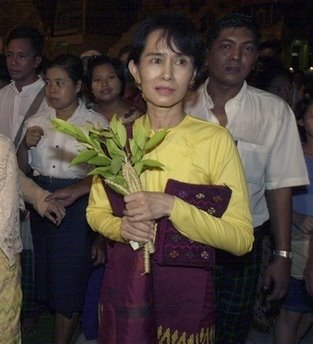


 Posts
Posts


