News & Articles on Burma
Monday, 14 February, 2011
-------------------------------------------------------------
Havel to Address Prague Conference on Burma
Suu Kyi Praises Egyptian Army
China Stands Behind Burma
A Sad Valentine’s Day for Karen People
‘Activists’ to serve up to 55 years
Press group urges Myanmar to free Australian publisher
Ex-premier Chuan rocks tour boat in Shan East
Suu Kyi warned over support for Burma sanctions
Australian editor held in Burma
Funding cuts endangering exiled media
Egypt's Revolt Met With Wide Support, Censorship
--------------------------------------------
Havel to Address Prague Conference on Burma
A conference to discuss the current political situation in Burma is to be held this week in Prague. “Elections in Burma/Myanmar and the European Policy“ is the title of the conference which has been organized by the country's Ministry of Foreign Affairs in cooperation with NGO People in Need. The conference will be inaugurated on Feb. 15 with opening remarks by Czech Minister of Foreign Affairs Karel Schwarzenberg, and Václav Havel, the former President of the Czech Republic. The seminar will be attended by representatives of ministries of foreign affairs of EU countries, representatives of European institutions, members of the European Parliamentary Caucus on Burma, and representatives of several European civil society organizations active on Burma.
Irrawaddy: Published Monday, Feb. 14, 2011
---------------------------------------------
Suu Kyi Praises Egyptian Army
By THE IRRAWADDY Monday, February 14, 2011
RANGOON — Burmese opposition leader Aung San Suu Kyi urged the country's armed forces to follow the example of Egypt's army, which she praised for not using force against pro-democracy protesters who last week brought down President Hosni Mubarak's thirty years of authoritarian rule.
“Even when hundreds of thousands of protesters took to the streets, the Egyptian army didn't shoot. Instead, it sided with the people,” said Suu Kyi in an interview with local reporters in Rangoon on Saturday.
“The Burmese Tatmadaw should follow their example,” she said, referring to the country's military, which seized power from a democratic government in 1962 and is deeply unpopular for its brutal crackdowns on mass anti-government uprisings in 1988 and 2007.
The weeks-long protests in Egypt, which were led by Internet-savvy youths rather than by the mainstream political opposition, have also inspired Burmese young people to prepare for yet another uprising against military rule.
“We were so fascinated by how young people in Egypt organized their protests. If we can create a network, then we will not need to depend on a particular person for leadership,” said a young Rangoon news reporter.
Suu Kyi said that the Internet and modern communication tools—which ignited the Egyptian pro-democracy movement—could also help to create a network among democracy supporters in Burma and strengthen their struggle against military rule.
In a recent interview with the BBC, however, she said she did not wish the events in Egypt to occur in her country, making it clear again that she preferred dialogue with Burma's military rulers over popular protests as a means to breaking the country's political deadlock.
Suu Kyi's National League for Democracy party was disbanded last year after it refused to run in elections in November that were marred by widespread vote-rigging. The party has no presence in the country's new military-dominated Parliament but continues to command strong popular support.
Earlier this month, the Parliament elected the junta's former prime minister, ex-Gen Thein Sein, as the president of the new government and has chosen several incumbent junta ministers for ministerial positions in the new cabinet.
On Sunday, a commentary in the Burma's state-run newspapers said that Suu Kyi and her party would “meet their tragic end” if they refused to change their continued support for Western economic sanctions against the regime.
http://irrawaddy.org/highlight.php?art_id=20747
-------------------------------------------------
China Stands Behind Burma
By MARWAAN MACAN-MARKAR Monday, February 14, 2011
BANGKOK—China is throwing its weight behind Burma’s predicted political transformation from military rule to a supposed civilian government, deepening its strong economic ties with the resource-rich Southeast Asian nation some have described as Beijing’s "client state".
China was the first to commend Burma’s new leadership, with President Hu Jintao sending his congratulations within hours after Thein Sein assumed the presidency Feb. 4.
The move is seen as "another confidence building measure by Beijing towards its western neighbor at a time when many countries in the region, from India to Southeast Asia, have their eyes on engaging economically with Burma," a Southeast Asian diplomat said on condition of anonymity.
"Beijing wants to have a solid presence on the ground in case the political change leads to a flood of other economic players," the diplomat added.
China’s gestures toward Burma have come even as Burmese national security experts caution against the rush to accept the new government under President Thein Sein, which is seen as no different from the junta, headed by strongman Snr-Gen Than Shwe, it is replacing.
The 65-year-old Thein Sein, a retired army general and former prime minister in the outgoing military regime, was chosen by lawmakers in the first multi- party parliament since the military grabbed power in a coup nearly 50 years ago.
Thein Sein, however, was practically assured of victory in the legislature, of which 80 percent were military delegates and their political allies.
"Unfortunately the civilian head is a puppet. Thein Sein is weak, less ambitious and lacks a powerful base in the army," says Win Min, a Burmese national security expert living in exile in the US.
"Nothing really has changed," he told IPS. "Than Shwe will still be the most powerful man, operating from behind Thein Sein."
Junta or no junta, China has in fact already established a footing in Burma. Its economic record bears this out: last year, China invested 8.17 billion dollars, mostly in Burma’s hydropower, oil and gas sectors.
This surge in Chinese investments has brought to 12.3 billion dollars Beijing’s total investments, out of the nearly 20 billion dollars in foreign funds for big- ticket projects that Burma has attracted since it opened its economy up to free market policies in 1988.
The ties between China and the most recent Burmese junta, which held power for two decades till the general election in early November last year, was also aided by the economic sanctions imposed by the US and the European Union for Burma’s dismal human rights record.
The US government banned new investments in Burma in 1997, and gradually tightened punitive measures, including limiting financial deals and visa restrictions on members of the junta. The EU imposed bans on the sale of weapons to Burma in 1996, followed by visa bans and the freezing of assets of the junta, their families and cronies.
"As long as Western sanctions are in place, China’s economic power in Burma will grow," says Thant Myint-U, a Burmese historian and author of ‘The River of Lost Footsteps’, an account of Burma’s transformation during British colonization. "In the eyes of the (Burmese) government, the cost of Western sanctions is diminishing by the day.
"If the government was willing to ignore Western sanctions ten years ago when it was essentially broke, it’s hard to imagine how they’re going to suddenly pay attention to these same demands now, when (gas and oil) pipeline transit fees, natural gas and jade sales and the sale of electricity of new hydropower plants are set to bring in well over ten billion dollars in revenue a year," Thant told IPS, explaining the trade and investment portfolio dominated by China.
China’s growing influence has prompted Burma’s giant neighbor to its west, India, to also increasingly place security and economic interests over political ones to expand its presence in the Southeast Asian nation.
India has also opted for a tone of accommodation toward Burma’s attempts to gain much needed legitimacy for its civilian-led government.
"The recent elections in Myanmar [Burma] are an important step in the direction of the national reconciliation process being undertaken by the government of Myanmar," India’s External Affairs Minister S.M. Krishna said of the Nov. 7 poll, the first general elections in 20 years, which was plagued by irregularities.
While New Delhi has still not followed Beijing’s lead in praising Thein Sein, the tone of the Indian government’s statement following the elections suggests that "relations with Myanmar have become truly multi-faceted, with cooperation in a range of developmental and other projects in the areas of roads, power, hydro-carbon, oil refinery, transmission lines, telecommunications and information technology," says a South Asian diplomat.
Indian economic cooperation with the Burmese junta began in the mid- 1990s, marking a break from the strong pro-democracy positions it took, backing opposition leader and Nobel Peace laureate Aung San Suu Kyi in her struggles with an oppressive regime. China’s growing footprint in Burma was among the reasons for this shift.
"China has majorly expanded in Myanmar and this has facilitated China’s entry into the Bay of Bengal," the South Asian diplomat noted on condition of anonymity. "India needs to have a countervailing presence in Myanmar to ensure its own interests are not jeopardized."
Burma’s neighbors in a 10-member regional bloc, the Association of Southeast Asian Nations (ASEAN), have, like India and China, also come on board to accept and give legitimacy to the political culture emerging out of last November’s election.
Copyright © 2008 Irrawaddy Publishing Group | www.irrawaddy.org
http://www.irrawaddy.org/print_article.php?art_id=20745
----------------------------------------------------------
A Sad Valentine’s Day for Karen People
By SAW YAN NAING Monday, February 14, 2011
It was on the evening of Feb. 14, 2008, that two men carrying a gift basket of fruit walked up to the home of Mahn Sha, a prominent and well-respected Karen leader, in the town of Mae Sot, Thailand, and gunned him down.
“Good evening, uncle,” one man said in Karen before firing the first shot. Then another gunman also shot him repeatedly as he fell from his chair.
They rushed back to a black Hilux Vigo pickup truck and drove away. By then, Mahn Sha was already dead from multiple bullet wounds.
He was killed on the balcony where he often rested after lunch, leaving behind a distraught family. His death was also a great loss for Karen people around the world, especially for those who belonged to the Karen National Union (KNU), one of Asia’s oldest armed resistance groups.
Mahn Sha, who had served as the KNU's general secretary, was highly respected not only by the Karen, but also by Burmese opposition groups. He was considered a wise leader because he often spoke of the need for inclusiveness to bring all democratic forces and ethnic minority groups together in their struggle against military rule.
He died at the age of 64, survived by two daughters and two sons, including one adopted son.
“He was a good father not only for us but also for the Karen resistance,” said Say Say, Mahn Sha's adopted son. “He always made his people's well-being his first priority. His family came second.”
He said that although his adopted father spent most of his time with his soldiers, his family never felt neglected.
“It's not that he didn't love his family,” said Say Say. “We knew that he did, but we also knew that he loved his work because he did it for the sake of all his people.”
Mahn Sha graduated from Rangoon University in 1966 with a degree in history. During his time as a student, he was also an underground member of the KNU. He joined the movement full-time soon after leaving university.
From 1966 to 1974, he made several trips to Shan, Kachin, and Karenni states to meet with ethnic resistance groups. He also visited China twice to meet with leaders of the Burmese Communist Party and the Communist Party of China.
In November 1984, Mahn Sha became a KNU central committee member and moved to the KNU's headquarter in Manerplaw, Karen State.
While serving as the KNU's general secretary, Mahn Sha was seen as one of the group's leading lights and was being groomed to take over its troubled leadership.
Many sources said he was on the Burmese junta’s hit list because he was seen as a strong leader who always called for genuine political dialogue. When the KNU sent a delegation led by the late Karen leader Gen Bo Mya to Rangoon in December 2005 for cease-fire talks, the regime requested his exclusion.
In an interview with The Irrawaddy shortly before his death, Mahn Sha said that he had experienced the plight of the Karen people since his childhood. He said the Burmese regime’s oppression of the Karen people was what made him get involved in the Karen fight for freedom.
Today, on the third anniversary of his assassination, Mahn Sha is remembered as a great leader of his people, and one whose name will remain a prominent one among those who have served the Burmese democracy movement.
To preserve his legacy of service to the Karen, his children established the Phan Foundation soon after his death. To commemorate the anniversary of his assassination, the foundation, which also honors Mahn Sha's deceased wife, Nant Kyin Shwe, announced today that it had made grants of £8,000 (US $12,850) to Karen rights groups and individuals.
“We think this is one of the best ways we can pay tribute to our parents, and continue their work. The organizations we are supporting do fantastic work which deserves support,” said Mahn Sha's daughter, Zoya Phan.
“He [Mahn Sha] stood bravely for his people. He sacrificed his life for his people. It was a big loss and sadness,” said Saw Hla Htun, an advisory board member of the Karen Youth Organization.
“While many people happily celebrate Valentine’s Day today, Feb. 14 is a sad day for the Karen people,” said Saw Hla Htun.
http://irrawaddy.org/article.php?art_id=20754
------------------------------------------------
‘Activists’ to serve up to 55 years
By KHIN HNIN HTET
Published: 14 February 2011
Additional sentences of up to 10 years have been given to seven people accused of being behind a spate of bombings, and who are already serving decades in prison.
The five men and two women learnt of their fate on Friday last week following a hearing at Eastern Rangoon Divisional Court. Six of them will serve an additional seven years, while one man, Kyaw Zwa Lin, was handed a decade.
All were charged under the Explosives Act, one of the three charges originally used to imprison them in 2008 when police allegedly discovered them with gunpowder. For this they received sentences of between 20 and 38 years.
Then last year these were extended by a decade after all were found guilty of assisting in the 2004 bombing at Zawgyi House Restaurant in Rangoon and the bombing at the Panorama Hotel in Rangoon in 2005.
Last week’s sentencing for involvement in the Shwe Mann Thu bus terminal bombings in 2005 brings to more than 50 years the longest of the jail terms they will serve. Lawyer Kyaw Ho said however that there was no strong evidence to support the most recent sentencing.
“There was no witness, evidence or exhibit whatsoever to prove their connection with the bombing,” he said. “The only thing used against them in the trial was the confession they gave to police during interrogation, which does not qualify as evidence.”
Similar complaints had been levelled by the defence team last year, particularly over the explosives charge that Kyaw Ho said should require testimonies from “the police’s Criminal Investigation Department and chemical specialists”.
Whether any political motive was behind the sentencing is unclear, but the group is alleged to have held links to the banned All Burma Students’ Democratic Front (ABSDF), a prominent activist group born from the 1988 mass student uprising. That allegation earned them charges under the Unlawful Associations Act.
http://www.dvb.no/news/activists-to-serve-up-to-50-years/14265
------------------------------------------------
Press group urges Myanmar to free Australian publisher
Posted: 14 February 2011 1750 hrs
PHNOM PENH: A foreign press association expressed concern Monday about the arrest of an Australian newspaper publisher in Myanmar, calling for his release from prison while awaiting trial.
Ross Dunkley, co-founder of the Myanmar Times -- the country's only newspaper with foreign investment -- was arrested in Yangon on Thursday.
He is being held in Myanmar's notorious Insein prison, according to his business partner in Cambodia, where he is a key shareholder in Post Media, the publisher of the Phnom Penh Post newspaper.
The Overseas Press Club of Cambodia (OPCC) said in a statement that it saw "no reason to imprison Dunkley ahead of his trial, and is concerned that his arrest is an abuse of the law in order to resolve a business dispute".
It added: "The OPCC is further concerned that Dunkley's arrest is in line with a trend of increasing authoritarianism in some countries in the region and efforts to circumscribe hard-won press freedoms."
Post Media chairman David Armstrong has suggested Dunkley's arrest is linked to a power struggle between foreign and domestic owners of the Myanmar Times, which publishes weekly editions in English and Burmese.
Dunkley co-founded the Myanmar Times in 2000 with local partner Sonny Swe, the son of an influential member of the junta's military intelligence service.
But Sonny Swe was jailed in 2005 and his stake was passed to Tin Tun Oo, who is reportedly close to the military regime's information minister.
Dunkley is due to appear in court on February 24, Armstrong said.
-AFP/ac http://www.channelnewsasia.com/stories/afp_asiapacific/view/1110664/1/.html
------------------------------------------------
Ex-premier Chuan rocks tour boat in Shan East
Monday, 14 February 2011 15:58 S.H.A.N.
A low profile visit by former Thai Prime Minister Chuan Leekpai, last month has prompted junta leaders to impose stiff restrictions on tour buses coming from the kingdom into Burma’s Shan State East, according to sources on the Thai-Burma border.
[Thai Prime Minister Chuan Leekpai (Photo: commons.wikimedia.org)]
Thai Prime Minister Chuan Leekpai (Photo: commons.wikimedia.org)
“The trip he made on 23 January wasn’t even his first one,” said an informed source. “He had already made several merit making trips to Thart Zawntawng and Wat Hokhong in Kengtung (160 km from Maesai) with his friends. He even visited Mongla (80 km further from Kengtung) where he was recognized by some locals who seized the opportunity to take photographs with him.”
“Tour buses from Thailand since 10 February are no longer allowed to enter Tachilek (opposite Maesai),” said a visitor. “As for vehicles going to Mongla, there are only vans that are permitted to pass through since 6 February.”
Immigration officials have been blamed by higher authorities for their lax passport scrutiny procedure, but there are as yet no reports whether any official has been punished.
Chuan, 73, has been known as the Thai prime minister least liked by Burma’s ruling generals. He headed the Democratic Party led coalition governments between 1992-95 and 1997-2001. http://www.shanland.org/index.php?option=com_content&view=article&id=3462:ex-premier-chuan-rocks-tour-boat-in-shan-east&catid=93:general&Itemid=291
--------------------------------------------------
Suu Kyi warned over support for Burma sanctions
A Rangoon supporter wearing a T-shirt bearing the image of Aung San Suu Kyi. [AFP]
PHOTO
A Rangoon supporter wearing a T-shirt bearing the image of Aung San Suu Kyi. [AFP]
Last Updated: 6 hours 7 minutes ago
Burma's state media says democracy champion Aung San Suu Kyi and her party will meet tragic ends if they keep up their support of Western sanctions.
The remarks follow a recent statement by Ms Suu Kyi's National League for Democracy.
It argued the punitive measures were helping to pressure the authorities and had not affected the economy significantly.
It was the first explicit criticism of the Nobel Peace Prize winner by state media since her release after seven years of house arrest in November.
The report, in the New Light of Myanmar newspaper, invites Ms Suu Kyi and her party to cooperate with the people in building a democratic nation. http://www.radioaustralianews.net.au/stories/201102/3138638.htm?desktop
-------------------------------------------
Australian editor held in Burma
February 14, 2011
An associate close to the Australian editor of the Myanmar Times in Burma says the allegations against him are not true.
Co-founder of the newspaper, Ross Dunkley, was arrested in Rangoon late last week for allegedly violating his visa condition and possessing marijuana.
If convicted, Mr Dunkley faces up to five years in jail or deportation.
However, his friends say the arrest comes at a time when Mr Dunkley is engaged in a power struggle with his Burmese business partner, who has links to the country's military.
David Armstrong, the chairman of the Thailand-based Post Media company and a close business associate of Mr Dunkley's, told Radio Australia's Connect Asia program that there are serious questions over the nature of the allegations.
"There's been a few reports, particularly very early in the piece, which said that he was involved with the possession of marijuana and overstaying the visa and neither of these is true. It's just in the way things happen sometimes in the media," he said.
"People speculate about what might be the reason for something going on. Eventually someone who should know things repeats the speculation and they become a source as it were."
He said that Mr Dunkley's lawyers say his arrest was unlawful.
"I really don't pretend to know what goes in the opaque world [of] the Myanmar (Burma) Government and legal systems, but it's not clear just exactly what Ross has done to breach his visa conditions."
Mr Armstrong said there has been no word on Mr Dunkley's condition in prison, adding that the last time anyone had contact with Mr Dunkley was on Thursday afternoon as he was being transferred from the court to a police station.
Management dispute
While he said it would only be speculation, Mr Armstrong pointed out the coincidence of the arrest with ongoing discussions about who should be controlling the paper.
"There have been discussions about who should be controlling the company and the paper and who should have the management control, because the local shareholding is 51 per cent and I think some of the locals shareholders think that they should have more say," he said.
"However, there is an agreement in the setting up of the company which gives the international investors the management control of the company, but there have been discussions on that issue."
Mr Armstrong also said that Burma's current process of forming government and establishing ministries may have something to do with the arrest.
"This is a time of change in Myanmar and while in general terms, the military still retains fairly firm control, within that, there are changes within ministers and departments and so on, so people who go further down the line who used to exercise power may not be exercising the power in the future, so perhaps in that respect, there is something going on."
Ross Dunkley's next court appearance has been scheduled for February 24. http://www.radioaustralianews.net.au/stories/201102/3138499.htm?desktop
---------------------------------------------
Funding cuts endangering exiled media
By AFP
Published: 14 February 2011
Burma’s media in exile, long a thorn in the side of the ruling generals, are being squeezed by funding cuts that some blame on a change in policy by Western donors in a shifting political landscape.
Overseas-based media such as the Democratic Voice of Burma (DVB) are seen as an important source of news in the impoverished nation, where an authoritarian government keeps a stranglehold on domestic reporting.
As a new political system emerges in Burma with a new parliament, some believe donors have been tempted to divert funding into the country, despite evidence it is still dominated by the military hierarchy.
Within weeks of the first elections in 20 years, DVB – an Oslo-based television, radio and on-line news provider that is banned in Burma – cancelled several programmes after suffering big losses in subsidies.
DVB deputy manager Khin Maung Win said the cuts amounted to about $1 million in 2011, partly because the group had received roughly $US500,000 in extra funding last year to cover the November election.
He said it would result in job cuts among some of the group’s 150 journalists based in Norway, Thailand or Burma.
“As of now, we cannot conclude it is a policy change from the donors’ side… But it has a painful effect on us,” he said.
Another exiled news organisation, Thailand-based Irrawaddy, recently axed its monthly printed magazine to concentrate on its online edition.
The situation “weakens the influence of media that have an extremely positive role,” said Vincent Brossel of media rights group Reporters Without Borders, which ranks Burma 174th out of 178 countries for press freedom.
He said the cuts were especially harsh because the organisations had become gradually more independent from opposition groups such as Aung San Suu Kyi’s National League for Democracy (NLD).
Burma’s exiled media derives most of its financial support from European governments, mainly Scandinavian, and from public and private donations from the United States.
The DVB did not say which donors were behind the cuts, but it is believed to be mainly European governments.
Mikael Winther, the Danish ambassador to Burma, Thailand and Cambodia, said that his government for its part had not changed its policy toward the junta.
“Denmark is not supporting any government in Burma,” he said. “But since we now have more access inside than we had before, we do support poverty-oriented projects for people suffering inside Burma,” he said.
Some believe that the release of Suu Kyi, who was freed from house arrest just days after Burma’s controversial polls in November of last year, has heralded new thinking among many donors.
“Definitely there is concern that there is a major shift in donor policy toward exiled groups including cross-border aid assistance,” said Aung Zaw, founder and director of Irrawaddy.
He said some donors might want to channel money to projects inside the country, or be unhappy with exiled media’s coverage critical of the regime and the election.
Irrawaddy has lost around a third of its annual $US1 million in subsidies and has had to cut 20 of its 60 contributors.
Maung Zarni, a Burma researcher at the London School of Economics, argued that funding cuts were part of a “deliberate strategy”.
European policy strategists “have concluded that the only way towards change in Burma is through development of free market institutions and pragmatic collaboration with the generals in power”, he said.
Reporters working inside Burma for banned exile media organisations risk long jail sentences.
Earlier this month DVB video reporter Maung Maung Zeya, 58, was handed 13 years in prison after being caught filming at the scene of a bomb blast in April 2010.
His son Sithu Zeya has been given an eight-year jail term on similar charges, according to Aung Thein, a legal adviser for political prisoners.
DVB TV is watched almost as much as the state-funded channels in Burma, despite a ban on the sale of satellite dishes, according to Reporters Without Borders.
The DVB website is also a respected source of news for those outside the country.
Other established independent media sources covering the country include Radio Free Asia (RFA), financed by the United States, and the BBC’s Burmese service, which recently escaped being axed in severe cuts by the broadcaster.
Many Burmese rely on such radio broadcasts from outside Burma to keep up with world news. Suu Kyi herself regularly tuned into the BBC and other broadcasters during her years of detention.
While access to exiled media websites in Burma is restricted by the authorities, some people use proxy servers to bypass the blocks.
“We think the more sources for accurate, objective information in Burma, the better and the declining trends are troubling,” said RFA spokesman John Estrella.
http://www.dvb.no/news/funding-cuts-endangering-exiled-media/14259
-----------------------------------------
Egypt's Revolt Met With Wide Support, Censorship
By RAPHAEL G SATTER / AP WRITER Monday, February 14, 2011
LONDON— From London to Gaza City to Seoul, the world was savoring the spectacular fall of Egypt's Hosni Mubarak, with demonstrators rallying in the thousands Saturday in cities across the world. But other authoritarian regimes weren't celebrating — and some were trying to censor the news.
In China, where the ruling Communist Party ruthlessly stamps out dissent, terse media reports downplayed the large-scale pro-democracy protests in Egypt that forced Mubarak from power and instead emphasized the country's disorder and lawlessness.
In oil-rich Equatorial Guinea, where coup leader Teodoro Obiang has been in power since 1979, state-controlled media was ordered to stop reporting about Egypt altogether, according to African news site afrol.com.
Nearly everywhere else, newspapers congratulated Egypt's revolution, with many headlines carrying the word: "Finally."
The headlines were matched with an outpouring of international support. Human rights group Amnesty International organized dozens of rallies around the world, with events in New York, Chicago, Houston and cities in 15 other countries.
In London's Trafalgar Square, thousands gathered to see scenes from Tahrir Square beamed via video link on to a giant screen. Salil Shetty, Amnesty's secretary general, told the crowd that the rally was both a celebration of Mubarak's departure and a protest against the strongmen still holding sway over the region.
London-born Shariff el-Wardany, 33, whose family is from Cairo, said he was "still numb" that the Egyptian dictator had gone.
"We were told many years ago that we would never see this day," he said. "The elite could go anywhere, do anything, they could commit crimes and nobody could touch them. That's all changed now."
In the Middle East and Africa, politicians and activists were still struggling to find their footing as the shockwaves from Mubarak's resignation spread through the region. In Yemen and Algeria, violence erupted as protesters pressed their demands for democratic reforms. In Uganda and Zimbabwe — two countries ruled by long-serving strongmen — opposition figures invoked Mubarak's downfall as a warning to their current rulers.
In Gaza, a celebratory rally organized by the radical Islamist group Hamas — and the silence maintained by both the Western-backed Palestinian Authority and the Israeli government — spoke to the possible repercussions of Mubarak's ouster for long-delayed peace process.
Hamas has had a tense, often angry relationship with the deposed Egyptian president, who, along with Israel, has kept Hamas-ruled Gaza blockaded for the past four years. If Egypt's Islamist Muslim Brotherhood wins a role in any post-Mubarak government, it could help Hamas shore up its position.
Wider afield, the congratulations kept pouring in.
Australian Foreign Minister Kevin Rudd commended Egyptians on what he called a clear and courageous protest movement.
"My view is that the people of this most ancient civilization truly deserve a most modern of democracies," Rudd told the Australian Broadcasting Corp.
Japan and South Korea issued statements noting Mubarak's resignation, while India — which with Egypt was one of the founding members of the Non-Aligned Movement during the Cold War — said it welcomed Mubarak's decision to step down "in deference to the wishes of the people of Egypt."
In Indonesia and the Philippines, two countries whose own "people power" revolts toppled long-ruling dictators, the praise was more fulsome, although there were words of warning too.
Philippine President Benigno Aquino III, son of the late President Corazon Aquino — the country's democracy icon who was swept to power in a revolt that toppled the late dictator Ferdinand Marcos — welcomed the "relatively peaceful resolution" of the political crisis in Egypt, saying it showed that "aspirations for a more free and fair society are universal."
The country's left-wing alliance Bayan, which fought Marcos and has remained a critic of succeeding regimes, expressed hope that "the great unity and determination of the Egyptian people inspire others worldwide in their fight against tyranny."
"The importance of people power has once again been affirmed," said Bayan secretary general Renato Reyes. "What comes after people power however, is another difficult challenge, as we Filipinos well know."
Indonesians — who chased longtime Washington ally Gen Suharto from power in 1998 — largely echoed the sentiment.
"Congrats Egyptians," Luthfi Assyaukanie, leader of Indonesia's Liberal Islamic Network, wrote on the micro-blogging site Twitter. "I know how you feel today. I had the same feeling 13 years ago. The real struggle has just begun."
In Thailand, which has been rocked by demonstrations aimed at forcing the country's prime minister to step down, protest leader Thida Thavornseth said Egypt's experience had shown "that the power of the people is enormous and triumphant."
"(Still) if you take Thailand as an example, the people seemed to have won several times, but in the end, power was passed on to the new dictators who then again suppressed the people," Thida told The Associated Press.
Associated Press journalists across the world contributed to this report.
Copyright © 2008 Irrawaddy Publishing Group | www.irrawaddy.org
http://irrawaddy.org/highlight.php?art_id=20744
Tuesday, February 15, 2011
News & Articles on Burma-Monday, 14 February, 2011


Monday, February 14, 2011
ေဖေဖၚ၀ါရီ တဆယ့္သံုးရက္ကို အျမင့္ဆံုးလႊင့္ထူလိုက္ၾကရဲ ့
ပဥၥလက္ဆံဆံ
ေမွာ္အတတ္မ်ား
အေတာမသတ္ႀကီးထြား
ေကာင္းတာကလြဲလို ့
မေကာင္းတာမွန္သမွ်
အကုန္ရတဲ့ ေနရာႀကီးမွာေမြးဖြားႀကီးျပင္း
က်ေနာ္တို ့ရဲ ့ လူငယ္ေတြ
လူဖ်င္းေတြေတာ့ မဟုတ္ဘူး ။
အရင္က ဘာေတြျဖစ္ခဲ့လဲ
အခု ဘာေတြျဖစ္ေနလည္း
ေနာက္ဘာေတြ ျဖစ္ဦးမွာလဲ
အကုန္သိတယ္…..။
အရင္က ဘာေတြလိုခ်င္ခဲ့လဲ
အခု ဘာေတြ လိုခ်င္ေနလဲ
ေနာက္ ဘာေတြလိုအပ္ဦးမလဲ
အကုန္သိတယ္ ။
အဂၤလိပ္ ဗမာ ပထမစစ္
……………….. ဒုတိယစစ္
………………. တတိယစစ္
နယ္ခ်ဲ ့ကၽြန္ ျဖစ္ခဲ့ရတာ သိတယ္ ၊
သူ ့ကၽြန္အျဖစ္ ႏြံနစ္မခံ
မ်ိဳးခ်စ္ေတြရဲ ့ ပုန္ကန္မႈေတြကို သိတယ္။
ဆရာႀကီး သခင္ကိုယ္ေတာ္မိွဴင္းကို သိတယ္
နတ္ေမာက္နယ္သား ဗိုလ္မင္းေရာင္ကို သိတယ္
လယ္သမားအေရးေတာ္ပံု ဆရာစံကို သိတယ္
သခင္ေအာင္ဆန္းကို သိတယ္
သခင္ဗဟိန္းကို သိတယ္
သခင္သန္းထြန္းကို သိတယ္
ဗိုယ္ေအာင္ေက်ာ္ကို သိတယ္ …
သူတို ့မေမြးခင္က သမိုင္း
သူတို ့ရဲ ့ ဘ၀ အစိတ္အပိုင္းတခုလိုကို သိတယ္။
သူတို ့ေမြးၿပီးတဲ့ေနာက္ပိုင္း
ခမ္းနားႀကီးက်ယ္တဲ ့
ေက်ာင္းသားလႈပ္ရွားမႈသမိုင္း
ျပည္သူလူထု လႈပ္ရွားမႈ သမိုင္း
သံဃာ့ လႈပ္ရွားမႈ သမိုင္း
ရိုင္းစိုင္းတဲ့ အုပ္စိုးသူလူတစုရဲ ့
လူမဆန္တဲ့ သမိုင္း
အကုန္သိတယ္ ။
မ်ိဳးဆက္တို ့ရဲ့ စီးဆင္းမႈ
တာ၀န္သိမႈ တာ၀န္ယူမႈမ်ားထဲက
ကိုယ့္ဘ၀ထက္ ျပည္သူ ့ဘ၀ကို ပိုခ်စ္တဲ့
အေမ တေယာက္ရဲ ့အေၾကာင္းကို သိတယ္ ။
အရိုင္းစံ အရိုးခံ လူသားဘ၀ကို ခ်စ္ျမတ္ႏိုးတဲ ့
သံုးဆယ့္ႏွစ္ႏွစ္ အရြယ္ လူတေယာက္
ရာဇ၀င္ေျပာင္ေျမာက္တဲ့ စြမ္းေဆာင္ခ်က္ေတြ
စိတ္ဓာတ္နဲ ့စိတ္ထား စံထားေလာက္တဲ့တရားမ်ား
မ်ိဳးဆက္သစ္လူငယ္မ်ားရဲ့ အၾကားမွာ
ေတာက္ပ ၀င္းလက္ အနာဂတ္အတြက္
သူတို ့
ေဖေဖၚ၀ါရီ တဆယ့္သံုးရက္ကို အျမင့္ျမတ္ဆံုး လႊင့္ထူလိုက္ၾကရဲ ့ ……။
ရဲရင့္သက္ဇြဲ
News & Articles on Burma-Sunday, 13 February, 2011
News & Articles on Burma
Sunday, 13 February, 2011
-------------------------------------------------------------
"Tragic end" for Suu Kyi unless change: commentary
Myanmar state media says opposition heads for "tragic end"
Myanmar Times Publisher Arrested
Burmese journalists fear tighter controls
Australian newspaper boss held in Myanmar
China immorally exploits dam-projects in Burma’s Kachin State
-----------------------------------------------------
"Tragic end" for Suu Kyi unless change: commentary
Reuters
Soldiers stand at attention during a ceremony to mark the 64th Myanmar Union Day in front of the City Hall in the new capital Naypyitaw Reuters – Soldiers stand at attention during a ceremony to mark the 64th Myanmar Union Day in front of the City …
By Aung Hla Tun Aung Hla Tun – Sun Feb 13, 5:00 am ET
YANGON (Reuters) – Myanmar pro-democracy leader Aung San Suu Kyi and her party will "meet their tragic end" if they stick to their position including support for Western sanctions, state media said on Sunday.
In the first direct criticism of Suu Kyi since she was released from house arrest in November, days after a pro-military party swept elections widely dismissed as unfair, state media also invited Suu Kyi to cooperate "in building a democratic nation."
"If Daw Suu Kyi and the NLD keep going to the wrong way ignoring the fact that today's Myanmar is marching to a new era, new system and new political platforms paving the way for democracy, they will meet their tragic end," state-run newspapers said in a commentary.
"Daw" is an honorific for women.
The state-run newspapers have long been mouthpieces of the military, which ruled the country, also known as Burma, after taking power in a 1962 coup.
Myanmar held its first elections in two decades last November, but the military shows no sign of loosening its grip on power even though a new civilian-led administration is officially taking over.
The warning to Suu Kyi and her National League for Democracy (NLD), which won the previous election in 1990 but was never allowed to govern, comes days after the NLD said it supported Western sanctions but wanted talks on whether to modify them.
Suu Kyi, asked by Reuters at a party function on Saturday to elaborate, said she saw no reason to lift sanctions now.
The newspaper commentary, titled "Sanctions, Daw Suu Kyi and NLD," was signed Yan Gyi Aung, which means Great Victor and was apparently a pseudonym. Commentaries frequently carry such pen-names in state-run newspapers.
Suu Kyi, the daughter of the country's independence hero, has been excluded from politics since 1989, when she was first detained, a year after the military crushed a student-led uprising.
She has no stake in the new army-dominated system and authorities have ignored her calls for dialogue.
"BIG-HEADED"
Western countries including the United States and the European Union, have imposed sanctions because of Myanmar's human rights record and its suppression of the democracy movement.
There have been hopes last year's election, and Suu Kyi's release, would lead to the end of sanctions on the resource-rich country. Analysts say Western governments will pay heed to Suu Kyi's opinion when deciding whether to maintain sanctions.
Critics say sanctions have not worked and they leave others such as China, India, Thailand and Singapore free to do growing volumes of business with impoverished Myanmar.
The commentary author accused the 65-year-old Nobel laureate and her party of instigating the sanctions.
"Her stance on sanctions has become the policy of theirs," he said, referring to Western governments.
"How big-headed the NLD is to stick to the weapon of sanctions until it gains power by demanding that any changes and modifications should be made in consultation with the party, let alone lifting the sanctions."
But on a conciliatory note, the author did invite Suu Kyi and her party to participate in public life.
"I would like to invite them to cooperate with the people in building a democratic nation in the interests of the nation and the people," Yan Gyi Aung said. He did not elaborate.
(Writing by Robert Birsel; Editing by Ron Popeski) http://news.yahoo.com/s/nm/20110213/wl_nm/us_myanmar
----------------------------------------
Myanmar state media says opposition heads for "tragic end"
Feb 13, 2011, 8:32 GMT
Yangon - Myanmar's state-run media on Sunday blasted democracy icon Aung San Suu Kyi and her party for supporting sanctions on the regime, warning that they were heading for 'tragic ends.'
The New Light of Myanmar and other state-owned newspapers carried a commentary on the position paper of the National League for Democracy (NLD), Suu Kyi's party, on economic sanctions that was released on February 8.
The NLD's four-page paper stated that there was little evidence that economic sanctions imposed on Myanmar by Western democracies had hurt the Burmese people more than the regime's poor economic policies, and called on the US, Europe, Australia and Canada to consult with the NLD before modifying the penalties.
'How big-headed the NLD is to stick to the weapon of sanctions until it gains power by demanding that any changes and modifications should be made in consultation with the party let alone lifting the sanctions,' said The New Light of Myanmar, a government mouthpiece.
'If Daw (Madam) Suu Kyi and NLD keep going to the wrong way ignoring the fact that today's Myanmar is marching to a new era, new system and new political platforms paving the way for democracy, they will meet their tragic ends.'
The article was one of the first public indications of the attitude of Myanmar's newly installed government towards the NLD following the November 7 election.
Myanmar's former junta often accused Suu Kyi and the NLD of bringing unnecessary hardships on the people through their support of Western economic sanctions, imposed since 1988 in response to the army's bloody crack down on a pro-democracy movement that left about 3,000 dead.
Suu Kyi, upon her relase from seven years under house arrest on November 13, said the NLD would review their stance on sanctions.
'Available evidence indicates that economic conditions within the country have not been affected by sanctions in any notable degree,' the NLD concluded.
The NLD blamed Myanmar's current economic malaise on the military regime's economic policies, that have stymied market forces, and cronyism between the regime and its select business partners.
Talk of lifting sanctions has increased since Myanmar held a general election on November 7.
The NLD, which lost is status as a legal political party when it refused to register for the elections, continues to be a powerful opposition force, partly due to the international esteem of its leader.
Suu Kyi's influence over Western democracies in persuading them to lift sanctions is deemed one of her few remaining political trump cards in dealing with the regime and the new government which is likely to be formed this month.
The government is slated to be packed with ex-military men connected with the former junta.
http://www.monstersandcritics.com/news/asiapacific/news/article_1618955.php/Myanmar-state-media-says-opposition-heads-for-tragic-end
-----------------------------------------------------
* FEBRUARY 13, 2011, 4:15 A.M. ET
Myanmar Times Publisher Arrested
Associated Press
The Australian editor and co-owner of an English-language newspaper in Myanmar has been arrested in what an associate suggests is a business dispute.
Myanmar Times' editor-in-chief Ross Dunkley is imprisoned in Yangon's main Insein Prison for violating a section of the immigration law applying to overstaying a visa, a business partner said Saturday. The offense is punishable by a maximum jail term of two years, or a fine, or both.
David Armstrong, Mr. Dunkley's partner in a separate newspaper venture, the Phnom Penh Post in Cambodia, issued a statement saying that Thursday's arrest "coincides with tense and protracted discussions... about the future direction of the publishing group, ownership issues and senior leadership roles" he has been holding with his Myanmar business partners. He did not elaborate.
The dispute comes as Myanmar's long-ruling junta prepares to hand the reins to a new government—nominally civilian but packed with its allies. The regime held a lavish national celebration at the isolated capital of Naypitaw for Union Day Saturday, where the leader of the junta, Senior Gen. Than Shwe, warned against any "disruption" of the new government, urging people to protect what he called the country's nascent "democracy system" a day after a Cabinet was approved. Union Day marks the anniversary of a 1947 agreement among the country's ethnic groups that paved the way to independence from Britain.
After decades of repressive military rule, critics say that Myanmar's self-described transition to democracy is a charade and that last year's election was orchestrated to perpetuate military rule. With one quarter of the seats in the new parliament filled by military appointees, and a lion's share of the remaining seats won by a military backed party, the army effectively retains power.
The future role of the junta officially known as the State Peace and Development Council remains unclear, though it is certain that the military will continue to be the dominant force in government.
Than Shwe's message on Saturday called on the nation's citizens to build and safeguard a "democracy system" that is "still in its infancy." He also urged people "to tackle any form of disruption to the new system."
The new parliament on Friday unanimously approved all of President-elect Thein Sein's Cabinet nominees, although they were not told which post each would take. Thein Sein, who was elected by parliament last week, was prime minister and a top member of the military junta that is handing over power to the new government. It is not clear when he and his Cabinet will be sworn in.
Most of the Cabinet appointees are former military officers who retired in order to run in last November's elections the country's first in 20 years and about a dozen were ministers in the junta's Cabinet. Only four of the appointees are strictly civilian.
The army has held power in Myanmar since 1962. With the military expected to continue to exercise power from behind the scenes, no loosening of restrictions on the press is expected. All daily newspapers and electronic media are directly controlled by the government.
The Myanmar Times's Mr. Dunkley is known for founding English-language newspapers, often with a business emphasis, in authoritarian countries. The Myanmar Times uses many professional journalism conventions naming sources and portraying opposing sides of issues, though it generally pulls its punches when it comes to criticizing the government, which tightly restricts what is published.
Mr. Armstrong said in his statement, published on the website of the Phnom Penh Post, that Mr. Dunkley will be brought to court on Feb. 24.
"His lawyers in Yangon say Mr. Dunkley is confident he can answer any charges or allegations made against him and is looking forward to returning to lead the Myanmar Times group in the exciting times ahead for the publishers and the country," Mr. Armstrong said. http://online.wsj.com/article/SB10001424052748703843004576140071747132398.html
------------------------------------------
Radio Australia News
Burmese journalists fear tighter controls
The editor of a publication in Burma says he's worried that tighter controls could be placed on journalists after the arrest of Australian journalist and businessman Ross Dunkley.
Mr Dunkley was arrested in Rangoon under Burma's Immigration laws, after returning from a business trip to Tokyo on February 10.
His lawyers say Mr Dunkley is confident he can answer any charges or allegations made against him.
Mr Dunkley is being held in prison until his next scheduled court appearance on February 24.
Aung Zaw, editor of Burmese magazine The Irrawaddy told Radio Australia News the climate is very difficult for the media.
He says there are currently over 30 bloggers and journalists who've been detained in Burma.
http://www.radioaustralianews.net.au/stories/201102/3137555.htm?desktop
----------------------------------------
Australian newspaper boss held in Myanmar
Sunday, 13 February 2011 00:33
NAYPYIDAW: The Australian head of Myanmar's only newspaper with foreign investment has been arrested in Yangon, officials and a business partner said yesterday, amid a power struggle at his group.
Ross Dunkley, co-founder of the Myanmar Times in a nation heavily criticised for its attacks on press freedoms, is being held in Myanmar's notorious Insein prison, according to his business partner in Cambodia.
Dunkley, who divides his time between Myanmar and Cambodia, where he is a key shareholder in Phnom Penh Post publisher Post Media, was detained in Yangon on Thursday after returning from a business trip in Tokyo.
The arrest "has nothing to do with his company" a Myanmar source said.
But Post Media chairman David Armstrong, who said Dunkley was detained in Yangon on immigration charges, said "a key point about the arrest is timing".
"It coincides with tense and protracted discussions Mr Dunkley and the foreign ownership partners in the Myanmar Times have been conducting with local partners," he said.
Negotiations have centred on "the future direction" of the media group, "ownership issues and senior leadership roles — all this at a time of significant political and economic change in Myanmar".
Dunkley's arrest comes after mounting rumours of a major power struggle at Myanmar Consolidated Media (MCM), the group that owns the Myanmar Times.
Exile news website the Irrawaddy said in January that Dunkley, who controls 49 percent of MCM, was trying to rebut an attempted editorial takeover by Myanmar partner Tin Tun Oo, who owns 51 percent.
Its report said an item in the state-owned Mirror newspaper referring to Tin Tun Oo as editor-in-chief of MCM had "sent shockwaves around the newsroom at the Myanmar Times" earlier that month.
The Irrawaddy said its sources suggested Tin Tun Oo "may well be successful as the military junta can interfere in the issue at any time".
Dunkley originally co-founded the Myanmar Times in 2000 with local partner Sonny Swe, the son of an influential member of the junta's military intelligence service.
But Sonny Swe was jailed in 2005 and his stake was handed to Tin Tun Oo, who the article said was close to the military regime's information minister.
MCM, which has offices in the capital Naypyidaw and Mandalay, as well as in Yangon, produces the Myanmar Times weekly in English and the country's official language, Burmese.
Armstrong said Dunkley is due to appear in court on February 24.
"His lawyers in Yangon say Mr Dunkley is confident he can answer any charges or allegations made against him and is looking forward to returning to lead the Myanmar Times group in the exciting times ahead — for the publishers and the country," he said.
Tin Tun Oo was a candidate for the military-backed Union Solidarity and Development Party (USDP) during controversial November polls, but was not elected to the country's new parliament, which opened at the end of January.
Some have suggested political changes have created a glimmer of hope for a country ruled by the military for almost half a century, but critics see merely cosmetic alterations aimed at hiding the generals' power behind a civilian facade.
A media watchdog called on Myanmar yesterday to end a “despicable” junta policy of jailing independent journalists after a video reporter was imprisoned for 13 years.
Maung Maung Zeya, 58, was sentenced on the same day last week that Myanmar announced a new president, the Committee to Protect Journalists (CPJ) said, amid fears that the military has kept a firm grip on the new political system.
The prison term “should dispel any illusions that Burma is on a new path”, said CPJ Asia programme coordinator Bob Dietz, using the country’s former name.
“The old junta’s pretence that its elections would install a democratic government has been revealed for the sham that it really is.”
AFP http://www.thepeninsulaqatar.com/s.-asia/philippines/142375-australian-newspaper-boss-held-in-myanmar.html
------------------------------------------------------------
China immorally exploits dam-projects in Burma’s Kachin State
By Zin Linn Feb 13, 2011 9:09PM UTC
Kachin churches in Burma’s northern Kachin State joined in prayer to strengthen their opposition to the huge dam construction at the Myitsone, the confluence of the Mali Hka River and N’Mai Hka River, Kachin News Group said on 10 February 2011. Church leaders in the Kachin capital, Myitkyina, gathered at the Myitsone village of Tang Hpre, to join in a special prayer service with villagers seeking to halt dam construction at Myitsone, a significant site in the history of Kachin civilization, participants said.
On May 27, 2010, On behalf of the communities suffering from the Myitsone Dam project in Kachin State, Kachin Development Networking Group (KDNG) appeal to Chinese President Hu Jintao to immediately halt the forced relocation and destruction of the villages of those opposed to this project by China’s state-owned China Power Investment Corporation (CPI).
KDNG said that the dam construction is against the choice of local people and violates China’s own dam construction guidelines as well as international standards. Burma’s military junta ordered over a thousand civilians from Myitkyina to forcibly relocate all the residents of Tang Hpre, the main village at the dam site, before the end of May 2010. If villagers refuse to leave, these civilians have been ordered to immediately pull down houses, schools and churches in Tang Hpre.
The CPI made a contract with junta’s No. 1 Electric Power Ministry in May 2007. The planned dam location is at the junction of May Kha and May Likha, 27 mile upstream from Myitkyina. This venture will generate 3,600 MW of electricity of a total of seven dams; five on May Kha and two on May Likha tributaries respectively.
The dam is being constructed by Burma’s Asia World Company, owned by former drug lord, Lo Hsing Han, and China’s state-owned China Power Investment Corporation (CIP). Security for the project is being provided by the Burmese military.
According to the Burma Rivers Network (BRN), the structure of the 152 meter-high Myitsone Dam, which will export electricity to China, started in on formally late last year. Thousands of Chinese migrant labourers have been brought in to build the dam. This development will inundate the famous Myitsone confluence at the starting place of the Irrawaddy river in Kachin State and permanently displace 15,000 people.
The dam, the first in a series of seven on the Irrawaddy and its tributaries, will have disruptive impacts on millions living downstream. Water will be stored and released depending on power demands in China, causing unpredictable water shortages and surges. This, in addition to decreased fish populations and blockage of rich sediments will affect countless farmers, fisherfolk and boat-operators along the river.
Anti-dam activists estimate that about 20 villages between Myitsone and Myitkyina downstream from the site will be flooded if the dams collapse. Many Kachin people at home and abroad, Kachin Student Union, Kachin Independence Organization (KIO) and Kachin in exile are protesting against the huge and dangerous dam development.
Kachin people in exile signed a petition protesting against the dam project and appealing to halt it on 28 January and sent it to Chinese Prime Minister Wan Jia Bao through Chinese embassies in Thailand, India, Singapore, Britain and New Zealand.
The Kachin people officially appealed to Burmese military chief, Senior-General Than Shwe, in 2007, asking him to stop the Myitsone dam project. However, their request was ignored, the Kachin News Group (KNG) said.
The Burma Rivers Network (BRN) has welcomed the 17-January statement by the National League for Democracy (NLD) that dams are being constructed in Burma without any consideration for the environment or for local residents, and that the Myitsone dam, the first on the Irrawaddy, will have negative impacts on the entire country.
http://asiancorrespondent.com/48349/china-immorally-exploits-dam-projects-in-burma%E2%80%99s-kachin-state/
Sunday, February 13, 2011
<ミャンマー>次期大統領 30人の閣僚名簿を国会に提出
毎日新聞 2月9日(水)20時46分配信
【バンコク西尾英之】ミャンマーのテインセイン次期大統領(現首相)は9日、近く発足する新政権の閣僚となる30人の名簿を国会に提出した。大部分が軍出身者で、現政権の閣僚や副大臣がほぼ半数を占める。民政移管後の新政権が軍部の強い影響下に置かれることが、改めて浮き彫りになった。
名簿は氏名が列記されているだけで、誰がどのポストに就くのかは不明。
30人のうち民間出身者は、国会議事堂を建設した軍事政権に近い大手建設企業経営者や、地方都市の医師など数人にとどまっている。また少数民族出身者は一人も含まれていない。
現政権の主要閣僚では、ニャンウィン外相やテーウ農業・かんがい相らが名簿から外れた。
News & Articles on Burma-Saturday, 12 February, 2011
News & Articles on Burma
Saturday, 12 February, 2011
-------------------------------------------------------------
Burma strongman urges protection of 'democracy'
NLD in Disarray
Speaking to the 'People's Loudspeaker'
Australian editor of Myanmar newspaper jailed
Watchdog slams Myanmar after reporter jailed
Suu Kyi sees no reason to lift sanctions
Than Shwe Warns Against Disrupting 'Democracy'
--------------------------------------------
Burma strongman urges protection of 'democracy'
* Published: 12/02/2011 at 03:31 PM
* Online news: Asia
Burma's junta chief told people to safeguard the country's new "democracy," a day after parliament approved a cabinet packed with retired military officers.
Myanmar's strongman Than Shwe, pictured in 2010. Myanmar's new junta-backed government is packed with retired military officers who were approved by parliament as cabinet ministers on Friday, according to officials.
Senior general Than Shwe on Saturday called for people to "tackle any forms of disruptions to the new system" in a Union Day address delivered by newly-appointed vice president, Tin Aung Myint Oo.
"The democracy system introduced to the Union of Burma is still in its infancy," the message said.
"Therefore, it is required of the entire national people to safeguard and build together the newly-introduced democracy system, which has been adopted with the combined efforts of the government, the people and the Tatmadaw (army)."
Former generals remain firmly in charge in Burma's new political system, which has been criticised as a sham aimed at hiding army power behind a nominally civilian system.
A quarter of the parliamentary seats were kept aside for the military even before the country's first poll in 20 years in November, which was marred by the absence of democracy icon Aung San Suu Kyi and claims of cheating and intimidation.
Suu Kyi's National League for Democracy (NLD) has no voice in the new parliament after it was disbanded for opting to boycott the election.
Last week the country named retired general and key Than Shwe ally Thein Sein as its new president.
Thein Sein, along with a clutch of generals, shed his army uniform to contest last year's election as head of the junta-backed Union Solidarity and Development Party (USDP), which claimed an overwhelming majority in the poll.
Officials said Friday that half of the 30 ministers that will make up Thein Sein's cabinet served under the previous military regime and only four have no army background.
Than Shwe, who took control of the country in 1992, has yet to indicate his plans for the future, but observers believe he is likely to pull the strings behind the scenes.
The 64th Union Day anniversary ceremony was attended by legislators and government officials in the capital Naypyidaw. http://www.bangkokpost.com/news/asia/221220/burma-strongman-urges-protection-of-democracy
-------------------------------------------
NEWS ANALYSIS
NLD in Disarray
By ASIA SENTINEL Saturday, February 12, 2011
Aung San Suu Kyi and the National League for Democracy, of which she is the spiritual leader, appear in disarray about whether to continue to urge western governments to maintain their sanctions against the regime in Burma.
The Nobel Prize-winning opposition icon amazed Burma watchers by calling on members of the World Economic Forum meeting in Davos to provide investment in technology and infrastructure. In a recorded audio address to the captains of western capitalism she suggested that investment was needed and welcome provided that it took account of the rights of workers and of social and environmental issues.
Shortly before the Davos address, however, in a long interview with the Financial Times she appeared to be sitting on the sanctions fence, encouraging tourism but only so long as it did not benefit the generals – a curious position given that few tourist have any way of knowing who owns what hotel or gets a cut of the taxi business.
To many the Davos address seemed a major departure from Suu Kyi's years of insistence on the merits of economic and personnel sanctions as a means of bringing about political change and of denying the military rulers and their cronies of some of the fruits of oppression and corruption. It prompted attacks on her in the columns of The Irrawaddy, the Thailand based voice of Burmese exiles.
Western governments have long had misgivings about the sanctions given that China, Thailand, India, Korea and other countries with significant economic interests there declined to take part. But such is the esteem in which Aung San Suu Kyi is held that western governments have been loath to abandon sanctions so long as she supported them.
But has she and the NLD actually changed their stance? Since the Davos meeting some NLD sources have been quoted by Irrawaddy as saying that she wants to maintain economic sanctions. But elsewhere it has been reported that the NLD wants talks with western governments to discuss the future of sanctions.
Reading between the lines, it appears that the NLD is drifting, unsurely, to a position of urging the maintenance of existing sanctions on generals and other key regime personnel while backing off from insisting on trade and investment boycotts. But shifting policy is never easy and Aung San Suu Kyi has to steer a course between offending her hard line loyalists and attracting back the support of those who feel that she has been overly stubborn and inflexible, focused on constitutional more than livelihood issues.
The logic of sanctions has been that it was the one card the NLD, and the western governments, held in their efforts to induce the Than Shwe regime to soften its stance towards her and begin a dialogue with the opposition. Some credit sanctions with her release from house arrest and hoped that in conjunction with the US willingness to engage with the regime would ultimately result in more progress.
However, by staging the November "elections" the regime appears to have out-manouvered the NLD whose refusal to take part in the show lead to breakaways and considerable dissatisfaction. Many opposition-inclined people who felt that the electoral process and new constitution, however flawed, provided a small wedge which might lead to wider political change. It has also proved difficult to sustain the argument that sanctions sanctions were hurting the generals not the populace given the ease with which the former were able to get rich through the gems, timber, gas and drugs trade with the immediate neighbors.
The argument is gaining ground among many NLD supporters, though not necessarily the leadership, that the more western tourism and investment the better, which will not only help the economy but, more importantly, increase access to the outside world and ideas of free flow of both information and trade.
Western government meanwhile are all to conscious of their own lack of leverage over the regime and sense that their own strategic and economic interests would be better served by offering an alternative source of investment. Even the regime itself may be concerned about over reliance on China, and particularly the dominant role of Chinese traders in Mandalay and the northeast.
A permanent and significant policy shift by the NLD may also to wait to see whether the new government in Naypiydaw shows signs of conducting more rational economic policies than hitherto and of genuinely welcoming foreign investment from sources less inclined to do cozy deals with the generals and their business surrogates.
Nothing will happen quickly if only because the generals are xenophobic and particularly anti-western, and they despise Aung San Suu Kyi even more than she despises them.
But the bottom line is that the NLD is shifting reluctantly and, some say belatedly, to take account of local and foreign political realities.
http://www.irrawaddy.org/article.php?art_id=20740
-------------------------------------------------
Speaking to the 'People's Loudspeaker'
By SIMON ROUGHNEEN Saturday, February 12, 2011
British filmmaker Rex Bloomstein
BANGKOK — Maung Thura, known and loved throughout Burma as Zarganar, was jailed in 2008 for 35 years after criticizing the government's response to Cyclone Nargis, which left at least 140,000 people dead. The year before, British filmmaker Rex Bloomstein met Zarganar in Burma, never using the footage he shot. Later, upon hearing about his arrest and imprisonment, Bloomstein returned to Burma with German comedian Michael Mittermeier. As expected, their attempts to meet Zarganar came to nought, and the pressure-cooker, paranoid atmosphere inside the country meant that none of Zarganar's friends would agree to be interviewed for the documentary. On at least one occasion, the team came close to arrest.
“The Prison Where I Live” was screened in Bangkok over the past week at the Foreign Correspondents Club of Thailand and the Bangkok Art and Cultural Centre. Irrawaddy correspondent Simon Roughneen caught up with Rex Bloomstein, who was in town to discuss the movie and the challenges of filming under the nose of one of the world's most repressive regimes.
Question: Burma is infamous as a place where freedom of speech is non-existent, where the media is heavily censored, where reporters are given lengthy jail terms for working with foreign journalists. What was it like working inside Burma as a foreign journalist?
Answer: Firstly, I am not a journalist, but I say that with the greatest respect for the best journalism, which is fantastically important. I made a film on freedom of expression, which led to this film. As a documentary maker I am doing something different, I don’t have the time pressures a journalist faces, and I have less excuse to be simplistic. But ultimately we are all concerned with the same thing, namely exploring in a truthful way the lives of others, and in Zarganar's case attempting to convey the profound injustice of his sentence and what it means for Burma.
The most profound problem in Burma is fear, because the regime exercises its control through spies, agents and informers. People are worried about who is watching them, and those who stick their head above the parapet and challenge how things are, including Zarganar, are imprisoned and tortured.
Those who keep their head down can presumably lead some kind of normal life, but Zarganar is not one of those. Zarganar is fearless.
When Michael and I tried to talk to those colleagues of Zarganar's who had initially agreed to participate in the movie, we found this too dangerous after arriving in Burma.
We went in as tourists, we knew that we would endanger people if they collaborated. But there was a price to be paid even under those prohibitive circumstances, as one of our fixers had to flee the country after we were spotted filming near the prison in Myitkina, where Zarganar is held.
There are ethical issues and practical challengers when working inside a place like Burma, and it is very difficult to meet all of these simultaneously,
Q: Can you tell the readers a little about the genesis of the film? How did it come about, and what format is it in?
A: I filmed Zarganar in 2007 but never used the footage for various reasons. I was called 15 months later by a NGO in London, and I was told he was in jail. I had three and a half hours of footage, and went about trying to use that for a film. Note that in normal circumstances, you would make a documentary using 50,100 or more hours of footage, out of which would come the end product, be that an hour or ninety minutes, whatever the case may be.
To the best if my knowledge, the interview footage with Zarganar is the first such footage that has been filmed or broadcast. Despite the fact that there were only three and a half hours, it seemed to be that there was a lot of content, given the range of subjects we covered.
Through various contacts, I was put in touch with a leading German comedian, Michael Mittermeier, who has a deep interest in Burma, has visited the country, supports charities there. I was intrigued by the fact that a contemporary German comedian was so interested in a brother comedian in Burma. So when we looked at the material, we decided to go into Burma.
Q: During the making of the film there were some moments of particular danger, of high tension. Can you take us through some of these again? What was it like when the work was in progress? one example that stands out is when you all returned to the outskirts of Myitkina prison to do a second take. Do you feel that was somewhat foolhardly?
A: Yes, I do, and I said in the film that we should not have done it. But we wanted to get as close to Zarganar as we could. I was struck by the fact that a German comedian was trying to get as close as he could to man he feels is a kindred spirit. The dangers were such that we backed away from our first attempt to film near the jail, but thought that we should go back.
But as soon as we started, we were spotted, and we knew we had to get away. We were lucky, we thought we were going to be arrested, either there in the town, or back in Rangoon. They took the details of our vehicle. That led to our fixer having to leave. But we waited frankly to be arrested, we assumed it was passed up the chain of command, but nobody came.
We took small domestic-looking cameras, so we were unobtrusive with our equipment and therefore, I think, we managed to get out OK.
Q: Do you have any contact directly or indirectly with Zarganar now? I recently interviewed Htein Lin, who is listed as a consultant to your film. He said that Zarganar's health has improved somewhat of late. Do you have any more up-to-date information?
A: I don't have anything new on that. The man has another 33 years to serve of his sentence. He has had many health problems and a number of illnesses as I documented, not to mention the stress and trauma of jail, of being separated from his wife and children. Can he survive while he is so vulnerable? Can you imagine it—the rest of your life, 33 years, in jail?
He and more than 2,000 others are political prisoners in Burma. The junta is playing a cat and mouse game with the future of their country, and uses Burma as a means for sustaining itself in power. They will decide totally arbitrarily whether these prisoners will ever emerge. That is a disgrace. If the elections are not to go down as a total sham, let us give the huge benefit of the doubt that the new legislature can produce something positive. But we must retain hope that the generals will see sense and allow freedoms to emerge, though the world is skeptical. I am always hopeful, though, that we will see Zarganar free sooner rather than later.
Q: And finally, tell us something about Zarganar the man. What were your impressions of him after meeting him?
A: one of the most open human beings I have ever met, totally modest, and displaying a total commitment to exposing the wrongs and injustices of the country in which he lives. A very sharp observer of his country, a very funny man with a wonderful sense of timing, a multi-talented man, producer, songwriter. What a gift to any country this man would be, but here he is in jail.
He told me he would never satirize Gandhi, Buddha or Aung San. I asked him would he join Aung San Suu Kyi's party. He said no, that his role is to be independent. And that is him—a great independent spirit, but one who has crossed the line to become an activist as well as a performer, to take part in the struggles of the society he comments on. He calls himself the People's Loudspeaker, and that is so true.
Copyright © 2008 Irrawaddy Publishing Group | www.irrawaddy.org
http://www.irrawaddy.org/article.php?art_id=20742
--------------------------------------------------
Australian editor of Myanmar newspaper jailed
Posted: Feb 12, 2011 6:07 PM
BANGKOK (AP) - The Australian editor and co-owner of an English-language newspaper in Myanmar has been arrested in what an associate suggests is a business dispute.
Myanmar Times' editor-in-chief Ross Dunkley is imprisoned in Yangon's main Insein Prison for violating a section of the immigration law applying to overstaying a visa, a business partner said Saturday. The offense is punishable by a maximum jail term of two years, or a fine, or both.
David Armstrong, Dunkley's partner is a separate Cambodian newspaper venture, the Phnom Penh Post, issued a statement saying that Thursday's arrest "coincides with tense and protracted discussions ... about the future direction of the publishing group, ownership issues and senior leadership roles" he has been holding with his Myanmar business partners. He did not elaborate.
The dispute comes as Myanmar's long-ruling junta is preparing to hand over the reins of government to a new, nominally civilian government packed with its allies. With the military expected to continue to exercise power from behind the scenes, no loosening of restrictions on the press is expected. All daily newspapers and electronic media are directly controlled by the government
Dunkley is known for founding English-language newspapers, often with a business emphasis, in authoritarian countries. He started a similar venture in communist Vietnam in the 1990s and bought Cambodia's well-established but financially weak Phnom Penh Post two years ago. He founded the Myanmar Times in 2000 during a period of relative liberalization under the ruling junta. The weekly also has a Myanmar-language counterpart.
The Myanmar Times uses many professional journalism conventions - naming sources, portraying opposing sides of issues - though it generally pulls its punches when it comes to criticizing the government, which tightly restricts what is published.
Armstrong said in his statement, published on the website of the Phnom Penh Post, that Dunkley will be brought to court on Feb. 24.
"His lawyers in Yangon say Mr. Dunkley is confident he can answer any charges or allegations made against him and is looking forward to returning to lead the Myanmar Times group in the exciting times ahead for the publishers and the country," Armstrong said.
Copyright 2011 The Associated Press. All rights reserved. This material may not be published, broadcast, rewritten or redistributed. http://www.abc6.com/Global/story.asp?S=14017642
-----------------------------------------------
STRAITS TIMES:Feb 12, 2011
Watchdog slams Myanmar after reporter jailed
NAYPYIDAW - A MEDIA watchdog called on Myanmar on Saturday to end a 'despicable' junta policy of jailing independent journalists after a video reporter was imprisoned for 13 years.
Maung Maung Zeya, 58, was sentenced on the same day last week that Myanmar announced a new president, the Committee to Protect Journalists (CPJ) said, amid fears that the military has kept a firm grip on the new political system.
The prison term 'should dispel any illusions that Burma is on a new path', said CPJ Asia programme coordinator Bob Dietz, using the country's former name.
'The old junta's pretence that its elections would install a democratic government has been revealed for the sham that it really is.' Myanmar's November election was marred by the absence of democracy icon Aung San Suu Kyi and claims of cheating and intimidation, while its new political system has been criticised as a way of hiding army power behind civilian rule.
A key retired general, Prime Minister Thein Sein, is the new president as well as head of the junta-backed USDP, which claimed an overwhelming majority in the poll.
Maung Maung Zeya and his son Sithu Zeya, both said to be reporters for the banned Democratic Voice of Burma exile media group, were arrested for filming at the scene of bomb blasts in Yangon last year. -- AFP http://www.straitstimes.com/BreakingNews/SEAsia/Story/STIStory_634290.html
------------------------------------------------
Suu Kyi sees no reason to lift sanctions
By Aung Hla Tun
YANGON (Reuters) - Myanmar's pro-democracy leader Aung San Suu Kyi said on Saturday she saw no reason for Western countries to lift sanctions against the military-dominated government, but the issue had to be discussed.
Nobel Peace Prize Laureate Aung San Suu Kyi speaks with supporters outside her home, where she was previously placed under house arrest in Yangon November 13, 2010. (REUTERS/Soe Zeya Tun/Files)
Myanmar, ruled by the military since a 1962 coup, held its first elections in two decades last year and authorities later released Suu Kyi from house arrest. But the military shows no sign of loosening its grip.
Suu Kyi's political party said on Tuesday it supported Western sanctions but wanted talks on whether to modify them, signalling a willingness to discuss a more flexible approach.
Suu Kyi, asked by Reuters at a party function on Saturday to elaborate, said sanctions had to be discussed.
"Whether or not to lift the sanctions is something to be decided after discussions," she said.
"At the present situation, I don't see any reason to lift the sanctions."
She did not elaborate on who should discuss the issue.
Suu Kyi's National League for Democracy (NLD), which won the previous election in 1990 but was never allowed to govern, was officially disbanded for refusing to take part in last November's polls.
The vote was, as expected, swept by the main pro-military party and the generals have given no indication they will really relinquish power to new civilian rulers.
In another apparent indication the country had not lost its authoritarian edge, an Australian journalist and businessman involved in the publication of a newspaper in Myanmar had been arrested, a colleague said.
The NLD, which has long supported sanctions to pressure the military, on Tuesday restated its insistence that the release of an estimated 2,100 political prisoners was a "critical requirement" to end punitive measures.
EXCLUDED, IGNORED
Suu Kyi has been excluded from politics since 1989, when she was first detained, a year after the military crushed a student-led uprising. She has no stake in the new army-dominated system and authorities have ignored her calls for dialogue.
But Suu Kyi has significant influence over Western countries' policies towards Myanmar and sanctions are the only real bargaining chip she has with the generals -- assuming they want the restrictions lifted.
China, Thailand, India and Singapore are already big investors in Myanmar, also known as Burma. Chinese companies poured in more than $8 billion last year, mostly in energy-related projects, according to official Myanmar data.
Australian journalist and publisher Ross Dunkley was arrested in Yangon last Thursday under an immigration law, said a colleague, David Armstrong, chairman of Post Media Ltd.
Dunkley, chief executive officer and editor of the Myanmar Times and publisher of Cambodia's Phnom Penh Post, was being held in the notorious Insein prison, Armstrong said, adding the timing of his arrest was significant.
"It coincides with tense and protracted discussions Mr Dunkley and the foreign ownership partners in the Myanmar Times have been conducting with local partners about the future direction of the publishing group, ownership issues and senior leadership roles," he said.
Government officials were not available for comment.
(Writing by Robert Birsel, editing by Miral Fahmy)
Copyright © 2011 Reuters http://thestar.com.my/news/story.asp?file=/2011/2/12/worldupdates/2011-02-12T165900Z_01_NOOTR_RTRMDNC_0_-548485-1&sec=Worldupdates
------------------------------------
Than Shwe Warns Against Disrupting 'Democracy'
By THE ASSOCIATED PRESS Saturday, February 12, 2011
NAYPYIDAW — The leader of Burma's junta warned against any "disruption" of the country's new military-dominated government, urging people Saturday to protect what he called the country's nascent "democracy system" a day after a Cabinet was approved.
Snr-Gen Than Shwe issued the call as the regime held a lavish national celebration at the isolated capital that will serve as headquarters for the new civilian government.
After decades of repressive military rule, critics say that Burma's self-described transition to democracy is a charade and that last year's election was orchestrated to perpetuate military rule. With one quarter of the seats in the new parliament filled by military appointees, and a lion's share of the remaining seats won by a military backed party, the army effectively retains power.
Than Shwe's message on Saturday for Union Day called on the nation's citizens to build and safeguard a "democracy system" that is "still in its infancy."
He also urged people "to tackle any form of disruption to the new system."
The new parliament on Friday unanimously approved all of President-elect Thein Sein's Cabinet nominees, although they were not told which post each would take.
Thein Sein, who was elected by parliament last week, was prime minister and a top member of the military junta that is handing over power to the new government. It is not clear when he and his Cabinet will be sworn in.
Most of the Cabinet appointees are former military officers who retired in order to run in last November's elections—the country's first in 20 years—and about a dozen were ministers in the junta's Cabinet. Only four of the appointees are strictly civilian.
Than Shwe's speech was read out in an open space at the City Hall in Naypyidaw to celebrate Union Day, which marks the anniversary of a 1947 agreement among the country's ethnic groups that paved the way to independence from Britain. The ceremony was attended by lawmakers and new and old Cabinet members.
The army has held power in Burma since 1962.
The party of Nobel laureate Aung San Suu Kyi, which won the last elections in 1990 but was blocked from taking power by the military, boycotted November's vote, calling it unfair. Much of the international community also dismissed the elections as rigged in favor of the junta.
Suu Kyi's party was to hold its own separate ceremony to commemorate Union Day. It was Suu Kyi's father, Gen Aung San, the country's independence hero, who met with ethnic minority leader to sign the agreement that the holiday commemorates.
In further celebration, the government opened a "Safari Park" in Naypyitaw Saturday morning.
The park, on nearly 300 acres (120 hectares) along the Rangoon-Mandalay highway, holds animals from Asia, Australia and Africa, some of them brought to Burma on chartered flights.
Related Article: Than Shwe to Head Extra-Constitutional 'State Supreme Council'
http://www.irrawaddy.org/article.php?art_id=20741
Saturday, February 12, 2011
News & Articles on Burma-Friday, 11 February, 2011
News & Articles on Burma
Friday, 11 February, 2011
-------------------------------------------------------------
Can Shan Vice-President create peace in Shan-land of Burma?
New Govt Talks Tough on Tax Evasion
DKBA Changes Tactics, More Civilians at Risk
Than Shwe ‘ordered shooting of monks’
Election body delays lawsuit hearings
Myanmar's opposition says sanctions on junta work
Free political prisoners now: 88 Generation leaders
Burma Regime Misses Another Chance
NDF to Raise Reform Issues in Parliament
Than Shwe to Head Extra-Constitutional 'State Supreme Council'
Burma Army deploys more tanks to Shan army’s territory
---------------------------------------------
AsianCorrespondent.com
Can Shan Vice-President create peace in Shan-land of Burma?
By Zin Linn Feb 11, 2011 10:18PM UTC
Burma Army is reinforcing more platoons and tanks to military front line areas in Shan State South’s Mongnawng township, opposite Shan State Army (SSA) ‘North’’s controlled territory, referring local sources Shan Herald Agency for News (S.H.A.N.) reported.
Six tanks were sent from Taunggyi and arrived in Mongnawng, southeast of SSA’s First Brigade headquarters on 9 February. And over 20 tanks more are expected to arrive in the next few days, according to local sources. On the same day, 6 military trucks carrying about 200 men and supplies were reportedly heading to Mongnawng as well, an eye witness said. “All soldiers were armed and in full uniforms.”
However, the military authorities have been limiting all trucks running on the motor roads – between Kehsi and Monghsu townships – leading to SSA’s HQ Wanhai. Kehsi is situated in the west of Wanhai and Monghsu in the east of it.
Regarding the movement, it is said this is the first time that the military junta reinforces more troops to rebel armed groups after the calls of parliament. The reinforcement to rebel groups was temporarily stopped when the military called for the first session of the parliament
The SSA side says the military reinforcement and instruction of blocking the road to its area are like a signal of the military junta’s plan to launch military operation against the group.
The SSA has also ordered its fighters to be well-prepared, but all must shun taking confrontation again. However, there has been no sign of tension among the two sides yet, the officer said.
According to the SSA’s record, the group has already fought with the Burma Army 7 times since the group denied the Naypyitaw’s Border Guard Force (BGF) program.
Meanwhile, Dr. Sai Mauk Kham, a Shan physician, has been elected as a vice president in Burma’s Parliament. The vice presidency to Sai Mauk Kham has become a debatable issue in the Shan community, with several welcoming the news, but others revealing displeasure that he comes to the job as a member of the military-backed Union Solidarity and Development Party (USDP).
Khuensai Jaiyen, editor of Shan Herald Agency for News said that Sai Mauk Kham might not be participated in tackling issues as national security and the economy, but from optimistic point of view he may be likely to promote health, education and culture.
Coincidently, village heads in district under Northeastern Region Command in Shan State North have been instructed to conscript people in their areas and send those recruits to its headquarters based in Lashio within a week, according to local sources.
Each village tract is assigned to provide 60 men whether they are new men or serving men for military training. They all must arrive at the regional HQ by 7 February, according to a village headman. Elderly people in the villages shared their views on this new recruitment that the military regime is about to rush to end the movements of the Shan State Army (SSA) ‘North’s First Brigade. Many local people forecast that after the new USDP government formed, Burma’s armed forces are likely to commence major operations against rebels of anti-Border Guard Forces (BGF) program.
The SSA has also ordered its fighters to be well-prepared, but all must shun taking confrontation again. However, there has been no sign of tension among the two sides yet, the officer said. According to the SSA’s record, the group has already fought with the Burma Army 7 times since the group denied the Naypyitaw’s Border Guard Force (BGF) program.
Although Dr. Sai Mauk Kham, a Shan physician, elected as a vice president in Burma’s Parliament, he has no power to take part as a negotiator in the conflict between the Burmese Army and the Shan rebels. Many political analysts believe that the boss of the military has cleverly picked Sai Mauk Kham as a vice president to represent the ethnic population especially for the Shan. But, the reality is that he is more likely a pawn created by military than an ethnic Shan spokesperson.
On 12 February 1947, the Panglong agreement was signed between leaders of the Frontier Areas and Aung San to unite and jointly fight for independence, and to establish an independent union, in accordance with the principle of the ‘Right of Self-determination’. If General Aung San did not promise equal opportunity and self-determination, the country might never have been founded under the title of the Union of Burma.
The late Shan leader U Shwe Ohn, a participant at the Panglong Conference, wrote in his paper -“Toward the Third Union of Burma” (1993) – the country would have been divided into two parts: Burma and the Frontier Areas, if the Panglong Agreement was not signed.
So, military boss Than Shwe has tactfully picked Sai Mauk Kham as Shan defender in order to shield the harsh criticism based on the ethnic autonomy topic. It is clear, Sai Mauk Kham is merely a namesake vice president. He will not be allowed to exercise authentic presidential power to help peace with his Shan national relatives.
http://asiancorrespondent.com/48251/can-shan-vice-president-create-peace-in-shan-land-of-burma/
-----------------------------------------------
DKBA Changes Tactics, More Civilians at Risk
By SAW YAN NAING Friday, February 11, 2011
It has been three months since an election-day border clash broke out in Myawaddy between government troops and renegade Brigade 5 of the Democratic Karen Buddhist Army (DKBA) that sent 20,000 refugees temporarily fleeing across the border to Thailand, and the area is still far from quiet.
Gunfire and explosions continue to be heard on the border, the latest being a bomb blast in Myawaddy town on Wednesday that killed 2 people and injured six others, with at least some of the victims being civilians.
According to sources on the border, the DKBA has changed its military tactics to target urban areas where government offices and buildings are located rather than fighting in the jungle. Maj San Aung of DKBA Brigade 5 said the brigade changed tactics because it has fewer fighters than the regime, so urban guerrilla warfare is a more effective way to hurt the junta.
As a result, however, more civilians may be caught up in the fighting and some Myawaddy locals are not happy with the change in tactics.
“If they [DKBA] want to fight, they should fight directly with the junta troops. They should not fight in urban areas. It impacts the civilians,” a resident of Myawaddy told The Irrawaddy.
“Many people in Myawaddy town are now in fear. Some parents don’t let their children go to study at school,” he added.
Other areas of Karen State have been similarly affected by the fighting. Residents of Kawkareik in southern Karen State are reportedly afraid to travel outside the town after a clash broke out on Wednesday evening between regime and Karen National Union (KNU) troops, according to Kawkareik residents.
A merchant in Kawkareik said that after the fighting began daily passenger buses stopped running on the route connecting Kawkareik and Myawaddy.
Brig-Gen Saw Lah Pwe, the commander of DKBA Brigade 5 who is also known as Na Kham Mwe, said the regime is still reinforcing its troops around his controlled areas in southern Karen State and does not seem to be seeking ceasefire talks with him.
The previous ceasefire between the junta and DKBA Brigade 5 broke down on Nov 8 after the ethnic Karen armed group refused to join the junta’s border guard force (BGF) under Burmese army control.
Observers said the regime likely will use a divide-and-rule strategy in an attempt to defeat the strongest ethic armed groups that have rejected the BGF, such as the United Wa State Army, which has about 30,000 troops, and the Kachin Independence Army, with some 10,000 troops.
But with respect to ethnic Karen armed groups such as DKBA Brigade 5 and the Karen National Union (KNU), the observers said the regime will only use military means in its attempt to totally defeat the militias. KNU sources said that the junta is sending troops, ammunition and food supplies to the KNU's stronghold area in Papun District in northern Karen State—raising concern among civilians that war is imminent.
Saw Lah Pwe said he doesn’t know when the border clashes will end. “We stay at our home, but they come and attack us. So we have to fight them back,” he said.
Dah Eh Kler, the secretary of the Karen Women’s Organization, said that women and children are the most vulnerable in the ongoing conflict. On Jan 30, a woman and two young boys from Karen State who sought refuge in Thailand were seriously injured by shrapnel from mortars that landed on the Thai side of the border, according to a statement released by the Women’s League of Burma on Feb 1.
The women's rights groups said that as the armed conflict drags on, there is no rest for anyone on the border, including the elderly, the ill, pregnant women and children— farmers can’t tend to their farms and children can't attend school, their statement said.
http://www.irrawaddy.org/article.php?art_id=20733
-------------------------------------------------
New Govt Talks Tough on Tax Evasion
By THE IRRAWADDY Friday, February 11, 2011
Burma's new government, led by recently elected President Thein Sein, is to issue strict laws and bylaws on taxation, including punitive measures for those who evade taxes, according to an official source.
Speaking to The Irrawaddy on Friday, an official from the Internal Revenue Department (IRD) in Naypyidaw, which falls under the jurisdiction of the Ministry of Finance and Revenue (MFR), said that when Burma was under military rule most tax-related matters, including income tax, commercial tax and profit tax, were flexible and settled “constructively.” However, as the country is transforming into a democratic state, strict taxation laws will be enacted and every citizen will be obliged to pay taxes, he said.
“The prime minister [now President] Thein Sein told us to deal with tax-related matters strictly and objectively. He also directed us to amend the taxation laws as necessary so that taxes can be collected in accordance with international standards. New laws will include punishments—from fines to imprisonment—for those who avoid paying taxes,” said the IRD official.
Income tax, commercial tax, withholding tax and profit tax are likely to be strictly monitored under new taxation laws, he said.
“The Withholding Tax system, which came into effect on Jan. 1 this year, is now successful,” said an IRD official from Rangoon Division. “The government bank issues Letters of Credit to those who run import businesses only after they have paid the appropriate withholding tax. Now everyone in Burma's business world is paying it.”
A source close to the MFR told The Irrawaddy that although the existing taxation law states that anyone with a monthly salary higher than 30,000 kyat [US$ 30] has to pay tax, few people heed the regulation.
Official data suggests that only 1.09 percent of Burma's more than 50 million people regularly pay taxes.
“Income tax rates were specified at a cabinet meeting, led by the then Prime Minister Gen Thein Sein, held on April 6, 2006. I heard taxes will be collected at those rates,” said the Rangoon IRD official.
Those who earn 30,000-50,000 kyat per month will reportedly have to pay 12 percent income tax; 50,000-70,000 kyat is to be taxed at 14 percent; 70,000-90,000 kyat at 16 percent; 90,000-110,000 kyat at 17 percent; 110,000-150,000 kyat at 18 percent; 150,000-200,000 kyat at 19 percent; and anyone earning over 500,000 kyat ($500) per month will reportedly have to pay 30 percent tax.
“People have the perception that their tax money will fall into the pockets of government employees, because they see how rich the generals and high-ranking government officials are,” said a businessman in Rangoon. “I think IRD employees will be highly engaged in corruption if the new law punishes those who evade taxes.”
A Rangoon-based journalist said the income generated from selling the country's natural gas, oil and other natural resources is mostly spent on building up its army and other military affairs. Over the years, the health care and education sectors have been very poorly funded, he said.
“Citizens will not pay taxes if their government doesn't do anything for them,” said the journalist. “The regime spends almost all the state's money on the military. So who wants to pay tax? If the regime wants its citizens to pay taxes, it has to prove itself by doing something for the people.”
http://www.irrawaddy.org/article.php?art_id=20737
---------------------------------------------
Than Shwe ‘ordered shooting of monks’
By FRANCIS WADE
Published: 11 February 2011
Burmese junta chief Than Shwe had ordered troops to shoot protesting monks during the September 2007 mass uprising, leaked US diplomatic cables allege.
The claim is buried in the middle of a November 2007 cable sent from the US embassy in Rangoon to Washington by former US political and economic chief to Burma, Leslie Hayden.
Published in Norwegian daily, Aftenposten, the cable sees Hayden paraphrasing a redacted source who claims his “military contacts” knew of Than Shwe’s intent during the protests.
“According to [TEXT REMOVED BY AFTENPOSTEN]´s military contacts, both Than Shwe and Maung Aye gave the orders to crackdown on the monks, including shooting them if necessary,” it says, referring to the junta chief’s second-in-command.
“Number three General Thura Shwe Man personally opposed the order, but carried it out, quietly advising regional commanders to do so with minimal bloodshed.”
How many monks died in what became known as the Saffron Revolution is unknown, as is the total number of demonstrators killed by Burmese troops. Burmese state media put the official toll at 13, while UN Human Rights Council’s special rapporteur Paulo, Sérgio Pinheiro, quoted independent sources who claimed that 30 to 40 monks were among the more than 100 killed.
Sparked by a sudden 66 percent rise in fuel prices, the protests became the biggest show of defiance against the ruling junta since the student uprising of 1988.
Burmese Foreign Minister Nyan Win responded to early criticism of the way the army handled the protests by saying that the hundreds of thousands of men and women on the streets had been encouraged by foreign or exiled forces.
“Recent events make clear that there are elements within and outside the country who wish to derail the ongoing process (toward democracy) so that they can take advantage of the chaos that would follow,” he said, making no reference to the deaths.
He also praised the initial “restraint” shown by troops in the early days of the protests, which gained momentum on 18 September, but said the subsequent crackdown was necessary “to restore the situation”. Up to 6000 people are believed to have been detained.
Despite the reverence with which Burma holds its monastic community, monks currently account for 254 of Burma’s 2,189 political prisoners. One monk, U Nanda Vathu, is serving a 71-year sentence, while nearly two dozen of those detained are serving sentences of 20 years or more.
The cable, dated 28 November 2007 and titled “BURMA: THE DIALOGUE IS DEAD”, is one of thousands released by whistleblowing website, Wikileaks. They also reveal French concerns about business operations in Burma, as well as heightened US concerns about Burma’s cosying relationship with North Korea.
http://www.dvb.no/news/than-shwe-%E2%80%98ordered-shooting-of-monks%E2%80%99/14228
-------------------------------------------
Election body delays lawsuit hearings
By AHUNT PHONE MYAT
Published: 11 February 2011
Hearings for nearly 30 lawsuits filed by aggrieved candidates in last November’s elections have been delayed due to the conflicting schedules of individuals involved.
Burma’s supreme election authority, the Union Election Commission (UEC), was due to hear the cases on 10 and 11 February but now says that parliamentary commitments mean they’ll be forced to postpone them.
“All hearings have been suspended,” said lawyer Myint Thwin, who is representing several complainants. “The UEC said they will contact us again around the 16th or 17th this month and also told us to make contact with them.”
So far 29 cases have been filed at the UEC alleging foul play in the controversial 7 November elections last year. All but two of these were lodged by members of the pro-junta Union Solidarity and Development Party (USDP), which won around 80 percent of seats.
Myint Thwin said however that there have been rumours the USDP was planning to withdraw some of their complaints.
The USDP, which was led by President Thein Sein and received the backing of the Burmese military, had been accused on a number of occasions of fraud and intimidation during the campaigning stage, as well as infractions on voting day itself.
Many of the allegations were directed at the party’s collecting of advance votes, although there were also numbers of reports claiming that USDP campaigners had coerced people into joining up. Villagers in Shan state also alleged that the names of dead people had appeared on voting lists.
Although the UEC, which was handpicked by the ruling junta, had been expected to weigh heavily in favour of the USDP, it has already dropped one case filed by a party member citing lack of evidence.
There are also thought to be around 100 complaints filed at local police stations around Burma that have not been picked up by the UEC.
A candidate for the opposition Democratic Party Myanmar told DVB shortly before the elections that three complaints it had lodged against the USDP’s campaigning tactics had been ignored by the UEC.
http://www.dvb.no/news/election-body-delays-lawsuit-hearings/14233
------------------------------------------
Associated Press Featured Article
February 11, 2011
Myanmar's opposition says sanctions on junta work
By Associated Press ,
YANGON, Myanmar (AP) — The pro–democracy party of Aung San Suu Kyi endorsed Western sanctions against Myanmar on Tuesday, saying they hurt the authoritarian regime not ordinary citizens and implying it's too early to lift them.
For weeks, there have been indications that the Nobel (News - Alert) Peace Prize laureate was questioning her longtime support of sanctions. But a four–page report issued by her party Tuesday was the first clarification of her position and could temper any momentum to lift sanctions.
Suu Kyi had suggested after her recent release from years of house arrest that she might be open to an easing of the measures. Her comments raised interest in the West, which has long taken its cues from her and her party on the subject.
The report is bound to anger Myanmar's military rulers who have long sought to have the sanctions lifted on grounds that they hurt the people of Myanmar and have pushed the country deeper into poverty. They have trumpeted elections held in November as evidence of their commitment to democracy, but the polls were widely criticized as rigged to cement the junta's power.
The release coincided with the resumption of parliament in the remote capital of Naypyitaw following Friday's appointment of the country's new president, Thein Sein, who served as prime minister under the junta. His selection by parliament last week was seen as the latest example of the junta's tightening its grip on power.
"Recently, there have been calls for the removal of sanctions," said the report, which was based on the National League for Democracy's own research and consultation with economists. "It can be asserted that these measures do not hurt the public at large."
"Targeted sanctions serve as a warning that acts contrary to basic norms of justice and human rights cannot be committed with impunity even by authoritarian governments," said the report, which blamed the country's hardships on "misguided government policies," not sanctions.
The United States first imposed broad sanctions on Myanmar in 1988 after the junta's crackdown on pro–democracy protests and subsequently tightened them, banning trade and American investment in Myanmar. Since then, the EU and other Western countries have added political and economic sanctions to punish the regime for its poor human rights record and failure to move toward democracy.
"The NLD calls for discussions with the United States, the European Union, Canada and Australia with a view to reaching agreement on when, how and under what circumstances sanctions might be modified in the interests of democracy, human rights and a healthy economic environment," the report said.
Suu Kyi's party boycotted November's election, the first in 20 years, calling it unfair and rigged in favor of the military's allies. The party won the previous elections in 1990 but was blocked at the time from taking power by the military.
Suu Kyi was detained for 15 of the last 21 years and released shortly after the election.
"We would urge the countries that are helping Myanmar's democratic movement to maintain their targeted sanctions," the party's vice chairman Tin Oo told reporters. "There is no tangible progress toward Myanmar's democratic reforms."
http://topnews360.tmcnet.com/topics/associated-press/articles/2011/02/11/143750-myanmars-opposition-says-sanctions-junta-work.htm
------------------------------------------------
Free political prisoners now: 88 Generation leaders
Friday, 11 February 2011 13:01 Ko Pauk
Chiang Mai (Mizzima) – Leaders of the 88-Generation Students group issued a statement on Thursday calling for the new Parliament to grant a general amnesty to all political prisoners.
The front page of the statement by the 88 Generation Students group calling for a general amnesty for all political prisoners and genuine movement toward national reconciliation.
The front page of the statement by the 88 Generation Students group calling for a general amnesty for all political prisoners and genuine movement toward national reconciliation.
Issued on the eve of Union Day, the statement also calls for the immediate implementation of national reconciliation.
‘They claimed that this [new Parliament] is a new political dimension and environment’, Myo Yannaung Thein, an 88-Generation Student leader, told Mizzima. ‘In this new political dimension, they should get rid of all the old political dimensions. The old laws enacted in their old political dimension should not exist anymore’.
The Assistance Association of Political Prisoners (AAPP) joint secretary Bo Kyi, responding to the statement, said: ‘We can assess if their new political dimension is really a new one only after seeing whether the political prisoners are released or not, and whether they are allowed to play in this new political dimension.’
Myo Yannaung Thein said, ‘If this new government really focuses on national reconciliation, they should issue an executive order granting general amnesty’.
The statement said that all national civic groups should join hands in calling for the release of political prisoners, noting that it was a major campaign issue for many political parties.
Amnesty has been granted in Burma three times in the post-independence era.
The first time was in 1963 prior to holding a peace talk; in 1974, after the approval of the 1974 Constitution and the convening of the first session of parliament under that constitution; and in 1980, when talks for internal peace were being held.
Under the 2008 Constitution, the president has the power to grant amnesty in accord with the recommendation of the National Defence and Security Council.
The new president, Thein Sein, is the former chairman of the United Solidarity and Development Party and a retired general. http://www.mizzima.com/news/inside-burma/4873-free-political-prisoners-now-88-generation-leaders.html
-----------------------------------------------
VOANews.com
Burma Regime Misses Another Chance
Burma's highest court has upheld a decision to dissolve the country's leading opposition political party.
As a political force, however, the NLD will continue in the hearts and minds of the people.
Burma's highest court has upheld a decision to dissolve the country's leading opposition political party, which was outlawed last year for failing to register according to conditions set down by Burma's ruling military regime. The decision leaves Nobel laureate Aung San Suu Kyi and thousands of other pro-democracy activists outside formal politics in Burma just as the regime claims to be moving the nation to civilian rule.
The high court took little time to decide against the National League for Democracy's appeal of lower court rulings that it be banned. A lawyer representing the NLD said that only the country's chief justice could now change the ruling, and he saw little likelihood of that happening. As a political force, however, the NLD will continue in the hearts and minds of the people.
The NLD won a resounding victory in Burma's last elections in 1990, but was kept from power by the military junta. As the nation prepared for new elections in November, the regime laid down restrictive rules on membership and political activities for parties wishing to offer candidates. The NLD refused to take part, calling the registration rules unfair and undemocratic. In return, it was barred from the race and declared illegal.
As the high court was ruling, the new parliament elected in November was being seated in a show of a supposed transition to democracy. Not only did the military leadership limit the ability of opposition candidates to campaign for elected seats, it guaranteed itself a strong hand in the next government with a large number of designated military appointees and full support for the government’s proxy party.
The United States is disappointed in the high court's decision to uphold the banning of the NLD. Authorizing recognition of that and other democratic and ethnic opposition parties would have been a good step to enter into a genuine and inclusive dialogue on the nation's future. Instead, the decision was another lost opportunity for bringing Burma much needed and fundamental change and progress toward reconciliation. http://www.voanews.com/policy/editorials/Burma-Regime-Offers-Another-Chance--115727979.html
---------------------------------------------------
NDF to Raise Reform Issues in Parliament
By THE IRRAWADDY Friday, February 11, 2011
The National Democratic Force (NDF), which has four seats in the Upper House of Burma's new parliament and 12 seats in the Lower House, has vowed it will raise the issues of press freedom, a general amnesty, and economic and land reform in parliament, according to a party official.
Khin Maung Swe, a party leader and former political prisoner, said that their proposal included two questions—concerning press freedom and farmland reform—and two proposals: for a general amnesty and for the reform of Burma’s economy, which is riddled by corruption and nepotism.
“The press still cannot publish freely. Our MP, U Khin Maung Win, will raise this issue in the People's Assembly,” said Khin Maung Swe. “With regard to the issue of farmland reform, our MP U Aung Zin will bring to the floor of the Nationalities' assembly the question: 'How does the 1963 Farmland Law, which guarantees farmers' rights, apply to the current situation where farmland across the country is being seized by private companies?'”
Speaking to The Irrawaddy, Khin Maung Swe said that for national reconciliation to succeed in Burma, a general amnesty must be applied. NDF Lower House representative Than Win will raise the amnesty issue in parliament, he said.
“We will propose an amnesty for all political prisoners, as well as exiled activists and all armed groups,” he said. “It is not unusual [in other countries] for an incoming government to grant a general amnesty.”
The NDF leader said the party’s Upper House member Myat Nyana Soe will raise the issue of economic reform, and propose free and fair business competition instead of the current crony-manipulated economy.
Meanwhile, an independent MP in the Lower House, Thein Nyunt, said he too will propose a general amnesty; and the Shan Nationalities Democratic Party announced it will propose drafting a new law on hydro power.
However, no MP has asked to raise questions on defense, security, ethnic affairs or the status of political dissidents.
According to parliamentary regulations, an MP must inform the House Speaker 10 days in advance if he or she wishes to raise a question, 15 days in advance for a proposal, and no less than 30 days to propose a new law.
Other opposition leaders who did not take part in the elections are skeptical about the NDF approach since the parliament sessions in Naypyidaw are totally dominated by the military and its proxy Union Solidarity and Development Party (USDP).
“Questions and proposals must be tabled at least 10 days in advance, which means the USDP and military officers will have time for preemptive responses,” said Aye Thar Aung, a Arakan leader who is secretary of the Committee Representing the People’s Parliament.
“Less than 20 percent of parliament is non-USDP and non-military,” he added. “Therefore, we are faced with a situation where absolutely nothing may happen in Parliament.”
http://www.irrawaddy.org/article.php?art_id=20732
---------------------------------------------
Than Shwe to Head Extra-Constitutional 'State Supreme Council'
By THE IRRAWADDY Thursday, February 10, 2011
RANGOON—Although the Burmese military regime said that it will hand over state power to president-elect Thein Sein and the new government on March 15, junta chief Snr-Gen Than Shwe has now revealed that he will personally lead a newly created council called the “State Supreme Council,” which as its name implies will be the most powerful body in the country, according to sources in Naypyidaw.
Junta chief Snr-Gen Than Shwe, center, with Vice Snr-Gen Maung Aye, left, and a group of other regime generals.
Two bodies have now emerged in the new government's administrative structure that observers say will have powers that reach—either directly or indirectly—above and beyond the powers of the new civilian executive and legislative branches. The first is the eight-member State Supreme Council, which is nowhere mentioned in the 2008 Constitution and will be led by Than Shwe. The second is the eleven-member National Defense and Security Council (NDSC), which is called for in the 2008 Constitution and will be led by Thein Sein.
“The State Supreme Council will become the highest body of the state. While it will assume an advisory role to guide the future governments, the body will be very influential,” said a source close to the military.
The members of the State Supreme Council will be: Snr-Gen Than Shwe, Vice Snr-Gen Maung Aye, Pyithu Hluttaw [Lower House] Speaker Thura Shwe Mann, President-elect Thein Sein, Vice President-elect Thiha Thura Tin Aung Myint Oo, former Lt. Gen Tin Aye and other two senior military generals.
As required by the 2008 Constitution, the NDSC will be comprised of the president, two vice presidents, commander-in-chief of the armed forces, vice commander-in-chief, and the ministers of defense, home, foreign affairs and border affairs.
Meanwhile, according to sources in Naypyidaw, Burma's ruling State Peace and Development Council will hand over power to the new government on March 15. The sources said that army commanders, heads of the military's Bureaus of Special Operations and retired generals are currently meeting to discuss the transfer of power to the new civilian regime in Naypyidaw, which will consist mostly of former generals.
According to sources close to the military in Naypyidaw, there is discontent among the military because the latest appointments of certain high-ranking military officials to major positions in the new government structure was apparently based on loyalty to Than Shwe rather than military hierarchy.
In particluar, Lt-Gen Thura Myint Aung was not chosen by Than Shwe as commander-in-chief of the armed forces, and after complaining of being assigned the position of defense minister he was removed and placed under house arrest.
http://www.irrawaddy.org/article.php?art_id=20730
-------------------------------
Burma Army deploys more tanks to Shan army’s territory
Thursday, 10 February 2011 18:03 Hseng Khio Fah
Burma Army is reinforcing more troops and tanks to military front line areas in Shan State South’s Mongnawng township, opposite Shan State Army (SSA) ‘North’’s controlled territory, according to local sources.
On 9 February morning, about 6 tanks were sent from Taunggyi and arrived in Mongnawng, southeast of SSA’s First Brigade headquarters. And over 20 tanks more are expected to arrive in the next few days, according to local sources.
During the same day, 6 military trucks carrying about 200 men and supplies were reportedly heading to Mongnawng as well, an eye witness said. “All soldiers were armed and in full uniforms.”
On the other hand, the military junta is also blocking all trucks running between Kehsi and Monghsu townships, on the motor roads leading to SSA’s HQ Wanhai. Kehsi is situated in the west of Wanhai and Monghsu in the east of it.
“Any types of vehicles are banned to pass that way now and the trucks are told to use other way,” a car driver said. “The instruction was given on 8 February.” he added.
Regarding the movement, it is said this is the first time that the military junta reinforces more troops to rebel armed groups after the calls of parliament. The reinforcement to rebel groups was temporarily stopped when the military called for the first session of the parliament
The SSA side says the military reinforcement and instruction of blocking the road to its area are like a signal of the military junta's plan to launch military operation against the group.
“This is the first time they block the road in 20 years of ceasefire movement. It is their policy to destroy us in several ways. They will hinder the food flows and reinforce more troops to us until we can’t stand. No matter, our top leaders know well about the junta’s plans,” an SSA officer told SHAN in anonymity.
The SSA has also ordered its fighters to be well-prepared, but all must shun taking confrontation again. However, there has been no sign of tension among the two sides yet, the officer said.
According to the SSA’s record, the group has already fought with the Burma Army 7 times since the group denied the Naypyitaw’s Border Guard Force (BGF) program. http://www.shanland.org/index.php?option=com_content&view=article&id=3459:burma-army-deploys-more-tanks-to-shan-armys-territory&catid=86:war&Itemid=284
__._,_.___


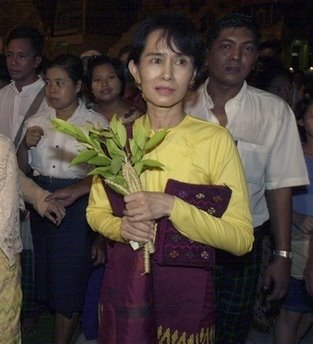


 Posts
Posts


