News & Articles on Burma
Thursday, 20 January, 2011
-------------------------------------------------------------
NLD Denounces Conscription Law
Activist in Hiding to Escape Arrest
Junta issues arrest warrant for Bawk Ja of NDF
BCIM forum to focus on regional connectivity
Unknown armed band runs amok in Shan East
Weak dollar hits Burma aid work
Insight: ASEAN’s new approach to Myanmar is nothing new
US pledges to work for Burma democracy with Suu Kyi
Clinton Calls Aung San Suu Kyi
Hillary Clinton calls Suu Kyi, pledges support
It's a wrap for Michelle Yeoh and 'The Lady'
Environmentalists welcome NLD’s concern over Myitsone dam project
Myanmar looks at stock market to attract capital
Shan Coal Mine Affecting Local Health, Report Says
---------------------------------------------------
NLD Denounces Conscription Law
By BA KAUNG Thursday, January 20, 2011
The military regime should not have enacted a military conscription law without public consensus, according to Burma's main opposition party, the National League for Democracy (NLD).
“This law is directly related to the public,” said an NLD statement issued on Wednesday. “Therefore, it should be roundly debated by the the country's parliamentarians and should only be enacted if there is public consensus.”
The military conscription law will force every man between the age of 18 and 45 and every woman between 18 and 35 to serve in the military for two years or face prison sentences.
The law, dated Nov. 4, 2010, and signed by Burmese junta chief Snr-Gen Than Shwe, is yet to be made public, and will come into force when proclaimed by the ruling military council, according to an official gazette which was recently circulated.
“The Parliament for the new government is going to emerge soon and it can exercise its legislative powers,” said NLD spokesman Nyan Win. “But since the law will only come into effect when proclaimed by the military regime, this shows the Parliament will not enjoy full legislative powers.”
Those who fail to report for military service could get three years in prison and those who intentionally avoid conscription through illnesses or inflicting injury on themselves could be imprisoned for up to five years, fined or both, according to the law.
Students, government servants, persons serving prison sentences or those who have to take care of elderly parents can postpone their military service, but can be called up at a later date.
Members of religious orders, married women or divorcées with children, and disabled persons will be exempted from the draft.
In an apparent attempt to offer a loophole to the military elite and their cronies, the law also exempts anyone whom the military has designated as free from military service.
In a separate statement issued on the same day, the NLD also criticized the new parliamentary laws and bylaws were made available to the public only this month although they had been issued by the junta in October.
The NLD, which is led by Aung San Suu Kyi, boycotted the general election last year and has since been disbanded. It will have no presence in the upcoming Parliament which is scheduled to be convened on Jan. 31 in the remote capital Naypyidaw.
On Monday, Burma's Supreme Court will consider whether to hear Suu Kyi's latest appeal against the dissolution of her political party. Nyan Win earlier said that he and other lawyers representing Suu Kyi would have to present their arguments for a special appeal to Naypyidaw.
http://www.irrawaddy.org/article.php?art_id=20573
---------------------------------------------------
Activist in Hiding to Escape Arrest
By SAI ZOM HSENG Thursday, January 20, 2011
Bauk Ja, a 44-year-old activist who has played a leading role in efforts to sue a company close to Burma's ruling junta for its confiscation of land in Kachin State's Hukawng Valley, is in hiding following reports that the authorities in the area are seeking her arrest.
According to Naw Din, the editor of the Kachin News Group (KNG), a Kachin news agency based in exile, the warrant for Bauk Ja's arrest was issued by the commander of the Burmese army's Northern Regional Command, Brig-Gen Zeyar Aung, and is directly related to the land confiscation case.
“Brig-Gen Zeyar Aung ordered her arrest on Monday, and the next day, the police force in Kachin State formed three groups to search for her in Myitkyina, Hpakant and Tanai Townships,” said Naw Din, speaking to The Irrawaddy on Thursday.
“Her relatives said that the order for her arrest was issued because she is standing up for the rights of local people who lost their land,” he added.
Speaking to the BBC's Burmese-language service on Wednesday, Bauk Ja said she didn't know why the authorities were looking for her. She said that she had just learned of the arrest order after she was told that local police have been searching for her for the past few days.
She added that she will try to find out what the authorities want and may turn herself in.
Bauk Ja, who was the National Democratic Force's candidate for the Hpakant constituency in last year's Nov. 7 election, is a leading activist in Kachin State.
In addition to spearheading the legal battle in the land confiscation case, in which she is one of the plaintiffs, she has also campaigned against a project to build a massive hydro-electric dam in Myitsone, at the confluence of two rivers that form the Irrawaddy River.
Since last July, Bauk Ja and 213 other landowners have been fighting in court in the Kachin State capital of Myitkyina for a total of 9.8 billion kyat (US $12 million) in compensation from Yuzana Company, whose chairman, Htay Myint, is a close associate of several leading generals.
The case relates to Yuzana's confiscation of around 1,300 acres of land in the Hpakant area of the Hukawng Valley since 2007. Around 600 landowners were affected by the company's seizure of the land, which it said was for the establishment of large single-crop plantations as part of a national plan.
Some owners said that although the company gave them other land to farm, it was useless for growing crops. Others said they did not receive any compensation at all.
Speaking to The Irrawaddy on Thursday, Aung Thein, a lawyer associated with the National League for Democracy, criticized Zeyar Aung and the Northern Regional Command for ordering Bauk Ja's arrest, saying that only the courts can issue arrest warrants.
Bauk Ja's bid for a seat in Burma's Parliament was defeated by the former Northern Regional Commander, Ohn Myint, who ran as a candidate for the junta-backed Union Solidarity and Development Party.
http://irrawaddy.org/article.php?art_id=20574
----------------------------------------------
Junta issues arrest warrant for Bawk Ja of NDF
Wednesday, 19 January 2011 21:47 KNG
An arrest warrant has been issued by the Burmese military junta for Daw Bawk Ja, representative of the National Democratic Force (NDF) party for the country’s northern Kachin State, said sources close to her.
Her arrest warrant was issued on January 17 in Myitkyina, capital of Kachin State by Brig-Gen Zeyar Aung, the junta’s Northern Regional Commander (Ma-Pa-Kha), the sources added.
A day after issuing her arrest warrant, police in Myitkyina formed three search squads to nab Daw Bawk Ja--- G-1 for Hpakant jade mining township, G-2 for Danai (Tanai) township and G-3 for Myitkyina township, said sources close to the police to the Thailand-based Kachin News Group.
It is not clear why commander Brig-Gen Zeyar Aung issued the arrest warrant for Daw Bawk, local sources close to her said.
An ethnic Kachin woman, Daw Bawk Ja contested the 2010 November 7 election as people’s representative of the Hpakant jade mining township nominated by the NDF, which was formed after the National League for Democracy Party (NLD) led by pro-democracy icon Aung San Suu Kyi, split before the polls.
Bawk Ja recently told KNG she won the election in Hpakant defeating her rival the former Northern Regional Commander U Ohn Myint of the junta-backed Union Solidarity and Development Party (USDP) but the Union Election Commission officially declared U Ohn Myint the winner.
Regarding the fraud over the results relating to U Ohn Myint, Daw Bawk Ja sent an official letter of complaint to the Union Election Commission (UEC) in Naypyitaw capital of Burma on January 7, laying her claim as the victor. She demanded a fresh announcement that she was the winner from the Hpakant constituency from the EC.
Daw Bawk Ja has stood firmly behind Kachin farmers, who sued the Yuzana Company over illegal land seizure in Hukawng Valley in the court in October last year.
Till Wednesday evening, Daw Bawk Ja had not been arrested, a source close to her told KNG. http://www.kachinnews.com/news/1840-junta-issues-arrest-warrant-for-bawk-ja-of-ndf.html
-------------------------------------------------
The Hindu-20 - 01- 2011
BCIM forum to focus on regional connectivity
Sushanta Talukdar -January 20, 2011
Kunming (China): The Forum of Bangladesh, China, India and Myanmar (BCIM) on Wednesday agreed on the need to improve the cooperation mechanism, which would feature a multi-track initiative with track I coordination, to promote regional prosperity and harmony.
The two-day, ninth meeting of the Forum, which concluded in the Kunming city of the Yunan province, agreed to rename the “Forum of Bangladesh China, India and Myanmar on Regional Economic Cooperation” as “Bangladesh China India and Myanmar Regional Cooperation Forum.”
Launched in 1999, the Kunming initiative, which later evolved into the BCIM Forum, has so far been a track II initiative.
In a joint statement signed by the heads of delegations, the Forum agreed to focus on improved regional connectivity and establishing the Kunming-Mandalay-Dhaka-Kolkata economic corridor. However, the Myanmar delegate emphasised the need to submit the matter to the new government in Yangon.
Business council
Business communities of the four countries agreed in principle to set up a BCIM council for holding regular meetings and exchange of information among enterprises. The BCIM Forum will fully support the proposed business council.
The four parties have to get each government to adopt measures to facilitate the cross-border flow of people and goods, eliminate overland trade barriers in accordance with each country's domestic laws and regulations and provide market access to each other, increase trade and mutual investments as well as other forms of trade, including trade in services consistent with the regional free trade agreement, the statement said.
Jin Cheng, Director, Foreign Affairs Office, the People's Government of Yunan Province, who is also the Deputy Director-General of the International Regional Cooperation Office of the province, told journalists that the BCIM agreed to conduct a joint road survey for a car rally from Kunming to Kolkata proposed to be held in 2012.
Track I system
On Tuesday, Governor Qin Guangrong, in his welcome speech, suggested that a multi-level and multi-form cooperation be evolved with track I as the guiding factor. “Under the present framework, track I high-level official meeting system and joint government workforce system should be set up, while track II academic forum system and entrepreneurs forum system are running,” he said.
“Since the first forum in Kunming in 1999, the four parties of BCIM economic cooperation have been actively participating in the cooperation, which enables its fruitful achievements despite ups and downs.”
Mr. Qin pointed out that presently trade with India, Myanmar and Bangladesh constituted one-fifth of the provincial export and import volume, while Yunnan's investment and project contractions in these three countries were also growing rapidly.
In his opening remarks, Eric Gonsalves, who led the Indian delegation, said that within the BCIM region all the four participants demonstrated their desire to undertake development programmes more effectively. “We should now seek to maximise the joint utilisation of resources and expertise from within the region to optimise the final outcome,” he said.
“For instance, the development of the Chittagong port with Chinese assistance can be dovetailed with the surface transport agreements recently reached between Bangladesh and India to give that port a much larger hinterland while allowing an outlet for goods from northeast India, Nepal and Bhutan. Similarly joint development of the port of Sittwe and the Kaladan River, development of the port of Khulna and the revival of the inland water transport system along the Brahmaputra are projects which could contribute greatly to economies and welfare of the region.”
The delegation included Consul-General of India to Guangzhou Indra Mani Pandey.
http://hindu.com/2011/01/20/stories/2011012054741500.htm
----------------------------------------------
Unknown armed band runs amok in Shan East
Wednesday, 19 January 2011 16:46 Hseng Khio Fah
An unknown armed group is said to have turned up in Shan State East’s Mongyawng township, and has been on the rampage in the areas these days, resulting on some local people fleeing from home villages, according to local sources who have arrived on the Thai-Burma border.
All the members of the group were said to have been attired in grey camouflage uniforms, and their faces were wrapped in grey masks. The group has kidnapped local people and asked for thousands of Kyat in ransom, said a villager who recently arrived in Tachilek, opposite Thailand’s Maesai.
“First they [the group] would ask about 50,000 Kyat (US$62 ) for each person. Eventually the price of the ransom has risen up to a million ($1234),” he said.
About 10 people had been taken by the group within two weeks. Most people that got caught were those who went working in the jungle farms and village headmen, according to him.
There are about 30 families who fled to Tachilek since the incidents took place.
While it is as yet not possible to identify who and what the group is, a group that also wears camouflage uniforms, green ones, is anti-Naypyitaw Shan State Army (SSA) ‘South’. A battalion commander who asked not to be named of the SSA’s Military Region No. 1 that is active in the Shan State East denied having anything to do with the kidnappings.
“Our uniforms are green camouflage made in Thailand. We don’t wear grey uniforms,” the commander said.
In the mean time, 6 Burma Army soldiers wearing grey camouflage uniforms were reportedly asking for taxes from trucks, at Wantap village, 5 miles northeast of Mongyawng on 26 December, said a car driver whose truck runs between Mongyawng and Tachilek.
In September, Naypyitaw had ordered all its border units to make uniforms of United Wa State Army (UWSA), National Democratic Alliance Army (NDAA) and Shan State Army for Burma Army use. Each unit was reportedly assigned to make 100 suits (Wa, SSA and NDAA).
It [Naypyitaw] also ordered its units in townships of Shan State East: Monghsat, Mongton, Mongyawng, Mongpiang and Tachilek and Mongpan in the south, to mount a “hunter and prey” campaign against rebels.
Soldiers are divided into two groups: one group is assigned to stay in the jungle as “sniper team” and the other as “search and destroy force”.
http://www.shanland.org/index.php?option=com_content&view=article&id=3417:unknown-armed-band-runs-amok-in-shan-east&catid=86:war&Itemid=284
------------------------------------------------
Weak dollar hits Burma aid work
By SHWE AUNG
Published: 20 January 2011
Falling US dollar prices have meant that domestic NGOs in Burma are unable to carry out infrastructural activities vital to peoples’ wellbeing, the head of a Rangoon-based aid group has warned.
Earlier this month the exchange rate hit a low of 780 kyat to the dollar, and businessmen in Burma are expecting that to decrease further over the coming months. The US is struggling to recover its housing and labour markets, and economic growth remains sluggish, although currency restructuring is underway to help boost exports.
Many NGOs in Burma rely on funding that comes in US dollars, which for decades has been used as the de facto second currency – as it has been globally – given its stability compared to the kyat. As the dollar weakens against the kyat, operational costs are effectively forced up. Prior to the global financial crash, the exchange rate hovered around 1000 kyat to the dollar.
“Usually it would cost us around 1.6 million kyat, which had normally been about $US1600, to dig a well, but now this will work out at around $US2000,” said Dr Hpone Win, head of Mingalar Myanmar, an independent, non-profit sustatinable development organisation in Burma.
“So we have to reduce the amount of wells and lakes we are digging. For example, we may only be able to dig wells in about eight or nine villages from an initial plan of 10 villages.”
He added that NGOs were also struggling to pay transportation fees in Burma, which have stayed at the same price while their funding has decreased.
Numbers of business owners in Burma are fearful that the exchange rate will drop to 700 kyat to the dollar as the quantity of US currency in the country increases following massive sales in the recent Naypyidaw gem fair.
There are around 20 Burmese-run NGOs operating inside the country, as well as a number of international aid groups who are permitted to work, albeit with limited mobility, by the ruling junta.
Such fluctuations in currency have prompted many to speculate or suggest that the world economy moves away from sole use of the dollar as a universal currency. Commodities such as oil are priced in US dollars, but as Chinese President Hu Jintao visits Washington, the sense of a seismic shift in currency usage is palpable, with World Bank chief Robert Zoellick even suggesting a modified gold standard to maintain stability through turbulent currency times.
Additional reporting by Joseph Allchin http://www.dvb.no/news/weak-dollar-hits-burma-aid-work/13792
---------------------------------------------------
Insight: ASEAN’s new approach to Myanmar is nothing new
Rizal Sukma, Jakarta | Thu, 01/20/2011 9:22 AM | Insight
ASEAN’s foreign ministers just completed their two-day retreat in Lombok on Jan. 17, wherein Indonesian Foreign Minister Marty Natalegawa outlined the nation’s agenda and priorities for ASEAN as it assumes the association’s rotating chair.
He touched almost every issue of paramount importance to ASEAN, including the need to accelerate its community-building process, the imperative of finding a peaceful solution to the South China Sea dispute, the importance of East Asia Summit (EAS), and the question of ASEAN’s place in the world in the post-2015 period.
The most contentious and sensitive issue of all, Myanmar, was also touched upon and discussed.
Indonesia is of the opinion that it is time for the world — especially the West — to renew engagement with Myanmar by lifting sanctions against the nation. This position, unsurprisingly, was welcomed and embraced by other ASEAN countries.
Does ASEAN’s position signify a new approach to the Myanmar problem? It is fair to say that there is nothing new in this position. ASEAN has long argued that economic sanctions against Myanmar would never force the country to change. ASEAN believes that change, especially democratic change, cannot be imposed from outside. It has to take place within the country itself. In that context, external sanctions will not do much to bring change to Myanmar.
The recent call made by ASEAN for the West — especially the EU, Canada and the US — to consider lifting sanctions can also be seen as an ASEAN’s attempt to formulate a new approach toward the Myanmar problem. Three reasons can be put forward in this regard.
First, the call was made within a new context in Myanmar’s domestic politics. As Marty argued during the retreat, the international community should take note of two events in Myanmar: the general elections and the release of opposition leader Aung San Suu Kyi.
Despite the fact that the general elections have been described as neither fair nor free, it seems that ASEAN intends to explore whatever opportunities — no matter how slim — that may arise in the post-election period. With the release of Suu Kyi, ASEAN also hopes that she will be able, and allowed, to participate in the process of finding a solution to the political impasse that has beset Myanmar for decades.
Second, ASEAN has long admitted that both ASEAN’s strategy of engagement and its policy of sanctions have failed. The position adopted during the retreat reflects an agreement to combine both approaches.
In this context, it is importance to note that Marty also emphasized that “lifting the bans and reconciliation should go hand in hand”. This should be seen as a warning to the junta in Nyapidaw that ASEAN’s willingness to help Myanmar is not a blank check. In other words, ASEAN will not blindly support Myanmar if the junta tries to block or delay an inclusive reconciliation process.
Third, the call also came about after a review by the US of its Myanmar policy under President Barack Obama. In September 2009, the US government announced that it would start engaging Myanmar’s government while retaining sanctions: a policy of “pragmatic engagement”. In effect, however, this new policy also constitutes an attempt to combine both engagement and sanctions, bringing the US’ position closer to that of ASEAN.
Indeed, if one wants to try a new approach towards Myanmar, it is time to go beyond the engagement-sanction debate. Regardless whether ASEAN’s dialogue partners will follow ASEAN’s call to lift the bans, ASEAN itself needs to formulate a more coherent and detailed Myanmar strategy, including how to engage without giving incentives to the junta to strengthen its grip on power by excluding and suppressing other forces in the country.
This is obviously a difficult proposition. However, ASEAN can begin its new approach by devising a three-pronged strategy. First, ASEAN should start devising a framework to make it possible for all major stakeholders to start reconciliation talks and discussions on democratization.
Second, ASEAN should have a common platform on how to encourage the junta to start a meaningful and inclusive economic development program. At the same time, ASEAN also needs to start helping the people of Myanmar directly through grassroots-based programs such as community development, humanitarian assistance and capacity building.
Third, ASEAN should also devise a platform on how to engage the wider Burmese community, to include both the new political elite (such as the “Parliament”) and civil society organizations.
Indonesia, as the chair of ASEAN, is in a position to devise such a new ASEAN Myanmar strategy.
Otherwise, the international community will see the Lombok agreement on Myanmar as another move by ASEAN to engage in rhetoric without substance. This is a challenge for Indonesia’s chairmanship and leadership in ASEAN. Hopefully Indonesia is more than ready to answer that challenge.
The writer is the executive director of the Centre for Strategic and International Studies (CSIS), Jakarta.
http://www.thejakartapost.com/news/2011/01/20/insight-asean%E2%80%99s-new-approach-myanmar-nothing-new.html
---------------------------------------------------
US pledges to work for Burma democracy with Suu Kyi
* Published: 20/01/2011 at 03:30 AM
* Online news: Asia
US Secretary of State Hillary Clinton pledged to work for democracy in Burma with opposition leader Aung San Suu Kyi when she telephoned her on Wednesday, Clinton's spokesman said.
US Secretary of State Hillary Clinton pledged to work for democracy in Myanmar with opposition leader Aung San Suu Kyi, pictured on January 4, when she telephoned her on Wednesday, Clinton's spokesman said.
"Secretary Clinton called Aung San Suu Kyi today and pledged to work with her to strengthen civil society and promote democracy in Burma," State Department spokesman Philip Crowley said, referring to Burma's former name.
Crowley broke the news on the microblogging site Twitter.
The military junta in November freed Suu Kyi, the Nobel laureate and leader of the democratic opposition who had spent most of the past two decades under house arrest, after her party won elections but was not allowed to take power.
But her release came only after the junta held new elections, which were widely denounced by Western nations and by opposition groups as a sham.
Human rights groups say that Burma is still holding more than 2,100 political prisoners who are less prominent than Suu Kyi.
President Barack Obama's administration in 2009 launched a dialogue with the regime aimed at ending Burma's isolation. US officials have voiced disappointment at the results but said engagement is the best way forward. http://www.bangkokpost.com/news/asia/217287/us-pledges-to-work-for-burma-democracy-with-suu-kyi
---------------------------------------------------
Clinton Calls Aung San Suu Kyi
By LALIT K JHA Thursday, January 20, 2011
WASHINGTON — US Secretary of State Hillary Clinton spoke to Aung San Suu Kyi over the phone on Wednesday, in the first contact between the two leaders since the Burmese pro-democracy icon was released from years of house arrest last November.
“Secretary Clinton called Aung San Suu Kyi today and pledged to work with her to strengthen civil society and promote democracy in Burma,” said PJ Crowley, the State Department spokesman, in a message on Twitter on Wednesday.
During the call, which lasted 10 minutes, the two leaders briefly talked about what Suu Kyi has been doing since her release.
Crowley told The Irrawaddy that Clinton’s call followed up on a meeting late last year with the State Department's Deputy Assistant Secretary Joseph Yun.
“There will be further meetings in the coming weeks with the embassy staff in Rangoon and others to get into a more specific discussion,” he said.
Clinton wrote a letter to Suu Kyi soon after her release on Nov. 13 of last year. This was followed by Yun's four-day visit to Burma in December, during which he met with Suu Kyi.
“During a lengthy meeting with Aung San Suu Kyi and members of the National League for Democracy, Deputy Assistant Secretary Yun underscored our overarching goal of a peaceful, prosperous, and democratic Burma and discussed ideas on promoting reconciliation and dialogue,” an official US statement had then said.
Yun was the most senior US official to travel to Burma since Assistant Secretary of State for East Asian and Pacific Affairs Kurt Campbell visited in May 2010.
Campbell, the Obama administration's point man on Burma, has so far had two meetings with Suu Kyi, both of them while she was still under house arrest.
http://www.irrawaddy.org/article.php?art_id=20569
--------------------------------------------
Jan 20, 2011
Hillary Clinton calls Suu Kyi, pledges support
WASHINGTON - SECRETARY of State Hillary Rodham Clinton is pledging to work with Nobel laureate Aung San Suu Kyi to promote democracy in Myanmar.
Department spokesman PJ Crowley said in a post on Twitter that Mrs Clinton called Ms Suu Kyi on Wednesday.
Ms Suu Kyi was released from house arrest after the country held its first elections in two decades in November. She had been detained for seven years.
Her National League for Democracy party said the elections were a sham and did not take part. It was disbanded by the government as a result. -- AP http://www.straitstimes.com/BreakingNews/SEAsia/Story/STIStory_626177.html
-------------------------------------------
It's a wrap for Michelle Yeoh and 'The Lady'
Noorsila Abd Majid
The Star
Publication Date : 20-01-2011
Michelle Yeoh as Aung Sun Suu Kyi in a scene in 'The Lady'. Photo By Vincent Perez @ EuroCorp-Left Bank Pictures-France 2 Cinema
After three months of hard work, playing Burmese freedom fighter Aung San Suu Kyi in 'The Lad'y, Malaysia's very own Michelle Yeoh could finally take a breather as filming of the biopic was wrapped up on January 18.
In an exclusive e-mail to The Daily Chilli (The Star's sister-publication), Michèle Abitbol-Lasry, the publicist for EuropaCorp-Left Bank Pictures-France 2 Cinema, the maker of The Lady confirms that the eagerly awaited film is already in its post-production.
"We have yet to set a release date for the movie in Malaysia and are still looking for a distributor," says Abitbol-Lasry.
But definitely,The Lady will be released worldwide later this year.
"Michelle and Luc Besson (the director) are very busy at the moment. The shooting is finished and they're doing the post-production," she adds. "We would like to have all press be done when the film opens in each country."
In an earlier interview with The Guardian, former Bond girl Michelle described her experience playing Suu Kyi as awe-inspiring.
"When I got the script," the Malaysian superstar actress has been quoted saying, "I thought: either my agent wants to kill me or he's telling me I need a challenge."
On her first private meeting with Suu Kyi at the Rangoon International Airport, Michelle said " "The first thing we did is hug and I thought you are really skinny, man. One of the first things she said was 'Why doesn't the BBC world service have more music?'
"You feel a real sense of calm when you're with her. She's a very striking figure. She is so proud of her culture and the best way to show it is with dignity and elegance. She has a glow and an aura about her."
Directed by acclaimed French actor/director Luc Besson, The Lady also stars British actor David Thewlis (of Harry Potter fame) as Suu Kyi's university academic husband, Michael Aris.
The script was written over a period of three years by Rebecca Frayn, who spoke to the key figures in Suu Kyi's entourage to enable her to have a personal account of the national heroine of Myanmar who was put under house arrest most of her life.
Filming of the movie, which began on October 18, was done in various parts of Thailand, Burma, UK and France.
http://www.asianewsnet.net/home/news.php?id=16880&sec=10
----------------------------------------------
Environmentalists welcome NLD’s concern over Myitsone dam project
Wednesday, 19 January 2011 19:34 KNG
The Thailand-based Burma Rivers Network (BRN) has welcomed and appreciated the concern shown by the National League for Democracy (NLD) over the likely impact on people and the environment because of the construction of the Irrawaddy Myitsone dam in Kachin State.
The NLD party led by Burma’s pro-democracy icon Aung San Suu Kyi was quoted by the BRN as saying that the construction of the 152 metre high Myitsone Dam, without taking into account environmental factors will affect thousands of local people and will have a negative impact on the country.
112009-irrawaddy-confluence
Ah Nan spokesperson of the BRN told Kachin News Group that Win Tin, a member of NLD Central Executive Committee told BRN that the foreign investor involved in the Myitsone dam construction should take into consideration the impact on the environment and the effect it will have on the local people.
“All political parties and the civil society should condemn the construction of the Myitsone dam project because it will impact the whole country,” said Ah Nan.
She said this was the first time a political party in Burma has officially spoken about the Myitsone dam construction. It should be done more often because it is not only the issue of the Kachin people but the whole country.
The Myitsone dam located over 20 miles from Myitkyina the capital of Kachin State will displace about 15,000 people living around the construction site and will be a threat to millions of people living downstream of the river by triggering floods. There will also be a shortage of water.
The dam construction started last year spearheaded by the China Power Investment Corporation (CPI).
The electricity generated will be sold to China, BRN said in a statement released on January 17. The water will be released depending on the power demand in China and it will “cause unpredictable water shortages and surges,” it added.
Limitation of water will affect farmers and fishermen, who depend on the river for their livelihood, said the BRN statement.
Myitsone dam is one of seven dam projects on the Mali Hka and N’mai Hka rivers. It will produce an estimated 17,160 MW of electricity, which will be exported to China, said the BRN.
“The Irrawaddy River, also Mali Hka in Kachin, is a critical artery for Burma and cutting it off at its source will affect the entire country,” said BRN official Sai Sai in the statement.
“We strongly encourage all political parties and civil society inside Burma to stand up and protect the river. Burma’s water resources should not be controlled by foreign engineers, but should be managed for the benefit of people in Burma,” said Sai Sai.
Ah Nan said, at least six villages have been relocated to a new site, where there is no hope of livelihood for the villagers. Recently the authorities (Ya-Ya-Ka) of Tang Hpre village told villagers next to the Myitsone dam to relocate and forced them to sign on the compensation agreement without paying any compensation.
The chances of ekeing out a livelihood by villagers, who are being forced to relocate by the regime, are bleak in the new place which has no agricultural land.
http://www.kachinnews.com/news/1839-environmentalists-welcome-nlds-concern-over-myitsone-dam-project.html
-----------------------------------------------
Myanmar looks at stock market to attract capital
Thu Jan 20, 2011 5:34am EST
* Korea Exchange in talks with Myanmar govt
* No decision made on bourse, officials say
BANGKOK Jan 20 (Reuters) - Myanmar is in talks with South Korea's bourse operator about opening a stock market, the latest in a series of steps by its military rulers aimed at drawing much-needed foreign capital to the country.
Korea Exchange is already involved in running the newly opened Laos Securities Exchange [ID:nSGE70A08R] and is setting up a long-delayed stock market in Cambodia, which is due to open in July [ID:nSGE70D05D]. Both are joint ventures with the respective governments.
"We had a discussion (with Myanmar) before," Lee In-pyo, project director for the Cambodian exchange, told Reuters on Thursday. "Anything is possible, anything can happen," he said, when asked if the company was keen to work in Myanmar.
A spokesman for Korea Exchange in Seoul said representatives had visited Myanmar twice. "But nothing has been decided," the official said.
Myanmar is rich in natural resources but its development has been held back by five decades of economic mismanagement under military dictators and by Western sanctions.
But reforms are under way. The authorities have privatised hundreds of state assets in the past year and are seeking to expand the banking, telecommunications, shipping and agricultural sectors.
The country is on a drive to attract investment from its neighbours, promoting tourism, timber, gemstones and its vast oil and gas reserves, which are already being tapped by China and Thailand, its biggest investors.
Analysts warn that doing business in Myanmar is fraught with problems because of graft, cronyism and an unclear regulatory framework.
The privatisation process to date has been highly opaque, with most assets transferred to businessmen with close ties to the junta.
Myanmar held its first elections in two decades in November, and many countries in Asia now consider it a democracy. Western countries are not convinced much will change and expect the junta to pull the strings from behind the scenes.
Parliament, which will be dominated by serving or retired soldiers, will convene for the first time on Jan. 31 and a president tasked with appointing a civilian government will be chosen in the weeks after. (Reporting by Jungyoun Park in Seoul and Prak Chan Thul in Phnom Penh; Writing by Martin Petty; Editing by Alan Raybould)
http://www.reuters.com/article/idUSSGE70J06O20110120?rpc=401&feedType=RSS&feedName=rbssFinancialServicesAndRealEstateNews&rpc=40
-------------------------------------------------
Shan Coal Mine Affecting Local Health, Report Says
By KO HTWE Thursday, January 20, 2011
The agriculture and health of nearly 12,000 people living within a five-mile radius of Burma’s largest coal mine and coal-fired power plant are threatened with air and water pollution, according to a report titled “Poison Clouds” that was complied by the Pa-Oh Youth Organization (PYO) and the Kyoju Action Network (KAN).
According to the report, the power plant, which is located near Tigyit in Pinglaung Township in southern Shan State, releases 100 to150 tons of toxic ash containing mercury, lead and arsenic into the atmosphere every day.
A farmer tends his crops in Tigyit while the coal-fired power plant looks in the background (PHOTO: PYO)
In recent years, ash has been known to cover roads and some 50 percent of the local population suffers from skin infections, the report says.
“Our skies and waters are turning black,” said Khun Chankhe of the PYO. “What future is there for our children who are growing up in a toxic wasteland?”
The residue from the coal mine is piling up so high that the dumps have become like hills and are blocking the flow of water, as well as creating pollution and stagnant lakes. Toxic fly ash that is dumped on coal mine waste piles or spread on local roads is also running off into local water sources, some of which eventually flows into Inle Lake, the report states.
The Burmese military regime’s Vice-Snr-Gen Maung Aye chose the site for the power plant in 2001, and instructed local military officials to confiscate more than 100 acres of local farm lands, said the 54-page report.
However, some 500 acres of land were seized. Three hundred and twenty-one families from Lai Khar and Taung Pola villages each received a maximum of 170,000 kyats (US $170) compensation for forced relocation.
However, the Myanmar Mines Law of 1994, Chapter 5, Section 4, states that “the holder of a permit for mineral production within an area under the Ministry's administrative control or which does not lie within the Mineral Reserve Area or Gemstone Tract, shall carry out such production only after coordinating and receiving agreement from the individual or organization having the right of cultivation, right of possession, right of use and occupancy, beneficial enjoyment, right of succession or transfer of the said land.”
The plant uses 640,000 tons of coal per year to produce 600 Gigawatts of power with a capacity of 120 Megawatts.
The China National Heavy Machinery Corporation, along with Eden Group of Myanmar and Shan Yoma Nagar, implemented the project in 2002 under the supervision of the Energy Ministry with an investment of $42.93 million.
Chit Khaine, the founder of Eden Group, is on the EU sanctions list under the category, “Persons Who Benefit from Government Economic Policies and Other Persons Associated with the Regime.”
“The project is for the sake of China, not for the local communities. The local people don’t receive sufficient electricity from the plant,” said Khun Chankhe.
Electricity produced from the power plant is sent to the nearby Nagar cement plant. A proposal is being considered to supply electricity to another mining project, the Pangpet iron factory near Hopone and the Taunggyi highway, which is run by Russian and Italian companies, the report said.
The Tigyit coal mine also produces nearly 2,000 tons of lignite and sub-bituminous coal every day. Lignite, a soft brown coal, produces the most carbon dioxide emissions per unit of energy than any other type of coal.
The plants and the mine are located within the watershed that is 13 miles from Burma’s famous Inle Lake in Shan State. River waters polluted by the mine and waste from the power plant are flowing into the lake via the Balu Creek, the report says.
Khun Chanke said that this is one of the main reasons why Inle Lake is drying up.
Residue piles from the mine are now towering above the homes of 3,000 people, blocking streams and contaminating fields. The coal is extracted through an underground tunnel system which runs beneath tea farms—another major concern for villagers who live in constant fear of landslides and land collapses, said the report.
“We issue the report today with concern for Inle Lake,” said Khun Chanke on Thursday. “We also wish to call on the elected candidates from Inle and Pinglaung region to discuss this issue in Parliament.”
The Inn National Development Party has previously said that the party will focus on the environmental issues of Inle Lake.
There are over 16 large-scale coal deposits in Burma. The Italian-Thai Development Plc, a large Thai construction firm, signed a multi-billion dollar deal with Burma in November for the development of a deep sea port in Dawei (Tavoy). The project includes plans for Southeast Asia’s largest coal-fired power plant that will build in Dawei where 18 villages have been ordered to move to make way for the project, said the PYO/ KAN report.
PYO was set up in 1998 and says it is “striving for peace and justice in Burma through empowering youth.” It published a report, “Robbing the Future,” in June 2009 after two years of research at the site of Burma’s largest iron mine and the Pangpet No. 5 Steel Mill in Shan State.
KAN was set up in 2010 and says its aim is “strengthening communities’ capacity to protect their natural resources.”
Copyright © 2008 Irrawaddy Publishing Group | www.irrawaddy.org
http://irrawaddy.org/article.php?art_id=20575
__._,_.___
Monday, January 24, 2011
News & Articles on Burma-Thursday, 20 January, 2011


Sunday, January 23, 2011
ျမန္မာ့ဒီမိုကေရစီအေရးေတာ္ပုံလႈပ္ရွားမႈဖိတ္ႀကားျခင္း
ျမန္မာႏိုင္ငံ ဒီမိုကေရစီ ကြန္ယက္(ဂ်ပန္)NDB-Japan
ျမန္မာ့ဒီမိုကေရစီအေရးေတာ္ပုံလႈပ္ရွားမႈဖိတ္ႀကားျခင္း
ျမန္မာႏိုင္ငံ ဒီမိုကေရစီ ကြန္ယက္(ဂ်ပန္)NDB-Japan
မွဦးစီး၍ ေအာက္ပါအစီအစဥ္အတိုင္း နိုင္ငံေရးလႈပ္ရွားမႈ မ်ားကို က်င္းပျပဳလုပ္မည္
ျဖစ္ပါေသာေႀကာင့္ ဂ်ပန္နိုင္ငံေရာက္ ျမန္မာ့ဒီမိုကေရစီေရးတိုက္ပဲြဝင္အဖဲြ ့အစည္း
အားလုံးပူးေပါင္းပါဝင္ႀကပါရန္ေလးစားစြာ ဖိတ္ႀကားအပ္ပါသည္။
အခမ္းအနားအစီအစဥ္မ်ား
◆ဇန္နဝါရီလ(၃၁)ရက္ေန႔တြင္ နအဖကျပဳလုပ္မည့္ လႊတ္ေတာ္ေခၚယူျခင္းနွင့္အဆိုပါ လြတ္ေတာ္မွတဆင့္ ေပၚေပါက္လာမည့္ ဟန္ျပ အရပ္သား အစိုးရအေပၚ ဂ်ပန္ႏိုင္ငံေရာက္ ျမန္မာ့ဒီမိုကေရစီ အင္အားစုမ်ားမွ လံုးဝအသိအမွတ္မျပဳေၾကာင္း နွင့္ ဂ်ပန္ႏိုင္ငံအစိုးရမွလည္းအသိအမွတ္ မျပဳရန္အတြက္ တိုက္တြန္း ေတာင္းဆိုမည့္
ဆႏၵျပပြဲမ်ားကို
☛(၁) ၂၀၁၁၊ဇန္နဝါရီလ၂၄ရက္ႏွင့္၂၅ရက္ေန႔မ်ားတြင္……..MOFAေရွ႔တြင္ လည္းေကာင္း၊
(KASUMI KASEKI ဘူတာ ထြက္ေပါက္-C-8)
အခ်ိန္(ညေန -၃-နာရီမွ-၄-နာရီအထိ)
☛(၂)၂၀၁၁၊ဇန္နဝါရီလ၂၆ရက္/၂၇ရက္/၂၈ရက္္……..ဂ်ပန္လႊတ္ေတာ္ေရွ႔
(KOKAI GIJIDOO MAE ဘူတာ ထြက္ေပါက္ -၂-)
အခ်ိန္(ညေန -၃-နာရီမွ-၄-နာရီအထိ)
☛(၃)၂၀၁၁၊ဇန္နဝါရီလ၃၁ရက္ေန ့တြင္…….. နအဖ မွ လြတ္ေတာ္ ေခၚယူၿပီး အဆိုပါ လြတ္ေတာ္မွ ေပၚေပါက္လာမည့္ ဟန္ျပ အရပ္သား အစိုးရအေပၚ ဂ်ပန္ႏိုင္ငံေရာက္ ျမန္မာ့ဒီမိုကေရစီ အင္အားစုမ်ားမွ လက္မခံေၾကာင္း ဆန္က်င္ ကန္႔ကြက္သည့္ အခမ္းအနား
ေနရာ-နအဖအခြန္ရုံးေရွ
အခ်ိန္(ညေန -၃-နာရီမွ-၄-နာရီ-၃၀-အထိ)
ေလးစားစြာျဖင့္-
ျမန္မာႏိုင္ငံ ဒီမိုကေရစီ ကြန္ယက္(ဂ်ပန္)NDB-Japan
☆ျမန္မာ့ဒီမိုကေရစီတိုက္ပဲြမုခ်ေအာင္ရမည္☆
Thursday, January 20, 2011
News & Articles on Burma-Wednesday, 19 January, 2011
News & Articles on Burma
Wednesday, 19 January, 2011
-------------------------------------------------------------
Fighting Spreads in Karen State
Trade unions may be allowed back into Burma
Conditions Set for MPs to Attend Parliament
Now is Not the Time to Lift Sanctions
Burma rights report says minority group killed, raped
Human rights group says Myanmar survey offers evidence of crimes against humanity
Army abuse in Chin state ‘extraordinary’
MYANMAR: Chin State abuses "crime against humanity" - NGO
Disturbing Burma
Direct flights agreed between Cambodia and Myanmar
Burmese soldiers arrest eight Thais
ILO Welcomes Burma's Proposed New Labor Laws
Buildings Collapse as Heavy Snow Hits Burma's Far North
----------------------------------------------------
Fighting Spreads in Karen State
By SAW YAN NAING Wednesday, January 19, 2011
MAE LA OON, Thailand--Although more than 16,000 Karen people were sheltering at close quarters in Mae La Oon refugee camp, the night was silent. Among the shadows of the banana trees, the moonlight flickered across the river.
Suddenly, the whiz of a mortar shell arcs across the sky like a shooting star. For a second there is a vacuum of silence, then the resounding boom of an explosion rocks the northern Thai jungle. The heavens are instantly illuminated as gunfire and artillery consume the area.
It was 9:30 pm on Jan. 17. The fighting between Burmese government forces and the Karen National Liberation Army (KNLA) was taking place about 30 km from the camp, on Kasaw Wah Lay Mountain, opposite Thailand's Sop Moei District.
We heard the echo of artillery shells thundering across the valley until 10:30 pm. Some households in the camp had already packed their belongings in case the shelling came any closer and they had to flee.
I rushed to a hut where the camp security guards were based. Through their walkie-talkies and satellite phones, we found out that the fighting was going on around Noh Day, Kasaw Wah Lay and the former Karen National Union (KNU) headquarters, Manerplaw.
Several refugees told me they have had to endure this every night since mid-December. Now I was experiencing it for myself. I could barely fathom what it must be like to get woken up by these thunderous explosions on a nightly basis.
The camp authorities announced on loudspeakers that everyone should be alert and to pack their valuables. People lingered near the underground bunkers that had been dug in case of such an emergency.
A few days earlier, three Burmese soldiers were arrested inside Mae La Oon refugee camp and later expelled. Rumors were spreading that spies for the Burmese military regime had been deployed in Mae La Oon and at Mae Ra Ma Luang, another refugee camp close by.
Karen sources on the border said that an estimated eight battalions around Kasaw Wah Lay Mountain had been recently reinforced; meanwhile, KNU Brigade 5 was recruiting in the local area.
KNU sources said a small group of Burmese troops at Kasaw Wah Lay had been cut off from their unit and were unable to receive rations and supplies. The Thai border authorities have reportedly provided rations in recent weeks to other Burmese troops.
The fighting is expected to escalate as both the KNU and the Burmese army beef up their forces in the combat zone.
Thailand has also deployed a unit of soldiers to Sop Moei District after mortar shells landed in a Thai village on the night of Nov. 17.
Several refugees said they fear that the Burmese army can fire down on the camp from Kasaw Wah Lay Mountain. Many said they are praying for a cease-fire.
“We fed up with the fighting. We want to live in peace,” said Si Mon, a housewife in Mae La Oon refugee camp.
“We don’t go to big cities like Rangoon and attack them [the Burmese] and try to take over their land,” said Saw Htee, a former KNU fighter. “We don’t want their land. We don’t want armed conflict. We fight them because they come here and attack us. They come to our land and try to oppress our people.”
The KNU's war with the Burmese army is one of the world's longest running conflicts. The insurgent group was formed in 1947 and took up arms against the central Burmese government in 1949, just one year after Burma had gained independence from British colonial rule.
Decades of repression by the Burmese regime has resulted in more than 150,000 Burmese refugees, mostly Karen, displaced to refugee camps in Thailand.
Many refugees ultimately decide to resettle in third countries. Some 60,000 Karen refugees have been resettled in the West, according to a humanitarian aid agency, Thailand Burma Border Consortium.
Having lived in a refugee camp for more than a decade, Si Mon said that she always expected to return to her village in Karen State. However, she is now on the UNHCR list as waiting to resettle in the US as she has given up all hope of ever seeing her hometown ever again.
On Nov. 8, one day after Burma's general election, serious fighting erupted between Burmese troops and a renegade faction of the Democratic Karen Buddhist Army (DKBA), Brigade 5. The conflict has since spread north.
With an estimated 1,000 troops, Brigade 5 is led by Brig-Gen Saw Lah Pwe, and is the only DKBA battalion to reject the Burmese junta’s border guard force plan. It has since allied with the KNU. On Nov. 17, a group of about 40 soldiers belong to a Karen breakaway group called Klow Htoo Baw also returned to KNU Brigade 6 areas.
Local residents in Kyaukkyi Township in Pegu Division said that fighting between the KNU and Burmese government forces broke out near the town on Jan. 11.
Skirmishes between DKBA Brigade 5 and Burmese regime troops have been reported on a near-daily basis in Waw Lay and Phaluu in southern Karen State.
The Burmese army is also reported to be reinforcing its forces and supplies west of the Salween River in northern Karen State, and near the border with Karenni State. KNU Brigade 5 troops in Papun District in northern Karen are reported to be on high alert.
http://www.irrawaddy.org/article.php?art_id=20562
-----------------------------------------------------
RADIO AUSTRALIA NEWS
Trade unions may be allowed back into Burma
Girish Sawlani
The Burmese government is set to table new legislation that could allow workers to establish trade unions.
The proposal has been welcomed by the International Labour Organisation (ILO), which says it's working with the Burmese government to improve workers' rights in the impoverished nation.
The ILO's representative in Burma, Steve Marshall, says it's a significant move by the government.
"It is obviously extremely significant, the situation has arisen that the constitution that was adopted in 2008 has a provision that makes allowance for the right of persons, particularly workers to be represented, which would lead them to the situation of collective bargaining."
Since the Burmese military's crackdown on the country's trade union movement, many groups have been driven from the country or reduced to underground associations.
Recently, suspected trade unionists were still being arrested and imprisoned despite the government having already ratified the ILO convention on the Freedom of Association.
But international pressure has seen the government adopt a lighter approach to workers' dissent.
Since November 2009, there have been a series of strikes in Rangoon, with workers protesting and demanding higher wages - with little or no interference from armed forces.
And as far as the new legislation is concerned, Mr Marshall says the initiative is driven by the government.
"It was brought to our attention by senior government representatives that with the adoption of the new constitution, it was the intention to put those principles into practice."
'It is being driven from inside the government at a very senior level, which is excellent."
The latest developments come amid calls from Southeast Asian neighbours for Western nations to either lift or ease their crippling sanctions against Burma.
Moves to permit the establishment of trade unions could vindicate ASEAN's stance that Burma has made significant progress towards democracy, especially since the release of opposition figurehead, Aung San Suu Kyi.
But many, including Dr Myint Cho, an exiled Burmese national who now heads the Burma Office in Sydney, say they are still sceptical about the government's motives.
Dr Cho says he has seen such gestures before.
"I have seen it so many times before, when the previous regime formed a non-independent trade union under the control of the government. So they controlled totally the movement of the trade union in the past."
"Right now, because of international pressure for the workers' rights in Burma, the regime is trying to use this kind of initiative as a public relations move to relax international pressures."
Even if legislation gets passed through parliament, Dr Myint Cho doesn't expect the new trade unions to be genuinely independent.
"Under the current military controlled government, that kind of parliament is just a sham and it cannot operate freely,"
"So of course the pressure from the current military regime, the parliament will adopt some kind of policies in dealing with the trade unions around the world, as well as the International Labour Organisation. So I don't expect the newly formed trade union organisations will be independent and genuine."
Steve Marshall, from the International Labour Organisation, says while there will be scepticism his organisation is adopting a wait and see approach.
"We do need to put into consideration that this is a very major step and we don't know at this stage what structure will be put into place,
Whether it will be a full liberal trade union type structure or whether it will be one of the other models that exist elsewhere in the world which are slightly more constrained."
"That is something that we will be continuing to discuss with the government in terms of the structures concerned."
The bill is set to be tabled before the country's new parliament, which holds its first session later this month. http://www.radioaustralianews.net.au/stories/201101/3116835.htm?=
------------------------------------------
Conditions Set for MPs to Attend Parliament
By BA KAUNG Wednesday, January 19, 2011
Burma's newly elected lawmakers say they have been notified of several conditions that have been imposed on their attendance at the opening session of Parliament due to be convened at the end of this month.
The MPs elected in the controversial November elections will not be allowed to bring into the Parliament mobile phones, recorders and laptop computers, according to Dr. Myat Nyar Na Soe, an elected representative of the National Democratic Force (NDF) party.
“We can't complain about these conditions because they are in line with the State Secrets Act in the constitution,” said Myat Nyar Na Soe, adding that the MPs had been told that they would be provided with telephone service while within the Parliament building in Naypyidaw and that their traveling costs would be covered.
A dress code has also been set for the lawmakers, according to the invitations that were sent to MPs to attend Parliament. While Burmese MPs were told to dress in traditional Burmese attire, those representing ethnic parties were told to wear representative ethnic costume.
On Jan.31, the representatives will meet in Naypyidaw to elect the heads and deputy heads of the two-chamber Parliament and also to nominate vice-presidents. On the same day, new regional legislatures will convene, according to reports in the state media.
One of the three vice-presidents will be nominated by the army while two others will be appointed by a majority of civilian representatives in the Upper and Lower Houses.
Last week, six ethnic political parties, including the Shan Nationalities Democratic Party and the Rakhine Nationalities Development Party, discussed a proposal to nominate an ethnic representative as a vice-president in the new government.
Myat Nyar Na Soe said that the NDF, which broke away from the main opposition party National League for Democracy to contest the election, supports the idea of an ethnic representative becoming a vice-president.
“As far as I know, Dr. Aye Maung, the chairman of the RNDP, is tipped for that position,” he said. “I believe other non-ethnic opposition parties will back him.”
Aye Maung declined to comment on the possibility, but said that unity between ethnic and opposition parties will be an important issue toward any successful negotiations in the new government.
Other sources said that Khin Aung Myint, Burma's Minister for Culture, and businessman Khin Shwe—both elected lawmakers representing the junta-backed Union Solidarity and Development Party—are possible nominees for the vice-presidential post.
One of the three vice-presidents who is required to be “acquainted with political, administrative, economic and military affairs” will be selected as president.
According to recent unconfirmed reports obtained by The Irrawaddy, junta chief Snr-Gen Than Shwe has already appointed himself as the President of the new government.
http://www.irrawaddy.org/article.php?art_id=20561
----------------------------------------------
CONTRIBUTOR
Now is Not the Time to Lift Sanctions
By SINA SHUESSLER Tuesday, January 18, 2011
The release of Aung San Suu Kyi and the holding of an election in November 2010 constitute new reasons to consider lifting international sanctions against Burma, according to opponents of the sanctions policy, who argue that these recent moves show that the ruling military regime is now more open and the country is taking small steps towards democracy.
Such arguments are nothing new. So-called experts have been saying for several years that the sanctions strategy has failed and that the European Union should revise its policy toward Burma. For example, Michael von Hauff, an economist at the University of Kaiserslautern in Germany, told Deutsche Welle, Germany’s international broadcaster, that sanctions were counterproductive and that the EU should try to engage in a dialogue with the regime.
Christian Hauswedell, the Asia commissioner of the German Federal Foreign Office, echoed this sentiment, writing in the preface of a publication by the Friedrich-Ebert-Foundation in 2008 that the sanctions policy had failed. According to Hauswedell, the EU should be led by geostrategic factors rather than by emotions.
However, what this debate reveals is not so much the failure of the sanctions themselves, but rather, how little is known about the European sanctions regime and the theory of international sanctions.
Initially, sanctions were introduced as an instrument to change state behavior by putting international pressure on a regime that was threatening peace or violating norms like human rights. Thus, in order for international sanctions to be effective, they had to impact on different groups within the state in different ways. Economic sanctions have to focus on the loss of income of groups benefiting from the targets of the government’s policy and therefore create incentives for these groups to undertake political reforms.
International sanctions also serve to provide moral support to opposition groups. This can result in a regime change directly—by persuading the government that the sanctioned policy is not worth the price—or indirectly—by inducing popular pressure and finally the demise of the government.
In addition, sanctions are also an instrument to uphold international norms and to demonstrate solidarity with internal opposition groups. Sanctions send a signal not only to the target state, but also to other potential violators of international norms, showing that this behavior will lead to consequences. Therefore, even if sanctions have no real economic impact and cannot change state behavior directly or indirectly, they send a positive signal regarding the importance of international norms.
When taking a closer look at the European sanctions towards Burma, it becomes obvious that they have never had an economic impact. The EU implemented an investment ban on Burma but made exceptions for the oil and gas industries, which constitute Burma’s most important sector for international investment. Therefore, companies like the French oil giant TOTAL can do their business as usual even under European sanctions.
Other European companies are also active in Burma, some in quite sensitive areas. A report by the Democratic Voice of Burma (DVB) on the Burmese regime’s nuclear ambitions showed the involvement of the German companies Trumpf and Deckel Maho Gildemeister (DMG) despite the European arms embargo, which extends to providing technical assistance and advice with regard to military activities.
In October 2010, another German company, Ferrostaal, celebrated its 25th year of activities in Burma as part of the Burmese-German joint venture Myanmar Fritz Werner.
Now more German companies are looking at opportunities in Burma. As early as December 2009, the German-Malaysian Chamber of Commerce and Industry inspected the Burmese market’s potential for investment and trade.
“Among the European nations, Germany is one of our larger trading partners, even considering the sanctions,” Myint Soe, the joint secretary of the Union of Myanmar Federation of Chambers of Commerce and Industry, told The Myanmar Times after the visit.
Trade sanctions against Burma have always had their critics, who say that banning trade has a greater negative impact on ordinary Burmese than on the regime. But even the EU's so-called “smart sanctions” have loopholes or have been poorly implemented. When the EU identified 176 individuals as targets of the sanctions back in 2003, it also wanted to include their families, including their partners, children and grandchildren. However, in the end, the list included the names of just six grandchildren.
One may ask, then, whether the EU ever had any real plan for implementing the sanctions. If there is a problem with the sanctions, it is not with the policy itself, but with the way it has been carried out. Critics should therefore be pressuring the EU to devise a more feasible sanctions policy, rather than calling for the sanctions to be dropped altogether.
It is also important to remember that even if the European sanctions are not particularly well designed to change state behavior by putting economic pressure on the Burmese regime, they still have a symbolic function: providing moral support to the political opposition and highlighting the importance of human rights and democracy.
The Burmese regime has still not fulfilled any of the European benchmarks that must be met before sanctions can be lifted, including a tangible dialogue between the government, the democratic opposition and the ethnic parties, the release of all political prisoners and an end to human rights violations in the ethnic states. If the EU lifts the sanctions at this point, it would only demonstrate to the whole international community that human rights and democracy have lost their importance for European politics.
Sina Schuessler is a researcher at the Center for Conflict Studies at Philipps University Marburg in Germany.
Copyright © 2008 Irrawaddy Publishing Group | www.irrawaddy.org
http://www.irrawaddy.org/opinion_story.php?art_id=20553
---------------------------------------------------
Bangkok Post
Burma rights report says minority group killed, raped
* Published: 19/01/2011 at 01:30 PM
* Online news: Asia
The Burma junta has been commiting abuses in a remote state that need a crimes against humanity investigation, an international rights group said Wednesday.
An ethnic Chin refugee child (C) from Myanmar sits with his mother and sister at their living quarters in New Delhi. The Myanmar junta has been commiting abuses in a remote state that need a crimes against humanity investigation, an international rights group said Wednesday.
The Physicians for Human Rights group trained volunteers to survey hundreds of families in Chin state, many of whom said relatives had been killed, raped or forced into slave labor.
Nobel Peace Prize winner Desmond Tutu, the anti-apartheid campaigner, and former International Criminal Court prosecutor Richard Goldstone called the results of the survey "devastating" as they joined a call made in the report for an international inquiry into alleged crimes of humanity across Burma.
Physicians for Human Rights issued its report ahead of a review of Burma's record by the UN Human Rights Council in Geneva next week.
Demands for an international commission of inquiry have eased since Burma's election in November, which was dominated by pro-junta parties, and the later release of democracy icon Aung San Suu Kyi.
But the US-based group, which shared the 1997 Nobel Peace Prize for its work in the international campaign to ban landmines, said the election had not "addressed the suffering" of the Burma people.
Its "Life Under The Junta" report said that Burma's "authoritarian system, with all the harm it has generated remains intact" and ethnic minorities like the Chin have faced "particularly brutal treatment under military rule."
The survey, carried out between October 2009 and November 2010, interviewed 621 families across Chin state, which is on the border with India. Physicians for Human Rights said it was the first detailed study of its kind.
Crimes committed in Chin state "include murder, rape, torture, group persecution and other inhumane acts," said the report.
The group said more than 90 percent of the families had reported that at least one member of the family had been forced into unpaid labor for the military or government.
Six families said a relative had been killed by soldiers, another 29 reported relatives had disappeared, 23 said a family member had been tortured, 17 that one person in the group had been raped or sexually violated by the military.
The report said that nearly a third of rape victims and nearly 20 percent of torture victims were aged under 15. Seventeen families said a child from the group had been forcibly conscripted into the Burma army. Some of the child soldiers were as young as 11, the report said.
"Forced labor is often performed at gunpoint under military oversight," said Physicians for Human Rights.
"Government soldiers reportedly beat and even shoot to death civilians while they labor under duress." The "military have also made civilian laborers serve as minesweepers and human shields to protect the soldiers while marching on dirt roads."
The Burma government has tried to turn remote Chin state into a major producer of tea and jatropha, also known as the physic nut.
To do this many families have been forced to stop growing their own food, the report said, and many have been displaced. There are an estimated 75,000 displaced Chin in India and 50,000 in Malaysia.
"Decades of neglect and widespread abuses have, moreover, devastated the Chin who have remained in (Burma) and rendered them highly food insecure and vulnerable to natural disaster." It said 114 villages in the southern township of Kanpalet face food shortages because of rat infestation. http://www.bangkokpost.com/news/asia/217148/burma-rights-report-says-minority-group-killed-raped
---------------------------------------------------
Human rights group says Myanmar survey offers evidence of crimes against humanity
GRANT PECK Associated Press
1:34 a.m. EST, January 19, 2011
BANGKOK (AP) — A human rights group says a survey it conducted reveals flagrant and widespread abuses by Myanmar's army, and could be used as evidence to prosecute the country's military rulers for crimes against humanity.
Physicians for Human Rights, which shared the Nobel Peace Prize in 1997 for campaigning against land mines, says in a report issued Wednesday that it has documented abuses against Myanmar's Chin minority including killings, beatings, forced labor, religious persecution, disappearances, torture, rape and widespread pillaging.
It describes its survey as the first to assess the scale and scope of alleged crimes against humanity in Myanmar, supporting a barrage of earlier published material.
"The data don't lie and this report puts in stark light the horrors that the Chin people are enduring," Physicians for Human Rights chief executive Frank Donaghue said in a statement.
Get the day's top stories in your inbox. Click here to sign up for the Midday Update newsletter
Myanmar's government had no immediate comment. In the past, it has denied allegations of widespread abuses.
The U.S.-based group says its 64-page report — "Life Under the Junta: Evidence of Crimes Against Humanity in Burma's Chin State" — provides evidence of at least eight human rights violations that could be taken to the International Criminal Court.
It also urges the United Nations to establish a commission of inquiry to investigate reports of human rights violations in Myanmar, formerly known as Burma.
"The approach used by the investigators lets us see the widespread and systematic nature of these abuses and the results are devastating," South African religious leader and Nobel Peace Prize laureate Desmond Tutu said in a statement released by the group.
In the past year, pro-democracy and human rights groups have stepped up a campaign urging that the alleged abuses of the junta be heard by the International Criminal Court and that the U.N. Security Council set up a commission of inquiry.
Their pressure comes as the junta makes a self-proclaimed transition to democracy, with the country's first parliament in more than two decades due to convene this month following November elections. Critics allege that the process is a charade, meant to provide a fig leaf of respectability for continued rule by the military.
Myanmar's ethnic minorities, comprising 30-40 percent of the country's 56 million people and clustered mostly in border regions, have for decades sought autonomy from the central government, often resorting to armed struggle and triggering fierce repression by the army.
While the plights of more populous groups along the Thai border, such as the Karen and the Shan, are fairly well publicized, the Chin — Christians living in the remote mountains of northwestern Myanmar — are often neglected.
For the new report, 621 randomly selected households throughout Chin State's nine townships responded to an 87-question survey in January to March 2010 about their life during the previous 12 months.
Nearly 92 percent of the respondents reported at least one episode of forced labor, such as hauling military supplies or building roads. Government authorities, primarily soldiers, committed more than 98 percent of the overall abuses, including killings, rapes, torture and abductions, according to the responses. Fifteen percent of the households reported members being tortured or beaten by soldiers.
Physicians for Human Rights says its findings constitute evidence of activities that are regarded under international law as crimes against humanity.
It also says the case against the junta qualifies to be brought before the International Criminal Court because the abuses were carried out after the court began operating in 2002 and were committed by government authorities as part of a widespread or systematic attack directed against a civilian population.
The International Criminal Court, headquartered in the Netherlands, is the world's first permanent war crimes tribunal. Under the Rome treaty that established the tribunal, the court can step in only when countries are unwilling or unable to dispense justice themselves for genocide, crimes against humanity or war crimes.
http://www.orlandosentinel.com/news/nationworld/sns-ap-as-myanmar-human-rights,0,1738951.story
----------------------------------------------------
Army abuse in Chin state ‘extraordinary’
By FRANCIS WADE
Published: 19 January 2011
State-sanctioned abuses in Chin state are widespread and in many cases may qualify as crimes against humanity, the authors of a comprehensive survey-based report claim.
The situation in Burma’s remote northwestern ethnic state has to date been left out of much of the debate on whether crimes against humanity and war crimes are occurring in Burma.
The UN is under pressure to launch an investigation into what legal experts claim is a mountain of evidence that suggests such crimes may have been committed by the Burmese military, particularly in the country’s ethnic border regions, such as Karen state.
A new report by the US-based Physicians for Human Rights (PHR), co-recipient of the 1997 Nobel Peace Prize, adds fuel to that fire, alleging that it found “widespread reports of human rights violations among 621 randomly selected households” in Chin state. At least eight of those types of violations “fall within the purview of the International Criminal Court (ICC) and may constitute crimes against humanity”.
One in seven of these houses reported that at least one family member had been tortured or subjected to “inhumane treatment” by Burmese troops, who committed 98 percent of the recorded abuses, while 570 households were subjected to what qualifies under international law as a crime against humanity.
One third of all forcible conscriptions into the army were of children under the age of 15, which is illegal under both international law and Burmese domestic law. One in eight of the Chin households had at one point been forcibly displaced.
“The data don’t lie and this report puts in stark light the horrors that the Chin people are enduring,” said Frank Donaghue, CEO of Physicians for Human Rights, in a statement released with the report. “No nation has the right to oppress its people, but to the extent that we abandon those people, we allow the crimes to continue.” PHR’s deputy director, Richard Sollom, said that the levels of violence against civilians there was “extraordinary”.
The report includes a forward by former UN Chief Prosecutor Richard J. Goldstone and Nobel laureate Desmond Tutu, who said that “the results are devastating”. Goldstone said that it should give further impetus to the UN to establish a Commission of Inquiry into whether crimes against humanity are being committed.
The survey comprised 87 questions asked by surveyors between February and March last year. Similar findings were recorded in a 2009 report by the New York-based Human Rights Watch, who called on the government in neighbouring Mizoram state in India to extend protection to Chin who have fled across the border.
Chin state has also been struck by a severe famine in recent years that stems from mass infestation of rats in farmland who devour crops and grain. The rats are attracted to the flowering of the bamboo plant, a phenomenon that occurs only twice a century.
http://www.dvb.no/news/army-abuse-in-chin-state-%E2%80%98extraordinary%E2%80%99/13751
-------------------------------------------
MYANMAR: Chin State abuses "crime against humanity" - NGO
BANGKOK, 19 January 2011 (IRIN) - Myanmar's military government is guilty of crimes against humanity in Chin State, targeting minority Christians, says the US-based NGO, Physicians for Human Rights (PHR) in a new report.
"There is little humanitarian information on Chin State because it is remote with no infrastructure or easy access from neighbouring India. It is a neglected region," said Richard Sollom, a PHR deputy director and principal author of Life Under the Junta, released on 19 January.
PHR surveyors documented almost 3,000 separate incidents of abuse among 621 households (3,281 people) from 2009-2010, including forced labour, rape, torture, abduction, arbitrary execution, arrest, and forced conscription of children.
Almost 92 percent of all surveyed households reported at least one family member subjected to forced labour. More than 62 percent of those surveyed reported working under the threat of physical harm, death or at gunpoint, according to PHR.
Steve Marshall, the UN International Labour Organization Liaison Officer for Myanmar, told IRIN that in certain areas, "villagers are literally corralled into labour under major physical threat".
"Forced labour is just two words but a lot happens when people are taken to a job site, and marched hundreds of kilometres away from their villages. Young girls are taken away from the protection of fathers, uncles, and brothers, making them much more vulnerable to sexual assault and rape," Sollom said.
Sexual violence is used by the Burmese military as a tool to "persecute and demoralize" the Chins, according to the report. Men, women, and children reported sexual violations by government soldiers, with almost 30 percent of rape victims under the age of 15.
UN report
With an eye to the first UN Universal Periodic Review (UPR) of the human rights situation in Burma on 27 January, PHR and Tomas Ojea Quintana, the UN Special Rapporteur on Myanmar, are calling for a UN Commission of Inquiry into Myanmar's human rights situation.
"The quantitative data poses questions the Myanmar government has to respond to. The condemning evidence aims to bring justice and accountability to Chin State," said Sollom.
Abductions
Two southern townships in Chin State, Paletwa and Mindat, are home to 97 percent of all reported abductions and disappearances allegedly carried out by government and local police in Chin State, according to the report.
Almost 15 percent of households reported at least one incidence of torture - defined by PHR as "the infliction of severe suffering or pain lasting over 10 minutes" - by the Burmese military. Seventeen out of every 100 reports came from children younger than 15.
More than 10 percent of households reported family members suffering from either fatal weapon injuries or extrajudicial killings.
"The army thinks they can do anything they want with the Chin people because we are an ethnic and religious minority. They have the power to kill with impunity," said Salai Ling, who escaped from Chin State and sought exile in Thailand in 1996.
dm/pt/mw http://www.irinnews.org/report.aspx?ReportID=91659
-----------------------------------------------
Disturbing Burma
Editorial Desk
The Jakarta Post
Publication Date : 19-01-2011
Few were expecting any surprises from the Asean Ministerial Retreat in Lombok, Indonesia over the weekend. So when news emerged that the 10-member group was urging an easing of sanctions against Burma (Myanmar), we found it rather shocking, if not altogether disturbing.
The introduction of a regime sanctioned constitution, general elections and the release of Aung San Suu Kyi are grounds for Indonesia and fellow members of the Association of Southeast Asian Nations (Asean) to be cautiously optimistic, but nothing more than that. They are certainly not worth betting Indonesia’s international credibility on.
The argument put forward using the election and Suu Kyi’s release as rationale was flawed and premature.
The elections were held under extremely restrictive conditions, to the point that even Indonesian foreign policy analysts here criticised the limitations being placed on international poll watchers. In other words, the process was not open to the kind of scrutiny and critique common in standard elections around the world.
The right to free expression - whether through public rallies criticizing the government or a free press - remains void.
We dare Asean ministers and leaders to publicly avow that the citizens of Burma have the right to express and channel their aspirations towards a viable political opposition that has the same rights as the ruling regime.
And while the release of Suu Kyi is a nudge in the right direction, are there any assurances of a cessation of political or ethnic persecution when the authority of the regime is under threat? The answer remains no.
When a regime so unabashedly engaged in open political suppression with military force, such as was the case during the saffron revolution just three years ago, we should keep our suspicions on alert.
Nor do we find it difficult to shake off our incongruity when, in 2008, a constitutional referendum was passed with an almost unanimous 92 percent of the ballots, a number which Joseph Stalin would have been proud of.
We are sad Asean would feel it necessary to risk its credentials - yet again - when a cloud of uncertainty still hangs over Burma. Indonesia should encourage the process of opening up in Myanmar, but it should not put its reputation on the line for a regime that only has itself to blame for its predicament. http://www.asianewsnet.net/home/news.php?id=16861&sec=3
---------------------------------------------------------
Direct flights agreed between Cambodia and Myanmar
Jan 18, 2011, 3:43 GMT
Phnom Penh - Cambodia and Myanmar have agreed to begin direct flights in a bid to boost tourism, local media reported Wednesday.
Cambodia's Minister of Tourism Thong Khon said the twice-weekly flights would link Myanmar's capital Yangon and Cambodia's tourist centre of Siem Reap, home to the Angkor Wat temple complex.
He said Myanmar Airways International would operate the flights, with the first scheduled for February 23.
Thong Khon announced the deal at the ASEAN Tourism Forum (ATF), a week-long gathering of the Association of South-East Asian Nations in Phnom Penh to boost tourism to the region and between the group's 10 member states.
He said Cambodia was also using the opportunity of hosting the ATF to try and negotiate improved flight connections with other countries.
'We are hopeful that if we have direct flights with Russia and Japan, their tourists will increasingly come to our country,' he told the Phnom Penh Post newspaper.
Around 2.5 million people visited Cambodia last year, of whom just 2,600 were from Myanmar. Tourism is one of Cambodia's key economic pillars. http://www.monstersandcritics.com/news/business/news/article_1612801.php/Direct-flights-agreed-between-Cambodia-and-Myanmar
-----------------------------------------
Bangkok Post
Burmese soldiers arrest eight Thais
* Published: 19/01/2011 at 12:00 PM
* Online news: Local News
Eight Thais from Tak's Phop Phra district were arrested by Burmese soldiers after the villagers crossed the border on Wednesday morning.
Reports said the eight people had crossed the border to fish and harvest a crop of corn.
They were named as Mr Methee Khiritassanai, Mr Paetoo Khiriklaiwan, Tanu Khiriklaiwan, Mrs Mamee Khiriklaiwan, Mr Morshi, Mrs Tala, Mrs Palamo and Mr Pakue.
They are being held at the Third Tactical Command in Burma, the reports said.
A group of Thai villagers were seeking their release by negotiating with the Burmese soldiers, but it was difficult as the soldiers were from other areas and were assigned to deal with the Democratic Karen Buddhist Army (DKBA) troops in the area.
According to reports from Burma, five of the detained Thais were caught planting corn and the three others were fishing.
http://www.bangkokpost.com/breakingnews/217137/burma-soldiers-arrest-eight-thais
-------------------------------------------
ILO Welcomes Burma's Proposed New Labor Laws
Ron Corben | Bangkok 18 January 2011
The International Labor Organization (ILO) says it is encouraged by proposed legislation in Burma to allow greater freedom for labor unions, but remains concerned about the use of forced child labor in the military and private sector.
The ILO representative in Burma, Steve Marshall, speaking to reporters Tuesday, said Burma’s military is preparing legislation that will allow for legal trade unions, with rights to strike. Marshall said this is a further step in signs of economic reform.
The legislation is set to be presented before a new parliament elected last November and due to hold its first session in late January. Marshall said the legislation marks a major step in the country’s labor rights.
"Obviously, the issue of freedom of association, which is effectively the right of workers and people to be represented which includes the issues of, for example, collective bargaining, it would include the issues of the right to strike ... they are critical and if passed into law make a big change in terms of the way in which the society is able to develop," said Marshall.
The military government in Burma, also known as Myanmar, already has ratified the internationally recognized Freedom of Association Convention, which is the standard set by the ILO.
Marshall says, though, that while the introduction of the legislation is a step towards an improved labor market in Burma, the overall reform program remains in its early days.
Human rights groups say while unions and associations have been a feature of Burma’s economic and political life, they have been tightly regulated by the military.
Trade unionists also have been jailed for activities "not sanctioned’ by the military." Thailand-based rights group, Assistance Association for Political Prisoners (Burma), says of the more than 2,100 political prisoners currently detained, 44 are labor activists.
The ILO’s chief goal in Burma has been to assist in ending forced labor and it has an agreement with the military government that enables complaints to be lodged with the organization’s country offices. Last year the ILO received 370 complaints, marking a sharp increase over recent years.
Marshall said the ILO remains concerned over ongoing issues of child labor and recruitment of child soldiers into Burma’s armed forces. He said there have been signs of progress in dealings with the armed forces.
"In the area of child soldiers - yes - there is a general positive move," said Marshall. "In the last year, for example, 73 children - as a result of complaints made to the ILO - were released and discharged from the military."
The military government recently announced a program of national military service for both men and women that may come into effect beginning in 2012.
Burma’s army, faced with problems of recruitment and desertion, has looked to underage recruitment using labor brokers. Marshall said the proposed national service is expected to have a direct impact on child recruits.
Marshall added that many children often are lured into forced labor due to poverty when families are unable to pay for the child’s education.
But forced labor remains a major problem across Burma, with rights groups citing villages forced to construct roads and other work for the military, while jailed prisoners also are recruited for local industries.
A further assessment of Burma’s labor practices is expected to take place in February, when an ILO mission, including labor specialists, will appraise the reforms and new labor legislation. http://www.voanews.com/english/news/asia/southeast/ILO-Welcomes-Burmas-Proposed-New-Labor-Laws-114145209.html
--------------------------------------------
Buildings Collapse as Heavy Snow Hits Burma's Far North
By KO HTWE Wednesday, January 19, 2011
Heavy snowfall in northern Kachin State on Sunday caused the collapse of several buildings belonging to a customs office in the Panwa Valley, near the border with China, according to local residents.
“I've never experienced anything like it,” said one resident of the area. “The snow came down like heavy rain, causing a number of buildings to collapse. No one was injured, but travel in and out of the area has been blocked for days.”
Meanwhile, in nearby Chipwe Township, local residents said that transportation was slowed by snow and hail.
A customs building that has collapsed under the weight of heavy snow in the Panwa Valley of Kachin State, near the border with China. (Photo: The Irrawaddy)
“People are having trouble getting around because of all the snow and hail on the road,” said an employee of Asia Wall, a local company, adding that poor travel conditions have prevented outside aid groups from reaching the remote area.
According to a resident of Bamaw Township, several older people in the area have reportedly gone into shock due to the extremely cold weather.
Earlier this month, Tun Lwin, a retired director-general of the Department of Meteorology and Hydrology in Rangoon, predicted that a cold wave would hit the region four times between January and March.
Temperatures in the region would rise and fall depending on the speed and direction of winds from high-altitude areas of China, he added on his website.
Freezing conditions in high-altitude areas of western, eastern and northern Burma at the end of December have continued into the new year, with Hakha and Mindat townships in Chin State and Loilem and Pinlaung townships in southern Shan State experiencing below-zero temperatures at night.
According to the state-run New Light of Myanmar, recent nighttime temperatures in Kachin and Chin states have been 3-4°C below January averages.
Temperatures are also falling in parts of Shan State, where local residents reported cold winds and light rain.
“The temperature has been falling since Sunday. The wind is significantly colder these days than usual in Loilem Township,” said Moe Moe, a resident of the area.
The cold wave has also hit northern Vietnam, killing around 9,200 cows and buffaloes and closing schools, according to reports in the country's state-run media. http://www.irrawaddy.org/article.php?art_id=20566
Wednesday, January 19, 2011
"Prime Minister KAN's TV" E-mail Service (January 17, 2011)
-------------------------------------------------------------------
Prime Minister KAN's TV
-------------------------------------------------------------------
The following are the messages contained in the videos:
"No. 11 [New Year] The First Broadcast of 2011 -- Have Confidence
in Japan!"
Prime Minister: Happy New Year!
Narration: Since the start of the year, Prime Minister Kan has been
speaking his mind to the people at every opportunity, be it during
his New Year's press conference, in live interviews on TV programs,
or when he became the first incumbent Prime Minister to appear on
a live Internet program. The Prime Minister's positive tone in
these programs is backed by his confidence in Japan's potential,
which he thoroughly contemplated over the New Year holiday period.
For example...
Prime Minister: The biggest problem faced by Japan's agricultural
sector now is that young people find it quite difficult to engage
in it. This is epitomized by the fact that the current average age
of the people engaged in such work is 66. But is this how it should
be? There may be a number of young people who prefer working under
the sun in a green field to using computers or doing office work.
I would like to eliminate the various barriers to agricultural
activities. That is one thing that I would like to work on.
Narration: Besides increasing the number of young people working in
agriculture, the sector could also change its form. The site visits
the Prime Minister has gone on since last December have reinforced
his confidence about this.
Prime Minister: The agricultural sector should move beyond being
a primary industry that just produces goods like rice and
vegetables and aim to handle food processing and delivery as well.
In doing so, the sector should also aim to add value to these
processes. We term this kind of industry a "sixth-order industry."
Japanese cuisine has been overwhelmingly favored by many leaders
during APEC meetings and on other occasions. Some have even said, "
There is no cuisine as delicious and healthy as Japanese cuisine."
Our cuisine is made possible by the agricultural sector. We should
have confidence in this sector and export Japanese products to the
world. I think Japan's agricultural sector can be revived through
such approaches.
Narration: Last year, the Prime Minister had direct interaction
with many state leaders. His main principles remained firm
throughout these interactions.
Prime Minister: Last year there was great concern over the security
situation in Asia. A stable Japan-US alliance is essential and
indispensable to many countries in the Asian region as well --
a number of Asian leaders have told me this. The alliance is
definitely international public goods.
We should therefore think upon the Japan-US alliance with
confidence, knowing that it exists not only for the sake of Japan
and the United States, but also for the stability of Asia and the
world at large.
In this context, we should seek to have more open relations with
China, Russia, and many other countries.
Narration: Open international relations. The slogan "Opening Japan
in the 21st century" isn't just about the liberalization of trade.
Prime Minister: "Opening up Japan" concerns not only the economy
and our security situation, but also issues of human security, such
as the problems taken up in the activities of JICA or the
initiatives of Mr. Tetsu Nakamura in Afghanistan, which are roles
that Japan should play and that the international community expects
Japan to play.
I met a number of world leaders last year. I heard many comments
stating that Japan is one of the models they aim to emulate, and
many expressions of gratitude for the provision of various medical
and educational services to children through Japan's official
development assistance (ODA) and other means. Japan has played
a major role in the international community so far, and I believe
it can play a significant role in the future as well.
It's time we take a positive attitude once again and open up to the
world. Let's regain confidence in ourselves!
===================================================================
Publication : Cabinet Public Relations Office
1-6-1 Nagata-cho, Chiyoda-ku, Tokyo 100-8968, Japan
ဇန္န၀ါရီ တဆယ့္ခုႏွစ္ရက္
ေအးစက္စူးရွတဲ့
ေဆာင္းေလၾကမ္းတို႔ရဲ႕
အၫွာအတာကင္းမဲ့မႈကို အံတုရင္း
သူစိမ္းဆန္ေသာ ဇန္န၀ါရီေန႔ရက္မ်ားထဲ
ငါ... မင္းကို သတိရေနမိတယ္...။
တခါတရံ
ေန႔မွန္း ညမွန္းမသိရတဲ့
အေမွာင္ခန္းေလးထဲမွာ...
တခါတရံ
ၾကိဳးသမားေတြရဲ႕
ေခ်ာက္ခ်ားဘြယ္ရာ
အခန္းထဲမွာ...
အခုေတာ့ ရာဇ၀တ္သားေတြနဲ ့
ေရာႁပြန္းေနတဲ့ အခန္းထဲမွာ
ေလးဆယ့္ခုႏွစ္ႏွစ္ေျမာက္ေမြးေန႔ကို
မင္း ဘယ္လိုခံစားမႈမ်ိဳးနဲ႔
ေက်ာ္ျဖတ္ေနမွာလဲဆိုတာ
ငါ သိခ်င္လိုက္တာ...။
ကုန္လြန္ခဲ့တဲ့...
ျပီးဆံုးခဲ့တဲ့...
ေထာင္တြင္း တဆယ့္သံုးႏွစ္ကို ၾကံ့ၾကံ့ခံရင္း
ေနာက္ထပ္ ျဖတ္သန္းရမယ့္
တဆယ့္သံုးႏွစ္တာကာလကို
ဘယ္လိုခံႏိုင္ရည္ေတြနဲ႔
မင္း... ျဖတ္သန္းမယ္ဆိုတာ
ငါ... ေၾကေၾကကြဲကြဲနဲ႔
ေတြးေနမိေသးတယ္။
သားေတြ အနားမွာမရွိဘဲ
ေရာက္ေရာက္လာတဲ့
(သားေတြရဲ႔)
ေမြးေန႔ေတြကိုလည္း
ရင္ကြဲပက္လက္ မ်က္ရည္စက္နဲ႔
အေမ ျဖတ္သန္းေနမွာ အေသအခ်ာပါပဲ။
ငါ့မွာေတာ့...
အေ၀းေျမတေနရာကေန
ေၾကကြဲေနရင္း
အေမ့ရဲ႕ သားေတြအေပၚထားတဲ့
ခ်စ္ခ်င္းေမတၱာတရားမွာ ခိုနားေနမိတယ္။
ေလးဆယ့္ခုႏွစ္ႏွစ္ေျမာက္ ေမြးေန႔မွာ
ညီတေယာက္က
အကိုတေယာက္ကို ခ်စ္ျမတ္ႏိုးတဲ့တရား
ရဲေဘာ္တေယာက္က
သူ႔ရဲ႕တိုက္ေဖၚတိုက္ဖက္
ေသြးေသာက္ တေယာက္ကို ယံုၾကည္ေလးစားတဲ့တရား
ခ်စ္ခ်င္းေမတၱာမ်ားနဲ႔ နာၾကားပါ။
ငါတို႔ ဘယ္ေတာ့မွ ဒူးမေထာက္ဘူး...
ငါတို႔ ဘယ္ေတာ့မွ လက္မေျမွာက္ဘူး...
ငါတို႔ ဘယ္ေတာ့မွ အရႈံးမေပးဘူး...။
(ေမာ္လၿမိဳင္ေထာင္တြင္းမွ အကိုသို ့)
ရဲရင့္သက္ဇြဲ
News & Articles on Burma-Tuesday, 18 January, 2011
News & Articles on Burma
Tuesday, 18 January, 2011
-------------------------------------------------------------
Rules for parliament released
Junta to Increase Scrutiny of NGOs' Finances
Ex-Military Official Berates Farmers at Land Seizure Meeting
Eleven Media Quits Journalism Committee
Sanctions call ‘echoes Burmese junta’
Myanmar court to consider Suu Kyi party appeal
Junta balkanizing units for new command
ASEAN’s political correct
Editorial: Disturbing Myanmar
Influential Magazine Closes, Deepening Burma's Isolation
Myanmar marketing committee to launch fun run
Goldpetrol re-enters Burmese wells
East Timor and Asean: new strategic imperatives
Drafted Into Prison
------------------------------------------------
Rules for parliament released
By AHUNT PHONE MYAT
Published: 18 January 2011
The 1000-plus MPs preparing for the first session of parliament on 31 January have been carefully instructed in what to wear, and what not to bring.
An invitation sent out to the men and women who won seats in Burma’s elections last November calls on MPs to report to the parliament office in the secretive capital Naypyidaw by 27 January.
Despite the overwhelming victory of the pro-junta Union Solidarity and Development Party (USDP), politicians from 22 parties, as well as several independent candidates, will travel to Naypyidaw next week in lieu of the first seating.
“Materials banned from being brought into the parliament premises include cameras, radios, cassette players, computers, hand phones, any kind of voice transmission or recording devices, ammunitions and explosives, bags, shoulder bags and Gaung Baung boxes [for carrying the traditional Burmese turban],” said Dr Myat Nyarna Soe, an MP-elect from the National Democratic Force (NDF).
On 28 January the MPs will be issued with certificates by the Union Election Commission to recognise them as MPs, as well as MP identification cards, summarised personal biographies and law books.
Dr Myat Nyarna Soe said that strict dress codes had also been issued for men and women. Men will wear a “stiff-collar shirt, appropriate type of longyi, [Burmese] jacket and the Gaung Baung [turban]”, while women are required to wear long-sleeved jackets and a scarf.
“Ethnic [MPs] can wear their own traditional attires and the Tatmadaw [army] members are to wear the dress appointed by the Ministry of Defence.”
A quarter of parliamentary seats automatically went to pre-appointed military officials prior to the vote. They will be involved in the election of a parliamentary head – one of the top items on the agenda for the first session – as well as the election of a president and three vice presidents.
Critics claim that the presence of the military alongside the 80 percent of elected seats won by the USDP, which is backed by the ruling junta, means that prospects of a true civilian government are unlikely.
No word has yet been given on what role the ageing junta chief Than Shwe will play. Several of his senior military colleagues resigned their posts prior to the elections in order to compete.
Dr Myat Nyarna Soe predicted the first session may last between two and four weeks – the two-chamber Union Parliament will meet in Naypyidaw at the same time the various regional legislatures convene around the country.
http://www.dvb.no/news/rules-for-parliament-released/13742
------------------------------------------------
Junta to Increase Scrutiny of NGOs' Finances
By NA YEE LIN LATT Tuesday, January 18, 2011
The Burmese authorities are preparing to check the expenditures of local non-governmental organizations (NGOs) to determine whether they are spending illegally acquired money, according to official sources.
An official from the Ministry of Home Affairs (MOHA) told The Irrawaddy that Police Col Sit Aye, the head of the Police Force’s Department Against Transnational Crime, will lead the operation to examine the NGOs' expenses and take action against them if they are found to be doing anything illegal.
“The authorities will check NGOs to see if any of their expenses violate the existing Money Laundering Control Law. If a group can't present proper records of their expenditures, it could be dissolved,” the official said.
“The operation seems to be aimed at small NGOs founded by Burmese living in the country,” he added.
Others agreed with this assessment.
“Although the authorities said they will examine the expenditures of all NGOs, I don't think they will be able to touch international agencies such as World Vision. They can only control domestic NGOs led by Burmese,” said an NGO worker in Rangoon.
“For example, they can check how much money a domestic NGO has received from donors, who it got it from, and by what means. If it received funding from overseas organizations but the money didn't come through an official bank transfer, the organization could be charged,” the NGO worker added.
The MOHA official said the authorities will not only dissolve NGOs that cannot submit proper records of their expenditures but also charge responsible individuals with violating money laundering laws.
Many small unregistered NGOs in Burma have reportedly received financial assistance from other countries via private agents, or “hundies.”
A source close to the MOHA told The Irrawaddy that the increased scrutiny of local aid groups is aimed at NGOs that financially supported political parties during last year's election.
Some observers expressed concern that the move could impede the work of local aid groups.
“The authorities should be encouraging NGOs to do the work that they can't do themselves, but instead, they seem intent on reducing the number of social organizations and those who want to help others,” said a person who founded an NGO inside Burma but asked to remain anonymous.
Many social organizations emerged in Burma after Cyclone Nargis struck the country in May 2008, but many of them have yet to officially register as NGOs and are still operating as community-based organizations with funding from international aid agencies, Western embassies or donations from overseas Burmese. http://www.irrawaddy.org/article.php?art_id=20554
--------------------------------------------------
Ex-Military Official Berates Farmers at Land Seizure Meeting
By KO HTWE Tuesday, January 18, 2011
In an apparent attempt to solve grievances about land confiscation, a former top military official met with farmers in Rangoon on Friday and told them that their lands were transferred to private companies because they “had proved unable to create a lush green environment in the countryside.”
Ex-Lt-Gen Myint Swe, who was in November elected to the Nationalities' Parliament representing the junta-backed Union Solidarity and Development Party (USDP), made the inflammatory comment to 150 farmers who had gathered at the Good Brothers Company office in Dagon Seikkan Township.
Approximately 8,500 acres of land belonging to 800 farmers in Rangoon Division have been confiscated by the Burmese authorities in the past two years and distributed to private companies. The farmers have generally been offered little or insufficient compensation for the seizures and, in many cases, the companies have continued to use the confiscated land for agricultural purposes although the official line is that the land is needed for housing developments.
“There have been no less than 343 land confiscations in Rangoon Division,” said Pho Phyu, a lawyer who has previously represented farmers in land seizure cases.
After the meeting with Myint Swe, the farmers held a second meeting at which they decided not to recognize the USDP member's comments as an official statement, added Pho Phyu.
Myint Swe—who was previously the military commander of Rangoon Division and is widely expected to assume the role of Chief Minister of Rangoon Division in the new government—was accompanied by Aung Win, the director general of the Department of Housing and Human Settlement Development (DHHS), as well as the owners of 11 companies that have taken over the lands.
According to Pho Phyu, Myint Swe had called the meeting to resolve escalating tensions after farmers had demonstrated in front of the office of the General Administrative Department of Eastern Rangoon District.
“Myint Swe said that the farmers cannot demand the right to manage the farmlands by themselves, because those lands belong to the State, and he urged them to cooperate with the companies,” said Aung Maung, one of the farmers' leaders at the first meeting.
“It is like we are not human,” he said.
Similarly, 1,300 acres of land were seized and 600 farmers were evicted from their lands in Hpakant Township in Kachin State between 2006 and 2008. Farmers were not fully compensated and were displaced to areas far from their homesteads. Several of the farmers banded together to hire legal teams, which in August filed lawsuits claiming the land seizures were illegal.
It is also alleged that Khin Shwe of the Zay Gabar Company confiscated nearly 400 acres of land in Kyaikmayaw Township in Mon State to build the biggest cement factory in Burma. Khin Shwe is an elected USDP candidate for the Nationalities Assembly in Twantay Township in Rangoon Division.
http://www.irrawaddy.org/article.php?art_id=20555
------------------------------------------------
Eleven Media Quits Journalism Committee
By HEIN THU Tuesday, January 18, 2011
The Eleven Media Group, a leading media organization in Rangoon, has resigned from the recently formed Committee for Professional Conduct (CPC), according to media sources.
The CPC was reportedly formed to cooperate with the government-affiliated Myanmar Writers and Journalists Association (MWJA), and the military regime's censorship board, the Press Scrutiny and Registration Division (PSRD).
“If there are many people within the CPC who constantly seek opportunities for their own benefit and who have reputations for breaching the codes of conduct for journalism, it [the CPC] will not be respected by either the government or the people, and its objectives will not be fulfilled,” said Eleven Media Group's website, quoting the agency's CEO Dr. Than Htut Aung.
The website also said that the Eleven Media Group will not cooperate with the CPC unless the committee amends its constitution in accordance with Eleven Media's six-point proposal regarding the committee's membership criteria: to follow the code of conduct for journalism; to maintain good character and reputation; to show a willingness to protect journalists; to stand firmly on the side of the principles of journalism and be flexible; not to prioritize self-interests; and not to receive directly or indirectly sponsorship from the government, political parties, businessmen, embassies or NGOs.
Dr. Thein Myint, the Group's managing editor, said he attended a CPC meeting on Jan.13, and consulted with other members of his news agency directly after the meeting. He said they then made the decision to quit the CPC, and a formal resignation letter was sent to the PSRD that same day.
According to Than Htun Aung, the Eleven Media Group joined the CPC because it was told that the CPC would be an independent body that would preserve the codes of conduct for journalism, and protect the freedom and responsibilities of journalists. The group decided to leave the CPC because it did not think that the CPC would be independent under its current composition.
Another CPC meeting participant, however, told The Irrawaddy that the final point of the Eleven Media Group's proposal—“not to receive directly or indirectly sponsorship from the government, political parties, businessmen, embassies or NGOs”—was not agreed upon at the meeting.
Chaired by Ko Ko of the MWJA, the CPC was formed on Jan. 7 this year. It comprises representatives from the MWJA, PSRD, members of news journals and freelance journalists.
Khin Maung Nyo, a CPC member, said he thinks the committee will continue to move ahead despite the Eleven Media Group's decision to resign.
In late December, a group of Burmese journalists organized an awards ceremony titled “Myanmar Press Awards 2010,” to honor young and independent journalists for their endeavors. However, the PSRD asked the organizers to postpone the ceremony. Later, the organizers were reportedly told that they needed to cooperate with the CPC if they wanted to hold such an event.
http://www.irrawaddy.org/article.php?art_id=20543
------------------------------------------------
Sanctions call ‘echoes Burmese junta’
By HTET AUNG KYAW
Published: 18 January 2011
A key figure in Burma’s opposition has launched a broadside against recent calls by five ethnic parties to end Western sanctions on the Southeast Asian pariah.
The debate over the economic blockade first enacted by the US in the mid-1990s was rekindled yesterday after a meeting of regional foreign ministers in Indonesia concluded that sanctions on Burma must be dropped.
The meeting coincided with a statement released by five ethnic parties who all won seats in Burma’s recent elections that said sanctions “are causing many difficulties in the important areas of trade, investment and modern technologies for the development of ethnic regions”.
But, according to Win Tin, a senior member and co-founder of the National League for Democracy (NLD), the parties “all sound like the military junta”, which has also claimed that sanctions are hurting Burmese people.
“I don’t think sanctions harm the people as they only mean to block the fortunes made by the military generals and their cronies through their arms deals.”
But the NLD’s once unequivocal backing for all aspects of the US and EU sanctions packages, that include a block on importing Burmese goods such as jade and teak, may be softening, Win Tin signalled. “Trade sanctions may hamper the people as well so we are keen to listen to their [the people’s] voice and collect their opinion.”
Critics of sanctions say they have failed in their one main objective: the weakening of the ruling generals’ grip on power. The rise of China as an economic giant and key ally of the junta has meant that it can survive regardless of trade with the West, while Burma’s regional neighbours, many of whom will have backed yesterday’s motion, continue to pour billions into the economy.
One of the ethnic parties to sign the statement was the Rakhine Nationalities Democratic Party (SNDP), which came fourth in the 7 November elections.
“It has been analysed for over 20 years whether the sanctions are really taking effect on the [government’s] budget or just damaging the people,” said Dr Aye Maung, chairman of the RNDP.
“There is controversy over whether problems with the development of the country are caused by sanctions. Whether this is true or not is what we’ll have to analyse thoroughly from both sides.”
Ending sanctions now would cause a softening in the new government and spur the transition toward democracy in Burma, he added, calling for an “immediate” end to the blockade.
The other parties who signed the statement are the Shan Nationalities Democratic Party (SNDP), which came third in the polls, the All Mon Region Democracy Party, the Chin National Party and Phalon-Sawaw Democratic Party.
The five make up a combined 126 of more than 1000 seats in the new parliament, which is set to hold its first session on 31 January.
http://www.dvb.no/news/sanctions-call-%E2%80%98echoes-burmese-junta%E2%80%99/13738
--------------------------------------------
Myanmar court to consider Suu Kyi party appeal
Posted: 18 January 2011 1404 hrs
YANGON: Myanmar's Supreme Court will this month consider whether to hear democracy icon Aung San Suu Kyi's latest appeal against the dissolution of her political party, her lawyer said Tuesday.
"We have to give our argument for the special appeal on January 24 at the Supreme Court in Naypyidaw," said Nyan Win, one of three attorneys who will represent the Nobel Peace Prize winner at the hearing in Myanmar's capital.
"We will argue that the dissolution of the party which won a free and fair election (in 1990) was not in accordance with the law," he said.
It is not yet known whether Suu Kyi will attend the hearing.
Her National League for Democracy (NLD) was disbanded last year for opting to boycott the military-ruled country's first election in 20 years in response to rules that seemed designed to bar her from taking part.
The party won a 1990 election in a landslide but the result was never recognised by the regime.
Suu Kyi was freed from more than seven years in detention on November 13, days after a poll in which the main junta-backed party claimed overwhelming victory, amid opposition allegations of intimidation and fraud.
Shortly after Suu Kyi's release, the Supreme Court refused to hear her lawsuit against the junta for dissolving the NLD. She had unsuccessfully filed an earlier suit with the Supreme Court aimed at preventing its abolition.
Court verdicts in the military-ruled country rarely favour opposition activists, and a series of appeals by Suu Kyi against her house arrest -- before it expired in November -- were rejected.
-AFP/ac http://www.channelnewsasia.com/stories/afp_asiapacific/view/1105389/1/.html
------------------------------------------------------
Junta balkanizing units for new command
Monday, 17 January 2011 16:12 Hseng Khio Fah
The Burma Army’s Northeastern Region Command,with its headquarters Lashio, Northern Shan State, have been breaking up units under its command for the newly installed military command in Southern Shan State, according to sources close to local junta.
“60 men from each infantry battalion were picked up to move out to the new command,” a source in Lashio said. The new command reportedly requires 1,500 officers and men.
The selection started a week ago in Lashio and Hsenwi, where the Military Operations Command (MOC) #16 is based.
“Those chosen were reported to be unhappy because they don’t want to go. They think going there is like going to their doom,” the source said.
Earlier this month, there were reports the Burma Army had installed a new military command that would oversee areas between Taunggyi and Kengtung from its Kholam headquarters in Shan State South’s Kunhing township commanded by Brig-Gen Mya Tun Oo.
A number of border watchers commented the Burma Army’s new move is to cut communications between armed groups that have been transformed into Border Guard Force (BGF) and those that had refused to. Its other objective is also to prepare for a major operation against non-BGFs after the new government has been formed.
According to some sources, some soldiers had already applied to retire from the military service in order to avoid going to the new command.
A border watcher on the Sino-Burma border commented, “There may likely be another recruitment drive if the number of troops is less than their [the junta] quota. What with the ongoing desertions, all Burma Army units must be understrength.”
Sun Tzu, ancient Chinese military expert admonishes: “Should you strengthen your van, you will weaken your rear; should you strengthen your rear, you will weaken your van; should you strengthen your left, you will weaken your right; should you strengthen your right, you will weaken your left. If you send reinforcements everywhere, you will be weakened everywhere.”
The Burmese army has since 2009 been recruiting and also beefing up local militias to reinforce its campaign against armed groups who did not join its BGFs program.
http://www.shanland.org/index.php?option=com_content&view=article&id=3413:junta-balkanizing-units-for-new-command&catid=86:war&Itemid=284
----------------------------------------------------
ASEAN’s political correct
18 January 2011
The Southeast Asian organisation has finally found the will to reflect on Myanmar. The call on the part of ASEAN foreign ministers to lift sanctions against Yangon must have come after serious deliberations.
Irrespective of the fact that the military regime reigns supreme to this day, Myanmar has walked an extra mile in realising the goals that the civil society and pro-democracy parties had set for itself. The November elections, though sham in character, have at least forwarded the process of transition to democracy with the release of Nobel laureate Aung San Suu Kyi. It goes without saying that the ultimate victims of socio-economic sanctions were the people and it had hardly mattered for the generals in power. This whiff of fresh air that has come with the freedom wave is in need of being bolstered, and the best way to do that is to empower the people by disseminating opportunities for growth and social mobility. The ASEAN should not merely stop at voicing for the sanctions to be lifted but also deliberate how could a nation reeling under abject poverty and political curbs be rehabilitated.
It’s high time the tedious process of nation building begins in Myanmar. The world community’s focus on its political parameters and the desire to dislodge the generals is now overstretched. Myanmar under Suu Kyi has exhibited a unique tolerance module and that needs to appreciated and reenacted in other flashpoints of the world. By deciding to peacefully work with the generals for a complete transition to civilian supremacy, Suu Kyi has put the junta on the mat. As rightly stated by Indonesian Foreign Minister Marty Natalegawa the elections should be seen as ‘conducive’, and efforts should be made to get the country back on the map of world recognition.
As the ASEAN believes lifting of sanctions can buoy the ongoing dialogue between pro-democracy groups and the junta, and provide a solution to the pestering conflict. Yangon’s problem, like Pyongyang, is one of recognition and provision of opportunities for its socio-economic progress. This is why development must not be allowed to dissipate for reasons of expediency. While Myanmar is another hotbed of heterogeneous communities, the desire on the part of its ethnic groups to lift sanctions should not be ignored. An exploding Myanmar is much dangerous than a contained nation under the tin-pot governance of military generals. ASEAN’s courage to speak out in adversity is genuine leadership, and should be measured beyond the prisms of real-politick. The decision is politically correct.
http://www.khaleejtimes.com/displayarticle.asp?xfile=data/editorial/2011/January/editorial_January33.xml§ion=editorial&col =
----------------------------------------------------
Editorial: Disturbing Myanmar
The Jakarta Post | Tue, 01/18/2011 9:32 AM | Editorial
Few were expecting any surprises from the ASEAN Ministerial Retreat in Lombok over the weekend. So when news emerged that the 10-member group was urging an easing of sanctions against Myanmar, we found it rather shocking, if not altogether disturbing.
The introduction of a regime sanctioned constitution, general elections and the release of Aung San Suu Kyi are grounds for Indonesia and fellow members of the Association of Southeast Asian Nations (ASEAN) to be cautiously optimistic, but nothing more than that. They are certainly not worth betting Indonesia’s international credibility on.
The argument put forward using the election and Suu Kyi’s release as rationale was flawed and premature.
The elections were held under extremely restrictive conditions, to the point that even Indonesian foreign policy analysts here criticized the limitations being placed on international poll watchers. In other words, the process was not open to the kind of scrutiny and critique common in standard elections around the world.
The right to free expression — whether through public rallies criticizing the government or a free press — remains void.
We dare ASEAN ministers and leaders to publicly avow that the citizens of Myanmar have the right to express and channel their aspirations towards a viable political opposition that has the same rights as the ruling regime.
And while the release of Suu Kyi is a nudge in the right direction, are there any assurances of a cessation of political or ethnic persecution when the authority of the regime is under threat? The answer remains no.
When a regime so unabashedly engaged in open political suppression with military force, such as was the case during the saffron revolution just three years ago, we should keep our suspicions on alert.
Nor do we find it difficult to shake off our incongruity when, in 2008, a constitutional referendum was passed with an almost unanimous 92 percent of the ballots, a number which Joseph Stalin would have been proud of.
We are sad ASEAN would feel it necessary to risk its credentials — yet again — when a cloud of uncertainty still hangs over Myanmar. Indonesia should encourage the process of opening up in Myanmar, but it should not put its reputation on the line for a regime that only has itself to blame for its predicament. http://www.thejakartapost.com/news/2011/01/18/editorial-disturbing-myanmar.html
-------------------------------------------------------
Influential Magazine Closes, Deepening Burma's Isolation
By Robert Horn / Bangkok Tuesday, Jan. 18, 2011
What one of the world's most repressive dictatorships could not silence, the global recession and shifting donor policies finally did. The Irrawaddy, considered the most influential English-language magazine covering events in military-ruled Burma, indefinitely suspended publication of its print edition this month because of financial difficulties. "It is a sad and painful decision, but we must be realistic," Aung Zaw begin_of_the_skype_highlighting end_of_the_skype_highlighting, the founder and editor tells TIME. He vowed to press ahead with the magazine's growing web site, but added that it has been a struggle to increase revenues from online publishing.
Burma is an extremely closed society, and despite a flourishing of local private publications in recent years, journalists and media within the country operate under a strict and punitive censorship regime imposed by its military rulers. The Committee to Protect Journalists, an international organization, reported that 13 journalists are now imprisoned in Burma, the fourth-highest number in the world, and second in Asia behind China. The Irrawaddy, founded as a newsletter in 1993 by Burmese exiles who fled a military slaughter of pro-democracy activists in 1988, provided a window into an opaque country and a military elite shrouded in secrecy. "It was an important resource and quite reliable,'' says Bertil Lintner, a Thailand-based author and analyst on Burma.(See recent photographs of Burmese icon Aung San Suu Kyi.)
Lintner says that following November's elections, the first in Burma in two decades, some international donors started cutting funds to exile groups on grounds that real change is finally taking place within the country and resources should be shifted there. "That's a lot of hype. Nothing has really changed,'' Lintner says. The elections were regarded by most democracy advocates and many Western governments as rigged and a sham designed to preserve military rule. But Lintner says donors are fearful that by continuing to support exile groups they will antagonize the generals and lose opportunities to launch projects and programs within Burma. Aung Zaw begin_of_the_skype_highlighting end_of_the_skype_highlighting said some donors also cited tighter budgets because of the global recession as the reason for a cutback in funding.
The Irrawaddy's print circulation was tiny — only a monthly 5,000 copies each month, 700 of which were clandestinely circulated within Burma — and so was reliant on funds from Western donors. Nonetheless, it was read by policymakers in the diplomatic community, international organizations and the international media, expanding its importance and influence beyond its numbers. Most readers, however, were members of a globally dispersed community of Burmese exiles. The magazine's online Burmese and English-language editions received a combined 9.1 million visitors in 2010, according to Aung Zaw begin_of_the_skype_highlighting end_of_the_skype_highlighting.
Not all the visitors, however, were supporters. The website has weathered three massive cyber attacks during the past three years. Aung Zaw begin_of_the_skype_highlighting end_of_the_skype_highlighting says evidence points to the military regime as the orchestrator of the attacks, thought they were launched from cyber-addresses mostly in China, but also Australia and the U.S. "It shows we are doing something right. Our materials are subversive to the regime," Aung Zaw begin_of_the_skype_highlighting end_of_the_skype_highlighting says. (Read about Burma's 'First Lady of Freedom.')
Members of the junta, however, were also among the magazine's readers, the founder claims, adding that government officials have told him they include Senior General Than Shwe, the aging head of the military government. "They hate us, but some admire us,'' he says. "On the other hand, the regime will be happy to hear the news [of our suspension]." Nonetheless, Aung Zaw begin_of_the_skype_highlighting end_of_the_skype_highlighting and his staff, which has numbered as many as 60 in the past, remain determined to keep reporting and even relaunch a print edition at some point. "One day, hopefully soon, I hope to bring this publication to Burma."
Read more: http://www.time.com/time/world/article/0,8599,2042200,00.html#ixzz1BMQ82G1z
Read more: http://www.time.com/time/world/article/0,8599,2042200,00.html#ixzz1BMPvsqzc
------------------------------------------------
Myanmar marketing committee to launch fun run
09:42, January 18, 2011
Myanmar Marketing Committee (MCC), which undertakes promotion of international tourism market for the country, will launch its 3rd fun run in Yangon to raise fund for the committee's activities, the committee's administrator Ma Aye Aye told Xinhua Monday.
The fun run will be held at the Kandawkyi Park on Jan. 29 and live music performances and amusement games will be attached, she said.
Members of the committee such as travel agencies and hoteliers as well as foreign embassy family members will join the one-day event, she added.
The 5-kilometer run will comprise three categories of man, woman and child under eight, and first, second and third winners will be awarded, according to the administrator.
MMC has held such competition in 2008 and 2009.
Source:Xinhua http://english.people.com.cn/90001/90779/90867/7264289.html
------------------------------------------------
Goldpetrol re-enters Burmese wells
Singapore-listed Interra Resources said its 60% owned subsidiary Goldpetrol Joint Operating Company had re-entered wells at the Yenangyaung and Chauk fields in Burma and re-completed them as oil producers.
Upstream staff 18 January 2011 03:10 GMT
At the Yenangyaung field Goldpetrol re-entered and completed the YNG-2459 well last month which flowed at a rate of 22 barrels of oil per day. The well was drilled in 1931, but was shut-in with the onset of the Second World War.
At the Chauk field the Chauk-950 well, which produced over 206,000 barrels of oil between 1956 and 1982, was re-entered and placed on pump producing a stable flow of 32 bpd.
Interra added Goldpetrol re-entered and re-completed several wells last year that contributed about 90 bpd towards total production in Burma. http://www.upstreamonline.com/live/article241771.ece
--------------------------------------
REGIONAL PERSPECTIVE
East Timor and Asean: new strategic imperatives
By Kavi Chongkittavorn
The Nation
Published on January 17, 2011
When Burma was admitted to Asean on a fast track in 1997, it was done with one objective in mind--to manage China's southward influence into the continental Southeast Asia and beyond. The decision was made two years earlier in Bangkok albeit all the problems and uncertainties the pariah state inherited which remains the problems until today. For Asean, the unseen danger of leaving Burma alone, however, would be far greater.
Will the same criteria on Burma be used again when the Asean leaders ponder whether to admit East Timor as the 11th member of Asean sometimes soon? This frequently asked question among the Asean senior officials has no clear answer at the moment. But it does manifest a similar dilemma. President Jose Ramos Horta has reiterated that East Timor wants to join Asean by 2012 and the application will be ready this month when Indonesia takes up the Asean chairmanship. But the real admission would take a longer timeframe, which could be beyond 2015. After all, it was Horta who first asked Asean to consider its membership in Asean in November 2001 when it was still under UN East Timor Public Administration.
The timeframe has been further delayed partly because of the country's lack of human resources in Asean affairs and English-language speakers. The Jakarta-based Asean Secretariat has provided assistance and capacity-building training for the East Timorese officials for sometimes now. But truth be told, as time goes by, it is clear that beyond the often cited personnel and resource limitations, the Asean leaders have other serious concerns about East Timor.
Obviously, to compare Burma with East Timor is to compare an apple with an orange. Unlike Burma's current undemocratic status, East Timor is a young democracy despite all internecine domestic problems since independence in 2000. The country has never been isolated by international community. Foreign aids keep pouring in and their leaders are news headlines makers throughout the world. Horta received the Nobel Peace Prize in 1996. However, when it comes to strategic matters, Burma and East Timor share one commonality—initmate ties with China. Both nations are rich in energy resources.
Since the country's May political turmoil in 2006, other foreign investors, uncertain of their future prospects and local political conditions, chose to leave the country. But the Chinese business community not only chose to stay but continued to increase their investment and overall presence. For the past four years, China has tripled its investment as well as foreign aids. This trend is also accelerating.
To fully understand China-East Timor relations, one has to appreciate the overall Beijing's diplomatic approach to the so-called the Community of Portuguese Language Nations (CPLN), which includes Brazil, Angola, Cape Verde, Mozambique, Guinea Bisseau. Another Portuguese speaking country, South Tome and Principles, has a diplomatic tie with Taiwan. This network allows China to penetrate East Timor's society and market through its Portuguese speaking personnel.
On the surface, China's symbol of growing interest and presence could be seen through huge infrastructure constructions—common features of China's foreign development assistance--whether they are highways, stadiums, bridges, dams, etc. In Dili alone, Bejing has offered the gifts in the form of construction of the Presidential Palace, Ministry of Foreign Affairs and a new defense headquarters.
One question that begs an answer is whether East Timor's membership in Asean will become a new flash point between China and Asean as was the case of Burma. After the Burma's admission, both sides consistently avoided to discuss the situation due to differences and strict observance of non-interference principle. For the first ten years after Burma's membership, the Asean members remained divided and could not muster a common approach to Burma. China also played a low profile role following Asean's views and positions on Burma.
It was not until the Asean summit in Singapore 2008 that China and Asean broke ranks and displayed their first diplomatic disagreement on Burma overtly. Beijing objected to the host's recommendation upfront that the former UN special envoy for Burma, Ismail Gambari, should brief the East Asian leaders after his visit to Burma due to the sensitivity of the issue at the time. Since then, Asean realized that if the Burma's political crisis continued, the divide between Asean and China would also be widened. After the November's poll, both sides expressed support for the Burmese military junta.
With such precedence, the Asean leaders have to think hard on East Timor's application. When Asean accepted Burma as member, the grouping was quick to achieve consensus due to pressing China's influence. In the case of East Timor, Asean has to consider vital strategic factors as well as pros and cons of additional member. In the past, Asean chose to expand quantitatively while engaging with other intra-regional organizations. For a while, number matters in the regional power politic. Now further consolidation within Asean is needed.
Beyond verbal supports, new concerns among Asean have emerged with East Timor's s ability to integrate with the grouping's overall scheme of things. Singapore, for instance, views the inclusion of a new member that is poor—in this case the poorest in Asean--and fragile could widen development gap and drag down Asean as whole as it continues to integrate new members since 1995 and implement the Asean community blueprints of 2015. Indonesia wants Asean to include East Timor as soon as possible to counter growing China's influence there. Thailand and the Philippines strongly support Dili membership as it can offer fresh views on nation-building and democracy. However, other Asean members are less sanguine.
To help East Timor, Asean would soon dispatch an assessment team to Dili to evaluate the preparation and readiness. It is interesting to note that the future expansion of Asean does not confine to East Timor as Papua New Guinea, an observer since 1986, continues to push for the grouping's membership. President Susilo Bambang Yudhoyono expressed support of the PNG's long standing desire during his visit there last March. Officially, the grouping has stated that PNG is not in a Southeast Asian nation. But that does not stop Prime Minister Sir Michael Somare from coming back. Whatever decision Asean is taking in the near future will impact on the grouping's own strategic imperatives.
http://www.nationmultimedia.com/2011/01/17/opinion/East-Timor-and-Asean-new-strategic-imperatives-30146500.html
----------------------------------------------------
Murphy's Law Article Index
Drafted Into Prison
January 18, 2011: Myanmar (Burma) recently announced that last year it had secretly passed a law introducing conscription for all men (18-45) and women (18-35). The law was passed by a parliament controlled by a military dictatorship that has run the country for decades. The secrecy was probably because the military just conducted the first national elections since the early 1990s. The elections were rigged, but presented to the world as a return to democracy. But what has all that got to do with conscription? One possibility is that conscripting opponents of the new government would be easier than arresting them, and less likely to cause a political uproar home, and abroad.
About one percent of Burma's 50 million people are in the armed forces (including paramilitary "intelligence" and "security" secret police type organizations.) The secret police keep an eye on the troops, and the troops keep an eye (and often gun pointed at) the people. Myanmar only spends about a billion dollars a year on the armed forces, most of that going to pay and living expenses of infantry troops. Conscripts are often paid little, or nothing, and can be kept in what amount to prison camps, and used as slave labor. In many poor countries, conscripts often spend much of their time on non-military tasks (like growing their own food.)
Most of the Burmese troops serve in 500 infantry (60 percent of them "light infantry") battalions. The "light" units are cheap to maintain. No vehicles, and few heavy weapons. But such units are excellent for controlling unruly citizens. About half the infantry do just that, being assigned to 22 Operation Control Commands (OCCs), which cover most of the country. Each OCC has about ten infantry battalions, trained to deal with unrest, patrolling and low level infantry combat. In the last two decades, the number of infantry battalions has nearly doubled.
Myanmar has also been building up a mechanized force of about ten divisions. They are doing this by purchasing bargain basement (and relatively primitive) armored vehicles from China and other low cost providers. The problem is that, the military budget is so meager, that there is no money to buy fuel for training these mechanized units. Some of the generals really believe that the United States is going to invade. It's clear to any military planner that the United States could move in and seize several of the major urban areas in the country in a matter of days. This is something most Burmese would like to see happen, but there much less enthusiasm for this in America. As a result, Myanmar's mechanized might sits there waiting to be used against any civilian unrest. http://www.strategypage.com/htmw/htmurph/articles/20110118.aspx
__._,_.___


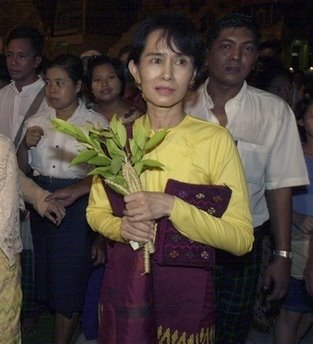


 Posts
Posts


