http://burmadd.blogspot.com/2008/12/stand-up-and-be-counted-on-burma.html
Sunday, December 28, 2008
Opinion:
'We shall have no [personal] business deals with the [Burmese] junta; we shall observe human rights and environmental concerns'
The United Nations General Assembly on Wednesday adopted a resolution calling on the Burmese military leadership to free all political prisoners, including detained opposition leader Aung San Suu Kyi. The UN's chief deliberative, policy-making and representative organ then went on to criticise the human rights record of the regime, singling out incidents of torture and sexual abuse and the crackdown on peaceful protesters in September 2007. The resolution also decries the failure of the regime to include other political parties, in particular the National League for Democracy of Suu Kyi, and representatives of ethnic political groups in the planned general election.
The measure was approved by a margin of 80 votes to 25, with 45 abstentions, one of which was registered by Thailand. The abstention, which comes in the first days of the Abhisit government which many had hoped would play a leading role in the areas of human rights and democracy in the region, was a perfect example of the fence-straddling on Burma by successive governments such as those led by the Thai Rak Thai and People Power parties, and including the interim government installed by the September 2006 coup leaders.
In abstaining, Thailand may have been adhering to the Association of Southeast Asian Nations principle of non-interference in the internal affairs of fellow member states. After all Thailand was joined by fellow Asean members Indonesia, the Philippines and Singapore in abstaining, while Brunei, Laos, Malaysia and Vietnam voted against the resolution. The Cambodian representative was not present.
New Prime Minister Abhisit Vejjajiva cannot really be expected to make a major policy shift on Burma or on any of a number of other important areas in these very early days of his government, but it could be hoped he would quickly push on with the new direction he has indicated he will pursue in Thai-Burmese relations.
In an interview with the Al Jazeera news network, Mr Abhisit said he would try to convince Asean nations of the importance of human rights to the international community. He said that unless the organisation's efforts to enshrine human rights are credible in the eyes of the international community, Asean will not be able to achieve its objectives. He added that the ''West and Asean have a common objective. We want to bring good change in Myanmar
[Burma].''
The last Democrat prime minister, Chuan Leekpai, who is sometimes referred to as Mr Abhisit's mentor, is well known for having taken a principled stand on Burma. In a break with tradition, he refused to make any state visits to that country during his second term as PM from late 1997 to early 2001. Also his foreign minister, Surin Pitsuwan, now secretary-general of Asean, proposed in July 1999 that Asean become more open to discussion of human rights issues in member states and in particular take a more proactive stand on Burma.
If Mr Abhisit can be taken at his word that he is truly committed to moving Burma to a position where it is willing to open up and make concessions, he has little choice but to work within Asean, at least at this time. And if Asean is to become a credible force for human rights it will have to take positive steps in that direction rather quickly.
On the other hand, there are some important things Thailand can do on its own to push the Burmese leadership towards democracy and human rights, and as well to improve the lot of the two million Burmese migrants in Thailand.
New Foreign Minister Kasit Piromya, speaking at an academic conference on Dec 19, said Thailand would now run an ethical foreign policy, in contrast to that of ousted prime minister Thaksin Shinawatra and his hand-picked successors. ''From now on, there will be no personal business dealings on the side,'' Mr Kasit said. ''This government will not mix business and politics. We shall have no [personal] business deals with the [Burmese] junta; we shall observe human rights and environmental concerns; we shall treat Burmese as we do Thais.''
Of course, living up to these pledges is much easier said than done in the face of the vested interests and entrenched attitudes that have shaped dealings with Thailand and Burma over the years. But they do provide at least some hope that the past errors of our ways will be corrected.
Source: Bangkok Post
Posted by BURMA DEMOCRACY & DEVELOPMENT at 12/28/2008 06:32:00 PM
Links to this post
Monday, December 29, 2008
Stand up and be counted on Burma -BDD


Computer glitch disrupts Japan's bullet trains
TOKYO (AFP) – Services on dozens of Japan's bullet trains were disrupted Monday due to a computer glitch, delaying more than 65,000 passengers during the busy New Year's season, the operator said.
East Japan Railway Co. halted five lines of the bullet train in northeastern Japan for three hours before restarting them, a company spokesman said.
"We had a problem with our operating system and an investigation is under way," the spokesman said.
A total of 79 services were cancelled and 37 others were delayed, affecting 65,400 passengers in the morning.
The trouble came a day after heavy snow and strong winds separately forced the company to suspend 35 bullet train services, also in eastern and northern Japan, affecting more than 30,000 passengers.
New Year's Day is the most important holiday for many Japanese, who pack trains and planes as they travel across the country to spend time with loved ones.
The bullet train -- or Shinkansen -- was introduced as the world's fastest rail service in the run-up to the 1964 Tokyo Summer Olympics, showcasing Japan's technological prowess as it rebuilt from World War II.
U.N. Mulls Reengaging Burma With More Aid
http://www.washingtonpost.com/wp-dyn/content/article/2008/12/27/AR2008122701128.html
Diplomacy Unable to Yield Political Reforms
By Colum Lynch and Michael Abramowitz
Washington Post Staff Writers
Sunday, December 28, 2008; A16
UNITED NATIONS -- International sanctions and Laura Bush's personal intervention did not make Burma's generals ease their political oppression. Neither did quiet diplomacy, nor the devastation of a cyclone.
So the United Nations is attempting a new approach: It is trying to entice the generals with fresh promises of development money.
According to senior U.N. officials, special envoy Ibrahim Gambari has proposed that nations offer Burma financial incentives to free more than 2,000 political prisoners, including Nobel laureate Aung San Suu Kyi, and to open the country to democratic change.
In the months ahead, the U.N. leadership will press the Obama administration to relax U.S. policy on Burma and to open the door to a return of international financial institutions, including the World Bank. The bank left in 1987 because Burma, which is officially known as Myanmar, did not implement economic and political reforms.
"It cannot be business as usual. We need new thinking on how to engage with Myanmar in a way that will bring tangible results," Gambari said in an interview, adding that the United Nations cannot rely simply on "the power of persuasion with too little in the [diplomatic] toolbox."
But critics characterize the strategy as a desperate attempt to salvage a diplomatic process that has so deteriorated that Suu Kyi and Senior Gen. Than Shwe, Burma's military ruler, declined to meet with Gambari during his last trip there, in August. Gambari, critics say, is simply grasping to show progress in moving a regime that has no intention of embracing democratic reform.
The United States and Britain have resisted financial perks, arguing that Burma should not be rewarded for bad behavior. They are not "under any illusions that sanctions would solve Burma's problems," said Jared Genser, Suu Kyi's Washington-based attorney and president of the advocacy group Freedom Now. But "if you flood them with development assistance, it will only go to the junta's favored few," Genser said.
Gambari outlined his strategy in a confidential paper he presented last month to U.N. Secretary General Ban Ki-moon. In it, according to senior U.N. officials who have seen the document, Gambari endorses building on the relations Burma established with the outside world after Cyclone Nargis struck the country in May. He also calls for an increase in development assistance to Burma and proposes that wealthy countries expand the nation's access to foreign investment, the officials added.
One key initiative involves the establishment of an Economic and Social Forum to serve as a vehicle for channeling money and coordinating international development efforts. To prevent Burma from steering assistance to its supporters in the government, the United Nations has begun discussing with Denmark, Japan, the Netherlands and Norway how to ensure that money would go to the neediest Burmese.
Gambari and other top U.N. officials are also urging countries with influence over Burma, especially China and India, to lean on the government to release political prisoners and to provide a political opening for the opposition in upcoming elections. "What we need is for the U.S. and the U.K. to be softer and for the Chinese and the Indians to be harder," one senior U.N. official said.
Gambari reportedly hopes to detail the United Nations' latest thinking to Burmese leaders early next year, but only if the country's ruling general agrees to meet with him. If Gambari's strategy receives a positive response, Ban, the first U.N. chief to visit Burma in more than 40 years, would make his second trip to the country.
Burma has been ruled by a military dictatorship since 1962, when Gen. Ne Win expelled foreigners and broke with the outside world in pursuit of "Burmese socialism." Pro-democracy demonstrations 20 years ago offered the promise of a new government elected by the people, but the generals put Suu Kyi under house arrest in July 1989 and ignored national elections in 1990 that her party, the National League for Democracy, won in a landslide.
Burma has one of the world's worst living standards, despite holding sizable oil and natural gas reserves and the world's largest deposits of precious gems. Nargis, which killed more than 100,000 people and left 2.4 million homeless, only added to the challenges.
The Burmese leadership has recently consolidated its power in advance of national elections in 2010. As Burma buckled from Nargis's blow, the military pushed through a referendum on a new constitution that would effectively exclude the National League for Democracy from the election.
The Bush administration's position is that it makes no sense to engage with the Burmese government until the generals signal that they are interested in reconciling with the opposition. That could include, for instance, releasing Suu Kyi from house arrest or freeing other political prisoners.
"We have not been against dialogue, but we have felt that dialogue needed to be preconditioned," said Dennis Wilder, senior director for Asian affairs on the National Security Council. "We just feel that it's egregious that for two decades Aung San Suu Kyi has been under house arrest. We find it very hard to perceive a direct dialogue with the Burmese under those circumstances."
In recent years, the administration has tried to ratchet up pressure on Burma through sanctions aimed at restricting the income of the military rulers and their associates. In the summer, Congress banned the import of Burmese jade, a key source of income for Burma's government.
At the same time, the United States stepped up humanitarian efforts in the wake of Nargis, sending about $75 million in aid both inside the country and to refugee camps on the border with Thailand.
All these efforts appear to have made little headway with the generals, who have increased arrests of dissidents in recent months, according to U.S. officials and human rights advocates. Bush administration officials suspect that Burmese authorities are stalling in the hopes that they might be able to work with the administration of President-elect Barack Obama, who has repeatedly made clear his interest in opening dialogues with countries scorned by Bush.
But Burma is far from a priority for the incoming administration, and it is not certain that new officials would change course.
Obama, Vice President-elect Joseph R. Biden Jr. and Secretary of State-designate Hillary Rodham Clinton co-sponsored the jade bill, and few expect that they will move to relax sanctions soon after taking office.
The Obama transition team declined last week to comment on the Gambari strategy or a new thrust in U.S.-Burma relations.
Some international diplomats note that the United Nations' push to bring about political change in Burma has been undercut by the inability of influential governments, principally the United States and China, to agree on a strategy.
"One of the main problems is that we are split and the junta can play us against one another," said Kjell Magne Bondevik, a former Norwegian prime minister.
"China and India today have huge investments in Burma, with no preconditions as far as I know on delivering democracy," Bondevik said.
Some U.N. delegates remain skeptical that Gambari would be able to deliver on promises of increased assistance. "I don't think any country now is in a position to offer financial incentives to Myanmar, in view of the financial crisis," said a senior diplomat from a neighboring country.
Post a Comment
View all comments that have been posted about this article.
Report item as: (required) X Obscenity/vulgarity Hate speech Personal attack Advertising/Spam Copyright/Plagiarism Other Comment: (optional)
Comments that include profanity or personal attacks or other inappropriate comments or material will be removed from the site. Additionally, entries that are unsigned or contain "signatures" by someone other than the actual author will be removed. Finally, we will take steps to block users who violate any of our posting standards, terms of use or privacy policies or any other policies governing this site. Please review the full rules governing commentaries and discussions. You are fully responsible for the content that you post.
© 2008 The Washington Post Company
Ads by Google
Taiwan Government Site
Official Government Site in English Info On Business, Trade & Policies.
english.www.gov.tw
MBA Public Governance
Study at MODUL University Vienna 2-Year Executive Degree in Austria
www.modul.ac.at/pgm/mba
The $700 Billion Blunder
Why the Senate’s Bailout Bill Will Fail Our Fragile Economy.
MoneyMorning.com/bailout
Turning Racism into International Law: The UN’s Durban II Conference
http://www.dcexaminer.com/opinion/Turning_Racism_into_International_Law__The_UNs_Durban_II_Conference_122808.html
By Michelle Bernard, Examiner Contributor
- 12/28/08
One thing the United Nations well is hold conferences. Another is generate paper. The result usually is just a waste of time and money.
But with the Durban Review Conference planned for 2009, the UN will be more than wasteful, it will promote anti-Semitism and anti-Americanism. The U.S. should boycott the proceedings.
The United Nations long has targeted Israel. There are legitimate criticisms of Israel, but human rights abuses there pale compared to violations elsewhere in the world.
Consider China’s pre-Olympics crackdown. Recall the military junta that misgoverns Burma and brutally suppressed pro-democracy demonstrations a year ago.
Observe the horror of Zimbabwe, where a vicious and incompetent government has wrecked the economy and cannot stop a spreading cholera epidemic. Worst of all may be North Korea, a national gulag in which starvation is the norm.
Of these cases, the UN thinks Israel is the most serious. In fact, more serious than all of the others combined, at least in terms of the number of resolutions passed.
For years the so-called Human Rights Commission made a mockery of its name. Two years ago the Commission was turned into the Human Rights Council. The latter is no different, dominated by leading human rights abusers who divert attention from themselves by attacking Israel.
Most famously, the United Nations passed a resolution years ago equating Zionism with racism. Although the UN General Assembly eventually repealed the measure, the organization has promoted the same idea in other ways.
One was the 2001 Durban conference, formally known as the United Nations World Conference Against Racism, Racial Discrimination, Xenophobia and Related Intolerance.
Naturally, Israel was targeted. Reparations for slavery were demanded—though from the West, not Arab states. The U.S. was even attacked for refusing to adopt UN treaties, no matter how extreme, without reservations to protect Americans.
Brett Schaefer of the Heritage Foundation reports: “the 2001 Durban conference degenerated into a noxious series of speeches and statements dominated by anti-Semitism and anti-Americanism.”
Washington’s delegation finally walked out in frustration. Seven years have passed and the UN is planning the “Durban Review Conference” to, naturally, evaluate the results of the first event. The objective, explains the UN, is “the total elimination of racism, racial discrimination, xenophobia and related intolerance.”
Obviously, no fair-minded person could be in favor of any of those, but the United Nations channels George Orwell when it defines its terms. The so-called Preparatory Committee—established by the new Human Rights Council—is headed by the same Libyan ambassador who earlier chaired the Human Rights Commission. Libya, of course, is a dictatorship which spent years promoting terrorism against Israel and the U.S. and attempting to develop nuclear weapons.
The Committee’s vice chairs include Cuba, home of the Western Hemisphere’s oldest dictatorship; Iran, which has threatened to wipe Israel off of the map; Pakistan, where religious minorities are widely persecuted; and Russia, which is rediscovering its authoritarian past. Little good is likely to emerge from the cooperation of these nations.
So what is the UN’s agenda for Durban II? Reports Claudia Rosett of the Foundation for Defense of Democracies:
“In a series of preparatory meetings over the past 16 months, the organizers have already taken aim at Israel as their prime target. Increasingly, the organizers are also priming the conference for a broader attack on other democratic nations, especially the U.S. Some are pushing for a UN-backed gag order that would enlist Islamic anti-blasphemy laws to stifle free speech worldwide.”
Washington has been voting against Durban II preparations and funding, and refusing to participate in the organizing activities. But the UN doesn’t care: American taxpayers still are footing 22 percent of the tab. And if the U.S. attends, it will give the conference credibility.
America’s departure from Durban I came too late to limit the damage. Washington shouldn’t make the same mistake at Durban II.
Argues Heritage’s Schaefer, “the best approach would be for the U.S. to come out, as Canada has done, and simply say that it will not participate in Durban II. It makes little sense for the U.S. to consider going when the expressed purpose of Durban II is to review the implementation of the Durban Declaration, which the U.S. walked away from in 2001.”
This latest UN farce illustrates a larger problem: What was once referred to as the last, great hope of mankind is an enormous disappointment, most known for pervasive incompetence and corruption.
Unfortunately, the UN’s performance never has met popular expectations. Without the support of the U.S. and a handful of other Western nations, the UN can accomplish nothing. Yet the organization spends much of its energy demonizing these very same countries.
As UN ambassador, John Bolton fought valiantly, but futilely, to reform the UN. If the UN is to play a positive role in coming years, it must be transformed. A good starting point would be a U.S.-orchestrated boycott of the upcoming Durban II conference, which threatens to become a forum promoting global intolerance. President-elect Obama has promised change. He needs to apply the same principle to the United Nations.
Michelle D. Bernard is president and CEO of the Independent Women’s Forum and Independent Women’s Voice and is an MSNBC Political Analyst.
Myanmar might get more aid
http://deseretnews.com/article/content/mobile/1,5620,705273510,00.html?printView=true
By Colum Lynch and Michael Abramowitz
The Washington Post
Published: December 28, 2008
UNITED NATIONS — International sanctions and Laura Bush's personal intervention did not make Myanmar's generals ease their political oppression. Neither did quiet diplomacy, nor the devastation of a cyclone.
So the United Nations is attempting a new approach: It is trying to entice the generals with fresh promises of development money.
According to senior U.N. officials, special envoy Ibrahim Gambari has proposed that nations offer Myanmar financial incentives to free more than 2,000 political prisoners, including Nobel laureate Aung San Suu Kyi, and to open the country to democratic change.
In the months ahead, the U.N. leadership will press the Obama administration to relax U.S. policy on Myanmar and to open the door to a return of international financial institutions, including the World Bank. The bank left in 1987 because Myanmar, also known as Burma, did not implement economic and political reforms.
"It cannot be business as usual. We need new thinking on how to engage with Myanmar in a way that will bring tangible results," Gambari said in an interview, adding that the United Nations cannot rely simply on "the power of persuasion with too little in the (diplomatic) toolbox."
But critics characterize the strategy as a desperate attempt to salvage a diplomatic process that has so deteriorated that Suu Kyi and Senior Gen. Than Shwe, Myanmar's military ruler, declined to meet with Gambari during his last trip there, in August. Gambari, critics say, is simply grasping to show progress in moving a regime that has no intention of embracing democratic reform.
The United States and Britain have resisted financial perks, arguing that Myanmar should not be rewarded for bad behavior. They are not "under any illusions that sanctions would solve Myanmar's problems," said Jared Genser, Suu Kyi's Washington-based attorney and president of the advocacy group Freedom Now. But "if you flood them with development assistance, it will only go to the junta's favored few," Genser said.
Gambari outlined his strategy in a confidential paper he presented last month to U.N. Secretary General Ban Ki-moon. In it, according to senior U.N. officials who have seen the document, Gambari endorses building on the relations Myanmar established with the outside world after Cyclone Nargis struck the country in May. He also calls for an increase in development assistance to Myanmar and proposes that wealthy countries expand the nation's access to foreign investment, the officials added.
One key initiative involves the establishment of an Economic and Social Forum to serve as a vehicle for channeling money and coordinating international development efforts. To prevent Myanmar from steering assistance to its supporters in the government, the United Nations has begun discussing with Denmark, Japan, the Netherlands and Norway how to ensure that money would go to the neediest in Myanmar.
Gambari and other top U.N. officials are also urging countries with influence over Myanmar, especially China and India, to lean on the government to release political prisoners and to provide a political opening for the opposition in upcoming elections. "What we need is for the U.S. and the U.K. to be softer and for the Chinese and the Indians to be harder," one senior U.N. official said.
Gambari reportedly hopes to detail the United Nations' latest thinking to Myanmar leaders early next year, but only if the country's ruling general agrees to meet with him. If Gambari's strategy receives a positive response, Ban, the first U.N. chief to visit Myanmar in more than 40 years, would make his second trip to the country.
Myanmar has been ruled by a military dictatorship since 1962, when Gen. Ne Win expelled foreigners and broke with the outside world in pursuit of "Myanmar socialism." Pro-democracy demonstrations 20 years ago offered the promise of a new government elected by the people, but the generals put Suu Kyi under house arrest in July 1989 and ignored national elections in 1990 that her party, the National League for Democracy, won in a landslide.
Myanmar has one of the world's worst living standards, despite holding sizable oil and natural gas reserves and the world's largest deposits of precious gems. Nargis, which killed more than 100,000 people and left 2.4 million homeless, only added to the challenges.
The Myanmar leadership has recently consolidated its power in advance of national elections in 2010. As Myanmar buckled from Nargis's blow, the military pushed through a referendum on a new constitution that would effectively exclude the National League for Democracy from the election.
The Bush administration's position is that it makes no sense to engage with the Myanmar government until the generals signal that they are interested in reconciling with the opposition. That could include, for instance, releasing Suu Kyi from house arrest or freeing other political prisoners.
"We have not been against dialogue, but we have felt that dialogue needed to be preconditioned," said Dennis Wilder, senior director for Asian affairs on the National Security Council. "We just feel that it's egregious that for two decades Aung San Suu Kyi has been under house arrest. We find it very hard to perceive a direct dialogue with the Burmese under those circumstances."
In recent years, the administration has tried to ratchet up pressure on Myanmar through sanctions aimed at restricting the income of the military rulers and their associates. In the summer, Congress banned the import of Myanmar jade, a key source of income for Myanmar's government.
At the same time, the United States stepped up humanitarian efforts in the wake of Nargis, sending about $75 million in aid both inside the country and to refugee camps on the border with Thailand.
All these efforts appear to have made little headway with the generals, who have increased arrests of dissidents in recent months, according to U.S. officials and human rights advocates. Bush administration officials suspect that Myanmar authorities are stalling in the hopes that they might be able to work with the administration of President-elect Barack Obama, who has repeatedly made clear his interest in opening dialogues with countries scorned by Bush.
But Myanmar is far from a priority for the incoming administration, and it is not certain that new officials would change course.
Obama, Vice President-elect Joe Biden and Secretary of State-designate Hillary Rodham Clinton co-sponsored the jade bill, and few expect them to move to relax sanctions soon after taking office.
The Obama transition team declined last week to comment on the Gambari strategy or a new thrust in U.S.-Myanmar relations.
Some international diplomats note that the United Nations' push to bring about political change in Myanmar has been undercut by the inability of influential governments, principally the United States and China, to agree on a strategy.
"One of the main problems is that we are split and the junta can play us against one another," said Kjell Magne Bondevik, a former Norwegian prime minister. "China and India today have huge investments in Burma, with no preconditions as far as I know on delivering democracy."
© 2008 Deseret News Publishing Company | All rights reserved
Recession fears rise on Japan's output data
http://seattletimes.nwsource.com/html/businesstechnology/2008563230_japanoutput27.html
Japan's industrial output tumbled at a record pace last month, stoking fears that the world's second-largest economy was headed for a deeper and more protracted recession than previously expected.
By V. Phani Kumar
MarketWatch
HONG KONG — Japan's industrial output tumbled at a record pace last month, stoking fears that the world's second-largest economy was headed for a deeper and more protracted recession than previously expected.
Industrial production fell as much as 8.1 percent in November from the previous month — the biggest drop in the measure since the government started releasing comparable figures in 1953 — as Japanese companies produced fewer automobiles and machinery on vanishing demand.
The drop was steeper than the 6.8 percent fall expected by economists, and came after a 3.1 percent decline in October.
"Industrial production in Japan is falling off the cliff," wrote Merrill Lynch Economist Takuji Okubo in a note.
"Adding to this massive cut in November is manufacturers' plan to cut even further in the next two months. They now plan to cut their production by 8 percent in December and by 2.1 percent in January," Okubo added, referring to the result of a survey published by the Japanese Ministry of Economy, Trade and Industry.
The survey findings showed that transport equipment, including cars and trucks, ranked among the top three contributors to the decline from November through January, suggesting the impact of weak automobile sales in the U.S. and elsewhere was severely hurting Japanese carmakers.
"With these cuts, the transportation-machinery makers will have cut their production by almost 40 percent between October and January," Okubo wrote.
Weakening industrial production also appears to be taking a toll on employment in Japan.
Official data released separately Friday showed Japan's seasonally adjusted jobless rate climbed to 3.9 percent in November, rising 0.2 percentage points from the previous month.
The number of unemployed people increased by 100,000 during the month to 2.56 million.
Economists had expected the monthly unemployment rate to jump to 4 percent.
Meanwhile, Japan's core consumer-price index, also released Friday, rose by a lower-than-expected 1 percent during the month on higher food charges.
The core data, which excludes fresh-food items because of their price volatility, had risen 1.9 percent in October.
The data estimated that consumer prices in the Tokyo metropolitan area could rise 0.8 percent in December from the year-earlier month.
Information from The New York Times is included in this report
Japan’s action changes Asia’s image(BURMA RELATED)
http://www.asiantribune.com/?q=node/14866
Sun, 2008-12-28 02:22
By Nehginpao Kipgen
Japan’s humanitarian decision on 18th December 2008 to accept refugees from the military-ruled Burma has significantly changed Asia’s image. The move, which is unprecedented in the history of Japan, conveys a message to the international community that there is a country in Asia which opens its doors to asylum seekers and refugees.
Japan’s policy toward Burma has traditionally been engagement. This principle was stated in uncertain terms by the then Prime Minister Ryutaro Hashimoto to leaders of the Association of Southeast Asian Nations (ASEAN) in January 1997 as: "Japan does not feel international isolation is the optimal way for the improvent of domestic situation in Myanmar.”
Ryutaro also added that: “Japan thinks it important to give Myanmar incentives to behave in line with international norms by drawing it out as a member of the international community. Japan also thinks that ASEAN membership should not provide a smokescreen for oppression in Myanmar."
Its engagement policy toward the Burmese military regime fundamentally differentiates Japan from many of her western allies, most notably the United States’ isolationist policy. These conflicing approaches have not helped both the economic giants to achieve their desired goals, but have instead prolonged the military rule.
Japan’s initial hope for ASEAN leadership to address the situation in Burma has also turned out to be fruitless. Despite Japan’s years of engagement policy, the oppresion in Burma continues unabated. The recent arressts and the long-term prison sentences to peaceful protesters was an indication of a failed strategy.
It is, however, intriguing to see that Japan simultaneously opens lines of communication with both the Burmese military regime and the pro-democracy opposition groups. Like many other nations, Japan has also endorsed the role of the United Nations Secretary General’s good offices.
With the political stalmate continuing to plague Burma, Japan’s policy has seemingly vacillatied in recent months. Japan’s biggest western ally, the United States, has also theoretically shifted its policy. The U.S. Congress created a post for policy chief for Burma to increase pressure on the junta; the White House nominated Michael Green for the position on November 10.
A noticeable strained bilateral relation between Japan and Burma was witnessed in the aftermath of the 2007 uprising, which was popularly coined by many as “saffron revolution.” A Japanese photojournalist Kenji Nagai was shot and killed by the Burmese military in broad-daylight while covering the demonstration.
The troubling issue surfaced again on the 17th January 2008 meeting between Japan’s Foreign Minister Masahiko Koumura and his Burmese counterpart Nyan Win. Japan expressed its displeasure in a statement: “The Japanese side has not been convinced yet by the account given by the Myanmar police.”
If this major humanitarian policy gets implemented, the Japanese government will accept about 30 Burmese refugees from Thailand starting 2010. This development not only surprises the international community, but also gives a new hope to the Burmese democratic movement.
This bold decision makes Japan to become the first country in the region to launch such an initiative. Not only was the move welcome by the Burmese democratic movement, but also by the chief of United Nations humanitarian agency.
The U.N. High Commissioner for Refugees António Guterres said, “I am glad that Japan is starting with a small programme. As such, I am confident that the pilot project will develop and expand into a regular and large programme.”
Japan’s decision has broken the traditionally held perception that refugees are resettled only in western countries. This sets a good example for many other Asian nations. As long as no democratic society, which equally treats all ethnic nationalities, can be established in Burma, there will be more Burmese refugees.
Her status as an economic giant of Asia and the historical relationship the two countries had during Burma’s independence struggle, Japan’s involvement in Burmese democratic transition is essential.
In the absence of a coordinated international approach, Burma’s military leaders will continue to have the upper hands in suppressing the aspirations of the Burmese people.
Both engagement and sanction imposing groups must come together to find amicable solution to decades-old Burma’s problems.
It is high time for the international community to realize that neither engagement nor sanction alone, without a coordinated action, is effective enough to bring change in Burma.
Nehginpao Kipgen is the General Secretary of US-based Kuki International Forum (www.kukiforum.com) and a researcher on the rise of political conflicts in modern Burma (1947-2004).
- Asian Tribune -
Sunday, December 28, 2008
Maternal Health Problems In Burma Widespread
http://www.medicalnewstoday.com/articles/134066.php
Main Category: Women's Health / Gynecology
Article Date: 27 Dec 2008 - 1:00 PST
The maternal health care issues facing women in eastern Burma (also known as Myanmar) are widespread and underreported, according to surveys by researchers at the Johns Hopkins Bloomberg School of Public Health. The researchers report that more than 88 percent of women had a home delivery during their last pregnancy and displaced women were more than 5 time as likely to receive no antenatal care. Human rights violations, like displacement and forced labor, were are also widespread and found to affect access to maternal health care. The findings are published in the December 2008 issue of PLoS Medicine.
"Health indicators are poor and human rights violations are widespread in eastern Burma," said Luke Mullany, PhD, MHS, lead author of the study and assistant professor with the Bloomberg School's Department of International Health. "In conflict-affected regions of Burma, research indicates that infant and child mortality rates are higher than other areas due to widespread exposure to gross human rights violations."
According to the study, among the women surveyed, 60 percent expressed an unmet need for modern contraceptives and nearly 95 percent gave birth without the assistance of a skilled attendant or someone with labor and delivery training. Many of these women displayed signs of poor nutrition and very few received vital iron supplements or utilized insecticide-treated bed nets. In addition, more than half of the women were diagnosed as anemic and more than 7 percent tested positive for the malaria parasite.
For the study, the researchers conducted two-stage cluster sampling surveys among reproductive-aged women (15 to 45). The surveys were conducted between September 2006 and January 2007 in the Shan, Mon, Karen, and Karenni communities in eastern Burma. Mullany, along with colleagues, documented access to antenatal care, skilled attendants at birth, postnatal care, family planning services and recent exposure to human rights violations such as displacement and forced labor. With the assistance of trained survey workers who spoke the local language and were known in the community, researchers explored strategies to increase access to maternal health interventions and examined the estimated coverage of maternal health services prior to the Mobile Obstetric Maternal Health Workers (MOM) Project, a program designed to assist in providing maternal health care in eastern Burma.
"The indicators and coverage estimates provided here are strikingly worse than the already low national estimates for Burma that have been provided by various institutional reports," said Chris Beyrer, MD, MPH, senior author of the study and professor with the Bloomberg School's Department of Epidemiology. "Increased access to antenatal, labor delivery and newborn care services in eastern Burma is essential to improve the overall health status of these vulnerable populations. In addition, considerable political, financial and human resources are necessary to improve access to care. There needs to be emphasis on maternal and more comprehensively, reproductive health services in health programs targeting these communities."
"Access to Essential Maternal Health Interventions and Human Rights Violations among Vulnerable Communities in Eastern Burma" was written by Luke C. Mullany, Catherine I. Lee, Lin Yone, Palae Paw, Eh Kalu Swe Oo, Cynthia Maung, Thomas J. Lee and Chris Beyrer.
The researchers were funded by grants from the Bill and Melinda Gates Institute for Population and Reproductive Health at the Johns Hopkins Bloomberg School of Public Health and the Foundation for the People of Burma.
Johns Hopkins Bloomberg School of Public Health
615 N Wolfe St., W1600
Baltimore
MD 21205
United States
http://www.jhsph.edu
RM1 million aid for cyclone victims-MALAYSIAN BUDDHIST ASSOCIATION
http://thestar.com.my/metro/story.asp?file=/2008/12/27/north/2889948&sec=north
IT has been almost seven months since Cyclone Nargis battered Myanmar but help continues to pour in.
One of the latest efforts was initiated by the Malaysian Buddhist Association (MBA) which raised a total of RM1.05mil through the Burma Cyclone Relief Fund.
MBA advisor Ven. Seck Boon Keng said the committee would channel all the funds through the Burmese Shangha Organisation to launch the Myanmar Cyclone Recovery Project.
“These funds were collected through our branches and members from the public within the fastest time to ensure help arrives for the needy as soon as possible,” he told a press conference when presenting the cheque to the Burmese Shangha Organisation on Wednesday.
The organisation advisor Rev. Sayadaw U. Rajinda, who was authorised to receive the funds, said the funds were expected to be distributed in stages within two years.
“Of this, RM60,000 have been used to purchase 10 tractors for affected farmers to help them in agricultural rehabilitation including re-cultivation.
“We are also giving out a monthly RM30 voucher each for 51 orphans for 12 months and RM93 monthly each for 38 university students for 10 months,” he said.
The purpose of the Myanmar Cyclone Recovery Project was to assist flood and Nargis storm victims in Laputta and Kyaiklat with provision of aid for plantation and agricultural rehabilitation.
It is also aimed at rebuilding the schools for the affected village children who are facing problems of daily survival and difficulties in continuing their education.
“Receiving quality education has been a problem for many children due to many schools having been destroyed by the cyclone,” Sayadaw said.
He said the committee was in the midst of constructing two primary schools and one lower secondary school.
He added that a total RM255,000 was needed for the construction of the schools, each measuring 167 sq m.
They were sheduled for completion in four months’ time, he said.
Russia starts to deliver advanced surface-to-air missiles to Myanmar
http://baganland.blogspot.com/2008/12/russia-starts-to-deliver-advanced.html
Russia has started to fulfil a US$250-million deal to deliver surface-to-air missiles to seven countries including Libya, Syria and Venezuela, the Vedomosti business daily reported Friday. Russia will also deliver the S-125 Pechora-2M missile batteries to Egypt, Myanmar, Vietnam and Turkmenistan under the contract, the newspaper said, citing a source in the state-owned Russian Technologies corporation.
The Pechora-2M -- known as the SA-3A Goa in NATO parlance -- is an upgraded version of a surface-to-air missile originally developed in the 1960s that was widely shared with the Soviet Union's allies around the world.
UN secretary-general must visit Burma to begin the end-game
http://www.bangkokpost.net/opinion/opinion/8771/un-secretary-general-must-visit-burma-to-begin-the-end-game
By: THAUNG HTUN
Published: 27/12/2008 at 12:00 AM The United Nations' Secretary-General Ban Ki-moon seems to be waiting for a miracle before he will visit Burma. Like a scientist afraid of his own experiment, he aims to plot the result before he begins the process. For months now he has been ducking and weaving around increasingly vocal calls for him to visit this failed state with its military despots in charge, and to bring the full weight of the global community to bear on the many and on-going human rights violations occurring there. He seeks, he says, an assurance there will be an outcome. This is an untenable position, overly cautious by far for such a critical situation as Burma.
The UN is willing to allow the Burmese military junta to ride roughshod over international standards of human rights, political practice, economic sustainability and foreign relations.
The global body is allowing the regime to push on towards a sham election in 2010, which will inevitably bolster their power and defer the development of democracy in Burma.
While the shortcomings of the UN indicate a global system that is failing Burma, the UN is not alone.
Regionally, a virtual free-for-all has erupted as investors from China, Russia, Korea, Thailand and elsewhere rush into Burma. A resources and energy assets boom has given the military regime an opportunity to open the flood-gates. Sanctions in place in the US and the EU have ensured Burma's neighbours have few serious competitors, or watchdogs.
The National Coalition Government of the Union of Burma, as the legitimate and mandated de jure government in Burma has outlined a step-by-step plan for more focussed and successful engagement with Burma.
The first vital and unavoidable step would be for Mr Ban to visit the country as soon as possible. This would be an opportunity to present and embody the international community's concern over widespread human rights violations and the volatile actions of the country's rulers.
Second, the UN Special Envoy, Ibrahim Gambari must go to Burma again to meet officials and establish infrastructure to:
a) ensure the release of all political prisoners;
b) facilitate open negotiations between Aung San Suu Kyi and the SPDC;
c) to set up a permanent liaison office in Burma to pursue the direct intentions of the Secretary-General; and
d) to bring solutions to Burma's economic crisis.
Third, a process on on-going engagement needs to be rolled out. The generals need to be obliged to meet and engage appropriately with the UN Special Envoy and must grant all relevant UN officers unlimited access throughout the country.
Fourth, the UN should kick-off a process of national reconciliation, capitalising on the work already done by the NCGUB in this direction. This process must be inclusive of all opposition parties, the military and all ethnic groups. This must take place before the proposed elections in 2010 to head-off the usual ruses of the generals to exploit international goodwill, to marginalise authentic opposition voices in Burma and to ensure the irrevocably flawed 2010 election can never take place.
Fifth, all such processes need to have the full-backing of the UN and have their agenda set by the UN. This needs the backing of the UN member states, who must stand up and act on Burma more than they are, and should be a priority as the run-in to the 2010 election looms closer.
Sixth, this process has to be fully open, the dialogue made public and the results known to all, so as to ensure full accountability and the good governance of the initiative.
These are concrete steps, not idle thoughts. Such a programme will have the means of bringing progress to Burma. The international community understands these mechanisms and can work within them. Yet, there is inaction; a sense the rhetoric is there to knit a veil for international leaders.
Recently, Mr Ban said the actions of the junta are "abhorrent and unacceptable" and called for "bold action" on the generals' part to move towards democracy. But, the words will sink quickly without being forcefully backed by Mr Ban himself.
This is not the time to be overly fastidious in the interests of protocol or Realpolitik, or to protect the perceived dignity of the secretary-general's office. Our people are in grave danger. They and the world will forgive Mr Ban should he try hard and fall short. History will look more harshly on not trying at all.
As Mr Ban considers the moment, Burma drifts further and further away.
Thaung Htun is the United Nations representative for the National Coalition Government of the Union of Burma.
Canada-based Party Linked to Controversial Businessman -IRRAWADDY
http://www.irrawaddy.org/article.php?art_id=14852
By THE IRRAWADDY Friday, December 26, 2008
--------------------------------------------------------------------------------
E-MAIL
PRINT
TEXT SIZE
Burmese exiles were surprised to learn through an Internet newsgroup recently that the former chairman of the All Burma Students Democratic Front (ABSDF) has joined a new political party linked to a Canada-based businessman accused in the past of laundering drug profits for the United Wa State Army (UWSA).
According to widely read email messages circulating among Burmese exiles, former ABSDF chairman Htun Aung Gyaw recently joined the United Democratic Party of Myanmar (UDP), founded in Vancouver, Canada.
In response to the rumors, which include allegations that Htun Aung Gyaw, who is currently living in the United States, received US $50,000 to join the UDP, the party issued a statement saying that discussions between party leaders and the former ABSDF chairman were still at the “confidence-building” stage.
But the reports have raised further questions about the UDP itself. Burmese exiles living in Canada and the US say they don’t know what the party’s objectives are, and many wonder about the motives of the man seen as the driving force behind the party.
According to Burmese opposition sources in Canada, the UDP has no chairman, but is led by well-known Burmese businessman Kyaw Myint, a.k.a. Michael Hu Hwa.
Kyaw Myint’s company, NAH Development Group Inc, is involved in “energy, mineral, agriculture, building materials, finance and real estate industries,” according to its Web site, www.nahdg.com. The site also provides a contact address in Vancouver.
A former colonel in the UWSA—a group named by the US State Department as “the world’s largest armed narcotics-trafficking organization”—Kyaw Myint is a familiar name in Burmese business circles.
After the UWSA reached a ceasefire agreement with Burma’s ruling military junta in 1991, Kyaw Myint became the head of Myanmar Kyone Yeom Group, a Rangoon-based company with extensive interests in construction, mining, real estate and forestry.
In an article published by the now-defunct Asiaweek magazine in January 1998, Myanmar Kyone Yeom was accused of acting as a “money-washing machine” for the UWSA.
According to an article published in Jane’s Intelligence Review in November 1998, the company was blacklisted by the Burmese regime because “Michael Hu Hwa (a.k.a. Colonel Kyaw Myint), who claimed to be a deputy minister of finance for the UWSA, openly and brazenly flouted Burmese business laws and regulations.”
Soon after, the company was shut down and Kyaw Myint was imprisoned. He did not stay in prison for long, however, as he received help from some influential intelligence officers.
Kyaw Myint left Burma and appeared in Bangkok in 1999. From there, he relocated to the United States and then Canada—a move reportedly arranged by the US Drug Enforcement Administration.
He later set up United Democratic Party of Myanmar and began to recruit young activists, who received stipends and allowances, according to exiled Burmese sources in Vancouver. Kyaw Myint also reportedly financed some Burma-related conferences in Canada.
Burmese struggle to survive
http://democracyforburma.wordpress.com/2008/12/26/burmese-struggle-to-survive/
December 26, 2008 · No Comments
Hla Hla Htay
The Friends of Newin faction has been lavishly pampered by the Democrat leadership to the extent that some Democrats feel belittled or disappointed.
Fisherman Htein Lin Aung, a father of three, says a new roof is out of the question as he fixes the engine of his boat beneath the tarpaulin covering of his bamboo tent outside the town of Kungyangon.
“We have been in difficulties since Nargis. The weather is also unusual now,” said Htein Lin Aung, 37, whose house was one of hundreds of thousands destroyed by the cyclone.
The storm left 138,000 people dead or missing and affected more than 2.5 million, while the Burmese military junta provoked outrage by initially hampering international aid efforts with red tape.
The military government relented after a visit from UN Secretary General Ban Ki-moon. But rebuilding the southwestern Irrawaddy Delta, which suffered the brunt of the cyclone, is dragging on. continue http://www.bangkokpost.com/topstories/topstories.php?id=135590
--------------------------------------------------------------------------------
A Brother's Plea: Remember Burma-The Saffron Revolution must not be forgotten.
http://online.wsj.com/article/SB123025716276634733.html?mod=googlenews_wsj
By MIN ZIN
On Nov. 28 my brother, Thet Zin, a Burmese journalist brave enough to remain in his country, was sentenced to seven years in prison by the military junta there. His crime? Possession of a U.N. report about the military's crackdown on demonstrations by monks and democracy activists in September 2007 -- known around the world as the "Saffron Revolution."
He's not alone. In the past two months the junta has sentenced more than 230 political detainees to lengthy prison sentences, some as long as 68 years. The total number of political prisoners in Burma is now more than 2,100, up sharply from nearly 1,200 in June 2007, before last year's protests, according to Amnesty International and other human-rights groups.
The terrible irony is that when I tell my Burmese friends and colleagues about my brother's sentence the typical response is, "Only seven years?" How far we've fallen that we consider anything less than decades in prison to be somehow a blessing.
The Opinion Journal Widget
Download Opinion Journal's widget and link to the most important editorials and op-eds of the day from your blog or Web page.
My brother is the editor in chief of a weekly journal you've likely never heard of called the Myanmar Nation. On Feb. 15, the military raided his office and dragged him and his office manager, Sein Win Maung, away. They were eventually charged with crimes against the state under the regime's Printing and Publishing Law. All this for being in possession of a U.N. report widely available on the Internet.
Torture and interrogations followed. He was sent to Burma's notorious Insein prison. He nearly died there when Cyclone Nargis hit Burma in May, claiming more than 80,000 lives. Now he's facing a term in a filthy, disease-ridden prison that could result in his death.
The reality is that my brother did get a lighter sentence -- the maximum under the law which he was charged with violating. Nowadays, high-profile dissidents usually receive prison sentences from 20 to 70 years. Since November, the special courts held inside the Insein prison compound have rushed to complete the hearings against Burmese democracy activists, Buddhist monks, student leaders, ethnic minority youth, labor activists, journalists, poets, bloggers, and even comedians and musicians who were arrested during and after last year's peaceful protests.
These hearings and sentencing continue in the absence of their attorneys. Worse yet, three defense lawyers were imprisoned for between four and six months for contempt of court after transmitting their clients' complaints of an unfair trial. (Another defense lawyer convicted of contempt of court fled to the Thai border to evade arrest.) Four other defense lawyers were barred from representing their clients.
The military is immediately transferring those who receive sentences to prisons in remote areas. Earlier this month, my brother was sent to a prison in Kalay, 680 miles from his home in Rangoon in Burma's northwestern frontier -- far from all those who care about him.
The goal of such harsh punishments is clear: to eliminate potential opposition in the run-up to the 2010 election, which is the last step in the junta's "Seven-Point Roadmap to Democracy."
In Today's Opinion Journal
REVIEW & OUTLOOK
Obama's Secretary of EarmarksBridges to EverywhereStill Oklahoma's Most Wanted
TODAY'S COLUMNIST
Declarations: A Year for the Books
– Peggy Noonan
COMMENTARY
Obama Picks a Moderate on Education
– Collin LevyThe Economic News Isn't All Bleak – Zachary KarabellDonor Disclosure Has Its Downsides
– John R. Lott Jr. and Bradley SmithBush Is a Book Lover
– Karl RoveA Brother's Plea: Remember Burma
– Min ZinThe junta is mocking the U.N. Security Council, which issued a statement in October 2007 calling for the release of all political prisoners, including Nobel Prize winner Aung San Suu Kyi, who remains under house arrest. In response, 112 former presidents and prime ministers from more than 50 countries signed a letter this month urging U.N. Secretary-General Ban Ki-Moon to return to Burma for the first time since his visit after Cyclone Nargis and press for the release of political prisoners.
Indeed, Mr. Ban, who recently expressed his "disappointment" and "frustration" with progress in Burma, should go back and tell junta leader Gen. Than Shwe what he told the press not long ago -- that the "status quo ante is not acceptable and politically unsustainable," and that all political prisoners must be released by 2010.
Meanwhile, my brother and thousands of other political prisoners in Burma continue to languish behind bars. The world was watching during the "Saffron Revolution." Is it still?
Min Zin, a Burmese journalist in exile, is a teaching fellow at the University of California, Berkeley, School of Journalism.
Saturday, December 27, 2008
China moves to make yuan global currency
http://www.domain-b.com/finance/general/20081226_yuan_global_currency.html
26 December 2008
Armed with a staggering $1,89 trillion in foreign exchange reserves, the Chinese government announced the first step towards making the yuan, its currency, an international currency, by allowing it to be used as a mode of payment in business deals with some neighboring countries. The move would also curb the effect of the volatility of the dollar on trade settlements.
With trade settlements being done mainly with the dollar and also the euro, the yuan, currently not a freely convertible currency, this pilot project will be first tested by allowing the yuan to be used to settle trade payments between the delta regions of China's Pearl and Yangtze rivers and the special administrative regions of Hong Kong and Macau.
The Guangxi Zhuang autonomous region and Yunnan province will be allowed to use the yuan to settle trade payments with ASEAN countries like Thailand, Laos, Burma, Malaysia, the Philippines, Singapore, Cambodia, Brunei, Vietnam and Indonesia.
However, the Chinese government did not specify how and when the pilot project would start.
The recession in the US, Japan and many EU nations, led to decline of China's exports declined by 2.2 per cent in November, the first decline in more than seven years. Chin now plans to boost its sagging export sector by allowing the yuan to settle trade payments with neighboring countries along with a series of other measures.
After a meeting of China's State Council yesterday, the cabinet released a document announcing a raft of more measures to encourage domestic spending by doling out more subsidies for buying household appliances and other merchandise to the rural people and increasing the number of stores and distribution centres in the hinterland.
The government will also renovate the urban food markets, provide more variety of goods, build new second-hand markets, encourage distribution companies to merge and consolidate by giving them more incentives, and shore up small and medium-sized business.
Export tax rebates for high-technology products will be hiked, foreign investment will be encouraged and lower the inspection fee for exports.
As ASEAN countries, Hong Kong and Macau constitute 20 per cent of mainland China's total trade volume and has reached $402.7 billion last year, Zhou Xiaochuan, governor of the central bank said last month that trade settlements using the dollar is not feasible due to the high volatility of the dollar and once the yuan is accepted in Asia, then it would be easier for China to make the yuan an international currency in the future.
In its effort to boost the appeal of the yuan among other countries as a currency to hold as foreign exchange reserves, China had already signed trade settlement agreements with Mongolia, Vietnam, Myanmar and Russia among others to voluntarily use the yuan as a currency of choice to settle trade payments and had let Chinese banks issue yuan-denominated bonds in Hong Kong earlier this year.
With China's foreign exchange reserves rising at a rapid pace and standing at $1.89 trillion, the yuan had been getting greater acceptance from its neighbours in recent years and there has been many Chinese economist who were advocating making the yuan an international currency, with the weakening dollar having caused a decline in China's foreign exchange reserves.
China is now looking towards expanding the yuan to other financial markets by make the yuan fully convertible and giving yuan holder's investment channels and also allow the currency to enter the country freely for investment in stock or real estate.
Some Chinese experts are hesitant on fully converting the yuan citing the Asian crisis of 1998 where the country came unscathed because the yuan was not fully convertible under capital accounts and was also the main reason why it has not been affected fully in the current global financial crisis.
They also believe that by liberalizing the fund flow, the economy will be susceptible during regional or global economic crisis.
Recession, militancy hit Indo-Myanmar trade
http://www.assamtribune.com/scripts/details.asp?id=dec2608/at06
SURAJIT KHaUND
GUWAHATI, Dec 25 – Global financial crisis, poor infrastructure and law-and-order problem have made a huge impact on Indo-Myanmar border trade in 2007-08. Though the Commerce Ministry has taken a slew of measures in order to increase the volume of trade, yet bilateral trade across the border has not witnessed any significant improvement. According to official statistics available with the Manipur Government, border trade between North-east and Myanmar has plummeted causing concern for the traders. What is more alarming is that the quantum of export has dipped significantly compared to import during the last fiscal. In 2007-08, export and import figures had been recorded at Rs 6.02 crore and Rs 416.30 crore respectively whereas in 2006-07, the figures stood at Rs 62.13 crore and Rs 178 crore.
The fall in volume of trade is apparently due to poor law-and-order situation and lack of infrastructure. Worried over the situation, many traders have withdrawn their business from Moreh.
Moreh, the main trade point of the North-east with Myanmar, remained closed on 15 occasions following bandhs called by the militant groups and other social organisations operating in the area, causing major disappointment among the traders. Traders of the region involved in export and import had to face a tough time while pursuing business with Myanmar. “We need proper storage facilities at Moreh while exporting our goods to Myanmar. Despite demands, we have not been able to convince the Centre in this regard”, a group of traders told this correspondent. To substantiate their claims, the traders alleged that they had apprised of the situation to the Manipur and Mizoram governments urging them to take appropriate steps for smooth conduct of trade which has not materialize so far.
Perennial militancy problem was one the reasons for poor trade between North-east and Myanmar. Frequent incidents of firing between security forces and underground members had a big impact on border trade between the countries.
Similarly, illegal trade was a matter of concern for the Manipur Government and the Union Commerce Ministry as well. The volume of illegal trade has reached such a magnitude that the Indian Government had decided to set up a composite checkpost at the Moreh trade point.
The Indo-Myanmar Border Traders’ Union (IMBTU), the main trade body of Manipur which has been pursuing trade with Myanmar, has blamed the Centre for poor trade volume.
“The Centre recently increased the tradeable items from 22 to 42, but unfortunately proper notification is yet to be made in this regard,” WN Singh, a senior member of IMBTU told this correspondent today. He also alleged that the Commerce Ministry is not at all sincere as far as bilateral trade is concerned. “Despite our repeated demands the ministry has turned a blind eye in this regard,” he added.
At UN, Nigeria Gives Myanmar $500,000, Bypassing UN Programs, Also UN-Transparent
http://www.innercitypress.com/joy1myanmar122508.html
Byline: Matthew Russell Lee of Inner City Press at the UN: Exclusive
UNITED NATIONS, December 25 -- Two days before Christmas, Myanmar's mission to the UN got a gift with no strings attached. In the dimly-lit Indonesia Lounge next to the General Assembly chamber, Nigeria's Permanent Representative Joy Ogwu handed her counterpart from Myanmar Kyaw Tint Swe a check for $500,000. This was Nigeria's response to the UN's plea for funds to continue to respond to Cyclone Nargis, which hit in May.
The UN has been exposed, first by Inner City Press, for allowing the military government of Myanmar to take 25% of aid funds through currency exchange. Nigeria gave its money directly, in U.S. dollars, and apparently with no requirement to report back on how the funds are used. This is the type of hard currency for which Senior General Than Shwe is desperate.
Later on December 23, Inner City Press asked a South Asian diplomat active on the UN budget why he thought Nigeria gave direct. "You make more friends that way," he said. "If you give through the UN, you don't know how your money's used. If you give it direct, you can ask for reports if you want. And if you don't want, that's fine to. You just have a new friend."
There are at least two possible explanations of Nigeria's direct "south to south" contribution. One is that there's a lack of confidence in the UN system as a transmitter of funds. For example, the UN has not even committed to disclosing, in the Consolidated Appeals that it issues, how much it loses in government-required currency exchange. The second is that Nigeria wants a friend in Myanmar, perhaps even a piece of the resources for which China and India, along firms such as Total and even Lloyds, and South Korea's Daewoo, are competing.
Ambassador Ogwu's statement, a copy of which Inner City Press obtained and puts online here, professes Nigeria's "unflinching support for the government" of Myanmar.
Kyaw Tint Swe and Joy Ogwu, check in foreground, oversight not shown (c) M.Lee
In the half-light on December 23, there were only two reporters present. Inner City Press asked Ambassador Ogwu if the UN's envoy to Myanmar, fellow Nigerian Ibrahim Gambari, had played any role in this donation. No, she insisted. She had previous told Inner City Press that her government had invited Gambari to try to mediate the Niger Delta conflict not as a UN official -- that would "internationalize" the conflict, she said -- but rather as a Nigerian personality.
The Myanmar government, too, opposes internationalization, not only in the form of UN peacekeepers, but even election monitors. Ban Ki-moon was told to leave the country when voting in the run-up to the controversial elections, which exclude Aung San Suu Kyi, was held.
The other reporter asked a aide to Kyaw Tint Swe how much the check was for. "None of your business," he replied. Hardly an auspicious beginning to transparency in aid use.
MYANMAR: WFP to launch food-for-work programme
http://www.irinnews.org/Report.aspx?ReportId=82100
YANGON, 26 December 2008 (IRIN) -
The UN World Food Programme (WFP), in collaboration with its implementing partners, will soon begin an ambitious food-for-work programme for thousands of Cyclone Nargis survivors.
The programme aims to rehabilitate local assets and restore livelihoods in affected communities, and will target 40,000 participants and 200,000 beneficiaries in Myanmar’s badly affected Ayeyarwady Delta.
“Food-for-work activities can make a significant difference to food-insecure residents of the delta, and at the same time help households rebuild their individual and community assets,” Chris Kaye, WFP country director for Myanmar, told IRIN in Yangon, the former Burmese capital.
WFP is currently screening projects proposed by its partners, with expected project sites to be announced soon.
The programme is set to begin at the end of January and run till the end of April, with a focus on the construction, repair and maintenance of roads, and the construction of wells, dykes, dams, ponds and drainage ditches.
Reforestation, land clearance and irrigation projects will also be included. Individual projects will last 15-45 days.
These activities will play a critical role in restoring food security in the wake of Nargis, which left close to 140,000 people dead or missing in May 2008.
“From this programme, each participant will receive 4kg of rice per day as family rations,” Zin Aung Swe, a WFP programme assistant, explained.
Participants will include those left particularly vulnerable by Nargis, including landless farmers, jobless day labourers and female-headed households.
Cash-for-work
Plans are also under way to implement a cash-for-work programme in a few months time in the cyclone-affected townships of Yangon Division, including Kunchangone Township.
Under the scheme, some 500 people will participate, with around 2,500 beneficiaries.
Programme participants will receive 2,000 kyat (US$1.6) per day in return for labour intensive activities to benefit local communities.
“We’ll evaluate our [food-for-work and cash-for-work] activities, and then will decide whether to expand our programmes or not,” Zin Aung Swe said when asked whether the programmes would be extended after April.
“Pockets of concern”
Studies conducted in the delta now show positive results of the food aid provided thus far.
Photo: Lynn Maung/IRIN
Road-repairing will generate household income for thousands of landless farmers in Myanmar's cyclone-affected Ayeyarwady Delta
According to preliminary results of the UN Food and Agriculture Organization (FAO)/WFP Crop and Food Supply Assessment Mission, overall food security in the area was improving, and humanitarian agencies were making progress in helping cyclone-affected people restore their livelihoods.
“However, there are pockets of concern where food and other assistance continue to be needed,” said Kaye, adding: “WFP will carry on responding to these needs by implementing both relief and recovery activities.”
Seven months after the cyclone, the agency has begun shifting its focus from relief food provision to early recovery, as well as helping to rebuild livelihoods in the delta, once the country’s rice bowl.
Food-for-work activities, along with a supplementary feeding programme targeting vulnerable populations, would be a pillar of WFP’s recovery activities in 2009, Kaye said.
The Periodic Review, the first of three such assessments released on 19 December by the Tripartite Core Group (comprising the Myanmar government, the Association of Southeast Asian Nations and the UN) said food aid had reached every surveyed community along the path of the cyclone. Indicators of food vulnerability showed a clear impact in areas where food aid efforts had been concentrated.
Nonetheless, it said food insecurity persisted in some areas.
“The problems facing the recovery of food production [including seed quality and harvest] and purchasing power may take some years to address. Food insecurity around Yangon and Pathein [a township in the delta] may be a result of chronic problems, rather than directly from Cyclone Nargis,” it said.
Trees won't stop tsunamis, scientists warn
http://www.genengnews.com/news/bnitem.aspx?name=47611410
EUREKALERT
Contact: Andrew Baird
Andrew.Baird@jcu.edu.au
61-040-028-9770
ARC Centre of Excellence in Coral Reef Studies
Claims that coastal tree barriers can halt the might of a tsunami are false and dangerous, a team of international marine scientists said today.
There are many reasons for preserving the world's dwindling stocks of mangroves, but protecting people from tsunamis is not one of them, they say.
On the eve of the anniversary of the devastating 2004 Boxing Day Tsunami, which claimed nearly a quarter of a million lives around the eastern Indian Ocean, researchers have issued a strong warning against coastal communities and governments putting their trust in mangrove and tree barriers erected as a means of protection from earthquake-driven tidal waves.
"Following the Boxing Day Tsunami scientific studies were released which claimed that the damage to coastal communities had been less in places where there was a barrier of trees or coastal vegetation," explains Dr Andrew Baird of the ARC Centre of Excellence for Coral Reef Studies and James Cook University.
"As a result there has been a lot of tree planting in coastal areas affected by the tsunami, in the hope it will protect coastal communities in future from such events.
"However these studies looked only at the presence or absence of vegetation and the extent of damage and did not take account of other important variables, like the distance of a village from the shore, the height of the village above sea level or the shape of the seabed in concentrating the tsunami's power."
The study by Dr Alexander Kerr of the University of Guam, Dr Baird, Ravi Bhalla and V. Srinivas of the Foundation for Ecological Research, Advocacy and Learning India concludes there is, as yet, no evidence that coastal tree belts can provide meaningful protection against a tsunami or, for that matter storm surges produced by cyclones, such as the surge that followed Cyclone Nargis in Myanmar early this year which killed over 150,000 people.
As a result it would be extremely dangerous to rely on tree planting alone to shield coastal communities in the event of future tsunami or storm surges, they warn and doing so could lead to further tragedies.
The team's analysis of the pattern of damage of the Boxing Day 2004 tsunami shows that many variables were at work in determining how the force of the water affected people and structures on land, and these all need to be taken into account not just a few of them.
The findings have major implications for civil defence and emergency planning, the cost of restoring affected regions and in minimizing the death and destruction suffered by some of the poorest communities in the world, the team says.
"The idea that planting 'green belts' can both protect coastal communities and enhance their environment has been widely accepted," Dr Baird explains. "As a result a number of governments, aid agencies and scientists have been promoting it enthusiastically.
"However this could place the communities shielded in this way at future risk. Mangroves should be protected for their conservation value, and for the goods and services they provide to people even if they don't protect coastal dwellers from extreme events."
"In my own visits to the tsunami-ravaged areas, I saw places where quite heavy vegetation had provided absolutely no protection at all against the force of the ocean, and this led us to investigate the assumption more deeply. It turns out it was not well founded."
To fully explore what drives the flooding following tsunami like the Boxing Day Tsunami, and storm surges, like those that could accompany any of the many cyclones that hit northern Australia each year, an extensive, statistically-sound analysis needs to be carried out of all the factors which may act on the force of the waves driving inland.
These include the height of the settlement above the sea, its distance, the shape of the sea bottom and local land uses. These make the difficulty of accurately predicting tsunami damage much harder and a problem requiring rigorous analysis for multiple factors and their interaction.
In the meantime, there is much that can be done to limit the loss of life in future tsunami, in particular, early warning systems need to be installed, the population must be educated to recognise the signs of an imminent tsunami and evacuation plans need to put in place and practised. All these preparations are current in Japan, and should serve as an example to the rest of the world.
Their research report Roles of coastal bio-shields and their putative role in protecting coasts from large weather related disturbance events is soon to be published by the United Nations Environment Program.
Japan-Mekong exchange year to be launched in Myanmar
http://news.xinhuanet.com/english/2008-12/25/content_10559476.htm
YANGON, Dec. 25 (Xinhua) -- A Japan-Mekong exchange year will be launched in Myanmar's former capital Yangon early next February to showcase the cooperation and friendship between Japan and Myanmar, one of the Mekong River valley countries, the local Biweekly Eleven News reported Thursday.
The opening ceremony on Feb. 6, 2009 will be attached with joint performance by Japanese and Myanmar artists to mark the event. The performance will involve that of Myanmar traditional musician U Hlaing Win Maung, the Japanese embassy was quoted as saying.
In previous cultural exchange programs between Myanmar and Japan, Japanese film shows were held annually in Yangon and Mandalay in the past few years, introducing Japanese movies to Myanmar audiences which featured comedy, cartoon, romance, samuraiand detective.
The two countries also launched joint shooting of movie with the movie "Thway" (blood) representing as a joint production.
The film, which marked a symbol of Japan-Myanmar friendship andcontributes to the promotion of the two countries' friendly relations, was created by Japanese producer and director Koji Chino and was based on a famous Myanmar novel of the same title written by Journal Gyaw Ma Ma Lay.
The movie involved both Myanmar and Japanese actors and actress.
Meanwhile, the Greater Mekong Subregion (GMS)-Economic Cooperation has worked out a plan for development of tourism as part of its economic cooperation in the subregion, designating the year 2009-2010 as GMS tourism year.
The Mekong River is shared by six countries -- China, Cambodia, Laos, Myanmar, Thailand and Vietnam.
Friday, December 26, 2008
US secretary of state Hillary Clinton selects squad of special envoys, with Bill in line for Pakistan
http://www.dailymail.co.uk/news/worldnews/article-1101277/US-secretary-state-Hillary-Clinton-selects-squad-special-envoys-Bill-line-Pakistan.html?ITO=1490
By Paul Thompson
Last updated at 11:40 PM on 24th December 2008
Comments (1) Add to My Stories
Hillary Clinton is forming a 'hit squad' of special envoys who will be sent to the world's troublespots to try to prevent conflict breaking out.
The diplomats will form the spearhead of the US state department as the new secretary of state seeks a bigger role for her office in Barack Obama's new government.
The former first lady has wasted no time as she begins building up her team in preparation for taking over as America's most senior diplomat from Condoleezza Rice next month.
Hillary Clinton with President Elect Barack Obama. Sources say that the former first lady is seeking a bigger budget as the new secretary of state
Sources in Washington suggested Mrs Clinton had embarked on an 'empire-building' exercise as she seeks an expanded role within Mr Obama's administration.
She wants a bigger budget and an expanded role for the state department, not just in foreign affairs, but in dealing with global economic issues in the current financial crisis.
Mrs Clinton has also told Mr Obama she wants to appoint high-profile special envoys.
Her husband Bill has been suggested as a possible envoy to deal with Pakistan and India.
Mrs Clinton has told Mr Obama that she would like to appoint high-profile special envoys. Suggestions include Richard Holbrooke, left, for Afghanistan or Iran, and former president and husband Bill Clinton for Pakistan and India
He used several envoys during his two-term presidency in the Nineties, with Richard Holbrooke the best-known for his roles in brokering peace deals in the Middle East and the Balkans conflict.
Mr Holbrooke is among the names being mentioned as a possible envoy either for Afghanistan or Iran. Martin Indyk, a former US ambassador to Israel, has also been mentioned.
While Mrs Clinton compiles a shortlist of envoys, she has already dipped into her husband's former team for two key advisers.
Jacob Lew, budget director in the Clinton administration, has been given the job of making sure the state department is not underfunded. Mrs Clinton wants extra money for the diplomatic corps as she seeks to improve America's standing in the eyes of the world. James Steinberg, a former deputy national security adviser to the former president, is also in her team as a trusted lieutenant.
Insiders said Mrs Clinton is determined to wrestle power back from the Pentagon, which under President Bush played a dominant role in the government. The US defence department took over the planning of reconstruction of Iraq following the 2003 invasion.
A recent report by a federal watchdog found the $117 billion that has been spent by the US on reconstruction work had done little to improve the country. The report, Hard Lessons: The Iraq Reconstruction Experience, reveals a catalogue of mistakes and incompetence.
Companies from China, Myanmar, S. Korea sign gas pact in Myanmar
http://english.people.com.cn/90001/90778/90858/90863/6561510.html
The China National United Oil Corporation (CNUOC), Myanmar and a consortium, led by the Daewoo International Group Corporation, signed an export gas sales and purchase agreement dealing with the Shwe Project here Wednesday.
The Shwe gas project, which lies at A-1 block in Myanmar's Rakhine offshore area, has been developed by the Daewoo consortium comprising South Korea Gas Corporation, India's ONGC Videsh Ltd and Gas Authority of India Ltd. (GAIL)
The agreement is a follow-up of a memorandum of understanding signed in Nay Pyi Taw in June this year between the CNPC, Myanmar and the Daewoo consortium on sale and transport of natural gas from offshore blocks A-1 and A-3.
Natural gas deposits were found at block A-1 (Shwe field and Shwephyu field) and block A-3 (Mya field) in the Rakhine offshore area in January 2004 and April 2005 respectively, explored by the consortium of oil companies led by Daewoo with 60 percent-stake. Other companies go to South Korea Gas Corporation (10 percent), ONGC Videsh Ltd of India (20 percent) and GAIL (10 percent).
The Shwe field holds a gas reserve of 4 to 6 trillion cubic-feet (TCF) or 113.2 to 170 billion cubic-meters (BCM), while the Shwephyu 5 TCF and the Mya 2 TCF with a combined proven reserve of5.7 to 10 TCF of gas being estimated by experts.
Myanmar has abundance of natural gas resources in the offshore areas. With three main large offshore oil and gas fields and 19 onshore ones, Myanmar has proven recoverable reserve of 18.012 trillion cubic-feet (TCF) or 510 billion cubic-meters (BCM) out of89.722 TCF or 2.54 trillion cubic-meters (TCM)'s estimated reserve of offshore and onshore gas, experts said, adding that the country is also estimated to have 3.2 billion barrels of recoverable crude oil reserve.
According to the Central Statistical Organization, in the fiscal year 2007-08, Myanmar produced 7.62 million barrels of crude oil and 13.393 BCM of gas.
Statistics also reveal that foreign investment in Myanmar's oil and gas sector had reached 3.243 billion dollars in 85 projects as of the end of 2007 since the country opened to such investment in late 1988, standing the second in the country's foreign investment sectorally after electric power.
In 2007, foreign investment in the oil and gas sector more than tripled to 474.3 million U.S. dollars compared with 2006, accounting for 90 percent of the total during the year which stood505.02 million, according to the Ministry of National Planning and Economic Development.
Currently, 13 foreign oil companies, mainly from Australia, Britain, Canada, China, Indonesia, India, South Korea, Malaysia, Thailand and Russia, are involved in oil and gas projects in Myanmar, according to official sources.
Source:Xinhua
UN condemns human rights violations in Myanmar
http://news.yahoo.com/s/ap/20081225/ap_on_re_as/un_un_myanmar_rights_1
By EDITH M. LEDERER, Associated Press Writer Edith M. Lederer, Associated Press Writer – Wed Dec 24, 8:58 pm ETUNITED NATIONS – The U.N. General Assembly on Wednesday strongly condemned widespread human rights violations in Myanmar and called on the government to free political prisoners, including Nobel Peace Prize laureate Aung San Suu Kyi.
The sharply worded resolution, sponsored by the United States, Israel and many other countries, was approved by a vote of 80-25 with 45 abstentions.
Myanmar accused the assembly of "blatant interference" in its internal political process and said it will not be bound by the resolution. Unlike the more powerful Security Council, General Assembly resolutions are not legally binding but carry weight because they reflect the views of the 192-member world body.
Myanmar's representative, who was not identified, told the assembly the country had made significant political strides and was now on track for a smooth transition to democracy, with a seven-step political process including multiparty elections in 2010.
But the resolution expressed "grave concern" at the failure to include members of pro-democracy leader Suu Kyi's party and other political parties and some ethnic groups "in a genuine process of transition to democracy."
It said Myanmar's political processes "are not transparent, inclusive, free and fair, and that the procedures established for the drafting of the (country's new) constitution resulted in the de facto exclusion of the opposition from the process."
The General Assembly also expressed grave concern at the government's decision to go ahead with a referendum on the constitution "in an atmosphere of intimidation and without regard to international standards of free and fair elections."
It took note of the government's cooperation with the international community in delivering aid to victims of a devastating May cyclone "despite its initial denial of access, which resulted in widespread suffering and increased the risk of loss of life." The cyclone affected 2.4 million people and left an estimated 130,000 people dead or missing.
Myanmar's military, which has ruled since 1962 when the country was known as Burma, tolerates no dissent and crushed pro-democracy protests led by Buddhist monks in September 2007. It holds more than 2,100 political prisoners, up sharply from nearly 1,200 before the demonstrations, human rights groups say.
The General Assembly "strongly" called on Myanmar's government "to desist from further politically motivated arrests" and release political prisoners, including Suu Kyi who has spent more than 13 of the past 19 years under house arrest.
The General Assembly expressed concern over human rights violations, and of Myanmar's "continuing practice of enforced disappearances, use of violence against peaceful demonstrators, rape and other forms of sexual violence, torture and cruel, inhumane or degrading treatment."
Junta Militants Arrested in Thailand: BBC (IRRAWADDY)
http://www.irrawaddy.org/article.php?art_id=14839
By MIN LWIN Wednesday, December 24, 2008
Thai authorities in the border town of Mae Sot have arrested an armed group of Burmese nationals, including women, who reportedly said that the Burmese military government had sent them to Thailand, according to BBC Burmese radio on Monday.
The BBC Burmese service said that 10 members of an unknown armed group were arrested and weapons were seized from at least four of them.
Sources in Mae Sot said that the Burmese junta has targeted prominent opposition leaders in exile in the past, as well as leaders of armed ethnic groups, pro-democracy organizations and human rights organizations, especially those based in Mae Sot.
Several dissidents along the Thai-Burmese border have claimed that assassinations have been ordered by the junta and suggested that Karen National Union General Secretary Mahn Sha was gunned down on February 14 by junta-backed assassins, although the murder was never officially solved.
Twenty undercover agents from the Burmese military authorities have been assigned and deployed in Thailand’s Mae Sot area to carry out assassinations, said opposition sources on the Thai-Burmese border.
Russia Urges Burma to Cooperate with UN-IRRAWADDY
http://theirrawaddy.blogspot.com/2008/12/russia-urges-burma-to-cooperate-with-un.html
By MIN LWIN
Russia’s ambassador to Burma has told Burmese Foreign Minister Nyan Win that Moscow will be in a better position to support the Naypyidaw regime if it cooperates with UN special envoy Ibraham Gambari, according to a leaked written account of their meeting.
The secret document, leaked to The Irrawaddy by a Burmese Foreign Ministry source, said the Russian ambassador, Mikhail Mgeladze, reassured Nyan Win of Moscow’s continuing support, while urging cooperation with the UN. The two met on December 6 at Nyan Win’s office in Rangoon.
Gambari has a standing invitation from Burma’s ruling junta to visit the country, but he has shown reluctance to return in view of the regime’s recent crackdown on the pro-democracy leadership, ignoring appeals from the international community.
Last week, the UN said there was no immediate plan for Gambari to visit Burma in the near future.
“He has no plans immediately to go to Myanmar [Burma],” Michele Montas, spokeswoman for UN Secretary-General Ban Ki-moon, told reporters at the UN headquarters in New York.
Ban himself was earlier scheduled to visit Burma in December, but cancelled his trip after the Burmese military junta went back on its words and intensified its crackdown on pro-democracy activists.
“He [Ban] is not going to go there just for the sake of going. He has to have some indications that his visit will mean something,” Montas said.
The Russian ambassador’s meeting with Nyan Win was seen as quiet diplomatic pressure on the regime to cooperate with the UN.
Mgeladze restated Moscow’s position, however, that the release of Aung San Suu Kyi and other political prisoners, the opening of a dialogue between Snr Gen Than Shwe and Suu Kyi and the presence of independent monitors at the 2010 election are only internal matters, the leaked document disclosed.
The Russian ambassador also said that he would not support six-party talks on Burma along the lines of this year’s North Korea initiative. A similar Burma initiative has been proposed by some dissidents.
Nyan Win told Mgeladze that the Burmese government would not accept such a proposal. Burma and North Korea were different matters, he said.
Nyan Win told the ambassador that Burma’s two major allies, China and India, also opposed the six-party talks proposal.
The meeting between Nyan Win and Mgeladze also dealt with trade relations between Burma and the West. The two officials shared a view that France and Germany are interested in economic cooperation with the regime, although America and the UK take a tougher policy toward Burma.
The Russian ambassador assured Nyan Win that his government intended to strengthen its economic and diplomatic cooperation with the regime.
Burma and Russia celebrated this year the 60th anniversary of their mutual diplomatic relations, which were established with an exchange of notes in February 1948 at the embassy of the Soviet Union in London.
Burma’s late dictator Gen Ne Win developed a close relationship with Soviet leader Nikita Khrushchev in the 1960s, sending socialist cadres to the Soviet Union to study socialism. Khrushchev visited Burma in 1960.
About 1500 students, mostly military officers, are currently studying in 11 institutions in Russia. Some 500 Burmese students have so far obtained degrees, including doctorates, in Russia, according to the Russian embassy in Burma.
Burma’s army chief and regime No 2, Vice Snr-Gen Maung Aye, visited Russia in April 2006.
Burma has brought a 10 mega watt nuclear reactor and MiG 29 jet fighters from Russia.
Japan’s action to accept Burma refugees changes Asia’s image
http://www.chinapost.com.tw/commentary/the-china-post/special-to-the-china-post/2008/12/24/189008/Japans-action.htm
www.ChinaPost.com.tw
--------------------------------------------------------------------------------
Japan's action to accept Burma refugees changes Asia's image
Wednesday, December 24, 2008
By Nehginpao Kipgen, Special to The China Post
Japan's humanitarian decision on 18th December 2008 to accept refugees from the military-ruled Burma has significantly changed Asia's image. The move, which is unprecedented in the history of Japan, conveys a message to the international community that there is a country in Asia which opens its doors to asylum seekers and refugees.
Japan's policy toward Burma has traditionally been engagement. This principle was stated in uncertain terms by the then Prime Minister Ryutaro Hashimoto to leaders of the Association of Southeast Asian Nations (ASEAN) in January 1997 as: "Japan does not feel international isolation is the optimal way for the improvement of domestic situation in Myanmar."
Ryutaro also added that: "Japan thinks it's important to give Myanmar incentives to behave in line with international norms by drawing it out as a member of the international community. Japan also thinks that ASEAN membership should not provide a smokescreen for oppression in Myanmar."
Engagement policy toward the Burmese military regime fundamentally differentiate Japan from many of her western allies, most notably the United States' isolationist policy. These conflicting approaches have not helped both the economic giants to achieve their desired goals, but have instead prolonged the military rule.
Japan's initial hope for ASEAN leadership to address the situation in Burma has also turned out to be fruitless. Despite Japan's years of engagement policy, the oppression in Burma continues unabated. The recent arrests and the long-term prison sentences to peaceful protesters was an indication of a failed strategy.
It is, however, intriguing to see that Japan simultaneously opens lines of communication with both the Burmese military regime and the pro-democracy opposition groups. Like many other nations, Japan has also endorsed the role of the United Nations Secretary General's good offices.
With the political stalemate continuing to plague Burma, Japan's policy has seemingly vacillated in recent months. Japan's biggest western ally, the United States, has also theoretically shifted its policy. The U.S. Congress created a post for policy chief for Burma to increase pressure on the junta; the White House nominated Michael Green for the position on November 10.A noticeable strained bilateral relations between Japan and Burma was witnessed in the aftermath of the 2007 uprising, which was popularly coined by many as "saffron revolution." A Japanese photo journalist Kenji Nagai was shot and killed by the Burmese military in broad-daylight while covering the demonstration.
The troubling issue surfaced again on the 17th January 2008 meeting between Japan's Foreign Minister Masahiko Koumura and his Burmese counterpart Nyan Win. Japan expressed its displeasure in a statement: "The Japanese side has not been convinced yet by the account given by the Myanmar police."
If this major humanitarian policy gets implemented, the Japanese government will accept about 30 Burmese refugees from Thailand starting 2010. This development not only surprises the international community, but also gives a new hope to the Burmese democratic movement.
This bold decision makes Japan to become the first country in the region to launch such an initiative. Not only was the move welcome by the Burmese democratic movement, but also by the chief of United Nations humanitarian agency.
The U.N. High Commissioner for Refugees Antonio Guterres said, "I am glad that Japan is starting with a small program. As such, I am confident that the pilot project will develop and expand into a regular and large program."
Japan's decision has broken the traditionally held perception that refugees are resettled only in western countries. This sets a good example for many other Asian nations. As long as no democratic society, which equally treats all ethnic nationalities, can be established in Burma, there will be more Burmese refugees.
Her status as an economic giant of Asia and the historical relationship the two countries had during Burma's independence struggle, Japan's involvement in Burmese democratic transition is essential.
In the absence of a coordinated international approach, Burma's military leaders will continue to have the upper hands in suppressing the aspirations of the Burmese people.
Both engagement and sanction imposing groups must come together to find amicable solution to decades-old Burma's problems.
It is high time for the international community to realize that neither engagement nor sanction alone, without a coordinated action, is effective enough to bring change in Burma.
Nehginpao Kipgen is the General Secretary of U.S.-based Kuki International Forum (www.kukiforum.com) and a researcher on the rise of political conflicts in modern Burma (1947-2004).
Copyright © 2008 The China Post.
Back to Story


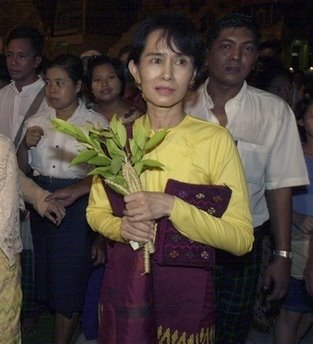


 Posts
Posts


