http://asia.news.yahoo.com/081224/afp/081224061504asiapacificnews.html
Wednesday December 24, 2:15 PM
TOKYO (AFP) - Japan's beleaguered Prime Minister Taro Aso on Wednesday rejected calls for a snap election, pledging to focus on the economic crisis, but was immediately defied by a senior member of his own party.
Aso, who took office just three months ago, needs to hold an election by September next year, and the opposition Democratic Party of Japan has been pressing the premier to dissolve the lower house as soon as possible.
"I'm well aware of talk about elections or a political realignment," Aso told a news conference as he presented his government's record budget.
"Now that we are in the midst of a once-in-a-century crisis, we are not in a position to talk about such things. I think it's impossible," he said.
Aso called on the opposition, which controls the less powerful upper house of parliament, to approve quickly his record 88.55 trillion yen (980 billion dollar) budget for fiscal 2009.
"What the public ask of the parliament, I believe, is whether it can protect the lives of people from this economic crisis. The will and the resolve of the parliament are being challenged," Aso said.
But shortly after his remarks, a ranking member of his Liberal Democratic Party (LDP) sided with the opposition in urging the premier to call elections.
In a visible show of defiance, Yoshimi Watanabe, the former minister for administrative reforms, stood from his seat in the lower house to vote for an opposition-sponsored resolution telling Aso to call for elections.
The measure was rejected by the ruling bloc which controls the powerful house.
Watanabe, son of a former deputy prime minister, has repeatedly appeared in the media to promote snap elections.
Aso's government's approval rating has plunged below 20 percent in recent polls, with voters giving more support to the opposition than the LDP.
The LDP has been in power for all but 10 months since 1955. But its popularity has rapidly dwindled due to scandals, gaffes and concerns over the handling of the economy, the world's second largest.
Aso is the fourth prime minister from the LDP to lead Japan since 2006.
The LDP's woes have led leading members of the party to openly hint they could defect, either siding with the opposition or reshaping Japan's political landscape.
Wednesday, December 24, 2008
Japan PM rejects snap election but meets defiance


Thai PM defends foreign minister's airport comments
http://asia.news.yahoo.com/081224/afp/081224064131asiapacificnews.html
Wednesday December 24, 2:41 PM
Thai PM defends foreign minister's airport comments
BANGKOK (AFP) - Thai Prime Minister Abhisit Vejjajiva Wednesday strongly defended his foreign minister over reported comments that the occupation of Bangkok's airports by protesters was "a lot of fun."
Foreign Minister Kasit Piromya meanwhile apologised, but said remarks quoted by Britain's Daily Telegraph about the week-long siege by demonstrators trying to bring down the previous government had been taken out of context.
Kasit played a key role in the People's Alliance for Democracy, which ended the airport blockade after a court disbanded the ruling party loyal to ousted premier Thaksin Shinawatra, paving the way for Abhisit's rise.
"His comments were made before the royal command appointed him as minister. He later explained to me what he had said and that what appeared in media was inaccurate," Abhisit told reporters.
"He merely wanted to convey the message that there was no violence during occupation but the way the media reported it amounted to him endorsing the shutting down of the airports," he said.
The siege of Suvarnabhumi International Airport and Don Mueang domestic airport left around 350,000 travellers stranded and caused major economic damage, with exports dropping last month for the first time in six years.
Abhisit's appointment of Kasit has proved the most controversial in his new cabinet, especially after Kasit was quoted by the Telegraph as saying last week that during the protests the "food was excellent, the music was excellent."
Kasit, a regular speaker at the protests, reportedly suggested that the protests should be seen as "pushing the process of democratisation forward."
At a separate briefing from the prime minister on Wednesday, Kasit formally apologised to the Thai people and sought to limit the damage from his comments.
"I cannot deny what I have said, but it may have been misquoted or taken out of context to make a misunderstanding. I can reaffirm that whatever I have done or said was to uphold better democracy," he said.
"I apologise to all Thai people if my comments have caused misunderstanding but I can assure them that I have no ill-intentions and I did not mean to hurt our country," he told reporters.
Persons of Year 2008 in hopeless lawless land of Burma
From: "burmadigest"
Persons of the Year 2008
In the Hopeless Lawless Land of Burma
(http://burmadigest. info/2008/ 12/23/hopeless- in-the-lawless- land/)
… BURMA DIGEST magazine, with the support of our readers' online votes, has chosen 'Burma's human rights defence lawyers' as Burma's Persons of the Year 2008 … …
There has been little to nil progress in Burma's pro-democracy politics in the last twelve months. There have not been any significant political activities or movements in Burma's politics recently.
Last year, in 2007, we saw a very massive peaceful people power uprising led by Buddhist monks against oppressive military regime, followed by a bloody brutal crack down on the protestors by the military, and international outcry denouncing Burmese military's cruel and inhumane tactics, and the regime caving in to international pressure to start negotiations with pro-democracy people's leader Daw Aung San Suu Kyi.
In contrast, in 2008, a scary unnerving uncomfortable silence has been an overwhelming feature. A number of very important anniversaries, such as the 20th Anniversary of 8888 people power uprising, the 20th Anniversary of the bloody military coup, the 20th Birthday of foundation of the National League for Democracy and the first year anniversary of the Saffron Revolution has all passed by rather too quietly.
Only two crucially important happenings, and a few other relatively significant events, occurred in Burma in 2008.
The first major crucial happening was the cyclone Nargis in May 2008 which, coupled with poor crisis response and management in its aftermath, killed more than 100,000 people, becoming one of the deadliest storms in the history of the entire South East Asia region.
Cyclone Nargis was deadly not only in physical sense but also in the political sense as well. Nargis caught everybody off guard, not only the victims in Irrawaddy Delta region, but also the military government, the opposition politicians inside and outside the country, and of course the international community. Nargis highlighted Burmese military government as not only brutally oppressive but also futilely inadequate in times of national emergencies and negligently indifferent to people's sufferings. But the opposition politicians also did not score very well in the Cyclone crisis; they did not know either how to best respond to a national natural disaster, some even showed a callous political instinct calling for an American-led invasion into Burma for a regime change grasping the chaotic cyclone aftermath as an opportunity. And the international community, usually focusing solely on democratization in Burma, found a harsh difficulty at the time of unexpected natural disaster to establish reliable channels for delivering humanitarian aid into Burma.
Eventually, despite military government stealing as much as possible from aid supplies, significant amounts of international humanitarian aids successfully went into the disaster region. But, it also paved the way for the military regime to establish rapport and a spirit of engagement with the United Nations. Since Nargis, the international community's hands become tied and bounded by the need to effectively provide humanitarian aid to poverty-stricken malnourished people in Burma. With the regime having total control on all aspects of life and all facets of government function in Burma, the international community now suddenly came to the realization that they could not accomplish their essential humanitarian missions in Burma without maintaining a working relationship with the abhorrent military regime.
Another crucial key political development in 2008 was the passing of a pro-military constitution in a much criticized overtly rigged referendum. It caused a sea-change and a seismic shift in Burma's politics. Not that it was a free and fair referendum, nor was the constitution a really democratic one. But having passed a very favourable constitution in a referendum, albeit by hooks and by crooks, was itself an achievement for the otherwise totally illegitimate military regime having occasional nightmares about having to stand trial in the International Criminal Court for crimes against humanity. The new constitution contains many clauses which allow the military to maintain their dominance in Burma's politic, and it also grants blanket immunity to the leaders of the military regime.
Now with a new very pro-military constitution in their hands, the Generals are just ignoring the results on the really free and fair 1990 elections in which the opposition party National League for Democracy won landslide.
Now the main pro-democracy party, the National League for Democracy NLD, founded by people's leader Daw Aung San Suu Kyi, is in dilemma. If NLD take part in the coming 2010 elections, it will amount to agreeing with the regime that the results of 1990 election are now invalid and expired. And there is little chance that the 2010 elections will be free or fair. Having learnt their lessons the hard way in 1990, the regime will not allow the opposition parties to win the elections again. And in May 2008 constitutional referendum, the regime has clearly shown that they care very little about freeness, fairness, transparency or credibility.
But, on the other hand, if the NLD refuse to take part in 2010 elections, the regime will force NLD to disband. And also, the regime is preparing to field pro-military parties in the coming elections; if pro-democracy parties boycott the election, it will make things easier for pro-regime parties to gain 100% control of all seats in the parliament.
While the NLD inside Burma is caught in a dilemma, an interesting development happened in the exile community. An umbrella organization based in Thai-Burma border area and consisting of some armed groups and some un-armed groups, known as the National Council of Union of Burma (NCUB), attempted this year to challenge Burmese military regime's credentials at the UN General Assembly. NCUB made a request to the United Nations, in essence, that as Burmese military regime is illegitimate Burma's seat in the UN General Assembly should be handed over to the opposition politicians who were duly elected in 1990 elections. But the problem is, there is already an exile/rival democratic government formed with some leading elected people's representatives of 1990 elections, known as the National Coalition Government of Union of Burma (NCGUB), based in Washington DC. So, if the UN were to hand over Burma's seat in the General assembly to Burmese pro-democracy politicians, it's the Washington based exile government, the NCGUB, who is entitled to take up the seat. But somehow the NCUB and the NCGUB could not reach an agreement and the 'credibility challenge' failed in its inception. The UN just turned down NCUB's 'credibility challenge' request on technical grounds without even considering its merits. Since then there is a big split among exile leaders; politicians from one group seriously criticizing those from the other, with the grass-root junior activists caught in the middle in the crossfire.
With the pro-democracy parties inside Burma trapped in the 2010 election dilemma, and with the growing disunity among exile leaders, the political spirits in exile community is ebbing now, sadly.
Another sad, but rather unavoidable, development in 2008 was the discord between new generation activists, inside as well as outside Burma, and the elderly care-taker leadership of the NLD party. Some younger generation exile NLD activists even made statements in the media that they no longer have, or owe, any allegiance to the elderly caretaker leaders of the party inside the country. Younger generations want more active actions and more intense activities, becoming discontent with the slow reactive 'wait & see' approach of their elderly leaders.
But we saw a glimmer of good news in 2008 with the release of U Win Tin, the right-hand man of Daw Aung San Suu Kyi before his imprisonment and her detention. He is renowned to have an inextinguishable spirit of democracy despite his very long and very harsh imprisonment. And he is now apparently taking over NLD's leadership, in the absence of Daw Aung San Suu Kyi and with the increasing incapacitation of other elderly caretaker leaders. And he seems to be trying at his best to restore solidarity between newer and older generations inside NLD party. It's all very good news for the otherwise bleak and gloomy year.
So, apart from U Win Tin's release from jail, the dominant feature of the depressing year 2008 is the terrible silence of the lambs inside the country and the ebb of political spirits in the exile.
While the good people are in despair, the detestable military regime is gaining momentum on its sham roadmap towards so called disciplined democracy. Recently, as an attempt to clear the field for 2010 elections, the regime and its kangaroo courts have given longer-than- life jail sentences to hundreds of leading pro-democracy activists in Burma. Some activists recently got upto 70-80 years of prison sentences. Here one must not forget that average life expectancy in Burma, with a worse than chaotic health care system under a mendacious megalomaniac military regime, is just about 60 years.
And the regime has severely limited her lawyer's access to Daw Aung San Suu Kyi. Despite the regime extending her house-arrest again and again beyond legal limits, Daw Aung San Suu Kyi could not even see her lawyer as required to consult with him about the on-going appeal against her unlawful detention.
Moreover, many a lawyer who dared to defend pro-democracy activists in regime's kangaroo courts has got prison sentences themselves for their crimes of being courageous enough to argue against the kangaroo courts' trumped up charges on the pro-democracy activists.
In Burma, currently, the executive branch of the government is swamped with inept and insincere military officers. The legislative Parliament is non-existent, with the Senior General Than Shwe making and unmaking all the laws in any way he likes. And there are only kangaroo courts for judicial matters.
With the vicious military regime TOTALLY oppressing on its people and ABSOLUTELY persecuting the political opposition, and with only crooked kangaroo courts available for any hope of judicial redress, people of Burma are becoming a hopeless people in a lawless land.
But, even if Burma's internationally inspirational peaceful pro-democracy revolution has now failed under a ruthless military regime's brutal persecution, long-suffering people of Burma must one day be able to enjoy their due civil rights and human rights, by one way or the other, by revolution or by evolution.
Whichever way Burma goes henceforth, the "Rule of Law" is an indispensable first step towards establishing a credible and long-lasting democratic system.
So, the United Nations, even though no longer very dare nowadays to harshly criticize the regime, has recently reminded the Generals that if they want international community to take their so called 'disciplined democracy roadmap' with much regard, they must at least, as a basic essential measure, establish a fair just and independent judiciary in Burma.
So, to highlight the need to establish credible free and autonomous judicial and legal systems in Burma, and to show our appreciation of their courageous efforts to legally defend pro-democracy activists facing severe persecution in regime's kangaroo courts, BURMA DIGEST magazine, with the support of our readers' online votes, has chosen 'Burma's human rights defence lawyers' as Burma's Persons of the Year 2008.
- reported by executive editor on behalf of BURMA DIGEST team
Money connection between Singapore and the Myanmar's military junta Options
http://groups.google.com/group/soc.culture.burma/browse_thread/thread/cdd35c400394ca44/3510f40d3a4f0310?lnk=raot&pli=1
Singapore banks are used for illicit money laundering
Quote:
The US told Singapore and its banks last year to sever financial links with
Myanmar's military junta.
Singapore's central bank said confidentiality laws were no shield for
criminal activities and that banks could disclose customer information to
assist such investigations.
http://www.plushasia.com/article/1220
Singapore is being depicted as a haven for the super-rich by a recent
feature of news agency Reuters.
"The sun-drenched Asian city-state, with the highest density of millionaires
in the world, is seeing wealth management prosper as the US and Europe
grapple with the worst slump in a generation," said the report picked by
Forbes, China Daily and a local weblog.
The feature compared Singapore's strict bank secrecy rules to those of
Switzerland which are under assault, following the charging of UBS's wealth
management chief for helping Americans hide money.
Assets under the management of Singapore financial institutions soared by a
third last year to more than US$800 billion (about S$1.17 trillion).
The amount is small compared to Switzerland. Singapore had US$500 billion in
offshore assets under management last year, according to the Boston
Consulting Group, compared to four times as much in Switzerland.
Banks such as Credit Suisse and Macquarie Group are hiring wealth management
staff in Singapore, despite a local recession. Bank of China is one of the
latest to plan a wealth management arm here.
Singapore has a hard line on bank secrecy. It has not agreed to the
Organization for Economic Cooperation and Development's (OECD) standards of
transparency and exchange of information.
Singapore, which is trying to grow financial services to wean dependence on
manufacturing, is on the International Monetary Fund's list of tax havens
and targeted by a proposed new US anti-tax-abuse law.
Another country that had similarly shunned the OECD, Liechtenstein, recently
agreed to a landmark deal with the US, paving the way for the exchange of
bank account details with Washington in cases of tax evasion. The agreement
may pressure Switzerland into similar concessions.
Such scrutiny in the West could lead to more European money flowing here.
But European cash comes with the risk that Singapore too could be targeted
in the crackdown on tax havens.
The US told Singapore and its banks last year to sever financial links with
Myanmar's military junta.
Singapore's central bank said confidentiality laws were no shield for
criminal activities and that banks could disclose customer information to
assist such investigations.
Myanmar to grant surplus rice export through border trade
http://news.xinhuanet.com/english/2008-12/22/content_10542218.htm
YANGON, Dec. 22 (Xinhua) -- Myanmar will grant export of surplus rice through border trade, the local Weekly Eleven News quoted sources with the Ministry of Commerce in Nay Pyi Taw as reporting Monday.
The country's rice export is mainly done through normal trade only but it will also be permitted to do so through border trade if there is surplus rice produced regionally, the sources said, adding that the grant covers surplus rice produced only from Yangon, Sagaing, Bago and Ayeyawaddy divisions.
Meanwhile, Myanmar Prime Minister General Thein Sein has urged agricultural entrepreneurs to make greater efforts for exporting more rice, saying that the country has enough cultivable land to boost paddy production.
Out of 17.6 million hectare of cultivable land, only 11.6 million hectares of paddy or 65.9 percent could be grown, Thein Sein told a recent coordination meeting on development of agricultural sector and boosting of export items held in Nay Pyi Taw.
Last year saw a production of 30 million tons of paddy out of 7.6 million hectares grown, but only about 20,000 tons of rice were exported, Thein Sein said, adding that up to October this year, over 170,000 tons of rice had been exported amid Nargis, which was up from the previous year.
"Although Myanmar's rice production has increased, it can be found that she has not been capable of producing more rice than the nations that are smaller and have fewer farmland than Myanmar," he pointed out, citing the fact that Thailand exports 7 million tons of quality rice and Vietnam 4.5 million tons.
"Myanmar is to strive for ensuring local self-sufficiency in rice and export about 3 million tons of rice annually," he outlined.
Editor: Deng Shasha
Myanmar marine product export drops
http://www.hindu.com/thehindu/holnus/015200812221021.htm
YANGON (Xinhua): Myanmar's marine product exports amounted to 353 million U.S. dollars in the nearly three quarters of the fiscal year 2008-09 ending March, a drop of 30 million dollars from 2007-08's 387 million dollars correspondingly, the local Weekly Eleven News reported Monday.
Citing the figures of the Fishery Department up to Dec. 15, the report attributed the fall to the impact of the global financial crisis.
The department revealed that purchase order from abroad was down by 50 percent compared with normalcy, while domestic purchase power fell by 40 percent.
Along with the reduction of foreign market demand, price of fish also dropped in the domestic market, the report added. Of Myanmar's marine exports, fish, prawn and crab are leading.
In 2007-08, Myanmar exported 352,652 tons of marine products, gaining 561 million U.S. dollars, according to official statistics.
In Myanmar's marine export country line-up, China stood atop, followed by Thailand, Japan and Singapore.
The country's fishery sector remained as the fourth largest contributor to the gross domestic product and also the fourth largest source of foreign exchange earning during the past five years.
Meanwhile, Myanmar is cooperating with a regional organization of the Southeast Asia Fisheries Development Center (SEAFDEC) in conducting survey of marine resources in the country's waters, focusing species with commercial potential, local media said.
With a long coastline of over 2,800 km and a total area of 500, 000 hectares of swamps along the coast, the country has an estimated sustainable yield of marine products at over one million tons a year.
--------------------------------------------------------------------------------
Agri. & Commodities
MYANMAR: Cyclone survivors benefit from cash-for-work programmes
http://www.irinnews.org/Report.aspx?ReportId=82049
INKYUT, 22 December 2008 (IRIN) - Thousands of cyclone survivors across southern Myanmar are benefiting from cash-for-work programmes being implemented by the Myanmar Red Cross Society (MRCS).
In collaboration with the International Federation of Red Cross and Red Crescent Societies (IFRC), the projects aim to provide financial support to those left vulnerable by Cyclone Nargis by creating jobs in rebuilding infrastructure.
"Now we are working for ourselves," said Ngwe Thein, 70, one of 150 people working to repair a 1.6km stretch of road between the villages of Mayan, Inkyut and Kyitepat in Kunchangone Township in Yangon Division, one of the hardest-hit areas.
"This is a real opportunity for us," Ngwe Thein said, as two more tractors laden with soil were unloaded. "This road was in a bad condition before the cyclone. Now it will be better and transportation will improve."
Thousands benefit
As part of the programme, launched in November, 34 village groups were put to work in 11 storm-ravaged townships, including Kawhmu, Twante, Kungyangon, Dedaye, Pyapon, Bogale, Kyaiklatt, Mawlamyinegyun, Labutta, Hynegyikyun and Maubin.
MRCS and IFRC hope to complete 44 reconstruction projects, most of them lasting between four and six weeks, by end-December.
Photo: Lynn Maung/IRIN
Ngwe Thein, 70, says he is happy to be doing something for his community
Almost eight months after the cyclone, such activities are seen as vital in assisting local communities get back on their feet, say specialists.
"For three months after the cyclone, MRCS focused on relief operations in the disaster area," U Hla Myint, deputy head of MRCS's disaster management division, said. "Then we shifted to the ongoing recovery phase, and the cash-for-work programme is part of that phase."
Participants are paid 2,000 kyat (about US$1.70) a day.
Under the programme, female-headed families and cash-labourers unable to find work are being prioritised, said one MRCS official at the Kunchangone branch office.
Community involvement in the decision-making process is key to the programme.
"We ask the people what they want to do for their villages, whether they want to dig wells or repair the roads," explained one IFRC official in Dadeye Township, at the extreme southeast corner of the delta.
Slow recovery
However, recovery will take several years given the types of loss suffered and the extent of needs, according to the first of three strategic reviews published on 19 December.
Many people lost their assets and savings, reducing their capacity for recovery and leading to increased indebtedness.
Offering a snapshot of the needs of more than 2,000 households in over 100 communities in the affected area, the report noted that most people in the delta were now involved in casual labour, followed by agriculture, fishing and seasonal work.
The report also noted that changes in patterns of economic activity and livelihood had occurred because of Nargis. Since the storm, there has been a shift away from fishing and agriculture and an increase in casual labour.
"Without the capacity to produce their own food or income, communities will remain aid-dependent," the review stated.
Livelihoods within communities were interlinked and interdependent, the report said, reflecting complex social and economic structures. Casual and agricultural labourers were dependent on the recovery of the landowners for the restoration of their livelihoods, it said.
lm/ds/mw
Theme(s): (IRIN) Aid Policy, (IRIN) Economy, (IRIN) Natural Disasters
[ENDS]
[This report does not necessarily reflect the views of the United Nations]
North Korean defector asks Myanmar to release her children
http://www.earthtimes.org/articles/show/247501,north-korean-defector-asks-myanmar-to-release-her-children.html
Posted : Tue, 23 Dec 2008 03:18:07 GMT
Author : DPA
Asia World News | Home
Seoul - A North Korean woman pleaded with Myanmar to release her two children, who are among a group of 19 North Korean defectors to be tried by Myanmar for illegal entry, news reports said Tuesday. The North Korean group, which includes four children, was arrested on December 2 in Tachilek, a town on the Myanmar-Thai border about 550 kilometres north-east of Yangon after they were forced to shift their boat route from Thailand to Myanmar, the Chosun Ilbo newspaper reported.
After their departure from China's southern province of Yunnan, the group set out towards Thailand, travelling south along the Myanmar-Thai border, but their boat was forced off course.
"Two of them are my children, aged six and 15," said the woman, who had defected to South Korea earlier, in an interview with Radio Free Asia, an NGO broadcaster.
After she heard her children were arrested by Myanmar's authorities, she went to the border to meet her children. "But my requests to see my children were denied (by Myanmar authorities)."
She explained her children had fled North Korea with her mother and two sisters and arrived at China's northern border. "Then, my mother was arrested and deported back to North Korea, and two of my sisters were sold out to local brokers and have since been unheard of," she said.
South Korean NGOs and family members in South Korea are staging a humanitarian campaign to help the defectors, whose trial is expected to take place this week.
The North Koreans face either deportation back to China or Thailand or between six months and two years in prison.
Each year, hundreds of North Koreans attempt to flee the Stalinist state, usually entering a third country like Thailand as a passage towards their final destination, South Korea or the United States.
Myanmar mothers have poor access to healthcare
http://news.yahoo.com/s/nm/20081223/hl_nm/us_myanmar_health_maternal_1
Digg Facebook Newsvine del.icio.us Reddit StumbleUpon Technorati Yahoo! Bookmarks Print Mon Dec 22, 9:30 pm ETHONG KONG (Reuters) – Access to maternal healthcare in eastern Myanmar is inadequate and most expectant mothers suffer from poor nutrition, anemia and malaria, raising the risk of pregnancy complications, researchers said.
In an article in the medical journal PLoS Medicine, they said forced relocation doubled the risk of women developing anemia and greatly decreased their chances of receiving any antenatal care.
Researchers from Johns Hopkins University in the United States and the Burma Medical Association surveyed 3,000 women along the border in eastern Myanmar and found that nearly 90 percent of them delivered their last baby at home.
"Coverage of basic maternal health interventions is woefully inadequate in these selected populations and substantially lower than even the national estimates for Burma, among the lowest in the region," they wrote.
"Considerable political, financial and human resources will be needed to improve maternal health in this region."
A skilled attendant, or midwife, was present at only five percent of births, and only a third of women had any antenatal or postnatal care, they said. Only a third of the women surveyed reported access to effective contraceptives.
Few women received iron supplements or used insecticide-treated bednets. Consequently more than half the women were anemic and 7.2 percent were infected with malaria. Many women showed signs of poor nutrition, they found.
They said human rights violations impacted greatly on women's health. In the Karen region, more than 10 percent of households were forced to move, while in the Shan region many women reported forced labor, forced relocation, threats to food security, and direct attacks.
The odds of receiving no antenatal care services were almost six times higher among those forcibly displaced, it said.
(Reporting by Tan Ee Lyn; Editing by Sugita Katyal)
Tuesday, December 23, 2008
Czech-led EU must not fail freedom-seeking Burma again
http://aktualne.centrum.cz/czechnews/clanek.phtml?id=625733
Zoya Phan
větší obrázek
Autor: Pavel Vondra
Strasbourg - Aung San Suu Kyi, the leader of the movement for democracy in the military junta-run Burma, is arguably the most prominent prisoner of conscience in the world today.
Having spent more than 13 of the last 19 years (and counting) under house arrest, it was no surprise she was not available for a grand get-together of the past Sakharov Prize winners in Strasbourg last week.
Sakharov Prize is an award given annually by the European Parliament to the champions of the freedom of thought. Aung San Suu Kyi got the honour in the year 1990 and even back then she had to excuse herself from the ceremony for the very same reasons as today.
But a young pro-democracy activist Zoya Phan who is based in London and works as a campaigns officer for Burma Campaign UK was in Strasbourg to substitute for "The Lady", as Aung San Suu Kyi is popularly known in her motherland, and she gave an interview to Aktuálně.cz about the immediate prospects of the movement that both she and her more famous compatriot dedicated their lives to.
Aktuálně.cz: Have you ever met Aung San Suu Kyi in person?
Aun San Suu Kyi's portrait is a necessary fixture in any Burmese pro-democracy protest
větší obrázek
Zdroj: Reuters
Zoya Phan: No. I have heard about her when I was little, but I didn't know exactly who she was. But when I came to the UK as a student, I went to a demonstration in front of a Burmese embassy for Aung San Suu Kyi's birthday and I was asked to do the emceeing, to chair the protest. And then I started learning more about her and I came to admire her. The more I learned about her and the more I became politically active on the Burmese issues, the more inspiration I drew from her own work and commitment to the people of Burma and how much people in Burma love her and trust her as their leader.
If there really is election in Burma in 2010, as the junta announced, do you think that the opposition should unite in boycotting it? There are already reports claiming that some opposition figures are thinking about contesting the ballot.
Well, this election is a part of the seven-step roadmap, which is rigged and the regime had set it up simply to maintain their political power and control over the civilians. It is nothing to benefit the civilians and the people know clearly about that and everyone in the international community knows that this is just a ploy by the regime to stay in power.
Given the situation in Burma, it is quite difficult for the dissidents and the ethnic groups to say so but for us in exile we are able to speak freely without risking imprisonment, so we do not agree with this 2010 election and we call for a boycott as this will not give any political space and freedom for the opposition and ethnic people and for our survival, so we cannot accept this. But for the people inside Burma, they are in a difficult position, and I cannot speak on their behalf because they know best.
Burmese military insists it is leading the country towards democracy. Under its own terms. Not many are convinced, though
větší obrázek
Zdroj: Reuters
But I believe that what we need to do is to focus on the international community where we should get stronger action from the European Union to impose targeted economic sanctions against the regime to cut their economic lifeline and get the UN Security Council to take action, pass a resolution on Burma and put pressure with a combination of political and economic pressure where it will force the regime into negotiations and dialogue with opposition and ethnic nationalities' group.
But don't you think that the diplomatic offensive should start with targeting the ASEAN countries? Myanmar as a member of the group is perhaps most likely to listen to their voice. Besides they have signed up to the ASEAN Charter which includes provisions on the protection of human rights etc. And we certainly haven't seen much action coming from ASEAN lately.
Well, I agree that Burma is part of the ASEAN and we should see more action from ASEAN, but the nine years of the "constructive engagement" policy of ASEAN has failed the people in Burma, it's very weak and it has not brought any constructive outcome in Burma. So it is very important that we get the European Union and the UN to do more, to impose stronger action against the regime and at the same time to use its influence to get ASEAN and Asian leaders to put more pressure on the regime and force it into negotiations and dialogue with the opposition and the ethnic groups.
One could say that the UN approach has been just as toothless. In fact, the repeated visits by special representative of UN Secretary General for Myanmar (the official name of the country, which the opposition as well as some Western governments do not accept) Ibrahim Gambari have come under heavy criticism in the Burmese pro-democracy circles. What exactly would you like the UN to do?
Myanmar, as the junta calls the country officially, has by and large been able to hold its own in UN Security Council, backed by its main regional sponsor China and Russia, which is suspicious of any Western-led drive against sovereign countries
větší obrázek
Zdroj: Reuters
What we have been calling for, and for many years now, is that UN Secretary General should go to Burma himself to talk to the generals and ASSK plus other democracy and ethnic leaders and help facilitate negotiations between these groups and secure the release of all political prisoners including ASSK. The longer we wait, the more people will suffer and die. So it is very urgent that EU urged Ban Ki-moon to go to Burma now and secure the release of all the political prisoners.
I believe he was suggesting he may go as early as December, but it seems like it is not going to happen now…
He said he wouldn't go unless he saw (guarantees of) some positive outcome from his trip and I think it's not right. What we need from him is to go and make this positive outcome (happen). He can't just wait in his office to see some positive change in Burma, he has to go and deliver change, because he is the Secretary General of the UN and he has the responsibility to help the people in Burma.
Czech Republic is going to preside over EU for the next six months and while our diplomacy has been among the most vocal ones when it comes to support for democracy in Burma, our Foreign Minister recently said he is not too optimistic about the prospects for change in Burma, saying this will require a very long process. How can this spirit of defeatism be overcome, in your mind?
Democratic Burma has its traditional backers in Prague. But it will take more than the Czech Republic's support to see some change in Burma
větší obrázek
Autor: Naďa Straková
I think it is very important that the Czech Republic keep the Burma issue on the EU agenda during its presidency and continue its support for human rights and democracy in Burma as it has up until now.
Because of the consequences of the Saffron uprising which the Burmese regime stopped by opening fire on the protesters, killing many and arresting hundreds of people who have since ended up in prison, the situation is getting worse. For those who organized last year's protests, some of them were given sentences of up to 65 years recently.
Also, in May this year, when the cyclone Nargis hit the area the regime failed to help the people affected by the disaster and they also desperately blocked the international humanitarian aid from reaching these people. But it wasn't just a failure of the regime but also a failure of the international community to take action against the regime, both after the violent suppression of last year's protests and this year's cyclone disaster. Response from the international community was too weak and the regime got away with the murder. We don't have to let this happen any more, we can't accept this.
So what would be the preferable approach by the international community, in your mind?
What we need to see is more targeted economic sanctions imposed by the EU against the regime to force it to negotiate with the opposition and the ethnic nationalities. These targeted economic sanctions we are calling for should include gas and oil, gems and timber.
Talking up the support. Zoya Phan speaking to the European Parliamen's president Hans-Gert Poettering
větší obrázek
Autor: Pavel Vondra
These are not blanket sanctions that would hit agricultural sector and the Burmese people, because 75 per cent of the people work in agriculture and we don't want to hurt civilians, we want to hurt the regime and its business cronies, cut their economic lifeline that will force them into negotiations.
At the same time we need UN to employ more political pressure on the regime and use its influence to talk to ASEAN countries and Asian countries like China and India to stop supporting the regime militarily, politically, economically and stand for the people in Burma.
People in Burma do whatever they can and they want this generation to be the last one to suffer under this dictatorship. They do whatever they can - they protest in the streets but as a result they only get tear-gas and gun fire. So it is very important that we keep hope for the people in Burma and this flame of hope should stay alive with the help from the international community and I believe governments should prioritize human rights in their foreign policy, not economic interests.
Utility to raze old, idled reactors, build new one-JAPAN
http://search.japantimes.co.jp/mail/nn20081223n1.html
Tuesday, Dec. 23, 2008
Compiled from Kyodo, Bloomberg
NAGOYA — Chubu Electric Power Co. said Monday it will decommission two aging reactors at the Hamaoka Nuclear Power Station in Omaezaki, Shizuoka Prefecture, and build a new reactor there.
Out with the old: Two reactors at Chubu Electric Power Co.'s Hamaoka Nuclear Power Station in Omaezaki, Shizuoka Prefecture, are to be replaced by a single new reactor at the location marked with a dotted line. KYODO PHOTO
With a growing antinuclear power movement making it difficult for the government and utilities to find new locations for nuclear plants, they plan to replace old reactors with new ones at existing sites.
Chubu Electric, Japan's third-biggest power producer, will be the first utility to attempt such a plan.
More than 30 years have passed since the No. 1 and No. 2 reactors began operating. The No. 1 reactor has been suspended since November 2001 following a pipe rupture and the No. 2 reactor was halted in February 2004 after a regular checkup.
Chubu Electric initially aimed to resume their operations in 2011, but it has decided to build a new reactor, to be designated No. 6, as a less expensive replacement.
"We concluded it was economically unjustifiable" to resume operating the two reactors after spending "considerable money and time" on them, Chubu Electric President Toshio Mita said at a news conference in the city of Shizuoka.
The No. 6 reactor, to be built at a cost of around ¥400 billion, is expected to start operations in 2018 or later, according to the company.
Concerns among local residents over construction of the new reactor will grow, however, as the Hamaoka station is located in the center of the focal zone of a big earthquake expected to hit the Tokai region along the Pacific coast centering on Nagoya.
"We welcome the decision to decommission the reactors," because there is doubt over their earthquake-resistance, said Shinya Totsuka, mayor of Kakegawa, Shizuoka Prefecture.
"But if the decision to decommission is packaged with the construction of a new reactor, I'm not sure it will gain the acceptance of local residents."
Kikugawa Mayor Junichi Ota refused to meet with executives of Chubu Electric because news of the decommissioning was leaked to the media before it was relayed to the local government.
Kazuyoshi Suzuki, a 35-year-old resident of Omaezaki, welcomed the decommissioning, saying safe reactors should be the priority.
"I welcome the move if the new reactor can withstand" the huge earthquake that is predicted to hit the region in the coming years, Suzuki said.
Chubu Electric is in the middle of a court battle with a residents' group seeking the permanent closure of the Hamaoka plant, which they say would pose a safety risk if a large earthquake hit. A local court turned down the plaintiffs' claim on Oct. 26, 2007, and they have since appealed.
Hokuriku Electric Power Co. lost a similar case in 2006 for its 1,358-megawatt Shika No. 2 reactor in western Japan. It is appealing that decision, and the plant was running as of Dec. 19.
The Hamaoka No. 1 reactor, which was completed in 1970, has been shut since 2001 to repair the broken steam pipe to make it quake-resistance. Built in 1972, the No. 2 unit has been idled since 2004. The utility wants the new 1,150-megawatt No. 6 unit to go onstream in early 2018, with construction starting in 2015.
"It lacks economic sense if we implement work and restart the No. 1 and No. 2 reactors," Chubu Electric said in a statement Monday.
The utility also revised its earnings outlook downward Monday.
The company is expecting a net loss of ¥78 billion for the year ending March 31 compared with ¥22 billion in profit it forecast in October, it said in a statement released in Tokyo. The utility will book a ¥155 billion charge for mothballing the two Hamaoka reactors.
Tokyo Electric Power Co.'s Kashiwazaki-Kariwa plant in Niigata Prefecture remains closed after being damaged by a quake on July 16, 2007, that was stronger than assumed in the plant's design. All of Japan's nuclear operators submitted interim reports in March in compliance with government orders that they reassess earthquake safety.
ODA budget faces pruning in fiscal 2009
http://search.japantimes.co.jp/mail/nn20081223a5.html
Tuesday, Dec. 23, 2008
By JUN HONGO
Staff writer
The Foreign Ministry will pare spending by 1.4 percent in fiscal 2009 to a total of ¥670 billion, including a 1 percent cut in its official development assistance, according to a budget draft the ministry revealed Monday.
The budget includes ¥436.3 billion for ODA programs to be used in overseas support for sustainable energy use and securing water resources and allocations to help developing countries reach their Millennium Development Goals.
Although the budgetary allocation for ODA is down from ¥440.7 billion in fiscal 2008, Foreign Minister Hirofumi Nakasone was satisfied with the small decrease, saying it will help Japan make necessary contributions to the international community.
The approval of a 1.4 percent budget cut "is welcome, considering that the resources are being suppressed in all fields," Nakasone told reporters.
The ministry succeeded in obtaining ¥13.1 billion from the special allocation of ¥330 billion set aside for priority policy matters, which Prime Minister Taro Aso will officially reveal Wednesday. The government has put aside the money to be distributed for pressing issues.
Appeals made as priority needs included environmental protection projects and overseas aid for agricultural technology assistance and food aid.
The cost of establishing new embassies in Palau, Kyrgyzstan, Estonia, Rwanda and Benin, as well as hiring an additional 235 employees for the ministry and embassies, was also approved.
The ODA budget has continued to dwindle in the 2000s in the face of economic woes and calls to focus on domestic issues.
While the Foreign Ministry in August requested ¥500.6 billion for ODA, the final draft released Monday reflected the harsh fall in the nation's economy.
But officials expressed satisfaction that the budget cut was held at the minimum level.
Toyota looks to log ¥150 billion loss
http://search.japantimes.co.jp/mail/nb20081223a1.html
Compiled from Kyodo, AP
NAGOYA, Hollowing out feared: Page 8 — Toyota Motor Corp. on Monday again revised downward its group earnings forecasts for this year and is now anticipating an operating loss of ¥150 billion — its first since comparable data became available for the year to March 1941 — due to shrinking global auto sales and the yen's further appreciation.
The latest projection represents a reversal from the previous estimate of an operating profit of ¥600 billion. The automaker booked an operating profit of ¥2.27 trillion in the 2007 business year.
Toyota also said it is expecting a net profit of ¥50 billion for the business year through March, down 90.9 percent from a previous estimate of ¥550 billion made in November and compared with a net profit of ¥1.72 trillion the year before.
It revised downward its group global automobile sales target for calendar 2008 by 540,000 units from the previous estimate in July to 8.96 million units, due to slowing demand amid worsening economic conditions.
The revised sales target will be 4.4 percent lower than 2007, when it sold 9.37 million vehicles worldwide, including those of subsidiaries Daihatsu Motor Co. and Hino Motors Ltd.
"The change that has hit the world economy is of a critical scale that comes once in a hundred years," President Katsuaki Watanabe said at the company's Nagoya office. The drop in vehicle sales over the last month was "far faster, wider and deeper than expected."
Sinking sales in the U.S. amid the financial crisis have dealt a heavy blow to Japanese automakers, Watanabe said, adding that emerging markets, which had held up in the beginning, are now also slowing down.
The surging yen, which erodes overseas earnings, has battered profits. The dollar has fallen to 13-year lows around the ¥87 zone recently.
Toyota changed its assumption regarding the dollar's exchange rate in the latter half of fiscal 2008 from ¥100 estimated last month to ¥93. Every ¥1 of appreciation against the dollar trims Toyota's annual operating profit by about ¥40 billion.
Toyota also slashed its global production target to 9.23 million units from an earlier target of 9.5 million units.
Given growing uncertainty over the course of its business circumstances, Toyota did not announce its sales and output plans for 2009. Usually, the firm announces the figures near yearend.
In recent years, Toyota has enjoyed annual global sales growth of around 6 percent to 8 percent.
Last week, Japan's second-largest carmaker, Honda Motor Co., announced its third downward revision to its group earnings forecast for the current business year, slashing its net profit projection by a hefty 61.9 percent due to declining global auto sales and the strong yen.
Honda also announced plans to withdraw from Formula One racing and to delay the launch of plants and models.
Nissan Motor Co. said last week it will further cut auto production and let go all temporary employees by March.
Armed Insurgents in Burma Face Shortage of Ammunition-IRRAWADDY
http://www.irrawaddy.org/highlight.php?art_id=14829
--------------------------------------------------------------------------------
By LAWI WENG Monday, December 22, 2008
--------------------------------------------------------------------------------
Rebel armies engaged in a low-intensity conflict with Burma’s military regime along the country’s border with Thailand say they are running out of ammunition for their AK-47 assault rifles, according to sources close to the armed groups.
“We stopped buying AK-47 rifles because there is nowhere to get ammunition for them,” said a Karen rebel source in Three Pagoda’s Pass, where Brigade 6 of the Karen National Liberation Army (KNLA), the armed wing of the Karen National Union (KNU), is based.
Soldiers of the United Wa State Army in Shan State
The shortage of ammunition for AK-47s is also affecting ceasefire groups that have stopped fighting the regime but retained their armies.
“It is difficult to buy AK-47 ammunition in Thailand because the Thai Army only uses
[American-made] M-16 [automatic rifles],” a source from the New Mon State Party (NMSP) in Three Pagodas Pass told The Irrawaddy.
Just as the rebel groups that have waged war against the junta for decades have shrunk in size and number in recent years, their access to military hardware has also diminished.
Twenty years ago, surplus weapons and ammunitions from the war in Cambodia were abundant. During their heyday, Thai arms smugglers drove ten-wheeled trucks across the country to satisfy the Burmese rebels’ appetite for cheap munitions.
A recent article in the Bangkok Post gives some sense of how well-stocked these vehicles were: “There were Russian-made Kalashnikov AK-47s, US-made M16s, light machine-guns, hand grenades, RPG launchers, pistols and even SAM-7 surface-to-air missiles.”
The late drug lord Khun Sa liked to show off his SAM-7 missiles and the rest of his impressive arsenal in annual parades, until he finally surrendered to the Burmese junta in 1996.
“In those days, it wasn’t difficult to transport illegal weapons from the Cambodian border to the Burmese border. But it is difficult to find weapons now,” said a Mon rebel.
Today, fighting in Burma is largely confined to Karen and Shan states, where a handful of rebel groups continue to resist the Burmese regime.
Many of the foot soldiers in the struggle against military rule remain loyal not only to their cause, but also to their weapons of choice.
“I like the AK-47,” said a Karen fighter. “It is better than the M16,” he added, explaining that AK-47s were favored for their durability and low maintenance.
Like others, however, he said that ammunition for his preferred weapon was hard to come by and expensive at 10-15 baht (US $0.30-0.45).
For some armed groups in northern Burma, however, the ammunition shortage has created a business opportunity.
The United Wa State Army (UWSA), a ceasefire group that has long been active in the drug trade, has recently begun manufacturing its own AK-47s and ammunition for their own use and to sell to allied ethnic groups.
A former member of an ethnic Palaung armed group said that the UWSA’s AK-47 bullets were readily available, but were not much cheaper than the real thing, at 10 baht a bullet. He added that they were also poor quality.
Meanwhile, a KNU source said that his group would not buy weapons or ammunition from the UWSA.
On the Thai-Burmese border, AK-47s and M-16s now cost 10,000-15,000 baht (US $295-440), according to arms buyers in Three Pagodas Pass. A decade ago, AK-47 and M-16 automatic rifles cost about 4,000 baht and bullets were 3 baht apiece.
This has placed a growing strain on groups like the KNU, which lost its headquarters to the regime in 1995. Since then, it has relied mainly on guerrilla-warfare tactics to continue its struggle.
In a 2007 top-secret report seen by The Irrawaddy, the Burmese regime noted that its enemies have changed their military strategy. According to the 68-page report, Burmese forces killed 157 rebels and captured 37 alive last year. The report paid particular attention to the fact that the groups used mines and hit-and-run attacks carried out by just three or four armed rebels at a time.
Copyright © 2008 Irrawaddy Publishing Group | www.irrawaddy.org
Burmese labour issues destined to invite problems-MIZZIMA
http://www.mizzima.com/news/inside-burma/1479-burmese-labour-issues-destined-to-invite-problems.html
by Moe Thu & Htet Win
Monday, 22 December 2008 15:44
Rangoon (Mizzima) – In the absence of proper law enforcement and means to abide by legal measures, almost all Burmese workers are subjected to forced labour by their employers.
With the economy in a tailspin, a result of the ruling junta's decades of economic mismanagement, and lack of knowledge of labour rights, has left Burmese workers with no choice but to accept whatever is offered by their employers.
Burmese workers even at some of the factories in industrials zones like Hlaing Tharyar and Shwe Pyi Thar in Rangoon, the country's commercial and most-urban city, where the majority of businesses, factories and industries are located, have reportedly had problems with their employers over hardship with workplace conditions and deprivation of their basic rights.
Time and again abuses cause friction between workers and their employers in several factories in industrial zones, where there are at least 19 industries.
In September 2007, workers at the Opal garment Factory in Hlaing Tharyar Township, stopped working after complaining that they have been deprived of their rights and are not duly paid. This is an instance of the common problem between workers and employers.
However, the following week the company agreed to give all workers what amounted to about a 25-percent pay increase, accounting for Kyat 5,000 per month, and the employees agreed to return to work.
Among the many concerns, the biggest concern for Burmese workers, who are mostly hand-to-mouth wage earners, is their pay structures. They are expected to work six days a week and earn a reduced pay of Kyat 200 (US$0.16) a day as basic pay, with the remainder paid as bonuses for perfect attendance and not taking leave etc.
However, these "bonuses" actually fills the majority of their wages, usually above Kyat 20,000 per month. But the bonus system penalises any employee who misses a day's work because they lose a lot more than their daily wages, compelling the workers to work extra work to get bonuses.
The system sets that an employee, who takes a day's leave, is deprived of those bonuses. And with the insufficient basic pay, workers are in a difficult situation.
Reflecting a common woe of the struggling business, a senior management staff with the Opal factory said, many manufacturers were unable to afford pay increases.
Other business owners and factory managers say they continually face a range of difficulties that threaten their operations, including fluctuating currency exchange rates, manufacturing cost increases, electricity shortages, fuel price hikes and, more recently, cyclone damage.
The staff said it was almost impossible for the hardship-ridden business firms to increase the salaries and care for workers' basic requirements.
A leading economist in Rangoon said labour wages in Burma is extremely low when compared to other developing countries and even lesser then that of Bangladesh.
Besides the pay, demeaning work places are among the major concerns of Burmese workers. While employers try to maximise the utility of the workers by introducing new and advanced technologies to reduce redundancy, workers find the workplace demeaning.
In some factories, employers have introduced a card system to regulate the number of workers that can go to the bathroom at any given time. While employers said, it is to reduce workers wasting time in toilets by chatting, workers find it demeaning and inconvenient. But ridiculously, the toilet cards are limited. For instance, in a workplace of about 70 workers, there may be as few as three toilet cards.
Another instance of inconvenient work place is the complaint amongst garment industry workers that they cannot wear their slippers inside the factory, and it hurts their feet after a long day's standing up and working. But employers reply that footwear can damage the material that they produce.
Among the many another major concerns of factory workers is that they are deprived of extra time to attend other works for extra income. But the overtime rates, which are paid by the factories, though it is double a day's salary, amount to very little.
Existing labour laws of Burma allow factories to make full-time employees work for 44 hours a week, with an exception granted to factories that operate 24 hours a day, where they can work 48 hours. And overtime is not to exceed 60 hours a year and is supposed to be paid at double the normal pay scale. However, in a working environment in Burma, this is not happening.
Though management and workers agree Burma's labour laws should be made more flexible, a Ministry of Labour spokesman said there were no plans to update or adjust the laws at present. None of the factories follow the law to the letter. Like in most developing countries, laws are just a suggestion.
Burma, since 2002, has allowed a liaison officer of the International Labour Organisation (ILO) to be present in the country. ILO's mandate is restricted in Burma to intervening on issues of forced labour, child soldiers and the right to freedom of association. However, in other fast developing nations the organisation is working on issues like industrial relations but not so in Burma.
Disputes with industrial relations are found outside its mandate in Burma. That might be one of the UN agency's double standards, that's why the military government is happy to set aside other UN urgings.
It is not unusual that the military government continues to enforce existing laws. Workers have poor protection, as they lack knowledge about their legal rights.
"The workers usually do not know their labour rights. So, the factory owners neglect labour laws and the employers put the workers in a trap to make them do what they want to," said a Rangoon-based senior journalist.
The journalist said most reports by workers lodged to the labour authority did not get a proper response. For example, most workers are denied their earned-leaves, despite their complaints to the authority.
However, he said, a few companies observed labour laws especially in regards to compensation, if and when an employee is injured or forced to quit.
"A few companies provide compensation of three to six months salary to an employee who is forced to resign," he said.
With the existing labour laws, the amount of time that exceeds the normal 8-working hours in a day or 44-hours a week, is calculated at twice the basic pay. These rights are guaranteed under the Workmen's Compensation Act of 1923 and the Leave and Holiday Act 1951. However, the laws and the actual workplace condition in reality have no relation with each other in Burma.
Some observers said labour disputes are likely to rise under the present situation.
A new amendment to the 'Myanmar 1951 labour law' says that every employee who has completed a period of 12 months continuous service shall be granted earned leave with average wages or average pay for 10 consecutive days by his employers during the subsequent period of 12 months.
"Previously, workers from a few factories did not enjoy earned leave if they worked continuously for 12 months although the law existed," a committee member from Hlaing Thar Yar Industrial Zone Management said.
According to the statistics released by the Ministry of Industry (1), as of the end of 2005, there are more than 340,000 workers, who are working in the industrial zones. In Burma, there are more than 42,000 factories, the majority of which are cottage industries and small and medium-sized factories. < Prev Next >
Daw Aung San Suu Kyi to become
http://www.womenworldleaders.org/council-updates-daw-aung-san-honorary-member.html
Daw Aung San Suu Kyi to become
Honorary Council Member
Daw Aung San Suu Kyi
Washington, DC - The Council of Women World Leaders is pleased to announce the nomination of Daw Aung San Suu Kyi as an Honorary Council Member. The Council's distinguished membership has voted to include Ms. Suu Kyi as an Honorary Council Member due to her extraordinary leadership in promoting freedom, respect for human rights, and the re-emergence of democracy in her home country of Burma, where she has lived under house arrest since 1995. Ms. Suu Kyi is the Council's first Honorary Member and joins 37 current and former women Heads of State and Heads of Government dedicated to empowering women leaders who lead at the highest level in their countries.
Although Ms. Suu Kyi's political party, the National League of Democracy (NLD), democratically won 82% of the seats in Burma's Parliament in 1990, the ruling military Junta rejected the results and kept the NLD from assuming power. Ms. Suu Kyi has spent 13 of the last 19 years since then either in prison or under house arrest for her nonviolent protests supporting the reestablishment of democracy in Burma. She is acknowledged internationally for her courage, wisdom, and enduring vision; she is the only Nobel Peace Prize recipient imprisoned.
Fellow Council Member Janet Jagan (President, Guyana, 1997-1999) remarked, "In Guyana, for many years, we have urged the release of Aung San Suu Kyi, and other political prisoners. We are deeply concerned about these prisoners and hope for an early release." Her hopes were echoed by Council Member Edith Cresson (Prime Minister, France, 1991-1992), who said, "I support the effort of the Council of Women World Leaders and…the release of…Aung San Suu Kyi."
The Council of Women World Leaders was created in 1996 by current and former women Heads of State and Heads of Government to provide a plan to share common experiences and to be of assistance to each other and to other world leaders. Through its networks, summits and partnerships, the Council promotes good governance and gender equality, and enhances the experience of democracy globally by increasing the number, effectiveness, and visibility of women who lead their countries. Mary Robinson, President of Ireland (1990-97) and United Nations High Commissioner for Human Rights (1997-2002), serves as Chair of the Council. As part of its goal to convene women at the highest levels of leadership, the Council increased its network in 1998 to include women cabinet ministers. The Honorable Margot Wallström, Vice-President of the European Commission, is the Chair of the Ministerial Initiative, which currently numbers approximately 600 worldwide.
PRESS CONTACTS:
For more information, please email or call: Alina Dumitrasc, alina.dumitrasc@aspeninst.org,
+1 202.736.2920
The Aspen Institute
One Dupont Circle NW
Suite 700
Washington, DC 20036 USA
Tel: 1 202 736 2920
Fax: 1 202 467 0790
--------------------------------------------------------------------------------
Thanks N Regards,
U Aung Myo Thein
Assistant Association for Political Prisoners (Burma)
Contact: info@aappb.org, info@fbppn.net
Web: http://www.aappb.org, http://www.fbppn.net
Fw: [burmainfo] 「軍事政権を擁護するな」ガーディアン(英)2008年10月27日
━━━━━━━━━━━━━━━━━━━━━━━━━━━━━━
ビルマ市民フォーラム メールマガジン 2008/12/22
People's Forum on Burma
━━━━━━━━━━━━━━━━━━━━━━━━━━━━━━
ビルマ情報ネットワーク(BurmaInfo)からのメールを転送させていただき
ます。
(重複の際は何卒ご容赦ください。)
PFB事務局
http://www1.jca.apc.org/pfb/
━━━━━━━━━━━━━━━━━━━━━━━━━━━━━━
4月に来日したベネディクト・ロジャーズ氏の「軍事政権を擁護するな」
(2008年10月27日、ガーディアン紙に掲載)をご紹介します。
「軍事政権を擁護するな」(2008年10月27日、ガーディアン紙)
http://www.burmainfo.org/op_ed/ben20081027.html
原文(英語)はこちら
http://www.guardian.co.uk/commentisfree/2008/oct/27/burma-naturaldisasters
ビルマ情報ネットワーク (www.burmainfo.org)
秋元由紀
========================================
軍事政権を擁護するな
ベネディクト・ロジャーズ
ガーディアン(英)
2008年10月27日
http://www.burmainfo.org/op_ed/ben20081027.html
ビルマ(ミャンマー)は世界でもっとも残忍な政権のひとつによって支配されてい
る。それは民主主義を抑圧するだけでなく、世界でもっとも深刻な部類に入る人道危
機を引き起こす政権だ。しかしこうした状況を前に、国際危機グループ(ICG)は道
を踏み外してしまったようだ。
今年5月にサイクロン「ナルギス」がビルマで猛威をふるった。ビルマ軍事政権
(SPDC=国家平和発展評議会)の対応は、世界のほとんどの政府が取ったであろう対
応と異なった。ビルマ軍政は当初、外国からの援助の受け入れを拒んだ。受け入れに
合意した後も援助活動を制限し、救援物資を流用した。救援物資は軍政に盗まれ、救
援物資の配布を手伝おうとしたビルマ人は逮捕された。政府からのわずかばかりの救
援物資は、宣伝のために配布され、写真撮影後には回収されることも多かった。軍政
が意図的に救援を怠たる中で、少なくとも14万人が死亡し、250万人が家を失った。
サイクロン襲来の後、今度はビルマ西部で新たな人道的危機が発生した。50年毎の
自然現象である竹の開花によりネズミが異常発生し、チン州を飢きんが襲ったのだ。
飢きんが起きることはわかっていたにもかかわらず、ビルマ軍政は例によってチン州
の人々を救うために一切手を打たず、救援活動を積極的に妨害した。当局は国連世界
食糧計画(WFP)の視察団を飢きんが起きていない地域に連れて行き、結果WFPは飢き
んは起きていないと発表してしまった。WFPは後に見解を改めたが、ビルマ軍政は飢
餓に苦しむチン州住民を助けようという動きを阻止し続けている。
ビルマ軍は国の東部で民族住民に対する軍事攻撃を続けており、その結果ここでも
人々は苦難を強いられている。1996年以来、3,200以上の村が破壊され、100万人もの
住民が家を追われた。一般市民は至近距離で撃たれ、強かんされ、強制労働に徴用さ
れ、地雷原をビルマ軍兵士の先に歩かされて「地雷除去」をさせられる。子どもは拉
致され、ビルマ軍に強制的に入隊させられる。世界でもっとも多くの子ども兵士がい
るとされる軍隊にだ。また、2,100人以上の政治囚が獄中で苦しんでいる。その数は
昨年から倍増し、恐ろしい拷問を受けている。ビルマ民主化指導者でノーベル平和賞
受賞者のアウンサンスーチー氏の自宅軟禁期間は先週で丸13年となった。
国際危機グループ(ICG)は、ビルマがこうした状況に陥ったのはすべて私たち
(民主化を求める勢力)のせいだと言う。ICGは信頼に足る、今回の報告書を出すま
では評判のよい団体だったが、今回の報告書は実に驚くべきことに、軍事政権を巧妙
に擁護し、国際社会が「政治闘争」に焦点を当てすぎていると批判した。そして、欧
米諸国が軍政に自国民を殺すのをやめるよう激しく圧力をかけているので、軍政が
「救済活動をしていると称する人すべてに、(被災地で活動するために)完全で自由
なアクセスを与えるのをためらった」のは無理もないとほのめかすのだ。ICGはさら
に、軍政関係者が遺体を川に投げ込んでいる映像を放送した欧米のメディアにも過失
があったとも述べた。そのような映像は、かわいそうな軍政高官らにとって「大変ば
つの悪い」ことだったというのだ。
ICGは、ビルマが抱える諸問題の根本的な原因は政治的なものだと一応認めてはい
る。だが、その問題の解決策もまた政治的なものであるという考え方は受け入れられ
ないようだ。報告書は対ビルマ援助の増額と民間事業への支援を呼びかけ、ビルマが
深刻な人道危機の瀬戸際にあると警告する点では正しい。私も同感だ。様々な報告や
統計を見れば明らかなことだ。しかしICGはそこからさらに、民主化活動家が対ビル
マ援助に反対しているという嘘をふれまわっているのだ。実際には、援助を増やすべ
きだと呼びかけてきたのは活動家たちの方なのに、である。
昨年、英国政府にビルマへの援助を増やすよう働きかけたのは他でもない英国ビル
マ・キャンペーンとクリスチャン・ソリダリティ・ワールドワイドであった。努力は
身を結び、英国政府はビルマへの援助を増額した。私たちはもう何年も、市民社会や
民主化団体への財政支援の拡大、国境地帯への人道援助、そして国連による関与の必
要性を指摘してきた。また、軍政が国連や民主化運動家、民族団体との対話を行うよ
うにするために多くの時間を費やしてきた。私たちが反対しているのは、ICGが報告
書で呼びかけている、軍政の懐を潤す援助である。理由は単純で、軍政はそのような
支援によって国軍を拡大し、武器を購入し、より多くの国民を殺害するだろうから
だ。ICGは紛争予防の団体だと思っていたが、今は軍政擁護の団体に成り下がってし
まったようである。
出典:Benedict Rogers, 'Don't Defend the Junta,' The Guardian, October 27,
2008.
(日本語訳 ビルマ情報ネットワーク 協力 村田真那)
━━━━━━━━━━━━━━━━━━━━━━━━━━━━━━━━━━━━━━
配布元: BurmaInfo(ビルマ情報ネットワーク)
http://www.burmainfo.org
連絡先: listmaster@burmainfo.org
バックナンバー: http://groups.yahoo.co.jp/group/burmainfo/
※BurmaInfoでは、ビルマ(ミャンマー)に関する最新ニュースやイベント情報、
参考資料を週に数本配信しています。
━━━━━━━━━━━━━━━━━━━━━━━━━━━━━━━━━━━━━━
ျမန္မာ့ႏိုင္ငံေရးႏွင့္မုသဝါဒ (အပိုင္း-၁)
From: pyanar thami
Date: 2008/12/19
Subject: ျမန္မာ့ႏိုင္ငံေရးႏွင့္မုသဝါဒ (အပိုင္း-၁)
ျမတ္စြာဘုရားကမဟာပဓါနသုတ္ေတာ္တြင္ေဟာခဲ့တာတစ္ခုရွိပါတယ္။ "ဧကံဓမၼံ အတီတသ ၊ မုသာဝါဒိတ ဇႏၱဳေနာ ၊ ဧေတသုပရေလာေကသု၊ နတၳိပါပံအကာရိယံ" တဲ့ဆိုလိုတာက
ေတာ့ ေလာကမွာမုသဝါဒဟာေႀကာက္စရာအေကာင္းဆံုးရန္သူမည္တယ္လို ့ေျပာတာပါ၊။ မုသားစကားတစ္ခြန္းကိုေျပာဆိုမိတာနဲ ့ပစၥဳပာန္သံသရာေကာင္းက်ိဳးခ်မ္းသာေတြအကုန္လံုး လြဲေခ်ာ္သြားႏိုင္တယ္
ဒါေႀကာင့္လည္းျမတ္စြာဘုရားဟာမုသဝါဒကိုေလာကလူသားမ်ားအေနနဲ ့အထူးေရွာင္ႀကဥ္ရမည့္တရားတစ္ခုျဖစ္ေႀကာင္းသတ္မွတ္ခဲ့တာဘဲျဖစ္ပါတယ္။ ေလာကတြင္မေကာင္းေသာအရာကိုေကာင္းတယ္
ဟုေျပာဆိုေရးသားျပီးေနႀကမည္ဆိုလွ်င္လူသားအားလံုးကမေကာင္းမူ ့ကိုေကာင္းမူ ့ထင္ျပီးျပဳလုပ္ႀကမည္ဆိုပါကဘယ္မွာလူသားေတြအတြက္ေကာင္းက်ိဳးကိုရႏိုင္ပါမည္နည္း။
လြန္ခဲ့ေသာ ၂၀၀၇ ခုႏွစ္စက္တင္ဘာကသံဃာေတာ္မ်ားကိုအတုပါဟုေျပာဆိုျပီးရိုတ္ႏွက္ဖမ္းဆီးခိုင္းသည့္စစ္ဗိုလ္ေႀကာင့္အဟုတ္အတုထင္ကာရိုတ္ႏွက္သည့္ ရဲေဘာ္မ်ားႏွင့္လူမ်ားကိုႀကည့္
လွ်င္လည္းသိႏိုင္ႀကမည္ဟုထင္ပါသည္။ တကယ္လို ့သာထိုသူမ်ားကိုလမ္းေပၚထြက္ေမတၱာသုတ္ရြတ္တဲ့သံဃာေတြအစစ္ပါဆိုလွ်င္ဗုဒၶဘာသာျဖစ္
ေသာထိုသူမ်ားရိုတ္ႏွက္ဖမ္းဆီးသတ္ျပတ္ျပစ္ခတ္မူ ့ကိုျပဳမည္မဟုတ္ပါ။
ထို ့ေႀကာင့္မုသဝါဒသည္ပစၥဳပာန္ကာလကိုရုပ္ဆိုးအက်ည္းတန္ေစဘိသကဲ့သို ့အနာဂတ္မ်ိဳးဆက္သစ္မ်ားကိုလည္းယံုမွားသံသယျဖစ္ေစ
ပါသည္။အလားတူစြာလြန္ခဲ့ျပီးေသာအတိတ္ေတြမွာလည္းျပဳခဲ့ႀကေသာလုပ္ငန္းစဥ္မ်ားကိုမွန္ကန္စြာေရးသားေျပာဆိုမူ ့မရွိပါဘဲကိုယ္လိုရာဆြဲေျပာေရး
သားမူ ့ေတြေႀကာင့္ပစၥဳပာန္ရွိလူသားမ်ားကိုအက်ိဳးယုတ္ေစသည့္ျဖစ္ရပ္ေပါင္းမ်ားစြာရွိခဲ့ပါသည္။သို ့ပါေသာေႀကာင့္လူသားမ်ားအဖို ့သမိုင္းကိုအမွန္
ေျပာဆိုေရးသားေဖၚထုတ္ႏိုင္မူ ့ကိုသာျပဳလုပ္သင့္ပါသည္။" မိမိေျပာဆိုေရးသားသည့္သမိုင္းေႀကာင္းမ်ားမွာလြဲမွားေနခဲ့ေသာေႀကာင့္ေခတ္အဆက္ရန္
ျပစ္ေနရမည့္အျဖစ္မ်ိဳးနဲ ့သာႀကံဳေနရျပီးသတ္ျဖတ္အထင္လႊဲမွားေနႀကပါမည္ဆိုလွ်င္မိမိသည္သမိုင္း၏တရားခံျဖစ္ယံုပင္မကဘဲထိုျဖစ္သမွ်ေသာအ
ေႀကာင္းရပ္မ်ား၏ဆိုးႀကိဳးကိုလည္းမိမိတစ္ဦးတည္းသာမကသားစဥ္ေျမးဆက္ခံစားႀကရမည္သာျဖစ္ပါသည္။ "
လူသားတို ့အတြက္မုသဝါဒျဖစ္ရမူ ့ကိုအပိုင္းလိုက္ခြဲျခားႀကည့္မည္ဆိုလွ်င္
(၁) အခ်င္းခ်င္းသဝန္တိုမူ ့ေႀကာင့္ျဖစ္တည္သည့္မုသဝါဒ
(၂)အခ်င္းခ်င္းေဒါသကိုမွီျပီးျဖစ္သည့္မုသဝါဒ
(၃)သူတပါးကိုပ်က္စီးေစလို ေသာေႀကာင့္ျဖစ္ေပၚလာသည့္မုသဝါဒ
(၄)မိမိတြင္ရွိသည္ထက္ပိုမိုထင္ရွားေစလို ့သည္ေႀကာင့္ျဖစ္ေပၚလာသည့္မုသဝါဒ ဆိုျပီးအပိုင္းေလးပိုင္းခြဲကာေလ့လာႏိုင္ပါသည္။
ယေန ့မ်က္ေမွာက္ေခတ္ႏွင့္လူ ့ဘဝတစ္ေလွ်ာက္တြင္လူသားမ်ားရင္ဆိုင္ေနရသည့္အဓိကမုသဝါဒမ်ားဟုဆိုလွ်င္လည္းမွားမည္မထင္ပါ။
ျမန္မာ့သမိုင္းႏွင့္ကမၻာ့သမိုင္းတစ္ေလွ်ာက္တြင္ျဖစ္ေပၚခဲ့သည့္စစ္ပြဲမ်ားႏွင့္အခ်င္းခ်င္းအာဏာလုဗိုလ္က်စိုးမိုးေရးစနစ္မ်ားျဖစ္ေပၚလာ
ရသည့္အေႀကာင္းရင္းမ်ားမွာေဖၚျပပါအခ်က္မ်ားေႀကာင့္ျဖစ္သည္ကိုအမ်ားဆံုးေတြ ့ရပါလိမ့္မည္။
ဥပမာ ဗိုလ္ခ်ဳပ္ေအာင္ဆန္းလုပ္ႀကံခံရျခင္းမွာဂဋဳန္ဦးေစာ၏အာဏာကိုမတရားရယူလို ့မူ ့နဲ ့အဂႍလိပ္တို ့၏ေျမာက္ပင့္ေျပာဆိုျခင္းမု
သဝါဒေႀကာင့္ဟုေျပာဆိုရပါမည္။တကယ္ေလးနက္စြာေတြးလွ်င္ေဖၚျပပါအခ်က္( ၁၊၃၊၄)တို ့ႏွင့္တပါတည္းပါဝင္ပတ္သတ္ေနသည္ကိုေတြ ့ရပါလိမ့္မည္။
ျမန္မာ့လြတ္လပ္ေရးကိုေရွ ့ေဆာင္လမ္းျပေပးခဲ့ေသာဆရာေတာ္ဦးဥတၱမပုဇြန္ေတာင္အမိုက္ပံုတြင္ကြယ္လြန္ခဲ့ရျခင္းမွာလည္းေဖၚျပပါ
အေႀကာင္းရင္းမ်ားေႀကာင့္ပင္ျဖစ္ပါသည္။တကယ္အမွန္ဆိုလွ်င္ျမန္မာႏိုင္ငံေရးေလာကတစ္ေလွ်ာက္တြင္ဦးေဆာင္သူအားလံုးမွာမုသဝါဒီတို ့၏လက္
ခ်က္ေႀကာင့္အသက္ဆံုးရံူးေနႀကရသည္သာျဖစ္ပါသည္။လြန္ခဲ့ေသာအတိတ္သည္ကားကမၻာ့လူသားမ်ားအခ်င္းခ်င္းပူးေပါင္းေဆာင္ရြတ္ႏိုင္မူ ့အားနည္းခ်က္မ်ားေႀကာင့္ဆိုလွ်င္လက္ခံႏိုင္စရာအေႀကာင္းရွိဘိသကဲ့သို ့ျမန္မာလူထုတို ့၏ဗဟုသုတႏိုင္ငံေရးအျမင္၊ပညာေရးအျမင္စေသာနည္း
ပညာရပ္မ်ားအားနည္းျခင္းေႀကာင့္သာျဖစ္ပါလိမ့္မည္ဟုက်ေနာ္တို ့အားလံုးနားလည္ႏိုင္ႀကပါလိမ့္မည္။
ယေန ့သည္ဂလိုေဘလိုက္ေဇးရွင္းေခၚအိုင္တီနည္းပညာရပ္မ်ားထြန္းကားကာလူသားတိုင္းျပည့္ဝသည့္လူ ့အခြင့္အေရးကိုလိုလားေန
ႀကျပီးစစ္မွန္သည့္ဒီမိုကေရစီေရးကိုလိုလားလာႀကသည္။ဒီမိုကေရစီကိုက်င့္သံုးသျဖင့္လူ ့မူ ့ဘဝျမင့္မားလာသည္ကိုလည္းျမင္ေတြ ့ေနႀကရသည္။
အာဏာရွင္စနစ္ဆိုးမ်ားကိုမုန္းတီးကာေတာ္လွန္တိုက္ပြဲဝင္ေနႀကသည့္လူပုဂၢိဳည္မ်ားကမၻာႏွင့္အဝွမ္းတြင္ရွိေနႀကသည္။ျမန္မာတို ့သည္ ၁၉၈၈ ခုႏွစ္မွ
စတင္ကာတစ္ပါတီအာဏာရွင္စနစ္ကိုေတာ္လွန္လာႀကသည္မွာယေန ့အခ်ိန္ထိျဖစ္သည္။အႏွစ္(၂၀)ကာလအတြင္းတြင္အာဏာရွင္တို ့၏ရက္စက္မူ ့
မ်ားေႀကာင့္အသက္ဆံုးဘဝပ်က္သြားရသည့္ရဟန္းရွင္လူအမ်ားအျပားရွိသည္ကိုလည္းမ်က္ဝါးထင္ထင္ေတြ ့ျမင္ေနႀကရျပီးျဖစ္သည္။က်ေနာ္တို ့တိုက္
ပြဲမေအာင္ျမင္ရျခင္းမွာအာဏာရွင္၏အခ်င္းခ်င္းေသြးခြဲကာမဟုတ္မမွန္လုပ္ဇာတ္ခင္းက်င့္သံုးေနသည့္မုသဝါဒေႀကာင့္ျဖစ္သည္ဆိုလွ်င္လက္မခံႏိုင္စရာ
ရွိမည္မထင္ပါ။
က်ေနာ္တို ့အားလံုးသည္စစ္အာဏာရွင္တို ့၏အက်င့္စရိုတ္လကၡဏာကိုသိရွိေနႀကျပီးျဖစ္ေသာ္လည္းသူတို ့ဆြဲရာမုသဝါဒကိုကားမ
ေတာ္လွန္ႏိုင္ခဲ့ဟုဆိုရပါမည္။အထူးဝမ္းနည္းစရာေကာင္းသည္ကားအာဏာရွင္တို ့၏မုသဝါဒအစားေတာ္လွန္ေရးရဲေဘာအခ်င္းခ်င္းတို ့ႀကားတြင္မ
လိုအပ္ဘဲျဖစ္ေပၚေနေသာမုသဝါဒတိုးပြားလာျခင္းပင္ျဖစ္သည္။က်ေနာ္တို ့ရဲေဘာ္မ်ားသည္ျမန္မာ့ဒီမိုကေရစီေရးအတြက္ဘဝစြန္ ့တိုက္ပြဲဝင္ေနႀကပါ
လွ်က္ဘာေႀကာင့္ကိုယ့္အခ်င္းခ်င္းမလိုလားအပ္ေသာမုသားဝါဒေတြနဲ ့မဟုတ္မမွန္သြားပုတ္ေလလြင့္ေျပာဆိုက်င့္သံုးေနႀကပါသလဲဆိုတာေမးခြန္း
ထုတ္စရာျဖစ္လာပါသည္။
အဖြဲ ့အစည္းအခ်င္းခ်င္းေဝဖန္ေျပာဆိုမူ ့ေတြသာမကဘဲအဖြဲ ့တူအခ်င္းခ်င္းေျပာဆိုပုတ္ခတ္မူ ့ေတြပါတိုးပြားလာေနသည္။တခ်ိုဳ ့
ေတြကေျပာႀကပါသည္။အခ်င္းခ်င္းသေဘာထားမတူညီမူသည္ဒီမိုကေရစီဟုေျပာပါသည္။ဟုတ္ပါသည္သေဘာထားမတူညီသည္ကိုညိွႏိုင္းယူခ်င္း
ကေကာင္းေသာစည္းလံုးညီညြတ္မူ ့ကိုျဖစ္ေစသကဲ့သို ့အားလံုး၏ဆႏၵႏွင့္ေလ်ာ္ညီေသာလမ္းစဥ္တခုကိုရရွိႏိုင္ေစပါလိမ့္မည္။သို ့ေသာ္ေနာက္ကြယ္
တြင္ေျပာဆိုေနႀကေသာပုတ္ခတ္ေစာ္ကားမူ ့မ်ားမွာဒီမိုကေရစီကိုမျဖစ္ေစႏိုင္ဆိုသည္ကိုလည္းနားလည္ႀကရပါလိမ့္မည္။
တကယ္ဆိုလွ်င္ယေန ့ျမန္မာ့ႏိုင္ငံေရးေလာကတြင္ ၁၉၈၈ ခုႏွစ္ေနာက္ပိုင္းတြင္တကယ့္အပင္ပန္းအဆင္းရဲခံကာတိုက္ပြဲဝင္ေန
ေသာရဲေဘာ္မ်ားမွာေက်ာင္းသားမ်ားသာျဖစ္သည္ဆိုလွ်င္လည္းမွားမည္မထင္ပါ။ရွစ္ေလးလံုးနဲ ့အတူေမြးဖြားလာသည့္အဖြဲ ့အစည္းမ်ားထဲတြင္ေက်ာင္း
သားတပ္မေတာ္သည္ထင္ရွားခဲ့သကဲ့သို ့ ရဟန္းပ်ိဳသမဂၢသည္လည္းထင္ရွားေသာအဖြဲ ့အစည္းတစ္ခုျဖစ္ခဲ ့ပါသည္။တျခားေသာအဖြဲ ့အစည္းမ်ားအား
လံုးသည္လည္းရွစ္ေလးလံုး၏သေႏၶတည္ေမြးဖြားမူ ့မ်ားသာျဖစ္ပါသည္။
အခ်ဳပ္ဆိုရလွ်င္အဖြဲ ့အစည္းမ်ားအားလံုးဒီမိုကေရစီေရးတိုက္ပြဲဝင္မ်ားသာျဖစ္သည္။က်ေနာ္တို ့သည္လူေပါင္းမ်ားစြာနဲ ့ဖြဲ ့စည္းထား
ေသာအဖြဲ ့စည္းေပါင္းမ်ားစြာျဖစ္ေသာ္လည္းတခုတည္းေသာဦးတည္ခ်က္မွာတူညီေနသည္ကိုလည္းေတြ ့ရပါသည္။ထိုအဖြဲ ့အမ်ားစုမွာထိုင္းျမန္မာနယ္
စပ္တြင္အေျချပဳသလိုဘဂႍလာေဒ့ရ္ႏွင့္အိႏၵိယတို ့တြင္အမ်ားအျပားအေျချပဳလုပ္ရွားေနႀကျခင္းျဖစ္ပါသည္။ထိုသူမ်ားအားလံုးမွာက်ေနာ္တို ့၏ေလးစား
ရေသာသူမ်ားမဟုတ္ခဲ့ေတာင္က်ေနာ္တို ့အတြက္မေကာင္းေျပာရမည့္သူမ်ားလည္းမဟုတ္ပါ။
ျမတ္စြာဘုရားသည္ကာလာမသုတ္တြင္ေဟာႀကားခဲ့သည္မွာ " ခ်စ္သားတို ့ငါဘုရားေဟာေသာတရားကိုလည္းမွန္သည္ဟုမဆိုရာ။
တျခားေသာသူမ်ားေျပာသည္ကိုလည္းမွန္သည္ဟုမဆိုရာ။ေလာကယုတၱိ၊အာဂါမယုတၱိ၊သဘာဝယုတၱိစသည္ယုတၱိသံုးပါးႏွင့္ညီမွယံုပါ။" ဟုမိန္ ့ေတာ္
မူခဲ့ပါသည္။
အပိုင္း(၂)ကိုဆက္လက္ဖတ္ရွဴ ့ရန္
ပညာေက်ာ္
( လိမ္ညာလွဲ ့ဖ်ားေျပာဆိုျငားမုခ်မေအာင္ျမင္ရာ)
Monday, December 22, 2008
UN refugee chief welcomes Japan shift on Myanmar
http://www.taipeitimes.com/News/world/archives/2008/12/21/2003431717
AFP, TOKYO
Sunday, Dec 21, 2008, Page 5
The UN refugee chief on Friday welcomed Tokyo’s decision to accept a handful of Myanmar refugees but called on the Asian economic giant to improve its assistance to asylum seekers.
“Japan is the first Asian country to adopt a resettlement program,” UN High Commissioner for Refugees Antonio Guterres said. “This is indeed a very important symbolic measure.”
Japan said Thursday that it was ready to take about 30 Myanmar refugees who are living in camps on the border with Thailand. The announcement came as Guterres, a former Portuguese prime minister, met Japanese Prime Minister Taro Aso.
While small by global standards, Guterres said he hoped it would pave the way for Japan — which only accepts dozens of refugees each year under strict conditions — to take in more people in future.
“For us what is important is quality,” he told reporters, adding that a successful integration would require helping the refugees learn the language and obtain jobs.
Sunday, December 21, 2008
Burma: Cyclone Fact Sheet #2 (FY) 2009
http://www.reliefweb.int/rw/rwb.nsf/db900SID/YSAR-7MGN9Q?OpenDocument
Source: United States Agency for International Development (USAID)
Date: 19 Dec 2008
Full_Report (pdf* format - 101.9 Kbytes)
U.S. AGENCY FOR INTERNATIONAL DEVELOPMENT
BUREAU FOR DEMOCRACY, CONFLICT, AND HUMANITARIAN ASSISTANCE (DCHA)
OFFICE OF U.S. FOREIGN DISASTER ASSISTANCE (OFDA)
Note: The last fact sheet was dated November 17, 2008.
KEY DEVELOPMENTS
The Tripartite Core Group (TCG), composed of representatives from the Association of Southeast Asian Nations (ASEAN), the Government of Burma, and the U.N., is finalizing the first Periodic Review, a quarterly comprehensive assessment of the response to Cyclone Nargis. The Review is scheduled for release in Burma in late December and will focus on progress to date and ongoing humanitarian needs.
The TCG plans to launch the Post Nargis Recovery and Preparedness Plan (PONREPP) in January 2009. The PONREPP is designed to meet medium-term recovery needs in livelihoods, shelter, education and training, disaster risk reduction, environment, protection, health, and water, sanitation, and hygiene sectors.
As of December 12, the U.N. Office for the Coordination of Humanitarian Affairs (OCHA) reported that the U.N. Revised Appeal for $477 million is currently funded at 64 percent, or $304 million.
On December 10, U.S. First Lady Laura Bush announced that the U.S. Government (USG), through USAID, will provide an additional $5 million in disaster assistance to communities devastated by Cyclone Nargis. The funding will support efforts of non-governmental organizations (NGOs) to address clean water, shelter, and other critical needs in affected areas.
In FY 2008 and to date in FY 2009, the USG has provided or committed to provide nearly $74 million in cylone assistance to Burma, including almost $30 million in USAID/OFDA funding to support relief and early recovery activities among cyclone-affected populations.
ESTIMATED NUMBERS AT A GLANCE SOURCE
Total Dead 84,537 GOB – June 24, 2008
Total Missing 53,836 GOB – June 24, 2008
Total Number Affected 2.4 million OCHA – October 24, 2008
TOTAL FY 2008 HUMANITARIAN FUNDING USAID/OFDA
USAID/OFDA Assistance to Burma - $28,596,342
USAID/FFP(1) Assistance to Burma - $28,063,200
DOD(2) Assistance to Burma - $12,273,152
Additional USAID/OFDA Assistance Pledged to Burma - $5,000,000
Total USG Humanitarian Assistance to Burma - $73,932,694
CURRENT SITUATION
Seven months after Cyclone Nargis made landfall in Burma, humanitarian agencies assisted an estimated 2.4 million beneficiaries, primarily within the most-affected areas of Ayeyarwady and Rangoon divisions.
According to OCHA, to reflect the changing needs of the population, donors and NGOs are shifting from emergency activities to recovery efforts, including livelihood promotion interventions.
USAID/OFDA partners continue to implement livelihood recovery programs, including microfinance assistance and agricultural inputs, in Ayeyarwady and Rangoon divisions.
USAID/OFDA deployed an Emergency Disaster Response Coordinator (ERDC) is in Rangoon to conduct humanitarian assessments, monitor USG-funded programs, and coordinate with humanitarian organizations.
Full_Report (pdf* format - 101.9 Kbytes)
(*) Get Adobe Acrobat Viewer (free) With the exception of public UN sources, reproduction or redistribution of the above text, in whole, part or in any form, requires the prior consent of the original source. The opinions expressed in the documents carried by this site are those of the authors and are not necessarily shared by UN OCHA or ReliefWeb.
Burma likely to announce 'Election Law' on Independence Day
http://www.mizzima.com/news/inside-burma/1476-burma-likely-to-announce-election-law-on-independence-day.html
by Mungpi
Friday, 19 December 2008 20:35
New Delhi (Mizzima) - As a step forward along the roadmap to democracy, Burma's military junta will soon announce an Election Law that will set guidelines and criteria for the formation of political parties to contest the upcoming 2010 general election, sources said.
According to Larry Jagan, a journalist based in Bangkok and a Burma affairs expert, the junta is likely to announce the Election Law in early January 2009 and most likely on Burma's Independence Day of January 4th.
Burma's military government had previously announced early this year that it wiould hold a general election in 2010 to elect representatives to a new government which is to include some civilian representatives.
In preparation for the election, sources close to the military said the junta has already prepared a set of rules and regulations for the formation of political parties, the document now pending to be made public as the country's paramount military figure, Senior General Than Shwe, is yet to have given his final approval.
"According to what I know [from my sources] the election law will be announced on January 4th," Jagan, a veteran journalist who has covered Burma for years, told Mizzima.
A source, who wished to remain unnamed, said the junta is likely to make public the Law in late December or early January, but in any scenario it is clear that the junta will only make such an announcement when it is confident they have done all the necessary groundwork to secure electoral victory.
Analysts, including Jagan, believe that the junta, making use of an Election Law, will ensure that it gets an upper hand in the upcoming election and will tie up any possible opposition at the polling booths, including that led of detained Nobel Peace Laureate Aung San Suu Kyi's party – National League for Democracy (NLD).
"It is likely that the NLD will be allowed to partake, if they are willing to contest by the established rules, but that does not mean there would be a free and fair process," said Jagan, adding that the junta will make sure the party is left handicapped.
The NLD, on its part, has so far not reached any decision on whether or not to contest the upcoming election.
"We will decide on it, but as of now we still think it is too early," Nyan Win, the NLD's spokesperson in Rangoon, told Mizzima. He said the NLD would love to see progress in the electoral process, including the announcement of the Election Law, so that an accurate assessment of the NLD's potential involvement could be formulated.
However, according to some, regardless of specifics it would be unwise for the NLD to remain out of the fold, encouraging the party to contest the poll.
Aye Lwin, leader of the 88 generation students (Union of Myanmar), a group backed by the junta, during an interview with Mizzima said it would be wiser for the NLD and other opposition elements to join the election process and accept a new government as a step forward to democratization.
"Democracy cannot be achieved overnight, so we have to build it slowly from the given the space," Aye Lwin said.
Aye Lwin admits that he and his group are now campaigning and intend to form a political party to contest the election, saying he believes that the election will be free and fair and that the result will bring Burma a step closer to democracy.
But unlike Aye Lwin, Jagan said the junta's priority is not to allow a repetition of the 1990 election, in which detained democracy icon Aung San Suu Kyi led the NLD to a landslide victory.
"The NLD might be allowed to run in the election but it does not necessarily mean it is free and fair. It is more likely that they would be harassed and hindered, and the junta would likely arrest those they thought were problems," Jagan elaborated.
Human rights and state power
http://www.boston.com/bostonglobe/editorial_opinion/editorials/articles/2008/12/20/human_rights_and_state_power/
GLOBE EDITORIAL
December 20, 2008
IN A MAJOR turnabout, French Foreign Minister Bernard Kouchner said recently he had been wrong to press for a new post of minister of state for human rights within the foreign ministry. Kouchner co-founded the humanitarian group Doctors Without Borders. But he has come to understand, he explained, that "there is a permanent contradiction between human rights and the foreign policy of a state, even in France."
Kouchner's change of heart originates in a parochial French squabble: President Nicolas Sarkozy has turned against his Senegal-born minister for human rights, Rama Yade, because she declined to leave her post and run for the European Parliament, as Sarkozy requested. But the issue has reverberations in many countries, including the United States.
Successive American administrations have been no less ambivalent than France about the proper role of human rights in government policy. President Gerald Ford and his secretary of state, Henry Kissinger, were initially reluctant to include a so-called human rights basket in the 1975 Helsinki Accords with the Soviet Union. But inclusion of that "soft" provision on human rights helped set off processes that led to the peaceful collapse of communism. This was a case of human rights serving US national interests - perhaps more effectively than the entire arsenal of nuclear warheads.
In the last few years, however, there have been several disturbing examples of the US national interest - as conventionally defined - standing in the way of actions to defend human rights. The ongoing genocide in Darfur is the most blatant example. China, as a major investor in Sudanese oil, protects the genocidal Sudanese regime at the UN Security Council. The United States and its European allies have gone only so far in trying to halt the Darfur genocide - or the current atrocities in eastern Congo, the Sri Lankan government's abuses of civilians in its counter-insurgency war against the Tamil Tigers, or the horrific rights violations by the military dictatorship in Burma.
There is now an assistant secretary of state for democracy, human rights, and labor, and President-elect Barack Obama is also expected to have someone in his National Security Council responsible for human rights. But the problem illuminated by Kouchner's candid remark is not really about bureaucratic posts. It is about how willing the governments of the world are to protect vulnerable populations from their own governments. We hope Obama will stretch the definition of the national interest to include a panoply of actions, short of war, to defend universal human rights.
© Copyright 2008 The New York Times Company
Burma to Try 19 North Korean Defectors
http://www.voanews.com/english/2008-12-20-voa12.cfm
By VOA News
20 December 2008
Authorities in Burma say they have arrested 19 North Korean defectors and will try them on charges of illegally entering the country.
The defectors were trying to make their way to South Korea via China and Southeast Asia when they were captured after entering Burmese territory early this month. There is no information on how long they had been in China.
Burmese immigration authorities have moved the group from a detention center to a prison, where they await a trial expected to open next week.
North Koreans fleeing the impoverished and repressive Stalinist state are increasingly choosing Southeast Asia as a destination after passing through China, in hopes they can eventually resettle in South Korea.
China repatriates North Korean defectors it captures as economic migrants.
Some information for this report was provided by AFP.
Saturday, December 20, 2008
UN Chief Criticizes Burma for Lack of Democratic Progress
http://www.voanews.com/english/2008-12-18-voa1.cfm
By VOA News
18 December 2008
Ban Ki-moon, 12 Dec 2008
United Nations Secretary-General Ban Ki-moon has criticized the Burmese government for not following through on its promises of advancement towards democracy.
At a year-end news conference Wednesday, Mr. Ban said Burma has failed to engage in democratic dialogue and release its political prisoners.
The United Nations has repeatedly called on Burma to release democracy leader Aung San Suu Kyi, who has been detained for 13 of the past 19 years, as well as all other political prisoners.
Also Wednesday, the New York-based rights group Human Rights Watch said testimony from a lawyer who recently fled Burma illustrates how the government locks up and imprisons peaceful activists, and intimidates and jails lawyers.
The group said Saw Kyaw Kyaw Min, a 28-year-old lawyer from Rangoon, fled to Thailand several days ago, after spending weeks in hiding. Saw Kyaw Kyaw Min said he was ordered to jail in October after he failed to intervene when his clients turned their backs on their judge in a protest.
The judge sentenced the lawyer and the clients to prison for contempt of court.
Saw Kyaw Kyaw Min learned of the charges beforehand and went underground. He and several other lawyers were representing 11 members of the opposition National League for Democracy at the trial.
Human Rights Watch says the opposition NLD members were sentenced to four to six months in prison for turning their backs on the judge.
In a crackdown that started in October, human rights groups say Burma has sentenced more than 200 dissidents to prison terms ranging from less than a year to 68 years.
Junta-backed USDA unlikely to contest 2010 election-MIZZIMA
http://www.mizzima.com/news/inside-burma/1469-junta-backed-usda-unlikely-to-contest-2010-election.html
by Mizzima News
Thursday, 18 December 2008 21:02
New Delhi (Mizzima) – In contrast to what many observers expected, Burma’s military junta plans to abolish its proxy organization - Union Solidarity and Development Association (USDA) - opting not to transform it into a political party for the purpose of participating in the upcoming 2010 election, sources close to the military said.
Owing to a poor public perception of the organization, particularly after its role in cracking down on peaceful demonstrators during the monk-led protests last year, the head of the military junta and the main patron of the organization, Senior General Than Shwe, has decided to scratch his original plan of making use of the USDA as a political party - a source said.
“The USDA will not exist in 2009,” said a source in Naypyitaw, adding that members of the junta’s proxy will instead be incorporated into political parties with different names.
“The USDA has such a bad image…and a criminal record internationally…they will not use that name… they decided at this meeting,” he added, referring to the last quarterly meeting held in November.
Echoing a similar view, Burma affairs specialist Larry Jagan, a freelance journalist based in Bangkok, said the USDA is unlikely to be transformed into any political party to contest the upcoming 2010 elections.
“According to my sources, the USDA itself will not become a political party,” said Jagan. But he added that at least three parties are likely to be formed under an umbrella of the discredited USDA and will make use of the former organization’s funding.
However, Jagan added, “But there is a lot of speculation and none of us know for sure.”
The original social organization, with several million members as claimed by the military government, has been a principle tool in attacking protesters and dissidents over recent years.
Further, the organization has established relationships with China and Vietnam through exchanging official visits.
The USDA was initiated on November 15, 1993, by the military regime. According to an official announcement in 2007, the USDA had 24 million members, mostly government servants. However, many of its members admit they enrolled in the organization in fear of any repercussions associated with denying orders from superiors.
An observer in Burma’s former capital, who closely monitors the situation, said, “There is no news about the USDA in state owned newspapers and no USDA uniforms are seen in Yangon [Rangoon].”
The source in Naypyitaw explained that the regime is keen on forming regional political parties rather than a single, nationwide political party.
“All they [junta] want is the National League for Democracy and The Lady [Aung San Suu Kyi] out,” the source emphasized.
According to Jagan, despite the junta’s claim that it will conduct the 2010 general election freely and fairly, it is unlikely that the junta will allow detained Nobel Peace Laureate Aung San Suu Kyi to contest the poll, as they see her as a major threat to their determination to win the election. However, it is possible that her party, the NLD, without her, might be allowed to take part.
“But it does not necessarily mean that it [the election] would be free and fair, and that they [NLD] would be able to run unhindered,” Jagan further elaborated.
The NLD, meanwhile, said they have not decided on whether to participate in the 2010 election and are still in the process of discussing the situation and brainstorming ideas, after which they intend to deliver a clear statement on whether they will join the proceedings or remain on the sidelines.
Meanwhile, some respected intellectual civilians, some of whom have been accused of being apologists for the junta by the mainstream opposition, are preparing to take part in the election. And the regime itself is looking for locally respected dignitaries, such as retired teachers, to partake in the election, sources said.
Similarly, a source in the military establishment said at least nine ministers and two mayors, including Rangoon Mayor Brigadier General Aung Thein Lin, will soon resign from their current positions in preparation to contest in the general election, the military junta’s fifth step of its roadmap to democracy.
Meanwhile, a report on Wednesday by Khitpyaing, a Burmese news agency based in Bangkok, reported that three army commanders have been promoted to the level of minister, but were not assigned to any ministry.
The report argues that the promotion of the Mandalay-based commander of central command, Major General Tin Ngwe, the Bassein-based commander of southwestern command, Major General Kyaw Swe, and the Monywa-based commander of northwestern command, Major General Myint Soe, could be a move to sideline them from assuming active roles in the military before the election.
While the promotion is unprecedented, it could also be a trial by the junta to use military commanders in an administrative capacity, the report suggests.
Meanwhile, a senior official in Naypyitaw told Mizzima that the electoral law, which the military is carefully designing so as to avoid it being used as a stepping stone by the opposition, is expected to be made public by the end of December or in early January 2009.
“We have to wait and see the electoral law but what I can tell you is that they will not repeat the 1990 scenario,” said a senior officer in Naypyitaw.
According to Jagan, the election law would impose restrictions on the NLD and other political parties from freely campaigning.
In 1990, the National Unity Party, a transformed party of former military strongman Ne Win’s Burma Socialist Party, lost decisively to the NLD, which analysts see as an unacceptable result for Burma’s new generation generals.
Writing by Mungpi


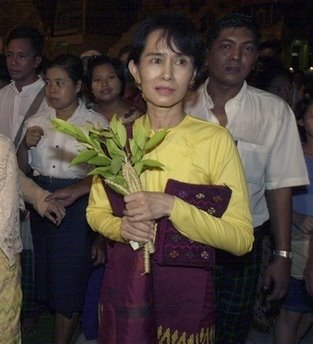


 Posts
Posts


