Than Htike Oo
Monday, 01 September 2008 22:03
Chiang Mai – The Ethnic Nationalities Council (ENC) has said that a political dialogue between Daw Aung San Suu Kyi, ethnic leaders and the military regime is crucial for Burma.
On the conclusion of the 5th Congress of the ENC held on the Thai-Burma border for five days starting on August 26, it reiterated its call for a tripartite dialogue and rejected the junta's declared 2010 general elections.
"In the current political situation, we need to resolve the political crisis by political means so we badly need this tripartite dialogue. Under such circumstances, we must focus on dialogue," Saw David Taw, spokesman of ENC told Mizzima.
"The junta's constitution is undemocratic and all the powers are vested and concentrated in the hands of the President and Commander-in-Chief. We cannot accept this. At the same time, the would-be government under this constitution cannot implement democratic norms and practices. So we cannot accept the 2010 general election either," he said.
It is learnt that 55 representatives from political parties, women, youth and other civil societies from seven ethnic States attended the congress.
The ENC statement on 'SPDC's planned 2010 general election' issued on August 28 urged the junta to hold political tripartite talks with Daw Aung San Suu Kyi and ethnic leaders which must lead to legal and a de jure government of the Union of Burma.
The congress urged the 1990 election winning parties to continue their struggle against the junta's roadmap as the 2010 general election is part of it.
The congress also called for 'Multi-Party Talk' on the Burma issue including involving neighbouring countries under the aegis of UN to resolve the political, economic and social crisis in Burma by bringing the ruling SPDC (junta) to the dialogue table.
"The opinion and stance of Burma's neigbours, India and China, are different from the international community. The consultation and coordination involving these neighbouring countries can bring Burma close to a solution. UN's intervention and mediation is not encouraging. The UN envoy could do nothing. And China and Russia always exercise their veto rights at the UN Security Council on Burma resolutions. So we are exploring another tangible solution by coordinating with neighbouring countries especially China in seeking a solution which will be acceptable to China and these neigbouring countries before putting the Burma issue again at the UNSC," U David Taw said.
On the UN's role on the Burma issue, he said, "It is very simple, the UN has no formidable force and no one pays respect to it. That is very clear. So the junta won't heed whatever resolutions the UN adopts and presents to them because China is standing firmly behind them. So we adopted this line", he added.
The UN special envoy Mr. Ibrahim Gambari recently concluded his six-day visit to Burma for political reforms in the country but the opposition forces were not encouraged or pleased with this visit and criticized him for just advocating the junta's planned 2010 general elections.
< Prev Next >
Tuesday, September 2, 2008
ENC reiterates call for tripartite dialogue


Naga Blog » Blog Archive » Voice of the Voiceless: Trust building in a divided World
Global Indigenous Dialogue
World Indigenous Day, 9 August 2007
Caux Lecture, Switzerland
Voice of the Voiceless: Trust building in a divided World
Dr Visier Sanyü
G’day mate – we say this when we greet each other in Australia. But I am one of the 4.6 million or 23% of Australians born overseas. My origins are from Nagaland and when my tribe greet each other we say: “Mhacü lie temo?”the origin of this greetings could be translated as “Come into my house and have food with me”. This greeting says something about the culture of my people. But our neighbours the Indians, say “Namaste” when they greet each other, which means “I salute the divine you”. The Jews, especially in Israel, greet each other with “shalom”, and you reply “shalom”. In most Christian traditions we say “peace be with you,” and the reply is, “and also with you”. Recently, a bishop went to a very important meeting. The PA system was not working well and the Bishop was a little embarrassed, so he pointed to the mike and said “there is something wrong with this,” and the congregation replied, “and also with you.”
We all think there is something wrong with the other religion, the other Nation, whereas the other group may think there is something wrong with us. Many indigenous people think that there is something wrong with the rest of the world. The Nation States view indigenous people as a problem. If we are honest, we all have some elements of xenophobia in us whether we are indigenous or non indigenous, but what we often forget is that we all also have some elements of Filoxenia which is the opposite of xenophobia. Filoxenia is defined as being attracted to that which is foreign, especially to foreign people, manners, or cultures. I am not trying to exhibit my knowledge of Greek to you all, but I am highlighting this love of strangers and others which exists in every culture. I have an Uncle whose name is Sovizo, which means “he who will have many guests/strangers in his home”. I thought it was an unusual name but we all have that side in us. People go crazy when they go to a festival where there are lots of foreign foods and cultures. People love the exotic – including indigenous cultures. This can be a starting point to built trust.
It is a unique gift to be an indigenous person. At the outset, I want to share with you my understanding of the term indigenous people. If we take the literal meaning of the word, every human being is an indigenous person somewhere and non indigenous somewhere else. Therefore this would make the German, Swiss, French, English and Chinese all indigenous people. The definition of the word means as originating or occurring naturally in a country or region. However, for want of a better term the word Indigenous is used for the nations and peoples who are colonized, marginalized, dispossessed of culture and even having a spiritual dislocation. It also refers to a philosophy of life–having a spiritual connection with mother and father earth. Paradoxically, it is these societies who have an unbroken link with the past, a culture of respect for nature and a deep sense of spiritual awareness for the future.
The indigenous people of the world have been defeated, marginalized, displaced and have suffered untold miseries. This is a fact, but indigenous people have also become a time bomb about to explode at any moment. What I mean by this is that the ill treatment of indigenous people by the Nations States has reached a point where their anger can cause harm to everyone – both indigenous and non-indigenous. It is true is that we have not always been easily understood by the larger communities of the world, even by people who have good and genuine intentions to achieve reconciliation. But unless the voices of the Indigenous people are heard they will become more difficult because they are angry for what they have become, and rightly so.
The indigenous people who are victims of the western world such as the Americas, known as the First Nations and the indigenous in Europe and Australia are very different in their history, political struggles, cultural heritage, and views from those of the indigenous people from Africa and Asia. Certainly the indigenous people of Asia, particularly in India, where they are still known as “tribal,” have a different approach to the indigenous movement . Whatever the nomenclature, Indigenous people are the people without political and economic power and therefore without a voice in the decision making for shaping the future of our planet.
Our world is divided between the rich and the poor, between black and white, North and South, East and West, Muslims, Jews, Christians, Indigenous and the coloniser and the list goes on. The indigenous people must ask themselves what kind of role they are going to play in trust building in this divided world.
We are deeply concerned about climate change. Not only scientists but even the ordinary people are aware that our planet is heading for a catastrophe unless we do something to change the way we live. We are all grateful to people like Al Gore who have played a major role in educating us about this crisis. Yet how many times have you read or seen the Cree prophecy long before Al Gore? Let me remind you once again, “only after the last tree has been cut down, only after the last river has been poisoned, only after the last fish caught, only then will you find that we cannot eat money”. I am sure that most people have read it at some point, but the world did not listen because it was the voice of the voiceless indigenous people. We cannot always afford to wait for an Al Gore appear to warn us about environmental issues.
I have lived in Australia for 11 years and I realise that I will never fully understand the ancient culture and wisdom of the Indigenous people of Australia. I also realise that I am only just beginning to have some insights into the Anglo-European culture, which is dominant in Australia.
Australia is not only a lucky country but a blessed land. It is the great South land of the Holy Spirit. We have also experimented with one of the most unique forms of multiculturalism. Unlike the melting pot theory elsewhere where it appears that all the cultures evolved into one culture, in Australia everyone can practice one’s own culture, speak their original language and be Australian all at the same time. Therefore, we have many Greeks and Italians in Australia who are more Greek and Italian than the people of Greece and Italy. And many Aussies love the Queen of England more than the English people. This is based on the fact that no culture is superior. Cultures are simply different from each other, but in Australia this noble concept of multiculturalism has come under serious threat under from the present government [John Howard’s]. I am that glad our indigenous people are playing a significant role in reminding our current government that Australia became multicultural ever since the first boat people arrived from England.
The relationship between the Indigenous and Settlers, as you all know, is a sad history of colonisation. Many horrible things happened to the indigenous people. For example ‘the stolen generation’ witnessed the removal of aboriginal children from their parents where they were raised by white families. There was even an eradication program of Aboriginals and rabbits in Tasmania. The positive side of this story is that today a large majority of the population are sorry for the past and want reconciliation. Unfortunately this is not happening under the present government reign. But the resilience of the Aboriginal people in their commitment to the Journey Healing is like light in the darkness.
To begin a new life with a young family in a new country is very challenging. We were very grateful to be granted Australian citizenship after four years of our stay but at the same time there were mixed feelings as I felt something was incomplete without the blessings of the Indigenous people. So we requested that they welcome us to their country. Reg Blow, the Aboriginal elder performed a smoke ceremony where our family was welcomed. After that we felt a spiritual connection to the indigenous people of the land and we still do now. I continue to work with the indigenous people of Australia and every fortnight I go to the Maya Healing centre to conduct meditation workshops.
The most recent debate in Australia is the issue of child sexual abuse amongst the indigenous community. The problem is of serious concern for the whole nation. Prime Minister John Howard has declared it as a National Emergency and has sent the army and police into Aboriginal communities to tackle this problem. This drastic action has angered many Aboriginal leaders and they see this as an election campaign tactic. Patrick Dodson, who is a prominent Aboriginal leader said, “There continues to be a wide perception in the indigenous community, and considered opinion across the nation, that the National Emergency intervention strategy is motivated by political factors in the election year. It lacks integrity”. He continues to say, “This is an Iraq-style intervention with no exit strategy or plans for long-term economic and social development”. The Aboriginals are once again made voiceless in this debate and they continue to be the most disadvantaged community in Australia. The life expectancy of an indigenous person is 17 years less than the non-indigenous. Also 22% of prisoners in Australia are indigenous but they make up less then 3% of Australia’s population.
Mahatma Gandhi was once asked what he thought of Western Civilization. He quickly replied, “I think it’s a good idea”. While western civilization, which dominates our planet today, is a good idea, it has also fallen short of providing us with a good and safe world to live in. I am aware that Westerners are the best critics of their own civilization and I am not an authority to comment on that as my own civilization is inadequate of providing the answers. But it is time to pause and ask whether this civilization has missed out something which is deeply indigenous, in a sense, deeply spiritual? Has it strayed too far in economic rationalism and military might? Can the Indigenous people fill the gap between the western-based civilization and a spiritual peaceful world that we all longed for? Can we truly offer an answer to the world‘s hunger and thirst for a spirituality that deeply satisfies so that everyone can live with dignity? Can we build a spiritual civilization?
In my part of the world there is a beautiful mountain. For thousands of years it was known to the Tibetan as Chomolungma (pronounced Jongmalunga) but the mountain did not exist until the British army officer Andrew Waugh saw it and decided to name it after his teacher George Everest. According to Waugh, “so that it may become a word among civilized Nations”. This is how the whole world knows this mountain as Mount Everest. (I am glad that you are all civilized people!!) There are numerous demonstrations of this arrogant attitude; for example, Australia was called ‘No Man’s Land’ or “Terra Nullius” because the Indigenous people were not considered then to be human by the European settlers. The list is endless in the ways this was demonstrated throughout Indigenous history. A civilization that is arrogant and that ignores the small voice will face serious consequences in the future.
As an indigenous person I would like to share some journeys of indigenous people. Search for God or pursuit of enlightenment and of a higher spiritual life is not unique to the indigenous people. But because the indigenous are deprived of political and economic powers and because of their history of displacement and dislocation, it becomes even more urgent and pertinent for them than for other communities to seek something higher than themselves. In other words, there is always a deep search for spirituality among the indigenous people. The unbroken link with the past in their culture and their close relationship with nature and the land is a factor that helps them. This is an area where the indigenous people can play a unique role in building trust in this divided world.
It is in our human nature to create God in our own image. We manipulate God and contextualize our religion to suit our own culture and our own ideology. At the end of our search we reach a fundamental point which assumes that “I am right and all other religions and views are wrong”. This is the problem in our world today, entrenched fundamentalism.
We are all deeply concerned by the rise of terrorism. It is a complex issue with many expert theories and opinions. We are horrified when Muslim Al-Qaeda kills innocent people. We are sad when the soldiers of Christian George Bush and John Howard kill innocent people. But there seems to be some justification in that killing. For example, we went into war to help the Iraqi people and in the process some innocent people were killed. And we went to Afghanistan to get rid of the Taliban so that Afghans could live in a civilized society. These are some the justifications given for killing innocent people, yet we continue to say that we cannot understand the mind of the terrorists. We cannot understand the horror of suicide bombers nor how people can be so full of hate that they are ready to blow themselves up. As an indigenous person one aspect of this complexity is quite clear and we understand why the other side is fighting for their voice. Legal sanctions blind many and they are not able to understand that innocent casualties occur on both sides; therefore they will never understand why a terrorist becomes a terrorist.
We are perplexed as to how a person can kill in the name of God? When I was a child, our village teacher told us many ancient stories and mythologies. One such story was about a good man, a righteous man. His name was Abraham (Recently a Jewish friend told me that the Ham was added by the Christians as they really like pork, but that he was actually named Abram). Growing up, I learned that Abraham was the spiritual father of three important religions: Judaism, Christianity and Islam. In this story there is a part where God asked Abraham to kill his son. As Abraham was faithful and obedient he was ready to sacrifice his own son and you all know that this did not happen. But the question here is, does that send a message to the extremists who are ready to kill in the name of God? Are the fundamentalists so “God intoxicated” that they are ready to kill in the name of God? As an indigenous person, if God were to ask me to kill my son for his names’ sake, I would tell that God that I would certainly not do that. There must be a better way, a peaceful solution to stop conflict. In fact there are many ways to bring peace. Let me share with you one aspect of my work with refugees.
The Refugee Healing Trail
I am an Advocacy officer for Refugees with the Christian World Service, National Council of Churches in Australia. I have developed a program called Refugee Healing Trail - Refugees Finding New Dreams with Us. It is a program where a group of refugees go to an Australian country town for a weekend. They are hosted by Australian families. They share their stories - their dreams, hopes and feelings of angst at starting a new life in Australia; the traumas of fleeing conflicts and wars in their country of origin, living in refugee camps and detention centers, and seeking asylum in Australia. These experiences and stories create the Refugee Healing Trail. The experience includes a public function where the community can come together to hear the refugees’ stories and see their dances, hear their songs and share their cultures. But more importantly the host families and refugees develop compassion and a deeper friendship which helps create a healthy multicultural society in Australia.
For refugees the end of the journey is often the beginning of another journey. After the initial jubilation and celebration when accepted by Australia, the refugees face a deep cultural shock as they settle down in the community. A sense of deep loneliness and desperation grips them beyond their anticipation, everything is new and strange. And they become mute. Some even miss the miserable refugee camps where they had spent many years but are too polite to express these emotions as they are expected to be grateful for their wonderful life now. For them it is not simply a change of country, it is also a cultural and spiritual dislocation. The Refugee Healing Trail is a way to help these brave people start new lives.
The most common remark from the people who hosted the Healing Trail is that it was healing for them to care for refugees. In the last Healing Trail in June this year, a school teacher who kept two refugees in her home wrote, “The entire weekend was such an uplifting experience for me. I was overwhelmed by their gratefulness, the positive outlook and love they are willing to give. They want for so little. It really was a life changing experience. It is no longer a story I can distance myself from. They are unique individuals with so much to offer. They have helped me put my life into perspective. I now know that my problems are so small and incidental. We really have nothing to worry about in comparison to what these refugees have encountered. I shall never forget this weekend for as long as I live.”
One of the first refugees who took part in the Refugee Healing Trail was David Vincent Nyuol, a Dinka from Sudan. He left his village when he was three due to the war and for 19 years lived in Kakuma refugee camp as one of the lost boys. A few months after his arrival in Australia he attended a Healing Trail. After the trip he told me that the experience was one the happiest trips in his life. Later I invited him to do a course with Initiatives of Change called Life Matters. The course gave him hope and inspiration for his people. David started with his friends a North /South Sudanese Youth Dialogue in Australia to bring reconciliation between the North and South Sudanese. He has since returned to Sudan twice and has met his mother after 22 years and his father after 20 years. He also visited Caux last year. These young Sudanese are organizing a conference of reconciliation in Sudan in 2008.
Australia has been enriched by the presence of refugees as they become part of the Australian story. Five out of eight billionaires in Australia are people whose families came to Australia as refugees. The presence of refugees in our midst challenges us to create an Australia that is caring and compassionate. The spiritual health of a nation depends on how strangers and those who speak with a small voice are welcomed into the community.
Let us look at an indigenous voice and where the indigenous way of peace making has been inspiring.
The Khonoma Public Commission
As I said earlier, originally I came from Nagaland. Naga are indigenous people who occupy the frontier of India and Burma. Under British colonial rule, the country Nagaland was divided between India and Burma. Although this is a common phenomenon of British colonialism it was very traumatic in the case of the Naga people. The palace of the chief of Longwa in Nagaland was divided in such a way that his kitchen went to Burma and his bedroom went to India. In 1947, the Naga National Council declared Nagaland independent from Britain a day before India’s Independence Day, but both India and Britain ignored this and India invaded Nagaland after the British left the subcontinent.
Gandhi promised the Nagas that they will have their independence, but sadly he was soon assassinated.
We have fought for our independence from India and Burma for the last 60 years since the British left the subcontinent of India. In this war we lost some 150,000 thousand lives. But in our struggle many things went wrong and our revolution began to devour our own children. In the process every family in Nagaland has been affected in one way or another. The national movement splintered into four factions in the ‘80s and by early ‘90s factional fights and fratricide became a daily scene.
A.Z Phizo, the father of the Naga nation, was born in my village and my village Khonoma made significant sacrifices for our independence movement. But very early on in the movement divisions /fractures emerged. Mistrust and divisions led to the loss of many lives.
One of our most prominent leaders, Sakhrie, was the man who gave the intellectual ideology to our independence movement. He was killed because the militant group felt that he was compromising our stand of total sovereignty. But his murder in turn was the trigger that marked an escalation of revenge and divisions within families and clans. Mistrust and hatred grew amongst our people. It took 50 long and painful years for our villagers to come to the point of reconciliation. Last year all the clans of Khonoma unitedly erected a monolith to commemorate Sakhrie’s death anniversary as a symbol of the healing and reconciliation that has taken place.
This peace process did not come easily. It took years of dedication, a willingness to bring peace and some indigenous methods of settling disputes. Key to this process was Niketu Iralu who has worked with Initiatives of Change in many countries. He returned to our village some years ago to work for reconciliation as he was deeply disturbed by the killings in Nagaland. With the villager elders and the youth the village formed the Khonoma Public Commission.
The role of the commission was to deliberate on the issues and on the wrongs, hurts and misunderstandings that have produced distrust, resentment and divisions in the village. Guided by the truth of history that “hurts not transformed are always transferred,” the Commission extended its assistance wherever there was a need to forgive or be forgiven, for closure, and to create mutual goodwill as a result of restitutions made, accepted or reciprocated.
The people of Khonoma expressed their prayer and longing for inner healing and liberation so that her sons and daughters might grow to God’s fullest stature for each one of them. The Commission members accepted the task given to them pledging to rise above motivations for personal or clan advantage so that the truth and the greater good of the village might prevail.
The task was to resolve yesterday’s wounds and divisions to bring healings to enable today’s generation to build a better tomorrow. “We must be able to remember sufficiently the pain of the past, so that it can safely be forgotten” Given the moral and spiritual nature of the task of the Commission, all its members were required to be committed to Khonoma achieving together what is right and best for all before God and man. Believing in the utmost importance of the gift of healing, the Commission declared their humble commitment to God and to one another to pursue the common objective, trusting in the power of God to guide them and to change what has gone wrong in our village starting with the commission members.
The Commission members made numerous journeys and visits to facilitate sensitive connections and honest interactions between individuals and the clans, in the space and atmosphere of trust and confidence. Heartfelt apologies were made for wounds inflicted during some of the most difficult years of the Naga struggle. Bitterness, doubts, fears, guilt and regrets held onto for years were expressed and heard. Mutual forgiveness and understanding thus became the liberating experience of all brought to God in equal need of His grace and blessing to start afresh.
The Commission gave sufficient time and opportunity for reviews of all the cases and grievances were heard several times.
The Commission identified 22 killings. They helped the wounded estranged families and clans to meet and listen to one another for the larger interest of our people. Gradually, those whose side had caused wounds asked for forgiveness. Those wounded graciously forgave, resulting in the beginning of healing and reconciliation after many years.
The Commission concluded that:
The Naga struggle was the natural, honorable response of the Naga people to the wide-ranging changes taking place in the world around them. That their struggle for independence was not a mistake but the methods taken had not been well thought and examined.
Mistakes were also caused under serious pressure by the Indian army as the army went all out to crush the Naga movement and occupy our land.
Finally, the Commission appeals to the people of Khonoma that differences or disputes arising in the future are not allowed to turn us away from one another and thereby weaken us, because they are meant to make us stronger by our willingness to discover and rise together to what is right and best for all.
The search for reconciliation within Khonoma was launched with an observance of Naga indigenous ritual (gena) and prayer day by observing silence, “turning the searchlight inward” to discover where one or one’s side has been wrong in order to make a start. The day started with the whole village remaining silent for 3 minutes as soon as a sign was given at 6 am. A letter went to all the people of Khonoma living away from home that the time of silence on that day was to be used to listen to one’s conscience to examine where one has been wrong and not on where others had been wrong. Our village elder Sebi later said that he was so struck by the completeness of the silence that morning. In his own words, “even the animals became aware that something was happening. They went away to hide themselves. The silence moved me deeply and I felt God had come down to our village”.
I would also like to quote Niketu’s own words, “When the Khonoma Public Commission got to work to fulfill the task the village had entrusted to its members, a unique opportunity was given to the people of Khonoma to take a calm, honest look at what had been whispering in the bottom of their hearts that had been causing dissatisfaction in their souls and kept our people tentative and distrustful. The mutual resentment towards one another had seriously reduced the capacity of the village to face the rapid changes the world started to bring to them”.
What renders us voiceless? What depth of silence is required within the clamoring voices of this civilization that we can learn to listen to the whisper within our hearts which calls us to humaneness and dignity?
In conclusion, let me share my own journey in this story. I was born and brought up in Khonoma village. When I was six my village was burnt down by the Indian army and we lived in the jungle for three years. We survived on wild vegetables and meat from wild animals, including monkeys. My brother joined the Naga army and went to Pakistan to obtain arms. He was later arrested and went to prison. My father was the village chief and was tortured and arrested many times. Like all the other Nagas, life in Khonoma was very deplorable in those days. Later I was educated in some of the best institutions in India and I became the Head of the History Department in Nagaland University, the youngest head of Department in the University at that time.
In 1996 at the height of factional fighting, I left Nagaland and moved to Australia with my wife and three children; our youngest son turned five the day we arrived. (My wife Pari and my daughter Visopiano are here with me today). Two months after I left Nagaland my colleague in the University was assassinated and my friend was shot in his own house. War and oppression create many types of casualties and people suffer in many different ways, such as drug abuse, poverty, dysfunctional families, mistrust, corruption, sexual abuse, mental illness and so on. Since we left Nagaland I have lost two brothers, one sister and five nephews. One brother died of cancer and the other brother died of alcoholism. One nephew died of alcoholism, one from drugs, and two have died from AIDS. For me, like many indigenous people, life could be a daily battle.
My story is not a unique story but just a part of the whole scenario as all the Naga families have experienced the same fate in our struggle. There are many orphans in Nagaland who witnessed their own parents killed in front of them.
Indigenous people have a deep spirituality. I also consider myself to be a spiritual person but recently an encounter with a non-indigenous person deeply shook my belief system. I have a great respect for a Professor of Theology, an Anglo Australian who has previously taught me. He is a compassionate, caring and an understanding man. He is truly a guru and a holy man. Whilst organizing a conference a little misunderstanding arose and I felt that he was not honest in one area and I shared this with him. He responded with integrity and genuinely apologized for his mistake. I could see from his eyes that he meant what he said. After this incident I was in the lift on my way to my office and I noticed that my hands were shaking. His graciousness had deeply touched me. This experience taught me that I have often taken a short cut or the easy way of doing things or I do the wrong things and give the flimsy excuse that it’s an indigenous way of doing things and expect other people to understand me because I am an Indigenous person. But if we want to contribute our wisdom and our spiritually to the rest of the world we must be honest first with ourselves and do things the right way, which is not always easy. Other nations and people have done wrong things to us, but we also do wrong things to ourselves.
I am reminded of my first encounter with the idea of Initiatives of Change when my friend Kolezo was able to forgive the people who were responsible for the death of his brother. His words still ring true today. He said “I have been too sensitive to how much others have hurt me but forgotten how much I have hurt others. If I have the courage to kill a man why can’t I also have the courage to love him enough to make him a different man?”
I believe in the survival of the Naga people. In spite of the powerlessness and all the injustices done to us, we have never failed to rise up again and again. The dynamics and splendor of our culture must survive for the good of humanity. Our loss will be the world’s loss too. No doubt we have to critically and wisely examine ourselves as we are our own greatest enemies, but our voice must be heard and it should not remain mute.
I conclude with a prayer to the indigenous female God of my tribe Ukepenuopfü. About the period when Buddha was receiving the enlightenment and the time when the prophets in Israel were saying great wisdom, our people were also finding and discovering their own God. It was a female God, not a goddess. When the missionaries came to our land they made her a male God and used her name to translate Jehovah. So today we have a female God who is a male.
O Ukenuopfü,
You have given birth to the human race
All the living creatures of the Earth
All the plants and the tress
Help me to care for them and treat them as my brothers and sisters
Bless my clan and my village
Provide us with plenty of rice to eat and wine to drink
So that I can perform the Feast of Merit for my clan and village
And help me to make the whole world my clan and my village
You speak to me in my dreams and in my heart
You give direction for my daily life
Help me to breath in love and exhale fear from within me
Hold my hands in my journey as I am afraid to take the step alone
Make my hands clean and my heart pure
Make me free and strong
So that I can help my brother to carry his basket across the river
Ukepenuopfü, help us create a world fill with spiritual people
May we live in total harmony with you.
Bangkok Post | General news | Right and wrong and ridiculous
Right and wrong and ridiculous
SARITDET MARUKATAT
Prime Minister Samak Sundaravej made two serious mistakes last week.
The first has already become a hot topic. Last Tuesday he urged the media to make a decision between staying with the government side, or with the People's Alliance for Democracy camp.
For him the answer to his call might appear simple, given what the PAD was doing - occupying Government House for eight days now. The prime minister on Sunday questioned the media about the principle of balanced reporting, which he said should not apply to street gangsters like the PAD.
COMMENTARY
But the press, like many people on the streets, will be very uncomfortable when it comes to picking either one: the elected government or the PAD. Mr Samak has said time and again that his work is supported by a mandate from voters who selected the People Power party as their No. 1 choice in the Dec 23 elections. The government is a legitimate body running the country. So why does he have to listen to the voices of those PAD members shouting for his resignation?
The prime minister is right. The government has come about through the democratic process. But this does not mean he can do anything at will. The mandate should be used to serve the public interest. But the faces in his cabinet clearly show that public benefit comes after his own survival, as he has to keep all factions in the PPP happy by rewarding them with cabinet portfolios.
What the PAD has been doing is also disappointing. It is ridiculous to consider the seizure of Government House as showing the "progress of democracy". PAD members would also be happy to see army generals intervene by staging another coup, so long as it is aimed at kicking Mr Samak out of office.
So far, the anti-government group cannot supply a rationale for its decision to keep the rally going - even though its demands, particularly the one for the government to step back from any attempt to kill the charter, have been met. The PAD is showing that it is good at making both friends and foes. Those siding with the PAD are praised for their courage and fighting spirit. Anybody complaining about the PAD rally - from students fed up with noisy campaigns, to drivers tired of traffic jams - are branded as immature because they lack the spirit of democracy.
Another mistake of PM Samak is his idea for restoring democracy in Burma. He told visiting UN special envoy Ibrahim Gambari on Aug 25, that Aung San Suu Kyi should be put aside if other countries want to see a return of democracy to Burma. "Aung San Suu Kyi is one thing. The international community should talk about how to bring about democracy in Burma and focus on the constitution and the elections," he said.
Mr Samak will try to sell this idea to the United Nations this month, when he takes the podium at the UN General Assembly in New York. And as chairman of the Association of Southeast Asian Nations, to what extent will his idea shape the direction of the regional grouping, remains to be seen.
Thinking about what the prime minister plans to do with this idea is already scary and should be good news for the Burmese military generals. The reality is that it is not logical to separate the Nobel peace prize laureate from democracy in Burma, just like it does not make sense trying to separate ousted prime minister Thaksin Shinawatra from the PPP. Mrs Suu Kyi is the symbol of democracy in Burma. She led the National League for Democracy to a landslide victory in the 1990 elections. But 18 years later, she is still under arrest.
As long as she is not included in talks about democracy in Burma, the problem will never end.
In fact, it is very surprising to see Mr Samak think the way he does. The prime minister should have more understanding and should sympathise with Mrs Suu Kyi, instead of alienating her from the political picture in Burma.
Mr Samak complains about the threat from outside parliament against his government, which was elected under the democratic process. Mrs Suu Kyi was also democratically elected, but the Burmese generals intentionally ignored the poll results.
Saritdet Marukatat is News Editor, Bangkok Post.
Emergency declared in Thai capital after clashes
AFP
Thailand's embattled prime minister declared a state of emergency in the capital Tuesday after thousands of his opponents and supporters clashed in the worst street violence here in more than a decade.
One person was killed and dozens were injured, some of them from gunshot wounds, as a week of mass protests calling for the resignation of Prime Minister Samak Sundaravej spilled over into blooshed overnight.
Samak had previously said he would not use force to push out the thousands of protesters who have occupied the main government complex since last week, but after the violence said it was now time for them to go.
"They must be moved from the Government House," Samak told a nationally televised news conference. "I had no other choice but to declare a state of emergency in Bangkok in order to solve the problem for once and for all."
Samak gave the army the power to break up any gathering of more than five people and to force people to leave any location, setting the stage for a showdown at Government House, a site that includes Samak's offices.
But a leader of the People's Alliance for Democracy (PAD), a well-organised movement that has been pushing for the premier to stand down after just seven months in office, urged his supporters to stay put.
"You don't have to be afraid of the state of emergency," media mogul Sondhi Limthongkul told thousands of people assembled at the protest camp.
Thai police called in army reinforcements early Tuesday to rein in the protests, setting nerves on edge in a country that has seen 18 military coups since the end of absolute monarchy in 1932.
Thai television showed pro- and anti-government protesters wearing helmets and carrying batons running though the streets, fighting with each other and throwing rocks, as people lay bleeding on the street.
One person died and 44 were injured in the clashes, a spokesman for the national emergency centre said.
PAD supporters stormed Samak's Government House complex one week ago, and thousands are still squatting on the grounds.
The activists accuse Samak of acting on behalf of ousted prime minister Thaksin Shinawatra, who now lives in exile in Britain after the same protest group helped provoked a military coup that toppled his government in 2006.
No one was killed during that coup, making this the deadliest political violence since the Bloody May massacre in 1992 when dozens of pro-democracy activists were killed on the same streets as today's protests.
The protests which began a week ago expanded nationwide over the weekend to force the temporary closure of three regional airports and halt railway services.
They further scaled up Monday when Thailand's biggest union called for a strike to add to the pressure on Samak, threatening to disrupt Bangkok's water and power supplies from Wednesday.
PAD gathers most of its support from Bangkok's traditional elite and a portion of the middle class. Its leaders openly disparage the merit of votes cast by the nation's rural poor, who have thrown their support behind Thaksin and now Samak.
Thaksin's allies still fill many top seats in government, and Samak won elections in December by campaigning as Thaksin's proxy.
In addition to demanding that Samak resign, PAD wants an overhaul of Thailand's system of government, saying only 30 percent of seats in parliament should be elected, with the rest appointed.
Japan's Aso leads race for next prime minister | Reuters
Reuters
By Chisa Fujioka
TOKYO (Reuters) - Former foreign minister Taro Aso leads the race to become Japanese prime minister, analysts and media said on Tuesday, after unpopular Yasuo Fukuda became the second leader to abruptly resign in less than a year.
With a policy vacuum threatening an economy teetering on the brink of recession, 67-year-old Aso said he was a suitable candidate to head the country.
If he wins the leadership in what would be his fourth attempt, the former Olympic sharpshooter and comic-book fan will be Japan's 11th prime minister in 15 years.
"I think (Fukuda) felt he had work that was left undone, and he said he wanted it to be carried out," Aso told a news conference, ahead of a leadership vote in three weeks.
"As someone who discussed these issues with him, including the economic package, I think I have the credentials to take that on," said the veteran lawmaker, currently LDP secretary-general.
Japan's Nikkkei share average fell 1.8 percent on foreign nervousness that a second Japanese leader seemed to have just given up the job. Government bond futures jumped, despite analysts warning an Aso government might seek to spend Japan's way out of its economic woes.
Fukuda, 72, had been struggling to cope with a divided parliament where opposition parties have the power to delay legislation, and his sudden exit raised questions about his conservative party's ability to cling to power or even hold together after ruling Japan for most of the past 53 years.
He produced an economic package last week, with a promise of tax cuts and $16.5 billion in new spending this year to help ease the pain of high oil and food prices, but only saw his government's ratings slide further.
ASO POPULAR
Aso is seen as the LDP's best bet to rebuild voter support. However, some analysts note the same was said when he lost to Fukuda in the LDP's last leadership race last year, when previous prime minister Shinzo Abe also suddenly quit.
The departure of Fukuda, a moderate conservative who favors close ties with Japan's Asian neighbors, does not automatically mean an early election as the LDP dominates parliament's lower house, which will vote on the leadership.
However, the next prime minister might go to the polls ahead of a deadline of September next year to take advantage of any recovery in public support.
A complete deadlock in parliament, where the opposition controls the upper house and can stall legislation, could also force the prime minister to call an election reluctantly.
The ruling coalition is almost certain to lose seats, if not its majority, in an election but voters say they want a turn to pick their government.
"As two LDP prime ministers resigned in a row, I think it is necessary to call a general election within this year," said Chika Hasegawa, 45, a patent agency employee.
"The LDP is now in tatters, why not let the Democratic Party take charge and see how it goes."
If the LDP passes over the outspoken Aso again, other potential leadership contenders are Economics Minister Kaoru Yosano, known for his commitment to fixing Japan's tattered finances, and conservative Yuriko Koike, who was briefly last year the country's first female defense minister.
Popular female lawmaker Seiko Noda, 47 and currently the minister in charge of consumer affairs, has also been mentioned as a possible fresh face at the top.
Analysts said the next LDP prime minister would face similar woes to Fukuda, given the parliamentary deadlock and the party's rusting political machine and scandal-tainted image.
While they initially shrugged off the now familiar scenario of no national leader, market analysts said Japan's stock and bond markets would likely sag after Fukuda's departure, as it raised doubts over policy paralysis and may spur debt-funded spending.
Japan's economy shrank in the second quarter and is widely seen as heading for a recession, prompting Aso to suggest delaying efforts to ease the government's sky-high debt -- the highest in the OECD -- and seek instead to stimulate the economy.
That would likely mean issuing more government debt to pay for new spending, putting pressure on bond yields.
One political scenario has the two big parties fraying or even collapsing. Talk of a broad realignment has been simmering since the opposition took control of the upper house last year, but it remains to be seem if early moves pick up steam.
(Additional reporting by Linda Sieg and Naoto Okamura; Editing by Rodney Joyce)
Mori's Skyscraper Opens in China - WSJ.com

Mori's Skyscraper Opens in China - WSJ.com
Mori's Skyscraper Opens in China
Building Represents
Developer's Big Bet
In Crowded Market
By JAMES T. AREDDY
September 2, 2008; Page B2
SHANGHAI -- In a big bet on China's post-Olympics economy, Japanese developer Minoru Mori opened the country's tallest skyscraper in a challenging environment.
Members of the public were allowed starting Saturday to enter the observatory near the top of the 492-meter, 101-floor Shanghai World Financial Center, following the opening of some other parts of the tower in recent days.
Reuters
The Shanghai World Financial Centre is on track to reach 90% occupancy within a year, according to its developer and biggest shareholder.
Mr. Mori, whose family-owned company Mori Building Co. owns 70% of the $1.13 billion project, now faces a difficult environment to profit on one of the world's tallest buildings.
In an interview Friday, the 74-year-old developer said he remains confident the building will be 90% full within a year, despite a global credit crunch that is starting to affect China's economy, too. But he also acknowledged that some of the Wall Street firms he was counting on to occupy his tower have scaled back ambitions, in particular Morgan Stanley and Lehman Brothers Holdings Inc.
Some financial executives have told him that "the liberalization of the financial markets [in China] were not enough to have a full business line here," Mr. Mori said.
A spokesman for Morgan Stanley, which through an investment fund owns about 9% of the Shanghai World Financial Center project, declined to comment. Lehman said in a statement: "Given current market conditions and future supply coming onto market, we do not have a pressing need to make commitment at this stage and are evaluating different options available."
One of Tokyo's most prominent developers, Mr. Mori moved more quickly in the early 1990s than almost anyone to capitalize on China's plans to make Shanghai into a financial center. The 14 years he spent on the Shanghai World Financial Center was almost as long as the 17 years required to get his flagship Tokyo development, Roppongi Hills, opened in 2003.
The project was delayed by everything from a regional financial crisis in the late 1990s to strange rumors in China that a circular space planned for the building's peak was a ploy by Mr. Mori to embed the Japanese "rising sun" in Shanghai's skyline.
Now, the building is opening its doors into a crowded market, months behind schedule and with 26 office tenants for almost 70 floors of space. But Mr. Mori shows no concern.
"My past experience shows me that if you have the strength to remain when others give up, opportunity arises," Mr. Mori said. "There is always a cycle." Unexpected new tenants, like Middle Eastern investment funds, will help fill up space, he added.
Mr. Mori isn't the only developer putting his mark on Shanghai's Pudong financial district, notoriously empty a decade ago but now one of the city's priciest areas. About 300 floors of office-building space are nearing completion within a few minutes' walk of Mr. Mori's complex, not including an even taller tower slated to open next door in 2014.
The World Financial Center, designed by New York-based architects Kohn Pedersen Fox Associates, is considered the world's second-tallest finished building, some 17 meters short of Taiwan's Taipei 101, according to a database maintained by Emporis Corp. A building under construction in Dubai will be even taller -- its height has already passed 630 meters.
The Shanghai building has a glass exterior that appears to twist as it narrows toward a flattened wedge at the top. Mr. Mori describes the boxy opening at the top -- which replaced the previously planned circle -- as "like a credit card, which is a symbol of financial development."
Mori officials say they will maintain premium lease rates but concede that their posted price of $3 per day per square meter of net space applies only to a fraction of the tower. "These buildings don't command a premium rental when they first come onto the market," said Tim O'Connor, senior director at CB Richard Ellis Property Consultants Ltd.
Atop Mr. Mori's building, a tunnel with glass floors and walls offers a view of Shanghai that is as dizzying as it is dazzling. A skyline of some of the world's tallest towers unfolds below, and people on the streets appear as imperceptible specks. The lobby of its Park Hyatt hotel stands on floor 87.
The 91 elevators that cut through the building, mostly its middle, can make for a confusing walk around office floors, while ventilation-system placement necessitates smallish windows.
"It probably is the highest-quality building in Shanghai. But the bang for the buck I'm not sure is worth it," said Theodore Jusin Novak, a senior adviser at property adviser Debenham Tie Leung in Shanghai. "It's not leasing as well as expected or hoped."
"It's a landmark building and no one will miss it," said Roy Chan, a partner at DLA Piper, which leased about two-thirds of floor 36.
Write to James T. Areddy at james.areddy@wsj.com
Monday, September 1, 2008
Far Eastern Economic Review | China Grows 'Faster, Higher, Stronger'

August 2008
China Grows 'Faster, Higher, Stronger'
by James A. Dorn
Posted August 11, 2008
From an economic perspective, no country better represents the Olympic motto—“faster, higher, stronger”—than China. During the last 30 years of opening to the outside world and economic liberalization, China has grown to be the world’s third-largest trading nation and fourth-largest economy. More important, the increase in economic freedom has widened the range of personal choices and given millions of people the opportunity to leave the state sector and “jump into the sea of private enterprise.”
During the Cultural Revolution, central planning dominated, capitalism was a crime, and Mao Zedong called upon people to “strike hard against the slightest sign of private ownership.” Today most prices are set by market demand and supply, capitalists can join the Chinese Communist Party, and the PRC constitution proclaims, “The lawful private property of citizens is inviolable.”
The Property Law, enacted in 2007, gives further protection to the private sector and to individual property rights. That legislation reflects the political influence of the growing middle class and private entrepreneurs who have a large stake in continued economic liberalization, which has allowed them a lifestyle few would have dreamed of just a short time ago. Millions of people now enjoy the privacy of their own homes and cars, the freedom to travel, and the enormous benefits of cell phones and the Internet.
While China would win an Olympic gold medal for its economic performance since 1978, it would clearly not be a medalist in the quest for personal freedom. But China also would not be in last place. In 1995, Chinese journalist Jianying Zha wrote in her book China Pop, “The economic reforms have created new opportunities, new dreams and to some extent a new atmosphere and new mindsets. . . . There is a growing sense of increased space for personal freedom.” Many would agree.
It would be foolish to focus only on China’s flaws without recognizing the progress made in improving people’s lives—progress due to the removal of restrictions on economic and personal choices, rather than to central planning. In particular, globalization and the information revolution have played crucial roles in China’s development. Without the benefits of trade, China would still be poor.
The slow pace of political reform and the violation of human rights should be of serious concern, but using trade sanctions against China to promote human rights would do the opposite. Unlike trade, protectionism denies individuals the freedom to expand their effective alternatives, thus limiting their choices. Sanctions would fuel the flames of economic nationalism, harm U.S. consumers, and embolden hardliners in Beijing.
It makes no sense to use such a blunt instrument in an attempt to “advance” human rights in China when trade itself is an important human right. Instead, the United States can best help the Chinese people by continuing its policy of engagement and avoiding destructive protectionism.
Trade increases the wealth of nations and reduces the risk of conflict. Hong Kong, the world’s freest economy, learned long ago the benefits of international trade and the rule of law. Its development strategy—“small government, big market”—has clearly influenced the Mainland, and the “freedom virus” is spreading.
The challenge for China’s new generation of leaders is to continue on the path of “peaceful development” and not let politics get in the way of the market. If China is to prosper and become the world’s largest economy, Beijing needs to allow market socialism to wither away and market liberalism to flourish. That transformation would require a transparent and just legal system that fully protects people’s rights to life, liberty and property.
To help China along that path, the United States should continue the Strategic Economic Dialogue initiated by Presidents Bush and Hu Jintao. Two other positive steps would be to end the discrimination against China in antidumping cases by recognizing the PRC as a market economy, and admit China to the G-8 as a normal rising power. Those acts of friendship would reassure Beijing that the United States welcomes China’s rise and does not view the Middle Kingdom as an inevitable enemy. At the same time, we should not ignore the human rights violations that do occur and use diplomatic pressure to help move China toward a legitimate rule of law.
While tourists admire the compelling architecture in Beijing and other cities, they should not forget that what counts in the long run is not the physical infrastructure but the formal and informal institutions that limit government power and enhance freedom.
Ultimately, the Chinese people must determine the form of their governmental and other institutions, but the United States can help by upholding the same market-liberal principles it wants China to adopt. Finally, by adhering to a free-trade agenda, the U.S. government can show the Chinese people that Americans practice what they preach.
Mr. Dorn is a China specialist at the Cato Institute and editor of the Cato Journal. He is coeditor of “China’s Future: Constructive Partner or Emerging Threat?”(CATO Institute Press, 2000).
Far Eastern Economic Review | China's Energy Woes

June 2008
China's Energy Woes
by Daniel Ikenson
Posted June 30, 2008
The process of creative destruction, Joseph Schumpeter wrote, is “the essential fact about capitalism.” The old is destroyed by the new and improved. But it is an essential fact that the Chinese leadership is unwilling to accept. Thus for 30 years, with great success, China has harnessed capitalism without embracing it.
But as the economy grows and diversifies, the capacity for success with the old formula is becoming more doubtful. There are too many interests to balance; too many signals to manage. Yet the leadership’s response to rising energy prices—the most pressing economic issue of our time—suggests that it has no intention of changing course anytime soon.
China has long provided fuel subsidies, which have been blamed for encouraging wasteful consumption, propping up inefficient industries, degrading the environment, and forcing energy consumers in other countries to pay higher prices. But record oil and coal prices, driven in no small part by economic growth in China, have made it that much more expensive to subsidize gasoline, diesel, and electricity consumption.
Add to that the growing acceptance around the world that taxing carbon emissions is the proper response to inefficient production processes and suddenly the cost of those Chinese subsidies, in direct financial terms, could double. It would seem that now is the perfect time for the government to announce the cessation of subsidies, price caps, and other interventions in energy markets, altogether.
If energy prices and output were determined by supply and demand, progress could be achieved on a whole host of important Chinese policy objectives, from greater energy efficiency and environmental restoration to eliminating economic deadwood and reducing trade imbalances. But instead on June 20 the government announced retail price hikes (subsidy reductions) for diesel, gasoline, jet fuel and electricity, and it re-established price caps on thermal coal, which had already been freed from government control. To prevent coal producers from chasing higher prices abroad, and to hedge against the increased likelihood of coal shortages, the government is expected to ban coal exports (which are already limited) in the near future.
The subsidy reductions are a step in the right direction, but the government is still setting prices without any capacity to accurately project supply and demand. Its overarching goal, of course, is not efficiency or economic rationalization or greater trade balance, but social harmony, which in this context means directing benefits to those interests that are most restive and burdening the relatively quiescent with the costs.
The coal price caps, in conjunction with electricity tariff hikes, are a bid to allow energy companies—in which millions of agitated Chinese hold equity—the opportunity to finally squeeze out profits and to avoid electricity shortages during the peak summer months. Retail prices had been capped in a bid to contain inflation.
But energy price inflation would be more efficiently addressed if the government allowed the market to determine the value of the Chinese Yuan. Most bets are that the Yuan would appreciate considerably, reducing prices in China for imported oil and coal. That policy move alone might encourage more consumption of energy, but not necessarily, if the subsidies and price caps were abandoned too.
More than ever, the Chinese economy needs market signals to allocate costly resources. The government has played a central role in that respect, but as to be expected, it has not allocated efficiently. Unproductive, unworthy state-owned enterprises have squandered resources, while more efficient factories and industries have gone wanting for optimal supplies.
Market-determined energy prices would lead to greater energy use by the factories and industries that can justify their energy consumption—businesses that can cover those costs and make profits—and less consumption by inefficient businesses. Companies that cannot stay afloat without subsidized energy should be allowed to go under. If they can’t manage with today’s energy prices, they will always be a drag on the economy. And the sooner they exit the market, the sooner the efficient producers will strengthen.
Of course higher energy prices and a stronger currency would likely reduce foreign demand for Chinese exports, and would encourage Chinese consumption of imports. Achieving greater trade balance and shifting the focus of the Chinese economy away from exports and toward greater consumption has been a stated goal of the leadership.
The United States and Europe share that goal for China. Earlier this month, U.S. Treasury Secretary Henry Paulson, who has been measured and rational in his assessment of the causes of the problems afflicting the bilateral relationship, urged China to abandon its energy market interventions, which he considers a structural impediment to greater trade balance. Mr. Paulson’s approach is distinct from that of the U.S. Congress, which is less inclined to think long-term and structural and more willing to countervail the perceived effects of Chinese energy and trade policies through sanctions.
The Chinese government’s decision to continue to play a central role in energy markets will continue to be a source of international friction. It certainly strengthens the hand of those who will act if China doesn’t.
In its continuing bid to avoid Schumpeter’s predicition, the Chinese leadership should sacrifice it interventionist energy policy.
Mr. Daniel Ikenson is associate director of the Cato Institute’s Center for Trade Policy Studies.
Japan PM resigns to avoid `political vacuum'
DAILY YOMIURI ONLINE
Japan PM resigns to avoid `political vacuum'
TOKYO (AP) -- Japan's unpopular prime minister, Yasuo Fukuda, announced his resignation Monday after less than a year in office.
Fukuda, in a hastily arranged news conference Monday evening, said he was stepping down to avoid a "political vacuum" at the head of the world's second-largest economy.
"My decision is based on what I thought the future political situation ought to be," Fukuda said.
The 72-year-old has suffered from chronically low support ratings as he presided over a parliament split between the ruling party and the opposition.
The move extends Japan's stretch of political instability of recent years. Fukuda's predecessor, Shinzo Abe, resigned last September after barely a year in office.
Fukuda did not specify when the resignation would take effect, but presumably he will stay in office until the ruling Liberal Democratic Party can select a new leader to put before parliament for a vote.
Asia Times Online ::A blow for Asian wealth funds
A blow for Asian wealth funds
By Julio Godoy
BERLIN - Germany's decision to introduce controls on investments from sovereign wealth funds (SWFs) in strategic domestic sectors is an indicator of growing protectionism in European and other industrialized countries against the neo-liberal globalization they once masterminded.
The German government announced on April 9 it was introducing controls on investments by SWFs, investment funds managed by oil-rich Arab states and other rapidly developing countries such as China, Singapore and India. A SWF is a state-owned fund that
invests capital comprising financial assets such as stocks, bonds, property or other financial instruments.
The German Ministry for Labor can now stop any major venture in local firms, especially in public services, if such investments threaten local jobs or if they are sought in strategic sectors such as electricity generation, a government spokesperson said at a press conference in Berlin.
Automatic controls will kick in if non-European Union investors want more than a 25% stake, the spokesperson added. The government can refuse any investment in what it considers strategic sectors, or when the venture is seen to threaten national security.
If the SWF does not report its stake, the government can force it to resell its shares.
The decision follows fears that the SWFs will take control of strategic sectors. In France, the possibility that the China Investment Corporation, a state investment fund, and other Arab funds, could take up to 10% of the private oil company Total, has launched a debate on the need to establish controls against such ventures.
The company's chief executive officer, Christophe de Margerie, has tried to defend the investments. "We were the ones who went searching for Chinese investment," de Margerie told the Paris newspaper Libération. He emphasized that Total had asked the Chinese fund not to invest beyond 3% of the company's capital.
De Margerie said that during the 1980s, the Abu Dhabi Investment Authority (Adia) funds, owned by the United Arab Emirates, controlled up to 9% of Total's capital, but then "nobody was paying attention".
Until the global financial crisis broke out in the US in the summer of 2007, provoked by the collapse of the real estate market and the highly speculative financial instruments associated with subprime mortgages, few were paying attention to SWFs. Recent high-profile investments made by SWFs, especially in US banks in need of fresh liquidity, have put them in the spotlight.
"Today it has become fashionable to question the SWFs," de Margerie said. But "these funds are not trying to control our companies and societies. They say so, and I believe them."
Not everybody believes this. Christian Chavagneux, editor of the French monthly Alternatives Economiques, says massive investments by the SWFs can endanger a company if the funds disinvest as suddenly and as massively as they poured money into the firm.
"Last November, the Singaporean fund Temasek did sell a tenth of its shares of the Bank of China, thus sending the market price of the bank's shares down the pipes," Chavagneux told Inter Press Service. "You can imagine what can happen if a similar disinvestment takes place suddenly in one of the battered banks in the US or Germany."
"We can also imagine that the states controlling these sovereign funds could be tempted to use their financial leverage as a foreign policy weapon, or to use Western companies as a learning field for their young leaders. Of course, these are all speculations."
Similar speculation is being aired in many of the industrialized world's capitals, and has moved the Paris-based Organization for Economic Cooperation and Development (OECD) to issue a warning urging SWFs to observe "high standards of transparency and governance" to avoid further protectionist measures in the industrialized world.
The OECD represents the 30 most industrialized countries, from the US, most EU members, to Australia, Japan and South Korea, and also Mexico.
In an oblique warning, OECD director general Angel Gurría wrote to the finance ministries of the group of seven most industrialized countries (G7) on April 9 that "observance of high standards of transparency and governance [by SWFs] will help recipient countries implement their commitments and recommendations for preserving open markets while safeguarding national security".
The letter says the OECD countries will "remain committed to keeping their investment frontiers open to sovereign wealth funds as long as these funds invest for commercial, not political, ends".
OECD members have agreed to base their investment policies on SWFs on existing instruments that call for fair treatment of investors. But these investment instruments also recognize the right of member countries to take action to protect their national security.
In another statement on April 9, the OECD pointed out that "investments by SWFs can raise concerns as to whether their objectives are commercial or driven by political, defense or foreign policy considerations".
Although more than 20 countries have these funds, Simon Johnson, economic counselor and director of the International Monetary Fund's research department, says they "remain quite concentrated, with the top five funds accounting for about 70% of total assets".
But the concern in the OECD countries arises from the main funds' home countries: seven of the 10 largest funds belong to Algeria, China, Kuwait, Libya, Qatar, Saudi Arabia and the United Arab Emirates.
According to some estimates, global SWF investments added to about $48 billion in 2007, a 165% increase over 2006. The SWFs' total assets were around $3.3 trillion in 2007, an 18% increase over the previous year.
When other assets owned by the SWFs' home countries are included, such as pension funds and their share of their own public services, their total assets in 2007 came to $14.5 trillion . The US gross domestic product in 2007 was $12 trillion.
(Inter Press Service)
Asia Times Online -
COMMENT
West's loss of Gulf funds East's gain
By Meena Janardhan
DUBAI - As politically motivated restrictions on investments by oil-rich countries intensify in the West, the sovereign wealth funds (SWFs) of the Gulf countries could opt to invest in Asia and other emerging markets despite attractive valuations in the slowing US and European markets.
The United Arab Emirates and a few other countries sought at this year's World Economic Forum in Davos in January to allay Western fears by stressing that the funds were strictly commercial and not political threats.
Sultan Ahmad bin Sulayem, chairman of the Dubai World holding company, warned that Gulf funds could stop investing in developed markets if their motives were continuously questioned. "There is the policy of these government fund managers to go where they are welcome. If [rich nations] say 'we don't want your money', fine. We will invest in China and India. They all want investment."
Dubai International Financial Center (DIFC) governor Omar bin Sulaiman voiced a similar opinion in November. "If you need foreign direct investment, you need to be welcoming, not scaring investors off. Talk about the SWFs is creating a lot of sensitivity, even for private investors. They are already looking elsewhere to hedge their positions."
Sulaiman added that Borse Dubai, a government unit partly owned by the DIFC, was likely to invest in an Asian exchange. "It's only logical. It's a matter of when rather than whether we will."
Reflecting this sentiment, which also indicates the economic, not political, leanings of Gulf SWFs, Dubai International Capital (DIC) purchased a "substantial" stake in Sony in November, which reports estimate to be worth between US$500 million and $1 billion.
In fact, when DIC was launched in 2004, its strategy was to channel a third of its overseas investments to Asia. So far, the DIC is estimated to have invested about $2 billion in Asia.
Explaining Western governments' concerns that major shifts in international finance could involve power politics, Eckart Woertz of the Gulf Research Center in Dubai told Inter Press Service: "They are particularly worried about the possibility of the SWFs buying up Western assets, putting them at the disposal of potentially 'unfriendly' regimes."
The SWFs, some of which have existed for a long time, have attracted attention recently because they have grown bigger than the world of hedge funds and other private institutional investors. They are owned by governments of countries that have substantial current account surpluses - mainly industrializing countries in Asia and oil exporters - and are used to acquire assets abroad that have potential for better returns than shares and bonds.
Currently, more than 20 countries have these funds. Funds from the Gulf countries are estimated at $1.6 trillion, with the leader, the Abu Dhabi Investment Authority, having about $900 billion. Singapore's Temasek and the official reserves of China and Russia, which are being moved from central banks to the SWFs, are other big players.
The US, in particular, feels that large amounts of its securities in the hands of those who are not necessarily allies is "financially imprudent", as a sell-off by such nations could lead to falling bond prices and rising interest rates, thus hurting its economy.
Such attitudes have encouraged South-South economic cooperation through mechanisms aimed at diversifying trade and investment. According to a report by the United Nations Conference on Trade and Development, trade volume fueled by cooperation among developing countries tripled to reach $2 trillion between 1996 and 2006.
Further, partly as a result of the fallout of the September 11 attacks in the US in 2001 and partly due to the surge in Asian economies, the East is now the Gulf's market of choice.
The Gulf countries export about two-thirds of their oil to Asia, which could double during the next two decades. Half of Gulf exports go to Asia and a third of Gulf imports are from Asia. Gulf-Asia trade currently exceeds $300 billion, tripled since 2000.
Amid mounting US Congressional scrutiny of foreign government funds, the US Treasury in March signed a series of agreements with the Abu Dhabi and Singapore SWFs covering investments in US markets.
These state that SWFs investment decisions should be based on commercial grounds rather than geopolitical strategies of a controlling government; second, funds should be more open about their finances and investment aims, should run strong risk management programmes and respect other governments' laws; and finally, countries receiving investment flows should not erect protectionist barriers against foreign investment and should not discriminate.
Yet, a Congressional hearing in May debated how investments by the funds of Middle Eastern countries "have raised questions about the power they may have over US national security interests", especially since some of these funds are controlled by governments that are "sometimes unfriendly, sometimes untrustworthy".
Elsewhere, Germany is discussing a special law to ward off unwanted foreign buyers of strategic national companies. In 2006, German Finance Minister Peer Steinbrueck asked, "What would happen if they [SWFs] invest 10-20% of their foreign reserves instead of just 0.3%?"
Even Libya's $100 billion fund is considering buying stocks, bonds, real estate and banks in Asia and South America. "The only market which is unfortunately not a pleasant market is the United States. It's a very active market, but it is full of politics and unpleasant actions," Shokri Ghanem, chairman of Libya's National Oil Corporation said in February, according to media reports.
Reacting to Western concerns, economist Woertz said, "The politically weak and less ambitious Gulf countries have no political axe to grind. Yet, they are part of an instable region and its power politics and major foreign holdings in strategic companies raise concern."
One controversial unrealized deal involved Dubai Ports World - which took over British-based Peninsular & Oriental Steam Navigation Co in 2006 but was blocked from the American segment of the deal after US politicians opposed it on security grounds.
Part of the Western worries stem from the future enormity of the funds. The SWFs, which held about $500 billion worth of assets in 1990, and manage about $2.5 trillion currently, are likely to grow annually by $1.2 trillion over the next five years, and are expected to reach about $27 trillion by 2022.
Given that increasing oil prices will help Gulf SWFs make more acquisitions abroad in the future, Woertz advises that they "should remind Western governments that access to markets is not a one-way street". If the West fails to heed such advice, the East has more gains to look forward to.
(Inter Press Service.)
Japan sets standard to cope with oil shocks
Emulate Japan to cope with oil shocks
By Dilip Hiro
With the price of oil rocketing to the unprecedented level of US$130 a barrel and more, there is a talk of another oil shock. Unlike past instances, this one is unlikely to subside and may indeed keep intensifying. The only way out is for Western nations, the gluttonous users of petroleum, to cut their consumption and emulate Japan in its consistent drive for energy efficiency and alternate sources.
The present explosion in oil prices, the fourth of its kind, is different from the previous ones in 1973-74, 1980 and 1990-91. The earlier oil shocks were caused by interruption of supplies from the Middle East, respectively due to the war between the Arabs and Israel, the Iranian revolution, and Iraq's invasion and occupation of Kuwait. Once peace returned, the new order became established or the invader was expelled, supplies returned to normal.
This time there's an imbalance between supply and demand, with no short-term prospect of the two balancing each other.
While responding to a tight market, oil prices rose steadily over the past several years, the upward trend accelerating last summer. In August, the subprime mortgage crisis hit the financial markets, drastically reducing the market value of banks and other allied companies on the stock exchanges. The concomitant downturn in other equities led speculators and investment-fund managers to channel their cash into such commodities as gold, oil and even food grains. Another contributory factor for the rise in oil prices has been the steady decline in the foreign-exchange value of the US dollar in which oil is traded.
Over the past decade there has been under-investment in exploration by the state-owned companies in oil-bearing nations as well as Western oil corporations, partly because the cost of materials, such as steel for rigs and pipelines, and skilled manpower required for the purpose has risen sharply.
In the past, when the Organization of Petroleum Exporting Countries failed to oblige by raising its output, non-OPEC nations like Britain, Norway, Mexico and Russia stepped up their production. Now the output of non-OPEC states is either static, as in Russia, or declining, as in Britain, Norway and Mexico. This widening shortfall cannot be filled by tapping into tar sands in Canada.
The key point is that the total petroleum reserves of the non-OPEC nations are only a third of OPEC's. In other words, the ultimate source of OPEC's strength is its possession of three-quarters of the global oil deposits.No amount of arm-twisting of OPEC by the Western powers can alter that fact of nature.
While the supply side remains static, the demand side shows no sign of tapering off. The main sources of new demand are China and India, which together make up two-fifths of the human race. To maintain their annual expansion rates of 8% to 11%, to lift tens of millions of Chinese and Indians out of poverty every year, they need ample sources of energy, and oil is a vital part of their energy basket as it has been in the developed world. An average American uses 34 times more petroleum than an Indian and 12 times more than a Chinese.
Whereas India has established itself as a leader in software, half of Indian households still do not have electricity. Where electric power is available, outages are commonplace as demand often exceeds supply. While gasoline and diesel are required for buses and trucks as well as irrigation pumps, kerosene is a basic need for the Indian masses as a source of light and fuel for cooking. So the government finds it almost mandatory to subsidize petroleum products to protect the public from high prices in the international market. This is also the case in China.
Little wonder then that these two mega-nations now account for three-fourths of the annual growth in demand for petroleum.
Both China and India are on the threshold of a car revolution. At present there are only 10 cars for every 1,000 Indians, whereas there are 778 vehicles for every 1,000 Americans. To raise India to the level of a mere 100 automobiles per 1,000 Indians would require an immense jump in petroleum usage.
Since supply is unlikely to rise appreciably in the near future, the stress must be laid on curtailing demand. That can only happen in the Western nations. As it is, in the face of soaring prices at gasoline stations, US demand fell by 3% during the first three months of this year.
It's worth noting that a similar decrease occurred in America after the quadrupling of oil prices in 1973-74. That oil shock led to a drive for fuel efficiency in the United States, West Europe and Japan. It also gave a boost to developing renewable sources of energy. But whereas Japan has followed a consistent, long-range policy, and reduced its petroleum usage, America has not.
During the presidencies of Gerald Ford and Jimmy Carter, the United States improved fuel efficiency for vehicles as required by a federal law. Carter announced a $100 million federal spending on solar-power research and development and set a personal example by installing a solar-water heater on the White House roof.
Oil prices fell sharply during the Ronald Reagan presidency, and there was a reversal of the policies on energy efficiency and conservation, and developing of renewable sources of energy, dramatized by Reagan's removal of the solar panel from the White House roof. In the private sector, US utilities cut their investments into energy efficiency by half. President George H W Bush, an oil man, followed Reagan's lead.
But Japan's government and private companies stayed on course. By 2006, Japan produced almost half of the total global solar power, well ahead of the United States, where Russell Ohl invented a silicon solar cell, the building block of solar photovoltaic panels, which convert sunshine into electricity.
The Japanese companies made their electrical and electronic consumer items and factories more energy efficient. Today Japan produces one ton of steel using 20% less energy than in the United States, 50% less than in China.
On the whole, the Japanese cars offer better fuel efficiency than American cars. In 1995, Toyota introduced a "concept" hybrid car, combining an internal combustion engine with batteries, and began mass production seven years later. Now it's another Japanese corporation, Nissan, that has promised to cut the cost differential between a standard and a hybrid car from $5,000 to $2,000.
Starting in 2002, Toyota leased hydrogen cell cars at $10,000 a month for 30 months, to government bodies, research institutions, and energy-related companies for trial runs. Japan already has 13 state-owned hydrogen fueling stations, most of them in the Tokyo area, and a few energy-related companies also have their own fueling facilities.
In 2006, another Japanese company, Mazda, came up with a hybrid car combining hydrogen cells and gasoline. In the absence of a hydrogen fueling station, it runs on gasoline and uses existing engine parts and production facilities to lower costs.
Little wonder that the oil usage in Japan has dropped by 15% over the past dozen years.
The United States and other Western nations ought to follow the example of Japan to bring about savings in oil consumption which can then satisfy the rising demand in China and India without causing a price explosion. For the present, though, there's no quick fix for the current hike in prices.
Dilip Hiro is the author of Blood of the Earth: The Battle for the World's Vanishing Oil Resources, (Nation Books, New York; Politico's Publishing, London; and Penguin Books, New Delhi).
(Copyright 2008 YaleGlobal Online, a publication of the Yale Center for the Study of Globalization. Republished from Policy Innovations with kind permission.)
ျမန္မာျပည္သူျပည္သားအေပါင္းတို႕
ျမန္မာျပည္သူျပည္သားအေပါင္းတို႕
ေနာက္လ (၂၆-၈-၂ဝဝ၈) ေန႔ဆိုလွ်င္ န.အ.ဖ စစ္ဘီလူးႀကီးမ်ား၏ယုတ္မာပက္စက္သတ္ျဖတ္မႈေၾကာင့္
ၿငိမ္းခ်မ္းစြာေမတၱာပို႕ခ်ီတက္ လမ္းေလွ်ာက္ၾကေသာသံဃာေတာ္မ်ား ေက်ာင္းသားမ်ား ျပည္သူျပည္သားမ်ားေသြးေျမက်ခံရမႈ (၁)ႏွစ္ျပည့္ေျမာက္ခဲ့ပါၿပီ။
ထိုသံဃာေတာ္မ်ား ေက်ာင္းသားမ်ား ျပည္သူျပည္သားမ်ားေသြးေျမက်ခံရျခင္း၊ ယခုထိ န.အ.ဖစစ္ဘီလူးႀကီးမ်ား၏
စစ္အက်ဥ္းေထာင္ထဲတြင္ဆက္လက္အညွင္းဆဲခံ အႏွိပ္စက္ခံေနၾကရျခင္းသည့္သူတို႕အတြက္မဟုတ္ ျမန္မာတစ္မ်ဳိးသားလုံး စစ္ကြၽန္ စနစ္မွလြတ္ေျမာက္ေရးအတြက္ တိုက္ပဲြဝင္ခဲ့ၾကျခင္းျဖစ္သည္။
မိမိတို႕ျမန္မာတစ္မ်ဳိးသားလုံးအတြက္ စစ္ကြၽန္စနစ္ စစ္ဖိနပ္ေအာက္ကလြတ္ေျမာက္ေအာင္ တိုက္ပဲြဝင္ခဲ့ၾကေသာ
သာသနာ့အာဇာနည္မ်ား ေက်ာင္းသားအာဇာနည္မ်ား ျပည္သူအာဇာနည္မ်ား၏ ကိုယ္က်ဳိးစြန္႔အနစ္နာခံမႈမ်ားကို အသိအမွတ္ျပဳ ဂုဏ္ျပဳေသာအားျဖင့္ စက္တင္ဘာလ (၁)ရက္ေန႕မွစကာ (၂၆-၉-၂ဝဝ၈) ေန႔ထိ ၂၆-ရက္တိိုင္တိုင္ မိမိတို႔ ၿမဳိ႕ရြာနယ္ပယ္အသီးသီးရွိ ထင္ရွားေသာ ေစတီပုထိုးမ်ားသို႔သြားေရာက္ကာဖေယာင္းတိုင္မ်ားထြန္းညွိပူေဇာ္၍ ဆုေတာင္းေမတၱာပို႕ အမွ်ေဝေပးၾကပါရန္ ေလးစားစြာျဖင့္ အသိေပးႏႈိးေဆာ္တိုက္တြန္းအပ္ပါသည္။
ျမန္မာႏိုင္ငံလုံးဆိုင္ရာ သံဃာ့သာမဂၢီအဖဲြ႕ႏွင့္ ရဟန္းပ်ဳိသမဂၢအဖဲြ႕
အခ်င္းခ်င္းလက္ဆင့္ကမ္းျဖန္႕ေဝေျပာၾကားေပးပါရန္ေလးစားစြာျဖင့္အသိေပးႏိႈးေဆာ္တိုက္တြန္းအပ္ပါသည္။
The Real Drug Lords: A brief history of CIA involvement in the Drug Trade
The Real Drug Lords: A brief history of CIA involvement in the Drug Trade
by William Blum
Global Research, August 31, 2008
revolutionradio.org
1947 to 1951, FRANCE
According to Alfred W. McCoy in The Politics of Heroin in Southeast Asia, CIA arms, money, and disinformation enabled Corsican criminal syndicates in Marseille to wrestle control of labor unions from the Communist Party. The Corsicans gained political influence and control over the docks — ideal conditions for cementing a long-term partnership with mafia drug distributors, which turned Marseille into the postwar heroin capital of the Western world. Marseille’s first heroin laboratones were opened in 1951, only months after the Corsicans took over the waterfront.
EARLY 1950s, SOUTHEAST ASIA
The Nationalist Chinese army, organized by the CIA to wage war against Communist China, became the opium barons of The Golden Triangle (parts of Burma, Thailand and Laos), the world’s largest source of opium and heroin. Air America, the ClA’s principal airline proprietary, flew the drugs all over Southeast Asia. (See Christopher Robbins, Air America, Avon Books, 1985, chapter 9)
1950s to early 1970s, INDOCHINA During U.S. military involvement in Laos and other parts of Indochina, Air America flew opium and heroin throughout the area. Many Gl’s in Vietnam became addicts. A laboratory built at CIA headquarters in northern Laos was used to refine heroin. After a decade of American military intervention, Southeast Asia had become the source of 70 percent of the world’s illicit opium and the major supplier of raw materials for America’s booming heroin market.
1973-80, AUSTRALIA
The Nugan Hand Bank of Sydney was a CIA bank in all but name. Among its officers were a network of US generals, admirals and CIA men, including fommer CIA Director William Colby, who was also one of its lawyers. With branches in Saudi Arabia, Europe, Southeast Asia, South America and the U.S., Nugan Hand Bank financed drug trafficking, money laundering and international arms dealings. In 1980, amidst several mysterious deaths, the bank collapsed, $50 million in debt. (See Jonathan Kwitny, The Crimes of Patriots: A True Tale of Dope, Dirty Money and the CIA, W.W. Norton & Co., 1 987.)
1970s and 1980s, PANAMA
For more than a decade, Panamanian strongman Manuel Noriega was a highly paid CIA asset and collaborator, despite knowledge by U.S. drug authorities as early as 1971 that the general was heavily involved in drug trafficking and money laundering. Noriega facilitated ”guns-for-drugs” flights for the contras, providing protection and pilots, as well as safe havens for drug cartel otficials, and discreet banking facilities. U.S. officials, including then-ClA Director William Webster and several DEA officers, sent Noriega letters of praise for efforts to thwart drug trafficking (albeit only against competitors of his Medellin Cartel patrons). The U.S. government only turned against Noriega, invading Panama in December 1989 and kidnapping the general once they discovered he was providing intelligence and services to the Cubans and Sandinistas. Ironically drug trafficking through Panama increased after the US invasion. (John Dinges, Our Man in Panama, Random House, 1991; National Security Archive Documentation Packet The Contras, Cocaine, and Covert Operations.)
1980s, CENTRAL AMERICA
The San Jose Mercury News series documents just one thread of the interwoven operations linking the CIA, the contras and the cocaine cartels. Obsessed with overthrowing the leftist Sandinista government in Nicaragua, Reagan administration officials tolerated drug trafficking as long as the traffickers gave support to the contras. In 1989, the Senate Subcommittee on Terrorism, Narcotics, and International Operations (the Kerry committee) concluded a three-year investigation by stating:
“There was substantial evidence of drug smuggling through the war zones on the part of individual Contras, Contra suppliers, Contra pilots mercenaries who worked with the Contras, and Contra supporters throughout the region…. U.S. officials involved in Central America failed to address the drug issue for fear of jeopardizing the war efforts against Nicaragua…. In each case, one or another agency of the U.S. govemment had intormation regarding the involvement either while it was occurring, or immediately thereafter…. Senior U S policy makers were nit immune to the idea that drug money was a perfect solution to the Contras’ funding problems.” (Drugs, Law Enforcement and Foreign Policy, a Report of the Senate Committee on Foreign Relations, Subcommittee on Terrorism, Narcotics and Intemational Operations, 1989)
In Costa Rica, which served as the “Southern Front” for the contras (Honduras being the Northern Front), there were several different ClA-contra networks involved in drug trafficking. In addition to those servicing the Meneses-Blandon operation detailed by the Mercury News, and Noriega’s operation, there was CIA operative John Hull, whose farms along Costa Rica’s border with Nicaragua were the main staging area for the contras. Hull and other ClA-connected contra supporters and pilots teamed up with George Morales, a major Miami-based Colombian drug trafficker who later admitted to giving $3 million in cash and several planes to contra leaders. In 1989, after the Costa Rica government indicted Hull for drug trafficking, a DEA-hired plane clandestinely and illegally flew the CIA operative to Miami, via Haiti. The US repeatedly thwarted Costa Rican efforts to extradite Hull back to Costa Rica to stand trial. Another Costa Rican-based drug ring involved a group of Cuban Amencans whom the CIA had hired as military trainers for the contras. Many had long been involved with the CIA and drug trafficking They used contra planes and a Costa Rican-based shnmp company, which laundered money for the CIA, to move cocaine to the U.S. Costa Rica was not the only route. Guatemala, whose military intelligence service — closely associated with the CIA — harbored many drug traffickers, according to the DEA, was another way station along the cocaine highway.
Additionally, the Medellin Cartel’s Miami accountant, Ramon Milian Rodriguez, testified that he funneled nearly $10 million to Nicaraguan contras through long-time CIA operative Felix Rodriguez, who was based at Ilopango Air Force Base in El Salvador. The contras provided both protection and infrastructure (planes, pilots, airstrips, warehouses, front companies and banks) to these ClA-linked drug networks. At least four transport companies under investigation for drug trafficking received US govemment contracts to carry non-lethal supplies to the contras. Southern Air Transport, “formerly” ClA-owned, and later under Pentagon contract, was involved in the drug running as well. Cocaine-laden planes flew to Florida, Texas, Louisiana and other locations, including several militarv bases Designated as ‘Contra Craft,” these shipments were not to be inspected. When some authority wasn’t clued in and made an arrest, powerful strings were pulled on behalf of dropping the case, acquittal, reduced sentence, or deportation.
1980s to early 1990s, AFGHANISTAN
ClA-supported Moujahedeen rebels engaged heavily in drug trafficking while fighting against the Soviet-supported govemment and its plans to reform the very backward Afghan society. The Agency’s principal client was Gulbuddin Hekmatyar, one of the leading druglords and leading heroin refiner. CIA supplied trucks and mules, which had carried arms into Afghanistan, were used to transport opium to laboratories along the Afghan Pakistan border. The output provided up to one half of the heroin used annually in the United States and three-quarters of that used in Western Europe. US officials admitted in 1990 that they had failed to investigate or take action against the drug operabon because of a desire not to offend their Pakistani and Afghan allies. In 1993, an official of the DEA called Afghanistan the new Colombia of the drug world.
MlD-1980s to early 199Os, HAITI
While working to keep key Haitian military and political leaders in power, the CIA turned a blind eye to their clients’ drug trafficking. In 1986, the Agency added some more names to its payroll by creating a new Haitian organization, the National Intelligence Service (SIN). SIN was purportedly created to fight the cocaine trade, though SIN officers themselves engaged in the trafficking, a trade aided and abetted by some of the Haitian military and political leaders.
William Blum is author of Killing Hope: U.S Military and CIA Interventions Since World War ll available from Common Courage Press, P.O. Box 702, Monroe, Maine, 04951
William Blum is a frequent contributor to Global Research. Global Research Articles by William Blum


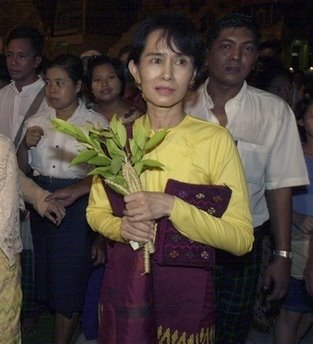


 Posts
Posts


