News & Articles on Burma Wednesday, 11 July 2012 ---------------------------------------- Kill the Constitution Burmese Protest Thai Takeover of Monastery Karen civil group criticizes Norway Peace Initiative Myanmar: Japan makes up for lost time Marubeni awarded gas turbine overhaul for CCPP in Myanmar EXCLUSIVE - U.S. to demand disclosures as it eases Myanmar sanctions War in Kachin State: A political quagmire of Burma? Burmas Irresponsible New Media S'pore Red Cross pledges S$2.5m to support Myanmar projects PT Telkom eyes stakes in Myanmar, Vietnam telcos US poised to allow investment in Myanmar oil, gas in biggest rollback yet of sanctions First US envoy in 22 years arrives in Myanmar US poised to allow new investment in Myanmar Myanmar aims to bring mobile and Internet to masses ASEAN Hoping for Removal of Burma Sanctions --------------------------------------- Kill the Constitution By BAMAGYI| July 11, 2012 |THE IRRAWADDY| Recently, Lower House Speaker Shwe Mann met with business leaders in Rangoon to discuss what lawmakers should be doing to help Burma move forward after decades of stagnation. He has also held talks with leaders of the 88 Generation Students group, who were generally positive about their encounter with the powerful ex-general. It is doubtful, however, that any of Shwe Manns recent interlocutors mentioned the one issue that surely stands as the most important if Burma is finally to takes its rightful place as an equal in the community of nations. That issue is the 2008 Constitutionor rather, the need to scrap it in favor of a genuinely democratic charter. Of course, not everyone really wants to see an end to the status quo. Many of the businessmen who met with Shwe Mann, for instance, were notorious cronies of the former regime who would like nothing more than to see the country follow the well-worn path of past. With the exception of this handful of excessively privileged individuals, however, everyone else in Burmas business community knows that the country needs sweeping change, not just a fine-tuning of the established order. The current government has done some things right. It has allowed opposition leader Aung San Suu Kyi to travel abroad to shore up international support for Burmas nascent democratic transition. And by meeting with former political prisoners such as the 88 Generation leaders, it has signaled a major shift in its thinking about political dissent. But none of this has much meaning, because under Burmas military-drafted Constitution, the opposition is effectivelyand permanentlypowerless to challenge the political primacy of the ruling clique. Many saw the electoral landslide by Suu Kyis National League for Democracy (NLD) in April 1 by-elections as a triumph in the long struggle to restore democratic rule in Burma. But the NLD is still vastly outnumbered in Parliament, and even if it wins a huge majority when the country goes to the polls again in 2015, it will not be able to amend the Constitution without the support of military appointees, who hold 25 percent of seats in the national legislature. In any case, what Burma needs is not amendments to the current Constitution, but a whole new charter. It will take nothing less than this to begin to tackle the corruption and cronyism that have long been a blight on Burmas economy. Only by taking the levers of power out of the hands of ex-army personnel and giving the job of running the country to those who are fully qualified and duly elected to do so can we even begin to realize our potential as a nation. And the only way to put power where it belongsin the hands of the peopleis by completely rewriting the Constitution. Foreign governments are watching the situation in Burma carefully, waiting for some clear sign that it is ready to absorb the capital and know-how that it will need to make its long-awaited leap into modernity. But if Burma wants to attract this money and technology, it will have to show that it also has something to offer besides easily exploited resourcesnamely, guarantees that its government will act accountably and with respect for the rule of law. So far, unfortunately, the signs are not good. While President Thein Sein has made conciliatory moves toward the opposition, he also has a cabinet full of relics of the rotten past, handpicked by former junta leader Snr-Gen Than Shwe, who was also the mastermind behind the 2008 Constitution and efforts to foist it on a captive country. This team does not stand a chance of winning if the 2015 polls are free and fair. So unless the government plans a repeat of the farcical 2010 election, which the ruling Union Solidarity and Development Party (USDP) won through vote-rigging and other dirty tricks, the party is heading for another a humiliating defeat like the one it suffered in April. Many would be happy to see this happen, but even if the USDP is decisively beaten and the NLD does take power, the prospects for the country still look grim. This scenario would set the stage for a protracted period of paralysis, with the NLD unable to enact any new laws because of obstruction from the military camp. Thein Sein has already made clear that he will not be running for office in 2015, but this does not mean that Burmas future is not his problem. If he wants to guarantee for himself an honorable place in his countrys historyworthy, some would argue, of a Nobel Peace Prizehe should use all the influence he can muster to rid Burmas political system of the double deadweight of military hardliners and a deeply undemocratic Constitution. While it is clear that some of the worst elements of the old regime are still alive and well, both in the cabinet and behind the scenesthe nomination of Myint Swe, a hardliner, to replace the ultra-corrupt and ailing Tin Aung Myint Oo as vice-president has Than Shwe written all over itThein Sein and other leaders such as Shwe Mann can still make a difference by parting ways with them and recognizing the need for a new charter. This may seem like wishful thinking, but at this decisive juncture in Burmas political evolution, it will take nothing less than leaders of real vision to extricate the country from the trap set by its former rulers. And who better to do this than those who are intimately familiar with the mindset of Burmas military dead-enders? http://www.irrawaddy.org/archives/8879 ---------------------------------------- Burmese Protest Thai Takeover of Monastery By THAN HTIKE OO / THE IRRAWADDY| July 11, 2012 | The gate of the Wat Sai Moon monastery in Chiang Mai. (Photo: Steve Tickner / The Irrawaddy) The gate of the Wat Sai Moon monastery in Chiang Mai. (Photo: Steve Tickner / The Irrawaddy) Around 150 Burmese residents of Chiang Mai protested on Monday against plans by Thailands Department of Religion (DOR) to hand over the Wat Sai Moon monastery to a Thai abbot. The monastery, which has been a cornerstone of the local Burmese community for generations, has had a long succession of Burmese abbots. According to its record book, the last 10 abbots have been Burmese. The latest, U Arthaba, died last year. U Arthaba resided in the monastery for about 65 years, Ashin Wathyhta, a monk from Wat Sai Moon, told The Irrawaddy. On Monday, over 150 Burmese, including Wat Sai Moon trustees, staged a peaceful protest calling on the Thai authorities to let a Burmese abbot take care of the monastery. Soe Win, the chairman of the Buddhist Association in Chiang Mai, said that the protest was organized because DOR officials and Thai monks are preparing to replace the late U Arthaba with a Thai abbot in accordance with Thai law. This is the last Burmese monastery in Chiang Mai. Where would Burmese here go if we lost it? We are worried, said Soe Win. According to Thai law, a Thai monk can be appointed to succeed as abbot in the event of the death of his Burmese predecessor. Only one monastery in Thailand, located in the northern Thai city of Lampang, is officially recognized as a Burmese monastery. It will be much easier for Burmese if we have a monastery taken care of by a Burmese abbot. We can enjoy more freedom if we have a Burmese monastery. We can go there on holidays without any hesitation, so it becomes part of our social community. Thats why we are trying to protect Wat Sai Moon, explained Soe Win. He added that properties belonging to the monastery16 apartments, two million baht (US $63,000) deposited in the bank and some vehiclesare under the care of its Thai trustees. I cant accept it at all if this suddenly becomes a Thai monastery. I have been in Thailand for over 10 years and this is the only monastery I regularly come to, Kan Chon, a regular donor to Wat Sai Moon, told The Irrawaddy. After a three-hour discussion on Monday, DOR officials and Thai monks reportedly agreed to meet again in order to talk about the proposal submitted by the Burmese community with regard to the appointment of a Burmese abbot to the monastery. An official from the DOR told The Irrawaddy that the next meeting date is still undecided, but local Burmese will be informed one week in advance after it has been fixed. He said investigations will be carried out with regard to the monastery-related properties. Nearly 50 Thai police with three prison trucks arrived at the protest scene on Monday, but no arrests were reported. If they [Thai officials and monks] want to administer the monastery they can do so, but we dont want a Thai abbot to reside here. They can administer it from a distance. We are trying to contact upper-level authorities since we dont expect this issue can be resolved locally. I think it will be settled only if the Thai and Burmese governments cooperate, said Soe Win. In recent months, the Burmese community in Chiang Mai reportedly sent two requests to the Burmese government and the State Sangha Maha Nayaka Committee, a government-appointed body of high-ranking Buddhist monks that oversees and regulates the Buddhist clergy in Burma, to mediate in the Wat Sai Moon dispute. http://www.irrawaddy.org/archives/8897 ------------------------------------------ Karen civil group criticizes Norway Peace Initiative Wednesday, 11 July 2012 16:09 Mizzima News A Karen community-based organization says the Norway Peace Initiative process to help achieve a long-lasting peace in Burma may be fueling added tensions in the region. A fundamental issue, he said, is the lack of trust between the ethnic groups and the government. Left to right, Norways Deputy Minister of Foreign Affairs Torgeir Larsen (in red Karen traditional dress), Khin Yi and Colonel Tu Tu Lay at the peace talks between the Burmese government and Karen National Union on May 28, 2012. Photo: Mizzima Saw Paul Sein Twa, the director of the grassroots Karen Environmental and Social Action Network (Kesan), told Karen News, There is no transparency, they dont disclose information, or their agreements with the government, or with the cease-fire groups. Saw Paul said some people continue to question how a top-down approach will benefit the poor and powerless in Burma. They approach only the government and the parties involved in the conflict, he said. It is a lack of parallel discussion and participationthey exclude the involvement of civil society their aid money and program is top down, and goes to the military-linked elite, he was quoted as saying. He said information about the Norwegian plan for peace was only obtained from a leaked document. On May 30 in Chaing Mai, the Norwegian government defended its plan and efforts, saying its peace initiative would channel aid into conflict-affected regions in Burma despite criticism that it risks coercing ethnic and civil society groups into joining the plan. Norways Deputy Foreign Secretary Torgeir Larsen tried to counter activists and NGO concerns that the multi-million dollar plan could upset the fragile peace process in eastern Burma. Moving from a cease-fire to real peace is what we are aiming at, said Larsen. Its a delicate and long-term process and this is the first phase. Its about testing out the way. Sources close to the Karen National Union (KNU) also said the Norwegian-led peace initiative had only approached a few KNU leaders about their plan. Saw Htoo Klee of The Karen Office of Relief and Development (Kord) told Karen News, They [KNU leaders] told us that the issue is political so they cannot carry out consultations with related community groups. Saw Htoo Klee said his organization does not know the whole process of the internally displaced people resettlement program supported by the Norwegians. The process should not go like this. The related groups need to know the process, all related sectors need to be included, he said. Saw Paul said he was worried that the Norwegian groups plan might parallel the groups experience in Sri Lanka, where, he said, They used humanitarian aid to support the peace process but because of a lack of transparency, their program became politicized. When the government carried out programs in the Tamil Tiger areas, the Tamil leaders became suspicious that the government was using aid to extend their powerboth sides lost trust and the conflict restarted again. In the Sri Lanka lesson, they start development programs after the cease-fire without solving the core political issues. It did not lead to peace but incited further war, he said. We need the peace building process to have transparency, with formal consultations [with] community based organizations, KNU leaders and other ethnic groups to reach a common decision for the peace building process, he said. It is important for the local sectors to design their own peace process and then be supported. Community-based organizations agree that the political peacemaking process must go forward, but he said humanitarian aid should not be allowed to become a block to the political process. http://www.mizzima.com/news/inside-burma/7500-karen-civil-group-criticizes-norway-peace-initiative.html ------------------------------------------ The Financial Times Myanmar: Japan makes up for lost time July 11, 2012 8:45 am by Ben McLannahan After the debt, the deluge? Three months after Japan agreed to waive much of the money owed to it by Myanmar, clearing the way for normalised economic relations after a 25-year lending freeze, Japanese companies are beginning to make up for lost time. On Tuesday Marubeni, Japans fifth largest trading house, said it had been awarded a contract to overhaul a gas-fired power plant it built seven years ago, before tighter Western sanctions took hold. Marubeni described the award to upgrade the creaking Ywama plant as the first infrastructure order to a Japanese company since the government of president Thein Sein took over in March 2011, ushering in democratic reforms. Myanmar depends on hydropower for about 70 per cent of its electricity, making the economy highly vulnerable to the vagaries of weather. When water levels at hydroelectric dams fall during the dry season that runs from November to April, blackouts plague the country. In a report published in May, the IMF identified inadequate infrastructure as one of the main factors limiting GDP growth last year to 5.3 per cent, and to a projected 5.5 per cent this year. Marubeni, which relies on power projects for one-eighth of net income the third highest earner behind metals and energy is now aiming to get involved in more brownfield and greenfield projects in Myanmar, according to Hirohide Sagara, senior operating officer in the companys power, projects and infrastructure division. Marubeni launched a liaison office in the capital city of Naypyidaw in January, intending to develop stronger relationships with government officials in anticipation of Aprils resolution of the debt problem. It has maintained an office in the port of Yangon, the former capital once known as Rangoon, since 1942. Plenty of other Japanese companies have similar ideas. Most of the countrys biggest trading companies have followed Marubeni in setting up offices in the capital this year. The Japan Bank for International Co-operation, the state-owned lender specialising in supporting Japan-led infrastructure projects, has included Myanmar as a key destination in what it calls the Southern Economic Corridor, extending from Vietnam to India through Cambodia and Thailand. Keidanren, the powerful business lobby, last month urged the government to position Myanmar as one of several targets for infrastructure exports, and to take effective policy measures to support them. Foreign minister Koichiro Gemba is doing his bit: last week the Nikkei newspaper reported that Gemba met his counterpart in Myanmar to propose the setting up of a Japan-Myanmar Joint Initiative, with the aim of clearing barriers to direct investment. The hope is to do for Myanmar what a similar body did for Vietnam now one of the biggest recipients of Japanese investment from the early 1990s. Also pitching in is All Nippon Airways, which on Tuesday said it would begin offering three business-class flights a week between Tokyos Narita airport and Yangon. If the service begins as planned in October, it would mark the first direct connection between Japan and Myanmar since March 2000. No more layovers in Bangkok. Its opening up, bit by bit, said an executive at a rival trading house. There is a huge deficiency in expertise in Myanmar. Whether its electricity, roads or water, theyre not there yet. http://blogs.ft.com/beyond-brics/2012/07/11/845741/#axzz20JhOF4MB --------------------------------------- Gas-to-Power Journal, 2nd Floor, 8 Baltic Street East, London, EC1Y 0UP, UK | Marubeni awarded gas turbine overhaul for CCPP in Myanmar Japanese Marubeni Corporation has won a contract to carry out a gas turbine overhaul for the Ywama combined cycle power plant (CCPP) in Myanmar from Myanma Electric Power Enterprise (MEPE). Hitachi will supply the parts needed for the overhaul works. The overhaul works at the plant will improve the reliability of power supply and will help recover electricity loss by approximately 34,000 kW, Marubeni said. The Ywama project is the first power plant upgrade project in Myanmar since civilian rule was newly established in March, 2011. Marubeni had built the Ywama CCPP in 2005. In January 2012, Marubeni opened a liaison office in Naypyitaw, in addition to its branch office in Yangon, with the aim of close follow-up of business in Myanmar. Marubeni said it sees business potential in Myanmar, where it can contribute to the economic development of the country by building and enhancing power plants. It has filed a proposal including a rehabilitation program of existing CCPPs as well as the construction of new power plants. Marubeni's supply record of power plants in Myanmar includes the Baluchang Hydro Power Plant and the Ywama/Tharkayta/Ahlone/Hlawga Combined Power Plants located adjacent to the Yangon area, which mostly cover its power demands. http://gastopowerjournal.com/index.php/projectsafinance/item/641-marubeni-awarded-gas-turbine-overhaul-for-ccpp-in-myanmar --------------------------------------- EXCLUSIVE - U.S. to demand disclosures as it eases Myanmar sanctions - Arshad Mohammed Story Dated: Wednesday, July 11, 2012 12:0 hrs IST By Arshad Mohammed VIENTIANE (Reuters) - The United States plans to ease sanctions this week to allow its companies to invest in and provide financial services to Myanmar but will require them to make detailed disclosures about their dealings, sources briefed on the matter said on Wednesday. The unusual reporting requirement aims to promote greater transparency in the country -- among the world's most corrupt according to watchdog Transparency International -- as it emerges from nearly half a century of authoritarian military rule. The sources, who spoke on condition that they not be named, said the U.S. Treasury Department was expected to issue two so-called general licenses, one giving general permission for investment in Myanmar and the other allowing financial services The moves would fulfill a May 17 announcement made by U.S. Secretary of State Hillary Clinton to ease U.S. sanctions on investment and financial services in recognition of Myanmar's startling political reforms over the last 15 months. While carving out exceptions to allow U.S. companies to work in Myanmar, also known by its British colonial name Burma, the moves would leave the sanctions laws on the books -- giving Washington leverage should Myanmar start to backslide on its reforms. ANNOUNCEMENT COULD COME WEDNESDAY Myanmar's reformist, quasi-civilian government took office in March 2011, ending five decades of military rule, and has started overhauling its economy, easing media censorship, legalizing trade unions and protests and freeing political prisoners. The United States has responded with diplomatic and economic gestures, sending Hillary Clinton to Myanmar last year as the first U.S. secretary of state to visit in more than 50 years, as well as tentatively easing sanctions this year. One source said the long delay between Clinton making her announcement and the Treasury issuing the licenses -- which could come as early as on Wednesday -- was partly because of a debate among officials over how much disclosure to require. In a land of widespread poverty but rich in timber, gems, and gas, Myanmar's crony capitalists -- a clique of fewer than 20 families -- grew rich with help from Than Shwe, a military dictator who ruled from 1992 until his retirement last year. SUNLIGHT ON MURKY BUSINESS PRACTICES The Obama administration hopes the reporting requirements will shed some light on Myanmar's notoriously murky business practices and, over time, improve them. "The central point of all of this is to focus on transparency, the theory being that the more information the greater the incentive to comply with responsible norms and practices," he said. This source said that some disclosures would be to the public while others would be in confidence to the U.S. government to protect proprietary business information. The sources said one idea under consideration was to have a public comment period for the private sector to study the reporting requirements and to flag any problems. The latest step in easing sanctions comes as Derek Mitchell, an Asia expert with long think tank and Pentagon experience, travel led to Myanmar this week to present his credentials as the first U.S. ambassador to the country in decades. The target for formalizing the U.S. sanctions relief was Friday, allowing Clinton to trumpet the new business opportunities in a speech to executives in Siem Reap, Cambodia. A spokeswoman for the U.S. State Department declined all comment on the matter, as did an official at the U.S. Treasury Department. (Reporting By Arshad Mohammed, Editing by Jonathan Thatcher) http://www.manoramaonline.com/cgi-bin/MMOnline.dll/portal/ep/contentView.do?contentType=EDITORIAL&channelId=-1073753405&programId=1080132918&contentId=11974756&tabId=1 ---------------------------------------- War in Kachin State: A political quagmire of Burma? Wed, 2012-07-11 01:59 editor Article By - Zin Linn As a result of civil war that has taken place for more than six decades has left Burma, one of the most impoverished countries in the world. Burma gained its independence from British colonial rulers in 1948. Unfortunately, the country lost its freedom in 1962 since the military led by the late dictator Gen. Ne Win seized power and smashed all democracy institutions in Burma. Furthermore, consecutive military regimes slaughtered thousands and thousands of their own citizens and displaced millions in conflict areas, whereas intentionally oppressed the democratic political practice in the country under their rule. Currently, heavy fighting and governments armed forces expansion keep on mainly in ethnic areas, especially in Kachin State. Burma Army continues a brutal warfare on the ethnic Kachin people. It is the practice of government armed forces using landmines, attacking ordinary civilians, using rape as war weapon, taking hostages for forced labor, destructing citizens properties, sustenance and agricultural farms and burning the ethnic villages etc. However, latest developments of the governments endeavors have included letting political space for opposition leader Aung San Suu Kyi and her NLD party to run and win by-elections. The scenario seems more frankness and less restriction concerning press freedom. Besides, Governments current ceasefire talks with many ethnic groups are also expected to be positive endeavors. President Thein Sein, Chairman of the Central Committee of the Central Committee for Progress of Border Areas and National Races, gave an address at 1/2011-Meeting held at the President Office in Naypyitaw in April. President emphasized in his speech peace and stability should be essential in building a developed country. Thein Sein also said that without national unity, the country with over 100 national races cannot enjoy peace and stability. So, the government has to prioritize the national unity, he said. If the local people realize governments goodwill policies and objectives and join hands together for development of their own region, all measures for progress of border areas and national races will be successful, Thein Sein said. In contrast, Burma army has been intensifying its strength in Shan, Kachin and Karen States planning to crack down the ethnic armed forces defending their self-determination. President Thein Seins words and his armys movements are too different. Existing war upon ethnic population launched by Burma Army produces more and more internal displaced people plus refugees from various villages in Shan and Kachin States. Additionally, this war forces ethnic people to flee from the country. These war-victims escaped into the neighboring countries as political exiles, illegal migrants and refugees. To keep his goodwill words, the first thing President has to do is to control his armed forces and bring them under his control. Then, he should persuade the soldiers to follow his dream for national unity, peace and stability. Ethnic people may not trust the President if his armed forces do not stop committing crimes against humanity in the undeveloped war-torn ethnic neighborhoods. Political analysts and observers have been deeply concerned about widespread war in Kachin State. Now, people have been blaming the Thein Sein government for breaking the ceasefire agreement with ethnic KIO. As a latest news report by the Kachin Nws Group (KNG), following meeting with Burmese peace negotiating team twice last month in Kachin Independence Organization controlled territory, the KIO has rejected the governments invitation to meet later in July inside government controlled town Bhamo in Kachin State or Muse in Shan State, referring Kachin officials. During both unofficial meetings, at the beginning and end of June in Mai Ja Yang, the KIO repeatedly insisted on the withdrawal of the government troops from Kachin Independence Army (KIA) front lines. Last months meetings produced no solution as the two peace-teams adamantly cling on to a similar attitude exposed in previous political negotiations held in Ruili (Shweli) in Yunnan, China in November, January and March, KNG said. The government wants the KIO to sign a ceasefire before they discuss withdrawal of troops from the front lines. However, the KIO firmly said that it will not talk about the idea of ceasefire until the Burmese armed forces leaves KIO territories. Moreover, the KIO wants the participation of an international independent body like the UN to get involved in any such agreement. So far, both sides have not accepted to make an agreement on the most fundamental terms. Meanwhile, over 1,500 Myitkyina residents joined one of its largest protest against arbitrary detention of Kachin civilians on July 6 in Myitkyina., according to the Kachinland News . The protest shows growing displeasure of grave human rights abuse against Kachin civilians and support for ongoing struggle against Burmas quasi-civilian government which is led by former military generals. The protestors also demand for immediate release of Lahtaw Brang Shawng who was taken from an IDP camp of Jan Mai Kawng Kachin Baptist Church and still being detained at Myitkyina prison for connection with KIO. Brang Shawngs lawyer Mahka said his defendant was badly traumatized by continuous beating and even made a false confession because of tortures. The regimes miscalculation of managing the Kachin question seems to be pushing the country into an appalling misfortune. Burmas new military offensives on the ethnic armed groups will lead the nation into a harsh political quagmire that will smash the Presidents reform dream. - Asian Tribune - http://www.asiantribune.com/news/2012/07/10/war-kachin-state-political-quagmire-burma ---------------------------------------- Burmas Irresponsible New Media By ASIA SENTINEL| July 11, 2012 | A man reads about the 2010 World Cup in a sports journal at a market in central Yangon on 22 June 2010. (Photo: Reuters) A man reads about the 2010 World Cup in a sports journal at a market in central Yangon on 22 June 2010. (Photo: Reuters) The emergence of free media in Burma after six decades of oppression is not going the way anybody expected just weeks ago, and the trend is ominous. The new publications are openly partisan, nationalist and aiding a deadly war against the already disenfranchised Rohingya minority in the troubled Arakan state alongside the government, nationalist ethnic Rakhines and Buddhist Burmese. Chiang Mai University in Thailand is organizing a forum for Thursday on Burmas evolving media landscape, featuring as speakers Aung Zaw, the chief editor of The Irrawaddy, and Mon Mon Myat, co-founder of Yangon Press International. It should be just in time to take on some profoundly disturbing questions about the course the media is taking. Ironically the newly freed media, especially domestic and Burmese language journals, are saving the domestic image of the infamous military by framing the Arakan conflict as the nation versus foreign invaders Rohingyas, although they have existed in the area for hundreds of years. That is leading Burmas citizenry to call upon the military to protect race, religion, and nation, regardless of the militarys 60 years of oppressive rule. At the outset, it should be mentioned that the media started calling the Rohingyas Bengali, foreign invaders and illegal immigrants as soon as the conflict broke out on June 8. It started framing the conflict as an attack on the nation by Bengali foreigners, placing everyone on the same side vis-୶is the Rohingyas. Since day one of the conflict, domestic Burmese journals have competed with each other to update the news, often with little basis in fact. The most prominent agencies are The Weekly Eleven, The Voice Weekly, The Yangon Media group, 7Days News, and Popular Myanmar News. The Dhaka-based Narinjara news has been crucial in the anti-Rohingya campaign. Their reporting is contradictory to international standards. The International Federation of Journalism is opposed to discrimination against any race and religion. It condemns the use of the media as a tool for propaganda, or for promoting intolerance and conflict. The Burmese media rather have done completely the opposite: they have fueled the conflict. On their Facebook pages, they distribute information that is neither confirmed nor substantiated. For example, The Voice Weekly, a publishing arm of the popular scholarly institution, Myanmar E-gress, posted one sentence-information that there was a bell ring in front of a Buddhist temple; its online audience were anxious to know what just happened. It also posted unconfirmed information that Rohingyas had poisoned a water pond. The audience was upset and commented, Kill them all. The journal consistently refers to Rohingyas as Bengali Rioters. Almost every 5 to 10 minutes, the media update news indicating how many Rakhine villages have been burnt, how many people have been beaten and killed by Rohingyas who are foreigners, illegal immigrants and invaders. Every single piece of news reported is exclusively about the victimhood of Buddhist Rakhines. The media never quote Rohingya sources, which say scores of people men, women and children are being killed, and that houses and mosques were being burnt down. The media also distributes reports indicating that the security forces have successfully prevented groups of Rohingya trying to enter towns and cities. There was no clarification over whether these groups were refugees running away from the riots or were engaging in violence. The legitimizing idea of their position is based on nationalism and national security that Bengali invaders are attacking western Burma and ethnic brothers and sisters. When photos are posted, they are about Rohingya youth attacking their neighbors. Photos of Rakhines even burning down huts and holding swords are shown as simply self-defense. The media has also attempted to provide nationalistic coverage to international communities. The Weekly Eleven, the most nationalist media outlet at the forefront of the anti-Rohingya campaign, distributed its English news to international agencies. The Journal reportedly celebrated upon Asian News Networks publishing of its news. The Weekly Eleven also accuses foreign media as presenting biased reports on the clashes between Rakhine people and Bengali Rohingyas to destroy the image of Myanmar and its people. Thomas Fuller, however, responded in the New York Times that In one sign that passions are running high, the Website of the Eleven Media Group, a publisher of one of the countrys leading weekly newspapers, displayed a string of hateful comments about Muslims from readers. The conflict in Arakan state puts more internationalized media such as the Burmese services of the British Broadcasting Corporation (BBC), Voice of America (VOA), and Radio Free Asia (RFA), as well as The Irrawaddy and Democratic Voice of Burma in a difficult position. Many of their reporters are against the Rohingyas. Yet, bounded by international standards, they cannot support anti-Rohingya campaigns openly, which leads anti-Rohingya campaigners to accuse these organizations as corrupt and selling the country to foreigners. But who won the seat in this conflict? The government and the military are gaining popularity among many hundreds people who are being delusional. This is reflected in the activities of Hmuu Zaw, an ex-Major and currently a senior staff from the Presidents Office. Since the riots are taking place in the remote areas of the country where journalists cannot reach immediately, he is one major player feeding negative narratives to the media. He frequently updated the Arakan situation on his Facebook account. The Burmese journals quoted them. Quickly earning popularity, Hmuu Zaw effectively distributes government agenda and motivating messages among his 9,909 subscribers and 5,004 friends on his Facebook. The very idea Hmuu Zaw is propagating is all about national security. His explicit messages indicate that without acting effectively, the countrys sovereignty will be undermined. The government is trying its best not to let that happens. During his visit to the US on 4 July, 2012, he wrote: Today meeting with Human Rights Watch, Burmese delegation gave the clear message, if some countries including US, can accept Rohingya (Stateless people), we can transport them by ships or others. We can understand the human rights but we need to emphasize the National Security. People wrote comments, supporting and praising him. Up to 10 July, 921 people like this status. Earlier, one reporter from Yangon-based weekly Kumudra Journal, named HinnYadana Zaw who won National Press Awards, posted on her wall that she completely supports, likes and encourages Hmuu Zaw. At a more institutional level, the Burmese government including the military and police is gaining popularity. In the name of protecting the nation and sovereignty, the military has been called upon to take control of the burning state. One Facebook user commented to Hmuu Zaws above status, The government has already fulfilled the very desire of the entire Burmese. Its ok not to have electricity for 24 hours, not having low consumer prices, or not getting rich yet. Its already the most loved government for kicking out dog Bengalis. To sum up, the Arakan riot is like a Burmese saying killing two birds with one stone. Not just two, but three birds: Rohingyas are down, the military is back in, and foreign and internationalized media are portrayed as unreliable. The author is a Burmese freelance reporter in Burma. http://www.irrawaddy.org/archives/8862 -------------------------------------- CHANNEL NEWS ASIA S'pore Red Cross pledges S$2.5m to support Myanmar projects Posted: 11 July 2012 1634 hrs SINGAPORE: The Singapore Red Cross on Wednesday signed a wide-ranging memorandum of cooperation for six direct-impact projects which are expected to benefit thousands in Myanmar over the next two years. Valued at S$2.5 million, the projects include enhancing digital connectivity for seamless relief coordination; restarting an emergency ambulance service; rolling out a first aid and safety campaign for community leaders; lending support to an emergency management fund; shelters and student kits for internally displaced people (IDPs); and a series of construction projects. At the signing ceremony in the Myanmar Red Cross Society office, Mr Tee Tua Ba, Chairman of Singapore Red Cross (SRC) inked the agreement with Dr Tha Hla Shwe, President of Myanmar Red Cross Society (MRCS). The occasion was witnessed by Mr Benjamin William Jeyaraj, Secretary General SRC and Mr U Khin Maung Hla, Executive Director MRCS, in the presence of Mr Tadateru Konoe, President of the International Federation of Red Cross and Red Crescent Societies. Mr Tee said: "The Singapore Red Cross has carefully chosen projects with lasting impact to reflect the spirit of friendship between our countries, and our hope for a better future. It is a new era for Myanmar and we are glad to be able to contribute in a small way. We remain steadfast in our mission to improve the lives of the vulnerable." Dr Tha said: "This bilateral partnership is different from others as it is the first ever cooperation agreement that provides full ownership to Myanmar Red Cross to address its needs through an organisational development approach to strengthen, empower and sustain its humanitarian services on the ground. I do appreciate Singapore's contribution and the Singapore Red Cross' commitment and support." To date, the Singapore Red Cross has received about S$12 million in donations for the Myanmar Cyclone Relief Fund, post-Cyclone Nargis in 2008. The humanitarian organisation has since committed S$7.3 million to the construction of homes, hospitals, schools and an orphanage, in addition to the emergency aid of water purification kits, food, medicine, clothes, shelters and boats. Whilst continuing to identify more projects to channel the remaining S$2.2 million, the Singapore Red Cross is currently studying the possibility of providing psycho-social support for the IDPs. - CNA/wm http://www.channelnewsasia.com/stories/singaporelocalnews/view/1212915/1/.html ------------------------------------- PT Telkom eyes stakes in Myanmar, Vietnam telcos By Linda Silaen, Dow Jones Newswires Wednesday 11 July 2012 CEO Arif Yahya says company mulling whether to acquire direct stakes or form a consortium. PT Telekomunikasi Indonesia still has plans to buy stakes in communications and information-technology companies in Myanmar or Vietnam in spite of the scrapping of a plan to buy into Asian undersea cable firm Pacnet Ltd., Telkom's Chief Executive Officer Arif Yahya told Dow Jones Newswires in an interview Wednesday. "We are going to selectively acquire a cellular-phone operator and an information-technology company (geographically) not far from Indonesia, such as Myanmar and Vietnam," Mr. Yahya said. The acquisitions are intended to boost revenue, he said without elaborating. Click here to find out more!"We are now studying if we will directly acquire the stakes in the (targeted) companies or set up a consortium," he said without naming the targets or the size and cost of the acquisitions. Vietnam has several telecommunication companies, including Vietnam Mobile Telecommunication Services and Nhat Minh Telecommunication Co. In Myanmar there is state-owned Myanmar Post & Telecommunication and Myanmar Teleport. Telkom will use cash on hand and bank loans to finance these deals, he said. Telkom had around IDR11 trillion ($1.2 billion) in cash as of March 31, he added. Telkom called off the $1 billion Pacnet acquisition in May because "it doesn't have any added value," Mr. Yahya said without elaborating. Telkom will from 2013 start rolling out services in Timor Leste after the government there recently awarded the company an operating license, Mr. Yahya said. "I think the 1 million-subscriber market in Timor Leste has the potential to add to Telkom's revenue in the future," he added without revealing the size of its investment there. Telkom expects 2012 revenue to increase by up to 8% from IDR71.25 trillion at the end of 2011 owing to higher subscriber growth and lower operating costs. The company intends to spend up to $1.7 billion in capital expenditure this year--compared with $1.5 billion a year earlier--to support revenue growth. This includes spending for expanding its network to more subscribers across Indonesia, and for acquisitions. Telkom is 51.19% owned by the Indonesian government. http://www.totaltele.com/view.aspx?ID=474901 ---------------------------------------- US poised to allow investment in Myanmar oil, gas in biggest rollback yet of sanctions Associated PressBy Matthew Pennington, The Associated Press | Associated Press 5 hrs ago WASHINGTON - The United States is poised to allow U.S. companies to invest with Myanmar's state oil and gas enterprise as the Obama administration takes its biggest step yet to roll back sanctions, marking a rare break from pro-democracy leader Aung San Suu Kyi (ahng sahn soo chee). Suu Kyi, who has been the guiding force on U.S. policies toward Myanmar, last month advised against investment by foreign companies with that enterprise because of concerns over its accountability and transparency. Her comments reflected the growing disagreement between human rights groups and business advocates over how the U.S. should proceed in easing restrictions to reward Myanmar's shift from five decades of authoritarian rule. The administration is expected to announce this week a general license, opening all sectors of Myanmar's economy to American companies. http://news.yahoo.com/us-poised-allow-investment-myanmar-oil-gas-biggest-070729911.html ------------------------------------------ CHANNEL NEWS ASIA First US envoy in 22 years arrives in Myanmar Posted: 11 July 2012 1843 hrs NAYPYIDAW: The first US ambassador to Myanmar in over two decades arrived to take up his post Wednesday as Washington prepares to reward reforms in the formerly army-run nation by further easing sanctions. Derek Mitchell, a veteran US policymaker on Asia, met President Thein Sein in the capital Naypyidaw, a Myanmar government official told AFP, marking the latest olive branch from the US as relations between the two countries warm. Mitchell was nominated to the role by President Barack Obama, who has pursued a policy of greater engagement with Myanmar as the Southeast Asian nation emerges from decades of junta rule, which ended last year. Washington this week indicated it could ease more of its strict sanctions against the country, following a tentative loosening of economic and financial embargoes after April by-elections saw Aung San Suu Kyi elected to parliament. An official briefing on Secretary of State Hillary Clinton's ongoing visit to Asia said she was expected to make an announcement on sanctions this week in Cambodia, where she will meet regional leaders. "She will also be laying out... plans for how the process of sanctions easing will proceed, and she will be engaging with members of the American business community who are anxious and interested in the prospect of participating in the economic opening," said an official quoted on the State Department website on Monday. The official said the US would be working "very closely" with Myanmar in the coming months, but conceded that "enormous challenges" remained in the country. "It was only a year ago that we essentially had absolutely no contact with this country, almost no interaction. And now we're working with them on so many different areas." Mitchell arrived in Naypyidaw days after Suu Kyi -- whose democracy struggle saw her locked up for 15 of the last 23 years by the generals -- made her debut in parliament, lending legitimacy to a legislature that remains dominated by the army and its political allies. "He not only has an interest in Myanmar, but he knows a lot about the country so it is good that he has become the ambassador," Suu Kyi said of Mitchell in remarks to AFP on Wednesday. Washington withdrew its ambassador to Myanmar after a crackdown on a democracy uprising in 1988 and elections won by Suu Kyi's democracy party in 1990 that were never recognised by the junta. But a recent slew of positive changes from Thein Sein's quasi-civilian government, which took power last year, have surprised the West and driven hopes of a democratic future for the country. Key US demands have been answered to a certain extent by the reforms, which have included the release of hundreds of political prisoners, the seeking of ceasefires with ethnic rebels and the ushering of Suu Kyi's party into mainstream politics. "As an iron fist has unclenched in Burma, we have extended our hand, and are entering a new phase in our engagement on behalf of a more democratic and prosperous future for the Burmese people," Obama said in May when he named his new ambassador and announced an easing of investment sanctions. US law currently requires the president to restrict imports from Myanmar and bans US investment and export of financial services to the country. But American businesses are pushing for a further relaxation of punitive measures against the impoverished but resource-rich country, which is seen as a major potential growth market for international investors. Myanmar's parliament is currently considering a new investment law and a series of other measures aimed at liberalising the economy, which was left in tatters by decades of mismanagement, cronyism and isolation under the junta. At Mitchell's confirmation hearing in June, senators pressed the Obama administration to allow investment by US energy companies, voicing fears that they could lose out to foreign competitors. Human rights groups have voiced concerns that the oil and gas industry has fuelled abuses like forced labour in the country. - AFP/wm http://www.channelnewsasia.com/stories/afp_asiapacific/view/1212936/1/.html ------------------------------------ US poised to allow new investment in Myanmar Published July 11, 2012 Associated Press WASHINGTON The United States is poised to allow U.S. companies to invest with Myanmar's state oil and gas enterprise as the Obama administration takes its biggest step yet to roll back sanctions, marking a rare break from democracy leader Aung San Suu Kyi. Suu Kyi, the Nobel Peace laureate who has long been the guiding force on U.S. policies toward Myanmar, last month advised against investment by foreign companies with the state Myanma Oil and Gas Enterprise, or MOGE, because of concerns over its accountability and transparency. Her comments reflected the growing disagreement between human rights groups and business advocates over how the U.S. should proceed in easing restrictions. While Suu Kyi has cautiously supported suspending sanctions as a reward for Myanmar's shift from five decades of authoritarian rule, she and other democracy advocates are wary about investment in MOGE, which had been an economic lifeline for the former ruling junta. But doing business with MOGE is the only way to gain access to Myanmar's potentially lucrative energy resources and U.S. companies fear they will lose out to foreign competitors if the restrictions aren't lifted. Recognizing continuing concerns over corruption and rights abuses in Myanmar, the administration is expected to require U.S. companies to report on their investments in the country, which is also known as Burma. Secretary of State Hillary Rodham Clinton said in May that U.S. companies would be allowed to invest in all sectors of Myanmar's economy, though not firms owned or operated by the military. She also announced the suspension of a ban on the export of U.S. financial services, seen as vital for starting to do business there. The administration is expected to take the next step this week, when it announces the issuance of a general license that finally opens the door for American firms to operate in one of Asia's last untapped markets. Clinton is currently traveling through Southeast Asia, a trip centered on a meeting in Cambodia of the region's foreign ministers but also underscoring U.S. efforts to deepen trade and investment ties with a region of rising prosperity and importance as an export market. An announcement on easing sanctions would also coincide with the arrival in Myanmar of Derek Mitchell, the first U.S. ambassador to the country in 22 years, as Washington normalizes its diplomatic relations with a former pariah state. In a further sign of U.S. efforts to forge closer ties, Robert Hormats, under secretary of state for economic growth, energy and the environment, and Francisco Sanchez, under secretary of commerce for international trade, will travel to Myanmar his weekend to promote economic and business engagement. Western governments are eager to reward reformist President Thein Sein for reconciling with Suu Kyi, who has been elected to parliament after spending 15 years under house arrest. The investment sanctions, in place since 1997, have contributed to Myanmar missing out on the region's economic boom. The U.S. Chamber of Commerce and some U.S. lawmakers have been pressing the administration to expedite the general license, so American companies can compete with those from Asia and Europe already free to operate there. A senior administration official said Monday that when Clinton is in Siem Reap, Cambodia, accompanied by a U.S. business delegation, she will be laying out plans of how the process of sanctions easing will proceed. The official, who spoke on condition of anonymity to brief reporters traveling with Clinton, said she will engage with U.S. businesspeople "who are anxious and interested in the prospect of participating in the economic opening." Advocates argue that allowing investment would give a valuable boost to Thein Sein in winning over military hardliners to his reform agenda. U.S. companies also face more legal constraints on their foreign operations than Asian and European firms and could have a positive influence in opening up the nation's crony economy. But human rights groups and many Myanmar activists argue that the administration is moving too fast to reward Myanmar and will lose leverage in pressing for more reforms. The country is still plagued by ethnic and communal violence. Despite the releases of hundreds of political prisoners in the past year, hundreds more reportedly remain in detention. Aung Din, executive director of the U.S. Campaign for Burma, who opposes allowing new U.S. investment and has been briefed by the administration during its deliberations, said he expected it would allow investment in all sectors, including with MOGE. A likely caveat is that companies would be required to submit official reports on their business dealings in Myanmar, particularly those working with MOGE. Lisa Misol, a senior researcher on business issues at the New York-based group Human Rights Watch, said if the U.S. government allows "across-the-board investment" it could undercut reforms and potentially fuel rights abuses and corruption. "Requiring disclosures by companies would be better than nothing, but greater transparency isn't enough and certainly doesn't justify opening the floodgates to business in a country with Burma's track record," she said. _____ Associated Press writer Matthew Lee in Washington contributed to this report. Read more: http://www.foxnews.com/us/2012/07/11/us-poised-to-allow-new-investment-in-myanmar/#ixzz20JZVTUz1 ----------------------------------------- Myanmar aims to bring mobile and Internet to masses AFP Myanmar fired the starting gun in the process of liberalising its communications networks in a move that could finally bring mobile and Internet access to the masses and drive international investment. "(We) have started working on a reform plan to provide telecommunication services to the people at an international standard and at a cheap price," Thein Tun, Myanmar Post and Telecommunication Minister, told parliament. Officials this week issued a call for consultants to help organise a planned telecoms bidding process that would open the nascent market to foreign businesses eager to tap the fast-reforming country's huge growth potential. Communications are seen as a key obstacle to development in Myanmar, one of the poorest countries in the world where few can afford mobile phones costing hundreds of dollars and the Internet is mainly the preserve of the urban elite. But the situation is seen as a major opportunity for international firms to provide mobile phones those without them -- an estimated 96 percent of the country's near 60 million population. Thein Tun said the state-owned telephone operator Myanma Posts and Telecommunications, and Internet provider Yatanarpon Teleport, plan to form joint ventures after a tender process involving "local and overseas companies that have experience in international telecommunication services". "After negotiations between consultancy groups and officials, we will continue our (reform of the) telecommunication service by calling an international tender," he said, adding that the ministry was also planning a new communications law. Companies are hungrily eyeing Myanmar after a number of international sanctions were eased this year, while parliament is currently considering a new foreign investment law as it seeks to invigorate an economy ravaged by decades of military rule and mismanagement. Last month President Thein Sein said a new "privatisation commission" would be set up in an attempt to increase the role of the private sector in industries such as telecommunications, energy, forestry, education and health. In a report in March, analyst firm Nomura Research said Myanmar was "one of the last untapped telco markets in the region", with government plans to increase mobile penetration by 50 percent by 2015. Prices -- ranging from $45 to $600 for a handset, plus $150 to $200 for sim card registration fees -- would have to be lowered with clearer policies outlined, it said, warning the market would "remain challenging". But it compared the country's potential to its much more affluent neighbour Thailand, where the market capitalisation of the top three firms was $23 billion. http://news.yahoo.com/myanmar-aims-bring-mobile-internet-masses-152701095.html ------------------------------------------ VOANews: Tuesday, 10 July 2012 ASEAN Hoping for Removal of Burma Sanctions ASEAN countries' foreign ministers join their hands during a photo session at the 45th Association of Southeast Asian Nations (ASEAN) Foreign Ministers' Plus three Meeting in Phnom Penh, Cambodia, Tuesday, July 10, 2012. ASEAN wants the sanctions against Burma removed, because it discriminates against one of its members." PHNOM PENH, Cambodia As senior ministers in Southeast Asia meet for a high-level summit in Cambodia this week, some observers are already looking ahead to 2014. That is when Burma, also known as Myanmar, will be taking its place as chair of the Association of Southeast Asian Nations. In an interview with VOA, ASEAN Secretary-General Surin Pitsuwan said the regional bloc deserves credit for encouraging reforms in Burma. He also expressed frustration that international sanctions have not been removed altogether. International sanctions When ASEAN leaders gathered in Phnom Penh in early April, the questions surrounding Burma focused on when, rather than if, international sanctions would be lifted. Burma had just staged key by-elections, during which opposition figure Aung San Suu Kyi emerged victorious. The feeling from ASEAN officials was that Burma, should be rewarded. The international community responded. The United States, Australia, the European Union all announced a relaxation of their sanctions. But, for ASEAN, the goal is to have sanctions completely removed. Although there has been little public discussion about Burma during ministers meetings this week, ASEAN Secretary-General Surin Pitsuwan says the regions leaders are still paying attention. I think the U.S. and the EU are adopting two separate strategies," said Surin. "The EU is suspending sanctions, meaning anything can go, but it can be imposed again. The U.S. is relaxing it step by step, so two strategies. We appreciate that. But we hope that the pace will be quick and that evolution inside Myanmar will warrant a serious reconsideration of the measures put in place for the sanctions. Friction Surin rejects suggestions that the international communitys reluctance to completely remove sanctions, is causing friction with ASEAN. I call it a sense of frustration, that things are not moving faster. But as I say, in the end, we have to live with it," said Surin. "It's the sovereign right of those dialogue partners, those major countries and groupings, to decide. But what we can do is we can demonstrate to them, as far we are concerned, things are moving in the right direction. We are confident that it's not going to be reversed. The government of Myanmar, the people of Myanmar, deserve a certain degree of relaxation. The process should move fast. However, some observers have a more blunt assessment. ASEAN wants the sanctions against Burma removed, because it discriminates against one of its members," said Carlyle Thayer, a specialist on ASEAN affairs at the University of New South Wales. "They see the reforms as going positively. The European Union, the United States and Australia, Norway, which have lifted or suspended their sanctions but not ended them, still want to keep them in place so if there's any backsliding, they can be re-imposed. Complexity Thayer says one problem is that ending sanctions is much more complicated than imposing them in the first place. Sanctions are so complex because you have to have unanimity in the EU, and in the United States you have congressionally imposed sanctions and U.S. presidential executive orders," said Thayer. "So in both areas it's a huge maze. Its easier to suspend, than it is to get complete unanimity. For now though, Surin says he is looking ahead to 2014, when Burma will take the ASEAN chair. It was our encouragement, that if you want to chair ASEAN, which is both the responsibility and the prestige and the honor, you will have to do a lot of things, and ASEAN I think has been instrumental," said Surin. "Now we are helping them. We are opening up opportunities for them. They come and observe meetings like this, meetings like in Indonesia. Working their way into 2014. Although ASEAN has a large stake in ensuring Burmas chairmanship is as trouble-free as possible, Burmas government, too, stands to benefit domestically from becoming chair. General elections are planned for just a year later, in 2015. Chairmanship Pavin Chachavalpongpun, a political analyst at Kyoto University, says, if Burma is serious about staging truly free and fair elections this time around, chairing ASEAN could go a long way to boosting the governments image, within its own borders. I think 2014 is such a crucial year for both Burma and ASEAN. 2014, it would be just only one year before the general election in Burma," said Pavin Chachavalpongpun. "The fact that the Burmese leadership want the ASEAN chairmanship so much is because this could legitimize the regime so as to be able to win the election in 2015. People might not think it's important but it's very important in the context of Burmese politics. To be able to open up the country, to bring a lot of potential ASEAN investors including the ASEAN dialogue partners, this would be a time to showcase Burma. So it would be very much important for Burma. Pavin says, by the same token, ASEAN will be just as eager to ensure that Burmas chairmanship runs smoothly. And, that may mean the priorities for other issues, like human rights, may fall by the wayside. http://www.voanews.com/khmer-english/news/ASEAN-Hoping-for-Removal-of-Burma-Sanctions--161938925.html __._,_.___ Reply to sender | Reply to group | Reply via web post | Start a New Topic Messages in this topic (665)
Thursday, July 12, 2012


Tuesday, July 10, 2012
News & Articles on Burma-Sunday, 08 July 2012-uzl
- News & Articles on Burma Sunday, 08 July 2012 ---------------------------------------- Suu Kyis lessons on value of compromise 36 World War II British fighters found in Myanmar Burma's ethnic hatred Treasure hunting in the Mekong Delta Jackie Chan highlights Burma child trafficking In Burma, many fear completion of stalled dam Myanmar invites foreign firms to upgrade Yangon airport AIPMC urges Burma to release student leaders immediately ----------------------------------------- The Journal Gazette Published: July 8, 2012 3:00 a.m. Suu Kyis lessons on value of compromise Fred Hiatt Chief Justice John Roberts did something that, in polarized Washington, may turn out to be more important than saving Obamacare. He showed that compromise can be consistent with principle. More than that: He showed that compromise, for someone who respects and knows how to use the democratic process, can be the best way to advance principle. There is a lesson that has been lost on many politicians, and its not just that compromise is essential to the proper functioning of a democracy. Its that compromise can be a practical means to a principled goal. A similar lesson is unfolding in Myanmar, also known as Burma, where democracy leader Aung San Suu Kyi recently sprung from house arrest into the whirl of day-to-day politics. In modern history its hard to find anyone who can match her combination of steely determination and good-humored lack of bitterness. She, too, is in the process of marrying conviction to practicality. Suu Kyi has been allowed to run for parliament (she won, easily) and travel abroad. At every step she has been criticized by some for sticking to principle too stubbornly and by others for being too willing to compromise with the generals who still call the shots. Her supposed intransigence always has infuriated those more eager to do business with Myanmar than promote its democracy. In response to her opposition to U.S. firms dealing with Myanmars corrupt state-owned energy company, outgoing Virginia Sen. James Webb peevishly asked whether an official from any foreign government should be telling us what sectors that we should invest in and not invest in. But at the same time she has alarmed some of her supporters by embracing this chance at reform, even though theres no guarantee it will bear fruit. She speaks warmly of President Thein Sein, takes her seat in a parliament the regime still controls and urges foreigners to invest, as long they do so in a democracy-friendly and human-rights friendly way. I strive to be as practical as my father was, she told the British Parliament, recalling that when a British general accused him of switching from the Japanese to the British side during World War II because the British were winning, he replied, It wouldnt be much good coming to you if you werent, would it? She deflects canonization and any romanticizing of what shes been through. Finally accepting her 1991 Nobel Peace Prize in Oslo, Norway, last month, she began one sentence this way: Of the sweets of adversity and let me say that these are not numerous ... But she went on to note that the most precious of those sweets was the lesson I learnt on the value of kindness. Every kindness I received, small or big, convinced me that there could never be enough of it in our world.. Its too much to expect us normal folks to match Aung San Suu Kyis serene ability to find humanity in those who have treated her most vilely. But tea party Republicans and MoveOn Democrats might learn, if not from her then from the chief justice, that a studied embrace of compromise can be a means to advance principle, not betray it. Fred Hiatt is the Washington Posts editorial page editor. Copyright 2012 The Journal Gazette. All rights reserved. Neither this material nor its presentation may be published, broadcast, rewritten or redistributed. Share http://www.journalgazette.net/article/20120708/EDIT/307089959/1147/EDIT07 -------------------------------------------------- 36 World War II British fighters found in Myanmar IANS | Jul 8, 2012, 08.34PM IST Read more:World War II|United Kingdom|The Fighter|Myanmar|David Cameron 0 YANGON: (IANS) The remains of 36 British Spitfire aircraft, which were secretly buried during the World War II in what was then Burma to prevent them from being seized by the Japanese, have been discovered in the country. The remains of the fighter aircraft were found through radar. They will be dug by experts from Leeds University in cooperation with their counterparts from Myanmar, Xinhua reported citing the Flower News journal. After the planes are unearthed, they will be shipped to Britain to be kept in museums. Myanmar agreed to hand back the aircraft during an official visit to the country by British Prime Minister David Cameron in April. http://timesofindia.indiatimes.com/world/south-asia/36-World-War-II-British-fighters-found-in-Myanmar/articleshow/14748979.cms -------------------------------------------------- Casey Weekly Burma's ethnic hatred HANNA HINDSTROM 08 Jul, 2012 03:00 AM The recent brutal religious violence in Burma's western Arakan state has cast a shadow on the country's democratic progress. Dozens of people have been killed and hundreds of homes destroyed as Buddhists and Rohingya Muslims clash near the Bangladeshi border in the country's worst sectarian violence in decades. Even more shocking than the violence has been the public outpouring of vitriol aimed at the Rohingya, the stateless minority group at the centre of the conflict. Considered ''illegal Bengali immigrants'' by the government, they are denied citizenship and are widely despised within Burmese society. Anti-Rohingya views have swept both social and mainstream media, seemingly uniting politicians, human rights activists, journalists, and civil society across Burma's myriad ethnic groups. ''The so-called Rohingya are liars,'' one pro-democracy group said on Twitter. ''We must kill all the kalar,'' another social media user said. Kalar is a racial slur applied to dark-skinned people from the Indian subcontinent. Burmese refugees, who themselves have fled persecution, gathered at embassies around the world to protest against the ''terrorist'' Rohingya invading their homeland. Even the prominent student leader Ko Ko Gyi, who played a key role in the 1988 democratic uprising, lambasted them as impostors and frauds. No doubt Burma's nascent media freedom has played a key role in stirring up religious tensions. Vast swaths of inflammatory misinformation are circulating inside Burma, with mainstream media largely accusing al-Qaeda and ''illegal Bengali terrorists'' of staging the violence in a bid to spread Islam in Asia. Many allege that the Rohingya are burning their own houses to attract attention. One newspaper published a graphic photograph of the corpse of Thida Htwe, a Buddhist woman whose rape and murder - allegedly by three Muslim men - instigated the violence, prompting the President, Thein Sein, to suspend the publication using censorship laws. These are the same papers that in recent months have openly criticised the government for the first time since a nominally civilian administration took over last year. Ironically, this freedom has also led to a virulent backlash against foreign and exiled media, who have reported on the plight of the Rohingya, described by the United Nations as one of the world's most persecuted groups. Following the latest violence, a number of online campaigns have been set up to co-ordinate attacks against news outlets that dare to report on the Rohingya's plight. Angry protesters rallied in Rangoon this week, brandishing signs reading ''Bengali Broadcast Corporation'' and ''Desperate Voice of Bengali''. The latter was a reference to this reporter's employer, the Democratic Voice of Burma, the Norwegian broadcaster that has made a name for itself among many Burmese as one of the most reliable sources of information about their country. Recently the broadcaster faced the biggest attack on its website in its history, and its Facebook page is still under constant assault from people issuing threats and posting racist material. As the International Crisis Group explains, the violence is both a consequence of, and a threat to, Burma's political transition. The ongoing crisis illustrates the need for Burma to embrace not only independent, but also responsible and inclusive, journalism. To facilitate this transition, the government must take concrete steps to address the underlying dispute about the Rohingya. The sheer level of racism against them in Burmese society, enforced by a government policy of discrimination and abuse, lies at the core of the matter. A politician from the military-backed Union Solidarity and Development Party has called for a ''king dragon operation'', the name for a 1978 military operation run by the dictator General Ne Win to stamp out the Rohingya population from Northern Arakan state. Meanwhile, reports of army complicity in attacks on Muslim homes are growing after a state of emergency was declared last month. The immigration minister, Khin Yi, has again reiterated that ''there are no Rohingya in Burma,'' while Aung San Suu Kyi's National League for Democracy continues to carefully sidestep the hot-button issue. State media has also fanned tensions by using the racial slur kalar in their official appeal for calm after 10 Muslim pilgrims were murdered to avenge Htwe's death. While the government has taken ostensible steps to calm the violence, including publishing a retraction for the racial slur, it is far from sufficient. Neither is invoking draconian censorship laws a viable solution. There must be a rational public debate on the future of the Rohingya minority in Burma. The issue is sensitive and complex, but it cannot be ignored. Political leaders, especially Thein Sein and Aung San Suu Kyi, along with the international community, have an obligation to drive this process. A failure to do so threatens to unravel Burma's democratic reform at a time when it cannot afford to regress. Foreign Policy http://www.caseyweeklyberwick.com.au/news/world/world/general/burmas-ethnic-hatred/2616760.aspx?storypage=0 ---------------------------------------- Korea JoongAng Ilbo Treasure hunting in the Mekong Delta [Commentary] July 09,2012 Myanmars conversion to democracy is breathing new life into a project with a terminally boring name: Greater Mekong Subregion. This name was bestowed on an investment bloc that the Asian Development Bank put together in 1992. It was made up of Cambodia, Laos, Myanmar, Thailand, Vietnam and Chinas Yunnan Province. Talk about odd bedfellows. It mixes constitutional monarchies, immature multiparty democracies, communist states and military regimes suddenly mulling elections with one thing in common: a waterway thats central to the livelihood of 330 million people. The potential of the resource-rich Mekong River region has long intrigued Asia-philes. If only this area got its act together, trade might flourish and markets in this next frontier of the Asian growth story could take off. Myanmars opening makes this possible for the first time. Myanmars reforms dont ensure success, though. That requires overcoming three big challenges: cordial relations with and among its neighbors, weathering the next global crisis and navigating the regions role as a proxy for U.S. and Chinese designs on Asia. In December, about the time Secretary of State Hillary Clinton became the highest-ranking U.S. official to visit Myanmar in a half century, Mekong leaders endorsed a 10-year plan: Tighter integration, more open trade and market-oriented financial policies, better use of natural resources, improved infrastructure, increased tourism, and poverty reduction. The idea is that in order to flourish together, we must work together, said Neav Chanthana, the deputy governor of the National Bank of Cambodia. Adds Chartsiri Sophonpanich, the president of Bangkok Bank: What makes this workable is that different countries in our region really do offer complementary competitive advantages. Thailand has banking expertise and sophisticated markets; Myanmar has substantial stores of petroleum, natural gas and copper; Laos has considerable hydropower know-how; Vietnam and Cambodia boast young and growing populations; Yunnan Province offers labor and a pathway to the worlds fastest-growing major economy. Yet Asias history with coordination is spotty. Japan and South Korea cant put aside anger over World War II long enough to share intelligence on North Korean leader Kim Jong-un. The Association of Southeast Asian Nations (Asean) engages in meaningless summits and proved out of its depth when global markets crashed in 2008. One enduring feature is distrust. Aseans 10 members covet sovereignty more than the European Union and have vastly different takes on financial openness, press freedom and human rights. Cooperation is often in short supply as one nation undercuts another for short-term gain. Bilateral trade agreements have proven easier to negotiate than regional ones. If people are already looking at Asean integration with caution, they will take the Mekong subregion with even more skepticism, says Tai Hui, the Singapore-based head of Southeast Asian research at Standard Chartered. Europes debt crisis will test Asia as rarely before. The good news, says Xaypaseuth Phomsoupha, general director of Laoss Ministry of Energy and Mines, is that the Mekong region is more insulated from global turmoil. The bad news, he says, is that more trouble overseas will leave less money for development projects at home. How Asia copes with Europes coming meltdown will say much about its ability to increase growth, create jobs and raise living standards. That goes, too, for Chinas ability to play the role of growth engine. Yet China is a controversial player in the Mekong region. Even as governments woo Asias biggest economy, they seethe over the huge Chinese dam projects that are reducing flows downstream. These have led to water shortages, depletion of soil nutrients, reduced food production and trouble for fisheries and ecosystems. Another flashpoint is the South China Sea. The drilling plans of China National Offshore Oil Corp. have enraged the Vietnamese. China has repeatedly shown a willingness to provoke conflicts in disputed waters, as it has with the Philippines and Japan. If one of these spins out of control it would cost China dearly by driving Asian governments to seek more support from Washington. For Clinton and U.S. President Barack Obama, the Mekong region is a microcosm of China-U.S. relations. Obamas so-called pivot to Asia has unnerved officials in Beijing, who almost see the Mekong region as their birthright. Access to natural resources is almost secondary. The bigger issue is who holds sway over Asia a decade from now. The creative tension emanating from U.S. and Chinese engagement has its benefits. As both jockey for advantage, the Mekong nations can play one off against the other and seek investment, security assurances and free-trade agreements. Yet theres ample scope for things to go awry. For all the challenges, Myanmars rebirth is a fresh start for the Mekong region. The process wont be smooth and it wont necessarily go as planned. But when a promising economic area with an American-size population joins hands, potential can only grow. http://koreajoongangdaily.joinsmsn.com/news/article/Article.aspx?aid=2955816 --------------------------------------- Radio Australia Jackie Chan highlights Burma child trafficking Posted 8 July 2012, 20:12 AEST According to the US State Department, thousands of children in Burma are forced to serve in the national army and ethnic military groups. Last week, Burma signed an agreement with the United Nations to ban the recruitment of child soldiers and demobilise those already serving. During his trip, Chan spoke with a number of Burmese children who had been trafficked. He says they made clear the importance of protecting children around the region. "Every trip I go - Vietnam, Cambodia, Myanmar - the most important message is love, harmony, united. Care about children because children is our future. (It's) all about children, because children is every country's future," he said. Chan, who has established 27 schools in China, says trafficking is a global problem. "This kind of trafficking thing is not only in Myanmar but also around the world," he said. Chan has been a goodwill ambassador for UNICEF (the UN Children's Fund) since 2004. http://www.radioaustralia.net.au/international/2012-07-08/jackie-chan-highlights-burma-child-trafficking/975884 --------------------------------------- The Washington Post In Burma, many fear completion of stalled dam Sunday, July 8, 8:54 PM TANG HPRE, Burma Father Thomas Gum Rai Aung points to a spot in the emerald hills that flank his village to show how high the floodwaters will rise if a dam project nearby is completed. Everything weve built here will be gone in an instant, he said, with a sweep of his arm. For now, the project is on hold. But Rai Aung has already lost his flock. Greg Jaffe and Nikki Kahn 6:05 AM ET Since her husband died in Afghanistan in 2009, Lisa Halletts grief has left her stuck, but it also propels her in her running and her efforts to ensure John is remembered. It feels like it couldnt be any hotter than it is in D.C., but believe it or not, there are worse places to be. Two years ago, Burmese authorities began forcibly relocating thousands of ethnic Kachin to clear the way for the hydroelectric dam. The Chinese-financed initiative was approved on the grounds that electricity and revenues it generated would improve livelihoods in an isolated region with poor infrastructure and few economic prospects. Construction was halted last year after a public backlash over the dams social and environmental impact. But activists now worry that Chinese leverage with state officials will succeed in restarting the project, threatening a fragile ecosystem and fledging chances for a peace settlement with an ethnic rebel group that says the dam violates native rights on territory that historically belonged to them. The Myitsone dam, a joint venture with the state-owned China Power Investment Corp., is the first and largest of seven planned along the Irrawaddy River, Burmas most vital waterway. Slated for completion in 2019, the dam would send 90 percent of electricity generated from northern Kachin state across the border to Chinas southwestern Yunnan province in exchange for $17 billion over a 50-year period. Burmas state-run media initially reported that more than 2,100 people from five villages would be moved to model villages and given new houses equipped with running water and electricity. On a Web site launched as part of a public relations campaign, the Chinese company says it has so far invested $25 million in the resettlement while fully respecting the desires of the project-affected people. Critics dispute these claims. In an August letter to the government, Nobel laureate Aung San Suu Kyi said 12,000 ethnic Kachin from more than 60 villages have been divorced from their homes and traditional way of life. She warned that the Myitsone project poses serious environmental risks, made worse by nearby fault lines that raise the specter of horrendous devastation in the event of an earthquake. President Thein Seins decision to suspend the project was seen as a blow to China, the former military regimes main patron, and a sign that democracy might finally be taking hold in a land where opposition groups have had little room to breathe, let alone effect change. Analysts speculated that it might also be another signal of Burmas shift from Chinas orbit toward the West. In the months since, fast-track political and economic reforms have warmed Burmese relations with the United States and the European Union. In Kachin state, however, Burmese generals have ignored the presidents calls to end hostilities that have intensified since the army attacked territory controlled by the rebel Kachin Independence Army near contested dam sites on the Taping River. According to a March report by Human Rights Watch, both sides acknowledge that the fighting is partly about such projects. http://www.washingtonpost.com/world/asia_pacific/in-burma-many-fear-completion-of-stalled-dam/2012/07/07/gJQAtIJzVW_story.html?wprss=rss_world --------------------------------------- Myanmar invites foreign firms to upgrade Yangon airport July 8, 2012 3:53 pm Yangon - Myanmar has invited foreign firms to participate in upgrading Yangon International Airport to handle an extra million arrivals by next year, reports said Sunday. The Department of Civil Aviation (DCA) will soon invite both localand foreign investors to help upgrade Yangon Airports capacity from2.7 million passengers per year at present to 3.7 million by early 2013, the departments assistant director general Nwe Ni Win Kyaw told the Myanmar Times. Myanmar, whose recent political and economic reforms have been welcomed by the West and Asian neighbours, will host the South-East Asian Games in 2013 and its first summit of the Association of South-East Asian Nations in 2014.//DPA http://www.nationmultimedia.com/breakingnews/Myanmar-invites-foreign-firms-to-upgrade-Yangon-ai-30185719.html ----------------------------------------- Asian Correspondent AIPMC urges Burma to release student leaders immediately By Zin Linn Jul 07, 2012 10:08PM UTC Although the President of Burma has repeatedly said that the country is on the right track of reform path, more than 20 student-activists were recently detained in Burma. It happened ahead of an intended commemoration ceremony of the 50th anniversary of the 7th July brutal military onslaught on Rangoon University students. Concerning the recent arrests of students, The ASEAN Inter-Parliamentary Myanmar Caucus (AIPMC) today called on the government of the Union of Myanmar (Burma) to immediately release student leaders detained in Mandalay, Yangon and other cities. AIPMC also urges the regime ensuring basic freedom of the citizens. The statement says students and civil society groups must have the freedom of assembly and freedom to exercise their democratic rights. According to the press release, AIPMC is in Burma on a fact-finding visit to assess the current reform process. The student leaders were apparently in custody ahead of plans to hold events to commemorate the bombing of the Student Union building of Rangoon University in 1962. The 7 July crackdown was led by the late General Ne Win after he seized the power on 2 March of 1962. He initiated decades of military rule and oppression in Burma. Vice President of AIPMC and Cambodian Member of Parliament, Son Chhay said, We are extremely disappointed that this event occurred, especially so as it is during our trip to assess the often lauded reform process. This act of oppression has given us the impression that the old ways of practice are still in effect despite all the positivity for change that we have been hearing. Son Chhay said that the latest arrests of the students were unacceptable. If the government of Burma wants to impress the international community, it should not be a repressive country, and the Burmese government must act differently, he said. If they are even going to arrest people before any crime has taken place, this shows that they continue to use fear and intimidation to repress. This is one of the many things that we have learned over the past few days we have spent in this country. We will have to report to the international community and consider ourselves to determine the best way to proceed to help the people of Burma, Son Chhay highlighted his view on current negative steps of Burma. AIPMC expressed in its statement dated 7 July 2012 that fifteen young student leaders from the All Burma Federation of Student Unions (ABFSU) mostly in Yangon, Mandalay, Myinggyan and Lashio, have been under arrest by security forces. It was uncertain on what charges they were detained, AIPMC revealed in the press statement. AIPMC supports the 88 Generations calls for the immediate release of D Nyein Lin, Sithu Maung, Phyo Phyo Aung, Ye Myat Hein, and the other 11 student leaders known to have been in custody. The Asean Inter-Parliamentary Myanmar Caucus, or AIPMC, which comprises representatives from Malaysia, Indonesia, Singapore, Thailand, the Philippines and Cambodia, urged their governments to take the situation in the military influenced country seriously. ASEAN could otherwise lose its credibility. The AIPMC was originally formed by Malaysian legislators in May 2004. The current President of the AIPMC is Ms. Eva Kusuma Sundari, Member of the Indonesian Parliament. Mr. Kraisak Choonhavan, Member of the Thai Parliament, has been serving as Vice-President of the AIPMC as well as chair of the Thai national AIPMC caucus. Besides, Ms. Agung Putri Astrid has taken responsibility as Executive Director of the AIPMC. She was formerly Executive Director of the Indonesian Institute for Policy Research and Advocacy, Elsam. The grouping of ASEAN Legislators has repeatedly called for the unconditional release of almost political prisoners in Burma. http://asiancorrespondent.com/85515/aipmc-urges-burma-to-release-student-leaders-immediately/
Saturday, June 30, 2012
News & Articles on Burma-Friday, 29 June 20120-uzl
News & Articles on Burma Friday, 29 June 2012 ----------------------------------------- SSA sends protest letter after 24th clash Burma signs pact with UN to ban child soldiers Burma begins media reform, warns journalists to obey the law In Burma, civil war grinds on far from capital it is not Burma, Suu Kyi told High Kyat Killing Business, Say Burmas Exporters Burma tells Aung San Suu Kyi 'call us Myanmar' Myanmar Warns Aung San Suu Kyi: Stop Calling the Country Burma ISIS To Organise Myanmar Roundtable 2012 UN says Myanmar has detained 12 aid workers on unclear charges Myanmar tells Suu Kyi to stop calling nation Burma Myanmar reprimands Suu Kyi for calling country 'Burma' Minister calls for Panglong type conference -------------------------------------------- SSA sends protest letter after 24th clash Friday, 29 June 2012 14:07 S.H.A.N. The Shan State Army (SSA) South sent a letter of protest to Gen Soe Win, Deputy Supreme Commander and Commander of the Burma Army, yesterday following a clash which took place in Laikha, Shan State South, on Wednesday, 27 June. An SSA patrol was attacked by Burma Army patrol from Infantry Battalion 64, based in Laikha, near Mark Khi Nu mountain, Wan Yerng tract, Laikha township, according to the letter. This latest clash marks the 24th military confrontations between the two sides since the ceasefire agreement was signed on 2 December 2011, and the 7th since Gen Soe Win first attended the negotiations on 19 May. Lt. Gen. Yawdserk, left, leader of Shan State Army (SSA), and Gen. Soe Win, chief of Myanmar government negotiation group, shake hands during their meeting in Kengtung, eastern Shan State, Myanmar, Saturday, May 19, 2012. It was second round of peace talks between the government and Shan rebels. Photo: Khin Maung Win / AP The letter, dated 28 June 2012, and signed by the SSAs chief liaison officer Brig-Gen Sai Lu, said. The clashes are taking a terrible toll on the trust-building process. So far, there is no response from Gen Soe Win. The 6 previous clashes, as reported by SHAN, were: 23 May 2012 Pongpakhem, Mongton township, where the Burma Army was in search of a deserter 2 June 2012 SSA unit assigned to jointly conduct survey with the Burma Army in Monghta shelled by the Burma Army 16 June 2012 Infantry Battalions (IBs) 225 and 65 attack SSA base in Pongpakhem, Mongton township 17 June 2012 Light Infantry Battalion (LIB) 515 attacks SSA base in Ook Look, Namhsan township 19 June 2012 IB 249 patrol ran into SSA patrol near Na Lawn village, Pang Poi tract, Mongkeung township, due to non-advance notification as agreed earlier 19 June 2012 LIB 575 column attacking SSA at Hsaikhao, Kunhing township On the other hand, the Restoration Council of Shan State / Shan State Army (RCSS/SSA), as the SSA South is officially known, has been allowed to hold public consultations on current political, military, social and economic situation by Naypyitaw. It was also been discussing with state level Central Committee for Drug Abuse Control (CCDAC), Burmas answer to the US Drug Enforcement Administration (DEA) and Thailands Office of Narcotics Control Board (ONCB). Both sides so far have agreed that cooperation from all state agencies, especially the military, is necessary, if a meaningful result is to be achieved on the drug front. http://www.english.panglong.org/index.php?option=com_content&view=article&id=4761:ssa-sends-protest-letter-after-24th-clash&catid=86:war&Itemid=284 --------------------------------------------- Burma signs pact with UN to ban child soldiers By AP News Jun 29, 2012 10:49AM UTC YANGON, Burma (AP) Burma has signed an agreement with the United Nations to ban the recruitment of child soldiers and demobilize those already serving. Burma child soldiers A young female recruit of the Kachin Independence Army in Burma. Pic: AP. The Southeast Asian nation is one of about two dozen countries worldwide found by the U.N. to violate international law on the rights of children in armed conflicts. The U.N. office in Yangon said in a press release Thursday that the agreement was the result of years of negotiations with a task force on child soldiers comprising U.N. agencies along with the private groups World Vision and Save the Children. Task force co-chairman Ramesh Shrestha of UNICEF said at Wednesdays signing that supporting the demobilized youth with education and jobs is a key task. The U.N. says seven ethnic guerrilla armies in Burma also use child soldiers. http://asiancorrespondent.com/85081/burma-signs-pact-with-un-to-ban-child-soldiers/ ------------------------------------------ Asian Correspondent Burma begins media reform, warns journalists to obey the law By Zin Linn Jun 29, 2012 2:09AM UTC A paper-reading session on form and content reform of State-owned newspapers was organized by News and Periodicals Enterprise of the Ministry of Information in Naypyitaw on Wednesday, the state-run New Light of Myanmar said Thursday. The Minister for Information and Culture Kyaw Hsan delivered a speech at the opening session. In his speech, Kyaw Hsan said the new government is committed to democracy based on the constitution. The Information Ministry has been working towards reform of the media sector in line with the constitution since 2008, when the constitution was ratified, the minister said. The reforms started in 2011 and now private media has the right to publish, he said. Previously, the state media under the control of the ministry of information mainly informed the policies and stances, implementation and limited information of the government to the public. It barely published public-based news and information, wishes, feedback and arguments of the people, Kyaw Hsan said. The paper-reading session is aimed at further reforming the State media, in other words, seeking ways and means to transform the form and content of State media to that of public service media. According to Kyaw Hsan, public media must be transformed to meet three objectives to inform of the policies, stances and implementation of the government; to publish the opinions, wishes, aspirations and feedback of the people in response to the actions of the government and departments; and to make constructive criticism with regard to actions of the government and departments. In building the future democratic nation, the press, the Fourth Estate of the State must monitor the legislative, executive and judicial pillars in order that the very essence of democracy can be practiced correctly. In addition, it must inform and educate the people, the fifth pillar of the State. To accomplish these duties, the Fourth Estate must be proficient and genuine, he emphasized. The minister also added that after having freedom of expression, journalists must stick to journalistic codes of ethics, and existing laws. Freedom must be practiced with observance of the codes of ethics, rationality and awareness, he advised the journalists. It is true that there have been some positive changes recently i.e. journals can publish Aung San Suu Kyi and her fathers pictures; some former restricted topics are now allowed; and some journals are allowed to publish prior to censorship. However, the Press Scrutiny and Registration Division (PSRD) and Burmas Censorship Office are still powerful and active. Corruption, civil war, sectarian riots, government mismanagement and several political topics cannot be reported on. Such reform does not represent a policy change. To initiate a real change in the media field, the government should totally get rid of the laws that suppress freedom of expression. However, the quasi-civilian government is reluctant to amend the laws such as the 1996 Television and Video Act, the 1996 Computer Science Development Act, the 2002 Wide Area Network Order and the 2004 Electronics Transactions Law. Journalists are under close scrutiny and often work undercover. The chief editor of Snap Shot News Journal has been charged under Section 505 (b) (c) of the Penal Code at Pazundaung Township Court, as reported by the Weekly Eleven News Journal. The Snap Shot News Journal carried a news report titled Who will take responsibility for the errant news reporting of State-owned newspapers or media? The most serious question is that the proposed draft media law, which will be discussed in July parliament sessions, merely focuses on the print media and therefore it is not enough. In the age of the Internet, it is necessary to amend the 1933 Burma Wireless Telegraphy Act, the 1996 Television and Video Act, the 1996 Computer Science Development Law, 2002 Wide Area Network Order and the 2004 Electronics Transactions Law that threaten the journalists as ever. Unless the government abandons those oppressive laws, current reforms in media sector will be regarded as window dressing. http://asiancorrespondent.com/85071/burma-begins-media-reform-warning-journalists-to-obey-existing-laws/ ---------------------------------------- In Burma, civil war grinds on far from capital By Jason Motlagh, Updated: Friday, June 29, 6:00 PM LAIZA, Burma When Burmese mortar rounds crashed into his village last July, Magawng La Hkam hobbled into the bush with nothing but his wooden crutches. Confined to a displaced persons camp near the Chinese border ever since, the 68-year-old ethnic Kachin farmer said he yearns to return home but cant shake the memory of what he saw on that day: the mangled remains of a boy he passed as he fled. Voters in Tampico have their lives on the line in Mexicos presidential election. The vote, many citizens say, is the worst kind of choice, between candidates and parties they dont especially like or trust. Throughout history, some handshakes have become a symbol of peace and hope. Deep in the resource-rich hills of northern Burmas Kachin State, a civil war grinds on between government forces and Kachin rebels, calling into question the more conciliatory signals emanating from the country. Over the past year an estimated 75,000 civilians have been driven from their homes. Shifting front lines have pushed thousands more refugees into China, where aid is scarcely able to reach them. International rights groups accuse the Burmese army of deliberate attacks against civilians, torture, rape, forced conscription and summary executions. Both sides employ child soldiers and continue to seed the ground with land mines that have claimed combatants and civilians alike. The conflict, which reignited when a 17-year cease-fire collapsed last June, persists despite a political thaw in lowland southern Burma that has taken hardened observers by surprise. Since coming to power last year, the nominally civilian government has freed hundreds of prisoners, eased media censorship and reached agreements with other ethnic minority rebel groups in a wide-ranging push to open up the country. In remote Kachin, however, the fate of ancestral lands has been a sticking point for the mostly Christian Kachin rebels, who have a reputation for fearsome hit-and-run guerrilla tactics that date from World War II. The Kachins are one of more than 100 ethnic minorities in Burma, a strategic crossroads among China, India and Thailand. Western governments that for decades kept their distance from Burma have responded favorably to the general thaw. Following by-elections in April in which democracy activist Aung San Suu Kyi was elected to parliament, the European Union suspended most of its sanctions. The United States, for its part, has removed barriers to investment and appointed its first ambassador in 22 years. Having traveled to Burma on an official visit in November, Secretary of State Hillary Rodham Clinton in May urged American businesses to invest in Burma, and do it responsibly, with the caveat that broader sanctions would remain in place for the time being to prevent backsliding. Foreign analysts say that enduring U.S. concerns over human rights abuses and ethnic conflicts are not lost on Burmese President Thein Sein, a former general, but that his calls for a military cease-fire in Kachin State are being ignored by current military leaders. Indeed, Burmese government forces have ramped up their offensive against the Kachin Independence Army, underscoring the limits of civilian authority and the vast wealth at stake in the hinterlands. Valuable turf Known as the Land of Blue and Gold, Kachins mountain jungles and river valleys abound with minerals, jade and timber. Kachin State also has massive hydropower projects that stand to benefit energy-starved China, which has invested billions in the region, at the expense of ethnic Kachin natives. http://www.washingtonpost.com/world/asia_pacific/in-burma-civil-war-grinds-on-far-from-capital/2012/06/28/gJQAxBV7AW_story.html?wprss=rss_world ------------------------------------------ SA Time: Friday, June 29, 2012 3:53:05 PM it is not Burma, Suu Kyi told June 29 2012 at 11:50am AP Myanmar opposition leader Aung San Suu Kyi is seen as she takes part in a debate with French students at the Sorbonne University, in Paris. Myanmar's authorities have ordered opposition leader Aung San Suu Kyi to stop calling the country Burma, state media reported on Friday, its colonial-era name widely used to defy the former junta. The old regime changed the country's official name two decades ago to Myanmar, saying the term Burma was a legacy of British colonialism and implied the ethnically diverse land belonged only to the Burman majority. Suu Kyi and her National League for Democracy (NLD) party vigorously opposed the change, decrying it as a symbolic step by the generals towards creating a new country. Berating her for using the name Burma during landmark recent visits to Thailand and Europe, the Election Commission accused Suu Kyi and party members of flouting a constitution they have vowed to uphold. As it is prescribed in the constitution that 'The state shall be known as The Republic of the Union of Myanmar', no one has the right to call (the country) Burma, it said in a statement, published in state mouthpiece The New Light of Myanmar. Daw Aung San Suu Kyi called Myanmar 'Burma' in her speech to the World Economic Forum in Thailand on 1 June, 2012, it noted. Again, Daw Aung San Suu Kyi called Myanmar 'Burma' in her speeches during her Europe tour. Daw is a term of respect in Myanmar. Global leaders also face a dilemma of what to call the country, which is emerging from decades of army rule under the guidance of reform-minded Prime Minister Thein Sein. Britain's David Cameron calls it Burma while recent speeches by US President Barack Obama also referred to its colonial name. But his Secretary of State Hillary Clinton chose a more diplomatic path on a trip to the nation in December, employing the term Burma but saying it sparingly, generally preferring to dodge controversy by saying this country. - AFP http://www.iol.co.za/news/world/it-is-not-burma-suu-kyi-told-1.1330825#.T-2zQZG1kVA ------------------------------------------- High Kyat Killing Business, Say Burmas Exporters By MAY LAY / THE IRRAWADDY| June 29, 2012 | Burmese businesspeople exporting agricultural products and garments say that they cannot sell their goods at the current rate of exchange, even though it has increased recently from the float-rate of 818 kyat, which was introduced by the Burmese government on April 1 in an attempt to abolish the multiple exchange rate system that had existed in Burma for decades. According to Soe Tun, a central executive member of the Myanmar Rice Industry Association, in first week of June a group of leading businesspeople and exporters held a meeting in Rangoon, following which they released an open letter to President Thein Sein requesting government assistance in raising the exchange rate to 1,100 kyat to the dollar. We have sent a statement to our president, said Soe Tun. We requested that the exchange rate be fixed at 1,100 kyat to the dollar. If that is not possible, we would like to see it at around 1,000 kyat. That would be better than nothing. We cannot survive at this rate any longer. He said that Burma could not compete with other rice-exporting nations unless the rate was adjusted. Burma is the third largest rice exporter in Asia after Thailand and Vietnam. Speaking to The Irrawaddy on Friday, a garment factory owner who employs nearly 2,000 workers in Hlaing Tharyar in Rangoon Division, said, Following the mass strikes and protests earlier this year, we have had to raise laborers wages. If the exchange rate remains the same, we will not be in business in three months time. There are 293 factories in the garment industry alone in Burma, employing no less than 100,000 workers, mostly women. Several Rangoon businessmen have blamed the inflated exchange rate on the Central Banks decision to issue 10,000-kyat bank notes, saying their introduction had caused immediate inflation. Consequently, the impact of inflation caused panic-buying of the US dollar on the black market. The exchange rate peaked at 890 kyat on June 27, its highest value this year. It began the month of June at 835 to the dollar. http://www.irrawaddy.org/archives/8041 ------------------------------------------- 29 June 2012 Last updated at 12:13 GMT Burma tells Aung San Suu Kyi 'call us Myanmar' Burmese officials have told opposition leader Aung San Suu Kyi to call the country by its official name, Myanmar. The country was renamed Myanmar in 1989 by its then military rulers and the change has been widely adopted since. But opposition groups have continued to use the old name as a sign of defiance, along with some Western governments and media organisations. Ms Suu Kyi was freed from arrest in 2010 and elected to parliament this year amid continuing political reforms. She is set to return from a high-profile trip to Europe, during which she referred to her country as Burma. She also used the term Burma during a speech to the World Economic Forum in Thailand on 1 June, apparently annoying her country's military-backed civilian government. Correspondents say the authorities may be trying assert themselves after Ms Suu Kyi, who leads the National League for Democracy (NLD), was feted throughout her European tour. In a statement published in The New Light of Myanmar newspaper, the electoral commission said: "As it is prescribed in the constitution that 'the state shall be known as The Republic of the Union of Myanmar', no one has the right to call [the country] Burma. "It is announced that the commission... has again informed the NLD to write/address the name of the state as prescribed in the constitution... and respect the constitution." NLD party spokesman Nyan Win responded by saying that referring to the country as Burma "does not amount to disrespecting the constitution". The then ruling military chose to rename Burma two decades ago, arguing that the old name was a hangover from colonialism and only represented the dominant Burman ethnic group. Etymologists and others suggest that this argument is false, as both Myanmar and Burma come from the same root - referring to the Burman ethnic group - and have been used interchangeably for centuries. The US and UK governments still use Burma to refer to the country, as do some media organisations, including the BBC. http://www.bbc.co.uk/news/world-asia-18643715 ------------------------------------------ Myanmar Warns Aung San Suu Kyi: Stop Calling the Country Burma Myanmar delivers strong warning to opposition leader Aung San Suu Kyi to refrain from name seen as legacy of British colonial rule By Anissa Haddadi: June 29, 2012 11:52 AM GMT Nobel Prize winner Aung San Suu Kyi continues to be as controversial as ever despite recently embracing reforms announced by the government of Myanmar. After years of being unable to leave the country, the pro-democracy leader has just ended a European tour, which has led the Myanmar election commission to warn her to stop referring to the country as Burma, according to the state-run newspaper New Light of Myanmar. The commission, which supervises the electoral process and laws dealing with political parties, is insisting that Suu Kyi and her National League for Democracy Party must "respect the constitution" and use the country's proper name, instead of a term that is a legacy of British colonialism. The country's former military rulers changed the Southeast Asian nation's official name Burma to Mynamar in 1989, but activists and exile groups persist in referring to it as Burma as a sign of defiance. The Burmese language uses both terms in different contexts. Myanmar is reserved for formal occasions, while Bamar is used colloquially. English and other languages, such as French, German and Japanese, continue to refer to the country as Burma, which connotes Burman, the dominant ethnic group in the country, to the exclusion of its numerous ethnic minorities. Suu Kyi, 67, became a member of Burma's parliament after her party won dozens of seats in a sweeping victory in the country's by-elections in April. She spent 15 of the last 24 years under house arrest and is the country's most prominent and popular opposition figure. The country's president, Thein Sein, recently pledged to introduce a second phase of reforms, following decades of rule by an authoritarian military junta. Hopes for change were bolstered in May when Suu Kyi and her opposition colleagues were sworn into office. Suu Kyi's party spokesman Nyan Win dismissed the election commission's complaint. "Referring to the country as Burma does not amount to disrespecting the constitution," he told AP. To report problems or to leave feedback about this article, e-mail: a.haddadi@ibtimes.co.uk To contact the editor, e-mail: editor@ibtimes.co.uk Read more: http://www.ibtimes.co.uk/articles/357849/20120629/myanmar-warns-aung-san-suu-kyi-stop.htm#ixzz1zBovbmeq ----------------------------------------- June 29, 2012 19:26 PM ISIS To Organise Myanmar Roundtable 2012 KUALA LUMPUR, June 29 (Bernama) -- The Institute of Strategic and International Studies (ISIS) Malaysia will organise the Myanmar Roundtable 2012 on July 9 here. The event, under the theme, "Understanding the Changes, Realising the Opportunities", aims to highlight recent political, economic and business developments in the "Golden Land", said ISIS. It will discuss the current trends and future directions as well as challenges in Myanmar, the Institute said in a statement today. A total of 150 participants, comprising corporate executives, government officials and Myanmar watchers, are expected to join the roundtable. "We believe the roundtable can offer excellent networking opportunities and engagement due to its high-level speakers and participants," said ISIS. -- BERNAMA http://www.bernama.com/bernama/v6/newsbusiness.php?id=676948 ---------------------------------------- UN says Myanmar has detained 12 aid workers on unclear charges Published Friday, Jun. 29, 2012 8:33AM EDT GENEVA -- Myanmar has detained a dozen aid workers working for international organizations in the past month, with just one of them being released, a spokesman for the U.N. refugee agency said Friday. Adrian Edwards said four Myanmar nationals working for the agency were arrested in June in areas of the country where there has been civil unrest, and three are still being held. Two workers from the World Food Program and six from a non-U.N. group, Doctors Without Borders, had also been detained in several locations around Myanmar, and were still to be released, he added. Edwards said that some of the detentions occurred in Rakhine state, an area of western Myanmar where a state of emergency was declared in June after ethnic clashes took place between Rohingyas and Rakhine Buddhists. The workers had been providing food, medical assistance and other help to displaced people. He said the exact grounds on which they are being held remains unclear, and U.N. officials are seeking access to them. Edwards told reporters in Geneva on Friday that discussions to free the staff are in "a delicate situation." World Food Program spokeswoman Elisabeth Byrs said the U.N. resident co-ordinator Ashok Nigam, the top U.N. official in Myanmar, has reported to the Myanmar government that some U.N. staff members were detained for questioning by authorities in Rakhine state, and the U.N. is still trying to get access to these staff members. She said the U.N. has decided not to release more information about the situation "out of concern for the privacy of its staff." The refugee agency, meanwhile, says it has sent additional staff to Rakhine, where Myanmar authorities say more than 52,000 people have been displaced during riots. In a statement Friday, the agency says it has been assessing the needs of people in 30 different places, and handed out blankets, temporary shelter, cooking sets and mosquito nets to 5,000 people. Read more: http://www.ctvnews.ca/world/un-says-myanmar-has-detained-12-aid-workers-on-unclear-charges-1.859055#ixzz1zBmueNm8 ---------------------------------------------- Myanmar tells Suu Kyi to stop calling nation Burma June 29, 2012 12:10 PM Agence France Presse YANGON: Myanmar's authorities have ordered opposition leader Aung San Suu Kyi to stop calling the country "Burma", state media reported Friday, its colonial-era name widely used to defy the former junta. The old regime changed the country's official name two decades ago to Myanmar, saying the term Burma was a legacy of British colonialism and implied the ethnically diverse land belonged only to the Burman majority. Suu Kyi and her National League for Democracy (NLD) party vigorously opposed the change, decrying it as a symbolic step by the generals towards creating a new country. Berating her for using the name "Burma" during landmark recent visits to Thailand and Europe, the Election Commission accused Suu Kyi and party members of flouting a constitution they have vowed to uphold. "As it is prescribed in the constitution that 'The state shall be known as The Republic of the Union of Myanmar', no one has the right to call (the country) Burma," it said in a statement, published in state mouthpiece The New Light of Myanmar. "Daw Aung San Suu Kyi called Myanmar 'Burma' in her speech to the World Economic Forum in Thailand on 1 June, 2012," it noted. "Again, Daw Aung San Suu Kyi called Myanmar 'Burma' in her speeches during her Europe tour." "Daw" is a term of respect in Myanmar. Global leaders also face a dilemma of what to call the country, which is emerging from decades of army rule under the guidance of reform-minded Prime Minister Thein Sein. Britain's David Cameron calls it "Burma" while recent speeches by US President Barack Obama also referred to its colonial name. But his Secretary of State Hillary Clinton chose a more diplomatic path on a trip to the nation in December, employing the term Burma but saying it sparingly, generally preferring to dodge controversy by saying "this country." Read more: http://www.dailystar.com.lb/News/International/2012/Jun-29/178715-myanmar-tells-suu-kyi-to-stop-calling-nation-burma.ashx#ixzz1zBm5G3cC (The Daily Star :: Lebanon News :: http://www.dailystar.com.lb) ------------------------------------------- Myanmar reprimands Suu Kyi for calling country 'Burma' By ANI | ANI 2 hours 41 minutes ago Naypyidaw, June 29 (ANI): Burmese opposition leader Aung San Suu Kyi has been warned to stop calling her country 'Burma'. According to the Daily Express, authorities in Myanmar told Suu Kyi to refer to the Southeast Asian nation by its official name 'Republic of the Union of Myanmar'. The country's former military rulers changed the name in English from Burma to Myanmar in 1989, as they said it better reflected the country's ethnic diversity. However, opponents and exile groups have continued calling the country as Burma as a sign of protest and defiance. Myanmar's election commission, which supervises laws dealing with political parties, issued the complaint in the state-run newspaper. The statement cited Suu Kyi's repeated reference to the country as Burma during her landmark trips in recent weeks to Thailand and Europe, and said she and her National League for Democracy Party must 'respect the constitution' and use the proper name.Suu Kyi's party spokesman Nyan Win said that the election commission's complaint was a non-issue. "Referring to the country as Burma does not amount to disrespecting the constitution," he said. In the official state language, the country and its people are both pronounced as Myanmar. (ANI) http://in.news.yahoo.com/myanmar-reprimands-suu-kyi-calling-country-burma-104557042.html -------------------------------------------- Minister calls for Panglong type conference Friday, 29 June 2012 18:12 Hinthani Sangkhlaburi (Mizzima) Aung Min, the vicechairman of the Union Peacemaking Working Committee, said the Burmese government would convene a conference similar to the Panglong Conference sometime before 2014. The minister mentioned the plan in a meeting with Burmese exiled groups in Mae Sot earlier this week. Burmese peacemaking team leader Minister Aung Min Photo: Mizzima Burmese peacemaking team leader Minister Aung Min Photo: Mizzima He said the government would try to start it before December 2012. The latest deadline would be 2014, said Dr. Naing Aung of the Forum for Democracy in Burma (FDB). In the conference, [the parties concerned] would discuss the issues where no agreement has not been reached in the second-level peace talks. He said Aung Min said the government would decide on issues where it exercised authority, and on other issues, the Parliament would decide. The Panglong Conference, held in February 1947, was an historic meeting that took place at Panglong in the Shan States in Burma between the Shan, Kachin and Chin ethnic minority leaders and Aung San, head of the interim Burmese government. The leaders unanimously decided to join the Union of Burma. The legacy of the conference represents issues of ethnic autonomy in self-government, respect for their cultures and other issues. On Tuesday, Burmese pro-democracy groups including the FDB met with the government peace delegation. The Minister said that the organizations representing Burmas 135 indigenous ethnic people, political parties, NGOs and representatives of all stratum of the society might be invited to attend the conference. He provide no details, and the concept of who would be represented was sketchy, according to people who attended the meeting. In the first stage, Aung Min said the conference would focus on cease-fire and peace issues, and after that take up other issues. They have not clearly answered our questions regarding the process. It needs to be all-inclusive in the political sense. To rebuild the country, all [parties] need to actively participate. In that way, a genuine country can be built, Naing Aung told Mizzima. A peace mediator, Nyo Ohn Myint, told Mizzima that that if both sides had mutual trust, the objective of such a conference could be achieved. Now, its still in a state in which both sides are discussing their basic viewpoints and attitudes establishing mutual trust is very important. The procedures can be set by negotiating before the talks. But, if they dont have mutual trust, negotiations will not be fruitful, he said. Both sides acknowledged that preliminary discussions could present formidable obstacles even before calling such a conference. During their four-day visit to Thailand, the Burmese governments seven-member peace delegation met with 18 groups including pro-democracy groups, social organizations and womens organizations. On Thursday, the delegation returned to Burma. http://www.mizzima.com/news/regional/7424-minister-calls-for-panglong-type-conference.html


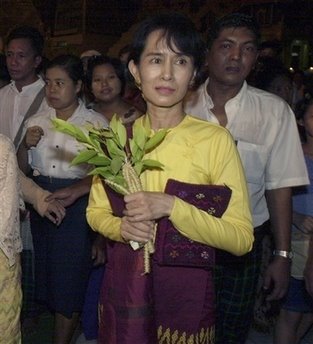


 Posts


