News & Articles on Burma Sunday, 17 June 2012 ----------------------------------------- In Long-Overdue Speech, Dissident Says Nobel Opened Her Heart Suu Kyi is the female Gandhi Suu Kyi to get Freedom of Dublin Suu Kyi backs ethical UK investment Suu Kyi says Nobel award meant Burma was not forgotten Suu Kyi to make bittersweet return to Oxford Suu Kyi heads to Norway fjord town for talks ---------------------------------------- In Long-Overdue Speech, Dissident Says Nobel Opened Her Heart By STEVEN ERLANGER Published: June 16, 2012 OSLO When she was awarded the Nobel Peace Prize in 1991, while under house arrest in Myanmar, Daw Aung San Suu Kyi said Saturday, she realized that the Burmese were not going to be forgotten. When the Norwegian Nobel Committee awarded her the prize, she said in her Nobel lecture here on Saturday, 21 years later, it was recognition that the oppressed and the isolated in Burma were also a part of the world, they were recognizing the oneness of humanity. But it did not seem quite real, because in a sense I did not feel myself to be quite real at that time, she said. The Nobel Peace Prize opened up a door in my heart. She said the prize had made me real once again; it had drawn me back into the wider human community, and it had given the oppressed people of Burma, now Myanmar, and its dispersed refugees, new hope. To be forgotten, Ms. Aung San Suu Kyi added, is to die a little. In a quiet, throaty voice on Saturday she asked the world not to forget other prisoners of conscience, both in Myanmar and around the world, other refugees, others in need, who may be suffering twice over, she said, from oppression and from the larger worlds compassion fatigue. It was a remarkable moment for the slight Ms. Aung San Suu Kyi, who turns 67 next week and is now a member of Parliament and the leader of Myanmars opposition. She dressed in shades of purple and lavender, her hair adorned with flowers. It is a gesture she makes in honor of her father, Gen. Aung San, an independence hero of Burma, who was assassinated in 1947, when she was 2, but whom she remembers threading flowers through her hair. The audience in Oslos City Hall, which included the Norwegian royal family, listened raptly, applauding often, standing to clap when Ms. Aung San Suu Kyi entered the hall and when she finished her speech, which was at the same time modest, personal and touching, an appeal to find practical ways to reduce the inextinguishable suffering of the world. Suffering degrades, embitters and enrages, she said. War is not the only arena where peace is done to death. Absolute peace is an unattainable goal, she said. But it is one towards which we must continue to journey, our eyes fixed on it as a traveler in a desert fixes his eyes on the one guiding star that will lead him to salvation. She had thought much on the Buddhist idea of dukkha, or suffering, in her long years of isolation and house arrest, Ms. Aung San Suu Kyi said. If suffering were an unavoidable part of our existence, we should try to alleviate it as far as possible in practical, earthly ways. One crucial avenue, she said, was simple kindness. Of the sweets of adversity, and let me say that those are not numerous, I have found the sweetest, the most precious of all, is the lesson I learned on the value of kindness, she said, with a rare shred of humor. Every kindness I received, small or big, convinced me that there could never be enough of it in the world. Kindness, she said, can change the lives of people. Her comments on Myanmar were careful but considered. She called for national reconciliation and cease-fire agreements between the government and ethnic nationality forces, which she said she hoped would lead to political settlements founded on the aspirations of the peoples, and the spirit of the nation. In my own country, she said, hostilities have not ceased in the far north, and to the west, communal violence has flared in the days before she left Myanmar. She spoke of the Burmese concept of peace, which she defined as the happiness arising from the cessation of factors that militate against the harmonious and the wholesome. The term, nyein-chan, translates literally, she said, as the beneficial coolness that comes when a fire is extinguished. She had never thought of winning prizes, she said. The prize we were working for was a free, secure and just society, she said. The honor lay in our endeavor. Her endurance against dictatorship and steadfastness to her principles has brought comparisons to Nelson Mandela. Her life has also been one of personal sacrifice. For her country, and for the legacy of her father, Ms. Aung San Suu Kyi could be said to have given up her family: her beloved husband, Michael Aris, a professor of Tibetan and Himalayan Studies at Oxford, and her two children, Alexander and Kim, who grew up largely without her. Myanmars former military government persistently refused to grant them visas to visit her, even when Mr. Aris grew ill with prostate cancer, apparently in the hope that she would leave Myanmar herself to visit them. She refused to do so, fearing with reason that the government would not allow her back into the country. After Ms. Aung San Suu Kyis initial house arrest in 1989, Mr. Aris was allowed to visit only five times, the last time during Christmas in 1995. He died in March 1999, on his 53rd birthday; to the end, he supported her decision to remain in Myanmar. She had returned to Myanmar from Britain in March 1988 to nurse her ill mother, Daw Khin Kyi, and became caught up in the swirling protests against years of eccentric autocracy and military rule. In January 1989, just after her mothers funeral, she and her husband sat for a rare interview at her mothers house in Rangoon, now Yangon, as their children ran about the rooms, with their faded colonial elegance. You know, when I married Michael, she said, I made him promise that if there was ever a time that I had to go back to my country, he would not stand in my way. And he promised. Mr. Aris said: Thats true. She made me promise. She said then that she understood how much her stature depended on her fathers aura. I dont pretend that I dont owe my position in Burmese politics to my father, at least at the beginning, she said. Its time to look at what people do. At another moment, she said: Really, Im doing this for my father. Im quite happy they see me as my fathers daughter. My only concern is that I prove worthy of him. Once fate intervened, she chose the life she has lived, and there is little doubt that she has proved herself fierce, loyal and worthy, both to her father and to her people. Thorbjorn Jagland, the chairman of the Norwegian Nobel Committee, praised her and thanked her for your fearlessness, your tenacity and your strength. He said: Your life is a message to all of us. http://www.nytimes.com/2012/06/17/world/asia/aung-san-suu-kyi-accepts-nobel-peace-prize.html?_r=1 -------------------------------------- Suu Kyi is the female Gandhi Priyanka Jain, Hindustan Times June 17, 2012 First Published: 14:05 IST(17/6/2012) Last Updated: 14:42 IST(17/6/2012) Prime Minister Manmohan Singh shakes hands with Myanmar's opposition leader Aung San Suu Kyi, leader of National League for Democracy (NLD), during a meeting in Yangon, Myanmar. PTI Photo by Kamal Kishore Luc Bessons film The Lady premiered at IFFI 2011 in Goa but the fate of its Indian release was hanging in the balance. However since Prime Minister Manmohan Singh met Burmas national heroine Aung San Suu Kyi recently, the film may finally see a release in India. Michelle Yeoh who is essaying the role of the pro-democratic Burma leader describes her meeting with Suu Kyi as special. She says, She practices all the teachings of Mahatma Gandhi and even Nelson Mandela. She is their female form, fighting a similar battle for her country as they did for theirs. Suu Kyi actually studied and lived in India for a brief period and is deeply familiar with Indian culture. The film was written over a period of three years after conducting interviews with key figures in Suu Kyis entourage. The Crouching Tiger, Hidden Dragon actor adds, For me, I was just meeting my hero. Because when you have learnt so much about a person you want to see for yourself if they are really like what you are studying and embodying. You feel such peace and warmth when you find out that she is like that, someone who is so selfless and generous in spirit, compassionate and wise but at the same time quick to laugh. It was a remarkable and memorable moment for me. Luc Bessons film focuses on Suu Kyis non-violent protests and the fasts she observed for the freedom of her country, much like Gandhi. The actor-director duo even arranged a screening for the Dalai Lama. Michelle says, Suu Kyi always says, Use your freedom to promote ours. Thats what we did. I know that every time an artist can talk about Burma, about her, or about the fight, she is happy. http://www.hindustantimes.com/Entertainment/Hollywood/Suu-Kyi-is-the-female-Gandhi/Article1-873751.aspx ---------------------------------------- Suu Kyi to get Freedom of Dublin Sunday, June 17, 2012 - 02:49 PM Burmas pro-democracy leader Aung San Suu Kyi will jet in to Dublin tomorrow for a six-hour flying visit to the Irish capital. Thousands of supporters are expected to turn out to honour the Nobel Peace Prize laureate, who will deliver an open-air address and receive the freedom of Dublin city 12 years after she was awarded the accolade. Rock star Bono and fellow aid campaigner Bob Geldof will join her in a special tribute concert, where Ms Suu Kyi will be presented with Amnesty Internationals prestigious Ambassador of Conscience award. Colm OGorman, executive director in Amnesty International Ireland, said thousands of people from across Ireland and around the world will have an opportunity to hear a woman who has inspired millions. Every one of us who applauds her onto the stage on Monday night, proudly looking on as the Lord Mayor of Dublin grants her the Freedom of the City, is also sending a message of hope and solidarity to her supporters in Myanmar, said Mr OGorman. We will be telling them that we stood with Aung San Suu Kyi when she was in prison, that she inspires us much as she inspires them. Now that she is free, we will continue to stand with her and to support the struggle for justice, freedom and human rights in Myanmar. Ms Suu Kyi was under house arrest or in prison for 15 of the last 24 years until her release last November. The human rights campaigner, who last night accepted a Nobel Peace Prize she won while under house arrest 21 years ago, is visiting Europe for the first time since 1988. She will fly in from the Norwegian capital of Oslo and will be met by Foreign Affairs Minister and Tᮡiste Eamon Gilmore at Dublin airport. Ms Suu Kyi will meet Irish President Michael D Higgins before she attends a special concert at the Bord Gais Energy Theatre in her honour where she will also be conferred with an honorary degree from Trinity College Dublin. Bono, Geldof, musician Damien Rice, the Riverdance ensemble and actress Vanessa Redgrave will be among the leading figures from the world of arts and music celebrating the event. When the Freedom of the City was conferred on Ms Suu Kyi on March 18 2000, the award was accepted on her behalf by her son Kim. The then Lord Mayor, Mary Freehill, will tomorrow present a scroll commemorating the visit to the campaigner, who will sign the Roll of Honorary Freedom of the City. I am delighted that Aung San Suu Kyi is finally free to come to Dublin in person to complete the ceremony which began in March 2000, added Cllr Freehill. Members of the Karen community, Myanmars largest ethnic minority, will perform a short piece of traditional Karen music after the public address and a special birthday cake will be given to Ms Suu Kyi, who celebrates her 67th birthday on Tuesday. Dublin Lord Mayor Andrew Montague said it was a great honour that Ms Suu Kyi is visiting Dublin. She is one of my heroes for leading a peaceful campaign to bring democracy to Burma at great personal cost, he said. For over 15 years Aung San Suu Kyi has been separated from her family and held under house arrest as a result of her campaign. I am proud to welcome her to Dublin and proud to invite her to sign the Roll of Honorary Freedom of the City. http://www.irishexaminer.com/breakingnews/ireland/suu-kyi-to-get-freedom-of-dublin-555686.html ---------------------------------------- Suu Kyi backs ethical UK investment (UKPA) Aung San Suu Kyi said she would welcome "ethical, responsible investment" from British businesses as she prepared to visit the UK for the first time since being released from more than 20 years of house arrest. Ms Suu Kyi said she was looking forward to returning to Britain, where she lived, studied and married before returning and launching her long-fought campaign in Burma. And while insisting on a need for "healthy scepticism" about reforms and progress in Burma, Ms Suu Kyi said the time was nearing when foreign investment could be appropriate. Burma has significant energy reserves and Ms Suu Kyi was asked whether it would be appropriate for British firms such as BP or Shell to work in the country. She said: "It depends on the way in which they do it. I have spoken about the democracy-friendly development growth, to invest in a way that will promote democracy in Burma, that will empower the people, that will bring in new players to the economic arena - not just the same old people who have been enjoying a privileged situation for years. "Transparency is the key. Without transparency there can be no accountability and unless there is transparency we can never tell whether these investments are going to benefit the people or the already privileged few. "I would be happy to see ethical, responsible (British) investment." The four-day visit to the UK is part of a five-nation European tour, which saw the former political prisoner visit Norway to collect her Nobel Prize 21 years after it was awarded. Speaking to the BBC's Andrew Marr programme, Ms Suu Kyi said she was looking forward her UK visit, which will include a speech to Parliamentarians in Westminster Hall and a visit to Oxford where she lived in the 1980s. http://www.google.com/hostednews/ukpress/article/ALeqM5gOISaQbQ0EbWjtGEmhfmATPwL2xA?docId=N0332361339924478781A ------------------------------------ Burma Suu Kyi says Nobel award meant Burma was not forgotten Burma - Burma's pro-democracy leader Aung San Suu Kyi has said receiving the Nobel Peace Prize in 1991 had made her feel "real again" and reassured her that Burma's plight had not been forgotten. Speaking in the Norwegian capital, Oslo, she said Western support had contributed to changes in Burma. Ms Aung San Suu Kyi spent much of the past 24 years under house arrest in Burma. She was freed in late 2010. She did not travel to collect the prize fearing she would not be allowed back. Her visit to Oslo is part of a tour of Europe, her first since 1988, which she began in Geneva, at the UN's International Labour Organisation. On Saturday, Suu Kyi will meet members of the Burmese community who are exiled and now live in Norway. http://www.portalangop.co.ao/motix/en_us/noticias/internacional/2012/5/24/Suu-Kyi-says-Nobel-award-meant-Burma-was-not-forgotten,925bcb81-2485-4b40-a5dc-e95162bc512b.html ---------------------------------------- Suu Kyi to make bittersweet return to Oxford By Jill Lawless Associated Press / June 17, 2012 LONDONBefore Aung San Suu Kyi was a prisoner of conscience and a political icon, she inhabited a world of children's birthday parties, university libraries and bicycle-filled English suburbs. The leader of Myanmar's democracy movement spent years in the university city of Oxford with her English academic husband and their two sons. She left one day in 1988 to care for her sick mother, thinking she would be gone for weeks. Almost a quarter of a century later, she is about to return for the first time. On Monday, Suu Kyi begins a weeklong trip to Britain as part of a European tour. Her itinerary includes talks with Prime Minister David Cameron, an address to Parliament and a meeting with Prince Charles. But the most bittersweet moment will likely be her homecoming to Oxford, where on Wednesday the 66-year-old will finally accept the honorary doctorate she was awarded in 1993, while she was under house arrest in Yangon. Oxford looks much the same as when she left, a traffic-clogged jumble of spires and bridges and Gothic college buildings. But her children are grown and her beloved husband, Michael Aris, is dead. "I'm sure within herself it'll be an extremely emotional moment," said Peter Popham, author of "The Lady and the Peacock," a biography of Suu Kyi. "When she left in March 1988 she expected to be away for a while, possibly a few months, but certainly not 24 years." Suu Kyi arrived in Oxford in 1964 from a background marked by both privilege and tragedy. She had been educated at a convent school in New Delhi, where her mother was ambassador for the country then known as Burma. Her father, Gen. Aung San, a political leader who negotiated Burma's independence from Britain, had been assassinated by political rivals in 1947, when she was 2. She studied politics, philosophy and economics at Oxford University's then-women-only St. Hugh's College, a handsome collection of red brick Edwardian buildings set in extensive gardens. Student friend Ann Pasternak Slater recalled a striking figure whose "firm moral convictions and inherited social grace contrasted sharply with the tatty dress and careless manners, vague liberalism and uncertain sexual morality" of her English counterparts. Suu Kyi was not a party animal -- she tasted alcohol just once, to see what it was like -- but did embrace other Oxford traditions. In the essay collection "Freedom From Fear," Pasternak Slater described her learning to operate a punt -- Oxford's characteristic flat-bottomed boats -- and to ride a bicycle, swapping her traditional Burmese long skirt, the lungi, for a pair of white jeans. While at Oxford, Suu Kyi met Aris, a Himalayan scholar who later served as tutor to the children of the king of Bhutan. They married in 1972 -- on condition that if her country ever needed her, she would go. Neither imagined how high the price would be. "She thought she might go to Burma one day to set up a mobile library once the kids were grown and Michael was retired," said Rebecca Frayn, screenwriter of "The Lady," a recent feature film about Suu Kyi. "They had a little dream that he would grow orchids." The couple lived in Bhutan and London, then settled in Oxford when Aris got an academic post. Suu Kyi looked after sons Alexander and Kim and pursued doctoral studies. Frayn said the future Nobel peace laureate embraced her role as academic wife and "utterly devoted mother." "She was famed for her exquisitely organized birthday parties," Frayn said. "The common thing is that she did whatever she did to the Nth degree." In March 1988, Suu Kyi returned to Myanmar to nurse her dying mother, and found herself on the front line of mass pro-democracy protests that erupted soon after. The hospital where her mother was being treated was inundated with injured demonstrators. As the daughter of a national hero, Suu Kyi was an instant emblem of the movement. She embraced her destiny and helped form the National League for Democracy -- with the support of her far-off husband. "From the outset, they knew it was a tough decision to go into politics," Popham said. "But I don't think any of them had an idea of how hard it was going to be. Michael thought the regime would collapse within months and they would be reunited by Christmas 1988." In fact, Aris saw his wife only a handful of times after she left Oxford. The NLD won elections in 1990, but was kept from power by the military junta. Suu Kyi spent much of the next 20 years under house arrest, finally being released in November 2010. In April, she won a seat in the country's national assembly, and is campaigning for further reform. The couple's predicament took a cruel twist in 1997, when Aris was diagnosed with what turned out to be terminal prostate cancer. The junta would have allowed Suu Kyi to leave Myanmar to visit him -- but she feared she would not be allowed to return. He applied 30 times for visas to visit her; all were rejected. "He was adamant she shouldn't come back," Frayn said. "He was convinced (his visa) would be granted and he would die in her arms." Aris died in Oxford on his 53rd birthday in 1999. He had not seen his wife in more than three years. Frayn said the years of separation had left a "complex emotional legacy" for Suu Kyi's sons, now in their 30s. Kim Aris lives in Oxford and has visited his mother several times since her release from house arrest. Elder brother Alexander -- who at age 18 delivered the 1991 Nobel Peace Prize address on behalf of his mother -- lives in a Buddhist community in Portland, Oregon. Neither has given interviews to the media. Suu Kyi, too, rarely speaks of her emotions -- a reflection, Frayn said, both of her Buddhist faith and of her political convictions. "She is surrounded in the National League for Democracy by people who spent many years in prison, and in some senses her context is that she got off lightly compared to a lot of her close political colleagues," Frayn said. "She has said that this is in a sense her cross to bear, the long-term separation from her sons. "A journalist once said to her that her story was like a Greek tragedy. She absolutely rebuked him and said: I made a choice." http://www.boston.com/news/world/europe/articles/2012/06/17/suu_kyi_to_make_bittersweet_return_to_oxford/?page=full -------------------------------------- Suu Kyi heads to Norway fjord town for talks Posted on 17 June 2012 - 05:19pm Last updated on 17 June 2012 - 07:00pm The audience watches as Nobel peace prize laureate, Myanmar opposition leader Aung San Suu Kyi gives her Nobel lecture in Oslo on June 16, 2012. Suu Kyi will visit Norway, Britain, France and Ireland on her more than two-week tour, which will include a speech in Oslo to formally accept the Nobel Peace Prize that thrust her into the global limelight two decades ago. AFP OSLO (June 17, 2012): Myanmar's democracy icon Aung San Suu Kyi was to head Sunday to the Norwegian fjords for talks on her country's future after wowing crowds in Oslo where she gave her long-overdue Nobel speech. The veteran activist -- in Europe for the first time in a quarter-century after enduring years of house arrest for her freedom struggle -- has been feted since the start of her five-nation tour in Geneva on Wednesday. Her visit has been hailed all the more because of the rapid change in her home country also known as Burma, where a former military junta that ruled the country with an iron fist for decades has pledged to follow a path to democracy. On Sunday, the Nobel Peace Prize laureate will visit the Rafto Foundation, a human rights group based in the coastal city of Bergen that honoured her with its annual award in 1990 and made her its patron in 1999. Her prize "for her peaceful struggle under the military dictatorship," like the Nobel the following year, was accepted by her family, as Suu Kyi feared she would not be allowed to return to Myanmar if she left the country. "Her visit means very, very much to us," said the foundation's executive director, Therese Jebsen, speaking by phone from Bergen about Suu Kyi, the Oxford-educated daughter of the country's independence hero. "It's actually the greatest thing that's happened in the history of the Rafto Foundation," Jebsen said. "She has been part of our history for 22 years. She has been one of our most important sources of inspiration." Suu Kyi was to hold morning talks with Foreign Minister Jonas Gahr Store before flying to Bergen, a picturesque city with multi-coloured rows of wooden houses on the harbourside that is known as the Gateway to the Fjords. Representatives of non-government groups and business schools will meet with Suu Kyi at the Rafto Foundation to discuss ways to support development in her impoverished country as it reopens to the world, Jebsen said. A topic of special concern will be how Myanmar goes about managing its vast natural resources, especially oil and gas, in a way that benefits the people. Myanmar's political reforms -- from allowing Suu Kyi's party into mainstream politics to freeing political prisoners -- have led the United States, the European Union and others to roll back or suspend long-standing sanctions. Some now fear a free-for-all business bonanza in the country, and Suu Kyi herself has stressed that ethical, transparent and "human-rights friendly, democracy-friendly investment is what we're looking for." Jebsen said that Norway, a rare liberal democracy among the world's top oil-producing countries, may have lessons and technical advice to help Myanmar "manage the resources in a democratic way." In Oslo, asked about her country's broader political reforms, she told the BBC: "I have been speaking out against what I call reckless optimism and calling for a bit of healthy skepticism." After the closed-door talks at the Rafto House for Human Rights, she will meet the city's Burmese exile community at a hotel, then address a public meeting in the city centre before flying back to Oslo. After more meetings near the Norwegian capital, Suu Kyi is set to receive a rock star's welcome Monday in Dublin at a concert by Irish singer and global rights campaigner Bono. Afterward some 5,000 people are expected to sing "happy birthday" to Suu Kyi, who turns 67 on Tuesday, at a public event. She then travels to Britain, which was her long-time home until 24 years ago, before wrapping up her tour in France. AFP http://www.thesundaily.my/news/409691
Monday, June 18, 2012


Friday, June 15, 2012
Thursday, 14 June 2012-News & Articles on Burma
Thursday, 14 June 2012 News & Articles on Burma ----------------------------------------- Suu Kyi warns investors off Myanmar's state oil & gas firm Suu Kyi calls for Myanmar investment Myanmar unrest needs political settlement: Suu Kyi Aung San Suu Kyi pushing the democratic agenda Suu Kyi urges care as world reaches out to Myanmar Europe trip part thanks, part political lecture tour for Myanmar's democracy icon Suu Kyi Violence tests Myanmar's media, and its censors 28 dead in Myanmar communal unrest Aung San Suu Kyi arrives in Geneva for European tour Suu Kyi to address labor conference at start of European tour Burma's Aung San Suu Kyi begins landmark Europe visit Communal unrest threatens Myanmar's future: UN ILO to lift restrictions on Myanmar Myanmar's Suu Kyi arrives in Geneva for European tour ILO lifts most of restrictions on Myanmar Will the International Donors leave Kachin people of Burma in the dark? ----------------------------------------- Suu Kyi warns investors off Myanmar's state oil & gas firm Published on Thu, Jun 14, 2012 at 19:26 | Source : Reuters By Stephanie Nebehay and Tom Miles GENEVA (Reuters) - Myanmar's Nobel Peace Prize winner Aung San Suu Kyi urged foreign governments not to allow their companies to form joint ventures with the state-owned oil and gas company until it improved its business practices. Suu Kyi, speaking to the International Labour Organization (ILO) in Geneva on Thursday, said: "The Myanma Oil and Gas Enterprise (MOGE)... with which all foreign participation in the energy sector takes place through joint venture arrangements, lacks both transparency and accountability at present." "The (Myanmar) government needs to apply internationally recognised standards such as the IMF code of good practices on fiscal transparency. Other countries could help by not allowing their own companies to partner MOGE unless it was signed up to such codes," she said. The hugely popular leader of Myanmar's opposition is on her first visit to Europe in nearly a quarter of a century, fearful until now that if she left Myanmar, the junta whose rule she fought against for two decades would block her return. Myanmar has granted Chinese state-owned oil firm CNPC oil and gas pipeline concessions that will enable Middle East energy supplies to a take short-cut on the route to China, cutting out the extra expense and journey time of using the Malacca Strait. "Quite frankly none of us know what's in those contracts, this is what I mean by lack of transparency in the country," Suu Kyi said. "Lack of transparency leads to all kinds of suspicions that shore up trouble for the future." Asked about Chevron and Total , the big Western oil firms with investments in Myanmar, she said: "I have to say that I find that Total is a responsible investor in the country, even though there was a time when we did not think they should be encouraging the military regime by investing in Burma. "They were sensitive to human rights and environmental issues and now that we've come to a point in time when we would like investors who are sensitive to such issues, I am certainly not going to persuade Chevron or Total to pull out." A day after the U.N. agency lifted its more than decade-old restrictions on Myanmar in recognition of progress, Suu Kyi received a standing ovation at the ILO's annual ministerial conference, where she said foreign direct investment that created jobs should be invited. As sanctions are lifted, investment in the country should be responsible and add to, rather than subtract from, the process of democratisation, she said. "The reason why we have to be careful about the extractive industries is because what you extract doesn't go back in, and secondly because they don't provide as many jobs as some other industries, so we want to approach this with caution. "Burma is a land with a lot of energy resources. We do not want to dissipate it. I would like to see a sound effective energy policy in Burma and this should be related to the kind of extractive investments that we invite in." She also said responsible foreign investment in agribusiness could be beneficial, as long as the right precautions are taken to protect smallholders. (Reporting by Stephanie Nebehay and Tom Miles; Editing by Toby Chopra) http://www.moneycontrol.com/news/wire-news/suu-kyi-warns-investors-off-myanmars-state-oilgas-firm_718034.html --------------------------------------------------- Suu Kyi calls for Myanmar investment 2012-06-14 17:35 AP Geneva - Myanmar democracy icon Aung San Suu Kyi called for international investment to create jobs for her country's youth at the start of a landmark tour of Europe following years under house arrest. Suu Kyi, who arrived at the UN offices in Geneva to flowers and applause, appealed for the investment in a speech to delegates at the International Labour Organisation conference. "It's not so much joblessness as hopelessness that threatens our future," she said, making her first visit to Europe in 24 years. "Unemployed youth lose confidence in the society that has failed to give them the chance to realise their potential. "Foreign direct investment that results in job creation should be invited," she added. Suu Kyi also spoke of the plight of migrant workers from Myanmar in Thailand, calling for co-ordinated social, political and economic policies "that will put our country once again on the map of the positive and the successful". Oil giants She told her audience she was "profoundly moved" by the "totally unexpected, very warm welcome" she had received as she began a five-country tour which will include a speech in Oslo to accept the 1991 Nobel Peace Prize she was unable to receive at the time. Her visit marks a new milestone in the political changes that have swept the country formerly known as Burma since decades of military rule ended last year, bringing to power a new quasi-civilian government. The Myanmar opposition leader has spent the last quarter of a century either confined to her Yangon home on the orders of the ruling military junta or too afraid to leave the country in case she would not be allowed to return. She also told reporters that she thought French and US oil giants Total and Chevron, long a target of human rights activists for their activities in Myanmar, should continue to operate there. "I find that Total is a responsible investor ... it is sensitive to human rights," she said after her speech. The previous "concerns" about their support for the junta were a thing of the past, and she was "not going to persuade Total or Chevron to pull out" of Myanmar, especially when there was such a need for "democracy-friendly investment", she said. Forced labour Switzerland is the first stop on a tour of more than two weeks that will take her to Norway, Britain, France and Ireland. Myanmar President Thein Sein has recently overseen a series of reforms. They included releasing hundreds of political prisoners, signing peace pacts with armed rebel groups and welcoming Suu Kyi's National League for Democracy party back into mainstream politics. The ILO, a United Nations agency which draws up and monitors international labour standards, has sought for years to rid Myanmar of the practice of forced labour which it says is widespread there. In March the government signed an action plan to eliminate it outright by 2015. Suu Kyi will later on Thursday take the train to the capital Bern where she will meet Foreign Minister Didier Burkhalter. A foreign ministry statement said the talks would focus on the political situation in Myanmar, "which is currently undergoing a process of opening up". Self-conscious Suu Kyi will dine with Swiss President Eveline Widmer-Schlumpf in the evening and visit parliament before heading to Oslo on Friday. Later in the trip the 67-year-old activist will address Britain's parliament and receive an Amnesty International human rights award in Dublin from rock star Bono. The daughter of Myanmar's independence hero General Aung San won her first-ever seat in parliament in April, prompting Western nations to start rolling back sanctions. In her address, Suu Kyi admitted she still felt "a little self-conscious" about referring to herself as an elected member of parliament. The politician left Yangon as western Myanmar was rocked by sectarian violence between Buddhists and Muslim Rohingya that has left dozens dead. It prompted President Thein Sein to warn of disruption to the fragile reform process. - AFP http://www.news24.com/World/News/Suu-Kyi-calls-for-Myanmar-investment-20120614 --------------------------------------- Myanmar unrest needs political settlement: Suu Kyi Posted: 14 June 2012 2333 hrs GENEVA: Opposition leader Aung San Suu Kyi said on Thursday a ceasefire to halt ethnic violence in Myanmar's Kachin state was not enough and underlined the need for a political solution. "Ceasefire is not enough," Suu Kyi told reporters in Geneva where the veteran activist has begun a landmark European tour after years spent under house arrest. "We have to have a political settlement if there is going to be the kind of peace that is lasting and meaningful." Suu Kyi was asked to comment on the violence affecting various parts of Myanmar at a press conference at the UN which followed an address to the International Labour Organization. "I think the most important lesson we need to learn from it is the need for rule of law," she said. "We have said again and again ... that rule of law is essential if we are to put an end to all conflict in our country. "Without the rule of law such communal strife will only continue." "We need the cooperation of all peoples to bring this to an end." - AFP/cc http://www.channelnewsasia.com/stories/afp_asiapacific/view/1207666/1/.html -------------------------------------- Aung San Suu Kyi pushing the democratic agenda Updated: 16:30, Thursday, 14 June 2012 inShare RTɠNews Deputy Foreign Editor Anthony Murnane examines the current situation facing Aung San Suu Kyi as the opposition leader in Burma. Aung San Suu Kyi will arrive in Ireland after she delivers her acceptance speech in Oslo for the Nobel Peace Prize she was awarded in 1991. The Burmese pro-democracy leader has had a busy time since she was released from house arrest in November 2010. Her first foreign trip in over 20 years was to Thailand last month. She was greeted by thousands of supporters during a visit that came only weeks after she swore the oath of office and led 42 of her National League for Democracy party members into parliament. However, their numbers are not significant enough to wield any power under the government of President Thein Sein. Among the democratic changes by the military leaders were the elections on 1 April and the release of hundreds of prisoners, including prominent political prisoners such as Ms Suu Kyi herself. On her first foreign trip in 22 years to Thailand, she told the World Economic Forum in Bangkok that a ''healthy scepticism is in order'' in relation to the reforms. Ms Suu Kyi realises she needs to be tactical in her battles. Already she has joined her MPs in swearing an oath of office after failing to replace the phrase ''safeguard the constitution'' with ''respect the constitution''. For his part, ruling general Thein Sein is facing a challenge at home from a wave of sectarian violence in western Rakhine state, where a state of emergency has been imposed in response to violent clashes between Buddhists and Muslims. Ms Suu Kyi has called for "sympathy" with minorities in the wake of the unrest. Pushing the democratic agenda will be difficult for the opposition. Most of the seats in parliament are still held by the military backed ruling party and the army and any constitutional change needs a 75% majority. But now Ireland is to be visited by The Lady - a woman of regal carriage who has fought oppression and violence with peaceful means for more than two decades. http://www.rte.ie/news/2012/0613/aung-san-suu-kyis-role-in-burma-today.html -------------------------------------------- Suu Kyi urges care as world reaches out to Myanmar By FRANK JORDANS Associated Press June 14, 2012 9:50AM GENEVA Foreign investment must help not hurt Myanmars goal of moving toward full democracy, opposition leader Aung San Suu Kyi said Thursday as she welcomed efforts to reach out to her country while it emerges from decades of isolation under military rule. The Nobel Peace laureate is on her first trip to Europe in 24 years and her comments abroad are being closely watched by foreign governments and businesses eager to invest in Myanmar, as well as by the countrys own reformist rulers wary of her status as political superstar. Speaking calmly to a hall full of U.N. diplomats brimming with excitement at her presence, Suu Kyi delivered a thoughtful message on workers rights and investors responsibilities. I would like to call for aid and investment that will strengthen the democratization process, she told the annual meeting of the International Labor Organization in Geneva, which has long supported her cause. We accept that investments must pay off, she added. But we would like these profits to be shared between the investors and our people. Suu Kyi highlighted the secrecy surrounding recent deals between China and the Myanmar Oil and Gas Enterprise. The state-owned company that all foreign firms seeking to tap into the countrys oil and gas riches must deal with lacks both transparency and accountability at present, she said. Western companies, too, have been eager to invest in the Southeast Asian nation as the sanctions it faced under military rule are gradually lifted. Any new investment that comes in because of the lifting or suspension of sanctions should add to the democratic process rather than subtract from it, Suu Kyi told reporters after the speech. Many years as an international pariah have left Myanmar, also known as Burma, poor and in need of foreign investment, but concerns remain about corruption and money being used to prop up the powerful military. Suu Kyis two-week visit to Europe next takes her to the Swiss capital Bern for a meeting with the government. On Friday, she flies to Oslo, where she will make a belated acceptance speech Saturday for the Nobel Peace Prize that was awarded to her in 1991. At the time, she was detained by the military after leading a pro-democracy party to victory in Myanmars 1990 election. Also on her itinerary are France, Ireland and Britain, where she will speak to both houses of parliament and receive an honorary doctor from Oxford. Though willing to chide her government, Suu Kiy was cautious when asked about the sensitive issue of Myanmars western Rakhine state, where violent clashes have occurred recently between the Bhuddhist population and the Muslim Rohingya ethnic group. Suu Kyi refused to say outright whether the Rohingya should have Myanmar citizenship, instead saying the issue should be decided by the rule of law. Her National League for Democracy remains outside of the government but has endorsed the reforms instituted by Myanmar President Thein Sein, who is backed by the still-powerful military. Suu Kyi hinted that her political ambitions may not stop at a supporting role in the new Myanmar. I do not stand here as a representative of the workers, or of employers, or of government, she told the ILO meeting. Not yet anyway. Asked later by The Associated Press whether she could forgive the junta for ignoring the outcome of the 1990 elections and keeping her under house arrest for 15 of the next 22 years, the woman who is seen as an icon of the democracy movement took the high road. In some ways I dont think they really did anything to me, she said. Well, they placed me under house arrest, but that gave me a lot of time to read, she added, wistfully. I do not think I have anything to forgive them for. Copyright 2012 Associated Press. All rights reserved. http://www.suntimes.com/news/world/13181082-418/suu-kyi-urges-care-as-world-reaches-out-to-myanmar.html ---------------------------------------- Europe trip part thanks, part political lecture tour for Myanmar's democracy icon Suu Kyi By: Frank Jordans, The Associated Press Posted: 06/13/2012 3:01 AM | Comments: 0 (including replies) | Last Modified: 06/13/2012 2:06 PM GENEVA - Twenty-four years ago Aung San Suu Kyi left Europe for what was then a military-controlled nation called Burma. She returns Wednesday the icon of Myanmar's democracy movement to a continent eager to hear from her whether the country's recent reforms truly spell the end of its cruel dictatorship. The trip is seen as a sign of gratitude to those governments and organizations that supported Suu Kyi's peaceful struggle against Myanmar's generals over more than two decades, 15 years of which she spent under house arrest. In Geneva, her first stop, Suu Kyi will on Thursday address the annual meeting of the U.N.'s International Labor Organization, whose campaign against slavery and child labour in Myanmar drew constant attention to the junta's abusive exploitation of its people. Suu Kyi then flies to Oslo, where on Friday she will formally receive the Nobel Peace Prize that was awarded to her 21 years earlier while she was detained by the military after leading a pro-democracy party to victory in Myanmar's 1990 elections. The prize catapulted her struggle against Myanmar's dictatorship into wider public consciousness and put Suu Kyi among the ranks of Soviet President Mikhail S. Gorbachev, South Africa's anti-apartheid leader Nelson Mandela and the Dalai Lama. Norway is also home to the Democratic Voice of Burma, an opposition broadcaster that has received generous funding from the Norwegian government and others. Also on her itinerary are France and Ireland, where she will be feted by pop band U2 and its activist frontman Bono at a concert hosted by the human rights group Amnesty International. The greatest attention is likely to be paid to her stopover in Britain next week. Suu Kyi studied and lived in Britain for years, and it is in Myanmar's former colonial power she left behind husband Michael Aris and their two sons, Alexander and Kim, when she travelled to her homeland in 1988 to nurse her ailing mother. Aris died of cancer in 1999, having been denied a visa to Myanmar. Suu Kyi had refused to leave the country, fearing she would be permanently exiled by a junta that saw the daughter of Myanmar's independence hero Gen. Aung San as a threat to their power. The 66-year-old, who won a parliamentary seat in Myanmar earlier this year, will address both houses of Britain's parliament during her visit and accept an honorary doctorate at Oxford. Suu Kyu's speeches will be closely watched by governments and businesses, less for the skilful political rhetoric attributed to her than for signs that it is now safe and proper to invest in Myanmar at a time when it is making tenuous democratic progress. In November 2010, she was released from house arrest and in April she won a seat in Parliament. Eager to compete with China and Japan for Myanmar's abundant resources and emerging consumer class, European countries in April lifted decades-old sanctions imposed on the junta. At the time, Shada Islam, head of policy at the independent Brussels-based think-tank Friends of Europe, said there were strong economic reasons for Europe to thaw its relationship with Myanmar. "There is concern that with competition to do business with Myanmar heating up, a failure to lift sanctions could penalize European companies vis-a-vis their Asian and American rivals," she said. But wariness remains over the intentions of Myanmar's President Thein Sein, who retains close ties to the military, and a recent wave of deadly sectarian violence between Buddhists and Muslims in western Myanmar that rights groups say has the potential to escalate. Her scheduled return to Myanmar by the end of the month gets her back in time to attend the July 4 reconvening of Parliament, which was announced Tuesday night on state television. The parliamentary session will be considering crucial legislation, including media regulation and foreign investment.http://www.winnipegfreepress.com/world/europe-trip-part-thanks-part-political-lecture-tour-for-myanmars-democracy-icon-suu-kyi-158839195.html ----------------------------------------- Thursday, June 14, 2012 Violence tests Myanmar's media, and its censors (Reuters) - When Myanmar emerged last year from army rule, state censors started to loosen their powerful grip, allowing newspapers to report freely on what had been unthinkable, from the views of opposition politicians to allegations of government corruption. But as sectarian violence rages between majority Buddhists and Muslim Rohingyas in western Rakhine state, the old ways are returning. Censorship is creeping back, raising questions about whether the pre-screening of copy will be dropped, as the government has said. "We cannot write whatever we want," said Maung Wuntha, a prominent author and journalist who was jailed for publishing work deemed subversive by the former regime. "We can only write when the press scrutiny board approves ... and despite that, we were warned," he said, referring to government warnings about stories on the unrest. The Rakhine state violence is perhaps as big a test for Myanmar's media as it is for a government desperate to put on a presentable face for the outside world. The unrest is an extremely sensitive issue in Myanmar. The Rohingyas are not recognised as one of Myanmar's numerous ethnic groups and their very presence is contested by many. State media has said a five-day rampage of rioting in Rakhine state killed at least 21 people. What started it remains a mystery but it seems almost certain to have stemmed from last month's rape and murder of a Buddhist Rakhine woman, allegedly by three Muslims who are now on trial. The incident led to calls for retribution that were swiftly answered by Buddhist vigilantes, who lynched 10 Muslims with no ties to the alleged killers. JAIL RISK Myanmar's censors leapt straight back into action when the Snapshot news journal published without its permission a photograph, still doing the rounds on the Internet, purporting to show the body of the woman who was raped and murdered. The chief minister for Yangon, Myint Swe, issued a warning late on Sunday to journalists with private media that they faced nine years in prison if they used inflammatory language that could incite violence and endanger stability. Ironically, the government may have broken its own rules when state media reported the deaths of the 10 Muslims using the word "kalar", a derogatory term for people of South Asian descent in Myanmar. The references were removed from websites. Myint Swe's words appear to have been heeded, with self-censorship taking a hold in the media. "Everyone was quite disgruntled at the warning," said a Yangon-based editor, who declined to be identified, adding that most domestic media had written very little about the violence. For half a century, every song, book, cartoon, news story and piece of art required approval by teams of censors working for a board known as the Press Scrutiny and Registration Division. Since the military ceded power to a quasi-civilian government in March 2011 after elections in late 2010, the authorities have relaxed censorship and in May announced that print media content would soon no longer need to be screened. INFLAMMATORY POSTINGS The latest warning, editors say, has cast doubt on whether that will really happen. "It's quite laughable but also worth contemplating that just as they were talking about loosening censorship, it seems to become more restrictive," said Thiha Saw, editor of Myanma Dana business magazine. "For us, we just have to continue to do our part and write what we can accurately," he said. Meanwhile, thousands of unfiltered opinions and comments about the unrest, many inflammatory, have appeared on the web forums of news journals and on Facebook pages as nationalist anger runs wild. Some people, journalists included, have taken aim at exiled media such as the Democratic Voice of Burma (DVB) and foreign media organisations that were praised for their truth-telling during the military's oppressive 49-year reign. Now they are being accused of bias towards stateless Rohingyas, whom many Buddhists blame for instigating the arson, rioting and machete attacks in Rakhine state. David Stout, a copy editor with the DVB, said nationalist passions expressed in unfiltered postings on websites run by some media organisations had highlighted the need for balanced and responsible reporting of what was really taking place. "It's kind of hard to tell what's true and what's rumour," he said. "There are alleged incidents about things that have happened, things that could happen and things that will happen ... I see a lot of irresponsible reporting or postings, things that haven't necessarily been verified." Internet access is low in Myanmar, with only 0.2 percent of the population online by some estimates. But young people are increasingly using social media to share news and opinions and there is a large Myanmar diaspora worldwide. Maung Wuntha, the veteran journalist, warned of trouble ahead if Facebook pages or websites carrying inflammatory content became more widely viewed, but censorship wasn't the answer, he said. "I don't believe you should restrict them or censor them," he said. "The readers should be rational and use their own reasoning to differentiate between right and wrong." (Writing by a Reuters staff reporter; Editing by Martin Petty, Alan Raybould and Robert Birsel) http://thestar.com.my/news/story.asp?file=/2012/6/14/worldupdates/2012-06-14T053247Z_1_BRE85D078_RTROPTT_0_UK-MYANMAR-VIOLENCE-MEDIA&sec=Worldupdates --------------------------------------- 28 dead in Myanmar communal unrest By AFP SITTWE: Twenty-eight people have been killed and dozens more wounded in several days of sectarian clashes in western Myanmar, a government official said Thursday. A state of emergency has been declared for Rakhine state, which has been rocked by a wave of rioting and arson, posing a major test for the reformist government which took power last year. "The latest death toll we can confirm is 28 with 53 people wounded," the official, who did not want to be named, told AFP in the state capital Sittwe, without saying whether they were Buddhist or Muslim Rohingya. The figure raises the last official toll given on Tuesday of around 25 dead and 41 wounded since Friday. The toll does not include 10 Muslims who were killed on June 3 by a Buddhist mob in apparent revenge for the rape and murder of a woman, which sparked the violence in Rakhine. Hundreds of homes on both sides have been torched. An uneasy calm has returned to central Sittwe, an reporter said Thursday, after security forces enforced another night of curfew. More than 30 people were held after breaking the curfew on Wednesday night, the official added. The stateless Muslim Rohingya are scattered around the globe and viewed by the United Nations as among the most persecuted minorities on the planet. About 800,000 Rohingya live in Myanmar, according to the UN, mostly in Rakhine. The government considers the Rohingya to be foreigners, while many citizens see them as illegal immigrants and view them with hostility. http://www.thenews.com.pk/article-54231-28-dead-in-Myanmar-communal-unrest:-official ---------------------------------------- Aung San Suu Kyi arrives in Geneva for European tour Due to deliver a speech in Oslo for her 1991 Nobel Peace Prize AFP/PTI / Geneva Jun 14, 2012, 11:26 IST Myanmar democracy icon Aung San Suu Kyi arrived in Switzerland on a historic European tour which will see her accept the Nobel Peace Prize that thrust her into the global spotlight two decades ago. Suu Kyi, who has not visited Europe since 1988 after years spent under house arrest, arrived at Geneva airport at 21:15 GMT yesterday, an airport spokesman said. He said she left the aeroplane "smiling and seemingly in great form" after the flight from Munich, which was delayed for about 30 minutes. The trip marks a new milestone in the political changes that have swept the country formerly known as Burma since decades of military rule ended last year, bringing to power a new quasi-civilian government. Switzerland is the first stop on a more than two-week tour for Suu Kyi, who will visit Norway, Britain, France and Ireland. She is due to deliver a speech in Oslo for her 1991 Nobel Peace Prize. Suu Kyi left Yangon as western Myanmar was rocked by sectarian violence between Buddhists and Muslim Rohingya that has left dozens dead and prompted President Thein Sein to warn of disruption to the fragile reform process. She will address the International Labour Organization (ILO) conference in Geneva on Thursday before travelling to Swiss capital Bern to meet President Eveline Widmer-Schlumpf and Foreign Minister Didier Burkhalter. On Friday she will visit the Swiss parliament before heading for Oslo. Later in the trip, the veteran activist will address Britain's parliament and receive an Amnesty International human rights award in Dublin from rock star Bono. The daughter of Myanmar's independence hero General Aung San won her first ever seat in parliament in April, prompting Western nations to start rolling back sanctions. http://www.business-standard.com/india/news/aung-san-suu-kyi-arrives-in-geneva-for-european-tour/174669/on ------------------------------------------ Suu Kyi to address labor conference at start of European tour By the CNN Wire Staff, June 14, 2012 -- Updated 0600 GMT (1400 HKT) (CNN) -- The Nobel laureate and Myanmar pro-democracy leader Aung San Suu Kyi is set to address an international conference in Switzerland on Thursday, the first speech of her landmark visit to Europe. Suu Kyi, who arrived in Geneva late Wednesday, will speak at the annual conference of the International Labor Organization, a U.N. agency. Worker and employer representatives, as well as government officials, will attend the event. The organization has for years pressured Myanmar -- formerly known as Burma -- to eradicate forced labor, which it says is widespread in the country. On Wednesday, the conference voted to lift restrictions on Myanmar's participation in the organization's activities, ending 13 years of isolation. Suu Kyi, who was recently elected to Myanmar's parliament, appeared "very happy and had a smile across her face" when she got off the plane in Geneva, said airport spokesman Bertrand Staempski. It is her first trip to Europe in more than two decades. During her trip, she will finally collect the Nobel Peace Prize that she was awarded in 1991, but could not receive it at the time because she was under house arrest. While in Europe, she is also scheduled to address both houses of the British Parliament, be the guest of honor at a concert in Dublin, Ireland, and celebrate her 67th birthday with family. It is Suu Kyi's second trip abroad since she returned to Myanmar in 1988 to care for her dying mother. A military coup that September put Gen. Saw Maung in power, setting off anti-government demonstrations and a crackdown that left hundreds dead. Suu Kyi -- whose husband, Michael Aris, remained in England -- became a leading activist and co-founder of an opposition group, the National League for Democracy. She was placed under house arrest for the first time the following July on charges of trying to divide the military. She spent much of the next two decades confined to her home by the ruling junta. When her party won the 1990 general election in a landslide vote, the military rulers -- in power since 1962 -- refused to let the National League for Democracy serve, nullifying the results. Suu Kyi remained under house arrest. In 1991, Suu Kyi won the European Parliament's Sakharov Prize for Freedom of Thought and the Nobel Peace Prize, which cited her "nonviolent struggle for democracy and human rights." But she remained in detention. In accepting the prize at the time on his mother's behalf, Alexander Aris said, "I personally believe that, by her own dedication and personal sacrifice, she has come to be a worthy symbol through whom the plight of all the people of Burma may be recognized." The military rulers have since loosened their grip on power, allowing a series of democratic reforms. Her house arrest ended in 2010, and she was able to travel around the country during her party's election campaign this year. Facts about Suu Kyi Born: June 19, 1945 Her parents: Gen. Aung San, who fought for Burma's independence from Britain and became Burma's first prime minister before being assassinated in 1947; Khin Kyi, a diplomat and ambassador to India Husband: Michael Aris, a British Tibetan scholar, who died in 1999 Children: Kim and Alexander Education: St. Hughes College, Oxford University On Saturday, about 21 years after she was awarded the prize, Suu Kyi is expected to finally deliver her Nobel lecture at the Oslo City Hall in Norway. Cities hosting her are well prepared for the fanfare. In Dublin, a giant banner hangs from Liberty Hall ahead of her scheduled Monday arrival. There, she will be the special guest at a concert, "Electric Burma." The event is organized by Art for Amnesty founder Bill Shipsey and features a range of entertainers and personalities, including Bono, Vanessa Redgrave, Bob Geldof, Angelique Kidjo and former Tiananmen Square student activist Wu'er Kaixi. Amnesty International, which has campaigned for Suu Kyi and other political prisoners in Myanmar during the past two decades, will award Suu Kyi its highest honor, the Ambassador of Conscience Award. Past recipients include Nelson Mandela and Vaclav Havel. Bono, who has long dedicated the song "Walk On" to Suu Kyi at U2 concerts to highlight her detention, will present the award. Tickets for the event sold out in 20 minutes. After the concert, Dublin Mayor Andrew Montague and Amnesty will co-host another event. Suu Kyi, who received the Freedom of Dublin City 12 years ago while under house arrest, will sign the Roll of Honorary Freedom and address the crowd. From Ireland, she plans to travel to Britain -- where she spent time as a student -- to celebrate her birthday Tuesday, before she addresses lawmakers at Westminster Hall in London on June 21, an honor usually reserved for heads of state. Suu Kyi's trip will end in Paris, where she will be a guest of French President Francois Hollande from June 26 to 29 in honor of her "fight for democracy and the rights of man and to reaffirm France's will to support the political transition in Myanmar," according to the Elysee Palace. CNN's Elizabeth Yuan and Jethro Mullen contributed to this report. http://edition.cnn.com/2012/06/14/world/europe/switzerland-myanmar-suu-kyi/index.html --------------------------------------- BBC NEWS Burma's Aung San Suu Kyi begins landmark Europe visit Aung San Suu Kyi: "I'm sure it's going to be a memorable trip for me" Burma: Battle for Democracy Burmese pro-democracy leader Aung San Suu Kyi has arrived in Geneva, where she will address the United Nations at the start of a visit to Europe. She is due to make a speech at the UN's International Labour Organisation, which has led a long campaign against child and slave labour in Burma. Aung San Suu Kyi spent much of the past 24 years under house arrest in Burma. The visit, her first to Europe since 1988, is seen as another milestone for the country's political progress. During a tour lasting over two weeks, she will visit the UK, Switzerland, Ireland, France and Norway, where she will accept her 1991 Nobel Peace Prize. Correspondents say Aung San Suu Kyi is addressing the ILO in recognition of its longstanding focus on the poor human rights record of former Burma's military rulers. It is her second recent overseas trip, after visiting Thailand in May. She told reporters before she left Burma that she expects the trip to Europe to be eye-opening. "Each country will be different. I will know how backward [Burma] is when I reach the other countries," she said. She also added that she "would like to do my best for the interests of the people". Reform Ms Suu Kyi has spent much of the past two decades under house arrest as a political prisoner. But as part of Burma's recent reform process, she was freed in late 2010 and won a seat in parliament in by-elections in April this year. Her decision to travel is seen as a sign of confidence in the government of President Thein Sein, who has pursued a course of reform since coming to power last year, in Burma's first elections in 20 years. Aung San Suu Kyi is the daughter of Burmese independence leader Aung San, who was assassinated in 1947. She became the leader of Burma's pro-democracy movement when, after living abroad for many years, she returned to Burma in 1988, initially to look after her sick mother. After that, she did not leave the country until recently, fearing that the country's then military rulers would not allow her to return to Burma. The decision meant that she was unable to receive in person her Nobel Peace Prize, awarded in 1991, or be with her British husband, Michael Aris, when he died in 1999. http://www.bbc.co.uk/news/world-europe-18435374 ----------------------------------------- Communal unrest threatens Myanmar's future: UN Posted: 14 June 2012 1250 hrs Members of a Rakhine family sit in a monastery used as a temporary shelter for people displaced by ongoing violence in Sittwe, capital of Myanmar's western state of Rakhine on June 13. (AFP Photo) BANGKOK: A UN envoy has warned that communal violence in western Myanmar poses a threat to the country's shift towards democracy and said discrimination against the minority Rohingya was behind the unrest. A state of emergency is in place in Rakhine state where clashes have caused dozens of deaths and forced hundreds of people from both sides to flee their homes since Friday. Tomas Ojea Quintana, the UN's Special Rapporteur on human rights in Myanmar, urged the country's reformist government to tackle the "root cause" of discrimination against Rohingya living in the strife-hit region. He added: "The underlying tensions that stem from discrimination against ethnic and religious minorities pose a threat to Myanmar's democratic transition and stability. "I urge all sides to exercise restraint, respect the law and refrain from violence," he said in a statement released late Wednesday. Decades of discrimination have left the Rohingya stateless, scattered around the globe and viewed by the United Nations as among the most persecuted minorities on the planet. About 800,000 Rohingya live in Myanmar, according to the UN, mostly in Rakhine. The Myanmar government considers the Rohingya to be foreigners, while many citizens see them as illegal immigrants and view them with hostility. Rohingya are subject to forced labour, restrictions on freedom of movement, lack of land rights, education and public services, according to a UN refugee agency (UNHCR) report published in December. The UN has evacuated most of its foreign staff from its main base in Rakhine. - AFP/al http://www.channelnewsasia.com/stories/afp_asiapacific/view/1207544/1/.html -------------------------------------- Financial Times: June 13, 2012 11:15 pm ILO to lift restrictions on Myanmar By Gwen Robinson in Bangkok Myanmar received a significant economic boost on Wednesday when the International Labour Organisation voted at its annual conference to lift restrictions on the country, paving the way for its admission to membership and preferential treatment for its exports to EU markets. The decision, taken a day before Myanmars opposition leader Aung San Suu Kyi addresses the plenary session of the ILO conference in Geneva, removes a crucial impediment in Myanmars trade and business ties with the EU. Despite its decision to suspend most economic sanctions on the country in late April, the EU has continued to exclude Myanmar from its generalised system of preferences (GSP), which gives developing countries preferential access to EU markets. The EU withdrew those trade privileges from Myanmar in the late 1990s, citing the widespread use of forced labour and the ban on trade unions. The suspension of sanctions did not affect the trade restrictions, which have severely disadvantaged Myanmars products in EU markets particularly of garments, one of its mainstay exports. The US also removed GSP on Myanmars imports, although a separate act of Congress takes precedence over the GSP ban. Wednesdays decision ends 13 years of ILO restrictions on Myanmar and follows the governments agreement in March on an action plan to eliminate forced labour by 2015. In efforts to get the restrictions lifted, Myanmar passed legislation to prosecute those suspected of using forced labour. The reformist government of President Thein Sein also pushed legislation through parliament last year to legalise trade unions, and about 40 have been created since then, according to a spokesman for ILO director-general Juan Somavia. The EUs member countries had left it up to the ILO to determine when to lift the trade restrictions, which included a ban on both ILO membership and technical co-operation, except for the purpose of combating forced labour. Myanmar has not been invited to ILO meetings although it permitted an ILO office to open in Yangon some years ago. Lady Ashton, the EUs foreign policy chief, said in April that the blocs foreign affairs council supported reinstating the GSP programme, which would reduce tariffs on Myanmars exports to the EU, but could only do so after a favourable assessment by the ILO. At the same time, Karel de Gucht, the EUs trade commissioner, said: If you want to support the . . . transition in Myanmar, it is very important that they can export, they can sell goods into the European market. Ms Suu Kyi is expected to urge countries to remain vigilant towards any abuse of labour in Myanmar when she embarks on her first visit to Europe and only her second trip outside Myanmar since 1988 with an address to the ILOs plenary session on Thursday. She made a historic visit to Thailand at the end of April, after spending much of the past two decades under house arrest. http://www.ft.com/intl/cms/s/0/aa93a9fe-b599-11e1-b8d0-00144feabdc0.html?ftcamp=published_links%2Frss%2Fworld_asia-pacific%2Ffeed%2F%2Fproduct#axzz1xk6urMTu --------------------------------------- Myanmar's Suu Kyi arrives in Geneva for European tour Channel News Asia: Posted: 14 June 2012 0617 hrs Myanmar's opposition leader Aung San Suu Kyi (C) is surrounded by media representatives ahead of her departure at Yangon International Airport on June 13, 2012. (AFP PHOTO/Ye Aung Thu) GENEVA: Myanmar democracy icon Aung San Suu Kyi arrived in Switzerland on Wednesday on the first leg of a historic European tour which will see her accept the Nobel Peace Prize that thrust her into the global spotlight two decades ago. On her arrival in Geneva Suu Kyi stepped off the flight "smiling and seemingly in great form," an airport spokesman said. The lakeside city is the starting point for the more than two-week trip taking the opposition leader to Britain, France, Ireland and Norway, where she will give a speech acknowledging the 1991 Nobel award. The visit marks a new milestone in the political changes that have swept the country formerly known as Burma since decades of military rule ended last year, bringing to power a new quasi-civilian government. It is Suu Kyi's first trip to Europe since 1988 after spending the majority of the next 22 years under house arrest. She left Yangon as western Myanmar was rocked by sectarian violence between Buddhists and Muslim Rohingya that has left dozens dead and prompted President Thein Sein to warn of disruption to the fragile reform process. The president is credited for a series of reforms including releasing hundreds of political prisoners, signing peace pacts with armed rebel groups and welcoming Suu Kyi's National League for Democracy party back into mainstream politics. In Switzerland she will follow in the footsteps of fellow political icon Nelson Mandela by addressing the International Labour Organisation (ILO) conference in Geneva before talks with Swiss Foreign Minister Didier Burkhalter in the capital Bern. Later in the trip Suu Kyi will address Britain's parliament and receive an Amnesty International human rights award in Dublin from rock star Bono. The daughter of Myanmar's independence hero General Aung San won her first ever seat in parliament in April, prompting Western nations to start rolling back sanctions. Suu Kyi addressed the ILO by video last year when she urged the agency, which draws up and monitors international labour standards, to expand its work in her country and "help usher in an era of broad-based social justice." The United Nations body has long sought to end the practice of forced labour in member Myanmar, said to be widespread by a panel investigating in the 1990s. The agency withdrew its technical aid and banned the country from the majority of its meetings after the government failed to act. Progress was made in the last decade however and in March this year Myanmar signed an action plan agreement which aims to eliminate forced labour by 2015. On the eve of Suu Kyi's visit, ILO members attending its annual conference agreed to restore full membership rights to the country. The agency is also playing an advisory role in the establishment of trade unions which were banned under the military junta. The ILO welcomed Suu Kyi's decision to address the conference in person this year. "I would say it's remarkable," said Kari Tapiola, special advisor to ILO Director General Juan Somavia. "It shows her interest in the labour agenda that she has decided to come here before going to visit Oslo." Suu Kyi will later take the train to Bern where she will meet with Burkhalter. "The political situation in Myanmar, which is currently undergoing a process of opening up, will be the focus of the talks," a Foreign Ministry statement said. Suu Kyi will dine with Swiss President Eveline Widmer-Schlumpf on Thursday evening and visit parliament before heading to Oslo on Friday. Switzerland recently announced it will open an embassy in Myanmar and increase its development aid to about 25 million Swiss francs ($26 million) over the next four years. - AFP/de http://www.channelnewsasia.com/stories/afp_asiapacific/view/1207505/1/.html ------------------------------------------------ New Light of Myanmar [ 14 jUNE 2012 ] ILO lifts most of restrictions on Myanmar Lifting, removing and suspending of restrictions benefits Myanmar in trading with EU for interests of people Republic of the Union of Myanmar Press release of Ministry of Labour ILO lifts most of its restrictions on Myanmar 1. Restrictions were imposed on Myanmar at 87th Internatioanl Labour Conference in 1999 and 88th International Labour Conference in 2000 as regards measures for ending forced labour in Myanmar. From 6 to 11 June 2012, ILO governing body, selection committee comprising representatives from employers and employees reviewed the countrys actions for ending forced labour in Myanmar and submitted the draft for resolutions on Myanmar to the 101st International Labour Conference on 13 June, 2012. 2. The draft of the resolutions submitted by the Selection Committee was unanimously supported by representatives of governments, labour unions and employers organizations and the draft was approved at 6.10 pm local time (10.40 pm Myanmar strandard time) on 13 June, 2012. 3. Following are the key notes of the resolutions on Myanmar at the 101st International Labour Conference. (a) To lift all restrictions imposed on Myanmar at the 87th International Labour Conference in 1999. (b) Five restrictions were imposed on Myanmar at the 88th International Labour Conference in 2000. Out of them, it was decided to lift sub paragraph (d) which is to review on Myanmar by international labour unions, sub paragraph (c) which is to make resolutions at the United Nations General Assembly and ECOSOC meeting, and sub paragraph (d) which is to report Myanmars fulfillment of the recommendations of the Commission of Inquiry to international organizations. As regards sub paragraph (b), it is decided to suspend ILO's measures to make necessary review in engagement with Myanmar for one year. Minutes of the Selection Commission state that Special Sitting held under sub paragraph (a) is to be suspended as long as all measures against such forced labour are taken. (c) To provide technical assistances to Myanmar by International Labour Organization and necessary financial resources by member countries and organizations in order that the country which is experiencing rapid reforms may not lose the opportunity. (d) Myanamar government is to implement the joint-strategy urgently for ending of forced labour ahead of targeted time. 4. Thanks to lifting, removing and suspending of restrictions, the country may get special benefits in trading with the EU for the interests of Myanmar people. 5. Myanmar delegation comprising representatives of employers and employees led by the Union Minister for Labour and for Social Welfare, Relief and Resettlement and the Attorney-General of the Union attended the 101st International Labour Conference at which the Union Minister and the Attorney-General of the Union met representatives of international governmental institutions, employers organizations and labour unions and gave a clear and complete account of developments and implementation in Myanmar, bringing fruitful results for the interests of Myanmar people. Ministry of Labour 13 June, 2012 http://myanmar.com/newspaper/nlm/index.html ------------------------------------------------ Asian Correspondents Will the International Donors leave Kachin people of Burma in the dark? By Zin Linn Jun 14, 2012 11:01PM UTC Chairman of the Union Peace-making Central Committee, President of Myanmar (Burma) Thein Sein received a delegation from Peace Donor Support Group (PDSG) coordinators Norway, United Nations, Australia, Britain, the World Bank and European Union at Myanmar International Convention Centre in Naypyitaw on 12 June, the state-run New Light of Myanmar Daily said. According to the newspaper, the President said that his government has been making efforts focusing on peace and stability and economic development. Peace and stability is the first requirement of the country whose democracy is budding with little democratic experience and practice, he said. Accordingly, his government has taken essential measures so that all can participate in political process, Thein Sein told the PDSG delegation. In his discussion, the President said that since the government has taken the office, it has made contact with those armed group separately and made contacts and built somewhat understanding with 10 out of 11 armed groups. The government also has initiated contacts with the KIA group in Kachin State and it is believed to see the good results sooner, Thein Sein said. However, last month, one remarkable meeting of the United Nationalities Federal Council (UNFC) was held from May 8 to 9 2012, on the Thai-Burma border. It was attended by the UNFC central executive committee members and top leaders of the member organizations. At this meeting, serious discussion was held on Burma Armys military offensive against the Kachin Independence Organization (KIO), as the main target. The UNFC issued a statement with an ultimatum to Burma Army to stop military offensives in Kachin State by June 10, 2012 during the meeting. The statement said, if the Burma Army (Government armed forces) does not stop its transgression and military offensives in Kachin State by June 10, 2012, UNFC members, who have agreed ceasefire with U Thein Sein government, have decided to review the peace process and future programs, including the preliminary ceasefire agreements reached. The members of the UNFC are Kachin Independence Organization (KIO), Karen National Union (KNU), Karenni National Progressive Party ( KNPP), Chin National Front (CNF), New Mon State Party (NMSP), Shan State Progress Party (SSPP), Pa-ao National Liberation Organization (PNLO), Palaung State Liberation Front ( PSLF), Arakan National Council (ANC), Lahu Democratic Union, Wa National Organization (WNO) and Kachin National Organization (KNO). At the start of this year, most members of UNFC agreed to a ceasefire agreement with the Burmese government. The KNU, which fought against the Burmese government for six decades, also took the ceasefire in January, which publicizes the governments efforts of peace promise in the country. There are many different ethnic groups in Burma. The ethic leaders said that it is essential to have ethic unity in order to have development and peace in the country. With the purpose of having this, the government needed to solve the political problems through dialogue and negotiation. Unfortunately, the UNFCs deadline to end military offensives in Kachin State has disregarded since riots in Rakhine State arrest public attention. Burma Armys activities in Kachin State indicate that scenario for an ending to the warfare has died away because more governments troops has been deployed more and more and fighting has been ongoing almost every day in Kachin and Shan State. One noteworthy comment in the UNFCs statement said that the objective of Burma Armys offensives in Northern Shan State and Kachin State is to protect foreign investments mega business projects. The UNFC members oppose brutal military offensives and the killing of fellow citizens, for the benefit of foreign interest. UNFC members also support the Kachin Independence Army (KIA), the Kachin peoples militia and their allied forces resisting transgression of the governments aggressive forces. Meanwhile, the state media highlighted that the Australian Ambassador had strongly supported the reform process of Myanmar (Burma). The Australian Foreign Minister had paid a visit to Myanmar and contributed USD 5 Million for health care services. The British ambassador said the British Prime Minister recognized reforms and fully support implementing the process based on partnership. He said Britain would provide US$ 5 million assistance package for currently needed sectors and US$ 300 million for coming three years. Besides, the EU resident envoy said to assist Euro 150 million for development programmes in 2012-2013 fiscal year. EU planned to provide technical assistances and initial cash aid package of Euro 3-4 million for clearing landmines and would provide sector-wise assistances. The World Bank is in negotiation with Myanmar officials to provide cash and technical assistances in construction of infrastructures and socioeconomic improvement as well as in paying debts. After the debts have been paid off, Myanmar would be able to borrow US$ 300 million yearly. In contrast, HRW said in its report released on 20 March that the Burmese government has committed serious abuses and blocked humanitarian aid to tens of thousands of displaced civilians since June 2011, in fighting in Burmas northern Kachin State. Some 75,000 ethnic Kachin displaced persons and refugees are in desperate need of food, medicine, and shelter, HRW said. The Kachin Independence Organization (KIO) has made constant attempts to talk for a proper peace in Kachin State. However, the Thein Sein government has delayed to talk about political solutions proposed by KIO before a ceasefire. If Western democracies truly want a satisfactory reform in Burma, they should not neglect the ongoing war in Kachin State which may damage the whole process at any time soon. Even some analysts believe that current Rakhine unrest may not go up into such big volume if the government properly tackles it. Despite tackling the issue acceptably, governments media somewhat instigate the racial violence in western Burma. So, some consider the regimes stance as shifting the peoples awareness from unjust war in Kachin State plus its domestic emergencies. Peace Donor Support Group (PDSG) coordinators should not abandon 75,000 ethnic Kachin displaced persons in the dark. http://asiancorrespondent.com/84284/will-the-international-donors-leave-kachin-people-of-burma-in-the-dark/ __._,_.___ Reply to sender | Reply to group | Reply via web post | Start a New Topic Messages in this topic (1) Recent Activity: Visit Your Group
Wednesday, June 13, 2012
News & Articles on Burma-Tuesday, 12 June 2012-uzl
News & Articles on Burma Tuesday, 12 June 2012 ----------------------------------------- Suu Kyi to make first trip to Europe in 24 years UN Calls for Bangladesh to Protect Victims of Myanmar Clashes Rakhine strife tests reforms 'About 25 dead' in five days of Myanmar unrest Red-carpet treatment awaits Myanmars Aung San Suu Kyi on 5-country European tour For the people, of the people Myanmar's military reform gap Bangladesh sends back boatloads of Rohingya Muslims fleeing Myanmar violence HRW Joins Calls for End to Arakan Unrest Violence Escalates in Burmas Rakhine State Is Burma regime inciting Rakhine conflict to discredit Suu Kyi? 7-Eleven stores to open in Myanmar Myanmar must show it is pro-foreign investment: ESM Goh ----------------------------------------- Suu Kyi to make first trip to Europe in 24 years Originally published: June 12, 2012 5:40 AM Updated: June 12, 2012 5:42 AM By The Associated Press YANGON, Myanmar - (AP) -- The last time Aung San Suu Kyi saw Europe it was the spring of 1988. The Berlin Wall was still up and the Cold War was still on. On Wednesday, Suu Kyi will take her first trip to Europe in a quarter-century for a tour that includes her long-awaited acceptance speech for the Nobel Peace Prize she won in 1991 for her tireless efforts to bring democracy to Myanmar. For 24 years, the opposition leader was either under house arrest or too fearful that if she left Myanmar, the former military regime would not let her return. She stayed put even as her British husband was dying of cancer in England in 1999. This will be Suu Kyi's second overseas trip after a recent a five-day tour in Thailand that was seen as a test of whether the country's new reformist government would allow her back in. The European tour will be filled with high-profile events bound to burnish Suu Kyi's image as an international political celebrity. Red-carpet treatment is planned across the continent for Suu Kyi's two-week circuit around Switzerland, Norway, Ireland, England and France. At her first stop in Geneva, Suu Kyi will address Thursday's annual conference of the U.N.'s International Labor Organization. Her next stop is Norway for what is expected to be an emotional acceptance speech of her Nobel prize, 21 years late. She will briefly stop in Dublin to personally thank U2 frontman Bono for his support over the years. The democracy icon and rock star will share the stage at a Monday concert in her honor organized by Amnesty International. In England, Suu Kyi will receive the rare honor of addressing both houses of Britain's parliament and will accept an honorary doctorate at Oxford, where she studied and later lived with her husband and two sons, Alexander and Kim. In April 1988, Suu Kyi left her family in Oxford to fly to Myanmar to nurse her dying mother. The daughter of Myanmar's independence hero Gen. Aung San, Suu Kyi got swept into the forefront of an uprising against the military regime. The junta viewed her popularity as such a threat that they locked her under house arrest for 15 of the next 22 years. In November 2010, Suu Kyi was released from house arrest and in April she won her first seat in Parliament, paving the way for Western nations to ease economic sanctions that were imposed on the former military government. One of Suu Kyi's biggest challenges as she travels Europe will be to avoid upsetting the reform-minded government of President Thein Sein, which has won praise for sweeping reforms but still has close ties to the military. Her visit comes as Thein Sein struggles to contain a wave of deadly sectarian violence in western Myanmar that has pitted ethnic Rakhine Buddhists against Rohingya Muslims. The violence has left a dozen people dead and shed light on one of the country's enduring problems, which human rights groups have called a tinderbox of hatred with the potential to explode. Suu Kyi's trip to Thailand reportedly irked Thein Sein, due partly to the massive attention she received and also to the message she carried. At a speech to international investors and diplomats she warned against "reckless optimism" in Myanmar, saying the country still lacked the basic principles of a democracy. Copyright 2012 The Associated Press. All rights reserved. This material may not be published, broadcast, rewritten or redistributed. http://www.newsday.com/news/nation/suu-kyi-to-make-first-trip-to-europe-in-24-years-1.3776581 --------------------------------------- UN Calls for Bangladesh to Protect Victims of Myanmar Clashes By Daniel Ten Kate and Arun Devnath - Jun 12, 2012 7:35 PM GMT+0700 The United Nations refugee agency called for Bangladesh to welcome Muslim Rohingyas fleeing violence in neighboring Myanmar after reports that border guards had denied them entry. UNHCR is advocating with the Bangladeshi authorities to allow safe haven on its territory for those who need immediate safety and medical assistance, the agency said in an e-mailed statement today. Myanmar declared a state of emergency two days ago in western Rakhine state, bordering Bangladesh, in a bid to end rioting and arson attacks. Myanmars President Thein Sein warned in a national address that uncontrolled violence may hamper the goverments ability to proceed with democratic reforms that prompted the U.S. and European Union to suspend sanctions this year. Moves toward greater political freedom after about five decades of military rule have attracted investors to Myanmar, one of Asias poorest nations. The outbreak of violence in Rakhine underscores the challenge of unifying a country of 64 million people with 135 officially recognized ethnic groups, a list that excludes the Rohingyas. The unrest began after an alleged rape prompted a mob of about 300 Rakhine Buddhists to murder 10 Muslims on June 3, according to New York-based Human Rights Watch. Myanmar imposed a dusk-to-dawn curfew in four towns in Rakhine and prohibited more than five people from gathering in public areas, according to the New Light of Myanmar. U.S. Secretary of State Hillary Clinton called for an immediate halt to the clashes, while reiterating support for the countrys shift to democracy. Violence Spiraling The U.S. is deeply concerned and urges all parties to exercise restraint and immediately halt all attacks, Clinton said in a statement yesterday. The situation in Rakhine state underscores the critical need for mutual respect among all ethnic and religious groups and for serious efforts to achieve national reconciliation, she said. The governments moves to quell the violence between Rakhine Buddhists and Muslim Rohingyas and bring aggressors to justice have been inadequate, Human Rights Watch said. Deadly violence in Arakan State is spiraling out of control under the governments watch, Elaine Pearson, deputy Asia director at Human Rights Watch, said in a statement, using another name for Rakhine state. Opening the area to independent international observers would put all sides on notice that they were being closely watched. Bangladesh border guards and the nations coastguard yesterday prevented 500 Rohingya Muslims from entering the country in 11 boats, Major Shafiqur Rahman said. Most were women and children who traveled for as long as nine hours and lacked food and water, he said by phone yesterday. Spillover We didnt see any refugees in the morning, he said in a separate conversation today. Probably, they got the message that we are not allowing them in. Still, we are on alert. Bangladesh and Myanmar enjoy the best of relations and are maintaining close consultations to ensure that developments in the Rakhine state do not have any transboundary spillover, Bangladesh foreign ministry spokesman Mohammad Monirul Islam Kabir said in a statement today. China supports Myanmars efforts to safeguard stability in Rakhine state, Xinhua reported today, citing Foreign Ministry spokesman Liu Weimin. U.K. Foreign Office Minister Jeremy Browne on June 10 called for restraint and urged British citizens to avoid all but essential travel to Rakhine state, according to a statement on the ministrys website. Rohingyas, Sunni Muslims who are descended from Arab traders, are prevented from obtaining citizenship and traveling freely throughout the country, according to Human Rights Watch. About 800,000 Rohingyas live in Myanmar and 200,000 are in Bangladesh, the group estimates. In the early 1990s, Bangladesh forcibly repatriated about 50,000 Rohingyas to Myanmar, also known as Burma, before the two countries allowed the United Nations High Commissioner for Refugees to observe the process, according to Human Rights Watch. From 2006 to 2010, 920 have been resettled to third countries, mostly to Canada, Australia and the U.K., according to the UNHCR. To contact the reporters on this story: Daniel Ten Kate in Bangkok at dtenkate@bloomberg.net; Arun Devnath in Dhaka at adevnath@bloomberg.net http://www.bloomberg.com/news/2012-06-12/un-calls-for-bangladesh-to-protect-victims-of-myanmar-clashes.html ----------------------------------------- BANGKOK POST: :EDITORIAL Rakhine strife tests reforms Published: 12/06/2012 at 02:05 AM Newspaper section: News Terrible events are under way in western Myanmar, which bear careful watch from its neighbours, especially Thailand. Religious and ethnic-based riots have raged in Rakhine state for more than a month. Last week, troops fired on mobs, killing at least seven people. Hundreds of homes have been burnt in the violence, which have pitted Myanmar Buddhists against Rohingya Muslims. It is the first severe test of the reform government, which came to power more than 18 months ago. The immediate cause of the Rakhine riots occurred last month. Three Muslim youths allegedly raped a Buddhist girl. Buddhists apparently attacked Muslim areas as a result. Last Friday, the Islamic holy day, Muslim mobs apparently attacked Buddhist areas, and that was when authorities called out the army to put down the riots. It is disappointing that the word "apparently" is still necessary. Decades of brutal military dictatorship have suffocated Myanmar in censorship. The media in Myanmar remains almost entirely under state control, and few media are willing to test the limits of factual reporting. There are, however, glimmers of optimism. The first is that state media have actually reported the violence in Rakhine state, and in detail that would have been unthinkable two years ago. It is hardly a model of journalism, but state-controlled newspapers reported fairly quickly the death toll in the riots. The second is even more encouraging to those who hope for fast, effective political reform in Myanmar. Aye Maung, an upper house member of parliament for Rakhine State, was quoted in Myanmar media as saying, "It is important to let the public know the truth." Words like that have not been heard from any person of rank for a long time. The slowly emerging media and the heavily military-controlled parliament can do little by themselves, however. A real test of sincerity has already begun for the government of President Thein Sein. In truth, the president and his supporters have given little sign they are able to face this crisis. Not a word has been issued to the public, most notably to the residents at ground zero of these distressing religious, ethnic clashes. Taking power from the entrenched and still powerful military establishment is no easy task. Thein Sein deserves most of the support he has won, at home and abroad. But it is wise to bear in mind the cautious words of opposition MP Aung San Suu Kyi. She has counselled observers to keep their "healthy scepticism" towards the Myanmar government. The real danger is that Myanmar will try to veer off the democratic path. It is no secret that Myanmar leaders have long admired the example of the discredited Suharto regime in Indonesia, which combined economic openness with ruthless, anti-democratic governance. One hopes that the fall of Suharto and the transformation of Indonesia into a democracy will prove equally attractive to Myanmar. At the moment, the peace and security of the country is threatened by deadly religious strife. How the Myanmar regime deals with this threat will be an important indication of what the new leaders intend for their country. http://www.bangkokpost.com/opinion/opinion/297634/rakhine-strife-tests-reforms ----------------------------------------- 'About 25 dead' in five days of Myanmar unrest AFP Updated June 13, 2012, 12:49 am SITTWE, Myanmar (AFP) - Around 25 people have been killed and scores more wounded in five days of sectarian violence in western Myanmar, a senior government official told AFP on Tuesday. "About 25 people have been killed during the unrest," the official said, requesting anonymity, without providing details of how they died or whether they were Buddhists or Muslims. A further 41 have been wounded, he said. Previously the official toll had stood at seven people dead since Friday. A cycle of apparent revenge attacks has gripped western Myanmar following the recent rape and murder of a local woman, allegedly by three Muslims. In response an angry Buddhist mob beat 10 Muslims to death on June 3 -- fatalities not included in the figure given by the government official. Hundreds of homes have since been torched, forcing both Buddhists and Muslims to seek safety, and rights organisations fear the death toll is higher than the official number. Separately, police in neighbouring Bangladesh said a Muslim died in a hospital there on Tuesday after he was allegedly shot by Myanmar security forces before escaping across the border.http://nz.news.yahoo.com/a/-/world/13931177/about-25-dead-in-five-days-of-myanmar-unrest/ -------------------------------------- Red-carpet treatment awaits Myanmars Aung San Suu Kyi on 5-country European tour By Associated Press, Updated: Tuesday, June 12, 4:43 PM YANGON, Myanmar The last time Aung San Suu Kyi saw Europe it was the spring of 1988. The Berlin Wall was still up and the Cold War was still on. On Wednesday, Suu Kyi will take her first trip to Europe in a quarter-century for a tour that includes her long-awaited acceptance speech for the Nobel Peace Prize she won in 1991 for her tireless efforts to bring democracy to Myanmar. For 24 years, the opposition leader was either under house arrest or too fearful that if she left Myanmar, the former military regime would not let her return. She stayed put even as her British husband was dying of cancer in England in 1999. This will be Suu Kyis second overseas trip after a recent a five-day tour in Thailand that was seen as a test of whether the countrys new reformist government would allow her back in. The European tour will be filled with high-profile events bound to burnish Suu Kyis image as an international political celebrity. Red-carpet treatment is planned across the continent for Suu Kyis two-week circuit around Switzerland, Norway, Ireland, England and France. At her first stop in Geneva, Suu Kyi will address Thursdays annual conference of the U.N.s International Labor Organization. Her next stop is Norway for what is expected to be an emotional acceptance speech of her Nobel prize, 21 years late. She will briefly stop in Dublin to personally thank U2 frontman Bono for his support over the years. The democracy icon and rock star will share the stage at a Monday concert in her honor organized by Amnesty International. In England, Suu Kyi will receive the rare honor of addressing both houses of Britains parliament and will accept an honorary doctorate at Oxford, where she studied and later lived with her husband and two sons, Alexander and Kim. In April 1988, Suu Kyi left her family in Oxford to fly to Myanmar to nurse her dying mother. The daughter of Myanmars independence hero Gen. Aung San, Suu Kyi got swept into the forefront of an uprising against the military regime. The junta viewed her popularity as such a threat that they locked her under house arrest for 15 of the next 22 years. In November 2010, Suu Kyi was released from house arrest and in April she won her first seat in Parliament, paving the way for Western nations to ease economic sanctions that were imposed on the former military government. One of Suu Kyis biggest challenges as she travels Europe will be to avoid upsetting the reform-minded government of President Thein Sein, which has won praise for sweeping reforms but still has close ties to the military. Her visit comes as Thein Sein struggles to contain a wave of deadly sectarian violence in western Myanmar that has pitted ethnic Rakhine Buddhists against Rohingya Muslims. The violence has left a dozen people dead and shed light on one of the countrys enduring problems, which human rights groups have called a tinderbox of hatred with the potential to explode. Suu Kyis trip to Thailand reportedly irked Thein Sein, due partly to the massive attention she received and also to the message she carried. At a speech to international investors and diplomats she warned against reckless optimism in Myanmar, saying the country still lacked the basic principles of a democracy. Copyright 2012 The Associated Press. All rights reserved. This material may not be published, broadcast, rewritten or redistributed. http://www.washingtonpost.com/world/europe/red-carpet-treatment-awaits-myanmars-aung-san-suu-kyi-on-5-country-european-tour/2012/06/12/gJQABN8sWV_story.html ------------------------------------- BANGKOK POST: :REAKINGBARRIERS For the people, of the people Published: 12/06/2012 at 03:02 AM Newspaper section: Life The current buzzword is Asean, and while the cultural and linguistic differences of the 10 Southeast Asian nations present a series of hurdles to the planned 2015 economic union, everyone wants to move fast and ride the headwind. Take for instance the Thai web portal kapook.com. The popular website has recently launched a Myanmar-language page, and by timing it to coincide with the historic visit of Aung Saan Suu Kyi, it's gaining headway on the new Asean road. At http://burma.kapook.com, the elegant scribbling of the Myanmar alphabet tops the picture of Suu Kyi on her trip in Thailand _ it reads: "The whole world is watching: Suu Kyi visits Thailand." The design is simple, text-based, with a few more photos of the icon punctuating the page. The story proceeds to give information about the number of Myanmar labourers in Thailand, including quotes from migrant workers who revel in Suu Kyi's visit. "Our aim is to make web pages in the languages of the Asean countries," says webmaster Poramate Minsiri. "It just happened that our Myanmar page was ready first, and coincided with the time Suu Kyi was in Bangkok. We have partners in Myanmar, as well as in other Asean countries, and we will gradually launch more pages in other regional languages." Poramate adds that the main audience of the page are the people of Myanmar who live and work in Thailand. "We want the page to be a centre of news and information for Myanmar people here. We also include practical information about government contacts because we know a lot of migrant workers will be our readers." At the moment, the advertisement on top of the page is still a Thai one. But soon _ who knows? _ the flow of language and information among Asean members will generate new dynamism that will leave those who don't want to move with it far behind. http://www.bangkokpost.com/tech/computer/297674/for-the-people-of-the-people ------------------------------------- ASIA TIMES ONLINE: Jun 13, 2012 Myanmar's military reform gap By David Scott Mathieson CHIANG MAI - Myanmar President Thein Sein and his close advisers have reaped widespread kudos for their brokering of preliminary ceasefire talks with more than a dozen ethnic armed groups over the past several months. In early April, the government reached an agreement with the Karen National Union (KNU) to end a secessionist conflict that has alternatively simmered and boiled since 1949, following on from similar agreements with 11 other insurgent groups. The enthusiasm for ceasefires has been tempered by ongoing fighting in Myanmar's northern Kachin State between the Myanmar government and the Kachin Independence Army (KIA) after the breakdown of a 17-year ceasefire in June 2011. As in all insurgencies, the political, economic and social motivations for ongoing conflict are complex, but the US Central Intelligence Agency (CIA) identifies a core grievance that has fueled recruitment to the KIA: "Ruthless and poorly focused GUB [Burmese government] suppression operations such as the burning of an entire village ... the forced transfer of the entire population of Kachin villagers from insurgent infested areas ... enough instances of rape, knifing and chicken-stealing to foster bitter resentment among the Kachin." Recent reporting on the ground by Human Rights Watch and others uncovered many such abuses against the civilian population and the displacement of more than 75,000 people. The violations documented in Kachin state are the product of similar tactics employed against ethnic Karen, Karenni, Shan and Mon communities in eastern Myanmar for years. The CIA's declassified intelligence report was actually produced in April 1970, several years into the earlier Kachin insurrection. Its eerie verisimilitude to abuses such as sexual violence, attacks on villages, forced displacement, forced labor, torture, and rampant plundering of private property experienced in recent months demonstrates a core factor in Myanmar's long-running civil conflicts: the enduring culture of abuse and impunity within the Myanmar military against ethnic civilian populations. The pace of change in Myanmar over the past year has been dramatic, with the government promising sweeping economic and political reforms and long oppressed opposition leader Aung San Suu Kyi winning a seat in parliament on April 1. Censorship has been loosened, hundreds of political prisoners have been allowed to return to their families, preliminary ceasefire talks with armed groups have begun, and even official rhetoric on human rights has changed, from hitherto blanket denials of rights violations to grudging official acknowledgement. The ceasefire talks have broached a litany of difficult issues to resolve: return of refugees and internally displaced persons, clearing of landmine infested conflict zones, humanitarian access, land rights, and long-standing political and cultural issues. In his state of the union address to parliament on March 1, President Thein Sein outlined the government's three-step approach to attaining "eternal peace" in Myanmar. The first step is to conduct preliminary dialogue at the state level, the second aims at the national level to address issues such as development, constitutional amendments, and working towards "a single armed force," while step three will be a political process to achieve "mutual understanding, equality and development." But one institution that has not changed is the defense services, or Tatmadaw, the crucial absent variable in the reform process. Reaping the benefits of a constitution that they largely drafted, military officers hold 25% of the unelected seats in all national and regional parliaments, have one of the vice-presidential slots, three key ministries, defense, home affairs and border affairs reserved for generals, total control over the military budget estimated at 20% of gross domestic product, and immunity for all service personnel from civilian prosecution. Ongoing violations against ethnic communities have barely been mentioned in the optimistic accounts of reform. The Myanmar military in ethnic areas is poorly resourced, under-supplied, and predisposed to punish civilians for their perceived support for rebellion. Local ethnic populations widely view them as an army of occupation, dangerously pursuing counter-insurgency on the cheap. This punitive approach hasn't stamped out resistance, it has fueled it. At the same time, many ethnic armed groups have also been implicated in serious human rights abuses against their own communities and the Myanmar army. These have included use of child soldiers, widespread use of anti-personnel landmines and the execution of prisoners. Ask any civilian in the conflict areas of eastern Myanmar what they want for the future, as I have done on a regular basis for more than a decade, and it is peace and justice, and an end to violent opportunism by all men with guns: government soldiers, ethnic insurgents, pro-government militias, and drug bandits. Any peace negotiations should include putting into place mechanisms that would ensure the protection of human rights. To this end, negotiations between the Myanmar government and the Karen National Union have included drafting codes of conduct for both sides' forces: towards each other and how they treat civilians. Belated admissions In mid-May, high ranking Myanmar military officers joined the peace talks, when Lieutenant General Soe Win, the deputy commander in chief of the defense services, and three generals commanding the regional military command zones in Eastern Myanmar met with leaders of the rebel Shan State Army (SSA) in Kengtung in Shan State, the first time such senior commanders have met with their long-time opponents in such negotiations. The military 'buying-in' to the peace process will potentially provide a unique opportunity to raise impunity for human rights abuses. In his inaugural speech to parliament in March 2011, Thein Sein admitted that people living in conflict areas had been enduring a "hell of untold miseries." One of his close advisers, Ko Ko Hlaing, like the president a former military officer, admitted to Western reporters in November that the military had perpetrated abuses: "As you know there are no clean hands in conducting all sorts of war. There may be some sort of crimes committed by government troops similar to other armed forces of the rest of the world." Many senior government officials are former Tatmadaw commanders: they know better than most how the army conducts operations. The main peace negotiator for the government, Railways Minister U Aung Min, has gained widespread plaudits for his skillful negotiating efforts, avuncular manner and honesty. He is also a former commander of the 66 Light Infantry Division, a reputedly ruthless unit that operates in eastern Myanmar, particularly Karen State. Transforming the army's abusive counter-insurgency strategy is key to durable peace and long-term development, yet few international observers are even broaching the subject. Officials have assured foreign diplomats that human rights training is part of the curriculum of the prestigious Defense Services Academy that trains Myanmar military officers, and that the Geneva Conventions of 1949, to which Myanmar is a party, are in Burmese language translation. But training means little so long as commanders do not demonstrate a willingness to abide by the laws of war, enforce discipline in their troops, and appropriately punish perpetrators of war crimes. As international engagement with the Myanmar government scales up to support the nascent reforms, so too should progressive rapport with the military. It will ultimately be up to the Tatmadaw to show its commitment to reform through its actions on the battlefield and willingness to tackle violations of the laws of war. The Tatmadaw is not completely obtuse to international legal norms. Since 2007 it has cooperated with the International Labor Organization on demobilizing child soldiers, as part of an agreement on forced labor. The use of child soldiers is prohibited in Myanmar military regulations and international conventions to which the country is a party. The ILO's activities pushed the authorities to punish 166 military personnel - 27 officers and 139 enlisted men - for breaches of the forced labor and under-age recruitment laws over the past five years. The military and police also cooperate with the United Nations Children's Fund (UNICEF) and other UN bodies in training to stamp out child soldier recruitment. These efforts may pale when the breadth of abuses and the culture of impunity within the military are still pervasive, but they demonstrate that engagement on serious human rights concerns can work. They need to be expanded to encompass a range of other violations, and push the army to punish perpetrators. The Myanmar government's recent changes have been enough to sideline calls from a dozen countries for an international commission of inquiry into serious violations of the laws of war. But this doesn't mean such violations have been reduced, that future abuses aren't likely, or that accountability for crimes should be postponed. Only when the pervasive culture of abuse within the army is seriously addressed will Myanmar's hopeful changes become genuine reforms. David Scott Mathieson is Senior Asia Researcher at Human Rights Watch. (Copyright 2012 Asia Times Online (Holdings) Ltd. All rights reserved. Please contact us about sales, syndication and republishing.) ---------------------------------------- Bangladesh sends back boatloads of Rohingya Muslims fleeing Myanmar violence Article by: Associated Press Updated: June 12, 2012 - 7:18 AM DHAKA, Bangladesh - Bangladesh refused three big boats carrying about 1,000 Rohingya Muslims fleeing violence in Myanmar as they approached land Tuesday, after 500 refugees were turned back in recent days, officials said. "They have been chased away," police official Jahangir Alam said by phone on Saint Martins Island, a Bay of Bengal isle the boats approached. "We are keeping our eyes open so that nobody can enter Bangladesh illegally." Afterward, administrators arranged announcements by loudspeakers for islanders to be vigilant to prevent Rohingya Muslims from entering Bangladesh, said Nurul Amin, a local government official in the island. Bangladesh said earlier it sent back 11 boats over the past three days packed with about 500 Rohingya Muslims fleeing Myanmar. Local authorities in Bangladesh's border districts have been asked to remain alert and increase vigilance. A Foreign Ministry statement said the neighboring countries are maintaining close contacts to ensure that developments in Myanmar's Rakhine state do not have any "transboundary spillover". Violence between Buddhists and minority Muslims have left at least 12 people dead and burned down hundreds of homes since Friday. The United Nations' refugee agency estimates 800,000 Rohingya live in Rakhine. Myanmar considers them illegal immigrants, effectively rendering them stateless. Rights groups say they face extortion, land confiscation, forced evictions, and other human rights abuses, and thousands attempt to flee Myanmar annually. Bangladesh says Rohingya have been living in Myanmar for centuries and Myanmar should recognize them as citizens. In the 1990s, about 250,000 Rohyngya Muslims fled to Bangladesh in the face of alleged persecution by the military junta. Later, Myanmar took back most of them, leaving some 28,000 in two camps run by the government and the United Nations. Bangladesh has been unsuccessfully negotiating with Myanmar for years to send them back and, in the meantime, tens of thousands of others have entered Bangladesh illegally in recent years. http://www.startribune.com/world/158549415.html# --------------------------------------- HRW Joins Calls for End to Arakan Unrest By YAN NAING HEIN/ THE IRRAWADDY| June 12, 2012 | Human Rights Watch (HRW) urged the Burmese government on Monday to take all necessary steps to protect both Buddhist and Muslim communities under threat from the recent sectarian violence in Arakan State. The New York-based group also pressed Naypyidaw to allow international journalists, aid workers and diplomats to observe the conflict area first-hand, joining calls from various international governments and interest groups. Deadly violence in Arakan State is spiraling out of control under the governments watch, said Elaine Pearson, deputy Asia director at HRW. Opening the area to independent international observers would put all sides on notice that they were being closely watched. Meanwhile, US Secretary of State Hillary Clinton urged for a halt to the bloodshed during a speech on Monday and called for the Burmese government to hold reconciliation talks with representatives of the groups involved. Deadly violence in Arakan State in northwestern Burma has left at least a dozen dead and hundreds of houses burnt since Friday, reports the Associated Press. Although the governments official death toll currently stands at seven, many community groups indicate that the total number of victims is likely to be higher. The clashes have continued regardless of the imposition of a 6 pm to 6 am curfew and the announcement of a state of emergency. Clinton said that the current situation in Burma highlighted the urgent need for national reconciliation and that Washington urged President Thein Seins administration to investigate the matter in an expeditious and transparent manner. Meanwhile, the European Union praised the way Burmese security forces have handled the violence as well as Thein Sein national address which warned against never-ending hatred, desire for revenge and anarchic actions. We believe that the security forces are handling this difficult inter-communal violence in an appropriate way, Maja Kocijanic, spokeswoman for EU foreign policy chief Catherine Ashton, was quoted by Reuters news agency. We welcome the priority which the Myanmar Government is giving to dealing with all ethnic conflicts. Burmese youth activist group Generation Wave has urged warring parties to work together with the government to bring peace to troubled Arakan State under the rule of law. We have worked together to fight against the military dictatorship and so now we urge all ethnic leaders to unite and fight against this violence, read the statement released on Monday. The government must cooperate with ethnic and religious organizations for justice, rule of law and peace. People must also be careful about propaganda which incites violence. Meanwhile, 44 out of 150 United Nations (UN) aid workers and their families were withdrawn from strife-ridden Maungdaw Township by the Bangladeshi border on Monday. Local state television said cargo and passenger boats to the state capital Sittwe are also suspended. Clashes between Buddhists and Muslims in Burmas far west have been steadily growing since the alleged gang-rape and murder of an Arakanese woman by three Muslim men in late May, and the retaliatory killing of 10 Muslims on a bus last week. Arakan State is home to around 3.8 million people of which roughly two-thirds are understood to be Buddhist Arakanese. But there are also around 800,000 Muslim Rohingya people who are considered illegal Bangladeshi refugees by the government. The UN calls the Rohingya one of one of the worlds most persecuted minority groups who face restrictions on movement, marriage and reproduction. http://www.irrawaddy.org/archives/6535 ----------------------------------------- VOA: June 11, 2012 Violence Escalates in Burmas Rakhine State Danielle Bernstein BANGKOK - Northwest Burmas Rakhine state remains tense after President Thein Sein dispatched troops to try to end religious and ethnic violence. The riots began after 10 ethnic-Rohingya Muslims were mobbed and murdered by ethnic Rakhines, in retaliation for the gang-rape of a Rakhine girl. Local witnesses in villages in Burmas western Rakhine state said fires continued to burn Monday, even after President Thein Sein declared a state of emergency and sent in troops to bring the riots under control. The clashes that began on June 8 are the most severe in a string of violent attacks between ethnic Rakhine Buddhists, the states largest minority group, and ethnic Rohingya Muslims, who are denied citizenship in both Burma and Bangladesh. In the morning after leaving the army from the Maungdaw today morning, the police and the riot police they and the Rakhine people are trying to burn to loot and to kill the Rohingya people," said Tin Soe is the editor of Kaladan Press Network, a Rohingya news agency, which has been reporting on the riots. "Ethnic problem or religious problem, we dont know which one we can say. Both minority groups in the region claim to be under attack, but the Rohingya have a history of being a target of racism. Although many Rohingya communities have lived in Burma for decades, the government refuses to grant them citizenship - a position that has broad support among other Burmese nationals. Even democracy leader and former political prisoner Ko Ko Gyi recently said he believed "so-called Rohingya" not to be one of the recognized Burmese ethnic groups. Nicholas Farelly, Burma analyst of Australia National University, says the Rohingyas statelessness between Burma and Bangladesh is partially to blame for the conflict's escalation. The Rohingya, they fit somewhat awkwardly in that borderland between the two different political systems, they have nowhere to call home and, as a result from time to time, there are these episodes of conflict," said Farelly. "We have seen one of those very recently and it has in this case taken the form of Buddhist and Muslim mobs of varying sizes coming to blows. On Sunday, Thein Seins national address referenced what he called Burmas checkered history of peaceful co-existence of among the countrys diverse ethnic groups. He condemned racial and religiously-based violence, which he said could jeopardize the countrys democratic reforms. In Bangkok Monday, Maung Kyaw Nu of the Burmese Rohingya Association of Thailand asked the United Nations to intervene. "Today, I am coming here to express, to hand over the letter to Mr. Ban Ki-moon, secretary general of the United Nations," said Maung Kyaw Nu. "I would like his intervention, U.N. intervention to save my people who are killed. Genocide is there. I'm coming here to ask his help, intervention as well as the global civil society's help." The U.S. embassy issued a statement urging all parties to stop violent attacks and the government to hold a transparent investigation. http://www.voanews.com/content/violence_escilates_in_burma_rakhine_state/1205821.html ------------------------------------------- Is Burma regime inciting Rakhine conflict to discredit Suu Kyi? Conflict between Rakhine Buddhists and Rohingya Muslims could force opposition leader to make an unpopular intervention BY Edward Loxton LAST UPDATED AT 07:49 ON Tue 12 Jun 2012 CHIANG MAI As sectarian violence continues unabated in Burma's westernmost state of Arakan, suspicion is growing that the clashes between Buddhists and minority Muslims are part of a government plot to discredit the hugely popular opposition leader Aung San Suu Kyi and weaken the threat she poses to its military-backed power base. "The violence is clearly well orchestrated and not as spontaneous as we are being led to believe," said Burma expert and author Bertil Lintner, whose latest book, Great Game East, is about to be published. The book deals with "the power play in the eastern border regions of the Indian subcontinent". Dozens have so far died and hundreds of homes have been burnt down in a week-long wave of deadly clashes between Muslim Rohingya and Buddhist Rakhine communities along the western, Andaman Sea coast, of Burma. Religious and racial tensions have always run high in this backward state - known in Burmese as Rakhine - where the Rohingya minority are denied many basic rights, even Burmese citizenship. Hundreds of thousands of Rohingya, most of them men, have fled, either overland to neighbouring Bangladesh - where they are classed as illegal immigrants - or even in open boats to Thailand and Malaysia. Burma observers are asking why the long-dormant tensions have broken surface at this point in time, when a newly-elected government in the capital, Naypyidaw, is winning international approval for the small advances it is making in the areas of political liberalisation and human rights. "The answer is plain to see," Lintner told The Week. "The government is very worried about the support commanded by Suu Kyi. It wants to force her into a position where she has to make a pro-Rohingya public statement that could damage her popularity among Burma's Buddhists, where anti-Muslim sentiment runs high. On the other hand, if she remains silent she will disappoint those who support her firm stand on human rights." A long-time observer of the Burma scene, who requested anonymity, agreed. "Suu Kyi is damned if she does and damned if she doesn't," he said. "She is in a very difficult situation, which could seriously damage her reputation and erode much of her popularity." Maung Zarni, a visiting fellow at the London School of Economics, agreed that the government could benefit from the crisis because it diverted attention from its continuing military efforts to subdue other restive ethnic groups. Fighting is particularly fierce in Kachin State, where Lintner recently toured the Sino-Burmese border area and confirmed that up to 300,000 Kachin refugees had sought shelter in China from bitter fighting between the Burma Army and the Kachin Independence Army. Lintner pointed out that the Arakan crisis comes at a critical time for Suu Kyi, just as she is preparing to leave on a European visit, starting on 15 June. "She will be expected to make public statements on the violence in Rakhine State," he said. "This is such a difficult challenge that she might even call off her trip to Europe." Suu Kyi was further embarrassed this week by anti-Rohingya statements by two human rights activists who were previously among her staunchest supporters. "The Rohingya are not a Burmese ethnic group," said Ko Ko Gyi, a leader of the now-disbanded 88 Students Generation activist group, who was recently given an amnesty after serving five years' imprisonment for defying the former military regime. "The root cause of the violence comes from across the border and foreign countries," he said. "This is astonishing stuff coming from a supposed human rights activist," said one Western observer. "Such statements go a long way to support the belief that the government is trying to manipulate opposition circles wherever it can in order to sabotage Aung San Suu Kyi." Read more: http://www.theweek.co.uk/asia-pacific/burma/47364/burma-regime-inciting-rakhine-conflict-discredit-suu-kyi#ixzz1xZUNT3cD ---------------------------------------------------- 7-Eleven stores to open in Myanmar Asia News Network/The Nation, Bangkok | Tue, 06/12/2012 8:18 PM A- A A+ Myanmar will introduce 7-Eleven convenience stores to the country this year, the country's Eleven Media Group reported recently. Japan is working with Zaygabar Company to open the international chain of convenience stores in Myanmar, the group quoted informed sources in the company as saying. "They already met in Thailand to discuss the matter. Zaygabar Company representing for Myanmar will open 7-Eleven stores in all parts of Myanmar. The company is trying its best to establish the stores within this year," the sources said. Eleven Media reported that the entire chain of convenience stores belong to Seven & I Holdings Co. Ltd, a Japanese company while the headquarters are in Texas, in the United States. It was founded in 1927. As part of retail trade, foodstuffs and consumer goods are mainly sold. There are more than 40,000 stores across the world with some 45,000 staff, it said. (nvn) http://www.thejakartapost.com/news/2012/06/12/7-eleven-stores-open-myanmar.html ----------------------------------------- Myanmar must show it is pro-foreign investment: ESM Goh By Saifulbahri Ismail | Posted: 12 June 2012 2038 hrs SINGAPORE: Emeritus Senior Minister Goh Chok Tong on Tuesday said the government of Myanmar needs to show that the country is pro-foreign investment, with clear investment laws and policies. Mr Goh, who is leading a delegation to Myanmar to strengthen cooperation, made these points to the media after he met Myanmar's President Thein Sein in Naypyidaw. ESM Goh told reporters that there were many opportunities in Myanmar. "Our (Singapore's) business people must come over here, assess for themselves the political risks ... the economic risks of investing over here ... (and) the state of (Myanmar) labour," he said. Mr Goh said he was positive that Myanmar is on the right track politically and economically During their 45-minute discussion, Mr Thein Sein expressed concern about poverty in his country, saying that to eradicate poverty, Myanmar needed to create employment and attract investment. He also said Myanmar is keen to draw investments to labour-intensive industries, such as garments and electronics. Mr Goh said Singapore can help Myanmar in human resource development and capacity building. - CNA/wm http://www.channelnewsasia.com/stories/southeastasia/view/1207176/1/.html


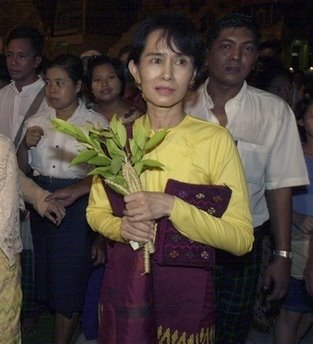


 Posts
Posts


