News & Articles on Burma
Friday, 07 October, 2011
-------------------------------------------
Myanmar's careful reformist: Thein Sein
Burma rebuffs China
US keen to improve ties with Burma
Burma VP to talk dam fiasco with China
Myitsone Dam: a new catalyst for reform in Burma?
New Burmese Govt 'Reformist and Open-minded': US
Kachin Women’s Group Issues Report Detailing Human Rights Violations
No Progress in Talks Between NMSP, Mon Govt
Thai PM Yingluck strengthens ties with Burma to renew border trade
Detecting a Thaw in Myanmar, U.S. Aims to Encourage Change
China paper defends Myanmar investment
---------------------------------------
ALJAZEERA
Myanmar's careful reformist: Thein Sein
Reform and submission to the people's will has Myanmar sprung up for hope, yet hardliners and China complicate matters.
William Lloyd George Last Modified: 07 Oct 2011 10:15
It was only a matter of time before Myanmar's generals realised the best way out of an embarrassingly underdeveloped nation and western sanctions, was best done through 'reforms'. Spearheaded by several seemingly 'reformist' general-cum-politicians, with the backing of 'moderate' intellectuals and businessmen, Myanmar has witnessed changes, radical only to a nation considered six months ago to be one of the worst dictatorships in the world.
Following a string of small reforms, it was last week when the most striking took place. For the first time in most the population's memory, Myanmar's President, Thein Sein, said he would give in to the desire of the people. That desire, was to prevent the completion of the Myitsone Dam, saving the mighty Irrawaddy river and surrounding areas from catastrophe. Over ten thousand people supposedly would have been displaced by the construction, and an area the size of Singapore flooded
No one is quite sure why Thein Sein made this surprising decision, or who was really behind it. Most puzzling was whether the decision was sanctioned by previous hardline generals, or not. In the weeks leading up to his announcement, the campaign to “save the Irrawaddy” had grown unprecedented and, unrestricted momentum. Artists, academics, politicians and others from all corners of society, joined forces to raise awareness and pressure the government. The issue generated public debate, which had not been seen in Myanmar for decades, if ever.
As the movement grew at an alarming rate - one, which was not talking about democracy, but the environment - the cancellation gave Thein Sein the opportunity to increase much needed support domestically, and fend off hardliners in parliament looking for excuses to undermine him. It has also given him the chance to gain support internationally, which will in turn help him domestically.
And so far Thein Sein's efforts are working. The US has already said they believe “winds of change are blowing through Burma”. Nations from across the globe have shown support for the recent changes and said they would engage further if progress continues. Japan has already restarted all aid it previously put on hold, and Yangon national airport has seen a flurry of Japanese engineers coming to inspect 'potential projects'. A variety of businessmen, academics and opportunists will no doubt be checking flights to Yangon, eager to jump on board with 'cautious optimism'.
The real test, though, will come next month when ministers across South East Asia make a judgement over whether Myanmar should hold the 2014 ASEAN chairmanship. An obvious incentive for the recent reform drive; chairmanship would bring legitimacy to the up till now notorious regime who engineered the apparent power shift to the civilian government, and, no doubt, a complete lifting of sanctions, allowing western companies to openly do business with the regime's cronies.
It is widely believed that last years 'elections' were a show to bring in a more civilian looking government namely the Union Solidarity and Development Party (USDP), and many hardliners still hope to keep the status quo and their positions of power. However, as reformists such as Thein Sein gain more domestic support, we could be seeing the beginning stages of a political transition. But so far, much is left to be done.
Despite the USDP recently offering peace talks with ethnic armies, the state military is now engaged in fighting on all its borders. Some have been fighting for over sixty years - the Karen National Liberation Army (KNLA), have been fighting the longest civil war in the world - others have only just resumed fighting. Having enjoyed a ceasefire since 1994, the Kachin Independence Army (KIA), based on the Sino-Burma border have been blasted with mortars over the last two months, with countless civilians caught in the middle of the conflict.
Tensions began to brew when the Kachin rejected the regime's 'Border Guard Proposal', which was a nice way of Nay Pyi Daw saying, “lay down your weapons and join the Myanmar Union Army”. The answer was 'no', and remains 'no'. The same goes for the Shan State Army-North who continue to also face bombardment and heavy offensives on a daily basis. If the USDP, and those behind it are serious about reform, one would expect fighting to cease, and dialogue to commence immediately.
Even the biggest sceptics, though, cannot deny there has been some changes. It is clear that more power than was previously expected has been placed in the hands of Thein Sein, and others who battle to rule Parliament. Diplomats, businessmen and even Suu Kyi, who recently met Thein Sein have cautiously hinted that there is some sincerity in Thein Sein's desire to improve the country. Yet, one would be foolish to think he is completely in control, and while he may be sincere, there are many behind, and around him, eager to keep the status quo.
Despite these hardline anti-reformists, the last three years has seen a flurry of soldiers, businessmen and others join the ranks of 'the moderates'. Networks have been formed between completely different groups, who, before, would never have discussed anything of a political, economical or social nature. Military officials for the first time were talking to former political prisoners about how to improve the country. A discourse unseen before, has been shared between these actors, who want to see Myanmar pulled out from the pit it has fallen into. This movement towards change, has undoubtedly had some input into Thein Sein's decision to halt the dam, and all the positive developments we have seen up till now. Putting too much emphasis, though, on their input, would be downplaying the intelligence and wickedness of a regime historically so skilful in manipulating the international community.
Despite the warranted scepticism by many, the latest PR campaign to become a 'real' government in the eyes of the world, and the movement for change from inside, has brought some positive developments. Aung San Suu Kyi, the long time democracy activist, who has spent the last thirteen out of nineteen years under house arrest in her crumbling mansion, was released following last years elections. Since her release she has faced little harassment, rallied, given speeches and even travelled outside the capital. Last week was the third time she met with government liaison minister, Aung Kyi, since her release and left the meeting noting that there was opportunities for change, but did not go on to say change was afoot.
On international Democracy Day, without announcement, the government lifted bans on several media outlets, and other sites such as 'youtube'. Some of these, were exiled news agencies, which had fed news into the country for decades, trying to counter state media propaganda or heavily censored journals. For their 'evilness', a spot was kept in the daily state mouth piece, the new light of Myanmar, alerting the public of their intent to destroy the prosperous nation. This, too, has been taken away.
Despite these small, yet important reforms, the recent reforms have stopped short of giving any legal or official guarantees that things will not just regress later, like has happened many times before. It is expected that in the coming weeks, batches of political prisoners will be released. The release of over 2,000 prisoners of conscience has long been a demand of the international community, and continues to be a set benchmark for the rulers to prove real progress is taking place.
With some of the most radical and respected political activists behind bars, it can't be expected that all will be released over night, fearing they will once again rouse the masses. However, without any timetable, or releases, the hardline activists are right to continue blasting the regime for lack of progress. As should ASEAN and the rest of the international community.
The day after UN Human Rights Envoy Tomas Quintana visited Myanmar, former military officer Nay Myo Zin, was sentenced to 10 years in prison for allegedly sending a political document on how to achieve democracy, out of the country. He worked as a volunteer for a blood donor group closely related to Suu Kyi's party NLD. Then just two weeks ago, a Yangon court added an extra ten years onto the sentence of Sithu Zeya a 21-year video journalist, for his alleged connections with exiled TV station the Democratic Voice of Burma (DVB). Both cases, show that the government is not completely dedicated to its reforms directed towards press freedom and democracy, and shows, perhaps, the hardliners are still very much pulling strings behind the scenes.
Despite the possibility that some of these reforms are not being conducted on a moral basis, or a duty felt by the rulers to finally work for their country, they have to be treated as positive steps. The reformists need to be supported. If the reports are right, and they are battling the hardliners, they will need all the help they can get. Both through private confidential channels, such as one-on-one diplomatic meetings, and other incentives to continue risking their livelihoods to push through much needed reform. The dangers are great, if the reformists don’t get the support they need and deserve, progress could once again be stalled, and even worse, a military coup or cancellation of upcoming 2015 elections. Like has happened many times before, when engagement fails, the hardliners are more than happy to get blood back on their hands, and guard their vested interests.
The halting of the dam is undeniably a big step, and the complications it has caused with China may allow some space for 'western nations' to improve their lost relationship with Nay Pyi Daw. China has previously exploited the isolation sanctions had created, but with a growing understanding between the reformists in Nay Pyi Daw and Washington this could soon be a thing of the past. Despite there being over six dams in the making - something highlighted by environmental groups, plus no legal assurance of the dam's cancellation - Beijing has voiced unprecedented outrage over the cancellation, its biggest single project in Myanmar, and it appears Beijing was not consulted before the decision went public.
Showing a willingness to go against China, could be one of Thein Sein's biggest achievements. If Myanmar proves to be moving away from being Beijing's pawn, the west may jump at the opportunity to stop sanctions. Something many in the country, including several generals are hoping for is an end to China's neo-colonization of Burma. Over the last two decades, China has bought up much of city centres, fuelling anti-Chinese sentiment across the nation.
Despite the potential 'breakthrough' and hope of Myanmar separating itself from China, now is not the time for the international community to go all out rewarding the USDP for its tiny steps of progress. Only when solid guarantees through timelines and laws are made, political prisoners released with no risk of more later being arrested, and more economic reforms made, should the international community even contemplate treating the USDP like the country's government.
If the regime-government is able to escape from all its sins, and avoid the much demanded and, deserved international crime court, reforms need to be made quickly and efficiently. This time they should not be given the space, or more importantly neglect to once again fool around, with the lives of their nation, and the hopes of the international community. Few Burmese are expecting much from the USDP, and it is about time, they proved their people wrong and worked to improve the country, the hardline Generals have for too long destroyed. If the reformists can continue to gain support domestically and internationally, we could witness a real political transition that benefits the Burmese people. Those who do show themselves to be reformists must be treated with caution, but supported accordingly.
William Lloyd George is a freelance journalist based in Mae Sot, on the Thai-Myanmar border, for the last four years. He has reported extensively from inside Myanmar and on the many conflicts along its borders. He is currently working on a book about Myanmar with American photojournalist KC Ortiz.
The views expressed in this article are the author's own and do not necessarily reflect Al Jazeera's editorial policy. http://english.aljazeera.net/indepth/opinion/2011/10/2011105154431129473.html
-------------------------------------
Khaleej Times Online > OPINION
Burma rebuffs China
Bertil Lintner
7 October 2011
At a time when Asian countries are increasingly worried about China’s growing assertiveness, Burma’s rejection of a huge Chinese hydroelectric dam project has raised new questions: Is this a rare victory for civil society in a repressive country? Or does it indicate an internal dispute over the country’s dependence on China? Regardless, the public difference over a close ally’s project marks a new stage in the Burma-China relationship.
On September 30, Burma’s new president, Thein Sein, sent a statement to the country’s parliament announcing that a joint venture with China to build a mega-dam in the far north of the country had been suspended because “it was contrary to the will of the people.” The $3.6 billion Myitsone Dam would have been world’s 15th tallest and submerged 766 square kilometers of forestland.
It’s unclear if Chinese counterparts were consulted before the decision was made public. Burma has depended on its powerful northern neighbour for trade, political support and arms deliveries since the West shunned the Burmese regime following massacres of pro-democracy demonstrators in 1988.
Public opinion may have played its part. Under the 2006 deal, 90 per cent of power generated from Myitsone would have gone to China. Anger over environmental destruction galvanised people against the regime in a way that the country had not seen for years. The dam was a dagger in the heart of the Kachins, the predominant ethnic minority in the area. Pro-democracy leader Aung San Suu Kyi threw her support behind the anti-dam movement. Many made their voices heard over Facebook – a new tool for anti-regime activists.
People inside Burma can’t protest openly, but “Save the Irrawaddy” meetings have been held in Rangoon. Burmese exiles have staged anti-Chinese demonstrations outside Burmese and Chinese embassies abroad. Anti-Chinese sentiment is growing in Burma, especially in the north where Chinese influence is the strongest. But public opinion has never been a strong factor when it comes to influencing the Burmese regime. The regime doesn’t want to risk another outbreak of anti-government protests similar to the 2007 monks’ movement and invite international condemnation with more US and EU sanctions.
Dissatisfaction within the armed forces over China’s growing influence in Burma is a more likely reason for the move to suspend the dam project. Burma has historically had a strained relationship with its northern neighbour. From the establishment of the People’s Republic of China in 1949 until 1962, Beijing maintained a cordial relationship with the non-aligned democratic government of Prime Minister U Nu.
Burma was the first country outside the communist bloc to recognise the new regime in Beijing. After General Ne Win staged a coup d’etat in 1962, the Chinese, long wary of the ambitious, sometimes unpredictable general, prepared for all-out support for the insurgent Communist Party of Burma (CPB). Anti-Chinese riots in Rangoon in 1967 – orchestrated by military authorities to deflect public anger over a deteriorating economy – provided an excuse for Chinese to intervene. On New Year’s Day 1968, armed CPB units entered northeastern Burma from China’s Yunnan Province. Over the next decade, China poured more aid into the CPB effort than any other communist movement outside of Indochina.
Mao’s death in 1976, and the subsequent return to power of pragmatist Deng Xiaoping changed things. Supporting revolutionary movements in the region was no longer in Beijing’s interest. Still, China coveted Burma’s forests, rich deposits of minerals and natural gas, and hydroelectric power potential. Ending Chinese support to the CPB ushered in a more cordial era in Sino-Burmese relations, the relations growing by leaps and bound after the 1988 bloody suppression of pro-democracy movement in Burma. Apart from supplying Burma with vast quantities of military hardware, by 1991, Chinese experts assisted in a series of infrastructure projects. Chinese military advisers soon arrived, the first foreign military personnel stationed in Burma since the 1950s. Cross-border trade between China and Burma boomed.
More recently, China has provided Burma with low-interest loans, and Chinese investment in the sanctions-hit economy is substantial, particularly true of the energy sector.
China still has contracts to build six other mega-dams on the Irrawaddy and source rivers. That Thein Sein dared to make his public statement reveals a wrinkle in Sino-Burmese relations – and how Burma may try to balance foreign relations, perhaps returning to its former policy of strict neutrality and non-alignment.
Some academic observers assert that Beijing’s influence over the Burmese government is exaggerated. Although China provided Burma with up to US$1.6 billion worth of military hardware since 1989, the regime has recently turned to Russia, the Ukraine and North Korea to diversify its arms-procurement program.
Instead of democratising the country, Burma’s new government seems to have chosen to play “the China card,” an attempt to win support of the West. An unsigned opinion piece in The Bangkok Post, written by a Burmese government official, lays out its position: “We do not want our country to become a satellite state of the Chinese government.” From the regime’s point of view, improved relations with the West could be accomplished simply by playing up the Chinese threat, with the hope of diminishing Western criticism of the regime.
But the regime has time and again stressed that how the country is governed is an internal matter. The West must decide if it will play along.
Bertil Lintner is a Swedish journalist based
in Thailand and the author of several works on Asia.
© 2011 Yale Center for the Study of
Globalisation http://www.khaleejtimes.com/displayarticle.asp?xfile=data/opinion/2011/October/opinion_October34.xml§ion=opinion&col=
--------------------------------------
US keen to improve ties with Burma
Steven Lee Myers, Thomas Fuller
October 8, 2011
WASHINGTON: The United States is considering a significant shift in its long-strained relationship with the autocratic government of Burma, including relaxing restrictions on financial assistance and taking other steps to encourage what senior US officials describe as startling political changes in the country.
The thawing, while in its early stages, follows a political transition in Burma after deeply flawed elections last year that nonetheless appears to have raised the possibility that the new government will ease its restrictions on basic freedoms and co-operate with the repressed opposition movement led by the Nobel laureate Aung San Suu Kyi.
The apparent shift offers the United States the chance to improve ties with a resource-rich south-east Asian country. Last week the new Burmese leadership unexpectedly halted work on a $3.6 billion dam project strongly backed by China, its main ally, prompting criticism from the Chinese government.
The new President, U Thein Sein, a former general who was part of the military junta that ruled the country for two decades, has signalled a sharp break from the centralised, erratic policies of the past. He is rewriting laws on taxes and property ownership and loosening restrictions on the media.
For the first time, the government has discussed with Aung San Suu Kyi and US officials the possibility of releasing hundreds of political prisoners, after years of denying there were any at all.
The Obama administration, although sceptical, has responded to this openness with a series of small diplomatic steps, hoping that a democratic transition could bring stability and economic opportunities at a time of increasing US competition with China over influence in Asia.
''They are moving into a more pluralistic form of government. I wouldn't call it totally democratic. But things are changing very rapidly,'' said Priscilla Clapp, the chief of mission at the US embassy in Burma from 1999 to 2002.
Read more: http://www.theage.com.au/world/us-keen-to-improve-ties-with-burma-20111007-1ldl4.html#ixzz1ZqunOz5T
--------------------------------------
Burma VP to talk dam fiasco with China
By FRANCIS WADE
Published: 7 October 2011
Burma’s hawkish vice president will travel to Beijing before the end of the month to discuss Naypyidaw’s shock cancellation of a major dam project in northern Burma financed by China.
The suspension of the Myitsone dam has angered China, which appears not to have been consulted over the decision. Around 90 percent of the power would have gone to China, which provided the vast majority of the $US3.6 billion price tag on the project.
Now Tin Aung Myint Oo is being forced to explain the decision to officials in Beijing, and will travel to China shortly after President Thein Sein returns from a visit to India on 15 October, Reuters quoted a government official as saying. The official reason for the vice president’s trip is to attend the opening of a China-Asean Exposition.
The People’s Daily, the official newspaper of China’s ruling Communist Party, today carried an article responding to protestations against its energy projects in Burma.
“Looking at public opinion in Myanmar [Burma], as some non-government organisations do not trust the government and have been influenced by foreign media, very few present positive information regarding Chinese investors…”
It continued that assessments had been carried out prior to starting on the Myitsone dam, with experts finding the impact would be “rather small”. Environmental groups however point to the estimated 20,000 people likely to be displaced by the dam, as well as long-term damage to the ecosystem of the IrrawaddyRiver, to counter these claims.
Following the announcement a week ago that the dam would not go ahead, Chinese foreign ministry spokesman Hong Lei told Burma that it must “guarantee the lawful and legitimate rights and interests of Chinese companies”.
It marks a rare fissure in relations between the two countries: Burma relies on Beijing for political support and the billions of dollars in investment it pours into the country each year, while China sees its neighbour as a veritable goldmine of easily-exploitable natural resources.
Writing in the Jakarta Globe, journalist Bertil Lintner said that the decision may have been triggered by a disagreement within the upper echelons of Burma’s government over the extent to which China’s energy need were dictating the priorities of Naypyidaw.
This theory suggests that growing public disquiet over the dam was less a factor, despite Thein Sein’s reference to “respecting the will of the public” as the cause of the decision.
Although the strong relationship has major benefits for both countries, Burma’s rulers remain intensely nationalistic and wary of an over-dependence on the regional superpower. Recent shifts in the political landscape in Burma also suggest the government is attempting to curry favour with critical western countries.
“From the Burmese regime’s point of view, improved relations with the West could be accomplished simply by playing up the Chinese threat, with the hope of diminishing Western criticism of the regime,” Lintner wrote.
In an interview with the New York Times yesterday, US envoy to Burma Derek Mitchell appeared to suggest that Washington was rethinking its punitive measures on Burma in light of recent changes, of which the Myitsone cancellation is being hailed as the most positive. http://www.dvb.no/news/burma-vp-to-talk-dam-fiasco-with-china/18020
-------------------------------------
Myitsone Dam: a new catalyst for reform in Burma?
Editorial Desk
The Nation (Thailand)
Publication Date : 07-10-2011
It must have taken a good deal of courage for Burmese President Thein Sein to come out recently and stop the construction of the Chinese-funded Myitsone Dam in Kachin State. Like it or not, the decision was timely and hit all the right nerves for both Burma sceptics and supporters of the regime. Certainly it has raised the ire of the Chinese. If there has been anything at all positive in the past three months since the buzz began about "reform" in the pariah state, this is it. It is the most immediate and concrete sign of the Burmese government listening to any opinion other than its own.
This move will certainly win Thein Sein lots of support from local and international observers of Burma - something which he badly needs in order to fight against the hardliners within his own cabinet. Indeed, that might be what the Naypyidaw government wants people to think. Somehow, it might also want to see reform-minded lawmakers win the day.
But the international community has to remain cautious, even after this latest development. There have been many times in the past when the Burmese regime has cheated and betrayed its own people. To suggest that Burma has changed because of sudden political reforms and a new political system would be hard to believe, even for the most optimistic of observers. More action needs to be forthcoming, especially regarding the release of political prisoners, over 2,000 of whom still remain in custody.
Although nobody knows the exact number of political prisoners and how many "classifications" there are, it is clear that their freedom is another prerequisite before Burma can gain international support. Ongoing dialogue with the opposition leader, Daw Aung San Suu Kyi, must continue and expand. At the moment, attempts are being made to undertake further ceasefire talks with the various armed minority groups in the border regions. There is an urgent need to bring these rebel groups to the negotiating table, but to do so, the Naypyidaw government must do more to appease these groups.
In this connection, Indonesian Foreign Minister Marty Natalegawa has already said he will visit Burma this month, but the date has not yet been set. He has said such things before, but he still has not visited Burma as the chair of Asean. It is thus imperative that he go there as soon as possible. But for him to go, he wants to see more positive signs from the regime beyond the current "road map". Otherwise, there is a possibility he will pass on this decision and let the incoming chair, Cambodia, carry the process forward if possible.
There is a high level of unease among the Indonesian leaders about Burma's overall attitude. Previous attempts, two years ago, between Indonesian President Susilo Bambang Yudhoyono and Burmese strongman, General Than Shwe, to communicate directly, did not work out as planned.
Obviously, at the moment, Burma needs Asean more than ever before. For the first time - after more than 14 years of membership in the regional grouping - it has shown willingness to work with Asean and the international community to improve Burma's image and promote reforms.
President Thein Sein realises now that there is a small window for him to assert himself locally and internationally. So, he must not miss the chance. If he succeeds, he will be the one who gets due recognition, as he is scheduled to meet all the leaders from Asean, the US, Russia, China, India, Australia, Japan and South Korea at the upcoming Bali summit. So, the stakes are very high for him as well as for Burma. http://www.asianewsnet.net/home/news.php?id=22538&sec=3
--------------------------------------
New Burmese Govt 'Reformist and Open-minded': US
By LALIT K JHA Friday, October 7, 2011
WASHINGTON — The Obama administration on Thursday showered praise on Burma's new government, calling it reformist and open-minded, even as it conceded that it still had a long way to go.
“We are gratified that we have a more reformist, more open-minded government in Burma that we can work with. If that were the situation in Syria, then we would be in a different place,” the US State Department spokesperson, Victoria Nuland, told reporters at her daily news conference.
“The number one thing that has changed in Burma is we have a new set of leaders who are more willing to work cooperatively with the opposition,” Nuland said in response to a question.
However, she said, the recent signs of reform in Burma are just a start. “We don't disagree that there is a huge amount of work to be done in Burma,” she said.
“My point was simply that we have a new government in Burma that seems to be making more efforts than its predecessor in terms of engaging Aung San Suu Kyi and engaging civil society, in terms of thinking twice about things like the dam in the north that have been so controversial among the Burmese population. And we want to encourage that trend. And we are trying to do so,” she said.
Asked if Burma has been a topic of discussion with India and China, Nuland said that Secretary of State Hillary Clinton had spoken about the country with the Chinese and Indian ambassadors during bilateral talks on the sidelines of the UN General Assembly meeting in New York last month.
Meanwhile, prominent American senator John McCain commended the decision of the Burmese government to suspend the Myitsone dam project in northern Burma's Kachin State last week.
“I commend President Thein Sein and other government leaders in Naypyidaw for their bold and responsible decision to suspend construction of the Myitsone dam project, which has been estimated to do irreparable harm to the Irrawaddy River,” he said.
“More than any issue in recent memory, this project and its reportedly disastrous environmental impact have united the Burmese people in overwhelming public opposition,” the senator said.
McCain said it was to the credit of Thein Sein and his allies in government that, in the face of considerable internal and external pressure, they listened to the voice of the people and made a dramatic change in government policy for the sake of the public interest.
“This was a democratic act, and I hope the government in Naypyidaw will continue to respond to the peaceful will of the people to make additional positive changes in other areas,” McCain said.
In an interview with The New York Times, Derek Mitchell, the new US special envoy to Burma, also acknowledged recent evidence of reforms in the country.
“We’re going to meet their action with action. If they take steps, we will take steps to demonstrate that we are supportive of the path to reform,” said Mitchell, who spent five days in Burma last month and attended two meetings in New York and Washington last week between senior State Department officials and Burmese Foreign Minister Wunna Maung Lwin. http://www.irrawaddy.org/article.php?art_id=22214
-------------------------------------
Kachin Women’s Group Issues Report Detailing Human Rights Violations
By KO HTWE Friday, October 7, 2011
A Kachin human rights group has accused Burma’s regime of displacing over 25,000 villagers and deliberately targeting civilians in killings, torture and sexual violence during the past four months of fighting with the Kachin Independence Army (KIA) in Kachin State and northern Shan State.
“Burma’s Covered Up War: Atrocities Against the Kachin People,” a 20-page report issued by the Kachin Women’s Association of Thailand (KWAT) on Friday, claimed that displaced villagers sheltered in makeshift camps along the Burma-China border are facing severe shortages of food and medicine because the regime has blocked agencies working officially inside Burma from assisting them.
“Thousands of villagers from Kutkai who have been displaced in recent weeks, but denied refuge in China and are unable to access camps in KIA-controlled areas of Kachin State, have dispersed to towns, other villages and jungle hiding sites,” KWAT said in a press release on Friday.
“It is a long-term political problem. China has many interests in Burma so they are reluctant to accept refugees,” said Shirley Seng, a spokesperson for KWAT, at the organization’s press conference on Friday.
KWAT alleged that government troops have raped 37 women and girls between the ages of nine and 50 during the conflict, 13 of whom were killed.
“Our documentation team was deeply shocked at the details of these crimes. Some women were gang-raped in front of their families. In one case, soldiers slaughtered a woman’s grandchild in front of her before raping and killing her also,” said Seng.
“We cannot show who the victims are because we cannot guarantee their safety if we do, but we have evidence,” said Seng in response to a reporter’s question.
In addition, the KWAT report provided details regarding the number and location of other human rights violations committed by Burmese troops, including: torture and ill treatment; forced labor and portering; forced relocation; land mine injuries; and disappearance of local residents.
However, The Irrawaddy cannot independently verify any of these cases, and the Burmese government has not yet responded to the allegations.
The researchers who collected the data were trained by KWAT in human rights principles and standards for documentation and reporting, according to the KWAT report.
According to Hkawng Seng Pan, who also spoke at the KWAT press conference, the Burmese army has deployed nearly 13 battalions among the Kachin population of nearly 2 million.
Women's rights groups have long accused Burmese government soldiers of using systematic rape against ethnic women as a weapon and strategy to terrorize the ethnic population.
In 1994, the Kachin Independence Organization, the KIA’s political wing, signed a ceasefire agreement with the Burmese junta. However, tension between government troops and the KIA increased following the KIA’s refusal to join the government’s Border Guard Force.
In June 2011, clashes between the KIA and government troops broke out and fighting has continued since that time, with local residents often caught up in the conflict.
KWAT has urged the international community to abandon its “wait and see” policy with respect to Burma, bring increased pressure on the regime to end its military offensives and atrocities and provide urgently needed humanitarian assistance to the displaced Kachin.
“’Wait and see’ is a death sentence for us,” said Shirley Seng.
Since 1997, the Burmese regime has destroyed more than 3,000 villages and displaced over half-a-million civilians in eastern Burma, according to the Thailand Burma Border Consortium, an umbrella organization responsible for the distribution of aid at the Thai-Burmese border. http://www.irrawaddy.org/article.php?art_id=22218
----------------------------------
No Progress in Talks Between NMSP, Mon Govt
By LAWI WENG Friday, October 7, 2011
Delegations representing the New Mon State Party (NMSP) and the Mon State government met in Ye Township on Thursday, but failed to make any progress in efforts to avert a return to hostilities, according to NMSP sources.
Nai Hong Sar Pon Khaing, a spokesperson for the NMSP, told The Irrawaddy on Friday that three leaders from the group—Nai Tala Nyi, Nai Baya Lai and Lt-Col Nai Hong Sar of the NMSP's armed wing, the Mon National Liberation Army (MNLA)—met a delegation led by Col Htay Myint Aung, the Mon State minister for security and border affairs, at a military base in Ye.
The spokesperson said that he could not provide any further details, but Nai Shwe Thein, an executive committee member of the NMSP, said the meeting was held in accordance with the group's policy of insisting that any formal talks must include other members of the United Nationalities Federation Council (UNFC), an umbrella group of ethnic militias, and must be held directly with Naypyidaw.
“Our delegation called for a nationwide ceasefire and political talks with the UNFC. Their delegation said it would will convey this message to Naypyidaw,” said NMSP Secretary Nai Hang Thar, adding that the meeting did not focus on his party.
Last month, Ohn Myint, the chief minister of Mon State, proposed to Naypyidaw to form a peace mission consisting of members of his cabinet, but the idea was rejected because the delegation was to be led by the Mon State minister of electric power and industry, Nai Lawi Oung, who is also a former NMSP central committee member.
“We heard that Naypyidaw turned down the Mon State government's peace mission proposal,” said Nai Kao Rot, a former deputy army chief who currently serves as a military adviser to the MNLA.
NMSP party leaders said that they would continue to support the UNFC's calls for inclusive talks directly with Naypyidaw, which wants one-on-one talks mediated by state governments.
This week's meeting was the first between the NMSP, which reached a ceasefire agreement with Burma's then military junta in 1995, and a government delegation since a new quasi-civilian administration assumed power in Naypyidaw in March.
The Burmese government has recently reached an agreement with two other ceasefire groups, the United Wa State Army and its ally, the National Democratic Alliance Army, in Shan State, aimed at avoiding the breakdown of a two-decade-old ceasefire agreement.
http://www.irrawaddy.org/article.php?art_id=22219
----------------------------------------
Thai PM Yingluck strengthens ties with Burma to renew border trade
By Zin Linn Oct 07, 2011 3:10PM UTC
At the invitation of Burma’s President Thein Sein, a delegation led by Prime Minister of the Kingdom of Thailand Ms. Yingluck Shinawatra arrived in Nay Pyi Taw on a goodwill visit to Burma (Myanmar) on October 5, the New Light of Myanmar highlighted in its editorial today. The president of Burma held a meeting with visiting Thai Prime Minister Ms. Yingluck Shinawatra and party at President’s Office in Nay Pyi Taw.
According to the government-owned New Light of Myanmar newspaper, Thai PM Ms. Yingluck discussed cooperation matters between the two countries, border affairs, border trade and future tasks for Burmese migrant workers in Thailand. The construction of the Thingannyinaung to Kawkareik road was also discussed.
President Thein Sein discussed cooperation between the two countries in the smooth implementation of Irrawaddy-Chao Phraya-Mekong Economic Cooperation Strategy (ACMECS) among Burma (Myanmar), Thailand, Laos, Cambodia and Vietnam, and promotion of trade and investment between the two countries.
Thailand has for decades served as a shelter for Burmese opposition activists fleeing political, ethnic and religious persecution. Border camps in Thailand hold an estimated 150,000 Burmese, thousands of them are unregistered. Another two to three million Burmese have slipped into Thailand proper to escape a shattered economy at home, providing low-cost labour for Thai businesses.
Thailand is so far Burma’s top foreign investor and depends on Burma for 20 percent of its electricity consumption, whilst importing a range of commodities from the military-run country.
A dispute between the two governments emerged in July 2010 after Burmese authorities closed their area of the Myawaddy passage, objecting to Thailand’s construction of a self-protective wall to prevent erosion on its side of the river.
The border trade and transport at the Mae Sot-Myawaddy border has been stopped since Burmese officials shut the border at the Thai-Burma Friendship Bridge across the Moei River and at over 20 cross-border trading ports since July 12, 2010.
During talks with Burma’s President, Ms. Yingluck urged mutual support to reopen the border checkpoint at Tak’s Mae Sot-Myawaddy as a way to improve trade and further economic cooperation. Ms. Yingluck also expressed Thailand’s policy of not letting any armed grouping to use its territory to launch any offensive against the Burmese government.
While Western countries have endorsed economic sanctions on Burma due to its deplorable human rights record, Asian countries like China, India and Thailand have established formal relationships and close economic ties. http://asiancorrespondent.com/66697/thai-pm-yingluck-strengthens-ties-with-burma-to-renew-border-trade/
-------------------------------------
Detecting a Thaw in Myanmar, U.S. Aims to Encourage Change
By STEVEN LEE MYERS and THOMAS FULLER
Published: October 6, 2011
WASHINGTON — The United States is considering a significant shift in its long-strained relationship with the autocratic government of Myanmar, including relaxing restrictions on financial assistance and taking other steps to encourage what senior American officials describe as startling political changes in the country.
The American special envoy to Myanmar, Derek Mitchell, met with government and opposition leaders in Yangon last month.
The thawing, while in its early stages, follows a political transition in Myanmar after deeply flawed elections last year that nonetheless appears to have raised the possibility that the new government will ease its restrictions on basic freedoms and cooperate with the repressed opposition movement led by the Nobel laureate Daw Aung San Suu Kyi.
The new president, U Thein Sein, a former general who was part of the military junta that ruled the country for two decades, has in six months in office signaled a sharp break from the highly centralized and erratic policies of the past. Mr. Thein Sein’s government is now rewriting laws on taxes and property ownership, loosening restrictions on the media and even discussing the release of political prisoners.
The apparent shift offers the United States the chance to improve ties with a resource-rich Southeast Asian nation that after many years of semi-isolation counts neighboring China as its main ally. Last week, Myanmar’s new leadership unexpectedly halted work on a $3.6 billion dam strongly backed by China, prompting angry criticism from the Chinese government and the state-owned Chinese company that was building it.
The Obama administration, though skeptical, has responded to this new openness with a series of small diplomatic steps of its own, hoping that a democratic transition in Myanmar could bring stability and greater economic opportunities to the region at a time of increasing American competition with China over influence in Asia.
“We’re going to meet their action with action,” the administration’s newly appointed special envoy to Myanmar, Derek Mitchell, said in an interview. “If they take steps, we will take steps to demonstrate that we are supportive of the path to reform.” Mr. Mitchell spent five days last month in Myanmar, meeting with senior leaders in the government and opposition. That visit was followed by two meetings in New York and Washington last week between senior State Department officials and Myanmar’s new foreign minister, U Wunna Maung Lwin.
Mr. Wunna Maung Lwin, whose travel in the United States is normally sharply restricted, was the first foreign minister from Myanmar invited to the State Department since the military junta took power.
The motivation for the changes has baffled American officials and others, but Myanmar appears eager to end its diplomatic isolation and rebuild a dysfunctional economy that has trapped the country’s population of 55 million people in poverty, which the government acknowledged for the first time in Mr. Thein Sein’s inaugural address in March.
Members of Mr. Thein Sein’s government have since met several times with Mrs. Aung San Suu Kyi, who was released from years of house arrest last November and whose name was so demonized by the previous junta that it was typically whispered in public. She, too, has expressed cautious support for what appears to be a political opening.
The government has also for the first time discussed with her and American officials the possibility of releasing hundreds of political prisoners, after years of denying there were any at all. The government has even assembled a list of those it is considering releasing. About 600 people are on it, though opposition leaders and diplomats say that there are nearly 2,000 political prisoners listed in a database compiled by an organization in Thailand. “We told the government we cannot accept their list,” said U Win Tin, a founding member of the National League for Democracy, Mrs. Aung San Suu Kyi’s party. “We gave that message to the government, but we don’t know yet whether they will change their list.”
Even so, the senior administration official said that the mere acknowledgment that Myanmar held political prisoners reflected a significant shift in the new government’s attitude. Signals like that, even if tentative, have begun to win over skeptics who have seen false dawns before in Myanmar.
“It’s very exciting,” said Priscilla A. Clapp, who was the chief of mission at the United States Embassy in Myanmar from 1999 to 2002. “They are moving into a more pluralistic form of government. I wouldn’t call it totally democratic. But things are changing very rapidly.”
Ms. Clapp and others warned that the changes, which are exceeding expectations inside Myanmar and abroad, remained a work in progress. “Any transition this dramatic is a recipe for instability,” she said. “Anything can happen. There could be a coup, a counterrevolution.”
Senior Gen. Than Shwe, who led the junta for nearly two decades and stepped down in March, remains an uncertain factor in the tumultuous transition. It was under General Than Shwe’s leadership that the government carried out a deadly crackdown on protests led by Buddhist monks in 2007 and restricted foreign aid in the aftermath of a cyclone that killed more than 100,000 people.
The reasons that General Than Shwe ceded power to the current government have not been fully explained beyond the notion that he was ready for retirement. In leading the drive for reforms, Mr. Thein Sein appears to be siding with a younger generation of military officers who believe that maintaining the junta’s oppressive policies and hermetic attitudes toward the outside world would be a dead-end path for the country.
The decision by Mr. Thein Sein last week to suspend work on the giant hydroelectric dam on the Irrawaddy River was interpreted by many as a sign that the president was moving out from under the shadow of General Than Shwe.
Obama administration officials are now debating additional steps to support the nascent changes and encourage more, including the creation of a truly democratic political system and an end to violence against Myanmar’s ethnic minorities. The outreach is being closely coordinated with Congress, with other countries, including members of the European Union, and with Myanmar’s opposition.
“We’re not looking to move I think any faster than anyone else here,” Mr. Mitchell said. “I think we’re all looking to move step by step. We are going to test. There is no single point where we are absolutely certain that reform is going to be sustained and irreversible.”
Myanmar faces American sanctions first imposed in 1997 and expanded as recently as 2008. One hundred senior officials or businesses remain on the Department of the Treasury’s list banning any commercial trade. Lifting those sanctions would require new legislation in Congress. That is unlikely to happen unless Myanmar convinces its critics that its transformation is fundamental.
In the meantime, though, the administration is considering waiving some restrictions on trade and financial assistance and lifting prohibitions on assistance by global financial institutions, like the World Bank and the International Monetary Fund. An I.M.F. team is scheduled to visit this month for consultations on modernizing the country’s exchange rate system and lifting restrictions on international transactions.
Assistance like that is needed to overhaul what for years was a Soviet-style planned economy, where the military ran factories producing soap and bicycles. Ancient-looking cars still ride on potholed roads, and some buildings look as if their last coat of paint was applied during the days when Myanmar was a British colony, known as Burma.
Many in Myanmar remain unconvinced that genuine democracy has arrived.
“All these Western countries are hearing about some changes and they are very happy and keen,” said Mr. Win Tin of the opposition party. “I think that’s wrong. They should listen very carefully and wait to see whether what this government calls change is real and genuine.”
Secretary of State Hillary Rodham Clinton echoed that caution. She recently noted what she called “welcome gestures” but raised a series of issues. “We have serious questions and concerns across a wide range of issues — from Burma’s treatment of ethnic minorities and more than 2,000 prisoners to its relations with North Korea,” she said, using Myanmar’s colonial name, which is official American policy.
She added that the day before she spoke, a 21-year-old journalist was sentenced to 10 years in prison in Myanmar.
Steven Lee Myers reported from Washington, and Thomas Fuller from Bangkok. http://www.nytimes.com/2011/10/07/world/asia/united-states-aims-to-encourage-change-in-myanmar.html?_r=1&pagewanted=all
--------------------------------------
China paper defends Myanmar investment
Fri Oct 7, 2011 12:04pm IST
BEIJING (Reuters) - Chinese projects in Myanmar spur economic growth and guarantee environmental protection, Chinese state media said on Friday, defending infrastructure investment there from public opinion it said had been hijacked by foreign press.
Beijing has pressed for an "appropriate solution" after Myanmar shelved plans for the $3.6 billion Chinese-backed Myitsone dam, slammed by opponents for forced relocation of residents and environmental damage.
"In recent years, Chinese companies have been active in building Myanmar's economy and have provided large amounts of advanced technology and equipment," the ruling Communist Party's official newspaper, the People's Daily, said.
The paper said a network of hydroelectric dams relieved power shortages and that bridges built across the Irrawaddy River would improve transportation and promote development.
"Looking at public opinion in Myanmar, as some non-government organisations do not trust the government and have been influenced by foreign media, very few present positive information regarding Chinese investors..." it said.
Experts from the two countries, the article said, had found the environmental impact to be "rather small".
China Power Investment Corp, which had been building the Myitsone dam project, met the demands of Myanmar's government and used World Bank and Asian Development Bank environmental impact assessment standards, the report said.
It had spent more than $25 million resettling people on the upper reaches of the Irrawaddy, creating a model for local village construction, the paper said.
"The people of Myanmar have clearly not received full and accurate information ... especially in regard to Chinese investors' fulfillment of social obligations and contributions to local society," it said.
Economic relations between China and Myanmar -- formerly known as Burma -- are booming, with trade rising by more than half last year to $4.4 billion. China's investment in Myanmar reached $12.3 billion, according to Chinese data.
Myanmar, under comprehensive sanctions by Western countries for human rights issues, also sees Beijing as an important diplomatic ally. The People's Daily report lashed out at the United States and Europe for those sanctions.
"Because of U.S. and European sanctions, Myanmar has received the least international development aid among so-called most impoverished nations," it said.
(Reporting by Michael Martina; Editing by Ron Popeski) http://in.reuters.com/article/2011/10/07/idINIndia-59760420111007
__._,_.___
Saturday, October 8, 2011
News & Articles on Burma-Friday, 07 October, 2011-UZL


Friday, October 7, 2011
Korean television dramas are not the real problem
The Japan Times Articles
Korean television dramas are not the real problem
By PHILIP BRASOR
On July 23, actor Sosuke Takaoka tweeted that he was sick of all the Korean dramas on Fuji TV, a network he "used to be indebted to," and demanded more "traditional" Japanese programming. "If anything related to South Korea is on," he continued, "I just turn it off." The backlash was swift, and the actor eventually apologized for his rant, saying many people had misunderstood him. In any case his talent agency fired him soon thereafter.
Dropping the ball: The Fuji TV building in Odaiba, Tokyo FABIAN REUS, CREATIVE COMMONS
Takaoka's comments were understood to be the catalyst for the demonstrations outside Fuji TV's offices on Aug. 7. Hundreds of people carrying Japanese flags and singing the national anthem called on the network to stop broadcasting Korean content. As with Takaoka's comments, response to the protest was divided. Some agreed with it, while others despaired over the obvious outpouring of anti-Korean nationalism if not downright racism.
But there was another reaction, characterized by comedian-musician Ryo Fukawa, who said on his FM radio show that however one interprets Takaoka's opinions, he had a right to voice them. "Freedom of speech is only a phrase in Japan," he declared. This sentiment was echoed by show biz columnist Yoshiko Matsumoto, who wrote, "I am not interested in Korean dramas, but if I said that, would I become a target?" Some might say the fact that both Fukawa and Matsumoto said these things proves they're wrong about freedom of speech, but neither have any direct relation to television. Fukawa admits that he's washed up on TV because of his attitude. Matsumoto makes her living from writing.
Takaoka, on the other hand, happens to be married to Aoi Miyazaki, one of the most popular actresses in Japan. The tabloid press, which loves to pick on men whose wives are more successful than they are, would like nothing better than to see them divorce. The weeklies Bunshun and Friday demanded to know why Miyazaki hasn't left her husband over his comments. Matsumoto takes a different tack: "Why doesn't she publicly defend him?"
The reason she doesn't do either is that she's protecting her own interests, which depend on TV, and Takaoka's beef is not so much with Korean pop culture but with Fuji, which presumably no longer hires him. For sure, his anger indicated latent resentment toward Korea, which is ironic since his most famous role was a Korean-Japanese character in the movie "Pacchigi," but his real complaint is against Japanese TV, whose reliance on Korean product is one aspect of a larger issue that he may see as a brake on his career. From 2 to 5 p.m. every weekday, Fuji TV broadcasts Korean dramas. According to a Fuji employee interviewed by the weekly magazine Gendai, these dramas garner a 4 percent audience share, which isn't great but is nevertheless "good for that timeframe," and "licensing Korean dramas is really cheap." The decision to run Korean content is a financial one.
The circumstances surrounding Takaoka's dismissal are vague, but his agency relies a great deal on TV. According to a recent article in Shukan Post, the complacency of mainstream media pundits in the face of Japanese television's towering irrelevance is in direct proportion to the existing commercial networks' stranglehold on the airwaves. Citing countless examples of pointless programming, the article fixed TV's decline as starting in the 1980s, when the first wave of Japanese TV producers — mostly idealists who entered the industry to change society — were replaced by a new generation who wanted to make money. They didn't even solicit advertising. Sponsors threw money at them.
The secret to their success was lack of competition. The five networks were given the rights to public airwaves practically for free, and the yearly usage fees remain ridiculously low. In Japan there are 128 TV stations that, altogether, pay about ¥5 billion a year in fees and make ¥3 trillion a year.
According to the Post, politicians are in thrall to broadcasters because TV is seen as the only key to electability in Japan. When analog broadcasts stopped on July 24, it freed up 200 megahertz of bandwidth, an incredible resource for the nation, but rather than auction off frequencies to broadcast ventures, the government does nothing. There are rumors that the networks will receive some bandwidth to broadcast "one-seg" TV programs to cell phones, but the one-seg boom has passed, eclipsed by smart phones. Economic and Fiscal Policy Minister Kaoru Yosano has suggested that the reconstruction of Tohoku be funded by a tax targeting cellphone users. Relative to how much bandwidth they use, providers already pay 200 times what broadcasters pay for rights to the airwaves.
Without competition, quality is an afterthought, and the Post shows how commercial TV became a game of one-upmanship. If somebody had a popular show, you copied the format. When this sort of thing goes on long enough, all shows become the same show. With ad revenues down drastically, the point now is to save money, and it's much cheaper to buy Korean dramas than it is to produce original shows. When Panasonic recently pulled its long-time sponsorship of the drama series "Mito Komon" TBS cancelled it, even though it was still popular, rather than look for a new sponsor. Programming, and thus public service, is no longer the prime task of broadcasters. TBS made more money last year from real estate than from advertising sales; and one reason home shopping is so prevalent on TV is that the networks now have their own catalogue sales subsidiaries. Fuji TV's is Dinos, which means a portion of the money Dinos makes over the air goes to Fuji TV. A professor interviewed by the Post says this is a violation of the Anti-monopoly Act (Dokusen Kinshi-ho).
Takaoka's anger inflamed jingoistic resentments, but few media pundits identified the real source of his discontent, which was the sad state of Japanese TV. It doesn't mean he shouldn't apologize, but his inability to understand and articulate that discontent appears to be a symptom of the equally sad state of public discourse. When no one knows what they can or can't say, they never get the chance to learn how to say it.
Philip Brasor blogs at philipbrasor.com.
The Japan Times: Sunday, Aug. 21, 2011
(C) All rights reserved
Go back to The Japan Times Online Close window
Political elite can't stand outsiders
The Japan Times Articles
Political elite can't stand outsiders
By PHILIP BRASOR
Yoshio Hachiro's stint as the Minister of Economy, Trade and Industry in the new Yoshihiko Noda administration was not the briefest cabinet assignment on record, but it was certainly one of the most controversial. News outlets reported that it was "public outrage" over two remarks he made which forced Hachiro to quit. In the absence of evidence, we have to take their word for it.
Phased out: Yoshiro Hachiro, former minister for Economy, Trade and Industry. KYODO PHOTO
One of the remarks, that the area around the crippled Fukushima nuclear reactor was a "town of death," supposedly offended the people who had been evacuated from the region, but the media have been describing the place in similar terms for months now. The Japanese Twittersphere is still buzzing that it wasn't the public that was offended by Hachiro's remark but rather Tokyo Electric Power Company, which is still working out a payment system for residents harmed by the accident. Hachiro stated at his news conference when he assumed the METI position that "in principle" he would work to phase out nuclear energy.
Hachiro's other transgression, a joke about contaminating reporters with radiation after returning from Fukushima, is more problematic. It's obvious that at the time he allegedly made the joke Hachiro thought what he said was off-the-record, but as journalist Masaru Sato commented on Fuji TV, the ground rules for what's on- and what's off-record in Japan are "vague," and since every media outlet printed or broadcasted a different quote it's not clear exactly what Hachiro said or who first decided to report it. During his resignation news conference he apologized without actually owning up to the joke. One unidentified reporter interrupted Hachiro in a derisive tone and was shouted down by another journalist. A Kyodo News editor pointed out on TBS that news conferences are for asking questions, not for "prosecuting public figures." The joke, if he made it, was certainly careless, but given Hachiro's gregarious personality it likely sprang from a misplaced sense of camaraderie rather than from any cynical impulse. What he didn't understand is that the press, no matter how friendly they might seem, is waiting for such a moment since gaffes are so fun to report.
TV personality Daniel Kahl tweeted that Hachiro's remarks were "insensitive" and that he "must be a scion of some political dynasty." In fact, Hachiro is one of the few people in the Diet who did not have political connections, family or otherwise. He worked in a Hokkaido agricultural cooperative and later stood for election under the banner of the Social Democratic Party. During his political career he has always professed an affinity for farmers that was more sincere than that of most party politicians, who tend to look upon the agricultural sector as a constituency ripe for exploitation. When reproducing the "town of death" quote, the mainstream press neglected to report the next sentence Hachiro uttered: "We have to change this situation."
Japan is run by elites — powerful bureaucrats, corporate leaders, people with pedigrees — and while many other countries operate under similar sorts of regimes, Japan's ruling class is empty of ideology, unless you consider money the manifestation of a particular philosophy.
Take the Matsushita Institute of Government and Management, a private educational establishment set up in 1979 by the late Konosuke Matsushita, founder of the Panasonic group, as a kind of finishing school for future Japanese leaders. Prime Minister Noda is a graduate, as are 37 other Diet members, 27 from the Democratic Party of Japan and 10 from the Liberal Democratic Party. The media are busy analyzing the institute in order to isolate the philosophy of the new administration, which isn't very difficult. Matsushita was a fiscal conservative and supporter of a strong alliance with the United States, but his main purpose for the institute was to give bright young people without any connections a means of getting into politics.
The institute has helped unconnected political aspirants gain office at both the national and local levels, and in the process has itself become a bastion of elitism. The school receives about 200 applications a year and accepts a half dozen. One of the truisms about elites is that they only identify with other elites. According to a Myojo University professor interviewed in Tokyo Shimbun, national assembly persons, whether they got in through a family connection or Matsushita's institute, are instilled with the "Nagatacho logic," which says that all political activity is based on who you agree with. That fact of political life explains the obsession within the DPJ over which members support kingpin Ichiro Ozawa. Matsushita Institute grads may learn how to cultivate their leadership qualities by cleaning toilets and perfecting their calligraphy, but in the end it all comes down to how to accumulate influence, which means money.
It's no secret that bureaucrats control the central government, but it goes further. Thirty-one of the current 47 prefectural governors used to be employed in various federal ministries, and many were elected with the help of local private sector concerns they worked with while they were bureaucrats. The governors of Saga and Hokkaido are former METI officials whose families have ties to energy companies that go way back. Both are now working to get nuclear reactors in their prefectures back online.
Policy is decided from on high, but the elitism of the average politician is only useful in internecine matters: Who's on top this month? It's why Naoto Kan was so poisonously vilified, not only by the opposition, but also by lawmakers in his own party. He was no more inept than any other prime minister of the last three decades, but he was the first — and probably the last — prime minister who entered politics through a non-government organization. Kan started out as a community organizer. That just doesn't happen, and the elites, which include the people controlling the media, couldn't stand it, so what chance did Yoshio Hachiro have?
Philip Brasor blogs at philipbrasor.com.
The Japan Times: Sunday, Sep. 18, 2011
(C) All rights reserved
Go back to The Japan Times Online Close window
Welfare system not faring well
The Japan Times Articles
Welfare system not faring well
By PHILIP BRASOR
Ten years ago, in her book "Nickel and Dimed," Barbara Ehrenreich chronicled her own experience as a subsistence-level American wage-earner during a period of relative economic vigor. She found a whole class of workers who lived — and would always live — from paycheck to paycheck. In the afterword to the recently published tenth-anniversary edition of the book, Ehrenreich says that in the wake of the 2008 financial meltdown, these people now have to compete for minimum-wage jobs. Ever since President Bill Clinton overhauled the welfare system, many poor Americans no longer qualify for assistance, which means they have nothing to fall back on. The "safety net" has turned into a "dragnet," since, in line with the contraction of welfare eligibility, many state and municipal governments have effectively "criminalized homelessness."
In spirit, Japan's public welfare system is closer to America's than it is to Europe's. Citizens do not have a right to be supported by the government. Some claim they do and as proof point to Article 25 of the Constitution, which states that all people have the right to "maintain the minimum standards of wholesome and cultured living." But Article 27 states that people have the right "and the obligation" to work. What this means in practice is that a person who applies for welfare must pass a rigorous screening process that can include personal disclosures, such as whether or not the applicant has access to support from a relative or even a lover. The applicant has to conform to certain notions of impoverishment. I've heard that in the 1960s and 70s, potential welfare recipients would hide "inessential" possessions like color TVs when a case worker visited.
The authorities will support you as long as you understand your place vis-a-vis someone who is "productive." In America, welfare recipients are often characterized as leeches who have learned how to scam the system. In Japan, the equivalent negative image is less harsh but, given the context, perhaps more effective. Receiving welfare is a social stigma. The idea is to shame recipients into getting back into society, where "everybody" works for a living. That's why when Japanese people get their first full-time job, they are dubbed shakaijin, or "members of society."
According to a recent documentary broadcast by NHK, this strategy may no longer work. The number of welfare recipients nationwide is over 2 million, the highest it's been since the system was launched in 1950, after which it continued to drop steadily until bottoming out in 1996. Central and local governments now give out ¥3.4 trillion in welfare benefits a year, equal to 10 percent of all tax revenues.
The local government with the heaviest burden is Osaka, where 17 percent of the city budget goes to welfare payments. NHK found that a substantial portion of the recipients are able-bodied males between the ages of 20 and 60. In the past, long-term welfare recipients belonged to one of three categories: elderly people, single mothers and the chronically ill or handicapped. The remaining recipients were people who were temporarily out of work, meaning their ranks were constantly changing. The number of unemployed in Japan hovers just under the 5 million mark, and as one case worker explained, most of the new additions to the welfare rolls are men who were employed as haken (contract workers), non-regular employees who could be laid off easily. After thousands of these workers lost their jobs in the financial meltdown of 2008, the Ministry of Health Labor and Welfare issued a directive to local governments to ease up on the requirements for receiving welfare. In principle, people who can work don't qualify, but in order to provide relief to this large group of newly unemployed workers, the government said that they now did.
Many are still on welfare, a situation that has as much to do with a change in social psychology as it does with continuing economic stagnation. At one point in the documentary, NHK visits the apartment of a man in his early 50s who used to work for a real-estate company. He receives ¥126,700 a month, at the end of which he has ¥40,000 left over. Though it's much less than what he received when he was working, he says he's "comfortable," which is why he has no desire to look for a job.
With each additional example NHK presented, it became clear that these men were not merely lazy. They have no desire "to be in society." One reason is the unstable haken lifestyle. As one welfare recipient in his 20s pointed out, he doesn't go to employment offices because he's afraid of "being asked to move away" from his wife and newborn daughter. As long as he can survive on welfare, he'll stay with it. But the problem goes deeper. One Osaka caseworker says that most of the 60 men assigned to him have "lost the will to work," and that has led to self-isolation. In this regard, the strategy of keeping people off welfare by threatening them with social ostracism backfires: These men prefer to be ostracized.
An underground economy has built up around these men. Yakuza organize illegal gambling dens with free food and drink to attract welfare recipients. And since these men also receive free medical care, doctors ply them with drugs they don't necessarily need and then charge it all to the public health insurance scheme. The recipients turn around and sell the drugs on the black market.
The central government is now asking local governments to refuse welfare payments to men who can work. That's easier said than done, especially with the present job market. Employers are increasingly demanding specific skills, if not experience, even for minimum-wage jobs such as food service. Many of these unemployed welfare recipients, including those who want to work, don't qualify. According to antipoverty activist Makoto Yuasa, who was interviewed on the program, taking away welfare could be "dangerous," because the next step down for these men is "nothingness."
The Japan Times: Sunday, Sep. 25, 2011
(C) All rights reserved
Go back to The Japan Times Online Close window
News & Articles on Burma-Thursday, 06 October, 2011-uzl
News & Articles on Burma
Thursday, 06 October, 2011
-------------------------------------------
Burmese Soldiers Die For Nothing On Kachin Frontline
Dams muddy China's image
In Surprising Burma, Seize the Moment
Burma’s new threat to global security
Shan army ‘ready for govt talks’
As Conflict Heats Up, Kachins Pray for Peace
Myanmar, Thailand to strengthen ties
Pipelines to China Become New Target For Burmese Activists
When a hero’s image signals a new Burmese dawn
Myanmar independence hero Aung San back in the limelight
Penang Police Detain 77 Myanmar Illegal Immigrants
Laptop reveals Maoists trained in Burma
----------------------------------------------
Burmese Soldiers Die For Nothing On Kachin Frontline – OpEd
Written by: Asian Correspondent
October 6, 2011
By Zin Linn
Political analysts and observers are deeply concerned about widespread war in Kachin State in Burma. The Thein Sein government has been slammed for breaking every promise with the ethnic ceasefire groups.
KIA officials repeatedly said the civil war will spread across Kachin and Shan states if the government continues its war against the Kachin Independence Organization. The latest series of armed clashes in Kachin state have prompted observers to say that intentional warfare in the border regions may not be avoidable.
The government’s poor handling of the Kachin situation seems to be pushing the nation into an abysmal series of tragedies. New military offensives by the Burmese army on the Kachin, Karen and Shan armed groups will steer the nation into a vicious downward spiral.
The National League for Democracy (NLD) led by Aung San Suu Kyi released a statement in June calling for both the government and the KIO to stop heavy fighting immediately in order to protect people’s lives and properties. It also called for peaceful talks between stakeholders to settle the decade-long political crisis of the country.
However, the government has turned a deaf ear to calls for peace.
Although government troops have suffered heavy casualties, the decision-makers are still dragging their heels about stopping this useless confrontation. They have no sympathy for their fallen soldiers.
Ongoing civil war in Kachin State has been intensifying in various fronts. On Tuesday, Burmese armed forces expanded their offensive in central Kachin State. The fighting took place around Ja Ing Yang Village, near Sinbo, in central Kachin State.
The People’s Army soldiers under the KIA’s 3rd Brigade in eastern Kachin geared up for self-protective warfare. During fighting against the People’s Army under the KIA, several government soldiers died in action, local residents said Wednesday.
As the momentum increases in the civil war in Burma’s northern Kachin State, about 40 Burma Army’s soldiers were killed in a single day, a Kachin Independence Army (KIA) source in the war zone confirmed on Tuesday.
According to one KIA officer in the frontline, there were no KIA casualties in Tuesday’s battle.
Skirmishing between government troops and Kachin people’s armed forces has been taking place daily in different areas in the Shadan Pa Valley, close to Ja Ing Yang, according to local inhabitants.
According to KIA officials in Laiza, since the last week of September hundreds of government troops have arrived in those areas likely to launch a new offensive against the KIA headquarters at Laiza.
The KIA strongholds at Laiza – Alen Bum, Laisin Bum, Hpalap Bum and Mai Ja Yang – in eastern Kachin State are close to the Chinese border, which is approximately 25 miles west of the current battle sites.
The Burmese army is heightening its offensives against the KIA strongholds, since Shadan Pa and Ja Ing Yang are situated at strategic positions, KIA officials said. The fighting continues in the two areas, natives in the war zone said. There are casualties daily.
The President of Burma should take into consideration that all the fallen soldiers – Burmese or Kachin – are citizens of this nation. If the new president and the government truly want to reconstruct the country into a democratic and developed society, all the wars with respective ethnic rebels including KIO/KIA must be immediately stopped.
If President Thein Sein has genuine inspiration of poverty alleviation, he must stop all forms of civil conflict that make the country underprivileged in the region. Most analysts agree that allowing civil war and saying poverty alleviation looks like an impractical guiding principle.
So, it is really important for the president to end the civil war, especially war against Kachin. By doing so, president has to show the country is on the right reform path and can gain trust domestically and internationally. http://www.eurasiareview.com/06102011-burmese-soldiers-die-for-nothing-on-kachin-frontline-oped/
----------------------------------------------
The Japan Times: Thursday, Oct. 6, 2011
Dams muddy China's image
By BRAHMA CHELLAN
NEW DELHI — China's frenzied dam building at home and abroad is emerging as a flash point in inter- and intrastate relations in Asia. Burma's decision to suspend work on a controversial Chinese-funded dam marks a tactical retreat on a project that has symbolized China's resource greed and is a trigger for renewed ethnic insurgency in areas of northern Burma (aka Myanmar).
The Myitsone Dam, where work is being halted, is one of seven dam projects in northern Burma sponsored by China to generate electricity for export to its own market, even as much of Burma suffers from long power outages every day. China also has been erecting dams on its side of the border on the rivers flowing to Burma and other countries — from Russia to India.
The projects have drawn attention to their mounting environmental and human costs. In Burma, the submergence of vast tracts of land and the forced displacement of thousands of residents have instigated new interstate disputes, leading to renewed fighting and the end of a 17-year ceasefire between the Kachin Independence Army and government forces.
The giant, 3,200-megawatt Myitsone Dam — at the headwaters of the Irrawaddy River, the cradle of Burmese civilization — was conceived as China's project for China. The suspension of work on the largest dam project, so as to help stem a groundswell of public anger, represents a blow to China and a victory for local communities who had battled to protect their livelihoods and environment.
Burma is just one of several countries where hydropower projects financed and built by China have triggered local backlashes. China — the world's biggest dam builder at home and abroad — is currently erecting giant dams in a number of countries in Asia, Africa and Latin America, besides damming transnational rivers on its territory and thereby spurring growing concerns in downstream countries.
China contends that its role as the global leader in exporting dams has created a "win-win" situation for the host countries and its companies.
Yet, evidence from a number of project sites shows that, until Chinese dam builders embrace environmental-sustainability standards, those dams are imposing serious social and environmental costs. China is demonstrating that it has no qualms about building dams in disputed territories, such as Pakistan-held Kashmir, or in areas torn by ethnic separatism, like northern Burma, or in other human rights-abusing countries.
In Pakistan-held Kashmir, it has even deployed thousands of People's Liberation Army troops at the dam and other strategic projects. Yet it loudly protests when foreign firms seek to explore for oil in blocks offered by Vietnam and others in the disputed South China Sea.
China's declaratory policy of "noninterference in domestic affairs" actually serves as a virtual license to pursue dam projects that flood ethnic-minority lands and forcibly uproot people in other countries, just as it is doing at home by shifting its dam-building focus from internal rivers to international rivers that originate in the Tibetan Plateau, Xinjiang, Inner Mongolia and Manchuria.
Today, as many as 37 Chinese financial and corporate entities are involved in more than 100 dam projects in the developing world. Some of these entities are very large and have multiple subsidiaries.
For instance, Sinohydro Corporation — which is under the supervision of the State-Owned Assets Supervision and Administration Commission of China's State Council and is made up of 10 holding companies and 18 wholly owned subsidiaries — boasts 59 overseas branches.
The frenzied dam-building at home and abroad has spawned two developments:
(1) Chinese companies now dominate the global hydropower-equipment export market. Sinohydro alone claims to control half the market.
(2) The growing clout of the state-run hydropower industry in policymaking has led China to aggressively seek dam projects overseas by offering attractive, low-interest loans and to increasingly tap the resources of rivers flowing to other countries from Chinese-ruled territories.
It was HydroChina, the country's largest dam builder, that last year revealed government-approved sites for new mega-dams, including one larger than the Three Gorges Dam to be built virtually on the disputed border with India.
In a number of nations, ranging from Burma and Congo to Laos and Zambia, Chinese dam construction is aimed at creating the energy infrastructure to extract mineral ores and other resources to feed the voracious demand in China.
Burma is not the only case where Chinese dam building has triggered violence. From Sudan to the restive Shiite-dominated areas of Pakistan-held Kashmir, such projects have sparked violent clashes and even police shootings.
In Burma, however, the violence spread from the Myitsone Dam — where several small bombs went off in April 2010 — to other Chinese projects, including the Dapein and Shweli dams.
China's dam projects in developing countries showcase its growing economic ties with them. In reality, however, these projects often serve to inflame growing anti-Chinese sentiment in those countries.
China has contributed to such sentiment by refusing to abide by international standards or its own regulations, including the State Council's 2006 directives that Chinese overseas businesses, among other things, "pay attention to environmental protection" and "support local community and people's livelihood cause."
The perception that China is engaged in exploitative practices abroad has been reinforced by the fact that it brings much of the workforce from home to build dams and other projects. This practice runs counter to the Chinese Commerce Ministry's 2006 regulations — promulgated after anti-Chinese riots in Zambia — that called for "localization," including hiring local workers and respecting local customs.
China can stop its dam builders from further undermining its image by enforcing its regulations and embracing internationally accepted standards.
Brahma Chellaney is professor of strategic studies at the independent Center for Policy Research in New Delhi and the author of the newly released "Water: Asia's New Battleground." http://search.japantimes.co.jp/rss/eo20111006bc.html
------------------------------------------
JAKARTA GLOBE
In Surprising Burma, Seize the Moment
Thant Myint-U | October 06, 2011
Burma is at its most important political watershed since the establishment of army rule in 1962.
Over the next few weeks, the Obama administration can make a big difference in determining whether historic reforms under way there will lead to Asia’s newest democratic transition. President Obama should publicly support those changes, and back up those words with actions to end the country’s isolation, before hard-liners who oppose reform are able to push back.
Six months ago it was difficult to be optimistic. Elections had been held but they were widely condemned as being far from free and fair. And although Burma’s aging autocrat, Gen. Than Shwe, retired, the constitutional leadership that replaced his junta included many of the same former generals. Few expected more than minor reforms.
But U Thein Sein, the new president and himself a former general, surprised everyone. In his inaugural address to Parliament, he spoke forcefully of combating poverty, fighting corruption and working for political reconciliation.
By June, state pensions for nearly a million people, most of them very poor, were increased by as much as a thousandfold, taxes were reduced, and trade cartels were dismantled.
The government redrafted banking and foreign investment rules and began revising its foreign exchange rate policy — all of this in consultation with businesspeople and academics. That alone was a huge step, because army rulers had long shunned civilian advice.
Then, on July 19, Aung San Suu Kyi, the opposition leader who was released from house arrest in November, was invited to the annual Martyrs’ Day ceremony.
The holiday memorializes the 1947 assassination of her father, who is considered the architect of the country’s independence. Thousands of her supporters were permitted to hold their first lawful march in years and several independent newspapers came to life. Suu Kyi’s name, which couldn’t be mentioned in print a year ago, began to appear regularly on the front pages.
By August, Parliament began debating sensitive issues, like the release of political prisoners, and passed laws legalizing microfinance for the rural poor and allowing independent trade unions. All Internet restrictions were soon lifted.
On Aug. 18, at a meeting with dozens of independent civic groups, the president called for peace talks with the country’s ethnic-based rebels and invited exiles to return. The next day, he met for over two hours alone with Suu Kyi.
I saw her soon afterward for the first time in over 20 years. She told me she believed the president was genuine in wanting change and that she hoped we were at the dawn of a new era in Burma.
This past week, we’ve seen previously unimaginable developments. On Friday, following increasing popular agitation, the president halted work on a $3.6 billion hydroelectric dam being built by China to send power to Chinese provinces next door. This was a victory for Burma’s nascent environmental movement and the area’s minority Kachin people. That the president would stop a Chinese-backed project of this size was the clearest sign yet that the country was at a turning point.
But monumental challenges remain — for example, even though the government agreed recently to a cease-fire with the country’s largest ethnic-based militia, deadly clashes continue with smaller militias fighting on behalf of minorities in the mountains to the north and east. It is hard to imagine a successful democratic transition while these long-standing and often brutal little wars continue.
Reformist voices are not the only ones in the new system, and a hard-line pushback is far from inconceivable. So the Obama administration needs to do three things, and do them quickly.
First is to unambiguously voice its support for the reforms under way, while at the same time being patient and refraining from demanding too much too fast. The alternative to what is happening is not a perfect revolution; the alternative is going back to square one.
Second, the administration needs to ensure that the reform efforts receive the technical advice and knowledge they desperately require. After decades of isolation, Burma suffers from a dearth of skilled people in every field, from banking to environmental regulation to public health. So the United States should lift all restrictions that limit the United Nations and international financial institutions like the World Bank from offering Burma their technical expertise.
Third is to move toward ending trade embargoes against Burma. Responsible trade and investment can play key roles in creating jobs, helping build a new middle class and hastening democratic change.
What we’re seeing today is Burma’s best chance in half a century for a better future. America needs to help end Burma’s isolation, urgently.
The New York Times
Thant Myint-U, a historian and former United Nations official, is the author of “Where China Meets India: Burma and the New Crossroads of Asia.” http://www.thejakartaglobe.com/opinion/in-surprising-burma-seize-the-moment/469773
------------------------------------------------
Burma’s new threat to global security
By JANET BENSHOOF
Published: 6 October 2011
For over forty years, Burma’s military rulers have ignored the rules of law that govern civilized nations. General Than Shwe and his fellow perpetrators enjoyed an unfettered rule by crime only because of the global community’s long standing “whine and wait” policy towards Burma.
However, the latest power ploy by the military – establishing a “civilian” sovereign state without sovereign powers – makes such inaction untenable. Given its lack of sovereign powers, control over its people, laws, and territory, Burma’s new “civilian” government is illegitimate. The most fundamental and accepted law of nations obliges all states to treat Burma’s constitution and the elections arising from it as “null and void.”
Let me explain how this happened and why Burma’s form of government is a new threat to global peace and security.
Burma’s new constitution, implemented on 31 January 2011, establishes the sovereign state of “the Republic of the Union of Myanmar” as being composed exclusively of the executive, legislative, and judicial branches. The military (“Defense Services”) is a separate, legally autonomous entity, outside of and supreme over the sovereign state. The new government of Burma, represented by the Head of State President Thein Sein, is incapable – even if willing – to enforce any laws, civil or criminal, against the military. All military affairs, civil or criminal, are under the exclusive control of the commander-in-chief. No law applies to the commander-in-chief, not the constitution or any rules spanning from controlling finances to nuclear development.
This bold attempt to establish a permanent “law free zone” for the military has escaped the notice of the global community. In fact, the influential International Crisis Group goes even further, enthusiastically describing Burma’s constitution and elections as “improv[ing] the prospects for incremental reform.” Nothing could be further from the truth. The military’s stranglehold over Burma is impervious to political reform given its constitutional basis.
Even if Aung San Suu Kyi were President of Burma tomorrow, she would lack the legal capacity to be able to enforce compliance with Chapter VII Security Council Resolutions, the Nuclear Non-proliferation Treaty, the Genocide and Geneva Conventions, the ASEAN Charter, and international laws regulating trade when they apply to military-owned companies in Burma. Neither the executive nor judiciary can end the constitutionally-guaranteed impunity of the military for past and present war crimes and genocide, including the use of rape as a weapon of war and child soldiers.
Although the military currently lacks nuclear capability, its fixation on mimicking the “North Korea model” of using the potential of nuclear weapons as a bargaining tool on the world stage is a serious threat. The military’s access to mineable uranium and billions of dollars are strengthened by a constitutional structure that ensures their legal autonomy and control over Burma’s energy development projects, including nuclear power.
The issuance and implementation of this illegal constitution is an act of state of the utmost gravity under international law, violating the most central premise of the United Nations Charter; that all Member States are able and willing to comply with Security Council mandates necessary to secure global peace and security.
Burma now must incur the legal consequences of its “serious breach of peremptory norms.” Under international law all states are under an absolute obligation not to recognise the constitution and its subsequent elections and to take all measures possible, both collectively and individually, to ensure Burma revokes its constitution and invalidates the elections. This intransgressible legal duty of non-recognition cannot be ignored in favor a political strategy that accepts the validity of the 2010 elections. This was made plain by the Security Council in 1984 when it enforced this sanction of non-recognition mandating states treat the South African apartheid constitution and elections as null and void.
Enforcing the most fundamental law of nations is critical for the people of Burma for whom the new constitution legitimises their permanent status as prisoners of their own county. Equally important is for the world community to stop treating Burma as immune from consequences for its illegal acts. Continuing a “whine and wait” policy towards Burma, or worse, supporting the new illegal regime, should not be considered as viable political options.
Janet Benshoof is president and founder of the New York-based Global Justice Center. http://www.dvb.no/analysis/burma%e2%80%99s-new-threat-to-global-security/17971
-----------------------------------------------
Shan army ‘ready for govt talks’
By DVB
Published: 6 October 2011
The opposition Shan State Army will come to the negotiating table, but only once a formal invitation is sent by Naypyidaw, the group said, marking perhaps the first step in an effort to end renewed fighting in eastern Burma.
It comes on the heels of other offers of “peace talks” to warring rebels groups in the country’s border regions. Burma’s periphery, from Mon state to Kachin state in the north, has been beset by heavy fighting since elections last year.
Major Sai Lao Hseng, spokesperson of the Shan State Army’s (SSA) political wing, the Shan State Restoration Council, said that only an official offer of dialogue would be accepted.
“We would like the government to make an official proposal with official representatives and then we could engage in peace talks after hearing the government’s demands.”
Naypyidaw’s approach to the SSA reportedly went via government-affiliated militia groups in Shan state. It has also sent high-level delegations to the Wa and Mongla ethnic groups in northern Shan state, and a state-level delegation to the Kachin Independence Army (KIA).
Earlier this week the Karen National Liberation Army (KNLA) responded to similar offers of talks by demanding that dialogue only takes place if the government agrees to negotiate with an alliance of ethnic armies, and not individual groups.
Both the KNLA and the KIA are part of the 12-member United Nationalities Federal Council (UNFC), as well as the armed New Mon State Party (NMSP). The spokesperson of the NMSP, Nai Hongsar, also stated that the group would only negotiate as part of the alliance.
President Thein Sein’s political advisor, Nay Zin Latt, recently travelled to Indonesia. Billed as a ‘study’ visit, the delegation sought to get to grips with Indonesia’s transition from military rule and cessation of conflicts with ethnic minority groups – something the new Burmese government has pledged as a goal. http://www.dvb.no/news/shan-army-%e2%80%98ready-for-govt-talks%e2%80%99/17985
---------------------------------------------
As Conflict Heats Up, Kachins Pray for Peace
By SAI ZOM HSENG Thursday, October 6, 2011
“We are asking for God's mercy to give us justice and equal rights for our people,” said Naw Sai, an ethnic Kachin man living in Myitkyina, the capital of northern Burma's Kachin State, explaining the purpose of a prayer event recently organized by the Myanmar Christian Council.
The event, which took place at churches throughout the city from Sept 28 to Oct 4, brought together a community growing increasingly anxious about a war that has reared its head after a decade and a half of relative peace, and now shows no signs of abating.
“We believe that our difficulties will not always be with us and will one day disappear. To make that day come very soon, we are asking for the mercy of God,” said Naw Sai.
Gam Shaung, a Christian minister from Myitkyina who asked not to be identified by his real name, said that local people want to see an end to the conflict between Burmese government troops and the Kachin Independence Army (KIA), and need to find a way to calm their souls.
“The people know that the Kachin fighters are fighting for our land and dignity, and they want to support them in some way,” he said. “Therefore we decided to organize this seven-day prayer event, and will hold similar events in the future.”
Many others, he said, have been praying privately since the fighting broke out earlier this year.
Kachin communities inside Burma are not alone in praying for an end to the conflict now raging in their homeland. Kachin people living in foreign countries are also gathering at their churches and to pray for a KIA victory.
According to a Kachin student living in the northern Thai city of Chiang Mai, special prayer meetings are usually held after regular Sunday services. He said that although they wanted peace, they did not want it to come without achieving any real benefit for the Kachin people. He added that people's faith in God helped them to remain strong in spirit in the face of this crisis.
A ceasefire agreement signed by the Burmese military regime and the Kachin Independence Organization (KIO), the political wing of the KIA, in 1994 first showed signs of unraveling a year ago, when KIA troops fired warning shots at a Burmese army helicopter near Laiza, the KIO's headquarters, on Sept 23, 2010.
This was followed by a skirmish between KIA and Tatmadaw (Burmese army) troops in February of this year, after which Burma's state-run media stepped up its rhetoric against the Kachin army, referring to them as “rebels.”
The tensions that led to these incidents stem from the KIA's refusal to become part of a Border Guard Force (BGF) scheme first proposed by Burma's then military regime two years ago. Under the BGF plan, armed ceasefire groups would be allowed to retain their weapons, but only as part of a BGF under Burmese military command.
In the early stages of the current conflict, skirmishes took place only in the area around Laiza, near the Sino-Burmese border. More recently, however, the fighting has spread to northern Shan State, where there a few hundred KIA troops are operating.
At the end of last month, KIA Brigade 4 lost its headquarters at Loikang, near Kutkai Township in northern Shan State, after a huge military offensive by Tatmadaw troops.
Despite these setbacks, however, Kachin leaders remain defiant, saying that armed struggle remains the best way to achieve their long-term goal of turning Burma into a federal union with equal rights for the country's ethnic minorities.
Hkun Sa Mahkaw, the general secretary of the UK-based Kachin National Organization (KNO), said that reaching this goal would not be possible without the KIO and KIA, and so he continued to support their efforts.
“We raised awareness among the local Kachin community, we told them what is happening and what we need. Then we organized prayer services based on our religion and collected donations to support our troops financially,” Hkun Sa Mahkaw told The Irrawaddy on Wednesday.
Some military observers say that it is only a matter of time before the Tatmadaw starts a major offensive in Kachin State, and that the KIA will be hard-pressed to defend itself because of its relative lack of resources.
But Hkun Sa Mahkaw said he believes that the solidarity of the Kachin people, both inside the country and abroad, will keep the revolution alive.
“When the Burmese government took control of the Hpakant area, the KIO/KIA called on local people to contribute to its war funds. We also support them financially, not because we've been ordered to do so by the KIO/KIA, but as an expression of our solidarity,” said Hkun Sa Mahkaw, adding that Kachins living in the UK meet for prayer services almost every Saturday.
But religious gatherings are not the only way for Kachin people to show their support for Kachin soldiers fighting on the front line.
Since fighting broke out, many Kachins have started using the KIA flag as their profile picture on social websites such as Facebook and Hi5. http://www.irrawaddy.org/article.php?art_id=22208
---------------------------------------
Myanmar, Thailand to strengthen ties
Published: Oct. 6, 2011 at 2:05 AM
NAYPYITAW, Myanmar, Oct. 6 (UPI) -- Thailand will seek to strengthen ties with neighbor Myanmar, visiting Thai Prime Minister Thai Prime Minister Yingluck Shinawatra told her hosts.
During her one-day introductory trip to Myanmar, which currently has a civilian government, Shinawatra met with President Thein Sein and praised the country's progress in promoting democracy and reconciliation, the Thai News Agency reported.
Both Thailand and Myanmar, which was formerly called Burma, are members of the 10-nation Association of Southeast Asian Nations. She invited Thein Sein to visit Thailand.
In her talks with Myanmar leaders, the Thai leader stressed her country's policy of not allowing any armed group to use its territory to launch any offensive move against the Myanmar government, the report said.
She urged Myanmar's cooperation to reopen the border checkpoint at Tak's Mae Sot-Myawaddy as a way to boost trade and other economic cooperation. The checkpoint was closed last year.
The report quoted President Thein Sein as saying the process would be speeded up once bridge repairs are completed.
Read more: http://www.upi.com/Top_News/World-News/2011/10/06/Myanmar-Thailand-to-strengthen-ties/UPI-72241317881159/#ixzz1a0ZBkE4f
-------------------------------------
Pipelines to China Become New Target For Burmese Activists
By BA KAUNG Thursday, October 6, 2011
Chinese-backed strategic oil and natural gas pipelines under construction in Burma have become the new target for Burmese activists following President Thein Sein’s suspension last week—under heavy public pressure—of the controversial Chinese-backed Myitsone Dam hydropower project in Kachin State.
Citing human rights violations, activists on Thursday called for the similar suspension of the US $ 2.5 billion oil and natural gas pipelines being constructed by state-owned China National Petroleum Corp (CNPC). The pipelines are to start at the Bay of Bengal in Arakan State on Burma's western coast, travel through central and northeastern Burma, and end in Yunnan Province, China.
“Widespread land confiscation to make way for the pipeline corridor has already left countless people landless and jobless, while others along the pipeline are facing human rights violations and exploitation,” said a group of Burmese activists from the Shwe Gas Movement, a campaign group opposing the exploitation of Burma’s natural gas reserves, in a statement on Thursday.
Map showing the route to be followed by the China-Burma oil and gas pipelines. (Photo: Shwe Gas Movement)
The oil pipeline, which CNPC was granted exclusive rights to build and operate, is even more economically and strategically important to China than the $ 3.6 billion Myitsone Dam, which was expected to generate 6,000-megawatts of electricity that would be sent mostly to China.
The pipeline, with an estimated capacity of 20 million tons of crude oil per year that will enjoy tax concessions and customs clearance rights from the Burmese government, will enable China to bypass the Strait of Malacca when importing crude oil from the Middle East and Africa, saving an estimated 1,200 km shipping distance.
As part of the oil pipeline project, China is also constructing a deep-water crude oil unloading port and oil storage facilities on Burma’s Maday Island off the coast of Arakan State—an investment that will provide China with crucial access to the geopolitically strategic Indian Ocean, where the US is poised to increase its navy presence in the coming decade.
The gas pipeline, scheduled to be completed in 2013, will be used to transport Burmese natural gas from the Shwe Natural Gas Fields located off the Arakan coast to Yunnan Province.
The pipeline projects have angered the people and politicians in Arakan State, which is rich with Burma’s largest oil and natural gas reserves but has a poor electricity supply.
On Sept 27, Ba Shin, an opposition MP representing Kyaukphyu Island off the Arakan coast, submitted a question to the national Parliament in Naypyidaw, asking whether his constituency would receive a share of the natural gas extracted from the Shwe Natural Gas Fields for the purpose of improving the island’s electricity supply.
In response, Energy Minister Than Htay reminded Ba Shin that the previous military government awarded China the right to purchase and export the natural gas generated by the Shwe Natural Gas Fields for the next 30 years, and therefore the gas was unavailable for local use.
“People opposed the Myitsone Dam because they don't want their natural resources being used to line the pockets of the regime and corporations with atrocious reputations, all at the expense of local people. The Shwe Gas Project must be stopped, recognizing that like the dam, it will be destructive socially and economically,” said Wong Aung, an Arakan activist with the Shwe Gas Movement.
On Monday, China's Xinhua news agency reported that construction of the pipeline was "proceeding smoothly" and that CNPC said it gave $1.3 million to Burma this week to help build eight schools in the country, as part of an agreement signed in April to provide $6 million of aid.
"Construction of the fourth stage of the oil and gas pipeline [within Burma] commenced on October 1, which is being built by CNPC Chuanqing Drilling Engineering Co. The pipeline project will continue after the rainy season in Myanmar [Burma]," Xinhua said.
Any major obstacle to pipeline construction, such as the broad-based public movement which prompted the Burmese president to suspend the Myitsone Dam project, could be a devastating blow to China-Burma relations.
Napyidaw's decision to suspend construction of the Myitsone Dam has already angered Beijing, which has called for the protection of the legal rights of the Chinese companies that have invested in the project.
In addition, the lead Chinese investor in the dam project warned the Burmese government of possible legal action.
Jim Della-Giacoma, the South East Asia project director for the International Crisis Group, said that the Myitsone Dam crisis has the potential to weaken the Sino-Burma relationship, particularly if it comes to be seen as some sort of strategic rebalancing of Burma's international relations.
“The relationship is deeper and wider than just one dam, but this is clearly a significant decision that probably involves environmental, political and other factors,” he said in an interview with The Irrawaddy.
But since Naypyidaw's decision is apparently part of a more calculated effort by Thein Sein to win support from the Burmese public for his reform agenda and improve Burma's standing in the West while still retaining close ties with China, the new president is expected to appease China by offering economic concessions and ensuring the successful continued construction of the pipelines.
However, even if the same type of public resistance that formed in the case of the Myitsone Dam project does not materialize, the oil and natural gas pipelines will still pass through conflict zones in northeastern parts of Burma, where Shan and Kachin rebels are operating. Military clashes between government troops and those ethnic armed groups have been ongoing since June and have escalated over the past few weeks.
Meanwhile, according to unconfirmed reports, Burma’s Vice-President Tin Aung Myint Oo will visit China in the next few days, leading a delegation of government ministers, including the minister of the Ministry of Electric Power No. 1, possibly in an effort to patch-up the relationship strained by Myistone Dam suspension. http://www.irrawaddy.org/article.php?art_id=22207
------------------------------------------------
October 5, 2011 9:59 pm
When a hero’s image signals a new Burmese dawn
By David Pilling
Of all the remarkable things that have happened in Burma in recent weeks, one of the most intriguing is the sudden reappearance of a photograph of General Aung San, the country’s independence hero. When Aung San Suu Kyi, the general’s daughter and Nobel Peace Prize recipient, recently met Thein Sein, the quasi-civilian president, a photograph of her father was, almost miraculously, hanging in the presidential palace.
As far as symbols go, this is pretty potent stuff. Images of Aung San were once ubiquitous. They used to grace banknotes and the walls of public offices. But when his daughter became the icon of democracy in the 1990s, the national hero’s picture vanished faster than you could slip on your jackboots.
Fortunately, the changed atmosphere in Burma – renamed Myanmar by the generals who shot their way to power in 1962 – goes well beyond the reappearance of a photograph. Last week, much to the anger of Beijing, Burma suspended the construction of a controversial $3.6bn dam that was to have supplied energy to China. Naturally, construction could start again at the drop of an edict. But the gesture was seen by many as a rare concession to public opinion.
Since mid-August, there has been a flurry of small, but significant steps from the government that came to power in last November’s “election”. Ms Suu Kyi’s National League for Democracy boycotted that poll, conducted according to rules that virtually ensured victory for its khaki-turned-mufti politicians.
Since then, Mr Thein Sein, a former military man and now president, has engineered at least the semblance of change. His government has in a few weeks set up a human rights panel; allowed the visit of a previously banned UN rapporteur on human rights; introduced a law to legalise trade unions, and unblocked previously censored international websites, such as the BBC.
Ms Suu Kyi, under house arrest until November, has been permitted to travel outside Rangoon and to hold public rallies. An interview with her was published in the tightly controlled Burmese press. A year ago, it was practically forbidden to utter her name.
Evidently encouraged, the Lady, as she used to be called, agreed to meet Mr Thein Sein on August 19. There are rumours of talks about bringing the NLD back into the political process. One western diplomat who met Ms Suu Kyi recently says she is exhilarated by the changed atmosphere.
Of course, she may be being lured into a trap. Those who have seen false dawns before are rightly cautious about how enduring such changes will be. A decade ago, Ms Suu Kyi held secret talks with Khin Nyunt, former military intelligence chief and prime minister. She was subsequently released from house arrest in 2002. But the thaw was brief. This time, too, hardliners could stage a counter-offensive.
None of the changes set in motion by Mr Thein Sein has yet been enshrined in law. That makes them little more than promises. They could be aimed solely at winning Burma greater international respectability. The new government badly wants to take up the chair of the Association of Southeast Asian Nations in 2014. It also wants the US and Europe to water down sanctions. Some parts of the government, thought to be uncomfortable at China’s growing influence, seek greater engagement with the west.
The Europeans, long disenchanted with sanctions, may be willing to budge. In April, the EU relaxed financial and travel restrictions on some members of the new government. Diplomats stress they will not do more unless they see substantial progress. But in principle they will consider further measures.
A crucial test of whether changes are real should come within weeks. The government has promised to release some of its 2,000 political prisoners. Diplomats say they will scrutinise the roll call of those let out. They want to see senior members of the NLD as well as prominent dissidents walk free. Of course, that alone would solve little. The government’s most intractable problem remains its conflict with several ethnic minorities. Democracy remains a far-off dream.
Still, Ms Suu Kyi told the BBC this week that she believed the president genuinely wanted change, although she recognised the fragility of the process. After all, prisoners can be rearrested and photographs taken down. Asked whether the wheels of democracy had started turning, she said: “I think I’d like to see a few more turns before I decide.” At least something has been set in motion. http://www.ft.com/intl/cms/s/0/6ec7e2de-ef3b-11e0-918b-00144feab49a.html#axzz1a071aEMG
--------------------------------------------
Myanmar independence hero Aung San back in the limelight
By Peter Janssen Oct 6, 2011, 5:02 GMT
Yangon - When Myanmar President Thein Sein held conciliatory talks with opposition leader Aung San Suu Kyi in August, he made sure that Suu Kyi's famed father, Aung San, was part of the picture.
A portrait of Aung San, an independence hero and founding father of the Myanmar army, was on the wall behind Thein Sein and Suu Kyi as they shook hands for state media after a meeting that has set a new tone for national politics.
Thein Sein's predecessor, Senior General Than Shwe, who led the junta that ruled Myanmar from 1992 to 2010, was well-known not only for his dislike of Suu Kyi but also for distain for her father, who was gunned down by political rivals in 1947.
Prior to the Thein Sein-Suu Kyi meeting, no official portraits of Aung San were hung in government offices in the capital, Naypyitaw.
'Thein Sein sent a message to the people that he is a follower of Aung San,' said Kwin Maung Swe, leader of the National Democratic Force, an opposition party in parliament.
'Hanging the portrait was a message to the whole country that he will not deny the Aung San image,' Kwin Maung Swe said.
The National Democratic Force, a breakaway faction from Suu Kyi's National League for Democracy, plans to propose to parliament that Aung San's portrait be reinstated on the kyat bank notes, a practice that was discontinued under Than Shwe's rule.
'He is a national hero,' Kwin Maung Swe said. 'We are trying to take things back to normal times.'
There are other signs of an Aung San revival in Myanmar.
Children openly sell small posters of Aung San and his famous Nobel Peace Prize-winning daughter to motorists in the country's largest city and former capital, Yangon, and the state-controlled media has been full of articles about the Aung San legacy in recent weeks.
'Aung San's image has been brought back again,' said Tin Oo, deputy leader of the National League for Democracy and a former general. 'Now the younger soldiers are beginning to understand who was the hero of independence and the father of the army.'
Before the rise of Suu Kyi as the country's champion of democracy in the aftermath of a brutal army crackdown on anti-military demonstrations in 1988, her father was revered by the military as the army's founder and a hero of the country's struggle for independence from Britain, its former colonial master.
Aung San portraits graced kyat notes and hung in government offices, and the anniversary of his assassination, Martyr's Day, was a national holiday marked by solemn state commemorations.
After Than Shwe moved the capital to Naypyitaw in 2005, Martyr's Day was presided over by the Yangon governor.
Unlike Than Shwe, Thein Sein, who took office in March, has acknowledged that he needs Suu Kyi on his side to achieve his goals: securing the position of the military establishment that still runs the country, ending Myanmar's pariah status in the world community and easing economic sanctions, observers said.
'If the regime thinks that Aung San Suu Kyi will now play ball, then reviving Aung San as the father of it all is fine with the army,' said Robert Taylor, author of The State of Myanmar. 'After all, he was their founder, so back to normality.'
Myanmar military strongman Ne Win, who overthrew the county's fledgling post-independence democracy in 1962, did not play down the Aung San legacy because it enhanced his own.
Both Aung San and Ne Win were members of the Thirty Comrades, young revolutionaries who sided with the Japanese in ousting the British forces at the beginning of World War II, who then turned on the Japanese before the war ended.
Many have criticized Suu Kyi for agreeing to meet with Thein Sein before the new government has made substantive concessions, such as freeing about 2,000 political prisoners and opening peace talks with ethnic minority rebel groups, which have been fighting the army for decades.
'They've kind of hijacked Aung San and Aung San Suu Kyi for their own purposes,' said Bertil Lintner, a well-known Myanmar expert and author of The Land of Jade.
But for Suu Kyi and her followers, small progress is deemed better than none at all.
'So long as we can make one inch of progress, we will work together,' Tin Oo said.
http://www.monstersandcritics.com/news/asiapacific/news/article_1667048.php/Myanmar-independence-hero-Aung-San-back-in-the-limelight
-------------------------------------------
October 06, 2011 17:15 PM
Penang Police Detain 77 Myanmar Illegal Immigrants
BALIK PULAU (Penang), Oct 6 (Bernama) -- Penang police detained 77 Myanmar illegal immigrants during a four-hour operation from 8 am along the coast of Pulau Betong here Thursday.
South West District Police chief Supt Hatta Md Zin said the men, aged between 19 and 23, were hiding in the jungle there.
"Some fishermen saw them swim to shore after their boat anchored some 28 nautical miles from Pulau Betong," he told reporters.
Two of them were found to have on them United Nations High Commissioner for Refugees (UNHCR) cards.
Initial investigations revealed that the boat had been carrying 115 Myanmar nationals, he said.
Police are tracking the other 38 Myanmar nationals who are believed to be still hiding in the jungle," he said.
Those arrested were taken to the South West District Police headquarters before being handed over to the Immigration Department, he added.
-- BERNAMA http://www.bernama.com/bernama/v5/newsgeneral.php?id=618164
----------------------------------------
Laptop reveals Maoists trained in Burma
By JOSEPH ALLCHIN
Published: 6 October 2011
Maoist rebels in northeastern India were trained at camps across the border in Burma, according to police in New Delhi who claim the details were discovered on a laptop belonging to an arrested member of the group.
Two men from the group, commonly known as the Naxalites, were detained by police on Saturday last week on suspicion of smuggling arms. According to the Times of India, the men, identified only as Dilip and Arun, were carrying a laptop that contained files on joint training operations with the outlawed People’s Liberation Army (PLA), an ethnic separatist group from Manipur.
Naxalite rebels have been described by Indian Prime Minister Manmohan Singh as the country’s “greatest security threat”. They are active in a belt that runs from the Nepalese border south through nine Indian states.
“Crucial details related to Naxal operations and some maps of Myanmar [Burma] showing the place where a joint training camp is to be held in a few weeks were recovered from their laptop,” a policeman told the Times of India.
The group is composed largely of disaffected tribal villagers who inhabit states such as Chhatisgarh and Jharkhand. In response New Delhi created the Salwa Judum militia, which is blamed for brutal reprisals and forced relocation of communities to stem the support network of the rebels.
The PLA was recently accused of receiving Chinese help, with Beijing ostensibly supporting its fight for an independent state in a bid to assume control over the northeast Indian states it claims as its own. The PLA is also linked with the National Socialist Council of Nagaland (NSCN).
The timing of the news about training camps in Burma, and China’s role in the insurgency, may not be a coincidence: President Thein Sein is set to make his first visit to the world’s largest democracy since being elected to office, and India has been stringently pressuring the Burmese to do more to combat groups who shelter along the remote shared border between the two countries.
The supposed common ambition of both governments to eliminate these groups resulted in an allegation from the United Liberation Front of Assam (ULFA) that the Indians had been supplying artillery to the Burmese to help fight the rebel outfits. Able to hit targets from over 40 kilometers away, these weapons give the Burmese a significant advantage over their foe.
But the commitment of the Burmese to rooting out Indian separatist insurgents has been questioned by some, including journalist and author Bertil Lintner. He described an alleged recent assault on the ULFA as a “phantom operation”.
Indian requests for Burmese action, including those made by Foreign Minister S M Krishna on a visit to Naypyidaw in June, have persisted for years, but with little tangible effect.
The Naxal struggle was born in May 1967 and named after the village of Naxalbariin northern West Bengal state. The insurrection began when police opened fire on protesting landless farmers, sparking outrage.
Their struggle is synonymous with the failure of the Indian government to combat the ravishes of poverty in rural areas. States such as Bihar are renowned for feudal caste ridden politics in which tribal or Adivasi communities bear the brunt, with the World Bank noting that over 56 percent of tribal children are clinically underweight. It has also stated that “inequalities in nutritional status widened” during the 1990s, a period of rapid economic liberalisation.
Nationwide, the World Bank notes that the “prevalence of underweight among children in India is amongst the highest in the world, and nearly double that of Sub-Saharan Africa.”
Tribal lands in states such as Chhatisgarh are also rich in minerals. The state produces some 15 percent of India’s steel, with companies such as South Korea’s POSCO involved in mining that has displaced tribal communities.
India has recently set a target of doubling trade with Burma to $US3 billion over the next five years and is keen to compete with China for influence over Naypyidaw. Given its proximity to both Burma and China, suppressing insurgency in India’s volatile northeast is an essential component of this goal. http://www.dvb.no/news/laptop-files-show-maoists-trained-in-burma/17998
__._,_.___
Reply to sender | Reply to group | Reply via web post | Start a New Topic
Messages in this topic (433)
Recent Activity:
Visit Your Group


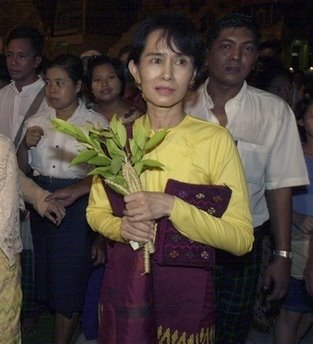


 Posts
Posts


