News & Articles on Burma
Tuesday, 04 October, 2011
-------------------------------------------
Suu Kyi urges monitoring of Myanmar
South Africa drags feet in democracy struggle: Suu Kyi
Aung San Suu Kyi hails Archbishop Desmond Tutu
As Myanmar Reforms, Observers Wonder: Who's in Charge?
Burma must be united to face China’s intimidation on dam issue
Myanmar dam suspension tests vital China ties
China ups pressure on Myanmar over dam project
Myanmar back in the world rice trade after long hiatus
Karen rebels cautious on peace talks
Mon Rebels Form Peace Talk Mission
Chinese Dam Company warns of legal action
Thai leader looks for Burma economic openings
Judge Burma's rulers by actions not words
Burma must sign international nuclear treaties
China's CNPC says Myanmar pipeline work continues despite dam row
Karennis Call for Cancellation of Hydropower Dams
-----------------------------------
Suu Kyi urges monitoring of Myanmar
Published: Oct. 4, 2011 at 6:05 AM
YANGON, Myanmar, Oct. 4 (UPI) -- Myanmar may be inching toward democracy but Western countries should remain vigilant that nascent reforms are genuine, pro-democracy leader Aung San Suu Kyi said.
In a rare face-to-face interview with foreign media, Suu Kyi told the BBC's Myanmar service that the jury is out on whether the nominally civilian government is serious about democratic reforms.
The BBC correspondent asked her whether she thought the wheels of democracy were turning.
"There are signs that President Thein Sein, a former senior military ruler, wants reform but it's early days, she said.
"I think I'd like to see a few more turns before I decide whether or not the wheels are moving along," she said.
"We are beginning to see the beginning of change. I believe that the president wants to institute reforms but how far these reforms will go and how effective these will be, that still needs to be seen."
Suu Kyi said the international community should coordinate its monitoring of events in Myanmar closely to see whether there was real and sustainable progress.
"I've always said that the more coordinated the efforts of the international community are, the better it will be for democracy in Burma (Myanmar). If different countries are doing different things, then it detracts from the effectiveness of their actions."
Her comments come after the government, elected last November and installed in March, appears increasingly concerned about its public image, both at home and abroad.
Last month Myanmar set up a Human Rights Commission, a brief report in the government newspaper New Light of Myanmar stated.
The formation comes after the U.N. special rapporteur for human rights in Myanmar, Tomas Ojea Quintana, called for an independent commission during a recent visit to the country.
The report said the commission was created "with a view to promoting and safeguarding fundamental rights of citizens described in the constitution of the Republic of the Union of Myanmar."
Analysts said it remains to be seen if the commission will challenge the government.
One of the most prominent signs of government concern over its public image was the announcement last week to stop construction on the controversial $3.6 billion Myitsone hydro dam, which would have created a reservoir four times the size of Manhattan.
Suu Kyi was among the conservationists, environmentalists and others opposing the project. Objections ranged from a lack of transparency to the project's potential environmental impact.
The structure, at the head of the Irrawaddy River, was scheduled to be complete in 2019, would be, at 500 feet high, one of the world's tallest dams.
The economic repercussions for Myanmar if the dam isn't completed could be great. It's being built and financed by a Chinese company and 90 percent of the electricity will go to China.
But the dam also is in an area of conflict between the government and ethnic minority insurgents with whom the former junta -- from which many of the government members come -- had a modus vivendi for many years.
The insurgents, however, were concerned the dam would harm their traditional lands and the local people would not reap any financial benefit.
Halting construction gives the government some breathing time to discuss the area's future with ethnic minority leaders who want more local autonomy.
Sein, who is suspending construction only during his term which ends in 2015, extended an invitation in August to each rebel group to enter into a dialogue about the area's future.
But the ethnic groups rejected the government's invitation, saying it was a divide-and-rule tactic.
A recent report by the think tank International Crisis Group said Western countries should engage the new regime in Myanmar to encourage it to continue with reforms.
The briefing paper "Myanmar: Major Reform Underway" suggests that Sein "has moved rapidly to begin implementing an ambitious reform agenda first set out in his March 2011 inaugural address."
ICG also noted that Sein had met his main political rival, the populist Nobel Peace Prize winner and democracy advocate Suu Kyi in an effort to show the country is moving toward more transparent government.
Read more: http://www.upi.com/Top_News/Special/2011/10/04/Suu-Kyi-urges-monitoring-of-Myanmar/UPI-38711317722700/#ixzz1Zljx3iQW
-------------------------------------
South Africa drags feet in democracy struggle: Suu Kyi
(AFP) –
JOHANNESBURG — Myanmar's democracy icon Aung San Suu Kyi on Monday criticised South Africa for stalling on awarding a visa to the Dalai Lama and for lacking "enthusiasm" in fighting for democracy elsewhere.
"Sometimes we get the feeling perhaps that South Africa, or rather I must be frank and say perhaps South African authorities, do not support the struggle for democracy and human rights as enthusiastically as, for example, individuals like archbishop Desmond Tutu," Suu Kyi said in a video link interview at the University of Johannesburg.
South Africa has dithered on deciding whether to allow the exiled Tibetan spiritual leader to visit the country for anti-apartheid luminary Tutu's 80th birthday this week.
The Dalai Lama has paid three visits to South Africa, but in 2009 he was denied a visa, with the government saying it did not want to alienate its biggest trade partner China.
Suu Kyi's National League for Democracy (NLD) looked on South Africans "as soulmates, our brothers and sisters who went through the same kind of struggles that we are going through now."
"But it would be so good if those who have successfully overcome their problems were to remember those who are still struggling to overcome theirs," she added.
The university will award Suu Kyi an honorary doctorate in absentia on Tuesday for her pro-democracy fight.
Her NLD party won a 1990 election but was never allowed to take power by the then-ruling military junta.
She was released from seven straight years of house arrest last November, shortly after a widely criticised election won by a general who traded his uniform for civilian garb.
Former South African president Nelson Mandela was a staunch supporter of Suu Kyi, but his country's support for her movement has cooled since his presidency.
In 2007 South Africa, while a non-permanent member of the UN Security Council, voted against a US-led resolution urging democratic reform in Myanmar, saying the measure went beyond the council's mandate. http://www.google.com/hostednews/afp/article/ALeqM5jy37K8aLIZsBNXIOAnMZR-rk8-Wg?docId=CNG.63f3ecd569de01fd9d60c41e9a017daa.381
----------------------------------------
Aung San Suu Kyi hails Archbishop Desmond Tutu
KATHARINE CHILD - Oct 04 2011 07:44
Burma's pro-democracy opposition leader Aung San Suu Kyi's, says she sometimes thinks the South African government "does not stand up for human rights in same way as its individuals such as Archbishop Emeritus Desmond Tutu do".
But she maintained that the country's struggle against apartheid was nevertheless an inspiration to her and her followers.
The Nobel Laureate answered questions and addressed about 50 activists and academics at the University of Johannesburg on Monday evening via a video link up that was described by the audience as a "historic" occasion.
Suu Kyi is being awarded an honorary doctorate from the university on Tuesday night. Her cousin Dr Sein Win has flown from the United States, where he lives in exile, to accept the degree on her behalf.
Members of the audience that included Burmese exiles and activists called the event "emotional".
Suu Kyi has not left Burma since 1989 when she was first placed under house arrest for her involvement in pro-democracy activities in the country.
It is believed she is afraid she would not be permitted re-entry by the military-run government should she ever leave. This decision to stay within the borders of Burma meant she was did not see her British husband for the last years of his life as he had returned to the UK and was banned from entering Burma.
Suu Kyi has spent 15 of the past 21 years under house arrest and at one point was offered freedom if she left Burma permanently but she chose not to. She was awarded a Nobel peace prize in 1991 for her efforts to obtain democracy peacefully.
Despite the fact she doesn't travel abroad, the Nobel Laureate told the university's audience she "would like to come to South Africa and see what is going on there".
Suu Kyi, sitting on a couch in Burma, with her hair in a trademark ponytail, fielded questions from the audience about life in her country.
On the Dalai Lama
One question touched on South Africa's foreign policy and continued reluctance to grant the Dalai Lama a visa. The Tibetan spiritual leader has been invited to speak at Desmond Tutu's 80th birthday party on Saturday but the South African government has not granted him a visa despite growing civil pressure on the state to do so.
Suu Kyi was diplomatic. "I do not want to say anything that would hurt South Africa" she said. "It would be so good if those who successfully overcame their problems would remember those who would remember these who did."
South Africa used its seat on the United Nations Security Council in 2007 to side with China and Russia and voted against placing sanctions on Burma, and has refused to join campaigns to isolate the military-led government.
'SA has achieved so much'
Yet Suu Kyi heaped praise on South Africa for overcoming the divisions in apartheid. "You have achieved so much. We think will be able to achieve so much with friends of you".
Suu Kyi graciously shrugged off the compliments she was given by members by the Johannesburg audience. "I am terribly flattered you are inspired by me. I am inspired by you ... We draw our inspiration from you. We have always followed developments in South Africa."
"Your support means so much," she told South Africans.
Not so fast
However, Dr Thein Win, leader of the local chapter of the Free Burma campaign was scathing of the South Africa's foreign policy.
The doctor, who is not allowed to re-enter Burma due to his pro-democracy work, says the Burmese people he meets in nearby Thailand have all heard about Mandela -- yet he is unable to explain to them why the South Africa government does not support the Burmese activists despite its own liberation history.
"Grass roots activism [to support Burmese democracy] stands in stark contrast to the government's foreign policy" said the founder of the free Burma campaign," Dr Kiru Naidoo, after Suu Kyi's address.
But despite the country's failure to support her cause, Suu Kyi wished South Africa well. "I hope South Africa can go from strength to strength and become a beacon of hope to the world." http://mg.co.za/article/2011-10-04-aung-san-suu-kyi-hails-struggle-of-sa-individuals/
---------------------------------------
As Myanmar Reforms, Observers Wonder: Who's in Charge?
By A WSJ Staff Reporter
Myanmar's surprise decision to halt a controversial Chinese-backed dam project last Friday has set off yet another round of debate over who truly is in charge of the secretive Southeast Asia nation.
Since last year's national election, which Western observers said was a fraud designed to cement military rule in Myanmar, analysts have argued over which faction of the government seemed to be running the show.
Some assumed that former paramount leader Senior Gen. Than Shwe, who ruled with an iron fist for most of the past 20 years before retiring this year, was continuing to call the shots behind the scenes. Others thought that powerful figures, such as Thura Shwe Mann, a former third-ranking member of Myanmar's military junta, who now serves as speaker of the lower house, or other senior military leaders would assert themselves.
Few expected President Thein Sein, a former military commander and Than Shwe loyalist who represented Myanmar abroad in previous years as prime minister and was widely seen as something of a mystery, would emerge as a forceful figure in the new administration.
Yet that seems to be what's happening, analysts are increasingly concluding. Dissident media and advocacy groups have reported that Mr. Thein Sein has played an important role in promoting economic reforms in the new government, and has pressed to rein in corruption.
His decision on the dam, meanwhile, appeared to directly contradict other senior government leaders, who had promised to stick with the $3.6 billion Myitsone project, which was designed to provide power for Myanmar's most important strategic partner, China. Last month, for example, Electric Power Minister Zaw Min vowed the Myitsone project would definitely go ahead despite rising opposition from residents in the area and the country's fledgling environmental lobby.
Western diplomats say they've been surprised by the number of changes that have occurred under Mr. Thein Sein's watch, though they caution that the changes so far are mostly incremental and could easily be reversed. They include loosened restrictions on the press and Internet and an expanding dialogue between the government and famed dissident Aung San Suu Kyi.
Meanwhile, even some of the harshest critics within Myanmar's dissident community applauded Mr. Thein Sein's move to suspend the dam, which was deeply unpopular. The move also appears to have upset China.
"Even for someone as critical as I, I would say this kind of governmental action needs to be encouraged and welcomed publicly," said Maung Zarni, a Myanmar research fellow at the London School of Economics.
The dam decision "is good news that President Thein Sein shows his respect to the will of the people of Burma," added Aung Din, executive director for the U.S. Campaign for Burma, a dissident group in Washington that uses Myanmar's former name. The step was only a beginning, though, he said, with other key moves—such as releasing all political prisoners and ceasing military campaigns against ethnic minorities—as yet undone.
One argument being made by more optimistic dissidents and advocates is that Mr. Thein Sein—who has more experience in dealing with the outside world than other Myanmar leaders—is one of the key driving forces for moderation within Myanmar's new government, and with each passing week is consolidating his power. Others say his standing is less certain, but that he is using the dam issue to curry favor with the public so he can strengthen his position and potentially focus on other reforms.
Since taking office, "Thein Sein has moved quickly to begin implementing his ambitious reform agenda," researchers at the International Crisis Group wrote in a report released last month. The group said Mr. Thein Sein appeared to have made a breakthrough sometime in July, when the pace of change accelerated, possibly after he asserted his authority over more reactionary factions in the government. It cited interviews with "several well-placed individuals" for those conclusions.
More skeptical dissidents—of which there are many—quickly dismissed the report, given Myanmar's past history of flirting with reform and then backtracking.
A government official in a series of recent email exchanges with The Wall Street Journal dismissed any rumors of power struggles or factional splits.
"Since he took office, the President has always expressed a desire to build a democratic Myanmar," said Ye Htut, director general of the Information and Public Relations Department of the Ministry of Information in Myanmar. As for the dam suspension, Mr. Thein Sein "was elected by the people and therefore has to act according to the desire of the people," he said.
Of course, there's still the ultimate conspiracy theory to consider: that everything happening now was planned by Mr. Than Shwe all along. That seems far-fetched to many Myanmar observers, but then again, the man formerly known simply as "Number 1" surprised a lot of people in his time. Written off as a lightweight when he assumed power in the early 1990s, he guided Myanmar through a series of his own economic reforms a few years later, clamped down hard on opponents and ruled with only occasional challenges for two decades. http://online.wsj.com/article/SB10001424052970204524604576609652460521420.html
--------------------------------------------
Burma must be united to face China’s intimidation on dam issue
By Zin Linn Oct 04, 2011 6:29PM UTC
In the wake of postponement of controversial Myitsone dam in Burma (Myanmar), China Power Investment Corp. President Lu Qizhou said the project’s suspension by the Myanmar government last week was a shock. It will lead to a series of legal issues, he said. The suspension of dam project seems to be the latest sign of displeasing relations between the two countries.
Lu Qizhou, in an interview with the state-run Xinhua news agency on Monday, said he noticed about the suspension of the $3.6 billion Myitsone dam project through the media and he was completely surprised.
Lu Qizhou’s remarks notify the disagreement could stay behind while China hunts for more projects in Burma/Myanmar, a significant strategic neighbor to Beijing. It is ambiguous how the CPI may possibly force legal process. The company did not clarify that by way of which legal systems it will have to bring into play.
However, the Burmese government’s spokespersons didn’t give any comment so far.
On Sunday, in a statement posted on the Xinhua news agency’s website, spokesman for China’s foreign ministry Hong Lei said Burmese government should protect the rights of Chinese companies in Burma, highlighting the political nature of such a massive project.
But, if one looks on the side of the Union of Burma, people are criticizing openly against the Myitsone hydropower project at the Irrawaddy’s confluence, which is the origin of Burma’s lifeline river.
The worst is that the previous Burma’s junta together with the Chinese government did not take into consideration the desire of the native Kachin people who were never consulted about the dam prior of the projects in their neighborhood.
The CPI made the dam contract with the previous junta’s Electric Power Ministry in May 2007, without respecting the opinion of the people who live in the area.
The development has been ostracized throughout Burma because it will involve a reservoir the size of Singapore, will seriously damage the environmental and social surroundings. It is being built and invested by Chinese companies and over 90 percent of its electricity will go to China.
Even the Kachin people have a narrow chance to enjoy the electricity generated by the dam in their neighborhood.
In communities in Kachin state, guerrilla groups have armed-clashes recently with government’s armed forces and the Myitsone dam was viewed by local residents as a way for the government to start national unity with ethnic groups.
President Thein Sein on Friday sent a letter to the parliament mentioning dam building should be suspended as the project was against the will of the people. Thein Sein’s decision came as a surprise to many observers, including China, the Burmese government’s most reliable supporter.
Apart from the Myitsone dam, China has been allowed to build oil and gas pipeline through Burma to its Yunnan province, to branch out its fuel sources. In addition, Burma is situated at a geographically important place between China and India. So, rivaling with India, China needs Burma’s approval to get its doorway to the Bay of Bengal.
The Myitsone dam affair predicts the south-east Asian nation may be eager to free from China’s influence as it seeks greater favor among Western democracies.
This may be a new turning point for President Thein Sein’s government to determine which should be the most important priority – China’s backing or the whole support of its own people. Thein Sein’s decision to postpone the massive dam has been strongly supported by the majority of people.
More to the point, Burmese government and its people must be vigilant against the neo-colonialism of China which exploits political disunity in Burma. The previous military junta appeased China offering country’s precious natural resources cheaply in order to get veto-shield for its dictatorship.
So, China can interfere with current Burma’s political affairs at a junction of negotiation among political stakeholders including the ethnic armed groups. Even China can force reshuffle of the current Burmese administration to become pro-China organization.
Thus, the first priority of president must be national reconciliation and president himself has to be cautious with the danger of pro-China faction in his government. http://asiancorrespondent.com/66471/burma-must-be-united-to-face-china%E2%80%99s-intimidation-on-dam-issue/
-------------------------------------
Myanmar dam suspension tests vital China ties
Reuters, By Ben Blanchard and Aung Hla Tun | Reuters
BEIJING/YANGON (Reuters) - The surprise decision by Myanmar's new civilian government to suspend a controversial, Chinese-backed dam is straining relations between the erstwhile allies, but neither is likely to risk lasting damage.
China is pressing for an "appropriate solution" to the shelving of the $3.6 billion Myitsone dam, a moved hailed by its opponents who had warned of the scheme's environmental damage and forced relocation of residents.
For Myanmar, under wide-reaching sanctions by Western countries for human rights issues, China is its most important diplomatic and economic ally.
And for China, the country formerly known as Burma provides access for its landlocked southwestern provinces to the Indian Ocean. China is building gas and oil pipelines across Myanmar to avoid the Malacca Strait choke point.
"Overall the relationship will be there, as the two countries have a very close relationship economically," said Zheng Yongnian, director of East Asian Institute at the National University of Singapore.
"Myanmar relies on the Chinese side. Other countries, like India or the United States, are becoming actors. But China has geopolitical and economic advantages."
The ruling Communist Party's official newspaper, the People's Daily, noted that Myanmar's government had said it would talk to China about the dam project "to avoid damaging bilateral ties and friendship".
China is unlikely to give in easily over the project, which is part of a broader scheme to build seven dams, the majority of whose power will feed its booming economy.
The military junta proposed the dam in 2006, and in 2009 contracted Myanmar's military-backed Asia World Company and China Power Investment Corp to build it.
The Chinese-state owned firm has expressed shock at the Myanmar government's decision to suspend the project and warned of legal consequences.
"Given everything that China Power Investment has put into this project, it would be unlikely for them to walk away without first sitting down and pledging to do more environmental impact studies and so on," said Grace Mang, China Global Programme Coordinator at International Rivers.
"It's still too early to tell, but I don't think it's just as simple as Myitsone is cancelled."
China will likely now worry about another huge investment project it has in Myanmar, an oil pipeline being built into southwestern China by China National Petroleum Corp, which says work is continuing.
"The Chinese government is wise enough to handle this issue amicably with great care after taking into considerations other strategic interests like their seeking access to the Indian Ocean through us," a retired senior Myanmar diplomat said, referring to the pipeline and other rail and road projects.
"In fact, it was a big blunder of them to have made secret deals with such an illegitimate government for such strategic mega projects," added the retired diplomat, who asked not to be identified citing the sensitive nature of the subject.
MUTUAL TRUST, AND SUSPICION
Despite their reputation for being close, the two have deep mutual suspicions.
China's growing economic role in Myanmar has caused considerable popular resentment. Myanmar historically has feared being dominated by its much larger neighbour, while China worries about instability along its vast borders.
Beijing frets that Myanmar's civilian government may try and cosy up to the United States, adding to Chinese concerns about being "encircled" by hostile forces, such as the U.S. military bases in Japan and South Korea.
"I know historically there's been some issues of distrust with China but in general terms, I guess relations have warmed a lot and Myanmar still needs quite a bit in terms of trade in terms of gas and oil pipelines in 2013," said Christopher Roberts, a Myanmar expert at Australian National University, calling the move a gesture to show it was being accountable.
"But from Myanmar's perspective, I suspect something like the suspension of a dam is not a relationship-breaker like say the suspension of a gas plant or an oil pipeline. So I think strategically this is something that wouldn't put a significant dent in the relationship with China."
Economic relations are booming. Bilateral trade rose by more than half last year to $4.4 billion, and China's investment in Myanmar reached $12.3 billion, Chinese figures show. There is a strong focus on natural resources and energy projects.
"China and Hong Kong reached the top of the list of foreign investors just because of a few giant hydro power, oil and gas pipeline and mining projects. In fact, China has not invested much in the labour intensive manufacturing sectors," a senior official from Myanmar's Federation of Chambers of Commerce said.
"Since the Chinese bring thousands of workers, including manual labourers, their projects do not benefit local people much," he added, also asking not to be identified.
Ethnic minorities in Myanmar see the construction of Chinese-built dams as expanding military presence into their territory. Some analysts say Kachin rebels may be trying to hold the dams hostage in return for a share of the revenue from the projects.
The dam decision was a rare rebuke of China by Myanmar, especially as Beijing has gone out of its way to cultivate the new leadership.
Thein Sein's first major foreign visitor since taking office in February under Myanmar's "road map" back to democracy and civilian rule was the Chinese Communist Party's fourth ranked leader, Jia Qinglin.
During a visit to Beijing in May, Thein Sein praised the Chinese as a trustworthy, selfless ally, and received a line of credit worth 540 million euros.
Ultimately, observers expect Myanmar to compensate China somehow for the dam, but Beijing would become warier about future projects.
"The moral of the story is I think the Chinese side should now think, whatever the investments or the projects they'd like to do with Burma, they should look long-term," said Zaw Oo, director of the Chiang Mai, Thailand-based Vahu Development Institute.
"They should not consider or conceive any projects just for the sake of short-term benefits. (The Myitsone project) for the long-run is not going to be very positive for the development of Myanmar."
(Editing by Jonathan Thatcher) http://in.news.yahoo.com/myanmar-dam-suspension-tests-vital-china-ties-062454032.html
-----------------------------------------
China ups pressure on Myanmar over dam project
APBy SCOTT McDONALD - Associated Press | AP
BEIJING (AP) — A Chinese company has stepped up pressure on Myanmar after it surprisingly suspended construction of a jointly backed but much criticized hydroelectric dam, saying scrapping the project would cause legal problems.
In an interview late Monday with official Xinhua News Agency, the president of China Power Investment Corp., Lu Qizhou, said he was "totally astonished" when Myanmar President Thein Sein announced Friday that the $3.6 billion Myitsone dam project had been halted.
Environmental activists have said the dam would displace countless villagers and upset the ecology of one of the Myanmar's most vital national resources, the Irrawaddy River. It also would submerge a culturally important site in the ethnic Kachin heartland.
The dam has also come under criticism because it was supposed to export about 90 percent of electricity it generated to China, while the vast majority of Myanmar's residents have no electricity.
The suspension was praised by many, including democracy advocates in Myanmar and the U.S. government.
The move, however, is a huge turnabout in relations with China, Myanmar's second-biggest trading partner after Thailand, and will likely have a political impact.
Beijing has poured billions of dollars of investment into Myanmar to operate mines, extract timber and build oil and gas pipelines. China has also been a staunch supporter of Myanmar's politically isolated government.
Lu said the Chinese side had followed all laws and regulations and "diligently fulfilled our duties and obligations."
He called the suspension bewildering and said it "will lead to a series of legal issues."
Lu did not give specifics, saying only that large amounts of money have been invested and that there would be a large number of default claims. It is not known how Myanmar's legal system would handle such a case.
China Power Investment, which is providing the financing for the project, is a state-owned company and its website says it operates under the leadership of the State Council, China's Cabinet.
China's Foreign Ministry has already stepped into the debate, urging Myanmar to protect Chinese companies' interests.
On Saturday, ministry spokesman Hong Lei called on Myanmar to hold consultations to handle any problems with the Myitsone dam and reminded the Myanmar that both countries agreed to the project after rigorous reviews.
"The Chinese government ... urges the relevant government to protect the legal and legitimate rights and interests of Chinese companies," Hong said in a statement carried on the ministry's website.
Besides China Power Investment, some of China's biggest companies are involved in the Myitsone project, including China Gezhouba Group Corp., which is building the dam, and China Southern Power Grid Corp., which expects to buy most of the power generated.
In April, the countries announced plans to build a railroad together that will link China's landlocked Yunnan province to a deep-sea port being built in Myanmar's Rakhine state.
The completed railroad will extend to a port China is building in Myanmar's Kyaukphyu town in northwestern Rakhine. China National Petroleum Corp. already is building a 480-mile (770-kilometer) pipeline from Rakhine to Yunnan. http://news.yahoo.com/china-ups-pressure-myanmar-over-dam-project-041017386.html
-----------------------------------------
Myanmar back in the world rice trade after long hiatus
By Peter Janssen Oct 4, 2011, 5:21 GMT
Yangon - Myanmar, plagued for decades by government interference in its rice industry, aims to increase its rice exports to 1 million tons this fiscal year, helped by Thailand's price support programme that promises to make the Thai crop less competitive on the world market.
'Our rice is the cheapest in the world,' said Myo Thuya Aye, managing director of the Ayeyar Wun Trading Co.
'Myanmar rice is 50 to 60 dollars cheaper [per ton] than Thai rice, 40 to 50 dollars cheaper than Vietnamese rice and 30 to 40 dollars cheaper than Pakistan's,' Myo Thuya Aye said.
The price differential is seen as a way for the country to nearly double the exports of 570,000 tons it saw in the past fiscal year, which ended March 30.
Last year's low number was largely because the then-ruling military junta was worried about domestic rice prices.
'That was an election year, so the government and the rice association had to consider price stability,' Myo Thuya Aye said.
Myanmar held its first general election in 20 years on November 7, ushering in a government led by the Union Solidarity and Development Party, which is packed with former military men.
Myanmar's new president, former general Thein Sein, has implemented some policies beneficial for Myanmar's private sector, such as dropping an 8-per-cent export tax on rice and 14 other goods in August.
In the first half of this fiscal year, Myanmar shipped an estimated 370,000 tons of rice to markets such as West Africa, Bangladesh and the Philippines. Shipments should rise for the rest of the year, and Myo Thuya Aye said traders hope to export 1 million tons for the entire fiscal year.
'For years, no other country has had an export tax on rice,' said Sein Win Hlaing, chairman of the Myanmar Paddy Producers Association. 'We have been suffering for a long time.'
Myanmar's rice traders have actually been suffering for as much as six decades.
Prior to World War II, Myanmar was the world's leading rice exporter, shipping an average of 3 million tons a year from the Irrawaddy Delta, the country's rice bowl.
Myanmar's first post-independence president, socialist-leaning U Nu (1949-1962), put rice exports under government control, limiting the private sector to the domestic trade.
When military strongman Ne Win seized power in 1962, he nationalized the entire rice industry - exports and domestic trade, mills and warehouses.
Thereafter, Thailand swiftly replaced Myanmar as the world's top exporter, a position it has held for almost four decades but is now in danger of losing.
Thailand exported about 10 million tons of rice in 2010 and is expected to reach a similar level this year.
But nobody knows how Thailand's rice exports will fare in 2012 after the government on Friday introduces a price guarantee scheme for Thai rice farmers.
Under the programme, which was expected to be discussed when Thai Prime Minister Yingluck Shinawatra visits Myanmar Wednesday, the government is to pay farmers 500 dollars per ton of plain white rice, regardless of the prevailing market price, and 666 dollars for jasmine rice, the fragrant grain Thailand is famed for.
The price guarantees, designed to win votes for the Pheu Thai Party in Thailand's July 3 general election, which it won, is expected to boost Thai rice prices by 40 per cent on the world market.
'It will create a lot of opportunities for other people to come in,' said Chookiat Ophaswongse, honorary president of the Thai Rice Exporters Association.
The Thai move towards government intervention comes just as Myanmar is lifting decades of constraints on its own private sector.
The process began before the current government came to power.
In 2003, the junta allowed private businesses to get involved in rice exports, an activity previously monopolized by the State Agricultural Marketing Board.
In 2009, a year after Cyclone Nargis devastated the Irrawaddy Delta, the government allowed the establishment of 39 'rice specialist' companies to provide farmers with low-interest loans to purchase fertilizers, pesticides and rice seeds.
Besides waiving the export tax on rice exports, a waiver that is to be reconsidered in February, the new government has also allowed the Myanmar rice association to elect its own board and determine rice export quotas on a monthly basis.
http://www.monstersandcritics.com/news/business/news/article_1666596.php/Myanmar-back-in-the-world-rice-trade-after-long-hiatus
---------------------------------------
Karen rebels cautious on peace talks
By KHIN MIN ZAW
Published: 4 October 2011
The Karen National Liberation Army has said it will only negotiate with the Burmese government if it accepts that armed groups will no longer hold talks individually but as part of a wider alliance. It follows a recent approach by security officials in Karen state tasked with kick-starting dialogue with the rebels.
Naypyidaw has been busy attempting to court the myriad rebel groups in the country’s periphery, many of whom have seen fighting escalate in recent months.
The war against the Karen National Liberation Army (KNLA) however goes back six decades, and mistrust of government overtures is deep-seated.
A nominal alliance of groups, including the KNLA and the Kachin Independence Army, was formed last year under the banner of United Nationalities Federation Council (UNFC).
“We do want to have a ceasefire and peace as well as to solve the problems via political means,” said Major Saw Hla Ngwe, joint-secretary 1 of the KNLA’s political wing, the Karen National Union.
“But because we work as a group, we will only hold discussions as the UNFC and not as one group. And we would like to discuss directly with the central government.”
The offer of talks from Karen state’s Security and Border Affairs minister, Colonel Aung Lwin, pre-empted a recent trip by President Thein Sein’s political advisor, Nay Zin Latt, toIndonesia. Billed as a ‘study’ visit, the delegation sought to get to grips withIndonesia’s transition from military rule and cessation of conflicts with ethnic minority groups – something the new Burmese government has pledged as a goal.
The fighting in recent months, particular against the KIA inBurma’s north, has taken on a sometimes brutal front, with multiple rapes of Kachin women by Burmese soldiers reported.
Observers have questioned whether the armed groups will accept offers of peace from the government in light of the nature of the fighting, although most say they are ostensibly looking for an end to hostilities.
Major Saw Hla Ngwe was sceptical of the tactics being used by the central government to negotiate an end to fighting. Historically the government has favoured talks with individual groups, rather than alliances.
“It is their policy to hold talks separately with individual groups. They would talk to groups separately and then play political and military games – we know this based on our past experiences,” he said. http://www.dvb.no/news/karen-rebels-cautious-on-peace-talks/17941
-----------------------------------
Mon Rebels Form Peace Talk Mission
By LAWI WENG Tuesday, October 4, 2011
The New Mon State Party (NMSP), an ethnic armed group, has formed a “peace mission” and is expected to hold peace talks with the Mon State government in mid-October, according sources close to the NMSP.
The NMSP formed the mission group after the Burmese government granted the Mon State government’s request to engage in peace talks with the NMSP, which observers say is part of Naypyidaw’s plan to hold discussions with all ethnic armed groups separately.
The NMSP peace mission will be led by Nai Oung Min, a member of the NMSP Executive Committee, said a source close to the party.
The source added that a date for the peace talks will be set following the NMSP Executive Committee meeting in mid-October.
According to Nai Hang Thar, the NMSP secretary, the party will attend the talks just to inform the government of their policy with respect to peace negotiations, which is to allow talks to be led by the United Nationalities Federal Council (UNFC), an umbrella group comprised of several ethnic armed groups, including the Karen National Union and the Kachin Independence Organization.
“This is just to meet them and tell them about our policy of not engaging in separate peace talks with the government. If there are political discussions and ceasefire negotiations, the UNFC will lead them,” he said.
Mon community leaders have told the NMSP that it should have peace talks directly with Naypyidaw, rather than state-level authorities.
“I told them to talk directly to Naypyidaw, because the state government does not have power,” said Nai Kao Rot, a former deputy army chief of the NMSP.
Mon community leaders also said that the NMSP should hold firmly to the principle of UNFC-led talks in order to maintain solidarity among the ethnic groups.
“We encourage them to follow the principles of the UNFC and honor their agreement with its members,” said Nai Sunthorn, who is the chairman of Mon Unity League, based in Thailand.
“We are worried that the talks will have no benefit for the people and cause misunderstanding among ethnic groups,” he said.
Recently, government delegations also held talks with the United Wa State Army and its ally, the Mongla Group known as the National Democratic Alliance Army, in Shan State.
Another government delegation—comprised of both Christian and Buddhist religious leaders—recently held talks with the KNU near the Thai-Burma border. It was also reported that a group of local government authorities in Tenasserim Division told members of the local Karen community that they would be willing to hold peace talks with KNU Brigade 4.
Critics said the move by Naypyidaw to enter into peace talks with the NMSP while continuing to fight with the KIA, KNU and Shan State Army-North is creating misunderstanding, distrust and division among the ethnic groups.
A statement released on Monday by the Overseas Mon Coordinating Committee (OMCC) said that the government’s plan to hold peace talks with the NMSP is merely a “divide-and-rule” tactic, which successive governments have applied in order to control the ethnic people of Burma.
The OMCC has called on the NMSP not to accept peace talks with the Burmese government without participation by the 12-member UNFC.
The UNFC has stated a desire to hold peace talks with the government with representatives from all ethnic armed groups involved. http://www.irrawaddy.org/article.php?art_id=22190
---------------------------------------------
Chinese Dam Company warns of legal action
By JOSEPH ALLCHIN
Published: 4 October 2011
The head of the Chinese company behind the recently scrapped Myitsone Dam in northern Burma has spoken of his consternation at U-turn announced last week by Burma’s president.
In a lengthy interview with China’s Xinhua news agency, Lu Qizhou claimed that Naypyidaw would have a “series of legal issues” owing to the agreements already made between the government and the state-owned China Power Investment (CPI) Corporation.
Lu added that he was “astonished” by he move, and found it “very bewildering”, particularly in light of an announcement by President Thein Sein in February this year when he was still prime minister, that CPI should “accelerate the construction” of the dam.
China’s Foreign Ministry Spokesperson, Hong Lei, had earlier urged “relevant countries to guarantee the lawful and legitimate rights and interests of Chinese companies.”
President Thein Sein has stated his commitment to the rule of law, but under the constitution is entitled to executive power over major infrastructure or energy projects. He said on Friday last week that the $US3.6 billion project would be suspended during his tenure, rather than an outright cancellation of the project, causing confusion about the exact situation.
Indeed a minefield of financial and loan agreements are already in writing and huge resources have been spent, with the construction of a smaller 2,000 MW dam at Chinbwe built solely to generate the electricity needed to build the Myitsone dam.
Lu noted that “the loss would go far beyond direct investment and financial expenses”, and that “there would also be tremendous amount of default claims from contractors.” On the Burmese side these include Asia World, run by military crony Steven Law.
China has committed to various major projects in Burma, including the trans-Burma Shwe gas pipeline and a corresponding high speed railway being discussed. The China National Petroleum Corp (CNPC), the main company in the Shwe project, said yesterday that it would go ahead despite the cancellation of the dam.
Professor Shuije Yao, an expert of Chinese economics from the Universityof Nottingham in the UK, told DVB that a cancellation of the 6,000 MW Myitsone dam project would be a “blow” to China in its bid for energy security.
He notes that the country has an extremely large carbon emissions-to-GDP growth rate. With every nine percent of GDP growth, the current annual rate, carbon emissions rise by roughly 20 percent.
China currently generates 80 percent of its electricity from coal, which is widely recognised as one of the worst catalysts for catastrophic climate change. It is strenuously looking to diversify its energy make-up, with hydropower one of the most effective alternatives.
China’s energy-hungry growth rates are largely as a result of its reliance upon manufacturing as an export base.
The CNPC announced on Monday that it would donate $US1.32 million to Burma to build eight schools along the pipeline route, which will now face scrutiny as critics smell blood.
The Myitsone cancellation has raised the imperative for China to woo the disaffected – as Lu claimed, “We provided each household [affected by the dam building] with a 100,000 kyat [$US120] living subsidy, a 21-inch colour TV and other living necessities”. http://www.dvb.no/news/chinese-dam-company-warns-of-legal-action/17947
-------------------------------------------
Thai leader looks for Burma economic openings
4, October, 2011, Tuesday
The Thai Prime Minister, Yingluck Shinawatra, is expected to seek to revive a special economic relationship with Burma when she makes an official visit on Wednesday.
Dr Paul Chambers, director of research at Thailand's University, told Radio Australia's Asia Pacific program he sees the trip as the beginning of a renewal of the national relationship started by Yingluck's brother, the former prime minister, Thaksin Shinawatra.
Her visit comes in the wake of Burma's suspension of a controversial Chinese-backed hydroelectric dam last week.
The action surprised those who fear China's growing influence in the resource-rich country.
Engagement
Some see the dropping of the $3.66 billion project as meaning Burma is trying to be less reliant on China as a foreign investor.
Ms Yingluck may find out on her visit.
Dr Chambers said: "I think Yingluck is trying to reinforce the policy of 'forward engagement' of the Thaksin Shinawatra government back in 2001 and 2006.
"And that policy was seeking to increase investments - Thai investments and Thai economic clout in Burma.
"She's trying to show the Burmese government that as another Shinawatra in the prime minister's seat, that she's seeking to have very close economic ties, increased ties with Burma."
He believes Thailand could be well placed if China is kept out of the hydro project.
"Thailand has the potential to really use a lot of resources, economic resources from Burma, petroleum, hydro-electric power, gas, all sorts of things, which are needed to really boost Thailand's growing economy."
He does not see the Thai leader pushing to meet democracy leader Aung San Suu Kyi.
"I think that Yingluck's policy is much more economics-driven, than in terms of trying to work with human rights leaders or other opposition leaders in Burma.
"Yingluck might want to have discussions with Aung San Suu Kyi, but I don't think that she will. I would be very surprised, and that she would probably just meet with the officials of the state."
http://www.radioaustralianews.net.au/stories/201110/3332270.htm
--------------------------------------
Judge Burma's rulers by actions not words
Lindsay Murdoch
October 4, 2011 - 12:32PM, Opinion
Aung San Suu Kyi is optimistic, yet cautious about conciliatory words coming from Burma's rulers.
It is unrealistic to expect Burma to emerge suddenly from four decades of isolation and misrule to become a modern, competitive and democratic Asian nation.
Corrupt generals still in charge of the impoverished nation have too much blood on their hands to give up their authority entirely.
But there are indications they intend to allow at least some change, stirring excitement among Burmese analysts and foreign diplomats.
Advertisement: Story continues below
Even if that happens, the outside world should not rush to bring the errant nation back into the fold, past sins forgiven.
In the late 1950s and early 1960s, the Socialist Republic of the Union of Burma was one of south-east Asia's most important commercial and cultural hubs.
People from around the region, including Bangkok, would travel to Rangoon, the nation's bustling riverside capital, to shop or dine in fine restaurants.
But in 1962 Ne Win, a highly superstitious nationalist general, seized power in a coup and introduced what he called the "Burmese way to socialism" that was based in part on extreme elements of Marxism.
Ne Win's policies were disastrous for most Burmese, cutting them off from the world, wiping out their savings, plunging them into poverty and triggering a number of ethnic conflicts in border areas.
Corrupt and brutal military generals ruled the country for the following four decades, ignoring the results of elections in 1990 and violently suppressing uprisings.
But six months ago the generals took off their uniforms, donned civilian clothes and proclaimed a new era of reform under the guise of a civilian government.
The outside world remained sceptical because in the past the generals had made promises to appease the United Nations and its Western member nations, only to renege later.
They worried that the generals were again faking reform to tighten their stranglehold with the help of Western aid and trade.
But in a flurry of recent activity pro-democracy leader Aung Suu Kyi, who has spent 15 of the past 21 years under house arrest, has met three times with the country's president Thein Sein, one of the moderate former generals.
Bans on websites have been eased.
Promises have been made to release prisoners.
New labour laws have been drafted.
And in the most notable development the government last Friday called a halt to work on a $US3.6 billion dam and hydroelectric plant on the Irrawaddy River that was being built in co-operation with China.
Suu Kyi had been among a large number of critics of the project, including environmental and human rights groups.
The generals had never before bowed to public pressure.
The decision was even more significant because it upset Burma's powerful neighbour China.
The next test will be whether the government releases the 2000 political prisoners being held in the country's jails, including key supporters of Suu Kyi.
Western nations, including Australia, have told the generals the release of prisoners, many of whom have been tortured, would be seen internationally as an important step in any reform process.
Analysts warn that much of what the government has promised so far lacks legal backing and could be quickly reversed.
There are hardliners in government with vested interests to protect who are waiting for first opportunity to sabotage the reforms, government insiders have publicly warned.
Progress should be judged on what is happening across the entire country of 50 million people, not just in the new capital, Naypyidaw.
Since the November election fighting has escalated in ethnic minority areas, forcing tens of thousands of people from their homes.
Hundreds of prisoners taken from prisons and labour camps are being forced to work as porters in an army offensive against Karen rebels in the east of the country.
Human rights groups say the Burmese army is still committing human rights abuses on a "massive scale" in clashes with rebel groups.
Fighting has recently spread to some border areas where it had not occurred for 20 years.
The upsurge in violence comes amid $US20 billion of investments in infrastructure projects such as dams and pipelines over the past year alone, much of it from resource-hungry China.
Thein Sein has been lobbying for the end of US and European economic sanctions, promoting the vision of Burma becoming an important regional trade and industrial hub.
He also wants Burma to be given the nod to chair the 10-member Association of South-East Asian Nations in 2014, a role it was previously denied.
What has become clear is that Thein Sein believes accommodating Suu Kyi in the decision-making will help achieve these goals, no matter how despised she is by some government hardliners.
His relationship with her will be critical to Burma's future.
For decades the generals refused to speak to or negotiate with Suu Kyi, the daughter of Burma's independence hero General Aung San, whose National League for Democracy won 80 per cent of parliamentary seats in 1990 elections.
But Suu Kyi's views will be pivotal to how the international community reacts to developments in Burma in the coming weeks and months.
ASEAN nations should not endorse Burma's bid to chair their organisation until all political prisoners are released and there is a solid timetable for genuine human rights reforms.
Any easing of international economic sanctions should be tied to specific benchmarks, including guarantees for the future of 140,000 Burmese languishing in camps in Thailand, too afraid to return home.
Suu Kyi believes there is an opportunity for change in the country while remaining cautiously optimistic it will occur.
"This is the kind of thing I could never have done (previously), so we are making progress, but we need more," she said in a recent video-link to a conference in New York.
Lindsay Murdoch is Age and Sydney Morning Herald South-East Asia correspondent. http://www.theage.com.au/opinion/politics/judge-burmas-rulers-by-actions-not-words-20111004-1l63b.html
----------------------------------------
Burma must sign international nuclear treaties
Robert Kelley
Bangkok: October 4, 2011 5:01 am
With the recent admission that Burma does not have the resources to contemplate pursuing nuclear weapons, the government has made an important step towards rejoining the world community.
It should take this opportunity to sign the international agreements it has praised, and join the club of responsible nations. Failing to do so could provide something of an acid test regarding allegations levelled against its military ambitions.
That Burma "cannot afford" nuclear weapons, as the ambassador to the International Atomic Energy Agency (IAEA), Tin Win, said in Vienna last week, may come as no surprise: its decision in 2005 to relocate the capital from Rangoon to Naypyidaw would have cost billions of dollars and strained the country's treasuries. Last year's expose by the Democratic Voice of Burma of a nascent weapons programme clearly stated that the project would likely prove too ambitious for the government.
But the admission last week could have myriad benefits for the country and its decrepit energy and health sectors. Burma has had an on-off agreement with Russia to build a nuclear reactor and research laboratory in the country since 2001. The agreement was formalised in 2007, but Russia has never been willing to complete the deal because Burma has obsolete agreements with the IAEA. No country could consider giving nuclear technology to Burma when it has insulated itself against any IAEA inspections.
Burma's treaty agreements with the IAEA stipulate that it has no nuclear materials and no nuclear facilities, and in practice, the IAEA waives the right to normal inspections in the country since both parties agree there is nothing to inspect. There has never been an inspection in Burma to verify the misuse of nuclear materials, and it's unlikely there ever will be, because according to the agreement there are no materials. This is, of course, an endless circular argument.
A research reactor would be a very ordinary research tool in a small country like Burma. It would represent no threat to world peace, particularly when it is subject to regular IAEA nuclear material inspections. But without inspections there would be constant concerns that even a small facility could be used for nefarious purposes. A research reactor would cost Burma about US$150 million, a very small sum for a country rich in mineral, timber and gas resources. If the government decides this is a strain on the budget, it is making a conscious choice in favour of other activities instead of spending on public health and welfare. The probable recipient would be the military, which accounts for more than a quarter of government spending.
It is not clear how Burma planned to use its research reactor. The most likely use would have been to produce medical isotopes for healthcare, a sector so fractured that it might be that the relatively high technology products for nuclear medicine go unused. The reactor could be used to train nuclear engineers for bigger projects in the distant future, for at present, Burma's decrepit technology base means that nuclear power is a distant dream.
Now that Burma has publicly renounced any nuclear activities, there should be no barriers to signing a modern nuclear materials safeguards agreement with the IAEA and modifying its existing codicils that essentially prohibit nuclear inspections in the country. Burma's current agreements are dated from the early 1990s and are completely obsolete.
Burma needs to consider signing the Model Additional Protocol, which grants the IAEA additional inspection rights. It requires Naypyidaw to submit more information on imports and exports of nuclear materials, and report on existing nuclear activities. Because Burma has declared that all planned nuclear activities have ceased, this should be no problem.
It would help to refute accusations by some exiles and analysts, including me, that the government is attempting to develop nuclear weapons. This evidence comes from activities in two mechanical workshops built around 2005 and equipped with modern European machine tools of high calibre. These tools are possibly building processing equipment that could produce uranium for a reactor or a bomb. The equipment was photographed by a Burmese army defector, who smuggled the images out of the country.
To be sure, even if Burma allows inspections under a modern IAEA agreement, the workshops would not be the immediate sites for vetting because they have no nuclear materials, but are only workplaces supporting a programme elsewhere. Fears surrounding these programmes are fuelled by reports of uranium mining, mostly in Shan state, and alleged nuclear activities at Thabeikkyin, north of Mandalay. None of this is being reported to the IAEA.
If Naypyidaw steps up to the table and signs a modern full inspection agreement with the IAEA, then Burma can put these claims to rest. IAEA supervision would also temper concerns about a research reactor.
Failing to do this, however, means that it remains in the small club of countries, alongside Iran and Syria, that have refused to sign the modern agreements, and will retain pariah status. Using the occasion in Vienna to reiterate Burma's commitment to international nuclear material safeguards and robust nuclear inspections holds little credibility unless it is followed with more tangible action.
Robert Kelley is a former director at the International Atomic Energy Agency. http://www.nationmultimedia.com/new/opinion/Burma-must-sign-international-nuclear-treaties-30166724.html?utm_source=feedburner&utm_medium=email&utm_campaign=Feed%3A+Nationmultimediacom-Opinion+%28NationMultimedia.com+-+Opinion%29
---------------------------------------------
China's CNPC says Myanmar pipeline work continues despite dam row
BEIJING | Mon Oct 3, 2011 9:08pm EDT
Oct 4 (Reuters) - China National Petroleum Corp (CNPC) continues work on an oil pipeline through Myanmar and has given aid to show its goodwill, the official Chinese news agency said after Myanmar abruptly halted work on a Chinese-led power dam.
The Xinhua news agency said construction of the pipeline was "proceeding smoothly" and that CNPC said it gave $1.3 million to Myanmar on Monday to help build eight schools, as part of an agreement signed in April to provide $6 million of aid.
China's long close relationship with Myanmar faltered after the Myanmar government last week suspended a controversial $3.6 billion, Chinese-led hydro-power project.
Any uncertainty about the oil pipeline project would be a fresh blow to China's ties with Myanmar, whose President Thein Sein told parliament on Friday that his government would shelve the dam project until his five-year term ends in April 2016.
CNPC began building a crude oil port on Maday island on Myanmar's western coast in November 2009 as part of a crude oil pipeline connecting the port with the Chinese border town of Ruili. It is scheduled to be completed in 2012 and designed to carry 12 million tonnes of crude oil a year.
The northern dam would flood an area about the size of Singapore, creating a 766-square-km (296-square-mile) reservoir, mainly to serve China's growing energy needs. (Reporting by Chris Buckley; Editing by Ed Lane) http://www.reuters.com/article/2011/10/04/china-myanmar-pipeline-idUSL3E7L32L120111004?rpc=401&feedType=RSS&feedName=rbssEnergyNews&rpc=401
-----------------------------------------------
Karennis Call for Cancellation of Hydropower Dams
By KO HTWE Tuesday, October 4, 2011
Encouraged by President Thein Sein’s recent announcement of the suspension of the Myitsone Dam in Burma's northern Kachin State, the Karenni Development Research Group (KDRG) on Tuesday called for a suspension of the planned Chinese dams in nearby Karenni State, and a careful re-investigation of their social and environmental impacts.
The ethnic Karenni community group urged the Burmese government to suspend construction of three large hydropower dams: the 600 MW Ywathit Dam on the Salween River; a 130 MW dam on the Pon River; and a 110 MW dam on the Thabet River, north of Loikaw, the capital of Karenni State.
The three hydropower projects are in their initial phases, and are contracted to the state-owned China Datang Corporation under an MOU which was signed with the Burmese regime in early 2010.
However, recent floods have stoked fears among Karenni communities of the impacts of the three planned new projects after more than 500 houses and 500 acres of paddy fields were submerged in September due to the unprecedented release of water from Burma’s first major hydropower dam at Moebye, which caused severe flooding around Loikaw.
Speaking to The Irrawaddy on Tuesday, KDRG coordinator Khu Thaw Reh said due to the recent rains the water level of the Moebye Dam has reached dangerous levels. He said the authorities were opening the sluice gates every hour to release water, which has caused flooding in three villages.
“The older people in our village said they have never seen such flooding in their lifetimes,” he said. “It has a double impact because not only is there high rainfall, but the dam has released its water upon us as well.”
He said that many villagers have taken shelter in monasteries, churches and in friends' and relatives' houses in other towns.
In its statement, the KDRG said that Karenni communities have long suffered from increased militarization around the Moebye Dam, including the laying of thousands of landmines near the dam site and power plant. Some 12,000 villagers were displaced by the dam reservoir, while electricity from the dam was never made available locally but sent to Burma’s former capital, Rangoon.
An estimated 18,000 landmines were planted around the site, and thousands of Burmese troops were moved in to secure the project, resulting in abuses against the local population, including forced labor, sexual violence and extra-judicial killings, according to the KDRG.
According to a former statement by the same group released in March, if the dams go ahead, at least 37,000 people will be displaced including the Yintale, an ethnic group numbering only around 1,000. The Yintale live as subsistence farmers traditionally planting millet and sesame on the banks of the Salween and Pon rivers near the sites of two of the proposed dams.
“We fear worse disasters if the new dams are built,” said Khu Thaw Reh.
At present, 21 major dam projects are under construction around the country, in Kachin, Shan and Karenni states, and in Mandalay and Sagaing divisions. The total output of these dams, many of which are being built by Chinese companies, is expected to be 35,640 MW of electricity.
“No dams should be built in Karenni State without the agreement of local communities,” said Khu Thaw Reh.
Burma's President Thein Sein announced on Sept. 30 that the controversial Myitsone hydropower dam on the Irrawaddy River will be suspended because it is “against the will of the people of Burma.”
Lu Qizhou, the president of China Power Investment Corp (CPI), the main investor in the $3.6 billion megadam project, said Burma’s sudden decision to halt the dam project is “bewildering,” and could lead to “a series of legal issues,” according to a report by Xinhua News Agency on Monday.
Campaigns against the continuation of the remaining hydropower dams in Burma have been growing following the announcement that the Myitsone project was suspended. A Thailand-based NGO, Burma Rivers Network, urged the Burmese government and CPI to immediately cancel the six other megadams planned on the Irrawaddy source rivers, saying they will have the same devastating impact on the nation. http://www.irrawaddy.org/article.php?art_id=22189
__._,_.___
Wednesday, October 5, 2011
News & Articles on Burma-Tuesday, 04 October, 2011-UZL


Tuesday, October 4, 2011
News & Articles on Burma -Monday, 03 October, 2011-uzl
News & Articles on Burma
Monday, 03 October, 2011
----------------------------------------
Opinion: China must respect Burma’s dam decision
Second meeting between Wa and government officials
China Will Not Give Up Easily over Myitsone Dam
EU Welcomes Burmese Decision on Myitsone Dam
China must respect Burma’s dam decision
Thai PM eyes maiden trip to Burma
Reformists begin to make mark in Burma
Burma dam disruption concerns China
-------------------------------------
Opinion: China must respect Burma’s dam decision
By Zin Linn Oct 03, 2011 1:05AM UTC
China has asked for talks on the suspension of a joint hydropower project in Burma, saying the legitimate rights and interests of its companies should be protected, according to Xinhua News Agency on Saturday.
In a statement posted on the agency’s website, Chinese Foreign Ministry spokesman Hong Lei called on Burma to hold consultations to handle any problems with the Myitsone dam project. The statement notes that both countries agreed to undertake the project after rigorous studies and reviews:
The Myitsone hydropower plant is a China-Myanmar jointly invested project, which has gone through scientific feasibility studies and strict examinations by both sides.
Relevant matters that have emerged during the implementation of the project should be properly settled through friendly consultations between the two sides.
Environmental analysts say the Myitsone hydropower plant, which will involve a reservoir the size of Singapore, will seriously damage the environment. It is being built and invested by Chinese companies and over 90 percent of its electricity will be sent to China.
Burma’s President Thein Sein sent a decisive letter to the current parliament regular session on Thursday postponing the dam project in Kachin State for the term of the existing government, at least.
Hong Lei said the Chinese government always supports its enterprises to cooperate with foreign companies on a basis of mutual respect, equality and mutual benefits, and orders Chinese enterprises to strictly perform their duties and commitments according to laws and regulations of the countries where they work, Xinhua News said.
The Myitsone hydropower project is jointly invested by the China Power Investment Group, and Myanmar’s Ministry of Electric Power-1 and the local private Asia World Company. The 500-foot dam has been under construction at the confluence (Myitsone) of the Mali Hka River and N’Mai Hka River, 27 miles north of the Kachin capital of Myitkyina. Construction began in December 2009, and it will cost 3.6 billion dollars. With an installed capacity of 6,000 megawatts (mw), it is estimated to yield 29,400 million kilowatt-hours a year on completion which was earlier scheduled by 2019.
On May 27, 2010, on behalf of the communities suffering from the Myitsone Dam project in Kachin State, Kachin Development Networking Group (KDNG) appealed to Chinese President Hu Jintao to immediately halt the forced relocation and destruction of the villages of those opposed to this project by China’s state-owned China Power Investment Corporation (CPI).
Kachin people in exile signed a petition protesting against the dam project and appealing to halt it on January 28, and sent it to Chinese Prime Minister Wen Jiabao through Chinese embassies in Thailand, India, Singapore, Britain and New Zealand.
But, the Chinese government did not take into consideration the requests made by native Kachin people who were never consulted about the dam projects in their neighborhood.
The CPI made the dam contract with the previous junta’s Electric Power Ministry in May 2007, without respecting the voice of the people who live in the region.
According to analysts, protestation to the hydro-power dam on the Irrawaddy has been swelling as pro-democracy and environmental activists bid to stop the dam plant using their citizens’ rights under the new semi-civilian government, which is controlled by military officers from the previous junta.
If the government inflexibly continued with the Irrawaddy dam project, there might be a nationwide mass protest resembling the 1988 people’s uprising, most observers believe. http://asiancorrespondent.com/66338/china-must-respect-native-people%E2%80%99s-voice-concerning-the-myitsone-dam-in-burma/
--------------------------------------
Second meeting between Wa and government officials reportedly results in compromise; possible third meeting
Monday, 03 October 2011 16:39 Stephen Perraud / Hseng Khio Fah
Meeting October 1st for the second time in a month, Burmese government officials and representatives for the United Wa State Army (UWSA), the largest and most powerful resistance group in the country’s highly contested Shan state, reportedly expressed possible conditions of compromise in ending their long standing conflict.
The UWSA held a ceasefire with the Burmese military led State Peace and Government Council starting in 1989, with tense relations and armed confrontation beginning in 2009 following Naypyitaw’s demand that all ceasefire movements become Burma Army run Border Guard Forces (BGFs). Saturday’s meeting reportedly ended with Wa officials hopeful for a third meeting in Panghsang, the location of UWSA’s headquarters. Most previous meetings had occurred in government controlled areas.
A Sept. 6th meeting between the two sides resulted in the delivery of 1,000 bags of rice previously withheld for two years to the UWSA controlled area. Delivery of other goods has also been discussed since the signing of a new ceasefire contract on the sameday, though they have yet to materialize.
According to a Wa official speaking under condition of anonymity, the Burmese government’s five proposed terms include return of important government personnel such as teachers and doctors to the UWSA controlled areas. They would also allow the return of the U.N. and I.N.G.O. Both had supported the area before 2005, when the area was declared a drug free zone.
Access for support of the area was taken away by a government order on March 22nd, 2010. Support from both organizations has come in the form of education, healthcare, and efforts to transition farmers involved in poppy production into the production of rubber and tea.
The Wa’s 14 proposed terms include return of state personnel to their areas except military personnel, and others such as providing all Wa people citizens’ identification cards and driver’s licenses as well as motor vehicle licenses. They would also like to see a continuance of rice supply in the form of 2,000 sacks a month, as well as monetary support of 10 million kyat each month (about $12,500 U.S.D.)
Also included in the provisions of the Wa’s points are a desire for greater access to their own business interests outside of the state; including lucrative ventures like Hong Pang group, which was founded by Southern Region Commander of the UWSA and known drug kingpin Wei Hsueh-kang and includes businesses in gems, agricultural production, construction, and more. Interest has also been expressed in acquiring permits for mining and production of teakwood outside of the state area.
An additional desire expressed in the UWSA’s terms is the Wa’s aforementioned hope for a third meeting in their own territory.
While negotiations continue with the UWSA, the Burmese government regime is currently engaged in active combat with separate resistance groups throughout the Kachin, Shan and Karen states, including areas close to the country’s borders with India, China, Thailand and Laos. “Our leaders proposed that military campaigns against them should be stopped and negotiations started immediately,” said the source, “and that all issues be settled by non-military means.”
The groups currently engaging the government forces- the Kachin Independence Army, the Shan State Army and the Karen National Union came together in a conference near the Thai Burma border over February 12-16 to form the United Nationalities Federation Council (UNFC). UNFC members expressed last month a desire to make peace with government forces, in response to President Thein Sein’s 18 August announcement inviting all armed groups to peace talks. http://shanland.org/index.php?option=com_content&view=article&id=4081:second-meeting-between-wa-and-government-officials-reportedly-results-in-compromise-possible-third-meeting&catid=85:politics&Itemid=266
------------------------------------
China Will Not Give Up Easily over Myitsone Dam
By BA KAUNG Monday, October 3, 2011
China will not give up in its bid to construct a massive hydropower dam at Myitsone in Burma's northern Kachin State—that was the underlying message in Saturdays' statement by the country's foreign ministry in response to Burma's President Thein Sein announcing the suspension of this controversial project last week.
A Chinese Foreign Ministry spokesman called for “friendly” consultations with Naypyidaw over the US $3.6 billion project, while insisting that “the Myitsone hydropower plant is a China-Myanmar joint-investment project which has gone through scientific feasibility studies and strict examinations by both sides.”
To a large extent, Beijing's response was both controversial and brazen because it failed to mention the main concerns surrounding the megadam—its social and environmental impacts. Neither did the Chinese statement address or offer any sympathy toward the fear and anxiety that local Kachins might be feeling—the thousands of villagers who would inevitably have to be relocated and whose livelihoods would be lost if the hydropower project went ahead.
Instead, the Chinese government called for negotiations with Naypyidaw, signaling that it will not turn its back on the 6,000-megawatt hydro project—of which 90 percent of generated electricity is contracted for transfer to China over the next 50 years—and has instead offered to alter the geographical confluence that forms the Irrawaddy, Burma's largest river.
In further bilateral negotiations—which we can expect to be conducted in as secretive a manner as previous talks—there is every possibility that Beijing will exert pressure on its Burmese counterparts to re-conduct the environmental assessment work and resume the project once Thein Sein's presidential tenure expires in early 2015.
In referring to the fact that the Myitsone project has gone through “strict examinations” by both sides, the Chinese government are attempting to consolidate the findings of an environmental impact assessment report published last month by state-owned China Power Investment (CPI), the main investor in the scheme.
The report says that a majority of the Burmese population support the project, and goes on to claim that the social and environmental impact from the dam—which will submerge at least 40 villages and displace 10,000 local people—is limited and containable.
“According to the surveys, 80.4% of interviewees were [of] the opinion that the hydropower development could bring more job opportunities and higher incomes to local people, 62.8% of the interviewees were [of] the opinion that the hydropower implementation could significantly promote development of local economy, and most of the interviewees were supportive of the country’s development and the project construction,” the report said.
The CPI report indicated that although the original confluence of the the two rivers, the N'mai and the Mali, would be the site of the projected megadam, the company would divert the rivers to form a new confluence further upstream.
“After Myitsone dam is completed, the Myitsone confluence will be moved upward and a new confluence will be formed. The natural landscape combined with a human landscape and supported by the improved structure will boost the growth of tourism sector in the basin,” it said.
The report's conclusions appear to be in diametrical opposition to the findings of Burmese and international environmentalists who have publicly decried the project, saying it will destroy the cultural sites of Kachin State and the livelihood of locals living downstream.
Grace Mang from International Rivers Network, an independent environmental group based in Thailand, said that there is an inconsistency in the report itself, and that it downplays the dam's impact on local biodiversity.
“The report's assumptions have been that if the animal or plants can be moved from the reservoir area, then there will be no impact,” she said. “But biodiversity cannot be protected by simply transplanting different ecological systems into another area.”
She added that the latest pictures of the dam indicated that Stage 2 of the five stages of construction had been completed ahead of the announcement of the project's suspension.
On Monday, Dr. Nay Zin Latt, a political advisor for the Burmese president, suggested in an interview with BBC Burmese Radio that there had been a round of talks between Chinese and Burmese government officials before Thein Sein's announcement was made in parliament, and that a future government will have the responsibility of deciding whether to resume the project or not in early 2015 when Thein Sein's presidential term expires.
The Burmese president's decision has clearly wrought Beijing's anger, especially after both governments embraced their “strategic relationship” during Thein Sein's trip to China a few month ago.
At a meeting on the same visit, Chinese Premier Wen Jiabao urged Thein Sein to oversee “the smooth implementation of infrastructure projects, including oil and gas pipelines, hydroelectric power and transportation.”
In light of its other investments across this poor but resource-rich Southeast Asian nation, including a major strategic oil pipeline from the Bay of Bengal to Yunnan through central Burma, observers expect China to maintain its close relationship with the Burmese government.
However, if Beijing chooses to pursue this controversial project in Burma, it will further inflame the already fervent anti-Chinese sentiment among the Burmese public.
“The Chinese government's position is a threat to the culture and traditions of our country,” said U Ohn, a veteran Burmese environmentalist in Rangoon. “We would never give up Myitsone—not even in exchange for the whole of China.” http://www.irrawaddy.org/article.php?art_id=22183
----------------------------------------
EU Welcomes Burmese Decision on Myitsone Dam
Posted Monday, October 3rd, 2011 at 5:45 am
The European Union has added its voice to those welcoming the Burmese government's decision to suspend work on a controversial hydro-electric dam.
A spokesman for EU High Representative Catherine Ashton said the EU is encouraged to see the Burmese leadership beginning to act on its promise to be a government of the people.
Pro-democracy leader Aung San Suu Kyi and the United States have also welcomed the decision, saying it shows a willingness to respond to the wishes of ordinary citizens. But China has urged Burma to protect the interests of Chinese companies involved in the project.
The EU statement said Europe welcomes the Burmese government's readiness to address ecological and economic concerns associated with the Myitsone dam in northern Kachin state. It also noted that the government had permitted a “strikingly open” national debate on the issue.
Aides to Aung San Suu Kyi said the dam was discussed when she met last week with a senior government official.
China and Burma agreed in 2009 to build the $ 3.6 billion dam on the Irrawaddy River, slated for completion in 2019.
The joint project has sparked protests by environmentalists and residents who say the dam would flood a huge area and have devastating consequences for the people and the environment. http://blogs.voanews.com/breaking-news/2011/10/03/eu-welcomes-burmese-decision-on-myitsone-dam/
------------------------------------
China must respect Burma’s dam decision
By Zin Linn Oct 03, 2011 1:05AM UTC
China has asked for talks on the suspension of a joint hydropower project in Burma, saying the legitimate rights and interests of its companies should be protected, according to Xinhua News Agency on Saturday.
In a statement posted on the agency’s website, Chinese Foreign Ministry spokesman Hong Lei called on Burma to hold consultations to handle any problems with the Myitsone dam project. The statement notes that both countries agreed to undertake the project after rigorous studies and reviews:
The Myitsone hydropower plant is a China-Myanmar jointly invested project, which has gone through scientific feasibility studies and strict examinations by both sides.
Relevant matters that have emerged during the implementation of the project should be properly settled through friendly consultations between the two sides.
Environmental analysts say the Myitsone hydropower plant, which will involve a reservoir the size of Singapore, will seriously damage the environment. It is being built and invested by Chinese companies and over 90 percent of its electricity will be sent to China.
Burma’s President Thein Sein sent a decisive letter to the current parliament regular session on Thursday postponing the dam project in Kachin State for the term of the existing government, at least.
Hong Lei said the Chinese government always supports its enterprises to cooperate with foreign companies on a basis of mutual respect, equality and mutual benefits, and orders Chinese enterprises to strictly perform their duties and commitments according to laws and regulations of the countries where they work, Xinhua News said.
The Myitsone hydropower project is jointly invested by the China Power Investment Group, and Myanmar’s Ministry of Electric Power-1 and the local private Asia World Company. The 500-foot dam has been under construction at the confluence (Myitsone) of the Mali Hka River and N’Mai Hka River, 27 miles north of the Kachin capital of Myitkyina. Construction began in December 2009, and it will cost 3.6 billion dollars. With an installed capacity of 6,000 megawatts (mw), it is estimated to yield 29,400 million kilowatt-hours a year on completion which was earlier scheduled by 2019.
On May 27, 2010, on behalf of the communities suffering from the Myitsone Dam project in Kachin State, Kachin Development Networking Group (KDNG) appealed to Chinese President Hu Jintao to immediately halt the forced relocation and destruction of the villages of those opposed to this project by China’s state-owned China Power Investment Corporation (CPI).
Kachin people in exile signed a petition protesting against the dam project and appealing to halt it on January 28, and sent it to Chinese Prime Minister Wen Jiabao through Chinese embassies in Thailand, India, Singapore, Britain and New Zealand.
But, the Chinese government did not take into consideration the requests made by native Kachin people who were never consulted about the dam projects in their neighborhood.
The CPI made the dam contract with the previous junta’s Electric Power Ministry in May 2007, without respecting the voice of the people who live in the region.
According to analysts, protestation to the hydro-power dam on the Irrawaddy has been swelling as pro-democracy and environmental activists bid to stop the dam plant using their citizens’ rights under the new semi-civilian government, which is controlled by military officers from the previous junta.
If the government inflexibly continued with the Irrawaddy dam project, there might be a nationwide mass protest resembling the 1988 people’s uprising, most observers believe. http://asiancorrespondent.com/66338/china-must-respect-native-people%E2%80%99s-voice-concerning-the-myitsone-dam-in-burma/
----------------------------------
Thai PM eyes maiden trip to Burma
By FRANCIS WADE
Published: 3 October 2011
Thai Prime Minister Yingluck Shinawatra will visit Burma in the “near future”, according to Burmese state media, as she pushes ahead with a tour of regional nations.
Few details have been released on the Burma trip. Dr Pavin Chachavalpongpun, from the Institute of Southeast Asian Studies in Singapore, said Yingluck may use the visit to “introduce herself” to the government in Burma in a bid to spur bilateral investment and ease tensions over the closure of a key border trade route near Mae Sot.
“The relationship between the two new governments is likely to be better than in recent years,” he said, particularly if Yingluck follows in the footsteps of her brother, former Thai Prime Minister Thaksin Shinawatra, and places an emphasis on business over political matters.
Moreover, with Burma’s shift to a nominally civilian government and recent signs that it is releasing its vice-like grip on the country’s economic and political arena, there would be “no inclination to implement a different agenda” from previous years.
Whether Yingluck will meet with opposition leader Aung San Suu Kyi remains up to the government. Despite an apparent shift towards more dialogue with the opposition, Naypyidaw remains wary of her influence on neighbouring states gaining in ground.
Nyo Ohn Myint, from the exiled National League for Democracy – Liberated Areas, told DVB that a meeting with Suu Kyi would most likely get permission from the Burmese government.
“Both Yingluck and the government need it to boost their own images,” he said. There would be little substance to the meeting, he believes, other than for both governments to project a sense that they are dealing with either side of Burma’s political spectrum.
As for Thailand pushing Naypyidaw on the vast array of areas it still needs to improve on, Nyo Ohn Myint was sceptical. “Human rights and environmental voices have always been very weak in Thailand’s foreign policy. I don’t think that will change with the new prime minister.”
But with strong support for Suu Kyi among Thailand’s ‘Red Shirt’ faction, who broadly supported Yingluck’s Puea Thai Party in the elections this year, a meeting between the two would be a PR coup for the prime minister, particularly if a relationship develops prior to Thailand’s next elections.
Following Yingluck’s ascendance to office in July, Suu Kyi said: “I like that she’s a woman but the most important thing is the relationship between the two nations and our people.
“We also have to welcome the government democratically elected by the people.”
During the mass Red Shirt protesters in Bangkok last year, Suu Kyi lamented that Thailand would remain unstable until its military constitution was redrawn. http://www.dvb.no/news/thai-pm-eyes-maiden-trip-to-burma/17928
------------------------------------
October 2, 2011 4:32 pm
Reformists begin to make mark in Burma
By Tim Johnston in Bangkok
Reform might be a relative term when applied to Burma, but the architects of attempts to remodel the country after nearly 20 years of international isolation are very much in the ascendant.
Burma is on the verge of releasing some of the more than 2,000 political prisoners held in its jails, a move that is one of the main criteria for the lifting of sanctions against the country. On Friday, meanwhile, the government suspended construction of a $3.6bn China-backed hydroelectric dam following pressure over the potential environmental and social impact.
Those are the most prominent of a number of measures set in train by the new government and would seem to confirm that reformists led by President Thein Sein are calling the shots.
Since Mr Thein Sein’s administration took power in April, he has proposed a labour law that would allow trade unions to take industrial action and give them freedom of assembly; he has held face-to-face negotiations with Aung San Suu Kyi, the Nobel laureate and de facto opposition leader; and the authorities in Rangoon last week allowed an opposition demonstration to commemorate the uprisings of three years ago.
Outside Burma such steps would be unremarkable. But in the context of a country emerging from nearly 50 years of repression and political stagnation, they represent a vast shift. Even the army, the architects of that stagnation, seems to be in favour of change: 25 per cent of parliament consists of military appointees and they supported the prisoner release proposal when it was put to a vote.
Although last November’s elections are widely believed to have been rigged, the new political architecture, with its competing centres of power – the presidency, parliament, the army and political parties – mimics democracy in its checks and balances and could, some analysts believe, provide a foundation for a more representative system.
The signs are encouraging, but they do not yet add up to a measurable shift on the ground. Amnesty International estimates there are still more than 2,100 political prisoners, and a report by the Committee to Protect Journalists published last week concluded that “the government has made virtually no progress on press freedom”.
When Derek Mitchell, President Barack Obama’s special envoy to Burma, met Wunna Maung Lwin, foreign minister, last Tuesday, he set out a shopping list of what the US would like to see.
“They emphasised that the US seeks concrete steps from the government of Burma to signify a genuine commitment to reform, including release of all political prisoners, further meaningful dialogue with Aung San Suu Kyi, a cessation of hostilities in and violence against ethnic areas, and transparency in its relationship with North Korea,” a state department spokesman said.
If, as Mr Wunna Maung Lwin has promised, a substantial number of prisoners are released, many analysts say the west needs to respond positively, most obviously with a relaxation of sanctions.
The charge is likely to be led by the World Bank, the International Monetary Fund and the Asian Development Bank, all quietly exploring the limits of the legal restrictions on their operations in the country.
If there are clear signs of reform, the unresolved conflicts with heavily armed ethnically based militias along Burma’s eastern borders with China and Thailand present the most formidable challenge for the government.
Beijing is investing billions of dollars in oil and natural gas pipelines, hydroelectric dams and railways that run through territory controlled by ethnic militias, increasing the pressure on both the government and the ethnic groups to find a more stable and sustainable answer to the current ad hoc ceasefire agreements.
Burma has a long history of false dawns. Its decision on Friday to halt work on one of the infrastructure projects – and the terse response from China – will no doubt test further the country’s newfound desire to reform. http://www.ft.com/intl/cms/s/0/f3b031ce-e9b7-11e0-bb3e-00144feab49a.html?ftcamp=rss#axzz1ZWtdeH3j
--------------------------------------
October 2, 2011 3:02 pm
Burma dam disruption concerns China
By Kathrin Hille in Beijing
Beijing has called on Burma to protect the rights of Chinese companies after construction was halted on the $3.6bn Myitsone dam, in a rare example of public disagreement between the two neighbours and close allies.
“[China] demands its companies to strictly follow the law of the countries they operate in but also calls on the respective governments to protect Chinese companies’ legal rights and interests,” said Hong Lei, a spokesman for China’s foreign ministry.
“[The] China-Burma joint investment project ... has undergone scientific evaluation and strict examination by both sides,” Mr Hong added. “Issues during its implementation should be handled properly through friendly negotiations.”
On Friday Thein Sein, Burma’s president, ordered a halt to work on the project. The Burmese government had previously insisted that construction would proceed despite protests.
The Myitsone project’s main contractors are China Power Investment Corporation, one of the country’s big power producers, and Asia World Company, a Burmese group.
Sinohydro, a China Power subsidiary and one of the world’s largest dam contractors, and another Chinese state-owned dam construction company, Gezhouba, are the primary subcontractors.
The dam, the largest of seven planned along the Irrawaddy river, is located in Kachin state, an area which was long under the control of guerillas fighting for independence in the region. The planned relocation of thousands of people and controversy over the environmental impact assessment commissioned by China Power have sparked frequent protests.
The disruption could add momentum to a re-examination of Chinese state-owned groups’ push into infrastructure and power projects in often high-risk developing countries.
About $8,000bn in infrastructure investments are expected to be committed between 2011 and 2020, according to the Asian Development Bank and consultancy group McKinsey. China has made prioritised foreign infrastructure participation in its 12th five-year plan, allocating about $15bn for infrastructure projects in Burma and other member countries in the Association of Southeast Asian Nations (Asean).
As it becomes more difficult to obtain export finance from Japan and South Korea, construction and power companies are asking Chinese firms to join their invesment consortiums in order to qualify for financing from Chinese state banks, which typically apply less scrutiny than other lenders. But Beijing has started taking a closer look at potential political risk following wars in Sudan and Libya – two countries in which Chinese companies had been very active.
“When Chinese undertake a large project domestically, the developers, contractors, manufacturers, suppliers, lenders and off-takers are often state-owned and are pursuing a project that has been identified as part of a wider domestic priority,” said Christopher Stephens, a partner at Orrick, Herrington & Sutcliffe, the law firm.
“They have to deal with unfamiliar labour, environmental, tax, and other laws, local subcontractors and suppliers, and less friendly courts and regulators. It’s quite a different set of risk analyses.” http://www.ft.com/intl/cms/s/0/bccaef18-ece7-11e0-be97-00144feab49a.html#axzz1ZWtdeH3j
__._,_.___


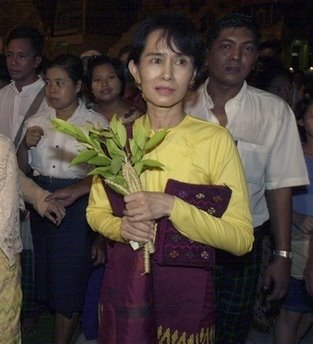


 Posts
Posts


