News & Articles on Burma
Thursday, 25 August, 2011
------------------------------------
Deadly Clashes Continue in Northern Burma
Depayin Massacre, NLD's Status Highlighted in UN Envoy Meeting
Myanmar human rights challenges remain, UN envoy says
Burma Needs to set up IDP camps, Shan MP advised
Time not right for Thai push back
Burma’s Insein prison conditions better: UN envoy Quintana
Large demand for micro-credit in Burma
Suu Kyi says Burma president wants 'real change'
Constitutional Amendment Becomes Key Issue Under New Govt in Burma
---------------------------------------
Deadly Clashes Continue in Northern Burma
By BA KAUNG Thursday, August 25, 2011
Despite Burmese President Thein Sein's recent call for peace talks, deadly clashes continue to flare between government forces and armed ethnic Kachin rebels in the country's troubled north.
On Wednesday, the 10,000-strong Kachin Independent Army (KIA) engaged the Burmese army in hostilities which left three government soldiers dead in an area called Namphatkar, between Kutkai and Muse townships in Shan State.
The KIA seized a number of small arms from the government troops, according to Col. Zau Raw, the Shan State regional commander of the KIA.
He said that the deadly confrontation flared following the government's deployment of troops in the area to protect convoys of military trucks—which Naypyidaw bought from China's Yunnan province in July—travelling from the Sino-Burmese border.
A day earlier, on Tuesday, low-intensity fighting broke out between the two sides in Hpakant Township in Kachin State, said a KIA official who said that further details were not yet known.
Armed clashes have been frequent between the KIA and the Burmese army since early June in Shan and Kachin states, many of the skirmishes erupting near the Tapaing hydropower plant built by China on a tributary of the Irrawaddy River. The hostilities bring to an end a 17-year ceasefire and take the northern Burmese region to the verge of a civil war. Tens of thousands of people have been displaced due to the fighting, and the hydropower plant has been shut down.
In discussions with Naypyidaw, the KIA's political wing, the Kachin Independence Organization (KIO) has demanded that the government open an inclusive political dialogue with all armed ethnic groups based on the pre-independence 1947 Panglong Agreement which guaranteed ethnic minorities basic autonomy in a federal state—a promise that never materialized.
But Naypyidaw has insisted that the KIA joins a border guard force under the central command of the Burmese army, and that the KIO participate in the national political process under the terms of the 2008 Constitution drafted by the previous military regime.
While a renewed ceasefire remains inconclusive, the Burmese president recently referred to the KIA as “a mere insurgent group,” which is not representative of people in Kachin State, a statement that infuriated the Kachin rebel leaders.
Earlier this week, the government asked many of the armed ethnic groups to conduct preliminary peace talks with regional and provincial governments, saying that only after such measures had been taken would further discussions with the central government in Naypyidaw be offered.
On Monday, Thein Sein told parliament that the government will strive to reduce conflicts with armed ethnic groups and opposition forces which have not accepted the Constitution.
The hostilities in northern Burma continue despite Thein Sein's meeting with opposition leader Aung San Suu Kyi last Friday in Naypyidaw, which generated optimism among the opposition groups that the government was moving toward political and economic reforms.
Zau Raw said that ceasefire efforts have become increasingly difficult despite these apparent “olive branches” offered by the government which, in reality, continues to impose the Constitution upon the ethnic groups, including the KIA.
“We want to hold discussions based on the 1947 Panglong Agreement, but they want us to accept the 2008 Constitution,” he said. “Also, we want to hold discussions with the central government, not with a regional assembly.”
The US administration has said that the Burmese government must release all political prisoners in Burma, start a dialogue with opposition groups including Suu Kyi, and end human rights violations and military attacks against ethnic minorities before it considers lifting its punitive economic sanctions against the Southeast Asian nation. http://irrawaddy.org/article.php?art_id=21961
---------------------------------
Depayin Massacre, NLD's Status Highlighted in UN Envoy Meeting
By SAW YAN NAING Thursday, August 25, 2011
Leaders of Burma's opposition National League for Democracy (NLD) urged UN envoy Tomas Ojea Quintana to help them secure their party's existence, and addressed the Depayin Massacre of 2003 during their meeting in Rangoon on Thursday, said party spokesman Nyan Win.
Leading the NLD's legal team, Nyan Win said he submitted a proposal to the UN Special Rapporteur to Burma during their meeting, and that Quintana read all the documents before returning them.
The UN envoy reportedly told Nyan Win that he was not a legal expert but that he will try to find a lawyer at the UN who can offer guidance to the NLD.
“As soon as he [Quintana] arrived at the UN office, he said he will arrange a trip for a legal expert to come to Burma to discuss the case with us,” said Nyan Win.
The Depayin massacre, which left at least 50 people dead, took place in Kyee village, on the outskirts of Depayin Township in Sagaing Division, central Burma in May 2003. It was launched by pro-junta group thugs who blocked the road to attack a convoy of vehicles carrying NLD leader Aung San Suu Kyi and her supporters. Some women were allegedly raped by the attackers during the massacre.
The NLD leaders told Quintana that their party was faced with restrictions until it was dissolved in 2010.
On Thursday, Quintana met with several former political prisoners, including a recently released Zayar Thaw, a hip-hop singer and prominent leader of Generation Wave, at a UN branch office in Rangoon.
Myat Thu, a former political prisoner who also met with Quintana, told The Irrawaddy on Thursday: “I focused on speaking about the need for the release of political prisoners as soon as possible. At the very least, political prisoners who have been detained far from their families should be relocated and detained in prisons close to their family homes.”
After her meeting with the UN envoy on Wednesday, Suu Kyi told reporters that Quintana is a person who knows well the issues of human rights and one who is actively engaged in promoting human rights in Burma.
The envoy will hold a press conference at Rangoon International Airport before he rounds off his five-day trip on Thursday evening.
Quintana sat in on a parliamentary session in Naypyidaw, which was attended by MPs of both the Lower and Upper Houses. He listened to calls by ethnic politicians calling for the release of political prisoners, and for allegations of human rights abuses by the Burmese army in ethnic areas to be investigated.
Quintana has been a vocal critic of the Burmese government and has previously proposed a UN Commission of Inquiry to investigate war crimes and crimes against humanity that have allegedly been committed by the Burmese army. http://irrawaddy.org/article.php?art_id=21962
--------------------------------------
Myanmar human rights challenges remain, UN envoy says
Aug 25, 2011, 13:47 GMT
Yangon - The new Myanmar government's human rights challenges remain despite recent steps towards rapprochement with opposition leader Aung San Suu Kyi, the United Nations human rights envoy for the country said Thursday.
'The new government has made some positive steps but the challenges for human rights remain,' visiting UN human rights envoy for Myanmar Tomas Ojea Quintana said in Yangon after completing a five-day assessment tour of the country, long deemed a pariah state in the West for its poor human rights performance.
Quintana's visit came at a time of an apparent thaw in relations between opposition leader Suu Kyi and the pro-military government.
On Friday, for the first time, Suu Kyi was invited to the capital in Naypyitaw for private talks with the new government's President Thein Sein.
'This is a big moment in Myanmar history, and there are rare opportunities for positive and meaningful developments to improve the human rights situation and bring about a transition to genuine democracy,' Quintana said in a press conference at Yangon Airport before his departure.
He urged the international community to remain engaged with the country, which has been under military rule since 1962, until a general election on November 7 brought a new pro-military government to power.
The special envoy echoed his boss' call for the new government to make further steps towards national reconciliation.
UN Secretary General Ban Ki-moon on Monday welcomed the meeting between Thein Sein and Suu Kyi as a positive step, but called on the government to release some 2,100 political prisoners jailed by the previous junta.
The government is also under scrutiny for its dealings with the ethnic minorities, several of whom have been the target of brutal military campaigns by the former junta.
In a letter to Quintana on Wednesday, a coalition of eight ethnic rebel groups called on the UN envoy to urge that the government restrain its soldiers from rape, burning villages, looting and confiscating properties.
The letter also asked that the envoy 'request tripartite peace talks immediately' between the ethnic groups, the government and Suu Kyi.
Besides meeting with senior government ministers Quintana als met with Suu Kyi, who has spent 15 of the past 21 years under house arrest, on Wednesday.
Quintana was only recently granted a visa after being denied entry to the country since March, 2010, when he angered the then-ruling junta by urging a UN inquiry into Myanmar's human rights record.
Myanmar has been the target of economic sanctions by Western democracies since 1988, when an army crackdown on pro-democracy demonstrators that left an estimated 3,000 dead.
The junta that ran the country between 1988 to 2010 has notched up one of the world's worst human rights records.
Although the current government is an elected one, it is packed with former military men.
The UN and Western nations have demanded clear signs that the new regime is committed to change, such as opening a dialogue with the opposition and ethnic minority groups that have been the target of military offensives.
http://www.monstersandcritics.com/news/asiapacific/news/article_1659103.php/Myanmar-human-rights-challenges-remain-UN-envoy-says
------------------------------------
Burma Needs to set up IDP camps, Shan MP advised
By Zin Linn Aug 25, 2011 5:49PM UTC
Sai Hsawng Hsi, elected representative from Shan Nationalities Democratic Party (SNDP), said Wednesday he had raised the topic of setting up Internally Displaced Persons (IDP) camps near the warzone in central Shan State, during the meeting with UN Rights Rapporteur Tomas Ojea Quintana, according to Shan Herald Agency for News (S.H.A.N.).
Sai Hsawng His said that many inhabitants are either hiding in the jungles or fleeing to the border. It will be appropriate to establish IDP camps around the warzone, he advised.
More than 300 clashes have taken place in Hsipaw, Tangyan, Mongyai, Monghsu and Kehsi townships between the Burma Army and the Shan State Army (SSA) since March, according to resistance sources.
According to Burma Center Prague (BCP)’s studies on IDPs, the constant warfare and conflict in Burma has resulted in a large number of internally displaced persons (IDPs). It mentioned that number of IDPs increased mainly in eastern Burma where Karen and Shan are living. It is estimated that between the years 1996 and 2006, over 1 million people became IDPs in Burma, most of who came from ethnic minorities.
According to a repost by the Internal Displacement Monitoring Centre, dated 19 July 2011, titled “MYANMAR: Displacement continues in context of armed conflicts – A profile of the internal displacement situation” , people displaced due to conflict in Myanmar (Burma) lack access to food, clean water, health care, education and livelihoods. Their security is threatened by ongoing fighting, including where conflict parties reportedly target civilians directly.
UNHCR used an estimate of 451,000 IDPs in Myanmar as its planning figure for 2010, while the Thailand-Burma Border Consortium (TBBC) estimated that in July 2010 at least 446,000 IDPs were living in the 37 surveyed townships (administrative sub-districts) in southern Shan, Kayah/Karenni, Kayin/Karen and Mon States and Bago/Pegu and Tanintharyi/Tenasserim Regions.
Of those IDPs, it was believed that 125,000 were living in relocation villages in government-controlled areas, 115,000 dispersed in hiding areas in the jungle, and 206,000 living in areas administered by ceasefire non-state armed groups NSAGs. The TBBC also reported that an estimated 73,000 of the IDPs in south-eastern Myanmar were newly displaced between August 2009 and July 2010, including some 26,000 people in northern Karen areas and some 8,000 in southern Mon areas (UNHCR, January 2010; TBBC, 28 October 2010, p.20).
To date, the Burma Army side is still reportedly deploying more troops to SSA- HQ Wanhai, according to local eye witnesses from Kehsi Township, Shan Herald Agency News (SHAN) said. Fighting between the two sides have been three months long since 13 March and had killed dozens of civilians including at least 300 casualties on the Burma Army side in the conflict zones. Most of the civilians were reportedly killed and injured by the Burma Army’s heavy shells, claimed the SSA.
It seems that the government is going ahead with its military might to resolve the ethnic armed rebellious problems, rather than political talks. Several political analysts believe that the military-backed Thein Sein government will not revise its oppressive guiding principle which insistently goes against the self-determination of the ethnic people.
However, President Thein Sein told members of parliament on Monday, at the first Union Parliament second regular session, that his government has already prepared for talks on peace with armed ethnic groups since the growth of the ethnic regions reliant on stability.
Then, the president ought to accept the findings of UN Rights Rapporteur Tomas Ojea Quintana and help the UN Envoy’s restoration of human rights values in the country. Besides, government must call for a nationwide ceasefire to all ethnic armed groups in order to start a meaningful political dialogue with all stakeholders.
At the same time, government should form respective missions to tackle the domestic war refugees and IDPs problems, in reference to goodwill advice of Sai Hsawng Hsi (MP of SNDP) who raised the IDP question during the meeting with UN Rights Rapporteur.
Without addressing and honoring the ethnic people’s political desire, the new parliament-based government will be unable to stop political and civil conflict throughout ethnic areas. If so, the country will continue producing more refugees and more IDPs in the years to come. http://asiancorrespondent.com/63393/burma-needs-to-set-up-idp-camps-shan-mp-advised/
--------------------------------------
Time not right for Thai push back
By MAHN SAIMON
Published: 25 August 2011
Surapong Kongchantuk, vice chairman of the Thai National Human Rights Commission’s sub-committee on ethnic minorities, the stateless, migrant workers and displaced persons, has said now is not yet the right time to repatriate refugees from Burma.
Kongchantuk was responding to a remark recently made by the governor of Thailand’s Tak province Samart Loifah. He had issued an order for refugee camps situated along the border in the region to make lists of their population to pre-empt a send back to Burma.
Kongchantuk however told DVB that we have yet to see tangible improvements;
“We sent a list of procedures for the concerned [Thai] government departments regarding the repatriation – that it should be voluntary and that their native country must be in a ready-state to accept them back,” Kongchantuk said.
“To decide whether the native country is ready or not should not be based on claims by the [Burmese government] alone but also needs to be inspected and approved by a UN organisation such as the United Nations’ High Commissioner for Refugees (UNHCR). So far, the UNHCR is yet to make any inspection about the real situation,” he added.
“This is not a case between just two countries but also concerns the international community. The Tak governor’s decision is irrelevantly premature and is causing a panic among the refugees.”
Samart Loifa made the orders after President Thein Sein’s remark on 17 August, that Burmese nationals living abroad in exile were allowed to go back to their home country.
He told the media that he was happy for Burmese refugees, who were forced to flee their homes, that they were allowed to go back to Burma and expressed a belief that this would bring peace to the Thai-Burma border region.
Saw Po Dan, chairman of Nupo refugee camp however said they had not received any order from Loifa as yet;
“There is no official order yet. [Loifa] came around our camp a couple of times in the past but he didn’t come in [the camp] – he just hung around outside and talked with camp officials. There was no clear order as yet,” said Saw Po Dan.
There are nearly 150,000 refugees living in nine refugee camps along the Thai-Burma border. Whilst commentators have welcomed what appears to be a relative softening of rhetoric from Naypyidaw, others have responded to invitations back and supposed offers of dialogue with some scepticism.
Far from a decrease in violence in the ethnic areas of Burma the past year has seen an escalation in fighting as the Burmese military has pursued greater incursions into Shan, Karen and Kachin areas.
The last of which has seen around 10,000 people internally displaced and the World Food Program commence delivering food aid to over 3,000 vulnerable people near Kachin state’s capital, Myitkina last week. http://www.dvb.no/news/time-not-right-for-thai-push-back/17272
--------------------------------------
Burma’s Insein prison conditions better: UN envoy Quintana
Thursday, 25 August 2011 13:13 Te Te
New Delhi (Mizzima) – The UN special rapporteur for human rights in Burma Tomas Ojea Quintana told a meeting of National League for Democracy (NLD) leaders that conditions in the infamous Insein Prison in Rangoon have improved.
NLD central executive committee member Win Tin said on Wednesday, “While we were talking about prisoners, he said that he inspected prisons. The prisoners’ conditions, especially in Insein Prison, are better than before. He said, prisoners told him that conditions had improved considerably.”
UN special envoy on human rights Tomas Ojea Quintana, center, leaves the home of Aung San Suu Kyi in Rangoon on Wednesday, August 24, after meeting with the opposition leader for about one hour. Photo: Mizzima
UN special envoy on human rights Tomas Ojea Quintana, center, leaves the home of Aung San Suu Kyi in Rangoon on Wednesday, August 24, after meeting with the opposition leader for about one hour. Photo: Mizzima
Quintana met with NLD central executive committee members in Aung San Suu Kyi’s home in Rangoon on Wednesday afternoon.
In the meeting, Quintana said that if all political prisoners were released, the government worries that they might stage protests again, and that’s why an amnesty was delayed, according to Win Tin. According to figures compiled by the Assistance Association for Political Prisoners-Burma, there were 400 political prisoners in Insein Prison as of May.
Before the meeting between Quintana and NLD leaders, Quintana met with opposition leader Aung San Suu Kyi for about 30 minutes. No details of that meeting were disclosed.
After the meeting, Suu Kyi told reporters, “He [Quintana] has a genuine willingness to improve Burma’s social conditions, and he has great experience, so I am encouraged. I see that we can rely on him.”
Quintana visited Insein Prison on Wednesday morning. A source close to the prison said that he arrived about 8:30 a.m. and left about 1:30 p.m.
“When he arrived at the prison, the doors of the prison wards were closed. We could not go anywhere. About a week prior to his visit, things [some prison walls] had been painted, and the prison was cleaned. Today, we had slightly good curries [for the inmates],” said a source close to the prison.
Quintana will hold a press conference to discuss his visit on Thursday in Rangoon. http://www.mizzima.com/news/prisoner-watch/5831-burmas-insein-prison-conditions-better-un-envoy-quintana.html
----------------------------------------
Large demand for micro-credit in Burma
Wednesday, 24 August 2011 16:08 Mizzima News
Chiang Mai (Mizzima) – Only about 10 per cent of the demand for small loans in Burma is being met, according to participants at a micro-finance workshop held recently in Rangoon.
The vast majority of those who do borrow are women.
The Microfinance Working Group in Burma held a best-practice workshop on August 16 to work out ways to provide more small loans to people, particularly in rural areas, according to a press statement recently released by the group.
About 70 participants attended the workshop including senior government officials, donors, UN staff, international and local NGOs and representatives from the private sector.
“In Myanmar [Burma], only 10 per cent of the total demand for micro-credit is met and the UNDP Microfinance Project is presently providing about 80 per cent of this micro-credit through PACT Myanmar, a non-profit organization,” said the United Nations Development Programme (UNDP) Resident Representative, Akbar Usmani. “Given the huge demand, the Microfinance Working Group is well placed to help further expand microfinance support services in Myanmar.”
Usmani said he welcomed the government’s latest initiative for rural development and poverty reduction under which micro-finance is one of the major components.
Micro-finance practitioners in Burma including the former deputy governor of the Central Bank, Than Lwin, PACT Myanmar, Groupe de Recherche et d'Echanges Technologiques (GRET), Save the Children, World Vision and UNDP shared their experiences on improving livelihoods through the creation of sustainable micro-finance services for poor rural communities.
As participants at the workshop made clear, the need for credit in the rural economy is substantial. Currently, the demand for micro‐credit in the rural segment of the Burmese economy is estimated at around US$ 470 million. Due to inadequate credit from the private and public banks, the rural poor rely on relatives or friends and money lenders as well as pawn shops for small loans, according to the press release.
Micro-finance loans and services provide a sustainable option for the poor by providing a diverse range of financial services, including savings, loans and some insurance products that support hundreds of thousands of micro-enterprises.
According to the Microfinance Working Group, offering loans with no collateral requirements and at interest rates well below those charged by informal moneylenders, affordable credit has been able to address the needs of more than 400,000 poor clients in a more economical manner.
From its infancy in July 1997, through the end of September 2010, the UNDP’s Microfinance Project has grown to become one of the 23 largest micro-finance projects in the world with more than 400,000 clients and with a loan portfolio of 36 billion kyat (approx. US$ 52 million). Its loan repayment rate has constantly attained a percentage of 98 per cent or higher. Women constitute 97 per cent of its clientele.
The Microfinance Working Group was formed in 2004, by local and international NGOs, in collaboration with the UNDP. http://www.mizzima.com/news/breaking-and-news-brief/5826-large-demand-for-micro-credit-in-burma.html
-------------------------------------
Bangkok Post
Suu Kyi says Burma president wants 'real change'
Published: 24/08/2011 at 09:32 PM
Online news: Asia
Burma's democracy icon Aung San Suu Kyi said Wednesday she believes the country's army-backed president wants "real positive change" amid warmer relations between the regime and its most famous critic.
Myanmar's democracy icon Aung San Suu Kyi speaks to the press after a meeting with UN rights envoy Tomas Ojea Quintana at her house in Yangon. Suu Kyi said she believes the country's army-backed president wants "real positive change" amid warmer relations between the regime and its most famous critic.
Suu Kyi met President Thein Sein on Friday in her highest-level discussions since she was freed from seven years of house arrest soon after a November election that was marred by claims of cheating and the absence of her party.
"From my point of view, I think the president wants to achieve real positive change," she told reporters on Wednesday.
Suu Kyi was warned to keep out of politics in June, but has since engaged in increasing dialogue with the government, which is nominally civilian but remains dominated by former generals.
The Nobel laureate was speaking after a meeting with Tomas Ojea Quintana, the UN special rapporteur on human rights in Burma, and said the pair had covered a variety of subjects including the fate of political prisoners.
It was the first meeting between the envoy and the democracy champion, who was locked up during his last visit in February 2010.
"I am really satisfied. I am encouraged to have seen him as he is an expert in this issue," she said of Quintana.
Burma allowed the UN envoy into the country for the first time in more than a year amid signs that the government wants to improve its international image.
Quintana described his discussions with Suu Kyi as "very important, fruitful and productive", in brief comments after the meeting.
The UN envoy, who has been an outspoken critic of Burma's rulers in the past, is due to hold a press conference on Thursday at the end of a five-day visit that has included a trip to the new parliament in Naypyidaw and talks with senior regime figures.
Earlier on Wednesday, Quintana visited Rangoon's notorious Insein prison, which is believed to hold some of Burma's around 2,000 political prisoners.
After his trip to the country last year, the envoy angered Burma's ruling generals by suggesting that human rights violations in the country may amount to crimes against humanity and could warrant a UN inquiry.
He has since been refused visas to visit several times.
The international community has called for a number of reforms in Burma including the release of political prisoners, improved human rights and dialogue with the opposition. http://www.bangkokpost.com/news/asia/253296/suu-kyi-says-burma-president-wants-real-change
---------------------------------
Constitutional Amendment Becomes Key Issue Under New Govt in Burma
By BA KAUNG Thursday, August 25, 2011
Over the past couple of weeks, the Burmese government led by ex-general President Thein Sein has made a series of moves, including an invitation to Burmese exiles to return home and a one-on-one meeting with pro-democracy leader Aung San Suu Kyi, seen by many as positive signs for the country.
In a speech to the country's new bicameral Parliament on Monday, Thein Sein reiterated his desire to reduce tensions with “forces that have not accepted the Constitution yet,” including Suu Kyi's National League for Democracy (NLD) party and ethnic armed groups.
These gestures have generated a lot of speculation among the Burmese public and other observers as to whether Burma's nominally civilian administration has embarked on a genuine process of gradual reform.
Much of this speculation has centered on last Friday's meeting between Suu Kyi and Thein Sein. While neither side has released any details about the substance of the talks, on Tuesday a government official told The Irrawaddy on condition of anonymity that the two sides discussed how Suu Kyi could help in lifting Western economic sanctions, in exchange for government cooperation with her future political trips.
On Wednesday, Suu Kyi told reporters following a meeting with visiting UN human rights envoy Tomás Ojea Quintana that Thein Sein wants to achieve “real positive change”.
To skeptics, however, these developments are reminiscent of Suu Kyi's meetings with leaders of the previous military junta in early 2000. After a period of confidence-building talks, relations eventually soured as Suu Kyi's travels around the country attracted massive crowds, prompting a violent incident by pro-regime thugs that resulted in Suu Kyi's arrest in 2003.
But for now, the new government seems prepared to deal with Suu Kyi on friendly terms, as it seeks to win greater international recognition of its legitimacy, most notably through its efforts to assume the chairmanship of the Association of Southeast Asian Nations (Asean) in 2014.
The continuing detention of around 2,000 political prisoners will, however, make it difficult for Asean to accede to the Thein Sein government's ambitions for a regional leadership role, and also stands in the way of any bid to lift US sanctions.
Likewise, continuing clashes with ethnic armed groups and well-documented reports of human rights abuses by the Burmese military in conflict zones weaken any case the government may try to make that it is on a serious path to reform.
It is, however, conceivable that the government will make some concessions—releasing a few hundred prisoners and suspending its offensives in ethnic areas—that could suffice to at least win the Asean chairmanship, which would be a major step toward becoming a fully rehabilitated member of the international community.
But such moves would still fall far short of what Burma needs to achieve genuine reconciliation, because once the government has what it wants, there would be nothing to stop it from performing another about-face and turning on its opponents once again.
Only an irreversible commitment to reform on the part of the government will make any difference to Burma's prospects in the long term. And the only form such a commitment can take is a series of amendments to the military-drafted 2008 Constitution that reflect the will of the Burmese people.
“All recent actions taken by the government are merely cosmetic for us. Without the constitutional amendments, we cannot gain genuine political solutions in our country,” said Aye Thar Aung, a veteran opposition politician, voicing a view that is widely held among political players in Burma.
Thein Sein's pledge to ease tensions with “forces that have not accepted the Constitution yet” was an implicit recognition of the fact that this remains the key sticking point in his efforts to end the pariah status that has hung over the Burmese state for the past 23 years.
Thein Sein knows that before he can win international recognition for his government, he must first be able to demonstrate to the world that the Constitution—“approved” in a rigged referendum in May 2008, one week after Cyclone Nargis—is the real law of the land. But this will be impossible as long as the NLD and the ethnic armed groups continue to defy it with their very existence.
Under the Constitution, the ethnic militias have no right to exist except as “border guard forces” under Burmese military command. No longer permitted to retain their status as armed ceasefire groups, they have renewed their calls for a “second Panglong” agreement, modeled on the 1947 pre-independence pact that guaranteed Burma's ethnic minorities a substantial degree of autonomy within a federal state.
Such calls are, however, radically at odds with the provisions of the current Constitution, which aims to consolidate the military's central role in Burmese politics.
The NLD is also living in limbo, officially disbanded because of its refusal to register for last year's election, but still stubbornly clinging to life as the country's de facto main opposition party. Despite government efforts to persuade the party to restore its legal status under existing laws, it continues to insist that it should never have been dissolved in the first place.
Central to this dispute is the party's rejection of undemocratic elements of the 2008 Constitution, such as a provision that sets aside 25 percent of seats in Parliament for the military, and another that allows the army to legally declare a coup in a state of emergency.
When it comes to political topics, the government has repeatedly called on the NLD and all ethnic armed groups to “come and work under the Constitution.” This is the major reason why attempts for a renewed ceasefire with the Kachin Independence Army, Burma's second-largest ethnic armed group, have so far come to nothing.
Therefore, constitutional amendments are the key point of contention between the opposition groups and the new government.
Listening to Thein Sein, however, you would never know that such issues exist. “Today, democratization is in the process for flourishing democratic practices, so each of us are to have a strong sense of democratic spirit for the type of freedom that is in conformity with our culture and society,” he said on Monday.
This is not going to convince anyone in Burma, however, and it may not even do the trick with Asean, which has a history of giving the country's rulers more credit than they deserve. According to the latest analysis by the Economist Intelligence Unit, Thein Sein's efforts to “reach out” to Suu Kyi, without achieving any obvious results, may not be enough to persuade Burma's regional allies that Naypyidaw is sincere about engagement with the opposition.
Thus, despite some recent positive developments, real differences remain beneath the surface. Until they are addressed, superficial “signs” of change should be seen as nothing more than window dressing.
http://irrawaddy.org/article.php?art_id=21960
Friday, August 26, 2011
News & Articles on Burma -Thursday, 25 August, 2011-UZL


Thursday, August 25, 2011
News & Articles on Burma -Wednesday, 24 August, 2011
News & Articles on Burma
Wednesday, 24 August, 2011
----------------------------
UN Envoy Meets Suu Kyi, Visits Insein Prison
Shan MP to UN envoy: Need to establish IDP camps
Suu Kyi Makes Front Page in Burma
Burma’s President should keep his words to end civil war
DKBA Rejects Peace Talks
Asia's Best Performing Currency Weighs on Burma's Rulers
MYANMAR: Dire conditions for IDPs in Kachin as tension mounts
Chinese takeaway kitchen
Step up reforms, Ban urges Myanmar
UN envoy attends Myanmar parliament
UN human rights envoy to meet Suu Kyi in Burma
Shops warn of low purity Burma gold
Than Shwe's Hand Seen in Choice of New Intelligence Chief
---------------------------------------
UN Envoy Meets Suu Kyi, Visits Insein Prison
By SAW YAN NAING Wednesday, August 24, 2011
The UN's Special Rapporteur to Burma, Tomas Ojea Quintana, held talks with opposition leader Aung San Suu Kyi at her home in Rangoon on Wednesday after a visit to Insein Prison where a number of political prisoners are currently held.
He also met with central executive committee members of Suu Kyi’s party, the National League for Democracy (NLD).
Neither Suu Kyi nor Quintana disclosed any details of their talk. However, a press conference has been scheduled by Quintana for Thursday at Rangoon International Airport before he leaves the country, according to sources in Rangoon.
During his five-day visit to Burma, the UN envoy also visited the capital, Naypyidaw, where he sat in on a parliamentary session attended by MPs of both the Lower and Upper Houses.
During Quintana's meeting with government house speakers, he said that it is necessary to amend the current constitution in accordance with human rights, according to a report by the US-based Radio Free Asia (RFA), quoting Dr. Aye Maung, the chairman of the Guarantees, Pledges and Undertakings Vetting Committee for the Upper House.
Ethnic leaders frequently complain that the current constitution was written in 2008 by the military junta's hand-picked representatives, and that it doesn’t guarantee the rights of ethnic minority groups.
According to the RFA report, Quintana also said that the new government has made “some progress,” but that political activists who are currently being detained in prisons across Burma should be released in the interests of national reconciliation in the country,.
At the parliamentary session in Naypyidaw on Tuesday, Quintana also listened to calls by ethnic politicians for the release of political prisoners, and for allegations of human rights abuses by the Burmese army in ethnic areas to be investigated.
Quintana has been a vocal critic of the Burmese government and has previously proposed a UN Commission of Inquiry (CoI) to investigate war crimes and crimes against humanity that have allegedly been committed by the Burmese army.
The UN envoy proposed the CoI in April 2010, and it is now supported by US, Canada, Australia, New Zealand and several EU nations. http://www.irrawaddy.org/article.php?art_id=21954
---------------------------------------
Shan MP to UN envoy: Need to establish IDP camps
Wednesday, 24 August 2011 13:58 S.H.A.N.
Sai Hsawng Hsi, elected representative from Shan Nationalities Democratic Party (SNDP), said he had broached the subject of setting up Internally Displaced Persons (IDP) camps near the war zone in central Shan State, during the meeting with UN Rights Rapporteur Tomas Ojea Quintana.
“Many are either hiding in the jungles or fleeing to the border,” he said. “We think setting up IDP camps around the war zone will be a better solution.”
More than 300 clashes have taken place in Hsipaw, Tangyan, Mongyai, Monghsu and Kehsi townships between the Burma Army and the Shan State Army (SSA) since March, according to resistance sources.
Hsawng Hsi had also discussed a new bill on the selection of ward and village heads. According to it, each 10 households will elect a representative and the ward/village head will be elected among the 10 household representatives among themselves. “I think the ward/village administrator should be elected directly by the ward/village community concerned,” he said.
His statements were in response to Quintana’s question: What are the MPs (Member of Parliament) planning to propose at the second regular session of the parliament which started on Monday, 22 August.
Asked whether the parties have plans to propose the release of political prisoners, he replied to SHAN, “We certainly do. However, officially there are no political prisoners in Myanmar (Burma). It means we will have to use another label to get the message through.”
The SNDP will also be discussing the party’s proposal on the allocation of state funds during the parliamentary session today.
19 elected representative from 17 parties including the ruling Union Solidarity and Development Party (USDP) met the UN envoy who has been on a 5-day visit since Sunday, 21 August. http://shanland.org/index.php?option=com_content&view=article&id=3977:shan-mp-to-un-envoy-need-to-establish-idp-camps&catid=85:politics&Itemid=266
-----------------------------------
Suu Kyi Makes Front Page in Burma
By KIHN OO THAR Wednesday, August 24, 2011
The front page of all Burma's major journals on Monday carried pictures of Aung San Suu Kyi's face-to-face meeting with President Thein Sein in Naypyidaw on Friday, despite a long-term ban on media from publishing images of the pro-democracy leader.
"Almost all today's journals have full-page images of the meeting,” said Ko Ko, the chairman of Yangon Media Group, on Monday.
He said that Weekly Eleven, Flower News and the Myanmar Post were among the print media running with front-page pictures of Suu Kyi.
"Before, it was impossible for us to see Daw Aung San Suu Kyi's picture,” he said. “Then, recently, the regulations were relaxed, and small pictures of her were allowed in the inside pages.”
Opposition leader Suu Kyi arrived on Friday for the first time in Naypyidaw, where she attended a government-initiated workshop on economic development. After meeting with Thein Sein, she had informal talks with several cabinet members.
Burma's journals were also allowed to display photographs of Aung San Suu Kyi's informal meetings with the government ministers.
For many years, Burma's journals and newspapers have been subject to rigorous inspection and censorship by the government's Press Scrutiny and Registration Division (PSRD), which is notorious for its draconian attitude toward media freedom and which frequently suspends offenders.
Veteran journalist Maung Wun Tha said, “The meeting between Daw Aung San Suu Kyi and the president is an indisputable fact. Therefore, journals reported it because it was directly concerned with the president. Given some extent of freedom to report this event, we are now enjoying somewhat more freedom of expression than before."
But while Suu Kyi's visit to Naypyidaw made splash headlines in private journals, the county's state-run press only reported it in brief.
"There could be some underlying reasons why government newspapers reported it so briefly,” said Maung Wun Tha, who is an adviser to the political journal Pyithu Khit [People's Age]. “At present, we cannot say precisely to what extent we will continue to enjoy freedom from such censorship.”
Another editor in Rangoon, who asked not to be identified, said that freedom of the press can only be credible if the government allows the media to report other news about Suu Kyi, such as her meeting with the UN Special Rapporteur on Human Rights for Burma, Tomas Ojea Quintana, and other foreign diplomats.
News reports and articles on the journals' online versions are generally not subject to censorship.
“While print publications are subjected to censorship, Internet news is not affected,” said Ko Ko. “A better political climate will allow more freedom in the media arena to prevail.”
According to a housewife in Rangoon, the cost of Monday's state-run newspapers are higher.
“I paid 300 kyat [US $0.45] for a government newspaper on Monday,” she said. “It is usually just 100 kyat. [$0.15]”
Although she speculated that the reason for the increase was due to the pictures of Suu Kyi, other sources noted that demand for journals has been very high this month, and many subscribers did not receive their copy.
According to a young journalist in Rangoon, sales of journals and tabloids have increased because the media has been given a freer rein to report everyday events and social affairs.
“Dealing with the government departments for your news reports is basically the same as before—you always get messed around and redirected to someone else,” he said. “They never offer explanations or account for their decisions.”
On June 10, a policy change was effected when the PSRD announced that no prior censorship would be imposed on press articles that fall under any of five categories: sports, technology, health, art and children's literature.
There are currently 153 registered journals, including news and sports publications, and 176 magazines running in Burma.
State-run publications last week also relented on a long-running propaganda campaign against international and exiled media such as the BBC, VOA, RFA and DVB. http://irrawaddy.org/article.php?art_id=21951
--------------------------------------
Burma’s President should keep his words to end civil war
By Zin Linn Aug 24, 2011 4:34PM UTC
The military-backed Burmese government announced its rejection of peace talks based on the principles of the 1947 Panglong Treaty to the Kachin Independence Organization (KIO) on the weekend, referring KIO officials Kachin News Group said.
KIO officials in Laiza said the five-month old President Thein Sein government declared clearly that it will only agree to peace talks with the KIO in accordance with the 2008 constitution. However, the KIO countered the government’s stance on Monday that it cannot talk under the guidance of the 2008 constitution which KIO did not recognized, according to KIO officials in Laiza.
A truce which lasted over 16 years between the two sides broken on June 9th when government troops hit the Kachin Independence Army (KIA) at Sang Gang, in Bhamo District, arguing it was defending the Taping (Dapein) hydropower Dam.
During the lengthy armistice phase, there were no political talks; however, the KIO and other ethnic ceasefire groups were pressured to transform their armed wings into the Burma Army-controlled Border Guard Force (BGF) or militia groups, after the controversial 2008 constitution was put in place.
Meanwhile, on August 18, seven Burmese soldiers were killed during fighting with the KIA at Wawang Kumbang, in Manmaw (Bhamo) District, Kachin News Group said. According to KIA officials from the Laiza headquarters, Burmese soldiers died in action were from Infantry Battalion No. 47, based in Manmaw, said sources close to government troops.
Lar Nan, Joint-General Secretary-2 of the KIO, said it will not talk bilaterally any more with the government since such negotiation failed in the past. Talks between the KIO and the Burmese government were also abortive in 1963, 1972, and 1980 respectively; though, they all failed to get to the bottom of the political standoff between the two sides.
Currently, KIO declared that it will talk through the ethnic alliance, the United Nationalities Federal Council (UNFC), keeping on the spirit of the Panglong Agreement.
On August 15, in response to charges during August-12 press conference by information minister Kyaw Hsan, the Restoration Council of Shan State / Shan State Army (SSPP/SSA) issued a statement urging all parties concerned to revitalize the 1947 Panglong Agreement signed by the Burmese leader Aung San and leaders of the (then known as) Frontier Areas, Shan Herald Agency for News said.
SSPP/SSA says in its statement, “Instead of regarding ethnic peoples as enemies and accusing them as subversive elements, it’s high time national reconciliation was being forget by the present authorities on the basis of equality, justice and the Panglong Agreement.”
The historic agreement basically guaranteed self-determination of the ethnic minorities and offered a large measure of autonomy, including independent legislature, judiciary and administrative powers. However, the dream of equality and a federal union is far from being realized some six decades after signing the Panglong Agreement.
According to some critics, the NLD led by Aung San Suu Kyi supports the Panglong Agreement and self-determination for every ethnic nationality while the President Thein Sein government strongly opposed it. Thus, various ethnic leaders emphasized that they don’t have confidence in the new 2008 constitution which abandoned the Paglong values.
On August 18, the government proposed joining in peace talks to ethnic armed groups. But, it was rejected by the KIO and the UNFC, because the government uses divide-and rule policy towards ethnic groups without considering the Panglong Agreement.
The United Nationalities Federal Council (UNFC) has been founded during a conference held from 12 to 16 February 2011 involved 15 ethnic groups. The UNFC has selected six Central Executive Committee members and 10 Central Committee members. Gen Mutu Saypo of the Karen National Union (KNU) becomes Chairman and Lt Gen Gauri Zau Seng of the Kachin Independence Organization (KIO) Vice Chairman-1, Maj Gen Abel Tweed of the Karenni National Progressive Party (KNPP) Vice Chairman-2, and Nai Hongsa of the New Mon State Party (NMSP) General Secretary) respectively.
In a statement issued on last 17 February, the UNFC said part of its basic principles and aims are to work for a better recognition of the ethnic armed groups, for ethnic equality, rights and self-determination, and for a genuine democratic federal Union of Burma.
Successive governments rejected the political dialogue with ethnic armed groups, which demand self-determination and a genuine federal union, for over six decades. If the President Thein Sein government stubbornly refused to honor the Panglong accord, the ongoing civil-war in Burma may not stop in a short period.
However, President Thein Sein told members of parliament on 22 August, at the first Union Parliament second regular session, that his government will pay attention to oppositions’ suggestions. He said the government has already prepared to talks on peace with armed ethnic groups since the progress of the frontier areas is dependent on stability.
The whole nation is cautiously watching the current political disaster with the ethnic people whether the president will take responsibility of his latest parliament speech. http://asiancorrespondent.com/63256/burma%E2%80%99s-president-should-keep-his-words-to-end-civil-war/
--------------------------------------
DKBA Rejects Peace Talks
By THE IRRAWADDY Wednesday, August 24, 2011
MAE SOT, Thailand—Brigade 5, a breakaway faction of the Democratic Karen Buddhist Army (DKBA), has rejected an offer of peace talks from the Burmese government, and has instead called for a withdrawal of all Burmese army forces deployed in ethnic states.
Brig-Gen Saw Lah Pwe, the commander of DKBA Brigade 5, told The Irrawaddy that he cannot accept the government's offer, referring to it as a “fake.”
“Government officials passed on the word through a Buddhist monk that they want to make peace with us,” he said. “This is an old tactic they have used in the past. If they were truly sincere, they would look to make a nationwide peace agreement.”
On Aug. 18, government officials from Naypyidaw reportedly sent to Brigade 5 as an envoy a prominent Buddhist monk named U Pinya Thami, an abbot from Taungalay monastery in Karen State capital Pa-an.
The DKBA's Brigade 5 broke its alliance with the Burmese army and Naypyidaw in November 2010 after the general election. It has since battled constantly with government forces in eastern Burma, and rejoined its mother organization, the Karen National Union (KNU), from which it had split in 1995.
Brigade 5 called on the government to officially declare a nationwide ceasefire, to withdraw all its units currently deployed in ethnic states, and to release all political prisoners and let them participate in the political process.
Dialogue must involve the government, ethnic groups, Aung San Suu Kyi's National League for Democracy and other political parties, said the DKBA renegades.
After a recent meeting attended by leaders of Brigade 5, including Saw Lah Pwe, Col. Kyaw Thet and Maj. San Aung, the group released a statement saying that no genuine peace would result if the DKBA alone made peace with the government. It said the DKBA [Brigade 5] will fight for true peace and democracy.
Last week, the state-run newspaper The New Light of Myanmar announced that that the government had offered an “olive branch” to the armed groups, encouraging them to contact their respective state or division governments as a first step toward meeting with a union government delegation.
The ethnic armed groups, however, rejected the offer by the government to enter into one-on-one ceasefire talks, and insisted that negotiations must take place between the government and the United Nationalities Federal Council, an alliance of the major ethnic armed groups. http://irrawaddy.org/article.php?art_id=21952
--------------------------------------
8/24/2011 @ 3:30AM |222 views
Asia's Best Performing Currency Weighs on Burma's Rulers
Switzerland isn’t the only country struggling to fend off upside currency speculators. Burma (Myanmar) has a similar headache, and none of the sophisticated tools available to the gnomes of Zurich. Burma’s currency, the kyat, is powering ahead of its peers in Asia, up 30% in the past year. A dollar now fetches less than 700 kyat, compared to 1,000 a year ago. President Thein Sein has said the currency’s strength was strangling exporters and hurting the economy. Yet this crisis might be exactly the spur that Burma’s new rulers need to enact economic reforms and turn around a country that lags light years behind its Southeast Asian neighbors.
You won’t find the kyat (pronounced ‘chat’) listed on your Bloomberg screen. If you go to a state bank in Burma, the official exchange rate is around six to the dollar. This is absurdly out of whack with the black-market rate. It’s just one of several exchange rates that the government uses in its accounting, a relic of Burma’s socialist economy and a serious obstacle to macroeconomic reforms. Thein Sein has tried to restructure this system, and the IMF is willing to assist, but as with so much in Burma there are powerful vested interests standing in the way. Export taxes on many commodities were recently slashed to 2%, which may provide some relief.
Why is the kyat so strong? One reason is the weak dollar – Burma’s commodity exports are priced in dollars. Another is the slew of privatizations and asset sales over the last year that had to be settled in kyat. Speculation in kyat by Chinese investors is another supposed cause. But much of what passes for economic analysis in Burma is guesswork. It hasn’t published a credible budget for years and its statistics are notoriously unreliable. Suffice to say that untangling the foreign-currency regime is far from the only challenge facing Burma’s new semi-civilian government, which was elected last November.
Democracy icon Aung San Suu Kyi didn’t participate in that election. Foreign critics of Burma rightly decry her treatment and that of other dissidents, many of whom are in jail on spurious charges. However, there are signs – tentative, yes – that Suu Kyi may be coming in from the cold. Thein Sein, a retired general, met with her for the first time last week in Nyapyidaw, the generals’ purpose-built capital. This is a symbolic breakthrough, and doesn’t herald a democratic dawn. But every regime has to start somewhere, unless it wants to end in rubble. Burma needs all the help it can get to turn around the economy, beginning with measures to straighten out the kyat. http://www.forbes.com/sites/simonmontlake/2011/08/24/asias-best-performing-currency-weighs-on-burmas-rulers/?feed=rss_home
--------------------------------------
MYANMAR: Dire conditions for IDPs in Kachin as tension mounts
Photo: Contributor/IRIN
Fighting in Kachin State displaces thousands to makeshift camps
LAIZA, 23 August 2011 (IRIN) - A group of villagers travels along a muddy mountain path in northern Myanmar with food, clothing and any belongings they can carry in bamboo baskets on their backs; babies are strapped to young children's chests as they try to keep up with their parents.
"We are afraid the Burmese soldiers will be attacking our village at any time," says Lum Hong, leading the group of 15 families from the village of Ng Eng, in central Kachin state. "We had to leave everything behind. Our cows, our oxen, our farmland. Everything. We don't know when it will be safe to go back."
The group was en route to a camp for internally displaced people (IDPs) in central Kachin's Dam Bung District after hearing of a government troop build-up near their village on the edge of territory controlled by the Kachin Independence Organization (KIO), the political wing of the Kachin Independence Army (KIA).
The latest fighting between the two groups erupted on 9 June, when government forces broke a 17-year ceasefire agreement with the KIO near the Taping River.
The total number of IDPs who have arrived in the Kachin capital of Laiza is estimated at 10,000, according to the Kachin Relief Development Committee (KRDC), a Laiza-based organization. The KRDC was formed by the KIO following Myanmar's demand that all ethnic groups lay down their arms and form a Border Guard Force in 2010. The KIA, along with several other ethnic groups, refused and a government build-up of forces began.
The number of IDPs in Laiza now matches the usual population of the city, home to KIO headquarters. Four temporary camps house the IDPs, but a permanent government-funded camp is near completion, just outside Laiza.
In the camp
Craftsmen are building another 500 bamboo huts on the banks of the Chayan river.
A makeshift school has been built to accommodate the growing number of displaced children, but reading material is scarce and a handful of teachers make do with a chalk board.
At the food supply tent, KRDC chief Doi Pi Sa La Bang oversees the latest distribution of rations to the new arrivals. Food and medicine have been largely donated by churches and individuals.
"In terms of food, we are giving one tin of rice for every two people per day," the former KIA captain explains. Doi Pi Sa La Bang is hoping for international mediators to help solve the problem and bring back peace.
At the medical tent, one of the biggest problems facing the new arrivals is the unsanitary water supply.
Torrential rains during the monsoon season have created dirty living conditions for IDPs who have been sleeping in the jungle.
"Right now we are trying to prevent disease from spreading, but it doesn't help when there are so many people crammed into small shelters," says Naw Sang La Sang, a young doctor.
KIO spokesperson Lah Nan said in the short term, the IDPs should be able to survive - but with many farmers unable to work their fields and donations running short, the future looks grim.
"We need medication, more shelters, and ultimately - we must have a long-term solution for the IDPs," Lah Nan said. A renewed ceasefire seems a long way off.
Elsewhere in the KIO-controlled areas, approximately 10,000 IDPs are in temporary camps scattered along the China border. The KRDC estimates 6,000 have crossed into China seeking safety with relatives. The figures do not include IDPs in Myitkyina, an area of Kachin controlled by the government.
contributor/nb/mw http://www.irinnews.org/report.aspx?ReportID=93570
--------------------------------------
Myanmar
Chinese takeaway kitchen
Three articles look at China’s influence in South-East Asia: first; resentment in Myanmar; second, Cambodian rivalries; third, Banyan on the strategic implications
WAIST-DEEP in the muddy water, hundreds of people swirl their pans, scouring the black sediment for the sparkle of gold dust. They have come from all over Myanmar to Kachin state, where the N’Mai and Mali rivers merge to form the mighty Irrawaddy, knowing that a good day may yield $1,000-worth of gold—and that time for gold-panning is running out.
Across the river, the corrugated-iron roofs of a prefabricated barracks glint in the midday sun. They house hundreds of Chinese labourers working on the Myitsone hydropower project. This, according to Myanmar’s government, will be the sixth highest dam in the world, and generate 6,000MW of electricity a year. On completion in 2019, the dam will flood the gold-prospecting area and displace more than 10,000 people. All the electricity will be exported to China. All the revenue will go to Myanmar’s government. If an environmental and social impact study was conducted at all, it did not involve consulting the affected villagers.
A local Catholic priest who led prayers against the dam says his parishioners were moved to a “model” village, into tiny houses on plots too small for cultivation. The letters of concern he sent to Myanmar’s leaders went unanswered. He says he will stay in his historic church “till the waters rise over the doorstep”.
In this section
Those displaced are not the only ones worrying about the project. The project abuts territory controlled by the Kachin Independence Organisation (KIO), one of a plethora of ethnic insurgencies that have battled the central government for decades. Last year several bombs exploded at the dam site and in May the KIO warned that if the dam were not stopped it would lead to civil war. The KIO’s armed wing recently engaged in skirmishes with government forces, despite a notional ceasefire.
The KIO was banned from last year’s election in Myanmar because it refused to let its fighters join the government’s “border security force”. Its threat came as Myanmar’s newly installed “civilian” president, Thein Sein, a former general, embarked on a state visit to China.
China has a big stake in Myanmar. It is the country’s leading foreign investor. Myitsone is one of many hydropower, mining and infrastructure projects there. China’s most ambitious undertaking is a new deep-sea port for oil tankers. Due for completion in 2013, it will take gas from Myanmar’s offshore Shwe field and will have the capacity to satisfy 10% of China’s oil-import needs.
These close ties are not entirely comfortable for either side. Between 1m and 2m Chinese citizens have moved into northern Myanmar. They dominate the jade-and-gem trade, push up land prices and flaunt their wealth in Mandalay and Myitkyina, where all the posh cars have Chinese number plates. Local resentment is growing. Church leaders in Myitkyina say Chinese people make up more than half the population. Many Burmese say their northern states are like a Chinese province.
China, for its part, worries about the security of its investments and people. In the past it has leaned on Myanmar’s leaders to prevent fighting between the army and the ethnic insurgencies. When conflict broke out in 2009 with the Kokang, an ethnic-Han-Chinese minority, 37,000 people fled to China, provoking sharp criticism of the Burmese junta.
As its economic interests have grown, China has pressed for more access to Myanmar’s harbours and territorial waters, to monitor the security of the new port and pipelines, and to keep an eye out for pirates. But this is a neuralgic issue for a country with a deep-seated suspicion of its powerful northern neighbour.
Myanmar’s xenophobic leaders are trying to reduce their dependence on China by playing it off against India and the West. But India has been slow in trying to gain a toehold, while America and the European Union have recently extended sanctions on Myanmar. These include America’s embargo on backing loans from the World Bank, which would impose higher environmental and other standards on big infrastructure projects such as Myitsone.
So the regime is being drawn into China’s orbit as much from necessity as choice. That does not make China any more popular. In the words of an old Burmese monk: “We are China’s kitchen. They take what they like and leave us with the rubbish.” http://www.economist.com/node/18806782
-------------------------------------------
Step up reforms, Ban urges Myanmar
August 24, 2011
BANGKOK: UN Secretary General Ban Ki-moon welcomed talks between Myanmar’s president and democracy icon Aung San Suu Kyi, calling on both sides to build on the tentative improvement in relations.
Ban is “encouraged” by Friday’s meeting, the highest-level dialogue between the Nobel laureate and the authorities since her release from seven years of house arrest in November, according to a statement received on Tuesday.
The UN chief “expects the meeting to be followed by further steps towards a sustained high-level dialogue focused on national reconciliation. “Whether these and other recent developments will move Myanmar forward depends on how all parties choose to work with each other,” the UN said.
“It is in the national interest that they seize the opportunity to extend and accept conciliatory gestures to achieve durable peace and unity.”
Tomas Ojea Quintana, the UN special rapporteur on human rights in Myanmar, attended Myanmar’s parliament and met senior regime figures on Tuesday as authorities allowed him to visit the country for the first time in more than a year.
Tomas spent the third day of his trip in the capital Naypyidaw before heading to Yangon where he is due to hold talks with democracy icon Aung San Suu Kyi on Wednesday, a government official said.
It will be the first time the envoy has met the Nobel laureate, who was under house arrest during his last visit in February 2010, and comes as the government appears to be keen to improve its international image.
He will also visit the city’s notorious Insein prison, which is believed to house some of the country’s around 2,000 political prisoners.
In a statement ahead of his visit, Quintana said his mission “takes place in a somehow different political context, with a new government in place since April, following last year’s elections, and my main objective is to assess the human rights situation from that perspective”.
Suu Kyi was released from detention just days after November elections that were marred by cheating and the absence of her party.
Agence France-Presse http://gulftoday.ae/portal/fb333d70-3e52-4637-9a9e-a18608a26999.aspx
-------------------------------------------------
UN envoy attends Myanmar parliament
Published on 23 August 2011 - 2:01pm
A UN rights envoy attended Myanmar's parliament and met senior regime figures on Tuesday as authorities allowed him to visit the country for the first time in more than a year.
Tomas Ojea Quintana, the UN special rapporteur on human rights in Myanmar, spent the third day of his trip in the capital Naypyidaw before heading to Yangon where he is due to hold talks with democracy icon Aung San Suu Kyi on Wednesday, a government official said.
It will be the first time the envoy has met the Nobel laureate, who was under house arrest during his last visit in February 2010, and comes as the government appears to be keen to improve its international image.
He will also visit the city's notorious Insein prison, which is believed to house some of the country's around 2,000 political prisoners.
A civilian administration is now nominally in charge of Myanmar but its ranks are dominated by former generals.
The international community has called for a number of reforms in Myanmar including the release of political prisoners.
Quintana angered Myanmar's ruling generals last year by suggesting that human rights violations in the country may amount to crimes against humanity and could warrant a UN inquiry.
He has since been refused visas to visit several times.
His visit comes after Suu Kyi met with President Thein Sein on Friday in the highest-level discussions with the authorities since her release.
The UN envoy, who arrived in the country on Sunday, observed parliamentary meetings in Naypyidaw and met the speakers from both houses on Tuesday.
Reports in state media said he held talks with senior figures on Monday, including labour minister Aung Kyi, who was at the forefront of renewed dialogue with Suu Kyi.
The 66-year-old's release by the junta after seven straight years of house arrest came just days after a November election that was marred by allegations of cheating and which was won by the military's political proxies.
In a statement ahead of his visit, Quintana said his mission "takes place in a somehow different political context, with a new government in place since April, following last year's elections, and my main objective is to assess the human rights situation from that perspective". http://www.rnw.nl/english/bulletin/un-envoy-attends-myanmar-parliament
-----------------------------------------
UN human rights envoy to meet Suu Kyi in Burma
Tomas Ojea Quintana is in Burma for the first time in more than a year. [AFP]
A United Nations human rights envoy visiting Burma will meet opposition pro-democracy leader Aung San Suu Kyi on Wednesday.
Tomas Ojea Quintana, in Burma for the first time in more than a year, has met MPs in the capital Naypyidaw including the Parliament chairman, but no senior government or military figures.
He's now in the old capital Rangoon, to meet Suu Kyi and also to visit Insein prison, believed to hold many of the country's 2,000 political prisoners.
His visit comes days after Suu Kyi met with President Thein Sein in the highest-level discussions with the authorities since her release from house detention in November. http://www.radioaustralianews.net.au/stories/201108/3300700.htm?desktop
---------------------------------------
BANGKOK POST
Shops warn of low purity Burma gold
Published: 24/08/2011 at 03:20 PM
Online news: Asia
High gold prices have prompted many Burmese migrant workers in Thailand to sell gold they brought with them from their home country, hoping for a handsome profit, but the gold shops here say the Burmese gold is of low purity.
The warning came from Somchai Chongnittayakan, owner of a gold shop in the Andaman Sea province of Ranong where there is a large population of Burmese workers, both legal and illegal.
He said many Burmese had come to his shop wanting to sell their gold.
Mr Somchai said had rejected the Burmese gold after checks showed it was only 91% or 92% pure.
The two standards of gold sold and bought in Thailand were 100% and 96%, he said.
Mr Somchai warned the other shops to thoroughly check the quality before buying any Burmese gold from customers.
Fake gold was also becoming a big problem, he said. If a customer looked even slightly dubious the gold shop would be better advised not to buy it.
Three common tests to tell if the gold is genuine are - a close visual examination, rubbing it with a stone to examine the metal beneath the surface, and testing the gold with fire, which is the most accurate method of all, said Mr Somchai. http://www.bangkokpost.com/breakingnews/253268/shops-warned-over-low-quality-burmese-gold
----------------------------
Than Shwe's Hand Seen in Choice of New Intelligence Chief
By SITHU Wednesday, August 24, 2011
NAYPYIDAW — A trusted disciple of Snr-Gen Than Shwe, the former dictator who is still believed to wield ultimate power over Burma's new government, has reportedly been appointed to lead the country's powerful military intelligence unit.
Maj-Gen Soe Shein, a personal assistant to Than Shwe, has recently taken the helm of the Military Affairs Security (MAS), as the unit is known, replacing its former chief, Maj-Gen Kyaw Swe, according to MAS sources in Naypyidaw.
“Before abolishing the former ruling military council, the State Peace and Development Council (SPDC), Snr-Gen Than Shwe promoted Soe Shein from colonel to brigadier-general. Very recently Soe Shein was promoted to major general to take over as the director of the MAS,” a source told The Irrawaddy.
Many observers believe that Than Shwe has retained his grip on Burma’s military, the country's most powerful institution, despite dissolving the SPDC and officially transferring his former position of commander-in-chief to Gen Min Aung Hlaing.
Defense Ministry sources told The Irrawaddy in April that reports from the War Office marked “Confidential” were still being sent to the 77-year-old former ruler of Burma, despite his official retirement as head of the military following last year's elections.
Soe Shein's promotion to the position of MAS chief reignites speculation about Than Shwe’s lingering grip on the Burmese military and the new administration led by former military general Thein Sein.
“Soe Shein is Snr-Gen Than Shwe's most trusted man. His appointment as chief of the MAS means that the old man will be watching everyone through constant updates on the current situation,” a MAS officer said.
The MAS was created following the dismantling of the former Military Intelligent Service (MIS), led by once powerful general and former prime minister, Khin Nyunt, who was purged in 2004 and later sentenced to 44 years imprisonment on charges of corruption and insubordination; he is now under house arrest.
The MIS was notorious for keeping a watchful eye not only on the country’s ordinary citizens, but also on army officers and political exiles living in the West. http://irrawaddy.org/article.php?art_id=21953
Monday, August 15, 2011
News & Articles on Burma-Sunday, 14 August, 2011
News & Articles on Burma
Sunday, 14 August, 2011
---------------------------------------------
Suu Kyi tests the political waters
Suu Kyi cheered by thousands in Bago
Aung San Suu Kyi seeks unity on first trip
Crowds cheer Suu Kyi tour
Myanmar's Suu Kyi guarded on signs of political thaw
Cheers in Myanmar as Suu Kyi travel tests freedom
Burma's Suu Kyi tests limits of her freedom
Burma's Suu Kyi calls for unity on first political trip
Dams on Burma's Irrawaddy River becomes a national cause
------------------------------------
Suu Kyi tests the political waters
Bago, Burma
August 15, 2011
Back on the political trail: Democracy crusader Aung San Suu Kyi speaks during the opening of a library in Thanatpin, Burma, yesterday. Photo: AP
BURMESE democracy icon Aung San Suu Kyi has called for unity in her country, as she addressed crowds on her first political trip outside her home city since her release from house arrest.
Ms Suu Kyi, who was released from seven years of detention days after an election last November, has defied a government security warning with a visit to the Bago region, about 80 kilometres north of Rangoon.
Police yesterday tried to clear supporters off the roads as hundreds of people lined the streets to greet Ms Suu Kyi as she travelled between towns in the area. Many supporters shouted and waved small banners saying: ''We love Mother Suu''.
Ms Suu Kyi, 66, began the one-day trip with a visit to a pagoda in the town of Bago before opening a library in nearby Thanatpin, where she delivered a speech to a crowd of around 600.
''We can develop this country only when we all work together,'' she said.
''Unity is a strength, unity is needed everywhere and it is needed especially in our country.''
A convoy of about 30 cars left Rangoon early in the morning, also carrying members of her National League for Democracy (NLD) party, journalists and diplomats.
''I'm very happy to see her. We all are,'' said Win Win Myint, 23, a student in Bago. ''I haven't see her in person before.''
Security is a concern as Ms Suu Kyi's convoy was attacked during a political trip in 2003, in an ambush apparently organised by a junta frightened by her popularity.
''Our party members will take care of her security and also the authorities will help us,'' Nyan Win, an NLD spokesman, said.
He has described the one-day excursion as ''political''.
In June the military-backed government warned Ms Suu Kyi that a political tour could spark chaos and riots.
She has since tested her freedom with a trip to an ancient temple city in central Burma, although politics was not on the agenda.
The democracy champion has spent much of the past two decades in detention, and some observers believe the government would be quick to restrict her freedom again if she were perceived to threaten its rule.
But there have been signs of a thaw in relations between the government and Ms Suu Kyi.
AFP http://www.theage.com.au/world/suu-kyi-tests-the-political-waters-20110814-1isz6.html
-------------------------------------
Suu Kyi cheered by thousands in Bago
Posted: 14 August 2011 1957 hrs
BAGO, Myanmar: Aung San Suu Kyi called for unity in Myanmar as she was feted by thousands of supporters on Sunday during her first political trip outside her home city since being released from house arrest.
Suu Kyi, who was released from seven straight years of detention in November just days after a controversial election, defied a government security warning with a visit to the Bago region north of Yangon, in a key test of her freedom.
Police tried to clear people off roads as hundreds lined the streets to greet the 66-year-old democracy icon as she travelled between towns, many of them shouting and waving banners saying: "We love Mother Suu!"
After visiting a local pagoda, she made similar speeches at the openings of two libraries, the first to about 600 people in Tha Nat Pin and the second to about 2,000 in nearby Bago town, an AFP reporter witnessed.
"We can develop this country only when we all work together," Suu Kyi told the crowds in her first address.
"Unity is a strength, unity is needed everywhere and it is needed especially in our country."
She thanked her followers for their support, asking them to keep providing it. She said she had always "tried her best" since she entered politics more than 20 years ago, and would "continue as much as I can".
Suu Kyi's call for unity could be taken as a possible goodwill gesture towards her jailers, given the sensitive nature of a political trip.
The military-backed government warned her in June that such a tour could spark chaos and riots, although her one-day excursion, which included a visit to another temple before she returned home, appeared to pass peacefully.
A convoy of about 30 cars left Yangon early in the morning, also carrying members of her National League for Democracy (NLD), journalists and diplomats.
The Nobel Peace Prize winner told AFP as she embarked on the trip that she was reliant "on the support of the people" -- which appeared to be much in evidence in Bago.
"I'm very happy to see her. We all are," said Win Win Myint, a 23-year-old student. "I haven't see her in person before."
Security is a concern as Suu Kyi's convoy was attacked in 2003 during a political trip, in an ambush apparently organised by a junta frightened by her popularity.
"Our party members will take care of her security and also the authorities will help us," Nyan Win, an NLD spokesman, told AFP on Saturday.
He earlier described Sunday's trip as "political" and said she would try to venture outside Yangon again.
After the government warned against a tour in June, Suu Kyi tested her freedom the following month by spending a few days at an ancient temple city in central Myanmar, although politics were not on the agenda.
The democracy champion has spent much of the last two decades in detention, and some observers believe the government would be quick to restrict her freedom again if she were perceived to threaten its rule.
But there have been signs of a thaw in relations between the government and Suu Kyi recently, with the Nobel laureate holding a second round of talks with labour minister Aung Kyi on Friday.
A joint statement released following the discussions said both sides would work together for "stability" and democratic development.
Also on Friday, the government pledged to continue the dialogue in its first media briefing in the capital Naypyidaw since taking power.
Initial talks in July came just days after the United States called for "concrete" progress towards democracy.
Myanmar is subject to economic sanctions by the US and other western nations who are calling for democratic and human rights reforms.
Last year's poll was won by the military's political proxies and was marred by widespread complaints of cheating and intimidation.
The NLD, which won an election in 1990 but was never allowed to take power by the junta, boycotted last year's vote because of rules seemingly designed to exclude Suu Kyi and was stripped of its recognition as a political party as a result.
-AFP/wk http://www.channelnewsasia.com/stories/afp_asiapacific/view/1146982/1/.html
-------------------------------------
Myanmar -
Article published the Sunday 14 August 2011 - Latest update : Sunday 14 August 2011
Aung San Suu Kyi seeks unity on first trip
By RFI
Nobel Peace Prize winner Aung San Suu Kyi called for unity in Myanmar as she was feted by thousands of supporters on Sunday.
Suu Kyi was on her her first political trip outside her home city, Yangon, since being released from house arrest in November.
Police tried to clear people off roads as hundreds lined the streets to greet the 66-year-old democracy icon as she travelled between towns.
After visiting a local pagoda, she made similar speeches at the openings of two libraries, the first to about 600 people in Tha Nat Pin and the second to about 2,000 in nearby Bago town.
Calling on people to work together, she said unity was key to the future of the country.
She thanked her followers for their support, asking them to keep providing it. She said she had always “tried her best” since she entered politics more than 20 years ago, and would “continue as much as I can”.
Suu Kyi’s call for unity could be taken as a possible goodwill gesture towards her jailers, given the sensitive nature of a political trip.
She has spent much of the last two decades in detention.
Myanmar is subject to economic sanctions by the US and other western nations who are calling for democratic and human rights reforms. http://www.english.rfi.fr/asia-pacific/20110814-aung-san-suu-kyi-seeks-unity-first-trip
---------------------------------
Crowds cheer Suu Kyi tour
Published: 14/08/2011 at 07:52 PM
Online news:
Burmese opposition leader Aung San Suu Kyi has made her first political trip outside the nation's main city since her release from seven years of house arrest.
Suu Kyi's trip to meet supporters in two towns north of Rangoon was going ahead peacefully on Sunday, despite a government warning that it could trigger riots.
The last time Suu Kyi travelled into the countryside to meet supporters in 2003, assailants ambushed her entourage in an attack that led to her being detained and later placed under a long house arrest from which she was released last November.
In the town of Bago, located about 80km north of Rangoon, the Nobel Peace Prize laureate greeted more than 300 supporters as crowds shouted "Long Live Daw Aung San Suu Kyi."
Maw Thuza, a 35-year-old woman watching the scene, said: "I can die happily now that I've seen her."
Suu Kyi was travelling in a three-car convoy followed by about 27 more vehicles, filled mostly with journalists and supporters.
Some people stood along the roadsides to wave as she passed.
Security agents, with wireless microphones protruding from their civilian clothes, monitored the visit.
In June, the government said that it would not stop Suu Kyi from travelling upcountry to meet supporters, but warned that the visits could cause violence. http://www.bangkokpost.com/breakingnews/251810/crowds-cheer-suu-kyi-tour
-------------------------------------
Myanmar's Suu Kyi guarded on signs of political thaw
By Aung Hla Tun, Reuters August 14, 2011 8:02 AM
Aung San Suu Kyi (2nd L), leader of Myanmar's democratic opposition, smiles during the opening ceremony of Aungsan Jar-mon Library at Thanatpin township near Bago, 60 miles (97 km) north of Yangon August 14, 2011.
YANGON, Aug 14 (Reuters) - Aung San Suu Kyi, the leader of Myanmar's democratic opposition, said on Sunday it was too early to comment on signs of a thawing in her relationship with the government, as she ventured outside Yangon to meet supporters and flood victims.
Her trip to Bago and Thanetpin, towns about 50 miles (80 km) north of the former capital, involved little more than the opening of two libraries, but her party billed it as her first overtly political trip since her release from house arrest last year.
On Friday, Suu Kyi held talks for just under an hour with Labour Minister Aung Kyi and they issued a joint statement afterwards saying they wanted to co-operate to bring stability and economic development to the country.
"I know the people are very eager to know about the details of my talks with Minister U Aung Kyi," she said on Sunday at the ceremony in Bago, using the honorific "U".
"In fact, it is not time yet to reveal the details as there are certain things to be carried out specifically. I just don't want to form false, lofty expectations. Please understand it," she said.
She called on people to be responsible and do their bit to support her.
Friday's meeting was the second in just over two weeks between the minister and the 66-year-old Nobel Peace Laureate.
Separately on Friday, at a rare news conference in the capital, Naypyitaw, Kyaw Hsan, the Minister of Information and leader of a newly formed "Spokespersons and Information Team", held out another olive branch to Suu Kyi and her party.
"In view of national reconciliation, the government is delicately and carefully handling the issue of the NLD, which has no legal right to exist, offering it opportunities to serve the national interest in cohesion," he said.
OFFICIALLY DISBANDED
The National League for Democracy (NLD) was officially disbanded because it refused to register for a general election last November that led to the end of formal military rule this year.
However, the party has continued to function, apparently without harassment by the authorities. Suu Kyi was released shortly after the vote.
"If the NLD wants to get involved in politics, it should set up a legal party through formal procedures. Anyhow, the government is doing its best to invite the NLD to its national reconciliation process," Kyaw Hsan said.
Suu Kyi has been careful not to antagonise the government since her release and did not directly criticize the election, which was regarded at home and abroad as a sham that ensured the army retained power behind a veneer of democracy.
The government and military appear to have backed off from their tough stance towards Suu Kyi, occasionally criticizing her in state-run media but allowing her freedom to travel and meet diplomats, journalists and supporters.
NLD spokesman Nyan Win told Reuters there had been some co-operation with the authorities in advance of Sunday's trip as regards her security.
Toll gates out of Yangon were lifted for her convoy to pass without fuss, and even the payment was waived, according to a worker at the toll booth.
Around 36 cars were in the convoy, including 24 transporting nearly 100 reporters, three carrying Western diplomats and two or three that appeared to be occupied by plain-clothes police.
About 300 and 600 supporters attended the ceremonies in Thanetpin and Bago respectively, listening to Suu Kyi speak and applauding. Hundreds of people lined the route to wave to her as she drove in the area.
She returned home to Yangon without incident in late afternoon.
© Copyright (c) Reuters http://www.ottawacitizen.com/news/Myanmar+guarded+signs+political+thaw/5252936/story.html
----------------------------------------------
Cheers in Myanmar as Suu Kyi travel tests freedom
By AYE AYE WIN: Associated Press
Published: Sunday, August 14, 2011 at 7:46 a.m.
Thousands of well-wishers lined roadsides in Myanmar to welcome opposition leader Aung San Suu Kyi as she tested the limits of her freedom Sunday by taking her first political trip into the countryside since being released from house arrest.
The military-dominated country's government had warned that the democracy icon's journey could trigger riots, but it took place peacefully in two towns north of the main city of Yangon, and Suu Kyi returned home without incident.
The last time Suu Kyi traveled out of Yangon to meet supporters, assailants ambushed her entourage. She escaped harm but was detained and placed under seven years of house arrest, from which she was only released last November.
On Sunday, Suu Kyi met hundreds of supporters in Bago, about 50 miles (80 kilometers) north of Yangon, and the nearby town of Thanatpin, where she gave a 10-minute speech calling for unity and support for her political party. She also urged residents to persevere despite economic hardships that have forced many to seek jobs abroad.
Addressing a crowd later in Bago, Suu Kyi implied that true democratic change will take time.
"I know what the people want and I am trying my best to fulfill the wishes of the people," she said. "However, I don't want to give false hope."
After half a century of army rule, the country formerly known as Burma organized elections late last year and officially handed power to a civilian administration in March. But Suu Kyi's party boycotted the vote and decried it as a sham. Critics say the new government, led by retired military figures, is a proxy for continued military rule and that little has changed.
Some 2,000 political prisoners remain behind bars, more than 100,000 refugees live in neighboring countries and sporadic clashes have erupted in the northeast between government troops and ethnic militias who have been fighting for greater autonomy for decades.
On Sunday, Suu Kyi traveled in a three-car convoy followed by about 27 more vehicles filled mostly with journalists and supporters. Security agents, with wireless microphones protruding from their civilian clothes, monitored each stop she made.
Thousands of people lined the roadsides to catch a glimpse of Suu Kyi's convoy as it passed by, some cheering and waving. The Nobel Peace Prize laureate stopped several times, and well-wishers handed her red roses and jasmine flowers.
Win Htein, a leader of Suu Kyi's party, said the trip was crucial because it "will test the reaction of the authorities and will test the response of the people."
One of her party's spokesmen, Nyan Win, said more trips will follow, but neither the dates nor the destinations have been decided.
Earlier in the day, crowds shouted "Long Live Daw Aung San Suu Kyi!" as she visited a pagoda. A 35-year-old woman watching the scene, Ma Thuza, said, "I can die happily now that I've seen her."
Suu Kyi donated rice and money to a monastery where nearly 2,000 victims of recent floods have sought shelter.
Last month, Suu Kyi journeyed to the ancient city of Bagan with her son on a private pilgrimage that nevertheless drew large crowds of supporters and scores of undercover police and intelligence agents. Suu Kyi made no speeches, and the trip ended without incident.
In June, the government said it would not stop Suu Kyi from traveling to the countryside to meet supporters, but warned that the visits could trigger riots.
While little has changed in Myanmar since Suu Kyi's release, there have been tentative signs of a detente with the government. On Friday, Suu Kyi held her second meeting with Labor and Social Welfare Minister Aung Kyi, a rare dialogue between the two sides. Few details of the meeting have been revealed, but the state-run New Light of Myanmar newspaper reported Saturday that the two sides agreed to cooperate on national stability and development.
Also Friday, Information Minister Kyaw Hsan urged Suu Kyi to officially register her National League for Democracy as a party, a step that would imply its acceptance of the government's legitimacy and also allow it to legally take part in politics.
If Suu Kyi's group reaches an accommodation with the government, it could serve as a reason for Western nations to lift political and economic embargoes on the country that have hindered development and pushed it into dependence on neighboring China.
The previous military government ordered the party's dissolution after it refused to register for last November's general election. http://www.goupstate.com/article/20110814/API/1108140547?p=all&tc=pgall
---------------------------------------
Burma's Suu Kyi tests limits of her freedom
The Associated Press
Posted: Aug 14, 2011 12:47 AM ET
Burmese opposition leader Aung San Suu Kyi on Sunday made her first political trip outside the repressive nation's main city since her release from seven years of house arrest, a crucial journey that will test the limits of her freedom.
The last time the democracy icon travelled into the countryside to meet supporters, assailants ambushed her entourage in an attack that eventually saw her detained and later placed under a long house arrest from which she was released last November.
Suu Kyi's one-day voyage to meet supporters Sunday in two towns north of the main city of Yangon was proceeding peacefully despite a government warning that it could trigger riots.
Burmese opposition leader Aung San Suu Kyi on Sunday made her first political trip outside the repressive nation's main city since her release from seven years of house arrest, a crucial journey that will test the limits of her freedom.
The last time the democracy icon travelled into Burma’s countryside to meet supporters, assailants ambushed her entourage in an attack that eventually saw her detained and later placed under a long house arrest from which she was released last November.
Suu Kyi's one-day voyage to meet supporters Sunday in two towns north of the main city of Yangon was proceeding peacefully despite a government warning that it could trigger riots.
In the town of Bago, the Nobel Peace Prize laureate greeted more than 300 supporters at a pagoda as crowds shouted "Long Live Daw Aung San Suu Kyi!"
Maw Thuza, a 35-year-old woman watching the scene, said, "I can die happily now that I've seen her."
Suu Kyi was travelling in a three-car convoy followed by about 27 more vehicles — filled mostly with journalists and supporters. Some people stood along the roadsides to wave as she passed. Security agents, with wireless microphones protruding from their civilian clothes, monitored the visit.
Bago is about 80 kilometres north of Yangon. Suu Kyi was also to visit political supporters in the nearby town of Thanatpin and open a public library, said one of her spokesman, Nyan Win, who said he expected the day to be peaceful.
More trips will follow, but neither the dates nor the destinations have been decided, Win said.
Win Htein, a leader of Suu Kyi's party, said the trip was crucial because it "will test the reaction of the authorities and will test the response of the people."
"This trip will be a test for everything," Htein said.
After half a century of army rule, the country also known as Myanmar organized elections late last year and officially handed power to a civilian administration in March. But critics say the new government, led by retired military figures, is a proxy for continued military rule and that little has changed. http://www.cbc.ca/news/world/story/2011/08/14/burma-suu-kyi.html
----------------------------------------
Burma's Suu Kyi calls for unity on first political trip
This is Aung San Suu Kyi's first political tour since she was freed from seven years of house arrest in November 2010. [AFP]
Last Updated: 9 hours 28 minutes ago
Burma's democracy icon Aung San Suu Kyi has called for unity in her country, as she addressed crowds on her first political trip outside her home city since her release from house arrest.
Ms Suu Kyi, who was released from seven straight years of detention late last year, has defied a government security warning with a visit to the Bago region, about 80 kilometres north of Rangoon.
Police tried to clear supporters off the roads as hundreds lined the streets to greet Ms Suu Kyi, many of them shouting and waving small banners saying: "We love Mother Suu!"
The 66-year-old began the one-day trip with a visit to a pagoda in the town of Bago before opening a library in nearby Tha Nat Pin, where she delivered a speech to a crowd of around 600.
"We can develop this country only when we all work together," she said.
"Unity is a strength, unity is needed everywhere and it is needed especially in our country."
Security is a concern as several supporters were killed during her last political tour, in 2003, when her convoy was ambushed.
But members of Ms Suu Kyi's National League for Democracy say they will take care of security on this trip, with the assistance of authorities. http://www.radioaustralianews.net.au/stories/201108/3292902.htm
-------------------------------------
Dams on Burma's Irrawaddy River becomes a national cause
Sun, 2011-08-14 00:16 — editor
By Zin Linn
It was noteworthy, the Chairman of the Kachin Independence Organization (KIO), Lanyaw Zawng Hra sent an official letter dated May 16 to Hu Jintao, the President of the People’s Republic of China urging China to stop the controversial Myitsone dam construction on Irrawaddy River in Kachin State of Burma, Kachin News Group (KNG) said on 23 May, 2011.
In the open letter the KIO warned Myitsone and six other hydroelectric power plant projects could lead to civil war between the KIA, the armed wing of the KIO, and the Burmese Army because Burmese troops have been deployed to the KIO control areas to provide security for the dam-construction projects.
According to Kachin News Group, numerous complaint letters concerning construction of the Myitsone dam have been sent to the Burmese and Chinese governments by local people, the Kachin National Consultative Assembly (KNCA) and the KIO. However, no action has been taken to tackle the worries expressed by the Kachin community.
KIO’s official letter to Hu Jintao says, “Except the Dam Project in Mali-N’mai Confluence (Myitsone dam), we have no objections against the other six Hydro Power Plant Projects. However, we have also informed the Asia World Co Ltd to make a decision only after assessing the consequences of the Dam Construction”.
The Kachin Development and Networking Group (KDNG) has warned publicly that the Myitsone dam construction is going to displace 15,000 neighboring Kachin natives and millions of people living downstream of the dam construction location because of inundation.
According to the environmentalist group, thousands of people have been forced to move from their home villages near the 6,000-megawatt dam construction project site. The displaced villagers have to struggle finding new livelihoods, adequate healthcare services and education for their children at new villages, the watchdog group said.
In the past, Kachin people had made an official plea to the former junta’s boss Senior-General Than Shwe to stop the project due to environmental damage. But he always turned a deaf ear to the call. The junta boss regularly obeys the rules of the Chinese authorities over the dam projects.
Construction at Myitsone began December 21, 2009, led by China’s state owned China Power Investment Corporation (CPI) in cooperation with Burma’s Asia World Company (AWC) and the Burmese government’s No. 1 Ministry of Electric Power. Remarkably, AWC owner is former drug lord Lo Hsing Han. As a result, the KIO warned CPI employees not to enter its area in the dam construction sites north of the Mali-N’mai Rivers. The reason was that KIO has stopped cooperating with the Burmese government when the government discontinued the 1994 truce on September 1, 2010.
Environmental activists and researchers say the project will force Kachin villagers to abandon their homes and could face inundation of an area, the size of Singapore, all caused by the government's eagerness to satisfy China as it needs more power for its growing industrial zones.
According to Burma River Network, the Irrawaddy River provides vital nutrients to wetlands and floodplain areas downstream including the delta region which provides nearly 60% of Burma’s rice. Changes to the river’s flow and the blocking of crucial sediments will affect millions farmers throughout Burma and decrease rice production.
The watchdog network also pointed out that the dams will forever change Burma’s main river ecosystem and an important Asian river. Eighty-four percent of the Irrawaddy River’s water originates above the dam sites and will be affected by these dams. The network said that the dam is located 100 kilometers from a major fault line in an earthquake-prone area; if the dam breaks, it will flood Kachin State’s capital city of 150,000 that lies just 40 kilometers downstream of the dam.
In a statement issued on 11 August (Thursday), Burma’s Nobel laureate Aung San Suu Kyi said the dam endangers the flow of the Irrawaddy River, which she described as "the most significant geographical feature of our country." She warned that 12,000 people from 63 villages have been relocated, although an article in the government-run New Light of Myanmar newspaper Wednesday reported that 2,146 people had been ordered to leave their homes and relocated.
Suu Kyi recently released a letter calling on promoters of the Myitsone dam project to reassess the plan, pointing out concerns that dams on the Irrawaddy River damage the environment, decrease rice production, dislodge ethnic peoples. Besides, it would hurt livelihoods of local communities and there is a risk of possible destructive earthquakes.
“We believe that, taking into account the interests of both countries, both governments would hope to avoid consequences which might jeopardize lives and homes,” Suu Kyi emphasized. “To safeguard the Irrawaddy is to save from harm our economy and our environment, as well as to protect our cultural heritage,” she added.
One can find an environmental impact assessment on Thailand-based Burma Rivers Network web-site which was conducted by a team of Burmese and Chinese scientists. The 945-page “environmental impact assessment,” fully funded by China’s CPI Corporation and conducted by a team of Burmese and Chinese scientists, recommends not proceeding with the Irrawaddy Myitsone Dam. “There is no need for such a big dam to be constructed at the confluence of the Irrawaddy River” says the assessment.
Building of dams has become also a rising political issue in China’s relations with countries in Southeast Asia; a region increasingly dependent on the watercourse of rivers may perhaps reduce their capacity to irrigate paddy fields.
The Burmese government state media has continued saying that the Myitsone dam project will not produce negative impact on the watercourse of the Irrawaddy or on the livelihoods of the native inhabitants.
Local ethnic populace has been displaced from their homes to make way for dams and reservoirs. But construction companies close to the authorities benefit from those dams. They receive millions of dollars for designing and building dams. The government officials also gain black earnings in many ways – illegal taxes, kickbacks and inducement – during building of a dam.
Anyhow, Aung San Suu Kyi, Burma’s most distinguished opposition figure, may heighten international reaction of the Myitsone dam project which seriously disapproved by environmental and human rights groups. The dam projects are, however, creating widespread political criticism countrywide for the national interest.
- Asian Tribune - http://www.asiantribune.com/news/2011/08/13/dams-burmas-irrawaddy-river-becomes-national-cause
__._,_.___


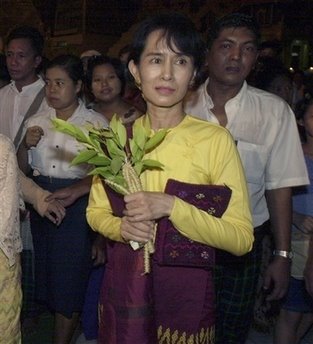


 Posts


