News & Articles on Burma
Sunday, 14 August, 2011
---------------------------------------------
Suu Kyi tests the political waters
Suu Kyi cheered by thousands in Bago
Aung San Suu Kyi seeks unity on first trip
Crowds cheer Suu Kyi tour
Myanmar's Suu Kyi guarded on signs of political thaw
Cheers in Myanmar as Suu Kyi travel tests freedom
Burma's Suu Kyi tests limits of her freedom
Burma's Suu Kyi calls for unity on first political trip
Dams on Burma's Irrawaddy River becomes a national cause
------------------------------------
Suu Kyi tests the political waters
Bago, Burma
August 15, 2011
Back on the political trail: Democracy crusader Aung San Suu Kyi speaks during the opening of a library in Thanatpin, Burma, yesterday. Photo: AP
BURMESE democracy icon Aung San Suu Kyi has called for unity in her country, as she addressed crowds on her first political trip outside her home city since her release from house arrest.
Ms Suu Kyi, who was released from seven years of detention days after an election last November, has defied a government security warning with a visit to the Bago region, about 80 kilometres north of Rangoon.
Police yesterday tried to clear supporters off the roads as hundreds of people lined the streets to greet Ms Suu Kyi as she travelled between towns in the area. Many supporters shouted and waved small banners saying: ''We love Mother Suu''.
Ms Suu Kyi, 66, began the one-day trip with a visit to a pagoda in the town of Bago before opening a library in nearby Thanatpin, where she delivered a speech to a crowd of around 600.
''We can develop this country only when we all work together,'' she said.
''Unity is a strength, unity is needed everywhere and it is needed especially in our country.''
A convoy of about 30 cars left Rangoon early in the morning, also carrying members of her National League for Democracy (NLD) party, journalists and diplomats.
''I'm very happy to see her. We all are,'' said Win Win Myint, 23, a student in Bago. ''I haven't see her in person before.''
Security is a concern as Ms Suu Kyi's convoy was attacked during a political trip in 2003, in an ambush apparently organised by a junta frightened by her popularity.
''Our party members will take care of her security and also the authorities will help us,'' Nyan Win, an NLD spokesman, said.
He has described the one-day excursion as ''political''.
In June the military-backed government warned Ms Suu Kyi that a political tour could spark chaos and riots.
She has since tested her freedom with a trip to an ancient temple city in central Burma, although politics was not on the agenda.
The democracy champion has spent much of the past two decades in detention, and some observers believe the government would be quick to restrict her freedom again if she were perceived to threaten its rule.
But there have been signs of a thaw in relations between the government and Ms Suu Kyi.
AFP http://www.theage.com.au/world/suu-kyi-tests-the-political-waters-20110814-1isz6.html
-------------------------------------
Suu Kyi cheered by thousands in Bago
Posted: 14 August 2011 1957 hrs
BAGO, Myanmar: Aung San Suu Kyi called for unity in Myanmar as she was feted by thousands of supporters on Sunday during her first political trip outside her home city since being released from house arrest.
Suu Kyi, who was released from seven straight years of detention in November just days after a controversial election, defied a government security warning with a visit to the Bago region north of Yangon, in a key test of her freedom.
Police tried to clear people off roads as hundreds lined the streets to greet the 66-year-old democracy icon as she travelled between towns, many of them shouting and waving banners saying: "We love Mother Suu!"
After visiting a local pagoda, she made similar speeches at the openings of two libraries, the first to about 600 people in Tha Nat Pin and the second to about 2,000 in nearby Bago town, an AFP reporter witnessed.
"We can develop this country only when we all work together," Suu Kyi told the crowds in her first address.
"Unity is a strength, unity is needed everywhere and it is needed especially in our country."
She thanked her followers for their support, asking them to keep providing it. She said she had always "tried her best" since she entered politics more than 20 years ago, and would "continue as much as I can".
Suu Kyi's call for unity could be taken as a possible goodwill gesture towards her jailers, given the sensitive nature of a political trip.
The military-backed government warned her in June that such a tour could spark chaos and riots, although her one-day excursion, which included a visit to another temple before she returned home, appeared to pass peacefully.
A convoy of about 30 cars left Yangon early in the morning, also carrying members of her National League for Democracy (NLD), journalists and diplomats.
The Nobel Peace Prize winner told AFP as she embarked on the trip that she was reliant "on the support of the people" -- which appeared to be much in evidence in Bago.
"I'm very happy to see her. We all are," said Win Win Myint, a 23-year-old student. "I haven't see her in person before."
Security is a concern as Suu Kyi's convoy was attacked in 2003 during a political trip, in an ambush apparently organised by a junta frightened by her popularity.
"Our party members will take care of her security and also the authorities will help us," Nyan Win, an NLD spokesman, told AFP on Saturday.
He earlier described Sunday's trip as "political" and said she would try to venture outside Yangon again.
After the government warned against a tour in June, Suu Kyi tested her freedom the following month by spending a few days at an ancient temple city in central Myanmar, although politics were not on the agenda.
The democracy champion has spent much of the last two decades in detention, and some observers believe the government would be quick to restrict her freedom again if she were perceived to threaten its rule.
But there have been signs of a thaw in relations between the government and Suu Kyi recently, with the Nobel laureate holding a second round of talks with labour minister Aung Kyi on Friday.
A joint statement released following the discussions said both sides would work together for "stability" and democratic development.
Also on Friday, the government pledged to continue the dialogue in its first media briefing in the capital Naypyidaw since taking power.
Initial talks in July came just days after the United States called for "concrete" progress towards democracy.
Myanmar is subject to economic sanctions by the US and other western nations who are calling for democratic and human rights reforms.
Last year's poll was won by the military's political proxies and was marred by widespread complaints of cheating and intimidation.
The NLD, which won an election in 1990 but was never allowed to take power by the junta, boycotted last year's vote because of rules seemingly designed to exclude Suu Kyi and was stripped of its recognition as a political party as a result.
-AFP/wk http://www.channelnewsasia.com/stories/afp_asiapacific/view/1146982/1/.html
-------------------------------------
Myanmar -
Article published the Sunday 14 August 2011 - Latest update : Sunday 14 August 2011
Aung San Suu Kyi seeks unity on first trip
By RFI
Nobel Peace Prize winner Aung San Suu Kyi called for unity in Myanmar as she was feted by thousands of supporters on Sunday.
Suu Kyi was on her her first political trip outside her home city, Yangon, since being released from house arrest in November.
Police tried to clear people off roads as hundreds lined the streets to greet the 66-year-old democracy icon as she travelled between towns.
After visiting a local pagoda, she made similar speeches at the openings of two libraries, the first to about 600 people in Tha Nat Pin and the second to about 2,000 in nearby Bago town.
Calling on people to work together, she said unity was key to the future of the country.
She thanked her followers for their support, asking them to keep providing it. She said she had always “tried her best” since she entered politics more than 20 years ago, and would “continue as much as I can”.
Suu Kyi’s call for unity could be taken as a possible goodwill gesture towards her jailers, given the sensitive nature of a political trip.
She has spent much of the last two decades in detention.
Myanmar is subject to economic sanctions by the US and other western nations who are calling for democratic and human rights reforms. http://www.english.rfi.fr/asia-pacific/20110814-aung-san-suu-kyi-seeks-unity-first-trip
---------------------------------
Crowds cheer Suu Kyi tour
Published: 14/08/2011 at 07:52 PM
Online news:
Burmese opposition leader Aung San Suu Kyi has made her first political trip outside the nation's main city since her release from seven years of house arrest.
Suu Kyi's trip to meet supporters in two towns north of Rangoon was going ahead peacefully on Sunday, despite a government warning that it could trigger riots.
The last time Suu Kyi travelled into the countryside to meet supporters in 2003, assailants ambushed her entourage in an attack that led to her being detained and later placed under a long house arrest from which she was released last November.
In the town of Bago, located about 80km north of Rangoon, the Nobel Peace Prize laureate greeted more than 300 supporters as crowds shouted "Long Live Daw Aung San Suu Kyi."
Maw Thuza, a 35-year-old woman watching the scene, said: "I can die happily now that I've seen her."
Suu Kyi was travelling in a three-car convoy followed by about 27 more vehicles, filled mostly with journalists and supporters.
Some people stood along the roadsides to wave as she passed.
Security agents, with wireless microphones protruding from their civilian clothes, monitored the visit.
In June, the government said that it would not stop Suu Kyi from travelling upcountry to meet supporters, but warned that the visits could cause violence. http://www.bangkokpost.com/breakingnews/251810/crowds-cheer-suu-kyi-tour
-------------------------------------
Myanmar's Suu Kyi guarded on signs of political thaw
By Aung Hla Tun, Reuters August 14, 2011 8:02 AM
Aung San Suu Kyi (2nd L), leader of Myanmar's democratic opposition, smiles during the opening ceremony of Aungsan Jar-mon Library at Thanatpin township near Bago, 60 miles (97 km) north of Yangon August 14, 2011.
YANGON, Aug 14 (Reuters) - Aung San Suu Kyi, the leader of Myanmar's democratic opposition, said on Sunday it was too early to comment on signs of a thawing in her relationship with the government, as she ventured outside Yangon to meet supporters and flood victims.
Her trip to Bago and Thanetpin, towns about 50 miles (80 km) north of the former capital, involved little more than the opening of two libraries, but her party billed it as her first overtly political trip since her release from house arrest last year.
On Friday, Suu Kyi held talks for just under an hour with Labour Minister Aung Kyi and they issued a joint statement afterwards saying they wanted to co-operate to bring stability and economic development to the country.
"I know the people are very eager to know about the details of my talks with Minister U Aung Kyi," she said on Sunday at the ceremony in Bago, using the honorific "U".
"In fact, it is not time yet to reveal the details as there are certain things to be carried out specifically. I just don't want to form false, lofty expectations. Please understand it," she said.
She called on people to be responsible and do their bit to support her.
Friday's meeting was the second in just over two weeks between the minister and the 66-year-old Nobel Peace Laureate.
Separately on Friday, at a rare news conference in the capital, Naypyitaw, Kyaw Hsan, the Minister of Information and leader of a newly formed "Spokespersons and Information Team", held out another olive branch to Suu Kyi and her party.
"In view of national reconciliation, the government is delicately and carefully handling the issue of the NLD, which has no legal right to exist, offering it opportunities to serve the national interest in cohesion," he said.
OFFICIALLY DISBANDED
The National League for Democracy (NLD) was officially disbanded because it refused to register for a general election last November that led to the end of formal military rule this year.
However, the party has continued to function, apparently without harassment by the authorities. Suu Kyi was released shortly after the vote.
"If the NLD wants to get involved in politics, it should set up a legal party through formal procedures. Anyhow, the government is doing its best to invite the NLD to its national reconciliation process," Kyaw Hsan said.
Suu Kyi has been careful not to antagonise the government since her release and did not directly criticize the election, which was regarded at home and abroad as a sham that ensured the army retained power behind a veneer of democracy.
The government and military appear to have backed off from their tough stance towards Suu Kyi, occasionally criticizing her in state-run media but allowing her freedom to travel and meet diplomats, journalists and supporters.
NLD spokesman Nyan Win told Reuters there had been some co-operation with the authorities in advance of Sunday's trip as regards her security.
Toll gates out of Yangon were lifted for her convoy to pass without fuss, and even the payment was waived, according to a worker at the toll booth.
Around 36 cars were in the convoy, including 24 transporting nearly 100 reporters, three carrying Western diplomats and two or three that appeared to be occupied by plain-clothes police.
About 300 and 600 supporters attended the ceremonies in Thanetpin and Bago respectively, listening to Suu Kyi speak and applauding. Hundreds of people lined the route to wave to her as she drove in the area.
She returned home to Yangon without incident in late afternoon.
© Copyright (c) Reuters http://www.ottawacitizen.com/news/Myanmar+guarded+signs+political+thaw/5252936/story.html
----------------------------------------------
Cheers in Myanmar as Suu Kyi travel tests freedom
By AYE AYE WIN: Associated Press
Published: Sunday, August 14, 2011 at 7:46 a.m.
Thousands of well-wishers lined roadsides in Myanmar to welcome opposition leader Aung San Suu Kyi as she tested the limits of her freedom Sunday by taking her first political trip into the countryside since being released from house arrest.
The military-dominated country's government had warned that the democracy icon's journey could trigger riots, but it took place peacefully in two towns north of the main city of Yangon, and Suu Kyi returned home without incident.
The last time Suu Kyi traveled out of Yangon to meet supporters, assailants ambushed her entourage. She escaped harm but was detained and placed under seven years of house arrest, from which she was only released last November.
On Sunday, Suu Kyi met hundreds of supporters in Bago, about 50 miles (80 kilometers) north of Yangon, and the nearby town of Thanatpin, where she gave a 10-minute speech calling for unity and support for her political party. She also urged residents to persevere despite economic hardships that have forced many to seek jobs abroad.
Addressing a crowd later in Bago, Suu Kyi implied that true democratic change will take time.
"I know what the people want and I am trying my best to fulfill the wishes of the people," she said. "However, I don't want to give false hope."
After half a century of army rule, the country formerly known as Burma organized elections late last year and officially handed power to a civilian administration in March. But Suu Kyi's party boycotted the vote and decried it as a sham. Critics say the new government, led by retired military figures, is a proxy for continued military rule and that little has changed.
Some 2,000 political prisoners remain behind bars, more than 100,000 refugees live in neighboring countries and sporadic clashes have erupted in the northeast between government troops and ethnic militias who have been fighting for greater autonomy for decades.
On Sunday, Suu Kyi traveled in a three-car convoy followed by about 27 more vehicles filled mostly with journalists and supporters. Security agents, with wireless microphones protruding from their civilian clothes, monitored each stop she made.
Thousands of people lined the roadsides to catch a glimpse of Suu Kyi's convoy as it passed by, some cheering and waving. The Nobel Peace Prize laureate stopped several times, and well-wishers handed her red roses and jasmine flowers.
Win Htein, a leader of Suu Kyi's party, said the trip was crucial because it "will test the reaction of the authorities and will test the response of the people."
One of her party's spokesmen, Nyan Win, said more trips will follow, but neither the dates nor the destinations have been decided.
Earlier in the day, crowds shouted "Long Live Daw Aung San Suu Kyi!" as she visited a pagoda. A 35-year-old woman watching the scene, Ma Thuza, said, "I can die happily now that I've seen her."
Suu Kyi donated rice and money to a monastery where nearly 2,000 victims of recent floods have sought shelter.
Last month, Suu Kyi journeyed to the ancient city of Bagan with her son on a private pilgrimage that nevertheless drew large crowds of supporters and scores of undercover police and intelligence agents. Suu Kyi made no speeches, and the trip ended without incident.
In June, the government said it would not stop Suu Kyi from traveling to the countryside to meet supporters, but warned that the visits could trigger riots.
While little has changed in Myanmar since Suu Kyi's release, there have been tentative signs of a detente with the government. On Friday, Suu Kyi held her second meeting with Labor and Social Welfare Minister Aung Kyi, a rare dialogue between the two sides. Few details of the meeting have been revealed, but the state-run New Light of Myanmar newspaper reported Saturday that the two sides agreed to cooperate on national stability and development.
Also Friday, Information Minister Kyaw Hsan urged Suu Kyi to officially register her National League for Democracy as a party, a step that would imply its acceptance of the government's legitimacy and also allow it to legally take part in politics.
If Suu Kyi's group reaches an accommodation with the government, it could serve as a reason for Western nations to lift political and economic embargoes on the country that have hindered development and pushed it into dependence on neighboring China.
The previous military government ordered the party's dissolution after it refused to register for last November's general election. http://www.goupstate.com/article/20110814/API/1108140547?p=all&tc=pgall
---------------------------------------
Burma's Suu Kyi tests limits of her freedom
The Associated Press
Posted: Aug 14, 2011 12:47 AM ET
Burmese opposition leader Aung San Suu Kyi on Sunday made her first political trip outside the repressive nation's main city since her release from seven years of house arrest, a crucial journey that will test the limits of her freedom.
The last time the democracy icon travelled into the countryside to meet supporters, assailants ambushed her entourage in an attack that eventually saw her detained and later placed under a long house arrest from which she was released last November.
Suu Kyi's one-day voyage to meet supporters Sunday in two towns north of the main city of Yangon was proceeding peacefully despite a government warning that it could trigger riots.
Burmese opposition leader Aung San Suu Kyi on Sunday made her first political trip outside the repressive nation's main city since her release from seven years of house arrest, a crucial journey that will test the limits of her freedom.
The last time the democracy icon travelled into Burma’s countryside to meet supporters, assailants ambushed her entourage in an attack that eventually saw her detained and later placed under a long house arrest from which she was released last November.
Suu Kyi's one-day voyage to meet supporters Sunday in two towns north of the main city of Yangon was proceeding peacefully despite a government warning that it could trigger riots.
In the town of Bago, the Nobel Peace Prize laureate greeted more than 300 supporters at a pagoda as crowds shouted "Long Live Daw Aung San Suu Kyi!"
Maw Thuza, a 35-year-old woman watching the scene, said, "I can die happily now that I've seen her."
Suu Kyi was travelling in a three-car convoy followed by about 27 more vehicles — filled mostly with journalists and supporters. Some people stood along the roadsides to wave as she passed. Security agents, with wireless microphones protruding from their civilian clothes, monitored the visit.
Bago is about 80 kilometres north of Yangon. Suu Kyi was also to visit political supporters in the nearby town of Thanatpin and open a public library, said one of her spokesman, Nyan Win, who said he expected the day to be peaceful.
More trips will follow, but neither the dates nor the destinations have been decided, Win said.
Win Htein, a leader of Suu Kyi's party, said the trip was crucial because it "will test the reaction of the authorities and will test the response of the people."
"This trip will be a test for everything," Htein said.
After half a century of army rule, the country also known as Myanmar organized elections late last year and officially handed power to a civilian administration in March. But critics say the new government, led by retired military figures, is a proxy for continued military rule and that little has changed. http://www.cbc.ca/news/world/story/2011/08/14/burma-suu-kyi.html
----------------------------------------
Burma's Suu Kyi calls for unity on first political trip
This is Aung San Suu Kyi's first political tour since she was freed from seven years of house arrest in November 2010. [AFP]
Last Updated: 9 hours 28 minutes ago
Burma's democracy icon Aung San Suu Kyi has called for unity in her country, as she addressed crowds on her first political trip outside her home city since her release from house arrest.
Ms Suu Kyi, who was released from seven straight years of detention late last year, has defied a government security warning with a visit to the Bago region, about 80 kilometres north of Rangoon.
Police tried to clear supporters off the roads as hundreds lined the streets to greet Ms Suu Kyi, many of them shouting and waving small banners saying: "We love Mother Suu!"
The 66-year-old began the one-day trip with a visit to a pagoda in the town of Bago before opening a library in nearby Tha Nat Pin, where she delivered a speech to a crowd of around 600.
"We can develop this country only when we all work together," she said.
"Unity is a strength, unity is needed everywhere and it is needed especially in our country."
Security is a concern as several supporters were killed during her last political tour, in 2003, when her convoy was ambushed.
But members of Ms Suu Kyi's National League for Democracy say they will take care of security on this trip, with the assistance of authorities. http://www.radioaustralianews.net.au/stories/201108/3292902.htm
-------------------------------------
Dams on Burma's Irrawaddy River becomes a national cause
Sun, 2011-08-14 00:16 — editor
By Zin Linn
It was noteworthy, the Chairman of the Kachin Independence Organization (KIO), Lanyaw Zawng Hra sent an official letter dated May 16 to Hu Jintao, the President of the People’s Republic of China urging China to stop the controversial Myitsone dam construction on Irrawaddy River in Kachin State of Burma, Kachin News Group (KNG) said on 23 May, 2011.
In the open letter the KIO warned Myitsone and six other hydroelectric power plant projects could lead to civil war between the KIA, the armed wing of the KIO, and the Burmese Army because Burmese troops have been deployed to the KIO control areas to provide security for the dam-construction projects.
According to Kachin News Group, numerous complaint letters concerning construction of the Myitsone dam have been sent to the Burmese and Chinese governments by local people, the Kachin National Consultative Assembly (KNCA) and the KIO. However, no action has been taken to tackle the worries expressed by the Kachin community.
KIO’s official letter to Hu Jintao says, “Except the Dam Project in Mali-N’mai Confluence (Myitsone dam), we have no objections against the other six Hydro Power Plant Projects. However, we have also informed the Asia World Co Ltd to make a decision only after assessing the consequences of the Dam Construction”.
The Kachin Development and Networking Group (KDNG) has warned publicly that the Myitsone dam construction is going to displace 15,000 neighboring Kachin natives and millions of people living downstream of the dam construction location because of inundation.
According to the environmentalist group, thousands of people have been forced to move from their home villages near the 6,000-megawatt dam construction project site. The displaced villagers have to struggle finding new livelihoods, adequate healthcare services and education for their children at new villages, the watchdog group said.
In the past, Kachin people had made an official plea to the former junta’s boss Senior-General Than Shwe to stop the project due to environmental damage. But he always turned a deaf ear to the call. The junta boss regularly obeys the rules of the Chinese authorities over the dam projects.
Construction at Myitsone began December 21, 2009, led by China’s state owned China Power Investment Corporation (CPI) in cooperation with Burma’s Asia World Company (AWC) and the Burmese government’s No. 1 Ministry of Electric Power. Remarkably, AWC owner is former drug lord Lo Hsing Han. As a result, the KIO warned CPI employees not to enter its area in the dam construction sites north of the Mali-N’mai Rivers. The reason was that KIO has stopped cooperating with the Burmese government when the government discontinued the 1994 truce on September 1, 2010.
Environmental activists and researchers say the project will force Kachin villagers to abandon their homes and could face inundation of an area, the size of Singapore, all caused by the government's eagerness to satisfy China as it needs more power for its growing industrial zones.
According to Burma River Network, the Irrawaddy River provides vital nutrients to wetlands and floodplain areas downstream including the delta region which provides nearly 60% of Burma’s rice. Changes to the river’s flow and the blocking of crucial sediments will affect millions farmers throughout Burma and decrease rice production.
The watchdog network also pointed out that the dams will forever change Burma’s main river ecosystem and an important Asian river. Eighty-four percent of the Irrawaddy River’s water originates above the dam sites and will be affected by these dams. The network said that the dam is located 100 kilometers from a major fault line in an earthquake-prone area; if the dam breaks, it will flood Kachin State’s capital city of 150,000 that lies just 40 kilometers downstream of the dam.
In a statement issued on 11 August (Thursday), Burma’s Nobel laureate Aung San Suu Kyi said the dam endangers the flow of the Irrawaddy River, which she described as "the most significant geographical feature of our country." She warned that 12,000 people from 63 villages have been relocated, although an article in the government-run New Light of Myanmar newspaper Wednesday reported that 2,146 people had been ordered to leave their homes and relocated.
Suu Kyi recently released a letter calling on promoters of the Myitsone dam project to reassess the plan, pointing out concerns that dams on the Irrawaddy River damage the environment, decrease rice production, dislodge ethnic peoples. Besides, it would hurt livelihoods of local communities and there is a risk of possible destructive earthquakes.
“We believe that, taking into account the interests of both countries, both governments would hope to avoid consequences which might jeopardize lives and homes,” Suu Kyi emphasized. “To safeguard the Irrawaddy is to save from harm our economy and our environment, as well as to protect our cultural heritage,” she added.
One can find an environmental impact assessment on Thailand-based Burma Rivers Network web-site which was conducted by a team of Burmese and Chinese scientists. The 945-page “environmental impact assessment,” fully funded by China’s CPI Corporation and conducted by a team of Burmese and Chinese scientists, recommends not proceeding with the Irrawaddy Myitsone Dam. “There is no need for such a big dam to be constructed at the confluence of the Irrawaddy River” says the assessment.
Building of dams has become also a rising political issue in China’s relations with countries in Southeast Asia; a region increasingly dependent on the watercourse of rivers may perhaps reduce their capacity to irrigate paddy fields.
The Burmese government state media has continued saying that the Myitsone dam project will not produce negative impact on the watercourse of the Irrawaddy or on the livelihoods of the native inhabitants.
Local ethnic populace has been displaced from their homes to make way for dams and reservoirs. But construction companies close to the authorities benefit from those dams. They receive millions of dollars for designing and building dams. The government officials also gain black earnings in many ways – illegal taxes, kickbacks and inducement – during building of a dam.
Anyhow, Aung San Suu Kyi, Burma’s most distinguished opposition figure, may heighten international reaction of the Myitsone dam project which seriously disapproved by environmental and human rights groups. The dam projects are, however, creating widespread political criticism countrywide for the national interest.
- Asian Tribune - http://www.asiantribune.com/news/2011/08/13/dams-burmas-irrawaddy-river-becomes-national-cause
__._,_.___
Monday, August 15, 2011
News & Articles on Burma-Sunday, 14 August, 2011


Saturday, August 13, 2011
News & Articles on Burma-Friday, 12 August, 2011
News & Articles on Burma
Friday, 12 August, 2011
---------------------------------------------
Icon Suu Kyi Joins Fight Against China Dam in Myanmar
Aung San Suu Kyi: China's dam project in Burma is dangerous
Myanmar government and opposition leader Suu Kyi to "avoid conflict"
Myanmar government urges Suu Kyi to register party
‘Emotions’ get the better of Burma minister
Myanmar opposition leader calls for reassessment of dam project
Myanmar vows ongoing Suu Kyi dialogue
Myanmar's new government vows not to harm the Irrawaddy
Jailed video journalist faces additional charge
New Myanmar government to drop foreign exchange certificates
Burma to cancel FECs
Burma forms 'spokespersons and information team' to control news leak-out
------------------------------------
THE WALL STREET JOURNAL: August 12, 2011, 7:08 PM HKT
Icon Suu Kyi Joins Fight Against China Dam in Myanmar
A powerful moral force is now standing in opposition to a China-funded dam project in Myanmar: icon Aung San Suu Kyi.
Ms. Suu Kyi this week released a letter calling on backers of the Myitsone hydropower project to “reassess the scheme,” citing concerns that dams on Myanmar’s Irrawaddy River degrade the environment, disrupt rice production, displace minority peoples, hurt livelihoods and risk unleashing devastating consequences during earthquakes. Her letter was distributed by a U.S. organization opposed to the project.
The Myitsone project is a 6000-megawatt cascade-style hydropower station being built as a joint venture by government-run China Power Investment Corp., Expected to come online in 2018, the project is a major symbol of China’s deepening political and economic relationship with the military regime in Myanmar.
China Power Investment Corp did not respond to requests for comment on Friday.
“We believe that, keeping in mind the interests of both countries, both governments would wish to avoid consequences which might endanger lives and homes,” Ms. Suu Kyi wrote.
By voicing opposition to widespread river damming, Myanmar’s most well-known opposition figure may boost international awareness of the project, long criticized by environmental and human rights groups. The dams, which represent a major source of foreign project finance for the government, are likewise stirring widespread discontent domestically.
Dams are also a growing political factor in China’s relations elsewhere in Southeast Asia, a region increasingly dependent on the world’s most populous nation for trade but worried its efforts to alter the flow of rivers could, among other detrimental effects, reduce their ability to irrigate rice fields.
Last month, U.S. Secretary of State Hillary Clinton, while meeting regional officials in Indonesia, offered to spur a two-year-old Lower Mekong Initiative that is aimed boosting U.S.-backed development in the region, thereby countering Beijing’s influence in poorer parts of Southeast Asia. In some cases, China’s dam building is a big irritant, including Vietnam.
Analysts say China already has strong influence with Myanmar’s military leadership, a country that promises vast natural resources, a potential channel to new sea channels and geopolitical proximity to rival India.
The Myitsone hydroelectric dam and smaller projects in Myanmar also reflect Beijing’s ambitions to export technology developed at home and showcased in its own electricity producing facilities, like the giant Three Gorges Dam. But just as China’s ambitions to export high speed rail technology have been tripped up by a recent accident, its dam-building techniques have also been questioned on quality grounds.
Ms. Suu Ky’s letter, distributed by a group opposed to the dam, Berkeley, Calif.-based International Rivers, was measured in its criticism of what the Nobel Peace laureate called “the Burmese-Chinese venture” and acknowledged that the region needs power and economic development.
“While recognizing that large sums of money have already been spent on the realization of the project, we would urge that in the interests of both national and international harmony, concerned parties should reassess the scheme and cooperate to find solutions that would prevent undesirable consequences and thus allay the fears of all who are anxious to protect the Irrawaddy,” Ms. Suu Kyi said in the letter.
An op-ed published Wednesday in the state-run New Light of Myanmar defended the project, saying it had already provided more than 2,600 jobs, according to a translation by Burmanet. “State leaders will not give the green light to implement a project that is not beneficial to the nation and the people,” it added. http://blogs.wsj.com/chinarealtime/2011/08/12/icon-suu-kyi-joins-fight-against-china-dam-in-myanmar/
----------------------------------
Aung San Suu Kyi: China's dam project in Burma is dangerous and divisive
Jonathan Watts, Asia environment correspondent
guardian.co.uk, Friday 12 August 2011 11.56 BST
The leader of Burma's pro-democracy opposition joins chorus of alarm over China's plan to build dams on Irrawaddy river.
Myanmar workers standing on the bank of the Irrawady river, Kachin state
Workers in Burma's Kachin state wait for river transport on the Irrawaddy, where China plans to build up to eight dams. The project will displace thousands, devastate ecosystems and stoke conflict. Photograph: STR/AFP/Getty Images
Aung San Suu Kyi, the leader of Burma's pro-democracy opposition, has called for a halt to a massive Chinese hydropower project on the Irrawaddy river that has alarmed environmentalists and added to a long-running conflict between tribal militias and the government in Rangoon.
The Nobel laureate stepped into the fray on Thursday with a personal statement calling for greater protection for Burma's most important river, which is threatened by logging, pollution and the construction of a cascade of at least seven dams, a project managed by China Power Investment.
The biggest of them – the 3,600MW Myitsone Dam – is already under construction on the Irrawaddy despite fierce opposition from the Kachin Independence Organisation, which recently broke a 17-year-ceasefire after warning that it would fight to block the project.
The China Gezhouba Group is building the dam on the confluence of the Mali and N'Mai rivers in Kachin state, one of the world's most important biodiversity hotspots.
Once completed, it will flood the rainforest with a reservoir the size of New York city and displace 10,000 people, mostly Kachin people, as well as submerging cultural heritage sites central to Kachin identity, according to International Rivers.
The Burma Rivers Network, an NGO which represents communities along the river, said China's massive hydropower investments had widened the gulf between the government – which wants to benefit from cross-border electricity sales – and Kachin independence groups, which fear the dams will bring environmental, cultural and social disruption.
The environmental group has released what it says is a leaked environmental assessment jointly commissioned by the Burmese and Chinese authorities that recommends scrapping the project because it would cause immense damage to biodiverse ecosystems as local livelihoods as well as posing great risks in the event of an earthquake.
These concerns were reiterated by Aung San Sui Kyi, who said the dam was dangerous and divisive. "Since the commencement of the Myitsone project, the perception long held by the Kachin people that successive Burmese governments have neglected their interests has deepened," she said in her statement. "We would urge that in the interests of both national international harmony, concerned parties should reassess the scheme and cooperate to find solutions that would prevent undesirable consequences and thus allay the fears of all who are anxious to protect the Irrawaddy." http://www.guardian.co.uk/environment/2011/aug/12/suukyi-china-dam-irrawaddy-conflict
-----------------------------------
Myanmar government and opposition leader Suu Kyi to "avoid conflict"
Aug 12, 2011, 10:42 GMT
Yangon - Myanmar opposition leader Aung San Suu Kyi and the country's newly elected government have agreed to 'avoid conflicts,' Suu Kyi said in a joint statement with a government representative.
'We will avoid conflicts and will cooperate together,' Suu Kyi said in a joint statement made with Myanmar Labour Minister Aung Kyi, whom she met in Yangon for the second time since her release from house arrest on November 13. Suu Kyi last met with Aung Kyi, the government's main liaison person for the Nobel laureate, on July 25.
'We will meet frequently in the future,' Suu Kyi and Aung Kyi said after a one-hour meeting.
The international community and Myanmar's Asian allies have repeatedly called on the government to open dialogue with Suu Kyi and other opposition groups.
Suu Kyi, the daughter of Myanmar independence hero Aung San, has spent 15 of the past 21 years under house arrest. She was last released on November 13, from a seven-year detention term.
Since she was incarcerated, she could not contest the November 7 polls. Her National League for Democracy party boycotted the election and was disbanded afterwards.
'Even though the NLD is an illegal party, the government has been dealing with them patiently,' Myanmar Information Minister Kyaw Hsan said Friday.
He urged the NLD to reregister as a party if they wished to participate in politics.
Kyaw Hsan said the government's willingness to talk to Suu Kyi was in keeping with President Thein Sein's inaugural speech on March 30 when he said the government was ready to work with everyone for the development of the country.
Myanmar has been under military rule since 1962. The pro-military Union Solidarity and Development Party won the November 7 polls, which observers labelled neither free nor fair.
Myanmar ranks among the world's pariah states for its poor human rights and political reform record, but Kyaw Hsan hinted that changes were in the wind.
He noted that the ICRC had resumed prison visits and aid programmes on 1 July.
'And I can inform you now that the UN rapporteur on Myanmar's human rights situation, Tomas Ojea Quintana, is going to visit soon,' Kyaw Hsan said. http://www.monstersandcritics.com/news/asiapacific/news/article_1656590.php/Myanmar-government-and-opposition-leader-Suu-Kyi-to-avoid-conflict
----------------------------------------
Myanmar government urges Suu Kyi to register party so it can legally take part in politics
Article by: Associated Press
Updated: August 12, 2011 - 5:11 AM
NAYPYITAW, Myanmar - Myanmar's government is urging pro-democracy leader Aung San Suu Kyi to officially register her National League for Democracy as a party so it can legally take part in politics.
Information Minister Kyaw Hsan told a rare news conference Friday that the government has not cracked down on the group so far in the interests of national reconciliation.
His suggestion came two days before Suu Kyi plans to make her first political foray into the countryside since her release from seven years of house arrest last November. She was detained after her last such trip in 2003.
The government ordered the NLD's dissolution after it failed to register for last November's general election, which it called unfair and undemocratic. http://www.startribune.com/world/127576528.html
------------------------------------
‘Emotions’ get the better of Burma minister
By AHUNT PHONE MYAT
Published: 12 August 2011
Burma’s information minister Kyan Hsan was forced to leave a government press conference today after refusing to answer questions pitched by journalists which he said made him “emotional”.
Kyan Hsan, who effectively acts as Naypyidaw’s spokesperson, had led the first press conference of the new government in the capital this afternoon.
But he reportedly broke down in tears after being asked when the government would begin dialogue over the multiple conflicts raging in Burma’s border regions and issues regarding the woeful state of the country’s economy. The meeting was then suspended for several minutes.
“He began to have tears in his eyes and cried as he was answering questions [from a reporter] about how [the government’s] worked for the good of their country,” a source at the conference told DVB today.
A secret audio file obtained by DVB quoted Kyaw Hsan as saying, upon his return to the meeting, that “it [the breakdown] happened as I was speaking.
“I would like to tell [the journalists present] to keep this private as the media may think I did this because I didn’t want or wasn’t able to answer the questions. I want to tell you to understand me for feeling emotional as I was giving my answer.”
The 40-minute long conference featured questions from more than 10 journalists. It follows the recent formation of the Spokespersons and Information Team, led by Kyaw Hsan, which effectively acts as a public relations arm of the new government.
Thein Sein’s administration has gone on something of a media offensive as it has struggled to shed its reputation as a civilian extension of the military junta that ruled Burma in various guises since 1962.
Although it released opposition icon Aung San Suu Kyi shortly after the November 2010 elections and appears to be opening up somewhat towards the political opposition, critics claim that the escalation of civil wars in the border regions and continued human rights abuses show that little reform has taken place. http://www.dvb.no/news/%E2%80%98emotions%E2%80%99-get-the-better-of-burma-minister/17015
----------------------------------
Myanmar opposition leader calls for reassessment of dam project
Aug 12, 2011, 4:35 GMT
Yangon - Myanmar opposition leader Aung San Suu Kyi has called on the governments of Myanmar and China to reassess a 6,000-megawatt dam project due to safety and environmental concerns.
'We believe that, keeping in mind the interests of both countries, both governments would wish to avoid consequences which might endanger lives and homes,' Suu Kyi said in a statement made available Friday.
The dam is planned for an upper stretch of the Irrawaddy River, the longest in Myanmar, starting in the northern Kachin State and traversing the central plains before emptying into the rice-growing Irrawaddy delta and the Indian Ocean.
Given the economic, social and environmental importance of the river, Suu Kyi appealed to the international conservationist community 'to join us in a campaign to create a worldwide awareness of the dangers threatening one of the most important rivers in Asia.'
Construction on the estimated 3.6-billion-dollar Myitsone hydro-electric dam project began in 2009, as a joint venture between the Myanmar government and the state-owned China Power Investment.
'Under the current proposal, the dam will displace up to 12,000 people from 63 villages and flood critical cultural heritage sites,' said the International Rivers environmental group, adding that the project already faced 'violent opposition from the local Kachin population.'
The Kachin are one of five ethnic minority groups that are waging insurgencies against the Myanmar army, which has ruled the country since 1962 and continues to dominate the current elected government.
The project site was reportedly hit by a series of bombs in April 2010.
Suu Kyi also questioned the geological safety of the project. 'The presence of fault lines in the vicinity of the dams and the sheer immensity of the reservoir raises the spectre of horrendous devastation in the event of an earthquake.'
Suu Kyi is Myanmar's chief opposition figure, who has spent 15 of the past 21 years under house arrest. She was released from a seven-year house detention sentence on November 13.
Although she has no official position, and her National League for Democracy party has been dissolved, Suu Kyi remains a powerful political force.
The pro-military government's chief liaison officer, Labour Minister Aung Kyi, was scheduled to meet with Suu Kyi Friday afternoon, according to opposition sources.
Suu Kyi is planning a 'political tour' to Bogo, 50 kilometres north-east of Yangon on Saturday, despite government warnings against the trip. http://www.monstersandcritics.com/news/asiapacific/news/article_1656521.php/Myanmar-opposition-leader-calls-for-reassessment-of-dam-project
-----------------------------------------
Myanmar vows ongoing Suu Kyi dialogue
Published on Aug 12, 2011
Myanmar's army-backed regime held out an olive branch to its critics on Friday, pledging to continue talks with democracy icon Aung San Suu Kyi and to allow a visit by a UN human rights envoy. -- PHOTO: AP
NAYPYIDAW (AFP) - Myanmar's army-backed regime held out an olive branch to its critics on Friday, pledging to continue talks with democracy icon Aung San Suu Kyi and to allow a visit by a UN human rights envoy.
In a rare news conference, information minister Kyaw Hsan said the nominally civilian government, which came to power after a controversial election last November, hoped to get 'successful results' from cooperating with Ms Suu Kyi.
The comments came shortly before Ms Suu Kyi and labour minister Aung Kyi began a second round of talks in Yangon.
'We will continue these kinds of meetings for the benefit of the people,' Mr Kyaw Hsan told around 50 reporters and some 250 officials invited to the new government's first media briefing in the capital Naypyidaw since taking power. http://www.straitstimes.com/BreakingNews/SEAsia/Story/STIStory_701366.html
--------------------------------------
Myanmar's new government vows not to harm the Irrawaddy
Aug 12, 2011, 9:10 GMT
Naypyitaw, Myanmar - Myanmar's new government will conduct an environmental impact study of a dam on the Irrawaddy River before going ahead with the project, which has been criticized by opposition figures and environmentalists, officials said Friday.
'We love the Irrawaddy,' Information Minister Kyaw Hsan told a press conference in Naypyitaw, the capital. 'We will protect the Irrawaddy just like other citizens would.'
The government spokesman said a downstream environmental impact study of Myitsone dam in the Kachin State will be carried out before the hydro-power plant is put into operation.
Myanmar opposition leader Aung San Suu Kyi issued a statement Thursday night calling on the governments of Myanmar and China to reassess the 6,000-megawatt dam project due to safety and environmental concerns.
'We believe that, keeping in mind the interests of both countries, both governments would wish to avoid consequences which might endanger lives and homes,' Suu Kyi said.
The dam is planned for an upper stretch of the Irrawaddy River, the longest in Myanmar, starting in the northern Kachin State and traversing the central plains before emptying into the rice-growing Irrawaddy delta and the Indian Ocean.
Given the economic, social and environmental importance of the river, Suu Kyi appealed to the international conservationist community 'to join us in a campaign to create a worldwide awareness of the dangers threatening one of the most important rivers in Asia.'
Construction on the estimated 3.6-billion-dollar Myitsone hydro-electric dam project began in 2009, as a joint venture between the Myanmar government and the state-owned China Power Investment.
'Under the current proposal, the dam will displace up to 12,000 people from 63 villages and flood critical cultural heritage sites,' said the International Rivers environmental group, adding that the project already faced 'violent opposition from the local Kachin population.'
The Kachin are one of five ethnic minority groups that are waging insurgencies against the Myanmar army, which has ruled the country since 1962 and continues to dominate the current elected government.
The project site was reportedly hit by a series of bombs in April 2010.
Suu Kyi also questioned the geological safety of the project. 'The presence of fault lines in the vicinity of the dams and the sheer immensity of the reservoir raises the spectre of horrendous devastation in the event of an earthquake.'
Suu Kyi is Myanmar's chief opposition figure, who has spent 15 of the past 21 years under house arrest. She was released from a seven-year house detention sentence on November 13.
Although she has no official position, and her National League for Democracy (NLD) party has been dissolved, Suu Kyi remains a powerful political force.
'Even though the NLD is an illegal party, the government has been dealing with the them patiently,' Kyaw Hsan said. He said the treatment was in accordance with President Thein Sein's inaugural speech of March 30, in which he said he would work with everyone.
The pro-military government's chief liaison officer, Labour Minister Aung Kyi, met with Suu Kyi Friday afternoon in Yangon.
The two sides issued a joint statement to 'avoid conflicts and to cooperate together.'
Suu Kyi is planning a 'political tour' to Bogo, 50 kilometres north-east of Yangon on Sunday, despite government warnings against the trip. http://www.monstersandcritics.com/news/asiapacific/news/article_1656566.php/Myanmar-s-new-government-vows-not-to-harm-the-Irrawaddy
----------------------------------------------
Jailed video journalist faces additional charge
Published on Friday 12 August 2011.
Reporters Without Borders condemns the new charge that was brought on 10 August against Sithu Zeya, a Democratic Voice of Burma video journalist who has been detained since April 2010 and who is already serving an eight-year sentence for filming the damage caused by a grenade explosion in Rangoon.
Aged 21, Sithu Zeya could now receive an additional sentence of 7 to 15 years in prison on a charge of circulating material online “that can damage tranquillity and unity in the government” under the Electronic Act.
“They gave him the [first] sentence based on the confession he gave to the police under torture,” his mother told Democratic Voice of Burma. “They will use the same confession to sentence him this time. [The judicial system] now is no different from the previous one.”
Reporters Without Borders fears that any changes to the Burmese judicial system since the end of military rule are no more than window dressing and urges the international community to step up pressure on Burma for a real political opening, one that guarantees basic freedoms for its citizens including media freedom.
Reporters Without Borders also hopes that the pro-democracy opposition leader Aung San Suu Kyi raises the case of imprisoned journalists and bloggers when she has a second round of talks with the government today.
An Oslo-based exile radio and TV station, Democratic Voice of Burma launched a campaign in May for the release of its 17 video reporters who are currently imprisoned in Burma. As well as Sithu Seya, they include his father, Maung Maung Zeya, who is serving a 13-year jail sentence.
More than 15 journalists and three netizens are detained in Burma, which is on the Reporters Without Borders list of Enemies of the Internet and is ranked 174th out of 178 countries in the Reporters Without Borders press freedom index. http://en.rsf.org/burma-jailed-video-reporter-faces-12-08-2011,40770.html
----------------------------------------------
New Myanmar government to drop foreign exchange certificates
Aug 12, 2011, 10:10 GMT
Naypyitaw, Myanmar - Myanmar's new government is planning to withdraw foreign exchange certificates (FECs) from the market, after imposing them on foreigners for almost two decades, officials said Friday.
'In the near future there will be no more FECs, just kyat and foreign currencies,' Information Minister Kyaw Hsan told a press conference, one of the first held by Myanmar's new elected government since it took office in April.
The FECs were first introduced in 1993 as a means of keeping foreign currency under government control.
Visiting foreign tourists were required to purchase 200 US dollars worth of FECs at the airport on arrival and foreign businessmen and aid workers were required to use the FEC for official transactions, often at an exchange rate loss.
The FEC was intended to prevent all foreign exchange from being traded on the black market, which offered rates of about 1,000 kyat to the dollar compared with the government's official rate of 6 kyat to the dollar and 450 kyat for one FEC.
'Burma's multiple exchange rates make conversion and repatriation of foreign exchange very complex, and ripe for corruption,' one US State Department report said of the system.
In recent months, the local kyat currency has strengthened against the dollar and FEC, apparently on account of a huge influx of dollars into the economy.
Kyaw Hsan said holders of FECs should not worry, because the government will buy back the currency from them with dollars or kyat, although he did not specify at what rates.
http://www.monstersandcritics.com/news/business/news/article_1656582.php/New-Myanmar-government-to-drop-foreign-exchange-certificates
--------------------------------------
Burma to cancel FECs
By Deutsche Presse-Agentur
Naypyitaw, Myanmar
Published on August 12, 2011
Myanmar's new government is planning to withdraw foreign exchange certificates (FECs) from the market, after imposing them on foreigners for almost two decades, officials said Friday.
"In the near future there will be no more FECs, just kyat and foreign currencies," Information Minister Kyaw Hsan told a press conference, one of the first held by Myanmar's new elected government since it took office in April.
The FECs were first introduced in 1993 as a means of keeping foreign currency under government control. Visiting foreign tourists were required to purchase 200 US dollars worth of FECs at the airport on arrival and foreign businessmen and aid workers were required to use the FEC for official transactions, often at an exchange rate loss.
The FEC was intended to prevent all foreign exchange from being traded on the black market, which offered rates of about 1,000 kyat to the dollar compared with the government's official rate of 6 kyat
to the dollar and 450 kyat for one FEC.
"Burma's multiple exchange rates make conversion and repatriation of foreign exchange very complex, and ripe for corruption," one US State Department report said of the system.
In recent months, the local kyat currency has strengthened against the dollar and FEC, apparently on account of a huge influx of dollars into the economy. Kyaw Hsan said holders of FECs should not worry, because the
government will buy back the currency from them with dollars or kyat, although he did not specify at what rates. http://www.nationmultimedia.com/2011/08/12/business/Burma-to-cancel-FECs-30162631.html
---------------------------------------
Burma forms 'spokespersons and information team' to control news leak-out
Fri, 2011-08-12 03:31 — editor
By - Zin Linn
The President Office of the Republic of the Union of Myanmar (Burma) issued Notification No.75/2011 - “Formation of Spokespersons and Information Team” - dated 10 August 2011, the state media announced today.
In accord with Section 24, Subsection (a) of the Union Government Law, Spokespersons and Information Team has been formed with the following persons in order that it can assume the duties of releasing news and information and holding press conferences occasionally regarding the political, economic, security, military and natural disaster affairs of the State, the state newspapers said.
Spokespersons and Information Team has been formed with 11 members and the team leader is Kyaw Hsan, Union Minister, Ministry of Information.
The purpose of the info team seems to bar other government officers and staff engaging the public communication activities. They are already warned not to leak out information to the media especially to exile media. So, the government information team will act as an info filter mechanism which will prevent government confidential facts and statistics from leaking out.
Burma's parliament nominated Thein Sein as the country's eighth president on 4 February 2011. The same day, a Rangoon court sentenced Maung Maung Zeya, a journalist working for Democratic Voice of Burma, an independent exile radio and TV station, to a total of 13 years in prison for violating the Unlawful Association Act, Immigration Act and Electronics Act.
Three journalists - Zarganar, Zaw Thet Htwe and Thant Zin Aung - who were given long prison terms by a kangaroo-court in November 2008, are still in prison.
An information ministry statement to exempt sports and entertainment periodicals from prior censorship by the notorious Press Scrutiny and Registration Department (PSRD) is just a showcase tactic to deceive the international media watchdogs.
In his inaugural address on 30 March, President Thein Sein portrayed the new cabinet as a constructive body.
"We must also respect the role of the media as a fourth estate," he said. But, in spite of a rhetoric, address was measured to provide the military-backed government a more trustworthy image, as journalists remain under constant close watch. Those suspected of sending video footages or reports on day-to-day situation to exile media are always under close watch by the special branch of the intelligence units.
For instance, during 10 May press conference by the Rangoon regional government, Nyan Tun Oo, regional minister for education, health, foreign affairs and immigration, hinted journalists of the government’s intention that government will not allow media coverage, which they think probably be sensitive to national security.
“On the subject of freedom of press, reporters can record stories if they are not sensitive to the state. If media coverage causes danger to the state or our citizens’ security, no one can cover it,” Nyan Tun Oo said during a press conference at the city’s parliament building.
The press conference was the first official meeting of regional government ministers and the media personnel held by the Rangoon administration since the USDP regime was sworn in on March 30.
According to then “Irrawaddy” news report, when the editor of Snap Shot Journal, Myat Khaing, questioned the minister, he responded by saying that he would stop the press conference immediately if journalists cross-examined him or asked “colored” questions.
The President Thein Sein oversees a cabinet whose 30 members are mostly former army officers and has inherited the "directed democracy" system created by his predecessor, Gen Than Shwe, head of the previous military junta.
Freedom of expression, information and association is controlled by more than half a dozen laws, the violation of which, may be, and in fact is, widely sanctioned by 3 to 20 years in prison.
Burmese People are suspicious on this Formation of Spokespersons and Information Team as the information minister who controlled the PSRD becomes team-leader. This information team will take responsibility to answer the media including private journals through press conference. The team certainly will pay attention to cut questions made by journalists so as to avoid secrets of the government.
It looks like a kind of limitation to the press freedom plus freedom of expression since the hardliner information minister Kyaw San, who also took the same post in previous junta, takes charge of the team.
The Paris-based watchdog, Reporters Without Borders ranked Burma 174 out of 178 countries on its latest Press Freedom Index. More than 25 media workers are in jail, including 17 video journalists for DVB. Burma is "Asia's biggest prison for journalists and bloggers after China," says the watchdog.
- Asian Tribune - http://www.asiantribune.com/news/2011/08/11/burma-forms-spokespersons-and-information-team-control-news-leak-out
__._,_.___
Friday, August 12, 2011
News & Articles on Burma-Thursday, 11 August, 2011
News & Articles on Burma
Thursday, 11 August, 2011
---------------------------------------------
Suu Kyi to meet Myanmar minister again: Spokesman
Myanmar's Suu Kyi urges reassessment of dam
Myanmar Forms Government Spokespersons, Information Team
The Long Wait for a Ceasefire
Remembering a Karen Leader
Clinton Urged to Push for End of Use of Rape as a Weapon in Burma
Mon Leader Says Govt Wants Peace Talks
Shan State Fighting Displaces 30,000 People This Year
The Military Ties That Bind
---------------------------------------------------
Published: Thursday August 11, 2011 MYT 9:33:00 PM
Myanmar's Suu Kyi urges reassessment of dam
YANGON, Myanmar (AP) - Myanmar pro-democracy leader Aung San Suu Kyi joined forces with environmentalists and minority groups with an appeal Thursday for the reassessment of a large dam project on the country's main river.
Suu Kyi urged the Myanmar and Chinese governments to re-examine the project on the Irrawaddy River in the interest of national and international harmony.
She called the waterway "the most significant geographical feature of our country."
Environmental groups, members of the Kachin ethnic minority and other people living along the river say the Myanmar-China Myitsone Hydroelectric Project in northern Kachin state will displace villagers and upset the ecology of the important food source.
The $3.6 billion dam being built by China in the Kachin heartland is expected to flood an area the size of Singapore. The Myanmar government has not said how much of the energy will be sold to China.
In her appeal, Suu Kyi said some 12,000 people from 63 villages have been relocated and it is not clear whether they will be fairly compensated. A commentary Wednesday in the government-run New Light of Myanmar newspaper, however, said only 2,146 people from five villages had been relocated.
"Since the commencement of the Myitsone project, the perception, long held by the Kachin people, that successive Burmese governments have neglected their interests has deepened," Suu Kyi wrote. Burma is another name for Myanmar.
"We therefore appeal to environmental experts, to conservationists and to lovers of nature, peace and harmony everywhere to join us in a campaign to create a worldwide awareness of the dangers threatening one of the most important rivers of Asia," the appeal said.
For decades, several ethnic groups have waged guerrilla wars for greater autonomy, including more control over resources in their regions. In March, fighting broke out between the 8,000-strong Kachin militia and the government.
That fighting was related to dams and other large projects being built by China, the Environmental Working Group, a coalition of 10 exile groups, said in a report last month.
Two months before the fighting erupted, the Kachin Independence Organization issued a strong protest against the Myitsone dam. http://thestar.com.my/news/story.asp?file=/2011/8/11/apworld/20110811214523&sec=apworld
-------------------------------------------------
Suu Kyi to meet Myanmar minister again: Spokesman
Published on Aug 11, 2011
Myanmar's democracy icon Aung San Suu Kyi (left) is to hold a second round of talks with the country's nominally-civilian government, her spokesman said on Thursday, amid tentative signs of a thaw in relations. -- PHOTO: AFP
YANGON (AFP) - MYANMAR'S democracy icon Aung San Suu Kyi is to hold a second round of talks with the country's nominally-civilian government, her spokesman said on Thursday, amid tentative signs of a thaw in relations.
Friday's meeting with labour minister Aung Kyi will come two days before Ms Suu Kyi is due to make her first overtly political trip outside Yangon since she was freed from house arrest in November.
'We do not know more details yet,' Nyan Win, a spokesman for the Nobel Peace Prize winner and her National League for Democracy (NLD) party, told AFP.
Ms Suu Kyi's talks with the same minister last month raised hopes for an ongoing dialogue between the two sides. http://www.straitstimes.com/BreakingNews/SEAsia/Story/STIStory_700988.html
----------------------------------------------------
August 11, 2011 11:09 AM
Myanmar Forms Government Spokespersons, Information Team
YANGON, Aug 11 (Bernama) -- Myanmar has formed an 11-member Government Spokespersons and Information Team, led by Union Minister of Information U Kyaw Hsan, all official media reported quoting a notification issued by the President's Office Thursday.
With Managing Director of the News and Periodicals Enterprise U Zaw Min Oo as secretary, the team was set up to undertake news and information release, holding of press conference occasionally regarding the country's political, economic, security, military and natural disaster affairs,Xinhua news agency reported.
The team also includes some deputy ministers of home affairs, foreign affairs, information and labour as well as Police Chief Kyaw Kyaw Tun, the notification said.
The formation of the team was done along with a minor reshuffle of two union ministers, reassigning Union Minister of Industry-1 U Kyaw Swa Khaing as Union Minister at the President's Office and appointing Union Minister of Industry-2 U Soe Thein concurrently as Union Minister of Industry-1.
-- BERNAMA http://www.bernama.com/bernama/v5/newsworld.php?id=607441
---------------------------------------------------------
The Long Wait for a Ceasefire
By WAI MOE Thursday, August 11, 2011
Despite three meetings over the last two months between Burmese army representatives and the Kachin Independence Organization (KIO), no agreement has been hatched that would end hostilities and bring about a ceasefire.
The government’s negotiation team is led by Col. Than Aung, a Burman national who is Minister for Security and Border Affairs in the Kachin State assembly. On the other side of the table Brig-Gen Sumlut Gun Maw, the vice-chief of staff in the KIO's military wing, the Kachin Independence Army (KIA).
Both sides agreed on the town of Lajayang—some two hours drive from state capital Myitkyina—as a venue for negotiations, strategically situated as it is at the invisible border where government territory meets the KIO-controlled zone.
The first meeting was held on June 30. Constructive talks were held, and both delegations retired from the two-hour meeting with an agenda to consider, and they pledged to sit around the negotiation table again in the near future.
Then, on July 28, just a few days before the second round of talks, the KIO presented the government negotiators with their draft of a ceasefire.
However, by the time the follow-up meetings concluded on Aug. 1 and Aug. 2, it was clear that the chasm of mistrust and doubt was too wide to bridge.
An apparent hurdle was the questionable choice of Than Aung as a government negotiator.
A KIO video of the Aug. 2 meeting was released to The Irrawaddy. Sitting morosely at the table, Than Aung is seen to read a prepared statement from a notebook. He drones monotonously, and when discussions begin, appears at a loss for words. He repeats the line that he will pass on suggestions to his superiors.
The Kachins despaired, believing that their counterpart had no authority to make meaningful decisions.
At one point, he referred to ex Brig-Gen Thein Zaw, a MP from Myitkyina and a secretary of the ruling Union Solidarity and Development Party (USDP) as ahba, meaning “father,” a common title that juniors use for senior officers in the Burmese military.
Than Aung then called for Thein Zaw and another senior USDP member, Aung Thaung, to act as third party witnesses for the “Gentlemen's Agreement” that was proposed. KIO officials thought this was a joke, as both men were staunchly pro-government.
Than Aung left the Kachin delegation with the impression that Naypyidaw were insincere in their negotiations, and were offended that the government would send someone so unqualified to deal with them.
“We also argued repeatedly on the definition of the government’s words “Forever Peace.” said Gun Maw. “In 2009, Lt-Gen Ye Myint [ former Chief of Military Affairs Security] also used that expression when he came to announce the government proposal for a BGF [Border Guard Force].”
The KIO and other ethnic armed groups believed the BGF proposal was no more than a thinly veiled plan to disarm them.
At the Aug. 2 meeting, Than Aung also told his Kachin counterparts that the parliament might form a committee headed by Thein Zaw to deal with the issue of ethnic conflicts during the upcoming sessions on August 22.
“We will wait for tomorrow with the best of hopes,” Than Aung told the Kachin delegation, leaving them with the impression that a ceasefire could be signed the following day.
But, for the KIO leaders, it's a case of “Tomorrow Never Comes” as the government negotiating team has still failed to respond to the KIO's draft.
Another question is the new alliance of ethnic armed groups, the United Nationalities Federal Council (UNFC), founded in February, which includes the KIO, the Karen National Union, the Shan State Army, the Karenni National Progressive Party and the New Mon State Party.
The KIO negotiation team asked the government team what the common stance would be toward a national ceasefire as they [the KIO] were but one of several members of the UNFC, said Gun Maw, adding that after breaking 16 years of ceasefire, the alliance would require a common stance regarding peace talks.
“Despite numerous differences between the ethnic-minority groups, and a failure to act together in the past, the formation of the UNFC in February 2011 marks a new attempt by these organizations to show a united front, supporting each other in an effort to gain greater autonomy and bring an end to human-rights abuses by the military,” the Economist Intelligence Unit said in its August report on Burma.
“As part of this strategy, the UNFC has called on the government to negotiate ceasefires with all armed groups, rather than on a case-by-case basis,” the Economist Intelligence Unit reported. http://www.irrawaddy.org/article.php?art_id=21885
-------------------------------------------------
Remembering a Karen Leader
By SAW YAN NAING Thursday, August 11, 2011
“Our president who we love so much, our precious leader—sadly, he has left us.
At Hto Kaw Koe, in a bamboo hut in paddy field, he withstood the enemy's attacks until the very end.
Oh, our beloved president.
He speaks to us in spirit, even though he's dead. He did his duty for his people, and now he rests forever.”
This is a song that describes the death of Saw Ba U Gyi, the father of the Karen resistance, who was killed along with eight of his comrades in a remote village Karen village on Aug 12, 1950—a event commemorated every year as Karen Martyrs' Day.
As the song recounts, the death of Saw Ba U Gyi and his fellow Karen freedom fighters occurred in a bamboo hut in the middle of a paddy field in the village of Hto Kaw Koe in Kawkareik Township, Karen State.
It happened just before dawn: the gunfire of automatic rifle blasted away at the hut, instantly killing the nine men inside.
It was a carefully planned assassination by the Burmese army against the founder of the Karen National Union, Burma's longest-running ethnic resistance group, formed in 1947. To this day it is remembered by Karen people around the world as one of the key events in their long struggle for autonomy.
But Karen Martyrs' Day doesn't just mark a single incident. According to Gen Mutu Say Poe, the military chief of the Karen National Liberation Army (KNLA), the KNU's armed wing, it also honors all of the Karen leaders, soldiers and civilians who have lost their lives because of their resistance to Burmese rule.
“This is a day that we have to commemorate because it was the day our leaders sacrificed their lives for our liberation,” said Mutu Say Poe.
The KNU first took up arms against Burma's government in 1949, when the KNLA was founded because of the government's refusal to recognize the equality of ethnic minorities in the newly independent country.
Saw Tamla Baw, the current chairman of the KNU, noted that even after more than six decades of armed resistance, the original goals of the group's founders remain beyond reach.
“Though we have struggled for liberation from the oppressive rule of the military dictatorships, we still haven't reached our goal, up to this day,” said Saw Tamla Baw in a statement. “Like martyr Saw Ba U Gyi, many leaders, comrades and common people have sacrificed their lives. We must continue to walk on our path of revolutionary resistance, which is paved with the blood and sweat of the martyrs.”
Born in 1905 in a village in Irrawaddy Division, Saw Ba U Gyi studied and practiced law in England for several years before returning to Burma and becoming involved in the Karen Central Organization in 1942. He also became a cabinet minister in the Burmese government, led by the Anti-Fascist People’s Freedom League, in 1946.
He was later involved in the Battle of Insein—a major outbreak of hostilities between Karen rebels and the Burmese government that lasted more than 100 days.
Tamla Baw said that despite the many difficulties the KNU has faced, including oppression and internal divisions created by the Burmese government, it still stands firmly because it upholds the “Four Principles of Saw Ba U Gyi,” the pillars of the KNU revolutionary movement.
The four principles are: surrender is out of the question; the recognition of the Karen State must be completed; we shall retain our arms; we shall decide our own political destiny.
These four principles guide not only the KNU, but also the breakaway Democratic Karen Buddhist Army (DKBA), which split from the KNU in 1995.
The DKBA's decision to go its own way and sign a ceasefire with the Burmese regime was a major blow to the KNU. However, in November 2010, DKBA Brigade 5 rejoined the KNU under the leadership of Brig-Gen Saw Lah Pwe, ending a 16-year-old ceasefire agreement with the government.
“We will uphold the four principles of our Karen resistance leader Saw Ba U Gyi until we win,” said Saw Lah Pwe, whose troops will also celebrate Karen Martyrs’ Day in their bases in the countryside.
The KNU chairman said that as the new government elected in the 2010 election governs according to the Constitution written under the direction of the military dictatorship, there is not a single benefit for the ethnic nationalities.
Even after more than 60 years without reaching its stated goals, the KNU remains convinced that it will eventually achieve victory.
Brig-Gen Saw Johnny, the commander of the KNLA Brigade 7, said the KNU armed resistance will never collapse if it doesn’t give up.
Quoting the words of Saw Ba U Gyi, he said: “If we don’t go to Rangoon and let our heads get chopped off by the Burmese army, we will never lose.”
“Due to [Saw Ba U Gyi’s] great sacrifices, we have to commemorate him and all Karen revolutionaries who have died during the past 61 years of the Karen resistance,” said Johnny.
Although Saw Ba U Gyi enjoys a larger than life stature among Karen today, in his lifetime he was known as a humble man dedicated to advancing the interests of his people.
“Even when he was a lawyer in England and a cabinet minister in the Burmese government, he was not proud of his position and wealth. He sacrificed all of it and fought for his people until he died,” said Johnny.
“He didn’t think of his own interest, but only about the interests of his Karen people. He died for our Karen people to liberate them from slavery,” added Johnny.
Although it has taken part in peace talks with the Burmese junta on several occasions, the KNU has never signed a ceasefire agreement.
“We want equality, peace and freedom. We don’t want hostilities and racist riots. We don’t go to Burma cities and kill Burmans. Our armed struggle is a right one. We will win one day,” said Johnny.
If the government keeps its troops in Karen State in eastern Burma and conducts armed attacks against the Karen people, the KNLA will keep practicing its guerrilla warfare against the government troops, said Mutu Say Poe.
“If the oppression continues, our armed resistance will not end. If there is no oppression, there is no need for armed resistance. Our aim is to get our own independent state and equality,” said Mutu Say Poe. http://www.irrawaddy.org/article.php?art_id=21882
------------------------------------------------
Clinton Urged to Push for End of Use of Rape as a Weapon in Burma
By LALIT K JHA Thursday, August 11, 2011
WASHINGTON — A bipartisan group of more than a dozen powerful women senators has urged US Secretary of State Hillary Clinton to call on the new Burmese regime to end the practice of using rape as a weapon of war.
In a letter to Clinton released to the press on Wednesday, the senators also urged her to pursue the establishment of an international Commission of Inquiry (CoI) into war crimes and crimes against humanity in Burma.
Led by Senators Diane Feinstein and Key Bailey Hutchison, these powerful women lawmakers expressed their concern about recent reports of the use of rape as a weapon of war in the renewed armed conflict between the Burmese military and ethnic armed groups.
“Given the Burmese regime’s unabated use of rape as a weapon of war, we urge you to call on the regime to end this practice and pursue our shared goal of establishing an international Commission of Inquiry into war crimes and crimes against humanity,” the senators wrote.
“We must not allow this regime to continue to commit such dire crimes while the people of Burma continue to suffer. As members of the Senate Women’s Caucus on Burma, we express our solidarity with our friend and sister, Daw Aung San Suu Kyi, and express our deep commitment to the struggle for freedom and justice in Burma,” the letter said.
Other signatories to the letter include Patty Murray, Barbara Boxer, Kay Hagan, Mary Landrieu, Jeanne Shaheen, Kelly Ayotte, Amy Klobuchar, Lisa Murkowski, Barbara Mikulski, Olympia J. Snowe, Susan Collins and Patty Murray. There was no immediate reaction from the State Department.
The senators said that according to the Kachin Women’s Association Thailand, 18 Kachin women and girls were gang-raped by Burmese soldiers during the first eight days of renewed fighting between the Burmese army and the Kachin Independence Army after the end of a 17-year ceasefire. Four of these victims were also killed.
Similar reports have also emerged from northern Shan State, where the Burmese army has attacked the Shan State Army-North, ending a 22-year ceasefire. The Shan Women’s Action Network continues to document the ongoing sexual violence against civilians, including a recent horrific account of four women being raped in one village in a single day, the senators noted.
The senators also referred to the recent speeches of Suu Kyi, in which she says that rape is used in her country as a weapon against those who only want to live in peace and assert their basic human rights, especially in the areas of the ethnic nationalities.
Last month in her testimony before the House Subcommittee on Asia and the Pacific, Suu Kyi called upon the US government to do everything it can to aid in the establishment of a CoI, the senators said.
Meanwhile, Senator Jim Webb, chairman of Senate Foreign Relations Committee's Subcommittee on East Asian and Pacific Affairs, announced he will visit Thailand, Singapore, Indonesia and Vietnam from Aug 12 to 25.
Besides regional and bilateral issues and the increasing influence of China in the region, Burma would be a major topic of discussion when Webb holds meetings with the heads of state of each country on his itinerary, as well as top officials responsible for foreign affairs, commerce and defense and US diplomats, leading academics and businesspeople.
In Thailand, Webb will become one of the first American officials to meet with the leadership of the newly elected government of Yingluck Shinawatra. He is also slated to meet former Prime Minister Abhisit Vejjajiva for discussions about the outcome of last month’s national elections and the status of US-Thai relations.
In Singapore, Webb will discuss US-Singapore relations, maritime sovereignty issues and regional efforts to combat human trafficking. Last month, he introduced legislation to address major inconsistencies in the annual US State Department Trafficking-in-Persons Report which threaten to undermine the anti-trafficking efforts of countries such as Singapore. He will also meet with Minister Mentor Lee Kuan Yew.
In Indonesia and Vietnam, Webb will discuss the advancement of economic relations between the US and these two nations, as well as territorial disputes in the South China Sea and other regional security issues.
He was the original sponsor of a resolution, unanimously approved by the Senate in June, deploring the use of force by China in the South China Sea and calling for a peaceful, multilateral resolution to maritime territorial disputes in Southeast Asia. http://www.irrawaddy.org/article.php?art_id=21878
-------------------------------------------------
Mon Leader Says Govt Wants Peace Talks
By LAWI WENG Thursday, August 11, 2011
The chairman of the New Mon State Party (NMSP), Nai Htaw Mon, has claimed that Mon State Chief Minister Ohn Myint has requested peace talks with his party, according to Mon sources.
“Nai Htaw Mon told us that Ohn Myint sent ethnic Mon Buddhist monks as peace brokers to negotiate the offer,” said a source who attended a meeting at the weekend near the Thai-Burmese border where the MNSP chairman reportedly made the remark.
However, sources say, Nai Htaw Mon believes the offer of peace talks is an attempt by Ohn Myint to divide his party as the latter has tried to lure the MNSP—an ethnic armed group that rejected the government's border guard force proposal in 2009—into negotiations several times before.
This time, they say, Ohn Myint used his supporters, two monks from Kamarwet village in Mudon Township, which is also the native village of the NMSP chairman.
Chairman of the Thailand-based Mon Unity League Nai Sunthorn, a participant at the meeting, said, “I advised Nai Htaw Mon not to accept the offer of peace talks from Ohn Myint. Let the UNFC [United Nationalities Federal Council] lead the peace talks.”
The UNFC is an umbrella group representing 12 of the largest ethnic parties in Burma.
“If only the NMSP are invited, they should not go alone to any peace talks,” he said.
According to Nai Ngwe Thein, the chairman of the All Mon Regions Democracy Party, (AMRDP), Ohn Myint has also told some members of his party that he wished to engage in peace talks with the NMSP leaders.
“Why they are staying in the jungle? Tell them to come back and stay in the city. I will provide them properties if they come,”Ohn Myint is alleged to have told the AMRDP members.
The NMSP leaders said last week that they will not attend peace talks alone, and that they would only consider attending as a member of the UNFC.
Several ethnic leaders have said they would like Burma’s pro-democracy icon Aung San Suu Kyi to act as lead peace broker in any negotiations between the Burmese government and the ethnic armed groups.
The NMSP leadership has stated its intention to make contact with Suu Kyi, saying they wish to discuss with her ways to solve the political crisis in Burma.
However, they say that the previous ruling military junta did not allow them to contact Suu Kyi or her party, the National League for Democracy, during the years they maintained a ceasefire agreement with the government.
“This could be a great opportunity for the ethnic leaders to get in contact with Suu Kyi and build a pact,” said Nai Wona, a member of the Mon Literature and Culture Committee in Moulmein.
Meanwhile, Burma's Vice-President Tin Aung Myint Oo claimed while he visited Mon State last weekend that his government always welcomes peace talks with ethnic minorities. http://www.irrawaddy.org/article.php?art_id=21879
----------------------------------------------------
Shan State Fighting Displaces 30,000 People This Year
By TODD PITMAN / AP WRITER Thursday, August 11, 2011
BANGKOK — More than 30,000 people have been displaced by fighting in eastern Burma this year despite the army handing power over to a nominally civilian government, activist groups said Wednesday.
Civilians traumatized by atrocities by troops including rape and mutilation now face "a dire humanitarian crisis" as many have fled into forests near their villages in Shan state, according to the Shan Human Rights Foundation and the Shan Women's Action Network.
The groups called for international donors to help with aid, saying many were enduring chronic shortages of food, water, shelter and medicine, and noting 24 people had died of diarrhea and malaria in the past month.
"With the regime keeping tight control on all aid in Burma, cross-border aid is the only way to reach war-affected populations," said Shan Women's Action Network coordinator Nang Hseng Moon. "We urge international donors to respond to this humanitarian crisis before further lives are lost."
The skirmishes—which broke a 22-year cease-fire—began in March just weeks before the new civilian-led administration took over after years of rule by a military junta.
The change was supposed to herald a new democratic era in the repressive nation, but critics say little has changed and the new government has become a proxy for continued army rule.
More than 100,000 refugees remain outside the country, and hundreds of thousands more are displaced within Burma from past violence.
Fighting intensified in July, when 4,000 government troops backed by fighter jets moved to seize the northern Shan rebel group's headquarters in Wan Hai, the groups' statement said.
"Advancing through surrounding villages, troops have been scaling up atrocities against civilians, including killing, rape and mutilation," the statement said. "One dead villager was found with his leg and hand cut off."
Similar fighting further north in Kachin state has displaced 20,000 people since June. In Shan state, the groups say 31,700 people have been displaced since March. http://www.irrawaddy.org/article.php?art_id=21876
-------------------------------------------------
CONTRIBUTOR
The Military Ties That Bind
By MAHN AUNG LWIN Thursday, August 11, 2011
Geisenheim is a small town in the State of Hessen of the Federal Republic of Germany that hosts a plush old spa of sumptuous beauty, where since Roman times people have bathed amidst lush forests beneath the Taunus Mountains. To the surprise of all visitors, in the middle of a vineyard near the town is a grand, Burmese style house.
The Myitta Paungku Beikman (Love Connection Monument), was built by former Burmese dictator Gen Ne Win and donated to the Fritz Werner GmbH Company (FWG) on Jan. 1, 1971 as a sign of appreciation for the company's assistance in preserving him and his much-hated military regime in power.
FWG is a Berlin-based company which since 1896 has specialized in machinery for the production of small arms and ammunition. The company, which played a vital role in Germany's WW I efforts, has cultivated a unique relationship with the Burmese ruling elite over the years. There is a great deal of mutual trust between FWG and the Burmese regime, whose military-minded leaders look for characteristics such as reliability and discretion in a business partner.
After WW II, FWG was wholly-owned by the West German government, falling under the jurisdiction of the government’s Ministry of Economy. The company was bought with money from the Marshall Fund which was meant to rebuild industries that were destroyed during WW II, a war which FWG helped fuel with its machinery for the production of weapons and ammunition.
In 1948, Burma gained independence from Great Britain, and FWG struck up its partnership with the new Burmese government in 1953. The German company's first project was the production of the BA52 submachine gun—aka the Ne Win sten.
Beginning at the time of this original contract, Ne Win cultivated friendly relations with FWG, both diplomatically and personally. Fritz Werner technical advisors posted in Rangoon had continuous access to the dictator, a rare privilege not extended to the representatives of other foreign firms. The fact that FWG was owed by the West German government itself created a close personal relationship between the two governments, causing some to say that Burma was the friendliest nation toward West Germany in Asia.
FWG’s secretive Burmese operations, which have often been shrouded under a veil of mystery, got into full swing in 1960 when the West German Ministry of Defence gave the company permission to produce G3 rifles in Burma and it later established its first weapons factory on the outskirts of Rangoon with the assistance of the West Germany arms company Heckler & Koch.
The factory was supervised by German engineers from the German Technical Corporation Agency (GTZ). Until the production of that plant started, the Burmese regime used FWG as the middleman to purchase G3 rifles through Düsseldorf based arms producer Rheinmetall, which shared production with Heckler & Koch.
In 1961, West Germany’s Foreign Office in Bonn granted permission to export 10.000 G3 rifles as well as four million rounds of ammunition manufactured by Metallwerk Elisenhütte Nassau (MEN), an FWG subsidiary, to Burma. The West German government had “no reservations” about authorizing further transfers, even when Ne Win toppled the democratic government of U Nu in 1962—Rheinmetall received permission from Bonn to sell 12.000 G3 rifles and 800 MG42 machine guns, and MEN received permission to export 18 million rounds of ammunition. Then in 1969, the West German Foreign Office permitted FWG to export machinery for the production of explosives, as well as a complete rolling mill for sheet brass.
With the assistance from West Germany, the self-sufficiency of the Burmese armed forces increased continuously, and the Burmese military often used German-produced weapons to oppress the Burmese people and various ethnic minority groups, especially after Ne Win and the military seized power in 1962.
For example, on July 7, 1962, just three days after the military’s Burma Socialist Programme Party (BSPP) was formed, the students of Rangoon University organized a peaceful demonstration inside the Campus. The Burmese military— equipped with G3 automatic rifles—fired into the crowd of thousands of students, killing over 100 and injuring many more. The next morning, the military blew up the Rangoon University Student Union building, which was a treasured historical monument of the Burmese struggle to gain independence from Great Britain. The building was blasted to pieces by heavy explosives, and every trace of it removed.
During the 1988 democratic uprising, over 3,000 people were once again killed by Burmese troops using German-produced weapons. Despite this, the West German government welcomed Ne Win as a guest of FWG in March 1988.
In addition, after the military coup by Burmese Gen Saw Maung in Sept. 1988, the West German Federal Ministry of Economics gave permission for FWG to export machinery for the production of ammunition.
Not only did FWG set up three plants in Rangoon and Prome to produce the vast majority of armaments required by the Burmese military, they also served as a conduit for all importation of raw materials, machine parts and chemicals used in explosives production.
The cozy relationship between the West Germans and the Burmese military was something of a closely kept secret until 1988, when the democracy uprising and surrounding political crisis blew the lid off the Burmese situation and drew the attention of the whole world. Due to international pressure brought upon the West German government by the horror of the Sept. 1988 coup, it suddenly became one of the outspoken critics of the Burmese regime, as if it didn’t know before how many Burmese had died at the hands of Burmese troops firing West German weapons.
The German government did, however, suspend development co-operation activities with Burma, including negotiations regarding Burmese debt cancellation, and ceased authorization of arms shipments to Burma. But regardless of assertions made by the Germans that FWG was no longer participating in the production of weapons and explosives inside Burma, and that technical co-operation had been reduced to a minimum, the manufacture of explosives and weapons continues to date, and German employees of GTZ remain in the country, disguising their true field of expertise.
Despite Germany’s hasty withdrawal of economic support from Burma after the 1988 crackdown, it didn’t take long before FWG found an opportunity for renewed investment. In 1990, FWG formed a joint venture with the Burmese military, a partnership that was made possible thanks to an old US $500 million loan that the West German government had made to Burma in the 1960’s.
FWG stands by itself in Burma, and the joint venture grew out of a very personal relationship between the company and the Burmese generals. This personal relationship has helped preserve the Burmese military regime in power, despite the various insurgencies and unrest in the country.
Following the uprising in 1988, the European Community and the US began imposing economic sanctions on Burma, identifying the high incidence of human rights abuses by the military regime as the primary reason for imposing sanctions. However, the annual reports of the German Federal Office for Export and Trade proves that licences for the export of dual-use-goods were authorized-nearly every year, despite an EU arms embargo established in 1991.
In 1999, Germany even allowed the Burmese regime to renovate the notorious “Myitta Paungku Beitman” in Geisenheim.
On May4, 2011, during a Burma Conference in Berlin, Dr. Markus Löning, Germany’s Federal Government commissioner for human rights policy and humanitarian aid, pushed for more engagement with the Burmese military regime and for the modification of sanctions on Burma.
For many Burmese activists, Germany is just paying a lip service to the human rights situation in Burma. A cable revealed in a 2009 Wikileaks report indicated that Germany exported sophisticated equipment to Burma, which was followed by a visit of German diplomats to the factories where the machinery was installed. In 2009-10, Germany was the biggest trade partner of Burma in the European Union.
The suffering of the Burmese people at the hands of their military rulers is undeniable. The irresponsible investments by foreign firms and others are not benefitting the people of Burma, but only contributing to the torture, persecution and killing of the many ethnic nationals, monks, students and activists who are struggling for democracy inside Burma.
For the Burmese people, FWG’s cooperation and partnership with the Burmese regime has been extremely discouraging. It is time for Germany to start listening to the cry of the Burmese people for democracy, and start building a real, people to people, Myitta friendship that will live forever.
The author is a former student activist and chairman of Camp Thaybawboe run by the ABSDF. At present, he is a member of the KNU Foreign Affairs Relations efforts. http://www.irrawaddy.org/opinion_story.php?art_id=21877
__._,_.___


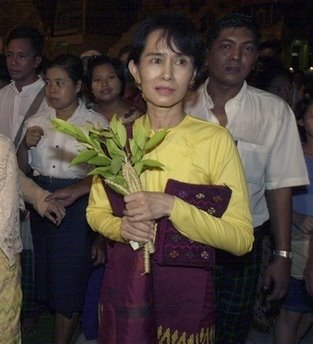


 Posts
Posts


