News & Articles on Burma
Wednesday, 03 August, 2011
----------------------------------------
MPS Propose Debate on Political Prisoners, Ethnic Conflict
U Myint Calls on Burmese Government to Fight Corruption
Shan minister first of Burma govt to resign
Why do not Burma’s President and Parliament try to end war with KIO?
Burma due for ASEAN assembly recognition
Former Burmese Child Soldier to Speak in Congress
Suu Kyi Invited to State Poverty Workshop
Burma regime has 'positive' meeting with Aung San Suu Kyi
Harsh realities facing the Kachin
Govt Shelling Hits Karen Village
Could you design a better school for Burma’s children?
Burma: getting back on the map
The Folly of More Burma Sanctions
Still on the Run—Trafficked Burmese Recount Murder at Sea
----------------------------------------------
MPS Propose Debate on Political Prisoners, Ethnic Conflict
By KO HTWE Wednesday, August 3, 2011
Pro-democracy parliamentarians have said they will raise two key issues—the release of political prisoners and the ongoing conflicts in ethnic areas—at the second session of Burma's parliament due to convene on Aug. 22.
Speaking to The Irrawaddy on Wednesday, Thein Nyunt, an independent member of parliament in the Upper House, said he will continue to raise the issue of political prisoners' freedom.
“To fight for an amnesty for political prisoners is one of my election campaign promises,” he said.
All proposals put before parliament must be submitted to the relevant House Speaker at least 15 days in advance of the session, according to parliamentary law.
During the first session of the Pyithu Hluttaw, or Lower House, on March 22, then-Minister for Home Affairs Maung Oo said that the time was not right to discuss an amnesty for political prisoners in response to a question from Sai Hla Kyaw, a Shan Nationalities Development Party (SNDP) MP for Langkho constituency in Shan State.
According to Aye Maung, the chairman of the Rakhine Nationalities Development Party (RNDP): “After new government was sworn in, international diplomats and representatives from Europe advocated the freedom of political prisoners. If the authorities accede to such requests, it will benefit the people of Burma.”
Vice President Thiha Thura Tin Aung Myint Oo, Foreign Affairs Minister Wunna Maung Lwin and presidential political adviser Ko Ko Hlaing have each claimed in conversations with foreign diplomats—or, in the case of Ko Ko Hlaing, at an Asean forum—that the country has no political prisoners.
Aye Maung said that he hopes to discuss other issues that were canceled during the first session of parliament, such as the question of ethnic languages being taught in schools.
Meanwhile, representatives of five leading ethnic parties—the RNDP, the SNDP, the All Mon Regions Democracy Party (AMRDP), the Chin National Party and the Phalon Sawaw Democratic Party— are discussing plans to propose at the next session of parliament the forming of a peace commission to resolve the ongoing armed conflicts in ethnic areas in eastern and northern Burma.
“The proposal is backed, not only by our five parties, but by other parties across the country that support dialogue between Naypyidaw and the ethnic groups,” said AMRDP Chairman Naing Ngwe Thein.
“We cannot, however, disclose details to the media before we present the issue to the parliament. At the first parliamentary session, some issues were canceled because the media had been notified in advance,” said Thein Nyunt.
Ye Tun, a Lower House MP representing the SNDP, said he will propose debate on the issue of land confiscation affecting farmers and landowners in areas where the Sino-Burmese gas and oil pipelines pass.
“Some farmers have received compensation for the inconvenience and losses caused by the pipeline,” he said. “But many other people are still waiting to know which areas the pipelines will cross, which lands will be confiscated, and how much they will get. Farmers want transparency on this issue.”
When the first session of parliament convened on Jan. 31 for the first time in 22 years, the average length of each session—among the Upper House, Lower House and regional parliaments—lasted just 15 minutes, leading to many people to jokingly refer to parliament as the “15-minute Hluttaw”. http://irrawaddy.org/article.php?art_id=21828
--------------------------------------
U Myint Calls on Burmese Government to Fight Corruption
By THE IRRAWADDY Wednesday, August 3, 2011
RANGOON—U Myint, a leading Burmese economist and the top economic advisor to Burma’s President Thein Sein, called on the Burmese government to fight corruption by adopting strong laws and regulations in a country that ranks as one of the most corrupt in the world.
U Myint, who is also a friend of pro-democracy leader Aung San Suu Kyi, made his call while presenting an anti-corruption paper at a workshop held in the Rangoon headquarters of the opposition National Democratic Force, a political party that broke away from Suu Kyi's National League for Democracy (NLD).
During his presentation, U Myint said that he believed the Naypyidaw government, led by President Thein Sein, is looking for ways to fight corruption effectively, but needs to address the issue at all levels.
“The president is interested in starting an anti-corruption campaign at the micro-level. To avoid counter-productivity, I urged him to initiate the campaign at the macro-level,” he said.
U Myint also said the anti-corruption campaign will face repercussions from some government officials, business tycoons and foreign investors who have benefitted from the country’s endemic corruption.
U Myint, 73, was previously a professor of economics at Rangoon University. He also served as the director of the economics department in the Ministry of Foreign Affairs. Later, he headed the Research Department at the United Nations Economic and Social Commission for Asia and the Pacific. He is currently the director of the Tun Foundation Bank in Rangoon.
In July, a talk on poverty that U Myint was scheduled to give at the NLD's Rangoon headquarters was cancelled at the last minute, reportedly due to pressure from Naypyidaw.
In Transparency International’s “Corruption Perceptions Index for 2010,” Burma ranked second lowest on the list. http://irrawaddy.org/article.php?art_id=21827
---------------------------------------------
Shan minister first of Burma govt to resign
By DVB
Published: 3 August 2011
MPs sit during the first session of parliament, which began on 31 January this year (Reuters)
State-run newspapers in Burma yesterday announced the resignation of Shan state’s regional minister for planning and economy, Thaung Shwe, who becomes the first member of the new government to step down.
His resignation was officially approved by President Thein Sein, who heads the Union Solidarity and Development Party (USDP), of which Thaung Shwe is a member.
Little is known about the reasons for his departure, although sources close to the minister put it down to “personal problems”.
Rumours have circulated that Thaung Shwe practices polygamy, and tenuous links have been made between this and his resignation, although nothing has been confirmed.
His departure comes less than three weeks before the second session of Burma’s parliament, where ministers are expected to scrutinise legislation and address complaints about the annual budget.
Thaung Shwe told an interviewer earlier this year that he would work to boost collaboration among ministers in Shan state, and pledged to make clean water accessible across the state, Burma’s biggest and most populous. Little else is known of him. http://www.dvb.no/news/shan-minister-first-of-burma-govt-to-resign/16855
---------------------------------------------
Why do not Burma’s President and Parliament try to end war with KIO?
By Zin Linn Aug 03, 2011 12:06AM UTC
Although Burma has had a new so-called union parliament under President Thein Sein since March, the political crisis has been exacerbated as hostilities against ethnic groups more and more spread out. Especially, the military-backed Burmese government and the Kachin Independence Organization (KIO) are in a deadlock position to sign a truce, sources from KIO side said. It seems too difficult to reach an agreement so far.
The talk involved a Burmese delegation led by Colonel Than Aung, leaders of the Kachin Consultative Council and KIO military wing the Kachin Independence Army (KIA), said KIO Joint-Secretary La Nan. KIA leaders included vice-chief-of-staff Brig-Gen Sumlut Gun Maw and Battalion 4 commander Colonel Zau Raw, he added.
It has not been confirmed so far whether the KIO and Burmese delegation have reached an agreement, with Kachin sources saying further talks between the two sides were likely in the event of a stalemate.
The KIO has offered to end ongoing fighting if the government will commence talks for a nationwide ceasefire. But Burmese government authorities did not show any positive signal, according to La Nang, a spokesman for the KIO. The KIO has met Burmese mission three times within last two months in an attempt to sign a new truce.
The KIO wants to sign a meaningful and strong ceasefire agreement with the Burmese government this time, not like the agreement in 1994, which disadvantaged a lot of rights and benefits for the Kachin people and the armed group itself, quoting a KIO official, Kachin News Group said.
“The 1994 ceasefire agreement made us suffer for 17 years. We knew it was politically fruitless and the wrong agreement but we had to follow it. As a result, we have been highly criticized by Kachin people.”
Despite the fact that, the KIO had no sufficient option to review the condition and it signed the ceasefire agreement with the then Burmese junta without any political discussion.
The KIO’s joint-secretary said the military backed government, which came into power through the 2008 constitution, should take the lead in negotiating a country-wide ceasefire and resolve political problems based on the spirit of the 1947 Panglong Agreement. The historic Panglong Treaty has outlined a multi-ethnic Union of Burma by the four major ethnic groups, the Burman, Shan, Kachin and Chin.
One year after Burma gained independence from the British in 1948, the Panglong Treaty was ignored and political argument between the majority Burmans and ethnic minorities brought about a civil war.
A July-28-open-letter offered by Burma’s pro-democracy leader, Aung San Suu Kyi, strongly called for a ceasefire between the Burmese government, led by ex-general, President Thein Sein, and ethnic armed groups, including the KIO, Karen National Union (KNU), New Mon State Party (NMSP) and the Shan State Army (SSA).
“We welcome Suu Kyi’s open letter politically but we have no plan to release a statement on it. If necessary, it’s better that the United Nationalities Federal Council (UNFC) release a statement because it concerns all ethnic armed groups in the alliance,” said La Nan, General Secretary No. 2 of KIO in Laiza, Kachin News Group reported.
The open letter of the Nobel peace laureate urged for peace talks as the first step toward peace in the country, he said. The letter said, “I would like to request to all to resolve the crisis in a peaceful way.”
The open letter was released three days after a meeting between Suu Kyi and Burmese Government Labor Minister, Aung Kyi, on July 28, to discuss working together to seek peace and stability for the country.
But, it was not the first time, Suu Kyi called for peaceful means. The National League for Democracy (NLD) led by Nobel laureate Aung San Suu Kyi released a statement dated June 20 calling both government and KIO to stop heavy fighting immediately in order to protect people’s lives and properties. The said statement also called for peaceful talks between stakeholders to settle down the decades long political crisis of the country.
In reality, Burmese government repeated the civil war with the KIO once more on 9 June, after the crash of their Border Guard Force plan, which was dismissed by the KIO several times. Additionally, the new government is acting much like the old one – the decade-long old military dictatorship – with freshly retired generals still making all the decisions.
Conversely, to end this civil war with KIO, Thein Sein government must launch a special parliamentary session immediately. As a parliament-based government, the president has the obligation to lead a discussion in the emergency parliament session in order to get true voice of the members of parliament, how they want to do with the ongoing civil war.
At least, the parliament should assign a mission made up of MPs to achieve peaceful solution that will fulfill the genuine wishes of the people. http://asiancorrespondent.com/61587/why-do-not-burma%E2%80%99s-president-and-parliament-try-to-end-war-with-kio/
-----------------------------------------
Burma due for ASEAN assembly recognition
By AHUNT PHONE MYAT
Published: 3 August 2011
Naypyidaw will send a delegation to Cambodia this month where the annual summit of the ASEAN Inter Parliamentary Assembly (AIPA) is expected to officially recognise Burma as a member.
Around 14 parliamentarians will travel to Phnom Penh for the event, scheduled for 18 August. Dr Aye Maung, chairman of the parliamentary Guarantees, Pledges and Undertakings Vetting Committee, told DVB that the event will include a ceremony to hand over Burma’s national flag.
Along with Brunei, Burma is one of only two members of the Association of Southeast Asian Nations (ASEAN) bloc not currently part of AIPA, and until now had only held “special observer” status. Although AIPA has never explicitly stated the reasons why Burma could not join, a number of delegates have long objected on the grounds of lack of democratic reform and state-sanctioned human rights abuses in the country.
Since the formation of a new government, however, ASEAN members’ rhetoric on Burma has softened, and ASEAN chief Surin Pitsuwan has maintained that Burma should be included.
The AIPA advocates for closer cooperation among the region’s legislatures and parliaments, and professes to boost the participation of citizens in regional affairs – something Burma may struggle to realise, given criticism of the void between civilians and the majority of parliamentarians there.
But ASEAN is known to have urged greater dialogue between both sides of the political spectrum in Burma, despite welcoming elections last year that many claim has entrenched military rule under the guise of a civilian government.
The delegation to Phnom Penh was due to be led by parliamentary speakers, although it coincides with the second session of the new parliament, beginning 22 August.
Burma’s position in ASEAN has seen much debate in recent months following a bid by President Thein Sein to become chair of the bloc in 2014 – critics claim however that Burma’s continuing domestic crises would reflect poorly on the bloc and render it an ineffective leader. http://www.dvb.no/news/burma-due-for-asean-assembly-recognition/16850
Former Burmese Child Soldier to Speak in Congress
Posted: 8/2/11 12:57 PM ET
I remember fairly little about my 14th year. I remember that I was a freshman in high school, that I found myself in the principal’s office with surprising regularity, that my teachers grew increasingly frustrated with my raucous behavior both in an outside the classroom. I remember it was a happy year, but nothing in particular stands out to me when I think back.
In the past week, I've met someone who remembers his 14th year entirely too clearly. His name is Hein Min Aung, and he's a former Burmese child soldier, a young man brave enough to fly halfway around the world at the invitation of Human Rights Action Center to speak in Congress about his experience in the government army of the country of Burma. Mr. Aung was 14 when he was forcibly conscripted into the army, 14 when he was forced to shoot a gun at civilians and commit atrocities and just 16 when he finally escaped the military.
The project to bring Mr. Aung to the United States to speak in Congress about his experiences in the Burmese army began two years ago, when my intern Grace Powell and I sat down and began to discuss human rights abuses in Burma. Given a choice of what specifically to focus on while interning at HRAC, Grace chose to focus on Burmese child soldiers. She was inspired by a Human Rights Watch report I'd given her that claimed Burma had more child soldiers than any country in the world.
I suggested that she work to raise awareness about the issue in Congress. Two years later, HRAC is hosting Mr. Aung in Washington, and preparing him for an informational briefing in the House of Representatives, as well as one for staffers on the Senate Committee on Foreign Relations. Mr. Aung has already done an interview with Voice of America, BBC Burma and Radio Free Asia, and plans to do one with the Democratic Voice of Burma. He's spent the past week in Washington seeing the sights and meeting with members of the small but highly active Burmese community in Washington.
Mr. Aung has prepared testimony for both briefings, in which he will describe being kidnapped into the army at the age of 14. He'll talk about his time in training camps and the abuse he suffered at the hands of his superiors, as well as how terrified he was his first time in battle. He plans to describe the atrocities committed against Burmese civilians by the army, and his eventual escape to Thailand. From there, he'll describe what it's like to be in a refugee camp, and how difficult it was for him to eventually move to New Zealand.
He hopes that his testimony will raise awareness about the plight of the nearly 70,000 other child soldiers still fighting in Burma today. When I asked him how he felt about traveling halfway around the world to visit Washington, DC, he told me it had been fairly terrifying. However, he explained, "I'm doing this for my people. I have to do this for them." http://www.huffingtonpost.com/jack-healey/former-burmese-child-sold_b_915566.html
------------------------------------------------
Suu Kyi Invited to State Poverty Workshop
By WAI MOE Tuesday, August 2, 2011
Aung San Suu Kyi will be invited to the National Level Workshop on Rural Development and Poverty Alleviation in Naypyidaw this month as there is “common agreement” between the pro-democracy leader and Burmese regime, claims a government insider.
Nay Zin Latt, a member of the Burmese president’s political advisory board, told The Irrawaddy on Tuesday that he heard Suu Kyi will be invited to “cooperate individually as an observer attendee,” rather as general secretary of her National League for Democracy (NLD) party which won a landslide in 1990 elections.
He added that the president's office and the Ministry of National Planning and Economic Development would be responsible for inviting Suu Kyi to the workshop. If Suu Kyi attends the Naypyidaw meeting it will be her first ever trip to the administrative capital.
Responding to the claims, NLD spokesman Ohn Kyaing said the party was unaware of the invitation. “But if any development is positive for dialogue and national reconciliation, we would welcome it,” he added.
The possibility of Suu Kyi's invitation comes a week after ex-Maj-Gen Aung Kyi, current minister for Labor as well as Social Welfare, Relief and Resettlement, met the Nobel Laureate at a government guesthouse in Rangoon.
After the meeting, the state media reported: “The two sides are optimistic about and satisfied with the dialogue. They held talks about opportunities for both sides to work together for the well-being of the public.
“The discussion included matters for the rule of law, elimination of disagreement and serving national interest.”
Three days after the meeting, Suu Kyi issued an open letter to the president and ethnic armed groups regarding ongoing conflicts in areas near the borders with China and Thailand. Speaking as an individual, Suu Kyi called for a ceasefire saying she was ready to get involved to achieve peace in the country.
“There are many positive developments. The joint-statement of U Aung Kyi and Daw Aung San Suu Kyi means there is a common agreement,” Nay Zin Latt said about the meeting.
“There were [previous] meetings between U Aung Kyi and Daw Aung San Suu Kyi. But they were just supporting steps, not a common agreement,” he added, but not providing precise details of the agreement.
However, quoting Thein Sein’s briefing to advisory board members, Nay Zin Latt said the president thinks “people with different opinions” at home and aboard are allowed within “members of the family of 60 million” that make up Burma's population.
“He said first he would like to foster a common agreement between different peoples and then cooperate on common works,” Nay Zin Latt explained about Thein Sein’s words.
Asking to respond on Nay Zin Latt’s words regarding a “common agreement” between the government and Suu Kyi, Ohn Kyaing said he did not know what the advisory member was trying to saying.
Although there is no official confirmation by NLD leaders, party sources said there were at least three meetings between members of the president's advisory board and Suu Kyi as well as senior NLD figures before the pro-democracy icon's meeting with minister Aung Kyi last week.
Other political sources in Rangoon said a friend of Suu Kyi, U Myint, who is an economic adviser to the president, is the driving force behind the invitation as he proposed this to the government previously.
The move by President Thein Sein's new Burmese regime comes shortly after the Asean Regional Forum in Bali, Indonesia, where US Secretary of State Hillary Clinton called for “concrete, measurable progress” regarding political reforms such as release of more than 2,000 political prisoners and “meaningful and inclusive dialogue” with the opposition and ethnic groups.
Returning from Bali, Foreign Minister Wunna Maung Lwin reportedly told the National Defense and Security Council in Naypyidaw that Burma currently faces difficulties gaining approval for the Asean chairmanship in 2014. http://irrawaddy.org/article.php?art_id=21820
------------------------------------------
Burma regime has 'positive' meeting with Aung San Suu Kyi
Minister meets opposition leader as Burma's new government takes timid steps towards political 'opening'
Antoine Clapik
Guardian Weekly, Tuesday 2 August 2011 13.59 BST
Aung San Suu Kyi talks to the family members of the late poet and political leader Thakin Kodaw Hmaing at a ceremony in Rangoon. Photograph: Stringer/EPA
Last week the Burmese dissident and Nobel peace laureate Aung San Suu Kyi met a member of the new government formed after last November's general election. This is the first time since her release from house arrest that she has met a government representative.
The meeting with the minister of labour, Aung Kyi – who is not related to the opposition leader – merely gave rise to a formal exchange, qualified in a joint communique as "positive". "It is the first step," the minister told the press. Aung San Suu Kyi cautiously hoped it would have "beneficial results for the country". During her time in custody the minister was in charge of relations with her, and she had met him nine times since 2007.
The government headed by President Thein Sein has made several timid gestures indicating an opening, even if there is no tangible evidence the regime is really moving towards the "disciplined democracy" it purportedly advocates. The meeting with Aung San Suu Kyi, suddenly announced the previous day, came shortly after a statement by the US secretary of state, Hillary Clinton, calling on the Burmese government to engage in "constructive dialogue" with the opposition.
The contact with the opposition leader, who now enjoys greater freedom of movement, suggests that the government is keen to improve its image with the international community. It recently allowed Aung San Suu Kyi to leave Rangoon, the business capital, where she lives. But although the government has given her a freer rein, she has nevertheless been banned from taking part in any political activity.
The 1991 Nobel prize winner is still acting cautiously, trying to build links between social networks all over the country, with the focus on combating poverty and on development, but taking care not to cross the red line drawn by the authorities.
Since taking office, after an election unanimously condemned by observers as a farce (a quarter of all seats were automatically allocated to the military), the new government has made scarcely any progress on the political front. However, it announced that Burma has received $20bn in foreign investment for the 2010-11 fiscal year, of which China contributed almost half.
For many analysts the most striking feature of the new team is its lack of initiative. In an article posted on Irrawady.org, a website operated by opposition forces in exile in Thailand, Larry Jargan, a Burma specialist, explains that splits have appeared in the government based in Naypyidaw, the country's new capital. Thein Sein, described as pragmatic in the piece, is at loggerheads with his deputy, Vice-President Tin Aung Myint Oo, a general thought to be the leader of the regime's hardliners. The former head of the junta, Than Shwe, is supposedly enjoying retirement but may very well still be pulling the strings.
Jargan maintains that "inertia has replaced the old junta" and that Tin Aung Myint Oo is doing his best to take control of events. He seems determined to limit the options available to the president and the army chief of staff, General Min Aung Hlaing, and "is trying to establish himself as the new dictator", according to Jargan, who cites sources in the capital. For the time being, this power struggle is holding up all the promised reforms.
It also explains the fact that Thein Sein has not released the 2,000 political prisoners, as demanded by Aung San Suu Kyi. According to sources in Rangoon, the president favours this measure, but his vice-president won't hear of it.
Renewed fighting between various armed groups belonging to the Karen and Kachin minorities has done nothing to allay tension in this ethnically fragmented country. The clashes are delaying hydroelectric and road-building projects undertaken with China in the north, and with Thailand in the south.
This story originally appeared in Le Monde http://www.guardian.co.uk/world/2011/aug/02/burma-regime-meeting-suu-kyi
----------------------------------------
Harsh realities facing the Kachin
Published Date: August 2, 2011
Currently there are fierce battles raging throughout the Kachin State between the Kachin Independence Army (KIA) and the Burmese government. (MaristFathers.org.au/Australian Catholic Migrant and Refugee Office)
Relations between the Burmese military and the Kachins have been deteriorating for years and have now reached a humanitarian crisis.
…
The category Kachin comprises of six ethnic sub-groups or principal lineages (Jinghpaw, Lawngwaw, Lashi, Zaiwa, Rawang, Lisu).
These six groups are deemed to share similar traditions, customs, dialects and practices living mainly in northern Burma, as well as parts of China and India.
…
Under British rule from 1824 until 1948, many Kachin converted from traditional spirit worship animism to Christianity.
In modern Burma, the majority of Kachins are Christians, predominantly Baptists, followed by Roman Catholics and other Christian denominations.
The Kachin Independence Army (KIA) was formed in 1961 shortly after Burma’s first Prime Minister U Nu decreed Buddhism as the state religion of Burma, against the will of the Ethnic Minorities.
The KIA also formed in response to the unfulfilled promises of autonomy of an independent Kachin State outlined in the Panglong Agreement 1947.
…
Independence Organization (KIO, the political arm of the KIA) policy goal is for autonomy within a federal union of Burma, along with self-determination of rule and administration of land and resources.
In 1994 a “Cease-Fire” agreement between the KIA and the Burmese Army was signed.
On the 9th June 2011, open conflict erupted for the second time after the 17-year ceasefire.
The clashes began when the Burmese government concluded an agreement with China for the construction of a dam that will power a hydroelectric plant in Kachin territory.
The project will cause the forced displacement without adequate compensation and flooding of villages where the Kachin people live.
Local people refused to move provoking violent repression from of the Burmese Army.
…
For those living outside of Kachin State, it is difficult to understand the harsh reality the people are facing. In undemocratic Burma, only the few military commanders with executive power control the whole country.
They have seriously oppressed media freedom and social and human rights activities, especially in Kachin State.
The Burmese military regime’s ethnic cleansing mentality fuels every Burmese soldier to act with violence, especially towards the strong-willed Kachin ethnic group. This is why the Kachin were forced to leave their homeland.
Source: MaristFathers.org.au http://www.cathnewsindia.com/2011/08/02/harsh-realities-facing-the-kachin/
---------------------------------------
Govt Shelling Hits Karen Village
By SAW YAN NAING Tuesday, August 2, 2011
Villagers' lives have been severely disrupted in Hlaing Bwe Township in southern Karen State due to a continued campaign since May of mortar-shelling by a joint-force of Burmese government troops and a unit of the Karen Border Guard Force (BGF) against Karen rebels in the area, according to a rebel source.
The shelling has been carried out almost every day, said Brig-Gen Johnny, the commander of the main rebel faction, the Karen National Liberation Army's Brigade 7.
He said the government troops and BGF particularly try to target the camp of a renegade faction of the BGF, led by Lt-Col Po Bi, which defected from the government alliance to rejoin the KNLA and its its mother organization, the Karen National Union (KNU).
At least 14 community schools have been closed down due to the fighting, and villagers live in a constant state of fear, according to a report by the Karen Teachers Working Group. Some mortar shells have hit homes, though no deaths were reported.
Burmese army-BGF forces have dug in on high ground and are firing mortars down at the rebels' base, which is located just outside the town of Hlaing Bwe, Brig-Gen Johnny said, adding that many families have fled the village and are hiding in the jungle.
Meanwhile, KNLA Brigade 4 in Tenasserim Division has announced that it will carry out military activities against the government troops working as security guards for the Italian-Thai Company which is currently contracted to construct a highway between Thailand’s Kanchanaburi and Burma’s Tavoy as part of the multi-billion-dollar Dawei Development Project.
Local villagers in areas close to Tavoy [Dawei] have complained about the project's numerous negative impacts on the local population and the environment. Many also said that they have not been compensated for the loss of their land which was seized by Burmese authorities to expand the economic zone.
Maj. Joseph of KNLA Brigade 4 said, “We have to protect civilians. Their land has been seized and destroyed without compensation. They will only have to relocate if the project continues.”
Recently, a group of 50 construction workers from the Italian-Thai Company fled back to Thailand due to nearby fighting between government troops and KNLA Brigade 4 in Tenasserim Division, near the border with Thailand. The KNLA Brigade 4 ambushed the patrolling Burmese troops and burned down their camps.
The workers have since returned to the construction site in Tenasserim although construction on the highway is at a standstill, said KNLA sources.
When contacted by The Irrawaddy on Tuesday, a staffer from the Italian-Thai Company in Bangkok, refused to provide any details about the workers' security or the project. http://www.irrawaddy.org/article.php?art_id=21818
--------------------------------------
THE INDEPENDENT
Could you design a better school for Burma’s children?
By Andrew Buncombe
The Foreign Desk
Tuesday, 2 August 2011 at 5:52 am
burma school one 300x225 Could you design a better school for Burmas children?
There’s not a lot that can prepare you for both the sadness and optimism that surrounds the schools and shelters set up along the Thai border for the thousands of Burmese children forced to flee for their lives with their families. Their stories are pitiful, their future uncertain and yet it is difficult, when talking to these youngsters, not to be moved by their courage and hope.
When David Cole and Louise McKillop recently visited some of these schools in Mae Sot they too were struck not just by the deficiencies but by the potential. “We saw children as young as two or three sleeping in the back of classrooms. Some of the children board at the schools, spending the week there, which allows parents the time to work and seek out a little more money,” said Ms McKillop. “Many work as rubbish collectors or workers in the fields and a lucky few as maids or cleaners within the homes of Thai families.”
The schools in the border towns are constantly expanding as the flow of refugees, most of them members of the Karen ethnic group, continues to pour across from Burma. In the semi-permanent camps that run along the border north and south of Mae Sot and which are overseen by the Thailand Burma Border Consortium, it is estimated there are up to 140,000 people. They have no legal status in Thailand and yet cannot safely return to their own country under the current conditions.
When the pair asked one of the teachers why they were so many very young children, the teacher told them: “We get new families crossing the border all the time. Secondly, when the children reach an age where they can make money for the family as labourers they are taken out of schooling. It is heart breaking for the children who want to stay on, but can’t”
Some of the facilities in Mae Sot and the other communities are markedly better than others. Whereas many of the schools overseen by the Burmese Migrant Workers Education Committee, an umbrella group of more than 45 schools, are essentially just shacks, others have concrete floors and proper roofs. The difference in standards is remarkable, as is the impact such improvements have on the children.
burms school 2 300x225 Could you design a better school for Burmas children?
“We visited Shwem Tha Zin school, which was in desperate need of funding. As we walked into the tiny classrooms we looked over and saw thirty toddlers sat together on the floor. One little boy was very upset and could not stop crying, he was one of the newest arrivals,” said Ms McKillop. “It is very difficult not to get emotionally attached to the children and the school.”
Ms McKillop and Mr Cole both work for the British charity Building Trust International and after their visit to the facilities in Mae Sot they hit upon the idea of trying to come up with a better classroom for the children they had met. “The seed of an idea was planted in our minds to create a set of school buildings that could be constructed on a site and then if the need arose could be deconstructed and moved to another site, another school or back to Burmese territory,” explained Mr Cole. “The task is a hard one as the buildings cannot be perceived as temporary by those using them. They need to convey a place of security that any school building should, while also being composed of light and durable enough materials to be relocated.”
They decided to try and solve the problem by turning it into a competition. Now they are challenging designers and architects from around the world to come up with a solution. “We decided that launching an international design competition would not only help get the best design but would also raise global awareness of the issues in Burma.”
Mr Cole said the competition will provide the funding for the build by charging small entry fees . The final building will be handed over to the BMWEC and will be used this as a model to investigate the potential of rolling out further modular school buildings in areas affected by similar factors. Full details of the competition can be found at the website of his organisation, www.BuildingTrustInternational.org
Mr Cole added: “We hope to show that design and architecture can be a tool for positive social change, not as a reinforcement of the divide between rich and poor which it seems to be becoming.” http://blogs.independent.co.uk/2011/08/02/could-you-design-a-better-school-for-burmas-children/
-----------------------------------------
Burma: getting back on the map
August 2, 2011 9:01 am by Tim Johnston
The ministry of hotels and tourism announced in June that arrivals were up almost 25 per cent for the first five months of the year, statistics that are supported by anecdotal evidence. A traveller looking for a last-minute room in Rangoon last week found the first hotel he tried fully booked – and this is the low season.
Unspoilt beaches like Nga Poli and Ngwe Saung are being compared to those in Thailand before developers embarked on their love affair with concrete and low-rent bars; Burma’s extraordinary temples of Bagan are like Cambodia’s Angkor Wat before the rush; and the mountainous north – particularly Putao – is one of the last great unspoilt landscapes in the world.
Burma is looking at a little over 350,000 tourists this year, a drop in the ocean compared to Thailand’s forecast of 15m arrivals.
To give an idea of the potential: Thailand has perhaps a couple of dozen resort islands in the Andaman Sea, places like Koh Pha Ngan and Kho Phi Phi. Burma’s Mergui archipelago consists of more than 800 islands, most of them untouched.
Burma used to be off the map, figuratively speaking, because of the political environment and reports that Aung San Suu Kyi, the Nobel Laureate and opposition leader, wanted to discourage tourism.
But that has changed. She now supports independent tourism: “I think we are going to encourage individual tourism, encourage tourists to stay in certain kinds of hotels, ethical tourism if you like,” she told the FT’s David Pilling in January.
According to local media, there are already 22 foreign owned hotels in Burma.
“Singapore has topped foreign investment in Myanmar’s hotel sector with 597.75 million U.S dollars, followed by Thailand with 263.25 million USD, Japan with 183.01 million USD, China’s Hong Kong with 77 million USD, Malaysia with 20 million USD and Britain with 3.4 million USD,” the Xinhua news agency reported last week, although the so-called British money is likely to be mostly Chinese money being funnelled through the British Virgin Islands – a reminder that not only does Burma have the destinations, it also lies sandwiched between the markets of enormous markets of China and India. http://blogs.ft.com/beyond-brics/2011/08/02/burma-getting-back-on-the-map/#axzz1TweembzS
----------------------------------------------
THE DIPLOMAT
The Folly of More Burma Sanctions
August 02, 2011
By David Steinberg
With the first signs of reform there in decades, the US plan to extend sanctions against the government is misguided and self-defeating, says David Steinberg.
Related Features
If US sanctions against the military government in Burma, the goal of which were regime change, haven’t worked for a decade and a half, by what logic would one suppose that additional sanctions would have a more positive effect? Yet well-meaning human rights and other organizations have recently proposed that further sanctions be instituted, and that a UN Commission of Inquiry into human rights violations be convened.
This proposal is especially quixotic as the EU has just modestly modified its less stringent sanctions policy in light of potential progress in that country, and none of the Asian states adheres to any sanctions regimen. Rather than being a step forward, then, this proposal undercuts both US policy and the potential for positive change in Burma.
That the Congress and the White House will extend current sanctions policies is a given, as Burma isn’t an issue on which any administration is willing to use up political ammunition. But the country has a new government inaugurated this spring – as a result of last November’s admittedly clearly flawed elections, which in turn were based on a manipulated referendum on a new constitution in May 2008.
The cast of characters in this new act of the Burmese tragic drama is largely composed of the former military, but now in mufti. Still, there are now a few opposition voices in the various parliaments, and the first public criticism of state policies has taken place before the new president, in an act unprecedented in a half century.
In his inaugural speech the end of March 2011, President Thein Sein set forth a remarkably liberal and positive agenda. It called for progress on the alleviation of poverty, economic reform, more attention to health and education – both in miserable condition – better treatment of minorities, less censorship, and the elimination of corruption. The speech could have come from any government spokesperson in a democratic society.
These goals, while articulated by the head of state, aren’t universally accepted among the military power elite in that society, and there are strong elements opposed to reform. They could scuttle positive change and redirect priorities, which have been advocated by many foreign observers and governments. But the call for more sanctions and the UN Commission of Inquiry simply lends more credence to those elements within Burma who are opposed to reform, who will claim that no action will please the United States, and therefore the US continues to be a threat, which in turn requires tighter controls on the population and greater military expenditures. Such views undercut the potential for helping the people of that poor society – those that the advocates of more sanctions wish to assist.
The United States has nominated a special ambassadorial envoy to Burma, and his approval is likely in the Senate. His position calls for coordination of sanctions policies and dialogue with the Burmese. Do the organizations advocating more sanctions really believe that this will positively affect his efficacy in dealing with Burmese officials?
The Barack Obama policy review resulting in ‘pragmatic engagement’ went as far as it could given internal US politics. It called for high-level dialogue, which continues. But US sanctions can’t be eliminated except in response to some overarching reforms inside Burma and the expressed concurrence of opposition leader Aung San Suu Kyi. The United States has called for continued support to her and institutionally to the National League for Democracy, a party officially deregistered because of her objections to participation in the elections. All this means that no US administration will use up valuable internal political credits to change existing sanctions, and even the new Burmese administration may not be strong enough to take the positive steps the United States wants.
The reality is that change inside Burma is possible, but likely to be slow. Yet though these internal Burmese reforms may prove ephemeral, they are the first positive governmental steps since 1962 and the military coup of that year. We should therefore welcome them as a start, and watch carefully their progress.
It’s simply self-defeating to advocate policies that effectively undercut the possibility of these reforms continuing, something which would be in the interests of both the United States and the people of that sorry land.
David I. Steinberg is a Distinguished Professor of Asian Studies, School of Foreign Service, Georgetown University. His latest volume is 'Burma/Myanmar: What Everyone Needs to Know.' This is an edited version of a piece published by Pacific Forum CSIS here. http://the-diplomat.com/2011/08/02/the-folly-of-more-burma-sanctions/
----------------------------------------
Still on the Run—Trafficked Burmese Recount Murder at Sea
By SIMON ROUGHNEEN Wednesday, August 3, 2011
PATHUMTHANI, Thailand — As the wind-whipped rain made its staccato finger-drum rattle on the shack's tin roof, Saw* and four Burmese co-workers sat cross-legged on the roughly bonded plywood that had been pieced together to make an elevated floor.
Outside, the construction site at Lamluka in Pathumthani, an hour from central Bangkok, had turned into a cement and mud swamp, as Thailand got the tail-end of the Nock-Ten storm that killed over fifty people in the Philippines and Vietnam.
Sodden by the downpour, the pathway through the site had turned to mud, the thick gluey clay sticking to clothes and shoes and splashing up onto faces and hair. The sludge was everywhere, even dulling and browning the usually creamy-white thanaka paste—a Burmese make-up made from the ground bark of the thanaka tree—which adorned the faces of two of the women sitting to listen to Saw's story.
“I saw them throw two men into the sea,” recalled the 32-year-old Saw, almost blurting out the revelation in his eagerness for catharsis. Frozen with fear at the time, he said that he was “too scared to move, to do anything.”
The two men, who he said were both in their early twenties, put up a final, futile, agonizing struggle.
“They fought, but with the noise from the engine and the sea, I could not hear, though I could see,” Saw continued.
“There were too many, the men who threw them in were Mon, they were like the right-hand men of the captain, a Thai.”
Pausing, he repeated, as if still stunned by what he saw that day. “They just grabbed them and threw them into the waves. That was it.”
Asked why he thought the men were murdered, Saw said “it was like the policy.” The unwanted and feeble were discarded overboard. “They were sick, weak, they could no longer work. They were just in the way.”
Saw said he spent seven months at sea, during which he was beaten, poorly fed and forced to work at least fifteen hours per day, before escaping on Nov 10, 2010, when the boat docked with catch at Ar Chong.
Before all that, Saw made his way from Myitkyina in northern Burma's Kachin State to the Thai-Burmese border. He was hoping to find work in Mae Sot, a border town linked to Burma's Myawaddy by a now-closed bridge, usually one of the main land and trade links between the two Southeast Asian neighbors.
Through what he says was his own stupidity, he was captured by the Democratic Karen Buddhist Army (DKBA), a largely pro-government ethnic Karen militia that split from the Karen National Liberation Army (KNLA) in 1994. Human rights groups have long accused the DKBA of human trafficking, saying the militia targets vulnerable Burmese seeking to find work in Thailand. The DKBA forced Saw to work as a logger, though he says he managed to flee after a few days, finding his way to the Minlatpan border crossing and a broker known as Ko Kyaw, who had already recruited 38 people. He linked the group up with a second broker, whose name Saw forgets, in Mae Sot across the border, who would assist the group in finding work, according to Ko Kyaw.
Saw signed up, as the group was told they would have to work just two months aboard a fishing vessel to repay debts owed to the brokers for helping the group find work in Thailand. Heartened by what turned out to be a cruel ruse, they started their trek on April 19, 2010, hiking and hacking through jungles, bypassing villages and dodging police checkpoints en route to Ar Chong, near Rayong, east of Bangkok.
“Sometimes we walked all night,” he recalled. “Other times we built a fire, as the broker told us that man-eating tigers were in the area.”
However, tigers were not the only threat they faced on their arduous nine-day trek south. “Two men, I guess maybe Thai villagers, robbed us one night,” he said, as if somewhat embarrassed by what came next. “There were more than 30 of us, but just two of them. But they had guns and managed to get money from some of us before running off into the night.”
One woman, who Saw said was “about 27,” was injured during the long walk. “I think her shoes gave out, one of her feet was giving her pain,” he recalled.
Saw said the woman could no longer walk. He would not say whether the broker made the call on what to do, but with half the journey still ahead, the decision was made. “We left her behind in the jungle,” he said, exhaling, eyes down, marking the first pause in what s was so far an almost stream-of-consciousness recounting of his story.
Saw said he worked up the courage to try escape from the boat after being told he would have to work at least one year on the vessel. “If I was to stay longer, I would not have life anymore,” he lamented.
His eventual escape was planned and undertaken with a colleague from Arakan State in western Burma, who had also been trafficked and held in debt bondage aboard the fishing boat. “It was our second try,” he said. “The first time we were caught by police. They brought us back to the ship and then we were beaten and threatened.”
Lesson learned, he said. “The second time we made sure to avoid any police or army. We took a bus to Bangkok and have been here ever since.”
While life is now much better for Saw, his ordeal has not ended. “'I have had four jobs since coming here,” he said. “As most of them have not been steady work, I just keep moving on.”
To better regulate its migrant worker sector, Thailand introduced a registration process for illegal or unregistered migrant workers, which ran from June 15-July 14. Almost 700,000 Burmese registered during that period, meaning that there are now almost 1.5 million Burmese entitled by law to work in Thailand.
While the process has been a success and has been broadly welcomed, it entails some damaging side effects. According to the Thailand section of the latest US State Department survey of global trafficking trends, “observers remained concerned that the process to legalize migrant workers with its associated fees, as well as costs imposed by poorly regulated and unlicensed labor brokers, increased the vulnerability of migrant workers to trafficking and debt bondage.”
Saw arrived at the Pathumthani construction site only last Sunday, July 31. “I ran from the last job,” he said, claiming that the subcontractor he worked for there sought an extra 3,000 baht (US $100) for processing his legalization papers with the Thai authorities.
“I tried to bargain, but she would not listen,” Saw said. “She threatened to call the police, so I ran, I panicked.”
He said he came here because he knew some of the Burmese working at this site. “I have work here already,” he said, although some of the other workers have been told that they will not be paid until the entire housing project is completed.
However, the previous subcontractor has his documentation and the original copy of his registration with the Thai authorities. “I don't know what I can do now without my papers, or how to get them,” he said.
*Saw is a pseudonym used to protect the identity of the trafficking victim. His case has been independently assessed and verified by academic and NGO staff working on trafficking issues, who asked that their identities be withheld. http://irrawaddy.org/article.php?art_id=21824
Thursday, August 4, 2011
News & Articles on Burma-Wednesday, 03 August, 2011


Wednesday, August 3, 2011
News & Articles on Burma-Tuesday, 02 August, 2011
News & Articles on Burma
Tuesday, 02 August, 2011
----------------------------------------
New-generation war in Myanmar
Military Rule in Burma
DKBA to escalate border conflict
Russia to build metro in Naypyidaw: reports
‘Brand Burma’ a failure, experts say
Nationwide cease-fire demand prevents KIO-government agreement
Did Senior-General Than Shwe pick the wrong commander in chief?
Is Burma Really No. 1 in Internet attack traffic?
Burma needs wide-ranging international pressure for political change
Myanmar Offers Vast Business, Investment Opportunities
-------------------------------------------
ASIA TIMES ONLINE: Aug 3, 2011
New-generation war in Myanmar
By Tony Cliff
LAIZA, Myanmar - "At first the Burmese soldiers were looking very confident, they were moving up on the road shouting and shooting towards the jungle. They just did not realize we were hiding around," said Aung Myat, a 27-year-old soldier with the insurgent Kachin Independence Army (KIA)'s 23rd Battalion.
When the government troops arrived, the insurgent soldiers triggered landmines and started to shoot. The clash was the first of a series of confrontations in the area which lasted almost three days, according to Aung Myat. In the evening of July 18, back in the relative safety of Hkaya Bum camp, the battalion's bamboo barrack headquarters, the young insurgents released an excess of adrenaline when telling their war stories.
Their animated conversation was stifled by the roar of a heavy monsoon rain; a thick mist blanketed the whole area. Between sips from beer cans and puffs from cigarettes brought earlier by a supply truck, they traded their stories with an almost childish excitement, mimicking with their arms the handling of machine guns. "We counted at least eight bodies, including four or five incinerated in a vehicle we destroyed with a grenade, but surely there were more," said Aung Myat.
At 27, Aung Myat is one of the eldest in the battalion: most of the other guerrillas are around 20 years of age. For all of them it was their first ever combat experience. Less than 10 kilometers (km) to the east from the battlefield road, across a succession of jungle-covered hills down a narrow valley, lies Laiza, a small city of 10,000 people that houses the headquarters of the Kachin Independence Organization (KIO), the KIA's sister political organization. Laiza is crossed by a stream marking the Chinese border.
Rumors spread by exile media groups of massive Myanmar military reinforcements and of an imminent offensive hardly seem to have reached the city. Schools, shops and hotels remain open while people attend to their business as usual. Yet two new developments are a reminder that the situation is exceptional and potentially grave. As a safety measure, Chinese authorities have closed the border gate in the middle of downtown from 6 pm to 6 am, presumably to avoid a flood of refugees into their territory.
Thousands of people, mostly women and children, can already be seen crammed in a few locations such as the city hall, a cardboard factory warehouse and the "Manau", a vast ground where the ethnic Kachin organize traditional celebrations. These are the civilians who left their villages when armed hostilities first broke out on June 9. On that day, there was a violent clash at the site of the Dapein dam, about 50 km south of Laiza. The exchange of gunfire signaled the end of 17 years of ceasefire between the Myanmar military and the KIA.
From 1989 onwards, some 15 armed ethnic insurgent groups concluded separate ceasefire agreements with Myanmar's ruling junta. The Kachin had always looked like an exception in Myanmar's complex ethnic jigsaw. With a size of 89,000 square km, more than twice the size of Switzerland, their state is one the country's largest administrative entities. But with an estimated population of 1.36 million (based on 2002 official statistics, the latest available), it's also one of the country's least inhabited areas because of the steep mountains that cover nearly half of the state.
The predominantly Christian Kachin ethnic population is estimated at 1.2 million (out of a total national population of 55 million), half of them living in the Kachin State, the other half in other parts of Myanmar. About 300,000 Kachin also live in neighboring China, where they are known as Jinpo. For historical reasons, the Kachin have managed to develop a strong social and educational system, making them arguably one of the most sophisticated ethnic groups in Myanmar.
The agreement with the Kachin, signed in 1994, was the only one formalized on paper. Essentially, it defined a framework for future business deals with and without Myanmar companies and delineated a portion of the Kachin State that would fall under the KIO's control. However, the document was never made public, which made the assessment of its implementation difficult.
Kareng La Nan,* [1] a teacher from Myitkyina, summarizes many of his ethnic companions' opinions: "Those 17 years have surely brought stability, some social and economic developments and less-human rights violations but we have gained absolutely nothing on the political level."
As with other armed ethnic groups, the Kachin have abandoned their previous claim for independence. Instead, they have demanded a certain degree of autonomy over their own affairs which would guarantee respect for their own rights and culture.
Except for certain Kachin leaders, other politically connected individuals and large private companies who took advantage of business opportunities allowed for in the agreement, many people now view the ceasefire as a fool's bargain. The long list of grievances has fueled the new hostilities. Kachin land, they say, has been systematically looted of its natural resources. The ethnic group has all but lost to the benefit of Burmese companies the lucrative trade in jade which fueled the insurgent organization for decades.
Giant business groups affiliated with the military junta, such as Yuzana, Htoo Trading or Asia World, took up in Kachin State massive production of tapioca and the exploitation of hydropower, timber and various minerals. Still, the sharper arrows are aimed at the Chinese companies which have invested heavily in gold mining, hydropower and other products such as timber with allegedly very little benefit for the local population.
This perceived "one-way" investment policy has stirring up an anti-Chinese feeling with many people. "When they develop large plantations of bananas with export quality standards or gold mining, they bring their own equipment and workers and they don't share with the locals," complains a KIA cadre.
The current most sensitive Chinese investment is the construction of the Myitsone dam, 40 kilometers north of Myitkyina at a site considered by Kachin as a cultural heartland, with a planned capacity of 6,000 megawatts. To many Kachin, the project is an environmental abomination.
Activists say the water in the planned reservoir will put immense pressure on the underground soil and water system. Environmental groups also warn about potential detrimental effects downstream on the lives of millions of people who depend on the Irrawaddy River's system. It also may be, although this is not confirmed, that the electricity from the dams will be exported entirely to China.
The last straw, it seems, was the junta's order in 2009 to various ethnic armed ceasefire groups to transform into Border Guard Forces (BGF) that must disarm and submit under government officers' command. "It was nothing less than an order to surrender," comments one long-time observer of the ethnic groups.
The KIO, as well as other groups such as the Wa and the Mon, rejected the BGF order and proposed alternative plans which were all flatly rejected by the junta. Subsequently, the KIO was officially declared an outlaw organization.
The June 9 clash marked the official return to armed conflict. "They created this incident as an excuse to penetrate into our territory," claims Zau Awn, the KIO's administrator officer at the central region. However, it looks like the Myanmar military's strategists underestimated the resolve of the Kachin. Perhaps they thought they could repeat the operation they launched in August 2009 against the ethnic Kokang, another armed group who rejected the BGF and was crushed in a few days of fighting.
Under a banner in the Kachin language reading "Operation Victory Journey" in a large meeting room at the downtown Laiza Hotel which has been transformed into a central command post, General Gun Maw, the KIA's 46-year-old deputy chief of staff, sums up many Kachin officers' opinions, "The Burmese soldiers don't have the motivation and very little support from their own people."
Interviews with three Myanmar military prisoners of war in Laiza seem to confirm this assessment. Asked whether he knew the reasons why he was sent here, Aung Myo Hlat,* a 36- year-old captain with the 21st Infantry Battalion, paused for a long minute before finally saying: "I am a soldier, I had to obey."
Soe Myint,* a 48-year-old career sergeant, recalls how he fell unconscious in the bush after a bullet went through his left arm. "I don't know why we are fighting, I just remember that I lost a lot of blood, I fainted and was left alone. When I woke up I was into KIA's hands."
Htoo Lay,* a 22-year-old Karen ethnic private attached to an artillery unit, did not even ask to join the army. "I was forcibly conscripted three years ago by officers while I was waiting for a train at Mandalay railway station." He was hit in the back by shrapnel. "I did not know what to do, the injury was not too bad, I just hid in the bush, KIA soldiers came and shouted 'we won't shoot you, just come out', I came out, I never used my weapon."
Like his two companions and probably like most Burmese soldiers, he was experiencing his first combat. Aung Kyaw Zaw, a former soldier with the Burmese Communist Party who has maintained good relations with ethnic groups along the Chinese border, makes a stark assessment based on his historical knowledge, "The quality of the Burmese army rank and file has never been so low."
The KIA claims it has sent a letter to the Myanmar authorities proposing to deliver the prisoners. "We got no answer," says a KIA officer. "After their return in their army, the prisoners will probably be court-martialed, they will be charged with lack of responsibility, loss of weapon and giving intelligence to the enemy. The officers will get at least seven years of jail."
As the ethnic groups long-time observer says, "The Kachin are feared by many people for their fighting capabilities. During WWII [World War II], when they fought alongside the British, they were given strong credit for helping to kick the Japanese out. They have this 'we can do, we can stand on our own' mentality."
The determination of Kachin soldiers is further strengthened by the knowledge that their enemy's weaponry on the field is not really superior to theirs. In a Hkaya Bum barrack, the KIA laid their arms catch from the three days of battle. Mixed with identity documents, mobile phones, money, family pictures and other personal items, Burmese rifles, machine guns, mortars, grenades and other landmines are arranged. Much of the weaponry would look more appropriate in a museum than on a modern battlefield.
While the Kachin will be happy to use these relics against their original owners, they also manufacture their own weaponry. Copies of the famous AK-47, mortars, landmines and other items are made by Kachin gunsmiths in secret armories. The KIA claims to have around 6,000 standing soldiers and can count on as many as 8,000 more village militias composed of women and men who have received basic military training and been provided with weapons. (Asia Times Online could not independently verify the figures.)
The Myanmar military's main comparative strength is its artillery fire power. Yet any attempt to capture Laiza would represent a stiff test of its capabilities. Only two roads lead to the city. In the current monsoon season, rain and mud have made the northern access all but inaccessible while the KIA claim they can maintain strategic control of the southern road. If the Myanmar military used heavy artillery to shell Laiza across the hill ranges, they would inevitably send mortars into Chinese territory, with the risk of provoking an international incident.
So far the KIA's strategy has been to defend its territory and positions against any incursion. Sabotage operations, such as blowing up bridges, have also been conducted. "Since we are declared outlaw, we have started to lay landmines to protect our positions," adds Major Kumbu Din, the KIA's 5th Brigade commander.
The renewed conflict has brought its share of human misery. At the time of writing, more than 17,000 villagers had fled their homes to safer areas, mostly along the Chinese border. The majority of them left in anticipation rather than in response to fighting. Mali Bawk La, a 70-year-old farmer from Nam San village, walked some 30 kilometers with his six family members to Laiza. "The tension was growing, we feared that the Burmese soldiers would capture us and force us to do things like [act as] porters," he said.
According to the KIO, an estimated 6,500 displaced people have managed to cross the Chinese border to live with Jinpo relatives. Another 7,500 are taken care of by the KIO in temporary camps, including more than 6,000 in Laiza. The rest are scattered in Myitkyina and in western areas of the vast state. Anticipating a long war, the KIA has already started to build 500 bamboo houses along the Chayan river down from Laiza which will accommodate 7,000 people.
"So far we could count on the KIO's administration, donations from individuals and churches and the help of many young Kachin volunteers who came from all over the country," says La Rip, the relief effort coordinator in Laiza. "Maybe the situation looks normal but it won't be at all as long as there is no ceasefire. If the crisis lasts or gets worse we will certainly need outside help."
There are also credible reports of human-rights abuses committed by Myanmar army soldiers against Kachin civilians. The Laiza-based Kachin Women Association has documented at least 18 cases of rape, sometimes aggravated with murder, between June 10 and 18. More recently, on July 21, a KIA female officer reported the rape of a nurse in a local clinic. A nurse running a clinic in a Kachin village, says that she "never heard about rape cases before the fighting started".
The conflict has had at least two unexpected consequences. First, many Kachins confirm that support for the KIA is once again on the rise. That has not always been the case: under the ceasefire it was not rare to hear criticism of the Kachin leadership, who many felt had sold out the state's land and resources for their own personal gain.
Second, government pressure to join its BGF scheme and other recent developments have radicalized a new generation of Kachin youth that was raised in peace time conditions. "Everyone wants to go to war," shouted a young businessman coming out from a Sunday mass at the Laiza Baptist church. "It's time for the Kachin people to free themselves from the Burmese regime. We like [opposition leader] Aung San Suu Kyi but her appeals for non-violence have failed."
Within the KIA, the conflict has also signaled a changing of the guard. "The old leaders who still want to compromise without a political agreement have no say anymore," says a young KIA cadre. Yet even though many Kachin don't see any other way than armed resistance to push their grievances, nearly everyone wishes for a negotiated settlement.
La Nan, the KIO's spokesman, said the Kachin are determined to stick to a three-point proposal. "First we will try to establish a temporary ceasefire in our area; secondly, we want the same for the whole country; thirdly, we want a political dialogue where all ethnic armed groups will be represented by the United Nationalities Federal Council (UNFC)." (UNFC is an organization formed in February with three ceasefire groups and three non-ceasefire groups who advocate for a federal union.)
A June 30 meeting between government and Kachin delegations failed to reach any agreement, though contacts are reportedly ongoing. The Kachin side has blamed the government for sending a team with no real negotiating power and no clear mandate from Naypyidaw, Myanmar's capital. "The Burmese told us 'let's work peacefully so let's go for a ceasefire'," said Gun Maw. "But there is no political agreement, it's just a call to facilitate the life of people for business purposes."
The mid-July clashes down from Hkaya Bum camp were the most intense of the nascent conflict. Since then there have been sporadic skirmishes, but apparently without a concerted strategy from the Myanmar military. The two sides have reportedly resumed contacts in recent days, without clear results. Meanwhile, those in Kachin State hold their breath, hoping for real peace and autonomy, not just another ceasefire.
Note
1. Names marked with an asterisk * have been changed for security reasons.
Tony Cliff, a pseudonym, is a Bangkok-based freelance photojournalist. He may be reached at tonycliff7@gmail.com.
(Copyright 2011 Asia Times Online (Holdings) Ltd. All rights reserved. Please contact us about sales, syndication and republishing.) http://www.atimes.com/atimes/Southeast_Asia/MH03Ae03.html
----------------------------------------
Military Rule in Burma
The American Spectator
By Doug Bandow on 8.2.11 @ 6:08AM
For a half century, the impoverished people of Burma (also known as Myanmar) have lived under a brutal military dictatorship. Although Burma has not seen mass starvation as in the so-called Democratic People's Republic of Korea, unrelenting wars are raging against numerous ethnic groups seeking autonomy.
Until recently the military, headed by Gen. Than Shwe, constituted the State Peace and Development Council: a junta that promoted its version of peace and development by imprisoning democracy advocates in the cities, impeding provision of humanitarian aid in the delta, and killing guerrillas and civilians alike in the more distant eastern hills. Oppression has led to poverty for the Burmese people.
However, not everyone is poor. As in most dictatorships, members of the regime and their families and friends have profited abundantly from political power. U.S. and European sanctions provide their only impediment to fiscal success.
Those sanctions, unfortunately, do nothing to promote democracy or improve the condition of the Burmese people, and serve merely to bother the ruling elite. With China, India, and other Asian states active in the Burmese markets, there has been no lack of opportunity for Shwe & Co. to travel and spend their ill-gotten gains.
Nevertheless, Shwe's regime desires recognition and money from the West. So last year Shwe proclaimed the end of military rule. Numerous military officers resigned from the army. An election was held and Burma launched a charm offensive overseas. Domestic democracy activists hoped the process would be a harbinger of change. Foreign human rights activists hoped the process would spark the start of reform.
It did nothing. The regime had learned from 1990, when it foolishly allowed a free election and the overwhelming majority backed Aung San Suu Kyi, daughter of a revered general who helped win Burma's independence after World War II. The regime had to void the election, arrest Suu Kyi and suppress her party, resulting in domestic bloodshed and international obloquy.
So this time the junta decided to enforce "disciplined democracy." After the SPDC wrote a new constitution and drafted new election rules to ensure its supremacy, the military chose as president former General Thein Sein. Human Rights Watch called Sein "a ruthless loyalist with a well-established past in command positions during some of Burma's darker and most corrupt periods." Four years ago he was prime minister when protestors were murdered on the streets.
The military also guaranteed itself numerous legislative seats, barred its most dangerous opponents (including now-Nobel Laureate Suu Kyi) from running, prohibited campaign criticism of itself, and placed the vote count in its own hands. Surprise, surprise, the Union Solidarity and Development Party (the SPDC's captive political organization filled with former military officers) won an overwhelming victory last November.
Since then the government has jailed democracy activists in the cities, controlled access to the rural areas, and killed guerrillas and civilians in the more distant eastern hills. More than 100,000 Burmese have been forced over the border into Thailand and millions have been displaced within their own country. The verdant eastern Burmese landscape has been sown with land mines, resulting in debilitating human injuries and costly livestock deaths. I have met many children orphaned by the ruling junta's policy of oppression, and their stories are devastating.
Though 110 political prisoners have been released, several others have been newly arrested and an estimated 2100 languish in prison (twice the number from just four years ago). Suu Kyi was freed from house arrest after the election and a government minister met with her last week, but she is barred from participating in politics, her party remains banned, and many of her associates remain in prison. Moreover, the government has not so subtly threatened her with violence ("chaos and riots") if she travels outside of Rangoon. In May 2003 a military-inspired mob killed more than 70 of her supporters and nearly murdered her.
When thousands of Buddhist monks helped lead a series of peaceful anti-government protests dubbed "The Saffron Revolution" in 2007, the Burmese government responded with shameful brutality. Demonstrators were shot, activists were imprisoned. Even the monks, though revered in Burmese society, were beaten and detained. The movement of monks is now restricted and their sermons are censored.
The old SPDC agreed to ceasefires with some ethnic groups, but launched a new offensive against the Karen people shortly after last November's election. Earlier this year the new "civilian" government launched similar attacks against the Shan in the north, pushing refugees into China.
In January Burma underwent its Universal Periodic Review by the Human Rights Council. Filled with repressive regimes, the HRC is a pretty forgiving body. And the Burmese military performed remarkably well in its review, claiming that it ran free elections, censored no media, held no political prisoners, and fought no ethnic groups. David Scott Mathieson of Human Rights Watch called it "a Monty Python-like defense whose central comedic device was total denial."
The people responsible for Burma's success have simply changed out of uniforms and put on suits. Nothing else has changed. General-President Thein Sein's new agenda of "national reconciliation" is another way of saying "military domination." Distressed at the lack of reform, two senior diplomats at Burma's embassy in Washington defected last month.
Unfortunately, there is little the international community can do. The U.S. and Europe have applied sanctions, but with little effect. Few nations formally defend the Burmese junta, but its neighbors benefit from trade in teak and other resources. China seeks a geopolitical edge, with India in close pursuit. The ASEAN member-states dream of better times in Rangoon but do nothing; in fact, Burma is scheduled to take over chairmanship of that organization in 2014.
The elections were seen as a possible opening for increased Western engagement. So far, however, the regime has rejected any substantive reforms, including the single step which would best signify change: releasing all political prisoners. Perhaps change will come after Than Shwe dies, though for 50 years every dictator has been followed by another dictator. Sadly, the Burmese Gorbachev has yet to emerge. http://spectator.org/archives/2011/08/02/military-rule-in-burma#
--------------------------------------
DKBA to escalate border conflict
By AYE NAI
Published: 2 August 2011
Factions of the opposition Democratic Karen Buddhist Army (DKBA) has said it will intensify attacks on Burmese troops in and around its territory in a bid to weaken government forces fighting in the northern and eastern border regions.
Burma’s eastern frontier has been beset by heavy conflict since November last year, when the DKBA took up positions in the border town of Myawaddy. Since then a number of armed groups, including the Karen National Liberation Army (KNLA) and the All Burma Students’ Democratic Front (ABSDF), have formed a nominal alliance in an effort to drive government troops out.
Officials from the DKBA’s Brigade 5, which is led by Na Kham Mwe and whose troops first launched attacks on government positions in November, met with the Myainggyingu faction yesterday. The latter had initially accepted demands to become a government-controlled Border Guard Force, but defected in May this year.
San Aung, battalion commander of Brigade 5, told DVB that both units had tabled the idea of launching synchronised attacks to hinder Burmese offenses against other ethnic groups, such as the Kachin Independence Army (KIA) in Burma’s north and Shan State Army in the east.
Rather than deploying troops to these regions, the DKBA would look to significantly weaken government forces in Karen state, he said, adding that representatives of the ABSDF and the Arakan Liberation Army were also at the meeting.
Since a United Nationalities Federation Council was formed in March, ostensibly aimed at drawing various ethnic armies under one allied umbrella, little tangible cooperation has been seen.
This is largely down to the fact that four of the six member groups – the KIA, the KNLA, the New Mon State Party (NMSP) and Shan State Army (SSA) – have all been engaged in heavy fighting after refusing to transform to border militias. http://www.dvb.no/news/dkba-to-escalate-border-conflict/16834
---------------------------------------
Russia to build metro in Naypyidaw: reports
By FRANCIS WADE
Published: 2 August 2011
The Burmese government has awarded Russia a tender to develop the country’s first underground rail service in its remote capital, reports on Russian media suggest.
Details about the proposed project for Naypyidaw are vague. The Voice of Russia media group carried a short report on 13 July quoting the “project’s chief architect” as saying that experts were conducting geological surveys “and designing the first line”, expected to be 50 kilometres long.
The plan appears ambitious given the woeful state of Burma’s existing transport services, with much of the country inaccessible and roads in the economic hub of Rangoon in a state of decay.
But the core of Naypyidaw, where the capital was moved to in 2006, remains a veritable beacon of development: the vast majority of civil servants also relocated when Rangoon was abandoned as the administrative centre, and the city is fed with round-the-clock electricity, despite much of the country being starved of power.
Documents leaked to DVB several years ago suggested the government had plans for a metro in Naypyidaw that appeared to be part of its larger military bunker project exposed by DVB in the investigative documentary, Burma’s Nuclear Ambitions.
The plotted metro line ran close to a vast underground command centre on the outskirts of Naypyidaw, which witnesses said was being built to house thousands of personnel.
Experts consulted at the time said however that the government would need outside help for the rail line, with North Korea mentioned as a possible benefactor giving that top Burmese officials toured Pyongyang’s metro system during a secret visit there in November 2008.
The following month the same delegation, led by Shwe Mann, the current parliamentary speaker, inspected Beijing’s metro, a visit that was documented in the official post-trip write-up obtained by DVB.
Russia is yet to embark on any major infrastructural projects in Burma, where bids for such developments are often quickly snapped up by China, but has sought to develop closer ties with Burma as it looks to boost its security presence in the Asia-Pacific.
Relations are already strong on a number of fronts, however, with young Burmese army personnel regularly sent for technological training in Moscow.
----------------------------------------
‘Brand Burma’ a failure, experts say
By FRANCIS WADE
Published: 2 August 2011
The world is viewing Burma and its myriad domestic crises with increased despondency, according to a ranking of 200 countries based on international perceptions of their “brand” as depicted by media.
Since the East West Nation Brand Perception Index was first published in 2008, Burma has steadfastly remained in the bottom fifth, and in the second quarter of this year dropped to 176, two places below that of North Korea.
The company behind the somewhat unorthodox index says it is compiled by “analysing millions of mentions of countries in hundreds of thousands of news articles, every [yearly] quarter” and defining whether they are positive or negative. It says it makes sure to factor in the “overall quality of the media and the prominence of the country”.
Burma fell to its lowest position of 184 in the first and third quarters of 2009, the latter period coming shortly after the junta extended opposition leader Aung San Suu Kyi’s house arrest.
Picking up again in 2010, however, it took its highest place of 165 in the third quarter, when talk of the pending November elections and Suu Kyi’s release began to catch international media attention. But the fanfare surrounding both events was short-lived, and it fell over two consecutive quarters of 2011, despite efforts by the government to shore up its cracked facade and project an image of reform.
Somewhat surprisingly however, Malaysia topped the table for the second quarter of 2011, although its score of 91 against second-place Canada’s 76 would have been calculated prior to the ugly July crackdown on protestors in Kuala Lumpur.
At the bottom of the table for January to April this year was Libya, whose position was taken by Syria for the second quarter – both countries have seen massive popular protests this year brutally suppressed by leaders.
The concept of “nation branding” is an official government policy of many developed countries, including the US, France and the UK – where the government has set up a Public Diplomacy Board tasked with improving the country’s image abroad – as well as China and South Korea. Colombia is also known to be embarking on various initiatives aimed at improving its international profile.
Except for questionable efforts in state-run media however, Burma appears to have so far shunned the practice.
Experts say the main purpose of nation branding is to project an image of a strong environment for foreign investment, something Burma is struggling to do as conflict in the border regions significantly jeopardises infrastructural and energy projects financed by China, Thailand and other countries in the neighbourhood.
A statement released by the Washington DC-based EarthRights International warned that profits made by foreign companies working in Burma could in fact be outweighed by the material and reputational risks.
That notion rang true for Thai engineering giant Ital-Thai, which is behind the Tavoy deep-sea port project in southern Burma, last week when 50 of its workers were forced to flee a construction side close to the Burmese border after their camp was hit by artillery fire.
Chinese workers in Kachin state have also experienced several close shaves after being trapped in a hydropower site in June while fighting erupted around them. http://www.dvb.no/news/brand-burma-a-failure-experts-say/16845
---------------------------------------------------
Nationwide cease-fire demand prevents KIO-government agreement
Tuesday, 02 August 2011 10:26 Phanida
Chiang Mai (Mizzima) – Despite an ongoing dialogue between the Kachin Independence Organization (KIO) and the Burmese government in Laja Yang village in Kachin State on Monday, the two sides failed to reach an agreement.
Colonel Than Aung, right, minister for security and border affairs. Photo: KNG
Colonel Than Aung, right, minister for security and border affairs. Photo: KNG
The main obstacle continues to be the KIO demand for the government to negotiate a nationwide cease-fire with all armed ethnic groups.
The five KIO delegates led by Deputy Chief of Staff Brigadier General Gum Maw and three government delegates of the “peace making and negotiation group” led by Colonel Than Aung, the Minister for Security and Border affairs, held a two-and-half hour meeting in Laja Yang in Waimaw Township, a KIO-controlled area in the Kachin State.
Government delegates maintained their position of only wanting to negotiate a cease-fire in Kachin State, after which other agreements could be negotiated, said Colonel Zau Yaw, commander of KIO Brigade No. 4.
KIO joint secretary La Nang said that the two sides agreed to continue the face-to-face political dialogue.
.
“The result of today’s meeting cannot make us sign. We need to hold more meetings. That depends on them. For us to sign, it depends on how much the government wants stability in the nation,” La Nang said.
The government delegates said that they would forward the results of the meeting to superiors, according to the KIO. Government delegates returned to Myitkyina, the capital of Kachin State, on Monday.
Operation Commander Colonel Tun Tun Ohn of the Northern Command and Major Naing Lin of the Military Affairs Department did not attend Monday’s meeting, or the previous meetings. The five-member government negotiating committee was formed on June 27 by Kachin State Chief Minister La John Ngan Hsai.
The government delegates and government security forces were met by KIO security forces halfway between Shwenyaungpin and Garya Yang villages.
Since July 28, the KIO has called on the Burmese government to stop launching offensives against ethnic armed groups in Kachin State and Shan State within 48 hours after signing a cease-fire agreement and to issue a statement saying the government will hold a political dialogue to achieve a nationwide cease-fire within 15 days.
A KIO letter sent to Burmese authorities said that the agreement should be written in English and Burmese and urged President Thein Sein to state his opinion about the 1947 Panglong Agreement, which gave equal rights and more autonomy to ethnic groups. http://www.mizzima.com/special/kachin-battle-report/5707-nationwide-cease-fire-demand-prevents-kio-government-agreement.html
-------------------------------------------
Did Senior-General Than Shwe pick the wrong commander in chief?
Tuesday, 02 August 2011 16:59 Salai Z. T. Lian
(Commentary) – Senior-General Than Shwe named his trusted colleague Min Aung Hlaing as commander in chief on March 30. Inevitably, some people criticized the decision, saying General Min Aung Hlaing only received the name of commander in chief, when in fact Than Shwe remains the most powerful man in the Burmese military.
But there is a question over how long Than Shwe can continue commanding Gen Min Aung Hlaing now that he is the designated military commander in chief. After being appointed, no Burmese general has listened to their former boss for very long time.
For example, Than Shwe used to obey the former ruler of Burma, General Ne Win, but after he consolidated full power, he no longer listened to him. He even put his former boss under house arrest.
It’s quite understandable that Than Shwe thought that he had made sure to give power to someone who would be loyal to him and who would listen to his directions. That’s why he picked Gen Min Aung Hlaing to take over—but who can predict whether what happened to Gen Ne Win will not happen to Than Shwe?
It is very common in the Burmese military that soldiers are extremely obedient to their masters. They fear their boss like God, but when they take their turn in power, they slowly turn their back on their former senior. So the question is, how long will Gen Min Aung Hlaing be loyal to his boss Than Shwe?
Than Shwe may think that Min Aung Hlaing will never turn his back on him, but look what happened to Gen Ne Win—Than Shwe put him under house arrest until he died on 5 December, 2002. Many would not be surprised if Gen Min Aung Hlaing turned his back on Than Shwe or arrested him. Of course, many Burmese people are familiar with such actions.
How will their relationship develop if the commander in chief develops real power?
Look at what Gen Min Aung Hlaing is doing right now. He seems to be trying to do the things differently, not like his boss Than Shwe. Perhaps he is intent on showing the Burmese military who is their boss. He has reshuffled regional commanders, and dismissed Maj-Gen Tun Than from the army on corruption charges, as well as summoning five military generals to Nyapyitaw to face a graft inquiry.
Gen Min Aung Hlaing understands there is rivalry within the army so he will try to gain full power to do his job and try to earn respect so that no one will dare to challenge him. After he reaches the top and Than Shwe can’t control him anymore, we will find out who Gen Min Aung Hlaing really is.
At some point, Than Shwe will ask himself whether he picked the right commander in chief. And at the same time, Gen Min Aung Hlaing may mull over his gratitude to Than Shwe for the senior-most post, wondering why he trusted him.
Such thoughts could prove incendiary between the two men.
Before long, Gen Min Aung Hlaing will be unwilling to play the role of baby, even though Than Shwe would like to keep him in the crib. At that point, we’ll have a clear picture as to whether Than Shwe picked the wrong commander in chief. http://www.mizzima.com/edop/commentary/5711-did-senior-general-than-shwe-pick-the-wrong-commander-in-chief.html
---------------------------------------
Is Burma Really No. 1 in Internet attack traffic?
Tuesday, 02 August 2011 11:35 Aye Lae
Chiang Mai (Mizzima) – The “State of the Internet Report” published by the US Internet Technology firm Akamai has identified Burma as the top source of Internet attack traffic. Burmese Internet experts have expressed doubts about the claim.
Despite its very slow Internet connections and a limited number of Internet users, Burma was ranked No. 1 in the list of sources of attack traffic, generating 13 percent of attack traffic worldwide during the first quarter of 2011, according to the report.
The report used the word “most notably” to express its [Akamai’s] finding in which 199 countries were cited as originating attacks during the first quarter of 2011.
The US and Taiwan held the second and third places, respectively, the report said.
Aung Myo Kyaw, an IT specialist from with the India-based Burma Information Technology Team, said that some attack traffic might not have been carried out by Burmese citizens, but that the Internet paths in Burma might be misused by people in other countries to carry out attacks.
“In today’s world, we cannot definitely say that it was carried out by Burmese citizens. We need to be aware that the restrictions on ‘immigration’ in the Internet world are many times lower than those in the real world,” he said. He said it was possible that tourists in Burma also could carry out attacks.
Another IT expert in Burma who asked for anonymity said that Internet Service Providers (ISP) in Burma had weak points regarding security, such as giving data regarding Internet servers to customers.
“The first weak point is that in accordance with the ‘Network Designs,’ Internet users in Burma have to fill out facts (regarding internet servers) when they use the Internet. Hackers can get those facts easily. No country gives out facts regarding international level Internet servers,” the IT expert said.
On the other hand, some local and foreign experts have said that the Burmese army has given students at the Defence Services Technological Academy (DSTA) scholarships to foreign countries to learn technologies to be used in "cyber warfare."
IT experts said that officers who graduated with computer-related degrees in Russia controlled Internet networking systems in Burma.
In Burma, the Myanmar [Burma] Posts and Telecommunications provides limited Internet bandwidth connection for civilians in Burma, while government departments and the army are provided with high bandwidth connections under the Ministry of Defence, according to a local IT expert.
Former Major Sai Thein Win who defected from the Burmese army said that his Facebook and Gmail accounts were hacked in early May 2011, probably by hackers in Burma.
“The reason for a growing number of Internet attacks originating from Burma is probably that the government is trying to carry out more investigations about opposition groups and people,” Sai Thein Win said.
According to figures compiled by MPT, there were 400,000 Internet users in Burma as of July 2010.
How to account for Burma’s No. 1 world rating, surpassing countries that are far more advanced technically, remains a puzzle. http://www.mizzima.com/news/inside-burma/5708-is-burma-really-no-1-in-internet-attack-traffic.html
------------------------------------------
Burma needs wide-ranging international pressure for political change
August 1, 2011 at 12:55:23
By Zin Linn
opednews.com
The talk concerned a Burmese delegation led by Colonel Than Aung, leaders of the Kachin Consultative Council and KIO military wing the Kachin Independence Army (KIA), said KIO Joint-Secretary La Nan. KIA leaders included vice-chief-of-staff Brig-Gen Sumlut Gun Maw and Battalion 4 commander Colonel Zau Raw, he added.
It has not been confirmed so far whether the KIO and Burmese delegation have reached an agreement, with Kachin sources saying further talks between the two sides were likely in the event of a stalemate.
The KIO has offered to end ongoing fighting if the government will commence talks for a nationwide ceasefire. But Burmese government authorities did not show any positive signal, according to La Nang, a spokesman for the KIO.
Prior to Burma Army and KIO ceasefire negotiation, Secretary-General Ban Ki-moon hailed a meeting between Nobel Peace Prize winner Aung San Suu Kyi and Burmese Government minister Aung Kyi on 25 July, and urged the Government to consider release of political prisoners, according to a statement issued by a spokesperson, as informed by the UN News Centre.
Releasing all remaining political prisoners is the sole most vital step that authorities in Myanmar (Burma) can take, Secretary-General Ban Ki-moon also said on 29 July, expressing hope that the Government of the Asian nation will soon take steps towards greater democracy.
In addition, Mr. Ban telephoned earlier Friday with Wunna Maung Lwin, Myanmar's Foreign Minister, just days after he paid tribute to a meeting between a Government minister and Burma's key prominent opposition figure.
In his conversation with Wunna Maung Lwin, Mr. Ban highlighted that he had publicly welcomed the reform measures announced by the new Government, according to his spokesperson.
"He hoped that the Government would now move toward concrete action and take the country forward towards peace, democracy and prosperity."
The Secretary-General also expressed his concern to the Foreign Minister about the ongoing warfare involving some armed groups and the impact of that on civilians, saying the Government must resolve the situation peacefully.
However, the issues of releasing political prisoners and ceasefire with ethnic rebels are still unresolved in the new cabinet as vice-president Tin Aung Myin Oo's faction has been objecting, as said by some observers inside Burma.
According to a source said, President Thein Sein wants Burma Army to withdraw away from the headquarters of the ethnic groups. But, Tin Aung Myint Oo does not agree with Thein Sein. He considers the military maneuver must continue although there are food-shortage problems inside the frontline armed forces. The disagreement between "soft-liner" President Thein Sein and "hardliner" Vice President Tin Aung Myint Oo were considerably inflexible, it seemed the new government could not go further with the two hot issues -- free political prisoners and ceasefire with ethnic rebels.
Eventually, Than Shwe crossed the line and provided resolution, a source said. Thein Sein and Tin Aung Myint Oo have to stay at status quo serving unity of the armed forces. By following Than Shwe's advice, Burma Army has to be maintained unity. The source said it has a document in possession to support his report, According to (S.H.A.N.).
On the other hand, releasing political prisoners and calling peace to armed ethnic groups would provide evidence to the international community that government is really bringing about political change and embracing genuine democratic values.
But, presently, Tin Aung Myin Oo has becoming a barrier on the way to Burma's political restructuring. He became a hard-line vice-president in the new government as the representative of the military bloc. Tin Aung Myint Oo (62) won the Thiha-Thura courage award in fight against Communist rebels in the 1980s. He took charge victorious operations against Communist troops in Eastern Shan State in September 1988, which led to a cease-fire agreement in 1989. He was promoted to secretary-1 when Thein Sein became prime minister in 2007.
In July 2010, Tin Aung Myint Oo traveled to China to meet with Chinese leaders to discuss the issue of ethnic rebels along the Sino-Burma border. As a pro-China, Tin Aung Myin Oo relies too much on China. With China's backing, he believes Burma can neglect Western sanctions and pressures.
Therefore, Secretary-General Ban Ki-moon should not think that establishing democratic transformation in Burma is too easy to proceed. In his March report to the UN Human Rights Council, Ojea Quintana said that a pattern of "gross and systematic" human rights violations in Burma had persisted over a period of several years and still continued. He suggested that a specific fact-finding UN Commission of Inquiry to be convened as soon as possible to scrutinize the series of international crimes.
Not only Mr. Ban but also ASEAN leaders should stop reciting rhetorical verses via media, said some observers in the country. At least, they should show their pragmatic supporting towards Quintana's Commission of Inquiry proposal.
It is a dishonor that the UN and ASEAN members look like less committed on protecting poor people of Burma from atrocious international crimes. Overlooking inhumane international crimes in Burma, it will be in vain to expect a true political talk or reform.
Burma needs wide-ranging international pressure for political change, starting free political prisoners plus nationwide ceasefire. http://www.opednews.com/articles/Burma-needs-wide-ranging-i-by-Zin-Linn-110801-533.html
-------------------------------------
August 02, 2011 17:18 PM
Myanmar Offers Vast Business, Investment Opportunities
KUALA LUMPUR, Aug 2 (Bernama) -- Vast business and investment opportunities await Malaysian entrepreneurs in Myanmar, especially in construction and infrastructure, utilities, consultancy services and property development.
Tan Sri Soong Siew Hoong, executive adviser to the Associated Chinese Chambers of Commerce and Industry of Malaysia (ACCCIM), said Myanmar, although a rich country in terms of arable land and natural resources, was one of the least developed in the world.
"Myanmar has a population of 53.99 million and 666,000 sq km land -- doubled the population and area in Malaysia. But it is 30 years behind us," he told a media briefing on Malaysia-Myanmar Innovative Products and Services Expo Investment Seminar and Business Matching here today.
Soong said Myanmar offered business and investment opportunities as it entered a new political era, adding that Malaysian entrepreneurs should venture out as the business environment turned challenging.
"Malaysian businessmen should relocate their operations due to rising manufacturing and labour costs.
"They should look for joint ventures and be innovative to survive in the competitive environment," he said.
He said Malaysian entrepreneurs could provide machinery, food additives as well as packaging to tap the huge opportunities in the food industry due to Myanmar's large population.
Currently, he said, there were about 100 Malaysians in Myanmar, mostly involved in tourism, agriclture, trading, factory and communication services.
The expo will be held in Yangon, Myanmar from Sept 15-18, 2011.
It is jointly organised by ACCCIM, Myanmar Industries Association and Malaysian Business Council in Myanmar.
The expo aims to provide a platform for the business communities of Malaysia and Myanmar to develop a strong, friendly and solid relationship through the official Myanmar associations and Malaysian chambers.
Soong said Malaysia would take up 71 booths at the expo out of the total 147, adding that over 40 booths were already sold to Malaysian entrepreneurs involved in various industries, including construction, food, automotive and education.
-- BERNAMA http://www.bernama.com/bernama/v5/newsbusiness.php?id=605547
__._,_.___


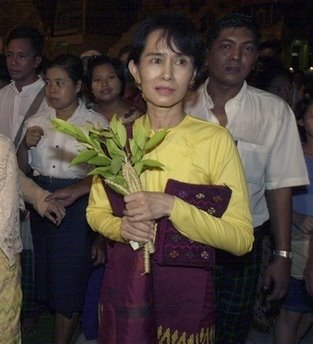


 Posts
Posts


