News & Articles on Burma
Tuesday, 02 August, 2011
----------------------------------------
New-generation war in Myanmar
Military Rule in Burma
DKBA to escalate border conflict
Russia to build metro in Naypyidaw: reports
‘Brand Burma’ a failure, experts say
Nationwide cease-fire demand prevents KIO-government agreement
Did Senior-General Than Shwe pick the wrong commander in chief?
Is Burma Really No. 1 in Internet attack traffic?
Burma needs wide-ranging international pressure for political change
Myanmar Offers Vast Business, Investment Opportunities
-------------------------------------------
ASIA TIMES ONLINE: Aug 3, 2011
New-generation war in Myanmar
By Tony Cliff
LAIZA, Myanmar - "At first the Burmese soldiers were looking very confident, they were moving up on the road shouting and shooting towards the jungle. They just did not realize we were hiding around," said Aung Myat, a 27-year-old soldier with the insurgent Kachin Independence Army (KIA)'s 23rd Battalion.
When the government troops arrived, the insurgent soldiers triggered landmines and started to shoot. The clash was the first of a series of confrontations in the area which lasted almost three days, according to Aung Myat. In the evening of July 18, back in the relative safety of Hkaya Bum camp, the battalion's bamboo barrack headquarters, the young insurgents released an excess of adrenaline when telling their war stories.
Their animated conversation was stifled by the roar of a heavy monsoon rain; a thick mist blanketed the whole area. Between sips from beer cans and puffs from cigarettes brought earlier by a supply truck, they traded their stories with an almost childish excitement, mimicking with their arms the handling of machine guns. "We counted at least eight bodies, including four or five incinerated in a vehicle we destroyed with a grenade, but surely there were more," said Aung Myat.
At 27, Aung Myat is one of the eldest in the battalion: most of the other guerrillas are around 20 years of age. For all of them it was their first ever combat experience. Less than 10 kilometers (km) to the east from the battlefield road, across a succession of jungle-covered hills down a narrow valley, lies Laiza, a small city of 10,000 people that houses the headquarters of the Kachin Independence Organization (KIO), the KIA's sister political organization. Laiza is crossed by a stream marking the Chinese border.
Rumors spread by exile media groups of massive Myanmar military reinforcements and of an imminent offensive hardly seem to have reached the city. Schools, shops and hotels remain open while people attend to their business as usual. Yet two new developments are a reminder that the situation is exceptional and potentially grave. As a safety measure, Chinese authorities have closed the border gate in the middle of downtown from 6 pm to 6 am, presumably to avoid a flood of refugees into their territory.
Thousands of people, mostly women and children, can already be seen crammed in a few locations such as the city hall, a cardboard factory warehouse and the "Manau", a vast ground where the ethnic Kachin organize traditional celebrations. These are the civilians who left their villages when armed hostilities first broke out on June 9. On that day, there was a violent clash at the site of the Dapein dam, about 50 km south of Laiza. The exchange of gunfire signaled the end of 17 years of ceasefire between the Myanmar military and the KIA.
From 1989 onwards, some 15 armed ethnic insurgent groups concluded separate ceasefire agreements with Myanmar's ruling junta. The Kachin had always looked like an exception in Myanmar's complex ethnic jigsaw. With a size of 89,000 square km, more than twice the size of Switzerland, their state is one the country's largest administrative entities. But with an estimated population of 1.36 million (based on 2002 official statistics, the latest available), it's also one of the country's least inhabited areas because of the steep mountains that cover nearly half of the state.
The predominantly Christian Kachin ethnic population is estimated at 1.2 million (out of a total national population of 55 million), half of them living in the Kachin State, the other half in other parts of Myanmar. About 300,000 Kachin also live in neighboring China, where they are known as Jinpo. For historical reasons, the Kachin have managed to develop a strong social and educational system, making them arguably one of the most sophisticated ethnic groups in Myanmar.
The agreement with the Kachin, signed in 1994, was the only one formalized on paper. Essentially, it defined a framework for future business deals with and without Myanmar companies and delineated a portion of the Kachin State that would fall under the KIO's control. However, the document was never made public, which made the assessment of its implementation difficult.
Kareng La Nan,* [1] a teacher from Myitkyina, summarizes many of his ethnic companions' opinions: "Those 17 years have surely brought stability, some social and economic developments and less-human rights violations but we have gained absolutely nothing on the political level."
As with other armed ethnic groups, the Kachin have abandoned their previous claim for independence. Instead, they have demanded a certain degree of autonomy over their own affairs which would guarantee respect for their own rights and culture.
Except for certain Kachin leaders, other politically connected individuals and large private companies who took advantage of business opportunities allowed for in the agreement, many people now view the ceasefire as a fool's bargain. The long list of grievances has fueled the new hostilities. Kachin land, they say, has been systematically looted of its natural resources. The ethnic group has all but lost to the benefit of Burmese companies the lucrative trade in jade which fueled the insurgent organization for decades.
Giant business groups affiliated with the military junta, such as Yuzana, Htoo Trading or Asia World, took up in Kachin State massive production of tapioca and the exploitation of hydropower, timber and various minerals. Still, the sharper arrows are aimed at the Chinese companies which have invested heavily in gold mining, hydropower and other products such as timber with allegedly very little benefit for the local population.
This perceived "one-way" investment policy has stirring up an anti-Chinese feeling with many people. "When they develop large plantations of bananas with export quality standards or gold mining, they bring their own equipment and workers and they don't share with the locals," complains a KIA cadre.
The current most sensitive Chinese investment is the construction of the Myitsone dam, 40 kilometers north of Myitkyina at a site considered by Kachin as a cultural heartland, with a planned capacity of 6,000 megawatts. To many Kachin, the project is an environmental abomination.
Activists say the water in the planned reservoir will put immense pressure on the underground soil and water system. Environmental groups also warn about potential detrimental effects downstream on the lives of millions of people who depend on the Irrawaddy River's system. It also may be, although this is not confirmed, that the electricity from the dams will be exported entirely to China.
The last straw, it seems, was the junta's order in 2009 to various ethnic armed ceasefire groups to transform into Border Guard Forces (BGF) that must disarm and submit under government officers' command. "It was nothing less than an order to surrender," comments one long-time observer of the ethnic groups.
The KIO, as well as other groups such as the Wa and the Mon, rejected the BGF order and proposed alternative plans which were all flatly rejected by the junta. Subsequently, the KIO was officially declared an outlaw organization.
The June 9 clash marked the official return to armed conflict. "They created this incident as an excuse to penetrate into our territory," claims Zau Awn, the KIO's administrator officer at the central region. However, it looks like the Myanmar military's strategists underestimated the resolve of the Kachin. Perhaps they thought they could repeat the operation they launched in August 2009 against the ethnic Kokang, another armed group who rejected the BGF and was crushed in a few days of fighting.
Under a banner in the Kachin language reading "Operation Victory Journey" in a large meeting room at the downtown Laiza Hotel which has been transformed into a central command post, General Gun Maw, the KIA's 46-year-old deputy chief of staff, sums up many Kachin officers' opinions, "The Burmese soldiers don't have the motivation and very little support from their own people."
Interviews with three Myanmar military prisoners of war in Laiza seem to confirm this assessment. Asked whether he knew the reasons why he was sent here, Aung Myo Hlat,* a 36- year-old captain with the 21st Infantry Battalion, paused for a long minute before finally saying: "I am a soldier, I had to obey."
Soe Myint,* a 48-year-old career sergeant, recalls how he fell unconscious in the bush after a bullet went through his left arm. "I don't know why we are fighting, I just remember that I lost a lot of blood, I fainted and was left alone. When I woke up I was into KIA's hands."
Htoo Lay,* a 22-year-old Karen ethnic private attached to an artillery unit, did not even ask to join the army. "I was forcibly conscripted three years ago by officers while I was waiting for a train at Mandalay railway station." He was hit in the back by shrapnel. "I did not know what to do, the injury was not too bad, I just hid in the bush, KIA soldiers came and shouted 'we won't shoot you, just come out', I came out, I never used my weapon."
Like his two companions and probably like most Burmese soldiers, he was experiencing his first combat. Aung Kyaw Zaw, a former soldier with the Burmese Communist Party who has maintained good relations with ethnic groups along the Chinese border, makes a stark assessment based on his historical knowledge, "The quality of the Burmese army rank and file has never been so low."
The KIA claims it has sent a letter to the Myanmar authorities proposing to deliver the prisoners. "We got no answer," says a KIA officer. "After their return in their army, the prisoners will probably be court-martialed, they will be charged with lack of responsibility, loss of weapon and giving intelligence to the enemy. The officers will get at least seven years of jail."
As the ethnic groups long-time observer says, "The Kachin are feared by many people for their fighting capabilities. During WWII [World War II], when they fought alongside the British, they were given strong credit for helping to kick the Japanese out. They have this 'we can do, we can stand on our own' mentality."
The determination of Kachin soldiers is further strengthened by the knowledge that their enemy's weaponry on the field is not really superior to theirs. In a Hkaya Bum barrack, the KIA laid their arms catch from the three days of battle. Mixed with identity documents, mobile phones, money, family pictures and other personal items, Burmese rifles, machine guns, mortars, grenades and other landmines are arranged. Much of the weaponry would look more appropriate in a museum than on a modern battlefield.
While the Kachin will be happy to use these relics against their original owners, they also manufacture their own weaponry. Copies of the famous AK-47, mortars, landmines and other items are made by Kachin gunsmiths in secret armories. The KIA claims to have around 6,000 standing soldiers and can count on as many as 8,000 more village militias composed of women and men who have received basic military training and been provided with weapons. (Asia Times Online could not independently verify the figures.)
The Myanmar military's main comparative strength is its artillery fire power. Yet any attempt to capture Laiza would represent a stiff test of its capabilities. Only two roads lead to the city. In the current monsoon season, rain and mud have made the northern access all but inaccessible while the KIA claim they can maintain strategic control of the southern road. If the Myanmar military used heavy artillery to shell Laiza across the hill ranges, they would inevitably send mortars into Chinese territory, with the risk of provoking an international incident.
So far the KIA's strategy has been to defend its territory and positions against any incursion. Sabotage operations, such as blowing up bridges, have also been conducted. "Since we are declared outlaw, we have started to lay landmines to protect our positions," adds Major Kumbu Din, the KIA's 5th Brigade commander.
The renewed conflict has brought its share of human misery. At the time of writing, more than 17,000 villagers had fled their homes to safer areas, mostly along the Chinese border. The majority of them left in anticipation rather than in response to fighting. Mali Bawk La, a 70-year-old farmer from Nam San village, walked some 30 kilometers with his six family members to Laiza. "The tension was growing, we feared that the Burmese soldiers would capture us and force us to do things like [act as] porters," he said.
According to the KIO, an estimated 6,500 displaced people have managed to cross the Chinese border to live with Jinpo relatives. Another 7,500 are taken care of by the KIO in temporary camps, including more than 6,000 in Laiza. The rest are scattered in Myitkyina and in western areas of the vast state. Anticipating a long war, the KIA has already started to build 500 bamboo houses along the Chayan river down from Laiza which will accommodate 7,000 people.
"So far we could count on the KIO's administration, donations from individuals and churches and the help of many young Kachin volunteers who came from all over the country," says La Rip, the relief effort coordinator in Laiza. "Maybe the situation looks normal but it won't be at all as long as there is no ceasefire. If the crisis lasts or gets worse we will certainly need outside help."
There are also credible reports of human-rights abuses committed by Myanmar army soldiers against Kachin civilians. The Laiza-based Kachin Women Association has documented at least 18 cases of rape, sometimes aggravated with murder, between June 10 and 18. More recently, on July 21, a KIA female officer reported the rape of a nurse in a local clinic. A nurse running a clinic in a Kachin village, says that she "never heard about rape cases before the fighting started".
The conflict has had at least two unexpected consequences. First, many Kachins confirm that support for the KIA is once again on the rise. That has not always been the case: under the ceasefire it was not rare to hear criticism of the Kachin leadership, who many felt had sold out the state's land and resources for their own personal gain.
Second, government pressure to join its BGF scheme and other recent developments have radicalized a new generation of Kachin youth that was raised in peace time conditions. "Everyone wants to go to war," shouted a young businessman coming out from a Sunday mass at the Laiza Baptist church. "It's time for the Kachin people to free themselves from the Burmese regime. We like [opposition leader] Aung San Suu Kyi but her appeals for non-violence have failed."
Within the KIA, the conflict has also signaled a changing of the guard. "The old leaders who still want to compromise without a political agreement have no say anymore," says a young KIA cadre. Yet even though many Kachin don't see any other way than armed resistance to push their grievances, nearly everyone wishes for a negotiated settlement.
La Nan, the KIO's spokesman, said the Kachin are determined to stick to a three-point proposal. "First we will try to establish a temporary ceasefire in our area; secondly, we want the same for the whole country; thirdly, we want a political dialogue where all ethnic armed groups will be represented by the United Nationalities Federal Council (UNFC)." (UNFC is an organization formed in February with three ceasefire groups and three non-ceasefire groups who advocate for a federal union.)
A June 30 meeting between government and Kachin delegations failed to reach any agreement, though contacts are reportedly ongoing. The Kachin side has blamed the government for sending a team with no real negotiating power and no clear mandate from Naypyidaw, Myanmar's capital. "The Burmese told us 'let's work peacefully so let's go for a ceasefire'," said Gun Maw. "But there is no political agreement, it's just a call to facilitate the life of people for business purposes."
The mid-July clashes down from Hkaya Bum camp were the most intense of the nascent conflict. Since then there have been sporadic skirmishes, but apparently without a concerted strategy from the Myanmar military. The two sides have reportedly resumed contacts in recent days, without clear results. Meanwhile, those in Kachin State hold their breath, hoping for real peace and autonomy, not just another ceasefire.
Note
1. Names marked with an asterisk * have been changed for security reasons.
Tony Cliff, a pseudonym, is a Bangkok-based freelance photojournalist. He may be reached at tonycliff7@gmail.com.
(Copyright 2011 Asia Times Online (Holdings) Ltd. All rights reserved. Please contact us about sales, syndication and republishing.) http://www.atimes.com/atimes/Southeast_Asia/MH03Ae03.html
----------------------------------------
Military Rule in Burma
The American Spectator
By Doug Bandow on 8.2.11 @ 6:08AM
For a half century, the impoverished people of Burma (also known as Myanmar) have lived under a brutal military dictatorship. Although Burma has not seen mass starvation as in the so-called Democratic People's Republic of Korea, unrelenting wars are raging against numerous ethnic groups seeking autonomy.
Until recently the military, headed by Gen. Than Shwe, constituted the State Peace and Development Council: a junta that promoted its version of peace and development by imprisoning democracy advocates in the cities, impeding provision of humanitarian aid in the delta, and killing guerrillas and civilians alike in the more distant eastern hills. Oppression has led to poverty for the Burmese people.
However, not everyone is poor. As in most dictatorships, members of the regime and their families and friends have profited abundantly from political power. U.S. and European sanctions provide their only impediment to fiscal success.
Those sanctions, unfortunately, do nothing to promote democracy or improve the condition of the Burmese people, and serve merely to bother the ruling elite. With China, India, and other Asian states active in the Burmese markets, there has been no lack of opportunity for Shwe & Co. to travel and spend their ill-gotten gains.
Nevertheless, Shwe's regime desires recognition and money from the West. So last year Shwe proclaimed the end of military rule. Numerous military officers resigned from the army. An election was held and Burma launched a charm offensive overseas. Domestic democracy activists hoped the process would be a harbinger of change. Foreign human rights activists hoped the process would spark the start of reform.
It did nothing. The regime had learned from 1990, when it foolishly allowed a free election and the overwhelming majority backed Aung San Suu Kyi, daughter of a revered general who helped win Burma's independence after World War II. The regime had to void the election, arrest Suu Kyi and suppress her party, resulting in domestic bloodshed and international obloquy.
So this time the junta decided to enforce "disciplined democracy." After the SPDC wrote a new constitution and drafted new election rules to ensure its supremacy, the military chose as president former General Thein Sein. Human Rights Watch called Sein "a ruthless loyalist with a well-established past in command positions during some of Burma's darker and most corrupt periods." Four years ago he was prime minister when protestors were murdered on the streets.
The military also guaranteed itself numerous legislative seats, barred its most dangerous opponents (including now-Nobel Laureate Suu Kyi) from running, prohibited campaign criticism of itself, and placed the vote count in its own hands. Surprise, surprise, the Union Solidarity and Development Party (the SPDC's captive political organization filled with former military officers) won an overwhelming victory last November.
Since then the government has jailed democracy activists in the cities, controlled access to the rural areas, and killed guerrillas and civilians in the more distant eastern hills. More than 100,000 Burmese have been forced over the border into Thailand and millions have been displaced within their own country. The verdant eastern Burmese landscape has been sown with land mines, resulting in debilitating human injuries and costly livestock deaths. I have met many children orphaned by the ruling junta's policy of oppression, and their stories are devastating.
Though 110 political prisoners have been released, several others have been newly arrested and an estimated 2100 languish in prison (twice the number from just four years ago). Suu Kyi was freed from house arrest after the election and a government minister met with her last week, but she is barred from participating in politics, her party remains banned, and many of her associates remain in prison. Moreover, the government has not so subtly threatened her with violence ("chaos and riots") if she travels outside of Rangoon. In May 2003 a military-inspired mob killed more than 70 of her supporters and nearly murdered her.
When thousands of Buddhist monks helped lead a series of peaceful anti-government protests dubbed "The Saffron Revolution" in 2007, the Burmese government responded with shameful brutality. Demonstrators were shot, activists were imprisoned. Even the monks, though revered in Burmese society, were beaten and detained. The movement of monks is now restricted and their sermons are censored.
The old SPDC agreed to ceasefires with some ethnic groups, but launched a new offensive against the Karen people shortly after last November's election. Earlier this year the new "civilian" government launched similar attacks against the Shan in the north, pushing refugees into China.
In January Burma underwent its Universal Periodic Review by the Human Rights Council. Filled with repressive regimes, the HRC is a pretty forgiving body. And the Burmese military performed remarkably well in its review, claiming that it ran free elections, censored no media, held no political prisoners, and fought no ethnic groups. David Scott Mathieson of Human Rights Watch called it "a Monty Python-like defense whose central comedic device was total denial."
The people responsible for Burma's success have simply changed out of uniforms and put on suits. Nothing else has changed. General-President Thein Sein's new agenda of "national reconciliation" is another way of saying "military domination." Distressed at the lack of reform, two senior diplomats at Burma's embassy in Washington defected last month.
Unfortunately, there is little the international community can do. The U.S. and Europe have applied sanctions, but with little effect. Few nations formally defend the Burmese junta, but its neighbors benefit from trade in teak and other resources. China seeks a geopolitical edge, with India in close pursuit. The ASEAN member-states dream of better times in Rangoon but do nothing; in fact, Burma is scheduled to take over chairmanship of that organization in 2014.
The elections were seen as a possible opening for increased Western engagement. So far, however, the regime has rejected any substantive reforms, including the single step which would best signify change: releasing all political prisoners. Perhaps change will come after Than Shwe dies, though for 50 years every dictator has been followed by another dictator. Sadly, the Burmese Gorbachev has yet to emerge. http://spectator.org/archives/2011/08/02/military-rule-in-burma#
--------------------------------------
DKBA to escalate border conflict
By AYE NAI
Published: 2 August 2011
Factions of the opposition Democratic Karen Buddhist Army (DKBA) has said it will intensify attacks on Burmese troops in and around its territory in a bid to weaken government forces fighting in the northern and eastern border regions.
Burma’s eastern frontier has been beset by heavy conflict since November last year, when the DKBA took up positions in the border town of Myawaddy. Since then a number of armed groups, including the Karen National Liberation Army (KNLA) and the All Burma Students’ Democratic Front (ABSDF), have formed a nominal alliance in an effort to drive government troops out.
Officials from the DKBA’s Brigade 5, which is led by Na Kham Mwe and whose troops first launched attacks on government positions in November, met with the Myainggyingu faction yesterday. The latter had initially accepted demands to become a government-controlled Border Guard Force, but defected in May this year.
San Aung, battalion commander of Brigade 5, told DVB that both units had tabled the idea of launching synchronised attacks to hinder Burmese offenses against other ethnic groups, such as the Kachin Independence Army (KIA) in Burma’s north and Shan State Army in the east.
Rather than deploying troops to these regions, the DKBA would look to significantly weaken government forces in Karen state, he said, adding that representatives of the ABSDF and the Arakan Liberation Army were also at the meeting.
Since a United Nationalities Federation Council was formed in March, ostensibly aimed at drawing various ethnic armies under one allied umbrella, little tangible cooperation has been seen.
This is largely down to the fact that four of the six member groups – the KIA, the KNLA, the New Mon State Party (NMSP) and Shan State Army (SSA) – have all been engaged in heavy fighting after refusing to transform to border militias. http://www.dvb.no/news/dkba-to-escalate-border-conflict/16834
---------------------------------------
Russia to build metro in Naypyidaw: reports
By FRANCIS WADE
Published: 2 August 2011
The Burmese government has awarded Russia a tender to develop the country’s first underground rail service in its remote capital, reports on Russian media suggest.
Details about the proposed project for Naypyidaw are vague. The Voice of Russia media group carried a short report on 13 July quoting the “project’s chief architect” as saying that experts were conducting geological surveys “and designing the first line”, expected to be 50 kilometres long.
The plan appears ambitious given the woeful state of Burma’s existing transport services, with much of the country inaccessible and roads in the economic hub of Rangoon in a state of decay.
But the core of Naypyidaw, where the capital was moved to in 2006, remains a veritable beacon of development: the vast majority of civil servants also relocated when Rangoon was abandoned as the administrative centre, and the city is fed with round-the-clock electricity, despite much of the country being starved of power.
Documents leaked to DVB several years ago suggested the government had plans for a metro in Naypyidaw that appeared to be part of its larger military bunker project exposed by DVB in the investigative documentary, Burma’s Nuclear Ambitions.
The plotted metro line ran close to a vast underground command centre on the outskirts of Naypyidaw, which witnesses said was being built to house thousands of personnel.
Experts consulted at the time said however that the government would need outside help for the rail line, with North Korea mentioned as a possible benefactor giving that top Burmese officials toured Pyongyang’s metro system during a secret visit there in November 2008.
The following month the same delegation, led by Shwe Mann, the current parliamentary speaker, inspected Beijing’s metro, a visit that was documented in the official post-trip write-up obtained by DVB.
Russia is yet to embark on any major infrastructural projects in Burma, where bids for such developments are often quickly snapped up by China, but has sought to develop closer ties with Burma as it looks to boost its security presence in the Asia-Pacific.
Relations are already strong on a number of fronts, however, with young Burmese army personnel regularly sent for technological training in Moscow.
----------------------------------------
‘Brand Burma’ a failure, experts say
By FRANCIS WADE
Published: 2 August 2011
The world is viewing Burma and its myriad domestic crises with increased despondency, according to a ranking of 200 countries based on international perceptions of their “brand” as depicted by media.
Since the East West Nation Brand Perception Index was first published in 2008, Burma has steadfastly remained in the bottom fifth, and in the second quarter of this year dropped to 176, two places below that of North Korea.
The company behind the somewhat unorthodox index says it is compiled by “analysing millions of mentions of countries in hundreds of thousands of news articles, every [yearly] quarter” and defining whether they are positive or negative. It says it makes sure to factor in the “overall quality of the media and the prominence of the country”.
Burma fell to its lowest position of 184 in the first and third quarters of 2009, the latter period coming shortly after the junta extended opposition leader Aung San Suu Kyi’s house arrest.
Picking up again in 2010, however, it took its highest place of 165 in the third quarter, when talk of the pending November elections and Suu Kyi’s release began to catch international media attention. But the fanfare surrounding both events was short-lived, and it fell over two consecutive quarters of 2011, despite efforts by the government to shore up its cracked facade and project an image of reform.
Somewhat surprisingly however, Malaysia topped the table for the second quarter of 2011, although its score of 91 against second-place Canada’s 76 would have been calculated prior to the ugly July crackdown on protestors in Kuala Lumpur.
At the bottom of the table for January to April this year was Libya, whose position was taken by Syria for the second quarter – both countries have seen massive popular protests this year brutally suppressed by leaders.
The concept of “nation branding” is an official government policy of many developed countries, including the US, France and the UK – where the government has set up a Public Diplomacy Board tasked with improving the country’s image abroad – as well as China and South Korea. Colombia is also known to be embarking on various initiatives aimed at improving its international profile.
Except for questionable efforts in state-run media however, Burma appears to have so far shunned the practice.
Experts say the main purpose of nation branding is to project an image of a strong environment for foreign investment, something Burma is struggling to do as conflict in the border regions significantly jeopardises infrastructural and energy projects financed by China, Thailand and other countries in the neighbourhood.
A statement released by the Washington DC-based EarthRights International warned that profits made by foreign companies working in Burma could in fact be outweighed by the material and reputational risks.
That notion rang true for Thai engineering giant Ital-Thai, which is behind the Tavoy deep-sea port project in southern Burma, last week when 50 of its workers were forced to flee a construction side close to the Burmese border after their camp was hit by artillery fire.
Chinese workers in Kachin state have also experienced several close shaves after being trapped in a hydropower site in June while fighting erupted around them. http://www.dvb.no/news/brand-burma-a-failure-experts-say/16845
---------------------------------------------------
Nationwide cease-fire demand prevents KIO-government agreement
Tuesday, 02 August 2011 10:26 Phanida
Chiang Mai (Mizzima) – Despite an ongoing dialogue between the Kachin Independence Organization (KIO) and the Burmese government in Laja Yang village in Kachin State on Monday, the two sides failed to reach an agreement.
Colonel Than Aung, right, minister for security and border affairs. Photo: KNG
Colonel Than Aung, right, minister for security and border affairs. Photo: KNG
The main obstacle continues to be the KIO demand for the government to negotiate a nationwide cease-fire with all armed ethnic groups.
The five KIO delegates led by Deputy Chief of Staff Brigadier General Gum Maw and three government delegates of the “peace making and negotiation group” led by Colonel Than Aung, the Minister for Security and Border affairs, held a two-and-half hour meeting in Laja Yang in Waimaw Township, a KIO-controlled area in the Kachin State.
Government delegates maintained their position of only wanting to negotiate a cease-fire in Kachin State, after which other agreements could be negotiated, said Colonel Zau Yaw, commander of KIO Brigade No. 4.
KIO joint secretary La Nang said that the two sides agreed to continue the face-to-face political dialogue.
.
“The result of today’s meeting cannot make us sign. We need to hold more meetings. That depends on them. For us to sign, it depends on how much the government wants stability in the nation,” La Nang said.
The government delegates said that they would forward the results of the meeting to superiors, according to the KIO. Government delegates returned to Myitkyina, the capital of Kachin State, on Monday.
Operation Commander Colonel Tun Tun Ohn of the Northern Command and Major Naing Lin of the Military Affairs Department did not attend Monday’s meeting, or the previous meetings. The five-member government negotiating committee was formed on June 27 by Kachin State Chief Minister La John Ngan Hsai.
The government delegates and government security forces were met by KIO security forces halfway between Shwenyaungpin and Garya Yang villages.
Since July 28, the KIO has called on the Burmese government to stop launching offensives against ethnic armed groups in Kachin State and Shan State within 48 hours after signing a cease-fire agreement and to issue a statement saying the government will hold a political dialogue to achieve a nationwide cease-fire within 15 days.
A KIO letter sent to Burmese authorities said that the agreement should be written in English and Burmese and urged President Thein Sein to state his opinion about the 1947 Panglong Agreement, which gave equal rights and more autonomy to ethnic groups. http://www.mizzima.com/special/kachin-battle-report/5707-nationwide-cease-fire-demand-prevents-kio-government-agreement.html
-------------------------------------------
Did Senior-General Than Shwe pick the wrong commander in chief?
Tuesday, 02 August 2011 16:59 Salai Z. T. Lian
(Commentary) – Senior-General Than Shwe named his trusted colleague Min Aung Hlaing as commander in chief on March 30. Inevitably, some people criticized the decision, saying General Min Aung Hlaing only received the name of commander in chief, when in fact Than Shwe remains the most powerful man in the Burmese military.
But there is a question over how long Than Shwe can continue commanding Gen Min Aung Hlaing now that he is the designated military commander in chief. After being appointed, no Burmese general has listened to their former boss for very long time.
For example, Than Shwe used to obey the former ruler of Burma, General Ne Win, but after he consolidated full power, he no longer listened to him. He even put his former boss under house arrest.
It’s quite understandable that Than Shwe thought that he had made sure to give power to someone who would be loyal to him and who would listen to his directions. That’s why he picked Gen Min Aung Hlaing to take over—but who can predict whether what happened to Gen Ne Win will not happen to Than Shwe?
It is very common in the Burmese military that soldiers are extremely obedient to their masters. They fear their boss like God, but when they take their turn in power, they slowly turn their back on their former senior. So the question is, how long will Gen Min Aung Hlaing be loyal to his boss Than Shwe?
Than Shwe may think that Min Aung Hlaing will never turn his back on him, but look what happened to Gen Ne Win—Than Shwe put him under house arrest until he died on 5 December, 2002. Many would not be surprised if Gen Min Aung Hlaing turned his back on Than Shwe or arrested him. Of course, many Burmese people are familiar with such actions.
How will their relationship develop if the commander in chief develops real power?
Look at what Gen Min Aung Hlaing is doing right now. He seems to be trying to do the things differently, not like his boss Than Shwe. Perhaps he is intent on showing the Burmese military who is their boss. He has reshuffled regional commanders, and dismissed Maj-Gen Tun Than from the army on corruption charges, as well as summoning five military generals to Nyapyitaw to face a graft inquiry.
Gen Min Aung Hlaing understands there is rivalry within the army so he will try to gain full power to do his job and try to earn respect so that no one will dare to challenge him. After he reaches the top and Than Shwe can’t control him anymore, we will find out who Gen Min Aung Hlaing really is.
At some point, Than Shwe will ask himself whether he picked the right commander in chief. And at the same time, Gen Min Aung Hlaing may mull over his gratitude to Than Shwe for the senior-most post, wondering why he trusted him.
Such thoughts could prove incendiary between the two men.
Before long, Gen Min Aung Hlaing will be unwilling to play the role of baby, even though Than Shwe would like to keep him in the crib. At that point, we’ll have a clear picture as to whether Than Shwe picked the wrong commander in chief. http://www.mizzima.com/edop/commentary/5711-did-senior-general-than-shwe-pick-the-wrong-commander-in-chief.html
---------------------------------------
Is Burma Really No. 1 in Internet attack traffic?
Tuesday, 02 August 2011 11:35 Aye Lae
Chiang Mai (Mizzima) – The “State of the Internet Report” published by the US Internet Technology firm Akamai has identified Burma as the top source of Internet attack traffic. Burmese Internet experts have expressed doubts about the claim.
Despite its very slow Internet connections and a limited number of Internet users, Burma was ranked No. 1 in the list of sources of attack traffic, generating 13 percent of attack traffic worldwide during the first quarter of 2011, according to the report.
The report used the word “most notably” to express its [Akamai’s] finding in which 199 countries were cited as originating attacks during the first quarter of 2011.
The US and Taiwan held the second and third places, respectively, the report said.
Aung Myo Kyaw, an IT specialist from with the India-based Burma Information Technology Team, said that some attack traffic might not have been carried out by Burmese citizens, but that the Internet paths in Burma might be misused by people in other countries to carry out attacks.
“In today’s world, we cannot definitely say that it was carried out by Burmese citizens. We need to be aware that the restrictions on ‘immigration’ in the Internet world are many times lower than those in the real world,” he said. He said it was possible that tourists in Burma also could carry out attacks.
Another IT expert in Burma who asked for anonymity said that Internet Service Providers (ISP) in Burma had weak points regarding security, such as giving data regarding Internet servers to customers.
“The first weak point is that in accordance with the ‘Network Designs,’ Internet users in Burma have to fill out facts (regarding internet servers) when they use the Internet. Hackers can get those facts easily. No country gives out facts regarding international level Internet servers,” the IT expert said.
On the other hand, some local and foreign experts have said that the Burmese army has given students at the Defence Services Technological Academy (DSTA) scholarships to foreign countries to learn technologies to be used in "cyber warfare."
IT experts said that officers who graduated with computer-related degrees in Russia controlled Internet networking systems in Burma.
In Burma, the Myanmar [Burma] Posts and Telecommunications provides limited Internet bandwidth connection for civilians in Burma, while government departments and the army are provided with high bandwidth connections under the Ministry of Defence, according to a local IT expert.
Former Major Sai Thein Win who defected from the Burmese army said that his Facebook and Gmail accounts were hacked in early May 2011, probably by hackers in Burma.
“The reason for a growing number of Internet attacks originating from Burma is probably that the government is trying to carry out more investigations about opposition groups and people,” Sai Thein Win said.
According to figures compiled by MPT, there were 400,000 Internet users in Burma as of July 2010.
How to account for Burma’s No. 1 world rating, surpassing countries that are far more advanced technically, remains a puzzle. http://www.mizzima.com/news/inside-burma/5708-is-burma-really-no-1-in-internet-attack-traffic.html
------------------------------------------
Burma needs wide-ranging international pressure for political change
August 1, 2011 at 12:55:23
By Zin Linn
opednews.com
The talk concerned a Burmese delegation led by Colonel Than Aung, leaders of the Kachin Consultative Council and KIO military wing the Kachin Independence Army (KIA), said KIO Joint-Secretary La Nan. KIA leaders included vice-chief-of-staff Brig-Gen Sumlut Gun Maw and Battalion 4 commander Colonel Zau Raw, he added.
It has not been confirmed so far whether the KIO and Burmese delegation have reached an agreement, with Kachin sources saying further talks between the two sides were likely in the event of a stalemate.
The KIO has offered to end ongoing fighting if the government will commence talks for a nationwide ceasefire. But Burmese government authorities did not show any positive signal, according to La Nang, a spokesman for the KIO.
Prior to Burma Army and KIO ceasefire negotiation, Secretary-General Ban Ki-moon hailed a meeting between Nobel Peace Prize winner Aung San Suu Kyi and Burmese Government minister Aung Kyi on 25 July, and urged the Government to consider release of political prisoners, according to a statement issued by a spokesperson, as informed by the UN News Centre.
Releasing all remaining political prisoners is the sole most vital step that authorities in Myanmar (Burma) can take, Secretary-General Ban Ki-moon also said on 29 July, expressing hope that the Government of the Asian nation will soon take steps towards greater democracy.
In addition, Mr. Ban telephoned earlier Friday with Wunna Maung Lwin, Myanmar's Foreign Minister, just days after he paid tribute to a meeting between a Government minister and Burma's key prominent opposition figure.
In his conversation with Wunna Maung Lwin, Mr. Ban highlighted that he had publicly welcomed the reform measures announced by the new Government, according to his spokesperson.
"He hoped that the Government would now move toward concrete action and take the country forward towards peace, democracy and prosperity."
The Secretary-General also expressed his concern to the Foreign Minister about the ongoing warfare involving some armed groups and the impact of that on civilians, saying the Government must resolve the situation peacefully.
However, the issues of releasing political prisoners and ceasefire with ethnic rebels are still unresolved in the new cabinet as vice-president Tin Aung Myin Oo's faction has been objecting, as said by some observers inside Burma.
According to a source said, President Thein Sein wants Burma Army to withdraw away from the headquarters of the ethnic groups. But, Tin Aung Myint Oo does not agree with Thein Sein. He considers the military maneuver must continue although there are food-shortage problems inside the frontline armed forces. The disagreement between "soft-liner" President Thein Sein and "hardliner" Vice President Tin Aung Myint Oo were considerably inflexible, it seemed the new government could not go further with the two hot issues -- free political prisoners and ceasefire with ethnic rebels.
Eventually, Than Shwe crossed the line and provided resolution, a source said. Thein Sein and Tin Aung Myint Oo have to stay at status quo serving unity of the armed forces. By following Than Shwe's advice, Burma Army has to be maintained unity. The source said it has a document in possession to support his report, According to (S.H.A.N.).
On the other hand, releasing political prisoners and calling peace to armed ethnic groups would provide evidence to the international community that government is really bringing about political change and embracing genuine democratic values.
But, presently, Tin Aung Myin Oo has becoming a barrier on the way to Burma's political restructuring. He became a hard-line vice-president in the new government as the representative of the military bloc. Tin Aung Myint Oo (62) won the Thiha-Thura courage award in fight against Communist rebels in the 1980s. He took charge victorious operations against Communist troops in Eastern Shan State in September 1988, which led to a cease-fire agreement in 1989. He was promoted to secretary-1 when Thein Sein became prime minister in 2007.
In July 2010, Tin Aung Myint Oo traveled to China to meet with Chinese leaders to discuss the issue of ethnic rebels along the Sino-Burma border. As a pro-China, Tin Aung Myin Oo relies too much on China. With China's backing, he believes Burma can neglect Western sanctions and pressures.
Therefore, Secretary-General Ban Ki-moon should not think that establishing democratic transformation in Burma is too easy to proceed. In his March report to the UN Human Rights Council, Ojea Quintana said that a pattern of "gross and systematic" human rights violations in Burma had persisted over a period of several years and still continued. He suggested that a specific fact-finding UN Commission of Inquiry to be convened as soon as possible to scrutinize the series of international crimes.
Not only Mr. Ban but also ASEAN leaders should stop reciting rhetorical verses via media, said some observers in the country. At least, they should show their pragmatic supporting towards Quintana's Commission of Inquiry proposal.
It is a dishonor that the UN and ASEAN members look like less committed on protecting poor people of Burma from atrocious international crimes. Overlooking inhumane international crimes in Burma, it will be in vain to expect a true political talk or reform.
Burma needs wide-ranging international pressure for political change, starting free political prisoners plus nationwide ceasefire. http://www.opednews.com/articles/Burma-needs-wide-ranging-i-by-Zin-Linn-110801-533.html
-------------------------------------
August 02, 2011 17:18 PM
Myanmar Offers Vast Business, Investment Opportunities
KUALA LUMPUR, Aug 2 (Bernama) -- Vast business and investment opportunities await Malaysian entrepreneurs in Myanmar, especially in construction and infrastructure, utilities, consultancy services and property development.
Tan Sri Soong Siew Hoong, executive adviser to the Associated Chinese Chambers of Commerce and Industry of Malaysia (ACCCIM), said Myanmar, although a rich country in terms of arable land and natural resources, was one of the least developed in the world.
"Myanmar has a population of 53.99 million and 666,000 sq km land -- doubled the population and area in Malaysia. But it is 30 years behind us," he told a media briefing on Malaysia-Myanmar Innovative Products and Services Expo Investment Seminar and Business Matching here today.
Soong said Myanmar offered business and investment opportunities as it entered a new political era, adding that Malaysian entrepreneurs should venture out as the business environment turned challenging.
"Malaysian businessmen should relocate their operations due to rising manufacturing and labour costs.
"They should look for joint ventures and be innovative to survive in the competitive environment," he said.
He said Malaysian entrepreneurs could provide machinery, food additives as well as packaging to tap the huge opportunities in the food industry due to Myanmar's large population.
Currently, he said, there were about 100 Malaysians in Myanmar, mostly involved in tourism, agriclture, trading, factory and communication services.
The expo will be held in Yangon, Myanmar from Sept 15-18, 2011.
It is jointly organised by ACCCIM, Myanmar Industries Association and Malaysian Business Council in Myanmar.
The expo aims to provide a platform for the business communities of Malaysia and Myanmar to develop a strong, friendly and solid relationship through the official Myanmar associations and Malaysian chambers.
Soong said Malaysia would take up 71 booths at the expo out of the total 147, adding that over 40 booths were already sold to Malaysian entrepreneurs involved in various industries, including construction, food, automotive and education.
-- BERNAMA http://www.bernama.com/bernama/v5/newsbusiness.php?id=605547
__._,_.___
Wednesday, August 3, 2011
News & Articles on Burma-Tuesday, 02 August, 2011


Analysis: Pakistan relying too much on China against U.S.
By Chris Allbritton | Reuters – 1 hr 58 mins agotweet17ShareEmailPrintRelated ContentPakistan's Prime Minister Yusuf Raza Gilani and China's Premier Wen Jiabao at the …
ISLAMABAD (Reuters) - Pakistan's quick response to charges by China that militants involved in attacks in Xinjiang had trained on its soil shows the importance of its ties with Beijing, but it could be a mistake for Islamabad if it relies too much on China.
Pakistan immediately dispatched Lieutenant-General Ahmed Shuja Pasha, director general of Pakistan's powerful Inter-Services Intelligence (ISI) spy agency, to Beijing after Islamic militants mounted a weekend attack that left 11 people dead in the western region of Xinjiang, according to media reports.
While the ISI declined to confirm the trip, Western diplomats and Pakistani analysts agreed that the attacks would likely be at the top of any agenda.
"We cannot allow Pakistani territory to be used for any activities against any neighbor, especially a close ally like China," said Mushahid Hussain Sayed, Chairman of the Pakistan-China Institute.
"There are strong ties between Pakistan and China, and we are cooperating closely on this issue."
Pasha's speedy trip was a clear sign of Pakistan's priorities.
The United States rarely gets that level of cooperation when it presses Pakistan on militants operating in its border regions. American officials for years said al Qaeda leader Osama bin Laden, killed in a U.S. raid in Pakistan in May, was hiding in the country.
Pakistan often responded with demands for specific, actionable intelligence before it would consider investigating.
Islamabad makes no secret of its preference for China over the United States as a military patron, calling Beijing an "all-weather" ally in contrast to Washington's supposedly fickle friendship.
The Pakistani foreign ministry issued a statement on Monday extending "full support" to China.
China is a major investor in predominantly Muslim Pakistan in areas such as telecommunications, ports and infrastructure. The countries are linked by a Chinese-built road pushed through Pakistan's northern mountains.
Trade with Pakistan is worth almost $9 billion a year for Pakistan, and China is its top arms supplier.
But all that matters only up to a point.
"Pakistan wants to play its own game by creating a front against the United States," said Hasan Askari-Rizvi, an independent political analyst.
"That will not happen. ... Now China has the same complaint which the United States has with Pakistan."
Barry Sautman, a professor at Hong Kong University of Science and Technology, said that China, like the United States, wanted Pakistan to help it control Islamist militancy. But it is frustrated by the chaotic nature of Pakistani governance, and its inability to control militants or militant-friendly elements in its security agencies.
"I would think the Chinese government would want to have its military and security apparatus liaise with Pakistani authorities to come up with a common plan, but the U.S. found that very difficult to do," he said. "And I am sure China will find it difficult as well."
Furthermore, Pakistan's usefulness to China is only in South Asia, where it competes with India. But China has global ambitions; it is unlikely to sacrifice them for an ally that has proved a headache to the United States, which has its own deep relationship with China.
"Being seen to take a provocative stand alongside Pakistan comes at a substantial cost, but provides little strategic benefit," Urmila Venugopalan, an independent analyst and former Asia editor at Jane's Intelligence Review, wrote last month in Foreign Policy.
China, he wrote, does not want to push India deeper into the American orbit.
"An escalation in Chinese aid to Pakistan would surely antagonize India, creating a new point of friction in the triangular relationship between Beijing, New Delhi, and Washington."
China has also shown no sign that it is willing to shoulder some of the financial burden of propping up Pakistan that the United States has so far been willing to bear.
In 2008, when Pakistan was suffering a balance of payments crisis and sought China's support to avoid turning to the International Monetary Fund and its restrictive terms on a $7.5 billion loan, China provided only $500 million.
China may share concerns over Pakistan's stability, Venugopalan writes, "but it has preferred to let Americans bear the costs of improving the country's security".
Pakistan's attempts to play China off the United States will ultimately backfire, analysts say. Although important, Pakistan is not the most important issue for Beijing and Washington.
"It is our misunderstanding if we think that we will team up with China if we are pressed by the United States," Rizvi said. "China and the United States have their own relations and they cannot compromise them for the sake of Pakistan."
(Additional reporting by Zeeshan Haider and Qasim Nauman in Islamabad, and Michael Martina in Beijing; Editing by Ron Popeski)
Sunday, July 31, 2011
News & Articles on Burma-Saturday, 29 July, 2011-UZL
News & Articles on Burma
Saturday, 29 July, 2011
----------------------------------------
The Burmese regime "use" Aung San Suu Kyi to cover
Most dangerous country online - Myanmar?
Need To Release All Remaining Political Prisoners
UN: Burma Must Release Remaining Political Prisoners
Myanmar: Cyber war: Myanmar leader in attacks in 2011
---------------------------------------------
» 07/30/2011 12:29
INDIA - MYANMAR
The Burmese regime "use" Aung San Suu Kyi to cover the violence against Kachin
by Nirmala Carvalho
Waves of refugees fleeing across the border to China. But the government blocks the borders and prevents the entry of aid to war zones. The Nobel Laureate is open to mediate for peace. Activist: the meeting between Suu Kyi and the Myanmar Minister is window-dressing, to gain international credibility.
New Delhi (AsiaNews) - The civil war between Burmese army and Kachin ethnic militias, to the north of Myanmar, along the border with China, continues to cause waves of refugees fleeing across the border. Soldiers threaten the civilian population, killing and raping women and girls, the situation is serious and the war front covers a variety of areas. So says Raw Zau, coordinator of the Kachin Refugee Committee (KRC), a humanitarian organization based in New Delhi, India, and active in bringing aid to the Burmese minority. Speaking to AsiaNews he also accuses the Burmese leadership of exploiting the image of Aung San Suu Kyi to cover the crimes committed by the regime and gain credibility within the international community.
From 9 June the northern Kachin State has been the scene of a bloody conflict that has sowed death and terror among the population. So far there have been 32 confirmed cases of sexual violence against women by the Kachin soldiers, 13 of which ended with the murder of the victim. On 26 July in a gun battle between the two sides four Burmese soldiers were killed and 12 others were wounded in an ambush by the Kachin Independence Army militia (Kia).
In order to suppress the resistance, says the activist Zau Raw, "the central government continues to prevent the entry of humanitarian aid to the war zone, in the areas controlled by the Kachin and along the border with China." Only in the last two weeks about two thousand families living in seven villages located near Bhamo, have fled their homes. Thousand others have fled from Kala Yang, Tapant and Kazue, by order of the authorities.
The coordinator of Kachin Refugee Committee (KRC) has criticized Aung San Suu Kyi, Burmese opposition leader, for not taking a long position on the conflict. But recently the Nobel Laureate said she was ready to mediate between the government and ethnic groups, to achieve a ceasefire. In an open letter sent to the president Thein Sein and Kachin leaders, the activist calls for a "peaceful solution" in the interests of "all ethnic minorities in the Union of Myanmar."
Raw Zau then accused the Burmese government - which took office last April and is an emanation of the military regime - of "exploiting" the image of the "Lady" to ease international pressure. He recalls that the woman was released after the "farce" elections of November 2010 to cover allegations of fraud and early voting. And now that the army is engaged in a civil war against a minority, it is organizing "a meeting between Aung San Suu Kyi and a government minister for the sole purpose of diverting attention" from its atrocities and war crimes and crimes against 'humanity' in the ethnic areas.
http://www.asianews.it/news-en/The-Burmese-regime-use-Aung-San-Suu-Kyi-to-cover-the-violence-against-Kachin-22242.html
-------------------------------------------
Most dangerous country online - Myanmar?
Myanmar has become the No. 1 source of Web attack traffic worldwide as the Asian country makes its debut in a cyberthreat index covering the first quarter of 2011, according to new report (registration required).
Released Wednesday, the latest edition of Akamai's quarterly "State of the Internet report" noted that Myanmar's sudden appearance at the top of the chart was "certainly unusual". This was the first time the country placed in the ranking, which has a four-year history, noted the content network delivery provider. It added that the attacks from Myanmar seemed related to attack traffic in late-February and early-March which targeted port 80.
According to Akamai, Myanmar accounted for 13 percent of the observed attack traffic despite only targeting 25 unique ports, among which 45 percent of the attack were targeted at port 80. In contrast, the United States--ranked No. 2--accounted for 10 percent of attack traffic with tens of thousands of targeted ports. Attack activities from the U.S. were strongly indicative of general port scanning and not specifically-targeted attacks, said the company.
To round out the top 5 on the list: Taiwan ranked third, Russia fourth, and China fifth.
For more on this story, read Myanmar No. 1 source of Web attacks on ZDNet Asia.
http://www.zdnet.com/news/most-dangerous-country-online-myanmar/6268280
--------------------------------------------
Need To Release All Remaining Political Prisoners
Saturday, 30 July 2011, 3:06 pm
Press Release: United Nations
Myanmar: Ban Underlines Need To Release All Remaining Political Prisoners
New York, Jul 29 2011 2:10PM
Releasing all remaining political prisoners is the single most important step that authorities in Myanmar can take, Secretary-General Ban Ki-moon said today, expressing hope that the Government of the Asian nation will soon take steps towards greater democracy.
Mr. Ban <" http://www.un.org/apps/sg/offthecuff.asp?nid=1894">spoke by telephone earlier today with U Wunna Maung Lwin, Myanmar’s Foreign Minister, just days after he welcomed a meeting between a Government minister and Aung San Suu Kyi, the Nobel Peace Prize laureate and prominent opposition figure.
Ms. Suu Kyi, who spent almost 15 years under house arrest during the past two decades, was released in November last year.
In his conversation with the Foreign Minister, the Secretary-General “underlined that he had publicly welcomed the reform measures announced by the new Government,” according to information released by his spokesperson.
“He hoped that the Government would now move toward concrete action and take the country forward towards peace, democracy and prosperity.”
Mr. Ban also pressed for “early action” on releasing Myanmar’s remaining political prisoners, describing their release as the “single most important step the international community expected to take.”
The Secretary-General also voiced his concern to the Foreign Minister about the ongoing violence involving some armed groups and the impact of that on civilians, saying the Government must resolve the situation peacefully.
Jul 29 2011 2:10PM http://www.scoop.co.nz/stories/WO1107/S00601/need-to-release-all-remaining-political-prisoners.htm
---------------------------------------------
VOANews.com:
UN: Burma Must Release Remaining Political Prisoners
Friday, July 29th, 2011 at 8:50 pm UTC
The United Nations Secretary General says Burma's government must release all remaining political prisoners as its first priority in improving its relations with the international community.
According to a U.N. statement, Ban Ki-moon said Friday it was the “single most important step” the government should take. He welcomed the government's recent reform measures, and said he hoped they would lead soon to “concrete action” that will bring progress towards peace, democracy, and prosperity.
The statement said Mr. Ban also voiced his approval of the Burmese government's meeting this week with democracy activist Aung San Suu Kyi. Aung San Suu Kyi met with Labor Minister Aung Kyi Monday at a government house in Rangoon, her first high-level government meeting since her release from house arrest in November.
The Secretary General made the comments to Burma Foreign Minister U Wunna Maung Lwin in a phone call.
Burma elected a civilian government last year to take over from the long-standing military rulers.
But the opposition and human rights officials say the military is still in charge under the guise of an elected civilian administration.
http://blogs.voanews.com/breaking-news/2011/07/29/un-burma-must-release-remaining-political-prisoners/
-----------------------------------------
Myanmar: Cyber war: Myanmar leader in attacks in 2011
In the first quarter of 2011, 13 per cent of all cyber attacks in the world came from the country formerly known as Burma, ahead of the United States, Taiwan and China; in 2010, it did not even make the top ten list. Only 2 per cent of the population has access to a heavily censored internet. Egypt ...
Friday, July 29, 2011
By Asia News See all articles by this author
Yangon – In the first three months of 2011, Myanmar was the largest source of cyber attacks in the world, a far cry from last year when it did not appear in the top ten list, this according to a report issued by the leading US tracking company Akamai.
The survey also found that Egypt and Libya experienced major Internet outages in the first quarter of this year when their governments sought to cut off access in response to widespread protests.
In that same period, Myanmar accounted for 13 per cent of total global attack traffic. Thus, a country where only 2 per cent of the population has access to the internet pulled ahead of the Unite States (10 per cent), Taiwan (9 per cent), Russia and China.
What is not clear is whether the attacks are the work of individuals or organised local groups, or whether the country is used as a proxy to strike at sensitive targets.
Cyber attackers are in fact known to use countries like Myanmar, China and Russia, even Israel and Kazakhstan, because of their malleable internet security laws, or take advantage of local policies that promote web wars.
Last year, the Burmese government announced plans to boost access to the web, something activists and experts dismiss as a smokescreen since it continues to enforce heavy-handed censorship and controls. http://www.speroforum.com/a/57871/Myanmar---Cyber-war-Myanmar-leader-in-attacks-in-2011
__._,_.___
Saturday, July 30, 2011
News & Articles on Burma-Friday, 29 July, 2011-UZL
News & Articles on Burma
Friday, 29 July, 2011
----------------------------------------
Armed groups urge Suu Kyi mediation
Tay Za’s Bank Launches e-Banking
Italian-Thai Co Workers Flee Burma Conflict
EC chairman urges all political parties to oppose Western sanctions
Highest US diplomat in Burma to retire
Activists Condemn India's Arm Deal with Burma
Burma: President Thein Sein ought to accept Suu Kyi’s call for peace talk
EC Chief Says NLD Threatened Junta with 'Nuremburg-style' Trial
Gunmen Kill Three in Kyaukme Attack
At a critical juncture, Burma’s government needs a Plan B
Crowd trouble ends Burma-Oman game
---------------------------------------------
Armed groups urge Suu Kyi mediation
By DVB
Published: 29 July 2011
A number of the targets of a letter sent yesterday by Aung San Suu Kyi that urged a nationwide ceasefire after months of heavy fighting in Burma say the calls are timely and welcome.
The opposition leader also offered to play a negotiating role between the Burmese government and multiple ethnic armies currently engaged in conflict in the country’s border regions.
La Nan, joint-secretary of Kachin Independence Organisation, whose armed wing the Kachin Independence Army, has been battling Burmese forces in the country’s north since early June, said that Suu Kyi’s message carried “great potential”.
“We have redistributed the letter to our leaders and are to hold a discussion prior to responding after everyone has read it,” he said.
Also included in the letter was the Karen National Union (KNU), the New Mon State Party (NMSP) and the Shan State Army (SSA), as well as Burmese President Thein Sein. As of today, no mention has been made of it in state media, the normal means by which the government communicates with the public.
The KNU’s deputy chairman, David Thackrabaw, was also enthusiastic about the letter. “We are mutual here and we accept [Suu Kyi’s call for] peaceful resolution to the conflicts – our door is always open.”
He added that the Nobel laureate should also urge support from the UN and ASEAN, given that various meetings and negotiations with the government towards an end to the fighting had so far failed. “So [this time] we might have to meet in a third party country.”
Suu Kyi’s offer of mediation is the first time she has mooted her possible role in bringing an end to the fighting, which has resulted in tens of thousands of people being displaced.
Nai Hongsa, general secretary of New Mon State Party, said a mediating role for the opposition icon could prove very beneficial. While the group “wants to have peace in the country” he said, “there are difficulties for us to meet and negotiate with each other so we actually need a middle person”.
Khin Maung Swe, leader of the National Democratic Force party, questioned whether Suu Kyi had discussed the matter during talks last week with the government’s labour minister, Aung Kyi, of which details have been vague.
Refusals from a multitude of armed ethnic groups to become government-controlled Border Guard Forces have led to parts of Burma’s northern and eastern border regions being engulfed in violence.
http://www.dvb.no/news/armed-groups-urge-suu-kyi-mediation/16783
-----------------------------------------
Tay Za’s Bank Launches e-Banking
By WAI MOE Friday, July 29, 2011
Tycoon Tay Za’s Asia Green Development Bank (AGD) has launched on Wednesday an online telephone bill payment service on behalf of the Ministry of Telecommunications, Post & Telegraphs, according to sources at the bank in Rangoon.
In doing so, AGD becomes the first firm in Burma to offer online banking, also known as “e-banking.”
An official who spoke to The Irrawaddy on condition of anonymity, said the service charge for an online transaction to pay a telephone bill is 500 kyat [US $0.60], and added that the bank is working to extend its e-banking service to ATM machines and debit cards in the near future.
“We are still working on providing various other services in e-banking, but the telephone bill payment service is a start, and it allows a for an online service that is faster than before,” he said.
The official launch of the online service was marked by a sponsored event held at the Myanmar Information and Communication Technology Park in Rangoon on Wednesday.
AGD's e-banking service narrowly pips state-run bank Myanma Economic Bank, which also launched its own online telephone payment service in this week.
Since Burma has less Internet users than almost every other country in the region, the e-banking system has no guarantee of success.
According to a report by Freedom House, Burma’s Internet penetration is just one percent of the 53.4 million population while Burmese authorities still block many blogs, political websites and exile media websites.
In May, certain tycoons with close connections to the ruling elite were given permission to set up private banks. Tay Za formed the Asia Green Development Bank, and Zaw Zaw of the Max Myanmar group founded the Ayeyarwady Bank.
The IGE Group of Companies, run by Nay Aung and Pyi Aung, the sons of former minister Aung Thaung, who is now a leading light in the ruling Union Solidarity and Development Party, founded the Amara United Bank; Chit Khaing of Eden Group formed the Myanma Leading Bank.
According to businessmen in Rangoon, the Myanma Leading Bank is currently popular among customers for good service. It has hired former staffers of the Asia Wealth Bank which was closed down by the authorities after a money laundering scandal in 2003.
Burma's financial authorities have recently introduced an online banking network system in six banks: Yoma Bank, Myanmar Citizen Bank, Tun Foundation Bank, Myawaddy Bank, Myanmar Industrial Development Bank and Myanmar Foreign Trade Bank.
The banking network is under the operational supervision of two national IT companies: the Myanmar Information Technology Co, owned by Aung Soe Tha, the son of former minister Soe Tha; and Global Net, run by Toe Naing Mann, a son of Lower House Speaker ex-Gen Shwe Mann.
Four years after a 1988 military coup, Burma's rulers vowed to introduce a “free market economy” in the country, including permission to establish private banks.
From 1992 to 1997, at least 20 banks were founded, according to data from the Central Bank of Myanmar. Among them, the Asia Wealth Bank, Myanmar May Flowers Bank and Kanbawza Bank are arguably the best known.
However, Burma’s private banks were hit by a crisis in 2003 when Finance and Revenue Minister Khin Maung Thein was forced to retire, and rumors spread that certain notes were to be demonetized.
The bank crisis led to the US Department of Treasury to announce a blacklist of the Myanmar May Flower Bank and the Asia Wealth Bank on Nov. 19, 2003, citing “primary money laundering concerns.”
Irrawaddy reporter Yan Pai contributed reporting to this story. http://www.irrawaddy.org/article.php?art_id=21800
---------------------------------------------
Italian-Thai Co Workers Flee Burma Conflict
By SAW YAN NAING Friday, July 29, 2011
Some 50 workers of the Italian-Thai Development Company (ITD) have fled from Burma to the Thai side of the border to escape fighting between Burmese government troops and Karen rebels that broke out near their work site on Thursday, according to various sources.
ITD, Thailand’s largest construction firm, is contracted to build the Kanchanaburi-Tavoy Highway, linking the western Thai town of Kanchanaburi with the Burmese coastal town of Tavoy [Dawei] as part of the multi-billion-dollar Dawei Development Project.
Local residents in Kanchanaburi said that the workers, most of whom are Thai and Karen, are now sheltering in a makeshift camp on the Thai side of the border in Kanchanaburi Province. They left all their equipment and many personal effects behind as they abandoned the site in haste.
No company workers have been reported killed or wounded in the crossfire, but sources said the construction camp was hit by artillery shells.
At least six Burmese government soldiers were killed during the fighting, said Karen villagers who had also fled to the Thai-Burmese border for safety.
Hostilities broke out close to the worker's accommodations and the construction site known as Base 1, as Burmese government forces came under surprise attack from the Karen National Liberation Army (KNLA) Brigade 4, according to a report by the Thailand-based Karen News.
The construction camp is located near a government military base at Ah Leh Satone on the Thai-Burmese border.
An official from KNLA Brigade 4 told The Irrawaddy on Friday that a unit of KNLA soldiers from Battalion 10 ambushed government troops on patrol. The Karen guerrillas also burned down a temporary Burmese outpost along the Kanchanaburi-Tavoy highway.
ITD's construction project at the Dawei Development Project was approved in March last year by the Burmese military government. The US $60 billion project includes a deep-sea port, a giant industrial zone, roads, railways, transmission lines, and oil and gas pipelines.
In early July, ITD workers on the Kanchanaburi-Tavoy Highway project were prevented from working by KNLA troops.
The KNLA has warned that construction should be stopped after local villagers complained that the mega-project would have a severe negative impact on the local population and the environment. Displaced villagers also said that they have not been compensated for the loss of their land. http://www.irrawaddy.org/article.php?art_id=21799
--------------------------------------------
EC chairman urges all political parties to oppose Western sanctions
Wednesday, 27 July 2011 21:21 Phanida
Chiang Mai (Mizzima) – Union Election Commission (UEC) chairman Tin Aye urged all 37 registered political parties to take part in working for the lifting of sanctions imposed on Burma by foreign countries at a meeting held in Naypyitaw on Wednesday.
He said that the sanctions did not have an impact on the government and its business associates but they harmed common people, said Democratic Party (Myanmar) (DPM) chairman Thu Wei.
According to Thu Wei, Tin Aye said these sanctions are hurdles and obstacles to the economic development of the country. Tin Aye said Western countries imposed these sanctions, noting that while some said that it affected government and businessmen only, this was not true.
Union Election Commission chairman Tin Aye
Union Election Commission chairman Tin Aye. Photo: Mizzima
The UEC chairman told the political parties to follow the electoral laws and rules enacted in early March 2010. He said political parties would be dissolved if they accept members of exile-based unlawful associations.
Each political party delegate was allowed two minutes to comment during the meeting. In the presentations, a Shan Nationalities Democratic Party (SNDP) delegate proposed that ethnic party representatives be involved in peace talks with armed ethnic groups that are fighting government troops, Rakhine Nationality Development Party (RNDP) Chairman Dr. Aye Maung said.
"The delegate proposed the inclusion of all ethnic parties in these peace talks but the UEC chairman said that the election commission could not do it and told them to present the issue to Parliament,” Aye Maung said. The proposal was endorsed by ethnic parties of the Chin, Inn, Phalon Sawaw and Rakhine.
Aye Maung said the commission chairman told the delegates about his military career, joining the army when he was 18, and he told them not to drive wedges and sow dissension in the armed forces.
“Tin Aye said in general that the armed conflicts were being handled in accordance with the Constitution, but they want peace too. They have the will to restore peace but only in negotiations, and the 2008 Constitution clearly stipulates there must be a sole army in the country,” Aye Maung said.
Former Lieutenant General Tin Aye served as chairman of Myanmar Economic Holdings Ltd. (MEHL), whose resources went toward funding the army during the rule of the State Peace and Development Council (SPDC). He is also a member of the Union Solidarity and Development Party (USDP). He became chairman of the UEC on February 17 after being nominated by President Thein Sein.
Aye Maung suggested that more meetings be held and delegates should have more time to present their views.
The 10-party Friends of Democracy presented a paper to the UEC which discussed weaknesses and rampant vote rigging in the past election. This group includes the NDF, Democracy and Peace Party, Union Democracy Party and ethnic political parties representing Karen, Shan, Mon, Chin and Rakhine.
“In our joint paper we said the electoral laws and rules in the last general election were violated. We urged them to avoid these malpractices and to remedy them. And we urged them not to take absentee votes and to conduct vote counting only in the presence of the vote observers. He said that he had already read the paper and promised to make changes,” Aye Maung said.
Domestic private media were not allowed to cover the meeting, but state-run media were present. Delegates said that private media should also be allowed to attend.
The UEC said nothing about the date of the upcoming by-election and constituencies, Thu Wei said.
Delegates from 36 parties attended the meeting. The Union Democracy Party led by Thein Tin Aung was not present. http://www.mizzima.com/news/inside-burma/5686-ec-chairman-urges-all-political-parties-to-oppose-western-sanctions.html
----------------------------------------
Highest US diplomat in Burma to retire
Wednesday, 27 July 2011 20:04 Aye Lae
Chiang Mai (Mizzima) – The highest US diplomat in Burma, Charge d'Affaires Ad Interim Larry Dinger, will retire in August after completing a three-year tenure, the US embassy in Rangoon said.
Dinger, 65, is a strong supporter of US sanctions, and he is known for closely following the affairs of the Burmese pro-democracy opposition parties.
Highest US diplomat in Rangoon, Larry Dinger, left, with US Senator John McCain to retire in August. Photo: Mizzima
Highest US diplomat in Rangoon, Larry Dinger, left, with US Senator John McCain to retire in August. Photo: Mizzima
“Since he will be 65 years old in August, he will retire in accord with Foreign Service regulations.” a Rangoon embassy spokesman told Mizzima.
The United States downgraded its ambassador in Burma to a charge d'affaires in response to the human rights violations of the Burmese military, which governed the country until early this year when an elected Parliament took office.
Dinger is an expert on the Burmese democracy struggle and is well known by opposition groups.
Nyan Win, a spokesman for the National League for Democracy, said Dinger was “friendly and frank with us.”
National Democratic Force (NDF) leader Khin Maung Swe said, “I met him as soon as I was released from prison.” Dinger was tough on imposing US sanctions against Burma, he said.
“His opinion is that it will not be easy to lift these US sanctions because they cannot do anything as long as the political prisoners are behind bars,” he said.
US diplomatic cables published on the Wikileaks web site included an e-mail by Dinger called “Commencing talks with Burmese generals.” The e-mail said the military establishment is a xenophobic, top-down bureaucracy with a goal of maintaining national unity. Dinger said the top brass want to be respected in the international community and among their people.
During his tenure, Dinger hosted high-level US political leaders including senators Jim Webb and John McCain and US Deputy Undersecretary of State Joseph Yung. Dinger graduated from Macalester College, Harvard Law School and the National War College. http://www.mizzima.com/news/inside-burma/5685-highest-us-diplomat-in-burma-to-retire.html
----------------------------------------
Activists Condemn India's Arm Deal with Burma
by Nava Thakuria
July 28, 2011
The Burmese exiles living in India and their sympathizers had recently came to the street of India's national capital to lodge a stronger protest against the government for supplying arms and ammunitions to the semi-military Burmese government at Naypyidaw.
Expressing resentment at New Delhi's continued military relationship with Naypyidaw, hundreds of pro-democracy activists and various Indian civil society groups demonstrated in New Delhi on July 22, 2011 arguing that 'supplying arms to the most brutal military dictatorship may have grave consequences to millions of innocent lives'. It may be mentioned that the Indian government had recently supplied 52 military trucks load of arms and ammunition to the Burmese government. India maintained its strategic and military relationship with the Burmese regime even after receiving brickbats from the international
community.
"It is hurting and awful that the Government of India has breached its democratic principles by supplying arms and ammunitions to the Burmese military rulers, which are identified as the world's most notorious military regime. The consequence will be the victimization of innocent Burmese citizens who have been yearning for justice, peace and democracy for many decades," said M Kim, a young Burmese exile living
in India.
"Systematic human rights abuses and criminal hostilities against the ethnic groups, political activists, journalists and civilians have been committed without a halt by Burma's Army even after the installation of a so-called civilian type government. It is a fact that over 2,200 political prisoners in Burma are still detained in
jails," he added.
The demonstrators also sent a memorandum to Indian Prime Minister Dr. Manmohan Singh urging him to renew New Delhi's support the Burmese people's movement for restoration of peace and democracy in Burma. Till the early nineties, Indian government supported the democratic movement led by Daw Aung San Suu Kyi. But later it changed the course and started engaging the then military regime named State Peace and Development Council for various bi-lateral relationships.
"We believe that India is a nation founded on sound democratic principles and time and again India has proven to uphold the principles of constitutionally elected governments. Further as a nation committed to playing an important, if not pivotal role in maintaining peace in the region, it is unbecoming of a responsible nation to supply arms to countries known for abusing military power," states the memorandum, which was signed by nearly hundred Indian civil society groups and individuals with many Burmese organizations.
"While other big neighbours (of Burma) are silently urging for negotiation between the authorities and ethnic groups, New Delhi has continued its arm supply to the infamous regime," said Dr Tint Swe, the chairman of Burma Centre Delhi, a pro-democracy forum. Speaking to the author from New Delhi, Dr Swe asserted that "democracy and human rights activists in Burma have been imprisoned, intimidated, tortured and many of them are put to death and it is observed by none other
than the United Nations and the international community that the advocators for democracy, justice, peace and human rights in Burma have been regularly castigated". So we are apprehensive that those arms will only be used against the pro-democracy activities and ethnic minorities like Kachin, Shan and Karen in eastern Burma, added Dr Swe. In a separate memorandum to the Indian Premier, the Burmese pro-democracy groups urged New Delhi 'to immediately halt the supply
of military aids to Burma's dictatorship' and 'to review India's foreign policy on Burma by focusing on long-term interests, development and stability, prosperity and peace in the region'.
'Systematic human rights abuses and criminal hostilities against ethnic groups, political activists, journalists and civilians have been committed by Burmese Army even after the installation of a so-called civilian government at Naypyidaw,' the memorandum pointed out.
'India's national interest will be served only if a real democratic regime is established in its eastern neighbour,' argued the memorandum which was endorsed by the Women League of Burma, All Burma Students Democratic Front, Arakan Liberation Party, All Burma Democratic Lusei Women Organization, Chin Human Rights Organization, Chin Student Union, Kuki Women Human Rights Organization, Kachin National Organization, Matu Youth Organization, Zomi Women Union and others,
adding that 'supporting the democratic movement in Burma will thus be beneficial for the largest democracy in the globe as well.' http://www.weeklyblitz.net/1607/activists-condemn-india-arm-deal-with-burma
------------------------------------------------
Burma: President Thein Sein ought to accept Suu Kyi’s call for peace talk
Fri, 2011-07-29 02:05 — editor
Article
By - Zin Linn
Burma’s democracy icon Aung San Suu Kyi made an appeal on Thursday for political talk and an urgent ceasefire between major ethnic rebel groups – Kachin Independence Organization, Karen National Union, New Mon State Party, Shan State Army – and government troops. She highlights the nation as ‘Republic of Union of Burma’ since the country was made up of various ethnicities on the same soil.
In her open letter dispatched to the country’s military-backed new President Thein Sein, Suu Kyi offered to act as a mediator between the government and the ethnic rebels, and said the constant fighting has been damaging the national reconciliation which is so important for the nation that composed mainly of ethnic population.
The open letter pointed out that the prevailing ethnic hostility can spread out into the neighboring counties. It said that currently there are armed conflicts between Burma Army and the ethnic armed groups especially in Kachin, Shan, Karen and Mon states.
“National reconciliation cannot be accomplished by using military might. If stakeholders used the gun to solve out the disagreement, it will make disadvantage for all sides. To establish an authentic national unity, that will make safe the future of the Union, can only be accomplished through political dialogue,” the open letter says.
Burma Army continues to attack the Kachin Independence Army (KIA) on irregular intervals since 9 June. The 9-June armed conflict at Sang Gang lasted for three days and nights. The attack prompted the KIO to declare war against the Burmese government since its troops invaded Kachin controlled areas.
The KIO has offered to end warfare if the government will initiate talks for a nationwide ceasefire. Unfortunately, Burmese government authorities did not positively respond to a recent e-mail regarding this subject, according to La Nang, a spokesman for the Kachin Independence Organization (KIO).
Burma’s 64-year-old Panglong Agreement has been ignored by the successive Burmese regimes. The said agreement has also been ignored by the current President Thein Sein government. The Panglong Agreement was signed on Feb. 12, 1947, between General Aung San and leaders of the Chin, Kachin and Shan ethnic groups guaranteeing a genuine federal union of Burma.
This is not the first time Aung San Suu Kyi calls for peace. Last month, the National League for Democracy (NLD) led by Nobel laureate Aung San Suu Kyi released a statement dated June 20 calling both government and KIO to stop heavy fighting immediately in order to protect people’s lives and properties. It also called for peaceful talks between stakeholders to settle down the decade-long political crisis of the country.
The NLD led by Suu Kyi has long been in opposition with the existing authorities who have run the country since a 1962 coup. Her latest comments are likely to enrage the new nominally civilian government, despite signs of a thawing of ties.
Suu Kyi has called for a “Second Pinlong Agreement”, between the government and ethnic groups. The said agreement is still standing as a key question for over 60 years.
In last December, Burmese junta’s two mouthpiece newspapers criticized dissident politicians who believe genuine national reconciliation and support Aung San Suu Kyi. Burma’s military rulers dismissed the actions of democracy icon Aung San Suu Kyi, who tries to revive the spirit of Panglong Agreement providing self-reliance to ethnic nationalities, as a “cheap political stunt”.
“If someone truly wants to engage in politics with the aim of supporting the state’s interest, one should proceed plainly, officially and candidly within the structure of the constitution,” the article said.
On the contrary, Suu Kyi and her party NLD, which has been officially shut down by the authorities, have pushed for a “second Panlong Agreement,” with the backing of some key ethnic groups that oppose the regime’s 2008 constitution.
The idea of Panglong Agreement is no longer suitable to the current country’s situation and is even a threat to peace and stability, the commentaries in the state-owned papers said. It even mocked people suggesting an online conference using the Internet.
Burma’s military-backed government has optimism with 7 Nov. election last year that it will bring all ethnicities together as a union. However it has produced the opposite consequence. Key ethnic armed organizations opposed the 2008 constitution and November’s ballot results as sham and farce.
Some political analysts believe releasing over 2,000 political prisoners and stopping the aggressive wars on ethnic people are the most important topics to be addressed by the new ‘Thein Sein government’.
Releasing political prisoners and calling peace to armed ethnic groups would provide evidence to the international community that government is genuine on bringing about political change and embracing real democratic values.
If President Thein Sein is sincere and clever enough, he should start a bold step to accept Aung San Suu Kyi’s call for nationwide peace talk that alone will not only lift the economic sanctions, but also catapult his government toward the ASEAN chair. Refusal of this excellent opportunity may lead the government and the nation into another political crisis similar to the Arab Spring-like protest.
- Asian Tribune - http://www.asiantribune.com/news/2011/07/28/burma-president-thein-sein-ought-accept-suu-kyi%E2%80%99s-call-peace-talk
---------------------------------------------
EC Chief Says NLD Threatened Junta with 'Nuremburg-style' Trial
By BA KAUNG Friday, July 29, 2011
Power was not transferred to Burma's main opposition party, the National League for Democracy (NLD), when it won a landslide victory in an election two decades ago because the party allegedly threatened the country's military leaders with a Nuremberg-style war tribunal, according to the head of the Union Election Commission (EC).
On Wednesday, EC chief ex-Gen Tin Aye told officials of political parties that took part in last year's election that the NLD, led by Aung San Suu Kyi, was not given power following the 1990 election because the party had threatened to bring the then military leaders before a war tribunal.
Tin Aye was apparently referring to a comment by late NLD leader Kyi Maung, who said in early July 1990, about a month after the 1990 election that “here in Burma, we do not need any Nuremberg-style tribunal” when he was asked by a foreign journalist if the NLD would require putting the military on trial for past crimes.
A Buddhist monk looks at a poster of Aung San Suu Kyi at the NLD's Rangoon headquarters on June 18, 2011, a day before her 66th birthday. (Photo: AP)
Although Kyi Maung did not say that the military leaders would be tried if NLD party was allowed to form a government, the mere mention of a war tribunal angered the ruling generals, who had Kyi Maung arrested and sentenced to 17 years in prison.
The official reason the military leaders did not hand over power in 1990 was that the regime said the election was only intended to chose representatives to a committee to draft a new national constitution.
Just before last year's parliamentary election, which the NLD boycotted, the former military regime officially nullified the 1990 election results.
In response to Tin Aye's remarks, NLD spokesman Nyan Win said on Friday that the late NLD leader Kyi Maung never said that there would be a war tribunal.
More recently, however, the NLD has expressed support for a United Nations Commission of Inquiry into crimes against humanity and war crimes in Burma proposed by the UN human rights special rapporteur on Burma, Thomas Quintana.
The NLD was officially dissolved last year for refusing to take part in the election. Suu Kyi reportedly discussed the legal status of the party during her meeting with a senior Burmese minister on Monday. http://www.irrawaddy.org/article.php?art_id=21796
-------------------------------------------
Gunmen Kill Three in Kyaukme Attack
By SAI ZOM HSENG Friday, July 29, 2011
Three people were killed and three others injured during an attack by unknown gunmen at a customs checkpoint in Kyaukme, northern Shan State, early Friday morning.
According to local residents, the incident occurred at 4:45 am, when around 10 armed men opened fire at the checkpoint. Two men and one woman were killed immediately, sources said.
One of the two male victims was a retired soldier working as a motorbike taxi driver. A local source said that the gunmen appeared to to be deliberately targeting the civilians.
The three who were wounded in the attack were said to be in serious condition at Kyaukme hospital.
The Shan State Army, an ethnic armed group operating in the area, denied responsibility for the attack, saying it has a policy of not harming civilians.
Police in Kyaukme declined to provide any information when contacted by The Irrawaddy.
Meanwhile, a small clash broke out between the Burmese Army and SSA in Nong Amm, a village in Kyaukme Township. Five Burmese Army soldiers were injured in the clash and taken to the military hospital in Pyin Oo Lwin.
Kyaukme was the scene of another incident on July 12, when four local people were injured by a bomb blast.
The Burmese Army's Military Operations Command No 1 is based in Kyaukme, which is located near Seinkyaw, the previous headquarters of the SSA. http://www.irrawaddy.org/article.php?art_id=21797
-----------------------------------------
At a critical juncture, Burma’s government needs a Plan B
By ANDREW MCKENNA
Published: 29 July 2011
US Secretary of State Hillary Rodham Clinton stated last week in Denpasar, Indonesia, that “[Burma] has reached a critical juncture.” While Clinton was referring to releasing political prisoners and opening up dialogue with pro-democracy activists and ethnic minorities, her statement was also unintentionally applicable to another, equally pressing matter: the Burmese military’s relations with China.
Despite all official communiques to the contrary, the People’s Republic of China and the military government of Burma are chafing under their mutual tight embrace. American cables from WikiLeaks revealed Chinese exasperation with Burmese foot-dragging in opening up to the rest of the world. Former US Chargé d’Affaires Shari Villarosa, after dining with Chinese ambassador Guan Mu, revealed in a January 2008 cable entitled “China Fed Up”, that Beijing had been pushing the regime for talks with the pro-democracy movement but had received push-back from its senior generals.
Villarosa also reported, as a consequence of the Burmese military’s unwillingness to improve living standards for the masses, that the Chinese were concerned about a potential mass uprising that could imperil its business interests in Burma. “The Chinese [stated they] can no longer rely on the generals to protect their interests here,” wrote Villarosa, “and recognise the need to broker some solution that keeps the peace.”
An article last month in The Economist entitled “Myanmar: Chinese takeaway kitchen” also stated that China harshly criticised the Burmese junta for not properly protecting the Kokang, an ethnically Han Chinese minority in Burma, after 37,000 people fled to China during an ethnic insurgency.
The weariness is not limited to Beijing: Naypyidaw and the rest of Burma has been equally irritated with the results of close Chinese-Burmese relations. According to The Economist, while massive Chinese immigration into the northern provinces and China’s ostentatious display of wealth in an impoverished country has been met with the chagrin of Burmese people, Burmese military leaders are equally annoyed with China’s cavalier policies of coercing military officials into granting it access to Burma’s infrastructure.
Along with the WikiLeaks revelations of the Chinese pressuring Burmese officials to include the pro-democracy movement in democratisation talks, Burmese military officials would have, as The Economist stated, “a deep-seated suspicion of its powerful northern neighbour” over these outstanding “neuralgic” issues.
In the light of this simmering animus, why hasn’t there been a more definitive split? Chinese Ambassador Guan Mu, in his meeting with Shari Villarosa, cited two hindrances to restarting dialogue with the pro-democracy movement: the ruling clique’s anxiety over “losing power and [losing its] economic interests.”
Guan further speculated that if “the senior generals could be offered assurances that they would not ‘lose their lives’ and could keep their economic interests, they might be more amenable to ceding power gradually.”
His conclusion is revealing as it delineates the top two concerns of the Burmese ruling clique. But the question is, if the Burmese military continues to cede power to the Chinese, will the army’s clout and its ability to keep hold of the lifestyle to which it is accustomed disappear? The Burmese government is divided primarily on how it answers this question.
Ultimately, in the Burmese government, there are those who view power as the primary vehicle to a continuation of their lifestyle, and those who feel money will do a better job at this. The deciding factors of where government officials and other people of influence would fall is not apparent. A government official with extensive business connections in China may be willing to sacrifice his side business in the name of protecting his influence in Burma, while those without any connection to China may see Chinese opportunities as the only way to financially advance expeditiously.
There are three scenarios, the first being that factions would struggle in a figurative bloodbath until one triumphs. A second, that would see slow series’ of movements away from China (two steps forward, one step back), is far more likely of the two scenarios that differ from the status quo. The last scenario, which is the received wisdom of Burma observers, is the continuation of the special relationship between Naypyidaw and Beijing, despite mutual irritation.
The dance between those in the military who covet money above all and those who covet power above all, not the struggle between the military and the moribund pro-democracy movement or the terminally weak ethnic separatists, will be what dictates Burma’s path in the near future. While Burma is not looking to remove itself from its special relationship with Beijing quite yet, the option to leave its Chinese alliance has been explored in the case if China should ever become too demanding, too meddlesome or too cavalier. There are no good options. A suitable partner needs to be willing to listen to the military government, willing to trade on a massive scale with a Burmese establishment rife with conflict of interest, and not a pariah state.
The main problem with a Burmese exit from its alliance with China is the lack of a way forward without China keeping the military-backed government afloat. A clear path that doesn’t rely on the extensive Chinese support that the Burmese military now enjoys must replace all that would be lost.
Burma may then need to explore alternatives to China, and the one country, whose potential will be explored in the next article, that it has shown willingness to do this with lies well outside of Burma’s immediate neighbourhood.
http://www.dvb.no/analysis/at-a-critical-juncture-burmas-government-needs-a-plan-b/16787
-------------------------------------
BANGKOK POST
Crowd trouble ends Burma-Oman game
Published: 29/07/2011 at 12:32 PM
Online news: Asia
A 2014 World Cup qualifier between Burma and Oman was abandoned after home fans in the Rangoon stadium pelted the pitch with rocks, shoes and water bottles, according to a government official.
This file photo shows Myanmar football fans watching a match at a National Stadium in Yangon. A 2014 World Cup qualifier between Myanmar and Oman was abandoned on Thursday after home fans in the Yangon stadium pelted the pitch with rocks, shoes and water bottles, according to a government official.
A member of the Oman coaching team suffered a head injury as the Burma fans went on the rampage after Oman took a 2-0 lead in the game on Thursday, the Burma official told AFP.
"The match was stopped after the first 39 minutes because security forces lost control of the Burma football fans," he said, adding that about 30,000 supporters were at the ground in total.
The identity of the injured man could not immediately be confirmed.
A statement on the website of world footballing body FIFA confirmed the match was "brought to a sudden close" after "local supporters hurled objects repeatedly onto the field".
"The final status of the match will be confirmed by the relevant body in due course," FIFA said.
Oman won the previous round 2-0.
The Burma official said some of the fans sang the national anthem as they threw objects onto the pitch. "The Oman goal keeper dared not to stay on the ground."
A witness to the violence said some players may also have been hit.
Trouble started at the Tuwana stadium after Oman went 2-0 up with a penalty.
Burma Football Federation (MFF) chief Zaw Zaw and members of the Oman team tried to negotiate a way for the match to continue, a second Burma government official said.
"FIFA didn't accept the situation and decided to stop the game completely," he told AFP.
The MFF could not be reached for comment.
Football is the most popular sport by far in Burma.
The country, which has a new nominally civilian government after nearly 50 years of army rule, has made efforts to become more internationally active.
It is set to host the SEA Games, a Southeast Asian sporting tournament, in 2013. http://www.bangkokpost.com/news/asia/249371/crowd-trouble-ends-burma-oman-game
__._,_.___


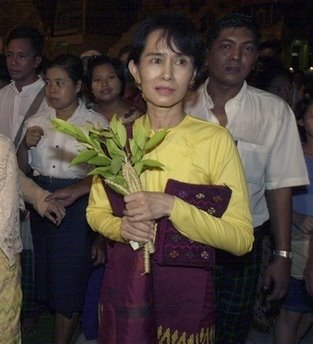


 Posts
Posts


