News & Articles on Burma
Tuesday, 19 July, 2011
----------------------------------------
Burma's Suu Kyi pays tribute to father
Suu Kyi defends negotiation tactics
Letter from Burma: Holiday (1)
ASEAN gives Myanmar chairmanship bid "positive consideration"
Burmese Army Launches Major Offensive in Shan State
The River With a Damned Future
Journalists warned on exile contacts
Thai army helicopter crashes in Burma
Burmese officials captured by Kachin army
ASEAN must respect the ASEAN Charter
China Ignores Own Irrawaddy Dam Study
Phuket: Arrested Boatload of 44 Burmese,
Burma lifts import ban on 15 Thai products
------------------------------------------
Burma's Suu Kyi pays tribute to father
By Hla Hla Htay, AAP July 19, 2011, 10:22 pm
Burma's democracy icon Aung San Suu Kyi led supporters in memorials for her father on Tuesday.
Burma's democracy icon Aung San Suu Kyi led hundreds of supporters in memorials for her father, the country's independence hero General Aung San, after being permitted to attend the ceremony for the first time since 2002.
Large crowds gathered on Tuesday outside Suu Kyi's party headquarters in the main city of Rangoon, and many followed her as the 66-year-old made her way to the Martyrs' Memorial.
Suu Kyi, who was released from house arrest after controversial elections last November, last attended the remembrance ceremony nine years ago, before her latest stint under detention began.
Her invitation to the event came shortly after she tested the boundaries of her freedom with her first trip outside Rangoon since her release, a four-day visit to the ancient city of Bagan.
Wearing a white blouse and a traditional black wrapped skirt, known as a longyi, she visited the memorial twice, including a brief appearance at an official ceremony attended by government officials and soldiers.
After laying flowers at the memorial which marks the assassination of her father and several other independence leaders on July 19, 1947, she met Western diplomats at the headquarters of her National League for Democracy (NLD).
Plainclothes police took pictures of the crowds gathered there, but officials allowed hundreds of them to pass through checkpoints and continue to the memorial as Suu Kyi returned there, accompanied by NLD figures.
The NLD, which won a landslide election victory two decades ago that was never recognised by the junta, was disbanded by the military rulers last year because it boycotted the November vote, saying the rules were unfair.
Part of Suu Kyi's potency as a democracy campaigner for political freedom stems from Burma's reverence for her father, who is widely loved for his role in securing independence from the British.
However, he died a year before seeing the colonial rulers finally depart, and the country was soon plunged into nearly half a century of military rule from 1962.
"The struggle for the establishment of a new democratic state was hurt because Bogyoke (General) Aung San and the martyrs were assassinated," said a statement released by the NLD.
It vowed to continue to press for true democracy and renewed calls to free all political prisoners, but added that "settlement through armed struggle could not be beneficial for the future of the country".
Suu Kyi refrained from any overt political activities that might have antagonised the military-dominated government during her four-day excursion to Bagan earlier this month.
She has spent much of the past 20 years as a prisoner in her crumbling lakeside mansion and some observers believe the new government would have no qualms about limiting her freedom again if she was perceived as a threat.
http://nz.news.yahoo.com/a/-/world/9875908/burmas-suu-kyi-pays-tribute-to-father/
----------------------------------------
Suu Kyi defends negotiation tactics
Zoe Daniel reported this story on Tuesday, July 19, 2011 08:18:00
Listen to MP3 of this story ( minutes)
Alternate WMA version | MP3 download
TONY EASTLEY: Burmese democracy leader, Aung San Suu Kyi, has rejected criticism that she's out of touch with the ordinary Burmese.
Since she was released from house arrest late last year some critics have questioned her policy of attempting to engage with the country's government.
In an exclusive interview with the ABC's 'Foreign Correspondent' program, Aung San Suu Kyi says she's always believed negotiation was the best way to achieve change.
She spoke with our Southeast Asia correspondent, Zoe Daniel, at her home in Rangoon.
TONY EASTLEY: You can see and hear more of Aung San Suu Kyi in Zoe Daniel's report on Burma, tonight on Foreign Correspondent at 8 O'clock on ABC .
AUNG SAN SUU KYI: I don't think my approach has changed at all, we've always wanted to engage with the government. And I sometimes am surprised at what people will come out with, because, this is partly of course due to the fact that communications have been very poor in the past. So people would distort what we were saying or what we were doing and a lot of what they said we said was pure speculation.
Now, with the improvement in communications people are able to find out exactly what it is that we want to say because, well, I can have interviews with you. I have better access to the outside world.
So I think that is the difference, rather than any change in our stance, because we've always said the only way we want to go forward is the way of negotiation, the way of meeting, finding common ground, talking to each other, coming to a political settlement.
ZOE DANIEL: Is it inevitable, though, because of the simple fact that you've been under house arrest for so long, that you are, to an extent, out of touch with their, their mere existence, their struggle?
AUNG SAN SUU KYI: I think it's our struggle as much as theirs. So I don't think the fact that I have been under house arrest removes me from the struggle. In fact I think those that are under arrest have to struggle a lot more in some ways. So I don't think we are at all removed or separated from the struggle, it's a struggle taking place in a different way.
ZOE DANIEL: Australia has some limited, quite targeted sanctions; how would you feel about Australia using that as leverage, for example, to say 'well, in order to lift those sanctions we want the political prisoners released'. I mean, is it a useful bargaining chip?
AUNG SAN SUU KYI: I think so. I think it's much better to have very, very clear targets. I do not think it's really very reasonable to just say 'we want an improvement in human rights, in your human rights record', it's too vague. But if Australia, and other countries, were to work in accordance with United Nations Human Rights Council resolution and pick out some of the more important demands there - the release of political prisoners, the inclusion of all in the political process, rule of law and so on - pick out the most important points and say 'well, if you want sanctions removed, you've got to do these.'
I think it's much better for everybody all around to understand exactly what those who have imposed sanctions are trying to achieve.
ZOE DANIEL: Do you find it frustrating that you, well I say you can't leave the country, but I suppose you can, but you may not be able to return; I mean is that a source of frustration for you, not to be able to take your message out, to have to try and get it out through other means?
AUNG SAN SUU KYI: No, because after all I can get out my message. It's not the same as going of course, but I'm not frustrated by it. I mean you've got to remember that I've been under house arrest for 15 of the last 20 years and I've discovered that I'm really not a gadabout (laughs).
ZOE DANIEL: (Laughs).
AUNG SAN SUU KYI: I don't get frustrated because I can't go out. I can read, I can listen to the radio. The only thing that used to bother me was when I felt that I should be outside helping my colleagues and friends when there were difficult times.
TONY EASTLEY: And you can see that report on ABC1 tonight.
---------------------------------------
Perspectives
Letter from Burma: Holiday (1)
(By Aung San Suu Kyi)
(Mainichi Japan) July 19, 2011
For many years now, holidays for me have been memory snapshots of past events, vivid but distant.
The Himalayas: riding up and up a mountain path through lichen festooned forests on the back of a stately mule with seductively long lashes; sitting down on a grassy slope looking down at misty, shadowy lands, eating a lunch of hard boiled eggs and parched rice; wandering from Buddhist monasteries to Hindu temples in Kathmandu, then ending up in a small coffee shop famous for its American brownies; shooting the rapids on a raft; sighting a tiger from the back of an elephant while munching sour Indian gooseberries plucked from wild bushes; watching an enactment of the dance of death performed with mesmerizing slow steps by Tibetan monks in the North East Frontier Area of India. In a schloss overlooking a Swiss lake, enjoying delicious food of which the daily highlight was homemade rosehip jam for tea. On a canal boat meandering along the waterways of England, family dog perched on the roof, surveying the green views with absolute serenity. Camping on the empty sands of Tiree with the wide Scots gray ocean stretching away to where a few seals played.
The images are amazingly full of life and color but there is a quality of unreality about each and every one. It was therefore unsurprising that when my son Htein Lin (Kim) arrived on my birthday in June and said he was going to take me away on a holiday it seemed to me a somewhat unreal proposition.
After some discussion and thought however, I decided that a short holiday, the first in more than 20 years, was not unreasonable. So we set about planning. With the full force of the monsoons at play the choice of the central region of the country, the 'dry zone,' was a practical one. There was Mandalay from which the last king of Burma had been removed by British troops in the late 19th century. Or there was Pagan, the ancient capital where some thousand pagodas remain as witness to long vanished glory and raise tantalizing questions as to the driving force behind such a manifestation of excess construction energy: was it piety or prosperity or pride or various combinations of the three?
Pagan was the choice we made without any difficulty. The many temples and stupas of the old city attract both tourists and pilgrims but during this time of year there would be few visitors and we could enjoy some days of peace and rest. Since this would not be the first visit to Pagan for either of us, we did not intend to go around many of the religious monuments, we would only go to the places that had a special significance for me. The most important thing was to find a place where Kim and I and our dog Taichito (there was no question of leaving him behind if this was to be a family holiday) could be happy and comfortable. The ideal place was found for us by U Khun Tha Myint. I shall have to make a small diversion here.
U Khun Tha Myint is the younger brother of U Han Tha Myint, a member of the Central Executive Committee of the National League for Democracy (NLD) party, who was elected as the representative of the town of Butalin in the general elections of 1990 with an overwhelming 80 percent of the votes cast. Ko Han Tha and Ko Khun Tha's father and my father became friends and associates when they started the politicization of the Rangoon University Students' Union in the 1930s. The politics of U Thein Pe Myint and my father were not always in harmony and it could be said that toward the last phase of the independence movement they were more adversaries than friends.
Yet they both left behind a legacy of respect for differing views and of freedom from prejudice and resentment that has enabled us, their progeny, to work together as colleagues and comrades bound together by shared values and, not to be underrated, a shared sense of humor.
Ko Khun Tha came forward to help me when I was in Insein Jail in 2009 and in need of an architect to undertake the proposed renovations to my house. After I was transferred from jail to house arrest the work on the house started and Ko Khun Tha, as architect, and two other friends, Ko Htin Kyaw and Ko Ni, as my appointed representative and my general supervisor, came daily over the months necessary to complete the renovations. Ko Htin Kyaw and Ko Ni too are connected to me through our respective fathers who had known one another at Rangoon University. I shall write more about the sons and fathers (and mothers) another time but suffice it to say here that as a result of these old ties I have been blessed with assistance, help and friendship. Ko Khun Tha who started out as my architect has been obliged, willy-nilly, to take on the responsibilities of security officer, dog trainer, emergency driver and, during the last fortnight, travel agent and holiday organizer.
Ko Khun Tha's choice of the Bagan Hotel for our group (there were 16 of us) could not have been happier. It is within easy reach of some of the most famous historical and religious monuments, it is a place of comfort and beauty and, most important of all, the staff are courteous and well-trained and possess a special talent for making guests feel truly welcome and cherished.
http://mdn.mainichi.jp/perspectives/news/20110719p2a00m0na002000c.html
-----------------------------------------
ASEAN gives Myanmar chairmanship bid "positive consideration"
Jul 19, 2011, 11:52 GMT
Bali Island, Indonesia - The Association of South-East Asian Nations (ASEAN) may agree to allow Myanmar, often criticized for its human rights record, to chair the group in 2014, Indonesia said Tuesday.
'We heard Myanmar's expression of willingness and readiness to chair ASEAN for 2014,' Indonesian Foreign Minister Marty Natalegawa said after a meeting of ASEAN foreign ministers.
'We are positively considering this,' he said.
In November Myanmar released pro-democracy leader Aung San Suu Kyi after years of house arrest and held an election after nearly four decades of military rule.
But the party that won is pro-military and made up of former members of the military. Human rights groups called the election a sham and charged the new rulers have done nothing to improve the country's poor human rights record.
http://www.monstersandcritics.com/news/asiapacific/news/article_1651964.php/ASEAN-gives-Myanmar-chairmanship-bid-positive-consideration
-------------------------------------------
Burmese Army Launches Major Offensive in Shan State
By SAI ZOM HSENG Tuesday, July 19, 2011
The Burmese Army is launching a major offensive against the Shan State Army (SSA), in a conflict that has already affected about 30 villages in northern and central Shan State, according to SSA sources.
The Burmese troops will soon overrun the armed group's headquarters in Wan Hai, Mong Hsu Township, said Col Sai Htoo, the assistant secretary general of the SSA's political wing, the Shan State Progressive Party (SSPP), which is also located in Wan Hai.
Around 300 local people have fled the area and schools have also been shut as fighting intensifies. Most residents have moved to urban areas, and teachers were instructed on Tuesday morning to return to Lashio, the capital of northern Shan State, said Sai Htoo.
Speaking to The Irrawaddy on Tuesday, Sai Htoo said that the SSA, formerly known as the Shan State Army-North and led by Col Pang Fa, expected to lose control of its headquarters in the very near future.
“The commander of the [Burmese Army's] Northeast Military Command is now at the front line commanding his troops and battalions. There is an 80 percent chance that we will lose our headquarters very soon, but we will continue fighting using guerrilla warfare.”
Yesterday, skirmishes between the two sides brought the fighting closer to Wan Hai, with Burmese troops using artillery against the Shan troops until later Monday evening, according to local resident Sai Aung.
Last week fighting was reported every day in Kye-thi-Marn Sam Township, especially around Doi Sai, a mountain around 16 km (10 miles) from Wan Hai and a key location on the SSA's line of defense. According to Sai Htoo, Burmese Army troops have been ordered to seize Wan Hai within seven days.
Burmese battalions under the control of the Northeastern Military Command are coordinating their attacks against the Shan troops with Burmese Army battalions from Military Operation Commands 1 and 2, which are based in Kyaukme and Mong Naung, respectively, and include artillery battalions.
A spokesperson for the SSA/SSPP said that the combined strength of the Burmese Army battalions engaged in the offensive is around 1,500 troops, while the SSA has about 1,000 troops in Wan Hai.
Although sources said that there have been numerous casualties among both the Burmese and Shan troops, no further details were available. Injured Burmese troops were reportedly evacuated from the area to major cities with helicopters from Nam Hsan Air Force Base.
The SSPP/SSA, a former ceasefire armed group, declared in May that it was now cooperating with the former Shan State Army-South, led by Lt-Gen Yawd Serk. The two groups have now united under the banner of the SSA. http://irrawaddy.org/article.php?art_id=21717
-----------------------------------------------
The River With a Damned Future
By SEIN HTAY Tuesday, July 19, 2011
MYITKYINA, Kachin State—Myitsone, the confluence of Maykha and Malikha rivers around 46 km north of Myitkyina, is very important not only to the Kachin people, who consider it the birthplace of their culture, but also for the whole of Burma.
It is the source of the Irrawaddy River, which flows through the country from north to south until it reaches the Andaman Sea. The river itself is a vital lifeline that has supported those who live along its length for centuries.
However, the Burmese government has other plans for the development of Myitsone. Together with China’s state-owned Chinese Power Investment Corporation, the new military-backed civilian administration is planning to build the country’s largest dam—the 15th largest in the world—at Myitsone.
The dam will produce hydropower to be sold to China, earning around US $500 million annually. Once the dam is in operation, the Myitsone area will be totally flooded, and all the beauty and cultural significance associated with it will be lost forever.
Fearing the immense cultural and environmental impact of this project, including the dire consequences it could have for biodiversity in this relatively unspoiled area, local people and civil society groups have been protesting, but to no avail. The government is not listening.
That is why I decided to return while there was still the chance, as there was no way of telling whether Myitsone would exist as I remembered it ever again.
Although my trip was to enjoy Myitsone’s beauty while it lasted, now my heart has grown heavy from listening to people’s complaints and seeing with my own eyes how the confluence is already well on its way to destruction.
On our travels, we occasionally stopped to discuss the dam with local people and to ask what they hoped for from the new government formed after last year’s election. Most had little to say about the latter subject, but were clearly unhappy about the dam and worried about what life would be like in the area where they will be relocated.
I mentioned to my friend how sad it was that the Kachin people were losing an important part of their heritage. But he pointed out that this was nothing new. The government has long exploited Kachin State, giving its people very little in return. And it is not just the Burmese government that is doing all the damage.
“Our state is being hungrily eaten by the Chinese government too,” my friend said.
He went on to explain how Burma’s rulers and their cronies collaborate with the Chinese government and their state-owned companies to take teak, gems, gold and electricity out of Kachin State for their own profit, but have done very little for the development of the region.
The state’s infrastructure is still rudimentary, and even travel to the capital is an ordeal. The train from Mandalay to Myitkyina takes around 24 hours along a rickety track. It sways and bumps the whole way, forcing you to hold on tight to your seat. Even so, tickets are hard to get, especially for first class seats, which are mostly taken by railway officials and the police for sale on the black market.
Travel by bus is even worse. The trip takes around 40 backbreaking hours from Mandalay, and can only be done in the dry season. The only comfortable and reliable way to reach Myitkyina is by air, which is the means of transportation recommended by most tour companies. But for the vast majority of local people, this option is completely unaffordable.
This lack of proper infrastructure, combined with government restrictions, has done much to discourage travel to the state.
This piece is a summary of a travel article that appears in The Irrawaddy’s latest e-magazine. To read the full version visit: http://issuu.com/irrawaddy/docs/irr_vol.19no2_june2011_issuu/4?viewMode=magazine&mode=embed
http://irrawaddy.org/article.php?art_id=21716
---------------------------------------------
Journalists warned on exile contacts
By AHUNT PHONE MYAT
Published: 19 July 2011
Burmese journalists have been told by a senior government minister not to pass information to exiled media outlets whom he claims are tarnishing perceptions among the public of the Thein Sein administration.
The warning came on 16 July during a meeting between Myint Swe, Rangoon division cabinet minister, and local reporters. The meetings had originally been slated as monthly events, but Myint Swe said that the problems caused by details being sent to non-state media groups may scupper this.
As part of the new government’s attempts to shed its maligned reputation surrounding the treatment of media workers in Burma, and to project an image of transparency, it announced earlier this year that regular press conferences would be held in the former capital.
These however have met with little success – a number of senior Rangoon editors are believed to have boycotted the meetings, claiming that they were being used by the government to circulate propagandist reports. Moreover, domestic journalists appear to have quietly rejected official demands not to pass the contents of the meetings to exile groups, like DVB.
“The outside media is being provided with information by someone attending the meetings – it could be no one else but someone in here,” said Myint Swe. A soundbite of his speech was passed to DVB by a source at the 16 July meeting.
“[The exile media] is not allowed to attend these meetings and those of you being allowed to attend should contemplate this. If we hold these meetings more often, then there will be more reports by [the exile media]. That is why we are now not holding them often.”
He said that “erroneous” accounts of the meetings broadcast by non-state groups were “made with either deliberate intentions or pure misunderstanding”, adding that it could “cause misunderstanding by the public regarding us [the government]”, as well as wrong perceptions in Naypyidaw of regional officials.
The Rangoon cabinet has so far held three such meetings: around 60 media publications attended the first meeting on 10 May, around 40 on 17 May, and only 28 on 16 July.
A number of exile Burmese media groups exist, including The Irrawaddy Magazine, Mizzima and Shan Herald Agency for News, mainly operating out of Thailand but feeding information back into Burma. The BBC, Voice of America (VOA) and Radio Free Asia (RFA) also broadcast daily news into Burma via satellite television and shortwave radio.
A space is reserved on the back page of the New Light of Myanmar daily newspaper accusing the BBC and VOA of “sowing hatred among the people”, and RFA and DVB of “generating public outrage”.
http://www.dvb.no/news/journalists-warned-on-exile-contacts/16613
-----------------------------------------
Thai army helicopter crashes in Burma
By DVB
Published: 19 July 2011
A Thai helicopter carrying nine people, including a senior army commander, crashed inside Burma this morning, the Bangkok Post has reported.
The Blackhawk helicopter was reportedly on a mission to retrieve the bodies of five Thai troops who died in a helicopter crash on Saturday last week in Ratchaburi province, which lies alongside the Burma border next to Tenasserim division.
Details on casualities from today’s incident have not been released.
Among those on board was Maj-Gen Tawan Ruangsri, commander of the Thai army’s 9th Infantry Division, and two journalists, the Bangkok Post said. The remaining are thought to have been military personnel.
The crash on Saturday last week occurred half a mile from the Burmese border. The helicopter, tasked with anti-logging operations in the Kaeng Krachan National Park, went down in poor weather.
http://www.dvb.no/news/thai-army-helicopter-crashes-in-burma/16619
------------------------------------------
Burmese officials captured by Kachin army
By DVB
Published: 18 July 2011
Two Burmese army officials and three soldiers have been captured by the insurgent Kachin Independence Army (KIA) following two days of heavy fighting in northern Burma.
At the weekend a key highway linking Bhamo town to the Kachin state capital of Mytikyina was engulfed in a series of fire-fights after a truck carrying Burmese soldiers was stopped by Kachin troops.
The fight continued into Sunday when the KIA captured the five during an ambush. “They were found hiding in a drain after being pinned down in the [16 July] fight,” said a KIA source. “They were three privates and two officials – a sergeant and a captain.”
They are now in the group’s headquarters in Laiza, and no details have been given on their identity.
The capturing of troops has been a common tactic of both sides since heavy fighting broke out in Kachin state in June, but sometimes with grisly results: on 12 June the corpse of a captured KIA solider was returned displaying signs of torture, despite what the group had claimed was an agreement to exchange hostages unharmed.
The KIA claims the five men are being treated well in Laiza, but no independent verification of their condition can be obtained.
Thousands of ethnic Kachin have been forced to flee their homes since the beginning of fighting, which was triggered by the KIA’s refusal to transform into a government-controlled Border Guard Force.
Large areas of Kachin state have also been brought to a standstill – buses are refusing to travel along the Bhamo-Myitkyina highway, and locals report of being stranded away from their homes.
http://www.dvb.no/news/burmese-officials-captured-by-kachin-army/16609
-------------------------------------------
ASEAN must respect the ASEAN Charter to consider Burma for its chair in 2014
Tue, 2011-07-19 00:50 — editor
By - Zin Linn
The new military-backed civilian government of Burma is still in a vicious circle to gain ASEAN’s backing for the 2014 chairmanship. If ASEAN endorsed Burma’s chairmanship of the group, it would unquestionably dishonor the name of the regional bloc. Burma under the former military junta missed a chance its turn as chair of ASEAN in 2006, because of strong international disapproval led by Western countries.
In 2004 August, activists in the ASEAN region launched an international campaign calling for Burma to be disqualified from chairing the regional bloc in 2006, saying it would affects the grouping’s credibility and reputation.
At that juncture, a delegation led by Dr Gothom Ariya, the then secretary-general of the Asian Forum for Human Rights and Development (Forum-Asia) presented Thai Foreign Ministry officials an open letter with signatures by organizations from the region, East Asia, Europe and North America. Copies of the letter addressed to respective ASEAN governments were delivered by a group of activists to member nations’ embassies in Bangkok.
The Then activists underlined the ASEAN diplomats in Bangkok, a very important report – ‘A Licence to Rape’ – released in 2002 by the Shan Women’s Action Network (SWAN). It described comprehensively the use of rape or shameful maneuver by the Burmese armed forces. The allegations were scrutinized and confirmed by International organizations and foreign governments that using rape as weapon truly was taking place. As the report exposed concrete evidences, the junta’s denial failed.
Furthermore, the activists also explained about the most atrocious chapter of contemporary Burmese history or the latest assassination attempt by the Burmese military junta on the pro-democracy icon Aung San Suu Kyi – leader of the National League of Democracy (NLD) and her entourage at Dapeyin on 30 May 2003. Burmese troops and government sponsored goons and thugs attacked the NLD motorcade led by Aung San Suu Kyi who fortunately survived with injuries, subsequently arrested and put under house arrest.
The officials from the U.S. Embassy in Rangoon visited the site of the May 30 violent attack on Aung San Suu Kyi and her supporters and told that there was a premeditated ambush on the Lady’s motorcade. Circumstances and reports from local residents around Dapeyin indicated that the regime-backed thugs conducted the attack.
As a result, Burma lost its opportunity of becoming chairman of the ASEAN in 2006 due to tough international condemnation.
Now, another chance for Burma comes out once more in 2014. Senior diplomats of the Association of Southeast Asian Nations (ASEAN) are expected to think about international opinion when they decide on whether to allow Burma to chair the regional grouping by 2014.
“We live, interact, synergize and benefit from our relationship with the (rest of the) world. Certainly we will be open to hear their sentiments,” Dr. Surin Pitsuwan, ASEAN secretary-general, told reporters Jakarta on 13 July, as said by Ria Rose Uro (Interaksyon.com).
He highlighted that “ASEAN is where it is (today) because of the goodwill of dialogue partners.”
The secretary-general is attending the ministerial meetings which will run from July 15 to 23. Consideration of the matter is with the foreign ministers meeting (FMM). Earlier, Indonesian parliamentarian Eva Kusuma Sundari, president of the ASEAN Inter-parliamentary Caucus on Myanmar (AIPMC), warned about the potential backlash from Western governments should Burma (Myanmar) take over ASEAN’s chairmanship.
Sundari said that based on their interactions with government officials in Australia, the United States (US) and the European Union (EU), the would-be impact “will not be good for ASEAN as a whole.”
“You cannot help it. These governments still look at Aung San Suu Kyi as the icon of democracy in Myanmar,” she stressed.
However, most important point to put into consideration for Burma is no other than its human rights record. Human Rights Watch pointed out in its 6 May Statement that Burma has failed to address concerns repeatedly raised by ASEAN leaders in the past summits.
“Rewarding Burma with ASEAN’s chairmanship after it staged sham elections and still holds 2,000 political prisoners would be an embarrassment for the region,” said Elaine Pearson, deputy Asia director at Human Rights Watch.
The Kachin Women’s Association Thiailand (KWAT) released a press statement on 21 June denouncing the Burmese government’s armed forces for using of rape as a weapon of war in northern Burma offensive.
According to the press release, at least 18 women and girls were gang raped by Burmese soldiers; four of whom were killed after being raped. The soldiers killed three girls and raped a woman in front of her husband, who was then forced to work for them. In the frontline areas, Burmese soldiers are committing crimes freely as there are no effective or appropriate penalties in place by their senior officers.
A press release has been delivered on 14 July by the Shan Women’s Action Network (SWAN) and the Shan Human Rights Foundation (SHRF) condemning Burma Army of using rape as war weapon. The Burma Army is clearly authorizing rape as a terror policy in its offensive against the Shan State Army-North (SSA-N), according to information documented by SWAN and SHRF.
In such a situation, ASEAN must consider very thoughtfully to allow Burma at its chair in order to avoid the grouping’s ethical standard. Neglecting Burma’s continuous violation of human rights, ASEAN should not offer its chairmanship to an unclean member like Burma.
Looking at the facts on the ground in Burma, there are more military attacks in the ethnic minority areas, more rape-cases as a terror policy, more forced labor, more child soldiers, more political prisoners, more refugees, more abuses of law, more restrictions toward media, more control on Internet users and civil societies.
In a word, while dealing with the Burma question, ASEAN must stand for the ASEAN Charter that specifies the loyalty “to the principles of democracy, the rule of law and good governance, respect for and protection of human rights and fundamental freedoms”.
Hence, ASEAN needs to be very cautious and to put more pressure on Burma until the essential benchmarks for chairmanship are carried out before 2014. It will be better for ASEAN to support a UN-led ‘Commission of Inquiry’ into longstanding allegations of violations of international humanitarian and human rights law in Burma.
- Asian Tribune - http://www.asiantribune.com/news/2011/07/18/asean-must-respect-asean-charter-consider-burma-its-chair-2014
------------------------------------------
ASIA SENTINEL
China Ignores Own Irrawaddy Dam Study
Written by Our Correspondent
Monday, 18 July 2011
China Power Investment’s assessment calls for Burma’s Myitsone Dam to be scrapped
The state-owned China Power Investment Corp. is continuing with the controversial Myitsone Dam on Burma’s Irrawaddy River despite its own 945-page environmental impact study calling for the project to be cancelled, according to a report by the Burma Rivers Network, which obtained a copy of the study.
The decision to ignore the negative environmental assessment is hardly unusual. A fondness for massive engineering projects on the part of China’s leaders, many of them engineers, has kept Beijing continuing to build, with the consequences to be dealt with later. The consequences have often been disastrous.
A case in point is the Three Gorges dam on the Yangtze River, the world’s largest hydropower dam, which also went ahead over the objections of environmentalists. In May, in a rare admission, the State Council issued a warning that a combination of environmental, construction and migration disasters is causing “urgent problems.”
While the Three Gorges dam has been beneficial to the region, the State Council said, “Urgent problems must be resolved regarding the smooth relocation of residents, ecological protection and geological disaster prevention.” Among these problems are that water quality in the Yangtze is said to be worsening because the dam prevents dispersal of pollutants. Algal blooms continue to develop progressively and soil erosion is causing riverbank collapses and landslides.
In Burma, thousands of workers and equipment already have been moved to Kachin State and construction has begun on the Myitsone facility and a second one, the Chibwe, over the objections of local villagers, according to the Burma Rivers Network.
Six villages have already been forced to relocate from the catchment areas although villagers complain that the relocation camp provides inadequate health and education facilities and that there is neither enough farmland nor water. The dams are opposed by affected communities across Burma. China Power’s own assessment warned that “the majority of local races oppose construction of the dams” and called for consultation with and consent of affected peoples, according to the NGO.
Although finished in late 2009, the assessment has never been made public, the NGO said. It was funded by China Power and was conducted by a team of 80 Burmese and Chinese scientists, according to the Burma Rivers Network, which opposes the construction of the dam and six others planned by Chinese engineers on the Irrawaddy and its tributaries. The Irrawaddy is Burma’s most important river and one of the major waterways flowing out of the Himalayas. The report, prepared on data gathered by the scientists over five months from January through May 2009, dealt with proposed dams on the Irrawaddy, N’Mai and Mali rivers in Kachin State.
The team recommended a longer and more comprehensive environmental assessment, saying the fragmentation of the river by a series of dams would pose “very serious social and environmental problems not only at upstream of dams but also to very far downstream to the coastal delta.”
The study predicted severe negative impacts on plant diversity, key biodiversity areas and conservation corridors.
If the Burmese and Chinese governments “were really concerned about environmental issues and aimed at sustainable development of the country, there is no need for such a big dam to be constructed at the confluence of the Ayeyawady (Irrawaddy) River, the NGO quoted the study as saying. “Instead two smaller dams could be built above Myitsone to produce nearly the same amount of electricity. Hence respecting the Kachin cultural values which surpass any amount of the overall construction costs.”
The Myitsone project, the report said, should be avoided “due to the changes in downriver hydrology which may affect navigation, the riverine ecosystem and delta ecosystem and will lead to negative impacts on the economy.”
China has been stubbornly pushing ahead with a series of dams, not just on the Irrawaddy but the Mekong as well over the objections of environmentalists who say the dams threaten to wreck the ecology of the rivers.
According to the Myitsone dam assessment obtained by the Burma Rivers Network, “the dams will impact millions that depend on the river and threaten biodiverse ecosystems: The fragmentation of the Irrawaddy River by a series of dams will have serious social and environmental problems not only at upstream of dams but also very far downstream to the coastal area.”
“Chinese companies are increasing their investments in Burma yet they are not following their own standards” said Sai Sai, coordinator of the Burma Rivers Network, in a prepared release. “While CPI Corporation is hiding its assessment from the people of Burma, construction of the dams is speeding ahead. China Power Investment is speeding ahead with its dam plans, ignoring Chinese and international standards for conducting proper assessments.”
The Kachin Independence Organization warned China’s government in March 2011 that construction of the Myitsone Dam might result in civil war. The warning came true. In June fighting broke out between Burmese Army and the Kachin Independence Organization, resulting in the shutdown of China’s Dapein hydropower station in Kachin State. Burmese soldiers, however, appear to have quelled the insurrection with overwhelming firepower.
The Burma Rivers Network urged that the dam projects be immediately stopped and that the economic, social, security and environmental impacts of dams throughout Burma be publicly disclosed. http://www.asiasentinel.com/index.php?option=com_content&task=view&id=3326&Itemid=208
---------------------------------------------
Phuket Just a Dream for Arrested Boatload of 44 Burmese, Ripped Off by People Trafficker
By Chutima Sidasathian and Alan Morison
Monday, July 18, 2011
PHUKET: A boatload of 44 Burmese who set sail for the holiday island of Phuket and the prospect of good wages and a better life were arrested at sea by the Royal Thai Navy about 5pm yesterday.
One of the apprehended Burmese told navy interrogators that each of the 30 men and 12 women who set out for Phuket - with two infants - paid 20,000 baht to a people smuggler to try to reach the prosperous holiday destination.
''We were promised jobs for 6500 baht, plus accommodation and food,'' said one woman, Jeza, aged 23. ''We were prepared to take our chances.''
Opponents of the newly-elected Pheu Thai Party's plan to raise the minimum wage on Phuket and in Thailand to 300 baht a day have warned that the sudden increase would trigger a wave of illegal migration from surrounding countries.
But it's not known whether the people arrested by the navy yesterday were aware of the controversial pay proposal. The prospect of a better life on Phuket may have been sufficient, even with a Thai high of 221 baht as the minimum wage.
A navy spokesperson said that the seven-metre vessel was intercepted between Prayam Island and Chang Island off mainland Ranong by the navy patrol ship, Hua Hin 541.
The smuggler's boat had departed from Victoria Point, the Burmese port opposite the Thai border town of Ranong. Both ports are familiar to expats making visa border runs from Phuket.
The Hua Hin carried its human cargo and towed the smuggler's confiscated boat to the fishing port of Kuraburi in Phang Nga, between Ranong and Phuket.
One of those on board the arrested vessel, Tery, aged 43, confessed to owning the boat and admitted to having agreed with the unidentified people trafficker to ferry the human cargo from Burma to Phuket for a fee of 5000 baht.
The Burmese were kept overnight on the navy vessel. At first light today, the group was transferred to a truck and transported to the Immigration detention centre in Ranong.
Most Burmese travelling to Phuket prefer to try their luck on the road rather than by sea. Subterfuges seem to work and smuggled people are seldom discovered - unless there are disasters.
In 2008, the air-conditioning failed on a seafood container truck bound for Phuket and 54 of more than 100 people inside suffocated to death. The survivors, after serving a short sentence in place of a fine, were quickly sent back to Burma.
Navy patrols have intensified off Phuket and the Andaman coast since the Muslim Rohingya boatpeople, denied citizenship in Burma and persecuted by the military junta, began making perilous boat trips south a few years ago in the hope of finding sanctuary in Thailand or Malaysia.
While the illegal Burmese are returned to Ranong where they are likely to serve a short sentence before being repatriated, 68 Rohingya boatpeople who made it to Phuket in January remain captive in two groups, incarcerated on Phuket and in Phang Nga.
The stateless would-be refugees, including boys as young as 12, face a timeless physical and mental torment in Thailand, with no prospect of release or of being granted refugee status.
Another group of Rohingya apprehended in Ranong early in 2009 is still being held in Bangkok, two-and-a-half-years later. http://phuketwan.com/tourism/phukets-dream-arrested-boatload-burmese-ripped-trafficker-14425/
-------------------------------------------
Burma lifts import ban on 15 Thai products
By PETCHANET PRATRUANGKRAI, THE NATION
Published on July 19, 2011
Exports to Burma are expected to grow significantly this year, thanks to Rangoon lifting a decade-old import ban on 15 products from Thailand, the Trade Negotiations Department reported.
Thailand will be able to export unconditionally to Burma monosodium glutamate, syrup, soft drinks, biscuits, gum, cake, wafers, canned food, instant noodles, chocolate, alcoholic beverages, beer, cigarettes, plastic products and fresh fruits.
Srirat Rastapana, director-general of the department, said that after numerous appeals to the Burmese government, its Commerce Ministry recently agreed to allow the imports. It had banned those products because of concern over consumers' health and domestic enterprises. It allowed import of some of the products only to serve foreign travellers in hotels and restaurants.
Srirat said the lifting of the restrictions was good news for Thai exporters as these products are in high demand among Burmese consumers.
Despite the controls on these 15 products, they managed to rack up a Burma-bound export value of Bt7.7 billion last year, mainly from trade across border checkpoints.
Total Thai exports to Burma grew 19.22 per cent to Bt33.95 billion in the first five months this year. Last year, exports to that country were up by 24.65 per cent to Bt65.6 billion.
Previously, the Burmese government also lifted an import ban on 11 Thai fruits. These were apple, pear, grape, cherry, monkey apple, orange, durian, rambutan, mangosteen, guava, and Southern langsat.
Srirat said Thailand was seeking more export opportunity for construction materials, as Burma had high demand for such products to serve its rapid growth. http://www.nationmultimedia.com/home/Burma-lifts-import-ban-on-15-Thai-products-30160553.html
Wednesday, July 20, 2011
News & Articles on Burma-Tuesday, 19 July, 2011


Monday, July 18, 2011
News & Articles on Burma-Sunday, 17 July, 2011
News & Articles on Burma
Sunday, 17 July, 2011
----------------------------------------
Aung San Suu Kyi to attend Myanmar memorial for hero father
Myanmar invites bids for 18 onshore oil blocks
Dozens of Children Infected with Diarrhoea and Sore Eyes in Chin State
Myanmar boats in Bangladesh water reported
Mon Children Are Early Recognized As Thai Citizens
NLD to present its legal status case to the UN human rights group
-------------------------------------
STRAITS TIMES: Jul 17, 2011
Aung San Suu Kyi to attend Myanmar memorial for hero father
Myanmar has invited democracy campaigner Aung San Suu Kyi to attend a ceremony to honour her father, the country's liberation hero General Aung San, a government official said. -- PHOTO: REUTERS
YANGON - MYANMAR has invited democracy campaigner Aung San Suu Kyi to attend a ceremony to honour her father, the country's liberation hero General Aung San, a government official said on Sunday.
The 66-year-old is expected to attend the annual Martyrs' Day events on July 19 for the first time in nine years following her release from house arrest soon after the nation's controversial election last November.
The Myanmar official said an invitation was sent to Dr Suu Kyi's Yangon home on Thursday, adding the Nobel Peace Prize winner was thought likely to agree to attend the ceremony held at the Yangon Martyrs' Mausoleum.
'Government officials, led by the Yangon mayor, will attend the ceremony in the morning,' he added.
A friend of Dr Suu Kyi confirmed she had received the invitation and told AFP she was planning to go to the event, which marks the assassination of her father and eight other independence leaders on July 19, 1947.
The official invitation comes in the same month that Dr Suu Kyi tested the boundaries of her freedom with her first trip outside Yangon. -- AFP http://www.straitstimes.com/BreakingNews/SEAsia/Story/STIStory_691649.html
------------------------------------
Myanmar invites bids for 18 onshore oil blocks
By REUTERS
Published: Jul 15, 2011 23:14 Updated: Jul 15, 2011 23:14
YANGON: Myanmar has invited bids for companies to operate 18 onshore oil blocks scattered across about half a dozen provinces on a production-sharing contract basis, the largest number in a single such offer in recent years.
Bidders are allowed to submit up to three proposals for three onshore blocks, the Ministry of Energy said in an announcement in the official English daily, New Light of Myanmar.
Proposals should be submitted by Aug. 3, 2011.
Myanmar has been exploring oil and gas at 49 onshore sites and 26 offshore blocks in Rakhine, Tanintharyi and Mon states after entering joint ventures with foreign companies since 1988.
Myanmar’s crude oil reserves are estimated at 3.2 billion barrels, the energy ministry has said. This compares with China’s proven oil reserves of 14.8 billion barrels, Malaysia’s 5.8 billion, Vietnam’s 4.4 billion and Indonesia’s 4.2 billion barrels, at the end of 2010, according to the BP Statistical Review.
The country’s proven gas reserves tripled in the past decade to around 800 billion cubic meters, equivalent to more than a quarter of Australia’s, BP Statistical Review figures show.
Myanmar’s ruling military junta handed power to a nominally civilian government in March after elections last November that were widely dismissed as a sham. The elections were intended to create the impression of a democratic transition after 49 years of direct army rule.
Neighboring Thailand and China are the biggest investors in Myanmar’s energy sector.
Last October, China’s state energy group CNPC started building a crude oil port in Myanmar, part of a pipeline project aimed at cutting out the long detour oil cargoes take through the congested Malacca Strait.
Companies from Australia, Britain, Canada, Indonesia, India, Malaysia, Russia, South Korea and Vietnam have also reached energy deals with the government.
Total foreign direct investment in the oil and gas sector has amounted to $13.5 billion since 1988, official data show.
http://arabnews.com/economy/article472578.ece
----------------------------------------
Dozens of Children Infected with Diarrhoea and Sore Eyes in Chin State
Kanpetlet
A village in Kanpetlet Township, Chin State (Photo: CHRO)
17 July 2011: At least 60 children aged up to 3 years in Kanpetlet Township have been hit by an outbreak of diarrhoea and eye infections in the remote parts of Chin State since the end of last month.
Chin children as well as some elderly are said to have been seriously infected with the 'prevalent' diseases in Kharyaing village, aka Kham-Jäng, about 55 miles away from Kanpetlet town.
A Chin Christian pastor, whose one-year-old son has also been suffering from diarrhoea and sore eyes for nearly a week, told Chinland Guardian that the diseases are spreading very quickly and more children as well as the elderly get infected in the village.
"The biggest problem is we have no clinics or hospitals in our village. The nearest town with a hospital is Kanpetlet but it is not accessible by car. People have to travel on foot for at least two days in summer. Now that we are in the rainy season, it is even more difficult."
Two infected villagers are said to be in critical condition, according to the Chin pastor, who added: "The only possible way we can think of now is to buy and deliver some medicine from Kanpetlet town to our village."
The Dai Chin pastor said another village called Cintwe, about 23 miles away from Kharyaing, has got a clinic but there is no nurse or doctor.
Talking about the situation in the areas, the pastor said: "It is not easy to get details of figures and facts due to communication difficulties. But I strongly believe that other villages are also hit by the infections."
When asked about any NGOs (Non-governmental Organisation) working in the areas, the pastor said: "The UNDP arrived in our village, helped us build bridges and provided some money for cultivation. But I am not sure if they are aware of the current situation."
It is claimed that the diseases must have been related to the ramifications of mautam-caused food crisis triggered by a plague of rats ravaging the areas until late last year.
"We don't know exactly what has caused the infections. Some people said it's because of the unusual climate change. I believe the lack of medical facilities and sanitary knowledge among the people contributes a great deal to the problems," explained the pastor.
Chin State has been ranked the poorest state among the 14 States and Divisions in Burma, with 73 percent of the population being under the poverty line, according to the UNDP's report last month. http://www.chinlandguardian.com/news-2009/1418-dozens-of-children-infected-with-diarrhoea-and-sore-eyes-in-chin-state.html
----------------------------------------
Saturday, July 16, 2011
Metropolitan
Myanmar boats in Bangladesh water reported
Staff Correspondent, Ctg
Many fishing boats from neighbouring Myanmar were reported to have entered the territorial waters of Bangladesh, officials said yesterday, adding that coastguard and naval forces launched searches for the boats in probable spots along the maritime boundary in the Bay of Bengal.
Coastguard Operation Officer Lieutenant Commander Jasimuzzaman told The Daily Star that around 12:30pm, they were informed that some trawlers from Myanmar were fishing in the Bay in Bangladesh territory.
"The fisheries department informed it," he said, adding that the coastguard patrol boats rushed to possible spots and started searching, but were yet to locate the foreign boats.
He said coastguard members already started interrogation and gathering information from the locals and Bangladeshi fishermen who regularly go fishing in the Bay.
"Coastguards men from four outposts -- Saint Martin station, Teknaf station, Cox's Bazar station, and Shahpuri station -- have rushed to the reported maritime spots with the patrol boats", said Jasim.
"Our forces are alert and they started the search around 1:30pm."
The coastguard official said, "There are many canals flowing from Myanmar into the Bay through which the fishermen from that country probably entered our maritime territory. But we could not have traced them as yet."
"We have heard the news from our higher authority too and on direction, our force will continue its search."
As the two countries have many maritime spots overlapping one another, the Myanmar fishermen have scopes to enter Bangladesh territory, he said. "But if we can trace, of course, our force will confine them."
Naval patrol ships also started their search in the reported spots along with coastguard, said Jasim.
Contacted, Naval Operation Officer Lieutenant Commander Yusuf told The Daily Star that they were also informed of the news by their high authority.
On directives of the high command from the headquarters, a naval ship is patrolling the reported spots, he said. But he did not give any detail where the navy ship was at that moment. http://www.thedailystar.net/newDesign/news-details.php?nid=194410
-------------------------------------
Mon Children Are Early Recognized As Thai Citizens
Friday, 15 July 2011 15:36 Rot Chai News - Independent Mon News Agency
Rot Chai – Many Mon and Karen children living in Kanchanaburi Province of Thailand expect to receive Thai citizenship early, as Thai parliament’s recent policy to issue Thai citizen status to all children with aged 7 years old and above.
According to a local Thai teacher in Sangkhlaburi in Kanchanaburi Province, she told to IMNA that the new law to issue Thai citizen cards to 7 years old children is already implemented in many parts of Thailand and it will gradually move to Kanchanaburi Province.
In Kanchanaburi Province, although many Mon and Karen parents have been migrated to Thailand due to war and poverty in Burma, their children are born in Thailand and are integrated into Thai communities. These children will be recognized as citizenship, accordingly to Thai Constitution and laws.
Thai teacher said, “it is a legal way to issue these identity cards for the kids. Recognizing them in early age. It is a way of preventing fake ID cards. But another concern is still exiting. Some may take this opportunity to sell their ID cards to illegal people”.
Since many hundreds of thousands of illegal migrant workers entered to Thailand in providing cheap labor for Thai industries, the authorities have been always concerned that those come foreign countries obtained this opportunity.
Thai immigration authorities have directly went to schools, and issue the students with 7 years old and above, and they try to make sure all kids in schools born in Thailand with full evidence will get ID card, said the local village leader.
Nai Wichian Sirihong, village head of Sangkhlaburi District section 2, Wangka Mon village confirmed, “the authorities will come to our village school in July. They will come directly to school and issue the ID cards for the kids”.
But the authorities will make sure the kids are born in Thailand and their parents or relatives are already recognized as Thai citizenship.
There are many thousands of Mon and Karen ethnic people living in Kanchanaburi Province. A well known Mon abbot, Luphaw Uttama, founded one Mon village, called Wengka (fish pool), and the Mon migrants resettled under his protection. After living for 5 decades peacefully, the Mon community is recognized to be Thai citizenship and integrated into Thai community. The village has about 1500 households.
Similarly to the Mon village, there are many Karen and Mon villages in Thomphaphoom and Sai Yok Districts of Kanchanaburi Province.
Thai authorities will issue the ID card to all kids from July 11 to September 30, described in Thai Immigration website. http://www.bnionline.net/news/imna/11165-mon-children-are-early-recognized-as-thai-citizens.html
------------------------------------
NLD to present its legal status case to the UN human rights group
Friday, 15 July 2011 15:02 Tun Tun News - Mizzima News
New Delhi (Mizzima) – The Burmese National League for Democracy party–claiming freedom of association is a universal human right–plans to take its legal status case to the United Nations Council of Human Rights (UNCHR).
NLD leader Aung San Suu Kyi during her recent pilgrimage to Bagan in central Burma. Photo: Mizzima
According to the UN Universal Declaration of Human Rights, freedom of association and organization is a universally recognized human right. However, the NLD has been threatened by the new government, which has called it an illegal organization. The NLD plans to submit its case within two weeks.
“According to these procedures, the case can be presented to the UNCHR when all the domestic legal remedies are exhausted in a certain country,” NLD spokesman and lawyer Nyan Win told Mizzima.
The Union Election Commission (UEC) announced on September 14, 2010, that the NLD legal status as a political party had been nullified because it did not reregister with the UEC. The NLD lodged a complaint in court but it was dismissed. The NLD then filed a final appeal to the Supreme Court in Naypyitaw, but it was also dismissed.
The NLD argued that the government’s non-implementation of the results of the 1990 general election and the breaching of its promise and obligation to convene a parliament based on the result of that general election was a human rights violation. Last month, the Home Ministry sent a letter to the NLD warning it not to engage in political activities.
NLD General-Secretary Aung San Suu Kyi replied in a letter saying only the Parliament can enact laws pertaining to political parties, hence, the NLD has not been dissolved.
Some hardliners who are frustrated with the UN role of democratization in Burma criticized the NLD move to present its case to UNCHR, but the Thai-based Burma Lawyers’ Council (BLC) supported the move.
“If the council accepts the case, it can pass a resolution saying the government’s move is not in accordance with international laws. The Burmese Parliament cannot ignore such a resolution,” BLC Chairman Thein Oo told Mizzima. “The NLD is not an armed group working for an armed struggle. It only works to promote and propagate democracy and human rights in the country. It only works for development of ethnic rights. Such an organization should exist in our country. Under these circumstances, the UN has to accept this case and the argument.”
Nyan Win said that the UNCHR once took on similar cases in South Africa and other African countries. http://www.bnionline.net/news/mizzima/11164-nld-to-present-its-legal-status-case-to-the-un-human-rights-group-.html
Sunday, July 17, 2011
News & Articles on Burma-Saturday, 16 July, 2011
News & Articles on Burma
Saturday, 16 July, 2011
----------------------------------------
Defections of two senior envoys rattle Myanmar
Burma’s Kachin people demand political dialogue instead of war
Gems auction nets $1.5 billion for Myanmar despite US sanctions
Myanmar invites bids for 18 onshore oil blocks
Chinese Study Calls for Scrapping Myitsone Dam
-------------------------------------
THE MANILA TIMES.Com
Saturday, July 16, 2011
Defections of two senior envoys rattle Myanmar
WASHINGTON, D.C.: Myanmar’s Embassy in Washington has been rattled by defections of two senior diplomats, embarrassing the country’s military-backed regime, which wants to show the world that it is evolving.
Kyaw Win, the second-ranking diplomat at the embassy until his defection on July 4, told Agence France-Presse during an interview that he had grown tired of waiting for change in his country and voiced admiration for pro-democracy opposition icon Aung San Suu Kyi.
Meanwhile, Soe Aung—the embassy’s No. 4 official—applied for asylum in the United States the following week.
Aaccording to several sources, he made the decision as he was about to be escorted home as part of an investigation of the first diplomat’s defection.
The chaos at the embassy comes despite efforts by leaders in Myanmar, also known as Burma, to show a stable political transition.
A ruling junta held elections in November and afterward officially handed over power to a nominally civilian government.
Western governments and opposition leaders believe that the changes are only cosmetic—a view that Kyaw Win said he quietly shared while working at the embassy.
“We said that the elections would bring change, but” six months after the polls “it’s even worse than before,” said the 59-year-old career diplomat, who previously served in Brazil, India and Switzerland.
“I have for a long time argued with my kids, who are already grown up, who used to argue that the government won’t change,” he added.
According to Kyaw Win, who was on the verge of returning to Myanmar for retirement, he “still believed that I could change it within the system.”
“[But] after 30 years, I should try to change our country from the outside and Washington is a good place to give pressure,” he said.
US State Department officials declined to comment on the validity of his asylum bid, citing privacy rules for cases involving immigration.
President Barack Obama’s administration in 2009 opened talks with Myanmar after concluding that the previous policy of engaging the regime has failed.
US State Department officials have insisted that dialogue remains the best option, even though they have voiced disappointment with the results.
Myanmar’s Embassy is believed to have played a low-key role in the talks, with the United States reaching out directly to the leadership in the capital Naypyidaw or working through Myanmar’s United Nations mission in New York.
The embassy, located on a leafy backstreet of northwest Washington next to upscale old homes and the popular Textile Museum, had 14 accredited diplomats as of the beginning of the year, according to the US State Department.
But the two defectors were considered among the most urbane diplomats of the military-backed government.
The United States and Myanmar do not exchange ambassadors, the result of Washington’s protests after the junta annulled 1990 elections won by Suu Kyi’s National League for Democracy.
“My view is that Aung San Suu Kyi is the only leader who has the people’s trust,” Kyaw Win said.
He added, however, that he was not convinced that the National League for Democracy was effective.
The party was forcibly disbanded for refusing to register in last year’s elections, which it feared would be marred by fraud.
Kyaw Win said that many people in Myanmar recalled that the country was one of the most prosperous in Asia before 1962, when the military seized power.
“We know that change won’t happen within days. We know that it will take time. But we have to get into the right direction,” he said.
AFP
---------------------------------
Burma’s Kachin people demand political dialogue instead of war
Sat, 2011-07-16 02:45 — editor
By - Zin Linn
How much time does Burma need to initiate national reconciliation, a transition to democracy and full respect for human rights? The cost of further delay will be paid in thousands of innocent lives, lost opportunities and prolonged civil war.
The new civilian government – in the namesake, is neglecting its own promises – good governance, national unity, poverty alleviation etc. – made during presidential inaugural ceremony. But the government is actively going on to count the support of China, India and Russia for its grip on power.
The Burmese people feel that it is time for the international community to raise this half-century-long political conflict at the next meetings of the U.N. General Assembly and Security Council. They hope for a global arms embargo against Burma's military junta, and an investigation into crimes against humanity or war crimes committed by the military regime. They have also called for the establishment of a Commission of Inquiry proposed by Tomas Ojea Quintana, UN Special Rapporteur on Human Rights.
It is clearly visible to the International Community, the ongoing atrocities, violence and destructions and crimes against humanity unleashed by the Burma’s Army in Kachin, Karen and Shan states. Recently, a two-day meeting of Kachin delegates in Laiza, in Burma’s northern Kachin State, concluded with the denunciation of a truce without political reconciliation with the untrustworthy Burmese government.
According to Kachin News Group [KNG], the July 12-13 meeting was held at the Alen Bum Military Base, in the KIO command center, Laiza, hearing the opinions from Kachin public leaders on the restoration of ceasefire between the Kachin Independence Organization (KIO) and the military-backed Burmese government. More than 120 delegates from Kachin State, Shan State and the rest of Burma participated in the meeting.
During the meeting, Maj-Gen Gunhtang Gam Shawng, Chief of Staff of the Kachin Independence Army (KIA), the military-branch of the KIO, gave details about the KIO’s ceasefire plan to Kachin public leaders at the meeting.
Political analysts and observers were deeply concerned about the widespread war in the Kachin State. Now, people have been blaming Thein Sein government for breaking of every promise with the ethnic ceasefire groups.
The regime’s miscalculation on handling the Kachin issue seems pushing the country into an abysmal gorge of tragedies. Burma’s new military offensives on the Kachin, Karen and Shan armed groups will lead the nation into a severe poverty trap.
According to Maj-Gen Gam Shawng, the KIO will only seek out a transitory armistice with the Burmese government up to six months. However, it can be called a halt at any time if there were no political word of honor. The KIO’s new ceasefire plan was rejected by delegates because of the failure to achieve a political solution over the last five decades, a Kachin News Group (KNG) reporter in Laiza said.
In hope of setting up a political dialogue, the KIO signed a ceasefire agreement with the central government on February 24, 1994 and supported the military-favored 2008 constitution.
No political dialogue took place in the last 16-year ceasefire period and the KIO was intimidated to remove weapons and transform into the Burmese Army-controlled Border Guard Force (BGF) before the November 7 election.
The KIO cast off the BGF plan, saying it cannot accept transformation of its armed wing.
Talks between KIO and Burmese government were also abortive in 1963, 1972, and the1980 respectively. But they all failed to get to the bottom of the political standoff between the two sides.
The 22-year military rule of the country ended after November 2010 polls. The President Thein Sein government was sworn in as a new controversial civil government in March 2011. It has not publicly offered a new ceasefire agreement to the KIO, until now. However KIO claims that it has proposed a new ceasefire plan to the President Thein Sein government on July 8, according KIO officials in Laiza.
The public meeting in Laiza was called while the KIO is waiting for the government’s response to its new ceasefire proposal amid growing concern by the Kachin people over ceasefire talks.
As reported by the KNG, the KIO met with peace delegates from the Kachin State Government on June 17, June 30 and July 7. However, the state-level ceasefire effort was rejected by the KIO, Kumhtat La Nan, General Secretary-2, the KIO said.
In such a situation, no one throughout Burma will trust President Thein Sein government’s propaganda of good governance policy, national unity program and poverty alleviation agenda.
At the same time, it seems Thein Sein Government has no inspiration of going along a meaningful dialogue seeking a peaceful and prosperous nation in the ASEAN family.
The Universal Periodic Review (UPR) on Myanmar (Burma) was under discussion on 8 June at the 17th regular session of the UN Human Rights Council conference in Geneva, Switzerland, from 30 May to 17 June.
Speaking on behalf of the 14 Burmese rights organizations before the Council, one representative said, “With no domestic mechanism available inside the country to effectively and impartially establish justice and accountability, failure to independently investigate those widespread and systematic violations of human rights will only make further abuses inevitable. Therefore, we strongly urge this Council to act swiftly to establish a UN-mandated Commission of Inquiry to look into the violations of international humanitarian and human rights law in the country.”
The people of Burma are hoping that the international community, especially the key players – the United States, United Nations, European Union and ASEAN – will push for political change in their country.
The ethnic people of Burma also seriously wish for total ceasefire in order to avoid war crimes in their regions. In addition, they are calling for a meaningful political dialogue among the stakeholders to reinstate peace in the war-torn country.
- Asian Tribune - http://www.asiantribune.com/news/2011/07/15/burma%E2%80%99s-kachin-people-demand-political-dialogue-instead-war
---------------------------------
Gems auction nets $1.5 billion for Myanmar despite US sanctions
By Associated Press, Updated: Saturday, July 16, 12:22 PM
YANGON, Myanmar — Myanmar’s state-sponsored gems auction has reaped another $1.5 billion in foreign exchange despite U.S. sanctions against the industry.
The weekly “Voice” news magazine reported Saturday that 22,317 lots of jade, 284 lots of gems and 355 lots of pearls were sold July 1-13 at the mid-year Gems Emporium .
Some $2.8 billion was earned at the main auction in March and more than $1.44 billion at last year’s mid-year auction. Myanmar is one of the world’s biggest producers of jade and rubies.
The sales are a major foreign exchange earner for the military-dominated government, which faces sanctions from the West because of its poor human rights record. In 2008, the United States enacted legislation banning the import of gems from Myanmar.
Copyright 2011 The Associated Press. All rights reserved. This material may not be published, broadcast, rewritten or redistributed.
http://www.washingtonpost.com/world/asia-pacific/gems-auction-nets-15-billion-for-myanmar-despite-us-sanctions/2011/07/16/gIQA7L6THI_story.html?wprss=rss_world
----------------------------------------
Myanmar invites bids for 18 onshore oil blocks
By REUTERS
Published: Jul 15, 2011 23:14 Updated: Jul 15, 2011 23:14
YANGON: Myanmar has invited bids for companies to operate 18 onshore oil blocks scattered across about half a dozen provinces on a production-sharing contract basis, the largest number in a single such offer in recent years.
Bidders are allowed to submit up to three proposals for three onshore blocks, the Ministry of Energy said in an announcement in the official English daily, New Light of Myanmar.
Proposals should be submitted by Aug. 3, 2011.
Myanmar has been exploring oil and gas at 49 onshore sites and 26 offshore blocks in Rakhine, Tanintharyi and Mon states after entering joint ventures with foreign companies since 1988.
Myanmar’s crude oil reserves are estimated at 3.2 billion barrels, the energy ministry has said. This compares with China’s proven oil reserves of 14.8 billion barrels, Malaysia’s 5.8 billion, Vietnam’s 4.4 billion and Indonesia’s 4.2 billion barrels, at the end of 2010, according to the BP Statistical Review.
The country’s proven gas reserves tripled in the past decade to around 800 billion cubic meters, equivalent to more than a quarter of Australia’s, BP Statistical Review figures show.
Myanmar’s ruling military junta handed power to a nominally civilian government in March after elections last November that were widely dismissed as a sham. The elections were intended to create the impression of a democratic transition after 49 years of direct army rule.
Neighboring Thailand and China are the biggest investors in Myanmar’s energy sector.
Last October, China’s state energy group CNPC started building a crude oil port in Myanmar, part of a pipeline project aimed at cutting out the long detour oil cargoes take through the congested Malacca Strait.
Companies from Australia, Britain, Canada, Indonesia, India, Malaysia, Russia, South Korea and Vietnam have also reached energy deals with the government.
Total foreign direct investment in the oil and gas sector has amounted to $13.5 billion since 1988, official data show.
http://arabnews.com/economy/article472578.ece
------------------------------------
Published on Friday, Jul,15,2011
LATEST NEWS
Chinese Study Calls for Scrapping Myitsone Dam
China Power Investment Corporation (CPI) is forging ahead with the controversial Myitsone Dam in northern Burma, despite its own assessment calling for the project to be cancelled. The 945-page “environmental impact assessment,” fully funded by CPI and conducted by a team of Burmese and Chinese scientists, recommends that the Irrawaddy Myitsone Dam not proceed. “There is no need for such a big dam to be constructed at the confluence of the Irrawaddy River,” says the assessment. CPI is planning to build and operate seven
http://irrawaddy.org/index.php
------------------------------------
Saturday, July 16, 2011
News & Articles on Burma-Friday, 15 July, 2011
News & Articles on Burma
Friday, 15 July, 2011
----------------------------------------
Burma's Vice-President Implicated in Kachin Massacres
China Power Ignored Internal Report Calling for Dam Cancellation
At the mercy of Burmese ‘law’, Suu Kyi must play a wise game
NLD leader Win Tin allowed to republish his books after 33 years
Thailand Registers Over 828,000 Migrant Workers
Burma seeks onshore oil partners
Defections rattle Burmese embassy in US
Burma: Kachin people reject ceasefire without political talks
PTTEP taps Sembcorp for Myanmar production platform
-------------------------------------------
Burma's Vice-President Implicated in Kachin Massacres
By BA KAUNG Friday, July 15, 2011
Burma's Vice President Tin Aung Myint Oo should be investigated by a United Nations' Commission of Inquiry for his role as regional commander during a series of brutal massacres in Shan State, says the leadership of the Kachin Independence Army (KIA).
In interviews conducted last week with The Irrawaddy at their military headquarters in Laiza, Kachin State, three of the influential leaders of the KIA—retired Col. James Lum Dung, Brig-Gen Gun Maw, and Col. Zau Raw—laid out detailed reports with maps and photographs that they said proves conclusively that the Burmese army committed atrocities against Kachin soldiers and civilians over the past 10 years.
The first and second of these massacres, according to the KIA, came in 2001 under the watch of Burma's new vice-president who was Northeast Regional Commander at that time.
Slide Show (View)
Asked why evidence of such atrocities had never before been reported, the KIA leaders said that they had not publicized the massacres to avoid destroying the fragile political process during the 17-year ceasefire and while the constitution was being drafted.
Collectively and individually, the KIA leaders said that now that the ceasefire has been broken by the Burmese army, and that all hope of political negotiation has broken down, the KIA wants to present its allegations to the UN, and claims that the four mass killings and three summary executions constitute war crimes and crimes against humanity.
According to the KIA's documentation, which is written in Kachin language, the first incident occurred in March 2001, in the countryside a few kilometers from Lau Jai village in Mung Si District, which is in Muse Township in northern Shan State.
The area was at the time openly under the control of the KIA. At 9 am on March 22, four KIA soldiers on patrol came across a unit of approximately 100 Burmese infantry troops of Division 242 led by Maj. Khin Maung Hla, the commander of Kutkai Military Command in Muse.
Initially, the Burmese patrol requested the KIA soldiers to guide them to the village of Shauk Haw. Before reaching the village, the four Kachin soldiers were attacked, disarmed and tied up. At around 2 pm, they were all shot dead. Their bodies were half-buried on top of each other in a shallow grave in the forest.
The KIA recovered the corpses one month later. They recorded the deceased as: Sergeant Zatau Dau Hawng, and private soldiers Laphai Zau Bawk, Dashi Nawng Hkum and Kareng Tu Lum. The KIA report says a formal funeral was held for the four on April 22, 2001.
On the same day, a harrowing scene was played out at a small agricultural farm in Mung Si District in Shan State. The KIA report lists the plot in the hamlet of Nawng Tau Si Sa Pa, and says the farm was run by the KIA's 2,000-strong Battalion 4, as part of a regional development program initiated after the ceasefire in 1994.
It is alleged that a column of 70 Burmese troops approached the farm and requested a meeting with Second Lieutenant Hpuwang Naw Seng of the KIA. However, as Naw Seng was otherwise engaged, the KIA's Warrant Officer Lt. Gam Seng went out to meet the Burmese unit which was led by Lt. Col. Nyo Win from Light Infantry Division 242—the very same unit accused of involvement in the executions in Muse.
As soon as Gam Seng came before the Burmese troops, he was allegedly grabbed and tied up. Simultaneously, Burmese government troops broke into the farmhouse and arrested four KIA soldiers, including Naw Seng, and two civilians.
According to the KIA records, the captives were taken to a nearby forest and physically tortured throughout the night. They were all dead by the following morning.
Some weeks later, the KIA recovered the seven bodies in a swamp. Each had multiple stab wounds, which the KIA said were inflicted by bayonets. Each of the bodies showed evidence of burning to the genitals. On some trees nearby, the KIA found samples of the victims' hair mixed with blood. They concluded the captives had been tied to the trees, tortured, stabbed and burned, before being killed.
“The soldiers were so severely beaten up that their bodies were just a pile of broken bones,” the report describes. “Their dead bodies were stamped on and crushed into the mud near a creek.”
The victims were named as: Second Lt. Naw Seng, Warrant Officer Gam Seng, Lance Corporal Aik Nyi, private soldiers Nhkum Ban Aung Mai and Ma Aik Nai. One civilian was a Kachin man, Zum Zang Hawng Lum, who was the nephew of Col. James Lum Dung, the then head commander of KIA Battalion 4 operating in northern Shan State. The other civilian was identified only as a Chinese man.
In his interview with The Irrawaddy in Laiza last week, Col. James Lum Dungwho took up arms against the Burmese troops in 1961 and retired as the KIA regional military commander in 2007said the killings were a deliberate provocation by the Burmese troops under the supervision of Tin Aung Myint Oo.
“Their motive was to drive our troops out of Shan State,” said James Lum Dung. “Tin Aung Myint Oo was mainly responsible for these killings.”
In seeking an explanation for the killings, James Lum Dung said he went to Lashio in Shan State in 2001 to confront Tin Aung Myint Oo.
“He made no response whatsoever when I told him about the unprovoked massacres, “ James Lum Dung said. “Instead, he offered me 100,0000 kyat [US $1,000]. I did not accept it.
“We were furious about what had happened, but our leaders decided to wait for the completion of the constitution-drafting process,” he said, referring to the military-sponsored constitution that was not completed until 2008, and which was later rejected by the Kachin leadership for its exclusion of rights for ethnic minorities.
Documentation for a third incident alleged to have taken place in August 2005 in Hwak Kai village in the Kutkai district of Muse Township was presented by the KIA to The Irrawaddy. By this time, Tin Aung Myint Oo was no longer regional commander; Maj-Gen Myint Hlaing, the current minister for Agriculture and Irrigation, was overseeing operations.
Falsely accused of illegally collecting taxes from local traders, the KIA's administrative officer U Sang Lu, 50, was arrested and taken away by Col. San Shwe Thar of the Burmese army's Northeast Regional Command.
U Sang Lu was found dead the following day with three bullet wounds. His skull and two of his ribs were fractured, and the skin on his wrist had been torn away.
“It was a groundless murder,” the document said. “The KIO [the political wing of the KIA] has long collected tax from local businesses. U Sang Lu was performing a routine duty, but was ruthlessly killed.”
It is alleged that the following year, five KIA soldiers and one civilian were killed in cold blood by Burmese government troops, this time in the Bum Pri Bum area of Kutkai in southern Muse Township.
On Jan. 2, 2006, a Burmese army patrol of 12 soldiers led by Maj. Hla Moe from Infantry Division 68 allegedly arrived at a KIA administrative office in Bum Pri Bum.
“While our soldiers prepared to serve the Burmese troops with drinks, they were all shot dead in the office and in the kitchen,” the record states. The KIA document goes on to say that the Burmese unit immediately called in reinforcements, and prevented the KIA from entering the area and collecting the remains.
Led by Brig-Gen Gun Maw, who is the current KIA deputy military chief, a Kachin military delegation met with Burmese army officers and asked to recover the bodies of the murdered KIA soldiers. They were permitted to collect the bodies on Jan. 6 only to find the bodies had already been cremated. Gun Maw said they were presented with “bags of ashes.”
The victims were recorded in the KIA records as: administrative officer Laban Gam Hpang, Sergeant Brang Mai, office staffers Zahkwng Kawang Hkam, Maran Tu Shan and Brang Shawng, and a civilian from the village named as Aik Nyunt.
Col. Zau Raw, the current commander of KIA Battalion 4 operating in Shan State, told The Irrawaddy he clearly recalls the incident in 2006. He said the Burmese military officials later offered up an excuse that the KIA soldiers were mistaken for members of an armed militia which had not signed a ceasefire agreement with the government.
“We suppressed our emotions in those days, because we were waiting for some sort of political result from the constitution,” said Zau Raw, adding that he remembers crying as he led the funeral for the slaughtered men.
Zau Raw was one of the KIA's highest ranking officials who participated in the constitution-drafting process.
He said that despite the murders, the KIA has abided by a code of ethics, and has returned Burmese soldiers that they arrested during recent clashes to their units.
The KIA presented documentation for two other killings in October 2005 when two KIA administrators were murdered by Burmese soldiers in Shan State in separate incidents.
The KIA officials accuse former Gen. Myint Hlaing, who is the current minister for Agriculture and Irrigation, of responsibility for the killings in 2005 and 2006 as he was regional commander at the time.
Gen. Gun Maw said that KIA leaders did not previously attempt to draw international attention to those incidents because they did not want to impede the political process that they hoped would bring autonomy to Kachin State.
Gun Maw said that the Burmese army leadership has long exercised a systematic policy of extra-judicial killings against the KIA.
“Our soldiers did not die in vain,” he said, adding that the news that one of his soldiers, who was arrested by Burmese soldiers last month in a KIA liaison office and brutally killed, has received international attention which will add weight to the KIA's demands during negotiations with the Naypyidaw government.
As opposed to the 1994 ceasefire with the Burmese government, the KIA said it has made it clear that any future ceasefire talks with the government must include meaningful political dialogueotherwise they will continue fighting.
Indeed, negotiations for a ceasefire may already be doomed. Many Kachins cannot forgive the Burmese army for the murders, and many find it galling that the KIA would sit down with a government delegation, especially if it includes Tin Aung Myint Oo.
Speaking to The Irrawaddy on Wednesday, ex-Maj Aung Lynn Htut, who defected to the US in March 2005, described Tin Aung Myin Oo as “a butcher,” but also attributed the unprovoked massacres to a strategic policy of trying to inflict a stranglehold over the armed ethnic groups over the past decade.
According to Aung Lynn Htut, the incidents were partly related to Tin Aung Myint Oo's hostile attitude toward the ethnic armies. “He was well-known as 'The Butcher' in the army,” he said. “He was always quick to slap his subordinates in the face, and he constantly reiterated a mantra of 'Root out the enemy at all costs!'”
He said that another factor that contributed toward the massacres was that since early 2000, former military chief Snr-Gen Than Shwe had been ordering regional military commanders to tackle harshly the armed ethnic groups, including the KIA, and expand Burmese army presence in the ethnic areasin preparation for a violation of the ceasefires and a resumption of hostilities.
The KIA officers presented the common view that Vice-President Tin Aung Myint Oo plays a critical role in the current armed conflicts. According to Col. Zau Raw and the other KIA officials, the massacres they described to The Irrawaddy should be investigated by the UN and international bodies responsible for deciding whether to proceed with the proposed Commission of Inquiry into war crimes and crimes against humanity.
“We call on the United Nations to investigate these incidents,” said Zau Raw. “We will never forget them.”
http://www.irrawaddy.org/print_article.php?art_id=21705
-------------------------------------------
China Power Ignored Internal Report Calling for Dam Cancellation
By SAW YAN NAING Friday, July 15, 2011
After conducting an assessment, a group of Chinese and Burmese scientists working for the China Power Investment Corporation (CPI) recommended in an internal report that the company cancel its Myitsone Dam project on the Irrawaddy River in northern Burma, but CPI has continued construction of the dam.
The 945 page assessment—which was obtained by the Burma Rivers Network, an environmental organization—was funded by CPI and conducted between January and May of 2009 (the CPI Report).
The CPI Report said that the Myitsone Dam will threaten bio-diverse ecosystems and impact millions of people that depend on the Irrawaddy River for their livelihoods: “The fragmentation of the Irrawaddy River by a series of dams will have serious social and environmental problems, not only upstream of dams but also very far downstream to the coastal area,” the CPI Report said.
The CPI report concluded that the Myitsone Dam project should not proceed.
“There is no need for such a big dam to be constructed at the confluence of the Irrawaddy River,” the CPI report said.
However, CPI ignored the recommendation by its own assessment team and will go ahead with the controversial dam project, said Sai Sai, the coordinator of the Burma Rivers Network.
“Chinese companies are increasing their investments in Burma, yet they are not following their own standards. While CPI is hiding its assessment from the people of Burma, construction of the dam is speeding ahead,” Sai Sai said.
CPI is planning to build and operate seven mega-dams on the Irrawaddy River and its tributaries.
Speaking to The Irrawaddy on Friday, Ah Nan, the assistant coordinator of the Burma Rivers Network, said, “We call on CPI and the Burmese government to immediately stop the Myitsone Dam, as it will have a huge negative impact on local people.”
She also called on the Chinese government not to invest in Burma, as armed conflicts are still active and instability prevails in the country.
In June, serious clashes between Burmese government troops and the Kachin Independence Army (KIA), an ethnic Kachin armed group, broke out near the Chinese-run Taping Dam site in Kachin State, northern Burma. Due to the conflict, about 15,000 people have been displaced.
Mega-dams in Kachin State and across Burma are deeply unpopular in the country, but numerous appeals to Chinese companies and the Chinese and Burmese governments to stop the dams have gone unanswered, said the Burma Rivers Network.
The CPI Report warned that “the majority of local races oppose construction of the dams” and called for consultation with and the consent of affected people. The study also recommends a full social impact assessment be conducted along the length of the whole river, but this has not taken place.
Although completed in late 2009, the CPI Report was never made public. http://www.irrawaddy.org/article.php?art_id=21703
--------------------------------------
At the mercy of Burmese ‘law’, Suu Kyi must play a wise game
By CLIVE PARKER
Published: 15 July 2011
When Burma’s opposition figurehead Aung San Suu Kyi was released from house arrest on 13 November last year, one of the first things she called for at her National League for Democracy party (NLD) headquarters was the “rule of law”.
For once, the government in Burma and main rival the NLD appear to be in agreement – at least on the surface – given the government and its mouthpiece the New Light of Myanmar has been full of allusions to “the law” in recent weeks. What remains however is the wildly different interpretation of what constitutes the rule of law in Burma these days. Having initiated a series of new laws under the sham 2008 constitution and its subsequent election last year, the Burmese government is suddenly all about playing by the book – which of course it wrote – in trying to contain the actions of Suu Kyi and her party. Meanwhile, the NLD continues to dismiss recently passed laws in relation to the new constitution, the election law and political party registration law, deeming them illegitimate and undemocratic.
However, as we are starting to see now, these new laws will almost certainly determine the parameters within which Suu Kyi is able to operate in Burma, whether just or not. The problem for the NLD is that by trying to tackle the issue of its very own legality through legal argument, it is fighting a battle the government has itself created and which it has bolstered through the very laws it has passed to attempt to draw a line under the NLD’s 1990 election win.
The NLD’s recent challenge over its legality at the Naypyidaw Supreme Court is a case in point: in making an appeal based on the Specific Relief Act, as it did at the end of last year and has repeatedly done for years, NLD lawyers effectively called on the court to abide by the 1990 election result and to stop the authorities from preventing the NLD from fulfilling its mandate as the winners of that election. “The objective is that if the Supreme Court asserted the right of NLD under the Specific Relief Act, it may proceed [with the] convening of parliament and it may also prevent the regime to not declare the NLD as illegal,” said Aung Htoo, director general of the Sweden-based Burma Lawyer’s Council.
The problem is that the authorities need only refer to the more recent March 2010 election law in dismissing the case, which retroactively annulled the 1990 election landslide by the NLD. So although Suu Kyi’s release in November came with no explicit limits on what ‘The Lady’ can or cannot do – despite reported discussions just beforehand in which a government representative is understood to have tried to impose restrictions on movement outside of Rangoon and political activity – in practice Burma’s new laws are hugely restrictive. And whether just or not, the NLD is entangled in a legal mess right now that only plays further into the hands of the government.
To become a legal party, the NLD would have to apply with the Union Election Commission in line with the Political Parties Registration Law under which it must agree to safeguard the new constitution, which in turn bars the spouse of a foreigner from becoming president or vice president. In addition, the party would have to follow the letter of the 2010 Election Law during future elections which retroactively annuls 1990 election results. In other words, the NLD would have to let go of its 1990 election win, accept a constitution which says the military automatically gets 25 percent of seats in parliament, among other undemocratic requirements, and party leader Suu Kyi would not be permitted as a national ruler in the unlikely event the NLD won a future ballot.
Given these unacceptable requirements, the NLD has therefore chosen the difficult path of illegality under current laws, which puts it at the mercy of the government’s supposed “rule of law”; or, in the words of Mark Farmaner, director of Burma Campaign UK: “The dictatorship is trying to hide behind an illegitimate constitution to curtail the actions of the NLD, but they make up and interpret laws how they like.”
In recent weeks, the government has increasingly referenced these new laws to remind the NLD of what it can or cannot do, which unsurprisingly has coincided with Suu Kyi’s first trip outside of Rangoon since her release – this month’s four-day trip to Bagan and Mount Popa. Clearly Suu Kyi is treading carefully, given that she did not make a speech but referred to the trip as personal, and did not talk to journalists on the last day before heading back to Rangoon. Indeed, it has taken Suu Kyi nearly eight months since her release to leave Rangoon at all. In terms of “political” activities, the NLD is therefore being careful.
With respect to social and cultural activities, however, Suu Kyi and her party have been more aggressive in testing the parameters of what the authorities will allow in light of a recent government warning that the NLD would have to register as a social organisation to carry out social activities. Having carried out a number of social programs in Rangoon, including on HIV/AIDS, Suu Kyi took the provocative step of announcing the creation of a group called the ‘Friends of Bagan’ following her trip there this month, which would attempt to establish ties with UNESCO to help preserve the temples.
Aside from the government’s obvious dislike for UNESCO (it previously withdrew the possibility of support in the case of Bagan due to the junta’s gaudy plans for the temples), if there is one thing dictatorships despise it is political opponents seeking legitimacy through the UN – just ask China. Having been shunned by the UN for years after the Communist Party took power in 1949, China has actively stopped the UN from affording any recognition to Taiwan, realising that to do so increases the legitimacy of the island within the international community.
Similarly in Burma the government will likely despise the prospect of Suu Kyi liaising with UNESCO over the future of the country’s prized tourism asset. Expect a predictable government response. It will surely reference a law related to social or cultural registration and dictate that the NLD is not legally empowered to carry out such activities – if it feels sufficiently threatened.
And that’s the point. Given the Burmese government’s new fondness for the “rule of law” is anything but, in reality its use of new tailor-made legislation won’t be determined by the extent to which Suu Kyi violates these laws, but by the level of perceived political threat she poses in her actions.
As ever, the government will gauge Suu Kyi in terms of her perceived level of popularity and engagement with the general public, the international community, opponents of the regime and indeed anyone else the government considers a threat. So although the military may have altered the rules to its own advantage during Suu Kyi’s recent seven and a half years of unjust detention, ultimately the game is still the same in terms of ‘The Lady’ versus the dictatorship. The key issue, therefore, is how well Suu Kyi can play this increasingly difficult and one-sided game.
http://www.dvb.no/analysis/at-the-mercy-of-burmese-law-suu-kyi-must-play-a-wise-game/16585
--------------------------------------------
NLD leader Win Tin allowed to republish his books after 33 years
Thursday, 14 July 2011 20:56 Mizzima News
(Interview) – Writer and National League for Democracy (NLD) party leader Win Tin, who has been banned from writing and publishing books for 33 years, will see his books in print again soon. Win Tin was imprisoned for more than 19 years from 1989 to 2008. Mizzima reporter Myo Thant interviewed him on his books, the lifting of the publishing ban, his views on censorship and other issues.
Writer and National League for Democracy party leader Win Tin reading his just released third edition of Queed, republished after being banned for many decades. Photo: Mizzma
Writer and National League for Democracy party leader Win Tin reading his just released third edition of Queed, republished after being banned for many decades. Photo: Mizzma
Question: How did the lifting of the ban come about?
Answer: I have been prevented from publishing these books for many years. They didn’t even allow me to use my pseudonym or my real name in the media. But now they have changed their mind.
Q: How far back do these books go?
A: I wrote these books 30 to 40 years ago.
Q: How many books are they allowing you to republish and what type of books are they?
A: A total of about 10 books. I didn’t write too many books. The books are poetry, travelogue, journalism, translations, etc. Some of the new publishers are Bagan, Nay Yi Yi, etc. They all came to me and I gave them my permission. The publishers heard this news and informed me. For instance, Bagan publishing house knew that my translation of ‘Queed’ could be republished. Some weekly journals came and asked my permission to reprint my books in serials.
The cover of the recently republished Queed.
The cover of the recently republished Queed.
Q: Do you have any plan to write new books?
A: I don’t; it’s difficult for me to write new books now. But I wrote new prefaces and prologues to my old books in the forthcoming new editions and imprints. I don’t know yet how much they (the censor board) will allow.
Q: How did the publishers and weekly journals come to know your old books could be republished?
A: I think they have connections with the censorship board. For instance, Bagan publishing house asked my permission to republish my book and then within an hour, a weekly journal asked my permission to reprint my old work in their journal in serials.
Q: Why were you banned from writing and publishing your books or even writing under your pseudonym?
A: I attacked the Burmese Socialist Party. Then the subsequent military regime also banned my books and writings too. But I could write articles until 1987. Both the BSPP and junta banned my books.
Q: How did you feel when the censorship board lifted the ban?
A: I didn’t feel much. Indeed I’m not a famous writer. It’s not too significant, but I must say it is a good thing to get permission to republish after about 50 years otherwise old copies of these books and manuscripts would be lost or disappear forever.
Q: As a journalist and author, how do you feel about government censorship?
A: The censor board and censorship policy must be abolished. In any country, censorship is not good. I can’t accept it in any form. I urge my fellow journalists and writers not to accept it. We must resist it; we must oppose it. We must demand censorship be abolished in Burma.
I am over 80 now. I focused on journalism in my career, and devoted my life to journalism. I’m not a writer; I’m a journalist. I didn’t write many books. I wrote books occasionally. Sometimes I wrote travelogues. I wrote some books on painting. Many publishers came to me and asked my permission to reprint all these books, and I have nothing more to give them to reprint. I must say I am happy about it, and it may be beneficial to new generations because these books would be lost and disappear entirely if they weren’t reprinted now. http://www.mizzima.com/edop/interview/5607-nld-leader-win-tin-allowed-to-republish-his-books-after-33-years.html
---------------------------------------------
July 15, 2011 16:37 PM
Thailand Registers Over 828,000 Migrant Workers
BANGKOK, July 15 (Bernama) -- Over 828,000 migrant workers, mostly Cambodian, Laotian and Myanmar nationals, have filed registrations with the Labor Ministry over the past month seeking amnesty.
The grace period since June 15, which ended Thursday this week, was part of the Thai government's latest efforts to tackle illegal employment of foreign labourers, according to Thai News Agency on Friday.
Employers who miss the deadline would face a maximum 100,000-baht fine and the detention and expulsion of their workers. However, those in the fishing industry would enjoy an extended grace period until next month. http://www.bernama.com/bernama/v5/newsworld.php?id=601493
---------------------------------------
Burma seeks onshore oil partners
News wires 15 July 2011 07:58 GMT
Burma has invited bids for companies to operate 18 onshore oil blocks scattered in six provinces on a production-sharing contract basis, the biggest number made in a single offer in recent years.
Bidders are allowed to submit up to three proposals for three onshore blocks, the Ministry of Energy said in an announcement in the official English daily, New Light of Myanmar, Reuters reported.
Proposals should be submitted by 3 August.
Burma has been exploring oil and gas in 49 onshore sites and 26 offshore blocks in Rakhine, Tanintharyi and Mon states after entering joint ventures with foreign companies since 1988.
The country's proven gas reserves tripled in the past decade to around 800 billion cubic metres, equivalent to more than a quarter of Australia's, according to the BP Statistical Review. Proven oil reserves data are not immediately available.
Neighbouring Thailand and China are the biggest investors in Burma's energy sector.
Companies from Australia, Britain, Canada, Indonesia, India, Malaysia, Russia, South Korea and Vietnam have also reached energy deals with the government.
Reuters reported official data showed total foreign direct investment in the oil and gas sector had amounted to $13.5 billion since 1988. http://www.upstreamonline.com/live/article267264.ece
---------------------------------
Defections rattle Burmese embassy in US
By AFP
Published: 15 July 2011
Burma’s embassy to Washington has been rattled by two defections of senior diplomats in an embarrassment for the military-backed regime which wants to show the world that it is evolving.
Kyaw Win, who had been the second-ranking diplomat at the embassy, told AFP in an interview that he had grown tired of waiting for change in his country and voiced admiration for pro-democracy opposition icon Aung San Suu Kyi.
Kyaw Win defected on July 4. The embassy’s number four, Soe Aung, applied for asylum in the United States the following week; according to several sources, he made the decision as he was about to be escorted home as part of an investigation into the first diplomat’s defection.
The chaos at the embassy comes despite efforts by leaders in Burma to show a stable political transition. A ruling junta held elections in November and afterward officially handed over to civilian rule.
Western governments and opposition leaders believe that the changes are only cosmetic — a view that Kyaw Win said he quietly shared while working at the embassy.
“We said that the election would bring change but the election is already six months ago and it’s even worse than before,” said Kyaw Win, 59, a career diplomat who previously served in Brazil, India and Switzerland.
“I have for a long time argued with my kids, who are already grown up, who used to argue that the government won’t change. But I still believed that I could change it within the system,” he said.
“After 30 years, I should try to change our country from the outside and Washington is a good place to give pressure,” he said.
Kyaw Win would have been on the verge of returning to Burma for retirement. State Department officials declined to comment on the validity of his asylum bid, citing privacy rules for cases involving immigration.
President Barack Obama’s administration in 2009 opened talks with Burma after concluding that the previous policy of engaging the regime has failed. State Department officials have insisted that dialogue remains the best option, even though they have voiced disappointment with the results.
Burma’s embassy is believed to have played a low-key role in the talks, with the United States reaching out directly to the leadership in the capital Naypyidaw or working through Burma’s UN mission in New York.
The embassy, on a leafy backstreet of northwest Washington next to upscale old homes and the popular Textile Museum, had 14 accredited diplomats as of the beginning of the year, according to the State Department.
But the two defectors were considered among the most urbane diplomats of the military-backed government. The United States and Burma do not exchange ambassadors, the result of Washington’s protests after the junta annulled 1990 elections won by Suu Kyi’s National League for Democracy.
“My view is that Aung San Suu Kyi is the only leader who has the people’s trust,” Kyaw Win said.
But he said he was not convinced that the National League for Democracy was effective. It was officially disbanded for refusing to register in last year’s elections, which it feared would be marred by fraud.
Kyaw Win said that many people in Burma recalled that the country was one of the most prosperous in Asia before 1962, when the military seized power.
“We know that change won’t happen within days. We know that it will take time. But we have to get into the right direction,” he said.
http://www.dvb.no/news/defections-rattle-burmese-embassy-in-us/16580
-------------------------------------- -
Burma: Kachin people reject ceasefire without political talks
By Zin Linn Jul 15, 2011 10:33PM UTC
A two-day meeting of Kachin delegates in Laiza, in Burma’s northern Kachin State, concluded with the denunciation of a truce without political reconciliation with the untrustworthy Burmese government, according to sources who were in audience on July 12-13, Kachin News Group [KNG] reported.
The July 12-13 meeting was held at the Alen Bum Military Base, in the KIO command center Laiza hearing the opinions from Kachin public leaders on restoration of ceasefire between the Kachin Independence Organization (KIO) and the military-backed Burmese government. More than 120 delegates from Kachin State, Shan State and the rest of Burma participated in the meeting.
During the meeting, Maj-Gen Gunhtang Gam Shawng, Chief of Staff of the Kachin Independence Army (KIA), the military-branch of the KIO, gave details about the KIO’s ceasefire plan to Kachin public leaders at the meeting.
Political analysts and observers have been deeply concerned about widespread of war in Kachin State. Now, people have been blaming Thein Sein government’s breaking of every promise with the ethnic ceasefire groups.
The regime’s miscalculation on handling the Kachin issue seems pushing the country into an abysmal gorge of tragedies. Burma’s new military offensives on the Kachin, Karen and Shan armed groups will lead the nation also into a severe poverty trap.
According to Maj-Gen Gam Shawng, the KIO will only seek out a transitory armistice with the Burmese government of up to six months. However, it can be called a halt at any time if there were no political word of honor. The KIO’s new ceasefire plan was rejected by delegates because of the failure to achieve a political solution over the last five decades, a Kachin News Group (KNG) reporter in Laiza said.
In hope of setting up political dialogue, the KIO signed a ceasefire agreement with the central government on February 24, 1994 and supported the military-favored 2008 constitution.
No political dialogue happened in the 16-year ceasefire time and the KIO was intimidated to remove weapons and transform into the Burmese Army-controlled Border Guard Force (BGF) before the November 7 election.
The KIO cast off the BGF plan, saying it cannot accept transformation of its armed wing.
Talks between KIO and Burmese government were also abortive in 1963, 1972, and the1980 respectively. Though, they all failed to get to the bottom of the political standoff between the two sides.
The 22-year military rule of the country ended after November 2010 polls. The President Thein Sein government was sworn in as a new controversial civil government in March 2011. It has not publicly offered a new ceasefire agreement to the KIO, until now. Despite that, the KIO proposed a new ceasefire plan to the President Thein Sein government on July 8, according KIO officials in Laiza.
The public meeting in Laiza was called while the KIO is waiting for the government’s response to its new ceasefire proposal amid growing concern by the Kachin people over ceasefire talks.
As reported by the KNG, the KIO met with peace delegates from the Kachin State Government on June 17, June 30 and July 7. However, the state-level ceasefire effort was rejected by the KIO, Kumhtat La Nan, General Secretary-2 of the KIO said.
In such a situation, no one throughout Burma will trust President Thein Sein government’s propaganda of good governance policy, national unity program and poverty alleviation agenda. At the same time, it seems Thein Sein Government has no inspiration of going along a meaningful dialogue course seeking a peaceful and prosperous nation in the ASEAN family. http://asiancorrespondent.com/60135/burma-kachin-people-reject-ceasefire-without-political-talks/
----------------------------------------------
PTTEP taps Sembcorp for Myanmar production platform
Published: Jul 15, 2011
Offshore staff
SINGAPORE – PTTEP International Ltd. has awarded Sembcorp Marine Ltd. a contract to supply an offshore production platform for use offshore Myanmar.
The S$600 million ($492 million) contract covers engineering, procurement, construction, transportation, installation, and commissioning, according to Sembcorp.
07/15/2011 http://www.offshore-mag.com/index/article-display/8604466598/articles/offshore/equipment-engineering/asia-pacific/2011/july/pttep-taps_sembcorp.html
-------------------------------------


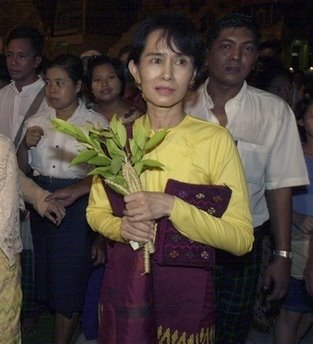


 Posts
Posts


