News & Articles on Burma
Sunday 3 July, 2011
------------------------------------------
Rudd urges Burma to free prisoners
Burmese rulers court foreign favour
Stronger Myanmar currency weakens already poor country
Japanese govt mulls over resuming aid to Burma
PHL renews call for release of Myanmar's political prisoners
Myanmar must ensure Suu Kyi's safety: Rudd
Pyithu Hluttaw Speaker Thura U Shwe Mann and party arrive back from Russia
Myanmar has decreased poverty rate from 32 to 26 percent
----------------------------------------
.
Rudd urges Burma to free prisoners
Dan Harrison
July 4,2011
FOREIGN Minister Kevin Rudd has urged the Burmese government to release 2000 political prisoners.
Speaking in Singapore after making the first visit by an Australian foreign minister to the country in almost 10 years, Mr Rudd said he had made a personal plea to Burmese President Thein Sein to release the prisoners.
''I indicated to him that that single action would have a significant transformative effect on the international community's attitude to the newly established government in Rangoon.''
Advertisement: Story continues below
Mr Rudd also lunched with democracy leader Aung Sun Suu Kyi at the Australian Embassy residence in Rangoon and said that Ms Suu Kyi was in good spirits.
''She is a very determined person. She is a person of enormous will, determination and, I would say, just plain political guts,'' he said.
Ms Suu Kyi plans to travel this week with her son to Bagan, an ancient city about 700 kilometres north of Rangoon. It would be her first trip out of Rangoon since being released from a seven-year stint under house arrest last November.
Mr Rudd said the Burmese government must guarantee Ms Suu Kyi's security for the trip.
During the Nobel laureate's last tour in 2003, thugs believed to be hired by the then ruling military junta ambushed her motorcade, killing more than 70 of her supporters. It was widely seen as an assassination attempt on Ms Suu Kyi, who was put back under house arrest, or what the regime called ''protective custody''.
''It is absolutely critical that the Burmese government guarantees Aung San Suu Kyi's security while such a tour of the country is undertaken, and I believe all governments around the world will be looking very carefully at how security is provided for by the government,'' Mr Rudd said.
Australia is Burma's second-largest source of aid, after Britain. With REUTERS
Read more: http://www.theage.com.au/national/rudd-urges-burma-to-free-prisoners-20110703-1gxch.html#ixzz1R3JCIRjj
---------------------------------------------
Burmese rulers court foreign favour
July 4, 2011
TaylorsCollege.edu.au/UniLink
FOR most foreigners, Burma is an unknowable place, governed in a manner more reminiscent of Kim Jong-il's rule in North Korea than anything resembling democracy. But Burma's rulers have recently shown a desire to distance themselves from the sort of isolationist policy pursued by Mr Kim. As with most things to do with the Burmese government, the reasoning is inscrutable - perhaps it is a response to the 2007 Saffron Revolution, which, despite being brutally thwarted, showed the ruling generals they could not take their people for granted; perhaps a result of regional pressure; or, more likely, it is because of concerns about continuance of foreign trade.
Whatever the motive, the government has been at pains to pretend that it cares about democracy. First came a new constitution, then national elections, and now greater freedom for Aung Sang Suu Kyi, the revered Nobel peace laureate who has for two decades endured great privation in the cause of her people's freedom.
Only the last of these has any real significance. For the most part, the Burmese reforms have been duplicitous. Take the country's first election in 20 years, held last November. An election after two decades of authoritarian rule would normally be acclaimed as a victory for democracy. But this one was neither free nor fair. The National League for Democracy led by Ms Suu Kyi won the 1990 election but was barred from participating in 2010, and the new constitution ensured continued military control of parliament.
Read more: http://www.brisbanetimes.com.au/opinion/editorial/burmese-rulers-court-foreign-favour-20110703-1gxje.html#ixzz1R3FnDnjR
------------------------------------------------
Stronger Myanmar currency weakens already poor country
BY TAKESHI FUJITANI CORRESPONDENT
2011/07/03
photoA luxury supermarket in Yangon, Myanmar, offers a broad selection of imported food and other products. Prices were lowered on some imported items amid the kyat's continued appreciation against the dollar. (Takeshi Fujitani)
YANGON--Suffering already under a stagnant, agrarian-based economy, the poor people of Myanmar (Burma) are facing another body blow with its local currency, the kyat, strengthening at an alarming rate, rising against the U.S. dollar by more than 20 percent in a year.
Hit hard have been the country's export industries, dealing in mostly peas, rice and other farm items, sewing goods and fishery products.
Priority has been placed on the export of rice, as the country has recently imported Japanese rice-polishing machines, but exports are losing money under the current exchange rate.
"We cannot stop exporting, however, because we have to think about long-term relations with our customers," said an exports dealer.
A general election, held last November for the first time in 20 years, resulted in the start of a new government in March. The government is pushing for economic liberalization centered on the exportation of farm, fishing and sewing products, but is already facing a crisis, with falling prices on imports as well.
"We lower the prices of imported goods," read a notice posted in mid-June at all stores of the City Mart luxury supermarket chain in Yangon and elsewhere.
A branch store employee said that the prices of coffee, butter, shampoo and other products, imported via Singapore, Thailand and elsewhere, have been reduced by 10 percent.
Around the same time, one U.S. dollar (81 yen) was worth 740 kyats, according to the market rate, the lowest figure since 2002. The kyat appreciated by about 25 percent in a year, with a dollar at 980 to 1,000 kyats in June and July last year.
Any benefits of a strong kyat are limited. Prices of essential products, including rice, onions, other vegetables and cooking oil, either remained unchanged or slightly increased over the year.
On the flip side, the sewing industry, which accounts for nearly 50 percent of the country's exports to Japan, is struggling. Japanese-affiliated companies, whose employees are paid in dollars, are also hastily reviewing their wage systems.
Two major factors behind the stronger kyat are the global trend toward a weaker dollar and the sharp increase in direct overseas investment in Myanmar. According to government authorities, direct foreign investments totaled $16 billion between 1988 and March 2010, but that increased to $20 billion over a year from April 2010. About 70 percent of that came from China, including Hong Kong.
Another factor is the auction of state-run enterprises and government-owned real estate to the private sector that were held in January and February.
The Myanmar Times, an English-language weekly newspaper, says that 291 properties sold for a total of more than 8 trillion kyats. With the final payment due dates for these deals set for July and August, "kyat buying is becoming active in markets, further spurring the stronger kyat," said an economist.
http://www.asahi.com/english/TKY201107020220.html
---------------------------------------------
Jul 3, 2011
Japanese govt mulls over resuming aid to Burma
THE Japanese government is considering resuming aid to Burma, following the release of pro-democracy leader Aung San Suu Kyi and the declared end of the junta rule, The Yomiuri Shimbun reported.
Any new official development assistance (ODA) programmes for Burma would be the first in eight years.
Japan has imposed a freeze on new ODA programs for Burma since July 2003, with the exception of humanitarian assistance in the wake of natural disasters.
The detention of Dr Suu Kyi was cited as one of the reasons for the freeze.
But the government has viewed favourably the release of Dr Suu Kyi from house arrest in November and signs that military rule has ended after 22 years, according to sources.
Makiko Kikuta, parliamentary vice foreign minister, held talks with senior Burmese officials in that nation late last month, and conveyed the Japanese government's intention to resume ODA on the condition that the aid will be used to improve people's lives, the sources said. -- YOMIURI SHIMBUN/ANN http://www.straitstimes.com/BreakingNews/Asia/Story/STIStory_686779.html
----------------------------------
PHL renews call for release of Myanmar's political prisoners
07/03/2011 | 01:21 PM
Philippine Foreign affairs secretary Albert Del Rosario renewed decades call for release of all remaining 2,000 political prisoners in Myanmar (Burma).
Also, Del Rosario said last year’s release of democracy icon Aung San Suu Kyi by Myanmar's ruling military junta was simply not enough to fulfill the country's commitment to the Association of Southeast Asian Nations (ASEAN)’s “Roadmap to Democracy."
“We have always been forthright in our position on Myanmar… that it should take all the steps towards the Roadmap to Democracy," said Del Rosario at a luncheon with members of the Philippine diplomatic press corps.
He said that releasing all remaining Burmese political prisoners “should complete all the steps towards democracy," and it should not end with just the release of Suu Kyi and holding of elections.
“Even after the first elections, we have taken firm decision that all the steps towards the Roadmap should be implemented and that included the release of all the political prisoners," he said.
The first democratic elections in Burma held in November last year were widely criticized as majority of those elected were members of the ruling military junta, while the remaining posts were filled by candidates of Suu Kyi’s political party the National League of Democracy (NLD).
But Del Rosario was quick to clarify that urging Myanmar to fulfill its commitments under the Roadmap to Democracy was not the task of just the Philippines but of the whole of Asean.
“Asean is based on a consensus and we try not to be critical," he explained.
Asean groups the Philippines and Burma/Myanmar, along with Indonesia, Malaysia, Thailand, Vietnam, Laos, Cambodia, Singapore and Brunei.
Western countries particularly the US and the European Union remain critical of ASEAN’s policy of constructive engagement and consensus because this prevents the association from imposing sanctions on Myanmar’s military junta for its rampant human rights abuse perpetrated against its own Burmese people.
In 2007, Burma’s military junta committed to the Asean that it will implement the Roadmap to Democracy which includes the release of Nobel Peace prize winner Suu Kyi, the holding of first democratic elections, the investigation of human rights atrocities by a visiting United Nations high official, and the release of all the more than 2,000 political prisoners. — MRT/LBG, GMA News http://www.gmanews.tv/story/225161/world/phl-renews-call-for-release-of-myanmars-political-prisoners
---------------------------------------
Myanmar must ensure Suu Kyi's safety: Rudd
03 July 2011 | 10:45:30 AM | Source: AFP
Kevin Rudd has asked Myanmar officials to release hundreds of political prisoners. (AAP)
Australian Foreign Minister Kevin Rudd says Myanmar must guarantee democracy leader Aung San Suu Kyi's safety when she travels around the country for the first time since her release last year.
Rudd said on Saturday he had met with the country's new president, Thein Sein, and had made a personal appeal for the release of 2000 other political prisoners, telling him that doing so would transform international views of the new government.
He spoke to reporters during a stopover in Singapore on his way home from a visit to Myanmar.
A source from Suu Kyi's National League for Democracy party has said she plans to travel outside the main city Rangoon for the first time since being freed from seven years of house arrest last year, but politics is not on the agenda.
Rudd said the global community would be watching closely how the government would ensure the Nobel Peace Prize winner's security.
The issue is a major concern because during a previous political trip in 2003, her convoy was attacked in an ambush apparently organised by the military regime at that time.
"She has made plans that she intends to campaign elsewhere within Myanmar in the period ahead and that cause is her democratic right," Rudd said.
"What I would say very clearly to the Burmese authorities... is it is absolutely critical that the Burmese government guarantee Aung San Suu Kyi's security while such a tour of the country was undertaken," Rudd added.
"I believe all governments around the world would be looking very carefully at how the security is provided for by the government."
Myanmar's official media last Wednesday said the home affairs ministry had written to Suu Kyi to state that her party's activities had broken the law.
It was the first time since her release that the authorities had explicitly warned her to stay out of politics.
Australia's top diplomat said he spent "several hours" with Suu Kyi earlier on Saturday, and she told him she responded to the ministry's letter by suggesting a dialogue and was awaiting a response.
"Aung San Suu Kyi is in very good spirits," Rudd said. "She is a very determined person. She is a person of enormous will, determination, and, I would say, just plain political guts."
Suu Kyi was freed in November, days after the country held an election that critics said was a charade aimed at hiding military rule behind a civilian facade.
Despite releasing Suu Kyi, Myanmar has been under pressure to free other political prisoners as one demonstration that it's serious about undertaking democratic reforms.
Rudd said he told the Burmese leader that the "single action" of releasing the detainees "will have a significant, transformative effect on the international community's attitude to the newly established government".
"These prisoners remain as prisoners of conscience within Myanmar, and the international community awaits action... in ensuring that these people obtain freedom," Rudd said. http://www.sbs.com.au/news/article/1567527/Myanmar-must-ensure-Suu-Kyi
--------------------------------
New Light of Myanmar : Sunday, July 3, 2011
Pyithu Hluttaw Speaker Thura U Shwe Mann and party arrive back from Russia
YANGON, 2 July-A Myanmar delegation led by Speaker of the Pyithu Hluttaw Thura U Shwe Mann arrived back here by air at 8.50 am today after paying a goodwill visit to the Russian Federation at the invitation of Speaker Mr BV Gryzlov of the State Duma Federal Assembly of the Russian Federation.
The Myanmar delegation was welcomed back at Yangon International Airport by Speaker of Pyidaungsu Hluttaw U Khin Aung Myint, Deputy Speaker of Pyithu Hluttaw U Nanda Kyaw Swa, Chief Minister of Yangon Region U Myint Swe, Speaker of Yangon Region Hluttaw U Sein Tin Win, Yangon Mayor U Hla Myint, chairmen, secretaries and members of committees at Pyithu Hluttaw and Amyotha Hluttaw, Charge d’ Affaires ai of the Russian Embassy Mr Dmitry Darchenkov and departmental officials.
Members of the delegation-Chairman U Aung Tun of Public Accounts Committee of Amyotha Hluttaw, Secretary U T Khun Myat of Bill Committee of Pyithu Hluttaw, Secretary U San Tun of Bill Committee of Amyotha Hluttaw, Secretary U Maung Toe of Public Accounts Committee of Pyithu Hluttaw, Secretary U Hla Myint Oo of Hluttaw Rights Committee of Pyithu Hluttaw, Secretary U Than Myint of Government’s Guarantees, Pledges and Undertakings Vetting Committee of Pyithu Hluttaw, member of Public Accounts Committee of Pyithu Hluttaw Dr Win Myint, members of Hluttaw Rights Committee of Amyotha Hluttaw U Nyunt Tin and U Nay Win Tun and departmental officials-also arrived back on the same flight. http://www.myanmar.com/newspaper/nlm/index.html
-----------------------------------------
New Light of Myanmar : Sunday, July 3, 2011
Myanmar has decreased poverty rate from 32 to 26 percent
Although poverty rate in Myanmar has decreased from 32 to 26 percent in recent years, Myanmar has to work very hard to achieve Millennium Development Goals by 2015
NAY PYI TAW, 2 July-Vice-President of the Republic of the Union of Myanmar Dr Sai Mauk Kham delivered an address at the ceremony to commemorate the International Day of Cooperatives held at Myanmar International Convention Centre here this morning.
Also present on the occasion were union ministers, deputy ministers, departmental heads, the chairman and executives of the Central Cooperative Society of Myanmar, social organization members, foreign embassy staff in Myanmar, and distinguished guests.
The Vice-President said in his address that the International Cooperative Alliance (ICA) was established in 1895 to foster closer relations and boost economic cooperation among societies in the international arena.
The International Day of Cooperatives has been observed annually since 1923 after its inception under the leadership of the alliance. Myanmar became a member of the alliance in 1993. In 1994, at the 49th session of the United Nations General Assembly, the United Nations proclaimed that the first Saturday of every July was to become the International Day of
Cooperatives and since then, the cooperatives societies around the world have been celebrating the Day on a yearly basis.
As a member of the Alliance, now was the 17th time of the International Day of Co-operatives observed by the Central Cooperatives Society of Myanmar.
Every year, the Alliance set a theme for particular International Day serving as guidance for all societies around the world.
This year’s theme would be “Youth: the Future of Co-operative Enterprise”.
So, it is needed to organize and train youths to energetically take part in successful achievements of the future cooperative movements. The United Nations had designated the year 2012 to be the International Day of Cooperatives with the motto “Co-operative Enterprises Build a New Better World”.
He continued that looking back at the socioeconomic history of the country, in order to address the economic hardship of the farmers and to lessen the trouble of borrowing with high interest from the money lenders, a credit cooperative society was first introduced in Myinmu of Sagaing Region in 1905.
But, only in 1992, the cooperatives law was passed to carry out businesses and economic opportunities in accord with the market economic system.
In the development of cooperatives which is known as OER in short- ‘O’ stands for more Organizations of cooperative societies, ‘E’ for more Education on the practice of cooperative works and ‘R’ for rules and regulations to be followed. Therefore, all cooperative societies are to make relentless efforts to catch achievement.
With a view to developing and expanding cooperative enterprises, 10,725 primary cooperative societies, 462 syndicates, 20 federations and one Central Cooperative Society, totalling 11,208, have been formed across the states and regions of the country. Those cooperatives are engaging in a variety of production, services, trade and general businesses.
The Vice-President recalled the address delivered by President U Thein Sein on 20 June 2011 in which the President has given guidance to the cooperative societies that cooperatives should be formed from Bottom Up Initiative rather than Top Down Policy; and that the region and state working committees are to organize and form cooperative societies with trustworthy and reliable people so that the rural people will truly enjoy the fruits of development and overcome the poverty.
Nowadays, the cooperative societies are fast becoming important factors in today’s world economic and social development.
The government of the Republic of the Union of Myanmar has formed the Rural Development and Poverty Reduction Central Committee, with the President as the chairman.
The 70 percent of the country’s population is rural people. In accordance with the targets set by the United Nations Millennium Development Goals, the government is giving high priority to poverty reduction and rural development scheme. Although the poverty rate in Myanmar has decreased from 32 to 26 percent in recent years, Myanmar has to work very hard to achieve the Millennium Development Goals by 2015. In this regard, cooperative societies have to give priority to development of agriculture production, development of rural productivity and cottage industries, development of micro financing and credit enterprises, development of rural cooperatives, development of rural socioeconomy, development of rural energy, and environmental conservation.
In conclusion, the Vice-President urged all members of cooperative societies to enthusiastically take part in Rural Development and Poverty Alleviation Action Plan being implemented by the State; to call upon youths to involve more in future cooperative activities as the year 2012 is designated as the International Day of Cooperatives with the theme “Cooperative Enterprises Build a New Better World” and with this year’s theme“Youth: the Future of Cooperative Enterprises”; to make friendly relations with the people in carrying out peace, security and development works; and to keep good image of cooperative societies.
Next, Chairman U Khin Maung Aye of Myanmar Central Cooperatives Society read the message sent by the ICA. Vice-President Dr Sai Mauk Kham and Union Minister for Border Affairs and Industrial Develoment Maj-Gen Thein Htay awarded offspring of the staff members of Cooperatives Ministry who passed last year matriculation exam with flying colours.
Union Minister for Information and for Culture U Kyaw Hsan, Union Minister for Industry-2 U Soe Thein, Union Minister for Mines U Thein Htaik, Union Minister for Labour and for Social Welfare, Relief and Resettlement U Aung Kyi, Union Minister for Energy U Than Htay, Union Minister for Immigration and Population U Khin Yi, Union Minister for Science and Technology U Aye Myint, Union Minister for Commerce U Win Myint and Union Minister for Hotels and Tourism and for Sports U Tint Hsan presented awards to 34 outstanding students studying at Cooperative Degree College (Yangon), Cooperative Colleges (Mandalay, Sagaing and Phaung-gyi) and Lacquerware College for 2009-2010 academic year.
Union Minister for Education Dr Mya Aye, Deputy Minister for Cooperatives U Than Tun and the chairman of Central Cooperatives Society of Myanmar awarded successful cooperatives societies.
After the ceremony, the Vice-President and party viewed the booths at Photo and Products Exhibition in commemoration of International Day of Cooperatives. http://www.myanmar.com/newspaper/nlm/index.html
Monday, July 4, 2011
News & Articles on Burma-Sunday 3 July, 2011


Sunday, July 3, 2011
News & Articles on Burma-Saturday 2 July, 2011
News & Articles on Burma
Saturday 2 July, 2011
------------------------------------------
Rudd meets Burma pro-democracy leader Suu Kyi
Australian FM urges greater reform in Burma
Suu Kyi dismisses junta's request to halt activities
Intelligent Dialogue Partners or Useful Idiots?
Living the dream
Global Protests Against Burmese Military Actions At Dams
A look at Thailand's general election
-------------------------------------------
ABC News: 02, July 2011, Saturday
Rudd meets Burma pro-democracy leader Suu Kyi
Foreign Minister Kevin Rudd has held talks with the Burmese pro-democracy leader Aung San Suu Kyi in Rangoon.
A spokeswoman from Kevin Rudd's office confirmed the meeting, which was held during Mr Rudd's visit to Burma.
The talks come just days after Burma's military leaders warned Ms Suu Kyi not to engage in political activity.
Mr Rudd is the latest high-ranking foreign diplomat to visit the Nobel laureate since her release from house arrest in November 2010 and elections that month which brought a nominally civilian government to power.
Prior to the meeting, Mr Rudd said he was aware of the government warning Ms Suu Kyi not to engage in political activities.
"Both Aung San Suu Kyi and other democratic forces in this country should be given greater freedom of operation," he said.
"Furthermore, when it comes to the future of this country as a whole, it's important that we see greater dialogue between all political forces and all political parties in order to put this country on a safe path."
A spokesman for Ms Suu Kyi's National League for Democracy says Mr Rudd discussed Australia's close relationship to Burma during the talks.
"[They] discussed Australia's continued assistance to Myanmar (Burma) as its second largest donor," he said.
"He gave [Australia's] views on Myanmar regarding human rights and democracy, and how they are trying to help us."
On Thursday the Burmese government warned Ms Suu Kyi and her party to halt all political activities.
The home affairs ministry wrote to Ms Suu Kyi saying her party was breaking the law by maintaining party offices, holding meetings and issuing statements, the New Light of Myanmar newspaper reported.
- ABC/AFP http://www.abc.net.au/news/stories/2011/07/02/3259506.htm?section=justin
------------------------------------------
Australian FM urges greater reform in Burma
Aung San Suu Kyi was released from house arrest late last year, but more than 2,000 political prisoners remain in detention in Burma. [Reuters]
Australia's foreign minister says he's told the government of Burma the release of more than 2,000 political prisoners would be an important step towards democracy in the nation.
Kevin Rudd has met with Burma's pro-democracy leader Aung San Suu Kyi at the Australian embassy in Rangoon, a day after he held talks with Burma's President and senior government officials in the administrative capital Naypyidaw.
Speaking to Radio Australia from Rangoon, Mr Rudd says he's told the government in Burma to make progress on human rights.
"What I have said in direct conversation with them is the international community waits for the government in Myanmar to take a further step in relation to democracy and that further step needs to be the release of these 2,000 political prisoners," Mr Rudd said.
Days before Mr Rudd's arrival in Burma, the Burmese government warned Aung San Suu Kyi not to engage in political activities.
Mr Rudd says he was aware of the government warnings.
"Both Aung San Suu Kyi and other democratic forces in this country should be given greater freedom of operation and furthermore, when it comes to the future of this country as a whole, it's important that we see greater dialogue between all political forces and all political parties in order to put this country on a safe path," he said.
Mr Rudd says he notes the small changes in the nature of the civilian government in Burma, as well as the release of Aung San Suu Kyi immediately after last November's elections.
But, he says, "there is much much more to be done when it comes to human rights, democracy and of course economic development" in Burma.
Mr Rudd says Australia is one of Burma's largest direct development assistance partners, and development issues such as boosting school attendance, were covered during his discussions with government representatives.
He says $AUD50 million is expected to be invested in Burma over the coming year in humanitarian and development assistance.
http://www.radioaustralianews.net.au/stories/201107/3259485.htm?desktop
-----------------------------------------
Suu Kyi dismisses junta's request to halt activities
BY AI MATSUMURA STAFF WRITER
2011/07/02
Aung San Suu Kyi blasted the junta in Myanmar (Burma) for a decree calling on the democracy movement leader to refrain from political activities, according to Japanese Foreign Ministry officials.
The officials quoted Suu Kyi as telling Makiko Kikuta, a parliamentary vice minister for foreign affairs, in Myanmar on June 29 that her view was different from that of the government, and that the decree was released one-sidedly without the government consulting her.
Kikuta was in Myanmar on June 27-29, during which she met with senior government officials, including the foreign minister, and Suu Kyi.
After Suu Kyi was detained in May 2003, Tokyo put on hold all economic cooperation with Myanmar except for humanitarian programs.
During her latest visit, however, Kikuta said that Tokyo planned to resume economic cooperation, with an emphasis on irrigation and other items of basic human needs that directly benefit the poor.
http://www.asahi.com/english/TKY201107010264.html
-----------------------------------------
CONTRIBUTOR
Intelligent Dialogue Partners or Useful Idiots?
By SUZANNE ROTT Friday, July 1, 2011
Germany’s federal commissioner for human rights policy, Markus Loening, recently visited Burma and published an article in The Financial Times in which he called upon European Union member states to enter into an “intelligent dialogue with all groups in Burmese society.� This sounds reasonable enough, as long as this call is not what we have seen behind closed diplomatic doors in internal EU member states' consultations about right policies toward Burma. Calls for dialogue with “all groups in Burmese society� have unfortunately too often taken the form of an effort to undermine the role of Aung San Suu Kyi as the genuine leader of the Burmese democratic movement and as a legitimate representative of many of the aspirations of the vast majority in Burmese society.
That is exactly what the generals in power want to achieve—to marginalize and delegitimize Suu Kyi and her party, the National league for Democracy (NLD). From the generals' side, it is a logical and “intelligent� aspiration. They rightly see Suu Kyi and the NLD, as well as the ethnic parties that have been banned or were discouraged from taking part in last year's elections, as the real sociopolitical force that can challenge their grip on power. But EU diplomats should under no pretext assist the generals in achieving their goal of sidelining opposition forces.
Dialogue should not lure them into the trap of becoming useful idiots with good intentions who only end up serving the core interests of Burma's military strategists.
To know what the call for dialogue “with all groups in Burmese society� looks like in practice, one need only consider the fact that the European Heads of Missions in Myanmar meeting on March 14, which brought European ambassadors together to discuss their positions regarding the EU sanctions review, the German participant argued against mentioning Suu Kyi by name in official EU communications.
German Ambassador Julius Georg Luy and other German diplomats are among those who for months have been trying to put Suu Kyi at the same level as representatives of the small democratic parties that were allowed by the military regime to enter Parliament to give legitimacy to the results of the sham elections held last November. When EU ambassadors were planning to have a joint meeting and lunch with Suu Kyi, German diplomats argued that they should not meet the NLD leader separately, but only together with representatives of other opposition parties. The German ambassador, together with his Belgian and Spanish colleagues, argued that other democrats and ethnic forces might be offended if it became public that Suu Kyi was being afforded special treatment. It was the UK ambassador who rightly pushed for a separate meeting with Suu Kyi, because she is still the undisputed leader of the democratic opposition—a fact that EU member states should not deny. But Germany still argued that the goal of such a meeting should be to seek a wide range of views from several interlocutors, without favoring anyone in particular.
By calling for “intelligent dialogue� with all groups in Burma, German diplomats are in reality helping the generals undermine Suu Kyi's legitimacy as the opposition leader. That is very different from what German Chancellor Angela Merkel did when she singled out Suu Kyi and talked with her by phone.
If Germany wants to be right in its intention to talk with “all groups,� then they should be a bit more cautious in defining who “all� is. With their experiences with the Stasi in East Germany, they should know that representation in authoritarian and totalitarian societies is a tricky issue. Germans and Europeans should not let the Burmese military define with whom they should talk and with whom they are not allowed to talk. The ruling party and the opposition parties in the “legal fold,� and the civil society players, both local and international, that have been allowed to operate in the country, simply do not represent the full spectrum of political views in Burma.
If German diplomats want to enter into an intelligent dialogue with all groups in Burmese society, then they should talk, for example, with the families of Min Ko Naing, Nilar Thein, U Gambira and other political prisoners. Such talks could have taken place at the German Embassy in Rangoon during the visit by the federal commissioner for human rights policy. In addition, German diplomats should talk with Kachin, Karen, Shan and other ethnic representatives—not just those who have been allowed into Parliament, but also those who have been barred from even competing. That would constitute a real “dialogue with all groups.� After meeting with them, Loening would probably have been a bit less hopeful but a bit better prepared to lead an intelligent dialogue with the Burmese government.
Let me conclude that I agree with Loening that sanctions should not be a self-serving instrument, but that they need to be “tuned.� If the Burmese government is serious about the advertised change and really wants sanctions to be lifted so that a flow of investment can begin to reduce poverty, then it has all the tools it needs to achieve this goal. All it needs to do is release political prisoners and take the first steps toward a genuine national dialogue that includes the ethnic and political opposition groups. By doing so, the Burmese government can achieve its goal of lifting sanctions within less than six months.
Suzanne Rott is a Burma observer based in Thailand.
Copyright © 2008 Irrawaddy Publishing Group | www.irrawaddy.org http://www.irrawaddy.org/opinion_story.php?art_id=21611
-----------------------------------------
Living the dream
A non-profit school helps Burmese migrant workers improve their local job prospects
Published: 2/07/2011 at 12:00 AM
Newspaper section: Business
Clad in a black-and-white school uniform, Khine Mi Mi Thein, 22, listens attentively to her Thai teacher in class.
Classes at the DEAR Burma School (top left) offer language and skills training, which has helped participants such as garment seller Hla Min Aung (left) improve their prospects in Bangkok.
The computer science graduate from the University of Computer Studies in Mawlamyine, Burma is among more than 600 students attending Sunday classes for Burmese migrant workers in Bangkok. They study the Thai and English languages and computing skills in hopes of a better future here.
Founded in early 2003, the DEAR Burma School is run by the non-profit Thai Allied Committee with Desegregated Burma Foundation (TACDB).
With more than 700 students each year, the school offers 17 classes for English language, 15 for Thai and five for computers. Students pay only 350 baht a course.
"I hope my life will get better after learning new skills and knowledge from this school," said Khine Mi Mi, her eyes radiant with hope.
Coming to Thailand to pursue her dream of a better job, she works as a manual labourer in a Samut Sakhon car equipment production factory.
Working from 8 am to 8 pm, she earns only 315 baht a day, although that is five times more than she could earn as a skilled worker in Burma.
The bus trip to the school in central Bangkok's Ratchathewi district takes her two or three hours.
School director U Myint Wai said the school provides migrant workers not only better skills, but also knowledge about their rights and Thai labour regulations.
"As many Burmese migrant workers do not speak or read Thai, they don't know local laws, regulations or traditional culture, so problems often occur between Thai authorities and migrant workers. We want to solve this problem by providing them with training," said U Myint, who is also the deputy director of the TACDB.
He said supplementary courses include environmental awareness, labour and human rights, and legal aid.
Domestic helper Ma Moe Moe, 42, has dreamed of learning Thai since first arriving in this country. Her dream became reality when she first signed on with the school five years ago.
"I've been working hard to please my employers, as I don't want them to stop me from studying," she said.
"I learn a lot here. Apart from language skills, I've studied workers' rights. For example, I know that Thai regulations guarantee workers a minimum wage."
The school is also a venue for meeting up with friends. Burmese food and products are sold on campus, and the sound of students chatting in Burmese and other ethnic languages from her country make her feel at home.
"We exchange both good and bad news among ourselves," said Ma Moe. "My mind has really opened up."
Hla Min Aung, who has also studied at the school for five years, is one example of a success story.
He now sells garments in Soi Nana. Using his English- and Thai-language skills, he usually earns about 400 baht a day working from 5 pm to midnight.
As well, he does some freelance interpreting for Burmese tourists in Bangkok and occasionally acts as a middleman for Burmese companies, buying local products and shipping them back to his home country.
"The school's education has been very helpful. My life has improved. Without these languages skills, I could not do the job I'm doing now," said Hla Min.
Amnesty International (AI) says more than a million Burmese migrant workers are employed in various Thai sectors including fisheries, manufacturing, domestic work, construction, hotels, restaurants and agriculture.
Thai Labour Ministry figures show 149,990 Burmese migrants are registered.
In 2005, AI reported Burmese migrant workers in Thailand faced pay that was well below the minimum wage, unsafe and unclean working and living conditions, vulnerability to harassment, arrest and deportation at the hands of the local police and a lack of access to the levels of education and medical care that were available to Thai workers.
U Myint said the school cannot solve all these problems, but it is a first step.
The DEAR Burma School is looking to expand to other locations, but this can only happen with the cooperation of donors and the Thai Labour and Education ministries, he said.
U Myint said the school is negotiating with both ministries to be recognised as a vocational training institute. http://www.bangkokpost.com/business/economics/245030/living-the-dream
---------------------------------------
Global Protests Against Burmese Military Actions At Dams
Fri, 07/01/2011 - 11:02am
By: Katy Yan and Grace Mang
Last Friday, hundreds of people in the US, Denmark, United Kingdom, Malaysia, and elsewhere gathered to protest the recent deadly clashes between Burmese authorities and ethnic militias in Burma's northern Kachin State. Standing before Burmese and Chinese embassies, Kachins held up signs calling for an end to the violence and a halt to dam building by Chinese companies in Kachin State.
Fighting broke out in early June between the Burma Army and the Kachin Independence Organization (KIO) at the Dapein No. 1 and 2 dams, which are being constructed by China's state-owned Datang Company, breaking a 17-year ceasefire. Scores of people have died and as many as 13,000 refugees have fled their homes, with many crossing into China. As of last Wednesday, about 18 women have been reported gang-raped by Burma Army soldiers in Kachin State, according to the Kachin Women's Association Thailand.
Chinese power companies and contractors are building a series of dams in northern Burma to supply electricity to China. The biggest and most controversial of these dams is the Myitsone Dam, a massive 3,600MW hydropower plant being built by China Power Investment and situated in an area of great cultural and ecological significance. The environmental impact assessment on this first dam on the Irrawaddy also expressed grave concerns.
In March, the KIO sent an open letter to the Chinese government calling for a halt to the project. It warned that, given the forced displacement, lack of transparency, and unequal distribution of benefits, this and other dam projects in Burma were likely to foster popular resentment, creating a risky situation for Chinese companies so close to its borders.
According to the Burma Rivers Network, the current conflict is "closely related to the dams. The government has sent in troops because it wants to gain control of a region that hosts major Chinese investments in hydropower." Kachin State has till now been largely controlled by Kachin forces.
Strong local resistance has also occurred in northern Shan State in an area where Burma, the Electricity Generating Authority of Thailand, and a number of Chinese companies (China's Sinohydro, China Three Gorges Group Corporation, and China Southern Power Grid) are planning a series of dams for the Salween River.
China now finds itself caught in the middle due to its desire for secure energy supplies from Burma and its fear of escalating conflict around its hydropower projects so close to its borders. http://www.internationalrivers.org/en/blog/katy-yan/2011-7-1/international-protests-against-burmese-military-actions-chinese-dams
-------------------------------------------------
A look at Thailand's general election
By The Associated Press
Published: Saturday, July 2, 2011 at 3:30 a.m.
Last Modified: Saturday, July 2, 2011 at 2:16 a.m.
On Sunday, July 3, Thailand will hold a general election, its second since a 2006 military coup unseated the elected government of former Prime Minister Thaksin Shinawatra. Thailand is a constitutional monarchy with a population of about 66 million, but its democracy has been plagued by corruption and repeated interference by the military.
---
WHAT'S AT STAKE: Located at a strategic crossroads in Asia filled with repressive neighbors like Myanmar and Communist Laos, Thailand has seen its reputation as a beacon of stability suffer badly over more than five years of political strife set in motion by Thaksin's ouster.
After more than a year ruled by a military-backed interim government, a December 2007 election returned a pro-Thaksin party to power. But fresh protests, court rulings and parliamentary maneuvering forced Thaksin's allies out in December 2008 and installed the rival Democrat Party of current Prime Minister Abhisit Vejjajiva. Thaksin's supporters then took to the streets, and their two months of anti-government protests last year degenerated into violence, leaving 91 people dead and about 1,800 injured.
The polarization between Thaksin's supporters and opponents remains the defining issue in Thai politics, with policies taking a back seat. Both the Democrats and their main opponents, the pro-Thaksin Pheu Thai Party, tout a populist agenda.
Whatever the results of the election, few believe it will quietly accepted by the losers.
---
THE CONTESTANTS: Some 42 political parties are fielding 3,832 candidates for the 500-seat lower house of parliament. In a two-tier system of voting, 375 legislators will be elected by constituency by some 47 million eligible voters, while 125 "party-list" candidates will be chosen according to the proportion of votes each party receives nationwide on a separate ballot.
Only two parties have realistic expectations of capturing a large share of seats: the Democrats and the Pheu Thai Party. If neither captures an outright majority - as seems likely - then smaller established parties will hold the balance of power, and bargain hard for significant Cabinet posts.
The Democrat Party is the country's oldest, but has not placed first in an election since 1992. Its traditional strongholds are the south, from which many of its leaders hail, and Bangkok, though the capital's voters can be fickle. The party once took pride as a liberal opponent of military rule in decades gone by, but in recent times has stressed its royalist roots and found itself in alliance with the army.
Pheu Thai represents the third iteration of Thaksin's Thai Rak Thai Party after electoral law violations saw its two predecessors disbanded by the courts. With Thaksin convicted of graft, in self-imposed exile and banned from politics, its de facto candidate for the prime minister job is Yingluck Shinawatra, Thaksin's youngest sister. The party trades mostly on its identification with Thaksin, who remains hugely popular in the rural north and northeast and among many of Bangkok's working class for populist polices including subsidized housing and nearly free health care. Pro-Thaksin parties have won handily in all four elections they contested.
---
POTENTIAL PROBLEMS: The state Election Commission, generally perceived as leaning against Thaksin, has broad powers to invalidate election results and disqualify candidates.
With the strong possibility that no party will win an absolute majority, smaller parties with reputations for seeking profit from public office can bargain for Cabinet seats, perpetuating the plague of money politics.
A Pheu Thai party victory bringing Thaksin's loyalists to power could prompt the army to stage another coup, especially if the new government moves to grant Thaksin amnesty to pave the way for his return. If the Democrats prevail, aggressive protests by Thaksin's supporters causing unrest could equally serve as an excuse for military intervention.
__._,_.___
Saturday, July 2, 2011
Doubled sales tax by '16 gets nod Time frame kept vague; hike depends on economy
By NATSUKO FUKUE and HIROKO NAKATA
Staff writers
Yielding to strong opposition from the ruling Democratic Party of Japan, the government of Prime Minister Naoto Kan, the DPJ president, approved a social security and tax reform plan Thursday that will enforce a 10 percent consumption tax "by the mid-2010s," instead of its initial target of fiscal 2015.
Naoto Kan
The deal agreed on by Kan's government and his DPJ also stipulates that the sales tax will only be hiked, presumably in stages, if the economy improves.
Despite the compromise, Kan hailed the agreement.
"I think today's decision is a historic one," he said. "(We) should move forward to reform the social security systems and tax so future generations will receive better social security services."
The mid-2010s refers to a time frame "between 2014 and 2016," said Kaoru Yosano, state minister in charge of fiscal policy and Kan's point man on social welfare and tax reforms.
With social security expenses continuing to balloon, the government "has to make an important decision after 2015," said Yosano, indicating the government envisions a further tax hike beyond that year.
The government's initial plan to finalize the reforms by June 20 was postponed after the timing of the tax hike sparked fierce criticism from many DPJ lawmakers on the party's tax reform panel.
The plan states that a tax hike is necessary to tackle mounting debt and social security costs as society rapidly ages. It also touches on the necessity of reducing social security outlays, including a hike in medical fees for patients aged between 70 and 74 to 20 percent from the present 10 percent, and also stipulates the need to lift the age people will start receiving pensions to between 68 and 70, up from the current 65 years old.
Meanwhile, the plan focuses on expanding the safety net for the young, such as by extending the pension system for regular employees to part-time workers.
The government's Social Security Council estimates an additional ¥2.7 trillion will be required in fiscal 2015 if the reforms are implemented.
While some ruling bloc lawmakers criticized the tax hike plan, analysts welcomed the reforms, saying the country's huge budget deficit and fears of a further downgrade of Japan's sovereign debt rating make raising the consumption tax inevitable.
"It is important to show people how big a tax burden they will inevitably have to shoulder due to growing social welfare costs," said Hideo Kumano, senior economist at Dai-ichi Life Research Institute.
Social security expenses are projected to increase to ¥47.4 trillion in 2015 from ¥32.7 trillion in 2010, according to the Social Security Council.
Katsuhiko Fujimori, manager and chief research associate of social policy at Mizuho Information and Research Institute, said, "The government has no choice but to raise the sales tax when the country is burdened with such huge debt," adding the plan should have specified the timing of the tax hike. "It's also important to make the social welfare system more substantial in the aging society," he said.
The political vacuum created when Kan announced he will resign without specifying the timing of his exit is lowering confidence in Japan's sovereign debt rating.
Moody's Investors Service said last month it may downgrade the country's sovereign debt rating due to heightened concerns about faltering growth prospects and a weak political response to the mounting public debt.
In calender 2010, Japan's public debt reached 198.4 percent of the nation's gross domestic product, according to the Finance Ministry, twice as high as the level in the U.S. and France.
News & Articles on Burma-Friday 1 July, 2011
News & Articles on Burma
Friday 1 July, 2011
--------------------------------
Myanmar carrying out 'ethnic cleansing': missionary agency
Japan to support Myanmar rights, Suu Kyi assured
German weapons firm in Burma capital
No one obeys gov’t order to hand over weapons in Mon State
Suu Kyi on China, war and peace
Suu Kyi to Visit Pagan Next Week
NLD confirms Suu Kyi to visit Bagan on personal pilgrimage
Govt Employees' Pensions Set to Increase
Is China backing Burma’s war against Kachin rebels?
Ceasefire Talks Produce Old Rhetoric, No New Agreement
BGF Commander Killed in All-Karen Clash
Kachin State Refugees Face Uncertain Future
Central Govt Retakes Control
------------------------------------------
Jul 1, 2011
Myanmar carrying out 'ethnic cleansing': missionary agency
VATICAN CITY - TROOPS in Myanmar are carrying out 'ethnic cleansing' against the mainly Christian Kachin ethnic minority near the Chinese border, the missionary news agency Fides reported on Friday.
Citing a local Catholic priest, Fides said fighting had forced 20,000 people to leave their homes so far and the number was increasing by the day.
Priests and nuns in the area 'are doing everything to help the ethnic Kachin refugees, almost all Christians, victims of a brutal repression carried out by the Burmese military', the priest was quoted as telling the Rome-based agency.
Clashes began when the government struck an agreement with China on the construction of a dam in the northern region, which would force the evacuation and flooding of villages where the Kachin people live, Fides said.
'They are women, children and old people who are at the mercy of the soldiers. These, when they meet the Kachin villages, carry out, for revenge, all sorts of violence, abuse and ransacking,' the priest said. 'They kill old people and children, rape women, burn homes, confiscate properties. They use ruthless methods to ethnic cleansing.'
The priest also said there was a risk of a 'humanitarian emergency' in the area for refugees out in the open as the rainy season approaches. -- AFP http://www.straitstimes.com/BreakingNews/SEAsia/Story/STIStory_686089.html
--------------------------------------------
Friday, July 1, 2011
Japan to support Myanmar rights, Suu Kyi assured
Kyodo
YANGON — Parliamentary Vice Foreign Minister Makiko Kikuta on Wednesday met with Myanmar democracy icon Aung San Suu Kyi and conveyed Tokyo's support for further democratization, diplomatic sources said.
News photo
Positive relations: Makiko Kikuta, parliamentary vice foreign minister, appears with Myanmar democracy leader Aung San Suu Kyi after their meeting in Yangon on Wednesday. KYODO PHOTO
Kikuta met with Suu Kyi at her political party's head office in Yangon for an hour and discussed human rights issues in Myanmar, the sources said.
The meeting took place on the day the country's state-run media reported that Myanmar's government has effectively banned Suu Kyi and her National League for Democracy from engaging in political activities.
The talks were the first official encounter between a senior Japanese government official and Suu Kyi since August 2002, when then Foreign Minister Yoriko Kawaguchi met with the Nobel Peace Prize laureate.
After their meeting, Suu Kyi and Kikuta declined comment on what they had discussed.
But later in the day, Suu Kyi said their meeting covered the positive relations between Myanmar and Japan, and expressed sympathy to the victims of the March 11 earthquake and tsunami.
Kikuta arrived in Myanmar on Monday, and met with Foreign Minister Wunna Maung Lwin and other senior officials in the country's administrative capital, Naypyitaw, on Tuesday.
During her talks with the foreign minister, Kikuta said Tokyo intends to continue offering aid, especially to meet the basic needs of Myanmar people, but will decide on a case-by-case basis by taking into consideration human rights and democratization in the country, the sources said.
Suu Kyi told Kikuta that she hopes Japan will consider not only Myanmar's democratization but also the maintenance of regional peace and stability when deciding to disburse aid. The democracy leader also urged Tokyo to ensure accountability and transparency as a donor, according to the sources.
A civilian government led by former senior members of the junta that ruled Myanmar for the past 22 years assumed power at the end of March.
Suu Kyi was released from 7½ years in detention last November, shortly after the general election.
http://search.japantimes.co.jp/cgi-bin/nn20110701a9.html
-----------------------------------------
German weapons firm in Burma capital
By JOSEPH ALLCHIN
Published: 1 July 2011
A Burmese soldier carrying a variation of the G3 rifle photographed seconds after Kenji Nagai is shot dead (Reuters)
The managing director of German weapons’ manufacturer Fritz Werner this week met with senior Burmese government figures, including those on EU sanctions lists, in Naypyidaw for what state media billed as “mutual” cooperation on ports and airports.
Joerg Gabelmann reportedly held talks with a range of officials, including Finance Minister Major General Hla Tun and Transport Minister Colonel Nyan Tun Aung, both of whom are blacklisted by the EU. The New Light of Myanmar said that it was during talks with Nyan Tun Aung that the two discussed shipping and flight infrastructure.
When asked about the meetings, Maria Groybermann from Fritz Werner’s office in Essen, Germany, told DVB that “we don’t usually comment on negotiations with our clients”.
The Fritz Werner website bills the company as a “leader in the field of ammunition manufacturing technology”. It was the first foreign company to create a joint venture with the Burmese state in the 1984 formation of Myanma Fritz Werner Co. Ltd. At the time they denied that the company had an arms orientation, while according to AP, the move was “welcomed by local observers and Western diplomats as a good start toward revitalising Burma’s sagging economy.”
Four years later and the powerful HK G3 (Heckler and Koch) assault rifle, purchased by the Burmese army through Fritz Werner, was seen being used by soldiers on thousands of students taking part in the 1988 uprising in Rangoon. A variation of the same gun, developed in a Fritz Werner-run plant, is also thought to have killed Japanese photographer Kenji Nagai in the September 2007 uprising.
In a recent interview with the Thailand-based Irrawaddy magazine, Germany’s ambassador to Burma, Julius Georg Luy, stated: “To my best knowledge, the company Fritz Werner has no arms-related business in Myanmar [Burma]”.
The company’s website however makes no reference to ports or airports, despite the purported focus of Gabelmann’s discussions this week.
The company has a long and ignominious history in Burma and beyond. Its first operations in Burma began in 1957, shortly after it was nationalized; the war years had been good for Fritz Werner, with Hitler creating a massive demand for their services, but post-1945 the company was left with little domestic business.
An April 1992 article in Jane’s Intelligence Review claimed the company had been responsible for helping the now-embattled Libyan leader, Colonel Gaddafi, with his 1,000-kilometre-ranged Al Fatah missile project. Although they quote only “their sources”, the article notes that the German government impounded one of Fritz Werner’s ships.
What may also pertinent to Burma, given recent concerns, is an apparent expertise in the delivery of chemical weapons. The Christian Science Monitor in 1988 suggested the US government was concerned that Fritz Werner was assisting in the sale of ammunition for carrying chemical weapons to Iraq. The 1988 edition of the magazine also said that “intelligence reaching Washington suggests it has played an important role in building Burma’s chemical-weapons capability.”
Analysts note that the US defence attaché has inspected Fritz Werner facilities in Burma and “found nothing” but cautioned that the supply of dual-use machine tools or casing often hid a trail, as plausible deniability may exist for the items’ use. This allegedly included the import of “lip stick” casing that never held lipstick.
Fritz Werner developed a strong relationship with former Burmese dictator Ne Win who would regularly visit Germany, with the company footing the bill. So regular were his visits that one analyst even suggested that a small Burmese pagoda had been built beside one of the company’s German facilities.
http://www.dvb.no/news/german-weapons-firm-in-burma-capital/16402
------------------------------------------
No one obeys gov’t order to hand over weapons in Mon State
Friday, 01 July 2011 19:37 Kun Chan
Chiang Mai (Mizzima) – Although Burmese authorities in some townships in Mon State have ordered members of cease-fire groups to turn in their weapons to police stations or Military Affairs Security (MAS) offices no later than Friday, no one has complied with the order, according to a source close to a MAS office.
Under orders from the Southeast Command, authorities in Thanbyuzayat Township on Tuesday announced the order via loudspeakers and posted notices in public locations. Authorities in Mudon and Kyaikmayaw Township also posted notices about the order.
“In Thanbyuzayat, no one handed over weapons. The same in Mudon and Kyaikmayaw according to our inquires,” the source in Thanbyuzayat told Mizzima.
When Mizzima contacted the MAS office in Thanbyuzayat, an official said it was true that the order was issued. But, he refused to provide any more details.
This week the area has experienced bombings and hijackings. On Wednesday, at about 12:30 p.m. a bomb exploded in the compound of the Township Administrative office in Thanbyuzayat. There were no casualties.
At about 9 a.m., gunmen set two passenger buses on fire on the Ye-Thanbyuzayat Road near Thayaaye Village, located about 15 miles south of Ye. They took six drivers and conductors hostage.
New Mon State Party foreign affairs official Naing Han Tha Paing Khine denied that his group had anything to do with the violence. He said some unidentified group unhappy about the order to hand over their weapons might have committed the acts.
The Mon Peace and Defense Front (MPDF), the Karen Peace Force, some members of the New Mon State Party and the Democratic Karen Buddhist Army all have activities in villages in the townships where the authorities have ordered weapons to be turned in. http://www.mizzima.com/news/inside-burma/5530-no-one-obeys-govt-order-to-hand-over-weapons-in-mon-state.html
---------------------------------------------
Suu Kyi on China, war and peace
By DVB
Published: 1 July 2011
Fighting has engulfed parts of Kachin state in northern Burma for nearly four weeks, forcing tens of thousands to flee their homes. Burmese democracy icon Aung San Suu Kyi tells DVB of her sadness that fellow countrymen continue to turn against one another, and urges China to engage in mediation in order to bring about an end to the conflict.
On peace in Kachin state
“As far as I understand, although the government is saying everything is peaceful now, the Kachin group is saying there is still fighting at intervals. This is a matter that shouldn’t occur when looking to shape a united and safe union. Under these circumstances, we should strive harder for national reconciliation – some see this as a hindrance for the reconciliation effort but I believe that we should strive more. These circumstances in a way are reminding us that the country will continue to face various problems if we cannot achieve national reconciliation.
“Understanding is a necessary component to make peace between any parties; there should be a mutual understanding. And to have understanding, one should be open-minded and cannot think only about what one wishes but also try to learn what others want. The majority of the people in our country want peace – none of us want these fights going on. Regardless of wherever a fight takes place – in Kachin state, Shan state, Mon state or Karen state – there will be concern among all ethnic nationalities in the country, Arakan, Chin or Burman. They will feel unhappy about it because we are all the same people living in the same country, living on the same land drinking the same water. So in order to make peace, the first step is to have the will to do so.”
On China
“I think the Chinese government should do what they can to help while having respect for Burmese people’s wishes peace because we are neighbours just across a fence – if there is no peace and amiability on one side, it is inevitable the neighbours will also feel the impact. I heard that some refugees fled into China when the fighting broke out. So I assume wise people such as the Chinese leaders will understand that instability in their neighbouring country will also impact on their country. So I think they should work together to make an effort to bring peace to Burma based on an understanding.”
On refugees
“There are two things I would like to say regarding refugees of the war. One is for China to treat the refugees, who fled there due to fighting between Kachin forces and the Burmese Army, with sympathy and understand that they didn’t want to leave their homes and native villages or towns but had no other choice. The only thing refugees can carry when they run is suffering, so they needed to be treated with sympathy and helped as one is capable of.
“I also have a message for the refugees: do not give up your hope – we will continue to work to bring those home who were forced to leave this country against their own will. There is no one who doesn’t understand the situation of the refugees and the suffering they bear. People in this country and the whole world know and there are a lot of people willing to help. So please don’t give up hope but develop your courage. Be thankful to people and countries who accepted you and please don’t forget that we are trying to build a country where all ethnic groups in live in safety and freedom.”
On soldiers
“In my opinion, no person would want to fight other people. Naturally aggressive people are rare. I don’t see how both the Burmese and the Kachin soldiers are happy to go to war – you could die or become disabled in a war and that would also cause your family to suffer. So who would want to do such kind of job?
“Also, we are not fighting against any foreign invaders – both the Kachin and the Burmese soldiers are children of our Union, a family in a way. I don’t think it will be comfortable for anyone to fight and kill your own family members. I want soldiers from both sides to keep in mind that we are all people of this country and although we are fighting with each other under various circumstances and contributing factors, please don’t forget that at the end of the day we will have to join hands again like brothers. Restrain yourself from holding grudges against each other and just try as hard as you can to prevent such things from happening in the future.”
http://www.dvb.no/interview/suu-kyi-on-china-war-and-peace/16397
---------------------------------------------
Suu Kyi to Visit Pagan Next Week
By WAI MOE Thursday, June 30, 2011
Burmese pro-democracy leader Aung San Suu Kyi is scheduled to visit the ancient city of Pagan in Mandalay Region next week on her first trip outside of Rangoon since her release from house arrest in November, according to her party, the National League for Democracy (NLD).
Win Htain, an NLD leader and Suu Kyi’s close aide, told The Irrawaddy on Thursday that Suu Kyi will be traveling to Pagan for sightseeing rather than on party business, saying that her son, Htain Linn, also known as Kim Aris, will join her on the trip.
Although Win Htain did not provide any further details about the trip, an NLD source who spoke on condition of anonymity said it is scheduled to begin on July 4. The source added that Suu Kyi may be planning to fly to Pagan, as she attempted to buy an air ticket on Thursday.
He added that Suu Kyi got a green light for the trip from the authorities after she informed them of her plan earlier this month.
However, Burma's state-run media warned yesterday that Suu Kyi's travels could cause unrest in the country. “We are deeply concerned that if Daw Aung San Suu Kyi makes trips to countryside regions, there may be chaos and riots, as evidenced by previous incidents,” the New Light of Myanmar newspaper said on Wednesday.
Suu Kyi’s last trip outside of Rangoon was in May 2003, when she visited Mandalay and Sagaing regions. Her trip ended when she and her supporters were ambushed by government-backed thugs in Depayin, Sagaing Region. She narrowly escaped the attack, but was later placed in detention, where she remained until her release last November.
News of Suu Kyi’s trip to Pagan comes amid concerns about security in the country, after a series of bomb blasts hit Burma's second largest city of Mandalay, the capital Naypyidaw, and Pyin Oo Lwin, a town near Mandalay region closely associated with the armed forces, last Friday, injuring three people.
It also follows moves by the military-backed government of President Thein Sein to restrict the NLD's political activities, which it described as illegal because of the party's dissolution last year for refusing to take part in an election staged by the former military junta.
On Tuesday, Minister of Home Affairs Lt-Gen Ko Ko sent a letter to Suu Kyi and NLD Chairman Aung Shwe saying that the party should form a social organization if it wants to engage in social affairs.
In a letter of reply sent on Wednesday, Suu Kyi said that the NLD is not doing anything to harm rule of law, stability and unity among monks and government servants. She added that the party also wants rule of law and is always making efforts for national reconciliation.
However, on Thursday, prominent NLD leader Win Tin said that the party doesn’t have any plans at present to register as an nongovernmental organization or political party. He added that he is concerned the government could be gearing up for another crackdown on the party.
“There's a possibility that party leaders could be arrested again, and party offices seized,” he said. http://www.irrawaddy.org/article.php?art_id=21604
------------------------------------------
NLD confirms Suu Kyi to visit Bagan on personal pilgrimage
Friday, 01 July 2011 18:38 Phanida
Chiang Mai (Mizzima) – The National League for Democracy (NLD) General-Secretary Aung San Suu Kyi will make a four-day pilgrimage to Bagan on Monday, NLD central executive committee member Han Tha Myint has confirmed.
Aung San Suu Kyi greets her youngest son Htein Lin at Rangoon's MIngalardon airport on Sunday June 19, 2011. Photo: Mizzima
Aung San Suu Kyi greets her youngest son Htein Lin at Rangoon's MIngalardon airport on Sunday June 19, 2011. Photo: Mizzima
He said the trip is a personal visit and that she has applied for leave from NLD affairs. Bagan is the site of large historical temple complex that is revered in Burma.
The trip will be her first outside of Rangoon since she was released from house arrest. At least 10 people will accompany her to provide security, according to the NLD.
The NLD said that she would not meet with NLD members in Bagan, but declined to provide any more details. She will take a flight from Rangoon to Nyaung Oo and will go to Bagan by car.
“Her pilgrimage to Bagan will take four days, I think. She will be on leave till next Friday,” Han Tha Myint said.
Recently, Burma’s Home Affairs Ministry sent the NLD a letter warning it not to conduct political activities.
Bagan is an ancient city located on the Irrawaddy River in the Mandalay Region. It was the capital of several ancient Burmese kingdoms. Most of the temples and buildings were built from the 11th to 13th centuries.
On other issues, Mizzima asked Win Htein whether Suu Kyi had promised the authorities not to meet with foreign senior leaders or not. In response to Mizzima’s question, Win Htein said that Suu Kyi did not make any such agreement with the junta. The issue recently made some news in the Indian media.
“She meets with foreign diplomats nearly every week. The news (issued by a section of the Indian media) was not true,” Win Htein said. http://www.mizzima.com/news/inside-burma/5529-nld-confirms-suu-kyi-to-visit-bagan-on-personal-pilgrimage.html
-----------------------------------------
Govt Employees' Pensions Set to Increase
By KO HTWE Friday, July 1, 2011
Burma's Ministry of Finance and Revenue has announced that civil servants' and parliamentarians' pensions will be increased starting in July, according to state-run newspaper The New Light of Myanmar on Friday.
The announcement marks the first step to fulfill a promise made by President Thein Sein during his inaugural address to parliament on March 31 when he said that government employees' salaries and pensions will be increased in proportion to government revenue, the inflation rate, consumer price indexes and the GDP.
The New Light of Myanmar reported on Friday that “pension rates of pensioners who live in the Republic of the Union of Myanmar and started drawing pensions before 1 January 2010 are hereby increased to the same rates as that service personnel in service are allowed to draw pensions when they retire, as of July 2011.”
However, the report noted, if a person's pension already exceeds 110,000 kyat [US $130], it shall remain the same as present.
Chan Tun, a retired ambassador based in Rangoon, said that he currently receives 540 kyat [$0.63] per month as his civil service pension, and 1,000 kyat [$1.18] per month for his diplomatic pension.
“This increase in pension is delightful,” he said. “However, I think the increase in pensions is directly related to the recent retirement of Snr-Gen Than Shwe and Vice-Snr Maung Aye.” http://www.irrawaddy.org/article.php?art_id=21614
-----------------------------------------
Is China backing Burma’s war against Kachin rebels?
By Zin Linn Jul 01, 2011 12:08AM UTC
As the war in Burma’s Kachin State continues, more and more people are seeking refuge along the Sino-Burma border. According to Kachin News Group (KNG), more than 20,000 Kachin war refugees fled to China since the conflict began, fearing torture, abuse, rape or being used as porter by Burmese troops.
Meanwhile, Kachin Independence Army (KIA) and Burmese army officials met Thursday morning in Lagayan town for proper talks, said the Irrawaddy News. This is the first time the two sides have sat down together since hostilities in Kachin State resumed on June 9. The renewed warfare near the Chinese border effectively broke a 17-year-old armistice between the two sides.
Burmese military delegation, led by Colonel Than Aung, minister for border affairs in Kachin State met with Kachin officials led by General Gun Maw, second-in-command of the KIA. During the meeting, representatives of the KIA called on the Burmese government to release a reliable letter by authoritative body, such as a memo from Union Government, to back up the official promise toward a proper ceasefire, according to a KIA Source. As said by Gun Maw, Thursday’s meeting may be a beginning but he did not know the next meeting date.
Despite the meeting, there is no sign of the Burmese military standing down. More than a hundred Chinese-made military trucks were reported to have arrived in Muse, a busy border trade town on the Sino-Burma border since Sunday, raising the question whether they will be used in the war against Kachin Independence Army (KIA), quoting local sources Shan Herald Agency for News (S.H.A.N.) said.
The six-wheel Chinese trucks are produced by Japanese Howo Company in China and exported to Burma by way of Jiegao-Muse. Hundreds of Burma Army soldiers are also reported to have been sent to the town to take delivery of the trucks. The arrival of both military trucks and troops has fueled fear among the populace whether the war with the KIA may spread to the area, according to Herald Agency for News.
As a result, the Kachin community in the United Kingdom plus others from the Burmese community and Tibetans protested during the visit of Chinese Premier Wen Jiabao to London on June 27 in front of British Prime Minister David Cameron’s house.
Prime Minister Wen Jiabao arrived in Britain on June 25 on a three-day visit to UK and has signed a billion dollar trade agreement between the two countries. Organized by ‘Students for a Free Tibet, UK’, activists and UK-based people from the Burmese community, Kachin people and those showing solidarity demonstrated, said a participant.
Since China is an ally of the Burmese government, demonstrators protested against the military offensive on Kachin State by the Burmese Army.
Kachin people around the world held demonstrations on June 24 demanding China stop supporting the military backed Burmese government. The protestors also demanded to let Kachin war refugees taking safe haven in China. At the same time, they pressured the Burmese government to stop offensive in Kachin State and urged the international community to help thousands of war refugees, who fled to the Sino-Burma border.
KIA officials said thousands of war refugees need immediate aid and there is no organization or international aid agency on the ground.
Actually, the spillover affects of refugees into neighboring countries is caused by the Burmese government and it should take responsibility for the problem. But, the Burmese government seems to have no sympathy for its own ethnic people; instead it has been incessantly launching war against its own citizens who call for equal rights. http://asiancorrespondent.com/58902/is-china-quietly-support-burma%E2%80%99s-war-against-kachin-people/
------------------------------------------
Ceasefire Talks Produce Old Rhetoric, No New Agreement
By BA KAUNG Friday, July 1, 2011
LAJA YAN, Kachin State— At 9:30 a.m. On Thursday, the deputy military chief of the Kachin Independence Army (KIA), Brig-Gen Gun Maw, and a group of other high-ranking KIA officials gathered by the roadside in Laja Yan Village, Kachin State. The village is located in an area the ethnic armed group currently controls, but sits only a few kilometers from a deployment of Burmese army troops, with whom the KIA has been engaged in deadly fighting for the last three weeks since a 17-year long ceasefire broke down.
Dressed in light green camouflage fatigues, the soft-spoken Gun Maw and his comrades chatted in the Kachin language, occasionally breaking into laughter. Behind them was a makeshift pavilion, constructed to hold the first direct talks between representatives of the Burmese military and the KIA since clashes broke out between the two sides on June 9. Nearby were plastic bags containing Johnny Walker whiskey— gifts for the Burmese delegation.
At 11:00 a.m., Col Than Aung, the Kachin State minister for border affairs, arrived at the pavilion with his entourage. He indicated from the start of the meeting that he was directly representing the national government in Naypyidaw, not just the Kachin State government, by saying that, “Higher authorities and I talked over this conflict. You understand who I am referring to, don’t you?”
In what seemed to be an overture, he said that the KIA’s liaison offices should be reopened so the KIA and the Burmese government could work together—the KIA set up the offices in Kachin State’s urban areas after the 1994 ceasefire was signed, but the Burmese government forced them to close late last year after the ethnic armed group rejected Naypyidaw’s order to transform itself into a member of the government’s border guard force (BGF) under the command of the Burmese army.
Than Aung also asked Gun Maw for a signed acknowledgement that the KIA would renew the ceasefire, and asked the KIA officials to participate in the country’s political process “in dignity.”
These requests came despite the fact that Than Aung did not himself carry any official document saying that the government would renew the ceasefire, and the fact that the Burmese military regime—which in March was replaced by a nominally civilian government—forbid three Kachin political parties from participating in the parliamentary elections last November on grounds that their leaders were linked to the KIA.
When Gun Maw asked Than Aung for formal evidence that the Burmese army would end hostile attacks against the KIA, Than Aung did not answer directly, saying he will have to report to the “higher authorities.”
“We heard that the Burmese army was reinforcing its troops in Kachin State, some of which have arrived by ship,” Gun Maw said.
“No, that’s not true,” Than Aung replied. “All are at normal levels. This is the media age. We cannot hide anything.”
Although Gun Maw and the other KIA officials at the meeting expressed a desire for a ceasefire, they indicated that any agreement to halt fighting must come with tangible political reforms and compromise from the Naypyidaw government. In particular, he told the Burmese delegation that the government must change the “Nargis Law,” referring to the current Constitution, which was voted on in a referendum held in the aftermath of Cyclone Nargis in 2008.
“A ceasefire does not necessarily mean peace,” Gun Maw said. “Many describe the previous ceasefire as peace, which it really wasn’t.”
During the previous ceasefire, the KIA and its political wing, the Kachin Independence Organization (KIO), asked the Burmese regime to engage in regional development and provide a political solution to the decades old conflict which granted autonomy to the Kachin people in Kachin State. At that time, the Burmese military generals said they did not have the mandate to solve the political questions, which could only be addressed after a civilian government came into power.
Between the time the 1994 ceasefire was entered into and 2009, when the KIA first rejected the BGF plan, Chinese companies and Burmese business groups with links to the government invested in a number of large projects in Kachin State, such as hydropower projects, that benefitted the outside investors but not local people and came with significant negative social and environmental impacts.
In addition, during that time the KIA focused its efforts on regional development and stopped actively recruiting and training new forces for its armed militia, which weakened its position in relation to the Burmese government. So when the KIA complained to the Burmese government about the unfairness and negative effects of projects such as the Chinese-built Myitsone Dam, it lacked the negotiating leverage either to halt the project or change the terms.
It is therefore not surprising that in interviews with The Irrawaddy at the KIA headquarters in Laiza and at nearby military outposts, several KIA officers and lower ranking soldiers said they did not want to see their leaders striking another “empty” ceasefire deal with the Burmese government, preferring to fight the Burmese army for the autonomy they desired.
“We want autonomy for Kachin State. Otherwise, I don’t want another ceasefire with the Burmese army,” said 60-year-old Maj. Hkaraw La Ja, the commander of the KIA’s 1,000-strong guerilla force tasked with defending the KIA Headquarters in Laiza, which is located near the Chinese border.
Hkaraw La Ja previously fought the Burmese army from 1967 until 1997, and then went into retirement. Now, he is one of several combat-hardened military officers who re-joined the KIA in late 2009 after tension built up with the Burmese military leaders over the BGF plan.
“I’m ready to fight for my people,” he said, and his foot soldiers appear ready to follow.
“I joined the army to fight for national independence,” said Brang Seng, 21, a KIA soldier guarding a security post at Laja Yan, who noted that the Kachin people have been colonized by the Burmese majority since the British left Burma 63 years ago.
Within the KIA, there is not much optimism that a new ceasefire deal will be reached, and many members expressed a complete distrust of the Burmese government. The headmaster of the KIA’s military academy at Laiza, who does not wish to be named, explained that the Kachin people have faced injustice even with an armed KIA.
“These injustices will become all the more severe when we lay down our arms,” he said. “Instead of another sham ceasefire, we will fight to our death.”
Some officials assume that the current lull in armed clashes with the Burmese troops is either because of an internal clash in the Naypyidaw leadership, or because the Burmese government is just waiting for a proper time to launch a major military offensive against them.
Despite the skepticism, however, Burmese and KIA officials intend to meet again in the near future for another round of ceasefire talksalthough when is unclear.
“I don’t know when this will happen again. They said they will inform us,” said Gun Maw after the meeting.
http://www.irrawaddy.org/article.php?art_id=21610&page=2
-----------------------------------------
BGF Commander Killed in All-Karen Clash
By THE IRRAWADDY Friday, July 1, 2011
A Karen commander of the Border Guard Force (BGF), Battalion 1011, was killed in action during a clash with former BGF Karen rebels, according to Karen sources.
Sources said that defecting former BGF battalions led by Lt-Col Po Bi, which refused to fight alongside the Burmese army, attacked a BGF zone led by Lt-Col Soe Naing on June 30. Soe Naing died in action during the two-hour engagement.
In May, another renegade Karen faction of the BGF, Battalion 1012, again led by Po Bi, took over full control of the BGF headquarters in Myaing Gyi Nyu, southern Karen State, kicked out his BGF government advisors, and ordered the 500 soldiers under his command to remove the BGF badges from their uniforms and replace them with their old the Democratic Karen Buddhist Army (DKBA) insignia.
Later, two other BGF battalions, 1013 and 1014, joined the Po Bi-led faction, leaving only Battalion 1011 remaining BGF.
“The fighting started at 4 pm on Thursday and ended at 6 pm. The situation there is very serious now,” said Lt-Col Paw Do, the commander of Battalion 101 of the Karen National Liberation Army (KNLA), the armed wing of the Karen National Union (KNU), the major Karen rebel group resisting Burmese government forces in Karen State.
The DKBA joined the Burmese government's BGF initiative in August 2010. The government had previously ordered all ethnic ceasefire groups in April 2009 to transform their units into BGF battalions under Burmese army command.
Sources said that the government is currently sending additional columns of troops to the Myaing Gyi Nyu area, which is under full control of the DKBA and the KNLA.
Due primarily to their religious differences, the DKBA split from the Christian-dominated Karen National Union, the political wing of the KNLA, in 1994 and signed a ceasefire agreement with the government in 1995. Afterward, with the backing of government troops, the DKBA launched attacks against the KNLA until the fall of Manerplaw, the KNU headquarters.
However, after a bloody clash in Myawaddy on Nov. 8, which forced some 20,000 civilians to seek temporary refuge in the Thai border town of Mae Sot, and the execution-style killing of six Karen soldiers belonging to the KNU/KNLA Peace Council, the DKBA’s loyalty to the government declined dramatically.http://www.irrawaddy.org/article.php?art_id=21613
-------------------------------------
Kachin State Refugees Face Uncertain Future
By BA KAUNG Friday, July 1, 2011
Laiza, Kachin State—Beneath a makeshift roof in the drizzling rain, a funeral ceremony took place on Friday for an eight-year-old Kachin boy who died the night before from diarrhea—the first casualty among the estimated 15,400 refugees living in five camps in and around Laiza, Kachin State, the headquarters of the Kachin Independence Army (KIA).
A week ago, the boy fled with his mother and relatives—who were now sitting around his small coffin—from a village in the Kachin State town of Nam Seng Yan near the Chinese border. They left home after hearing that columns of Burmese troops were passing through the village to fight the KIA, which has been engaged in ongoing battles with the Burmese army since a 17-year-old ceasefire collapsed in the midst of deadly clashes three weeks ago.
“ “His father is left behind to take care of the rice paddies,” said Nam Taung, the boy’s mother, who struggled to speak in Burmese and then sat silently, gazing into the distance.
Many of the war refugees are women and children who came from villages near Laiza; most of them are ethnic Kachin. Several women said that their husbands, who asked them to leave with the children when fighting broke out, stayed behind to take care of the crops.
“I fled because I previously heard stories about the torture and rape of women by the Burmese army,” said Lu Nam, 30, from the village of Madi Yan near the Chinese border. She fled with two of her children and is now living at a market being used as a temporary refugee camp in Laiza. Her husband is at a frontier post fighting for the KIA.
Although the KIA is providing food and medicine daily, many children in the refugee camps are clearly suffering from malnutrition.
“Many of the refugees have nothing to live on and we don’t know how long they can sustain their lives,” said La Rip, who works for the Kachin Development Group, which is assisting the refugees. “I don’t know what will happen to them if the KIA reaches the point of being unable to provide further help.”
The refugees are receiving virtually no outside help other than from Health Unlimited, a UK-backed NGO based in China, because the conflict zone is located in a high mountainous area that is difficult to reach, and there are a limited number of international NGOs active at the China-Burma border in this area.
Some refugees at first crossed over to the Chinese side of the border, but were later forced to return to Burma. Some of the refugees who were forced back to Laiza were told by the Chinese authorities that they could only return to China when war broke out.
“I think China’s position could be in conflict with international refugee laws,” said La Rip.
The Burmese army and KIA officials held ceasefire talks near Laiza on Thursday, but the discussion did not produce any concrete results and the threat of a major war breaking out has made the refugees afraid to go back home.
“I don’t know when we can go back to our village,” said a middle-aged man who was formerly a KIA soldier and is now a refugee. “I think it only depends on the Burmese government.” http://www.irrawaddy.org/article.php?art_id=21612
----------------------------------------
Central Govt Retakes Control
By SAI ZOM HSENG Thursday, June 30, 2011
Many of the state and regional government ministries will from Thursday fall under the control of their Naypyidaw offices as part of a centralization plan, according to Burma's state-run The New Light of Myanmar.
Several MPs told The Irrawaddy that emergency meetings were called for Wednesday and Thursday in several states and regions across the country.
Nyo Nyo Thin, a Democratic Party (Burma) MP for Rangoon Region, said that various local government offices, such as the Ministry of Security and Border Affairs, the Ministry of Finance and Revenue, and the Ministry of Agriculture and Livestock Breeding, will now be administered directly by the Union government [central government], and that almost every ministry would herewith be headed by representatives of the Union Solidarity and Development Party (USDP).
Speaking to The Irrawaddy on Thursday, Nyo Nyo Thin said, “There are two issues at hand. First, the central government took back some ministries because the state and regional governments could not fulfill their goals. The other point is that the central government wants to be unique within the country.”
She added: “The local governments of Rangoon Region have already vowed to focus only on the economy. Other sectors, such as education, are well over budget. They cost too much for states to maintain. The central government will take responsibility for those ministries again.”
Aung Mya Kyaw, an MP from the Rakhine Nationalities Development Party, confirmed that in Arakan State some ministries were closing down or being made subject to central government control.
The New Light of Myanmar published on Thursday a list of reshuffled ministries in Kachin State and Sagaing Region.
Aye Tha Aung, the secretary of the Committee Representing the People’s Parliament, said that if the country practiced true federalism, then the central government could not interfere in the administration of states and divisions.
“The new president can appoint whoever he wants in the ministries across the country,” he said. “We can see that the new president comes from the USDP. The people he chooses are also from the USDP. I didn’t expect a major change after the election, and it does not surprise me that Naypyidaw is going to retake control of those regional offices.” http://www.irrawaddy.org/article.php?art_id=21606
Friday, July 1, 2011
News & Articles on Burma-30-JUNR-2011
News & Articles on Burma
Wednesday/Thursday 29-30 June, 2011
--------------------------------
Burma's junta warns Suu Kyi's party to cease its 'agitation'
US nominee to seek coordination with China, India on Myanmar
Myanmar tells Suu Kyi to stay out of politics
Suu Kyi warned on planned tour
Screw turned on Suu Kyi
NLD Pressured to Cease Political Activities
Tatmadaw Commanders Discuss Recent Ethnic Conflicts
Bombs Hit Taungoo and Thanbyuzayat
Burma govt ups pressure on Suu Kyi ahead of tour
Farmers' Loan Scheme Rife With Bribery
Verdict due in Burma for Aussie news man
US nominee concerned over Burma Asean chair
------------------------------------------------
Burma's junta warns Suu Kyi's party to cease its 'agitation'
By Andrew Buncombe, Asia Correspondent
Thursday, 30 June 2011
AP
Burma's military rulers are worried about a planned tour of the country by Aung San Suu Kyi. The democracy leader wants to meet 'ordinary people' and hear their concerns
Burma's main opposition party has vowed to continue its struggle for democracy despite a demand from the authorities to cease political activities.
Several of the country's state-owned newspapers yesterday published details of a letter the Burmese Home Affairs Ministry sent to Aung San Suu Kyi and her National League for Democracy (NLD). It called on the party to end "illegal activities", including its agitation and opposition to the recently elected parliament. The letter said the NLD had been formally dissolved in September last year when it voted to boycott a controversial election, held at a time when Ms Suu Kyi and up to 2,000 other political prisoners remained behind bars.
Last night, a senior member of the NLD, Win Tin, confirmed the party had received the letter and said it would be writing back to the Home Ministry. He said Ms Suu Kyi had requested a meeting with officials to discuss the allegations of illegal activity.
Speaking from Rangoon, Win Tin, who spent almost 19 years in jail before being released in September 2008, said: "We are going to make our political activities as normal.
"In the coming days we are going to do our political works... we are living according to the law."
The commentary, which appeared in three state-controlled publications, quoted the letter from the Home Ministry as saying of the NLD: "If they really want to accept and practice democracy effectively, they are to stop such acts that can harm peace and stability and the rule of law as well as the unity among the people including monks and service personnel." It also raised concerns about Ms Suu Kyi's plans to tour Burma in order to meet ordinary people and hear their concerns. When she last carried out such a trip in 2003, dozens of her supporters were attacked and killed by militias that support the military authorities. The 66-year-old herself narrowly escaped with her life.
"We are deeply concerned that if Aung San Suu Kyi makes trips to countryside regions, there may be chaos and riots, as evidenced by previous incidents," the letter said.
"The government has said that Aung San Suu Kyi is just an ordinary public member, so it will not restrict her from travelling and doing things in accordance with the law, but she shall honour the laws for the rule of law."
The warning comes as Ms Suu Kyi and her party have become increasingly active after her release from more than seven years of house arrest last November. Her release house arrest came after a controversial election that saw a party backed by the military junta gain the most seats.
The junta claims to have stood back from politics and allowed a civilian administration, headed by President Thein Sein, to take over. The claim is questioned by many observers.
Mark Farmaner, of the Burma Campaign UK, said: "Today's threats will dash the hopes some still held that there could be change coming in Burma. Burma's new dictator, Thein Sein, has revealed his true colours with these threats. He is emerging as even less tolerant of dissent than Than Shwe." News of the warning from the authorities comes a day after it emerged that actress Michelle Yeoh, who plays Ms Suu Kyi in a forthcoming film, had been deported from Rangoon's airport last week. http://www.independent.co.uk/news/world/asia/burmas-junta-warns-suu-kyis-party-to-cease-its-agitation-2304504.html
-----------------------------------------------------
US nominee to seek coordination with China, India on Myanmar
Washington, Jun 30 (PTI)
US President Barack Obama's nominee to become his point man on Myanmar, Derek Mitchell intends to strengthen policy coordination with key players like India, China and Japan to achieve the global objectives in the Southeast Asian nation.
Mitchell, who has been nominated by Obama to be the first US Coordinator for Policy on Burma, told his confirmation hearing in the US Congress that Myanmar was a source of concern and political instability in the region.
Contending that the policy of pressure and engagement alone has not worked in that country, he said he would seek "direct and candid" talks with Myanmar's leaders and suggested that the US should "respond flexibly and with agility to opportunities as they arise."
Mitchell said he hoped to coordinate policy with key players like China, India, Japan, South Korea and the Association of Southeast Asian Nations (ASEAN).
"To date, in my view, the inability of key members of the Burma-interested community around the world to coordinate their approach to Burma has only undermined the effective realisation of shared objectives," he said.
With a government that has chosen to distance itself from the outside world, Myanmar is now the poorest country in Southeast Asia and "a source of great concern and potential instability in the region", he said.
Though rich in natural resources, nearly a third of its population lives in poverty and thousands are forced to seek asylum in neighbouring countries due to "systemic repression" of the ethnic-minorities, he said.
He said though the Myanmar government has claimed a successful transition to a disciplined democracy, a political system that exhibits anything close to recognisable standards of representative democracy remains to be seen. http://www.deccanherald.com/content/172622/us-nominee-seek-coordination-china.html
-------------------------------------------
Myanmar tells Suu Kyi to stay out of politics
by Hla Hla Htay, Agence France-Presse
Posted at 06/30/2011 9:13 AM | Updated as of 06/30/2011 10:39 AM
YANGON - Myanmar's regime told pro-democracy leader Aung San Suu Kyi Wednesday to halt all political activities and warned her planned first national tour since being freed could spark riots and chaos.
Official media said the home affairs ministry had written to the Nobel Peace Prize winner, who spent most of the past two decades locked up at the hands of the junta, to state that her party's activities had broken the law.
It is the first time since she was released last year that the authorities have explicitly warned Suu Kyi to stay out of politics.
She replied that she had no intention of canceling the planned tour.
"We cannot stay away from the people when doing politics," she told a meeting of youth members of her National League for Democracy (NLD) party.
Suu Kyi held an hour of talks Wednesday with a senior Japanese diplomat, saying afterwards that politics were discussed.
Asked by AFP about the tour, she said, "I will go," while adding: "We have to wait for the right weather conditions."
No schedule has been announced for the democracy icon's trip around Myanmar, also known as Burma.
Security is a major concern as Suu Kyi's convoy was attacked in 2003 in an ambush apparently organized by a regime frightened by her popularity.
A political tour would be a test of both the 66-year-old's popularity following an election that left her sidelined from politics, and of her ability to travel around the country unhindered by official intervention.
The state-run New Light of Myanmar reported that the home affairs ministry had informed Suu Kyi her party was breaking the law by maintaining party offices, holding meetings and issuing statements.
"If they really want to accept and practice democracy effectively, they are to stop such acts that can harm peace and stability and the rule of law as well as the unity among the people including monks and service personnel," it said.
The democracy icon was freed in November after seven straight years of house arrest, less than a week after an election in Myanmar that critics said was a charade aimed at preserving military rule behind a civilian facade.
Her party won a landslide election victory in 1990 that was never recognized by the junta.
The NLD was disbanded by the military rulers last year because it boycotted the November poll, the first in 20 years, saying the rules were unfair.
The New Light, a mouthpiece for the regime, also warned Suu Kyi against launching a political tour.
"We are deeply concerned that if Daw Aung San Suu Kyi makes trips to countryside regions, there may be chaos and riots, as evidenced by previous incidents," a commentary in the newspaper said.
"The government has said that Daw Aung San Suu Kyi is just an ordinary public member, so it will not restrict her from traveling and doing things in accordance with the law, but she shall honor the laws for the rule of law."
Renaud Egreteau, a Myanmar expert at the University of Hong Kong, said the warning illustrated the regime was worried about the freed democracy leader's plans.
"The authorities are doubtless uneasy with the idea of Suu Kyi testing her popularity in the country, especially if she goes to NLD strongholds like Mandalay to rally support," he said.
In a BBC lecture broadcast on Tuesday, Suu Kyi said the recent uprisings in the Middle East had given fresh hope to people in her country.
"The universal human aspiration to be free has been brought home to us by the stirring developments in the Middle East," she said.
"Do we envy the people of Tunisia and Egypt? Yes, we do envy them their quick and peaceful transitions. But more than envy is a sense of solidarity and of renewed commitment to our cause, which is the cause of all women and men who value human dignity and freedom," Suu Kyi added.
Pro-democracy protests in 1988 and 2007 were brutally crushed by the military rulers of Myanmar.
Suu Kyi held a meeting Wednesday with Japan's Parliamentary Vice Foreign Minister Makiko Kikuta where they agreed on the need to build goodwill between the two states.
Expressing "concern" for Suu Kyi's safety and security, Washington on Wednesday urged Myanmar to respect the democracy icon's freedom to travel and engage in political activities.
State Department deputy spokesman Mark Toner added "it is the responsibility of the Burmese authorities in fact to ensure her safety and that of Burma's citizens."
Earlier the nominee to be US pointman on Myanmar, Derek Mitchell, said the White House would seek a positive relationship with the secretive nation but hoped the regime would address human rights issues and a lack of democracy.
http://www.abs-cbnnews.com/global-filipino/world/06/30/11/myanmar-tells-suu-kyi-stay-out-politics
-------------------------------------------
Suu Kyi warned on planned tour
June 30 2011 at 01:01am
Associated Press
Myanmar's pro-democracy icon Aung San Suu Kyi (right) and Japanese Parliamentary Vice Foreign Minister Makiko Kikuta pose after their meeting at the National League for Democracy Party headquarters in Yangon, Myanmar. Their meeting came as Myanmar's state media warned Suu Kyi over her plans to travel outside Yangon to meet supporters.
Yangon - A possible tour of Myanmar by pro-democracy leader Aung San Suu Kyi could cause riots, state media warned on Wednesday, implying she would be responsible for her own safety.
Nobel Peace Prize laureate Suu Kyi is planning her first trip outside the former capital Yangon since she was freed from home detention last year after elections to end army rule.
The military still effectively controls the government in the Southeast Asian country formerly known as Burma.
“Her followers and supporters are gushing that the icon must keep in touch with the public. They seem willing to exploit the public. They also propagate that the government is responsible for security of Daw Aung San Suu Kyi on her trip,” a commentary in all three official newspapers said.
“We are deeply concerned that if Daw Aung San Suu Kyi makes trips to countryside regions, there may be chaos and riots, as evidenced by previous incidents,” it added.
“Daw” is an honorific in Myanmar for women.
In Washington, the US State Department said it was concerned about the warning and that it was up to Myanmar's government to ensure that Suu Kyi is free to travel, express her views and fully participate in the political process.
“We remain concerned for her safety and security. And it is the responsibility of the Burmese authorities, in fact, to ensure both her safety and that of Burma's citizens,” department spokesperson Mark Toner said.
In 2003, in an episode now known as the Depayin Massacre, Suu Kyi's motorcade was attacked by pro-junta thugs and 70 of her supporters died in what was seen as an assassination attempt.
“The government has said that Daw Aung San Suu Kyi is just an ordinary public member, so it will not restrict her from travelling and doing things in accordance with the law, but she shall honour the laws for the rule of law,” the commentary read.
Suu Kyi, 66, has not announced any dates for the tour, nor an itinerary.
Her party, the National League for Democracy (NLD), was officially dissolved last year when it refused to register for elections held in November. Suu Kyi was released from seven years of house arrest a week after the vote.
Official media, a mouthpiece for the government, also said on Wednesday the government had warned the NLD “not to harm peace and stability” and to respect the law.
“If they really want to accept and practice democracy effectively, they are to stop such acts that can harm peace and stability and the rule of law as well as the unity among the people including monks and service personnel,” the letter said, according to state media.
NLD spokesman Nyan Win confirmed a letter had been received. “We got that letter yesterday but we still have not talked it over and decided what to do about it,” he said.
The newspapers said the letter accused the party of keeping its headquarters and various offices open and organising meetings even through it had been dissolved.
“Such acts are not only against the law but also tantamount to opposing the Hluttaws (legislature),” they said. - Reuters
http://www.iol.co.za/news/world/suu-kyi-warned-on-planned-tour-1.1090961
---------------------------------------
Screw turned on Suu Kyi
Thursday, June 30, 2011
Burma's new military-backed government has reportedly warned pro- democracy leader Aung San Suu Kyi and her party to halt all political activities.
The home affairs ministry has written to the Nobel Peace Prize winner saying her party is breaking the law by maintaining party offices, holding meetings and issuing statements, the state-owned New Light of Myanmar newspaper reported.
"If they really want to accept and practice democracy effectively, they are to stop such acts that can harm peace and stability and the rule of law as well as the unity among the people including monks and service personnel," it said.
ADVERTISEMENT
Suu Kyi was freed in November after seven straight years of house arrest, less than a week after an election in Burma that critics said was a charade aimed at preserving military rule behind a civilian facade. Her National League for Democracy party was disbanded by the military rulers last year because it boycotted the poll, saying the rules were unfair.
The paper said the party could transform into a social organization provided it obtained permission from the authorities. The English-language daily, a mouthpiece for the regime, also warned that a planned political tour by Suu Kyi could lead to turmoil.
"We are deeply concerned that if Daw Aung San Suu Kyi makes trips to countryside regions, there may be chaos and riots, as evidenced by previous incidents," the newspaper said.
No schedule has been announced for the trip. Security is a major concern as her convoy was attacked in 2003 in an ambush apparently organized by a regime frightened by her popularity.
A political tour would be a test of both the 66-year-old's popularity following an election that has left her sidelined from politics, and of her freedom to travel around the country unhindered by the authorities.
In 1990 she led her party to a landslide election win that was never recognized by Burma's military rulers.
AGENCE FRANCE-PRESSE http://www.thestandard.com.hk/news_detail.asp?we_cat=6&art_id=112637&sid=32884046&con_type=1&d_str=20110630&fc=7
--------------------------------------------
NLD Pressured to Cease Political Activities
By THE IRRAWADDY Wednesday, June 29, 2011
The actions of the National League for Democracy (NLD), led by Nobel Peace Prize laureate Aung San Suu Kyi, are unlawful and against the state and could harm Burma's peace, stability and rule of law, according to the state-run New Light of Myanmar newspaper on Wednesday.
The newspaper reported that the Ministry of Home Affairs sent a letter to Suu Kyi and Aung Shwe, the chairman of the NLD, on Tuesday urging them to stop engaging in unlawful activities in opposition to the new Parliament and government.
It also noted that the party was dissolved on Sept. 14, 2010, for refusing to take part in last year's election, but continued to run its headquarters and branch offices around the country.
The newspaper quoted the letter as saying: “If they really want to accept and practice democracy effectively, they are to stop such acts that can harm peace and stability and the rule of law as well as the unity among the people including monks and service personnel.”
Asked about the legal implications of the letter, Aung Thein, a Rangoon-based lawyer, said that it could signal government plans to crack down on the party.
“The government may use the fact that the NLD was dissolved as an excuse to increase restrictions on its political gatherings in the near future,” he said.
This latest pressure on the NLD comes soon after Suu Kyi expressed support for calls to establish a UN Commission of Inquiry (CoI) on crimes against humanity and war crimes in Burma in video testimony to the US House Committee on Foreign Affairs.
In her message, Suu Kyi made clear that the purpose of the CoI is to determine the extent of human rights violations in the country, not to prosecute the perpetrators.
However, in its letter, the Home Ministry said that the NLD's actions could “lead to more difficulties in national reconsolidation.”
The Irrawaddy was unable to reach the NLD for comment on Wednesday due to technical problems in contacting the party's headquarters.
Besides boycotting the elections held last year on Nov. 7, the NLD has also called for amendments to the new Constitution approved through a controversial referendum in 2008. The NLD lodged an appeal to the Supreme Court to protect the party's legal status, but it was turned down in November. http://www.irrawaddy.org/article.php?art_id=21594
-----------------------------------------------
Tatmadaw Commanders Discuss Recent Ethnic Conflicts
By WAI MOE Wednesday, June 29, 2011
Commanders of the Tatmadaw (Burma’s armed forces) held their latest four-monthly meeting last week where “limited operations� in ethnic areas were discussed as well as intelligence reform.
Recent military operations in Kachin, Shan and Karen states were examined following unexpected government casualties amounting to 30 dead including 10 officers—one Lieutenant-Colonel and two Majors amongst others—in Kachin State alone this month, according to intelligence sources.
President ex-Gen Thein Sein’s new military-backed government came to office on March 30, but regional stability has suffered with armed conflicts spreading from Karen ethnic areas to ceasefire regions in Shan and Kachin states near the Sino-Burmese border.
Citing weekly military reports from regional military commands to the War Office in Naypyidaw, sources said that skirmishes and casualties were reported in Karen National Union (KNU) areas from Tenasserim Region to Karen State after March 30.
“There have been red remarks (government troop casualties) in reports on skirmishes in KNU areas every week during the past three months,� said a military source that spoke on condition of anonymity.
He added that, unlike last year, government troops are currently taking part in two other armed conflicts—in Kachin and Shan states—and said that most of the recent casualties were through ambushes and snipers.
On June 9, fierce fighting broke out in Kachin State, near the Sino-Burmese border in northern Burma, after nearly 17 years of ceasefire between the regime and the Kachin Independence Organization (KIO).
Earlier, government troops skirmished in Shan State with the Shan State Army (North) ceasefire group. Fighting with the SSA-North took place in both northern and southern Shan State with the cooperation of the non-ceasefire Shan State Army (South).
Tension between Naypyidaw and ethnic ceasefire groups began in April 2009 when the military junta, the State Peace Development Council (SPDC), forced ceasefire armed groups to transform into Border Guard Forces (BGF) under the commander-in-chief of the Tatmadaw.
Many ethnic armed groups—including the influential United Wa State Army (UWSA) and KIO—rejected the BGF saying it involved disarming without any political guarantees.
From April 2009 to August 2010, Lt-Gen Ye Myint, then chief of the Military Affairs Security (MAS) and now Mandalay Region’s chief minister, served as the main negotiator between Naypyidaw and ethnic ceasefire groups over the BGF.
However, Naypyidaw has not held any main negotiator with ethnic armed groups since Ye Myint was replaced in the chief MAS post by Maj-Gen Kyaw Swe, formerly the commander of Southwest Regional Military Command, in August 2010.
“During ongoing armed conflicts with Kachin Independence Army (KIA) troops, former minister of Telecommunications, Post and Telegraphs U Thein Zaw came for negotiations as a member of Parliament—but no one from the military commanders [turned up],� said an intelligence officer with the KIA from Laiza who spoke on condition of anonymity.
“It means negotiations came from former generals or the Parliament, rather than from the military. It is quite odd as there is no guarantee from military commanders,� he added.
Another highlighted issue at the commanders’ four-monthly meeting last week was reportedly reform of intelligence, particularly collaboration between the government secret services under a main body. The regime has attempted since early this year to replace the National Intelligence Bureau (NIB) which was abolished in late 2004.
A Burmese intelligence report suggests that a new collaboration called the “National Defense and Security Force� will oversee military intelligence bodies such as the Military Affairs Security and other secret agencies including Special Branch (SB) and the Bureau of Special Investigation (BSI) under the Ministry of Home Affairs, even though there has been no official confirmation.
Brig-Gen Soe Shane—General Staff Officer at the War Office and a senior figure regularly beside former junta chief Snr-Gen Than Shwe during trips at home and aboard—is tipped to head the new national intelligence collaboration, according to sources. In the past Soe Shane studied counter intelligence with the Military Intelligence Service, which was abolished in 2004.
Aung Lynn Htut, a former counter intelligence officer and ex-Burmese deputy chief of mission to Washington, said he also heard reports about Naypyidaw’s reform for intelligence collaboration under the military-backed new administration.
“Intelligence collaboration like the NIB will be more powerful under the new administration while MAS is under the commander-in-chief,� he said. “If Brig-Gen Soe Shane becomes the national intelligence collaboration’s director, Snr-Gen Than Shwe and his family will be safer as Gen Min Aung Hlaing is commander-in-chief of the defense services and Brig-Gen Soe Shane is intelligence chief.�
Meanwhile, former deputy chief of Military Intelligence Maj-Gen Kyaw Win visited Thailand’s northern capital of Chiang Mai—where many Burmese dissidents are based—in early June, the same time as government troops were battling the KIA in northern Burma.
Although the purpose of Kyaw Win’s trip is undisclosed, a Thai intelligence source said he went back to Burma by Air Bagan on June 12. Kyaw Win was one of the key players for securing ceasefire agreement with ethnic armed groups. He is also one of two Military Intelligence senior officers who were not imprisoned during the Burmese Army’s crackdown on former colleagues in October 2004.
Copyright © 2008 Irrawaddy Publishing Group | www.irrawaddy.org http://www.irrawaddy.org/article.php?art_id=21593
-------------------------------------
Bombs Hit Taungoo and Thanbyuzayat
By LAWI WENG and WAI MOE Wednesday, June 29, 2011
A bomb blast shook Pegu Region’s key town of Taungoo—base of the Burmese government's Southern Regional Military Command headquarters—while there was a second explosion and two buses set on fire in Mon State.
The latest unrest comes after three bombs ripped through Naypyidaw, Mandalay and the military town of Pyin Oo Lwin on Friday.
Witnesses in Taungoo said the bomb exploded in front of Kha Paung Hall early Wednesday afternoon, but no casualties have so far been reported. “The blast made a huge hole in front of the hall. Shortly after the blast, security forces came to view the site and blocked access to the area,” said a local physician in the town.
Due to the Southern Regional Military Command base, Taungoo is a strategic town situated en route to the regime capital Naypyidaw in the north and another key town in Pegu Region, Prome, to the west. It is also on the road east towards Karani State’s Loikaw and Karen State’s Than Daung.
On June 18, an unknown group of armed men launched a rocket propelled grenade attack on a hydropower project only 14 miles from Taungoo.
Meanwhile a bomb went off behind the township authority office in Thanbyuzayat, Mon State, at 12:30am on Wednesday morning.
“It was only one bomb and did not cause any causalities or damage,” a resident told The Irrawaddy by phone on Wednesday.
But the bomb blast was not the only recent trouble to have occurred in Mon State. Local sources revealed that an unknown armed group also torched two buses at Thar Yar Aye village between Thanbyuzayat and Lamine townships.
The vehicles from Yar Zar Min and Shwe Lee Yadanar companies were set on fire at around 9 am on Wednesday, according to an eyewitness who was a passenger on one of the buses.
“They stopped around 20 buses at the same time and set fire to two of them. They took away six people—some of whom were bus drivers. I did not dare to look at their faces and don't know why they shot the buses and burned them,” he said.
These latest bomb attacks come soon after the National League for Democracy revealed that their leader Aung San Suu Kyi had planned travel outside of former capital Rangoon this week, but has since postponed visiting regional areas until July.
Regarding Friday's three explosions in upper Burma, the state media has accused three men with ethnic Shan names of being the bombers. “Sai Kyaw Myint Oo, Sai Hsam and Sai Aik rented houses and bought a cheap car without a license with the intention of detonating bombs in Naypyidaw, Mandalay and Pyin Oo Lwin simultaneously,” The New Light of Myanmar said on Wednesday. http://www.irrawaddy.org/article.php?art_id=21596
-----------------------------------
Burma govt ups pressure on Suu Kyi ahead of tour
By Zin Linn Jun 30, 2011 1:08AM UTC
The military-backed Burmese government has warned Aung San Suu Kyi, General Secretary of the National League for Democracy, to stop political activities including meetings and delivering statements, the state-run New Light of Myanmar said on Wednesday.
The Wednesday newspaper raised the issue in a commentary under the caption of “Right to make choice still in the hand” by Pyae Sone Aung, a ghost-writer. In one paragraph, the commentary says, “From the point of law, NLD is defunct. The Union Election Commission issued Announcement (18/2010) dated 9-4-2010 reminding the 10 political parties that still met Article 25 of Political Parties Registration Law at that time that they could apply within 60 days for continued existence as political parties. However, only five of them did so. It is common knowledge that the five political parties did not include NLD.”
It also underlines that the NLD has been removed from the list of political parties and has been dissolved according to Announcement 97/2010 dated 14-9-2010 by the Union Election Commission.
Aung San Suu Kyi
Aung San Suu Kyi. Pic: AP.
The commentary also predicted that it was “deeply concerned” that Suu Kyi’s tours would be met with “chaos and riots.”
Here is an Excerpt from the commentary: “It is said that Daw Aung San Suu Kyi will soon make a tour of the country. Her followers and supporters are gushing that the icon must keep in touch with the public. They seem willing to exploit the public. They also propagate that the government is responsible for security of Daw Aung San Suu Kyi on her trip. We are deeply concerned that if Daw Aung San Suu Kyi makes trips to countryside regions, there may be chaos and riots, as evidenced by previous incidents.”
According to the state-media, the government has said that Daw Aung San Suu Kyi is just an ordinary public member, so it will not restrict her from travelling and doing things in accordance with the law, but she shall honour the laws for the rule of law.
Although no schedule has been announced for the trip, her supporters and the NLD members are worried about the trip. Safety measures of Suu Kyi is a major concern as her convoy was under a attack on 30 May 2003. In fact, it was an premeditated ambush apparently organized by the military regime displeased by her charismatic reputation.
The commentary says in a clause that the Lady may choose a different method to defy the current government. It says, “ A broadcast aired on 23 June morning by BBC says that Daw Aung San Suu Kyi lives in non-violence policy, but she can practice alternative policy if necessary.”
However, the NLD Executive Committee immediately released a statement on Wednesday saying it has never breached the existing laws. To solve out this misunderstanding, the party asked the home minister to give an appointment to discuss the matter.
Burma or Myanmar had its first general election in nearly 20 years in last November; declaring it would allow civilian participation in the country’s political affairs. The international election watchdogs said the election was a festival of vote-rigging by the military-backed party.
Suu Kyi was freed from house arrest last year, where she spent 15 of the past 21 years in detention, shortly after the November election.
The NLD headed by Aung San Suu Kyi won a landslide victory in 1990 elections which the military authorities never honored the outcome. Suu Kyi has constantly argued the dissolution of the NLD by the current election commission from the law points after boycotting the 2008 constitution and the 2010 election. http://asiancorrespondent.com/58782/burma%E2%80%99s-new-government-challenges-aung-san-suu-kyi-for-her-activities/?utm_source=Asian+Correspondent&utm_campaign=26778d3203-DAILY_RSS_EMAIL_CAMPAIGN&utm_medium=email
-------------------------------------------
Farmers' Loan Scheme Rife With Bribery
By KHIN OO THAR Wednesday, June 29, 2011
The Voice Weekly online, a news journal in Burma, reported in its June 16 issue that President Thein Sein has established model farms for agriculture and animal husbandry, and has, in fact, been conducting his own research by tilling the soil by hand.
"Even though he is a president, he worked on the farm," The Voice quoted Thein Aung, the Prime Minister of Irrawaddy Region, as saying at a ceremony. "Based on his findings, he laid down guidelines on how to improve the farmers' situation."
Days after his inauguration as president, Thein Sein formed an advisory board consisting of three committees—political, economic and legal—for his new government. He also formed an anti-poverty committee with economists and assigned them to collect related papers and organize discussions.
"The agricultural sector is the key to Burma's economic structure. A good agricultural foundation will benefit the country," wrote economist Dr. U Myint, the current head of the President's Economic Advisory Committee, in his paper regarding anti-poverty programs.
In official speeches, Thein Sein said he will prioritize the farming sector as over 70 percent of the country's population are farmers, and agricultural loans will be given out to farmers at low interest rates.
Many farmers, however, have said that although the Myanmar Agricultural Development Bank, which is under control of the Ministry of Agriculture and Irrigation, has offered more loans than in previous years, lower level staff and local authorities often deny farmers loans for petty or often trivial reasons.
"I had to sign for a 70,000-kyat [US $90] loan, but I was only given 50,000 kyat [$64]," said a farmer from Shwenyoma Village in Kyaukpyu Township in Arakan State. "When I asked about the rest of my loan, I was told that I had to give it as commission to the township authorities and the bank manager."
In particular, farmers in cyclone-affected areas of Irrawaddy Division and Arakan State have reportedly encountered bureaucratic hurdles when applying for agricultural loans from the government.
In first first presidential address to parliament on March 30, Thein Sein called for a "clean" government.
“The most important task of the new administration is to work together to create good governance and clean government,� Thein Sein was reported as saying by The New Light of Myanmar, a state-run newspaper.
However, since the new government was sworn in, bribery and illegal taxation have reportedly increased across the country.
"Responsible persons at different levels [of government] need to practice their performances in accordance with the president's speech,� said Ba Shin, an elected MP representing the Rakhine Nationalities Development Party (RNDP) in Kyaukpyu. “Because bribery and forced taxation is on the increase at township and village levels these days.�
A legislator in Naypyidaw, who is a member of the new parliament's bill-drafting committee, told The Irrawaddy that the ongoing parliamentary sessions in the capital have touched on farmers' affairs, but no effective action has come of it.
"Discussions on agriculture-related issues took place in the parliament, but legislators were not allowed to speak about the real needs and difficulties," said the parliamentarian who requested anonymity.
Nay Myo Wai, the chairman of the Peace and Diversity Party, said he shared a similar view.
"Some laws related to farmers need to be amended, but I haven't heard any discussion about them in the current parliamentary meetings,� he said. “The new parliament is quiet and not dissimilar from the one during the era of the Anti-Fascist People's Freedom League in the 1940s.�
Khin Su Su Aung, a party candidate for the National Democratic Front who contested the election last November in Irrawaddy's Bogale Township, said farmers in the Delta areas have had to endure land confiscations carried out by the local Forest and Land Records Department, as well as being subject to manipulation and exploitation by their village headmen.
"There are many farmers whose lands were confiscated by the Forest Department at the time loans were being offered. More and more farmers are in big trouble now," she said.
Many farmers from Cyclone Nargis-affected areas in the delta told The Irrawaddy that although agricultural loans have been available for several weeks now, they are not sufficient to meet the farmers' needs for rice cultivation.
Consequently, although rice season has arrived, many farmers are not sowing a crop this year.
"No matter how many acres of farmland we own, each of us received only 200,000 kyat [$255] on loan,� said Win Maung, a local farmer from Poenyo Village in Bogale. “We have to spend about 95,000 kyat [$121] per acre. Out of the loan, about 7,000 kyat [$9] was deducted to cover administration costs.�
He said most of the farmers in Nargis-affected areas own at least 10 acres of farmland and the current financial predicament was leading to a heavy impact on rice production and quality.
Local farmers in Tharyawaddy District in western Pegu Division also said that those who wanted agricultural loans had to bribe their village heads and other authorities.
Dr U Myint, however, said the huge recovery costs for shelters and livelihoods in Nargis-affected areas reinforce the fact that many people are in need of loans and, therefore, the government should pay particular attention to ensure that these farmers receive agricultural loans.
He wrote in his paper that the government should prioritize its incentives to farmers, offering consistent agricultural loans couple with systematic procedures whereby farmers can pay off their loans and help to improve Burma's farming sector and rice production.
Apart from governmental support, he said, the private sector, social organizations and non-governmental organizations also need to participate in these endeavors.
He also said that governmental assistance to farmers had lessened since Burma declared independence. The country exported 3.3 million tonnes of rice in 1938-39, the highest amount of exports in the world at that time. However, the amount of rice export in 2007-08 had declined to just over 300,000 tonnes, the economist said.
Copyright © 2008 Irrawaddy Publishing Group | www.irrawaddy.org http://www.irrawaddy.org/article.php?art_id=21597
------------------------------------------
Verdict due in Burma for Aussie news man
June 30, 2011 - 10:54AM
AAP
A Burmese court is due to hand down its verdict in the case of an Australian publisher charged with assault and immigration violations.
Ross Dunkley, 55, co-founder of the Myanmar Times newspaper, is facing charges of assault and administering drugs to a Burmese woman as well as immigration breaches.
Executives backing Dunkley's media company in Burma are hopeful a judge will clear the Australian when the verdict is handed down at the Kamaryut Township court near Rangoon on Thursday.
Advertisement: Story continues below
At a court hearing earlier this month, Dunkley denied all criminal charges and immigration violations.
Dunkley was arrested on February 10 in Rangoon and spent several weeks detained at the notorious Insein Prison before being released on bail on March 29.
Dunkley has previously told the court the Burmese woman involved in the case, Khaing Zar Lin, had been at his residence on January 19.
But he told the court he had not given the woman drugs nor had he assaulted her.
Dunkley also pleaded not guilty to breaches of the Emergency Immigration Act of 1947.
Zar Lin, who is eight months' pregnant, had applied to have the charges withdrawn but the request was rejected by police prosecutors.
News agency reports said the public prosecutor, Mone Mone, had asked the court to hand down an appropriate punishment, without setting down any specific sentence.
Dunkley, a long-time publisher in Asia, together with Australian mining magnate Bill Clough and Bangkok-based Post Media holds a 49 per cent stake in Myanmar Consolidated Media, publisher of English and Burmese language versions of The Myanmar Times and Burmese language magazines.
Along with the The Myanmar Times, Myanmar Consolidated Media publishes two Burmese language magazines and employs more than 350 people.
Dunkley is also publisher of the Cambodia-based Phnom Penh Post after purchasing the paper in 2008.
http://news.theage.com.au/breaking-news-world/verdict-due-in-burma-for-aussie-news-man-20110630-1grue.html
------------------------------------------
US nominee concerned over Burma Asean chair
Published: 30/06/2011 at 10:31 AM
Online news: Asia
The nominee to be US pointman on Burma said he would seek greater global coordination to push for democracy and voiced concern that the Asean bloc was considering the regime as its head.
File photo shows Myanmar Buddhist nuns walking along a road in Yangon. The nominee to be US pointman on Myanmar said he would seek greater global coordination to push for democracy and voiced concern that the ASEAN bloc was considering the regime as its head.
Derek Mitchell, a veteran policymaker on Asia, was nominated to be the first US coordinator for policy on Burma as President Barack Obama's administration pursues an engagement drive with the country also known as Burma.
In his Senate confirmation hearing, Mitchell said he would seek "direct and candid" dialogue with Burma's leaders and that the United States should "respond flexibly and with agility to opportunities as they arise."
"The United States still seeks a peaceful, prosperous, open and democratic Burma that respects the rights of all its citizens and that adheres to its international obligations," said Mitchell, now a senior Pentagon official.
"The United States remains prepared to establish a positive relationship based on mutual respect and mutual benefit with a Burmese leadership that adheres to and advances these principles."
Mitchell was testifying just as the regime stepped up pressure on pro-democracy icon Aung San Suu Kyi, warning her not to embark on her first national tour since she was released from house arrest in November.
The State Department responded with concern, and deputy spokesman Mark Toner urged authorities to ensure the Nobel Peace Prize winner was "free to travel, free to express her views and to fully participate in political activities."
Mitchell said he hoped to coordinate policy with key players, including the European Union, China, India, Japan, South Korea and especially Asean, the Association of Southeast Asian Nations of which Burma is one of 10 members.
In the clearest comment yet from a senior US official, Mitchell expressed concerns that Asean was considering Burma to chair the economically dynamic bloc in 2014.
"I think, frankly, where Burma is today, Asean recognizes that Burma is an outlier and is somewhat of an embarrassment to the organization," he said.
"I think Burma has some work to do in order to make Asean nations comfortable with that -- and the rest of the international community."
US officials have previously declined to state opposition publicly, saying 2014 was a long way off and that Asean's chairmanship was a decision for the bloc itself, which includes Indonesia, Malaysia, Singapore and Thailand.
The Obama administration launched talks with Burma in 2009, concluding that the previous Western policy of isolating the state had been unsuccessful. The European Union and Japan have also stepped up diplomacy, with a senior Japanese official meeting with Suu Kyi on Wednesday.
China traditionally has been Burma's main source of support, while India -- in one of its main foreign policy divergences with the United States -- has also developed stronger relations with the military-backed government.
Asean has long struggled with how to deal with Burma. Asean nations called for a lifting of Western sanctions after Burma held elections last year.
The United States and opposition groups have rejected a letup in pressure, saying that the political transition has been purely cosmetic.
But Senator Jim Webb, a longtime advocate of engaging Burma who chaired the hearing, urged the United States to consider easing sanctions, saying there was a window of opportunity.
Webb pointed to the regime's release of Suu Kyi and the participation of other opposition parties in the election, saying: "I believe these changes yield promise for improving accountability and transparency in Burma."
However, many US lawmakers strongly support sanctions on Burma, in part due to concerns for Suu Kyi's safety.
Senator John Kerry, the head of the Senate Foreign Relations Committee, said Burma needed to show its sincerity about dialogue by releasing political prisoners and easing restrictions on the media.
"Southeast Asian countries can send a message about their own expectations by linking Burma's chairmanship of Asean in 2014 to tangible political progress," Kerry said. http://www.bangkokpost.com/news/asia/244746/us-nominee-concerned-over-burma-asean-chair


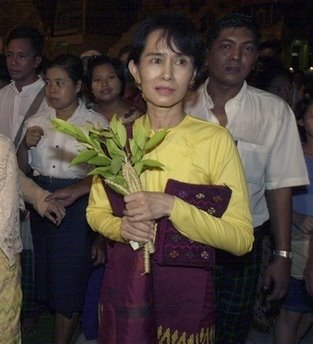


 Posts
Posts


